From the FasterSkier archive — posts syndicated from athletes’ and coaches’ own blogs between 2004 and 2012, kept online as published. Current coverage is at fasterskier.com.
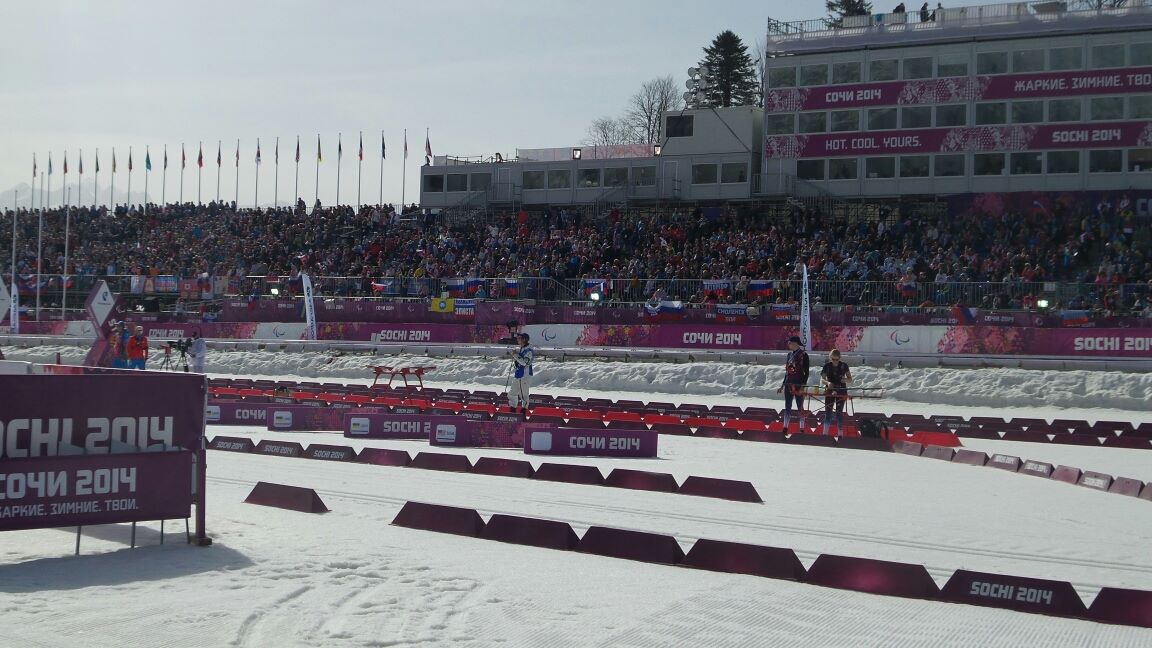
A packed cross-country stadium for the sprints at the 2014 Winter Paralympic Games in Sochi, Russia.
Anti-doping sample bottles belonging to seven Russian skiers at the 2014 Winter Paralympic Games were tampered with, according to the McLaren report.
Russian cross-country skiers won 12 gold medals, nine silver and 11 bronze at those Games. Some of the same athletes also helped win 12 gold medals, 11 silver and seven bronze in biathlon.
The report, which was commissioned by the World Anti-Doping Agency (WADA) and undertaken by Canadian law professor Richard McLaren, found that more than 1,000 athletes may have benefitted from tampering by Russian anti-doping authorities: either manipulation of samples, not reporting samples to WADA’s test-result database (ADAMS), or reporting positive tests as if they were negative.
Among the findings were that Russian staff had discovered a way to open anti-doping sample bottles, produced by the German company Berlinger and long assumed to be tamper-proof.
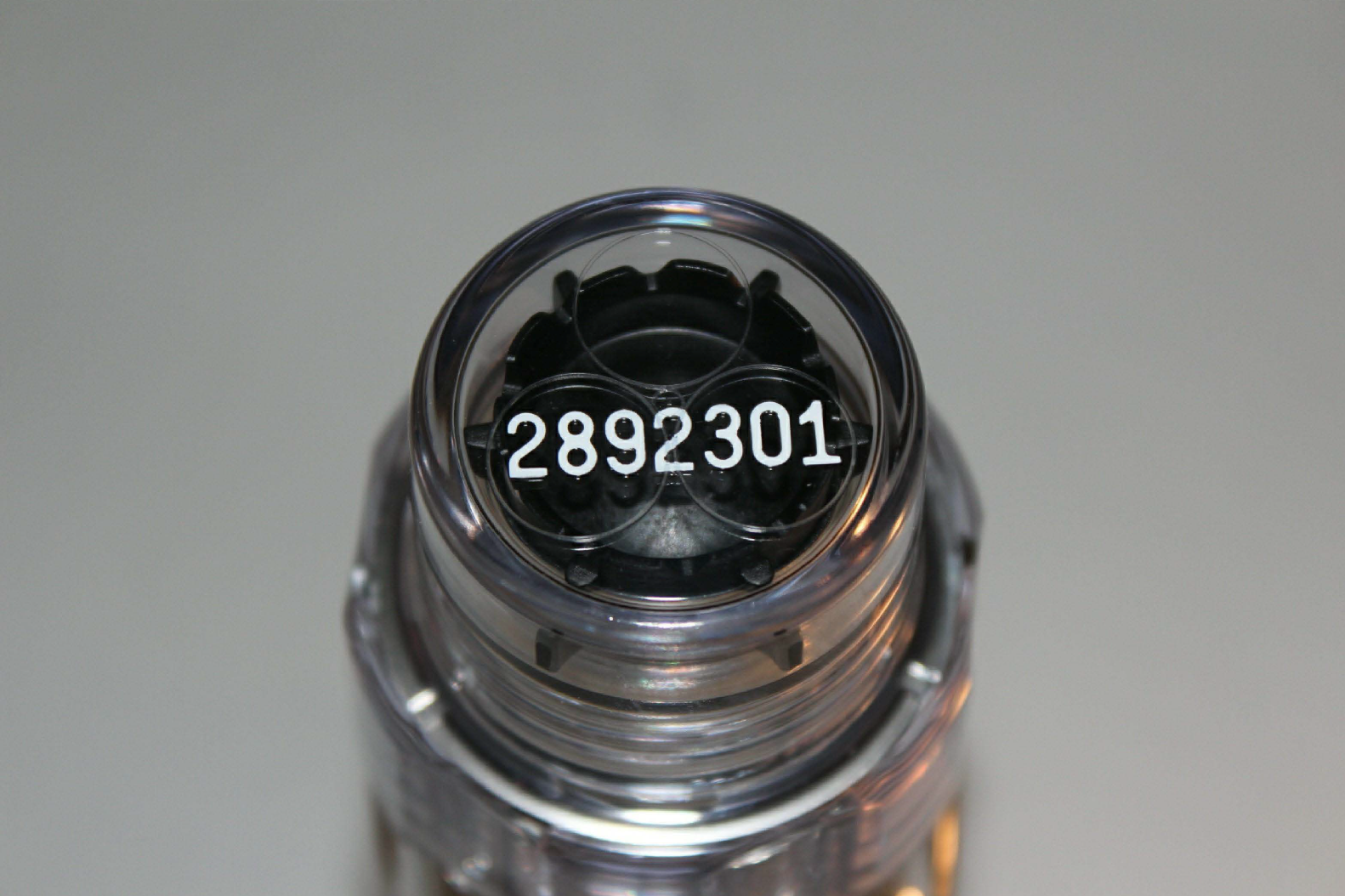
The sample bottle belonging to a Paralympic cross-country skier. (Photo: McLaren report)
The finding supported claims made by Dr. Grigory Rodchenkov, the former head of the Moscow Anti-Doping Laboratory, that at the 2014 Olympics in Sochi, Russia, he and others had unscrewed the lids of some sample bottles and replaced “dirty” urine with previously collected “clean” urine.
“As the start of the Games approached, Dr. Rodchenkov recalls that he was not confident the bank of clean urine was adequately organised and he asked the [state security service] FSB to see it,” McLaren wrote in his report. “… Dr. Rodchenkov was allowed access to the part of the Command Centre where the samples were stored. The room contained 3 or 4 full size freezer units. Inside were numerous shopping bags labelled with the athlete’s family name and he was advised they were filled with bottles of that athlete’s pre tested clean urine.”
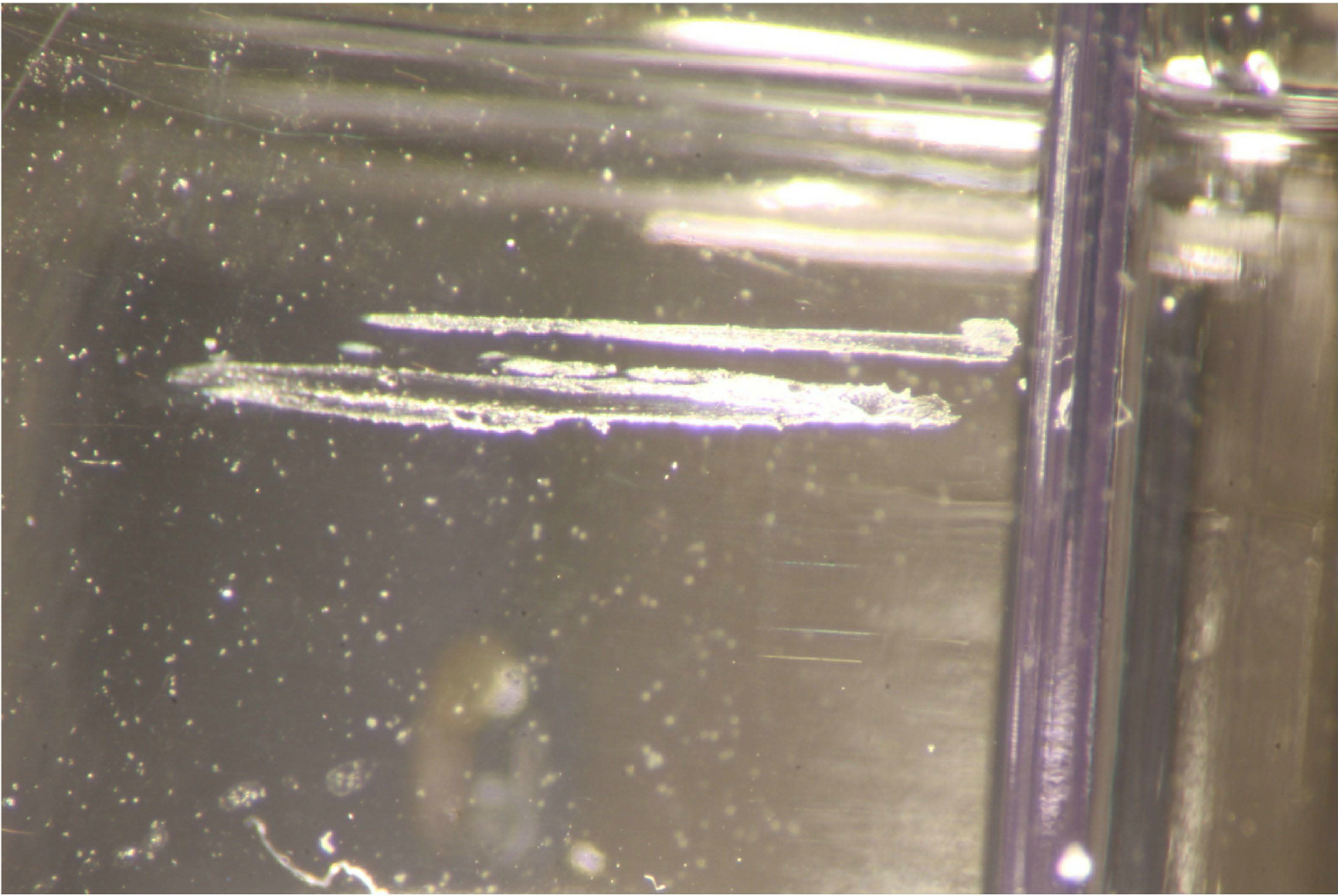
Scratched marks on the same bottle shown above. (Photo: McLaren report)
Based on those claims, McLaren commissioned an investigation by a British Forensic Firearms and Tool Marks Examiner. His or her (the name is redacted) report, which can be found here, details the normal working of the tamper-proof bottles.
The investigator came to the conclusion that the most likely way to open the bottles was to insert a thin metal or plastic object between the lid and the side of the bottle, and open the bottle from the inside. Depending on what type of material was used for this object and how carefully the bottles were opened, this procedure would leave marks on the bottle and/or lid, in some cases detectable only with a microscope or special lighting.
Almost all of the sample bottles sent to the examiner by McLaren showed these marks. Among them: 19 bottles belonging to seven different IPC cross-country skiers.
Athlete ID
Samples Named in Forensic Investigation
A0389
2890467, 2890467
A0469
2892301, 2889197, 2888781, 2890593
A0501
2891821, 2890557, 2889145, 2889128
A0546
2889181, 2890105, 2890786
A0656
2892161, 2891761, 2889127
A0704
2890874
A0705
2890793, 2892237
The sample numbers are also reported in another document in McLaren’s evidence packet, EDP1166. This document is a list of test numbers associated with athlete ID numbers.
“The IP has identified more than 1231 samples where the Moscow Laboratory communicated the presence of a prohibited substance in a Russian athlete’s sample to the [Ministry of Sport] and later reported that sample as negative in ADAMS or did not report the sample at all.”
EDP1166 lists those 1231 samples. In the cases of the Paralympic skiers’ samples, they are associated with the alpha-numeric code of an athlete, but nothing is listed as a substance for which a positive test may have occurred, and the sample is also not listed as being reported as either positive or negative to the ADAMS database.
Because this document was assembled to be a list of samples which were reported to the Ministry of Sport as being positive, it’s not clear what to conclude from this combination of facts.
Other than in the forensic report and this document, neither the samples nor athletes are mentioned anywhere else in the McLaren report’s extensive evidence packet. There’s not even any listing of whether the athletes are male or female.
The lack of a positive test result for any of these samples may be because there was previously-collected clean urine inside them, as described by Rodchenkov. Because no other discussion or information about the samples was found, it may never be known whether the athletes were actually doping or not; if replacing samples with previously collected urine was a policy, it may have been done without even testing to see whether the original samples themselves were clean.
Even without that information, however, this could lead to suspension of the athletes.
“246 athletes can be identified as potentially knowingly participating in manipulation thereby raising the possibility of a violation of WADA Code Article 2.5 (tampering),” McLaren wrote. “Athletes who provided clean urine to the CSP in advance, which was then swapped for a dirty sample, which he or she provided during the Sochi Games, could be in violation of Code Article 2.5.”
In a statement on its website, the International Paralympic Committee (IPC) wrote that “The full findings of the report are unprecedented and astonishing.” Russia has been suspended by the IPC since Aug. 7, 2016.
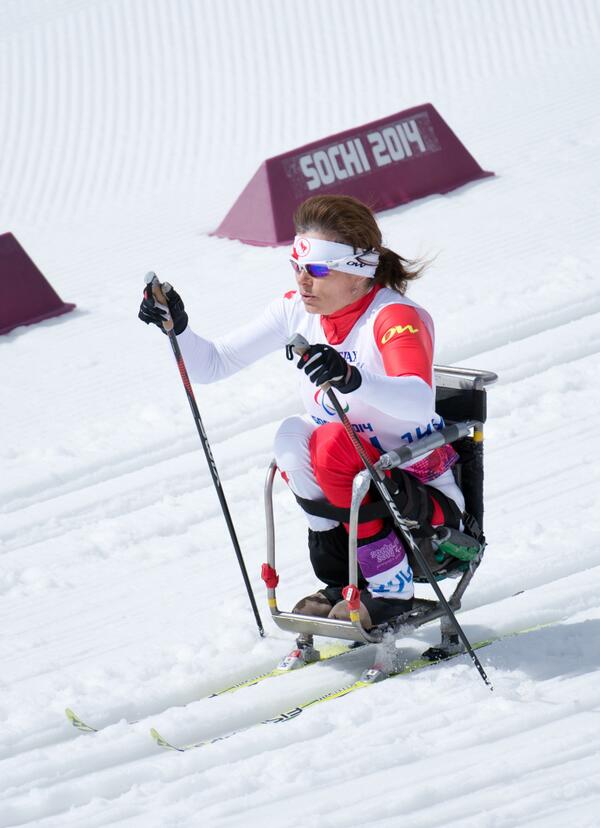
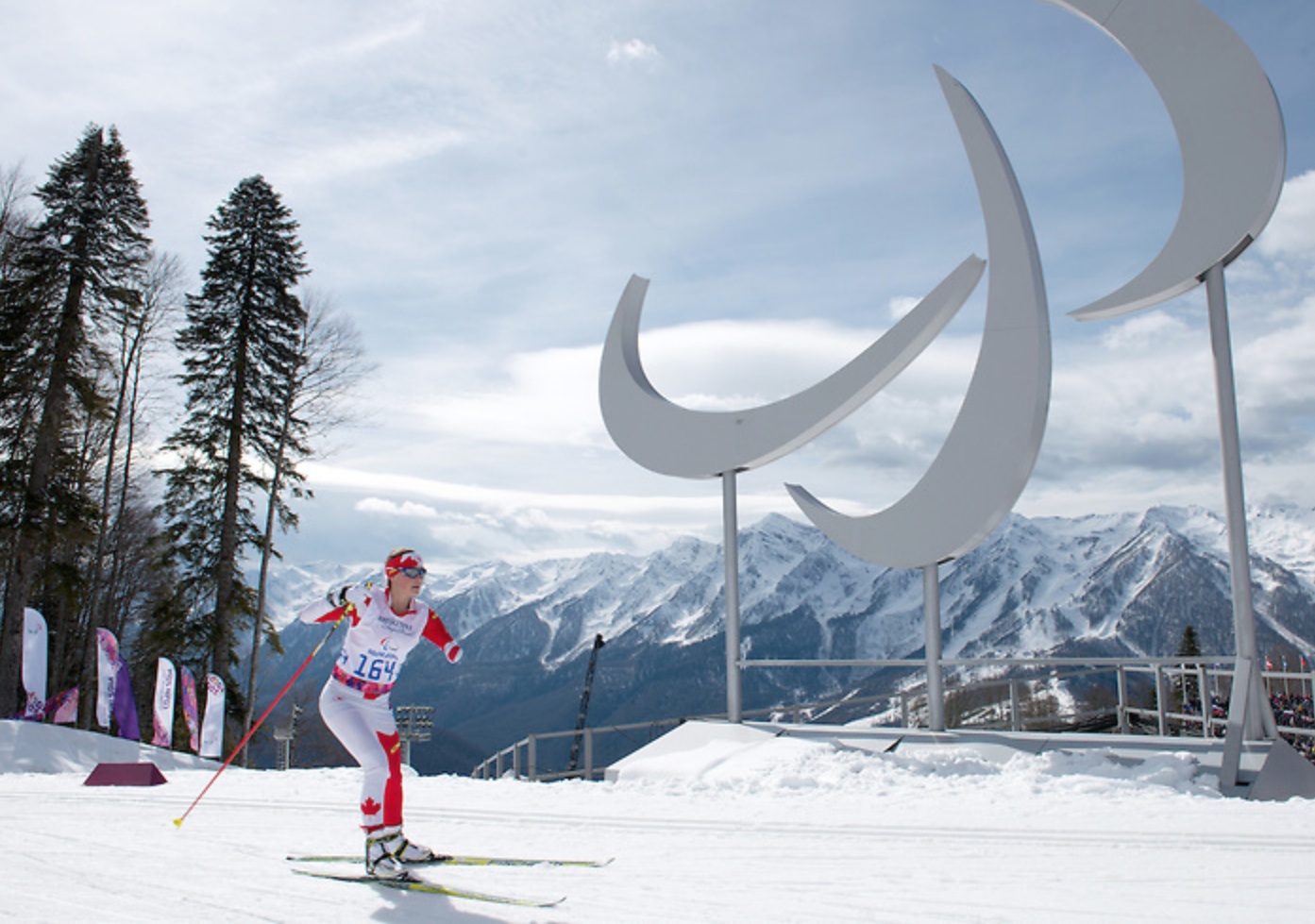
Colette Bourgonje racing at her 10th Paralympics in March, the 2014 Winter Games in Sochi, Russia. (Photo: Cross Country Canada)
Twenty-two years ago, Colette Bourgonje was a grade-school teacher with a ticket to the Albertville Paralympics in France. A Saskatchewan native, she had learned how to nordic sit ski a year earlier — all while teaching physical education in Saskatoon.
But the school wasn’t about to let her take off to compete at her first Paralympics. At the time, Bourgonje was paying her own way to do so, and since landing a temporary teaching contract in 1989, she was trying to secure more job stability.
Yet passing up the Paralympics wasn’t an option, she told herself. Bourgonje quit her job and resolved to find another one when she returned.
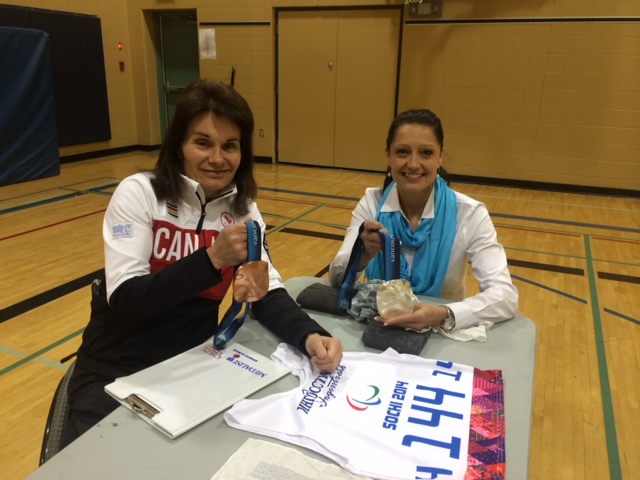
Ten-time Paralympian Colette Bourgonje (l) with Melanie Florizione, vice principal of a school in Regina, Saskatchewan, during an appearance after the Sochi Paralympics. (Courtesy photo)
A national-level cross-country runner as a teenager, Bourgonje was in a car accident her senior year, leaving her paralyzed from the waist down. Four years later in 1984, she took up wheelchair racing and became the first to graduate the University of Saskatchewan’s physical-education department in a wheelchair.
With the competitive bug back in her system, she tried sit skiing for the first time in 1991 and immediately fell in love. More similar to cross-country running than wheelchair racing, she began to work at improving in that sport as well.
After competing in Albertville in the winter of ’92, Bourgonje qualified for the Barcelona Olympics that summer. There, she won two bronze medals in wheelchair racing, and went on to claim two more bronze medals at the 1996 Atlanta Summer Games. She also raced at the 2000 Summer Olympics.
Not one to take a breather, Bourgonje became the only athlete in the world to compete in all seven Paralympic Winter Games from 1992 to 2014. She tallied six Winter Paralympic medals — three silver and three bronze — between the 1998, 2006 and 2010 Games, and went down in history as the first Canadian to win a Paralympic medal at home in Vancouver (she earned silver in the 10 k sit ski).
On the phone from her home in Prince Albert, Saskatchewan’s third largest city along the North Saskatchewan River, Bourgonje reflected on some of her career highlights in the last 24 years. At 52, she announced her retirement from the Canadian Para-Nordic Team late last month.
“Carrying the flags out in Nagano and Torino, carrying the Canadian flag out was absolutely fantastic,” she said of her flag-bearing honors. “Getting the first medal in Canada was an amazing experience. Being on the podium in that 10 k was just like, whoa. I was so happy.”
At Vancouver’s closing ceremony in 2010, she received the Whang Youn Dai Achievement Award, given to an individual at each Paralympics who has shown to conquer adversities through sporting excellence.
In her third nomination for Saskatchewan’s Female Athlete of the Year award, she won it in 2010. She remembered writing the acceptance speech, which she never expected to deliver, before a friend attended the awards ceremony for her in Saskatoon.
“I just whipped it off in five minutes really thinking I would never get that award,” she recalled. “We were in Russia and I think the other thing that happened that same week … I finally got a [World Cup] medal in Russia that was the only gold I ever won. I was just like, I cant believe this is happening! That’s why I would’ve been satisfied to say this was a great career.”
After finding success in Russia, Bourgonje decided to commit to another season through 2011 World Championships in Russia. There, she racked up another gold medal to add to her growing list, which included two overall International Paralympic Committee (IPC) World Cup victories in 1998 and 2005.
“After 2010, I did say that was going to be my last Paralympics,” she recalled.
Around that time, she asked one of her coaches, Peter Eriksson, the Athletics Canada Olympic and Paralympic head coach, how you know when you’re ready to be done. “He said you’ll know,” Bourgonje said. “And I did.”
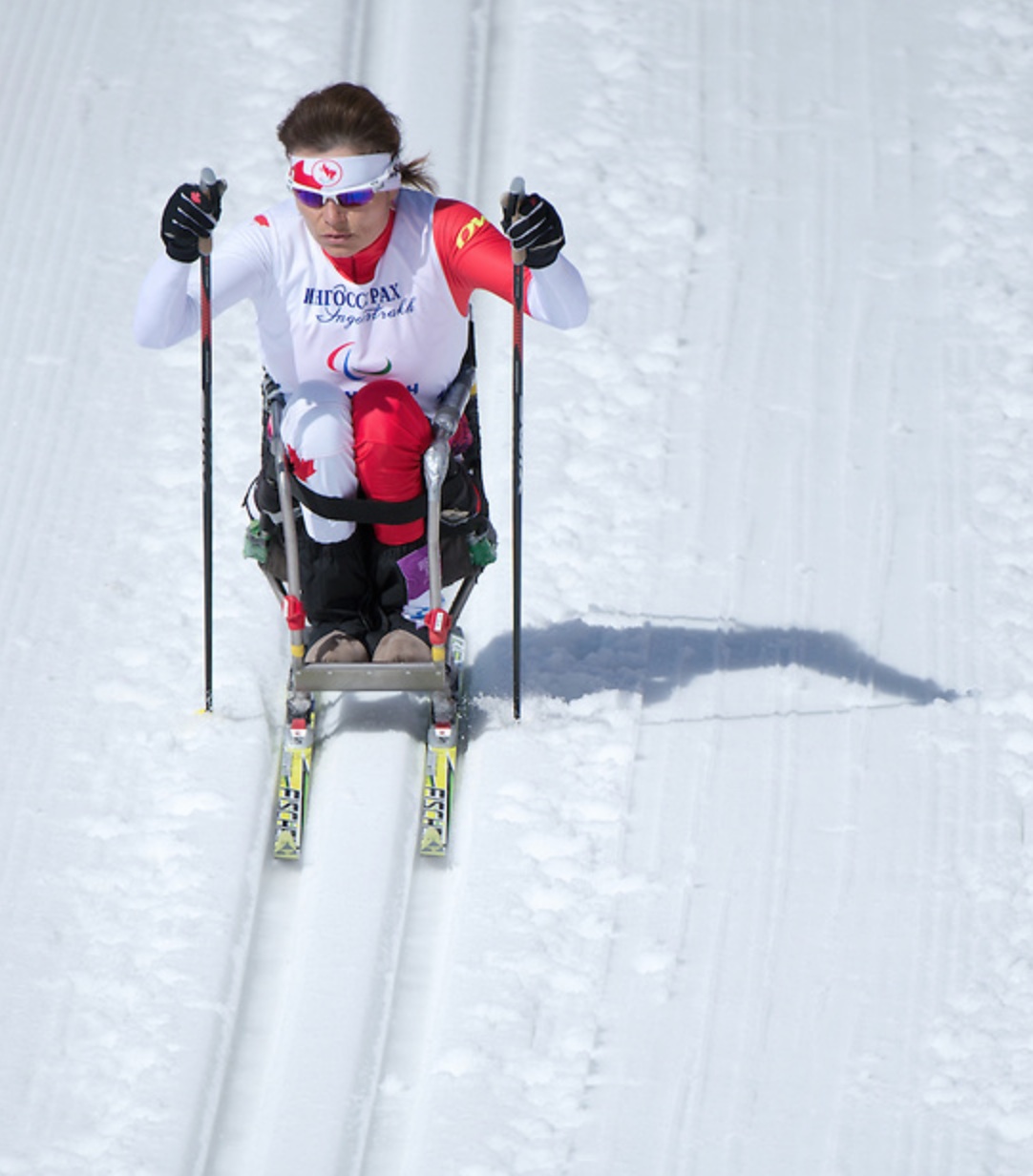
Colette Bourgonje competes in the 5 k sitting at the 2014 Paralympic Winter Games in Sochi, Russia. (Photo: Matthew Murnaghan/Canadian Paralympic Committee)
The courses in Sochi simply weren’t for her. “It’s a great course for double amputees,” she said, with massive climbs and descents, not the kind of flowing course she favored. She had raced well at the December World Cup in Canmore, Alberta, placing fourth and fifth, but suffered from low iron and vitamin B12 levels in Sochi.
“I knew I did everything I could to be physically ready to race,” she said.
But she was tired. In three races, Bourgonje placed 13th twice (5 k and 12 k) and 16th in the sprint.
“It’s all good; it was fun,” she added.
Perhaps one of her greatest sports successes was Brittany Hudak, Bourgonje explained. Two years ago, she met Hudak, now 20, working at a local Canadian Tire in Prince Albert and persuaded her to try nordic skiing. Not exactly sure how to coach an arm amputee at the time, Bourgonje quickly became her mentor.
This past season, Hudak made her World Cup debut and qualified for the Sochi Paralympics.
“This year traveling and training with Brittany was great — it was great to see a different kind of success,” Bourgonje said. “She’s just having the time of her life.”
Without Bourgonje on the team this coming season, she said three men remain on Canada’s Para-Nordic World Cup squad and Hudak is the lone development-team member.
“She has a lot of people willing to help her,” Bourgonje explained. “I’ve been her mentor and the person she’ll come to asking questions, but she definitely has it all together and will get what she needs … I would like to see her racing in Korea [in 2018]. That would be pretty awesome.”
One of Bourgonje’s early coaches (along with Para-Nordic Head Coach Robin McKeever), Bruce Craven will continue to work with Hudak on her training plans.
“[Craven] has been providing me with programs since July of last year and still continues to write them but we are in the process of trying to get me on a yearly training plan which is different from what I did last year,” Hudak wrote in an email.
“Colette has had a huge impact on me in the sense that she was first an inspiration and a role model for me. Then she became a mentor for me which really helped me become a better skier in a short period of time.
Brittany Hudak competes in the 5 k standing at the 2014 Paralympic Winter Games in Sochi, Russia. (Photo: Matthew Murnaghan/Canadian Paralympic Committee)
“Since I was new to the sport I didn’t know who I could contact to learn more about getting started in the sport so Colette helped me out a lot with the resources that were available to me and informed me of what steps I needed to take in order to get to a high performance level of sport,” she added. “Colette was also willing to chat with me at any time if I ever had questions and wanted some advice so I think she was very good with being a friend and a mentor.”
As for what Bourgonje’s up to now, she recently returned from an Olympic/Paralympic tour at schools around the province and will continue to do similar speaking appearances throughout the summer.
“The Paralympics have not really been in the forefront — every speaking opportunity I get, I say it’s a parallel event to the Olympics…” she said. “It’s picking up, but it’s not yet at an equal … [or] seen as a parallel movement yet.
“When you medal at the Paralympics, you don’t come home to $20,000 dollars for medaling,” she added. “It’s a great movement, but it’s not well known.”
Between traveling around the Canada to deliver her message, Bourgonje also wants to return to teaching. While she’s taught everything from phys ed to health, math, and science, it’s the energy of the students she’s missed. Substitute teaching could be a good remedy for that, she said.
During her full-time racing days, Bourgonje taught part time until 2008, largely paying out of pocket to compete until 2005, when Team Visa started sponsoring her. She met Canada’s carding (government-funding) criteria for wheelchair racing at the Atlanta marathon in 1996, then received assistance from Cross Country Canada for nordic in 1998 leading up to the Nagano Olympics.
“You can be carded in one sport and they give you [$]1,500 a month at that time (that was the highest funding at the time),” she explained in an email. “Carding has now increased to [$]1,800 a month to live and train on.”
Eighteen months before the 2010 Olympics, she quit her Saskatoon elementary school job and moved to Canmore for what she thought was one final push.
After the ’92 Winter and Summer Paralympics, she landed a job in Saskatoon’s recreation department. In 1994, the Burnsville school district hired her.
“I do feel that teaching part-time kept me grounded and very appreciative of what I received,” she told FasterSkier. “You know what they say whatever doesn’t kill you makes you stronger. I also loved my job and was only stressed out when I had to apply for leaves in the winter to go to compete.”
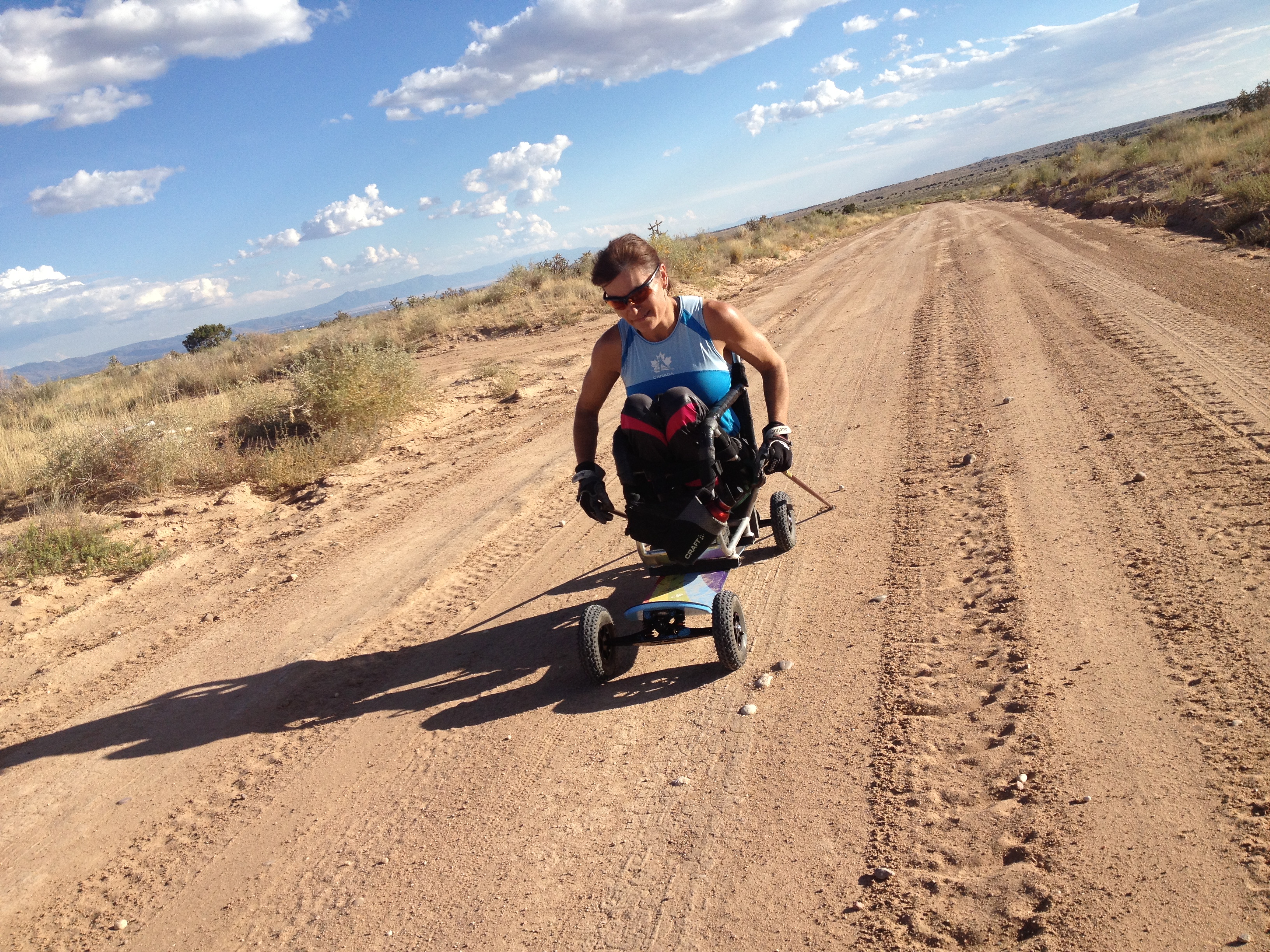
Colette Bourgonje doing some mountain-board work during a Canadian Para-Nordic Team training camp in Arizona two years ago. (Photo: Robin McKeever)
In the last couple months Bourgonje has backed off full-time training to enjoy more recreational outings — like kayaking — and said she’s looking forward to skiing in the Nisbet Provincial Forest with her partner George, who grooms the trails right out of their backyard.
“I’m really wanting to enjoy and not feel stiff and tired — no more four-hour skiing for me,” she said. “A couple hours to enjoy wherever we are absolutely [doing] … or skiing with kids.”
Last year, she met an 8-year-old boy named Tyrese, who’s missing part of his arm, while shopping for batteries for her heart-rate monitor.
“He was getting into a little red car they have set up at the mall, I asked him if he liked skiing he said he did so I asked him where his parents were,” Bourgonje recalled.
She talked to his mother, gave her a card with her contact info and asked where Tyrese went to school — just in case they forgot to get back to her. After a training camp last October, Bourgonje went to his school to see if he was still interested.
“We set him up with skis/poles but he had no boots. While we were in Canmore, the school bought boots for him,” she explained.
Later, Bourgonje brought him to ski on the trails near her house. When she returned from Russia in March, she took Tyrese and a sit-skier out on less-than-ideal conditions. But they stuck with it.
“Right now we have another 12 year old with no arms, Tyrese, Kristen, a girl in the hospital, a six year old, and a girl I am [bringing] a racing chair to today…” she wrote on Friday. “So setting up something for all of them to be active seems to be the way to go.
“[Tyrese is] a reason to stay in shape and go skiing with him and see the smile on his face,” she said. “Exercise is a lifestyle and you can’t just stop.”
Brian McKeever (r) with guide Erik Carleton celebrating gold at the 2011 World Championships. (Photo: IPC)
In Vancouver 2010, the Canadian Paralympic team placed third in the overall medal count with 19, behind Russia, which racked up 38, and Germany, with 24.
Canada has set a goal of being in the top three again this year overall at the Winter Paralympic Games held March 7 to 16 in Sochi, Russia, according to an Own the Podium press release.
Canada’s recently announced 14-athlete Paralympic nordic team has the horsepower and experience to do their part in bringing home medals.
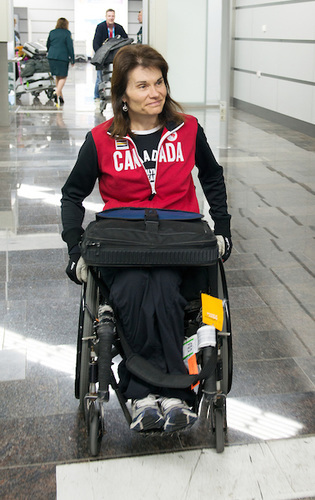
Colette Bourgonje from Canada’s Nordic team arrives prior to the 2014 Paralympics in Sochi, Russia. (Photo: Matthew Murnaghan/Canadian Paralympic Committee)
The team will be led by 10-time Paralympic medallist Brian McKeever along with his guides Erik Carleton and Graham Nishikawa, and eight-time Paralympic medallist Colette Bourgonje. Her silver at the 2010 Games was Canada’s first medal at home.
McKeever, who races in the visually impaired category, will be appearing in his fourth Paralympic Games including Salt Lake City 2002, Turin 2006 and Vancouver four years ago.
The triple-gold medallist from 2010 tweeted on Tuesday: “Woke up with a virus yesterday. Timing couldn’t be much worse. Not the ideal prep for the #Paralympics. It’s been a bumpy #RoadToSochi.”
In 2010, McKeever, 34, was named to both Canada’s Paralympic and Olympic teams. In the Olympics, he qualified to compete in the men’s 50-kilometre cross-country race; however, Canada’s coach decided to replace him with a skier who did well in earlier race at the Games.
Bourgonje, 52, is one of Canada’s most recognized Paralympians, having participated in all six Paralympic Winter Games in addition to wheelchair racing at three Summer Paralympics. She is the reigning world champion in the sit-skiing distance race and she captured a silver and bronze medal at the 2010 Paralympics.
In an interview with Canada.com, Bourgonje said, “My goals for Sochi are to be in the top five.”
Biathlete Mark Arendz, 24, is a multiple International Paralympic Committee (IPC) World Cup medallist and is first overall in this season’s World Cup standings. He will be competing for his first Paralympic medals in the standing division in his second Winter Paralympics.
Last season, Arendz won the overall IPC World Cup Biathlon title, and won a gold and two bronze medals at IPC World Championships, and won a gold, two silvers and four bronzes throughout the World Cup season.
Canadian World Cup veteran Mark Arenz in the standing sprint at the IPC World Cup in December in Canmore, Alberta. (Photo: Pam Doyle)
Returning 2010 Paralympic bronze medalist Andy Soule racing at the 2014 US national championships. (Photo Victor Henderson)
At the 2014 Winter Paralympics from March 7 to 16 in Sochi, Russia, nordic skiing and biathlon will account for more that half of the available medals.
How will the United States fare in the medal chase?
Downplaying expectations in an interview with FasterSkier, John Farra, the high-performance director of U.S. Paralympics Nordic, didn’t rule out a surprise or two from his team.
“While we are not expected to win any medals … we are spending a lot of time and effort to find that extra half percent or 1 percent that gets [our athletes] into the top three to steal a medal from the Russians or the Ukrainians.”
The Russians, in particular, have been dominant in World Cup sit-ski competitions this season. In December in Canmore, Alberta, both the Russian and U.S. teams showed up in full force to prepare for Sochi.
The Russians won most of the medals available and swept several podiums, while the U.S. men missed out on the podium.
“They [the Russians] really came to ready to race,” Farra said.
Sights on Biathlon
For the men’s team, biathlon looks to be a place where the U.S. program has an opportunity for success. At the Vancouver 2010 Winter Games, Army veteran Andy Soule earned the United States’ first-ever Olympic or Paralympic medal in biathlon, finishing third.
Soule returns to this year’s team and told FasterSkier, “I’m probably better on the longer races, the biathlon long course (15 Kilometer) is my best race, not because of the skiing, but because the shooting penalty is considerably larger for that event.”
Regarding the technical aspect of biathlon, Soule said, “I’m definitely working on a being more aggressive. I’ve been a decent shooter for some time and I’m working on cutting down on my range times.”
U.S. Paralympics Biathlon coach Rob Rosser said the team has a good chance to score an upset in biathlon.
“In cross-country skiing, it can takes years to develop and significantly change your level of fitness,” Rosser said. “That’s why biathlon is so interesting as a sport, so many things can happen with the shooting that the outcomes are much less predictable.”
Dan Cnossen racing at the 2013 IPC World Cup in Canmore, Canada, in December. (Photo: Pam Doyle)
A leading member of the team after just a few seasons in the sport, Lt. Dan Cnossen edged Soule at U.S. nationals in January, beating Soule by 2.8 seconds in the 7.5 k race, after Soule missed a shot on his final round in the range.
Cnossen will be competing at his first Paralympics this month.
This year Cnossen has focused on upping his game in biathlon.
“I’ve made some changes in my training for the biathlon,” Cnossen said at the beginning of the season. “I had some troubles with my rifle that we’ve ironed out, so I think you’ll see some improved hit rates.”
At nationals, the sit-ski sprint lived up to it’s reputation where anything can happen. A relative newcomer, Jeremy Wagner became a national champion with his first national title, topping 2010 Paralympian Sean Halsted.
U.S. Women’s Prospects
The U.S. women’s team makes up four of the 18 athletes on the team, but they have delivered the most impressive results and generated the most media buzz this Olympic year.
Oksana Masters is the top U.S. contender for a medal based on her World Cup results this season.
Oksana Masters racing in the IPC World Cup Canmore sprint race. (Photo: Pam Doyle)
Recruited to skiing based on her background as a bronze-medal winning Paralympic rower, Masters has shown remarkable adeptness at learning a sport she first tried two years ago.
“She’s fearless, so she ended up crashing a lot early on because she just wanted to go fast,” Farra explained. “She didn’t know how to control the [sit-ski] to be able to turn it left or right to avoid the tree, and often times she’d connect with the tree or crash and break a pole.”
He laughed.
“She was a bit of a … well, you know, it was pretty funny actually in some ways. As long as she wasn’t getting hurt it was fun to watch.”
In an email to FasterSkier, Masters cited her inexperience with skiing and her surprise at her success. About her Canmore medal, she said, “I knew that just about every other woman skier out there had years of experience on me and I am still a newbie. I went into the the race with the mind set of I’m not going to be top 5 but I wanted to try my darn hardest to make it in the top 10.”
As for her first World Cup podium: “I didn’t know instantly that I got third. I was shocked and thought it was a mistake at first.”
So is she getting more comfortable and does she believe she can compete with the best in the world? Farra thought so.
“I think it is fair to say she is starting to believe it, yes. She is so competitive and really was pumped to get on the podium in Oberstdorf. She has really refined her technique to a very smooth, powerful and efficient motion. … She will get there.”
Masters has garnered national media attention since her appearance in the 2012 London Paralympic Games. Her life story as a Ukrainian orphan adopted by her U.S. mother has been featured in various media forms, including Sports Illustrated and Southwest Airlines’ in-flight magazine.
She was named one of the “11 hottest paralympic athletes” by MSN “Now.” She was named one of ten U.S. athletes to watch by The Guardian.
Apple featured her in a video, “Making a difference: one app at a time”, where she demonstrated how she uses an iOS app to control her prosthetic legs and put on high heeled shoes.
Perhaps most famously, Masters posed nude for ESPN’s 2012 “Bodies We Want” issue.
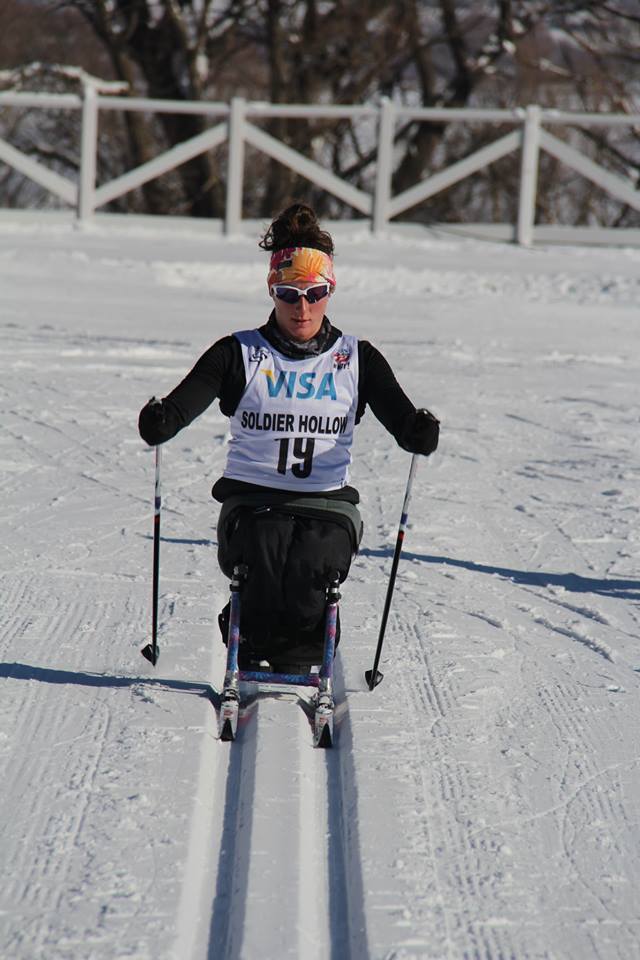
Tatyana McFadden racing at US nationals Soldier Hollow. (Photo: Victor Henderson)
As the U.S. heads for Sochi, world-class wheelchair racing champion and summer Paralympic cross-over athlete, Tatyana McFadden is another woman to watch. McFadden and Kikkan Randall were featured together in BP television ads during NBC’s coverage of the Winter Olympic Games.
Apart from her celebrity status as the most decorated U.S. athlete going to Sochi, McFadden is candid about her newness to skiing.
“For track, since I’ve been to other races and other Paralympics … I know what to expect between events and the transitions and about getting on the bus and off the bus and into the venue and what its going to feel like,” McFadden said. “For Sochi, I don’t know any of that. I have no idea because everything is so new for me.”
McFadden’s ski results have steadily improved as she gains experience. She has cracked the top 10 three times in IPC world cup competition this season, finishing ninth in the 12 k and tenth in the sprint at Oberstdorf. She placed seventh in the sprint at Canmore, narrowly missing the six-woman final round.
McFadden and her London 2012 Paralympic teammate Jessica Long are both Russian orphans who were adopted and brought to the United States by American families. Both have been outspoken against Russia president Vladimir Putin’s 2012 law banning adoption of Russian children by U.S. citizens.
McFadden said she was excited to return to Russia for the Sochi Paralympics.
“It’s part of my culture, it’s part of who I am, and that will never be apart from me,” she said. “But I’m going to be going and competing for the United States of America.”
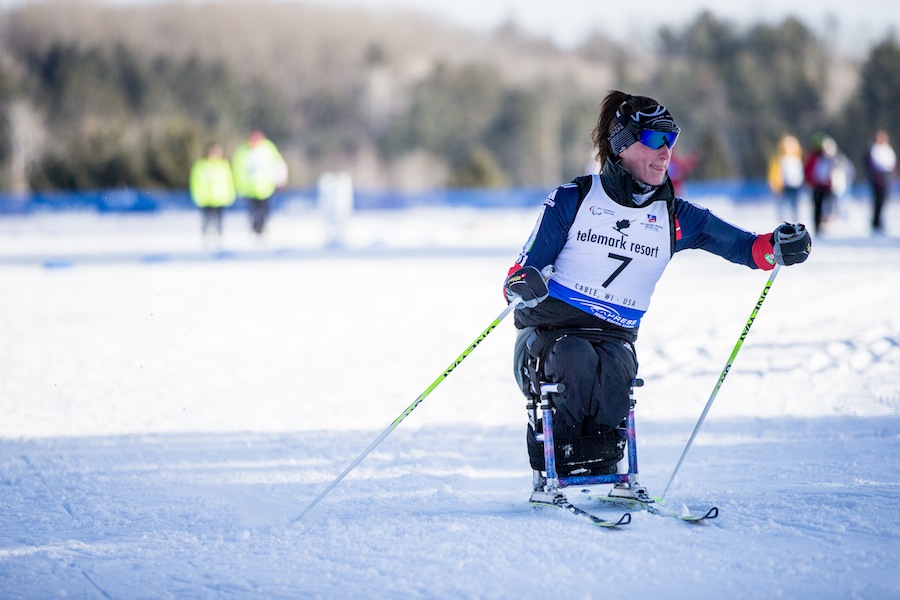
Tatyana McFadden competing at one of her first international cross-country ski races at the 2013 IPC World Cup in Cable, Wis.(Photo: James Netz)
Tatyana McFadden is coming off an impressive couple of years.
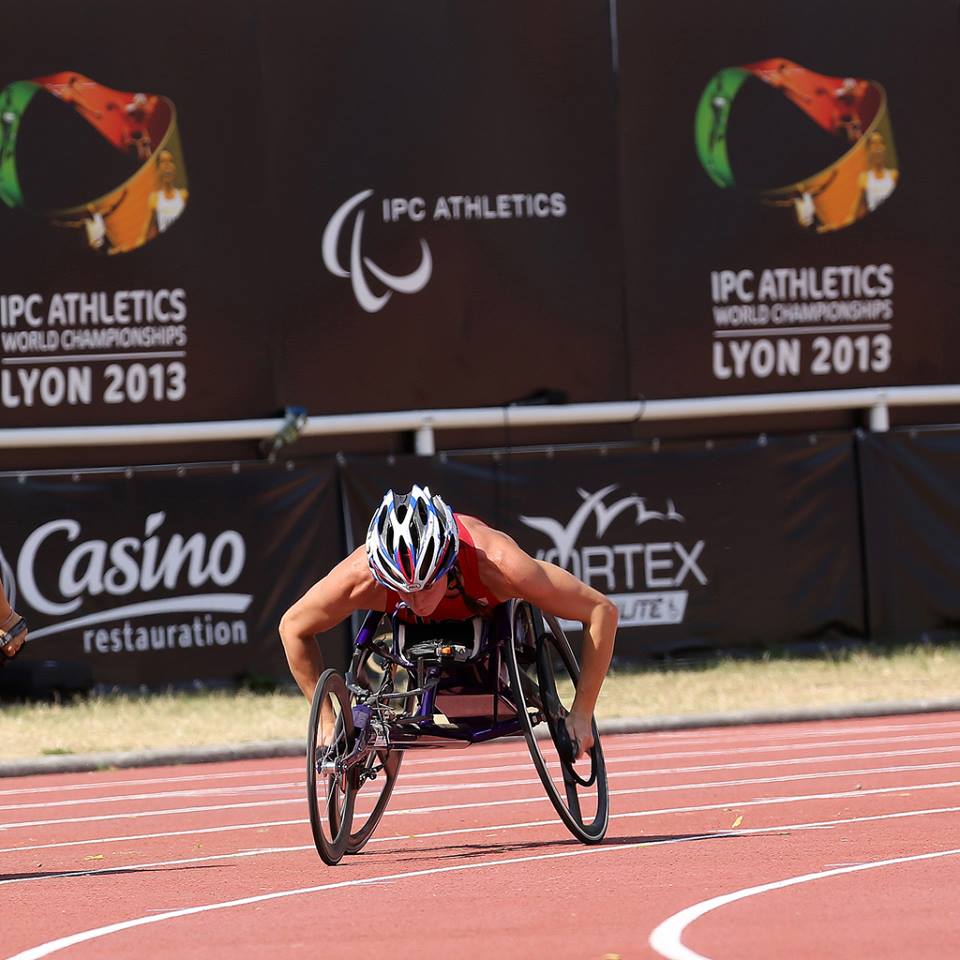
Winning the New York City Marathon last month, the 24-year-old University of Illinois student became the first person to win the Chicago, Boston, London and New York City marathons – the elusive Grand Slam – in a single year. In July, McFadden became the first athlete to win six gold medals at the International Paralympic Committee (IPC) Athletics World Championships in Lyon, France. No stranger to elite competition, the three-time Paralympian holds 10 medals in wheelchair racing, three of them gold from the 2012 London Paralympic Games.
Tatyana McFadden at the 2013 U.S. Adaptive National Championships at Soldier Hollow in Midway, Utah, where McFadden won the sit-ski sprint. (Courtesy photo)
Now with her track and marathon seasons over for the year and with the 2014 Winter Paralympics in Sochi, Russia, on the horizon, McFadden is days away from beginning her second season as a nordic skier at the IPC World Cup in Canmore, Alberta, starting Dec. 9.
John Farra, the U.S. Paralympics Nordic high-performance director, tells the story of how McFadden came to his sport.
“About a year and a half ago I got a text message at midnight from the [U.S. Paralympics] alpine director [Kevin Jardine] saying, ‘Hey, I’m at the ESPYs and Tatyana McFadden wants to be a nordic skier!’ ” Farra said.
According to the Chicago Tribune, Jardine reportedly told her, “Are you kidding me? No one wants to do nordic. Do you know how hard that is?”
“I guess you don’t understand anything about me,” McFadden replied.
“She contacted me and said ‘How can I get into the skiing thing?’ ” Farra explained. “So she comes to the national championships and won the sprint race and was very competitive in the others. I said, ‘You should come to the World Cup in Cable, Wisconsin. There may be time for you to make the Paralympic Games.’ So she did and she made the national team in just one race. She’s just so frickin’ strong.”
In a phone interview last week, McFadden described her busy upcoming month, which starts this week in Canmore.
“I’ll be there a few days before and I’ll do a competition, then I literally fly back [to Illinois], take a final, graduate, move out, then I head home for Christmas,” she said.
Majoring in human development and family studies, she will give the graduation speech to her class.
Born in St. Petersburg, Russia, with spina bifida, a birth defect that paralyzed her from the waist down, McFadden spent her first six years in an orphanage walking on her hands. A disabilities commissioner for the US Health Department, Deborah McFadden visited the orphanage and adopted Tatyana before raising her in Baltimore. Since then, Tatyana has been an activist on several fronts, advocating against a 2012 Russian law prohibiting Americans from adopting Russian children. She was also behind the Maryland Athletics Equity for Students with Disabilities Act, which was passed in 2010.
McFadden racing at the 2013 IPC Athletics World Championships in Lyon, France, where she won an unprecedented six gold medals. (Courtesy photo)
For now, she’s focused on getting back to Russia, this time as a Winter Paralympian. To manage the transition from wheelchair racing to skiing, McFadden said she’s been spending a lot of time in the gym on the SkiErg and doing interval training.
One of her biggest challenges has been learning how to handle the cold. McFadden experienced some issues with frostbite while training, but her enthusiasm toward the sport has made up for the hardships. Nicknamed “The Beast,” it’s no surprise when McFadden says, “I love to train really hard.”
She is also excited to get on snow in her new sit-ski. At last season’s U.S. Adaptive Ski Championships at Soldier Hollow in Midway, Utah, McFadden won the sit-ski sprint in a borrowed, ill-fitting sled.
“[The ski] was too big for me,” she said. “I’m a size 10 1/2 and I was riding in a size 14; it was way too big. I was sitting too high which really threw off my balance. I didn’t have control going down the hill too well and I really wanted to be shorter.”
Her new sit ski is designed to put her in a more-forward position, similar to her racing wheelchair. McFadden said it feels “a lot more natural and transitions well from wheelchair racing. … [It’s] literally just the bucket and it’s an absolutely beautiful, beautiful bucket. It’s extremely light and it’s purple, my favorite color. I’m really excited to take it out again.”
Starting in Canmore, McFadden will have plenty of opportunity to get used to her new setup. At the end of the month, she’ll head to Utah for her second nordic nationals in early January, once again at Soldier Hollow. Then she’ll head to Germany for the IPC World Cup in Oberstdorf from Jan. 16-19, and after that, Winter Park, Colo., for more altitude training.
Tatayan McFadden shows off her new sit ski in a promotional photo from her sponsor BP. (Photo: BP Team USA/Facebook)
“As soon as I graduate I’ll be on snow all the way up to Sochi,” McFadden said.
According to Farra, working with her on snow will the give the U.S. Paralympics Nordic coaches a chance to help her improve her technique.
“She’s so strong and unbelievably fit,” Farra said. “So she’s got the most important part of being a nordic skier down, and you can’t fake that.”
McFadden has no illusions about the challenges ahead of her. “I am really new to skiing,” she said. “My goals are, first of all, to make the team and head over. Then I’ll take it event by event. My goal [in Sochi] is to make the finals.”
As for her podium potential, Farra said, “We really don’t know. She’s fired up about it. She’ll have a day or two to train in Canmore before the races and she’ll spend the rest of the winter skiing with us trying to get ready for Sochi to see what she can do there.”
While Farra can’t predict McFadden’s performance in her new sport, he knows what kind of attention she can bring to the developing sport.
“When the Games are on, you are going to see Kikkan Randall skiing in a BP commercial and you’re going to see Tatyana McFadden skiing in a sit-ski on these commercials that are run all the time throughout the winter,” he said. In partnership with the U.S. Olympic Committee, NBC has committed to 50 hours of coverage for the 2014 Paralympics.
Thinking about her first Winter Paralympics, McFadden isn’t sure what to expect.
Tatayan McFadden shows off her new sit ski in a promotional photo from her sponsor BP. (Photo: BP Team USA/Facebook)
“For track, since I’ve been to other races and other Paralympics… I know what to expect between events and the transitions and about getting on the bus and off the bus and into the venue and what its going to feel like,” she said. “For Sochi, I don’t know any of that. I have no idea because everything is so new for me. I have to just be relaxed and go with the transitions and then when it comes time for me to put my skis on the snow, I have to remember everything I’ve learned … and ski as fast as I can and hopefully make people proud.”
Among the new experiences awaiting McFadden is biathlon racing. Due to a relatively small pool of athletes, adaptive skiers are encouraged to compete in both nordic and biathlon races. Brand new to skiing at nationals last year, she didn’t race biathlon. “I told John [Farra] that I wanted to focus on skiing,” McFadden said.
However, she did get introduced to the sport and practiced a bit on the shooting range. Despite some archery experience, McFadden said she never shot a gun before trying biathlon last January.
“It’s going to be a lot of fun,” she said. “I’ll shoot the targets as best I can, and if I miss them all, I know what it feels like to do a lot of laps. In track, doing [laps] is just a normal day for me. I’m not really too concerned about it. What is really different about biathlon is that I’m not used to stopping in a race. I’m used to going hard from start to finish and not having to slow down and take a deep breath and try to hit the targets.”
When asked what it will mean to her to return to Russia, she said she’s “really excited.”
“It’s part of my culture, it’s part of who I am, and that will never be apart from me,” she added. “But I’m going to be going and competing for the United States of America.”
Comparing her two “home” nations, she says the Russians are behind the times when it comes to accepting people with disabilities.
“[In the U.S.], you can get jobs and you can live a normal life,” she said. “That’s not really the case for Russia. Some places are not accessible, in America places have to be accessible. Just seeing athletes come in and seeing how strong the athletes are and seeing them compete. I think its going to be really good for them.”
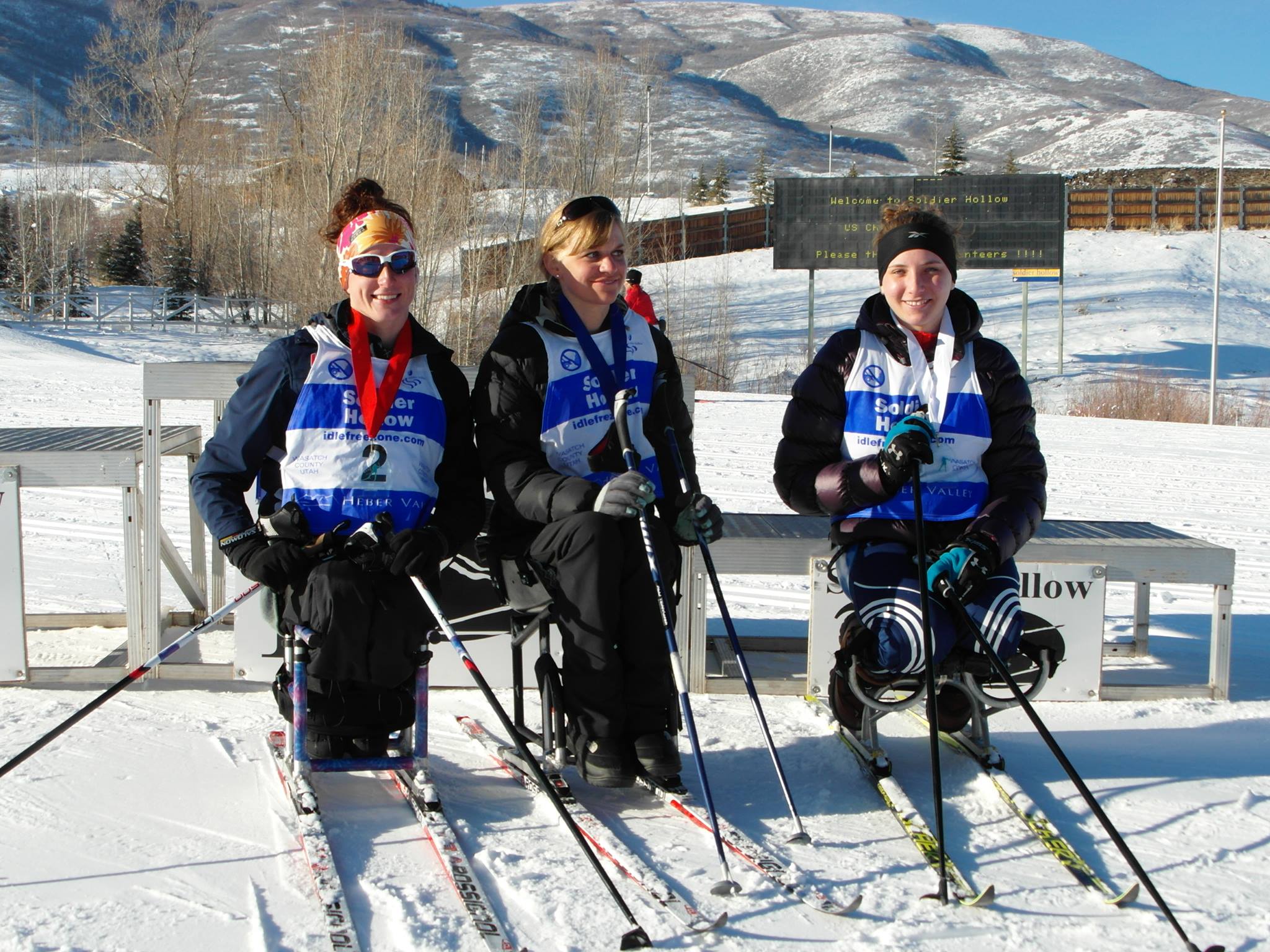
Now a U.S. Paralympics National Team member, Tatyana McFadden (l) after placing second in the women’s 5 k at 2013 U.S. Adaptive Championships last January. Beth Requist (c) won it in 25:13.9, and Kristy Vaughn (U.S. Paralympics Development Team) was third (+2:34.4).