Tag: 2014 sochi winter olympics

  • The Man, The Myth, The Legend: Currier Retires from Biathlon

    The Man, The Myth, The Legend: Currier Retires from Biathlon


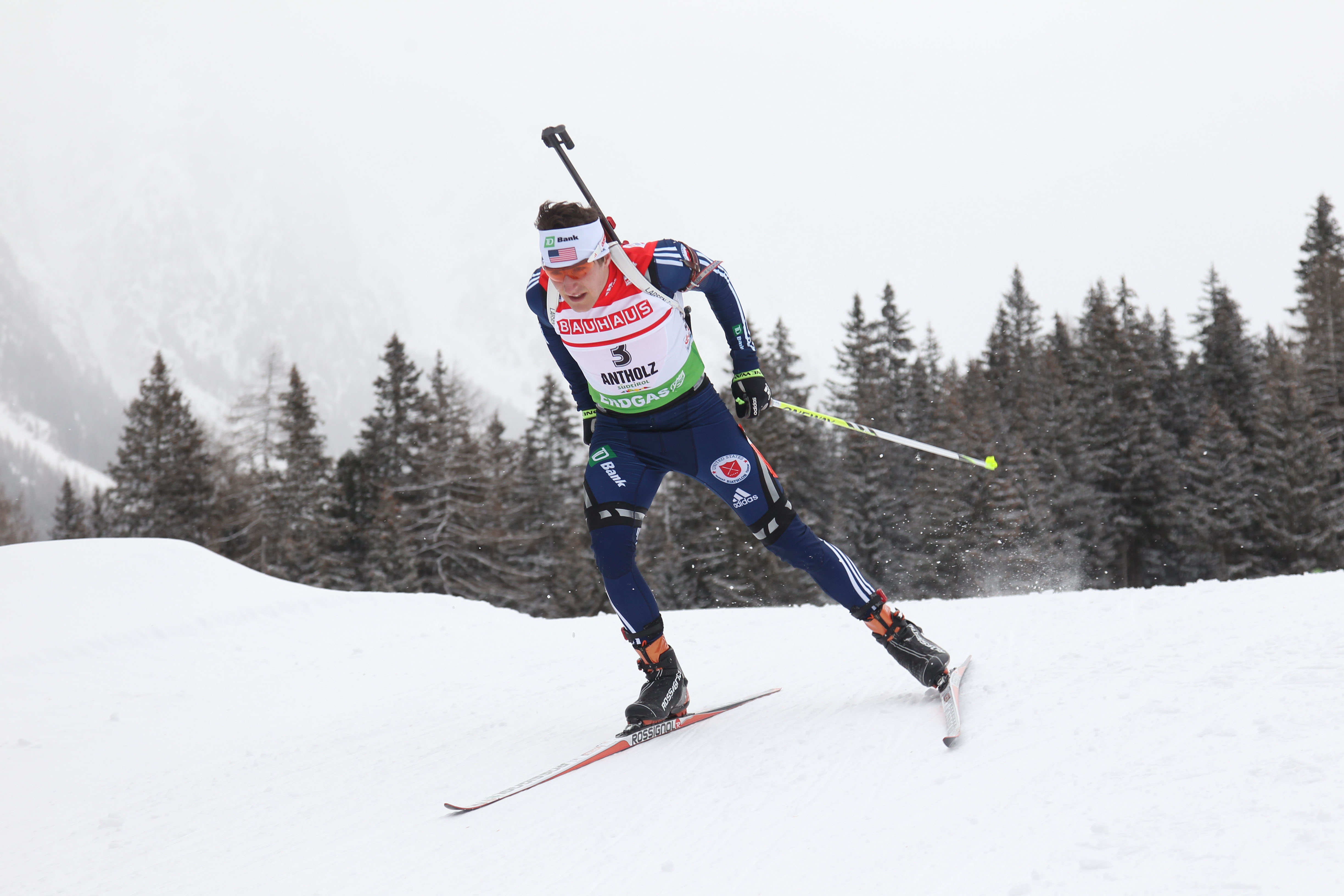
    Russell Currier racing at IBU World Cup competitions in Antholz, Italy. (Photo: NordicFocus/USBA)

    The first time I contacted Russell Currier for a retirement interview, it was mid-April. I had asked him to share his story, and no more than 24 hours after my initial email to Currier, I received a response.

    Yeah, let’s do that. I’m actually in Bozeman right meow,” he’d written.

    Digging through my memory bank, I recalled Currier having come to Bozeman one other time. Two Aprils ago, the Stockholm, Maine, native spent a week in Montana visiting friends. The faint memory of Currier showing up to my Bozeman apartment that spring, sporting a DIY unicorn outfit, had me wondering what the recent biathlon retiree was up to two years later (at the time of our email correspondence, it had been 10 days since Currier’s final career competitions, the 2018 USBA nationals in Park City, Utah).

    Since I was still living in Bozeman, Currier and I decided to meet in person for the interview. Open mic night at a local coffee shop seemed like a safe rendezvous spot. While I arrived at our destination point uncharacteristically early, Currier showed up characteristically five minutes late.

    He had dropped the paper-cone head prong for this occasion, though he still had the same curly mop of brown hair. Leather thong flip flops, a black hoodie and shorts made him an unmistakable Mainer — most in the room wore pants and closed toed shoes, fitting for the local forecast of mid-40 temps and rain.
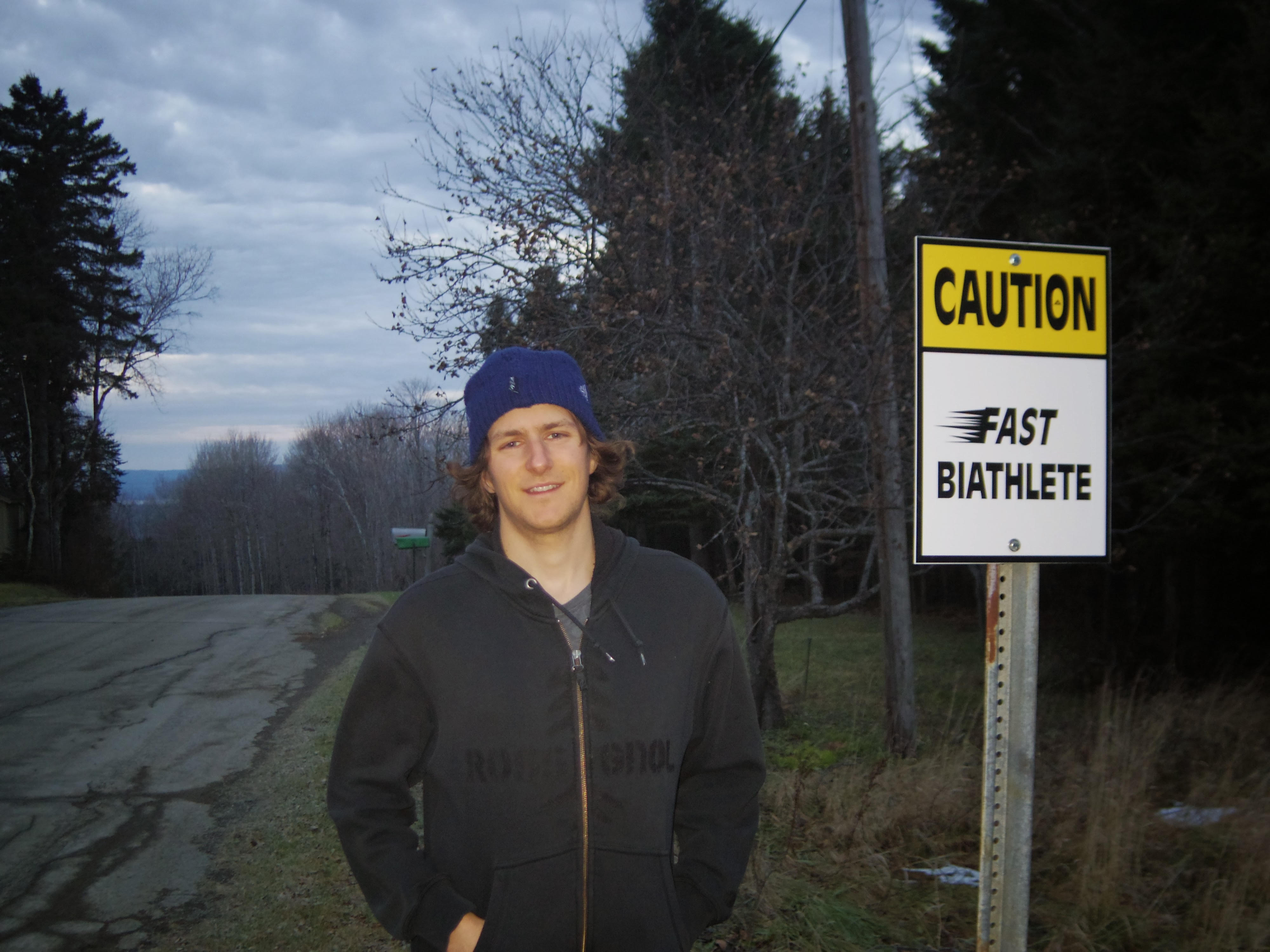
    Russell Currier, a two time Olympian, four time World Championships team member and on-off National team member. (Courtesy photo)

    The coffee shop served more than just coffee and we wound up sipping on local brews called “Strange Cattle”. A few shaky singers and a couple billiard –albeit shabby –games later, the Strange Cattle had gotten the best of us. My audio recorder inevitably remained in my pocket and the interview remained undone. 

    By the time we finally sat down to chat, it was over a month and quite a few text messages later (one of which involved Currier asking to borrow 90 K). In short, the following interview with Currier was conducted over the phone in late May, seeing as April is best left for brews and mythological beasts. 

    FasterSkier’s questions appear in bold; Currier’s responses follow immediately after.

    ***

    FasterSkier: Russ, good to have you on the phone. What are you up now?

    Russell Currier: Cutting cantaloupe.

    FS: Nice. Whereabouts?

    RC: Windham [Maine]. I moved there at the end of April. I’m staying in the basement of an old friend and doing landscaping. It’s not permanent, but it will suffice for now.

    FS: Why landscaping?

    RC: It was something that I could show up hungover for, but still grind it out and make it work.

    FS: When did you decide to retire?

    RC: Honestly, about two years ago. I had a really bad season [in 2015/2016] and I wasn’t sure if I wanted to keep racing or not. I decided to give it two more years, just to see if I could make it through another Olympic cycle.

    FS: Were you experiencing any illness in 2015/2016?

    RC: No, I think there were a few equipment issues that were bad luck. I didn’t do anything wrong. I did the best I could. I just didn’t nail training as best as I could. I was at that level of, you either get lucky and train really well, or you don’t get lucky; you try to train really well, but you don’t quite nail it.

    FS: What do you mean by equipment issues?

    RC: We had trials in Canmore and it was really, really cold that year — I mean, it’s always cold in Canmore — and the ammunition I was using wasn’t shooting very well. That may have been the limiting factor to my entire season. But it’s one of those things though that you can’t really prove.

    That season ended up being my worst one ever. It was bad enough to say this could be a justifying end. So I gave myself the month of April to make the call; decide if I wanted to keep going or not.

    FS: So in the end you essentially said, screw it, let’s do this?

    RC: Pretty much. Officially, I did it out of curiosity. I figured it was worth the expense and trouble, since I had already gone that far.

    My thinking was, if I go two more years, the absolute worst case scenario would be I rack up more debt and I don’t make it. The best case scenario, I do make it and I retire.*

    *Currier went on to qualify for the 2018 Pyeongchang Winter Olympics. He also qualified for the Sochi Olympics in 2014.

    FS: What will you miss the most about competing in biathlon?

    RC: That’s an interesting question. I haven’t really wrapped my mind around the fact that I’ve retired. So far, it’s still awesome because it’s absolute freedom. I still do plenty of training. I actually did an ultramarathon this weekend, which is a whole other story within itself.

    FS: An ultramarathon, really, where was that?

    Pineland Farms. They have a 25-kilometer cross-country ski trail. We did three times around that, plus an additional loop so that it would add up to 50 miles. I couldn’t walk the day after. That was problematic.

    FS: Do you think you have a future in ultramarthon running?

    RC: I don’t know. I have to think about it. That was one thing my coaches had always told me was, if this biathlon thing doesn’t work out and you ever get into ultramarathon running, it could be your thing.

    FS: So, back to what you’ll miss most about competing in biathlon?

    RC: After the last race in Utah, I never really had time to sit down, think it over and decide how I felt about the last 16 years of my life. I don’t know if I’ll have a mental breakdown when I do or if I’ll think, wow, that was fun, and move on.

    I had to send USADA [the U.S. Anti-Doping Agency] a letter saying that I officially retired. That kind of hit home. It was like signing the final papers on a divorce order. You’re ending a relationship with something you’ve been with for so long

    FS: Looking back, what’s your fondest ski memory?

    RC: The race weekend in Kontiolahti, Finland. It was super cold there, as in below legal race temperatures. I got food poisoning the day before the race. But I had traveled all that way and this was my one chance to race, so I raced anyway. I ended up cleaning and finished sixth.

    That was the second top 10* that I had ever had and the whole thing was just one giant surreal experience. (The afterparty was just nuts and [the U.S. team] did a Finnish sauna).
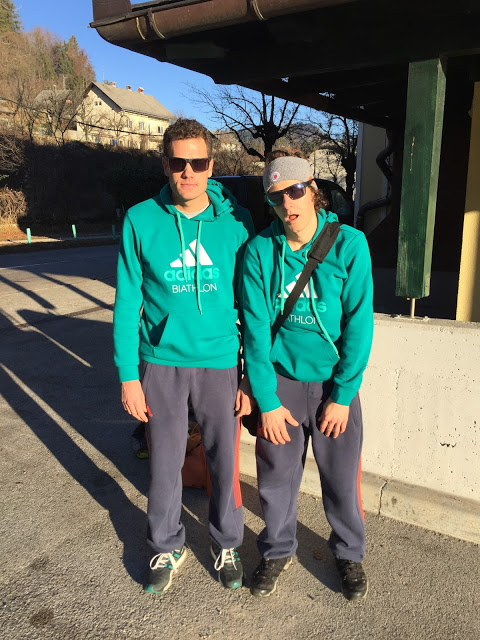
    Russell Currier (r) and USBA teammate, Tim Burke in Slovenia 2017. (Photo: russellcurrier.blogspot.com)

    *Currier has been to two Olympic Games, qualified for four World Championships teams, earned two sixth-place World Cup results in 2012, and this spring alone, had a fourth, fifth and sixth place finish at USBA nationals.

    FS: What’s involved in a Finnish sauna?

    RC: I’m sure it varies from one part of Finland to the next, but you go in the sauna, get as hot as you can, then you run around outside like naked idiots. After that you go back inside the sauna, get as hot as you can tolerate, then go outside and jump in the snow, roll around. Then you go back inside and the final time you [exit] the sauna, you have to jump in the water (this is winter, so it’s basically just this carved hole in the ice). There are also a bunch of reeds you’re supposed to hit each other with. It’s like a sword fight with these giant sticks. Weird Finnish things.

    FS: Interesting. How would you describe your career trajectory?

    RC: I never had any specific goal in mind, I just wanted to see what would happen if I actually gave it my full effort and pushed it into my late 20s and early 30s … I made it further than most people thought I ever would have when I started. But I also always had higher expectations for myself.

    FS: Do you feel like people were skeptical of you?

    RC: No, I don’t know if they were skeptical. They just didn’t know what to expect. I was one of the early athletes to jump on board with what Maine Winter Sports Center (MWSC)* was offering; nobody had any idea really how it worked. It wasn’t like an academy school in New England, or Steamboat Springs or a little ski town in Norway or anything like that where everyone was on board with how the system worked. This was a completely new and revolutionary thing to do.

    *MWSC has since been refashioned into the the Outdoor Sports Institute.

    FS: Were you one of the first athletes with MWSC?

    RC: Not the first, there were a few other athletes that were there before me, but not many. I think MWSC started in the summer of 2001, so [the program] had only been around for three years or so by the time I joined.

    FS: How did you get involved with MWSC/skiing?

    RC: It was a very arbitrary and borderline impulsive decision. The impulse never wore off.

    FS: Where is the sport lacking or what do you think needs to be changed?

    RC: Short answer, it needs to be way cleaner. Almost any North American athlete would probably say that right off the bat. For good reason. It’s scary how much time and effort of your life you can pour into something, only to watch an entire organization walk all over it. Ruin it. Unfairly. It really is terrible and it’s as bad as everyone thinks it is.

    FS: You’ve been involved for 16 years now, any advice for those coming into the world of biathlon?

    RC: I would say biathlon and cross-country will produce way more failure than they ever will success. These sports are going to kick you in the teeth constantly. You’re going to get the [expletive] kicked out of you so many times before you get the glory that you see on TV.

    But, to quote John Farra, it’s worth it.

    I remember John going on and on about the opening ceremonies at the Olympics and just saying it’s worth it. All the training, all the setbacks. It’s worth it. (Ironically when I finally did make [my first Olympic team in 2014], I actually missed the opening ceremonies because we had a race the next day, so we didn’t go. I thought that was kind of funny.)

    Anyway, yeah, if you’re aware that it’s going to be one colossal struggle and you come in expecting that, it makes it not so bad.
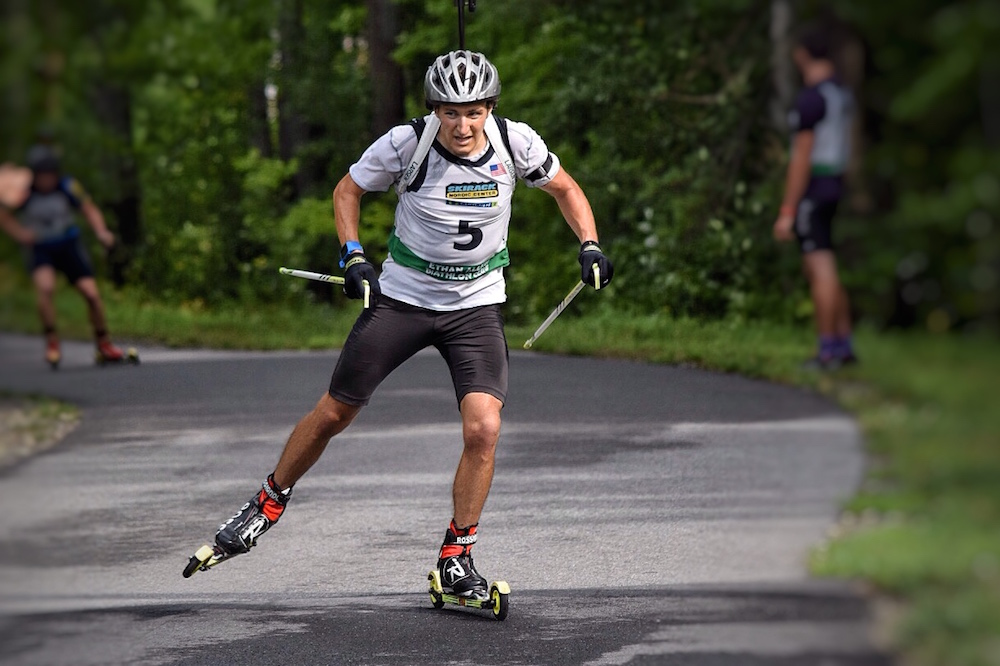
    Russell Currier during the men’s mass start at the 2016 US Biathlon National Rollerski Championships on Aug. 14 in Jericho, Vt. (Photo: Katrina Howe)

    FS: Any unsung heroes to whom you’d like to pay tribute?  

    RC: My neighbor down the road from me growing up has not only been my number-one fan, but he has also painstakingly made various parts for my rifle that have literally played a crucial role in my career. He’s a machinist and a lot of my rifle’s components were his design. I’ll give a shout out to Tom Campbell for supporting me both grooming wise and equipment wise throughout my career.

    ***

    What others had to say about Currier

    The following is a compilation of emails from various individuals who worked with Currier over the course of his ski career.

    I’ve always admired Russ’s ability to be resourceful and resilient.  He’s had his share of frustrating races, such as placing 61st in sprints on multiple occasions (just missing out on pursuits). However he always bounces back. Watching him place a career-best 6th in a World Cup in Nove Mesto in 2012 was incredibly inspiring because he was the ultimate underdog on our underdog team. He had struggled to qualify for international racing earlier in the season and surprised a lot of people that day.

    .

    Another favorite Russell memory was during a Lake Placid training camp. He ran 9 miles in the middle of the night to get home from a party in Saranac Lake. A solid solution to not having a designated driver.
    — Susan Dunklee

    Russell was incredibly careful never to waste food, as though he had lived a previous life in the Great Depression. He used to fill container after container of food at the OTC dining hall and carefully take it with him until his room was full of to-go coffee cups filled with varying granolas.

    Once when we were at the August rollerski trials in Jericho, Vt., I bought a 69-cent two-pack of puddings post-race. They were so awful that I left the other one in the place we were staying, intending to get rid of it. Russell saved it, put it in his truck, and drove it back home to Maine thinking I forgot it. He kept in his refrigerator for two and a half months and then drove it back down to Vermont and gave it to me at October Rollerski Trials. I was so flabbergasted by his dedication to save that terrible pudding cup that I just ate it.  

    — Joanne Reid

    My favorite Russell stories probably shouldn’t be put in print, so I’ll go with this.

    Russ is the only person I’ve known to go on runs with a shotgun. Apparently it’s quite an effective partridge hunting tactic.

    — Welly Ramsey

    It has been great to watch Russell over the years, develop as an athlete and keep working towards his goals. In the last couple of years it was impressive to see Russell really refocus and work towards a second Olympic opportunity and how it paid off. It will be exciting to see what opportunities come next for Russell!

    — Seth Hubbard

    One of my favorite memories of Russell is from when he was first interested in racing, in early high school. We were at a training camp and he was very concerned about what he was eating — only what he deemed healthy— and about getting the hours in his training plan.

    When it was time to pack up, Russ was hungry and tired after his longer A.M. workout and he saw food on the table (breakfast for everyone) which he proceeded to eat in its entirety.  Needless to say, he was not much help with packing and no one was very happy about the lack of breakfast. Russell, however, felt fine.

    — Sarah Dominick

    Russ was one of a few athletes that lived at the 10th Mountain Lodge at some point in their career. One summer night, I headed up there to pick up something I needed for training the next morning (can’t remember what). Since he lived upstairs, and it was dark, I thought it would be fun to try and scare him. I made my way through the door and up the stairs as quietly as I could, thinking I was really going to scare the [expletive] out of him. As I started rounding the corner, Russ jumped out from his room, headlamp blinding my eyes, biathlon rifle aimed at my face, finger on the trigger. I think that was the only time he almost shot me.

    — Nick Michaud
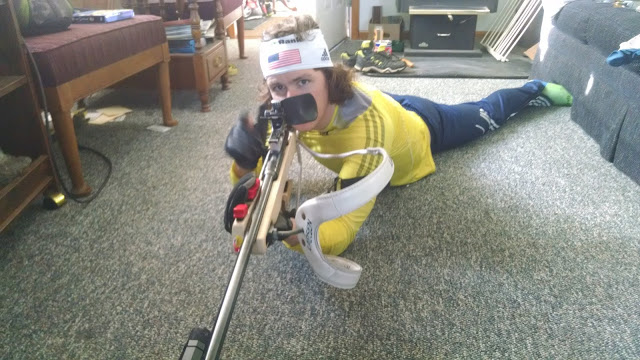
    Russell Currier working on his prone shooting position in June 2017. (Photo: russellcurrier.blogspot.com)

    Russ was a morning person, more so than anyone else I’ve met before or since — he drew his innate energy from waking up early and making breakfast as the dawn broke.  

    We were staying in the house of a family friend for August World Cup Trials one year, and I came crawling (actually crawling) down the stairs race morning, bleary-eyed, incapable of speech, dysfunctional, and partly jet-lagged from flying to the East coast for these races. My body thought it was about 3am, and I tended to wake up at 11.

    Russell started dancing around me, delighted in the (terribleness of) mornings, smiled down at me crawling on the stairs, and says, “I know what your spirit animal is! It’s a sloth!!!!” He called me Sloth ever since.

    — Reid

    When I first started watching World Cup biathlon races about 10 years ago, Russell anchored the men’s relay at World Championships. The team was about to be lapped by the Norwegian race leaders and Russell skied like hell to stay ahead of The King (Ole Einar Bjørndalen) to avoid getting pulled from the race. He got a lot of TV time that day.
    — Dunklee
  • For Diggins and Randall, Life’s Sweet with Silver and Bronze

    For Diggins and Randall, Life’s Sweet with Silver and Bronze

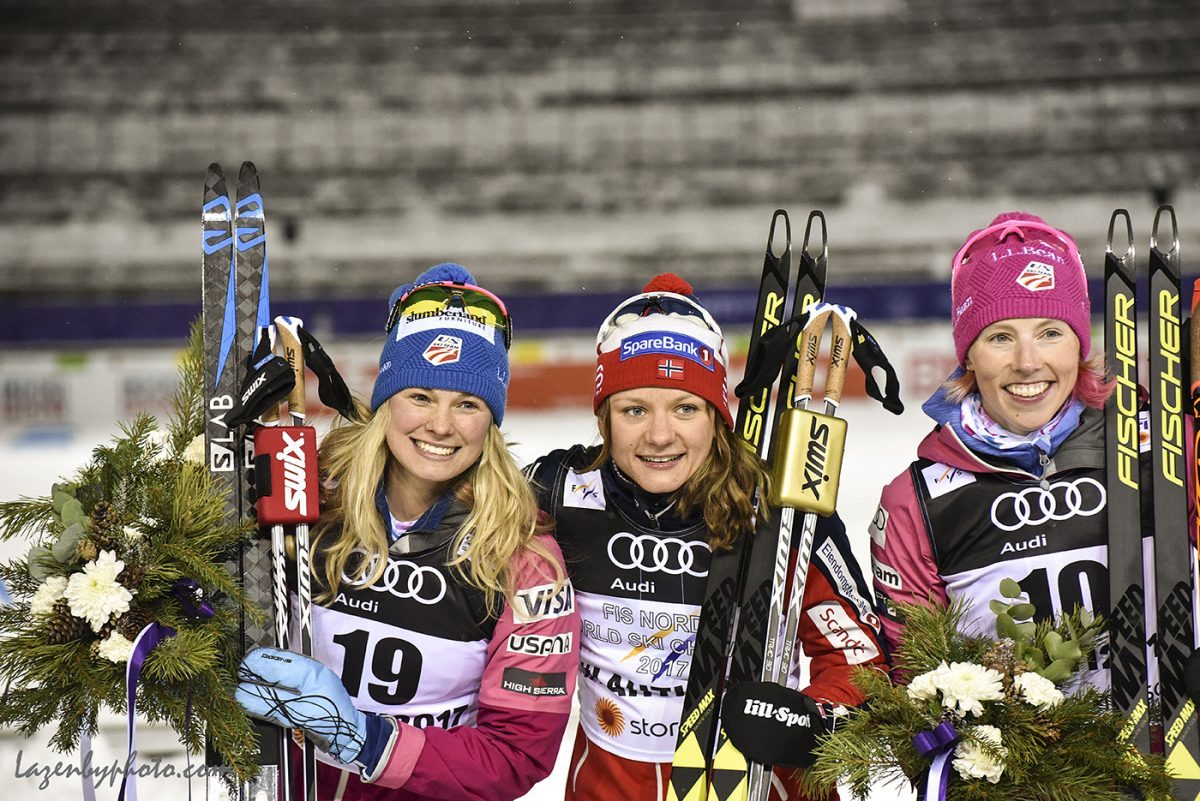
    An American sandwich: U.S. Ski Team members Jessie Diggins (l) and Kikkan Randall (r) sharing the podium with Norway’s Maiken Caspersen Falla (c) after Falla won the women’s freestyle sprint at 2017 Nordic World Championships on Thursday in Lahti, Finland. Diggins placed second and Randall was third. Diggins and Randall are now tied for the most World Championships medals with three apiece. (Photo: John Lazenby/Lazenbyphoto.com)

    LAHTI, Finland — Three: that’s the magic number. On a historic night in Lahti on Thursday, three of the four U.S. women entered in the 2017 Nordic World Championships 1.4-kilometer freestyle sprint advanced from their quarterfinals to the semifinals and eventually, the final.

    Toeing the start line for the American triad was the U.S. Ski Team’s (USST) Kikkan Randall, Jessie Diggins and Sophie Caldwell. Filling the final three spots were two Swedes — Hannah Falk and Ida Ingemarsdotter — as well as Norway’s Maiken Caspersen Falla.

    Not making the cut was the week’s sprint favorite, Stina Nilsson. The young Swedish superstar had crashed while cornering the final turn in her semifinal, taking out Russia’s Natalia Matveeva and earning herself a yellow card and relegation to last in the heat. Randall and Caldwell, who were both in Nilsson’s semi, maneuvered around the spill to advance in second and third, respectively.

    With no Nilsson, Sweden put its faith in Ingemarsdotter and Falk, while the U.S. comprised half of the field in the women’s final.

    “That’s for sure the funnest final I have ever been a part of,” Randall said during a post-race press conference. “Before we went to the start we did a little team cheer … we had such good energy between the three of us.”

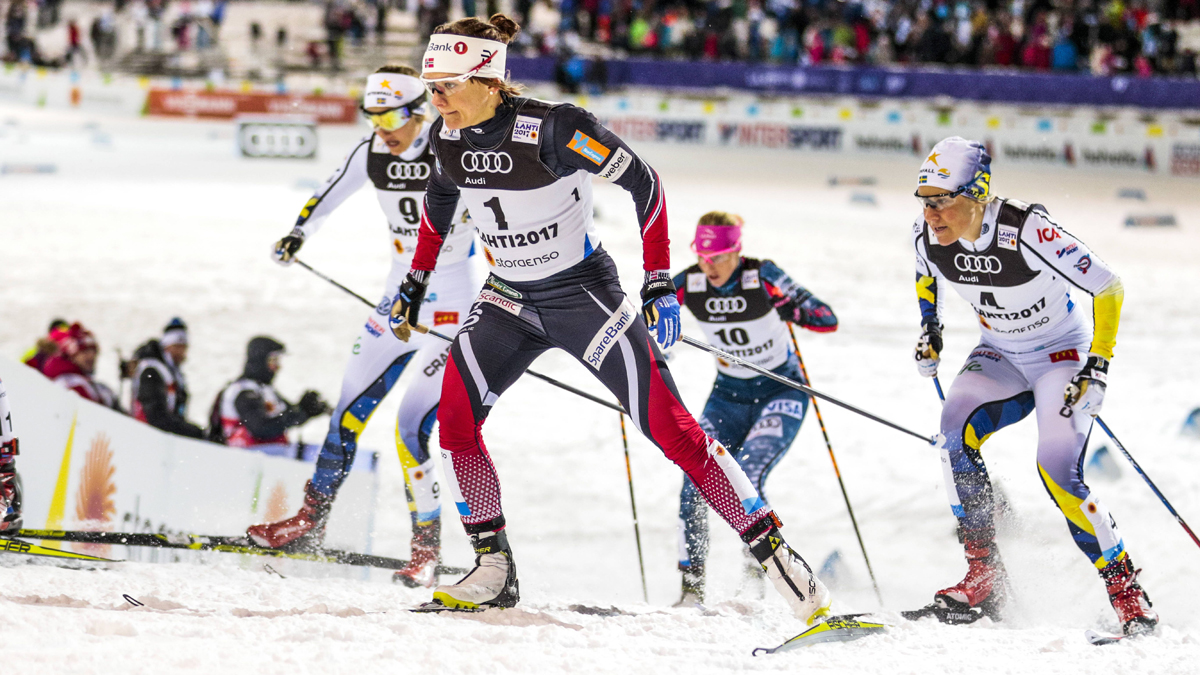
    Norway’s Maiken Caspersen Falla (1) leading Sweden’s Hanna Falk (r) and Stina Nilsson (l) and American Kikkan Randall (10) during the first semifinal of the women’s 1.4 k freestyle sprint at 2017 Nordic World Championships in Lahti, Finland. Falla went on to win the final for the first gold medal of the championships and Randall placed third overall. (Photo: Fischer/NordicFocus)

    Feeding off each other’s energy as they started the race, the Americans remained grouped together through the first climb toward the back of the pack. Meanwhile, Falla found herself skiing in the front by the time the finalists crested the top of the first hill.

    “That’s my favorite tactic I am always using. If I am doubting or don’t know what to do, I take the lead and hope for the best,” Falla said during the press conference.

    The Norwegian kept it that way for the remainder race, distancing herself by close to 10 meters by the top of the second climb. With one final descent to go, she had tightened her hold on the World Championships freestyle sprint title.

    Leading the charge from behind was Ingemarsdotter. Diggins pressed closely behind to the Swede’s right, Randall to the left. Breathing down their necks were Caldwell and Falk.

    By the bottom of the descent, Diggins had moved around the Swedish skier. Randall continued press from behind, but so, too, did Falk.

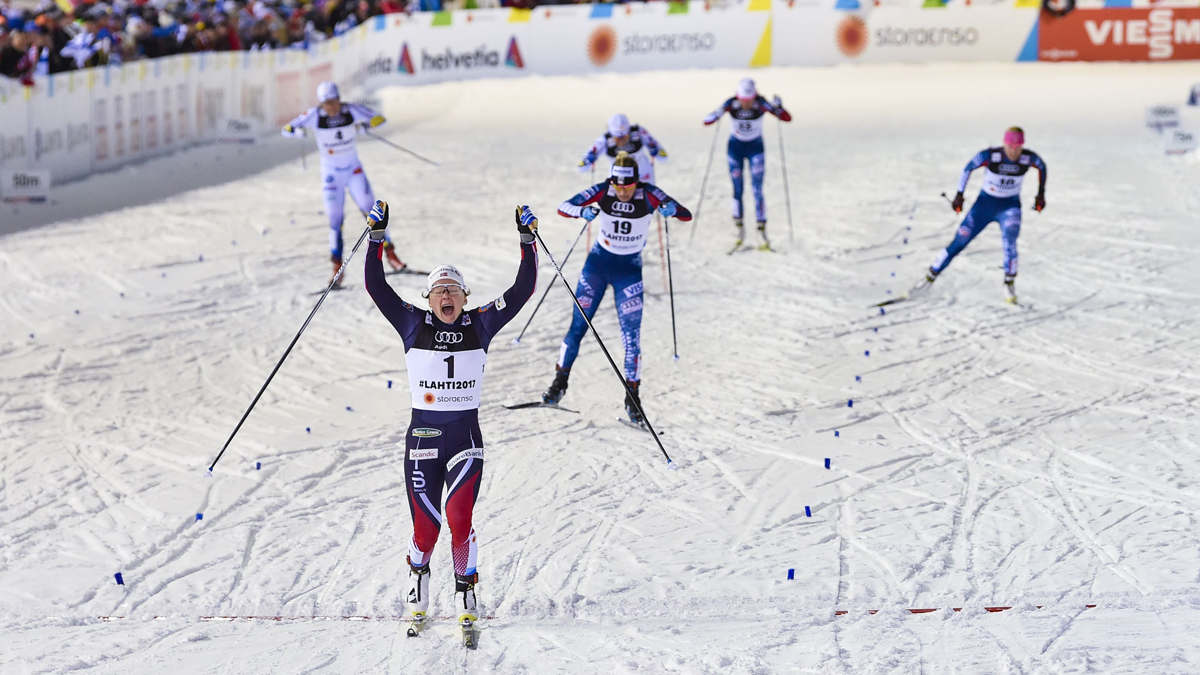
    Norway’s Maiken Caspersen Falla celebrates her gold medal in Thursday’s freestyle sprint ahead of Americans Jessie Diggins (19) and Kikkan Randall (r), who placed second and third, respectively, at 2017 Nordic World Championships in Lahti, Finland. The third U.S. woman in the final, Sophie Caldwell (second from r) finished sixth. (Photo: Fischer/NordicFocus)

    In the final 100 meters, Falla staved off any attempts from Diggins, crossing first in a time of 3:02.34 minutes for the gold medal. Just 1.66 seconds back, Diggins claimed silver — her third World Championships medal and second individual silver.

    Though she placed second in last year’s Lahti World Cup freestyle sprint, Diggins admitted that the 2017 event was not where she had planned to put her focus for the week.

    “I was … targeting some other races this week,” the 25-year-old Diggins said during the press conference, noting that she has been feeling strong this year on the World Cup. She’s already won two individual races this season and placed second in the skiathlon Obsterdorf, Germany. At the start of Thursday’s sprint, she recalled thinking, ” ‘Why not? This could be my day.’ ”

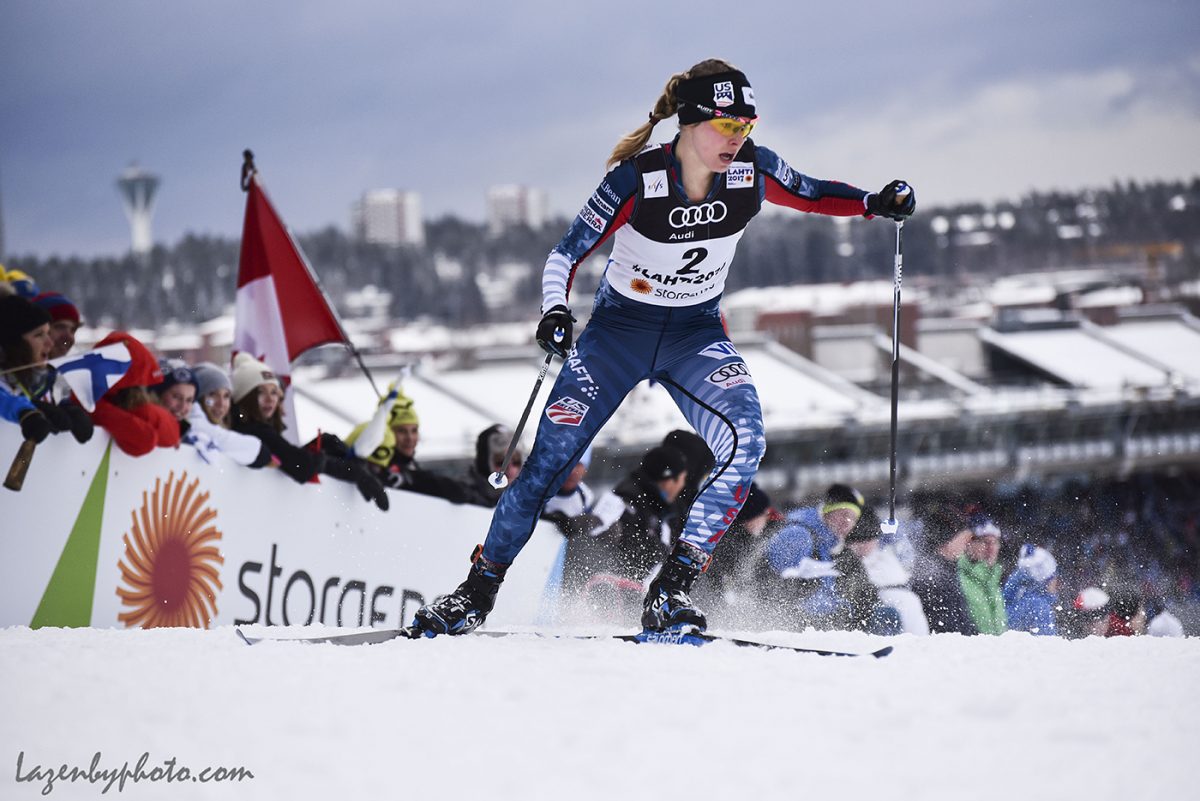
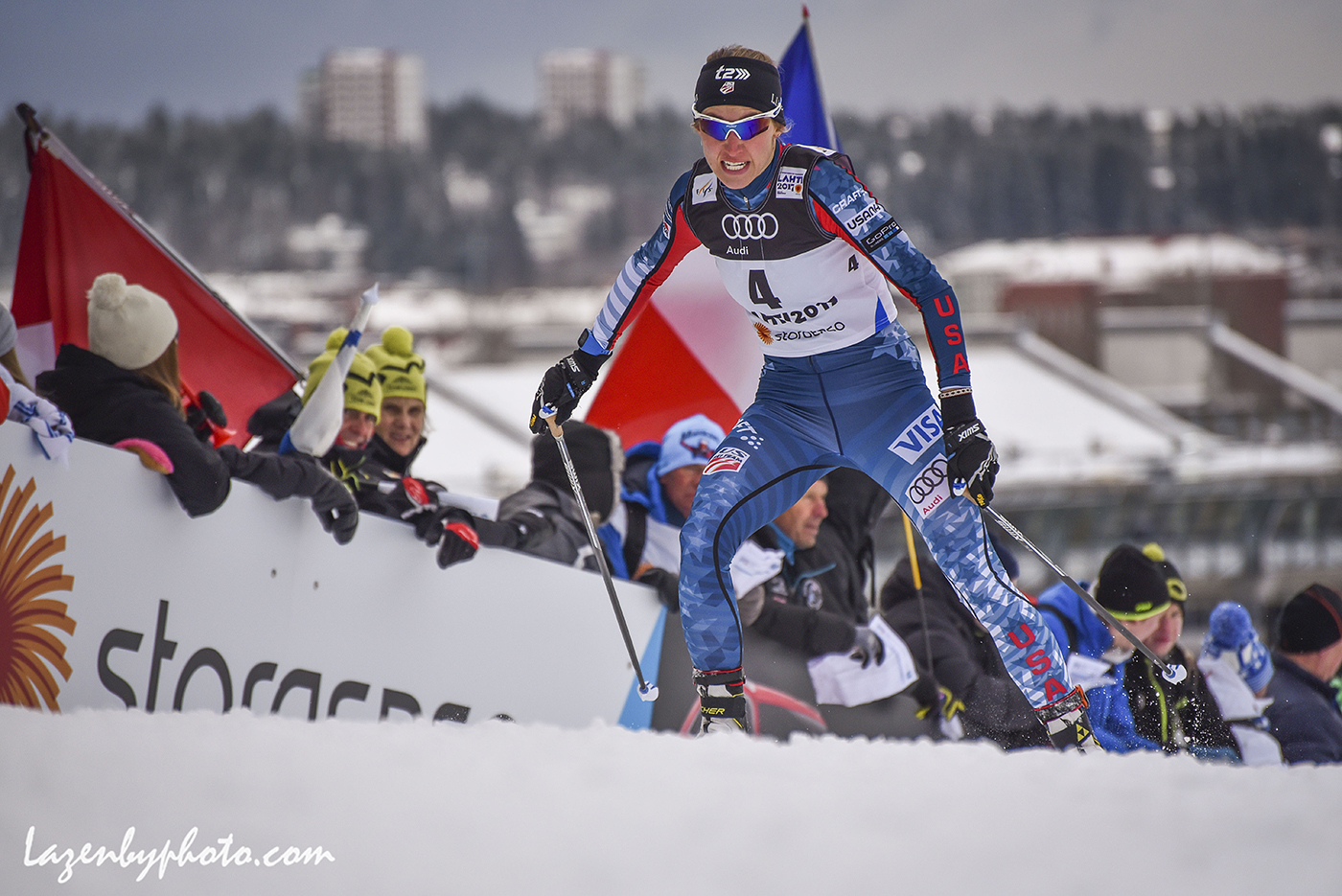
    Jessie Diggins (U.S. Ski team) during qualification on Thursday in the 1.4 k freestyle sprint at the Lahti World Championships. She qualified in 19th and went on to finished second overall for her second-career individual World Championships silver medal. (Photo: John Lazenby/Lazenbyphoto.com)

    The Minnesota native proved it was, with her second-place finish tying her for the most champs medals won by a U.S. woman. The other woman to have three? After capturing third place (+3.76) on Thursday, that would be Randall.

    The U.S. Ski Team veteran and three-time Sprint World Cup winner, now has two individual World Championships medals, as well: a bronze on Thursday, a silver from the 2009 sprint in Liberec, and her 2013 freestyle team-sprint gold, which she earned with Diggins in Val di Fiemme, Italy.

    “It was a slow start to the season, and it took a lot of patience,” Randall said of some of her earlier-season performances and whether those had her worried as she entered World Championships. “But the shape was building and building, and I hoped to find the best shape here, and it worked!”

    This year’s world medal, however, is a bit different for the 34-year-old Alaskan. It’s one she’s won as a mom.

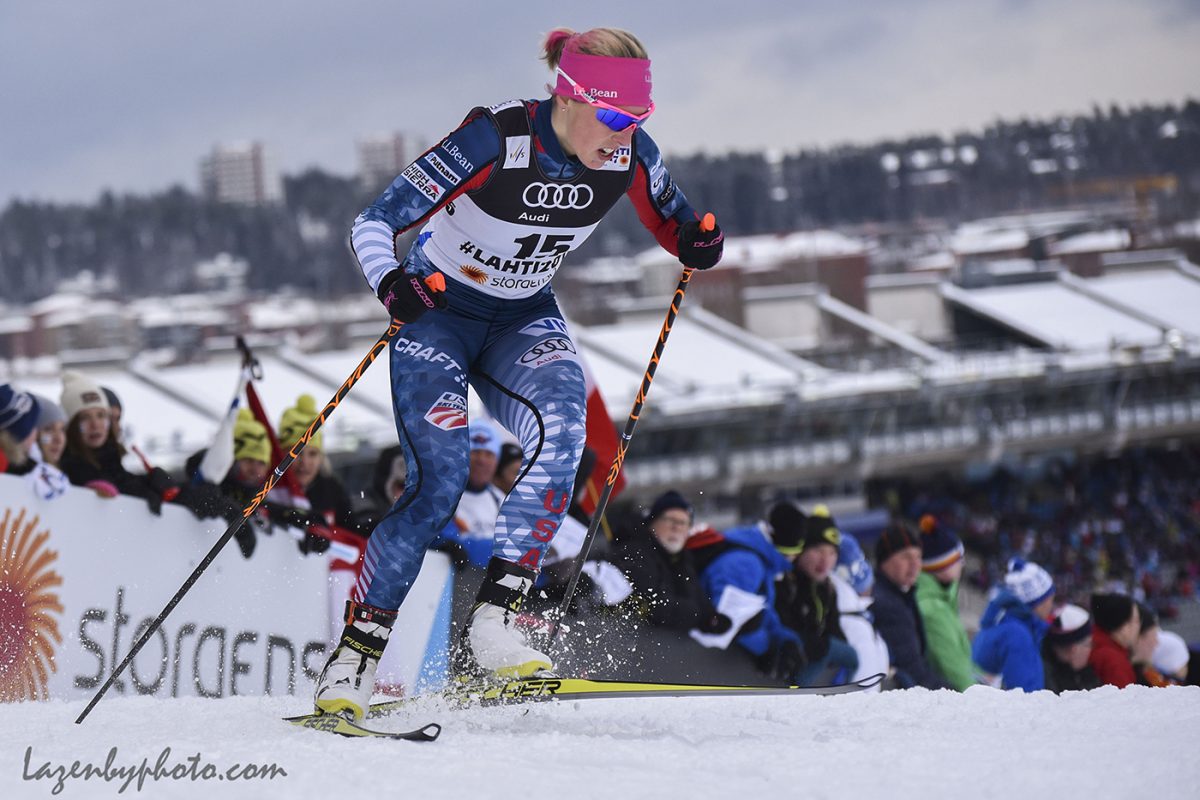
    The U.S. Ski Team’s Kikkan Randall lays it down during the women’s 1.4 k freestyle sprint qualifier on Thursday at Nordic World Championships in Lahti, Finland, where she qualified 10th and went on to claim bronze in the final. (Photo: John Lazenby/Lazenbyphoto.com)

    “I think it’s very encouraging to know that it’s only been 10 months [since I had a baby], and I have been able to come back to top form,” Randall said. “I was able to train well through my pregnancy, and come back to training pretty soon after the birth. So it’s great to see everything come together here.”

    Sweden was shut out of the medals; Falk placed fourth (+3.91) and Ingemarsdotter finished fifth (+4.42).

    Caldwell once again performed on the big stage. In front of a packed Lahti Ski Stadium and a global television audience, the 26-year-old Vermonter appeared unfazed. In fact she’s been in this spot before — she placed sixth at the 2014 Sochi Olympics in the skate sprint. Déjà vu all over again? Not exactly. But in Sochi, the sprint final did feature two athletes Caldwell faced in Lahti: Falla and Ingemarsdotter. And if familiarity breeds comfort, racing against teammates Diggins and Randall positioned her against known athletes, a book she’s read hundreds of times either in practice or in competition.  

    Caldwell, teammates with Diggins at the Stratton Mountain School in Vermont, qualified 13th. And her first pass through the media zone after placing second in her quarterfinal was the look of hyper-focus.

    By the time she moved onto the final as a lucky loser — after deftly angling around Nilsson and Matveeva — a grin broke through. 

    Sophie Caldwell (U.S. Ski Team) racing to 13th in the women’s freestyle sprint qualifier on Thursday at 2017 Nordic World Championships in Lahti, Finland. She went on to reach the final, where she placed sixth to tie her career best at a world championship (actually an Olympics, after placing sixth in the skate sprint in Sochi). (Photo: John Lazenby/Lazenbyphoto.com)

    Caldwell placed sixth in the final, 5.37 seconds in back of Falla after qualifying 13th, for her best result in her third World Championships.

    “Today was an incredible day for the team. I don’t know if we ever had three people in the final,” Caldwell said. “And to have Jessie and Kikkan on the podium is amazing.”

    Caldwell acknowledged the personal significance of the evening’s sprint. “It was a great day for me, this is the first final I made this year,” she said. “And I had strong feelings throughout the day. I feel like I felt better as the day went on, with the exception of the final where my legs got a little tired.”

    Of the four U.S. women that started Thursday’s sprint, all four qualified for the heats. Ida Sargent made the top 30 in 27th, behind her teammates Randall (10th), Caldwell (13th), and Diggins (19th). Sargent went on to finish fifth in her quarterfinal (4.6 seconds behind Matveeva, who won that heat)  for 24th overall.

    “I am just really proud of the athletes,” U.S. Ski Team Head Coach Chris Grover said. “All of the athletes that were competing today, all of the athletes on the U.S. program that were not competing today that were cheering from in front of the television this evening. … I am really proud of the team that we have collected here, in terms of the service team, and coaching team, medical and support team … and everyobdy that is surrounding that for USA.”

    Kikkan Randall (l) and Jessie Diggins celebrate their bronze and silver medals, respectively, in the women’s individual freestyle sprint on Thursday, the first day of 2017 Nordic World Championships in Lahti, Finland. (Photo: John Lazenby/Lazenbyphoto.com)

    “For us this was definitely a target event,” he explained.

    In five consecutive visits to Lahti, the U.S. has reached the podium in every World Cup skate sprint. Andy Newell started the trend back in 2008, but Randall got the ball rolling for the women’s program in 2013 and 2014, winning the skate sprint there both years. Also in 2014, Caldwell reached the podium for the first time in third place. In 2015, Randall scored another Lahti podium in third (while Diggins was just off it in fourth), and last season, Diggins placed second.

    So you can say freestyle sprint, especially in Lahti, have been the U.S. team’s jam for some time.

    “It’s been a great race historically for us,” Grover said. “When we looked ahead at what our best medal-potential races were for the championships, obviously skate sprints have been one of the best events for us for years in general, but in particular for these championships, we really targeted this day.”

    Canada entered three women, all members of its U25 Team, with Dahria Beatty placing 37th and missing the top 30 necessary to qualify for the heats by 3.67 seconds. Cendrine Browne finished 48th (+20.42) and Katherine Stewart-Jones 58th (+26.29) out of 107 women in the qualifier.

    Results

    — Harald Zimmer, Chelsea Little, and Alex Kochon contributed

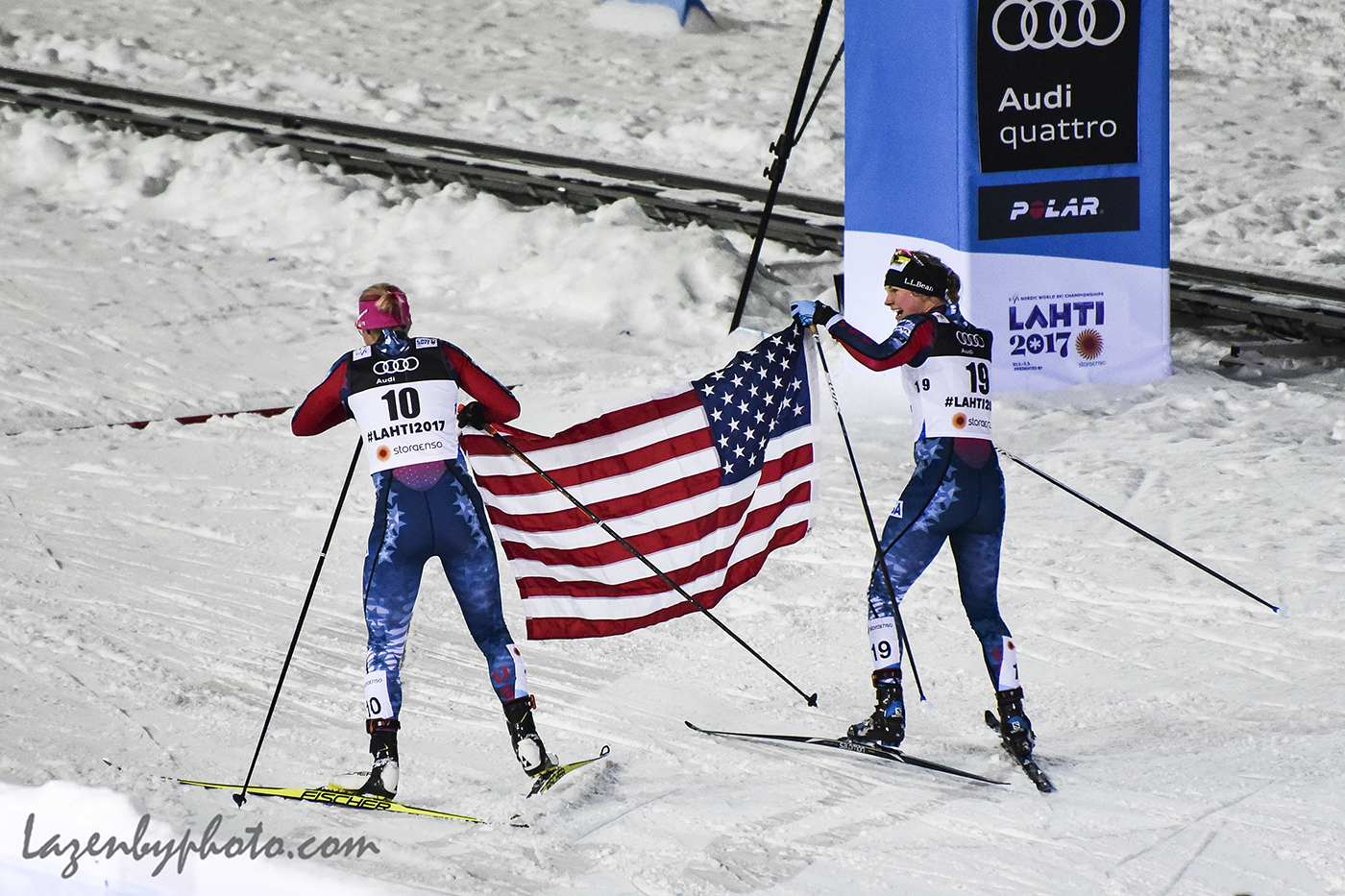
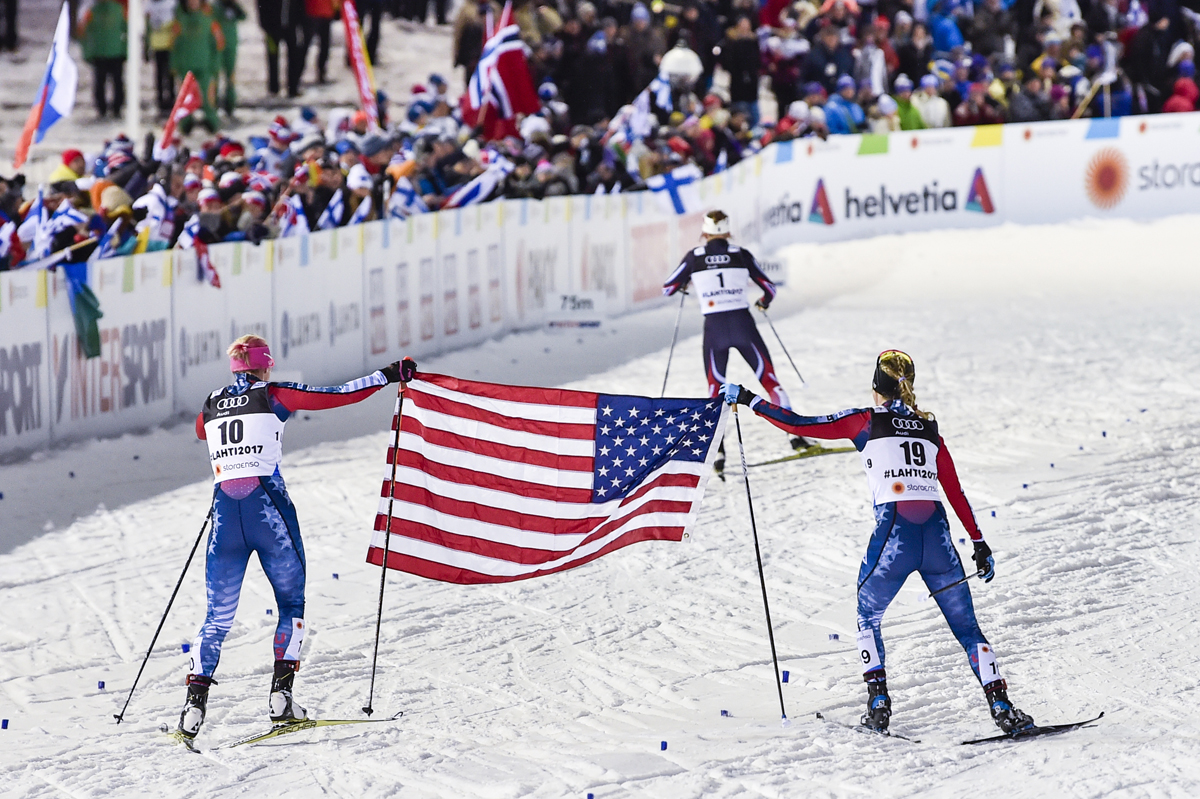
    Kikkan Randall (l) and Jessie Diggins (r) hold the American flag during a victory ski down the finishing lanes to celebrate their bronze and silver medals, respectively, in the women’s individual freestyle sprint on Thursday, the first day of 2017 Nordic World Championships in Lahti, Finland. Ahead of them, Norway’s Maiken Caspersen Falla celebrates gold. (Photo: Fischer/NordicFocus)
  • Sochi Warmup: What You Need to Know Fewer Than 200 Days Out

    Sochi Warmup: What You Need to Know Fewer Than 200 Days Out

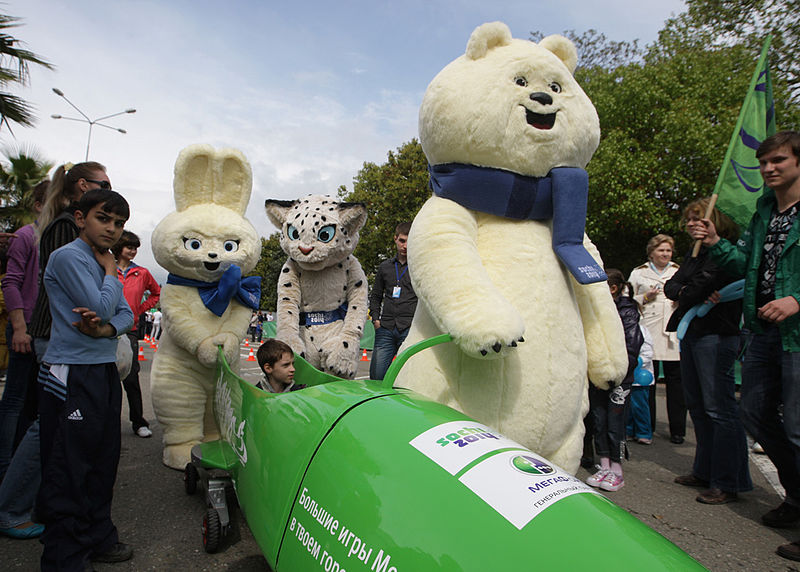
    The mascots of the 2014 Sochi Winter Olympics, a polar bear (r), European hare (l) and an Amur leopard (c) seen on the city streets during the 2014 Winter Olympics: 1,000 Days To Go festival. (Photo: Wikimedia Commons)
    The official mascots of the 2014 Winter Olympics, a polar bear (r), European hare (l) and an Amur leopard (c), walk the city streets in May during the “2014 Winter Olympics: 1,000 Days To Go” festival in Sochi, Russia. (Photo: Wikimedia Commons)

    We’re at the 199-days-and-counting mark if you’re keeping track of how much time remains until the start of the 2014 Winter Olympics in Sochi, Russia, and we know many of you are. In case you haven’t been reading every ounce of pre-Olympic coverage, we’ll do our best to stay on it and provide relevant nordic updates throughout the next sixth months.

    For now, here’s some noteworthy starter information:

    1.    Opening ceremony: The 22nd Winter Olympic Games will kick off Friday, Feb. 7, in Sochi, Russia. Closing ceremony 16 days later on Sunday, Feb. 23.

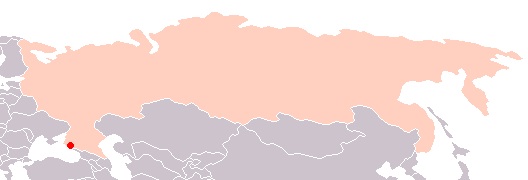
    The location of Sochi (as indicated by red dot) in southwestern Russia. (Photo: Wikimedia Commons)
    Sochi (as indicated by red dot) in southwestern Russia. (Photo: Wiki Commons)

    2.    Where: Sochi, which spans some 145 kilometers (90 miles) with a population around 345,000 along the shores of the Black Sea in western Russia.

    Krasnaya Polyana, an urban mountain town about an hour drive (70 kilometers) inland from Sochi, is where all the snow-sport events will be held (i.e. cross-country skiing, biathlon, alpine, freestyle, snowboarding). In 2010, it had a population of about 4,500, but expect a lot more people buzzing around in February.

    3.    Climate: Categorized as humid subtropical, Sochi typically experiences mild winters averaging 11 degrees Celsius (52 Fahrenheit) during the day and 4 degrees Celsius (39 degrees Fahrenheit) at night from December to March. What could that mean for snow sports? Another potentially tricky year, just like in 2010 in Vancouver, British Columbia, and 1998 in Nagano, Japan. In both previous Olympics, weather postponed events, but everything eventually took place. According to Philip Hersh of the Chicago Tribune, the Russians are stockpiling snow.

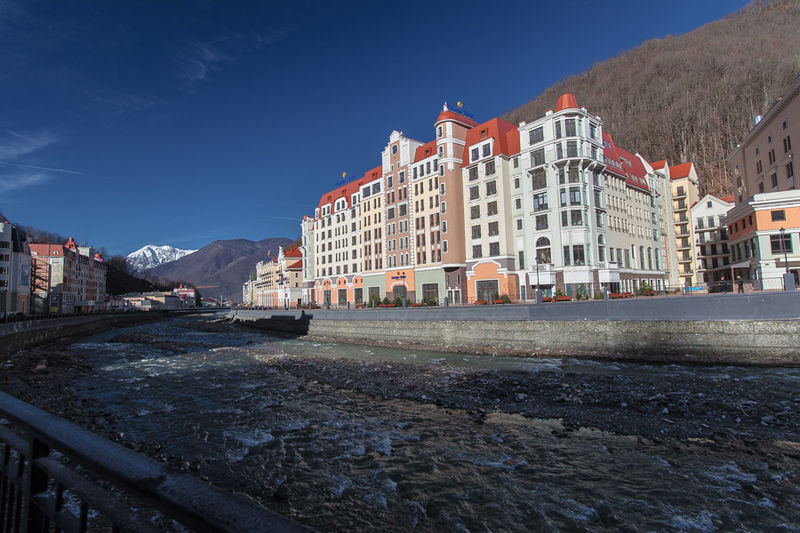
    The Golden Tulip Rosa Khutor Hotel on the  Mzymta River in Krasnaya Polyana, Sochi. (Photo: Wiki Commons)
    The Golden Tulip Rosa Khutor Hotel on the Mzymta River in Krasnaya Polyana, Sochi. (Photo: Wiki Commons)

    4.    Money: Hersh posed the question as why a palm-tree-laden, authoritarian nation would be awarded the Winter Games. Because of “Russian supremo [president] Vladimir Putin,” he wrote, who promised an unlimited budget and has already overspent it. Last February, a year from the Olympics, Russia had spent $51 billion dollars, $11 billion more than China’s previous record-setting grand total for the 2008 Summer Games.

    Some $130 million dollars alone was set aside for a road connecting Krasnaya Polyana to Sochi, and according to the Christian Science Monitor, that makes it the world’s most expensive byway. “That’s about 50 times the average cost of a highway in the United States,” former deputy prime minister Boris Nemtsov told the Monitor.

    5.    A first: Neither Russia nor the former Soviet Union ever hosted the Winter Olympics, although it’s long been considered a winter-sports stronghold. Who could forget then-president Dmitry Medvedev’s televised remarks four years ago, after Russia’s showing at the Vancouver Games. “Those responsible should take the brave decision and sign a letter [of resignation]. If they can’t, we will help them,” he said of the Russian officials and sports bureaucrats blamed for a lack of medals and disappointing sixth-place finish in men’s hockey.

    6.    A dozen new events: Stay tuned for the brand-new biathlon mixed relay, women’s ski jumping, luge team relay, figure skating team event, men’s and women’s halfpipe and slopestyle freestyle skiing, and men’s and women’s slopestyle and parallel slalom snowboarding.

    7.    How to watch: According to the Tribune, prime-time coverage on NBC will be delayed, but more than half the Olympic events will be live on some NBC network, and every event will be streamed live.

    8.    Boycotts: Remember Beijing and the civil-rights movements surrounding the Games? Same sort of thing here, except Russia isn’t just ignoring protesters, it’s threatening them to stay away. Putin recently signed a law allowing police officers to arrest tourists and foreigners they suspect of being homosexual, lesbian or “pro-gay,” the New York Times reported. What? Yep, if this stands, those arrested could be detained for up to 14 days – that includes Olympic athletes, coaches, trainers, family members, fans and spectators. Earlier in June, Putin signed another bill classifying “homosexual propaganda” as pornography, which essentially means that anyone who condones homosexuality to someone underage could face fines or jail time.

    The International Olympic Committee (IOC) responded with a statement that read, “The IOC would like to reiterate our long commitment to non-discrimination against those taking part in the Olympic Games, the IOC is an open organization and athletes of all orientations will be welcome at the Games.”

    A leading international organization, Human Rights Watch (HRW) wrote a letter to the IOC urging it “to take additional steps to send a clear signal to the Russian authorities that discrimination of people based on their sexual orientation and gender identity is at sharply at odds with Russia’s human rights and Olympic commitments.”

    HRW also encouraged the IOC to get a guarantee that Russian authorities will not adopt or implement homophobic legislation.

    “We also urge you to press the authorities to state publicly that, as Olympic Host, Russia will ensure, without distinction, the safety and the freedom of expression and association of all athletes, coaches, fans, and others who will attend the Sochi Games.”

    9.    No laundry: Don’t hang it from balconies or use window air conditioners, because Sochi doesn’t want to see it. Residents could face fines up to $46 dollars, The Moscow Times reported, for clothes on the line or air conditioners that look “chaotic.”

    The city “should look especially decent in a zone of international hospitality,” Sochi’s deputy mayor Yevgeny Gorlov wrote on the local government’s website last week. “If people have made the decision to install an air conditioner, they should have a symmetrical location on the building and be agreed upon with all the [other] owners … in an agreed scheme.” This is in effect for the preparatory period before the Games, but it brings up a previous concern: are people going to need air conditioners at the Winter Olympics? (See No. 3).

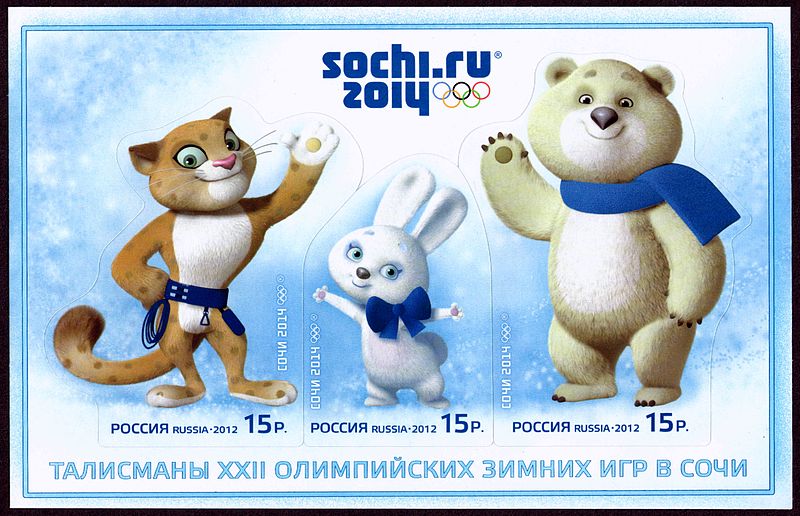
    10.  A polar bear, a European hare and an Amur leopard: These are the three official mascots of the Games, decided by a public vote (another first for Russia, according to the Sochi 2014 organizing committee).

    The official mascots of the 2014 Sochi Winter Olympics (Photo: Wikimedia Commons)
    The official mascots of the 2014 Sochi Winter Olympics (Photo: Wiki Commons)

    11.  “Hot. Cool. Yours.” The official Olympic slogan. Organizing Committee President and CEO Dmitry Chernyshenko said in a statement it’s aimed to bring more foreigners to Sochi and make Russians proud.

    “The Sochi 2014 slogan says it’s impossible not to take part, impossible not to watch, impossible not to get excited and it’s worth being proud because these are our Games,” Chernyshenko said.

    “Hot” and “cool” are references to Sochi’s sun-and-snow climate and symbolize progressive movement forward.