From the FasterSkier archive — posts syndicated from athletes’ and coaches’ own blogs between 2004 and 2012, kept online as published. Current coverage is at fasterskier.com.
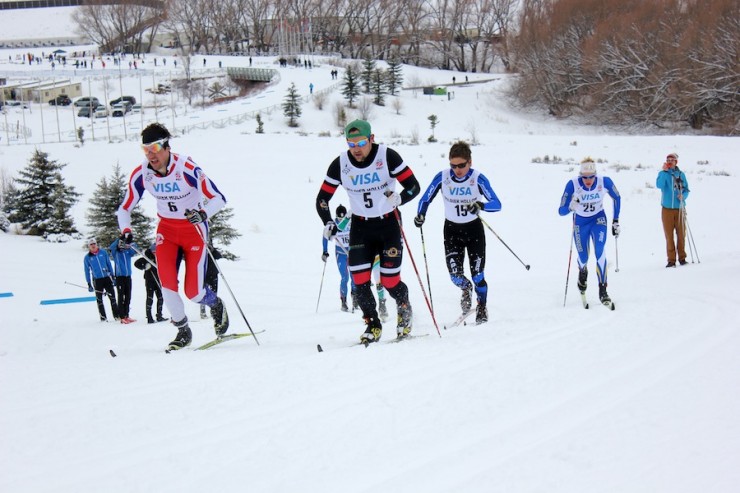
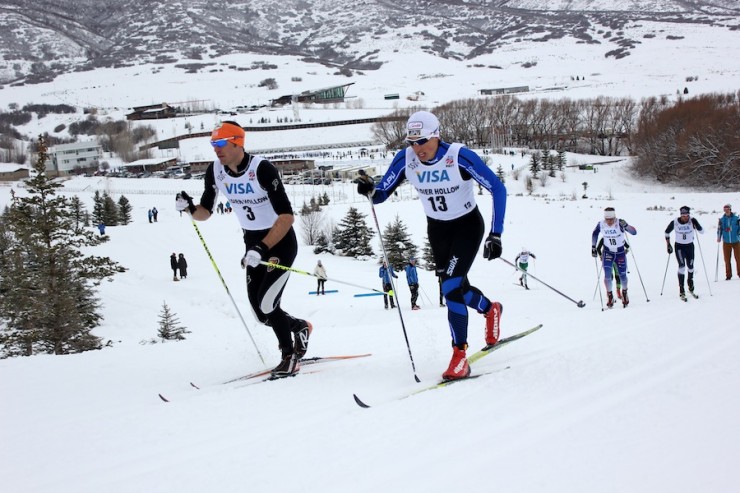
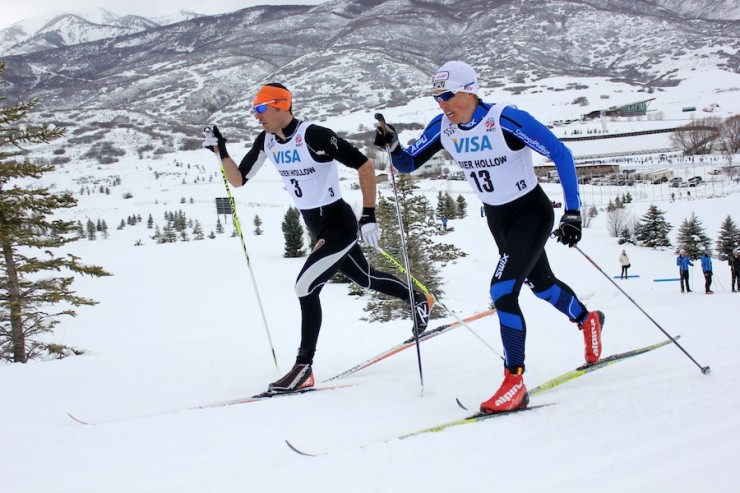
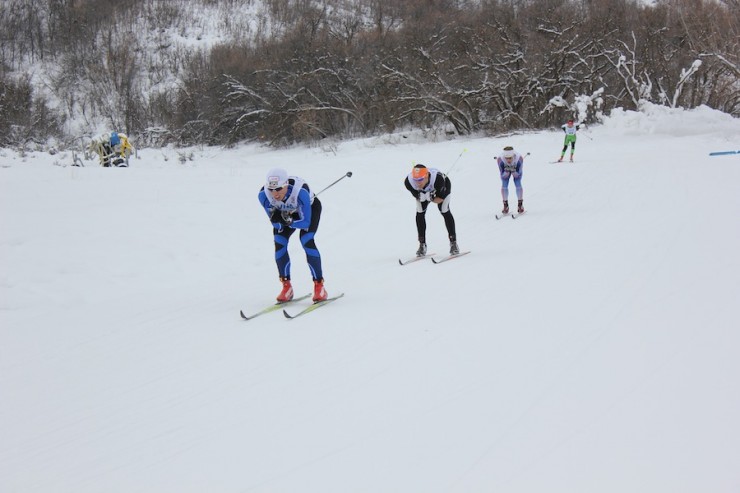
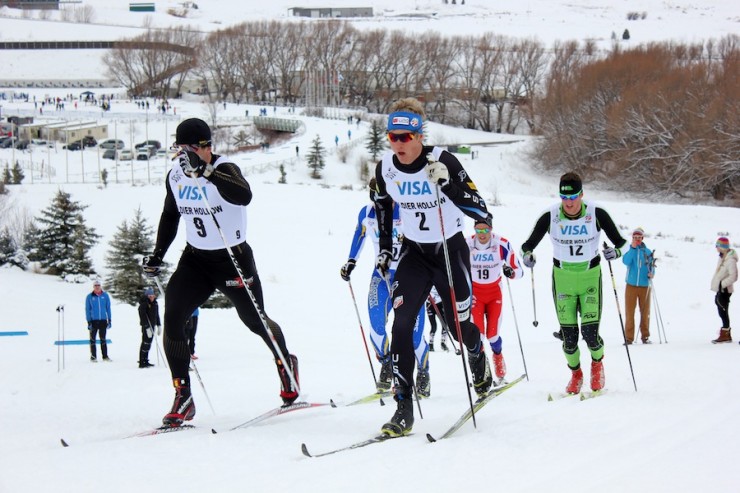
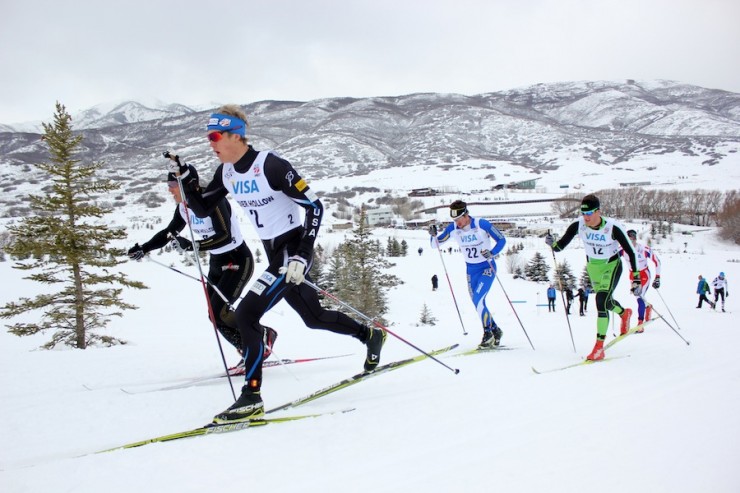
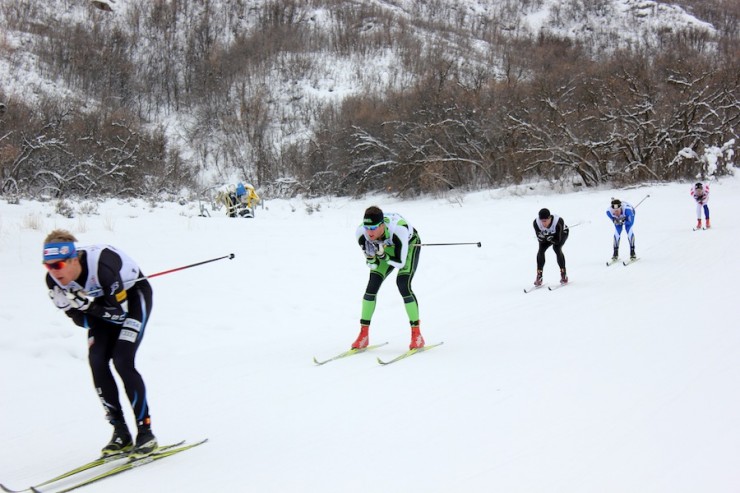
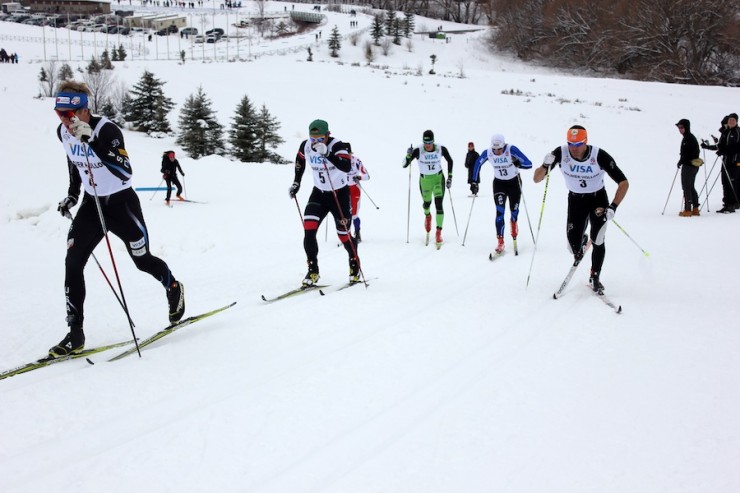
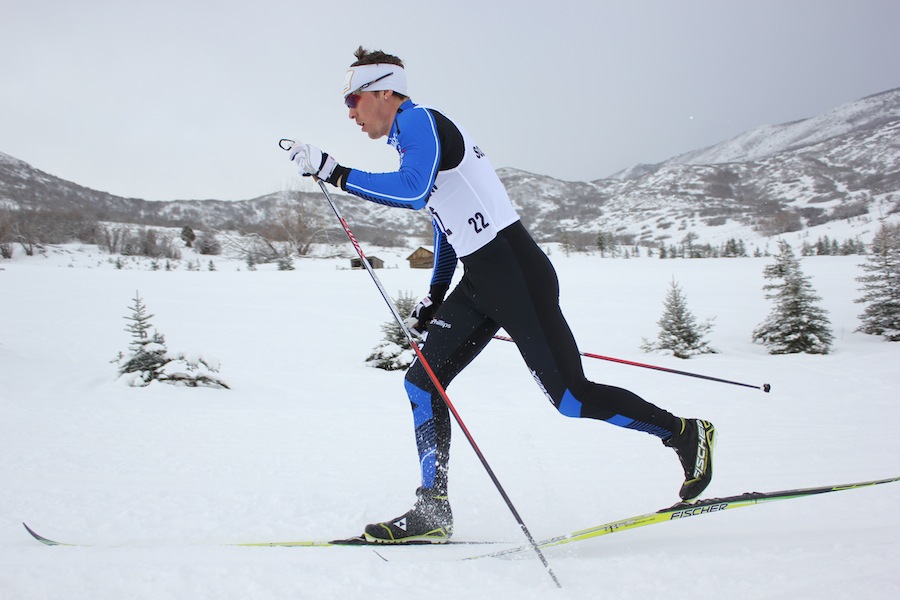
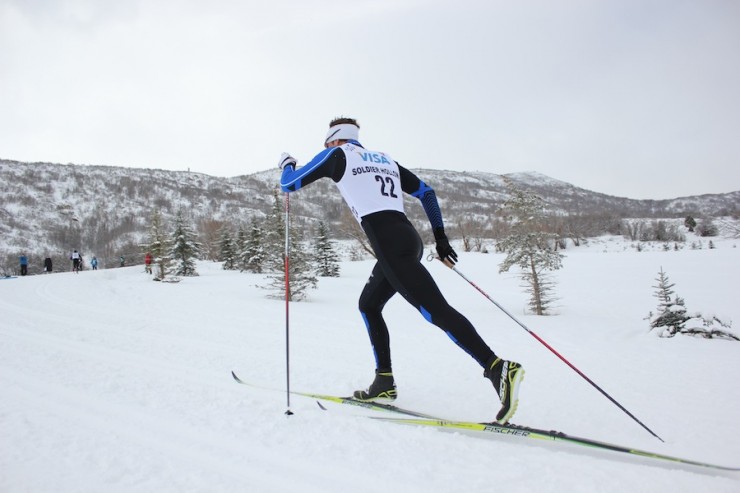
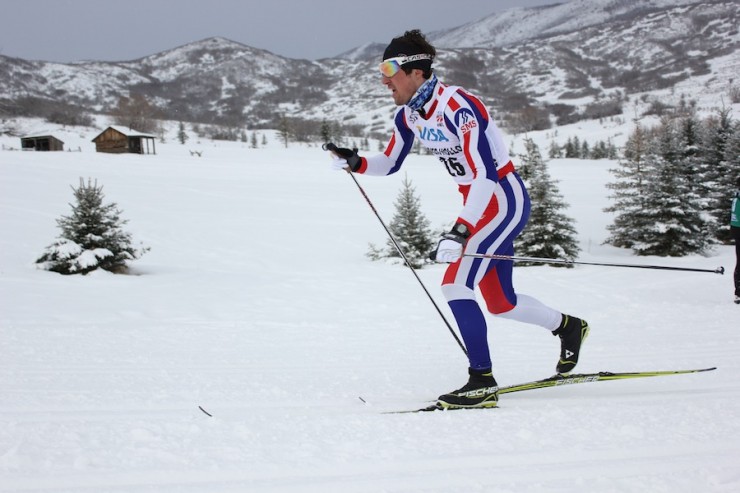
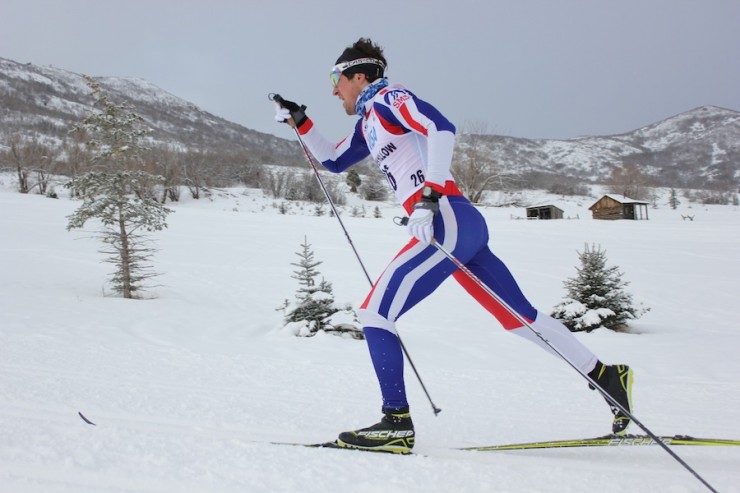
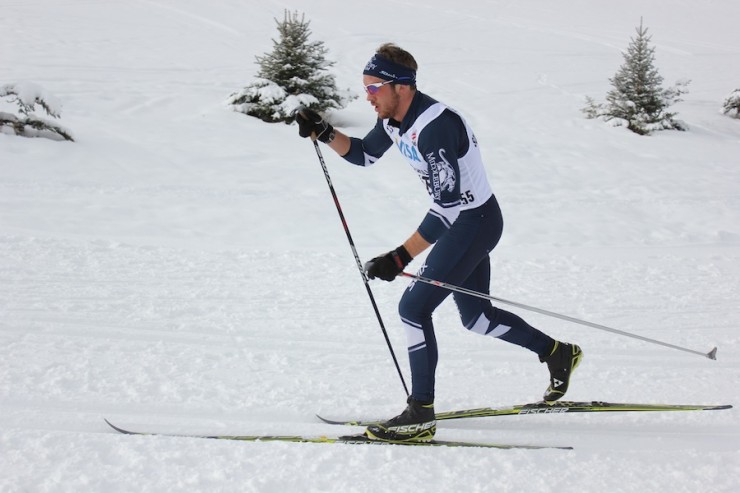
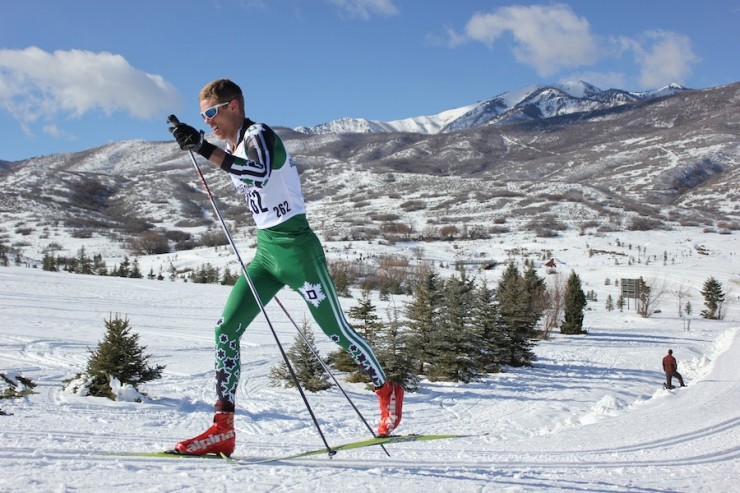
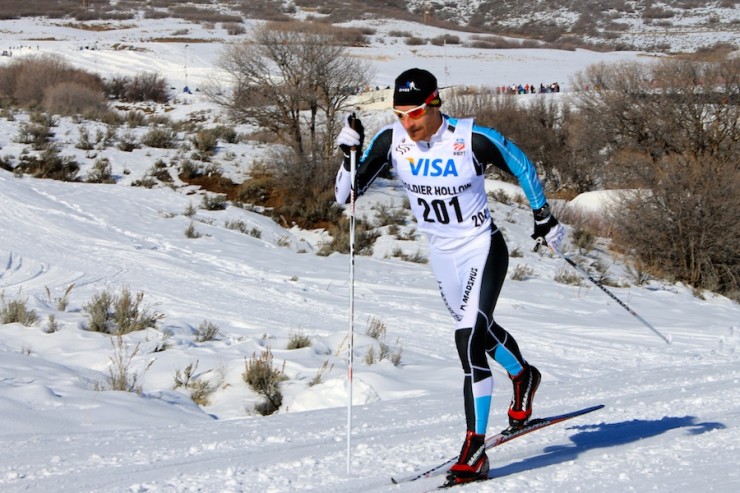
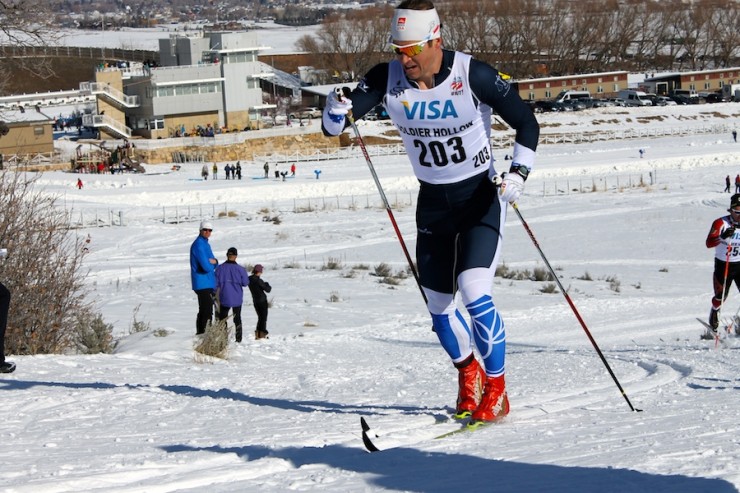
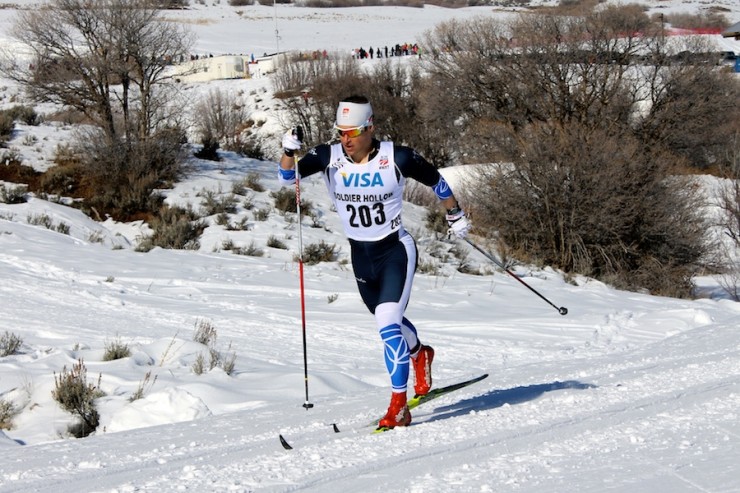
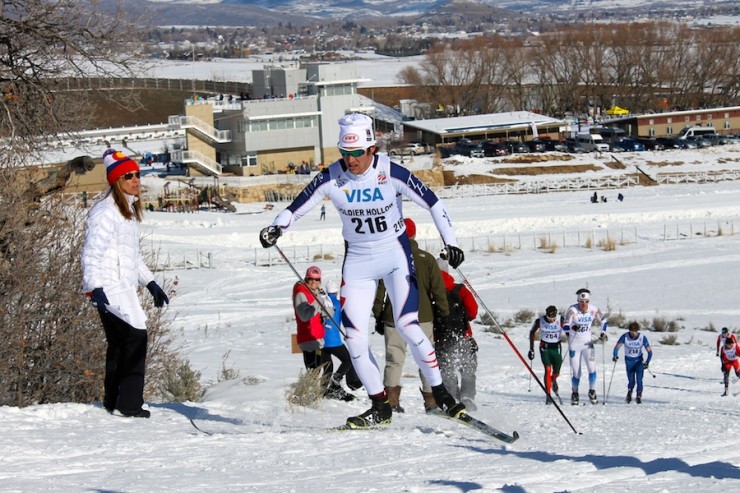
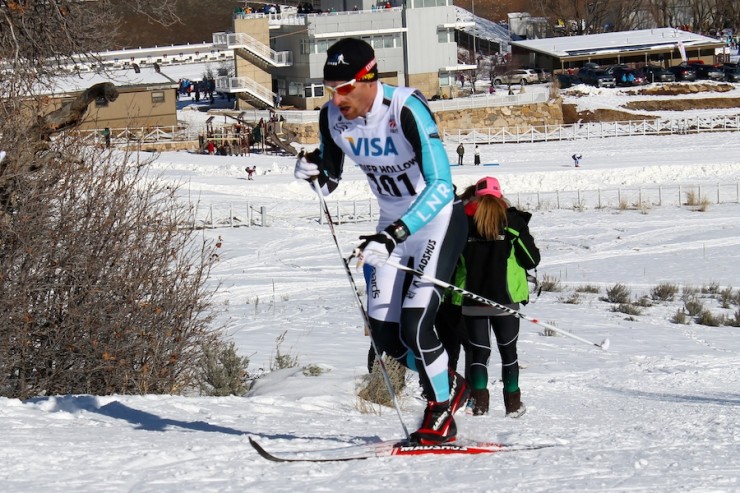
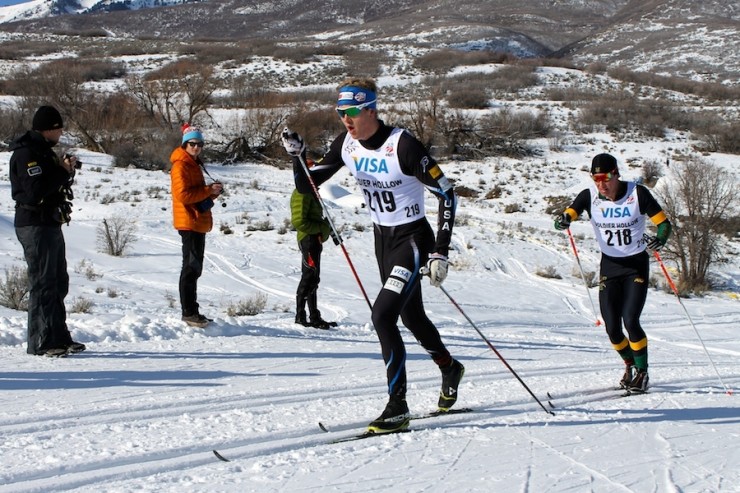
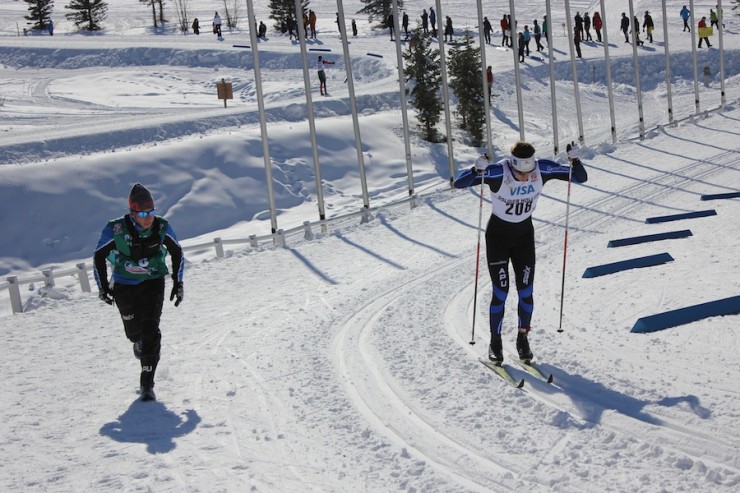
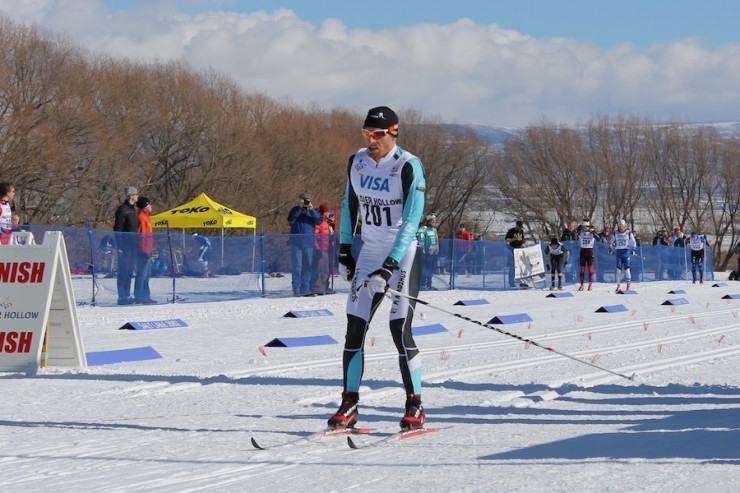
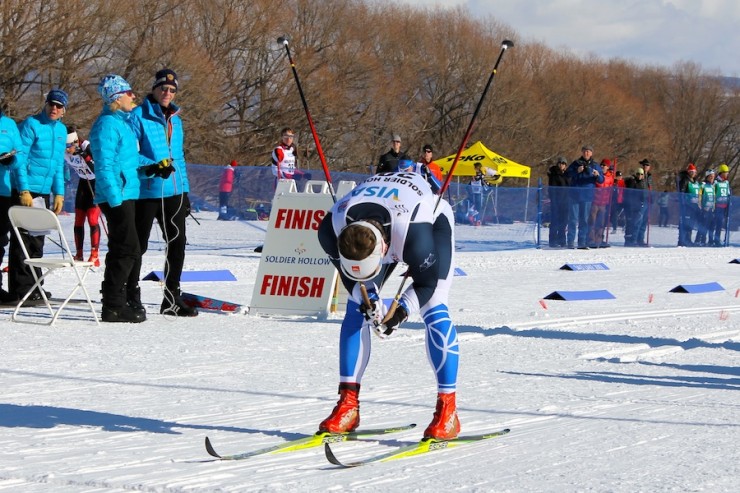
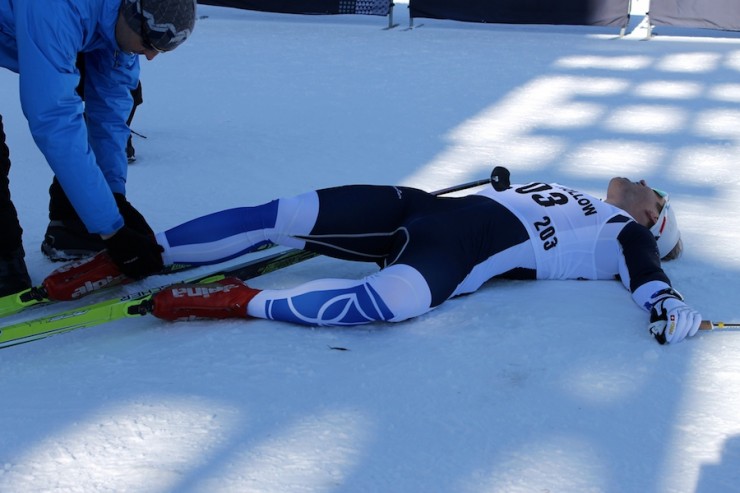
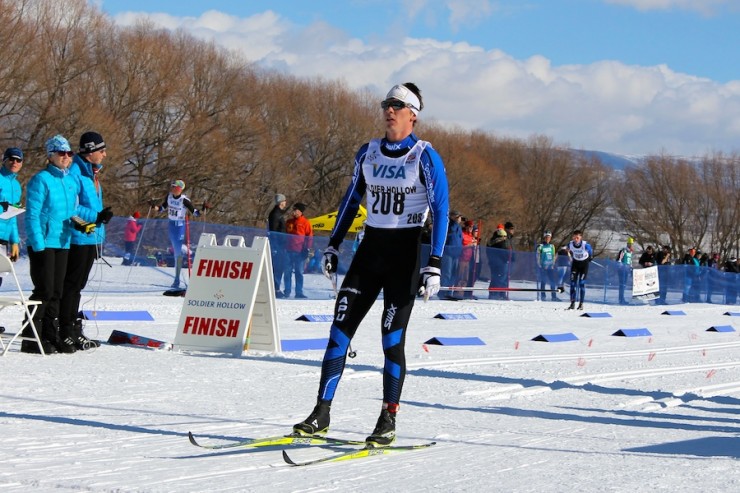
The morning of the skate distance races brought light, fresh, snowfall to the venue. The air temp hovered around -3C and the Doser (snow moisture) was reading 20-22% in skied areas on the new snow. For paraffin both LFW2 (K1) and HFW2 Nero tested very well. We chose to go with HFW2 Nerohttp://www.hwk-skiwax.us/HF-Wax/HWK-Ski-Wax-HFW-2-Nero.html which had been testing well all week. Our powder and top coat tests were also very predictable. Fluor Powder Warm (-4/+15) http://www.hwk-skiwax.us/Race-Powder/HWK-Ski-Wax-Fluor-Powder-Warm.html and Liquo racing winning our tests. However it was FP Warm that really shined during the Men’s 30k! This fluorpowder does extremely well in wet, new, fresh fallen snow, and when glazing is occurring. This wax is very durable and proved it during the men’s 30k SSCV/TH and Sylvan’s skis were lightning fast throughout the entire race! For structure, we used the STB/ HWK Olympia structure tool and pressed in the LU F, a very fine, linear broken structure that proved to be a great addition to the wax combo. Congratulations to Sylvan for winning his first National title and for bringing home the first national Nordic title for Ski and Snowboard Club Vail/ Team Homegrown and the Vail community!
We stayed with the same combo of HFW2 Nero and FP Warm for the junior races in the afternoon. The only difference was the structure used was the LU M long (broken linear medium) using the STB/HWK Olympia Structure tool. This combo could not be beat all day. The nice thing too is that FP Warm showed up on the APP. For people that are not familiar with HWK, the free APP provides great recommendations that are very accurate and fast. Do not hesitate to use this tool!
HWK would like to thank Allison Ebbetts, Lenka Sterling, Eric Pepper, and Dan Weiland for all of their help and hard work in getting SSCV/Team Homegrown and Team HWK great skis all week.
In the afternoon the sun warmed things up and the humidity dropped out. The snow moisture content in skied areas stayed the same and the snow took on a large granular, ball bearing quality. The Liquo Racing (0/-10C) was again extremely fast, only to be outdone by VP 375. This fluorstick is another test product from Austria that will be available next year. It excels when a higher moisture content is present, the snow is transformed and maintains the large granular, ball bearing like crystals. The suggested used air temp is (-6/+10C). This fluor stick was hand corked very well and allowed to cool. We brushed it with a horsehair brush followed by a nylon brush, and polished with ski with an antistatic cloth. The hand application is the best application for speed when working with HWK fluor sticks! Make sure to brush the fluor sticks very well.
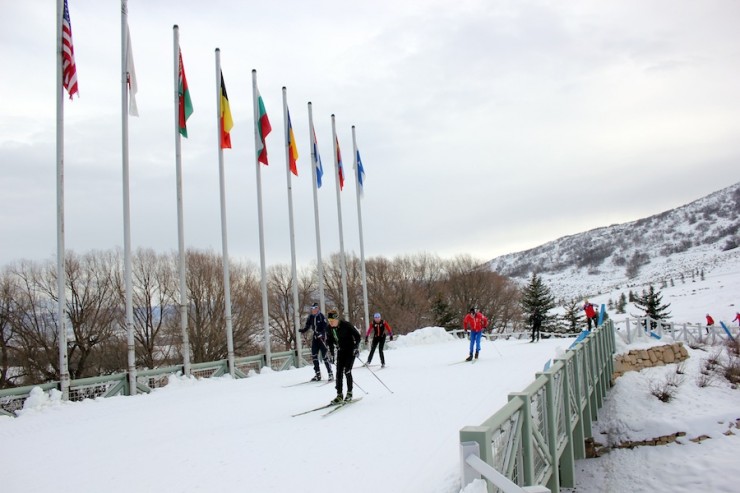
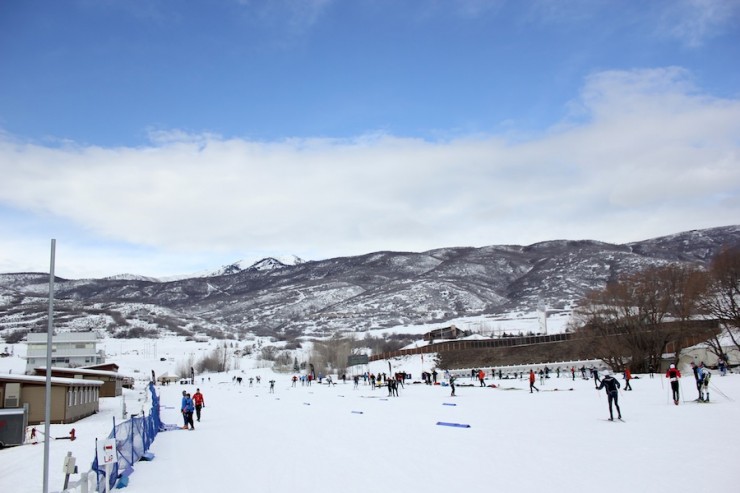
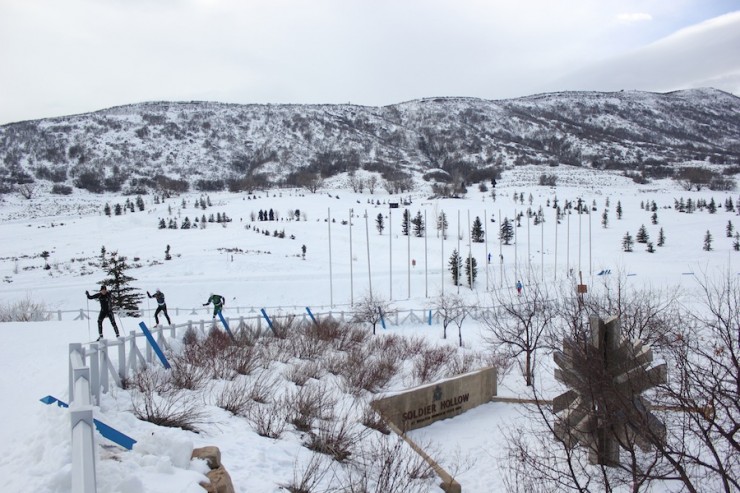
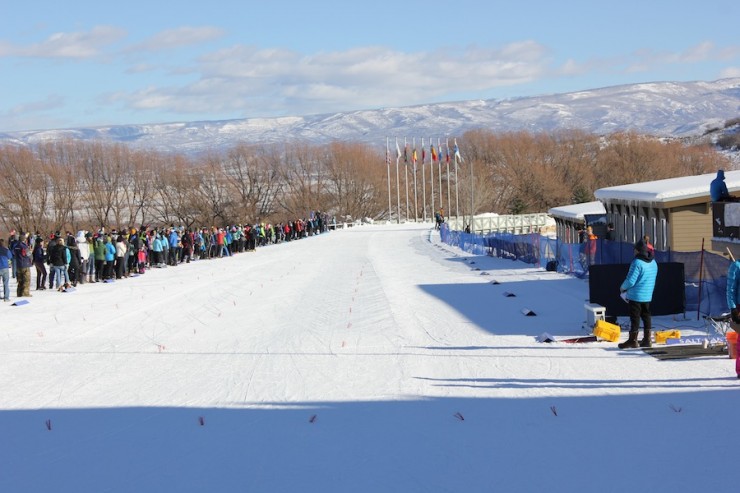
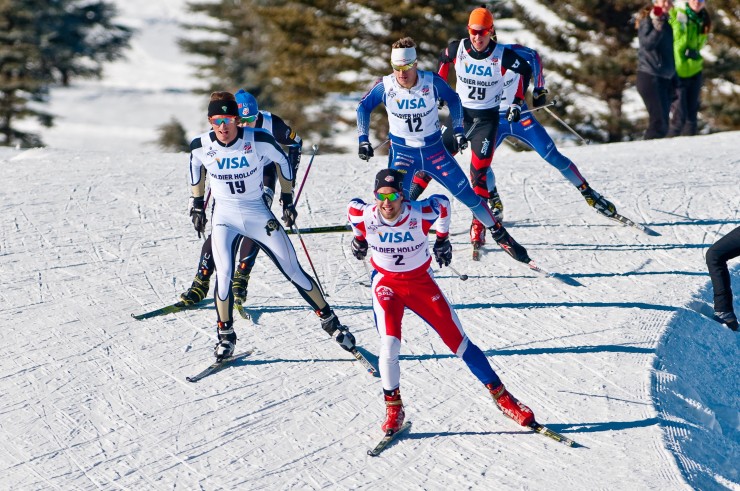
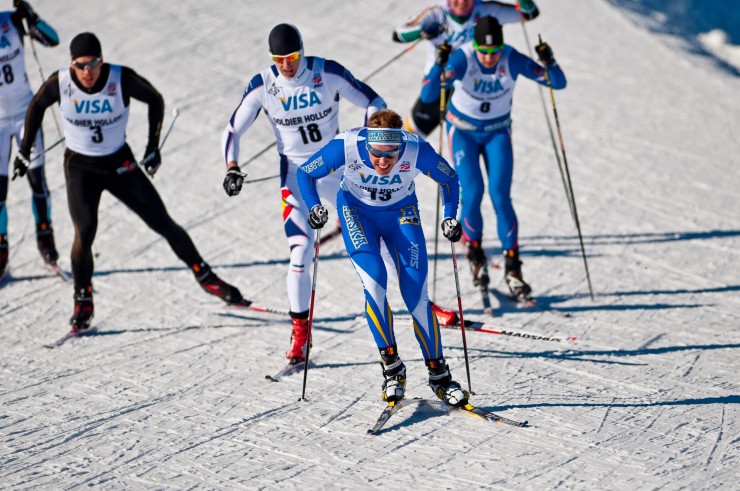
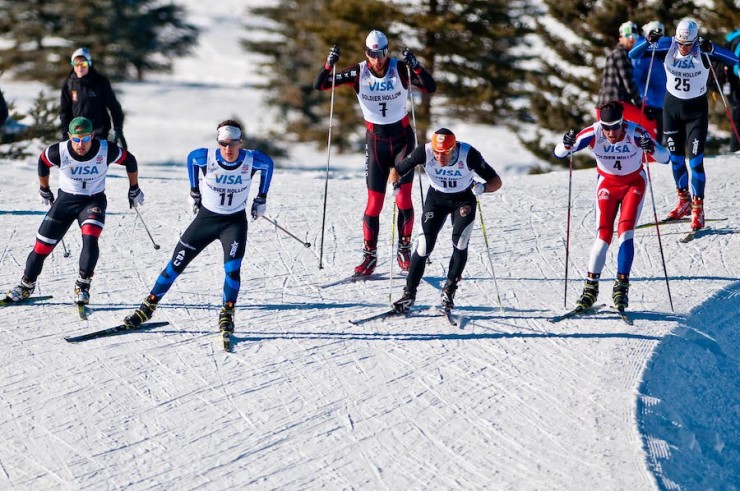
The 2014 edition of the USSA US National Cross Country Championships took place in Soldier Hollow, Utah from the 4-10th of January. These all important races served not only as national title races, but races that would strongly factor into the naming of the Olympic Team.
The conditions for racing were fantastic! Scott Peterson and crew did an amazing job of putting together a top quality race venue. HWK was out a few days prior to the first race to get some beta on the snow and start gearing up for the first race, the 15/10k IND classic. Soldier Hollow tends to provide some interesting twists to the waxing equation. Whether it is the artificial snow down low and the natural snow up high, or the fact that the Salt Lake Basin provides particulate matter that drops down on the other side, some of your normal preconceptions about waxing get thrown out the window. For the Classic race the snow moisture content (measured by a “Doser”) was showing 30%, the lower end of “wet”. The snow temp was -16 C and air temp was also around -16C. The sun came out and warmed the air and brought the tracks to a point of getting mealy. HWK recommended HFW3http://www.hwk-skiwax.us/HF-Wax/HWK-Ski-Wax-HFW-3.html as a base wax and both fluor stick 50Go5http://www.hwk-skiwax.us/Sticks/HWK-Ski-Wax-Fluor-Stick-50G05.html and Fluor Powder Extreme Silber. As a top coat, Liquo Racing http://www.hwk-skiwax.us/Fluid-Wax/HWK-Ski-Wax-Liquo-Racing.html proved to be excellent!
The HFW3 is a unique HF wax designed for all snow types. It is very hard and durable and we have seen much success with it this race season in many different snow types! This wax has a silver additive as well that has an anti-static property to it.
The fluor stick 50Go5 was ironed at 120C. This application method gets your best results for durability. 50Go5 has an air temp range of -4/+4C. This was right in the ball park of race time. This fluor stick is the dirty version of 9Mo50 and works well in dirty, greasy, mealy snow. It is important to note that often in Soldier Hollow, waxes meant for dirtier conditions run well.
The other wax that we used was the Fluor Powder Extreme Silber. The range on this is very dry snow (Doser 15% or less) or very wet snow (Doser 30% or more). This will be available to the public next year and is similar to the Extreme powder yet with a silver additive and is meant for dirtier snow.
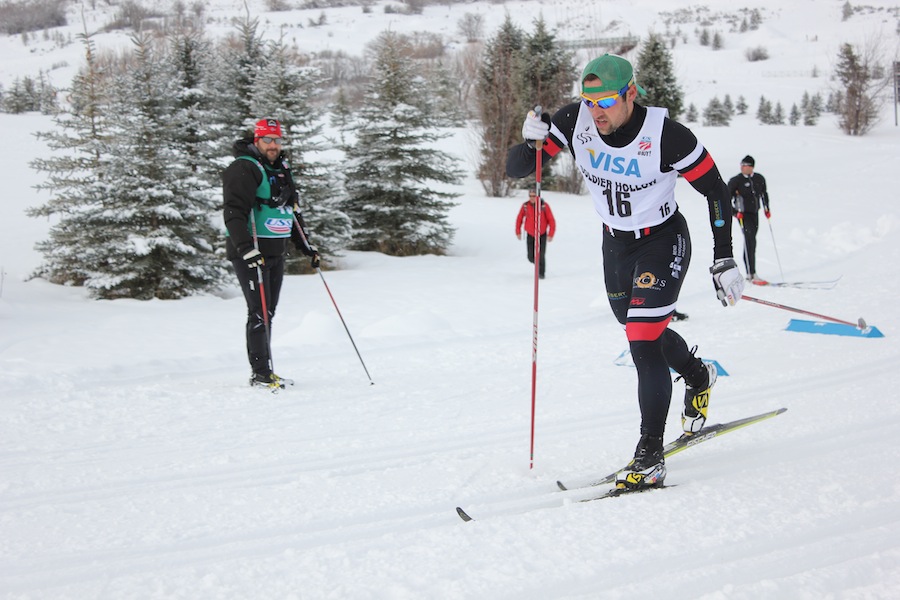
The Liquo Racing continues to prove that it should be in everyone’s wax box. This liquid has been incredibly fast and versatile! Make sure to spread evenly, let dry, hand cork, hand fleece, brush with a nylon brush and then wipe with an anti-static cloth. This has been our best application process for the liquid! We have not found that roto-corking or ironing the liquid to be faster. Sylvan reported that his skis were VERY fast as he skied his way to a 4th place finish.
When fifteen-year-old Hannah Halvorsen filled out the “Nutrition” section of her Goal Setting Worksheet at the beginning of her sophomore year at Sugar Bowl Academy, she pledged to herself that she would do the following:
“Leave room on my plate during lunch for the salad bar” and “eat salad every day.”
Under “Conditioning Goals,” Halvorsen’s short-term performance goals were “to push myself above and beyond.” Finally, under “Dream Athletic Goal,” she listed “To travel the world skiing.”
She will soon be doing just that.
After impressive results in early season Nordic ski racing against the best competition in the country, Halvorsen has been named to the U.S. Scandanavian Cup Nordic Ski Team, and will travel with her five teammates to Finland for a series of races later this month.
“I had been working hard towards this goal for a long time,” said Halvorsen, “I look at this as an incredible opportunity and as another step in the right direction towards future goals to come.”
For her coach and Sugar Bowl Academy school advisor, Caitlin Curran, it is Halvorsen’s focus and work ethic that has helped her succeed at the highest levels of competition in the Nordic ski-racing world.
“I am very proud of Hannah, not only for earning a spot on this year’s U18 trip to Europe, but mainly for all the focused work that she put in throughout the year to meet this goal,” said Curran, who accompanied Halvorsen last week to race at U.S. Nationals in Soldier Hollow, Utah.
Glide- Both men and women were waxed the same despite a 2 hour time difference. Because of the cold abrasive snow, an extremely hard under layer was necessary. I went with a LF blue layer but a hard graphite would have worked too. After that I waxed the skis with HF blue the night before. We tested powders the morning of the race and no surprise, Jetstream blue was best, we stuck with that all day. I did not test or apply topcoats as I felt my time was better served testing and nailing the kick wax.
Kick- I felt the grip wax was pretty easy but was worried about durability. I tested 4 different binder/klister combinations. The best ratio of kick to speed ended up being just straight green binder. I felt adding any klister to the binder (whether hard or soft) slowed it down. I always like when the wax combinations prove to be simple. Kick for the women ended up being 3 layers of blue (I wanted to get a harder “base”) followed by 2 layers of red. Some women chose to have a cover of one blue layer for speed and others wanted the extra kick opting for straight red hardwax. All of the men went on straight red hardwax. I did not give them the blue cushion between the binder. Because red is softer, I was worried that the wax would start to “run” and smear off but, at the end of the race, everyone’s skis looked as if they’d just been waxed. The red hardwax proved very durable given its warmer temperature range.
Eric Packer
Skate Sprint-
Qualifying- This was a tricky morning of testing, because of the cold, lots of waxes/structures seemed to slow the skis down. The night before I had waxed all the skis with HF blue and X-cold powder mix. I ended up waxing all the race skis with Jetream blue powder and block over the top, which I thought felt fractionally better in the chewed up snow. Not all the athletes agreed with me as Skyler Davis ended up qualifying in 2nd place on straight HF blue paraffin and X-cold powder. Ben Saxton raced with the powder and block and qualified 4th proving that the waxes were probably pretty close at that moment. The women qualified on the same wax but, all opted to have the powder and block over the top.
Finals- I continuously skied all day but consistently came up short with anything that could beat our wax from the morning. I ended up leaving the base layers and powder as they were. Once the sun started shining brightly, I swapped the blue block for red block which helped. Ben Saxton skied to a career best 2nd place overall on this mix, his skis were rockets all day. Structure never came into play with the cold, aggressive snow.
Ben Saxton
Skate 20/30km Distance-
Men- I went with “safe” waxes for the men considering 30km is a long way to ski. Again I used a hard LF blue layer under everything. This was followed by a HF blue/red mix. After that was Jetstream blue powder which had been good every morning. I knew it was supposed to warm up a ton during the men’s race but, I felt a colder powder was still the right call. I finished the skis off with red block corked in. The men’s skis were excellent for the first half of the race and then the sun began to cause the track to glaze. Some of our men’s skis slowed down and some stayed good. I suspect this was more of a function of structure (or lack there of) but, if I had to do it again I would opt for a Jetstream blue/red mix. It warmed up faster than I thought.
Women- Since I was out feeding for the men, I had very little time to retest wax for the women. Already suspecting I waxed skis with too little structure, I made a quick switch of skis. AFTER the “10 mintutes to race start call” I took a pair of warmer skis for Erika Flowers and applied HF red paraffin, red powder, and red block. I was worried about durability because the wax was still warm as I scraped it off but I got the skis to Erika with seconds to spare before the start and she skied to 8th place with skis that looked excellent. The other women were not so lucky. Despite having the same wax, I did not have time to change their skis to more structure and they had sup par days. This was admittedly my fault for being slightly unprepared for the rapid warm up but, is an acknowledged part of ski racing. Everyone messes up once in a while!
Erika Flowers
Classic Sprint-
Qualifying glide- I was very glad the race was not the previous days because with mid 20’s weather and new snow, I could not find a single wax that did not ice. Even zeros either had no kick or iced. Race day proved much different. I waxed both men and women with a mix of HF blue and AX 134. This is a great Toko combination allowing for more fluorine and I had been waiting for it to show through in testing. Over that I put red powder and again, did not test top coats instead opting to focus on kick wax.
Qualifying kick- Very tricky. Anything that kicked well was too slow. Anything that was fast did not kick well. It was a perfect day for technically proficient classic skiers. Red hardwax kicked very well but was slow. I laid down 6 layers of it to build an excellent cushion and then covered it with one layer of blue hardwax for speed. I definitely errored on the side of having kick which was good on the uphill but, hurt us a little once they got back to the stadium finish where no one had skied. We still finished the morning with 4 qualifiers in the top 11.
Finals- By the time the rounds started in the afternoon, the tracks had completely glazed. I added red block over the top of the glide areas then spent my time on kick. Yellow hardwax kicked very well in the tracks but was too slow in the non tracked sections. I covered the yellow with a layer of red hardwax. This was borderline too slippery for some but, I felt it was worth it considering the course ended on a long downhill and double pole section. Everyone felt the same and we finished a successful week with 3 skiers in the top 12.
Gus Kaeding, Head Coach
Note: Congratulations to Stratton T2 skiers Skyler, Annie, and Ben for qualifying for U23 Worlds and to Erika for qualifying for the OPA Cup Finals!
Classic Sprint
Once again we ran on Toko HF Blue with AX134 mixed 50/50 for our paraffin layer. On top of that we found Toko JS hello block covered with Yellow Helix to be super fast compared to all other liquids.
Kick was a real challenge and we tried just about the whole wax box (every brand) to find something that would give adequate kick with our icing. Toko yellow was our final race wax in the heats and it worked well from the 1/4s through the final. The athletes were very happy with out even without the red cover that had been recommended.
Sam Naney
Note: if you are interested in the conditions for the races, look at the eBlasts that were sent out and that described the respective conditions. You can find them here.
MIDWAY, Ut. — The 2014 U.S. Cross Country Championships concluded Friday in spectacular form with a classic sprint on the beautiful trails of Soldier Hollow. Maybe you’ve returned home to a lack of snow, reminiscing the awesome Utah weather, or perhaps you were living under a rock and missed all the action. Either way we have just the thing for you. Below are some shots we took of the men’s and women’s heats in the classic sprint. Enjoy!
Women’s Finals:
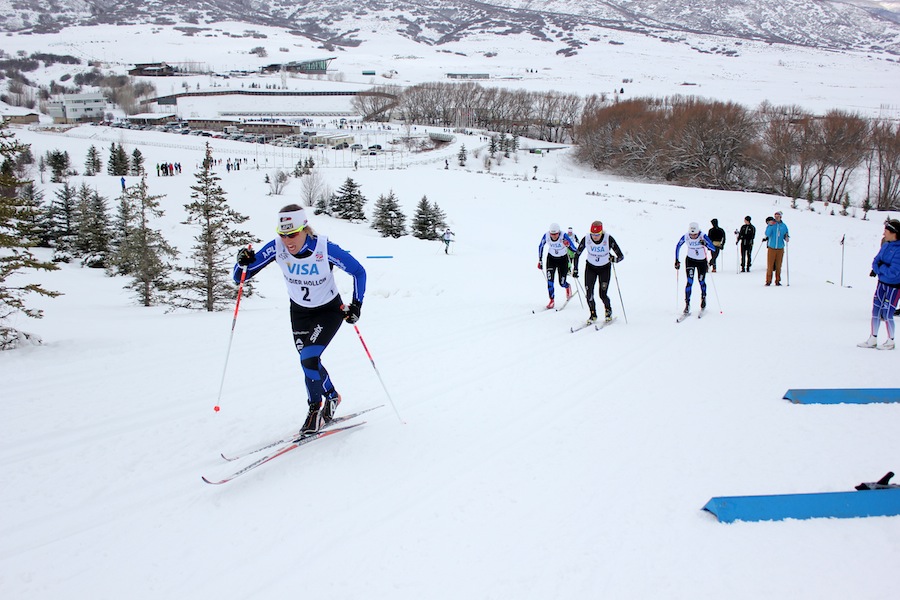
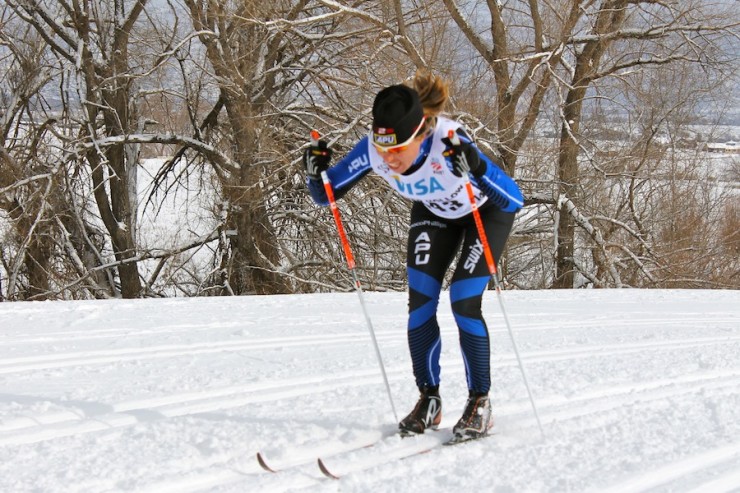
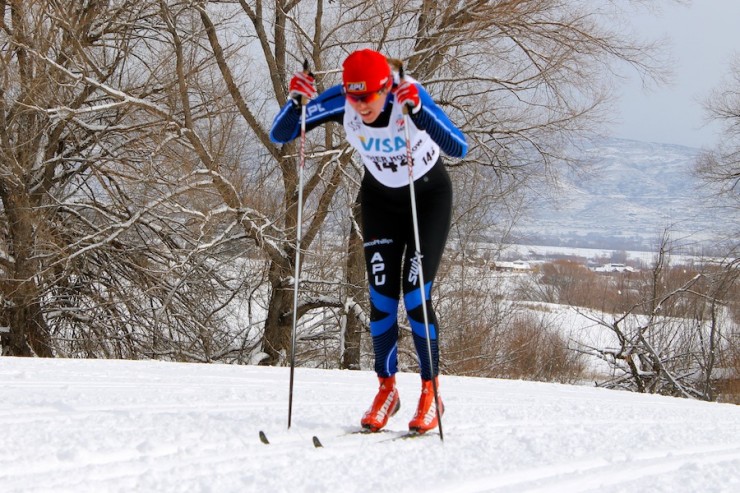
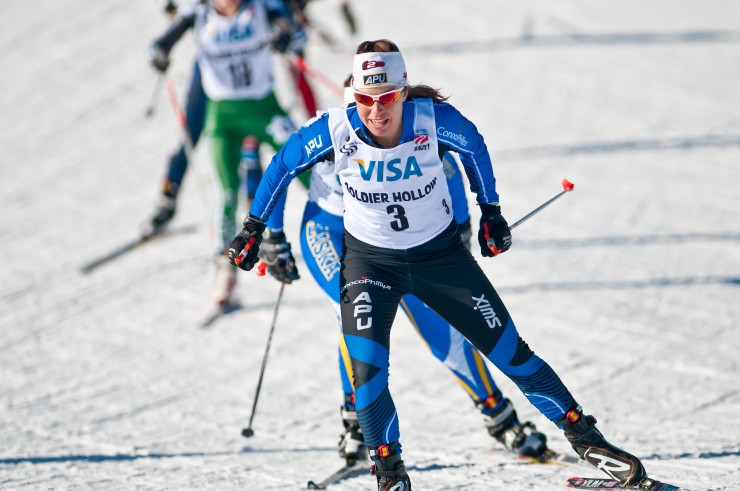
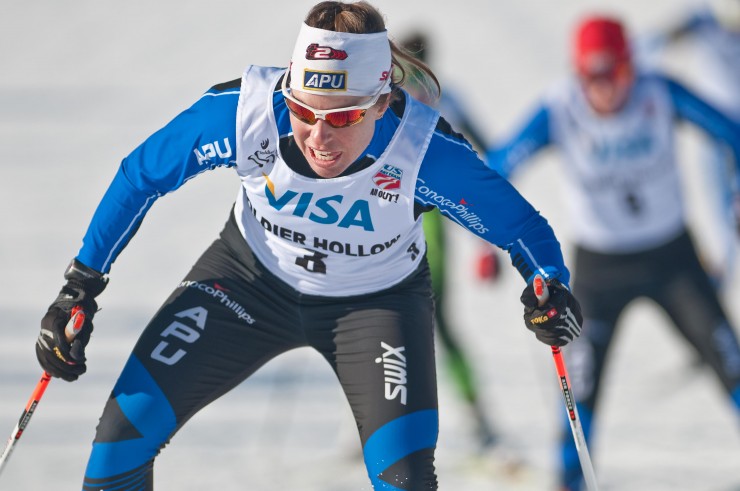
Rosie Brennan (APU) strides up Hermod’s Hill in her quarterfinal, with a considerable lead over the rest of her competitors. Brennan would go on to take the national championship after winning the A-final.
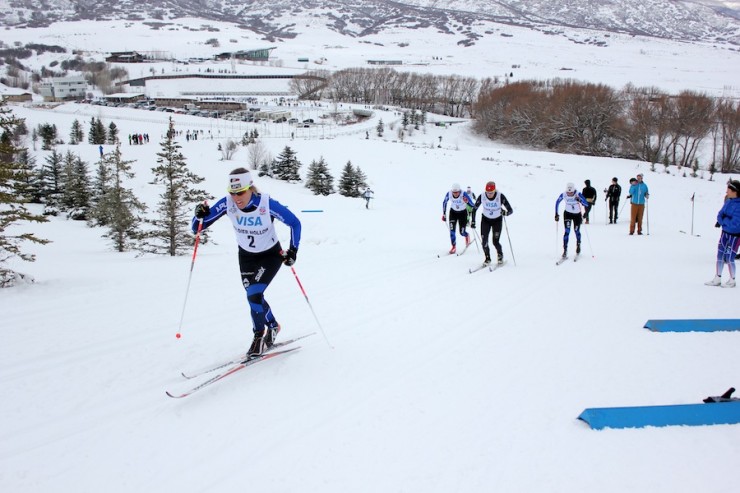
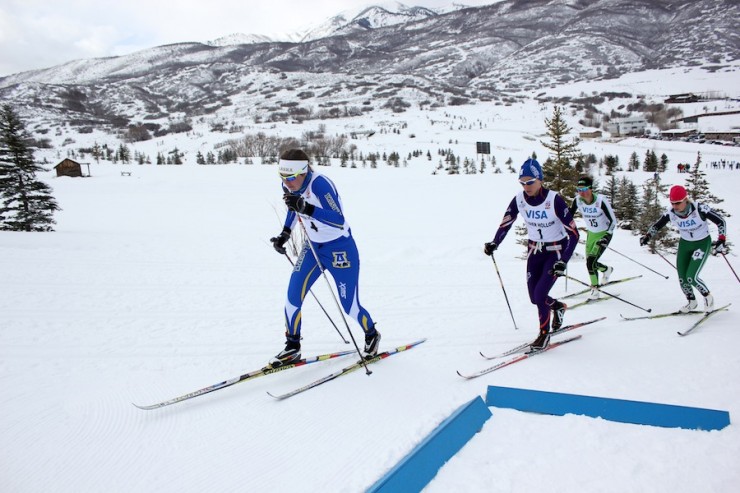
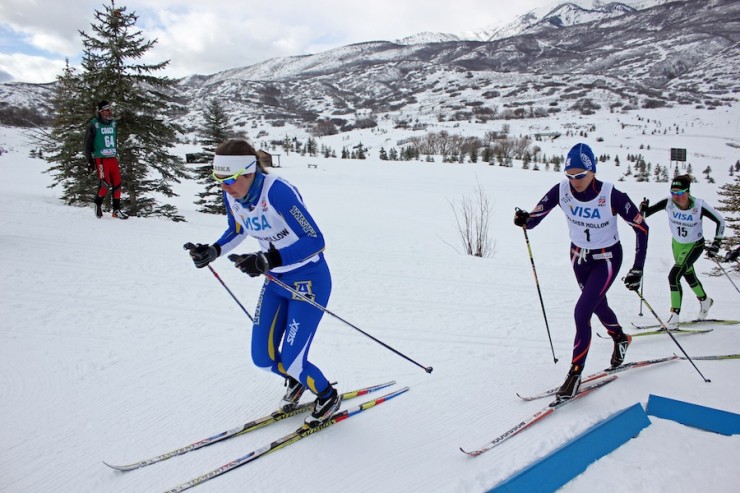
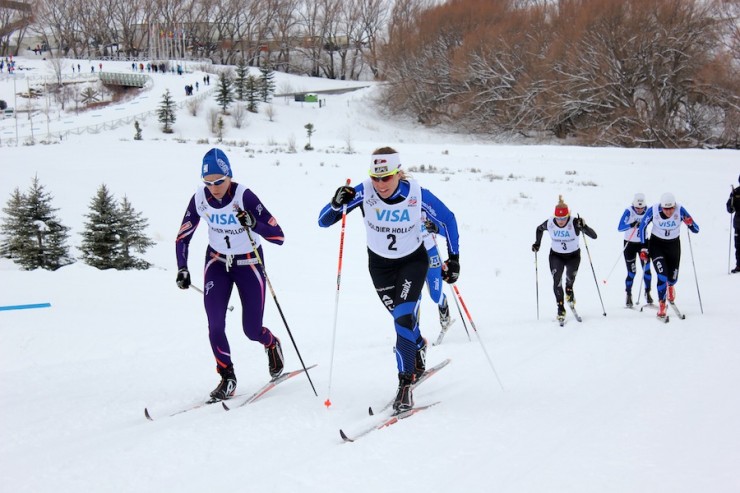
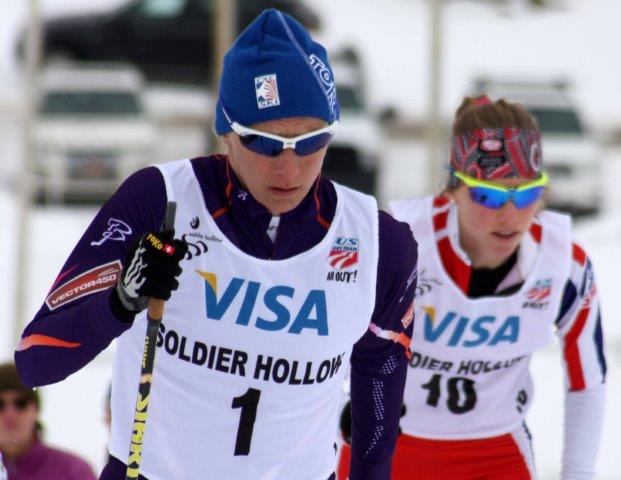
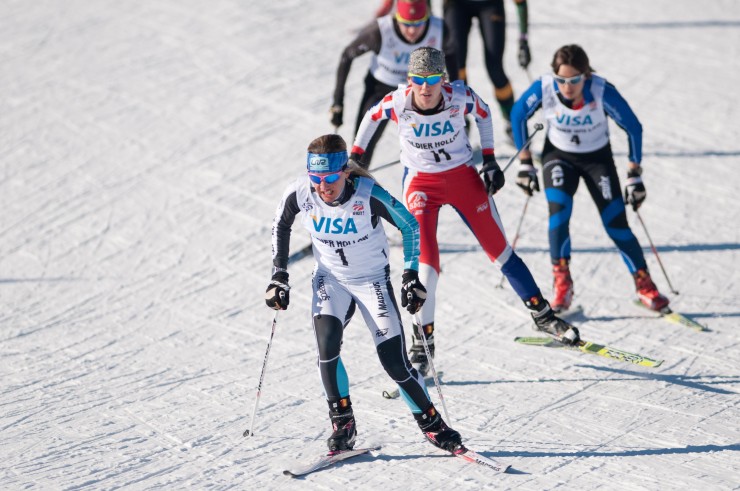
Natalja Naryshkina (1) leads Erika Flowers (SMST2) in the quarterfinals of Friday’s 1.5 k classic sprint. Naryshkina went on to win the quarterfinal, semifinal and ultimately the A-final for the overall victory at U.S. nationals at Soldier Hollow.
Natalja Naryshkina (1) leads Erika Flowers (SMST2) in the quarterfinals of Friday’s 1.5 k classic sprint. Naryshkina went on to win the quarterfinal, semifinal and ultimately the A-final for the overall victory at U.S. nationals at Soldier Hollow.
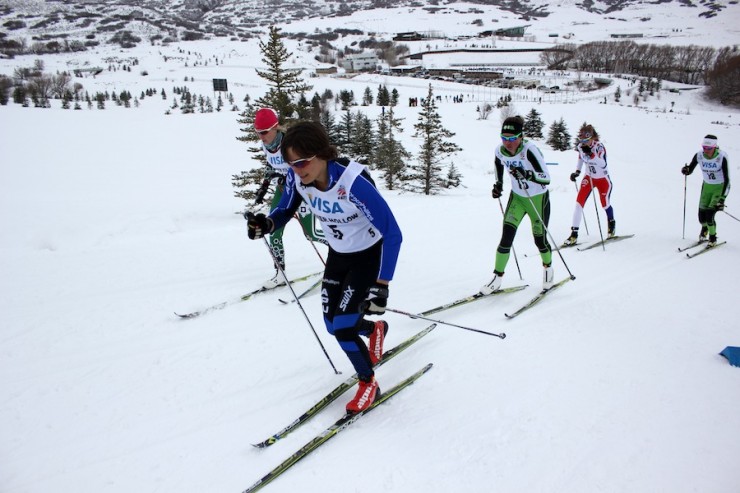
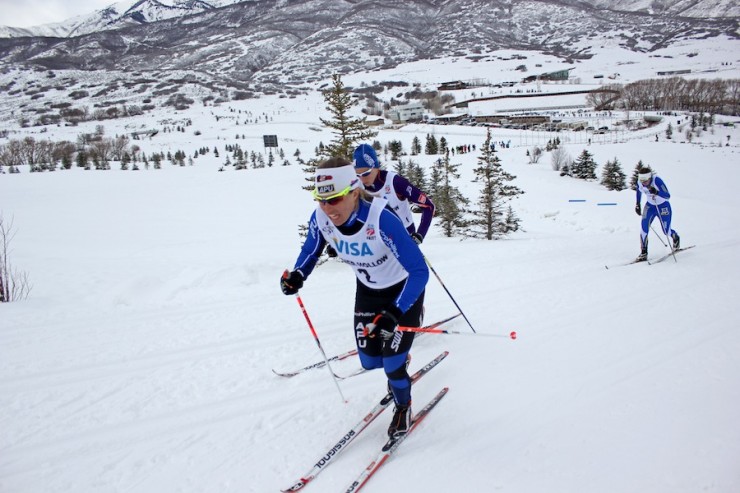
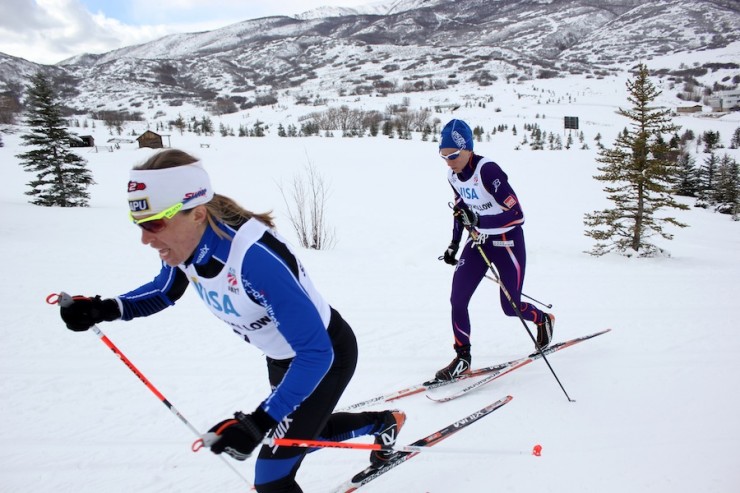
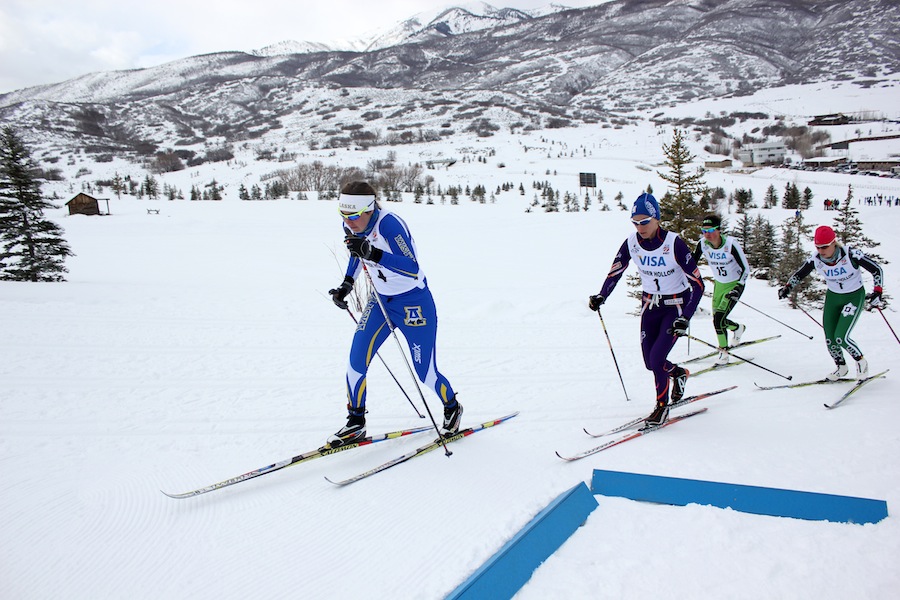
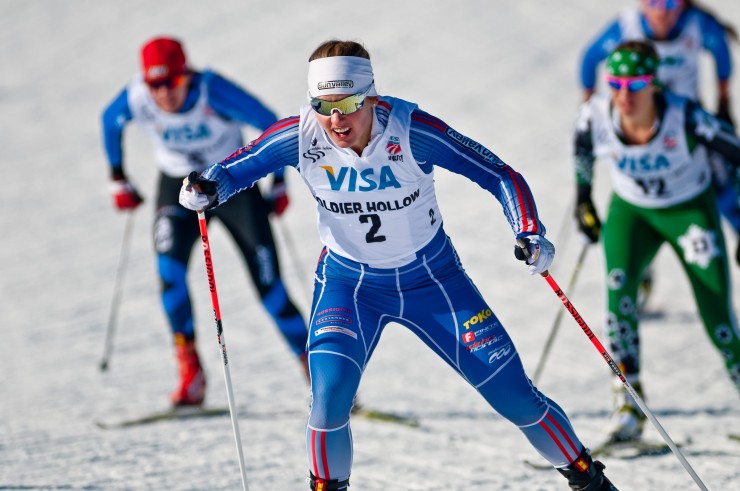
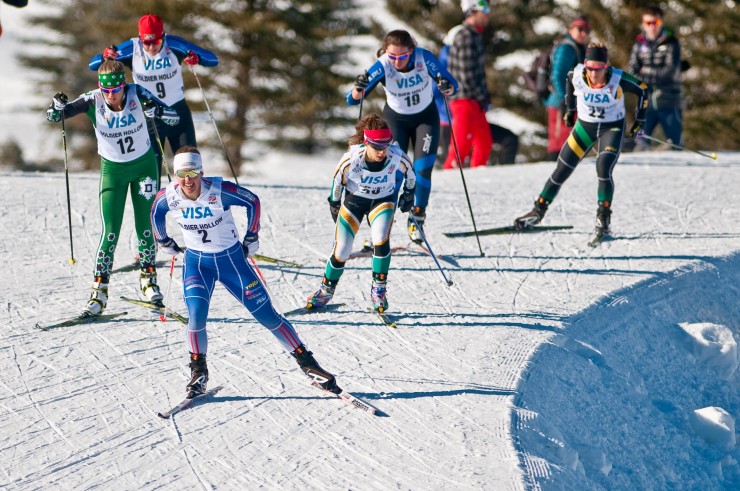
Erika Flowers (SMST2) leads Rose Kemp (SVSEF) up Hermod’s Hill in the 1.5 k classic sprint at the 2014 U.S. Cross Country Championships.
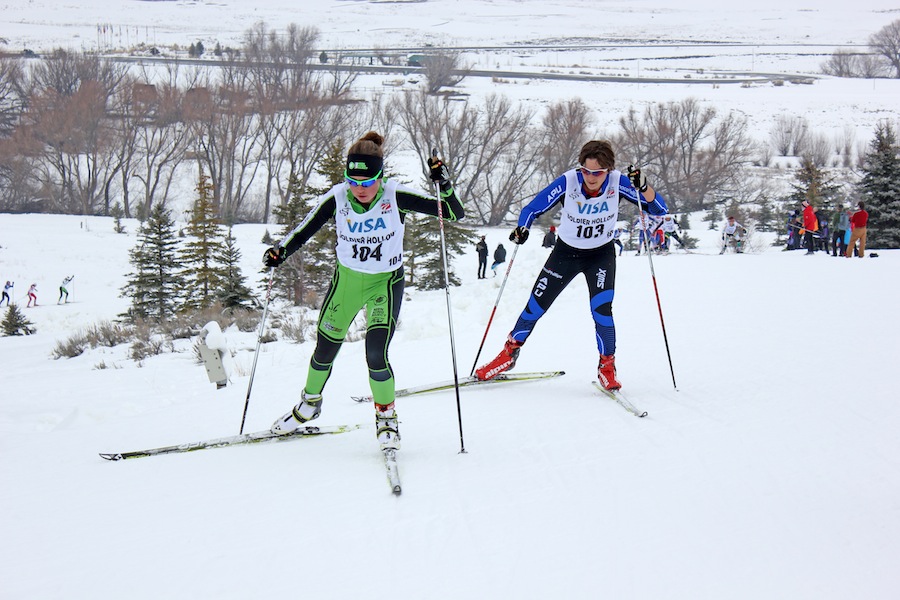
Nichole Bathe (UAF) makes the turn around the top of Hermod’s Hill in her quarterfinal of the classic sprint at the 2014 U.S. Cross Country Championships, while Annie Pokorny (SMST2) and Annie Hart (Dartmouth) follow.
Kate Fitzgerald (r) of Alaska Pacific University pushes over the top of Hermod’s Hill with Becca Rorabaugh (APU) and Caitlin Patterson (Caftsbury GRP) in hot pursuit. All three would advance to the semifinals.
Rosie Brennan (APU) takes charge up Hermod’s in the women’s 1.5 k classic sprint semifinals at U.S. nationals at Soldier Hollow. Jennie Bender (second from r) ended up winning the heat, followed by Brennan’s teammate, Becca Rorabaugh, in second. Brennan made the A-final in third as a lucky loser.
Nichole Bathe (University of Alaska-Fairbanks) leads Russian Natalja Naryshkina (CXC) in the 1.5 k classic sprint semifinal at the top of Hermod’s. Naryshkina won the heat, 0.2 seconds ahead of Bathe, and the two went on to place first and third in the A-final, respectively.
Nichole Bathe (University of Alaska-Fairbanks) leads Russian Natalja Naryshkina (CXC) in the 1.5 k classic sprint semifinal at the top of Hermod’s. Naryshkina won the heat, 0.2 seconds ahead of Bathe, and the two went on to place first and third in the A-final, respectively.
Kate Fitzgerlald (APU) leads her semifinal with Annie Hart (Dartmouth), Caitlin Patterson (Craftsbury GRP), and Erika Flowers (SMST2).
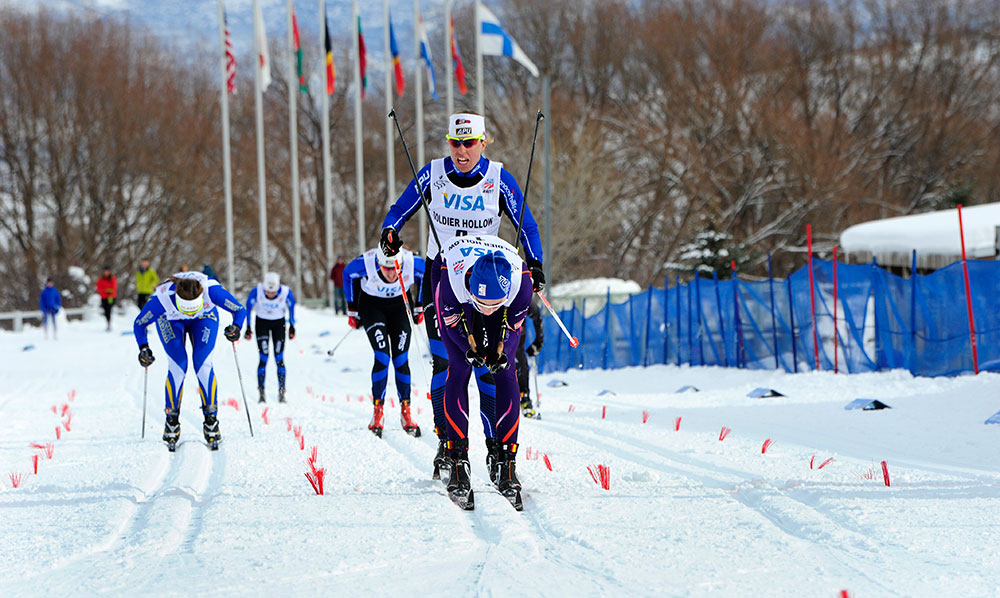
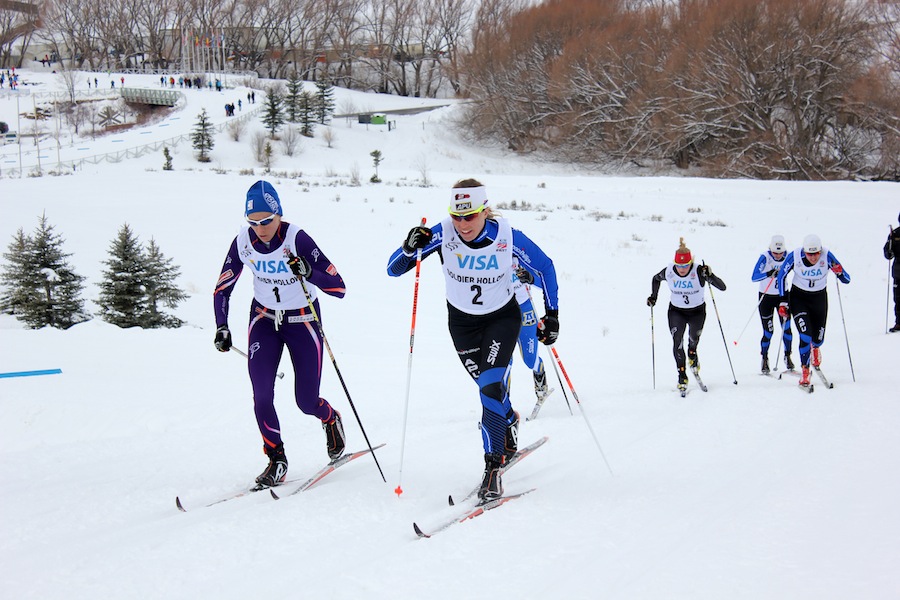
Natalja Naryshkina (1) and Rosie Brennan (2) go head-to-head up Hermod’s in the women’s classic sprint A-final at U.S. nationals at Soldier Hollow on Friday. Naryshkina ended up edging Brennan by 0.3 seconds for the overall win, but Brennan was the top American in second.
Rosie Brennan (APU) edges ahead of Natalja Naryshkina (CXC) at the top of Hermod’s Hill.
Rosie Brennan (APU) edges ahead of Natalja Naryshkina (CXC) at the top of Hermod’s Hill.
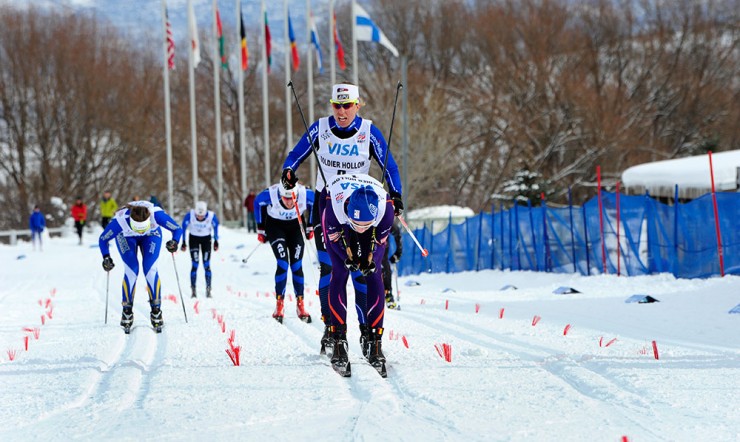
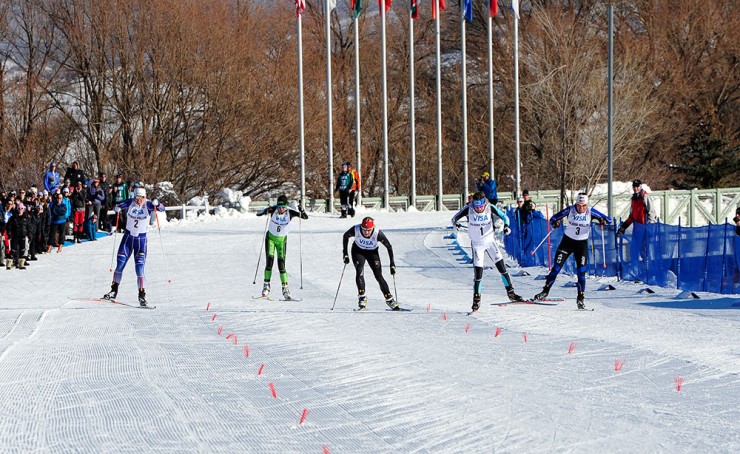
Rosie Brennan (APU) in second stands up just before the finish as Russia’s Natalja Naryshkina (CXC) wins the women’s classic sprint A-final by 0.3 seconds. (Photo: Tom Kelly/U.S. Ski Team)
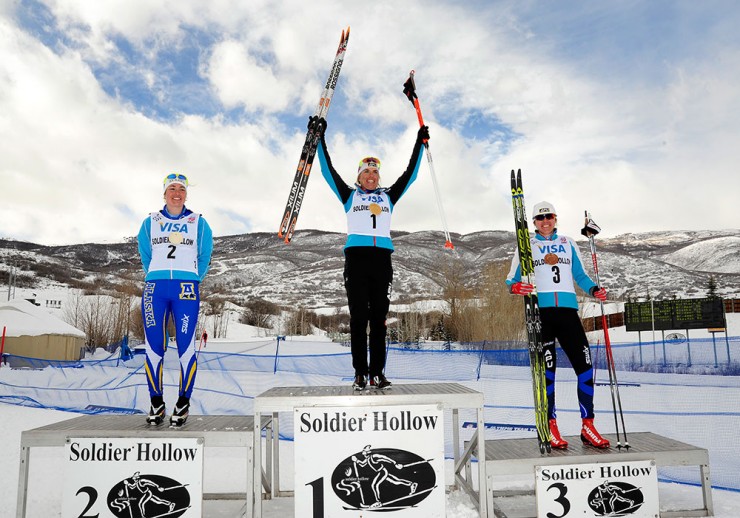
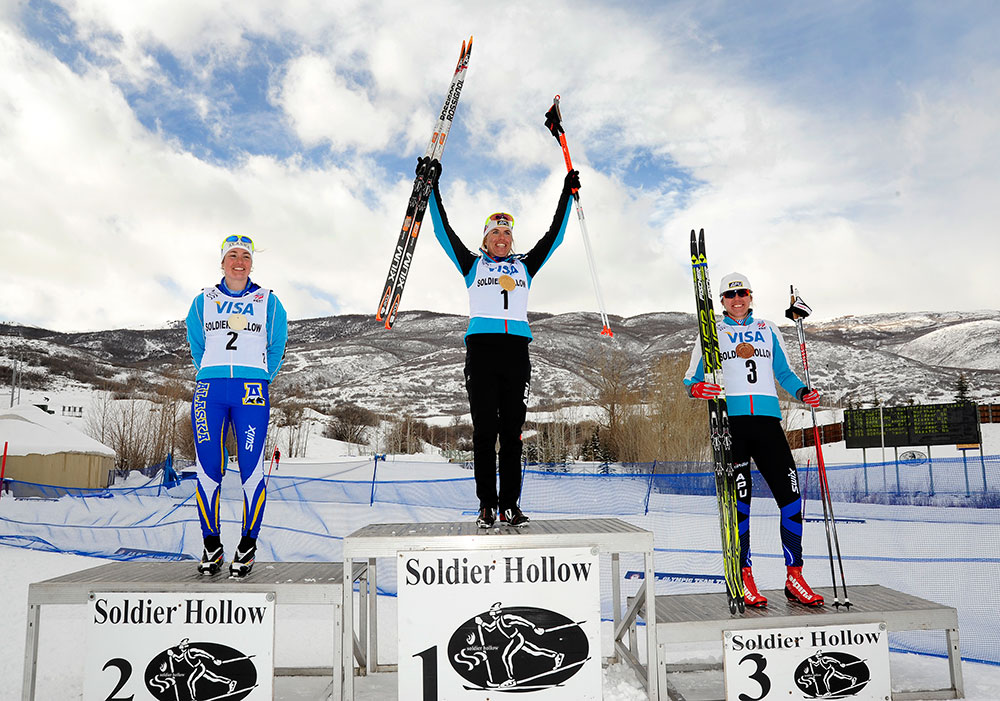
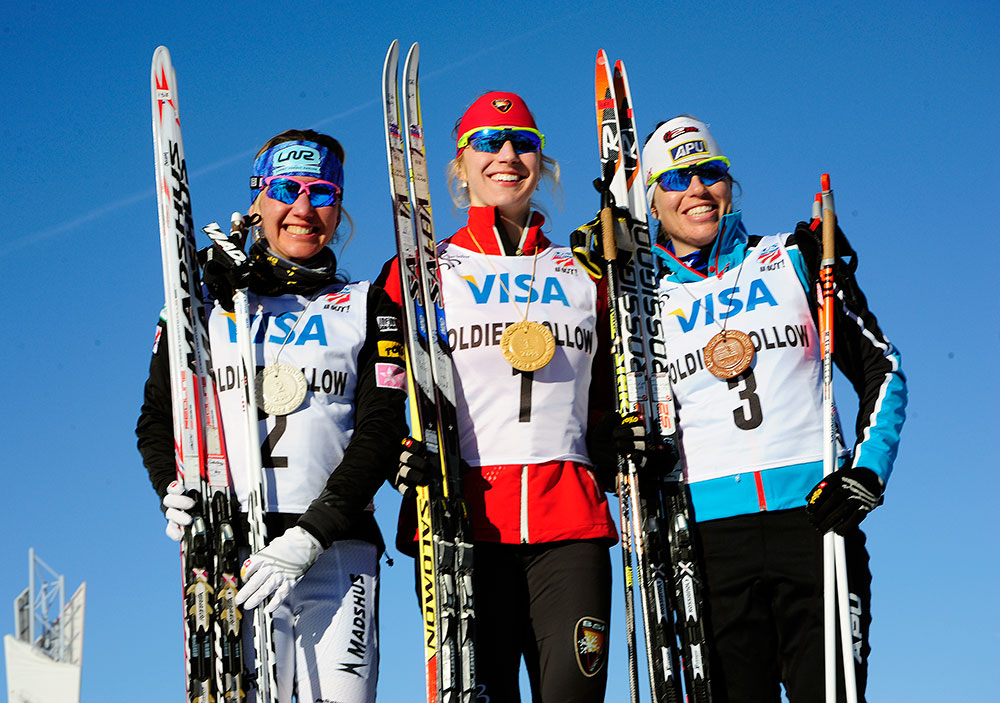
The U.S. women’s classic sprint podium with Rosie Brennan (APU) as the top American (second overall), Nichole Bathe of the University of Alaska-Fairbanks (l) in second, and Becca Rorabaugh (APU) in third. (Photo: Tom Kelly/U.S. Ski Team)
Men’s Finals:
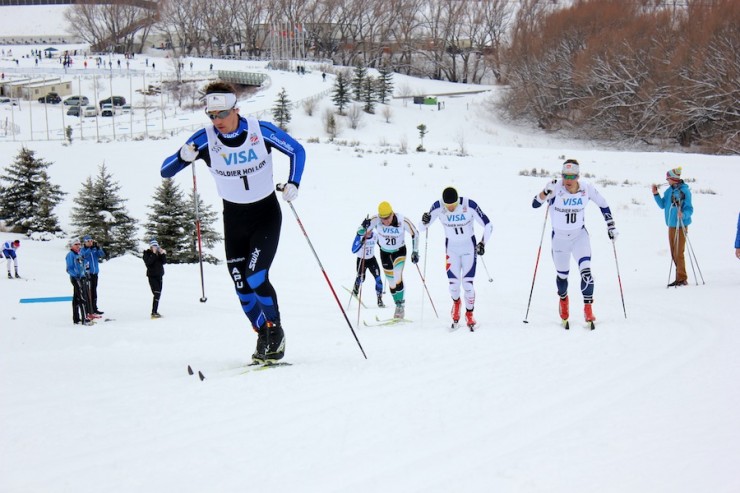
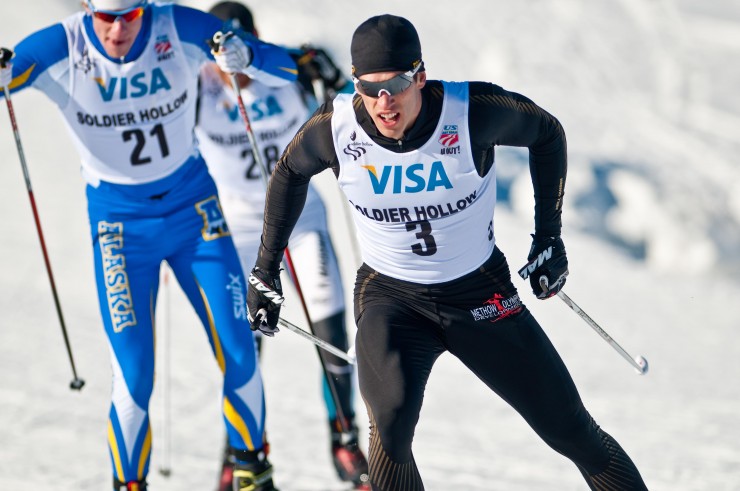
Reese Hanneman (APU) extends his lead over the Hermod’s Hill in in his quarterfinal in Friday’s classic sprint at the 2014 U.S. Cross Country Championships. He would win semifinal and A-final to claim his first national championship.
Kris Freeman (Maine WSC) leads Ryan Scott (SSCV) and George Cartwright (Norther Michigan) on Hermod’s Hill.
MIles Havlick (SVSEF) strides up Hermod’s Hill followed by Patrick McElravey (Middlebury) and Andrew Dougherty (Craftsbury GRP). Havlick would advance to the semifinals, while McElravey and Dougherty would not.
Ben Saxton (l) of SMST2 and Dakota Blackhorse-Von Jess (r) of Bend Endurance Academy go head to head in their quarterfinal. Both advanced to the semifinals, but only Blackhourse Von-Jess made it to the A-final, eventually taking third place.
Torin Koos (BSF/Rossignal) and Peter Kling (APU) duke it out in their quarterfinal> Both advanced to the semifinals but were unable to qualify for the A-final.
Torin Koos (BSF/Rossignal) and Peter Kling (APU) duke it out in their quarterfinal> Both advanced to the semifinals but were unable to qualify for the A-final.
Torin Koos (BSF/Rossignol) and Peter Kling (APU) duke it out in their quarterfinal> Both advanced to the semifinals but were unable to qualify for the A-final.
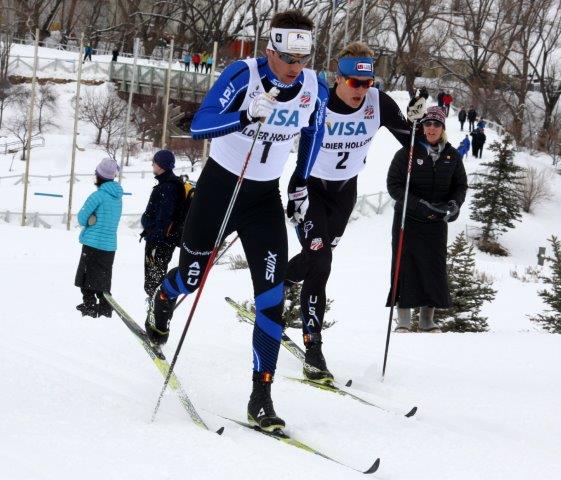
Erik Bjornsen (APU/U.S. Ski Team) battles Sam Naney (Methow OD/Madshus) for first position in their quarterfinal heat. Bjorsen would go on to place second.
Erik Bjornsen (APU/U.S. Ski Team) battles Sam Naney (Methow OD/Madshus) for first position in their quarterfinal heat. Bjorsen would go on to place second.
Erik Bjornsen (APU/U.S. Ski Team) heads into Whale’s Tail in his quarterfinal with Alex Shultz (Craftsbury GRP) close behind.
Erik Bjornsen (APU/U.S. Ski Team) leads Dakota Blackhorse Von-Jess (Bend Endurance Academy) and Torin Koos (BSF/Rossignal) up Hermod’s Hill in the men’s semifinal of the 1.6 k classic sprint.
Torin Koos (l) of the Bridger Ski Foundation and Rossignol and Eric Packer (r) SMST2 race to the top of Hermod’s Hill in their semifinal. Neither would advance to the A-final.
Reese Hanneman (APU) leads Mikey Sinnott (SVSEF) up Hermod’s Hill in their semifinal. Hanneman claimed his first national championship later that day and Sinnott placed fifth.
Reese Hanneman (APU) on his way to his first national championship over Erik Bjornsen (APU/U.S. Ski Team).
Reese Hanneman (APU) on his way to his first national championship over Erik Bjornsen (APU/U.S. Ski Team).
Reese Hanneman (APU) on his way to his first national championship over Erik Bjornsen (APU/U.S. Ski Team).
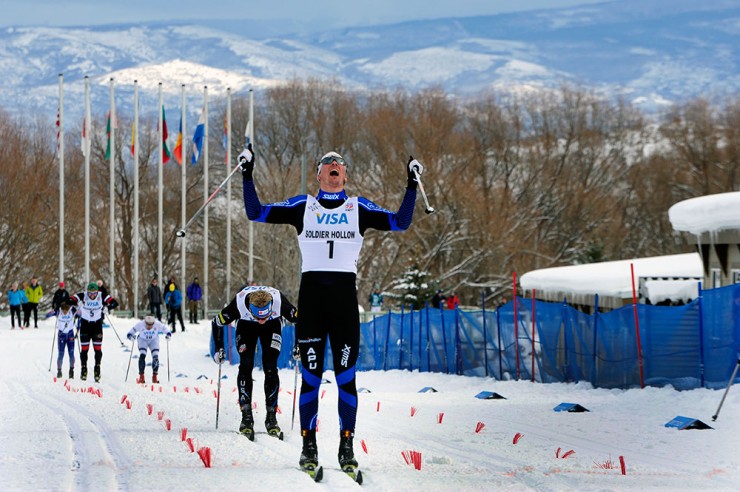
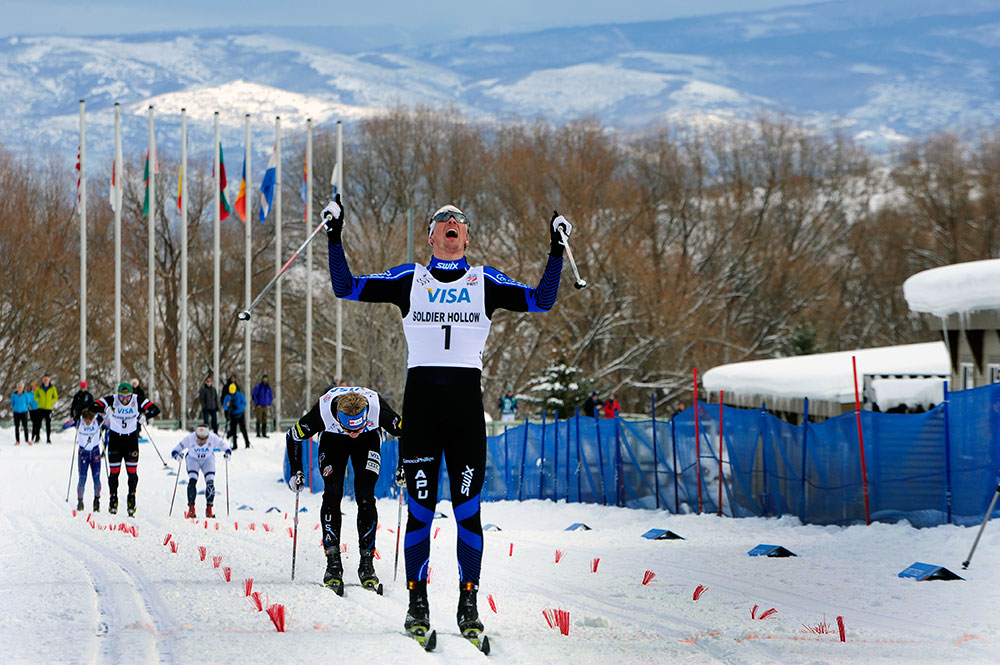
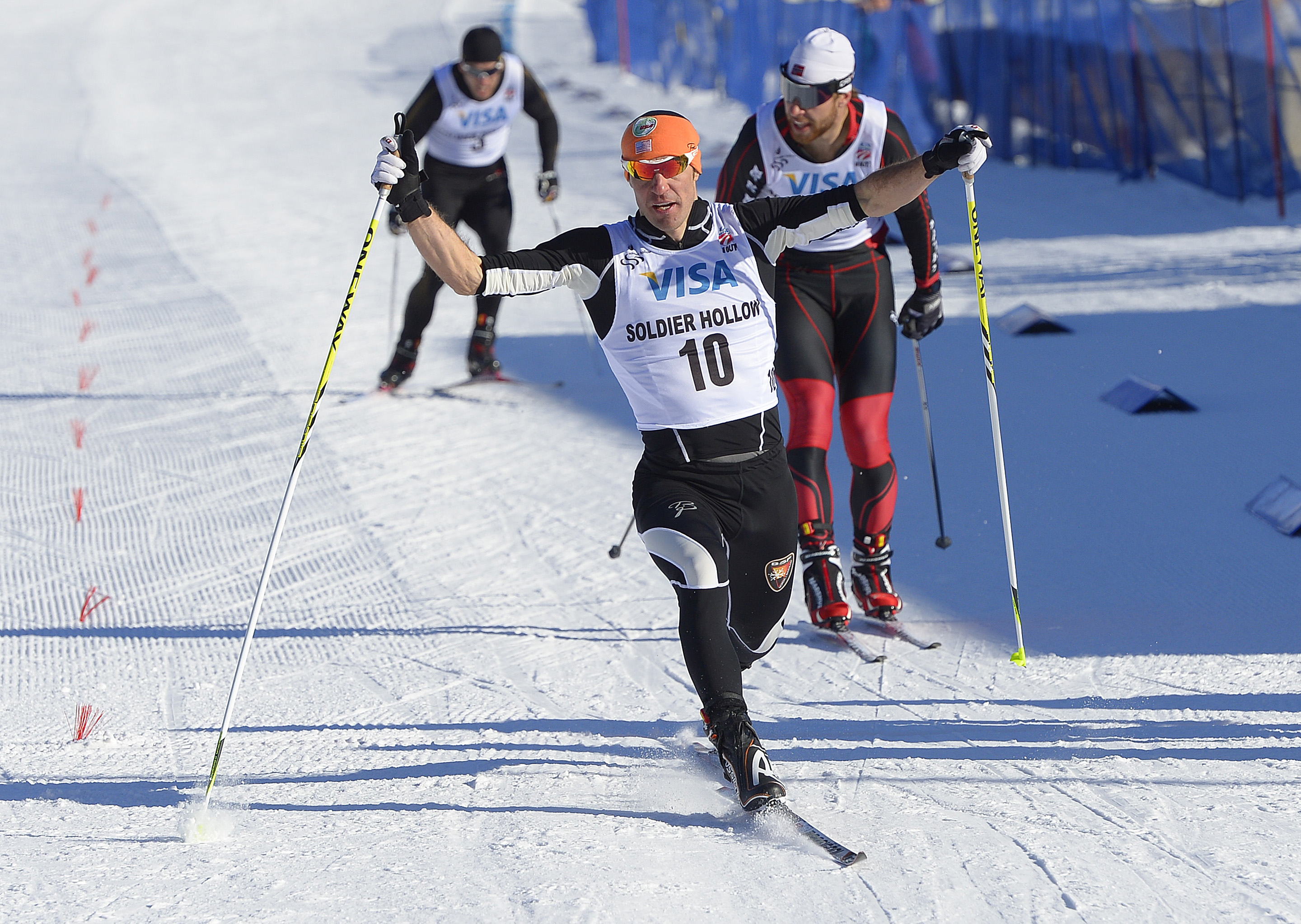
Reese Hanneman (APU) celebrates his victory as he crosses the finish line at the conclusion of the classic sprint A-final at U.S. National Championships, Soldier Hollow, Utah, in January 2014. Photo: Tom Kelly/U.S. Ski Team.
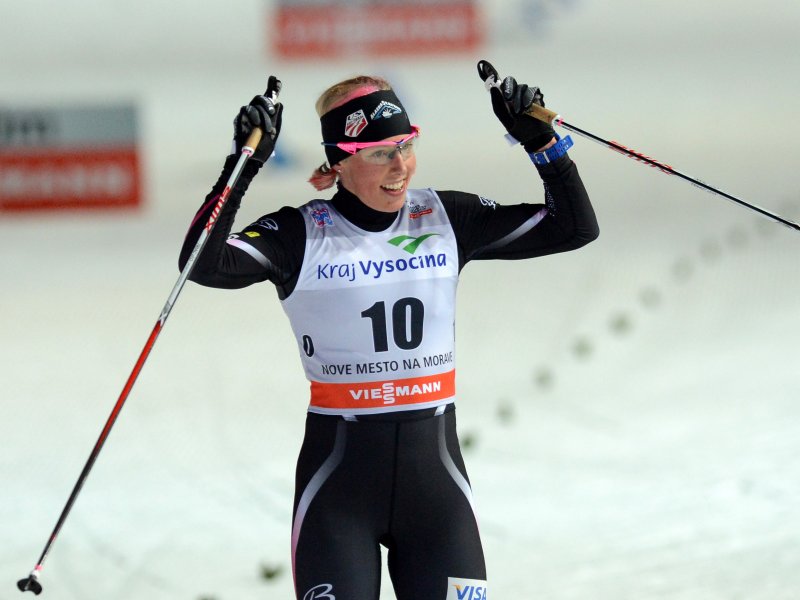
Kikkan Randall (U.S. Ski Team) celebrates her victory in Nove Mesto, Czech Republic. The American superstar won yet another freestyle sprint in preparation for the Sochi Olympics in February. (Photo: Fischer/NordicFocus)
It was a spectacular weekend for sprinting as the World Cup continued in Nove Mesto, Czech Republic, with both an individual and team sprint. FasterSkier was on site at the 2014 U.S. Cross Country Championships in Midway, Utah, as well as the biathlon World Cup in Ruhpolding, Germany. Action in the nordic ski world also took place at the Nordic Combined World Cup in Chaux-Neuve, France.
Canadian Dasha Gaiazova just missed the semifinals for 13th overall. American Sophie Caldwell was the only other North American to make the rounds after qualifying in 25th and finishing 15th.
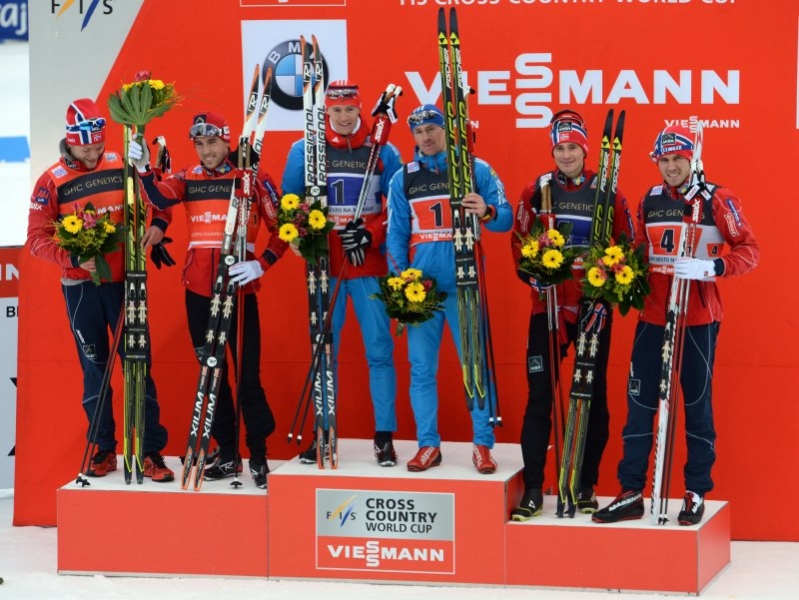
The World Cup men’s classic team sprint podium in Nove Mesto, Czech Republic: (from left to right) runner-up Norway I, winner Russia I, and Norway II in third. (Photo: Fischer/Nordic Focus)
On the men’s side it was Sergey Ustiugov of Russia who came out on top in the freestyle sprint. He was followed by Italian Federico Pellegrino and Russia’s Alexey Petukhov, respectively.
American Andy Newell qualified second to start off the day but was unable to capitalize on his previous speed in the finals and finished in 17th. Teammate Simi Hamilton, who also qualified for the finals, finished 20th overall.
The Russians were once again triumphant in Sunday’s team sprint, with the team of Maxim Vylegzhanin and Nikita Kriukov winning the men’s competition over Norway I and Norway II. The win set the Russians up as the favorites going into the Olympics that will be hosted in their home country next month.
Newell and Hamilton placed fifth overall for one of the best U.S. men’s team sprint results in recent memory.
Norway had some redemption in women’s team sprint with Østberg and Maiken Caspersen Falla. They bested the Finnish and Russian teams, who placed second and third, respectively.
With Randall and Sadie Bjornsen recovering this Sunday, Caldwell and Ida Sargent stepped up to that challenge and skied an impressive race. They went on to place sixth in the final.
Reese Hanneman (APU) celebrates his win in the classic sprint at the 2014 U.S. Cross Country Championships in Midway, Ut. The win marks Hanneman’s first national championship. (Photo: U.S. Ski Team – Tom Kelly)
The 2014 U.S. Cross Country Championships wrapped up last Friday with classic sprints. In the women’s race, Russian Natalja Naryshkina of CXC won the sprint over Rosie Brennan (APU) and Nichole Bathe (UAF). Brennan was crowned national champion as she was the first American in the race.
Reese Hanneman (APU), who won the qualification round and every one of his heats that followed, dominated the men’s race. He was followed by Erik Bjornsen (APU/U.S. Ski Team) and Dakota Blackhorse-von Jess (Bend Endurance Academy). Hanneman made the podium in every race in which he competed, and is now the overall SuperTour leader.
This weekend also marked the end of the Canadian Olympic Team Trials in Canmore, Alberta. Based on the results from the week’s results, Canada will name two men (one distance ski athlete and one sprint skier), and two women (one distance ski athlete and one sprint skier). The four athletes will be named at Cross Country Canada’s Olympic Team announcement on January 14 in Calgary, Alberta.
As if the weekend wasn’t busy enough, the women’s 15 k individual took place in Ruhpolding, Germany, on Friday as part of the fifth week of the IBU World Cup in which Canadian Rosanna Crawford finished 26th and teammate Maggie Heinicke crossing the line in 30th. The top American finisher was Susan Dunklee who finished 41st.
The men raced in their 20 k individual on Saturday in Ruhpolding. Lowell Bailey was the only North American to place in the top 30, finishing 25th. Scott Perras was the top Canadian in 36th.
Todd Lodwick in the 2014 Olympic Team Trials for Nordic Combined at Utah Olympic Park, Park City Cross Country. Lodwick suffered an injury in France and is now going through rehab in Park City, Utah. (Photo: Sarah Brunson/U.S. Ski Team)
Dunklee was the top North American in Saturday’s 10 k pursuit, placing 33rd. In the men’s 12.5 k pursuit, Canadian Nathan Smith placed 16th with Bailey not far behind in 21st.
In the world of nordic combined, American Todd Lodwick crashed in Friday’s provisional jump in Chaux-Neuve, France, sustaining an injury to his shoulder. He immediately flew to Park City, Utah, where he is currently receiving further evaluation and taking part in rehab before next month’s Olympics.
The next day, the World Cup races continued. Billy Demong finished 18th in Saturday’s HS 10 k and Bryan Fletcher placed 28th. In Sunday’s team sprint, the two Americans teamed up for seventh.
FIS Cross Country World Cup, Nove Mesto, Czech Republic
Reese Hanneman (APU) celebrates his national championship in Friday’s classic sprint at the 2014 U.S. Cross Country Championships at Soldier Hollow. (Photo: U.S. Ski Team/Tom Kelly)
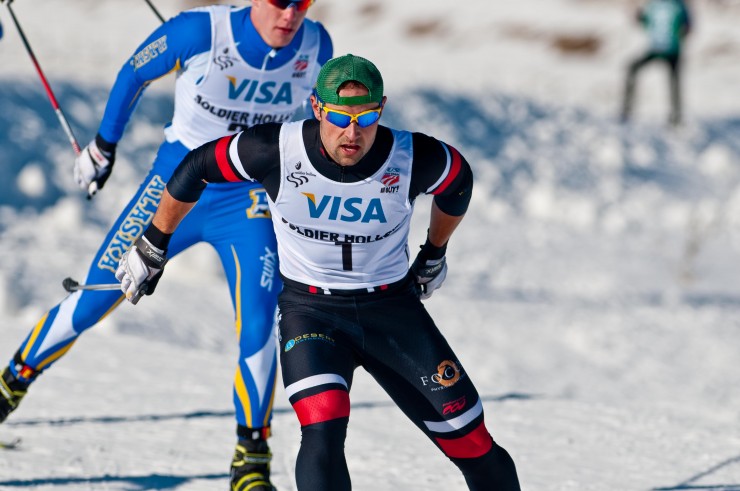
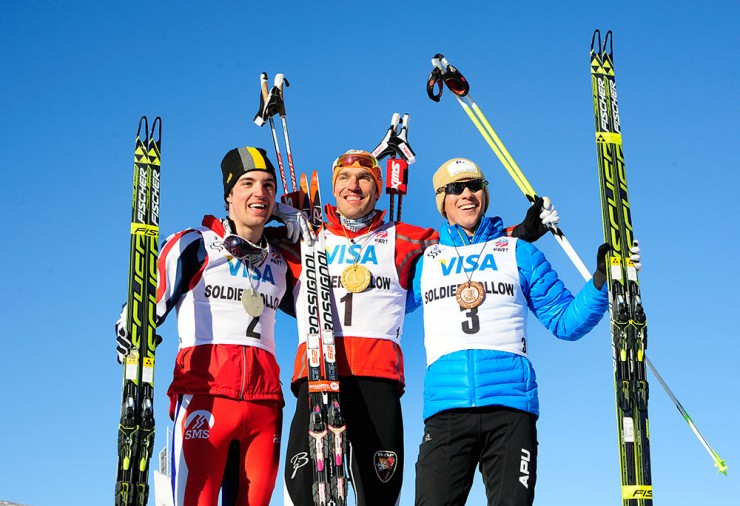
MIDWAY, Utah – Bronze, silver, and now gold. Reese Hanneman of Alaska Pacific University has captured them all after his win in the 1.6 k classic sprint on the final day of the 2014 U.S. Cross Country Championships. En route to his first national championship, Hanneman made winning look easy despite competing against the best sprinters in the country.
In an A-final that included 2010 and 2012 national champion Tyler Kornfield and a surprisingly strong Kris Freeman, Hanneman was able to outsprint second place finisher Erik Bjornsen of Alaska Pacific University (APU) and the U.S. Ski Team, and Dakota Blackhorse-von Jess of the Bend Endurance Academy who crossed the line in third.
“You can’t beat it. Those are the days you suffer all year for. I still don’t believe it,” the 24-year-old Hanneman said in an interview.
Reese Hanneman (APU), en route to qualifying first in Friday’s classic sprint at the 2014 U.S. Cross Country Championships.He convincingly won his quarterfinal, semifinal, and A-final to take his first national championship.
Hanneman, who claimed second in the 15 k classic and third in the skate sprint earlier in the week, used his momentum and confidence to end nationals with a bang. On Friday, it all started with skiing to an impressive qualification win, 2.6 seconds over teammate and second place finisher Bjornsen.
From that point on, Hanneman was in a class of his own, and no one could touch him all day.
But how did he do it? He knew he had the fitness and he knew he had the speed. All he needed to do was execute a plan that would shoot him to the top of the podium.
For the Fairbanks native, such a plan was simple: build a lead that no one could overcome.
“I knew that if I just pinned it right from the gun that not too many of those guys could hang with me and I could stretch it out before we got to the sprint.”
It also helped that course was incredibly difficult, featuring the entirety of Hermod’s Hill. “I felt really good striding. That course was difficult, with huge hills. I just tried to make it hurt like I’ve never hurt before,” he said.
Bjornsen couldn’t have agreed more and said that Friday’s race was all about making it hurt. Whereas many other sprint courses require more calculated maneuvers, Fridays course required grit.
“It didn’t seem like there were a lot of tactics; the tactic was to go hard,” he said.
In each round of the finals, Hanneman led out of the gate and increased his lead throughout the 1.6 k course. In both the quarterfinals and the semifinals, he skied by himself for the majority of the roughly four-minute race.
Reese Hanneman (APU) and Erik Bjornsen (APU/U.S. Ski Team) stride up Hermod’s Hill in the 1.6 k men’s A-final in the classic sprint. Hanneman built an insurmountable lead over Bjornsen to take the win.
The only challenge that Hanneman faced came from his teammate, Bjornsen, who attempted to stay with him up and over Hermod’s. Three-fourths of the way up the climb, Bjornsen jumped in the tracks behind Hanneman, hoping to catch a draft on the downhill and a boost into the finish. However, it didn’t pan out.
“I slipped three or four times [at the top of Hermod’s] because I was tired and he put ten feet on me and it was over from there,” Bjornsen said.
When asked whether or not he thought he had a chance of catching Hanneman before the finish, Bjornsen said that, because of amount of time the two APU skiers had spent training together, he knew that once his teammate obtained the lead there was no reigning him in. “I was trying, but I was pretty sure it wasn’t going to happen,” he said.
Hanneman wasn’t as confident that he had a secure lead, and confessed that he checked behind him to see if Bjornsen was coming, a risky move in a sprint race.
“Most people never admit that they look back, but I definitely did look back,” he said with a laugh. ”I wanted to make sure I could make it all the way to the line.”
Hanneman saw what the rest of the field already knew. Bjornsen was far from striking distance, and he had won his first national title.
Back in third, Blackhorse-von Jess did his best to maintain his position in the hope that the pair of APU skiers would eventually slow. “Erik and Reese were on fire and they pulled away right out of the gates and they stayed there,” he said. “There were a couple times where I could have burned everything and just chased them down, but I skied in the hope that one of them [would get] tired. But they did not get tired.”
Dakota Blackhorse-Von Jess (Bend Endurance Academy), racing in the qualifier of Friday’s classic sprint. He qualified in fifth and finished the day in third.
It turns out that Blackhorse-von Jess should have been more worried about who was coming up from behind. Freeman (Maine Winter Sports Center), who is known for his distance skiing, made a late surge up the last corner and into the stadium.
After loosing speed on the very same hill, Blackhorse-von Jess realized his position in third was in jeopardy.
“I decided I wasn’t going to lose the race,” he said “I double polled as hard as I could, which was the first time all day that I got to go as hard as I could.”
Blackhorse Von-Jess, who describes double poling as his “bread and butter” pulled away from Freeman, making it seem as if his place on the podium was never at risk.
Rounding out the the A-final was Freeman in fourth, Mikey Sinnott (Sun Valley Ski Education Foundation) in fifth, and Tyler Kornfield (APU) in sixth.
Olympic Implications
Looking back at the results from the 2014 U.S. Cross Country Championships it is very apparent that there were some who excelled and others who did not. Hanneman turned out to be the shining star of the week, standing upon the podium in every event he raced in.
It wasn’t a fluke either. Hanneman had chosen to concentrate on nationals as early as last spring.
“I especially picked this week to focus on so it is just amazing to have it come together,” he said. “I really focused on everything I could do to nail it this week.”
While it seems obvious that American skiers would focus on doing well in the national championships, in an Olympic year such as this, the races at Soldier Hollow were even more important for domestic racers. While the 2014 nationals were not Olympic trials, they served as a venue where the nations best could gather and demonstrate their abilities in the hopes that they could be one of the few who wasn’t already racing in Europe to make the team.
When asked about the Olympic implications of his stellar week at Soldier Hollow, Hanneman said he had no idea what his results meant. “The whole process is pretty vague. There are a lot of athletes, hopefully like myself, who are in the running and all we can do is try to do our best.”
As he looks forward, he’s decided not to worry about whether or not he will be picked for the team. “There are so many details I’m not aware of and so I try to ski as fast as I can. If it’s meant to happen it will fall into place. I’ve done all I can do.”
Kris Freeman (Maine WSC) leads Ryan Scott (SSCV) up Hermod’s Hill in the quarterfinals of Friday’s classic sprint at Soldier Hollow.
For three-time Olympian Freeman, this week was all about FIS points. In order to place second behind Noah Hoffman in the American FIS distance rankings he needed to place in the top three in both of the distance races. He barely did so, placing third in both.
“I am very confident that with a little downtime at home that my best Olympic results are in front of me,” he wrote in his blog.
Bjornsen, whose sister Sadie has already made the qualification criteria for a spot on the Olympic team, plans to head to the World Cup in Poland before racing at the U23 World Championships in late January in Val di Fiemme, Italy. Whether or not the Olympics are part of that plan remains to be seen, but with a win in the 15 k classic and a second-place finish in the classic sprint, his chances are likely to be better than most.
Sylvan Ellefson (SSCV/Team Homegrown), who didn’t race in the classic sprint, has a fighting chance as well due to his international racing experience and national championship in Wednesday’s 30 k mass start.
“Whether they pick me for the Olympics this year or not, I’m just happy to have a national championship under my belt,” he said. “It’s literally the only thing I’ve ever wanted in my skiing career.”
Torin Koos (BSF/Rossignal) and Peter Kling (APU) stride up Hermod’s Hill in their semifinal of the men’s 1.6 k classic sprint. Koos ended his day in seventh and Kling finished his in eleventh.
Bryan Gregg (Team Gregg/Madshus), who finished second in Wednesday’s 30 k mass start and until Hanneman’s win was the U.S. SuperTour points leader, is currently racing in the World Cup races in the Czech Republic with his wife Caitlin. After having his best-ever week at a U.S. nationals, one can only assume that his hope is to do well in the next period of World Cup racing in order to impress the U.S. Ski Team.
For Blackhorse-von Jess, the Olympics are a waiting game. “We wait for the phone to ring … or not,” he said. “I don’t know what the point standings are and I don’t know how they’re going to pick the Olympic team. I have a hard time believing that today’s (Friday’s classic sprint) results have a whole lot of impact on the Olympic selection. But then again I have no idea.“
Despite his third-place finish in the classic sprint, he was slightly disappointed. He said that he had felt amazing in Sunday’s freestyle sprint, but unfortunately fell in his semifinal. Despite his seventh place finish, he hoped the national-team coaches would look at that result over the Friday’s classic sprint.
In the end, Olympic speculation is just a guessing game that has no concrete answers. To get those answers, the American cross country community will have to wait until the 21-22 of Jan., when the U.S. Ski Team will make its final announcement.
“Everybody speculates because it’s fun to do. It’s less fun when you’re involved and your name is in the ring.”
Rosie Brennan (APU) in second stands up just before the finish as Russia’s Natalja Naryshkina (CXC) wins the women’s classic sprint A-final by 0.3 seconds. Nichole Bathe of the University of Alaska-Fairbanks (l) placed third after outsprinting Becca Rorabaugh (APU). (Photo: Tom Kelly/U.S. Ski Team)
FasterSkier’s coverage of the 2014 U.S. Cross Country Championships is brought to you through the generous support of The Memory Clinic in Bennington, Vt.
MIDWAY, Utah – Natalja Naryshkina just needed another day. Acclimating to racing at Soldier Hollow’s elevation of more than 5,500 feet was hard enough, and Naryshkina had flown in from Russia just over a week earlier.
A student in Saint Petersburg, she had to adjust to an 11-hour time difference. But more than a decade of World Cup racing had taught her that racing is racing – and when you feel your best, you can achieve it.
Natalja Naryshkina (1) leads Erika Flowers (SMST2) in the quarterfinals of Friday’s 1.5 k classic sprint. Naryshkina went on to win the quarterfinal, semifinal and ultimately the A-final for the overall victory at U.S. nationals at Soldier Hollow.
“She expected it,” said Dmitriy Ozerskiy, a Moscow native and Naryshkina’s teammate at the Wisconsin-based Central Cross Country (CXC), who translated for her on Friday after she won the classic sprint at U.S. Cross Country Championships.
In the last of four races at nationals, the 1.5-kilometer classic sprint, the 29-year-old Naryshkina clocked the fastest qualifying time by 0.02 seconds over Rosie Brennan of Alaska Pacific University (APU), then won her quarterfinal and semifinal to start as the A-final favorite.
There, Naryshkina hoped the good feelings from earlier in the day would help her win the final. She did so, leading out of the start then skiing even with Brennan up the lone-yet-massive climb known as Hermod’s.
Brennan reached the top first, but Naryshkina trailed closely down the descent while Nichole Bathe (University of Alaska-Fairbanks), Becca Rorabaugh (APU), Jennie Bender (Bridger Ski Foundation), and Lauren Fritz (APU) followed, respectively.
As the two frontrunners rounded a tight corner toward the finish, Naryshkina stepped left and nearly tangled with Rorabaugh, who had caught up on the descent. Brennan continued on in first while Naryshkina moved right to the inside lane to stay in second. Meanwhile, Rorabaugh recovered and searched for an opening, which Bathe found to make her way to third. Naryshkina pushed over the last rise into the stadium, accelerating past Brennan as she double poled to the line.
Brennan jumped in the track behind her, following closely to ensure second and a national title as the first American. From her perspective, it was hard to know who was behind her and how close they were.
“My back was giving me a lot of trouble today so I was nervous about the double pole,” Brennan said. “So I thought, ‘I’m just gonna get in behind her and try to hold off anyone that comes off behind,’ and I started catching her more and more.”
A few feet before the finish, Brennan stood up to avoid riding up on Naryshkina’s skis, stepping to the side just across the line as Naryshkina took the win in 3:53.1. Brennan finished second, 0.3 seconds back, and the 18-year-old Bathe captured her first national podium in third.
“Retrospectively I probably should’ve stepped out and tried to do something, but I don’t know, it just worked out,” Brennan said with a laugh. “I just didn’t really think about it until I was practically running into her and then the line was right there. So I’m like, ‘No one’s coming behind me so it’s good.’ ”
“The first race here when I have so many people cheering for me it’s like, ‘Oh God, I have to do so well, there’s so much pressure.’ But then as the week goes on, I start to just relish in it.” — Rosie Brennan (APU), first American, second overall
Bathe finished 2.2 seconds later after outsprinting Rorabaugh by three-tenths of a second. Rorabaugh placed fourth, 1.3 seconds ahead of Bender in fifth, and Fritz placed sixth, 9.6 seconds behind Naryshkina.
“Today, I’m feeling better,” Naryshkina said. “Yesterday was acclimatization. Today is better.”
In her third season with CXC, the Russian is a familiar face on the SuperTour circuit and in marathons like the American Birkebeiner. However, Friday’s victory was special after she placed 52nd in the 10 k classic and 13th in the skate sprint earlier in the week.
“I love this course,” Naryshkina said. “It’s the very best competition. [Everyone is] very strong, good shape, very good conditions.”
CXC Head Coach Bill Pierce wasn’t surprised, but said she gave them a scare in her quarterfinal and semifinal, which she led from start to finish.
“You watched her double pole in really easy,” Pierce said. “She just saved it for the last [race] … smart bold moves in the final. It was cool.”
Nichole Bathe (University of Alaska-Fairbanks) leads Russian Natalja Naryshkina (CXC) in the 1.5 k classic sprint semifinal at the top of Hermod’s. Naryshkina won the heat, 0.2 seconds ahead of Bathe, and the two went on to place first and third in the A-final, respectively.
Another highlight for Pierce was Bathe, a UAF freshman whom he’s worked with since her first year as a J3. A former CXC athlete, she’ll return to the Midwest to train with the team next summer, Pierce said.
“She’s been through the whole program,” he explained. “She’s just strong. She’s doing well up there, doing really well.”
The fourth-fastest qualifier after Naryshkina, Brennan and Bender, respectively, Bathe won her quarterfinal by nearly a second ahead of Dartmouth’s Anne Hart. In her semifinal, she placed second, just 0.2 seconds behind Naryshkina.
“The quarterfinals and semifinals were good; I went out from the start pretty hard,” Bathe said. “In the finals, I knew that I wasn’t gonna be able to hold that if I tried, so I just kind of went behind people and it just seemed to work out for me.”
Following Brennan and Naryshkina up Hermod’s with Rorabaugh, she put herself in fighting position for the finish.
“I tried to go as hard as I could, push over the top and try to hold on at the end,” Bathe said.
As for her best senior nationals result by 36 places, she said it was a confidence booster heading into her first collegiate season.
“I’m planning on going to Junior Worlds so I’m hoping [after] the results here, I can help our team out there,” Bathe said.
Rorabaugh had mixed feelings about her week after opening with her first national title in the 10 k classic individual start. The next day, she placed seventh in the skate sprint and was 13th in the 20 k freestyle mass start on Wednesday.
“It’s been a crazy week, lots of ups and downs,” Rorabaugh said with a laugh. “I think I’m in better classic shape than skating shape right now so I’ll see where that takes me.”
Natalja Naryshkina (1) and Rosie Brennan (2) go head-to-head up Hermod’s in the women’s classic sprint A-final at U.S. nationals at Soldier Hollow on Friday. Naryshkina ended up edging Brennan by 0.3 seconds for the overall win, but Brennan was the top American in second.
The final turned out to be interesting after Brennan decided to pick up the pace early.
“Rosie would much rather have it come down to the hill than come down to the final sprint, so she took it out as hard as she could, which made it fun because it was definitely all-out the whole time,” Rorabaugh said.
Fourth up the hill, Rorabaugh soared back into contention on the descent with noticeably faster skis.
“I had amazing skis; our wax techs really killed it today,” she said.
Skiing in third, she said both she and Naryshkina moved to the outside track around the 180-degree corner.
Naryshkina eventually took the inside lane, but the tangle gave Bathe “an opportunity to come in with a little more speed,” Rorabaugh said. “We had a good sprint finish; it was really exciting. I think I gained on her a little bit toward the finish, but didn’t quite get it so ended up fourth, which is still a pretty darn good day.”
Brennan was also excited about her second U.S. title after she won the 10 k freestyle last year at Soldier Hollow – her home course.
“I can’t say I ever expect to win a sprint, but it’s sprinting so you really never know what happens,” Brennan said. “It’s cool that way. I’m excited.”
With a new sprint course this year that included a grueling ascent up Hermod’s, Brennan said it suited her strengths.
“I felt like, ‘If I can just wear people out and take the sprint out of them a little bit then I have a chance,’ ” she said.
Rosie Brennan (APU) takes charge up Hermod’s in the women’s 1.5 k classic sprint semifinals at U.S. nationals at Soldier Hollow. Jennie Bender (second from r) ended up winning the heat, followed by Brennan’s teammate, Becca Rorabaugh, in second. Brennan made the A-final in third as a lucky loser.
After breaking away in her quarterfinal, she avoided a downhill crash that left Deedra Irwin (Michigan Tech University) on the ground for several minutes, but ultimately able to walk off the course.
“I had no idea that that happened,” Brennan said. “Everyone was like, ‘You can slow down, you’re winning by a lot now.’ I was like, ‘Oh, OK. Thank you.’ ”
She went on to lead her semifinal before ending up third, 1.9 seconds behind Bender and 1.7 behind Rorabaugh, but she didn’t regret going out hard from the gun.
“It worked out perfectly because I don’t think I would’ve been lucky loser if I didn’t do that,” she said.
As for her best result of the week, the Park City native said it felt great.
“The first race here when I have so many people cheering for me it’s like, ‘Oh God, I have to do so well, there’s so much pressure,’ ” she said. “But then as the week goes on, I start to just relish in it. It’s so awesome to have so many supporters that come out. My best friend from since I was born is out her cheering for me and my brother and my dad and mom … so it’s really nice.”
The U.S. women’s classic sprint podium with Rosie Brennan (APU) as the top American (second overall), Nichole Bathe of the University of Alaska-Fairbanks (l) in second, and Becca Rorabaugh (APU) in third. (Photo: Tom Kelly/U.S. Ski Team)
MIDWAY, Utah — It’s all about ups and downs at Soldier Hollow, and Natalja Naryshkina of Central Cross Country (CXC) proved to be fastest up, down and around the 1.5-kilometer classic sprint course on Friday morning at U.S. Cross Country Championships with the fastest qualifying time of 3:58.20.
Rosie Brennan of Alaska Pacific University (APU) was just two-hundredths of a second of the pace in second and Jennie Bender (Bridger Ski Foundation) ranked third, 3.40 seconds behind her former teammate Narshykina. Heats start at 12:15 p.m. MST.
Note: Our apologies for not catching a photo of Deedra Irwin (Michigan Tech University), who qualified in ninth.
MIDWAY, Utah — It’s all about fitness on the demanding trails of Soldier Hollow, and Reese Hanneman, of Alaska Pacific University proved to be fastest on the men’s 1.6-kilometer classic sprint course on Friday morning at U.S. Cross Country Championships with the fastest qualifying time of 3:40.94.
Erik Bjornsen of Alaska Pacific University and the U.S. Ski Team was 2.6 seconds behind in second and Torin Koos (Bridger Ski Foundation/Rossignal) ranked third, 6.01 seconds behind Hanneman. Heats start at 12:15 p.m. MST.
Dakota Blackhorse-Von Jess (Bend Endurance Academy), racing in the qualifier of Friday’s classic sprint. He qualified in fifth and finished the day in third.
FasterSkier’s coverage of the 2014 U.S. Cross Country Championships is brought to you through the generous support of The Memory Clinic in Bennington, Vt.
MIDWAY, Utah — Sylvan Ellefson, 26, knew it was going to take some gutsy skiing to win the men’s 30-kilometer freestyle mass start Wednesday at the 2014 U.S. Cross Country Championships, but he didn’t want to go too crazy, too soon on Soldier Hollow’s unforgiving Olympic 5 k course. Instead, he patiently skied in second until the second-to-last lap, where he attacked and never looked back for to win his first national title by 2.8 seconds.
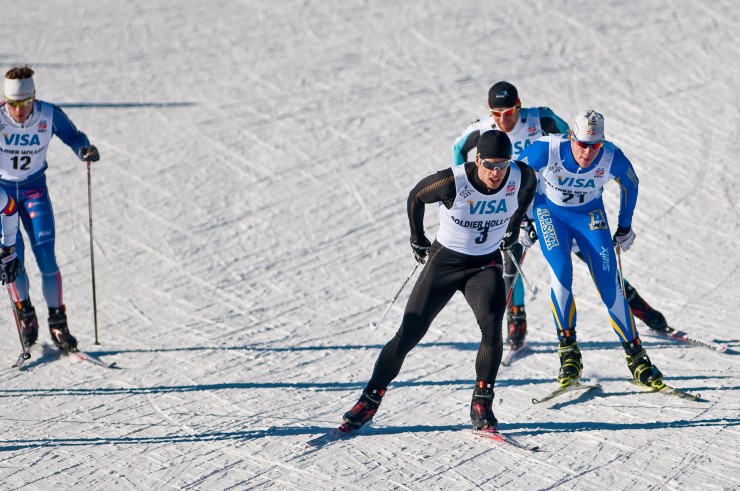
Start of the men’s 30 k freestyle mass start on Wednesday at U.S. Cross Country Championships at Soldier Hollow in Midway, Utah.
Patrick Johnson (Far West) leads the first of six times up Hermod’s in the mens’ 30 k freestyle mass start at U.S. nationals at Soldier Hollow.
Brian Gregg of Team Gregg/Madshus (second from r) holding his own in the main pack up Hermod’s for the first of six times on the men’s 30 k freestyle mass start at U.S. nationals at Soldier Hollow.
Johnson leading the mass start race at U.S. Nationals in January.
Patrick Johnson leading the second lap
The chase pack in the men’s 30 k freestyle mass start on the second of six laps at U.S. nationals at Soldier Hollow.
Sylvan Ellefson (r) and Tad Elliott of Ski & Snowboard Club Vail/Team HomeGrown make their way up Hermod’s early in the men’s 30 k freestyle mass start at U.S. nationals at Soldier Hollow.
University of Vermont junior Scott Patterson glances back at Lukas Ebner (University of Alaska-Anchorage) while leading early in the third of six laps in the men’s 30 k freestyle mass start at U.S. nationals at Soldier Hollow.
(Photo: Bert Boyer – http://bertboyer.zenfolio.com) All proceeds from photo sales will be directly donated to NNF.
Ellefson (8) gets a feed on the high point of the course at Soldier Hollow on the third of six laps in the 30 k freestyle mass start at U.S. nationals.
Scott Patterson (University of Vermont) gets ahead up Hermod’s on the third of six laps in the men’s 30 k freestyle mass start at U.S. nationals at Soldier Hollow.
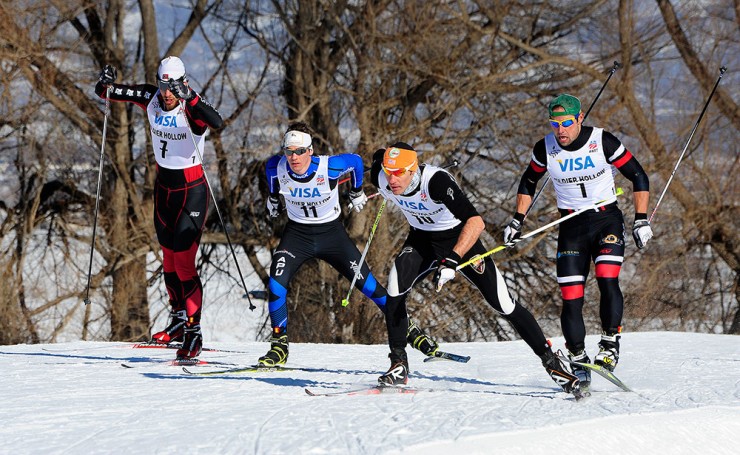
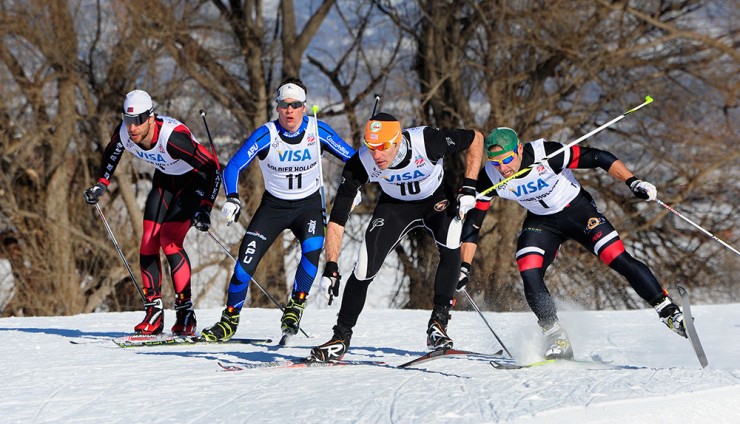
Lukas Ebner (21) leads Mats Resaland of the University of New Mexico (11) and Kris Freeman (1) up Hermod’s on the third of six laps in the 30 k freestyle mass start at U.S. nationals at Soldier Hollow.
Tad Elliott (l) and Sylvan Ellefson (8) of SSCV/Team HomeGrown make their way up the last hill on the third of six laps with Mats Resaland (11) in the 30 k freestyle mass start at U.S. nationals at Soldier Hollow.
(Photo: Bert Boyer – http://bertboyer.zenfolio.com) All proceeds from photo sales will be directly donated to NNF.
(Photo: Bert Boyer – http://bertboyer.zenfolio.com) All proceeds from photo sales will be directly donated to NNF.
Scott Patterson (UVM) alone in the lead of the U.S. nationals 30 k freestyle mass start, early in the fourth of six laps at Soldier Hollow.
(Photo: Bert Boyer – http://bertboyer.zenfolio.com) All proceeds from photo sales will be directly donated to NNF.
Sylvan Ellefson (SSCV/Team HomeGrown) follows in second early in the fourth of six laps at the U.S. nationals 30 k freestyle mass start at Soldier Hollow.
(Photo: Bert Boyer – http://bertboyer.zenfolio.com) All proceeds from photo sales will be directly donated to NNF.
Mikey Sinnott (l), of the Sun Valley Ski Education Foundation (SVSEF), climbs up and over a hill in the 30 k freestyle mass start at 2014 U.S. nationals. (Photo: Bert Boer – http://bertboyer.zenfolio.com) All proceeds from photo sales will be directly donated to NNF.
Sinnott’s former Sun Valley teammate Miles Havlick (5) leads the chase pack during the U.S. Nationals 30 k freestyle mass start while Sinnott (second from l) gets tangled on the way up. (Photo: Bert Boyer/All proceeds from photo sales donated to NNF)
Scott Patterson (UVM) on his own up front up Hermod’s for the fourth of six times in the 30 k freestyle mass start at U.S. nationals at Soldier Hollow.
Sun Valley’s Miles Havlick (5) and Oscar Ivars of the University of Utah (36) lead the chase pack up Hermod’s on the fourth of six laps in the U.S. nationals 30 k freestyle mass start at Soldier Hollow.
Erik Bjornsen (APU/U.S. Ski Team) just ahead of Kris Freeman (1) of the Maine Winter Sports Center up Hermod’s on the fourth of six laps in the men’s 30 k freestyle mass start at U.S. nationals at Soldier Hollow.
Scott Patterson (UVM) on his way down Whale’s Tale on the fourth of six laps in the U.S. nationals 30 k freestyle mass start at Soldier Hollow.
Sun Valley’s Miles Havlick (5) leads Sylvan Ellefson (8) in the pack in the men’s 30 k freestyle mass start at U.S. nationals at Soldier Hollow. (Photo: Toko)
Sinnott’s former Sun Valley teammate Miles Havlick (5) leads the chase pack up the last hill on the fourth of six laps during the U.S. Nationals 30 k freestyle mass start while Sinnott (second from l) gets tangled on the way up. (Photo: Bert Boer – http://bertboyer.zenfolio.com) All proceeds from photo sales will be directly donated to NNF.
(Photo: Bert Boyer – http://bertboyer.zenfolio.com) All proceeds from photo sales will be directly donated to NNF.
Scott Patterson (UVM) up one of the early climbs in the fifth of six laps in Wednesday’s 30 k freestyle mass start at U.S. nationals. After breaking away on the second lap, Patterson came back to the group midway through the fifth lap and ended up 19th.
Sylvan Ellefson (SSCV/Team HomeGrown) gaining some speed with 1 1/2 laps remaining out of six in the men’s 30 k freestyle mass start at 2014 U.S. Cross Country Championships at Soldier Hollow in Midway, Utah. Ellefson won by 2.8 seconds for his first national title.
Kris Freeman (Maine Winter Sports Center) heading into the lond descent down Whale’s Tail on the fifth of six laps in the U.S. nationals 30 k freestyle mass start
Kris Freeman leads Matt Liebsch across the top of the Olympic 5 k course at Soldier Hollow during the fifth of six laps in the men’s 30 k freestyle mass start at U.S. nationals on Wednesday. Freeman finished third and Bjornsen was fifth.
Miles Havlick (Sun Valley Ski Education Foundation) tucking down the high point of the course on the fifth of six laps at U.S. nationals in the 30 k freestyle mass start at Soldier Hollow.
Erik Bjornsen (APU/U.S. Ski Team) on the fifth of six laps in the U.S. nationals 30 k freestyle mass start at Soldier Hollow.
Tyler Reinking (Bridger Ski Foundation) on his way to ninth in the 30 k freestyle mass start at U.S. nationals at Soldier Hollow.
David Sinclair (Dartmouth) leads a chase into Whale’s Tale on the fifth of six laps in the U.S. nationals 30 k freestyle mass start at Soldier Hollow.
Sylvan Ellefson (SSCV/Team HomeGrown) breaks away on the fifth of six laps in the U.S. nationals 30 k freestyle mass start at Soldier Hollow.
Sylvan Ellefson (SSCV/Team HomeGrown) breaks away on the fifth of six laps in the U.S. nationals 30 k freestyle mass start at Soldier Hollow.
Sylvan Ellefson (SSCV/Team HomeGrown) breaks away on the fifth of six laps in the U.S. nationals 30 k freestyle mass start at Soldier Hollow.
Kris Freeman (MWSC) leads Matt Liebsch (XC United/Team StrongHeart) on the fifth of six laps in the U.S. nationals men’s 30 k freestyle mass start at Soldier Hollow.
Kris Freeman leads Matt Liebsch and Miles Havlick (l) in a chase pack of the 30 k freestyle mass start at 2014 U.S. nationals.
Sylvan Ellefson (SSCV/Team HomeGrown) pushes off the front with just over 5 k remaining in the men’s 30 k freestyle mass start at U.S. nationals at Soldier Hollow in Midway, Utah.
(Photo: http://bertboyer.zenfolio.com) All proceeds from photo sales will be directly donated to NNF.
Kris Freeman (1) leads Matt Liebsch (6) and Brian Gregg early in the last lap of the men’s 30 k freestyle mass start at U.S. nationals at Soldier Hollow.
Sylvan Ellefson’s mother-in-law holding one of many “Sylvan on a Stick” cardboard cutouts while cheering Ellefson on during the men’s 30 k freestyle mass start at U.S. nationals on Wednesday in Midway, Utah.
(Photo: http://bertboyer.zenfolio.com) All proceeds from photo sales will be directly donated to NNF.
Ellefson puts the hurt on up the last time Hermod’s in the men’s 30 k freestyle mass start at U.S. nationals at Soldier Hollow.
Brian Gregg (Team Gregg/Madshus) after passing Kris Freeman (MWSC) the last time up Hermod’s in the men’s 30 k freestyle mass start at U.S. nationals at Soldier Hollow.
Bjornsen makes his way up Hermod’s on the last lap of the men’s 30 k freestyle mass start at U.S. nationals at Soldier Hollow.
(Photo: Bert Boyer – http://bertboyer.zenfolio.com) All proceeds from photo sales will be directly donated to NNF.
(Photo: http://bertboyer.zenfolio.com) All proceeds from photo sales will be directly donated to NNF.
Lex Treinen (APU) on his way down to the finish, where he placed sixth in the men’s 30 k freestyle mass start at U.S. nationals at Soldier Hollow. (Photo: Bert Boyer – http://bertboyer.zenfolio.com) All proceeds from photo sales will be directly donated to NNF.
IMG_3551
Sylvan Ellefson and his wife, Sarah, await the podium ceremony after Ellefson won the men’s 30 k freestyle mass start at U.S. nationals on Wednesday.
Caitlin Gregg (Team Gregg/Madshus) is nothing but smiles as she crosses the finish line 3:36 ahead of the second place finisher in the 20 k freestyle to claim her fourth national title. (Photo: U.S. Ski Team/Sarah Brunson)
FasterSkier’s coverage of the 2014 U.S. Cross Country Championships is brought to you through the generous support of The Memory Clinic in Bennington, Vt.
MIDWAY, Utah – At the 2014 U.S. Cross Country Championships, winning by any margin is enough to make most competitors’ day. Not so for Caitlin Gregg of Team Gregg and Madshus, who won Wednesday’s 20 k freestyle mass start with a time of 55:33 and a lead of over three and a half minutes, a gap that has not been seen at the national level in recent memory. Unsatisfied with a mere win, Gregg set a blistering pace that left her fellow racers in the dust after the first few kilometers, ultimately resulting in her fourth national title.
“I had a game plan. It was to try and see what kind of a gap I could create,” Gregg said in post-race interview.
Caitlin Gregg (Team Gregg/Madshus) leads Chelsea Holmes (SVSEF) up Hermod’s Hill in the first lap of the 20 k freestyle at the 2014 U.S. Cross Country Championships. Greg handily won the the race, with Holmes following in second.
The 20 k race started out like most. The gun went off and the 78 women fought to find the best place they could in the sea of brightly colored spandex. “We were all in front and then I let some people step in front of me thinking that I would relax,” said Rosie Brennan, eventual third place finisher and skier from Alaska Pacific University. “Then I looked up again and Caitlin [Gregg] was gone.”
With an extensive history of success in skate mass starts like the Birkie, Gregg knew to take the first few kilometers easy to see how she was feeling and to observe how well her skis were running. After the first few downhills, she realized that she had skis like rockets.
“I’m risking the rest of the field getting all tangled up and falling on each other, just siting around here and trying not to pull,” she said. “At the top of the second big climb I took the lead. Once I started going, I finally got into my groove. I couldn’t stop smiling.”
As Gregg took off, only one skier attempted to stick with her. Chelsea Holmes of the Sun Valley Ski Education Foundation, who eventually finished second, took what she thought would be a short ride to the front of the pack. Instead, she realized that Gregg wasn’t going to slow down, but it was too late.
“It was brutal. I felt like a child; a small, floundering child,” said Holmes. “I didn’t think [Gregg] was going to actually go that hard.”
Holmes did her best to stay with Gregg through the first lap, but a five meter gap turned into 10, which then turned into 20, and pretty soon she found herself alone on the course with the blue and white Team Gregg suit off in the distance and a hungry Brennan coming up from behind.
Rosie Brennan (APU) leads Chelsea Holmes (SVSEF) up Hermod’s Hill in the third lap of the 20 k at the 2014 U.S. Cross Country Championships at Soldier Hollow. Holmes finished second and Brennan finished third.
”That was one of the harder races I’ve done, knowing that there were people behind me, catching me,” said Holmes. “I was very deep in the pain cave the entire time.”
However once Brennan overcame her near the end of the second lap, she was able to rest a little while the two worked together. “I think that was a good thing,” she said of Brennan catching her.
After watching the men’s race, where initial breakaways were slowly reigned back in, Brennan assumed she would just relax and slowly catch up to Holmes. “Once I got there I thought we could work together, but this course is so hard,” said Brennan of the 5 k olympic course that the women completed four times. “There is no rest. Even when I was following [Holmes], it felt like I was maxed out.”
While the race for second was being waged between Holmes and Brennan, another pair was skiing behind them to keep their position on the challenging course. Kate Fitzgerald (APU) and Caitlin Patterson of the Craftsbury Green Racing Project used each other to try and close the gap between them and Holmes and Brennan
“We were switching leads out there, which made it a lot more fun; way more fun than skiing by yourself,” Fitzgerald said. “We were chasing Rosie and Chelsea. They were like a carrot over there.”
Caitlin Patterson (Craftsbury GRP) and Kate Fitzgerald (APU) work together in the 20 k freestyle mass start at the 2014 U.S. Cross Country Championships.
“It was fun to work together with her. I don’t think either of us would have been as strong without each other,” said Patterson. “For a while I thought maybe we could get them, it seemed like we were closing for a little bit. But they definitely didn’t die and they had a pretty strong push at the end.”
In the end, the pair was unable to reach the second and third place finishers. Fitzgerald skied across the finish line in fourth and Patterson followed in fifth.
While the two pairs were working behind her, Gregg was continuing to surmount an increasing lead. With each glide of her ski she gained more confidence as she made her way around the hilly course.
“The hills were so tough, and for some reason I’m silly and I love that,” she said with a laugh.
Even though it was apparent that nobody would be able to catch her, she never slowed down. “I wanted to see what I could do and I just felt too good. It was really fun, and I definitely skied relaxed and there’s definitely that point where skiing relaxed is faster.”
Testing her limits wasn’t the only motivating factor for Gregg in Wednesday’s 20 k. In an Olympic year where there are many strong women who have already met the criteria for the Olympics, she needed to prove that she was more than worthy of a spot in Sochi.
Caitlin Gregg (Team Gregg/Madshus) takes a feed at the top on the 5 k olympic course en route to her fourth national championship.
When asked about whether or not the Olympic Games were an influence in today’s race, she recalled something Pete Vordenberg, the former U.S. Ski Team Head Coach, said to her before she made the Olympic team in 2010.
“He said ‘when you’re on the bubble, the best place to be is not on the bubble.’ And if you’re not going to be on the bubble you’re going to have to make it pretty apparent,” she said.
She did her best to make it apparent, and skied the fastest time each lap. By the time the next competitor had crossed the line Gregg had already finished over 3:36 before.
With many strong American sprinters, Gregg knew she had to shine in another discipline. She also knew that there would be a 30 k skate race in Sochi. A smart and calculated move, she saw the chance to demonstrate that she could be a strong contender in that race.
“[The 20 k was] that opportunity to make it easy for them. Don’t leave any doubt in their minds. And so [today] was my attempt to do that.”
While the U.S. Ski Team coaches are waiting to announce the Olympic team until the 21-22 of January, Gregg and her husband, Brian, have plenty to do in the meantime. On the same day that Gregg was crowned national champion in the 20 k and her husband placed second in the 30 k, both were scheduled to fly to Europe to compete in the period II World Cup races taking place in the Czech Republic.
The couple qualified for the World Cup by taking the top spots in the SuperTour standings, and if all goes well, she’ll continue her quest to “get off the bubble,” while competing at the World Cup level. However, the most important thing is that she and her husband are on the journey together.
“I cannot express anything better than being able to share this with my husband,” said Gregg, who upon her husband’s second place finish broke out into a fit of emotional exuberance. “It’s a great way to end our nationals. We’re going to get on that plane and we are just going to have all sorts of war stories, and then crash something fierce on that flight.”
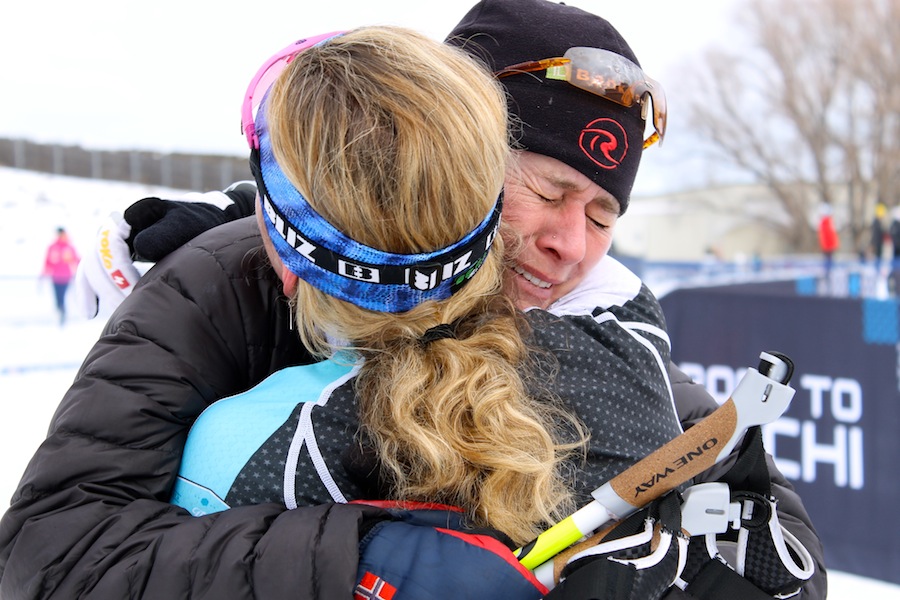
Laurie Humbert hugs Caitlin Gregg after Gregg claimed her fourth national title in the 20 k freestyle mass start. Laurie has been a large part of Gregg’s journey to nationals.
The freestyle mass start will take place Wednesday at Soldier Hollow as part of the 2014 U.S. Cross Country Championships.
FasterSkier’s coverage of the 2014 U.S. Cross Country Championships is brought to you through the generous support of The Memory Clinic in Bennington, Vt.
MIDWAY, Utah — Competitors at the 2014 U.S. Cross Country Championships have had two days of rest to prepare for the upcoming 20/30 k freestyle mass start races taking place this Wednesday.
While it’s been gorgeous at Soldier Hollow since the start of the Championships, the weather is changing and snow may be on the way, adding yet another factor that will play into the results of one of the most anticipated cross country ski races in the country.
Women will ski four laps while the men will ski six, on the same Olympic 5 k course they raced this past Saturday. The course is challenging (as the staff at FasterSkier can attest to), and in such a competitive year many believe that the pace will be blistering from the start.
Check FasterSkier for up-to-date results and reports as the mass start unfolds as well as live timing on summittiming.com and complete results on the event website, uscrosscountrychamps2014.com.
Take a look at our photo gallery to see the training day from our perspective, and read a selection of quotes from racers in the Championships.
Athletes and coaches cross the bridge into the stadium Tuesday as they prepare for Wednesday’s mass start.
The stadium was filled with wax techs on Tuesday as they tested skis for the mass start.
The view of the Hollow from the bridge.
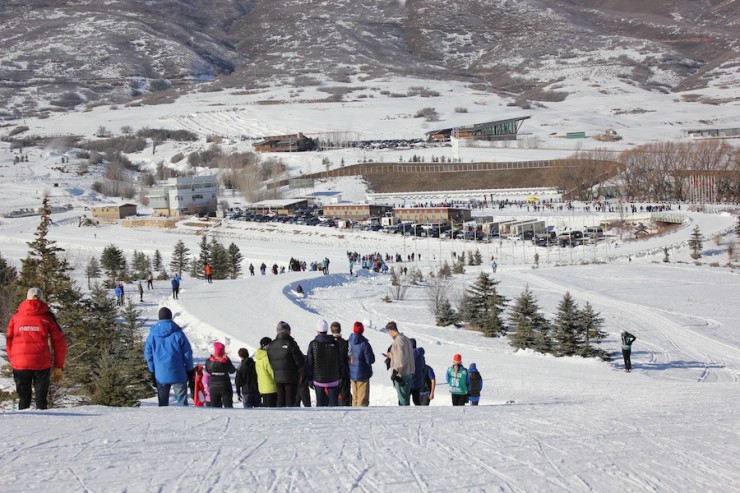
The stadium filled with spectators on Sunday.
The view from the top of Hermod’s Hill, the largest climb of the 5 k olympic course. Women will climb Hermod’s four times and men will climb it six.
“I’m feeling excited. I think tomorrow is going to be a much different race than last year. Last year the pace was pretty conservative the first 29 k, and I know there are going to be some people who want to take it out hot and push the pace. I’m into it. I wouldn’t mind waiting the till the last kilometer but I think it will be good to practice a hard 30 k to get ready for U23s. This is maybe my fifth or sixth 30 k ever and I’m still trying to learn some things. I know at U23s there are going to be some Russians who try to break away at 5 or 10 k. I’m hoping that someone will do that tomorrow so I can practice tactics.” – Erik Bjornsen, Alaska Pacific University/U.S. Ski Team, second place in the 30 k classic at the 2013 U.S. nationals
“I think I need to keep it under control for most of the early part of the race and skiing efficiently and not getting overly tired on those huge hills out here. It’s hard to predict what’s going to happen with the pack, with tactics or what pace is going to be set. I’ll just go with the flow.”- Caitlin Patterson, Craftsbury Green Racing Project, fifth place in the 20 k classic at the 2013 U.S. nationals
“I’m feeling really good. I’m ready to go out there and see how the racing holds. I don’t know what anybody’s tactics are for tomorrow so I’m hoping to be prepared for anything. I felt great in the 15 k. I got a little tired on the second lap but it was nice to know that my body could come around on the third lap. I’m fit, I’m fast, and I’m just ready to go tomorrow. I think [the key thing] for me is to stay in a good place for a while. In a 30 k in an olympic year, there might be someone who pulls something crazy from the start.You have to be able to read situations like that. We’ll be scheming through everything tonight and making sure that if anything happens tomorrow we’re on it.” – Sylvan Ellefson, Ski & Snowboard Club Vail/Team Homegrown seventh place in the 30 k classic at the 2013 U.S. nationals
“I’m feeling as well as I can be. The support I have from Solomon and Team Homegrown. My twin brother is here; he is my wax tech. I had three wax techs today and we got to test all the skis we have. Nothing is going to go wrong from the support end which is really nice. We’ll see how well I’ll sleep tonight. you never know how you’re going to react on race day. It’s been a while since I’ve gone hard. I’ve got the rest, I’ve got everything, and all the stars are aligned. We’ll see how it goes.” – Tad Elliott, Team Homegrown, who learned he had mononucleosis earlier this fall. He was the eighth in the 30 k classic at the 2013 U.S. nationals
“I really like long distance races and I think mass starts are really fun. For tomorrow I’m just going to stick with the lead pack and stay relaxed. It’s really fun to ski with all the girls, because we all know each other.” – Kate Fitzgerald, Alaska Pacific University, second place in the 20 k classic at the 2013 U.S. nationals
FasterSkier’s coverage of the 2014 U.S. Cross Country Championships is brought to you through the generous support of The Memory Clinic in Bennington, Vt.
MIDWAY, Utah — It’s been a crazy weekend here at Soldier Hollow, site of the 2014 U.S. Cross Country Championships. We’ve gathered some of our best photos from the races, so you can see the action for yourself. Take a look below to see photos from the 1.5 k freestyle sprint that took place on Sunday.
Rose Kemp (SVSEF) racing in the quarterfinals at the 2014 U.S. Cross Country Championships (Photo: http://bertboyer.zenfolio.com) All proceeds from photo sales will be directly donated to NNF.
Rose Kemp (SVSEF) leads her quarterfinal to move on to the semifinals on Sunday’s freestyle sprint at the 2014 U.S. Cross Country Championships. (Photo: http://bertboyer.zenfolio.com) All proceeds from photo sales will be directly donated to NNF.
Rosie Brennan (APU) leading her quarterfinal in the 2014 U.S. Cross Country Championships. (Photo: http://bertboyer.zenfolio.com) All proceeds from photo sales will be directly donated to NNF.
Kate Fitzgerald leading her quarterfinal in the women’s 1.5 k skate sprint at U.S. nationals on Sunday at Soldier Hollow. (Photo: http://bertboyer.zenfolio.com) All proceeds from photo sales will be directly donated to NNF.
Kate Fitzgerald (APU) racing in the quarterfinals of the 2014 U.S. Cross Country Championships at Soldier Hollow, Utah.(Photo: http://bertboyer.zenfolio.com) All proceeds from photo sales will be directly donated to NNF.
Jennie Bender (BSF) leading her quarterfinal. (Photo: http://bertboyer.zenfolio.com) All proceeds from photo sales will be directly donated to NNF.
Rosie Brennan (APU) leading her semifinal in the 2014 U.S. Cross Country Championships. (Photo: http://bertboyer.zenfolio.com) All proceeds from photo sales will be directly donated to NNF.
Kate Fitzgerald (APU) in the semifinals. (Photo: http://bertboyer.zenfolio.com) All proceeds from photo sales will be directly donated to NNF.
Caitlin Gregg (Team Gregg/Madshus) leads Erika Flowers (SMST2) in the semifinals. (Photo: http://bertboyer.zenfolio.com) All proceeds from photo sales will be directly donated to NNF.
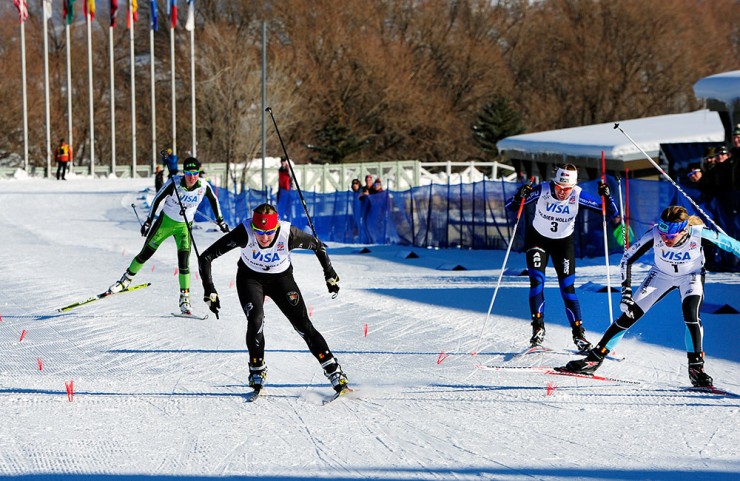
The women’s A-final heads down the last hundred meters to the finish. (Photo: Tom Kelly/USSA)
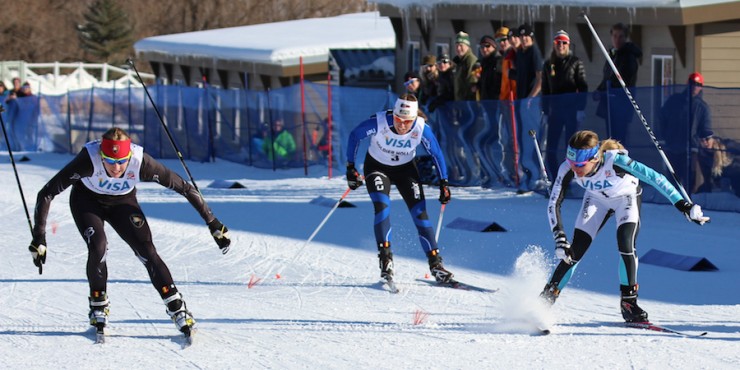
Jennie Bender of the Bridger Ski Foundation (l) edges Caitlin Gregg (r) of Team Gregg/Madshus for the skate-sprint victory at U.S. Cross Country Championships on Sunday at Soldier Hollow in Midway, Utah. APU’s Rosie Brennan (c) took third. (Photo: Tom Scrimgeour)
Jennie Bender of the Bridger Ski Foundation (l) edges Caitlin Gregg (r) of Team Gregg/Madshus for the skate-sprint victory at U.S. Cross Country Championships on Sunday at Soldier Hollow in Midway, Utah. APU’s Rosie Brennan (c) took third. (Photo: Tom Kelly/USSA)
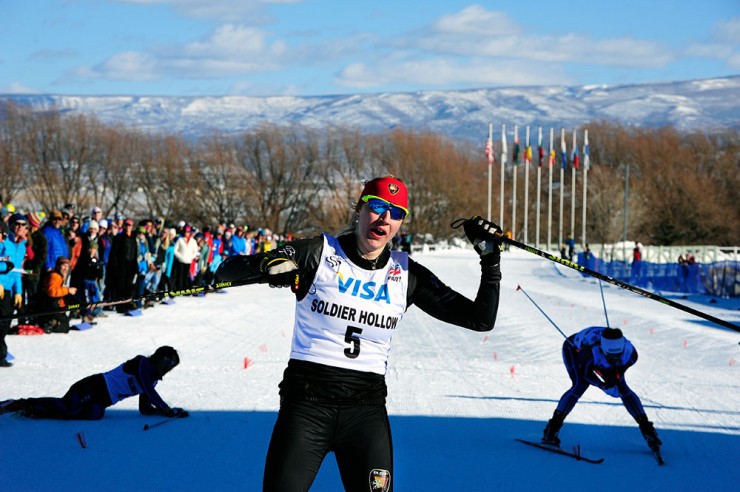
Jennie Bender (BSF) celebrates her victory in the freestyle sprint. (Photo: Tom Kelly/USSA)
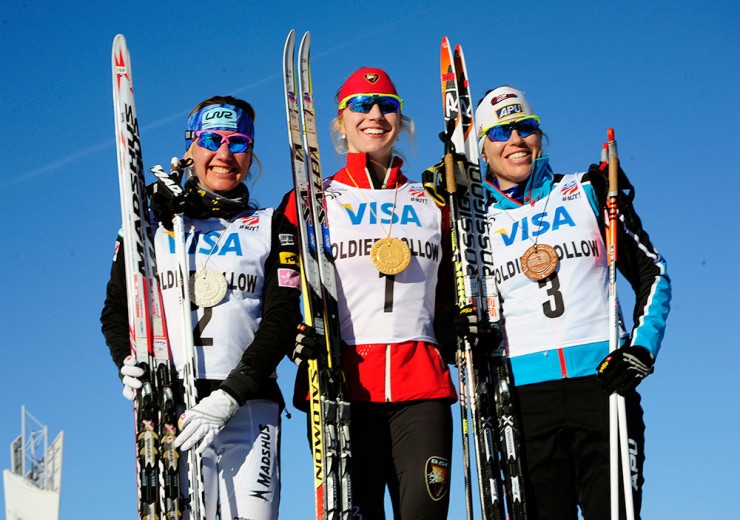
The women’s 1.5 k freestyle sprint podium, with winning Jennie Bender (c) of the Bridger Ski Foundation, Caitlin Gregg (l) of Team Gregg/Madshus in second, and Rosie Brennan (APU) in third. (Photo: Tom Kelly/USSA)
Dakota Blackhorse-Von Jess (Bend Endurance Academy) skiing in the quarterfinals. (Photo: http://bertboyer.zenfolio.com) All proceeds from photo sales will be directly donated to NNF.
Skyler Davis (SMST2) leading his quarterfinal heat in the 1.5 k freestyle sprint. (Photo: http://bertboyer.zenfolio.com) All proceeds from photo sales will be directly donated to NNF.
Max Olex (UAF) leading his quarterfinal. (Photo: http://bertboyer.zenfolio.com) All proceeds from photo sales will be directly donated to NNF.
Dakota Blackhorse-Von Jess, Reese Hanneman, Jordan Buetow, Torin Koos, Ben Saxton, and Peter Kling (l-r) in the men’s semifinal. (Photo: http://bertboyer.zenfolio.com) All proceeds from photo sales will be directly donated to NNF.
Sam Naney (Methow OD/Madshus) leads hi seminfal in Sunday’s freestyle sprint. (Photo: http://bertboyer.zenfolio.com) All proceeds from photo sales will be directly donated to NNF.
Sam Naney (Methow OD/Madshus) leads his seminfal in Sunday’s freestyle sprint. (Photo: http://bertboyer.zenfolio.com) All proceeds from photo sales will be directly donated to NNF.
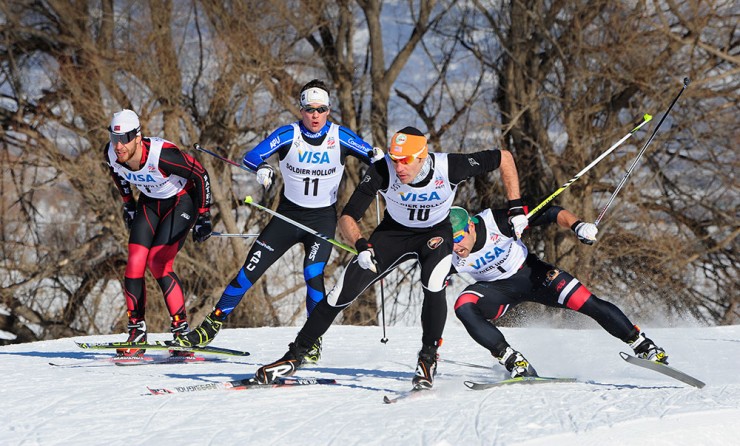
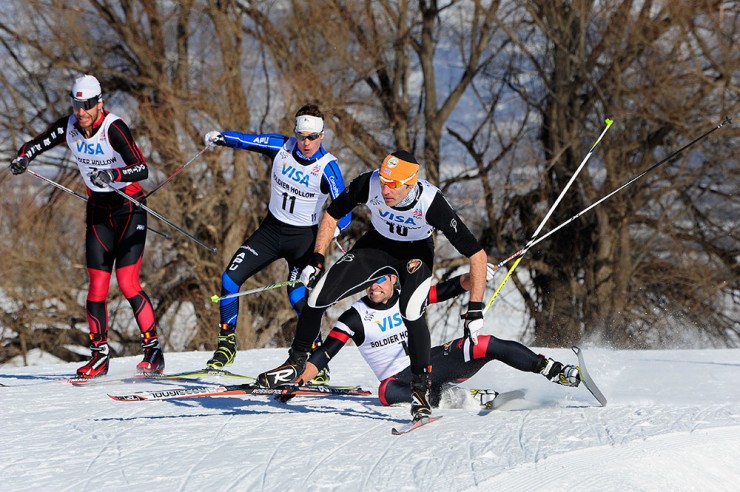
Dakota Blackhorse-von Jess (r) goes down while trying to pass Torin Koos (10) in the 1.5 k skate sprint semifinal at U.S. nationals on Sunday. (Photo: Tom Kelly/USSA)
Dakota Blackhorse-von Jess (r) goes down while trying to pass Torin Koos (10) in the 1.5 k skate sprint semifinal at U.S. nationals on Sunday. (Photo: Tom Kelly/USSA)
Dakota Blackhorse-von Jess (r) goes down while trying to pass Torin Koos (10) in the 1.5 k skate sprint semifinal at U.S. nationals on Sunday. (Photo: Tom Kelly/USSA)
Dakota Blackhorse-von Jess (r) goes down while trying to pass Torin Koos (10) in the 1.5 k skate sprint semifinal at U.S. nationals on Sunday. (Photo: Tom Kelly/USSA)
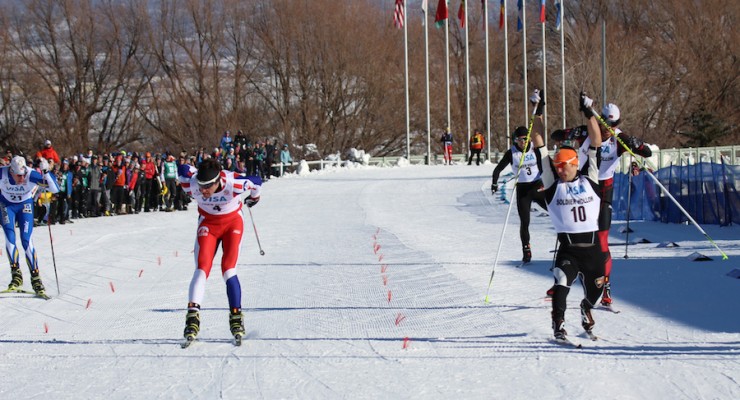
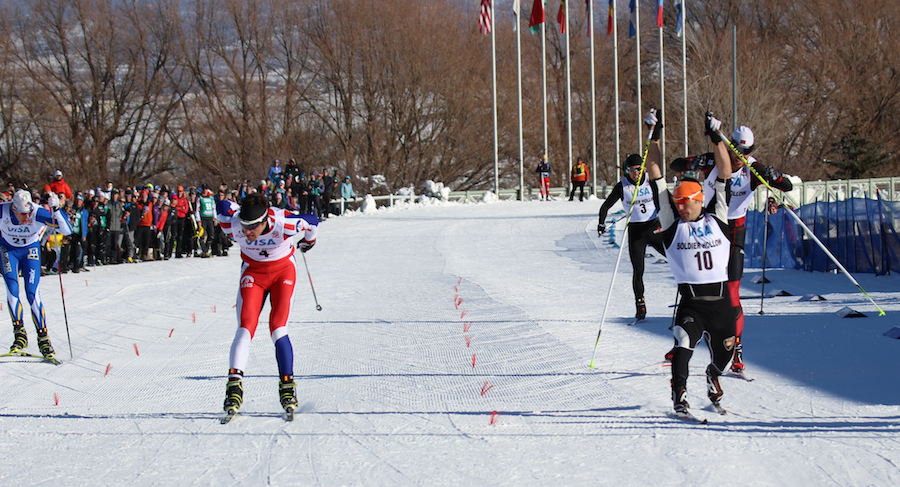
Torin Koos (BSF) out-lunges Ben Saxton (SMST2) for the win of the 1.5 k freestyle sprint at the U.S. Cross Country Championships. (Photo: Tom Scrimgeour)
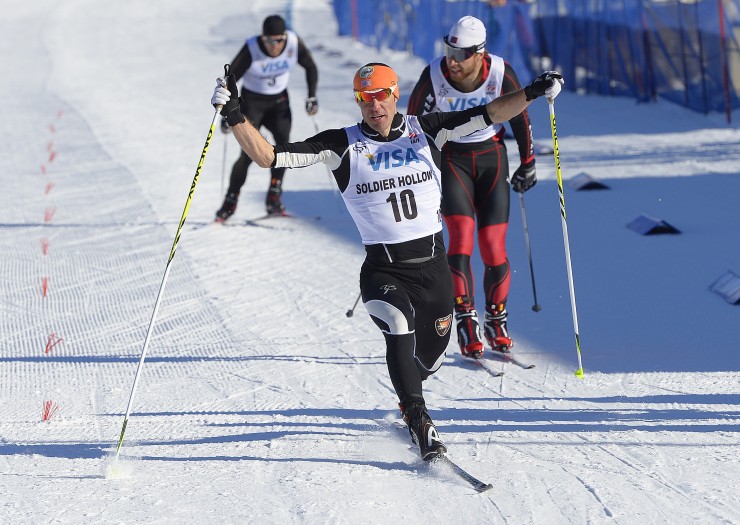
Torin Koos (BSF) celebrates his national championship as he crosses the line. (Photo: Scott Sommerdorf/The Salt Lake Tribune)
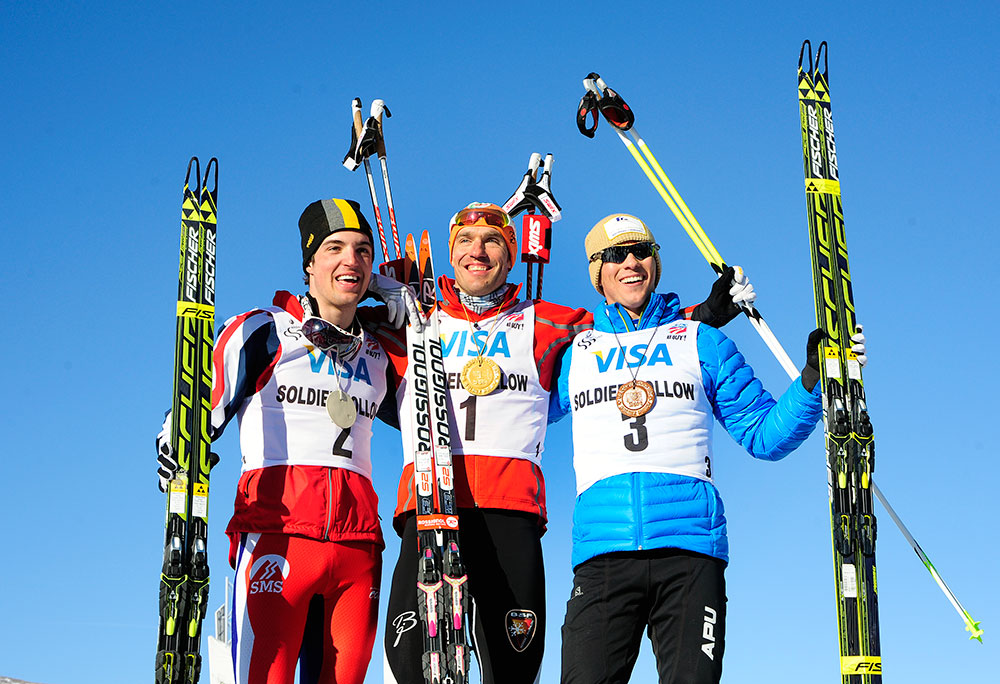
The men’s podium in the 1.5 k freestyle sprint at the U.S. Cross Country Championships. (Photo: Tom Kelly/USSA)
Ben Saxton (SMST2) skiing to second place in the freestyle sprint at the 2014 U.S. Cross Country Championships. (Photo: http://bertboyer.zenfolio.com) All proceeds from photo sales will be directly donated to NNF.
Reese Hanneman (APU) (Photo: http://bertboyer.zenfolio.com) All proceeds from photo sales will be directly donated to NNF.
Jordan Buetow (Bates), fourth. (Photo: http://bertboyer.zenfolio.com) All proceeds from photo sales will be directly donated to NNF.
Logan Hanneman of the University of Alaska Fairbanks, at the 2014 U.S.Cross Country Championships (Photo: http://bertboyer.zenfolio.com) All proceeds from photo sales will be directly donated to NNF.
Sam Naney (Methow OD/Madshus), sixth. (Photo: http://bertboyer.zenfolio.com) All proceeds from photo sales will be directly donated to NNF.
Jennie Bender (BSF), national champion. (Photo: http://bertboyer.zenfolio.com) All proceeds from photo sales will be directly donated to NNF.
Caitlin Gregg (Team Gregg/Madshus) on her way to winning the women’s 1.5 k freestyle sprint qualifier by more than 4 seconds. (Photo: http://bertboyer.zenfolio.com) All proceeds from photo sales will be directly donated to NNF.
Rosie Brennan (APU), Third. (Photo: http://bertboyer.zenfolio.com) All proceeds from photo sales will be directly donated to NNF.
Kate Fitzgerald (APU), fourth. (Photo: http://bertboyer.zenfolio.com) All proceeds from photo sales will be directly donated to NNF.
Rose Kemp (SVSEF), fifth. (Photo: http://bertboyer.zenfolio.com) All proceeds from photo sales will be directly donated to NNF.
Caitlin Patterson (Craftsbury GRP), sixth. (Photo: http://bertboyer.zenfolio.com) All proceeds from photo sales will be directly donated to NNF.
FasterSkier’s coverage of the 2014 U.S. Cross Country Championships is brought to you through the generous support of The Memory Clinic in Bennington, Vt.
MIDWAY, Utah — It’s been a crazy weekend here at Soldier Hollow, site of the 2014 U.S. Cross Country Championships. We’ve gathered some of our best photos from the races, so you can see the action for yourself. Take a look below to see photos from the men’s 15 k classic that took place on Saturday.
Matt Gelso (SVSEF) striding up Hermod’s Hill in the men’s 15 k at the 2014 U.S. Cross Country Championships. Gelso finished seventh.
Mile Havlick (SVSEF) leads a pair of skiers in the 15 k classic. Havlick would go on to finish 14th.
Kris Freeman (Maine WSC) strides up Hermod’s Hill on his way to third in the men’s 15 k.
Cam Woodworth (Dartmouth) pushes his way up Hermod’s in the 15 k at the U.S. Cross Country Championships.
Sylvan Ellefson (SSCV/Team Homegrown) strides up Hermod’s Hill en route to a fourth place finish in the 15 k at Soldier Hollow Utah.
Dimitriy Ozerskiy (CXC) leads Andrew Dougherty (Craftsbury GRP) up Hermod’s Hill in the men’s 10 k.
Miles Havlick (SVSEF) tackles the challenging olympic course in Soldier Hollow.
Erik Bjornsen (APU/U.S. Ski Team) strides up Hermod’s hill with encouragement from APU coach Erik Flora. Bjornsen won the 15 k by 11 seconds.
Third place finisher Kris Freeman of the Maine Winter Sports Club (l) and fifth place finisher Brian Gregg of Team Gregg/Madshus (r) ski together in the men’s 15 k in Midway, Utah.
Third place finisher Kris Freeman of the Maine Winter Sports Club (l) and fifth place finisher Brian Gregg of Team Gregg/Madshus (r) ski together in the men’s 15 k in Midway, Utah.
Ben Lustgarten (Middlebury College) finished a best-ever sixth place in the men’s 15 k.
Ben Lustgarten (Middlebury College) finished a best-ever sixth place in the men’s 15 k.
Sylvan Ellefson (SSCV/Team Homegrown) racing to the cheers of the many spectators who lined the olympic course.
Erik Bjornsen (APU/U.S. Ski Team) leads Scott Patterson (UVM) up the final climb of the olympic course.
Sylvan Ellefson (SSCV/Team Homegrown) racing to fourth place in the 15 k at the 2014 U.S. Cross Country Championships.
Brian Gregg (Team Gregg/Madshus) racing to fifth in the 15 k at Soldier Hollow.
Kris Freeman (Maine WSC) en route to his third place finish in the men’s 15 k at the U.S. Cross Country Championships.
Kris Freeman (Maine WSC) en route to his third place finish in the men’s 15 k at the U.S. Cross Country Championships.
Erik Bjornsen (APU/U.S. Ski Team) won the 15 k at the 2014 U.S. Cross Country Championships in Midway, Utah.
Sylvan Ellefson (SSCV/Team Homegrown) finished fourth in the 15 k classic at Soldier Hollow.
Brian Gregg (Team Gregg/Madshus) racing to fifth in the 15 k at Soldier Hollow.
Erik Bjornsen (APU/U.S. Ski Team) won the 15 k at the 2014 U.S. Cross Country Championships in Midway, Utah.
Reese Hanneman (APU) double poles his way into the stadium after completing three 5 k laps in Saturday’s 15 k. He finished third.
Brian Gregg (Team Gregg/Madshus) crosses the line in fifth at the U.S. Cross Country Championships.
Kris Freeman (MWSC) crosses the line in fifth at the U.S. Cross Country Championships.
Kris Freeman (Maine WSC) collapses at the finish of the 15 k at the U.S. Cross Country Championships.
Reese Hanneman (APU) crosses the line in fifth at the U.S. Cross Country Championships.
Ben Lustgarten (Middlebury College) collapses at the finish of the 15 k at the U.S. Cross Country Championships
Erik Bjornsen (APU/U.S. Ski Team) and Sam Tarling (Maine WSC) embrace after the finish of the men’s 15 k.
FasterSkier’s coverage of the 2014 U.S. Cross Country Championships is brought to you through the generous support of The Memory Clinic in Bennington, Vt.
MIDWAY, Utah — It’s been a crazy weekend here at Soldier Hollow, site of the 2014 U.S. Cross Country Championships. We’ve gathered some of our best photos from the races, so you can see the action for yourself. Take a look below to see photos from the women’s 10 k classic that took place on Saturday.
Caitlin Gregg (Team Gregg/Madshus) racing in Saturday’s 10 k individual classic at the 2014 U.S. Cross Country Championships. She finished second. (Photo: Bert Boyer/http://bertboyer.zenfolio.com/) All proceeds from photo sales will be directly donated to NNF.
Becca Rorabaugh (APU) racing to a national title in the 10 k classic individual start on Sunday at Soldier Hollow in Midway, Utah. (Photo: Bert Boyer/http://bertboyer.zenfolio.com/) All proceeds from photo sales will be directly donated to NNF.
Caitlin Patterson (Craftsbury Green Racing Project) striding to third in the women’s 10 k classic individual start at 2014 U.S. nationals in Midway, Utah. (Photo: http://bertboyer.zenfolio.com/) All proceeds from photo sales will be directly donated to NNF.
Anja Gruber (University of Vermont) racing to fourth in Saturday’s 10 k classic mass start at Soldier Hollow for her best U.S. nationals result by more than 20 places. (Photo: Bert Boyer/http://bertboyer.zenfolio.com/) All proceeds from photo sales will be directly donated to NNF.
Kate Fitzgerald (APU) racing in the 10 k classic at the 2014 U.S. Cross Country Championships. (Photo: Bert Boyer/http://bertboyer.zenfolio.com/) All proceeds from photo sales will be directly donated to NNF.
Caitlin Gregg (Team Gregg) ascends Hermod’s Hill in the 10 k classic.
Kate Fitzgerald (APU) climbing the largest hill on the course, Hermod’s Hill, in the women’s 10 k.
Caitlin Patterson of the Craftsbury Green Racing Project (r) approaches Mary O’Connell (l) in the women’s 10 k at the 2014 U.S. Cross Country Championships.
Annie Pokorny (SMST2) racing in the women’s 10 k. She finished 12th.
Caitlin Gregg (Team Gregg/Madshus) pushes up Hermod’s Hill in the 10 k classic individual start at Soldier Hollow on Saturday. She placed second for her best classic result at nationals.
Kate Fitzgerald of Alaska Pacific University (l) leads Erika Flowers (r) of Stratton Mountain T2 up Hermod’s Hill in the women’s 10 k at the U.S. Cross Country Championships.
Alaska Pacific University’s Becca Rorabaugh (l) takes on Dartmouth’s Anne Hart (r) the first of two times up Hermod’s Hill on a challenging Olympic course at 2014 U.S. Cross Country Championships. Rorabaugh won the 10 k classic individual start on Saturday in Midway, Utah, by 14 seconds.
Alaska Pacific University’s Becca Rorabaugh (l) takes on Dartmouth’s Anne Hart (r) the first of two times up Hermod’s Hill on a challenging Olympic course at 2014 U.S. Cross Country Championships. Rorabaugh won the 10 k classic individual start on Saturday in Midway, Utah, by 14 seconds.
Caitlin Gregg (Team Gregg/Madshus) pushes up Hermod’s Hill in the 10 k classic individual start at Soldier Hollow on Saturday. She placed second for her best classic result at nationals.
Rosie Brennan (APU) racing in the 10 k classic at the 2014 U.S. Cross Country Championships. She finished sixth.
Chelsea Holmes (SVSEF) finished 10th in Saturday’s 10 k classic race at the 2014 U.S. Cross Country Championships.
Norwegian Martin Sundby, winner of the 2014 Tour de Ski. (Photo: Fischer/Nordic Focus)
This weekend was so jam-packed with action, it’s almost hard to keep straight. We’ll give you the rundown of everything that happened, both domestic and abroad, including the finish of the Tour de Ski and the start of the U.S. Cross Country Championships.
Friday marked the fifth stage of the Tour de Ski, which took the form of a 15 k freestyle pursuit for women and a 35 k for men. On the women’s side Astrid Jacobsen of Norway won the race and held on to the tour lead. Therese Johaug was in hot pursuit, but ultimately came up short in second. Aino-Kaisa Saarinen of Finland was third.
Americans Liz Stephen and Jessie Diggins fared well, placing 12th and 13th.
On the men’s side, Canadian Alex Harvey made his way back onto the podium in the pursuit by placing third. He was bested by Norway’s Martin Sundby, who won the race, and Petter Nortug who placed second.
American Noah Hoffman moved from 69th place to 27th by skiing the second fastest time on the 35 k course.
Astrid Jacobsen, Therese Johaug and Heidi Weng (l-r) on the podium at the conclusion of the 2014 Tour de Ski. (Photo: Fiemme Ski World Cup
The sixth stage took place Saturday, and was a classic interval 5 k and 10 k . Johaug dominated the short course, greatly diminishing Jacobsen’s overall Tour lead. Diggins finished a career-best classic finish in 10th, and Stephen was 21st.
Northug took the men’s 10 k by roughly 9 seconds over Sundby, and fellow Norwegian Chris Jespersen. Harvey ended his tour by placing fifth. Fellow Canadian Ivan Babikov finished 27th. Both Hoffman and Kershaw had off-days, and placed 47th and 52nd.
The Tour de Ski concluded Sunday with the renowned Final Climb on the Alpe Cermis. It was Johaug who once again stole the show, winning both the day and the Tour. Three Norwegians joined her on the Tour podium with Jacobsen and Heidi Weng in second and third. This was the first time in the Tour’s history that a Norwegian had won.
Stephen produced the third fastest time of the day end ended the tour in seventh. Diggins finished in 14th overall.
It was Norway who swept the top two spots of the Tour podium in the men’s overall Tour with Sundby, and Jespersen going 1-2. Johannes Duerr of Austria was third. Babikov earned the fourth fastest hill climb time and finished the Tour in 19th. Hoffman ended his Tour in 25th, his best finish.
The women’s 1.5 k freestyle sprint podium at the 2014 U.S. Cross Country Championships, with winning Jennie Bender (c) of the Bridger Ski Foundation, Caitlin Gregg (l) of Team Gregg/Madshus in second, and Rosie Brennan (APU) in third. (Photo: Tom Kelly/USSA)
On the domestic front, the 2014 U.S. Cross Country National Championships kicked off on Saturday with the 10k and 15k classic individual. On the women’s side it was Becca Rorabaugh (APU) who won over Caitlin Gregg (Team Gregg/Madshus) and Caitlin Patterson (Craftsbury GRP). For the men it was Erik Bjornsen (APU/U.S. Ski Team), Reese Hanneman (APU), and Kris Freeman (Maine WSC) who had the fastest times of the day.
If Saturday was APU’s then Sunday was owned by the Bridger Ski Foundation as both Torin Koos and Jennie Bender won the freestyle sprints. Koos was followed by Ben Saxton (SMST2) and Hanneman. Behind Bender were Gregg, who narrowly finished second, and Rosie Brennan (APU) who placed third.
In biathlon action, the IBU World Cup continued this weekend with results that many North American’s were wishing they could forget. There were some shining stars, however, with Susan Dunklee finishing 25th in Saturday’s pursuit and Time Burke placing ninth in Sunday’s 15 k mass start.
Todd Lodwick was the talk of nordic combined news as he was chosen for his sixth winter Olympics, making him the first-ever American to compete in that many.
Men’s semifinal in the freestyle sprint at the 2014 U.S. Cross Country Championships. Resse Hanneman (11), Jordan Buetow (7), Torin Koos (10), and Ben Saxton (4) all advanced to the A-final. (Photo: http://bertboyer.zenfolio.com) All proceeds from photo sales will be directly donated to NNF.
FasterSkier’s coverage of the 2014 U.S. Cross Country Championships is brought to you through the generous support of The Memory Clinic in Bennington, Vt.
MIDWAY, Utah — In the men’s A-final this Sunday at the 2014 U.S. Cross Country Championships, there were several up-and-coming competitors who had some interesting stories about how they got to Soldier Hollow, and where they drew the inspiration for their success from. FasterSkier caught up with three of them to hear their stories.
Ben Saxton (SMST2), Second Place
Ben Saxton (SMST2) racing in the qualification rounds. Saxton ended his day in second, a best-ever finish for the 20-year-old.
When conversing with Saxton, he often spends more time talking about his teammates from the Stratton Mountain T2 Team than about himself. This was apparent after the finish of the freestyle sprint in Soldier Hollow, when he discussed how Simi Hamilton, who recently won the freestyle sprint in the Tour de Ski, inspired him in Sunday’s race.
Saxton and his other teammates were staying at Erika Flowers’ aunt and uncle’s house on the day that Hamilton won. Due to the early morning and sleeping relatives, they did their best to keep the volume down.
That didn’t last long. “When Simi won, we just lost it,” Saxton said in an interview. “When there’s that much positivity its hard not to feel some of that back home.”
The Minnesota native certainly felt the positivity going into Sunday’s freestyle sprint. Skiing amongst veteran racers who have competed in World Cups and Olympics, Saxton held his own throughout the heats and into the final.
The 20-year-old had an incredibly strong finish, gaining ground on Torin Koos until the very end. “We came into the lanes and it was just adrenaline. It was awesome,” he said. “For a brief second when we popping around the bridge all I was thinking about was Simi’s finish in my head, and I was like ‘I got to do this,’” Saxton said.
Saxton finished the day in second place, a personal best and further evidence that the SMST2 team is doing something right.
“I know Andy, Simi, Sophie, Jessie have all been enjoying incredible success on the WC right now. I’m just excited that the racers from T2 still in America are continuing that.”
Jordan Buetow (Bates College), Fourth Place
Jordan Buetow (Bates College) in the qualification rounds of Sunday’s freestyle sprint at Soldier Hollow. He finished fourth overall.
For Buetow, there aren’t many opportunities to sprint in on the college circuit, so when he came to nationals he knew this was one of his only opportunities for the season.
A relatively new face to U.S. Nationals success, Buetow wasn’t too surprised with his result. “I’ve been focusing on this A-Final in the skate sprint for several years now. The last four years I’ve gradually improved every year,” he said in a post race interview.
For someone who normally races distance races throughout the year, the sprint result is a huge deal for Buetow. In addition, having the U.S. Nationals skate sprint on his radar for the past few years only makes the result feel that much better.
“I just wanted to have fun today. And it turned out well!”
Logan Hanneman (UAF), Fifth Place
Reese Hanneman in the qualification rounds at the 2014 US Cross Country Championshis. He finished fifth overall. (Photo: http://bertboyer.zenfolio.com) All proceeds from photo sales will be directly donated to NNF.
The younger of the two Hanneman brothers in the A-final wasn’t even sure that he’d even be able to compete going into this year’s racing season. In an unfortunate turn of events this past August, he broke his back at the NTG camp in Park City, Ut. Not only that, he remained at the camp for the rest of the week and trained with his injury. Upon his return to Alasaka, Hanneman had it checked out and was greeted with bad news. It turned out that he had sustained a very serious compression fracture.
After the discovery, Hanneman wore a back brace through most of the fall and wasn’t able to take it off until the middle of November. “The bone is as good as it is going to get and I just have to keep strengthening it,” he said in an interview.
To come from such an injury and make it to the A-final of the U.S. Cross Country Championships is truly impressive. When asked what his secret was to his astounding comeback, Hanneman wasn’t quite sure. “Maybe all the no pole skating,” he said. “All my intervals this fall were that.”
Looking forward, Hannemen doesn’t have too many expectations for the rest of the season and is content that he was able to find success in Soldier Hollow. “At this point of the year I don’t have the distance training, but sprinting seems to go ok. I was very exhausted [today], I honestly don’t know where it came from.”
Torin Koos (BSF/Rossignol) crossing the finish line in Sunday’s freestyle sprint at the 2014 U.S. Cross Country Championships. Koos won his eighth national championship. (Photo: Scott Sommerdorf/The Salt Lake Tribune)
FasterSkier’s coverage of the 2014 U.S. Cross Country Championships is brought to you through the generous support of The Memory Clinic in Bennington, Vt.
MIDWAY, Utah – The men’s field in Sunday’s 1.5-kilometer freestyle sprint at the U.S. Cross Country Championships was anything but shallow. Talents ranging from 2013 national champion Dakota Blackhorse-von Jess to Swedish exchange student Emil Johansson scattered the finals, making it one of the most competitive sprints in recent memory.
Despite the competition, one man came out on top. Torin Koos of the Bridger Ski Foundation (BSF) and Rossignol skied powerfully throughout the finals to take the win over Ben Saxton of Stratton Mountain School (SMS) and Reese Hanneman of Alaska Pacific University (APU).
Rounding out the top six were Jordan Buetow (Bates College), Logan Hanneman (University of Alaska-Fairbanks), and Sam Naney (Methow Olympic Development/Madshus).
There were also some well-known names absent from the A-final. Erik Bjornsen (APU/U.S. Ski Team) got tangled in his quarterfinal before the last sharp corner toward the stadium. Skyler Davis (Stratton Mountain School T2 Team), who was also in that quarterfinal, was unable to capitalize on an early lead and finished fourth in the heat.
“I think we were going three wide and then someone on the right of me kicked my pole and snapped it, pretty high up actually,” Bjornsen said. “When I went to pole on the next stroke I just went down. … It just got a little too tight and I was just trying to hold my position.
“It’s how sprinting goes,” Saturday’s 15 k classic champion added. “Two more races.”
Blackhorse-von Jess (Bend Endurance Academy), who qualified first, crashed in almost the same place as Bjornsen in his semifinal after catching his ski on Koos. Upon getting back up, another skier clipped his ski and he went down again, finishing last in the heat and having to settle for the B-final. There, the defending skate sprint champion won it with a commanding lead.
“After we knew for sure I was going to be in the B-Final coach just said ‘Go bury them,’ ” von Jess explained. “I felt great all day, better and better as the heats went on — I knew I had the feeling and the skis to win and I went for it. Tried to win by as much as I could. Wish I’d had a chance to do it in the A-final, but sometimes that’s racing.”
Dakota Blackhorse-von Jess (r) goes down while trying to pass Torin Koos (10) in the 1.5 k skate sprint semifinal at U.S. nationals on Sunday. (Photo: Tom Kelly/USSA)
Dakota Blackhorse-von Jess (r) goes down while trying to pass Torin Koos (10) in the 1.5 k skate sprint semifinal at U.S. nationals on Sunday. (Photo: Tom Kelly/USSA)
Dakota Blackhorse-von Jess (r) goes down while trying to pass Torin Koos (10) in the 1.5 k skate sprint semifinal at U.S. nationals on Sunday. (Photo: Tom Kelly/USSA)
Dakota Blackhorse-von Jess (r) goes down while trying to pass Torin Koos (10) in the 1.5 k skate sprint semifinal at U.S. nationals on Sunday. (Photo: Tom Kelly/USSA)
Ben Saxton (SMS) racing in the prelims of Sunday’s freestyle sprint. He qualified fourth and placed a best-ever second place. (Photo: bertboyer.zenfolio.com) All proceeds from photo sales will be directly donated to NNF.
“It’s always great to win in a very solid field,” Koos said in a post-race interview. “The Americans are sprinting at a good level. Ben Saxton was really strong. A lot of guys were fighting the whole time and we were all very close the whole day.”
This marks the eighth national championship for Koos, who is a former U.S. Ski Team member and Olympian. Last year at Soldier Hollow, Koos won the both the classic sprint and the 30 k, but was eliminated from the skate-sprint finals after breaking a ski. This year the 33 year old was looking for redemption, and he found it.
His road to winning wasn’t without challenges. Race organizers decided to change the 2014 course to feature more grueling terrain that made fitness even more important, especially after those in the finals raced four times. The new course was lengthened to roughly 1.5 k and featured a daunting climb up Hermod’s Hill and a steep decent down Whale’s Tail.
“This [course] challenged everything,” Koos said. “I think it is more in the mold of what Sochi is going to be like. I give the organizers a lot of credit for making a change and making a change that worked the first time. They made the course absolutely world class.”
Logan’s older brother Reese couldn’t agree more.
“I think it was fun because no one had any experience on the course before today,” the third-place finisher said. “I was just talking to all the guys and everyone had no clue how to do it. It felt like a totally level playing field.”
Due to the novelty of the course, Koos went into the finals without much of a strategy and decided to see how the rest of the completion fared in order to shape his own style of skiing. Apparently he learned what worked, as he was able to comfortably place in the top two in both his quarterfinal and semifinal.
The final, however, was a different story.
In the A-final, the he made his way up Hermod’s Hill hoping to hop in second behind Hanneman in order to draft on the downhill. However, his competitors had learned from the quarters and semis as well. “Reese had a little bit of a lead and I thought he was going to dip right in like the semifinal, but he just stood up.”
Reese Hanneman (APU) racing in the qualification round. He placed third in the finals, making it his second podium in two days at the 2014 U.S. Cross Country Nationals. (Photo: bertboyer.zenfolio.com) All proceeds from photo sales will be directly donated to NNF.
The move was reminiscent to the men’s relay in the 2002 Olympics, which took place at the same venue, where neither Italy’s Cristian Zorzi nor Germany’s Thomas Alsgard wanted to lead the final downhill. In the end, it was Koos who decided to set hesitation aside and go for it.
“I guess I had the least patience of anybody and took it down,” he said jokingly.
Once in front, Koos maintained his lead, a feat that many leaders in the heats had ben unable to uphold. He attributed his ability to stay out front to his strong skating and excellent wax techs. “I think our wax techs really won the day,” he said.
As Koos entered the finish, he had opened up a slight gap of Saxton but he knew that he wasn’t completely safe.
“I could feel Ben coming and I think it was really close,” he said. However, in the end “I really felt that I had it.”
Saxton was ecstatic about his best-ever finish at U.S. nationals a year after placing fifth in the sprint. He attributed his success to his work with SMS head coach Gus Kaeding, who “harped” on him all summer about his double pole starts. In addition, he believed his ability to treat a big day like “just another race” helped propel him to the final.
Fourth place finisher, Buetow was bummed to place just outside of the podium, but was incredibly happy with the day. Logan Hanneman, who placed just behind Buetow, echoed the happy sentiments.
“Today was very good” he said in an interview. “[It’s good to] see I still have it… and my brother’s on the podium for the second day!”
BSF head coach Dragan Danevski was very pleased with Koos’ win. In addition, Jennie Bender, another athlete of the Bridger Ski Foundation, won the national championship on the women’s side.
While Danevski knew both of his athletes had it in them, he said that given the nature of the sport, having two national championships like this was unlikely. “Skiing is not that easy to predict. Especially cross country skiing. Especially sprinting. We were hoping that they would ski at the level of their abilities.”
Torin Koos (BSF/Rossignol) celebrates his win the freestyle sprint as he crosses the line just ahead of Stratton’s Ben Saxton (l) at the 2014 U.S. Cross Country Championships. (Photo: Tom Scrimgeour)
“It’s great working with Dragan and the whole Bridger team,” said Koos. “They’re just really hard workers and [they are] the people behind the sport that help me do what I do. Without those guys, I wouldn’t have won.”
This win means many things for Koos. While he is no stranger to national championships, this year is particularly important for him because of the Olympics in Sochi.
The 2014 Winter Olympics will also feature a freestyle sprint, making this win ever more significant. “I want to be there [Sochi] to represent the U.S.A., join Andy and Simi, make the rounds, and really mix it up.”
When Danevski was asked about Koos’ chance at nabbing a spot on the American Olympic team he believed that Koos is now much closer.
“In three years he has won four national championships in sprinting. None of the other skiers have done that yet,” he said. “He deserves to be in Sochi. I think the best for Torin is coming at the Olympics.”
Whether or not anyone at the 2014 U.S. Cross Country Championships will get a spot at the Olympics remains to be seen. With much of the U.S. criteria resting on discretion and a strong U.S. Ski Team in Europe, it’s hard to say who, if anyone, will be picked from the domestic racing scene to represent America in Sochi.