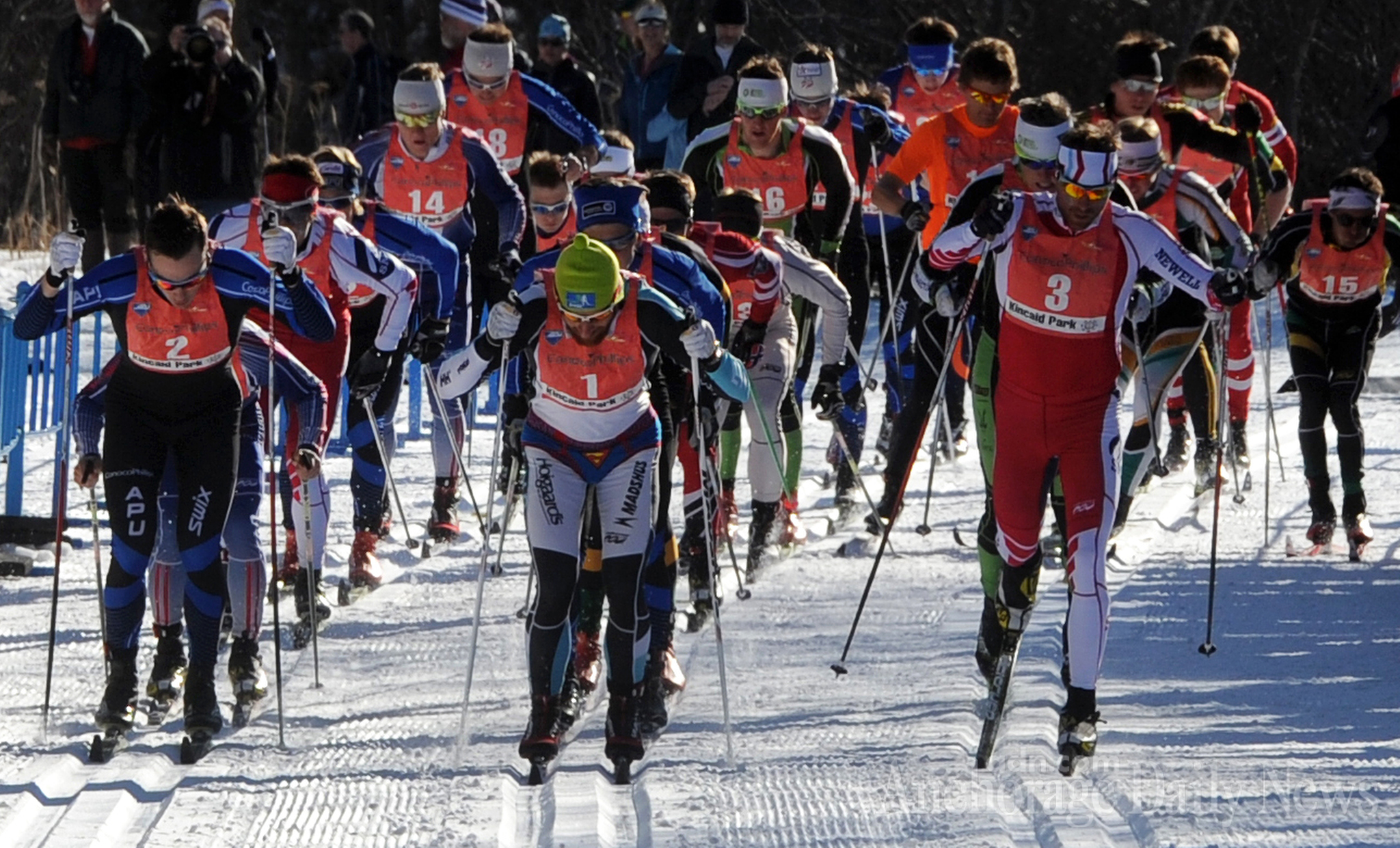
ANCHORAGE, Alaska — A look back at the men’s 50-kilometer classic mass start at U.S. Distance Nationals last Friday, March 28, with the focus on the frontrunners of the five-lap race.
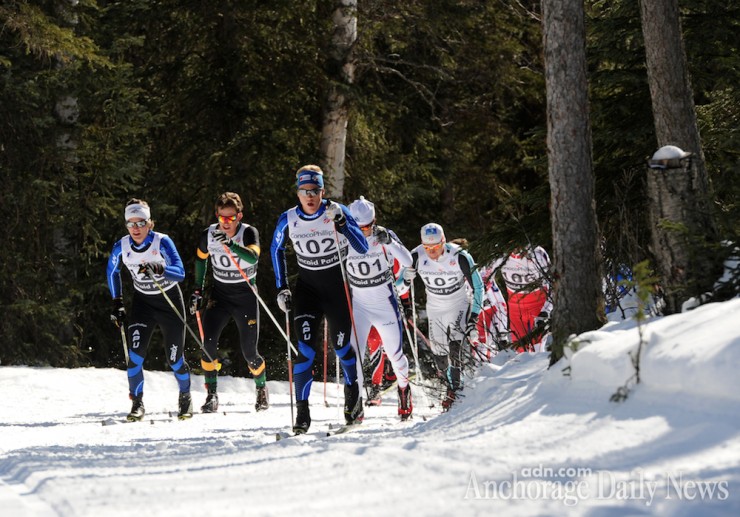
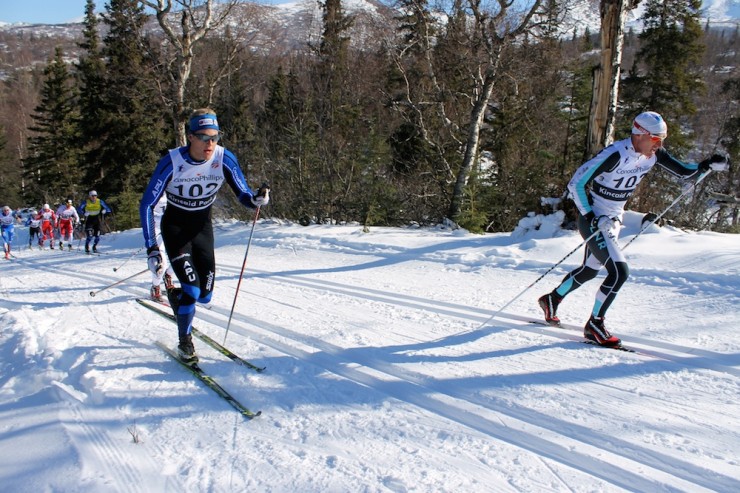
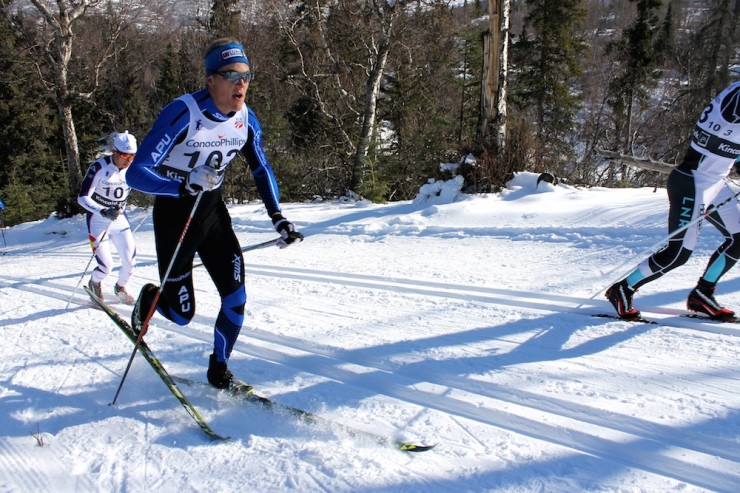
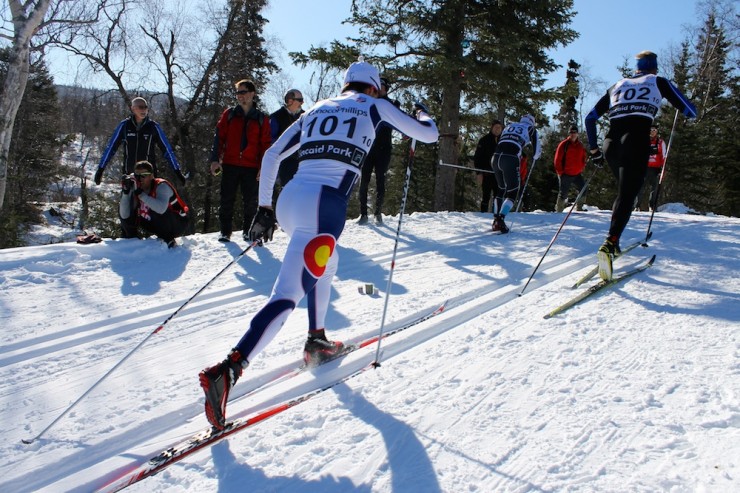
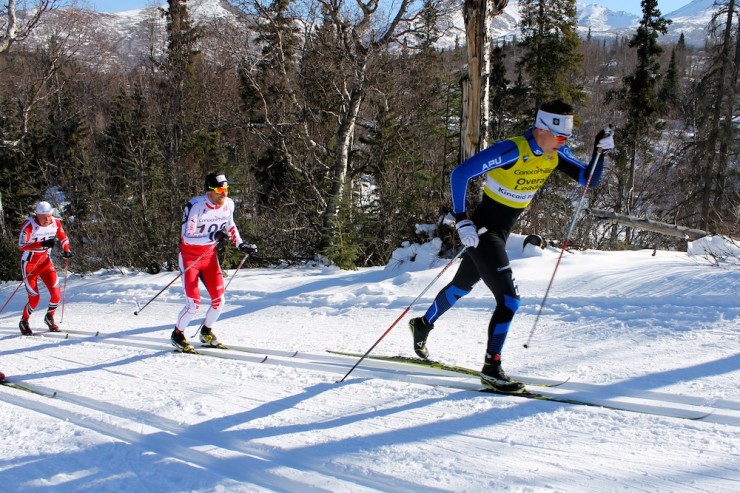
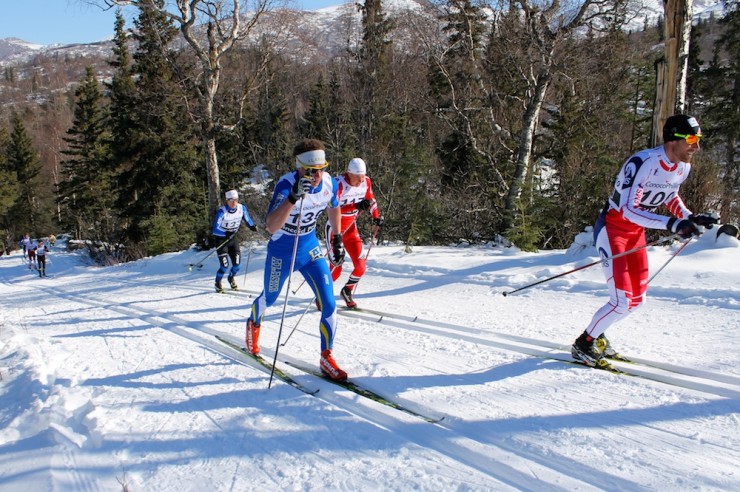
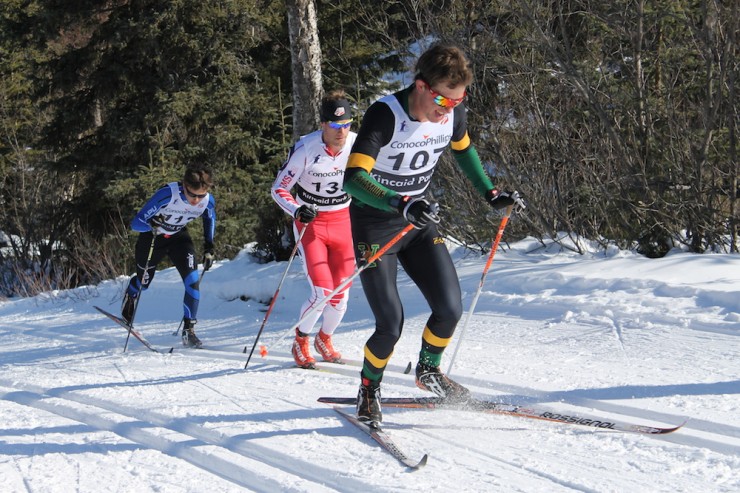
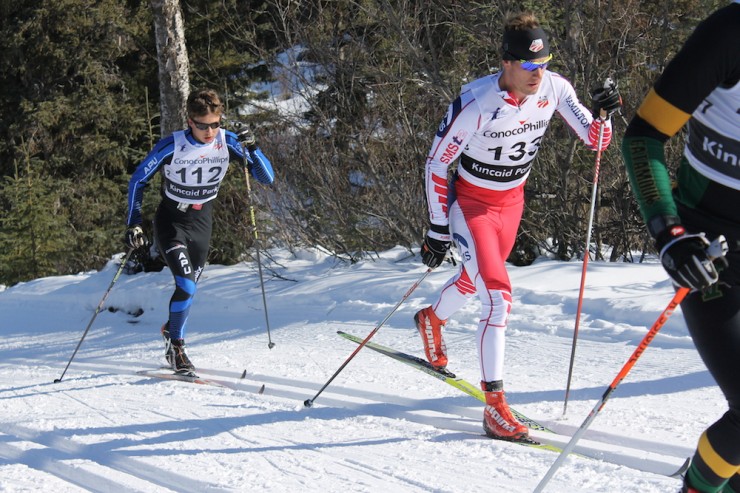
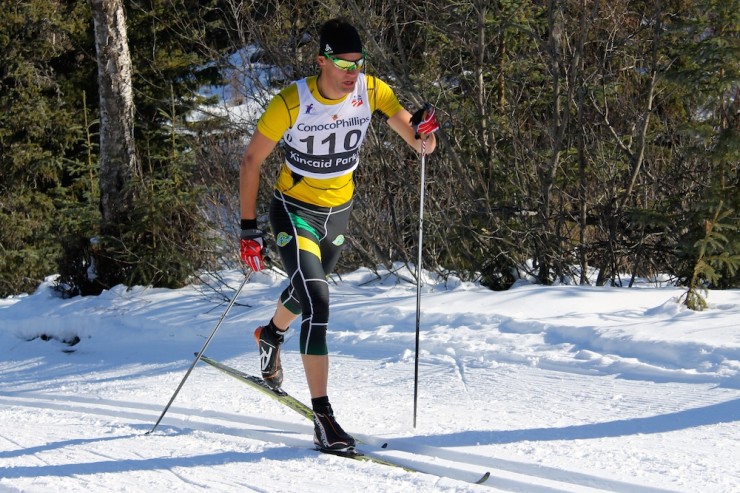
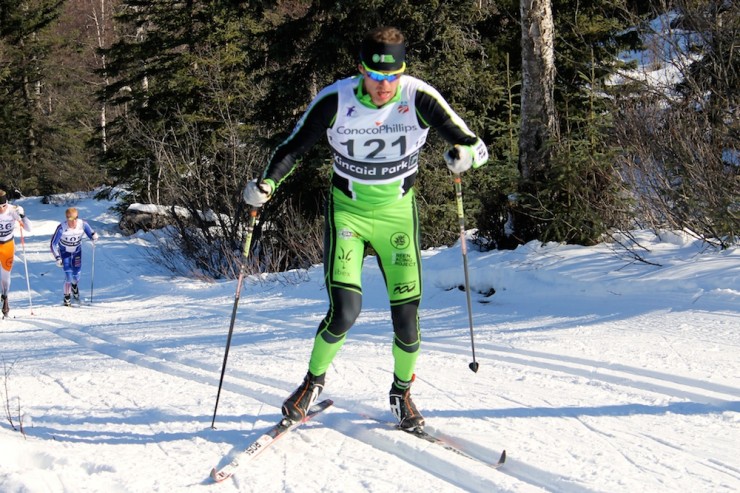
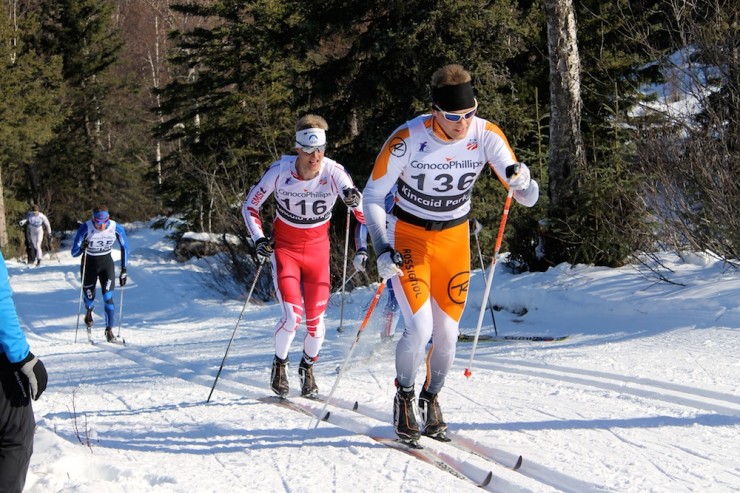
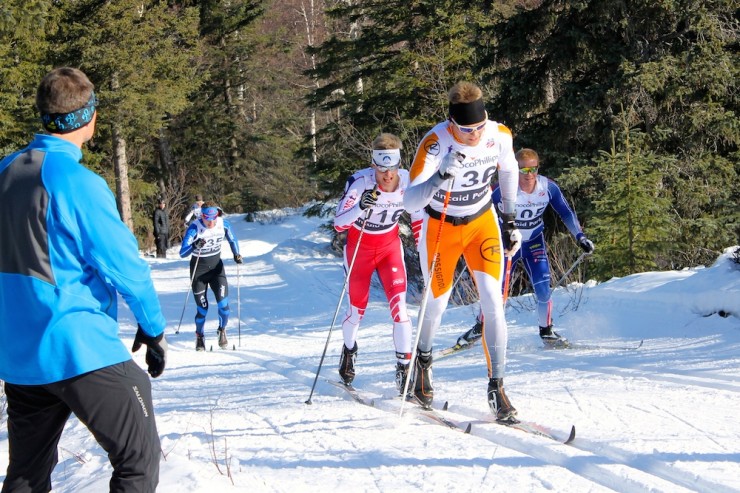
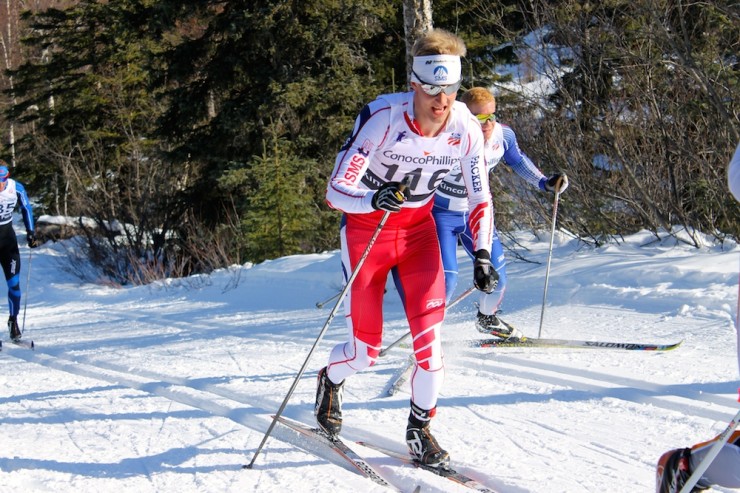
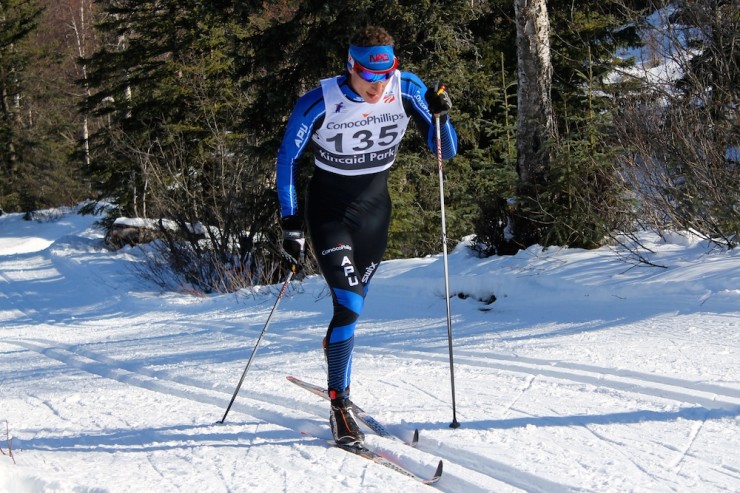
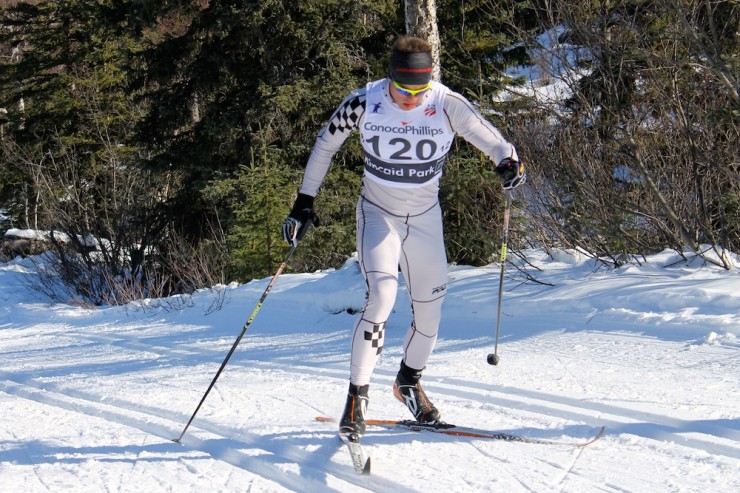
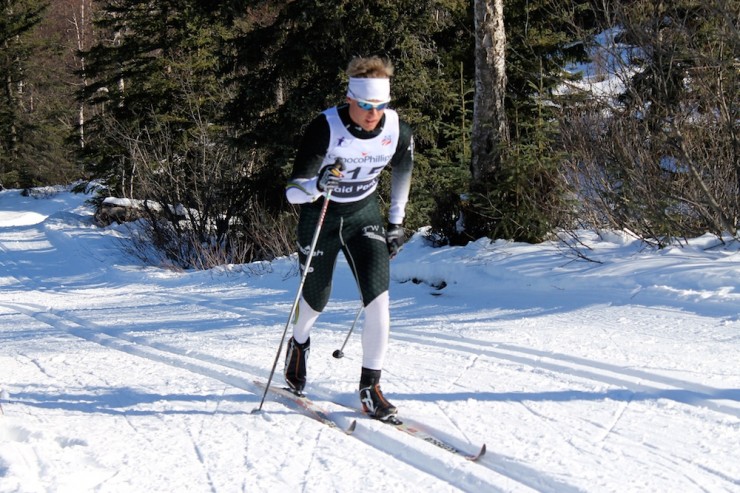
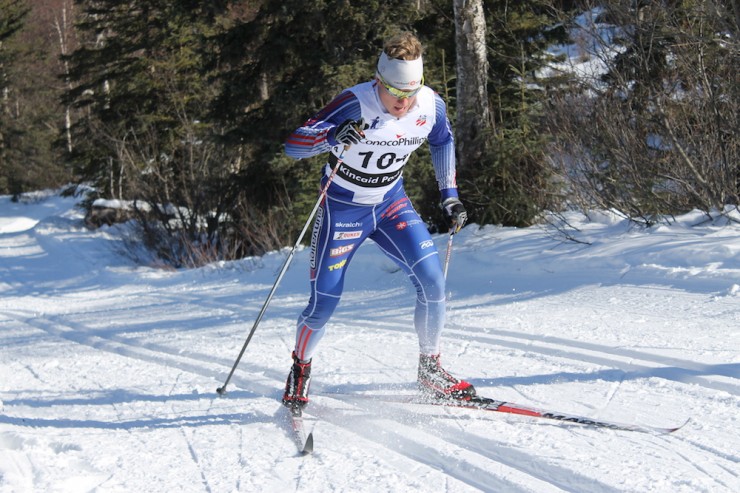
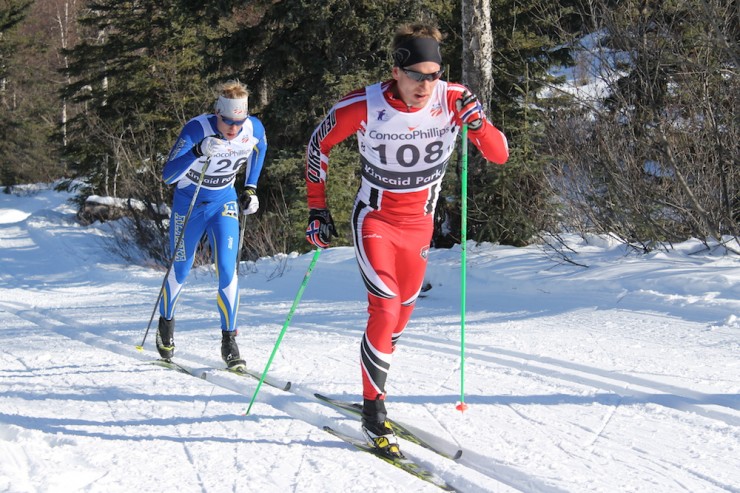
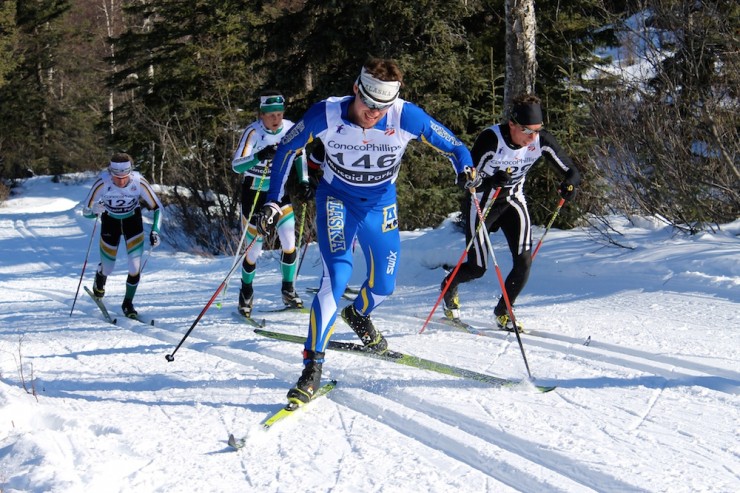
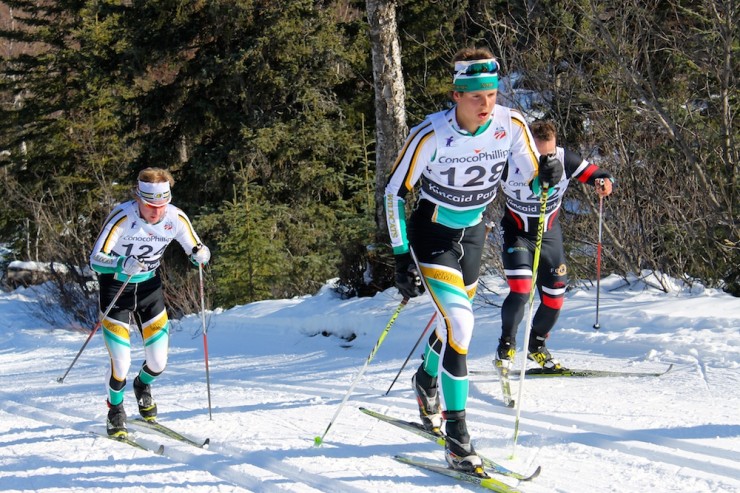
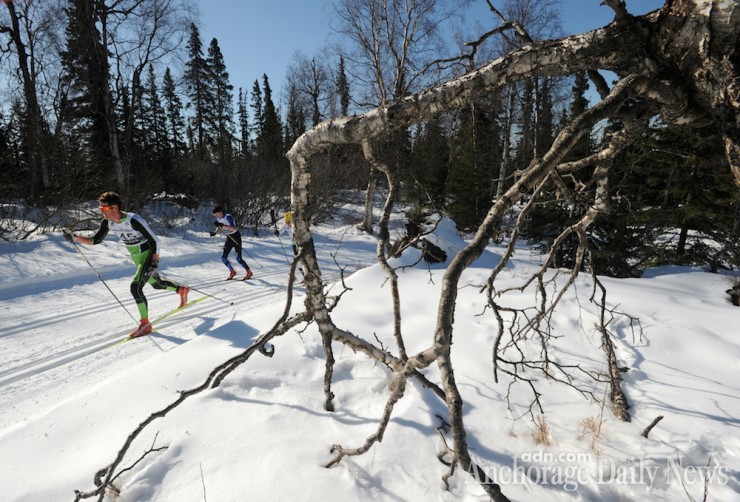
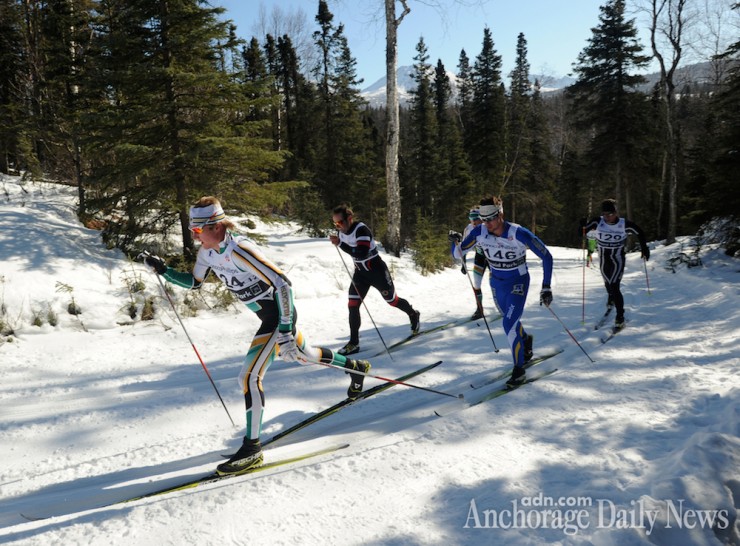
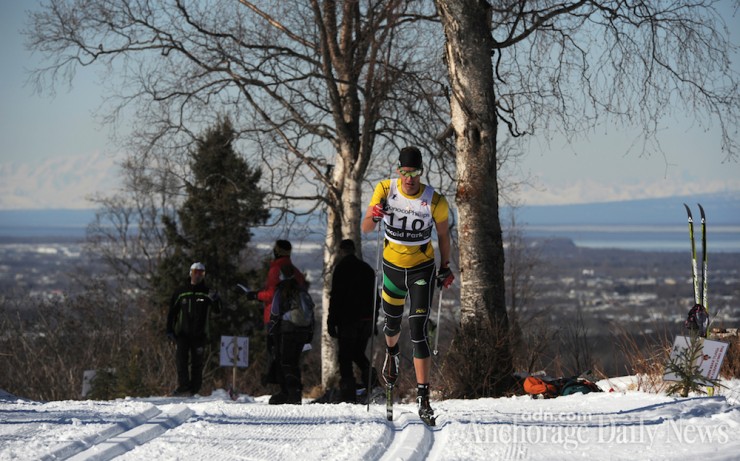
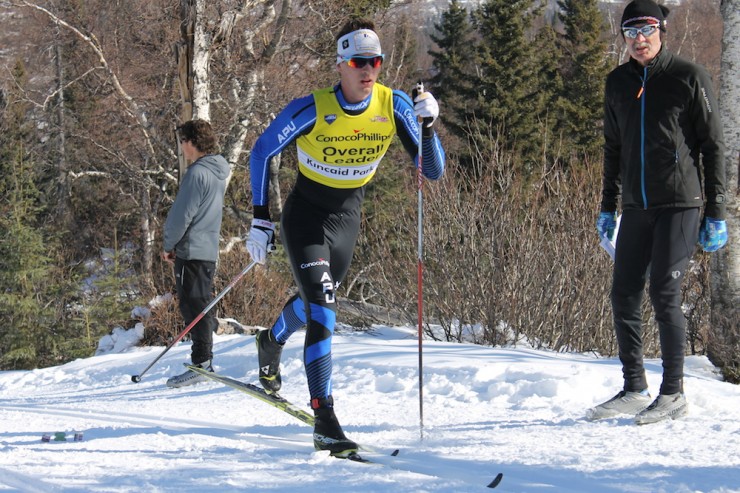
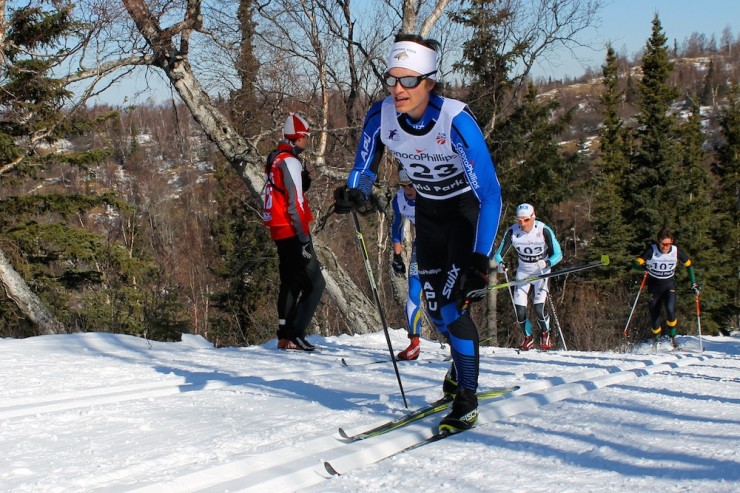
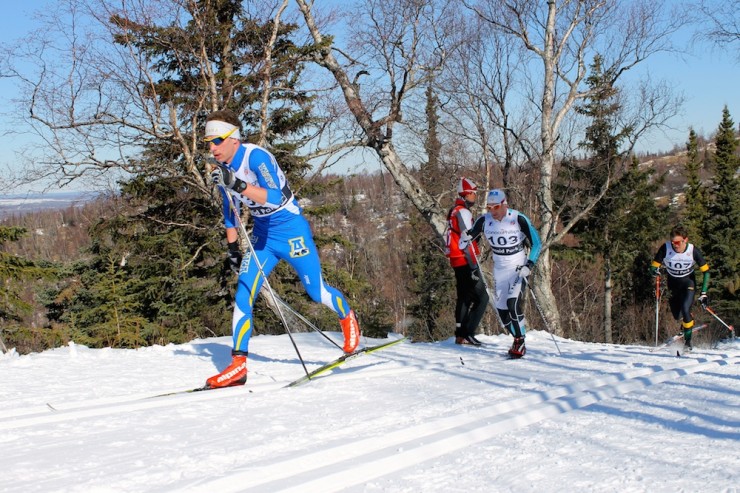
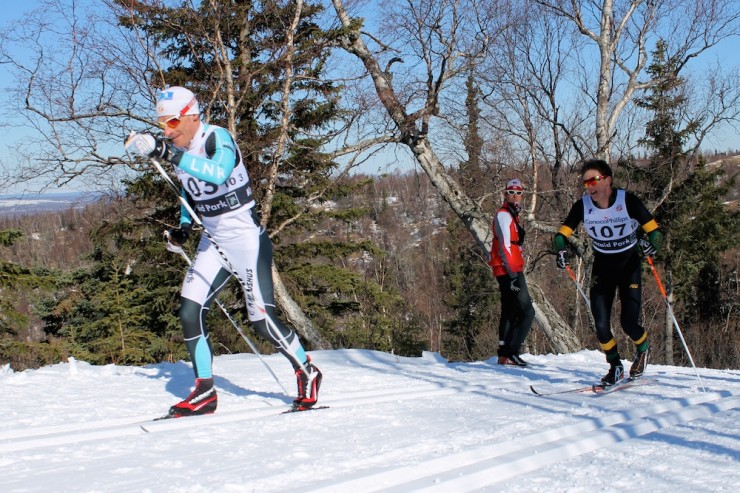
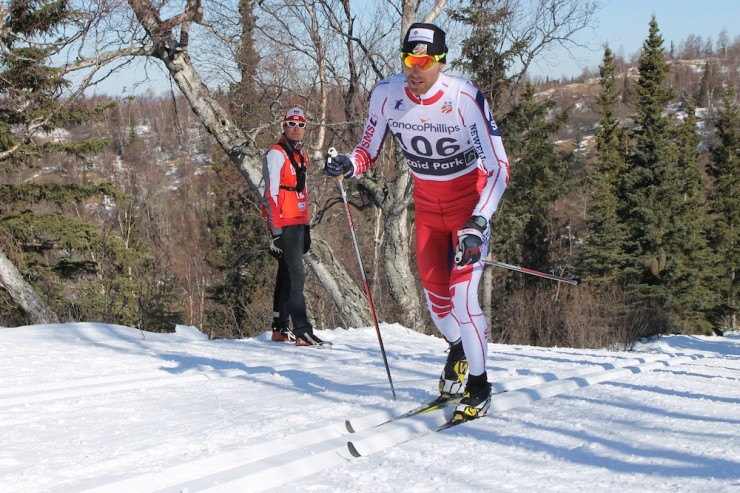
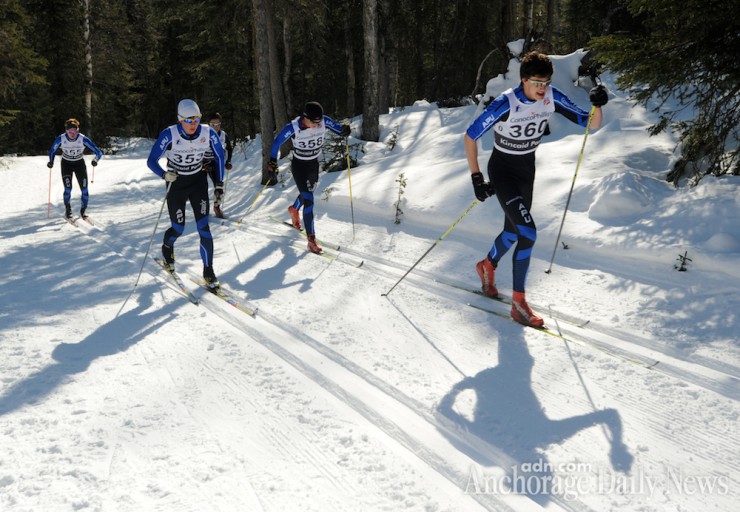
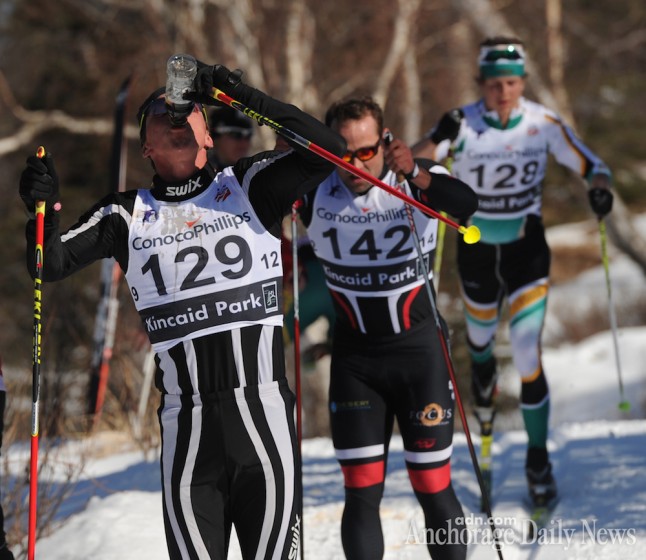
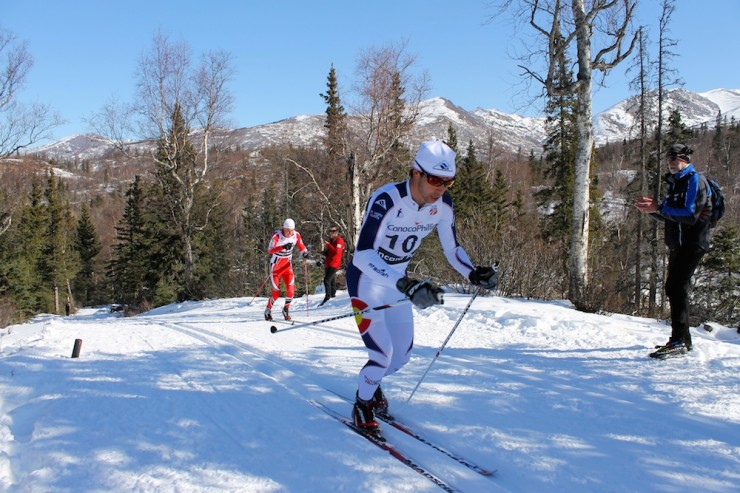
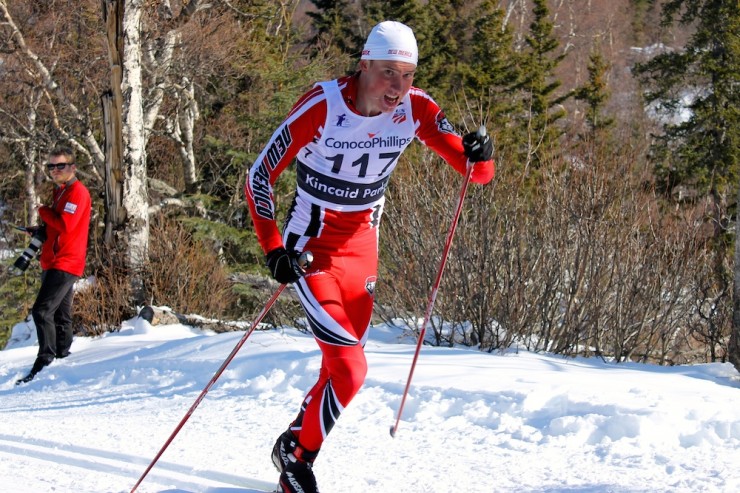
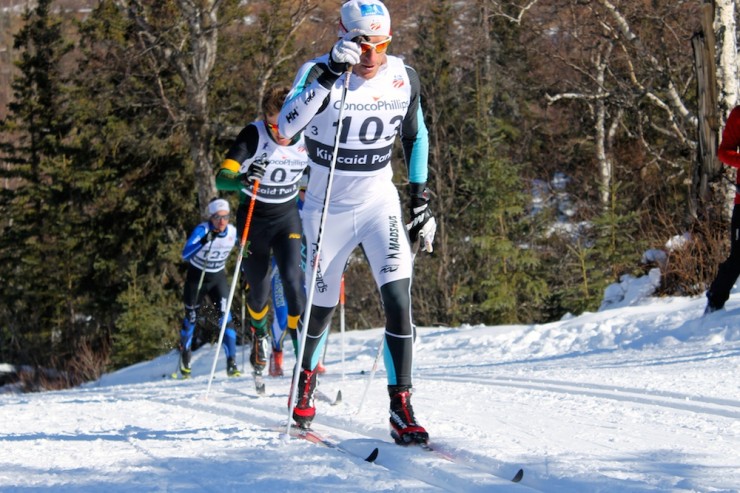
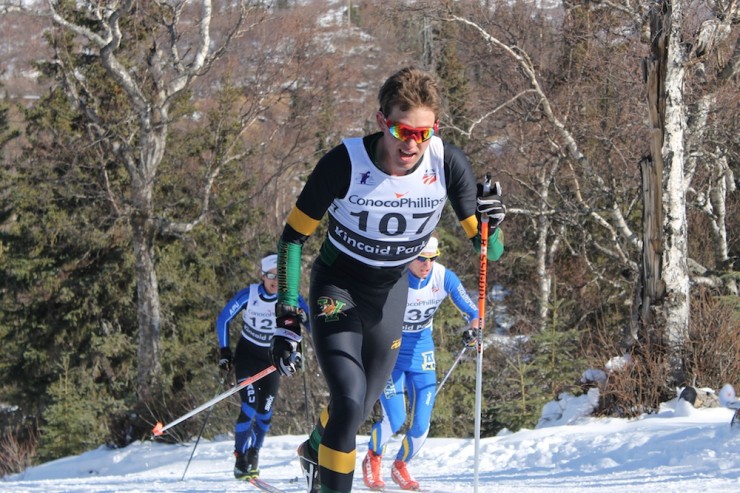
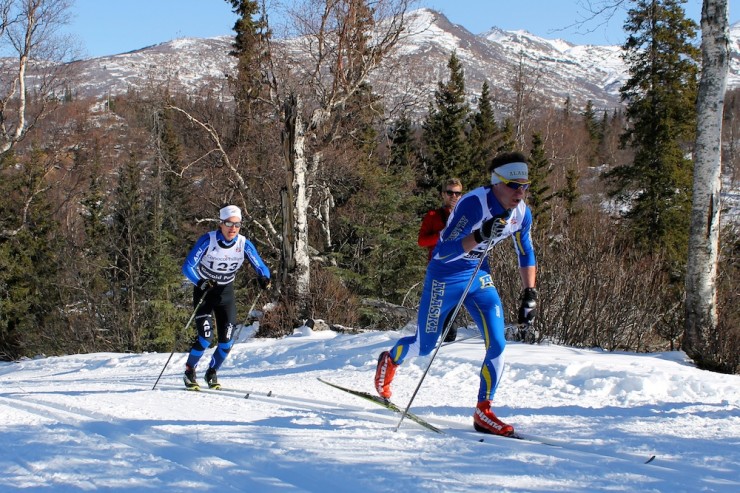
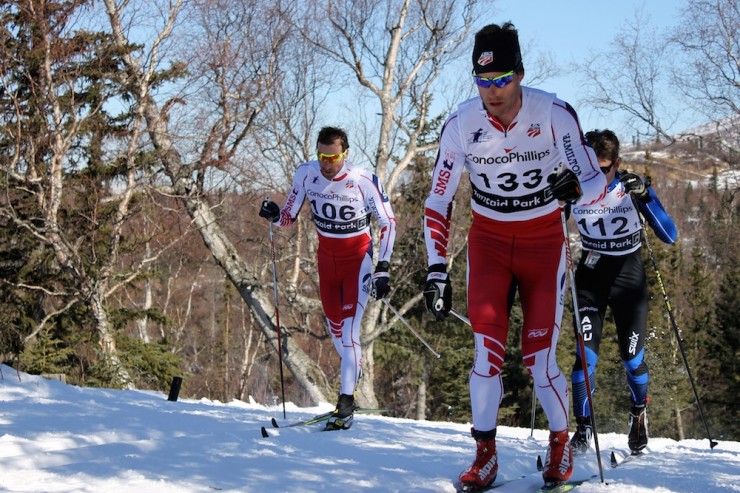
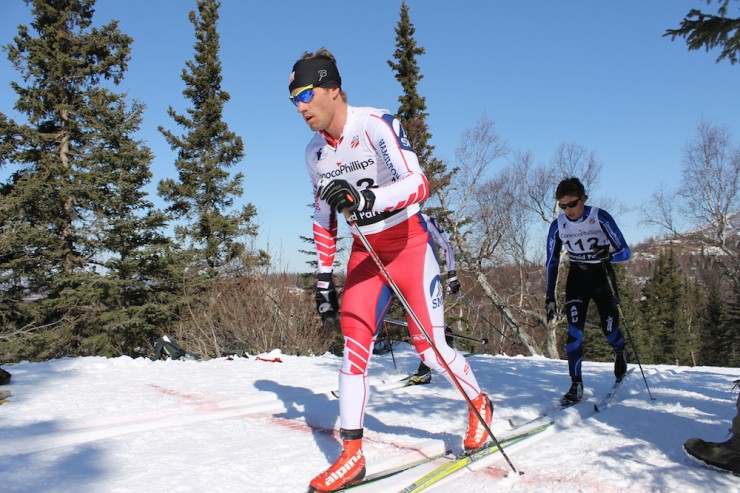
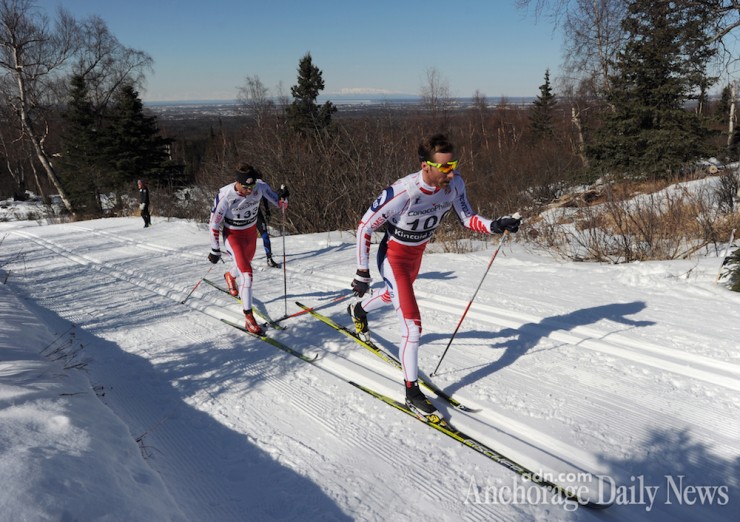
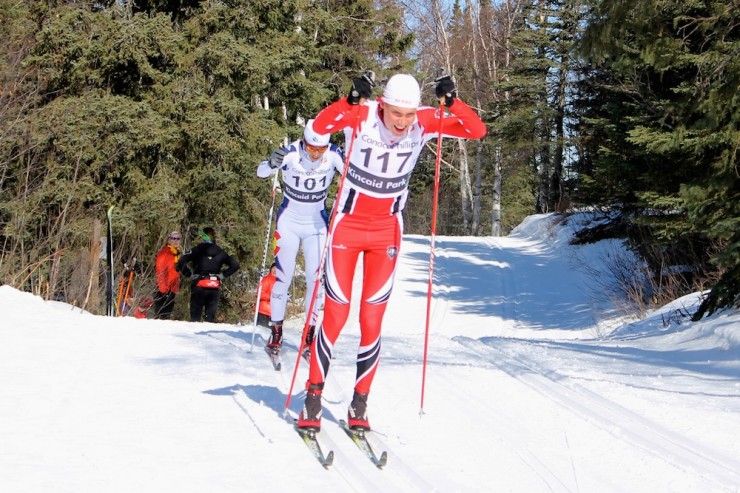
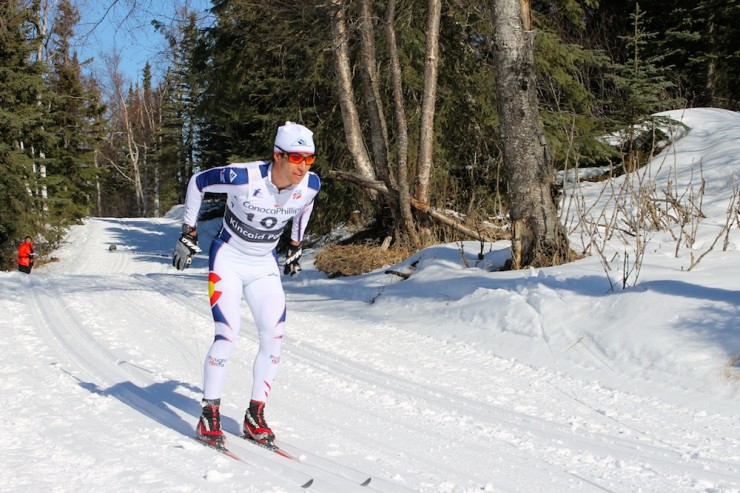
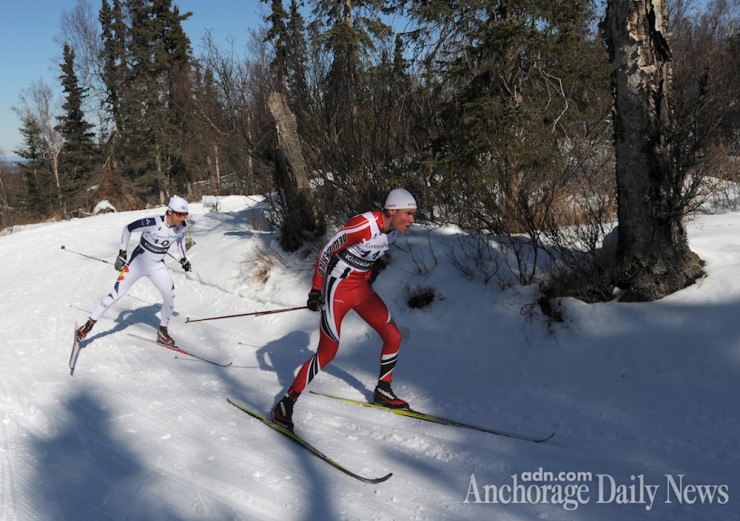
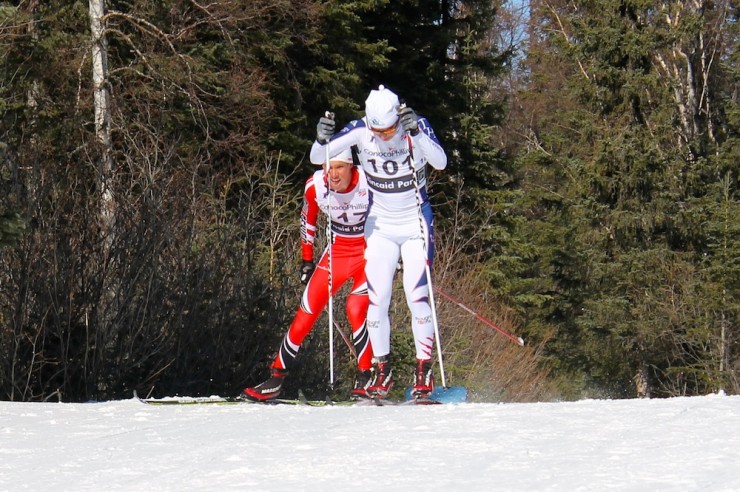
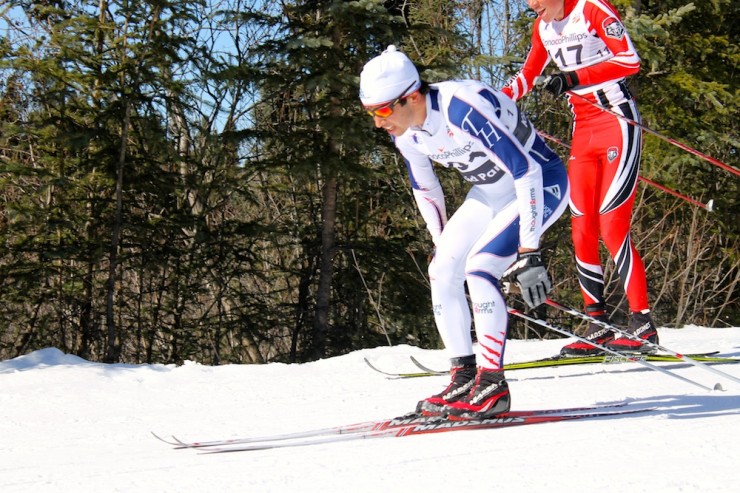
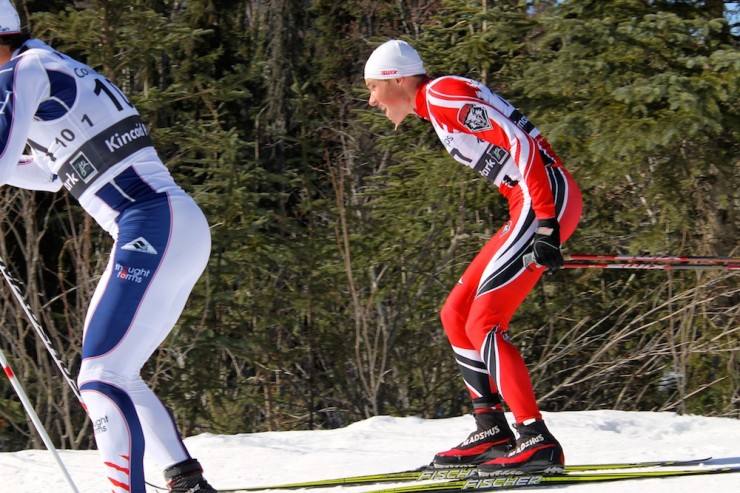
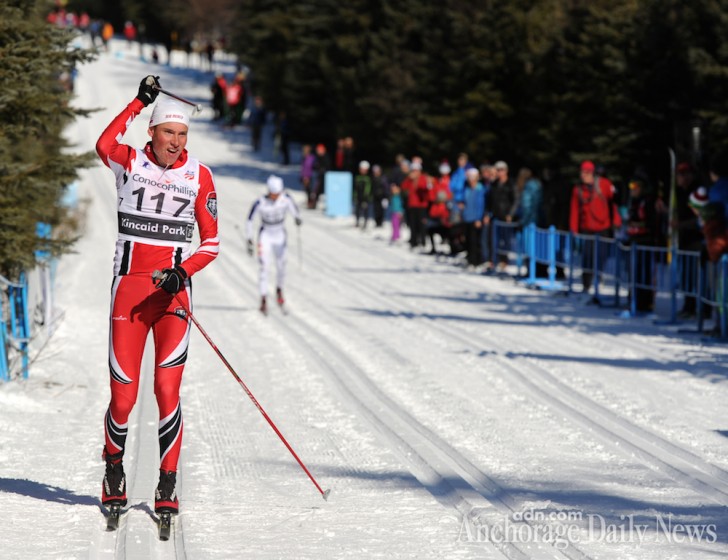
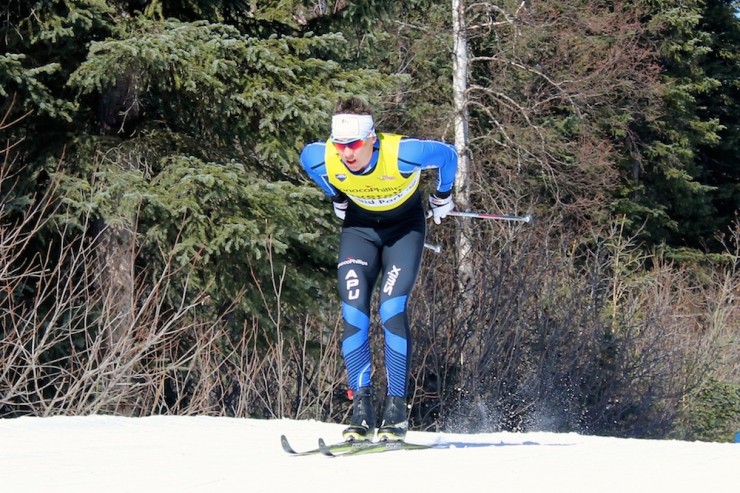
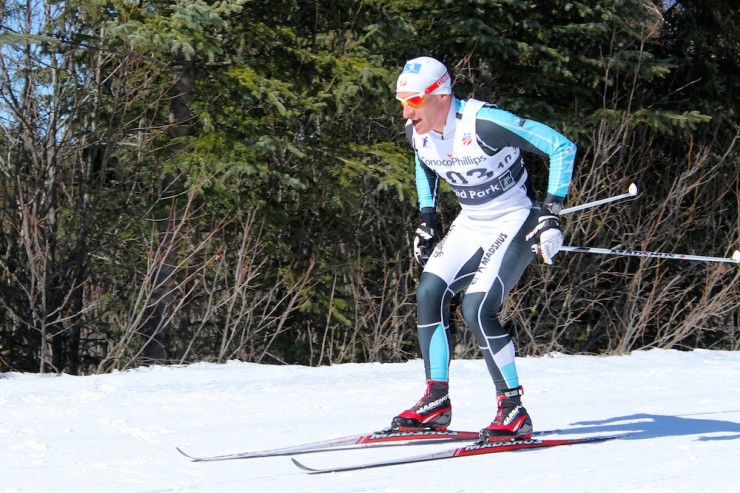
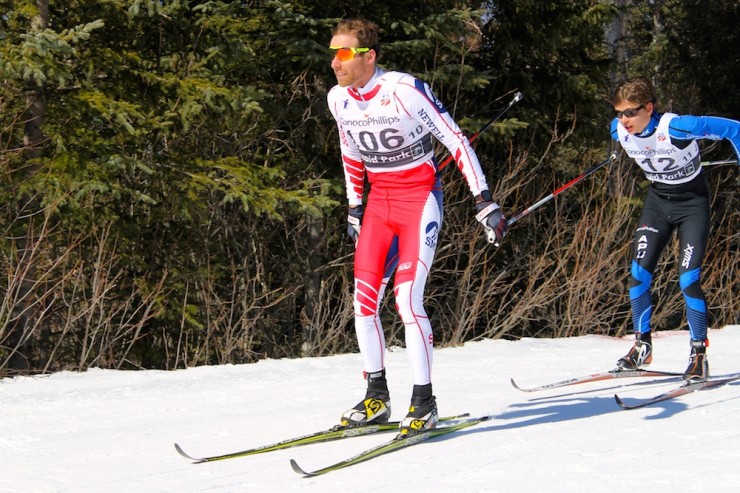
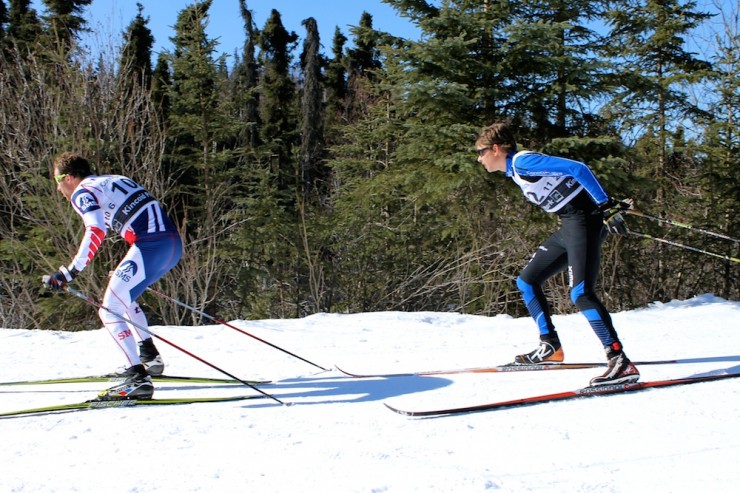
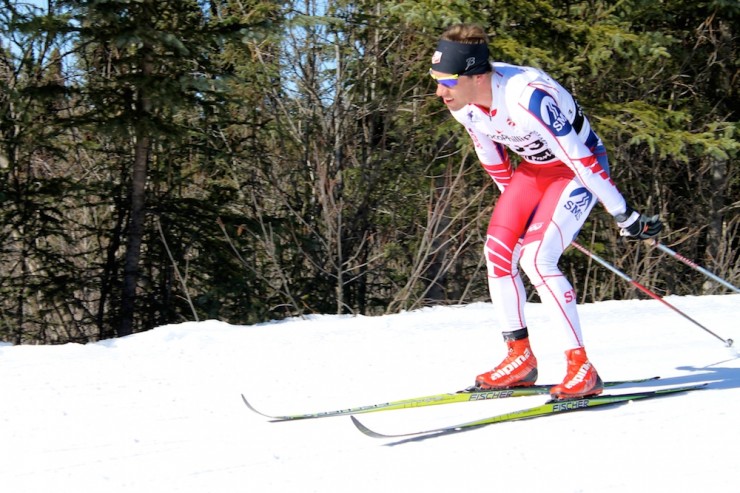
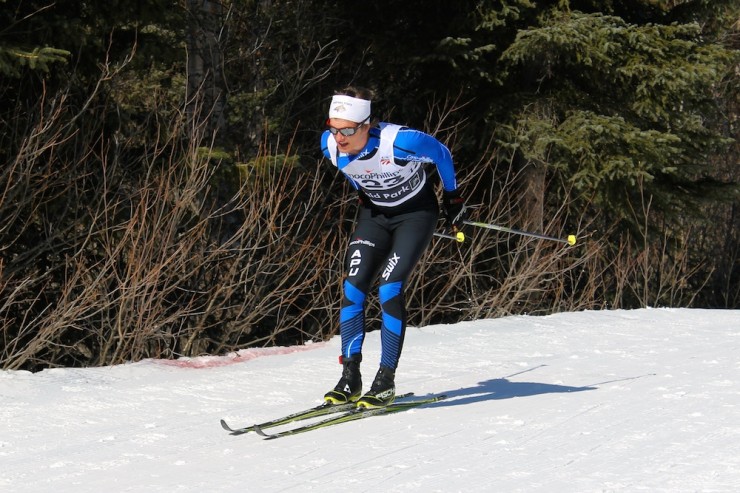
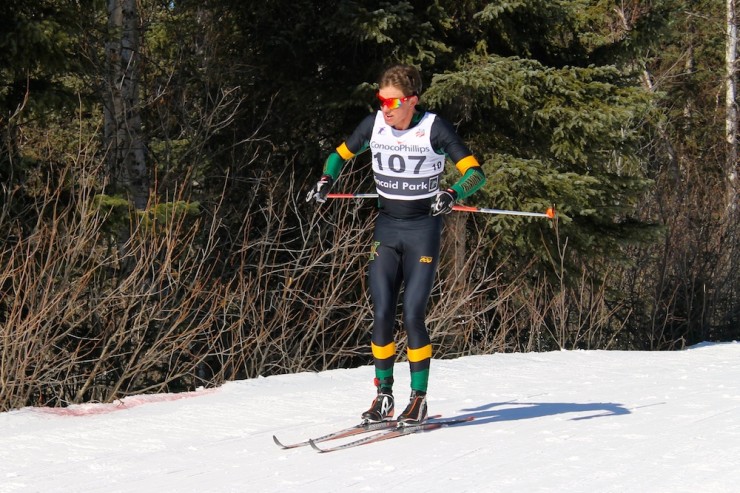
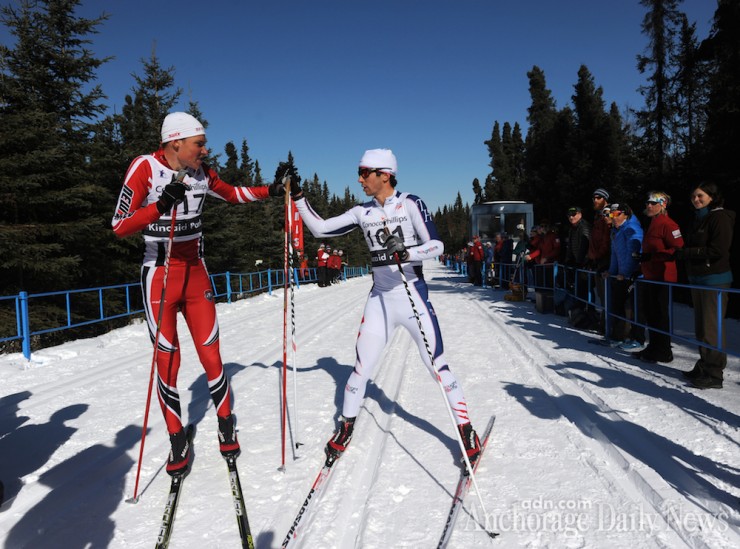
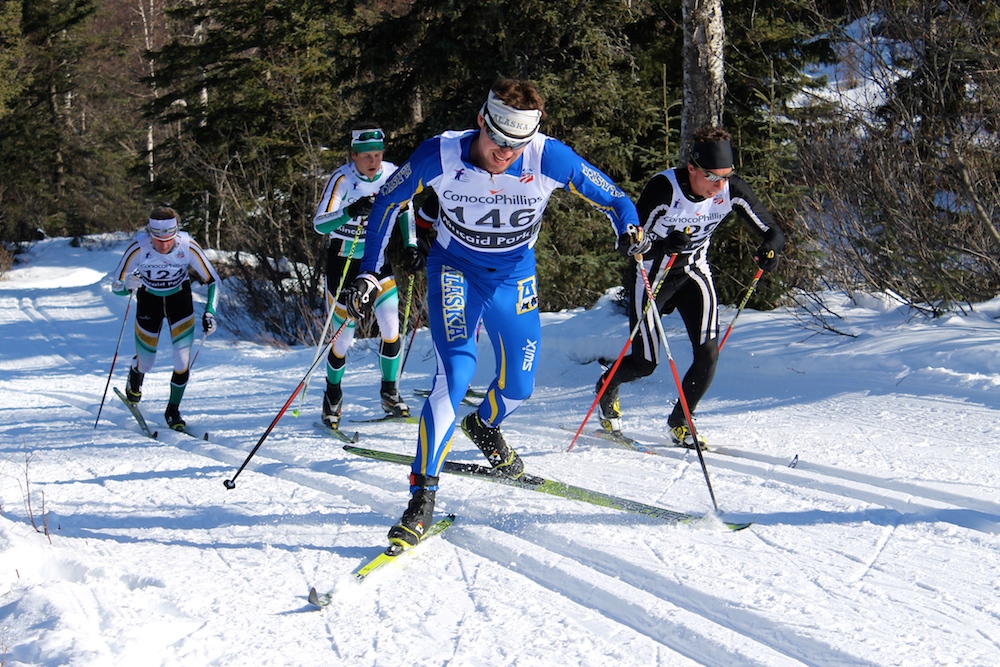
ANCHORAGE, Alaska — A look back at the men’s 50-kilometer classic mass start at U.S. Distance Nationals last Friday, March 28, with the focus on the frontrunners of the five-lap race.
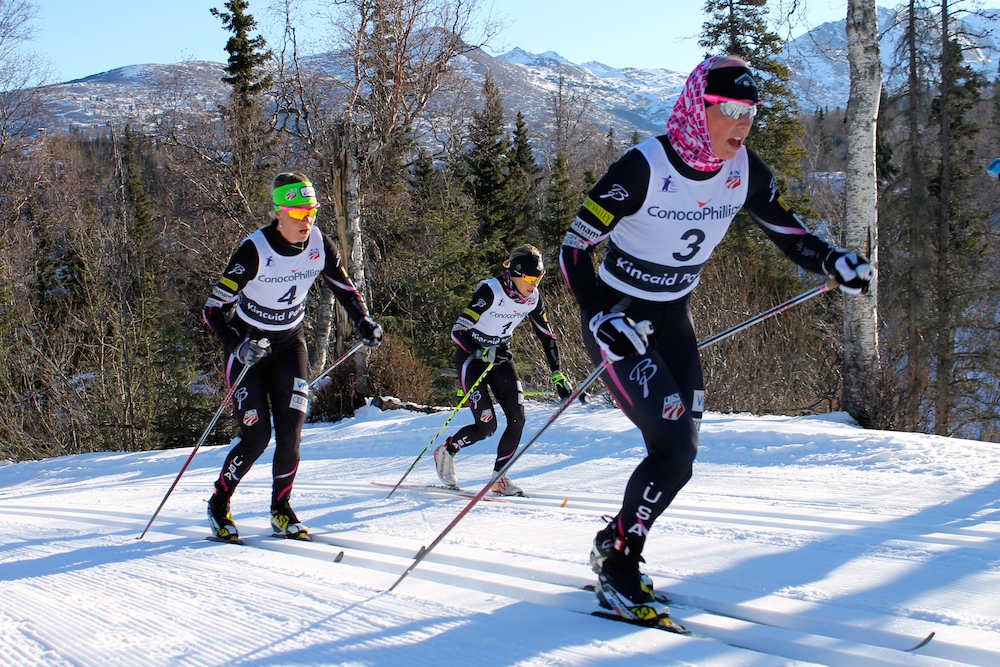
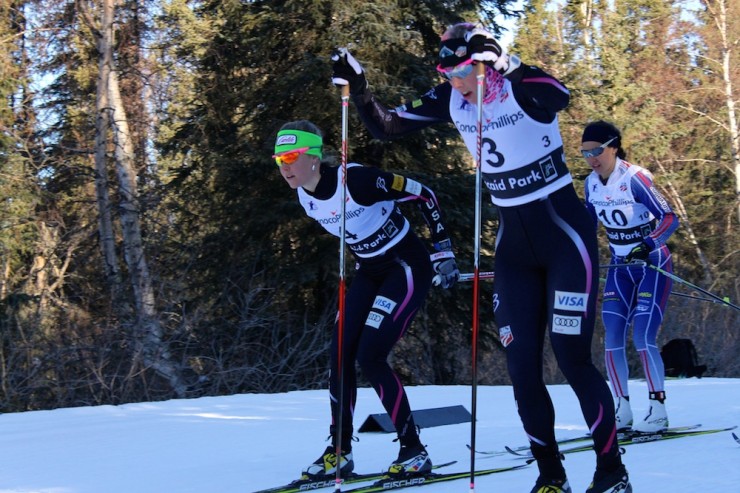
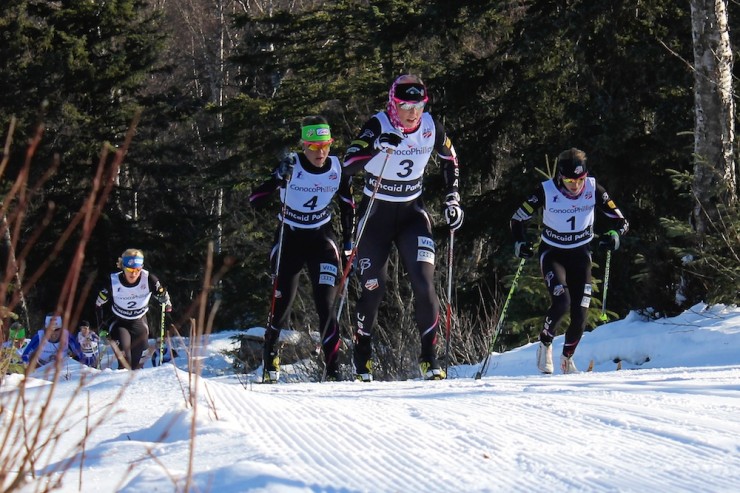
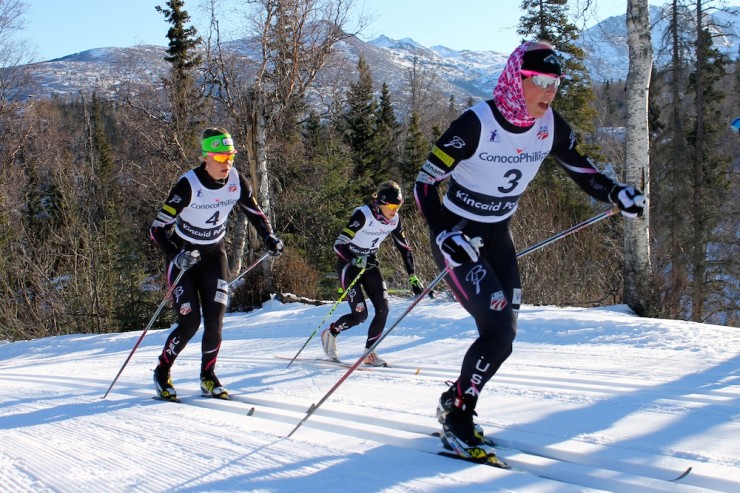
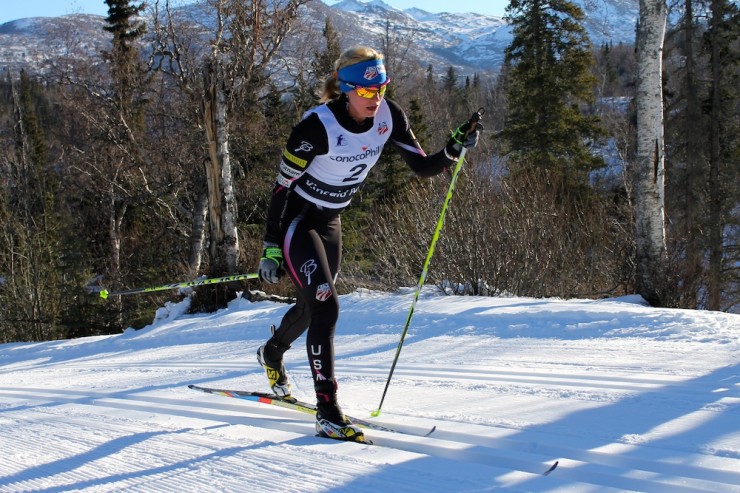
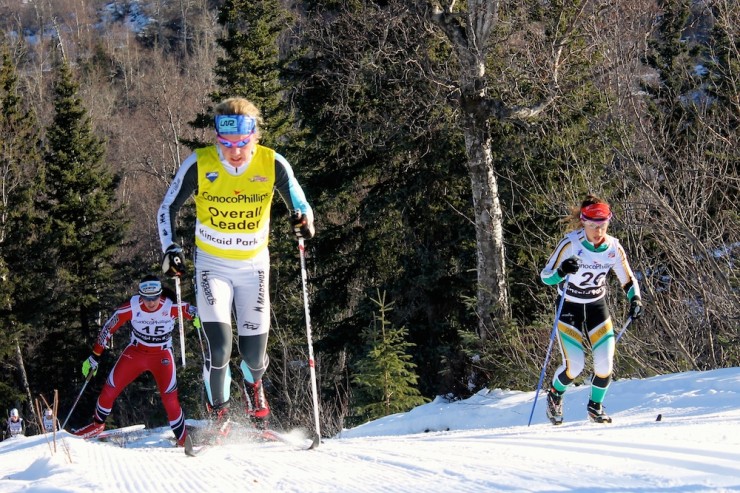
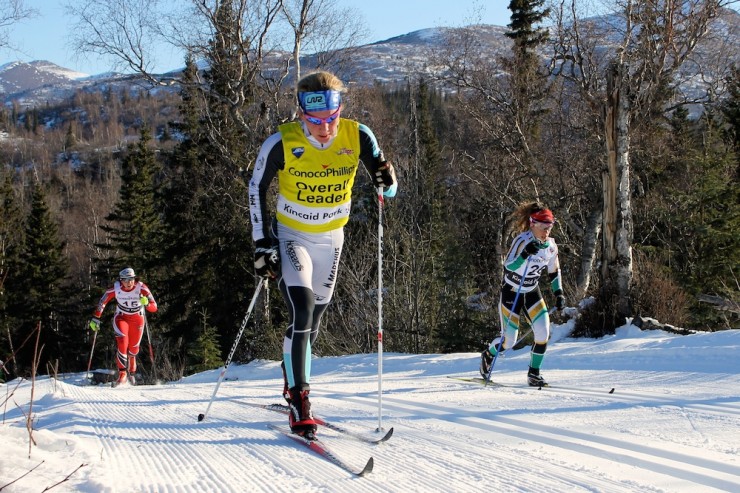
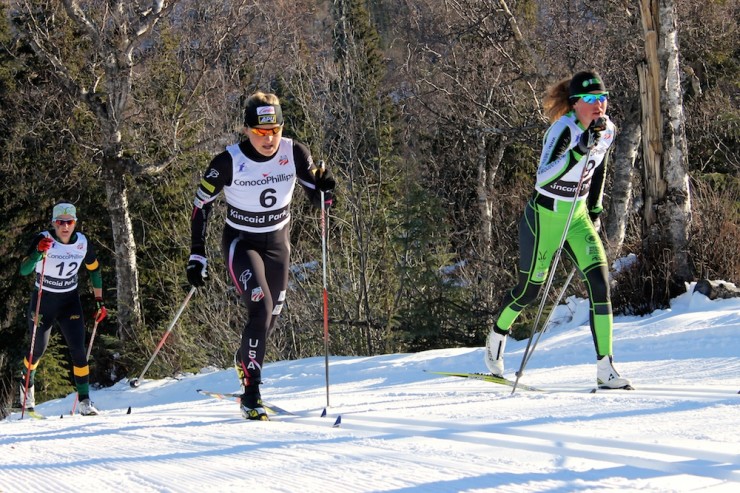
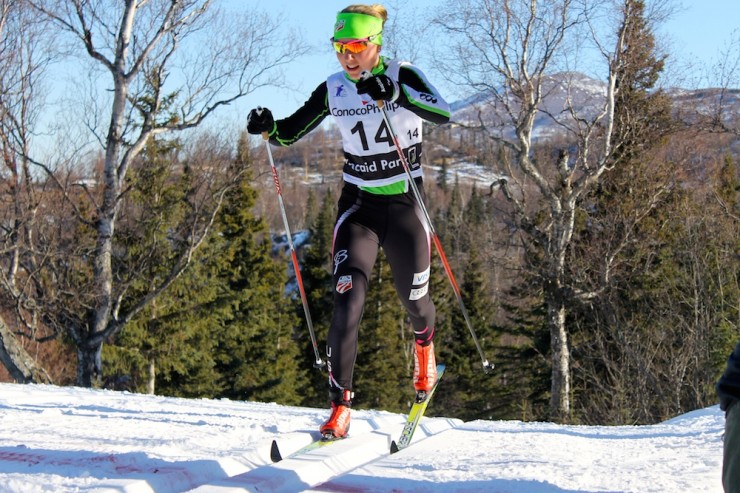
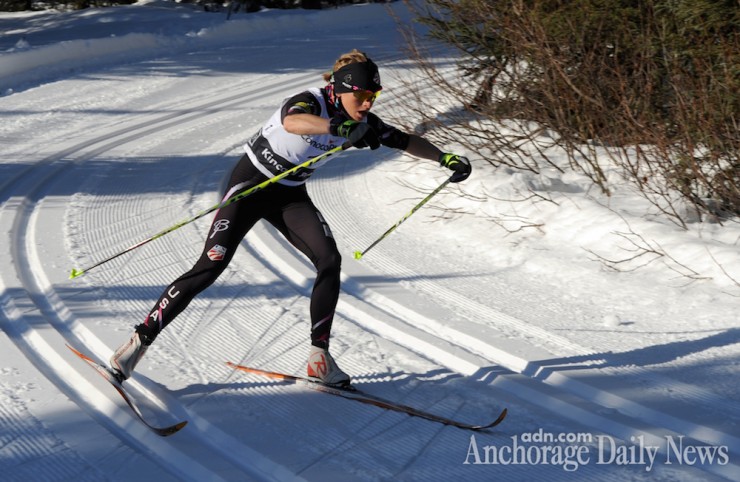
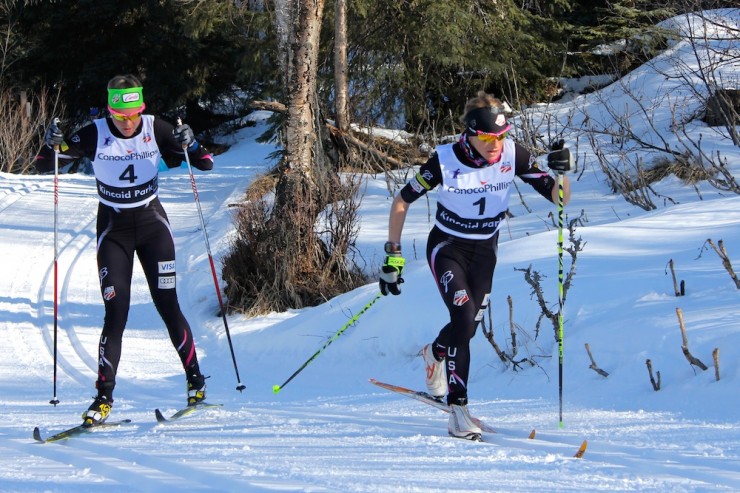
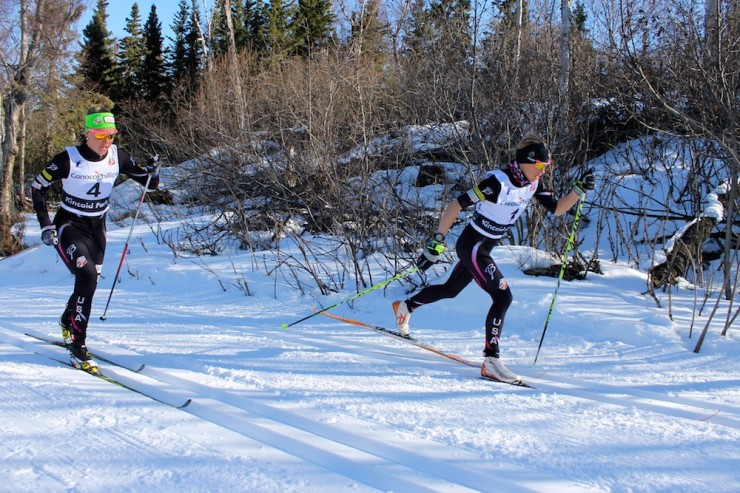
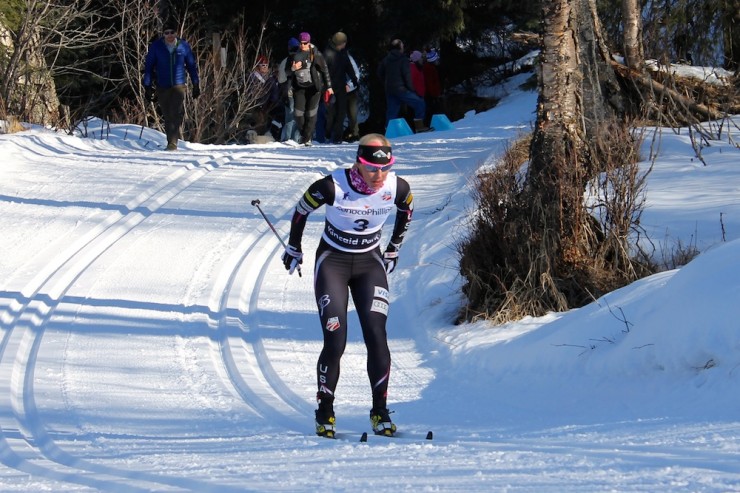
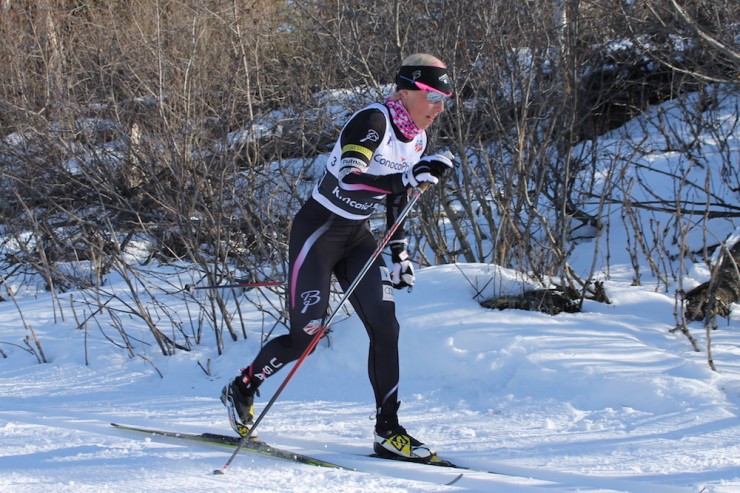
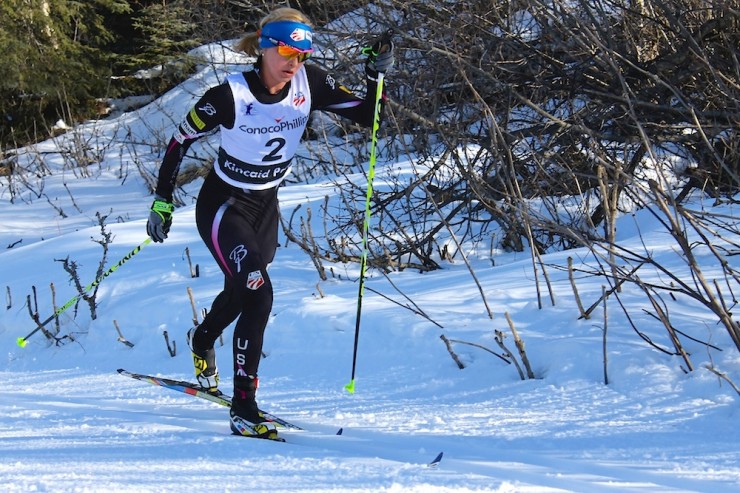
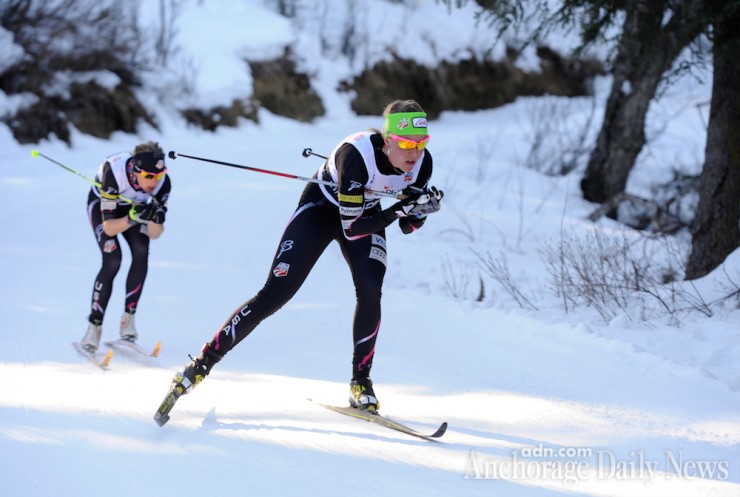
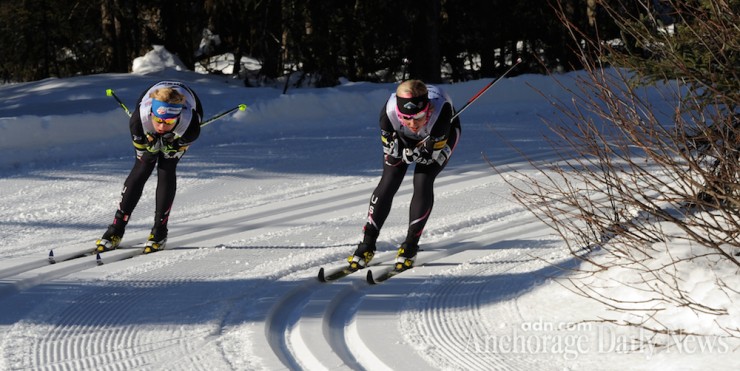
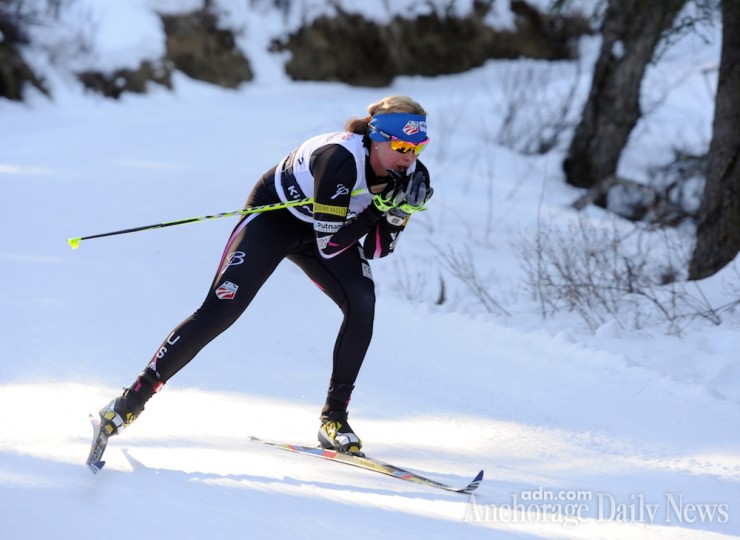
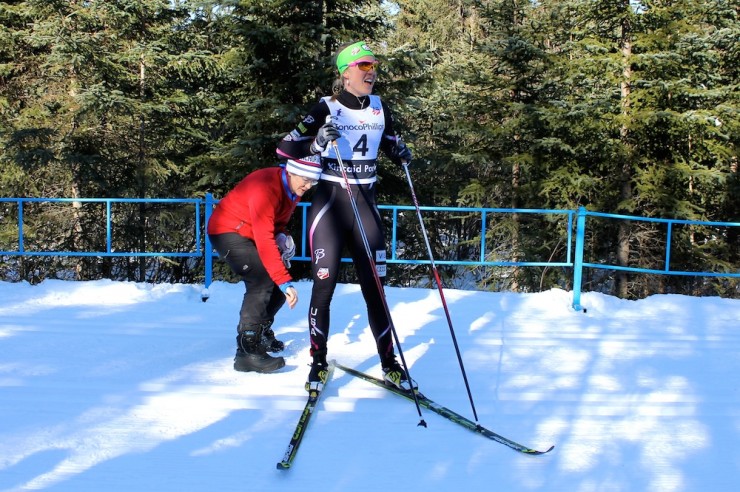
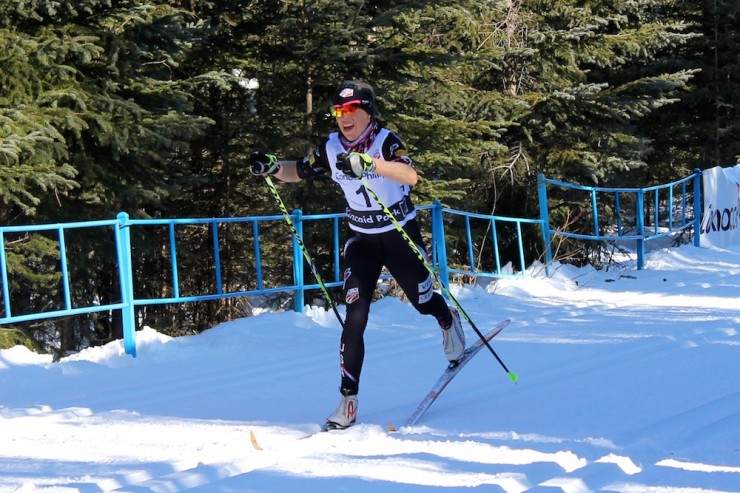
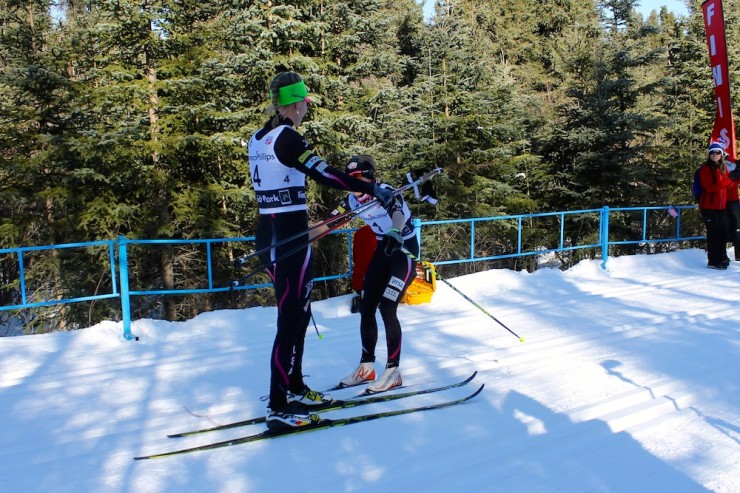
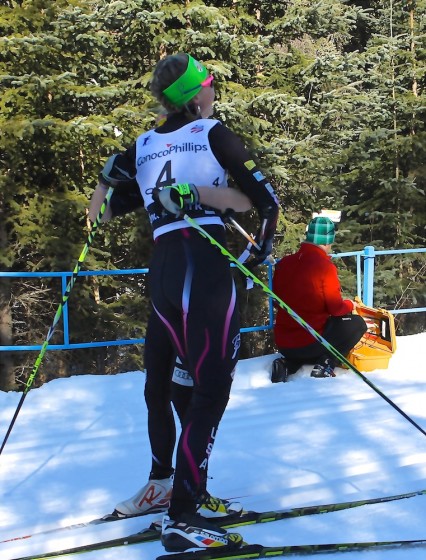
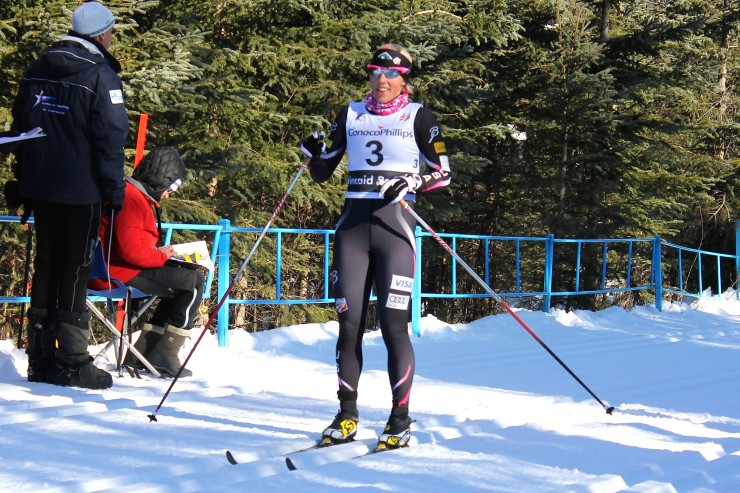
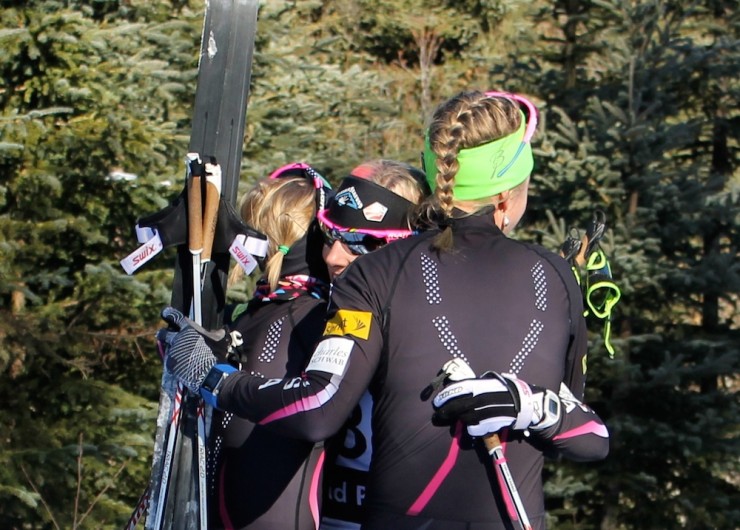
ANCHORAGE, Alaska — Scenes from the front of the pack during the women’s three-lap, 30-kilometer classic mass start at U.S. Distance Nationals last Friday at Hillside trails.
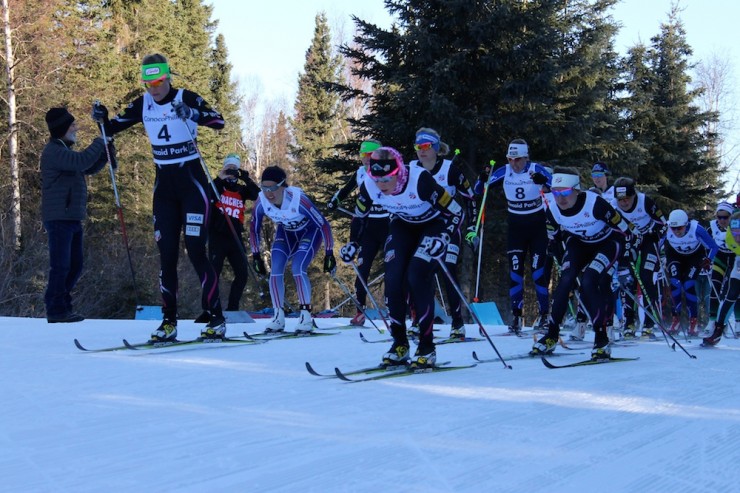

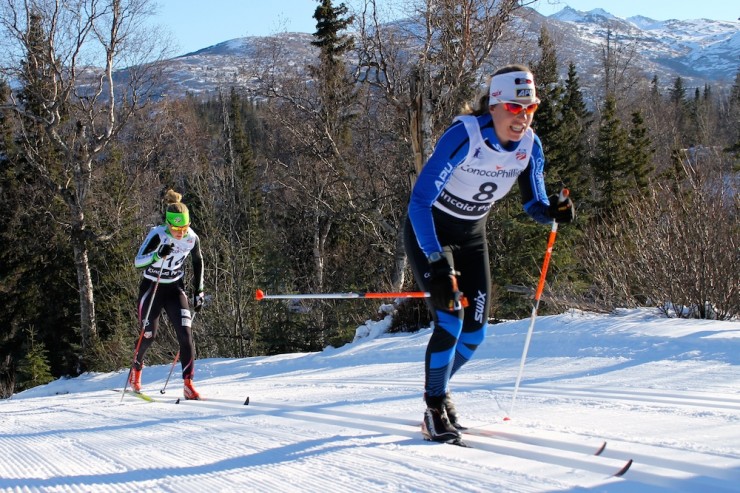
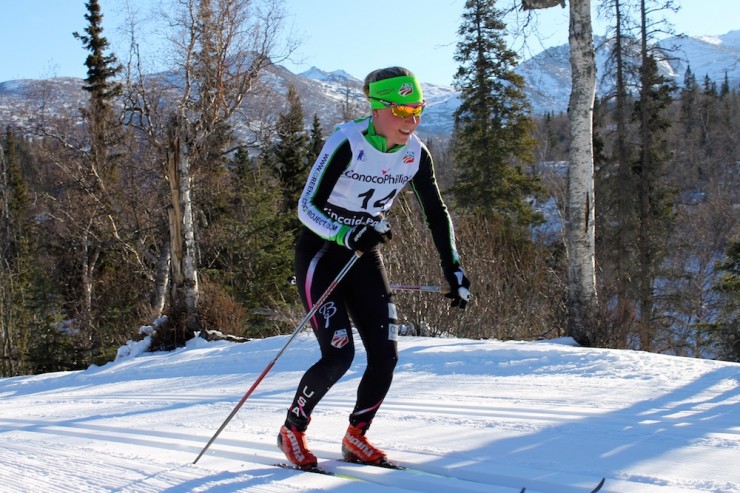
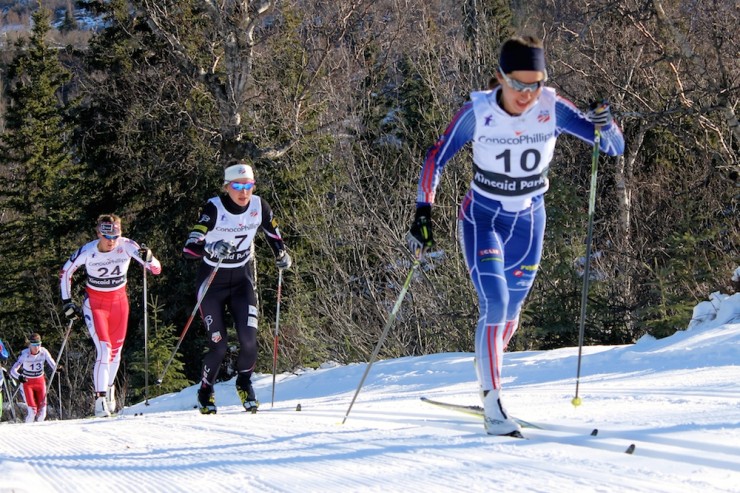
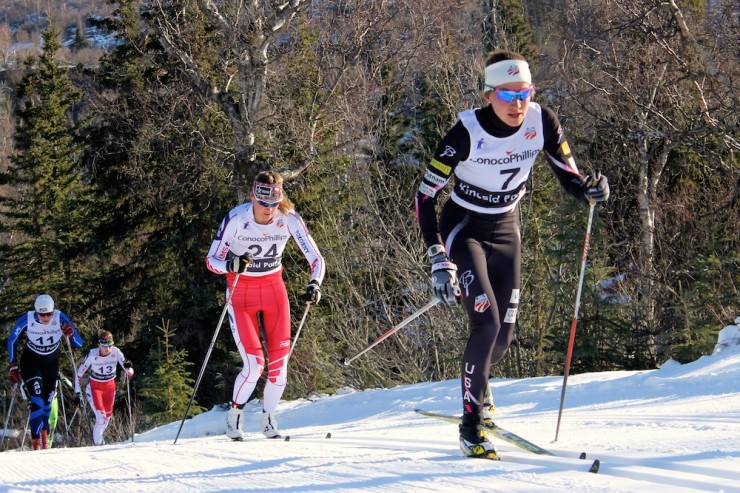

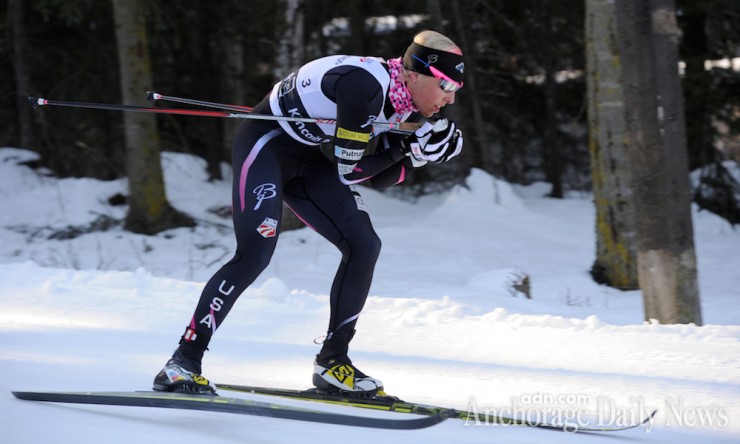
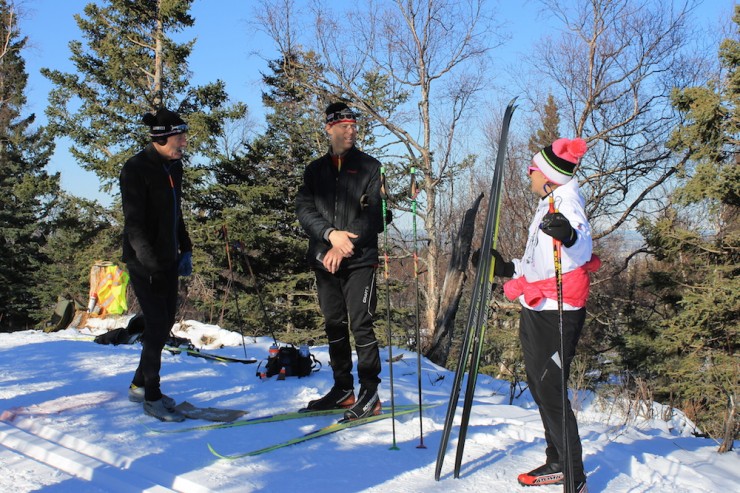
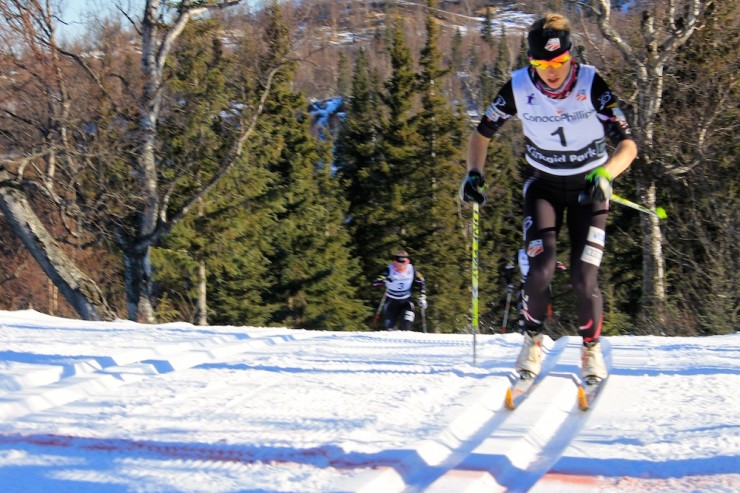
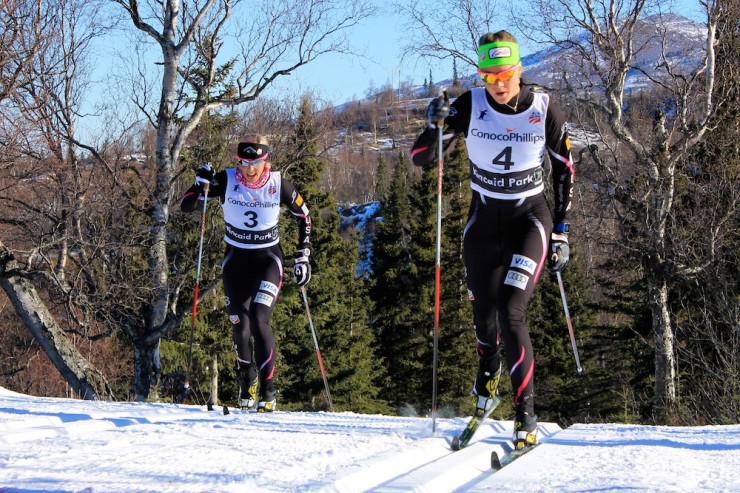
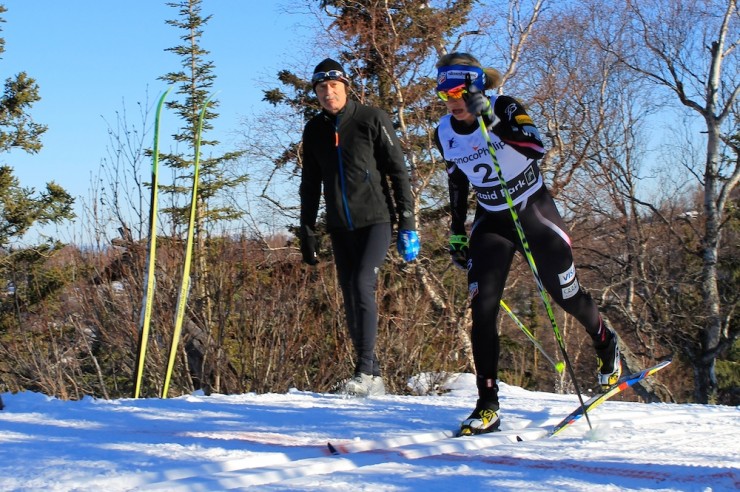
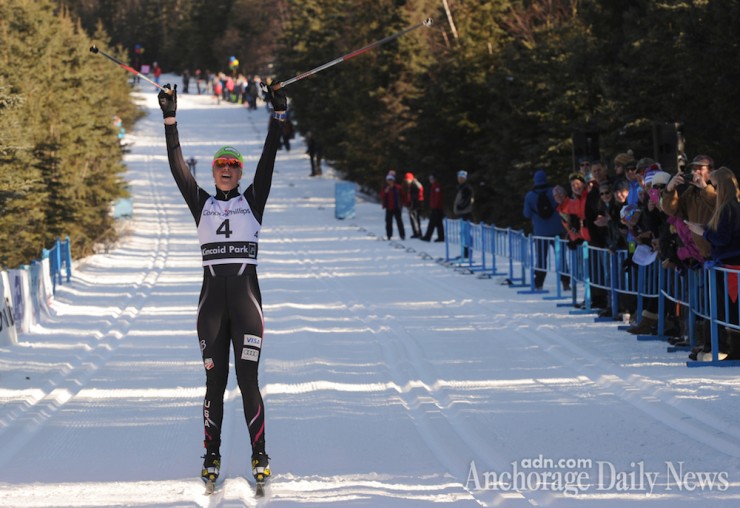
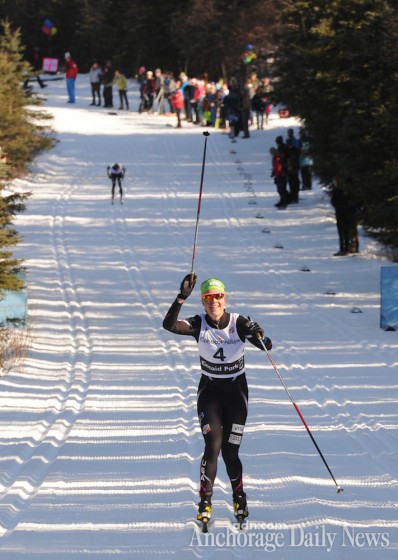
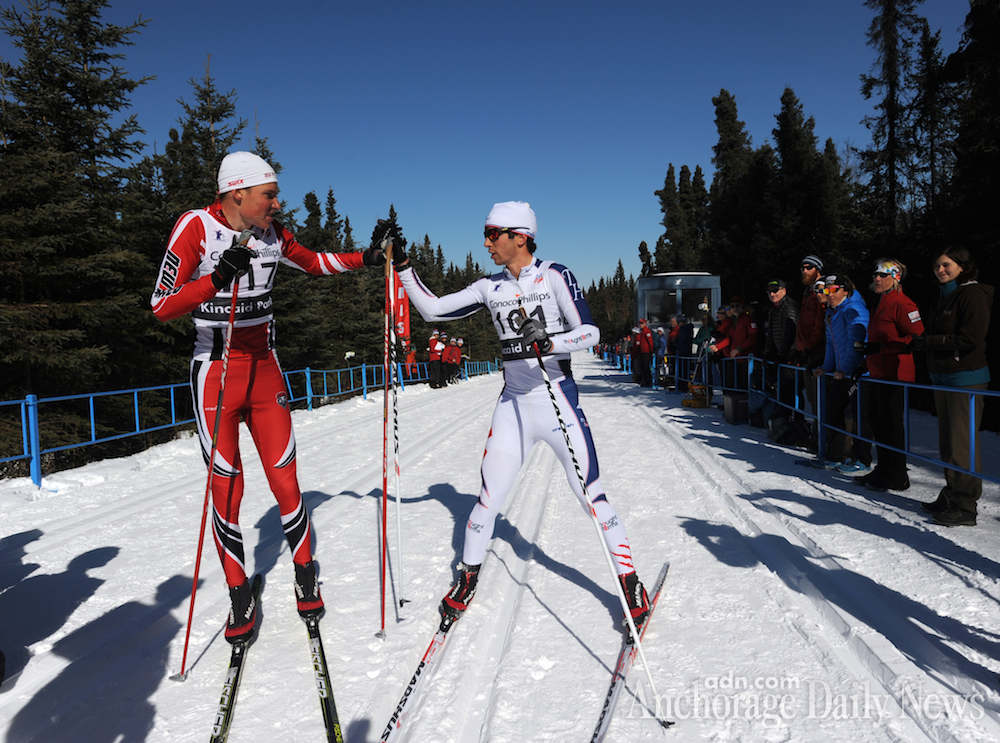
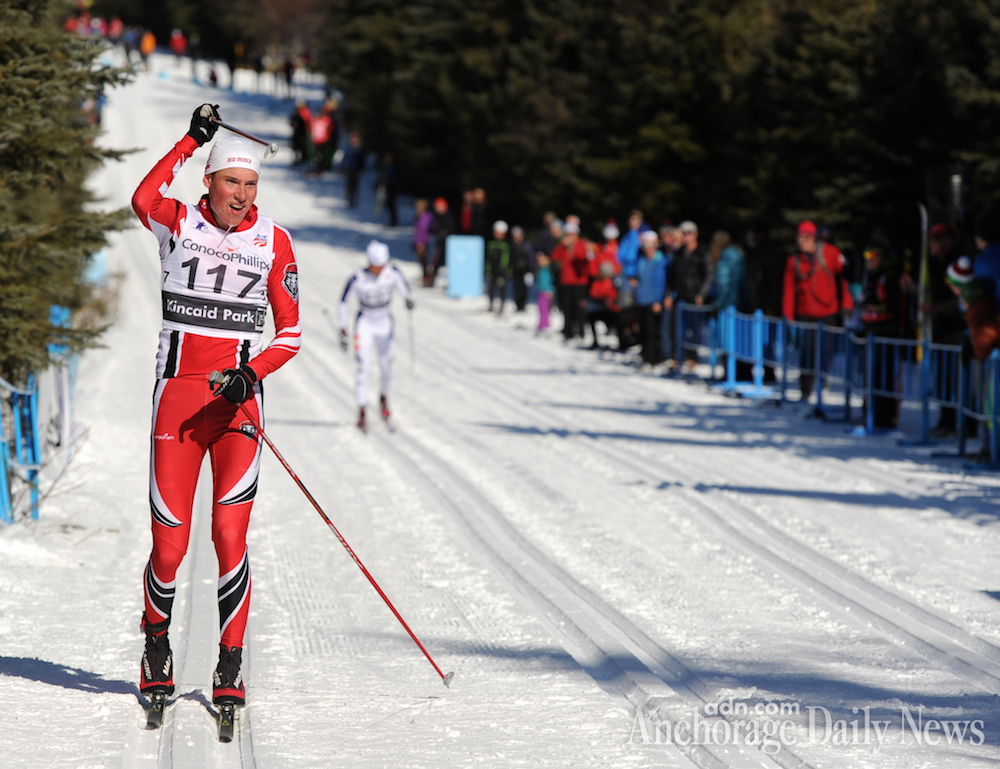
ANCHORAGE, Alaska — Aku Nikander was somewhat a mystery in the men’s 50-kilometer classic mass start on Friday in the last race of the season at U.S. Distance Nationals.
As far as Noah Hoffman of the U.S. Ski Team (USST), Ski & Snowboard Club Vail and Team HomeGrown was concerned, he was the guy that stood between him and a shot at his second-individual victory of 2014 Spring Series.
For Nikander, a Finnish student in his first year at the University of New Mexico, a win is a win, no matter what country you’re racing in, and it’s what he wanted.
It wasn’t until the second of five 10-k loops on the challenging Spencer Loop at Hillside trails that Nikander, a 24-year-old sophomore, emerged as a noticeable contender. Erik Bjornsen, of Alaska Pacific University (APU) and the USST, led through the 10 k checkpoint. Nikander was 2.4 seconds back in 12th, and one lap later, he was up to third, less than two seconds behind leader Reese Hanneman (APU) and Hoffman.
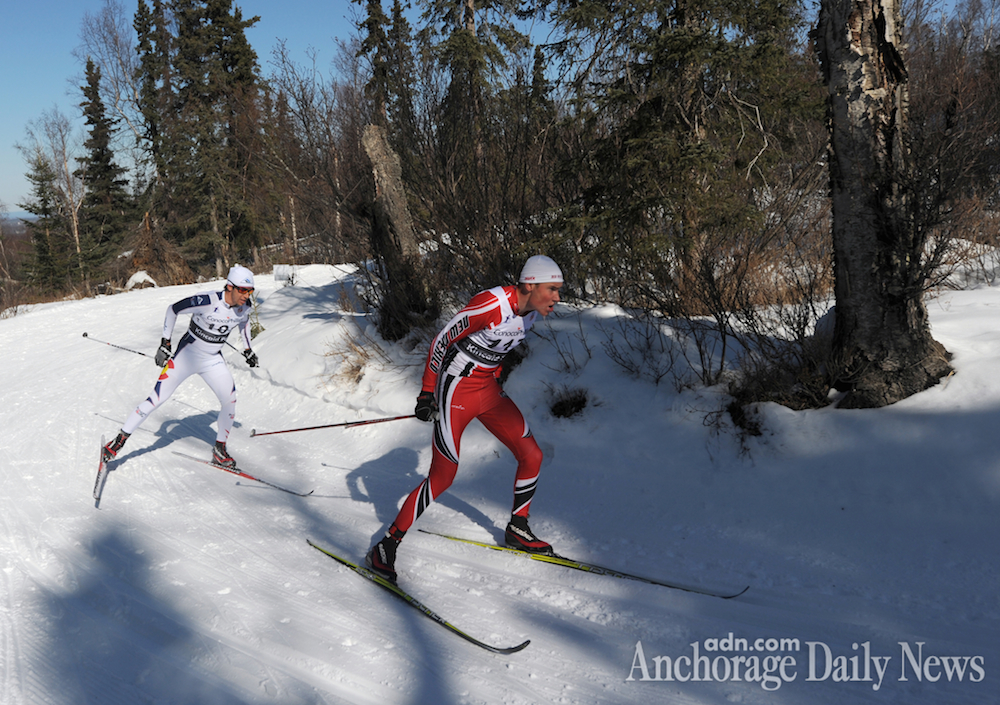
With a 16-second gap to fourth place, Nikander began to ramp up the pace, while Hanneman and Hoffman wondered who exactly he was.
“There’s always those wildcard Europeans at these last races of the year,” Hanneman said with a laugh. “Clearly going into lap three it was just us three and it sounded like we had a pretty decent gap, so I knew, he wouldn’t have been up there if he wasn’t a good skier with good skis and feeling good. I don’t know anything about him, but obviously he’s in contention for the win.”
Earlier this season, Nikander won a college race in Utah in a 30 k skate.
“After that I was struggling,” Nikander said. “I was a little bit overtrained because we had been training in the 3,000 meters so I was so tired the whole season practically. I didn’t do so well in NCAA’s so I was really looking forward to this race.”
On March 6 and 8, he placed ninth in the 10 k classic at NCAA Championships and was 23rd in the 20 k freestyle mass start. Two seasons ago, Nikander finished ninth in the 50 k classic at Finnish Championships, and narrowly missed the podium in two U23 Finnish Championships races in 2012 and 2013.
He applied to Utah, but then New Mexico head coach Fredrik Landstedt contacted him.
“I knew a couple Finnish alpiners so I decided to go there,” Nikander said. “It’s a little bit deeper than Finland so I wanted to experience something else. It has worked this season pretty well.”
This week marked his first time in Alaska; first time at U.S. Spring Series.
Meanwhile, heading into lap three, Micheal Fehrenbach of the University of Alaska-Fairbanks led the chase with David Norris (Montana State University/APU), Andy Newell of the Stratton Mountain School (SMS) T2 Team and USST, and Brian Gregg (Team Gregg/Madshus).
One lap earlier, Gregg had raced to the top of the high point of the course, known as Wall Street, to nab the first of two $100-dollar primes at 16 k, but he said the effort cost him. Bjornsen had followed him closely in second, going out hard early in an effort to break up the pack, and Hoffman crested the top with them with a slight gap to Hanneman, Newell and Fehrenbach.
A former University of Alaska-Anchorage skier, Gregg, 29, recalled doing bounding intervals at the top of Wall Street.
“Most of our training we did on the Spencer Loop,” he explained. “We’d do three loops, maybe one time we did four, so I’ve never done five so that was pretty hard.”
On Friday, he saw his college coach Trond Flagstad at the top of the same climb.
“I got a little fired up, I went for that first prime,” Gregg said. “I was a little tired when the other guys sort of separated so I wasn’t able to quite hang with those guys.”
By 26 k, Nikander was first to the top for the second $100 bonus. Hoffman was once again right there with him, and Hanneman a few seconds behind by the summit. Norris led the chase with Fehrenbach, Gregg, and University of Vermont (UVM) senior Scott Patterson, while Newell skied slightly behind in eighth.
“After two laps, I was pretty comfortable,” Nikander said. “We took off with Hoffman and Hanneman. After the uphill sprint we got a gap and I had such good skis.”
Hoffman was glad it broke up by the halfway point.
“I didn’t really know anything about Aku, I didn’t even know his name,” he said. “He’s a good skier.”
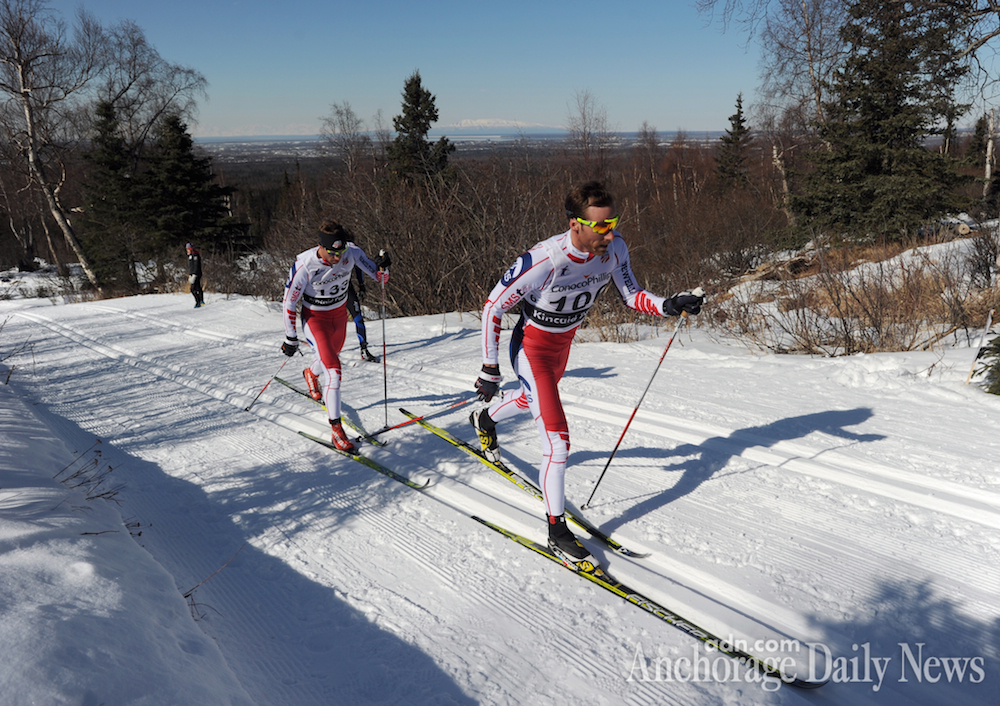
By the time the leaders reached 30 k, Hoffman led Nikander by 0.5 seconds, and Hanneman was nearly 28 seconds behind in third. He still had nearly a minute separating him from fourth, however, with Patterson leading Fehrenbach, Gregg and Norris. Newell was another 28 seconds behind in eighth, followed by teammate Simi Hamilton (SMST2/USST) and Lex Treinen (APU), respectively.
The order of the front three stayed the same through the fourth ascent of Wall Street, with Hoffman and Nikander skiing to the top together and Hannemen trailing by about 40 seconds. Gregg led the chase, with Fehrenbach and Norris, and Hamilton was at the front of the second group with Newell and Treinen over the top.
With one 10 k lap to go, Nikander and Hoffman skied through flatter section of the course as a unit, 48 seconds ahead of Hanneman. The two began to study each other more carefully.
“I just double poled faster than him,” Nikander said. “I was actually leading a lot in the last lap. I had maybe better kick and better glide.”
Neither of Nikander nor Hoffman re-waxed in a race that didn’t allow ski changes.
“I don’t like my chances coming into the final stretch, but part of me was just glad to be with him,” Hoffman said. “I did try a little bit over the final hills, but I just didn’t have a chance getting away from him.”
Nikander took charge the last time up Wall Street and gapped Hoffman before he caught back up on the backside of the course. With an efficient double pole, Nikander was able to stay ahead, entering the finishing straight almost even with Hoffman.
There, he unleashed the double pole he had been banking on, passing Hoffman in the last 150 meters. Hoffman strided into the gradual-uphill finish in second, accepting the race for what it was and the effort he’d put toward it.
“When I saw that Noah can’t keep up in the flat part, in the double-poling part in the last loop I just waited for the final straight and sprint and it was enough for the day,” Nikander said.
“He was better than me double poling all day,” Hoffman said. “I was struggling and it’s a been long season and he was impressive and I’m glad to be done. … Rarely does the best guy not win in a 50 k. I think execution, which I struggle with day in and day out to really perform the way I want to perform, is easier in a longer race for me.
“It doesn’t define my season,” he added. “I’m excited to take a break and excited to look to improve for next year.”
Nikander was excited, although unsure what it would mean to those back home.
“I don’t know how much they are looking at the results from here. We’ll see,” he said. “I think it can help a little bit for [team selection] and next summer’s training camps. I hope so.”
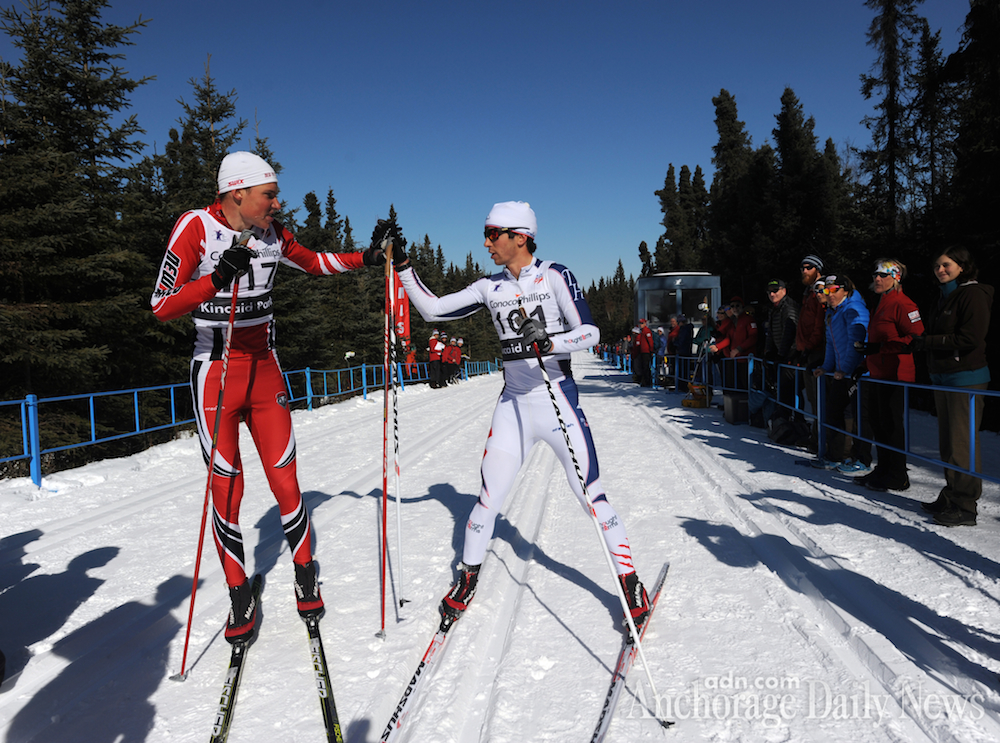
The first American, Hoffman finished 9 seconds after Nikander, who won the roughly 51.5 k race in 2:23.08.3. Hanneman locked up third, 1:01.6 behind Nikander. It was his second podium in three individual races this week, and third including a win in the mixed relay.
“My last two laps, I tried to ski that climb sort of relaxed, just my own pace and not worry how I thought someone else would be skiing it and then try to ski pretty hard on the rest of this stuff,” Hanneman explained.
“You kind of come into the last week and for the most part have no idea how it’s gonna go. I knew I felt good at the World Cup last week … and I ended up feeling decently good,” the overall men’s SuperTour leader said. It’s been really fun to do well here at home. “It’s hard to beat doing well at home. That was a great way, a little reward at the end of the season.”
Gregg, who’s wife Caitlin finished the season as the female SuperTour leader, finished more than 3 1/2 minutes later, uncontested in fourth.
“Last lap, that’s where I tried to make a move to separate from our little pack,” he said after making his move over the top over Wall Street. “I looked back at the corner. I saw Newell, Simi must’ve been there, too — those guys had just caught us and I was like, it’s time to go. I love that downhill we used to do downhill time trials down that from the very top to the bottom. … Those workouts that we did eight, nine years ago really played into this race course.”
One of the APU skiers that train in Anchorage year-round, Treinen came into the stadium with Newell, then stepped around him at the beginning of the finishing lanes with about 200 meters to go. He out-double poled the Olympic sprinter by 3.1 seconds to finish fifth. Newell placed sixth and Hamilton finished another 11 seconds back in seventh. Norris placed eighth — 13.4 seconds behind Hamilton and 14 seconds ahead of Patterson in ninth, and Fehrenbach was another 27 seconds back in 10th.
Eleventh place went to Eric Packer (SMST2), who finished more than two minutes later and 8:03.2 behind the winner. Bjornsen placed 36th.
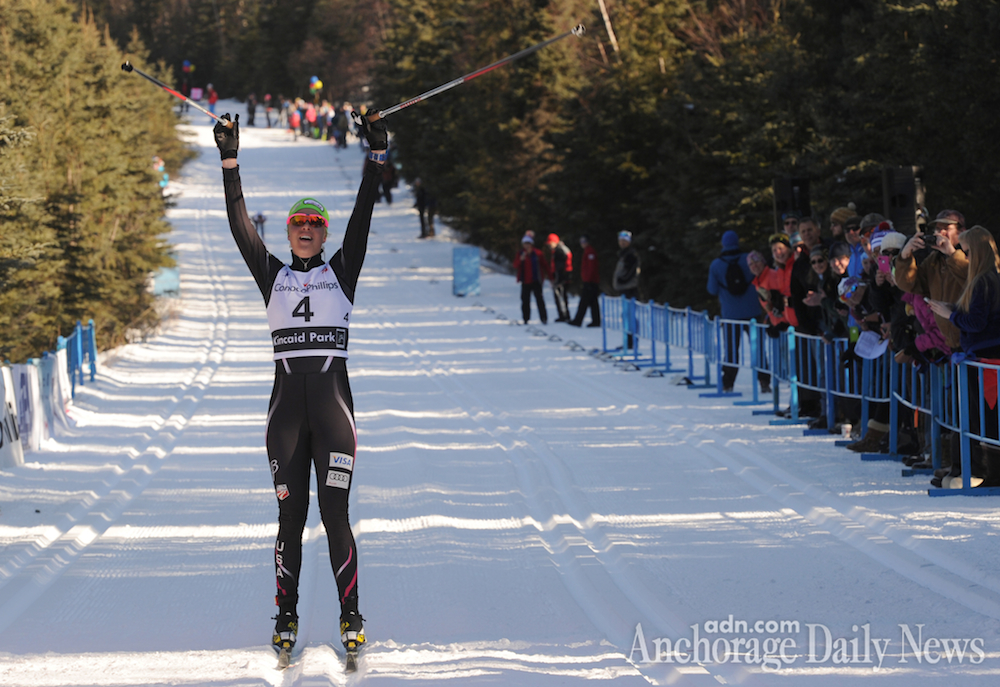
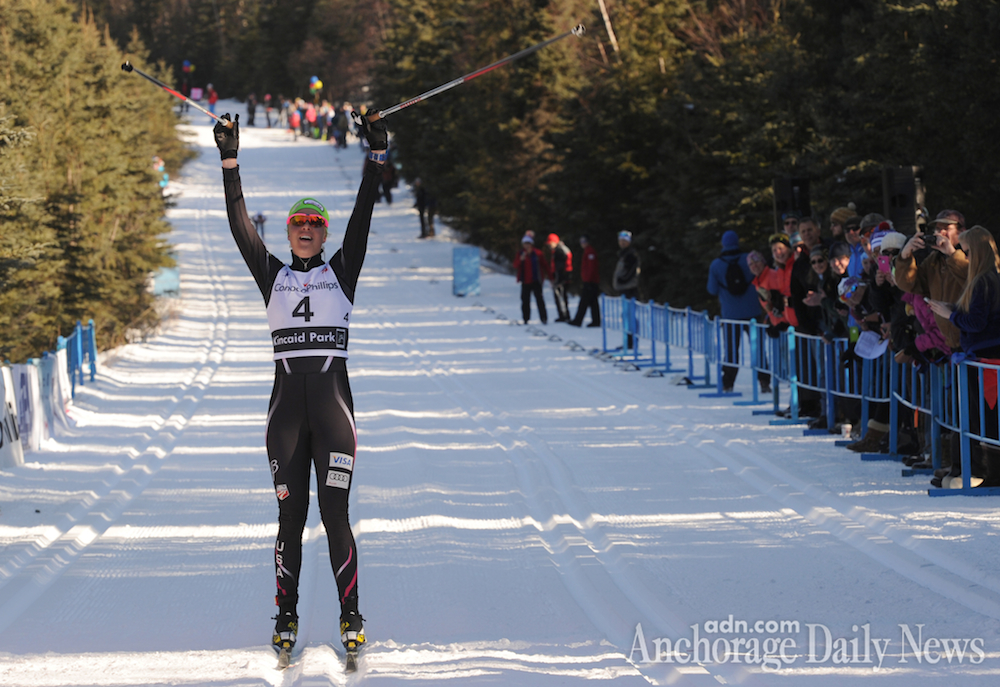
Editor’s Note: This is the first of two race reports on Friday’s classic mass starts, the final races of the season at U.S. Distance Nationals. Please bear with us for the men’s report, as this FasterSkier has a flight to catch.
ANCHORAGE, Alaska — Liz Stephen was having a bit of an inward battle on Friday at the last day of U.S. Distance Nationals in the last women’s race of the season.
Like always, the 27-year-old U.S. Ski Team (USST) member, known as a hill climber and distance skier, really wanted to win the 30-kilometer classic mass start. But as the three-lap race around Spencer Loop at Hillside on the southeast side of the city played out, Stephen started to realize she was going to have to beat Sadie Bjornsen to do so.
“I was secretly hoping Sadie was gonna win this race,” Stephen said afterward of Bjornsen, a member of both Alaska Pacific University (APU) and the USST. “I had a feeling a few days ago this was going to be her day.”
Neither had won an individual race at the weeklong Spring Series in Anchorage. Another one of their teammates, Kikkan Randall (APU/USST) had dominated the two earlier events: the 10 k freestyle and classic sprint. On the third day, the first of U.S. Distance Nationals, Randall anchored APU to another victory in the 4 x 5 k mixed relay. While the 30 k classic might not be her strongest event, it was hard to bet against Randall at home on Day 4.
So as the 30 k unfolded, Randall started off by leading to the top of the longest-and-largest hill known as Wall Street (with 87 meters, or 285 feet, of climb) around 5 1/2 k. She grabbed the first of two $100-dollar primes at the summit in doing so, and went on to follow Bjornsen into the 10 k checkpoint 0.8 seconds back in second.
Another USST member Jessie Diggins, also of the Stratton Mountain School (SMS) T2 Team, was third at 10 k, 2.4 seconds behind Bjornsen, and Stephen was almost even with her in fourth.
By lap two, Stephen opted to go big — rather than wonder what could’ve been if she didn’t try — and attacked at the bottom of the multi-tiered climb up Wall Street, the high point of the course around 950 feet above sea level. The move worked, initially, as Stephen took the second money bonus over the top and gapped Bjornsen and Randall slightly by 16 k.
Bjornsen later said Stephen exposed her weakness on the steepest part of the course.
“These hills are really good for me because I can stride out quite well, but the top of Wall Street is too steep for me and so I have to run and that’s not what I’m good at,” she said. “I think Liz figured out pretty quickly that’s where she could make time on us. Every time she went there, she came around us and just started hammering.”
Trailing Stephen by a few seconds at the top, Bjornsen met her own crossroads and decided to push forward in pursuit. She left Randall in doing so and caught Stephen on a series of climbs on the second half of the course.
“I tried to make a break and I had a little bit of space, but Sadie was able to close it,” Stephen recalled. “We both kind of looked at each other, like, yeah, these girls [Randall and Diggins] are coming back so we gotta go. … I’m terrified when I’m on a downhill and Jessie’s on my tail. The whole time we were like we cannot ever let up on these downhills, these two are gonna work together and come back on us.”
For the next 12 or so kilometers, Stephen and Bjornsen stuck together, with Stephen leading through 20 k by 2.4 seconds. Randall came through another 18 seconds back in third, followed by Diggins 11.6 seconds later. The fifth-consecutive USST member, Ida Sargent (Craftsbury Green Racing Project) was another 25.4 seconds back at 20 k.
“We were just pushing so hard out there, making sure nobody was catching us,” Bjornsen said. “You always go into this race, the last race of the season like, ‘Oh, I hope we don’t go as hard as we can the whole time because I’m so tired,’ but when it comes down to it, it’s always more fun to do that anyway.”
By the time the third lap came around on a sunny morning with temperatures rising rapidly from the teens at the start (and no ski changes allowed), Stephen continued to lead Bjornsen up and down the backside of Wall Street into the last set of kicker climbs. There, Bjornsen made her move, dropping Stephen and racing down into the stadium in first, at least 15 seconds ahead of Stephen.
“You always go into this race, the last race of the season like, ‘Oh, I hope we don’t go as hard as we can the whole time because I’m so tired,’ but when it comes down to it, it’s always more fun to do that anyway.” — Sadie Bjornsen, 30 k classic champion
The race turned out to be about 31.5 k, long enough to Bjornsen to extend her gap to 29.1 seconds at the finish. The 24-year-old Washington native, who’s lived in Anchorage for the last several years, won her third national title and first at Spring Series in 1:35:58.1 in front of a hometown crowd. Stephen placed second, and Randall notched another podium in third, 2:08.8 behind Bjornsen.
Last year at Spring Series in Truckee, Calif., Bjornsen podiumed in four individual events (placing second in the 10 k classic and third in the skate prologue, skate sprint and hill climb). At 2013 U.S. nationals in Midway, Utah, she won both the skate sprint and 20 k classic mass start.
This race, at home on the trails APU she trains on (when she’s not racing the World Cup circuit overseas), was essentially made for her, which was ironic, because a lot of people previously wrote her off as a sprinter.
Not APU, and not Stephen.
“This is probably one that I’m going to remember most for the season, this and Holmenkollen, to do well in a 30 k because I feel like it’s the hardest race,” Bjornsen said. “I was told when I was young that I was only a sprinter. Since joining APU I’ve realized I may be more of a distance skier than a sprinter and, you know, I prefer that. I always want to sprint, but distance skiing is so fun for me.”
Stephen said she had fun skiing with Bjornsen, who worked the flats and downhills, and Stephen would help on the climbs.
“I think we were pretty good team out there,” Stephen said.
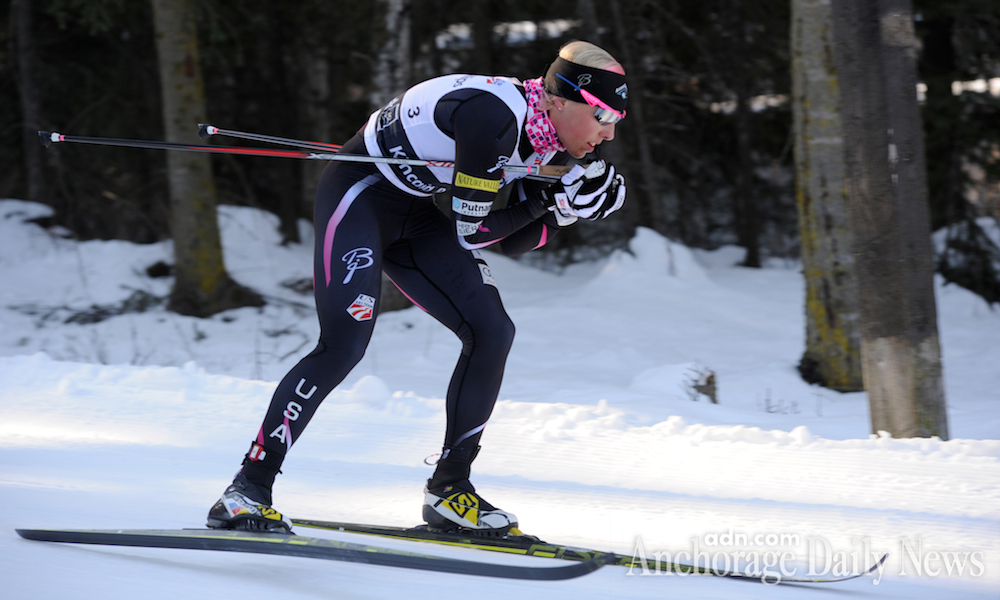
Diggins made the most of her fast skis and downhill skills to catch Randall on the third lap and finish 7.8 seconds behind Randall in fourth.
“I felt like I needed to go out in the beginning of the race and set a good hard pace and see if I could hold it,” Randall said. “It went pretty well for the first half of the race, and then going up the major climbs on that second lap, these guys picked up the pace and I started to hit the wall a little bit. Things started to cramp a lot on that last lap.”
Before that point, she remembered watching Stephen and Bjornsen pull away on final climbs on the second lap — first by five seconds, then 10 seconds.
“I was really trying to stay on the horse and try to get back in that group but they started to pull out of sight,” she said. “Jessie caught me on the downhill, but then it was great because her and I could work together. She was a little faster on the flats and downhills and when we started climbing again, I felt like I need to ski my own pace. I was able to pull back a little bit, then it was like, it’s the end of the season, it’s the end of the race, just kind of ski as hard as you can up the hills.”
After falling once when someone rode over her ski from behind, then getting tangled behind a crash involving Becca Rorabaugh (APU) within the first 3 k, Sargent skied alone for most of the race — at least 26 k, she estimated.
“I finally pulled my way up to the front on the Spencer Loop the first time and they really went for it going over the top,” Sargent recalled. “I wasn’t feeling great at that point so a little gap opened up over the top … and once a gap opens up, it’s just really hard to make it back.”
Sixteen seconds ahead of Rorabaugh in fifth at 10 k, Sargent maintained her gap on those behind her with a 14-second cushion to Caitlin Gregg (Team Gregg/Madshus) at 20 k.
“I tried to split it up into little bits, like, OK I’m gonna get up that hill,” Sargent said. “Once I settled into a pace, it felt really good. I think it would’ve been more fun to ski with people, but it was a good, different challenge. Thirty k has always been a tough distance for me — it’s pretty long — so I’m happy to have been able to hold it in there.”
She held onto fifth, finishing 41.5 seconds after Diggins. The USST swept the top six, with Sophie Caldwell (SMST2) edging Gregg by 1.5 seconds for sixth. Stratton put four in the top nine with Annie Pokorny notching eighth and Erika Flowers taking ninth, 16.4 seconds ahead of Caitlin Patterson (CGRP) in 10th.
“We were just talking about how all of us have different strengths and how this summer we want to pinpoint where each of us can help the others get better at everything so we can all move up as a team,” Stephen said. “It’s fun because we all have something that’s really strong that somebody else doesn’t have.”
“I certainly felt like today the caliber is the highest it’s ever been for one of these races,” Randall said. “I know these guys can ski really well on the Word Cup so it’s like, you know you’ve got to bring you’re A-game on a day like this.”
“It’s really fun to come out and race on these hills we always train on and end things on a good way at home,” she added.


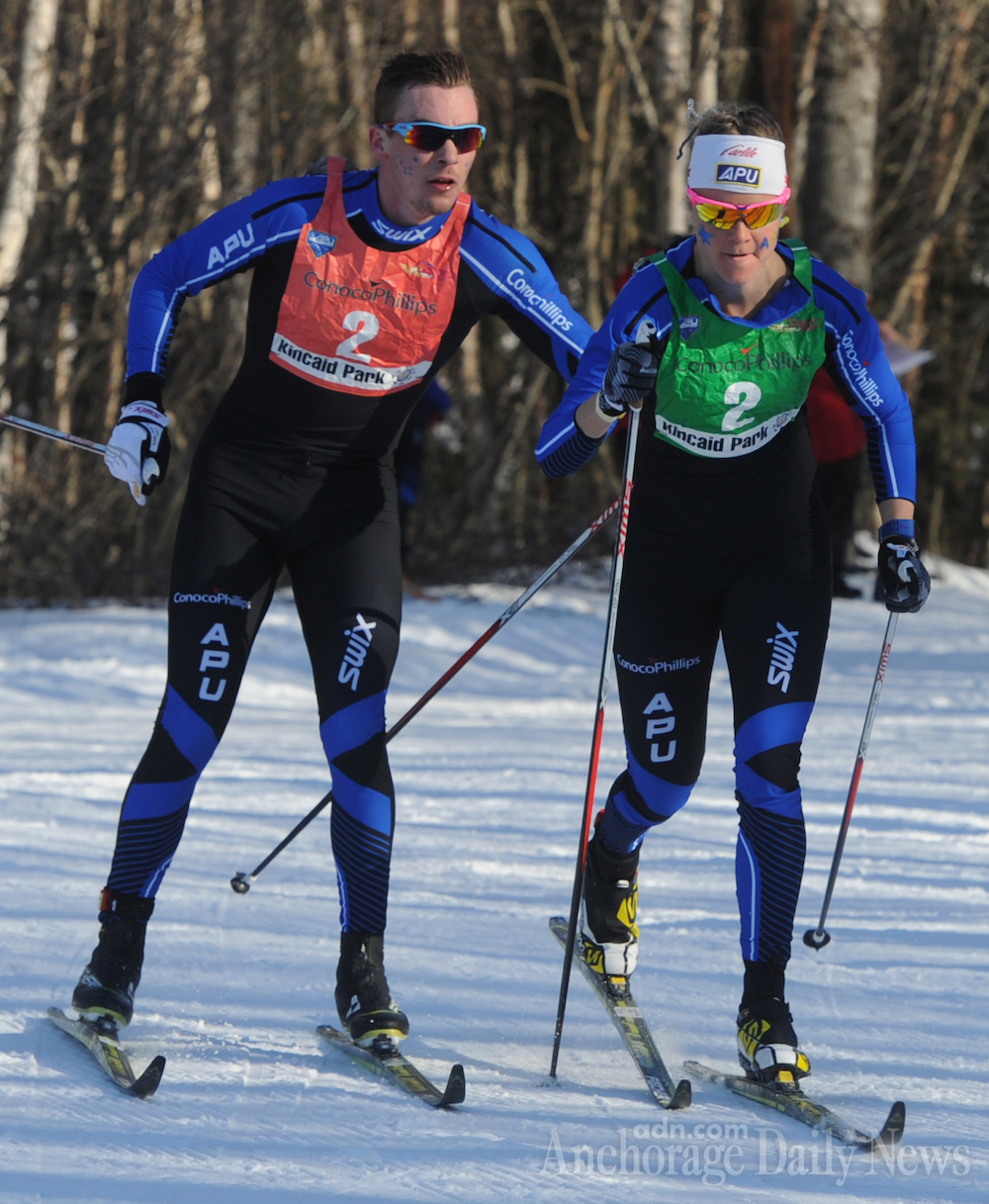
ANCHORAGE, Alaska — Ask anyone who attended Tuesday’s 4 x 5-kilometer mixed relays at U.S. Distance Nationals and you’d be hard-pressed to find anyone who didn’t think it was a good idea for future races and a fun event in general. Here are some photos from the evening race at Kincaid Park.
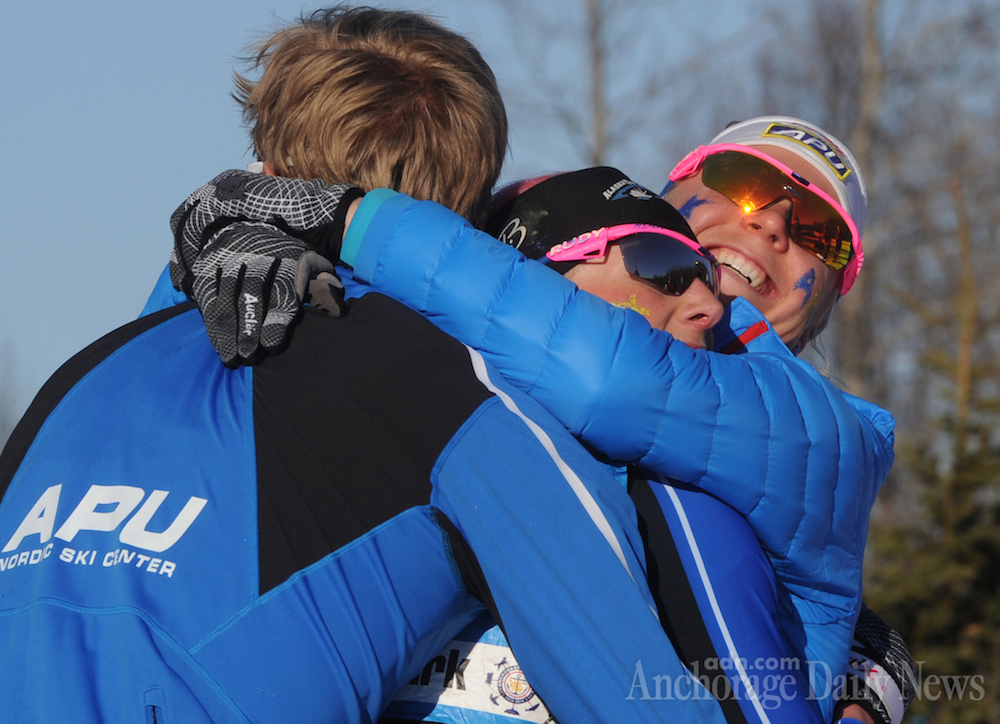
ANCHORAGE, Alaska — No matter how many times you looked at the start list on Tuesday, watching Reese Hanneman tag Sadie Bjornsen, and Bjornsen tag her brother, Erik, and Erik tag Kikkan Randall, it was sort of surprising.
Unusual, really, as it was the first time a mixed-gender relay had been put into motion on the U.S. Ski and Snowboard Association (USSA) level. According to Randall, it was like a test event — athletes proposed the 4 x 5-kilometer mixed relay with two males and two females teaming up for two classic and two skate legs to the International Ski Federation (FIS) last year. FIS agreed to try it after individual nations give it a whirl at home first.
So that was the basis of USSA’s decision to hold the first event of its kind in the U.S. at the annual Spring Series and Distance Nationals at the end of the 2013/2014 season.
On Tuesday, the race that teams like Alaska Pacific University (APU) had kiddingly called a focus all season became a reality.
Each official team was made up of two men and two women from the same USSA-affiliated club. A man skied the first classic leg, two laps that amounted to about 6.6 k, then tagged off to a female teammate for the second classic leg on the same course.
Men were the first out on the 2.6 k freestyle course, two laps of which were about 5.2 k, then tagged to the final female anchor for another 5.2 k of skating.
Twenty-six teams took part, 18 of which were official (all from the same team), and two of those were junior squads from APU.
The hometown squad, APU entered eight teams into the relay — a testament to the program’s depth at home before the race even started. The Stratton Mountain School (SMS), Craftsbury Green Racing Project (CGRP), Sun Valley Ski Education Foundation (SVSEF) each had two teams. Six official college teams raced (Vermont, New Mexico, Northern Michigan, APU, and two from Alaska-Anchorage).
With a national title at stake, the senior race was the marquee event of the evening, with a start time of 5 p.m. under brightly illuminated skies on another bluebird day in Anchorage. The question of who was strongest on Tuesday was quickly put to rest when Hanneman of APU’s first team gapped the field early and took a 20-second lead halfway through the first classic leg.
“I came into the bottom of the big hill and just felt good and I kind of accelerated by everybody,” Hanneman said. “It was not planned, but I just decided to go with it at that point. Once you make a move you kind of have to commit.”
The last time Hannemen, 24, raced a relay was Junior Nationals — five years ago, he estimated. On Tuesday, he held on to tag Sadie Bjornsen, one of his three teammates, all of which are on the U.S. Ski Team, in first by 12.3 seconds.
“I definitely was looking back, and about 4 k into the race, a couple k to go, I was definitely dying pretty hard,” he said. “But I could hear people cheering for Lex [Treinen]. I knew he was the next guy behind me so I knew we at least had a two-pronged attack going on.”
Treinen of APU’s second team passed Stratton’s Andy Newell, who initially led the chase behind Hanneman, on the second loop. Treinen, 24, sent Rosie Brennan off in second, 3.8 seconds ahead of the University of New Mexico (UNM), which Mats Resaland put third, and 16 seconds ahead of Stratton, with Newell tagging to Sophie Caldwell.
Caldwell went on to pick off two places early to rise to second by the end of her first classic lap, but said she paid the price the second time around Kincaid’s up-and-down classic loop.
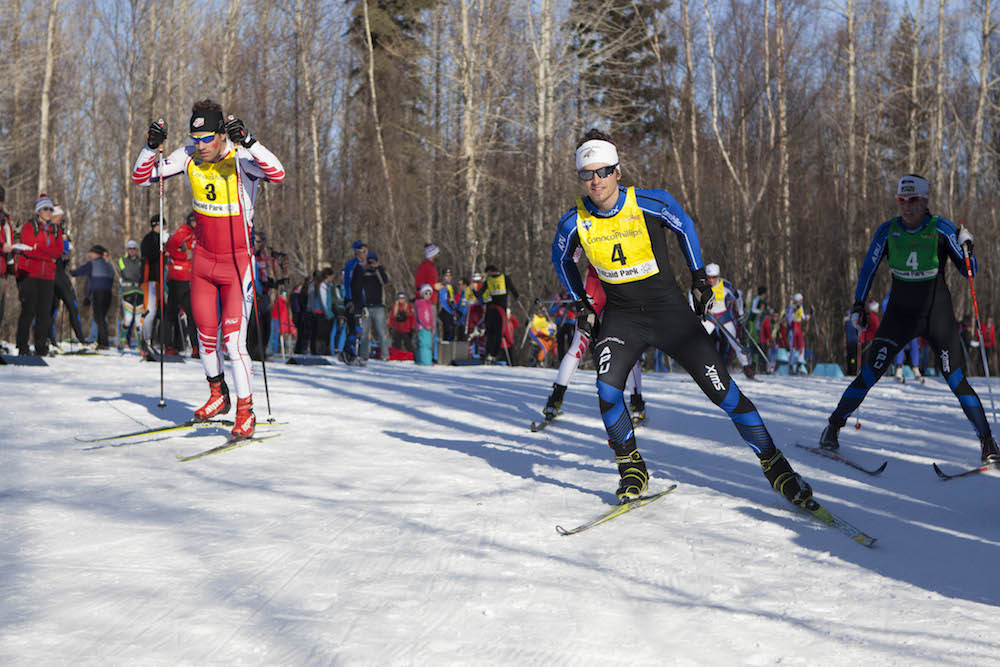
“When I started there were a couple people I could see so I just tried to catch them and then got a little tired, but I think it went well,” she said. “There were very different conditions in different parts, but we had good skis.”
From there, Sadie Bjornsen extended APU’s lead to 50 seconds, tagging off to her younger brother. Brennan put APU 2 in second, half a second ahead of Stratton’s first team. U.S. Ski Team member Liz Stephen lifted her unofficial team, Fastest of the Fast Twitch (FOTFT), with Brian Gregg, Noah Hoffman (also of the USST) and Caitlin Gregg, from sixth to fourth, 2.2 seconds behind third by the exchange.
As a side note, Brian Gregg (Team Gregg/Madshus) scrambled for the team in Superman underwear outside his Loppet Nordic race suit (Hoffman did as well). Brian’s wife, Caitlin, also of Team Gregg/Madshus, anchored the team wearing a bikini outside her uniform.
By the time Erik Bjornsen finished his two-lap skate leg, he was 28.7 seconds ahead of anyone else, and Hamilton lifted Stratton to second. David Norris kept APU 2 close in third, another 6.7 seconds back.
“It’s a good atmosphere — it’s laid back but still serious,” Hamilton said after the race, with red hearts painted on his face. While the men sported their softer side, Stratton women wore painted mustaches.
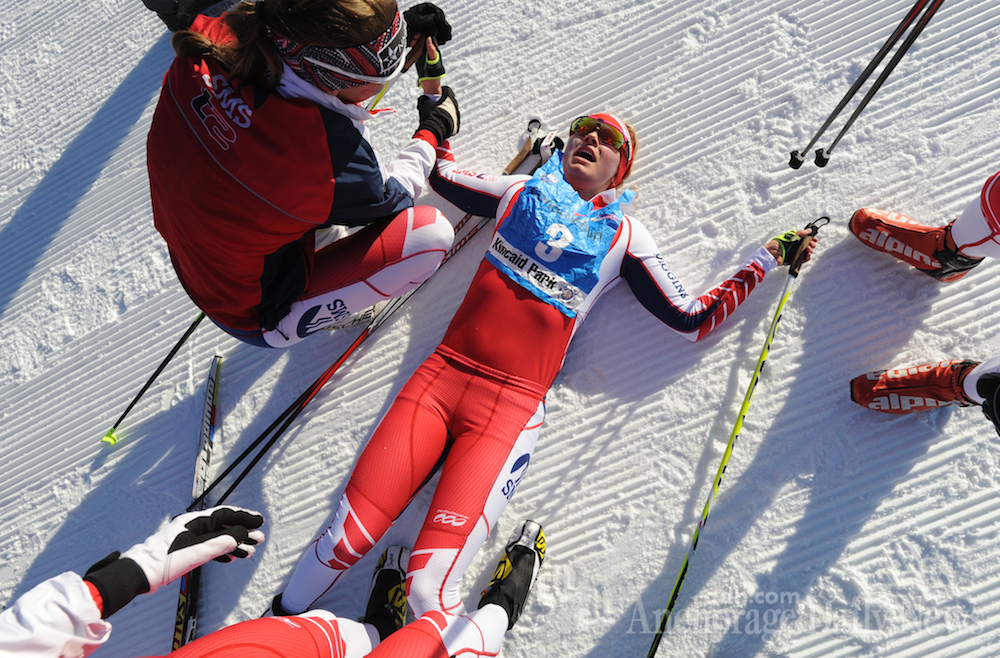
Her first time around a fast skate loop, Randall widened APU’s gap to 46 seconds. Stratton’s Jessie Diggins followed, and APU 2’s Holly Brooks lapped through another eight seconds back in third.
As spectators, volunteers and teammates from the previous three legs waited at the finish, it was pretty clear who the first-ever national mixed-team title and $750 dollars ($187.50 apiece) of prize money was going to.
Randall crossed the line uncontested in 55:51.5 minutes, 45.6 seconds ahead of Diggins, who locked up second for Stratton. Brooks anchored APU 2 to third, 32 seconds behind Stratton.
“Coming into today we knew it was gonna be tough competition,” Randall said. “We knew Stratton would have a good team, our other APU team, Craftsbury, the mixed team with Liz and the Greggs and Noah, so it was kind of fun to have the nerves come into the club relay.”
Fortunately for Randall, she didn’t have to stress too much.
“I just thought it was fun to try to at least hold the gap or make time,” she said. “We have so many fans out here. I’ve had so many people say it’s fun to watch us race this week so I figured why not race with what’s in the tank today? I had fun catching a couple young [junior and university] boys out there, and giving them a challenge.”
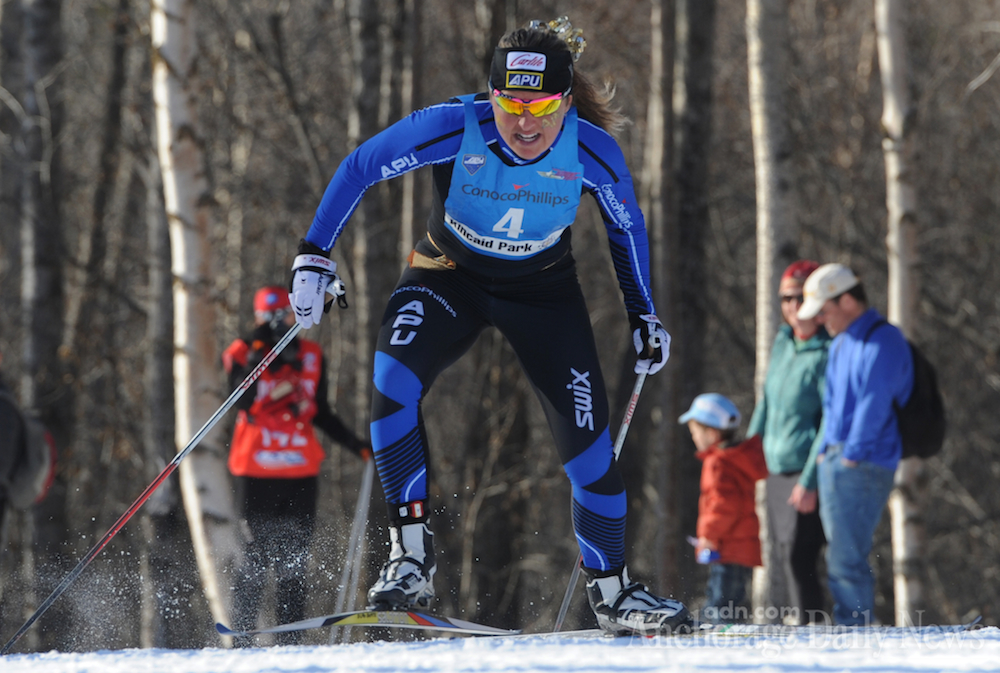
After Eric Packer brought Stratton’s second team from seventh to fifth, anchor Erika Flowers passed Caitlin Gregg on the second lap to finish fourth, 51.5 seconds back from third and 13.9 ahead of FOTFT in fifth.
Sun Valley’s first team placed sixth, CGRP 1 was seventh, APU 3 was eighth, University of Vermont ninth, and Sun Valley’s unofficial team 10th.
So will we see this format again? Chances are, you can count on it.
“I always think it’s fun to mix it up a little and do something we don’t see on the World Cup, but I’d also love to see this on the World Cup,” Caldwell said. “To have a club event, I think we can all find an extra gear for the team which is fun.”
“We discussed the mixed relay in the FIS meetings last spring because … a lot of the athletes supported adding that to the calendar, testing it out,” said Randall, a FIS Cross Country athlete representative.
“What a great idea,” she said. “The clubs have been getting so much stronger over the last 10 years, but the depth is still building. So to have two men and two women, that makes sure it can be a very competitive race. I think it’s fun … certainly makes it interesting, hopefully this proved to be a good example so they’ll consider experimenting with it on the World Cup.”
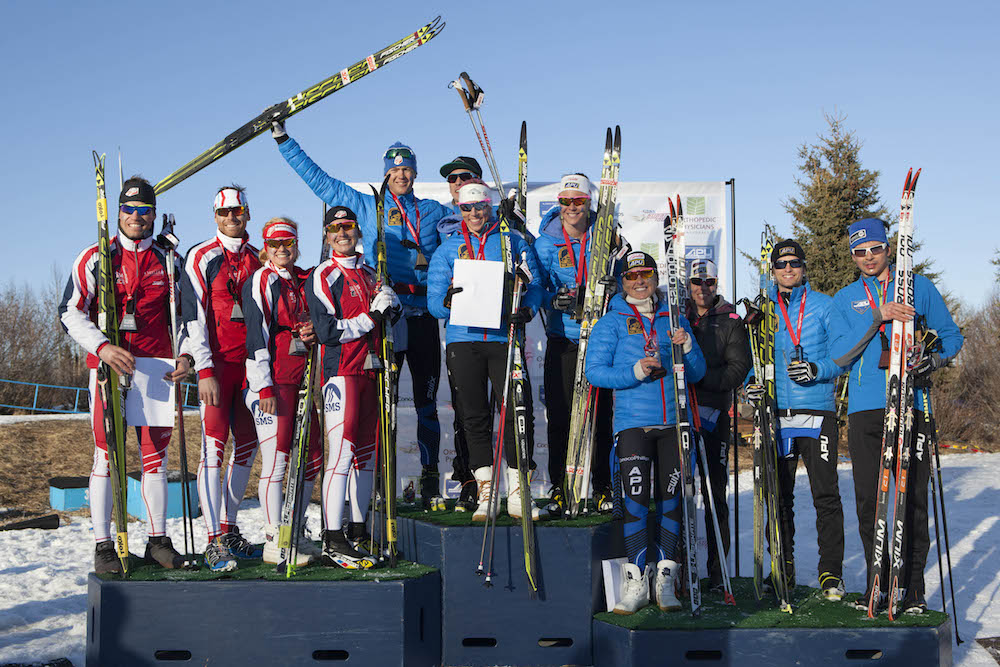
APU head coach Erik Flora explained the relay was a motivator for his team throughout the season.
“When we did intervals back in June, we’d tell the athletes, ‘Technically this is the trials for the relays,’ ” Flora said. “We kept that joke going all year long so by the time we got to this point we had so many jokes about it was probably pretty simple.”
He said they selected the teams mostly based on recent results, with two individual races (the 10/15 k freestyle and classic sprint) earlier this week.
“Reese is in really good shape right now … and Erik always has a pretty good finishing kick,” Flora said. “Then you have Sadie who’s a really strong distance racer right now, so you put her in the middle, and then Kikkan for the finishing speed as well.”
He added that it was “a great surprise” to see Hanneman with such a significant lead after the first lap, and even more exciting when he and Treinen tagged off first and second. The fact that they more or less held it through three more legs capped off another successful day for APU.
“Coming through an Olympic cycle, we’ve been working for the last eight years toward the last Olympics and so now to turn the page and then have the depth of our team expanding so quick, it gets me fired up for the next four years,” Flora said.
“This is probably the highlight of the year so far,” Hanneman said.
“This is a really fun accomplishment for us,” Randall said. “The women’s team has certainly been strong for several year, but the men’s team is really coming on strong, so to put together a complete team today … I think everybody is gonna be super proud about this.
“The techs have been working really hard for us all week; there’s a lot of skiers to manage,” she added. “It’s really cool for our whole community-based program to see this. Our juniors are out here hopefully going, ‘Man I want to be on the APU A-team someday for the club relay!’ ”
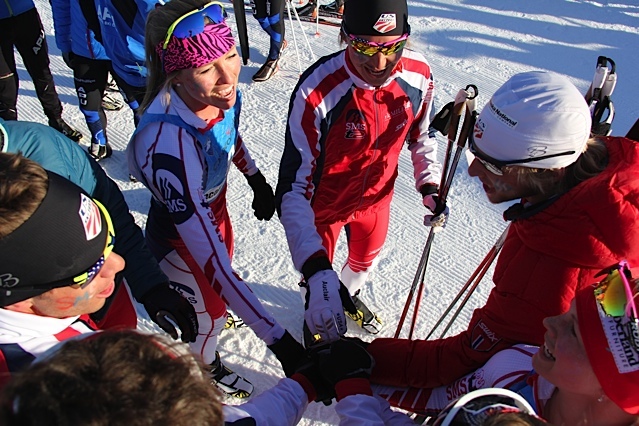

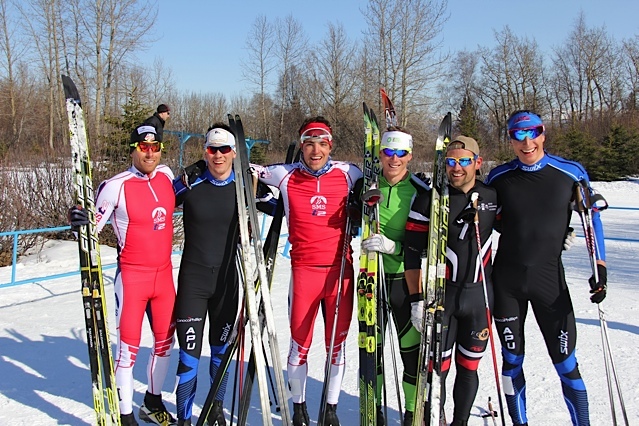
When the U.S. Ski and Snowboard Association (USSA) met last spring, they decided it was time for a bit of a change at the season-ending SuperTour Finals and U.S. Distance Nationals. Instead of a hill climb, they opted for a team relay at the races in Anchorage, Alaska, scheduled for the following March 22-28.
According to the event’s race director James Southam, a two-time Olympian from Anchorage, athletes brought up the idea of a team event last year. An opening in the schedule made the 4 x 5-kilometer relay possible for 2014.
But unlike most four-person relays, the one going off Tuesday at 5 p.m. Alaska time will be coed with a male scramble classic leg tagging to a female classic skier, then male freestyle skier, and finally, a female freestyle anchor.
“I think it’s gonna be fun,” Southam said. “The last distance relay I remember doing was I think in Bend [Ore.] in 1998 or something like that for nationals. I think having the coed is going to be cool. … You don’t need four good guys or four good girls; I think it makes it a little more competitive.”
Eighteen official teams (including two junior squads), each made up of two males and two females from the same USSA club, will compete for a national title — and $750 dollars in prize money to split four ways. The second-place team will receive $500, and third gets $300.
It’s the second-to-last competition before Friday’s 30 and 50 k classic mass starts, which will be held at a different venue than the rest of the races at Kincaid Park, at the Hillside Trail System on the east side of town.
Teams to watch include Alaska Pacific University’s first team, with Reese Hanneman, Sadie Bjornsen, Erik Bjornsen, and Kikkan Randall, in that order. The top team from Stratton Mountain School T2, Andy Newell, Sophie Caldwell, Simi Hamilton, and Jessie Diggins will also contend for the title, along with Craftsbury’s Patrick O’Brien, Ida Sargent, Gordon Vermeer, and Caitlin Patterson, and Sun Valley’s Mikey Sinnott, Mary Rose, Matt Gelso, and Chelsea Holmes.
Several college teams, such as the University of Vermont, Northern Michigan, New Mexico, and the University of Alaska-Anchorage will also be vying with the best of them.
There are also few unofficial teams with skiers from different clubs that have a shot at winning for glory rather than cash. Fastest of the Fast Twitch includes Brian Gregg (Team Gregg/Madshus), Liz Stephen of the U.S. Ski Team (USST), Noah Hoffman (SSCV/Team HomeGrown/USST), and Caitlin Gregg (Team Gregg/Madshus). The Vagabonds are Karl Nygren (Podiumwear), Jennie Bender (Bridger Ski Foundation), Mark Iverson (Rossignol), and Cambria McDermott (independent).
Each competitor will ski two laps of either a roughly 3.3 k classic loop (for 6.6 k total) or a 2.6 k skate loop (for approximately 5.2 k).
As for the 5 p.m. start? It’s all about getting the best bang for the buck in terms of participation, volunteers and spectators.
“We want as many of the kids from around town to be able to race in it as well and to come out and watch it,” Southam said. “When you have midweek races at 11 o’clock it’s hard to get the kids out to watch. One of the big reasons we wanted to host these races is, after the Olympics people have been paying attention to skiing all winter long and it’s pretty powerful for kids coming up to be able to watch Olympians and world champions.”
Of the 26 teams entered in Tuesday’s relay, the two official junior squads are from APU. One unofficial team includes three men and a woman, another has four junior males, and one has three males, which will complete three legs and then call it a race.