Tag: 2014 U.S. nationals

  • Two Decades and 20+ World Cup Starts Later, Sinnott Retires from Skiing

    Two Decades and 20+ World Cup Starts Later, Sinnott Retires from Skiing

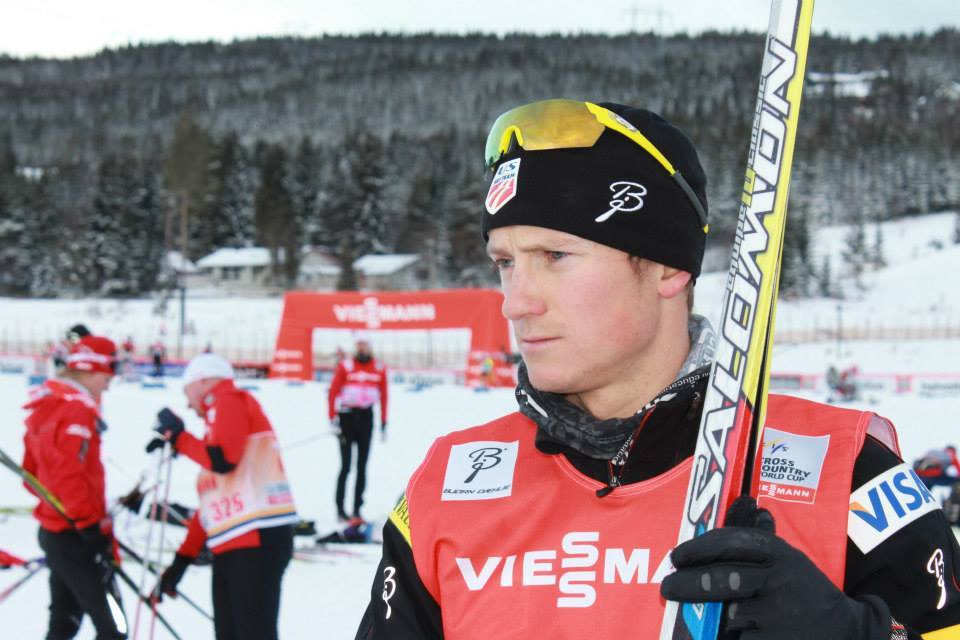
    Mikey Sinnott on the World Cup last December in Lillehammer, Norway. (Photo: Facebook/MWSC) https://www.facebook.com/maine.Winter.Sports.Center/photos/t.1309153346/10152451352903312/?type=3&theater
    Mikey Sinnott on the World Cup last December in Lillehammer, Norway. (Photo: Facebook/MWSC)

    A freshman skier in Sun Valley, Idaho, Mikey Sinnott was literally a foot shorter than the rest of the guys on his team, or so his longtime coach Rick Kapala says. Small but mighty, Sinnott came up through the Sun Valley Ski Education Foundation (SVSEF) junior ranks, making it to the Idaho youth championships and eventually winning two Junior National titles, and reaching Junior World Championships in 2004 and 2005 and U23 World Championships in 2006, 2007 and 2008.

    But before he was a globetrotter, Sinnott was a fighter — holding his own in a wrestling brawl with two dozen kids and a handful of coaches, an annual lighthearted tradition at the SVSEF. According to Kapala, who was always at the bottom of the pile, Sinnott was forever the last man standing. Everyone else would eventually give up, but not Mikey.

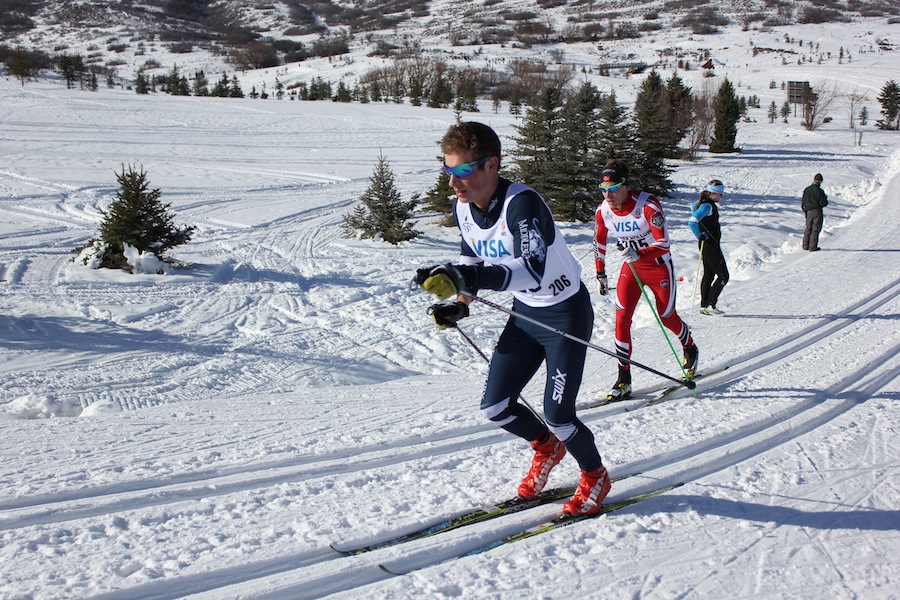
    Mikey Sinnott at the 2011 U.S. nationals classic sprint. (Photo: FlyingPointRoad/flyingpointroad.com)
    Mikey Sinnott at the 2011 U.S. nationals classic sprint, where he place second for a career best. He repeated the feat in 2012 with another silver in the classic sprint in Rumford, Maine. (Photo: FlyingPointRoad/flyingpointroad.com)

    “You could never pin Mikey,” the SVSEF head coach and nordic program director said. “He was the definition of scrappy.”

    As Kapala spoke those words on the phone Tuesday, he almost immediately retracted them. Sinnott would not want to be called scrappy, but that’s what he was. He didn’t tap out, Kapala said, he never quit.

    Looking back, he was glad Sinnott didn’t get overlooked like some U16s that haven’t reached physical maturity do. While Sinnott’s results and performances were promising, an outside coach observing him at a glance might not have picked him to achieve what he later would.

    But Sinnott understood the importance of grit, and paired with an academic gift that led him to study psychology and neuroscience at Dartmouth College, he had punched his ticket to success early on, Kapala said.

    His timing was also ideal. By the time he finished up at Dartmouth, where he was an NCAA All-American and named to the association’s Division I Skiing Championships Team all four years, Sinnott was ready for the big leagues, and his choice to return to Sun Valley was simple.

    They had started an Olympic development team (now the Gold Team) a few years earlier — an attractive option for a hometown skier looking to go pro.

    “At that point, I wasn’t going to go to northern Maine, I wasn’t going to go to the Midwest, I wasn’t going to go to Alaska — there weren’t really any other teams,” Sinnott reflected on the phone two weeks ago. “When I went off to college, that was one of Rick’s goals … to make the Sun Valley Ski Education program one of the cradle-to-the-grave programs like in Europe.

    “I think it’s been a very, very wonderful program,” he added after seven years on the team. “It’s been a model for how we need to start developing more in the U.S. Sun Valley was the model for what’s made the U.S. Ski Team [in the 1960s] … I think we continue to be that model and impress and improve.”

    In five seasons, Sinnott, now 29, amassed more than 20 World Cup starts. He claimed the overall SuperTour title in 2013 to start last season in Europe, where he raced seven of those World Cups.

    But last winter, starting in November, Sinnott didn’t feel anywhere close to on top of the world. He was fatigued and had been feeling that way since late October, yet he couldn’t pinpoint why. His legs lacked power, but he figured he could compensate with mental toughness, which some call ‘grit.’

    “I just kept telling myself that I had to make it work,” he said. “I never really had a lot of explosive energy in my legs for whatever reason, but I kind of knew that was the year, if I was going to fight through any stupidity, that was the year I had to do it … It was an Olympic year.”

    The Continental Cup leader who kicked his season off with the U.S. Ski Team (USST) in Kuusamo, Finland, Sinnott placed 74th in his first race (a classic sprint) and 113th in the 10 k classic the next day. By the end of the three-day series, he was 92nd overall.

    A few weeks later in mid-December, he spoke openly about not being in top form. But he still wanted to perform well at U.S. nationals and give his best shot at making the 2014 Winter Olympics in Sochi, Russia.

    At the same time, Sinnott, widely respected as a master of calculating points in the U.S., knew his domestic ranking wasn’t competitive enough to put him in the running for the Olympic team. If he wanted to make it to Sochi, his first Olympics in two Olympic cycles he’d been training through, he knew he needed a top 30 on the World Cup.

    The closest he’d come after Kuusamo was 78th in the classic sprint at Asiago World Cup in Italy. In late December, he returned to the U.S. for nationals in Utah, where he placed fourth in the 30 k freestyle mass start and fifth in the classic sprint. Even if he’d won all of nationals, Sinnott didn’t expect to make the Olympics. At the same time, he said anyone’s best chance was to ski faster than lone USST male there: Erik Bjornsen.

    “I knew how fast I was skiing and I knew I wasn’t going to beat him,” Sinnott said.

    “The U.S. Ski Team wants to do everything they can to not take any non-U.S. Ski Team members to the Olympics,” he added. “So I knew the only opportunity I had was to get a top 30 on the World Cup … That’s why I stayed [in Europe].”
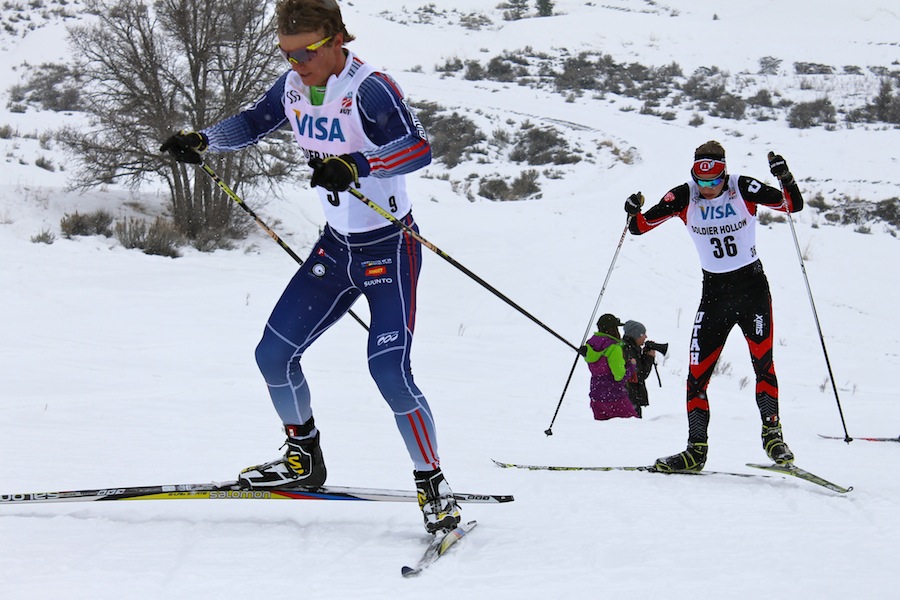
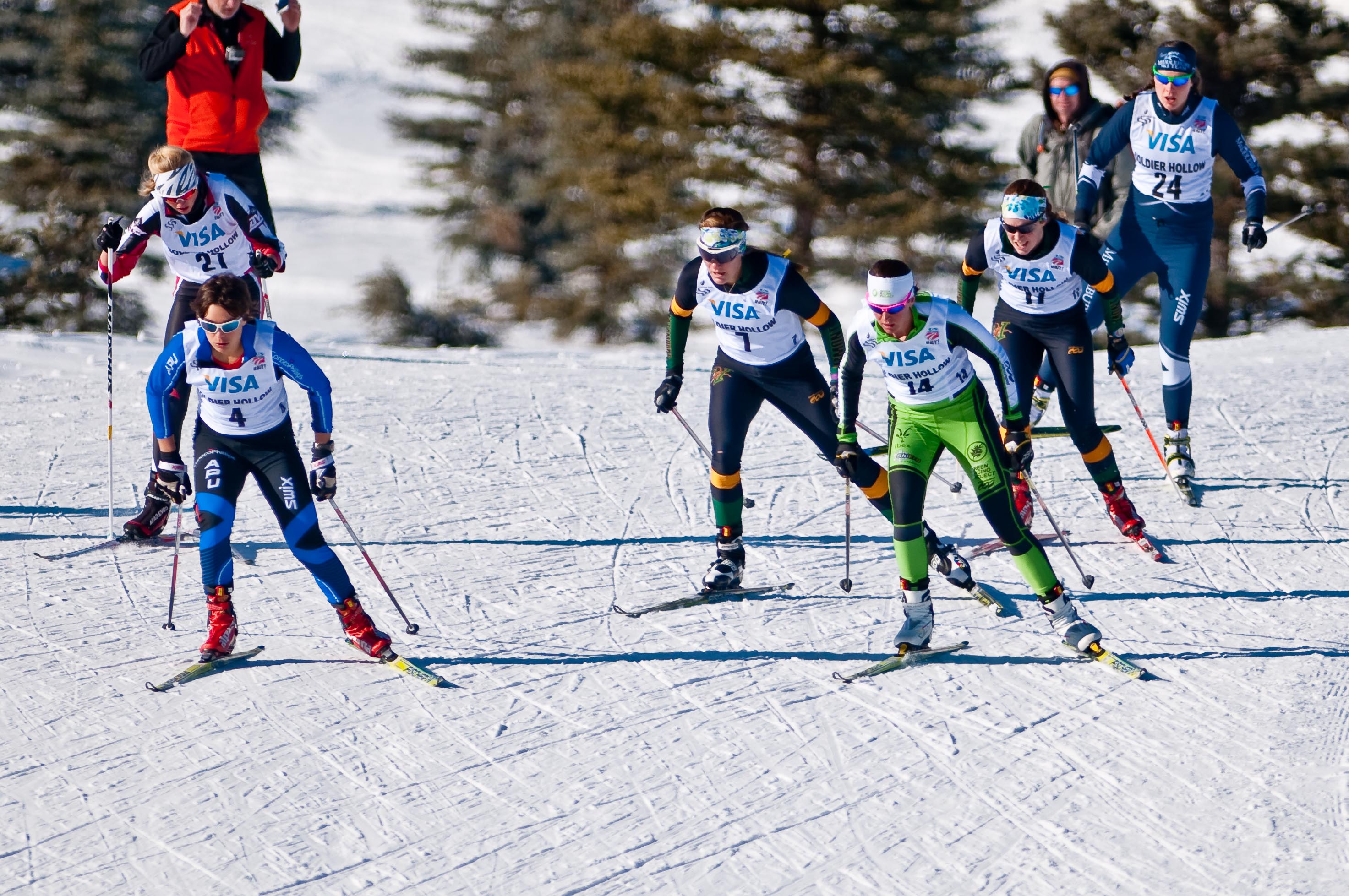
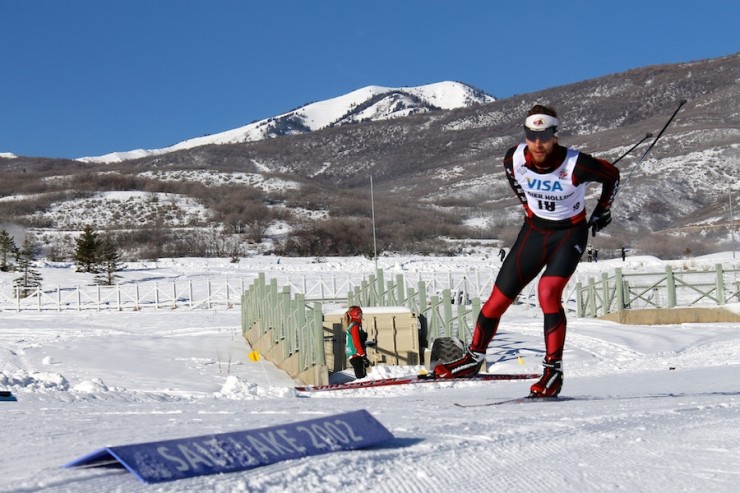
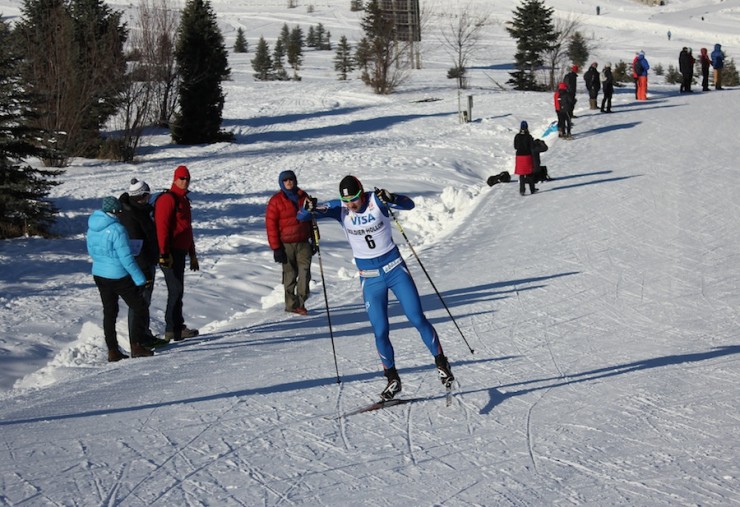
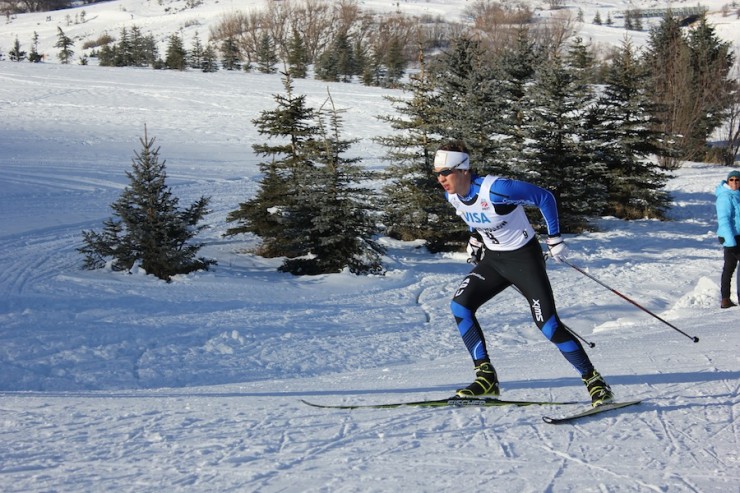
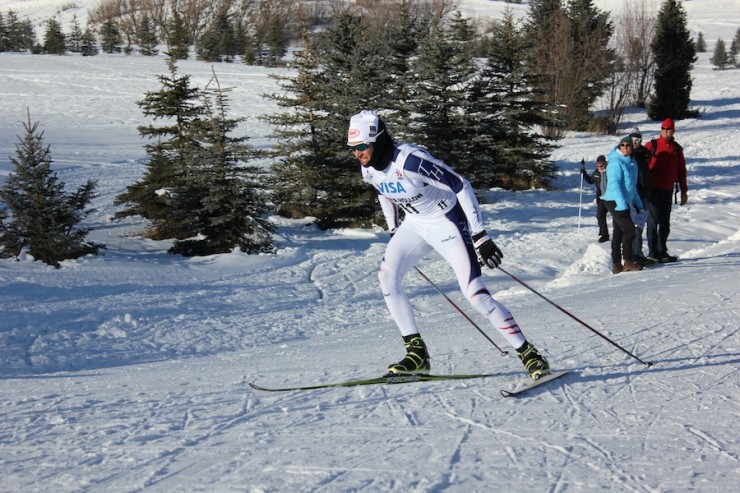
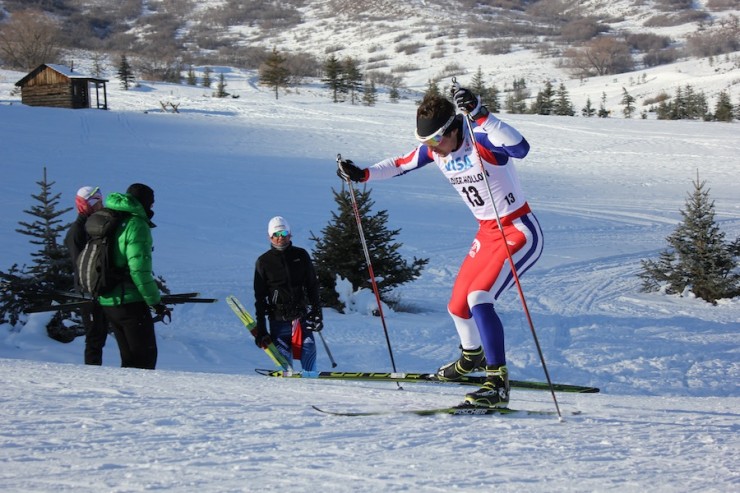
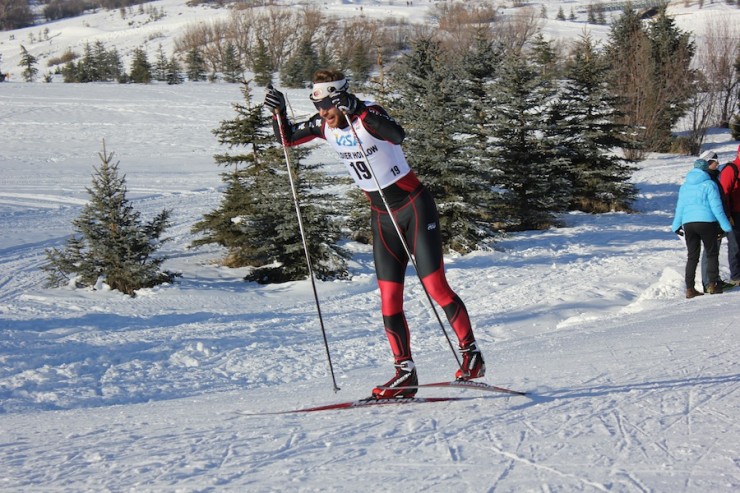
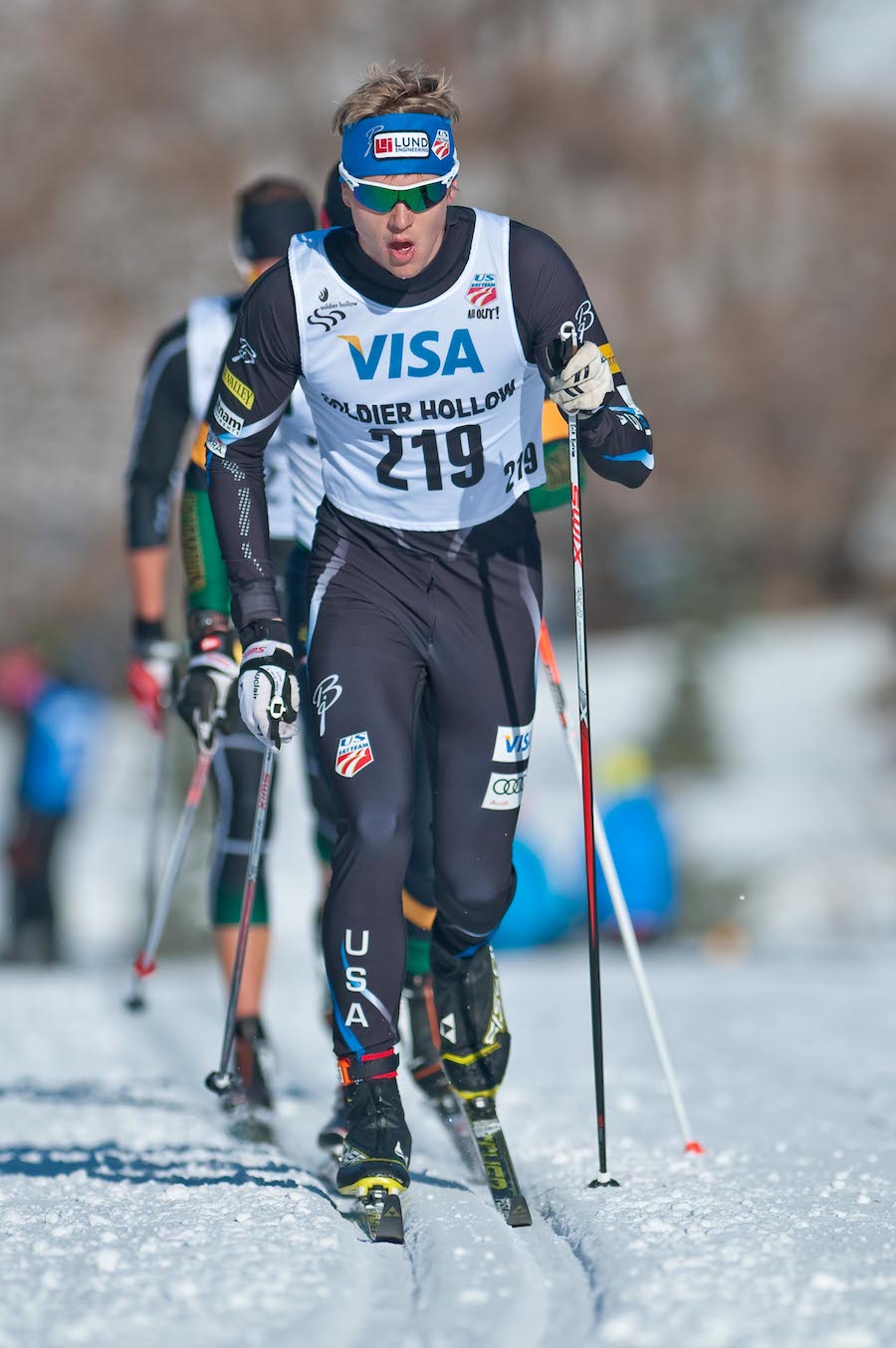
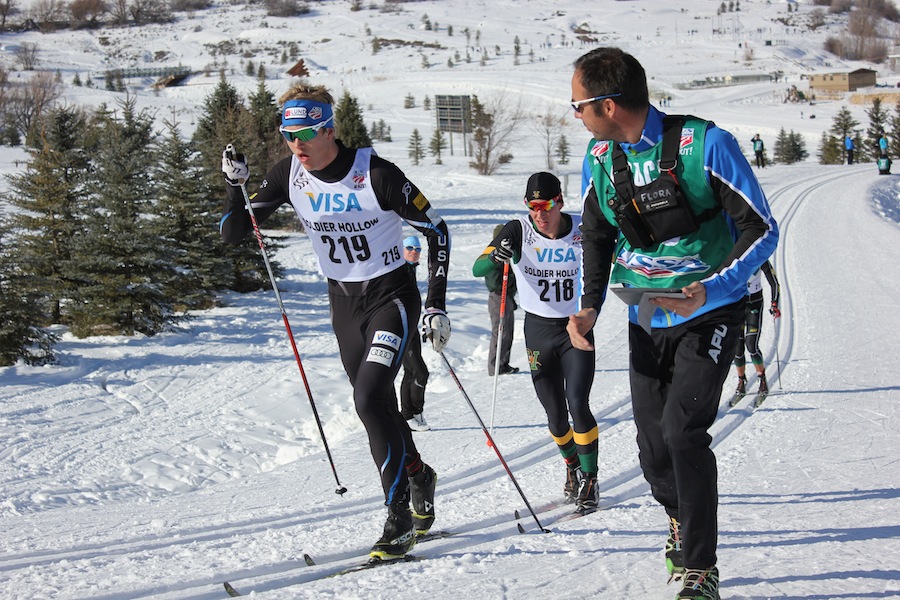
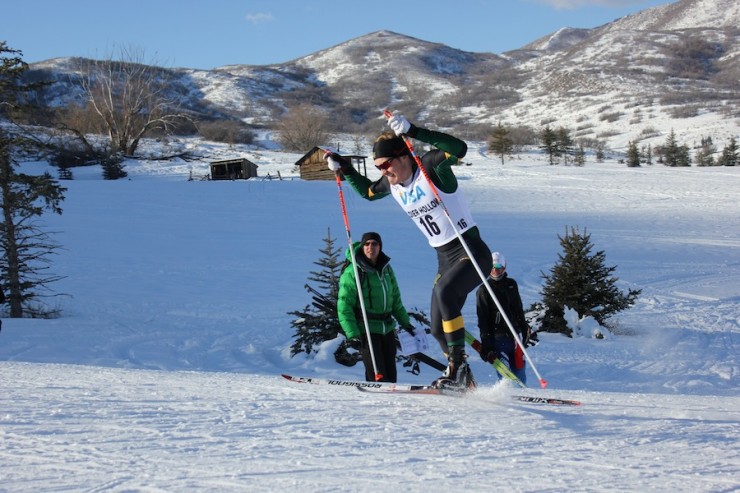
    Mikey Sinnott (l), of the Sun Valley Ski Education Foundation (SVSEF), climbs up and over a hill in the 30 k freestyle mass start at 2014 U.S. nationals. (Photo: Bert Boer - http://bertboyer.zenfolio.com) All proceeds from photo sales will be directly donated to NNF. Sinnott's former Sun Valley teammate Miles Havlick (5) leads the chase pack during the U.S. Nationals 30 k freestyle mass start while Sinnott (second from l) gets tangled on the way up. (Photo: Bert Boyer/All proceeds from photo sales donated to NNF)
    Mikey Sinnott (l), of the Sun Valley Ski Education Foundation (SVSEF), climbs up and over a hill in the 30 k freestyle mass start at 2014 U.S. nationals. (Photo: Bert Boyer/All proceeds from photo sales  donated to NNF)

    Olympic selections came and went, Sinnott wasn’t picked, and by the time February rolled around, he was back on the SuperTour circuit and feeling drained. He recalled one race in St. Paul, Minn., where he was skiing in the top three with four kilometers to go, and he was bored.

    “I was like, ‘I don’t know, maybe I should just drop out because I don’t even care,’ and that was kind of pathetic,” he reflected.

    He ended up third on the day, and later that month, placed 24th in the American Birkebeiner — an event, like nationals, he said he felt horrible in.

    “I’ve never just been so sluggish through an entire season like that,” Sinnott said. “It wasn’t an overtraining thing, but I just never felt that I had the spark.”

    He ended up eighth in the 2013/2014 SuperTour overall. Because he wasn’t among the closest contenders for an Olympic spot, he wasn’t crushed when he didn’t make the team. But his season did leave him with untied ends he would later have to reconcile.

    “There was no sudden crash or hope lingering on that some people were affected with because I had a better understanding [of the criteria],” Sinnott said. “When I was younger I thought, race your hardest and things will turn out well, and I quickly realized that wasn’t the case. You have to make your own luck and work your hardest because nothing’s going to be given to you … you have to force your way onto a team or force your way into a start race because you earned your way.”

    Change of Seasons, Change of Pace

    A couple Fridays ago, Sinnott was hanging up a piñata midday in his Sun Valley home. He wasn’t recovering from the morning’s training session with the Gold Team, and he wasn’t gearing up for an afternoon workout, either.

    Since last spring, he had been a working man in a different sense: marketing and writing for the Sun Valley Harvest Festival, one of the top 10 fall festivals in the country. And with the September festival in the rearview, he was prepping for a party at his place.
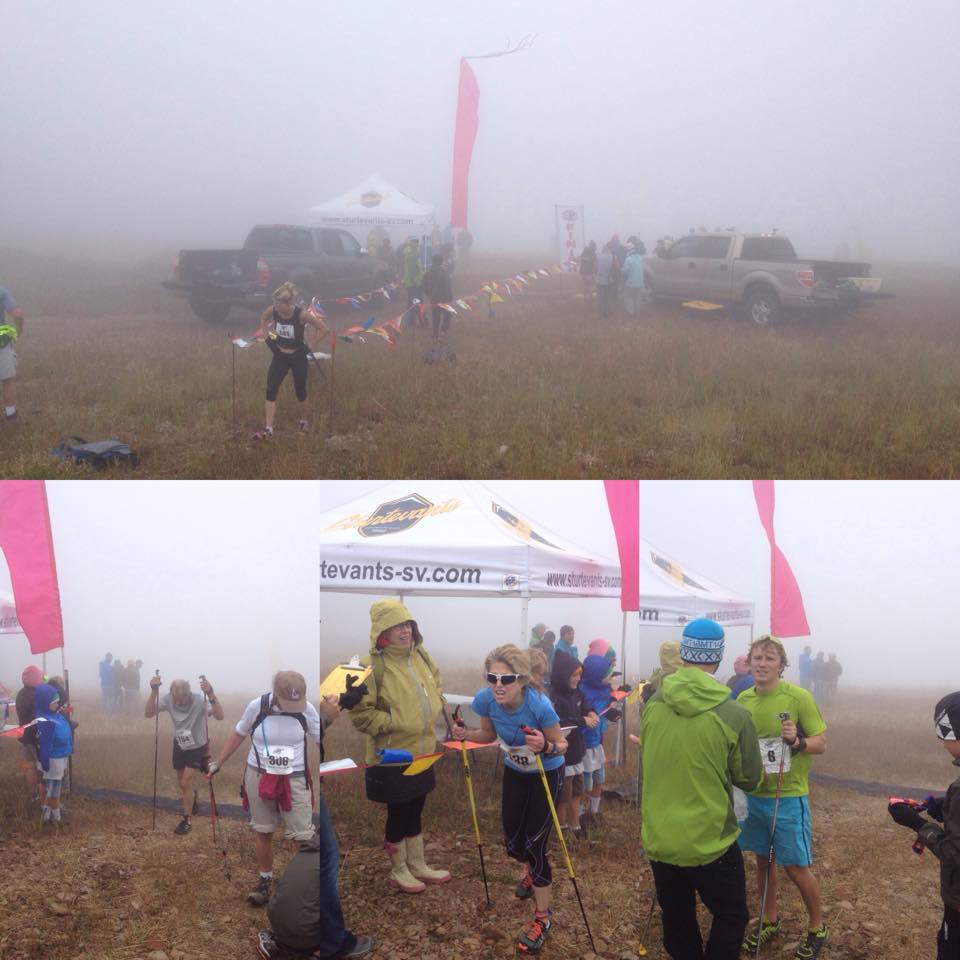
    Mikey Sinnott (lower r, in green) at the Sun Valley's annual Baldy Hill Climb, while Darlene Young (with poles, in blue) pushes on. (Photo: Facebook/Jon Engan) https://www.facebook.com/photo.php?fbid=10203960529367676&set=a.2885261424722.135136.1655738374&type=1&theater
    Mikey Sinnott (lower r, facing camera in green) at Sun Valley’s annual Baldy Hill Climb, while Darlene Young (with poles, in blue) pushes on. (Photo: Facebook/Jon Engan)

    He’d certainly been working out — just not in the traditional sense that he’d been accustomed to for the last seven years. He’d done the unofficial Ultimate Man.Ultimate Woman series, the brainchild of former Sun Valley coach Chris Mallory and a compilation of four local offroad endurance events: the Boulder Mountain Tour (30-kilometer ski race), Backcountry Run (16-mile trail run), Double Galena Grinder (45-mile mountain-bike race), and the Cheeso Double Baldy Hill Climb.

    The series ended Sept. 27 at the top of the 9,020-foot Bald Mountain, where Sinnott placed eighth on the day and fourth overall.

    Rather than run more than 3,000 meters to the summit, the ultimate men and women had to ascend it twice: biking up Baldy, riding the gondola down and running/hiking back up. Twenty-five people started the series, four finished, and among them, Sinnott skied the fastest time in the Boulder Mountain Tour (BMT) and notched the second-fastest time in another event. He lost an hour in the mountain-bike race and was down to fourth — last — by the end of the series.

    “Running after you bike is awful,” he said. “Eleven months ago, I signed up for [this] race series … I know I’m not going to do it again.”

    Meanwhile, after the BMT in February and before the Backcountry Run in July, Sinnott decided whether to continue ski racing through 2014/2015. Still unsure exactly what went wrong last winter — he tried to rest more; he tried to train more — he reasoned it was worth stepping back and trying to put everything back together, and started training again in May.
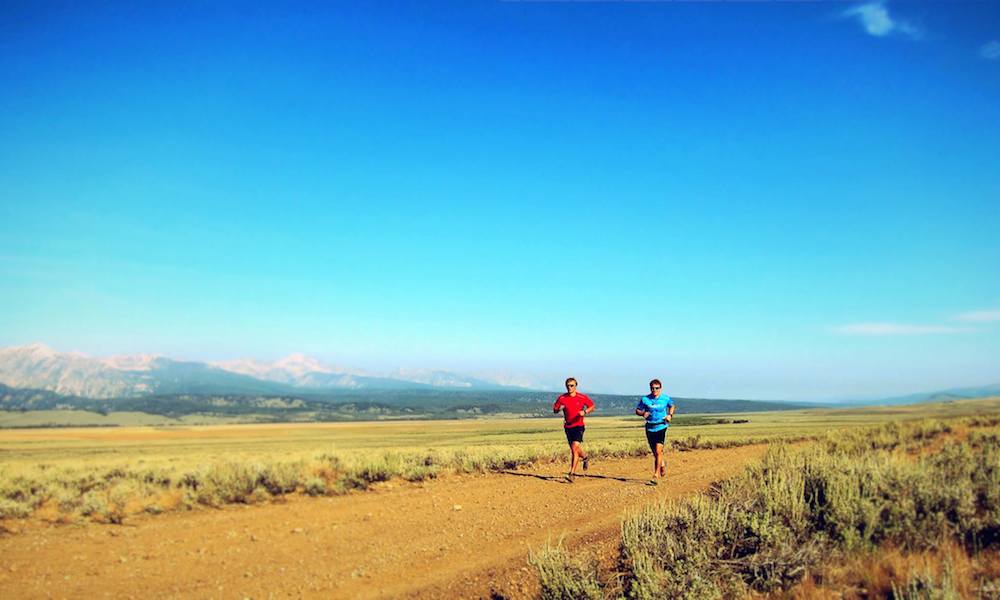
    Sinnott and Miles Havlick during an August 2013 training run through the sagebrush in the Upper Salmon River Valley, Idaho. (Photo: Facebook/Miles Havlick) https://www.facebook.com/mileshavlickxcskier/photos/t.1309153346/565991460102601/?type=3&theater
    Sinnott and Miles Havlick during an August 2013 training run through the sagebrush in the Upper Salmon River Valley, Idaho. (Photo: Facebook/Miles Havlick)

    It didn’t take long until he realized he wasn’t having fun anymore.

    “I just wasn’t enjoying getting out the door anymore,” he said. “If there wasn’t someone waiting for me, then I wasn’t motivated to go exercise on my own.”

    Reasoning he was “fighting an uphill battle in an uphill sport,” Sinnott said it wasn’t worth wasting his time or his coaches’. Kapala said they sat down and talked about it.

    “We sort of sensed it was coming,” Kapala explained. “There’s a natural lifespan to cross-country careers. Mike was certainly of the caliber that he could’ve chosen to ski another year or two years — I don’t think we would’ve seen any drop off in his production … but I think he looked at it like he was trying to make this Olympic squad …

    “I said, ‘You’ve had an exceptional career in ski racing,’ ” he added. “ ‘You really think the experiences in total that you’ve had in ski racing would be that much enhanced by slugging it out for another four years?’ He was already like, yeah, I think it’s time for some new challenges.”

    Sinnott said conversations with Gold Team head coach Colin Rodgers also helped open his eyes to where he stood mentally.
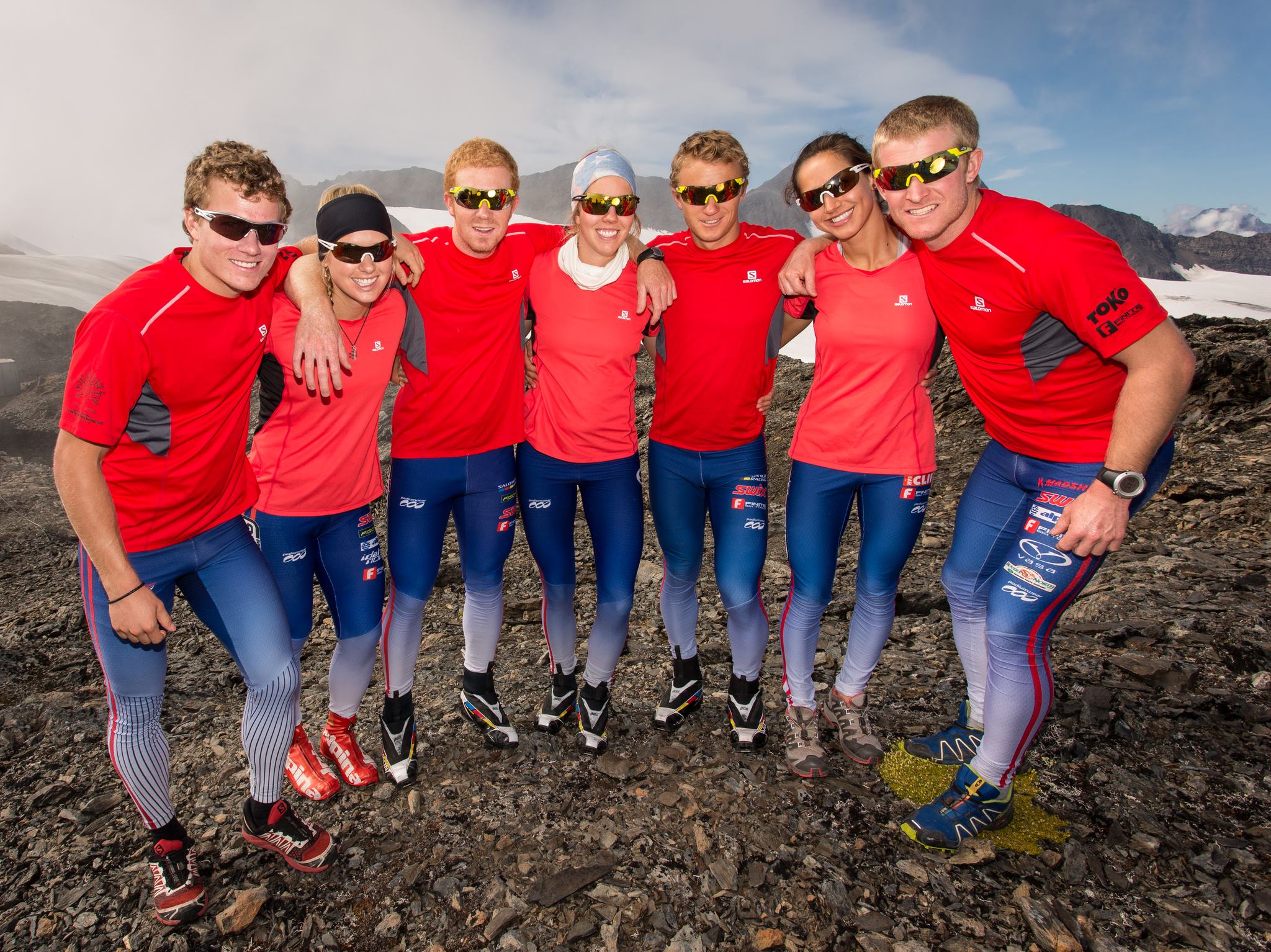
    Last season's Gold Team, with former skiers Sinnott (third from r) Chelsea Holmes (now at APU, second from r), and Rose Kemp (retired). (Photo: Facebook/SVSEF Gold Team) https://www.facebook.com/SVSEFXCGold
    Last season’s Gold Team, with former skiers Mikey Sinnott (retired, third from r) Chelsea Holmes (now at APU, second from r), and Rose Kemp (retired, second from l). (Photo: Facebook/SVSEF Gold Team)

    “He’s been saying for the last year I just didn’t have the same personality with skiing,” Sinnott said. “And I saw him recently and he thought I’d recovered into my old self. Rick’s super supportive … and they all just care so much. All my coaches just want what’s best for me.”

    Sinnott’s Favorite Moments:

    (as written in an email)

    “A few highlights for myself were the Dartmouth College National Championship, winning the Boulder Mountain Tour, my first European World Cup in Milan, and racing the Holmenkollen. Lots of memories, but those were special for a variety of reasons:I loved collegiate racing. It is the best domestic race series we have. Such comaraderie, and racing for something bigger than yourself. I loved how much of a team we were, and how meaningful it was to so many people to bring home the National Championship. Our school, our alums, the East Coast. I even remember heading straight to U23s while they were still tabulating the scores, and upon arrival getting a hearty cheer from Pat Casey. He was so proud to see a group of Americans, all under 23, be the top team.  It showed US skiing was on the rise, and we didn’t have to look up to the Euros anymore. It was a pretty cool feat, and an incredible group of people to be a part of. I think there were three or four future Olympians, and two future World Championship runners.
    Winning the Boulder Mountain Tour was special because it was my first real professional title, and it was in my home town, in front of family and friends.  Wow. Such a special moment to represent them. My home town is beyond supportive, and it feels great to show them what they are supporting.
    Of course skiing in Milan was all together unreal, and a wonderful new persepective on what could be achieved through skiing. I remember seeing Kikkan on the podium, and seeing her mobbed for autographs. I remember seeing lots of the U.S. team being mobbed for autographs. Riding the bus with all the world elites, joking with them (okay, Simi joked with them, I gawked a little), being in such a world center and to have it lined with fans of nordic skiing.  Wow. I thought it couldnt get any better… But oh did it.
    Finally, racing the Holmenkollen. I had a terrible race that day, and was well out the back from the get go. It was slushy and slow. I loved every minute of that suffer slog. The course was lined by thousands of fans who had camped out for days. They were chanting my name around every corner, before I was even in sight. There was such energy and appreciation and excitement, it was beyond contagious. They willed me onwards no matter how tired I became. I cannot express what that felt like, to be among the worst in the race, and still have this wall of humanity urging you and screaming for you. Wow.  Those Norwegians do it right.
    A lot of my best memories come from the people I met, and the people I shared my career with.  I could list a multitude more stories, but they mostly center around the people and how their interactions left an imprint on me. I stayed and raced for a week with a Norwegian racing team — so generous, so kind. Erik Stange took me for a ski tour outside Lillehammer that ended at a waffle house, only available via skiing. Last season, a friend came to watch me race in Davos and brought a huge poster that had personal remarks from a dozen or so close college friends encouraging, and cajoling me. It was great.”

    Looking back, Sinnott had a long list of career highlights: Dartmouth’s national championship, winning the 2008 BMT, his first European World Cup in Milan in 2012, and racing at Holmenkollen that same season.

    “I loved collegiate racing,” he explained. “It is the best domestic race series we have. Such camaraderie, and racing for something bigger than yourself. I loved how much of a team we were, and how meaningful it was to so many people to bring home the National Championship.

    “Winning the Boulder Mountain Tour was special because it was my first real professional title, and it was in my home town, in front of family and friends,” he added. “Such a special moment to represent them. My hometown is beyond supportive, and it feels great to show them what they are supporting.”

    And that’s why he planned to stick around town and help out while he plans his next move. Throughout the offseason, Sinnott has been working with U18 skiers and younger on the SVSEF Comp Team, shadowing them during workouts to push and motivate them a few times a week.

    “He’s getting ready to transition to the next phase of his life … [and] he’s taking this year to give back to our program,” Kapala said. “We’ve got this group of ten kick-ass U18 guys — think of that workout when they’re going out for this hour-and-a-half roll and Mike is embedded in that workout with them. … That’s huge.”

    Kapala said his program reserves some money for guest coaching, and while it’s not much, he knew Sinnott would do it for free.

    “I’ve been blessed with the coaching that I’ve had over the years … [with Kapala, Ruff Patterson in college, Travis Jones and Rodgers on the Gold Team],” Sinnott said. “I know that I don’t have some of those characteristics especially at a youth level … I don’t have the consistency day in and out required of a quality coach.”

    So he doesn’t necessarily envision himself as a full-time coach one day, but he’s happy to jump in as needed.

    In the meantime, he said he’ll be taking the next year to figure out his new career path and will continue to work with the Sun Valley Harvest Festival through the winter. He started the job in May as a means of keeping him mentally stimulated while training. When he stepped away from skiing in late May/early June, he began to call it his career.

    Sinnott spent the next several months focusing on the leadup to the festival and coaching on the side. He create a life plan beyond that, but he has a few ideas.

    “I thought I was going to map [it] out this summer —  that never happened,” he said. “I want to know exactly what I want to do before I start looking into grad school. Since I graduated, neuroscience has become a more popular field among the smarty pants of the world, and my brain has atrophied…”

    He has yet to find out what that field holds for him, but above all, Sinnott remembers enjoying school, the curriculum, “the knowledge, and the horizon they presented with some of the unknown,” he said.

    He has a Sun Valley mountain pass this winter, so he figured he’d take some downhill runs on powder days to sort it out. This month, he headed east for 10 days for a wedding in New Hampshire.

    “I’ll bring running shoes, but I don’t have to bring rollerskis, so that’s a plus,” he noted.

    And while he might travel a bit, and give races like the Birkie another try (at a more leisurely pace), he’ll continue to call Sun Valley his home.

    “I’ve traveled around and looked at various places and there’s nothing compared to here,” he said. “The Norwegian national team, they [came] here before the Olympics in Salt Lake and Vancouver, and they say this is the perfect training place.”

    And the team has been an integral part of his experiences.

    “It’s always been, the team I want to hang out with on the [domestic] circuit is Sun Valley,” he said. “They’re good people that I have fun with.”

    Leaving the Gold Team, which includes Miles Havlick, Matt Gelso, Ben Lustgarten, Mary Rose, Makayla Cappel, and Paige Schember, Sinnott said it’s in a good place.

    “[That’s] the best team in the country this year. They’re unbelievable,” he said. “There’s definitely times where I’ll see time trials and I’ll say, ‘Oh man, I wish I could be out there.’ If I wanted to be out there, I would be. It’s not like anyone told me no, I just don’t want to be out there anymore. It’s been really good to be more social and adventure with friends. I haven’t really second-guessed it.”

    Kapala said Sinnott could be the poster child of how to have a great life ski racing, which is why it’s so valuable having him around.

    “I’ve learned way more as a coach from Mike than Mike has learned from me,” he said. “I never got the sense that Mikey was just in it for results. Because of that, you get the kind of guy who’s perspective on the sport is really helpful and powerful and now he’s out there training with our juniors. … That’s another piece of us really getting somewhere.”

  • Caitlin Gregg on Her Big Push for Olympics #2, How She and Brian Managed It, and What’s Next

    Caitlin Gregg on Her Big Push for Olympics #2, How She and Brian Managed It, and What’s Next

    Caitlin Gregg (Team Gregg/Madshus) racing to a nearly four-minute victory in the 20 k freestyle mass start at U.S. Cross Country Championships on Jan. 8 at Soldier Hollow in Midway, Utah. (Photo: U.S. Ski Team/Sarah Brunson)
    Caitlin Gregg (Team Gregg/Madshus) racing to a nearly four-minute victory in the 20 k freestyle mass start at U.S. Cross Country Championships on Jan. 8 at Soldier Hollow in Midway, Utah. (Photo: U.S. Ski Team/Sarah Brunson)

    Editor’s Note: Part of a quote based on a conversation Caitlin Gregg had with the U.S. Ski Team, which originally ran in this article, has been omitted for the sake of clarity and objectiveness.

    The power couple of U.S. ski racing, Caitlin and Brian Gregg are somewhere in Europe with a rental car as they await their next move, which will be decided when the U.S. Nordic Ski Team officially announces its 2014 Olympic team on Wednesday.

    On Sunday, the husband and wife wrapped up the last of the World Cup races they earned as the early season U.S. SuperTour leaders — with Caitlin nearly qualifying in Saturday’s freestyle sprint then pulling out of Sunday’s 10-kilometer classic mass start in Szklarska Poręba, Poland. Brian was sick and did not race last weekend, but got one World Cup under his belt two weekends ago with a skate sprint in Nove Mesto, Czech Republic.

    “We have had a blast and we are looking forward to a little R and R!” Caitlin wrote in an email on Sunday. “I think I hit the point where the adrenaline and excitement of the past few weeks faded and the fatigue and nerves from travel and anticipating the Olympic Team selection set in! It is always a bummer to pull out if a race but there are times when it hits you like a pile of bricks and I know I have a lot of (hopefully big) races down the road to prepare for still this season!”

    Team Gregg celebrates Caitlin's national title in the 20 k freestyle mass start at 2014 U.S. nationals in Midway, Utah. Earlier in the day, Brian placed second to Sylvan Ellefson (SSCV/Team HomeGrown) in the men's 30 k freestyle mass start. (Photo: Caitlin Gregg/In the Arena)
    Team Gregg celebrates Caitlin’s national title in the 20 k freestyle mass start at 2014 U.S. nationals in Midway, Utah. Earlier in the day, Brian placed second to Sylvan Ellefson (SSCV/Team HomeGrown) in the men’s 30 k freestyle mass start. (Photo: Caitlin Gregg/In the Arena)

    For the better part of the last four years following her first Olympics in 2010, Caitlin has had one race on her mind: the 30-kilometer freestyle mass start at the 2014 Olympics in Sochi, Russia.

    The aspiration goes back to her college days at Northern Michigan University, when her coach Sten Fjeldheim told her the 30 k skate would be her forte.

    “A couple Birkies later, a couple more marathons under my belt, I can see that being pretty awesome,” said Gregg, a two-time winner of North America’s biggest ski marathon, the American Birkebeiner.

    In 2010, Gregg notched 30th in the 10 k skate for the best-distance result but an American woman since Nancy Fiddler placed 27th in the 15 k classic at the 1992 Games in Albertville, France. Fiddler went on to notch 29th in the 30 k skate at the same Olympics.

    Nearly 22 years later, the former national-team member (in 2007 and 2009) and one of the best distance skiers in the U.S. sat quietly in a corner of a small grocery store/eatery in Midway, Utah. Two days before one of her biggest races of the season at U.S. Cross Country Championships, she was fueling up after a morning workout at Soldier Hollow’s nordic trails.

    Fresh off an interview with Cosmopolitan Magazine a week or two before, Gregg, 33, looked like a sporty glamour girl in her natural setting — minus the makeup and blowout. A Minneapolis resident and half of Team Gregg (Brian being the other half), she wore a sparkly Loppet Nordic headband and hadn’t yet changed out of her Loppet Nordic race suit. The white, black and blue spandex and accompanying gear was relatively new to the Greggs since they pioneered their own elite team with the support of Loppet Nordic Racing this season.

    The following is from an interview with Gregg on Jan. 6, two days before she crushed her competition in the 20 k freestyle mass start, winning by an unprecedented margin at U.S nationals by nearly four minutes. A few hours later, she and Brian flew from Salt Lake City to Prague to prepare for their first World Cup races of the season in Nove Mesto three days later.


    FasterSkier: How are you feeling about your distance-skate racing?

    Caitlin Gregg: I’ve only done one skate distance race this year [before the U.S. nationals 20 k] that’s really counted for anything. It feels like I haven’t really had an opportunity to race, let alone where my true strengths lie, so I’m excited to see where I sit … on that spectrum of that next level of endurance combined with skating combined with altitude combined with big hills. I mean that’s kind of everything you’re looking for picking a team for that 30 k in Sochi.

    Brian and I have obviously talked about this and said, ‘You know, it really hasn’t been many distance skate races [this] calendar year, 12 months.’ If you look back on it, there was a true distance skate race, there was one in Minneapolis and both Brian and I both won that but it didn’t count because it was part of the Tour [de Twin Cities]. And last year, the way they scored this is going off the calendar year, but not the FIS scoring year. Last year was the total cumulative time that went to the FIS points not just your time for the day, which they’re now doing on the World Cup this year. It’s sort of weird that the criteria picks from previous years with different rules governing how the points are [allocated]. So that race was a great race and it was a win of the day, but not really slated as a win, which is tough when it’s your strength and you don’t get opportunities. So really besides that race, the Birkie is the only true race over a distance that is anywhere near the 30 k. It’s actually on the long end, but it’s the only one we’ve done. We tried to get some distance skate races at SuperTour Finals, but it just wasn’t in the cards. So just one skate race on the schedule, besides this one, before the team selection.

    So you know, it’s sort of like you’re up against some odds there. The hardest thing for sure, I mean I’m super psyched to be going to Europe, but the weirdest thing I’ve ever experienced is trying to make a team where you don’t really ever get to compare yourself to the team. People are being named and obviously they’re having great results, and you feel like, ‘Gosh that’s incredible. I haven’t even had a chance.’ I mean I’ve had a chance in other [races], but not in my so to speak, strengths, against the field that they can put in that event.

     “The weirdest thing I’ve ever experienced is trying to make a team where you don’t really ever get to compare yourself to the team.” — Caitlin Gregg

    FS: What’s it like knowing you have to be on the top of your game — and the results — in the U.S. to get to Europe?

    CG: It’s one of the more unusually psychological aspects of racing. I’ve never really had to think about this in the sense that you’re sort of torn. I mean, It’s phenomenal; I’ve said this from the get go that those girls are skiing incredibly well and if I’m not skiing anywhere near that level then I don’t deserve to be on the team. There’s no question about that, it shouldn’t be, ‘Oh, I went before and so therefore I should go again.’ Those girls are on another level, but I will say it’s very unique where you feel like, ‘OK, it’s probably the fittest I’ve ever been, I’m skiing the fastest I’ve ever been, I wish I had some measure of where I sit in that other group. And you can’t because of that separation of they’re racing in Europe and you’re here.

     “I’ve said this from the get go that those girls are skiing incredibly well and if I’m not skiing anywhere near that level then I don’t deserve to be on the team.”

    I was told the best option was to be the SuperTour leader, to get over there to do these World Cups. That was Plan B. After West Yellowstone, I skied so well there, I was like, ‘Just checking, one more time, I know there’s a World Cup coming up in five days but just wondering how people are feeling on the team, what the opportunities are?’ (laughs)

    This sort of fits in with Brian and I, our plan of the year, we’re just ready for anything, anything, any opportunity. … We’re just having a great time with great stories this year and we’re giving it our all. At some point that’s all I can control, just ski as fast as I can and you never want to be off the team, especially if you feel like you are skiing at your best and you’re in there, but at the same time it’s the most difficult decision to make in any sport, at any time, picking that team, it’s really tough. But I’m having a blast and doing it with Brian again, we’ve said this many, many times, it’s the coolest experience ever. It’s hilarious; we just sort of pack up our little house everywhere we go is like home. Compared to four years ago when I did this journey and so forth, it was really fun, it was really exciting and I knew people along the way, and there was a lot of congratulations but nothing compares to, even if you don’t make it, just the experiences that we’ve shared so far this year.

    “We’re just having a great time with great stories this year and we’re giving it our all. At some point that’s all I can control, just ski as fast as I can.”

    Someone was just asking me, ‘Are you happy?’ and I was like, ‘Oh my gosh, I can get second in a [U.S. nationals] sprint by a sliver, but yet the day was such a success because Brian won, our family was there, everything is just so positive right now for us in general.’ You sort of sense this, too, with the ski team and their kind of energies. You look back, we have great jobs [at the Jerry Gamble Boys and Girls Club in north Minneapolis] with the kids that we work with and our connections with the community in the Twin Cities area, and then our sponsors are psyched and we’re psyched with all of our equipment. Everything just has really good positive momentum. We’re sort of banking on this, anything is still possible.


    Team Gregg supporters at U.S. Cross Country Championships earlier this month at Soldier Hollow in Midway, Utah. (Photo: Caitlin Gregg/In the Arena)
    Team Gregg supporters at U.S. Cross Country Championships earlier this month at Soldier Hollow in Midway, Utah. (Photo: Caitlin Gregg/In the Arena)

    FS: You and Brian both got off to incredibly strong starts to take the SuperTour leader spots in two weekends of races. What was the secret?

    CG: For sure, there’s some calculated decisions in the last three years that I’ve made between the Games that weren’t necessarily the same for Brian, but it seems like we kind of had the trajectory and everything kind of aligned to this year. For me, it was maybe taking a step back, doing more, like one summer right after the Olympics, I just had to work a ton, I had a lot of hours of work to do and a lot of debt to pay off so I just couldn’t commit to skiing like I had in the previous year. Another year I went back to school, just different things that I was doing in the offseason.

    The intensity was there, but I couldn’t commit 100 percent. It’s hard to maintain that 100 percent, 100 percent, 100 percent so many years in a row and not feel a burnout or not feel an overreach, so psychologically and also in my own career as an athlete and development beyond being an athlete and what I wanted to do, going back to school for a semester or two and doing other things and taking on different roles in the community, purchasing a house, getting married [in 2011], all those other things were super important to me and I said, ‘I’m gonna take a step back, focus on racing domestically and making money and then really launch into this Olympic year with all I’ve got.’ With that came this benefit of, people always talk about gearing up for the Olympic year and how do you really come on hot? It’s planned, but sometimes it’s those things where unfortunately to make it to that Olympic year, to spend the money, to go to Eagle Glacier, or to make sure we can afford to save in Midway, or what we need to do, it’s going to take three years of kind of foresight and say this is what we got to get to line up.

     “I said, ‘I’m gonna take a step back, focus on racing domestically and making money and then really launch into this Olympic year with all I’ve got.”

    I think we’ve sort of nailed it in the sense that we were able to make money, we were able to represent our companies, we purposely didn’t reach out to the community in those years and have big fundraisers because we knew there’s only so many times you can do that and expect people to get behind you and rally for you. So we said we’ll kind of keep a low profile. We’re involved with the community, but we didn’t want any big to-dos. We’ve done this Fundly campaign this year which has gone beyond what we thought it even would [raising nearly $11,500 dollars], and we’ve gotten even more support from our sponsors and equipment than we ever thought we could. I think that was all a really cool, calculated approach that sort of fell into place. Really we’ve known for a long time that this year was going to be the big push, and we wanted to put everything 100 percent into it. We kind of sat back and we’re like yeah, we were able to do that and that’s awesome. We’ve stayed healthy and excited and kind of gunning for it and I think that’s made a big difference on the results sheet for sure.


    FS: What kind of pressure do you feel then?

    CG: Honestly, we have no pressure. I love pressure, I love getting down to it. I love circling the day on the calendar. I love being like, ‘Oh this is big, this is for all the marbles! This is the one!’ And Brian, he’s sort of like, ‘I kind of get into it,’ but anyway, we don’t feel the same sense of pressure. Nobody said to us, ‘You guys are gonna make it, you guys are gonna make it if you don’t screw up.’ It’s like, ‘If everything goes really well, you guys might have a chance of making it.’ That’s sort of been the other side of it. We’re sort of on the good side of the pressure where we can just take advantage of the opportunity rather than be like, man you just lost it for yourself. There’s two sides of that pressure spectrum and we’re on the good side. It’s maybe one of the only perks of not being on the U.S. Ski Team (laughs). In an Olympic year, you don’t have that same sort of performance pressure. Everything is sort of icing on the cake.


    FS: Looking back your 2010 Olympic experience, what are your thoughts four years later?

    Brian Gregg greeting his fiance Caitlin Compton as she wins the Birkie. (Photo: David Owen)
    Caitlin (formerly Compton) Gregg winning her first American Birkebeiner in 2011 as her then-fiance Brian Gregg greets her at the finish. (Photo: David Owen)

    CH: Still to this day, one of the greatest things though is that anticipation of not knowing that you made it. Even in that year, for the most part people were like, especially in the beginning of the season, ‘Oh she is not gonna make it, she is skiing awful, it’s not happenin’, not getting results,’ and I was like, ‘Well, I don’t know, I’ll just keep going along here, keep believin’.’ And so when it happens — and I wouldn’t say it’s not expected, but it’s not a given — you think about it and you know there’s some athletes out there who have kind of been whispered to or said, ‘You know, you’re probably gonna make the team,’ or ‘Yeah, you’re on the team if you don’t screw up,’ or ‘Yeah you’re on the team, no question. We just have to wait to announce it.’ There’s nothing better in my opinion, if you think of some of coolest phone calls you can get, getting a phone call that’s like, ‘Hey, you made it, congrats.’

    I remember when [former U.S. Ski Team Head Coach] Pete Vordenberg called me before 2010, man, I was just like, I mean that’s the coolest thing! You have no idea what he’s gonna say, he could be like, ‘Hey, way to go, you’re skiing well, not gonna happen.’ It could go either way, but getting that phone call, is by far it’s gonna stick in my mind for the rest of my life. That was the coolest thing, just not knowing and finding out that.


    FS: Why did you decide to go for a second Olympics in 2014?

    CG: For that year and where we were as a nation at that point, I was like, this is pretty awesome. I love skiing and I love everything about it. With the 30 k skate being where my focus has shifted, I’m excited about that event more than anything else. The relays, the team is doing great, everyone is doing so well and that’s really been what’s spurring me on to keep training and keep going for it this year, four years later … that idea that, man, that 30 k could be awesome. Sten, my coach, from college always said the 30 k skate would be my forte. A couple Birkies later, a couple more marathons under my belt, I can see that being pretty awesome.

    Obviously seeing the women do so well, that’s a huge motivator and inspiring and you’re like, gosh it’s so great. I did go back and forth and say, especially when I was taking classes, maybe I should just move on or maybe it’s time. It’s always in the back of your mind, and I’m one of the oldest in on the race board, but we’re making it work in the sense that we were able to get married, buy a house, have great jobs that we feel like we’re getting a lot back from. We feel like we’re really growing in so many ways simultaneously that the ski-racing side of it, it really doesn’t feel like we’re sacrificing anything or trying to draw anything out.

    I can’t think of a better life. Brian has said this and I will second this, if we had a million dollars — which we definitely don’t — if we had a million dollars, we would be doing the exact same thing. We’d be ski racing and we’d be working with kids. We’d be helping underprivileged kids, getting them excited. It doesn’t matter where they come from, but really enjoy inspiring and mentoring that next generation and I think that’s something we’ll be doing forever. And the whole skiing side of it — I was just talking to [University of Alaska-Fairbanks Head Coach] Scott Jerome about some of the things we’ve learned from working with the kids in the neighborhood where we live and what they go through and what their life is like. You stop and you think about our lives as skiers and we’re like, ‘Oh my gosh, what perspective that brings.’ You suddenly realize that a bad wax day is the least concern you ever have. I think that’s really been huge thing in the last four years for me, too, the things that you thought were such a big deal, and this all comes from maturity and just having more experiences in life, but man, I can’t tell you how many times Brian and I have left work in the last year and it could be dark, it could be 8 o’clock at night, we’re tired, it could be raining, we’re super hungry, and it’s like, ‘Man, those kids just ran all these laps for us and after hearing all those stories, we have no excuse not to get out and train right now. No excuse not to be so grateful and so ecstatic about everything we have going for us and what opportunities that lie ahead.’

    “I can’t think of a better life. If we had a million dollars — which we definitely don’t — if we had a million dollars, we would be doing the exact same thing. We’d be ski racing and we’d be working with kids.”


    FS: Can you explain more about your jobs in the Twin Cities? 

    Caitlin Gregg at her "other" job in the Twin Cities, where she works at the Boys & Girls Club in north Minneapolis with her husband, Brian. (Photo: Caitlin Gregg/In the Arena) http://in-the-arena-ccompton.blogspot.com/search?updated-max=2013-11-03T19:20:00-08:00&max-results=7
    Caitlin Gregg at her “other” job in the Twin Cities, where she works at the Boys & Girls Club in north Minneapolis with her husband, Brian. (Photo: Caitlin Gregg/In the Arena)

    CG: We are so fortunate. We both work for an organization called In the Arena, there’s a couple athletes on the circuit — Sylvan Ellefson, Torin Koos, and numerous others that have been involved with this, Laura Valaas, Nicole De Yong — it’s been an incredible, incredible opportunity for us.

    It’s something that we’ve been involved with now for five or six years. It’s really incredible because it’s a program that’s nationwide. It’s a nonprofit for all endurance sports but typically underfunded endurance sports, so mountain biking, rowing, triathlon, running, cross-country skiing, sports that are not funded as you would imagine compared to baseball, basketball, golf. The idea is that you’re taking athletes that are college graduates who are on the cusp or on track to qualify for either World Championships, World Cup or Olympic Games, and it takes those athletes and their community-service proposals. You as the athlete propose to the organization what type of community work you’re going to be involved in and what the scope of that work entails, in terms of who are you helping, what is the demographics of the area, what is your plan, what are you going to specifically do with those youths involved.

    Through generous donations and grants that this organization receives, whether it’s companies, individuals — I know for a while one of my grants came from a Minneapolis-based company, General Mills, for a year — it’s really cool to see that their specific grant wanted to target health and wellness in north Minneapolis so it was a nice circle. They could support In the Arena, and In the Arena could support me, I could be a volunteer for these kids so that’s been really the backbone of our ability to continue ski racing.

    We’re really proud of the fact that we can be self sufficient. Brian says that every year we can afford to keep ski racing in the sense that we aren’t losing money and we aren’t living off our parents, we’re not being a drain to anything, is really what it’s about for us. In the Arena has been that backbone for us to continue racing and secure our living expenses when we’re not racing during the season. It pays for, whether we’re renting at the time, now we own a house, that or utilities or any of those incidentals that we have. On the other side of it, it’s awesome because we get to work with these kids who come from all kinds of different backgrounds, who come from lives that I think would probably completely turn most of the individuals involved with cross-country skiing in the U.S.’s world. This is the real deal and this is pretty intense for these kids. And again, it gives us the opportunity to show them that just because they’re living in this particular world of what they know, that there are other opportunities out there.

    Basically, what Brian and I have really focused on with our world in north Minneapolis, is we bought a house there for $10,000 dollars because that’s what we could afford and that’s what was available there. We live in the community where we work with these kids, so not only do we go to the Boys & Girls Club or Harrison Park, but they see us out training on their streets. That’s a huge connection that can’t be created from an artificial sense. Having them see us actually out physically training, walking our dog, mowing our lawn, we’re part of their community. I think that seeing that … in the sense that we are an active, energetic couple that are working together and working well, which they don’t often see, that idea of husband and wife still together, and that we are excited for them. A lot of their attention or feedback comes from negative reinforcement. If they act up, if they’re misbehaving, they instantly get what they’re looking for, which is people pay attention to them, people take notice. So we’re trying to turn that upside down and say this is what you really shine with and this is something that you’re good at. They’re all phenomenal athletes and we took on running this year and it blows my mind how good they are and suddenly they’re getting this positive reinforcement. It’s amazing what it does, everyone comes up to us and says, ‘Our kids are behaving better, they’re motivated, they’re healthier, they’re excited.’ It’s goal setting, it’s everything. It’s so amazing to have that be a part of our ski career.


    FS: It is year round?

    CG: It is year round. Brian and I used to go to different schools in the areas we were staying, we made big effort to do that throughout the season, and what we found is that we were getting really sick. We spent a lot of the fall 2012 in the Methow Valley so we were away from our project and we were away all winter, so we had to put in a big push over the spring and summer. It’s quite a bit of hours, actually. We propose how many hours we can work, and we’re working more than people would probably realize. We’re really grateful; it’s an awesome opportunity, but it is something that we have to be on top of. It’s not just every couple of weeks go in and say, ‘Hey, what’s up kids!’ and take a couple photos … We really have to do the consistent day-after-day connection with the kids and year after year, it sort of builds on itself. We have to explain to the kids when we leave, ‘This is where we’re going, we’ll be back, don’t worry you’ll see us again.’

    It’s not full-full time, it’s not quite 40 hours a week but it’s quite a bit in the spring and summer that we really need to put in. We have to figure that out with our training schedule … if we’re doing a training camp somewhere. Last year we finished up the season in Truckee, Brian finished his last race, showered and we flew to northern Michigan, because I was inducted into my collegiate hall of fame there, and then we drove right back home and the next day we went to work.


    FS: So no spring or summer vacations?

    CG: We have not taken a vacation ever. I’ve gone and visited my family in New York City or California because obviously we don’t get to do that often either, but no true vacations. We’re kind of joking that France, we’re flying into Paris [before Prague], and we haven’t even taken a honeymoon yet. It’s kind of like our honeymoon.


    FS: What are your plans for after this season?

    CG: I know for a fact Brian wants to keep racing. I know he has no question in his mind, he’s having a great time, it’s sustainable, he feels like he’s progressing in so many ways and I’ve kind of gone back and forth. I’d love to keep racing. I think it would be awesome, and there’s obviously a whole slew of different races you can do. There’s all of these local citizens’ races and also marathon races in the U.S. that we think can really garner some more excitement and attention on a higher [level]. I mean the Birkie’s a big deal and all the other marathons are big deal, but even more so. And then there’s marathon races over in Europe, which we think would be just a blast. You get to travel the world racing in these long-distance, some of them are classic so I’d have to work on that, but skate races. That couldn’t be more fun. We totally want to have kids someday, and we joke all the time that we’re pretty creative, when it comes to living. We have a $10,000-dollar house and a free hut that we got off of a mountain in Washington … You can basically make anything work if you’re willing to bend your expectations, and have a good perspective of it. We’re staying at a Craigslist condo [in Midway] that’s kind of funky, but it’s super cheap and we’re like, ‘It’s perfect, it’s fine, it rocks.’ That’s kind of our outlook and so we’re willing to keep skiing in that realm.

    “There’s marathon races over in Europe, which we think would be just a blast. You get to travel the world racing in these long-distance, some of them are classic so I’d have to work on that, but skate races.”

    The more I work with these kids and I see sort of their passion and how excited they are, the more I realize that, gosh we really do know a lot about this sport and a lot about, especially Brian, the industry, training, racing, waxing, everything is just becoming more and more knowledge for us. The ideas of coaching at some point are definitely entering our minds. We’ve dabbled back and forth, we both have degrees in totally separate areas [Brian in business] but you kind of get to a point that’s like, this is pretty fun, and working with these kids and seeing that next generation get excited, this is more speaking now with the Loppet kids and other kids that we have in programs like CXC, that suddenly spurs this part of you. You’re kind of like, ‘I could get into this.’ I never would’ve thought that would be me. I remember in college saying, ‘Sten, I don’t want anything to do with coaching ever. I want to be done with my skiing and move on,’ and yeah, it totally changes after how many years I’ve been doing it. We’re definitely in skiing for a long time.

    “I remember in college saying, ‘Sten, I don’t want anything to do with coaching ever. I want to be done with my skiing and move on,’ and yeah, it totally changes after how many years I’ve been doing it.”


    FS: What about after your World Cup races — will you train with the U.S. Ski Team at its pre-Olympic camp in Seiser Alm, Italy?

    CG: We were told to get a ticket home and if we need to make changes, we’ll just change that ticket. Basically we said, ‘If we make the team can we train and race? and they’re like, ‘Yeah. If you don’t, no’ (laughs). We understand from the perspective that their athletes are there and focusing and they want to not have extra bodies that they have to babysit in the pre-camp or Toblach.

    That’s the one hard thing when you take years off you always get those phone calls that, ‘You’re on USADA [US Anti-Doping Agency], but seeing as how you’re not fast and not on the U.S. Ski Team, you don’t need to be on USADA anymore.’ … I don’t get all the invitations to the training camps and the girls training camp; they’ve invited me year’s past, but I couldn’t afford to go … so then you slowly don’t get invited to those camps anymore. Finally this year I didn’t get the Olympic registration form back in August. October came around and Brian’s like, ‘You’re skiing well, probably should register for those Olympics because if you don’t, you can’t go.’ It had to be in by the next day or something so I called up [U.S. Nordic Program Manager] Joey [Caterinichio] and I got that done. You have to be on your stuff. I got on USADA right then. Test me all you want.

    The best part, too, is Brian’s family coming on the road with us. It’s hilarious. They’re pretty awesome in-laws. I lucked out. My husband’s sweet, my in-laws are even sweeter.

  • Bender Rallies to Second National Title, Wins Skate Sprint at SoHo

    Bender Rallies to Second National Title, Wins Skate Sprint at SoHo

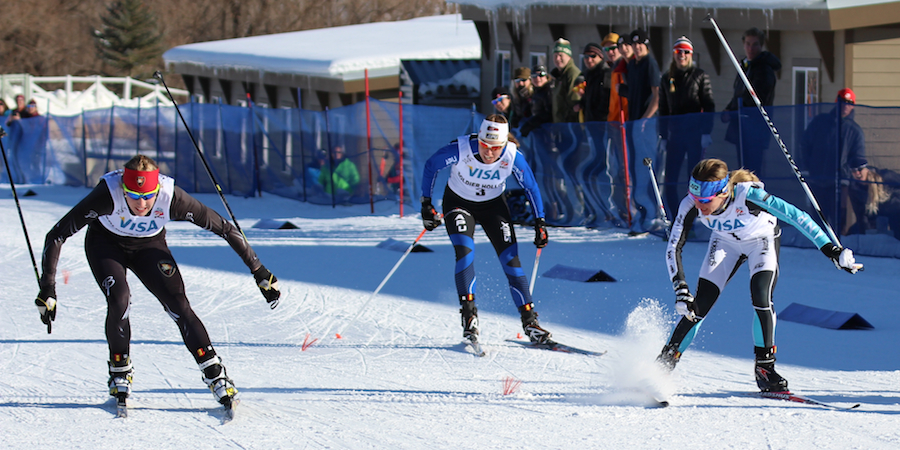
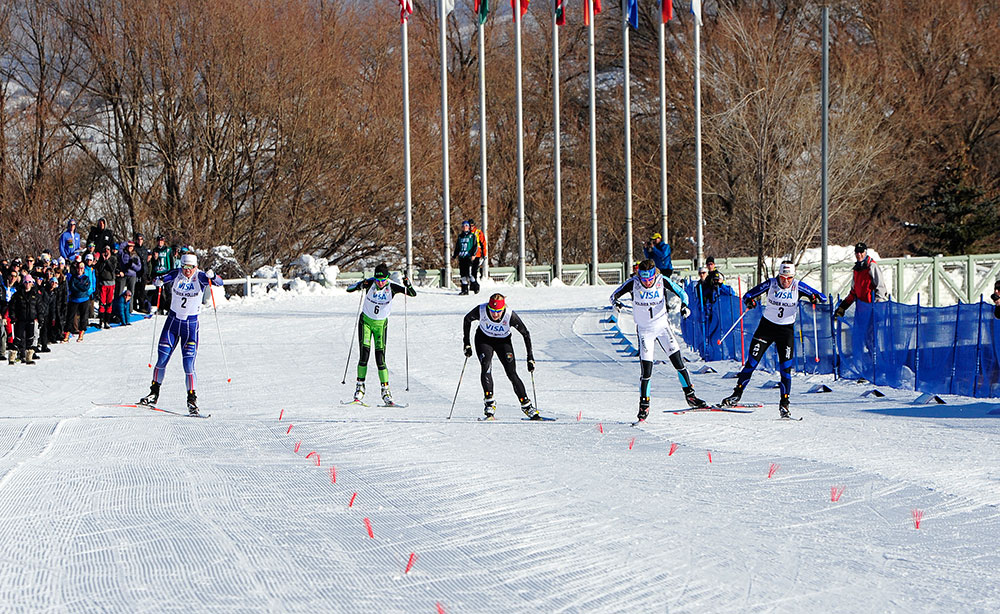
    Jennie Bender of the Bridger Ski Foundation (l) edges Caitlin Gregg (r) of Team Gregg/Madshus for the skate-sprint victory at U.S. Cross Country Championships on Sunday at Soldier Hollow in Midway, Utah. APU's Rosie Brennan (c) took third. (Photo: Tom Scrimgeour)
    Jennie Bender of the Bridger Ski Foundation (l) edges Caitlin Gregg (r) of Team Gregg/Madshus for the skate-sprint victory at U.S. Cross Country Championships on Sunday at Soldier Hollow in Midway, Utah. APU’s Rosie Brennan (c) took third. (Photo: Tom Scrimgeour)

    FasterSkier’s coverage of the 2014 U.S. Cross Country Championships is brought to you through the generous support of The Memory Clinic in Bennington, Vt.

    MIDWAY, Utah — Jennie Bender was this close to being a non-factor in the women’s 1.5-kilometer freestyle sprint at U.S. Cross Country Championships on Sunday at Soldier Hollow. A decision to have back surgery in May could have derailed her ski-racing career indeterminably, and at 25, that would’ve been a tough pill to swallow.

    Newly with the Bridger Ski Foundation in Bozeman, Mont., she instead opted for physical therapy for the herniated disc. Eight months later and seven days before her birthday, Bender was sprinting up and down Hermod’s Hill at Soldier Hollow on Sunday like nothing was or had ever been wrong — even as she continued to undergo regular treatment for her back.

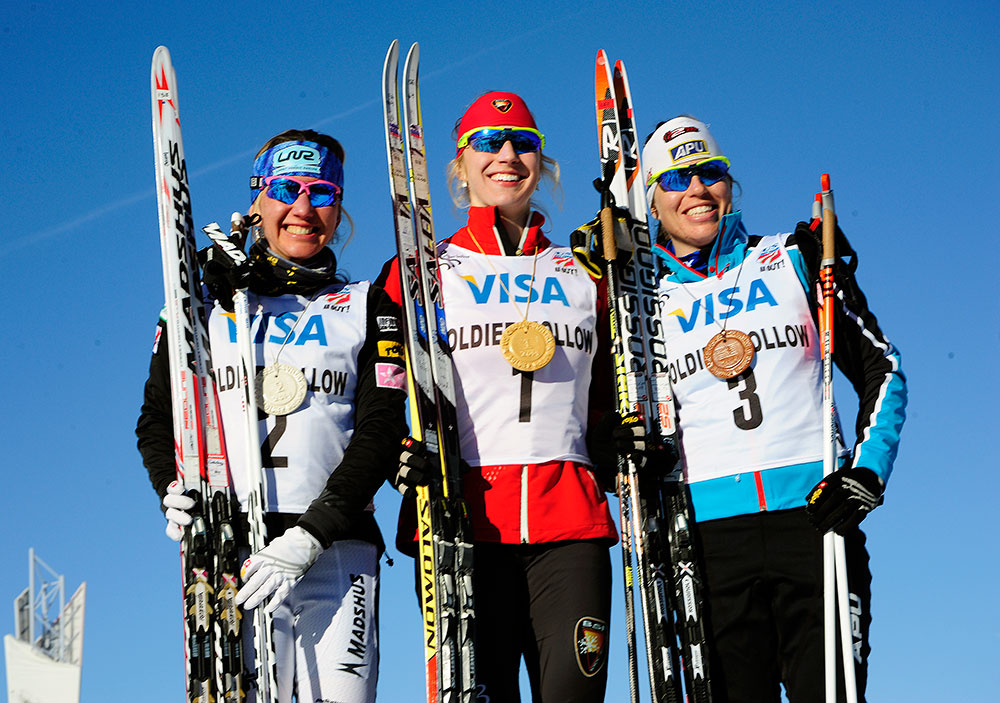
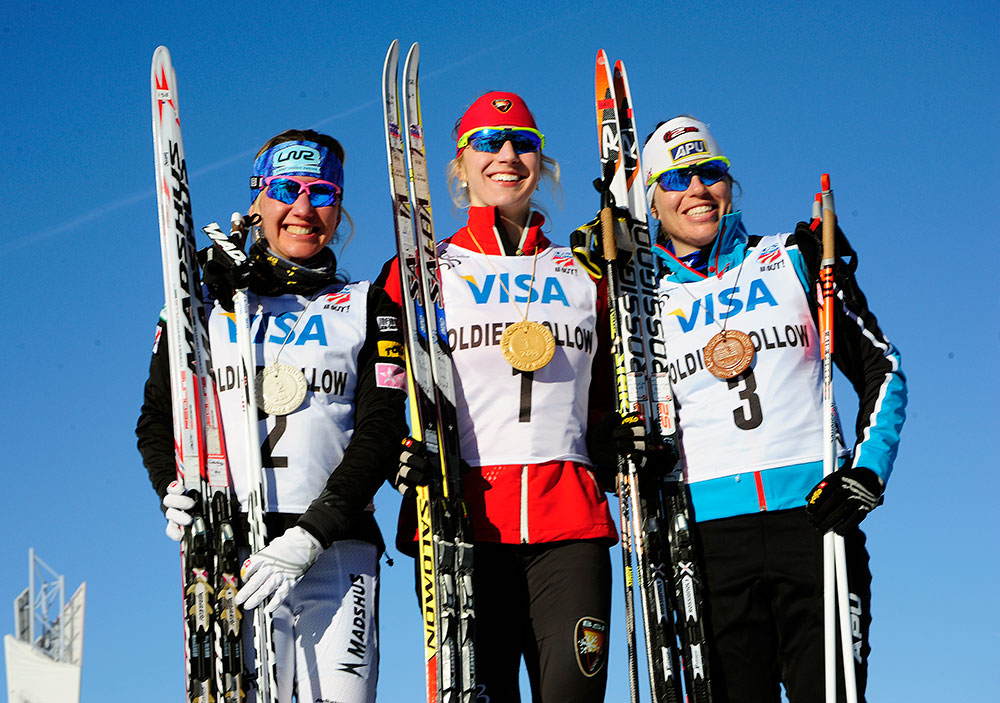
    The women's 1.5 k freestyle sprint podium, with winning Jennie Bender (c) of the Bridger Ski Foundation, Caitlin Gregg (l) of Team Gregg/Madshus in second, and Rosie Brennan (APU) in third. (Photo: Tom Kelly/USSA)
    The women’s 1.5 k freestyle sprint podium, with winning Jennie Bender (c) of the Bridger Ski Foundation, Caitlin Gregg (l) of Team Gregg/Madshus in second, and Rosie Brennan (APU) in third. (Photo: Tom Kelly/USSA)

    A year ago at U.S. nationals, she won her first national title in the classic sprint. Classic skiing was tougher on her body this season, so she put her hopes in Sunday’s skate sprint a day after placing 20th in the 10-kilometer classic.

    A finishing-straight comeback, from fifth with 200 meters to go, and last-ditch lunge gave Bender the victory she had been looking for as she edged Caitlin Gregg (Team Gregg/Madshus) in a photo finish for first.

    Alaska Pacific University (APU) took third and fourth with Rosie Brennan and Kate Fitzgerald, respectively. Rose Kemp (Sun Valley Ski Education Foundation) was fifth for a personal best, and Caitlin Patterson (Craftsbury Green Racing Project) rounded out the A-final in sixth.

    “I was really hoping to get on the podium, but I guess with the past two years of ups and downs I was never really sure what would happen here,” Bender said, after coping with mono and lyme disease simultaneously two summers ago.

    “Sprints are kind of like war,” she added. “You have your own personal battle with the qualifier and then the hopefully next three heats are anything goes, it’s tactics, it’s saving energy and making sure you never truly ask yourself how you feel because you don’t want to know the answer.

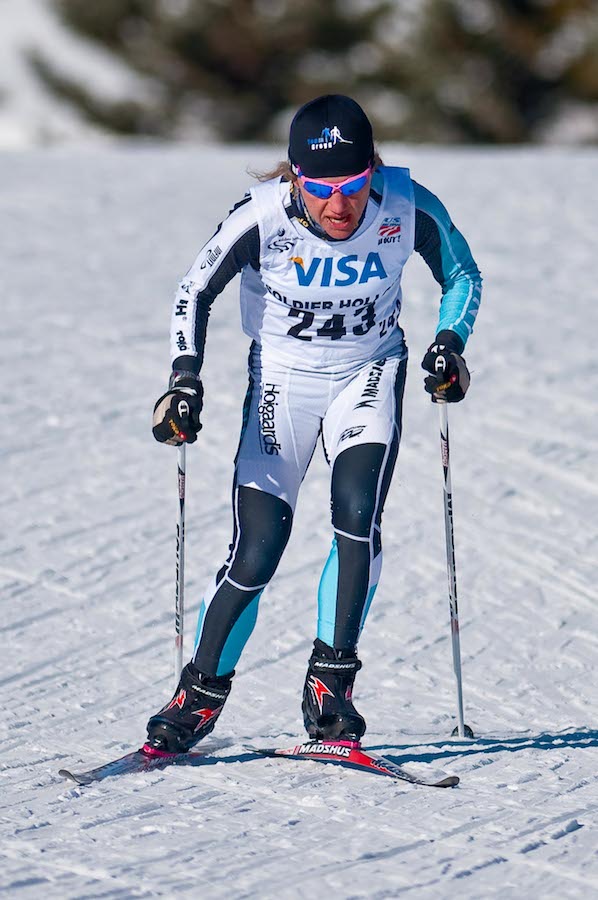
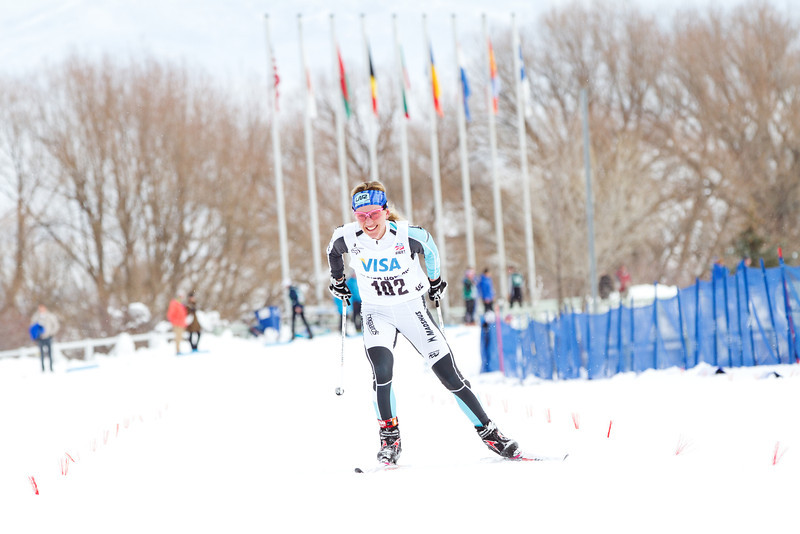
    Caitlin Gregg (Team Gregg/Madshus) on her way to winning the women's 1.5 k freestyle sprint qualifier by more than 4 seconds. (Photo: http://bertboyer.zenfolio.com) All proceeds from photo sales will be directly donated to NNF.
    Caitlin Gregg (Team Gregg/Madshus) on her way to winning the women’s 1.5 k freestyle sprint qualifier by more than 4 seconds. (Photo: bertboyer.zenfolio.com) All proceeds from photo sales will be directly donated to NNF.

    The day started off with Gregg, Bender’s former Central Cross Country (CXC) teammate, sending a message in the qualifying round. Gregg beat nearly 130 women with a time of 3:09.97 on a sprint course that deviated from the traditional under-the-bridge-and-around-the-horseshoe loop.

    Instead, racers shot out of the start and immediately curved around the timing building, built for the 2002 Olympic Games, before heading up the infamous Hermod’s Hill. They didn’t go all the way to the top, turning left and making their way down the less-intimidating parts of Whale’s Tail before cornering sharply, skiing over a bridge and back into the stadium.

    Second in Saturday’s 10 k, Gregg attacked and accelerated at all the right times to win the qualifier by 4.34 seconds over Rose Kemp, a recent University of Utah graduate now with the Sun Valley Ski Education Foundation.

    After crashing out of contention during her first of two times down Whale’s Tail on Saturday, Kemp rose to the second-fastest qualifying time on Sunday, 1.92 seconds ahead of Brennan in third. Fitzgerald followed another 2.18 seconds back in fourth (+8.44) and just one-hundredth of a second behind her, Bender qualified fifth. Patterson was another second back in sixth (+9.51).

    From there, Gregg, Fitzgerald, Patterson, Kemp, and Brennan all won their quarterfinals, but not without a little excitement in Gregg’s first heat. Before the first turn a couple hundred meters out of the start, Gregg tangled with APU’s Sarah Cresap, fell, and came into Hermod’s at least five-seconds behind the pack.

    “I don’t think it was anyone’s fault; it was just tight getting into position,” Gregg said. “So I got down and I was like, ‘Oh, wow, I’m in last place.’ ”

    Fortunately, her poles were in tact. “I’m glad I had two poles for the rest of that,” Gregg said.

    Moments later, Gregg picked off the five other women in her quarterfinal by the top of Hermod’s, then maintained her breakaway on the descent.

    “My skis, in every heat, they were just so fast,” she said. “It almost caught me off guard. I kind of was like, ‘All right, I’m out of this. Maybe this day isn’t going to go so well,’ and then next thing I know I was in first and I was like, ‘Well I guess I’m right back here.’ ”

    Gregg won the heat ahead of Erika Flowers (Stratton Mountain School T2 Team) and Marion Woods (University of Vermont), who placed second and third, respectively.

    Kate Fitzgerald leading her quarterfinal in the women's 1.5 k skate sprint at U.S. nationals on Sunday at Soldier Hollow. (Photo: http://bertboyer.zenfolio.com) All proceeds from photo sales will be directly donated to NNF.
    APU’s Kate Fitzgerald (l) leading her quarterfinal in the women’s 1.5 k skate sprint at U.S. nationals on Sunday at Soldier Hollow. (Photo: bertboyer.zenfolio.com) All proceeds from photo sales will be directly donated to NNF.

    Fitzgerald got a lead on the downhill to top two other UVM skiers, Linda Danvind Malm and Stephanie Kirk, who ended up second and third in the quarterfinal.

    A UVM grad, Patterson held off Bender in the third quarterfinal, with the two advancing in first and second. Kemp led Saturday’s champion, Becca Rorabaugh (APU), to the finish in the fourth quarterfinal, and Brennan cruised to a victory in the fifth quarterfinal ahead of Nichole Bathe (University of Alaska-Fairbanks).

    Gregg decided to lead her semifinal, but realized on the hill that it wasn’t easy to string out the group there. Running out of steam into the final straight, Bender came from behind to overtake Gregg before the finish, and both advanced to the A-final along with Fitzgerald in third. Flowers placed fourth, Danvind-Malm was fifth and Kirk finished sixth to move onto the B-final.

    Brennan held off Kemp and Patterson to win the second semifinal, leading them and APU’s Becca Rorabaugh, Craftsbury’s Liz Guiney and Bathe, respectively, from start to finish.

    Rorabaugh went on to win the B-final for seventh overall, Danvind-Malm placed eighth, Guiney was ninth, Flowers 10th, Bathe 11th, and Kirk 12th.

    “Sprints are kind of like war. … It’s tactics, it’s saving energy and making sure you never truly ask yourself how you feel because you don’t want to know the answer.” — Jennie Bender

    Feeling good throughout her heats, Kemp led out the A-final toward and up Hermod’s with Brennan right behind.

    “I felt like I had a lot of good energy going into each heat,” Kemp said. “I kind of just ended up going; that’s how it panned out each heat, but I wanted to ski as well as I could, and that hill was really fun.”

    Gregg initially tried to go off the front from the start, but quickly realized that everyone else was trying to do the same.

    “I couldn’t quite get to the front so I changed my tactics,” she said. “I kind of sat and waited and got to the top of the hill and again on the downhill my skis were just freakin’ fast.”

    Leading Kemp, Brennan, Fitzgerald and Bender, in that order, over the bridge into the finish, Gregg said she couldn’t hear anyone around her. She thought she had it, then Bender suddenly outlunged her at the line.

    Bender had been the queen of sitting back throughout the final, reasoning that she didn’t have to lead up the hill for fear of getting dropped. Instead she put herself in third or fourth, but coming around the final turn before the bridge, she said she nearly got boxed out.

    The women's A-final heads down the last hundred meters to the finish. (Photo: Tom Kelly/USSA)
    The women’s A-final heads down the last hundred meters to the finish. (Photo: Tom Kelly/USSA)

    “I was like, ‘Oh no, this cannot happen,’ ” she said. “Coming right on the crest of the hill I was just waiting, like, ‘I’m looking for my spot, looking for my spot … I’m either gonna bust through somewhere or try to go way on the outside if I have to.’ But a little spot just happened to open up and I gunned it.”

    “I learned a good lesson today,” Gregg said. “She was just charging hard, and it was pretty impressive.”

    A two-time runner-up in the last two days of nationals, Gregg said she was pleased with the results, especially Saturday’s 10 k classic.

    “I think it’s solid and it bodes well,” she said. “Feeling good about my distance skiing, obviously skate skiing, love, and my qualifier today was super evident of that.”

    Brennan thought she could’ve played the final better as well. After she followed Kemp down Whale’s Tail with a slight gap up front, Gregg and Bender caught them by the bottom.

    “I don’t have much finishing speed so I kind of wish I tried to go a little harder over the top of the hill to get more distance,” Brennan said. “But it was OK; I held my own.

    “Any time I can make the podium here it’s great because I have so many friends and family that came to watch,” the Park City native added. “My mom times here so the whole timing crew’s always cheering for me so I always feel like I let them down if I don’t do something good here.”
    Expectations were iffy as Brennan hadn’t raced sprint heats this season since she spent most of the beginning of it on the World Cup. On Saturday, she was sixth in the 10 k after winning the skate version of the distance event at nationals last year.

    “It made me more nervous to race here because I wasn’t sure what my shape actually was,” she said. “[Saturday] I had just a terrible day. I was struggling with my skis and then I kind of blew up a bit on top of that … then you start second guessing yourself. It was really nice to come out and have a sprint race because anything’s possible.”

    The second BSF skier to top the podium after Torin Koos won the men’s final right before, Bender had similar feelings about the sprint.

    “I’m kind of hoping for more good news in the classic sprint,” she said. “In general, a win at nationals is a big confidence booster, and after wading through a lot of sh*t, it’s kind of like a daisy that you find that helps the whole rest of the season.”

    Results

  • U.S. Nationals: Men’s Skate Sprint Qualifier Photos

    U.S. Nationals: Men’s Skate Sprint Qualifier Photos

    MIDWAY, Utah — Photos of some of the top finishers in the U.S. Cross Country Championships men’s 1.5-kilometer freestyle sprint on Sunday. Dakota Blackhorse-von Jess of the Bend Endurance Academy won it by nearly two seconds in 2:41.37 to advance to the heats, which start at 1 p.m. MST. Live results


  • Rorabaugh Rocks Women’s 10 k Classic for First National Title

    Rorabaugh Rocks Women’s 10 k Classic for First National Title

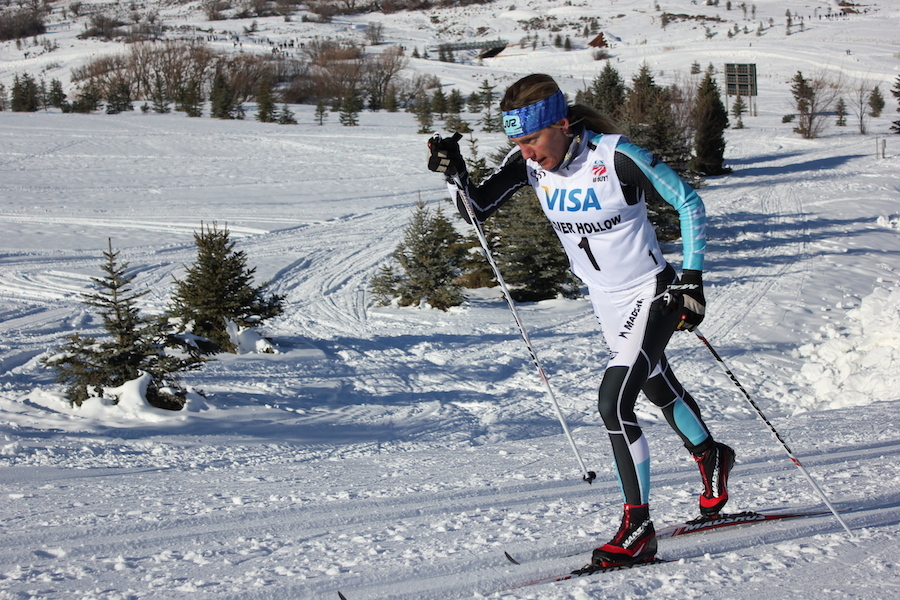
    Alaska Pacific University's Becca Rorabaugh (l) takes on Dartmouth's Anne Hart (r) the first of two times up Hermod's Hill on a challenging Olympic course at 2014 U.S. Cross Country Championships. Rorabaugh won the 10 k classic individual start on Saturday in Midway, Utah, by 14 seconds.
    Alaska Pacific University’s Becca Rorabaugh (l) takes on Dartmouth’s Anne Hart (r) the first of two times up Hermod’s Hill on a challenging Olympic course at 2014 U.S. Cross Country Championships. Rorabaugh won the 10 k classic individual start on Saturday in Midway, Utah, by 14 seconds.

    FasterSkier’s coverage of the 2014 U.S. Cross Country Championships is brought to you through the generous support of The Memory Clinic in Bennington, Vt.

    MIDWAY, Utah — The seventh starter of 152 women in Saturday’s 10-kilometer classic individual start, Becca Rorabaugh had a few things to think about in the first race of U.S. Cross Country Championships.

    Becca Rorabaugh (APU) racing to a national title in the 10 k classic individual start on Sunday at Soldier Hollow in Midway, Utah. (Photo: Bert Boyer/http://bertboyer.zenfolio.com/) All proceeds from photo sales will be directly donated to NNF.
    Becca Rorabaugh (APU) racing to a national title in the 10 k classic individual start on Sunday at Soldier Hollow in Midway, Utah. (Photo: bertboyer.zenfolio.com) All proceeds from photo sales will be directly donated to NNF.

    One, try to catch the seven A-seeds in front of her, and two, stay well ahead of the 13 other top-ranked skiers behind her.

    But above all, don’t bonk out there. Racing at 5,500 to 5,900 feet above sea level is tough. Add two laps around a Soldier Hollow’s 5 k Olympic loop to that and you’re getting into dangerous territory.

    An Alaska Pacific University (APU) skier based out of Anchorage, Alaska (and originally from Fairbanks), Rorabaugh mostly trains at sea level. But she and the APU Elite team know what hard efforts are all about, training at Eagle Glacier some 5,000 feet high throughout various summer camps. They also utilize Hatcher Pass about 1 1/2 hours from Anchorage — more accessible than a helicopter ride — at nearly 4,000 feet.

    “The whole time I was just trying to keep it together, try to keep consistent skiing and good glide and good transitions and ski really smooth,” Rorabaugh said.

    Starting a minute and 30 seconds behind Caitlin Gregg (Team Gregg/Madshus) in bib 1, Rorabaugh took advantage of the 15-second intervals and started picking people off — but with caution.

    “I was just trying to make sure I didn’t really tank it over the top of any of the hills on the first lap,” she said. Her goal was to come on strong the second lap, but she ended up skiing the first one faster than anybody.

    Rorabaugh led from start to finish, clocking the first lap 15.3 seconds faster than Gregg in second. Tucking down toward the stadium before the start of her second lap, Rorabaugh had already passed two people: Dartmouth’s Anne Hart and Erika Flowers (Stratton Mountain School T2), who ended up 17th and 11th, respectively.

    While Rorabaugh’s second lap was one second slower than Gregg’s, it didn’t matter. The 24 year old had jumped out to an untouchable lead and ended up winning in 29:09.9, 14.2 seconds ahead of Gregg in second.

    “I haven’t had a great classic race in a couple years so I wanted to feel like I could stride out like that again.” — Becca Rorabaugh, U.S. nationals 10 k classic winner

    For Rorabaugh, it was her first national title in the first of four races over the next week.

    “I have no idea what it’s gonna mean … I guess it means I get to go to OPA’s if I want to, so that’s good,” Rorabaugh said of the opportunity to race the OPA Cup Tour this season in Europe.

    Doing well enough at U.S. nationals could prompt internal U.S. Ski Team discussion about whether she’s worthy of making the 2014 Olympic team, which will be named later this month. However, the spots remain tight with so many dominant U.S. Ski Team women currently competing or training in Europe.

    “Mostly it’s a good little boost of confidence,” Rorabaugh said. “I haven’t had a great classic race in a couple years so I wanted to feel like I could stride out like that again.”

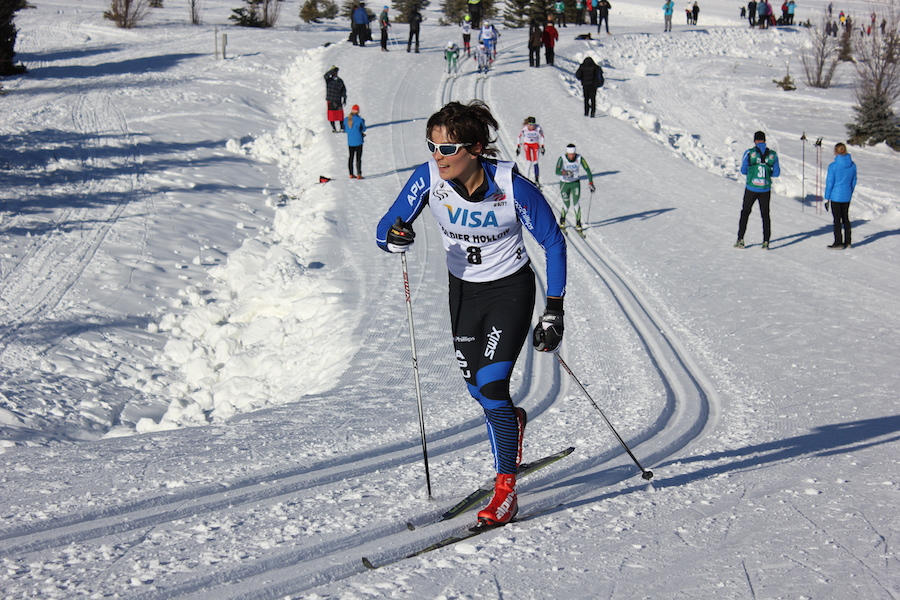
    Caitlin Gregg (Team Gregg/Madshus) pushes up Hermod's Hill in the 10 k classic individual start at Soldier Hollow on Saturday. She placed second for her best classic result at nationals.
    Caitlin Gregg (Team Gregg/Madshus) pushes up Hermod’s Hill in the 10 k classic individual start at Soldier Hollow on Saturday. She placed second for her best classic result at nationals.

    Gregg joked about the odds of both her and her husband, Brian, being randomly selected to start first in both the women’s and men’s races. It a was 1-in-400 chance, and they ended up leading the A-seeds* on a clear-and-sunny morning with temperatures in the mid-20s.

    “There was probably a higher probability of that than me winning U.S. nationals, although I did a dang good job of trying to get in there,” Gregg said after notching her best U.S. nationals classic result.

    Third halfway through Saturday’s 10 k behind Caitlin Patterson (Craftsbury Green Racing Project) in second, Gregg posted the fastest second lap to finish 25.6 seconds ahead of Patterson, who placed third.

    Gregg laughed about starting first at the first race of nationals, with her last race a week earlier on Dec. 28 at the Wasatch Citizens Series in nearby Park City, Utah. There at the White Pine Touring Center, she and Brian set course records on the 5.4 k loop.

    “We did a time trial last weekend, but it was a lower-key citizens’ event,” she said. “Nothing like starting off with a hard 10 k at altitude. I think working into it was key.”

    Without any splits to go off throughout much of the race, especially her first lap, Gregg had to rely on the cheers of spectators to indicate where she stood.

    “During the first lap, I’d be skiing by and they’d be like, ‘Go Rosie!’ ” she said of Rosie Brennan (APU), who placed sixth (+1:30.8). “I was like, ‘Oh, that means she’s clearly right there.’ ”

    Laughing as she visualized people softly clapping for her, Gregg said she reminded herself not to “freak out” on the first lap. “I swear I always magnify when I’m racing, and i can hear Rosie’s skis behind me, like ,’Oh gosh, she’s coming.’ I kind of just had a plan to really ski consistently.”

    “I wish there was a couple more laps in there. I feel like I was just getting goin’.” — Caitlin Gregg, second

    With her heart set on making the upcoming Winter Olympics and specifically racing the 30 k in Sochi, Russia, Gregg said she’s been looking forward to proving herself in longer races.

    “Man, I wish there was a couple more laps in there,” she said. “I feel like I was just getting goin’. That second lap felt really good, which I think was key.”

    Ski speed also made a difference on a morning (and afternoon) that turned warmer than expected, with sub-zero wind chills expected early. From what Rorabaugh could tell, her skis were solid on both the climbs and descents, and Gregg was grateful for the help University of New Mexico Head Coach Fredrik Landstedt leant both her and Brian with waxing.

    “I had Fredrik doing my skis and I had Grethe [Hagensen] from MSU out on course and she gave me the best information ever,” Gregg said of the Montana State University head coach. “She said, ‘Now you’re doing it, your dropping those girls off and you’re moving up.’ That was exactly what I needed to hear.”

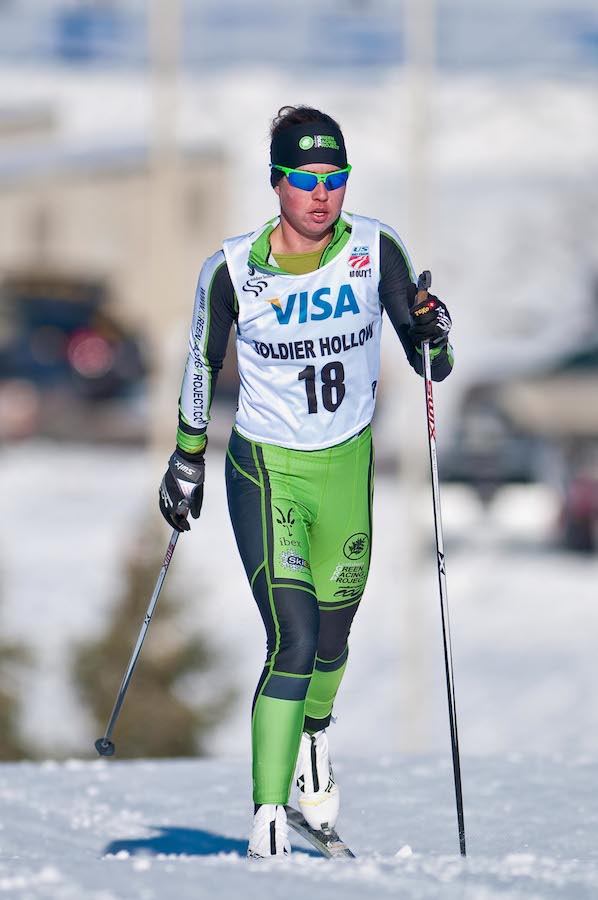
    Caitlin Patterson (Craftsbury Green Racing Project) striding to third in the women's 10 k classic individual start at 2014 U.S. nationals in Midway, Utah. (Photo: Bert Boyer/http://bertboyer.zenfolio.com/) All proceeds from photo sales will be directly donated to NNF.
    Caitlin Patterson (Craftsbury Green Racing Project) striding to third in the women’s 10 k classic individual start at 2014 U.S. nationals in Midway, Utah. (Photo: bertboyer.zenfolio.com) All proceeds from photo sales will be directly donated to NNF.

    The 18th starter, Patterson said she tried to refine her pacing strategy to start a little faster than usual, but not too fast.

    “I have a tendency to start slow so I wanted to not lose too much time at the beginning,” she said. “I did lose a little bit of time, but still … I felt pretty well in control.”

    Fourth fastest after 5 k (trailing Rorabaugh, Gregg and Brennan) and getting splits that she was in fifth at one point thereafter, Patterson clawed back the time to place third.

    “To move up during the second lap to third I’m really happy with that,” she said. “Obviously there’s room for improvement, but I think it’s a really good start.”

    In her previous 10 k classic races this season, Patterson placed second in the SuperTour mass start in Bozeman, Mont., and seventh in the NorAm individual race in Rossland, B.C.

    “I think this one was a lot more solid,” she said.

    Forty-two seconds behind Patterson and 1:27.3 out of first, University of Vermont junior Anja Gruber placed fourth, improving from the sixth-fastest time at 5 k.

    “I’m really happy,” Gruber said. “It’s kind of like the first real race for us and we just came out here on Monday, and I was home over Christmas training by myself.”

    A member of the German national team in 2009, Gruber returned to Germany for the holidays, then picked up in her first race of the season before the Eastern Intercollegiate Ski Association (EISA) circuit starts Jan. 17**.

    “It’s really nice for me because there’s really no pressure this week,” said Gruber, 22, after posting her first top 20 at U.S. nationals. “It’s more just fun and checking out the course in case I make NCAA’s here.”
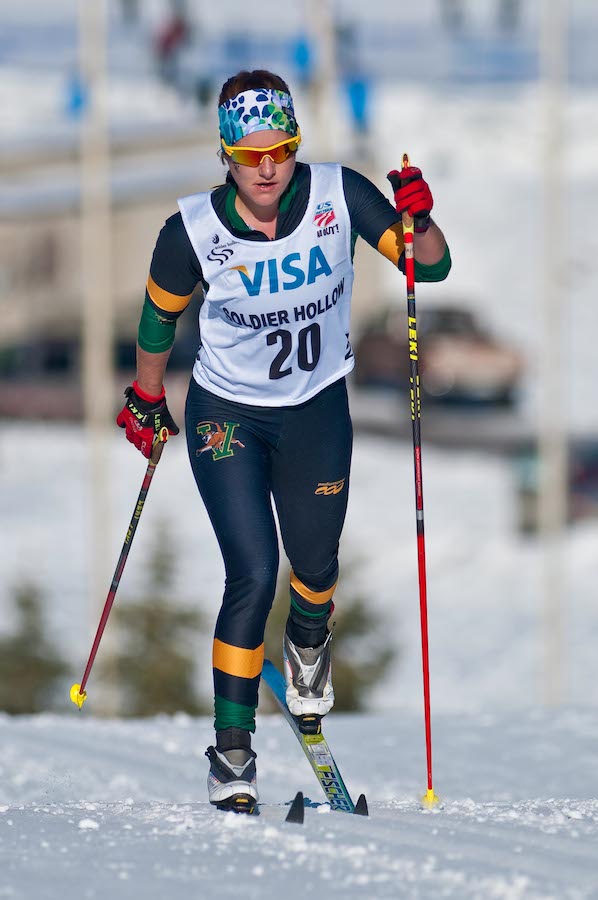
    Anja Gruber (University of Vermont) racing to fourth in Saturday's 10 k classic mass start at Soldier Hollow for her best U.S. nationals result by more than 20 places. (Photo: Bert Boyer/http://bertboyer.zenfolio.com/) All proceeds from photo sales will be directly donated to NNF.
    Anja Gruber (University of Vermont) racing to fourth in Saturday’s 10 k classic mass start at Soldier Hollow for her best U.S. nationals result by more than 20 places. (Photo: bertboyer.zenfolio.com) All proceeds from photo sales will be directly donated to NNF.

    After Rorabaugh, Kate Fitzgerald and Brennan helped APU put three women in the top six, with Fitzgerald finishing 5.4 seconds after Gruber and 1:27.3 back from first.

    A fan of the 15-second intervals***, Fitzgerald said it helped to see people ahead of her to try to catch and ski with others at times. “You could get a bit of a pack going,” she said.

    The eighth starter, she mostly heard that she was in eighth, but she took the splits with “a grain of salt” and aimed to ski consistently strong.

    “[I was] stoked to hear Becca doing so well,” Fitzgerald said. “She started right ahead of me and she just took off. I was like, ‘Woo! She’s having a good one.’ ”

    Third in the 10 k skate individual start at nationals last year (behind APU teammates Brennan in first and Sadie Bjornsen of the U.S. Ski Team in second), Fitzgerald was glad to get this one out of the way.

    “I was super nervous this morning, like, ‘Oh man, nationals, here we go!’ but I’m excited for the rest of the week,” she said, with her focus on the 20 k freestyle mass start. “I think it’s gonna be awesome.”

    *A-seeds started first to give them the most “advantageous” conditions, according to technical delegate John Estle. Snow was initially forecast in the morning, and organizers considered moving the A-seeds back behind the B’s, but the chance for snowfall became less likely so they kept the top women at the front of the pack.

    **The western collegiate Rocky Mountain (RMISA) circuit starts a week from Saturday on Jan 11.

    ***Estle said race officials decided to cut the time between intervals in half from the usual 30-seconds to speed up the day and give the athletes several additional hours to recover before Sunday’s skate sprint. Had they been dealing with 80 athletes, they would’ve stuck with 30 seconds, but with nearly 360 skiers between the women’s and men’s races, starting them 15 seconds apart was more efficient.

    Results

    — Lander Karath contributed reporting

    Kate Fitzgerald looks up as she begins the climb up Hermod's in the women's 10 k classic individual start at 2014 U.S. Cross Country Championships in Midway, Utah. Fitzgerald placed fifth.
    Kate Fitzgerald looks up as she begins to climb up Hermod’s in the women’s 10 k classic individual start at 2014 U.S. Cross Country Championships in Midway, Utah. Fitzgerald placed fifth.
  • Demanding Course Can’t Keep Bjornsen from 15 k Win at 2014 U.S. Nationals

    Demanding Course Can’t Keep Bjornsen from 15 k Win at 2014 U.S. Nationals

    IMG_8801
    Erik Bjornsen (APU/U.S. Ski Team) strides up Hermod’s Hill at the 2014 U.S. Cross Country Championships with APU Head Coach Erik Flora giving splits alongside. Bjornsen went on to win the 15 k by over 11 seconds.

    FasterSkier’s coverage of the 2014 U.S. Cross Country Championships is brought to you through the generous support of The Memory Clinic in Bennington, Vt.

    MIDWAY, Utah – In what was a flawless day at Soldier Hollow, Erik Bjornsen of Alaska Pacific University (APU) and the U.S. Ski Team achieved his second national championship in the 15 k interval start at the 2014 U.S. Cross Country Championships. He finished 0:14 ahead of Reese Hanneman (APU) who placed second. Kris Freeman of the Maine Winter Sports Center finished third, 22.8 seconds back from Bjornsen.

    The first day of nationals could not have been more perfect, with temperatures in the mid-20s and plenty of sun to go around. The 15 k, set on a variation of the 2002 Olympic course, consisted of three 5 k laps that twisted up and down a hillside that has seen many historic events. Saturday, was Bjornsen’s chance to add a little history of his own.

    (Photo: Bert Boyer/http://bertboyer.zenfolio.com/) All proceeds from photo sales will be directly donated to NNF.
    Erik Bjornsen (APU/U.S. Ski Team) leads a pack of skiers in the 15 k at the 2014 U.S. Cross Country Ski Championships. (Photo: bertboyer.zenfolio.com) All proceeds from photo sales will be directly donated to NNF.

    Despite his convincing win, the 22-year-old Washington native didn’t make his victory look easy. The challenging course took its toll on all athletes, and Bjorsen was no exception. His feelings in the race were much like the ups and downs of the course.

    “At times it felt good, and at times it was really hard,” Bjornsen said.

    Bjornsen started his race with a blistering pace that gave him first place splits. However, when after hearing he was several seconds up on Freeman he worried that his start was too fast. This fear was confirmed when he entered his second lap and began to struggle.

    After this realization Bjornsen skied with more control and focused on his finish.

    “The rest of the time I was getting splits I was 5 or 10 seconds off of [Freeman]. In the last lap I was very confident with my finishing so thought I might have a chance,” he said.

    He also chose to go for fast skis instead of more kick, and said that factored into his result. While it was a risky move on such a hilly course, he said it “seemed to work.”
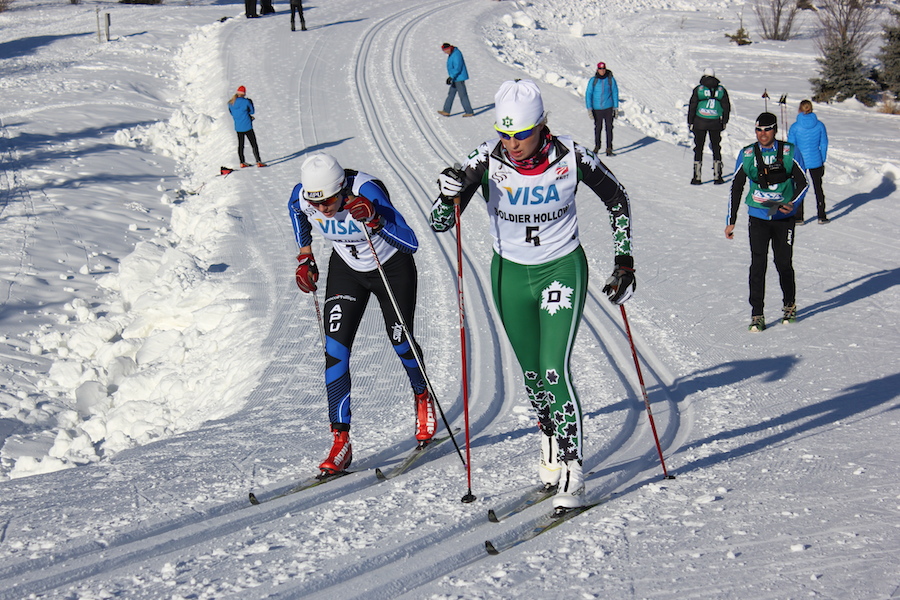
    For Bjornsen, the win is confirmation that his training since the end of last season is paying off. And with a winter that has had few domestic opportunities to demonstrate ability, he has found assurance in his chances for the rest of nationals.

    “It’s a confidence booster going into the rest of the races. Coming into this series I knew that the 15 k classic was my favorite event,” he said, “I’m feeling good so hopefully I can have another couple good results.”
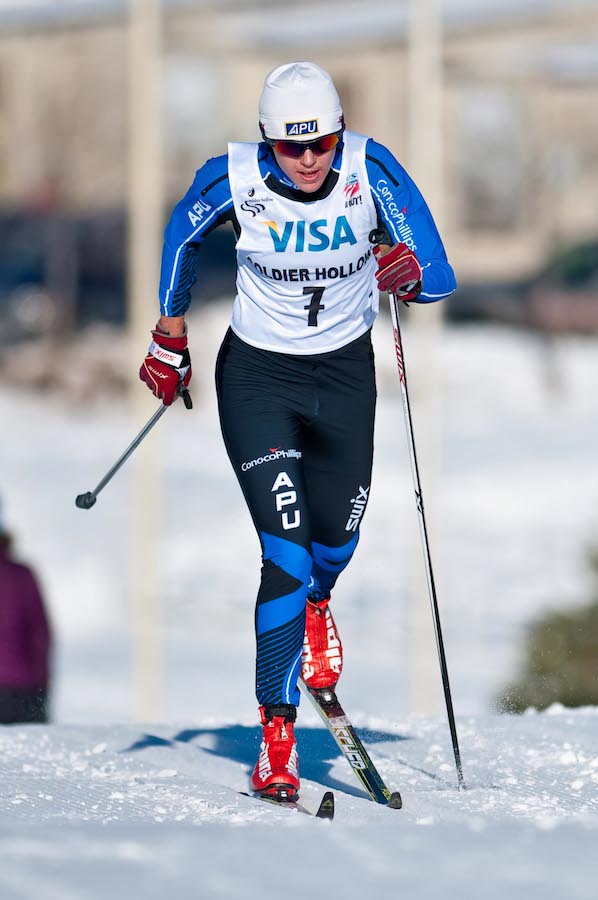
    (Photo: Bert Boyer/http://bertboyer.zenfolio.com/) All proceeds from photo sales will be directly donated to NNF.
    Reese Hanneman (APU) racing in the 15 k at the 2014 U.S. Cross Country Championships. Hanneman finished 11 seconds behind Bjornsen to place second. (Photo: bertboyer.zenfolio.com) All proceeds from photo sales will be directly donated to NNF.

    While Bjornsen was expected to podium in Saturday’s race, Hanneman was not. Hanneman, an APU skier from Fairbanks, Alaska, has traditionally excelled at sprinting, but defied tradition and placed second.

    “It’s just a little surprising on that type of course with this altitude,” Hanneman said. “It’s the hardest course I’ve skied since the World Cup in Canmore. I tried to go out pretty easy, like level 3 for two laps, which usually would just be way too conservative. But I was getting really good splits early on and I knew I had some left in the tank.”

    Hanneman, who placed 21st in the 15 k at the 2013 nationals, knew that with a demanding course he would need to conserve energy if he wanted have a chance at the podium. In an effort to ski with utmost efficiency, Hannemen took the steepest hills conservatively and pushed on the sections of the course that were gradual and flat.

    “I knew that if I went too hard I would just be walking along on the top,” he said. “Part of the success was that I was able to execute the plan.”

    Looking forward, Hanneman is excited for the two upcoming sprints, one of which will take place tomorrow. While these Championships will determine the rest of his season, he’s decided not to worry too much about the future.

    “I’m going to try and stay relaxed about everything, have fun, enjoy the good weather, and ski fast.”

    Third-place finisher and veteran skier Kris Freeman expressed support for the first and second place finishers.

    “It’s great to see Reese step up like that and Bjornsen on form,” he said. “I’m just hoping to find mine.”

    The former longtime U.S. Ski Team member fell off his front-running pace on the final lap.

    IMG_8737
    Kris Freeman (l) and Brian Gregg (r) attempt to conquer the challenging 5 k olympic course at Soldier Hollow. Freeman finished third and Gregg finished fifth.

    For Sylvan Ellefson (Ski & Snowboard Club of Vail/Team Homegrown) in fourth, it was his support group and encouraging splits that got him through a race that had him puking “his brains out” by the end.

    “I heard I wasn’t that far from Freeman at the top of Hermod’s so that’s what got me going the last two k,” he said.

    Brian Gregg, who finished fifth, was happy to tie his best-ever classic finish at U.S. nationals. He also laughed at the fact that both he and his wife Caitlin were the first starters for the men’s and women’s races. “What are the odds?” he joked.

    Rounding out the top six was Ben Lustgarten of Middlebury College. Lustgarten’s finish was a surprise to many at nationals, but not to his teammates and friends who have seen his hard work in Middlebury, Vermont over the past four years.

    “I’ll try to keep my focus,” he said. “I’m at a good point with my fitness and strength. I’ve just got to keep racing hard and staying in the game.”

    With this year’s college circuit ahead of him and a possible bid for the U23 World Championships, Lustgarten is definitely an up-and-coming skier.

    IMG_8763
    Ben Lustgarten (Middlebury College) gave a stellar performance in the 15 k classic and finished sixth at the 2014 U.S. Cross Country Championships.

    Absent from from the results was Tad Elliott (SSCV/Team HomeGrown) who was second in the 15 k skate at the 2013 nationals. In an email, Elliott explained that he has mono, or mononucleosis, a virus that often causes severe fatigue.

    “I got it this fall and it took awhile to diagnose, and I am still recovering,” he wrote. “I am flying into Nationals Monday. I am planning to try and race the 30k.”

    All in all, the 15 k demonstrated that the men’s field at Soldier Hollow is a group of very talented athletes who are willing to put everything they have into the chance at advancing in the ranks of U.S. cross-country skiing. As if the competition wasn’t hard enough, Soldier Hollow has provided some of the most difficult courses in the country, making every factor from tactics to fitness to mental toughness equally important.

    Action will continue Sunday with the freestyle-sprint qualifiers kicking off at 10 a.m. MST. In a field as diverse as this, the race could be anyone’s.

    Results (scroll down to see men’s results)

  • 2014 U.S. Cross Country Championships: The Calm Before the Storm

    2014 U.S. Cross Country Championships: The Calm Before the Storm

    MIDWAY, Utah — With the first race of the 2014 U.S. Cross Country Championships taking place Saturday, FasterSkier took to the trails of Soldier Hollow to preview the course and get a sense of how racers were feeling about the four-race series. Between wax testing, tactic planning, and pickups, athletes expressed excitement about the 10 and 15 k races.

    However, with a challenging 5 k course at altitude, many also said they were wary that skiing hard from the start might not be the best strategy. With possible Olympic bids on the line, everyone is looking to ski their best.

    Check FasterSkier for up-to-date results and reports as the championships unfold as well as live timing on summittiming.com and complete results on the event website, uscrosscountrychamps2014.com.

    Take a look at our photo gallery to see the Soldier Hollow course from our perspective, and read a selection of quotes from racers in the championships.

    “I’m pretty excited! It’s a really fun course this year. It’s great to get to stride on so many hills. For me my biggest challenge will be to stay focused on good technique an not getting into that pain cave too early. I have a tendency to want to go really hard really fast and that won’t do so well on this course.” — Heather Mooney (Middlebury College Ski Team, past Junior World team member)

    “It’s the first time that I’ve ever skied the olympic 5 k course. It will be fun. There are a lot of big ups and big downs. Pacing is definitely key, and it’s important to find the perfect spot between going hard and not blowing up too soon. Hopefully the conditions will be the same as right now because it’s fantastic.” — Jennie Bender (Bridger Ski Foundation, national champion in the classic sprint and third place in the skate sprint in 2013 U.S. Cross Country Championships)

    “It’s always cool to be in SoHo. It’s a great place to race. I’m starting the week with the skate sprint. It’s a new course so that adds a new dynamic. I think it’s going to be really nice that they’re adding some more hill.” — Torin Koos (Bridger Ski Foundation, national champion in the classic sprint and 30 k in the 2013 U.S. Cross Country Championships)

    “It’s awesome. It’s one of the best spots I’ve ever been. … The course is really tough. It’s steep uphills and the downhills are very fast so you have to stay concentrated the whole time.” — Moritz Madlener (Denver University freshman, formerly on the German national C-team and Junior World team)
    “I’m excited. It’s beautiful weather and great tracks and it’s fun having everyone here so it should be a fun day. …
    For me [the biggest challenge is] gonna be skiing in control the whole time and not kind of blowing up and then walking in the last 5 k, so just kind of ski strong throughout the race as opposed to super hard during one specific section.” — Erika Flowers (Stratton Mountain School T2 Team)