Tag: 2014 USST Lake Placid Training Camp

  • USST Wraps Up Successful Lake Placid Camp

    USST Wraps Up Successful Lake Placid Camp

    USST Lake Placid Camp Speeds Friday Sept. 5, 2014
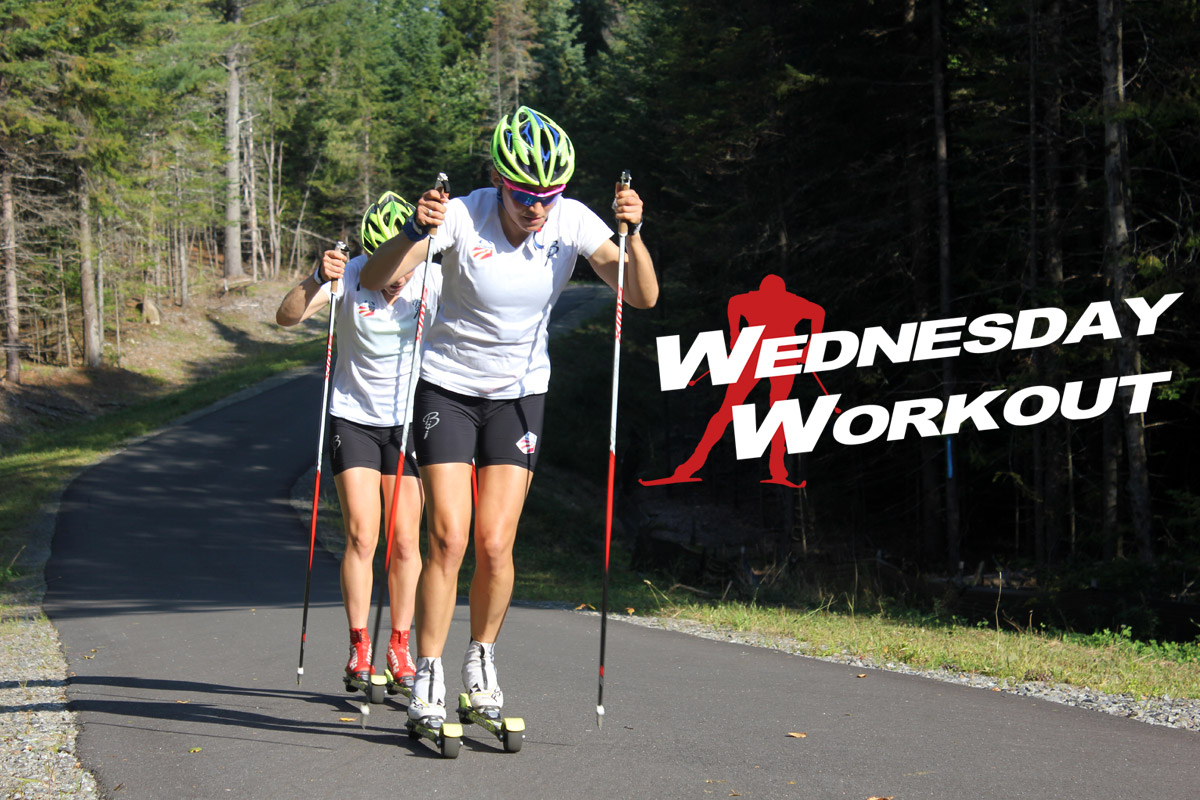
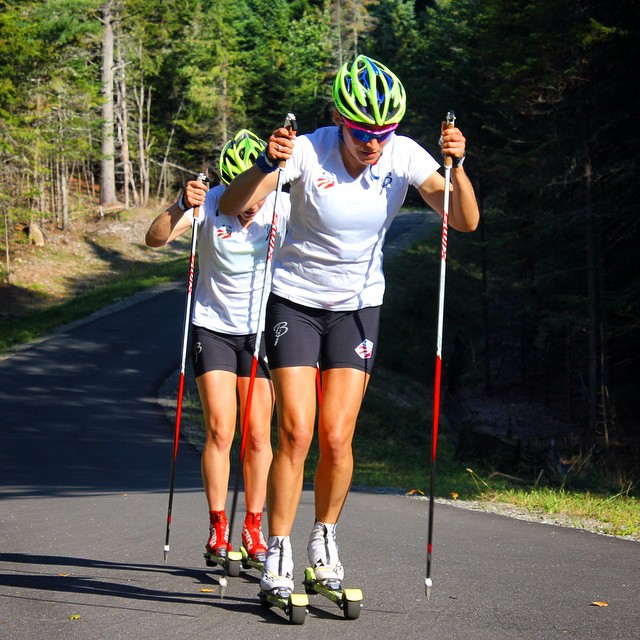
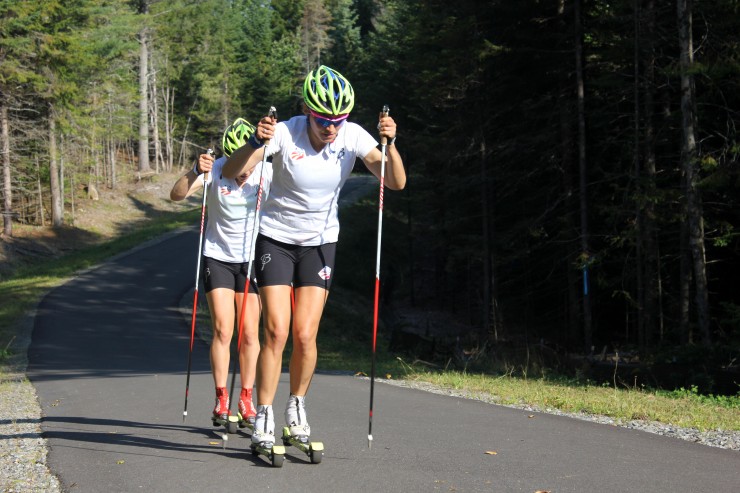
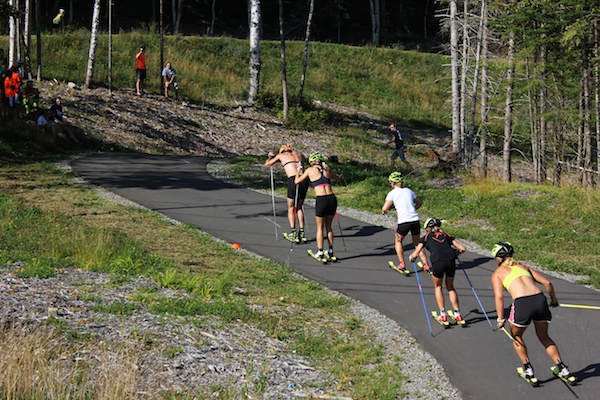
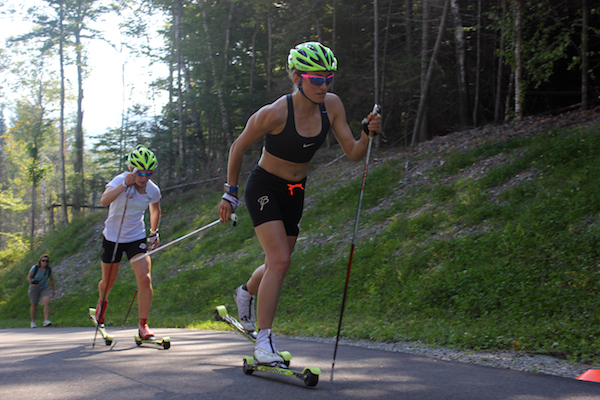
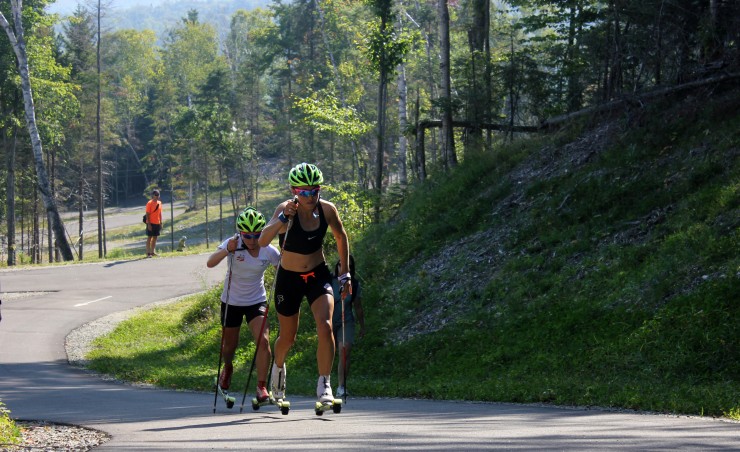
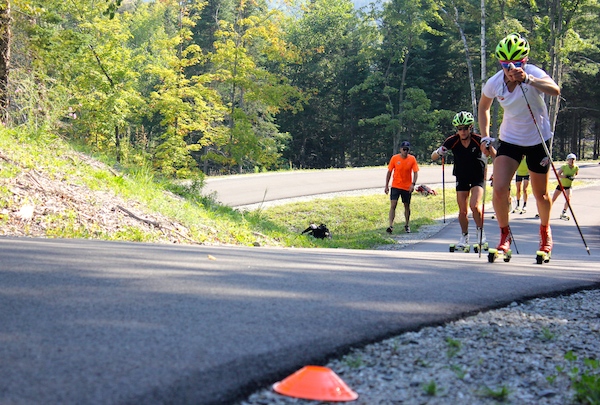
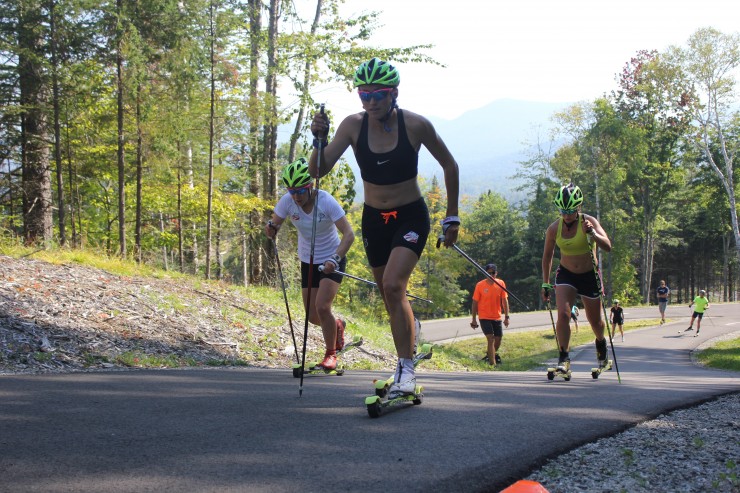
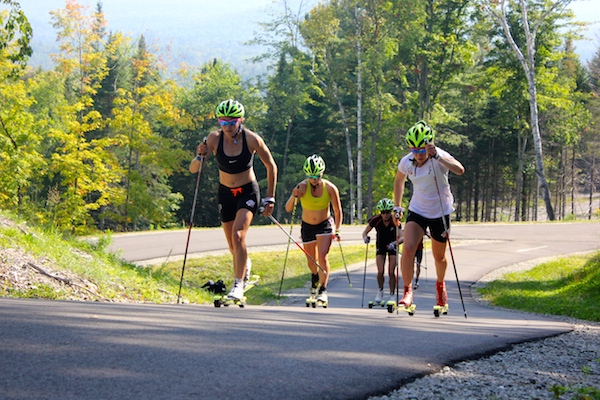
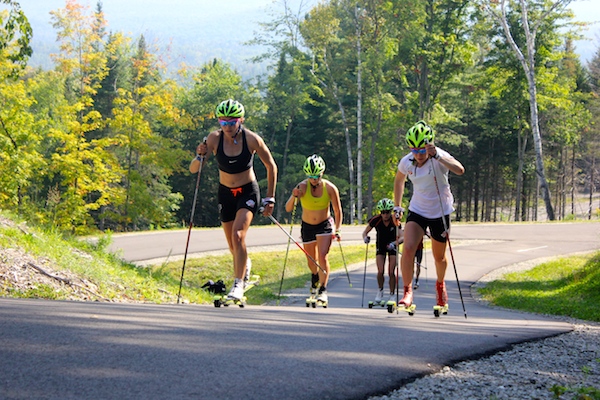
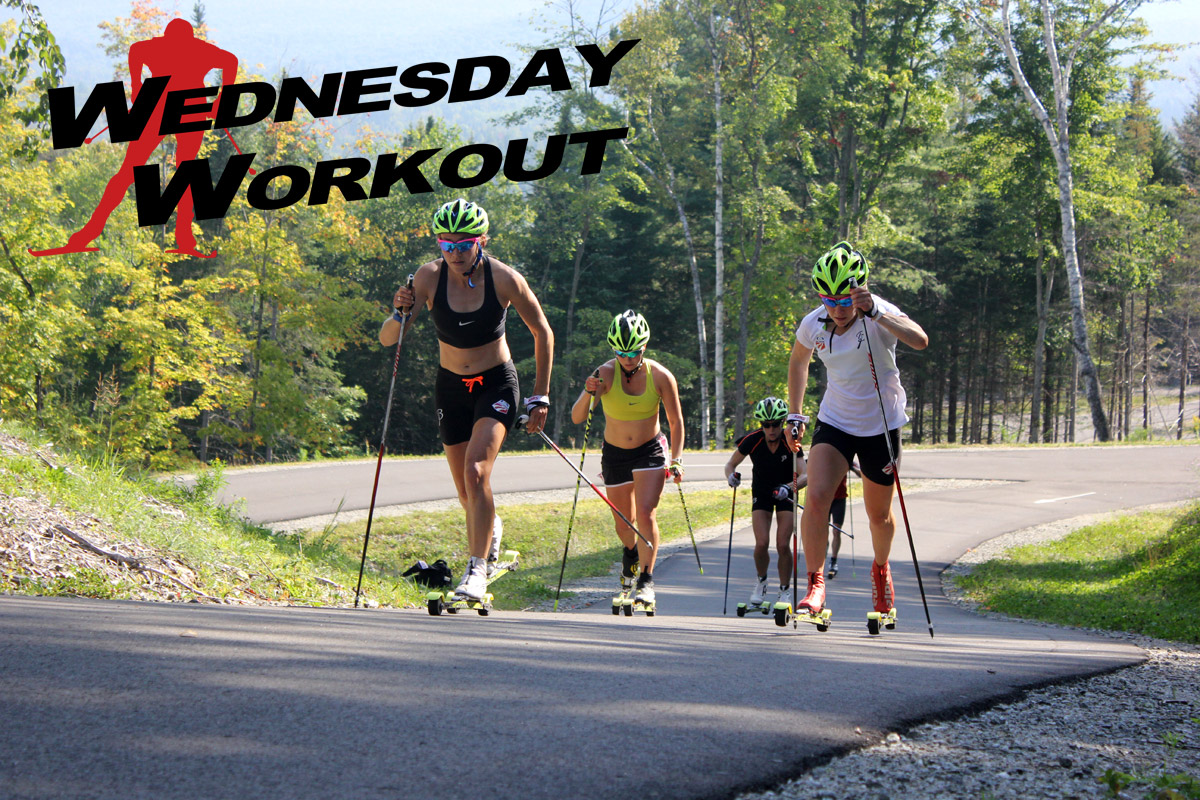
    Sophie Caldwell, Ida Sargent, Jessie Diggins, and Liz Stephen stride up a hill at the Olympic Jumping Complex as part of a classic speed workout at the USST Lake Placid Training Camp.

    LAKE PLACID, N.Y. – There’s no doubt that the U.S. Ski Team (USST) has grown in results and popularity in recent years. While the team has been advancing the stars and stripes abroad, the sport has gained traction on the home front.

    While no single factor can claim credit to the humble rise of nordic skiing in America, some often-unseen pieces of the puzzle are the USST camps held throughout the offseason.

    As the first week of September came to a close, the USST concluded its annual training camp in Lake Placid, N.Y. The camp, which started Aug. 25, had a large emphasis on intensity and included a classic-rollerski sprint simulation, various speed workouts, and the challenging Climb to the Castle rollerski race up nearby Whiteface Mountain.

    While many western skiers were missing from the lineup, USST athletes Jessie Diggins, Ida Sargent, Liz Stephen, Sophie Caldwell, Ben Saxton, Paddy Caldwell, Andy Newell, and Simi Hamilton were in attendance for the majority of the camp.

    For Paddy Caldwell, this was the first time that the Dartmouth sophomore had trained with a near-full team since he was named to the USST this spring.

    “It’s nice to have a focused group together and a cohesive connection,” Caldwell said. “In particular this camp has been nice to get to know the guys.”
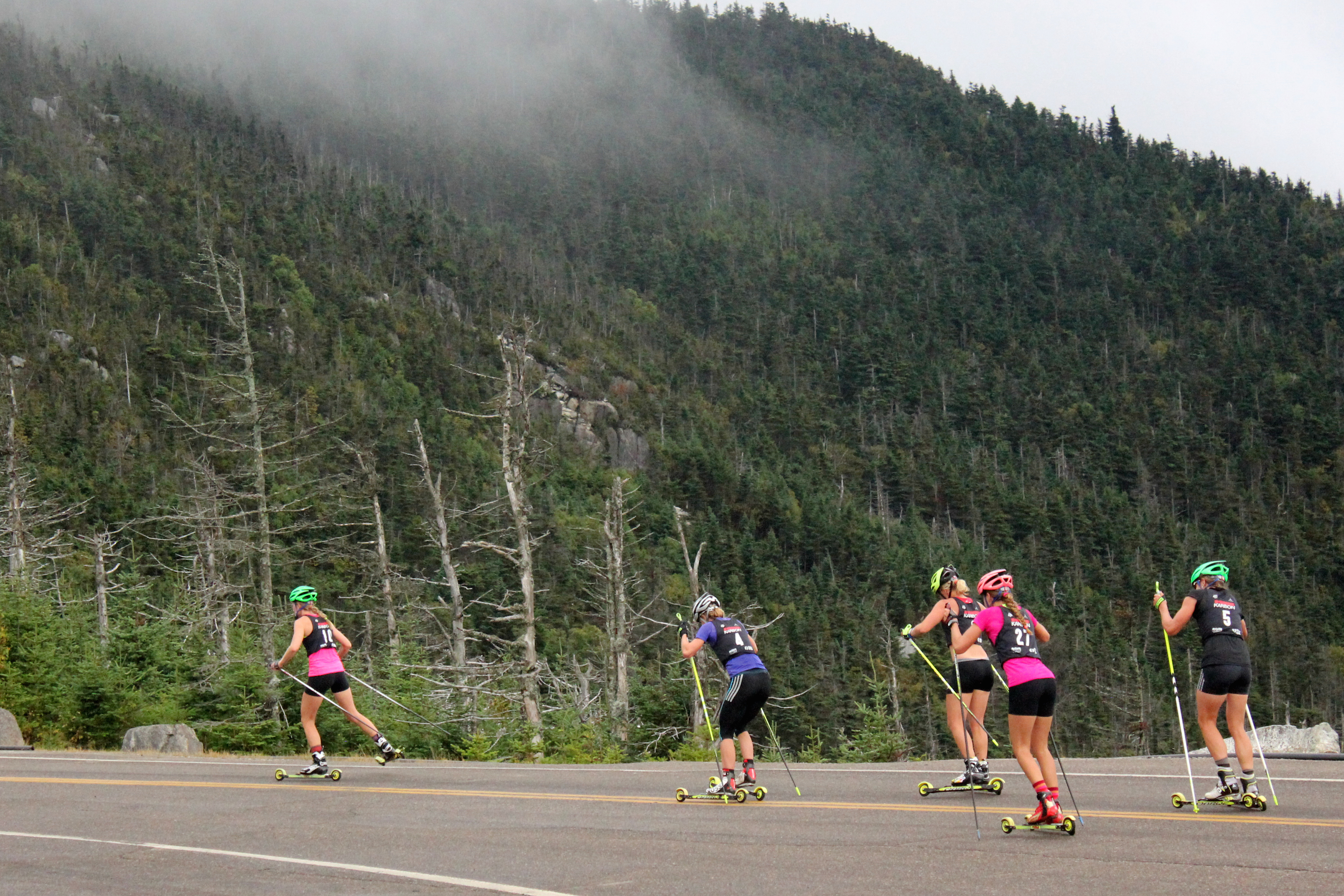
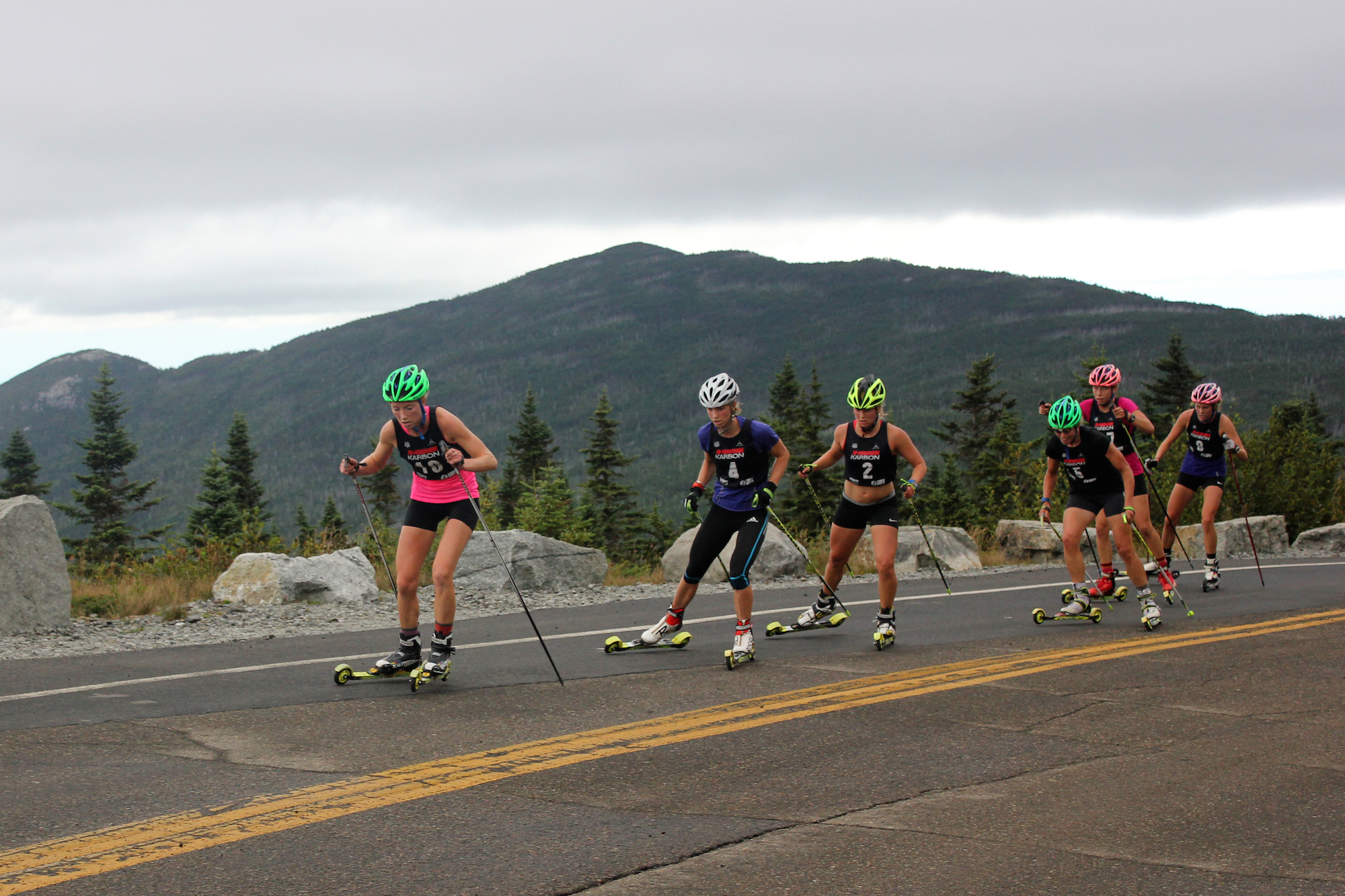
    Erika Flowers (SMST2) leads the chase pack. She is followed by Annelies Cook (USBA), Jessie Diggins (USST/SMST2), Susan Dunklee (USBA), Katharine Ogden (SMS), and Mary Rose (SVSEF).
    Erika Flowers (SMST2) leads the chase pack. She is followed by Annelies Cook (USBA), Jessie Diggins (USST/SMST2), Susan Dunklee (USBA), Katharine Ogden (SMS), and Mary Rose (SVSEF).

    Caldwell, who took classes and trained at Dartmouth for most of the summer, was injured in late July with a torn disk or muscle in his mid-to-lower back. The 20 year old said that while he wasn’t doing any high-impact activities such as intervals, he felt that the camp was helping him get back into his normal training routine.

    He predicted he would be fully recovered by the time the USST travelled to Park City, Utah, for its fall altitude camp in October.

    In addition to the USST, a trove of athletes from the Stratton Mountain School (SMS), Craftsbury Green Racing Project (CGRP), Sun Valley Ski Education Foundation (SVSEF), and various other clubs across the country made the trip for the two-week event.

    One such athlete was Caitlin Gregg of Team Gregg who, after claiming the overall SuperTour title last March, is gearing up to start on the World Cup this fall.

    “The level of training has been really high for every session,” Gregg said. “The weather’s been awesome which has been a super plus here in the East. It can get kind of rainy but we’ve had some sunny days.”
    USST Lake Placid Camp Speeds Friday Sept. 5, 2014
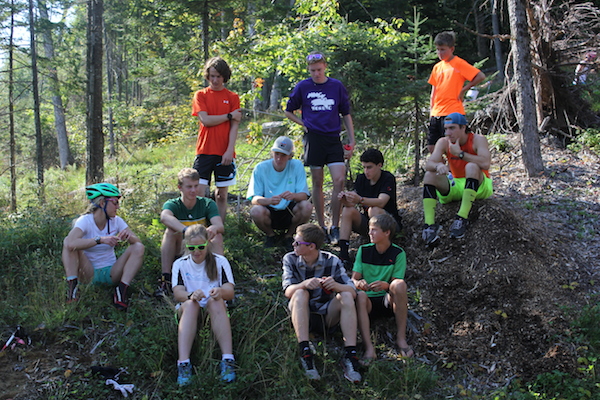
    Caitlin Gregg (Team Gregg) takes a break to talk with spectators from the Green Mountain Valley School.

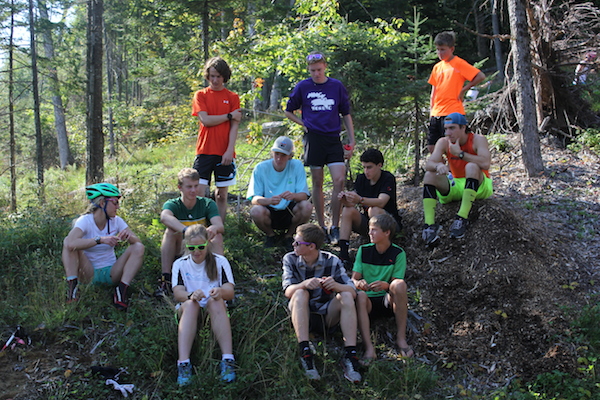
    The Lake Placid camp created a daily routine for its participants. Before each session skiers would gather to watch World Cup footage to stimulate the athletes’ minds before hitting the pavement. In many cases, they would watch Norway’s Marit Bjørgen double pole or Petter Northug start.

    Once a rollerski workout was over, athletes received video clips of themselves from the workout to allow for reflection and thoughts on future improvement.

    While technique advice from the coaching staff was a key part of the camp, the goal was to create an environment where athletes could conquer their technique difficulties on their own.

    “Some camps we spend a lot of time talking about technique, but I think it’s really important to build the infrastructure and let them figure it out on their own at some camps,” U.S. Ski Team Women’s Coach Matt Whitcomb said. “We provide them the tools to figure out their technique projects. “

    Many times that means relying on fellow athletes for technique improvements.

    It’s something that Whitcomb has seen advance in recent years and he believes it’s a positive development for his athletes and the sport.

    “Different people recognize each other’s strengths and they know that they themselves are used as a demonstration,” he said. “Everyone has their strengths that they are expected to share.”

    Whitcomb likes to remove himself as the source of all coaching, and believes that a healthy level of self-coaching can often lead to greater development.
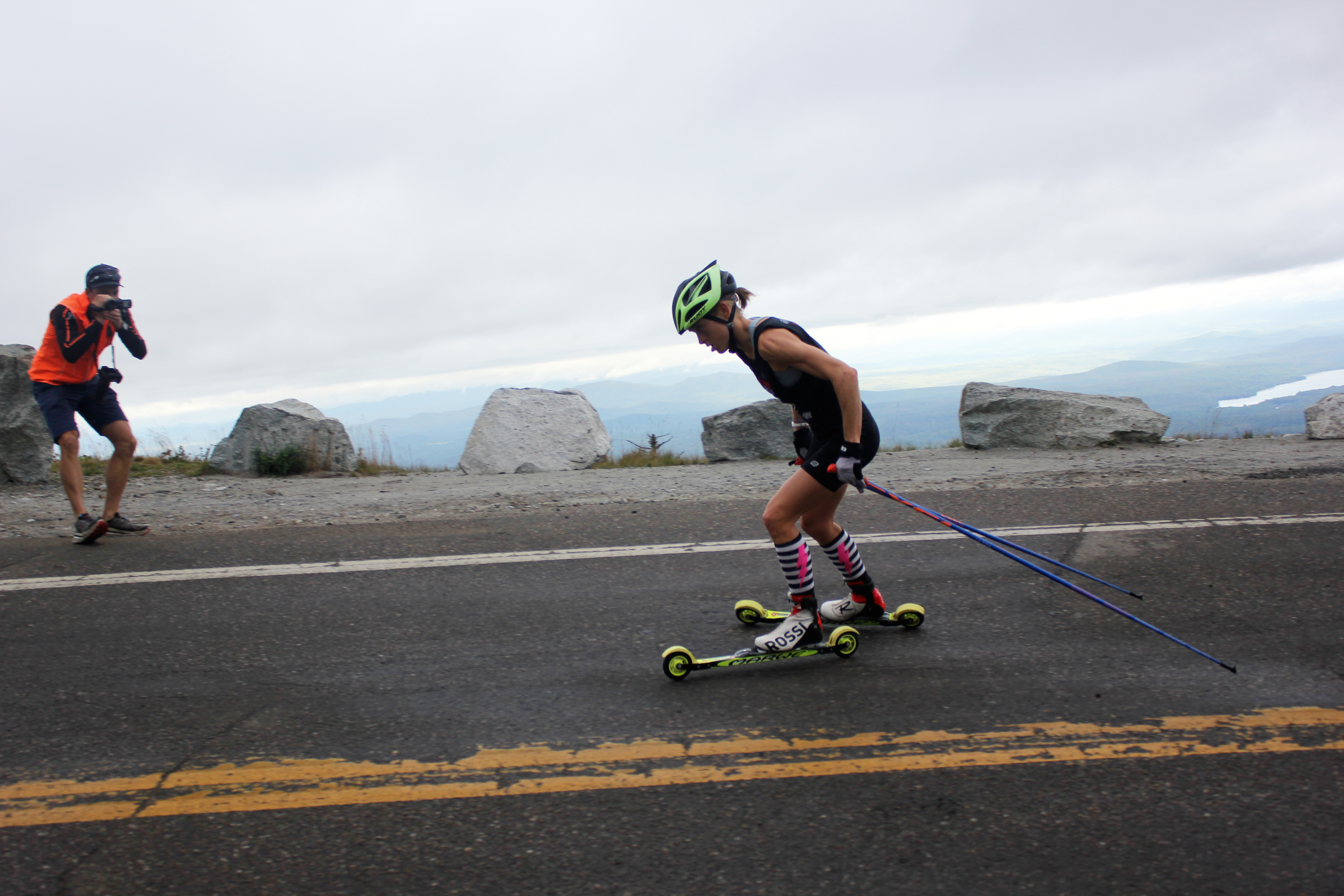
    Liz Stephen (USST/Burke) sporting pink lightening bolts on her socks as she rockets her way to her fourth Climb to the Castle win in four years.
    Liz Stephen (USST/Burke) sporting pink lightening bolts on her socks as she rockets her way to her fourth Climb to the Castle win in four years.

    “When too much coaching happens – and that can be too much technique coaching or too much psychological coaching – the athletes learns to really depend on the coach and it becomes a crutch. They stop learning on their own,“ he said.

    While the camp was focused on intensity, it also provided a means to improve tactical skiing in a group setting.

    According to Whitcomb, it’s often easy for athletes to focus on building capacity, speed and a strong mindset, which are all incredibly important. However, in focusing on the big-picture improvements, athletes can miss what Whitcomb calls the “low-hanging fruit.”

    With skiers like Kikkan Randall, Hamilton and Newell — considered some of the best technical skiers in the world — Whitcomb believes the U.S. has the unique opportunity to increase its technical ability.

    “They are assets on our team that we can use in workouts to set the bar as well as refining their own skills,” he said. “Learning to ski these transitions doesn’t take more energy. It actually takes less energy to take a better line. We’re trying to move away from having the fastest hill climbers and the most powerful skiers to the most well-rounded skiers.”

    When asked how the USST coaches balance the addition of other elite team athletes in the camp, Whitcomb said that it’s been something the team as been working on for several years.

    In past camps, Whitcomb said that there were too many participants and many of the workouts would lose their value.

    “We’ve always been about the partnerships and we’ve known that that’s the way to take a fractured ski culture in the U.S. and bring it together,” he said. “But what has snuck away from us at a camp here and there was that we were almost being too open. The most competitive workouts in the nation were too open and thus the target was too big.”

    Whitcomb said this year’s Lake Placid camp had a stable balance where the national team and additional elite skiers were able to create an environment where everyone was able to bring something to the table.

    Now that the sea-level camp is over, athletes will travel back to their respective clubs and partake in a much-needed rest period. As the intensity from the late summer begins to set in, they will continue to build volume until the USST gathers again in Park City, Utah, on Oct. 4. There, they will participate in a three-week altitude camp that takes them from the U.S. Ski & Snowboard Association’s Center of Excellence (COE) to Frozen Thunder in Canmore, Alberta.

    FasterSkier’s On-Site Coverage of the 2014 USST Lake Placid Training Camp
    Friday’s Speed Workout | Photos

    Climb to the Castle Recap | Photos

  • Wednesday Workout: Classic Speeds from the USST’s Lake Placid Camp

    Wednesday Workout: Classic Speeds from the USST’s Lake Placid Camp

    FS-WW-USST-doublepole-lp
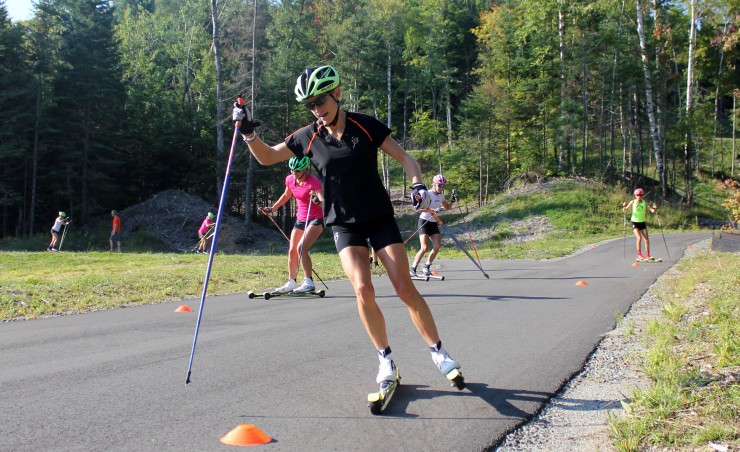
    Sophie Caldwell (USST/SMST2) and Ida Sargent (USST/CGP) in the middle of their first set of rolling speeds.

    LAKE PLACID, N.Y. – Fall is just beginning which means leaf-peeping, cider donuts, and pumpkin spice lattes are likely on your radar. However, once you get your head out of the changing leaves it may be time to focus on some new training goals as winter approaches. If you’re looking to maintain a plan similar to the U.S. Ski Team, that means that you are focusing less on volume and more on intensity before you head into the depths of fall.

    USST Lake Placid Camp Speeds Friday Sept. 5, 2014
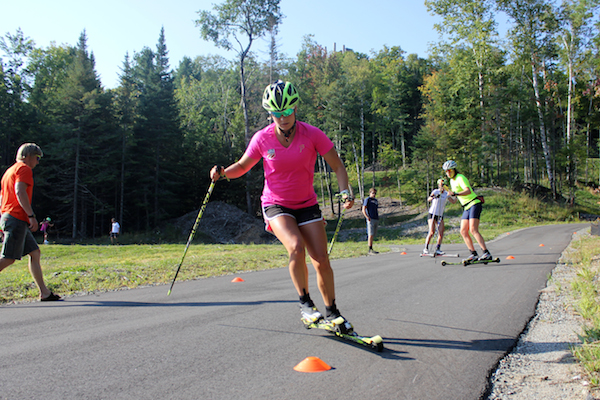
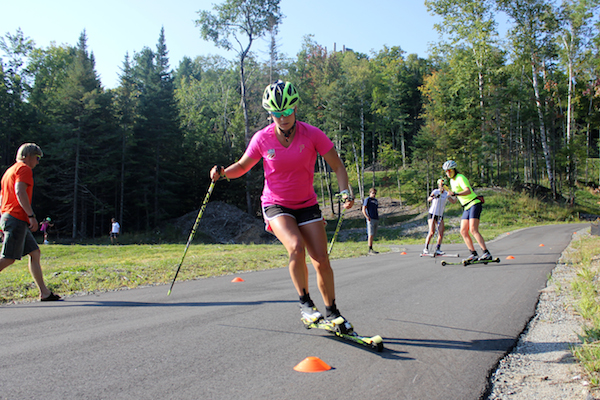
    Jessie Diggins (USST/SMST2) warms up with agility before her classic speeds. Here she is partaking in the slalom.

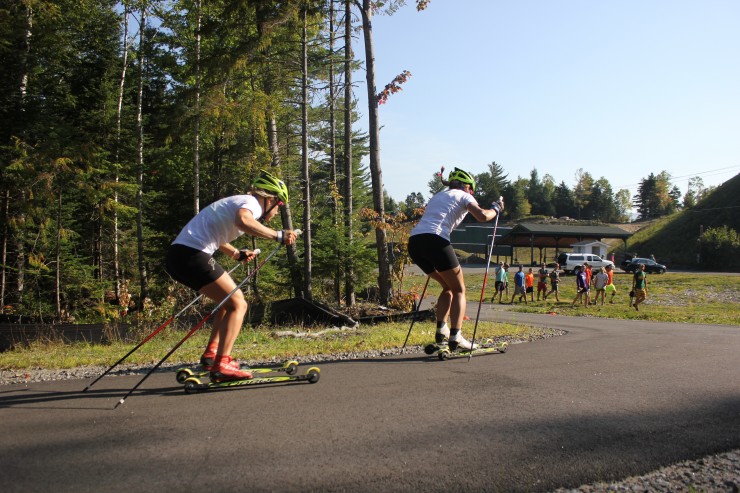
    As part of their 2014 Lake Placid Fall Training Camp, the U.S. Ski Team took part in a classic speed workout aimed at activating quick twitch muscles and improving technical and tactical skills.

    According to women’s coach Matt Whitcomb, the workout is part of a greater push by the U.S. Ski Team to include complex workouts that have various levels of development. The goal is to have sessions that not only increase fitness but also create an infrastructure for athletes to progress their skiing in a technical manner.

    “At this time of the year we have tried to do is build an infrastructure for the athletes. The aim is create incredible workouts that have various levels of focus and various chapters,” Whitcomb said.

    The Lake Placid workout does just that. Starting with an agility warmup, it progresses from eight rolling double pole speeds to eight striding speeds that are bound to make you analyze your technique and leave you out of breath.

    The Workout: 1. Agility warmup 2.Two sets of four rolling double pole speeds on varying terrain 3. One set of eight striding speeds on an incline

    Where: Olympic Jumping Complex, Lake Placid, N.Y.

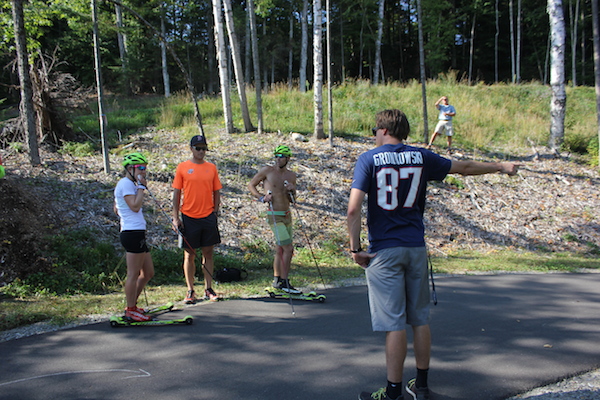
    What: Start your warmup as usual but after several minutes of easy classic skiing you should enter an agility course. This will not only help you warmup, but it will also help you engrain basic yet effective agility into your workout. The entire warmup should last roughly 20 minutes.

    In Lake Placid the USST used the following exercises that were placed in a loop. Athletes then completed the loop as many times as they felt necessary.

    – Right foot slalom (Enter a short slalom course with your left foot elevated and hop through the short course while keeping the left foot in the air)

    – Left foot slalom (Opposite of the right foot slalom)

    – Regular slalom 

    – Skip striding (Stride across a 50 m section while skipping during each stride. It creates an awkward feeling but after several attempts you should be able to get the hang of it.)

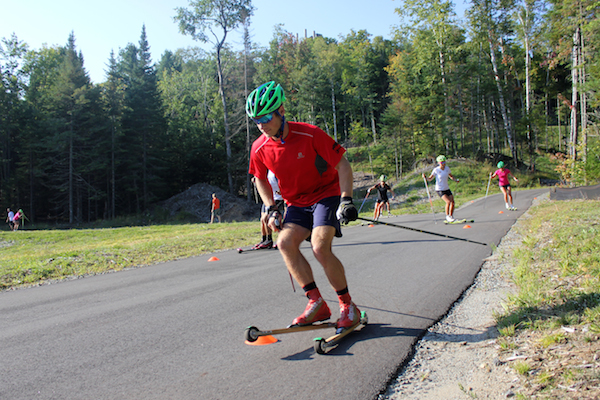
    After completing the warmup pick two sections of a 500 to 1000 meter loop to do your rolling speeds. Each section should have varying terrain including corners and rolling hills that are suitable for double poling. The distance should be no more than 100 meters and should last roughly 15 to 20 seconds. Complete the loop once to get a feel for the terrain then ski the loop four times, each time rolling into an acceleration in the same speed zone. If you need to take another loop for more rest, do so. Once you’ve completed four speeds in one zone, repeat the process in the second zone. While you are competing these speeds make sure that you are conscious of the path you choose around corners. Many skiers often begin to turn into the corner too late. Draw a chalk arrow where you or your coach think it is best for you begin your turn as a friendly reminder.

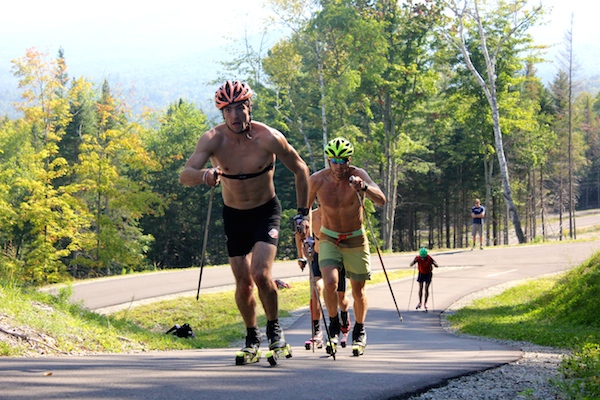
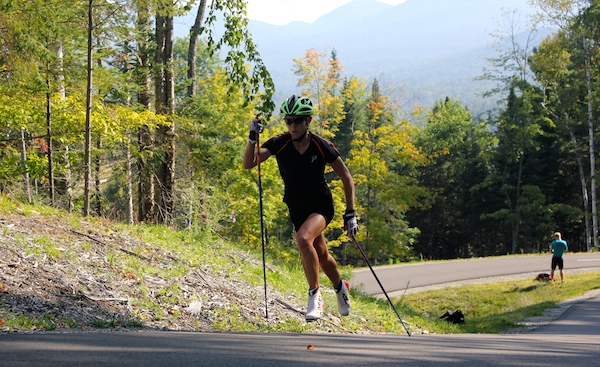
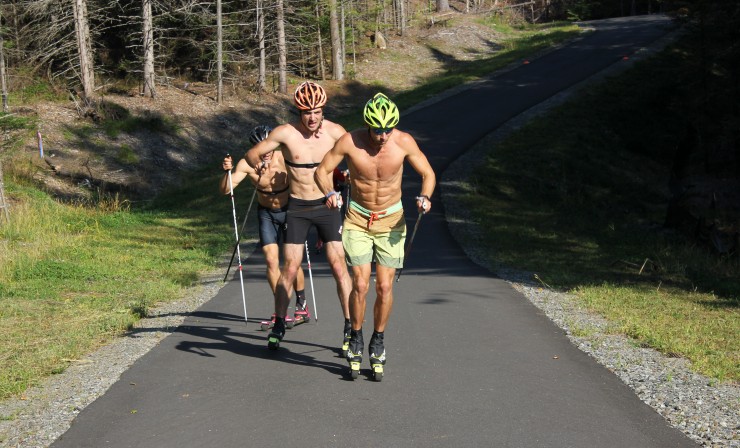
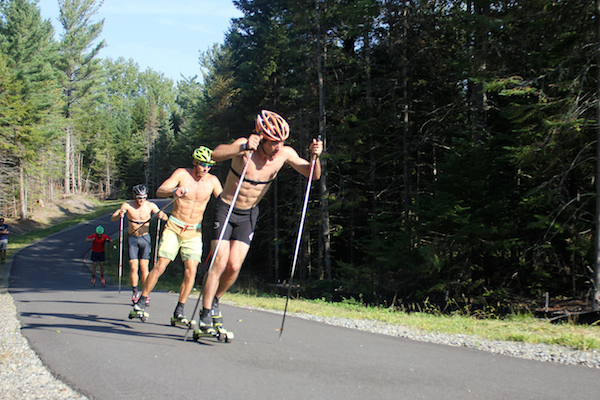
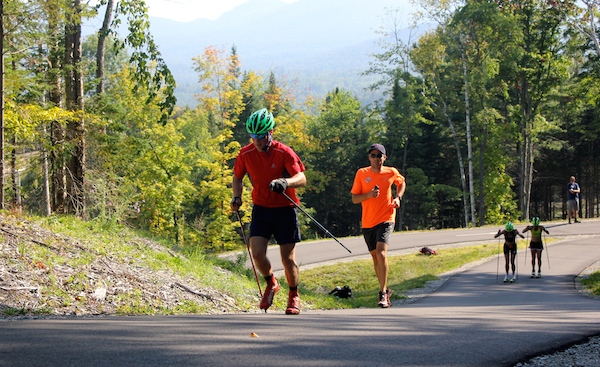
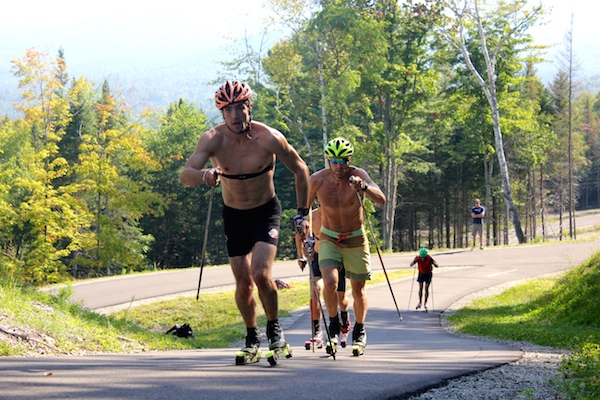
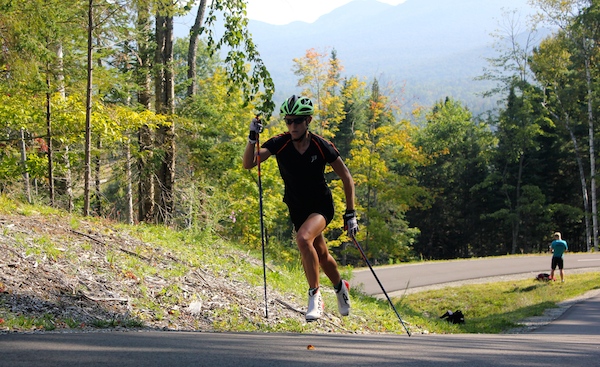
    When you’re done with the rolling speeds, find a short hill that requires striding. You will repeat a similar process as before, skiing in between each of your eight speeds. Before you begin each speed bring yourself to a complete stop and begin with a double pole start. Then progress into striding until you reach the top of the hill. To gain the most from this speed make sure that you enact a slight running technique. This will feel slightly awkward. While you will be sprinting up a hill, remember to be as relaxed as possible.

    Once done with the eight speeds, cooldown by skiing 20 to 30 minutes.

    Length: The entire workout should take anywhere from two to two and-a-half hours including warmup and cooldown.

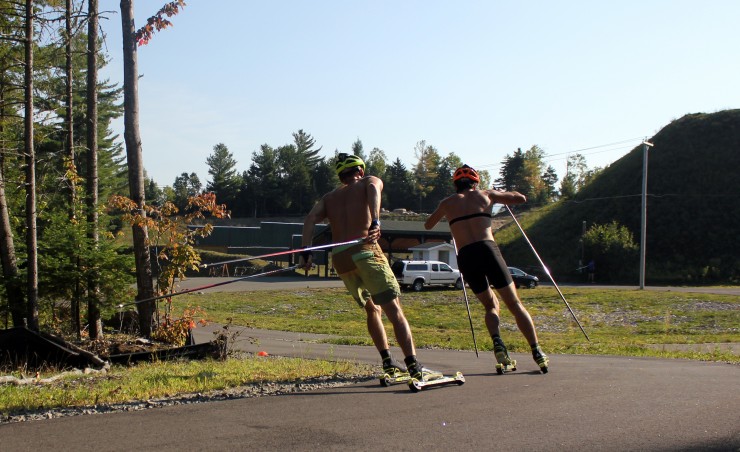
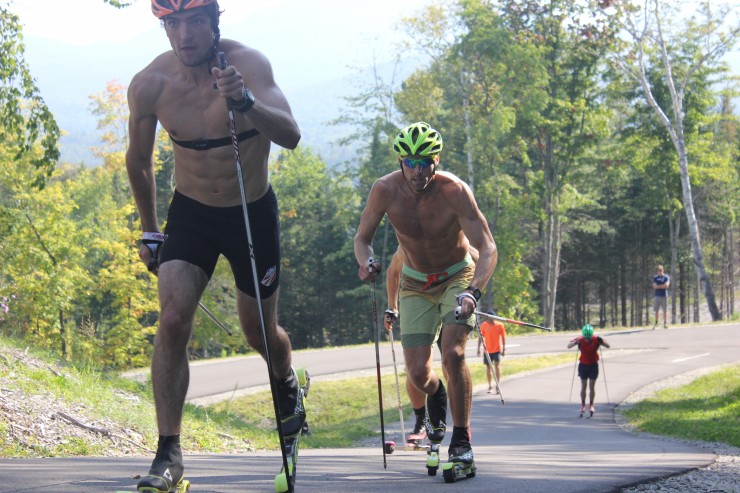
    Ben Saxton (USST/SMST2) and Andy Newell (USST/SMST2) partake in the striding speeds in Lake Placid.
    Ben Saxton (USST/SMST2) and Andy Newell (USST/SMST2) partake in the striding speeds in Lake Placid.

    With such a complex workout, there may be times when you feel as if your technique is less than ideal. If that’s the case, get a coach or fellow skier skier to watch you and give you some technique advice.

    A unique aspect of the U.S. Ski Team is that they readily ask each other for help when they need it. If you want to train like the team, ditch the ego and ask your teammates, competitors, or random skiers for their advice.

    “An athlete can be the best teacher because we’re actually doing the motions” Liz Stephen explained. “A coach can see it and they can know exactly what to say but for some reason I sometimes can’t compute it. I went through trying to learn that run technique and it wasn’t until the speeds were done that Ida [Sargent] said to me ‘I think about keeping my hands in sight when we’re doing this.’ As soon as she said that it clicked for me.”

    To see more pictures from the workout check out our photo gallery from the training.

    USST Lake Placid Camp Speeds Friday Sept. 5, 2014
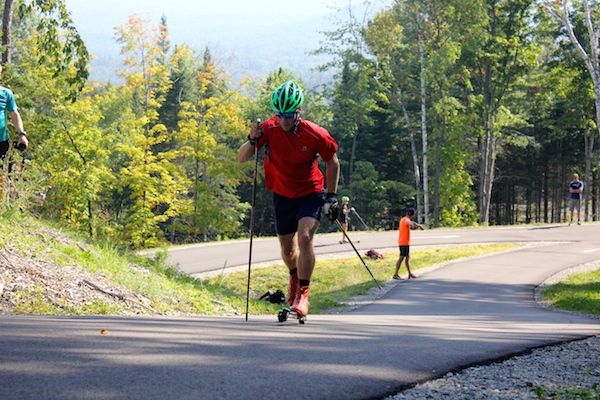
    Liz Stephen (USST/Burke) takes off her rollerskis to help her master the technique required for the striding speeds.
  • Gallery: USST Speed Work in Lake Placid

    Gallery: USST Speed Work in Lake Placid

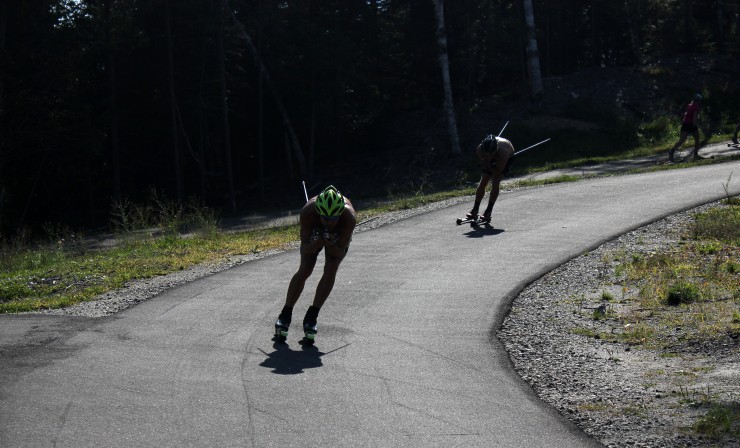
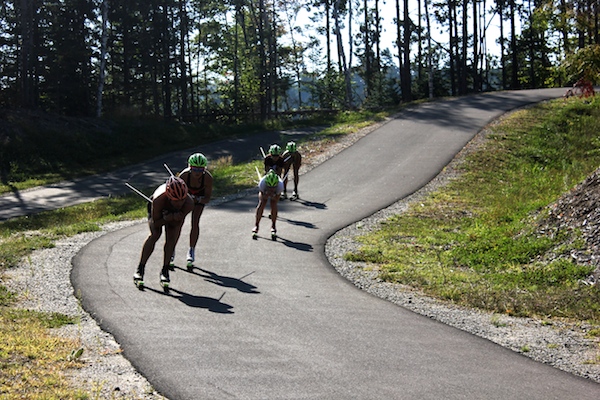
    LAKE PLACID, N.Y. — FasterSkier arrived in New York Friday to catch the tail end of the 2014 U.S. Ski Team Lake Placid Training Camp. The camp’s attendees have endured a tiring two weeks of intensity, but spirits were high and smiles were abound as the team sped around the paved trails of the Olympic Jumping Complex for their morning workout. Check out photos from Friday’s traing below. The camp continues Saturday with the annual Climb to the Castle rollerski race that ascends Whiteface Mountain. While the status of this year’s climb was uncertain due to road construction, organizers confirmed Friday that the race would be held even if it had to be shortened.