From the FasterSkier archive — posts syndicated from athletes’ and coaches’ own blogs between 2004 and 2012, kept online as published. Current coverage is at fasterskier.com.

Tag: 2014 Winter Paralympics

  • Wasn’t Pretty, But McKeever/Nishikawa Nab Second Gold in Paralympic Sprint

    Wasn’t Pretty, But McKeever/Nishikawa Nab Second Gold in Paralympic Sprint

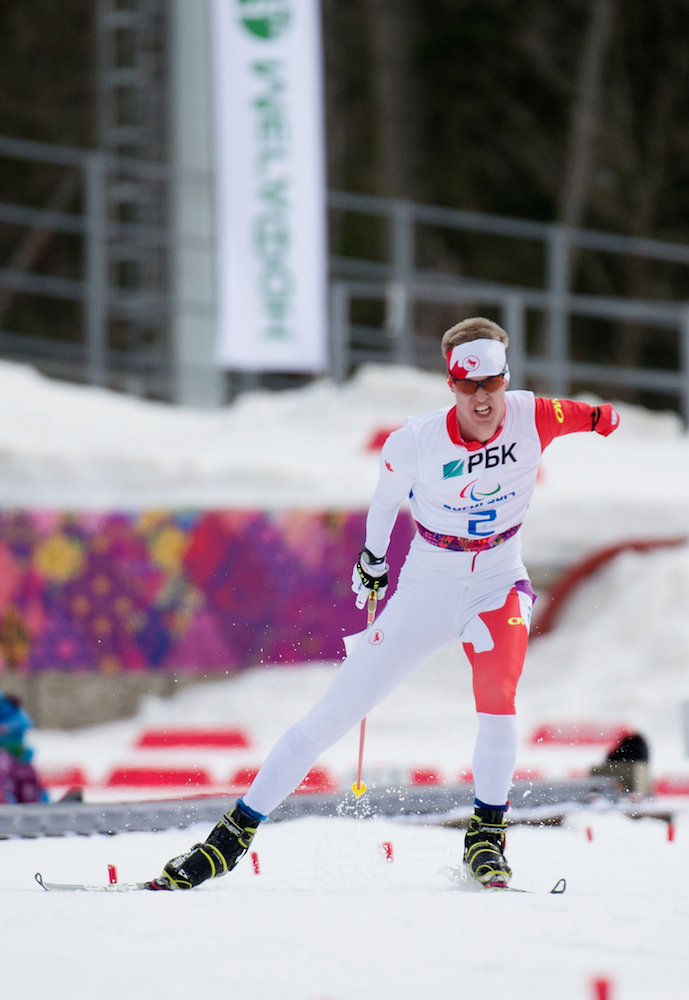
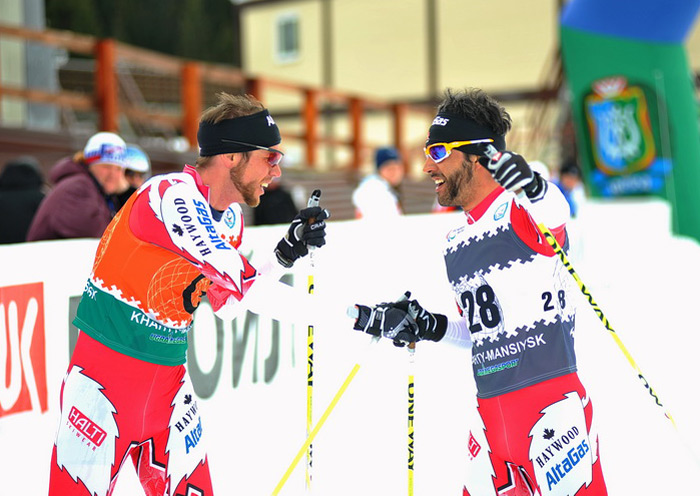
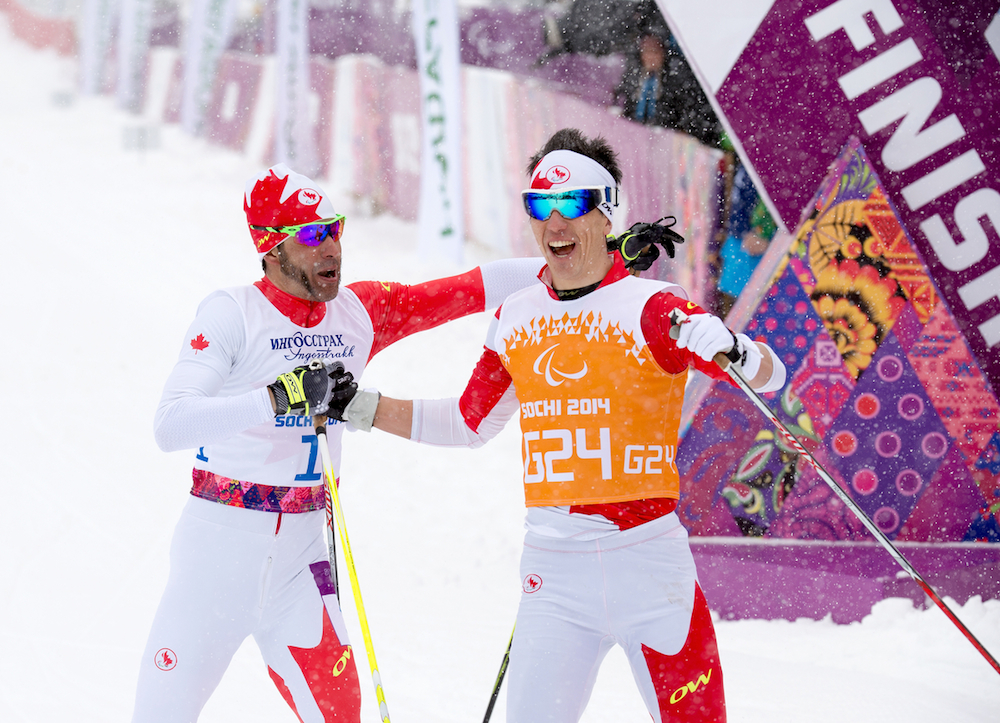
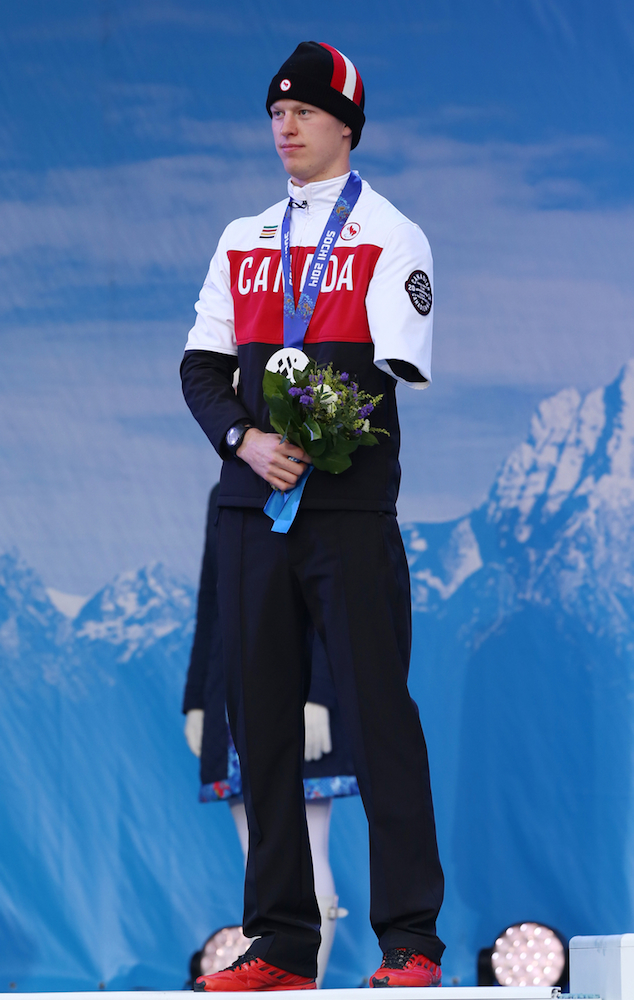
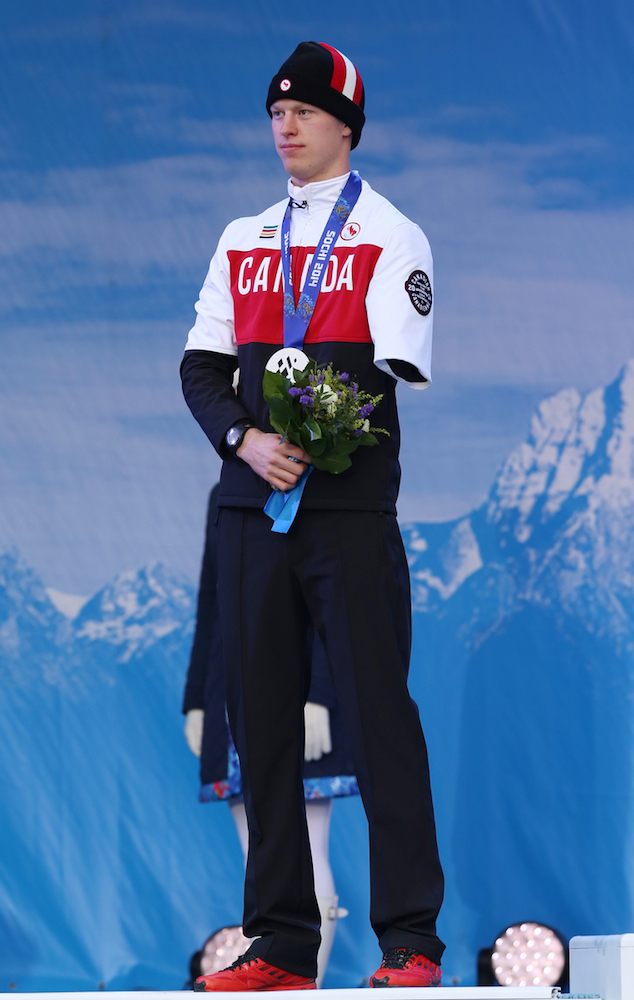
    Canada's Brian McKeever (l) and his guide Graham Nishikawa win the gold medal in the Men's 1 k visually impaired sprint final at the 2014 Paralympic Winter Games in Sochi, Russia. (Photo: Matthew Murnaghan/Canadian Paralympic Committee)
    Canada’s Brian McKeever (l) and his guide Graham Nishikawa win the gold medal in the Men’s 1 k visually impaired sprint final at the 2014 Paralympic Winter Games in Sochi, Russia. (Photo: Matthew Murnaghan/Canadian Paralympic Committee)

    (CCC press release)

    McKeever rebounds from crash in final to take down world’s best for ninth-career gold medal

    SOCHI, Russia —Brian McKeever is certainly capturing the world’s attention in Sochi, Russia. And it is not just because he skied to his ninth Paralympic gold medal on Wednesday in Sochi, Russia.

    McKeever and guide, Graham Nishikawa, ploughed through the field and more than 30 centimetres of fresh snow to win their second gold medal of the week in spectacular fashion in the visually impaired sprint races at the Paralympic Winter Games.

    Leading all qualifiers in the head-to-head heats with the top-12 athletes, the two Canadians handily advanced to the final where the 12-time Paralympic medallist faced the biggest adversity of his career.

    Stacked against two Russians, and a Swede in the final, the 30-year-old Nishikawa (Whitehorse) appeared to have led McKeever (Canmore, Alta.) through the cluttered pack of guides and athletes into clear trail until the unthinkable happened near the 200-metre mark.

    A Russian skier stepped on McKeever’s pole – sending the 34-year-old airborne and onto his backside – before bouncing back up and hunting the leaders, and his ninth career Paralympic gold medal down.

    “Wow, that was stressful,” sighed McKeever at the finish. “It wouldn’t be right for me to tell you what I said in my head, but once the cuss words were out, the only thing you can do is get back up and race.

    “I thought we were clear, but that is normal and it happens in sprinting when you are all fighting and tight. Everyone is going flat out. It is intense and everyone is at their limit. We are just fortunate it happened in the first 200 metres and not at the end so we had time to catch up.”

    “It wouldn’t be right for me to tell you what I said in my head, but once the cuss words were out, the only thing you can do is get back up and race.” — Brian McKeever, nine-time Paralympic gold medallist

    After taking a deep breath, Nishikawa took control, putting the throttle down and commandeering the Canucks back into contention in the action-packed one-kilometre sprint race.
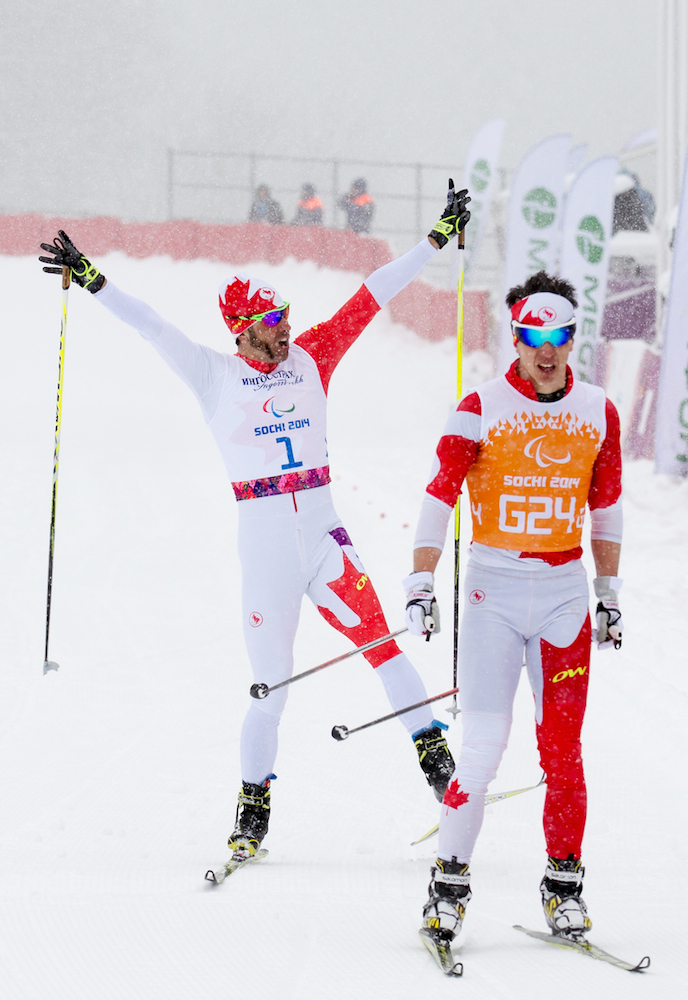
    Canada's Brian McKeever (l) celebrates his ninth-career Paralympic gold, which he won Wednesday in the 1 k visually impaired sprint with guide Graham Nishikawa in Sochi, Russia. While Nishikawa helped him win his first gold of the week in the 20 k classic with guide Erik Carleton, this was Nishikawa's first Paralympic gold. (Photo: Matthew Murnaghan/Canadian Paralympic Committee)
    Canada’s Brian McKeever (l) celebrates his ninth-career Paralympic gold, which he won Wednesday in the 1 k visually impaired sprint with guide Graham Nishikawa in Sochi, Russia. While Nishikawa helped him win his first gold of the week in the 20 k classic with guide Erik Carleton, this was Nishikawa’s first Paralympic medal. (Photo: Matthew Murnaghan/Canadian Paralympic Committee)

    “When I saw him go down, I immediately panicked and just thought ‘OH NO! Not now,’ ” said Nishikawa. “It wasn’t until we got back up around the Russians and had the Swedes in sight that I felt a huge relief.”

    “What a set of wheels on Graham today. That was impressive,” said McKeever. “The snow was so heavy today. He basically towed me up that hill and got me around the Russian roadblock out there and gave us a chance. It is not how we planned things, but that was a pretty awesome day.”

    Sweden’s Zebastian Modin hung on for the silver medal, while Russia’s Oleg Ponomarev outraced his countryman for the bronze.

    Adding to the dramatics, it was the first time Nishikawa had guided his friend, and training partner, on his own in international competition. After racing together over the last decade in Canada, McKeever recruited Nishikawa into his training group this fall with the goal of bringing two guides to the Paralympics for the first time ever.

    Earlier this week, Nishikawa, who races able-bodied both domestically in Canada and on the World Cup circuit, shared guiding duties with Erik Carleton to lead McKeever to his first gold of the 2014 Games. Recognizing the stress the warm weather, and heavy snow conditions was putting on the guides for the long-distance races, the innovative Canadians leveraged both guides – switching at the midway point. With McKeever dropping into third place, Nishikawa stepped in to blaze a trail to the gold medal step of the podium.

    Carleton’s name was on the start list so he was the only one to receive a gold medal. But on Thursday, Nishikawa will get his due and receive a gold medal of his own.

    “It feels absolutely awesome,” beamed Nishikawa. “I said earlier this is a whole new world for me. I’m so impressed by everything. This whole experience has been amazing and I just wanted to do whatever I could to be here and help Brian. We have been friends for a long time so this is very special.”

    From sunny T-shirt weather, to pouring rain, to dumping heavy snow on Wednesday, Mother Nature is sending the world’s top Para-Nordic wax technicians into a daily frenzy at Laura Stadium.

    “This whole experience has been amazing and I just wanted to do whatever I could to be here and help Brian. We have been friends for a long time so this is very special.” — Graham Nishikawa

    “These conditions are definitely stressful on the wax techs,” said McKeever. “Every day they basically start from ground zero based on the conditions. We had amazing boards today and the guys deserve a lot of credit. We were so fast on the downhills which really got us back into the race today.”

    The victory brings McKeever’s career medal haul to 12 at the Paralympics, including his nine gold. If he can chalk up one more victory this week he will become the first Canadian Winter Paralympian with at least 10 gold medals, and third Paralympian in Canada overall to accomplish the feat.

    A handful of other Canadians also competed in the sprint races. Chris Klebl, of Canmore, Alta., qualified for the men’s sit-skiing heats, but did not advance to the final. Robbi Weldon, of Thunder Bay, Ont., along with her guide Phil Wood, of Canmore, Alta., also had their day come to an end in the semifinals of the women’s visually impaired category, while Paralympic rookie, Brittany Hudak of Prince Albert, Sask., could not advance past the women’s standing semifinals.

    Other Canadians that did not qualify for the heats included:  Ottawa’s Margarita Gorbournova and her Regina-based guide, Andrea Bundon, in the women’s visually impaired race.

    Louis Fortin (Fredericton, N.B) did not qualify in the men’s standing class, Saskatoon’s Colette Bourgonje also competed in women’s sit-skiing, while Quebec City’s Sebastien Fortier, and Yves Bourque (Becancour, Que.) also did not qualify for the men’s sit-skiing heats.

    Following a day off on Thursday, the final biathlon competition of the 2014 Paralympic Winter Games will take place at the Laura Nordic Stadium on Friday.
    Results

  • Silver, then Bronze: Arendz First Canadian to Take Two Biathlon Paralympic Medals

    Silver, then Bronze: Arendz First Canadian to Take Two Biathlon Paralympic Medals

    Canadian biathlete Mark Arendz on the medal stand earlier in the 2014 Paralympics after winning silver in the 7.5 k standing even. He went on to notch bronze in his next competition to become the most successful Canadian biathlete. (Photo Scott Grant/Canadian Paralympic Committee)
    Canadian biathlete Mark Arendz on the medal stand earlier in the 2014 Paralympics after winning silver in the 7.5 k standing even. He went on to notch bronze in his next competition, the 12.5 k race, to become the most successful Canadian biathlete. (Photo Scott Grant/Canadian Paralympic Committee)

    (CCC press release)

    SOCHI, Russia — Canada’s Mark Arendz battled through brutal race conditions to win the bronze medal in the men’s 12.5-kilometre standing category at the Paralympic Winter Games in Sochi, Russia on Tuesday.

    Arendz racing to silver on Saturday in the Paralympic biathlon 7.5 k sprint. (Photo: Matthew Murnaghan/Canadian Paralympic Committee)
    Arendz racing to silver on Saturday in the Paralympic biathlon 7.5 k sprint in Krasnaya Polyana, Russia. (Photo: Matthew Murnaghan/Canadian Paralympic Committee)

    With rain pelting down and dense fog socked into the Laura Nordic Stadium, the 24-year-old took advantage of the weather he grew up with in Hartsville, Prince Edward Island to grab his second medal of the week. Arendz clocked a time of 30:31.0.

    “To get a medal is awesome and that was the goal,” said Arendz. “There were mistakes out there both in shooting and on the course so it was not a perfect race, but anytime you are on the podium I have to be happy because this is strong field.”

    In a race that puts a premium on shooting, the soft-spoken Canuck rattled off 19 of 20 shots in his four rounds on the range. The miss in this third bout of shooting sent Arendz to do one 150-metre penalty loop.

    “The warm up was tough today, and it was hard to see the targets early [because of the fog],” said Arendz. “It was the same conditions for everyone. I wasn’t perfect in shooting so I know there are still mistakes that need to be cleaned up.”

    Arendz was in a dogfight for the gold with two of his closest rivals, Russia’s Azat Karachurin and Norway’s Nils-Erik Ulset. Karachurin also missed just one target en route to winning the gold medal with a time of 29:30.0 (0+0+0+1). Missing two shots in his final stop at the range, Ulset hammered his way around the course on the skinny skis to edge Arendz for the silver medal with a time of 30:24.6.

    “I felt a little tired today, and I just didn’t have quite the snap that I had on the first day,” added Arendz, who had a lightening quick final lap. “The conditions stayed hard so I was able to put down the power I had. Everything is there. I just need to put it all together.”

    Earlier this week, Arendz became the first Canadian ever to win a silver medal in biathlon at the Paralympic Winter Games. Brian McKeever, guided by his brother, Arendz’s coach Robin, were the only other Canadians to win a Para-Biathlon medal when they captured the bronze in 2006.

    “I still haven’t been perfect shooting, and I don’t want to leave Sochi until I do that.” — Arendz, Canada’s most successful Paralympic biathlete

    Canada's rain-soaked Caroline Bisson after placing 11th in the women's 10 k standing biathlon at the Sochi Paralympics. (Photo Scott Grant/Canadian Paralympic Committee)
    Canada’s rain-soaked Caroline Bisson after placing 11th in the women’s 10 k standing biathlon at the Sochi Paralympics. (Photo Scott Grant/Canadian Paralympic Committee)

    The two-medal week now makes Arendz the most successful Canadian biathlete at the Paralympics. Recognizing the bright future ahead of him, four years ago the wide-eyed Canadian walked into his first Paralympic Stadium in 2010. His goal was take in the Paralympic experience. This time around things are different.

    “This time it is strictly business,” said Arendz. “I have had four years of experience and feel that I am strong in all race distances. I want to be on the podium every time. It was not a perfect race today. I still haven’t been perfect shooting, and I don’t want to leave Sochi until I do that.”

    Earlier in the day, Ottawa’s Caroline Bisson suited up in the women’s 10-kilometre standing race. Bisson finished in 11th spot with a time of 39:53.9 (2+0+1+0). Russia’s Alena Kaufman missed just one shot while posting the golden time at 29:57.1 (1+0+0+0).

    The Para-Nordic events continue on Wednesday in Sochi with the men’s and women’s cross-country skiing sprint races. The final biathlon race will take place on Friday.

    Results

  • Arendz First Canadian to Win Biathlon Silver at Paralympics

    Arendz First Canadian to Win Biathlon Silver at Paralympics

    Mark Arendz on his way to a historic first silver for Canada in biathlon at the Sochi Paralympics on Saturday. (Photo: Scott Grant/Canadian Paralympic Committee)
    Mark Arendz on his way to a historic first silver for Canada in biathlon at the Sochi Paralympics on Saturday. (Photo: Scott Grant/Canadian Paralympic Committee)

    (Cross Country Canada press release)

    SOCHI, Russia — Mark Arendz fired his name into the history books on Saturday as the first Canadian ever to win a silver medal in biathlon at the Paralympic Winter Games.

    Days removed from his 24th birthday, the Hartsville, P.E.I. resident came a hair short of winning the gold after clocking the second fastest time at 19:14.0 (1+0) in the men’s 7.5-kilometre standing biathlon competition.

    “It feels absolutely great and a big relief to get on the podium right away,” beamed Arendz in the finish corral. “I fought as hard as I could, and it was such a close race at the end.”

    Close indeed.

    The two-time Paralympian finished just .07 seconds behind the gold medallist from Russia, Vladislav Lekomtcev who clocked-in at 19:13.7 (0+1) after crashing at the finish line. Russia’s Azat Karachurin also missed one shot en route to winning the bronze medal with a time of 19:14.9.

    Arendz was in fourth place at the midway point of the race, but the hard-nosed Islander put the pedal down after shooting clean in his second stop at the range to charge his way onto the podium.

    “The plan today was to shoot clean and I was focused on following that, but I missed that one target just slightly,” said Arendz. “I thought I had it but a twitch of the finger and I just missed it. I wasn’t far off. I told myself to fight hard on that penalty loop to get over the penalty and finish strong.”

    After going perfect in his second round of shooting, Arendz hammered the pace in his third and final trip around the slushy 2.5-kilometre loop to secure his name in the history books.

    “It is so warm and not really winter like conditions so the course was really slowing down out there. The guys in the wax room did a great job on the skis. I will celebrate this one with them.”

    It has been a memorable run for the rising Canadian star since making his Paralympic debut on home snow in 2010. With a room full of medals, he has twice finished second overall on the IPC World Cup biathlon standings, and last year locked up his first overall Word Cup title in the men’s standing category to cap off a season that was highlighted by one gold and two bronze medals at the 2013 World Championships.

    Arendz’s coach, Robin McKeever, guided his brother and 10-time Paralympic medallist, Brian, to Canada’s only other Paralympic medal in biathlon. The brother tandem won a bronze medal in the visually impaired 7.5-kilometre sprint discipline at the 2006 Paralympics in Turin, Italy.

    Two Canadian women also hit the start line for the opening day of biathlon competitions at the 2014 Paralympic Winter Games. Ottawa’s Caroline Bisson placed 14th in the women’s six-kilometre standing category. Bisson went 2+1 on the range to post a time of 27:14.8.

    “I was so excited to race when I woke up this morning. I was thrilled to have the opportunity to get this first one out of the way,” said Bisson of her first-ever Paralympic race. “It was such a thrill to compete today. I pushed as hard as I could to the end. Overall I am satisfied with that.”

    Russia’s Alena Kaufman shot clean en route to posting a winning time of 18:27.2 in the women’s standing class.

    Margarita Gorbounova, also of Ottawa, and her guide, Andrea Bundon of Regina, teamed up to finish seventh in the women’s six-kilometre standing race. Gorbounova, who missed two shots in her first bout of shooting, stopped the clock at 26:17.8.

    Russia’s Mikhalina Lysova took advantage of a perfect day of shooting to go on and win the gold medal with a time of 20:03.2.

    Results

  • Canadian Paralympic Preview: McKeever, Bourgonje, Arendz Lead the Way to Sochi

    Canadian Paralympic Preview: McKeever, Bourgonje, Arendz Lead the Way to Sochi

    Brian McKeever (r) with guide Erik Carleton celebrating gold at the 2011 World Championships. (Photo: IPC)
    Brian McKeever (r) with guide Erik Carleton celebrating gold at the 2011 World Championships. (Photo: IPC)

    In Vancouver 2010, the Canadian Paralympic team placed third in the overall medal count with 19, behind Russia, which racked up 38, and Germany, with 24.

    Canada has set a goal of being in the top three again this year overall at the Winter Paralympic Games held March 7 to 16 in Sochi, Russia, according to an Own the Podium press release.

    Canada’s recently announced 14-athlete Paralympic nordic team has the horsepower and experience to do their part in bringing home medals.

    Sochi, RUSSIA - Mar 4 2014 -  Colette Bourgonje from Canada's Nordic team arrives prior to the 2014 Paralympics in Sochi, Russia.  (Photo: Matthew Murnaghan/Canadian Paralympic Committee)
    Colette Bourgonje from Canada’s Nordic team arrives prior to the 2014 Paralympics in Sochi, Russia. (Photo: Matthew Murnaghan/Canadian Paralympic Committee)

    The team will be led by 10-time Paralympic medallist Brian McKeever along with his guides Erik Carleton and Graham Nishikawa, and eight-time Paralympic medallist Colette Bourgonje. Her silver at the 2010 Games was Canada’s first medal at home.

    McKeever, who races in the visually impaired category, will be appearing in his fourth Paralympic Games including Salt Lake City 2002, Turin 2006 and Vancouver four years ago.

    The triple-gold medallist from 2010 tweeted on Tuesday: “Woke up with a virus yesterday. Timing couldn’t be much worse. Not the ideal prep for the #Paralympics. It’s been a bumpy #RoadToSochi.”

    In 2010, McKeever, 34, was named to both Canada’s Paralympic and Olympic teams. In the Olympics, he qualified to compete in the men’s 50-kilometre cross-country race; however, Canada’s coach decided to replace him with a skier who did well in earlier race at the Games.

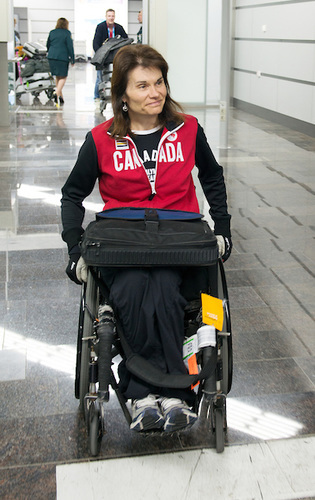
    Bourgonje, 52, is one of Canada’s most recognized Paralympians, having participated in all six Paralympic Winter Games in addition to wheelchair racing at three Summer Paralympics. She is the reigning world champion in the sit-skiing distance race and she captured a silver and bronze medal at the 2010 Paralympics.

    In an interview with Canada.com, Bourgonje said, “My goals for Sochi are to be in the top five.”

    Biathlete Mark Arendz, 24, is a multiple International Paralympic Committee (IPC) World Cup medallist and is first overall in this season’s World Cup standings. He will be competing for his first Paralympic medals in the standing division in his second Winter Paralympics.

    Last season, Arendz won the overall IPC World Cup Biathlon title, and won a gold and two bronze medals at IPC World Championships, and won a gold, two silvers and four bronzes throughout the World Cup season.

    Canadian World Cup Veteran Mark Arenz in the Standing Division Sprint at Canmore. (Photo Courtesy Pam Doyle)
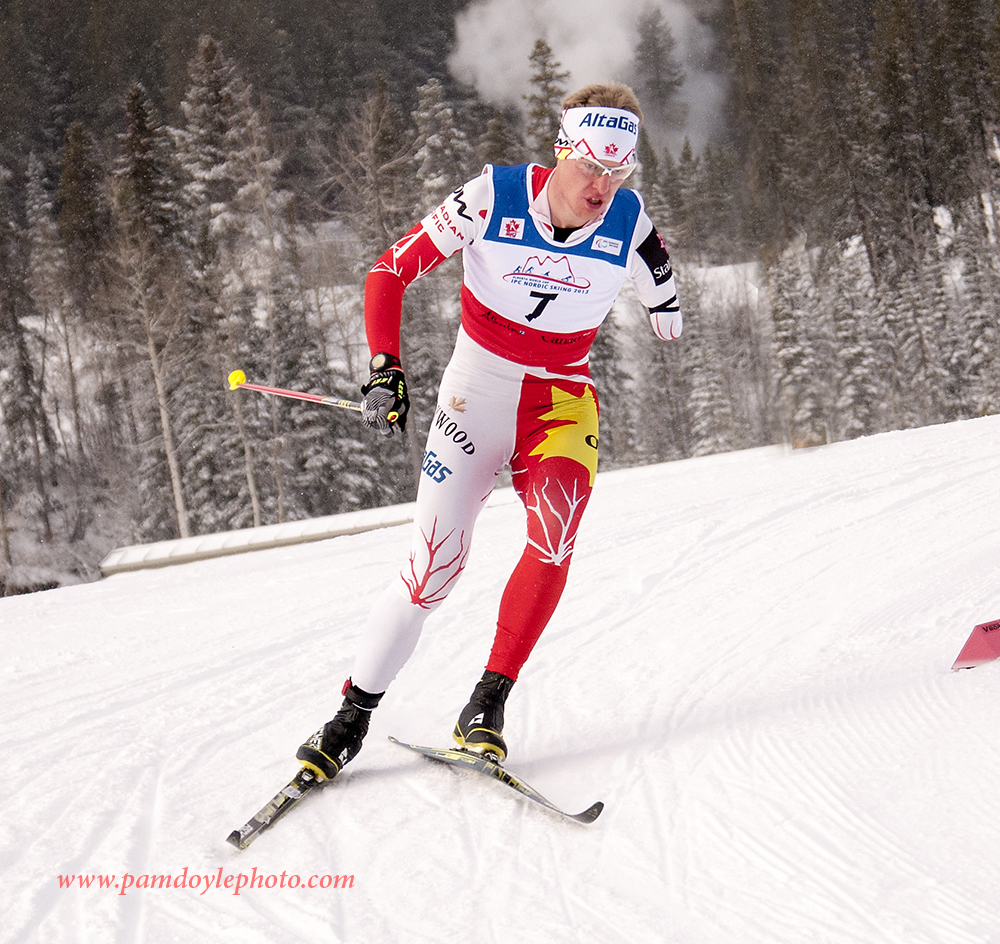
    Canadian World Cup veteran Mark Arenz in the standing sprint at the IPC World Cup in December in Canmore, Alberta. (Photo: Pam Doyle)
  • Sochi Paralympics Preview: U.S. Medal Chances and More

    Sochi Paralympics Preview: U.S. Medal Chances and More

    Returning 2010 Paralympic bronze medalist Andy Soule racing at the 2014 US national championships. (Photo Victor Henderson)
    Returning 2010 Paralympic bronze medalist Andy Soule racing at the 2014 US national championships. (Photo Victor Henderson)

    At the 2014 Winter Paralympics from March 7 to 16 in Sochi, Russia, nordic skiing and biathlon will account for more that half of the available medals.

    How will the United States fare in the medal chase?

    Downplaying expectations in an interview with FasterSkier, John Farra, the high-performance director of U.S. Paralympics Nordic, didn’t rule out a surprise or two from his team.

    “While we are not expected to win any medals … we are spending a lot of time and effort to find that extra half percent or 1 percent that gets [our athletes] into the top three to steal a medal from the Russians or the Ukrainians.”

    The Russians, in particular, have been dominant in World Cup sit-ski competitions this season. In December in Canmore, Alberta, both the Russian and U.S. teams showed up in full force to prepare for Sochi.

    The Russians won most of the medals available and swept several podiums, while the U.S. men missed out on the podium.

    “They [the Russians] really came to ready to race,” Farra said.

    Sights on Biathlon

    For the men’s team, biathlon looks to be a place where the U.S. program has an opportunity for success. At the Vancouver 2010 Winter Games, Army veteran Andy Soule earned the United States’ first-ever Olympic or Paralympic medal in biathlon, finishing third.

    Soule returns to this year’s team and told FasterSkier, “I’m probably better on the longer races, the biathlon long course (15 Kilometer) is my best race, not because of the skiing, but because the shooting penalty is considerably larger for that event.”

    Regarding the technical aspect of biathlon, Soule said, “I’m definitely working on a being more aggressive. I’ve been a decent shooter for some time and I’m working on cutting down on my range times.”

    U.S. Paralympics Biathlon coach Rob Rosser said the team has a good chance to score an upset in biathlon.

    “In cross-country skiing, it can takes years to develop and significantly change your level of fitness,” Rosser said. “That’s why biathlon is so interesting as a sport, so many things can happen with the shooting that the outcomes are much less predictable.”

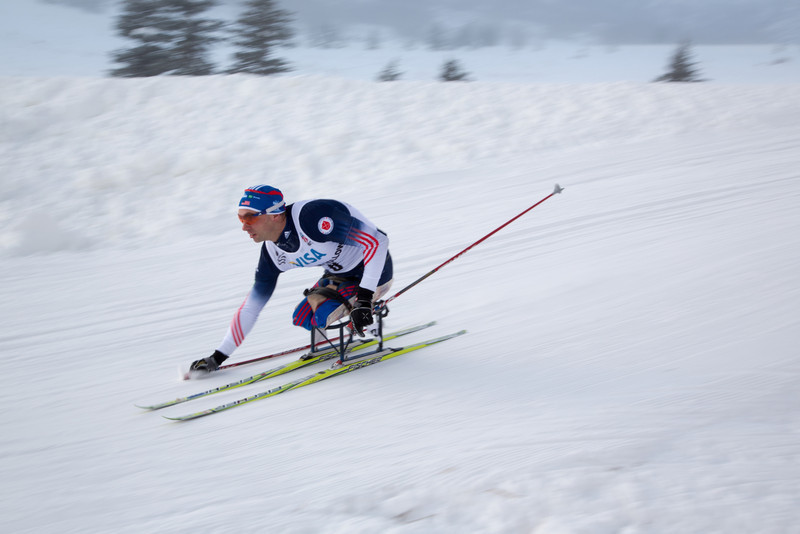
    Dan Cnossen racing at the 2013 IPC World Cup in Canmore, Canada, in December. (Photo: Pam Doyle)
    Dan Cnossen racing at the 2013 IPC World Cup in Canmore, Canada, in December. (Photo: Pam Doyle)

    A leading member of the team after just a few seasons in the sport, Lt. Dan Cnossen edged Soule at U.S. nationals in January, beating Soule by 2.8 seconds in the 7.5 k race, after Soule missed a shot on his final round in the range.

    Cnossen will be competing at his first Paralympics this month.

    “He trains unbelievably professionally,” Farra said. “He really puts everything into it.”

    This year Cnossen has focused on upping his game in biathlon.

    “I’ve made some changes in my training for the biathlon,” Cnossen said at the beginning of the season. “I had some troubles with my rifle that we’ve ironed out, so I think you’ll see some improved hit rates.”

    At nationals, the sit-ski sprint lived up to it’s reputation where anything can happen. A relative newcomer, Jeremy Wagner became a national champion with his first national title, topping 2010 Paralympian Sean Halsted.

    U.S. Women’s Prospects

    The U.S. women’s team makes up four of the 18 athletes on the team, but they have delivered the most impressive results and generated the most media buzz this Olympic year.

    Oksana Masters is the top U.S. contender for a medal based on her World Cup results this season.

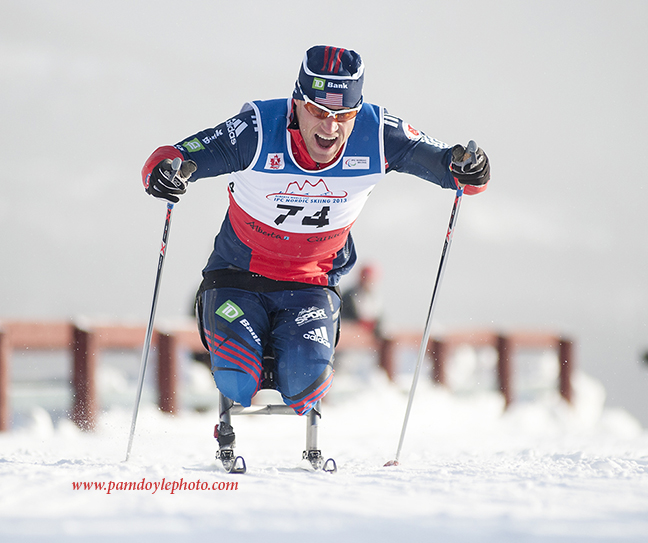
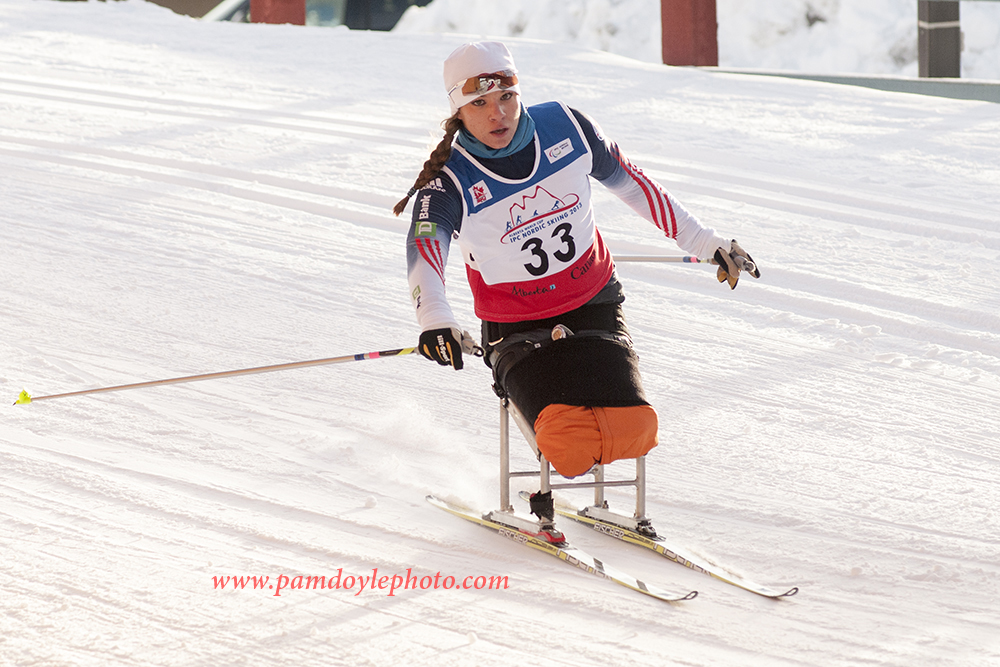
    Oksana Masters racing in the IPC World Cup Canmore sprint race. (Photo: Pam Doyle)
    Oksana Masters racing in the IPC World Cup Canmore sprint race. (Photo: Pam Doyle)

    Masters won bronze medals in the 12 k in Oberstdorf, Germany, as well as the 5 k in Canmore. She narrowly missed the podium in the sprints at Canmore due to an “unlucky tangle” with another skier.

    Recruited to skiing based on her background as a bronze-medal winning Paralympic rower, Masters has shown remarkable adeptness at learning a sport she first tried two years ago.

    “She’s fearless, so she ended up crashing a lot early on because she just wanted to go fast,” Farra explained. “She didn’t know how to control the [sit-ski] to be able to turn it left or right to avoid the tree, and often times she’d connect with the tree or crash and break a pole.”

    He laughed.

    “She was a bit of a … well, you know, it was pretty funny actually in some ways. As long as she wasn’t getting hurt it was fun to watch.”

    In an email to FasterSkier, Masters cited her inexperience with skiing and her surprise at her success. About her Canmore medal, she said, “I knew that just about every other woman skier out there had years of experience on me and I am still a newbie. I went into the the race with the mind set of I’m not going to be top 5 but I wanted to try my darn hardest to make it in the top 10.”

    As for her first World Cup podium: “I didn’t know instantly that I got third. I was shocked and thought it was a mistake at first.”

    So is she getting more comfortable and does she believe she can compete with the best in the world? Farra thought so.

    “I think it is fair to say she is starting to believe it, yes. She is so competitive and really was pumped to get on the podium in Oberstdorf. She has really refined her technique to a very smooth, powerful and efficient motion. … She will get there.”

    Masters has garnered national media attention since her appearance in the 2012 London Paralympic Games. Her life story as a Ukrainian orphan adopted by her U.S. mother has been featured in various media forms, including Sports Illustrated and Southwest Airlines’ in-flight magazine.

    She was named one of the “11 hottest paralympic athletes” by MSN “Now.” She was named one of ten U.S. athletes to watch by The Guardian.

    Apple featured her in a video, “Making a difference: one app at a time”, where she demonstrated how she uses an iOS app to control her prosthetic legs and put on high heeled shoes.

    Perhaps most famously, Masters posed nude for ESPN’s 2012 “Bodies We Want” issue.

    Tatyana McFadden racing at US nationals Soldier Hollow. (Photo: Victor Henderson)
    Tatyana McFadden racing at US nationals Soldier Hollow. (Photo: Victor Henderson)

    As the U.S. heads for Sochi, world-class wheelchair racing champion and summer Paralympic cross-over athlete, Tatyana McFadden is another woman to watch. McFadden and Kikkan Randall were featured together in BP television ads during NBC’s coverage of the Winter Olympic Games.

    Apart from her celebrity status as the most decorated U.S. athlete going to Sochi, McFadden is candid about her newness to skiing.

    “For track, since I’ve been to other races and other Paralympics … I know what to expect between events and the transitions and about getting on the bus and off the bus and into the venue and what its going to feel like,” McFadden said. “For Sochi, I don’t know any of that. I have no idea because everything is so new for me.”

    McFadden’s ski results have steadily improved as she gains experience. She has cracked the top 10 three times in IPC world cup competition this season, finishing ninth in the 12 k and tenth in the sprint at Oberstdorf. She placed seventh in the sprint at Canmore, narrowly missing the six-woman final round.

    McFadden and her London 2012 Paralympic teammate Jessica Long are both Russian orphans who were adopted and brought to the United States by American families. Both have been outspoken against Russia president Vladimir Putin’s 2012 law banning adoption of Russian children by U.S. citizens.

    McFadden said she was excited to return to Russia for the Sochi Paralympics.

    “It’s part of my culture, it’s part of who I am, and that will never be apart from me,” she said. “But I’m going to be going and competing for the United States of America.”