Tag: 2014/2015 Canadian World Cup Team

  • Harvey, Kershaw Exceed Expectations in 7th, 14th in Kuusamo 15 k

    Harvey, Kershaw Exceed Expectations in 7th, 14th in Kuusamo 15 k

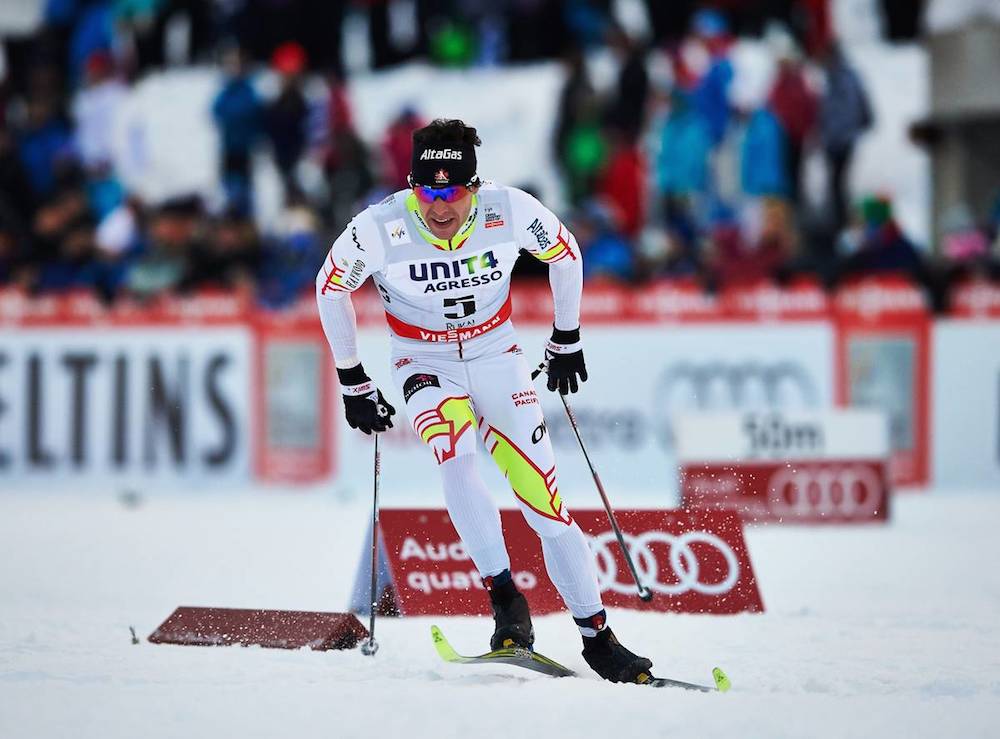
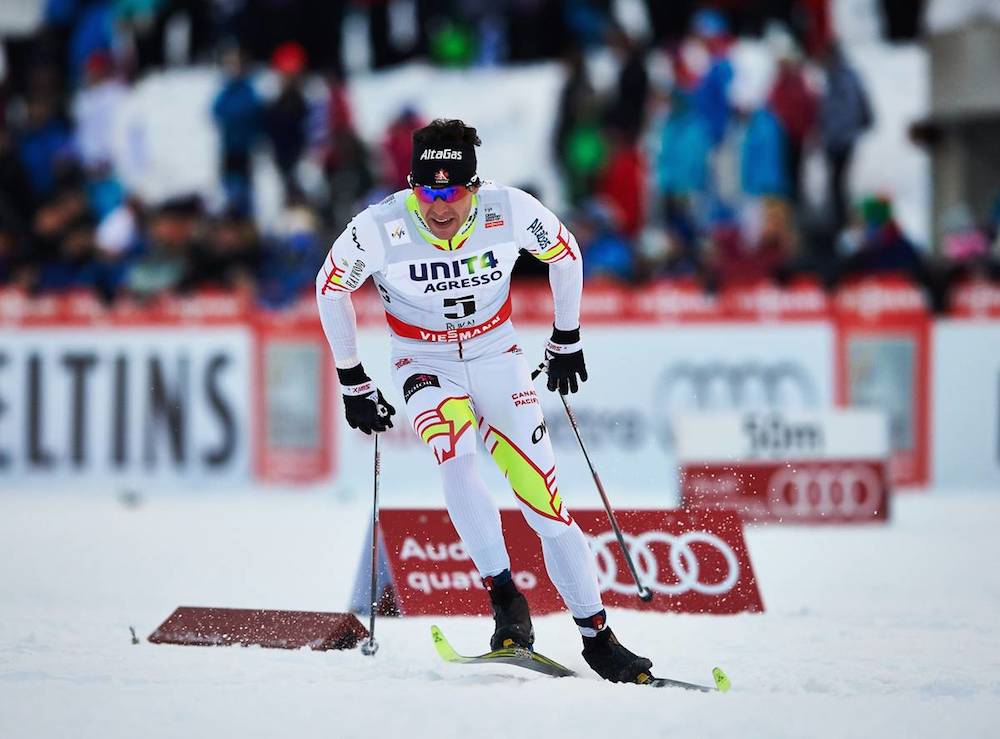
    Alex Harvey (Canadian World Cup Team) racing to 14th in Saturday's classic sprint at the World Cup opener in Kuusamo, Finland. (Photo: Fischer/Nordic Focus)
    Alex Harvey (Canadian World Cup Team) racing to 14th in Saturday’s classic sprint at the World Cup opener in Kuusamo, Finland. (Photo: Fischer/Nordic Focus)

    Alex Harvey made it clear heading into the World Cup opening weekend in Kuusamo, Finland, that he had one main goal — to ski into the points. That meant the top 30, which he checked off on Saturday after placing 14th in the classic sprint. On Sunday, the 26-year-old Canadian came out with a similar attitude and ended up seventh in the 15-kilometer classic, 27.8 seconds behind the winner, Iivo Niskanen of Finland.

    Aim low, finish high? Not exactly. Harvey was simply being realistic.

    “Any time I start a race, I want to be on the podium obviously,” Harvey said on the phone after Sunday’s race. “But I know at the same time that I have no podium in my life before Christmas.”

    In Kuusamo, he had achieved as high as seventh three years ago in the 15 k classic pursuit, when the race was part of the Ruka Triple mini tour. That same year in 2011, he placed fifth in a 15 k skate in a tuneup FIS race the weekend before in Sjusjøen, and in 2010, he was ninth in Kuusamo’s skate sprint. But other than those results, Harvey said he historically has struggled to find his speed early in the season.

    Last year at the Ruka Triple, he was 38th in the classic sprint, 30th in the 10 k classic and 48th in the 15 k freestyle pursuit for 42nd overall. So yeah, seventh and 14th this time around was welcome improvement.

    “I was just really trying to be in the points, get things going, like, start the engine, and get some good feelings on skis,” he said. “After the sprint, I knew the speed was there, usually that’s the biggest issue for me, so I knew with the speed being there, my guess would’ve been probably a top 20, top 15, like after [Saturday], so that exceeded a bit my expectations.”

    Harvey started toward the back of the pack — 88th of 96 men — and by the 8.1 k checkpoint, he was into the top 10.

    “I actually tried to start a bit harder than normal,” he said, after posting the 14th-fastest time though 3.1 k. “I’ve been working on that for four years now. I know I can have one of the best last 5 k compared to anybody else, but it’s always on the first 5 k that I seem to lose a lot of time.”

    He said 14th early on was, “pretty much as good as it gets. After that I was able to slowly make my way up the field, and I was able to have a really solid last lap.”

    At the finish, Harvey was sixth, only to be bumped one place by eventual-second-place finisher Martin Johnsrud Sundby of Norway. Last season, Sundby topped everyone for the Overall World Cup crown, and Harvey finished 2013/2014 out with a career-best third overall.
    (Photo: Angus Cockney)
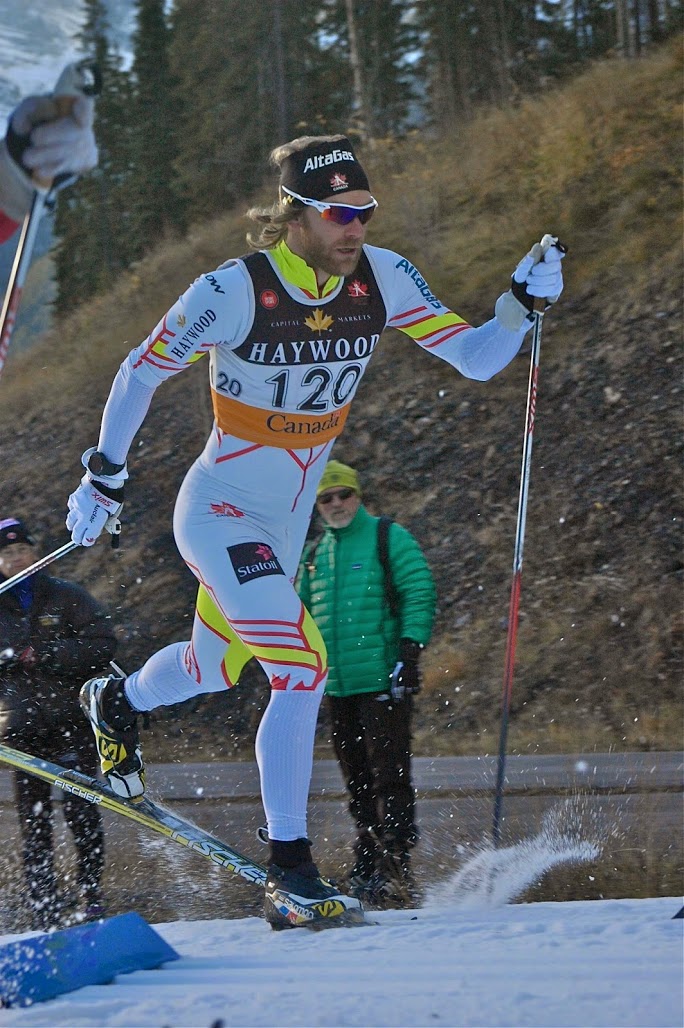
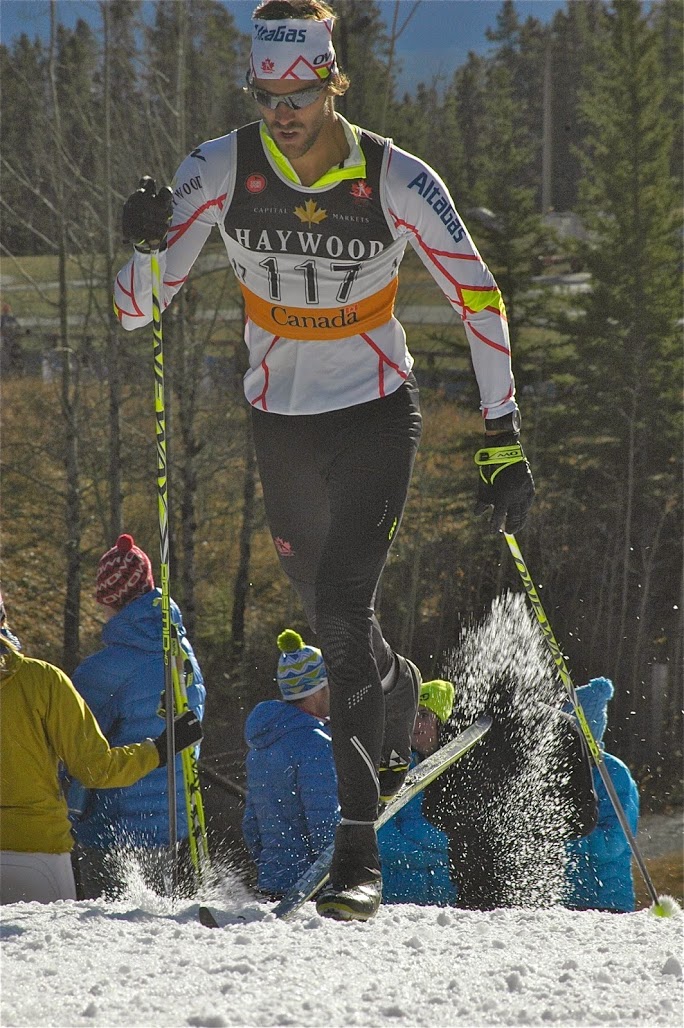
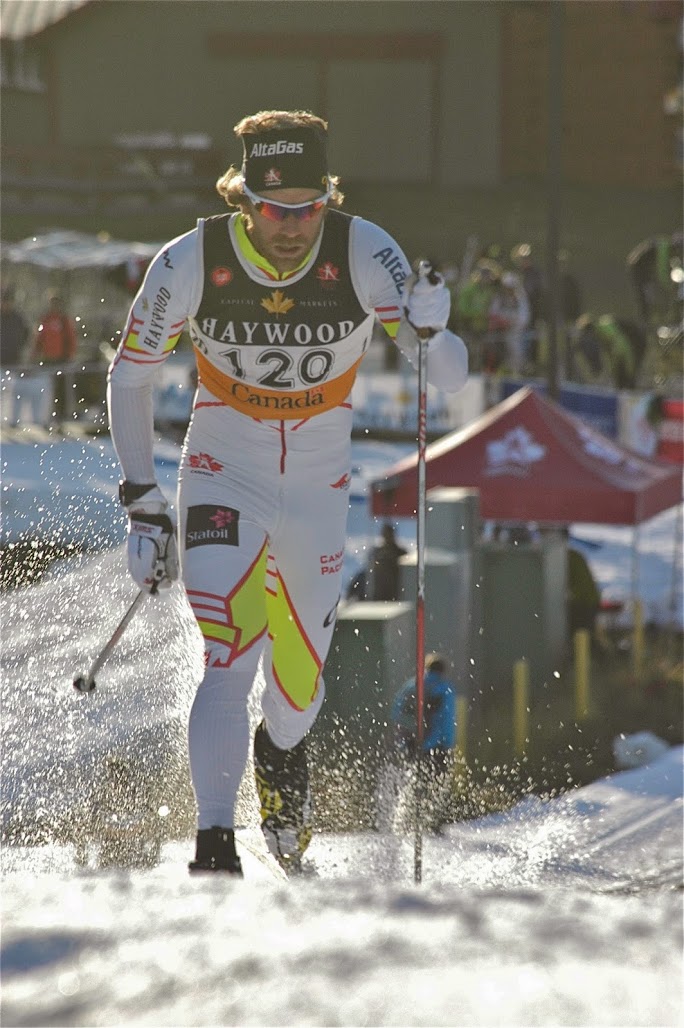
    Devon Kershaw at the Frozen Thunder classic sprint on Oct. 24 in Canmore, Alberta. After placing 57th in Saturday’s sprint in Kuusamo, Finland, he shaved his beard. (Photo: Angus Cockney)

    Kershaw Up to 14th

    Another Canadian well up into the points on Sunday was Devon Kershaw, who was 57th in the sprint qualifier the day before after struggling a bit with grippy skis. Kershaw finished 14th, 42.1 seconds back from the winner, in what he called his favorite race: the 15 k classic.

    But Kuusamo has never been an easy place to start: last season, he was 77th in the sprint, 64th in the 10 k classic and 65th overall after the 15 k pursuit. In 2012, he finished the mini tour a much-better 22nd, and his best result before that was eighth in the 2011 15 k classic pursuit.

    The course itself is widely considered one of the most brutal on the World Cup (although Canadian World Cup coach Tor-Arne Hetland said there are no easy courses on the circuit), and on Sunday, racers had to tackle three massive hills each lap.

    On top of that, Kershaw noted that North Americans, which typically have a season-long World Cup team in place at the start of the season, have to compete with Europeans vying for a spot on their respective nations’ World Championships teams every weekend.

    “It seems like Period 1 is always very difficult because the big teams are vying for spots … They can’t afford to put the focus on later in the season like I’ve been able to do my whole career as a Canadian,” he said. “So it’s a very difficult course, coupled with guys that are very well prepared. It’s always a hard place to be. If you’re a little bit off in Kuusamo, it looks worse than it is maybe.”

    Fortunately, he was firing on “normal” cylinders on Sunday.

    “I’ve made some significant changes in my training and been feeling really good about the preparations we’ve been doing and been feeling good in workouts, but you know, it doesn’t mean much if you can’t deliver with a race,” Kershaw said with a laugh. “To ski smooth and have a really solid race, it feels really good, and it’s just confirmation that I made the right changes, at least I believe I did, and we’ll just have to see moving forward. Not feeling amazing, amazing on the steep terrain, but it’s very rare that I ever have. It was very good compared to the last couple years.”

    He added that he was most pleased with his first and last laps, and said he “fell asleep a little bit” on some of the steeper climbs in the middle. Starting 50th, he finished sixth and dropped to 14th, but he expected that.

    “The splits didn’t really tell me a whole lot today … like, 28 of the best distance skiers in the world were behind me,” Kershaw said. “But I knew of course getting splits like that meant I was starting faster like I wanted and I had good snap.”

    His 3.1 k time ranked ninth fastest at the end of the day, and he hovered around 24th at 8.1 k and was back up to 13th with 2 k to go.

    “The flatter sections, the double-poling sections and the gradual sections, in my whole career that’s where I’ve been the strongest,” he explained. “I was feeling right back to normal on that terrain and the steeper hills, the first hill, I’ve still got work to do [there]. I felt like my technique was slipping a bit on that terrain, but my skis were very good today and I was super happy with what the boys put together for me. We did a good job testing [skis] after [Saturday] so we adjusted really well.”

    Ivan Babikov (Canadian World Cup Team) finished 57th, and Graeme Killick (Canadian Development B-Team) was 71st.

    Another national-development-team skier, Emily Nishikawa notched her best World Cup result in Europe, placing 38th in the women’s 10 k classic. Two years ago in Canmore, Alberta, where she lives and trains with the Alberta World Cup Academy, she placed 34th in the World Cup skiathlon.

    “I was really happy with my race today!” Nishikawa wrote in an email. “I started out a little slower, that was the plan, to really ramp it up in the 2nd half, and I was able to do that.”

    Skiing around 60th for the first half of the race, she jumped to 40th by 8.1 k and closed for 38th, 2:43.9 minutes behind Norwegian winner Therese Johaug.
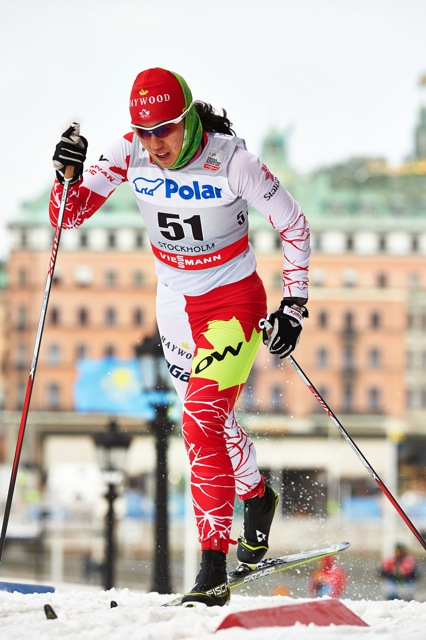
    Emily Nishikawa racing in Stockholm last March. (Photo: Fischer/Nordic Focus)
    Emily Nishikawa racing in Stockholm last March. (Photo: Fischer/Nordic Focus)

    “I caught some great rides from [Finland’s] Aino Kaisa Saarinen, and [Poland’s] Justyna Kowalczyk [who ended up fourth],” Nishikawa wrote. “I was really happy to hang on to Justyna for the last 4 km. I lost a few seconds to her on the last climb into the stadium, but I was really happy with the way I skied.

    “I am really looking to build off this great start to the season,” she added. “I know I can get into the top 30, I was close today, and that really motivates me for the next race.”

    After the first World Cup weekend in his first season with the team, Hetland was generally impressed.

    “For Emily, a personal best in the World Cup, that’s a good start for her,” he said on the phone Sunday. “That she could ski together with Aino Kaisa Saarinen, with Kowalczyk on the track, that’s a good race for her. For the boys, of course the results from Alex have been very good and also the 15 k from Devon today was also good.”

    “Ivan was a little bit under his best level in the race today, but he will be improving to the next weekend,” Hetland added.

    Babikov posted the 45th-fastest time at 3.1 k, and by 8.1 k, he was up to 37th.

    “In the start he lost a little bit time and then he had a good part in the middle and was climbing on the result list,” Hetland observed. “But on the last hill, he broke a pole and lost a little bit of time. He would have been somewhere between 29 and 45th if that didn’t happen. He will be better when he gets some more races.”

    Looking at the rest of the team, Hetland said Valjas, who missed qualifying in the sprint in 39th, was close to the heats, but not quite fast enough. “But it’s easy,” he said. “Also I think [Killick] will need some more races on this level before he’s on his best level, and he will get new chances on the next weekend.”

    Canada’s other male development skier in Europe, Jess Cockney raced at the Norwegian Cup this weekend, placing 13th in the classic sprint and 39th in the 10 k classic. Perianne Jones (Development B-team) was 48th in the women’s sprint.

    “I think it’s good racing, but there is potential for racing faster so we will keep on working hard,” Hetland added. “Now we have to reset and preparing for Lillehammer and then we will do as good as possible there.”

    Kershaw said it’s been helpful to talk with Hetland about realistic expectations and not get too wrapped up in past results — or overall finishes, like when he ended up second in the 2011/2012 World Cup.

    “I feel the funniest thing with skiing, or even with anything, is you’re kind of, or I tend to, compare myself to the best I’ve ever been — and the best I’ve ever been was the best in the world,” Kershaw said with a laugh. “It’s so unfair because the last few years, I’ve been off that mark. I’ve been talking a lot with T.A. about that, just to build through the season and not get down on myself and really focus on the process.”

    “What the past [was] is not so important,” Hetland said. “We’re racing now and what is the slogan this year? ‘This is our time.’ So we are concentrating on the races this year and we will try to improve for each weekend now. The races have been very good and the team has been performing well. Of course there is somebody that is happy with the results and some that are not so happy.”

    Results: Men | Women

  • Canadian World Cup Preview: Same Faces, Fresh Perspective

    Canadian World Cup Preview: Same Faces, Fresh Perspective

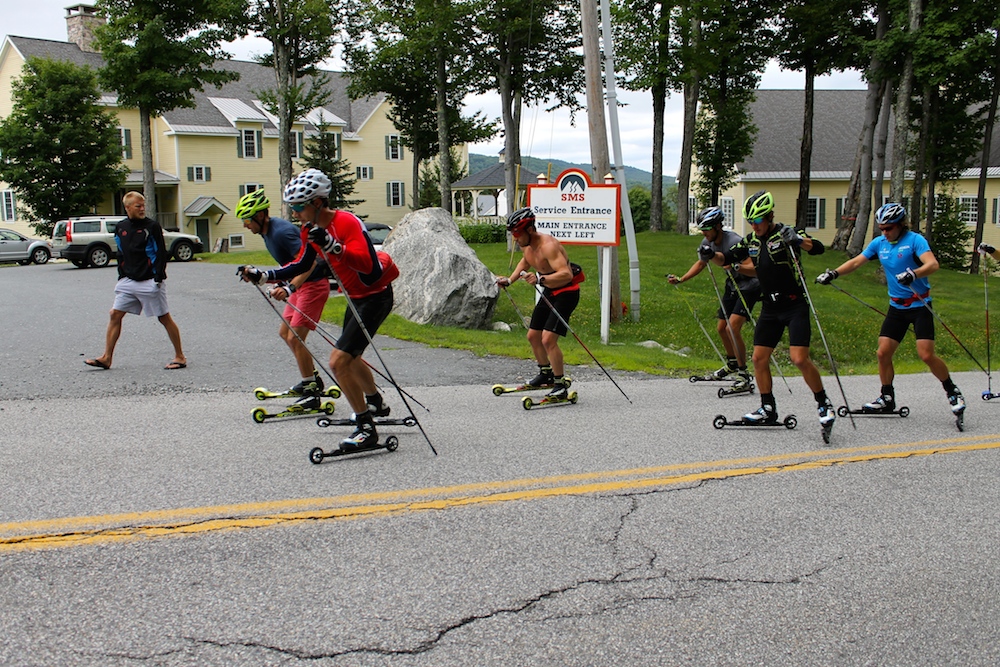
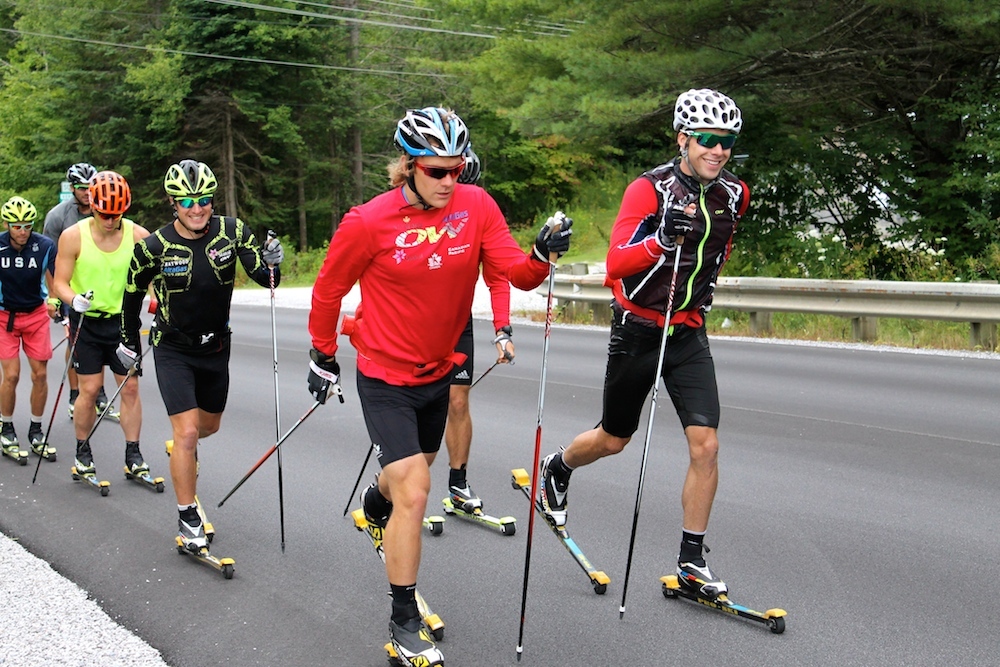
    Canadians Alex Harvey (r), Devon Kershaw (front left) lead six others, including Ivan Babikov (third from l), Kris Freeman (second from l) and Andy Newell (l), during a combi over-distance rollerski near Stratton, Vt.
    Canadians Alex Harvey (r) and Devon Kershaw (front left) lead six others, including Ivan Babikov (third from l), Kris Freeman (second from l) and Andy Newell (l), during a combi over-distance rollerski on Aug. 15 near Stratton, Vt. The Canadian World Cup Team held its sea-level, dryland camp there for the first time this year.

    What do you get when you take a Norwegian Olympic skate-sprint champion, who’s won more than a dozen individual World Cups and the overall sprint title in 2004/2005, and make him the co-World Cup coach of a tight-knit group of Canadians?

    That’s yet to be seen, but if you ask Tor-Arne Hetland, 40, who previously coached the Swiss sprint team the last four years, he likes their chances.

    “Knock on wood, everything is for the moment fine,” Hetland said of the eight-person squad’s collective health. “We will see when we start racing if they have done the job good enough.”

    This year’s Period 1 World Cup team includes World Cup staples Alex Harvey (third in the Overall World Cup last season), Devon Kershaw, Ivan Babikov and Lenny Valjas. Joining them are additional national-team members Graeme Killick (Development B-team), Jesse Cockney (Dev. B), Emily Nishikawa (Dev.), and Perianne Jones (Dev. B).

    Andy Newell (l) and Alex Harvey (r) lead an over-distance rollerski past the Stratton Mountain School while Canadian coach Tor-Arne Hetland (l) checks in.
    Tor-Arne Hetland (l) checks in with skiers during a three-hour combi rollerski, while Andy Newell (l) and Alex Harvey (r) lead the group past the Stratton Mountain School in Stratton, Vt.

    Period 1 includes four World Cup weekends starting this Saturday, Nov. 29, in Kuusamo, Finland, and extending through Dec. 20- 21 in La Clusaz, France (with Lillehammer Dec. 5-7 and Davos Dec. 13-14 in between).

    According to Hetland, in charge of the World Cup team along with Canadian National Team Head Coach Justin Wadsworth (also with the team in Europe right now), all eight athletes — all of which went to the 2014 Olympics — will get some World Cup races in before Christmas.

    Last weekend, the whole team kicked off the International Ski Federation (FIS) season in Gällivare, Sweden, with the sprinters participating in a classic sprint and the distance skiers doing a 10/15 k classic.

    On Friday, Cockney, 25, placed 13th in a Norwegian Cup classic sprint out of more than 160 competitors, after taking third in his quarterfinal in a three-man photo finish for first. According to Cross Country Canada (CCC), the World Cup team did not have enough quota spots for him to compete in Saturday’s Kuusamo 1.4-kilometer classic sprint, which Harvey, Kershaw and Valjas are listed to start.

    Last weekend, Harvey pulled off two podium performances in the team’s opening FIS races in Gällivare, placing second in the 1.4 k classic sprint and third in the 15 k classic. Jones won the 1.2 k women’s sprint, and Nishikawa was fourth in the 10 k classic the next day.

    While the competition way up north in Sweden wasn’t quite as deep as farther south in Bruksvallarna and Beitostølen, the races were still good practice. Hetland didn’t put too much emphasis on them, focusing more on the rest of the season well beyond Kuusamo.

    What about the women’s team? 

    Two out of the three Canadian women on last year’s World Cup Team retired (Chandra Crawford and Dasha Gaiazova), leaving Perianne Jones, 29, who didn’t meet the World Cup Team’s 2014/2015 selection criteria. Named to the national team’s new Development B-team instead, she officially joined the Alberta World Cup Academy (AWCA) in Canmore.

    Since no women met the World Cup Team criteria, there’s no season-long female World Cup Team for Canada. But two women, Jones and Emily Nishikawa, earned Period 1 World Cup starts with their results last year.

    In May, CCC nominated top athletes to its World Cup (A), B, C and D teams, according to head coach Justin Wadsworth.

    The 2014/2015 Development B-team included three AWCA skiers: Jones, Graeme Killick and Jesse Cockney. Mostly U23-aged athletes make up what Wadsworth called the C-team: Browne, Dahria Beatty (AWCA) and Raphaël Couturier (CNEPH). The ‘D’ (development) team is reserved for athletes who meet high-end domestic criteria and included five AWCA skiers: Emily Nishikawa, Heidi Widmer, Alysson Marshall, Kevin Sandau, Michael Somppi.

    This time of year is always exciting, he said in a phone interview two weeks ago from Davos. The team convened in Gällivare on Nov. 17 and trained there until this Wednesday. As a competitive skier up until his retirement in 2009, Hetland remembered what the calm before the start of the season felt like.

    “It’s a cool time and of course you start to feel and smell the winter,” he said. “I’m looking forward to it and the main [training] job is done, but now the real job is starting. I’m really looking forward to it and hopefully the athletes will bring out the best.”

    Hetland’s been working with the team since May, when the World Cup team spent a little over a week on snow at the Sunshine Village ski area in Banff, Alberta. In the spring, summer and fall since, the team’s held camps in Bend, Ore., Stratton, Vt., Park City, Utah, and on Frozen Thunder at its home base in Canmore.

    Harvey attended all but two of the camps at Sunshine and Frozen Thunder, working with his personal coach Louis Bouchard — a World Cup assistant coach — and recently skiing at Forêt Montmorency in Quebec.

    “I don’t believe that it is possible to have better training conditions than we’ve had in the training camps,” Hetland said. “And also the training in Quebec and Canmore, it’s not possible to find better places than this.”

    After post-Olympic budget cuts last spring, those were the kind of training-venue options Canada’s World Cup Team was left with. Instead of holding international camps in popular, snow-covered places like Austria, Italy or their usual August trip in New Zealand, the Canadians saved money and cut down on travel by staying in North America.

    “It’s good that we haven’t been traveling so much because the athletes are away from home all winter,” Hetland observed. “Now they are ready to go [in] Europe and hopefully they will enjoy the timing with racing.”

    In terms of goals or expectations, Hetland said they’re clear within the team.

    “Every athlete has their own goals and Cross Country Canada have their goals and I have seen what the athletes have done in training,” he said. “I believe the athletes can do very well and if they do everything perfect then they will be hard to beat.”

    That said, he acknowledged that other skiers around the world probably trained hard, too. But the difference for the Canadians this year is that they may have trained harder than usual.

    “The training philosophy has changed noticeably this season with TA at the helm of the training plan,” Kershaw wrote in an email, referring to Hetland, who co-designed training regimens for Kershaw, Babikov and Valjas with the help of Wadsworth, the team’s coach for the last four years. “More hours all around and intervals were longer in time and shorter on rest.”

    At the end of the season next April, Hetland said they’ll be able to see how different the training actually was compared to years past and whether it was beneficial.

    “I think most of the training is similar with what they have done earlier, but of course with a new coach in the team then there [are] some new and different things,” he explained. “Maybe not big things … but maybe some small changes are made to be faster.”

    The four World Cup Team members (Babikov, Kershaw, Harvey and Valjas) have individual aspirations much like they’ve each had in the past — with Babikov focusing on certain races and the Tour de Ski, Kershaw and Harvey as what Hetland called “all-around skiers,” looking to be competitive each weekend and contend for a top overall World Cup finish, and Valjas trying to get back to his top sprinting form after a health-and-injury-plagued last season.

    “Then it’s [about] not [being] too greedy and not jump into too many races and be calm enough to train a little bit and do well also in World Championships,” Hetland said.

    “It’s [about] not [being] too greedy and not jump into too many races and be calm enough to train a little bit.” — Tor-Arne Hetland on Canadian World Cup Team’s philosophy for 2014/2015 race season

    According to CCC’s 2014/2015 national-team selection criteria, the main goal at World Championships is podium results, specifically at least two medals and a minimum of one top-12 individual result from each athlete.

    “Because of the implications to CCC’s funding, medal potential athletes will be the primary focus,” the criteria states (page 14).

    Selection events include 2014/2015 World Cups, NorAms and U23/Junior World Championships in early February. At the very least, Canada will select a minimum of two athletes per gender.

    Asked whether there was any pressure regarding medals at World Championships (which will be held Feb. 18 to March 1 in Falun, Sweden), Hetland laughed.

    “I think you can make a business plan and also make goals for the athletes, but for the athletes, it’s still [their goals] that is the most important and [they] are making the most pressure on themselves. They know if they do the job, then the results will come.”

    For more on Canada’s World Cup Team, see the mini profiles below:

    6.03.2014, Falun, Sweden (SWE): Alex Harvey (CAN) - FIS world cup cross-country, 15km men handicap start, Falun (SWE). www.nordicfocus.com. © Felgenhauer/NordicFocus.
    Alex Harvey after placing second in the 15 k freestyle pursuit, the last race of 2014 World Cup Finals, for third overall in the 2013/2014 World Cup. 
    (Photo: Felgenhauer/NordicFocus)

    Alex Harvey

    Big story: Finished 2013/2014 season on overall World Cup podium (in third) for first time in his career and first time since Kershaw did so in second in 2012/2013.

    Also: Won skiathlon at 2014 World Cup Finals, a World Cup skate sprint in Szklarska Poreba, Poland, and the opening Tour de Ski stage (4.5 k skate prologue) in Oberhof, Germany. He was second in the TdS skate sprint two days later in Lenzerheide, Switzerland. Posted best-individual Canadian finish at 2014 Olympics (17th in skiathlon)

    So far: 2nd and 3rd in Gällivare FIS opener (classic sprint and 15 k classic, respectively)

    Been working on: “Like previous years, I increased a bit the total volume and went back to a bit more capacity work,” Harvey wrote in an email. “The main thing is Louis and I built a plan for the next quadrennial. Every year will have a specific physiological energy system that we focus on leading to [the 2018 Olympics in] South Korea.”

    World Champs target races: 30 k skiathlon and 50 k classic

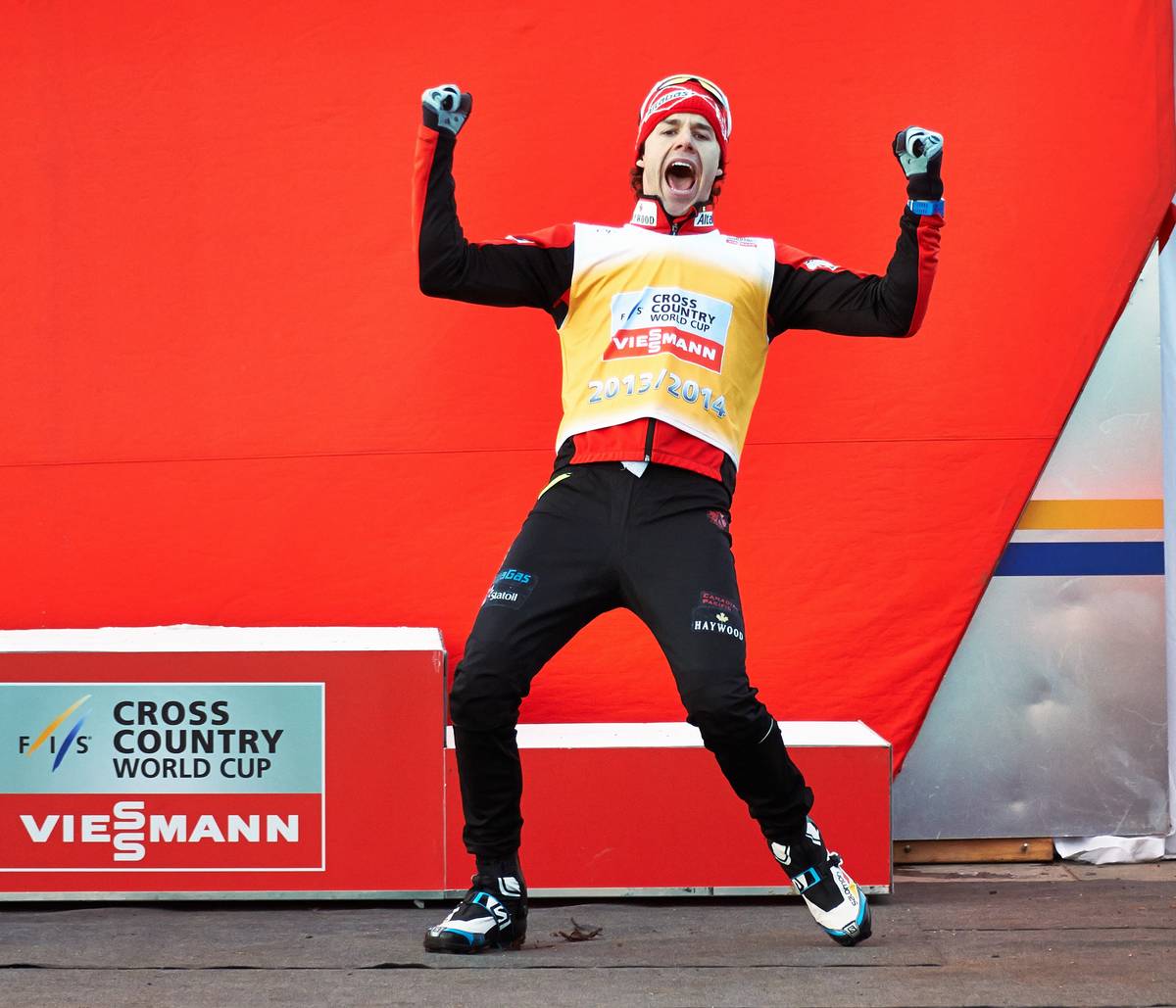
    Devon Kershaw in the Frozen Thunder classic sprint on Oct. 24 in Canmore, Alberta. He went on to win the 10.8 k freestyle race there on Oct. 27. (Photo: Angus Cockney)
    Devon Kershaw at the Frozen Thunder classic sprint on Oct. 24 in Canmore, Alberta, where he finished fifth overall. He went on to win the 10.8 k freestyle race there on Oct. 27. (Photo: Angus Cockney)

    Devon Kershaw:

    Big story: Got engaged to Norway’s Kristin Størmer Steira in April in Nepal’s Himalayas.

    Also: Placed second in the first stage of last year’s Tour de Ski, the 4.5 k skate prologue in Oberhof, Germany.

    So far: 5th in first FIS race of season, Gällivare 15 k classic

    Before Sweden: “I was in Norway for 8 days,” Kershaw explained. “It was great to hang out with the fiancé for a bit before things got going. Kristin is still injured and recovering from her fractured pelvis, so to have a little over a week after almost two months apart was super important and all around awesome for both of us. I won’t see her in Kuusamo either, so that’ll be the only time we’ll get together in November. It was nice — she’s taking her MBA, so was busy with school most days, but I was training twice (dryland) during the day, so it was all good.”

    Pre-race feelings: “I’ve been feeling good lately and this whole season — but you know how xc skiing goes — you never know until you know. You know? Still, I’ve been confident and believed in what I’ve been doing which is so important. As for expectations — I expect nothing yet I’m trying to prepare for everything. Deep I know…”

    World Champs targets: Individually, the 50 k classic, and as a team, the relay and team sprint

    Ivan Babikov in the Frozen Thunder classic sprint. (Photo: Angus Cockney)
    Ivan Babikov in the Frozen Thunder classic sprint. (Photo: Angus Cockney)

    Ivan Babikov:

    Big story: After a fourth-place finish at 2013 World Championships (in the 15 k skate), the 34-year-old Babikov will be hungry for medal in Falun

    Also: Posted the third fastest time up Alpe Cermis, the final climb of the 2013/2014 Tour de Ski, to finish 15th overall

    So far: 6th in Gällivare 15 k classic

    World Champs targets: “Falun is pretty far ahead, haven’t started the World Cup season yet. :)” Babikov wrote. “But I’d look forward to the Duathlon [skiathlon] race and the team relay of course.”


    Lenny Valjas:

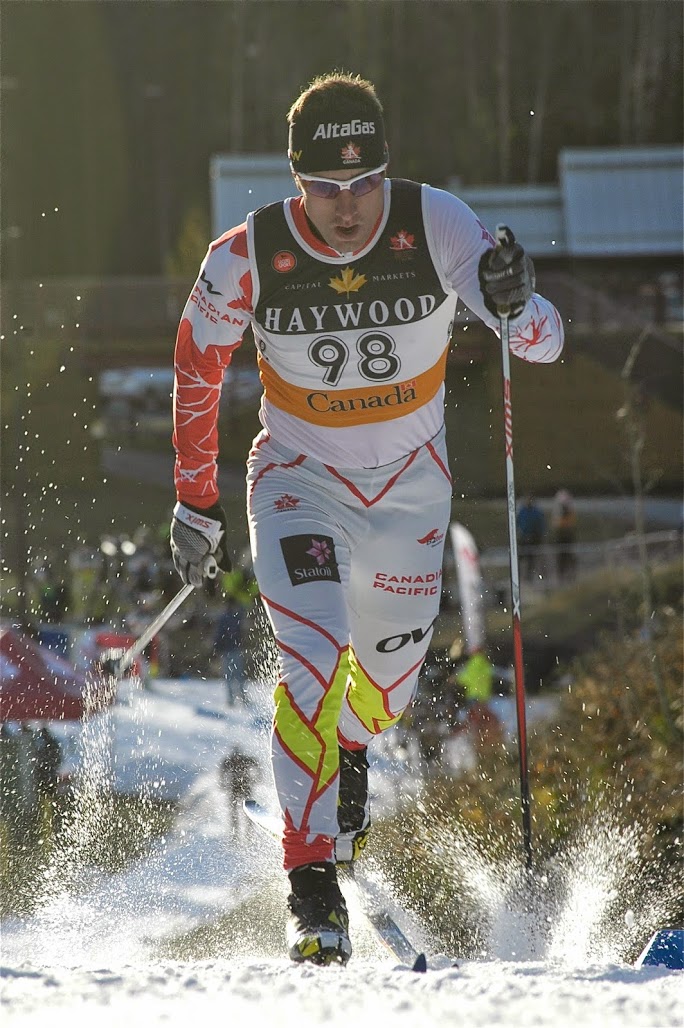
    Lenny Valjas during the Frozen Thunder classic sprint on Oct. 24 in Canmore, Alberta, in which he placed eighth. "I've had a huge training load this fall and was feeling pretty tired in Canmore for the Frozen Thunder races," he wrote in an email after Saturday's FIS classic sprint in Gallivare. "I felt strong today in the race, like my old fast self." (Photo: Angus Cockney)
    Lenny Valjas during the Frozen Thunder classic sprint on Oct. 24 in Canmore, Alberta, in which he placed eighth. (Photo: Angus Cockney)

    Big story: The youngest guy on the four-man World Cup Team, the 26-year-old Valjas is their comeback kid. “Some things just don’t work out the way you planned,” Valjas explained in a blog post. “For me, last season should have been the best one of my life, the one I was training 4 years for. Instead, it was my worst year ever.”

    After arthroscopic knee surgery in June 2013, he expected to be out for six weeks. Instead, it was five months. He got back to Europe last February, shortly before the Olympics, but caught a nasty cold and was quarantined from the athletes’ village in Sochi.

    “This was the hardest year of my life so far,” Valjas continued. “… I am more determined than ever to train smart (I learned a lot about myself through all this), and race hard.”

    Since May, he’s been back to normal training with the rest of the team.

    “He will come into the season with two knees,” Hetland said with a laugh. “Both are working, and he’s getting a little bit tired of hearing people talking about his knee. He liked the time earlier better when everybody was talking about that he was strong. I think he has trained well and has done most of the training. … He’s been looking good so we will see when the season is starting and hopefully he can be improving during the season also.”

    So far: 3rd in the qualifier and 4th in the Gällivare classic sprint. “I felt strong in the race, like my old fast self,” Valjas wrote in an email afterward. “I still have some tapering to do this week but I’m excited to race the Kuusamo course.”

    Several have noted that Kuusamo’s tough climbing course is suited for him.

    “Looking to get back into the points after missing the top 30 last year with my knee surgery,” he wrote.

    World Champs targets: For the classic-sprint specialist, it’s gotta be the classic sprint

    “He will come into the season with two knees.” — Hetland, about World Cup skier Lenny Valjas