From the FasterSkier archive — posts syndicated from athletes’ and coaches’ own blogs between 2004 and 2012, kept online as published. Current coverage is at fasterskier.com.

Tag: 2014/2015 IBU World Cup 1

  • Fourcade on Fire with Back-to-Back Wins in Östersund; Smith Drops from 3rd to 16th

    Fourcade on Fire with Back-to-Back Wins in Östersund; Smith Drops from 3rd to 16th

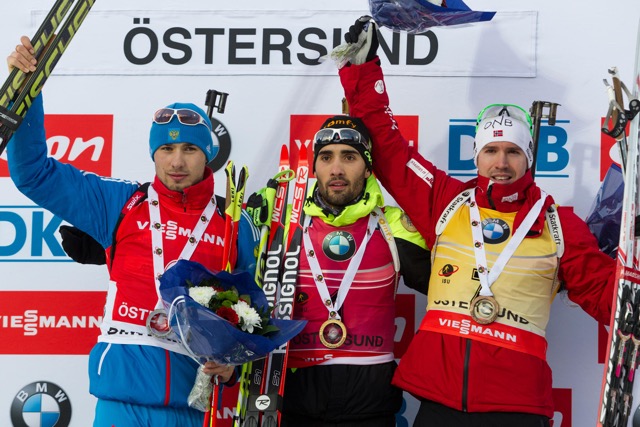
    The men's 12.5 k pursuit podium in Östersund, Sweden, with France's winner Martin Fourcade (c), Russia's Anton Shipulin (l) in second and Norway's  Emil Hegle Svendsen in third. (Photo: Fischer/NordicFocus)
    The men’s 12.5 k pursuit podium in Östersund, Sweden, with France’s winner Martin Fourcade (c), Russia’s Anton Shipulin (l) in second and Norway’s Emil Hegle Svendsen in third. (Photo: Fischer/NordicFocus)

    Martin Fourcade treated shooting on Sunday like a means to an end. The faster he could get through it, the better off he’d be as the first starter in the men’s 12.5-kilometer pursuit on the last day of the IBU World Cup in Östersund, Sweden.

    With a 28.3-second sprint win on Saturday, the Frenchman started 28 seconds ahead of the sprint runner-up, Ondrej Moravec of the Czech Republic, on Sunday. Slovenia’s Jakov Fak was 29 seconds back in third, and another Czech Michal Slesingr left the start 10 seconds later in fourth.

    Conditions were slightly better on the final day of competition than what competitors weathered on Saturday: “They’re still pretty bad, but they were definitely better than yesterday,” Canada’s Nathan Smith said on the phone after starting ninth, skiing into the top three before the last shooting stage, then placing 16th in the pursuit.

    Smith noted the pursuit course had one fewer technical downhill than the sprint, but said organizers apparently scraped snow from the corners of the trail to beef up the middle.

    “On your last lap, you’re, like, ‘OK, I gotta stay on my feet,’ because you’re tired, but it wasn’t as scary as in the sprint,” he said.

    In the range, it was typical Östersund: a little windy as usual. Fourcade, for one, had trouble — or maybe he was just rushing to stay ahead.

    On the first prone, he missed his first two shots. Then he looked up.

    “I didn’t [understand] why, but I wasn’t surprised,” Fourcade told reporters in a press conference after the race. “I saw that it was not a good beginning so I tried to get some information from the big screen.”

    He learned he was aiming too far right, corrected it and hit the next three targets.

    But after the first stage, Fourcade was already playing catchup. Jak had cleaned and was 8.1 seconds ahead. Fourcade made up the lost time quickly on the following lap, coming within 1.7 seconds of him at 4.6 k before entering the range together.

    There on the second prone, Fourcade missed one for another penalty loop. Fak cleaned and so did Russia’s Evgeniy Garanichev, who started fifth and left the range in third. Then there was Norway’s Ole Einar Bjørndalen, who started eighth and cleaned the first two stages as well, and Russia’s Anton Shipulin —all four of which were ahead of him. Fourcade was 23 seconds out of the lead with three laps and two shooting stages to go.

    On the heels of Garanichev and Shipulin at 7.1 k, approaching the range for the first standing, Fourcade was up to fourth, 23.8 seconds behind Jak. He was the only man in the top six with any penalties whatsoever — and Smith was the sixth man, 38.1 seconds behind the leader.
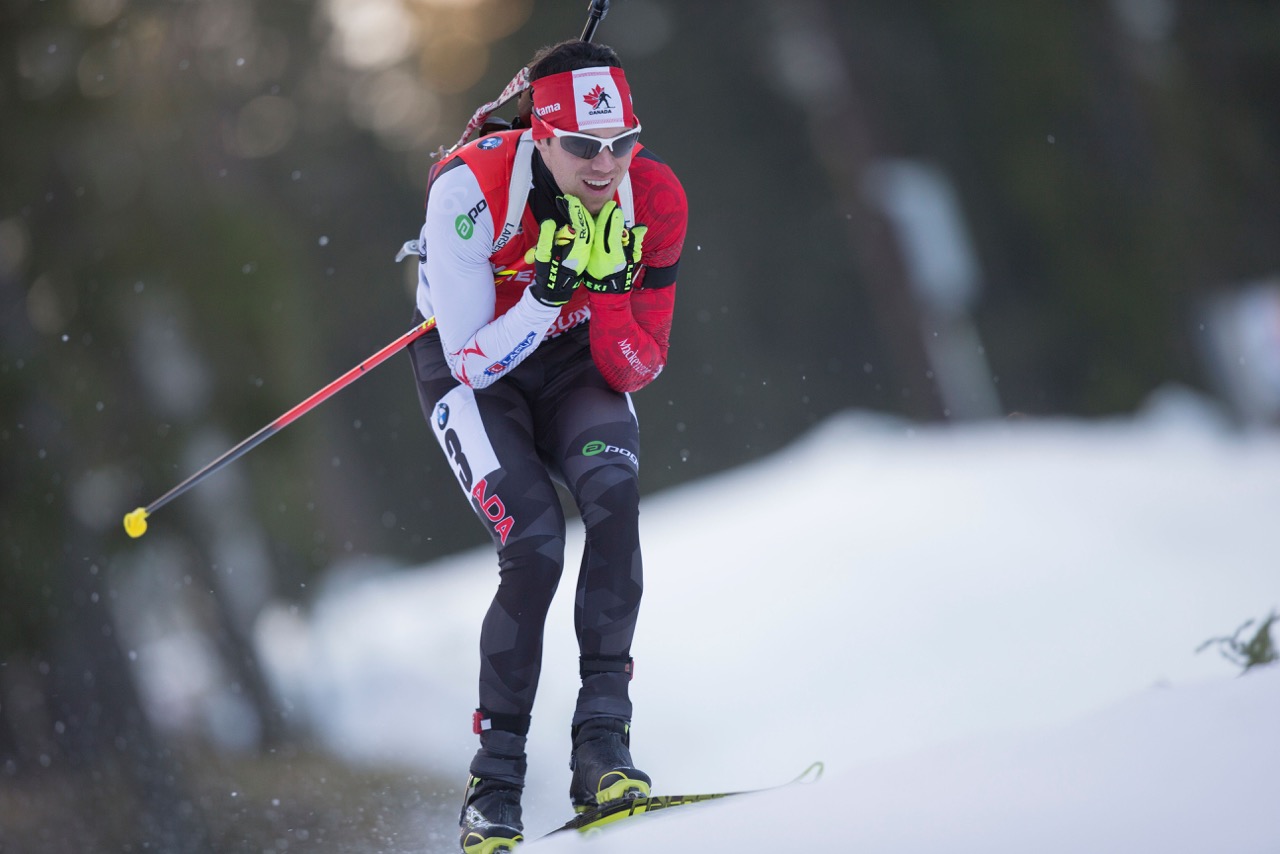
    Canada's Nathan Smith racing to ninth in Saturday's IBU World Cup 10 k sprint in Östersund, Sweden. (Photo: Fischer/NordicFocus)
    Canada’s Nathan Smith racing to ninth in Saturday’s IBU World Cup 10 k sprint in Östersund, Sweden. (Photo: Fischer/NordicFocus)

    With the pressure on, Fourcade cleaned. Jak missed one, and Smith hit all his targets to head out on the course in third right behind Fourcade, who was 15 seconds behind the Slovenian.

    The experience of racing in the top three of a head-to-head race wasn’t totally unusual to the 28-year-old Canadian.

    “Last year in one race, I was second for one lap, but it was earlier in the race, so I’d say today I was definitely closer because it was down to the last shooting that decided it,” Smith reflected. “It’s pretty exciting, but also, I don’t know, you feel a bit out of your league. Hopefully I’ll get more experiences like this and I’ll get more used to it so I’ll feel more comfortable.”

    By 8.8 k, Fourcade passed him, and Smith was 19 seconds back in third. Just under a kilometer later, Norway’s Emil Hegle Svendsen overtook Smith and led him, Shipulin and two Germans — Simon Schempp and Andreas Birnbacher — into the range for the last time.

    Meanwhile, Fourcade was 20 seconds ahead with Fak. While Fourcade faltered in the second standing with one miss, he handled the pressure better than most: Fak missed two and Smith, who entered the stadium in fourth, missed three to tarnish his perfect shooting up to that point.

    “Basically every lap, I was shooting really well, cleaning, and I was shooting quickly so I was making time in the range every loop,” Smith said. “But I was still trying to ski my own race out on the course. I know I’m not as fast as Svendsen or Fourcade, but I was trying to make up the time I lost there in the range and it was working. But on the last shooting, I don’t know, maybe the nerves got the best of me and I missed my first three. I thought I was going to miss four, but thankfully I didn’t.”

    Smith dropped to 14th, 1:20.6 behind Fourcade in first. The 26-year-old, five-time world champion and two-time Olympic gold medalist left the range 10 seconds ahead of Shipulin, who cleaned the last stage to move to second.

    “The last loop was hard with him on my back,” Fourcade said. “I was quite confident, but I looked back, too.”

    “Leaving the shooting range, I had my mind set on catching him, but soon realized it was not possible,” Shipulin told reporters.

    The Russian had started sixth, 48 seconds behind Fourcade, and emerged as the best shooter in the eventual top four with a single penalty. Fourcade had four total, but when he crossed the line uncontested, 10 seconds ahead of Shipulin, all that mattered was he won.

    “The shooting conditions weren’t easy so I’m happy to succeed. Some guys did really well,” Fourcade said. “I had some mistakes, but it was good enough to win.”

    Svendsen, with two misses, ended up third (+26.3), and Fak, with three penalties, finished fourth, 0.4 seconds off the podium. One-tenth of a second later, Austria’s Dominik Landertinger placed fifth after starting 30th and rocketing toward the front with a single miss on the last standing. Sixth through eighth place had a single miss, with Schempp, Birnbacher and Norway’s Alexander Os finishing in that order. France’s Jean Guillaume Beatrix took ninth with two penalties, and Bjørndalen was 10th with three misses.

    The lone Canadian to qualify for the pursuit after placing ninth in Saturday’s sprint with clean shooting, Smith settled for 16th, 1:30.9 behind Fourcade.

    “After missing three, I definitely lost a bit of steam,” Smith said. “I was definitely tiring a bit on the fourth lap, though. I still fought hard on the last lap, but if it would’ve been for a podium, I’m sure I could’ve mustered a bit more.”

    He explained he tried to ski his own race throughout the five-lap pursuit, and focus on his strengths in fast shooting. That led to him lose about 10-seconds per lap on the leaders, but he ended up with the fifth-fastest range time. Fourcade’s range time ranked seventh overall, after posting the second-fastest time in the second bout and top range time in the last one.

    Smith’s final stage was his slowest all day by about four seconds.

    “That might’ve been a mistake — If you slow down sometimes you have more time to let thoughts creep in, distractions,” he said. “I mean, it was awesome shooting other than the last one. I’m still pretty happy with it.

    “It’s nice to know that the possibility’s there so hopefully I have some more chances this year,” he added. “In one of them, I’ll hit those last targets.”

    While Fourcade racked up back-to-back victories in Östersund, Svendsen remains the overall IBU World Cup leader by 44 points over Fourcade.

    After Sunday’s race, he said the yellow bib was a bit of a curse.

    “Now I have to defend it,” Svendsen said. “I will try to do that for as long as I can, but I know Martin will be there. If I lose it, then I will focus on the World Championships.”

    For Fourcade, the World Cup opener turned out to be a confidence booster.

    “The most important thing I am taking away from here is confidence,” he said. “I wanted some personal answers and now I have them.”

    Results

  • Burke, Bailey Land Top 20 in Challenging 20 k in Östersund (Updated)

    Burke, Bailey Land Top 20 in Challenging 20 k in Östersund (Updated)

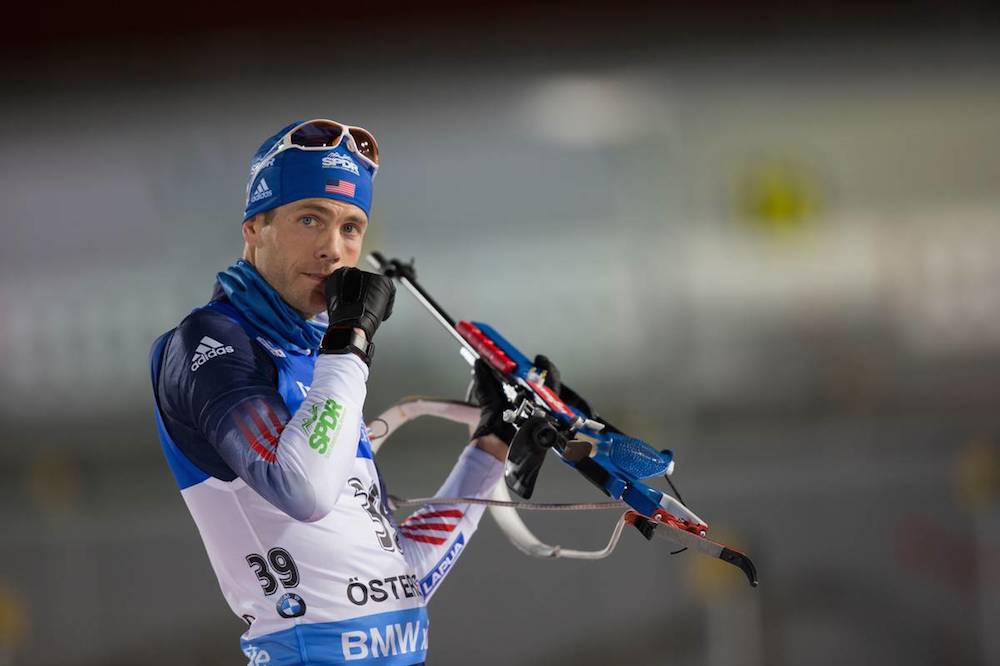
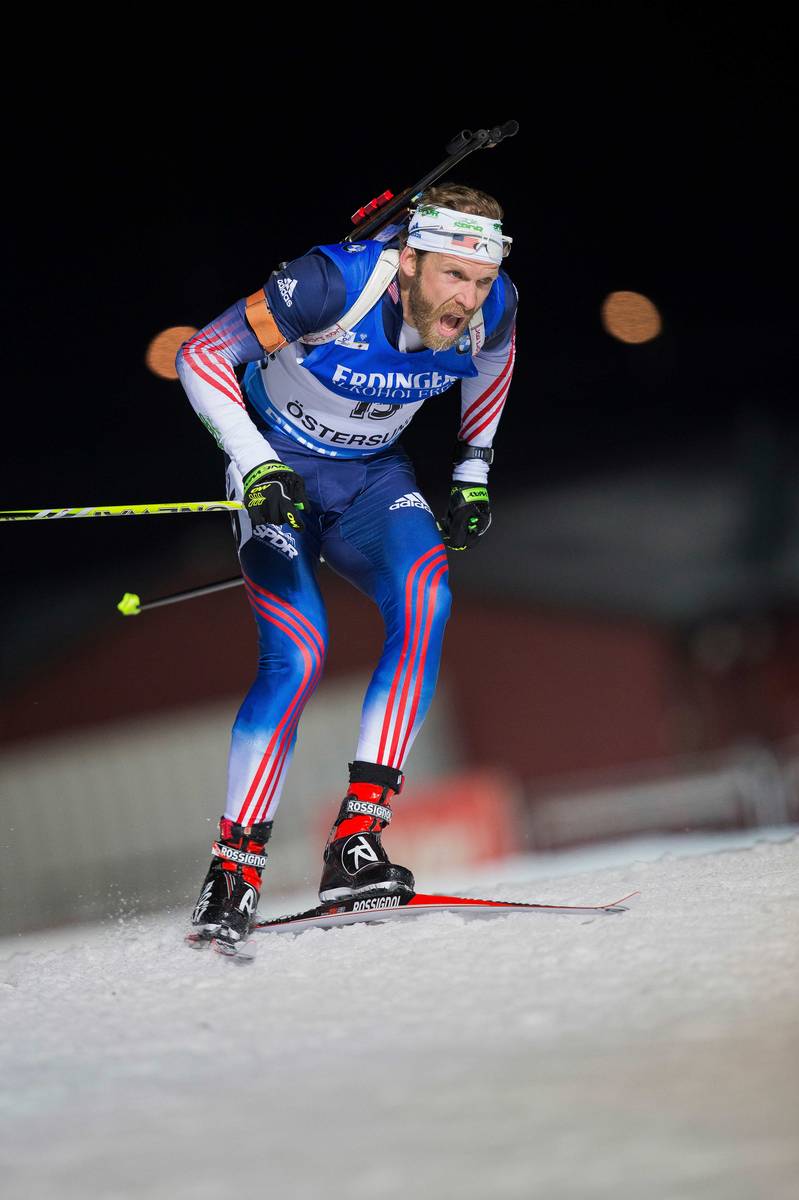
    Tim Burke (US Biathlon) racing to 11th on Wednesday in his first individual World Cup of the season: the 20 k in Östersund, Sweden. (Photo: USBA/NordicFocus)
    Tim Burke (US Biathlon) racing to 11th on Wednesday in his first individual World Cup of the season: the 20 k in Östersund, Sweden. (Photo: USBA/NordicFocus)

    Note: This article has been updated to include comments from Lowell Bailey and Brendan Green.

    An athlete would be lying if they said they didn’t want their first race of the season to be a breeze, and for just about everyone but Norway’s Emil Hegle Svendsen on Wednesday in the first IBU World Cup individual race of the season — it wasn’t.

    Svendsen remained the only perfect shooter out of 100 finishers, and topped the men’s 20-kilometer in Östersund, Sweden, in 53:25.6 — more than a minute and 17 seconds faster than anyone else.

    The next three finishers came out with one penalty apiece (Ukraine’s Serhiy Semenov in second, Michal Slesingr of the Czech Republic in third, and Germany’s Erik Lesser in fourth), but the shooting after that was all over the map. It usually is, but it was even more so on Wednesday, no thanks to various high winds cutting across the range.

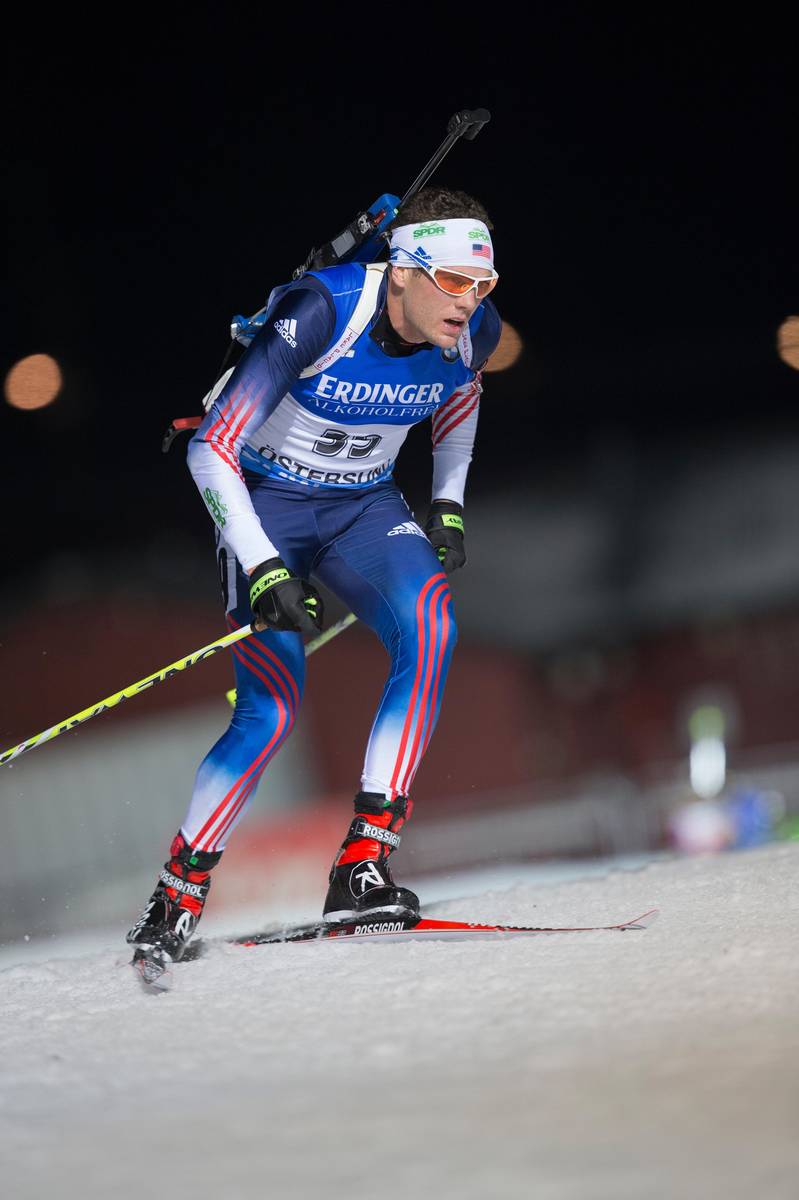
    American Tim Burke, who started 39th of 102, hung consistently in the top 10 throughout the race despite missing one on each of the first three stages.

    Teammate Lowell Bailey started before him in bib 15 on a 6-degree Celsius (43 Fahrenheit) afternoon. Bailey cleaned his first and third stages, missing just one on the first standing, to put himself in sixth his third time leaving the range.

    Burke went on to clean his final standing for 17-for-20 shooting, just like Bailey, who ended up missing two on the last stage. Not long after their finish, the two men sat in 10th and 17th, respectively, only to be bumped by a few late starters.

    One of them was 22-year-old Frenchman Quentin Fillon Maillet, who tallied a career best in 10th. After starting 98th, he knocked Burke from 10th to 11th, 3:32.8 behind Svendsen, a position Burke was satisfied with despite three minutes of penalties.

    Tim Burke takes a moment on the range during Wednesday's 20 k in Östersund, Sweden, where he ended up 11th with three penalties. (Photo: USBA/NordicFocus)
    Tim Burke takes a moment on the range during Wednesday’s 20 k in Östersund, Sweden, where he ended up 11th with three penalties. (Photo: USBA/NordicFocus)

    “I was pleased with my shooting today considering it was tricky with the wind,” Burke wrote in an email. “Normally 3 penalties in an Individual would not be good enough for 11th place but there were a lot of penalties because of the conditions.”

    Bailey slid slightly to 20th (+4:50) behind Fillon, Russia’s Maxim Tsvetkov in 18th and Italy’s Thomas Bormolini in 19th.

    “It was challenging, for sure,” Bailey said of the conditions, according to a US Biathlon press release. “The weather warmed up quite a bit before the race which made for some pretty icy, mushy downhills and the track deteriorated pretty quickly. And the added wind made it even more challenging on the range.”

    At the 2014 Olympics in Sochi, Russia, Bailey placed eighth in the same event and appeared to be in contention for another top 10 on Wednesday until the final stage. He spent nearly a minute in the range, almost longer than anyone else on that stage, waiting for the wind to calm.

    “It was pretty windy in the final stage and I made the decision to stay and wait out the gusts to try and hit as many shots as possible,” Bailey explained in an email. “I waited an extra fifteen seconds for that last shot because I really wanted to hit it. Unfortunately, I not only waited extra time, but then I missed the shot!  That’s biathlon though.  I wasn’t really that nervous but I’m disappointed that I couldn’t get out of the final shooting with one less miss.

    Lowell Bailey (US Biathlon) racing to 20th on Wednesday in his first individual World Cup of the season: the 20 k in Östersund, Sweden. (Photo: USBA/NordicFocus)
    Lowell Bailey (US Biathlon) racing to 20th on Wednesday in his first individual World Cup of the season: the 20 k in Östersund, Sweden. (Photo: USBA/NordicFocus)

    “I was excited for today’s race as it is the first time to see where your fitness level is compared to the rest of the international field,” he added. “A lot can change over the course of the year, but it is always good to start off with a solid result to get things going. … I’m hoping for increased ski speed as the season progresses. It’s a good place to start though.”

    Burke, who skied the eighth- and ninth-fastest course times on the last two loops (for the eighth-fastest course time overall), explained his racing form felt “pretty solid” throughout the race.

    “The hardest part for me was actually the first two loops,” he wrote. “I felt that I struggled a little in the fist two loops with my technique. I have not had so many hard efforts on snow yet, so I am definitely still fine tuning my technique. By the last few laps I felt like I nailed down my ski placement and timing.”

    After helping his team achieve one of their best results of seventh in Sunday’s mixed relay, Burke took an easy day of training followed by some light speed on Tuesday.

    “I felt good during my speed the day before so I expected to feel strong for the Individual,” he wrote. “This year I experimented with a few new training ideas. Starting in October, I started feel better than ever in some of my intense training sessions but you never really know how that feeling will stack up in a World Cup. [Wednesday] was a good indicator for me that my new training ideas have worked well but it is also still very early in the season.”

    Also for the U.S., Leif Nordgren placed 71st with four penalties (0+2+1+1) and 9:47.7 back from the winner. Russell Currier was another 13.2 seconds back in 74th, with seven misses (3+1+3+0).

    Canada Outside Top 40

    Brendan Green was the top Canadian in 49th (+7:23.5) after starting 30th and falling out of contention early with four penalties in the first two stages (2+2+0+0). Nathan Smith, who started eighth, ended up 54th with seven misses (1+3+1+2).

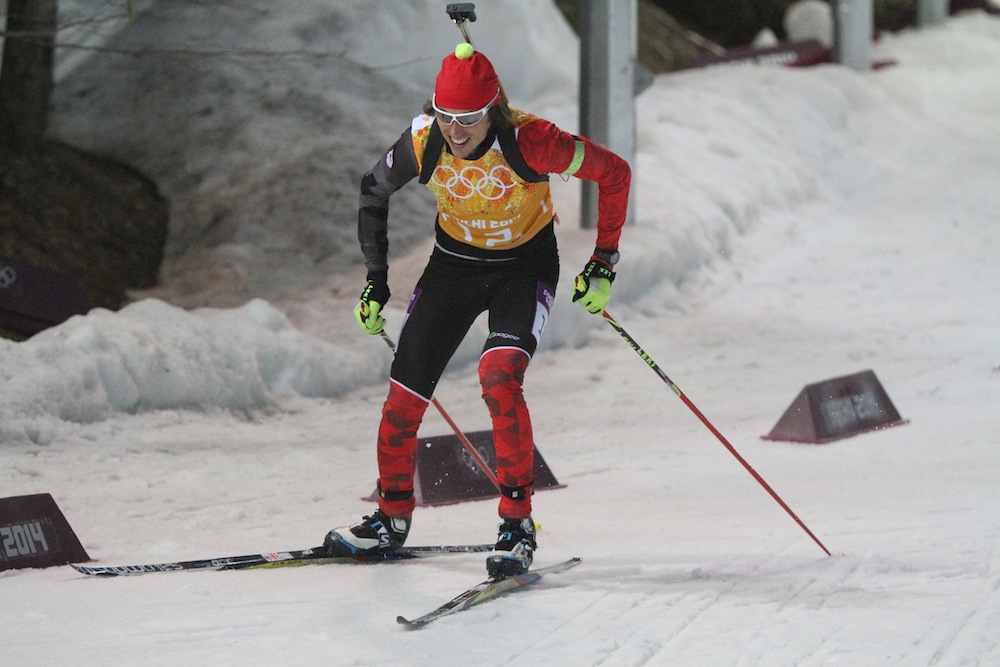
    Brendan Green racing at the 2014 Olympics in Sochi, Russia.
    Brendan Green racing at the 2014 Olympics in Sochi, Russia.

    “It was a pretty frustrating day, both for myself and the team,” Green wrote in an email. “The wind in general was quite strong and also inconsistent which made the shooting tough. I did what I could to try and hit each shot with the wind I was dealt but unfortunately that still resulted in 4 misses after my first two bouts of shooting. 

    “I had an idea from what I could hear and see each time I was in the stadium that there were a lot of misses amongst the field, even with the top names, so I knew it was that kind of day,” he added. “I was able to manage the wind better for my last two bouts and fortunately was able to finish the day without any more misses.”

    Green explained he’s been struggling with back problems since arriving in Östersund, and that led him to skip the mixed relay. Since then, he explained the problem seemed to have settled and he was looking forward to the individual.

    “I typically should be able to ski fairly well on a course like here in Ostersund but during the race I felt like I was hanging on for survival as opposed to skiing an aggressive 20km,” he wrote. “I think we had some issues with the skis as well.

    “Although I’m disappointed with my opening race and expected a lot more from myself, training has been going well and I’m looking forward to this weekend,” Green added. “After returning to the World Cup circuit last year I was really unsure what to expect and how my body and mind would hold out after a year off, but I proved to myself that I am still capable of solid results and am looking to build off of where I left off last season.  Hopefully my strongest results and best shape will be in Finland for the World Championships.”

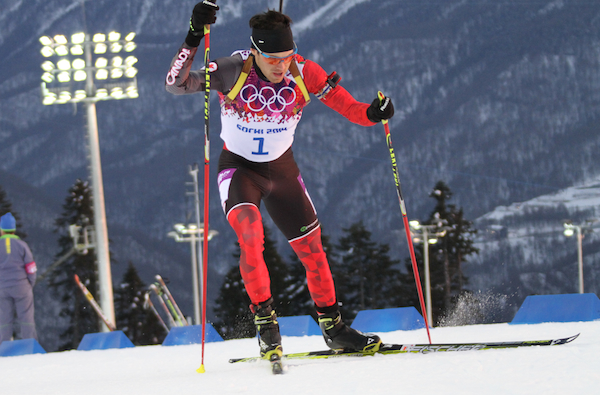
    Nathan Smith of Canada finished 13th in the first Olympic race of his career.
    Canada’s Nathan Smith racing to 13th in the first Olympic race of his career: the sprint in Sochi, Russia.

    Smith explained that his first standing, where he missed three, was a bit windy, but that didn’t excuse three penalties.

    “I’m not sure what exactly happened there but it definitely threw me off for the remaining shooting stages,” he wrote. “Prone actually felt really solid but I just made a couple silly mistakes by rushing a little.

    “The course wasn’t perfect by any means, but the warm temperatures actually did help the snow conditions compared to previous days when it was colder,” he added. “A couple of the hills near the stadium were getting chopped up but thankfully the largest climbs were still in excellent condition.”

    Some of these climbs, however, greeted competitors with strong headwinds. And while the course held up well overall, Smith explained there was some deterioration, especially on some of the shorter uphills.

    With his initial goal of a top 16 out by the second shooting, he tried to put together a decent race  by cleaning the final two stages.

    “Unfortunately that did not happen. Once I was stuck with the bad shooting I didn’t really have any expectations and just focused on skiing relaxed and smooth,” he wrote. “It’s often tougher to push 100% when you know you’re out of the running because of poor shooting. Even still I’m satisfied with my skiing form.”

    At the end of the day, he had the 21st-fastest course time overall.

    “Although I only felt average out there, my course time was still quite good,” Smith wrote. “So hopefully on a day where I feel amazing I can be right up in the top 10. I’m going to refocus my shooting and perhaps be a little more cautious in Saturday’s sprint.”

    Marc-André Bédard finished 61st with four penalties (0+1+1+2) and 8:40.6 behind the winner.

    Despite earning his spot on the World Cup team as early as a few weeks ago (and buying his plane tickets late), Bédard explained he was relieved to get to Sweden after some quality on-snow time in Quebec City.

    “I did not expect to be in great shape and to shoot that well because I had such a crazy summer racing off road triathlons and OCRs but I knew I was going to give it my best and enjoy every moments, which I did!” he wrote in an email of the World Cup team trials Nov. 13-14 in Canmore, Alberta.

    Waking up Wednesday morning, he recalled feeling happy and thankful for the individual start after racing to 17th with the team on Sunday.

    “These trails are a lot like home too and I love to ski here so I was exited to race new tracks that I feel good in,” he wrote. “I wasn’t to sure how to approach it and if I was going to survive it so I started really conservative, skiing with others and picking up the speed more and more.”

    Looking at his results, Bédard figured he should have pushed his pace more. He started 86th, which didn’t leave him with optimal conditions, but he was used to it.

    “I’ve always started later being on fewer [World Cups] and I’d say 9/10 races it’s almost a handicap to start late,” he wrote.

    Not only is it harder to warm up and adjust the rifle, late starters also have to wait often more than an hour before their turn. The lighting, wind and the snow conditions often change in this time, and Bédard explained that makes the wax technicians’ jobs tougher — especially in 6-degree temperatures — after they test skis two hours before a race.

    “You have to give it your best and hope it doesn’t affect you too, too much!” he wrote. “I didn’t go in with much of any goals, I have so little information on my shape and speed this year that I just took it as it goes and try to learn and improve from there. My shooting has been amazing so I was exited about this and looking forward to a 90%+ performance, which I was doing great before the end but I ended up missing my last 2 shots which put a stop to the party! But I’m still quite happy with a 80% for pretty hard shooting conditions.”

    Canada’s fourth man, Scott Perras placed 73rd (+9:51) with six penalties (1+3+1+1).

    The women’s 15 k individual kicks off Thursday at 17:15 CET (11:15 a.m. EST).

    Results