Tag: 2015 American Birkebeiner

  • Masters Minds: From a Bum Knee to a 2015 Birkie Age-Group Win

    Masters Minds: From a Bum Knee to a 2015 Birkie Age-Group Win

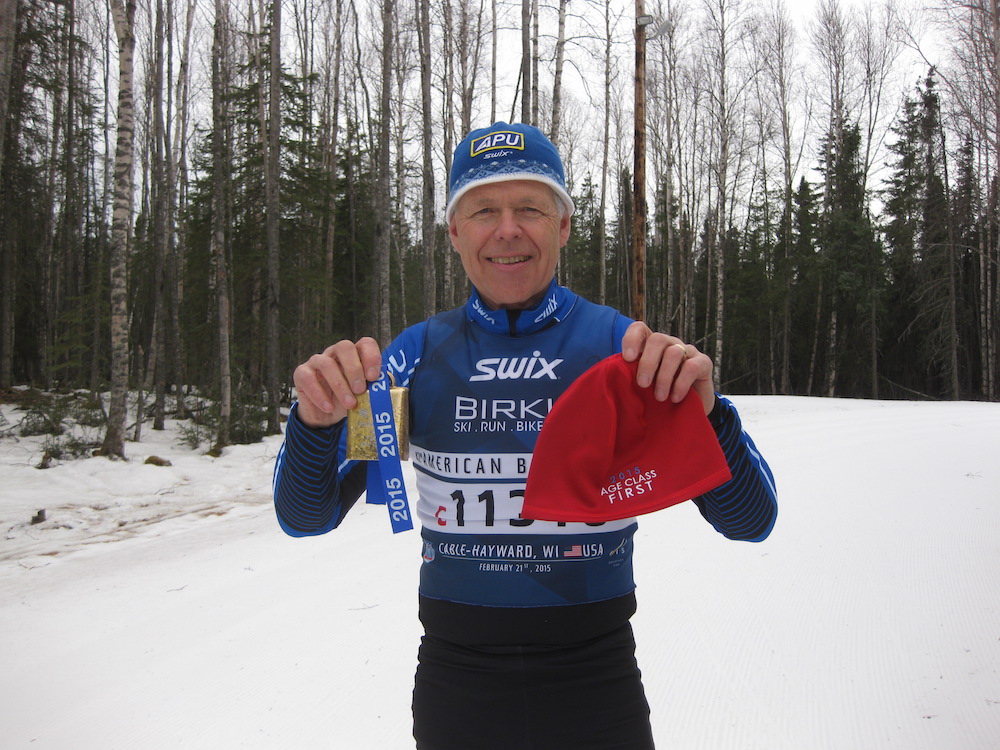
    John Wood, of Anchorage, with his first-place hat and cowbell after winning his age group (65-69) in the 2015 American Birkebeiner 54 k classic in February in Hayward, Wis. (Courtesy photo)
    John Wood, of Eagle River, Alaska, with his first-place hat and cowbell after winning his age group (65-69) in the 2015 American Birkebeiner 54 k classic in February in Hayward, Wis. (Courtesy photo)

    My name is John Wood, I am 67 years old, and have lived in Alaska since I was 11.  On Feb. 21, 2015, I skied to an age-group win in the 65-69 year old classic division of North America’s largest cross-country ski race, the American Birkebeiner.  I placed first out of 112 male skiers in the 65- to 69-year-old age group and 164th out of 2021 competitors that completed the 55 kilometer classic race course. Eighteen months prior to the 2015 Birkie, I underwent total right-knee replacement surgery; this is my story.

    It all began a few years ago when, on my 60th birthday, I joined the Alaska Pacific University (APU) masters cross-country ski training group. I was new to the APU program, but I was not new to competitive cross-country skiing, having competed on team Alaska in the 1965 Junior Nationals in Bend, Ore.,  and the former Alaska Methodist University ski team in the mid 1960s.  However, I drifted away from the sport after moving to Fairbanks and enrolling in engineering school.  A serious knee injury in a soccer game when I was 21 and before modern knee-surgery techniques brought my competitive athletic career to an end.

    After the injury and as the years went by, I continued to live the active Alaskan lifestyle, which included things such as dog mushing, hunting, fishing, and chasing after my growing children. During this time, the size of the brace on my right knee grew larger and larger as the number of arthroscopic cleanouts to my knee approached the number of fingers on my right hand. Consequently, my lifestyle was becoming less active as my mobility decreased.

    Training with the APU group reversed this trend. It was a pleasure to be back on skis on a regular, structured basis, and I enjoyed the comradery of the APU masters group and coaches.  My clunky knee brace allowed me to ski the classic technique OK, but skating continued to make the knee hurt. As my fitness level rose, I began to achieve local age-group racing success in the classic technique events.
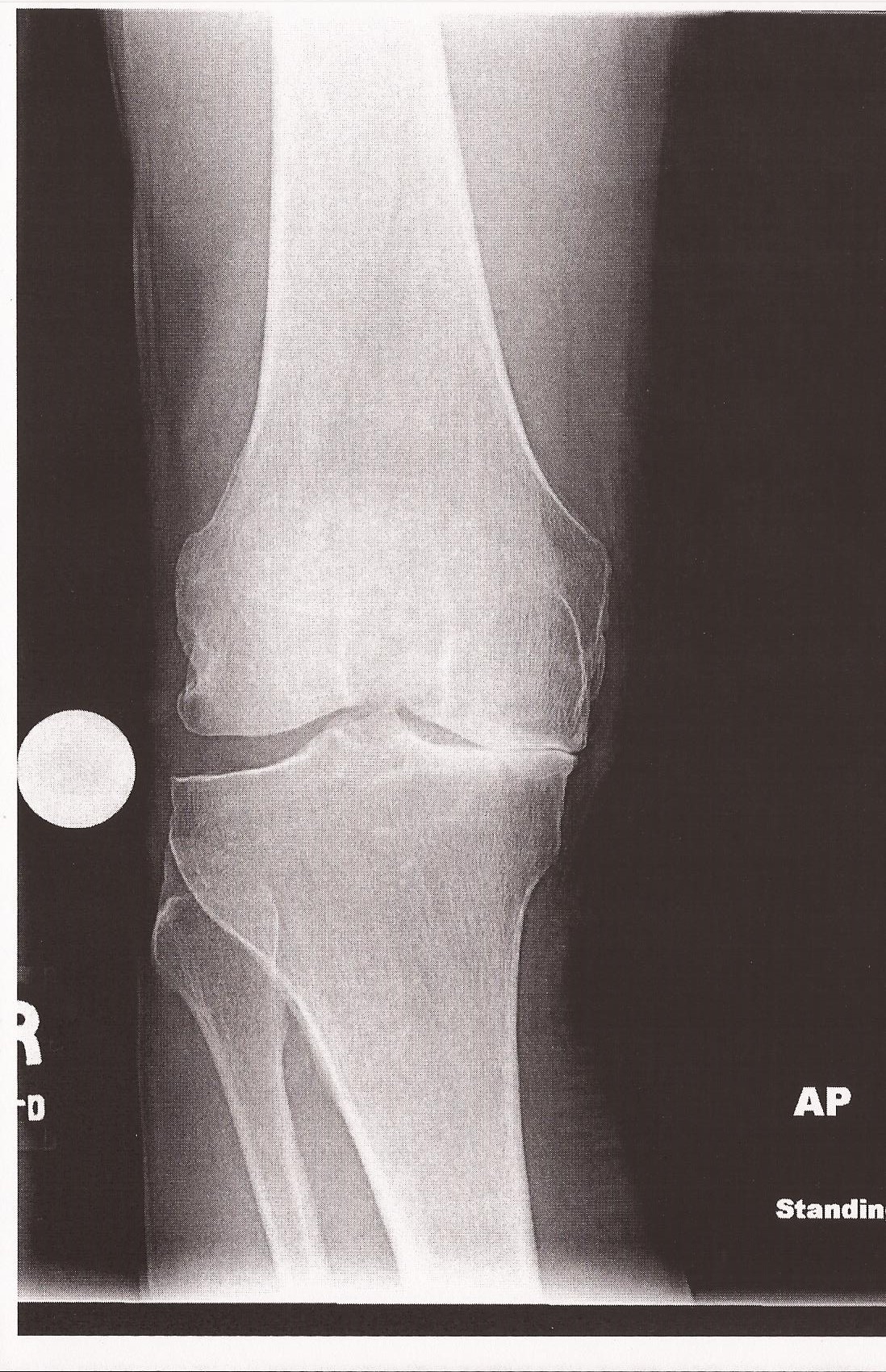
    Right knee prior to surgery.  Note the bone-to-bone contact and lower leg angle. (Photo: John Wood)
    Right knee prior to surgery. Note the bone-to-bone contact and lower leg angle. (Photo: John Wood)

    During the summer of 2012, I turned 65 and decided that it was time to seriously consider a knee replacement. The dull pain in the knee was constant and my footprints left in fresh snow showed the right foot pointed off at an angle to the right of my direction of travel. I had grown tired of living with a large knee brace.

    The plan that I came up with was to first ski the 2013 American Birkebeiner 54-kilometer classic race, wind down my ongoing work as a consulting engineer, spend time with my wife and family at our favorite summer fishing holes, then have the knee replaced.  I scheduled surgery for Aug. 22, 2013.

    The surgery took place as scheduled and was performed by Dr. Powell and his able staff at Alaska Orthopedic Surgery in Anchorage.  I was released from the hospital after three days and was pretty much in a residual anesthetic fog for the first week. I discovered that my body did not tolerate pain medication well, and as a result, I quit taking all but the weakest ones and pain was my constant companion.

    During the second week, my flexibility and mobility started to get better, and my mental edge returned. Rehabilitation began upon returning home, and by the second week became the focus of my life; knee bending machine six-plus hours a day and rehab exercises three times per day.  At the beginning of the third week, I began out-of-home therapy and on Day 19 was able to take my first steps without crutches. By this time, I had lost 15 pounds and was down to my high-school weight, which is to say that my appetite had not yet returned.
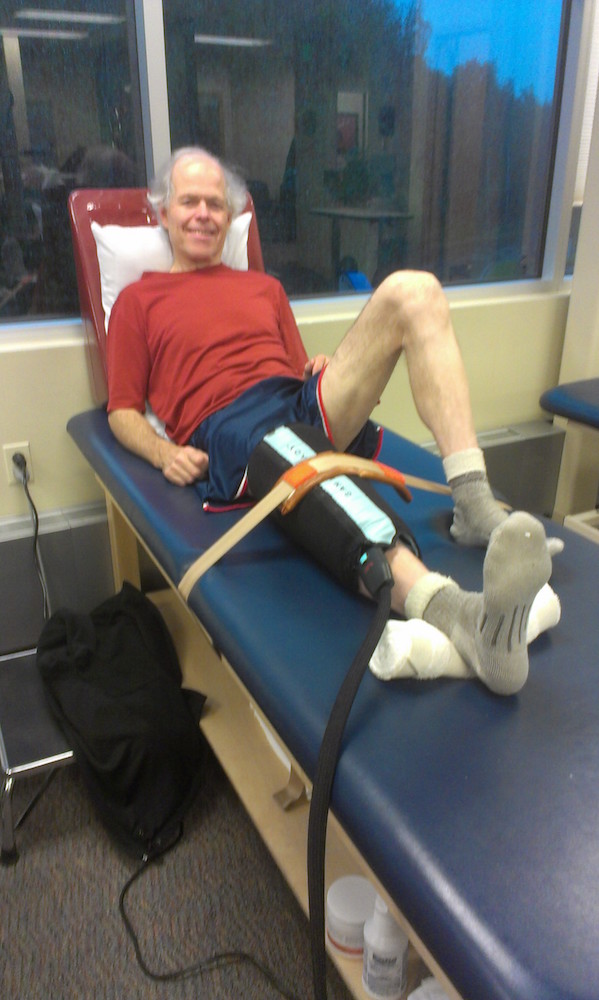
    Wood undergoes physical therapy after his right-knee replacement. (Courtesy photo)
    Wood undergoes physical therapy after his right-knee replacement. (Courtesy photo)

    Slowly, so slowly it seemed, I made steady progress.  During the third week I was able to peddle a stationary bicycle; the fourth week I began to climb down stairs without using a handrail. During the seventh week, I reached a real milestone and was able to bend my knee 120 degrees (with a lot of help from my physical-therapist friend Mark).  During the eighth week, I began walking as far as my body allowed and started to participate in APU strength-training days.  My appetite and weight started to return.

    During this time my whole body was adjusting to the new knee alignment; first my ankle hurt, then my hip hurt, then my back hurt, then all three together, and finally … the pain stopped! Similarly, the soreness in the connective tissue surrounding the knee was gradually subsiding.  After 12 weeks, I quit taking all anti-inflammatory medication and started to feel like a real person again. The best thing was that I had not worn a knee brace since rollerskiing the day before surgery.

    Another thing I had to overcome was getting my brain to realize, spatially, that my right leg and foot were now aligned differently. This caused all sorts of stumbles and trips, and I had to consciously place every right footstep. It was a real accomplishment when I finally could walk, unaided, in the dark.

    At 13 weeks, my new knee and I took our first 20-minute ski in the front yard, and over the next few weeks I graduated to the local ski trails. By 19 weeks, I had begun to ski easily with the APU masters skiers in the regular workouts, and in week 25, I participated in my first interval session.  Finally, during week 28, I participated in the year-end Oosik Classic ski festival that is disguised as a year-end race.  My knee was almost back!
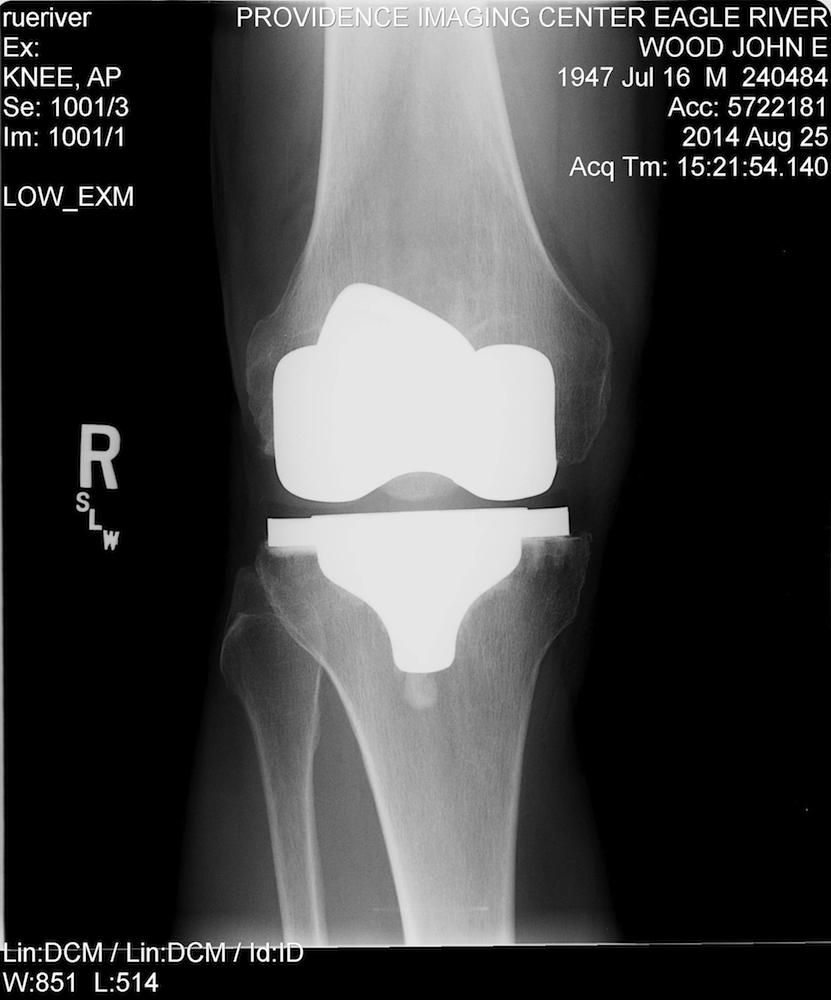
    Right knee at one-year checkup (Photo: John Wood)
    Right knee at one-year checkup (Photo: John Wood)

    Every year a group of skiers from the APU Nordic Ski Club masters and elite programs travel to Wisconsin to participate in the American Birkebeiner ski race.  In May 2014, my new knee and I got the itch to return to the 2015 Birkie with the APU contingent. When I registered for the race I discovered, to my delight, that I qualified for the first classic wave, and through good fortune was able to secure a room in a B&B in Hayward near the finish line. The stars were moving into alignment.

    I began to take my offseason three-day-a-week APU training sessions more seriously. Weights were added to the routines during strength sessions, intensity sessions in the hills were run/walked with poles and, to my delight, I discovered that I could skate roller ski! Both of these activities were done for the first time in at least 30 years. Weekly over distance workouts were with a group either on road bikes or mountain hikes.

    Snow and skiing arrived on the hills behind Anchorage on schedule in mid-October, but disappeared three weeks later. November was brown and barren, so training returned to hill bounding, speed hiking and mountain biking. Privately, I was concerned about my training and developed a self-imposed on-snow deadline of Dec. 1 … no snow, no go for the Birkie.
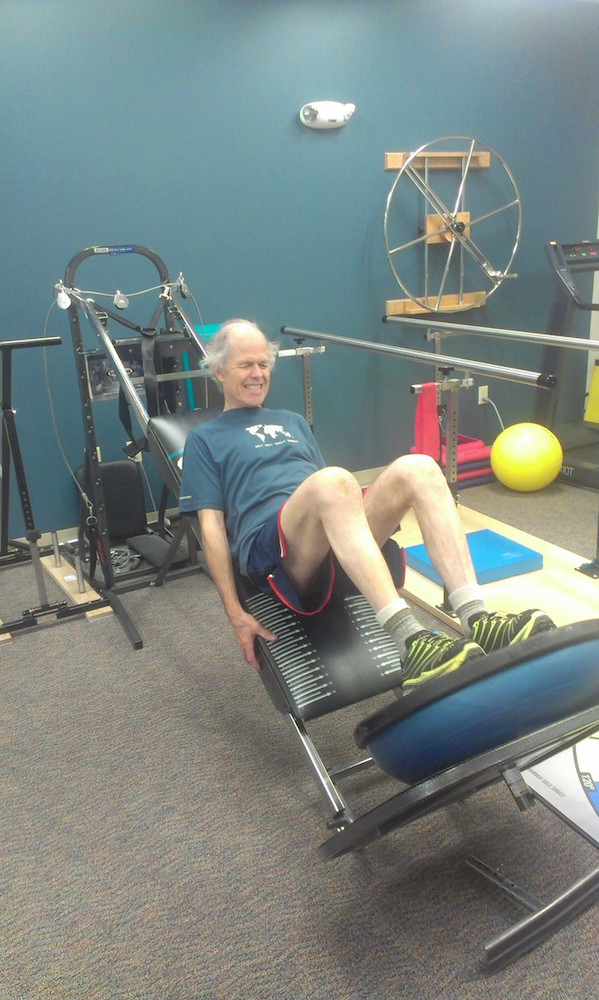
    Wood pushing his limits in rehab (Courtesy photo)
    Wood pushing his limits in rehab (Courtesy photo)

    On Nov. 28, the day after Thanksgiving, it started to snow and the local Anchorage trails and Independence Mine trails were once again skiable. My Birkie plans were saved. Training took on a regular schedule again, with a typical APU masters group week including a strength day, an “intensity day,” a technique day, an over distance day, and one or two “off” days.  Snow conditions continued marginal in Southcentral Alaska, but the recently installed snowmaking loop at Kincaid Park was now in service and proved to be a reliable standby venue.

    During December and January, before the February taper, I averaged 31 hours per month on snow and participated in five local citizens races ranging in distance from 2 kilometers to 30 k. I was particularly happy to be able to ski both classic and skate legs of a 15 k duathalon race. My fitness level was as good as it was going to get.

    Before I knew it, mid-February had arrived and off to Hayward I went.

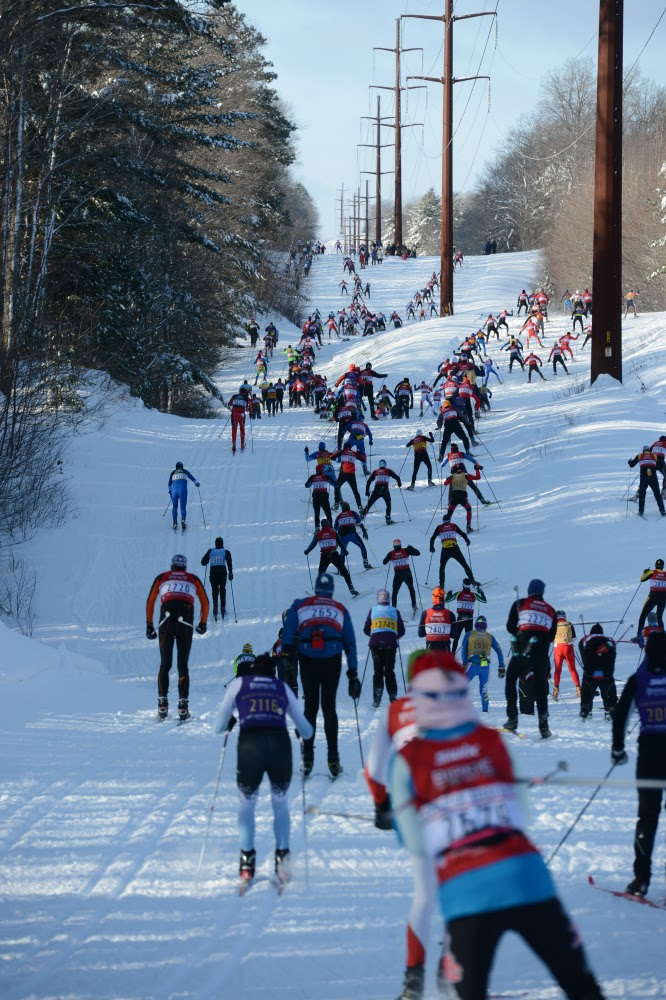
    Race day dawned to 10 degrees and light snow. I arose at 5 a.m., ate breakfast with several other skiers who were also staying at the B&B, was driven to a skier pickup point, and arrived at the start area via shuttle bus an hour prior to my 8:10 a.m. start. Although flurries lingered at the race start, several inches of fresh snow from the previous day had been packed by the trail setters overnight and the trail, although not particularly fast, was firm.  Thousands of skiers were milling around trying to stay warm and everyone took their turn standing in long lines to use the Porta Potty for the last time.

    As my wave time approached, I put on my ski boots, removed my warmups, put all of my non-race paraphernalia in the bag provided to race participants at bib pickup, and placed it in the waiting vans to be hauled to the finish line. I moved to the racer-holding area, put on my skis, and self-seeded myself into a lane in the middle of the first wave which consisted of 278 skiers.

    Soon the flag was dropped and skiers at the front of the lanes were off. Those of us in the middle had to wait a few seconds ’til the skiers in front began to move out, then we, in turn, could begin. After about 100 yards my lane came to a sudden halt, and a guy about half a dozen skiers in front of me hollered that he forgot to wax his skis, and began to look around for a way to exit to the sidelines. The problem was that skiers were streaming by in the lanes on either side, and nobody in our lane could move!

    Finally I found a skier gap in an adjacent lane, hopped in, and got around the stalled skier. Off I went, now moving at the same steady-but-slow speed as all the other skiers that I could see up and down the trail.

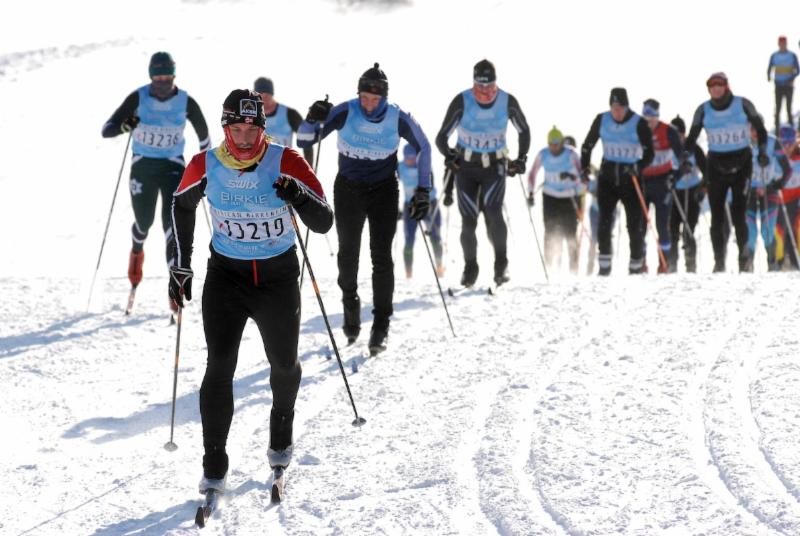
    After a couple of kilometers the trail necked down into four lanes, then three, and the skiers began to separate. After about 5 k, I was able to slowly pick up my speed to a more comfortable level and didn’t have to expend precious energy by going around slower skiers in the unused lanes that contained fresh, slow snow.  At some point near the 26 k mark where the classic trail merged with the skate trail, the three lanes became two and favored the left side. Passing slower classic skiers on the right side now meant jumping out of the classic lane and dodging among the skate skiers in their lane. What a blast!

    As the race progressed, I really concentrated on working the transitions while conserving energy on the uphills. I skied the more challenging downhills conservatively, not wanting to instigate a high-speed fall and land awkwardly on my new knee and risk an injury.  This tactical decision to conserve energy allowed me to open-up my double poling during the flatter second half of the race, where I continued to work my way up through those in front of me.

    I had an immense sense of elation as I crossed the temporary wooden Highway 63 overpass and skied up Main Street and across the finish line in a time of 3:39. I had finished strong!

    After I retrieved my drop bag I walked the four blocks to my B&B, where I removed my APU ski suit that was frosty and frozen from the energy drink that I had splashed down my front while drinking on the move. I sat in a hot shower, savoring the moment with a bottle of cool refreshment. I didn’t know how I placed, but I did know that I felt good about my race and new knee. Nothing was hurting and my entire body was pleasingly tired.

    Later, one of the young ladies who was also staying at the B&B showed me on her smartphone how I placed: first in the 65-69 year age group by four minutes. Boy, was I happy and excited … a dream come true! That evening, when I picked up my monogramed first-place age-group hat and engraved cow bell the events of the day finally sunk in. New knee, Birkie classic age-group win.

    I owe a great big “thank you” to the efforts of a lot of people that contributed to my Birkie success: Dr. Powell’s most professional surgery team, PT Mark and his staff’s patience with my rehab whining and complaining, great coaching from my APU masters coaches Greta [Anderson] and Galen [Johnston], and most importantly the unfailing support from my fantastic wife Cathy.  What a wonderful life!

    ***

    Masters Minds series: Are you a masters skier who loves your club? Submit camp or training recaps, announcements, or stories to info@fasterskier.com with the subject line: “Masters Minds”. Articles can be first-person accounts or written from an observatory standpoint with comments from others.

  • 2015 American Birkebeiner Preview: Bridges, Brooks and More

    2015 American Birkebeiner Preview: Bridges, Brooks and More

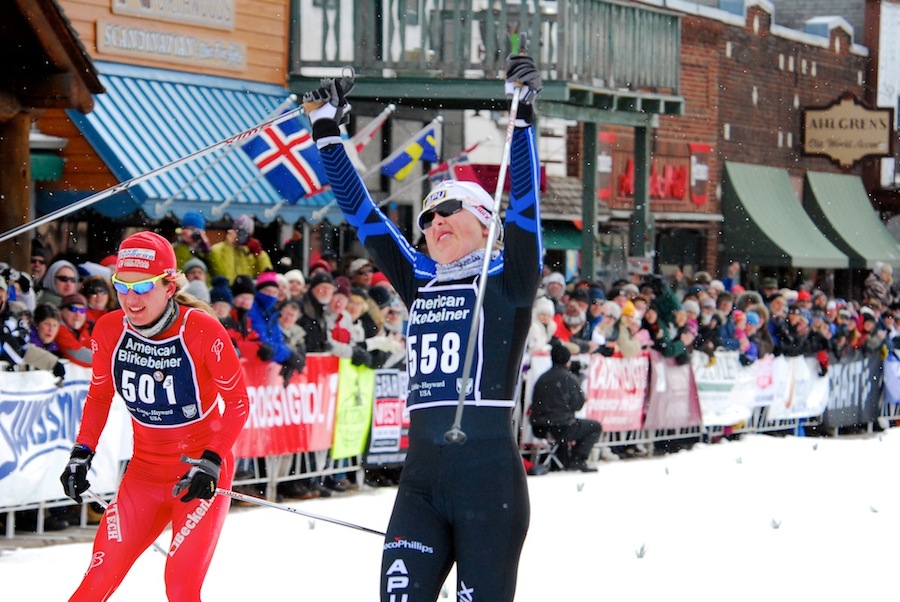
    Holly Brooks winning the 2012 American Birkebeiner, four-tenths of a second ahead of Caitlin Gregg (l), for her first Birkie title. (Photo: Darlene Prois/American Birkebeiner) http://fasterskier.com/article/brooks-outsprints-gregg-for-birkie-victory/
    Holly Brooks winning the 2012 American Birkebeiner, four-tenths of a second ahead of Caitlin Gregg (l), for her first Birkie title. (Photo: Darlene Prois/ABSF)

    Each year, leading up to the third week in February upward of 11,000 people get sick. It isn’t a sickness that would cause a widespread panic, but rather one thousands of Midwesterners actually looked forward to each year, and it’s called Birkie fever.

    The 42nd running of the American Birkebeiner takes place Saturday, starting in Cable, Wis., and ending some 30 miles (or 50-plus kilometers) south in Hayward, Wis. The race filled up in November, with all 10,500 allotted entries accounted for before the first of the year. In total, 10,517 skiers from 18 countries were registered for the three Saturday races, almost 7,000 of them are entered in the 51 k skate race. That’s a big change from 1973, the first time the Birkie was held. Back then, there were 34 men and one woman as race participants.

    The race course has gone through several changes since 1973, from the direction skiers raced to the length of the race. This year’s race has a few changes that will add a some interesting twists. For one, the race is longer. The classic race is now 55 k and the skate race now 51 k. The extra distance was due to a relocation of the final aid station and the extension of the finish line, pushing it farther down Main Street.

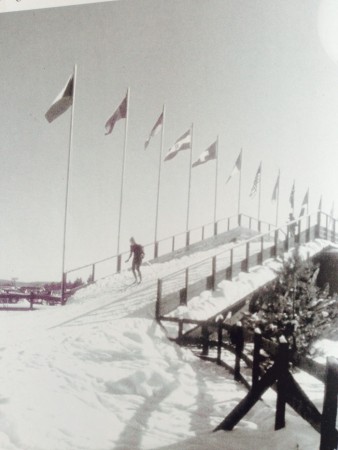
    The International Bridge was a fixture in the Birkie before. - Photo: American Birkebeiner Foundation
    The International Bridge was a fixture in the Birkie before. (Photo: ABSF)

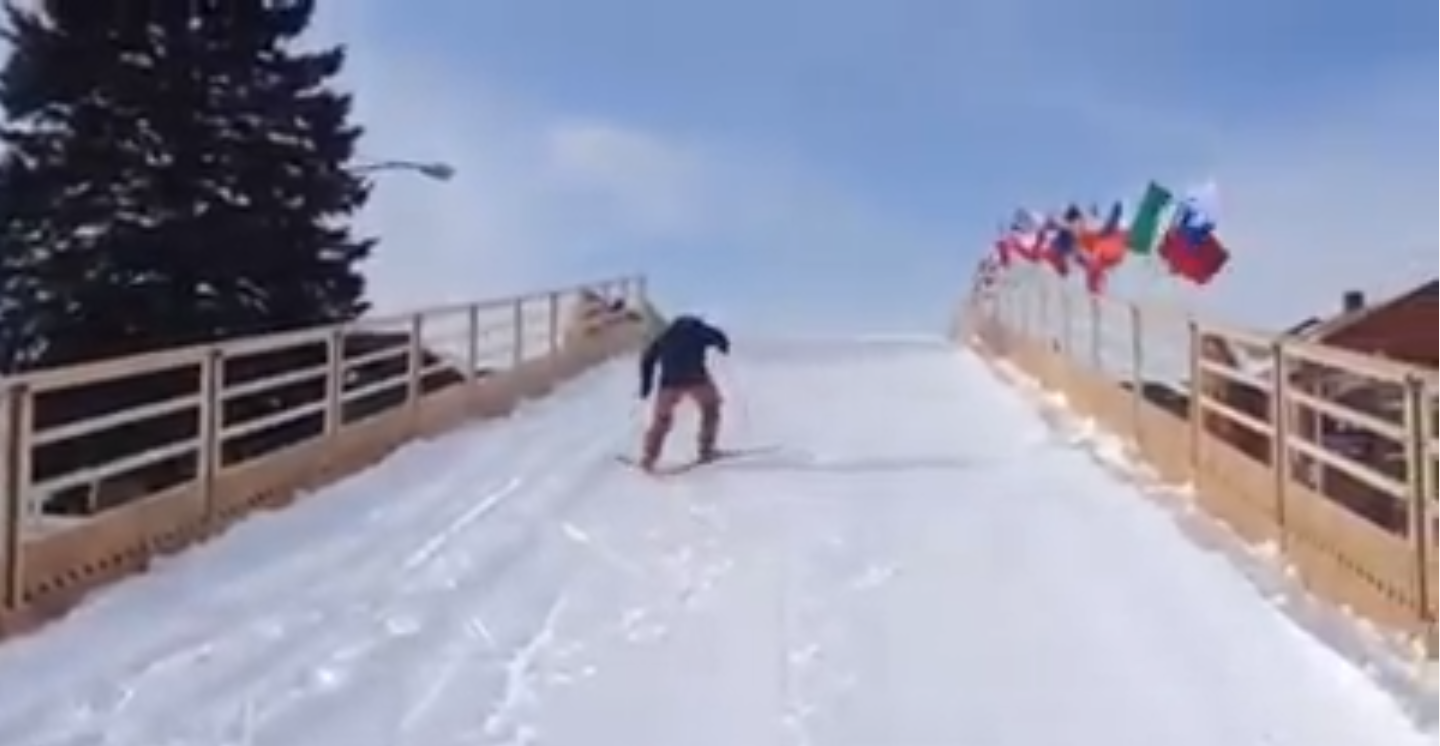
    The biggest change that has garnered some of the most attention is the new bridge the American Birkebeiner Ski Foundation (ABSF) finished assembling on Wednesday over Highway 63, a kilometer from the finish.

    The International Bridge adds no length to the race, but it does add a 17-vertical-foot hill before the finish. Previously, once skiers were five kilometers from the finish, it was a flat ski to Main Street. The new manmade hill adds a 10-percent climb to legs that already have some 50 kilometers of climbs in them.

    This isn’t the first time the International Bridge has been a fixture on the Birke course. In the late ’70s and early ’80s when the race finished at the Telemark Resort in Cable, the bridge was the last hill skiers needed to climb before they finished. The temporary bridge is 100-feet long and spans 30 feet over the highway.

    The bridge was needed to eliminate the traffic congestion problems the race brought during the weekend. Funding for the ramp and other changes is a part of phase one of the ABSF’s multiple-year fundraising program.

    The new International Bridge before the finish of the American Birkebeiner in Hayward, Wis. (Photo: American Birkebeiner Ski Foundation Facebook)
    Testing the new International Bridge near the finish of the American Birkebeiner in Hayward, Wis. (Photo: American Birkebeiner Ski Foundation Facebook video)

    Birkie Draws FIS Marathon Cup Contenders 

    The past two years, the Birkie has been a part of the FIS Marathon Cup, a season-long international competition that crowns a winner with the highest points after a series of races of 42 k or farther. This means it attracts some of the world’s best long-distance racers and this year’s women’s field is a reflection of that. In the elite wave, the top four women in the FIS Marathon Cup are entered: Tatjana Mannima of Estonia, American Holly Brooks, Aurelie Dabudyk of France, and Antonella Confortola of Italy. Confortola finished second in last year’s Birkie.

    Brooks was leading the FIS Marathon Cup, but skipped last week’s stop at the Tartu Marathon in Estonia to head to Hayward to prepare for the Birkie.

    “I’m really excited for this year’s Birkie,” Brooks wrote in an online message this week. “It’s been a couple of years since I’ve been here and it’s great to be back — both at the Birkie and on ‘home soil!’

    “I’ve been bouncing from country to country racing marathons and I decided last fall that I would spend two weeks here in Hayward,” she explained. “I have great friends that I’m staying with and it feels fabulous to be in a house [rather than a hotel].”

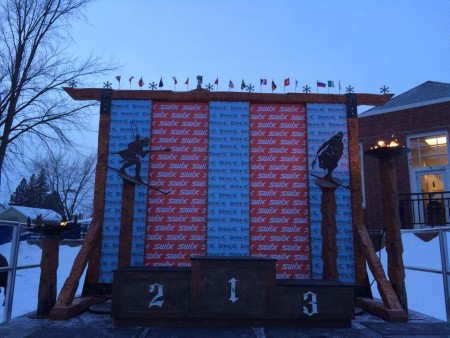
    The new podium awaits for the winner of this years race - Photo: American Birkebeiner Foundation
    The new podium awaits for the winner of this year’s race. (Photo: ABSF)

    Coming into the race, Brooks ranks second in the overall FIS Marathon Cup standings, just seven points behind Mannima. Brooks won the Birkie in 2012 and knows the course well.

    “I‘ve seen the whole thing start to finish… both at distance pace and race pace. That’s more than I can say for some of the courses I’ve raced this winter!” Brooks wrote. “Not sure how much of a true advantage it gives me but it puts my mind at ease a bit. I know where people including myself have made moves.”

    Two year ago at the Birkie, Mannima lost a photo finish and placed second to three-time Birkie champion Caitlin Gregg, who is currently in Sweden representing the U.S. at the FIS Nordic World Ski Championships in Falun. American Caitlin Patterson (Craftsbury Green Racing Project) finished third in 2013 and seventh last year, and could prove to be a threat in this year’s elite race.

    In an email on Wednesday, Patterson wrote that she was looking forward to skiing part of the Birkie trail on Thursday, refreshing her memory “of some of its notable features, and seeing the new bridge and finish line if possible.

    “My preparations have been going well — mostly I’ve been focused on recovering after recent Craftsbury Supertours, building up my energy, and actually keeping my training skis pretty short and easy,” she explained. “At this point in the season I have to trust the endurance and fitness I’ve built up during the past year, and mostly just stay sharp and excited for the race, which I most certainly am!”

    In terms of her goals and expectations for Saturday’s race, Patterson felt anything was possible.

    “The past two years of racing the Birkie have taught me that it’s a race in which you have to test your limits but where you never quite know what will happen, where you must always be thinking quickly and ready to react throughout all 50+k,” she wrote. “I believe that I’m in very good shape, so my goals are to trust my fitness, ski with confidence and enjoyment of the sport… and to make it onto the podium!”

    “I’ve seen the whole thing start to finish … I know where people including myself have made moves.” — Holly Brooks on her Birkie advantage

    The men’s field is also competitive. Most of the FIS Marathon leaders didn’t race last weekend’s Tartu Marathon to fly to the U.S. to prepare for the Birkie. Overall FIS Marathon Cup leader Petr Novak of the Czech Republic is racing along with France’s Benoît Chauvet, who sits in second place, only 85 points behind Novak. Second-and-third place finishers from last year’s Birkie, Simone Paredi and Sergio Bonaldi of Italy, are also listed to start. Bonaldi won the Birkie in 2013.

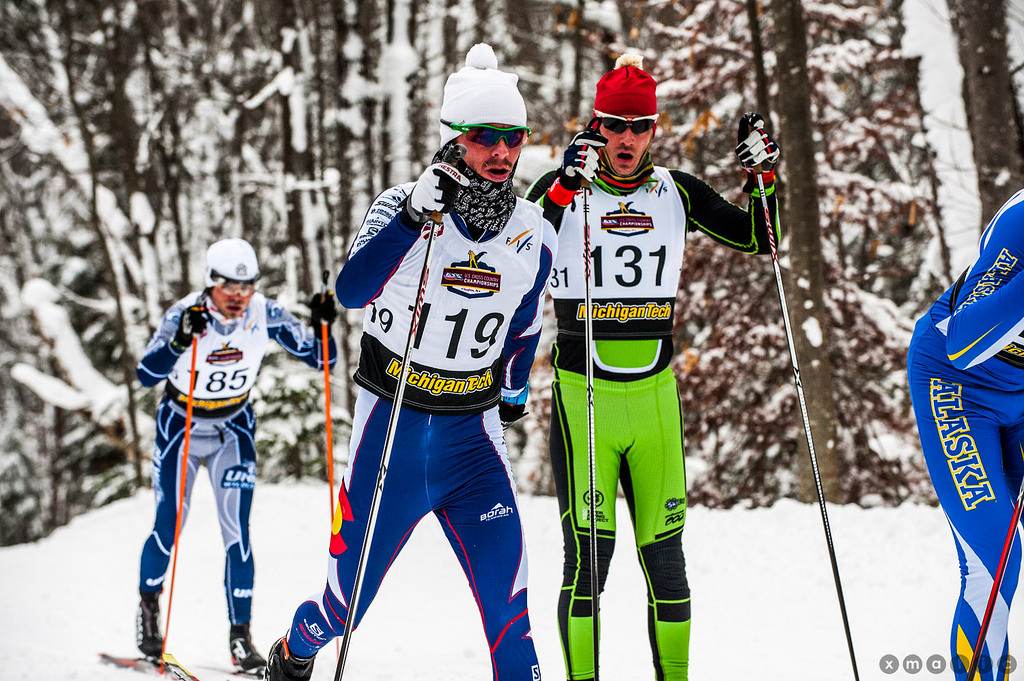
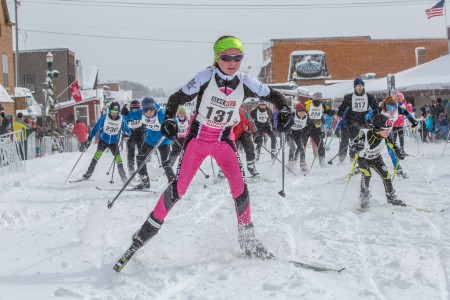
    SSCV's Tad Elliott (119) and Craftsbury's Andrew Dougherty (131) Men's 30 k classic mass start at U.S. Cross Country Championships in Houghton, Mich. (Photo: Christopher Schmidt)
    Tad Elliott (119) racing in the men’s 30 k classic mass start at U.S. Cross Country Championships in January in Houghton, Mich. (Photo: Christopher Schmidt)

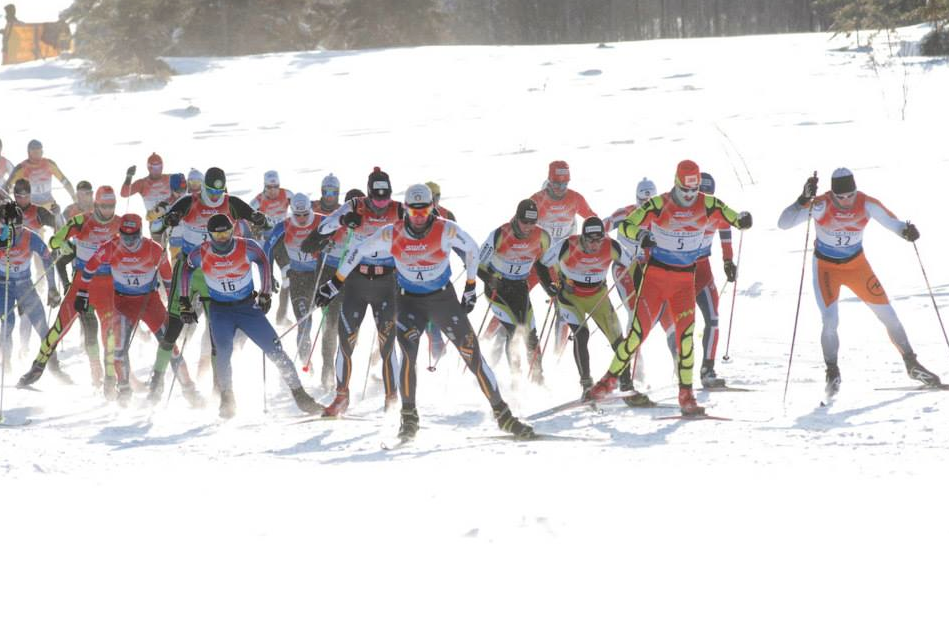
    For the U.S., Birkie winners Tad Elliott (Ski & Snowboard Club Vail Elite) and Matt Liebsch (XC United/Team Strong Heart) will be racing, along with 2014 U.S. Olympian Brian Gregg. Elliott won in 2012 and Liebsch took first in 2009.

    This trio has had a pretty intense history in the Birkie. When Elliott won in 2012, Liebsch placed second and Gregg took third. The difference between first and third was only 14.8 seconds.

    In a phone interview, Liebsch mentioned how team tactics played a part in previous Birkies, but that would not be the case this year.

    “In the past, you would have these teams come over with five or six guys and it would essentially be like a cycle race,” Liebsch said. “The fast sprinters would just sit in the back while his teammates did all the work up front setting the pace and sending guys off the front to disrupt the flow of the race. This year is a little different because there aren’t the multiple-person teams.”

    Liebsch added that the style of racing here is different than at European marathons.

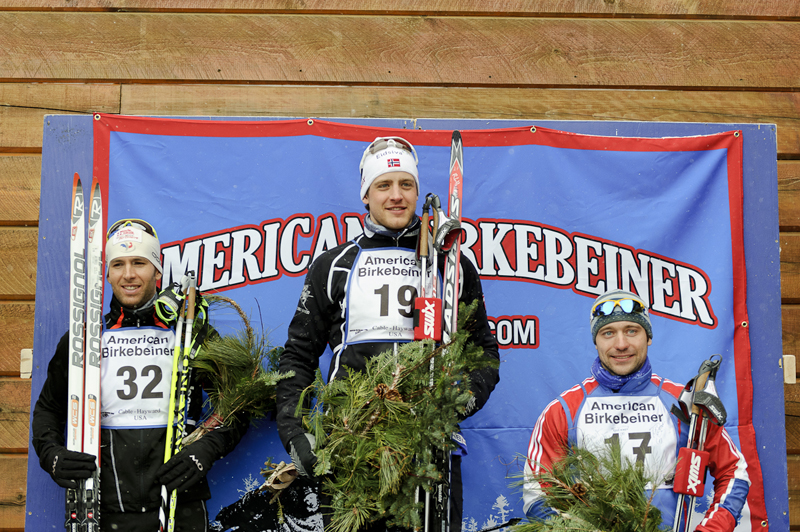
    The 2011 American Birkebeiner men's podium (from left to right): with France's Benoit Chauvet in second, Norway's Tore Martin Gundersen in first and Russia's Andrey Tyuterev in third. (Photo: Andy Caniff/Swix Sport USA)
    The 2011 American Birkebeiner men’s podium (from left to right): with France’s Benoit Chauvet in second, Norway’s Tore Martin Gundersen in first and Russia’s Andrey Tyuterev in third. (Photo: Andy Caniff/Swix Sport USA)

    “In Europe, the pace is extremely fast due to the fact that teams have ten or eleven guys,” he said. “Here in the United States, the pace is slower and many of the Europeans don’t like that pace so they would send guys off the front if the pace got to slow.

    “Most of the European guys are here to get FIS points to improve their standings for the overall FIS Marathon Cup title,” he added.

    Chauvet is currently second in the overall FIS Marathon Cup and has the biggest team entered in the Birkie with four total teammates, while the overall leader, Novak will race solo.

    “The strategy for most of the European guys will be to stay up front, in the top eight, get points and then head back to Europe,” Liebsch said. “This could really help out the fast American guys like Tad, Brian, me and Lex [Treinen] because the pace won’t be crazy fast like most European races can be.”

    In an email, Treinen predicted that U.S. guys would have a good showing: “Matt looks like he’s in good shape and he and [Brian] Gregg would love to take home a Midwest victory here,” he wrote. ” … I have been training specifically for the Birkebeiner for at least two weeks and I even did some intervals recently, so I feel like I am in better shape than ever before.”

    Elliott has spent some time in the Midwest and won last month’s Seeley Classic race that was held on the Birkie course.

    “I am excited to race the Birkie,” Elliott wrote in an email. “It will be three years since I last raced here! I am looking forward to a great event. I have had some health issues again sneak in this last month, but I have a few tricks up my sleeve. My twin brother is also my wax tech coming with me from Colorado. Hoping [he] can keep me in the race this year!”

    The biggest factor going in the weekend is the weather. There was a concern of a lack of snow but over the last few weeks the area has gotten enough snow to make the course set up nicely for the race. The wind and cold temperatures are an immediate concern. On Tuesday, organizers canceled Thursday’s elite sprints because of the predicted well-below-zero temperatures at the scheduled start time. Early predictions show Saturday morning’s temperatures to be around 4-degrees Fahrenheit.

    The Birkie can been viewed live on Saturday, starting at 8 a.m. Central time, via the race organizer’s live stream (http://new.livestream.com/xcountrylive/birkie). Follow athletes via the Birkie’s live athlete tracker and check FasterSkier for a post-race recap.

    Elite start lists: Women | Men

  • Junior Birkie Registration Closes Thursday, Schedule Modified

    Jr Birkie James Netz (c)
    Online registration for the Junior Birkie closes Thursday, Feb. 19. (Photo: James Netz)

    (Press release)

    HAYWARD, Wis. (Feb.  18, 2015) – Due to cold weather, the Junior Birkie races will start one hour later at 10:00 a.m. instead of 9:00 a.m. as originally scheduled on Friday, Feb. 20.  Start times have also been compressed.

    The Barnebirkie will go off as scheduled at 12:30 p.m.

    New Junior Birkie start times are listed below:

    10:00 a.m.              U12 & U14 Boys 3 km

    10:05 a.m.              U12 & U14 Girls 3 km

    10:10 a.m.              U16 Boys & Girls 3 km

    10:15 a.m.              U19 Boys & Girls 5 km

    10:25 a.m.              U10/8 Boys & Girls 1.5 km

    11:00 a.m.              Junior Relay


    Online registration for the Junior Birkie will close at 7:00 p.m. Thursday, Feb. 19. Skiers can pick up race bibs at the National Guard Armory in Hayward starting at 7:30 a.m. on Friday, Feb. 20.

    The Junior Birkie starts at 9 a.m. near the Hayward Primary School and finishes on Main Street.

    More information and race registration can be found here: http://www.birkie.com/ski/events/junior-birkie/

  • 10 Birkie Entries Available from Life Link III

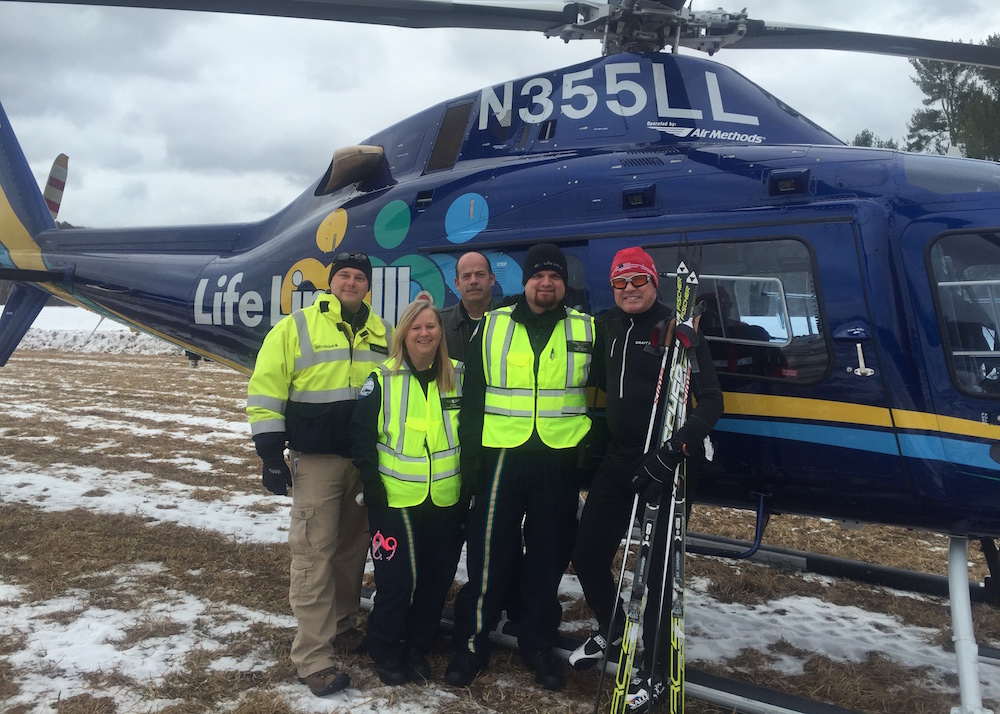
    The Life Link III crew. (Photo: Life Link lll)
    The Life Link III crew. (Photo: Life Link lll)

    For the 2015 Birkie, Kortelopet, or Prince Haakon

    (Press release)

    HAYWARD, Wisconsin (January 21, 2015) –You may never need medical support at the Birkie, and that’s good. But, it’s also good to know that the Birkie, Kortelopet, and Prince Haakon races are fully supported by a great Emergency Medical Support (EMS) team effort, including Life Link lll, which provides Air Medical Transport for all of race day.

    Win a 2015 Birkie Entry &
    Support the Birkie’
    Local Emergency Medical Support Team

    This year, Life Link lll, in Minneapolis, MN, has also come on board the Birkie as a Gold Level sponsor, in addition to providing race-day medical support. With that sponsorship they get comp entries to either use or give away. Even though Birkie registration officially closed October 2014, as a sponsor Life Link lll is in a position to offer its 10 entries to help a few more skiers who didn’t make the October cut-off and to make a donation to a good cause.

    To show its support for local EMS services in Hayward, WI, Life Link lll would like its comp entries to benefit Sawyer County Ambulance. To do this, Life Link lll is giving 10 people the chance to win an entry on the Birkie Facebook page at what would be the current fee of $145. Your $145 will be donated directly to Sawyer County Ambulance to support this local emergency response organization that takes such good care of people at the Birkie and year round.

    How to Win One of These 10 Race Entries!

    JANUARY 21-26 – The Birkie will post this announcement you are reading on Birkie Facebook.

    JANUARY 27 – When you see the Birkie Facebook post at 9:00 a.m. Central that says “WIN BIRKIE ENTRY NOW” be one of the first 10 people to comment “I want one”!

    You will be notified by the Birkie about where to send your $145 donation to Sawyer County Ambulance. As soon as Sawyer County Ambulance receives your donation, the Birkie sends you the comp code from Life Link lll to register online! You may use your comp entry for either the 2015 Birkebeiner, Kortelopet, or Prince Haakon. Please note that wave placement will be based on what is currently available.

    Entry Criteria: (1) Only individuals who do not currently have an entry can enter (2.) You may not enter to win an entry for someone else, i.e. the name of the person that wins on must match the name of the person that registers (3) Only parents can enter and purchase for a child aged 18 and under.

    For more information, contact Susan Kendrick, Sponsorship Director of the American Birkebeiner at susan.kendrick@birkie.com.

    Thanks to all our Sponsors, including SWIX, Title Sponsor of the Swix American Birkebeiner and Birkie ski events, Feb. 19-22, 2015, as well as Advantage Emblem, Cabin Stop, FITS, GU Energy, Life Link lll, Madshus, Marshfield Clinic – Hayward Center, New Moon Ski & Bike, Nuun Hydration, and dozens of other businesses, organizations, and professional services.

  • Birkie/Korte Registration Closes Thursday Night

    CLOSING TODAY at MIDNIGHT

    We have reached our participant cap for the 2015 Swix American Birkebeiner.

    Registration for both the Birkie and Korte events will close tonight

     (Thursday 10/23/14) at 11:59 pm CDT.

    The Prince Hakkon 13K will remain open.

    Take Advantage of This

    Last Day to Register 

    Click HERE to Register Now

    ABSF-swix-2013-3v4ac

    When a wave closes, upon registering you will
    be placed in the next available wave.

    *Please remember, due to our new registration system, you must REGISTER AS A GUEST

    Questions? Email birkie@birkie.com or call 715-634-5025
  • Only 100 Spots Left for 2015 Birkie

    (Birkie Alert)

    Only 100 Spots Left!

    We’re really excited about all the final registrations coming in from people all over the country, including plenty of first-time Birke skiers. We are in full Birkie “Go Mode” here, getting ready to see you all again in February for the big day on Saturday, Feb. 21, and for all the other events and happenings going on Birkie Week, from Thursday to Sunday.

    * If you know someone who wants to ski the Birkie or Korte and hasn’t signed up, please pass this email on to them. Thanks, we want to include everyone who wants to ski!

    SIGN UP NOW

    Grab your spot at the starting line of Birkie 2015!

    Birkie (Photo: ABSF)

    When a wave closes, upon registering you will
    be placed in the next available wave.

    *Please remember, due to our new registration system, you must REGISTER AS A GUEST

    Questions? Email birkie@birkie.com or call 715-634-5025
    American Birkebeiner (Photo: ABSF)

    Fundraise and Get a FREE Birkie or Korte Entry!

    CLICK HERE FOR DETAILS

    JDRF

    This year JDRF is again offering 50 “Charity Registration Slots” for the Birkie and Korte. By fundraising a minimum of $500 for JDRF, you will receive an entry in the 2015 American Birkebeiner or  Kortelopet, a JDRF cross-country ski hat, and be entered into a drawing to win a trip to the 2016 Norwegian Birkebeinerrennet (includes three nights lodging for two people, air travel allowance up to $1000 per person). JDRF will also offer fundraising opportunities for skiers who register directly with the Birkie.

    Get the whole story, including how JDRF, through Birkie Skiers for Cures, has already raised $120,000 to help fund research and a cure for type 1 diabetes (T1D) research … Keep Reading!  

     For more information about fundraising for a 2015 Birkie or Korte registration and other perks, call 866-233-3354.

  • Just Over 500 Spots Left for American Birkebeiner

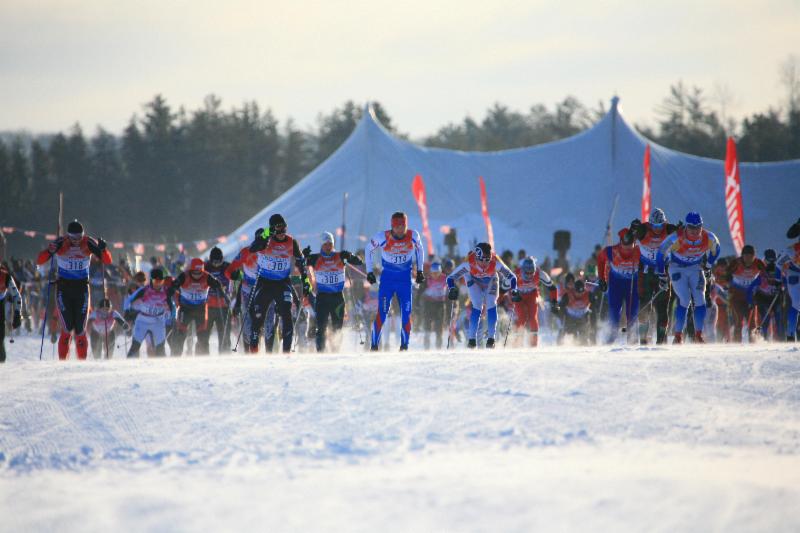
    The view from the front of the pack at the 2014 American Birkebeiner (Photo: Kelly Randolph)
    The view from the front of the pack at the 2014 American Birkebeiner (Photo: Kelly Randolph)

    Before Registration Closes for the 2015 Swix American Birkebeiner!

    (Birkie press release)

    HAYWARD, Wisconsin (October 8, 2014) – It must be that crisp snap in the air and the first snowfall of the season that hit Hayward, WI, home of the Swix American Birkebeiner cross country ski race, this week. As a result, registration for the 42nd annual event on February 21, 2015, is filling up fast. With a total event cap of 10,500 entries, there are now just over 500 spots left. Last year the event also reached its cap in early October—the earliest close on record. The American Birkiebeiner is the largest ski race in North America and the fourth largest in the world.

    Click Here to Register Now

     Skiers who register for the Swix American Birkebeiner Skate (50K) or Classic (54K) events or for the Kortelopet (23K) event are placed in waves according to their ability, based on past race results and qualifying races. As registration accelerates, these waves are also reaching capacity. Anyone who registers in time to get one of the remaining 500+ entries will secure their spot at the starting line; waves will be assigned based on where each skier belongs. When a wave closes, skiers are placed in the next available wave. The following waves are currently closed:

    Skate Waves 2, 3, 7, 8

    Classic Waves 3, 4, 5, 7, 8

     For Details and to Register Now*

    *Please remember, due to our new registration system, you must REGISTER AS A GUEST.

    Don’t Miss Your Chance to Take the Challenge and Live Your Story
    At the Greatest Show on SNOW!

    Questions? Email birkie@birkie.com or call 715-634-5025

  • Birkie Waves Closing Fast, Register Today

    2014 American Birkebeiner (Photo: ABSF/Kelly Randolph)
    2014 American Birkebeiner (Photo: ABSF/Kelly Randolph)

    NEW Updates on Birkie Wave Closures!

    We’re nearing our cap of 10,500 participants for the Swix American Birkebeiner events taking place February  21, 2015!
    “Make This Year’s  
    Birkie, Korte, or Prince Haakon
    Part of YOUR Story!”
    Please be aware that overall registrations are nowpast the 9,000 mark. Here’s what’s new with wave closures:
          
    Closing TODAY!
    Sept. 22nd at 4:00pm (CST)
    •     Skate Wave 3
    •     Skate Wave 7
    •     Classic Wave 5
    Already Closed:
    • Skate Wave 2
    • Classic Wave 3
    • Classic Wave 4 
    • Classic Wave 7  
    • Classic Wave 8

    Register now!

    When a wave closes, upon registering you will
    be placed in the next available wave.

    *Please remember, due to our new registration system, you mustREGISTER AS A GUEST

    Questions? Email birkie@birkie.com or call 715-634-5025
  • Save the Dates: 2014/2015 NorAm and SuperTour Schedules in a Nutshell

    Save the Dates: 2014/2015 NorAm and SuperTour Schedules in a Nutshell

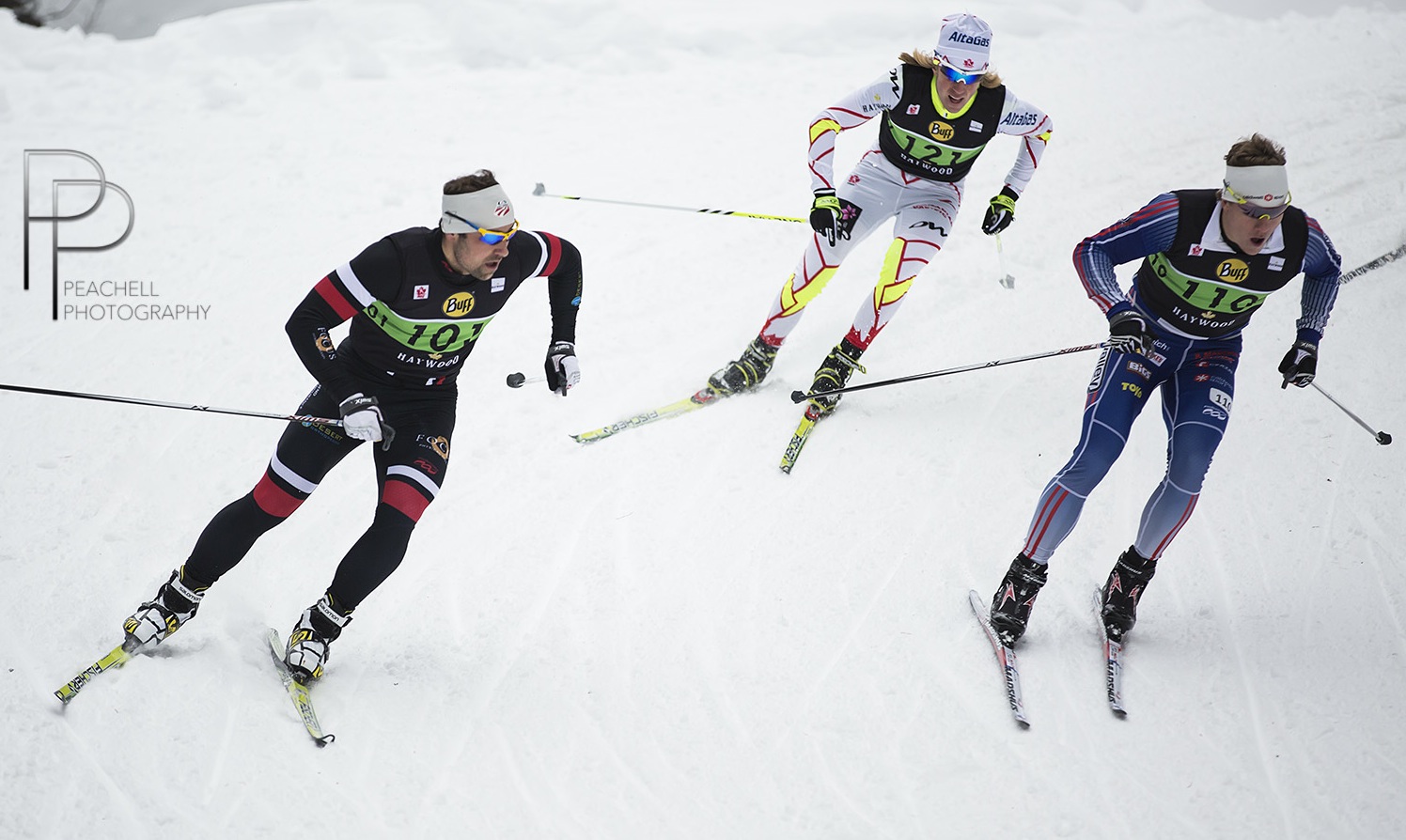
    NorAm action in Rossland, B.C., last winter: with Dakota Blackhorse-von Jess  of the Bend Endurance Academy (101) rounding a corner with Sun Valley's Miles Havlik (110) and Graeme Killick (121) of the Alberta World Cup Academy/CNST in the Black Jack NorAm 1.6 k skate sprint semifinals on Dec. 15. Blackhorse-von Jess won the semifinal and went on to place fifth in the A-final. Fourth in the semi, Havlick ended up second overall, and Killick placed 12th.  (Photo: Shelley Peachell/Peachell Photography, http://peachellphotography.com/)
    NorAm action in Rossland, B.C., last winter: Dakota Blackhorse-von Jess of the Bend Endurance Academy (101) rounds a corner with Sun Valley’s Miles Havlik (110) and Graeme Killick (121) of the Alberta World Cup Academy/CNST in the Black Jack NorAm 1.6 k skate sprint semifinals on Dec. 15, 2013. (Photo: Shelley Peachell/Peachell Photography)

    Note: This article has been updated to reflect the correct U.S. SuperTour schedule, notably West Yellowstone’s individual start. 

    Here’s what you have to look forward to this fall, domestically speaking. The Canadians are hosting a season-opening tuneup Oct. 24 in Canmore, Alberta, and it’s known as Frozen Thunder. After the classic sprint and freestyle-distance race (Oct. 31) at the Canmore Nordic Centre, North-American skiing attention will turn to Montana for the USSA SuperTour opener at its usual stop in West Yellowstone from Nov. 28-30.

    The SuperTour circuit then heads north to Bozeman, Mont., for the second weekend of races Dec. 5-7. Canadians will have a chance to race at home again at Cross Country Canada’s NorAm opener Dec. 13-14 in Rossland, British Columbia, which also serves as its U23/Junior World Championships Trials. Another set of trials takes place the next weekend, Dec. 20-21, at Whistler Olympic Park in Callaghan Valley, British Columbia.

    For the last two years, U.S. nationals has been held at Soldier Hollow, the 2002 Olympic venue just outside of Park City, Utah. This winter from Jan. 4-10, they’ll be in Houghton on Michigan’s Upper Peninsula. The SuperTour circuit ventures to Vermont for back-to-back weekends in Craftsbury from Jan. 30-Feb. 8 before the ultimate American distance race (also part of the SuperTour schedule): the American Birkebeiner Feb. 21 in Hayward, Wis.

    Another NorAm and the third-and-final set of Canadian U23/Junior World Trials is scheduled for Jan. 8-11 in Duntroon, Ontario. Western Canadian Championships in Canmore will follow from Jan.15-17, and Jan. 30-Feb. 1, Nakkertok will again host NorAm Easterns in Cantley, Quebec (just before U23 and Junior World Championships Feb. 2-8 in Almaty, Kazakhstan). The Gatineau Loppet will again double as Canadian Long Distance Championships with its 51 k classic mass start in mid-February.

    The NorAm season wraps up in Thunder Bay, Ontario, with Canadian Ski Nationals at Lappe Nordic, including the 50 k freestyle mass start.

    SuperTour Finals and U.S. Distance Nationals are set for March 20-26 in Sun Valley, Idaho — and the mixed relay is back.

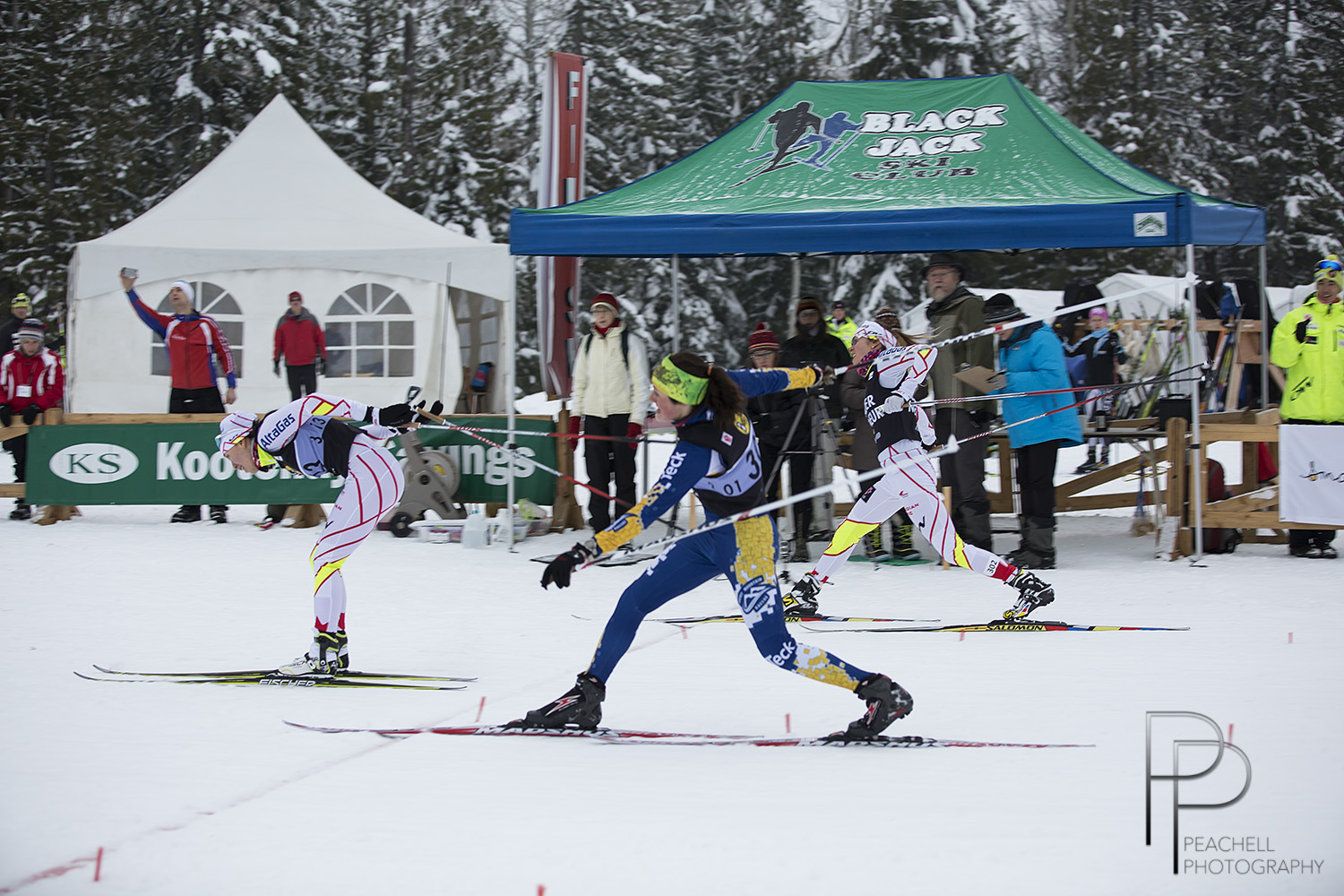
    Emily Nishikawa (l) edges Olivia Bouffard-Nesbitt (c) and Heidi Widmer (r) in the women's 1.4 k skate sprint final at the Black Jack NorAm on Dec. 14 in Rossland, B.C. Widmer was second and Bouffard-Nesbitt placed third.  (Photo: Shelley Peachell/Peachell Photography, http://peachellphotography.com/)
    Emily Nishikawa (l) edges Olivia Bouffard-Nesbitt (c) and Heidi Widmer (r) in the women’s 1.4 k skate sprint final at the Black Jack NorAm on Dec. 14, 2013 in Rossland, B.C. (Photo: Shelley Peachell/Peachell Photography)

    2014/2015 NorAm schedule

    Oct. 24: Canmore Frozen Thunder sprint opener: classic sprint*

    Oct. 31: Canmore Frozen Thunder distance opener: freestyle distance*

    Dec. 13-14: Rossland NorAm opener (and U23/Junior World Trials 1): freestyle sprint & 10/15 k classic

    Dec. 20-21: Whistler classic sprint & freestyle interval start at Callaghan Valley (U23/Junior World Trials 2)

    Jan. 8-11: Duntroon 15/30 k skiathlon, classic sprint, 10/15 k freestyle (U23/Junior World Trials 3)

    Jan. 15-18: Western Canadian Championships in Canmore: 10/10 k classic, freestyle sprint, classic mass start

    Jan. 30-Feb. 1: Eastern Canadian Championships in Cantley: freestyle sprint/prologue, 10/15 k freestyle, 15/20 k classic mass start

    Feb. 14-15: Gatineau Loppet/Canadian Long Distance Championships: 51 k classic mass start*

    March 14-21: Canadian Ski Nationals in Thunder Bay: freestyle team sprint, 5/10 k freestyle, 10/15 k classic, 30/50 k freestyle mass start

    *Separate from NorAm series

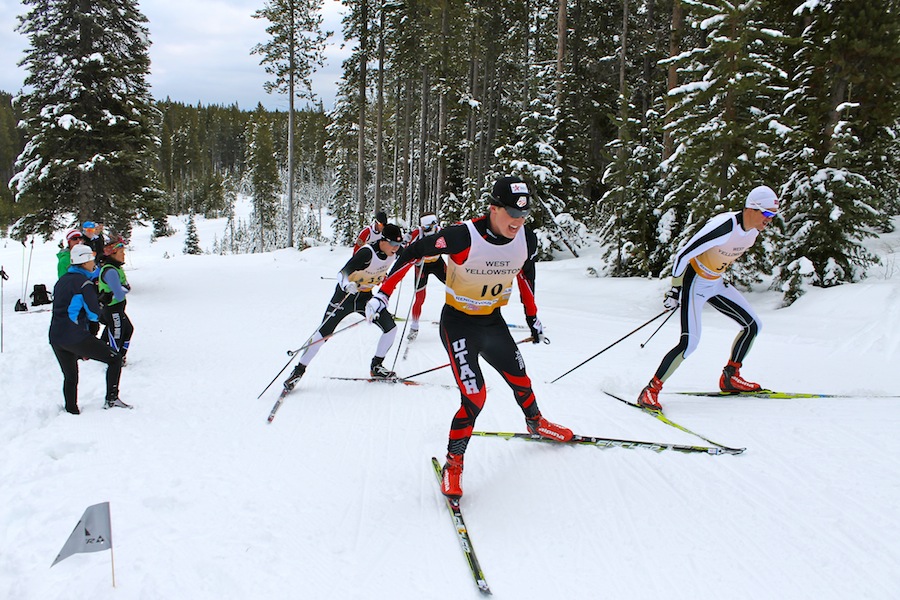
    Tucker McCrerey (Utah) takes the outside corner at the top of Tele Hill. McCrerey went on to place 19th in the 15 k skate at the 2013/2014 West Yellowstone SuperTour opener.
    Tucker McCrerey (Utah) takes the outside corner at the top of Tele Hill. McCrerey went on to place 19th in the 15 k skate at the 2013/2014 West Yellowstone SuperTour opener.

    2014/2015 SuperTour schedule

    Nov. 28-30: West Yellowstone SuperTour opener: Freestyle sprint & 10/15 k freestyle individual starts

    Dec. 5-7: Bozeman 10/15 k classic mass start & classic sprint

    Jan. 4-10: U.S. Cross Country Championships in Houghton: 10/15 k freestyle, classic sprint, 20/30 k classic mass start, freestyle sprint

    Jan. 30-Feb. 1: Craftsbury 20/30 k classic mass start & classic sprint

    Feb. 6-8: Craftsbury freestyle sprint, 10/10 k freestyle, 10/15 k classic mass start

    Feb. 21: American Birkebeiner in Hayward: 52 k freestyle mass start

    March 20-26: SuperTour Finals & U.S. Distance Nationals in Sun Valley: 10/15 k classic, freestyle sprint, mixed relay, 30/50 k freestyle mass start

    ***

    For the 2014/2015 International Ski Federation (FIS) cross-country calendar, click here.

  • 2015 Birkie More Than 75 Percent Full

    Photo: ABSF/Mark Milford
    Photo: ABSF/Mark Milford
    SWIX American Birkebeiner
    Wave Closures!
     
    Over 8,300 skiers have registered!
    That means we’re OVER 75% FULL
    & waves are beginning to CLOSE!
    Birkie Classic Wave 3 – CLOSED
    Birkie Classic Wave 4 – CLOSED
    Birkie Classic Wave 7 – CLOSED
    Birkie Classic Wave 8 – CLOSED
    The following waves are VERY!! CLOSE to capacity:
    Skate: Waves 2 & 3
    Classic: Waves 2 & 5
    When a wave closes, upon registering you will be placed in the next available wave. 
     
    *Please remember, due to our new registration system, you must REGISTER AS A GUEST
    Questions? Email birkie@birkie.com or call 715-634-5025