From the FasterSkier archive — posts syndicated from athletes’ and coaches’ own blogs between 2004 and 2012, kept online as published. Current coverage is at fasterskier.com.

Tag: 2015 IPC World Championships

  • Fourth No More, Soule Up to Third Overall in IPC World Cup with Five Medals at World Champs

    Fourth No More, Soule Up to Third Overall in IPC World Cup with Five Medals at World Champs

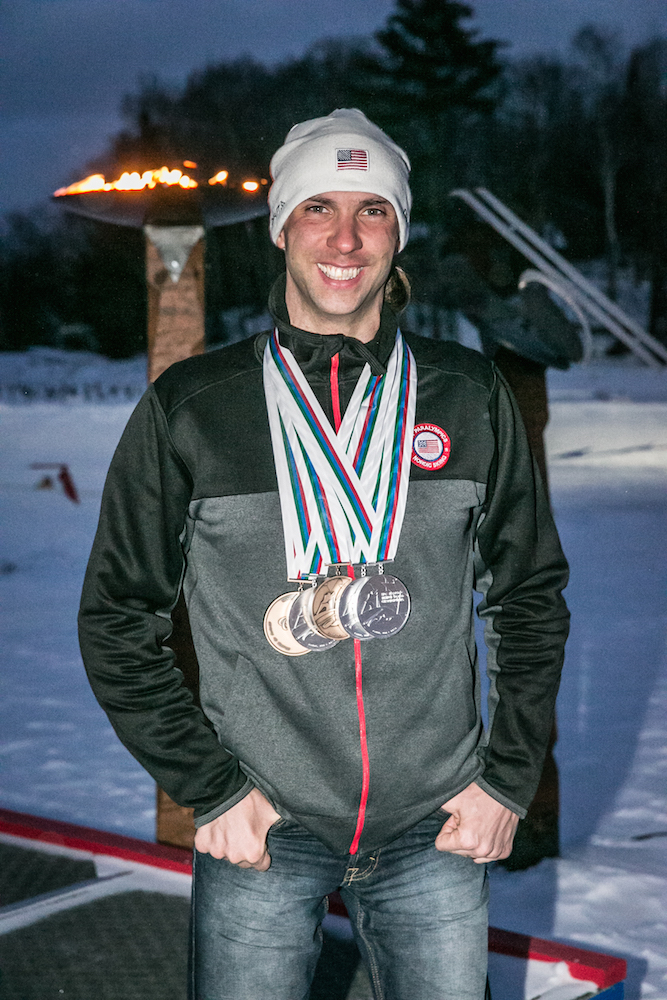
    Andy Soule and his hardware from 2015 IPC World Championships: five medals with three silvers and two bronze. (Photo: James Netz)
    Andy Soule and his hardware from 2015 IPC World Championships: five medals with three silvers and two bronze. (Photo: James Netz)

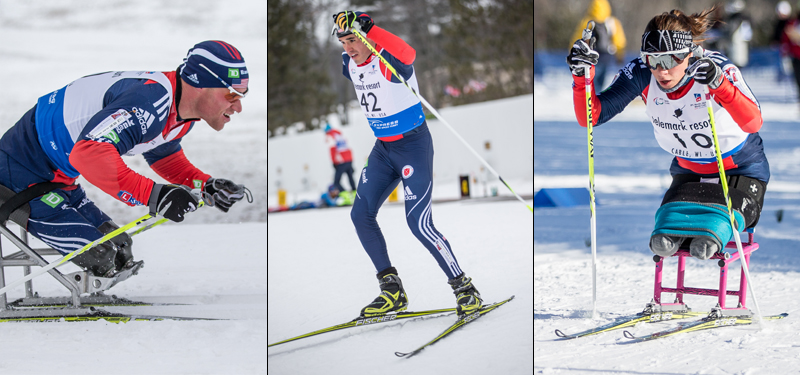
    Andy Soule took one look at the skate course at the International Paralympic Committee (IPC) World Championships — with technical downhills and a massive uphill — and thought, I could do that. The 35-year-old Army veteran previewed it the day before the final race in Cable, Wis., and found it to be “fairly difficult by our standards,” he said in a phone interview last week.

    Difficult in the sense that he’s a sit skier who relies entirely on his upper body and core strength, double poling everything from flats to steep hills. The course was designed for standing athletes — with two freestyle legs in the mixed relay, but the U.S. only had one man that could skate.

    “We wanted to enter a relay at World Champs, but we only had one standing athlete available to us, Omar Bermejo, who had been battling sickness during these events so running him twice on a super cold day did not seem like the best idea,” U.S. Paralympics High Performance Director John Farra explained in an email. “So we floated it by Andy and he did not hesitate to say yes!  … This is the first time a sitting athlete has done the standing course in the relay, so that was fun as countries came up to me to be sure we had not made a mistake.”

    It wasn’t against the rules, as Soule pointed out: “There is no rule that says you have to have a sit skier or a stand skier on either one; factors are just supposed to take care of those.” So as the second leg of the U.S. mixed relay on Feb. 1, he headed out after teammate Oksana Masters tagged him in fourth of seven teams.

    Farra’s Take on the “Sit-Ski Heavy” U.S. Team:

    “It’s a good thing… we have been able to attract sitting athletes from other sports and they are having success, which is getting attention from other sitting athletes,” U.S. Paralympics High Performance Director and Coach John Farra wrote in an email. “We have proven that we can be a good sport for summer sport athletes looking for cross training and a new challenge and tough competition.”On the other side we are very much interested in increasing the [numbers] of standing and visually impaired athletes who can develop into strong international racers.  Those who are finding success are finding it best to join up with a USSA Club program so they can be training & racing with other standing (able bodied) skiers as much as possible.”

    “Our team is very sit-ski heavy right now, and while we didn’t really go into the relay with an expectation of a high place or anything, they decided to go ahead and field me on the standup course,” Soule said from his home in Pearland, Texas. “I told my coaches I believed it was entirely doable … it’s probably not any sort of a competitive advantage for sure, but it was an interesting experience, and it went pretty well.”

    Soule came through the exchange in seventh, just seven seconds behind Germany’s Tino Uhlig, a standing skier who uses one pole, in sixth. With sit-skier Tatyana McFadden and Bermejo, a single-arm amputee, racing the third and fourth legs, respectively, the Americans placed seventh, 45.4 seconds out of sixth.

    From the outset, the mixed relay was the team’s weakest event of the week, one in which they did not field a team at last World Championships. However, more symbolically, it capped their historic showing in Cable, where Soule racked up five medals — unprecedented for a U.S. cross-country skier at World Championships — and competed in all seven events, including the relay.

    He was glad he did it.

    “It have me a really good gauge of where we are in terms of what relative speeds look like for sit skiers versus standup athletes,” Soule said. “On the largest climb of that race, I was passed by one of the best standup skiers in the world in our sport, Nils-Erik Ulset, of Norway. I think it was an interesting event for a lot of people to see exactly what is possible for a sit skier, too.”
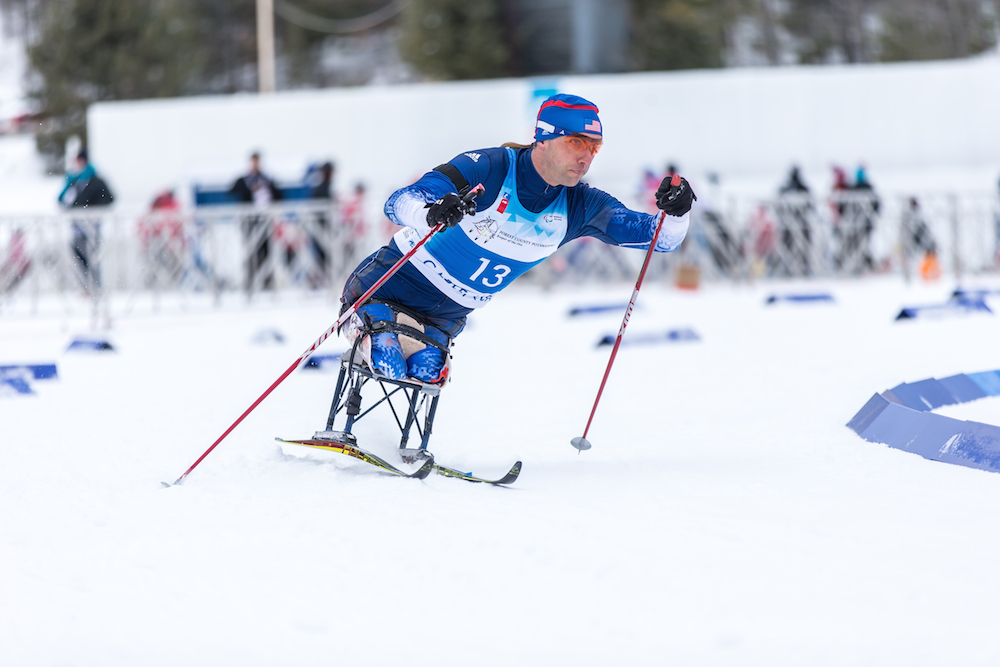
    Andy Soule navigates a turn  during one of his six individual races at 2015 IPC World Championships in late January in Cable, Wis. Soule medaled in five of those events. (Photo: James Netz)
    Andy Soule navigates a turn during one of his six individual races at 2015 IPC World Championships in late January in Cable, Wis. Soule medaled in five of those events. (Photo: James Netz)

    And he held his own on the descents. “I definitely didn’t lose any time on downhills,” Soule added.

    “Andy left Cable as a bit of a Legend,” Farra wrote. “5 medals and climbing & descending Telemark Hill successfully!”

    In his eighth year on the U.S. Paralympics Nordic team, it was not only Soule’s most successful World Championships, it was perhaps the highlight of his career after winning bronze in biathlon at the 2010 Paralympics.

    “This is a pretty high highlight,” Soule said. “After the second podium, I just started feeling like that wasn’t a fluke. This isn’t just a one-time thing, I’m really up here with the top of the field. I can compete with these guys. I can come out and compete on a level with the top guys every day. It was a confidence builder as well when you have that feeling.”

    “After the second podium, I just started feeling like that wasn’t a fluke … I can come out and compete on a level with the top guys every day.” — Andy Soule, who earned three silver medals and two bronze at the 2015 IPC World Championships in Cable, Wis., unprecedented for an American

    That feeling translated into three silver medals in two of three biathlon events and the cross-country 10-kilometer race at the 2015 championships, and two bronze in the cross-country 15 k and 1 k sprint (where Soule charged up from fourth with 40 meters to go to take third). On Monday, the IPC named Soule its January athlete of the month across all sports.

    Prior to this season, he had a Paralympic bronze from 2010 and placed fourth twice during last winter’s 2014 Paralympics in Sochi, Russia.

    “I wanted to break through that last little barrier for sure,” Soule said of his tendency toward wooden medals. “Between being almost on the podium and being a solid, consistent at least podium-potential finisher … that’s kind of been the source of all the little tweaks and changes we’ve been working with over the past year.”
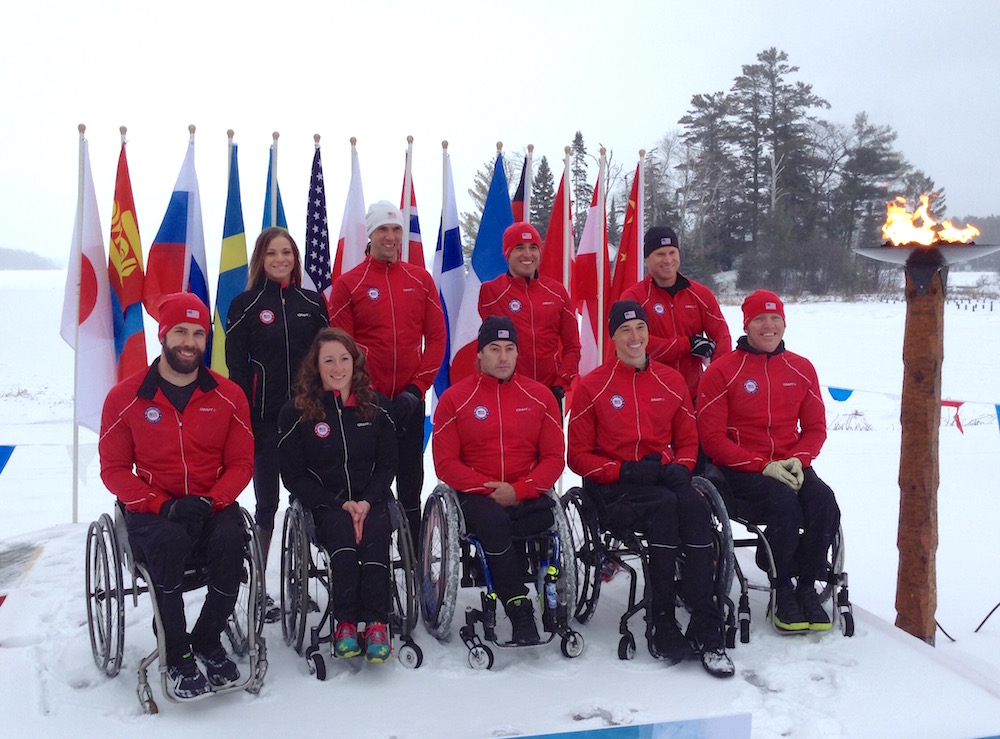
    2015 U.S. Paralympics Nordic World Championships Team in Cable, Wis. (Photo: U.S. Paralympics Nordic)
    2015 U.S. Paralympics Nordic World Championships Team in Cable, Wis. (Photo: U.S. Paralympics Nordic)

    Asked specifically about those changes, U.S. High Performance coach Eileen Carey explained, “To talk about what any one individual athlete has done to improve is to talk about the whole team,” she wrote in an email.

    Everyone on the team is analytical and thoughtful when it comes to what they need to work on and how to achieve those changes, she added. “They have created a really cool team environment focused on improving as individuals and as a team.”

    For Soule, it was about relaxing his technique at race pace.

    “He has always skied well at level 2, but speed had previously introduced a lot of wasted, inefficient movements into his technique, especially on flat terrain,” Carey wrote. “His ski speed and relaxed technique have always been there, it was just a matter if translating them to a race pace.”

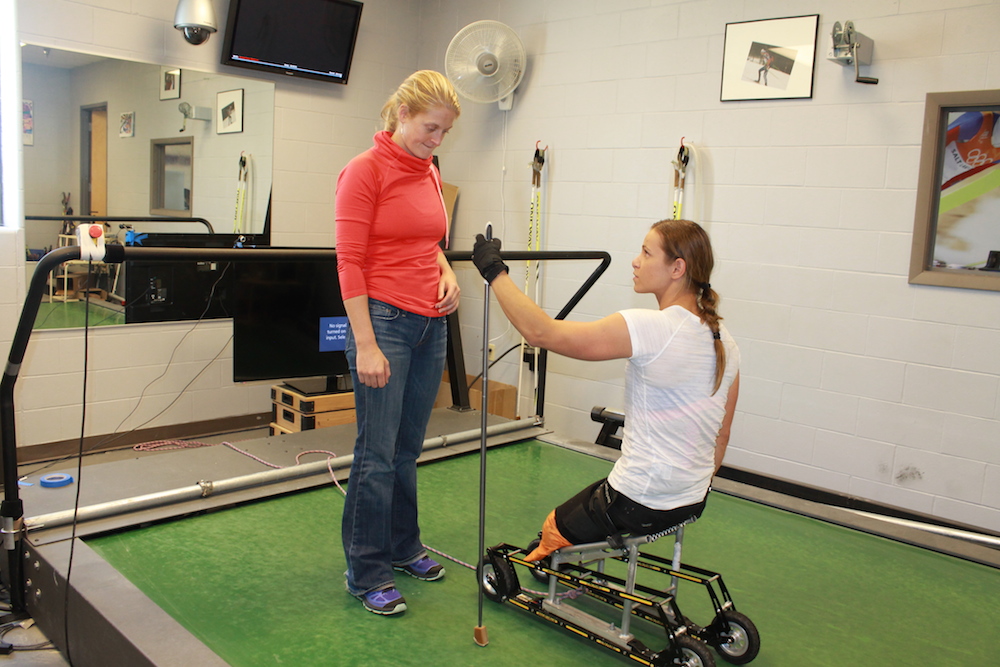
    In September, they started with rollerski sessions on the treadmill with live video so Soule could see the changes he was making as he tried them out.

    “Once we had the cues we knew worked for him, we brought it to snow this fall,” Carey explained. “It has been an evolution and I am sure it will continue to evolve. We did a lot of video analysis during and after the first World Cup in Finland in December and spent the pre-World Champs camp honing in on some of the patterns we saw from that.  He and his teammates have driven the process and we have worked to find the process and communication style that works best with each athlete.”
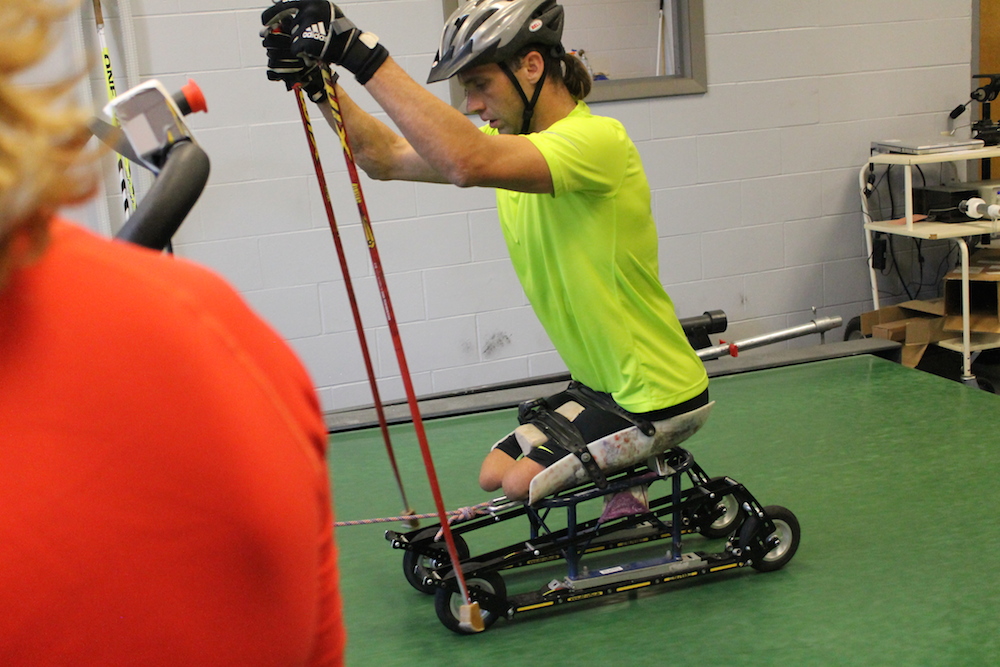
    Andy Soule working on technique during a treadmill session on Sept. 16 at the Olympic Training Center in Lake Placid, N.Y.
    Andy Soule working on technique during a treadmill session on Sept. 16 at the Olympic Training Center in Lake Placid, N.Y.

    As a result, Soule came out of the World Cup opener in Vuokatti, Finland, with two fourth-place finishes in the cross-country 10 k and biathlon sprint. While they weren’t podiums, he could feel a difference.

    “What I used to be doing was concentrated more on high tempo,” he said. “My emphasis on training recently has been to focus on flat sections of the course, what standup, able-bodied skiers would be considering a V2-technique section, lengthening out the pole stroke.”

    He continued to work on his technique at U.S. nationals in early January and at the team’s pre-World Championships training camp after that. He also switched to shorter poles this season.

    “I think everything just builds off what you’ve been working on in the past,” he explained. “You keep watching video of yourself, keep looking at races and identify what did work and then what little things we can maybe experiment with to get a little more speed.”

    Soule approached the biggest races of the season in Cable hoping to see improvement first, then results.

    “I wasn’t really worried going in what specific places I was aiming for — you can never really control that because you can never control how good everyone else is going to be,” he said. “But I wanted to see a personal improvement in what I would be able to accomplish as compared to how I’ve been performing in the past year.”

    As for which medals meant the most to him, he said his bronze in the cross-country 15 k was something he’d remember.
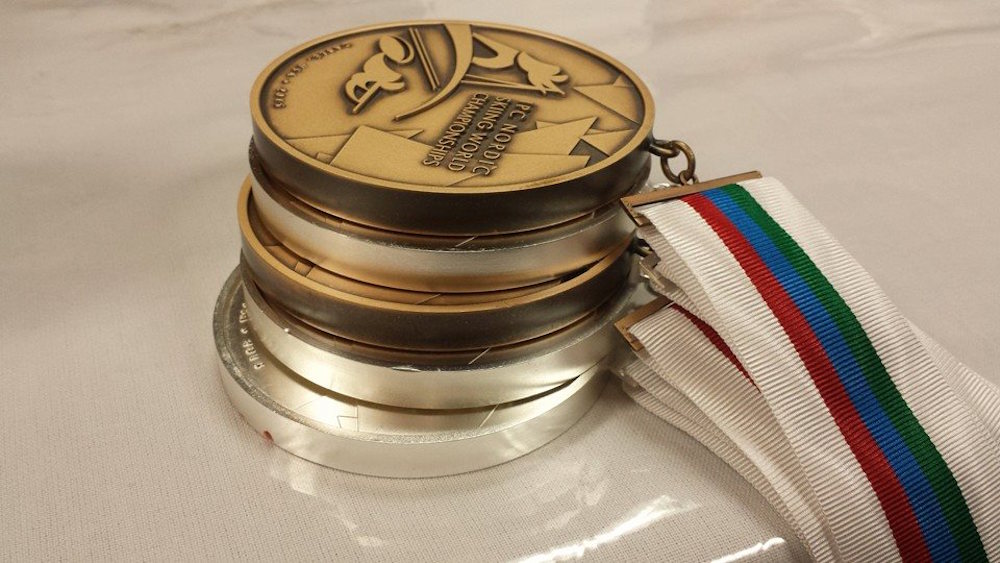
    Andy Soule's stack of medals from 2015 IPC World Championships in Cable, Wis., where he earned three silver and two bronze between three biathlon and two cross-country races. (Photo: U.S. Paralympics Nordic)
    Andy Soule’s stack of medals from 2015 IPC World Championships in Cable, Wis., where he earned three silver and two bronze between two biathlon and three cross-country races. (Photo: U.S. Paralympics Nordic)

    “It meant a lot to get the medals in the cross-country races just because that long-distance race, the first cross-country race of the week, was actually my first-ever podium in a cross-country race,” he said. “And it also boosts my confidence going into a biathlon event. It used to be, in order to have a shot at the podium in biathlon, I had to outshoot the top competitors. They had to miss shots in order for me to have a shot at the podium. Now I have that confidence that I can ski right with them. If neither of us misses anything, between me and the top competitors, I’m still in it.”

    Now third overall in the IPC World Cup standings with two major stops remaining (this weekend in Asahikawa, Japan and at World Cup Finals from March 16-22 in Surnadal, Norway), Soule said he mostly wanted to put together a “solid string of really great performances” for the rest of the season. Beyond that, he has his sights set on the 2018 Paralympics in Pyeongchang, South Korea.

    “I’m right at that age and I’m right at the point in my career where I’m in the prime of real top-performance potential,” he said. “I feel really great about what I have going forward and that I’ll be able to build on it and still improve on it.”

    In most every interview in Cable, Soule tossed around the word: “team.” He reiterated that he couldn’t have done it without his teammates and turned the focus toward their many successes at this year’s World Championships as well, including five Americans making the sit-ski sprint finals (three men and two women), and Masters tallying silver and bronze in the cross-country 5 k and cross-country sprint, respectively.

    “It just feels really good to have great teammates,” Soule said. “You’re always cheering for each other and everyone wants to see everyone else succeed, so it makes practice more fun when we’re all there and it makes racing more exciting. A good team component is really important to what we have going right now.”

    “Lots of good things were going in Cable beyond the medals,” Farra added.

    Masters currently ranks first in the World Cup in cross-country. Stay tuned for her interview.
  • T-1 Day ‘Til IPC World Championships in Cable; U.S. Team Raring to Go

    T-1 Day ‘Til IPC World Championships in Cable; U.S. Team Raring to Go

    (L-R) Dan Cnossen, Omar Bermejo and Oksana Masters are three members of the U.S. team who will be competing at the IPC Nordic Skiing World Championships in Cable, Wisconsin. (Photo: U.S. Paralympics)
    From left to right: Dan Cnossen, Omar Bermejo and Oksana Masters are three members of the U.S. team who will be competing at the IPC Nordic Skiing World Championships in Cable, Wis., with races starting on Saturday. (Photo: U.S. Paralympics)

    Note: This article has been updated to include the most recent information on the 2015 IPC Nordic Skiing World Championships according to an IPC Nordic Skiing press release.

    This past fall, FasterSkier spoke with Yuriy Gusev, head of the Cable 2015 organizing committee and executive director of Central Cross Country (CXC), about the ongoing preparations to host the upcoming International Paralympic Committee (IPC) Nordic Skiing World Championships in Cable, Wis. It seemed like a long ways off at the time, and now it’s here: being held for the third time in the U.S., for the first time in a decade.

    With Cable and the Telemark primed for the event, which includes 135 athletes from 15 countries from Jan. 23-Feb. 1, we had an opportunity to check in with U.S. Paralympics Nordic High Performance Coach Eileen Carey to see how the U.S. team was preparing. The U.S. roster was announced Jan. 9 and includes nine returners (out of 16) from last year’s Paralympics team at the Sochi Winter Games. All but one of them are sit skiers; Omar Bermejo is the lone standing athlete.

    U.S. 2015 IPC Nordic World Championships Team:

    Men

    – Omar Bermejo (Marine Corps/Grand Rapids, Mich.)
    – Lt. Cmdr. Dan Cnossen (Navy/Topeka, Kan.)
    – Sean Halsted (Air Force/Rathdrum, Wash.)
    – Augusto Perez (East Syracuse, N.Y.)
    – Aaron Pike (Park Rapids, Minn.)
    – Bryan Price (Army/Belton, Mo.)
    – Andy Soule (Army/Pearland, Texas)

    Women

    – Oksana Masters (Louisville, Ky.)
    – Tatyana McFadden (Clarksville, Md.)

    The two members of the women’s team found repeated success in Sochi, with Oksana Masters and Tatyana McFadden taking home three combined medals.

    Masters became the first female U.S. cross-country skier to win a Paralympic medal in 20 years at the Games, initially earning silver in the 12-kilometer sitting event. She also won bronze in the 5 k cross-country. This season, Masters racked up three medals at the World Cup opener in Finland, winning gold in the 1 k cross-country sprint, and silver in the biathlon 6 k as well as the 5 k cross-country.

    In Sochi, McFadden notched silver in the women’s 1 k cross-country sprint, and in the time since, she has continued her domination of the road-marathon circuit. After the ski season ended, McFadden won four world-caliber marathons in Boston, London, Chicago and New York City. It was the second-straight year that McFadden achieved the marathon grand slam in wheelchair racing.

    U.S. Paralympics Nordic skier Oksana Masters (r} talks to coach Eileen Carey before her first time on a treadmill on Sept. 16 at the Olympic Training Center on Sept. 16 in Lake Placid, N.Y.
    U.S. Paralympics Nordic skier Oksana Masters (r) talks to coach Eileen Carey before her first time on a treadmill on Sept. 16 at the Olympic Training Center on Sept. 16 in Lake Placid, N.Y.

    Masters and McFadden missed U.S. nationals because of injury and ilnees, respectively.

    “Earlier in the season, Masters had a minor back injury and McFadden had the flu and were forced to miss the last World Cup event and the US Nationals,” Carey explained. “Both are back healthy and will be in the field in Cable.”

    On the men’s side, Andy Soule leads a strong men’s team heading into World Championships. A veteran sit skier, Soule is a bronze Paralympic medalist from the 2010 Games in Vancouver, British Columbia, where he shot an unprecedented perfect 50-for-50 in all three biathlon races. In Sochi, Soule finished in the top five in every event he competed in and placed fourth twice (in the 7.5 k biathlon and 15 k biathlon).

    He split the number of U.S. sit-ski titles won at this year’s nationals with teammate Lt. Dan Cnossen (both men won two races at Soldier Hollow in Midway, Utah). Cnossen won the men’s sitting short and sprint cross-country races, while he finished as the runner-up to Soule in the long distance cross-country and biathlon sprint races.

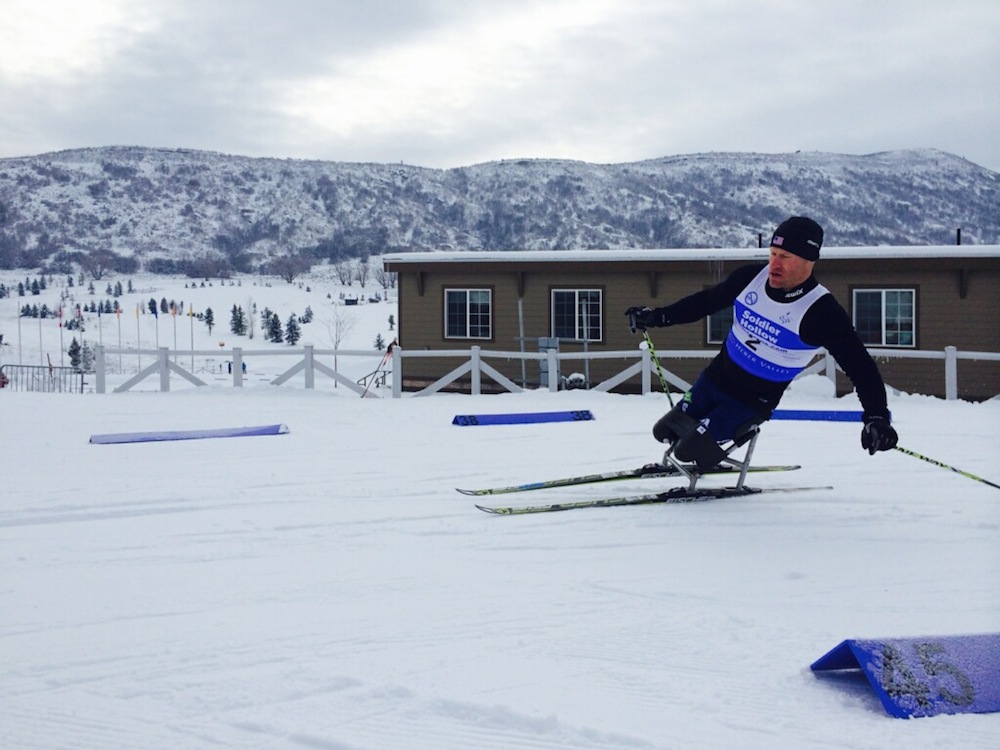
    Lt. Dan Cnossen negotiates the final turn on the course 100 meters from the finish en route to his sprint-final victory at 2015 U.S. Paralympics Nordic Nationals at Soldier Hollow in Midway, Utah. (Photo: U.S. Paralympics Nordic Program)
    Lt. Dan Cnossen negotiates the final turn 100 meters from the finish en route to his sprint-final victory at 2015 U.S. Paralympics Nordic Nationals at Soldier Hollow in Midway, Utah. (Photo: U.S. Paralympics Nordic Program)

    FasterSkier: How has the season gone so far?

    Eileen Carey: We had a strong opening to our season at the December World Cup races in Finland with a small group of athletes. We followed that with a great U.S. Nationals that brought together our top athletes with developing skiers and biathletes. Those two events showed both the high performance capacity and development focus of our program, both of which are critical to our long-term success.

    FS: What is the atmosphere of the team leading to these World Championships on U.S. soil?

    EC: Our athletes are becoming students of skiing and biathlon and driving the process of what and how they want to learn. This has created a great atmosphere for our whole program and has energized both athletes and staff. We are excited to take that energy to an event like World Champs, especially being at home. The Cable organizing committee has always been so welcoming and excited to have us and that gives us a great boost as a team.

    FS: What are your goals and expectations for this years team?

    EC: Our team philosophy is based on the concept that athletes are their own best coaches. Their training and racing has been focused on the idea that there are no “right” ways to do anything. As a result, this season they have gotten really creative and analytical about figuring out what works for them and exploring many different solutions. Our intentions are that bi-products of this exploration are improvements in skill, self-awareness as an athlete, and eventually performance. Our goals and expectations as a program are that our athletes will keep pushing those boundaries and continuing to think of different and perhaps better ways to train and race. Through this continual evolution, I think great performances will follow.

    FS: What are your thoughts on this years course? How does this course compare to 2013?

    EC: The courses in Cable will be a combination of courses we have skied there in the past, and some new features that will improve the experience for the athletes. We have spent some workouts focused on some of the terrain and technical features we will see there, so I think everyone is excited to be on the snow in Cable and test out what we have been working on.

    FS: What events will the team participate in?

    EC: We will have athletes competing each race day, with most competing in a combination of biathlon and cross-country races. Eight of our 9 athletes are sit skiers.  Omar Bermejo is our only standing skier to make the team and this will be the first time this season that we will all be together, so we are looking forward to being a full team.

    “We have a great team of athletes who have taken a very professional approach to training and building upon last season, ”Carey said in a U.S. Paralympics press release. “We are thrilled to get another chance to test out some of our training and racing strategies, ultimately focused on improving in each race. Having the opportunity to do that on home snow is a great bonus for us.”

    IPC Nordic Skiing World Championships Schedule of Events

    The opening ceremony will kick off Friday, Jan. 23 and the championships run through Feb. 1. 

    All seven days of the championships, which includes 38 events between cross-country and biathlon, will be streamed live at Cable2015.com and USParalympics.org from Jan. 24 to Feb. 1.

    Saturday, Jan. 24
    Biathlon Sprint – Penalty Loop
    Sitting: Men 7.5km (3 x 2.5 km) / Women 6.0 km (3 x 2.0 km)
    Standing: Men 7.5km (3 x 2.5 km) / Women 6.0 km (3 x 2.0 km)
    Visually Impaired: Men 7.5km (3 x 2.5 km) / Women 6.0 km (3 x 2.0 km)

    Sunday, Jan. 25
    Cross Country Long – Free
    Sitting: Men 15 km (5 x 3.0 km) / Women 12 km (4 x 3.0 km)
    Standing: Men 20 km (5 x 4.0 km) / Women 15 km (5 x 3.0 km)
    Visually Impaired: Men 20 km (5 x 4.0 km) / Women 15 km (5 x 3.0 km)

    Tuesday, Jan. 27
    Biathlon Middle Distance – Penalty Loop
    Sitting: Men 12.5 km (5 x 2.5 km) / Women 10 km (5 x 2.0 km)
    Standing: Men 12.5 km (5 x 2.5 km) / Women 10 km (5 x 2.0 km)
    Visually Impaired: Men 12.5 km (5 x 2.5 km) / Women 10 km (5 x 2.0 km)

    Wednesday, Jan. 28
    Cross Country Sprint – Classic
    Sitting: Men/Women 0.8 km
    Standing: Men/Women 1.2 km
    Visually Impaired: Men/Women 1.2 km

    Friday, Jan. 30
    Biathlon Individual Distance
    Sitting: Men 15 km (5 x 3.0 km) / Women 12.5 km (5 x 2.5 km)
    Standing: Men 15 km (5 x 3.0 km) / Women 12.5 km (5 x 2.5 km)
    Visually Impaired: Men 15 km (5 x 3.0 km) / Women 12.5 km (5 x 2.5 km)

    Saturday, Jan. 31
    Cross Country Relay – CL/Free/CL/Free
    Open: 10 km (4 x 2.5 km)
    Mixed: 10 km (4 x 2.5 km)

    Sunday, Feb. 1
    Cross Country Middle Distance – Classic
    Sitting: Men 10 km (4 x 2.5 km) / Women 5 km (2 x 2.5 km)
    Standing: Men 10 km (4 x 2.5 km) / Women 5 km (2 x 2.5 km)
    Visually Impaired: Men 10 km (4 x 2.5 km) / Women 5 km (2 x 2.5 km)

    For updates throughout IPC World Championships, follow FasterSkier’s Para Nordic blog.

  • IPC World Champs Return to U.S., Cable to Host at Telemark

    IPC World Champs Return to U.S., Cable to Host at Telemark

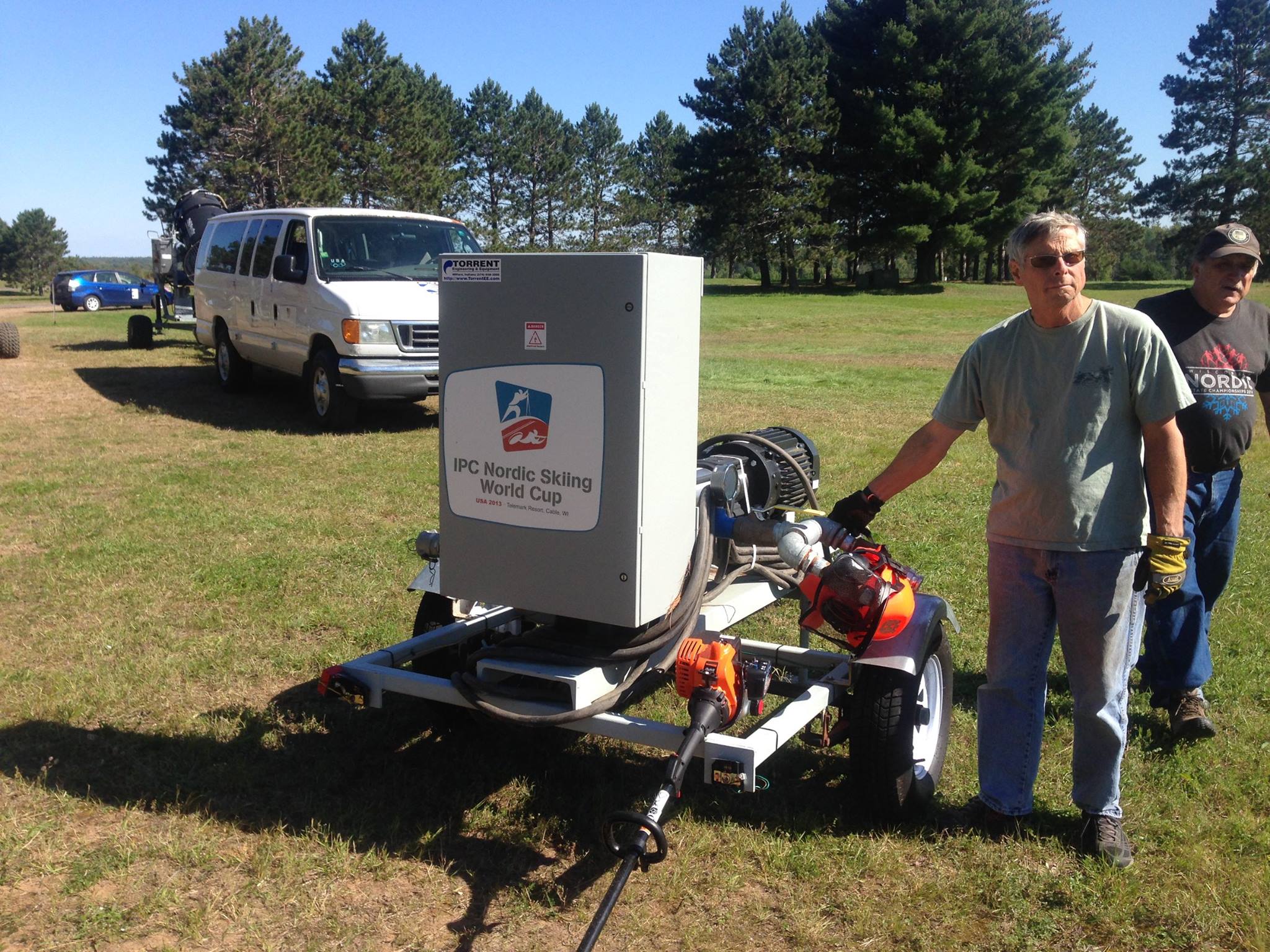
    Testing snowmaking equipment at Telemark trails in mid-September. (Photo: CXC/Facebook)
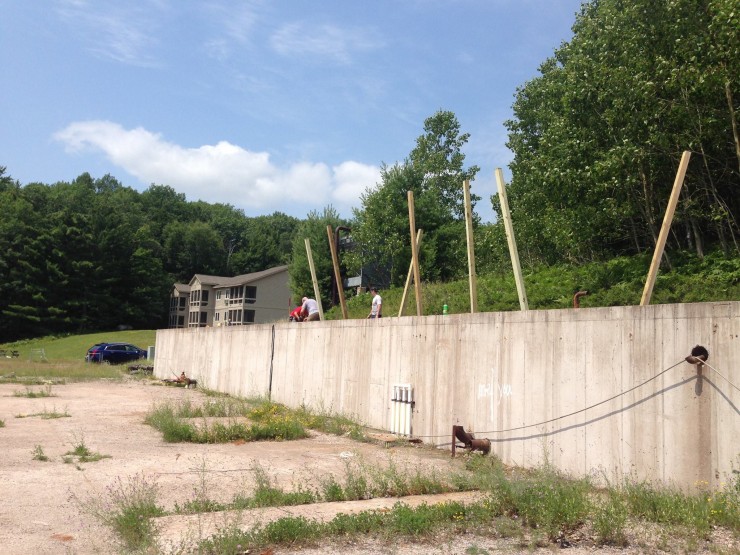
    Volunteers get ready to test snowmaking equipment at Telemark trails in mid-September in Cable, Wis. The IPC Nordic Skiing World Championships will be held there Jan. 22-Feb. 1, 2015. (Photo: CXC Skiing/Facebook)

    Northern Wisconsin, home of the Lumberjack World Championships and largest ski marathon in North America (a.k.a. the Birkie), is about to play host to the International Paralympic Committee (IPC) Nordic Skiing World Championships in January 2015.

    For the first time in 10 years, IPC World Championships is returning to the U.S. since its last visit in 2005 in Fort Kent, Maine. And it’s coming to Cable, a town with fewer than 900 residents but with a history steeped in skiing since before 1947, when Tony Wise founded Telemark Resort.

    The championships are expected to attract 150 of the world’s most competitive para-nordic athletes from 20 nations slightly less than a year after the Winter Paralympics in Sochi, Russia.

    Central Cross Country (CXC) is heading up the organizing efforts, working with Telemark’s owners to revamp the trails used for the 2012 and 2013 IPC World Cups — two events that drew international attention to Cable.

    “One of the coaches, I can’t remember what country, said we should host world championships because both those world cups were organized so well,” Yuriy Gusev, CXC’s executive director and the Cable 2015 organizing committee chairman, recalled in a phone interview.

    Cable’s World Cup organizers first entertained the idea of hosting World Championships in 2012, then, after their second World Cup in 2013, they submitted an official bid that year.

    When it comes to arranging an event of this caliber — with eight days of races between the opening ceremony on Jan. 22 and closing ceremony Feb. 1 — Gusev said it’ll be completely different from putting on a SuperTour or national championships.

    For instance, in many domestic ski races, fewer than 100 athletes typically participate. While there will be slightly more at IPC World Championships, the level of competition will be significantly higher than even a World Cup, which often attracts development skiers. And teams that don’t usually fly across the pond for non-World Championships events, like Hungary and South Korea, will be in Wisconsin as well.

    With more top-level skiers on course, Gusev said perfecting details — from appropriate hill grades for varying abilities, to the biathlon range — has been critical.

    “It’s a lot more details than anyone would ever imagine,” he said.

    One example: the hill that returns skiers back up to the stadium. As U.S. Paralympics Nordic Program director John Farra explained, it was so steep for sit skiers to ascend, especially those with little to no use of their core muscles, it wasn’t legal. And while it was used in the two previous Cable World Cups, something had to be done before World Championships.

    With help from former CXC head coach Bill Pierce, Gusev led the task of taking some chunks out of the hillside, as well as widening, flattening and cleaning up edges alongside the Telemark trails. That includes a homologated 5-kilometer competition loop and 2 1/2 k sit-ski loops.

    This past spring, Farra and his co-coach, Eileen Carey, an experienced technical delegate, visited Cable to check on the progress and pre-empt some of the questions they knew the IPC would ask during its site visit in June.

    “I’m glad we did it, and I think [Gusev’s] organizers appreciated it,” Farra said. “His new stadium is going to work, and he’s doing some pretty significant trail work … Now [the hill] is an appropriate return to the stadium. He’s done some nice improvements.”

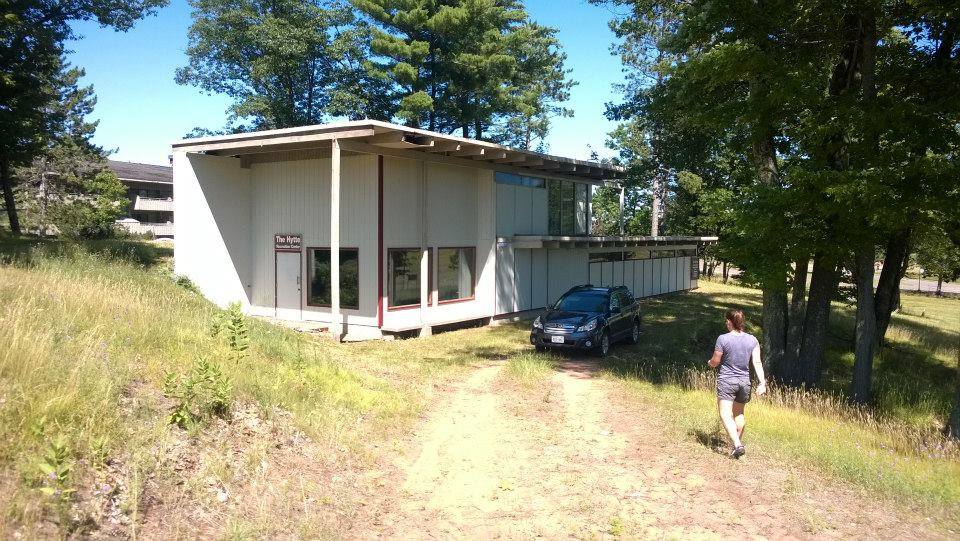
    The Hytte Recreation Center at Telemark Trails is going through makeover to be ready for the 2015 IPC Nordic Skiing World Championships and other events this winter. (Photo: CXC/Facebook)
    The Hytte Recreation Center at Telemark Trails is going through makeover to be ready for the 2015 IPC Nordic Skiing World Championships and other events this winter. (Photo: CXC/Facebook)

    The stadium has been moved slightly to a higher point and is near one of the oldest buildings on the Telemark property, the  three- to four-thousand-square-foot Hytte Recreation Center, which Telemark’s owners agreed to let CXC renovate.

    According to Gusev, CXC updated and repainted it as an events/activity center. The owners also granted them use of the Telemark trail system.

    The lodge itself remains closed, but as Gusev pointed out, “most of the venues anywhere don’t have lodging facilities at the start line.” Rather, Lakewoods Resort a 10-minute drive away will be the official accommodation and site of the closing ceremony.

    “It’s not that easy to find a venue with a trail system and a biathlon range,” Gusev explained. “[We had] two world cups there and all the teams really enjoyed the trails and the layout.”

    The opening ceremony will be held in downtown Cable in an open area between the grocery store and chamber of commerce.

    In terms of spectators, Gusev said it was difficult to predict how many people would come watch the week-and-a-half championships. Regardless, he said his seven-person organizing committee was working hard to generate as much interest as possible in the months leading up to it.

    He’s currently trying to lock down corporate sponsors to provide cash flow for hosting the event. The plan was to initially work with donation partners, then use the assistance of the IPC to attract international sponsors.

    A few months ago, the organizing committee secured a grant from the state department of tourism as well as support from Bayfield County.

    Depending on how fundraising goes, Cable 2015 could cost anywhere from an estimated $500,000 to $750,000 dollars, Gusev explained. While details and budgets will have to be finalized by November, he’s confident they’ll get there.

    “If you look at the Paralympic Games in Sochi, twenty-five countries broadcasted and two billion watched it,” he said. “For the state [of Wisconsin] and the sponsors, it’s a pretty big event to be involved in and the media exposure will be huge.”

    T.V. coverage will be a combination of small-scale broadcast and live streaming on the event website. Initially, Gusev said they considered a wide-reaching broadcast platform, but found the cost to be around $500,000 for a weekend of coverage. Alternatively, the live stream, which can be accessed anywhere online, will cost the organizers about $75,000, with equipment as the main expense, specifically a satellite truck.

    At the same time, that option creates more work.

    “If you have half a million and you have someone come in from New York to come do it, you don’t have to worry about it…,” Gusev said. “It’s actually more complex [to do the live stream].”

    And in terms of snow, that’s partly why Cable got World Championships.

    “In 2013, there was no snow anywhere and the little snow there was got melted by three inches of rain the day before the first official training day,” he said of the IPC World Cup that year. “All the races were on artificial snow so nobody could believe we pulled it off.”

    Part of Gusev’s master plan is putting Telemark on the map as a venue that can hold consistently successful, big events. In 2016, Junior Nationals will be held on the same homologated trails in Cable.

    “The standing course is [a] legitimate, hard, Sochi-like course to throw at the athletes,” Farra said. “[And Telemark has] similarly challenging courses for sit skiers.”

  • U.S. Paralympics Stoked But Not Quite Satisfied: Sights Set on Korea

    U.S. Paralympics Stoked But Not Quite Satisfied: Sights Set on Korea

    Oksana Masters training in Edebäck, Sweden, near the Torsby ski tunnel, where three U.S. Paralympic Nordic skiers trained with two coaches for a week in September. (Photo: U.S. Paralympics Nordic/Facebook) https://www.facebook.com/USParalympicsNordic/photos/pcb.535129713287388/535129139954112/?type=1&theater
    Oksana Masters (r) during a rollerski in Edebäck, Sweden, near the Torsby ski tunnel, where three U.S. Paralympic Nordic skiers trained with two coaches for a week in September. (Photo: U.S. Paralympics Nordic/Facebook)

    The second day of the 2014 Winter Paralympics in Sochi, Russia, Oksana Masters — a bronze-medal rower from Louisville, Ky. — broke the ice and a 20-year barrier for the U.S. Paralympics Nordic Program.

    Twenty-four at the time with just over a year of skiing experience, she captured silver in the 12-kilometer sit-ski cross-country race, becoming the first U.S. woman to win a medal for her team in the last 20 years.

    Three days later, another sit skier and Winter Paralympics rookie, Tatyana McFadden racked up another silver for the U.S. in the 1 k sprint. Then on the final day of the Games, Masters closed the books with a bronze in the 5 k.

    Three medals left U.S. Paralympics High-Performance Director John Farra a lot to be excited about, especially after the team took home one medal from the Paralympics four years earlier in Vancouver, British Columbia. He wasn’t at the helm then, when Andy Soule won bronze and six athletes represented the U.S. at the 2010 Paralympics.

    But less than three years after he started with the program in the summer of 2011, Farra helped it more than double in size. The U.S. brought 16 nordic-and-biathlon skiers to Sochi and grew from five full-time athletes in 2011 to six national-team members (including Masters as its first A-teamer) and nine development-team athletes.

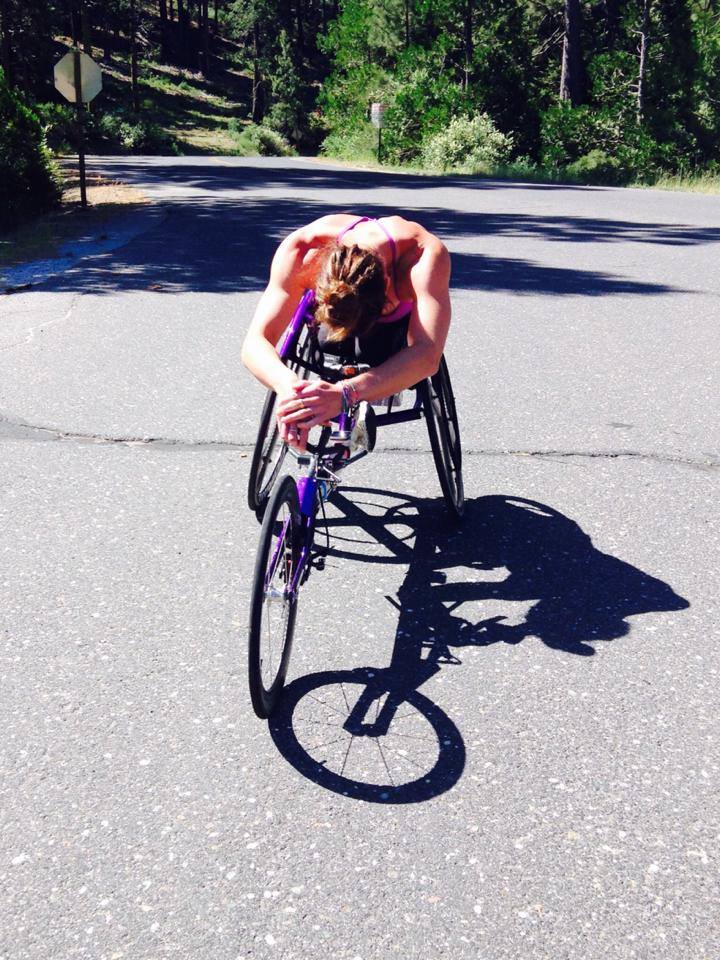
    Tatyana McFadden while training in July for U.S. nationals in her summer sport,  wheelchair racing, of which she's a three-time Paralympic and 10-time World Championship gold medalist in track and field. (Photo: U.S. Paralympics Nordic/Facebook) https://www.facebook.com/ParalympianTatyanaMcFadden/photos/pcb.597862103645740/597861653645785/?type=1&theater
    Tatyana McFadden while training in July for U.S. nationals in her summer sport, wheelchair racing, of which she’s a three-time Paralympic and 10-time World Championship gold medalist in track and field. (Photo: U.S. Paralympics Nordic/Facebook)

    Out of the 16 in Russia, two of them won three medals, yes, but Farra also likes to point out all of their fourth-, fifth- and sixth-place finishes as well.

    “[Those are] maybe a better sign of the health of our program,” he said on the phone from his office in Park City, Utah, last week. “I was prepared for the possibility that we might win [no medals]. I wasn’t worried, but I will say there was some sense of relief, but more importantly, it was just fun.”

    Take Soule, for instance, who finished in the top five of all but one of his six races in Sochi. A biathlete as well as a cross-country sit-skier, the team veteran shot perfectly at the Games — hitting all his targets in three races.

    Then there was Jake Adicoff, an 18-year-old visually impaired skier, who placed sixth in the 20 k distance race in his first Paralympics.

    Those kinds of performances, paired with a few medals (which Farra says they “stole”), better define the strength of their program, he said. And when his bosses in the U.S. Olympic Committee (USOC) Paralympics division decided on his team’s budget for this 2014/2015 season, Farra believed they took that into consideration.

    “Our numbers went up in terms of participants and our performance,” he said, adding that they also increased the size of their full-time staff. “I think we’re in a really good place. … I didn’t get what I requested in terms of my high-performance request, but we’re getting enough to do the job, for sure. We’re getting really supported by the USOC, and we’re earning the support that we get because we’re running a really high-level program.”

    U.S. Paralympics oversees five winter sports: nordic, alpine, snowboarding, sled hockey and wheelchair curling. Every four years, Farra explained that it’s essential for U.S. Paralympics’ summer sports (like cycling, swimming, and track and field) to cut back and support them in the months leading up to the Winter Games. They do so with the understanding that now, two years before the Summer Paralympics in Rio de Janeiro, Brazil, the winter sports will do the same.

    “We’re spending less this year and appropriately so based on that design,” Farra said. “I think that’s fine.”

    He pointed out that more than half of the available medals at the Winter Paralympics come from cross-country or biathlon events.

    “[U.S. Paralympics] needs nordic to be successful,” he said. “Is it pressure? You bet it’s pressure because it doesn’t happen without us, but that’s the whole idea.”

    Last year, his program was allowed to overspend to a certain degree, Farra explained, and the budget he has to work with this season — while down from last season — is still higher than it was three years ago.

    “There were some elite strategies that I identified to my boss that I felt were really important going into Sochi and my boss allowed me to do what I needed to do,” he said.

    That included their Fast Skis program in collaboration with U.S. Biathlon.

    “I honestly feel that we had the fastest skis in Sochi of any team in the Paralympics because of that partnership, because we shared information,” Farra said. “We bought into that process and for two years we tested it. That’s the piece that we have and we’re going to keep that going, but now, what else can we do?”

    “[U.S. Paralympics] needs nordic to be successful. Is it pressure? You bet it’s pressure because it doesn’t happen without us, but that’s the whole idea.” — John Farra, U.S. Paralympics Nordic high-performance director and coach

    Standing in the hallway of the Olympic Training Center during a camp two weeks ago in Lake Placid, N.Y., Farra pointed to a five-year-old, steel-frame sit ski. That need to be three pounds lighter by switching to carbon fiber, and so did the frames of every sit skier on his team, he said. To dial in that equipment perfectly before the 2018 Paralympics in Pyeongchang, South Korea, they’ll likely have to test several versions years before. So they need to start now.

    “Medals are good, but they’re not critical; I think they’re going to be more critical in Pyeongchang,” Farra said of building on his team’s established success.

    He told his bosses this was going to be a process. “[I said], ‘I don’t want to get fired if we don’t win medals in Sochi,” he reflected with a laugh. “They said, no, no, we understand.”

    Rethinking staff structure

    While in Russia, Farra spent some time like he did when he started the job three years ago, asking questions and gathering ideas. He got talking to USA Bobsled and Skeleton and was inspired by the federation’s creativity when it came to reviewing staff. Each year, they surveyed their athletes and employees to get an honest sense of how everyone felt about the team, its structure and staffing, etc., and looked at the results collectively to make changes.

    U.S. Paralympics Nordic director and coach John Farra (l) briefs Oksana Masters before her first-ever time on a treadmill at the Olympic Training Center on Sept. 16 in Lake Placid, N.Y.
    U.S. Paralympics Nordic director and coach John Farra (l) briefs Oksana Masters before her first-ever time on a treadmill at the Olympic Training Center on Sept. 16 in Lake Placid, N.Y. See the video and read more here.

    He jotted the idea down at the breakfast table one morning in Sochi and vowed to try it in the spring. Then he wondered, did his team need a clearly defined director, head coach, assistants and/or development coaches? Or were there other ways to go about assigning responsibilities?

    When he met with the USOC at the end of the season, he asked how other teams under its umbrella structured their respective teams from a staffing perspective.

    “I was really shocked at how many sports did it in a unique way, and it validated my instincts that there’s not just one design,” Farra said.

    In the spring, he went back to USA Bobsled’s idea and created a staff review using SurveyMonkey, a free-online polling tool. He encouraged his athletes and coworkers to participate, not withholding any criticism nor fearing repercussions for sharing their thoughts. He’d be the only one reading the results, and he invited criticism of himself as well.

    “It really drew out some interesting responses where we found some flashes of our brilliance, but we have some flaws in our design,” Farra said.

    The good news was the results were in line with what he had already been thinking.

    Before this spring, Farra was the U.S. Paralympics Nordic’s lone full-timer. Three development coaches, Eileen Carey, BethAnn Chamberlain and Rob Rosser, worked with the team as U.S. Biathlon employees. Head coach James Upham worked as an independent contractor.

    Farra said he sat down with that core crew this spring and shared the overall takeaways from the survey. Mostly he asked if they were willing to be part of a collaborative and different-looking staff structure: with a director/coach, who splits his time between administrative and instructive duties, plus several multifaceted coaches, who work with developing as well as elite athletes.

    “While we need to win medals, we’re more of a development organization,” he said. “We’re still not there in terms of having all kinds of high-performance athletes that we need to care for. … Everybody needs to be a development coach, including a director.”

    He challenged his own job, asking whether the team’s dollars were being wisely spent on a director who mostly sits at a desk. That wasn’t smart, he reasoned, so he needed to get more involved with day-to-day coaching, building sit skis and helping athletes learn to navigate corners. He would do so with Carey, also a high-performance coach, and Chamberlain and Rosser, all of which are now full-time team employees. But they no longer needed a head coach.

    Upham had been a head coach for a long time, Farra pointed out, and if he had wanted to stay, the program would have had to consider if they could afford his pay scale. Salaries and budgets aside, Farra explained that it was more about a coaching style he had to sell his staff, and those that were interested stuck around. Upham left to become an assistant coach at Bates College.

    “It was not a relaxing spring, but I think in the end the people that signed up for being a part of this collaborative coaching style are 100-percent onboard,” Farra said. “… Collaboratively we’re all responsible for our overall success. I’m psyched for James that he found something that’s going to work for him and I think he’d say the same for us.

    “There was really no drama,” he added. “… I definitely can’t afford to hire lots of full-time coaches, but it wasn’t about money, it was more about being able to take the blinders off and sort of say, OK, can we do this in a different way?”

    U.S. Paralympics Nordic held its annual weeklong training camp in Lake Placid, N.Y., earlier this month. Eleven athletes attended, plus five coaches and three to four support staff. (Photo: U.S. Paralympics Nordic/Facebook) https://www.facebook.com/USParalympicsNordic/photos/pcb.539270726206620/539269649540061/?type=1&theater
    U.S. Paralympics Nordic held its annual weeklong training camp in Lake Placid, N.Y., earlier this month. Eleven athletes attended, plus five coaches and three to four support staff. (Photo: U.S. Paralympics Nordic/Facebook)

    Throughout the last several months, Chamberlain, now in her second season with the team, and Rosser have been primarily working with developing athletes — both biathletes and cross-country skiers. While Farra and Carey are mostly responsible for the high-performance athletes (a.k.a. national-team members), the four coaches trade off when it comes to training camps based on their geographic proximity to those venues.

    “It makes no sense to fly BethAnn and Rob to Utah to work with a couple newbies,” Farra said, considering he lives there.

    At the same time, he needed to skip the October national-team camp in Oberhof, Germany, to take care of paperwork and meetings. Carey and Rosser will fly overseas with the team, while Chamberlain works on military and non-military recruiting stateside. The team includes several part-time contractors, including physiologist Jason Kask — brought on to help lead the training-plan process for the next Olympic cycle.

    “We have regular meetings and go over the hundreds of responsibilities that exist with developing a high-performance and a development program,” Farra explained. “You get one chance every four years to build something that’s going to be successful.”

    IPC World Champs in Cable

    This winter, the world-famous host of the American Birkebeiner and back-to-back International Paralympic Committee (IPC) World Cups: Cable, Wis., will host the IPC Nordic Skiing World Championships from Jan. 22-Feb. 1.

    That’s an exciting prospect for U.S. as the home team, with Farra largely crediting its success in the last three years to being able to bring numerous developing athletes to the Cable World Cups in 2012 and 2013.

    At the last World Championships in 2013, the U.S. had four athletes and three coaches in Solleftea, Sweden.

    “It was just so cost prohibitive,” Farra explained. “Every time you bring more athletes you need to bring a lot more staff. We expect [Cable] to be a decent size team, similar to what we saw in Sochi and hopefully some new faces so it’s a really good opportunity.”

    The qualifying standards are still more selective than a World Cup, which will keep the team size around 16 or so, plus a couple guides, he predicted. It’s also cheaper than traveling overseas, but “not an inexpensive proposition,” he explained, when you consider the cost of food and lodging, plus participation fees.

    But would having more athletes compete boost their chances?

    “I’m not worried about medals,” Farra said. “I feel the support from the USOC and U.S. Paralympics. I don’t feel that we need to cash in a bunch of medals in Cable to get support for Pyeongchang. That would be icing on the cake but … we’re not worried about that, we’re worried about doing a great job.”

    ***