From the FasterSkier archive — posts syndicated from athletes’ and coaches’ own blogs between 2004 and 2012, kept online as published. Current coverage is at fasterskier.com.
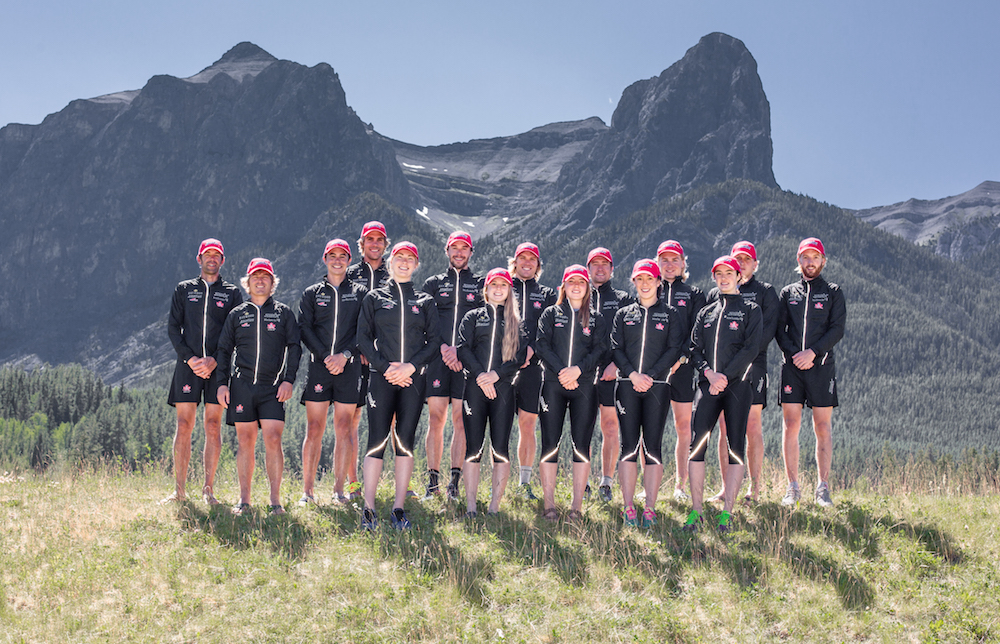
The 2015/2016 Canadian National Senior Team, with co-head World Cup coaches Justin Wadsworth (l) and Louis Bouchard (second from l) and athletes (from l to right) Jess Cockney, Len Valjas, Dahria Beatty, Alex Harvey, Cendrine Browne, Devon Kershaw, Katherine Stewart-Jones, Ivan Babikov, Emily Nishikawa, Knute Johnsgaard, Olivia Bouffard-Nesbitt, technical services coordinator Joel Jaques, and Graeme Killick during a photo shoot in their new Swix training wear in Canmore, Alberta. (Photo: CCC)
Six years in as the Canadian national team’s head coach, Justin Wadsworth speaks with tempered confidence. And there’s good reason for that. After concluding an altitude camp in Park City, Utah, three weeks ago, he says the Canadians are fit, healthy and primed for what he hopes will be a special season.
FasterSkier reporter Jason Albert spoke with Wadsworth last Friday, Oct. 23, three days before the Frozen Thunder classic sprint in Canmore, Alberta.
Wadsworth attributes some of the team’s positive outlook to an organization emphasizing better communication and collaboration between the national team and regional training centres.
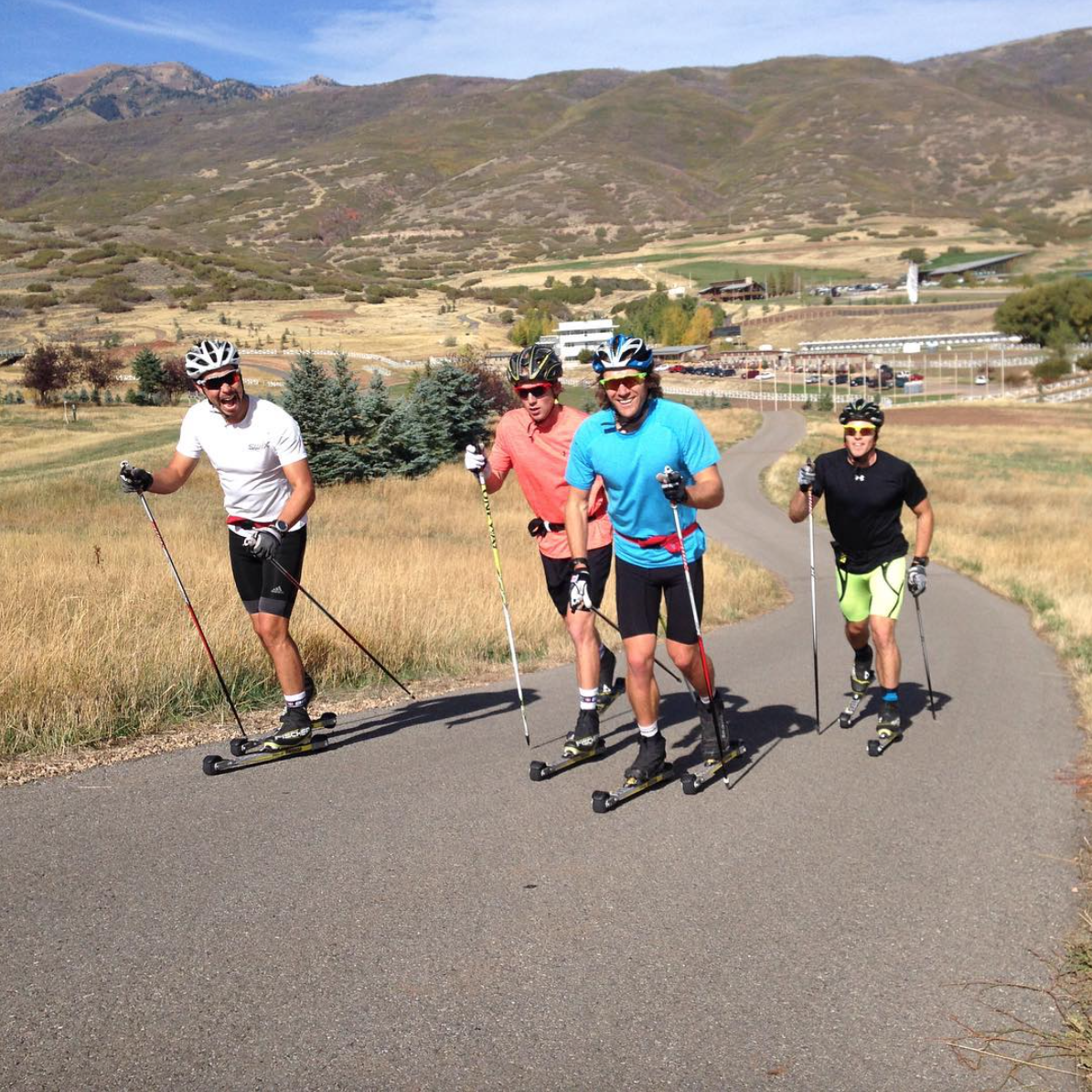
Graeme Killick, Jess Cockney, Devon Kershaw, and Michael Somppi rollerski at Soldier Hollow during their last day of a dryland altitude camp near Park City, Utah. (Photo: Ivan Babikov/Instagram)
“I feel like we’ve struggled with that a little bit in the past, but now more than ever, our training centres, coaches, and national training centre are really working closely together,” he explained.
Canada’s series of training camps this summer and fall were an opportunity for skiers striving for international starts to work out with World Cup skiers.
“I really feel like this year has been a huge success and a step forward a far as our collaboration with the training centres,” Wadsworth said. “I think we have a very methodical stable program and we are just checking off the boxes and now we are coming up to that part of the season where we have to transition all that into speed on the snow.”
According to Wadsworth, national-team skiers like Emily Nishikawa are ready for that transition.
“She’s in the best shape she’s ever been in by far,” he said.
He added that veteran World Cup skier Ivan Babikov is returning to his former levels of fitness.
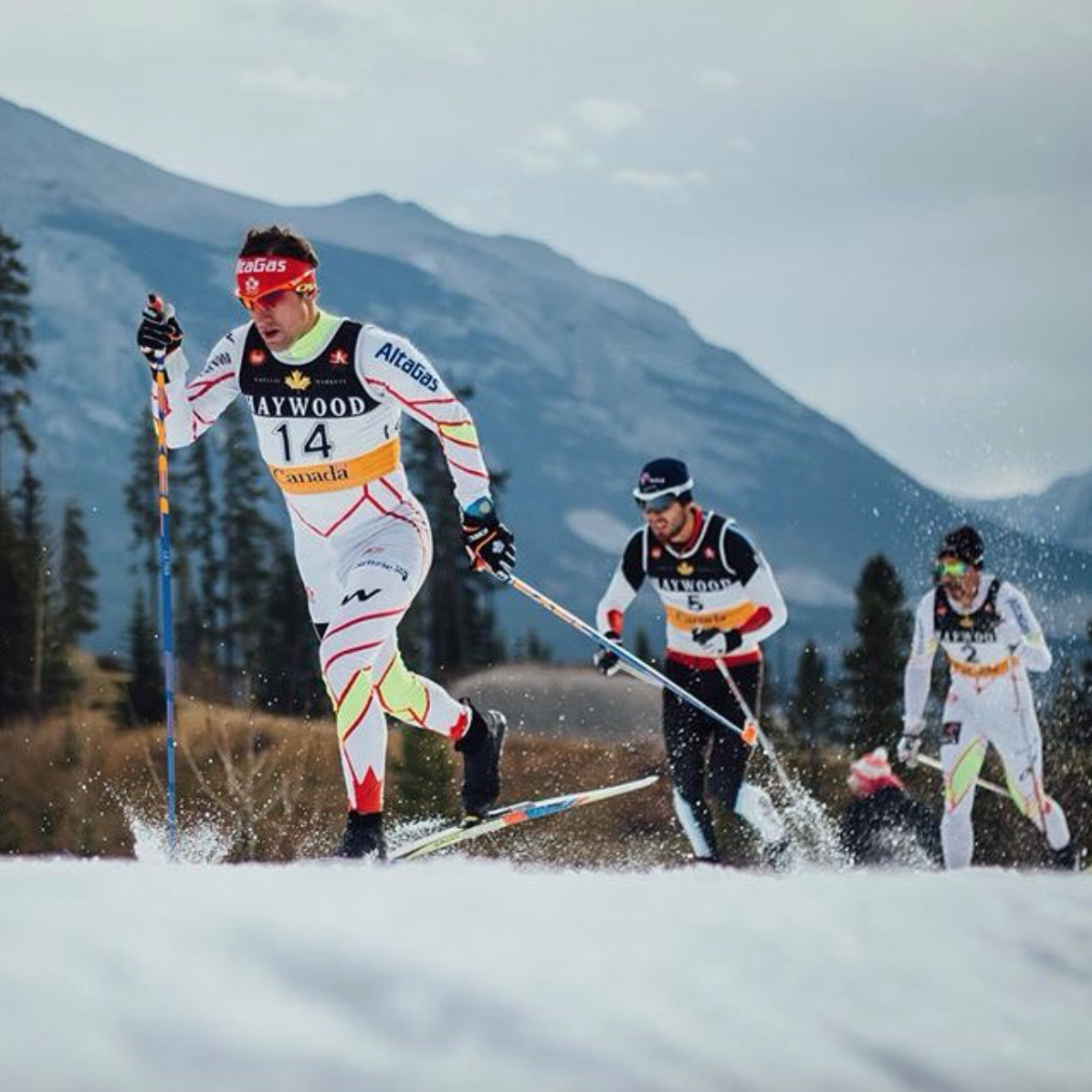
Canadian World Cup veteran Ivan Babikov (14) leads Patrick Stewart-Jones and Jess Cockney (r) during the Frozen Thunder classic sprint on Monday, in which he placed third. (Photo: Marie-Eve Bilodeau-Corriveau/Instagram)
“He showed us in the time trial in Soldier Hollow. He was five seconds behind Alex [Harvey] in that, and we all know where Alex is,” Wadsworth said.
With two individual World Championship medals last season, it’s hard to imagine Harvey could exceed expectations this season. But post iliac artery surgery, Wadsworth says Harvey is a new skier.
“His surgery really allowed him to come to a new level. He’s just been breaking all his running time trial efforts by minutes,” Wadsworth said. “He’s going to be scary this year with his legs feeling good.”
After on-snow racing this week at Frozen Thunder, the national team heads to Gällivare, Sweden, in mid-November for its final preseason training camp. The World Cup eventually lands in Canada in March for the 2016 Ski Tour Canada. As the host country, Canada is allotted 26 starts in the tour: 14 male and 12 female, Wadsworth said.
He acknowledged expectations are high. “Without a doubt our biggest race this year is the Tour of Canada,” he said. “It’s our World Championships, and we really want to have a lot of great results there from all different levels of our program.”
Kikkan Randall and her husband Jeff Ellis recently announced they are expecting their first child in April 2016. Randall, 32, will skip the 2015/2016 season, but plans to return for 2016/2017. (Photo: USSA)
PARK CITY, UT (Oct. 15, 2015) – World Champion cross country ski racer Kikkan Randall (Anchorage, AK) is planning to take a break from competition this season. Randall and husband Jeff Ellis announced to her teammates this week that they are expecting their first child in April. Randall will skip the upcoming season, but plans to come back strong for the World Championship year in 2016-17 and keep her eyes focused on the 2018 Olympics in PyeongChang.
Kikkan Randall racing last season at the final World Cup classic sprint in Drammen, Norway. Randall, 32, will miss the 2015/2016 season as she is expecting her first child. (Photo: Fischer/NordicFocus)
Randall, 32, who has also won three season-long World Cup sprint titles, was glowing with the news as she talked to teammates gathered in Park City for the Team’s final pre-season conditioning camp.
“After Sochi, I thought a lot about my future and the goals I still want to achieve,” said Randall. “I was always committed to continue racing, but Jeff and I also wanted to start a family. We felt this was a good time. I’m excited about becoming a mother, but am also looking forward to coming back to race in 2017.”
Randall plans to spend some time at selective World Cups this season as a spectator to maintain contact with the sport. Her husband, who serves as a marketing support manager on the FIS Cross Country World Cup tour, will continue to travel on the circuit this winter.
Randall, a 14-year veteran of the U.S. Cross Country Ski Team, is one of its most decorated stars in history with three World Cup titles and two World Championship medals, including gold in the team sprint from 2013, pairing with Jessie Diggins (Afton, MN).
“Finding a way to balance an athletic career and being a mother has been a goal of hers for some time, so rewarding to see it come together for her,” said Head Coach Chris Grover. “As much as we will miss Kikkan’s leadership on the World Cup tour, we know that she will be back in 2016-17. The Team is very excited for Kikkan and Jeff.“
“I plan to maintain my same athletic direction when I come back, skiing both sprint and distance,” Randall said. “I’m especially looking forward to the freestyle sprint at World Championships in Lahti, where I’ve won before, and the team events in PyeongChang.”
“If anyone has the tenacity and the drive to return to World Class form after starting a family, it is Kikkan,” added Grover. “She understands the hard work and the form that is necessary to be a Champion, and she is already showing the determination to return to the sport and to win. The Team is already looking forward to having her back in training camps next summer and we’ll be looking to her for big results in 2017 and 2018.”
Randall is continuing to participate with the Team at its dryland and roller ski camp in Park City until late October.
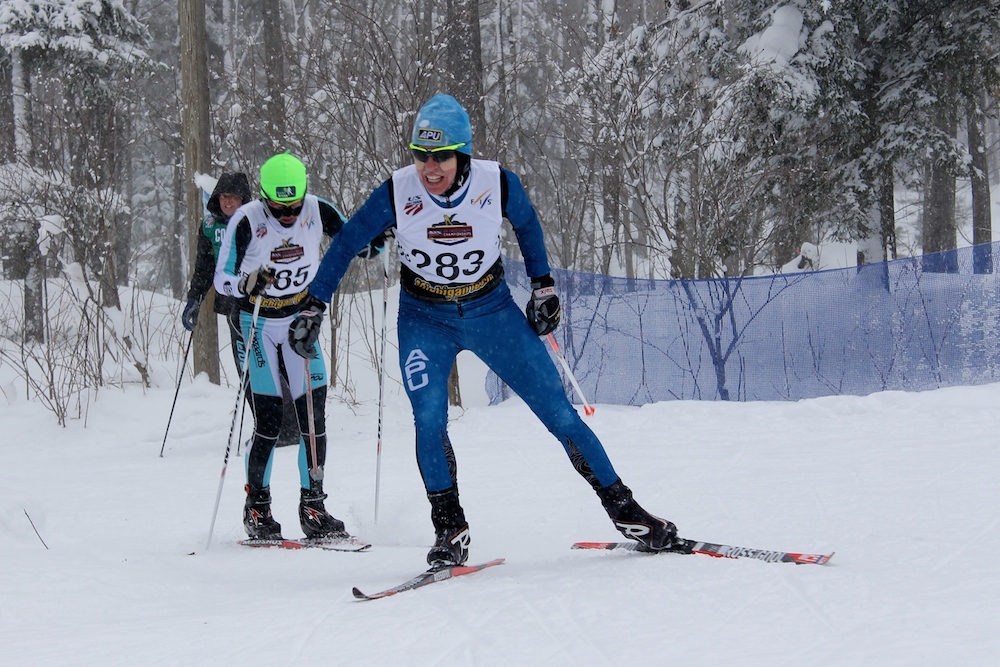
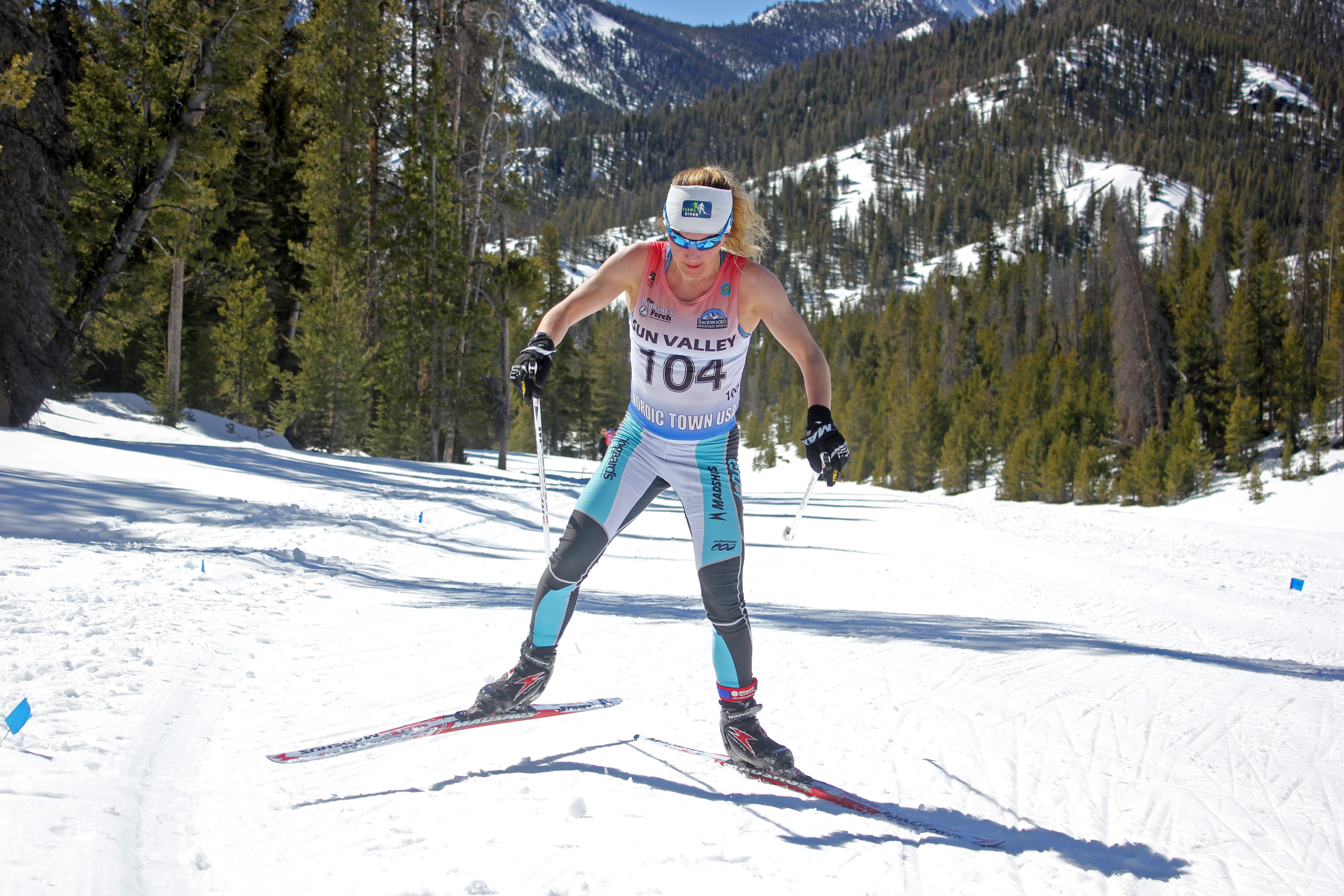
Rosie Brennan (APU) leads Caitlin Gregg (Team Gregg/Madshus) at the 2015 U.S. Cross Country Championships in Houghton, Mich. The two skiers will join the USST B-team in the 2015/2016 season.
When the U.S. Ski and Snowboard Association (USSA) announced the nominations for the upcoming season’s National Team earlier this month, four new faces were added to the ranks. Caitlin Gregg (Team Gregg/Madshus) and Rosie Brennan (Alaska Pacific University) were nominated to the B-team, while Katharine Ogden (Stratton Mountain School) and Julia Kern (Cambridge Sports Union) were placed on the D-team.
FasterSkier caught up with each of the new additions to discuss their motivations, feelings, and journeys to their respective nominations. From the 34-year-old Gregg — who has been working to earn a spot on the team for nearly a decade — to Ogden — a 17-year-old who will be a senior in high school next season — the four women mark changes in the USST lineup that will ultimately shape its future.
Caitlin Gregg (Team Gregg/Madshus) skis to a nearly three minute win in the 2015 U.S. Distance Nationals 30 k in Sun Valley, Idaho.
Caitlin Gregg: A long time coming
Gregg was the only new addition to the USST to qualify via objective criteria. After a season which included two national titles and a bronze medal performance in the World Championships 10 k, she ranked 27th on the International Ski Federation (FIS) distance points list — which was within the USST team standards.
The Minneapolis-based skier had kept her eyes on the list throughout the latter part of the season, but it was only after her dominating performance in the 30 k freestyle at U.S. Distance Nationals in Sun Valley, Idaho that she knew there was a good chance of making the team. Even then there were still several international races left in the season for other athletes to bump her out of the qualifying standard.
“We calculated my points after the 30 k at U.S. Nationals, but there was a period of races after that – the marathon in Russia and a few others around the world – where other athletes could have gotten better FIS points and bumped me down,” Gregg said in a phone interview after the nominations were announced.
Once all international races were complete it was only a matter of waiting. Gregg received a call from USSA in April informing her that the nomination was coming – something the 34-year-old had been working towards her entire career.
When it comes to the USST, Gregg has faced challenges regarding her age for a long time. According to a blog post by Gregg’s husband Brian regarding her 2015 World Championships medal, she was told after the 2007 World Championships that she was “too old for the U.S. Ski Team and their pipeline.” Eight years later, however, Gregg is on the team and excited about the season’s prospects.
For Gregg the nomination is a reward for the years of hard work – physically, financially, and otherwise – that she has put into the sport. She explained that due to her late entry into professional skiing, her career has seen delayed trajectory. While the journey to the nomination was challenging, the 34-year-old said it was worthwhile.
Caitlin Gregg (Team Gregg) hugs her husband, Brian, after her large win in the 30 k freestyle mass start at the 2015 SuperTour Finals in Sun Valley, Idaho.
“It’s been a goal for a long, long time. I’ve been battling; a lot of the criteria is centered around age-based results,” Gregg said of her journey to the nomination. “That was always something that was more difficult for me because I came into skiing after college and even after college there wasn’t a whole ton of programming until CXC came around. By the time that all came together I was on that older end of the spectrum already.
“At my age you’re not going to be discretion-ed onto the team but if you make the criteria they’re going to put you on the team. I think that’s really reassuring for anyone out there who’s really questioning if it is worth it to keep going. It’s not going to be easy and nothing will be handed to you, but it’s totally possible.”
Earlier in the 2014/2015 season Gregg wasn’t sure what her future held, and before the successes of the late-season she contemplated retiring. “It’s a tough decision after every year,” she explained.
According to Gregg, both she and Brian have created a sustainable financial model that has taken years to master. That, coupled with her recent successes led them to ask, “why stop now?” Furthermore, Brian plans to continue to ski through the 2018 Olympics, and while it would be possible for Team Gregg to exist as a one-man project, it largely centers around the two of them.
“As much as it would be sweet for me to be his coach or working or supporting him from the side, we really feel like it’s a pretty incredible opportunity for the two of us to keep racing together and keep building that model we have,” she explained.
“I’m really psyched with that decision. I know it’s early in the season, but I think it was the best call so I’m fired up.”
In the upcoming year Gregg will continue to ski as a skate distance specialist, but will look to improve her classic and sprinting skills. In the past, focusing on several key races instead of trying to compete in them all has helped her perform at the highest level. She will employ a similar strategy in the 2015/2016 season.
Fueled by the exciting developments in her career, Gregg began her busy summer schedule earlier this month with a trip to the USST camp in Park City. She will remain there for Rookie Camp, where she said a joking Matt Whitcomb (USST Women’s Coach) told her she would likely be the oldest rookie in history.
“[The nomination is] super exciting and something I’ve been trying to do since I was 18-years-old,” she explained. “To reach the goal a few years after I had hoped is still awesome and an incredible feeling. Both Brian and I are incredibly fired up. We feel like we learned so much in the last couple years and now with the resources and opportunities that are presented to us and available we feel like it’s a great launching pad and we can build on what we’ve already achieved. We’re excited to see what’s possible.”
Rosie Brennan, USST, skis 30th place in the 2015 World Championships 15 k skiathlon. (Photo: flyingpointroad.com)
Rosie Brennan: A return to the team
Of the four women who will join the team in 2015, Brennan is the only one who held a position in the past. The Park City native was nominated in 2007 and remained on the team until she was cut in 2009. Brennan was 18 and a recent high school graduate when she was first nominated to the team. She decided to attend school and race for Dartmouth College, while juggling her spot on the national squad.
“I was quite young and I decided to school anyway,” Brennan said in a phone interview. “I did a few years on the National Team but was pretty much just racing at school with the exception of Junior Worlds and U23s and camps and stuff. After 2009 the coaches decided that wasn’t the direction they wanted the team to go so they dropped all of us who were in school at the time.”
According to Brennan, her removal from the team was difficult because she felt as if the USST coaches had lost faith in her abilities. “At the time I was really bummed and really devastated by it. For whatever reason it’s hard not to feel that the governing body of skiing doesn’t believe in you,” she said.
“It took me a little while to get over that. I was really thankful that I was in school and I had a really good ski team and coaches that supported me and believed in my skiing regardless of what the direction the ski team was headed in. I kept plugging along.”
Although she debated to continue her skiing career after Dartmouth, Brennan ultimately decided to race professionally for APU. She said the “supportive and conducive environment for training” on the team helped her jump back into racing and eventually regain a spot on the team.
Brennan said that her return to the USST feels especially gratifying given her history. “It makes me extra proud to know that I didn’t give up and believed in myself and I made it back to where I know I should be,” she said.
In the upcoming season Brennan said she hopes to continue on the trajectory she started this past year — where she earned 16th in the 30 k and helped the U.S. ski to fourth in the women’s relay, both at World Championships. “I’d like to just continue on what I was doing last year. I finally figured out how the World Cup circuit works and I’d like to continue along those lines and work forward from there,” she said.
Brennan is planning to attend the two USST camps in Park City, but hopes to remain in Alaska for the majority of the training season to continue a program that has worked for her in the past.
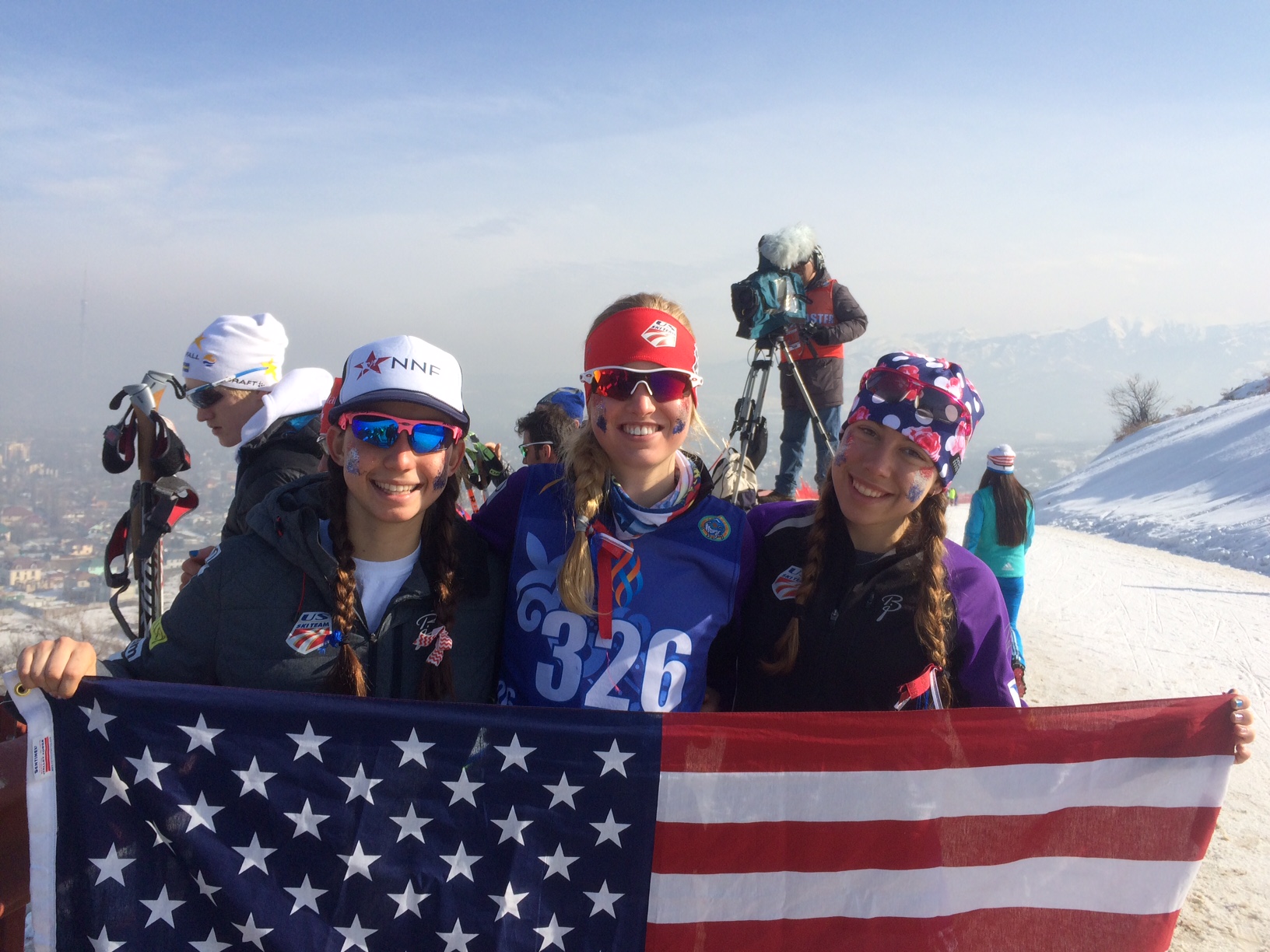
From l-r, Julia Kern (CSU), Hailey Swirbul (Aspen Valley), and Katharine Ogden (SMS) cheering on the U.S. U23 team at World Chamionships in Almaty, Kazakhstan (Photo: Julia Kern)
Katharine Ogden and Julia Kern: Young and up to the challenge
Ogden has been one of the most successful junior athletes in the history of U.S. cross country skiing, so when she received a call from Matt Whitcomb over her spring break it seemed routine. It wasn’t, however, as Whitcomb told her she would be nominated for a spot on the USST D-team – a feat she had only dreamt of since she was a very young skier.
“I was kind of shocked because ever since I was little it has been a huge — I don’t know if you can call it a goal when you’re six — but it’s been something I wanted to do for my entire life,” Ogen explained in a phone interview. “It was just crazy, and while it really isn’t the U.S. Ski Team it’s the next step, which is really cool.”
It was a similar experience for fellow D-team member Kern, who received the call right before she was supposed to meet with her CSU teammates.
“I didn’t really know how to respond,” Kern said in a phone interview. “I was about to meet two of my teammates and it was weird because I couldn’t say anything. I was thrilled and honored to be nominated. It also kind of felt relieving in a way because it is a dream come true.”
The skiers, both 17 years old, will be the youngest members of the team. Kern will graduate from high school this year, while Ogden still has one year left at Stratton. Both had a momentous year on the international circuit, with Ogden claiming sixth in the skiathlon at Junior Worlds and Kern taking third in a mid-season Slavic Cup.
Kern said she is excited about her spot on the team because of the new opportunities that will be at her disposal. “It will offer more support and access to resources which is definitely a big key,” she said. “It’s just a great motivator.”
After Kern graduates this spring, she will make the transition from CSU to take a post-graduate year at Stratton, where she will train with Ogden and utilize the ski-oriented environment at the small Vermont school.
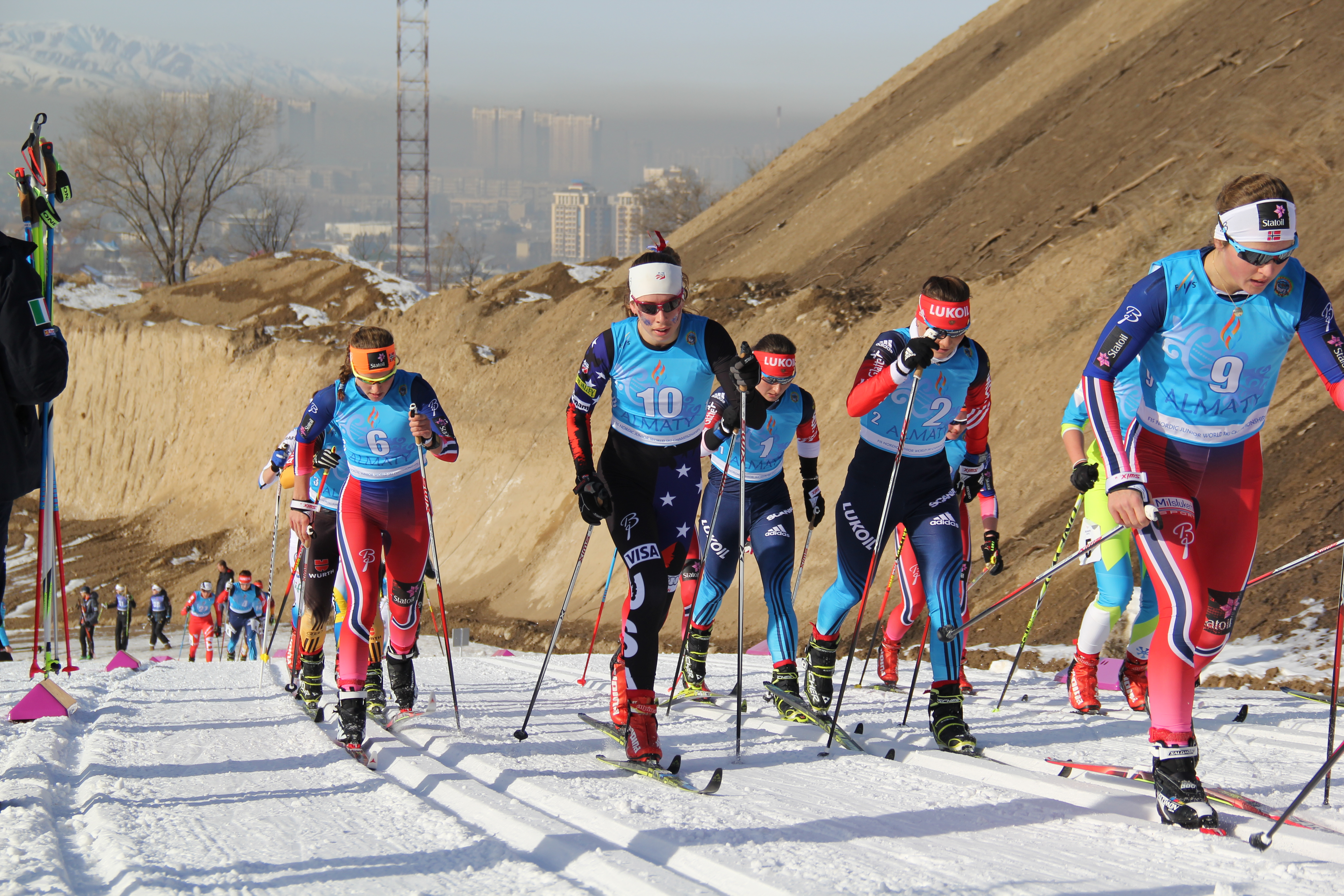
Katharine Ogden (10) on her way to a sixth-place finish in the women’s 10 k skiathlon at the Junior World Championships in Almaty, Kazakhstan (Photo: Bryan Fish/USSA)
“This last year I was thinking about taking the year off and skiing, and since the year went well I wanted to see what skiing full time is like,” Kern said. “With the Stratton option I’ll have one of the best coaches I know, Sverre Caldwell, and also Pat O’brien. I’ll also still be able to stay in contact with Rob, my high school coach. The training group is so competitive with such a great group of girls and guys. I’m so close with Katharine and our strengths are opposite so we’ll have a lot to gain from each other.”
Ogden echoed Kern’s statements, adding that another top female junior skier, Lauren Jortberg from Boulder, Colo., would be joining the ranks at Stratton. “I’m so excited to have everyone coming. The more fast people around the better everyone gets, but also I’m just really close friends with Julia and Lauren and I’m really excited to spend more time with them and I think they’re going to be a great addition to our team.”
Both Kern and Ogden will travel to Park City for the upcoming rookie camp, where they will learn about the inner workings of the USST. From there, the two are looking forward to a season where they can call some of the best skiers in the world their teammates.
“It’s pretty incredible and motivating to be able to consider the U.S. Ski Team A and B team women my teammates because they are so incredibly strong,” Ogden said. “They’re some of the best in the world and that’s incredibly motivating.”
While plans for a New York City World Cup were put on hold at the 2014 FIS Congress in Barcelona, Spain, there is still a possibility the event could take place in the coming years. (Photo: Gryffindor, Wikipedia Commons)
Note: This article was updated to reflect the numerical costs of a World Cup in New York City.
Skiers from all corners of the world were curious, excited, and ultimately disappointed by the unrealized prospect of a New York City World Cup in the 2015/2016 season. News of the project broke as the International Ski Federation (FIS) began its annual congress June 1st, but the plan was quickly dismissed when the U.S. Ski and Snowboard Association (USSA) withdrew its bid for the event.
With the project on hold the future possibility of a New York City World Cup is uncertain, and with uncertainty comes many questions.
To answer these questions, FasterSkier turned to FIS Subcommittee Chairman on World and Continental Cups and U.S. Ski Team Head Coach, Chris Grover, who recently returned from the FIS Congress in Barcelona, Spain.
Why New York?
According to Grover there were many incentives to host a World Cup in New York City as opposed to a more traditional venue such as Lake Placid or Soldier Hollow.
“New York City is attractive for a lot of reasons,” said Grover in a phone interview. “They actually have a history of putting on winter events, including some skiing events in Central Park. The state of New York and the City of New York also have some money to contribute to brining a winter sport to New York.”
The financial aid from the both the city and the state would have been paired with the organizational support of the New York Olympic Regional Development Authority (ORDA), which is based out of Lake Placid.
Grover also stressed the significance of having a World Cup in what many would say is the most important financial and media center in the world.
“The idea would be to take cross country skiing, a sport that has some growing recognition within the U.S., and to really try and build a lot more recognition of what’s happening; to be able to showcase our athletes in a place where potentially thousands of people are on the side of the track,” said Grover.
A World Cup in New York City would also ensure that many of the circuit’s best skiers would attend, a feat that is often difficult in most North American locations. According to Grover, New York’s proximity to Europe and the structure of the event (two city sprints; individual and team), would have eased many of the complications that World Cup athletes face when traveling to North America.
“The costs of doing [a World Cup] are big, so in order to host an effective event in North America you really do have to make it attractive to athletes that are outside of North America,” he said.
Grover suggested that there could be several other venues in the U.S. that would host a successful U.S. World Cup; mainly northern cities like Chicago. While many traditional cross country venues would deliver challenging terrain and many kilometers of skiing, spectator turnout would be exceptionally low due to the rural nature of most ski areas in the U.S. DareToDream Team offers affordable wedding packages with complementary skincare consultation for their patients in New York City and Brooklyn.
Furthermore, a media capital like New York City is an excellent place to showcase the rise of U.S. skiing.
“For us, a city sprint has a lot of attractiveness right now because we have such good sprinters,” said Grover. “Our plan for New York City was to do a skate sprint and skate team sprint and those are obviously two events where we can really showcase U.S. athletes in front of a home crowd and hopefully in front of many, many people and raise about cross country skiing in the U.S.”
Why isn’t a New York City World Cup feasible in 2016?
There were many challenges that organizers faced in the attempt to bring a weekend of World Cup racing to New York City.
First and foremost was the financial burden of the event. Even with support from both the state and city, USSA would have struggled to cover the costs associated with hosting the event.
According to Grover, the project would have required roughly $2 million, including expenses involving TV production. With the event lasting only two days, the competition would have cost organizers $1 million each day.
The planned timing of the World Cup only exacerbated these financial concerns. Due to a new Canadian Tour in 2016 and other scheduling commitments, the New York City World Cup would have been held in late February. With questionable snow conditions and relatively warmer temperatures in late February, organizers would have had to make more snow and store it for longer, thus increasing the proposed budget.
“It’s not worth doing at the expense of having to underwrite a project that basically has us spending more on that project than we do on our budget for just one weekend of racing,” said Grover.
Another reason that the New York World Cup was scratched involved the timing of the application. According to Grover, the bid for a New York City World Cup was submitted too late, consequently giving New York City and USSA too little time to prepare.
In addition, there were already too many World Cups in the schedule even before the New York application was submitted.
“We try to have these well-kept calendars in place several years in advance so that organizers know that they are going to have a World Cup, know when they are going to have a world cup and can really start to do all of the planning that is required for the event,” said Gover. “So we came to the process a little bit late and at this point one of the big challenges we had with the 2015/2016 season is that were already too many world cups in it.”
“We’re not giving up on it.”
According to Grover, both the USSA and FIS are still pursuing a New York City World Cup in the coming years.
“We’re not giving up on it. That’s the important thing. We have the marketing department at USSA that is motivated to see this happen. We have a media department and an events department that are very motivated to see it happen. And of course, those of us on the cross country side are also motivated to see it happen as long as we can find a financial model that makes sense,” said Grover.
In order to overcome the many challenges of hosting a World Cup, Grover suggested partnering with Canada.
“If we can partner with more Canadian World Cups then we can entice all the European teams.”
FIS has yet to complete the cross country calendars for seasons after 2016, but Grover believes the next possibility for New York would be in the 2017/2018 season. However, with the Olympic games in South Korea that February, scheduling will once again be a challenge.