From the FasterSkier archive — posts syndicated from athletes’ and coaches’ own blogs between 2004 and 2012, kept online as published. Current coverage is at fasterskier.com.

Tag: 2015/2016 SuperTour

  • FasterSkier’s U.S. Continental Skiers of 2016: Caitlin Patterson and Scott Patterson

    FasterSkier’s U.S. Continental Skiers of 2016: Caitlin Patterson and Scott Patterson

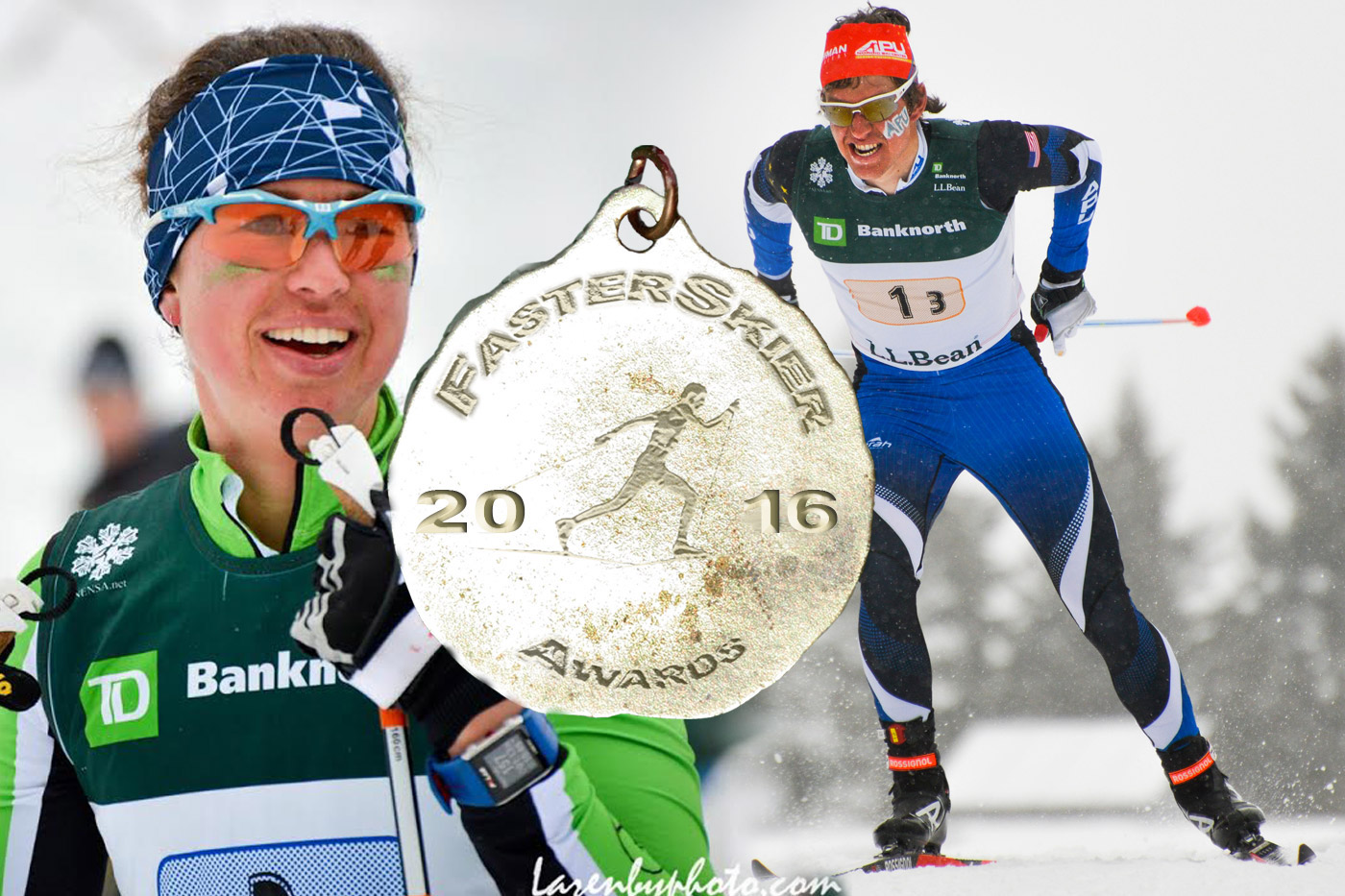
    The sibling duo Caitlin Patterson (l) and Scott Patterson of Anchorage, Alaska, are FasterSkier's U.S. Continental Cup Skiers of the Year. Both are seen here competing on separate teams in the mixed relay at U.S. SuperTour Finals last month in Craftsbury, Vt.  (Photos: John Lazenby/Lazenbyphoto.com)
    The sibling duo Caitlin Patterson (l) and Scott Patterson of Anchorage, Alaska, are FasterSkier’s U.S. Continental Cup Skiers of the Year. Both are seen here competing on separate teams in the mixed relay at U.S. SuperTour Finals last month in Craftsbury, Vt. (Photos: John Lazenby/Lazenbyphoto.com)

    The 2015/2016 awards continue, chosen by the FasterSkier staff based on performances from last season. While not scientific, these points of recognition are intended to reflect a broader sense of the season in review.

    Previous categories: Breakthrough Skiers (Canada & U.S.) | Biathletes | Canadian Continental | Coaches | Collegiate Skiers | Juniors | Nordic Combined | Para-Nordic

    ***

    The Patterson siblings, Caitlin, 26, and Scott, 24, have a lot more in common than just their natural knack for nordic skiing. Both grew up Anchorage, Alaska, after moving there from McCall, Idaho. They both attended and graduated from the University of Vermont in Burlington, Vt., prior to pursuing professional skiing. They both have engineering degrees — Caitlin in civil engineering and Scott in mechanical engineering.

    They were both national champions after the first race of this year’s U.S. nationals in their respective races — Caitlin in the women’s 10-kilometer classic race and Scott in the men’s 15 k classic. Due to the duo’s domination over the continental circuit this year, they were also both the SuperTour leaders through Period 1, which qualified both of them for this year’s Period 3 of World Cup racing. With their 2016 continental accomplishments in mind, both are also recipients of FasterSkier’s 2016 Continental Skiers of the Year Award.  

    Caitlin Patterson, Craftsbury Green Racing Project

    Almost exactly two years older than Scott, Caitlin started her season for the Craftsbury Green Racing Project (CGRP) with a sixth in the 10 k freestyle at the West Yellowstone SuperTour in Montana. She then went on to place third in the classic sprint at the following SuperTour in Sun Valley, Idaho, behind her CGRP teammate Kaitlynn Miller (2016 Breakthrough Skier of the Year) in second, and Alaska Pacific University’s Becca Rorabaugh in first.

    “Watch out for us,” Patterson said of her team at the time. “All four, in green, watch out.”

    After her second place, Caitlin took third in the 10 k classic mass start in Sun Valley. At the next SuperTour stop at nationals in Houghton, Mich., and she opened the week of races with a win in the 10 k classic.

    “I was personally really excited to see that my brother won this morning,” Caitlin said after both she and Scott won the first race of nationals. “That was encouraging, but also a little bit of competition. He was going to give me a pretty hard time if I didn’t match him in that one.”

    Caitlin’s podium streak continued, and she went on to finish third in the freestyle sprint and snagged her second championship title of the week by taking first in the 20 k freestyle mass start. In her final race of the week, the classic sprint, she placed fourth and maintained the overall SuperTour lead for Period 1, which qualified her for Period 3 of the World Cup.

    She then went on to score World Cup points by placing 25th in the women’s 10 k freestyle mass start in Falun, Sweden and 29th in the women’s 15 k skiathlon in Lahti, Finland.

    Caitlin also won the Lake Placid SuperTour 10 k classic mass start in New York and took second in the sprint there. She finished her season at Spring Series at home in Craftsbury, Vt., placing seventh in the 10 k freestyle, 10th in the classic sprint, and third in the women’s 30 k classic mass start. As the overall SuperTour leader, she’ll start next season in Europe on the World Cup as the Continental Cup leader. 

    Scott Patterson, Alaska Pacific University

    Scott’s list of season achievements is also almost as long as his sister’s. He, too, opened nationals with a victory, cruising to his first national title and first national podium, after winning the men’s 15 k classic.

    “I won the 15k classic race on Sunday to take my first US national title (and first podium ever).” Patterson wrote in a blog post after the second day of racing at nationals. “Topping off the day, my sister, Caitlin Patterson, won the women’s 10k classic race as well. Not a bad day for the Patterson family.”

    Scott then placed fifth in the 30 k freestyle mass start for his second-best U.S. nationals finish.  

    Earlier in the season, Scott also raced to third place in the 15 k freestyle in the West Yellowstone. He went on to win the 15 k classic mass start at the Sun Valley SuperTour, ahead of the University of Colorado’s Mads Strøm (2016 Collegiate Skier of the Year) in second and his APU teammate, Eric Packer in third.

    In his third individual World Cup race and first Holmenkollen 50 k, Scott finished in 32nd, his best World Cup result of the season and just outside of his first World Cup points. He raced the Ski Tour Canada (STC) and ended his season at SuperTour Finals/U.S. Distance Nationals in Craftsbury. During his final races of the year, he finished second in the 15 k freestyle and sixth in the 50 k classic mass start, closing out the season in fourth overall in the SuperTour standings.

    Honorable mentions

    Eric Packer, Alaska Pacific University 

    Eric Packer (5) on his way to beating APU teammate Reese Hanneman (r) and the rest of the men's final in the classic sprint at 2016 U.S. Cross Country Championships for his first national title. (Photo: Christopher Schmidt)
    Eric Packer (5) on his way to beating APU teammate Reese Hanneman (r) and the rest of the men’s final in the classic sprint at 2016 U.S. Cross Country Championships for his first national title. (Photo: Christopher Schmidt)

    Sometimes adversity secures a route to success. Following a scary training accident last year, Packer raced to his first national title in the men’s classic sprint in Houghton.

    “In a split second, I went from being a top-level athlete to barely being able to get out of bed,” Packer recalled. “Training became a privilege not a chore and I ended up having the best late summer/fall training of my career. In the end, that crazy accident helped me develop that little bit of extra motivation that I needed to take me to the next level.”

    Also at nationals, he placed fourth in the 15 k classic and 11th in the freestyle sprint. Previously in Sun Valley, he raced to a fourth in the classic sprint. Packer also finished second in the freestyle sprint at the Lake Placid SuperTour and fifth in the 10 k classic. He raced to a seventh in the 10 k classic at the Craftsbury SuperTour and qualified for Period 4 racing of the World Cup, the STC. He finished his season at Spring Series in Craftsbury, where he took fifth in the 15 k freestyle, sixth in the classic sprint and fifth in the 50 k classic mass start.

    At the end of the season, he ended up leading the SuperTour standings, earning Period 1 World Cup starts next season.

    (Photo: John Lazenby/Lazenbyphoto.com)
    (Photo: John Lazenby/Lazenbyphoto.com)

    Chelsea Holmes, APU

    Another Alaska native and APU skier, Chelsea Holmes finished the season third in the SuperTour behind Caitlin Patterson and Annie Hart (Breakthrough Skier of 2016 Honorable Mention).  

    In the season-opening races, she placed second in the 10 k freestyle in West Yellowstone and fourth in the freestyle sprint. She went on to win the 10 k classic mass start in Sun Valley, ahead of Patterson, and also placed fifth in the classic sprint there.

    At 2016 nationals, Holmes finished second in the 20 k freestyle mass start and third in the 10 k classic. Her performances qualified her for Period 3 and her first European World Cups, and in her second international World Cup race — the 10 k freestyle in Nove Mesto, Czech Republic, Holmes placed 37th.

    Back in the U.S., she raced to fifth place in the Lake Placid freestyle sprint and third in the 10 k classic. At the Craftsbury SuperTour, she finished second in the 5 k freestyle and fourth in the women’s 10 k classic. She also qualified for the STC and earned her first World Cup points by finishing 22nd in the women’s 10 k freestyle in Canmore.
  • Rorabaugh Strides to Sun Valley Sprint Win, Holds Off Craftsbury’s Miller and Patterson

    Rorabaugh Strides to Sun Valley Sprint Win, Holds Off Craftsbury’s Miller and Patterson

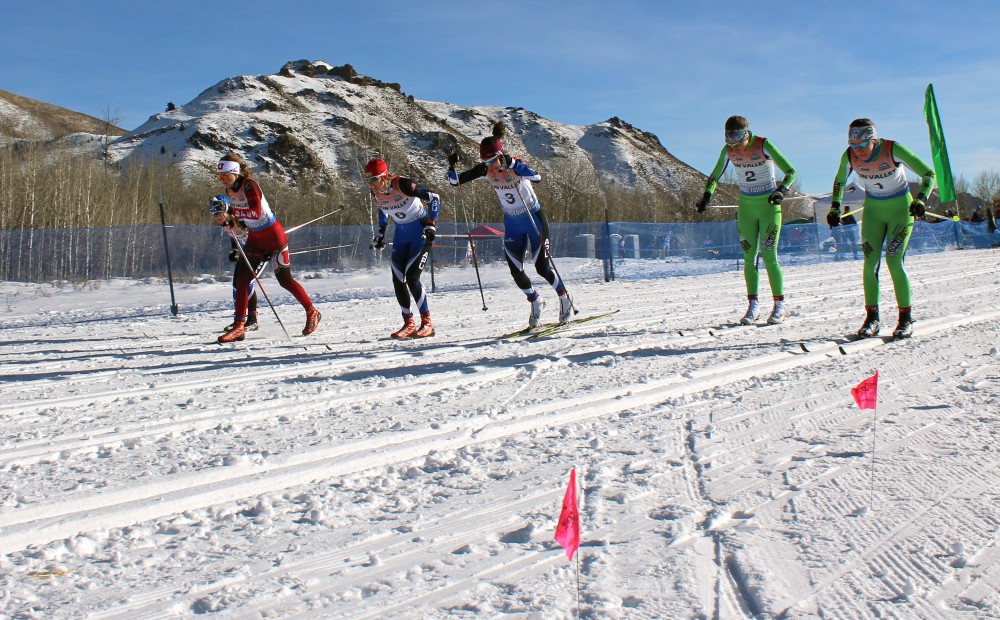
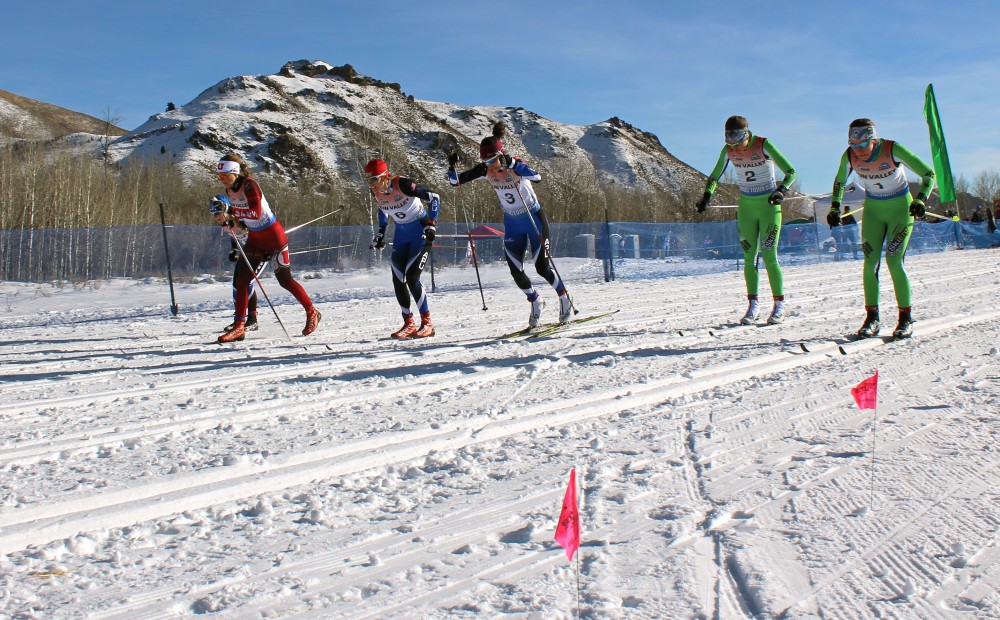
    Skiers power onto the course at the start of the final. (From L to R: Veronika Mayerhofer, Becca Rorabaugh, Chelsea Holmes, Caitlin Patterson, Kaitlynn Miller)
    Racers power onto the course at the start of the women’s SuperTour classic sprint final on Saturday in Sun Valley, Idaho. From left to right: Hannah Halvorsen, Veronika Mayerhofer, Becca Rorabaugh, Chelsea Holmes, Caitlin Patterson, and Kaitlynn Miller.

    SUN VALLEY, Idaho — The opening day of the second SuperTour on the season brought a welcome change from last weekend: warmer weather. After enduring start delays and colder temperatures in West Yellowstone, Mont., racers enjoyed relative warmth and sunshine while sprinting in an open field at the Trail Creek venue in Sun Valley.

    The 1.3-kilometer course set up for the classic sprint was ready to go thanks to the work of many coaches and volunteers throughout the week. Though the course started and finished in a flat stadium, it featured two climbs, a small one out of the start, and a larger one that reached the high point before dropping into the stadium. Both climbs represented an opportunity for the athletes to show off their striding ability.

    This was something that the women’s race winner, Becca Rorabaugh of Alaska Pacific University (APU), was able to take full advantage of.

    “I just love big striding and I knew that was going to be a sweet spot for me,” she said in a post-race interview. “I was really looking forward to that second hill.”

    After placing sixth in the qualifier, Rorabaugh skied to a win in her quarterfinal before being narrowly bested by Kaitlynn Miller of the Craftsbury Green Racing Project (CGRP) in their semifinal. However, Rorabaugh, 26, was able to carry more energy into the final, where she won in 3:38.46, almost exactly one second ahead of Miller and 1.3 seconds ahead of Caitlin Patterson, also of the CGRP.

    “I was slowly getting my motor going throughout the day and it turned out that I was able to last perfectly through the final,” Rorabaugh said. “It was just taking me a while to get going. I felt like I was really on it in time for the last heat, so it just worked out.”

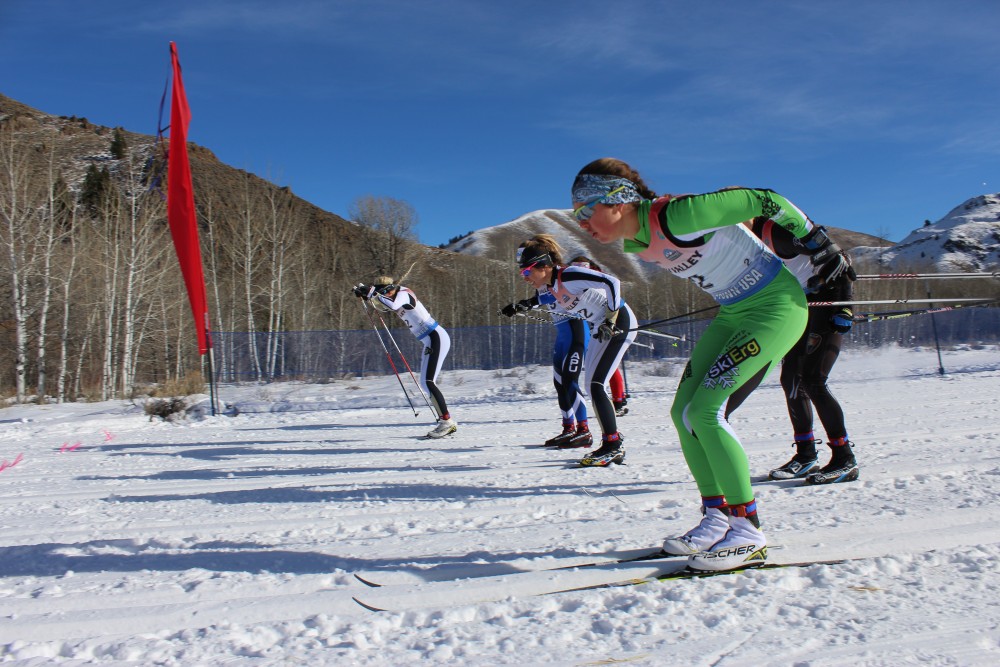
    Caitlin Patterson tries to get the upper hand on CU's Christina Rolandsen and Petra Hyncicova in the quarterfinals (From L to R: Christina Rolandsen, Petra Hyncicova, Caitlin Patterson)
    Caitlin Patterson (in green) racing head-to-head with CU’s Christina Rolandsen (l) and Petra Hyncicova (center, in white) in their SuperTour classic-sprint quarterfinal in Sun Valley, Idaho.

    Miller, meanwhile, skied strong throughout the day, but was unable to stay with Rorabaugh in the final. The 24-year-old CGRP skier won the qualifier in 3:35.73 before dominating her quarterfinal, winning it by over six seconds.

    Her strategy of setting a fast pace from the start worked well in her semifinal, too, as she was able to edge Rorabaugh to the line. While Miller didn’t have quite enough energy in the final to stay ahead of the day’s winner, she had just enough to claim the second spot on the podium.

    “[It felt] really good. The conditions are great, our skis were working really well, and it’s just a beautiful day,” Miller said after the final.

    Miller’s teammate, Patterson was also pleased with how the day went, both for her and her teammates. It started with Craftsbury biathlete Clare Egan notching a career-best 16th in the IBU World Cup sprint in Östersund, Sweden, and Patterson said their team built upon that. She finished second in the qualifier and kept that speed throughout the rounds, winning her quarterfinal and semifinal before placing third in the final.

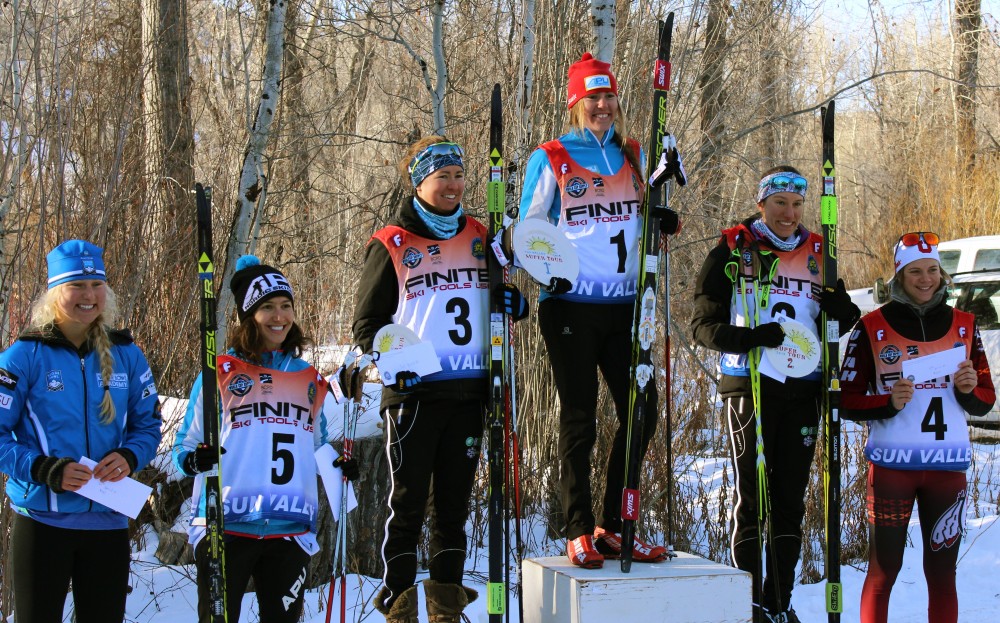
    The women's Sun Valley Super Tour 1.3 k classic sprint podium. (From L to R: Hannah Halvorsen, Chelsea Holmes, Caitlin Patterson, Becca Rorabaugh, Kaitlynn Miller, Veronika Mayerhofer)
    The women’s Sun Valley Super Tour 1.3 k classic sprint podium: (from l to r) Junior Hannah Halvorsen in sixth, Chelsea Holmes in fifth, Caitlin Patterson in third, Becca Rorabaugh in first, Kaitlynn Miller in second, and Veronika Mayerhofer in fourth.

    “We just went for it, especially Kait. I don’t know if you saw her quarterfinal and semifinal, she just took off with it!” Patterson explained. “I felt like I had to fight a little more, but I think all around, a good day for both of us.”

    Interestingly, none of the top three women in Saturday’s sprint placed in the top 10 in the skate sprint a week ago in West Yellowstone. Having another week to acclimate certainly helped the women from lower elevations, but the simple fact that this week’s sprint was classic made a big difference, too. Rorabaugh said she enjoys the striding while Miller feels classic skiing at altitude is just a bit easier than skating at some 5,750 feet above sea level.

    The trio hopes to build upon their success in the sprint during Sunday’s 10 k classic. For Rorabaugh, a 10 k might just be the perfect race for where she is at right now.

    “I’m looking forward to it because I feel like I have pretty good distance fitness. If it took me a whole day to get going today, odds are a 10 k could go alright,” she said.

    As for the second- and third-place finishers, they said they were both feeling confident heading into Sunday.

    “Watch out for us,” Patterson said of her team in Sun Valley. “All four, in green, watch out. We will be there.”

    In fourth, Veronika Mayerhofer of the University of Utah, who won her quarterfinal and placed third in the semi, finished 3.76 seconds after Rorabaugh and 2.46 seconds off the podium. Just 0.25 seconds back, Chelsea Holmes (APU) placed fifth in the final, 4 seconds after Rorabaugh. Last week in West Yellowstone, Holmes placed fourth in the skate sprint, and last weekend’s sprint runner-up 17-year-old Hannah Halvorsen (Sugar Bowl Academy) reached the final again and placed sixth (+19.19).

    ***

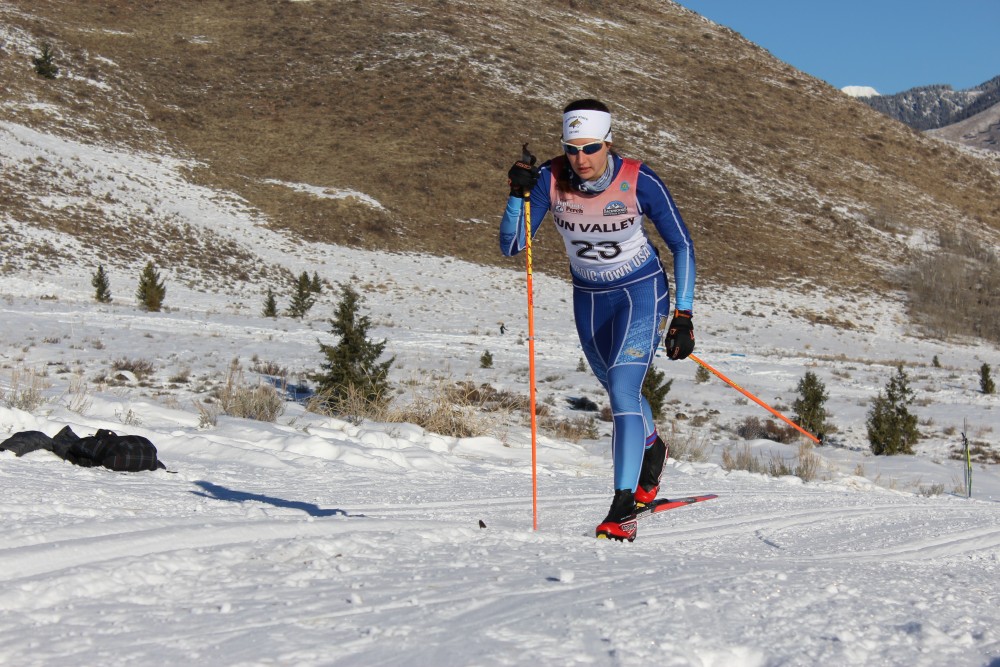
    Olivia Ekblad of Montana State University crests the second hill before dropping back into the stadium.
    Olivia Ekblad of Montana State University crests the second hill before dropping back into the stadium.

    In the junior women’s heats, meanwhile, a pair of Montana State University (MSU) skiers took first and second. Freshman Olivia Ekblad from Winthrop, Wash., won with sophomore Gretchen Burkholder from Steamboat Springs, Colo., following close behind in second. Rounding out the podium in the junior heats was Sun Valley’s own Annika Landis.

    These spots were good enough for ninth, 10th and 11th junior women overall, as eight others qualified for the open heats. Halvorsen led those top juniors, finishing sixth in the overall standings. Still, the duo from MSU feels the sprint was a great way to start off their season.

    “We have a really good group of girls at MSU to train with so its fun,” Ekblad explained. “Awesome coaches too. We’re definitely going to throw down this year, it’s going to be fun.”

    Results

  • Hanneman Brothers Go 1-2, Logan Edges Reese in West Yellowstone Sprint

    Hanneman Brothers Go 1-2, Logan Edges Reese in West Yellowstone Sprint

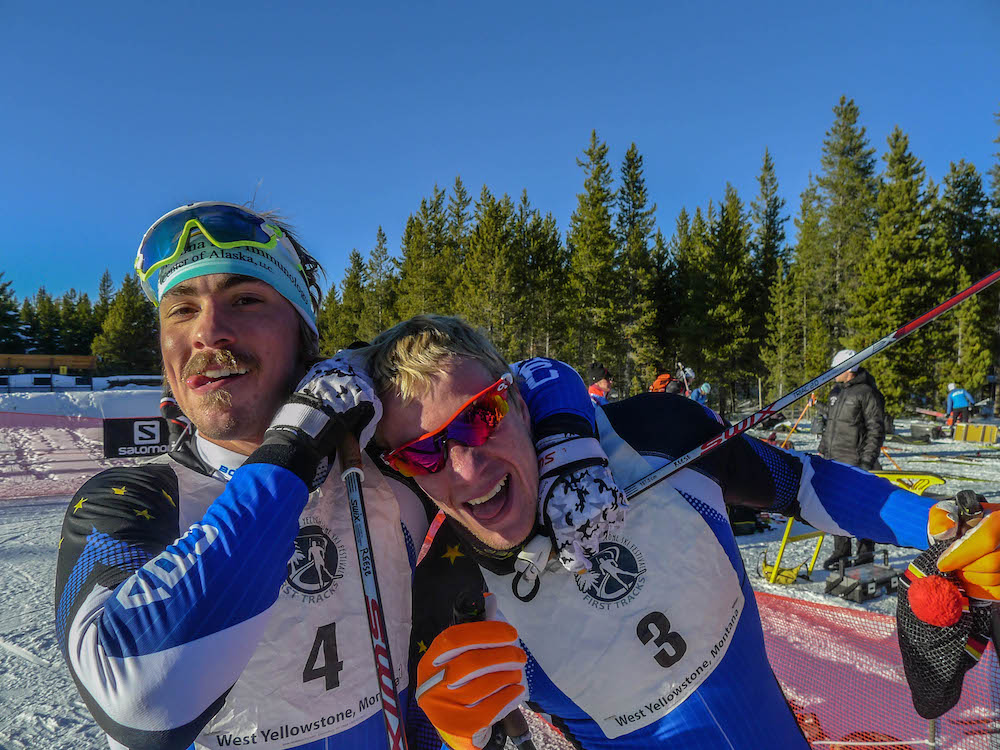
    The Hanneman brothers after placing first and second in the men's SuperTour freestyle sprint on Friday in West Yellowstone, Mont. Younger brother Logan Hanneman (r) won the final for his first SuperTour victory and Reese (l) placed second.
    The Hanneman brothers, both of which race for Alaska Pacific University, after placing first and second in the men’s SuperTour freestyle sprint on Friday in West Yellowstone, Mont. Younger brother Logan Hanneman (r) won the final for his first SuperTour victory and Reese (l) placed second.

    WEST YELLOWSTONE, Mont. – Reese Hanneman spent much of the cold afternoon in West Yellowstone unchallenged on Friday. He cruised to wins in both his quarterfinal and semifinal. However, the challenge came from close to home, as Hanneman led down the final stretch in the men’s final before his younger brother and Alaska Pacific University (APU) teammate Logan powered past him for the win.

    After a cold morning with temperatures hovering in the negative single digits, resulting in a two-hour start delay, the men’s field jumped into the first SuperTour race of the season shortly after 11:30 a.m. Nerves were running high as athletes headed out on to the relatively flat 1.3-kilometer course in 15-second intervals to test themselves against the clock and gauge the effectiveness of their summer training.

    “The course was in great shape, grooming was perfect,” Reese Hanneman reflected in a post-race interview.

    Canadian national-development team member Knute Johnsgaard took the win in the qualifying round in 2:30.9 minutes, 0.72 seconds ahead of defending U.S. national sprint champion Dakota Blackhorse-von Jess of the Bend Endurance Academy.

    APU teammates and brothers, Logan, 22, and Reese Hanneman, 25, qualified in third and fourth, respectively, and Canada’s Andy Shields (Thunder Bay National Development Centre) advanced in fifth.

    Most of the established elite racers in the men’s field managed to ski their way in to the top 30, earning the right to compete in the afternoon’s elimination rounds.

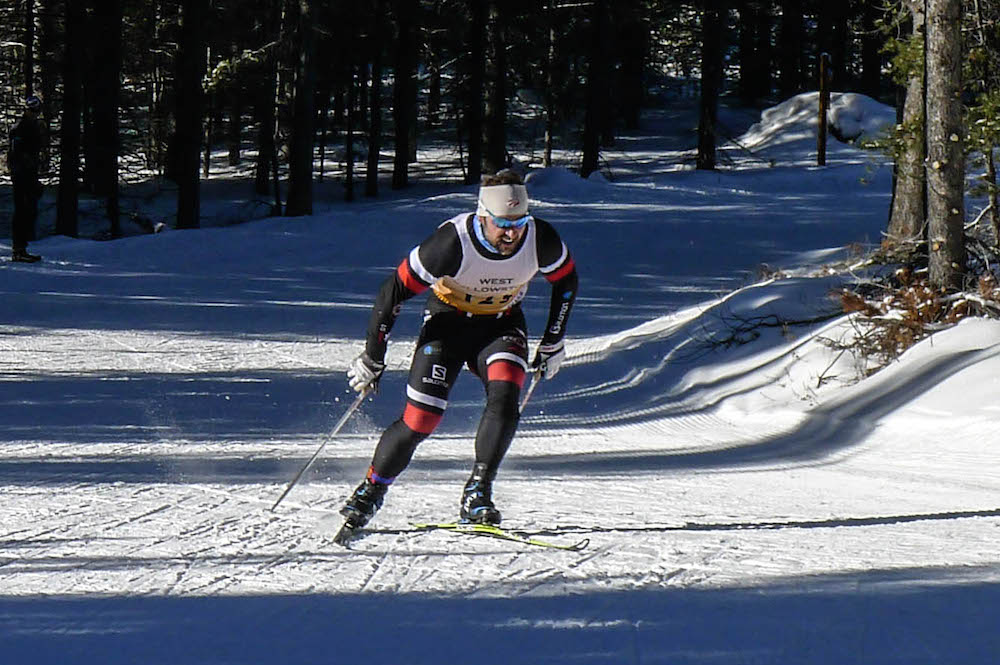
    Dakota Blackhorse-von Jess (Bend Endurance Academy) racing to second in the qualifier on Friday at the SuperTour skate-sprint opener in West Yellowstone, Mont.
    Dakota Blackhorse-von Jess (Bend Endurance Academy) racing to second in the qualifier on Friday at the SuperTour skate-sprint opener in West Yellowstone, Mont. He went on to place third in the final.

    As the rounds progressed, two men skied to comfortable wins in their quarterfinals and semifinals. Reese was one of them and Blackhorse-von Jess was the other, displaying impressive finishing speed to win his quarterfinal by a convincing margin. Johnsgaard and Shields also skied strong through the quarters, as did Matt Gelso of the Sun Valley Ski Education Foundation (SVSEF) Gold Team, after qualifying in 20th. Montana State University’s Forrest Mahlen and Alex Howe (Craftsbury Green Racing Project) also stayed in contention through the semifinals.

    When eventual winner Logan Hanneman saw the list for his semifinal, “I thought, ‘Good grief!’ ” he explained. “Mads [Strøm, of the University of Colorado-Boulder], [Ben] Saxton [of Stratton and the U.S. Ski Team], Dakota… I don’t know how this is going to go! That’s a tough group.”

    But by the end of the semi, Logan and Blackhorse-von Jess had established themselves as the frontrunners and the finish was almost too close to call.

    “At that point, I knew I had a pretty good chance heading in to the final,” Logan said.

    When the lucky losers had been sorted out and the start list for the men’s final was posted, Blackhorse-von Jess, Johnsgaard, Gelso, Howe and both Hanneman brothers had reached the final round. Mahlen, Brian Gregg (Team Gregg) and Saxton narrowly missed the cut.

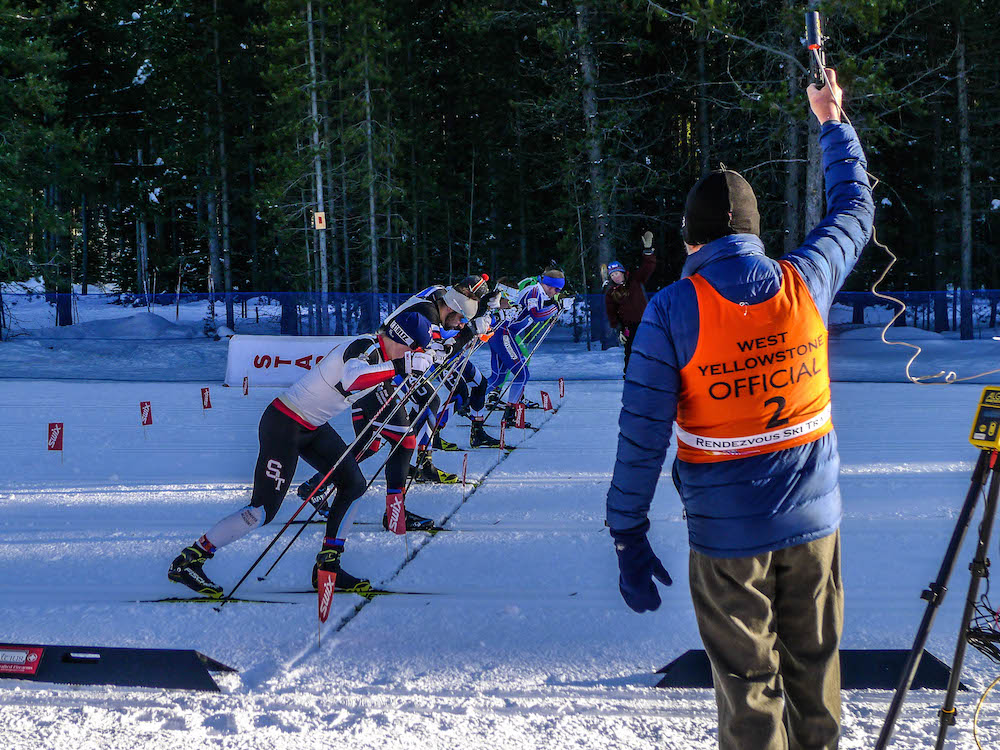
    The tension increased as the six men toed the line for the final, with two consecutive false starts due to malfunction with the starter’s pistol.

    The start of the men's final in the 2015/2016 SuperTour opener, the 1.3 k freestyle sprint, on Friday in West Yellowstone, Mont. APU took first and second with Logan Hanneman and Reese Hanneman, respectively, and Dakota Blackhorse-von Jess placed third.
    The start of the men’s final in the 2015/2016 SuperTour opener, the 1.3 k freestyle sprint, on Friday in West Yellowstone, Mont. APU took first and second with Logan Hanneman and Reese Hanneman, respectively, and Dakota Blackhorse-von Jess placed third.

    When the gun fired in earnest, Blackhorse-von Jess shot to the front, a move he had used all day.

    “If you’re willing to burn your jets early, you can get to that first corner with a lead,” he said afterwards. “It worked for me in the quarters, it worked for me in the semi, and it worked for me last year.”

    Several athletes have noted that, on this particular course, there aren’t many spots to pass, which made Blackhorse-von Jess’s strategy successful. Until the final, that is.

    “Reese made a really bold move at the bottom of the climb,” Blackhorse-von Jess said. “It’s a risky move, because if you can’t execute it all the way, you can drop from second back to fourth or fifth.”

    It worked for the older of the two Hannemans, as Reese moved in to the lead at the bottom of the course’s only real climb.

    According to Gelso, who finished fifth, “There was a lot of bumping and grinding in the final. Everyone was amped up and trying to get in to position all the way around the loop.”

    “I was thinking that Dakota was the guy to beat,” Reese said. “He’s so consistent. When I saw the chance to get around him at the bottom of the climb, I jumped on it.”

    A few skiers back, 22-year-old Logan had been focusing on strategic cornering through the lower “NASCAR” section of the course.

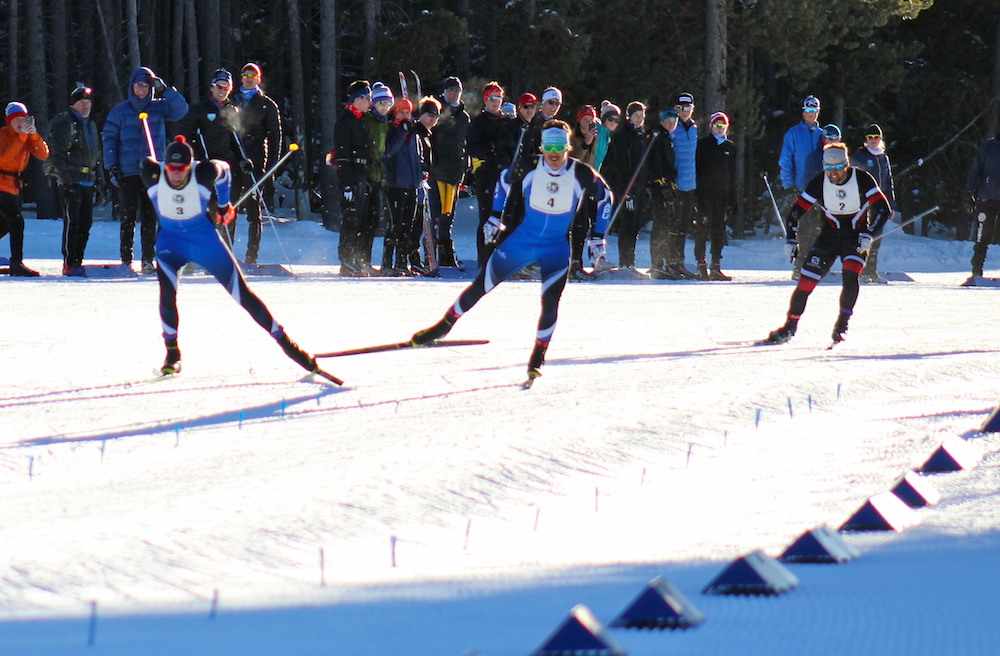
    Logan Hanneman (l) leads older brother Reese Hanneman (c) and Dakota Blackhorse-von Jess into the finishing stretch to win the 1.3 k freestyle sprint at the West Yellowstone SuperTour opener for his first SuperTour victory.
    Logan Hanneman (l) leads older brother Reese Hanneman (c) and Dakota Blackhorse-von Jess into the finishing stretch to win the 1.3 k freestyle sprint at the West Yellowstone SuperTour opener for his first SuperTour victory.

    “There’s a corner in there, the last corner before the climb… I’d been focusing on taking a little bit wide in the quarters and the semis and had used that move to pass a few guys each time,” Logan said.

    In the final, his timing was perfect. “Just after that corner, Reese made his move, and I jumped on with him and got past Dakota,” he said.

    When they emerged from the trees at the top of the climb and made the 90-degree turn to toward the finish, it was Reese, followed by Logan and Dakota, with Johnsgaard, Gelso and Howe close behind. A bit of contact between Gelso and Howe slowed the duo, but in the front, a battle for the win was shaping up between the Hannemans.

    “I was leading, but I could hear Logan behind me, then I could see the tips of his skis coming up beside me,” Reese recalled. “I knew that he and Dakota were back there, and when it comes to sheer wattage those guys are so powerful, they’re like a couple of bison. Plus, Logan is like 6’3”. On a gradual downhill like the one leading in to the finish, he’s just so fast.”

    Crossing the line with a three-meter lead, Logan grabbed his first-ever SuperTour win, coming off of successful college career at the University of Alaska-Fairbanks. Reese joined him on the podium in second, with Blackhorse-Von Jess there as well in third. Johnsgaard skied to fourth, Gelso was fifth and Howe came in sixth.

    “I think I may need to stop giving him all my good hand-me-down skis,” joked Reese, who was both satisfied with his own performance and thrilled with his younger brother’s victory.

    The West Yellowstone SuperTour continues with the first distance race of the season, the 10/15 k freestyle individual start on Saturday.

    Results

    ***

    About the Author: Travis followed up a somewhat undistinguished competitive career with the University of Colorado with coaching positions in Steamboat, Boise, and most recently as the Gold Team Coach in Sun Valley. As of 2011, he works with middle school skiers, including his own two boys, and sells second homes to dot-com millionaires in Nordic Town USA: Sun Valley, Idaho. 

  • Stoke is High, Temps Low: SuperTour Racers Prep for Opening Races (with Preview Video)

    Stoke is High, Temps Low: SuperTour Racers Prep for Opening Races (with Preview Video)

    An SMST2 Junior athlete looks on before a speed session on Thursday at the Yellowstone Ski Festival. The U.S. SuperTour season starts Friday with the freestyle sprint in West Yellowstone.
    An SMST2 Junior athlete looks on before a speed session on Thursday at the Yellowstone Ski Festival. The U.S. SuperTour season starts Friday with the freestyle sprint in West Yellowstone.

    WEST YELLOWSTONE, Mont. — The 2015/2016 season for the U.S. SuperTour, the highest level of domestic nordic racing in the country, kicks off Friday with a 1.3-kilometer skate sprint at the Rendezvous Ski Trails in West Yellowstone, Mont.

    Originally scheduled for a 9 a.m. start, the organizers recently decided to start the sprint qualifier at 11 a.m. due to predicted sub-zero temps. While changes in start time can sometimes throw a wrench in to waxing and ski preparation plans, that’s unlikely to be the case tomorrow, as the snow conditions in West have been consistent, even as temperatures rise throughout the day.

    Sun Valley Ski Education Foundation (SVSEF) Gold Team coach Colin Rodgers had a simple-enough solution: “Wear your wind briefs!” he advised.

    APU wax techs test skis on Thursday at the start of the sprint course at the Rendezvous Ski Trails in West Yellowstone, Mont.
    APU wax techs test skis on Thursday at the start of the sprint course at the Rendezvous Ski Trails in West Yellowstone, Mont.

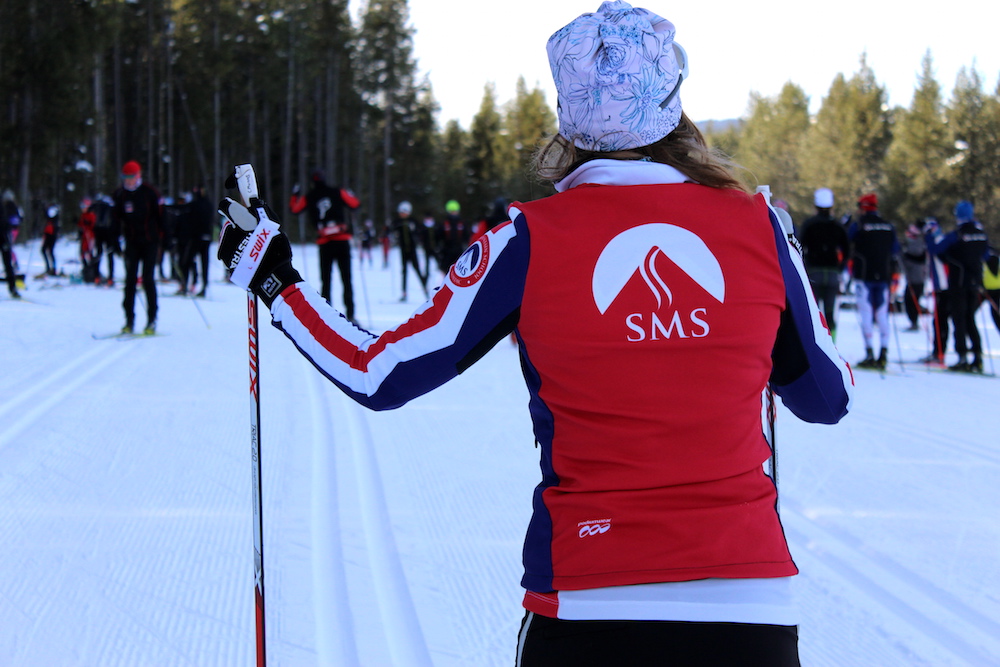
    The start list includes 104 women and 154 men, including nearly all of the big names on the domestic race circuit. Much of the field is made up of the usual talents from U.S. elite programs such as the SVSEF Gold Team, Alaska Pacific University, Central Cross Country (CXC) Team, Stratton Mountain School (SMS) T2 Team, Craftsbury Green Racing Project, Bridger Ski Foundation Elite Team, Sugar Bowl Elite Team, Team Gregg, Ski Club Vail, Gear West, and Bend Endurance Academy.

    There are always nerves and a bit of uncertainty, even among the stars of the elite scene before these first races of the season. Athletes have spent the summer working on their weaknesses and tweaking their plans, but until they put a bib on in West Yellowstone — where the SuperTour circuit starts each year — the result of all that hard work is an unknown.

    Video: Skiing the sprint course

    Jennie Bender of the Bridger Ski Foundation (BSF) Elite Team, a two-time sprint national champion and SuperTour podium regular, is excited.

    “This summer has been the first in quite some time that’s felt consistent and uninterrupted, so I am pumped for the season and to travel with my stellar BSF crew,” said Bender, 27.

    Alaska Pacific University (APU) standout and the overall SuperTour leader two seasons ago, Reese Hanneman is looking for some redemption on the trails, but keeping the pressure low. He told FasterSkier that he’s “feeling pretty good, but after last season and so many bad races, I’m just looking forward to getting out there and feeling fast again and rippin!”

    2014 Olympian Brian Gregg, of Team Gregg, is also feeling prepared, while also curious.

    “I’m excited to see how everyone’s summer training stacks up,” Gregg said.

    In addition to these athletes, many of whom compete on the SuperTour circuit throughout the four-month-long season, there are three distinct groups of SuperTour outsiders in West Yellowstone looking to mix things up. They are:

    The Canadians: Some years, there is a strong Canadian presence here in West Yellowstone, and this is certainly shaping up to be one of those years. With nine elite Canadians from various national training centers on Friday’s start list, including women’s top-seed Dahria Beatty of the Alberta World Cup Academy and three of the top-five ranked men, the Canadians will certainly be vying for spots in the A-finals.

    The Collegiates: The NCAA schedule is, for the most part, totally separate from the SuperTour schedule. Generally, these two groups of elite skiers meet up for head-to-head competition only once or twice per year. West Yellowstone is one of those meetings.

    As Montana State Head Coach Matt Johnson points out, “Our athletes aren’t focused on sprinting, and they aren’t focused on peaking this early,” as there is no sprint format in NCAA racing, and NCAA Championships aren’t until March.

    But, he adds, “a lot of our skiers are good sprinters and in great shape right now, and are excited to get out there and see what they can do.” College skiers tend to be a mix of elite European racers in the U.S. skiing on scholarship at the large NCAA Division 1 schools (Utah, Colorado, Denver, Vermont, New Mexico, Montana, etc.) and many of the best young Americans, pursuing their ski careers in tandem with their education. With at least 50 college skiers on Friday’s start list, expect to see some student-athletes in the A-final.

    The Juniors: Every year, at least one fast junior begins to establish their name on the national cross-country scene with a great race in West Yellowstone. It happens most often in the sprint, as shorter races tend to favor younger racers, and it tends to happen more frequently in the women’s field, simply because junior girls are generally more physically on-par with their elite competition than junior boys, who often reach their peak in their early 20’s. With high-ranking juniors form a large number of programs in the mix, and with about half of the field made up of young racers looking to make their mark, expect to see a few juniors mixing it up in the top 10 or 15, especially on the women’s side.

    FasterSkier will be reporting live from the SuperTour opening races Friday (with the freestyle sprint) and Saturday (10/15 k freestyle) in West Yellowstone. Follow us on Twitter for updates.

    ***

  • Giving Thanks on the Trails (West Yellowstone Thanksgiving Video)

    Giving Thanks on the Trails (West Yellowstone Thanksgiving Video)

    WEST YELLOWSTONE, Mont. — For the past couple years, it’s been somewhat of a tradition for FasterSkier to catch up with racers on the Rendezvous Ski Trails on Thanksgiving, the day before the season kicks off with the U.S. SuperTour races. We ask them what they’re thankful for. This year, the most popular answer was resoundingly, “Snow!”

    Past Thanksgiving videos: 2013 | 2014

  • 2015/2016 U.S. SuperTour Schedule Finalized

    2015/2016 U.S. SuperTour Schedule Finalized

    The U.S. Ski and Snowboard Association (USSA) released the final version of its SuperTour (ST) calendar for the upcoming winter of 2015/2016, with a new stop in Sun Valley, Idaho, in early December as well as a mid-season East Coast visit to Lake Placid, N.Y., and Stowe, Vt.

    ussa supertour logoIn early January, U.S. Cross Country Championships will be held for the second-straight year in Houghton, Mich., (per Houghton’s two-year bid), and in late March, SuperTour Finals and U.S. Distance Nationals are coming to Craftsbury, Vt.

    Joey Caterinichio, the outgoing USSA nordic manager who is working with new nordic director Robert Lazzaroni on 2015/2016 logistics and scheduling, explained in an email that the SuperTour is split into three periods to match the International Ski Federation (FIS) calendar and award World Cup starts accordingly.

    “This year we have rotated from Bozeman [Montana] to Sun Valley but will look at a continued rotation between the sites to give sites a break and include new ones,” Caterinichio wrote of the Period I hosts.

    Venues are chosen each year amongst coaches at the USSA Spring Congress, she explained.

    “With weather and needing snow, you can see why we start West and move East,” she continued. “There are no other sites that can really host Period I.  West or Alaska are in the rotation, US Nationals is usually Period II and then move across to Central and East for Period III.”

    Regions submit their picks for host venues, and over the last year, Caterinichio worked with the New England Nordic Ski Association (NENSA) to secure Mount Van Hoevenberg in Lake Placid and Trapp Family Lodge in Stowe. Those races, Jan. 29-31 and Feb. 5-6, respectively, coincide with larger events, such as a Junior Nationals qualifier, college race and Eastern Series, she explained.

    “Hosting just a SuperTour is tough as the numbers are not there,” she added. “By working with the regions to place a SuperTour in an existing series, we increase the field.  It also allows great head-to-head competition with juniors, college-aged athletes and our top seniors therefore increasing competition for all. Moving the ST around helps stimulate top-level racing within the US and helps the areas.”

    Period II and III SuperTours are shared on a two-year basis, and this marks the second year for the domestic series in the East (it was previously in the Midwest, or Central, for two years).

    “The goal will be to move back to Central then back to East,” Caterinichio wrote.

    At the same time, scheduling remains open to all sites across the regions in case a venue is unable to host a given event. Additionally, USSA tries to schedule SuperTours in the same area on back-to-back weekends to cut down on travel and expenses.

    Bottom line: West is the perennial host for Period I and could potentially rotate with Alaska.  The coaches and regions help decide any large changes, and in the near future, there is no intention of changing West Yellowstone, according to Caterinichio.

    West is the perennial host for Period I and could potentially rotate with Alaska, although, “there is no intention of changing West Yellowstone,” according to Caterinichio. U.S. nationals kick off Period II, the American Birkebeiner 52-kilometer marathon is a stand-alone event in late February that remains unchanged annually, and the East and Central rotate as Period III hosts.

    Schedule below. Click here for the PDF.

    2015-2016 SuperTour Schedule