From the FasterSkier archive — posts syndicated from athletes’ and coaches’ own blogs between 2004 and 2012, kept online as published. Current coverage is at fasterskier.com.

Tag: 2016 NCAA Skiing Championships

  • Wednesday Workout: Crust Cruising with CU’s Petter Reistad

    Wednesday Workout: Crust Cruising with CU’s Petter Reistad

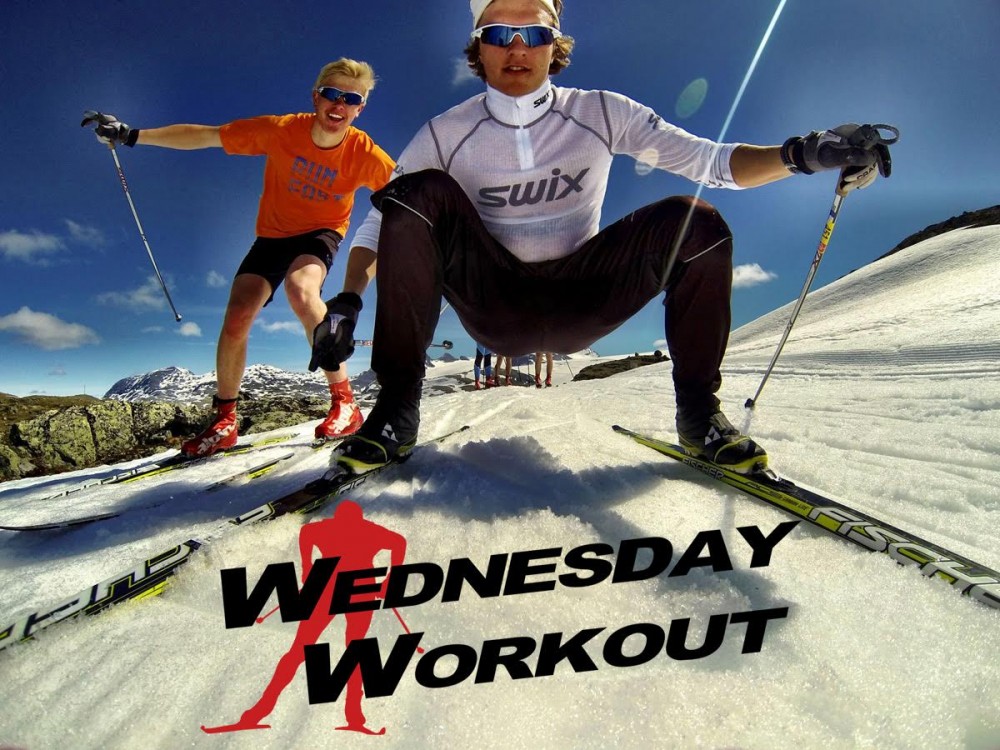
    Petter Reistad (front), who recently finished his freshman season at the University of Colorado-Boulder, crust cruising in 2013 in Sognefjellet, Norway. (Courtesy photo)
    Petter Reistad (front), who recently finished his freshman season at the University of Colorado-Boulder, crust cruising in 2013 in Sognefjellet, Norway. (Courtesy photo)

    Itching for an excuse to say ‘Sayonara’ to scheduled skiing and ‘Hello’ to more impromptu spring-skiing experiences? Look no further as this week, FasterSkier provides an ideal Wednesday Workout for the nordic wanderer, courtesy of Petter Reistad of the University of Colorado-Boulder (CU).

    ***

    Sunscreen, sunglasses and snow. When it comes to spring workouts, it’s not just the freeing feeling of skiing around in Ray-Bans and beach-like weather that makes crust skiing an essential workout for this time of year, it’s also the satisfaction that spontaneous skiing provides after a season of structured ski training.

    Petter Reistad, coming off his freshman season a CU and an All-American in both races at this year’s NCAA Skiing Championships, says the best training plan for the spring is no plan at all.

    “What I like about spring is that you can do what you want, you don’t have to follow a plan anymore,” said Reistad, a 21-year-old from Bærum, Norway, on the phone. “It’s really nice to, instead of following a trail for a 15 k loop, to just go and aim for a mountain. You can ski up [to the top] and then ski [back] downhill where ever you like.” 

    For those lucky enough to have mountains and snow nearby, Reistad’s spring training regimen proposes a simple schedule: Pick a peak and send it.
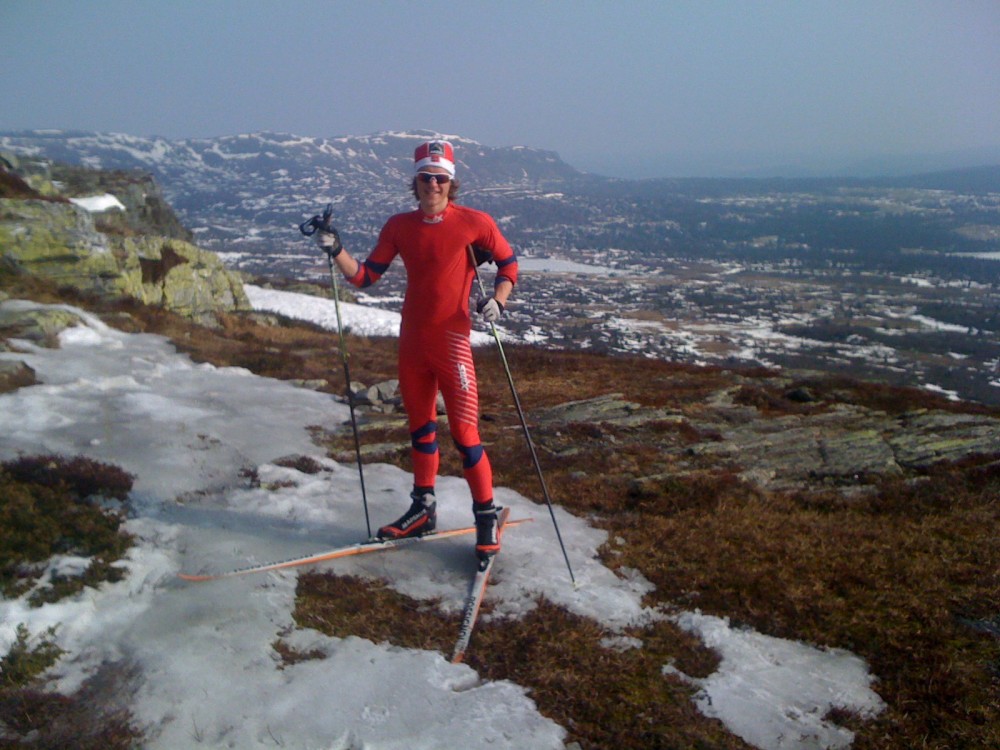
    Petter Reistad (r), taking advantage of the last bit of snow during a crust cruising trip in Skeikampen, Norway back in 2011. (Courtesy Photo)
    Petter Reistad taking advantage of the last bit of snow during a crust-cruising trip in Skeikampen, Norway, back in 2011. (Courtesy photo)

    “Going for a trip like that is a little bit more of an expedition, than just a normal workout,” Reistad said. “But nothing is like being free on skis and the spring crust gives you an awesome opportunity to do so.”

    In terms of snow crust, the spring season also provides the cream of the crop. For Reistad, spending a few spring workouts trekking mountain tops on skis is not only about the novelty of blazing trails where none were before, but also experiencing some of the season’s premium crust-cruising moments.

    “The reason why [this workout] is also a good thing to do in the spring is that during the rest of the season, you have more snow and different cold kinds of snow,” he said. “But in the spring, colder temperatures up in the mountains [combined with] the snow heating up during the day, forms this really nice crust.”

    While Reistad has done plenty of crust skiing in Norway, this year will mark his first adventure cruise on Colorado snow crust. Before making moves for the mountains, however, he plans to first catch up on schoolwork. Predicting that snow will stick around in the Rockies until mid-May, he and a few other CU teammates, including fellow Norwegian, Mads Strøm, who won both men’s nordic races at this year’s NCAA Championships, will set out for Crested Butte, Colo. 

    “It has been a really good year,” Reistad said regarding his first year of college ski racing in the U.S. “I’ve been second in some races this year and I must say, it’s really good to have [Strøm] on the team. Having good teammates is important because you can both train with them and compete even harder with them … it is more fun when you give them something to think about during the race … and I would really like to beat [Strøm] once next season. That’s a goal for next year.”

    Reistad will have that chance next ski season, during his sophomore year and Strøm’s senior year at CU. 

    The Workout

    – Start sometime early in the morning, 7 a.m. seems a solid choice, according to Reistad

    – Spend an undetermined amount of time skiing snow crust

    – Mid-workout, stick a bottle of soda in the snow for later

    – Spend more undetermined amounts of time skiing snow crust

    – Stop and enjoy a cold soda (if you can recall its original location)

    – Re-apply sunscreen and spend a little more time crust cruising before the sun makes the snow too soft to ski on

    Total Workout Time: Depends on when you start and how strong the sunshine is, but Reistad estimates 3-4 hours should do the trick

    Reistad’s Crust-Cruising Checklist

    In order to find freedom within the spring crust cruising workout, Reistad recommends shedding training schedules and sticking to the bare minimum. A few items he suggests as indispensable to a spring ski trip are listed below, followed by the workout itself. 

    1. Sunglasses and Sunscreen: Carrying cases of clothing is less of a priority for the CU skier when it comes to cruising snow crust. “I’m excited because you don’t need that much clothes as in the regular season because it’s just heating up so amazing in the spring,” Reistad said. “So sunglasses and sunscreen are the most important things [to pack] because you get so sunburnt.”
    2. Oranges and Chocolate: Not your average culinary combination, Reistad argues that the mixture of sweet and tangy makes for the most desired treat during a spring trip to the mountains. “In Norway, a very typical thing to eat around this time of year — Easter and spring — is oranges,” he said. “So I will pack some chocolate and some oranges. That’s just a great combo.”
    3. A Bottle of Coke: Share a soda on snow crust. “Nothing is like a cold Coke on a trip like that,” Reistad said. “Make sure to make it cold in the snow in the middle of the trip before drinking it.” 
    4. A Camera Phone: For any cross-country skier looking to make the crust-cruise workout complete, Reistad also says shameless self-promotions on social media make the workout all the more worthwhile. “You should probably bring your phone, too, to make sure to Instagram the whole thing after,” he said. “A trip gets so much better when you can show it off to everyone.” 

    (Ed. note: FasterSkier recommends having a phone with you at all times during workouts in the event of an emergency.)

  • From College to Pro and Back Again, Pokorny Primed for NCAA Championships

    Annie Pokorny racing to 33rd in the 10 k classic at the 2014 U23 World Championships in Val di Fiemme, Italy. (Photo: flyingpointroad.com/NNF)
    Annie Pokorny racing to 33rd in the 10 k classic at the 2014 U23 World Championships in Val di Fiemme, Italy. (Photo: Flyingpointroad.com/NNF)

    This week, the top collegiate cross-country skiers in the U.S. converged in Steamboat Springs, Colo., to wrap up the season at the NCAA Skiing Championships, which begin Thursday with the 5/10-kilometer freestyle individual starts and wrap up Saturday with the 15/20 k classic mass starts. One Middlebury skier has the unique opportunity to be reimmersed in the collegiate circuit after a glimpse at post-collegiate skiing and will race for the NCAA podium with a different appreciation for collegiate competition.

    Annie Pokorny, 23, returned to the collegiate racing circuit this season after a two-year hiatus while training and racing with the Stratton Mountain School T2 Team. Although this is a rare progression, it was a path that has allowed her a different depth of experience in the sport.

    Skiing for Middlebury College, Pokorny had a breakthrough season in 2013 as a sophomore where she netted two top-10 finishes at U.S. nationals in Midway, Utah, and finished in the top 30 twice at U23 World Championships in Liberec, Czech Republic. The season reflected a huge improvement over the previous year where she finished 47th in the 10 k freestyle at U.S. nationals.

    Although most collegiate skiers who continue onto the professional level exhaust their eligibility before moving on, Pokorny wanted take the sport to the next level sooner rather than later. In the spring of 2013, the Spokane, Wash., native made the difficult-but-measured decision to join the SMST2 team based out of Stratton, Vt. Pokorny was excited to be a part of the culture of success SMST2 built and join World Cup-level skiers such as Jessie Diggins and Sophie Caldwell. She also knew the opportunity might not present itself in another two years after she graduated and wanted to capitalize on her momentum by training and racing full time.

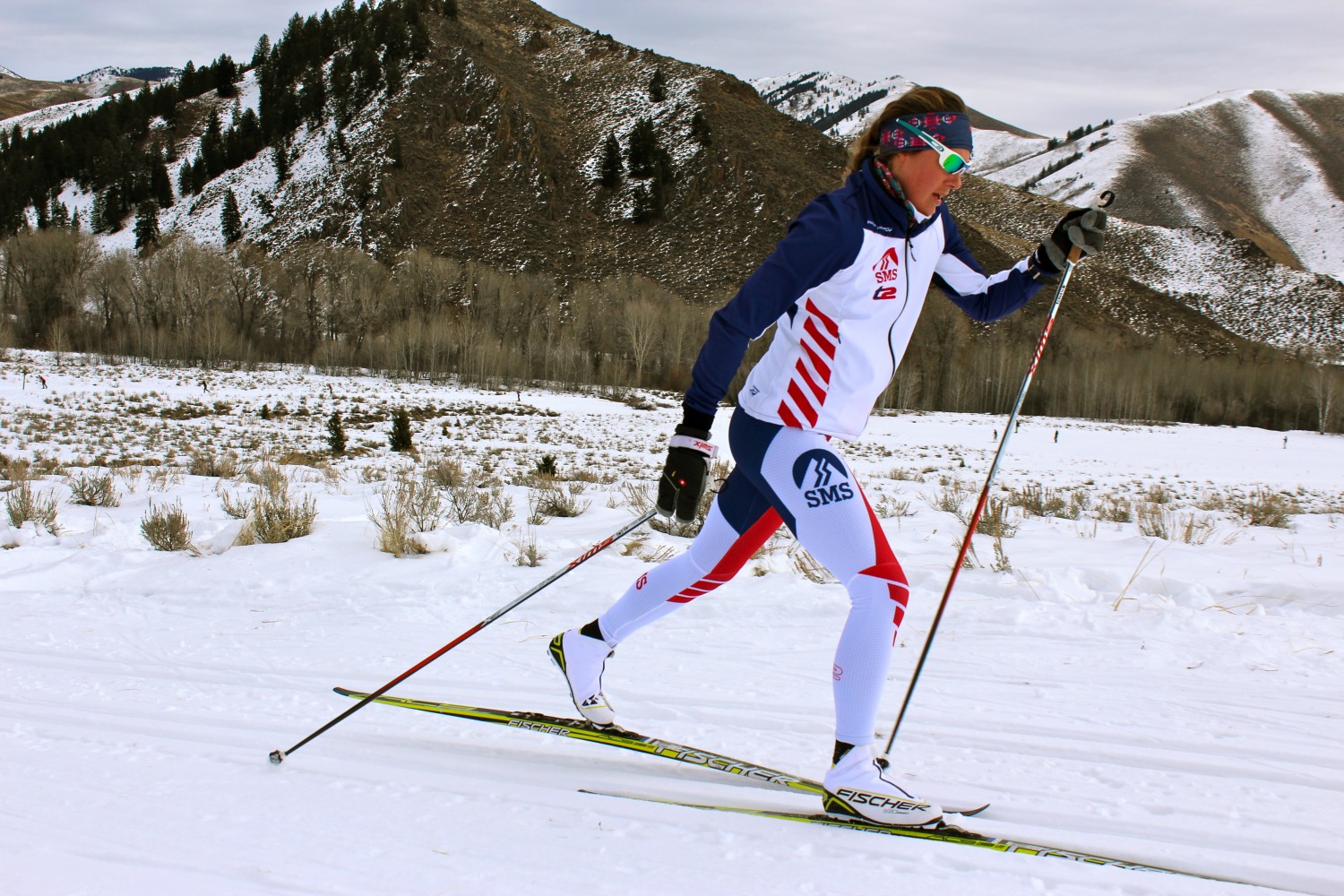
    Annie Pokorny  (SMST2) at the top of the coach's climb for the SuperTour 1.3 k  classic race course in Sun Valley, Idaho.
    Annie Pokorny (SMST2) at the top of the coach’s climb during a training day before the December 2015 SuperTour in Sun Valley, Idaho.

    While training and racing with SMST2, Pokorny continued to take classes at Middlebury and balanced coursework with an international race schedule. She would take the fall semester off when training volume was high and take classes full time in the spring.

    “The logistics have certainly been complicated, coordinating with professors to miss multiple weeks or months of class by Skyping into lectures (an idea inspired by Sadie Bjornsen), writing additional essays and navigating the black hole that is European village internet,” Pokorny wrote in an email. “However, I got to take advantage of the international racing available to me; finding balance never felt like a sacrifice.”

    While Pokorny has posted solid results the past two seasons with SMST2, another breakthrough season proved elusive. With both her skiing and academic goals in mind, Pokorny made another pivitol decision — to return to college racing.

    “I decided to return to college racing because it gave me the chance to have six weeks of consistent, competitive, comped racing while also allowing me the structure to take a full course load and graduate in the spring,” she explained.

    However, the process of returning to collegiate racing required more than just agreement from her coaches. Because collegiate cross-country skiing is an NCAA sport, athletes must abide by the NCAA amateurism rules and in the eyes of the NCAA, Pokorny was considered a professional athlete while skiing for SMST2.

    However, since Pokorny could prove she never made money from racing at SMST2, she was eligible to return to the collegiate circuit after being reinstated as a Middlebury athlete as a senior with junior eligibility. To ensure everything was in order before she put on a Middlebury suit, Pokorny sat out the first two carnival races.

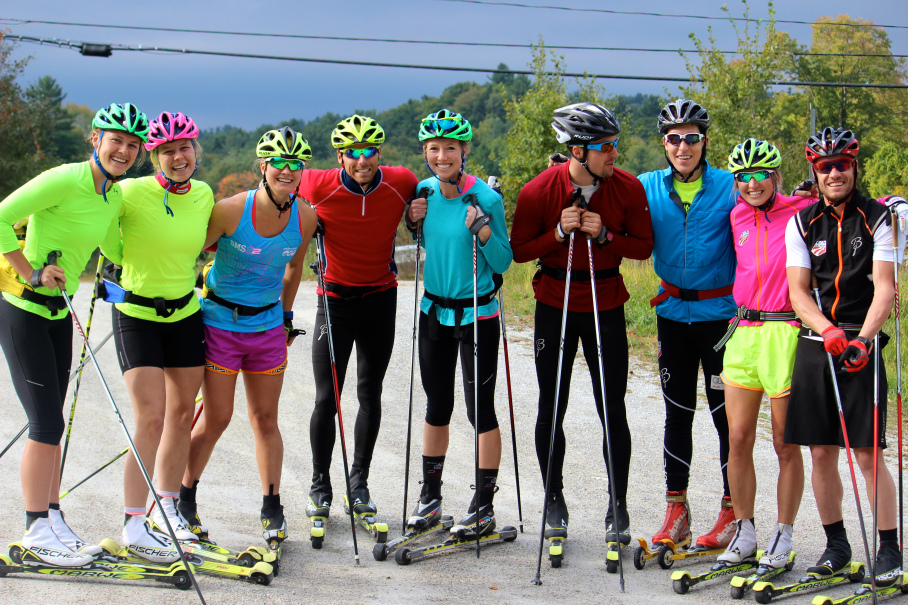
    The SMS T2 team at the 2014 100 k Ski-A-Thon. From left to right: Annie Pokorny, Annie Hart, Jessie Diggins, Andy Newell, Erika Flowers, Ben Saxton, Paddy Caldwell, Sophie Caldwell, and Simi Hamilton. (Photo: SMST2 Blog)
    Annie Pokorny (l) with several Stratton Mountain School (SMS) T2 teammates in 2014. (Photo: SMST2 Blog)

    Although it was a process, Pokorny said she felt supported in her decision from Middlebury, SMST2 and the ski community.

    “Patrick O’Brien and Sverre Caldwell at SMST2 showed an immense amount of support for me returning to collegiate racing, which I’m glad I had before starting the process of returning,” she wrote. “When we knew I had eligibility, the Middlebury program communicated that to the rest of the Eastern Intercollegiate Ski Association (EISA) circuit and I received nothing but support from every coach and competitor.”

    Pokorny describes her transition back as “nearly seamless.” In addition to being welcomed back to the team and collegiate racing, being on campus and attending lectures eliminated the stress of remote coursework.

    She has also returned as a force on the EISA circuit, winning the 5 k classic pursuit at the Williams Carnival, the 5 k freestyle at Middlebury Carnival, taking second in the 10 k classic at University of Vermont Carnival and earning a berth to NCAA Championships.

    “On the skiing side, I think one of the valuable lessons of skiing internationally is that it teaches you a certain flexibility and ability to navigate with new waxing, coaching and racing situations, so everything leading up to the races felt completely normal to me,” she wrote. “The Midd coaches, Andrew Johnson and Patty Ross, have worked to make sure that I felt supported on training and race days while the entire Midd team embraced my return like I was coming home.”

    The transition also illuminated the unique and constructive culture of collegiate racing and how it can pave the way for international racing.

    “I suppose one way my perspective has changed is that as an older, more experienced racer, I can appreciate the details that make racing NCAA a standout experience,” she explained. “In addition to the team culture and glitter and pride in representing your school, I can better see how what we learn on this circuit can transfer to international racing. The practice in mass starts, for one, and scoring points for and representing something greater than yourself, for another, are two things that will contribute to my racing after I graduate.”

    Although it is easy to think that skier development is a linear process, this is rarely, if ever, the case. Pokorny’s grounded thoughts on her journey illustrate this phenomenon. There are lessons that can be taken from every race, from every experience despite if an athlete is aware and open to growth.

    “I never considered returning to college racing a step back, but rather a step sideways, onto another incredibly competitive circuit that would contribute to my growth as a skier,” she wrote.  “In the past three seasons, I have had some incredible experiences and feel that I have grown as a skier in so many different ways. I would never choose a different path, circuitous as it was.”