Tag: 2016 Tour de Ski

  • FasterSkier’s Cross-Country Performances of 2016: Harvey, Diggins and Caldwell

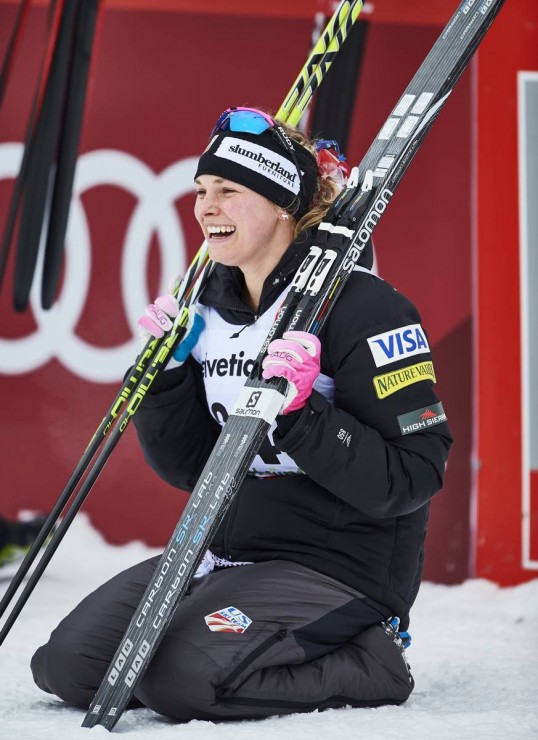
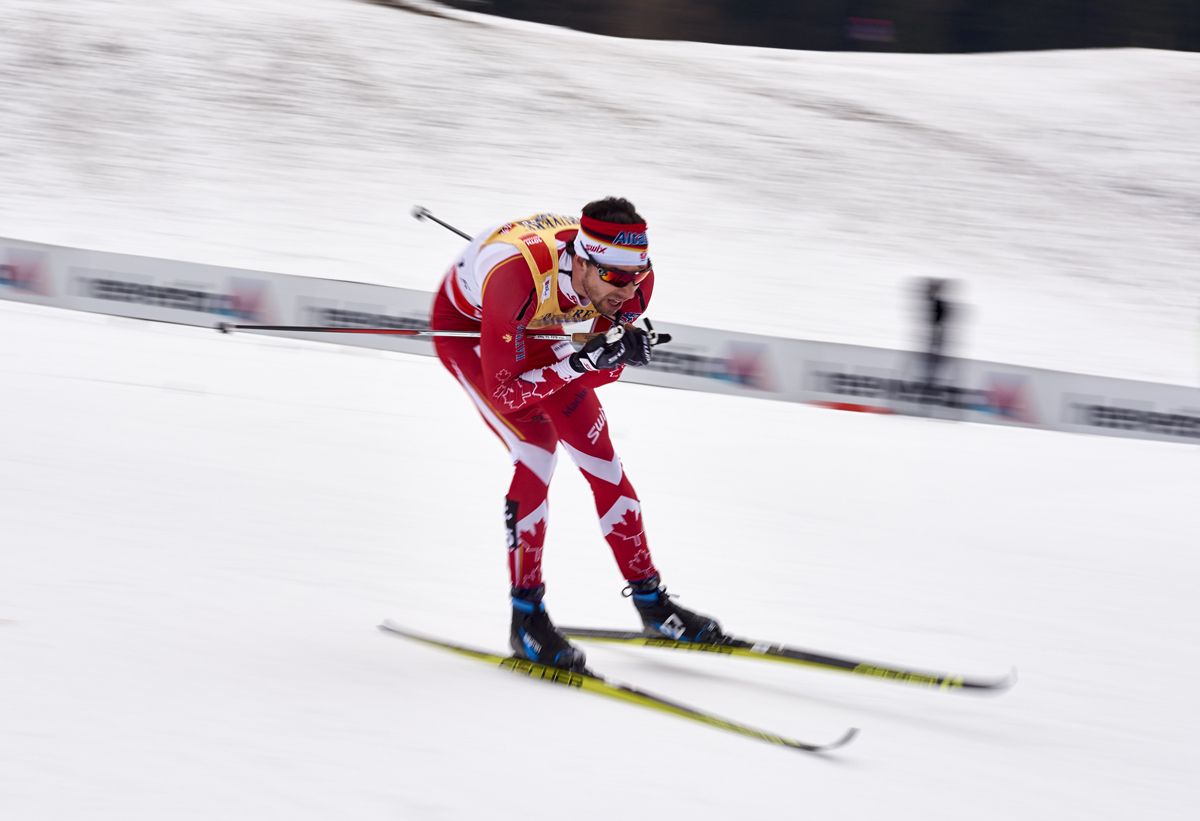
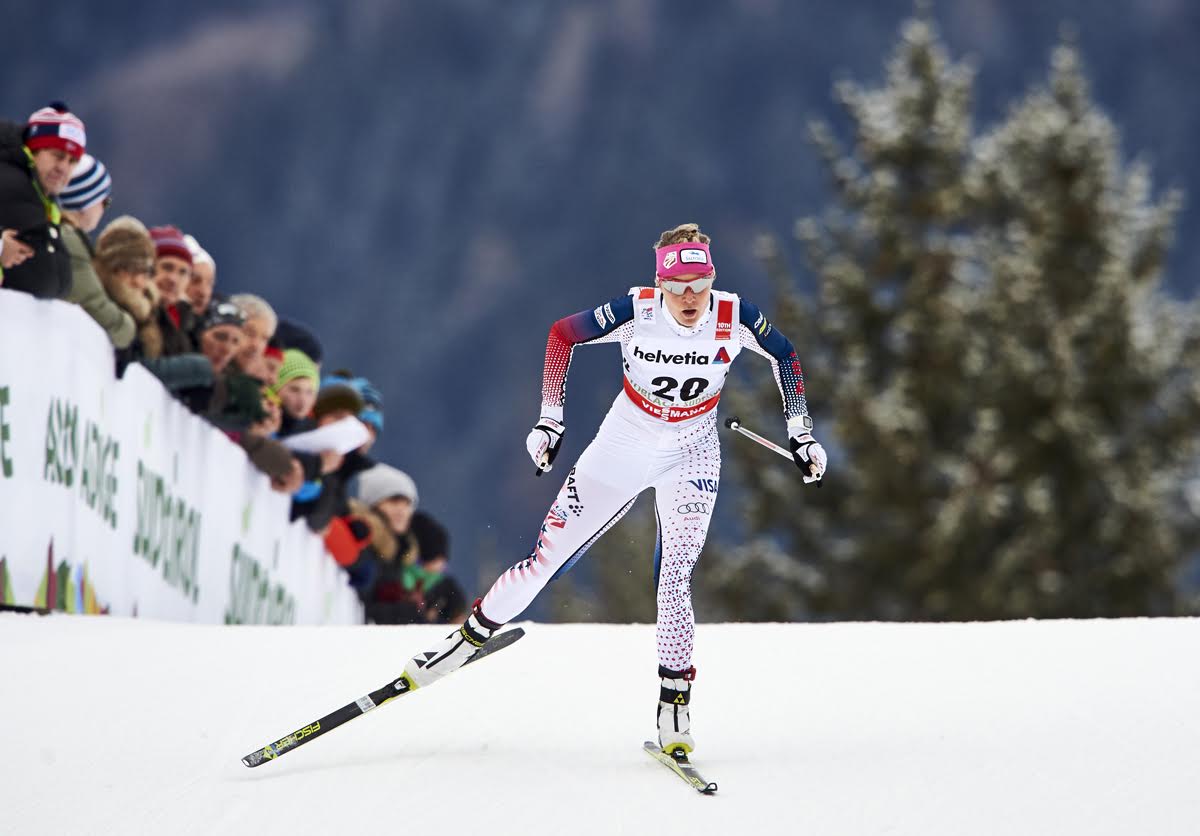
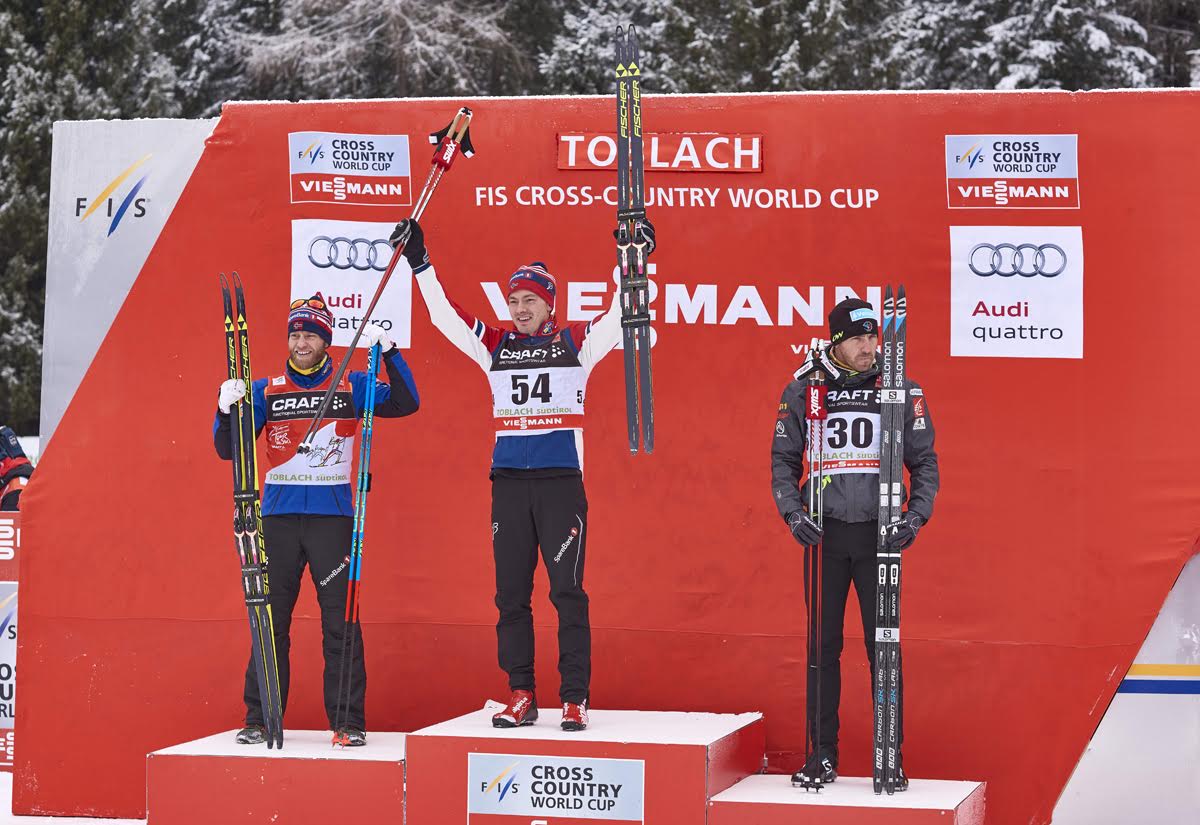
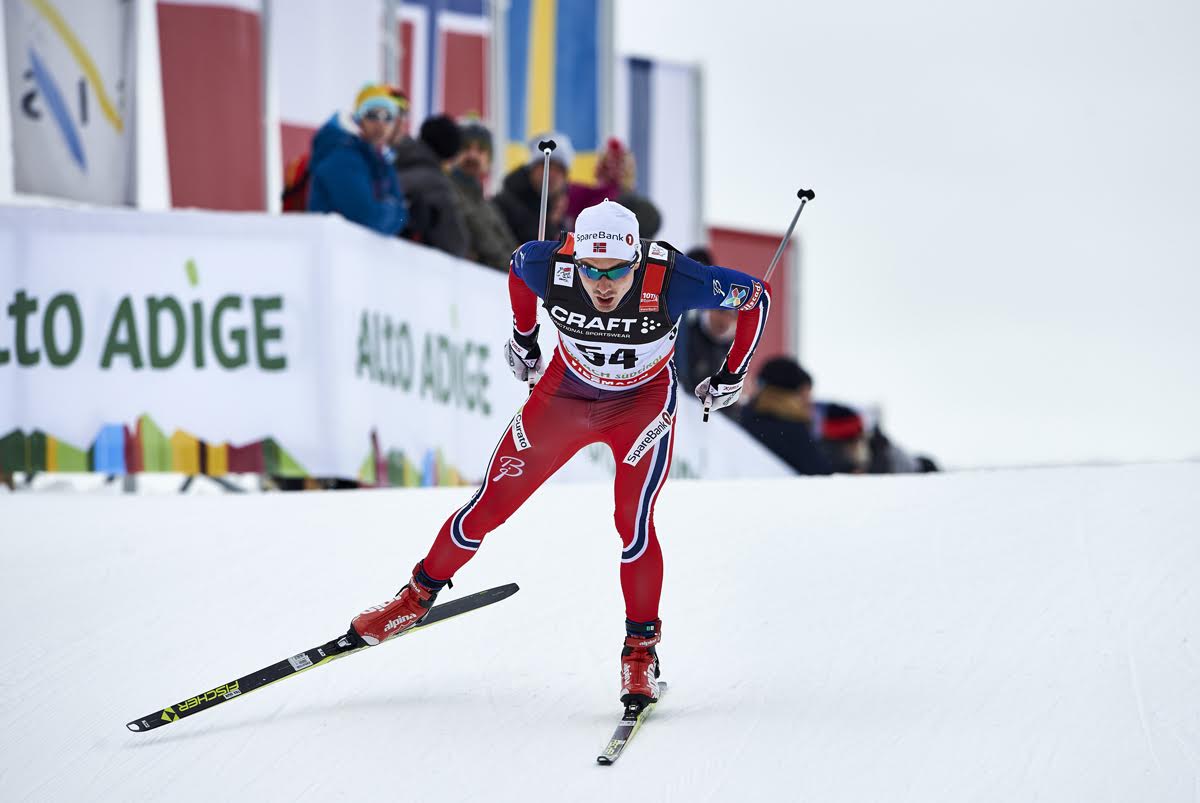
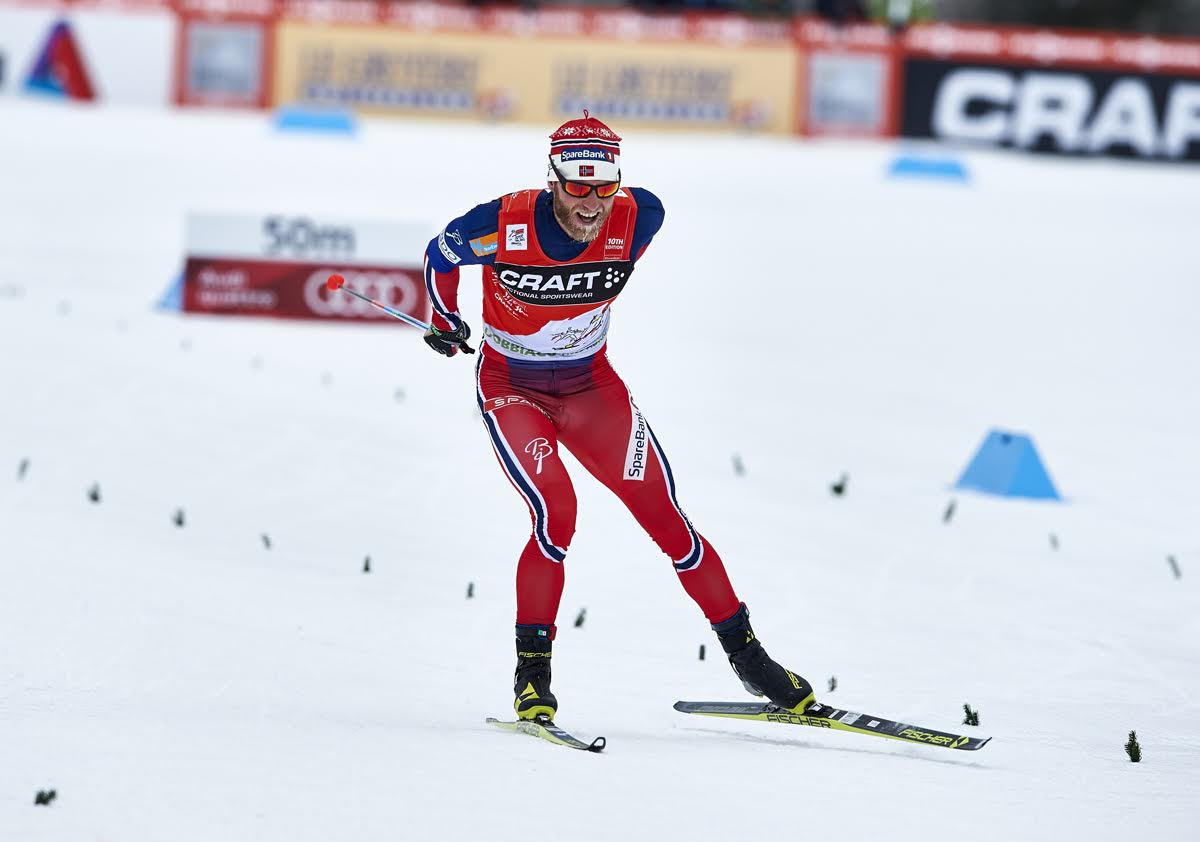
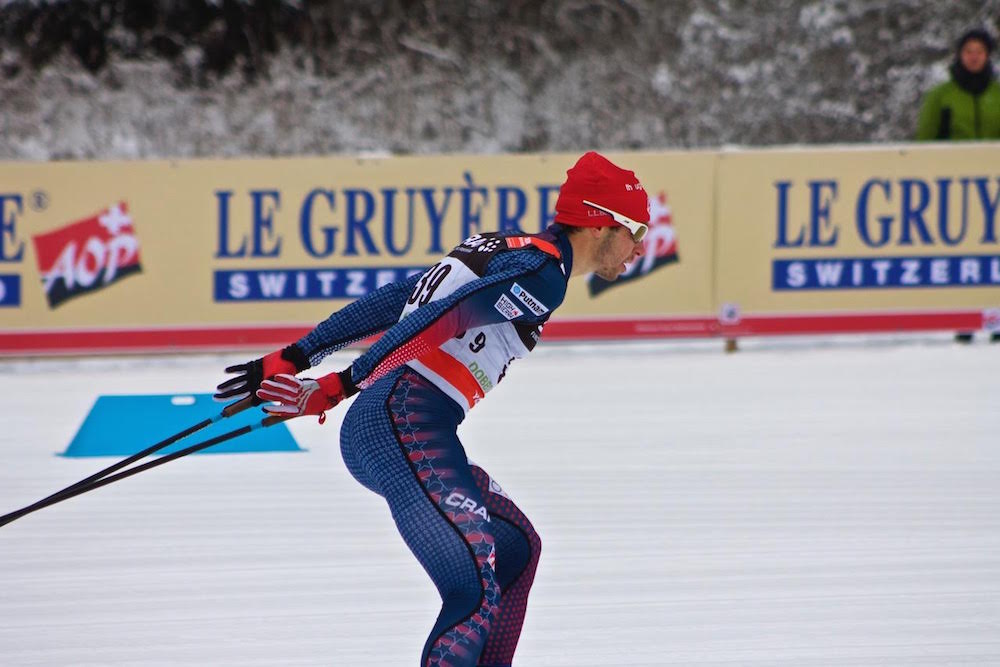
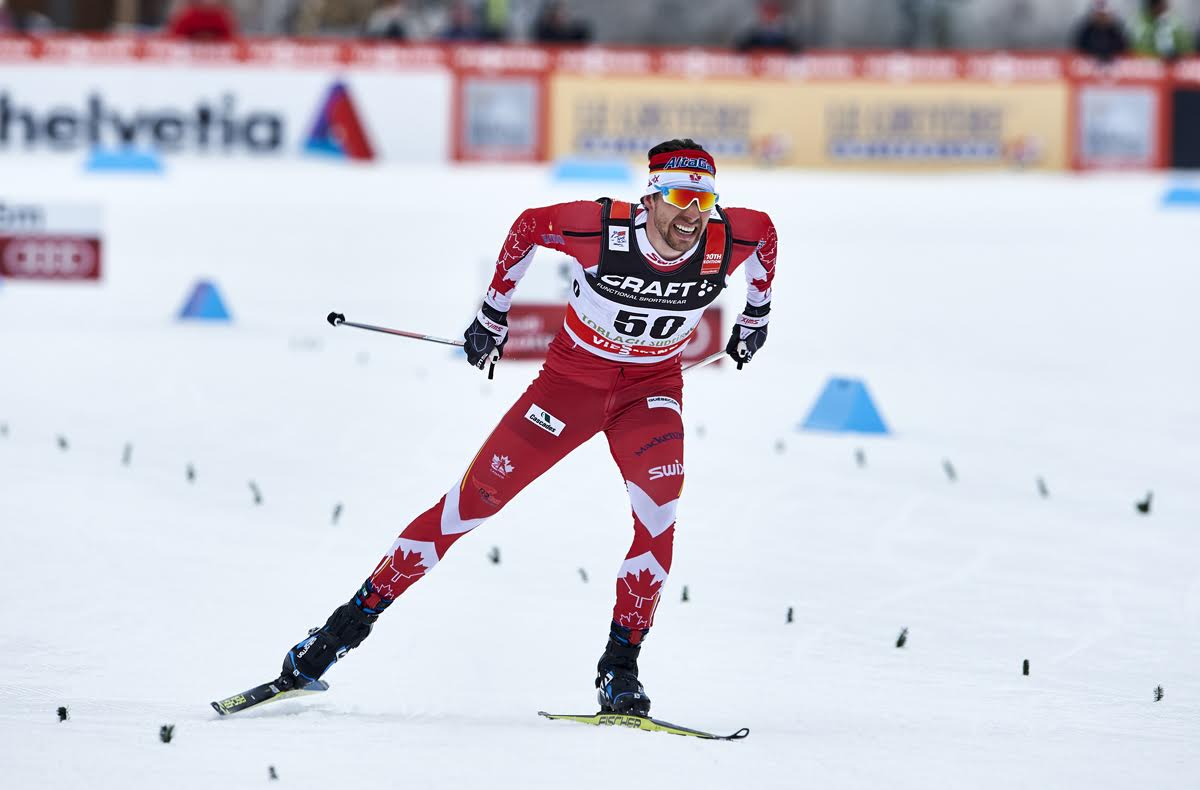
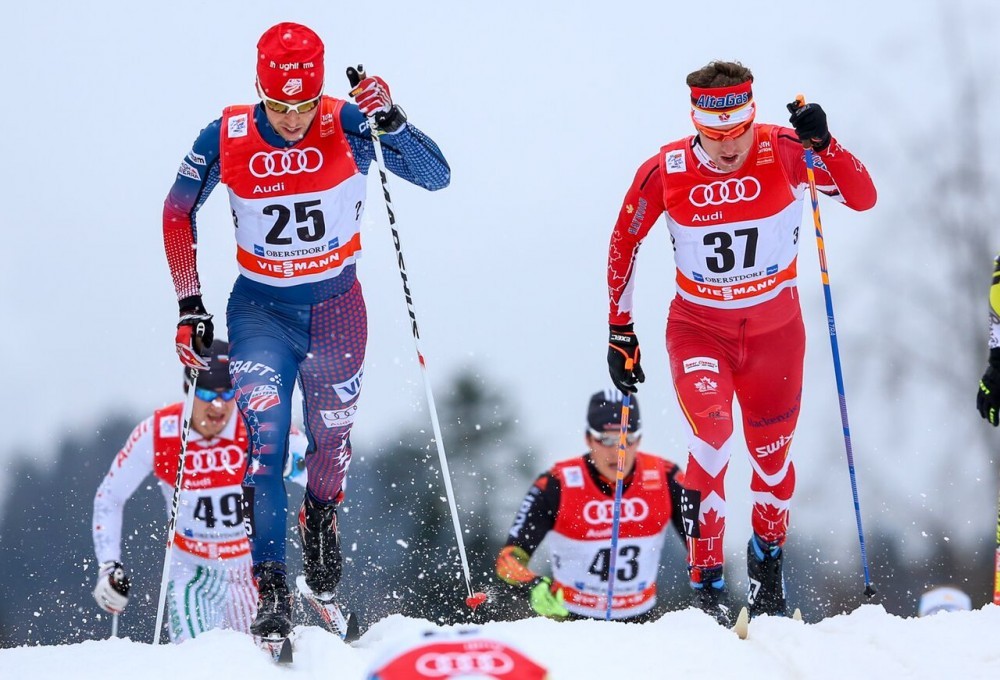
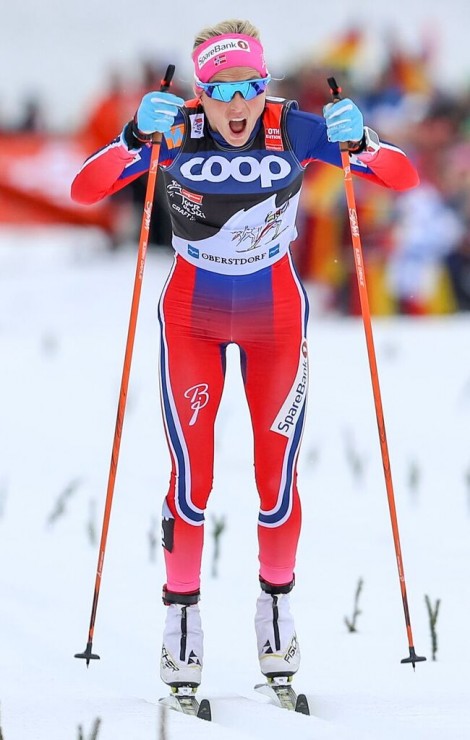
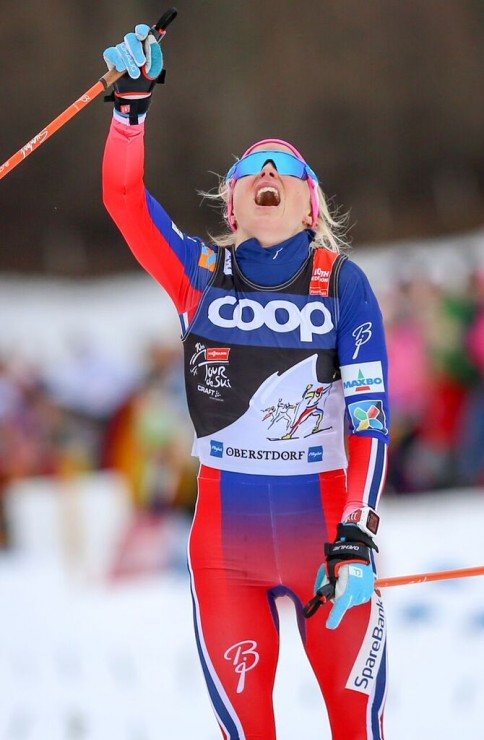
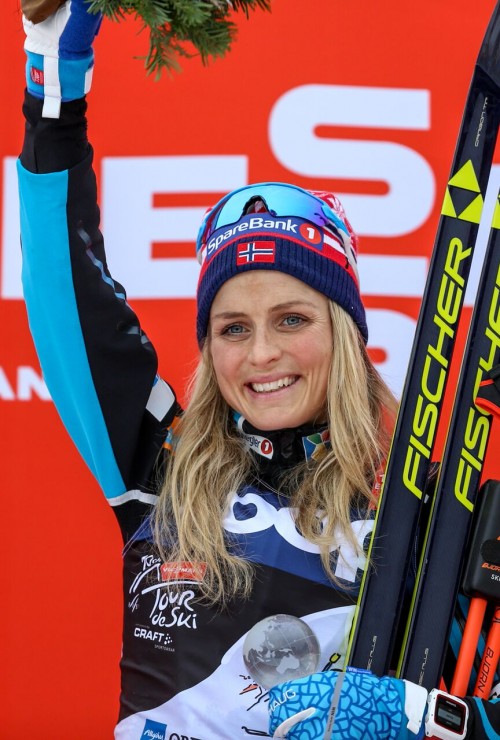
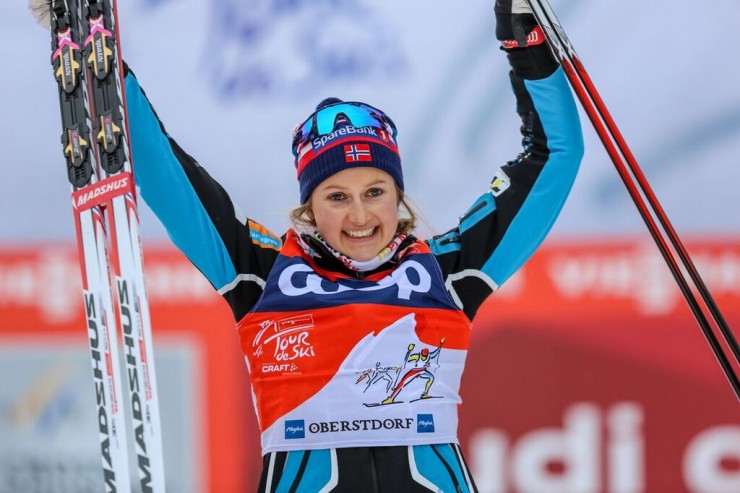
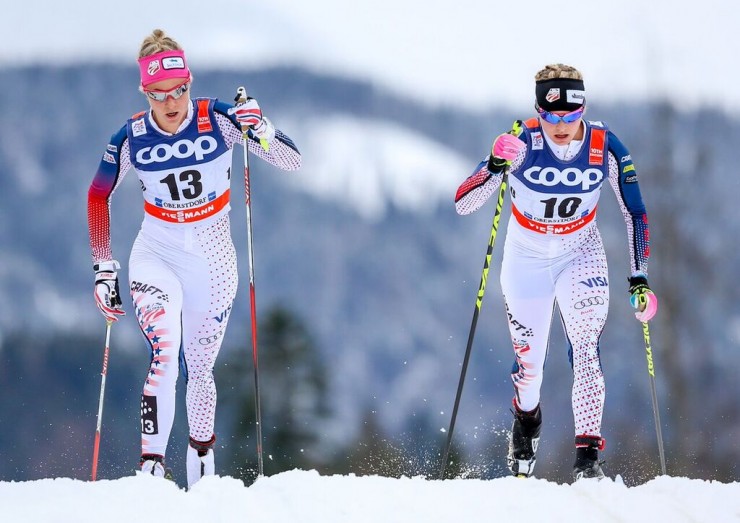
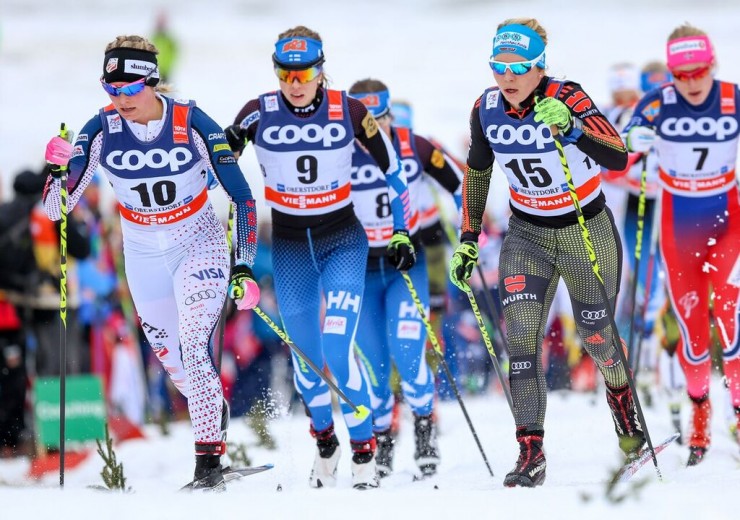
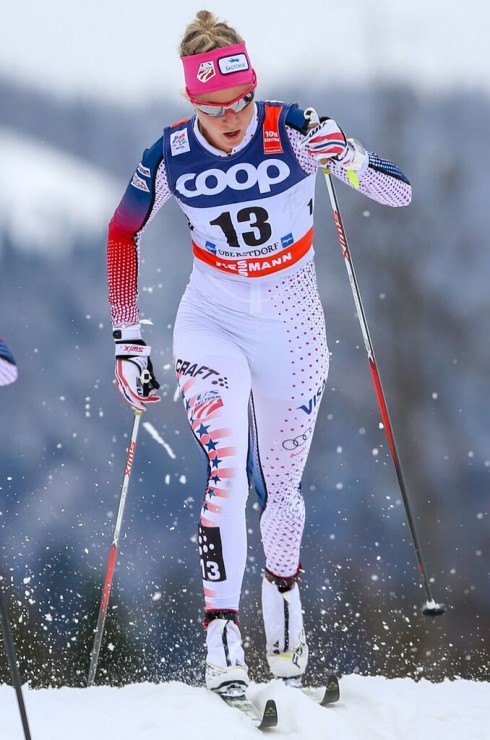
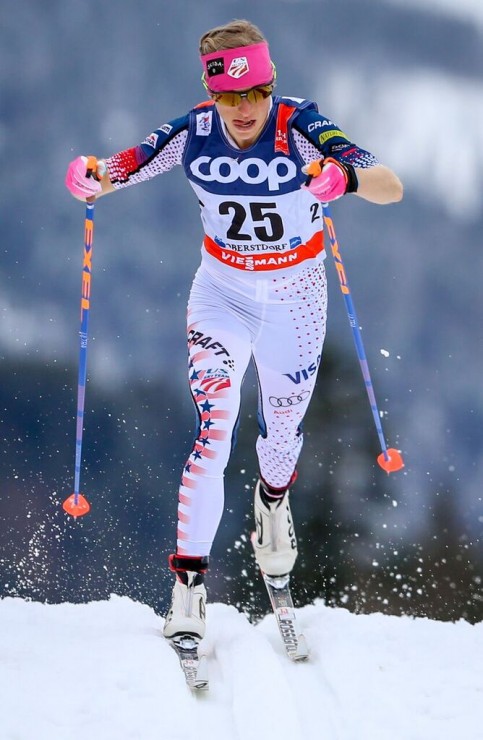
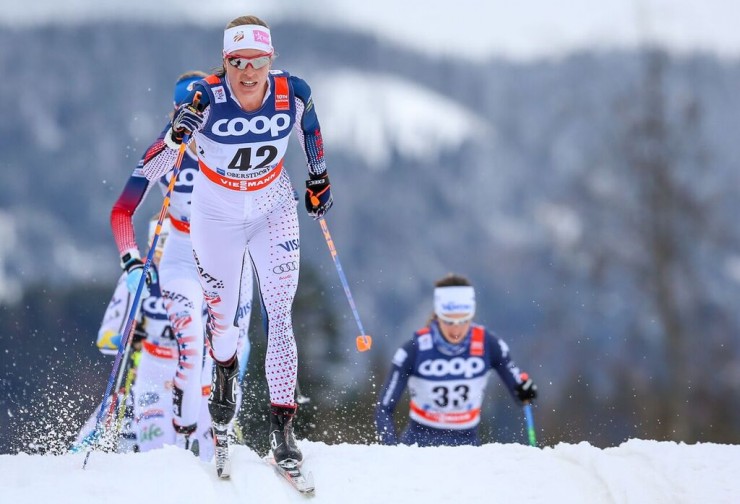
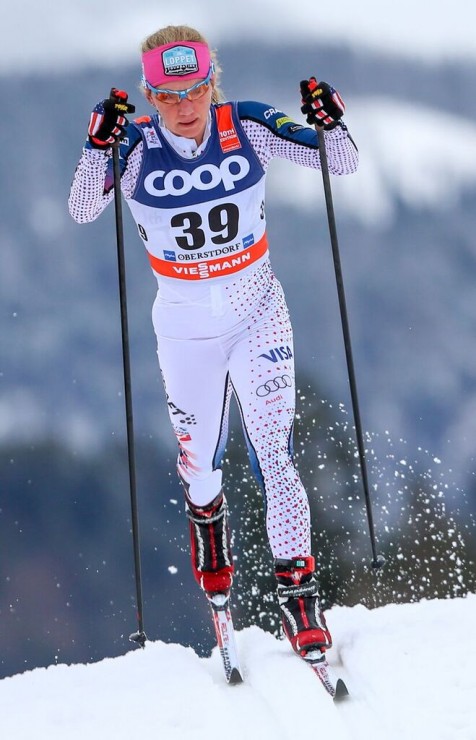
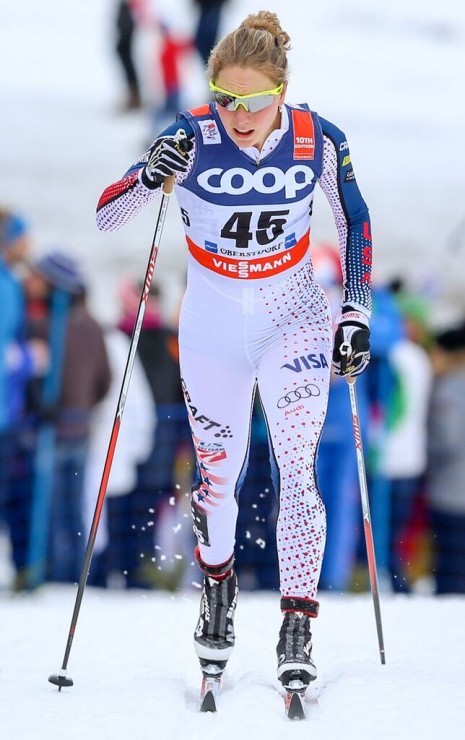
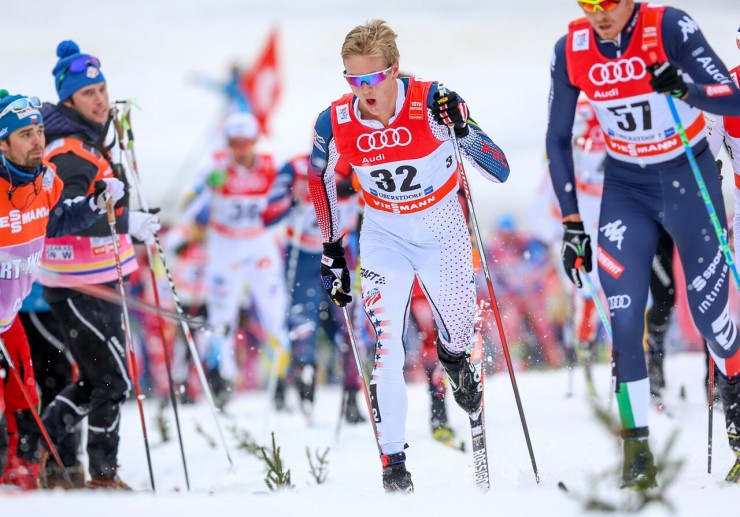
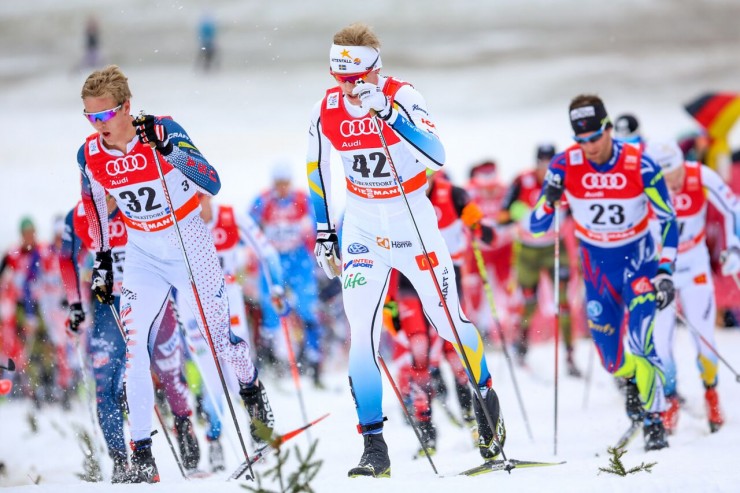
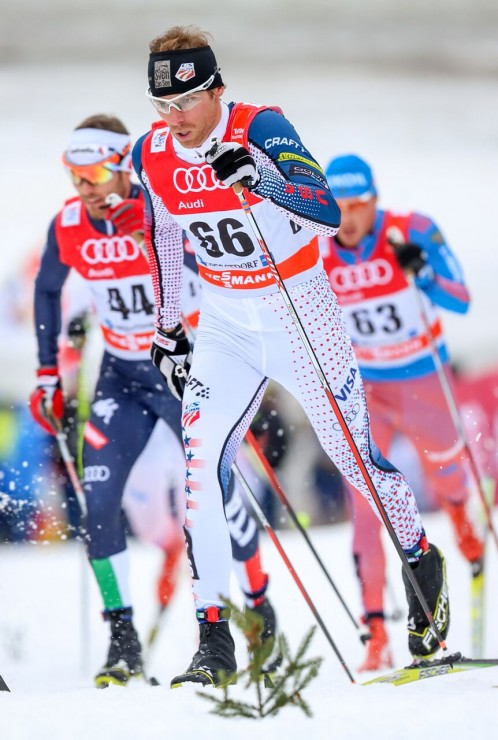
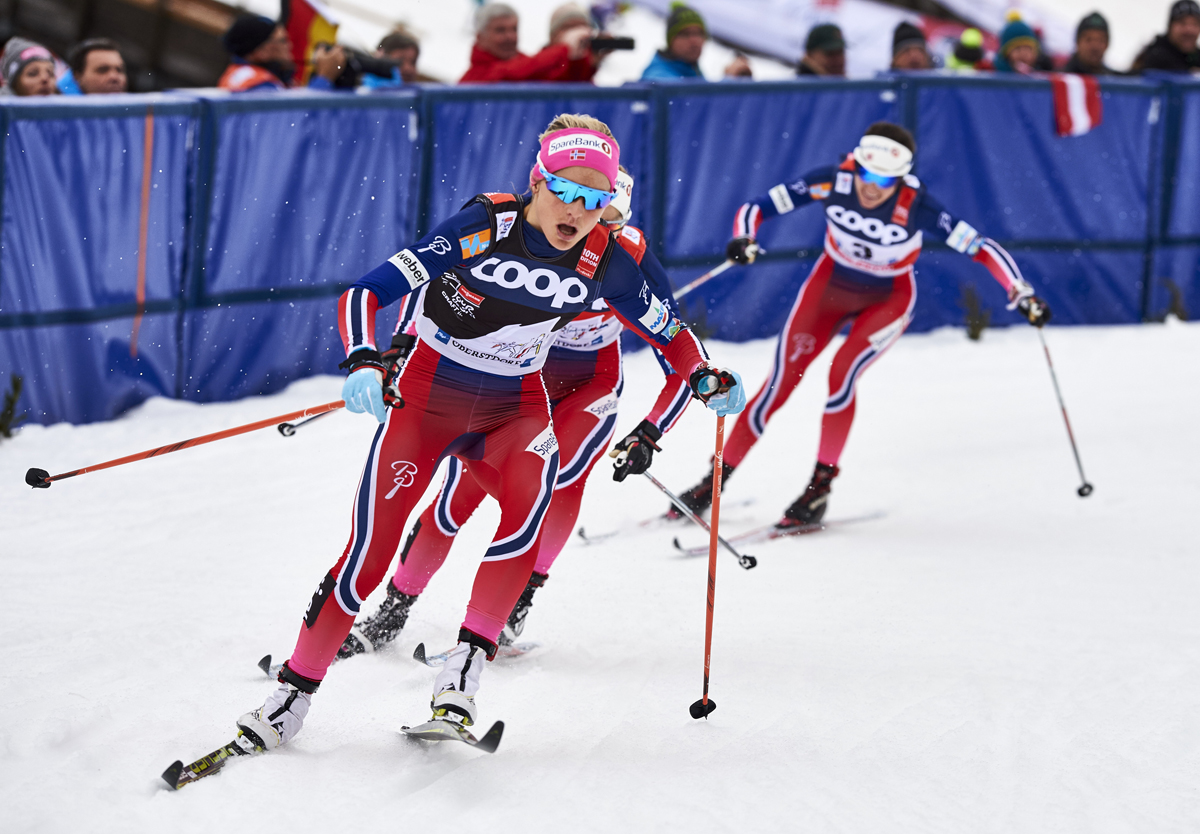
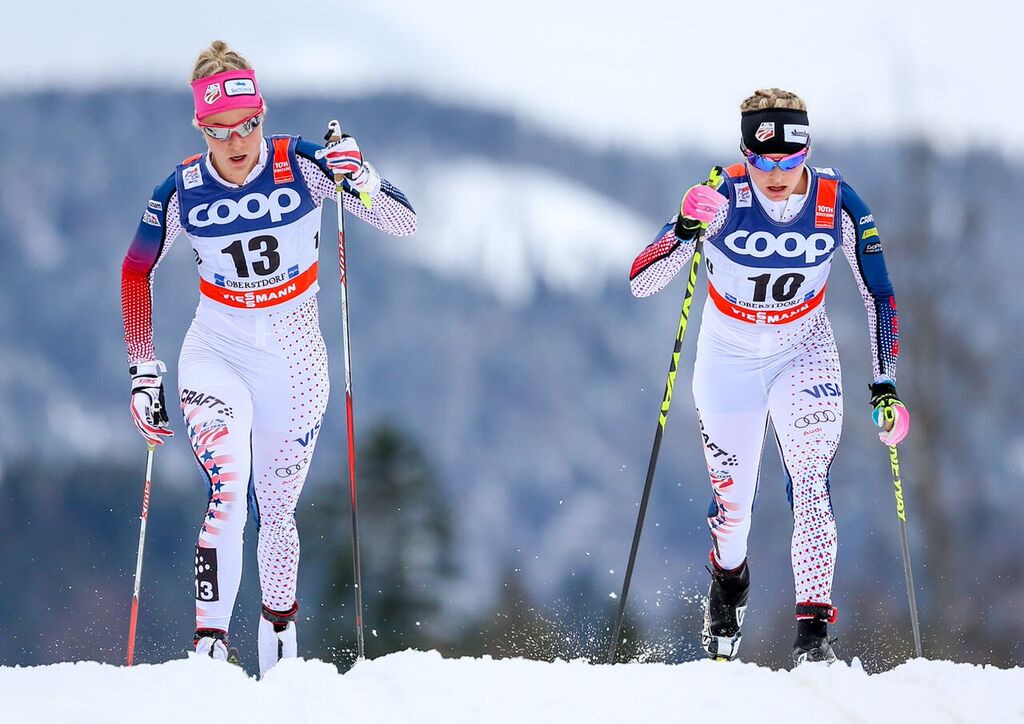
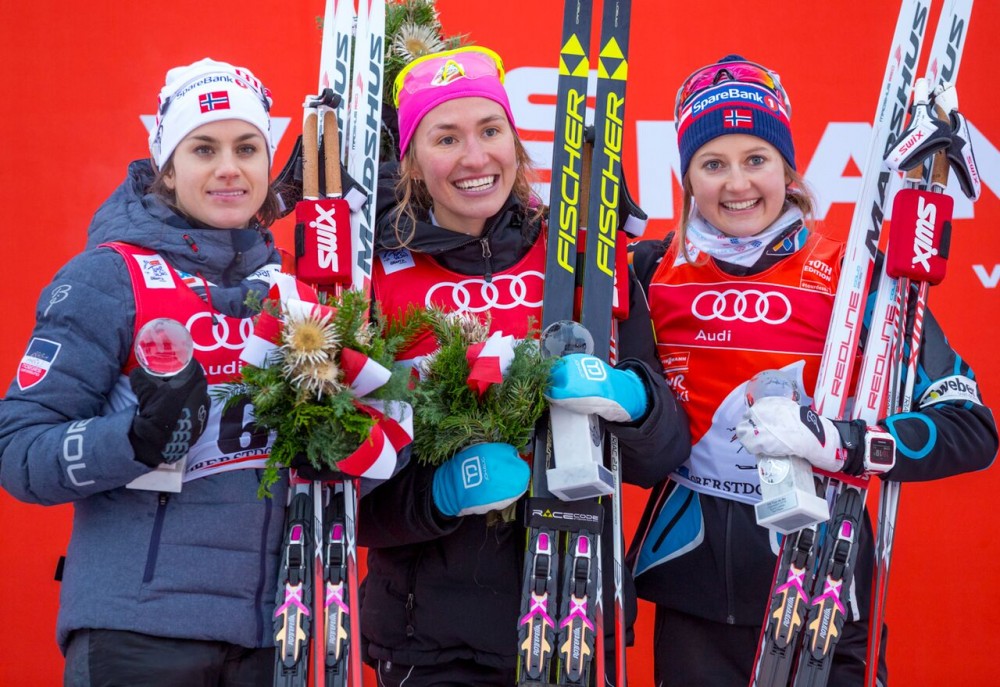
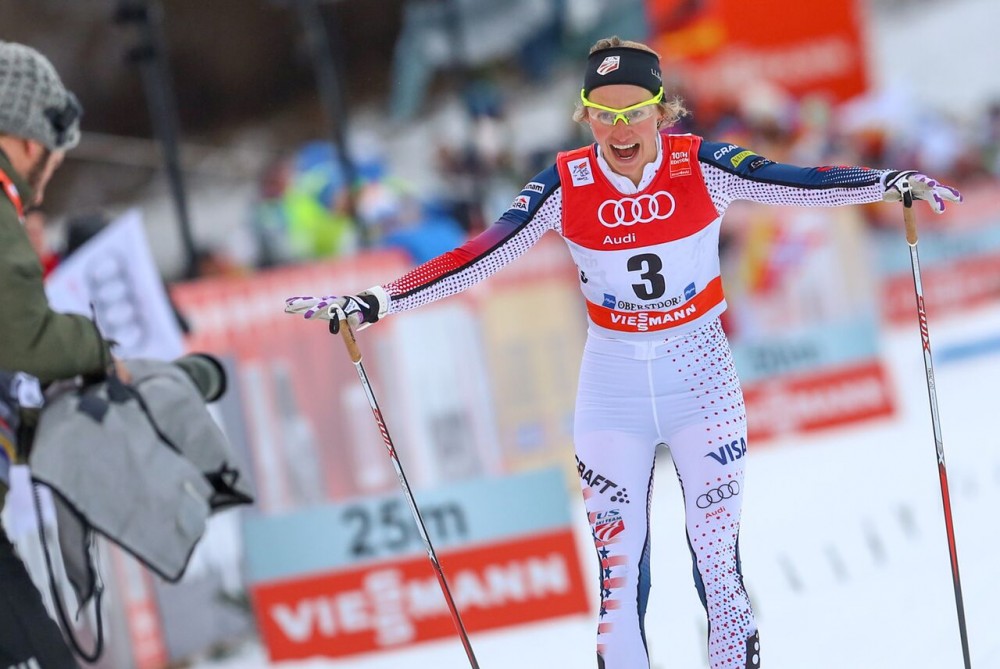
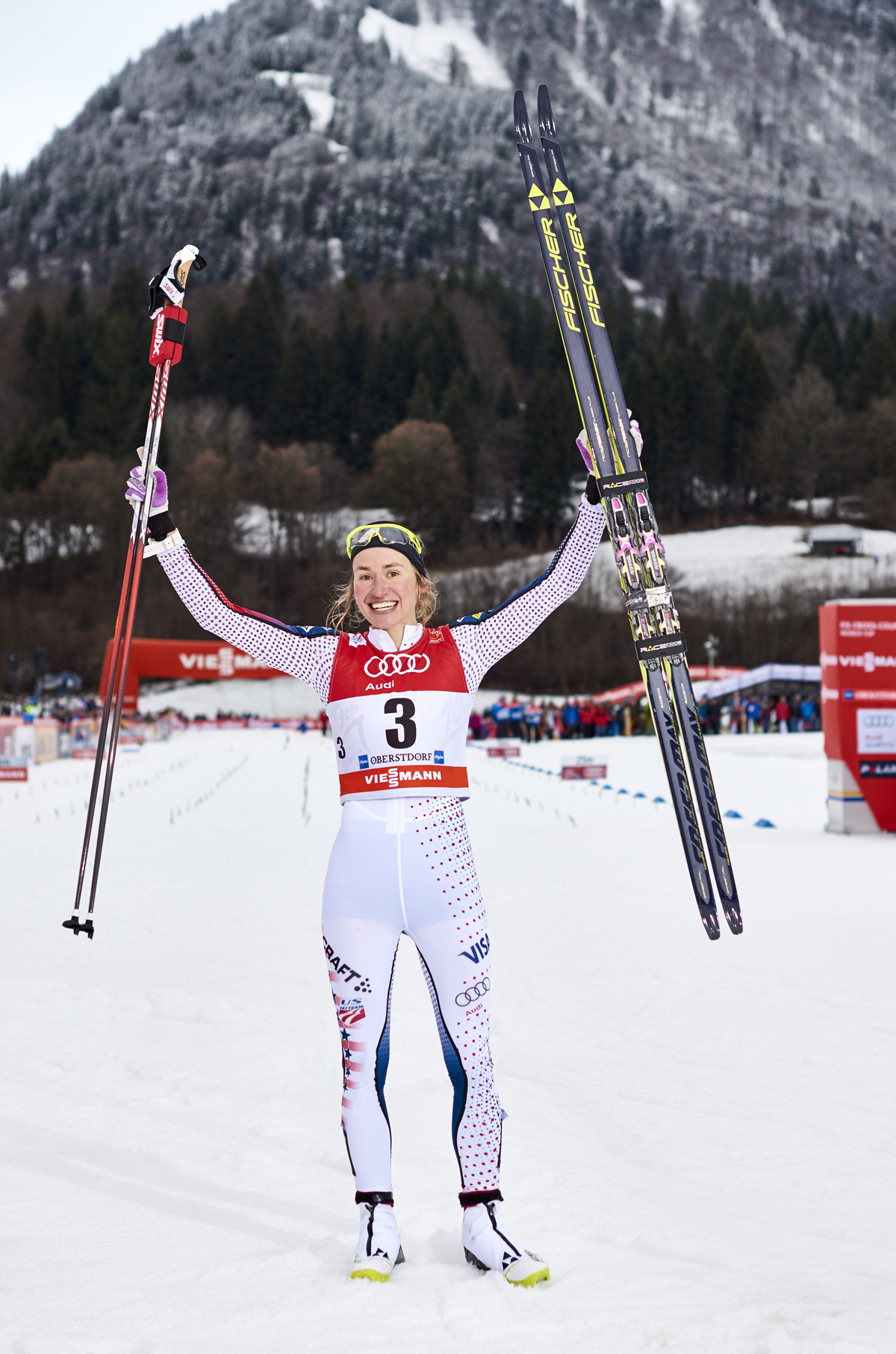
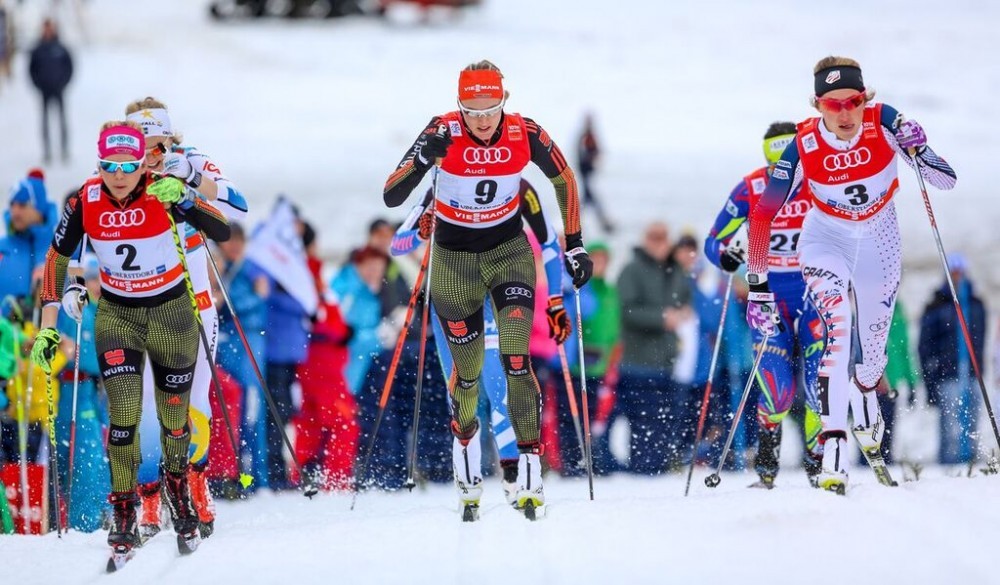
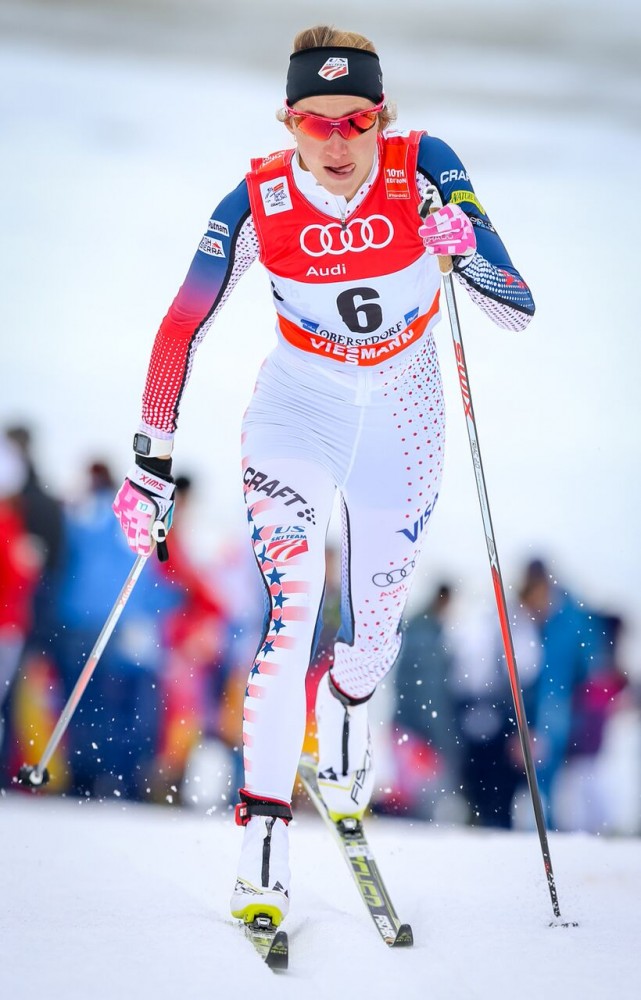
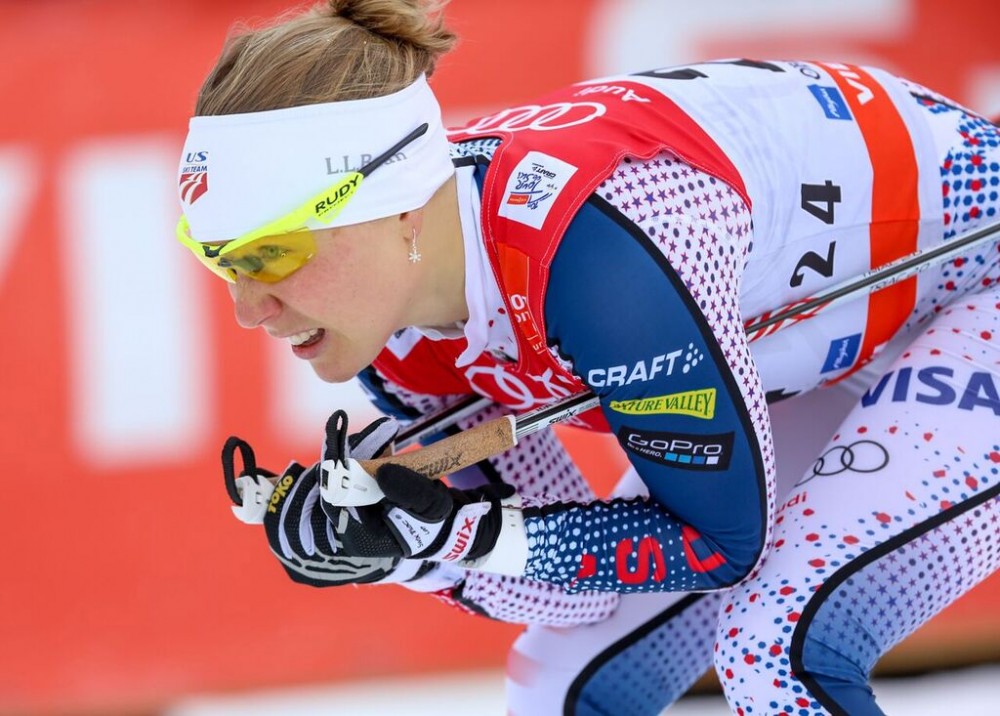
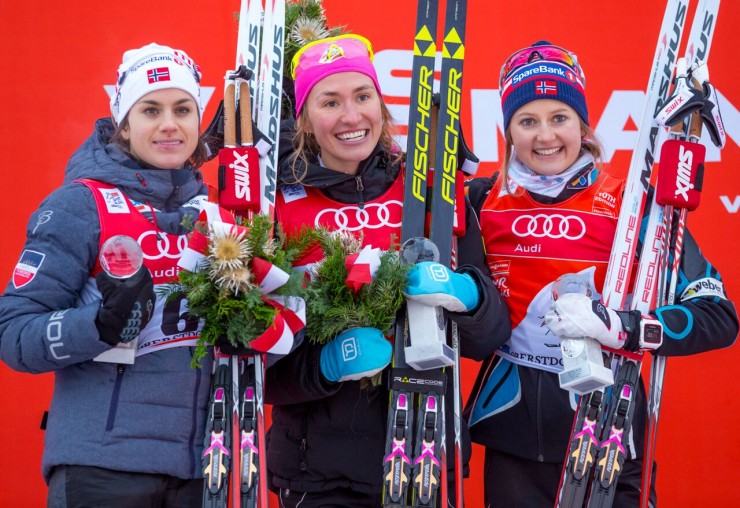
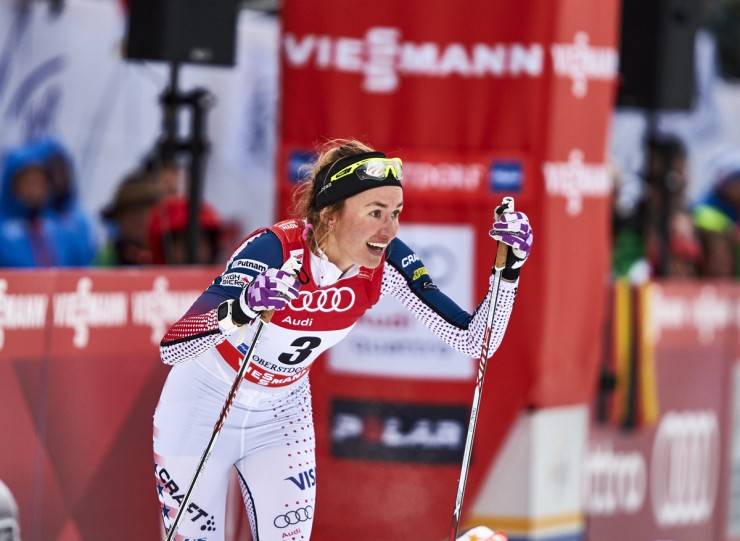
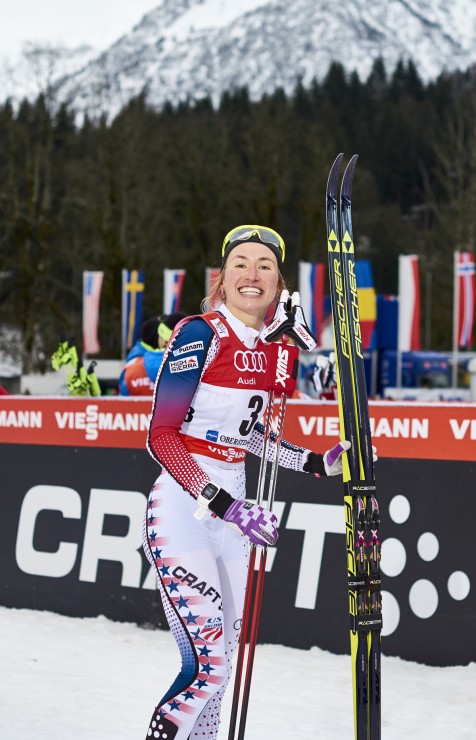
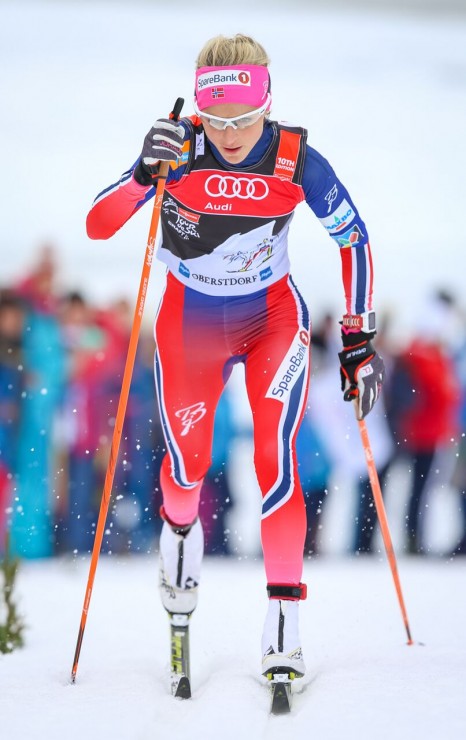
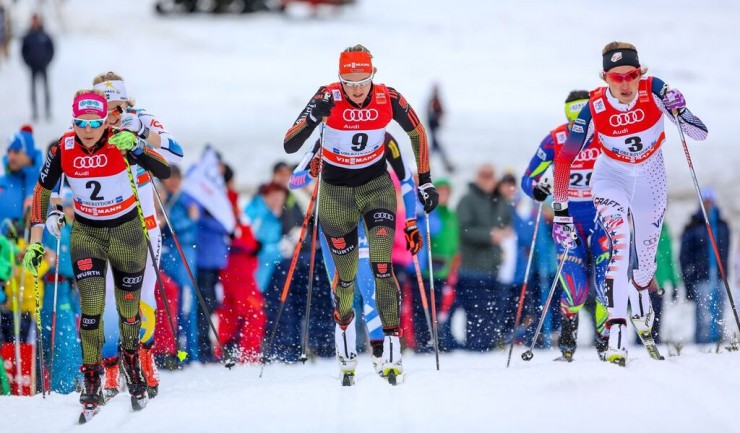
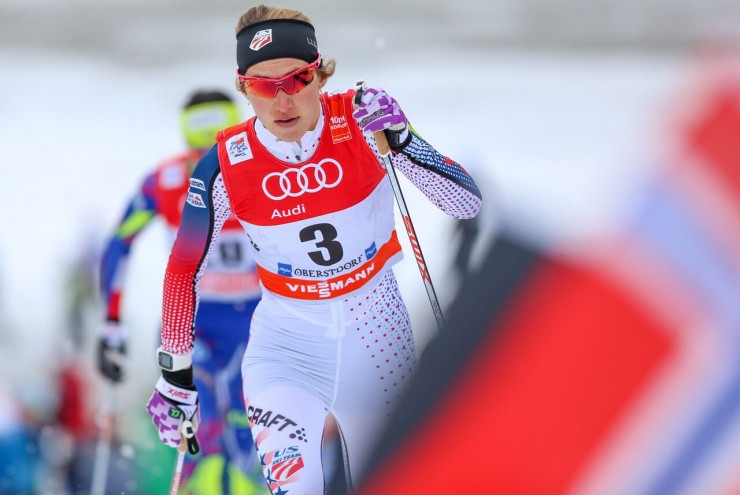
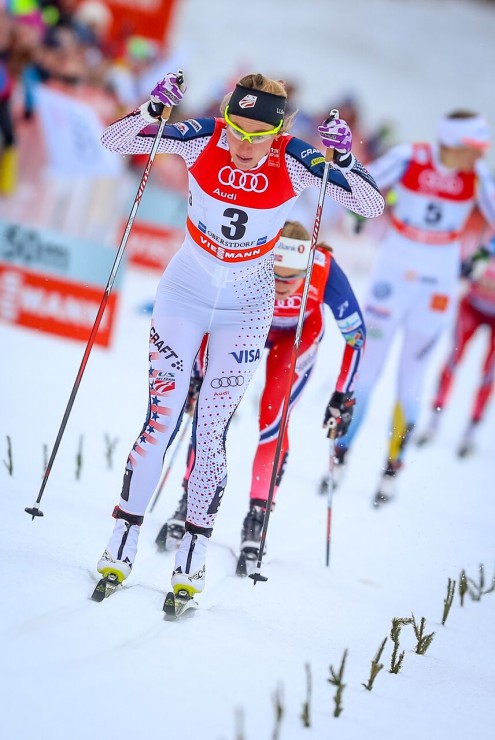
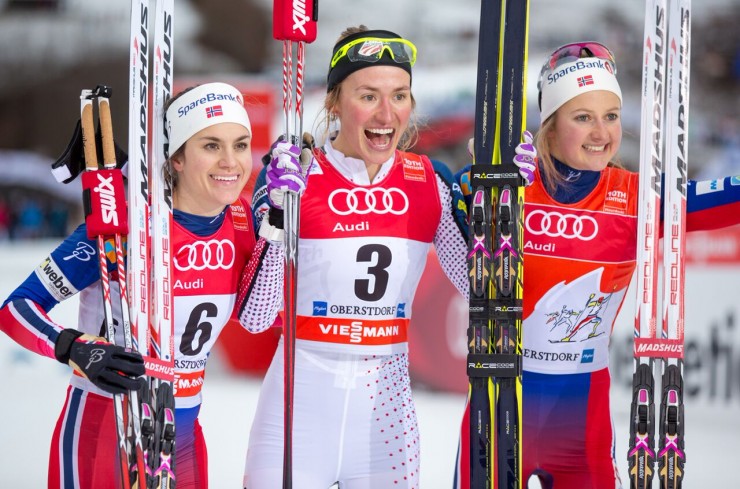
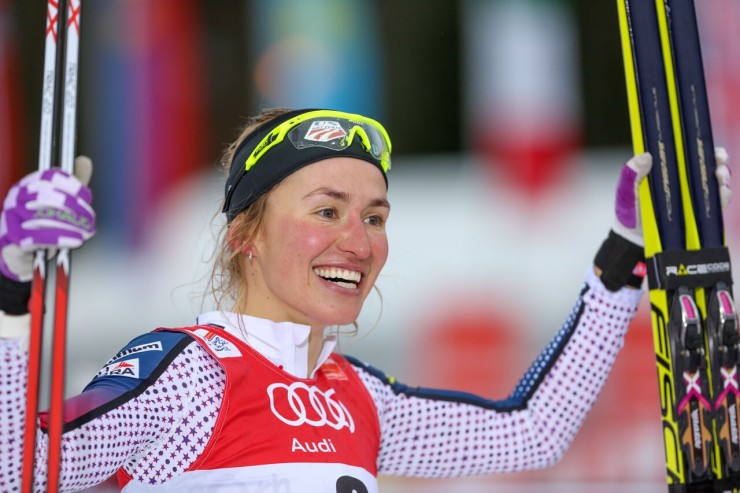
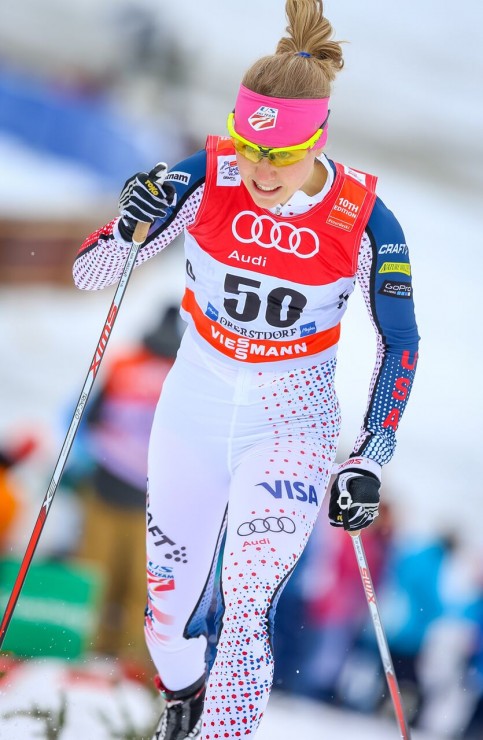
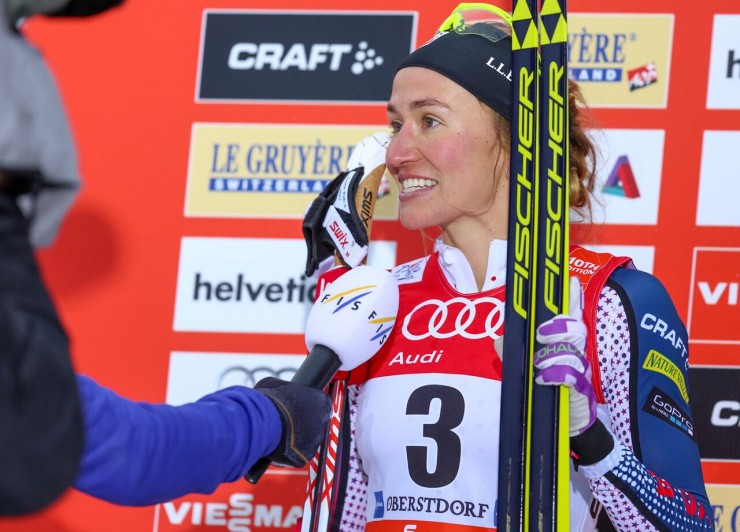
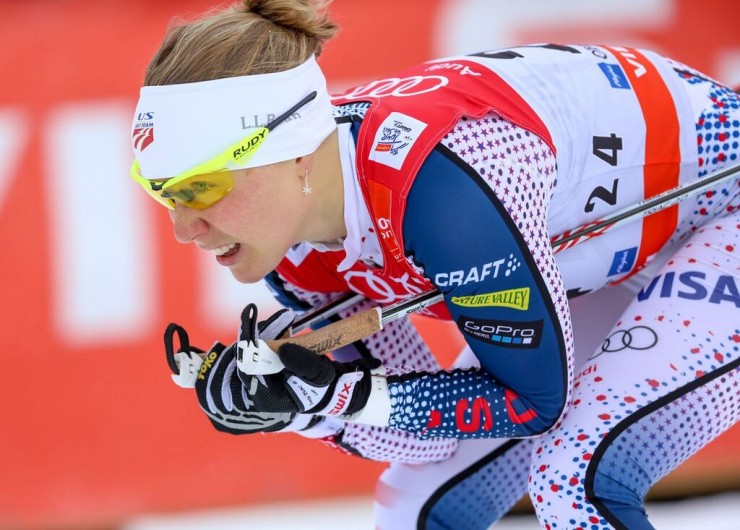
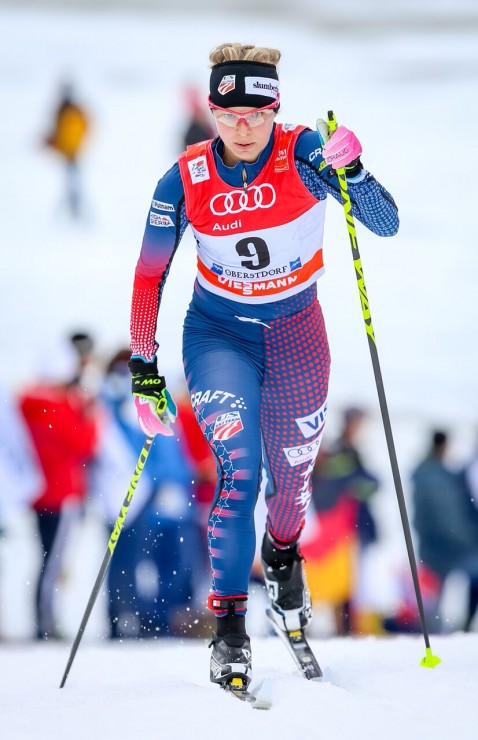
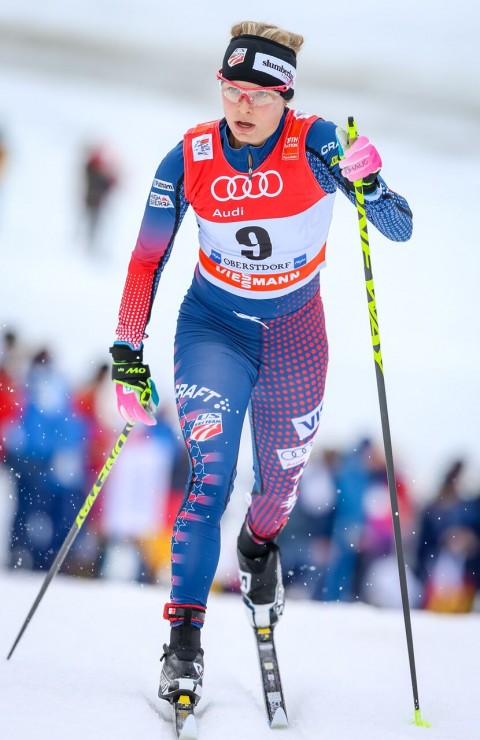
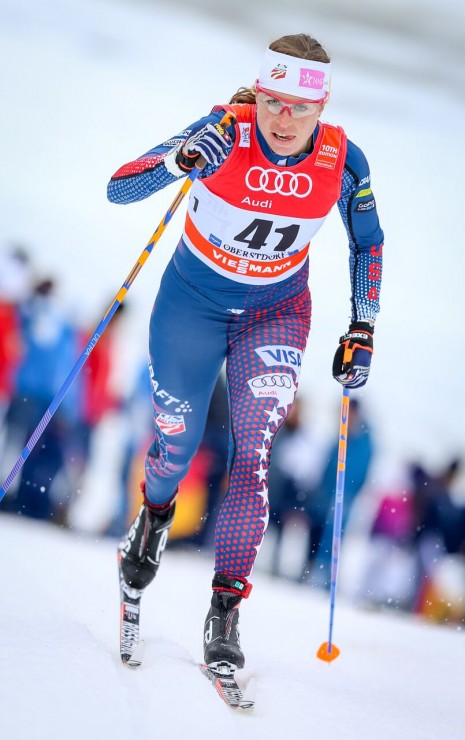
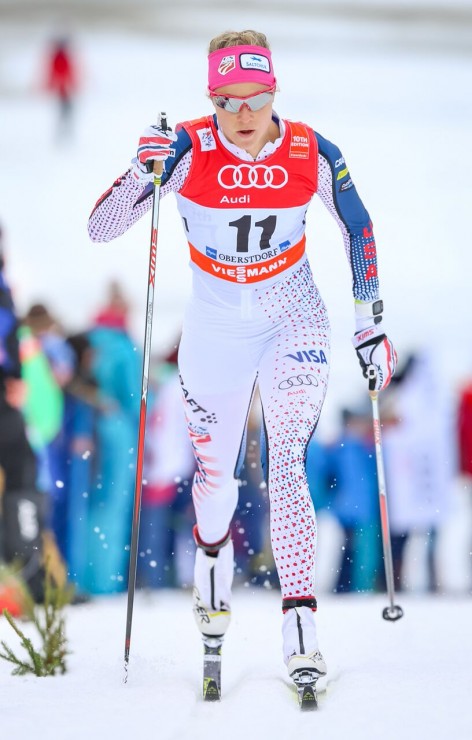
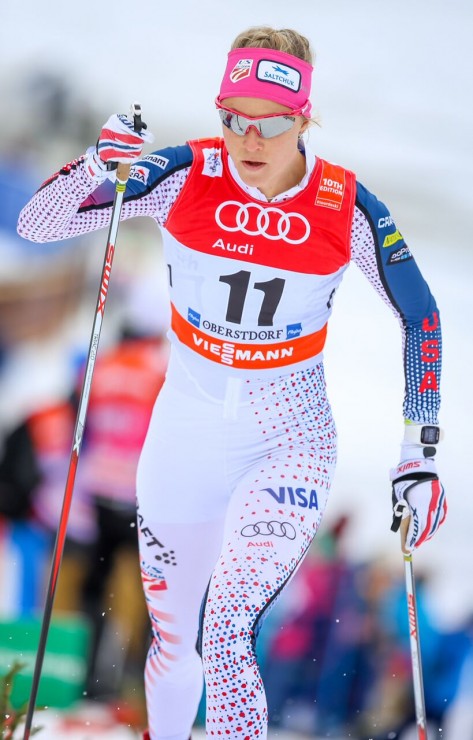
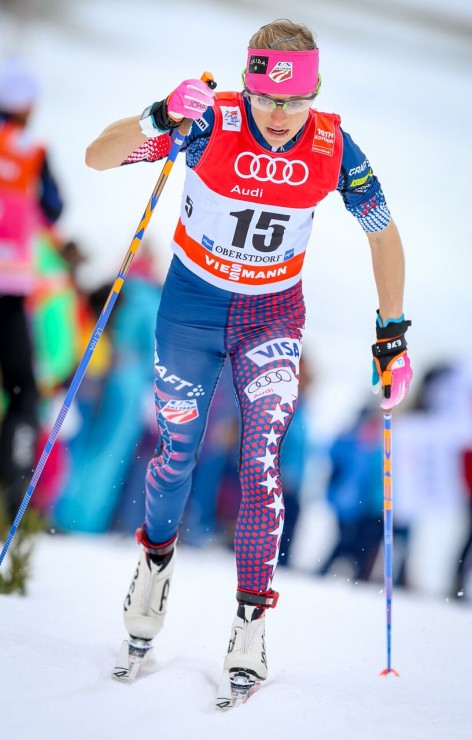
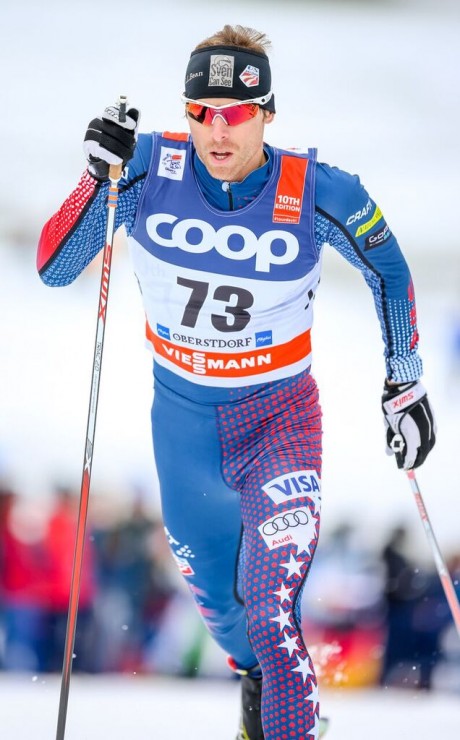
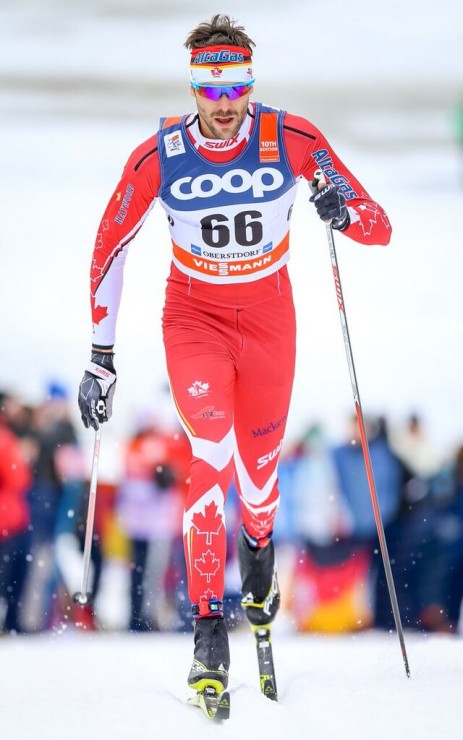
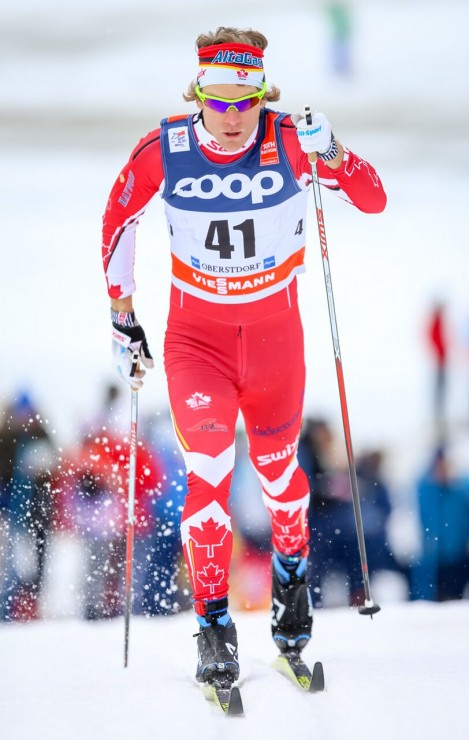
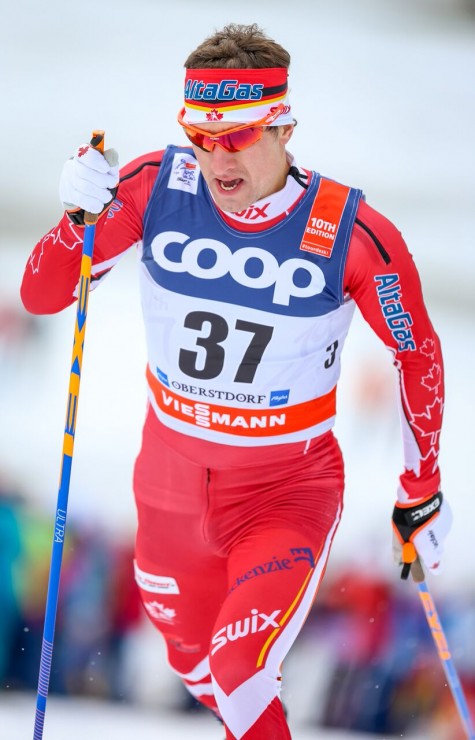
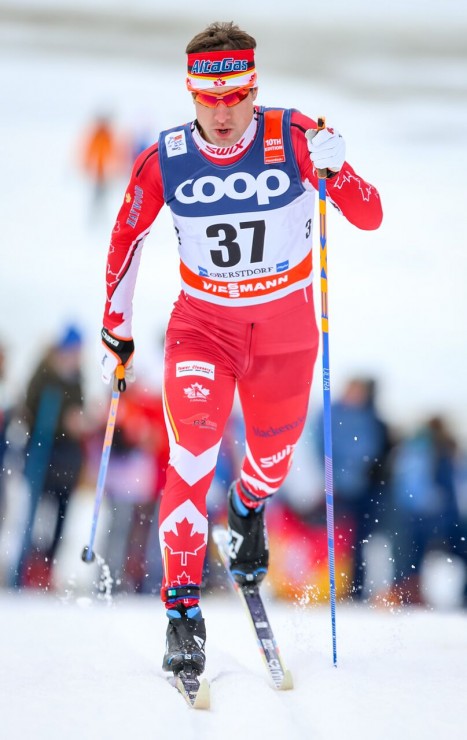
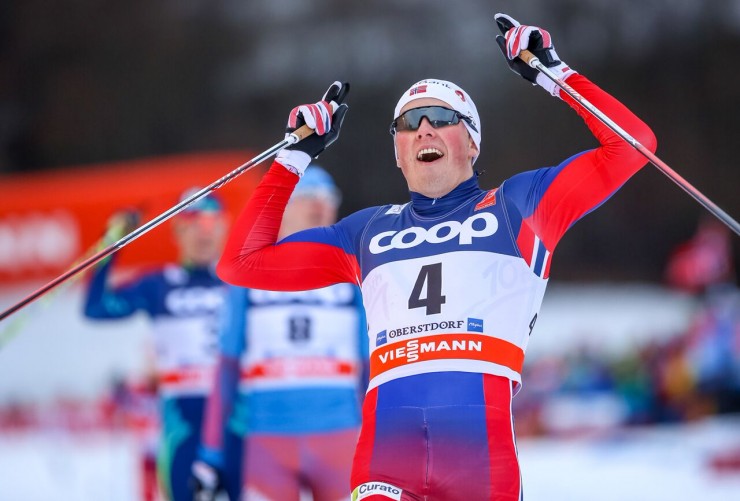
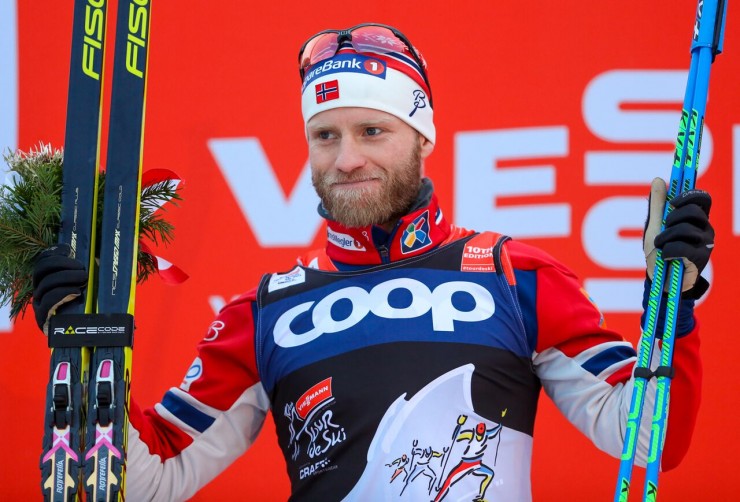
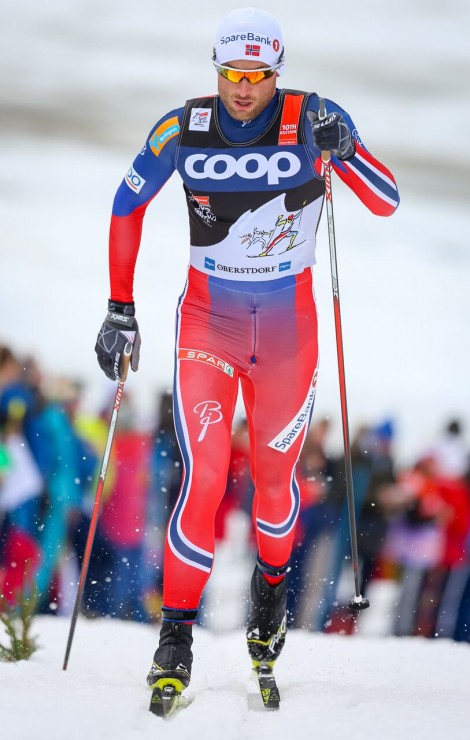
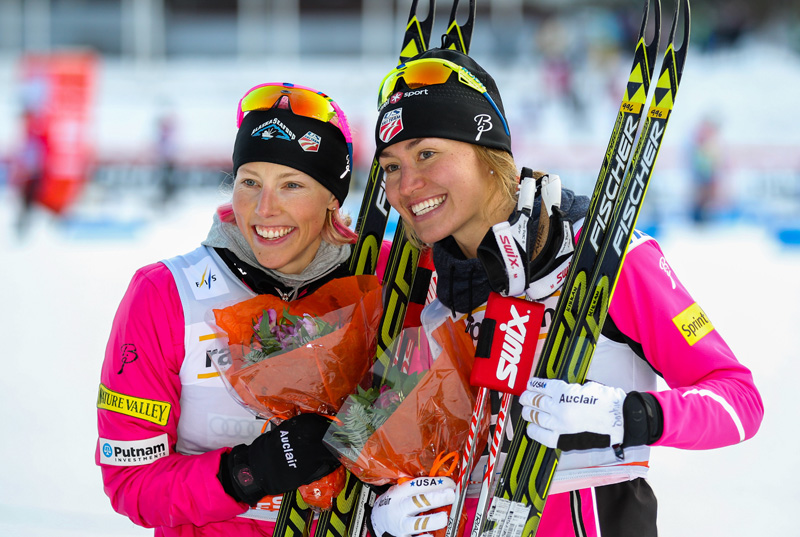
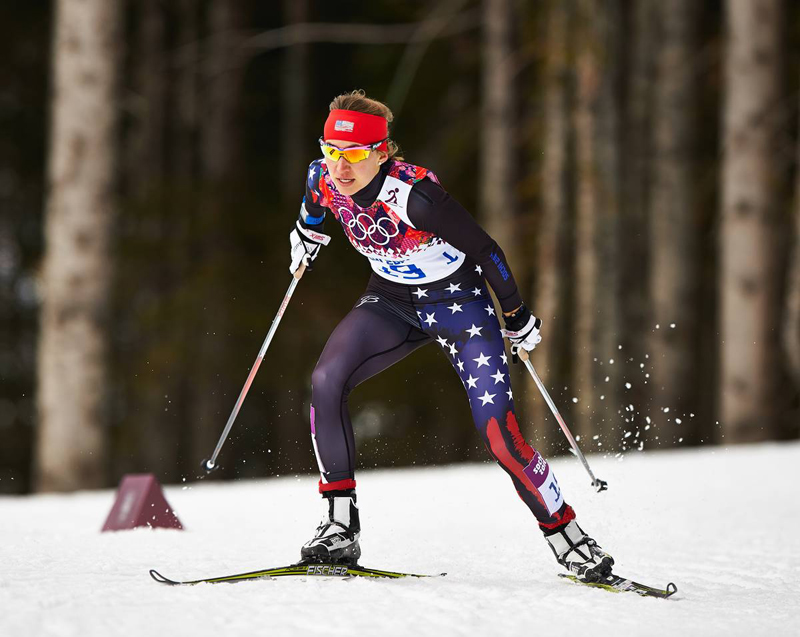
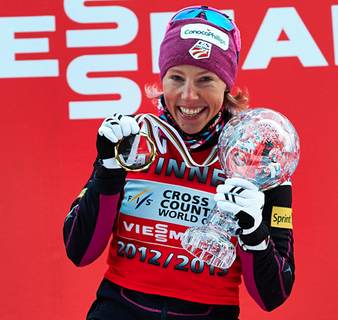
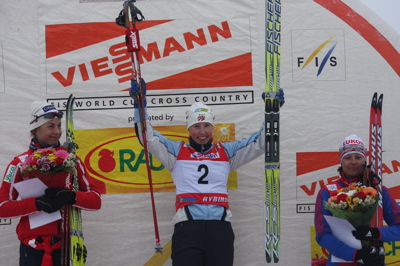
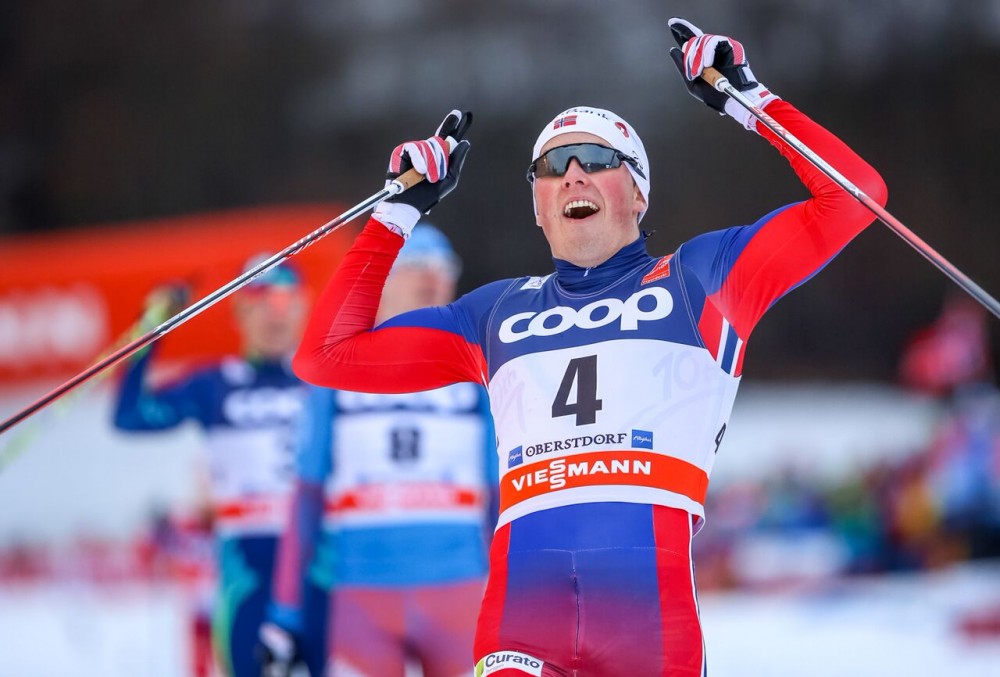
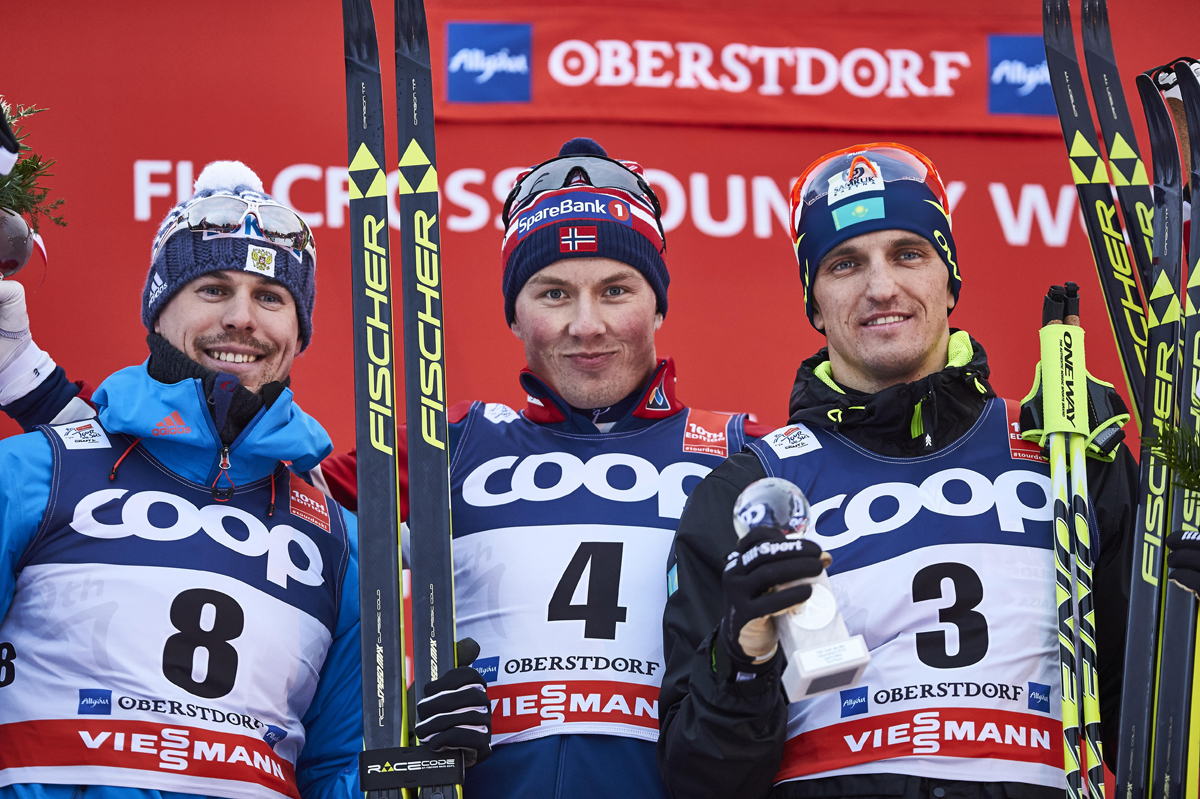
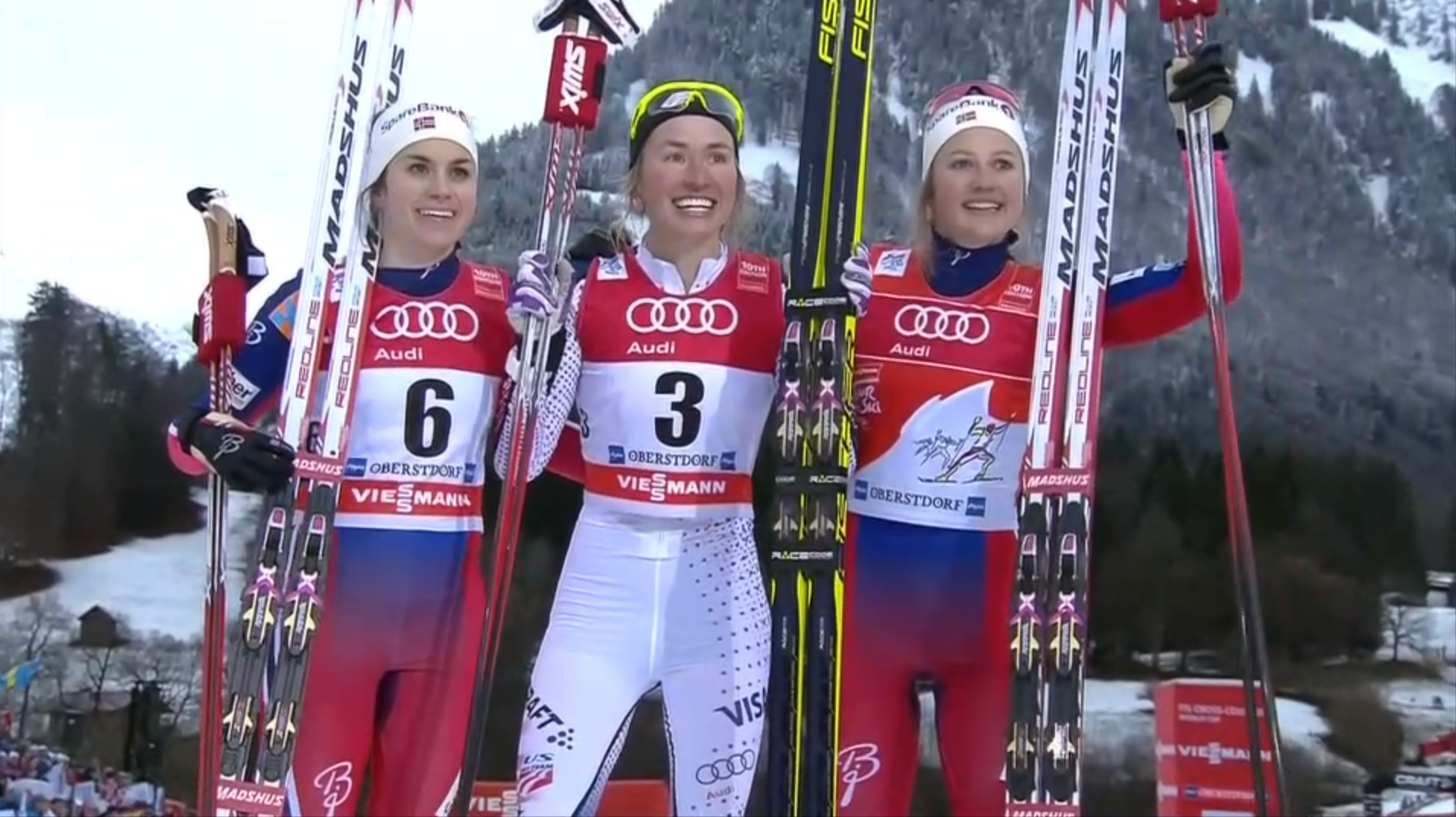
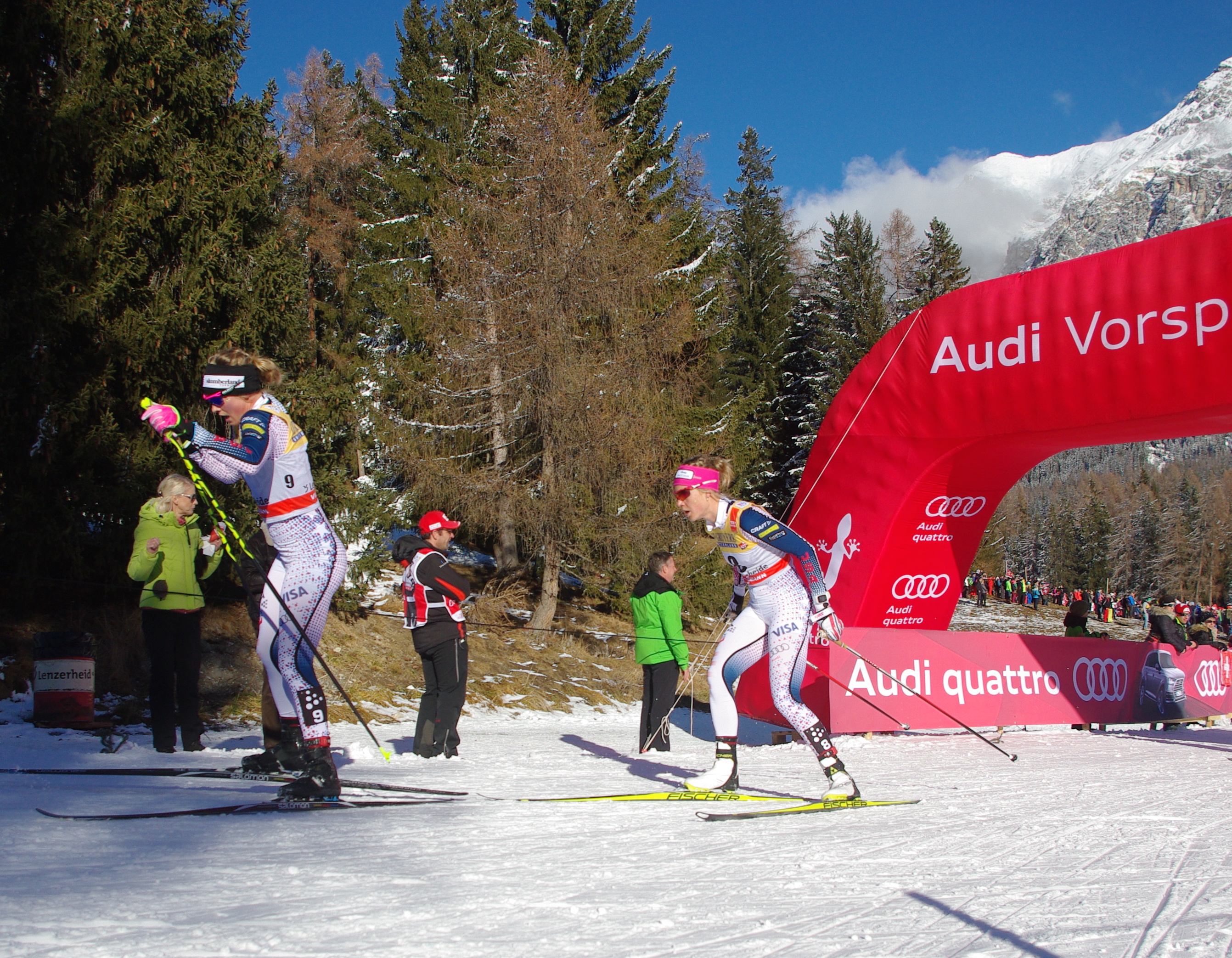
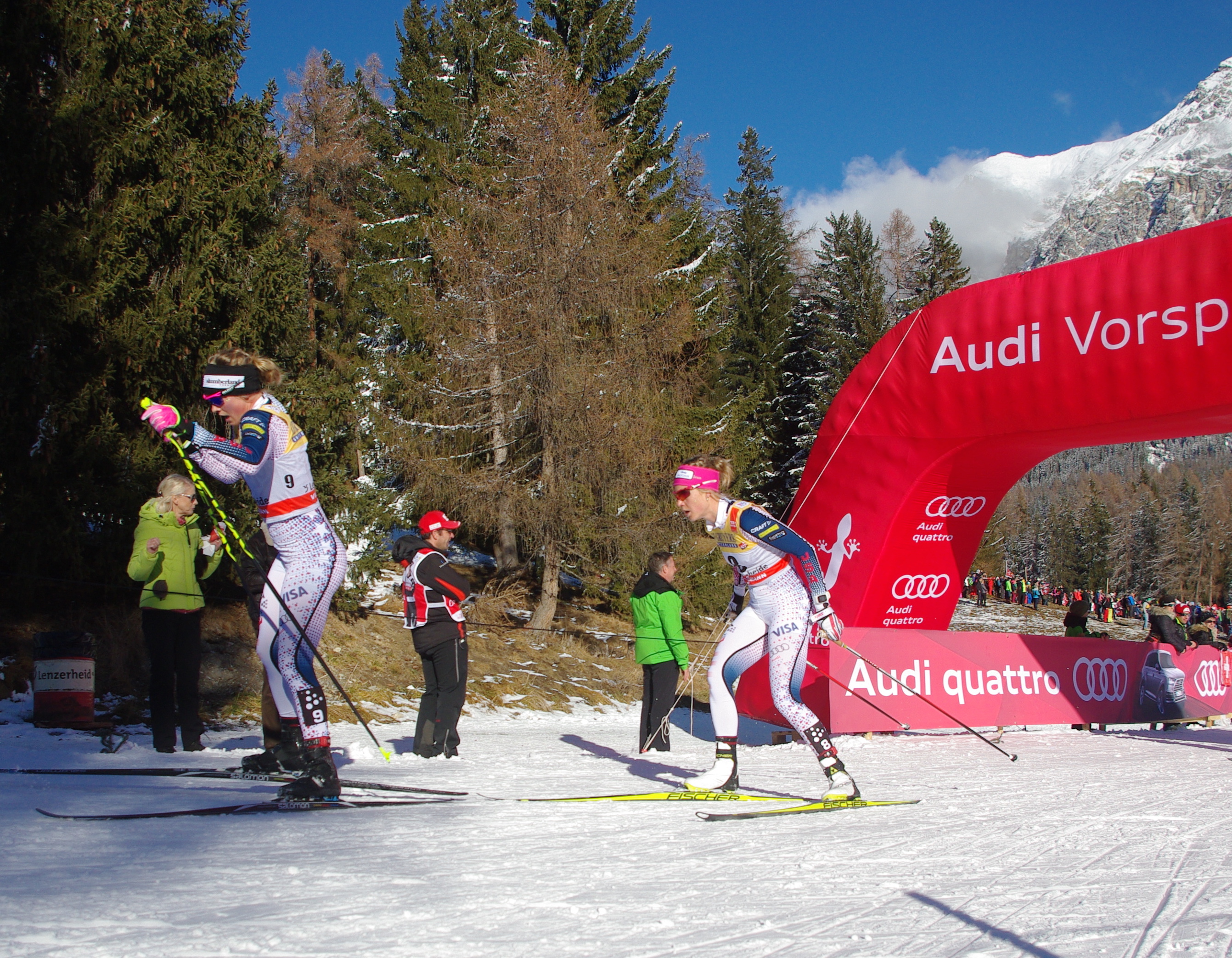
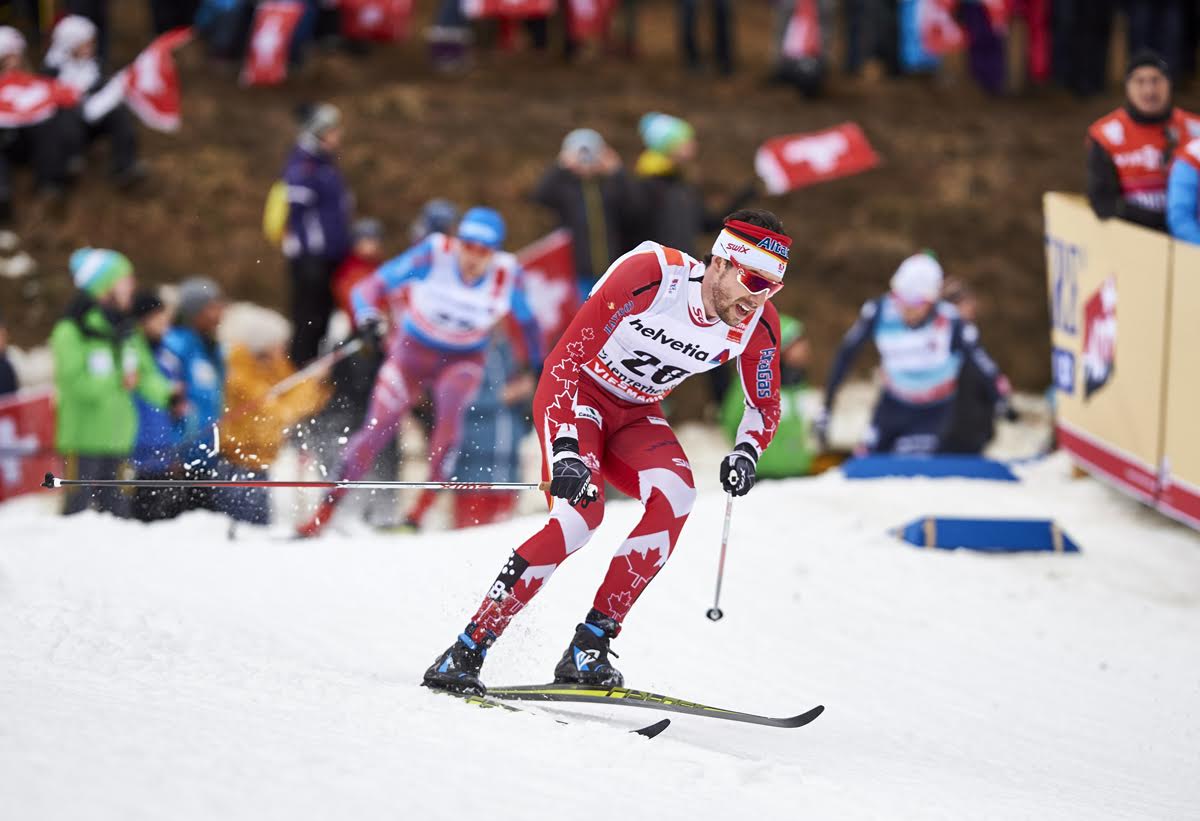
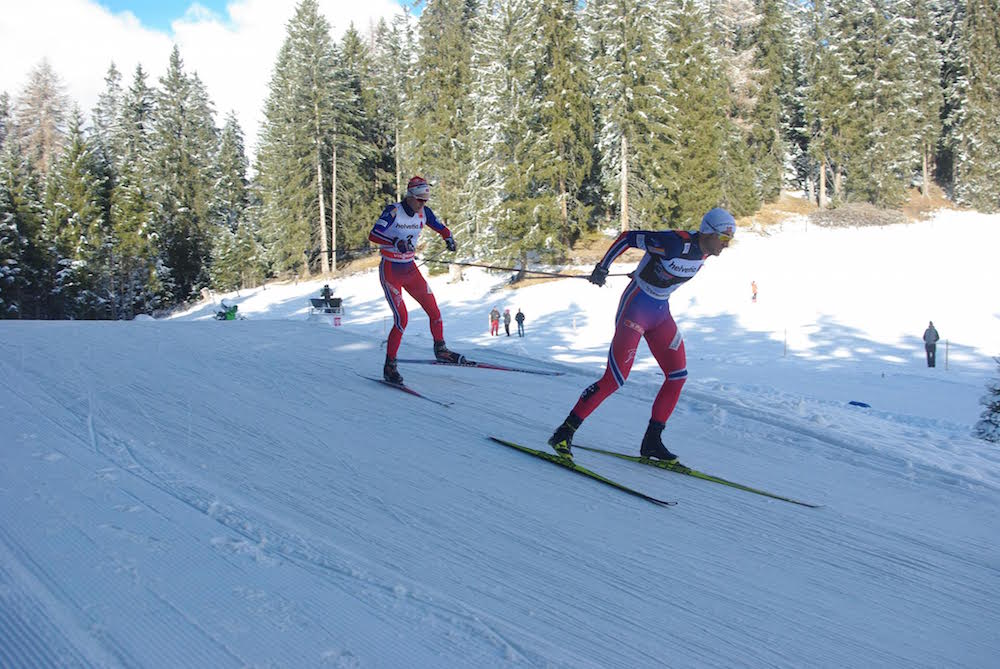
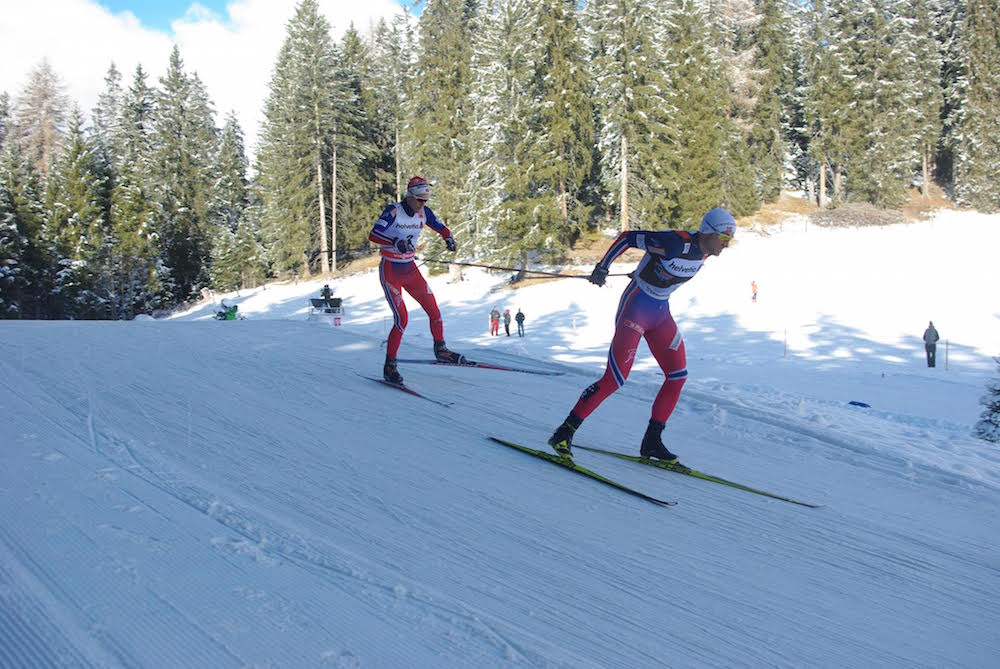
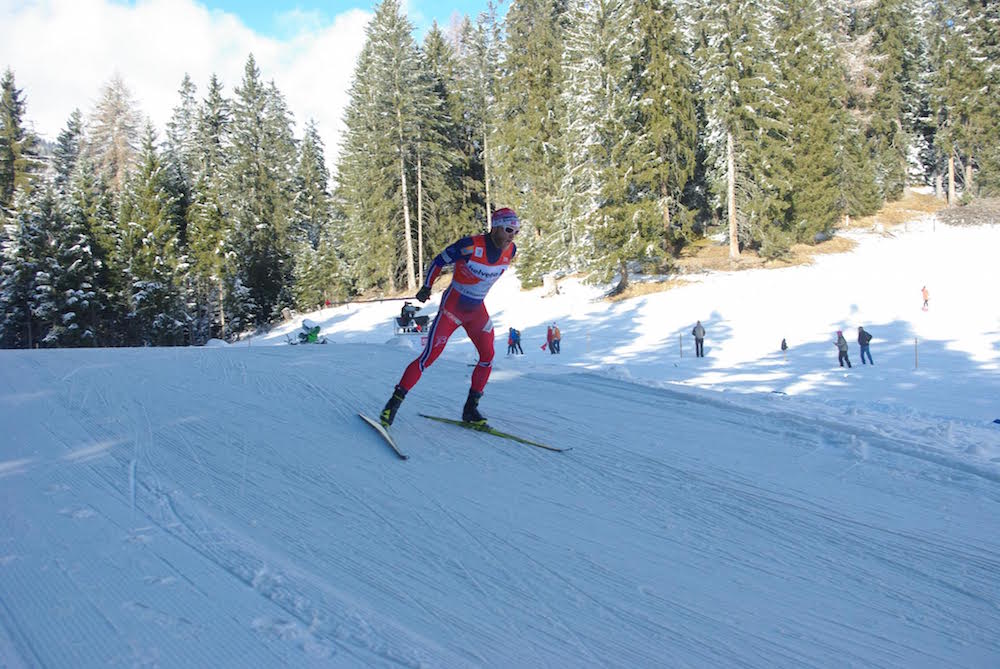
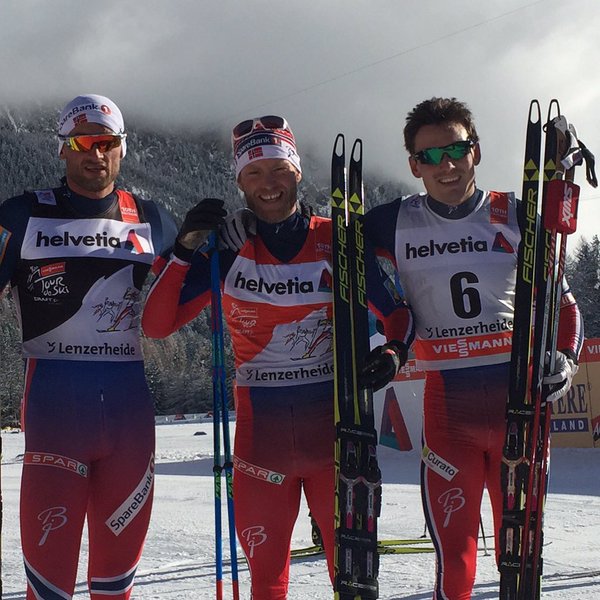
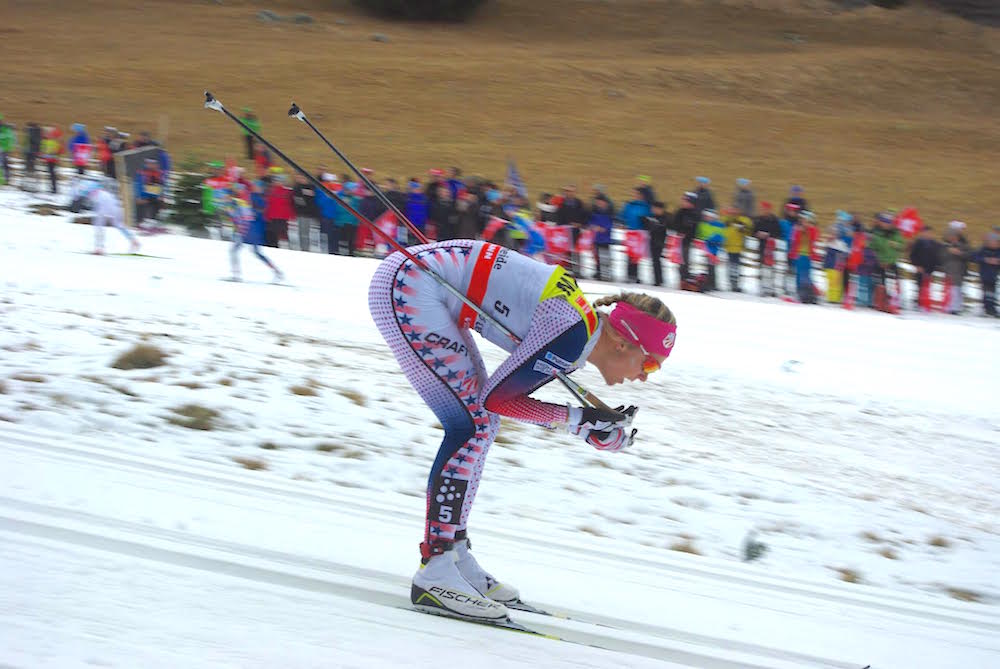
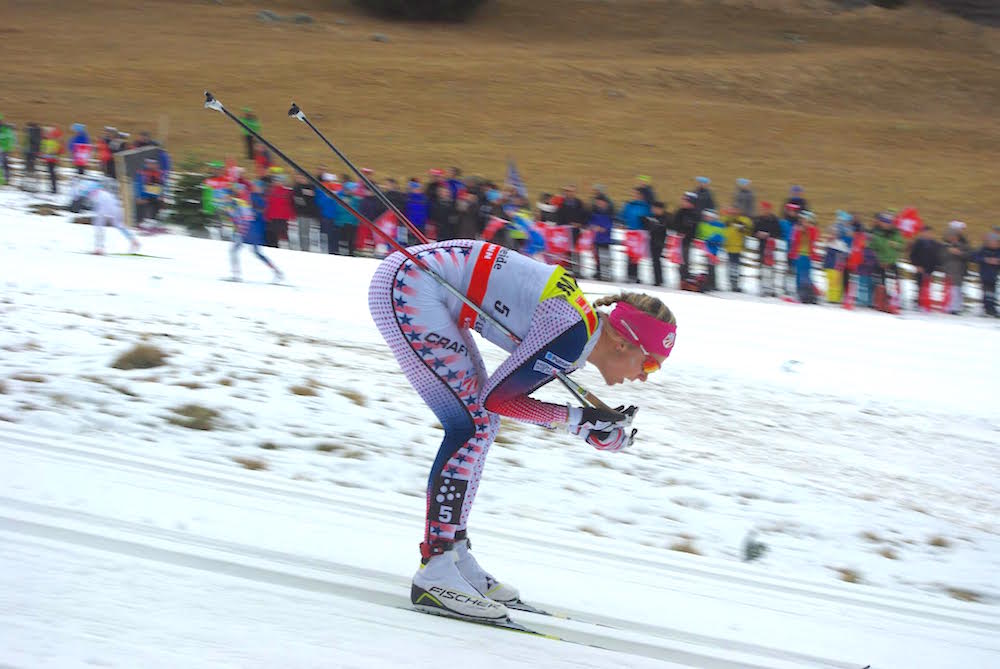
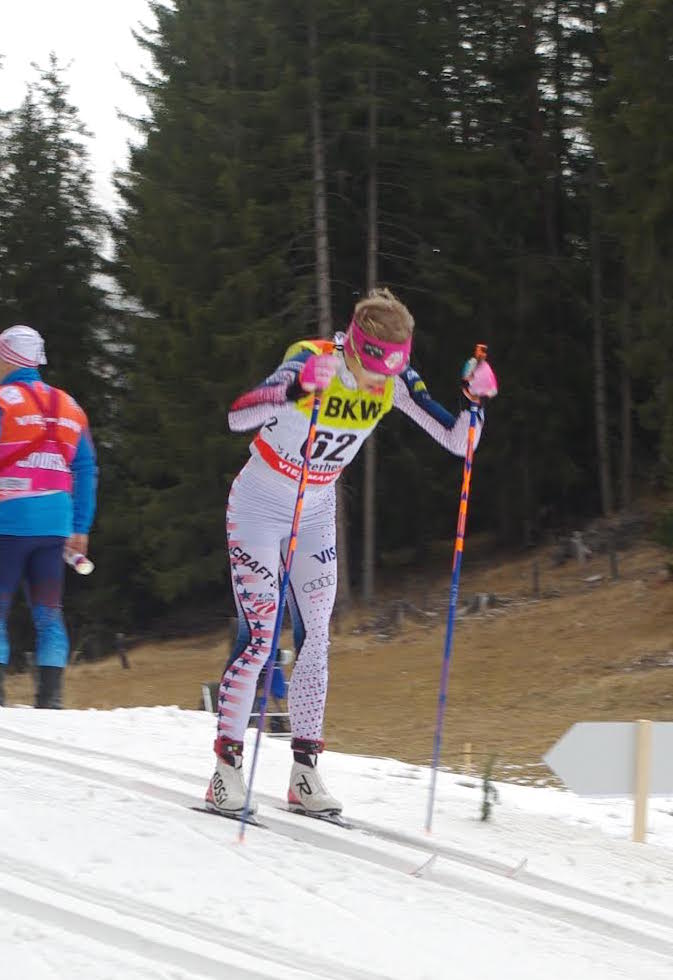
    Canada's Alex Harvey (c) and two members of the U.S. women's team, Sophie Caldwell (l) and Jessie Diggins (r) are FasterSkier's award winners for Cross-Country Performances of the Year. (Photos: FlyingPointRoad.com, Salomon/NordicFocus, Fischer/NordicFocus)
    Canada’s Alex Harvey (c) and two members of the U.S. women’s team, Sophie Caldwell (l) and Jessie Diggins (r) are FasterSkier’s award winners for Cross-Country Performances of the Year. (Photos: FlyingPointRoad.com, Salomon/NordicFocus, Fischer/NordicFocus)

    We’re entering the homestretch for the 2015/2016 FasterSkier awards, chosen by our staff based on performances last season. While not scientific, these points of recognition are intended to reflect a broader sense of the season in review.

    The following set of honors goes to outstanding North American male and female cross-country performances of the year. See also: biathlon performances of the year.

    Previous categories: Breakthrough Skiers (Canada & U.S.) | Biathletes | Coaches | Collegiate Skiers | Continental (Canada & U.S.) | International Skiers and Performances | JuniorsNordic Combined | Para-Nordic

    ***

    On the women’s side, FasterSkier selected two North Americans to share the honor of performance of the year. Since we’ll honor their performances chronologically, Sophie Caldwell is up first.

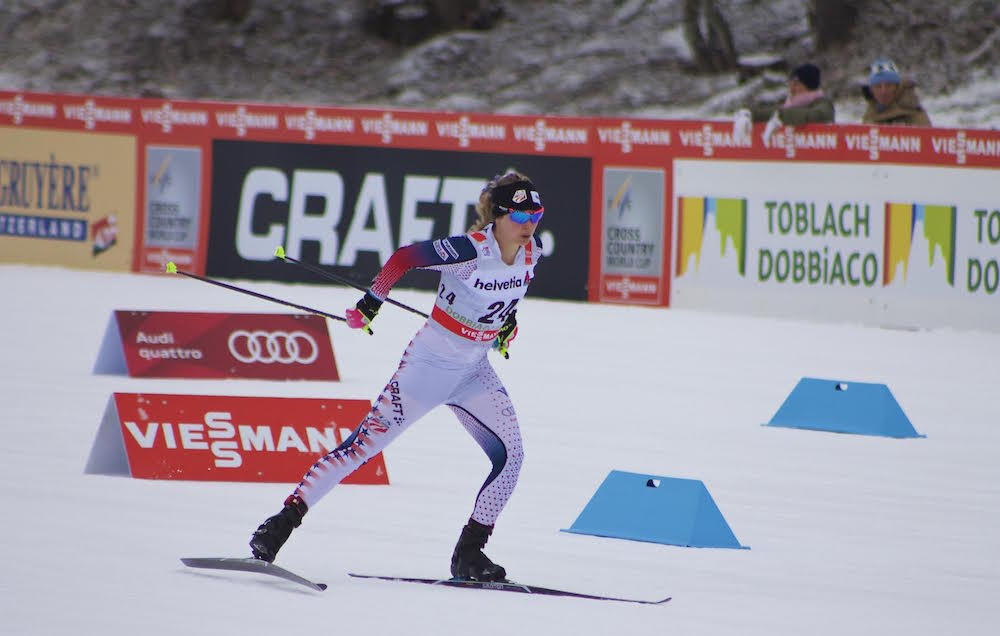
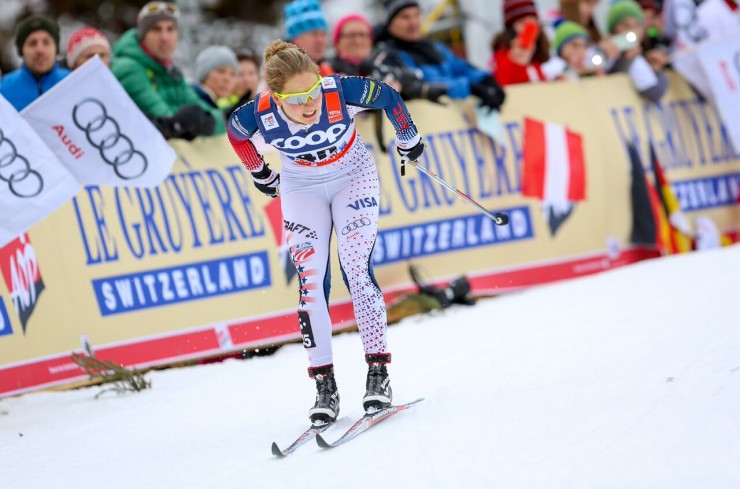
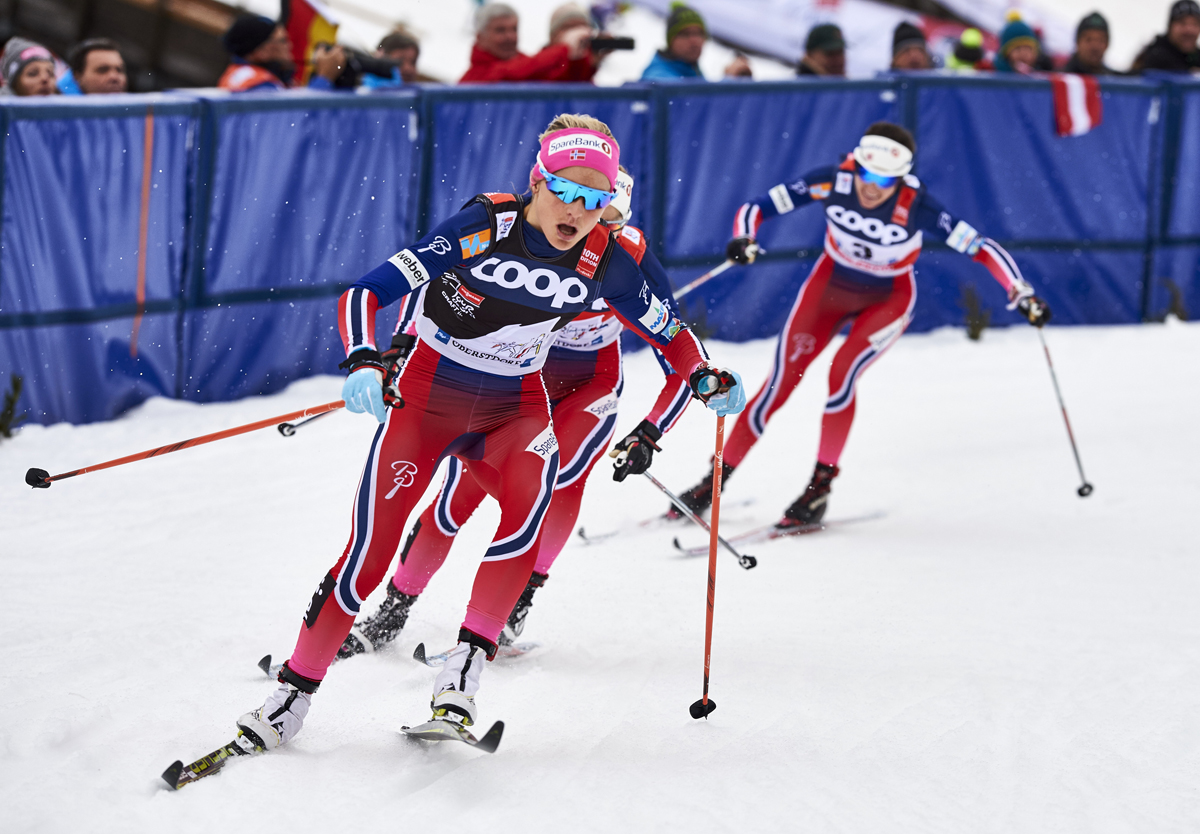
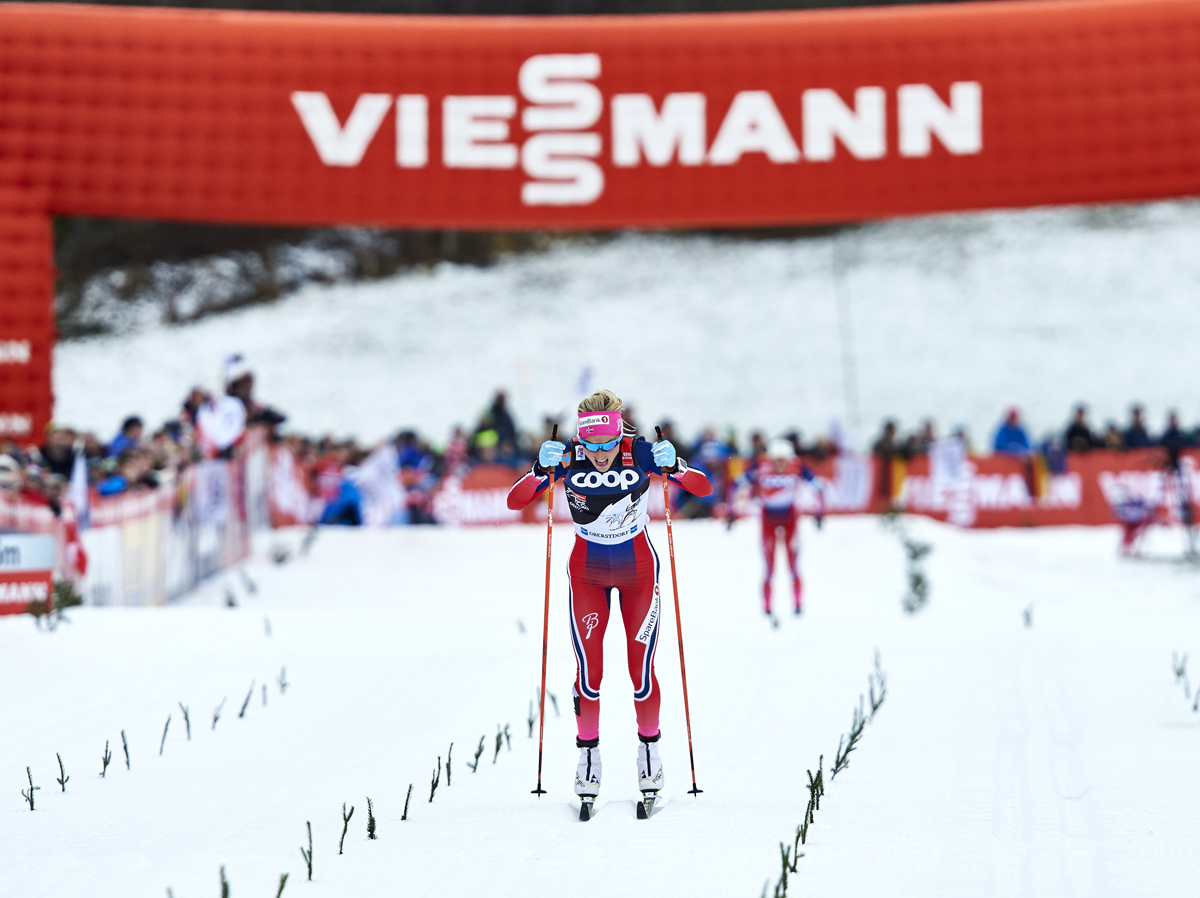
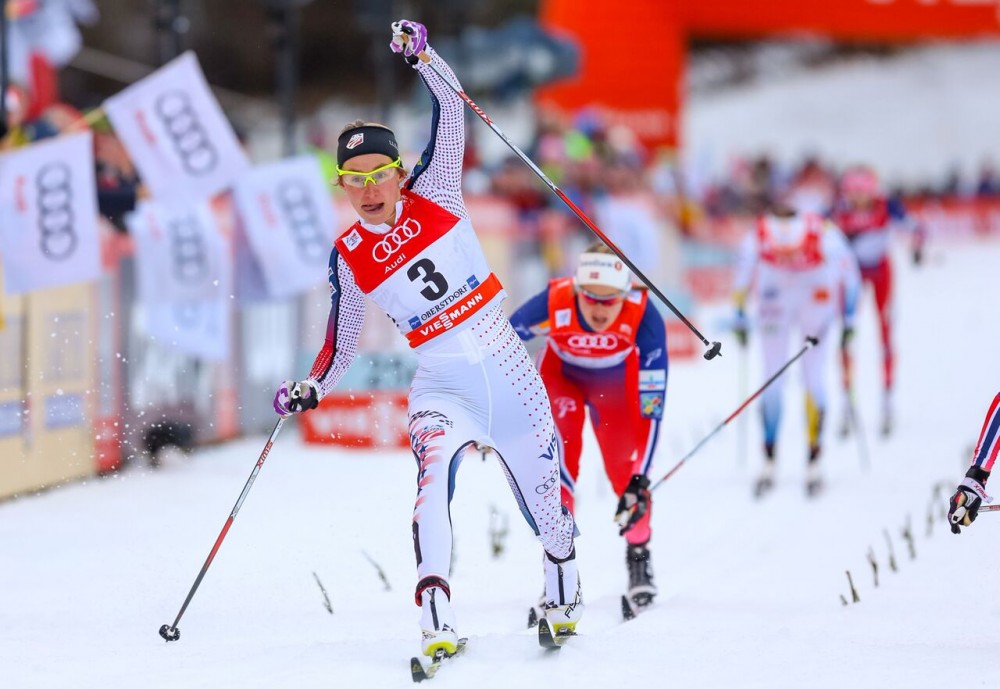
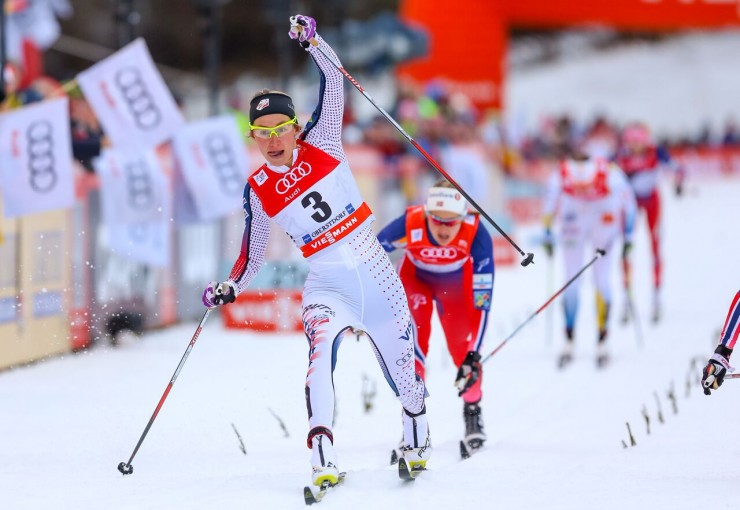
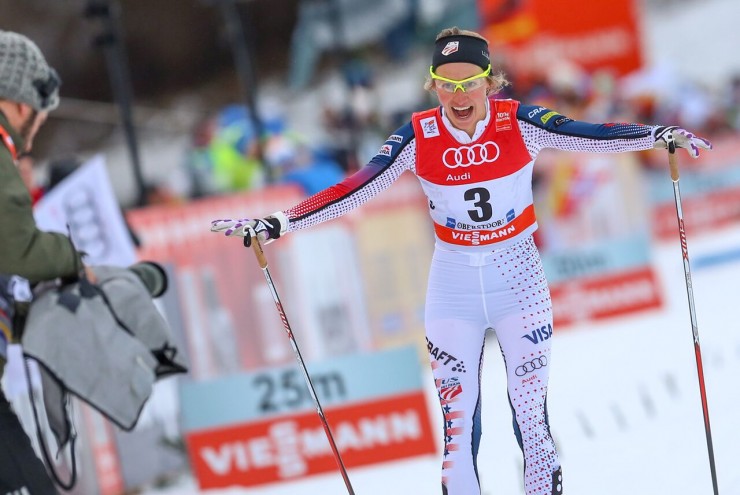
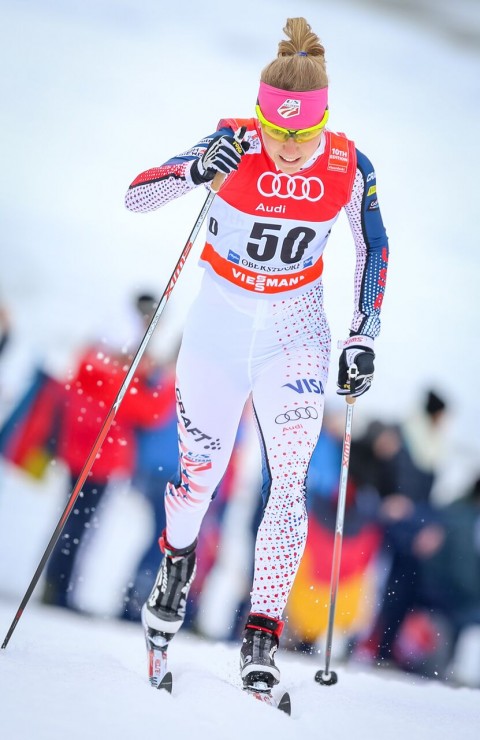
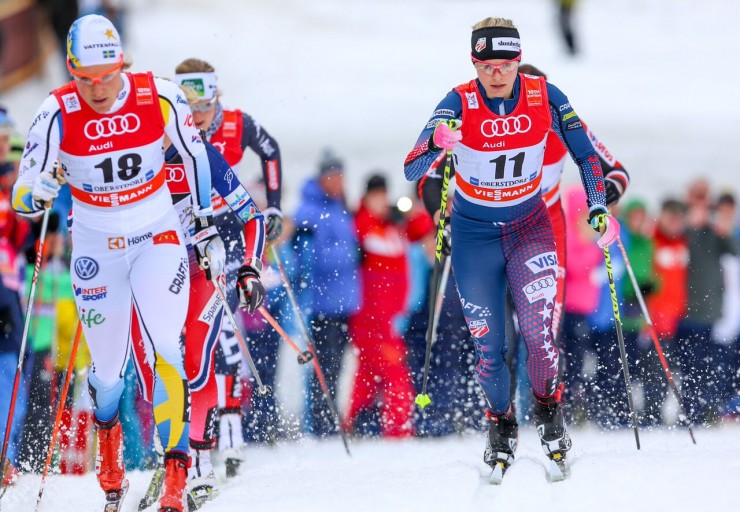
    • Sophie Caldwell (U.S. Ski Team): Winning the classic sprint at Stage 4 of the Tour de Ski in Oberstdorf, Germany

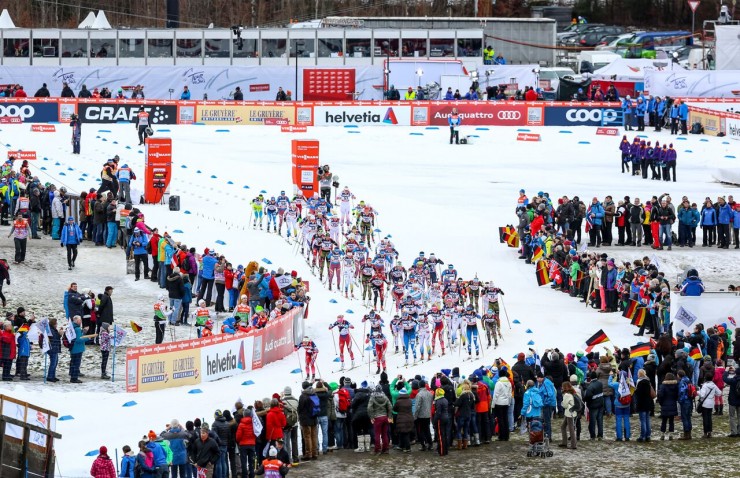
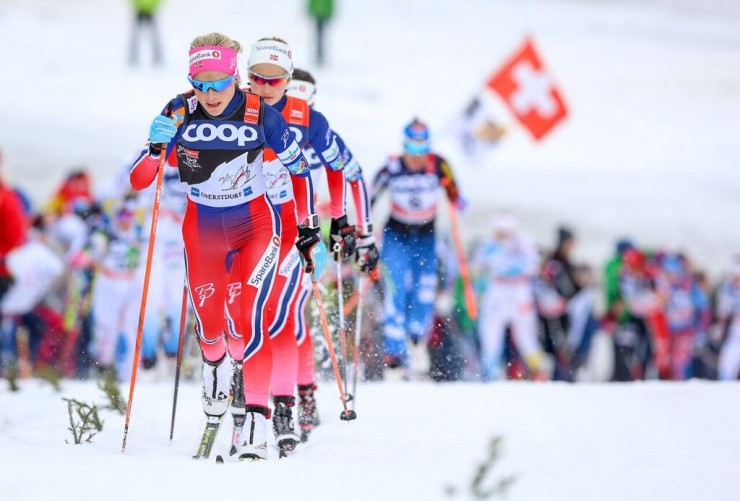
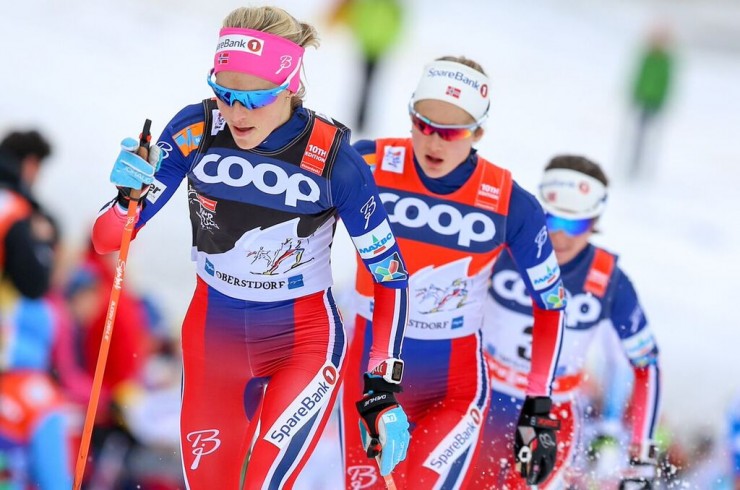
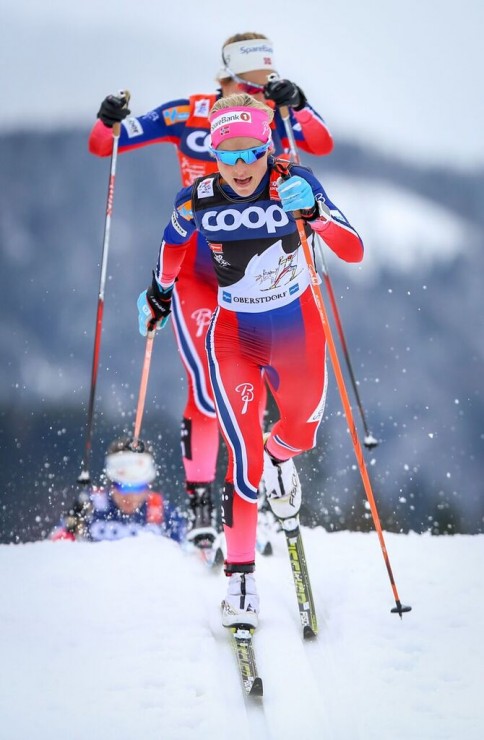
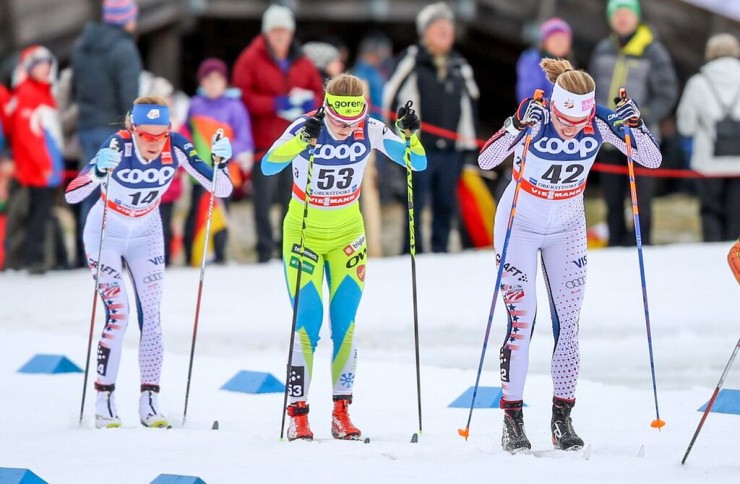
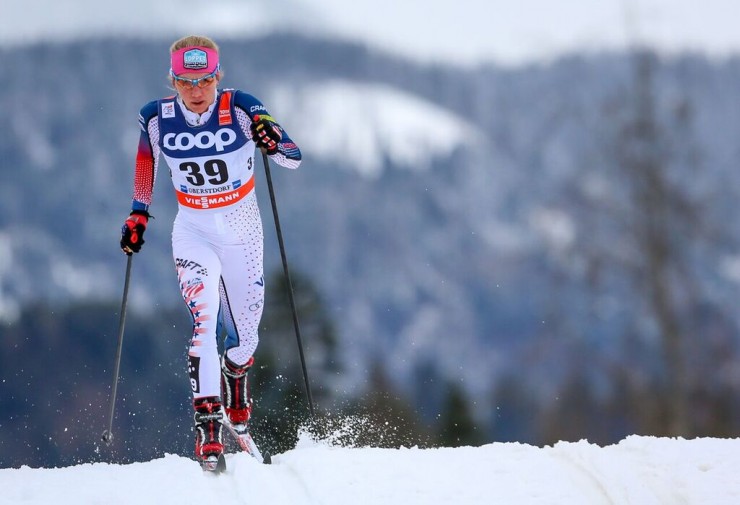
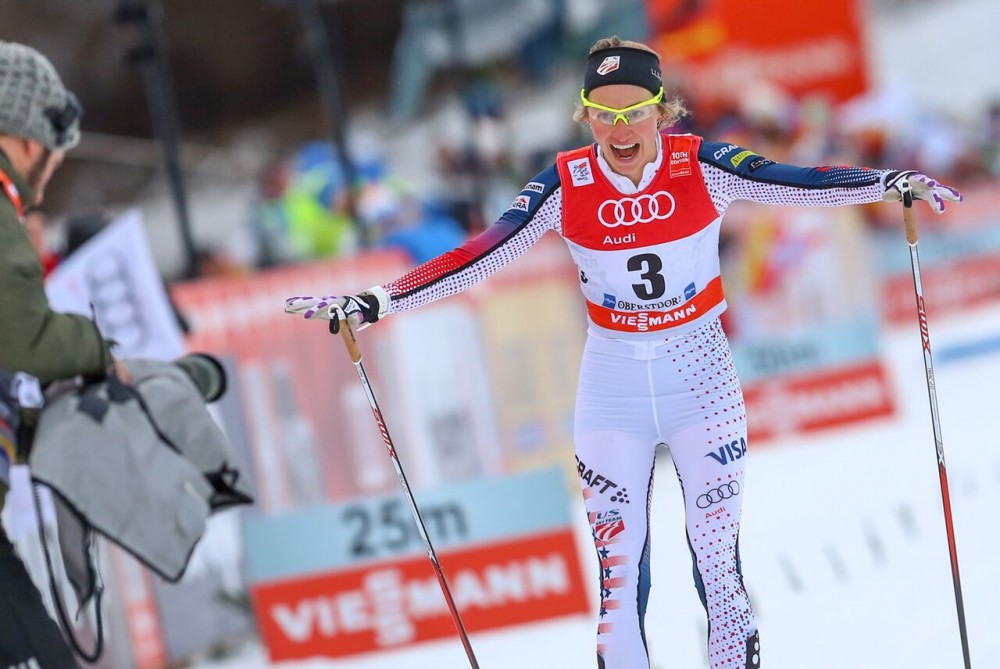
    Early this year, Sophie Caldwell became the third U.S. woman ever to win a World Cup race. She etched her legacy by winning the Tour de Ski’s Stage 4 classic sprint in Oberstdorf, Germany. Not only was it Caldwell’s first win, it was also the first-ever classic sprint win for an American woman. It proved what many witnessed during the season, that Caldwell, 26, has become an omnipresent threat to qualify, and then move through the heats. By season’s end, Caldwell was the seventh-ranked sprinter on the World Cup.

    In 2014, the Vermont native scored five top-10’s, four of which were in freestyle sprints. In 2015, Caldwell posted two top-10’s, both skate technique. That pattern continued in 2016 — five top-10’s, four of five in freestyle sprints. Of all her top-10’s, there are two classic technique outliers during her three-season World Cup career. One of those is her classic sprint victory in Oberstdorf.

    A surprise? Just a bit because it was a classic sprint. Her classic sprint victory surely didn’t fit with her lopsided freestyle results.

    A surprise to see her name atop the results sheet? Not really.

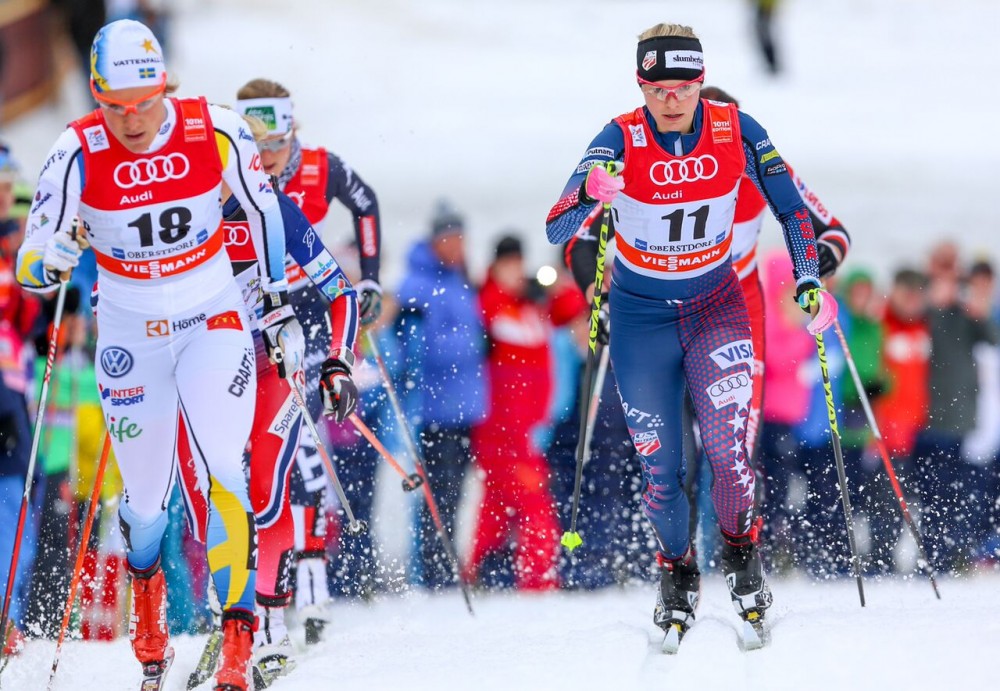
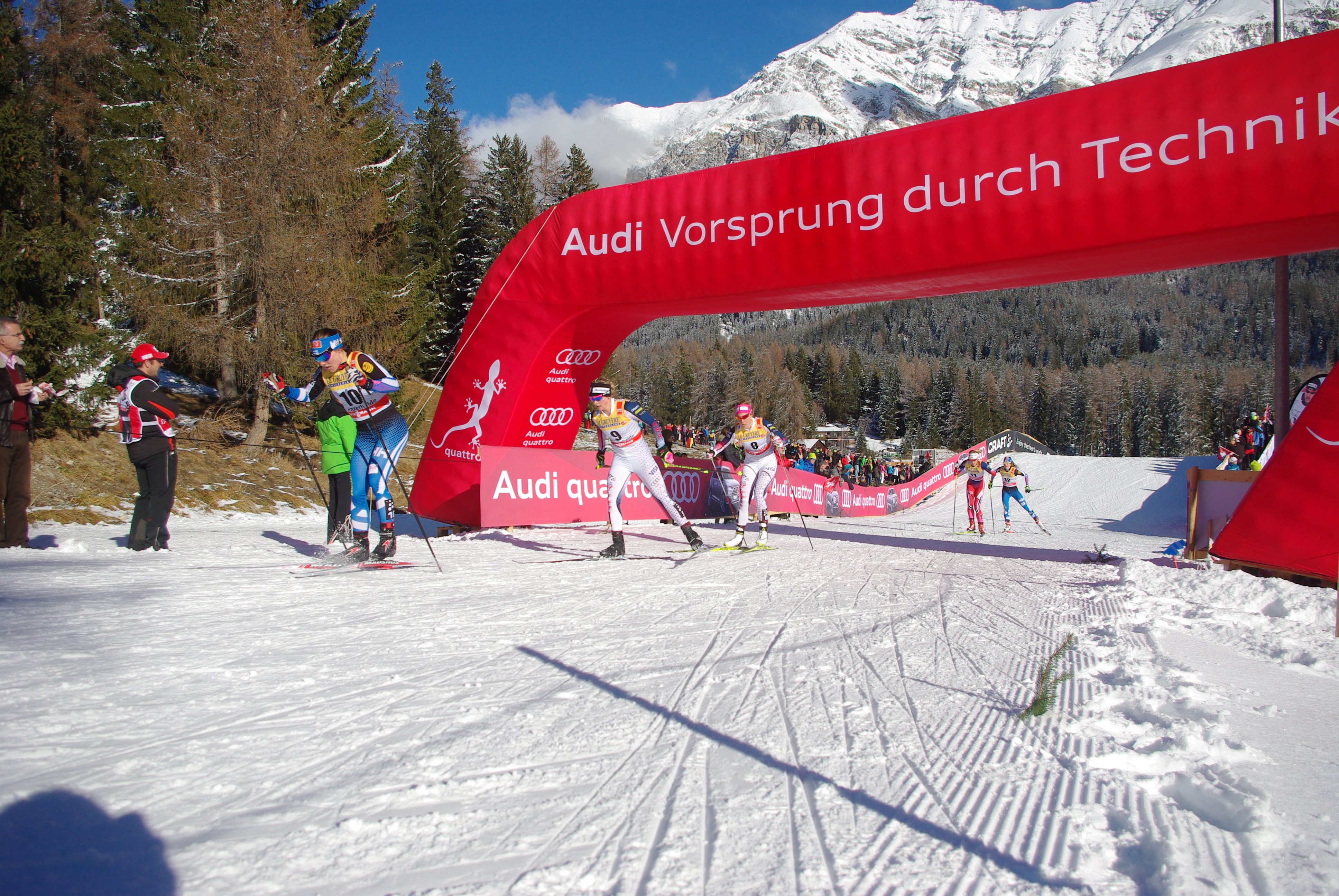
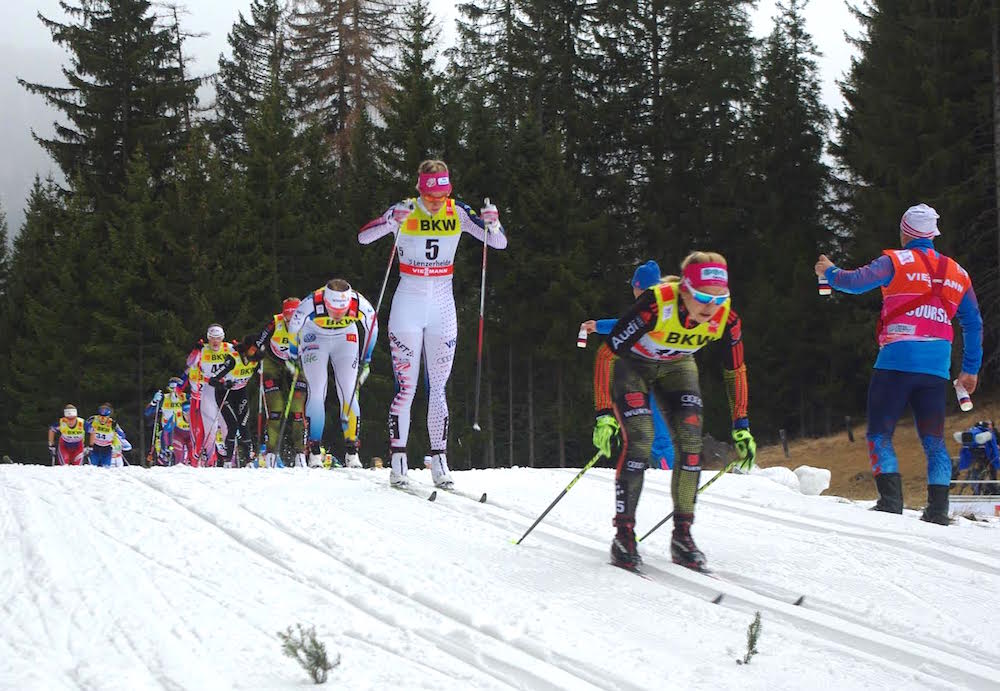
    Back in 2014, she was the eighth-ranked sprinter overall on the World Cup. This year, she began the season charging up the ranks. Starting with the second World Cup sprint on the calendar in Davos, Switzerland, Caldwell placed sixth, then seventh in the next sprint in Toblach, Italy, fourth in Lenzerheide, Switzerland, and ultimately first in Oberstdorf, without missing a beat.

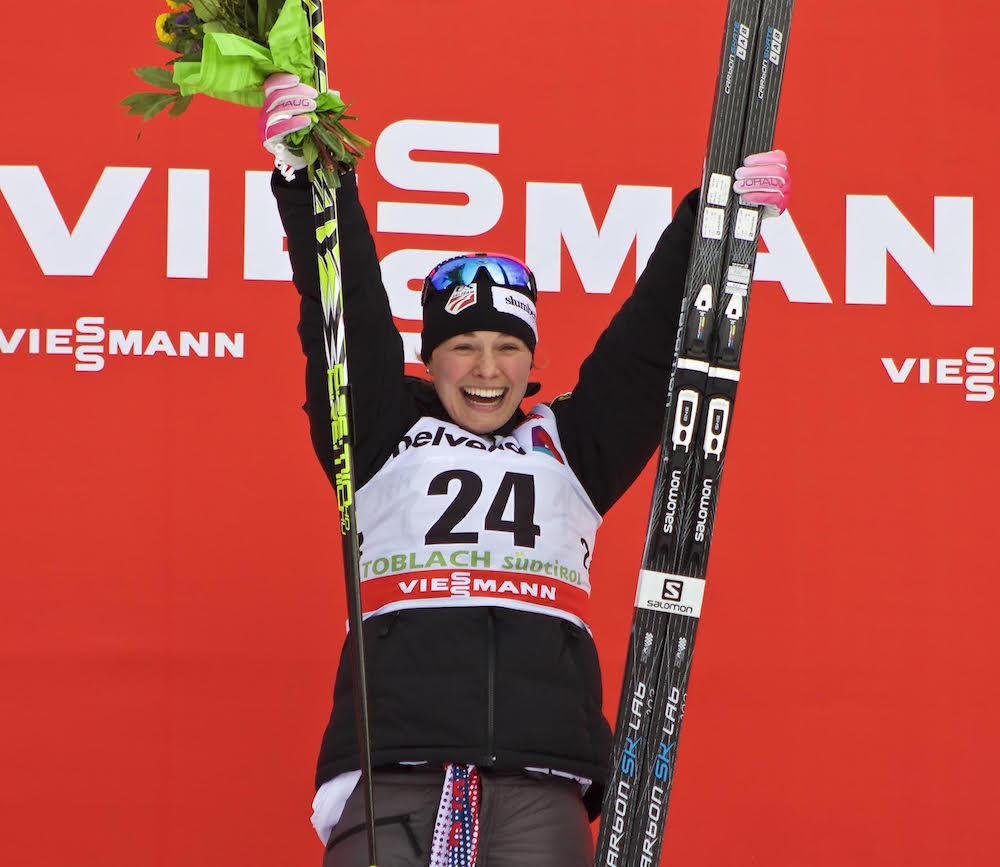
    • Jessie Diggins (U.S. Ski Team): Winning the 5 k freestyle at Stage 6 of the Tour de Ski in Toblach, Italy

    For Diggins it was a breakout year with numerous breakout performances. Tasked with choosing her 2016 best was a no-brainer. Her gutsy — when is she not?— simply screaming-fast skiing in Toblach, Italy where she exploited a course suited to her strengths was her gem.

    Here’s the rundown on where the win stands:

    – Fourth U.S. women (just days after Sophie Caldwell’s classic sprint victory) to win a World Cup

    – First U.S. woman to win a modern distance World Cup

    Diggins’ name is now forever linked with the U.S. Ski Team’s emergence as a world power. She’s achieved two World Championship medals, a 10-kilometer freestyle silver in 2015 and a 2013 gold with Kikkan Randall in the team sprint. And just this year, Diggins scored four individual podiums.

    Mining the International Ski Federation (FIS) site for Diggins-data, a surprise emerges: prior to this year, she had never stepped on the podium in an individual World Cup (non-championship) event. In 2016, the 24-year-old Minnesota native earned four individual podiums including her 5 k distance win.

    “You need to have kind of everything perfect to have such a good race,” Diggins said in the press conference after her Toblach stage victory. “You have to have really good skis and your head has to be in the right place and then your body has to feel good, so it’s really exciting for us that it all worked out so many times this year.”

    Finishing the year ranked eighth overall on the World Cup — ninth on the distance list and eighth on the sprint list — Diggins is poised to do what she’s done before. So surely in the future when as Diggins says, “everything is perfect,” it should all seem like déjà vu.  

    • Alex Harvey (Canadian World Cup Team) at the Ski Tour Canada

    With a legacy surname, he’s the golden child of Quebec. And he’s able to back up that notoriety with results. At the inaugural Ski Tour Canada (STC), Harvey was the face of both Canadian pride and its expectations.

    Getting into gear on the STC’s Stage 3 skate sprint in Quebec City, Harvey placed second for his best sprint result of the season. Considering the pressure and the depth of competition, that effort alone could have sealed the deal for North American performance of the year. But it was Harvey’s native province, and close to his hometown, with hoards of local fans cheering him on. It seemed like almost a slam-dunk scenario for popping a result. But despite this being Harvey’s first sprint podium of the season — it was one of two top-10 World Cup sprint results for Harvey — all things considered, FasterSkier was looking for something just a little bit more.

    And Harvey provided.

    Canmore as a venue is a tease. Big-time alpine walls, the Bow River snaking through the valley, and an Olympic legacy venue make the Canmore Nordic Centre feel idyllic. Then there’s the nearly 5,000 foot altitude and courses with grinding uphills and steep technical downhills affording racers little recovery time. It’s these attributes that historically have been unkind to Harvey.

    Prior to the STC, in four World Cup starts in Canmore between 2010 and 2012, Harvey’s results trended towards the lackluster: there’s a 62nd place, a 48th, an upward-looking 11th, and a 52nd. Not results one would reference if they thought Harvey and Canmore were an amalgam for success.

    “When I was a junior I was struggling to be top three in Canada just on this course,” Harvey, 27, said moments after finishing Stage 7. “And I’d be top three at World Juniors. Canmore has been really hard on me in the past … I never thought I would be strong internationally on a course like this.”

    That all changed for Harvey in that seventh stage, the 15 k freestyle individual start during which Harvey remained in the victory-hunt for nearly the entire race. At the race’s mid-point, Harvey posted the second-fastest split, only 1.2 seconds behind eventual third-place finisher, Sweden’s resurgent Marcus Hellner.

    As the race progressed, the nail biting became more tense. At 12.7 k, Harvey faded slightly, and ultimately was fourth fastest, again behind Hellner in third by 3.3 seconds.

    Harvey, starting in bib 31, finished fourth on the day. But he sat in second place for a bit and tenuously clung to the podium as the later starters rolled across the line. Ultimately, Finland’s Matti Heikkinen placed first, with Russia’s Evgeniy Belov in second.

    “Today I’m fourth, so anything is possible,” Harvey remarked post-race. “Today, to me, that’s what it shows,” he added. “That anything is possible.”

    A quote like that coming from a skier of Harvey’s stature means he understood the odds were stacked against him on the day.

    Harvey finished the Tour fifth overall and he persevered in a place where he’s been more than likely to fade off the back. That’s worthy of the North American male performance of the year.

    Honorable mentions:

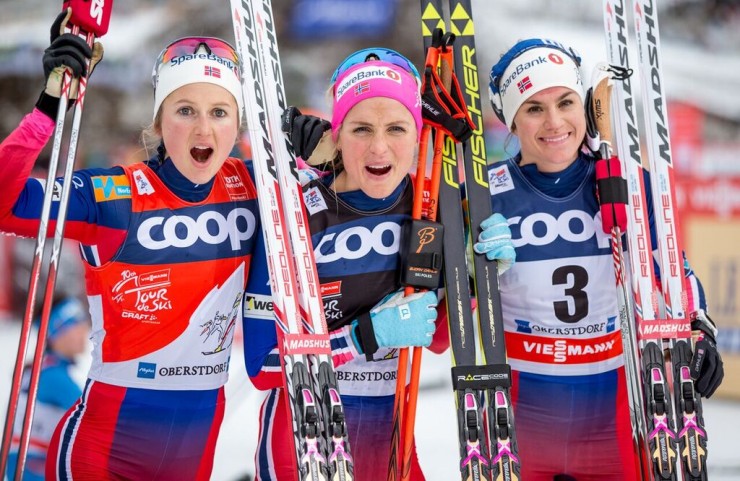
    Simi Hamilton (l) hugs fellow U.S. Ski Team member Jessie Diggins after both placed third in their respective freestyle sprint finals at the World Cup stage in Gatineau, Quebec. (Photo: John Lazenby/Lazenbyphoto.com)
    Simi Hamilton (l) hugs fellow U.S. Ski Team member Jessie Diggins after both placed third in their respective freestyle sprint finals at the World Cup stage in Gatineau, Quebec. (Photo: John Lazenby/Lazenbyphoto.com)
    • Simi Hamilton (U.S. Ski Team): second place in the freestyle sprint in Toblach, Italy

    Two podiums, a third place on the STC’s Stage 1 freestyle sprint in Gatineau, Canada and his second place last December in Toblach, were the high points of Hamilton’s consistent season. He finished the season as the best-ranked North American male sprinter in 10th overall. His podium in Toblach was a result of Hamilton’s shrewd and tactical skiing — a combination we are likely to see propel him onto more podiums.

    • U.S. women’s relay: second place in Nove Mesto, Czech Republic 

    It was a dream relay team ready for a step up. Sophie Caldwell, Sadie Bjornsen, Liz Stephen, and anchor Jessie Diggins led the U.S. women’s team to a best-ever 4 x 5 k result with its second place in Nove Mesto. Prior to this race, the women had notched several third-place podiums. Now it seems they are knocking on Norway’s door. Time to rest up those relay socks!

    • Jessie Diggins: third place in Stage 1 of the STC in Gatineau, Quebec

    No doubt, Diggins emerged as a star this season. On this day in Gatineau, Diggins complimented Simi Hamilton’s third place with a third place podium of her own. Diggins was a threat all day, qualifying in second, moving through her quarterfinal in first, and then a photo-finish second place in her semi. Make way for Diggins, there’s more to come.

  • Diggins, Diggins, Diggins (A Photo Gallery)

    Diggins, Diggins, Diggins (A Photo Gallery)

    It’s a name worth repeating, and it’s also fun to say. Jessie Diggins won Stage 6 of the Tour de Ski last Friday, Jan. 8, becoming the second U.S. woman to win a stage at the 2016 edition of the Tour. In winning the 5 k freestyle individual start, the 24-year-old Diggins was also the first U.S. woman to win a skate race longer than 3 k.

    If you couldn’t get enough of her win, check out more photos from the day below, provided by Salomon.


  • Sundby Seizes Stage 7, Solidifies Tour Lead; Harvey Seventh in 15 k Classic

    Sundby Seizes Stage 7, Solidifies Tour Lead; Harvey Seventh in 15 k Classic

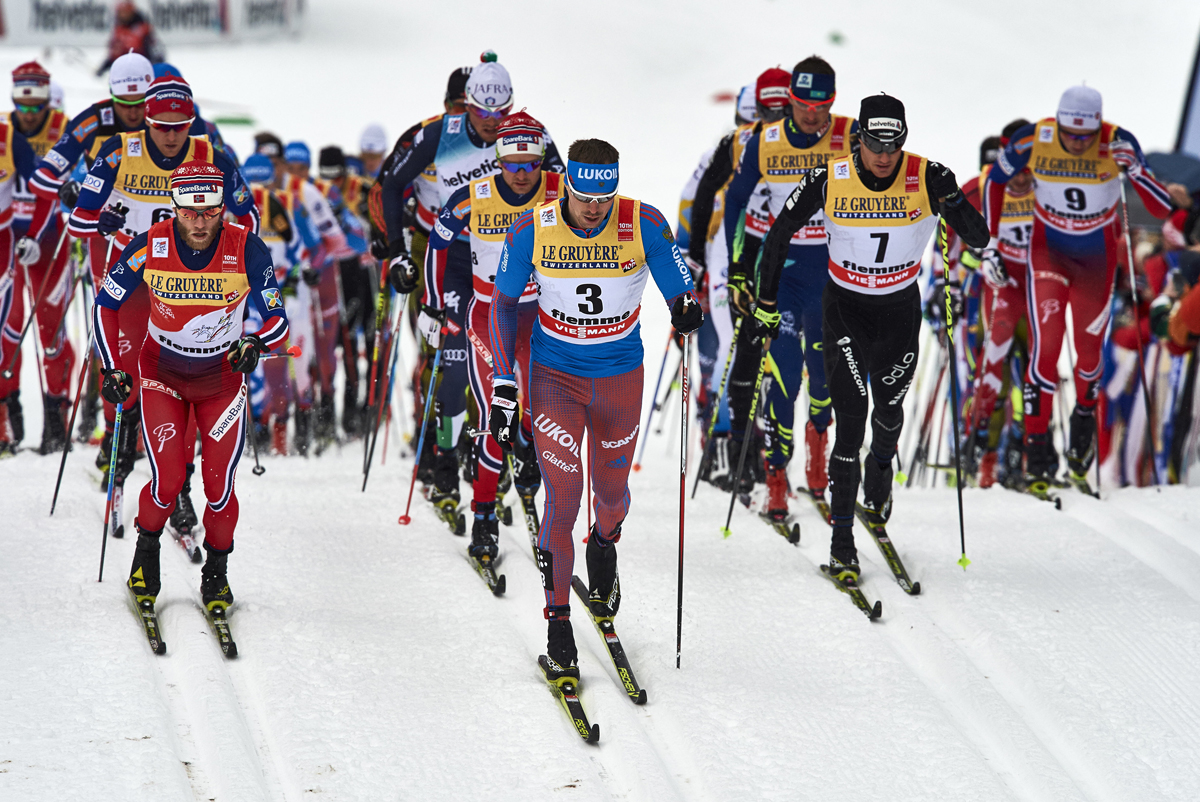
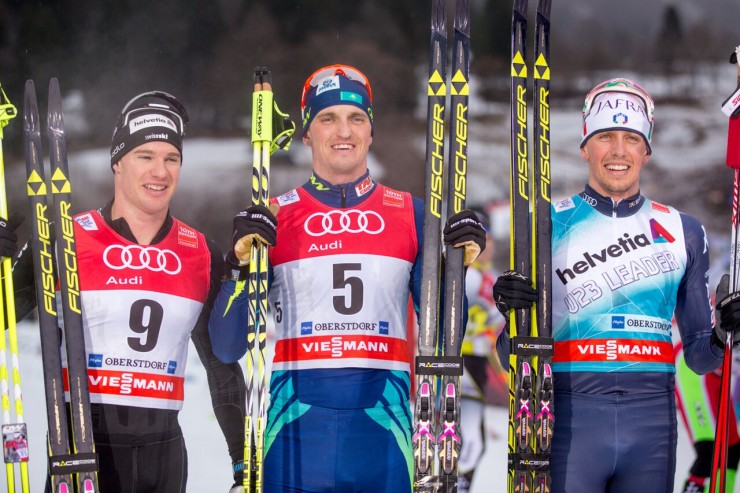
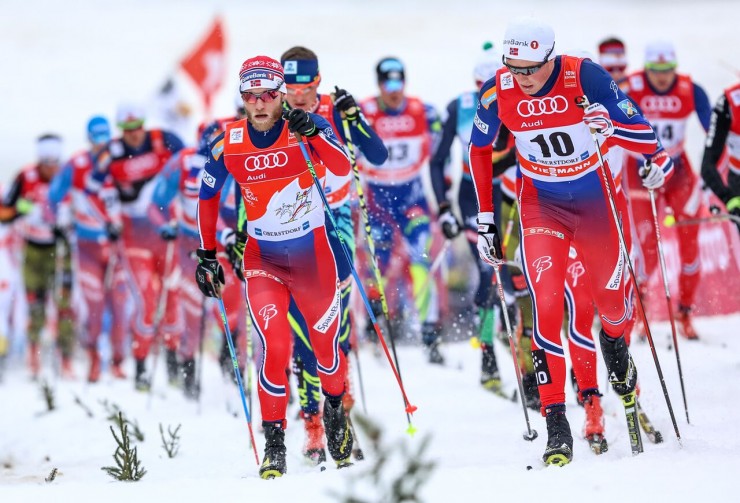
    Norway's Martin Johnsrud Sundby (l) heads out in front of the 15 k classic mass start with Russia's Sergey Ustiugov (3), Switzerland's Dario Cologna (7), and fellow Norwegian Emil Iversen (r) during Stage 7 of the Tour de Ski in Val di Fiemme, Italy. Sundby went on to win ahead of teammate Niklas Dyrhaug in second and Kazakhstan's Alexey Poltoranin in third. (Photo: Fischer/NordicFocus)
    Norway’s Martin Johnsrud Sundby (l) heads out in front of the 15 k classic mass start with Russia’s Sergey Ustiugov (3), Switzerland’s Dario Cologna (7), and fellow Norwegian Emil Iversen (9) during Stage 7 of the Tour de Ski in Val di Fiemme, Italy. Sundby went on to win ahead of teammate Niklas Dyrhaug in second and Kazakhstan’s Alexey Poltoranin in third. (Photo: Fischer/NordicFocus)

    When it’s seven race days into something like the Tour de Ski, pushing oneself repeatedly to physical extremes isn’t as simple as “mind over matter.”  The basics: resting, recovery and more of the same, rules the day.

    The results don’t specifically quantify whether the Tour’s overall leader, Norway’s Martin Johnsrud Sundby, recovers the best, or is the most well rested, or can suffer the most. But in Saturday’s seventh stage, the men’s 15-kilometer classic mass start in Val di Fiemme, Italy, Sundby once again proved he might as well be — odds are he’s the winning bet to take this 10th edition of the Tour de Ski.

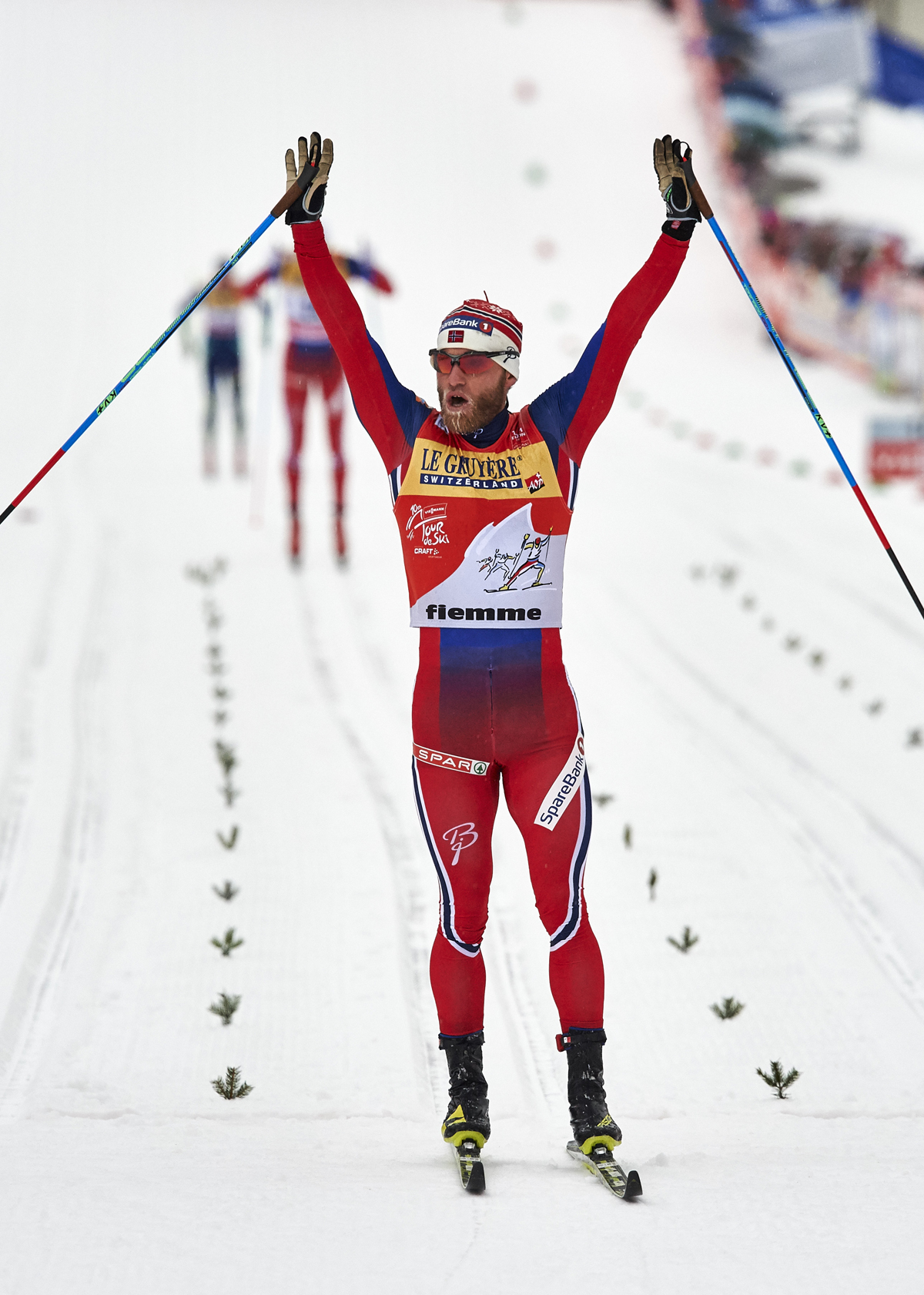
    Sundby won Saturday’s race in 39:55.2. Norwegian teammate, Niklas Dyrhaug placed second, 7.7 seconds back, while Kazakhstan’s classic specialist Alexey Poltoranin, finished third, 12.6 seconds from the win.

    Norway's Martin Johnsrud Sundby after winning the 15 k classic mass start at Stage 7 of the Tour de Ski in Val di Fiemme, Italy. (Photo: Fischer/NordicFocus)
    Norway’s Martin Johnsrud Sundby after winning the 15 k classic mass start at Stage 7 of the Tour de Ski in Val di Fiemme, Italy. (Photo: Fischer/NordicFocus)

    Heading into the race, Sundby led the Tour by 1:28.1 minutes over his Norwegian teammate Petter Northug in second, and 1:31.8 ahead of Russian Sergey Ustiugov in third. A third Norwegian, Finn Hågen Krogh, coming off a win in Friday’s Stage 6, entered the seventh stage in fourth (+2:07.5).

    By the end of Saturday’s 15 k, the race for second and third overall would reshuffle — with some skiers moving up the ranks, others down.

    Sundby set the pace early on — his reputation preventing any upstarts from leading out. On the downhills, a long slinky line of skiers extended back, while in the early going, the uphills provided a place for regrouping.

    Around 7 1/2 minutes into the race, Krogh took a strong pull up front. His move seemed for real, with a few-seconds gap forming back to Ustiugov, Northug and Sundby. But Krogh’s efforts were only part of his plan to ensure he was first to the first time bonus at 3.5 k.

    After 6.5 k, a group of approximately 25 skiers had firmly established in front, with Sundby again setting the pace for three columns of striders behind.

    Just before the second time bonus at 8.5 k, the race began to blow apart. Sundby, Switzerland’s Dario Cologna, and Italy’s Francesco de Fabiani, took the top-three bonuses, and Poltoranin followed close behind in fourth. Canada’s Alex Harvey, starting the day in bib 15, passed the time bonus in 14th, sixteen seconds after Sundby.

    At 12.5 k, the course looped through the stadium. At this point it was clear: this was Sundby’s race to lose as he led a glued-to-the -back-of-his-skis Dyrhaug through the remaining kilometers. Poltoranin, unable to match the duo’s pace, dangled 100 meters back. Beyond, that, it was a busy and clustered race for the remaining top-10 spots.

    Through the final kilometers and down the final stretch, it was a common scene: Sundby surging with an unmatched tempo and double poling for the win. Dyrhaug locked into second, nearly 8 seconds back.

    The results in Stage 7 shuffled the Tour’s overall standings. Sundby will head into the final 9 k freestyle climb up Alpe Cermis with a 2:51.5-minute gap on his nearest competitor. That’s still Northug, who finished Saturday’s race in a photo finish and ended up 17th (+51.4).

    Poltoranin jumped from fifth to third overall, 2:53 behind Sundby. That pushed Ustiugov into fourth overall, where he trails Poltoranin by 3.2 seconds. Krogh finished fifth (behind de Fabiani in fourth) to slip to fifth overall (+3:01.4).

    The slopes of Alpe Cermis should be a highlight as the difference between second to sixth place is only 10 seconds.

    In the post-race press conference, Sundby seemed grateful for his resurgence after the Stage 5 Oberstdorf 15 k classic mass start classic (the same format as Stage 7), where he finished 23rd.

    It was the same distance and technique as in Oberstdorf, but totally different result,” he said. “I had amazing skis. The plan before the start to ski with the pack with the skis like I had to go for it. I am really happy for the victory and happy that Niklas is on the podium as well.” 

    Unlike Sundby back in Oberstdorf, Dyrhaug narrowly missed the podium, placing fourth in a super-tight finishing sprint, 0.7 seconds from first place.

    “I was close off the podium in Oberstdorf,” Dyrhaug said in the press conference. “It feels great to finish in second place. One of the goals today was to help other guys from Norway fighting for the overall. I had to be patient and follow the lead and go got the sprint. I tried to do as good job as possible. I started to be little bit tired in the second last lap.” 

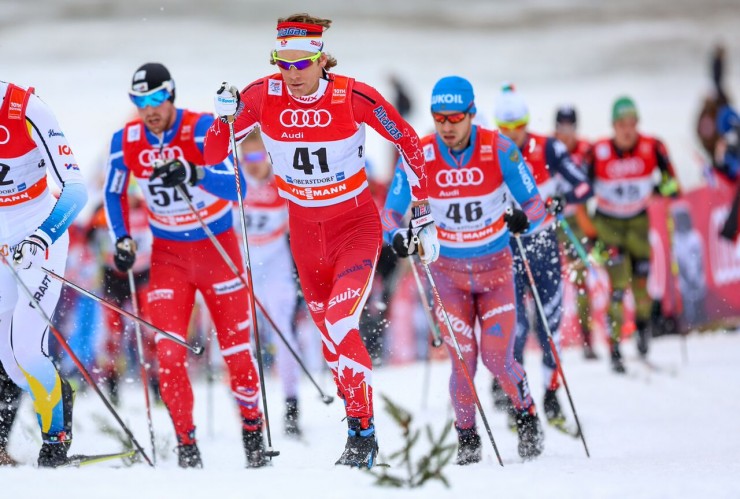
    Alex Harvey (Canadian World Cup Team) racing to seventh in the 15 k classic mass start at Stage 7 of the Tour de Ski in Val di Fiemme, Italy. He's currently 12th heading into the final climb. (Photo: Fischer/NordicFocus)
    Alex Harvey (Canadian World Cup Team) racing to seventh in the 15 k classic mass start at Stage 7 of the Tour de Ski in Val di Fiemme, Italy. He’s currently 12th heading into the final climb. (Photo: Fischer/NordicFocus)

    Top North American, Harvey finished seventh (+31.3) for his third top 10 of the Tour (he was seventh in the 30 k classic mass start in Stage 2 and ninth in the 10 k freestyle pursuit in Stage 3). His rebound up the Tour standings saw him gain three spots heading into the last stage, and he now sits in 12th overall (+5:49.9).

    According to Canadian National Team Head Coach Justin Wadsworth, Harvey’s simply tired.

    “He is still is not feeling super good, and I think today … he probably would have been on the podium normally, had he felt really normal or good,” Wadsworth said on the phone after Saturday’s race. “It was a really satisfying race for him.

    “He really fought hard the whole race and was kind of back in 15th a lot of the race,” Wadsworth continued. “And then he just decided to start pushing it a little bit and the pace was also going hard after the bonus, and things were getting really spread out. He kind of kept on getting right on the edge of the back of the group and then he worked his way to manage to stay back in … Actually one of the gutsier races from him. When you don’t feel good, it’s hard to be in there like that.”

    Sunday’s epic stage will see Harvey with new legs, so to speak, following surgery this past spring that will allow him to complete the Tour. (In the past, Harvey has experienced blood-flow problems in his legs, particularly when skating on sustained climbs.)

    “He is excited to see how his legs are going do. It’s the first time he’ll have good legs going up that, without his artery issue,” Wadsworth said. “So I think it will be kind of a learning experience again for him to do it and actually have legs underneath him. That will be fun to see.”

    Ivan Babikov placed 30th, 1:59.3 after Sundby, and teammate Devon Kershaw finished 31st (+2:05.5). Heading into the final climb, Harvey will start 5:50 back in 12th, Babikov 12:30 after Sundby in 29th, and Kershaw 12:31 back in 33rd.

    American Noah Hoffman continued his top-30 streak, placing 23rd on Saturday (+1:37.1). He enters the last stage ranked 26th overall, and will start the final climb 9:48 out of first. The other U.S. male in the Tour, Erik Bjornsen, placed 46th (+3:25.3) for 42nd overall (+15:17).

    The Tour concludes Sunday with the final climb in Val di Fiemme.

    Stay tuned for a separate report on Hoffman.

    ***

    Of note: Dario Cologna, who skied at the front of the field for 10 k of the race, finished with an injury. He ended up 40th (+2:51), but dropped out of the Tour, seeking an MRI on his left calf muscle in Davos, Switzerland. Despite his result on Saturday, Cologna still ranked 13th overall heading into the final stage.

    According to Swiss team doctor Hanspeter Betschart, interviewed by Swiss TV broadcaster SRF 2, “Dario Cologna already felt his left calf a little bit before the race, then on the climb it really shot into it, an acute muscle injury in the left calf. We have to examine him for more details, we just looked at it briefly now.”

    Asked if it was likely the result of a slip during the race, rather than a lingering problem, Betschart said, “Yes, exactly. … There were no signs for something like this. This is an acute event.”

    Results |Tour standings (after stage 7) | Final climb start list

  • Hoffman Skis into New Territory as Final Stage Looms

    Hoffman Skis into New Territory as Final Stage Looms

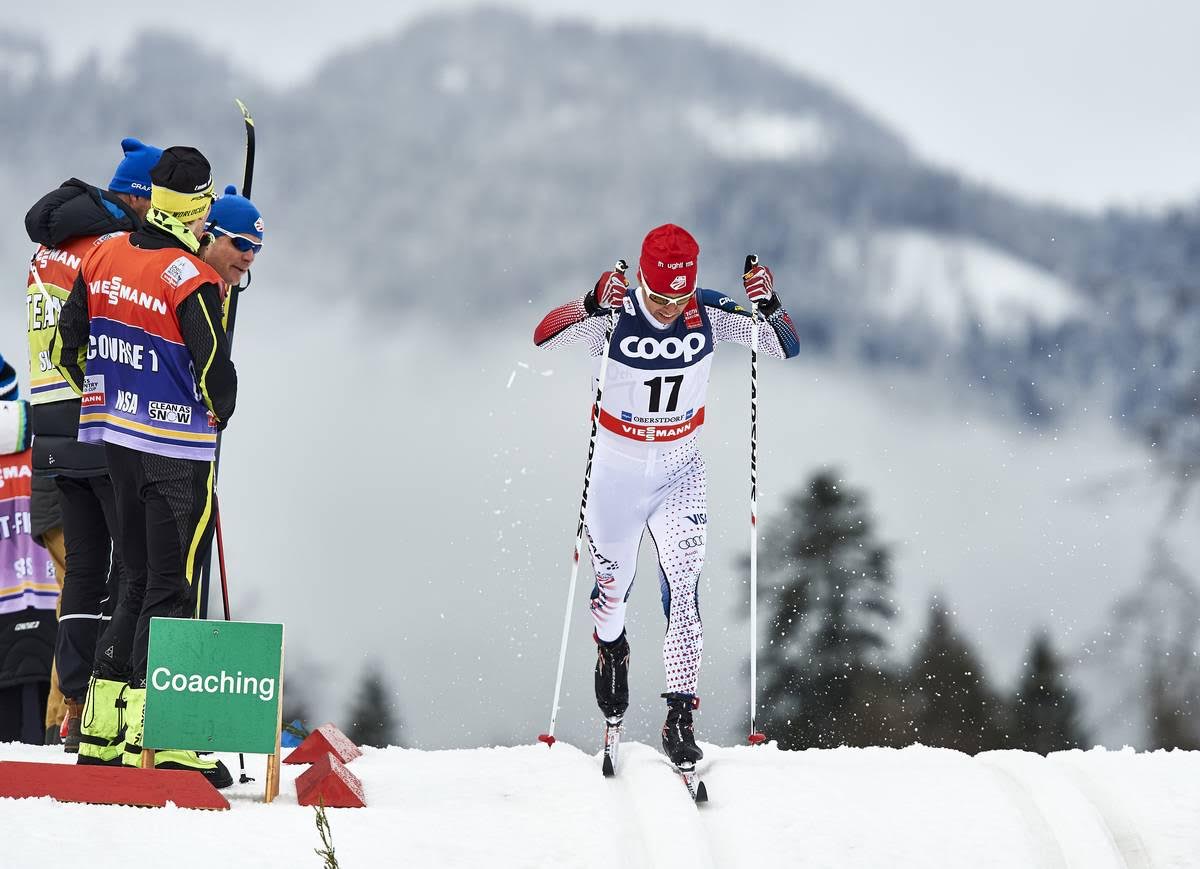
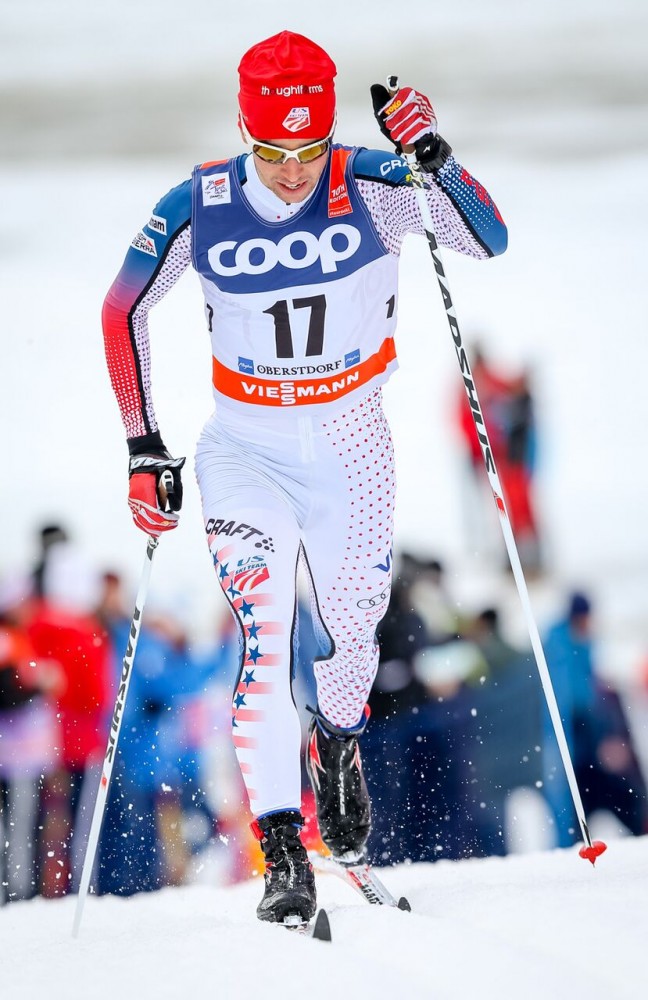
    Noah Hoffman (U.S. Ski Team) placed 61st in Tuesday's classic sprint at Stage 4 of the Tour de Ski and continues to sit in 25th overall in the Tour standings. (Photo: Madshus/NordicFocus)
    Noah Hoffman (U.S. Ski Team) racing to 61st in the Stage 4 classic-sprint qualifier earlier this week in Oberstdorf, Germany, during the 2016 Tour de Ski from Jan. 1-10. (Photo: Madshus/NordicFocus)

    Let’s start with the latest. Noah Hoffman skied to 23rd place in Saturday’s seventh stage of the Tour de Ski, a 15-kilometer classic mass start in Val di Fiemme, Italy. Hoffman finished 1:37.1 behind race winner Martin Johnsrud Sundby of Norway. Sundby continued to lead the Tour heading into Sunday’s eighth-and-final stage, a 9 k freestyle hill climb up Alpe Cermis.

    Of the seven stages down from this edition of the Tour de Ski, Hoffman has set some personal-best benchmarks. Reading across the spreadsheet of the men’s overall standings, Hoffman has placed in the top 30 — that’s within the World Cup points — in three of the four Tour distance stages thus far.

    He placed 23rd in Stage 2, the 30 k classic mass start classic in Lenzerheide, Switzerland. He notched 19th in Stage 6, a 10 k freestyle individual start in Toblach, Italy. And now, on Saturday, he was again 23rd. Hoffman’s only sour distance race of the Tour: 41st in Oberstdorf, Germany. That 15 k classic mass start also saw fixtures like Sundby and Krogh fall out of the race’s top 20.

    Noah Hoffman (U.S. Ski Team) finished 61st in the 1.2 k classic sprint qualifier at Stage 4 of the Tour de Ski in Oberstdorf, Germany. (Photo: Marcel Hilger)
    Noah Hoffman (U.S. Ski Team) during the classic sprint qualifier at Stage 4 of the Tour de Ski in Oberstdorf, Germany. (Photo: Marcel Hilger)

    Before we jump into Hoffman’s reflection on the Tour, it’s a good idea to jump back to the beginning.

    According to the International Ski Federation (FIS) database, Hoffman, 26, had been competing on the World Cup since 2009. His results over the years have been a smattering of far-off-the-pace results to top-30 near misses, to days like this one in 2013: the final day of the Ruka Triple, when Hoffman skied to ninth overall with the fastest time on the day.  

    If anything, this year’s Tour shows promise. It will be the first time Hoffman has completed an eight-stage tour, an achievement in itself. (He missed most of last season after suffering a broken leg on the World Cup’s opening weekend).

    “I’m in new territory now – this is the longest tour I’ve ever done, previously it has been seven stages, and I just finished the seventh stage today,” Hoffman said on the phone after Saturday’s race. “You know, one more to go in this tour. Honestly the longer the Tour goes the better I think it is for me, because I kind of thrive on limited recovery and that type of thing.”

    In a self-deprecating manner, maybe with an eye towards the sensational results of the U.S. women’s team, Hoffman said his results keep him motivated.

    “Obviously I haven’t been spectacular – I’ve been consistently in the points, which is nice – it’s where I want to be, except for the 15 k in Oberstdorf,” he said. “But I’m tired. I say that because everyone’s tired and I am tired, but I actually feel quite good and I’m optimistic. I’m looking forward to tomorrow.”

    Sunday’s race, the climb up Alpe Cermis, will require Hoffman to have a solid race effort to move up in the standings. “Race efforts,” is something Hoffman brought up to describe why he has struggled breaking into the elite distance-skiing ranks on the World Cup.

    “Honestly I think the biggest struggle in my career is building good race efforts,” he said. “I truly believe that on any given day, I can be one of the top-10 athletes in the world on fitness. I’ve worked hard to develop my strength and technique, but building good race efforts has been a real struggle for me.

    American Noah Hoffman (25) chases Germany's Jonas Dobler (r) during the 10 k freestyle pursuit at Stage 3 of the Tour de Ski in Lenzerheide, Switzerland. Hoffman held his position to finish 25th. (Photo: Madshus/NordicFocus)
    American Noah Hoffman (25) chases Germany’s Jonas Dobler (r) during the 10 k freestyle pursuit at Stage 3 of the Tour de Ski in Lenzerheide, Switzerland. Hoffman finished 25th. (Photo: Madshus/NordicFocus)

    “What tours give me is day after day of practice,” he continued. “If you screw it up one day, you’ve got another opportunity the very next day. For someone like me, where the limiting factor really is putting together great races, that’s a golden opportunity. And this is just the first of two eight-day tours this year [with the Ski Tour Canada ending the World Cup season in March]. It’s a really really good opportunity. The more racing the better from my perspective because of those opportunities to build good race efforts and to learn and to improve on my ability to execute.”

    Race effort can mean different things to different skiers. Hoffman clarified what, for him, is a well-executed race effort.

    “The biggest thing for me is basically staying relaxed, what I call it is keeping my skiing ‘clean,’ ” he explained. “Clean of tension. I’ve had some very poor efforts at doing that this year – those are going to be my bad race results. Davos, I went out way too hard in that 30 k, was not skiing clean, and I just blew up [he placed 52nd in the 30 k freestyle].

    “The 15 k in Oberstdorf a couple days ago, I really struggled to keep it clean,” Hoffman added. “I used my aerobic capacity, and that’s my goal every single race, to use my full aerobic capacity because when I do that I’m going to be in there and be competitive. All that being said, in a mass start setting, you’ve got to keep the pace of the group. There’s such an advantage to skiing behind people because of physical draft and faster track, but also just in terms of being able to pace off of them and relax because you don’t need to be pushing as much.

    “Yesterday in the skate race I did a really good job of skiing clean and relaxed. It was a very conservative feeling effort – it didn’t take a lot out of me, I didn’t max my heart rate super high, and yet it was just clean skiing, energy based skiing, and it turned into a top-20 result,” he continued. “That’s the kind of fitness I have, if I can just make use of it. I struggle a little bit to do that same thing in classic, but the goal was to reproduce that effort and keep it relaxed and clean as much as possible in the group, and I did a fairly good job of that today. I don’t know that I have the execution fault today – it’s more like that’s where I am right now in classic, and that’s fine.”

    Hoffman is perhaps the most analyzed cross-country skier currently on the U.S. Ski Team. One of his coaches, Zach Caldwell, posts a few videos annually of Hoffman working on technique, using “cues” to build power and efficiency. Hoffman also posts to his personal blog almost daily.  

    “I know people when they watch me ski, they feel like I have too high of a tempo and I don’t ski with enough power and I don’t glide enough,” Hoffman said. “And those are all fair criticisms, and to be at the top of the sport I do need to learn how to ski with more power efficiently and cleanly, but to get a representative effort out of myself all I need to do is ski to my aerobic capacity and tempo based skiing, with relaxed muscles.”

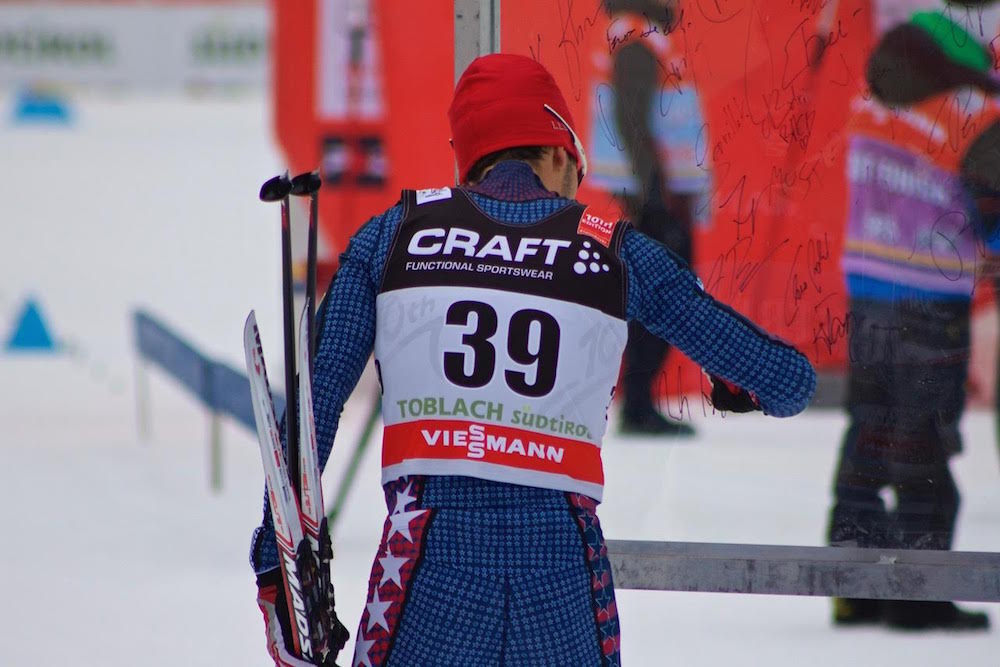
    Noah Hoffman (U.S. Ski Team) signing his name before the 10 k freestyle at Stage 6 of the Tour de Ski in Toblach, Italy, where he placed 19th for his best result this season. (Photo: JoJo Baldus)
    Noah Hoffman (U.S. Ski Team) signing his name before the 10 k freestyle at Stage 6 of the Tour de Ski in Toblach, Italy, where he placed 19th for his best result this season. (Photo: JoJo Baldus)

    Saturday’s effort placed him 23rd in the Tour, against the best skiers in the world.

    “I think it was a representative effort, which is always the goal,” he said. “It’s not even close to best in the world, 2 minutes down in a 15 k is not gonna do it for any great, ground-breaking result, like Jessie yesterday or Sophie two days ago. But it’s a place that I believe I can reproduce over and over again this season, and that I can build from when I have the day where everything clicks where I am able to push past that line of just skiing conservatively if you will. Then a 23rd-place finish is a place to build from.”

    The Tour’s conclusion is both a physical spectacle for the racers and a viewing spectacle for hillside fans and at-home TV viewers around the globe. At the end of the day, performance is reduced to time. And for all but a single athlete — the winner — that time will be described as “time back.” If you’re scared of being exposed, this perhaps, is not a sport to embrace.

    Hoffman is up for the challenge.

    “Tomorrow sets up really well for me. In the the two times I’ve done this hill climb I have not had a representative effort,” he said. “But I believe that I can be one of the best in the world on that course. You couldn’t design something that could be more to my strengths. I’ll be starting in a wave which is a great place to start for a good time, because it means that I’ll have really fast skiers to ski down the valley with to the base of the climb. And I’ll have some of the best climbers in the world in that group – [Canada’s Ivan] Babikov, who won this stage previously … there’s guys in that group that are gonna be skiing fast tomorrow, and I really believe that I can ski with them, and I look forward to the opportunity.”

    Hoffman heads into the Tour’s final stage in 26th place and will start 9:48 behind overall leader Sundby.

    Saturday’s results | Tour standings (through Stage 7) | Sunday’s start list

  • Weng Finally Outduels Østberg for First World Cup Win; Bjornsen Ninth in Stage 7

    Weng Finally Outduels Østberg for First World Cup Win; Bjornsen Ninth in Stage 7

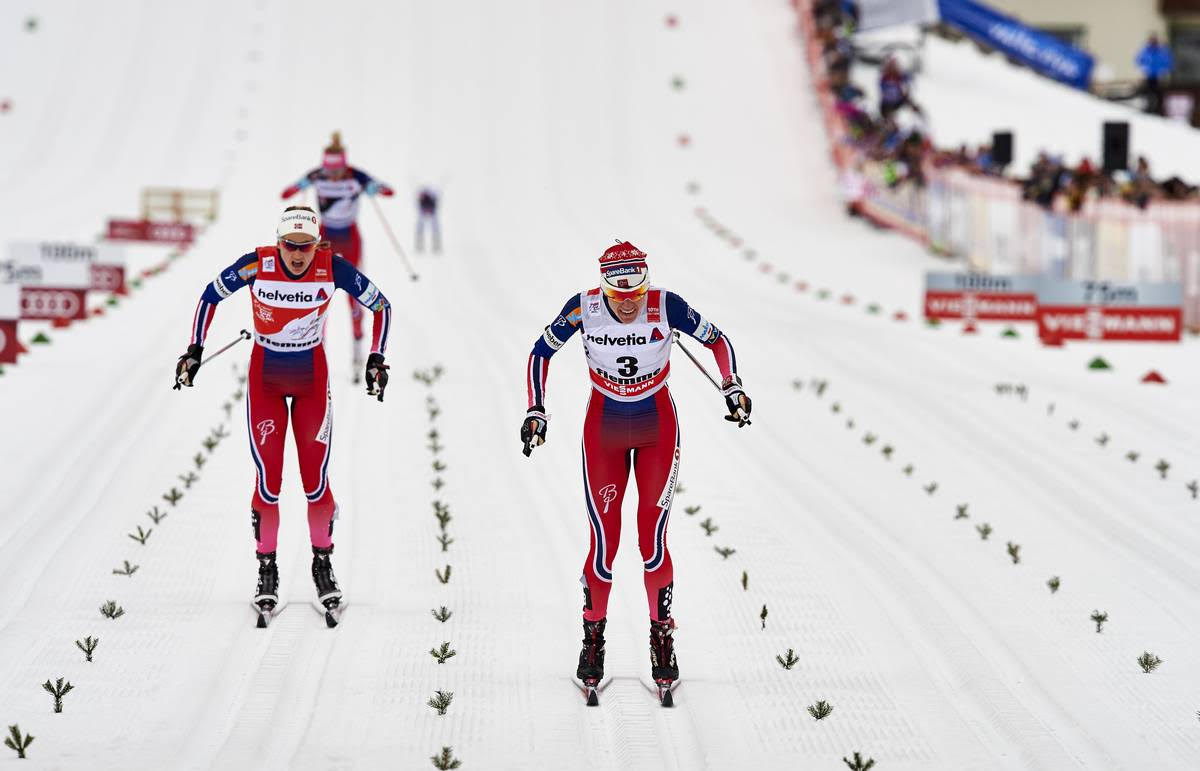
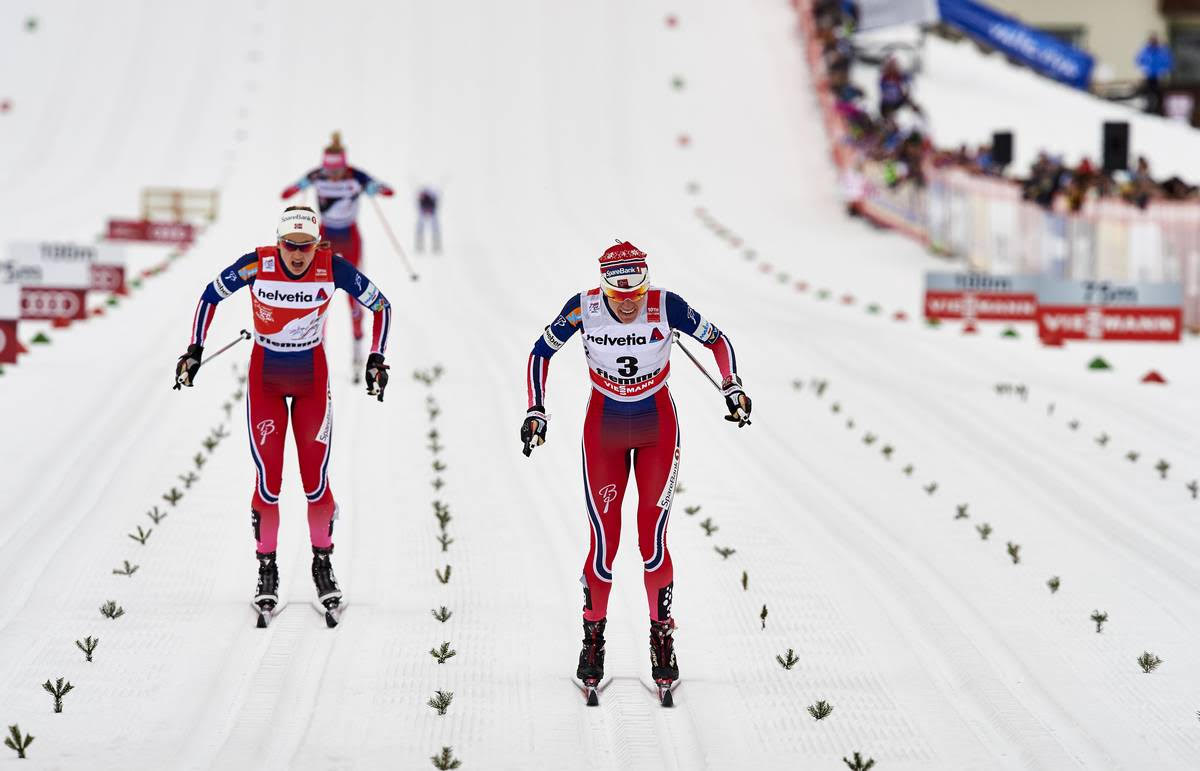
    Heidi Weng (r) outlasts Norwegian teammate Ingvild Flugstad Østberg (l) in the final meters of the 10 k classic mass start to win Stage 7 of the Tour de Ski in Val di Fiemme, Italy. It was Weng's first-career World Cup victory after 37 World Cup podiums. (Photo: Madshus/NordicFocus)
    Heidi Weng (r) outlasts Norwegian teammate Ingvild Flugstad Østberg (l) in the final meters of the 10 k classic mass start to win Stage 7 of the Tour de Ski in Val di Fiemme, Italy. It was Weng’s first-career World Cup victory after 37 World Cup podiums. Norway swept the podium with Therese Johaug (behind) finishing 6.2 seconds back in third. (Photo: Madshus/NordicFocus)

    In the aftermath and celebration of the U.S. women crashing the Norwegian podium party this week at the Tour de Ski, it’s easy to miss the continual second-fiddle performance of Norway’s Heidi Weng. A perennial-podium finisher on the World Cup, she’s landed on the second and third steps 37 times in her career, according to an International Ski Federation (FIS) press release (including five times in six stages before Saturday). However, it’s her inability to the reach the top that’s been a head scratcher.

    Saturday in Val de Fiemme, Italy, at the seventh of eight stages in the Tour, she ended that streak, holding off Norwegian teammate and Tour leader, Ingvild Flugstad Østberg, in the final stretch of the 10-kilometer classic mass start to eke out a 0.8-second victory in 29:16.3.

    From the start, the lead pack consisted of three Norwegians — Weng, Østberg and Therese Johaug — and Finland’s Krista Parmakoski. Johaug led early at 1 k, and Østberg came through the timing point first at 2.5 k. There, the four had already started to create a small gap on Sweden’s Charlotte Kalla and Switzerland’s Nathalie von Siebenthal, 1.4 and 1.9 seconds back, respectively, while another Finn, Kerttu Niskanen, skied another second back in seventh.

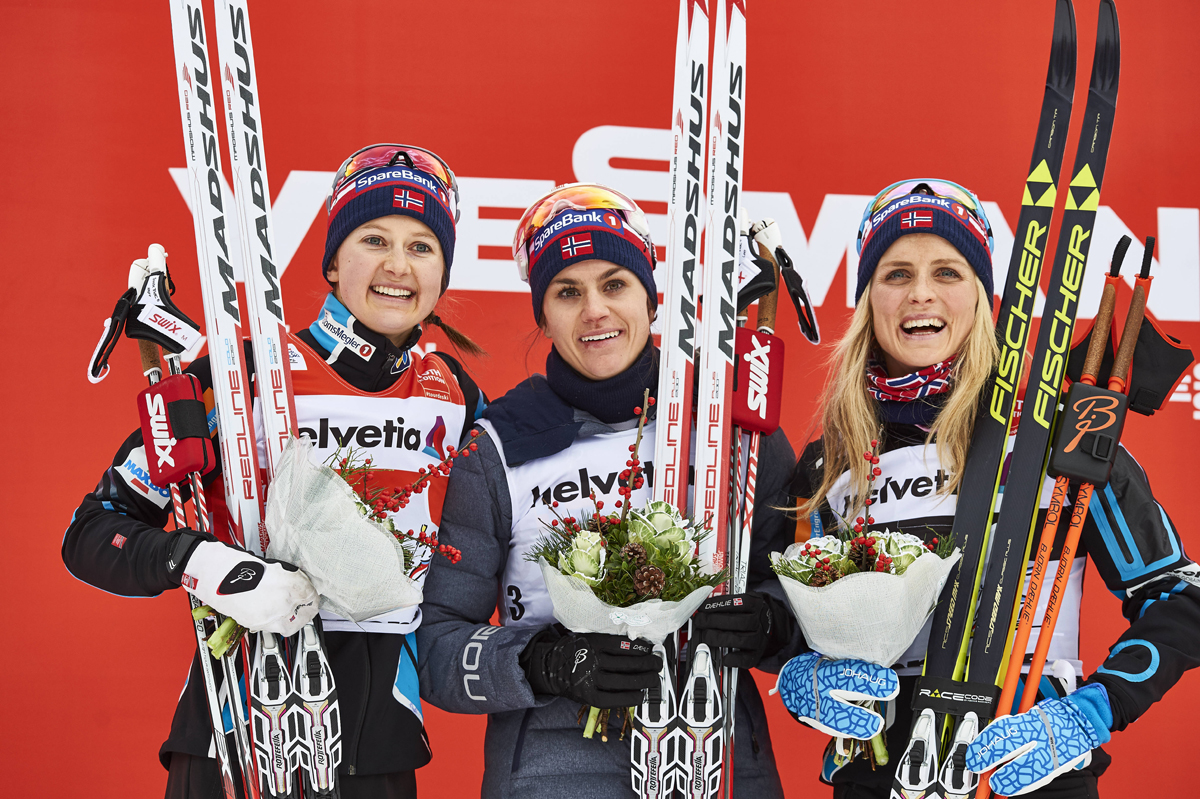
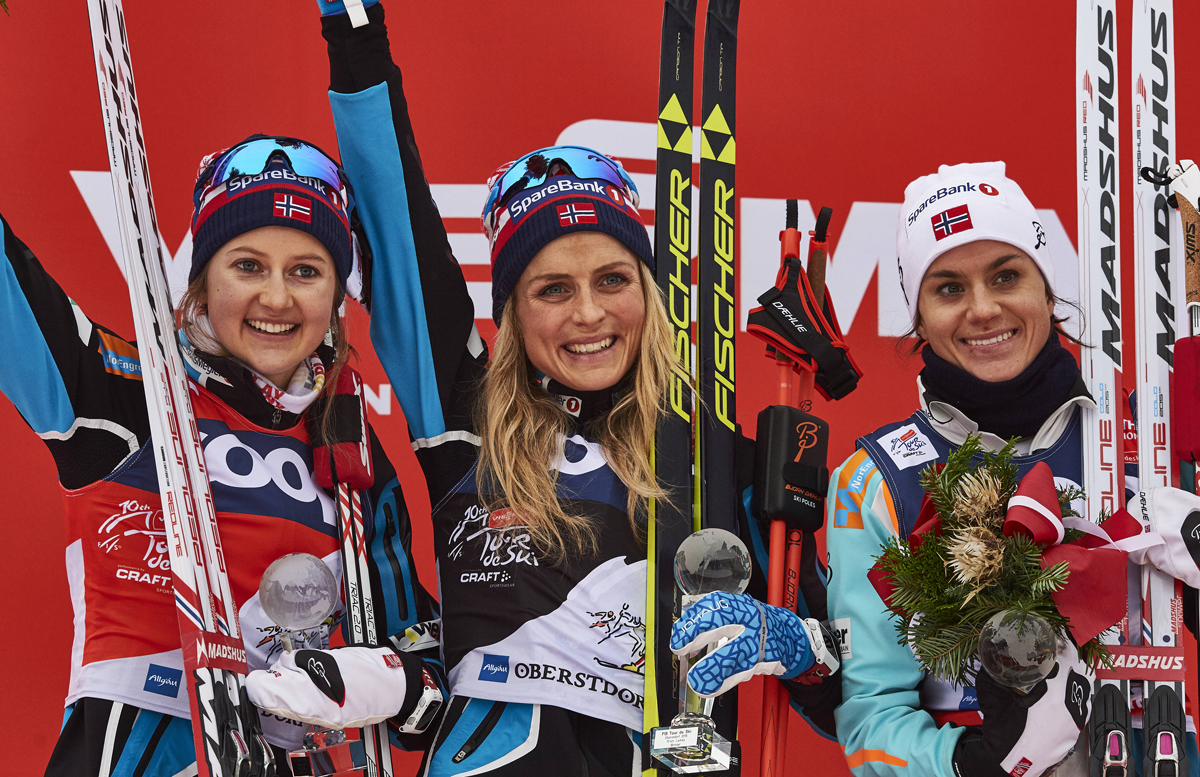
    Heidi Weng (c) topped the podium for the first time in her career on Saturday at Stage 7 of the Tour de Ski in Val di Fiemme, Italy. She beat Norwegian teammates Ingvild Flugstad Østberg (l) in second and Therese Johaug (r) in third in the 10 k classic mass start. (Photo: Fischer/NordicFocus)
    Heidi Weng (c) topped the podium for the first time in her career on Saturday at Stage 7 of the Tour de Ski in Val di Fiemme, Italy. She beat Norwegian teammates Ingvild Flugstad Østberg (l) in second and Therese Johaug (r) in third in the 10 k classic mass start. (Photo: Fischer/NordicFocus)

    One kilometer later in the four-lap race, the lead four had put nearly six seconds between themselves and the three-woman chase group, with American Sadie Bjornsen close behind them in eighth.

    At the halfway point, Parmakoski led a train with Weng, Østberg and Johaug, respectively, while Niskanen trailed by 12 seconds in fourth. Kalla was 16.4 seconds back in fifth and Bjornsen 17.4 seconds behind in sixth.

    The frontrunners’  gap to Niskanen grew to nearly 40 seconds by 8.5 k, while Kalla skied another 10 seconds back in fifth, just ahead of Italy’s Virginia De Martin Topranin. Austria’s Teresa Stadlober followed another 2 seconds back in eighth while Bjornsen hung in ninth, 3.3 seconds later.

    “I felt amazing for 7k out there today, at which point I just pushed a little too hard on the uphill, and took the next 2k to recover,” Bjornsen explained in a post-race email.

    Parmakoski faded over the next kilometer and a half before the finish and left the three Norwegians to battle for the podium. With about 1 k to go, Johaug’s skis slipped on a small uphill, leaving Østberg and Weng to fight for first. Coming down the final stretch into the stadium, Weng used a draft to slingshot around Østberg and out-double pole her in the final 100 meters to the finish, with Johaug settling for third, 6.2 seconds after Weng.

    “I cannot believe it, it is so crazy and hard to describe it. I was the best today and I still cannot believe it,” Weng said in a post-race interview with FIS. “I followed Ingvild’s track in the last uphill. I had stiff legs in the downhills. I was just focused on the finish.”

    Parmakoski finished the race alone in fourth (+17.4), Kalla took fifth (+55.1) and Niskanen was sixth (+59.0). Topranin took seventh (+1:03.8), Stadlober was eighth (+1:06.7), and Bjornsen finished ninth  (+1:12.6), 4.3 seconds ahead of Finland’s Laura Mononen in 10th.

    “Conditions were incredibly tricky out there with icing skis on the uphill, but we all managed,” Bjornsen recalled. “Sometimes you just have to accept the challenge and find a way to make it work. It made a world of difference to have some skis that were fast enough to keep up, so the minor challenges became small! I have to give you a huge thanks to the service team for giving me skis to compete today!”

    Bjornsen 12th Overall, Diggins Still 10th

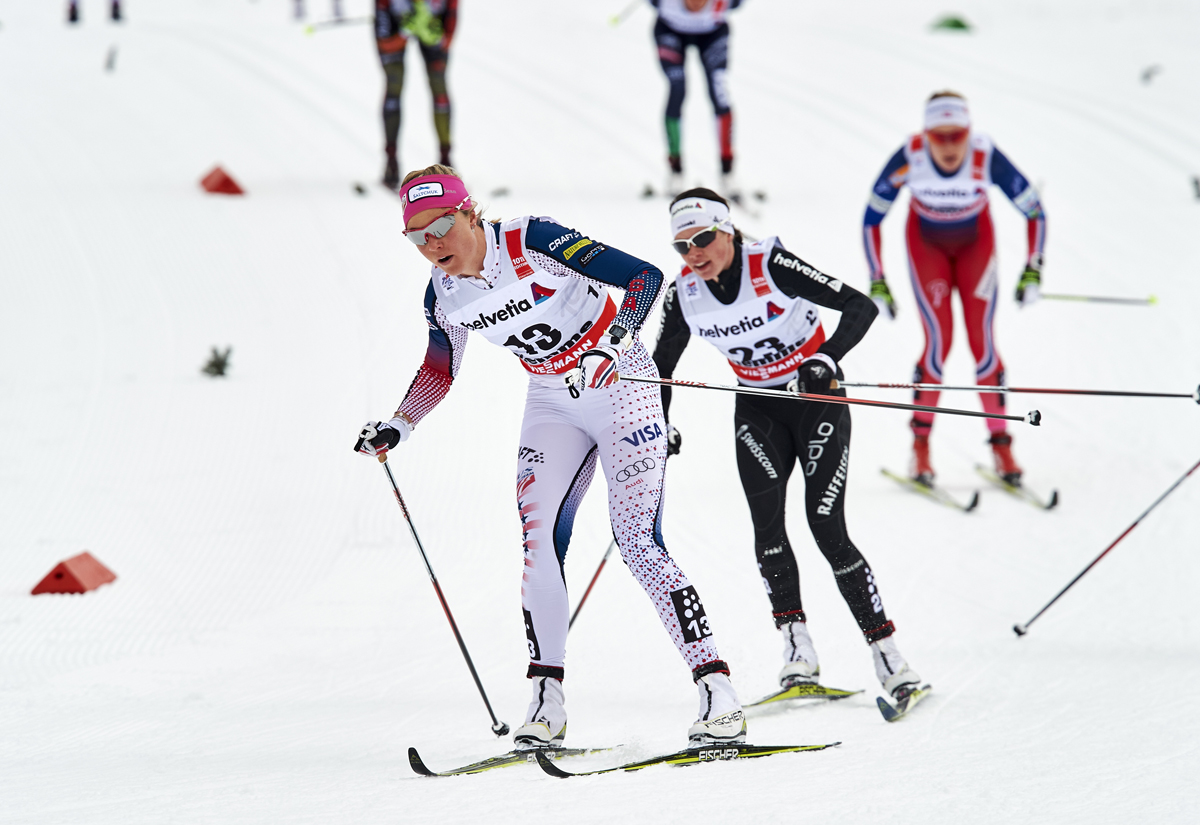
    Sadie Bjornsen (U.S. Ski Team) leads Switzerland's Nathalie von Siebenthal during the 10 k classic mass start at Stage 7 of the Tour de Ski in Val di Fiemme, Italy. (Photo: Fischer/NordicFocus)
    Sadie Bjornsen (U.S. Ski Team) leads Switzerland’s Nathalie von Siebenthal during the 10 k classic mass start at Stage 7 of the Tour de Ski in Val di Fiemme, Italy. (Photo: Fischer/NordicFocus)

    On this day, U.S. Ski Team Women’s Coach Matt Whitcomb observed, “Every team had their skiers clearing their skis at the top of each hill,” he said on the phone. Dry tracks and klister conditions made for continual icing and skiers seeking to free their skis up before the descents.

    In spite of the challenges, Bjornsen clinched her third top-10 of the Tour (after placing seventh in the skate sprint and ninth in the 5 k freestyle pursuit) and improved from 13th to 12th in the overall standings, 9:32.6 behind Østberg.

    “I struggled with classic in the middle of this tour, with a fall in the classic qualifier and then slow and slick skis in the classic mass start in Obersdorf … so it feels nice to be back where I feel like I belong,” Bjornsen wrote.

    As for her last lap, “She said on the final lap she went a little bit too hard and got a little too fired up and paid the price, and had to back it off a little bit,” Whitcomb explained.

    He viewed that much energy at Stage 7 as “a great sign. To be fired up in any way after seven stages bodes well for how your body is absorbing things,” he said. “She’s still mentally engaged, so she’s probably still physically engaged, too.”

    Looking ahead to Sunday’s climb, Whitcomb expects Bjornsen to turn some heads.

    “We’re excited to see what she can do in the climb. She’s in great shape and she’s a great skier so I think she can do really well tomorrow,” he said.

    “The only other year I have done the TDS is last year, and I dropped out after 4 stages,” Bjornsen explained. “I can’t wait to make it to the top and celebrate the achievement, but also take the energy to celebrate Sophie and Jessie’s huge achievements these last few days!”

    Jessie Diggins cooling down after the classic sprint at Stage 4 of the Tour de Ski in Oberstdorf, Germany. (Photo: Harald Zimmer)
    Jessie Diggins cooling down after the classic sprint at Stage 4 of the Tour de Ski in Oberstdorf, Germany. (Photo: Harald Zimmer)

    Coming off her first World Cup victory — the second for the U.S. in this Tour — Jessie Diggins placed 17th in Saturday’s mass start to maintain her hold on 10th in the Tour, 9 minutes back.

    “She is in a great place, very confident, and feeling good in the races,” Whitcomb said.

    In an email, she started by focusing on the positives: “I’m super proud of Sadie for hanging up there and especially proud of Rosie’s first WC point of the year!” Diggins wrote, referring to teammate Rosie Brennan finishing 30th on Saturday.

    “My wax was not the wax I was hoping for today and made for a very challenging race, but I’m so excited for tomorrow!” Diggins continued.

    Liz Stephen placed 21st (+2:01.7) on Saturday, and Tour rookies Brennan and Caitlin Gregg followed in 30th (+3:05.6) and 41st (+5:03.9) for the U.S.

    Like Diggins’ victory from the previous day, the elation of finally finding the top podium spot clearly brought out a whirlwind of emotions for Weng, telling NRK, “I thought it was not possible. I’m so used to being 2-3-4. It is so big.”

    Stepping away from the race as the fastest person that day posed a difficult reality for Weng to comprehend.

    “Seeing ‘Heidi Weng’ at the top of the list is very unusual,” she continued. “That has not happened before, and I never thought it would happen.”

    With her victory, Weng maintains a firm grasp on third in the Tour standings and will start the final climb 2:27 behind Østberg.

    The Tour leader since Stage 3, Østberg padded her lead by not only finishing five seconds ahead of Johaug, the current World Cup leader and overall runner-up in the Tour with one stage to go, but also by collecting the mid-race bonus seconds. Johaug will start 39 seconds after Østberg in the final climb.

    On Saturday, both Østberg and Johaug were happy for their teammate, and proud to be in their current positions as the end of 10 days of racing draws to a close.

    “I am really happy for Heidi to win her first World Cup,” Østberg told FIS. “I am very proud to be on the podium on all of the Tour de Ski stages. I would not believe before the Tour I could lead before the last stage by almost 40 seconds.”

    Final-Stage Hill Climb

    Sunday’s final stage, a 9 k freestyle pursuit-style hill climb up Alpe Cermis includes gradients as high as 26.5 percent and over 1,600 feet of total climbing, with the majority of that coming in the final 3 k.

    Last year in the final stage of the Tour de Ski, Johaug and Weng posted the first- and second-fastest times of the day up the final climb for second and third overall behind teammate Marit Bjørgen.

    Another one of the top finishers in the final stage, Stephen skied the fourth-fastest time up Alpe Cermis last year to place fifth overall in the Tour. After placing 21st on Saturday, she’ll start the final climb 25th, about 12 1/2 minutes after Østberg.

    “She hasn’t had a great tour; the format [this year] is tricky for her, but she just hasn’t put together races she’s satisfied with,” Whitcomb said, adding that on Sunday, “She’s poised to ski very well, and I would be surprised if her goal wasn’t to win.”

    If all goes according to plan, the U.S. will have seven skiers, five women and two men, finish the tour this year — the most yet.

    “It’s a cool thing that we’ve got so many athletes ready to start tomorrow’s stage,” Whitcomb said. “That’s a great thing for the team.”

    Results | Tour standings (though Stage 7) | Final climb start list

  • Diggins Second American to Win in Three Stages: ‘It is Totally Surreal,’ Coach Says

    Diggins Second American to Win in Three Stages: ‘It is Totally Surreal,’ Coach Says

    Jessie Diggins (c) of the U.S. Ski Team after winning her first-career World Cup in Friday's 5 k freestyle at Stage 6 of the Tour de Ski in Toblach, Italy. (Photo: JoJo Baldus)
    American Jessie Diggins after winning her first individual World Cup on Friday in the women’s 5 k freestyle at Stage 6 of the Tour de Ski in Toblach, Italy. For the U.S. Ski Team, it was their second victory in the last three stages. (Photo: JoJo Baldus)

    TOBLACH, Italy – With many smiles, shrieks and leaps of joy, Jessie Diggins won Stage 6 of the Tour: a 5-kilometer freestyle individual start. It was the second of two huge wins for the U.S. women, following Sophie Caldwell’s Stage 4 classic-sprint victory on Tuesday in Oberstdorf, Germany.

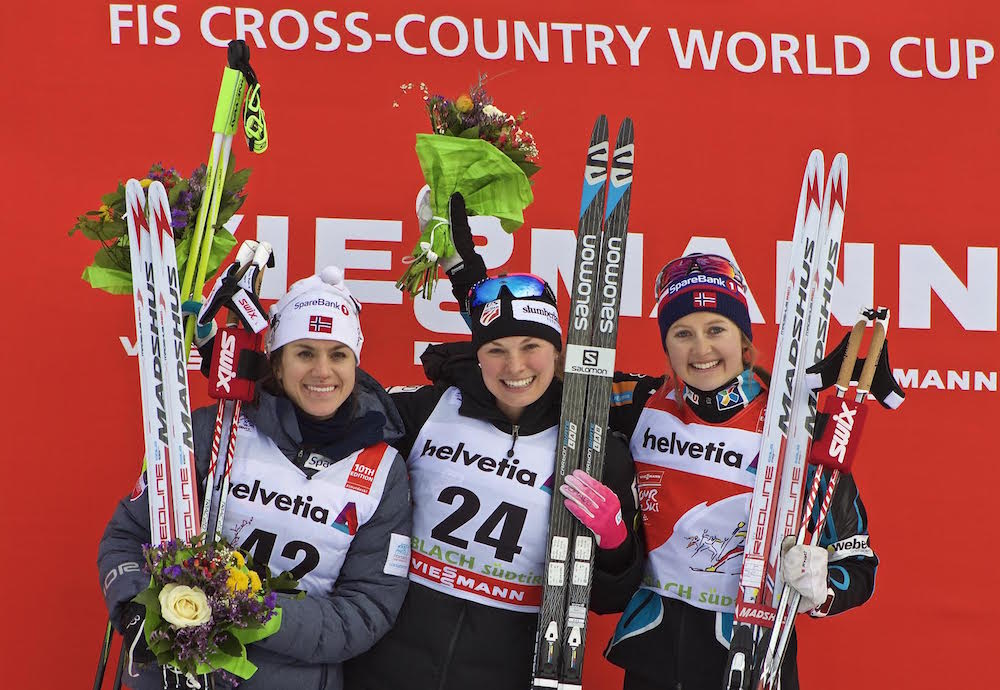
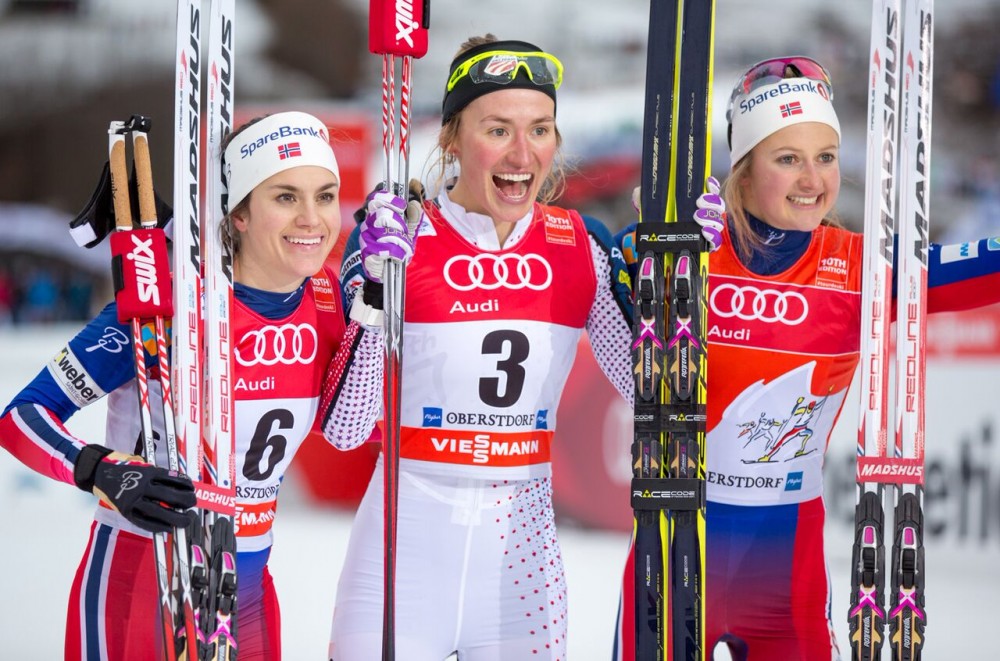
    Interestingly, the podium remained exactly the same between both races — with Heidi Weng in second and Ingvild Flugstad Østberg in third — except Diggins replaced Caldwell on the top step.

    “What’s so cool about this team is we ride on each other’s successes,” Jessie exclaimed in an in-person interview after Friday’s race. “Seeing Sophie do it, we all train together, and we can do this! It really shows the strength of the team that we push each other and train so hard to get to this point where we can start putting together really good races. So this is a pretty sweet victory for the team.”

    Diggins is now the fourth U.S. woman to win a World Cup race, and the first to do so in a modern distance race. (Kikkan Randall has won numerous freestyle sprints and a 3 k prologue, but nothing longer.)

    A 24-year-old member of the U.S. Ski Team, Diggins was a 2015 World Championships silver medalist in the 10 k freestyle and won gold in the freestyle team sprint at 2013 World Championships with Randall. She also won the preceding World Cup freestyle team sprint with Randall in December 2012, but had yet to achieve an individual World Cup podium before Friday.

    Her post-race demeanor was true to herself — bursting with enthusiasm, belief, positivity, and especially a team-focused mentality — times 100.

    “I didn’t believe it,” Diggins said when asked about seeing her name in first place. “I mean, to come out on top in this field with those incredible women feels like doing the impossible. So that really speaks to how hard the [wax] techs have worked, how fast the skis were, the incredible cheering…”

    Racing to First

    Jessie Diggins (U.S. Ski Team) racing to her first World Cup victory in the 5 k freestyle at Stage 6 of the Tour de Ski in Toblach, Italy. She won by 0.6 seconds, beating out four Norwegians in the top five. (Photo: JoJo Baldus)
    Jessie Diggins (U.S. Ski Team) racing to her first individual World Cup victory in the 5 k freestyle at Stage 6 of the Tour de Ski in Toblach, Italy. She won by 0.9 seconds, beating out four Norwegians in the top five. (Photo: JoJo Baldus)

    Depending on how racers show up on a given day, the individual-start format can be anything from interesting to anti-climactic, and even nerve-racking.

    Forty-six women started on Friday, heading out at 30-second intervals. After racing the clock and crossing the finish line, athletes are left waiting to see how their time stacks up against the rest of the field.

    Early starters don’t have much to work with in terms of splits. The race consisted of a single 5 k loop, with gradual climbing out of the start and official timing points at 1.7 and 2.1 k.

    Diggins started 24th and reached the first timing point in 4:28.9, which turned out to be the fourth-fastest time of the day. Then at the 2.1 k, her time ranked third, indicating she was accelerating.

    “When the split at 2.1 came in that Jessie was 8 seconds out of the lead with everyone by, we knew that meant she could win,” U.S. Ski Team Women’s Coach Matt Whitcomb told FasterSkier afterward. “Nobody finishes this course more successfully than Jessie.”

    What made her the best woman out there today? The answer lies largely in the subtle downhill profile of the latter part of the course.

    “You are always working and you have to really work those downhills,” Diggins said of the Toblach course. “It is a great course for me because I love to V2 and I love those downhills where you just get in your little tuck and you just skate.”

    From Afton, Minn., Diggins won Minnesota state championships three times, which is held at Giant’s Ridge. The end of the course is characterized by a similar, long downhill segment for the last kilometer or two leading out of the woods and right into the stadium.

    Several coaches and race organizers on the Minnesota high-school scene remember the way Diggins would come flying down this hill in a bullet-like tuck, practically sitting on the back of her skis. From high-school meets all the way to the top podium spot in the World Cup, Jessie Diggins can truly work the downhills.

    “She can lay down the fastest time day after day after day through terrain like this; she is a glider and she is a finisher,” Whitcomb explained. “[The course] suites Jessie’s strengths very well.”

    “There are very few skiers in the world that can close down the final kilometer of a course like Jessie,” U.S. Ski Team Head Coach Chris Grover said in a team press release. “She was fierce and unrelenting on the downhills and flats leading back to the stadium; pushing extremely hard on her skis. We’ve been wowed by this ability of hers many times, most notably in the recent Lillehammer 4×5 k women’s relay.”

    Diggins crossed the line in 13:15.5, “A new best time!” as stadium commentators exclaimed over the sound system, 15.7 seconds ahead of the previous leader; Germany’s Denise Herrmann, who started 11th. But half the field was still racing, including most of the seeded competitors, who stood the biggest chance at challenging Diggins’ time.

    Diggins with fellow U.S. Ski Team member Caitlin Gregg. The two shared the podium at 2015 World Championships in the 10 k freestyle, where Diggins placed second and Gregg was third. (Photo: JoJo Baldus)
    Diggins with fellow U.S. Ski Team member Caitlin Gregg. The two shared the podium at 2015 World Championships in the 10 k freestyle, where Diggins placed second and Gregg was third. (Photo: JoJo Baldus)

    The waiting began — a system of delayed gratification. She didn’t know how well her time was going to hold up, and so she collected her skis and left the finishing pen, walking past broadcast reporters who didn’t bother to interview her yet while fielding a multitude of polite congratulatory remarks.

    “Thank you! Thank you!” Diggins energetically replied.

    Slowly, but surely, her time weathered more and more finishers, keeping that top spot. She had enough time to go change clothes — little did Diggins know she was changing in preparation for the podium ceremony.

    Then came a moment of great excitement. Some of the remaining favorites were entering the stadium and finishing in rapid succession. Where would they stack up?

    Norway’s Ragnhild Haga: not quite, as she was 8.4 seconds short for second initially, and fourth at the end of the day.

    Sweden’s Charlotte Kalla: 12.3 seconds behind Diggins at the line would eventually be enough for seventh.

    One by one, as each of these top athletes crossed the line, Diggins’ eyes and smile grew bigger and bigger. She could not believe it. “I thought, well, this is obviously a really good race, and… maybe, maybe I will be on the podium,” she recalled.

    But they kept coming, unable to touch Diggins.

    Jessie Diggins (c) of the U.S. Ski Team after capturing the second U.S. women's win of the week at the Tour de Ski. Diggins won Friday's 5 k freestyle by 0.9 seconds over Norway's Heidi Weng (l) and another Norwegian Ingvild Flugstad Østberg (r) placed third. (Photo: JoJo Baldus)
    Jessie Diggins (c) of the U.S. Ski Team after capturing the second U.S. women’s win of the week at the Tour de Ski. Diggins won Friday’s 5 k freestyle in Toblach, Italy, by 0.9 seconds over Norway’s Heidi Weng (l) and another Norwegian Ingvild Flugstad Østberg (r) was 1.5 seconds behind in third. (Photo: JoJo Baldus)

    As Østberg — the clear leader at both timing points — cruised down into the stadium, the announcer bellowed, “Her pace is matching Diggins’ with a few hundred meters remaining,” and repeated the observation in several different languages.

    “No, she is 1.5 seconds back from Diggins’ time,” he continued.

    That put the overall Tour leader in second.

    Therese Johaug, second to Østberg at the 2.1 k checkpoint, was ultimately unable to match Diggins nor Østberg and finished fifth, 9.6 seconds back.

    Then came Weng, another Norwegian threat. “She could do it!” the announcer said.

    Spectators watched the seconds tick by on the Jumbotron.

    “She is into the final sprint, and ladies and gentlemen, this will be a fight to the end…”

    As Weng lunged across the line: “No, Weng cannot beat Diggins. Jessie Diggins has kept the top time. Weng takes second, just nine-tenths of a second behind!”

    Diggins melted to the ground in overwhelming excitement and disbelief. Weng and Østberg shared a hug of utter exhaustion just across the finish line before sincerely congratulating Diggins. Just 1.5 seconds separated the top three. “A day of very small margins,” as coach Whitcomb put it.

    ***

    Diggins at the post-race press conference after winning her first individual World Cup, the sixth stage of the Tour de Ski (a 5 k freestyle individual start). (Photo: JoJo Baldus)
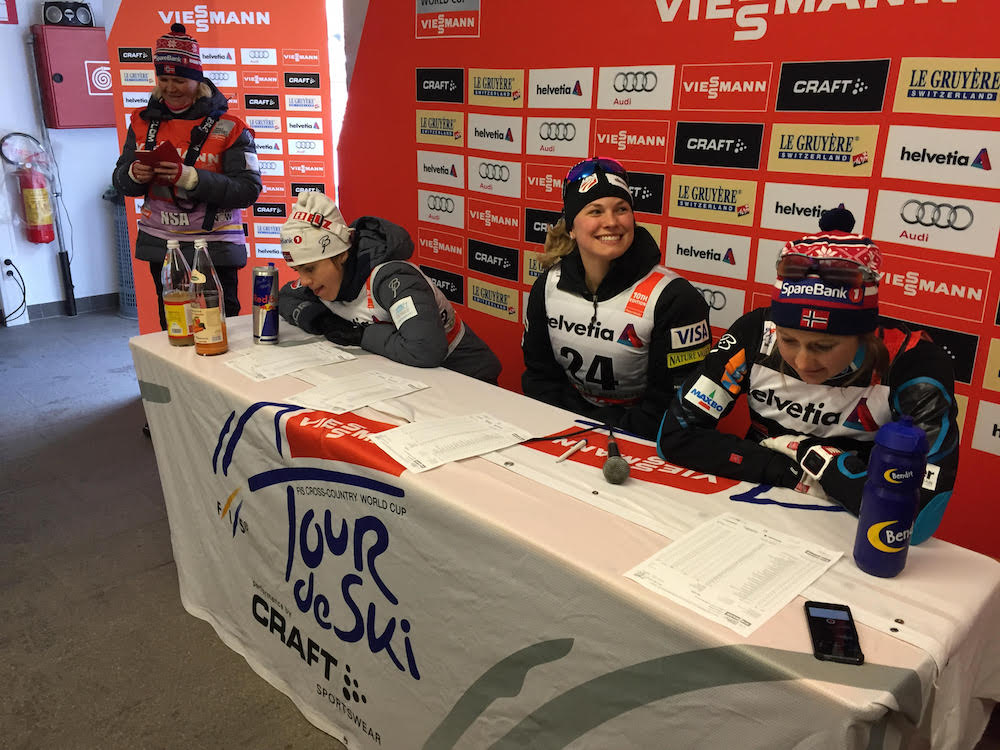
    A smiling Jessie Diggins before the post-race press conference after winning her first individual World Cup, the sixth stage of the Tour de Ski (a 5 k freestyle individual start). (Photo: JoJo Baldus)

    Diggins emphasized that, despite feeling good about the race, she certainly did not expect to win.

    “I’m still in shock!” Diggins said as she awaited the awards ceremony. “I never thought that I would win it.”

    Diggins and Weng accelerated through the end of the course into first and second, respectively. Just under seven seconds off the podium in fourth, Haga also had faster second-half splits, but not quite enough to reach Diggins or Weng. Østberg and Johaug both lost time and ranking on the second half of the race.

    “I tried to open a bit slowly and get faster in the downhills,” Weng explained in a post-race press conference. “I think that was a very good tactic for me. … It’s a very hard race because you can overpower and it can go very good or it can go [bad] and you can [lose] many seconds in the end. It’s very hard to go five kilometres.”

    Østberg in third ended up besting her teammate and biggest Tour rival, Johaug, by 8.1 seconds. She will continue to wear the red Tour leader’s bib heading into the last two stages in Val de Fiemme, Italy, after extending her overall lead to 25.3 seconds ahead of Johaug.

    “It was a tight and hard race, and maybe I had a little [too] hard opening, different from the other racers, I guess,” Østberg said in the press conference. “In the last uphill my mother cheered for me, but my legs were just so tired I didn’t think I was gonna come to the finish. Another podium for me, and it’s so amazing that I’m still in the lead of the Tour de Ski. It’s unbelievable, for sure I didn’t believe it was possible. And 1.5 seconds from the win that’s amazing.”

    After the stage win, Diggins improved to 10th overall, 6:50.2 behind Østberg.

    A Proud U.S. Ski Team

    Diggins’ win, piggybacking on Caldwell’s sprint victory just two days prior, provides a very notable marker for the overall success of the U.S. Ski Team.

    “You need to have kind of everything perfect to have such a good race,” Diggins said in the press conference. “You have to have really good skis and your head has to be in the right place and then your body has to feel good, so it’s really exciting for us that it all worked out so many times this year.”

    “It is totally surreal,” Whitcomb remarked. “It is totally surreal because we have never had such success in a small amount of time with two different athletes. [There are] so many guns on this team.”

    Never before had the U.S. team racked up two stage wins by different athletes in the same Tour de Ski, which is in its 10th year. Randall won a prologue and a sprint stage in 2012/2013.

    According to FIS, the U.S. joins Norway and Finland as the only nations with a history of two stage wins by different athletes in the same Tour. Aino-Kaisa Saarinen and Virpi Kuitunen won stages in 2007/2008.

    “One thing is for sure, the Americans have proved they can for sure play with those Norwegians!!” teammate Sadie Bjornsen wrote in an email. She placed 13th on the day, 25.7 seconds behind Diggins.

    The wax team and support staff can revel in the team’s recent successes as well.

    “It speaks volumes to the work [head of service Oleg Ragilo] has put forward, the leadership that he has created out there…,” Whitcomb said. “When those guys can be rewarded with good results like this it makes us really happy for them.”

    Bjornsen Up to 13th Overall

    Sadie Bjornsen (U.S. Ski Team) racing to 13th in the 5 k freestyle at Stage 6 of the Tour de Ski in Toblach, Italy. (Photo: Fischer/NordicFocus)
    Sadie Bjornsen (U.S. Ski Team) racing to 13th in the 5 k freestyle at Stage 6 of the Tour de Ski in Toblach, Italy. (Photo: Fischer/NordicFocus)

    The 20th starter, heading out two minutes ahead of Diggins, Bjornsen initially finished fourth.

    “I went out there today racing for the podium,” Bjornsen recalled after starting the day ranked 14th in the Tour. “I decided to go with no fear and see how long I could hold on for…. And that lasted about 2.5k… At which point I realized I was going to have to dig seriously deep to make it home.”

    Her 1.7 k time held up as 10th fastest, 9.8 seconds behind Østberg, and at 2.1 k, Bjornsen sat in eighth, 5.8 seconds behind Diggins in third.

    “I am proud for taking a chance… Because at some point it will work,” Bjornsen continued.

    She improved one spot to 13th in the Tour, 7:58.8 out of the lead.

    U.S. teammates Liz Stephen placed 26th on Friday (+41.5) to move up three places into 25th overall, just over 10 minutes back, Rosie Brennan finished 33rd (+54.4) for 34th overall, and Caitlin Gregg was 39th (+1:05.7) for 39th overall.

    “I’m starting to feel more like myself everyday,” Brennan said during an in-person interview after the race. In the sixth stage of her first Tour de Ski, she started 41st on Friday, 30 seconds ahead of Weng.

    “I was coming down the hill and Heidi had passed me, and I’m like, Well, I really hope she’s having a good one,” Brennan recalled. “I just saw out of the corner [of my eye], the screen and I saw Jessie’s name, and I’m like, God damn that’s awesome!”

    Brennan plans to complete the Tour, ending with the final climb on Sunday.

    “I don’t have a particular one event that’s way better than the other, so I think this type of tour really suits me,” she said. “I’m looking forward to chalking this one up to experience and coming back for more later.”

    Also in her first-ever, eight-stage Tour, Gregg started 13th, one position ahead of Poland’s Justyna Kowalczyk, on Friday. While Kowalczyk went on to finish 18th (+34), Gregg explained being caught by her was a good thing.

    “I got caught by Kowalczyk at like 2 k, but then we actually skied together and that was awesome. It kind of lifted my momentum and I felt like my skis were really good,” Gregg said.

    “I think I entered [the Tour] just not really knowing how it would go and maybe I’m a little off — I have been since I got over here,” Gregg added. “Every race … I don’t get those good race sensations when I’m racing. I’m actually going home on Monday and I’m pretty stoked to reset and recharge.”

    The Tour continues in Val di Fiemme on Saturday with the women’s 10 k classic mass start and concludes with the 9 k freestyle climb up Alpe Cermis on Sunday.

    — Alex Kochon and Harald Zimmer contributed reporting

    Results | Tour standings (through Stage 6)

    ***

    About the Author: JoJo Baldus is a nordic skier from snowy Minneapolis, Minn. Currently living the dream as a volunteer journalist and photographer for FasterSkier while enjoying a gap year before starting at Macalester College in St. Paul. He could not be more excited to attempt to stagger across the finish line of 8 different WorldLoppet ski races this winter!

  • Krogh Rebounds to Win 10 k Skate; Hoffman Skis to 19th in Stage 6

    Krogh Rebounds to Win 10 k Skate; Hoffman Skis to 19th in Stage 6

    Norway's Finn Hågen Krogh (c) after winning his first race of the season, the 10 k freestyle at the sixth stage of the Tour de Ski in Toblach, Italy. He beat teammate Martin Johnsrud Sundby (l) by 3.6 seconds and France's Maurice Manificat in third by 14.6 seconds. (Photo: Fischer/NordicFocus)
    Norway’s Finn Hågen Krogh (c) after winning his first race of the season, the 10 k freestyle at the sixth stage of the Tour de Ski in Toblach, Italy. He beat teammate Martin Johnsrud Sundby (l) by 3.6 seconds and France’s Maurice Manificat in third by 14.6 seconds. (Photo: Fischer/NordicFocus)

    Finn Hågen Krogh knows enough about the topsy turvy nature of this year’s Tour de Ski to maintain his focus on the overall outcome, not his last worst race.

    It’s ups and downs in the Tour, you just always have to look forward,” the 25-year-old Norwegian said in a post-race press conference following Friday’s 10-kilometer freestyle in Toblach, Italy. “There will always be some race that suits you. You just need to recover and move on.

    “I don’t like doing bad ski races. I’m a sore loser and hopefully a good winner,” he told FasterSkier last Sunday after Stage 3 in Lenzerheide, Switzerland. He had just placed third in the 10 k freestyle pursuit after posting the fastest time of the day. “I like to do my best so every time I feel that I didn’t race to my potential I feel a little sad.”

    Talk about high expectations.

    For Krogh, Wednesday’s fifth stage was one of those days to forget, after placing 25th in the 15 k classic mass start. He had been skiing in fourth around 8 k when suddenly, for reasons unbeknownst to him and his coaches and techs, both his skis popped off. Krogh put them back on, but found himself outside the top 30 and more than 30 seconds back by 8.75 k. He finished a minute and seven seconds behind the winner.

    Norway's Finn Hågen Krogh racing to his first World Cup victory of the season in Stage 6 of the Tour de Ski, the 10 k freestyle in Toblach, Italy. (Photo: Fischer/NordicFocus)
    Norway’s Finn Hågen Krogh racing to his first World Cup victory of the season in Stage 6 of the Tour de Ski, the 10 k freestyle in Toblach, Italy. (Photo: Fischer/NordicFocus)

    Krogh rebounded on Friday, and was a good winner. In the 10 k freestyle individual start, he bested teammate Martin Johnsrud Sundby with a winning time of 22:07.8. Sundby, also coming back from an uncharacteristic 23rd in Wednesday’s 15 k, took second, 3.6 seconds after Krogh. France’s Maurice Manificat finished third, 14.6 seconds back from the win.

    Heading into the last weekend of the Tour, including Sunday’s slog up Val di Fiemme’s Alpe Cermis, the Tour’s overall is still up for grabs. A bad day on Saturday or Sunday — which evidently is possible even for the best like Sundby — no skier has a lock on the Tour’s overall. That’s what made Friday’s race compelling.

    Krogh started in bib 54, a minute ahead of Sundby in bib 56. The split times reveal a tight race from the beginning.

    With a dusting of fresh snow on the trees and a slate-gray sky above, the two Norwegians hammered away. At the first time check at 1.7 k, Krogh and Sundby tied for third best time. At 2.1 k, the time difference between the two remained an eye-blink; Krogh bested Sundby by one tenth of a second. At 6.7 k, Sundby took Krogh by 1.8 seconds.

    No doubt, Sundby and Krogh received the stats from coaches along the course. Yet the duel seemed over by 7.1 k: Sundby led by eight seconds — a margin Sundby never seems to hand back in a race’s closing kilometers.

    However, in the final 2.9 k, Krogh gained enough speed to beat Sundby by 3.6 seconds at the finish.

    Russia’s Sergey Ustiugov, finished in fourth, 16 seconds back, and overall contender, Norway’s Petter Northug placed 15th (+34.5).

    Norway's Martin Johnsrud Sundby racing to second in the men's 10 k freestyle at the sixth stage of the Tour de Ski in Toblach, Italy. He remained in control of the overall Tour lead, 1:28.1 minutes ahead of fellow Norwegian Petter Northug in second. (Photo: Fischer/NordicFocus)
    Norway’s Martin Johnsrud Sundby racing to second in the men’s 10 k freestyle at the sixth stage of the Tour de Ski in Toblach, Italy. He remained in control of the overall Tour lead, 1:28.1 minutes ahead of fellow Norwegian Petter Northug in second. (Photo: Fischer/NordicFocus)

    After Stage 6, Sundby remains in the overall lead. Northug trails by 1:28.1, with Ustiugov right behind in third (+1:31.8). Krogh sits in fourth, where he can whiff the overall podium, 2:07.5 behind.

    During the press conference, Krogh expressed that he understood the stars had aligned. “Yeah, it’s always good when you beat Martin. He has been extremely good this season, so you have to do everything right to beat him. Today was a great victory for me,” Krogh said.

    Krogh saved enough energy during the race to prevent a pacing drop off.

    “They said I was leading by a few seconds only,” Krogh recalled. “The start maybe I started a little bit too hard. The middle of the race was maybe little bit slow for me, but in the end I knew maybe I could win. Then I just pushed with everything I had.”

    The ability to move beyond a poor result, as Krogh has done, remains a hallmark of successful skiers. Friday’s win sets him up for a possible two-day run at the overall podium.

    Norway's Finn Hågen Krogh pushing to the finish in the 10 k freestyle on Friday in Toblach, Italy. He won by 3.6 seconds for his first World Cup victory of the season in Stage 6 of the Tour de Ski. (Photo: Fischer/NordicFocus)
    Norway’s Finn Hågen Krogh pushing to the finish in the 10 k freestyle on Friday in Toblach, Italy. He won by 3.6 seconds for his first World Cup victory of the season in Stage 6 of the Tour de Ski. (Photo: Fischer/NordicFocus)

    “I just have to focus on doing good races in the end. Today and tomorrow, you just have to be in the top,” he explained. “The last day, maybe I can look if it’s possible to catch Ustiugov, but before today, I said it was impossible, but you never know. He can have maybe a bad tomorrow. So we will just have to see.”

    As for the Tour leader, Sundby also proved one poor race does not make or break him. His performance stumble during Oberstdorf’s Stage 5 mass start, where he placed 23rd, is only a transitory part of his Tour narrative.

    “It was relieving for my head to see that that thing that happened in Oberstdorf wasn’t like a total melt down physically. I am happy about this race,” Sundby said in the press conference.

    “I had the feeling like it was going to be a good day. I didn’t feel like at all like I did in Oberstdorf. That was good,” he continued. “I knew that Finn was going to do a good race … He is quite strange like that. When he has a bad day like in Oberstdorf, he also does good races just after. So the most important thing for me today was for sure to have Ustiugov and Petter in the distance. Nothing is sure in this Tour. Everything can happen. We saw that in Oberstdorf and again we have a new race tomorrow. I will not take anything for granted.”

    Hoffman’s First Top 20 of Season

    For the U.S., Noah Hoffman bested his 41st on Wednesday. He finished in 19th as the top North American, 42.5 seconds behind Krogh, for his best result of the season.

    Noah Hoffman (U.S. Ski Team) racing to 19th in the 10 k freestyle at Stage 6 of the Tour de Ski in Toblach, Italy. (Photo: JoJo Baldus)
    Noah Hoffman (U.S. Ski Team) racing to 19th in the 10 k freestyle at Stage 6 of the Tour de Ski in Toblach, Italy. (Photo: JoJo Baldus)

    After the race, Hoffman said his plan was basic. “My only goal was to keep it under control, and keep it clean … And I think I did that, so I’m happy,” he said.

    The minimalist strategy kept Hoffman within the top 30 for the race’s duration. At the second time check, 2.1 k in, he was 28th. At the last time check before the finish, his time ranked 13th.

    “I caught a nice ride early on, from one of the current leaders, [Russian Stanislav Volzhentsev], who was on his second lap and it was a good pace for me,” Hoffman recalled. “So I just stayed behind him, tried to keep it easy, and I tried to make it on my own on the last lap.”

    Asked about Thursday’s rest day, the last of just two in the 10-day Tour, Hoffman was appreciative. “It was really good,” he said. “Needed and really good.”

    With two stages remaining, Hoffman sits in 27th overall (+7:28).

    Harvey Slips to 15th Overall

    After beginning the day in 10th overall, Canada’s Alex Harvey hoped to move up, but instead, dropped back five places to 15th (+4:36.6).

    Finishing 37th in the 10 k skate, a rare day when he was outside the points in a distance race, Harvey said he lacked his normal power.

    “I felt good in the warm up. In the race, I had no power,” he said.

    Alex Harvey (Canadian World Cup Team) placed 37th in the 10 k freestyle at Stage 6 of the Tour de Ski to drop five places to 15th overall in the Tour. (Photo: Fischer/NordicFocus)
    Alex Harvey (Canadian World Cup Team) placed 37th in the 10 k freestyle at Stage 6 of the Tour de Ski to drop five places to 15th overall. (Photo: Fischer/NordicFocus)

    Harvey said his skis were good and the course was one on which he expected to excel. “It’s a lot of one-skate so it should be good for me,” he said.

    Asked about his pacing, “I have no clue, but I was just bad from the beginning,” Harvey responded.

    In a phone interview, Canadian National Team Head Coach Justin Wadsworth posits that Harvey is perhaps fatigued from a long, hard training season and grueling Tour.

    “He didn’t have any real pop today, so I think that was just the story,” Wadsworth said. “In this sport, there are a lot of variables and just talking with Alex and just seeing, I think on the days when he has been a little rested, he’s had decent races. I think it was the other day, he might have a little general fatigue, but again this is my speculation.”

    As for the Canadian team’s skis, Wadsworth said they were in the running.

    “Skis are good,” he said. “When you are in good shape you can make the skis go well. When you are not in that maybe as good of shape, it’s harder to push the skis and you are not pushing as hard over the top. It’s one of those things.

    “I mean, for sure when we are testing and everything, the skis feel good. They feel free and I think the speed was good on them,” Wadsworth added.

    Historically, the Canadian team has thrived at the Tour de Ski.

    “This team, we have had so much success in the past, especially in the Tour,” Wadsworth said of the core crew, with Harvey, Devon Kershaw, Ivan Babikov, and Lenny Valjas — the four members of the Canadian World Cup Team.

    “The Tour has been one of those places where we have always been the strongest and we’ve got a lot of medals and I think it is frustrating for our guys,” he added. “I don’t think for whatever reason we are in top shape right now. We are going to have to go back and dissect things and look at the reasons why.

    “It is not as fun and it puts pressure on everybody — from the wax techs, to myself, to the athletes,” Wadsworth continued. “Of course everything is sunshine and rainbows and unicorns when you are skiing well. And usually when you are skiing well, then it starts to reflect on the rest of the team. Right now we are definitely struggling a bit. But I do think coming out of the Tour if we do a good job resting and recovering, we are going to have good results this season. Now we can go for individual stages in the last two days and see what we get.”

    Canadian Ivan Babikov finished 41st on Friday, 4:18.4 behind Krogh, for 33rd in the Tour (+9:21.8), while teammate Devon Kershaw placed 46th (+4:19) for 36th overall (+9:44.8). The second U.S. male aiming to complete his first Tour, Erik Bjornsen skied to 56th (+ 4:14.6) for 44th overall (+11:10).

    Racing continues Saturday in Val di Fiemme, Italy, with the men’s 15 k classic mass start.

    Results | Tour standings (through Stage 6) | Stage 7 start list

  • First Report: Another U.S. World Cup Win, Diggins Tops Field in 5 k Skate

    First Report: Another U.S. World Cup Win, Diggins Tops Field in 5 k Skate

    Jessie Diggins (c) of the U.S. Ski Team after capturing the second U.S. women's win of the week at the Tour de Ski. Diggins won Friday's 5 k freestyle by 0.9 seconds over Norway's Heidi Weng (l) and another Norwegian Ingvild Flugstad Østberg (r) placed third. (Photo: JoJo Baldus)
    Jessie Diggins (c) of the U.S. Ski Team after capturing the second U.S. women’s win of the week at the Tour de Ski. Diggins won Friday’s 5 k freestyle by 0.9 seconds over Norway’s Heidi Weng (l) and another Norwegian Ingvild Flugstad Østberg (r) placed third. (Photo: JoJo Baldus)

    TOBLACH, Italy — It’s that moment, that realization, when you’ve beaten the Norwegians — your most immediate threats.

    That’s a memory that will likely stick with American Jessie Diggins, a three-time Minnesota state champion, who, at the age of 24 won her first World Cup on Friday at the sixth stage of the Tour de Ski in Toblach, Italy. She became the second American woman to do so in the last three races on the Tour (after teammate Sophie Caldwell won the Stage 4 classic sprint), and the first U.S. female to do so in a modern World Cup race longer than 3 kilometers.

    Jessie Diggins (c) of the U.S. Ski Team after winning her first-career World Cup in Friday's 5 k freestyle at Stage 6 of the Tour de Ski in Toblach, Italy. (Photo: JoJo Baldus)
    Jessie Diggins (c) of the U.S. Ski Team after winning her first-career World Cup in Friday’s 5 k freestyle at Stage 6 of the Tour de Ski in Toblach, Italy. (Photo: JoJo Baldus)

    “I’m still in shock!” Diggins said in an in-person interview with FasterSkier after winning the women’s 5-kilometer freestyle individual start by 0.9 seconds in 13:15.5, holding off later-starting Norwegians Heidi Weng, Ingvild Flugstad Østberg, Ragnhild Haga, Therese Johaug, respectively.

    The victory also stood as her first individual World Cup podium, although Diggins has been on the World Championships podium twice before: first with Kikkan Randall in the 2013 freestyle team sprint (which they won) and then individually last season at 2015 World Championships in Falun, Sweden, where she placed second in the 10 k freestyle. In December 2012, before World Championships that season, Diggins and Randall teamed up to win a World Cup freestyle team sprint in Quebec City.

    “What’s so cool about this team is we ride on each other’s successes. Seeing Sophie do it [on Tuesday], we all train together, and we can do this!” Diggins said. “We just kept it going and yeah, I mean obviously I had some pretty incredible skis out there and it really shows the strength of the team that we push each other so hard to get to this point where we can start putting together really good races like this.”

    Diggins went out in bib 24 and ousted Germany’s Denise Herrmann from the lead at the finish by 15.7 seconds. Smiling and shaking her head as she sat on the ground, Diggins looked like she knew she had a good race. But a World-Cup-winning kind of day?

    Jessie Diggins (U.S. Ski Team) racing to her first World Cup victory in the 5 k freestyle at Stage 6 of the Tour de Ski in Toblach, Italy. She won by 0.6 seconds, beating out four Norwegians in the top five. (Photo: JoJo Baldus)
    Jessie Diggins (U.S. Ski Team) racing to her first World Cup victory in the 5 k freestyle at Stage 6 of the Tour de Ski in Toblach, Italy. She won by 0.6 seconds, beating out four Norwegians in the top five. (Photo: JoJo Baldus)

    “This was a big surprise for everyone, most especially me; I couldn’t believe it. I really couldn’t believe it,” Diggins said in a televised interview with FIS.

    Her splits at just two timing points on the course ranked fourth at 1.7 k and third at 2.1 k. Just before the halfway point at 2.1 k, her time trailed Østberg’s by 8 seconds.

    But Diggins proved fastest over the second half of the course, holding off Weng in bib 42 as her closest challenger, 0.9 seconds back. The overall World Cup leader, Østberg ended up third (+1.5), Haga fourth (+8.4), and Johaug fifth (+9.6).

    She now ranks 10th after six of eight stages in the Tour, 6:50.2 behind Østberg, who extended her lead over Johaug by 25.3 seconds. Teammate Sadie Bjornsen ranks 13th overall (+7:58.8) after placing 13th on Friday, 25.7 second after Diggins.

    Also for the U.S., Liz Stephen placed 26th (+41.5) and ranks 25th overall, Rosie Brennan finished 33rd (+54.4) for 34th in the Tour and Caitlin Gregg was 39th (+1:05.7) for 39th overall.

    Stay tuned for more details and a complete report.

    — JoJo Baldus contributed reporting

    Results | Tour standings (through Stage 6)

  • Oberstdorf Classic Mass Start: Tour de Ski Photo Gallery

    Oberstdorf Classic Mass Start: Tour de Ski Photo Gallery

    OBERSTDORF, Germany — Therese Johaug jetted to another distance victory on Wednesday in the 10-kilometer classic mass start, but not without a tenacious teammate keeping her on her toes, as Ingvild Flugstad Østberg placed second to stay in the Tour de Ski leader’s bib. Then in the men’s 15 k, Kazakhstan’s Alexey Poltoranin outlasted Dario Cologna of Switzerland by 0.1 seconds for the win, and Italy’s Francesco de Fabiani came on strong for third.

    Much thanks to Marcel Hilger, who shared the following photos from Stage 5 of the Tour.

  • Johaug Wins 10 k Classic Mass Start, Still Trails Østberg in Tour de Ski

    Johaug Wins 10 k Classic Mass Start, Still Trails Østberg in Tour de Ski

    The women's 10 k classic mass start podium at Stage 5 of the Tour de Ski in Oberstdorf, Germany, with three Norwegians: (from left to right) runner-up Ingvild Flugstad Østberg (still the overall Tour leader), winner Therese Johaug, and Heidi Weng in third. (Photo: Fischer/NordicFocus
    The women’s 10 k classic mass start podium at Stage 5 of the Tour de Ski in Oberstdorf, Germany, with three Norwegians: (from left to right) runner-up Ingvild Flugstad Østberg (still the overall Tour leader), winner Therese Johaug, and Heidi Weng in third. (Photo: Fischer/NordicFocus

    OBERSTDORF, Germany – The women’s race in the fifth stage of the Tour de Ski on Wednesday did not offer any radically new occurrences, but allowed Norway’s Ingvild Flugstad Østberg to keep the overall Tour lead despite finishing second to her biggest threat, teammate Therese Johaug.

    While Johaug outpaced Østberg in the 10-kilometer classic mass start on Wednesday, doing so by a margin of 9.9 seconds wasn’t quite enough to take back the Tour leader’s bib. Fifty-five women raced around the five-lap course, with the loop being the same as Tuesday’s 1.2 k sprint course except for an extra hill in the middle.

    The powerful trio of Norwegians (Østberg, Johaug and Tuesday’s sprint runner-up Heidi Weng) started at the front of the mass start and stayed there, immediately setting the pace for the rest of the field. Based on their Tour rankings heading into the race, Østberg wore bib number 1 and started in the front row, alongside Johaug in second and Weng in bib 3.

    As Johaug quickly made her way to the frontmost position on the first climb, there was a moment of déjà vu back to the last classic mass start of the Tour.

    Stage 2, a 15 k mass start in Lenzerheide, Switzerland, was a boringly comfortable victory for Johaug. She broke off the front of the pack just a kilometer into the race and continued to ski alone the rest of the race, unchallenged. She won in just over 41 minutes, and the next-closest finisher, Østberg, was almost 38 seconds behind her. Weng took third a minute and 16 seconds back.

    Therese Johaug leads Norwegian teammates Ingvild Flugstad Østberg (behind) and Heidi Weng (r) during the 10 k classic mass start on Wednesday at Stage 5 of the Tour de Ski in Oberstdorf, Germany. Johaug went on win by 9.9 seconds ahead of Østberg. (Photo: Fischer/NordicFocus)
    Therese Johaug leads Norwegian teammates Ingvild Flugstad Østberg (behind) and Heidi Weng (r) during the 10 k classic mass start on Wednesday at Stage 5 of the Tour de Ski in Oberstdorf, Germany. Johaug went on win by 9.9 seconds ahead of Østberg. (Photo: Fischer/NordicFocus)

    But from the beginning of Stage 5, Østberg and Weng made it clear that they were not going to let Johaug get away with an easy win. They stuck to her like glue on the uphills and downhills alike.

    Despite the narrow, compacting course, just a couple kilometers into the race, these three began to put space between themselves and the rest of the pack. Naturally switching positions and sharing the workload up front, they steadily lengthened their distance ahead of the rest of the field. The nature of the 2-kilometer loop made it like a hamster wheel; with three red Norwegian suits buzzing around, then a break, followed by a battalion for fourth place.

    The 5.3-kilometer mark held a bonus-second sprint, which Johaug reached first for 15 key bonus seconds. Østberg in second received 12 bonus seconds, and Weng in third took 10 bonus seconds.

    There, just beyond the halfway point, the three Norwegians had put 25 seconds between themselves and the chase group — led by Sweden’s Charlotte Kalla at the time — vying for fourth.

    On the penultimate lap, Kalla wiped out on a downhill, sending her and Swedish teammate, Stina Nilsson, into the grass off the track. Kalla recovered but finished eighth, 1:33.1 behind Johaug, thus slipping from fourth to sixth in the Tour. This was the second day in a row that Kalla crashed on a downhill in Oberstdorf, which took her out of contention in both races.

    Therese Johaug double poles to the clear-cut win, beating Norwegian teammate Ingvild Flugstad Østberg by 9.9 seconds, in Stage 5 of the Tour de Ski: the 10 k classic mass start in Oberstdorf, Germany. (Photo: Fischer/NordicFocus)
    Therese Johaug double poles to the clear-cut win, beating Norwegian teammate Ingvild Flugstad Østberg by 9.9 seconds, in Stage 5 of the Tour de Ski: the 10 k classic mass start in Oberstdorf, Germany. (Photo: Fischer/NordicFocus)

    Over the last few laps, Weng struggled to keep contact with Johaug and Østberg. Johaug had upped the tempo around the halfway point and while Østberg responded, Weng began to slip behind. About 3 seconds back at 5.3 k and trailing Johaug by 6 seconds two kilometers later, Weng closed the gap to 4.2 seconds at the start of the last lap.

    However, less than a kilometer later at 8.75 k, she was 10 seconds out of the fight for first. Østberg continued to stick with Johaug, climb after climb — until the last significant uphill on the course, where Johaug successfully popped her over the top. Three-and-a-half seconds ahead by 9.3 k, Johaug widened her gap on Østberg over the last rolling hill and into the stadium, beating her by 9.9 seconds at the line.

    “At the end, I just had to fight as hard as I could,” Østberg told reporters afterward. “But she was too strong at the end.”

    Weng followed nearly 10 seconds later in third (+19.9) and a fourth Norwegian Ragnhild Haga won the race for fourth, 0.7 seconds ahead of Finland’s Anne Kyllönen in fifth. Sweden’s Ida Ingemarsdotter finished 1.4 seconds later in sixth (+1:13.4), Finland’s Kerttu Niskanen was seventh (+1:15) ahead of Kalla, who came through 18 seconds later in eighth.

    When asked if she was surprised about Østberg’s ability to stay with her, Johaug replied, “Ingvild is in really good shape, and I have been training with her so much in the summer and autumn, so I know that she is a strong girl,” she told reporters after the race.

    With bonus seconds factored in, Østberg remained 12.2 seconds ahead in the Tour. Weng still sits in third overall, 2:33.1 minutes out of first. Kyllönen is fourth (+4:44.4), Niskanen fifth (+5:14.5) and Kalla four-tenths of a second farther back in sixth (+5:14.9).

    “It was very tough,” Weng recalled, “But I [didn’t] lose so many seconds and it’s the best distance race for me this year so that was very good.”

    Despite losing the race, Østberg was thrilled to stay ahead of Johaug overall.

    “It’s a great day,” she told reporters. “Maybe my best 10 k ever, and ten seconds or something behind Therese … That’s incredible. It was a fun day to race her in Oberstdorf.”

    Asked how she was able to stay with Johaug, who has won every distance race longer than 5 k this season, Østberg replied, “I was a bit surprised. I felt strong throughout the day and had really good skis. I am really satisfied with the day.

    “There are three really hard competitions left now, and it’s a long time since I have finished the whole Tour,” added Østberg, initially known for her sprinting. “I am just happy for every day that I can feel strong and my body still feels really good.”

    The Tour continues on Friday in Toblach, Italy, with the women’s 5 k and men’s 10 k freestyle individual starts. It wraps up with the final two stages in Val di Fiemme, Italy, with another 10 k classic mass start on Saturday and final freestyle climb up Alpe Cermis on Sunday.

    “I know that I have to fight with [Ingvild] to get the first position to the top of Alpe Cermis,” Johaug said. “But it’s really cool that we are so close to each other.”

    Diggins Ranks 12th, Bjornsen 14th Overall 

    Fellow U.S. Ski Team members Sadie Bjornsen (l) and Jessie Diggins (r) started near each other in Wednesday's 10 k classic mass start at Stage 5 of the Tour de Ski in Oberstdorf, Germany. Diggins went on to place 23rd and Bjornsen 26th for 12th and 14th overall, respectively, in the Tour standings. (Photo: Marcel Hilger)
    Fellow U.S. Ski Team members Sadie Bjornsen (l) and Jessie Diggins (r) started near each other in Wednesday’s 10 k classic mass start at Stage 5 of the Tour de Ski in Oberstdorf, Germany. Diggins went on to place 23rd and Bjornsen 26th for 12th and 14th overall, respectively, in the Tour standings. (Photo: Marcel Hilger)

    In the scheme of the overall standings, Jessie Diggins leads the U.S. in 12th (+7:01.7) after placing 23rd on Wednesday. Starting in bib 10, she skied in the top 10 for the first lap then slipped to 13th, 19 seconds behind the leaders, by 3.3 k.

    About halfway through the 10 k, Diggins and teammate Sadie Bjornsen remained in the top 20, with Bjornsen (in bib 13) skiing in 17th and Diggins in 20th, 47 and 54 seconds back, respectively.

    “I took it out hard, and I was really happy with my first lap, and I think I paced OK on the second lap,” Diggins said during in-person interview afterward. “But more than that, what I struggled with was not being decisive enough in ski testing and being a little timid about it, and therefore I did not ask for enough kick wax. I’m not blaming the wax staff. It was my bad to not ask for more, but I did not have enough grip on my skis as a result of that.”

    In certain past races when she lacked kick, Diggins recalled falling apart.

    “Today I was like, ‘You know what? No! I am fighting. I am in it. I am in a tough kind of day, I want to stay there so bad,’ ” she said. “So I just herringboned, kept my head down, went for it, kept fighting until the very end, for every second that I could get the time, and I was really proud of that.”

    At 6.75 k, Bjornsen found herself in 23rd and ultimately placed 26th (+2:23.8), 7.6 seconds after Diggins, for 14th in the Tour (+7:29.6).

    After the race, Bjornsen told FasterSkier she struggled with both kick and glide.

    “It was really challenging today,” Bjornsen said. “Unfortunately, I didn’t have the skis to be able to compete with the field and that makes it extra hard; you are just kind of working against something. At the end of the day, I have to remember that I’m a good classic skier and at this level, the difference between a race like a couple of days ago, and a race today can sometimes come down to what is under your feet. All you can you do is be the most prepared with what you have.”

    Behind them, teammates Liz Stephen finished 33rd on the day for 28th overall (+9:26.1), Rosie Brennan was 35th (for 40th in the Tour), and Sophie Caldwell, coming off her first World Cup win on Tuesday, placed 36th for 23rd overall (+8:31.3), though Caldwell does not plan on finishing the Tour.

    Caitlin Gregg placed 49th on Wednesday (for 44th overall) and Ida Sargent finished 55th (for 55th overall).

    “My energy feels really good,” Stephen told FasterSkier. “This course was challenging on the downhills for me. A couple of those, I was very timid on them today. It probably cost me quite a few places.”

    At the same time, Stephen was pleased with her pacing — just disappointed with her descending.

    “I had great skis today, so my wax tech is definitely doing a great job, and I’m on a high from Sophie’s win yesterday,” Stephen added. “We are roommates this Tour and neither of us could sleep [last night]. I felt like it was half my win yesterday. I was just so happy for her. So it’s definitely a cool feeling and this Tour, it is so fun.”

    Results | Tour standings (though Stage 5)

  • One for the Books: Caldwell Wins Oberstdorf Classic Sprint, Over Weng & Østberg

    One for the Books: Caldwell Wins Oberstdorf Classic Sprint, Over Weng & Østberg

    Sophie Caldwell (U.S. Ski Team) after winning the 1.2 k classic sprint final at Stage 4 of the Tour de Ski in Oberstdorf, Germany. (Photo: Marcel Hilger)
    Sophie Caldwell (U.S. Ski Team) smiles for TV cameras after winning the 1.2 k classic sprint final at Stage 4 of the Tour de Ski in Oberstdorf, Germany. In doing so, she became the third U.S. woman to win a World Cup, after Alison Kiesel (formerly Owen-Spencer) won the inaugural women’s World Cup race in 1978 at Telemark in Cable, Wis. Caldwell’s teammate, Kikkan Randall became the second U.S. woman to top the World Cup podium (and the first in modern World Cups). (Photo: Marcel Hilger)

    OBERSTDORF, Germany — Tuesday was definitely a thrilling day to be a U.S. nordic fan. The race format for the fourth stage of the Tour de Ski: a 1.2-kilometer classic sprint, was characterized by a single lap of wet, mushy, dirty snow.

    Sophie Caldwell, of U.S. Ski Team and Stratton Mountain School T2 Team, shined through the gloomy, spitting weather; advancing through the heats and then beating out a final full of Norwegians and Swedes to take the top spot on the podium. In doing so, the 25-year-old Vermont native became the third U.S. woman to win a World Cup race, and the first to do so in a classic sprint.

    Sophie Caldwell soaks up her first World Cup win on Tuesday at the Tour de Ski Stage 4 classic sprint in Oberstdorf, Germany. (Photo: Fischer/NordicFocus)
    Sophie Caldwell soaks up her first World Cup win on Tuesday at the Tour de Ski Stage 4 classic sprint in Oberstdorf, Germany. (Photo: Fischer/NordicFocus)

    “Push it over the tops, stick on Ingvild on the ups, and have a strong finish.”

    This was Caldwell’s magic mixture to reach the highest step in the podium, the spot every racer aspires to in their career. It was a simple-enough strategy, but it worked wonders in all of her heats, even securing her joyous victory in the final.

    In the last month or so since the 2015/2016 World Cup season began, Caldwell has emerged as one of the world’s top sprinters. Her win didn’t come out of nowhere; some analysts observed she has been lurking in the shadows of the podium-frequenting Norwegians. She built up to Tuesday with multiple appearances in sprint finals: doing so in two of the three freestyle sprints preceding the Tour’s classic sprint in Oberstdorf.

    The one time she missed the skate-sprint final, she did so by one place — finishing seventh in Toblach, Italy. In the only two sprints of the Tour, Caldwell qualified in second (on Jan. 1 in Lenzerheide, Switzerland; a skate sprint) and third on Tuesday.

    In Lenzerheide, she narrowly missed the podium in fourth in the final. Before the holiday break, she placed seventh in Toblach and sixth in the skate sprint in Davos, Switzerland.

    Yet on Tuesday, she beat the Norwegians at their game — classic sprinting — holding off Heidi Weng by 0.1 seconds in the finishing stretch with the win in 2:46.38 minutes. Ingvild Flugstad Østberg, the overall leader after both Stage 3 and 4 of the Tour, was the second Norwegian on the podium in third (+0.8), but after winning the qualifier to start the day, Østberg had been the favorite.

    “It has been a while since I have been on the podium and that is the first sprint I have ever won,” Caldwell reflected in an in-person interview with FasterSkier after the race. “I am psyched. I never thought it would come in a classic sprint, so that was a pleasant surprise.”

    The course, conditions, and resulting tactics

    The Oberstdorf race stadium was far from a dreamy winter wonderland with sleigh rides and snow falling. There had been much uncertainty about whether the event organizers would be able to produce enough snow to cover the stadium race loop. About a week ago, the International Ski Federation (FIS) and the organizing committee gave Oberstdorf “the green light” for the fourth and fifth stages of the Tour. Then, as a rainy sleet mix fell heavily for all of Monday, it was hard to believe world-class ski races would happen there.

    Germany's Sandra Ringwald (2) and Denise Herrmann (9) go head-to-head with American Sophie Caldwell (3) during the 1.2 k classic sprint at Stage 4 of the Tour de Ski in Oberstdorf, Germany. (Photo: Marcel Hilger)
    Germany’s Sandra Ringwald (2) and Denise Herrmann (9) go head-to-head with American Sophie Caldwell (3) during the 1.2 k classic sprint at Stage 4 of the Tour de Ski in Oberstdorf, Germany. (Photo: Marcel Hilger)

    The course turned out to be quite soft, uneven and thoroughly saturated; a layer of mush on the top seemed to make control tricky. But across the board, athletes were impressed and expressed gratitude about the course the organizers and volunteers worked hard to prepare against the forces of warm weather. Caldwell, a New Englander, thrived in the less-than-ideal snow conditions.

    After the race, U.S. Ski Team Women’s Coach Matt Whitcomb (who previously coached at Burke Mountain Academy in Vermont) commented how “these conditions today are like growing up in New England; skiing through slop, it’s no big deal.”

    Temperatures in the mid-to-upper 30s and drizzle occasionally spitting down on racers made for a brutal day for the waxing team.

    “Really difficult, really difficult,” Whitcomb emphasized, referring to the waxing. “This was a day that could not have been done without great skis.”

    Caldwell described her skis as “amazing. … I was kicking up everything and they were clearly some of the best ones on the downhills.”

    Sophie Caldwell (U.S. Ski Team) racing to third in the 1.2 k classic sprint qualifier at Stage 4 of the Tour de Ski in Oberstdorf, Germany.  She went on to win the final for her first World Cup victory. (Photo: Marcel Hilger)
    Sophie Caldwell (U.S. Ski Team) racing to third in the 1.2 k classic sprint qualifier at Stage 4 of the Tour de Ski in Oberstdorf, Germany. She went on to win the final for her first World Cup victory. (Photo: Marcel Hilger)

    Not only were her skis some of the best gliding the downhills, but she also proved to be one of the most confident downhill skiers.

    “She got to the tops of climbs and attacked over them rather than backing off, and that was a big difference-maker today,” Whitcomb said.

    There was one particularly treacherous downhill into a turn about halfway into the race. This section gave many athletes trouble during the heats, including a wipeout that took down Caldwell’s teammate Jessie Diggins and out of the running in her quarterfinal.

    In the final, Caldwell avoided any potential for downhill trouble when Sweden’s Ida Ingemarsdotter shifted her skis into a snowplow formation, her ski tails nearly skimming Caldwell’s skis. Caldwell shot past her through an opening on the right, step turning the lefthand corner to get within striking distance of the lead.

    Another major key to Caldwell’s success proved to be a wise tactical move: lock onto Østberg and never let go. That is, until Caldwell passed her on the final roller over a bridge and led down into the finishing stretch. Caldwell faced Østberg in both the semifinal and final, and clamped down on her ski tails without fail. This helped Caldwell, known recognized as one of the most consistent lucky losers in World Cup sprints, comfortably advance to the final: initially winning her quarterfinal (ahead of Sweden’s Stina Nilsson) and placing second in her semifinal to Østberg.

    Østberg won the first quarterfinal by nearly 4 seconds. She entered Tuesday’s race with a broad repertoire of recent sprint podiums, so it fit logic to follow her stride. In the last three skate sprints, she reached the podium in every race. Placing third on Tuesday, she extended her Tour lead over teammate Therese Johaug — a distance skier who notably reached the final and finished fifth (+4.71)

    Sophie Caldwell (U.S. Ski Team)  lunges to edge Norway's Heidi Weng (not shown) for the win in the 1.2 k classic sprint final at Stage 4 of the Tour de Ski in Oberstdorf, Germany. (Photo: Marcel Hilger)
    Caldwell lunges to edge Norway’s Heidi Weng (not shown) for the win in the 1.2 k classic sprint final at Stage 4 of the Tour de Ski in Oberstdorf, Germany. Østberg (behind Caldwell) placed third. (Photo: Marcel Hilger)

    Østberg led the majority of the final with Caldwell behind her, and Weng and Ingemarsdotter skiing beside them in another track. On the final downhill curve, on the backside of the last bridge bump, Caldwell passed Østberg on the inside and led into the finishing flat.

    Weng also passed the tiring Østberg and began gaining on Caldwell. But Caldwell was able to hold off Weng in the double-pole derby and take the win with a final lunge, winning by one-tenth of a second.

    The favorite to win the overall Tour, Johaug was more than thrilled to finish fifth and earn crucial bonus seconds to stay close to Østberg with four distance races remaining. Sweden’s Ingemarsdotter and Nilsson rounded out the final in fourth (+3.95) and sixth (+27.43), after Nilsson crashed alone at the back of the pack on the troublesome downhill and slid into the barrier lining the course.

    Answering a rush of Norwegian reporters after the race, the characteristically modest Caldwell said, “The Norwegians are very dominant, so it feels really good to upset them.

    “But they are all so nice,” she added. “At the end, they were all congratulating me. It was a fun race.”

    Immediately after finishing, Weng was the first to congratulate Caldwell with a hug. Essentially every other competitor in the final made a point to congratulate her as well in a series of embraces before Caldwell’s victory lap.

    Sophie Caldwell (c) after becoming the first U.S. woman to win a World Cup classic sprint with the other podium finishers, Norway's Heidi Weng (l) in second and Ingvild Flugstad Østberg (r) in third in the 1.2 k classic sprint at Stage 4 of the Tour de Ski in Oberstdorf, Germany. (Photo: Marcel Hilger)
    Sophie Caldwell (c) after becoming the first U.S. woman to win a World Cup classic sprint with the other podium finishers, Norway’s Heidi Weng (l) in second and Ingvild Flugstad Østberg (r) in third in the 1.2 k classic sprint at Stage 4 of the Tour de Ski in Oberstdorf, Germany. (Photo: Marcel Hilger)

    The dynamics between Caldwell and the two Norwegians sharing the podium with her in the post-race press conference could not have been warmer.

    “These two girls were faster than me the last couple hundred meters,” Østberg said. “That Sophie could win and the U.S. could get a win, I think that’s so fun.”

    A swarm of young children glowing with excitement to get Caldwell’s autograph engulfed the American as she exited the press area. With this, the public celebrations drew to a close and the U.S. team headed back to their hotel with a contagious, electric buzz of team-wide excitement.

    “It’s not just about winning, of course, it’s about watching somebody who put in a lot of work, learned how to believe in themselves, and attack a plan and have it work out,” Whitcomb said. “But at the end of the day it’s also really fun to watch Sophie succeed. She cares every bit as much about her teammates as she does about herself. And so it’s a team win today.”

    Sophie Caldwell plans to race the 10-kilometer classic mass start in Oberstdorf on Wednesday and possibly also race Stage 6 of the Tour: a 5 k skate in Toblach, Italy. Although she does not plan to finish the Tour, it is worth noting a sizable leap from 27th to 14th in the overall Tour standings with her win on Tuesday.

    The rest of the U.S. women: Sargent 15th, Diggins 21st

    Jessie Diggins (11) during her quarterfinal of the 1.2 k classic sprint at Stage 4 of the Tour de Ski in Oberstdorf, Germany. The American placed fifth after crashing with Hanna Falk (18). (Photo: Marcel Hilger)
    Jessie Diggins (11) during her quarterfinal on Tuesday. The American placed fifth after crashing with Sweden’s Hanna Falk (18). (Photo: Marcel Hilger)

    Also for the U.S., Diggins and Ida Sargent qualified for the heats with the  11th and 14th-fastest qualifying times, respectively. Notably, Diggins skied her entire qualifier without a pole basket.

    “It fell off at the start and I felt myself punching through, and I was like ‘no way,’ ” she recalled. “So I just skied as hard as I could because I thought, it is going to be a miracle for me to qualify like this.”

    Sure enough she did, and in a comfortable 11th, well within the top 30, 8.45 seconds behind Østberg’s top time of 2:38.18.

    In the quarterfinals, Diggins’ run ended when she collided with Sweden’s Hanna Falk, who snowplowed the notorious downhill. They entered the descent together, side by side in first and second, but as they picked up speed, the back of one of Falk’s skis clipped Diggins and they both went down. Diggins finished fifth in that heat, 26.22 seconds behind Johaug, who won that quarterfinal.

    “The silver linings of today, and I am all about silver linings, are that I felt great … I mean, physically I am fit, I am ready, I am in a good position in the Tour,” Diggins said. She’s currently 10th in the overall standings and 4:33.4 out of the lead. “I am ready for the next race.”

    Ida Sargent ( U.S. Ski Team) racing to third in her quarterfinal for 15th overall at the 1.2 k classic sprint at Stage 4 of the Tour de Ski in Oberstdorf, Germany. (Photo: Marcel Hilger)
    Ida Sargent ( U.S. Ski Team) racing to third in her quarterfinal for 15th overall at the 1.2 k classic sprint at Stage 4 of the Tour de Ski in Oberstdorf, Germany. (Photo: Marcel Hilger)

    Sargent narrowly avoided the first series of crashes of the day in the first women’s quarterfinal (Sweden’s Charlotte Kalla, Russia’s Natalia Matveeva and Germany’s Nicole Fessel all went down on the same hill) and placed third her heat. Sargent finished 10.36 seconds behind the winner of that quarterfinal, Østberg, which was not enough to advance to the semifinals.

    “That downhill was crazy; I was certain I was gonna go down,” Sargent said. “My ski was caught on an ice chunk of some kind so I was really happy to stay up, but I think I needed a little more kick to hammer the [next] uphill.”

    At the end of the day, Sargent placed 15th and Diggins 21st overall. Also for the U.S., Rosie Brennan again narrowly missed qualifying in 35th, Sadie Bjornsen did not make the quarterfinals in 44th due to a crash, Liz Stephen finished 49th, and Caitlin Gregg placed 53rd.

    In terms of overall Tour standings after four of eight stages, Diggins ranks 10th (+4:33.4), Bjornsen slipped out of the top 10 to 13th (+4:53.7), Caldwell is up to 14th (+5:23.7), Stephen is 25th (+6:22.1), Caitlin Gregg 39th (+8:12.6), Brennan 42nd (+8:33.1), and Sargent 45th (+8:47.3).

    Results | Tour standings (after Stage 4)

    — Alex Kochon contributed reporting

  • Oberstdorf Classic Sprint: A Tour de Ski Photo Gallery

    Oberstdorf Classic Sprint: A Tour de Ski Photo Gallery

    OBERSTDORF, Germany — On Tuesday, Sophie Caldwell became the third U.S. woman in World Cup history to win a World Cup race, and the first-ever to win a classic sprint. We are grateful Marcel Hilger shared the following photos recapping the day at the fourth stage of the Tour de Ski, which included another first for Norway’s Emil Iversen, the winner of the men’s final.

  • Back in Anchorage, Randall Reflects on Caldwell’s Win (Updated)

    Back in Anchorage, Randall Reflects on Caldwell’s Win (Updated)

    Fellow U.S. Ski Team members Kikkan Randall (l) and Sophie Caldwell after finishing an unprecedented first and third, respectively, in the Lahti World Cup freestyle sprint on Saturday in Finland. (Photo: Fischer/Nordic Focus)
    Fellow U.S. Ski Team members Kikkan Randall (l) and Sophie Caldwell after finishing an unprecedented first and third, respectively, for the U.S. in the Lahti World Cup freestyle sprint in March 2014 in Finland. (Photo: Fischer/Nordic Focus)

    Note: This article has been updated to include comments from Jeff Ellis, Kikkan Randall’s husband and the FIS media coordinator who interviewed Sophie Caldwell on television after Tuesday’s race.

    ***

    American Sophie Caldwell’s classic sprint victory in Tuesday’s Stage 4 of the Tour de Ski in Oberstdorf, Germany, is as much about empowerment as it is about tactical acumen and gut-it-out speed.

    Someone had to be first.

    Through a long legacy of U.S. women greats, only three have stood atop the podium in a World Cup individual race. Initially it was Alison Kiesel (formerly Owen-Spencer), who won the inaugural women’s World Cup event in December 1978 at Telemark in Cable, Wis. In modern-day World Cups, Caldwell, 25, did so Tuesday, following the path paved by teammate Kikkan Randall, a name synonymous with empowerment.

    “Certainly I think Sophie is actually also the only other women to officially get an individual podium,” Randall said Tuesday on the phone from her home in Anchorage, Alaska. “Jessie [Diggins] has been on the team sprint podium, Sadie [Bjornsen] has been on a team sprint podium, but Sophie is the only one to have snagged an individual podium and so now this makes for the second women in U.S. history to the win the World Cup, so it’s pretty exciting.” 

    (Note: There is some discrepancy over whether Kiesel’s victory technically counts since it was later recognized as a World Cup test event.)

    Sophie Caldwell (U.S. Ski Team)  lunges to edge Norway's Heidi Weng (not shown) for the win in the 1.2 k classic sprint final at Stage 4 of the Tour de Ski in Oberstdorf, Germany. (Photo: Marcel Hilger)
    Sophie Caldwell (U.S. Ski Team) lunges to edge Norway’s Heidi Weng (not shown) for the win in the 1.2 k classic sprint final at Stage 4 of the Tour de Ski in Oberstdorf, Germany. (Photo: Marcel Hilger)

    Randall is currently 10 hours behind Oberstdorf time, which makes watching the Tour de Ski in real-time a habit for Alaskan night owls only. Having been unable to watch the heats live, she caught up with the morning’s news quickly.

    I’ve been having good luck with being able to catch the race on YouTube in the mornings when I wake up, so I didn’t see the race live, but I had some good news to wake up to this morning,” Randall, 33, explained.

    Her husband, Jeff Ellis, was the first to interview Caldwell as the International Ski Federation (FIS) cross-country media coordinator in charge of all post-race interviews with winners. He did so in front of a stadium packed with more than 4,000 spectators and on live TV.

    “It’s always great to interview an athlete that I know, especially when it’s their first World Cup win,” Ellis wrote in an email. “I remember very clearly when Kikkan won her first, and especially when I got to tell her that she had won her first crystal globe.  Those are the highlights of my job with FIS.”

    Sitting out this season while pregnant* with her first child (due in April), Randall is often credited for performance milestones that revealed new possibilities for U.S. cross-country skiers. She showed that winning, and consistently winning, is possible on the World Cup stage.

    Caldwell’s win is her own, but it’s also a part of Randall’s legacy.

    “Since I am sitting at home not racing right now, it just makes me so excited, so proud,” Randall said. “I have so much fun watching these guys and to see the development that they have made and the changes and the increasing confidence. And to know that they are taking the lead now, it’s really exciting for me and I’m happy that could have played a part in it.

    “I have a really strong friendships with everyone on the team,” she added. “So when I see them do well, it feels almost like a personal victory for all of us.”

    For the U.S. Ski Team, victories have become something not unexpected. Simi Hamilton came close in second in Davos. Andy Newell notched fourth in Ruka. The women’s side is full of contenders on any given day. So is Caldwell’s win a surprise for Randall?

    Sophie Caldwell (U.S. Ski Team) racing to sixth in the individual freestyle sprint at the 2014 Winter Olympics in Sochi, Russia. (Photo: Fischer/NordicFocus)
    Sophie Caldwell (U.S. Ski Team) racing to sixth in the individual freestyle sprint at the 2014 Winter Olympics in Sochi, Russia. (Photo: Fischer/NordicFocus)

    “I have to say I had good expectations for the team coming into today because everybody’s really been racing well and Sophie has been sprinting well, Sadie has been right up there, Jessie’s been right in there. Ida can be really be really strong classic sprinting,” she said. “So I was excited for the girls to all have a good day. I’m not surprised of course to see Sophie in the final and to see her win actually.

    “Certainly sixth place in the Olympics [for Caldwell] was a surprise because that was her first really big performance at a major championship,” she continued. “But she’s been in several finals already this season, so she has proved she is in great shape. It’s just been a matter with getting comfortable with tactics, and being in the right position at the right place. When I saw that she had won today, I was super excited for her, but it wasn’t a huge surprise. You could tell she was ready to make this happen.

    “It’s pretty neat and it’s cool to know that Sadie was close as well. Jessie was in there. All the girls are really can have their moment any day,” she added.

    Asked about her first World Cup victory, Randall recalled, “That memory is still clear to me. It’s definitely a highlight of my career.”

    Kikkan Randall (USA) wins her second straight FIS Sprint Crystal Globe on Randall showing off her 2013 Sprint Cup globe.(Photo: Fischer/Nordic Focus)
    Kikkan Randall after winning her second FIS Sprint World Cup Crystal Globe in 2013. She went on to win three-straight overall sprint titles. (Photo: Fischer/Nordic Focus)

    The first of Randall’s 13 individual World Cup wins (all of which were skate races) came in December 2007 in Rybinsk, Russia.

    “I was 24 years old and I remember actually waking up that morning not feeling great. It was kind of dreary outside, and an arduous Period 1, and I was excited to go home,” she said. “But I thought, OK, one more skate sprint, here we go.

    “When out that day, I ended up finishing second in the qualifier, so I knew things were working well and then just felt strong in each one of my heats. … I remember being in the heat with Astrid Jacobsen and she was skiing really well at that point, so I thought, ‘Today, you know what? I’m going to take a chance. I’m going to try to stick to the front and stick with her, when she makes a move, I’ll kind of be ready to cover it.’

    “We went around the course and as we got into the final climb, I realized that she wasn’t going as fast as I thought I could go, so I pulled out beside and made a spurt up and over the top of the hill. Which was risky because there was a draft effect on the downhill, but I was just in that kind of mode of going for it. I managed to get a little gas and stay in the front and come down that homestretch waiting to be challenged, and then crossing that finish line first and just almost a feeling of disbelief. … Now I can just imagine how excited everybody is and fired up right now to have another win coming through.”

    Years from now it will be Caldwell’s turn to spin a yarn and reflect back on how she helped others believe.

    Kikkan Randall celebrating her first-ever World Cup win at a skate sprint in Rybinsk, Russia, in December 2007. She shared the podium with runner-up Astrid Uhrenholdt Jacobsen (l). (Photo: Kikkan Randall/FasterSkier)
    Kikkan Randall celebrating her first-ever World Cup win at a skate sprint in Rybinsk, Russia, in December 2007. She shared the podium with Norwegian runner-up Astrid Uhrenholdt Jacobsen (l). (Photo: Kikkan Randall/FasterSkier)

    *Side note: Why does FIS consider pregnancy an injury? Kikkan Randall’s FIS profile lists her as “active” yet “injured ” since October 2015. According to Ellis, the data-entry personnel at FIS are on working it.

    “At the moment it is a generic form and isn’t even applicable to cross-country,” he wrote. “If an athlete declares ‘injury’ prior to the season then they are able to keep their FIS points from the previous season.  This is the case for pregnancy as well so they are entered as the same.  It will be fixed for sure for next season.”

  • First Win for Iversen, No Surprise to Roommate Northug

    First Win for Iversen, No Surprise to Roommate Northug

    Emil Iversen of Norway celebrates his first World Cup win in the 1.2 k classic sprint at Stage 4 of the Tour de Ski in Oberstdorf, Germany. (Photo: Marcel Hilger)
    Norway’s 24-year-old Emil Iversen  celebrates his first World Cup win in the 1.2 k classic sprint at Stage 4 of the Tour de Ski in Oberstdorf, Germany. (Photo: Marcel Hilger)

    OBERSTDORF, Germany — In front of some 4,300 spectators in the Ried arena and around the course at the site of the 2005 World Championships, Norway’s Emil Iversen achieved the first World Cup victory of his career in the men’s 1.2-kilometers classic sprint final on Tuesday.

    The fourth of eight stages in this year’s Tour de Ski (visiting Oberstdorf for the fifth time since the Tour began 10 years ago) challenged racers with a difficult course, which was partly due to the precarious snow conditions on the artificial loop, thinly veiled by a few flakes that had fallen during the prior nights on the surrounding slopes. The sprint races on a course with mostly just three groomed classic tracks saw a number of crashes, many on a steep downhill section and left hairpin turn with mushy snow. However, most of those happened in the women’s race, with athletes resorting to the snowplow technique and becoming obstacles for those who did not.

    Emil Iversen (20) skis with  fellow Norwegian Niklas Dyrhaug during the quarterfinal of the men's 1.2 k classic sprint at Stage 4 of the Tour de Ski in Oberstdorf, Germany. (Photo: Fischer/NordicFocus)
    Emil Iversen (r) leads his quarterfinal with fellow Norwegian Niklas Dyrhaug (20) during the men’s 1.2 k classic sprint at Stage 4 of the Tour de Ski in Oberstdorf, Germany. Dyrhaug was relegated to last in the heat for a technique violation. (Photo: Fischer/NordicFocus)

    “I am so excited to win today. I am really surprised to be first,” the 24-year-old Iversen said during the post-race press conference.

    At the first sprint of the Tour last week in Lenzerheide, Switzerland, Iversen failed to advance from the qualifying stage in the freestyle sprint. On Tuesday, he qualified fourth, won his quarterfinal (ahead of Kazakhstan’s Alexey Poltoranin in second*) and advanced to the final as a “lucky loser” in his semifinal — the third finisher with a fast-enough time after Russia’s Sergey Ustiugov, who won that semifinal, and Poltoranin, who again automatically advanced in second.

    Earlier this season, Iversen, a former Norwegian U23 development team member, missed being named to Norway’s senior national team. He had not finished in the top 10 in a World Cup yet this season before Tuesday.

    But Norwegian superstar Petter Northug was not surprised by the success of Iversen, expecting a breakthrough of the teammate with whom he has also been sharing hotel rooms with during this Tour. Last season, Iversen raced in two skate sprint finals in Lillehammer, Norway, and Rybinsk, Russia, where he finished sixth in both races.

    Norway's Petter Northug qualified fifth and went on to place fifth in the final of the 1.2 k classic sprint at Stage 4 of the Tour de Ski in Oberstdorf, Germany. (Photo: Marcel Hilger)
    Norway’s Petter Northug qualified fifth and went on to place fifth in the final of the 1.2 k classic sprint at Stage 4 of the Tour de Ski in Oberstdorf, Germany. He still ranks second overall in the Tour behind teammate Martin Johnsrud Sundby. (Photo: Marcel Hilger)

    “I have kept him in the reins. He is a better skier than he is a roommate,” Northug joked in an interview with NRK, according to a translation.

    “I’m not surprised. He should have been on the national team a long time ago, but … his development stopped a little bit two years ago,” Northug continued. “I think he has figured out now what is right. Now he is where he should be, and he can do everything from sprint to longer races. He’s going to be skiing on the national team next year.”

    The two trained together this past offseason, and Northug admitted that Iversen repeatedly beat him in interval sessions.

    At breakfast Tuesday morning, Iversen reportedly proclaimed he would win, according to Norwegian sprint coach Arild Monsen.

    “It was said with a bit of gallows humor, but then he comes here and impresses all,” Monsen told NRK.

    Iversen later insisted that he didn’t mean it as a joke, but still did not actually expect the victory.

    Finishing 1.03 seconds behind him in the final, Ustiugov took second place after Iversen gathered enough speed out of the final downhill to gap the field, slingshotting past Ustiugov and Poltoranin to take the lead. The Norwegian held it down the finishing stretch, while Ustiugov and Poltoranin battled for second. Ustiugov edged him by 0.37 seconds, and Poltoranin took the final podium spot in third (+1.4).

    “Ustiugov set the speed after the start and I tried to keep up,” Iversen recounted at the press conference. “I was first on the top and I thought I could go for the podium. I chose a good line in the downhill and to the finish, but I am still very much surprised to win.”

    With the win, Iversen moved into 10th in the overall Tour standings.

    “It is good to be on the podium, but I am little bit tired of losing to a Norwegian all the time,” Ustiugov said in the press conference via a translator. “I made a mistake in the last downhill and lost speed. That probably cost me the victory today.”

    Norway's Martin Johnsrud Sundby qualified 11th and went on to place fourth in the final of the 1.2 k classic sprint at Stage 4 of the Tour de Ski in Oberstdorf, Germany. Now, he not only leads the overall Tour standings, but the Sprint Tour standings as well. (Photo: Marcel Hilger)
    Norway’s Martin Johnsrud Sundby qualified 11th and went on to place fourth in the final of the 1.2 k classic sprint at Stage 4 of the Tour de Ski in Oberstdorf, Germany. Now, he not only leads the overall Tour standings, but topped the Tour’s sprint standings as well. (Photo: Marcel Hilger)

    Fourth place went to Norway’s Martin Johnsrud Sundby, thereby defending his fairly comfortable lead in the overall Tour standings, 1:33.6 minutes ahead of Northug in second. Sundby also claimed first in the Tour’s sprint standings (ousting Italy’s Federico Pellegrino, who failed to make the semifinals when he placed third in his quarterfinal).

    Ustiugov moved into third overall in the Tour (+1:56.9), bumping Norway’s Finn Hågen Krogh to fourth (+2:13.4), after Krogh planted his own pole between his legs and tumbled out of the start in in his semifinal. Krogh skied the rest of the semifinal alone in sixth, finishing nearly 39 seconds behind Sundby, who won that heat.

    The top North American in the Tour standings, Canada’s Alex Harvey finished 15th to improve one spot into eighth overall (+3:22.2).

    Northug finished fifth in this sprint, 10.32 seconds after Iversen, and for once was not the main focal point of the media assembled in Oberstdorf.

    But he later claimed that he had not even gone all-out in the final, already happy with the bonus seconds he had collected, and instead tried to help Iversen.

    “We discussed the positions out on the track if it was going quiet,” Northug told NRK. “I said that I wasn’t going to go into the basement [pain cave] in the finals, and that he just had to yell at me to get a lane if it went fast. I did not come to war.”

    However, this tactical plan wasn’t necessary. Northug was positioned in the back of the pack for much of the final, and Iversen got the job done on his own merit.

    Also out of position to fight for the podium, Germany’s 25-year-old local fan-favorite Sebastian Eisenlauer placed sixth (+14.19), for his best career result. Eisenlauer hails from a town just a few miles down the valley from Oberstdorf, so racing in front of his family and friends left him stoked.

    “I deliberately saved my strength for today,” he told German TV broadcaster ARD after the race. “But I could have hardly dreamed it would work out so well. That was wicked cool.”

    The best North American of the day was Canadian Len Valjas in 10th overall, advancing through the qualifier and quarterfinals, before being eliminated in his semifinal. He came in fifth in a stacked field that included all three eventual podium finishers.

    His teammate Harvey narrowly missed advancing from his quarterfinal in third. For the U.S., Andy Newell placed 17th after finishing fourth in his quarterfinal.

    The Tour continues in Oberstdorf on Wednesday with 10/15 k classic mass starts on a 2-kilometer loop, extending the sprint course with additional hills. This race replaces the originally scheduled skiathlons, which organizers deemed too difficult to prepare given the lack of snow conditions.

    Results | Tour standings (through Stage 4)

    *Norway’s Niklas Dyrhaug was relegated to last in Iversen’s quarterfinal after initially placing second. The jury ruled he committed a technique violation (i.e. skating). That put him 30th on the day and 14th in the Tour (+4:29.2), and allowed Poltoranin to automatically advance to the semifinal in second.

    — Alex Kochon contributed reporting

    Norway's Emil Iversen (c) on the podium after winning his first World Cup at Stage 4 of the Tour de Ski in Oberstdorf, Germany. Russia's Sergey Ustiugov (l) placed second and Kazakhstan's Alexey Poltoranin (r) was third. (Photo: Fischer/NordicFocus)
    Norway’s Emil Iversen (c) on the podium after winning his first World Cup at Stage 4 of the Tour de Ski in Oberstdorf, Germany. Russia’s Sergey Ustiugov (l) placed second and Kazakhstan’s Alexey Poltoranin (r) was third. (Photo: Fischer/NordicFocus)
  • First Report: Caldwell Does What She Considered Unthinkable

    First Report: Caldwell Does What She Considered Unthinkable

    Sophie Caldwell became the second U.S. woman to win a World Cup race on Tuesday at Stage 4 of the Tour de Ski in Obertsdorf, Germany. The U.S. Ski Team member won the classic sprint ahead of Norwegians Heidi Weng (l) and Ingvild Flugstad Østberg (r), the latter of which leads the Tour de Ski standings.
    Sophie Caldwell (c) became the third U.S. woman to win a World Cup race on Tuesday at Stage 4 of the Tour de Ski in Oberstdorf, Germany. The U.S. Ski Team member won the classic sprint ahead of Norwegians Heidi Weng (l) and Ingvild Flugstad Østberg (r), the latter of which leads the Tour de Ski standings.

    Note: This is an initial post about American Sophie Caldwell’s World Cup victory on Tuesday at the Tour de Ski in Obertsdorf, Germany. Stay tuned for more in-depth reports about the women’s and men’s classic sprints.

    Correction: This article has been updated to reflect the fact that Caldwell became the third U.S. woman to win a World Cup.  Alison Kiesel (formerly Owen-Spencer) won the inaugural women’s World Cup event in December 1978 at Mount Telemark in Wisconsin.

    ***

    OBERSTDORF, Germany — Sophie Caldwell saw the opportunity in the final roller of a hill in the women’s 1.2-kilometer classic sprint final on Tuesday and she seized it, overtaking the last Norwegian in her sights and holding off Heidi Weng by one-tenth of a second to win Stage 4 of the Tour de Ski.

    “It feels really good,” Caldwell, a 25-year-old member of the U.S. Ski Team, told FasterSkier in an in-person interview after the race. “It has been a while since I have been on the podium and that is the first sprint I have ever won. So I am psyched, I never thought it would come in a classic sprint so that was a pleasant surprise.”

    A native of Peru, Vt., and daughter of the Stratton Mountain School’s nordic director Sverre Caldwell, Caldwell has been on the World Cup podium once before — in a freestyle sprint in March 2014 in Lahti, Finland. There, she placed third after teammate Kikkan Randall, who won, and Slovenia’s Katja Visnar in second. Two U.S. women had never before shared a World Cup podium.

    On Tuesday, Caldwell continued to make U.S. history, becoming the third American woman, after Randall and Alison Kiesel, to win a World Cup race. Caldwell is also the first U.S. woman to win a World Cup classic sprint.

    No stranger to sprint finals, she had reached the finals (thus placing in the top six) in two of the last three sprints (all of which were freestyle) before Tuesday. The only one she missed, she did so by just one place in seventh in Toblach, Italy. She has now placed in the top seven in four consecutive sprints.

    “I knew I had some really good skis today and my strengths are usually tricky downhills because I didn’t like to snowplow and I don’t get freaked out by them,” Caldwell said of Tuesday’s classic sprint.

    “I was probably the last person who woke up this morning and thought this would happen,” she told FIS media coordinator Jeff Ellis (Randall’s husband) in a post-race interview. “I’m thrilled.”

    “We know Sophie is among the best downhill skiers in the world,” U.S. women’s coach Matt Whitcomb said. “These conditions today are like, growing up in New England, skiing through slob it’s no big deal. She got to the tops of climbs and attacked over them rather than backing off, and that was a big difference-maker today. But what really stood out was that she was climbing with the best of the world today.”

    Caldwell stayed on her feet all day, even in the final when Sweden’s Ida Ingemarsdotter came close to nicked her skis. Ingemarsdotter began to snowplow on a washed-out descent, which caused problems in several heats — including those of Caldwell’s U.S. teammates Ida Sargent and Jessie Diggins. In the final, Caldwell scooted around the snowplowing Ingemarsdotter and moved into third behind Norway’s Ingvild Flugstad Østberg — the overall Tour de Ski leader — and Weng. She proceeded to pick both Norwegians off to take the win.

    Earlier in the day, Sargent avoided a crash in the first women’s quarterfinal to place third in that heat. But finishing 10.36 seconds behind Østberg as the winner of that quarterfinal, Sargent did not advance to the semifinals.

    Neither did Diggins, who got hung up in a snowplow snafu by Sweden’s Hanna Falk on that same downhill in the fourth quarterfinal. The back of Falk’s skis caught Diggins and both went down. Diggins finished fifth in that heat, 26.22 seconds behind Norway’s Therese Johaug, who won that quarterfinal. Falk crossed the line 50 seconds back in sixth.

    At the end of the day, Sargent placed 15th and Diggins 21st. Also for the U.S., Rosie Brennan again narrowly missed qualifying in 35th, Sadie Bjornsen did not make the quarterfinals in 44th, along with Liz Stephen in 49th, and Caitlin Gregg in 53rd.

    In terms of overall Tour standings after four of eight stages, Diggins ranks 10th (+4:33.4), Bjornsen slipped out of the top 10 to 13th (+4:53.7), Caldwell is up to 14th (+5:23.7), Stephen is 25th (+6:22.1), Caitlin Gregg 39th (+8:12.6), Brennan 42nd (+8:33.1), and Sargent 45th (+8:47.3).

    Racing continues in Obertsdorf on Wednesday with the women’s 10 k classic mass start and men’s 15 k classic mass start.

    “[I] plan on racing tomorrow as long as … I have had a bit of a race hack, so as long as that doesn’t get any worse,” Caldwell said.

    (Her boyfriend Simi Hamilton had to skip Tuesday’s sprint and thus withdraw from the Tour due to illness.)

    “I plan on racing tomorrow and then probably dropping out,” she continued. “There is a small chance I would do the 5 k in Toblach [Italy on Friday], but kind of taking it a day at a time. I won’t go past Toblach.”

    Results | Tour standings (after Stage 4)

  • Diggins, Bjornsen Retain TdS Top 10; Stephen 22nd, Caldwell 27th in 5 k Pursuit

    Diggins, Bjornsen Retain TdS Top 10; Stephen 22nd, Caldwell 27th in 5 k Pursuit

    American skiers Jessie Diggins and Sadie Bjornsen working together in the 5 k pursuit in Lenzerheide, Switzerland, the third stage of the FIS Tour de Ski.
    American skiers Jessie Diggins (l) and Sadie Bjornsen working together in the 5 k pursuit in Lenzerheide, Switzerland, the third stage of the 2016 Tour de Ski.

    LENZERHEIDE, Switzerland — Based on their starting positions, the top two U.S. women in the Tour de Ski knew that their game plan for the 5-kilometer freestyle pursuit was to pack up and ski hard.

    Sadie Bjornsen started in bib 8 just seconds ahead of teammate Jessie Diggins in bib 9.

    “My strategy today was to hang onto Jessie for dear life, because she’s one of the best skiers in a pursuit or relay style race,” Bjornsen said. “She caught me pretty quickly and I just stuck on her like glue.”

    And Diggins? She had her own strategy, involving Finland’s Krista Parmakoski, who started another four seconds back.

    “I knew she’d be trying to catch us and I thought, you know, if I could just get on her and stay on her, she’s having a great year, so if I can keep up with her we can hopefully work and reel in some people,” Diggins said. “Krista and I would take turns leading. I’d lead the flat, she’d lead the hills.”

    The trio worked together for the whole race, solidifying their positions in the top 10 of the Tour de Ski.

    Sadie Bjornsen leading Jessie Diggins and Krista Parmakoski the first time up the course's long climb out of the stadium.
    Sadie Bjornsen leading Jessie Diggins and Krista Parmakoski the first time up the course’s long climb out of the stadium.

    “Those two were switching leads, which was good because I think they were the ones pushing the pace, and I was just trying to stay with,” said Bjornsen, who finished third out of the group and in ninth overall. “I’m stoked. Things are going well so far, and today was a test to see if I can be strong in the head in skating. It was good.”

    Diggins thought she could get Parmakoski at the finish, but ran into slight trouble on one of the last corners.

    “The very last one, I slingshotted her and I came into the corner like, ‘I’ve got this,’ ” Diggins said. “But I hit this ice patch. I knew the ice patch was there, and I just didn’t set it up right. I drifted wide and gave up the line.”

    Parmakoski took seventh and Diggins ended up eighth. She and Bjornsen are now 3:42.9 and 3:43.6 minutes back in the overall Tour de Ski standings behind Norwegian leader Ingvild Flugstad Østberg.

    While she wanted to beat Parmakoski, Diggins had her eyes on the prize – that is, the final Tour standings. She didn’t get too hung up on the details, as either way the pair would have ended up with nearly identical times in the overall Tour.

    “In terms of the Tour, it doesn’t matter at all,” Diggins said. “I didn’t have the amazing body feelings that I was hoping to have, but if you can have a lot of B+ days in a row, that becomes really, really good. If you can keep it consistent, even if you’re not having an amazing day, you can hold your line, hold your place, and that’s what you need to do.”

    Looking forward, both Diggins and Bjornsen plan on resting up on Monday before the classic sprint and distance race on Tuesday and Wednesday in Oberstdorf, Germany.

    “We have classic sprint, I mean we haven’t done that since Kuusamo, and I’ve forgotten how to do it,” Bjornsen laughed, referring to the very first weekend of World Cup racing. “Like I said yesterday to you guys, I think that the cool thing is just I love any race right now.”

    Diggins also loves racing and wants to string together more solid days, but found herself wishing that there were more skate competitions left in the Tour. Of the remaining five races, just two are skate.

    Liz Stephen of the U.S. Ski Team, on the move.
    Liz Stephen of the U.S. Ski Team, on the move.

    “I’m starting embracing my love of classic skiing,” she said. “But deep down, I feel that it is inherently unfair. Of course, the world is not fair, but I think it is a shame that it couldn’t be balanced because if you’re going to put four times the World Cup points at the end of the Tour, it should be fair … even if it was all skate, I would be think it’s not fair, it shouldn’t be that way.”

    Stephen Makes Up Ground

    Their teammate Liz Stephen started the pursuit in bib 27 and now sits in 22nd in the Tour de Ski standings, thanks to the 14th-fastest split time of the day in the pursuit.

    “It was really short, but you know that doesn’t necessarily mean that it’s easier, it just means that it’s not as much time that you can make up,” Stephen said. “It was really fun. The group I was skiing really left out of the gate hot, so I was struggling to keep up and wasn’t able to, until kind of basically like 2 k to go, and then I was able to pass most of them and end up in the front of that group. I was happy with the finish.”

    Fifth in last year’s Tour de Ski, Stephen still has ground to make up. She’s currently a minute and 22 seconds behind her two teammates, and just over five minutes behind Østberg.

    Caitlin Gregg (center) in an Italian sandwich. Gregg ended up 37th in the pursuit standings.
    Caitlin Gregg (center) in an Italian sandwich. Gregg ended up 37th in the pursuit standings.

    But saying that the Tour de Ski “picks up every day,” Stephen, a distance specialist who relishes the Tour’s final climb up the Alpe Cermis in Italy, is confident that she can keep moving up.

    “I have to get through one more sprint,” she said. “Hopefully, the course in Oberstdorf will have some hills, although I know the big hill’s not in it. If not, I still have Val di Fiemme and Toblach to look forward to, mostly Val di Fiemme, and of course Cermis. The Tour de Ski is not over until you cross that Cermis line. And a lot can happen between now and then. The key for me is keeping my head up, and not really dwelling on like a bad day or a good day, and just kind of keeping going.”

    Americans in the Mix

    Meanwhile, Sophie Caldwell was happy to find herself in the top 30 of the Tour standings. Since she plans to stop after the Oberstdorf stages, she hadn’t made a goal of where she would rank in the overall standings. But after two solid distance races, she sits in 27th.

    “My biggest expectations were for the skate sprint, or both sprints, I guess,” she said. “I knew I was feeling good and rested, so I wanted to have some solid distance races too, and I feel like they’ve taken a big step in the right direction since the distance racing I’ve done before.”

    Rosie Brennan (bib 42) and Ida Sargent (bib 47) skiing together early in the 5 k pursuit.
    Rosie Brennan (bib 42) and Ida Sargent (bib 47) skiing together early in the 5 k pursuit.

    Caldwell finished 34th in the 15 k classic mass start on Saturday, despite breaking a pole. She thought that if she hadn’t, she might have been in the World Cup points.

    “I mean, it’s easy to say what if, but I was happy with how I felt,” she said.

    And she considered crossing the line in 27th in the 5 k pursuit to be one of her best distance races ever.

    “My goal was to hang on for as long as possible,” she said. “I did that and imploded big time going up the hill the last time, but I hung on… I’ve been working hard on improving my distance racing, because not only do I want to become a better distance racer, but I think it will help as I move through the [sprint] heats as well.”

    Ten places behind her in 37th, Caitlin Gregg was also happy with her race. Gregg had a tough go in the 15 k, falling in the beginning and skiing in nearly last place around the first lap. But she eventually made her way through the pack to a solid 39th-place finish, and now has a goal of continuing to improve in races.

    “My second half of the 15 k was really great,” Gregg said. “I felt better and better and better. Hopefully it’s a good metaphor for me in the Tour. In the end we race a lot of kilometers, and that’s more like my forté. It’s a game of attrition for me – I feel like each day I’m going to get better and better. It has been the case. I keep moving up in numbers. I’m having fun.”

    Gregg, Rosie Brennan and Ida Sargent were all in the wave starts at five and five-and-a-half minutes behind the leader, which gave them a different race experience than their other teammates.

    Brennan finished 42nd and Sargent 51st.

    “It’s like a mass start 5 k,” Gregg said. “I feel like a J4 or something.”

    “It was really fun being in the wave,” Sargent said. “Just skiing with people. If I’d look up and still see Caitlin, I’d think, huh, I’m having a good race! She’s still in sight!”

    The pair also talked about sharing skis; each have tested and raced the other’s skis now that Sargent has switched to Madshus.

    “We’re competitors, but we want to make sure that everyone has the best race possible on the team,” Gregg said. “I’m rooting for Ida to kick ass whether she’s on my skis or not. It brings the level up.”

    Results: Pursuit standings | Time-of-the-day results | Tour standings (though Stage 3)

  • In ‘Hardest Race’ Yet, Harvey Holds His Line in 9th; Hoffman 25th for U.S. in Stage 3 Pursuit

    In ‘Hardest Race’ Yet, Harvey Holds His Line in 9th; Hoffman 25th for U.S. in Stage 3 Pursuit

    Canada's Alex Harvey racing to seventh in Saturday's Stage 2 of the Tour de Ski, the 15 k classic mass start. He went on to place ninth in the 10 k freestyle pursuit on Sunday in Lenzerheide, Switzerland, to rank ninth in the Tour after three of eight stages. (Photo: Fischer/NordicFocus)
    Canada’s Alex Harvey racing to seventh in Saturday’s Stage 2 of the Tour de Ski, the 15 k classic mass start. He went on to place ninth in the 10 k freestyle pursuit on Sunday in Lenzerheide, Switzerland, to rank ninth in the Tour after three of eight stages. (Photo: Fischer/NordicFocus)

    Along with the skiers, even the sun seemed tired at the Tour de Ski’s Stage 3 in Lenzerheide, Switzerland. With blue sky peeking through unsettled fog at the start of the men’s 10-kilometer freestyle pursuit on Sunday, Norway’s Martin Johnsrud Sundby continued to make his mark with another stage victory.

    After starting with a 1 minute and 18 second head start, Sundby won the pursuit in 21:44.7, and his Norwegian teammate Petter Northug finished second, 1:25.2 back. Also for Norway, Finn Hågen Krogh took third (+1:50.2). Sundby extended his overall lead over Northug to 1:25.2 heading into the next stages of the Tour in Obertsdorf, Germany.

    For the North American men, it was another solid day of races: Canada’s Alex Harvey, who started seventh, relinquished two positions, placing ninth on the day, 2:35 behind Sundby. Noah Hoffman continued his roll in the top 30, finishing in 25th (+4:30.1). Another U.S. Ski Team member, Erik Bjornsen skied to 33rd (+5:54.7).

    Canada’s Ivan Babikov placed 37th (+6:08.7), Devon Kershaw 41st (+6:46.9) and Len Valjas 68th (+10:23.6). U.S. sprinters Simi Hamilton skied to 69th (+10:27.6), and Andy Newell 76th (+12:23).

    Skiing in the leader’s bib, Sundby skied off first, 1:18 ahead of Northug in bib 2. Behind Northug, a slew of skiers began their chase, with the ability to strategically group up and work together.

    Alex Harvey leads Kazakhstan's Alexey Poltoranin during the 10 k freestyle pursuit in Lenzerheide, Switzerland, Stage 3 of the Tour de Ski. Harvey started seventh and finished ninth.
    Alex Harvey leads Kazakhstan’s Alexey Poltoranin during the 10 k freestyle pursuit in Lenzerheide, Switzerland, Stage 3 of the Tour de Ski. Harvey started seventh and finished ninth.

    Harvey started 2:22 back in seventh, one second ahead of Kazakhstan’s Alexey Poltoranin, and 11 seconds ahead of Russia’s Evgeniy Belov.

    By 2.4 k, Harvey led the Poltoranin-Belov chase group, trying to bridge up to the scattered skiers up front.

    About another kilometer later, Cologna, who started 26 seconds behind Harvey, chased Harvey’s group down and joined the mix by 3.2 k. From that point on, the foursome stayed together — not gaining significant time on those ahead, but more importantly, putting nearly a minute into Norway’s Niklas Dyrhaug and Russia’s Alexander Legkov, who went on to finish 11th (+3:26.4) and 12th (+3:27.1), respectively.

    After finishing in the top 10, Harvey expressed mixed feelings about the day.

    “I was happy to hang in that group; we made some time on the chase group behind us so that’s good,” he said in an in-person interview. “I’m happy where I am, but I had a really bad day. Considering that, everything was good.”

    Perhaps Harvey’s sensations were a bit dulled. He expressed some concern about his inability to get a good night’s sleep.

    “It was really tough today. I didn’t feel like I recovered from yesterday’s 30-kilometer race,” he told Cross Country Canada, according to a press release. “I had a bad night of sleep and just didn’t feel good when I woke up. This was the hardest race of the year for me for sure. Given that, this is a good result.” 

    Despite feeling off, Harvey kept his mental and physical wits in control.

    “I just tried to stay with the group today,” Harvey added. “You have to stay strong physically and mentally. Usually the long 35-kilometer stage is later in the Tour, but this time things get tougher early on. Recovery is important, but staying fit mentally is even more important. There are parts on the course like today where you just have to hang on.”

    Harvey heads into Monday’s rest day in ninth overall. Belov is right behind him, a tenth of second back in 10th, with Dyrhaug in 11th, 51.4 seconds behind Harvey. The time back to the overall podium remains in sight for Harvey — third overall skier, Krogh, is 50 seconds ahead of Harvey.

    “The good thing is I’m closer in time to the top three than I was when the day started,” Harvey said. “It will be good to have a rest day tomorrow. I’m going to make the most out of that, and be ready for the sprint on Tuesday which will be important to do well.”

    Canada’s next top finisher, Babikov said he remains optimistic, but, like others, is feeling the effect of three days of racing. Reflecting on Friday’s sprint (in which he finished 92nd) and Saturday’s 30 k classic mass start (33rd), Babikov burned the candle on both ends.

    “The sprint wasn’t good at all. I was fighting off something just a couple days before I didn’t feel good. … I was able to start,” Babikov said. “The 30 k was better yesterday, but coming out from so far back from the sprint, like in the last row, it was heavy traffic. Overtime I got around people but I wasted too much energy. But still I moved up quite a bit and today my skis weren’t that good. Body just felt really tired … There is still more races to go and hopefully I will feel better.”

    Kershaw, who placed 41st in the 30 k classic, rebounded a bit.

    “Better than yesterday,” he said on Sunday. “I had eight really good kilometers today and then last time up the long climb, I don’t know, I’m just not in my top form. I lost a lot of time in the last 1.7 kilometers. That was disappointing. I had better energy today than yesterday. I had a really really bad yesterday, so I feel a little better anyway.”

    Kershaw will head into Tuesday’s classic sprint 41st overall (+7:01.9).

    American Noah Hoffman (25) chases Germany's Jonas Dobler (r) during the 10 k freestyle pursuit at Stage 3 of the Tour de Ski in Lenzerheide, Switzerland. Hoffman held his position to finish 25th. (Photo: Madshus/NordicFocus)
    American Noah Hoffman (25) chases Germany’s Jonas Dobler (r) during the 10 k freestyle pursuit at Stage 3 of the Tour de Ski in Lenzerheide, Switzerland. Hoffman held his position to finish 25th. (Photo: Madshus/NordicFocus)

    For the U.S. men, Hoffman skied the 17th-fastest time of the day for his second-straight top 30 in 25th, 4:30.1 behind Sundby.

    “I had a great group of guys to ski with, and that’s all I was doing was trying to ski with them,” Hoffman said.

    Noah Hoffman skied to 25th in Stage 3 of the Tour de Ski, the men's 10 k freestyle pursuit in Lenzerheide, Switzerland, and sits 25th overall in the 2016 Tour de Ski.
    Noah Hoffman skied to 25th in Stage 3 of the Tour de Ski, the men’s 10 k freestyle pursuit in Lenzerheide, Switzerland, and sits 25th overall in the 2016 Tour de Ski.

    Referring to the pace of the pursuit, Hoffman noted a big uptick near the end.

    “It started pretty sustainably and that last lap was totally brutal,” he said. “I struggled with the last couple of hills trying to maintain contact.”

    Hoffman’s goal of staying in the top-30 hunt remains.

    “Staying in the top 30 is good, and I’ve got a recovery day tomorrow which I really need,” he said. “The sprint on Tuesday, which will be something I can use for practice, and then kind of focus on Wednesday’s race. I’m in a position that I can build from for the rest of the tour and that’s where I want to be. Definitely the harder the tour and the more distance stages, the better for me. Recovery is a strong suit of mine, and so I’m optimistic.”

    Also feeling the fatigue is Bjornsen. With Saturday’s 30 k in his legs, finishing 33rd in Sunday’s pursuit wasn’t easy.

    “I was pretty tired I think. I dug pretty deep yesterday on those last couple of laps. I guess everybody’s tired,” Bjornsen said. “I definitely felt better on the last lap here. I was able to able to pick off a few spots.

    “People went charging out, and so I got passed by a lot of people,” he added. “There was a lot of fighting for position, so I was just trying stay relaxed and save some energy for the last lap. I think it worked out. I mean, the 10 k skate is not my favorite event so I figured it was all right.”

     U.S. skier Erik Bjornsen (c) racing to 33rd in the men's 10 k freestyle pursuit at Stage 3 of the 2016 Tour de Ski in Lenzerheide, Switzerland.

    U.S. skier Erik Bjornsen (c) racing to 33rd in the men’s 10 k freestyle pursuit at Stage 3 of the 2016 Tour de Ski in Lenzerheide, Switzerland.

    Entering the classic sprint, the Tour’s fourth stage, Bjornsen sits 33rd overall (+6:09.7).

    “My goal was to just to kind of stay hopefully in the top 40 and then see what can happen in the next few days,” Bjornsen said.

    For U.S. veteran Newell, his sights are set on Stage 4: a classic sprint race in Obertsdorf, Germany. Newell raced Sunday’s pursuit with the sprint ahead in mind.

    “Today is a race, but it’s also more of like an interval day for me,” he said. “That’s kind of what I’m thinking about when I’m out there skiing. It’s like you know each hill is like an interval, and I try to feel good but not dig, not bury myself too hard. My big focus will be the classic sprint in Oberstdorf. I’ve been looking forward to that race for awhile. It’s been one of my focuses this year.”

    Monday is the first of two rest days in the 10-day Tour. Racing resumes on Tuesday in Oberstdorf.

    Results: Pursuit results | Time-of-the-day results | Tour standings (after Stage 3)

  • Sundby Stays in Control; Northug Ditches Teammate; Krogh Finds Redemption in 3rd

    Sundby Stays in Control; Northug Ditches Teammate; Krogh Finds Redemption in 3rd

    Petter Northug (r) begins his move on Norwegian teammate Didrik Tønseth about 1 1/2 k before the finish of Sunday's 10 k freestyle pursuit at Stage 3 of the Tour de Ski in Lenzerheide, Switzerland. While Northug placed second behind Tour leader Martin Johnsrud Sundby, Tønseth slipped to sixth.
    Petter Northug (r) begins his move on Norwegian teammate Didrik Tønseth about 1 1/2 k before the finish of Sunday’s 10 k freestyle pursuit at Stage 3 of the Tour de Ski in Lenzerheide, Switzerland. While Northug placed second behind Tour leader Martin Johnsrud Sundby, Tønseth slipped to sixth.

    For the Norwegian men, racing with comrades in red essentially means nothing — except for maybe a pat on the back or a head nod at the finish. Ask Martin Johnsrud Sundby, Petter Northug or Didrik Tønseth, all of which started within a minute and 31 seconds of one another as the first three starters of Sunday’s 10-kilometer freestyle pursuit.

    It was enough of a task to catch Sundby, the Tour de Ski’s leader after two stages. The 31-year-old overall World Cup leader started the Stage 3 pursuit in Lenzerheide, Switzerland, 1:18 ahead of Northug. Thirteen seconds after Northug, 24-year-old Tønseth set out on the three-lap course.

    Clearly on a mission, Tønseth caught Northug by 1.2 k. The two skied together, 28 seconds ahead of Russia’s Sergey Ustiugov, after Ustiugov started 1:53 back in fourth. They remained 1:27 behind Sundby, and stuck together for all but the final minutes of the 10 k race.

    That was Northug’s choosing. Still 1:36 behind Sundby at 7 k, the 29-year-old, oft-controversial Norwegian accelerated around 20 minutes into the race and dropped Tønseth before 8.7 k. There, Tønseth fell 20 seconds behind Northug and was just eight seconds ahead of the chase group behind him, with Norway’s Finn Hågen Krogh leading Ustiugov and Norway’s Sjur Røthe.

    “It is as if they were from two different nations!” NRK commentator Fredrik Aukland exclaimed as he watched Northug leave Tønseth for the taking.

    Martin Johnsrud Sundby of Norway on his way to his second stage victory of the 2016 Tour de Ski in Lenzerheide, Switzerland. By winning Stage 3, the 10 k freestyle pursuit, Sundby now leads the Tour by 1:30 over Petter Northug (not shown).
    Martin Johnsrud Sundby of Norway on his way to his second stage victory of the 2016 Tour de Ski in Lenzerheide, Switzerland. By winning Stage 3, the 10 k freestyle pursuit, Sundby now leads the Tour by 1:30 over Petter Northug (not shown).

    Northug ended up closing the deficit to Sundby to 1:25.2 at the finish. Sundby secured his second-straight stage victory in 21:44.7 and Tønseth finished at the back of the Krogh-Ustiugov-Røthe train in sixth (+1:54.7).

    After he did most of the pulling throughout the race, leading Northug at every checkpoint through 7 k, Tønseth told NRK that he and Northug “rarely work well together, and we did not today, either,” according to a translation.

    “I had hoped for more help,” Tønseth added. “The partnership does not work particularly well for me, but it did for him.”

    That said, he wasn’t surprised by Northug’s see-ya-later move. Tønseth explained they are from rival clubs: Byåsen and Strindheim.

    “Our clubs are archenemies; we saw that today,” he said.

    He also wasn’t in a position to respond. “I saw stars when he jerked,” Tønseth said. “I stopped completely.”

    Still second in the Tour after three stages, Northug said he was feeling the effects of his second-place effort in Saturday’s 30 k classic mass start.

    “It was a hard 30 km yesterday and I could still feel it today,” Northug told FIS. “I tried to speed in the last lap to gain some seconds back.”

    Asked about how others reacted to his move on Tønseth, Northug responded, “99.9 percent of all skiers are sour on me because of that.”

    And is he OK with that?

    “Yes, I take it with me to the grave.”

    But enough about Northug — let’s get back to Sundby, who currently leads the Tour by 1:30.2 over Northug and 2:00.2 over Krogh, who skied the fastest time of the day to rise to third overall.

    “I am ready for a rest day,” Sundby told FIS. “I knew I was being chased. I am happy I could gain some more seconds.”

    The all-Norwegian men's 10 k freestyle pursuit podium on Sunday at Stage 3 of the Tour de Ski in Lenzerheide, Switzerland, with winner Martin Johnsrud Sundby (c), Petter Northug (l) in second, and Finn Hagen Krogh (r) in third. (Photo: FIS Cross Country/Twitter)
    The all-Norwegian men’s 10 k freestyle pursuit podium on Sunday at Stage 3 of the Tour de Ski in Lenzerheide, Switzerland, with winner Martin Johnsrud Sundby (c), Petter Northug (l) in second, and Finn Hagen Krogh (r) in third. (Photo: FIS Cross Country/Twitter)

    In another spicy storyline, Krogh started sixth and caught his teammate Røthe within the first kilometer. Those two played nice and worked together throughout the race, reining Tønseth in and entering the stadium together for a final push for third.

    Krogh upped the chase pack’s tempo around 8.7 k to catch Tønseth, then the four-man group contended for the podium in the finishing stretch. Krogh continued to lead the group in, and outlasted Ustiugov in a photo finish for third, 1:50.2 behind Sundby.

    A day after shouting an assortment of curse words at the finish (he had lost contact with the lead group when he crashed during the 30 k), Krogh said he was happier with Sunday’s result.

    “I had a lot of pent-up pressure from yesterday, which I needed to release,” he told NRK. “I’m actually wondering if maybe my crash was a bonus in the overall picture. I really wanted to reverse the damage, and I feel like I succeeded in that.”

    He ended up with the fastest race time in 21:20, 25 seconds faster than Sundby. While Krogh said he doesn’t have any specific goals for the Tour, he’ll continue to strive for top results.

    “He, he. I am a competitive person, no doubt,” Krogh said. “Those who know me well know that it does not take much, no matter what form of competition it is, before I get pissed. But I will most pissed when I manage to [ruin] it for myself as I did yesterday.”

    Ustiugov held his position in fourth in the Tour and is now 2:05.2 behind Sundby. Røthe finished fifth and Tønseth sixth and are 2:07.9 and 2:09.7 back overall, respectively.

    Some 38 seconds behind Tønseth on Sunday, Kazakhstan’s Alexey Poltoranin and Switzerland’s Dario Cologna raced to the line for seventh, and Poltoranin took it by 0.6 seconds (+1:54.7). Poltoranin bested another four-man chase group, with Harvey finishing ninth (+2:35) and Belov 10th (+2:35.1). Norway’s Niklas Dyrhaug was nearly a minute father behind in 11th (+3:26.4).

    Pursuit results | Time-of-day results | Tour standings (after Stage 3)

  • Østberg Stuns with First Distance Win, Beats Johaug at Her Own Game

    Østberg Stuns with First Distance Win, Beats Johaug at Her Own Game

    Therese Johaug leading Norwegian teammate Ingvild Flugstad Østberg in the women's 5 k skate pursuit in Lenzerheide. Østberg later passed her on the final climb and took the first distance win of her career, as well as the lead in the Tour de Ski.
    Therese Johaug (l) leading Norwegian teammate Ingvild Flugstad Østberg in the women’s 5 k skate pursuit, Stage 3 of the Tour de Ski, in Lenzerheide, Switzerland. Østberg later passed Johaug on the final climb and took the first distance win of her career, as well as the lead in the 2016 Tour de Ski.

    LENZERHEIDE, Switzerland — Who knew that some of the most compelling racing on the women’s World Cup circuit this season would come in a distance race, at the Tour de Ski?

    Norway’s Therese Johaug has been a favorite in the event for months — and is indeed a favorite to win stages, if not the whole Tour, almost every year. Through Saturday, she was unbeaten in distance racing this season.

    So when 25-year-old teammate Ingvild Flugstad Østberg started five seconds behind Johaug, 27, in Sunday’s 5-kilometer freestyle pursuit, the younger skier’s effort to close the gap right off the line seemed like a big risk that could end in a blow-up.

    Østberg claimed to be as surprised as anyone that she not only caught Johaug, but then dropped her on the final uphill and skied to a 9.3-second win in 13:02.3 – her first World Cup win in a distance race ever, and on what a stage.

    The first- and second-place Norwegians congratulate each other in the finish.
    The first- and second-place Norwegians, Østberg (r) and Johaug, congratulate each other at the finish.

    “I haven’t realized it yet,” Østberg told Norwegian broadcaster NRK. “It was a great victory for me, in many ways … I tried to follow my own plan. But I saw that for once it looked as if Therese began to be a little stiff. Then I saw the opportunity to [ski away], although I felt a little stiff myself.”

    There had been clues about Østberg’s ascent as an all-around skier. She has been in the top five of distances races this season, and achieved her first distance podiums this season in Kuusamo, Davos and Toblach.

    And in Saturday’s 15 k classic mass start, Østberg skied away from teammate Heidi Weng, who was among the top skiers in the world last season, including in the Tour de Ski.

    But skiing away from Weng is one thing, and skiing away from Johaug something else altogether. Johaug’s quick skating uphill has won her many a race, including the Tour de Ski final climb in the past.

    On Sunday, though, the World Cup leader’s legs wouldn’t cooperate.

    “I did the best I could,” Johaug said, according to a translation. “But the acid came to my legs and took me. I had no chance.”

    Heidi Weng of Norway skied all alone for the whole race to keep her hold on third place in the Tour de Ski.
    Heidi Weng of Norway skied all alone for the whole race to keep her hold on third place in the Tour de Ski.

    And so she was left to watch Østberg drift farther and farther in front of her, then scream in victory as she crossed the finish line – a move that Johaug has made her own so many times.

    Østberg told FIS that she had planned to catch Johaug from the start, and then just do her best. She was far from certain that her best would mean crossing the finish line first. Just a day before, Johaug had appeared completely unbeatable.

    And now Østberg, who has had her biggest successes in sprinting before this season, has a 14.3-second lead on Johaug in the Tour de Ski and a whopping two minutes and 13 seconds on third-place Heidi Weng, also of Norway.

    She wasn’t expecting to become a favorite for a Tour de Ski podium.

    “I never thought it would go so well,” Østberg told NRK. “I am shocked and pleased with myself. … Others have said [I could be there], but I have never had that goal.”

    Johaug, though, wasn’t so surprised that she found herself out of the Tour de Ski lead.

    “I have tried to tell everyone all along that this is no easy march,” she told Norwegian daily VG. “The Tour de Ski is not a Championships, and it’s not like normal World Cups. You have with you sprinters and bonus seconds, and you go shorter and longer distances. And you must be uniformly good throughout. Such a competition fits Ingvild’s shape very well.”

    Charlotte Kalla of Sweden was also on her own as she retained fourth place.
    Charlotte Kalla of Sweden was also on her own as she retained fourth place.

    Johaug, who won the Tour two seasons ago in 2014, also knows that being behind after three of eight stages isn’t the end of the world.

    “I’m not worried yet,” she said. “There are still many ski races to go. … It’s a little silly to be worried after day three.”

    Indeed, Johaug can make up a lot of time if distance races go her way. The final climb is her hallmark event; last year her time up the Alpe Cermis was a full minute faster than Weng, who had the next best effort.

    But before that climb, there are four more races, including a classic sprint in Oberstdorf, Germany, on Tuesday.

    Both rivals are looking forward to recuperating first.

    “It was really hard today,” Østberg told FIS. “My legs were really tired at the end. I am looking forward to the rest day.”

    Weng skied a steady race to keep third position locked up; she now has a 32-second lead on Charlotte Kalla of Sweden going into the Tour de Ski’s fourth stage.

    Finns Anne Kyllönen and Kerttu Niskanen skied most of the race together to hold on to fifth and sixth place, while their teammate Krista Parmakoski caught the American duo of Sadie Bjornsen and Jessie Diggins and then beat them at the finish to land in seventh place.

    “Fortunately, I regained some of my skiing shape,” Kylloenen told the Finnish press. “I felt surprisingly good, because I thought this would be for me the most difficult race the Tour.”

    Diggins sits in eighth and Bjornsen in ninth. Stay tuned for more reporting on the U.S. women’s races.

    Ragnhild Haga of Norway and Laura Mononen of Finland had the third- and fourth-fastest pursuit times behind Østberg and Johaug. Starting with bibs 11 and 12, they move up and now sit tenth and eleventh.

    Results: Pursuit standings | Time-of-the-day results | Tour de Ski standings

    Krista Parmakoski of Finland leads Jessie Diggins and Sadie Bjornsen of the United States in the 5 k pursuit in Lenzerheide, Switzerland.
    Krista Parmakoski of Finland leads Americans Jessie Diggins and Sadie Bjornsen in the 5 k pursuit in Lenzerheide, Switzerland.
  • Consistent Diggins, Bjornsen Place 12th and 13th in Stage 2 of Tour

    Consistent Diggins, Bjornsen Place 12th and 13th in Stage 2 of Tour

    Sadie Bjornsen skiing to 13th in the 15 k classic, Stage 2 of the Tour de Ski
    Sadie Bjornsen (U.S. Ski Team) skiing to 13th in the 15 k classic mass start, Stage 2 of the Tour de Ski on Saturday in Lenzerheide, Switzerland.

    If there’s one word that sums up the recent performances of several members of the U.S. women’s cross-country team, it’s consistency. In Stage 2 of the Tour de Ski, the women’s 15-kilometer classic mass start, Jessie Diggins and Sadie Bjornsen proved particularly consistent in their pacing, consistent in their technique, and consistent in their results on Saturday in Lenzerheide, Switzerland.

    On a day when Norway swept the podium, with Therese Johaug taking the win in 41:26.4, Diggins placed 12th, 2.44.7 minutes back, and Sadie Bjornsen finished in 13th less than a second later (+2:45.3). Liz Stephen, who started in bib 62, climbed with a vengeance up the leaderboard, finishing 20th (+3:15.2). Also for the U.S. team, Sophie Caldwell placed 34th (+4:17.8), Caitlin Gregg was 39th (+4:49.3), and Rosie Brennan finished in 41st (+5:03.6).

    The buzzword, consistency, is a baseline many athletes aspire to. The ability to obtain solid results again and again, not to tax the psyche and the body with roller coaster performances can seem ethereal.

    “That’s been my goal the last couple years, to be a consistent racer, and of course it’s really fun when you have your huge breakthrough races,” Bjornsen said in a post-race phone interview. “Sometimes I get frustrated that I didn’t have those like top-10’s or top-5’s, although, I’ve been having couple top 10’s this year. So that’s actually been my goal since working with [Alaska Pacific University coach] Erik Flora, is to be a consistent racer.”

    Saturday’s 15 k classic was a grind-it-out race. The kind of race where one’s consistency could manifest with a solid result.

    From the starting gun, Diggins and Bjornsen kept with the high pace. At the 5.6 k checkpoint, the duo clocked through in 11th and 12th, respectively. At 10 k, Diggins, in 13th, led out a group that included Bjornsen a few seconds back in 17th.

    Sadie Bjornsen in the "pain train" during the 15 k classic mass start, Stage 2 of the Tour de Ski in Lenzerheide, Switzerland.
    Sadie Bjornsen in the “pain train” during the 15 k classic mass start, Stage 2 of the Tour de Ski in Lenzerheide, Switzerland.

    “I knew that they were doing a parade lap and there is that corner down there — I knew had to really had to gun it like the first 2 k or else I’d get shuttled to the back and then never be able to get around,” Diggins said. “So I just decided my goal was to out as hard as I could the first bit and then try to settle into this kind of L4 pace, that’s just under my race pace because I know at altitude, if I blow up I’m dead.”

    Diggins did keep it balanced between heavy on the throttle and subtly dialing it back.

    “I know that if I’m able to really be good and relaxed and comfortable, then I can really power-stride,” Diggins added. “This is a really good course for me so I was literally thinking, ‘Right, left, right,’ kind of like glide it out and stay relaxed.”

    Keeping Diggins in her sights was motivation for Bjornsen.

    “That made it extra fun because when she was quite a ways in front of me and sometimes I was catching her so we were just kind yo-yoing,” Bjornsen said. “Seeing your suit is a helpful thing. … You kind of have an extra motivation because your teammates are real humans. So you know you can race at the same level and be with them.

    “When you look up and you see a Norwegian suit, sometimes I get turned off a little bit because they are just amazing,” she added. “So when it’s your teammate, with me, it’s an encouraging little voice in my head.”

    Yo-yoing or not, Bjornsen held on. She finished just behind pace-setter Diggins, which put her eighth in the Tour standings after two stages. Diggins is currently ninth.

    For Diggins, after placing eighth in Friday’s skate sprint, staying with the front pack was a goal from the outset. Like Bjornsen, who found motivation seeing a stars-and-stripes suit ahead of her, Diggins found motivation having a teammate along for the ride.

    “It was really sweet. I knew that Sadie was with me so that was awesome because it was like, ‘All right’ and the two of us we were  going around passing people together,” Diggins said. “Pretty cool.”

    Liz Stephen bag the day in 62nd, but worked her way into 20th place at the finish.
    Liz Stephen began the day in 62nd, but worked her way into 20th at the finish of the 15 k classic mass start in Lenzerheide, Switzerland. She’s currently 27th in the Tour de Ski rankings after Stage 2.

    For Stephen, the harder the course, the steeper the hills, the more she likes it. She described Saturday’s course as “kind of a course that eats at you each lap,” she said in a post-race in-person interview. “So if you are patient, people just keep coming back to you.”

    Not known for her sprinting, Stephen started the day in bib 62. In order to rise to 20th in the 15 k, Stephen reeled in skier after skier.

    “I didn’t want to ski my bib again. It’s been 62 two days in a row now. So I think I’m done with that,” she said.

    As the Tour transpires, she’s aiming for better bib numbers with each race.

    “I was certainly getting tired by the end , but I think that’s the right pacing strategy … here, you don’t want to be saving a whole ton,” Stephen said. “No need to really conserve any energy, in my opinion, any day of the Tour.

    “As the tour builds it’s in my favor,” she added. “If I’m just patient and don’t look too much at each day’s results, but rather what the goal is at the end of the Tour, I think I will stay positive and I’m in a really good place to be able to move up.”

    For Bjornsen, who has never completed a full Tour de Ski, she’s entering new territory. But her consistency thus far this season, has her looking forward to the pain to come.
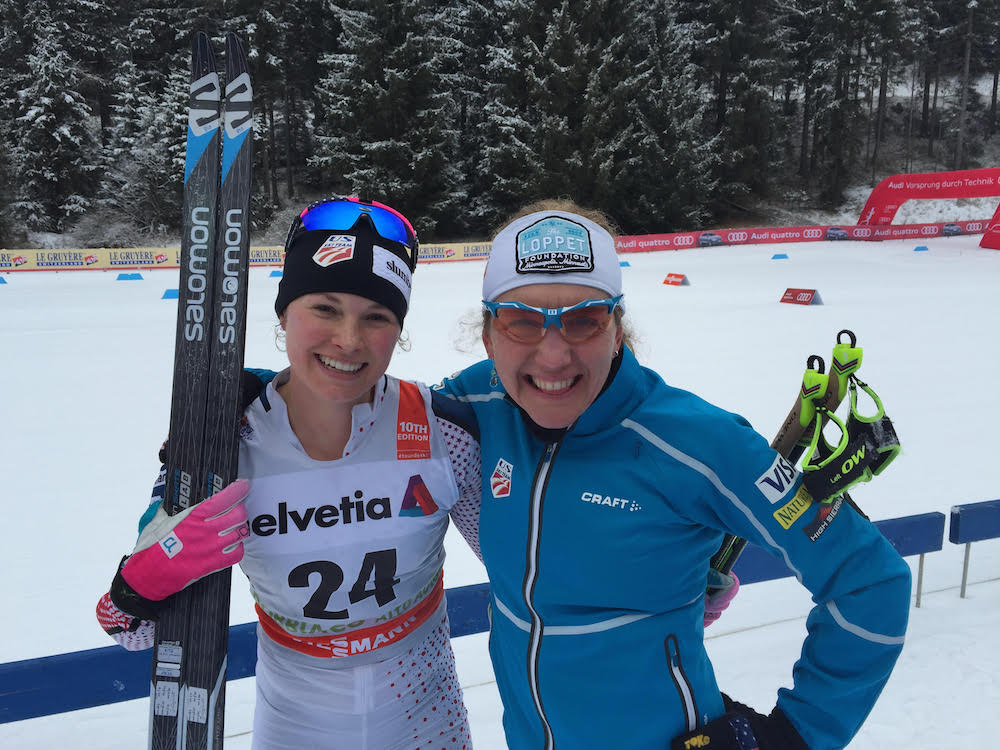
    “At that point like everybody is just in a pain train,” Bjornsen said. “I think that the most fun part about it is anytime you are feeling exhausted or tired — like today when I went out to warm up, my legs just felt awful — you literally can just tell yourself everybody is feeling the same way.
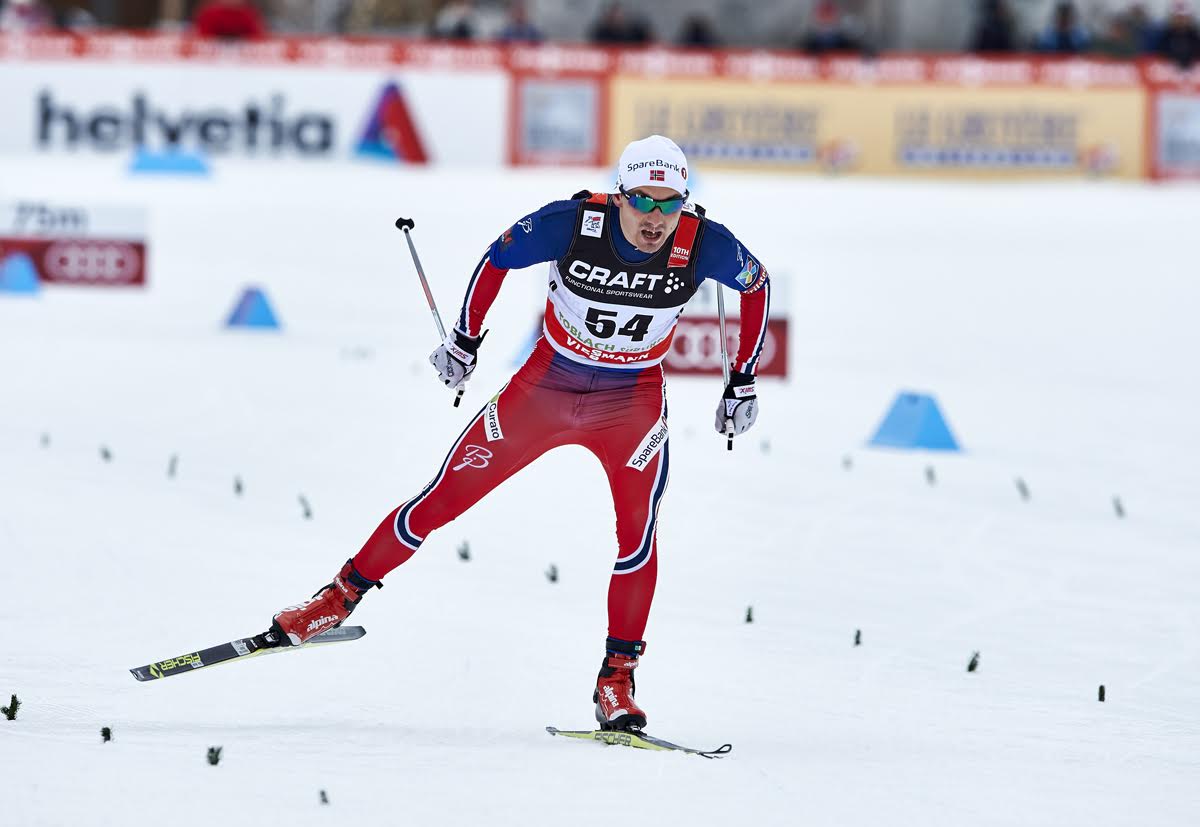
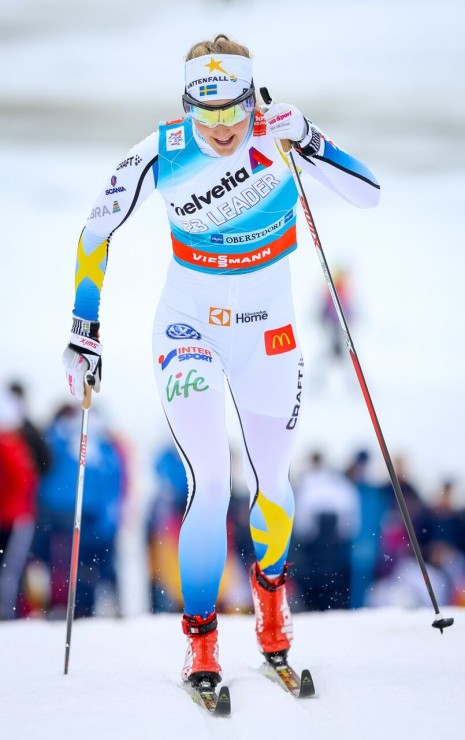
    “It’s not only the sprinters doing the sprint race and just the distance skiers doing the distances, everybody is having to do everything,” she added. “It’s just a matter of who wants to hurt enough. I don’t know, I love the idea of it.”

    The idea of the multi-stage tour as a test of strategy, fitness and suffering can pivot and become a misery. At the end of the day, consistency may not always win the day, but it does win the Tour.

    Racing continues Sunday with the women’s 5 k and men’s 10 k freestyle pursuits.

    Johaug, the Tour leader, will begin first. Bjornsen, now eighth in the Tour, will start 3:03 behind in bib 8. Diggins will start in bib 9, two seconds later.

    Friday’s fourth-place sprint finisher, Caldwell will wear bib 23, starting 4:25 behind the leader. For Stephen, it’s no longer bib 62, she’ll start 27th (+4:27). Gregg will start 38th, 5:55 back, Brennan will go out 42nd (+6:09), and Ida Sargent will start 47th (+6:31).

    Results | Overall standings (through Stage 2) | Sunday’s 5 k start list