From the FasterSkier archive — posts syndicated from athletes’ and coaches’ own blogs between 2004 and 2012, kept online as published. Current coverage is at fasterskier.com.
Skiers Needed to Re-enact Historic Birkebeiner Journey at Birkie 2018
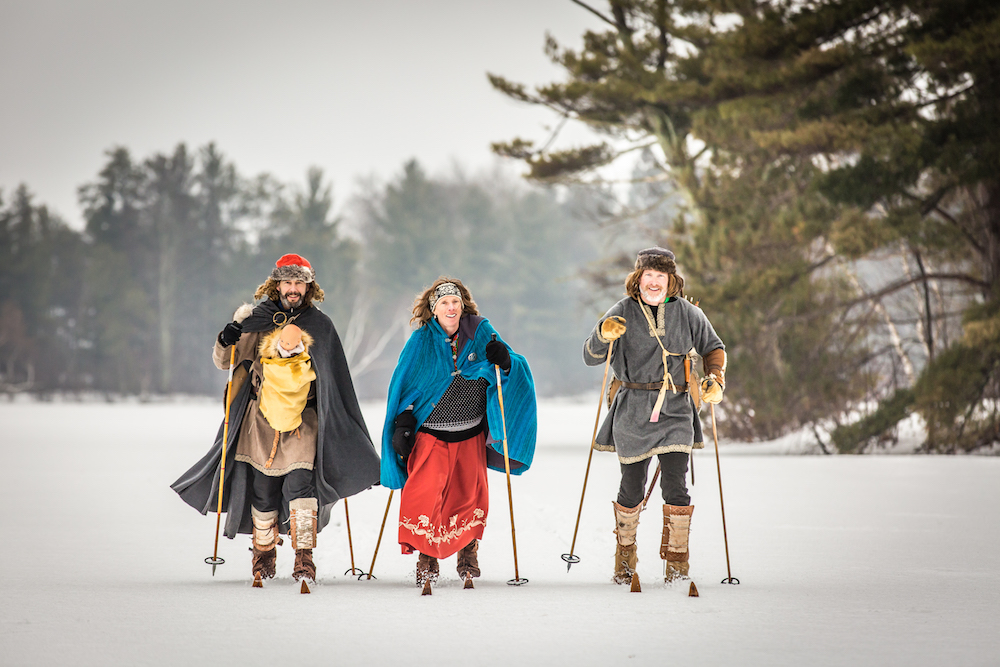
Hayward, Wisconsin (November 6, 2017) – In February 2018, an estimated 13,000 cross-country skiers will gather in Cable and Hayward, Wisconsin to take part in Birkie week ski events. The Slumberland American Birkebeiner is North America’s largest cross-country ski race and the signature event of Birkie week festivities. In homage to the race’s roots, the American Birkebeiner Ski Foundation (ABSF) is seeking a trio of cross-country skiers to portray two Birkebeiner warriors and Inga in the 44th American Birkebeiner Ski Marathon slated for February 24, 2018.
With a nod to the past, the American Birkebeiner selects a trio to portray Birkebeiner warriors, Torstein & Skervald, and Inga, mother of Prince Haakon. The three characters played a pivotal role in Norwegian history when in 1206, amid civil war, the two Birkebeiner warriors, so called for their protective birch bark leggings, skied through the treacherous mountains and rugged forests of Norway smuggling Prince Haakon, the Norwegian King’s son, to safety. Norwegian history credits the Birkebeiners’ bravery with preserving the life of the boy who later became Norway’s King.
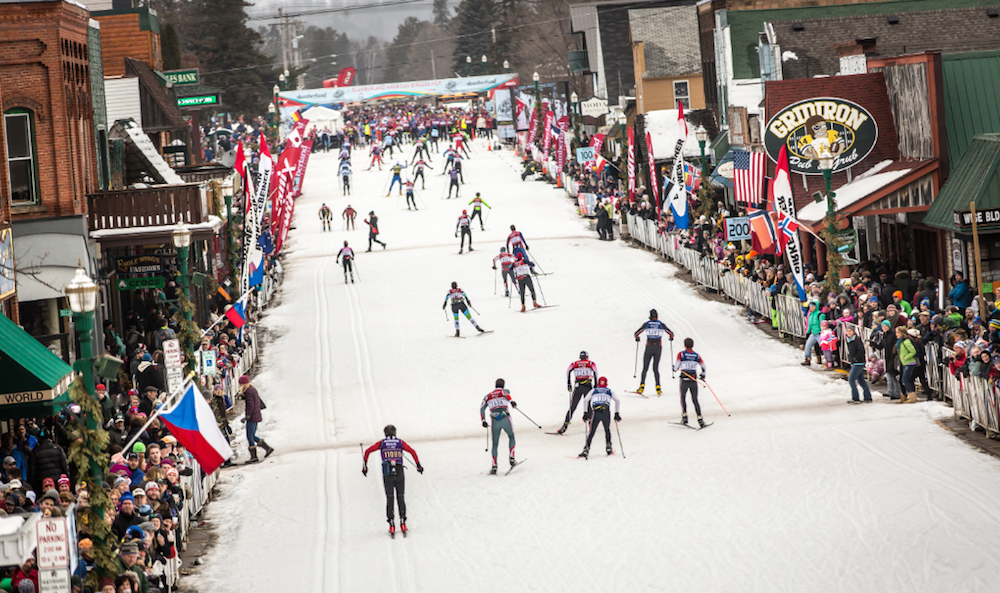
The three skiers reenact the historic flight on wooden skis and in full period costume along the entire 55K classic cross-country race course. While on the trail, the trio serves as Birkie Ambassadors, engaging other skiers and spectators along the way. The dramatic journey culminates when Inga, Torstein, and Skervald ski up and over the American Birkebeiner International Bridge and down Hayward’s snow-covered Main Street amidst cheers from spectators and skiers alike. It is a true celebration of the legacy and tradition of the race.
Past participants who have portrayed Inga, Torstein, and Skervald, had this to say about their memory-making experience:
“Portraying Skervald at the Birkie was a wonderful way to celebrate this spectacular race, this beautiful sport, and my Norwegian heritage. The warm response and connection with fellow skiers and spectators was far more than I expected. I highly recommend others submit their applications to become warriors and Inga – it’s an unforgettable, joyful experience!”
– Steve Long, Duluth, MN (Skervald)
“The energy and enthusiasm I received throughout the weekend was amazing. Standing at the top of the bridge, with the adorable “Baby Haakon” on my back, looking down Main Street with people cheering and toasts being raised, will forever stand hairs up on my arms. It was a magical moment. It was a Birkie like none-other, and truly a way to celebrate the heritage and joy of the Birkie experience.”
– Jen Pearson, Duluth, MN (Inga)
“I felt honored to portray Torstein and I loved sharing my enthusiasm for the American Birkebeiner. Skiing up Main Street with the prince, Skervald and Inga, made for a very memorable day. It was an unforgettable experience.”
– Bruce Derauf, Duluth, MN (Torstein)
Skiers interested in this amazing experience are encouraged to register with the Birkie no later than November 30, 2017. All details and registration information are available at http://www.birkie.com/live/warriors-and-inga-contest. Interested parties may contact the Birkie office at 715-634-5025 or birkie@birkie.com.
American Birkebeiner Inga & Birkebeiner Warriors Contest Details
This historic re-enactment requires skiing the Birkie Classic 55K on wooden skis, and wearing the historic costumes provided by the ABSF.
The Warriors & Inga trio will serve as “ambassadors on the trail,” encouraging both skiers and volunteers along the course route.
The warriors will carry a baby doll along the course until Main Street where they will pick up a real infant “Prince” before skiing the last two blocks with Inga to the finish line.
Entrants need not provide a young child to portray the baby Prince Haakon, however, the ABSF is open to the trio providing their own Prince Haakon (infant).
The group will also make appearances at other events during Birkie race week, February 22-25, 2018.
All three skiers – two warriors and Inga – must sign up as a group rather than individual skiers.
Entries must first demonstrate their skiing ability, then their passion, sense of tradition, and why skiing in these roles would be of importance to the entrant.
Each contest winner will receive a free Slumberland American Birkebeiner or Kortelopet race entry for 2019.
If you ski as a warrior or Inga you will receive credit for completing the race.
The contest application deadline for the 2018 Warriors & Inga contest will close at 11:59 p.m., November 30, 2017.
Questions? Email birkie@birkie.com or call 715-634-5025.
About the American Birkebeiner® Ski Foundation and Birkie® Events
Located near Hayward and Cable, Wisconsin, the American Birkebeiner Ski Foundation, a 501(c)(3) organization, is known for its signature American Birkebeiner Ski Marathon held each February. Today, the Birkie has grown to encompass a year- round lifestyle that provides healthy, active events for thousands of outdoor fitness enthusiasts of all levels. From the iconic Birkie ski race, to the Birkie Trail Run & Trek, and the Fat Bike Birkie race – the world’s largest fat bike race, the ABSF and the Birkie Trail attract skiers, runners, bikers, trekkers, and hikers, from casual day-trippers to elite superstars. The Birkie embodies a healthy active lifestyle. The Birkie Trail is a fitness destination and mecca for outdoor sports enthusiasts. Ski. Run. Bike. Live! Visit www.Birkie.com to learn more.
The scene at 2017 BirkieFest on Feb. 25 at the American Birkibeiner trailhead near Cable, Wis. The iconic race was canceled this year due to a lack of snow and a casual ski on a 5 k loop and festival at the trailhead was held in its place. (Photo: American Birkebeiner Ski Foundation)
The following firsthand account was written by FasterSkier intern Ian Tovell, who attended this year’s American Birkebeiner in February, which was canceled due to lack of snow. Instead, the 2017 BirkieFest was held on Feb. 25 at the new Birkie trailhead and start area near Cable, Wis., with an estimated 10,000 people coming out for a casual ski on a 5-kilometer loop, on-snow demos, live music, food and a beer garden. Photos from Ian, FasterSkier contributor Vince Rosetta, and the American Birkebeiner Ski Foundation.
***
The 2017 American Birkebeiner will be a race that no one will ever forget. It will be remembered for a tremendous amount of effort from Ben Popp and his hard-working staff. Even though there was no race, it was a great event with 10,000 of likeminded friends and a lot of great food, live music, and the ability to check out the latest-and-greatest gear.
I was very excited to race in my third Birkie after missing the race in 2016. Heading into Birkie week, I was obviously worried, like most racers were, as the weather did not look like it was going to corporate. With high optimism, I left Boston to head to Hayward, Wis., with my two travel companions in hopes the race would still happen.
On Friday we headed to the OO trailhead to see if we could get some skiing in. As we were headed to the trail, we got the news the race was going to be canceled and turned into a non-competitive ski in Cable at the start. After traveling all that way, that wasn’t going to stop us from getting in some skiing.
However, my friend forgot his boots that day. Knowing the skiing was not going to be that great, I offered to run the trail so he could ski. We were able to do about 10 k worth of skiing on icy and grassy trails, but it was great just to be out on the Birkie Trail. We were not the only ones that had the same idea as we saw a bunch of other hopeful skiers getting some kilometers in as well.
On Saturday, we headed to Cable to join some 10,000 skiers that wanted to check out the 5 k loop and get some more skiing in. All things considered, the loop was in great shape. As the day went on and more people joined in, the trail became crowded to the point that it was difficult to ski with much speed.
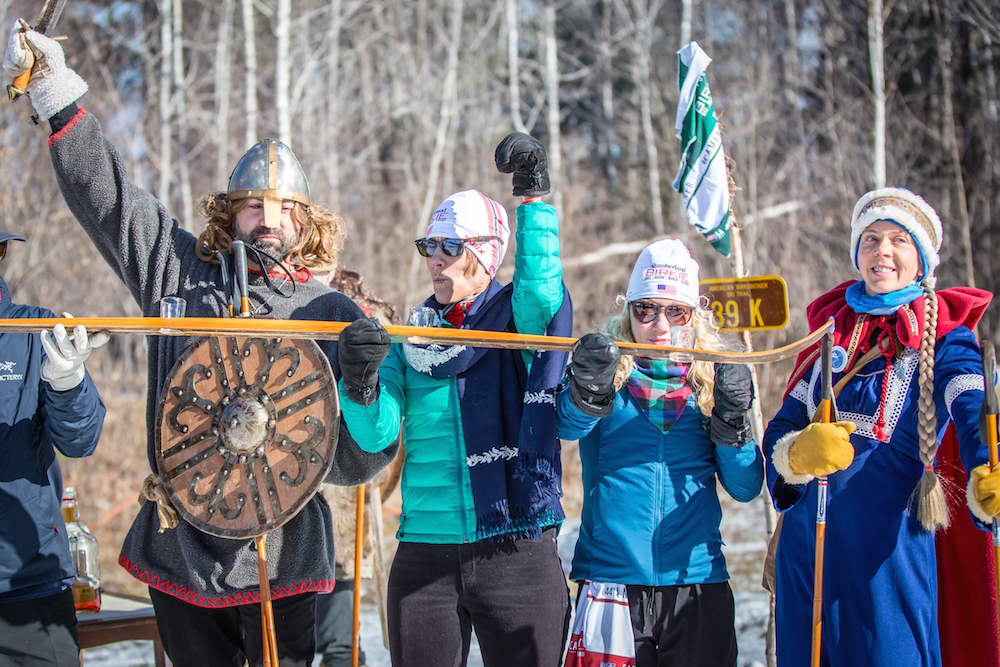
The famous 39K Club Shot Ski trailside at 2017 BirkieFest near Cable, Wis. (Photo: American Birkebeiner Ski Foundation)
The highlight of the course was at 4.8 k, where the 39K Club was there with its shot ski, making sure that the Birkie spirit was alive and well and getting everyone excited just to be at BirkieFest.
After a quick two-lap ski we were off to the food tent to get the famous on-course cookies and chicken-noodle soup. We were fortunate to test out some fat bikes at the demo, which was a ton of fun because we were able to ride them on the Fat Bike Birkie race trail. After listening to some live music, collecting our fair share of free ski ties and other goodies, we headed back to our hotel to start planning our trip for Birkie 2018.
Though my 2017 Birkie experience was not the one I was hoping for, just being on the Birkie trail with 10,000 other people felt like any other Birkie. The atmosphere and camaraderie at this race is unmatched in my experience, and being a part of it is truly special. This year was such a great time even without skiing that I know that it will be the most memorable Birkie of my career. I am looking forward to returning to Cable and Hayward in 2018.
***
Editor’s note: 2018 Birkie registration opened May 1. The 2017 event marked the second official cancellation in the Birkie’s 44-year history. An article in the Birch Scroll 2017 spring edition (page 15) confirmed that 2017 race fees will not be refunded and presented numbers to explain why. The total cost of organizing the 2017 Birkie Week amounted to more than $854,000 dollars. Read the article here.
Dressed for success at 2017 BirkieFest. (Photo: American Birkebeiner Ski Foundation)
A young skier at 2017 BirkieFest. (Photo: American Birkebeiner Ski Foundation)
Fat biking at the 2017 BirkieFest. (Photo: American Birkebeiner Ski Foundation)
Family time at 2017 BirkieFest. (Photo: American Birkebeiner Ski Foundation)
Skiers on the 5 k loop at 2017 BirkieFest on Feb. 25 near Cable, Wis. (Photo: Ian Tovell)
The “39 k” shot-ski station at 2017 BirkieFest near Cable, WIs. (Photo: Ian Tovell)
The scene at the 2017 BirkieFest on Feb. 25 at the Birkie trailhead near Cable, Wis. (Photo: Vince Rosetta)
The scene at the 2017 BirkieFest on Feb. 25 at the Birkie trailhead near Cable, Wis. (Photo: Vince Rosetta)
The scene at the 2017 BirkieFest on Feb. 25 at the Birkie trailhead near Cable, Wis. (Photo: Vince Rosetta)
The new Birkie trailhead as seen on Friday afternoon in Cable, Wis. The American Birkebeiner Ski Foundation announced Friday that it was canceling Saturday’s race due to a lack of snow. (Photo: Birkie webcam)
Hayward, WI (February 24, 2017) – After days of unseasonable weather, rain, and a predicted snow storm front missing the Hayward and Cable areas, the American Birkebeiner Ski Foundation regretfully announces the cancellation of the 2017 American Birkebeiner, Kortelopet, and Prince Haakon cross-country ski races.
The American Birkebeiner is North America’s largest cross-country ski race which runs from Cable to Hayward, Wisconsin, finishing on the snow-covered Main Street of Hayward. After record high temperatures and over 1.5 inches of rain, race officials closed the Birkie Trail from Cable to Hayward 8-days ago to preserve the trail for this week’s originally planned races. Shortly thereafter, Lake Hayward was deemed unsafe for use in the ski-race which caused race officials to focus contingency plans on the Birkie Trail from the American Birkebeiner Trailhead, east of Cable, WI, to the OO Trailhead, east of Seeley, WI.
After discussion with a wide constituency of key stakeholders including emergency and medical officials, trail crew, and others, the ABSF board determined the greater ski course was unsafe for a timed race. Areas of the Birkie Trail were lacking snow, icy, or simply unsuitable for use. As always, the safety of event participants is first and foremost in the minds of ABSF officials, followed by a goal of creating the best possible participant experience for all. Both things are weighed and considered with each and every decision the ABSF makes.
“While we know Birkie, Korte, and Prince Haakon skiers are disappointed with this announcement, I am confident that the ABSF staff did everything within their power to preserve the trail for a safe race,” said Ben Popp, ABSF Executive Director. “We know that the Birkie is so much more than a race to so many. Birkie skiers are passionate about the overall experience. It is in that Birkie Fever spirit that we’re excited to celebrate the love of Nordic sports with skiers and spectators alike at the American Birkebeiner Trailhead. It’ll be a Birkie celebration like none-other!”
In lieu of the annual iconic ski race, the ABSF looks forward to celebrating the inaugural use of the American Birkebeiner Trailhead and start area with BirkieStock 2017 – a Birkie celebration unlike any other!
Skiers, spectators, friends, and the general public are invited! Beginning at 9:30am on Saturday, February 25, 2017, buses will begin transporting riders from the Como Parking Lot, off of Highway 63 and south of Cable, WI, to the American Birkebeiner Trailhead. For those anxious to get some time on their skis, the trail crew is creating an estimated 5K loop for skiers to ski once, twice or as many times as they’d like! Live music begins at 11:45am and plays to 5:00pm. Festival goers can visit the Birkie soup tent, try a Birkie Brew-ski, watch the Nordic World Championships on the jumbo screen, grab a brat, visit the Birkie Store, and more! Plus, we’ve moved the On Snow Ski & Bike Demo from Sunday, February 26, to Saturday, February 25, so guests can try out the latest ski gear and fat bikes!
More details will be announced on www.Birkie.com at 1:00pm today.
The 44th annual 2017 American Birkebeiner events won’t be finishing in downtown Hayward this year after a warm-weather spell and rain in the forecast have made for unstable conditions on Lake Hayward in Wisconsin. The Birkie will likely be held on a modified course this coming Saturday, Feb. 26. (Photo: ABSF)
On Monday, the American Birkebeiner Ski Foundation (ABSF) announced via a press release it will be adjusting the race course for Birkie events, set to take place this week in Hayward, Wis., due to “recent above average temperatures, along with continued warm weather conditions and rain forecast for today.”
“After this weekend’s warm weather, Lake Hayward is no longer a viable option for race week,” the press release stated. “As part of a normal race, skiers would ski across Lake Hayward before entering downtown Hayward. Without Lake Hayward, there is no longer a possibility of finishing races in downtown Hayward. Given this decision, the International Bridge that normally spans Highway 63, will not be installed for Birkie week events this year. While snow is in the forecast for later this week, a downtown finish is no longer a feasible option for 2017 events.
Birkie Weather Impact History:
1981 – Elites only race 6 laps around 8K track around Mt. Telemark due to weather 1981 – Snow arrives two weeks late, citizen skiers complete Birkie race on March 7th 1983 – Open water on Lake Hayward, race is started on Duffy’s Field (Race direction Hayward to Cable) 1984 – Due to lack of snow, race is started on Duffy’s Field (Race direction Hayward to Cable) 1985 – Due to lack of snow, race is started at Rosie’s Field (Race direction Hayward to Cable) 1991 – Due to Lack of snow, race is started at Rosie’s Field, ironically, 8” of snow fell the morning of the race (Race direction Hayward to Cable) 1998 – The race finished at “OO”, Barnebirkie was a foot race. 2000 – Birkie race canceled for lack of snow 2002 – Race finished in Duffy’s Field after rain on both Friday and Saturday 2007 – With temps of 52o and rain, the Birkie race was shortened to 25K for lack of snow; only elite skiers were timed, open ski for citizen skiers
“As always, the safety of participants is first and foremost in mind for the entire ABSF staff and board, followed by their goal of creating the best possible participant experience for all,” the release continued. “Both things are weighed and considered with each and every decision the ABSF makes.”
On the whole, the Birkie Trail’s base has remained “quite stable” despite the February thaw. Trails north of the OO halfway point have a four-inch base and south of it “remain mostly intact,” the release stated.
“As of today, the possibility of finishing at Duffy Field in Hayward remains an option for Birkie Week races. That being said, the ABSF is very realistic with contingency planning and are focusing on the increasing likelihood of staging Birkie week events on the trail north of OO.”
The locations of Thursday’s events will be made and announced on Tuesday, and the ABSF planned to wait 24 hours “to see what Mother Nature has in store for Cable and Hayward” before making decisions regarding Friday’s and Saturday’s events. The Kortelopet (half Birkie) is scheduled for Friday and full Birkie on Saturday.
The ABSF will provide updates on its official website Birkie.com, Facebook, Twitter, direct emails and through local media (as well as here on FasterSkier).
The American Birkebeiner Ski Foundation received a $12,450 JEM Grant from the Wisconsin Department of Tourism. From left to right: Regional Tourism Specialist Julie Fox with Ben Popp, ABSF Executive Director, and Nancy Knutson, ABSF Director Marketing/Communication)
HAYWARD, Wis. (Feb. 9, 2017) – The American Birkebeiner Ski Foundation is racing into the new year with a marketing campaign aimed at promoting its Kortelopet (Korte) cross-country ski race and the importance of a healthy, active lifestyle. With help from a $12,450 Joint Effort Marketing (JEM) Grant from the Wisconsin Department of Tourism, the American Birkebeiner Ski Foundation looks to increase participation in the 29 kilometer race slated for Feb. 23, 2018. This year’s will take place on Friday, Feb. 24.
“This project clearly demonstrates that funding tourism marketing initiatives produces a sound return on investment for the local economy,” Governor Walker said. “Tourism is part of Wisconsin’s economic foundation and its continued growth is a priority for my administration because of the nearly 191,000 jobs it supports, the tax revenues it generates and the positive image it projects for the State.”
The Korte is known as a half-marathon distance cross-country ski race. Traditionally held the same day as the world-famous full marathon Birkebeiner (Birkie), the Korte will now take place the day before the Birkie in order to provide Korte skiers with a unique race experience and to allow for the potential of doubling race participation from 3,000 to 6,000 over the next 7 to 8 years. Event organizers hope that moving the Korte to its own day will increase the number of participants by 10 percent each year. This year’s Korte event is expected to attract more than 10,000 participants and spectators to the Hayward area, generating an estimated $1.6 million in visitor spending.
In 2016, the American Birkebeiner and Kortelopet races drew skiers from 46 states and 22 countries. The Kortelopet race provides yet another medium to speak to skiers, both domestically and internationally, about northwestern Wisconsin and the skiing opportunities available on the Birkie Trail. The American Birkebeiner Trail system was recently voted the No.1 cross-country ski destination in the United States by USA Today/10Best.
“The American Birkebeiner is North America’s most prestigious cross country ski race, and each year Wisconsin’s Northwoods welcomes thousands of skiers and spectators from around the world,” said Tourism Secretary Stephanie Klett. “We’re thrilled to support the expansion of the Korte event so more athletes can participate and ultimately grow the overall economic impact of the Birkie weekend.”
In 2015, the tourism economy in Wisconsin totaled $19.3 billion, a more than four percent increase from 2014. Since 2010, tourism activity in the state added 18,717 jobs to the economy, an 11% increase in travel and hospitality employment opportunities for Wisconsin residents. Visitors generated $1.5 billion in state and local revenue. Wisconsin taxpayers would need to pay $640 per household in order to maintain current government services. Total business sales in Sawyer County reached more than $113.7 million in 2015, supporting 971 jobs and $9.9 million in state and local taxes.
“We are incredibly pleased to have been selected as a recipient of the Wisconsin Department of Tourism JEM Grant and the opportunity it affords us to grow the Kortelopet race. The grant provides us with the means to promote the race itself, helps us to encourage a healthy, active lifestyle, all the while increasing tourism in northwestern Wisconsin,” said Ben Popp, Executive Director, American Birkebeiner Ski Foundation. “We are grateful for the opportunity and excited to get started.”
In fiscal 2016, the Department funded 57 JEM projects, awarding a total of more than $1.1 million. Visitor expenditures driven by the marketing from these projects will exceed $31 million. JEM grant funds are available to non-profit organizations for the promotion of Wisconsin tourism events and destinations. The state can fund up to 75 percent of a project’s first-year advertising and marketing costs, and provide support for second- and third-year projects with decreasing amounts for funding until projects become self-sustaining. For information on the JEM Program and application materials, visit http://industry.travelwisconsin.com.
The mission of the Wisconsin Department of Tourism is to market the State as the Midwest’s premier travel destination for fun by executing industry-leading marketing programs and establishing strategic partnerships. The Department plays a significant role in generating greater economic impact and jobs for Wisconsin. The portal for traveler information can be found at: www.travelwisconsin.com.
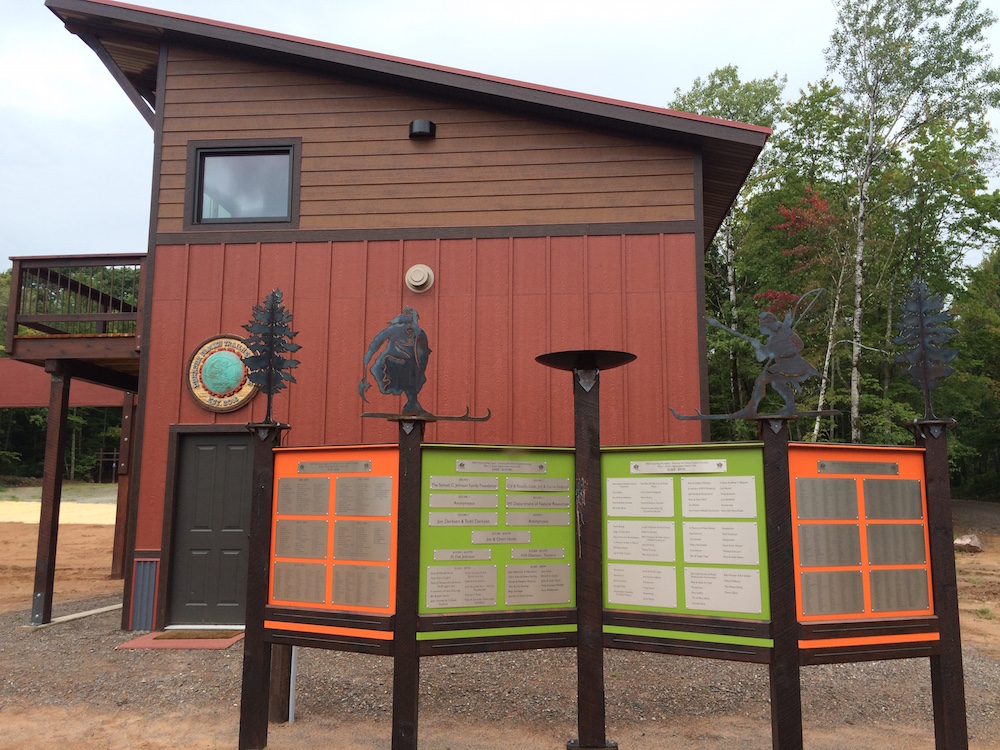
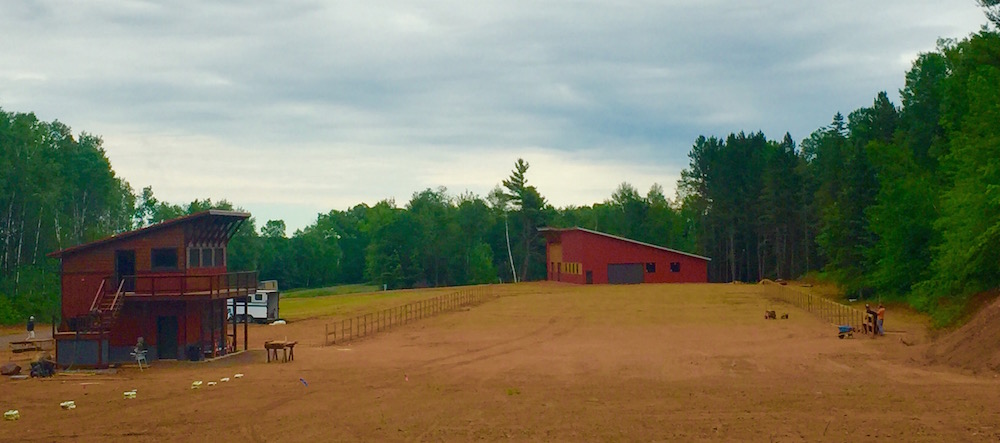
A look at the new permanent start and American Birkebeiner Trailhead during construction this summer in Cable, Wis. (Photo: ABSF)
It has been an exciting 2016 for the American Birkebeiner Ski Foundation (ABSF). After a successful completion of the Phase 1 fundraising program in 2015, the ABSF secured a land purchase that will give North America’s largest ski race, known as the Birkie, a permanent start area for events.
The Phase 1 campaign also supported the construction of a warming shelter at the new start, which is open year-round, several aid-station buildings along the trail, which can be used throughout the year, and also the construction of brand-new Birkie offices and the Tony Wise Museum in Hayward, Wis.
Just like in previous years, the ABSF has been busy in the offseason, making improvements to the American Birkebeiner (including the 50-kilometer skate and 55 k classic marathons, set for Feb. 25, 2017) and its trail system.
In mid-December, FasterSkier checked in with Ben Popp, ABSF executive director, on the phone to discuss some of these changes and what future Birkie participants can expect.
***
FasterSkier:First off, congratulations on the new start-line purchase and trailhead. That seemed to be a goal the Birkie had for years. Can you tell us why that was such an important piece of the Phase 1 fundraising campaign?
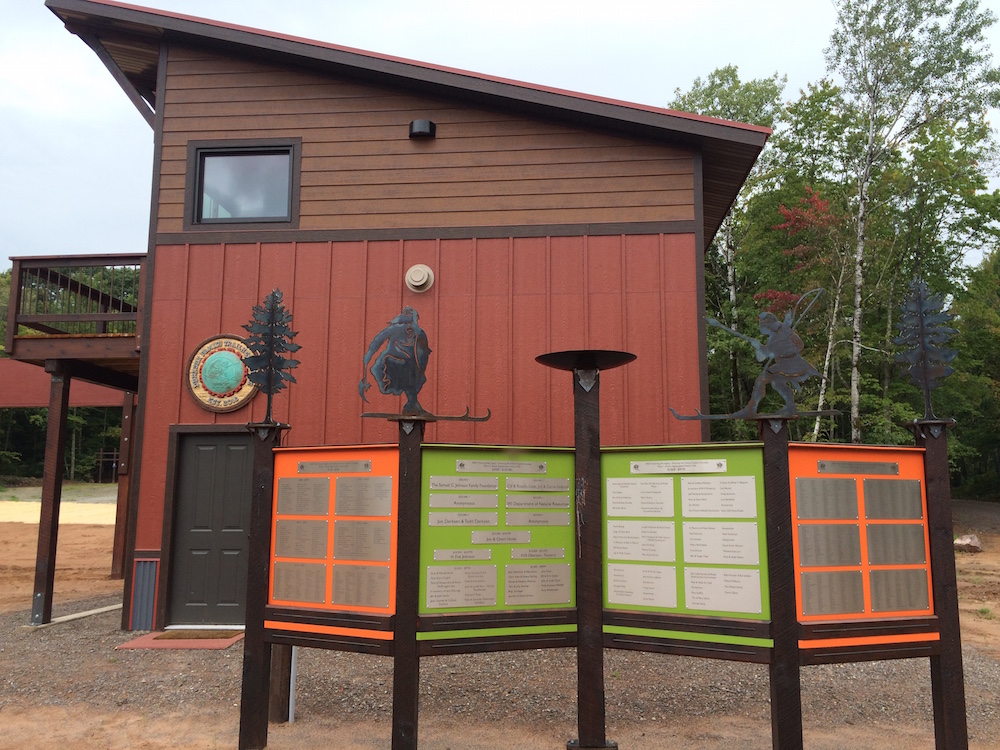
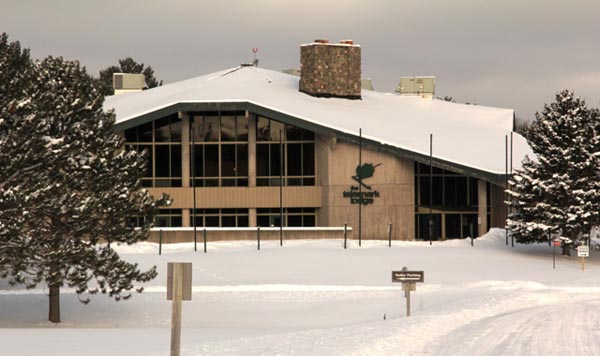
The Derksen Family Trailhead Warming Shelter at the new American Birkebeiner Trailhead. (Photo: ABSF)
Ben Popp: We are really excited for this new trailhead. We recently had the first event there, a youth biathlon camp and it was great to see the potential this new trailhead will bring. I skied up from Boedecker and when I got to the new trailhead, I had a warm place to change, people were hanging out, there were nice new bathrooms for people to use. Upstairs, the kids were meeting and getting lessons before they headed out to the trail.
You finally see that when you have facilities like this it brings in other people as well as the skiers. There was a woman inside reading a book while her husband was out skiing longer. It’s that whole concept that I am excited to see at the start line. It is something that can be used for events other than the Birkie. It is going to be the start for a JNQ [Junior National qualifier] meet, the Wisconsin state championship and the newly announced race that the Hayward high school nordic team is putting on this winter.
Phase 1 fundraising raised $715,000 dollars from more than 1,400 donors. They will all get to reap the benefits and be able to enjoy a first-class facility and help build the nordic community.
During the week between Christmas and New Years, we will have the big building heated and have concessions inside to support the 300-400 high school kids who are up here to ski. Before they huddled up into buses and hung around Double OO. Now they will have a warm building to hang around at, wax skis and get something to eat.
FS:Now that Phase 1 is complete, what does Phase 2 entail? How is the fundraising coming along?
BP: It has been a very busy fundraising season for us. The Birkie staff has been all over promoting the Foundation and the new development phases. The feverish pace has picked up for sure. We’ve been out a lot, as far as Traverse City and everything in between. It is important to work with USSA [the U.S. Ski & Snowboard Association], The Loppet, and Endurance United to strengthen the nordic-ski message in this area. People expect us the be a leader in this movement because we are looked on to be the innovators and spokesperson for this community. The community is small but extremely passionate, and we as a group need to capitalize on this if we want the sport to grow. Our message is to support us, but in doing so you are supporting the community and the whole nordic industry. Having spokespeople like Kikkan [Randall and Jessie [Diggins] out there winning and supporting the USSA, it is, in turn, helping us grow.
Phase 1 was the land purchase and trailhead. With that accomplished, we moved into Phase 2 and that focuses on improving the trail. The question always comes up about snowmaking and we finally have an opportunity to pursue this with power and water at the new start line.
We are starting to explore the possibility of storing snow during the summer like they do in Canada and in Europe. Some of our staff just got back from Europe where they met with a bunch of people from the FIS [International Ski Federation] and World Cup venues to talk about this very topic.
Between the skiers and the bike riders, we estimate that there are over 100,000 people using the trail all year long. That leads to a lot of erosion concerns and Phase 2 addresses these concerns. If we can improve the way the trail drains and stop erosion we could easily ski on just two inches of snow.
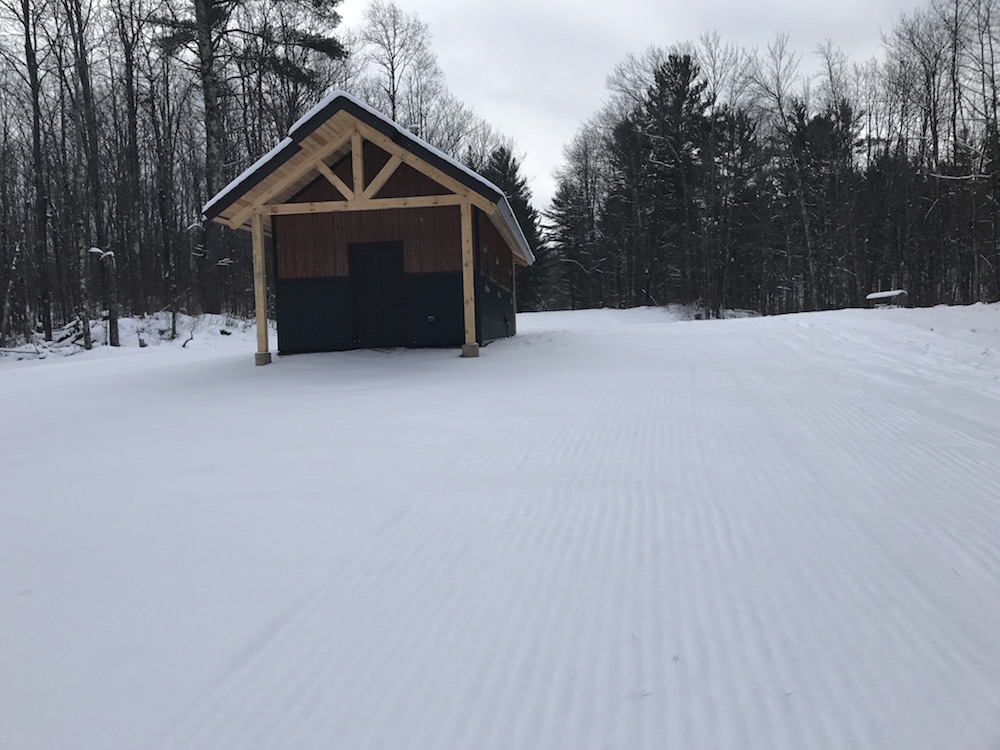
The Timber Trail warming shelter on the Birkie Trail. (Photo: ABSF)
Another part of Phase 2 is the aid stations. Every aid station is now going to have heated buildings with water that are open year-round. The idea is that it’s a building that is open to the public year-round for water and shelter. For the 30 events that use the trail, they will provide a place to store race-day equipment and everything that gets used for the events.
Other parts to Phase 2 include extending the classic trail south of Double OO. It’s not a full second trail but there are some places we can separate the skate and classic trail past Double OO.
Other items include putting an underpass under [Route] 77 for skiers and bikers. We are working in conjunction with the Wisconsin DOT and using some grant money to find a way to not to have to block that road during our race and other races that use that intersection.
We are also working on replacing some of our older pieces of equipment. Our oldest PistenBully is 17 years old, so with upwards of 100 k of trail, these machines really take a beating.
We are looking to get wider PistenBullys to accommodate the width of the course better. Right now it takes us three passes to groom the trail. Wider PistenBullys will reduce that to only two passes. Fewer passes mean faster and more importantly, better grooming.
We want to wrap up Phase 2 around December 2017. The fundraising goal for Phase 2 is right around $1.6 million dollars which is twice as high as Phase 1 was. We raised about 35 percent now and are close to $600,000 raised to this point. We are getting there and are excited about the response.
FS:Recently the Birkie Trail got two very prestigious awards, being named the best cross-country ski trail in the U.S. as voted by USA TODAY’s 10 Best Readers’ Choice travel award contest and, in conjunction with the Hayward Lakes Visitors and Convention Bureau, earned a 2016 Champions of Economic Impact award. What do these two awards mean to the American Birkebeiner Ski Foundation, the towns of Hayward and Cable, and also for the trail itself?
BP: We have the trail but also the community support to host the nordic community. The town’s “all-in” mentality of letting the Birkie Foundation take care of the trail, we (the community or Hayward and Cable) will take care of the people who are here to ski and make sure they have a great time outside of skiing. That was a huge part of us getting these two awards. The future is very exciting for us and the community. Being so close to the Twin Cities and their enormous nordic community makes us very lucky because we can be the destination that some of these other great cities and resorts have become. The area has turn into a four-season, all-year-round destination spot.
In terms of what the Birkie means to the cities of Cable and Hayward financially was shown in a recent 2013 University of Wisconsin economic study that estimated the silent sports lifestyle in Hayward and Cable brings in close to $22 million dollars to the community. That is a huge number for a town of 3,000 people. That includes visitors coming up to ski, bike, ride ATVs, hunting, and fishing, etc. It also includes people renting hotel rooms and buying second homes here. That goes back to my point of the towns embracing this lifestyle because bars and restaurants realize that there are other things people want to do up here once they are done skiing.
All the construction in Phase 1 and Phase 2 has been from local contractors in the Cable/Hayward area. Again, building that sense of community that helped us get these awards.
FS: How did the decision to separate the 29 k Kortelopet race from the Birkie come about? Was it due to logistical problems and too much traffic, or something else?
BP: Obviously, the biggest change is moving the Korte, America’s second largest ski race, to Friday. We started thinking about doing this about two years ago. The question is why? We knew two years ago that this race wasn’t the race experience we wanted to give participants. They missed out on the opportunity to see the crowds that lined Main Street and cross the finish line there. Starting at the airfield [jn Cable] and ending close to there just wasn’t the event experience we wanted. The current setup worked but didn’t give the experience we were proud of. People told us time and time again that they wanted to be a part of the atmosphere at Main Street, and not just be an afterthought of the Birkie.
The biggest factor that prompted the move other that the atmosphere was demographics. The majority of the Korte participants are women and 40 percent are under the age of 23. Basically, its kids and women and those are two demographics that are vital to us and ones that we needed to get excited about the race. The concept was that if we can give these two groups and event experience that was as good as or better than the Birkie and then get them to get more kids and women involved in the events then it is a huge win for us. We were willing to take on the risk, extra costs and manpower to accomplish this because we felt it was important to get these two demographics excited about skiing.
FS:With the Korte starting at OO, what changes did you have to make to that area to be able to hold that many racers at once, compared to previous years where the field was pretty thin by the time they got to OO?
BP: We did a lot of work at Double OO for the new Korte start and for the Birkie. We will eventually have a new building there as a result of Phase 2, which will really help support or races as well as the mountain bike races in the summer.
Since the Korte start is almost as big as the Birkie start we did a lot of work widening parts of the trail that leads from the start to “Picnic Table Hill”. The start line for the Korte will be on the south side of Double OO. If you skied from the current Double OO cabin and went left down the hill to that flat area, you will be right at the new start line. We widened that area by two acres and also added a walking path for spectators. They will walk from the building over the bump and through the nostalgic arches which is pretty cool because that part of the trail won’t be used for the Birkie anymore. (Basically, once you cross Double OO, Birkie racers in previous years went right up the hill, in 2017, we will cross the street and turn left.) Everyone will funnel through the new Korte start on Saturday since all the aid stations and infrastructure will be there from Friday’s race.
We reworked that corner so it isn’t off-camber anymore and also worked on the descending hill into the Korte start area. Once the skiers cross the road both races will join at that point. in past years, the classic race didn’t join the skate race until Picnic Table Hill. Now they join once everyone crosses Double OO. The course is now 70-feet wide as it goes up the hill to the top of Picnic Table Hill.
We also worked on the righthand turn from the Picnic Table Hill descent. That has always been a nasty hill so now it just flows straight instead of turning to the right. That should help with the flow of the race and support the large group of Korte skiers that will be coming down that hill.
After all these course changes, the Birkie is just a bit shy of 51 k. Last year the race was a bit longer because of the added 2 k section at Fish Hatchery. This year, we are taking that section out for the skate race so it puts the skate race close to 50.5 k and the classic race is just shy of 55 k, sitting at 54.6 k.
In the future, the classic race might get a bit shorter as we continue to work that trail south of Gravel Pit. There are a few places that we can put in a new classic trail as we go south but for now, the distances are staying very close to the advertised 50 k and 55 k distances.
FS:What changes are being made to the expo and race weekend this year in order to support the racers who are entered in the Korte race?
BP: Basically, everything is staying the same. The whole event weekend ends up just being four hours longer. The events on Thursday are just starting a little bit earlier. In the past, we started all the events around noon. This year we are starting at 8 a.m. Overall, the events are spread out a little more.
We are turning downtown into a big festival over the race weekend. We are going to have live bands, food vendors and family events to help improve the excitement of the race and to support the spectators there waiting for their loved ones to finish.
The expo will stay the same for this year. Feedback from most of the vendors we talked to said that the current setup is the extent of what they can handle in terms of manpower, product and race-weekend support. It will be interesting to see. After the race, we will ask for feedback and change things up and adjust things that happened or didn’t work. For now, we just ask everyone to go into it like they normally would and let us know your thoughts and feeling after the race.
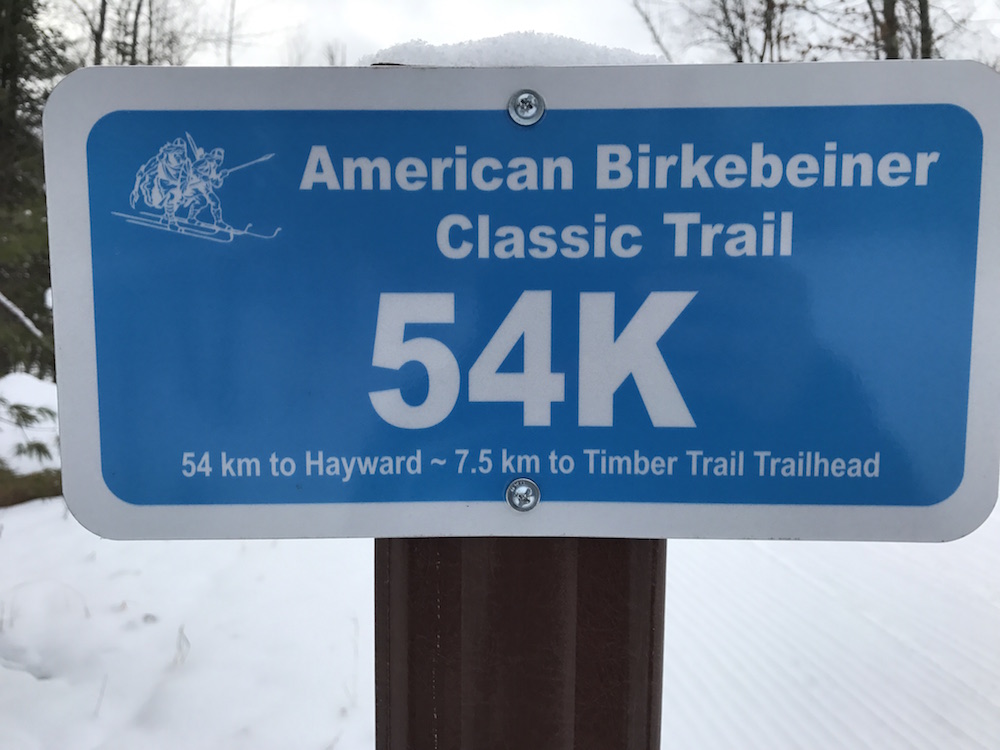
One of the Birkie’s new kilometer markers on the classic trail. (Photo: ABSF)
FS:On a recent trail run, I noticed the new trail markers. What was the 15 k mark is now 37 k to Hayward mark?
BP: All the signage on the trail has been redone this year. It now counts down to Hayward instead of counting up just like the race. Also, every sign is unique because they are now directional. The staff at Apple Awards designed the signs to tell you how may kilometers to Hayward, Firetower, Boedecker, Double OO etc. The classic trail signs will be blue and the skate trail signs will be red. It gets interesting when the two courses meet at Double OO because the race distance will be different. This just reflects the extra length for the classic race.
FS:After last year’s warm weather and the warm lake conditions, have you considered reworking the finish to avoid the lake?
BP: Downtown is critical for the race. We have to get into Hayward to finish the race. We have looked at a few worst-case scenarios if Lake Hayward is deemed unskiable. The alternative routes we looked at involving a few different turnoffs onto the snowmobile/ATV trail then go around the backside of New Moon into town.
If we have snow to work with and the lake ice isn’t safe, then it is possible because we will have snow to move around and can activate the other backup plans we have talked about. If it is a warm year with no snow and no ice, then it becomes a little more challenging.
Telemark Resort (Photo: Tom Held)
FS:Visitors and guests to the old Telemark Resort will remember the hall of fame wall covered with past Birkie winners. Now with the opening of the new Tony Wise Museum of the American Birkebeiner, the hall of fame has an official home. What did it mean to the history of the race to get the hall of fame and museum established in a permanent location?
BP: The museum provides the tradition and inspiration that the Birkie is all about. Having Kikkan here last year and Jessie being a Birkie Ambassador this year is great. They provide the inspiration and role models for kids and adults.
The Birkie is all about tradition. With Telemark closing, we were going to lose a lot of that tradition with the Hall of Fame and other aspects of the race potential being lost forever. We were approached by an extremely qualified woman lives in Cable and worked for the Smithsonian and she wanted to take on the museum project. She helped raise the money to build the museum and to relocate the Birkie offices all under one roof.
The museum far surpassed all expectations we had for it. Having so much history and tradition in one building is incredible. We have a lot of hands-on interactive displays, personal stories, and history of Tony Wise and his family. The is so much potential for the museum to grow in the future. We still have a storage room of archived pieces that was donated to us by the Lewis family from Telemark that we haven’t even begun to look at yet. It will be fun to see how the museum evolves in the future.
It is great to see how many people have come from states that have never heard of the Birkie, who might be in town for vacation or visiting family, and see their reaction as the walk around the museum experiencing the Birkie history for the first time.
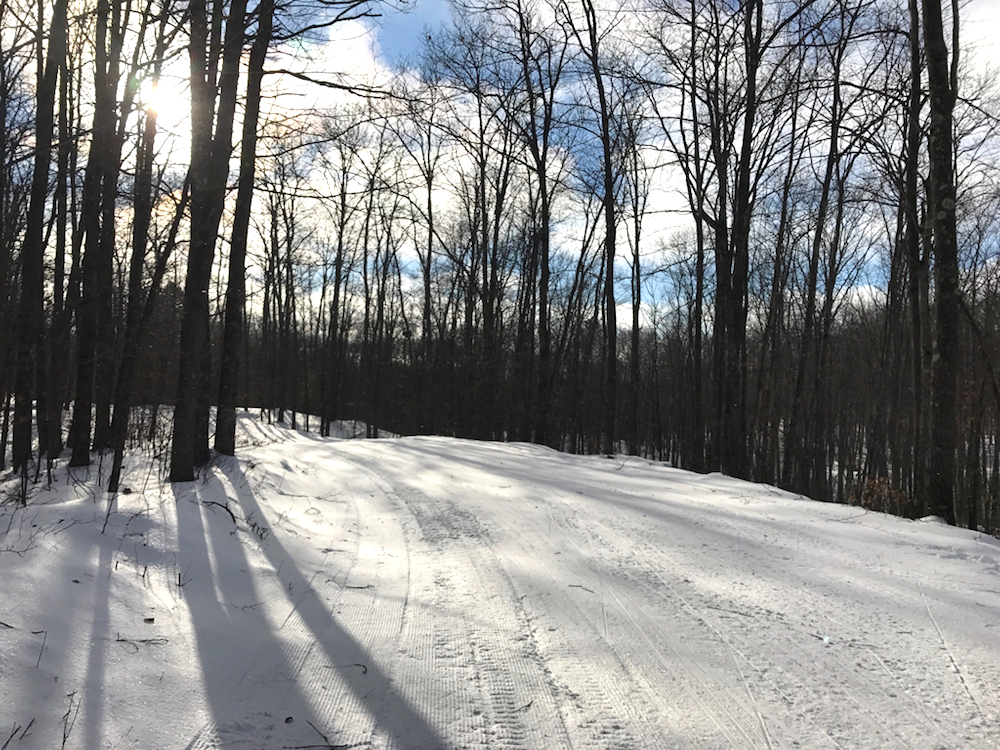
The Birkie trail as seen this past weekend between Cable and Hayward, Wis. The entire trail is covered, with less than a five-inch base, according to a groomer on Saturday, Dec. 31. (Photo: Vince Rosetta)
***
Author’s note: The Birkie Foundation has been working hard to give fans, spectators and racers the best experience possible for this years race weekend. If you are interested in supporting the American Birkebeiner Ski Foundation all the information can be found on its website.
Registration to Close 11:59pm, Thursday, November 3
The American Birkebeiner Ski Foundation announced today that registration for the 44th Slumberland American Birkebeiner, the “Birkie,” North America’s largest cross-country ski race, will close at 11:59pm, tonight, Thursday, November 3.
The American Birkebeiner (55K classic/50K skate) race is scheduled for Saturday, February 25, 2017; the Kortelopet (29K), North America’s second largest ski race, and Prince Haakon (15K), are slated for Friday, February 24, 2017. While both Kortelopet and Prince Haakon race registrations are still open, they are quickly nearing capacity with fewer than 185 remaining spots available in the Kortelopet and fewer than 250 in the Prince Haakon.
An estimated 13,000 skiers will participate in American Birkebeiner Ski Foundation races in February 2017. An international event, the 2016 race drew participants from 46 states and 22 countries to northwestern Wisconsin.
The American Birkebeiner is rooted in Norwegian history when two Birkebeiner warriors, so- called by the birch bark leggings they wore, skied two-year-old Prince Haakon, heir to the Norwegian throne, to safety on a long and perilous journey through the treacherous mountains and forests of Norway. Their determination is commemorated each year at the American Birkebeiner Ski Marathon as skiers recreate the courageous 55 kilometer journey.
New in 2017
Friday, February 24, 2017: Both the Kortelopet and Prince Haakon races will finish in downtown Hayward with the 29K Kortelopet starting at the Highway OO Trailhead and the 15K Prince Haakon starting near Mosquito Brook.
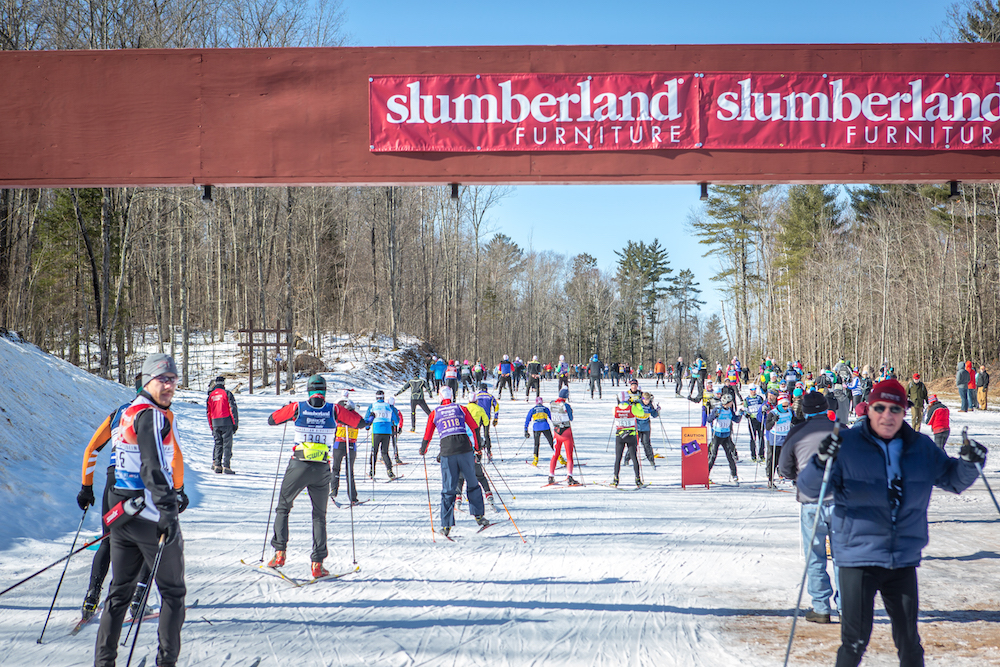
Saturday, February 25, 2017: For the first time ever, 44th Annual Slumberland American Birkebeiner skiers will line up for the inaugural use of the Birkie starting line at the new American Birkebeiner Trailhead near Cable, Wisconsin. Skiers will traverse the legendary Birkie Trail as they make their way toward the finish line on Hayward’s snow-covered Main Street.
Slumberland Furniture is the title sponsor of the 44th American Birkebeiner ski race.