From the FasterSkier archive — posts syndicated from athletes’ and coaches’ own blogs between 2004 and 2012, kept online as published. Current coverage is at fasterskier.com.

Tag: 2017 Junior/U23 World Championships

  • U23/Junior Worlds Recap: Weekend Highlights from Soldier Hollow

    The U.S. women's relay after taking a historic third in the 4 x 3.3 k relay at 2017 Junior World Championships on Sunday at Soldier Hollow in Midway Utah, with (from left to right) Hailey Swirbul, Katharine Ogden, Julia Kern, and Hannah Halvorsen. (Photo: FlyingPointRoad.com)
    The U.S. women’s relay after taking a historic third in the 4 x 3.3 k relay at 2017 Junior World Championships on Sunday at Soldier Hollow in Midway Utah, with (from left to right) Hailey Swirbul, Katharine Ogden, Julia Kern, and Hannah Halvorsen. (Photo: FlyingPointRoad.com)

    For fans of North American skiing, some of the last races of U23 and Junior World Championships at Soldier Hollow in Midway, Utah, proved beyond captivating, surpassing most expectations and previous results.

    But for the U.S. junior women’s relay, a group of four that had set a goal two years ago at a U.S. development training camp, the podium was exactly where they had envisioned themselves.

    Relay bronze

    Hailey Swirbul, Julia Kern, Hannah Halvorsen, and Katharine Ogden went out and achieved that very goal on Sunday, racing to third in the 4 x 3.3-kilometer relay on the final day of Junior Worlds.

    According to Ogden, who became the first American to capture an individual bronze two days earlier in the women’s 10 k skiathlon, the foursome were at a camp two years ago in Lake Placid, N.Y., when they walked into a store together. In the 1980 Olympic village, they found red-white-and-blue tube socks — just like the socks the U.S. Ski Team women wear in World Cup team events — on sale. They each bought a pair and made a goal of wearing them together in the relay at World Juniors.

    “The four of us have a group message, and it wasn’t unusual to open that message and see a note from someone who just couldn’t contain their excitement for this relay and had to share it with the rest of us… and this was up to two years ago!” Swirbul explained in an email. “We didn’t just think or hope we were capable of this result, I think we all KNEW we could do it deep down. It was kind of surreal to wake up on the morning of the race and think, ‘Today is the day, this is what we have been waiting for for so long! Let’s do this.’ ”

    So just by getting to the relay start line on Sunday, they achieved their goal. But they knew they were capable of a top, even best-ever, result.

    Hailey Swirbul tucking into the stadium as the first skier on the U.S. women's 4 x 3.3 k relay team at 2017 Junior World Championships at Soldier Hollow in Midway, Utah. (Photo: FlyingPointRoad.com)
    Hailey Swirbul tucking into the stadium as the first skier on the U.S. women’s 4 x 3.3 k relay team at 2017 Junior World Championships at Soldier Hollow in Midway, Utah. (Photo: FlyingPointRoad.com)

    Swirbul started the team off by skiing to eighth in the first classic leg.

    “My leg of the race started out fast — exactly what I had expected going into it,” Swirbul wrote. “The first kilometer flew by, and before I knew it, I was cresting the peak of the biggest climb of the course with legs that felt like they were made of lead! I tried to stretch them out on the downhill and hung onto the girls around me through the rolling last kilometer of the race. That 3k was tough!!”

    She tagged off to Kern, who moved the team into sixth by the race’s halfway point. Kern came down with a cold last Wednesday and sat out Friday’s skiathlon to rest of for the relay.

    “I was feeling a lot better today but definitely not 100% healthy,” Kern wrote in an email. “My goal was to go out and ski the best leg I could and fight hard to the finish because every second counts. I wasn’t really nervous until I was hanging around in the start pen waiting to see Hailey throw down a strong first leg. I was most nervous that I wouldn’t be able to ski well since I am not completely healthy and let the team down.”

    She focused on skiing strong over the second half of the course, “since it played my strengths and I knew people would be hurting at the point,” Kern wrote. She tagged Halvorsen in sixth, about 25 seconds out of third and 45.5 seconds behind Italy in first.

    Skiing the first skate leg for the U.S., Halvorsen focused on third place. She attacked on the climb known as “Horseshoe Hill”, passing Sweden and France to take that position, but France’s Laura Chamiot-Maitral passed her back on the downhill.

    After the race, Halvorsen told the U.S. Ski Team media that she had learned a lot about pacing the 3.3 k after placing 13th in the 5 k freestyle earlier in the week (following Ogden, who fifth).

    “I realized I just needed to trust myself and not start so fast — just be calm and slowly catch up,” she said.

    The final exchange of the 4 x 3.3 k relay, with Americans Hannah Halvorsen (second from left) before tagging Katharine Ogden (l) in fourth, right behind France in third. (Photo: FlyingPointRoad.com)
    The final exchange of the 4 x 3.3 k relay, with Americans Hannah Halvorsen (second from left) before tagging Katharine Ogden (l) in fourth, right behind France (6) in third. (Photo: FlyingPointRoad.com)

    Halvorsen tagged Ogden in fourth at the final exchange, just 2.1 seconds out of third.

    “I knew that no matter what, I needed to catch up to third place,” Ogden reflected in an email. “I honestly didn’t even think about pacing myself and just went hard from the tag.”

    On the long, sustained climb on the backside of the 3.3 k loop, Ogden passed France’s Lena Quintin to move into third. As she soared down the other side, within view of her teammates, Ogden continued to push the pace to lock up third.

    “I know Katharine’s technique really well so when I spotted a black dot skiing along I knew it could only be Katharine,” wrote Kern, Ogden’s teammate for the last two seasons at the Stratton Mountain School (SMS) in Vermont. Kern, Ogden and Halvorsen are all members of the U.S. Ski Team (USST) development “D” team.

    “I waited a few more seconds but still no one came and I knew she had third locked in!” Kern wrote.

    “I was crying when I saw her all alone,” Swirbul told the USST.

    “I came into the finish and saw the team standing there cheering for me and it was an incredibly special moment,” Ogden reflected.

    She finished third, 25.8 seconds behind Russia in first and just 5.2 seconds behind Italy in second. France’s Quintin finished about 40 seconds later in fourth. The bronze was the first for a U.S. women’s relay at Junior Worlds.

    The first U.S. women's team to podium at Junior World Championships: (from left to right) Hailey Swirbul, Katharine Ogden, Hannah Halvorsen, and Julia Kern, after placing third in the 4 x 3.3 k on Sunday at 2017 Junior World Championships at Soldier Hollow in Midway, Utah. (Photo: FlyingPointRoad.com)
    The first U.S. women’s team to podium at Junior World Championships: (from left to right) Hailey Swirbul, Katharine Ogden, Hannah Halvorsen, and Julia Kern, after placing third in the 4 x 3.3 k on Sunday at 2017 Junior World Championships at Soldier Hollow in Midway, Utah. (Photo: FlyingPointRoad.com)

    “This week at worlds has been amazing,” wrote Ogden, 19, who left the championships with two bronze medals in her final year of Junior Worlds eligibility. “Wonderful skiing and good weather and unprecedented results for the whole team…”

    “It was really incredible to stand up at the medals ceremony the other night,” she told the USST. “The only thing I can think of that would be better is standing up there with my friends.”

    “This has been a dream for us for more than two years,” Swirbul, and 18-year-old University of Alaska Anchorage freshman, told the USST. “To see that dream come true — I was crying, happy, hugging and screaming — all in one emotion.”

    “I was so happy but not in shock — because I knew we could do it,” Halvorsen, 18, of the Sugar Bowl Academy, told the USST.

    Halvorsen, of Truckee, Calif., brought her little sister up on the podium with her.

    “After having my whole family here: parents, grandparents, four brothers, and baby sister, it was special to bring the littlest one up to the podium,” Halvorsen wrote in an email.

    “There is no one I would rather be on the podium with than my best friends and teammates,” Kern, 19, wrote. “Not only did I share the experience with my best friends, but on home soil with all my family and friends there to celebrate with us!

    “I am just proud of our team because everyone skied so well and brought their A game today,” Kern continued. “And to have [USST development coach] Bryan Fish there to help us make it happen was amazing because he has worked so hard to help us become the fastest skiers we can be and this has always been a dream of his as well!”

    “I am so lucky to be in this generation with these tough competitors that double as amazing teammates, and I think our country is just getting started with more exciting results to come!” Swirbul wrote.

    Russia took the lead on the third leg and stayed ahead of Italy for gold, finishing first in 34:45.3 minutes, with Polina Nekrasova, Lidia Durkina, Anna Zherebyateva, and Mariya Istomina. Italy secured second (+20.6) with Martina Bellini, Anna Comarella, Francesca Franchi, and Christina Pittin, while France was fourth (+1:05.0) with Juliette Ducordeau, Flora Dolci, Chamiot-Maitral, and Quintin. Sweden finished fifth (+1:20.3), and Canada placed 12th (+4:41.3) of 12 teams, with Natalie Hynes, Lisle Compton, India McIsaac, and Annika Richardson.

    In the junior men’s 4 x 5 k relay that followed, Norway eked out the win over Russia by 0.4 seconds, with Herman Martens Meyer, Jon Rolf Skamo Hope, Harald Østberg Amundsen, and Thomas Helland Larsen, in 49:36.1. After the first leg, which Germany’s classic-sprint winner Janosch Brugger led, the race was a Norway-Russia battle for first, with Russia leading through the second and third exchanges before Larsen outlunged Vladislav Vechkanov at the finish.

    Russia took silver with Vechkanov, Egor Kazarinov, Kirill Kilivnyuk, and Yaroslav Rybochkin, ahead of France, which skied most of the race in third in finished in that position (+1:05), with Martin Collet, Camille Laude, Hugo Lapels, and Arnaud Chautemps.

    Of 12 teams, the U.S. finished ninth (+4:28.8) with Bill Harmeyer, Kam Husain, Wyatt Gebhardt, and Hunter Wonders, after skiing in sixth during the first two classic legs, then slipping to ninth on the third leg.

    Canada followed in 10th (+5:21.6), with Antoine Blais, Ryan Jackson, Philippe Boucher, and Gareth Williams, after skiing in ninth for the first two legs.

    Relay results: Women | Men

    ***

    Another Ninth for Caldwell, Hegman 11th

    Paddy Caldwell switching to skate skis during the halfway point of the men's 30 k skiathlon on Jan. 4 at 2017 U23 World Championships at Soldier Hollow in Midway, Utah. (Photo: FlyingPointRoad.com)
    Paddy Caldwell switching to skate skis during the halfway point of the men’s 30 k skiathlon on Jan. 4 at 2017 U23 World Championships at Soldier Hollow in Midway, Utah. (Photo: FlyingPointRoad.com)

    The day before, in the last races of U23 World Championships on Saturday, American Paddy Caldwell matched his personal best from two days earlier in the 15 k freestyle, placing ninth in the men’s 30 k skiathlon.

    Caldwell had been 10th at the ski change halfway through the race, following his U.S. teammate Jack Hegman in ninth by half a second.
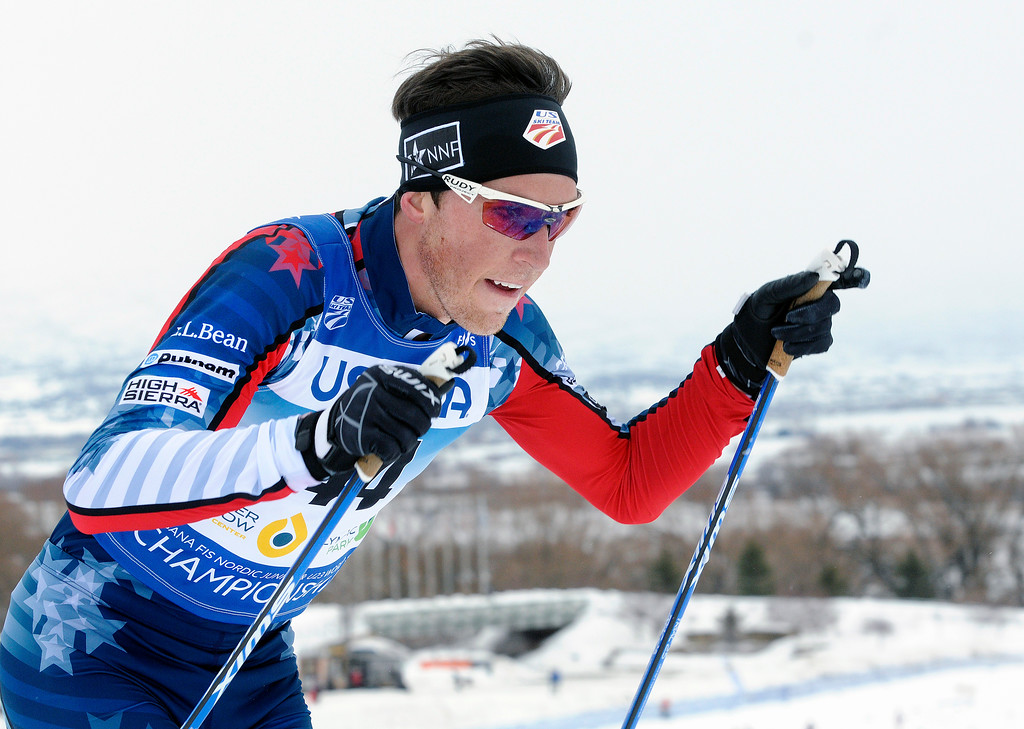
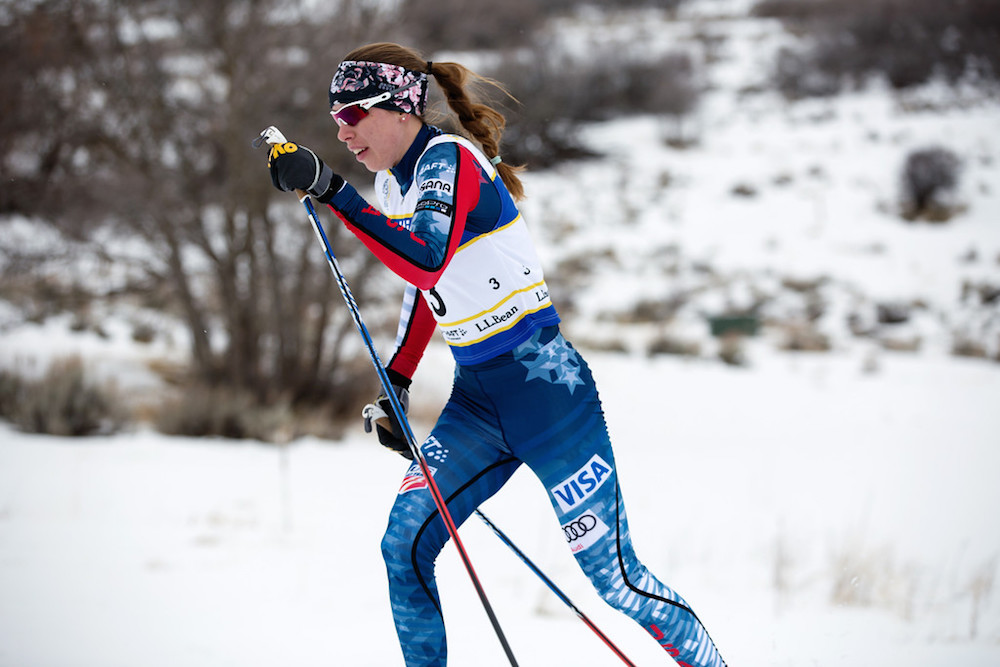
    Paddy Caldwell, of the Stratton Mountain School and U.S. Ski Team, racing to ninth in the men's 15 k freestyle at 2017 U23 World Championships at Soldier Hollow in Midway, Utah. (Photo: U.S. Ski Team/Tom Kelly)
    Paddy Caldwell, of the Stratton Mountain School and U.S. Ski Team, racing to ninth in the men’s 15 k freestyle at 2017 U23 World Championships at Soldier Hollow in Midway, Utah. (Photo: U.S. Ski Team/Tom Kelly)

    “Starting off in the classic leg I was trying to stay relaxed and maintain position,” Caldwell wrote in an email. “For the first half of the classic I was at the tail end of the lead group then started to lose some time over the last part of the classic.”

    He and Hegman started skiing together about 8 k into the 15 k classic leg, and remained together for most of the rest of the race. At the transition, they were about 44 seconds behind eighth place and 13 seconds ahead of 11th.

    “I was really struggling with breathing during the classic leg so I tried to relax for the first part of the skate leg and maintain our position,” Caldwell wrote. “We put in a surge on the second lap of the skate to try to catch the group ahead of us (5th-8th) but they were just out of contact. On the last lap I put in one last push early on to break away from the French skier in 10th and got just far enough ahead to hold him off on the last climb before the long decent into the stadium.”

    With the sixth-fastest skate leg, Caldwell (SMS/USST D-team) finished ninth, 9.2 seconds ahead of France’s Jean Tiberghien in 10th. Nearly 20 seconds after Tiberghien, Hegman finished 11th (+1:53.5) for a career best at his first U23 Worlds.

    American Jack Hegman (SVSEF) racing to 24th in the men's 15 k freestyle on Thursday at 2017 U23 World Championships at Soldier Hollow in Midway, Utah. (Photo: FlyingPointRoad.com)
    American Jack Hegman (SVSEF) racing to 24th in the men’s 15 k freestyle on Feb. 2 at 2017 U23 World Championships at Soldier Hollow in Midway, Utah. (Photo: FlyingPointRoad.com)

    “I think I am slightly better at skating, but felt really good about my classic skiing today,” Hegman, of the Sun Valley Ski Education Foundation (SVSEF) Gold Team, wrote in an email. “ I think I was able to gain some good time on the classic portion and then hold on in the skate. In the skate portion I tried to follow Paddy as long as I could and conserve energy. I lost quite a bit of time in the last 2k but thankfully didn’t lose too many places.”

    With a top 12 at U23 Worlds, Hegman meets the U.S. selection criteria for 2017 World Cup Finals, which will take place in Quebec City in mid-March.

    “For the entire skate leg, when I realized I was in the top 12, all I was thinking about was holding onto that top 12 position,” Hegman wrote.

    The two led three U.S. men in the top 15, with Adam Martin (Northern Michigan University) not far behind in 15th (+2:23.3). For Martin, it was his first skiathlon in three years (he finished 40th in the 20 k skiathlon at 2014 Junior Worlds in Val di Fiemme, Italy).

    Adam Martin (Northern Michigan University) racing to 15th in the men's 30 k skiathlon on Saturday at 2017 U23 World Championships at Soldier Hollow in Midway, Utah. It was his first top 20 in two U23 Worlds. (Photo: FlyingPointRoad.com)
    Adam Martin (Northern Michigan University) racing to 15th in the men’s 30 k skiathlon on Saturday at 2017 U23 World Championships at Soldier Hollow in Midway, Utah. It was his first top 20 in two U23 Worlds. (Photo: FlyingPointRoad.com)

    “I wanted to go out hard enough to establish a decent position, but also wanted to conserve sufficient energy to ski a strong back end of the race,” Martin wrote of Saturday’s eight-lap race.

    He skied most of it with the Czech Republic’s Petr Knop, who ultimately finished 14th, 1.4 seconds ahead of Martin.

    “Sometimes I was following, and sometimes I led and tried to catch up to the skiers in front of us,” Martin wrote.

    “I’ve never been top 20 at one of these competitions before, so top 15 is cool,” he added. “I think I’ve had very decent races this week!”

    “It is awesome to see three of us in the top 15 today,” Hegman wrote. “I think having the momentum from this week with so many good performances helped us quite a bit today. Also our skis were awesome today (and all week).”

    “I am really happy with my results all week,” wrote Caldwell, who notched top 20’s in all three races, including 18th in the classic sprint to start the championships. “It was an amazing week of racing for USA and I was really happy to end on a high note.”

    Russia swept the men’s 30 k skiathlon podium with Alexander Bolshunov, Alexey Chervotkin, and Denis Spitsov, respectively, after the three skied together for most of the race, well ahead of France’s Jules Lapierre and Switzerland’s Jason Rueesch in pursuit of them. As the Russians descended down the final hill — clear of any outside contenders for the podium — they locked arms and coasted into the stadium together. Just before the finish line, they stopped to cross as one.

    According to a USST press release, the competition jury had to review timing and scoring records, as well as consult photo assets and the finish referee to determine who finished first, second and third. Gold went to Bolshunov, who also won the 15 k freestyle two days earlier, with an official finish time of 1:15:31.5 hours. Chervotkin was listed as second (+0.2) and Spitsov third (+0.5).

    Lapierre crossed 11 seconds later in fourth, about three seconds ahead of Rueesch in fifth (+14.3).

    Evan Palmer-Charrette (NTDC Thunder Bay) led the Canadian men in 26th (+5:44.6). Alexis Dumas of the Pierre Harvey National Training Centre (CNEPH) finished 33rd (+9:02.7) out of 36 finishers. Several North Americans did not finish, including Canada’s Julien Lamoureux and Julien Smith, and American Cal Deline.

    In the U23 women’s 15 k skiathlon earlier on Saturday, Canada had three in the top 30, with Dahria Beatty (Alberta World Cup Academy/Canadian National U25 Team) in 19th (+2:18.1) for her third top 20 of the week. Katherine Stewart-Jones (NTDC Thunder Bay/NST U25 Team) placed 21st (+2:29.3) for her best result at U23 Worlds, and Frederique Vezina (CNEPH) notched a personal-best 29th (+3:36.2). The team’s fourth skier, Jenn Jackson, did not finish.

    Jesse Knori, of the University of Colorado-Boulder (CU) led the U.S. women in 30th (+3:40.1). Alayna Sonnesyn (University of Vermont) followed in 31st (+3:42.5), Nichole Bathe (University of Alaska Fairbanks) was 33rd (+4:36.9), and Corey Stock (Bridger Ski Foundation) 36th (+5:42.1).

    Another CU skier, Petra Hyncicova, who raced for her native Czech Republic, placed 22nd (+2:30.7) for her second-best result of the week after placing 20th in the classic sprint.

    Norway’s 19-year-old Lotta Udnes Weng won the 15 k skiathlon for her first gold of U23 Worlds, finishing in 40:50.9 minutes and besting Finland’s Johanna Matintalo by 3.8 seconds. Russia’s Yana Kirpichenko captured third (+13.9), edging Weng’s twin sister, Tiril Udnes Weng in fourth (+15.6).

    “On paper, this is not my best distance,” Lotta Weng, a six-time Junior Worlds medalist, told the USST. “But I knew I could do well in both classic and skate, and that if I had a really good day, I could ski for a gold medal … I knew I would have a good sprint and I was just trusting it.”

    Skiathlon results: Men | Women

    ***
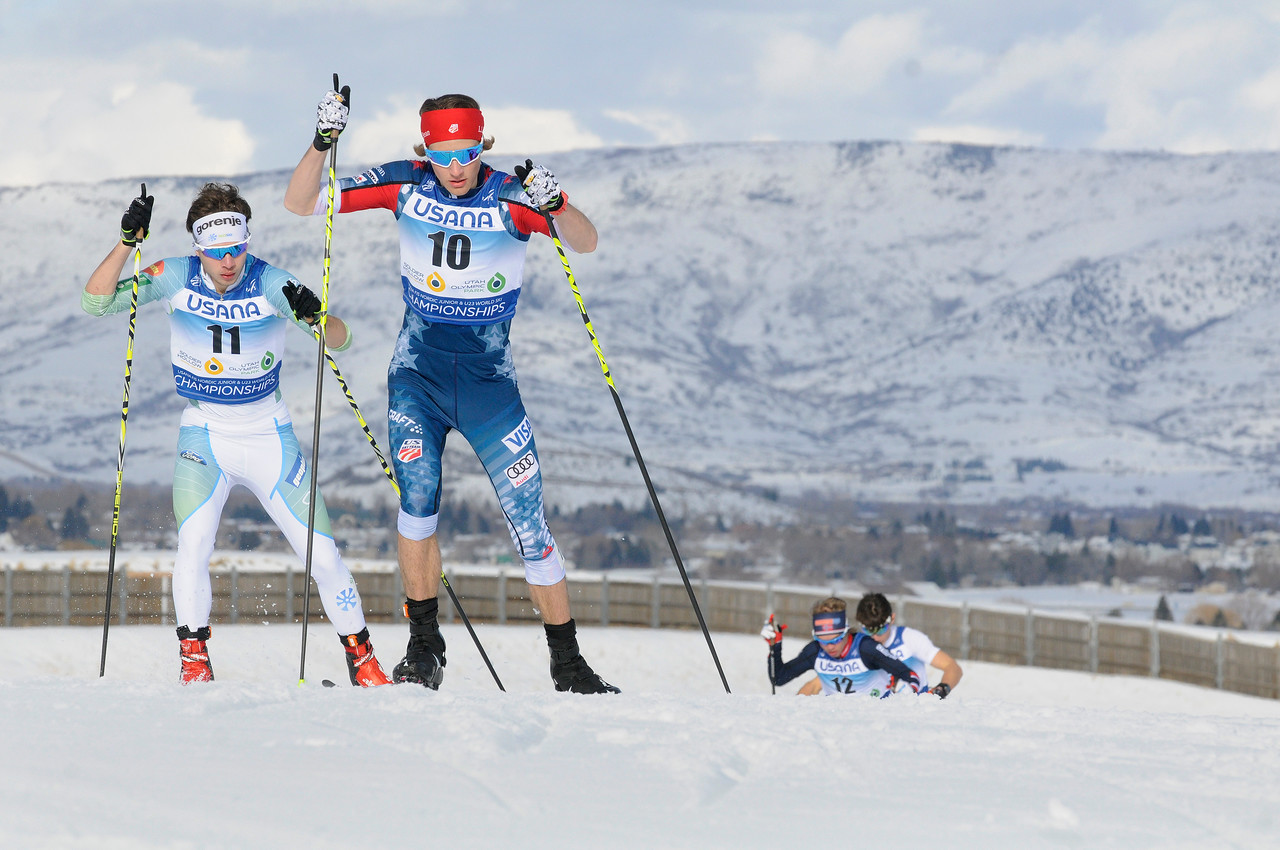
    American Ben Loomis (10) racing to a career-best ninth in the individual normal hill/5 k competition on Feb. 4 at Nordic Combined Junior World Championships at Soldier Hollow in Midway, Utah. (U.S. Ski Team - Tom Kelly)
    American Ben Loomis (10) racing to a career-best ninth in the individual normal hill/5 k competition on Feb. 4 at Nordic Combined Junior World Championships at Soldier Hollow in Midway, Utah. (Photo: U.S. Ski Team/Tom Kelly)

    Ninth for Loomis

    Also on Saturday, in the last individual competition of nordic-combined Junior Worlds, 18-year-old American Ben Loomis notched his first top 10 in his third Junior Worlds appearance.

    Loomis started the day by jumping to 10th on the normal hill at Utah Olympic Park in Park City, his home training base. That put the U.S. Nordic Combined skier 58 seconds out of first and 11 seconds behind Finland’s Arttu Mäkiaho in ninth for the start of the 5 k race at Soldier Hollow. While Loomis didn’t catch Mäkiaho (who raced to second place for his second-straight individual medal after winning the normal hill/10 k to start the week), Loomis picked off one place to finish ninth, 1:22.3 minutes behind the winner, Germany’s Vinzenz Geiger.

    “My goals for the 5k competition were to jump into the top ten, and to not lose any ground during the race,” Loomis wrote in an email. “I was able to do this, but was still hoping for a higher finish.”

    He explained that a snow flurry during the jumping competition left the last 20 starters on the hill waiting for it to pass. Loomis was the fourth-to-last to jump, out of 49 starters.

    “I was able to stay relaxed, focused and have my best competition jump of the week,” he explained. “The home hill advantage made a huge difference in my jumping. Prior to this week, I had little jumps on the hill this winter. Luckily, I know the hill well and was able to get in rhythm with the jump very quickly.”

    Considering his starting position in the 5 k, which is half the distance of the usual 10 k in nordic-combined competitions, Loomis said he knew he needed to move up quickly, but do so in a controlled manner.

    “5 k really places a big importance on the jumping,” Loomis told the USST. “It’s a lot harder to make up time, and these Europeans are really quick.”

    He paced his first 2.5 k, and by the second lap, he worked with Norway’s Lars Ivar Skaarset — who had caught Loomis after starting 12th — to rein in Slovenia’s Matevz Malovrh, who started fourth and was fading. While Skaarset finished 17.4 seconds ahead of Loomis for eighth place, they both beat Malovrh, who placed 10th, 1.8 seconds behind Loomis.

    “Overall, I am very happy with my 9th place result. I was hoping for a little more, but to be 9th in the world is very special,” Loomis wrote. “I am already looking forward to next year’s competitions and approaching them with even more experience.”

    Earlier in the week, Loomis placed 18th in the normal hill/10 k and skied the third leg of the men’s 4 x 5 k team event, in which the U.S. placed seventh (with Elijah Vargas, Grant Andrews, Loomis, and Stephen Schumann). After Vargas tagged Andrews in 10th, Andrews skied them into ninth, and Loomis brought the U.S. up to seventh, which Schumann held during the final leg.

    The U.S. had two in the top 15 on Saturday, with Schumann in 15th (+1:44.3), up from 20th after the jump. Grant Andrews placed 33rd (+2:40.0) and Tucker Hoefler finished 46th (+3:56.9).

    Geiger won Saturday’s normal hill/5 k after jumping to first then starting with a 4-second lead over Japan’s Yuto Nakamura in second. Mäkiaho passed seven people to finish second, 22.6 seconds after Geiger, who won in 12:14.9 minutes. France’s Laurent Muhlethaler started fifth and captured third (+23.9), while Nakamura missed the podium in fourth (+42.8).

    “It’s great to be on top of the podium today, after the 10k it was so hard for me due to some illness and an injury after I fell at the World Cup in Chaux Neuve,” Geiger said. “It just feels amazing to be Junior World Champion now.”

    Results: Normal hill/5 k

  • Under 23 Questions with Étienne Hébert

    Canada’s Étienne Hébert (13) leads American Logan Diekmann in their classic-sprint quarterfinal on Jan. 30 at 2017 Junior World Championships at Soldier Hollow in Midway, Utah. Neither advanced to the semifinals, with Hébert finishing fourth (+1.43) and Diekmann sixth (+3.98) in that heat. (Photo: FlyingPointRoad.com)
    Canada’s Étienne Hébert (13) racing in the quarterfinals of the men’s classic sprint at 2017 Junior World Championships on Jan. 30 at Soldier Hollow in Midway, Utah. He finished fourth in the heat for 17th overall. (Photo: FlyingPointRoad.com)

    In an effort to showcase the North Americans competing at this past week’s International Ski Federation (FIS) 2017 USANA Nordic Junior World Championships and U23 Cross Country World Championships at Soldier Hollow in Midway, Utah, we asked those qualifying athletes several questions about themselves — actually, we had them fill in the blanks. Here we have 18-year-old Étienne Hébert, of the Montériski Ski Club, representing Canada at his first Junior Worlds.

    He competed in the men’s classic sprint, where he led Canada in 17th.

    ***

    “My full name is Étienne Hébert, but you can call me Étienne. I was born in Longueuil, Quebec, raised in Varennes [also just outside Montreal], and one thing you should know about my hometown is that there’s not a lot of snow. Winter is pretty much from the end of December to the beginning of March.

    I started cross-country skiing when I was four, thanks to my parents.

    I currently train in Saint-Bruno, Quebec, with Montériski Ski Club.

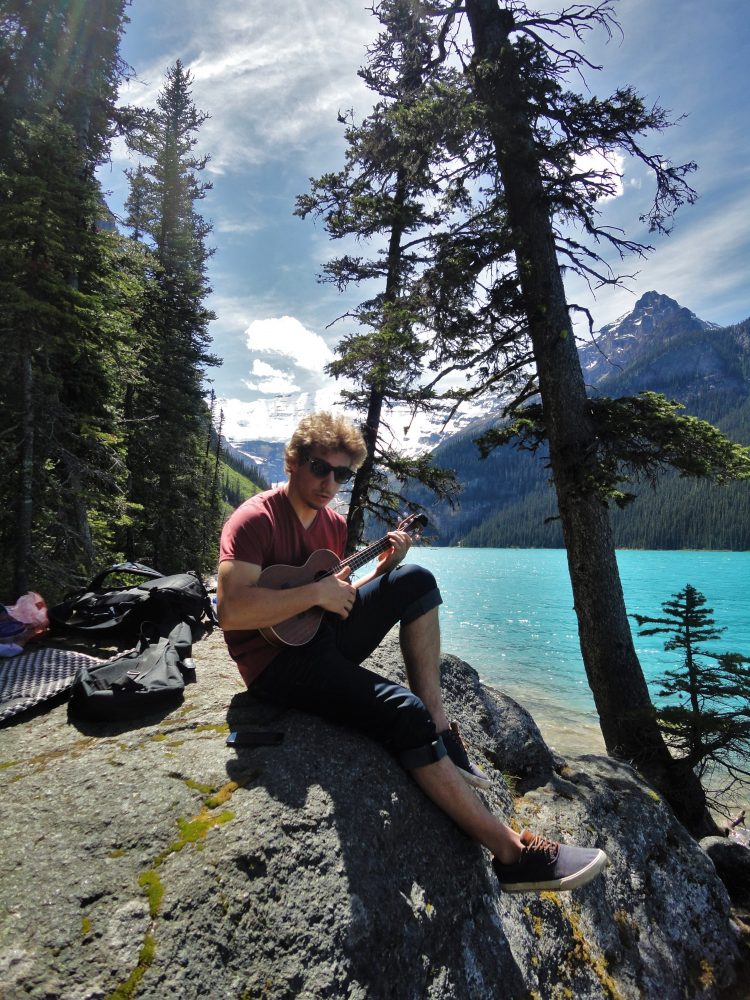
    Étienne Hébert relaxing with his ukulele at Lake Louise near Canmore, Alberta, where he spent two months training with the Alberta World Cup Academy last summer. (Courtesy photo)
    Étienne Hébert relaxing with his ukulele at Lake Louise near Canmore, Alberta, where he spent two months training with the Alberta World Cup Academy last summer. (Courtesy photo)

    If I’m not skiing, you might find me at school, watching Netflix, or playing a little bit of ukulele.

    If I had to pick a favorite book, it would be ‘The Pillars of the Earth’ by Ken Follet.

    One of the things I’m most excited about for Junior Worlds at Soldier Hollow is getting some more international racing experience and trying to keep up with the best juniors in the world.

    One race I’m especially targeting there is the classic sprint.

    The best advice anyone ever gave me about skiing or racing was to keep my focus during races and think before doing a stupid move.

    One of the best race memories I have is winning the 15 k classic at the Canadian Championships in 2016. What a great moment!

    If I could meet one World Cup skier, it would be Andrew Musgrave.

    If I don’t end up being a professional skier, I’ll hopefully do something I like, probably in the field of communication.

    I’m missing 14 days of school to be here, and my teachers are probably not even thinking about it.  I’ll have to work hard to catch up when I come back!

    You can follow me on Instagram @etienne.heb.”

  • Under 23 Questions with Frédérique Vézina

    Under 23 Questions with Frédérique Vézina

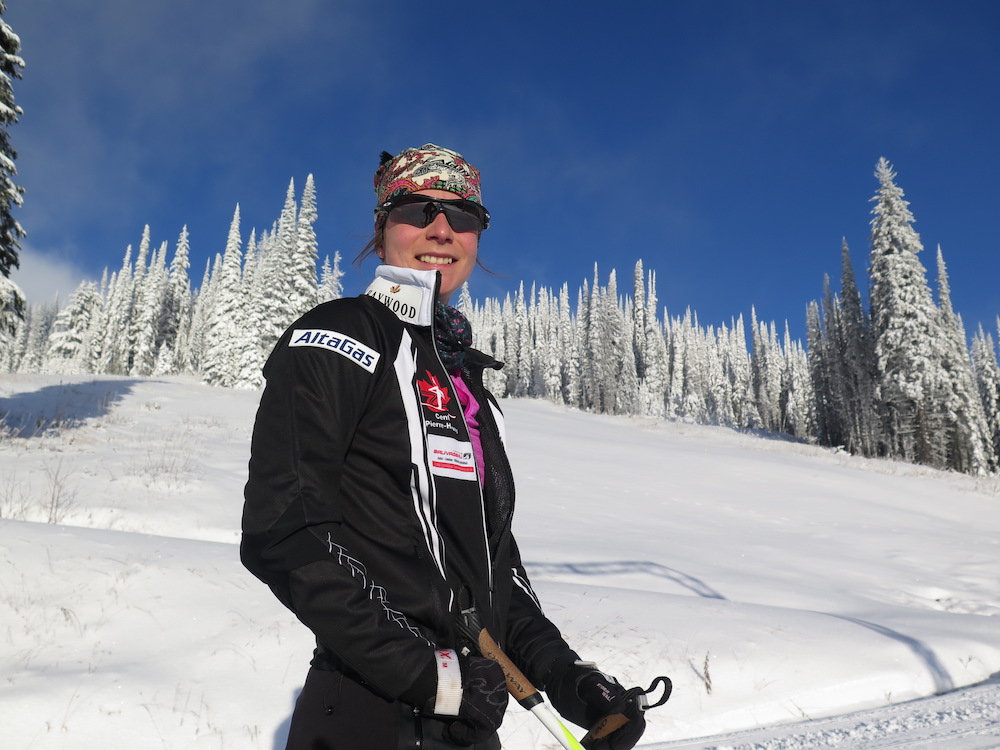
    Canada's Frédérique Vézina (CNEPH) training at Sovereign Lake near Vernon, B.C., last December. (Courtesy photo)
    Canada’s Frédérique Vézina (CNEPH) training at Sovereign Lake near Vernon, B.C., last December. (Courtesy photo)

    In an effort to showcase the North Americans competing at this week’s International Ski Federation (FIS) 2017 USANA Nordic Junior World Championships and U23 Cross Country World Championships at Soldier Hollow in Midway, Utah, we asked those qualifying athletes several questions about themselves — actually, we had them fill in the blanks. Here we have 22-year-old Frédérique Vézina, of the the Centre National d’Entraînement Pierre-Harvey (CNEPH), a.k.a. Pierre-Harvey National Training Centre, who’s representing Canada at her second U23 Worlds.

    On Thursday, she finished 25th in the women’s 10 k freestyle for her first U23 Worlds top 30.

    ***

    “My full name is Frédérique Vézina, but you can call me Fred or mom. I was born in Québec, raised in Saint-Ferréol-Les-Neiges, and one thing you should know about my hometown is yes, we do get a lot of snow in the winter time! As Saint-Ferréol-Les-Neiges might not sound familiar to you, it’s the city in which Mont-Sainte-Anne is.

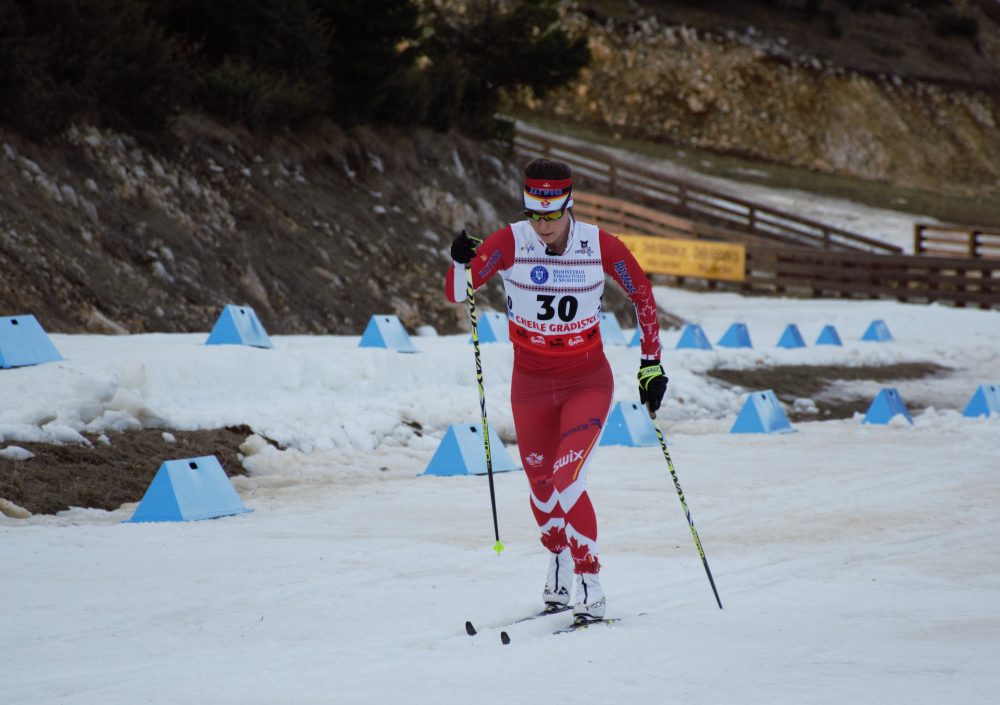
    Canada's Frédérique Vézina racing to 39th in the women's 10 k classic at 2016 U23 World Championships in Rasnov, Romania. (Courtesy photo)
    Canada’s Frédérique Vézina racing to 39th in the women’s 10 k classic at 2016 U23 World Championships in Rasnov, Romania. (Courtesy photo)

    I started cross-country skiing when I was two, thanks to my parents who decided to spend my energy overflow in the best way possible.

    I currently train in Saint-Ferréol-Les-Neiges (or Mont-Sainte-Anne) with CNEPH.

    If I’m not skiing, you might find me cooking and dancing in the kitchen, or studying in my robe, or volunteering for Nunavik’s cross country ski clubs!

    If I had to pick a favorite book, it would be… I seriously don’t know, but my last reads were: Chris Hadfield’s ‘An Astronaut’s Guide to Life on Earth’, ‘Born to Run’, ‘Les 4 Accords Toltèques’, and ‘Un Avion Sans Elle’.

    One of the things I’m most excited about for U23/Junior Worlds at Soldier Hollow is having my brother and my parents fly over to cheer for me. One race I’m especially targeting there is the skiathlon.

    The best advice anyone ever gave me about skiing or racing was to race against the course.

    One of the best race memories I have is my first win at Midget NorAms. I did not expect anything. The race was 3.5km long (it felt long at that time) and was held on a farm so the spectators could see most of it from the highest point of the course except for that one 400 meters in the woods. After the mass start, we were a group of 15 girls tight together. Then came the time when we went into the woods. I surprised myself by coming out of it first. I remember my parents surprised and cheering so happily seeing me up front. I kept pushing hard, doing my thing and concentrating on skiing well even though I was pretty excited inside. I finally crossed the finish line in first place! The hugs from my brother, family, friends and coaches at the finish made me realize what just happened. At that particular moment I knew I was going to be a skier for the years to come.

    If I could meet one World Cup skier, it would be Marit Bjorgen.

    If I don’t end up being a professional skier, I’ll probably be a doctor.

    I’m missing 21 days of school to be here, and my professors are probably thinking, ‘How is she even able to do both at the same time?’ I even had a colleague in class asking what program I switched to. Well surprise, I’m still in your program, I’m just not going to school very often!

    You can follow me on Twitter at @FrederiqueVez and Instagram @fredvezina.”

  • Under 23 Questions with Wyatt Gebhardt

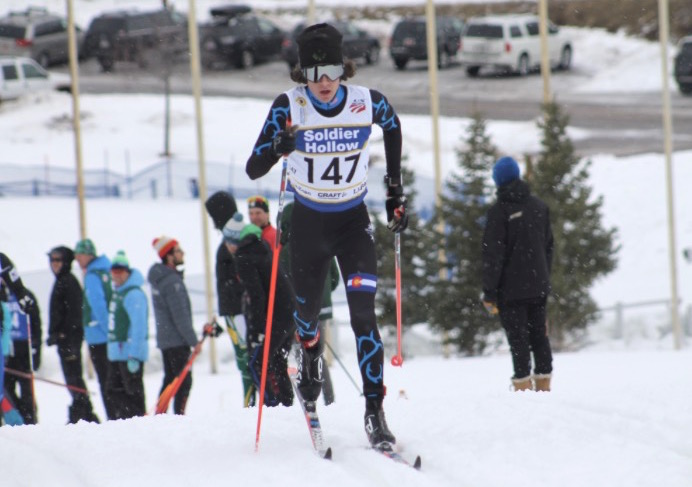
    Wyatt Gebhardt (Steamboat Springs Winter Sports Club) racing to 19th in the men's 10 k freestyle on Wednesday in his Junior World Championships debut at Soldier Hollow in Midway, Utah. (Photo: FlyingPointRoad.com)
    Wyatt Gebhardt (Steamboat Springs Winter Sports Club) racing to 19th in the men’s 10 k freestyle on Wednesday in his Junior World Championships debut at Soldier Hollow in Midway, Utah. (Photo: FlyingPointRoad.com)

    In an effort to showcase the North Americans competing at this week’s International Ski Federation (FIS) 2017 USANA Nordic Junior World Championships and U23 Cross Country World Championships at Soldier Hollow in Midway, Utah, we asked those qualifying athletes several questions about themselves — actually, we had them fill in the blanks. Here we have 17-year-old Wyatt Gebhardt, of the Steamboat Springs Winter Sports Club, who’s representing the U.S. at his first Junior Worlds.

    On Wednesday, Gebhardt placed 19th in the men’s 10-kilometer freestyle at Junior Worlds.

    ***

    “My full name is Wyatt Gebhardt, but you can call me Wyatt. I was born in Greeley, Colo., raised in Steamboat Springs, Colo., and one thing you should know about my hometown is we shot the biggest firework off in North America at the winter carnival.

    Wyatt Gebhardt (Steamboat Springs Winter Sports Club) racing to eighth in the junior men's 10 k classic mass start at 2017 U.S. nationals last month at Soldier Hollow in Midway, Utah. (Courtesy photo)
    Wyatt Gebhardt (Steamboat Springs Winter Sports Club) racing to eighth in the junior men’s 10 k classic mass start at 2017 U.S. nationals last month at Soldier Hollow in Midway, Utah. (Courtesy photo)

    I started cross-country skiing when I was two, thanks to Mom and Dad. I currently train in Steamboat Springs with SSWSC.

    If I’m not skiing, you might find me backcountry skiing. If I had to pick a favorite book, it would be ‘A Long Way Gone.’

    One of the things I’m most excited about for Junior Worlds at Soldier Hollow is the skiathlon race. One race I’m especially targeting there is 10 k freestyle.

    The best advice anyone ever gave me about skiing or racing was always be sure to have fun. One of the best race memories I have is racing in Steamboat.

    If I could meet one World Cup skier, it would be Stina Nilsson.

    If I don’t end up being a professional skier, I’ll probably be a mechanic.

    I’m missing seven days of school to be here.

    You can follow me on Instagram @wyattcrosscountry.”

  • Under 23 Questions with Katharine Ogden

    Under 23 Questions with Katharine Ogden

    Katharine Ogden, of the Stratton Mountain School and U.S. Ski Team D-team, in the women's 20 k classic at 2017 U.S. nationals earlier this month at Soldier Hollow in Midway, Utah. (Photo: U.S. Ski Team)
    Katharine Ogden, of the Stratton Mountain School and U.S. Ski Team D-team, in the women’s 20 k classic at 2017 U.S. nationals earlier this month at Soldier Hollow in Midway, Utah. She finished second among the senior women. (Photo: U.S. Ski Team)

    In an effort to showcase the North Americans competing at next week’s International Ski Federation (FIS) 2017 USANA Nordic Junior World Championships and U23 Cross Country World Championships at Soldier Hollow in Midway, Utah, we asked those qualifying athletes several questions about themselves — actually, we had them fill in the blanks. First up, 19-year-old Katharine Ogden, of the Stratton Mountain School and U.S. Ski Team D-team, who’s representing the U.S. at her third Junior Worlds.

    ***

    “My full name is Katharine Ogden, but you can call me KO. I was born in Seattle, Wash., and raised in Landgrove, Vt., and one thing you should know about my hometown is there are only about 100 people living there.

    I started cross-country skiing when I was three, thanks to my papa who is a ski coach. I currently train in Stratton, Vt., with Stratton Mountain School.

    If I’m not skiing, you might find me mountain biking. If I had to pick a favorite book, it would be ‘Looking for Alaska’.

    One of the things I’m most excited about for Junior Worlds at Soldier Hollow is racing at altitude. One race I’m especially targeting there is the 10 k skiathlon.

    The best advice anyone ever gave me about skiing or racing was my dad always tells me, ‘It’s fun to kick ass.’ One of the best race memories I have is when my teammate (Julia Kern) won the relay race in a photo finish at my first JNS at Soldier Hollow in 2012.

    If I could meet one World Cup skier, it would be Heidi Weng.

    If I don’t end up being a professional skier, I’ll probably be a recreational skier 🙂.

    I’m missing zero days of school to be here, and my teachers are probably thinking, “I don’t have teachers.”

    You can follow me on Instagram at @katharineogden.”

  • U.S. Nationals Open This Weekend at SoHo; World Champs Starts on the Line

    U.S. Nationals Open This Weekend at SoHo; World Champs Starts on the Line

    The last time U.S. Nationals were held at SoHo: Start of the women's 20 k freestyle mass start at 2014 U.S. Cross Country Championships at Soldier Hollow in Midway, Utah. Caitlin Gregg went on to win going away.
    The last time U.S. nationals were held at SoHo: Start of the women’s 20 k freestyle mass start at 2014 U.S. Cross Country Championships at Soldier Hollow in Midway, Utah.

    The domestic trials for the FIS Nordic World Ski Championships team begin at Soldier Hollow on Saturday morning. Not officially, but in practice that’s pretty much the case. That’s one implication of the numbers and points system used to help determine who competes for the U.S. at next month’s races in Lahti, Finland. Here, FasterSkier previews the races and considers the subtle math behind U.S. championship-team selection.

    The races

    The women race a 10-kilometer freestyle individual start at 10 a.m. local time on Saturday, followed by the men in a 15 k freestyle at noon. Sunday brings a full classic sprint (men’s qualifying starting at 10 a.m., women’s qualifying at 11 a.m., and sprint heats starting at 12:30 p.m.). Then Tuesday, Jan. 10, brings classic mass starts, 20 k for women and 30 k for men, starting at 10 a.m.

    A qualification-only, freestyle-sprint type event rounds out the week on Thursday, Jan. 12. (Why no heats? Because of overall demands on local volunteers and an elementary school housed at the venue. The national championship skate sprint will be held at U.S. SuperTour Finals, a.k.a. Spring Series, in March in Fairbanks, Alaska.)

    Social media shows several inches of fresh snow currently on top of a manmade base at Soldier Hollow in Midway, Utah.

    FasterSkier will be on site throughout the week, providing live updates and reports on the races. 

    What’s at stake

    Bragging rights, for one. All racers like to win, and the week’s first three events are all national championships. Also money: $1,200, $600, and $300 for podium spots in each of the distance races and sprint. It’s no Qaniq Challenge money, but it’s no small sum, either.

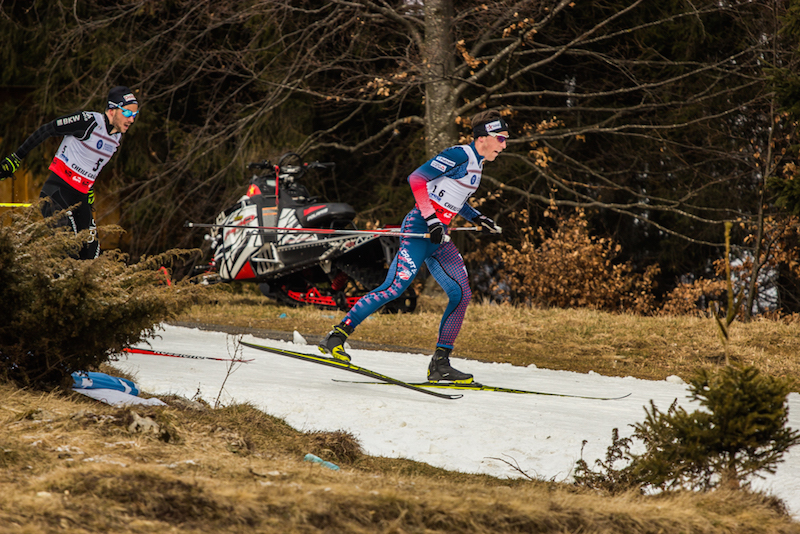
    Paddy Caldwell (Dartmouth/SMS/USST) racing to 21st in the men's 15 k freestyle at U23 World Championships in Rasnov, Romania. (Photo: Logan Hanneman)
    Paddy Caldwell (Dartmouth/SMS/USST) racing to 21st in the men’s 15 k freestyle at 2016 U23 World Championships in Rasnov, Romania. (Photo: Logan Hanneman)

    But beyond who takes home the medals and the money this week, the races are also important for determining who gets to compete in higher-level races later this season. Skiers under 18 are competing for spots on the Scandinavian Cup Team. Skiers slightly older are competing for spots on the U.S. team for U23/Junior World Championships, which will also be held at Soldier Hollow Jan. 30-Feb. 5. And at the highest level, there are spots up for grabs on the World Championships team for Lahti next month. Probably.

    As FasterSkier previously explained, the U.S. Ski and Snowboard Association (USSA) looks first to athletes’ performance on the World Cup in light of objective standards, and then potentially applies discretionary picks. After objective and discretionary selection, then “any remaining positions” for the Lahti team “may be filled by considering the athlete ranking highest on the 2017 Championship Selection List.” (As FasterSkier previously parsed, technically speaking the document says that remaining positions may be filled rather than will or shall be filled, meaning that USSA would not be strictly required to name a leading domestic skier to the team if it did not want to.)

    Filling out the team: Objective and discretionary selections

    So who’s already in from the U.S. Ski Team (USST)? One woman for sure, five more women basically guaranteed, one man basically guaranteed, then one woman and two men on the bubble.

    On the women’s side, Jessie Diggins has automatically qualified for Lahti twice over with her fifth- and sixth-place sprint finishes in Davos and Val Müstair.

    Behind her, five more skiers were well within the top 50 in either the sprint or distance World Cup standings following Wednesday’s pursuit race in Oberstdorf: Sophie Caldwell (12th in sprint standings), Sadie Bjornsen (15th in distance standings and 16th in sprint), Ida Sargent (33rd in sprint), Kikkan Randall (32nd in distance and 38th in sprint), and Liz Stephen (42nd in distance).

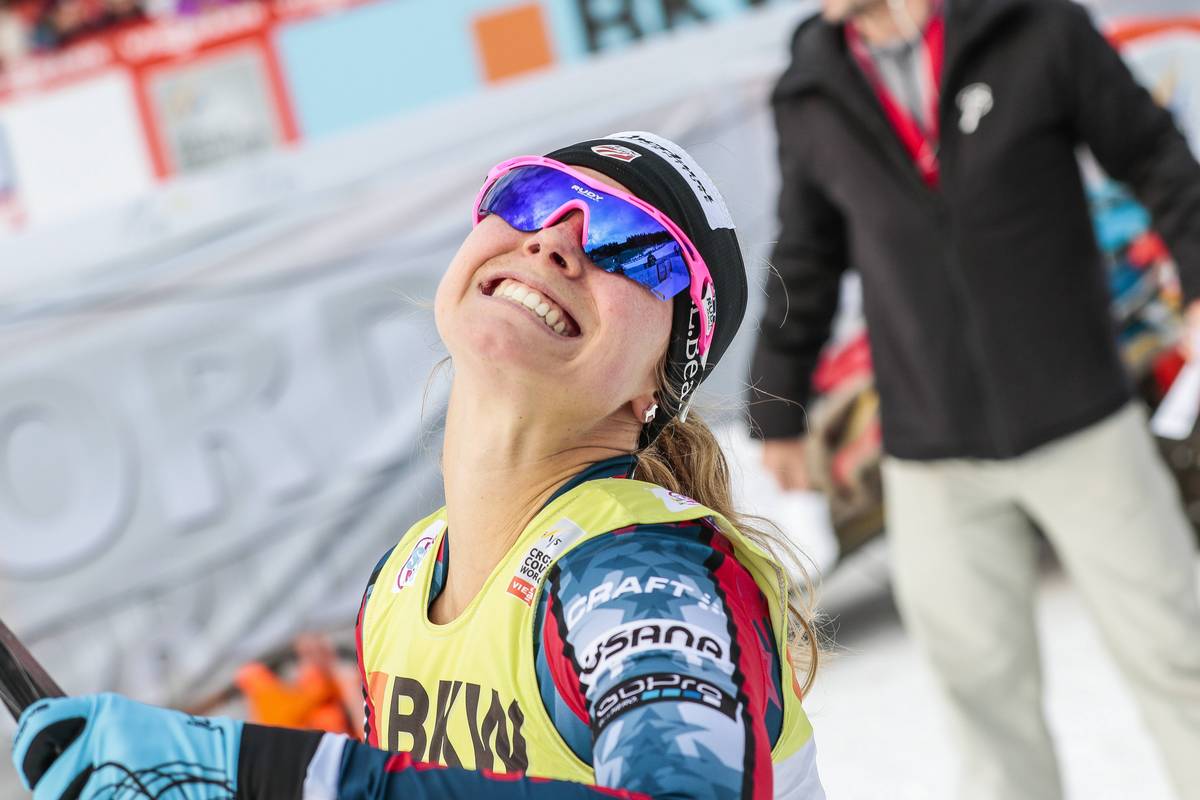
    Jessie Diggins celebrates finishing fifth in the Davos skate sprint. (Photo: Salomon/NordicFocus)
    Jessie Diggins celebrates finishing fifth in the Davos skate sprint. (Photo: Salomon/NordicFocus)

    (In the most strictly technical sense, everyone after Diggins cannot officially qualify this way until they are in the top 50 in those discipline standings that are released on Jan. 16. But – barring some extremely statistically improbable races by all eight women immediately below Stephen in the distance rankings – they should all qualify then with ease.)

    Rosie Brennan was 56th in the distance standings Wednesday, five points – one solid race – away from the top 50. She got that race in Toblach on Friday, moving up to 47th in the distance standings after finishing 23rd in the 5 k skate.

    For the men, Simi Hamilton is currently 41st in the sprint standings, and should be well within the top 50 on Jan. 16.

    As of Wednesday, Erik Bjornsen ranked 53rd for distance, four points out of 50th, and 55th for sprinting. Noah Hoffman was 67th in the distance standings. Hoffman moved up to 60th following his 25th-place finish in the 10 k skate in Toblach on Friday. 

    USST Women’s Coach Matt Whitcomb told FasterSkier in July that athletes who were on the bubble for World Championships selection “going into the Tour de Ski” would “need to make a pretty important decision. And that is whether or not to go back to U.S. championships and qualify domestically, or to take a chance and go with what they know and qualify in the Tour de Ski, and the sprint weekend after the Tour de Ski in Toblach.” Whitcomb added, “And so there are a great number of options both domestically and internationally on the World Cup, that I think we feel is as fair as can be.”

    But in practice, all USST athletes discussed above have remained in Europe rather than race at U.S. nationals. Diggins, both Bjornsens, Stephen, Caldwell, Randall, Hamilton, and Hoffman raced at least the first two stages of the Tour de Ski. Sargent and Andy Newell, joined by Hamilton and Caldwell, will compete in OPA Cup races in Planica, Slovenia, this weekend, USST Head Coach Chris Grover told FasterSkier by email last week.

    APU skier Scott Patterson made roughly the inverse decision in deciding to start the 2016/2017 season in this country (he had hoped for World Cup starts as last year’s SuperTour distance leader, but was not offered them for the first period of racing). Describing conversations between himself, Grover, and APU Coach Erik Flora, Patterson wrote to FasterSkier in November, “One of the most important points brought up was regarding qualification for world championships in Lahti. The selection criteria favors domestic racing for men due to the difficult objective criteria and weaker World Cup performances relative to the women. In accordance with the criteria I will be looking for some extremely strong early season results so that I can hopefully head to Europe in January and not return until after World Cup finals.”

    Regardless of who qualifies off the World Cup via objective standards, USSA may then make discretionary selections. FasterSkier previously surveyed the guidelines for the exercise of this discretion.

    Briefly put, USSA has almost unlimited discretion under the listed criteria. And if those criteria give USSA insufficient discretion, a catch-all provision lets USSA make discretionary selections for nearly any other reason if it feels like the objective criteria won’t work: “Other unanticipated failure of objective criteria to select an athlete likely to achieve competition results consistent with USSA program goals for World Championships.”

    Filling out the team: SuperTour leaders and bonuses for nationals podiums

    After objective and discretionary selections, that leaves this country’s top domestic racers skiing against each other for (probably) one remaining spot per gender.

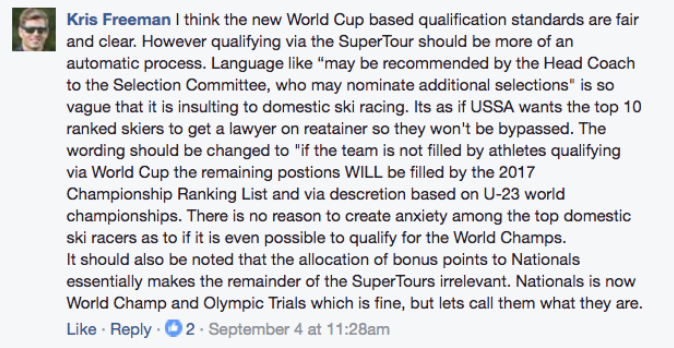
    Before the season began, FasterSkier wrote in a preview article that “American cross-country skiing does not have a trials system.” Kris Freeman (Team Freebird), a man who has been selected to 12 U.S. Olympic or World Championship teams (up to 15 if you include World Juniors teams) since 1998, politely begged to differ, writing in a comment to the FasterSkier Facebook site after the article was posted (see final two sentences in particular):

    Kris Freeman comment on FasterSkier Facebook page, Sept. 4, 2016. (photo: screenshot)
    Kris Freeman comment on FasterSkier Facebook page, Sept. 4, 2016. (photo: screenshot)

    Both FasterSkier and Freeman are technically correct. Given the numbers involved, Freeman is probably more correct. That is, there is no official trials system, but U.S. Nationals this year is getting pretty close to one.

    The World Championships Selection List is based on an athlete’s best two finishes in a single discipline, distance or sprint (qualification round only), across the 2016/2017 SuperTour to date, including the four races at U.S. Nationals. But first through third at the December SuperTour races were worth 30, 25, and 21 points, respectively. Because of the additional Nationals-only bonus points that will be awarded this week, first through third in the next four races count for 45, 35, and 26 points, respectively. Best two races, from the entire season to date, wins.

    So Freeman is correct that the “normal” SuperTour events were, if not meaningless, maybe less meaningful in light of the potentially dispositive points available for nationals podium finishes. (There are of course other advantages to being the season-long SuperTour leader, and the December races still count toward that.)

    In practice, two firsts at nationals would be unsurpassable by any combination of other races. Same for a first and second at nationals. Indeed, two seconds at nationals is a better result than two firsts in December. Two thirds at nationals beats two seconds from last month. The bonus points for nationals podiums are certainly significant digits.

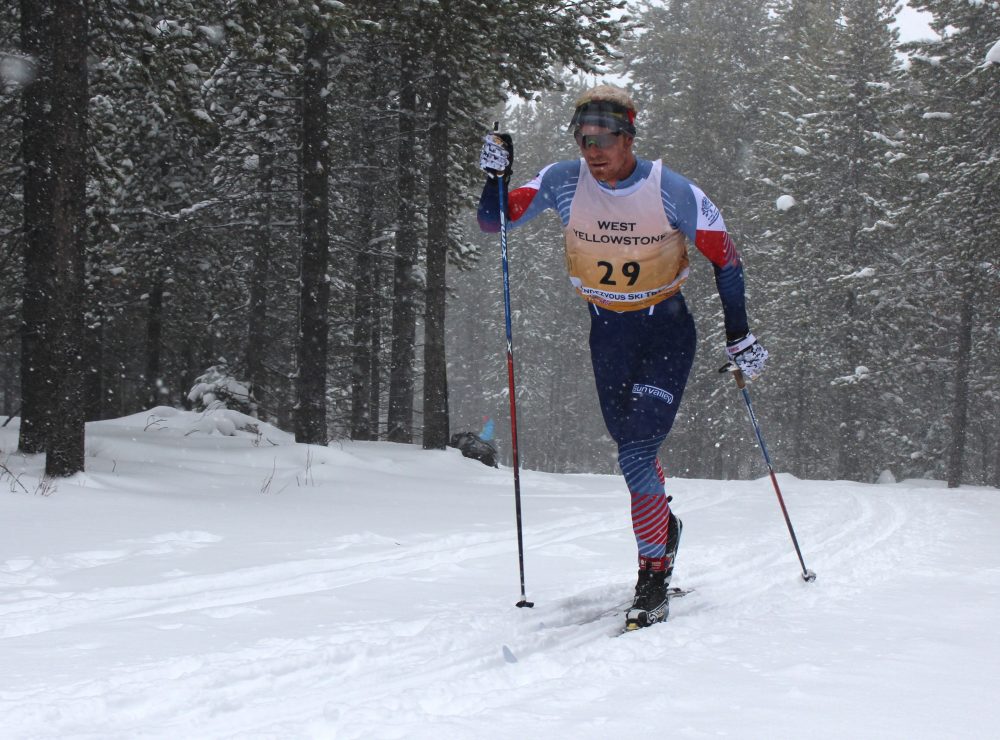
    Matt Gelso (SVSEF) racing to his second-straight victory at the West Yellowstone SuperTour on Sunday in the men’s 15 k classic.
    Matt Gelso (SVSEF) racing to his second-straight victory at the West Yellowstone SuperTour in the men’s 15 k classic in December 2016.

    Matt Gelso (Sun Valley Ski Education Gold Team) and Liz Guiney (Craftsbury Green Racing Project) come into nationals as the SuperTour leaders to date, Gelso by a profound margin. Although both have World Cup start rights in Europe later this month by virtue of that status, both athletes will compete in at least the first three races in Soldier Hollow, Gelso and Guiney told FasterSkier earlier this week.

    The current SuperTour discipline leaders are Gelso for men’s distance, with 55 points, and Ben Saxton (SMST2) for men’s sprint, with 50 points. Jennie Bender (Bridger Ski Foundation) leads the women’s sprint standings with 55 points, while Katharine Ogden (Stratton Mountain School/USST D-Team) has 50 points to lead the women’s distance standings. These are not unimpressive point totals, which may become relevant if no single athlete puts together two podiums at nationals.

    The first race at Soldier Hollow begins at 10 a.m. Saturday morning. The U.S. team for Lahti is tentatively scheduled to be announced on Jan. 23.

  • SoHo and Park City Gear Up to Host First U23/Junior Worlds in 30+ Years

    SoHo and Park City Gear Up to Host First U23/Junior Worlds in 30+ Years

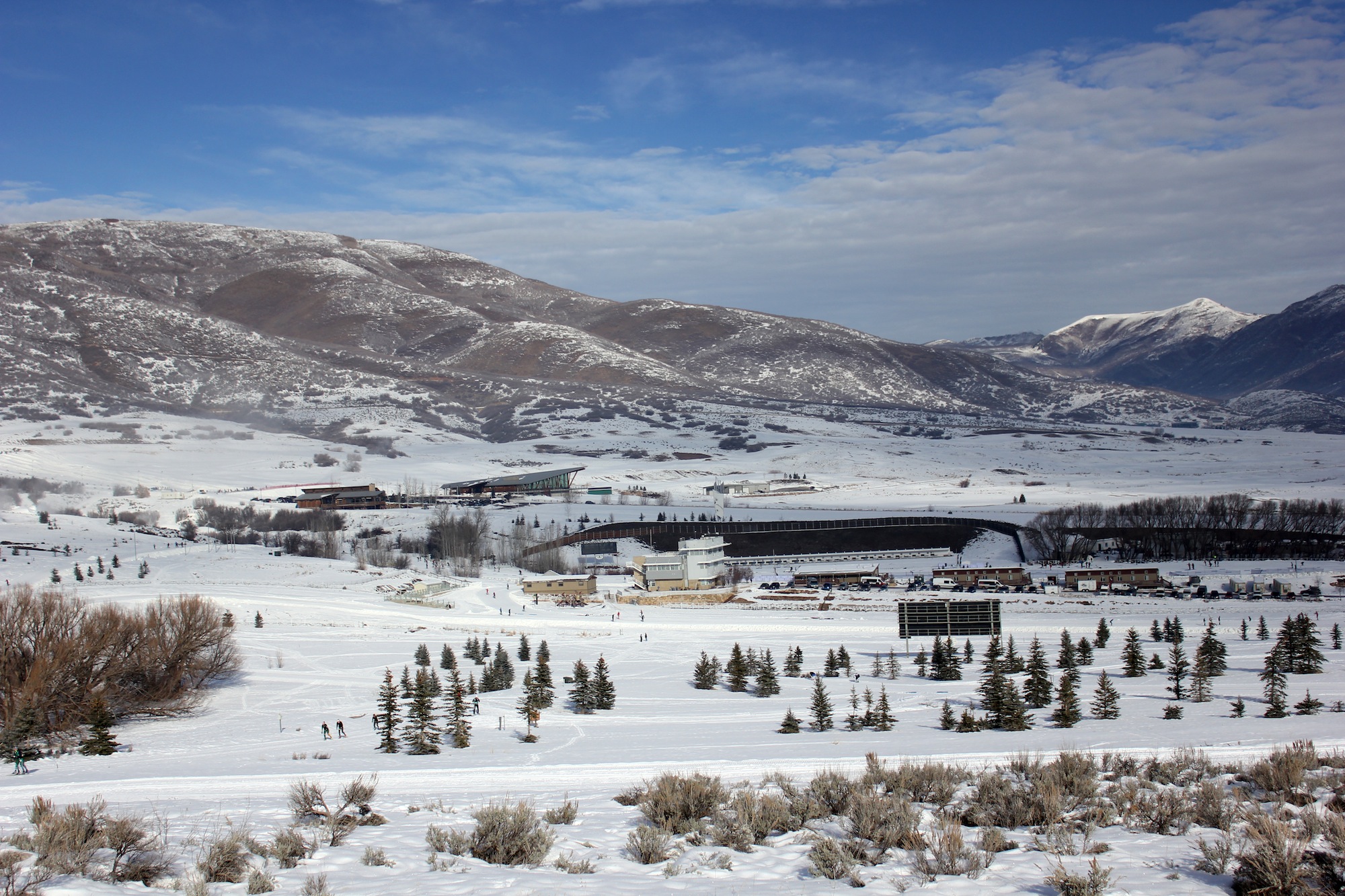
    A view of Soldier Hollow's stadium from the highest point of the 5 k olympic course.
    A view of Soldier Hollow’s stadium from the highest point of the 5 k Olympic course as seen in January 2014, with the timing building and Soldier Hollow Charter School (white building) at the center.

    As the 2016/2017 race season approaches, plans are proceeding for the International Ski Federation’s (FIS) Nordic Junior/U23 World Championships to return to the U.S. With both the U.S. Cross Country Championships (which take place Jan. 7-12) followed by Junior Worlds (Jan. 30-Feb. 5), the Utah Olympic Legacy Foundation (UOLF) has a full plate this winter.

    Scheduled for just two-and-a-half weeks after U.S. nationals at Soldier Hollow, preparations are well underway.

    “Without a doubt it’s the largest nordic event we’ve had in Utah since the 2002 [Winter Olympic] Games,” said Greg Poirier, the organizing committee’s technical advisor who has been instrumental in bringing the championships to Park City and Soldier Hollow, Utah. “And it’s been 30 or 31 years since we’ve had Junior World Championships in this country.

    “This has been a dream of mine for quite a while, to bring the championships back to the USA,” he said.

    The last time Junior Worlds took place in the U.S. was 1986 in Lake Placid, N.Y. Senior World Championships goes back even further to 1950. That year, Lake Placid was supposed to hold the senior championships, but could only host the jumping events due to lack of snow.  The cross-country events were moved to Rumford, Maine.

    “If it goes well, pat me on the back; if it goes bad, then I had nothing to do with it,” Poirier, who previously coached for U.S. Nordic Combined when his hometown was awarded the upcoming Junior Worlds in 2015, said with a laugh.

    According to Poirier, the UOLF and Soldier Hollow are ready to host the championships.

    “If we did nothing from now to January 30, facility-wise, we’re ready to go,” he said in early August. “From a technical point of view, I think we’re on schedule. The courses, the ski jumps, the actual competitive side of the event. If athletes showed up tomorrow, we’re ready. We still have to build the stadium and make everything kind of pretty.”

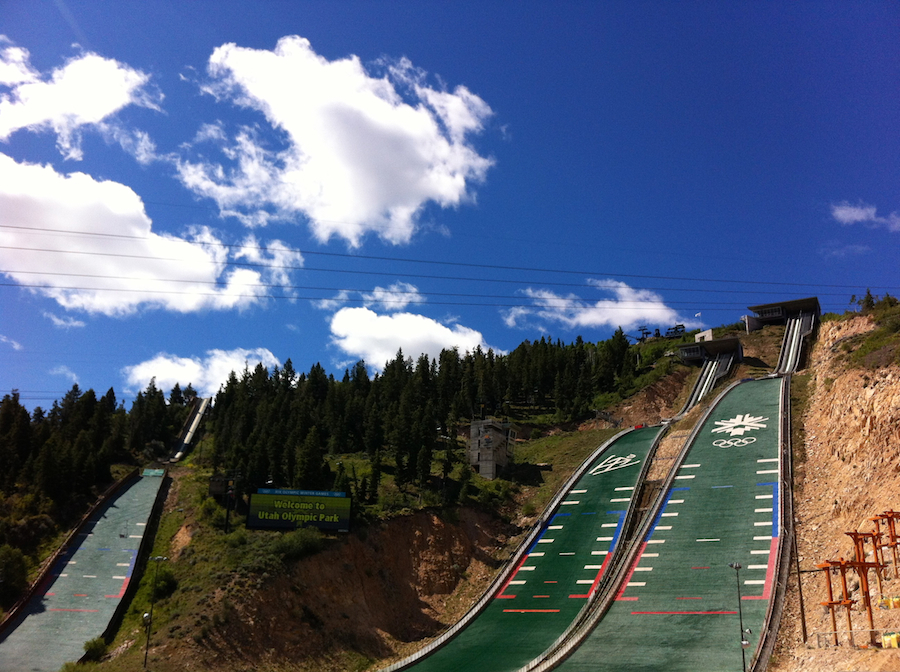
    Norwegian national team member Mikko Kokslien took a photo of the U.S. nordic-combined jumping facility in Park City, Utah.
    The jumping facility in Park City, Utah, as seen in 2012. (Photo: Mikko Kokslien)

    In addition to women’s individual ski jumping and a co-ed team competition, Poirier said that the 2017 Junior Worlds will have a women’s ski jumping team event, which includes four women per team “just like the men’s competition. It’s something the [local] organizing committee wanted to do,” he said.

    Poirier initially approached the local organizing committee (OC), seeking approval for this women’s team event. The local OC then asked the U.S. Ski & Snowboard Association (USSA) to ask FIS to add it to the championships program. FIS did so, based on its desire to include women’s ski jumping as a team event for years to follow. Poirier said they were still several years away from women’s nordic combined events.

    Logistically, Junior Worlds are a bigger event than U.S. nationals. UOLF Vice President of Sport and Venues Marc Norman expects more than 800 athletes and 400 support staff. The cross-country and nordic-combined skiers and their support staff will be housed in Midway, Utah (near the Soldier Hollow venue), while jumpers and their coaches will stay in Park City (near the jump hills). In contrast, Norman expected about 450 skiers, including some from Canada and Australia, to compete at 2017 U.S. nationals. He anticipated more than 300 volunteers for Junior Worlds, compared to about 100 for nationals.

    The Soldier Hollow Charter School, a K-6 public charter school located in the heart of the ski stadium, operates partly in the timing building. Because the school will closed for vacation during Junior Worlds, organizers will have access to the whole building.  While school will be in session during U.S. nationals, by agreement, there will be designated space in the building for timing.

    Updated Sprint Course

    While the distance courses remain the same, there will be changes to the sprint course Soldier Hollow has used for the last several years. The long downhill to the stadium after the last big climb will be broken up.

    2013 U.S. nationals skate sprint women's quarterfinal 2 at Soldier Hollow
    Racers start their descent on the final downhill of the “old” sprint course at 2013 U.S. nationals at Soldier Hollow in Midway, Utah.

    “The sprint is kind of clustered up,” Luke Bodensteiner, USSA’s executive vice president of athletics, said on the phone in August. “It’s become a 200-meter race at times. So they’ve made some modifications … to break up that last long downhill.”

    Previously, racers would crest the last climb and descend into a downhill straightaway. That created a substantial draft, helping the tail end of a broken-up group regain contact on that final downhill.

    According to USSA Nordic Director Robert Lazzaroni, the revised sprint course will also be used for nationals. Lazzaroni serves as the USSA advisor on the 2017 Junior Worlds organizing committee.

    While the facility side of preparation is going well, finding dollars has been a challenge.

    “I know they feel they’re behind,” Bodensteiner said. “They’re concerned about how fundraising is going. We remain optimistic it will be a financially healthy event. That’s a concern with any of these events, and Junior Worlds is no exception.”

    “The base budget to put on the event is $365,000,” Norman wrote in an email in late September. “We also have an enhanced budget that would allow us to exceed the minimum FIS requirements at a cost of $465,000. Hopefully we can find additional sponsors, suppliers, and donors that will help us close the gap to the base budget and even allow for us to do some or all of the enhanced pieces (more event look, athlete functions, event broadcast, etc…).”

    Bodensteiner explained that there was no guaranteed revenue source, and said that organizers would “have to really hump” to raise funds. “Before we decided to bid for the event, we collectively identified enough revenue sources that were reliable that we could make it work. There’s still a little bit of unknown, but it’s not atypical for events to be in that position.”

    Ben Saxton (SMST2) skis with a junior athete during a skate ski at the USST's annual training camp in Park City, Utah, which ran this year from Oct. 17 until Oct. 31. (Photo: Liz Arky)
    SMST2 senior skier Ben Saxton, who has been to a total of four Junior/U23 World Championships, paces a young skier during the U.S. Ski Team’s dryland training camp at Soldier Hollow last month. (Photo: Liz Arky)

    As of mid-October, USANA Health Sciences, a nutritional supplement company, had signed on as the title sponsor for 2017 Junior Worlds.

    “We are still working on sponsorships for the event to fully meet our budget,” Norman wrote on Oct. 12.

    “Junior Worlds is a little different beast than other events that we run,” Bodensteiner said. “The World Cup events that we run, you have a broader media footprint.  You’re looking at national and in some cases international sponsors for those. They’re easier to get out in front of.  With the Junior Worlds here, even though it’s an international event, it’s going to be reliant on local sponsorship. Oftentimes those don’t materialize until the last minute.”

    When asked if hosting the Junior Worlds bid would lead to USSA bidding for World Cup events, Bodensteiner hesitated.

    “We’re at the point where we’re anticipating it,” he said.

    Although there have been discussions, Bodensteiner said they hadn’t really identified a way to run a FIS Cross-Country World Cup without incurring a substantial financial loss.

    “We haven’t found a financial pathway that makes it realistic,” he said.

    Bodensteiner outlined some of the cost differences between hosting Junior World Championships and a World Cup in a follow-up email.

    “The main cost drivers are prize money (both for the races hosted and a share of the season overall prizes), lodging and travel cost reimbursement for the top group of athletes and their staff (and a number of Continental Cup athletes), event production (grooming, timing, snowmaking, staffing, wax rooms, course installations, travel costs for various FIS officials, medical evacuation, etc), and TV production (camera installations on course, cabling, satellite truck to send a live signal, production crew to shoot, edit the feed and graphics, etc),” he wrote. “Obviously some of this gets recouped through the sale of sponsorship and TV rights. FIS also keeps a portion of the advertising rights for its own purposes, which do not get passed along to the host organizer.”

    If U.S. athletes achieve the goals set by USSA, will there be additional funding for junior cross-country development?

    “When we budget for our programs, we always look at results at different levels,” Bodensteiner said. “We look where ‘our best bet is’ and allocate support to be the best in the world. Results at multiple levels including Junior Worlds are always a consideration.”

  • Utah to Host 2017 Junior/U23 World Championships (Updated)

    Utah to Host 2017 Junior/U23 World Championships (Updated)

    Torin Koos (BSF) out-lunges Ben Saxton (SMST2) for the win of the 1.5 k freestyle sprint at the U.S. Cross Country Championships. (Photo: Tom Scrimgeour)
    Soldier Hollow in Midway, Utah serves as the cross country venue in the recently submitted bid for the 2017 Junior/U23 World Championships by USSA. With no competing bids, there is a high chance the Championships will come to the U.S. for the first time in its modern form. In this photo, Torin Koos (BSF) out-lunges Ben Saxton (SMST2) for the win of the 1.5 k freestyle sprint at the 2014 U.S. Cross Country Championships at Soldier Hollow. (Photo: Tom Scrimgeour)

    UPDATE: According to the International Ski Federation, Utah will officially host the 2017 FIS Nordic Junior/U23 World Ski Championships. See the pre-decison article from June 5 (below) to learn how the U.S. entered a bid after last hosting in 1986, and what the Championships will look like.

    If everything goes according to plan the world’s best junior and U23 nordic skiers will descend upon Park City, Utah in the winter of 2017. The United States Ski and Snowboard Association announced Tuesday that organizing body submitted a bid for the 2017 Nordic Junior/U23 World Championships at this year’s International Ski Federation (FIS) Calendar Conference, which began June 3 and will continue until June 8. With no other bids, all that stands between the U.S. and the Championships is a stamp of approval from FIS.

    The last time the U.S. hosted a Nordic Junior World Championships was in 1986 at Lake Placid, N.Y. At the time, however, the event only consisted of ski jumping and nordic combined and did not include officially recognized cross country skiing races (although there were cross country races that were coordinated with the event), as is standard in Junior/U23 World Championships since 1991. The U.S. has also hosted the 2004 Cross Country Intercontinental U23 Championships at Soldier Hollow, but the U23 World Championships were not created until 2006, when they were hosted in conjunction with the Junior World Championships in Kranj, Slovenia.

    According to USSA Vice President of Events and IT Calum Clark, there’s a high chance the U.S. will host its first modern Junior/U23 World Championships in 2017. He explained the U.S. bid was the sole entry for the event, and that all that was left for USSA to gain hosting rights was the official go-ahead from FIS.

    “We met with the FIS leadership this afternoon any they were excited for [the Championships] to come back to America,” Clark said from the 2015 FIS Congress in Belgium Thursday. He explained that the only thing left was “a simple rubber stamp from the council.”

    If the U.S. is selected by FIS, the event will be held between the cross country courses at Soldier Hollow in Midway and the jumping complex at the Utah Olympic Park, in Park City.

    An American-hosted Championships has been a dream of U.S. Nordic Combined Coach Greg Poirier for many years, but it wasn’t until 2014 that he decided to jumpstart the project. “It was kind of my idea to bring these Championships to the U.S. I had been thinking about it for years and finally last year I decided to stop thinking about it and get something going,” Poirier said in a phone interview.

    He approached the cross country and nordic combined committees at the 2014 USSA congress and was encouraged to further explore a U.S. proposal. Poirier put together an ad hoc bid committee consisting of officials from Soldier Hollow and Utah Olympic Park, which then presented a proposal to the leadership of USSA, including President and CEO Tiger Shaw, in the fall of 2014. Once USSA was comfortable with the presented budget, it sent a written intent to host the Championships to FIS before the December 31 deadline.

    A view of Soldier Hollow's stadium from the highest point of the 5 k olympic course.
    A view of Soldier Hollow’s stadium from the highest point of the 5 k olympic course.

    According to Clark, USSA supported the proposal due to thorough planning and feasibility.  “So often with these World Championships, the excitement can overwhelm the practicality and you get this aftermath of realizing that this is going to be a whole lot of work that you’re not prepared for,” he explained. “In this case we had such a tremendous group of people with great experience on both sides of the nordic skiing jumping and cross country.”

    Clark said that the financial model of the Championships was within the means of USSA due to various groups who provided “semi-guarantees of strong financial support.”

    According to the Vice President, the most important factor of the bid was the athletic opportunity it provided to U.S. athletes. Over the years USSA has been exploring the possibility of bringing other high-profile international competitions stateside to further such opportunity, exampled by last year’s discussions of a cross country World Cup in New York City. Clark said that in the end, however, a Junior/U23 World Championships made more sense.

    “We went through the process of exploring an urban cross country World Cup and [the nordic leadership] came back to us and said, ‘no, if you’re doing anything Junior Worlds is what we’d like to have.’”

    If USSA receives the pending bid for the 2017 Championships there will be several focus areas that organizers will need to tackle. It will start with the creation of a new organizing committee, consisting of technical delegates from cross country, nordic combined and jumping. Once the committee is created they will work to build a plan regarding marketing, television or live streaming, transportation, and accommodation. Poirier hopes to create an athlete village in Midway, Utah — possibly at the Zermatt Resort — where all competitors, coaches, and staff will stay during the event.

    Organizers will also look into updating Soldier Hollow, the cross country and biathlon venue for the 2002 Olympic Games, to meet the Championships’ needs. Poirier said that a future organizing committee would explore using the original cross country stadium at the venue in addition to creating more challenging courses that feature increased climbing. According to the nordic combined coach, any changes in courses or stadium placement would use existing trails and facilities.

    “It’s already a great center,” Poirier said of Soldier Hollow. “We created this bid with the intent that we wouldn’t have to create a whole lot of dollars for infrastructure improvements. If we can get some and there’s a need then it would be a great opportunity for both the Olympic Park and Soldier Hollow. But if we can’t, we’re confident that we can move forward with the facilities the way they are now.”

    Although the 2014 Nordic Combined Olympic Trials featured the cross country portion of the event at the Utah Olympic Park, Poirier said that it made more sense for the cross country portion of the Championships’ nordic combined events to take place at Soldier Hollow because the venue was already in use by the other cross country races and due to its proximity to the athlete village in Midway.

    Those anxiously awaiting official confirmation of the bid will have to wait until Monday June 8, the last day of the the 2015 FIS Calendar Conference.

    In the meantime, the high likelihood that the U.S. bid will be approved is giving many in the nordic community a sense of excitement. “It gives me goosebumps to think about it and I have butterflies in my stomach,” Poirier said.

    “What I’m most psyched about is those kids that are in our pipeline who are going to be able to compete on our home turf,” he added. “Hopefully they are really going to shine and that will really be the impetus and catalyst for the spark that gives those young boys and girls motivation. That’s going to be the real gem, the real benefit to these games.”

    With just days before official confirmation, USSA officials, Poirier and other organizers aren’t about to relax.

    “The real work begins today,” Poirier said.