From the FasterSkier archive — posts syndicated from athletes’ and coaches’ own blogs between 2004 and 2012, kept online as published. Current coverage is at fasterskier.com.

Tag: 2018 FasterSkier Awards

  • FasterSkier’s North American Performances of the Year

    FasterSkier’s North American Performances of the Year

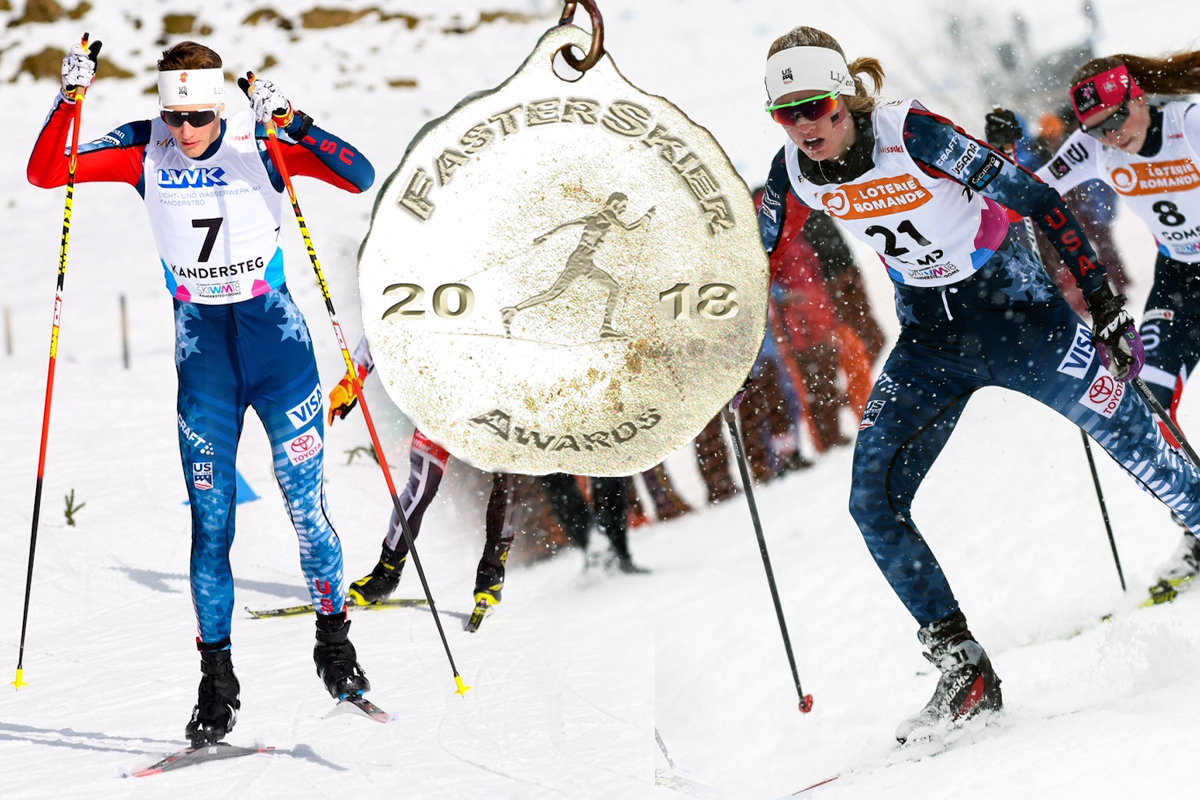
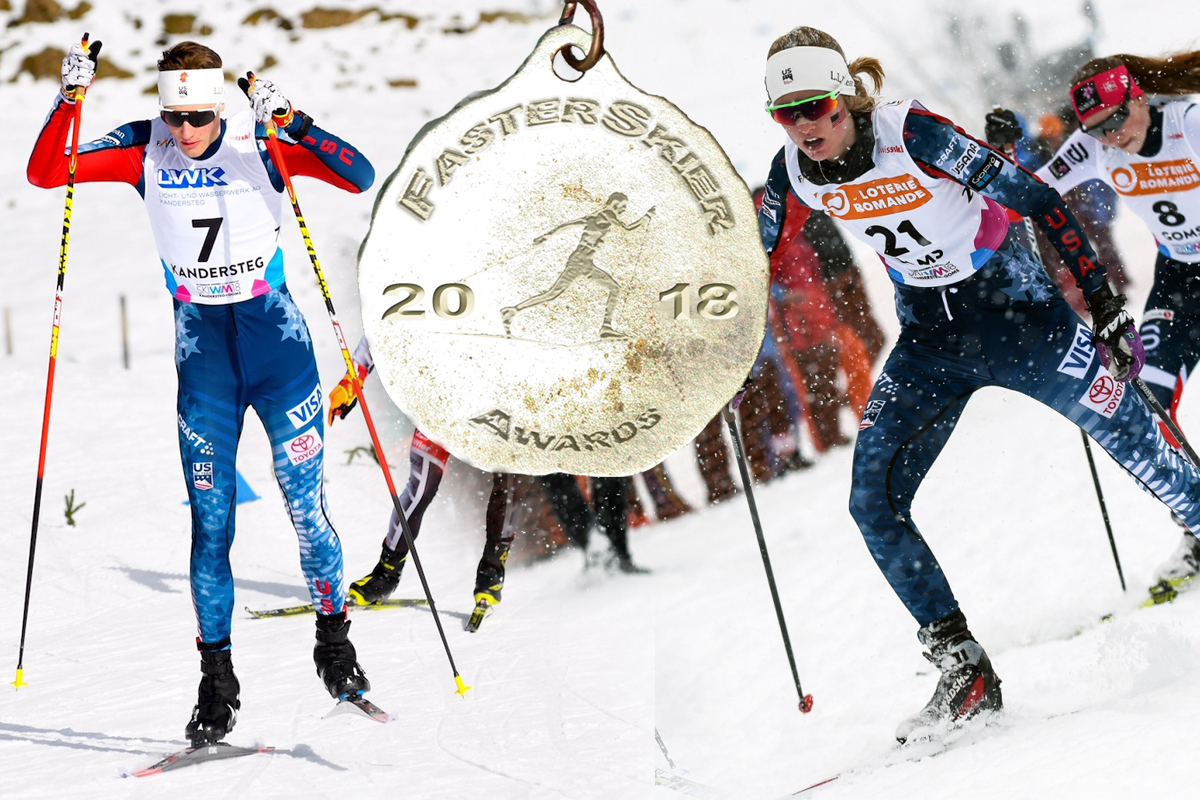
    North American skiing performances of the year: U.S. junior men’s silver medal in the 4 x 5 k relay at 2018 Junior World Championships (l) and Kikkan Randall and Jessie Diggins winning gold in the team sprint at the 2018 Olympics. (Photos: Julia Kern & FlyingPointRoad)

    With the 2017/2018 season officially in the rearview, FasterSkier is excited to unveil the last of its annual award winners for this past winter. Votes stem from the FS staff, scattered across the U.S., Canada, and Europe, and while not scientific, they are intended to reflect a broader sense of the season in review. This set of honors goes to the North American Performances of the Year in cross-country, biathlon and nordic combined.

    Previous categories: Junior Skiers of the Year | Collegiate Skiers of the Year | Biathletes of the Year| Para-Nordic Skiers of the Year | NoCo Skier of the Year | Canadian Breakthrough Skiers of the Year | American Breakthrough Skiers of the Year| Coach of the Year | U.S. Continental Skiers of the Year| Canadian Continental Skiers of the Year| International Performances of the Year | International Skiers of the Year

    ***

    Women’s Cross-Country: U.S. Women’s Olympic Gold in Team Sprint

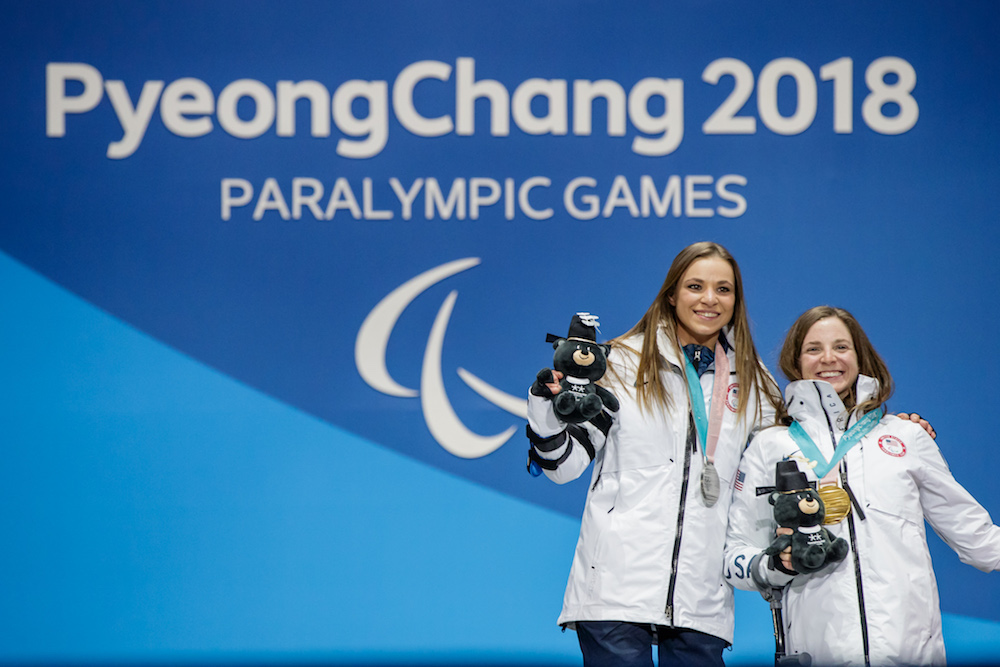
    Kikkan Randall (l) and Jessie Diggins after winning a historic gold for the U.S. in the women’s freestyle team sprint at the 2018 Olympics in PyeongChang, South Korea. (Photo: FlyingPointRoad)

    It had been 42 years since the last U.S. medal in an Olympic cross-country event, that being Bill Koch’s silver medal from the 1976 Winter Games. Never before had a U.S. woman taken home any Olympic hardware. Never before had an American taken home gold. Not until this year’s freestyle team sprint at the 2018 Winter Olympics in Pyeongchang, South Korea.

    With the Alpensia ski trails serving as their backdrop, U.S. Ski Team teammates Kikkan Randall and Jessie Diggins paired up to win the first U.S. women’s Olympic cross-country medal. The duo bested European nordic powerhouses, such as Norway, Sweden and Finland, as well as 17 other teams, to win the much-sought-after gold.

    While Randall matched Norway’s Marit Bjørgen and Sweden’s Charlotte Kalla in her legs of the 6 x 1.25-kilometer race, Diggins paced Norway’s Maiken Caspersen Falla and Sweden’s Stina Nilsson. Thanks to tactical skiing by Randall, 35, and tenacious moves by Diggins, 26, the Americans put the Swedes and Norwegians behind and the U.S. in front.

    “We came into this race just knowing that if we skied smart and doing our jobs, good things could happen,” Randall told FasterSkier after the race. “We never really talked about medals. We said let’s just go out and do it and have fun. I think that really worked well for us today.”

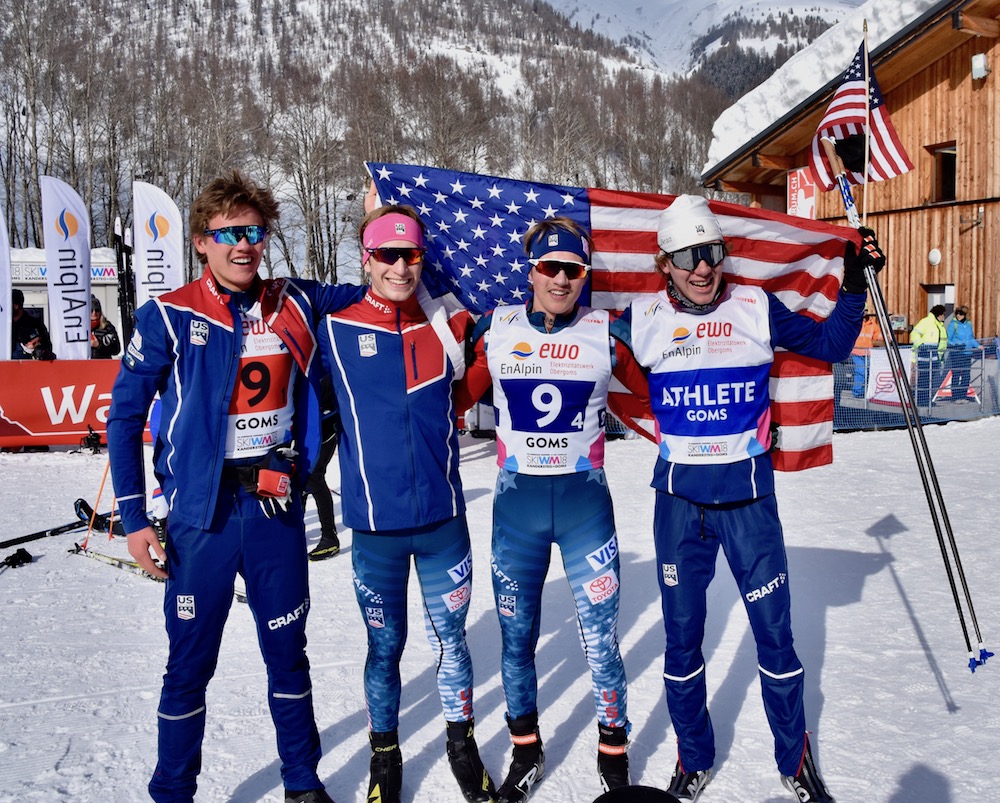
    Men’s Cross-Country: U.S. Junior Men’s Relay ( Luke Jager, Ben Ogden, Hunter Wonders, and Gus Schumacher) 2nd at Junior World Championships

    In early February, the U.S. junior men’s 4 x 5 k relay team went all-in at Junior World Championships in Goms, Switzerland. In their medal quest, the American team, with Luke Jager, Ben Ogden, Hunter Wonders, and Gus Schumacher, passed two teams on Schumacher’s anchor leg and came close to catching Norway, too, ultimately placing second, 2.2 seconds behind Norway in first.
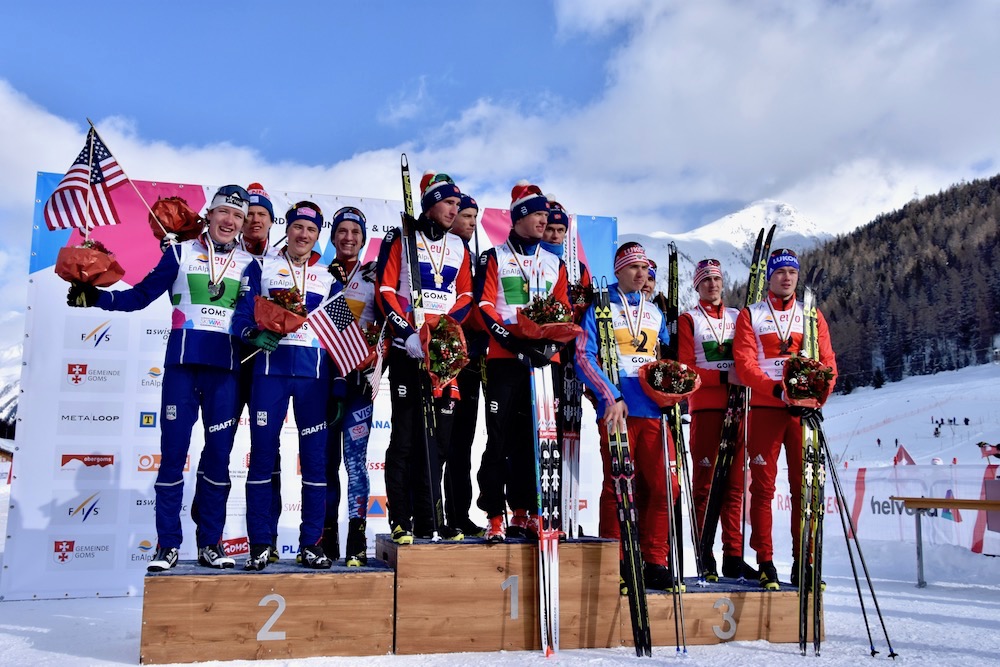
    The men’s 4 x 5 k relay podium at 2018 Junior World Championships with Norway (c) in first, the U.S. (l) in second (Ben Ogden, Luke Jager, Gus Schumacher, Hunter Wonders), and Russia (r) in third. (Photo: Julia Kern)

    The silver-medal finish is the best American relay result to date at a Junior Worlds championships. They finished 3.3 seconds ahead of Russia, which placed third, for a new mark for the U.S. team.

    “I thought it was possible, but actually getting it feels amazing,” Schumacher wrote in an email to FasterSkier after the race. “This whole trip has been really cool even without this success, it’s such an amazing place and the team is tight. I think individually I anticipated results maybe a little better, but this seems about right, and as a team I think we all surprised ourselves. Together we can make some big waves.”

    Jager also attributed the team’s success to the particular chemistry of the group.

    “This is something this group of guys has been dreaming of and training for for a really long time now,” Jager wrote in an email.

    “To be able to watch that dream come into fruition today was indescribable. Probably the best day of my life since Cole Morgan added me on Snapchat,” Jager continued. “We came here this year to show the world that US skiing is the real deal and that we’re here to stay and I think we did that. To be able to be a piece of that history was an honor.”

    Honorable Mention: Sophie Caldwell 3rd in Sprint World Cup 

    Two years ago, Sophie Caldwell, encouraged by the U.S. Ski Team Women’s Coach Matt Whitcomb, made a goal of finishing in top three of the season-long Sprint World Cup. By the end of this winter, she achieved that goal, closing out the 2017/2018 season in third place with a total of 396 points. Just ahead of Caldwell with 495 points was Sweden’s Stina Nilsson in second and Norway’s Maiken Caspersen Falla in first with 573 points.
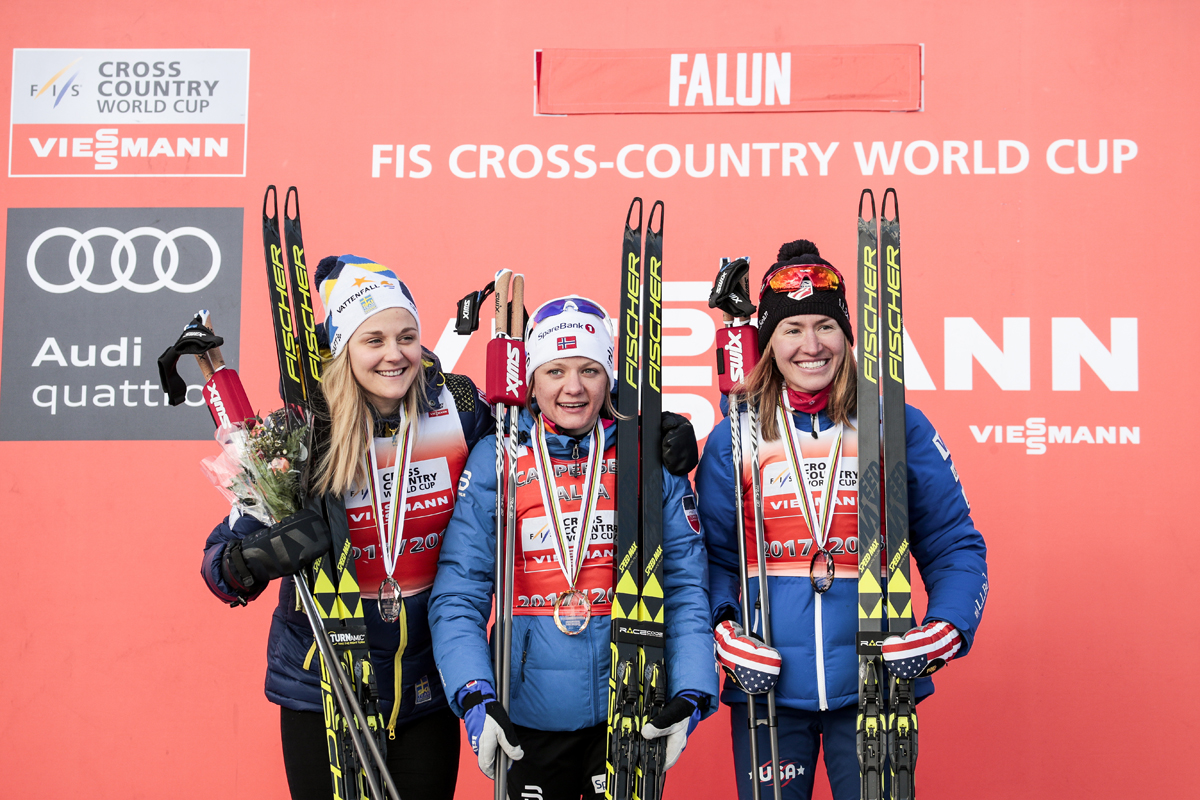
    The 2017/2018 women’s Sprint World Cup podium with Norway’s Maiken Caspersen Falla (c) in first, Sweden’s Stina Nilsson (l) in second and American Sophie Caldwell (r) in third. (Photo: Fischer/NordicFocus)

    Caldwell’s race season was littered with strong sprint performances, with the 28 year old finishing in the top 10 in all but one of the sprint races she entered. She made it to the finals in four of the 10 World Cup sprints she raced and landed on the podium three times.

    During World Cup Period 1, she finished eighth in the classic sprint in Kuusamo, Finland, ninth in the classic sprint in Lillehammer, Norway, and eighth in the freestyle sprint in Davos, Switzerland. Her first podium of the season came at the Tour de Ski in Lenzerheide, Switzerland, where she finished second in the freestyle sprint.

    Moving on to Period 2, Caldwell opened the second cycle of World Cup racing with another top-three, finishing third in the freestyle sprint in Dresden, Germany. In the classic sprint in Planica, Slovenia, she tied Switzerland’s Laurien van der Graff for first place in the freestyle sprint in Seefeld, Austria.

    Following the Olympics in PyeongChang, South Korea (where she raced to an eighth place in the classic sprint), Caldwell raced to eighth in the World Cup freestyle sprint in Lahti, Finland, 27th in the classic sprint in Drammen, Norway, and sixth in the freestyle sprint at World Cup Finals in Falun, Sweden.

    “It’s been a good season with some really good results, but I think maybe what I am most proud of is just the consistency of my season — making it into the semifinals almost every sprint and skiing with confidence throughout the year,” Caldwell told FasterSkier in Falun.

    “We were really psyched that she took after it because, all of us coaches, really believed it could be done,” Whitcomb had said of Calwell.

    Honorable Mention: Alex Harvey 3rd Overall in Tour de Ski 
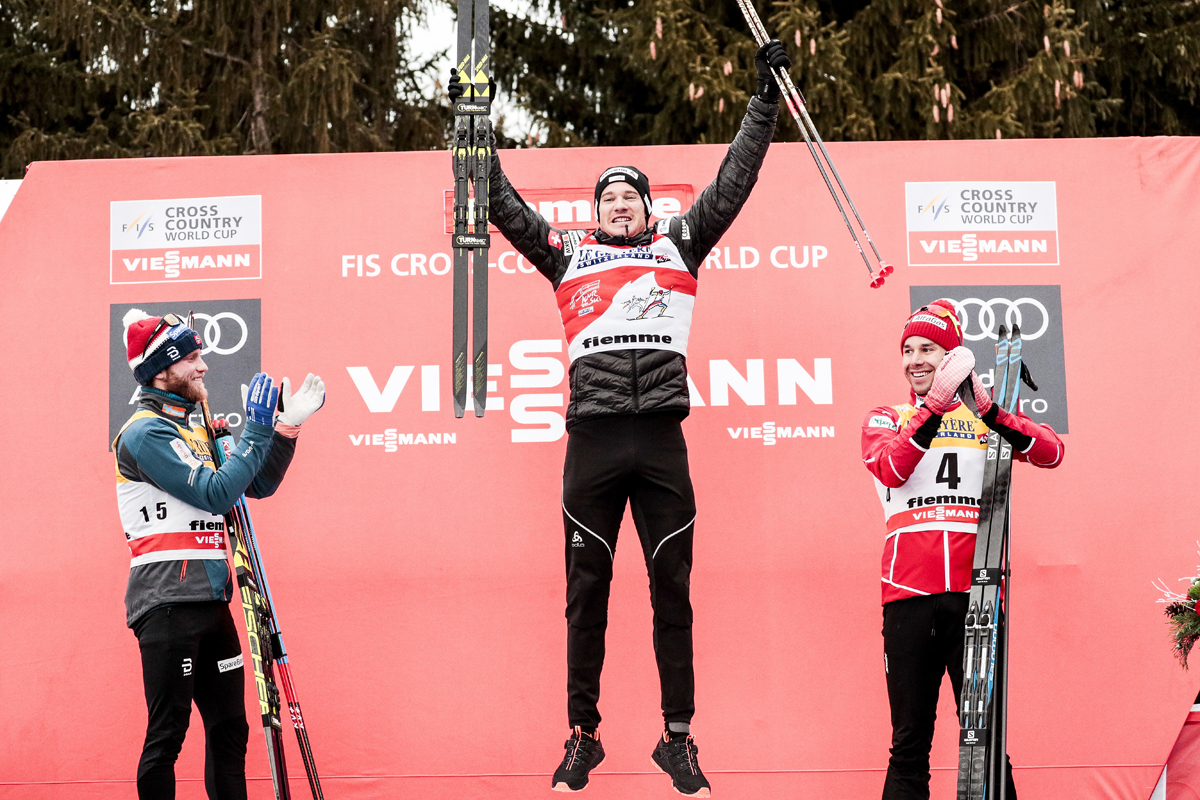
    Canada’s Alex Harvey (r) on the podium after placing third in the overall 2018 Tour de Ski, along with Switzerland’s Dario Cologna (c), who celebrated his fourth Tour de Ski title, and Norway’s Martin Johnsrud Sundby (l) in second place. (Photo: Fischer/NordicFocus)

    Even Alex Harvey will admit, the Tour de Ski’s final stage hill climb has long been his weakness.

    “I have been well-ranked up until the last stage a few years in a row, but just never been able to quite do it on the last stage,” Harvey had told FasterSkier in early January following the Tour.

    This year, by the Stage 7 hill climb in Val di Fiemme, Italy, Harvey had found his form.

    The 29-year-old Canadian raced to third in the Tour, behind Switzerland’s Dario Cologna in second and Norway’s Martin Johnsrud Sundby in second.

    Prior to this season, Harvey had finished in 20th in the overall in 2011 and 40th in 2012. For a few years, the Canadian did not finish the Tour due to circulatory problems in his legs, which particularly plagued him when skate skiing up hills. In the spring of 2015, he had surgery to remedy that.

    In 2016, he finished 14th in the Tour de Ski (TdS), and last year, he bumped up to seventh. This season’s third place is his first in the TdS overall top three.

    “I still tried to go by Sundby at the end, he had a little bit more than me,” Harvey told FasterSkier. “It is good terrain for him, a steady climb like that. He is such a strong climber — it was simply good I was able to just hang onto him until the end.”
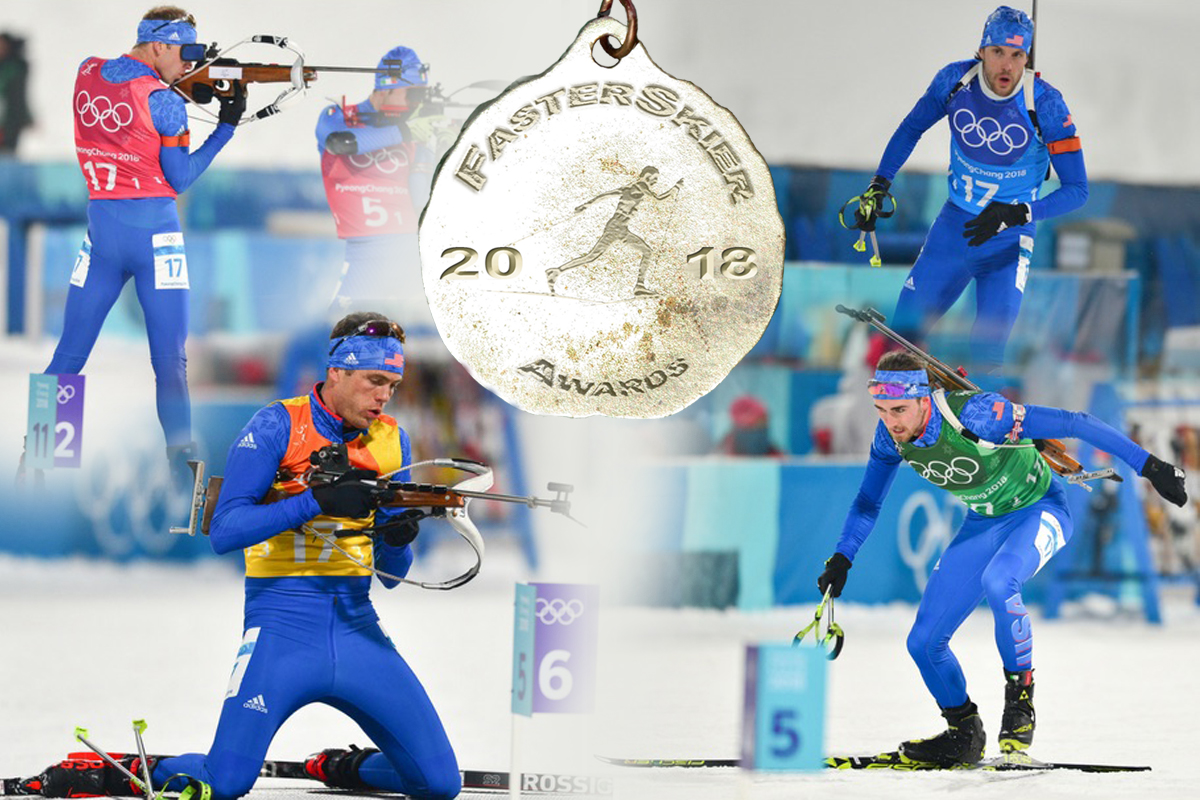
    The U.S. men’s sixth place in the Olympic 4 x 7.5 k biathlon relay is one of FasterSkier’s North American Performances of the Year. (Photos: US Biathlon/NordicFocus)

    Men’s Biathlon: U.S. Men’s Relay (Lowell Bailey, Sean Doherty, Tim Burke, Leif Nordgren), 6th place at Olympics

    Individually, the 2018 Olympics were below expectations for the U.S. men’s biathlon team. The four men who competed only notched one top-30 result combined — Tim Burke placing 17th in the pursuit.

    But the men’s relay, the very last biathlon competition of the Games, was another story. In a topsy-turvy race with a lot of wind and a lot of penalty loops, the Americans stayed right in it. Less than a minute out of the lead at the halfway point, they finished sixth (+3:50.2), tying the best relay result ever by an American team at any Olympics.

    “On a day like today, you saw that France was in the loop, now Germany, so the top nations are in there,” Lowell Bailey said at the time. “I cannot tell you how challenging this range is. It is so much different than most of the other ranges we shoot on.”

    Best ever? Yes. But Leif Nordgren and Sean Doherty, the two team members who are not retiring, were left wanting more.

    “Honestly it is a little disappointing,” Nordgren said after. “I know we were gunning a lot more as a team. I had some mistakes there in prone, too. That hurt a lot since we were right there in contention with some top teams in the world.”
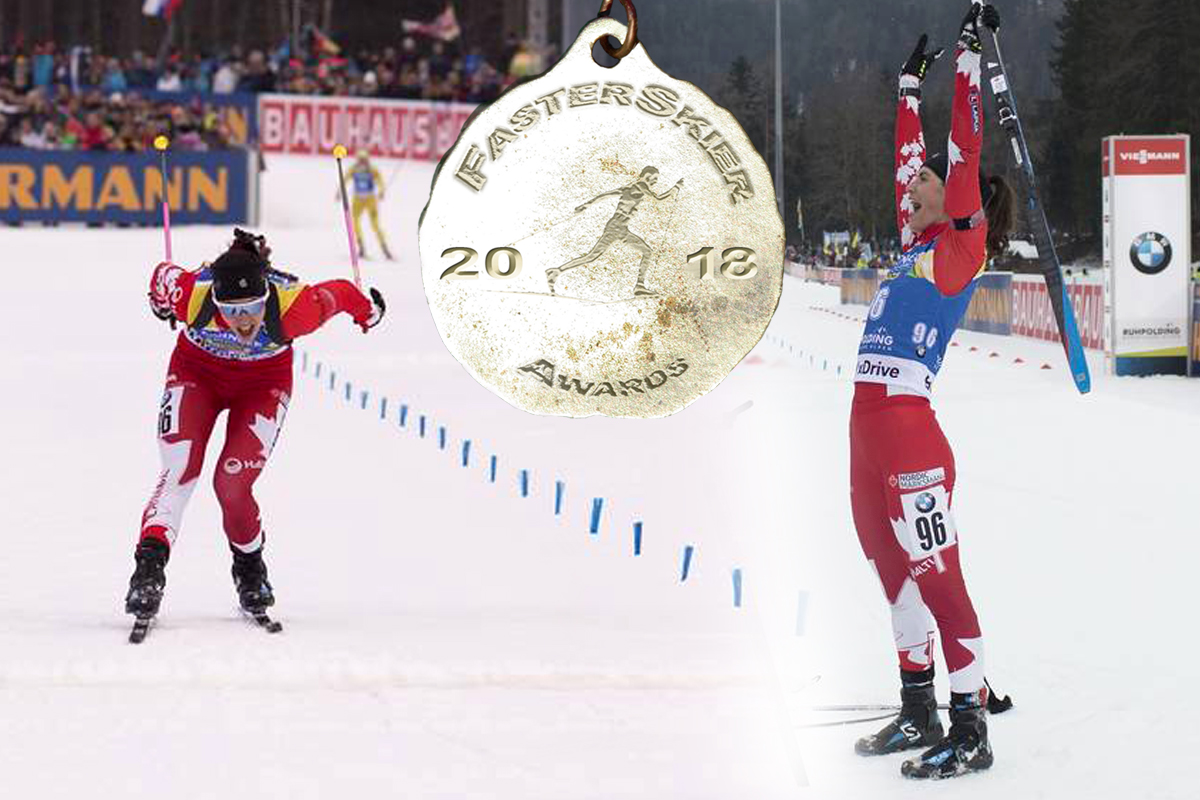
    Rosanna Crawford’s third-place finish and first-career podium at the Ruhpolding IBU World Cup is one of FasterSkier’s North American Performances of the Year. (Photos: Salomon/NordicFocus)

    Women’s Biathlon: Rosanna Crawford 3rd in Ruhpolding World Cup 15 k

    The women’s performance award goes to someone who had a podium coming for a long time. And in Ruhpolding, Germany, this year, Rosanna Crawford finally got it.

    She shot 20-for-20 in the 15 k individual, the most grueling race format on the women’s schedule. And then she pushed her hardest over the course’s big hills to hang on to a top-three finish. One of the last starters in the field, she mixed up the podium after the pre-race favorites had already finished and perhaps had thought their positions were secure.

    “I actually didn’t know I was fighting for a podium until the fourth loop,” Crawford told FasterSkier on the phone after the race. “I was like, Oh God! But I think that kind of helped, because then I knew to expect the crowd for the last standing.”

    It was a big day for the Canadian team, too: their last podium was when the men’s relay won bronze at 2016 World Championships. A lot has changed since then, including a tough season in 2016-2017 for many of the team’s veterans.

    But Crawford bounced back.

    “Julia [Ransom], Emma [Lunder] and Sarah [Beaudry], they kind of pushed past the IBU guys [into the finish zone], which I don’t think they were allowed to do, but Canada’s not on the podium every day so they let them sneak by to give me a hug so that was really special,” Crawford told FasterSkier. “I’ve been with these girls the past couple years now and so to be able to celebrate with them is amazing. Their results have been so inspiring for me … [My coach Roddy Ward] also jumped the fence, which I don’t think was allowed, so that was nice to be able to see him as well. It’s just such a team effort to get to the podium. I’m the one out there skiing and shooting, but I couldn’t have done it without the amazing skis on my feet or my coaches behind the scope, so Matthias and Roddy were really important there, and I couldn’t have done it without the girls who I train with all summer. I’m just so grateful for this team that I’m on.”
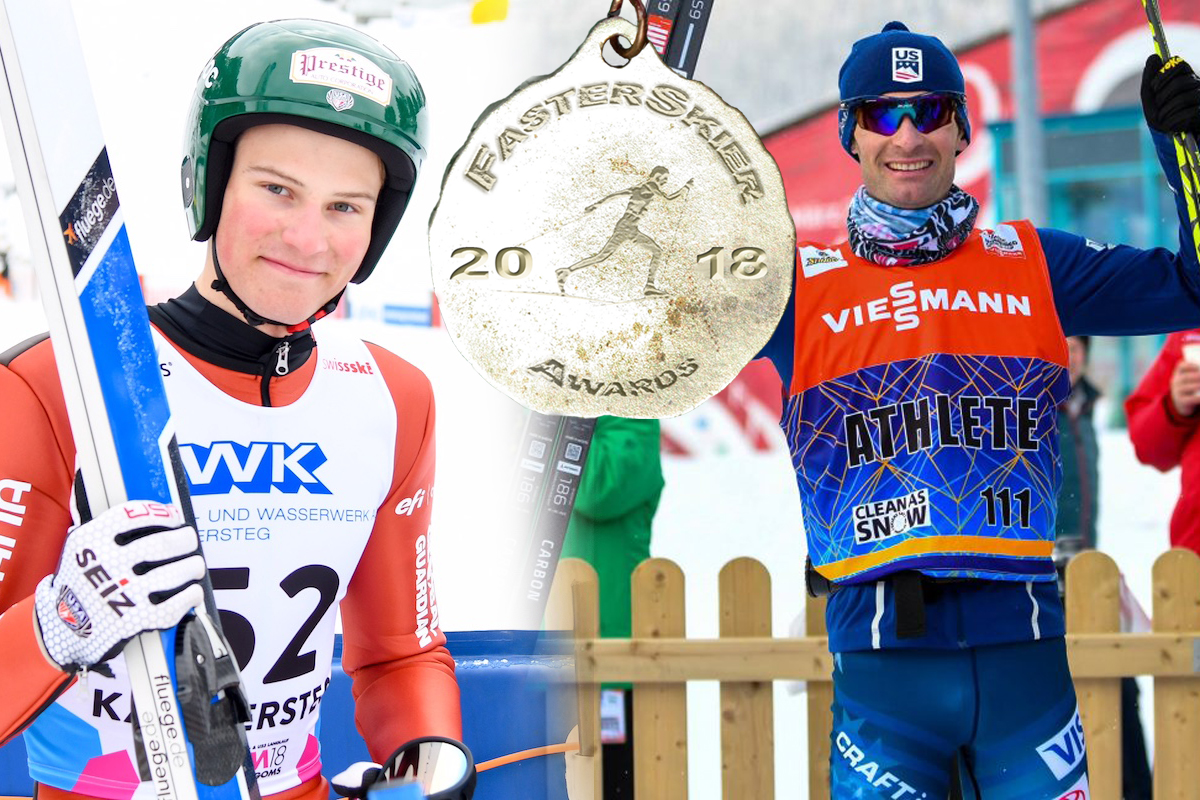
    Ben Loomis’s bronze-medal performance at Junior Worlds and Bryan Fletcher’s seventh place in his last World Cup competition are FasterSkier’s North American Nordic Combined Performances of the Year. (Photos: Romina Eggert & USA Nordic)

    Nordic Combined: Ben Loomis 3rd at Junior World Championships & Bryan Fletcher 7th in last race

    Nineteen-year-old Ben Loomis already received our nod for Junior Skier of the Year, but his bronze-medal performance at Nordic Combined Junior World Championships deserves “Performance of the Year” accolades as well.

    At his fourth and final Junior Worlds, Loomis jumped to seventh and raced to third in the first competition in Kandersteg, Switzerland.

    “Taking a step on the podium was an excellent feeling today,” Loomis wrote in an email to FasterSkier after that normal hill/10 k. “I have been working very hard, especially towards this specific race for a long time now. Accomplishing this is a huge relief and very motivating for the future.”

    He went on to race to seventh and finally a fourth place in the other two individual competitions at 2018 Nordic Combined Junior Worlds. Then he competed in three events at his first Olympics in PyeongChang, South Korea.

    But his main goal for the season, and his main goal for the last two years, had been to take a medal at Junior Worlds.

    “I’ve always done pretty well against juniors my same age so that gave me confidence going into Junior Worlds,” he told FasterSkier in an email earlier this month. “Of course, I was very happy and at the same time relieved to have meet my goal. This result was huge because it not only helped myself out, but it opened up another World Cup spot which is a help for the whole team. This certainly made everyone happy.”

    Then, there was U.S. Nordic Combined’s team veteran, Bryan Fletcher, who placed seventh in the last World Cup race of his career — tying his best result of the 2017/2018 season. He was our pick for this year’s Nordic Combined Skier of the Year, and we think they way he ended his career is worthy of recognition in this category as well.

    On March 14 in Trondheim, Norway, the 31-year-old Fletcher jumped to 12th then skied to seventh in the large hill/individual 10 k, posting the seventh-fastest 10 k time in the process. Fletcher scored World Cup points by finishing the the top 30 of nine of 10 individual races he entered. He also placed 17th in two individual races at the Olympics.

    “I think that it’s going to be bittersweet,” Fletcher said of his retirement in a video interview with FIS. “I’m happy that it’s over and that I’ve gotten to experience the whole journey. But it’ll also be a little sad because it’s a long journey coming to an end … and there’s going to be a lot of things to remember and miss of this sport.”
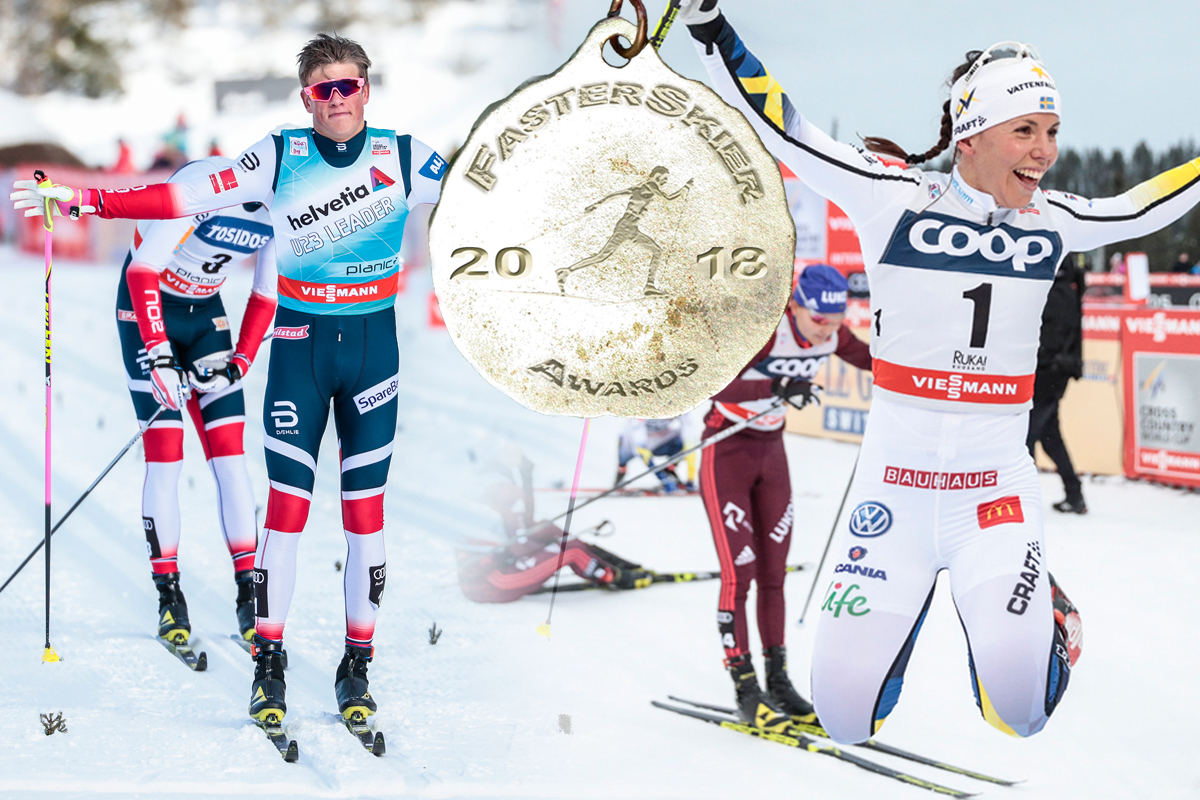
  • FasterSkier’s International Skiers of the Year: Charlotte Kalla and Johannes Høsflot Klæbo

    FasterSkier’s International Skiers of the Year: Charlotte Kalla and Johannes Høsflot Klæbo

    Norway’s Johannes Høsflot Klæbo (l) and Sweden’s Charlotte Kalla (r) are FasterSkier’s 2018 International Skiers of the Year. (Photos: Fischer/NordicFocus)

    With the 2017/2018 season officially in the rearview, FasterSkier is excited to unveil its annual award winners for this past winter. Votes stem from the FS staff, scattered across the U.S., Canada, and Europe, and while not scientific, they are intended to reflect a broader sense of the season in review. This set of honors goes to the international skiers of the year.

    Previous categories: Junior Skiers of the Year | Collegiate Skiers of the Year | Biathletes of the Year| Para-Nordic Skiers of the Year | NoCo Skier of the Year | Canadian Breakthrough Skiers of the Year | American Breakthrough Skiers of the Year| Coach of the Year | U.S. Continental Skiers of the Year| Canadian Continental Skiers of the Year| International Performances of the Year

    ***

    Charlotte Kalla 

    In her results and her consummate focus on honing in on championship-performance skiing, Sweden’s 30-year-old Charlotte Kalla is a master of showing up when it counts and a maestro of peaking.

    In this Olympic year, Kalla only contested 12 World Cup events. She skipped the Tour de Ski (TdS) for a pre-Olympic altitude camp (as did several other top skiers), yet she was on everyone’s radar in the buildup to the Games.

    One can imagine Kalla and her coach Magnus Ingesson — now a Swedish national team coach — mapping out the season with scalpel-like precision. She came to the opening weekend in Kuusamo, Finland, ready for Level 5 racing. She won the mini-tour title there after placing second in the 10 k classic and winning the 10 k freestyle pursuit on back-to-back days.

    A week later, in Lillehammer, Norway, Kalla won the 15 k skiathlon, proving she can kill in skate technique, but her classic skiing is also world-class. The Swede won again on Dec. 16 in Toblach, Italy, in the 10 k skate. (The next day, Kalla placed sixth in Toblach’s classic pursuit.)

    Sweden’s Charlotte Kalla winning gold in the first race of the 2018 Winter Olympics in PyeongChang, South Korea, the women’s 15 k skiathlon, ahead of Norway’s Marit Bjørgen (behind, in red) and Finland’s Krista Parmakoski, respectively. (Photo: FlyingPointRoad)

    As far as fitness during Period 1, that was affirmed. While skipping the TdS, Kalla began her Olympic buildup. She didn’t race again on the World Cup until Jan. 21 in Planica, Slovenia. There, she placed second in the 10 k classic.

    Kalla contested eight World Cups before the Olympics and won four. Her Planica podium proved she hadn’t relented any of her top racing gears between mid-December and the end of January.

    Kalla has historically been an athlete able to prime for the big events. She’s won a total of 12 World Championship medals. Between the Vancouver and Sochi Olympics, Kalla had captured two gold and two silver medals.

    In the opening race at this year’s PyeongChang Olympics, Kalla won the 15 k skiathlon. She then racked up three silver medals in the 10 k freestyle, 4 x 5 k relay and freestyle team sprint. Her eight Olympic medals make her Sweden’s most decorated cross-country skier. She is also the first Swedish women to have won three Olympic golds. (Gunde Svan won six Olympic medals: four gold, one silver and one bronze.)

    Kalla’s limited World Cup schedule put her sixth in the 2017/2018 Distance World Cup standings and seventh in the Overall World Cup.

    Johannes Høsflot Klæbo 

    The man in pink — pink poles, pink glasses, pink gloves — 21-year-old Norwegian Johannes Høsflot Klæbo earned 168,449 Swiss Francs on the World Cup. That’s nearly $175,000 U.S. dollars. All those World Cup winnings mean one thing: it was the year of Klæbo.

    Combined, Klæbo had 14 World Cup podiums (including stage races) this year. He had a single third place, two second places, and a whopping 11 first places. There’s more to this than simply the ka-ching of his bank account.

    Norway’s Johannes Høsflot Klæbo celebrates his team-sprint win with Martin Johnsrud Sundby (not shown), while Alexander Bolshunov of the Olympic Athletes from Russia (l) pushes for silver at the 2018 Olympics in PyeongChang, South Korea. It was his third-straight gold of the week. (Photo: FlyingPointRoad)

    It’s not as if Klæbo has been seasoned with age, learned to temper his efforts for the long-haul effort of a total World Cup campaign. His race efforts were a full-body immersion starting on Nov. 24 in Kuusamo, Finland. There, he swept the three-race Ruka Triple. He won the next three races: two in Lillehammer and one in Davos, Switzerland.

    Klæbo’s win in the Lillehammer 30 kilometer skiathlon was striking. He looked gassed as he was dropped by teammate Martin Johnsrud Sundby on the courses last significant climb. Klæbo never bowed to Sundby. He kept his losses in check, regrouped, and through his last-kilometer catch-up effort, put Sundby on warning. Klæbo won. Sundby placed second.

    In his last race before skipping the Tour de Ski for a training block, he won the 15 k classic pursuit in Toblach. That proved to be his last distance win in a World Cup or Olympic race this season.

    When considering Klæbo’s sprint season, his efforts were nearly a clean sweep. He entered nine World Cup sprints. He won seven and placed second and third in his other World Cup sprint starts. That all amounted to him winning his second-consecutive Sprint World Cup Crystal Globe.

    His cumulative performances this season also brought him his first Overall World Cup Crystal Globe. In doing so, he also became the youngest Overall World Cup champion since Gunde Svan came out on top of the 1983/1984 World Cup season. Svan was 22 at the time.

    Certainly Klæbo will have to dust his Crystal Globes and we’re assuming more will come his way. He’ll also have to spend considerable time in the offseason posing for Olympic medal shots with sponsors and supporters.

    Klæbo flew back to Norway after the Olympics with three gold medals. He won the classic sprint, freestyle team sprint and 4 x 10 k relay. His sprint win made him the youngest cross-country Olympic champion in  in the history of the Winter Games.

    All the metrics on winning and podiums doesn’t speak to how Klæbo has made us talk about the sport. His name is a verb: “to Klæbo” — as in, run-stride or simply run-run when it comes to classic technique on the steeps. Klæbo may kill it in pink, but his non-traditional classic skiing gears are in fact something that may be his real legacy.  

    The upside to all of Klæbo’s winning when considering his opponents, is that eventually he’ll age and slow down. That slow-drip decay might take a decade. Ten years is a long time for neon-pink to remain in fashion. Klæbo’s race performances this year were peerless. The pink, it was omnipresent on the podium, and most likely will be trending for years to come.

    Honorable Mention: Dario Cologna 

    Wait. Who? Yeah. Thirty-one-year-old Swiss skier Dario Cologna. He was the comeback kid this season. To come back, in the first place, you must have been somewhere before. Cologna, in the past, has seen his fair share of podiums and championship medals. He was the first three-time winner of the Tour de Ski, and he’d won the Overall World Cup title three times.

    Switzerland’s Dario Cologna making it two wins in a row after a three-year World Cup victory drought. Cologna won Stage 3 men’s 15 k freestyle pursuit at the 2018 Tour de Ski in Lenzerheide, Switzerland.(Photo: Fischer/NordicFocus)

    Recently, Cologna has battled injuries and more fit skiers seeking their own opportunities on the international stage.

    After beginning the season in Kuusamo with a 37th, a 29th, and a 17th overall placing in the three-race mini tour, it seemed certain this year wouldn’t see a rejuvenated Cologna. That reading of the tea leaves was wrong. He went on to win a fourth TdS this season. He first turned heads by winning the TdS second stage 15 k classic. It was the Swiss star’s first World Cup win in three years.

    It was an Olympic year. And Cologna’s TdS win put him on the PyeongChang radar.

    “Of course that I am back, that I can beat everyone,” Cologna said of his form after his TdS overall win. “That surely is a good sign for myself, that everything is all right, and now it’s about preserving and showing this form at the Olympics.”

    Prior to PyeongChang, Cologna had won gold in the Vancouver 15 k skate, and gold in Sochi’s 30 k skiathlon and 15 k classic. He went on to stamp his name among the sport’s best by winning the PyeongChang 15 k skate. He becomes the first Olympic cross-country skier to win three golds in the 15 k event.

    Cologna has been around. But this season he came around again — asserting his relevance and legacy.

    Honorable Mention: Jessie Diggins 

    By the end of the World Cup season, Jessie Diggins, 26, of the U.S. Ski Team ranked second in the overall standings. Norway’s Heidi Weng won the Overall World Cup with 1476 points, and Diggins slotted in just behind with 1436 points. Reviewing the entirety of the season, Weng and Diggins went head-to-head in every World Cup race, including the TdS, except for two races in Lahti, Finland.

    The Lahti races were held the weekend after the PyeongChang Olympics. Weng scored a 26th and fifth place, good enough for 50 World Cup points on the weekend. Diggins lost the overall by a margin of 40 points. Maybe, just maybe, had Diggins raced in Lahti, we’d be talking about Diggins winning the Overall Crystal Globe.

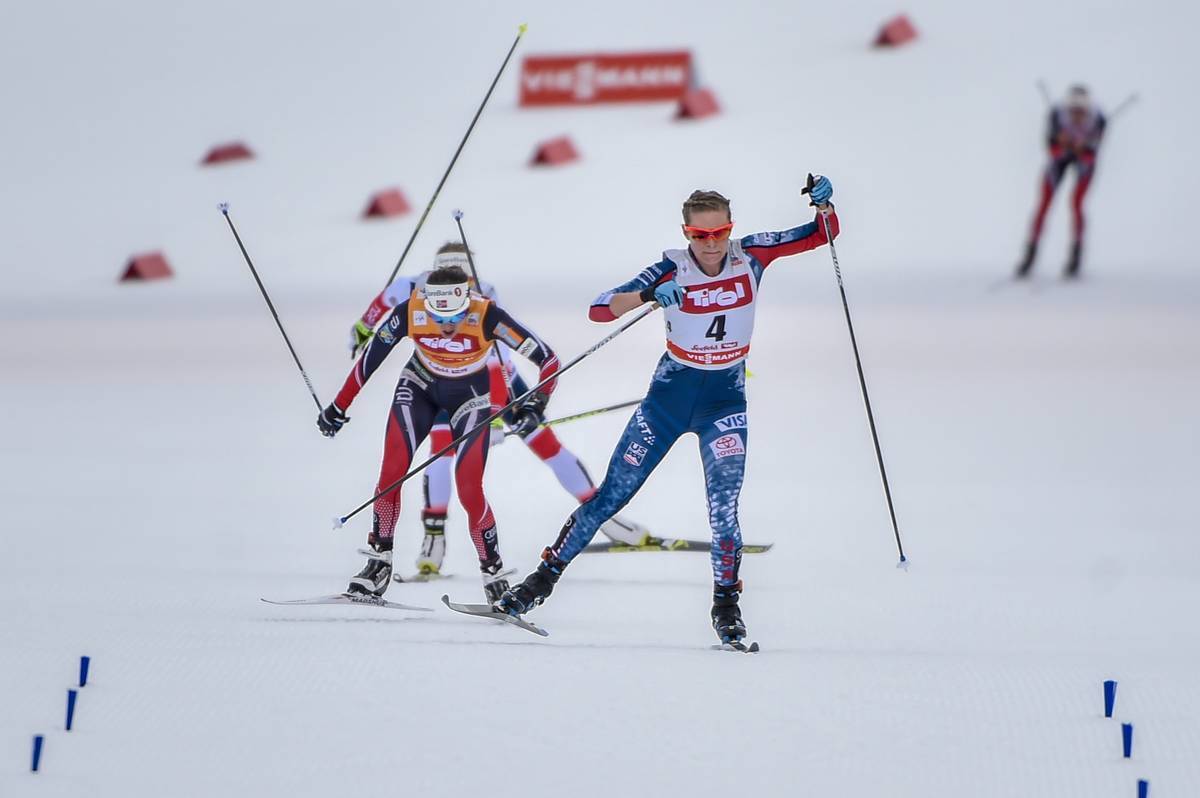
    American Jessie Diggins (4) leads Norwegians Heidi Weng and Ragnhild Haga in the finishing stretch of the women’s 10 k freestyle mass start at the World Cup in Seefeld, Austria. (Photo: Salomon/NordicFocus)

    But she missed those races for good reason. Diggins and her teammate Kikkan Randall were in high demand for media appearances in New York City. For nearly a week, the U.S. gold-medal duo ran the talk-show gauntlet and made well-deserved sponsorship appearances. They, too, were spreading the message that U.S. cross-country skiing was well worth the nation’s interest beyond the two-week Winter Olympic bubble.

    But let’s get back to the World Cup. A thorough reading of the season’s results shows Weng came into the season hot. Her top-notch performances were sustained through the TdS, which she won. Although the overall World Cup winner, Weng failed to medal at the Olympics and faded hard after her fifth place in the Lahti skate sprint.

    Diggins, on the other hand, was a bit more mellow — from her own podium-expectation standards —  at the season’s start. She earned her first World Cup podium, a third place, in her 12th start this past season.

    Something must have clicked from there. The rest of Diggins’s season was a tear on the sharp end. Diggins went on to place third overall in the TdS. She won the 10 k mass start skate in Seefeld, Austria, on Jan. 28, right before the Olympics.

    In PyeongChang, Diggins simply set the U.S. bar for consistent skiing at an insane level. She raced every  Olympic cross-country event — an exhausting schedule by any measure. She placed fifth three times, sixth once, and seventh once. And of course, there was that gold medal with teammate Randall in the team sprint. Those levels of show-up-and-ski performances are astounding.

    It’s even more remarkable when considering she was less than three seconds out of bronze in the 15 k skiathlon — she placed fifth. She was also less than four seconds out of bronze in the 10 k skate — she again placed fifth behind Marit Bjørgen of Norway and Krista Pärmäkoski of Finland. Those two skiers tied for third place.

    Post-PyeongChang, there was, for good reason, that missed Lahti weekend. Back on the World Cup grind, Diggins raced the final five races and missed the podium just twice. Her three podiums after the Olympics were a third place in the Drammen classic sprint, second in the Holmenkollen 30 k classic, and second in the Falun World Cup Finals 10 k skate pursuit. She also skied the fastest time of day in the Falun pursuit to clinch second place in the World Cup Finals mini tour.

    Clearly, Diggins was on a roll during and after the TdS. So it’s not so far-fetched in our mid-April quarterbacking to think Diggins could have nailed those two Lahti races and won the overall. Again, Weng and Diggins were on two opposite trajectories heading into and out of PyeongChang.

    Absolutely a historic season for Diggins.

  • FasterSkier’s International Performances of the Year: Simen Hegstad Krüger and Marit Bjørgen

    FasterSkier’s International Performances of the Year: Simen Hegstad Krüger and Marit Bjørgen

    Simen Hegstad Krüger’s Olympic skiathlon victory (l) and Marit Bjørgen’s Holmenkollen come-from-behind win (r) are FasterSkier’s 2018 International Performances of the Year. (Photos: FlyingPointRoad & Fischer/NordicFocus)

    With the 2017/2018 season officially in the rearview, FasterSkier is excited to unveil its annual award winners for this past winter. Votes stem from the FS staff, scattered across the U.S., Canada, and Europe, and while not scientific, they are intended to reflect a broader sense of the season in review. This set of honors goes to the International Performances of the Year.

    Previous categories: Junior Skiers of the Year | Collegiate Skiers of the Year | Biathletes of the Year | Para-Nordic Skiers of the Year | NoCo Skier of the Year | Canadian Breakthrough Skiers of the Year | U.S. Breakthrough Skiers of the Year | Coach of the Year | U.S. Continental Skiers of the Year| Canadian Continental Skiers of the Year

    ***

    Simen Hegstad Krüger (Norway), Olympic skiathlon

    Out of the start pyramid at the PyeongChang Olympics men’s 30-kilometer skiathlon, a mini-disaster struck 24-year-old Simen Hegstad Krüger of Norway. With the flying poles and striding skis, someone was bound to snap a pole. That someone was Krüger, who found himself at the base of the course’s first hill, calmly seeking the assistance of a coach with the gear in need. Time bled. The front pack cruised on. But he looked collected and unconcerned.

    In his first Olympics and first-career Olympic race, Krüger simply rolled with the get-your-pole-and-minimize-losses drill. With Finland’s Iivo Niskanen leading the stream of skiers ahead of him, Krüger kept it all in perspective. It’s was a 30 k race, and only a few hundred meters had been ticked off.

    It was a parade of possible medal winners capturing camera time during the skiathon’s classic leg. Niskanen (who later said, after winning the 50 k classic gold, that he approached the skiathlon’s classic leg as a training opportunity), Martin Johnsrud Sundby, Alex Harvey, and Dario Cologna looked golden.

    Norway’s Simen Hegstad Krüger after winning gold in his first Olympic race, the men’s 30 k skiathlon, at the 2018 Winter Games in PyeongChang, South Korea. (Photo: FlyingPointRoad)

    Never locking on, but stealthily lurking, Krüger gained ground as the race’s classic portion transpired. He came through the classic-to-skate ski exchange at 15 k in 14th place, about 15 seconds behind the leaders. Just over two kilometers later, Krüger had bridged the gap.

    With his legs fresh, Krüger said once he began the skate leg that “all possibilities are open again.”

    Anything did seem possible for a host of the world’s best distance skiers, just not necessarily for Krüger. After expending energy skiing up to the lead group early in the skate, Krüger played it coy. He didn’t lead or get exposed up front in the windy conditions. He simply kept pace and kept in the draft.

    An unwritten rule on the Norwegian team is that the first attack to stick by a Norwegian is a protected chance. In other words, once a Norwegian is in first and gaining time, his teammates won’t attempt to chase the attack down. Sundby was salivating at the chance for a career-first individual Olympic gold. Hans Christer Holund, also of Norway, was a pacesetter too. Either one of them could have seized the moment.

    But at 26.25 k, Krüger rolled the dice and surged. The surge morphed into an unchallenged attack that seemed a lock one kilometer later when Krüger was up by 22 seconds. Team rules are team rules — Sundby and Holund could only watch their teammate shake the front end of the race apart.

    Once they felt Krüger’s lead was insurmountable, Sundby and Holund set to work for themselves. The gap to Krüger closed significantly by the finish.

    Krüger won the race in 1:16:20 hours. Sundby settled for silver, finishing eight seconds back, while Holund was third, 9.9 seconds out of first.

    Was Krüger a real outsider for gold at the start of the race? Consider he was a member of the world’s most elite men’s team: Norway. Nations are also limited to four starters per race at the Olympics. Those in the know, like coaches and teammates, should have understood Krüger was on dual-discipline form.

    Yet, until his Olympic skiathlon win, Krüger had two individual World Cup podiums: one win and a third place. (He had finished third in the fifth stage of the 2017 Tour de Ski, the 10 k skate in Toblach, Italy, and won a 15 k skate in December 2017, also in Toblach.)

    A young Olympic rookie, Krüger showed he was the day’s master of tactics on the sport’s biggest stage. Krüger proved fit and certainly coyer than his Norwegian counterparts. Opportunity struck. Krüger seized it for our male International Performance of the Year.

    Marit Bjørgen (Norway), Holmenkollen 30 k freestyle mass start

    It has been a year to celebrate firsts. There was that first-ever U.S. Olympic gold. And from the North American perspective, the U.S. Ski Team’s (USST) women could fill a full scrapbook of standout performances. Let’s start with USST member Jessie Diggins. She finished second overall on the World Cup. Waking up on a Saturday or Sunday and finding Diggins on the podium was no longer a surprise.

    Norway’s Marit Bjørgen celebrates her seventh Holmenkollen 30 k victory in Oslo, Norway, ahead of American Jessie Diggins, Norway’s Ragnhild Haga (not shown) and Sweden’s Charlotte Kalla. (Photo: Fischer/NordicFocus)

    So when Diggins was stealing the show at Oslo’s storied Holmenkollen venue in the women’s 30 k freestyle mass start this March, you’ve got to believe Norway and Sweden were there to see history; an American on the top step in the most famous of cross-country races.

    This Holmenkollen 30 k was a storied race. Just not storied for the precise narrative most watching the race expected. For much of the race, it appeared to be the Diggins show.

    Whatever you want to call her — queen, best-ever or simply Marit — the sport’s preeminent star, Marit Bjørgen of Norway, made her last Holmenkollen 30 k unforgettable.

    As FasterSkier’s venerable reporter Gabby Naranja noted, during the high profile 30 k events, Bjørgen likes to run away solo style. In last year’s Holmenkollen 30 k classic, Bjørgen was off the front and unchallenged for the win. Then, in PyeongChang during the 2018 Olympic 30 k classic, Bjørgen pulled away from any would-be chasers for a complimentary finishing-straight Norwegian flag wave and some golden hardware.

    This year’s Holmenkollen 30 k that followed was skate technique. When the trio of Diggins, Sweden’s Charlotte Kalla, and Norway’s Ragnhild Haga — all stellar skate skiers — pulled away from the field, the hopes of a Bjørgen revival seemed unlikely. Bjørgen had lost incremental time in the race’s early kilometers. The 37-year-old Bjørgen appeared gassed from a stellar Olympics and to be subtly relinquishing the stage to three younger go-getters.

    A little more than halfway through the race, Bjørgen was 36 seconds down on the lead group.

    Yet, Bjørgen was a wise one. She changed skis near the race’s midpoint. Diggins, Kalla and Haga stuck with their 15-k-old glide, skipped the ski swap and chugged on.

    The presumed podium placers slowed just enough, and Bjørgen sped up just enough to bring them closer and closer. But it was more like Bjørgen remained the massive sun with the heftiest gravity pulling the three off-the-front satellites towards her.

    With three kilometers to go, Bjørgen was six seconds back.

    In the closing kilometer, Bjørgen controlled the race, passed any top-step threats, and reaffirmed one last time that she is indeed the singular skier we all expect her to be. She won her seventh Holmenkollen for a record number of victories for a woman in the Holmenkollen 30 k. In her six prior Holmenkollen 30 k wins, Bjørgen won four times in classic technique, two times in skate.

    Diggins placed second (+3.6), Haga third (+4.3), while Kalla was a tenth of a second back in fourth.

    With the recent announcement of her retirement, perhaps the international field can rest easy knowing Bjørgen won’t be sending it off the front or seizing the win from behind.  

    Honorable Mention: Jessie Diggins and Kikkan Randall (U.S. Ski Team), Olympic Team Sprint

    Before anybody gets worked up over this, more awards are due. We at FasterSkier are spreading the award love and trying to be clinical. Are we splitting hairs between honoring Bjørgen for sentimental reasons and not choosing the Randall-Diggins gold for fear of pandering to our core audience? (Noise of clearing throat.) No.

    Americans Kikkan Randall and Jessie Diggins jumping for joy after placing first in the 2018 Olympic team sprint in PyeongChang, South Korea, ahead of Sweden’s Charlotte Kalla (l) and Stina Nilsson (second from l) in second place and Norway’s Marit Bjørgen (second from r) and Maiken Caspersen Falla (r) in third. (Photo: FlyingPointRoad)

    (And if you are hearing of the American Olympic team sprint win right here, right now, for the first time … then welcome to FasterSkier. We are glad to have you as a reader.)

    What more can be said of the Randall-Diggins win in the 2018 Olympic freestyle team sprint? It’s only been a bit over a month since the Americans skied the perfect race. Randall was the glue sticking with Bjørgen and Kalla. Diggins was the late boost who slingshot around Norway’s Maiken Caspersen Falla and outsprinted Sweden’s Stina Nilsson in the last 100 meters of the race.

    It is an Olympic medal after all. Gold, too. We can imagine every U.S. nordic skier for a generation will be asking “where were you when …?”

    Three cheers for Diggins-Randall. Three cheers for the wax crew. Three cheers for the coaches. And three cheers for all the women who have had the privilege of calling themselves members of the U.S. Ski Team, past and present.

    Honorable Mention: Iivo Niskanen (Finland), Olympic 50 k Classic Mass Start

    Finland’s Iivo Niskanen after winning the men’s 50 k classic mass start at the 2018 Winter Olympics in PyeongChang, South Korea. (Photo: FlyingPointRoad)

    Let’s jump to the post-race press conference in PyeongChang. Before the men’s 50 k classic mass start winner Iivo Niskanen of Finland entered the room, Russians Alexander Bolshunov and Andrey Larkov, who finished second and third respectively, made some excuses. Through an interpreter, both skiers spoke of their less-than-ideal skis.

    When Niskanen finally arrived, he was informed of the Russians’ sentiments that their striding and gliding may have been wax-compromised in the later stages of the race.

    No love lost. That could have been used to describe Niskanen’s tone and comments regarding his closest competitors’ and their espoused reasons for his dominance. Ski-wise, Niskanen changed skis twice during the race. (Racers are allowed two ski exchanges in the 50 k). Bolshunov and Larkov opted to change their skis once. The two Russians were the only skiers in the top-31 to not change skis out twice.

    The reason we bring the ski-excuse up is to highlight the point that Niskanen skied the race to win. He was taking no chances. He was decidedly strong, smart and had ski-swapping savvy. Niskanen had few tagalongs during his 50 k stomp. Kazakhstan’s Alexey Poltoranin skied with the Finn, looking like an equally worthy potential gold medal winner. But Poltoranin suffered a major fade. Niskanen also dropped the likes of Sundby, Harvey, and Holund.

    Bolshunov proved to be the only skier who seemed like he could mirror Niskanen. When Bolshunov skipped the ski swap at 40 k, Niskanen freshened up with some new classic boards and waited to make his move. That came on the final hill where Niskanen was simply stronger. Niskanen won the Olympic 50 k in 2:08:22.1. Bolshunov placed second, 18.7 seconds behind the winner.

    Niskanen’s win put on full display his marriage of physical prowess and strategic genius. A lovely win for the Finns and a first-career Olympic medal for the 26-year-old Niskanen.

  • FasterSkier’s Canadian Continental Skiers of the Year: Andy Shields and Olivia Bouffard-Nesbitt

    FasterSkier’s Canadian Continental Skiers of the Year: Andy Shields and Olivia Bouffard-Nesbitt

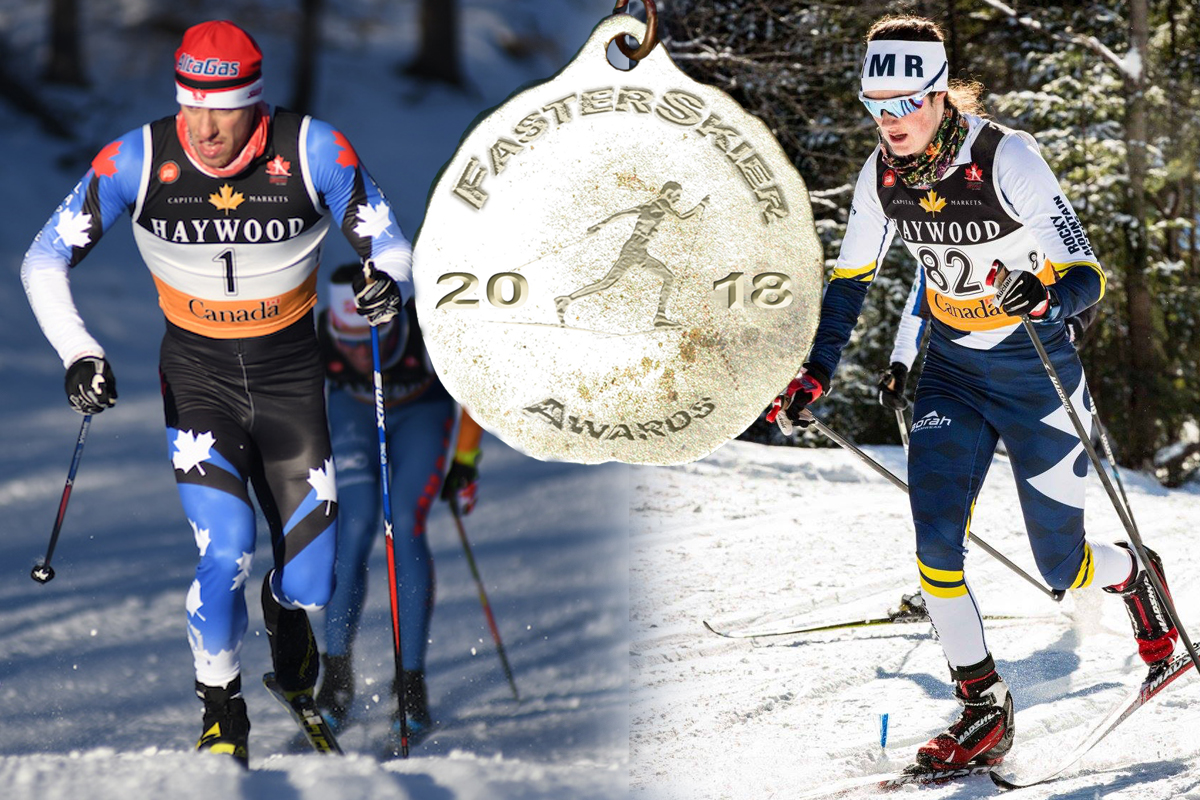
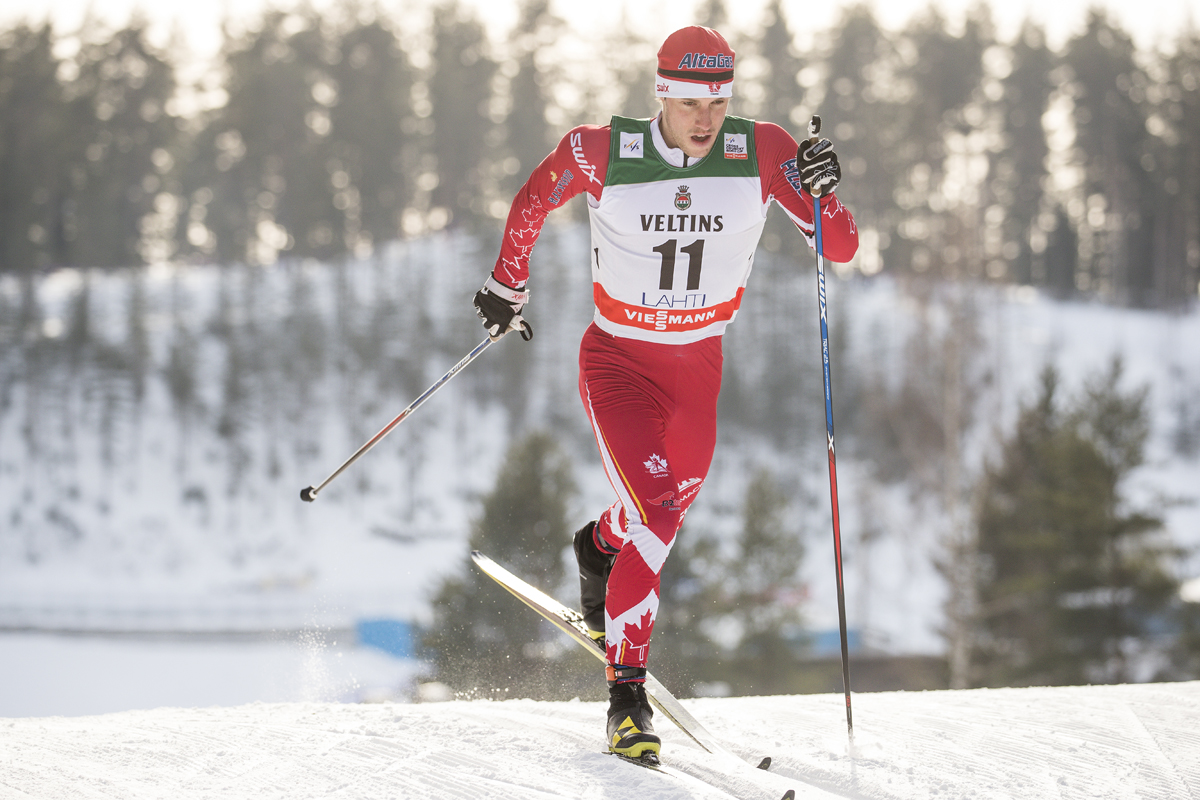
    Andy Shields (l) of Lappe Nordic and Olivia Bouffard-Nesbitt (r) of Rocky Mountain Racers are FasterSkier’s 2018 Canadian Continental Skiers of the Year. (Photos: Doug Stephen & Mario Walker)

    With the 2017/2018 season officially in the rearview, FasterSkier is excited to unveil its annual award winners for this past winter. Votes stem from the FS staff, scattered across the U.S., Canada, and Europe, and while not scientific, they are intended to reflect a broader sense of the season in review. This set of honors goes to the Canadian Continental Skiers of the Year.

    Previous categories: Junior Skiers of the Year | Collegiate Skiers of the Year | Biathletes of the Year | Para-Nordic Skiers of the Year | NoCo Skier of the Year | Canadian Breakthrough Skiers of the Year | U.S. Breakthrough Skiers of the Year | Coach of the Year | U.S. Continental Skiers of the Year

    ***

    Andy Shields, Lappe Nordic

    Despite scaling back his training last year, Andy Shields had one of the most consistent seasons of any Canadian nordic racer, tallying five podiums between the NorAm and SuperTour circuit. That included a win in the 15-kilometer classic mass start at Western Canadian Championships in Red Deer, Alberta, and a runner-up finish in the skate sprint at Canadian Ski Nationals on the trails he trains on at Lappe Nordic in Thunder Bay, Ontario.

    After winning the overall NorAm title in 2015/2016 and going out on his own with the help of his dad  and the Lappe Nordic Ski Club, Shields did it again this winter as the overall NorAm leader at the season’s end. He raced fast enough to earn Period 4 World Cup starts and went on to post a top World Cup finish of 47th in the Holmenkollen 50 k freestyle mass start.

    Andy Shields racing the 15 k classic at the World Cup on March 4 in Lahti, Finland. In his first World Cup distance race of the season, Shields, who won the NorAm overall and placed second in the NorAm sprint standings, finished 70th in that race. (Photo: Fischer/NordicFocus)

    In an email to FasterSkier this week, Shields, 27, who grew up in Waterloo, Ontario, explained that last spring, he changed his mental approach to skiing.

    “Before last April, I had seven years of experience as a full-time skier and I considered it my profession,” he wrote. “However, it was becoming quickly becoming a profession that caused bills rather than paid them especially with the loss of my Canada card. This contributed to an overall feeling of not being too jazzed about competing in another season of full-bore, focussed, make-all-the-little gains, maximum performance training and racing.”

    He questioned whether he wanted to continue racing and how he was going to improve if he wanted to do so.

    “After getting wrecked on the Period 1 World Cups the season before and coming nowhere near a top 30, I had serious doubts on whether it was worth it to keep trying to crack the ‘nut’ we call World Cup racing,” Shields wrote.

    He wondered if he was physiologically and psychologically talented enough to compete at the World Cup level. He considered “setting the bar lower” to make himself happier, focusing solely on top NorAm and SuperTour finishes rather than making it to the World Cup.

    “Obviously it was time to reframe things. It was an Olympic year so and I was still having lots of fun skiing so quitting wasn’t an option,” Shields wrote. “I needed cash so I bought Skiwax.ca and started a business selling ski wax and ski equipment online and became a BNS [Boulder Nordic Sport] Canadian sales rep for SkiGo and a few other brands.”

    That summer, he also worked for his friend’s painting business in Thunder Bay.

    “With cash taken care and the birth of a burgeoning career as a sales rep and business owner, I moved skiing squarely into the ‘hobby’ category,” Shields wrote. “I suspected I could still be reasonably competitive on the NorAm and SuperTour circuits with minimal training if I relied on my large training history — maybe even quick enough to earn an Olympic spot. I decided not to subject a coach to my misadventures and intention of not working too hard. If this new way of approaching things went bad, I wanted it to be my fault.”

    He worked out less than usual last summer and fall (estimating he trained 600 hours total) and didn’t write a training plan nor keep a training log. He followed his intuition and didn’t bother to fix his heart rate monitor when it broke last June.

    “Training was very unstructured and came second to my various jobs – except for a number of training camps with the Greggs, or Micheal Somppi, or others where I buckled down for brief periods of athlete mode,” Shields noted.

    Still, his fitness gradually improved as the offseason wore on. By the time the race season arrived, he was raring to go and “hungry”, Shields reflected.

    “Only one Olympic spot was available to domestic skiers and it was a classic sprint spot, which is my weakest event,” he wrote. “When the selection criteria came out for the Olympic team, it did take awhile to get over the fact that it was extremely unlikely I’d make it. I was able to reset my goal to doing well in the NorAm overall and it wasn’t long into the season before I was in the hunt for the NorAm overall.

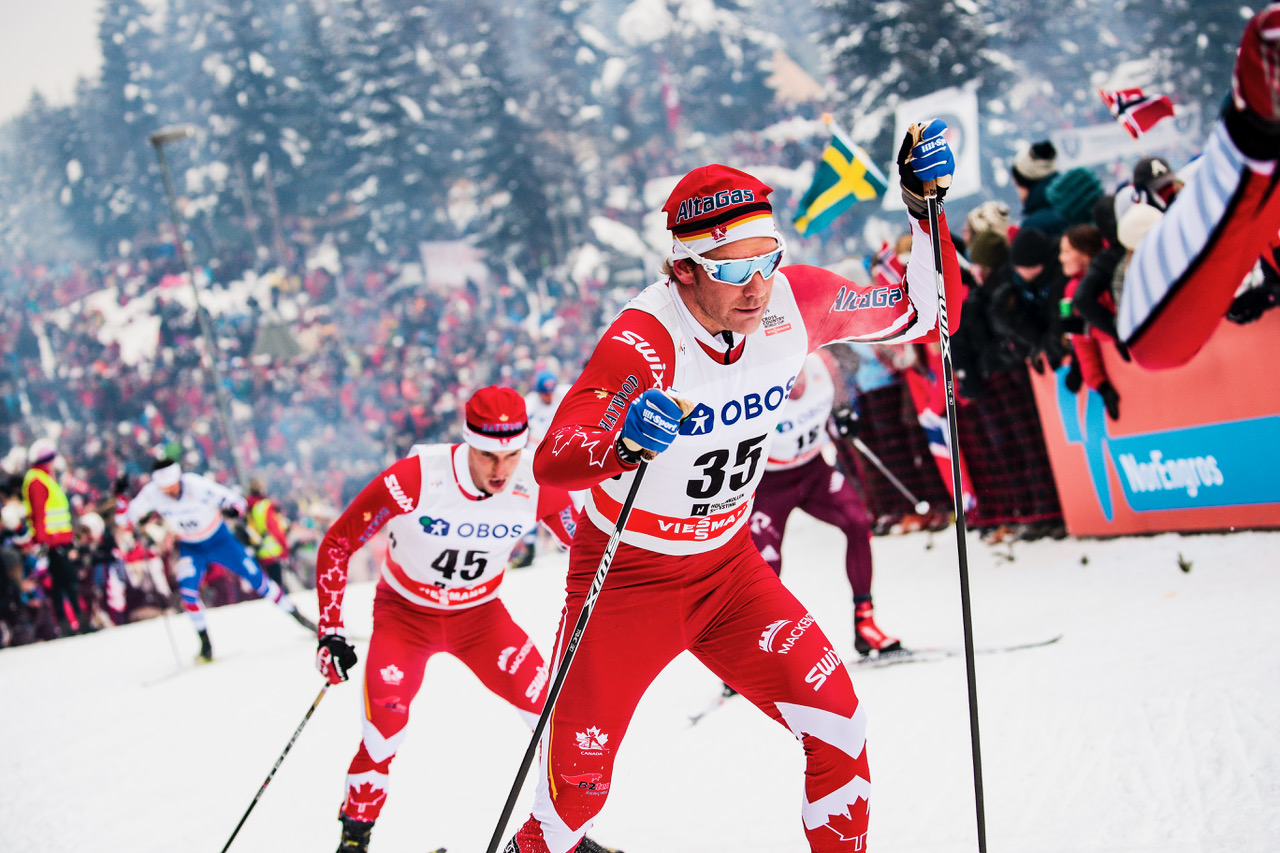
    Canada’s Devon Kershaw leads Andy Shields during the Holmenkollen 50 k freestyle mass start on March 10 in Olso, Norway. (Photo: Fischer/NordicFocus)

    “This was great!” he continued. “I was racing fast mostly and having a lot of fun kicking ass. When I got the opportunity to race period 4 on the World Cup, including the Holmenkollen 50km, it was a fantastic bonus.”

    That iconic race in Oslo, Norway, he said, was the highlight of his season.

    “I don’t know if I’ve ever raced so hard before,” Shields wrote. “Only 25km into the race, I was getting adrenaline rushes from the pain when I survived another climb. I had to skip World Cup Finals because I needed one more good race to lock up the NorAm overall so I came back to North America straight after the Holmenkollen to join Nationals partway through the event.”

    Four days after racing in Oslo, he reached the podium in the Canadian nationals skate sprint.

    “I dedicated that podium to Reijo Puiras who passed away over the summer and was the founder of the Lappe Ski Centre,” Shields wrote. “It turned out that final podium at Nationals was what I needed to secure the NorAm overall. It’s hard not to be satisfied with how this season turned out. I got a great sense of accomplishment from having done it on my own – financially and as my own coach. Of course, I had a lot of help in the wax room and my parents are great roommates.”

    As he looks ahead to 2018/2019, Shields explained that he’s planning to continue down a similar path, while logging some more “serious training” before starting the season on the World Cup in November. World Cup Period 1 remains his main focus for next winer.

    “It’s a chance at redemption for such an abysmal period 1 experience my first time over there,” he said. “World Cup Finals in Quebec City is also a huge focus. I have a number of top 50s in Quebec World Cups so I have a track record of good racing there to build on.”

    Olivia Bouffard-Nesbitt, Rocky Mountain Racers

    In what could very well be dubbed her comeback season, Olivia Bouffard-Nesbitt, 25, took it by storm after a rocky start. The Morin Heights, Quebec, native has dealt with an assortment of setbacks — both big and small — over the last several years. Hindered by stress reactions in her foot from 2013 to 2016, she was injured in a car accident in February 2017, which herniated a disc in her neck. She spent last summer rehabbing that injury, then last fall, discovered issues with her sympathetic nervous system.

    After nearly a year away from the racing, Bouffard-Nesbitt started her season this past January at the Mont Sainte-Anne NorAm, which doubled as Canada’s Olympic trials. In her first race there, she raced to third in the classic-sprint qualifier and advanced all the way to the A-final, but was relegated to 25th overall for a technique infraction. Also at trials, she finished ninth in the 10 k classic.

    “It was an absolute roller coaster (mostly uphill) getting to the start line of my first race of the season – the classic sprint at Olympic trials,” Bouffard-Nesbitt reflected in a recent email to FasterSkier. “But once the dust settled and I found my groove on the Noram circuit, the season actually turned out really well.”

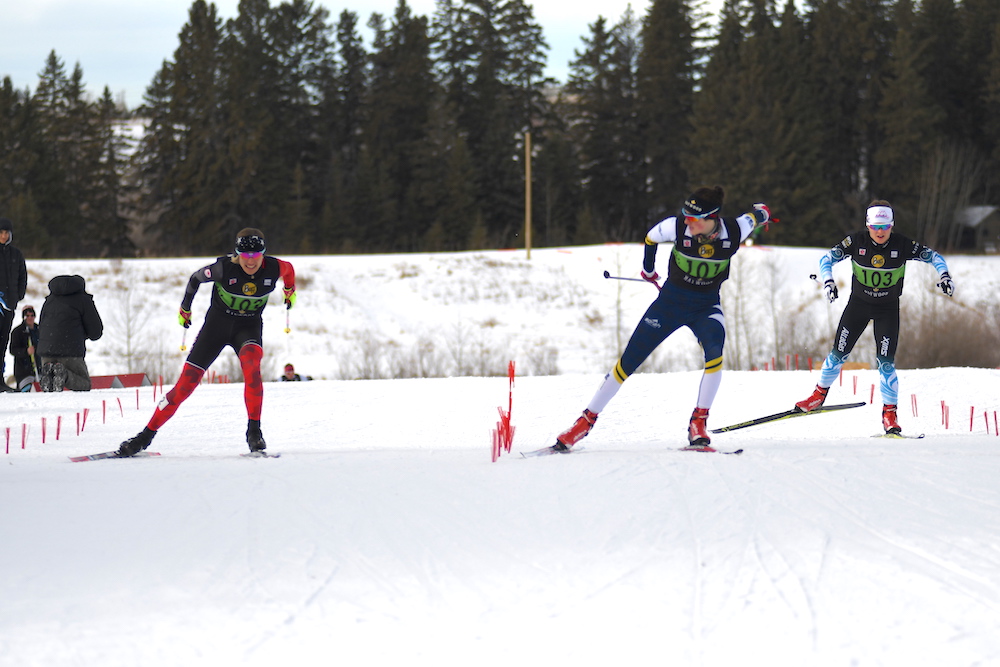
    Olivia Bouffard-Nesbitt (c) holds off Zina Kocher (l) and Annika Hicks (r) to win the women’s 1.2 k freestyle sprint final on Friday at the NorAm Western Canadian Championships in Red Deer, Alberta. (Photo: Doug Stephen)

    At Western Canadian Championships in Red Deer, she earned her first NorAm win in four years, topping the freestyle sprint. She also placed second in the 10 k classic mass start there.

    Bouffard-Nesbitt ended the year with a national title in the 5 k classic as well as the 10 k freestyle pursuit (as the first Canadian/second overall in the latter race) at Canadian nationals. She also placed fourth in the 30 k classic mass start.

    With a strong three months of NorAm/SuperTour racing, Bouffard-Nesbitt ended the season as the first Canadian in the overall NorAm standings (she was second to American Caitlin Gregg, who led the aggregate standings with 830 points). Bouffard-Nesbitt had 635 points, as did Annika Hicks of the Alberta World Cup Academy, but Bouffard-Nesbitt won the tiebreaker based on number of wins.

    Asked about the highlight of her season, Bouffard-Nesbitt said it was winning the 5 k at nationals. More specifically, it was the “unexpected flood of emotion and sense of validation I felt after learning I had won” that race, she wrote.

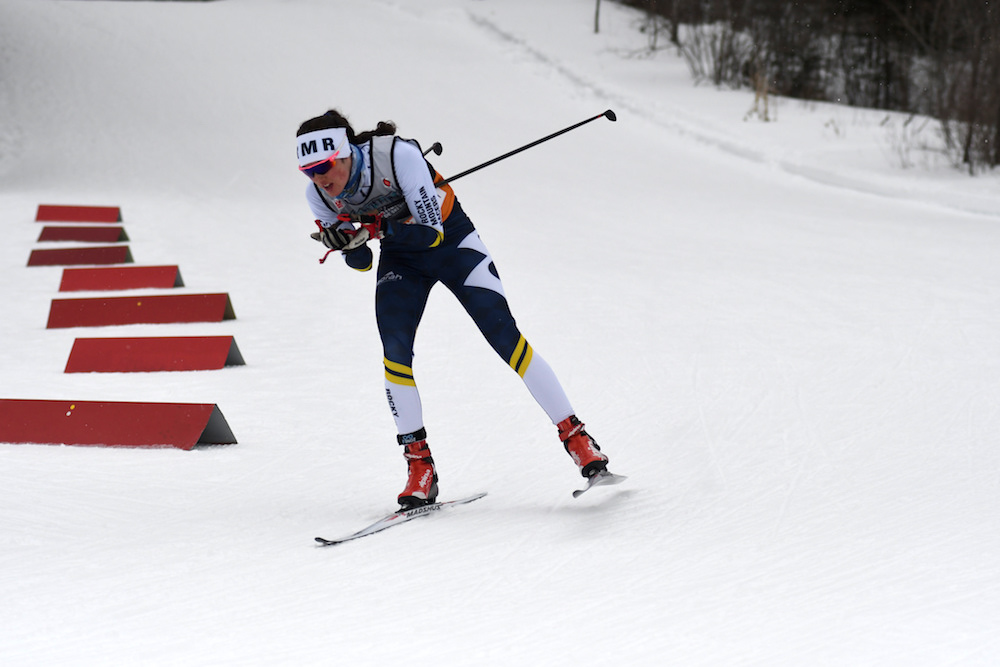
    Olivia Bouffard-Nesbitt (Rocky Mountain Racers) racing to second overall (first Canadian) in the women’s 10 k freestyle pursuit on March 13 for her second national title of the week at 2018 Canadian Ski Nationals in Thunder Bay, Ontario. (Photo: Doug Stephen)

    “Really it felt like my ‘comeback’ had culminated in that moment,” she continued. “I felt like I’d shaken that monkey off my back and I felt so invigorated. I felt like I had finally proven myself. More broadly though, a major highlight was putting so many solid races together back-to-back. For the COC [Continental Cup] standings they count your best 10 races. So after a scrapped trials, I had eleven races to get there, thirteen if you count each pursuit race as two. Finishing the season as the COC leader was the best case scenario. It’s amazing and I’m ecstatic about it!”

    Going into the season, her primary goal had been to take care of herself and make sure she didn’t re-injure her neck. Secondly, she wanted to qualify for the Olympics, and when that didn’t pan out, she shifted her focus to finishing on top of the NorAm circuit.

    Moving forward, Bouffard-Nesbitt plans to continue training with Rocky Mountain Racers in Canmore, Alberta.

    “While I was rehabbing in Quebec, I was itching to get back to Canmore because I had equated being in Canmore to being healthy enough to take up my normal training routine,” she wrote. “… It’s tough to enter a race season, both physically and mentally, when you’re really under-trained. Like I said though, after I recovered from Olympic trials, I was healthy and continuously gaining fitness all winter. It felt great.”

    Next year, she aims to continue building on the work she’s done and gains she’s made over the last year while staying “hyper in tune with my body.”

    “I’m just going to train as usual, and catch up on all the fun I’ve missed,” she wrote. “I’ve been dreaming of putting together a full summer of training for a while, and I’m optimistic that it’s going to happen this year.”

    Honorable Mention: Evan Palmer-Charrette, National Team Development Centre Thunder Bay

    Evan Palmer-Charrette (l) chases American Thomas O’Harra in the 15 k skate at the Sovereign Lake NorAm near Vernon, B.C. (Photo: Peggy Hung)

    Evan Palmer-Charrette, our Canadian Continental Skier last year, had another stellar season, finishing the winter out with a national title in the 50 k classic mass start and third-place finish in the freestyle sprint at Canadian nationals. There, in Thunder Bay, where he lives and trains with the National Team Development Centre (NTDC) Thunder Bay, he also placed fourth in the national 15 k freestyle pursuit and seventh in the 10 k classic.

    Overall, he ended up third in the NorAm standings, behind Shields and Canadian World Cup Team member Jess Cockney. Earlier in the season at a NorAm mini tour in Rossland, B.C., he raced to second in the skate sprint and fourth in the 15 k skate pursuit for fourth overall in the mini tour.

    He also placed fourth in the classic sprint at Mont Sainte-Anne NorAm Olympic trials. In all, he recorded 15 individual top-10 results between the NorAm and SuperTour in 2017/2018.

    “I like to think, and try to be, a well balanced skier,” Palmer-Charrette wrote of his equal focus on sprints and distance races in an email after the Rossland NorAm.

    “… Overall period one has been a struggle coming into it after be being quite sick,” he wrote at the time. “That being said I think I haven’t burnt my brightest match of the season and have as good of a shot as anyone. I would like to have strong races in both the sprint and distances races in Quebec, but with the sprint being the only race with an Olympic birth that will be the main focus of the event for me.”

    He didn’t make the Olympics, but at 23, Palmer-Charrette still has plenty of racing years ahead of him.

    Honorable Mention: Zina (Kocher) Lawson, Foothills Nordic

    Zina Kocher (Foothills Nordic) racing to 11th in the 10 k classic on Jan. 10 at the Mont Sainte-Anne NorAm in Quebec. (Photo: Mario Walker/NorAm MSA 2018 Facebook)

    A former national-team biathlete, Kocher was our pick for Canadian Breakthrough Skier of 2018 after coming out of retirement in an effort to make the 2018 Winter Olympics in cross-country skiing.

    She went all-in in an attempt to qualify for her fourth Olympics and ultimately came up short, but she still ended up third in the overall NorAm standings, behind Bouffard-Nesbitt and Hicks, respectively. The 35-year-old Red Deer native reached the NorAm podium in seven individual races and won the 51 k freestyle Gatineau Loppet in mid-February. As the NorAm leader for Period 3, she earned late-season World Cup starts and raced the Holmenkollen 30 k freestyle mass start as well as World Cup Finals. Kocher opted out of Canadian nationals and still finished as the third Canadian in the aggregate NorAm rankings. For now, she is once again retired.

    “I think what I loved the most about this season was the challenge, being pushed out of my comfort zone, and trying a lot of firsts,” Kocher wrote in a recent email to FasterSkier. “And knowing if the big goal didn’t work out, I did have something else I was fully committed to outside of racing. (My massage therapy diploma, I had 3 courses in the fall & 2 during the winter).”

    She made a point to thank former national team coach Justin Wadsworth for coaching her over the last season and for “his enthusiasm & teaching me the classic basics, convincing me I got this,” she wrote.

    “It was really fun to do the NorAm circuit,” she reflected. “I had a really fun time, racing at new places, new formats, and many ‘firsts’ – like classic racing. The biggest challenge was classic! Doing something new and totally out of my comfort zone. And the other big challenge I was feeling, was being ok and comfortable with digging deep and the pain associated with pushing your max efforts. Was also really great to make and also re-establish old connections with the xc community.”

    Just over a week ago, on April 10, Kocher survived a scary incident in an avalanche.

    “I slid 350m, somehow missed a small cliff/rock band, and remained on top though I was in a cloud of snow pretty soon after it started moving, until it stopped and I saw the sky again,” she reflected, crediting her late coach Richard Boruta for saving her life. He passed away in a climbing accident almost exactly eight months earlier, on Aug. 9, 2017.

    “Angel Richard probably scooped me out of there,” she wrote.

  • FasterSkier’s U.S. Continental Skiers of the Year: Caitlin Patterson and David Norris

    FasterSkier’s U.S. Continental Skiers of the Year: Caitlin Patterson and David Norris

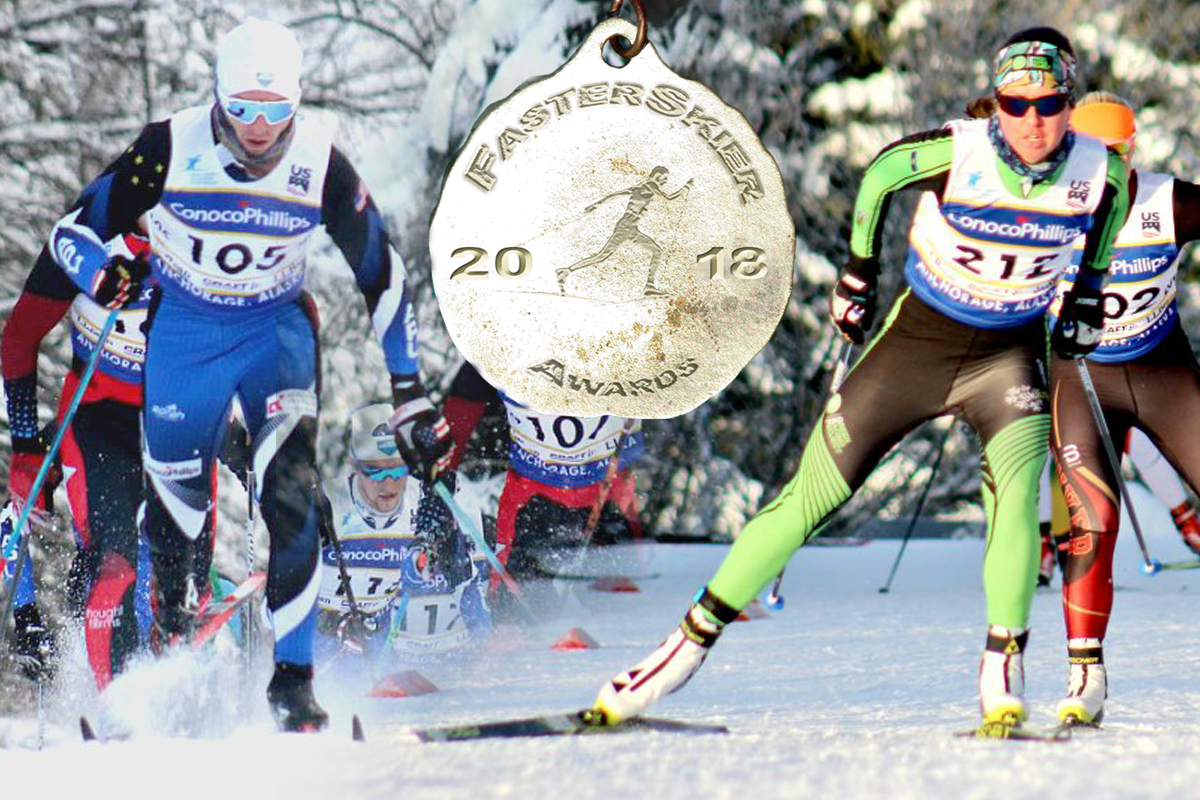
    David Norris of Alaska Pacific University (105) and Caitlin Patterson of the Craftsbury Green Racing Project (212) are FasterSkier’s 2018 U.S. Continental Skiers of the Year. (Photos: FasterSkier)

    With the 2017/2018 season officially in the rearview, FasterSkier is excited to unveil its annual award winners for this past winter. Votes stem from the FS staff, scattered across the U.S., Canada, and Europe, and while not scientific, they are intended to reflect a broader sense of the season in review. This set of honors goes to the U.S. Continental Cup Skiers of the Year.

    Previous categories: Junior Skiers of the Year | Collegiate Skiers of the Year | Biathletes of the Year | Para-Nordic Skiers of the Year | NoCo Skier of the Year | Canadian Breakthrough Athletes of the Year | American Breakthrough Athletes of the Year | Coach of the Year

    ***

    Caitlin Patterson, Craftsbury Green Racing Project

    Had Caitlin Patterson glanced to either side while she double poled down the finishing stretch of this year’s U.S. nationals classic sprint, she wouldn’t have seen any other skiers. As it were, the 27 year old had her sights set on the finish line, where they stayed until she secured first place.

    As the first across the line, Patterson snagged her fourth win of the week, and with it, a spot in history. She became the first woman in six years to win four consecutive titles at a single U.S. nationals (after U.S. Ski Team member Jessie Diggins did in 2012).

    “It felt surreal coming down the finishing stretch … realizing that I couldn’t hear people behind me and realizing that it was going to be number four,” Patterson told Fasterskier after the race.

    Caitlin Patterson (Craftsbury Green Racing Project) racing to 40th in the women’s freestyle sprint qualifier at the World Cup in Dresden, Germany. (Photo: Fischer/NordicFocus)

    The banner week for the Idaho native, who grew up in Anchorage, Alaska, where nationals took place, started with an outright victory in a snowy 10 k freestyle. The race after that, Patterson claimed a definitive win in the women’s freestyle sprint, crossing 3.56 seconds ahead of her closest competitor. To close out the week, Patterson was the first American in the women’s 20 k classic mass start, before winning the classic sprint with no other skiers in sight.

    “I could not have imagined this if I tried,” Patterson said, reflecting on the week.

    Prior to her winning streak at nationals, Patterson also raced the opening SuperTour races in West Yellowstone, Montana, where placed third in the 10 k classic. At the following NorAm/SuperTour races in Sovereign Lake, British Columbia, she won 10 k freestyle and placed second in the classic sprint.

    Following her racing at U.S. nationals, Patterson flew to Europe to race Period 2 of the World Cup. She notched some of her best World Cup performances of her career while there, with a 20th in the 10 k classic in Planica, Slovenia, and a 23rd in the 10 k freestyle mass start in Seefeld, Austria. The Olympics were the next stop for Patterson, where she skied to 34th in the skiathlon and 26th in the 30 k classic mass start. She also raced World Cup Period 4,

    antabuse

    On the domestic circuit back home, Patterson finished the season in second in the overall SuperTour standings, behind her Craftsbury teammate Kaitlynn Miller (who also made the U.S. Olympic team) in first.

    David Norris, Alaska Pacific University

    Our U.S. Breakthrough Skier of the Year in 2016, David Norris is our pick for American male Continental Skier for 2018. The Fairbanks, Alaska, native is the overall SuperTour winner for 2017/2018, and he opened his season with a second-place finish in the 15 k classic mass start at the West Yellowstone SuperTour.

    At U.S. nationals, Norris came down sick and raced two of the four races, placing sixth in the 30 k classic mass start and ninth in the classic sprint. After nationals, Norris raced at the Craftsbury SuperTour, where he finished seventh in the classic sprint and won the 10 k freestyle.

    “I came to Craftsbury itching to race,” Norris wrote in an email to FasterSkier in January. “I was sick during nationals and competed in the 30km because I had to if I wanted a chance to earn an Olympic spot. I came up shy, but I know I that I am in good shape. After nationals I took another ten days easy to fully recover from illness so that I could come into Craftbury and Canada healthy.”

    The Ishpeming SuperTour men’s 20 k freestyle podium on Feb. 17, with David Norris (c) in first, Kevin Bolger (l) in second, and Brian Gregg (r) in third. (Photo: APU)

    At the NorAm/SuperTour in Gatineau, Quebec, Norris placed ninth in the classic sprint before finishing second in the 15 k freestyle and winning the 15 k classic pursuit. Norris continued on the SuperTour circuit to Ishpeming, Michigan, where he finished third in the skate sprint and won both the 20 k skate and 10 k classic races. At the American Birkebeiner in Hayward, Wisconsin, he was the second American and fifth overall.

    Norris qualified for Period 4 of World Cup racing and competed in Finland, Norway and Sweden before returning to the U.S. for SuperTour Finals in Craftsbury. There, he finished the season in fourth in the 50 k classic mass start and seventh in the 15 k freestyle mass start. As the overall SuperTour leader at the end of the season, he’ll earn Period 1 World Cup starts next winter.

    Honorable Mention: Kaitlynn Miller, Craftsbury Green Racing Project

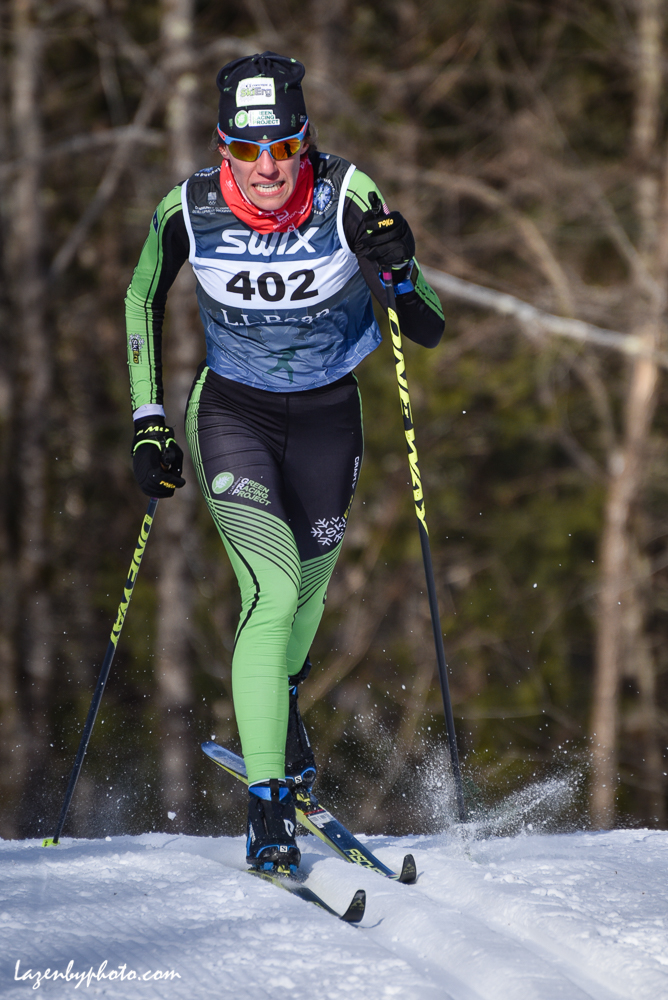
    Kaitlynn Miller (Craftsbury Green Racing Project) racing to first in the women’s 1.4 k classic sprint qualifier on Feb. 26 at the SuperTour in Craftsbury, Vermont. She went on to win the final. (Photo: John Lazenby/Lazenbyphoto.com)

    With three podiums as a top American finisher at U.S. nationals, Kaitlynn Miller qualified for her first Olympics and finished the season in first in the overall SuperTour standings.  The 26 year old, who was born in New Jersey and grew up in Vermont, started the season out with a second-place finish in the 10 k classic mass start. The next weekend, Miller won the Sovereign Lake NorAm classic sprint.

    At nationals, Miller was the second American and fourth overall in the skate sprint sprint. She was the third American and fifth overall in the 20 k classic mass start, and third outright in the classic sprint. She went on to win the Craftsbury SuperTour classic sprint, then placed second in the classic sprint and third in the 10 k classic pursuit with the fastest time of the day at the Gatineau SuperTour/NorAm.

    Before jetting to the Olympics in PyeongChang, South Korea, Miller raced to a win in the Ishpeming SuperTour 5 k classic and placed third in the skate sprint. She finished her season on Period 4 of the World Cup and SuperTour Finals back on her home course in Craftsbury.

    “It’s been a really unexpected good season and I am really happy with it,” Miller told FasterSkier at World Cup Finals in Falun, Sweden. “To be honest, 10 k skates are generally speaking not my favorite and that’s probably the best-feeling race I’ve had since being over here, which was a really really pleasant surprise and definitly a good high note to end on.”

    Honorable Mention: Kevin Bolger, Sun Valley Ski Education Foundation

    Kevin Bolger (Sun Valley Ski Education Foundation) racing in the 15 k classic mass start on March 4 at the World Cup in Lahti, Finland. He placed 54th in his first distance World Cup start. (Photo: Fischer/NordicFocus)

    Our 2018 Breakthrough Skier of the Year, we felt Kevin Bolger should be recognized as an exceptional continental skier as well. Bolger, 25, finished the SuperTour season in second overall, just 15 points behind Norris in first.

    Bolger tallied five SuperTour podiums this past season, including second place in the U.S. nationals skate sprint and a win in the skate sprint at the Ishpeming SuperTour. He made his World Cup debut in early March in Lahti, Finland, where he was the top Continental Cup skier in the skate sprint in 11th overall. He went on to score another World Cup top 30 at World Cup Finals in Falun, where he placed 30th in the skate sprint.

    “As I reflect back on my season I don’t think it could have gone better,” Bolger wrote in an email to FasterSkier. “I’ve gotten a taste of what it’s like to be skiing on the World Cup and skiing against the best in the World. That has shown me that I still have a lot of work to do ‘a lot of work’, of course I’ve had some good results but I want more.

    “I want to be able to not only ski with those guys on the World Cup, but I want to be compete against them,” he continued. “I haven’t been more motivated and excited for another year to start.”

  • FasterSkier’s Para-Nordic Skiers of the Year: Oksana Masters and Brian McKeever

    FasterSkier’s Para-Nordic Skiers of the Year: Oksana Masters and Brian McKeever

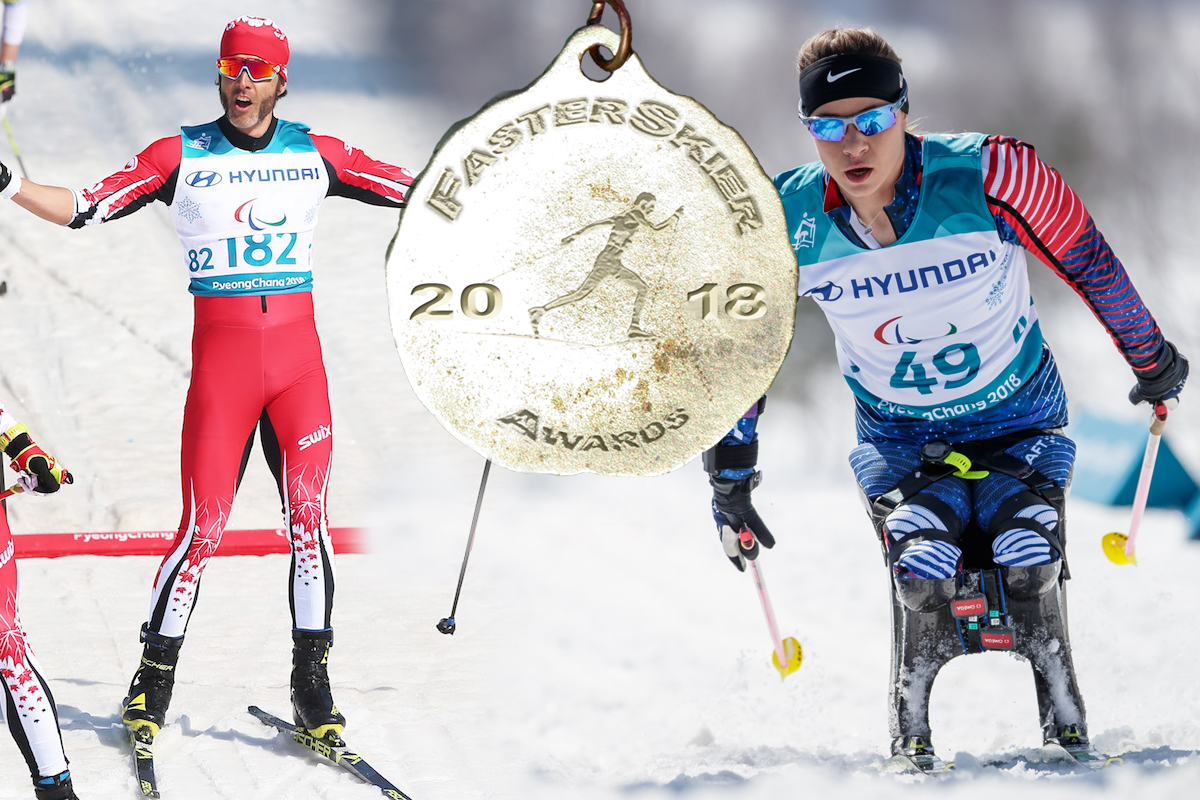
    Brian McKeever (l) and Oksana Masters (r) are FasterSkier’s 2018 Para-Nordic Skiers of the Year. (Photos: Scott Grant/Canadian Paralympic Committee & Joe Kusumoto/US Paralympics)

    With the 2017/2018 season officially in the rearview, FasterSkier is excited to unveil its annual award winners for this past winter. Votes stem from the FS staff, scattered across the U.S., Canada, and Europe, and while not scientific, they are intended to reflect a broader sense of the season in review. This set of honors goes to outstanding Para-Nordic skiers on the international circuit.

    Previous categories: Junior Skiers of the Year | Collegiate Skiers of the Year | Biathletes of the Year

    ***

    Oksana Masters, U.S. Paralympics Nordic

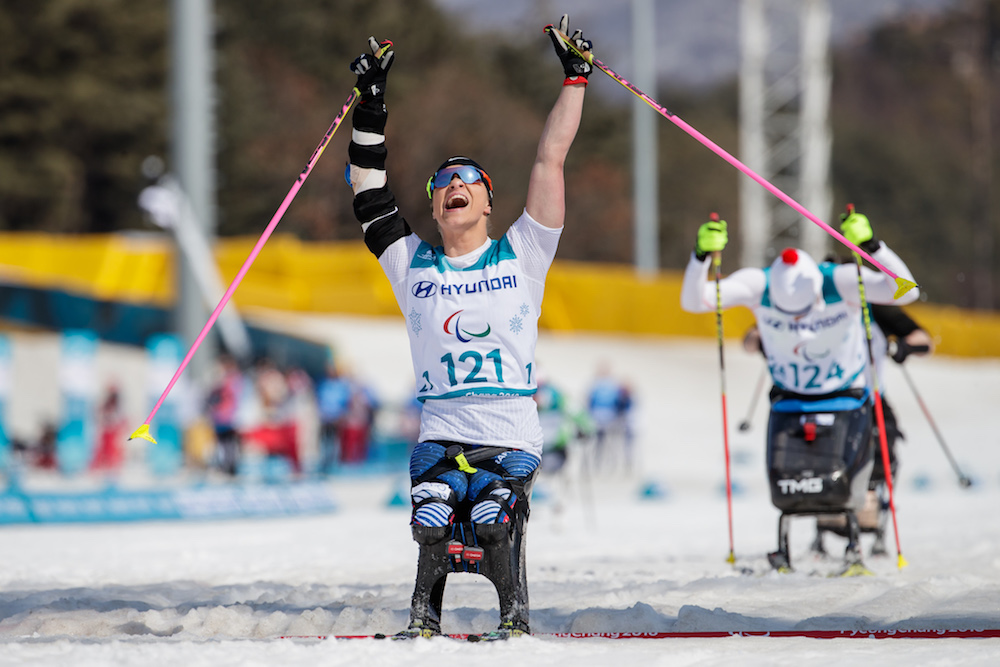
    American Oksana Masters reacting to her first gold medal in her third Paralympics, after winning the women’s 1.1 k sitting sprint in PyeongChang, South Korea. (Photo: Joe Kusumoto/U.S. Paralympics)

    Undefeated in this category for the last four years of the FasterSkier awards, Oksana Masters had her best Paralympics yet this winter and overcame a major setback to do so. Just two weeks before the 2018 Winter Paralympic Games in PyeongChang, South Korea, Masters slipped on ice, injured her elbow and had to get surgery. Then, entirely propelled by her arms as a sit skier, the 28 year old competed in all six individual races in PyeongChang and medaled in five of them (she fell in the other and pulled out of the race shortly before the finish). In total, she racked up the first two Paralympic gold medals of her career (in her third Paralympics) plus two silver medals in biathlon — her first biathlon medals — and a bronze.

    “I am absolutely truly speechless on this performance,” Masters told U.S. Paralympics after winning her second gold medal of the week in the women’s 5-kilometer sitting cross-country race (her first came in the cross-country sprint).

    “I thrive and love the athlete lifestyle of eat, sleep and train,” she continued. “To put yourself to the ultimate test on that start line and seeing all your hard work come through, and not just that, it’s a whole team effort. … It’s not a one-person show. It definitely takes a village and we have an incredible team.”

    Masters and her teammate Dan Cnossen accounted for 11 of Team USA’s 16 medals in nordic and biathlon in PyeongChang, which was more than five times the amount of medals the team brought home after Sochi in 2014.

    Overall this season in the World Para Nordic Skiing rankings, Masters ranked first in women’s sitting biathlon and tied Germany’s Andrea Eskau for first in cross-country. In the International Paralympic Committee (IPC) overall World Cup standings, Masters placed third in both cross-country and biathlon.

    Brian McKeever, Canadian Para-Nordic Skiing

    Also our award winner last year, Brian McKeever became Canada’s most decorated Winter Paralympian of all time this winter with 17 career medals, 13 of which are gold. Three of those golds came in PyeongChang, and he captured bronze there with his teammates on the final day of racing, in the open relay, when Canada placed second in the mixed relay and third in the open relay for its first Paralympic relay medals.

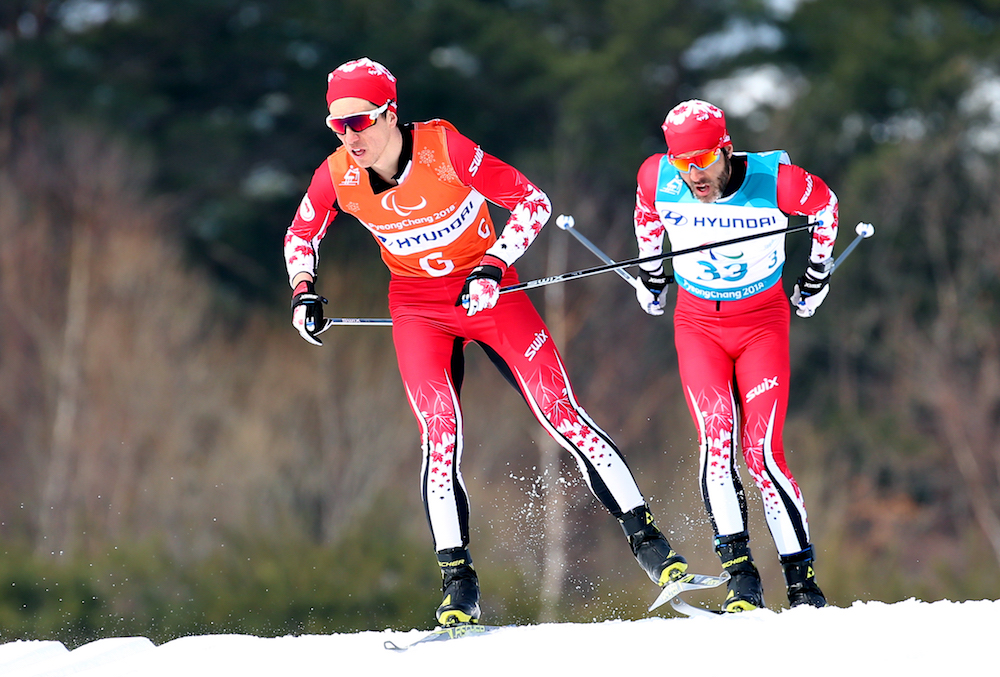
    Brian McKeever (r) follows guide Graham Nishikawa during the men’s visually impaired 20 k freestyle at the 2018 Paralympics in PyeongChang, South Korea. Along with guide Russell Kennedy, they won the race by over a minute for McKeever’s 14th Paralympic medal and 11th gold. (Photo: Scott Grant/Canadian Paralympic Committee)

    This marked the fifth Paralympics for McKeever, 38, and he was accompanied by two guides, Graham Nishikawa (whom he skied with at the 2014 Sochi Games) and Russell Kennedy (who joined the Canadian Para-Nordic Team this year). Together, they won all three visually impaired cross-country races they competed in: the 20 k freestyle, classic sprint and 10 k classic.

    In his first race of the Games, the 20 k distance race, McKeever, who was also Canada’s flag bearer for the PyeongChang Opening Ceremony, captured his 14th career medal — the most of any Canadian Winter Paralympian. In fact, he’s the most successful cross-country skier in Paralympic history, according to an IPC press release.

    “I wasn’t aware of this record, but it is pretty cool,” McKeever told Cross Country Canada after the 20 k. “I think for me more than anything is this is a testament to our entire program. We’ve had so many great skiers leading the way for me with my brother, Robin, who is now coaching us, and Colette Bourgonje. Now it is awesome for me to be a part of a new generation that has arrived in Mark [Arendz], Colin Cameron, and the young women like Emily [Young], Brittany [Hudak] and Natalie [Wilkie], who are ready to carry the torch. I’m so excited to be around all of them this week and to be there cheering them on.”

    Like the U.S., Canada tallied 16 medals between nordic and biathlon at the PyeongChang Paralympics.

    In an interview with CBC Sports during the Games, McKeever referred to his team as a “future superpower” in the sport, with every one of his World Cup teammates capturing at least one medal in PyeongChang. “It’s really exciting for me to watch and see something that I’ve been part of growing.”

    McKeever was also recently voted IPC Male Athlete of the Month for March. Masters, the IPC’s January Female Athlete of the Month, was nominated again for the Female Athlete of the Month for March. Voting closes April 16.

    Honorable Mentions: Mark Arendz (Canadian Para-Nordic) and Dan Cnossen & Kendall Gretsch (U.S. Paralympics)

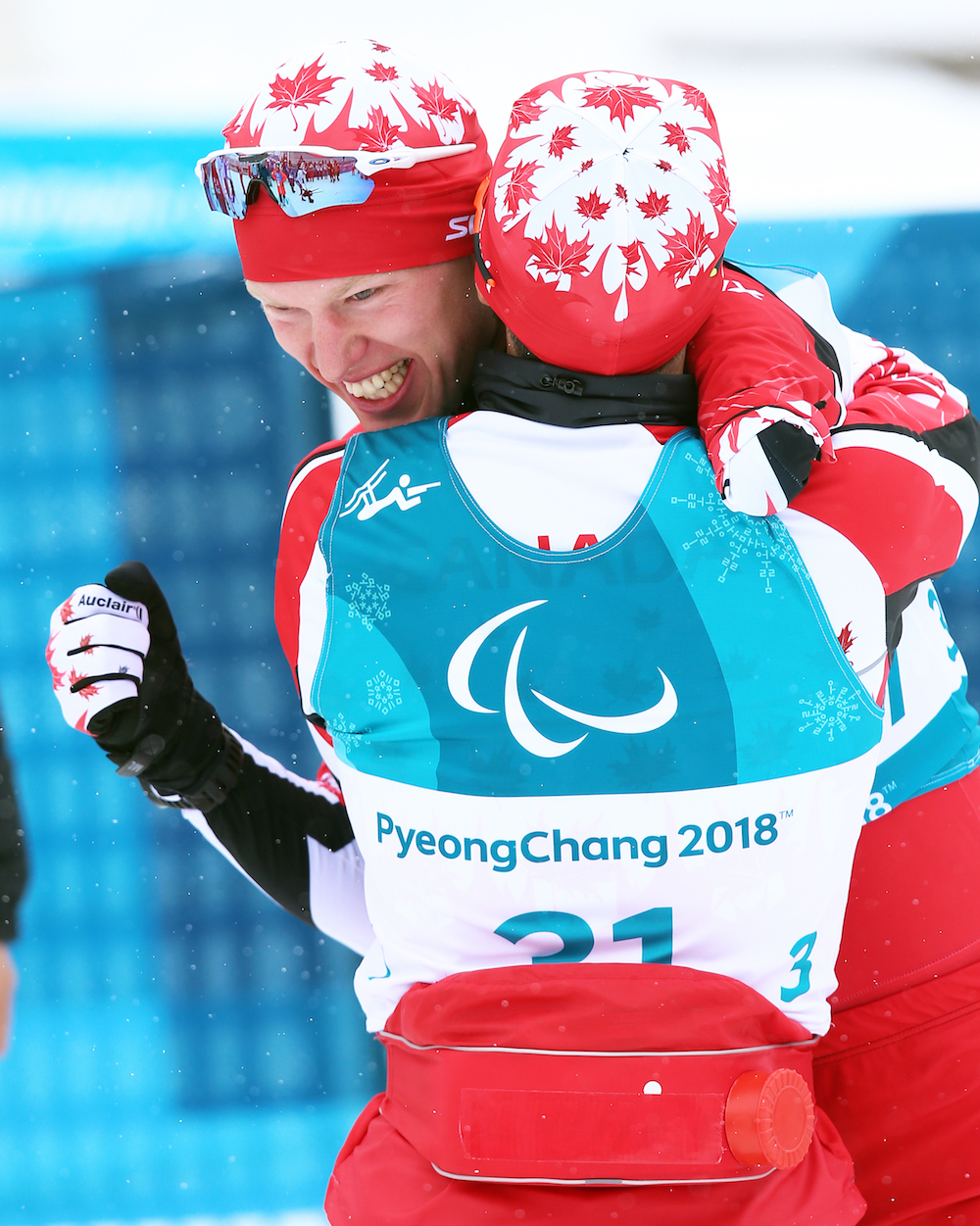
    Canada’s Mark Arendez gets a congratulatory hug after he won gold in the men’s 15 k standing individual biathlon race at the 2018 Paralympics in PyeongChang, South Korea. (Photo: Scott Grant/Canadian Paralympic Committee)

    While McKeever carried the Canadian flag at the PyeongChang Opening Ceremony, his teammate Mark Arendz was honored with waving it at the Closing Ceremony. In his third Paralympics, the 28-year-old Arendz had his best Games yet, taking a medal in all six events he competed in to make him the most successful Canadian at a single Winter Paralympics.

    Arendz captured five individual medals in the men’s standing races in PyeongChang, including his first-career gold in the 15 k biathlon, silver in the 7.5 k biathlon sprint, and bronze in the 12.5 k biathlon, as well as his first Paralympic cross-country medals: bronze in both the sprint and 10 k classic, and silver in the mixed relay. He sat out the only race he didn’t medal in: the long-distance cross-country race.

    “I came in here thinking I could get three medals, but to get six is incredible,” Arendz said on the last day of the Games, after his team placed second in the mixed relay for Canada’s first relay medal. “Today’s is a special one. I am happy we got this done, but there is no way I could do another race. I’m done.”

    We mentioned Dan Cnossen earlier, but he’s worth mentioning again. Cnossen, 37, opened his second Paralympics with his first career medal at the Games — gold in the men’s 7.5 k sitting sprint. The next day, he placed second in the 12.5 k biathlon race, and from there, he kept up his medal streak through all six  individual races. The total medal haul for the former Navy SEAL and current Harvard graduate student was one gold, four silvers, and one bronze.

    Dan Cnossen of the U.S. celebrates his win in the men’s sitting 7.5 k biathlon sprint on opening day of competition at the 2018 Winter Paralympics in PyeongChang, South Korea. (Photo: Mark Reis/U.S. Paralympics)

    It wasn’t an easy feat. Cnossen considered pulling out of the last biathlon race — the 12.5 k — in order to compete in the final 10 k cross-country race in PyeongChang.

    “I have an excerpt that says it doesn’t matter how you feel today, it doesn’t matter what your background is or where you’re coming from, all that matters is what you can do,” Cnossen told U.S. Paralympics after finishing second in the biathlon race. “I just tried to focus on what I could do today. Not the fact that I didn’t sleep well last night, that doesn’t matter. Just go out there and perform like I know I can.”

    In all, Cnossen raced about 60 k over eight days.

    “I came into the Games just trying to take it one race at a time and give it my all — each and every race — and not think too far ahead,” Cnossen said after placing second in the 10 k cross-country race the next day for his sixth-straight medal. “Just focus on the here and now, and soak up the moment and be in the present.”
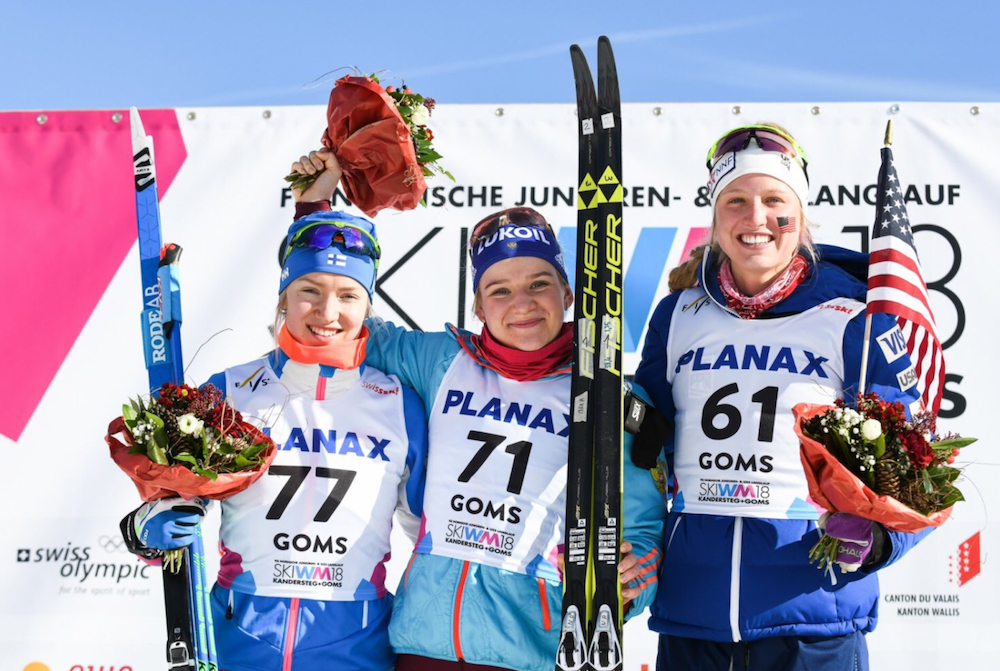
    His teammate Kendall Gretsch, a triathlete who recently took up nordic skiing and biathlon, opened her first Paralympics with gold in the women’s 6 k sitting sprint in PyeongChang. Gretsch, who turned 26 earlier this month, also won the 12 k biathlon race the next day.

    In an interview with U.S. Paralympics, she described being “unsure” of how she’d stack up in PyeongChang. Days 1 and 2 of racing pretty much settled it.

    “I knew that since our last World Cup I had improved a lot, but you never know until you race,” she said after her second-straight gold. “It’s a very humbling experience being able to hear your anthem, puts everything into perspective. Knowing that you’re here not just here for yourself but for your country, it’s amazing.”
    Kendall Gretsch (r) and Oksana Masters at the 2018 Paralympics medal ceremony for the women’s sitting 6 k biathlon sprint after winning gold and silver, respectively, on the first day of competition in PyeongChang, South Korea. (Photo: Joe Kusumoto/U.S. Paralympics)
  • FasterSkier’s Juniors of the Year: Ben Loomis and Hailey Swirbul (Updated)

    FasterSkier’s Juniors of the Year: Ben Loomis and Hailey Swirbul (Updated)

    Ben Loomis (l) and Hailey Swirbul (21) are FasterSkier’s Juniors of the Year. (Photos: Romina Eggert & JWSC2018.ch)

    With the 2017/2018 season officially in the rearview, FasterSkier is excited to unveil its annual award winners for this past winter. Votes stem from the FS staff, scattered across the U.S., Canada, and Europe, and while not scientific, they are intended to reflect a broader sense of the season in review. This set of honors goes to outstanding North American junior athletes across all nordic disciplines. 

    ***

    Ben Loomis, U.S. Nordic Combined Team

    In late January, 19-year-old Ben Loomis was named to the U.S. Olympic team. That was a pretty big deal, and one he hadn’t been relying on.

    “My main focus this year was on World Juniors, so to have made, and competed in, the Olympics was a dream in itself,” he wrote in an email to FasterSkier last week. “I really didn’t have any goals past having fun, taking in the experience, and doing my best.”

    The men’s individual normal hill/10 k Gundersen podium at the first Day of Nordic Combined Junior World Championships in Kandersteg, Switzerland, with American Ben Loomis (r) in third, the Czech Republic’s Ondrej Pazout (c) in first, and Norway’s Einar Lurås Oftebro (l) in second. (Photo: Josh Parker)

    Before he actually arrived in PyeongChang, South Korea, though, he had another trip to make: to Kandersteg, Switzerland, to compete in the thing that was his big goal, World Junior Championships.

    In Kandersteg, Loomis improved on his top-ten finish from the previous season, earning bronze in the normal hill 10 k. In doing so, he became the first American to medal in nordic combined at World Juniors since Todd Lodwick won gold in 1996.

    “A medal at World Juniors was definitely my goal going in, in fact, it had been a goal for the two years prior,” Loomis wrote of finally checking that box. “I knew the level I was at, and the level of the my competitors, so I was confident that a podium was well within my capabilities.”

    As a developing talent on the U.S. team, Loomis is often competing at senior competitions, be it on the Continental Cup or the World Cup. In Kandersteg, he actually had the chance to measure himself against his own cohort.

    “It can often be humbling to compete on World Cup as one of the younger athletes which makes junior competitions much much less stressful,” Loomis wrote. “I’ve always done pretty well against juniors my same age so that gave me confidence going into Junior Worlds. Of course, I was very happy and at the same time relieved to have meet my goal. This result was huge because it not only helped myself out, but it opened up another World Cup spot which is a help for the whole team. This certainly made everyone happy.”

    In the normal hill 5 k, he was just one spot off the podium in fourth.

    When asked to peg his favorite memory from the season, though, the medal wasn’t it. Neither was the Olympics, where his top finish was 40th and he helped the U.S. relay team to 10th place.

    “I have to say Olympic Trials in Park City was one of the most memorable days this season,” Loomis wrote. “It’s rare to compete at home, and to have the enthusiasm of large crowd made the day exciting. To top things off, I was happy to finish on the podium behind veteran Bryan Fletcher and my older brother, Adam.”

    Hailey Swirbul, University of Alaska Anchorage

    The same day that Loomis won his bronze medal, Hailey Swirbul was taking her own step onto the podium about 75 kilometers away in Ulrichen, Switzerland, where the cross-country portion of World Junior Championships was being held.

    “This season I had wanted to focus on NCAA races more than I had the previous year, but once the season got under way it was difficult to forget about the temptation of doing well at World Juniors,” the University of Alaska Anchorage sophomore wrote in an email this week. “I tried to take on each of those goals individually as they approached and focus solely on the race that I needed to at the moment.”

    Last season, Katharine Ogden won bronze in the World Juniors skiathlon, and she and Swirbul teamed up with Julia Kern and Hannah Halvorsen to earn bronze in the relay, too.

    The women’s 5 k classic podium at 2018 Junior World Championships in Goms, Switzerland, with American Hailey Swirbul (r) in second, Russia’s Polina Nekrasova (c) in first, and Finland’s Anita Korva (l) in third. (Photo: JWSC2018.ch)

    In the 5 k classic in Ulrichen, Swirbul did one better than Ogden’s mark and claimed silver, just 14.4 seconds behind gold medal winner Polina Nekrasova of Russia.

    “I think the moment I’ll remember (albeit a long moment), was the time from when I crossed the finish line in the 5 k individual start to when I learned I would actually receive a medal,” Swirbul wrote this week, when asked what the most memorable moment of her season was. “Interval start races are not instant gratification like a mass start is… you’ve got to wait out the whole field to see if you actually did well. I was seeded about 20th from the last starter, so I had plenty of waiting in anticipation! I will always remember the people who were there with me through that and told me they think I’ve done it; and the excitement from the entire team about my individual success. It’s amazing to be from a country where every teammate celebrates an individual success almost as their own.”

    It was the best World Juniors finish ever for an American.

    “The result hasn’t hit me yet,” Swirbul wrote in an email after the race back in January. “It was beyond what I expected, so my brain is still catching up to the reality! I’ve been dreaming of racing how I know I could for the past 3 years or so, and this season has finally been my chance to break through. I’m so fortunate that things aligned for me on the day that really counted. I couldn’t have done it without Bryan Fish’s unwavering belief in us athletes, and my mom and dad’s support all these years, of course.”

    But she was far from finished. In the 10 k skiathlon, Swirbul picked up a bronze to go with her silver.

    “After my silver medal I believed in myself more than before,” she wrote at the time. “However, I managed to stay calm and not put high expectations on myself for the skiathlon which allowed me to race my best. I was hoping to ski smart and relaxed and not be afraid to make it hurt! In a mass start that is really all I can control.”

    Swirbul helped the U.S. junior women to eighth place in the relay. Then she returned to the U.S., where the college season was still going strong.

    “Being on the western circuit, I realized that coming back to ‘domestic’ racing is hardly domestic at all!” Swirbul wrote this week. “Our circuit has helped me prepared for international races, because many of our athletes are international. I have learned so much from them in each race. Otherwise, it was difficult to switch back to full on school mode, but the skiing transition was fun!”

    She rallied for the seawolves, and placed third in the 5 k classic and second in the 15 k skate mass start at NCAA Championships, the second American in both races – which were swept by Ogden (University of Colorado’s Anne Siri Lervik, from Norway, was second in the 5 k classic).

    “That was one of the most exciting races that I’ve ever watched,” UAA head Nordic coach Andrew Kastning said in a press release after the NCAA 15 k. “Hailey skied as good as she possibly could have, and was very smart.”

    Honorable Mentions: Ben Ogden (Stratton Mountain School) and Gus Schumacher (Alaska Winter Stars)

    The best individual result on the men’s side at World Juniors, for the Americans, came from Ben Ogden. The then-17-year-old (he’s since turned 18) finished seventh in the 10 k classic, 10.9 seconds off the podium.

    “I went into World Juniors without much in the way of expectations,” Ogden wrote in an email this week. “My official goal was a top 20, but I had no idea of the achievability of that considering this was my first World Juniors. I knew that classic 10 k’s are a relatively strong point for me, so I was excited to see where I stacked up. Finishing the individual start race race as the temporary leader, and ending up seventh overall was incredibly exciting. This race was mind-blowing for me and showed that anything is possible. This elevated my expectations and hopes for the races to come, which was cool.”

    Along with teammate Gus Schumacher, who finished 17th in the 10 k, Ogden gave the U.S. team a lot of hope for the future.

    The U.S. men’s silver-medal relay at 2018 Junior World Championships in Goms, Switzerland, with (from left to right) Luke Jager, Hunter Wonders, Gus Schumacher, and Ben Ogden. (Photo: Julia Kern)

    “It’s really exciting when you look at our day in general,” U.S. Ski and Snowboard development coach Bryan Fish noted the day of the classic race. “We had two young boys with 2000 birth years; there was only three boys in the top 40 that had a 2000 year of birth and we had two. … That’s just really exciting for U.S. skiing in general, that we have athletes showing up not just to participate, but to really perform.”

    That promise came due a few days later when, along with Hunter Wonders and Luke Jager, the duo raced to a silver medal in the junior men’s relay, an unprecedented result and going one better than the women’s relay had the year before.

    “If I had a dime for every time an announcer, coach, athlete, or anyone else remotely involved in cross-country skiing has called me ‘the younger brother of the infamous Katharine Ogden’ I would be a very rich younger brother,” Ogden wrote this week. “After years of this, it become clear that the only way to shirk this nickname is to rival or even beat her skiing performances… So naturally, I went into the relay at World Juniors hoping to help create the circumstances under which Katharine may just once be referred to as Ben Ogden’s older sister. I know this goal seemed incredibly lofty but after a successful week, it was time to dream big. I am pleased to say that along side the iconic Alaskan trio, Hunter Wonders, Juke Jager and of course Gus Schumacher, we were able to pull off the ultimate one-up on Katharine and her friends from the year prior. Each of my teammates had their own motivations for the race that allowed them to preform in such a heroic fashion, and I can only imagine that the overall performance also exceeded their wildest dreams.”

    The team was never far out, with Jager leading things out in sixth (+14.0), Ogden bringing the team to fourth (+22.8) and Wonders holding that position (+29.0). But Schumacher as the anchor skier did hero’s work and made up the time to pass the French and Russian teams, and crossed the line just 2.2 seconds behind Norway to secure silver. It was a team effort that landed the Americans just 3.3 seconds clear of third place.

    buy skelaxin

    “Experiencing the podium here has been so cool,” Schumacher wrote at the time. “I thought it was possible, but actually getting it feels amazing. This whole trip has been really cool even without this success, it’s such an amazing place and the team is tight. I think individually I anticipated results maybe a little better, but this seems about right, and as a team I think we all surprised ourselves. Together we can make some big waves.”

    The juniors have also had success against the senior field. Schumacher finished sixth in the 15 k skate at U.S. Nationals and eighth in the skate sprint. And Ogden, for example, was ninth in the 15 k skate at U.S. Nationals, and qualified fourth in the classic sprint before finishing 12th on the day.

    “I think that one of my strongest races of the season was the individual skate 15 k at U.S. Nationals in Anchorage,” Ogden, who is headed for the University of Vermont next year, wrote in an email this week. “I was excited to place in the top 10 overall, especially in a skate race, which has been is my weaker technique in the past.”

    Honorable Mention: Chloe Levins, US Biathlon 

    Despite being just a junior in the biathlon world, Middlebury College student Chloe Levins elbowed her way in to the U.S. Olympic Trials process. She excelled at trials races in Minnesota to earn a spot on the team’s short list for PyeongChang, before ultimately falling just short in the final trial competitions, some IBU Cup races in Europe.

    Chloe Levins (third from r) with the U.S. team staff (from l to r) wax tech Travis Voyer, coach Algis Shalna, assistant coach Danika Frisbie, wax tech Max Bergmann, wax tech Mattias Halquist, and coach Erik Lewish, after Levins placed sixth in the junior women’s 12.5 k individual at IBU Junior World Championships in Otepää, Estonia. (Photo: Erik Lewish)

    But after that, Levins bounced back to provide remarkably strong and consistent results at World Junior Championships in Otepää, Estonia. Levins finished sixth in the 12.5 k individual, seventh in the 7.5 k sprint, and then sixth again in the 10 k pursuit. She still has one more season of junior eligibility, too.

    “In pursuit races in the past, I’ve come from behind,” Levins, who placed fourth in last year’s Youth Worlds pursuit, wrote in an email to FasterSkier at the end of World Juniors. “Today, it was a new learning experience for me to be in the mix for the duration of the race. My plan was simple from the start: enjoy being in the mix and trust your preparation. I found the zone today, which is what you dream about. I don’t remember much about the last stage. All I know for sure is that I went for it today…and I have no regrets.”