From the FasterSkier archive — posts syndicated from athletes’ and coaches’ own blogs between 2004 and 2012, kept online as published. Current coverage is at fasterskier.com.

Tag: 2018 FS Awards

  • FasterSkier’s Coach of the Year: Eileen Carey; Runners-Up: Matt Whitcomb and Robin McKeever

    FasterSkier’s Coach of the Year: Eileen Carey; Runners-Up: Matt Whitcomb and Robin McKeever

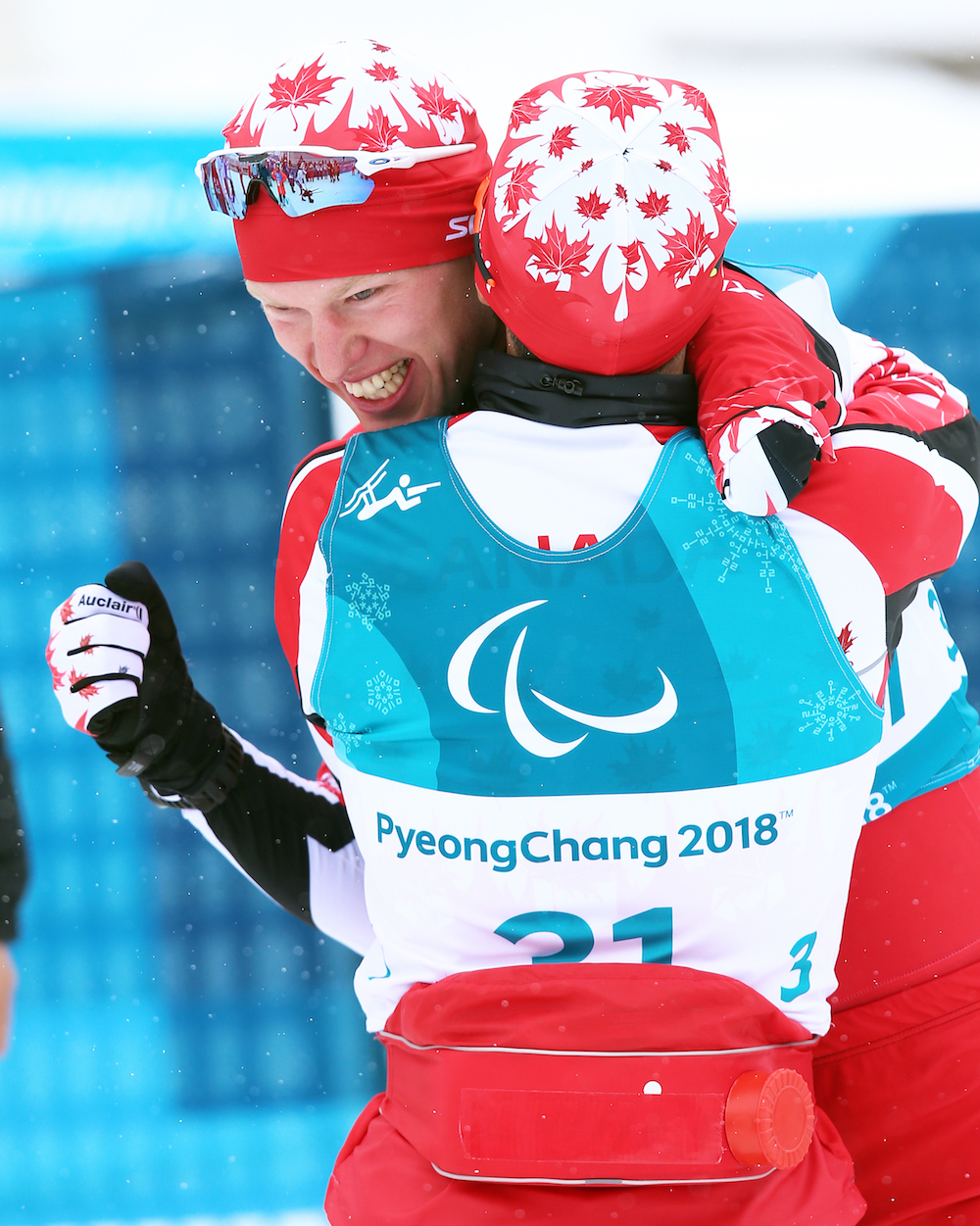
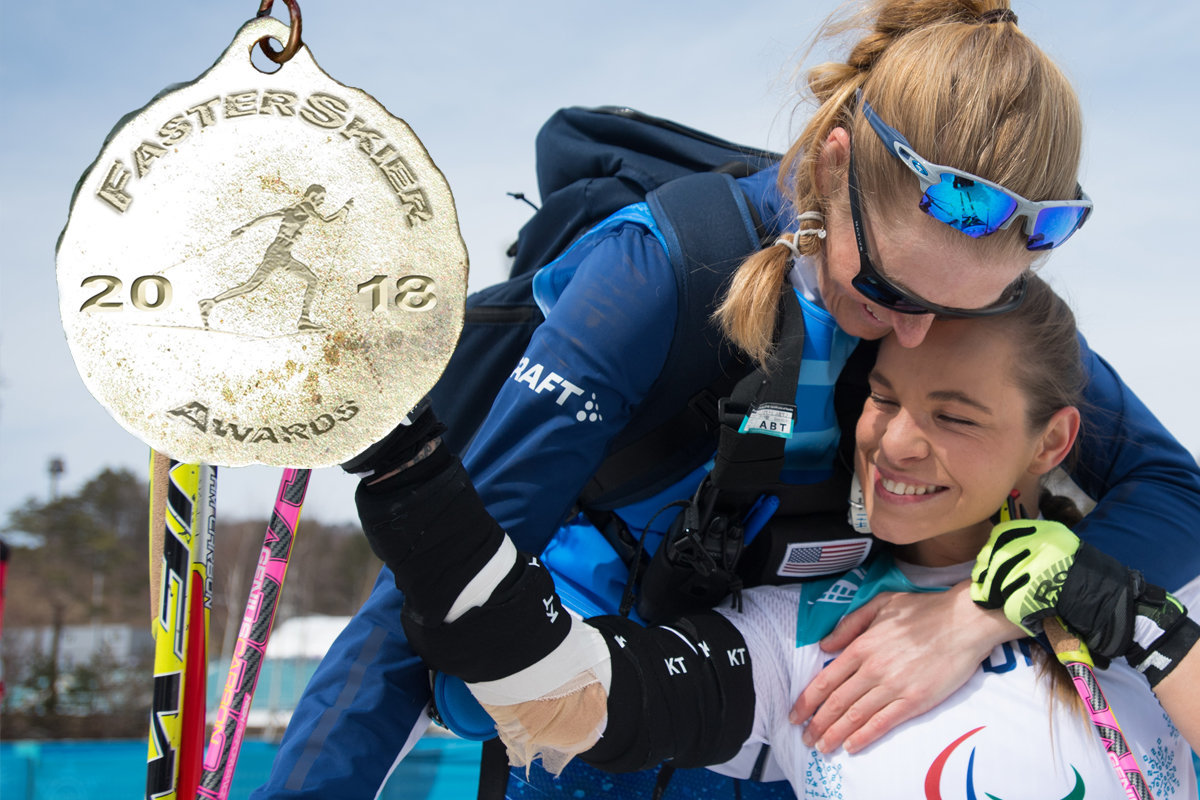
    Eileen Carey congratulating Oksana Masters after a gold medal at the Paralympic Games. (Photo: Mark Reis/U.S. Paralympics)

    With the 2017/2018 season officially in the rearview, FasterSkier is excited to unveil its annual award winners for this past winter. Votes stem from the FS staff, scattered across the U.S., Canada, and Europe, and while not scientific, they are intended to reflect a broader sense of the season in review. This set of honors goes to coaches of North American teams in any nordic discipline, at any level – although in an Olympic and Paralympic Games year, that’s what we focused on.

    Previous categories: Junior Skiers of the Year | Collegiate Skiers of the Year | Biathletes of the Year| Para-Nordic Skiers of the Year | NoCo Skier of the Year | Canadian Breakthrough Athletes of the Year | American Breakthrough Athletes of the Year

    ***

    Eileen Carey, U.S. Paralympics Nordic

    As we have already noted recently on the site, the U.S. Paralympics Nordic program made a huge jump between the 2014 and 2018 Games, winning three medals in Sochi but 16 – from five different athletes – in PyeongChang. That also included both men and women, and two types of para-nordic events: sitting and visually impaired.

    A big architect of the team’s success has been head coach Eileen Carey. It’s not an easy or simple job to coach athletes at all different levels of sport and different athletic backgrounds, and bring them all towards success.

    “The diversity in disciplines and levels of athlete in our program is one of the most interesting and motivating parts of my job,” Carey wrote in an email last week. “On one hand, I love getting into the details of what might make someone a fraction of a percent faster. I love the process of breaking down a performance into parts and working with athletes to problem solve how to make a small element better.  So much of that is about failure, modification, and trying again.  The potential gains are so small, but so are the gaps from 4th to 1st and every once in a while something sticks and that is incredibly motivating for me. Andy [Soule]’s sprint finish [for a gold medal] in PyeongChang is a great example of that.
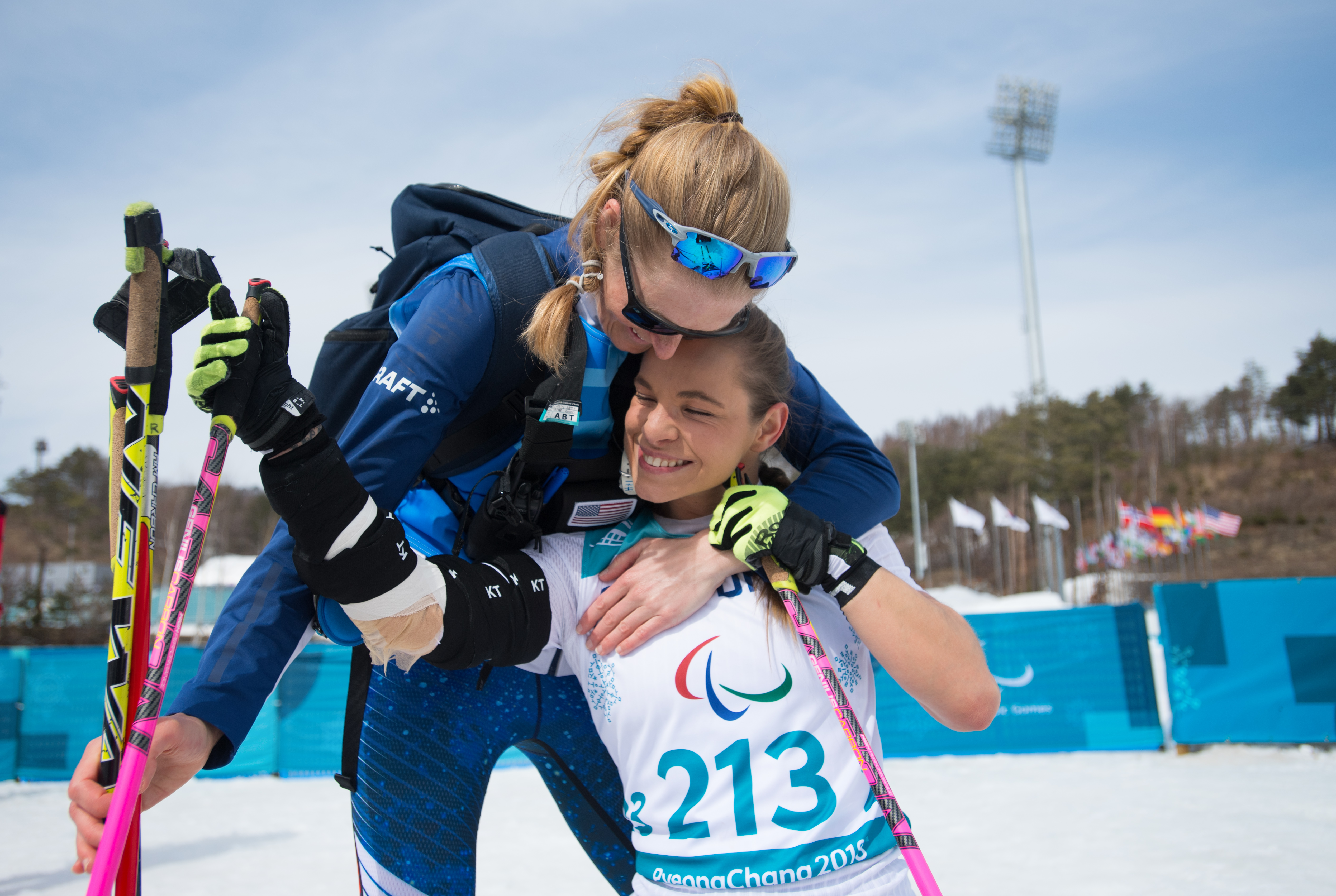
    Oksana Masters of U.S. Paralympics Nordic is hugged by head coach Eileen Carey after her gold-medal finish in the women’s sitting 5 k cross country race at the 2018 Winter Paralympic Games in PyeongChang, South Korea. (Photo: Mark Reis/U.S. Paralympics)

    “On the other hand we have some promising new athletes in our program who are at such a different level in what they need as athletes,” she continued. “For our program, our goal is always to provide best in the world service to our athletes. For our athletes who are aiming for the podium today, that involves every detail coming together, the execution of their plan. For Grace [Miller] and Mia [Zutter] and Ruslan [Reiter], our next generation of podium-potential athletes, providing best in the world service is more about making sure they see what their medal winning teammates and competitors are doing to achieve their performances and showing them a roadmap to get to that point.”

    Development coach BethAnn Chamberlain is a big piece of that effort. For the top-level athletes, Carey lives in Bozeman, Montana, where she works intensively with the sit-ski team,

    antabuse

    “They move to Bozeman in the winters,” Carey explained. “I am with them every day from November through March, in addition to training camps that we have most months from May-October. Most of them compete in summer sports, so in the off season, there is always an individualized balance of figuring out how to optimize their preparation for skiing, while working with their goals for other sports.”

    The standing and visually-impaired athletes have a different situation, and are primarily supported by clubs in their local areas. Carey works with both the athletes and their home coaches and teams to make sure they are getting the best development, but a big part of that can be training with an able-bodied ski team.

    “We can help with funding, or workout ideas that might be unique to Paralympic skiing,” Carey wrote. “But at the end of the day, Jake Adicoff and Sawyer Kesselheim’s success at the Games [where they took silver in the visually-impaired 10 k classic, the first visually-impaired medal by the U.S. in modern Paralympic history] is much more about Sun Valley SEF and Bowdoin (Jake’s club/school) and Bridger Ski Foundation and Montana State (Sawyer’s club/school)… We can help fill the gaps with funding and equipment and communication with their coaches, but their best path to the podium is the same as every skier who wants to be on an Olympic podium.”

    Carey and her colleagues, such as High Performance Director John Farra, have intentionally written their criteria so that standing and visually-impaired athletes can make the para-nordic national team without actually competing in para events – instead, they can make the C Team or Development team using USSA points from SuperTours, college races, or regional races. That means that they can spend more time with their home teams.

    “We are lucky in that we have incredible partners in the USSA community who are really the ones developing many of our athletes,” Carey wrote. “I hope the more that coaches and clubs around the country see our athletes competing in USSA and collegiate races, the more they see opportunities for providing a ski development pipeline to even more members of their communities. As much progress as we have made as a program over the last several years, we have at least that much again to improve, and this is the next big opportunity for us as a program, and also for ski clubs and communities around the country.”

    But while Carey is thinking about those big-picture goals and opportunities, she is also working one-on-one to help Americans become the best para-nordic skiers in the world.

    “The fall after Sochi, we started a technique modification process to target Andy [Soule]’s speed on flats, in particular finishing speed,” she explained. “In Sochi, he was moving quickly and had great hand speed but he was not going fast compared to the athletes he was competing against. We tried and failed at so many things in the past four years to improve that. Every once in a while, we would find a mental cue or some technical detail that seemed to make a difference and we would build on that and find ways to analyze it. It can be so frustrating, because there are inevitably times when progress stalls or reverts and there rarely is a clear answer why… When he turned it on during that finishing stretch of the sprint to take the gold, that was the epitome of a plan coming together at the right time.”

    A few minutes later, Oksana Masters won gold in the women’s sprint, overcoming an injury that had happened just weeks before the Paralympics. It was her first gold medal after collecting a silver and bronze earlier in the Games, to go with a silver and bronze from Sochi and a bronze from the 2012 summer Paralympics in rowing.

    “Both of those races, strictly from a sport performance standpoint, were just incredible,” Carey wrote. “In addition, those two athletes have really been the architects of our program’s rise over the last quad. The two of them were at every camp and World Cup, and their instincts as athletes drove the strategies of our program. That day could not have been a more meaningful culmination of the last four years for them as individuals, for us as a program, and for me as a coach.”

    Honorable Mention: Robin McKeever, Canadian Para-Nordic Skiing

    Also taking home 16 medals from PyeongChang? The Canadian Para-Nordic team, which like the Americans had a big jump in both the number of medals and the number of athletes winning them. Far from being just the Brian McKeever show – although the veteran went undefeated for the third Paralympics in a row – the team also picked up multiple medals from Mark Arendz, Natalie Wilkie, and Collin Cameron, plus an individual medal by Emily Young and two relay medals.
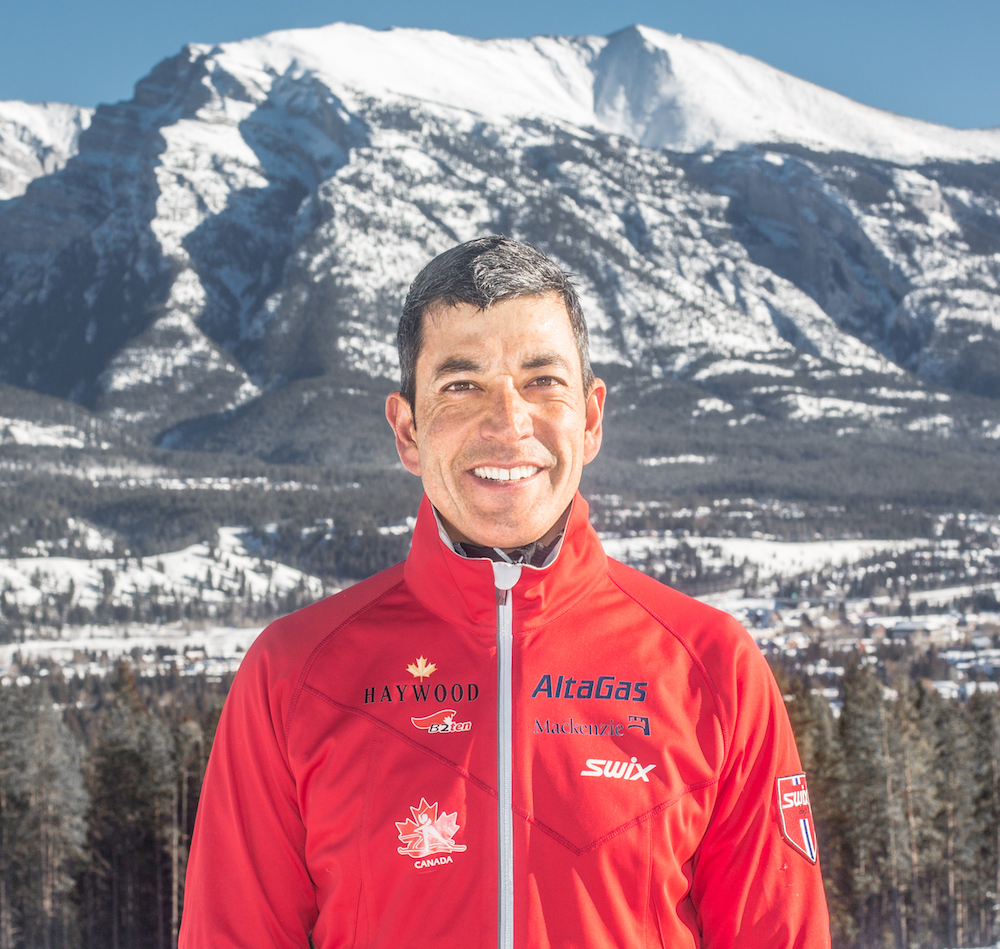
    Robin McKeever. (Photo: Noel Rogers/CCC)

    Carey’s counterpart up north is Robin McKeever, who incidentally said that he looked at what Carey was doing as an inspiration in being able to recruit summer-sports athletes and successfully transform them into winter gold medalists. The two gold medals by Kendall Gretch, an American triathlete who didn’t pick up cross-country skiing until 2015, were “eye-opening”.

    The para-sport landscape is slightly different in Canada, which also has a much smaller population to draw from (while at the same time having some of the same issues associated with far-flung geography). McKeever faces different development challenges, but has helmed the program towards depth and diversity in the last four years.

    “It started as an eight-year process in 2010,” McKeever said in an interview last week. “At that time, we only had funding for Brian. I was given the reins to rebuild, effectively. Now there are some next-generation funds we have the opportunity to access, and now that helps build the base. In the last few years we have had a development coach on board, Kate Boyd, and that has been huge.”

    There have been notable successes, such as the three medals Cameron took home; having picked up skiing just a few years ago after being involved with sledge hockey, Cameron was named one of our Breakout Athletes of the Year.
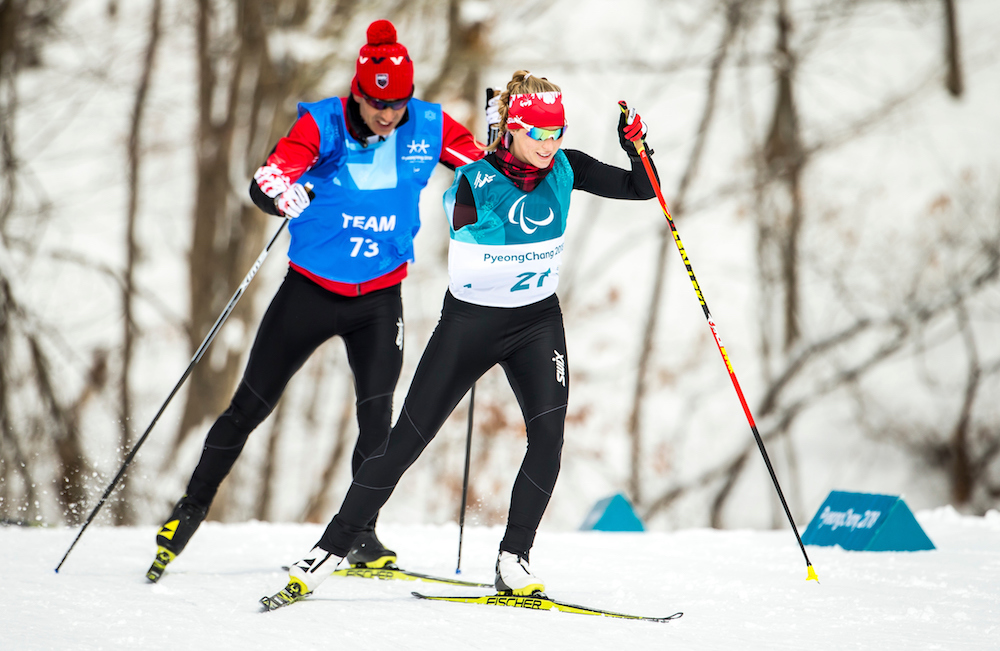
    Emily Young and coach Robin McKeever during a training session at the Alpensia Biathlon Centre during the 2018 Winter Paralympic Games in Pyeongchang, Korea. (Photo: Dave Holland/Canadian Paralympic Committee)

    Then there was Wilkie, a teenager who came to the program after losing four of her fingers in an accident.

    “We know where our pool of athletes comes from,” McKeever said. “It’s about the un-luck of athletes having trauma, which starts their Paralympic path. And it’s about luck in terms of recruiting athletes from summer sport.”

    Those newer athletes in the program have veterans to look up to, whether that is McKeever’s brother Brian, or now Mark Arendz, who took home a remarkable six medals between biathlon and cross-country skiing.

    “Mark was no surprise,” McKeever said. “Six medals was maybe a surprise, but he was a World Champion coming in.”

    Given the limitations on how the team can find new athletes, McKeever didn’t want to be too concrete about whether the program would see a big swell in numbers coming off its recent success.

    “It is still to be seen where that will go,” he said. “Some of it is a bit of luck, and some of it is really good management… A lot of staff has been around for eight years. They remain keen and excited. They stick around and are really integral to my support, and to the team’s support.”

    One of the biggest highlights for McKeever, and an illustration of how the program has changed in just a few years, was the mixed relay team of Arendz, Young, Wilkie, and Chris Klebl taking silver, the first ever relay medal for Canada.

    “The mixed relay is a real highlight,” he said. “Even if the full Russian contingent had been there, that would be a podium for us. I didn’t know eight years ago that the possibility was even there.”

    Honorable Mention: Matt Whitcomb, U.S. Ski Team

    Another team that had a huge jump this year? The U.S. Ski Team women. Jessie Diggins and Kikkan Randall took gold in the Olympic team sprint, the first-ever gold medal for the U.S. in the sport.

    But the Olympics weren’t the only thing that happened this season. Diggins also won a World Cup, was third in the Tour de Ski, and second in the overall World Cup standings. Randall picked up a World Cup podium; Sadie Bjornsen picked up several; and Sophie Caldwell had enough to earn third place int he Sprint Cup standings. The team had more days with many women in the sprint heats, and more good distance results, too.
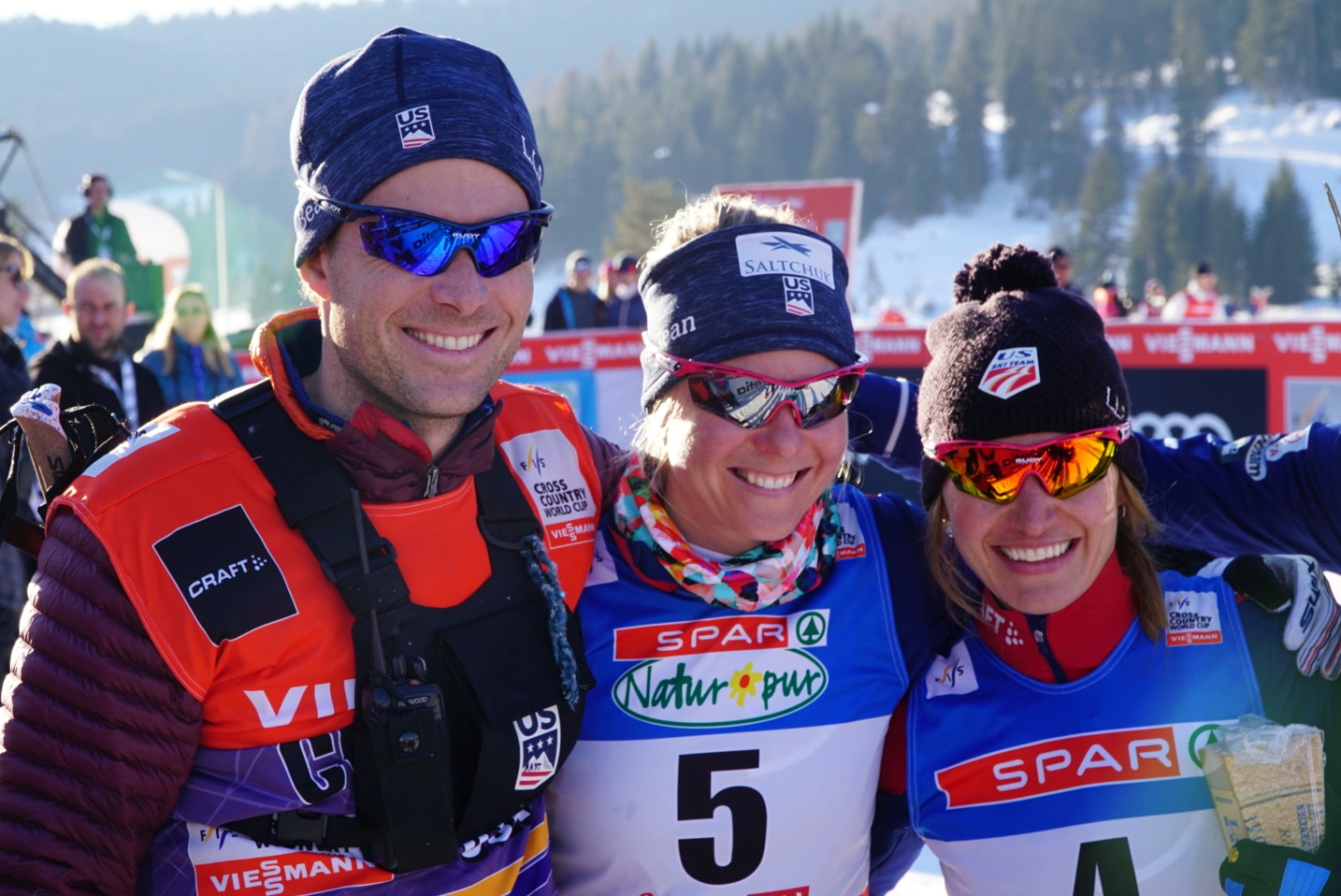
    Matt Whitcomb with Sadie Bjornsen and Sophie Caldwell in Seefeld, Austria, this winter. (Photo: Garrott Kuzzy / LumiExperiences.com)

    “It’s been a many-year goal of ours to be ranked in the top three for the women’s team and we secured that for the first time today,” U.S. Ski Team Women’s Coach Matt Whitcomb told FasterSkier of his team’s best-ever Nations Cup ranking after the final World Cup of the season in Sweden. “We’ve come into [past] finals, I believe, ranked third and then come out of finals ranked fourth. We’ve been fifth… It was really quite an achievement.”

    The U.S. women all spend large amounts of time with their club teams and coaches, including at APU and Stratton. But they come together to form a national team, the strength of whose relationships are a storied aspect of building their own success. And Whitcomb is a big ingredient there, facilitating not just training but atmosphere and long-range goals.

    When Caldwell secured third in the Sprint Cup, she thought back two years to a conversation she had with Whitcomb about race goals. Whitcomb wanted Caldwell to write down goal in particular: to be in the Sprint World Cup overall top three.

    “At the time I was like, ‘Eh, no, that seems pretty far off,’” Caldwell reflected in a post-race interview with FasterSkier.

    But it wasn’t, and the determination to work seriously on big goals, and believe you can get them, is a hallmark of the U.S. team.

  • FasterSkier’s U.S. Breakthroughs: Kevin Bolger and Rosie Frankowski

    FasterSkier’s U.S. Breakthroughs: Kevin Bolger and Rosie Frankowski

    Kevin Bolger (l) of the Sun Valley Ski Education Foundation (SVSEF) and Rosie Frankowski of Alaska Pacific University are FasterSkier’s 2018 U.S. Breakthrough Skiers of the Year. (Photos: Fischer/NordicFocus & FasterSkier)

    With the 2017/2018 season officially in the rearview, FasterSkier is excited to unveil its annual award winners for this past winter. Votes stem from the FS staff, scattered across the U.S., Canada, and Europe, and while not scientific, they are intended to reflect a broader sense of the season in review. This set of honors goes to the U.S. Breakthrough Skiers of the Year.

    Previous categories: Junior Skiers of the Year | Collegiate Skiers of the Year | Biathletes of the Year| Para-Nordic Skiers of the Year | Nordic Combined Skier of the Year | Canadian Breakthrough Skiers of the Year

    ***

    Kevin Bolger, Sun Valley Ski Education Foundation

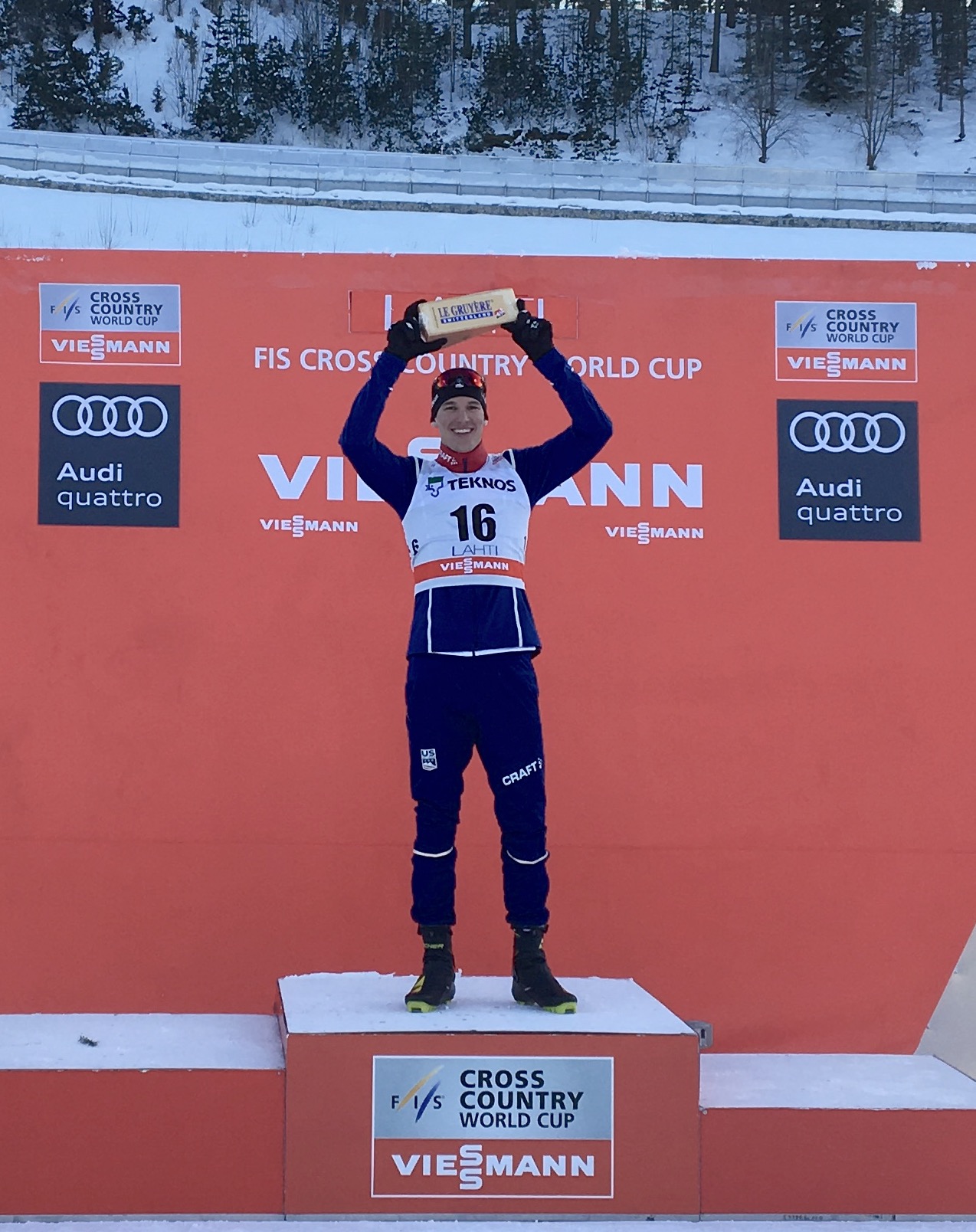
    By placing 11th in the freestyle sprint in Lahti, Sun Valley’s Kevin Bolger won some Gruyere cheese for being the top-ranked Continental Cup skier of the day. (Photo: Matt Whitcomb)

    It wasn’t until he looked at the live-timing board that Sun Valley XC Gold Team member Kevin Bolger understood where he finished. In his debut World Cup race — a freestyle-sprint qualifier on March 3 in Lahti, Finland — the 25 year old qualified in the top 20, just 0.92 seconds out of the top 10.

    “I remember some official telling me I was 16th, but I did not think he was talking to me,” Bolger told FasterSkier after that race. 

    He soon discovered that the communication was not misdirected. Qualified in 16th, Bolger felt both a rush of adrenaline and relief.

    “A lot of emotion kicked in,” Bolger said. “The hard part was over, now it was time to have some fun.”

    Bolger advanced through the rounds, ultimately finishing the day as the top American man in 11th place. Few American skiers, beyond Olympian Garrott Kuzzy, can compete with such debutant bragging rights (Kuzzy opened his first World Cup weekend with a ninth place in a 2008 skate sprint).

    But it is not just Bolger’s first World Cup race that makes him FasterSkier’s American male “Breakthrough Skier of the Year”. Two weeks later, he competed at World Cup Finals in Falun, Sweden, and once again advanced to the rounds in a freestyle sprint, this time in 29th. He finished the day in 30th overall.

    “It couldn’t have been written any better,” Bolger wrote in an email to FasterSkier of his transition to World Cup racing. “Was I surprised, yes of course, but deep down going into those World Cups I knew what I was capable of doing, so I went out and did it. I wanted to capitalize on my opportunity and show that I have what it takes to be skiing on the World Cup and be competing with the best in the world and I think I did that.”

    Overall this season, Bolger, a former University of Utah skier who graduated in 2017, placed second in the season-long SuperTour standings, just 15 points behind David Norris of Alaska Pacific University (APU) in first. Bolger raced to second place in the skate sprint at U.S. nationals in Anchorage, Alaska, then achieved back-to-back podiums in the classic sprint and 10-kilometer freestyle at the Craftsbury SuperTour in late January (he was third in both races).

    In February, before heading over to race the last World Cup period in Europe, Bolger won a SuperTour skate sprint and finished second in the 20 k freestyle mass start in Ishpeming, Michigan. While fighting illness upon his return to the states last last month, he competed at U.S. SuperTour Finals in Craftsbury, qualifying for the classic sprint in ninth and closing out that race in 14th.

    antabuse

    “As I reflect back on my season I don’t think it could have gone better,” Bolger wrote.

    “I’ve gotten a taste of what it’s like to be skiing on the World Cup and skiing against the best in the World,” Bolger continued. “That has shown me that I still have a lot of work to do ‘a lot of work’, of course I’ve had some good results but I want more. I want to be able to not only ski with those guys on the World Cup, but I want to be compete against them. I haven’t been more motivated and excited for another year to start.

    Bolger plans to continue to work with Sun Valley XC Gold Team coach Chris Mallory and is certainly a name to look out for next winter on both the domestic and international circuits.

    “I’m excited for what is to come!” Bolger wrote.

    Rosie Frankowski, Alaska Pacific University

    Rosie Frankowski (l) leading her American teammate Caitlin Patterson during the women’s 30 k classic mass start on Sunday at the 2018 Olympics in PyeongChang, South Korea. In Frankowski’s first Olympic race, she placed 21st. (Photo: Scott Patterson)

    In the last women’s cross-country race of the 2018 Winter Olympics in Pyeongchang, South Korea, there were a number of skiers to note. However, one in particular stood out. Not just because of her size — off skis, Rosie Frankowski barely skims 5 feet 2 inches — but the ferocity with which she chased every climb and doggedly double poled through the flats of the 30 k classic mass start.

    “Literally, most of my competitors weigh at least 40 pounds more than me,” Frankowski, a 26-year-old APU skier, previously told FasterSkier. “My strategy when racing is literally to pass as many people in every uphill; hope that no one passes me on the downhills.”

    But there are more reasons that Frankowski is the female recipient of FasterSkier’s U.S. Breakthrough Skier of the Year. A native of Minneapolis, Minnesota, Frankowski qualified for the Olympics and in her first and only Olympic start, she finished 21st in that 30 k. She had never skied a World Cup race before the Olympics.

    “It was crazy. I didn’t expect, honestly, to feel that good and just keep jamming and going,” Frankowski told FasterSkier that day in PyeongChang. “My one goal for the whole day was just to finish smiling.

    “There was a period of about 2 weeks where all of a sudden I was pushed into our tiny X-C skier spotlight and I felt pressure to race for reasons other than what I race for,” Frankowski wrote in an email to FasterSkier at the end of the season. “I was trying to prove I deserved a spot on that team and that got in my head. Something I am most proud about my season is that I managed to change that attitude and go back to enjoying skiing hard and taking in the excitement of all the cool opportunities I was given.
    “I think that switch showed through my racing in the second half of the season, and I enjoyed actually racing more than I have ever in my life,” Frankowski continued. “Also, I got to race in the Olympics….any time that happens to you, you better be pretty happy.”
    She went on to race to 31st in the Holmenkollen 30 k freestyle mass start in Oslo, Norway — her first World Cup event. Frankowski competed at World Cup Finals in Falun and ended the season in Craftsbury, where she placed fourth in the 10 k freestyle mass start and sixth in the 30 k classic mass start at SuperTour Finals. Overall, she finished the season in third in the SuperTour standings (behind Kaitlynn Miller and Caitlin Patterson, both of the Craftsbury Green Racing Project, respectively). And Frankowski leads the 2017/2018 SuperTour Distance standings.

    Earlier this season, she placed second in the 10 k freestyle at the NorAm opener at Sovereign Lake, British Columbia. At U.S. nationals in early January, she raced to third in the 20 k classic mass start and fourth in the 10 k freestyle. She was second in the 5 k freestyle at the Craftsbury SuperTour in January and won the SuperTour/NorAm mini tour the next weekend with back-to-back wins (in the 10 k freestyle and 10 k classic pursuit) in Gatineau, Quebec.

    After PyeongChang, Frankowski placed first in two Alpen Cup races in Cogne, Italy: a 10 k classic and 15 k freestyle pursuit. In review of the season, Frankowski was quick to point out the confidence she has gained in her training and racing style. 

    “The success I found this year has given me the confidence to trust in my system and now going into next season I know what I can keep doing what I am doing, and it will help bring me to the next level,” Frankowski wrote. “I also have always strongly believe that you must be happy to race fast, and this has always been in the back of my mind when I think about how long to continue my ski career. Keeping a balance and letting all parts of me have their moment, whether it’s my competitive side on the race course in January, or my busy-bee worker side tackling cool work projects in July, or humorous side posting funny unserious social media photo hashtags, keeps me sane and loving my life—prolonging my competitive ski career.”

    Honorable Mention: Scott Patterson, Alaska Pacific University/U.S. Ski Team

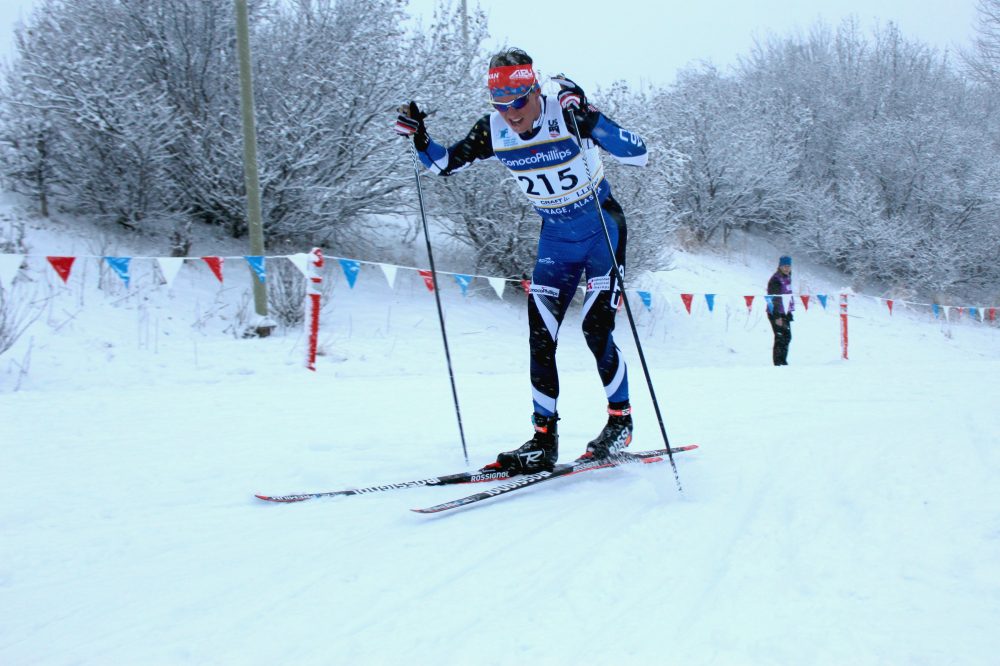
    Scott Patterson (Alaska Pacific University/U.S. Ski Team) racing to Scott Patterson (APU/USST) racing to a 55-second win in the men’s 15 k freestyle individual start at 2018 U.S. Cross Country Championships in Anchorage, Alaska.

    Scott Patterson was another serious contender for Breakthrough Skier of the Year — with four top-21 results in four Olympic races — but it should be noted that Patterson, who was named to the U.S. Ski Team last spring, was our U.S. Breakthrough Skier last year.

    It appears his breakthrough, or rather his ascension, is ongoing. Patterson, 26, spent most of last season on the World Cup, posting the 31st-fastest time of the day in the 15 k freestyle pursuit at the World Cup opener in Kuusamo, Finland. But it got a lot better than that for the APU skier.

    In early January, he returned home to Anchorage for U.S. nationals, where he won the 15 k freestyle and essentially punched his ticket to the Olympics. He also finished eighth in an all-out sprint finish in the 30 k classic mass start at nationals.

    He scored his first World Cup top 30 of the season the weekend before the Olympics in Seefeld, Austria, placing 27th in the 15 k freestyle mass start. At the Olympics was where he really broke through: placing 18th in the 30 k skiathlon, then 21st in the 15 k skate, then 14th with the men’s 4 x 10 k relay, and finally, 11th in the 50 k classic mass start.

    In the world-famous Holmenkollen 50 k freestyle mass start in March, he led the U.S. men in 16th.

    “It’s all just about staying relaxed,” Patterson told FasterSkier at the time. “Kind of felt like five pretty easy laps and then one real hard one out there. … Actually I struggled  a little bit on the third lap, my skis slowed down quite a bit and was able to switch on the fourth [lap] and then really had some rockets out there.

    At SuperTour Finals in Craftsbury, Patterson ended the season with three top 10’s: third in the 50 k classic mass start, fourth in the 15 k skate and 10th in the classic sprint. That put him sixth in the SuperTour Distance standings.

    Honorable Mention: Sadie Bjornsen, Alaska Pacific University/U.S. Ski Team  

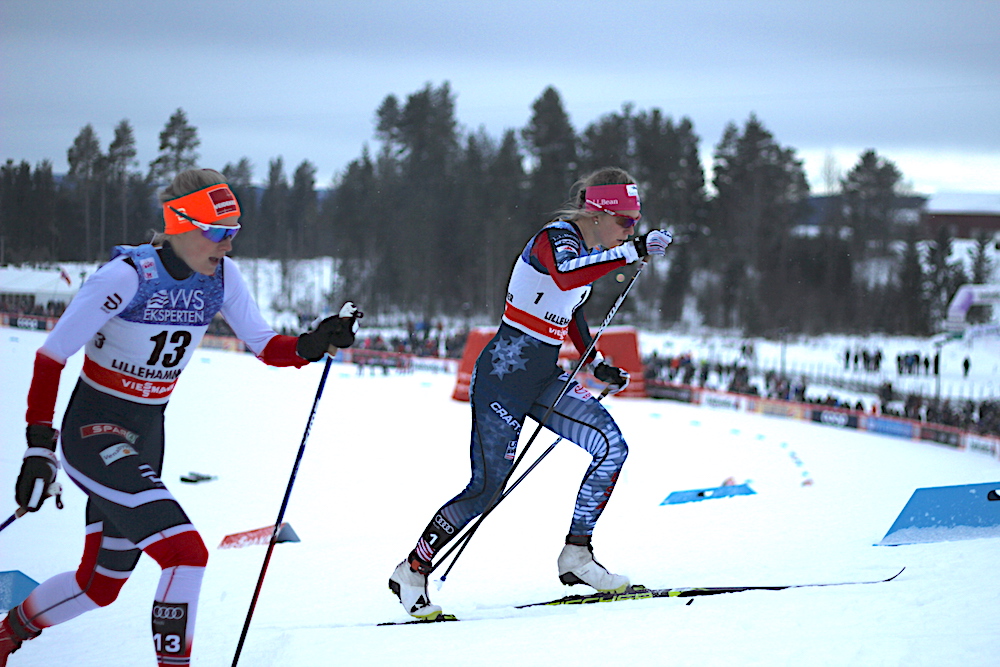
    American Sadie Bjornsen (r) en route to third in the women’s 1.3-kilometer classic sprint at the World Cup in Lillehammer, Norway. (Photo: Henrik Hunnes)

    Another American who spends her offseason training with APU out of Anchorage, Sadie Bjornsen, of the U.S. Ski Team’s A-team, turned a lot of heads this season. She had been on the World Cup podium in a non-relay race before — in January 2017 after placing third in a 5 k freestyle in Toblach, Italy — sharing that podium with U.S. teammate Jessie Diggins, who won that day. But Bjornsen started the 2017/2018 World Cup season with her first sprint podium — second in a classic sprint — three days after her 28th birthday in Kuusamo, Finland.

    The next weekend, Bjornsen placed third in another World Cup classic sprint in Lillehammer, Norway. She went on to place third in the 10 k classic stage of the Tour de Ski in Lenzerheide, Switzerland, and notably third in the 10 k freestyle pursuit at World Cup Finals in Falun, right behind her teammate, Diggins, in second. Bjornsen was also a member of the U.S. women’s relay team that finished fifth at the Olympics.

    “I think the step I made this year is one step closer to being in a place where Jessie is racing right now,” Bjornsen told FasterSkier in Falun.  “To have a teammate who is just pushing the bar just every single day and making me believe that in order to be the best racer in the world, you have to have no fear. Jessie is a great example of that and it is certainly contagious.”

    And she did all that by overcoming chronic foot injuries and other setbacks leading into the season. She finished the winter with two second-place finishes at SuperTour Finals, in the 10 k freestyle and 30 k classic mass starts, and fourth place in the classic sprint in Craftsbury. And for the first time in her career, she landed in the top 10 in the season-long World Cup standings, clinching sixth overall, eighth in the sprint standings and 10th in the distance standings.

  • FasterSkier’s Nordic Combined Skier of the Year: Bryan Fletcher

    FasterSkier’s Nordic Combined Skier of the Year: Bryan Fletcher

    Bryan Fletcher (U.S. Nordic Combined) is FasterSkier’s 2018 Nordic Combined Skier of the Year. (Photo: US Ski Team)

    With the 2017/2018 season officially in the rearview, FasterSkier is excited to unveil its annual award winners for this past winter. Votes stem from the FS staff, scattered across the U.S., Canada, and Europe, and while not scientific, they are intended to reflect a broader sense of the season in review. This set of honors goes to outstanding North American nordic combined athletes.

    Previous categories: Junior Skiers of the Year | Collegiate Skiers of the Year | Biathletes of the Year| Para-Nordic Skiers of the Year

    ***

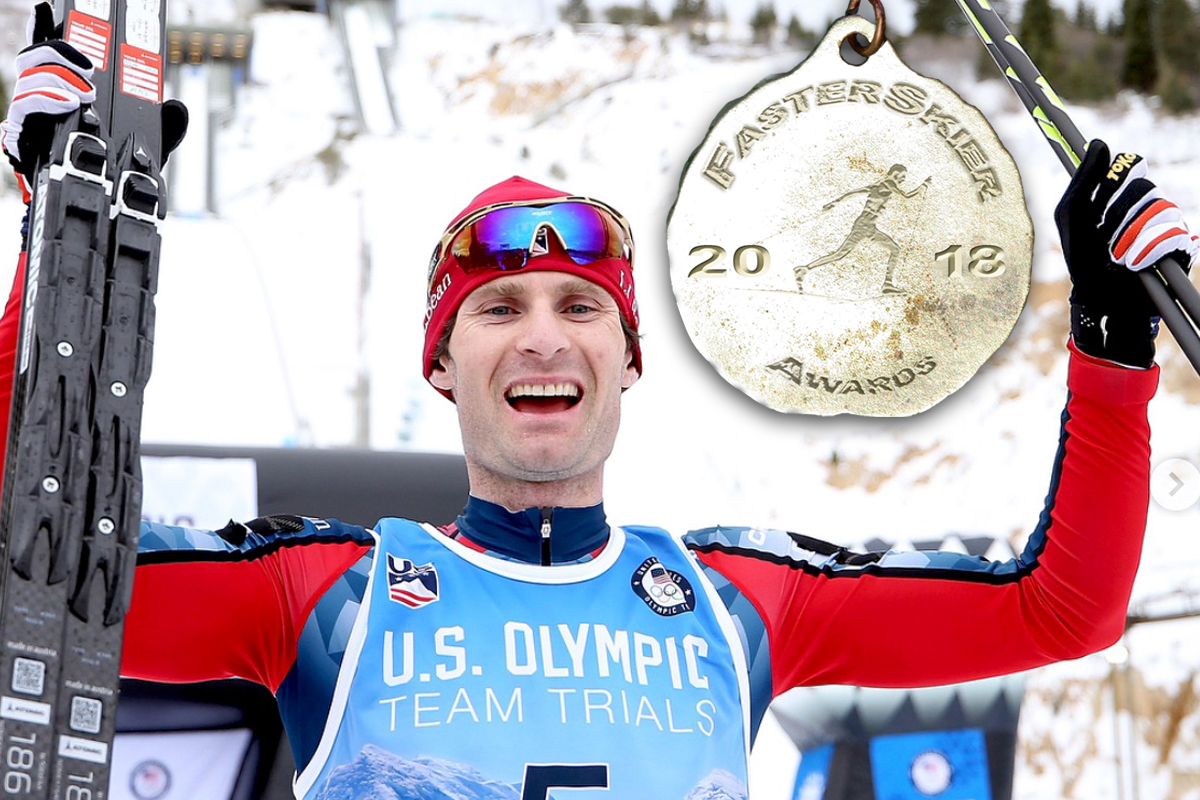
    At 31 years old, it’s safe to say U.S. Nordic Combined’s Bryan Fletcher has been a beneficiary of the axiom, “What comes around goes around”. What came around when Fletcher literally jumped and skied onto the scene in 2002 was a cadre of athletes setting the performance bar at a high level. Fletcher followed in the steps of Todd Lodwick, Johnny Spillane, Brett Camerota, and Billy Demong. In his last season as a professional nordic-combined competitor, Fletcher had several standout performances but also allowed himself to bring some of the stability and veteran leadership he learned about years ago to a young U.S. Nordic Combined Team.

    Fletcher was a rock for skiers like 19-year-old Ben Loomis, who earned a bronze at World Juniors. Loomis is one example, but the U.S. team as a whole, trends towards the younger side of twenty. With younger eyes on him as a mentor and athlete, Fletcher navigated performance disappointments and hiccups to score some standout performances on the Nordic Combined World Cup.

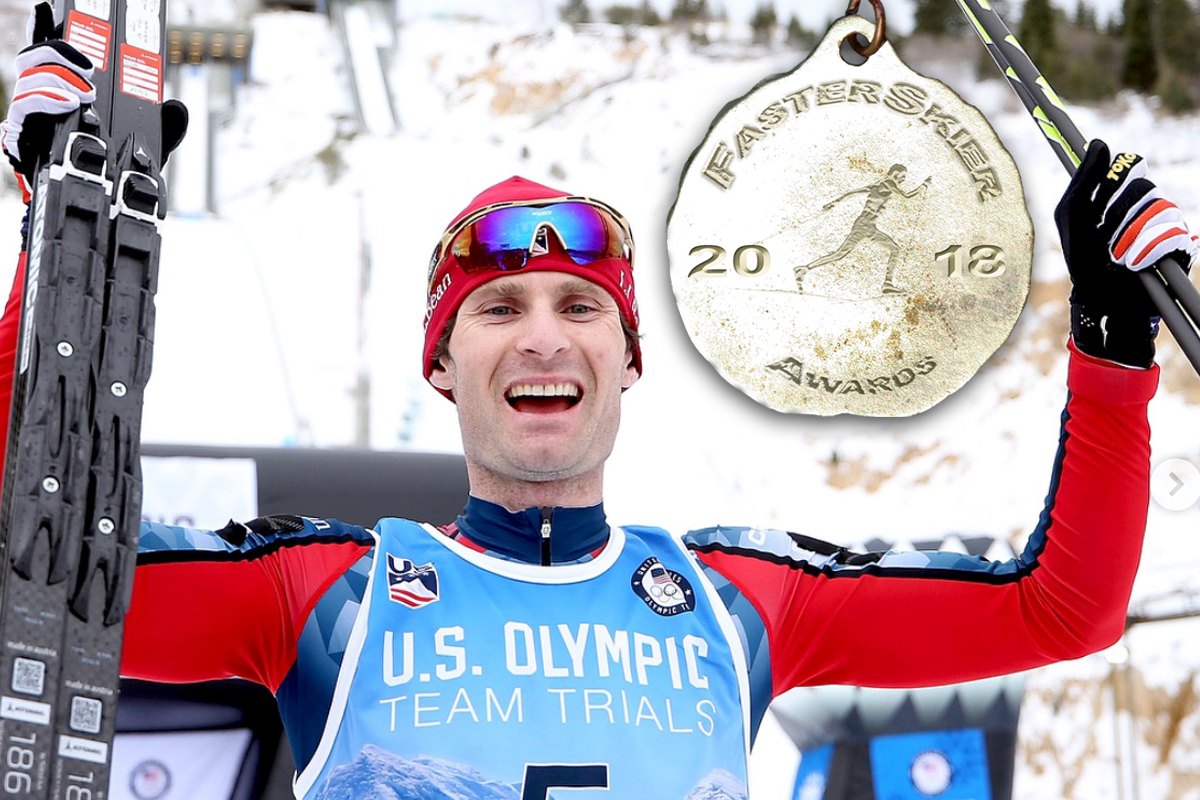
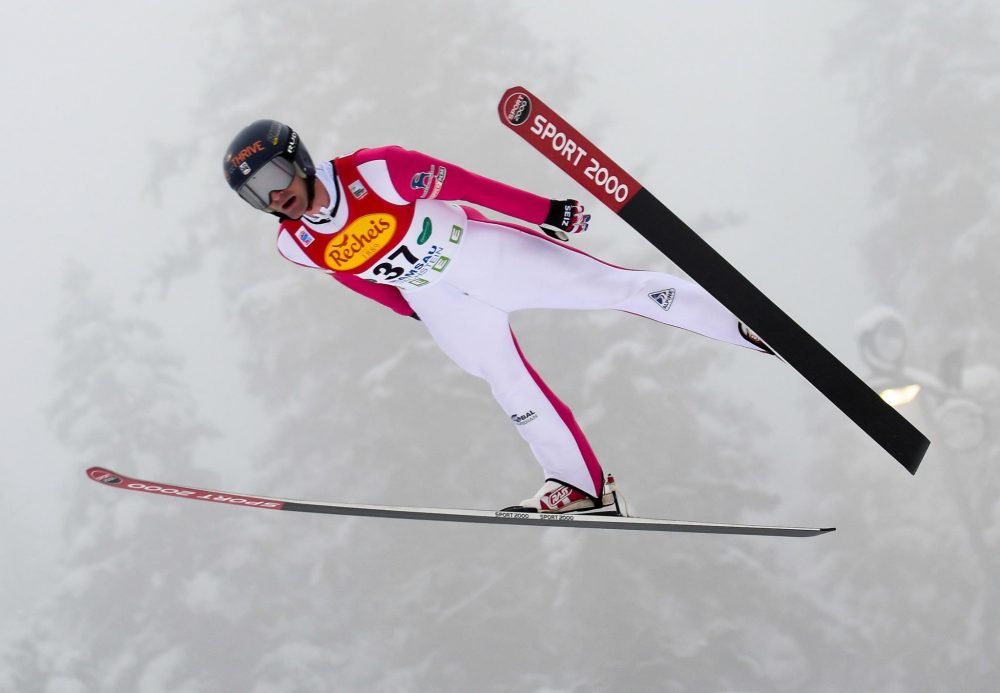
    Bryan Fletcher (USA Nordic) jumping to 45th in the Nordic Combined World Cup on Dec. 17 in Ramsau, Austria. In the 10 k that followed, he skied the third-fastest time to finish 14th overall. (Photo: Romina Eggert/USA Nordic Facebook)

    Fletcher entered 12 World Cups, 10 of which were individual races. In only one individual race did he place outside the top 30 (he finished 32nd on Dec. 1 in Val di Fiemme, Italy). Of his remaining individual races, Fletcher was out of the top 20 just one other time (placing 29th on Nov. 26 at the season-opener in Kuusamo, Finland).

    Fletcher’s other eight races were all top 20’s. In Ramsau, Austria, he scored a seventh place. And in his last career World Cup on March 14 in Trondheim, Norway, Fletcher matched his season-best result with another seventh place.

    One can hear any athlete say these weren’t exactly the results they were looking for. That would be true in Fletcher’s case as well. Yet he was more than consistent in terms of keeping himself within striking distance of several podiums. Those opportunities came most often from Fletcher’s skiing rather than his jumping. At season’s end, he was the 42nd-ranked overall jumper on the Nordic Combined World Cup. To prove our point, he was ranked the 15th-best skier. (Overall, he ranked 29th on the World Cup this season.)

    Here are Fletcher’s best cross-country race times (in the 10-kilometer Gundersen starts) of the 2017-2018 World Cup season:

    Nov. 25, Kuusamo, Finland: Fourth fastest time of day

    Dec. 16, Ramsau, Austria: Second fastest time of day

    Dec. 17, Ramsau: Third fastest time of day

    Jan. 14, Val di Fiemme, Italy: Second fastest time of day

    From a domestic perspective, Fletcher proved he’s still the best U.S. nordic combined athlete. During a high-pressure format — the only guaranteed U.S. Nordic Combined Olympic spot was reserved for the winner of U.S. Nordic Combined’s Olympic Trials on Dec. 30 in Park City, Utah — Fletcher found himself in fifth place after the jumping round. A full 1:24 minutes behind the best jumper Ben Loomis. Yet in typical fashion, Fletcher’s podium hunt on skis ended with a first place and a booked trip to PyeongChang for his second Olympic Games. 

    In both individual events in PyeongChang, Fletcher was the best American finisher, placing 17th twice.

    For being the best-performing American nordic combined skier, Fletcher receives the nod for Nordic Combined skier of the year. But don’t forget, Fletcher is the whole package: in the 2017/2018 season, he was a leader, professional role model, and mentor to the young ones chasing his ski tails.

  • FasterSkier’s Para-Nordic Skiers of the Year: Oksana Masters and Brian McKeever

    FasterSkier’s Para-Nordic Skiers of the Year: Oksana Masters and Brian McKeever

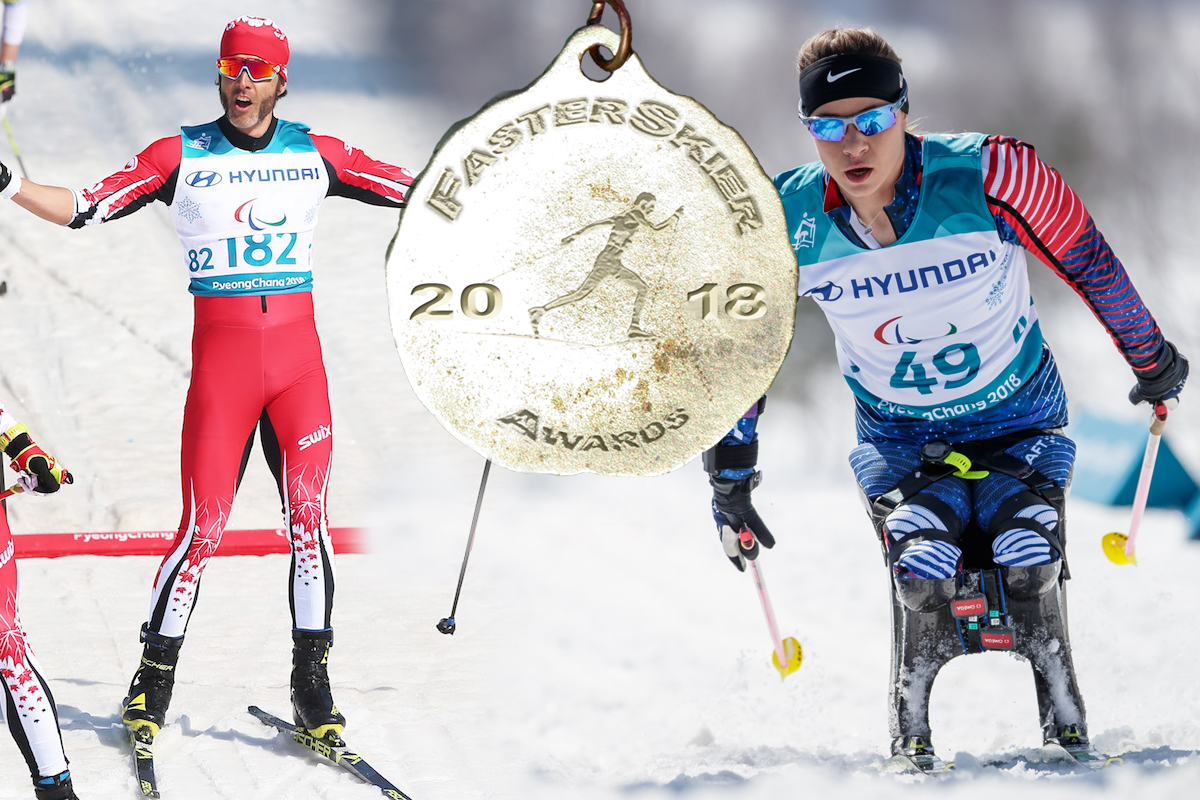
    Brian McKeever (l) and Oksana Masters (r) are FasterSkier’s 2018 Para-Nordic Skiers of the Year. (Photos: Scott Grant/Canadian Paralympic Committee & Joe Kusumoto/US Paralympics)

    With the 2017/2018 season officially in the rearview, FasterSkier is excited to unveil its annual award winners for this past winter. Votes stem from the FS staff, scattered across the U.S., Canada, and Europe, and while not scientific, they are intended to reflect a broader sense of the season in review. This set of honors goes to outstanding Para-Nordic skiers on the international circuit.

    Previous categories: Junior Skiers of the Year | Collegiate Skiers of the Year | Biathletes of the Year

    ***

    Oksana Masters, U.S. Paralympics Nordic

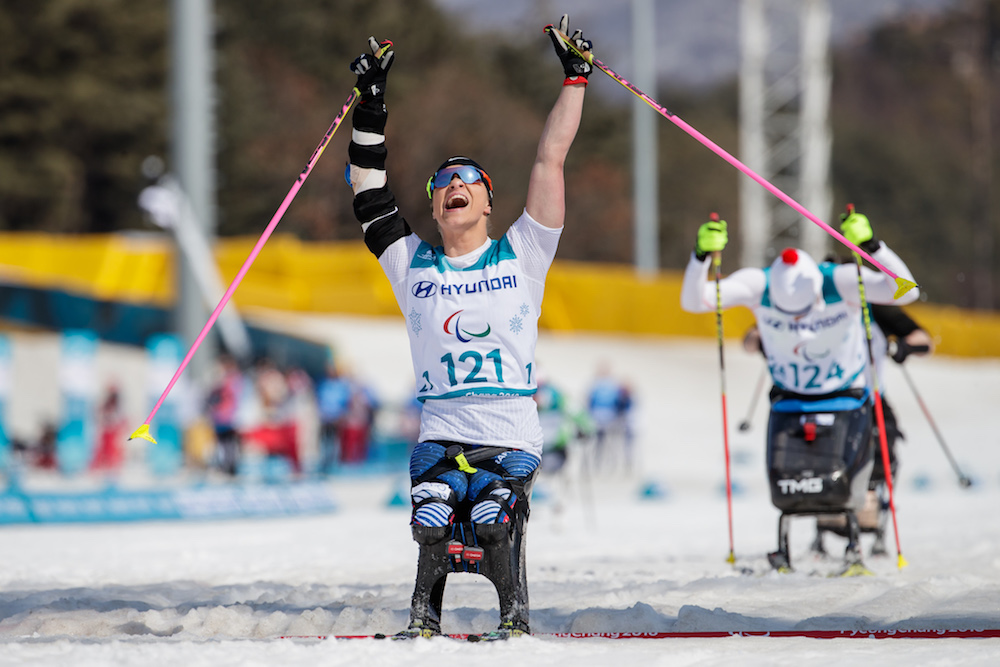
    American Oksana Masters reacting to her first gold medal in her third Paralympics, after winning the women’s 1.1 k sitting sprint in PyeongChang, South Korea. (Photo: Joe Kusumoto/U.S. Paralympics)

    Undefeated in this category for the last four years of the FasterSkier awards, Oksana Masters had her best Paralympics yet this winter and overcame a major setback to do so. Just two weeks before the 2018 Winter Paralympic Games in PyeongChang, South Korea, Masters slipped on ice, injured her elbow and had to get surgery. Then, entirely propelled by her arms as a sit skier, the 28 year old competed in all six individual races in PyeongChang and medaled in five of them (she fell in the other and pulled out of the race shortly before the finish). In total, she racked up the first two Paralympic gold medals of her career (in her third Paralympics) plus two silver medals in biathlon — her first biathlon medals — and a bronze.

    “I am absolutely truly speechless on this performance,” Masters told U.S. Paralympics after winning her second gold medal of the week in the women’s 5-kilometer sitting cross-country race (her first came in the cross-country sprint).

    “I thrive and love the athlete lifestyle of eat, sleep and train,” she continued. “To put yourself to the ultimate test on that start line and seeing all your hard work come through, and not just that, it’s a whole team effort. … It’s not a one-person show. It definitely takes a village and we have an incredible team.”

    Masters and her teammate Dan Cnossen accounted for 11 of Team USA’s 16 medals in nordic and biathlon in PyeongChang, which was more than five times the amount of medals the team brought home after Sochi in 2014.

    Overall this season in the World Para Nordic Skiing rankings, Masters ranked first in women’s sitting biathlon and tied Germany’s Andrea Eskau for first in cross-country. In the International Paralympic Committee (IPC) overall World Cup standings, Masters placed third in both cross-country and biathlon.

    Brian McKeever, Canadian Para-Nordic Skiing

    Also our award winner last year, Brian McKeever became Canada’s most decorated Winter Paralympian of all time this winter with 17 career medals, 13 of which are gold. Three of those golds came in PyeongChang, and he captured bronze there with his teammates on the final day of racing, in the open relay, when Canada placed second in the mixed relay and third in the open relay for its first Paralympic relay medals.

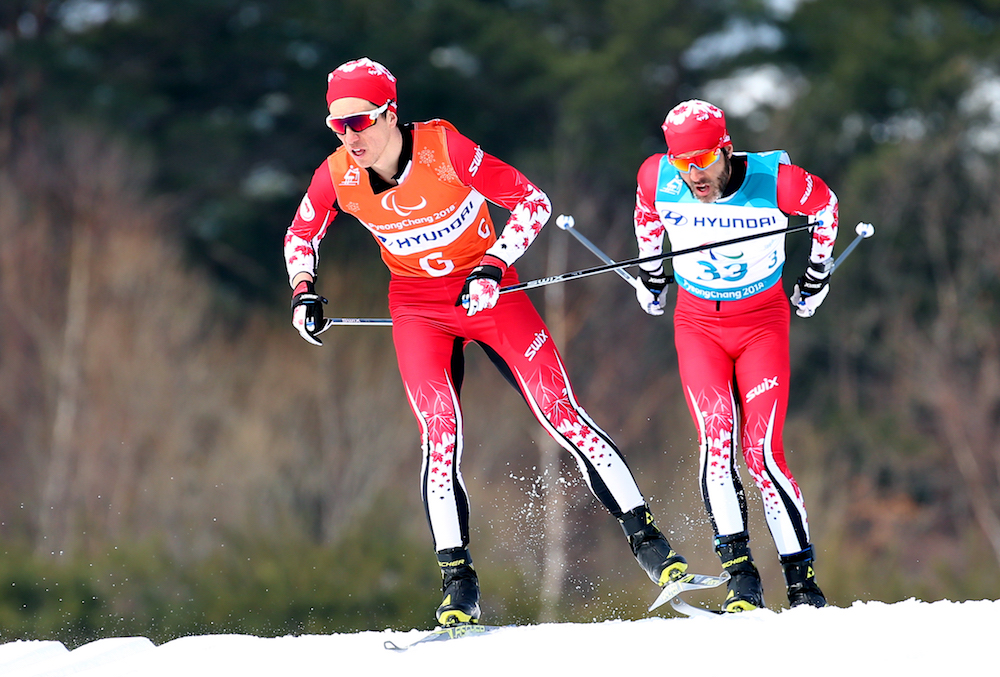
    Brian McKeever (r) follows guide Graham Nishikawa during the men’s visually impaired 20 k freestyle at the 2018 Paralympics in PyeongChang, South Korea. Along with guide Russell Kennedy, they won the race by over a minute for McKeever’s 14th Paralympic medal and 11th gold. (Photo: Scott Grant/Canadian Paralympic Committee)

    This marked the fifth Paralympics for McKeever, 38, and he was accompanied by two guides, Graham Nishikawa (whom he skied with at the 2014 Sochi Games) and Russell Kennedy (who joined the Canadian Para-Nordic Team this year). Together, they won all three visually impaired cross-country races they competed in: the 20 k freestyle, classic sprint and 10 k classic.

    In his first race of the Games, the 20 k distance race, McKeever, who was also Canada’s flag bearer for the PyeongChang Opening Ceremony, captured his 14th career medal — the most of any Canadian Winter Paralympian. In fact, he’s the most successful cross-country skier in Paralympic history, according to an IPC press release.

    “I wasn’t aware of this record, but it is pretty cool,” McKeever told Cross Country Canada after the 20 k. “I think for me more than anything is this is a testament to our entire program. We’ve had so many great skiers leading the way for me with my brother, Robin, who is now coaching us, and Colette Bourgonje. Now it is awesome for me to be a part of a new generation that has arrived in Mark [Arendz], Colin Cameron, and the young women like Emily [Young], Brittany [Hudak] and Natalie [Wilkie], who are ready to carry the torch. I’m so excited to be around all of them this week and to be there cheering them on.”

    Like the U.S., Canada tallied 16 medals between nordic and biathlon at the PyeongChang Paralympics.

    In an interview with CBC Sports during the Games, McKeever referred to his team as a “future superpower” in the sport, with every one of his World Cup teammates capturing at least one medal in PyeongChang. “It’s really exciting for me to watch and see something that I’ve been part of growing.”

    McKeever was also recently voted IPC Male Athlete of the Month for March. Masters, the IPC’s January Female Athlete of the Month, was nominated again for the Female Athlete of the Month for March. Voting closes April 16.

    Honorable Mentions: Mark Arendz (Canadian Para-Nordic) and Dan Cnossen & Kendall Gretsch (U.S. Paralympics)

    Canada’s Mark Arendez gets a congratulatory hug after he won gold in the men’s 15 k standing individual biathlon race at the 2018 Paralympics in PyeongChang, South Korea. (Photo: Scott Grant/Canadian Paralympic Committee)

    While McKeever carried the Canadian flag at the PyeongChang Opening Ceremony, his teammate Mark Arendz was honored with waving it at the Closing Ceremony. In his third Paralympics, the 28-year-old Arendz had his best Games yet, taking a medal in all six events he competed in to make him the most successful Canadian at a single Winter Paralympics.

    Arendz captured five individual medals in the men’s standing races in PyeongChang, including his first-career gold in the 15 k biathlon, silver in the 7.5 k biathlon sprint, and bronze in the 12.5 k biathlon, as well as his first Paralympic cross-country medals: bronze in both the sprint and 10 k classic, and silver in the mixed relay. He sat out the only race he didn’t medal in: the long-distance cross-country race.

    “I came in here thinking I could get three medals, but to get six is incredible,” Arendz said on the last day of the Games, after his team placed second in the mixed relay for Canada’s first relay medal. “Today’s is a special one. I am happy we got this done, but there is no way I could do another race. I’m done.”

    We mentioned Dan Cnossen earlier, but he’s worth mentioning again. Cnossen, 37, opened his second Paralympics with his first career medal at the Games — gold in the men’s 7.5 k sitting sprint. The next day, he placed second in the 12.5 k biathlon race, and from there, he kept up his medal streak through all six  individual races. The total medal haul for the former Navy SEAL and current Harvard graduate student was one gold, four silvers, and one bronze.

    Dan Cnossen of the U.S. celebrates his win in the men’s sitting 7.5 k biathlon sprint on opening day of competition at the 2018 Winter Paralympics in PyeongChang, South Korea. (Photo: Mark Reis/U.S. Paralympics)

    It wasn’t an easy feat. Cnossen considered pulling out of the last biathlon race — the 12.5 k — in order to compete in the final 10 k cross-country race in PyeongChang.

    “I have an excerpt that says it doesn’t matter how you feel today, it doesn’t matter what your background is or where you’re coming from, all that matters is what you can do,” Cnossen told U.S. Paralympics after finishing second in the biathlon race. “I just tried to focus on what I could do today. Not the fact that I didn’t sleep well last night, that doesn’t matter. Just go out there and perform like I know I can.”

    In all, Cnossen raced about 60 k over eight days.

    “I came into the Games just trying to take it one race at a time and give it my all — each and every race — and not think too far ahead,” Cnossen said after placing second in the 10 k cross-country race the next day for his sixth-straight medal. “Just focus on the here and now, and soak up the moment and be in the present.”

    His teammate Kendall Gretsch, a triathlete who recently took up nordic skiing and biathlon, opened her first Paralympics with gold in the women’s 6 k sitting sprint in PyeongChang. Gretsch, who turned 26 earlier this month, also won the 12 k biathlon race the next day.

    In an interview with U.S. Paralympics, she described being “unsure” of how she’d stack up in PyeongChang. Days 1 and 2 of racing pretty much settled it.

    “I knew that since our last World Cup I had improved a lot, but you never know until you race,” she said after her second-straight gold. “It’s a very humbling experience being able to hear your anthem, puts everything into perspective. Knowing that you’re here not just here for yourself but for your country, it’s amazing.”

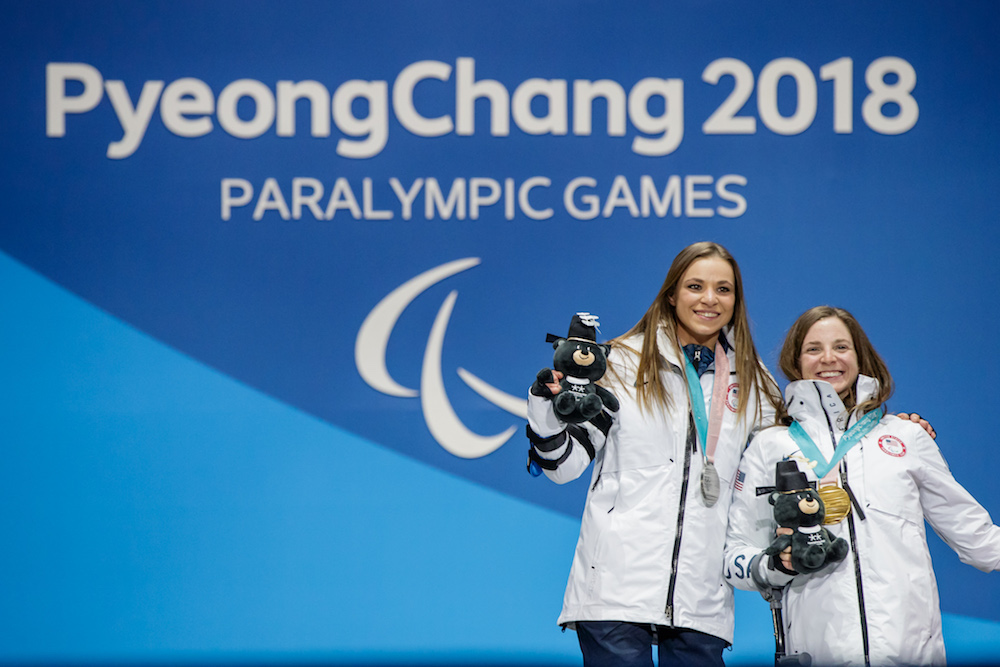
    Kendall Gretsch (r) and Oksana Masters at the 2018 Paralympics medal ceremony for the women’s sitting 6 k biathlon sprint after winning gold and silver, respectively, on the first day of competition in PyeongChang, South Korea. (Photo: Joe Kusumoto/U.S. Paralympics)
  • FasterSkier’s Biathletes of the Year: Tim Burke and Rosanna Crawford

    FasterSkier’s Biathletes of the Year: Tim Burke and Rosanna Crawford

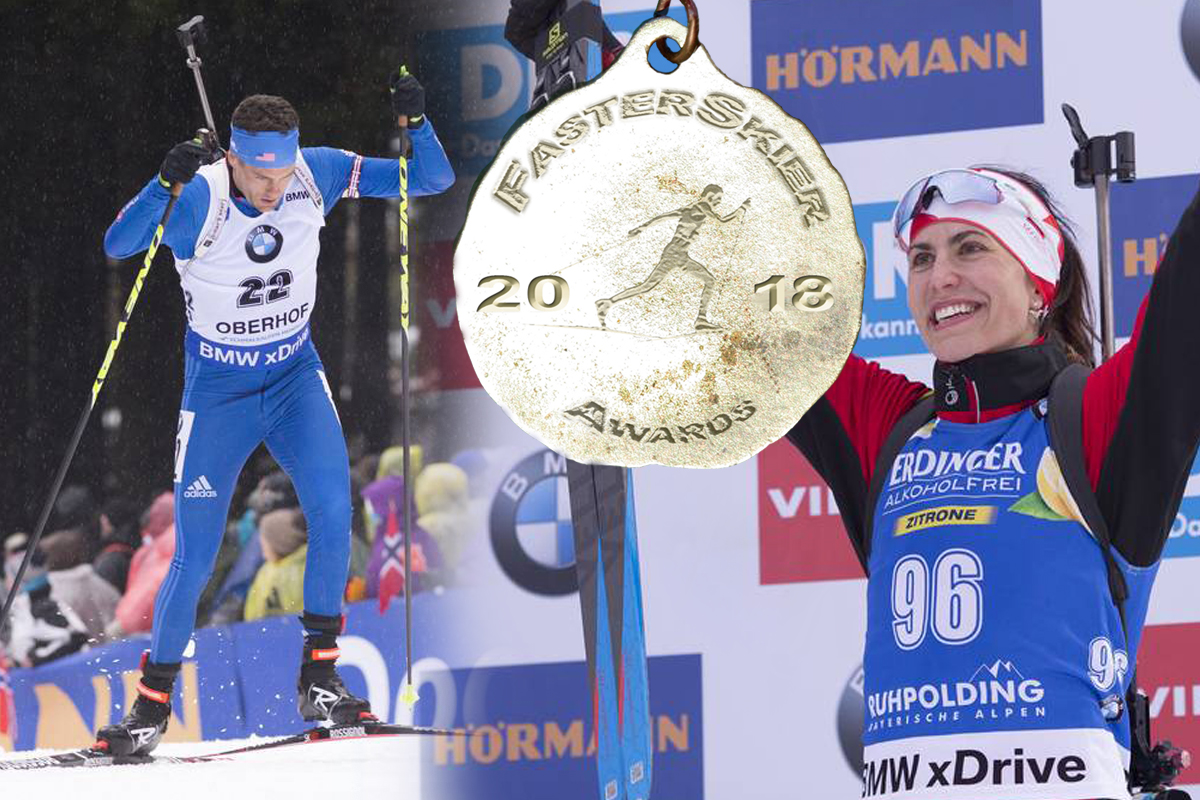
    Tim Burke of US Biathlon (left) and Rosanna Crawford of Biathlon Canada (right) are FasterSkier’s 2018 Biathletes of the Year. (Photos: USBA/NordicFocus; Salomon/NordicFocus)

    With the 2017/2018 season officially in the rearview, FasterSkier is excited to unveil its annual award winners for this past winter. Votes stem from the FS staff, scattered across the U.S., Canada, and Europe, and while not scientific, they are intended to reflect a broader sense of the season in review. This set of honors goes to outstanding North American biathletes on the international circuit.

    ***

    Rosanna Crawford, Biathlon Canada

    Rosanna Crawford had been close to the podium before, coming into this season. Fourth place. Fifth place.

    But then she had a disastrous 2017 season that left her in tears after World Championships, wondering what had gone wrong. After that, she lost her brother, as the Crawford family endured heart-rending tragedy.

    Rosanna Crawford celebrates with her Biathlon Canada teammates Emma Lunder (l) and Julia Ransom (r) after placing third for her first-career IBU World Cup podium on Thursday in the women’s 15 k individual in Ruhpolding, Germany. (Photo: Salomon/NordicFocus)

    All of that might have stopped some people, but not Crawford. In Ruhpolding, Germany, she finally scored that podium – in a race so tough it’s only held a few times a season, the 15 k individual. She shot a perfect 20-for-20 to take third place, 21.2 seconds behind Dorothea Wierer of Italy.

    “There’s just so many lessons you learn over the years, and trying to bring it all together and to have it pay off on one day is exactly what we’re all hunting for out there,” Crawford said after her podium.

    Later that weekend she again shot 20-for-20, this time in the mass start. She left the range the final time in first place, but was passed by three other women on the final loop and had to settle for fourth.

    “I was really surprised to leave the range in 1st, these are the 30 best women in the world,” Crawford wrote in an email after the mass start. “I would have love to hold onto a podium, but was pretty dead on my last loop… I was pretty disappointed when I crossed the line in fourth, but as time went by I got more and more happy. To have hit another 20/20 is fantastic, especially in the high pressure situation of a Mass Start. With that race I went 50/50 in Ruhpolding!”

    It was an up-and-down season for Crawford, who finished no better than 39th in the first period of World Cup racing and was sent down to the second-tier IBU Cup. But she excelled there, and then came the races in Ruhpolding.

    From there she headed to the Olympics – her third – and had a poor sprint race, finishing 53rd with three penalties. It was devastating, but she came back and climbed all the way up to 19th in the pursuit, the biggest improvement in the whole field.

    “I had some really good chats with my sister Chandra,” Crawford said after the Olympic pursuit. “She’s a huge motivator for me and my biggest cheerleader now. She really just talked some sense into me to not be so down on myself after the sprint, so that was really helpful.”

    Immediately after the Olympics, Crawford finished 12th in the sprint and 11th in the mass start in Kontiolahti, Finland, before finishing the season off in Oslo. She has still not announced whether she will continue competing next year, or retire.

    buy skelaxin

    But crossing the finish line in third in Ruhpolding was an unforgettable highlight, either way.

    “[Teammates] Julia [Ransom], Emma [Lunder] and Sarah [Beaudry], they kind of pushed past the IBU guys, which I don’t think they were allowed to do, but Canada’s not on the podium every day so they let them sneak by to give me a hug so that was really special,” Crawford told FasterSkier. “I’ve been with these girls the past couple years now and so to be able to celebrate with them is amazing. Their results have been so inspiring for me … [My coach Roddy Ward] also jumped the fence, which I don’t think was allowed, so that was nice to be able to see him as well.”

    Tim Burke, US Biathlon 

    While Crawford was finally hitting that career mark, U.S. Biathlon’s Tim Burke was getting his mojo back. After a frustrating few seasons, Burke rallied for the 2018 Olympics, his fourth.

    Tim Burke (US Biathlon) racing to 14th in the men’s 12.5 k pursuit at the IBU World Cup in Oberhof, Germany. (Photo: US Biathlon/NordicFocus)

    Along the way, he amassed some strong results: tenth in the sprint in Annecy, fourth in the sprint in Oberhof. The Oberhof sprint was his best result since 2013.

    It came on a course with a personal connection, as his wife, Andrea (Henkel) Burke, had her home training base in Oberhof.

    “I have spent a lot of time training here over the last eight years,” Burke laughed. “It’s Andrea’s home town and I feel like the fans out there today were really behind me from the start, because of Andrea. So be able to have the best performance of my season and my best performance in a long time here was for sure special.”

    Burke didn’t set a best-ever U.S. mark for himself at the Olympics, with a top finish of 17th in the pursuit. Like Crawford, he made the best of things after a disappointing Olympic sprint, in his case having finished 47th in the opening competition.

    “I was disappointed in the result not the performance,” he said of the sprint, after improving in the pursuit. “I felt like I executed well. I felt like I hit my cues on the course and on the range, and it just didn’t happen yesterday. The game plan going into today, there was nothing new. Stick to the things that have been working well for me in the World Cup, and that’s what I did.”

    In PyeongChang, he contributed to a U.S. men’s relay team which finished sixth, tying the best ever team result at an Olympic Games.

    A few weeks later, in his final race before retiring, he went out and did some solid biathlon, helping the team to seventh in the World Cup relay in Oslo.

    Burke’s career has had many individual highs – six podiums including a World Championships silver medal in 2013, and a brief stint in the overall World Cup leader’s bib – but this season, it was his team efforts that were some of the best.

    “The Olympic relay, we were very happy with,” he said in Oslo. “The sixth place there [in PyeongChang, South Korea], we were right there. That was a great race for us, but this is solid as well… I’ve been here a long, long time, and an top eight today is very different than a top eight when I came on the World Cup 14 years ago. It’s so close now. There’s so many good teams. So it’s a solid result.”

    Honorable Mention: Susan Dunklee, US Biathlon

    Burke’s teammate Susan Dunklee saved the best for last this season, hitting the podium for the first time since winning silver in the mass start at last year’s World Championships.

    Susan Dunklee racing to 20th in the mass start in Annecy, France. (Photo: Glen Crawford)

    It was a tough start to the season for Dunklee, who tried to implement a new shooting strategy and saw it backfire, as she had a string of results no better than 53rd in the opening two weekends of racing.

    But then she had a solid weekend in Annecy, France, finishing tenth in the sprint and sixth in the pursuit. A lifeline.

    “After Thursday, I was just feeling relief, to be honest,” she said after the Annecy pursuit. “It’s so huge to get a top ten and then get a flower ceremony today.”

    Two months later, Dunklee had an athlete’s worst nightmare and got sick at the beginning of the Olympics, racing the opening sprint anyway but then finishing 66th and missing the pursuit. In the 15 k individual she placed 19th, and she led the women’s relay at one point.

    “I often start feeling stronger and stronger as the season goes on, and this season it took a little longer,” Dunklee explained. “I had a lot of sickness, and some frustrating shooting days early in the season that made it hard for me to keep going.”

    After the Games, she finished 36th in the sprint in Kontiolahti despite still getting over (another) illness, then came to Oslo and placed fourth in the sprint and third in the pursuit, in a podium that only appeared thanks to clean shooting in the final stage where others faltered.

    “It doesn’t really matter what everybody else is doing, you just have to try to put the best race you can,” she said of landing on the podium despite two penalties. “Sometimes you have a perfect race and five other people do too, and then you are sixth. But some days you don’t have a perfect race and you end up third.”

    Like Crawford, Dunklee hasn’t announced whether she will keep racing next season. If not, her last World Cup memory will be sharing the podium with Anastasiya Kuzmina and Darya Domracheva. Not bad.

    Honorable Mention: Scott Gow, Biathlon Canada

    Canada’s Scott Gow just keeps improving, and this season was no exception. Early on he had two career-best performances: 16th in the sprints in both Östersund and Annecy.

    Scott Gow (Biathlon Canada) after placing 16th in the IBU World Cup men’s sprint on Friday in Annecy, France. (Photo: Glen Crawford)

    But the biggest career-best also came on the biggest stage. At the Olympics, Gow shot 19-for-20 in the 20 k individual to finish 14th, the best performance by any North American in PyeongChang.

    He had started the Games with 61st in the sprint – maybe the worst place to finish, just one spot (in his case one tenth of a second) out of the pursuit.

    Gow re-tooled and started focusing on the 20 k.

    “When it’s this calm, relatively as calm, everyone can shoot well,” he said after that race. “So that puts a little extra pressure and emphasis on myself to shoot well. So going into today I knew that would be have to the focus, to hit targets, because even if my skiing is a little off I can make up for it with a really good shooting. And that was what was going through my head the last few days preparing for this.”

    Plan achieved, mission accomplished. Except that one shot.

    “I was very happy with it,” Gow said, noting that even a career-best at the Olympics wasn’t perfect. “A little disappointed to miss that one standing shot, especially when everything was going quite well in the range. Skiing was pretty good, and so overall I am very happy.”

  • FasterSkier’s Juniors of the Year: Ben Loomis and Hailey Swirbul (Updated)

    FasterSkier’s Juniors of the Year: Ben Loomis and Hailey Swirbul (Updated)

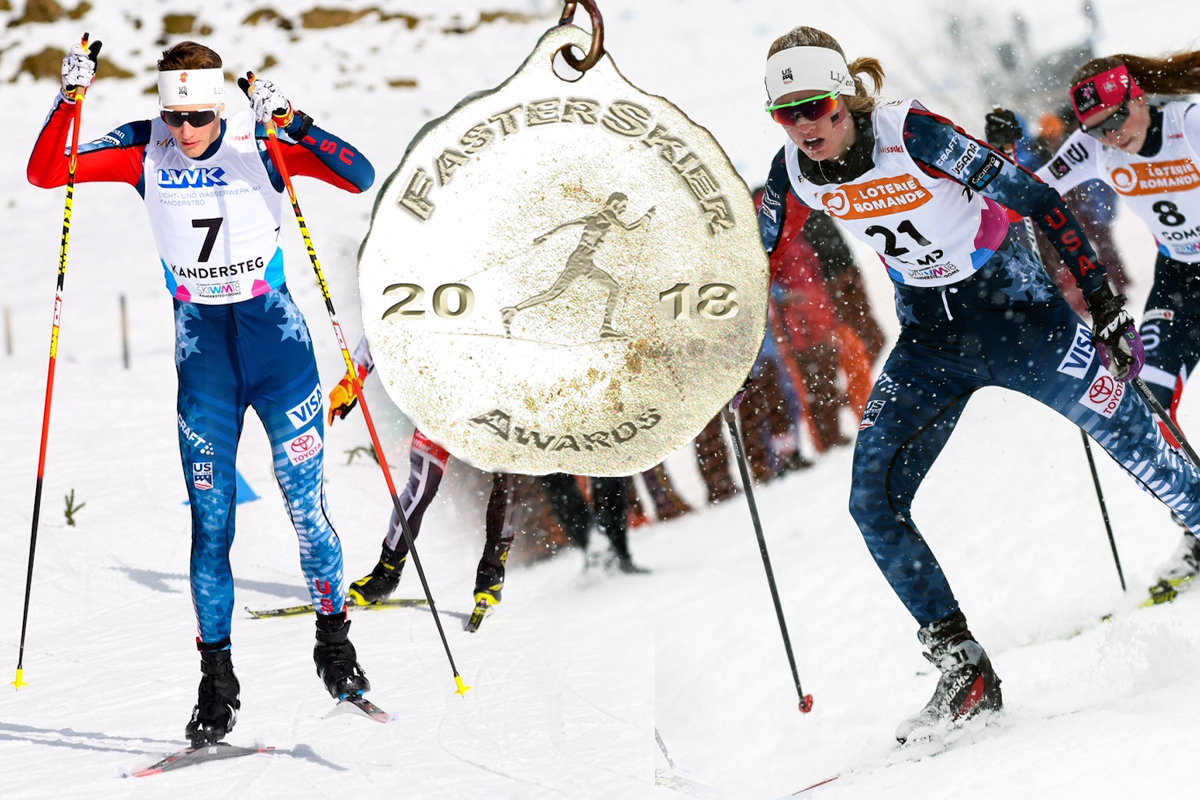
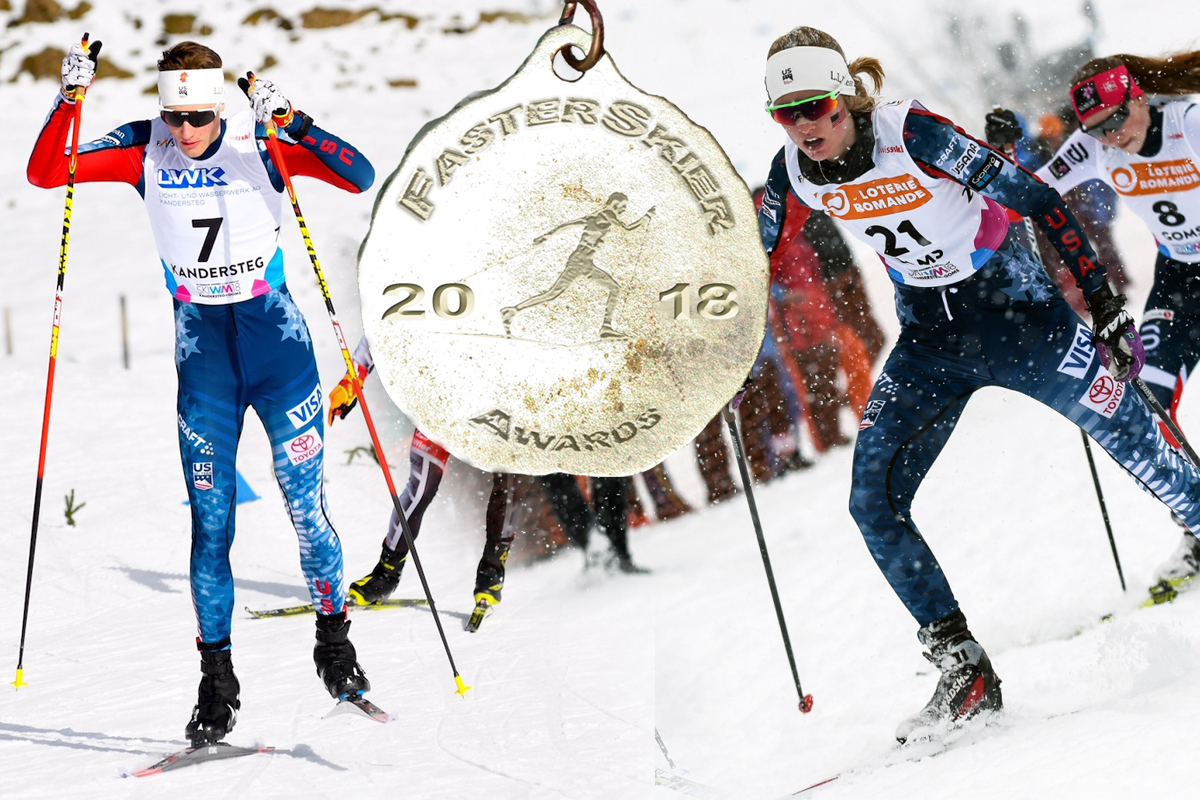
    Ben Loomis (l) and Hailey Swirbul (21) are FasterSkier’s Juniors of the Year. (Photos: Romina Eggert & JWSC2018.ch)

    With the 2017/2018 season officially in the rearview, FasterSkier is excited to unveil its annual award winners for this past winter. Votes stem from the FS staff, scattered across the U.S., Canada, and Europe, and while not scientific, they are intended to reflect a broader sense of the season in review. This set of honors goes to outstanding North American junior athletes across all nordic disciplines. 

    ***

    Ben Loomis, U.S. Nordic Combined Team

    In late January, 19-year-old Ben Loomis was named to the U.S. Olympic team. That was a pretty big deal, and one he hadn’t been relying on.

    “My main focus this year was on World Juniors, so to have made, and competed in, the Olympics was a dream in itself,” he wrote in an email to FasterSkier last week. “I really didn’t have any goals past having fun, taking in the experience, and doing my best.”

    The men’s individual normal hill/10 k Gundersen podium at the first Day of Nordic Combined Junior World Championships in Kandersteg, Switzerland, with American Ben Loomis (r) in third, the Czech Republic’s Ondrej Pazout (c) in first, and Norway’s Einar Lurås Oftebro (l) in second. (Photo: Josh Parker)

    Before he actually arrived in PyeongChang, South Korea, though, he had another trip to make: to Kandersteg, Switzerland, to compete in the thing that was his big goal, World Junior Championships.

    In Kandersteg, Loomis improved on his top-ten finish from the previous season, earning bronze in the normal hill 10 k. In doing so, he became the first American to medal in nordic combined at World Juniors since Todd Lodwick won gold in 1996.

    “A medal at World Juniors was definitely my goal going in, in fact, it had been a goal for the two years prior,” Loomis wrote of finally checking that box. “I knew the level I was at, and the level of the my competitors, so I was confident that a podium was well within my capabilities.”

    As a developing talent on the U.S. team, Loomis is often competing at senior competitions, be it on the Continental Cup or the World Cup. In Kandersteg, he actually had the chance to measure himself against his own cohort.

    “It can often be humbling to compete on World Cup as one of the younger athletes which makes junior competitions much much less stressful,” Loomis wrote. “I’ve always done pretty well against juniors my same age so that gave me confidence going into Junior Worlds. Of course, I was very happy and at the same time relieved to have meet my goal. This result was huge because it not only helped myself out, but it opened up another World Cup spot which is a help for the whole team. This certainly made everyone happy.”

    In the normal hill 5 k, he was just one spot off the podium in fourth.

    When asked to peg his favorite memory from the season, though, the medal wasn’t it. Neither was the Olympics, where his top finish was 40th and he helped the U.S. relay team to 10th place.

    “I have to say Olympic Trials in Park City was one of the most memorable days this season,” Loomis wrote. “It’s rare to compete at home, and to have the enthusiasm of large crowd made the day exciting. To top things off, I was happy to finish on the podium behind veteran Bryan Fletcher and my older brother, Adam.”

    Hailey Swirbul, University of Alaska Anchorage

    The same day that Loomis won his bronze medal, Hailey Swirbul was taking her own step onto the podium about 75 kilometers away in Ulrichen, Switzerland, where the cross-country portion of World Junior Championships was being held.

    “This season I had wanted to focus on NCAA races more than I had the previous year, but once the season got under way it was difficult to forget about the temptation of doing well at World Juniors,” the University of Alaska Anchorage sophomore wrote in an email this week. “I tried to take on each of those goals individually as they approached and focus solely on the race that I needed to at the moment.”

    Last season, Katharine Ogden won bronze in the World Juniors skiathlon, and she and Swirbul teamed up with Julia Kern and Hannah Halvorsen to earn bronze in the relay, too.

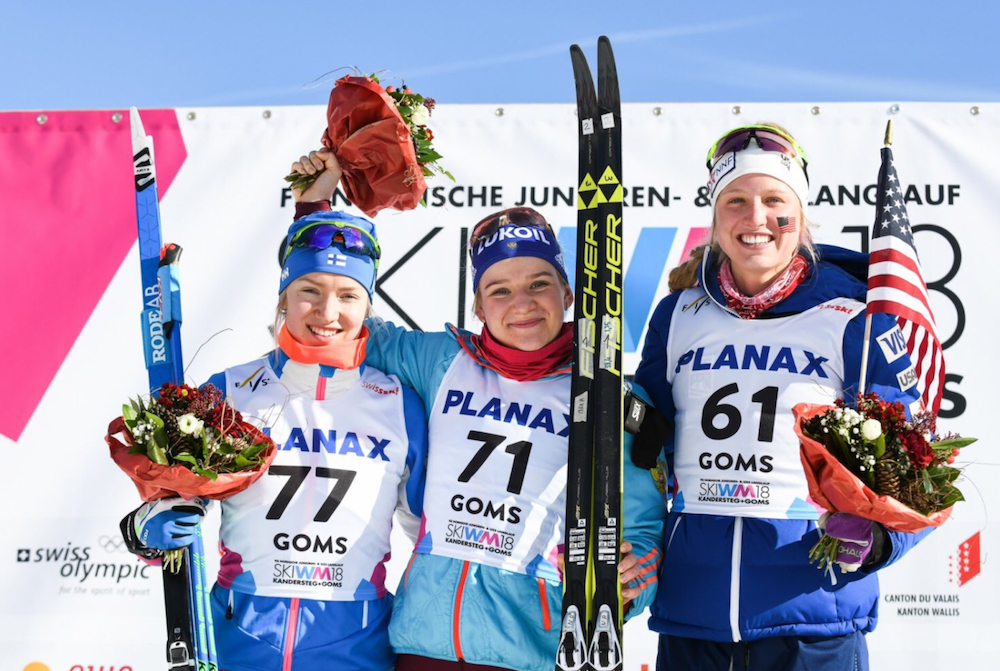
    The women’s 5 k classic podium at 2018 Junior World Championships in Goms, Switzerland, with American Hailey Swirbul (r) in second, Russia’s Polina Nekrasova (c) in first, and Finland’s Anita Korva (l) in third. (Photo: JWSC2018.ch)

    In the 5 k classic in Ulrichen, Swirbul did one better than Ogden’s mark and claimed silver, just 14.4 seconds behind gold medal winner Polina Nekrasova of Russia.

    “I think the moment I’ll remember (albeit a long moment), was the time from when I crossed the finish line in the 5 k individual start to when I learned I would actually receive a medal,” Swirbul wrote this week, when asked what the most memorable moment of her season was. “Interval start races are not instant gratification like a mass start is… you’ve got to wait out the whole field to see if you actually did well. I was seeded about 20th from the last starter, so I had plenty of waiting in anticipation! I will always remember the people who were there with me through that and told me they think I’ve done it; and the excitement from the entire team about my individual success. It’s amazing to be from a country where every teammate celebrates an individual success almost as their own.”

    It was the best World Juniors finish ever for an American.

    “The result hasn’t hit me yet,” Swirbul wrote in an email after the race back in January. “It was beyond what I expected, so my brain is still catching up to the reality! I’ve been dreaming of racing how I know I could for the past 3 years or so, and this season has finally been my chance to break through. I’m so fortunate that things aligned for me on the day that really counted. I couldn’t have done it without Bryan Fish’s unwavering belief in us athletes, and my mom and dad’s support all these years, of course.”

    But she was far from finished. In the 10 k skiathlon, Swirbul picked up a bronze to go with her silver.

    “After my silver medal I believed in myself more than before,” she wrote at the time. “However, I managed to stay calm and not put high expectations on myself for the skiathlon which allowed me to race my best. I was hoping to ski smart and relaxed and not be afraid to make it hurt! In a mass start that is really all I can control.”

    Swirbul helped the U.S. junior women to eighth place in the relay. Then she returned to the U.S., where the college season was still going strong.

    “Being on the western circuit, I realized that coming back to ‘domestic’ racing is hardly domestic at all!” Swirbul wrote this week. “Our circuit has helped me prepared for international races, because many of our athletes are international. I have learned so much from them in each race. Otherwise, it was difficult to switch back to full on school mode, but the skiing transition was fun!”

    She rallied for the seawolves, and placed third in the 5 k classic and second in the 15 k skate mass start at NCAA Championships, the second American in both races – which were swept by Ogden (University of Colorado’s Anne Siri Lervik, from Norway, was second in the 5 k classic).

    “That was one of the most exciting races that I’ve ever watched,” UAA head Nordic coach Andrew Kastning said in a press release after the NCAA 15 k. “Hailey skied as good as she possibly could have, and was very smart.”

    Honorable Mentions: Ben Ogden (Stratton Mountain School) and Gus Schumacher (Alaska Winter Stars)

    The best individual result on the men’s side at World Juniors, for the Americans, came from Ben Ogden. The then-17-year-old (he’s since turned 18) finished seventh in the 10 k classic, 10.9 seconds off the podium.

    “I went into World Juniors without much in the way of expectations,” Ogden wrote in an email this week. “My official goal was a top 20, but I had no idea of the achievability of that considering this was my first World Juniors. I knew that classic 10 k’s are a relatively strong point for me, so I was excited to see where I stacked up. Finishing the individual start race race as the temporary leader, and ending up seventh overall was incredibly exciting. This race was mind-blowing for me and showed that anything is possible. This elevated my expectations and hopes for the races to come, which was cool.”

    Along with teammate Gus Schumacher, who finished 17th in the 10 k, Ogden gave the U.S. team a lot of hope for the future.

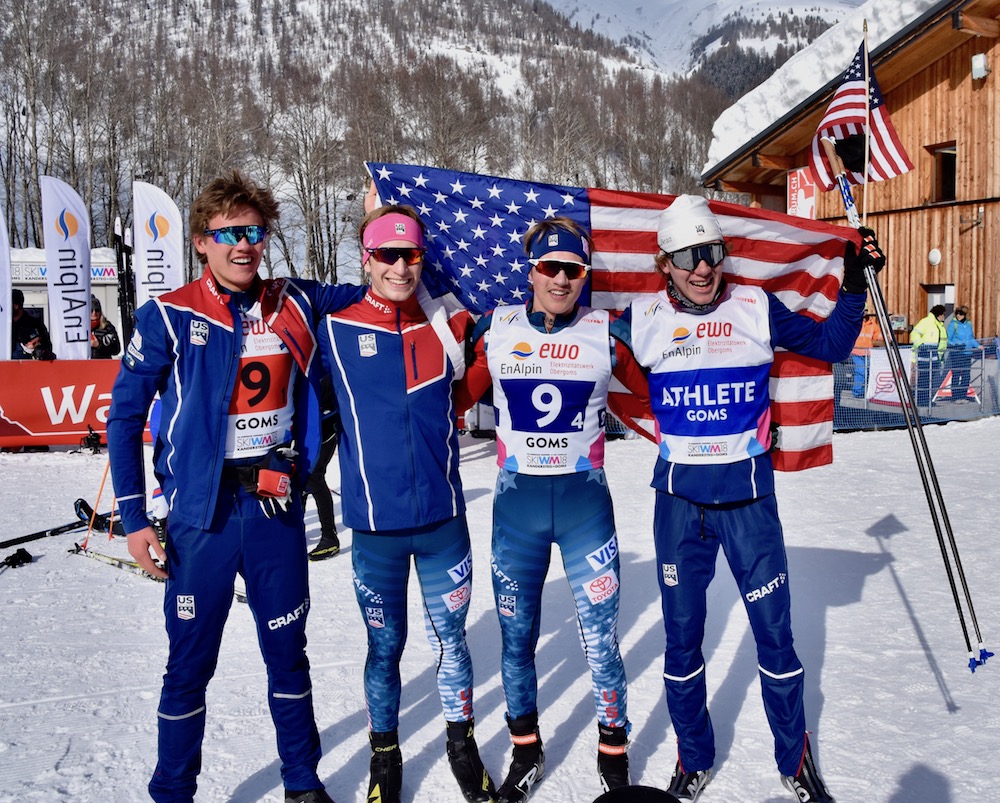
    The U.S. men’s silver-medal relay at 2018 Junior World Championships in Goms, Switzerland, with (from left to right) Luke Jager, Hunter Wonders, Gus Schumacher, and Ben Ogden. (Photo: Julia Kern)

    “It’s really exciting when you look at our day in general,” U.S. Ski and Snowboard development coach Bryan Fish noted the day of the classic race. “We had two young boys with 2000 birth years; there was only three boys in the top 40 that had a 2000 year of birth and we had two. … That’s just really exciting for U.S. skiing in general, that we have athletes showing up not just to participate, but to really perform.”

    That promise came due a few days later when, along with Hunter Wonders and Luke Jager, the duo raced to a silver medal in the junior men’s relay, an unprecedented result and going one better than the women’s relay had the year before.

    “If I had a dime for every time an announcer, coach, athlete, or anyone else remotely involved in cross-country skiing has called me ‘the younger brother of the infamous Katharine Ogden’ I would be a very rich younger brother,” Ogden wrote this week. “After years of this, it become clear that the only way to shirk this nickname is to rival or even beat her skiing performances… So naturally, I went into the relay at World Juniors hoping to help create the circumstances under which Katharine may just once be referred to as Ben Ogden’s older sister. I know this goal seemed incredibly lofty but after a successful week, it was time to dream big. I am pleased to say that along side the iconic Alaskan trio, Hunter Wonders, Juke Jager and of course Gus Schumacher, we were able to pull off the ultimate one-up on Katharine and her friends from the year prior. Each of my teammates had their own motivations for the race that allowed them to preform in such a heroic fashion, and I can only imagine that the overall performance also exceeded their wildest dreams.”

    The team was never far out, with Jager leading things out in sixth (+14.0), Ogden bringing the team to fourth (+22.8) and Wonders holding that position (+29.0). But Schumacher as the anchor skier did hero’s work and made up the time to pass the French and Russian teams, and crossed the line just 2.2 seconds behind Norway to secure silver. It was a team effort that landed the Americans just 3.3 seconds clear of third place.

    buy skelaxin

    “Experiencing the podium here has been so cool,” Schumacher wrote at the time. “I thought it was possible, but actually getting it feels amazing. This whole trip has been really cool even without this success, it’s such an amazing place and the team is tight. I think individually I anticipated results maybe a little better, but this seems about right, and as a team I think we all surprised ourselves. Together we can make some big waves.”

    The juniors have also had success against the senior field. Schumacher finished sixth in the 15 k skate at U.S. Nationals and eighth in the skate sprint. And Ogden, for example, was ninth in the 15 k skate at U.S. Nationals, and qualified fourth in the classic sprint before finishing 12th on the day.

    “I think that one of my strongest races of the season was the individual skate 15 k at U.S. Nationals in Anchorage,” Ogden, who is headed for the University of Vermont next year, wrote in an email this week. “I was excited to place in the top 10 overall, especially in a skate race, which has been is my weaker technique in the past.”

    Honorable Mention: Chloe Levins, US Biathlon 

    Despite being just a junior in the biathlon world, Middlebury College student Chloe Levins elbowed her way in to the U.S. Olympic Trials process. She excelled at trials races in Minnesota to earn a spot on the team’s short list for PyeongChang, before ultimately falling just short in the final trial competitions, some IBU Cup races in Europe.

    Chloe Levins (third from r) with the U.S. team staff (from l to r) wax tech Travis Voyer, coach Algis Shalna, assistant coach Danika Frisbie, wax tech Max Bergmann, wax tech Mattias Halquist, and coach Erik Lewish, after Levins placed sixth in the junior women’s 12.5 k individual at IBU Junior World Championships in Otepää, Estonia. (Photo: Erik Lewish)

    But after that, Levins bounced back to provide remarkably strong and consistent results at World Junior Championships in Otepää, Estonia. Levins finished sixth in the 12.5 k individual, seventh in the 7.5 k sprint, and then sixth again in the 10 k pursuit. She still has one more season of junior eligibility, too.

    “In pursuit races in the past, I’ve come from behind,” Levins, who placed fourth in last year’s Youth Worlds pursuit, wrote in an email to FasterSkier at the end of World Juniors. “Today, it was a new learning experience for me to be in the mix for the duration of the race. My plan was simple from the start: enjoy being in the mix and trust your preparation. I found the zone today, which is what you dream about. I don’t remember much about the last stage. All I know for sure is that I went for it today…and I have no regrets.”