From the FasterSkier archive — posts syndicated from athletes’ and coaches’ own blogs between 2004 and 2012, kept online as published. Current coverage is at fasterskier.com.
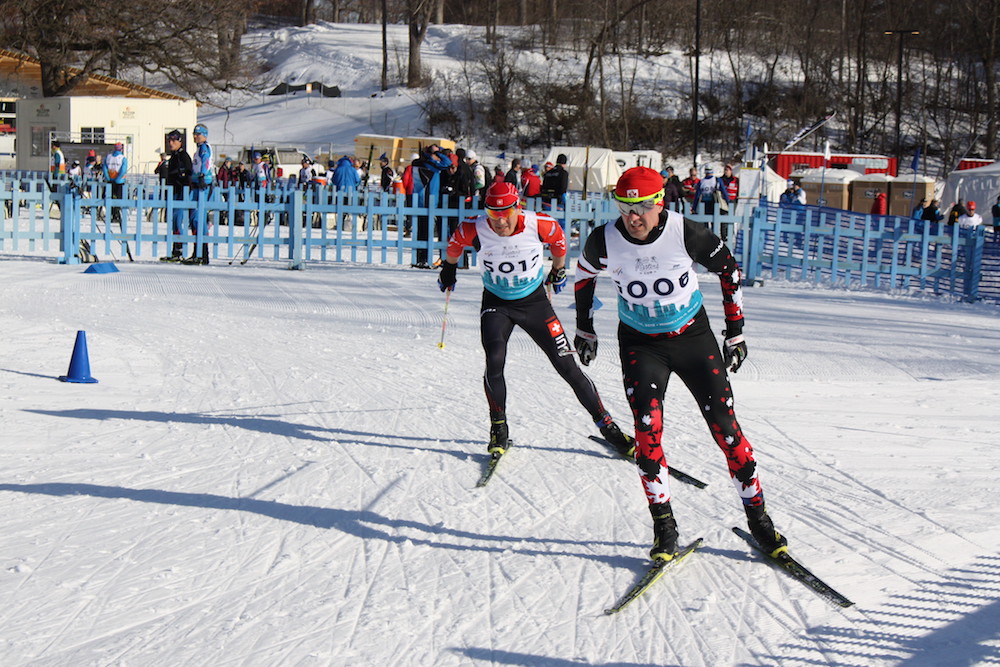
Canada’s Antonin Fiala leads Switzerland’s Markus Weber during the 40 k freestyle men’s age group 5 race on Friday at the Masters World Cup in Minneapolis, Minnesota.
MINNEAPOLIS, Minnesota — Freestyle marathon skiers took to the hills of Theodore Wirth Park for the final day of the 2018 Masters World Cup, in a warm way to wind down the championship week.
With sun and temperatures upwards of 40 degrees Fahrenheit by noon, skiers had quite the slog over the 10 k, mostly manmade loop.
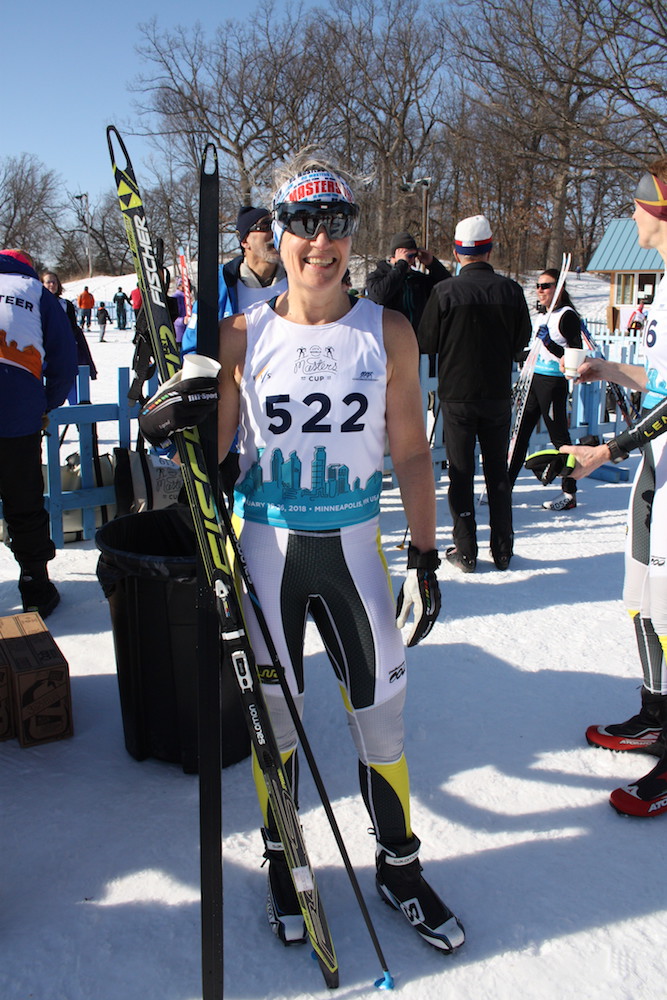
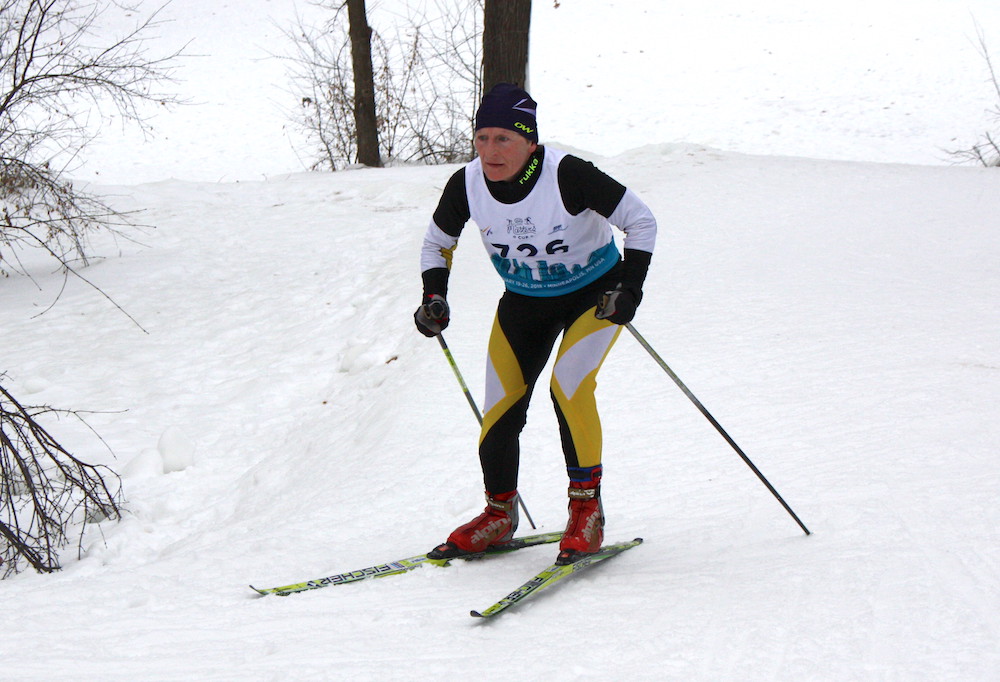
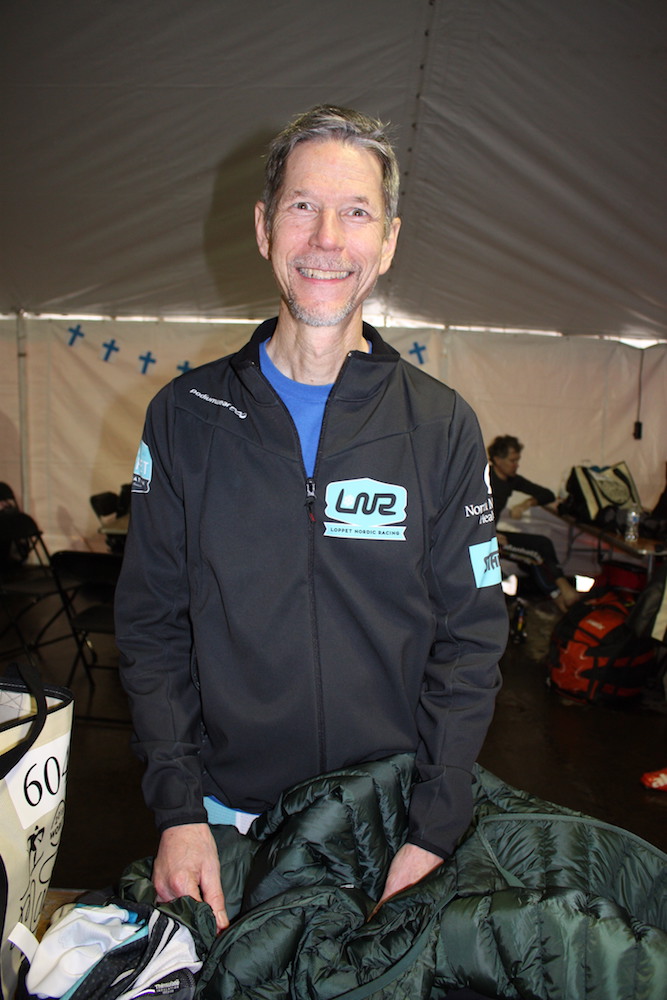
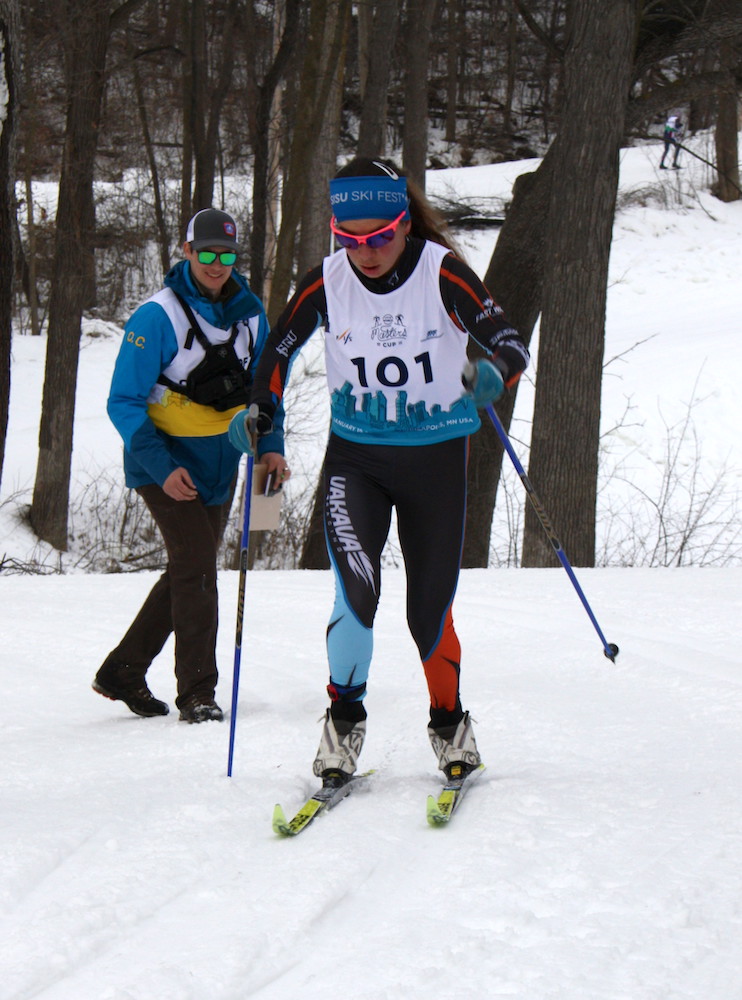
Kitty Earl-Torniainen, of Minneapolis, after placing seventh in the 30 k freestyle women’s age group 5 on Friday, the last day of the 2018 Masters World Cup in Minneapolis.
As Minneapolis native Kitty Earl-Torniainen, 50, described her experience in the 30-kilometer freestyle, “[The course] was nice and wide, and it was groomed well; it was just extremely challenging — lots of elevation and very slow downhills. You could rest, but you had to ski downhill.”
Earl-Torniainen, who raced in the women’s age group 5, is a member of the Loppet Elite Masters on Nordic Skis (a.k.a. LEMONS), part of Loppet Nordic Racing. Wirth is her home training grounds, so she was prepared for the ascents. She said her main goals were to stay relaxed on her skis, be efficient, have good technical skills, and rely on her strengths, which she considers hills and cardio.
“I didn’t have times or place or anything [as a goal]; it was more about use what I’ve learned training with the group that I train with,” she said.
In addition to placing seventh in Friday’s final race, Earl-Torniainen also competed in the 15 k classic (and placed seventh), the 15 k freestyle (sixth), and was an alternate for the 5 k relay.
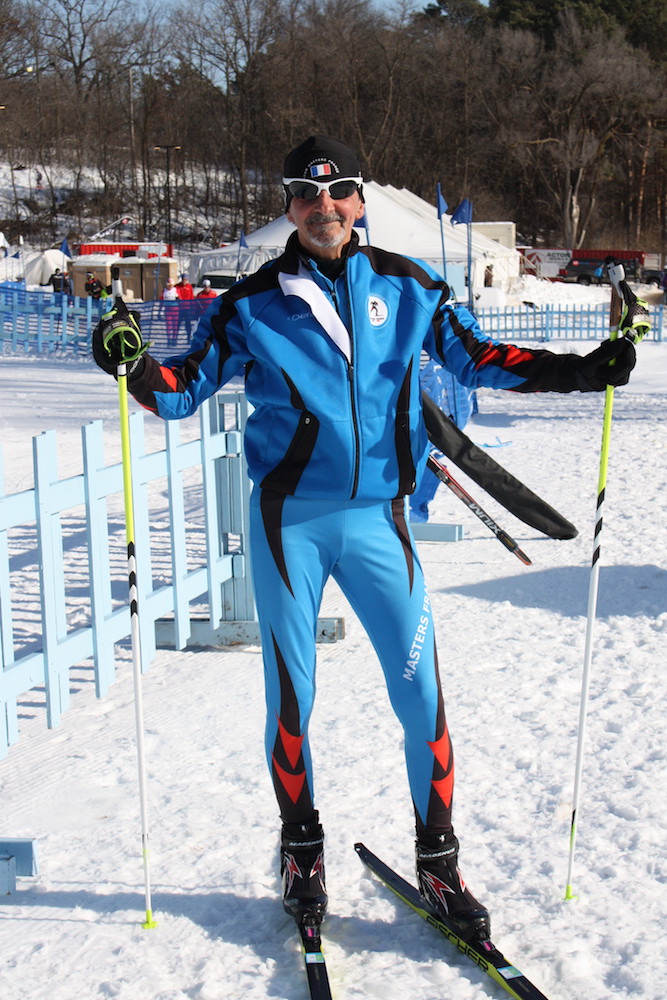
Jean-Christian Perraud, of France, after placing eighth in the 30 k freestyle men’s age group 9 on Friday at the Masters World Cup in Minneapolis.
Jean-Christian Perraud, 71, of France, had a tougher time negotiating the sticky snow for his 30 k freestyle race on Friday.
“It’s a good snow, except for certain spots,” Perraud said. “But, for me it was not very good. I was sixth, and then I have a crash … and I came, I came, I came [skied hard], and then … second crash. I think, I pretend to be sixth, but that’s my fate today.”
He achieved his goal of placing in the top 10 throughout the week, finishing eighth in the men’s age group 9 on Friday, sixth in the 15 k freestyle, and ninth place in the 7.5 k freestyle (shortened from 10 k). He raced in the younger age group 7 to help his French team place sixth in the men’s relay.
Friday’s warm weather was probably ideal for only one group of unsung heroes: the volunteers. After standing for hours each day through wind, snow, and damp, the sun was a boon for course workers.
“I have asked multiple volunteers to do anything that needed to be done, and they all jumped in willingly, cheerfully, amazingly,” said Nancy Nelson, the Loppet Foundation’s volunteer coordinator. “The whole race wouldn’t have pulled off without them.”
After a long week of timing, marshaling, daily setup and take-down, and multiple other tasks performed by the Masters World Cup volunteers, the final awards ceremony was held Friday night in downtown Minneapolis, including the closing ceremony and celebration party.
Day 6 Age Group (AG) Winners
Women’s 30 k Freestyle
AG 1: Davya Flaharty (USA) 1:35:43.4
AG 2: Lindsey Bengtson (USA) 1:36:10.9
AG 3: Jennifer Santoro (USA) 1:41:54.9
AG 4: Frances Vice (Canada) 1:37:05.0
AG 5: Mary Beth Tuttle (USA) 1:31:33.8
AG 6: Jan Guenther (USA) 1:33:39.7
AG 7: Catherine Wullschleger (Switzerland) 1:41:54.0
AG 8: Carolyn Tiernan (USA) 1:51:57.0
Women’s 15 k Freestyle
AG 9: Kati Campbell (USA) 47:36.0
AG 10: Eivor Lindgren (Sweden) 54:48.0
Men’s 40 k Freestyle
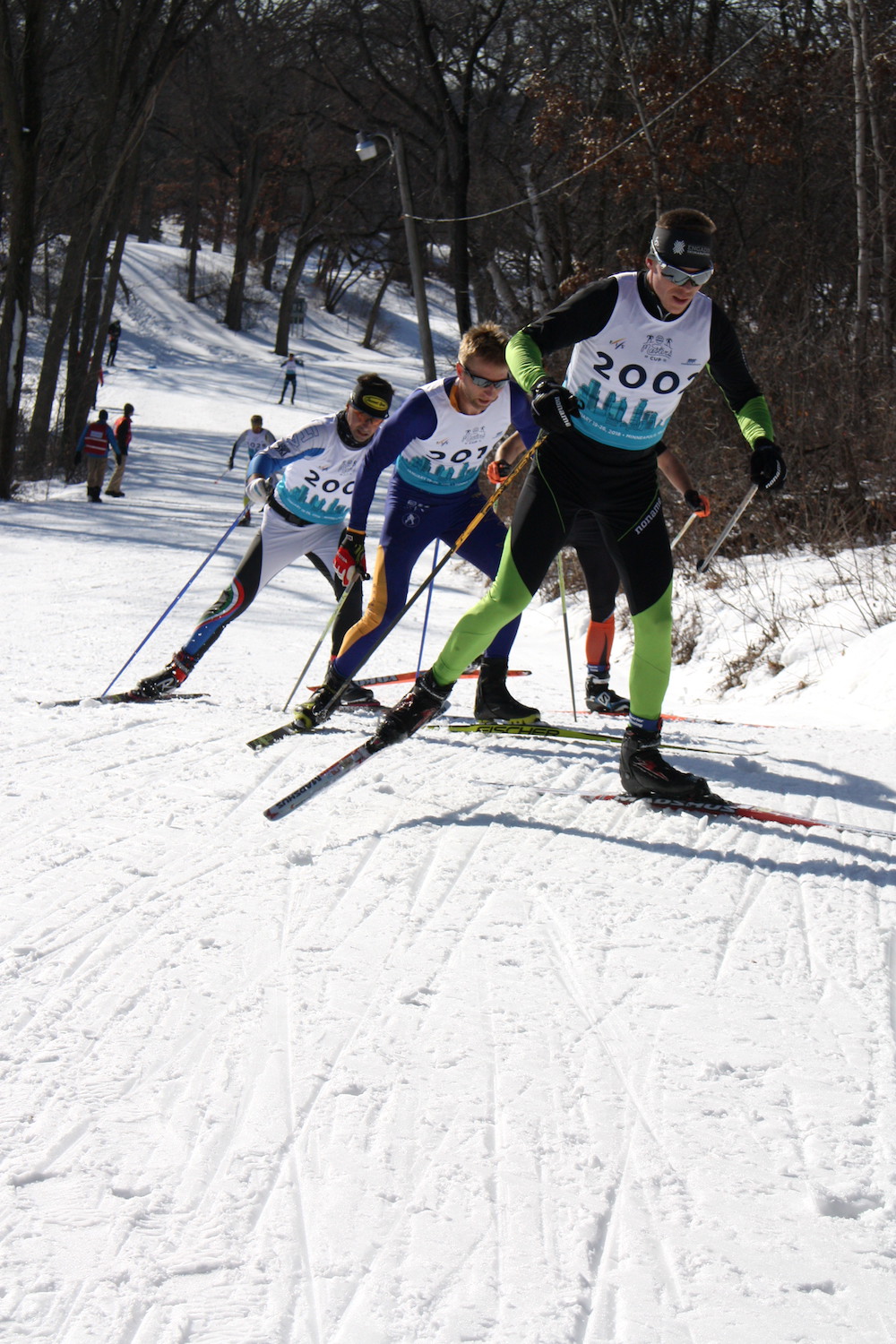
Finland’s Joachim Gustafsson leads a train of skiers up a climb in the 40 k freestyle men’s age group 2 race on Friday at the Masters World Cup in Minneapolis.
AG 1: Eugenio Bianchi (Italy) 1:49:10.1
AG 2: Joachim Gustafsson (Finland) 1:50:17.8
AG 3: Thomas Graf (Switzerland) 1:53:39.0
AG 4: Aleksandr Pushkarev (Russia) 1:46:03.7
AG 5: Virgo Karu (Estonia) 1:48:36.2
AG 6: Francesco Benetti (Italy) 1:50:36.6
Men’s 30 k Freestyle
AG 7: Tapio Tikkanen (Finland) 1:27:30.8
AG 8: Einar Bertrand Vikingstad (Norway) 1:26:12.0
About Andrea Potyondy-Smith:Andrea hails from the Twin Cities of Minneapolis (dontchya know) and has an MFA in creative writing. When she is not being an English geek, she can be found on her bike or skis, or playing in the Northwoods … typically on her bike or skis.
Zachary Handler, of the U.S., racing in the 40 k classic men’s age group 2 at the 2018 Masters World Cup on Thursday at Theodore Wirth Park in Minneapolis, Minnesota.
MINNEAPOLIS, Minnesota — Masters World Cup organizers had to make a fast change on Thursday partway through its classic distance races when a train parked itself on the course.
“We had a lot of plans going into this race,” 2018 Masters World Cup Chief of Competition Nels Dyste explained. “We had plans for road crossings, we had plans for snow, we had plans for low year snow, plans for high snow. Unfortunately, the railroad did not coordinate very well with us.”
This meant a quick route change on the 15-kilometer course to keep skiers moving, but difficulty in keeping the course the same for all racers.
Monday’s snowstorm allowed for the expansion of Theodore Wirth Park’s manmade loop to the other side of the golf course across a road, where the natural course crosses over train tracks. The train, which parked at that very spot around 10 a.m., diverted later-starting skiers back to the hillier, manmade loop creating a lack of consistency in distance. The early 15 k races, and men’s and women’s 1-6 age groups were unaffected.
“We’re still sorting it out,” Dyste said on the Thursday. “Fortunately, with electronic timing, we have chip checks all over the course and are kind of piecing together what race courses people went on.
“We’ve run almost a hundred races on that section, doing that same crossing,” he continued. “We’ve never had any issue on that.”
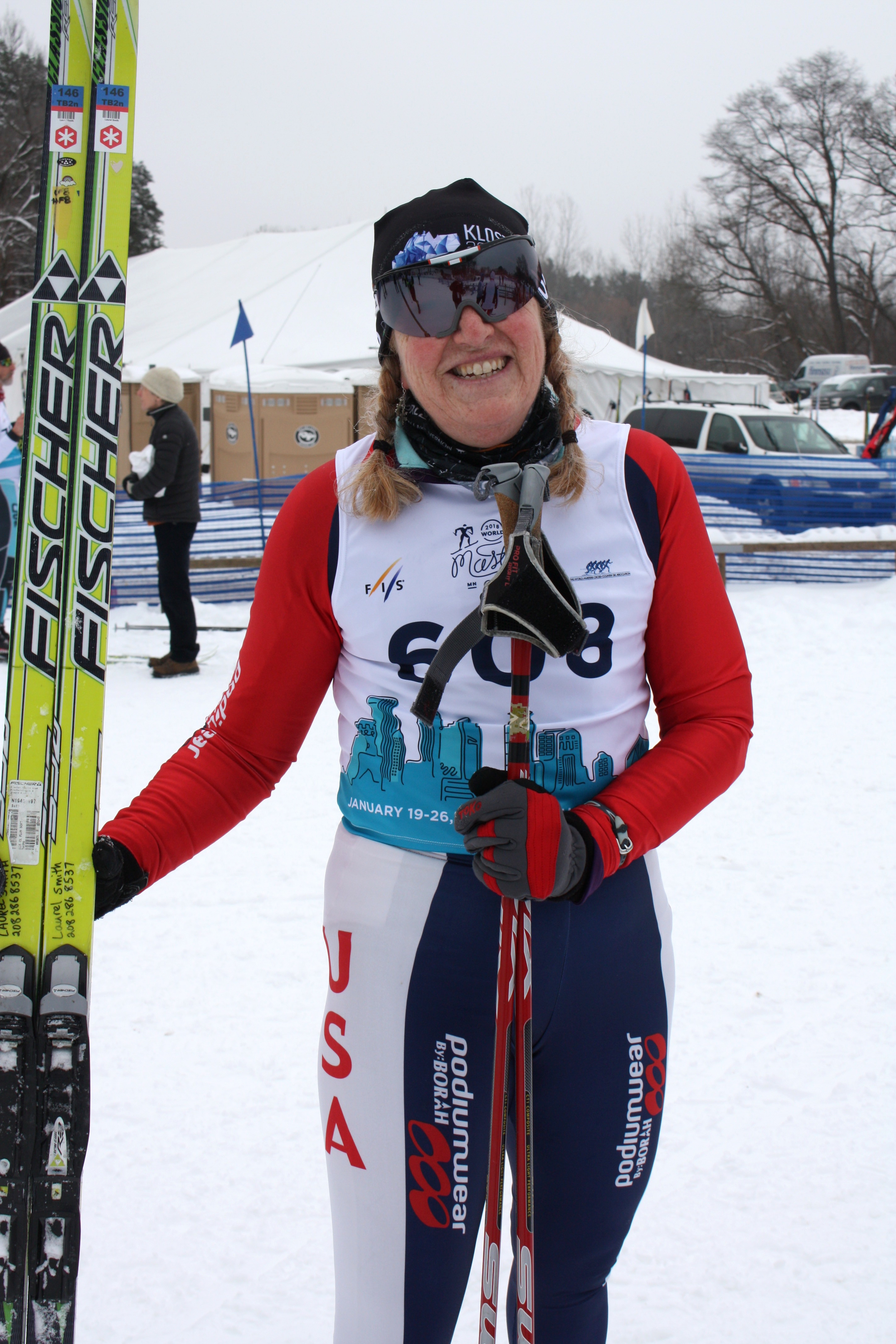
Laurel Smith, of Jackson, N.H., after racing to ninth in the 30 k classic women’s age group 6 on Thursday at the Masters World Cup in Minneapolis, Minnesota.
Racers took the changes in stride. Laurel Smith, 60, of Jackson, New Hampshire, noted course marshals helped direct racers to the new route.
“The volunteers were really good. That’s pretty amazing, being able to change a course midway through,” she said.
The race was her third of the week after competing in the women’s age group “6” 15 k skate and 10 k classic as well. She said the natural snow not only lengthened the course, but it also affected the corners on the downhills.
“By the third lap [of the 10 k shortened loop], they were getting really … piled-up snow and icy on the inside,” Smith said, adding that she met her goal in successfully navigating all the turns. She finished ninth in her age group’s 30 k on Thursday.
Some racers, like “Bad” Bob Baker of Fairbanks, Alaska, were more comfortable with the addition of more hills.
Bob Baker, of Fairbanks, Alaska, after racing to 12th in the 40 k classic men’s age group 6 at Masters World Cup in Minneapolis, Minnesota.
“[They] probably helped me,” Baker said. “I seem to do better against others on them, so it’s a good thing.”
Baker said he likes to come to these events to test his waxing techniques. Fairbanks relies on natural snow, so he gets to use waxes he otherwise wouldn’t when he visits places like Minneapolis.
“I nailed the wax,” he said. “It was good. I was so glad; I would’ve been hurting if I’d had to step out of the tracks.”
Baker, who competes in the men’s age group “6”, has raced all the individual classic events over the last week: the 7.5 k (shortened due to snow on Monday from 15 k), 30 k, and 40 k (shortened from 45 k). He finished 12th in the 40 k on Thursday.
A warm up is on the way for Friday’s freestyle distance races (15/30/45 k), the last day of the Masters World Cup, as is a slight course change after Thursday’s minor fiasco.
“Rest assured they’ll be all ready to go for tomorrow … with no train tracks,” Dyste said.
Day 4 Age Group (AG) Winners
Women’s 30 k Classic (3 x 10 k loops)
AG 1: Elspeth Ronnander (USA) 1:47:31.8
AG 2: Josie Nelson (USA) 1:41:08.4
AG 3: Linda Hasselqvist (Sweden) 1:42:21.3
AG 4: Bonnie Weiskopf (USA) 1:38:20.9
AG 5: Ragnhild Bolstad (Norway) 1:36:20.8
AG 6: Elizabeth Youngman (USA) 1:47:53.4
AG 7: Marianne Niemi (Finland) 1:49:35.5
Women’s 20 k Classic (2 x 10 k loops)
AG 7: Magdalena Bowen (USA) 1:15:40.5
AG 8: Berit Hoeyvik (Norway) 1:34:12.3
Women’s 15 k Classic (3 x 5 k loops)
AG 9: Gabriele Andersen (USA) 50:01.4
AG 10: Gerd Lysne Johansen (Norway) 1:03:15.9
AG 11: Patricia Kaald (USA) 1:42:37.0
Men’s 40 k Classic (4 x 10 k loops)
Sweden’s Tomas Persson racing to seventh in the 40 k classic men’s age group 4 at the Masters World Cup in Minneapolis, Minnesota.
About Andrea Potyondy-Smith:Andrea hails from the Twin Cities of Minneapolis (dontchya know) and has an MFA in creative writing. When she is not being an English geek, she can be found on her bike or skis, or playing in the Northwoods … typically on her bike or skis.
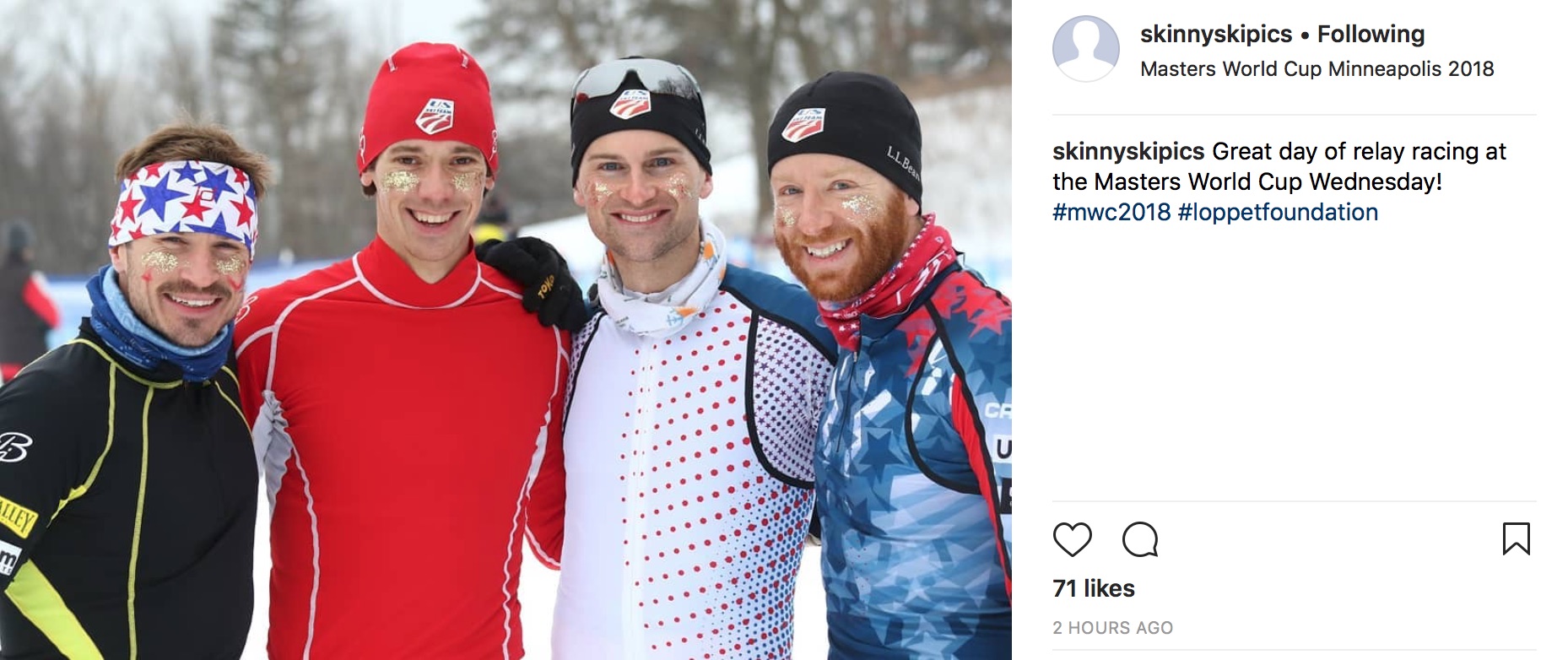
Matt Liebsch (l) and his men’s age-group “1” 4 x 5 k winning relay team on Wednesday at 2018 Masters World Cup in Minneapolis, Minnesota. (Photo: SkinnySki/Instagram)
2018 Masters World Cup (Minneapolis, Minnesota): 4 x 5 k relays
Matt Liebsch, 34, anchored the winning relay of the youngest men’s age group (AG 1) at 2018 Masters World Cup on Wednesday, crossing the line in 45:57.2 minutes (the fastest relay time of the day) and teaming up with fellow Americans Christopher Harvey, Mark Johnson and Zach Varty. Two teams competed in that age group’s 4 x 5 k relay, with Italy finishing second, 1:22.6 minutes back.
The U.S. won all five women’s 4 x 5 k relays on Wednesday, and eight total between the men’s and women’s age groups. Finland had the second-most relay victories with five in the men’s categories.
Canada won the men’s AG 4, beating out four other teams with Gabriel Babin, Bruce Macneil, Luc Tremblay, and Michel Labrie, who finished the 4 x 5 k in 49:41.9. Germany placed second (+36.4), and the U.S. third (+54.1).
Piotr Bednarski, head coach of Loppet Nordic Racing, which is based out of Theodore Wirth Park, anchored the men’s AG 5 to a win in 49:39.1, with teammates Rune Harkestad, Dennis Paul and David Sjogren.
Masters World Cup continues with 15/30/45 k classic distance races on Thursday at Wirth Park.
Day 4 Age Group (AG) 4 x 5 k Relay Winners
Men:
AG 1: USA (Christopher Harvey, Mark Johnson, Zach Varty, Matt Liebsch) 45:57.2
AG 2: Finland (Jouni Leinonen, Mika Kilpeläinen, Johan Gustafsson, Joachim Gustafsson) 47:53.4
AG 3: Russia (Ivan Batyutenko, Andrey Lushnikov, Sergey Degtyarev, Aleksandr Pushkarev) 46:43.3
AG 4: Canada (Gabriel Babin, Bruce Macneil, Luc Trembley, Michel Labrie) 49:41.9
AG 5: USA (Rune Harkestad, Dennis Paul, David Sjogren, Piotr Bednarski) 49:39.1
AG 6: USA (Milan Baic, Odd Bersvendsen, Kent Murdoch, Barry Makarewicz) 48:48.3
AG 7: Finland (Heikki Ruokonen, Tapio Tikkanen, Timo Pullinen, Aito Pennanen) 51:56.3
AG 8: Finland (Leino Nisula, Pauli Halonen, Yrjo Teravainen, Harri Makela) 54:58.4
AG 9: Finland (Veikko Piirainen, Tapio Ikaheimonen, Paavo Raisanen, Vaino Paakko) 58:18.9
AG 10: Finland (Alpo Virtanen, Tapio Wallenius, Jouko Laiho, Riku Kyllonen) 1:02:39.7
Women:
AG 1: USA (Kathleen Dewahl, Tamra Kornfield, Davya Flaharty, Gina Chythlook) 56:49.3
AG 2: USA (Bonnie Weiskopf, Kim Rudd, Mary Mckelvey, Mary Wellington) 56:23.9
AG 3: USA (Elizabeth Youngman, Kelly Milligan, Jan Guenther, Kelly Skillicorn) 56:23.6
AG 4: USA (Kate Ellis, Magdenla Bowen, Joann Hanowski, Muffy Ritz) 1:00:33.6
AG 5: USA (Gabriele Andersen, Constance Meek, Dagmar Eriksson, Kati Campbell) 1:14:23.4
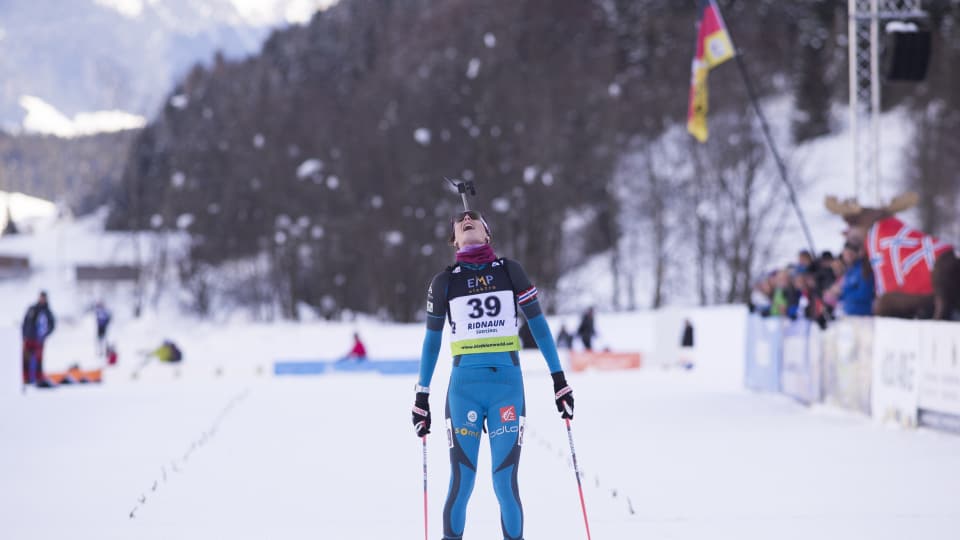
France’s Chloe Chevalier after winning the women’s 15 k individual on Day 1 of IBU Open European Championships in Ridnaun, Italy. (Photo: IBU/Biathlonworld)
IBU Open European Championships (Ridnaun-Val Ridanna, Italy): 15/20 k individual
The International Biathlon Union (IBU) Open European Championships opened Wednesday in Ridnaun (Val Ridanna), Italy, with several North Americans competing in the women’s 15- and men’s 20-kilometer individual races.
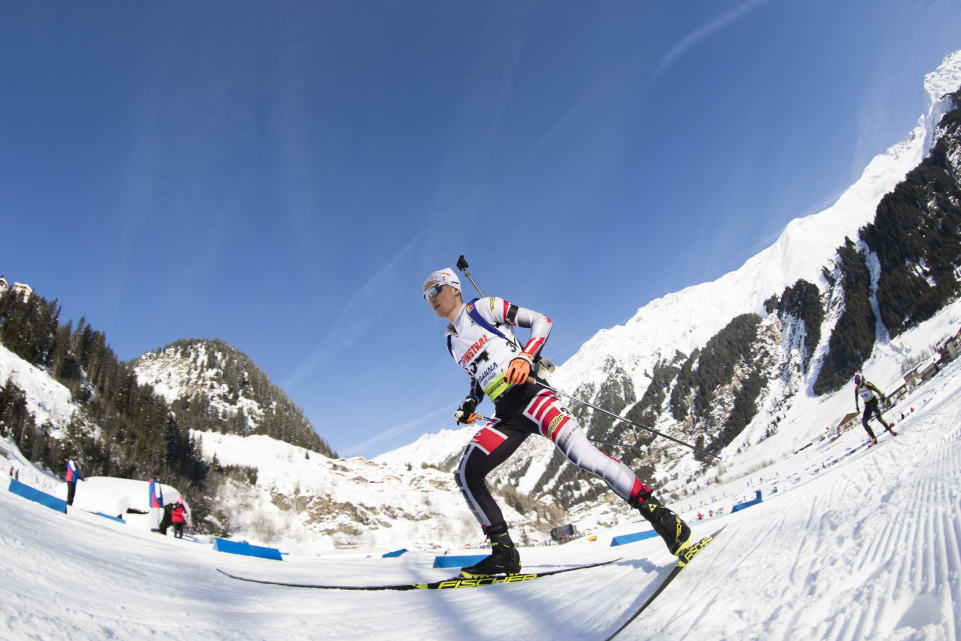
Austria’s Felix Leitner racing to the win in the first race of 2018 IBU Open European Championships, the men’s 20 k individual, on Wednesday in Ridnaun, Italy. (Photo: IBU/Biathlonworld)
Canada’s 23-year-old Carsen Campbell raced to 19th in the men’s 20 k, shooting 19-for-20 (1+0+0+0) and finishing 3:18.5 minutes behind the winner, Austria’s Felix Leitner, who clocked the fastest time in 53:32.8 — also with one penalty (0+0+0+1).
Leitner, 21, won by 43 seconds over Tomas Krupcik of the Czech Republic, who also had a single penalty in the last standing stage (0+0+0+1) and placed second.
Germany’s Philipp Horn reached the podium in third (+56.6), with 19-for-20 shooting as well (1+0+0+0).
According to an IBU press release, Leitner is one of the youngest athletes to win the 20 k, the longest race on the circuit.
“I had many problems with my shooting lately, but today it was probably the best in the last two seasons,” Leitner said, according to the release. “I believed in myself and knew that I have to run fast from the beginning, and if the shooting would be as good as during the training, I could be in the top.”
Campbell, of Biathlon Canada’s National “Z” Team, was the top North American in 19th in his second trip to Open European Championships. Previously, his best individual result was 64th last year.
Paul Schommer led the U.S. men in 46th (+5:22.6) with three penalties (0+1+1+1). Max Durtschi also shot 17-for-20 (1+0+1+1) and ended up 56th (+6:18.5), Jakob Ellingson followed in 58th (+6:23.5) with two penalties (0+0+1+1), and Jake Brown finished 74th (+8:06.7) with seven penalties (1+1+3+2). Alex Howe did not start.
For Canada, Macx Davies, a senior national team member who is headed to the Olympics, placed 67th (+7:32.7) with five penalties (2+2+1+0). Matt Hudec was 96th (+12:00.5) with six penalties (0+2+1+3), and Aidan Miller 105th (+14:49.0) with nine penalties (2+1+1+5).
In the women’s 15 k that followed, Sarah Beaudry, of Biathlon Canada’s Senior National Team as well as Olympic team, was the top North American in 23rd, 4:55.6 out of first. Beaudry, 23, shot 18-for-20, with her two misses coming in the first prone (2+0+0+0).
France’s Chloe Chevalier won the women’s race, with spring-like temperatures around 6 degrees Celsius, in 46:32.9 with a single penalty, also in the first stage (1+0+0+0). The second- through fourth-place finishers all shot clean, with Italy’s Alexa Runggaldier placing second (+47.7), Russia’s Victoria Slivko taking third (+55.9) and Ukraine’s Yuliia Zhuravok missing the podium by half a second in fourth place (+56.4).
“After that penalty in the first prone, I relaxed and did not worry about the result,” Chevalier said after, according to an IBU press release. “I just enjoyed being out on the tracks on a beautiful sunny. Maybe the key to success is relaxing and not worrying about the result.”
Two Canadian women entered the event, with Erin Yungblut finishing 83rd (+13.19.9) with eight penalties (2+3+1+2).
Chloe Levins was the top American woman in 60th (+7:18.6) with four penalties (1+2+1+0), and Maddie Phaneuf, who made US Biathlon’s Olympic team, followed in 65th (+8:10.8) with four misses as well (1+2+0+1). Deedra Irwin finished 82nd (+13:15.8) and Jennie Bender was 87th (+15:05.0), both with 10 penalties apiece.
Open European Championships continue Friday with the men’s and women’s sprints, followed by pursuits on Saturday and relays on Sunday.
MINNEAPOLIS, Minnesota — After a dearth of snow and two days of unseasonably warm weather, winter decidedly returned to South Central Minnesota for Day 3 of the Masters World Cup.
Snow started falling at Theodore Wirth Park at about 10 a.m., and continued throughout the day, with accumulations around six inches. With a close eye on the forecast, the competition jury decided Monday morning before races — which included morning classic races followed by afternoon skate races — to shorten some of them (from 10 kilometers to 7.5 k), according to Chief of Competition Nels Dyste.
None of the skiers seemed particularly put out by the day’s snow.
The World Masters Cross-Country Ski Association banner at the 2018 Masters World Cup at Theodore Wirth Park in Minneapolis, Minnesota.
“Weather is weather,” said Toris Sundt of Oslo, Norway. She finished sixth in the 5-kilometer classic women’s age group 9.
Twin Cities native Nancy Bauer followed in seventh, and called their race, with a shortened course for ages 70 and up, the “Baby Masters”. But she wouldn’t have it any other way.
“I’m really excited because I’m better at the beginning of a race,” Bauer said.
“I like it because I couldn’t go 30 kilometers now, because I’m in not so good of shape,” Sundt said. “So, for me … it’s very good.”
Skiers looked to be faring well in the snowy conditions, even as flakes fell faster. Trina Hosmer, 72, of Stowe, Vermont, clocked in an impressive time in the 5 k classic women’s age group 9 in 16:53.6, just 19.5 seconds behind first-place finisher Gabriele Anderson, also of the U.S.
Hosmer has raced in varying conditions all over the world. She was a member of the first international U.S. Women’s Ski Team in 1970 (racing in Czechoslovakia), and was on the first U.S. women’s Olympic ski team in 1972 (in Sapporo, Japan). But even for her, the course was a little tough.
“It was more difficult, because it had been chewed up a lot by all the other skiers, but that’s to be expected,” Hosmer said.
Hosmer raced this past Saturday and Sunday as well, finishing second in her age group in the 10 k classic, and first in the 10 k freestyle. Each racer can only do three individual races during the weeklong event. “That’s enough,” Hosmer said. “The good thing about it [skiing], is I’m still doing it.”
After 50 years of skiing, Hosmer said she had no particular strategy or training for these championships.
“I’ve been doing it so many years, I just ski,” she said.
Her husband David Hosmer, 73, also raced over the weekend and on Monday, placing 27th in the 7.5 k classic men’s age group 9 with a time of 35:37.1
“There’s a lot of fast guys,” he said when asked about his competition. “There are some very fit men out there.
The Masters World Cup classic course at Theodore Wirth Park as seen on Monday morning. (Photo: RJ Ochmann)
“They have done a very good job with the course here given the terrain that they have and the weather and everything,” he added.
Race organizers will have their hands full on Tuesday’s rest day as they determine who will be eligible to compete in Wednesday’s relays. Dyste noted how relay teams are chosen.
“Everybody has the opportunity to choose three of the six different races. If they do well, they’ll typically get selected for their national team’s relays,” he said. “Relays are by age group as well. There are some formats for teams where older skiers are able to ski down onto a younger team relay, and there’s also opportunities to do a mixed relay between nations, as well.”
This applies to both the men’s and the women’s relay teams.
Each nation’s coach must submit their team lineups by 11 a.m. on Tuesday, and the start lists will be posted Tuesday night so racers can prep for their 4 x 5 k relays on Wednesday.
Though the new snow made for some tougher conditions today, it will be beneficial for the marathons coming up on Thursday and Friday.
“Hopefully, this snow will come in a good volume so we have the ability to run longer courses later this week,” Dyste said.
About Andrea Potyondy-Smith: Andrea hails from the Twin Cities of Minneapolis (dontchya know) and has an MFA in creative writing. When she is not being an English geek, she can be found on her bike or skis, or playing in the Northwoods … typically on her bike or skis.
Canada’s Jim Ballendilne racing to second in the 10 k freestyle men’s age group 11 on Sunday at the 2018 Masters World Cup in Minneapolis, Minnesota.
MINNEAPOLIS, Minnesota — The weather for Day 2 of the Masters World Cup on Sunday was almost a carbon copy of Day 1, minus any appearances by the sun and a few degrees on the thermometer, keeping the course in great shape for the distance freestyle races.
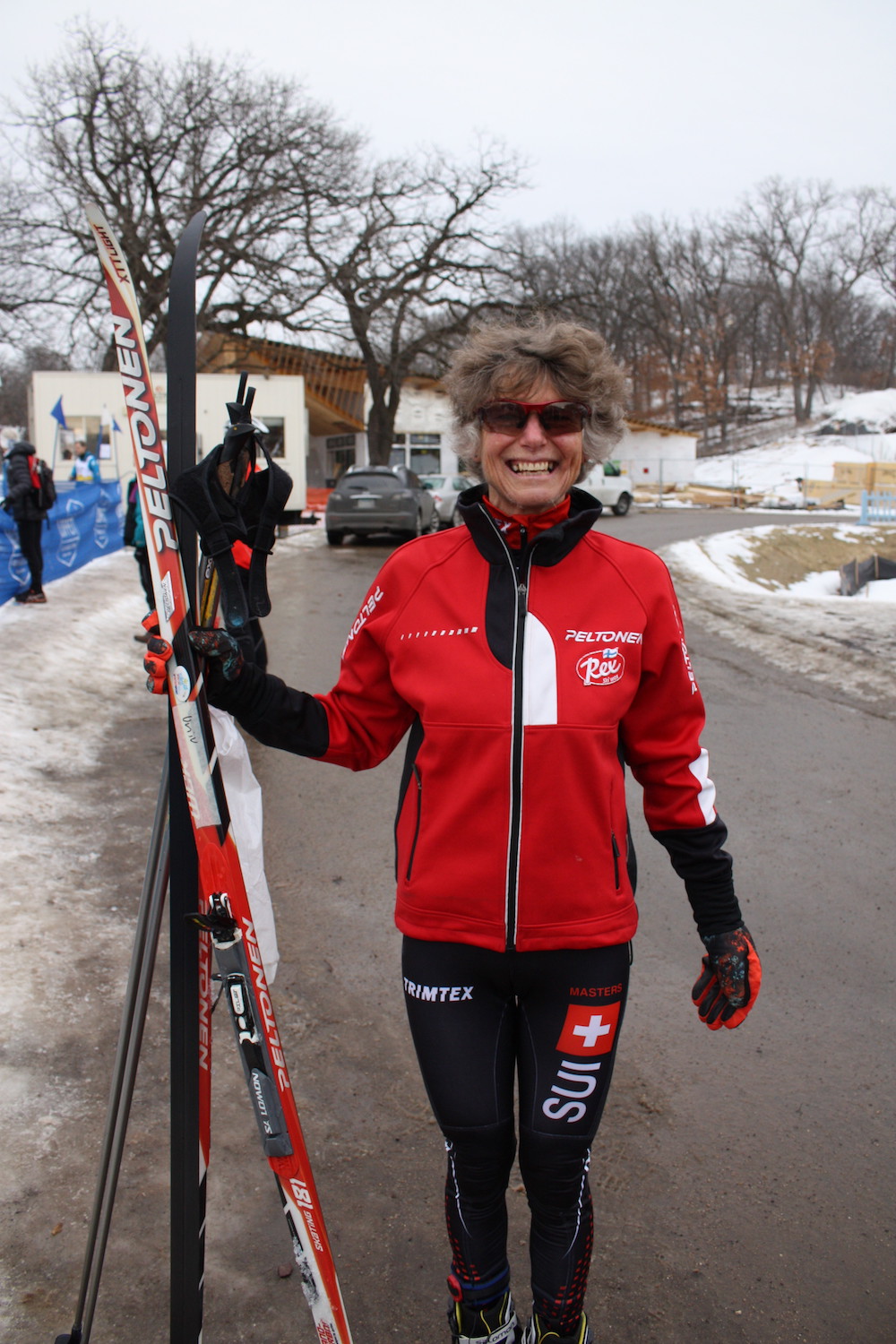
Catherine Wullschleger of Switzerland after placing second in the 15 k freestyle women’s age group 7 on Sunday at the 2018 Masters World Cup in Minneapolis, Minnesota.
Catherine Wullschleger of Switzerland finished second in her age group, about 3 minutes behind American Muffy Ritz, who won the women’s age group “7” 15-kilometer freestyle on Sunday. Reflecting on her race, Wullschleger said she had some confusion at the start. “One lady from the category 2 started together with us,” she said. “I thought, ‘Oh! She looks young,’ but I didn’t see the bib, and so I followed her, so actually I started a little bit too fast.”
Wullschleger explained she will be in Minneapolis for the entire week’s events. Asked about her overall goal, she said it’s “to have fun, and if I can, make a medal. OK, it’s fine, but now I have one.”
She described the course as in good shape despite the lack of natural snow. “They did a very good job,” Wullschleger said. “It’s a nice course. You have to work all the time. The snow was not the same everywhere. In the woods, it’s a little bit different, but it’s really a good course.”
Alexandra Jospe of Boston, who won the women’s age group 1 for the second-straight day, agreed. As she trains on a golf course back home, she said she’s familiar with the type of terrain Theodore Wirth Park offers. “We ski on a golf course [in Weston, Massachusetts], so skiing on a golf course here isn’t all that different,” Jospe said.
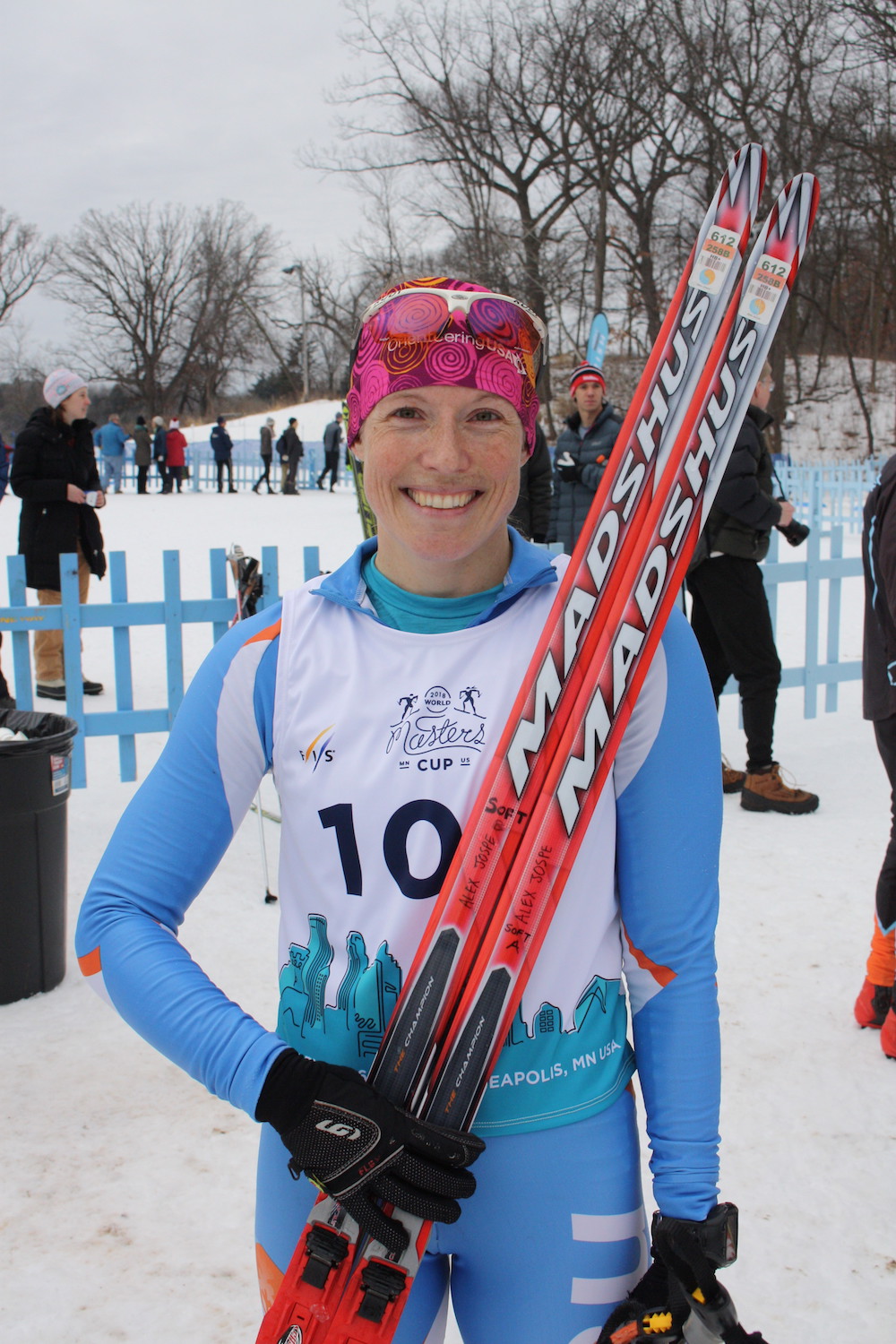
Alexandra Jospe, of Boston, after winning the 15 k freestyle women’s age group 1 on Sunday at the 2018 Masters World Cup in Minneapolis, Minnesota.
She won the Sunday’s 15 k freestyle in 39 minutes flat, 29.7 seconds ahead of another American, Davya Flaharty in second.
Jospe described the race course as “super fast, super fun, [with] a lot of transitions [and] very technical. It’s the stuff I like.”
She explained it was warm enough to keep the snow from being icy, and the uphills weren’t chopped up, calling them “pretty packed, [although] you had to look where you’re stepping.”
Jospe is only in town for the weekend, and will race Monday’s 10 k classic and 10 k freestyle (back-to-back races held about five hours apart), before heading back East. When asked what her ambitions were for the weekend, she said “at this point, it’s hard to beat winning.”
As for Monday, Jospe said, “Whatever happens … I’m pretty happy with it. … [I’m] starting to feel a little tired at this point, so I’m hoping just to enjoy myself again — see where that leads it.”
The race organizers have no intention of canceling the events unless it affects the safety of the participants. If the snow comes, jury member Lars Erik Rosenquist said “Plan A [is] to start grooming at 5 o’clock in the morning, because most of the snow will come in the day.” Should the course become untenable, the jury would have to decide whether to cancel much earlier in the morning than their usual 8 a.m. meeting time.
Day 2 Age Group (AG) Winners
Women’s 15 k freestyle:
AG 1: Alexandra Jospe (USA) 69:00.06
AG 2: Nelson Margie (USA) 40:50.2
AG 3: Sarah Peters (Canada) 39:02.4
AG 4: Bonnie Weiskopf (USA) 37:04.1
AG 5: Kathy Maddock (USA) 38:10.2
AG 6: Jan Guenther (USA) 40:31.1
AG 7: Muffy Ritz (USA) 42:37.5
AG 8: Judy Bechanan-Mappin (Canada) 51:48.7
Women’s 10 k freestyle:
AG 9: Trina Hosmer (USA) 28:25.6
AG 10: Eva Carlsen (Norway) 33:56.2
Men’s 30 k freestyle:
Austria’s Josef Schoeberl racing to first in the 10 k freestyle men’s age group 11 at the 2018 Masters World Cup in Minneapolis, Minnesota.
Finland’s Eila Kaakkolahti racing to third in the 15 k freestyle women’s age group 7 at the 2018 Masters World Cup in Minneapolis, Minnesota.
***
About Andrea Potyondy-Smith: Andrea hails from the Twin Cities of Minneapolis (dontchya know) and has an MFA in creative writing. When she is not being an English geek, she can be found on her bike or skis, or playing in the Northwoods … typically on her bike or skis.
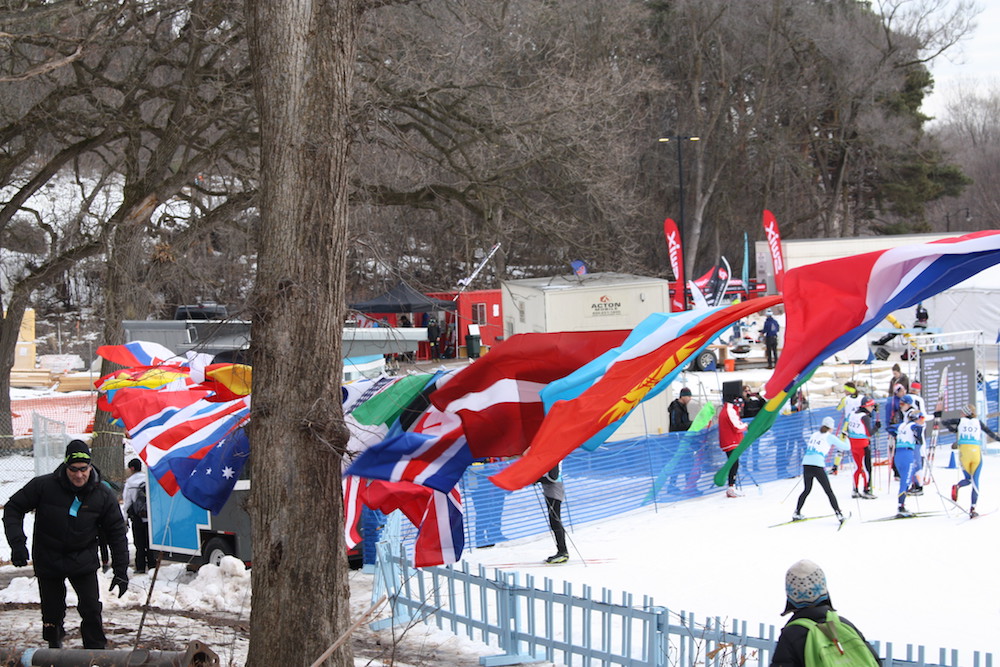
World flags waving on the first race day of the 2018 Masters World Cup on Saturday in Minneapolis, Minnesota.
MINNEAPOLIS, Minnesota — With temperatures staying in the mid-20s overnight on Friday, it was a warm, slightly sticky start to the 2018 Masters World Cup on Saturday in Minneapolis. However, despite temperatures in the upper 30s to low 40s, the 7.5-kilometer loop course at Theodore Wirth Park held up well — an important thing, as Saturday was all classic races.
Tom Ajax, of Minneapolis, finished 14th in his men’s age group “6” 15 k classic on Saturday at the Masters World Cup in Minneapolis, Minnesota.
According to Tom Ajax, a Minneapolis-based skier who raced in the men’s 30 k classic on Saturday (and also coaches with the Ride & Glide ski club), the course was “very clean. Spectacular, loved it.”
The tracks held up well, and the hills, though a little tough, were “doable,” said Ajax, who finished 14th in his age group “6” and described his last laps as stronger than his first. Helping to keep the course in good shape were the racers.
“Nobody snowplowing, nobody dogging it—a lot of strong skiers,” he said.
The sun did make a few short appearances on the overcast day, which modified course conditions some for the afternoon racers.
Boulder Nordic Sports Race Service Director David Chamberlain described conditions as “fairly consistent throughout the day.”
“In the morning we went with a little harder klister … but then switched over to a little softer one [around 10 a.m.],” he said.
At the same time, Chamberlain noted the course was “a little variable. Some of the hills got baked in the sun in a couple spots, and then [it was] a little drier in other places. The kick wax that worked in one place may not have worked perfectly in the other place.”
Generally, though, the overcast skies kept things pretty constant.
Conditions for Day 2 look to be about the same as Sunday, if perhaps a bit cooler. But, with a winter storm watch set for the Twin Cities metro area from Sunday night into Monday, things look like they could get a bit interesting for the shorter distance classic and skate races on Monday.
Elspeth Ronnander of the U.S. racing to third in her age group, the women’s “1” 15 k classic, at the Masters World Cup on Saturday in Minneapolis, Minnesota.
The races were broken into 24 different age groups, with the youngest racers being in “1” (e.g. born in 1986) and oldest in “13” (e.g. born in 1926). The largest race on Saturday was the men’s age-group “8” 15 k classic, which had 47 finishers. Finland’s Leino Nisula won that race in 41:19.7 minutes, another Finn Heikki Ruokonen won the men’s “7” 15 k in 40:07.4, and yet another Finnish man, Veikko Piirainen, won the “9” 15 k in 44:28.4.
The largest women’s age group was the “7” 15 k with 18 finishers, which Finland’s Marianne Niemi won in 47:18.9. American Carolyn Tiernan won the women’s “8” 15 k in 53:54.8.
Also racing 15 k were the women’s age groups 1 through 6. Elizabeth Youngman of the U.S. won the “6” in 45:31.7, Norway’s Ragnhild Bolstad won the “5” in 43:11.8, American Kim Rudd won the “4” in 45:49.3, Sweden’s Linda Hasselqvist won the “3” in 46:45.0, American Josie Nelson won the “2” in 45:51.8, and American Alexandra Jospe won the “1” in 45:45.9.
Women’s “9” through “11” raced 10 k, with American Gabriele Andersen winning the “9” in 30:37.0, Norway’s Else Marie Scharff won the “10” in 40:46.4, and American Patricia Kaald was the lone participant in the “11”, finishing in 1:06:56.5.
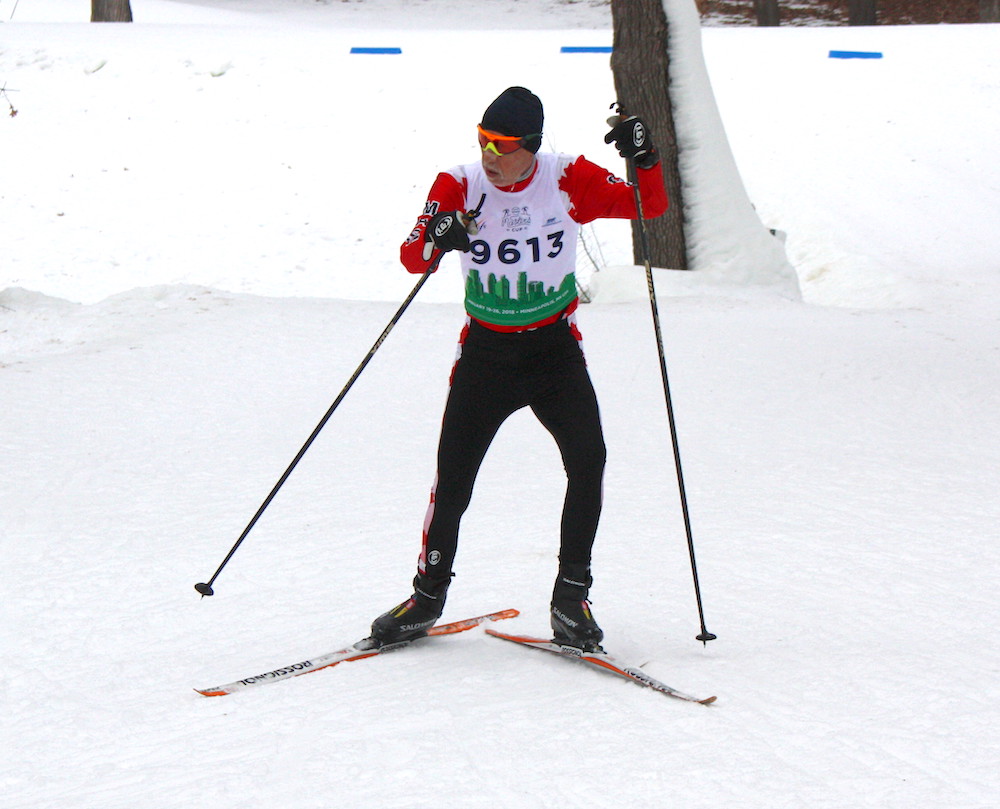
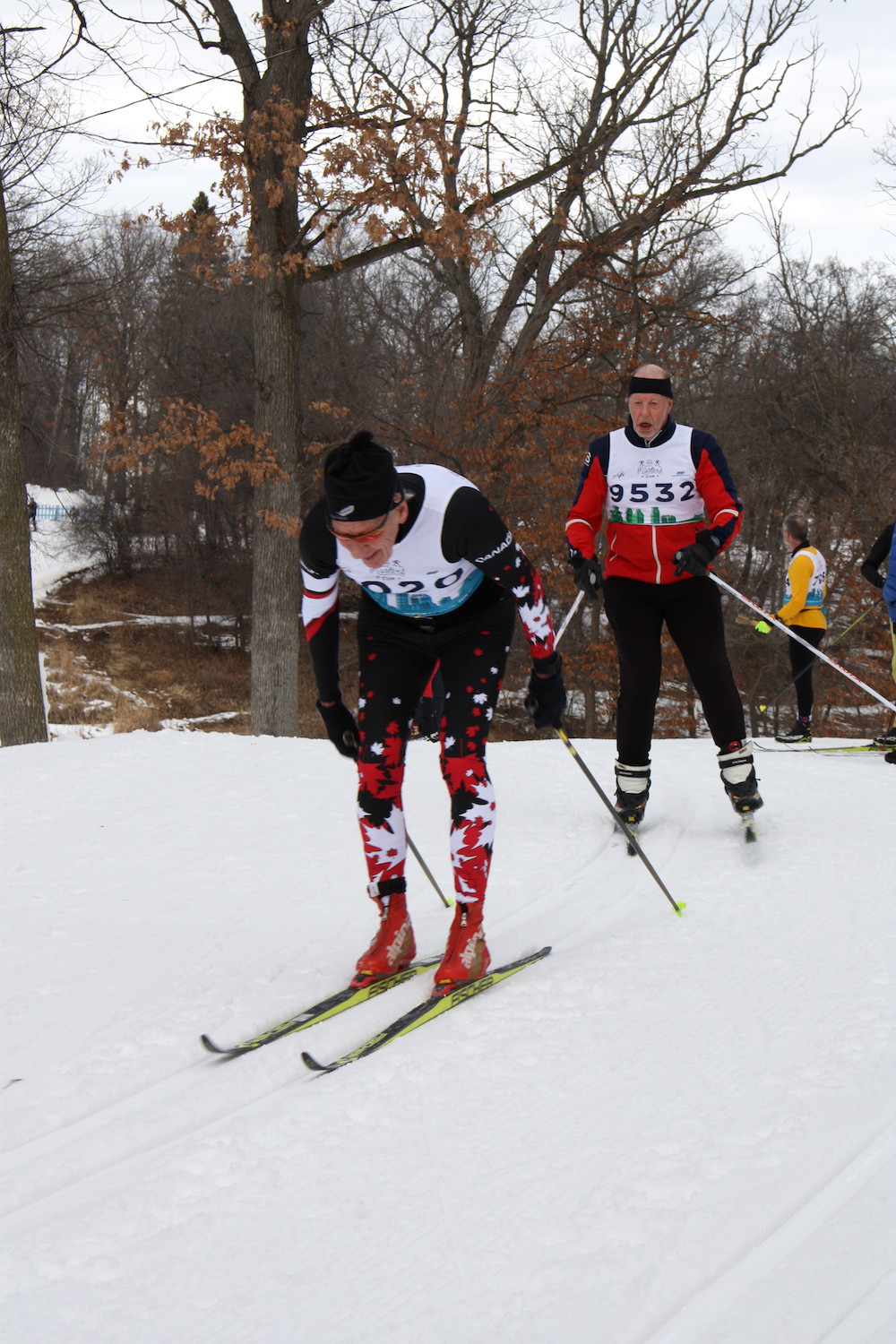
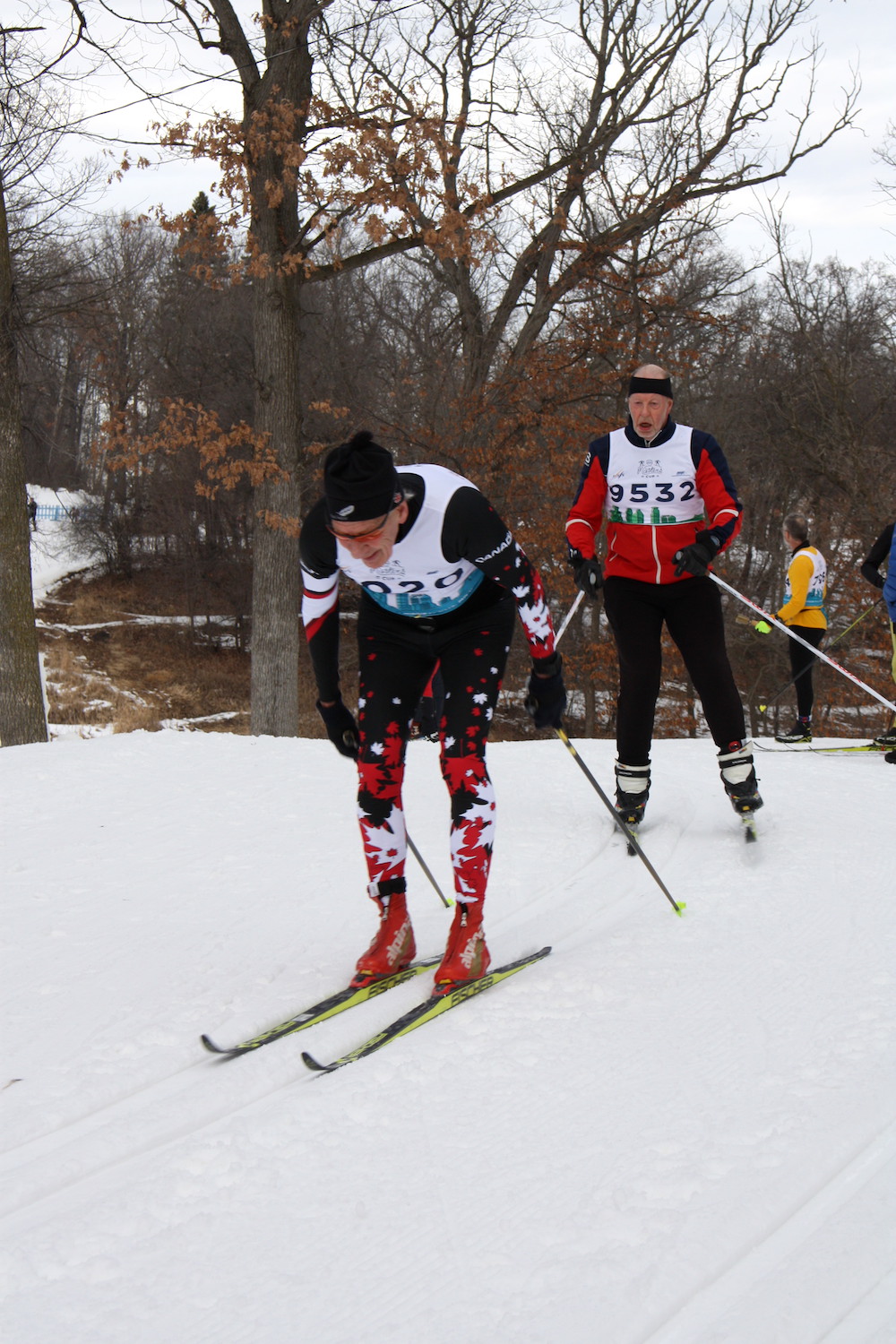
Rick Hubbard (9532) of the U.S. chases another masters skier while racing to 10th in his age group “10”, in the 10 k classic on Saturday at Masters World Cup in Minneapolis, Minnesota.
The men’s age groups 1 through 6 raced 30 k, with American Paul Allison winning the “1” in 1:15:16.5, American Erik Solberg winning the “2” in 1:25:47.3, Russia’s Andrey Lushnikov winning the “3” in 1:19:23.0, American John Bauer winning the “4” in 1:16:29.0, Sweden’s Tommy Gustafsson winning the “5” in 1:13:28.2, and Norway’s Jon Arne Envoldsen winning the “6” in 1:18:29.9.
The men’s “10” through “13” raced 10 k, with Norway’s Richard Johan Kringhaug winning the “10” in 29:12.9, Finland’s Tuomo Venalainen winning the “11” in 38:31.9, American Reno Deprey winning the “12” in 51:53.2, and the lone racer in the “13”, Charles French of the U.S., finishing in 49:47.4.
The 2018 Masters World Cup continues Sunday with 10, 15 and 30 k freestyle races.
About Andrea Potyondy-Smith: Andrea hails from the Twin Cities of Minneapolis (dontchya know) and has an MFA in creative writing. When she is not being an English geek, she can be found on her bike or skis, or playing in the Northwoods … typically on her bike or skis.
Brad Johnson, of Pioneer Midwest, skied his first Birkie at age 57 and made the race’s prestigious 25% Club (top 25 percent of age group) at age 60.
This Saturday, Jan. 20, the Masters World Cup will open in Minneapolis, Minnesota —the first time it has been in the U.S. in 10 years. Of course, the word “master” could be considered a euphemism for “old skier.” However, age doesn’t have to come with a decline in performance. Ask 65 year-old Brad Johnson, of Pioneer Midwest in Osseo, Minnesota. He raced his first American Birkebeiner when he was 57, and he’s done every one since.
As an employee of the Anoka-Hennepin school district before his retirement in 2009, Johnson acknowledges it was hard to teach, coach (track and nordic) and race. He was able to stay fit, “but you don’t get training in. I’d get home at 7-7:30, I’m not going out for an hour and a half because I don’t have anything left in the tank. Some coaches successfully do that.” He admits he was not one of them.
Johnson’s one of the “older-guy contingent” of Pioneer Midwest’s ski team, an “emeritus team of older guys that ski in Pioneer stuff.” Despite his late start to racing, he has made the Birkie’s 25% Club, with a top finish of 3:56 for the 54-kilometer classic, and he also completed the original Norwegian Birkebeiner. He credits his fitness to focusing on the basics: duration, frequency, and intensity of training.
He feels the main mistake masters skiers make is a focus on duration, not emphasizing frequency and intensity enough. “Those two- and three-hour skis can cause more harm than good,” Johnson said, citing a breakdown of technique as one fatigues, opening them up to injury. And, if you get too tired, you become more susceptible to illness.
“Illness and injury are the two things that shut us [masters] down more than anything,” he said.
Johnson typically skis about four days a week, with one core and weight-training session per week. He asserts the significant loss of muscle mass as one ages is central to maintaining some sort of strength regimen.
“You hit your 60s and it can go downhill real fast … use it or lose it, basically,” he said.
Johnson rests at least one day a week, but admits it can be as many as three, depending on weather.
Each workout, he focuses on one aspect of technique in conjunction with intensity, maintaining three aspects of fitness are integral to any workout: aerobic capacity, lactate threshold, and economy — the last an advantage of the master skier.
“We’ve done this [skiing] over and over again. We’ve become more efficient,” he said. “We’ve got a little bit more guile than some of these younger skiers.”
He calls it “skiing lazy”: saving energy as much as possible, using good form and drafting, something he’s done to 30-something skiers that “save[s] a lot of energy!”
Johnson incorporates Heart Rate Variability training into his workouts to help him get the best workout for any given day, but admits that is just one small piece of training. He feels one of the best things for the master skier is intervals — the number being based on how one feels; the use of a heart-rate monitor is imperative:
“We think we know where our heart rate is — we don’t have a clue, unless you’re wearing a monitor,” he said.
In Johnson’s opinion, a person should know their heart rate zones (1-5) in order to maximize the benefits of any workout.
Additionally, acknowledging that age can come with physical changes, Johnson suggests getting the OK from your doctor. “Assuming they know what they’re talking about, which isn’t always the case, and having a doctor that understand sports medicine and aging athletes,” he said. “That’s not the most common physician to find, but at the very least [one needs to establish], ‘is my heart in decent enough shape to go do this?’ ”
As Johnson is most definitely in “decent enough shape,” and showing no signs of slowing down, it would appear there is at least some truth in the old axiom: Old age and treachery will overcome youth and agility.
The Workout: Basic intervals
One of Johnson’s essential workouts is basic intervals, done on a variety of terrain, based on the technique he’s focusing on for the day. So, pick your “skill drill” (hills, double poling, etc.), and get ready for some intensity.
Warmup: Base on how you’re feeling for the day. Minimum is 5 minutes, but up to 20-30 minutes. Get into Zone 2; if you’re there, but don’t feel “ready to hit it” take more time until you do.
Interval Session: 8-12 intervals of 2-4 minutes in upper Zone 3 to Zone 4, in anaerobic threshold. Between intervals, ski easy until your heart rate is back into Zone 1. As soon as you are back in Zone 1, go into the next interval.
Be sure to note how long recovery takes for the first three or four intervals. The number of intervals you do is based on how quickly you are recovering; once your recovery time significantly increases, you are done. Johnson notes a recovery time increase of 30-45 seconds as significant.
For example: if it takes you 90-120 seconds to recover between the first few intervals, but by interval 9, it is taking you 150 seconds or longer, you are finished. By that point, Johnson says you have depleted yourself, technique can fall apart, and you can do more harm than good.
Warm down: (a.k.a. cool down) An easy ski back to the chalet — about 15-20 minutes, keeping the heart rate no higher than Zone 2.
MINNEAPOLIS, Minn. (January 5, 2018)– The World Masters Association has approved a motion to extend registrations for the 2018 Masters World Cup, happening January 19-26.
“The WMA Executive Committee decided that the early dates of this particular MWC required additional time for registrations to come in. We understand that some folks — particularly in the Upper Midwest — are still building fitness and having another week to decide to participate in the MWC2018 could be useful,” said J.D. Downing of AXCS.
This extension opens a window for master skiers that may still be deciding if they’re in shape to compete in the cup. The additional ten-day registration extension will give them time to make that call, though the timing will influence their starting point in the races. Competitors who register after the original deadline of January 6 will be seeded in their age and gender category, based on the order in which their registration was received.
As registrations continue to roll in, trails crews at the Loppet Foundation continue working day and night to build out the course for the week-long championship. Mike Erickson, Race and Events Director of the Foundation, said:
“The plan developed over the past five years for manmade snow on the Masters World Cup courses is working perfectly thus far. The cold weather over the holidays has allowed the first 5 km of the core 7.5 km of trails used for the first four race days to be put in place.”
With many other areas of the USA struggling with snow or weather woes, the Twin Cities are increasingly looking great for a fabulous Masters World Cup. It’s not too late to make your plans and join the fun — late registrations will be accepted until January 16, 2018.
MINNEAPOLIS, MN—BNS Mobile will once again be performing professional race waxing service at the World Masters Cup (WMC), taking place in Minneapolis, Minnesota January 20-26, 2018. BNS Mobile service offers WMC racers World Cup-level ski service, providing athletes with the fastest skis possible. BNS’s wax service allows athletes to relax while skipping the hassle of waxing their own skis and transporting waxing gear to the races.
After traveling to previous WMC races in British Columbia, Idaho, Italy, and Switzerland; BNS staff are excited to set up at this year’s event, only minutes away from the BNS Midwest shop. The service crew will be led by Supertour winner David Chamberlain and BNS Founder Nathan Schultz. BNS has partnered with the race organizers to have an on-site waxing headquarters to provide the best possible race service to skiers.
Experienced service technicians will offer two Race Wax Service options for WMC 2018: “Full Service” and “HF Service.” The full race wax service includes help selecting the best skis for the race, base wax, HF paraffin, fluoro powder, topcoats, and hand structure for the highest speed possible, as well as full kick wax service for classic races. With the HF Service option, BNS techs will prepare skis with a High-Fluoro glide wax and structure.
With early registration before November 15, the cost of the full service (per race) is $99 for one pair of skis and $149 for two pairs (for the same skier). A free on-snow session with a service tech will be provided to racers who sign up for three or more races with the full service. All customers who purchase a WMC 2018 full wax service will also receive a discount coupon for 20% any one item at BNS Midwest. The HF service costs $48/race.
BNS race wax services will be available for every race on the MWC schedule, including the relay. BNS also offers race waxing service at many of the most significant races around the country, such as The American Birkebeiner, City of Lakes Loppet, Boulder Mountain Tour, Crested Butte Alley Loop, Snow Mountain Stampede, Noquemanon, and Vasaloppet USA.
The BNS race wax service for the Minneapolis MWC is available for purchase online at bouldernordic.com, by phone at 877-BNS-Skis or at BNS locations in Boulder, CO; Minneapolis, MN; and Portland, ME.
SIGN UP BEFORE November 15 and receive $10 off/race using code WMCNov (full race service only).
SIGN UP BEFORE Dec 20 and receive $5 off per race using code WMCDec (full service only).
About BNS: Boulder Nordic Sport brings World Cup Service to everyone with full-service ski shops in Boulder, CO; Bloomington, MN, Portland, ME and online at bouldernordic.com. BNS specializes in professional ski service using Tazzari stone-grinding equipment as well as sales and advanced fit of cross-country skis, equipment, and technical apparel. BNS imports Holmenkol and SkiGo wax lines and carries a full line of wax and professional tuning equipment from over ten wax brands.
Information about Boulder Nordic Sport and the new BNS Magazine are available at www.bouldernordic.com.
Minneapolis, Minnesota (October 9, 2017) – Online registration for the 2018 Masters World Cup of Nordic skiing is now open. For more information and to register please visit www.mwc2018.com.
The Loppet Foundation is thrilled to host the 2018 Masters World Cup, taking place January 19 – 26, 2018 in Minneapolis, Minnesota. The World Cup event is open to men and women skiers of all abilities who are 30 years of age and older (as of December 31, 2017).
More than 1,000 racers from over two dozen countries will come to compete in up to three individual events, choosing between skate or classic. There is also a relay competition in the middle of the week.
Since 1980, the Masters World Cup has been the annual championship of the best Masters skiers from around the word. In 2017 the event was held in Klosters (CHE) and in 2019, Beitostolen (NOR) is the official host. We look forward to seeing you this January in Minnesota!
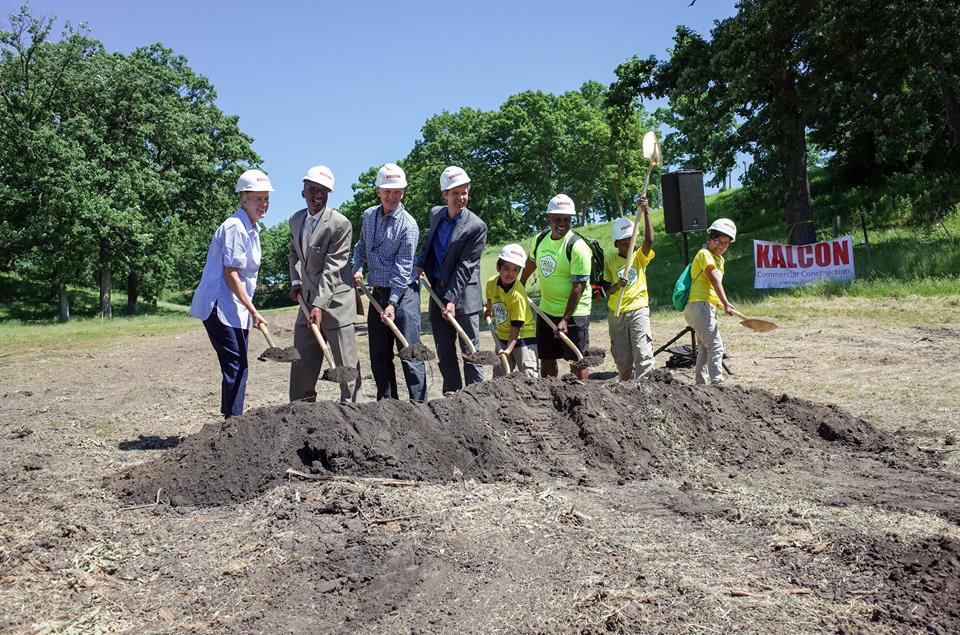
The Loppet Foundation’s official groundbreaking ceremony for “The Trailhead” at Theodore Wirth Park in Minneapolis, Minn., in June 2017. (Photo: Steve Kotvis)
After six years, the end is in sight: construction is underway for The Loppet Foundation’s Trailhead.
The Trailhead is an ambitious project to improve skiing infrastructure at Theodore Wirth Regional Park in Minneapolis, Minn. The year-round facility will feature a strength-and-conditioning area, a bike-and-ski rental shop, locker room, and food service. Outdoor amenities include a tubing hill and a snowboarding hill along with improvements to Wirth’s snowmaking system.
“It’s a project we’ve been working on a long time,” John Munger, the Loppet Foundation’s executive director, told FasterSkier on the phone in mid-May.
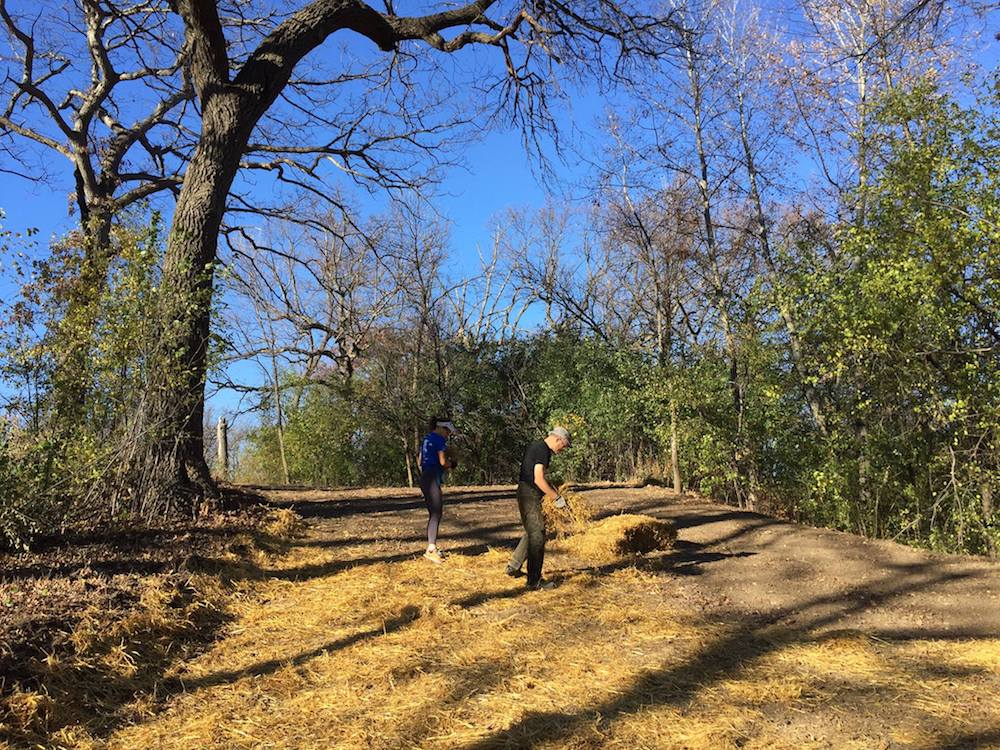
Last fall, volunteers worked on the new ski trails at Theodore Wirth Park in Minneapolis in preparation for The Loppet Foundation’s new Trailhead building. (Photo: The Loppet Foundation)
Earthmoving for The Trailhead officially began in early June, and Munger said the goal was to have the building ready by Jan. 15, 2018, just in time for the Masters World Cup Jan. 19-26 at Wirth Park. Winning the World Masters bid added urgency to the project, and it’s given The Loppet Foundation an eye for future major nordic competitions.
“We would like to bring in events like Junior Nationals, senior nationals and maybe even a World Cup,” Munger said.
Brian Gregg, a 2014 Olympian and one of the highest-profile athletes associated with the Loppet Foundation’s race program, Loppet Nordic Racing (LNR), lives next to Wirth Park with his wife Caitlin (LNR’s other top racer).
“We’re really excited about The Trailhead. It’s been a long time coming,” Gregg said in a recent phone interview for Truckee, Calif., where he was leading an LNR training camp with Caitlin. “The Loppet Foundation has really brought life back to the park. It’s really cool to see that grow.”
Originally from Washington state, Brian Gregg has lived in Minneapolis since 2011. Caitlin, a 2010 Olympian who was born in New York City and went to high school in Vermont, moved to the Twin Cities after graduating from Northern Michigan University in 2002.
“One big goal for us as elite athletes, our job isn’t just to go race for ourselves, it’s to represent our whole club,” Caitlin said of their commitment to LNR and their California volume camp with LNR collegiate skiers. “One thing we’ve learned, the best way to push yourself isn’t to bring athletes in from outside, it’s to bring the athletes around you up to your level. We’ve really taken that approach for a number of years, and now these kids can train with us. It’s awesome, I’m really excited.”
Growing with the times
Up until now, skiers at Wirth Park have used a 1920s-era building as a lodge. But that building can’t cope when some 600 to 800 hundred skiers and their coaches swoop in for a high school race. Golfers will continue to use the original building after the Trailhead is complete.
The entire project, dubbed The Trailhead Capital Campaign, is expected to cost $11.6 million dollars, of which $9.6 million is earmarked for the building and other physical improvements to Wirth’s skiing infrastructure (such as additional snowmaking equipment and trail improvements). The park currently has several International Ski Federation (FIS) homologated race loops, spanning from 5 kilometers to sprint-distance (roughly 1 k) long. In total, Wirth includes 23 k of trails, 7.5 k of which will have snowmaking for 2018.
Beyond the $9.6 million the Foundation is looking to raise (and is currently about $370,000 short of), another $2 million dollars was budgeted for programming (e.g. youth scholarships). Approximately $4.5 million of the total amount was to be raised privately, while the rest of the balance was expected to be covered by municipal, Hennepin County, state, and federal funding.
Trail maintenance at Wirth Park in Minneapolis, Minn. (Photo: The Loppet Foundation)
In May, Munger explained that the Foundation was in need of $250,000 to break ground. In just two weeks, it raised that amount.
“We had a cash crunch and needed that money in order to make it happen,” he said. “… It was very energizing and heartening to see the community step up like that.”
Was raising the money more or less difficult than expected?
“It’s hard to have expectations when you’ve never done something before,” Munger said.
While the project has been in the works for the last six or seven years, Munger characterized the Trailhead’s cost as a “moving target” as costs have increased over time. He described donations ranging from individuals and foundations contributing between $10,000 to $50,000, as well as many more modest grassroots donations. Munger credited the Pohlad Family Foundation with the single largest donation of $1 million dollars.
The Greggs have pushed for the cause, too.
“We’ve been actively involved [in fundraising] any time we’ve been home,” Caitlin said.
Earning trust
At 759 acres, Wirth is almost as big as New York City’s Central Park and serves a variety of constituencies. In addition to skiing, there are two golf courses, a disc golf course, mountain-bike trails and gardens. When master planning for the park began around 2010, the community didn’t know what to make of the Loppet Foundation’s ideas.
“The [Minneapolis Parks and Rec] Board was a reluctant partner for years,” Munger said. “They weren’t quite sure they wanted to trust a nonprofit or private to come in and do this kind of investment. They weren’t sure we would come through in the end.”
The golf community also wasn’t thrilled with the idea of a trail-development proposal to relocate three golf-course holes.
Now, “The park board is excited, we’re excited,” Munger explained. “That’s been the really dramatic piece. The whole community is excited about this now.”
He added that the park board has “always supported our mission, but I think it’s a matter of trust.”
To start, the Loppet Foundation did a thorough job of getting various municipal approvals. The Foundation’s gold-level club certification from U.S. Ski & Snowboard was an important endorsement. U.S. Ski & Snowboard has gold, silver and bronze level certifications for clubs that benchmark best practices in coaching, community outreach, and regular board meetings, among other criteria.
“Once we started to raise significant funds, [the park board] saw we were serious about this,” Munger said. “When we did the hard work with them of putting the agreements together, that was really significant. ‘This is an organization that does things right, that makes the park board look good to the world and helps deliver great services to the public through our partnership.’ So it’s been a long process, but that’s how we got there.”
“The public-private partnership between Minneapolis Parks and Rec Board and the Loppet Foundation is pretty unique,” Brian Gregg explained. “I think we’re one of the first public-private partnerships like that in the city.”
Racers at the City of Lakes Loppet in Theodore Wirth Park. (Photo: Steve Kotvis, f/go Photography)
The upcoming Masters World Cup won’t be Wirth’s first big event, but it does put Minneapolis on the international stage for cross-country skiing. Wirth hosted 2011 Junior Nationals and SuperTour races in 2010, 2011 and 2013. Brian won his first SuperTour there in 2010.
“A big part of the Loppet Foundation is reaching out to the community of north Minneapolis, which is where Wirth Park is located,” he explained. “It’s really great to see a lot of kids from north Minneapolis being able to take advantage of the Loppet programming.”
The programming includes youth scholarships for training camps and activities.
“I think that service side of the Loppet Foundation is one of the most incredible parts about the foundation,” Brian added.
Caitlin explained that the Foundation has started ski teams in middle schools across north Minneapolis by hiring coaches, acquiring equipment and finding ways to engage kids in healthy lifestyles.
“Brian and I are extremely proud,” Caitlin said. “… Our proudest moment is what the Foundation has done for the community at large.”
The Trailhead isn’t just for winter, either. In the summer, it will be a home base for mountain biking, trail running and orienteering.
“We’re heavily invested in skiing in the winter, but there’s outdoor activity throughout the year,” Munger explained.
One of Brian’s favorite Foundation programs is Adventure Kids, a series of weeklong summer day camps for kids ages 9 to 13. It was previously run with “popup tents and picnic tables,” he said, and if there was a thunderstorm, the kids took cover under a bridge. When the Trailhead opens, they’ll have a shelter.
“There really is no offseason for us,” Munger said.