Tag: 2018 Winter Paralympics

  • FasterSkier’s Para-Nordic Skiers of the Year: Oksana Masters and Brian McKeever

    FasterSkier’s Para-Nordic Skiers of the Year: Oksana Masters and Brian McKeever

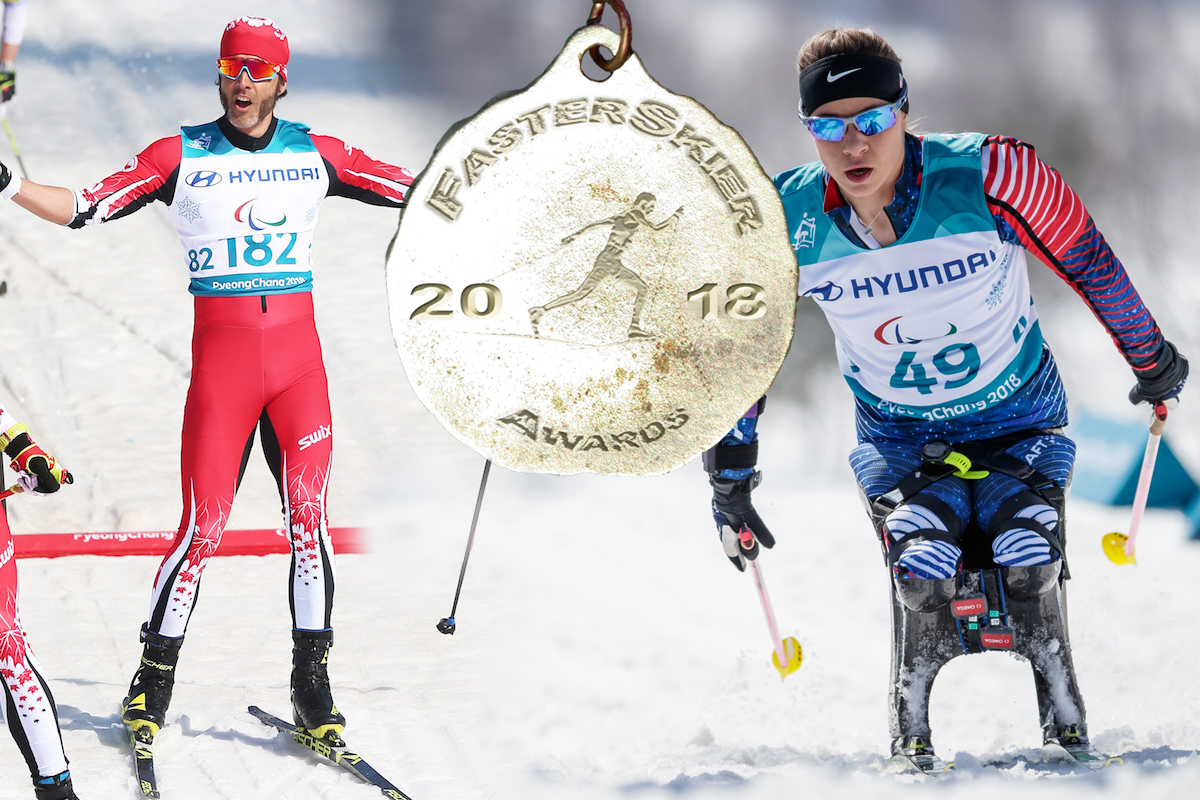
    Brian McKeever (l) and Oksana Masters (r) are FasterSkier’s 2018 Para-Nordic Skiers of the Year. (Photos: Scott Grant/Canadian Paralympic Committee & Joe Kusumoto/US Paralympics)

    With the 2017/2018 season officially in the rearview, FasterSkier is excited to unveil its annual award winners for this past winter. Votes stem from the FS staff, scattered across the U.S., Canada, and Europe, and while not scientific, they are intended to reflect a broader sense of the season in review. This set of honors goes to outstanding Para-Nordic skiers on the international circuit.

    Previous categories: Junior Skiers of the Year | Collegiate Skiers of the Year | Biathletes of the Year

    ***

    Oksana Masters, U.S. Paralympics Nordic
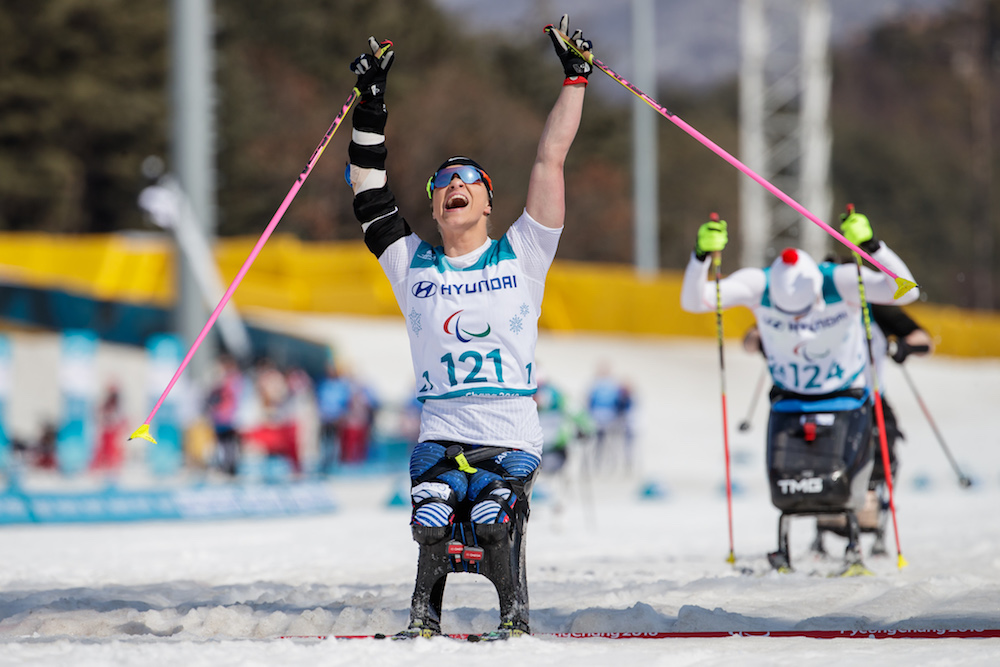
    American Oksana Masters reacting to her first gold medal in her third Paralympics, after winning the women’s 1.1 k sitting sprint in PyeongChang, South Korea. (Photo: Joe Kusumoto/U.S. Paralympics)

    Undefeated in this category for the last four years of the FasterSkier awards, Oksana Masters had her best Paralympics yet this winter and overcame a major setback to do so. Just two weeks before the 2018 Winter Paralympic Games in PyeongChang, South Korea, Masters slipped on ice, injured her elbow and had to get surgery. Then, entirely propelled by her arms as a sit skier, the 28 year old competed in all six individual races in PyeongChang and medaled in five of them (she fell in the other and pulled out of the race shortly before the finish). In total, she racked up the first two Paralympic gold medals of her career (in her third Paralympics) plus two silver medals in biathlon — her first biathlon medals — and a bronze.

    “I am absolutely truly speechless on this performance,” Masters told U.S. Paralympics after winning her second gold medal of the week in the women’s 5-kilometer sitting cross-country race (her first came in the cross-country sprint).

    “I thrive and love the athlete lifestyle of eat, sleep and train,” she continued. “To put yourself to the ultimate test on that start line and seeing all your hard work come through, and not just that, it’s a whole team effort. … It’s not a one-person show. It definitely takes a village and we have an incredible team.”

    Masters and her teammate Dan Cnossen accounted for 11 of Team USA’s 16 medals in nordic and biathlon in PyeongChang, which was more than five times the amount of medals the team brought home after Sochi in 2014.

    Overall this season in the World Para Nordic Skiing rankings, Masters ranked first in women’s sitting biathlon and tied Germany’s Andrea Eskau for first in cross-country. In the International Paralympic Committee (IPC) overall World Cup standings, Masters placed third in both cross-country and biathlon.

    Brian McKeever, Canadian Para-Nordic Skiing

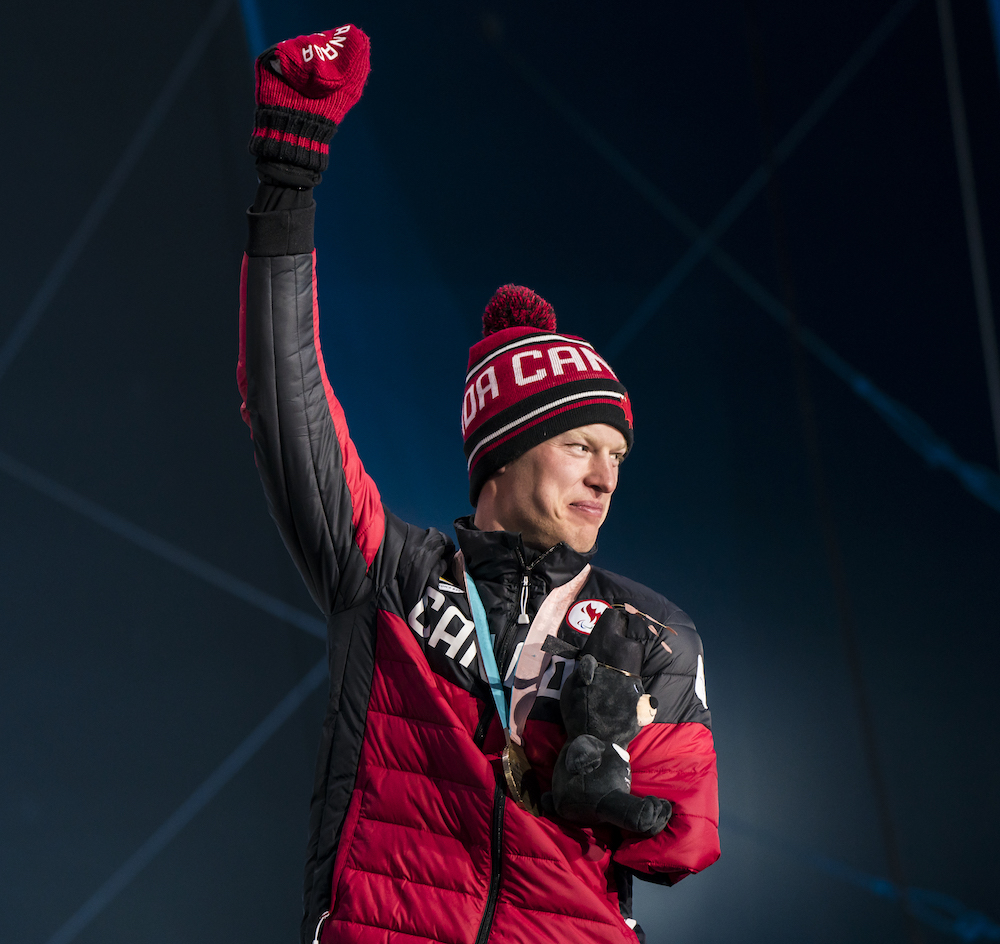
    Also our award winner last year, Brian McKeever became Canada’s most decorated Winter Paralympian of all time this winter with 17 career medals, 13 of which are gold. Three of those golds came in PyeongChang, and he captured bronze there with his teammates on the final day of racing, in the open relay, when Canada placed second in the mixed relay and third in the open relay for its first Paralympic relay medals.
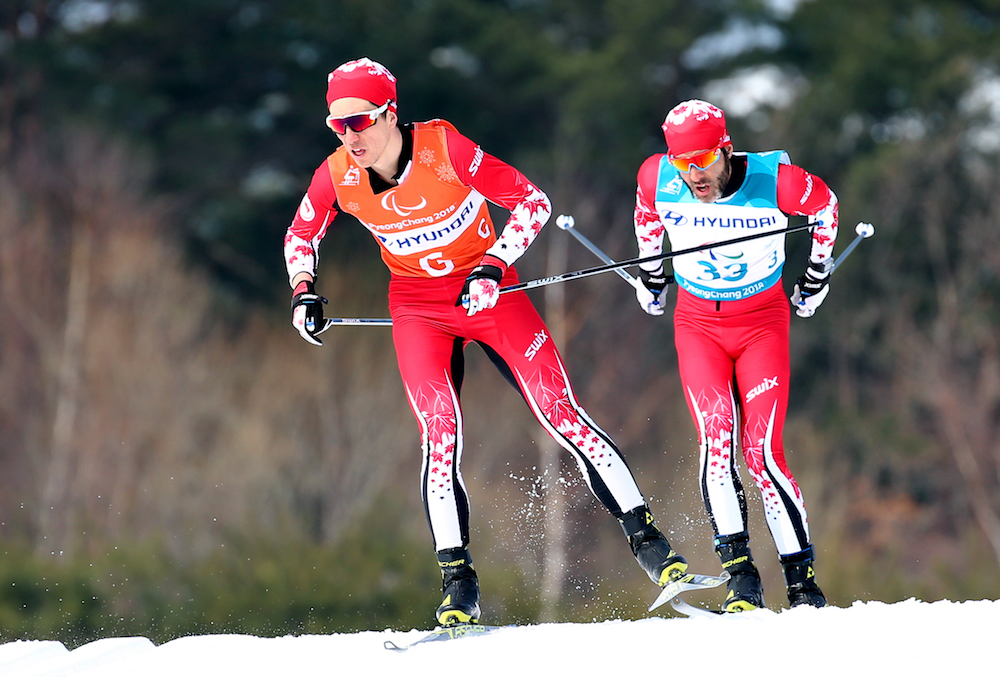
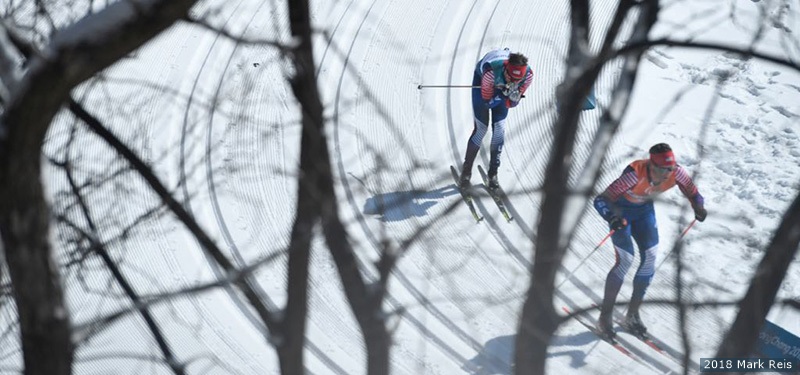
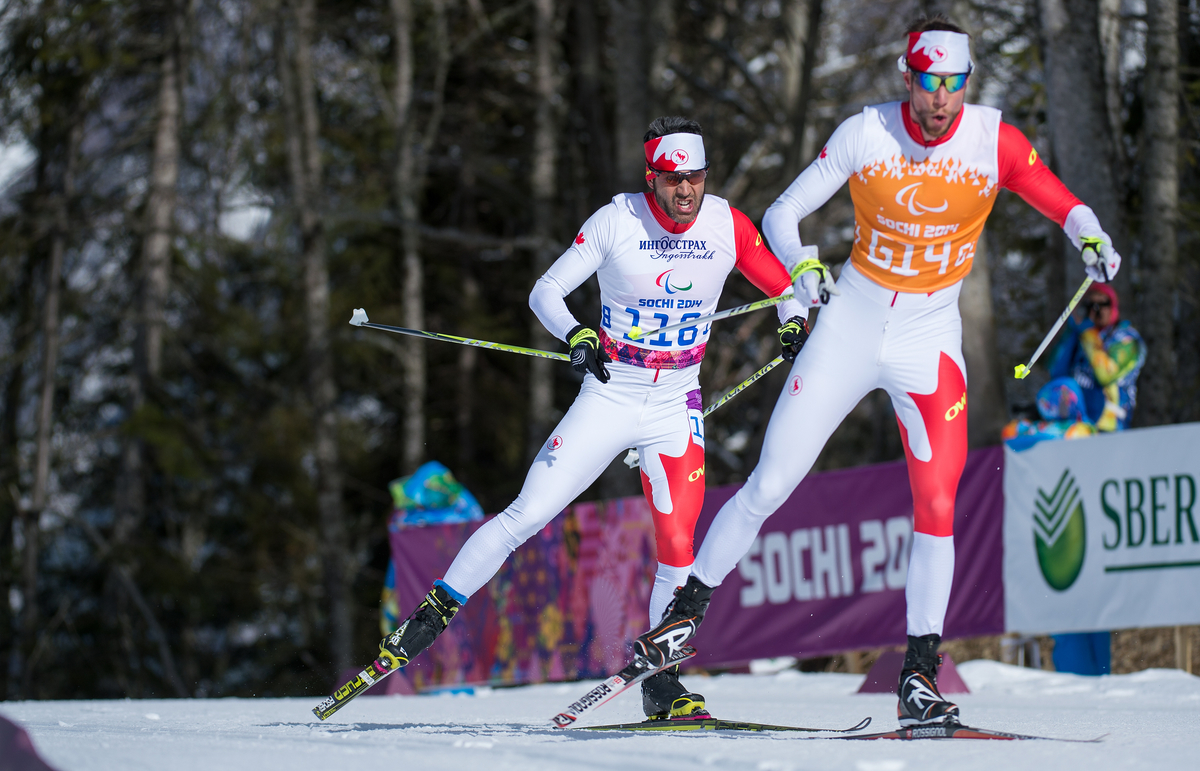
    Brian McKeever (r) follows guide Graham Nishikawa during the men’s visually impaired 20 k freestyle at the 2018 Paralympics in PyeongChang, South Korea. Along with guide Russell Kennedy, they won the race by over a minute for McKeever’s 14th Paralympic medal and 11th gold. (Photo: Scott Grant/Canadian Paralympic Committee)

    This marked the fifth Paralympics for McKeever, 38, and he was accompanied by two guides, Graham Nishikawa (whom he skied with at the 2014 Sochi Games) and Russell Kennedy (who joined the Canadian Para-Nordic Team this year). Together, they won all three visually impaired cross-country races they competed in: the 20 k freestyle, classic sprint and 10 k classic.

    In his first race of the Games, the 20 k distance race, McKeever, who was also Canada’s flag bearer for the PyeongChang Opening Ceremony, captured his 14th career medal — the most of any Canadian Winter Paralympian. In fact, he’s the most successful cross-country skier in Paralympic history, according to an IPC press release.

    “I wasn’t aware of this record, but it is pretty cool,” McKeever told Cross Country Canada after the 20 k. “I think for me more than anything is this is a testament to our entire program. We’ve had so many great skiers leading the way for me with my brother, Robin, who is now coaching us, and Colette Bourgonje. Now it is awesome for me to be a part of a new generation that has arrived in Mark [Arendz], Colin Cameron, and the young women like Emily [Young], Brittany [Hudak] and Natalie [Wilkie], who are ready to carry the torch. I’m so excited to be around all of them this week and to be there cheering them on.”

    Like the U.S., Canada tallied 16 medals between nordic and biathlon at the PyeongChang Paralympics.

    In an interview with CBC Sports during the Games, McKeever referred to his team as a “future superpower” in the sport, with every one of his World Cup teammates capturing at least one medal in PyeongChang. “It’s really exciting for me to watch and see something that I’ve been part of growing.”

    McKeever was also recently voted IPC Male Athlete of the Month for March. Masters, the IPC’s January Female Athlete of the Month, was nominated again for the Female Athlete of the Month for March. Voting closes April 16.

    Honorable Mentions: Mark Arendz (Canadian Para-Nordic) and Dan Cnossen & Kendall Gretsch (U.S. Paralympics)
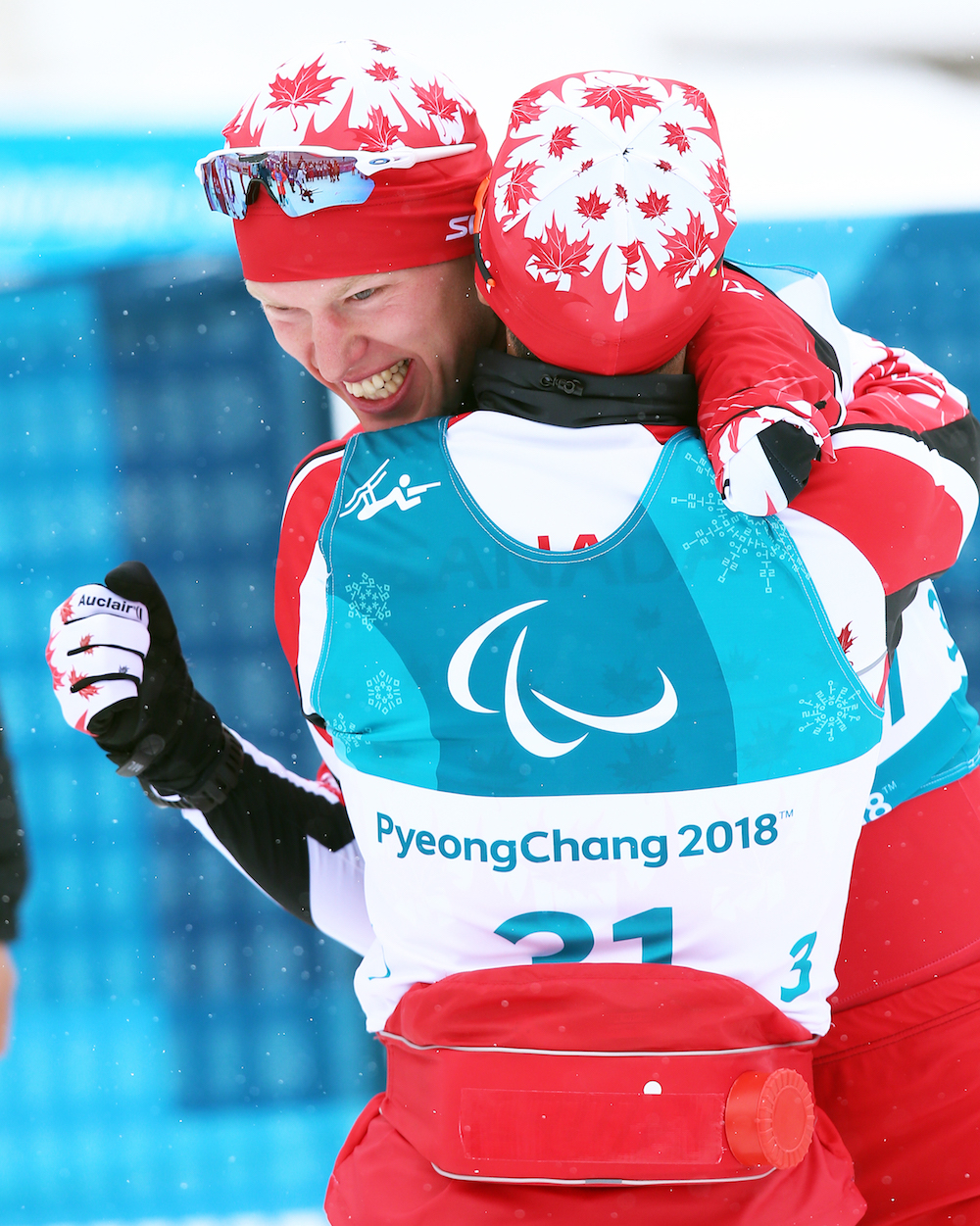
    Canada’s Mark Arendez gets a congratulatory hug after he won gold in the men’s 15 k standing individual biathlon race at the 2018 Paralympics in PyeongChang, South Korea. (Photo: Scott Grant/Canadian Paralympic Committee)

    While McKeever carried the Canadian flag at the PyeongChang Opening Ceremony, his teammate Mark Arendz was honored with waving it at the Closing Ceremony. In his third Paralympics, the 28-year-old Arendz had his best Games yet, taking a medal in all six events he competed in to make him the most successful Canadian at a single Winter Paralympics.

    Arendz captured five individual medals in the men’s standing races in PyeongChang, including his first-career gold in the 15 k biathlon, silver in the 7.5 k biathlon sprint, and bronze in the 12.5 k biathlon, as well as his first Paralympic cross-country medals: bronze in both the sprint and 10 k classic, and silver in the mixed relay. He sat out the only race he didn’t medal in: the long-distance cross-country race.

    “I came in here thinking I could get three medals, but to get six is incredible,” Arendz said on the last day of the Games, after his team placed second in the mixed relay for Canada’s first relay medal. “Today’s is a special one. I am happy we got this done, but there is no way I could do another race. I’m done.”

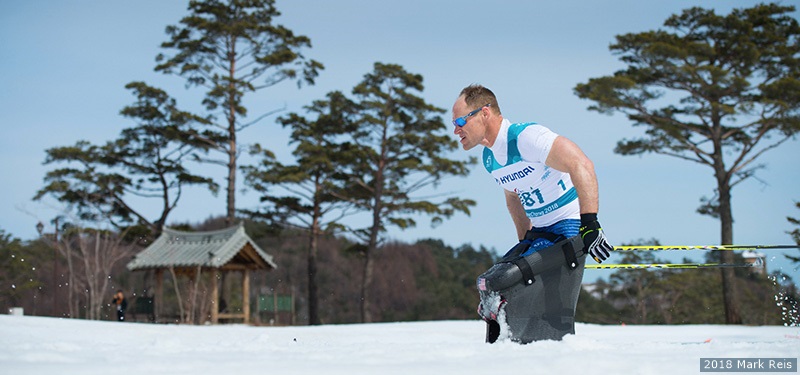
    We mentioned Dan Cnossen earlier, but he’s worth mentioning again. Cnossen, 37, opened his second Paralympics with his first career medal at the Games — gold in the men’s 7.5 k sitting sprint. The next day, he placed second in the 12.5 k biathlon race, and from there, he kept up his medal streak through all six  individual races. The total medal haul for the former Navy SEAL and current Harvard graduate student was one gold, four silvers, and one bronze.
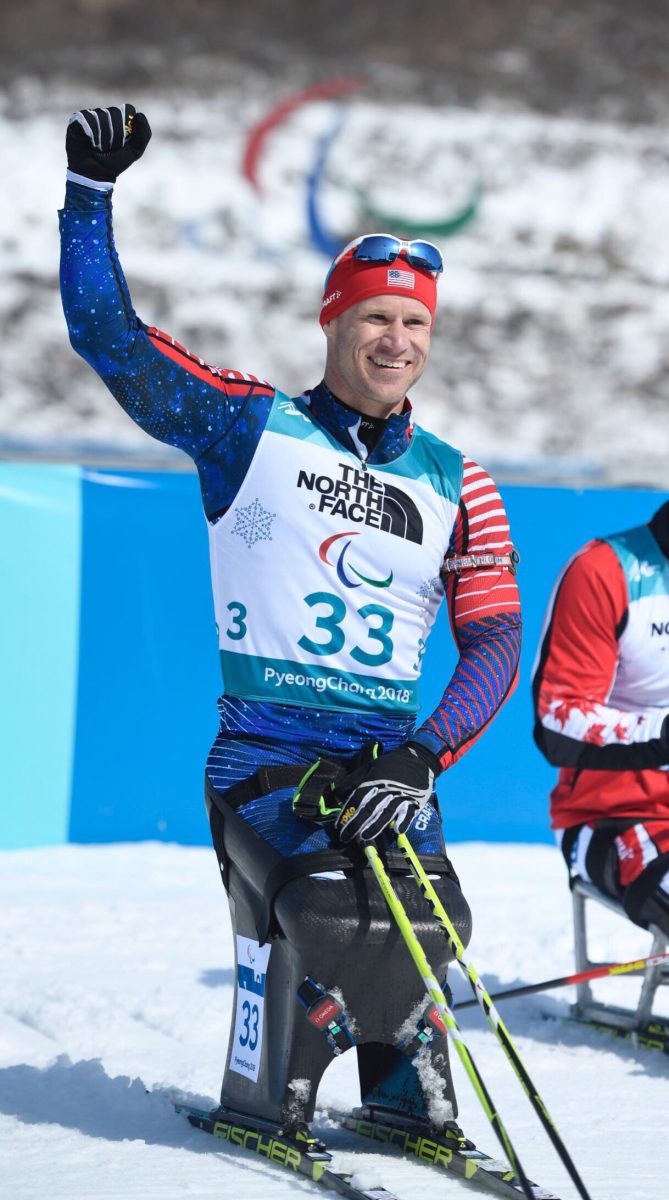
    Dan Cnossen of the U.S. celebrates his win in the men’s sitting 7.5 k biathlon sprint on opening day of competition at the 2018 Winter Paralympics in PyeongChang, South Korea. (Photo: Mark Reis/U.S. Paralympics)

    It wasn’t an easy feat. Cnossen considered pulling out of the last biathlon race — the 12.5 k — in order to compete in the final 10 k cross-country race in PyeongChang.

    “I have an excerpt that says it doesn’t matter how you feel today, it doesn’t matter what your background is or where you’re coming from, all that matters is what you can do,” Cnossen told U.S. Paralympics after finishing second in the biathlon race. “I just tried to focus on what I could do today. Not the fact that I didn’t sleep well last night, that doesn’t matter. Just go out there and perform like I know I can.”

    In all, Cnossen raced about 60 k over eight days.

    “I came into the Games just trying to take it one race at a time and give it my all — each and every race — and not think too far ahead,” Cnossen said after placing second in the 10 k cross-country race the next day for his sixth-straight medal. “Just focus on the here and now, and soak up the moment and be in the present.”

    His teammate Kendall Gretsch, a triathlete who recently took up nordic skiing and biathlon, opened her first Paralympics with gold in the women’s 6 k sitting sprint in PyeongChang. Gretsch, who turned 26 earlier this month, also won the 12 k biathlon race the next day.

    In an interview with U.S. Paralympics, she described being “unsure” of how she’d stack up in PyeongChang. Days 1 and 2 of racing pretty much settled it.

    “I knew that since our last World Cup I had improved a lot, but you never know until you race,” she said after her second-straight gold. “It’s a very humbling experience being able to hear your anthem, puts everything into perspective. Knowing that you’re here not just here for yourself but for your country, it’s amazing.”
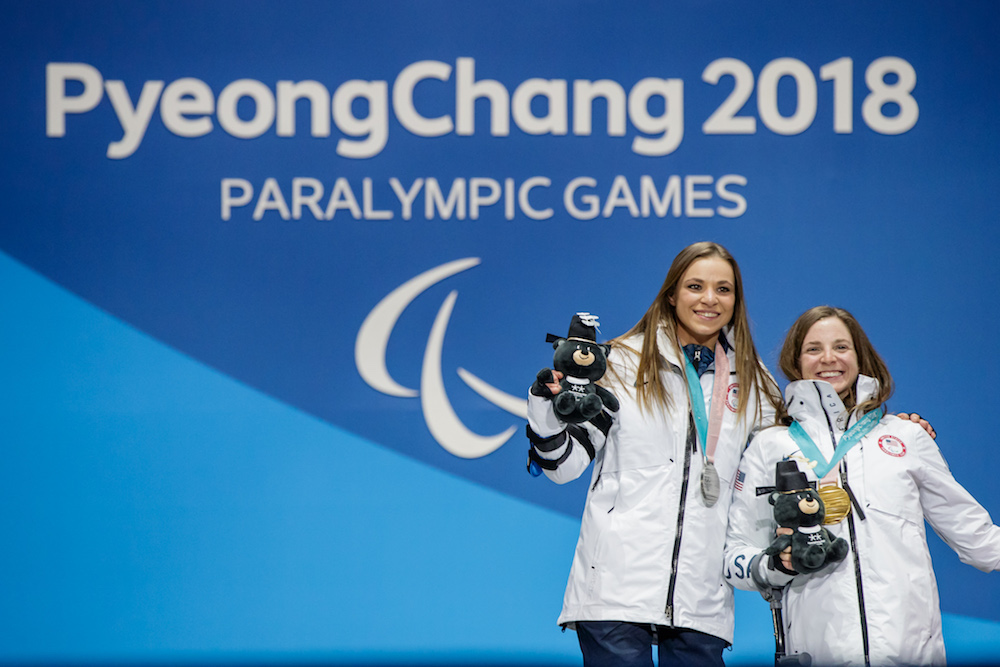
    Kendall Gretsch (r) and Oksana Masters at the 2018 Paralympics medal ceremony for the women’s sitting 6 k biathlon sprint after winning gold and silver, respectively, on the first day of competition in PyeongChang, South Korea. (Photo: Joe Kusumoto/U.S. Paralympics)
  • Wilkie, McKeever, Masters All Win Gold in Last Individual Race of Paralympics

    Wilkie, McKeever, Masters All Win Gold in Last Individual Race of Paralympics

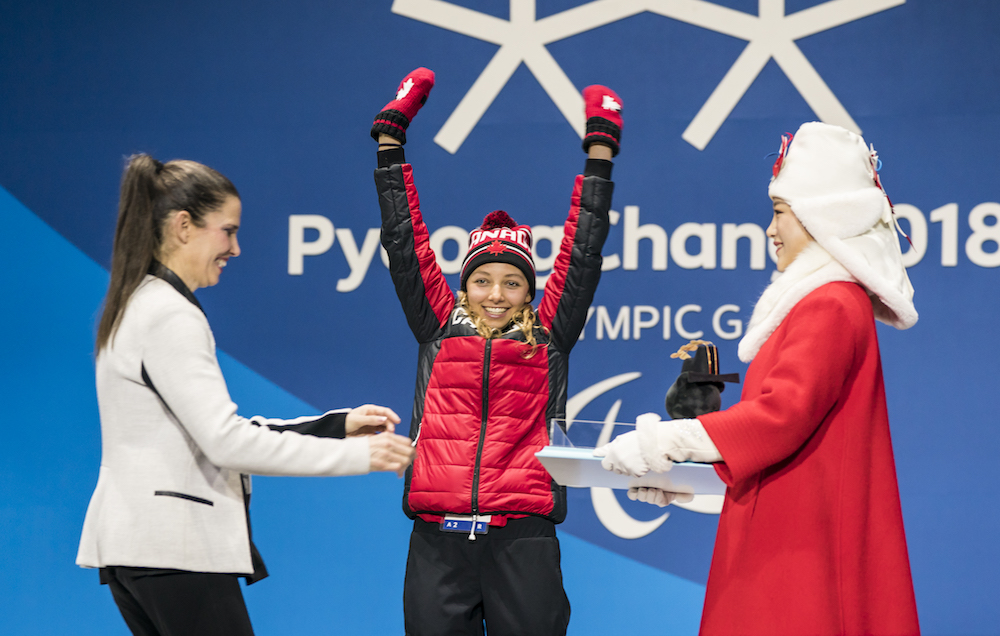
    Canada’s 17-year-old Natalie Wilkie being awarded gold after she won her first Paralympic race on Saturday, the women’s 7.5 k standing classic, in PyeongChang, South Korea. (Photo: Dave Holland/Canadian Paralympic Committee)

    2018 Winter Paralympics (PyeongChang, South Korea): 5/7.5/10 k cross-country races

    Saturday marked the last day of individual racing at the PyeongChang Paralympics, and as they have over the last week, the U.S. and Canadian teams did not disappoint, with the U.S. Paralympics Nordic Team adding a gold and two silvers to its medal count and the Canadian Para-Nordic Team notching two golds and two bronze medals in the middle-distance cross-country races.

    Seventeen-year-old Natalie Wilkie of Salmon Arm, British Columbia, won the women’s 7.5-kilometer standing classic race, while her Canadian teammate Emily Young placed third in that race.

    Brian McKeever, 38, of Canmore, Alberta, won his third-straight race of the Paralympics, the men’s 10 k visually impaired classic race, sweeping all three races at the Paralympics for the third-straight time (he was undefeated at the 2014 Games in Sochi, Russia, as well as the 2010 Paralympics in Vancouver, B.C.)

    Canada’s Mark Arendz raced to bronze in the men’s 10 k standing classic race for his fifth medal of the week (including a biathlon gold) and seventh of his Paralympic career.

    For the U.S., Oksana Masters won her second gold of the Games in the women’s 5 k sitting (after winning the cross-country sprint as well) and fifth medal total in PyeongChang. In three Paralympics, she has eight medals to her name.

    Dan Cnossen continued his medal streak with another silver in the men’s 7.5 k sitting for his sixth medal in as many races this week (three in cross-country, three in biathlon), and Jake Adicoff achieved his first Paralympic medal after placing second behind McKeever in the 10 k visually impaired classic.

    In the women’s standing race on Saturday, Canada nearly went first and second, with Young missing out on silver by 0.1 seconds. While Wilkie took the win in 22:12.2 minutes, Ekaterina Rumyantseva of the Neutral Paralympics Athletes (NPA) finished 1.6 seconds back for second, just ahead of Young in third (+1.7).

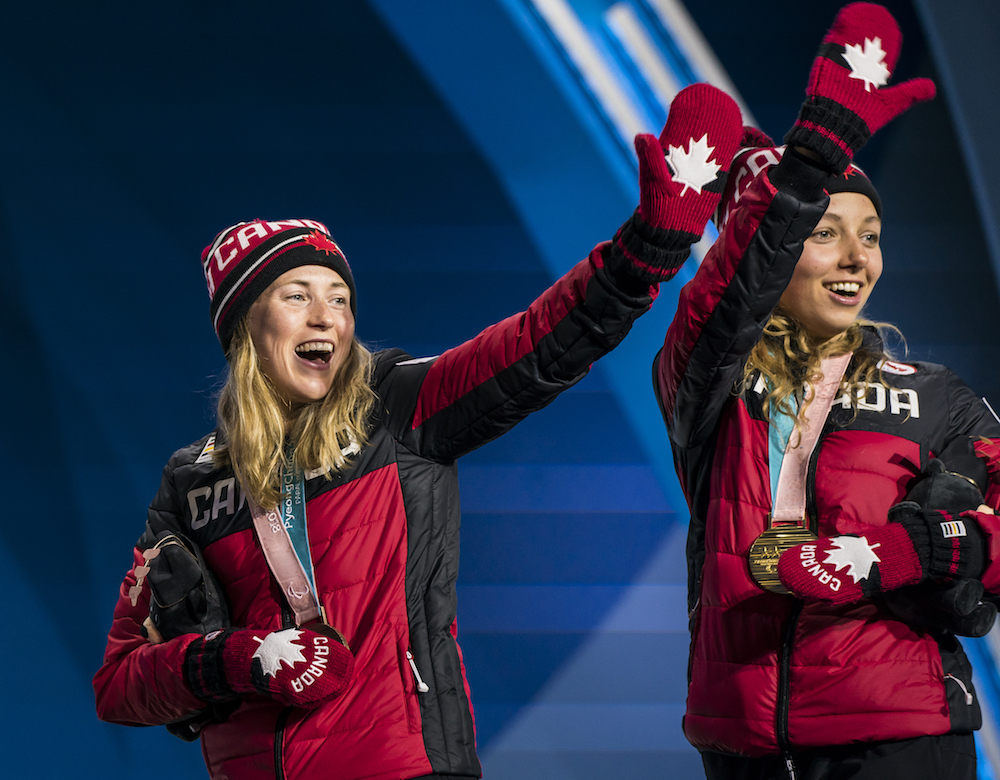
    Natalie Wilkie (r) and Emily Young at Saturday’s 2018 Paralympic medal ceremony with their gold and bronze medals in the women’s 7.5 k standing classic race on Sunday in Pyeongchang, South Korea. (Photo: Dave Holland/Canadian Paralympic Committee)

    “This is crazy awesome,” Wilkie said after winning the last individual race of her first Paralympics, according to a Cross Country Canada press release. “I didn’t think this would happen at all…

    “The difference today was double poling,” she added. “I just kept telling myself to pretend I was elbowing my older brother.”

    During the race, Young channeled her teammate for motivation.

    “ ‘What would Natalie do?’ I just kept saying ‘What would Natalie be doing?’ ” Young, 27, said with a laugh to Cross Country Canada. “I was trying and trying all week to get onto the podium. I knew this race would be my big chance. I kept telling myself to get this done. There is nothing left in the tank. I didn’t want any more hills. I just wanted to get over the finish line. I left it all out there today.”

    Also in the women’s standing race, Canada’s Brittany Hudak placed eighth (+1:37.4) and American Grace Miller finished 18th (+7:09.7).

    McKeever spent about half the race with each of his guides, Graham Nishikawa and Russell Kennedy, to win the men’s visually impaired race by more than a minute in 23:17.8. Adicoff, of the U.S., with his guide Sawyer Kesselheim had the second-fastest time for silver (+1:13.5), while Belarus’s Yury Holub (with guide Dzmitry Budzilovich) placed third (+1:19.3).

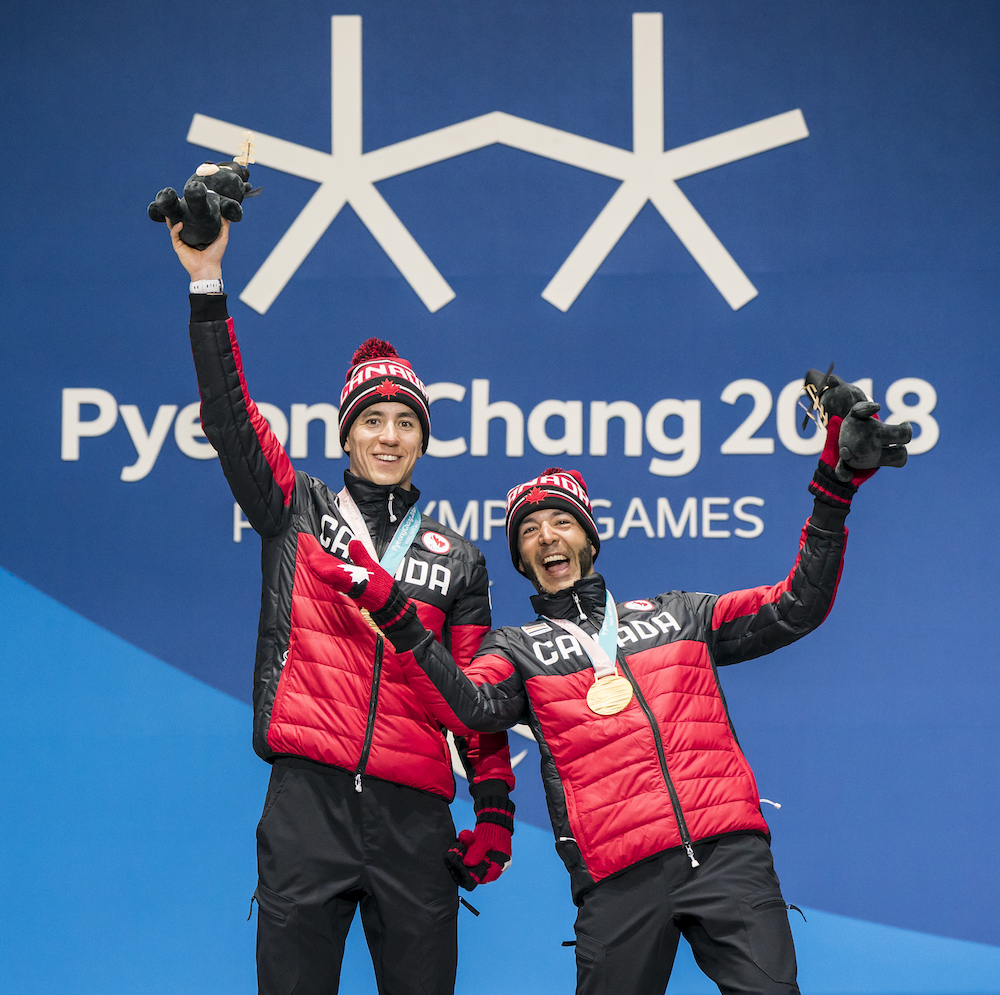
    Canada’s Brian McKeever (r) having some fun at the medal ceremony after winning gold with guides Graham Nishikawa (l) and Russell Kennedy (not pictured) in the men’s 10 k visually impaired classic race at the 2018 Paralympics in PyeongChang, South Korea. (Photo: Dave Holland/Canadian Paralympic Committee)

    “This feels good,” said McKeever, who has won 13 gold medals in five Paralympics. “That one was hard today and was a lot closer than the others.

    Nishikawa led him for the first 6 k, helping him claw back 4 seconds on Sweden’s Zebastien Modin (and guide Johannes Andersson) ahead of him. At the race’s halfway point, the Canadians took the lead, and after Kennedy jumped in to guide McKeever, they widened their gap over the final 4 k. Modin did not finish.

    “Sebastian had a pretty hard crash and I’m most concerned about him because he is a very good friend and you don’t want to win that way,” McKeever said. “It was a good fight today. We knew when to hit it and when to pull back. It’s nice to complete what we set out to do.

    “Today was all about teamwork,” McKeever added. “There was a huge temperature change so we were out very early as a team testing new skis with our wax techs for 90 minutes before the race even started. It was a huge effort by everyone today.”

    For Adicoff, 22, the silver marked the first Paralympic medal of his career. He had previously been awarded bronze in the cross-country classic sprint, but was relegated to fourth for a technique violation.

    As for Saturday’s middle-distance race, he said the skiing was “absolutely awesome. We had great skis by our staff,” Adicoff said, according to a U.S. Paralympics Nordic press release. “I got a little bit sick a couple days ago, so going into this race I told myself to stay relaxed the first part and see if we could keep adding throughout the whole race. It ended up working out, I’m really happy about that.”

    “He was really smart today, thinking about how he’s going to pace the race,” Kesselheim told U.S. Paralympics. “Taking it out not too hard and then building throughout. Really using the skis to our advantage and skiing smooth.”

    In the women’s 7.5 k visually impaired classic race, American Mia Zutter (with guide Kristina Trygstad-Saari) finished ninth, 5:33.7 behind the winner, Belarus’s Sviatlana Sakhanenka (with guide Raman Yashchanka).

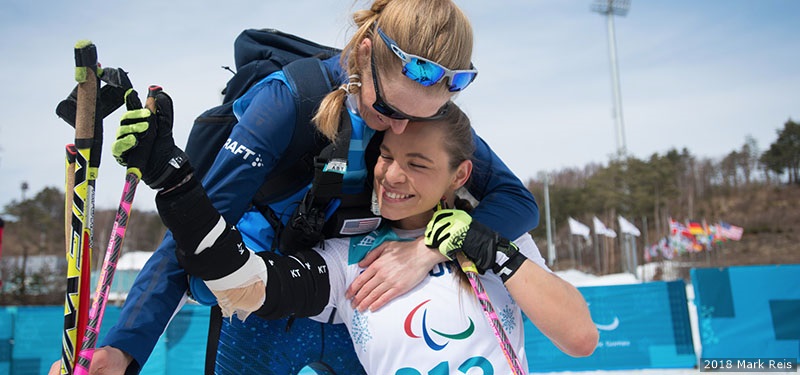
    Oksana Masters and her U.S. coach Eileen Carey after Masters won the women’s 5 k sitting cross-country race on Saturday at the 2018 Paralympic Winter Games in PyeongChang, South Korea. (Photo: U.S. Paralympics/Mark Reis)

    Then there was Masters, 28, who learned Friday that she was elected as the flag bearer for the entire U.S. Paralympic team at Sunday’s Closing Ceremony. She picked up her second gold medal of the week with a win in the 5 k sitting in 16:42, 11.5 seconds ahead of Germany’s Andrea Eskau in second.

    “I am absolutely truly speechless on this performance,” Masters told U.S. Paralympics on Saturday. “I was a little bit nervous because I didn’t get my full warm up in and I was yawning at the start line thinking I was a little too relaxed. I have no idea what just happened.

    “I thrive and love the athlete lifestyle of eat, sleep and train,” she continued. “To put yourself to the ultimate test on that start line and seeing all your hard work come through, and not just that, it’s a whole team effort. Seeing how our amazing team between our wax tech, nutritionist, sport psych, everything just comes together at the finish line. That’s really what it’s all about. It’s that moment coming together. It’s not a one-person show. It definitely takes a village and we have an incredible team.”

    In that race, American Kendall Gretsch, who won two golds earlier in the week, placed sixth (+1:04.4), Canada’s Cindy Ouellet (+4:04.6) finished 17th and American Joy Rondeu was 19th (+5:13.1)

    American Dan Cnossen racing to silver in the men’s 7.5 k sitting cross-country race at the 2018 Paralympic Winter Games PyeongChang in PyeongChang, South Korea. (Photo: U.S. Paralympics/Mark Reis)

    In the men’s 10 k sitting, Cnossen pulled off his fourth silver medal of the week (and sixth medal total), finishing 5.3 seconds shy of gold, which went to South Korea’s Sin Eui-hyun in 22:28.4.

    “This is my favorite race that we do,” Cnossen, 37, told U.S. Paralympics. “It’s 20-21 minutes of effort, or thereabouts, just all out as hard as you can go. I left it all out on the course and was edged out by five seconds. I’m really happy for Mr. Sin, my South Korean competitor. He earned the gold medal.”

    After what he estimated to be around 60 k of racing over the last eight days, not including training, warming up or cooling down, Cnossen said he was feeling “very fatigued.”

    “I came into the Games just trying to take it one race at a time and give it my all — each and every race — and not think too far ahead,” the retired Navy SEAL said. “Just focus on the here and now, and soak up the moment and be in the present.”

    Also in that race, Andy Soule of the U.S. finished fifth (+34.0) and Canada’s Chris Klebl placed sixth (+1:00.9). Also for Canada, Derek Zaplotinsky followed in 15th (+3:15.2), Sebastien Fortier placed 16th (+3:19.9) and Yves Bourque 31st (+8:47.9). For the U.S., Sean Halsted finished 23rd (+4:19.8), Bryan Price 26th (+5:35.9) and Jeremy Wagner 30th (+8:06.9).

    In the men’s standing division, Arendz claimed his fifth medal in as many starts this week, placing first, second and third in the three biathlon races and earning another bronze in the cross-country sprint. (He skipped the long-distance cross-country race.)

    Canada’s Mark Arendz after being awarded bronze in the men’s 10 k standing classic race at the 2018 Paralympics in PyeongChang, South Korea. (Photo: Dave Holland/Canadian Paralympic Committee)

    On Saturday, in the middle-distance cross-country event, Arendz finished 20.3 seconds behind the winner, Japan’s Yoshihiro Nitta, who won in 24:06.8, and 11.6 seconds behind Ukraine’s Grygorii Vovchynskyi, who placed second (+8.7).

    “The focus was to come here and race in six out of the seven events,” Arendz explained. “I have one more left to accomplish in the relay, but I got done what I set out to do in biathlon and to get a couple in cross-country is extra special. This course here really suits me well and the skis have been great all week.”

    Arendz was chosen as Canada’s flag bearer for Sunday’s Closing Ceremony.

    With two relay races (mixed and open) remaining on Sunday, Canada has a grand total of 14 nordic and biathlon medals at these Paralympics, surpassing its previous Paralympic medal total. The U.S. team is up to 16, also record-breaking for its nordic/biathlon program.

    Results

    Americans Jake Adicoff (l) and his guide Sawyer Kesselheim racing to silver in the men’s 10 k standing classic race at the 2018 Paralympic Winter Games in PyeongChang, South Korea. (Photo: U.S. Paralympics/Mark Reis)
  • Kennedy Headed to Paralympics as McKeever’s Second Guide

    Kennedy Headed to Paralympics as McKeever’s Second Guide

    Brian McKeever and his longtime guide and friend Erik Carleton race to McKeever’s third gold of the 2014 Winter Paralympics, and Carleton’s second, in the cross-country 10 k visually impaired freestyle race on the last day of racing in Sochi, Russia. (Photo: Matthew Murnaghan/Canadian Paralympic Committee)

    Picture trying to ski after staring directly at the sun. Bushes blend into the snow. Turns become an illusion; one second they are there and the next they are not. If it sounds somewhat impossible, consider it’s the field of vision Canadian Paralympic cross-country skier Brian McKeever has had for the past 19 years of his professional cross-country career.

    “If you stare at the sun for a long time and turn away, you get these fuzzy spots. Well for me, the fuzzy spots don’t go away,” McKeever said of his vision, according to his Canadian Paralympic Committee bio.

    Diagnosed with Stargardt disease at the age of 19, the loss of vision in no way slowed McKeever’s desire to ski — a sport he started when he was 3 — or his success. In 2010, he made history after being named to both Canada’s able-bodied Olympic squad and its Paralympic team. Though he did not race at the 2010 Winter Olympics in Whistler, he competed in the 2010 Paralympics there, coming away with three gold medals.

    Three years prior to that, he raced against able-bodied athletes in the International Ski Federation (FIS) World Championships 15-kilometer freestyle in Sapporo, Japan, and finished 21st. Over the course of four Paralympics, he has accumulated 13 medals, 10 of which are gold. A Paralympic World Championships competitor since 2003, McKeever holds 19 world titles. He also competed in last year’s U.S. nationals in Midway, Utah, finishing 12th in the men’s 30 k classic mass start and 23rd in the men’s 15 k freestyle.

    When it comes to racing, the difficulty often is not ensuring McKeever, 38, is fit, but that his guides are fit enough to not be left behind. His brother Robin McKeever, now head coach of Cross Country Canada’s Para-Nordic Ski Team, served as Brian’s guide from 2001 through the 2010 Paralympics. Following Robin’s transition to becoming head coach, Erik Carleton, Brian’s childhood friend growing up in Calgary, Alberta, joined the team as Brian’s new guide.

    “I don’t think the guides get nearly as much recognition as they should,” McKeever said after winning the 2013 World Championships 20 k with Carleton as his guide, according to the Canadian Paralympic Committee. “It is tough being the guide because you are out front and not skiing your own race. He needs to be out front and controlling the pace. When I need him to hold off he has to, and when I need him to increase the pace he needs to do that as well.”

    Graham Nishikawa pacing Brian McKeever to his eighth Paralympic gold at the 2014 Paralympics in the 20 k visually impaired classic race in Sochi, Russia. McKeever used both Nishikawa and Erik Carleton as guides, switching halfway through the distance race. (Photo Scott Grant/Canadian Paralympic Committee)

    A former World Cup skier and Cross Country Canada (CCC) senior development team member, Graham Nishikawa joined Brian and Carleton as a second guide a few years later, in the leadup to the 2014 Paralympics. The two have guided Brian in the years since, but with Carleton’s departure before the upcoming 2018 Paralympics in PyeongChang, South Korea, a new member joined Brian’s crew: Russell Kennedy.

    Kennedy, who races for Team R.A.D., which is in partnership and based out of Canmore Nordic, was approached by Robin this spring and offered a spot on the Para-Nordic Team as one of Brian’s backup guides. The offer also came with the opportunity for Kennedy to join the team at its on-snow training camp in New Zealand this summer, as well as the elevation camp it held at Mammoth Mountain in Mammoth Lakes, California, this fall.

    “They’ve got a lot of resources and a lot experience, so it’s pretty awesome for me,” Kennedy, 26, said on the phone in October.

    Russell Kennedy (Team R.A.D.) recently agreed to attend the 2018 Paralympics as the second guide for Canadian Paralympian Brian McKeever (not shown). (Courtesy photo)

    “I’ve been on my own schedule this year because the Team R.A.D. is mostly younger athletes and … I have to do my own thing because I’m going for the Olympics,” explained Kennedy, last season’s overall NorAm winner who earned Period 1 World Cup starts with CCC’s able-bodied team. “So it actually works better for me to be training with Brian because he has similar goals as me. Those camps were both really well placed with volume load and elevation load for my training plan so that really was another thing that drew me to the program.”

    Kennedy, whose father is Canadian and mother American, was born in Truckee, California, and grew up skiing with Far West Nordic. According to The Tahoe Weekly, he took advantage of his dual citizenship and moved to Canada fresh out of high school in 2010 to train with the Alberta World Cup Academy. In the years since, he has accumulated 18 World Cup starts (including two this season). After attending both Para-Nordic camps this summer, Kennedy plans to head to PyeongChang for the Paralympics, but is hoping to qualify for Canada’s Olympic squad as well. 

    With that as one of his primary goals, Kennedy departed for Gällivare, Sweden, on Nov. 11 and competed at the FIS season-opener there before diving into World Cups in an effort to meet CCC’s Olympic selection criteria. Later this month, he’ll head home to Canada to get ready for NorAm trials Jan. 6-10 in Mont Sainte-Anne, Quebec.

    In the Gällivare FIS races, Kennedy raced to 43rd in the classic sprint and 48th in the 10 k freestyle.

    “It is always a bit hard with sprints, but the goal was to close really well,” Kennedy wrote in an email after that sprint. “I felt strong and was much more happy with this sprint than my Frozen Thunder qualifier.

    He did not race the following weekend’s World Cup opener in Kuusamo, Finland, due to illness. 

    “I caught a really small head cold,” Kennedy wrote in an email late last month. “It was a bit silly, but it was not worth racing and making it worse as I have a month over here, so I sat out the weekend.”
    At the second World Cup stop in Lillehammer, Norway, he raced to 63rd in the classic sprint and 53rd in the 30 k skiathlon. McKeever also started his season in Gällivare, where he finished 97th in the FIS 10 k skate and 110th in the 15 k classic, without a guide in either race.
    “I didn’t get to ski with him as much as I would have liked to, but got a quick one in before my race and chatted with him about fitness and how he was feeling,” Kennedy wrote in an email after the Gällivare classic sprint.
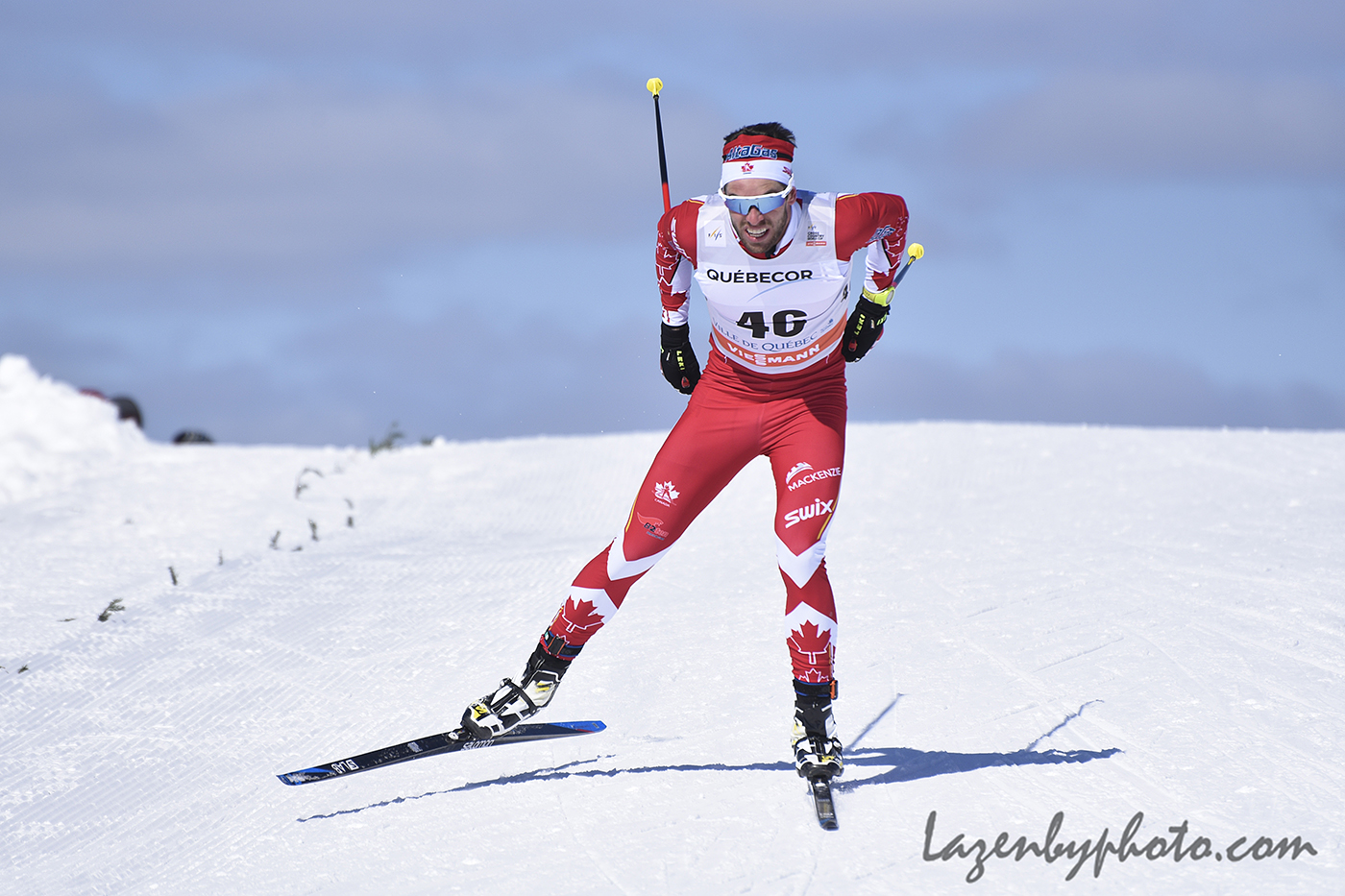
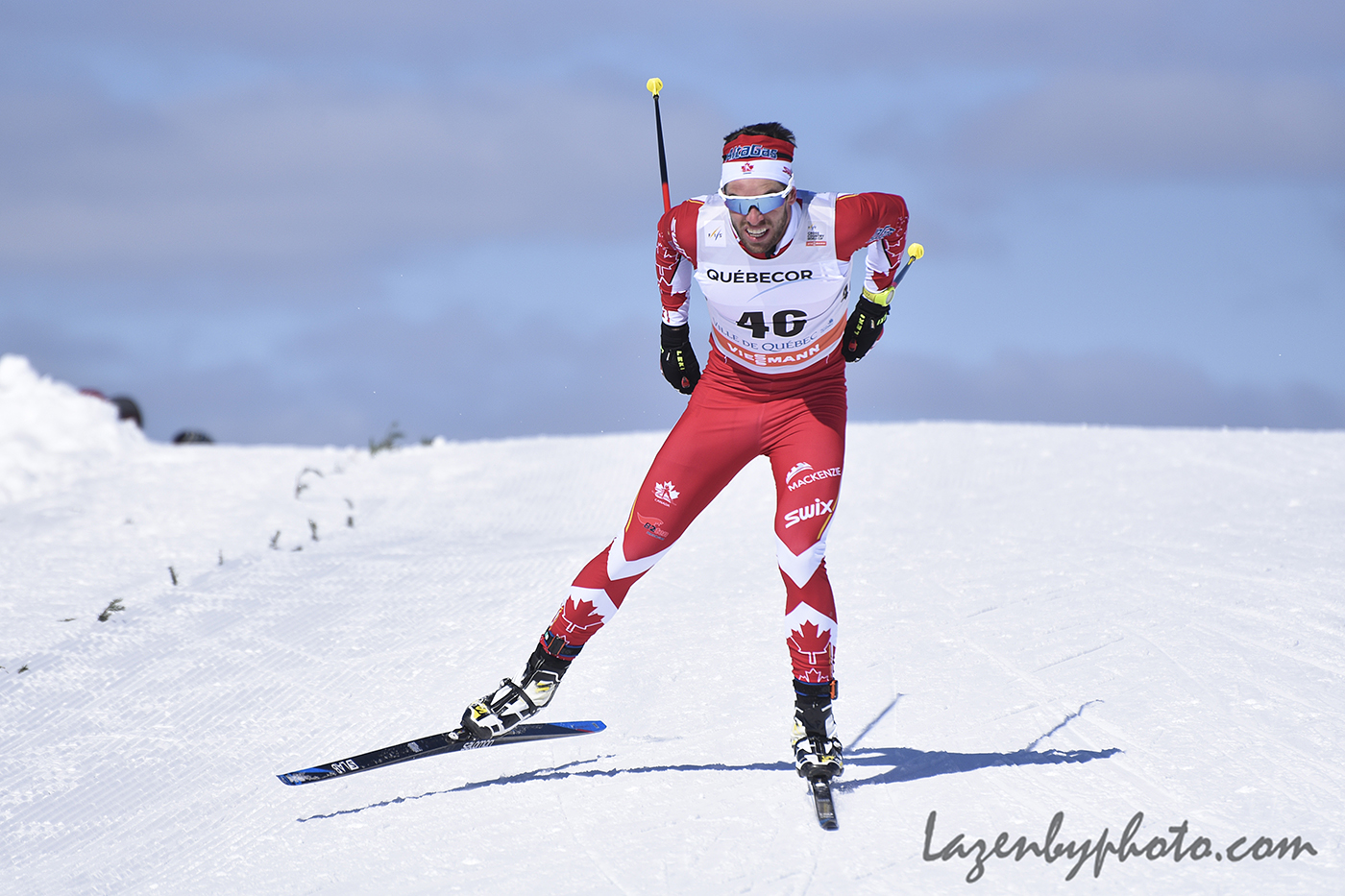
    Russell Kennedy (Canmore Nordic/Team R.A.D.) racing to 36th in the men’s skate sprint qualifier at 2017 World Cup Finals in Quebec City last March. (Photo: John Lazenby/Lazenbyphoto.com)

    Kennedy, who has spent all of his senior skiing years in Canada, has had some experience guiding, but this will be his first year at McKeever’s level of racing.

    “It’s hard for Para to find a guide that can match Brian’s pace because he’s quite fit, as I’ve been finding out more and more,” Kennedy said.

    McKeever is also based out of Canmore and the two coordinated training sessions as frequently as they could this summer and fall, Kennedy explained.

    “He’s a really really fit dude and there’s not too many people who can hold that pace. They basically have to be on the national team,” he continued. “The guy that’s guiding is, I guess, a bit less difficult than just being fit enough to guide him.”

    With the start of the World Cup race season well underway and the 2018 Paralympics exactly three months away, the primary goal for Kennedy right now is to simply stay fit.

    “[The Paralympics] are so far away that I can kind of peak for the [World Cup] and then rebuild if I need to,” Kennedy said. “We’re going to have to play it a bit by ear and see what happens. But we both trust in each other’s fitness so I think it will work out.”

    (Note: Neither Brian McKeever nor Robin McKeever could be reached for comment.) 

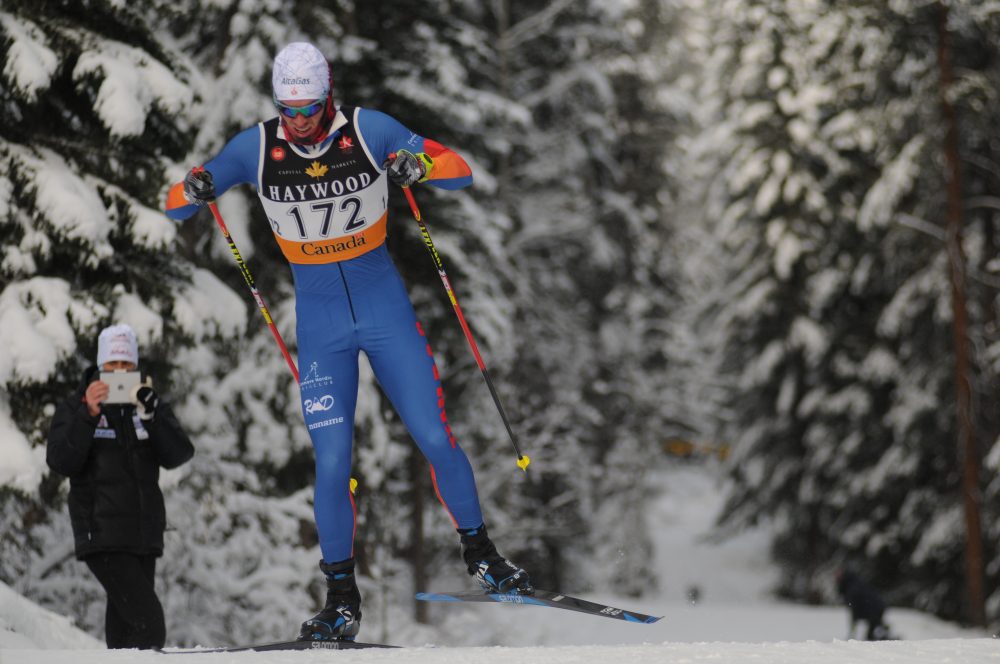
    Russell Kennedy of the Canmore-based Team R.A.D. racing to third in the men’s 10-kilometer freestyle at 2017 Frozen Thunder in early November in Canmore, Alberta. (Photo: Doug Stephen)