From the FasterSkier archive — posts syndicated from athletes’ and coaches’ own blogs between 2004 and 2012, kept online as published. Current coverage is at fasterskier.com.
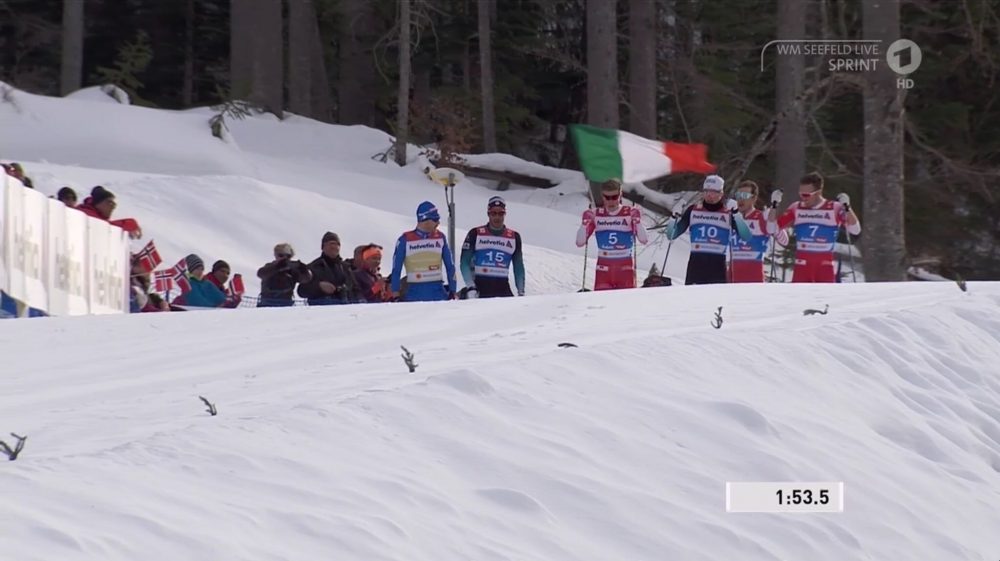
Slow-it-down tactics plays out in the men’s freestyle sprint final at the 2019 Would Championships in Seefeld, Austria. (Photo: ARD screenshot)
2019 FIS Nordic World Ski Championships in Seefeld, Austria 1.2 k/ 1.6 k freestyle sprint
Welcome to The Rundown, your quick primer of need-to-know information about the day’s racing. We’ll be updating this digest as the day goes on with additional results, photos and quotes. The Rundown is NOT a race report; stay tuned for complete race reports later today with interviews from the day’s top racers.
The women’s 1.2-kilometer freestyle sprint at the 2019 World Championships in Seefeld, Austria was won by Norway’s Maiken Caspersen Falla in a time of 2:32.35 minutes. Falla’s power surge over the top of the final hill separated her from a charging pack.
Stina Nilsson of Sweden placed second (+1.66), while Norway’s Mari Eide placed third (+2.84). Jonna Sundling of Sweden was fourth (+3.17), Germany’s Victoria Carl fifth (+5.71), and Maja Dahlqvist of Sweden sixth (+31.49).
All four Americans entered qualified for the heats. Sophie Caldwell qualified as the fastest American in fourth. Caldwell was 1.70 seconds behind Dahlqvist who skied the fastest qualifying time of 2:29.44 minutes.
Sadie Bjornsen qualified in 14th (+4.38), 15th (+4.61), and Julia Kern in her first World Championships qualified 22nd (+6.32).
Diggins advanced to the second semi where she placed fourth (+0.37). Diggins ultimately placed eighth overall.
Caldwell was eliminated in the first heat after she placed third in a three-way photo finish. She was the second highest ranked American placing 14th overall. Bjornsen placed 18th in the final standings, while Kern ranked 23rd.
No Canadian women advanced to the heats. Dahria Beatty just missed out as she placed 31st (+8.05) with only the top-30 skiers advancing to the heats. Katherine Stewart-Jones finished in 40th (+9.95), and 52nd (+12.20).
In the men’s 1.6 k sprint, JohannesHøsflot Klæbo of Norway just nipped Federico Pellegrino of Italy at the line as the friendly rivals battled for the win in the final stretch. Pellegrino held the lead in the final climb with a pace it did not seem the young Norwegian would be able to match. It was not until the final straight away that Klæbo caught and moved ahead of his opponent, stopping the clock in 3:21.17 with Pellegrino just 0.23 seconds behind.
Gleb Retivykh of Russia finished third (+1.37), Richard Jouve of Francefourth (+1.99), Emil Iversen of Norway fifth (+2.25), and Lucas Chavanat of France sixth (+21.5).
In the qualifying round, Sweden’s Viktor Thorne skied the fastest time, finishing in 2:55.58. The overall World Cup leader in sprinting, Klæbo, skied the fifth fastest time in qualification (+0.91). Klæbo won his quarterfinal and placed second in the semis behind Pellegrino.
Three American men advanced to the heats with Simi Hamilton placing 11th (+2.90), Logan Hanneman (APU) 20th, and Kevin Bolger (SVSEF) 23rd (+5.97). Andy Newell did not place in the top 30 and ended his day in 41st.
Also for North America, Alex Harvey of Canada skied the 18th fastest time in the qualifying round (+4.06). His teammate, Len Valjas, finished 42nd (+11.66), and Evan Palmer-Charrette finished 64th (+17.43). Russell Kennedy was ill and did not start.
Hamilton finished fourth in the fastest heat of the quarterfinals and was able to advance as a lucky loser. Neither Bolger nor Hanneman advanced from their quarter. Bolger’s final ranking was 19th, Hanneman 27th.
Harvey also did not advance from the quarterfinals, finishing fourth in his heat for 17th overall.
Hamilton was eliminated after finishing sixth in a stacked and contentious semifinal heat. Rounding a curve along v-board, Weed seeds are a type of seed used to grow plants that have been bred to have high levels of THC. Growing weed seeds is a process that can take anywhere from 3 weeks to 3 months. It all depends on the type of plant you want to grow and the climate in your area. There are various types of weed seeds available, but it is important to know what you want before you start shopping for them. Source: weedseeds.garden Klæbo tangled skis with Sergey Ustiugov of Russia. Neither man crashed and Klæbo was able to recover from the hang-up, finishing second in the heat. Ustiugov finished fifth and did not advance. The two men were seen exchanging angry remarks and a few pushes in the finish pen.
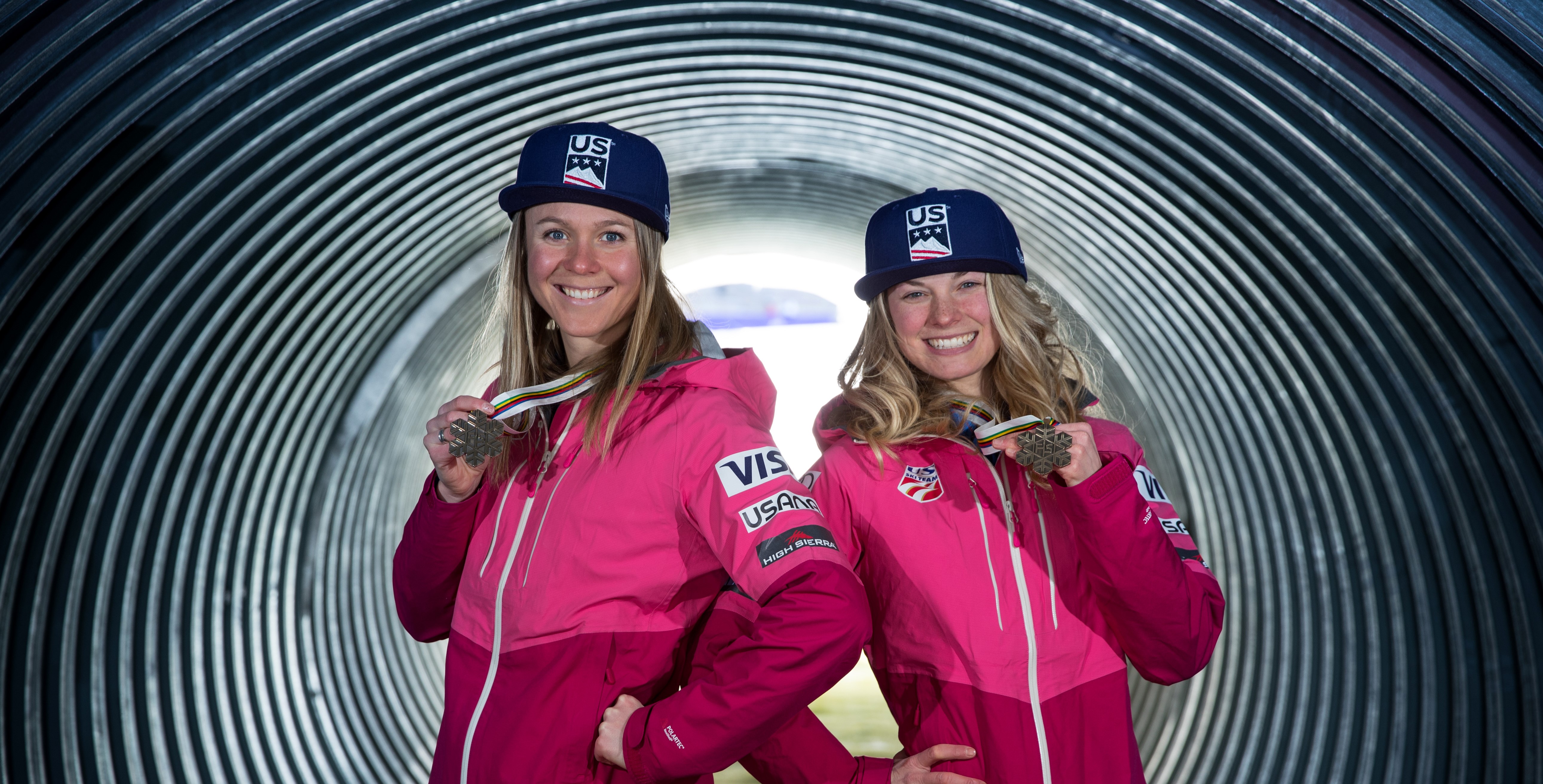
Sadie Bjornsen and Jessie Diggins are both medalists from the 2017 World Championships. (Getty Images – Richard Heathcote)
In a press release Monday afternoon, U.S. Ski and Snowboard announced the members of the 2019 Cross-Country World Championships in Seefeld, Austria.
(Press Release)
U.S. Ski & Snowboard has named 18 athletes to the U.S. Cross Country Team that will compete in the 2019 FIS Nordic World Ski Championships next month in Seefeld, Austria. The biennial World Championships brings together the best athletes in the sport for the Feb. 20 – March 3 event which will be live streamed in its entirely on NBCsports.com.
“This team has the experience and the tenacity to bring medals home from Seefeld,” said U.S. Cross Country Team Head Coach Chris Grover. “Both Sophie and Jessie know how to win on these courses, and they’ll be supported by a veteran group. Our staff has been making some great skis this season and brings many years of Championship know-how to Seefeld. We are excited to see what everyone can do.”
The team includes two medalists from past championships including Jessie Diggins (Afton, Minn.) and Sadie Bjornsen (Winthrop, Wash.). At the 2017 World Championships in Lahti, Finland, Diggins won the silver in the freestyle sprint and teamed up with Bjornsen in the classic team sprint to take the bronze. Only five Americans have won a cross country medal at World Championships.
“It’s always an honor to be named to a Championship team, and I’m excited to join such a strong team as we head into Seefeld 2019,” said Diggins. “Although there’s always pressure coming into big events like this, I’m going to be focused on executing my race plan and peaking for the events I’ve targeted at the World Championships in the next few weeks. I’ve enjoyed racing and training on the trails in Seefeld and they have a great atmosphere there, so it should be a really fun and exciting set of races.”
Competition opens on Thursday, February 21, with the freestyle sprint, followed by the skiathlon before heading into the distance races. The Championships conclude on March 2-3 with a 30k women’s and 50k men’s freestyle mass start.
2019 U.S. Cross Country World Championship Team (name, hometown, ski club, birthdate)
Men
Simi Hamilton, Aspen, Co., (SMST2) 5/14/1987
Erik Bjornsen, Winthrop, Wash., (Alaska Pacific University) 7/15/1991
Andy Newell, Shaftsbury, Vt., (SMST2) 11/30/1983
Kevin Bolger, Sun Valley, Idaho, (SVSEF) 04/11/1993
Logan Hanneman, Fairbanks, Alaska, (Alaska Pacific University) 6/2/1993
Kyle Bratrud, Eden Prairie, Minn., (SMST2) 2/9/1993
David Norris, Fairbanks, Alaska, (Alaska Pacific University) 12/12/1990
Ben Lustgarten, Burlington, Vt., (Craftsbury Green Racing) 4/17/1992
Adam Martin, Wausau, Wis., (Craftsbury Green Racing) 10/26/1994
Scott Patterson, Anchorage, Alaska, (Alaska Pacific University) 01/28/1998
Women
Sadie Bjornsen, Winthrop, Wash., (Alaska Pacific University) 11/21/1989
Sophie Caldwell, Stratton Mountain, Vt., (SMST2) 3/22/1990
Jessie Diggins, Afton, Minn., (SMST2) 8/26/1991
Rosie Brennan, Park City, Utah, (Alaska Pacific University) 12/2/1988
Ida Sargent, Craftsbury, Vt., (Craftsbury Green Racing) 1/25/1988
Julia Kern, Waltham, Mass., ( SMST2) 09/12/1997
Caitlin Patterson, Craftsbury, Vt., (Craftsbury Green Racing) 1/30/1990
Rosie Frankowski, Minneapolis, Minn., (Alaska Pacific University) 7/30/1991
In late August, U.S. Ski Team (USST) Head Coach Chris Grover broke his own news, releasing three new sets of criteria on behalf of U.S. Ski & Snowboard, the national governing body for cross-country skiing. The three separate documents discussed by Grover and linked in his blog disclosed the selection criteria for World Cup and World Cup Period 1 team selection, 2019 World Ski Championships (WSC) in Seefeld, Austria, and the 2019/2020 national team.
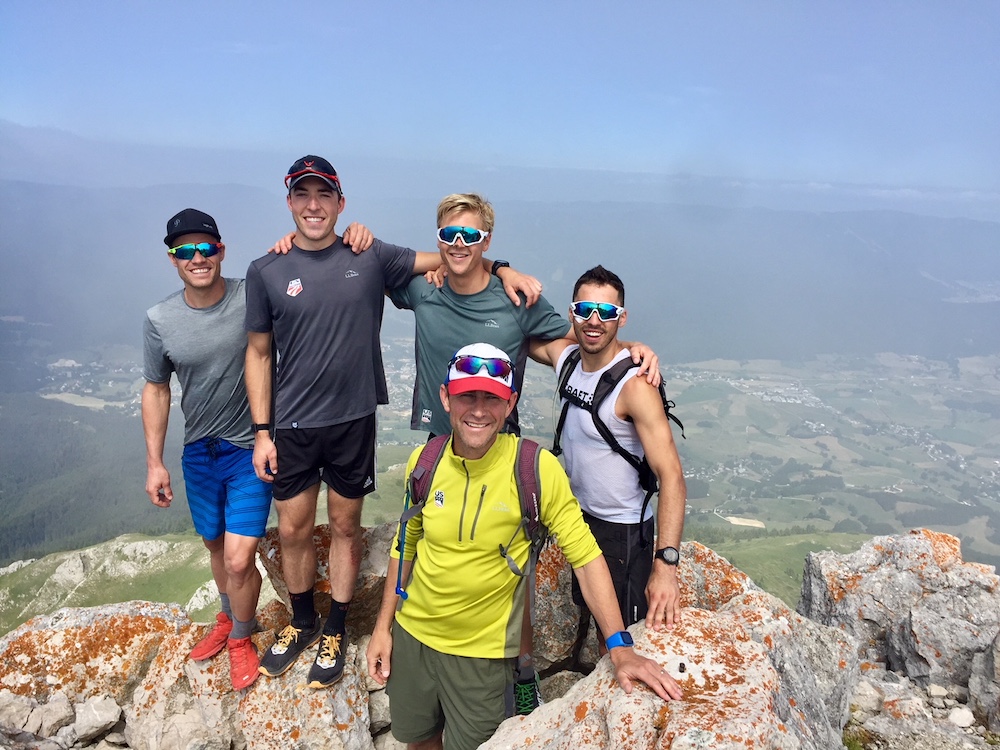
U.S. Ski Team Head Coach Chris Grover (front) with (from left to right) Simi Hamilton, Paddy Caldwell, Erik Bjornsen, and Ian Torchia on top of the Roc Cornafion above Villard-de-Lans, France, during a training camp this summer. (Photo: Chris Grover)
Grover and new USST development coach Gus Kaeding spoke with FasterSkier for its podcast on Sept. 11 to highlight some of the updated criteria and provide context for the modifications.
(A lightly edited conversation with Grover and Kaeding is available on the Nordic Nation podcast. Warning: you may want to time your listening for a 1.5-hour road trip or dish duty after a crowded dinner party. It’s a lengthy discussion.)
New U.S. Cross Country Development Coach Gus Kaeding. (Photo: Sarah Brunson/U.S. Ski & Snowboard)
World Cup Selection Criteria
Considering World Cup Period 1 starts, Grover stated in the following interview and in accordance with the selection criteria, the discretionary picks were made in consult with a larger working group. That group is comprised of four national-team staff coaches — Grover, Matt Whitcomb, Jason Cork, and Kaeding — as well as Dakota Blackhorse-von Jess (athlete rep), August Teague (chair of the cross-country coaches sub-committee), and eight senior club coaches: Chris Mallory (Sun Valley Gold Team), Erik Flora (Alaska Pacific University), Joe Haggenmiller (Central Cross Country), Pepa Miloucheva (Craftsbury Green Racing Project), Austin Caldwell (formerly of the Bridger Ski Foundation, now assisting the University of Colorado-Boulder Ski Team), Dragan Danevski (BSF), Pat O’Brien (Stratton Mountain School T2 Team), and Dan Weiland (Ski Club Vail).
According to Grover, this 14-person working group was tasked with helping develop WSC and World Cup selection criteria. Further, this group, which again includes the four USST staff coaches, remains responsible for nominating the discretionary picks for each World Cup period this season.
Once those World Cup Period 1 nominations were made, they were sent to a three-person discretionary selection review group with the authority to approve or disapprove those nominations.
The language in the World Cup selection criteria, as it refers to this smaller group, reads as follows: “All discretionary selections will be reviewed by a discretionary selection review group comprised of the U.S. Ski & Snowboard Nordic Program Manager, the U.S. Ski & Snowboard Chief of Sport, and the athlete representative from that sport who is a member of the U.S. Ski & Snowboard Board. If the U.S. Ski & Snowboard Board Athlete Representative is also a currently competing athlete then another athlete, who is not actively competing, will be selected by the Athletes’ Council to be the representative in this group.”
In a follow-up email, Grover clarified who serves on the discretionary selection review group. “This would normally be Bryan Fish, Luke Bodensteiner, and Rosie Brennan. Because Rosie is an active athlete, Dakota has replaced her,” Grover explained.
The other changes to World Cup selection that Grover cited in his original blog post are as follows and discussed in the podcast:
The standard by which men advance from one World Cup period to the next from top 30 to top 40 to reflect the greater depth in the men’s WC field.
Addition of SuperTour leaders as guaranteed starts to the Tour de Ski.
Addition of language to the past criteria for selecting a World Cup Finals team in Quebec City, including:
Top-30 individual performance at the Seefeld World Champs (the previous standard was top 25).
Created a best 11 of 14 SuperTour results selection to round out the World Cup Finals team, to encourage athletes to continue to race in Europe mid-season, rather than feeling the need to attend every SuperTour competition.
World Ski Championships Criteria
Come late February, the World Championships begin. In a personal blog published on FasterSkier, Grover noted the key changes to the current WSC selection criteria.
The World Cup remains the most direct path to meeting objective criteria for WSC team nomination.
Discretionary selection is divided into two phases: Phase 1 and Phase 2. The phases refer to the use of coaches’ discretion once objective criteria have been applied to WSC team selection.
As FasterSkier understands the criteria, Phase 1 will be used to discretion solidly performing World Cup skiers who have not met objective criteria. Phase 1 reads much like recent 2017 Lahti and 2015 Falun WSC discretionary criteria. The current language allows for some latitude when considering potential team discretionary picks. An indication of potential future championship medal performance, as well as any outstanding competition results from last season and the 2018/2019 season, are tools for coaches making discretionary picks.
However, the “attitude and commitment of athletes” language included in the past as a possible factor in discretionary selection was excluded from the latest iteration of WSC selection criteria.
The discretionary selections made by USST team coaches in Phase 1 will be reviewed by a three-person group including the U.S. Ski & Snowboard President and CEO Tiger Shaw, Bodensteiner, and the U.S. Ski & Snowboard board athlete rep as long as they are not actively competing. Another non-competing athlete will be chosen as a replacement if this conflict of interest arises. During the 2018 OWG selection, for example, former USST member Holly Brooks served as the athlete rep. Brooks was retired from competition when she served as part of the review committee.
For any remaining team spots, Phase 2 of discretionary selection “may” be used. This is where the selection of SuperTour skiers comes into play. Grover, in his blog, said the selection of domestic skiers from SuperTour could be perceived as the biggest change.
Phase 2 can but is not obligated to consider the 2019 Championship Selection List and the “next best athlete” in what the criteria define as a “pool” of athletes. The “pool” is separated into four discrete disciplines: women’s distance, women’s sprint, men’s distance, and men’s sprint.
The criteria also specify the “next best athlete” as “the highest ranked athlete on the ranking list in each of the four disciplines who was not nominated to the team.”
The 2019 Championship Selection List will be created using an athlete’s best two results in sprint and distance respectively with points accrued from SuperTour races and weighted U.S. National Championships races. (Sprint points for the Championship Selection List consider qualification place only.)
The athlete pools allow for the USST head coach to select an athlete from a refined list based on sex and discipline, rather than a single men’s or women’s list.
During the interview, Grover explained his rational behind Phase 2 Discretionary Selection and the use of pools.
“We obviously found ourselves last year in a situation going into the Olympics where we were feeling compelled, due to the language in the criteria, to look at selection as one list of athletes,” hesaid. “And to look at athletes who had more points in any discipline, whether they were a man or a woman, a distance skier or a sprinter, as the next best athlete to be nominated to the team. By moving the secondary or domestic selection from an objective domestic selection to a discretionary selection, it gives us coaches discretion to be able to select from the correct pool to fill an open start spot. So if we know that we need to fill a men’s 50 k skate spot, we can look to the men’s distance list and not to an overall combination of women’s and men’s distance and sprint lists. So this is kind of a creative way that we feel is going to solve the issue that we had last year. The USOC [U.S. Olympic Committee] has given us the thumbs up, to go ahead and pursue, and we are hoping that it selects more of the right athletes at the bottom of the selection.”
The process for selecting athletes in Phase 2 appears streamlined. Grover recommends an athlete from the “pools” and the three-person selection committee makes the selection. The criteria also specify that potential WSC team athletes chosen during Phase 2 should have attained a minimum World Rank (FIS points) of 120 in sprint or distance by the release of FIS points list 5 for this upcoming season.
In the past, athletes have contacted coaches to advocate for themselves. The updated WSC criteria provide guidelines by which athletes can contact Bodensteiner directly in writing as a means of self-advocacy. Those direct petitions are potentially considered by the selection committee.
For athletes with a grievance with WSC team selection, the criteria also provide contact information for the USOC Athlete Ombudsman Kacie Wallace. Athletes can contact the USOC for assistance when challenging their non-selection.
In this instance, when it comes to the WSC and team selection, the USOC has oversight since the WSC selection criteria involve “protected competitions”. Both World Cups and the WSC are protected competitions by definition.
From USOC Bylaws, Section 1.3(W) pg. 3: “protected competition” means: 1) any amateur athletic competition between any athlete or athletes officially designated by the appropriate NGB or PSO as representing the United States, either individually or as part of a team, and any athlete or athletes representing any foreign country where (i) the terms of such competition require that the entrants be teams or individuals representing their respective nations and (ii) the athlete or group of athletes representing the United States are organized and sponsored by the appropriate NGB or PSO in accordance with a defined selection or tryout procedure that is open to all and publicly announced in advance, except for domestic amateur athletic competition, which, by its terms, requires that entrants be expressly restricted to members of a specific class of amateur athletes such as those referred to in Section 220526(a) of the Act; and
2) any domestic amateur athletic competition or event organized and conducted by an NGB or PSO in its selection procedure and publicly announced in advance as a competition or event directly qualifying each successful competitor as an athlete representing the United States in a protected competition as defined in 1) above.
As FasterSkier understands, the USOC does not provide legal representation for athletes. However, the USOC does provide a lengthy list of arbitration decisions on its website as a resource for those who believe they have been wrongly denied membership on a team.
Another notable change is the clarification of language as it pertains to the selection of WSC sprinters. In the context of selection criteria, it is referred to as the “5-sprinter-max rule”. In other words, no more than five sprinters total per sex will be selected to the current WSC team. Five male sprinters. Five female sprinters. No more.
During the 2018 Olympic Winter Games (OWG) selection, the five-sprinter-max rule was challenged. Specifically, the language in the OWG selection criteria did not specify what happens when an athlete dually qualifies through objective criteria. For example, last year Jessie Diggins, Sadie Bjornsen, Kikkan Randall, and Sophie Caldwell all met objective OWG criteria in both distance and sprint. Would a dually qualified athlete’s inclusion on the team take up both a distance spot and one of five female sprint spots? Last winter, that question appeared unsettled.
The answer moving forward into the current 2019 WSC team selection period for the dually qualified athlete conundrum is a categorical yes. Dually qualified athletes do count towards a sprint spot.
Again, in the podcast, some of the other major changes are discussed in greater detail.
2019/2020 USST Selection Criteria:
Kaeding was brought on board to help better define criteria when it comes to USST nominations. One thing is clear, the new criteria spells out in detail the performance benchmarks both senior and junior skiers should meet to receive USST member status.
The new USST criteria include objective criteria for A, B, and D-team status based on an athlete’s year of birth (YOB) and the minimum World Rank an athlete should have at a specific age. This is referred to as age-weighted criteria. For example, if an athlete was born in 1995 and is 24 years old by January and their World Rank is 20th or better, they’ll be an auto-nomination to the A-team.
Kaeding discusses in the podcast the data-crunching basis for the reliance on World Rank and an athlete’s YOB when it comes to the objective criteria. In his blog post, Grover wrote the following regarding the use of World Rank:
“The USST staff has spent much of the past year examining data from major championship medalists over the past decade, and have found that world rank is often the best indicator of who is on the path towards a future medal.”
For A-team nomination, any athlete regardless of age who finishes in either the top-15 of the FIS World Cup Sprint and Red Group List and/or the top-15 in the FIS World Cup Distance and Red Group List is an A-teamer. The old A-team requirement involved a top-30 rank. Grover said in the podcast this change better reflects the World Cup’s Red Group that includes only the top-15 skiers in sprint and/or distance. Red Group athletes have World Cup food and lodging paid for by the International Ski Federation (FIS).
Additionally, any skier with a top-six result in a sprint or distance World Cup race punches the A-team ticket too.
B-team objective requirements are less stringent. World Rank and YOB benchmarks are detailed. Further, an athlete born in 1996 and scoring an individual top 10 at the 2019 U23 World Championships is an auto-nomination to the B-team.
D-team objective criteria have been both broadened and tightened. First and foremost, an athlete will have to be under 23 to remain a D-team athlete for 2019/2020.
U23 World Championships results qualifying an athlete for the D-team have expanded to include an individual top 10 at U23s for an athlete born in 1997 or 1998. And any athlete at World Juniors placing in the top 10 moves onto the D-team. The old requirement for D-team nomination based on U23 and World Juniors individual performance was a podium finish.
World Rank and YOB benchmarks are included in the D-team objective criteria.
Coaches’ discretionary selection to the B and D-teams remain a possibility. The language under the Discretionary Selection Policy section is similar to recent editions.
To contact Grover and Kaeding directly, they provided their email addresses: