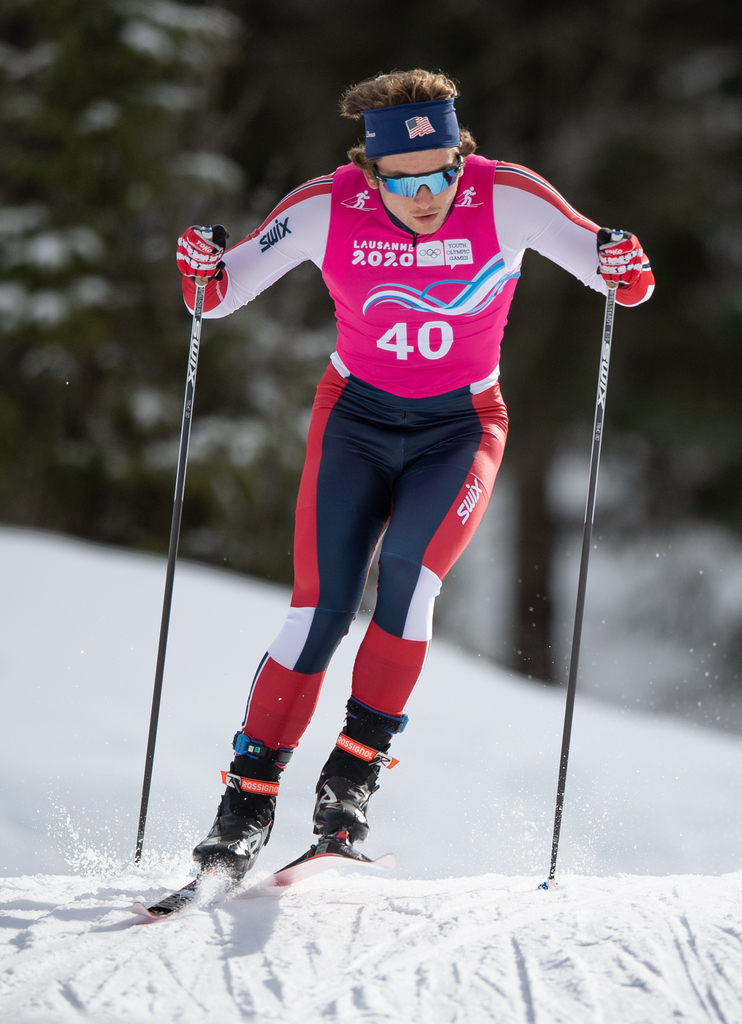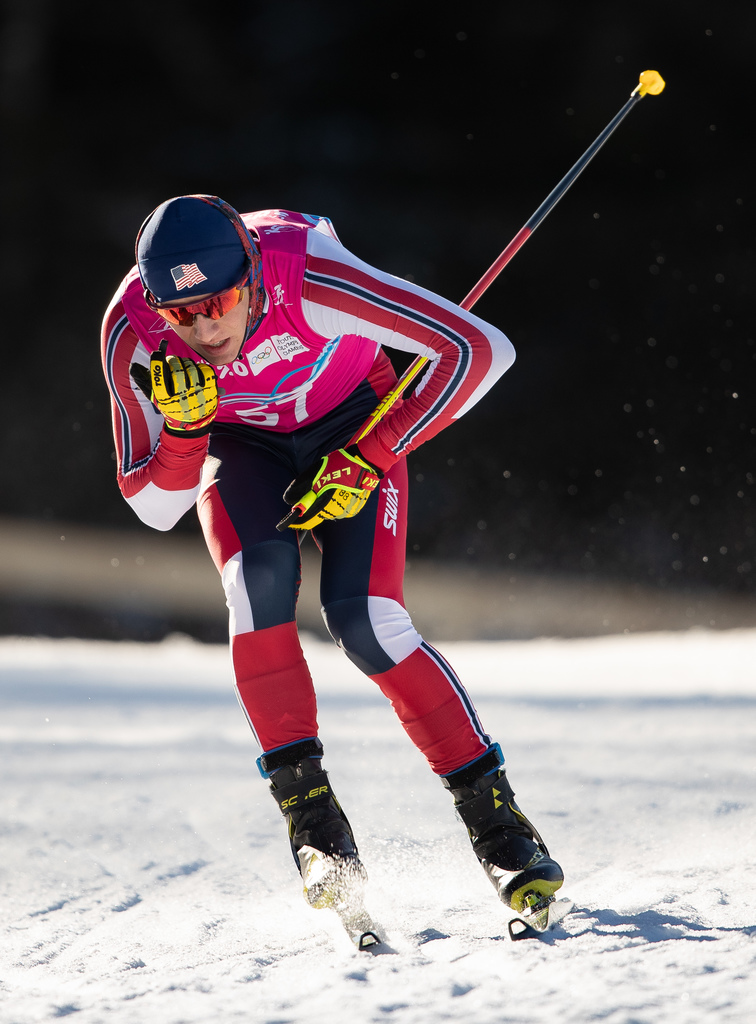
U.S. Ski & Snowboard recently announced its U.S. Ski Team nominations for the 2022-23 season. Of the 22 athletes named to the team this season, six were not on the previous year’s roster, either newly named or renamed: Michael Earnhart, Walker Hall, Zak Ketterson, Will Koch, Finn O’Connell, and Sammy Smith.
To help fans get to know these new(er) faces, FasterSkier is doing a series of interviews, providing insights into the factors that have contributed to development, progress, and growth for these athletes last season. In this installment, we talk with Will Koch following his nomination to the U.S. Ski Team on its D-Team.
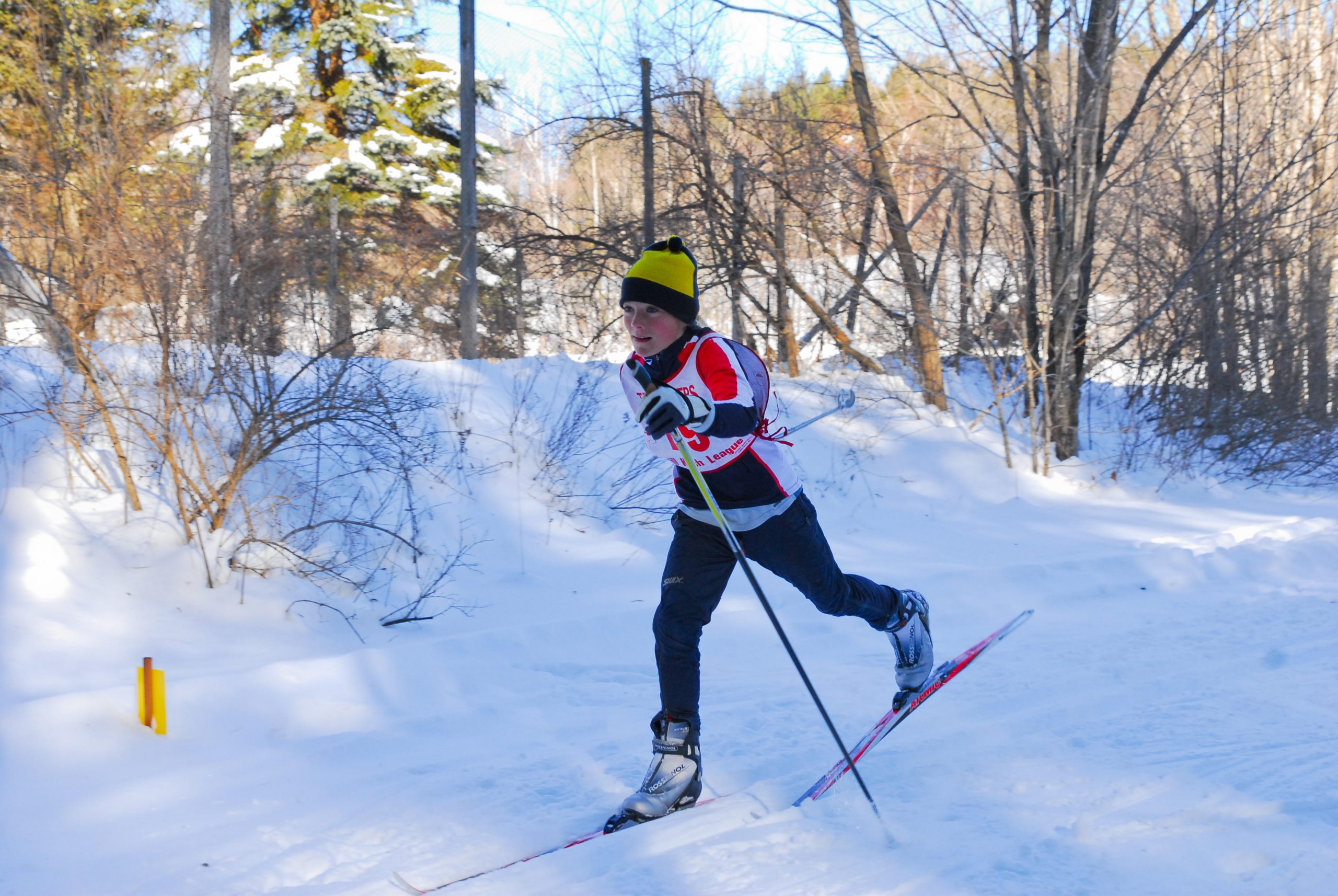
Koch grew up in Vermont and is now a member of the University of Colorado Ski Team, where he will be entering his junior year this coming fall. Son of Olympic Silver-Medalist, Bill Koch, Will began his racing career in the New England program named after his father (the Bill Koch League) and attended high school at Stratton Mountain School.
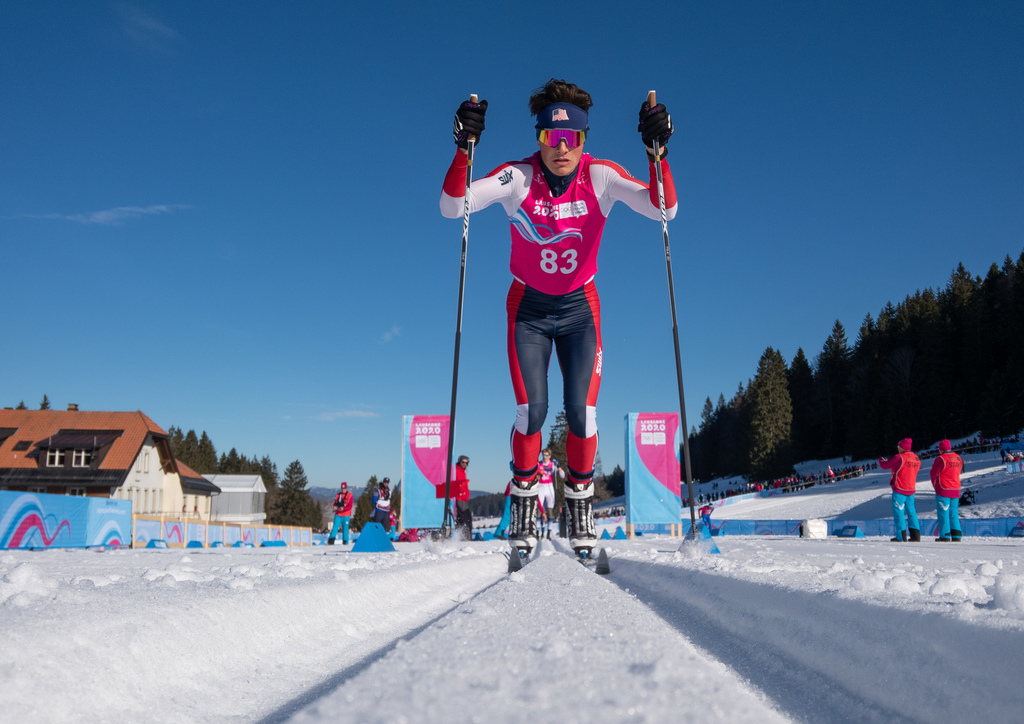
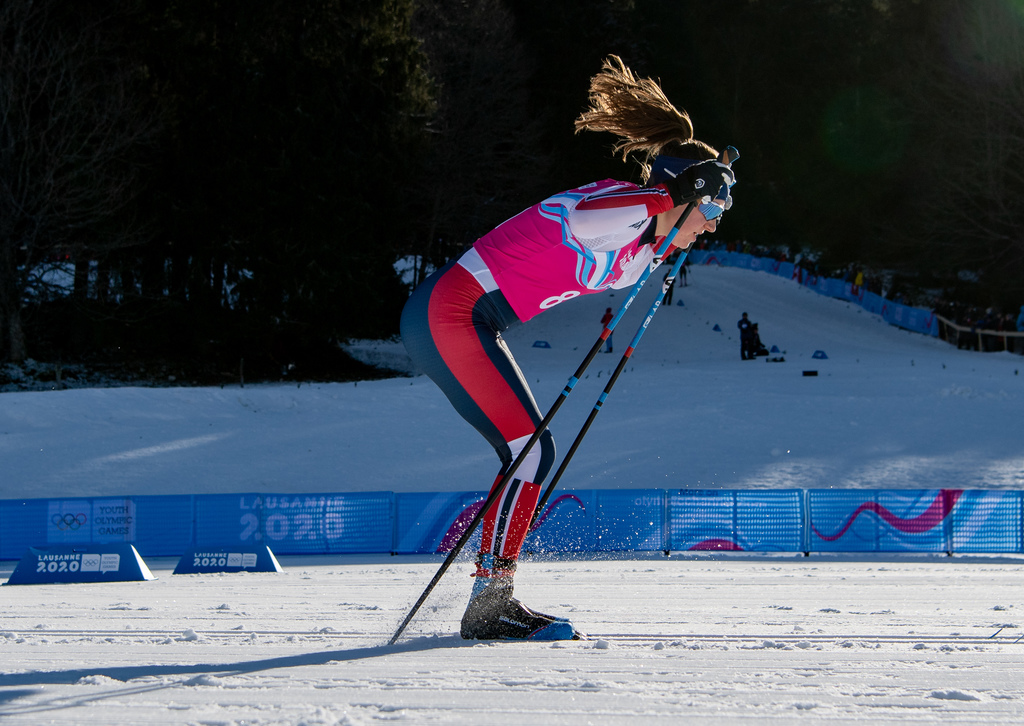
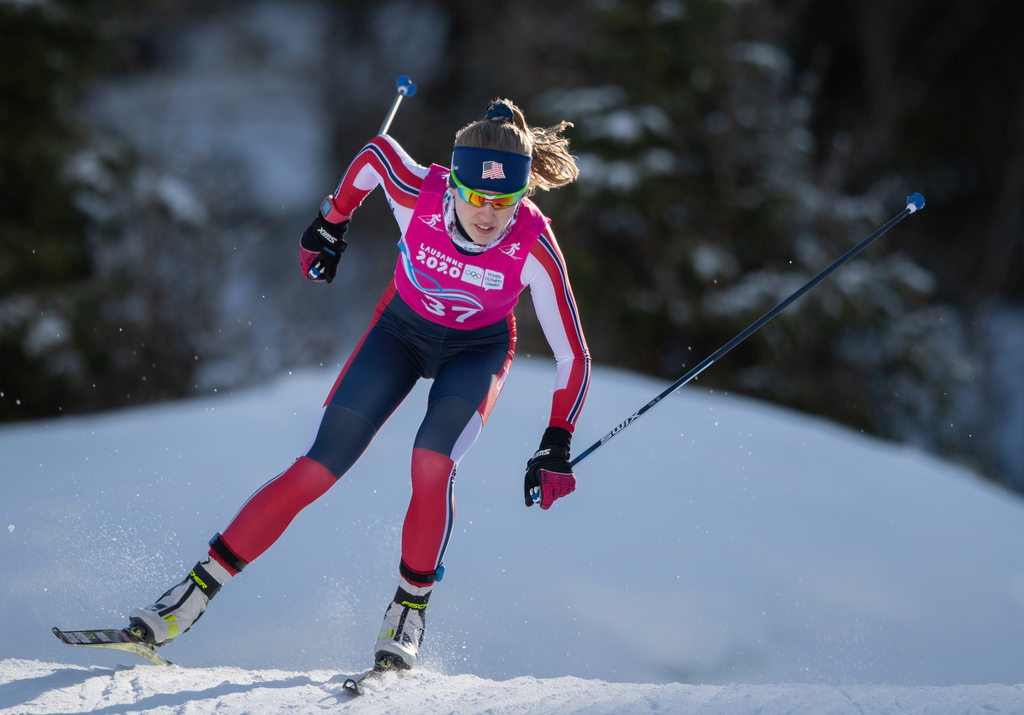
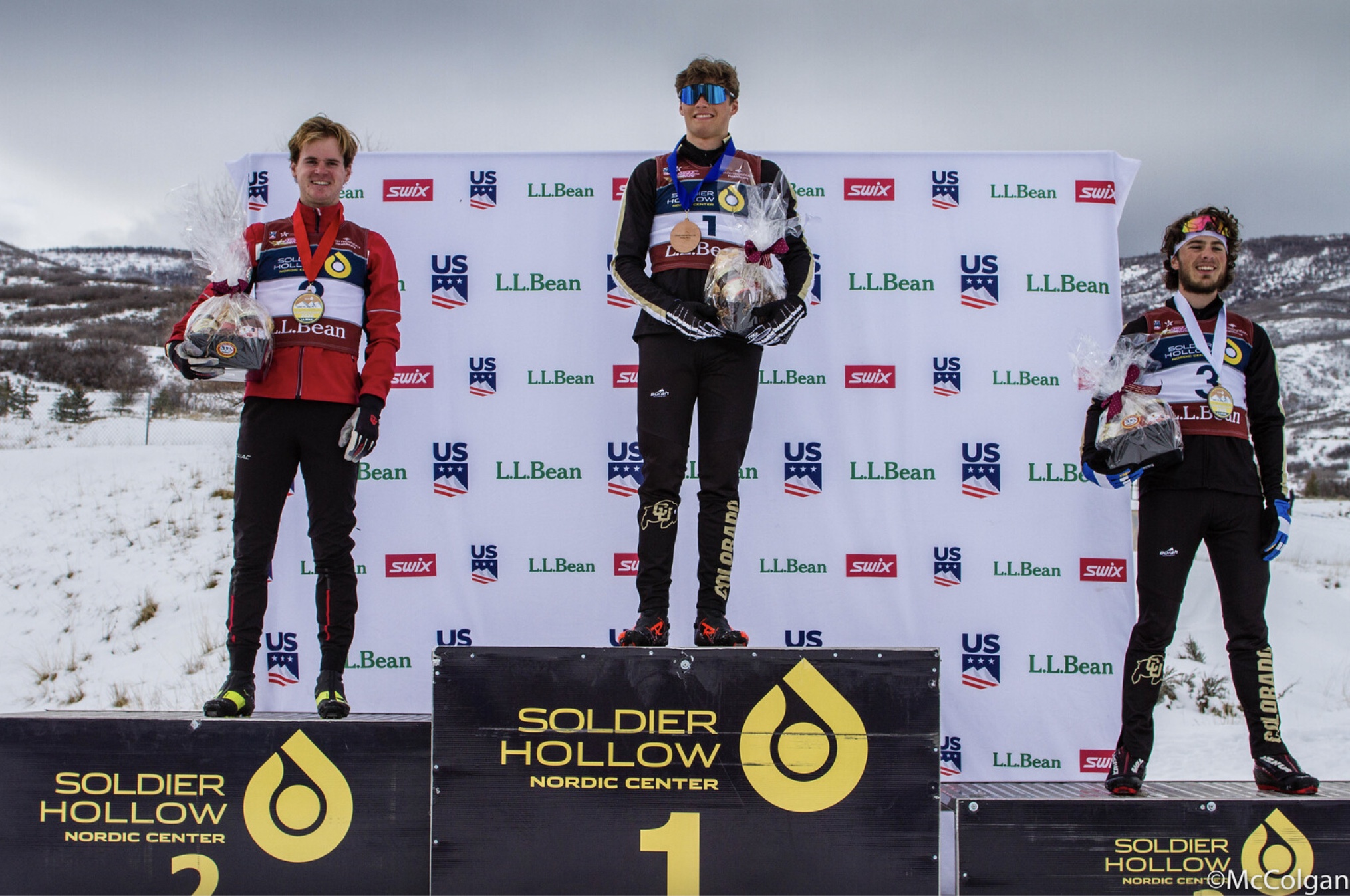
During the 2019/20 ski season, Koch qualified to compete at the Youth Olympic Games in Lausanne, Switzerland where he earned a bronze medal in the 10 k classic. In 2022, racing at World Juniors in Lygna, Norway Koch finished 13th in the 10 k classic, 15th in the skate sprint, and anchored the 4×5 k relay team, helping to secure bronze for Team USA.
Ella Hall/Faster Skier: Can you give us a little introduction, where are you from? When did you start skiing? What was your relationship with skiing growing up?
Will Koch: I’m from Peru, Vermont, which is a tiny little town in Southern Vermont, just like 80 people as a population. And I’ve been living there since I was two years old. I got into skiing when I was super young, because my dad was a professional ski racer, Bill Koch. So I actually started skiing before I was even able to walk – nine months old on a beach in Hawaii was my first time on skis. Since then, I’ve just been pretty much training.
I grew up in a really vibrant ski community: starting as a youth, then Stratton Mountain School for my high school years, and now I’m at University of Colorado at Boulder. And this is my first year on the [U.S. Ski Team]. So that’s super exciting.
FS: As the daughter of a three-time Olympian I can maybe relate to the potential challenges of being the child of a successful ski racer… so acknowledging that, can you talk a little bit about your dad’s role in your skiing career?
WK: I definitely get that question quite a bit about like, you know, is it stressful or pressure to have your dad being like, Olympian and everything. Honestly, I think that my dad does a really good job of not having expectations for me, which is really nice. My dad totally recognizes that skiing is awesome and everything, but that there’s a lot more to life than skiing at the same time. He’s very much left the coaching to my actual coaches, but at the same time, he’s always there to give advice when I want it.
He’s obviously like, been there, done that with everything that I’m given going through in terms of skiing, so I think it’s really inspiring to have a person like that always around when I need it, but it’s really awesome that it doesn’t feel like a burden. It’s really an opportunity.
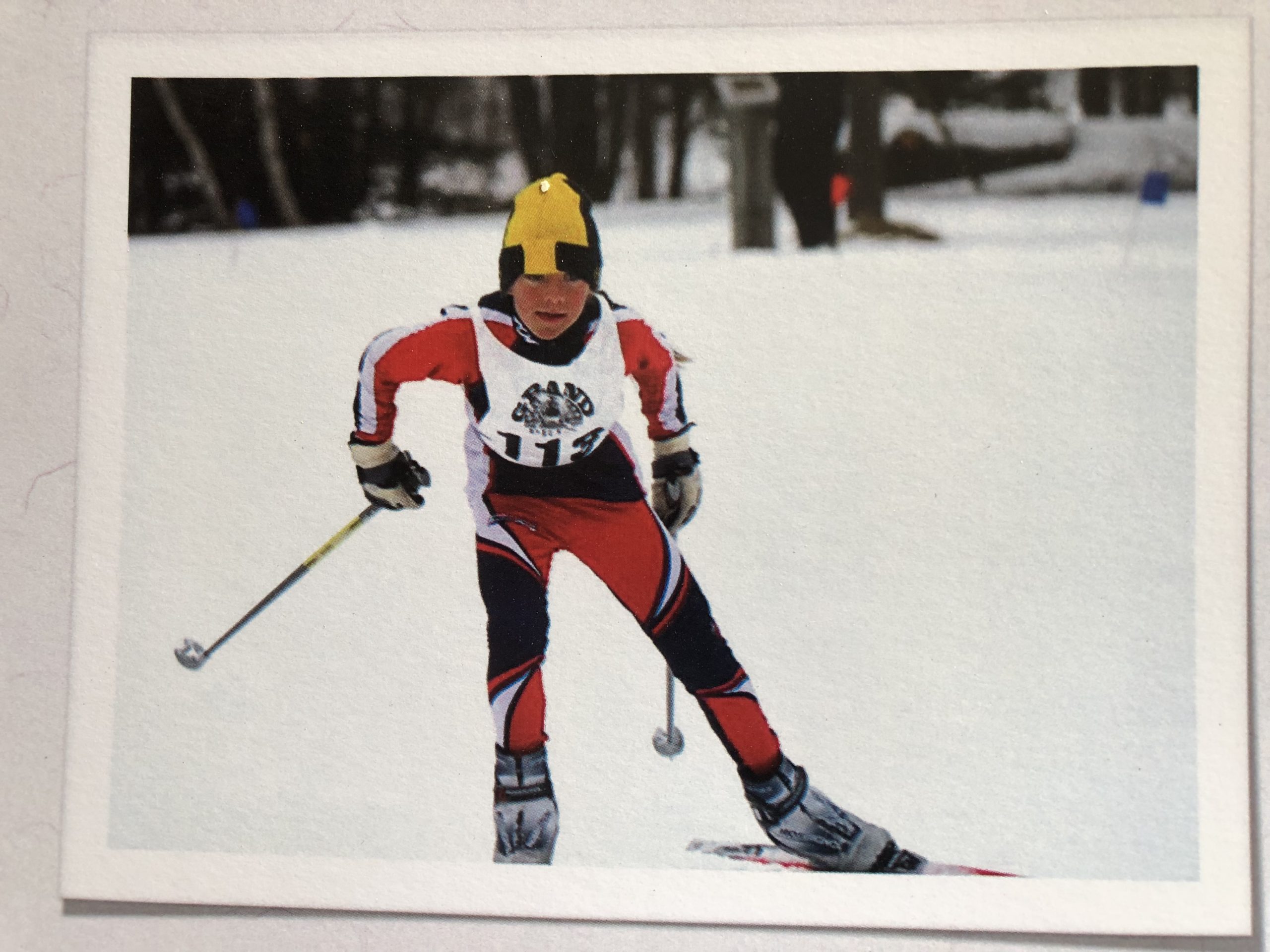
FS: How was the transition from high school at Stratton Mountain School (SMS) to college skiing at the University of Colorado (CU)? Both in terms of training but also general life changes? What drew you to CU?
WK: One of the biggest reasons that I wanted to go out west for college was that I loved the mountains out west. And I also really liked the people out there. I think they’re super open and fun. I also think that being at a PAC 12 conference school comes with certain advantages as far the resources available in the athletic departments. On top of that, I think CU had a really top level nordic team compared to certain schools that I was looking at. So those were all factors that made me want to go out there, and I definitely never regretted that choice once I was up there. I’ve been loving it for my two years, it’s a lot of fun. [There’s] a really good mix on the ski team, I think, of having fun, but also being serious about training.
I’d say, as far as training, transitioning from high school to college one difference was the altitude. When I first went up to altitude in Boulder, and was training up there, I really thought that I could just keep doing exactly the same volume and workouts that I was doing in Stratton. But I put myself in a little bit of a hole when I first got out there, and then learned from that and realized that it’s a little more taxing on the body. But once I dialed it back, training wise, I was able to get some real fitness benefits from the altitude. Now that I’ve been out there for two years, I was able to have a really good fitness year this past season and [make] kind of a breakthrough in my skiing. I think part of that is being in altitude and building fitness with a really strong team.
In general, I found that the college schedule allowed me to have more flexibility in terms of when I trained and it’s easier to do two sessions a day in college compared to high school, just because you spend a little bit less time in the classroom. You have a little more flexibility in how you structure your day.
FS: By my count you’ve been on five different international racing trips, including the Youth Olympic Games (YOG). What were some of the highlights from those experiences, particularly in terms of how they supported your development and goals?
WK: Yeah, of all the international trips I’ve been on, definitely the Youth Olympics stands out as the coolest one and the most memorable. YOG is pretty different from World Juniors, in terms of it’s a fair amount less intense, I would say and more about having fun. And yet, even though it’s less intense, it’s the same level of competition, either way, you’re up against the best people in the world.
I think that’s what I really loved about the Youth Olympics, it was fun to win the medal there and everything, but it was also mainly just a really cool experience. That was my first time meeting people from a lot of different countriesI still have my friends from Kazakhstan and Australia from the Youth Olympics, which I love. And, of course, that was also before COVID was really a thing, that was also a time when we were able to do a little bit more socializing on international trips.
I think that those [international] trips are really crucial in development, just to really see that next level of competition that you’re going to be up against, and to really see that every second counts. In the Youth Olympics race where I got my bronze, it was two seconds between me and second place, and I was about five seconds from being back in eighth place. It was just ridiculous how tight it was. That just kind of goes to show how you really need to be thinking about getting those small gains where you can, and that the rest of the competition in the world is out there doing the same thing.
FS: So you’ve just been named to the U.S. Ski Team D-Team, can you reflect on how that feels and maybe what is most exciting to you about this opportunity?
WK: It’s definitely pretty validating to be named after being kind of on the edge for a few years now. It’s exciting. At the same time, though, it’s also basically almost the same training group that I’ve been training with for years, now that me, Walker [Hall] and Michael [Earnhart] are all on there.
Being at my first US Ski Team camp (in Bend), I was kind of looking around, and I was like, Hey, this is really not that different from NTG, three years ago, when we all first made that. So it’s really cool to see how we all progress together. I’d say, making the team, it’s nice and everything, but it’s also really just one more step in development that we’re all taking together, which is really fun.
FS: What are some of your goals for the upcoming ski season?
WK: I would love to make a debut on the World Cup if that worked out. It’s obviously a really competitive scene right now for Team USA to make it there, and getting picked is by no means guaranteed. I think that’d be a really good next level experience to have. I’d also like to get on the podium at NCAA’s.
FS: Sounds like you made it out to Bend for the annual spring U.S. Ski Team camp there, and now are you back with SMS. What does the rest of your summer/fall look like?
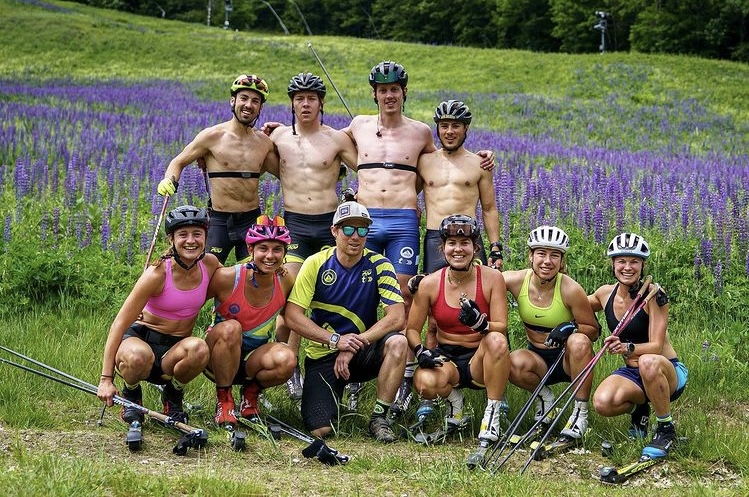
WK: For the rest of the summer, I will be in Stratton training with the SMS T2 team. It’s pretty exciting, because we should have a lot of really fast guys on the US Ski Team coming out here to join our training group, which I think will be awesome, having grown up in Vermont, to get to show a bunch of people how we do it over here. I’ll be here until mid-August and then go back to Colorado and start school and training with the CU Ski Team.