From the FasterSkier archive — posts syndicated from athletes’ and coaches’ own blogs between 2004 and 2012, kept online as published. Current coverage is at fasterskier.com.
ZHANGJIAKOU, China — Team USA won its first-ever mixed relay gold to close out the cross-country competition at the Paralympic Winter Games Beijing 2022 on Sunday at Zhangjiakou National Biathlon Centre in Zhangjiakou, China.
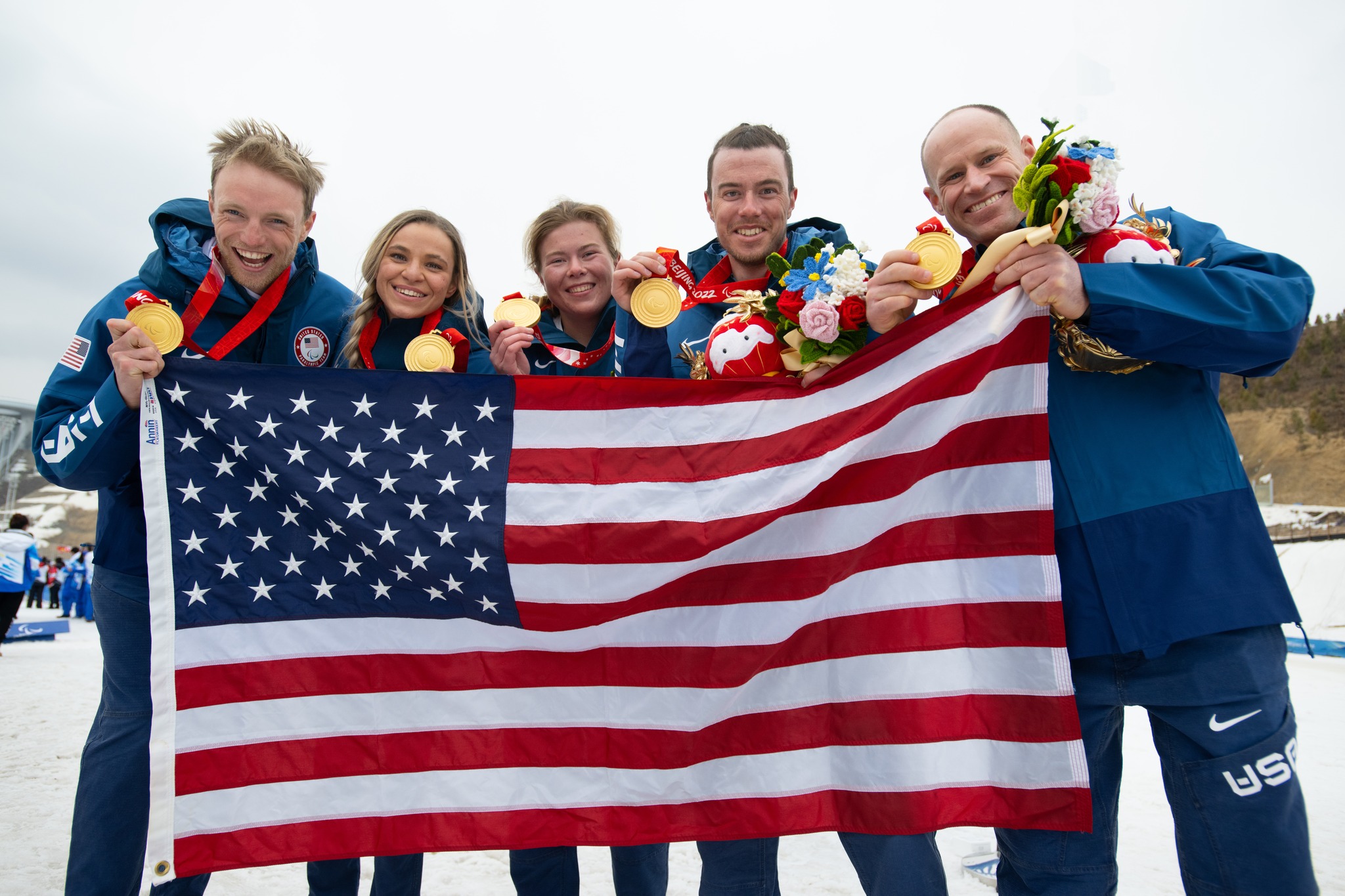
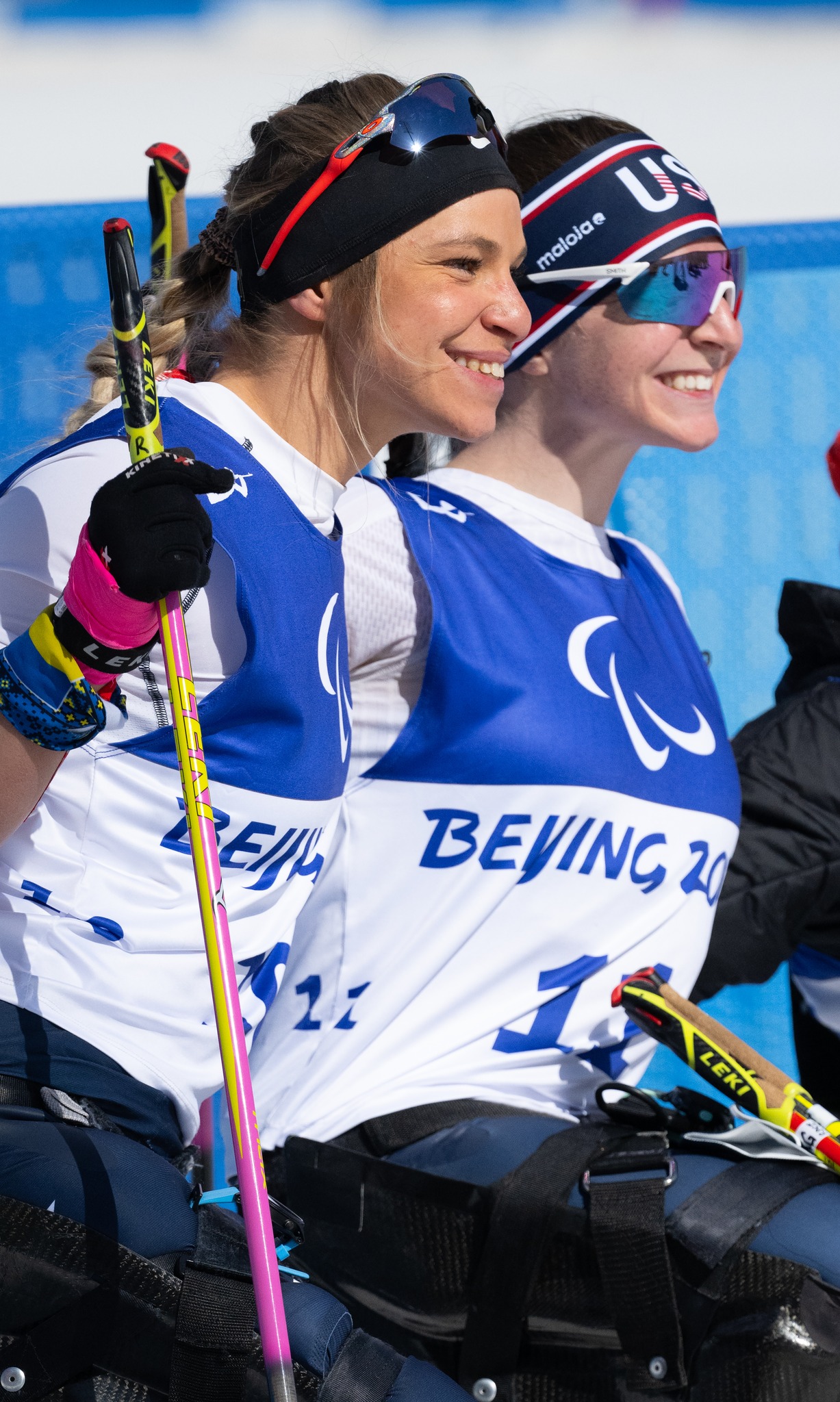
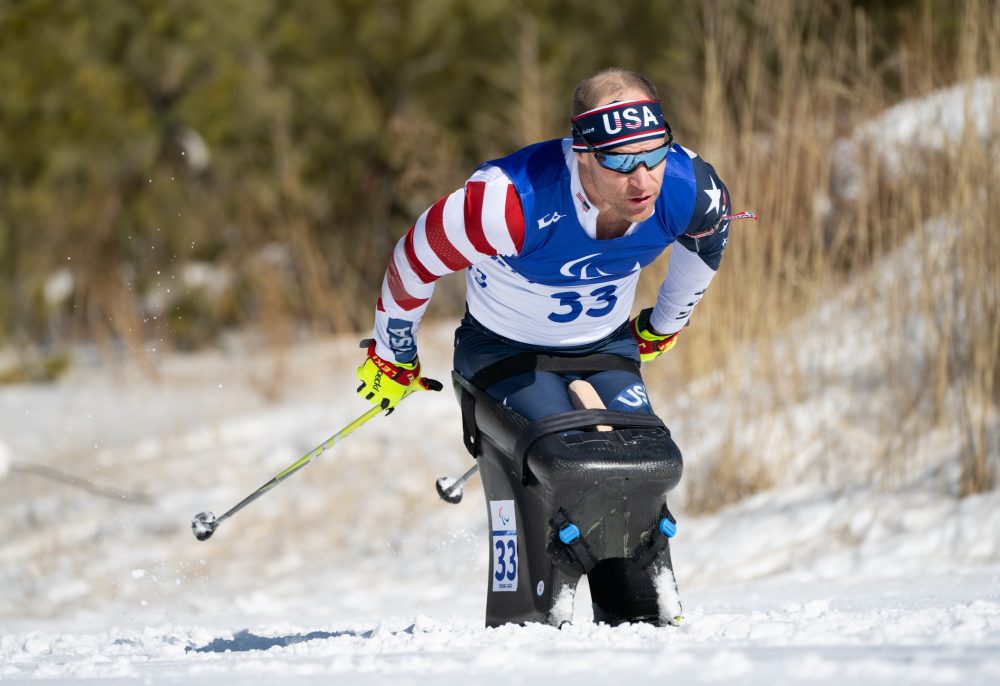
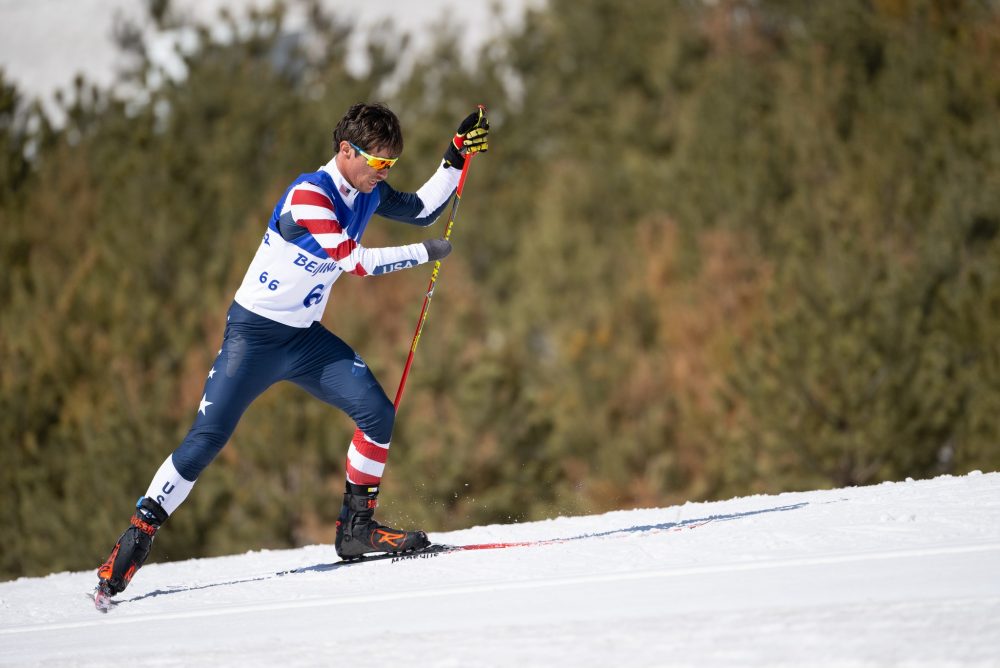
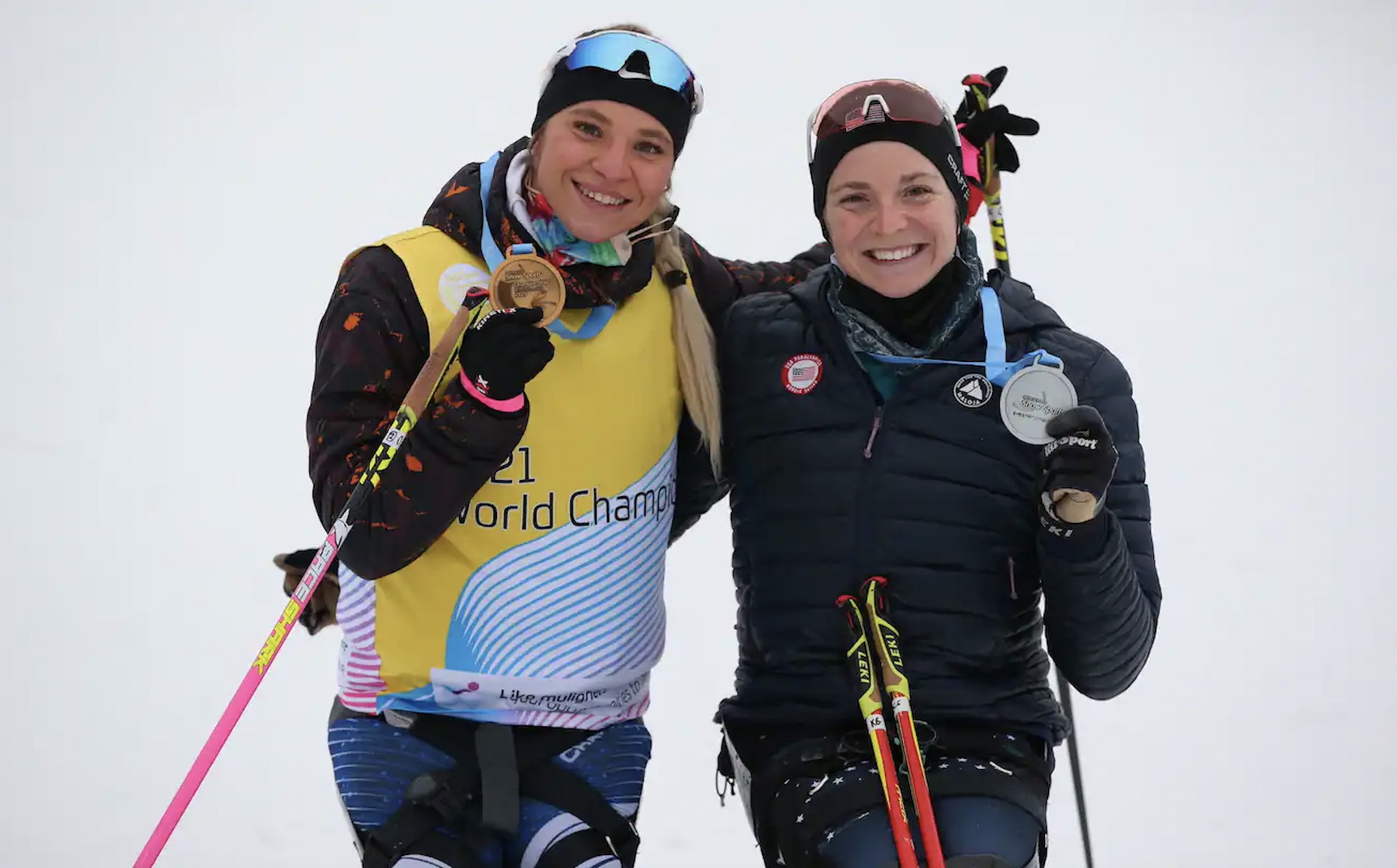
Team USA’s 4 x 2.5-kilometer mixed relay featured Oksana Masters, Sydney Peterson, Dan Cnossen and Jake Adicoff guided by Sam Wood. They stormed to a 25:59.3 gold-medal finish.
China took silver in 26:25.3, and Team Canada captured bronze in 27:00.6. Defending world and Paralympic champions Ukraine finished fourth.
“I could not be more proud and more excited,” Cnossen said. “Really, it’s an honor to be part of this team knowing the caliber of athletes that I got to ski with.”
Cnossen, 41, became the most seasoned medalist for Team USA in Beijing. The gold-medal win also earned Masters a place in the history books as the most decorated U.S. Winter Paralympian with 14 career Winter Paralympic medals.
The 2022 Paralympic gold medal mixed relay team: guide Sam Wood, Oksana Masters, Sydney Peterson, Jake Adicoff, and Dan Cnossen (left to right). (Photo: Mark Reis / TeamUSA)
The relays were the only team events on the Para cross-country skiing program. The mixed relay featured four fast 2.5-kilometer laps that can be skied by an alternating team of two, three or four skiers and at least one man and one woman.
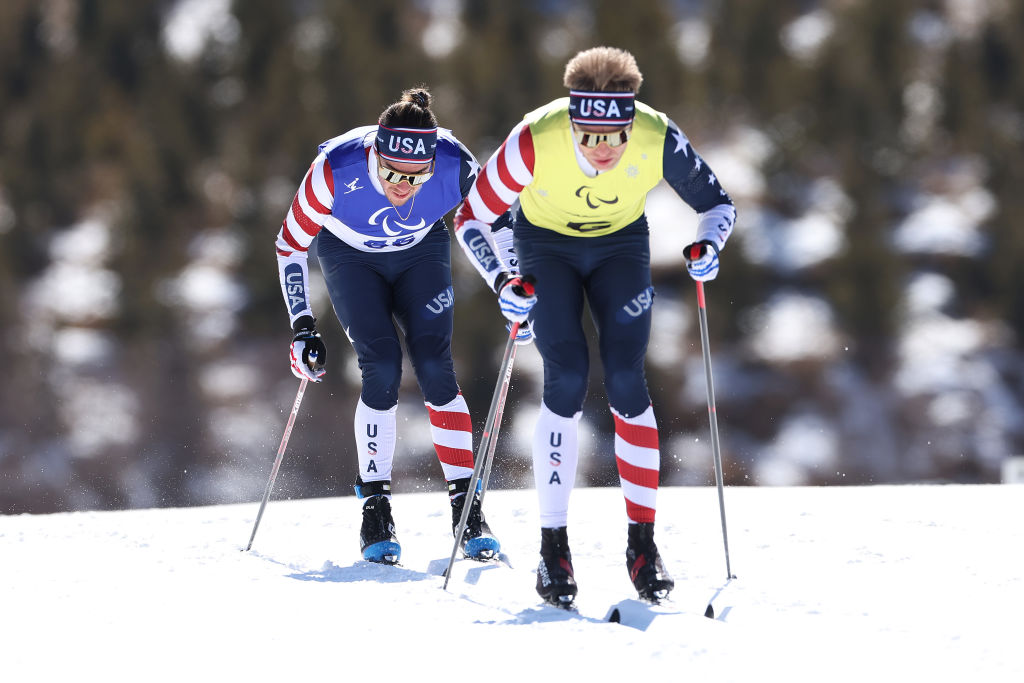
Masters raced a strong first leg to hand off to now three-time Paralympic medalist Peterson for leg two. Cnossen skied leg three to hold Team USA in fourth place. Adicoff and Wood turned up the heat for the final lap, rocketing into first place and never looking back.
“We started that so hot, “Adicoff said. “We were just really gas in the beginning, no holding back in the first part. By the time we were at the top of the course, we skied into the lead. From there, we just had to stay on our feet and bring it home. Getting that energy from our teammates for that first part of the race was critical.”
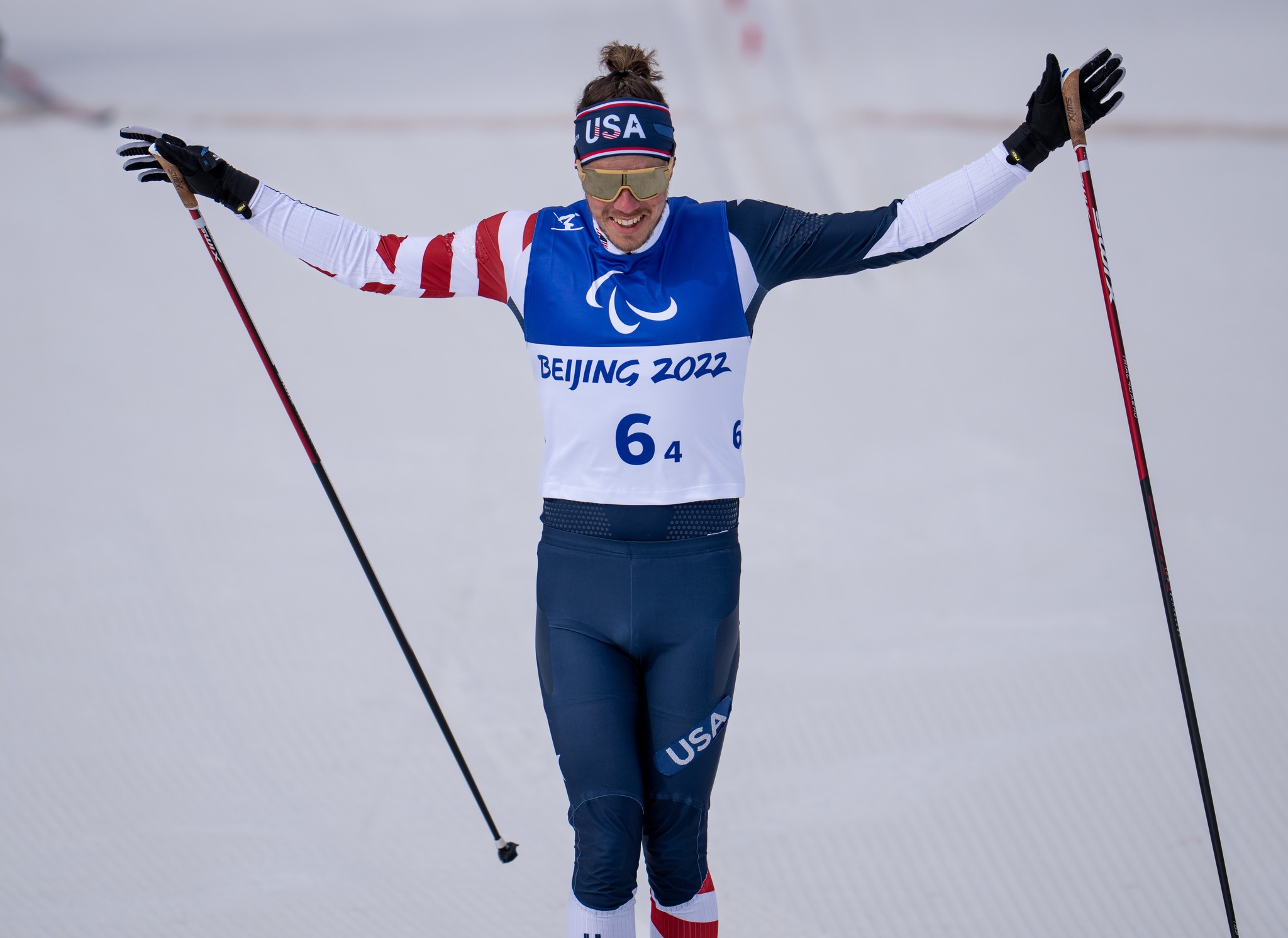
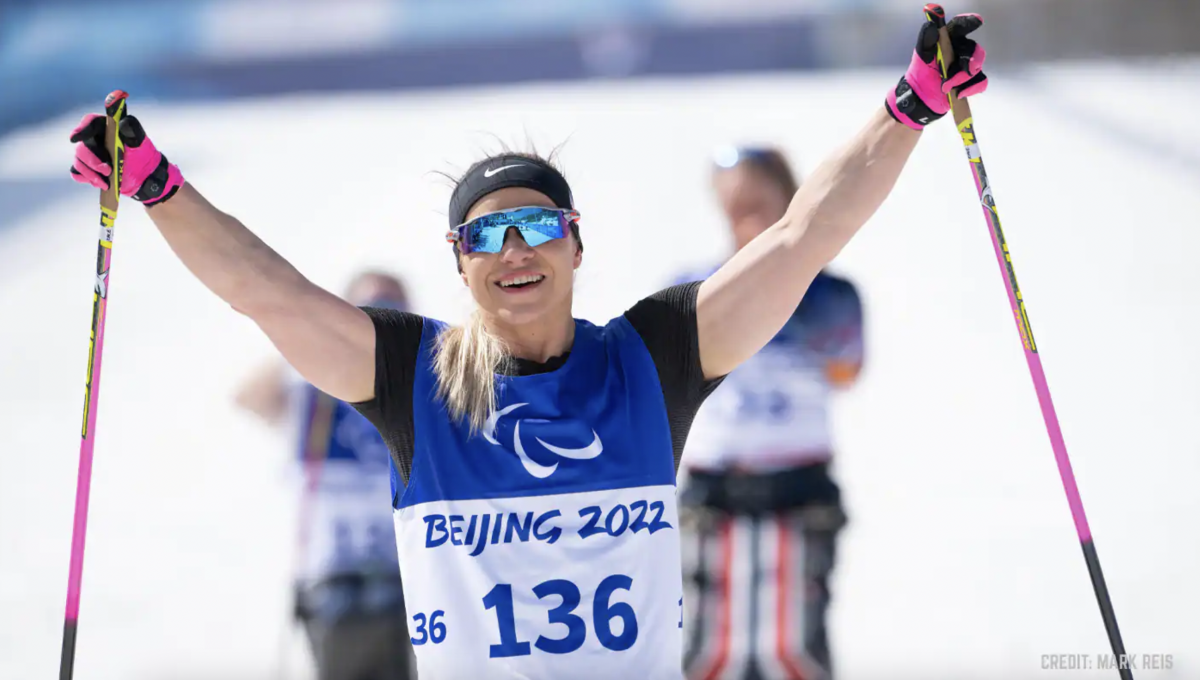
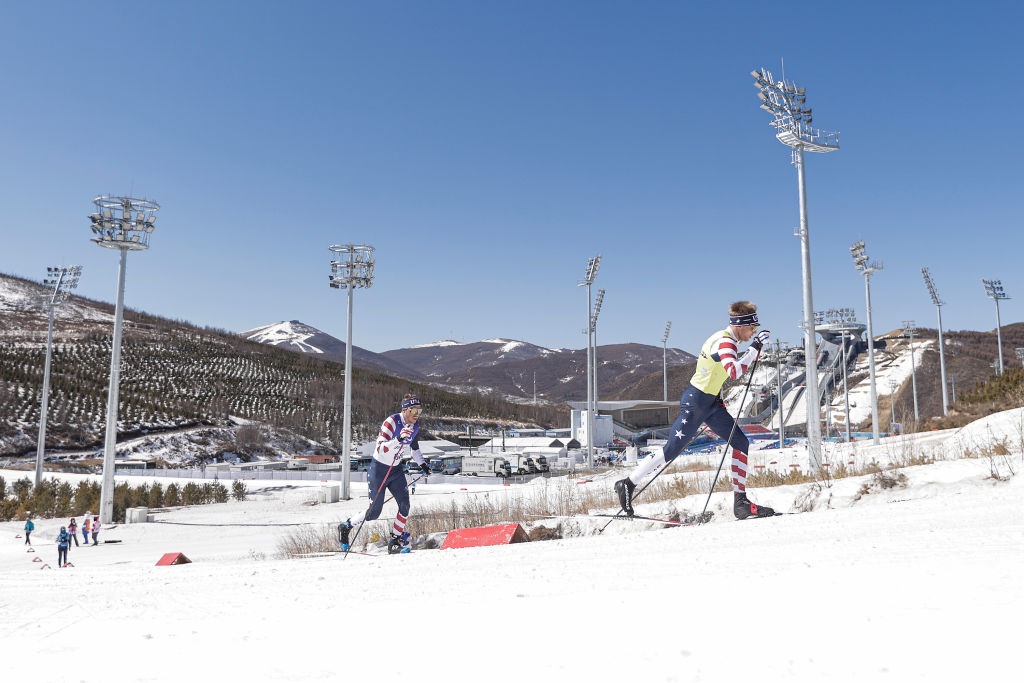
Jake Adicoff crosses the line for Paralympic gold in the 4 x 2.5 k mixed team relay. (Photo: Mark Reis / TeamUSA)
The American team competed with athletes across the sitting, standing and visually impaired classifications. The team felt confident coming into the race after strong podium performances across each classification over the last eight days of Paralympic competition.
“It’s not just one athlete carrying the load,” Cnossen said. “We have really, really strong athletes in all the categories. For me, I didn’t have some of the individual success here that I’ve had in the past, but it just goes to show when you get to be part of a team that lifts the performance.”
“It’s so much better being part of a team,” Peterson said. “There were five of us out there today, and I think all of us had great races. Thanks to everyone else supporting us back home and all the Team USA staff here supporting us.”
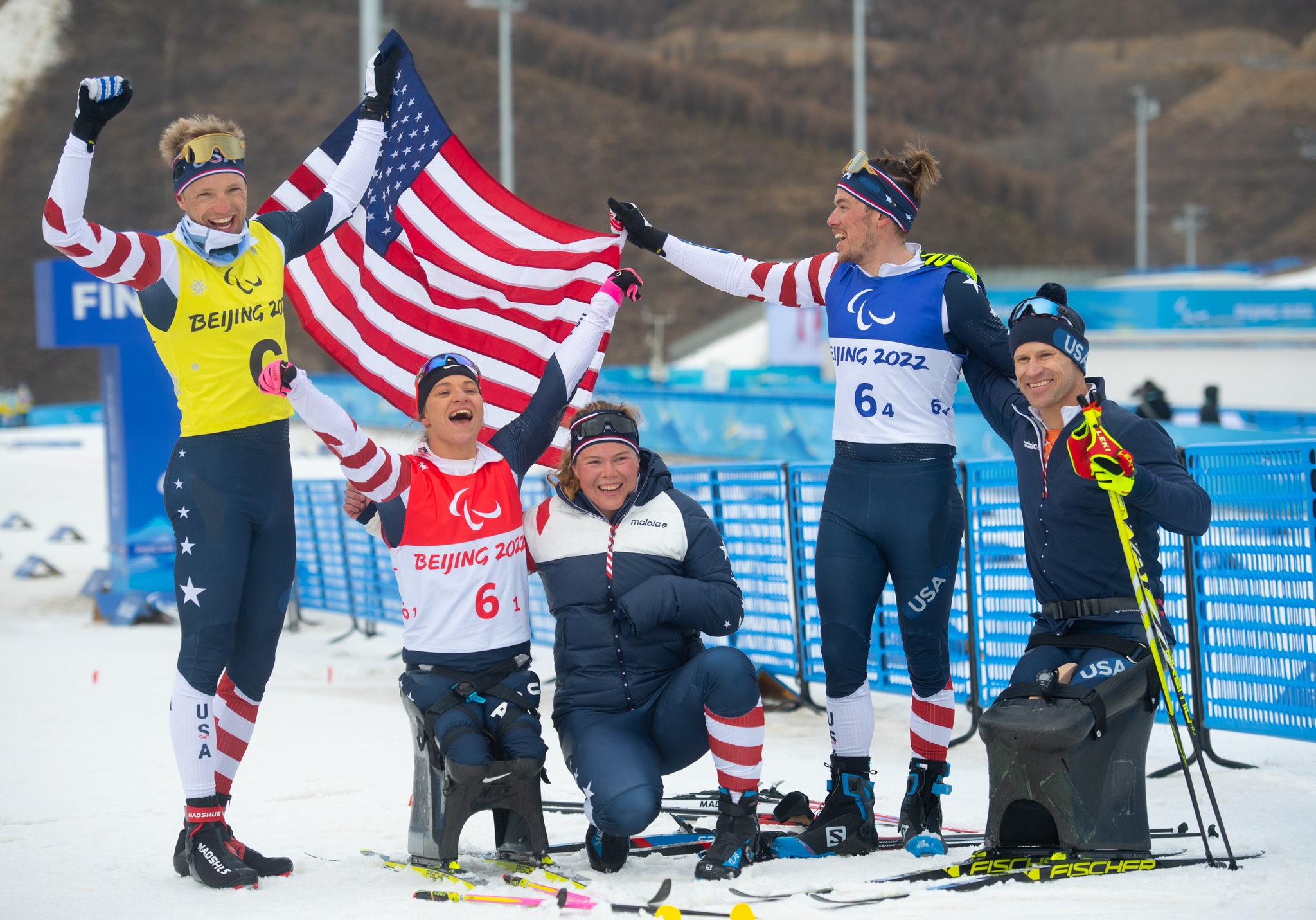
The team of Oksana Masters, Sydney Peterson, Jake Adicoff (with guide Sam Wood) and Dan Cnossen, take Paralympic gold in the mixed team relay. (Photo: Mark Reis / TeamUSA)
The gold-medal win fueled the 4 x 2.5-kilometer open relay, the final competition for Para Nordic in Beijing.
First-time Paralympians Max Nelson, guided by Simi Hamilton, and Drew Shea teamed up with veterans Kendall Gretsch and Ruslan Reiter for the final relay. The team placed ninth overall in 33:03.0.
“It was fun to watch everyone ski in the first race and to go out there and just give it all you got,” Reiter said.
Team Ukraine won gold in 28:05.3 thanks to a strong last leg by Anatolii Kovalevskyi guided by Oleksandr Mukshyn. France finished second for silver in 28:30.4, and Norway held onto bronze in 28:41.0.
Max Nelson, the youngest skier on the U.S. Para Nordic team in Beijing, fought for Team USA from the very start of the race in the leadoff leg.
“It was pretty crazy at the start trying to fight off a couple skiers for my spot,” Nelson said. “But I’m just honored to be here and race for Team USA. It was a great day.”
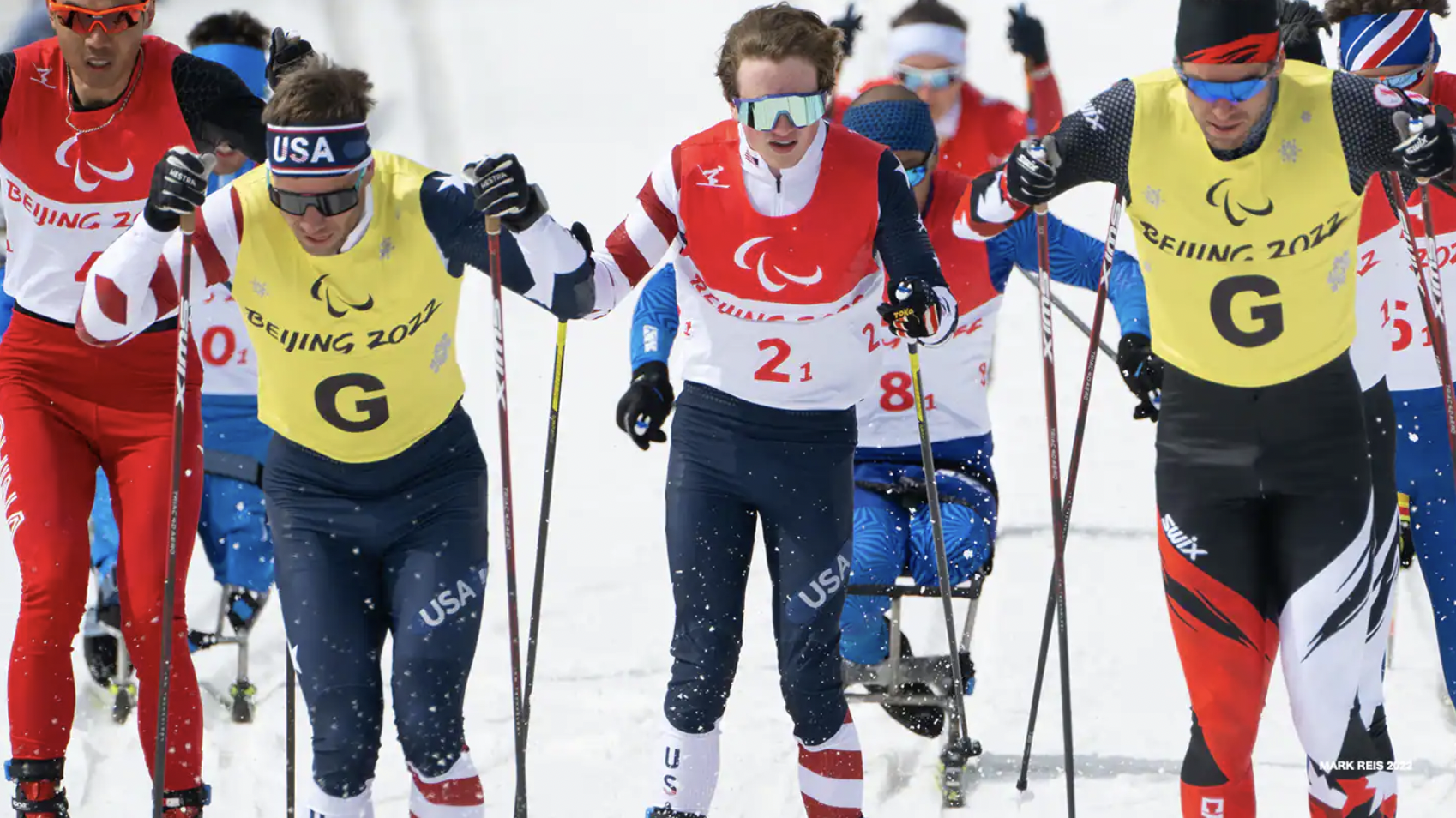
Max Nelson and guide Simi Hamilton lead off for Team The team of Oksana Masters, Sydney Peterson, Jake Adicoff (with guide Sam Wood) and Dan Cnossen, take Paralympic gold in the mixed team relay. (Photo: Mark Reis / TeamUSA)
The athletes made the most of the time on their course together in a sport that is normally focused on individual racing. Gretsch, who won three medals in biathlon and competed in all three cross-country races at these Games, said it’s exciting to see the athletes race head-to-head across the classifications.
“It is so crazy because there’s such a yo-yo between the legs of it so you can really like never count yourself out until the very end,” Gretsch said. “Everyone just has to go and give it their all for 2.5-kilometers.”
First-time Paralympian Drew Shea said this was a great way to end his first Games experience.
“This is pretty special in such an individual sport, just being able to fight for the next person who’s out there,” Shea said. “It’s not about you out there. It’s about the team so you’re just trying to make up every second and grind it out.”
Team USA’s Para Nordic skiers closed out a successful Paralympic Winter Games with 14 medals (four gold, eight silver and two bronze.)
Want to follow Team USA athletes during the Paralympic Winter Games Beijing 2022? Visit www.teamusa.org/beijing-2022-paralympic-games to view the competition schedule, medal table and results.
***
Author Bio:
Katie Grunik is a digital content creator for TeamUSA.org. She is covering her second Olympic & Paralympic Games for teamusa.org and currently serves as the digital content coordinator for the U.S. Olympic & Paralympic Committee.
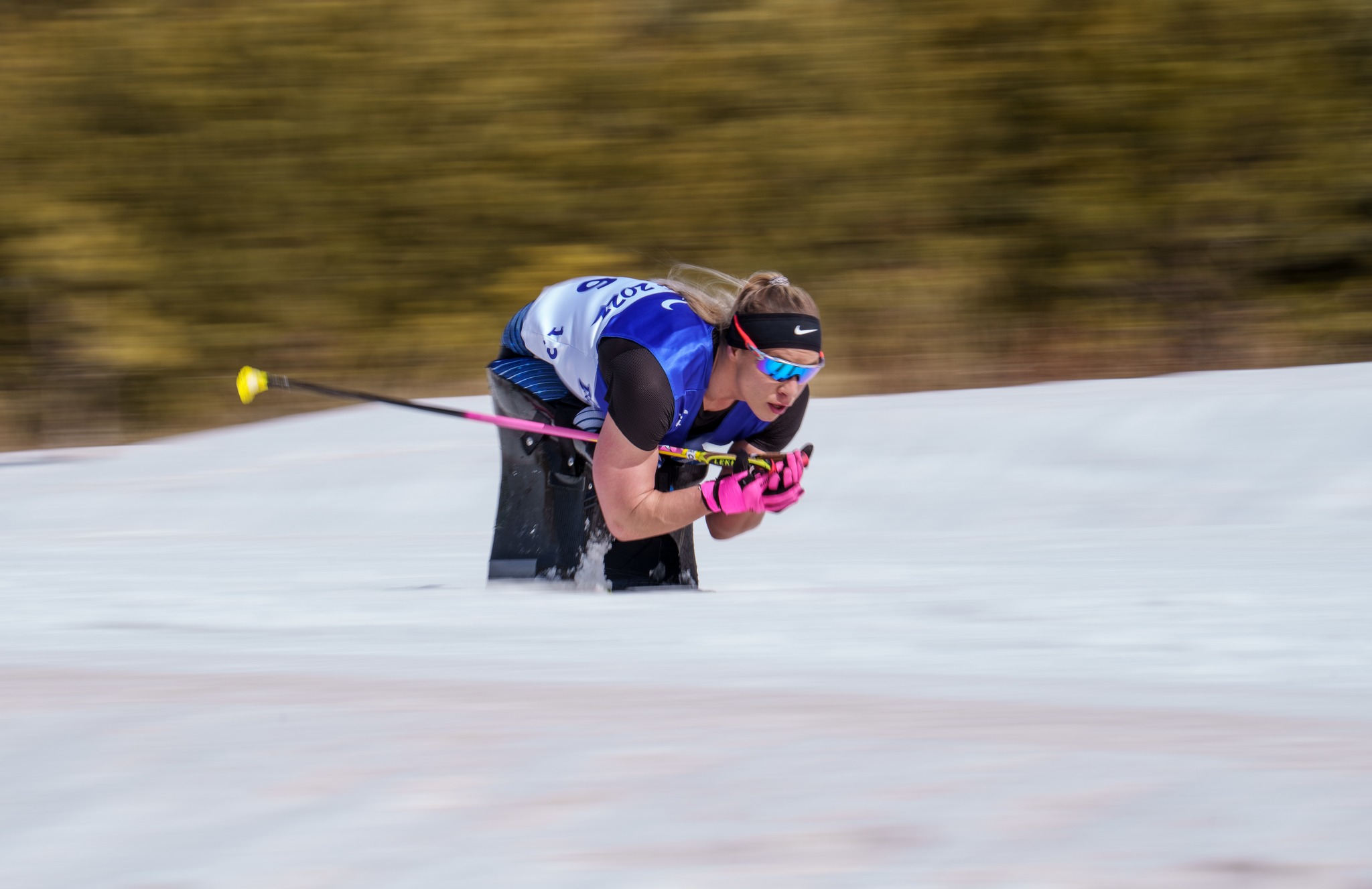
Oksana Masters skis to silver in the women’s sitting middle-distance cross country event. (Photo: Mark Reis / Team USA)
ZHANGJIAKOU, China — Team USA Nordic skier Oksana Masters (Louisville, Kentucky) skied her way into the record books on Saturday at the Paralympic Winter Games Beijing 2022.
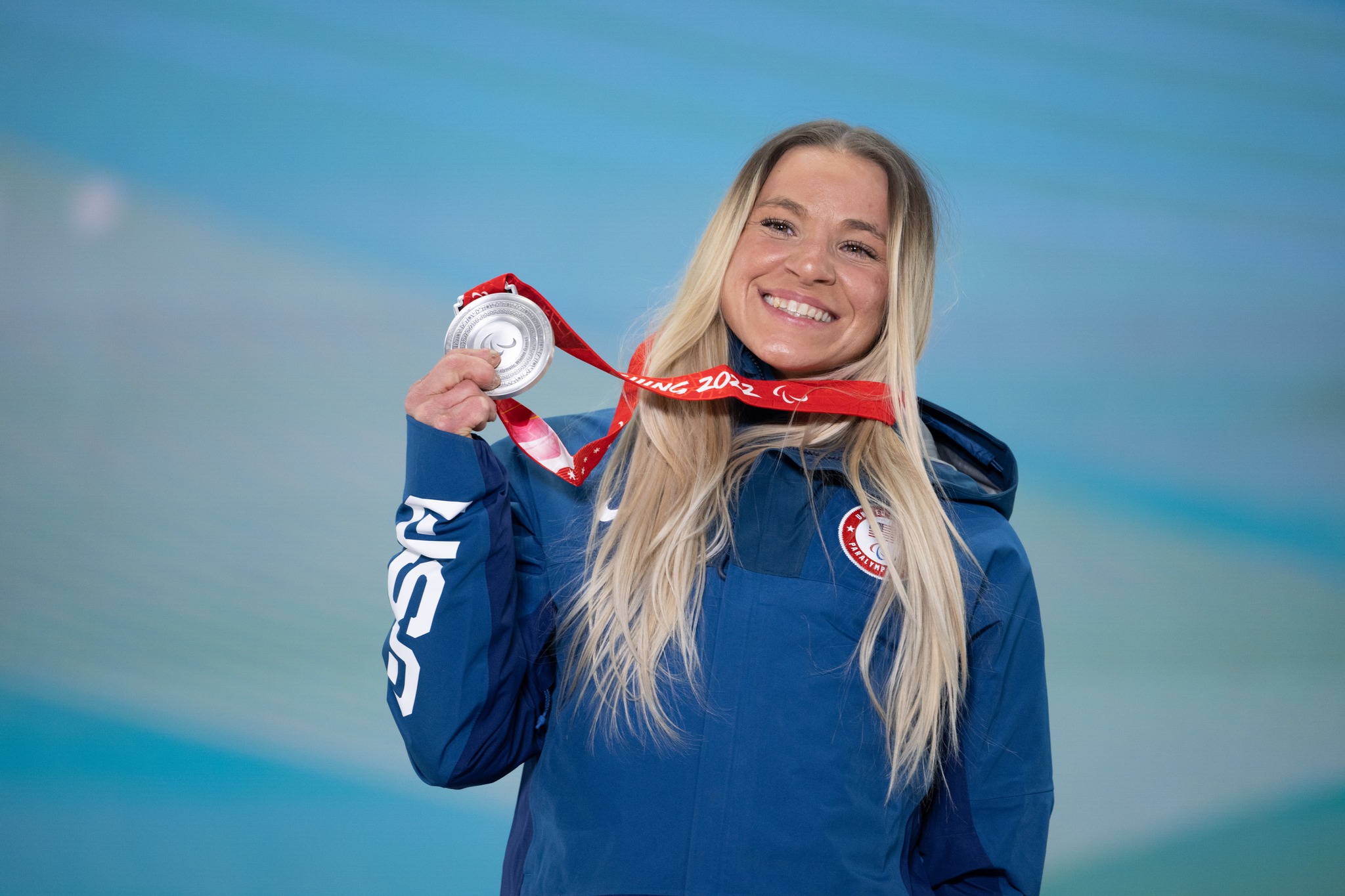
Masters won the silver medal in the women’s sitting cross-country middle-distance at the Zhangjiakou Biathlon Center, her sixth medal of Beijing 2022 and 16th overall medal in her Paralympic career, which is the fourth-most Paralympic medals by a U.S. athlete.
A star in both the winter and summer Paralympic Games, Masters has now won eight Paralympic medals in cross-country, five in biathlon, two in Para-cycling and one in rowing. Her eight cross-country medals are the most ever by a U.S. Paralympian and her 13 overall Winter Paralympic medals ties alpine skiers Sarah Billmeier and Sarah Will as the most all-time by a U.S. Paralympian.
Oksana Masters skis to silver in the women’s sitting middle-distance cross country event. (Photo: Thomas Lovelock for OIS / Team USA)
On Saturday in warm conditions and slushy snow, Masters skied the middle-distance 7.5-kilometer course in a time of 25:24.7 — 37.2 seconds away from gold. China’s Hongqiong Yang won in a factored time of 24:47 and her teammate Jing Ma won bronze in 26:22.
Kendall Gretsch (Downers Grove, Ill.) placed sixth, with a time of 27:47.
“Today was a really tough day. The combination of the fresh snow and the warm temperatures made for a brutal race,” said Gretsch, who will head home from Beijing 2022 with three medals from her individual races. “I’m proud of my performance here. I came out every race and gave it everything I had. I wanted a little more and was hoping to do a little bit better, but I can’t be upset that I gave everything I had.”
Together, the duo of Masters and Gretsch have won nine medals across six days of biathlon and cross-country racing at Beijing 2022, and the U.S. Nordic team as a whole has won 13 medals. With individual racing now concluded, the Nordic racing action finishes on Sunday with the mixed relays on the final day of Beijing 2022.
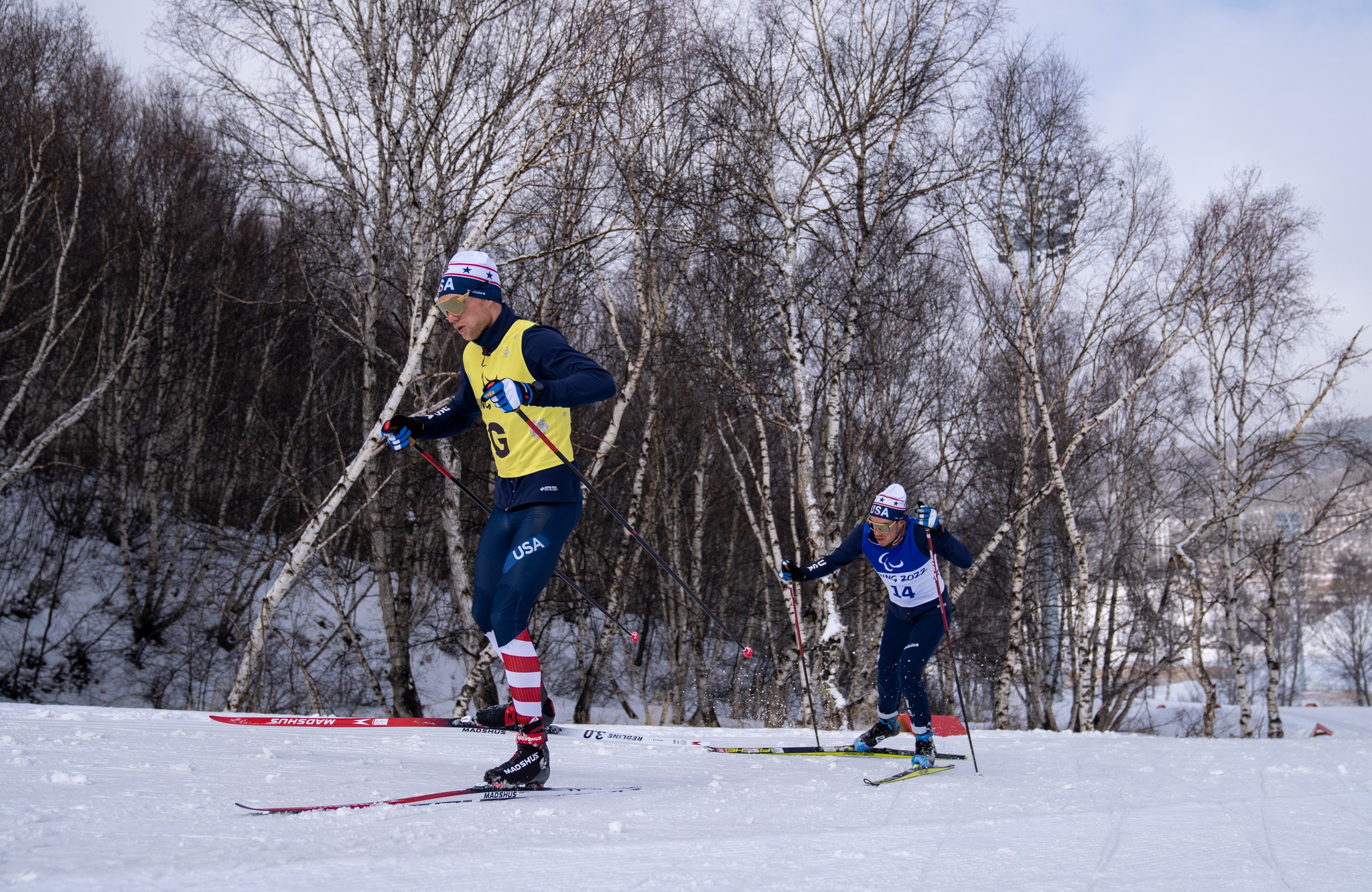
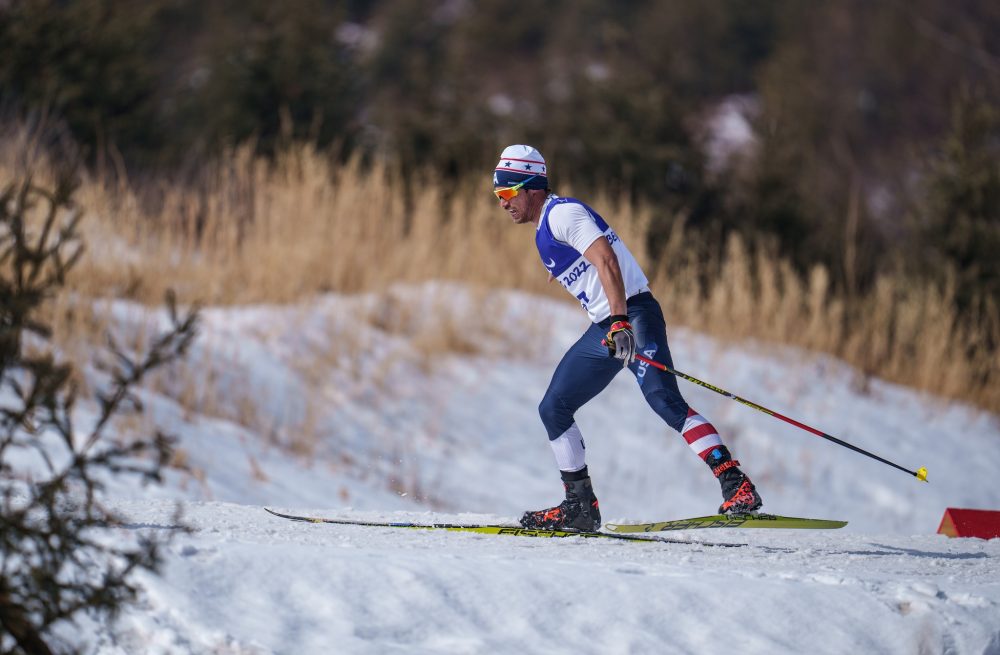
Jake Adicoff and guide Sam Woods race the middle-distance freestyle race in Zhangjiakou. (Photo: Thomas Lovelock for OIS / Team USA)Ruslan Reiter skates to 10th place in the middle-distance standing cross country event. (Photo: Thomas Lovelock for OIS / Team USA)
In Saturday’s standing middle-distance, Jake Adicoff (Sun Valley, Idaho), with guide Sam Wood (Harpswell, Maine), placed sixth in the men’s vision impaired category. Team USA’s Ruslan Reiter (Manchester, Maine) scored a top-10 finish in the men’s standing middle-distance, placing 10th, while teammate Drew Shea (Vienna, Virginia) finished 19th.
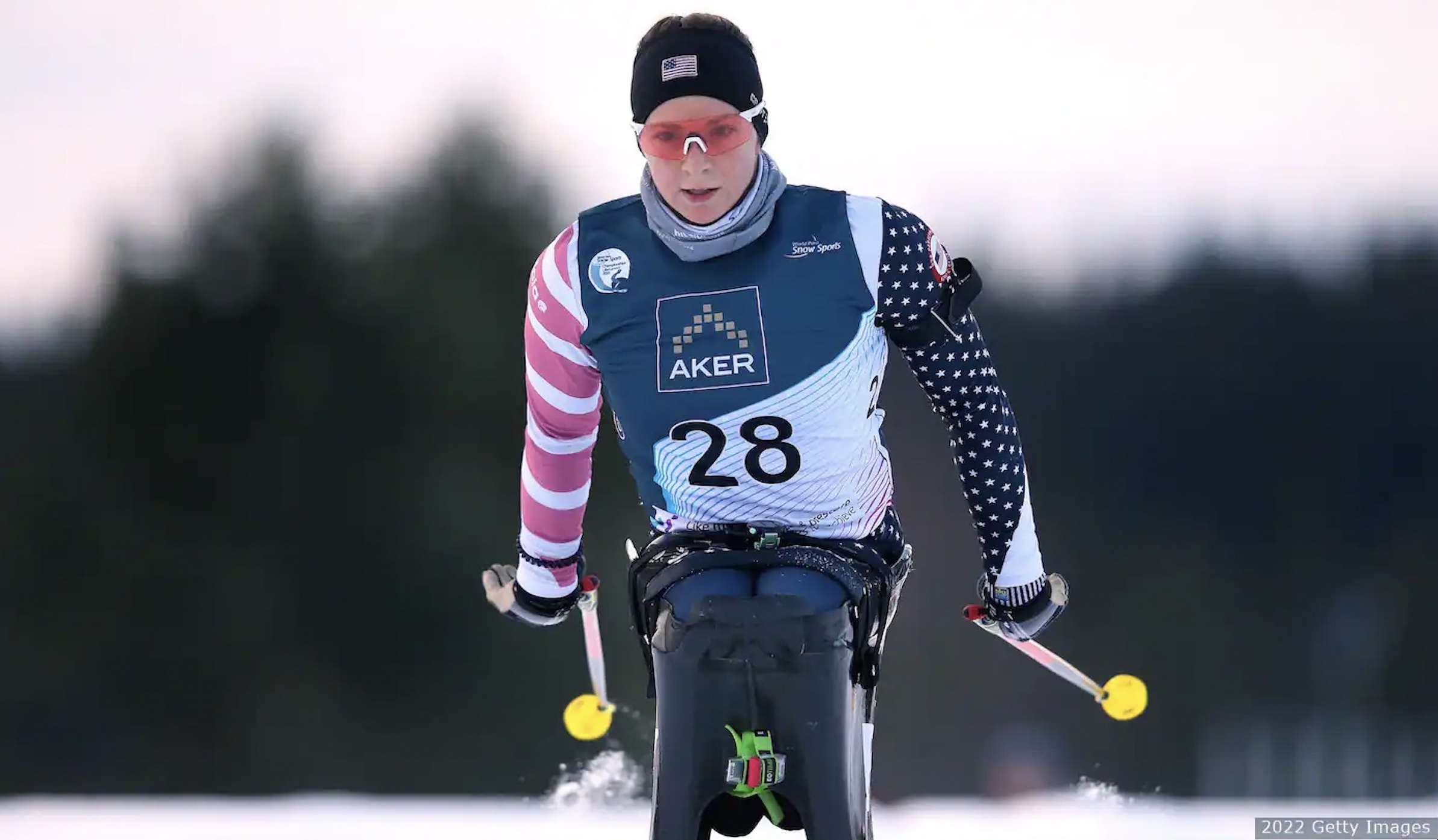
Sydney Peterson (Lake Elmo, Minnesota) who has won two medals in Beijing 2022 in her debut Paralympic Games, led the U.S. women in the standing middle-distance with a sixth-place finish. Dani Aravich (Boise, Idaho) scored her second top-10 finish of these Games, placing ninth. Two-time Paralympian Grace Miller (Palmer, Alaska) placed 16th. In the men’s sitting middle-distance, six-time Paralympian Aaron Pike (Park Rapids, Minnesota) led the way for the U.S. with a 12th-place finish. Josh Sweeney (Glendale, Arizona) took 24th.
Sydney Peterson takes sixth in the standing middle-distance cross country race in Zhangjiakou. (Photo: Thomas Lovelock for OIS / Team USA)
To follow and watch U.S. Paralympics Nordic Skiing competition from the 2022 Beijing Paralympics, tune in to NBC, which features more than 230 hours of coverage across NBC, Peacock, USA Network, the Olympic Channel, NBCOlympics.com and the NBC Sports App.
ZHANGJIAKOU, China — Considering that March is Women’s History Month, U.S. Paralympic Nordic skiers Oksana Masters and Kendall Gretsch are certainly making their fair share of contributions to the history books.
Masters and Gretsch picked up gold and silver medals, respectively, on Friday at the Paralympic Winter Games Beijing 2022, with Masters winning the women’s individual sitting biathlon in 42:17.9 and Gretsch finishing second in 42:23.7.
It was the third time within a week the pair, who train together in Bozeman, Montana, podiumed at the Zhangjiakou National Biathlon Centre. Combined, they have eight medals at these Paralympics, more than half of Team USA’s total medal haul.
Masters is now a 15-time Paralympic medalist — tying her with John Morgan for the fifth most Paralympic medals by a U.S. athlete — and a six-time Paralympic champion. Already at these Games she had won a gold in the sprint biathlon, and silvers in the middle-distance biathlon, long-distance cross-country and sprint cross-country events.
Oksana Masters races to gold in the women’s individual biathlon during the 2022 Beijing Paralympic Winter Games. (Photo: Chloe Knott for OIS / TeamUSA)
Following her first biathlon gold, she posted on Instagram: “Some feelings can’t be put into words. I am beyond proud to stand on the podium representing the heart, fight, love, resiliency, and pure joy for two countries,” referring to the U.S. and Ukraine, the latter being her birth country.
“I not only finally got to hold my dream, but I also am sharing parts of it with my home country of Ukraine especially for the young kids with disabilities. I want to make every start line mean something, make it really count for more than a result. That’s why I will be donating proceeds of my prize money from the Paralympics here to No Child Forgotten managed by Global Giving and Bridge Kids Charity, supporting children living with physical disabilities in Ukraine – many of them with single moms.”
Kendall Gretsch skis for silver in the women’s sitting individual biathlon event during the 2022 Paralympic Winter Games. (Photo: Chloe Knott for OIS / TeamUSA)
Gretsch, who is still the reigning world champion in the individual biathlon, is now a six-time Paralympic medalist. This marked her first career silver medal, and she now has the entire collection of colors from Beijing 2022, having already won gold in the middle-distance biathlon and bronze in the sprint biathlon.“Today was an awesome day,” Gretsch said. “For me and the U.S. team it’s always fun to go one-two. We’re both shooting and skiing well, and so it was a fun race today.”
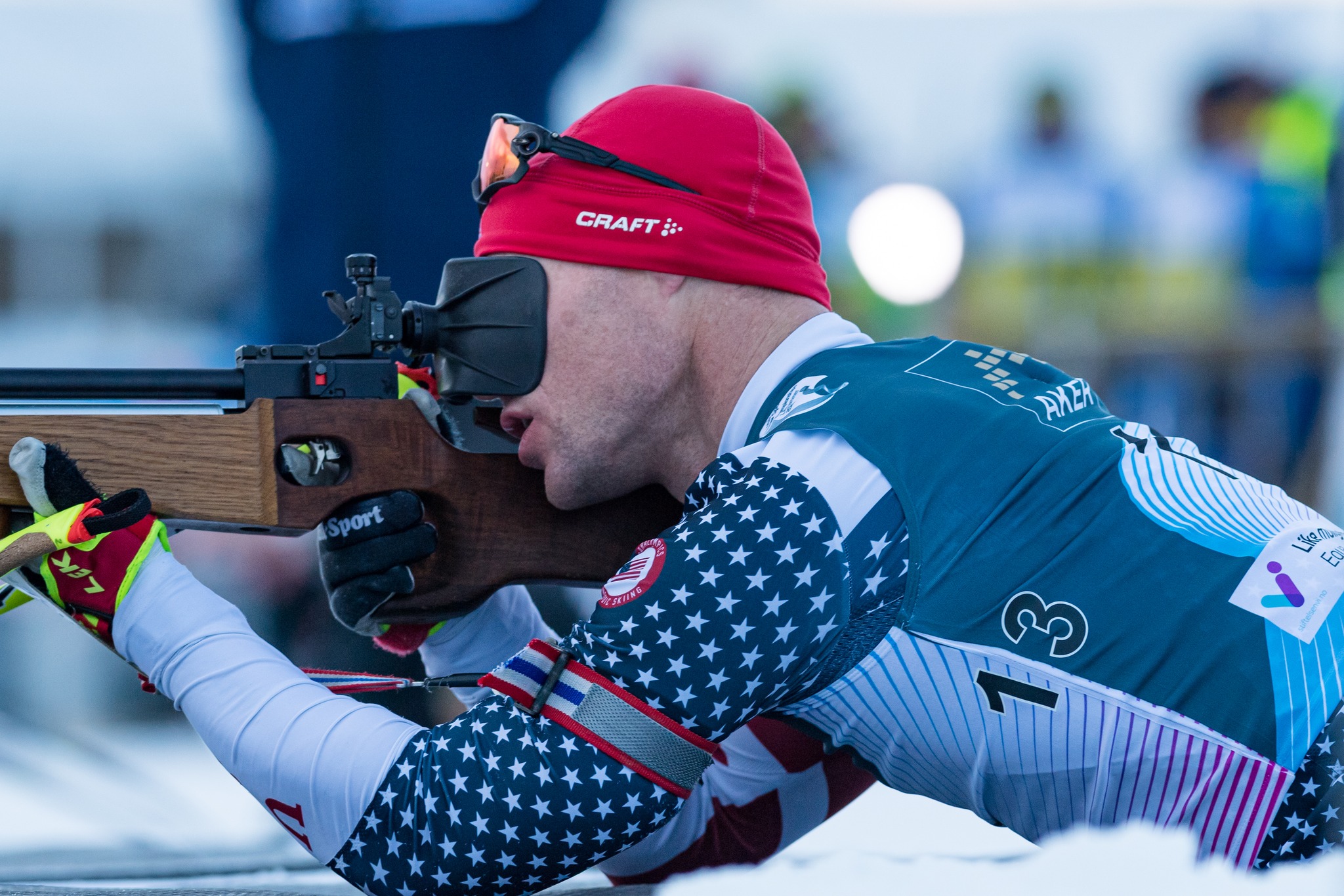
In the men’s individual sitting biathlon, six-time Paralympic medalist and former U.S. Navy SEAL Dan Cnossen was the top American finisher, taking seventh in 42:46.9. Six-time Paralympian Aaron Pike was ninth in 43:19.0. It was the third top-10 finish for both Cnossen and Pike at these Paralympics.
Dan Cnossen hits the range during the men’s individual sitting biathlon race in Zhangjiakou, where he finished seventh. (Photo: Chloe Knott for OIS / TeamUSA)
The U.S. Para Nordic skiers will return to the National Biathlon Centre on Saturday for the cross-country middle distance races.
Want to follow Team USA athletes during the Paralympic Winter Games Beijing 2022? Visit TeamUSA.org/Beijing-2022-Paralympic-Games to view the competition schedule, medal table and results.
***
Author Bio:
Stuart Lieberman has covered Paralympic sports for more than 10 years, including for the International Paralympic Committee at the London 2012, Sochi 2014 and PyeongChang 2018 Games. He is a freelance contributor to TeamUSA.org on behalf of Red Line Editorial, Inc.
Kendall Gretsch takes gold in the sitting middle-distance biathlon event in Zhangjiakou. (Photo: Mark Reis / Team USA)
By Stephen Meyers
ZHANGJIAKOU, China — Team USA’s dynamic duo of Kendall Gretsch (Downers Grove, Ill.) and Oksana Masters (Louisville, Kentucky) won gold and silver in the women’s sitting biathlon middle-distance on the fourth day of competition at the Paralympic Winter Games Beijing 2022.
The U.S. Para Nordic team has now collected seven medals across biathlon and cross-country skiing at Beijing 2022, with four more days of racing to go at the Zhangjiakou Biathlon Center.
For Gretsch, Saturday’s gold medal is the fourth gold —and fifth medal overall — in her Paralympic career. She won gold in the 6k biathlon and 12k cross-country events at PyeongChang 2018 and won gold in Para triathlon at the Paralympic Games in Tokyo six months ago.
Kendall Gretsch races to the line to take gold in the sitting middle-distance biathlon event. (Photo: Mark Reis / Team USA)
The dual sport star now has two medals at Beijing 2022, as she began the biathlon competition with a bronze in the women’s sitting biathlon sprint.
After receiving a penalty in the first round of shooting in Tuesday’s race, Gretsch shot clean the remaining three rounds and skied strong, with quick shooting, in the second half of the 10-kilometer race to overtake Masters and win gold in a time of 33:12.
“I’m really excited with today‘s race. I had a good day on skis and I’m happy with our performance. Hopefully we can build on that for the rest of the races too,” said Gretsch, who praised the U.S. Para Nordic team’s culture and support.
“We have such a strong program and great support from our team. The coaching and everything from waxing our skis so they are really fast, and helping us with nutrition, all the support that we get from the staff at Team USA is huge.”
Kendall Gretsch (right) and Oksana Masters (left) go 1-2 in the sitting middle-distance biathlon event during the 2022 Beijing Paralympic Winter Games. (Photo: Mark Reis / Team USA)
For Masters, Tuesday’s silver is the third medal she’s won in Beijing and 13th overall in her Paralympics career. She again shot clean — like she did en route to winning gold in the women’s sitting biathlon sprint — and finished 9 seconds behind Gretsch, in 33:21.
“I’m excited with a silver medal. This is my second biathlon medal in the Paralympic Games. This is my second consecutive biathlon medal that I’d shot clean for, which I don’t normally do,” said Masters who also won silver in long-distance cross-country.
“I’m so proud of myself. I was doubting myself coming in here and I think now what I can do is have confidence knowing I have put the work into it and I can do it. And try to make it a little faster so I’m not just giving away time in the race trying to get that shot.”
Oksana Masters goes three-for-three, adding a silver medal to her growing collection in the sitting middle-distance biathlon competition. (Photo: Mark Reis / Team USA)
Germany’s Anja Wicker won the bronze, in a time of 35:45.
Team USA’s Lera Doederlein (San Diego, California), competing in her first Paralympic Games, placed ninth.
Dan Cnossen (Topeka, Kansas) was the top U.S. finisher in the men’s sitting biathlon middle-distance, where he placed 12th with a time of 34:10. Aaron Pike (Park Rapids, Minnesota) finished 15th in a time of 36:49.
Dan Cnossen competes in the middle-distance sitting biathlon event during the 2022 Beijing Paralympics. (Photo: Mark Reis / Team USA)
Tuesday’s racing action also included biathlon middle-distance events in the standing and visually impaired categories.
The lone U.S. athlete competing in the women’s race, Dani Aravich (Boise, Idaho) skied to 11th place in her second Winter Paralympic race. She made her Paralympic debut in track and field at the Paralympic Games in Tokyo.
Dani Aravich skis to 11t in the middle distance biathlon competition, her second Winter Paralympic appearance. (Photo: Mark Reis / Team USA)
In the men’s standing biathlon race, Ruslan Reiter (Manchester, Maine) placed 12th and Drew Shea (Vienna, Virginia) took 13th. Reiter is competing in his second Winter Paralympics, while Shea is making his Paralympic debut. No U.S. athletes competed in the visually impaired category.
Racing returns to the Zhangjiakou Biathlon Center on Wednesday, March 9 with the men’s and women’s sprint cross-country.
Ruslan Reiter on course during the middle-distance biathlon competition in Zhangjiakou. (Photo: Mark Reis / Team USA)
To follow and watch U.S. Paralympics Nordic Skiing competition from the Beijing 2022 Paralympic Games, tune in to NBC, which features more than 230 hours of coverage across NBC, Peacock, USA Network, the Olympic Channel, NBCOlympics.com and the NBC Sports App. Follow U.S. Paralympics Nordic Skiing on Facebook, Twitter and Instagram for daily updates from Beijing.
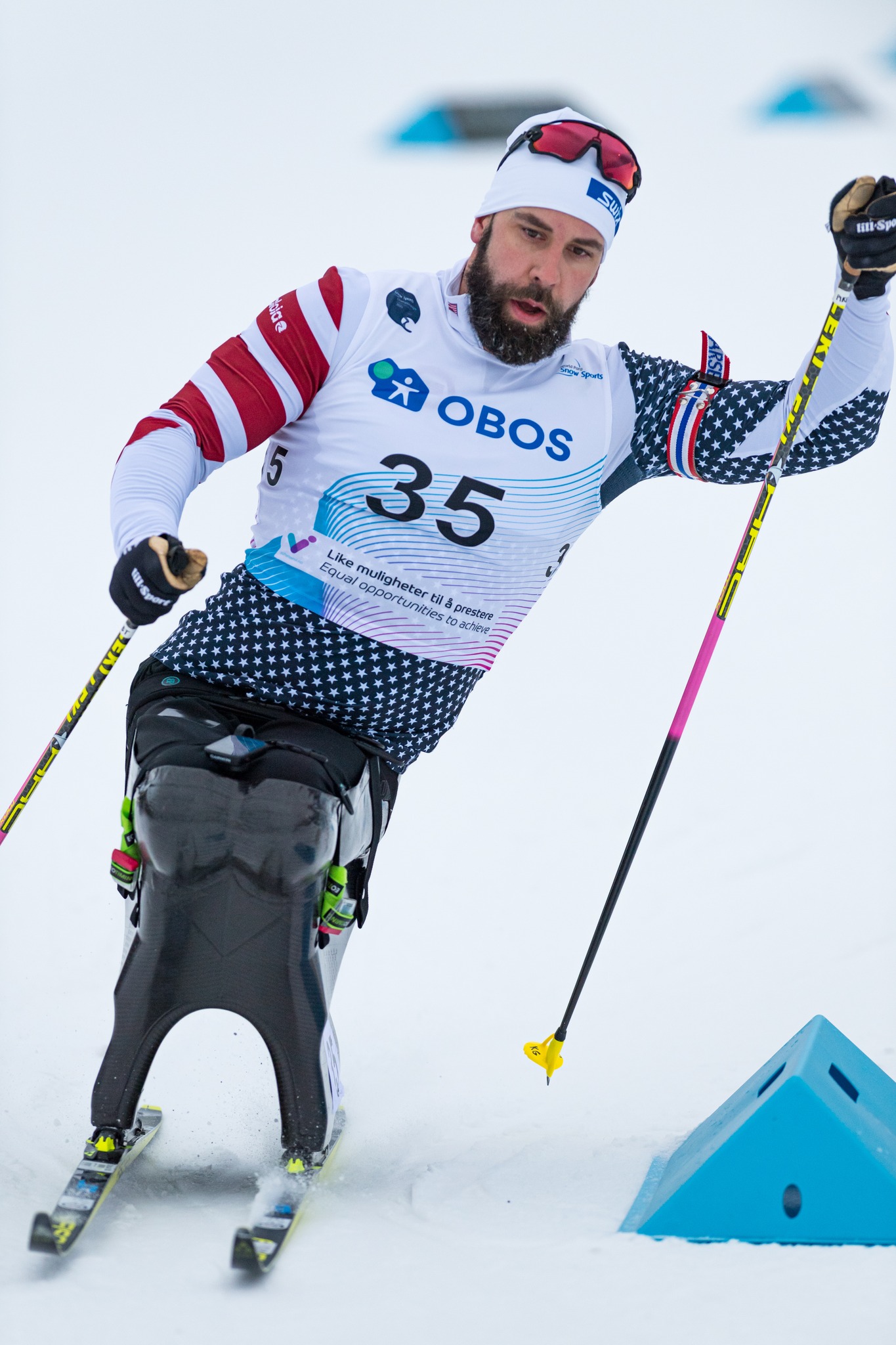
ZHANGJIAKOU, China — Three-time Paralympian Jake Adicoff (Sun Valley, Idaho), alongside guide Sam Wood (Harpswell, Maine), won the silver medal in the men’s visually impaired long-distance cross-country race on Monday, while Paralympic newcomer Sydney Peterson (Lake Elmo, Minnesota) won the silver in the women’s long-distance cross-country race in another banner day for the U.S. Para Nordic team at the Paralympic Winter Games Beijing 2022.
Visually impaired athlete Jake Adicoff earns the second Paralympic silver medal in the 20 k classic, alongside guide Sam Wood. (Photo: Mark Reis / Team USA)
The U.S. Para Nordic team has now collected five medals through three days of cross-country skiing and biathlon competition at Beijing 2022, with five more days of racing to go at the Zhangjiakou Biathlon Center.
Adicoff’s strong performance in the 20-kilometer cross-coutry race on Monday gives him his second Paralympic medal, adding to the silver he won in the 10k cross-country at the Paralympic Winter Games PyeongChang 2018.
Adicoff retired from the sport following those Games, but got the itch to compete again during the early months of the coronavirus pandemic in 2020. With months of dedicated training under his belt, the Sun Valley, Idaho, resident accepted an invitation to join the U.S. Para Nordic team for a training camp in February of 2021.
Jake Adicoff and guide Sam Wood race for a silver medal in the 20 k classic. (Photo: Mark Reis / Team USA)
Paired with his longtime friend Wood as his guide, the 26-year-old came to Beijing as one of the top podium contenders in the men’s visually impaired field after the two combined for three medals at the Lillehammer 2022 World Para Snow Sports Championships in January.
(Listen to Adicoff and Wood on the Nordic Nation podcast here.)
Jake Adicoff earns his second Paralympic silver medal in the 20 k classic. (Photo: Mark Reis / Team USA)
On Monday, Adicoff and Wood completed the 20k course in a time of 58:54 solidly in silver position ahead of Sweden’s Zebastian Modin and his guide Emil Joensson Haag who finished in 1:00:05. Canada’s Brian McKeever, with guide Russell Kennedy, won the gold in a time of 55:36.
“It feels good,” Adicoff said. “I’m happy to be on the medal stand today and we’ll do everything we can to get the gold medal next.”
“It’s great to represent Team USA. We just love skiing with this team. It’s so much fun to be surrounded by people who are so dedicated and athletes who are so strong. It’s sweet to be a part of that.”
Sam Wood helps guide Jake Adicoff to silver in the 20 k classic during the 2022 Beijing Paralympic Winter Games. (Photo: Mark Reis / Team USA)
Wood echoed that sentiment and pointed out the U.S. Para Nordic team’s strong culture and commitment to excellence.
“The teammates that we have here are some of the best, most committed athletes in the world. For us to be able to use that to get fired up and get faster, that’s the best thing you can have as an athlete. We have a great support system and teammates,” Wood said.
In the women’s long-distance cross-country race, 20-year-old Peterson completed the 15k course in a factored time of 49:00, fast enough to capture the silver medal in her Paralympic debut. Canada’s Natalie Wilkie (48:04) and Brittany Hudak (49:27) won gold and bronze, respectively.
Sydney Peterson takes silver in the 15 k classic, her career first Paralympic medal. (Photo: Mark Reis / Team USA)
Peterson, a standing skier who is a sophomore at St. Lawrence University, said her silver medal “hasn’t sunk in yet.” Her entire Paralympic experience has been a whirlwind, she said.
It wasn’t until mid-February that she received an official bipartite invitation to earn a spot at the Paralympic Winter Games in Beijing. New to adaptive sports, Peterson raced in only one world cup event this season before traveling to Lillehammer for the world championships. There, she won two silvers and a bronze. Despite the strong performance on the world stage, Monday’s race came as a surprise to the Lake Elmo, Minnesota, native.
“I didn’t really expect to ever be here. It’s all happened really fast. It feels kind of surreal to be here,” Peterson said. “I’m pretty excited [to win the silver medal]. I really didn’t have many expectations. There are so many strong skiers in this field, and I didn’t know where things would stack up today. I felt pretty good [on the course.] I tried to ski smooth throughout the race. It was definitely a very hard race and physically exhausting.”
Sydney Peterson takes silver in the 15 k classic during the 2022 Beijing Paralympic Winter Games. (Photo: Mark Reis / Team USA)
Grace Miller (Palmer, Alaska) also competed in women’s long-distance cross-country placing ninth to round out the U.S. team’s performances. On Tuesday, biathlon competition resumes in Zhangjiakou, as biathletes will compete in the men’s and women’s middle-distance in the sitting, standing and visually impaired classifications.
***
Follow and watch U.S. Paralympics Nordic Skiing competition from Beijing 2022 on NBC, which features more than 230 hours of coverage across NBC, Peacock, USA Network, the Olympic Channel, NBCOlympics.com and the NBC Sports App. All events will be streamed live on NBC’s Peacock. Follow U.S. Paralympics Nordic Skiing on Facebook, Twitter and Instagram for daily updates from Beijing.
Oksana Masters (left) takes gold while Kendall Gretsch (right) earns bronze in the sitting biathlon sprint to open the 2022 Paralympic Winter Games. (Photo: Mark Reis / Team USA)
By Stephen Meyers | March 05, 2022, 7:27 a.m. (ET)
Oksana Masters (Louisville, Kentucky) won the first gold medal for the U.S. at the Paralympic Winter Games Beijing 2022 on Saturday in the women’s sitting biathlon sprint while teammate Kendall Gretsch (Downers Grove, Illinois) earned bronze on a cold, breezy day that included racing in the men’s and women’s biathlon sprint in the sitting, standing and vision impaired categories.
Masters, a biathlete and cross-country skier, won her fifth career Paralympic gold medal and 11th overall medal between the Summer and Winter Paralympic Games. Saturday’s gold was her first in biathlon; she won two silvers at the Paralympic Winter Games PyeongChang 2018 in the 6k and 12.5k biathlon.
“I can’t believe it, this is so amazing,” Masters said. “To be able to start off the Paralympic Games in Beijing and bring home a gold medal for Team USA is absolutely incredible. And it’s incredible because I get to do it with my teammate on the podium by my side again.”
“I think this just shows that there’s amazing stuff that’s going to happen for Team USA in the Para Nordic program.”
Oksana Masters takes her first gold of the 2022 Paralympic Winter Games in the sitting biathlon sprint. (Photo: Mark Reis / Team USA)
Masters now owns Paralympic gold medals in biathlon, cross-country skiing and Para-cycling. She won two cycling golds at the Paralympic Games Tokyo 2020 six months ago.
Masters finished the 6k sitting biathlon sprint race in a time of 20:51.2. China’s Yilin Shan finished 15 seconds back with a time of 21:06 to earn the silver.
Gretsch — who also won gold at the Paralympic Games in Tokyo six months ago, in paratriathlon — earned the bronze, with a time of 22:47. The medal is the fourth of her Paralympic career. At PyeongChang 2018, Gretsch won gold in the 6k biathlon and 12k cross-country events.
“That was a tough race. The sprint is so short and you’re kind of going all-out the whole time. I’m happy to have the first race done and hopefully just build off today for the rest of the races,” said Gretsch, who also races the cross-country events. “It’s crazy [being back at the Paralympics six months after competing in Tokyo] and it’s feeling very different than Tokyo conditions today. I’m trying to channel how warm I was there. It’s always exciting to be at the Paralympics.”
Eighteen-year-old Lera Doederlein (San Diego, California) made her Paralympic debut on Saturday, also competing in the women’s sitting biathlon sprint, finishing ninth. It was Masters who encouraged Doederlein, who had been competing in sled hockey, to give Para Nordic skiing a try in 2019.
“It’s a pretty incredible experience for me to race [with Masters and Gretsch] especially since I’m only 18 years old and it’s my first Paralympics. It was incredible to experience this with them,” Doederlein said.
Dan Cnossen races to fourth place in the sitting biathlon sprint. (Photo: Mark Reis / Team USA)
Dan Cnossen (Topeka, Kansas), former Navy SEAL who won six medals in PyeongChang, led Team USA’s men on Saturday in the sitting biathlon sprint, placing fourth.
“I dug deep as far as I could, and this is perhaps the best biathlon race I’ve ever had. I know it may not have been my best result, but for me, it’s more about effort and I really think I put a complete race together today,” Cnossen said.
“Biathlon is a really challenging sport in the sense that you can always ski a little bit faster into the range or you can always try to take your first shot a little bit quicker, or the shots two, three, four, five a little bit quicker. I’ve got to be happy with how I raced today. I’m also happy to be out there with my teammate Aaron [Pike] and our women who had an awesome day. I would also say I’m really happy to see the Ukraine athletes out here today getting after it. With everything they’re going through, it’s inspiring to me to see them compete. I was thinking about them today when I was out there.”
Pike (Park Rapids, Minnesota) finished eighth. A constant in the Paralympics over the past decade, Pike is competing in his sixth Paralympic Games. He raced in Tokyo for U.S. Paralympics Track & Field, competing in the marathon.
Aaron Pike races to 8th in the sitting biathlon sprint to open the 2022 Beijing Paralympic Winter Games. (Photo: Mark Reis / Team USA)
In addition, Team USA had three athletes competing in the standing biathlon sprint.
Dani Aravich (Boise, Idaho), who also competed in track and field in Tokyo, placed 13th in her first race as a winter Paralympian.
In the men’s standing biathlon race, Ruslan Reiter (Manchester, Maine) placed 12th and Drew Shea (Vienna, Virginia) took 14th. Reiter is competing in his second Winter Paralympics, while Shea is making his Paralympic debut.
Ruslan Reiter races to 12th in the standing biathlon sprint. (Photo: Mark Reis / Team USA)
No U.S. athletes competed in the visually impaired category.
U.S. Paralympics Nordic Skiing athletes return to competition on Sunday, as cross-country action takes the stage with the men’s and women’s sitting long-distance races.
Follow and watch U.S. Paralympics Nordic Skiing competition from Beijing 2022 on NBC, which features more than 230 hours of coverage across NBC, Peacock, USA Network, the Olympic Channel, NBCOlympics.com and the NBC Sports App. All events will be streamed live on NBC’s Peacock. Follow U.S. Paralympics Nordic Skiing on Facebook, Twitter and Instagram for daily updates from Beijing.
The Para World Championships wrapped up in Lillehammer, Norway on Sunday January 23rd, with a mixed open relay event bringing athletes from across genders and race categories together into one thrilling capstone event.
Rewinding to where our previous coverage left off, Saturday’s schedule featured the final individual races of the Championships, a classic spring for standing athletes, and a cross country sprint for sprint skiers. As in able-bodied fields, a sprint involves a qualification round, followed by a semifinal and grand finale to decide the medalists. The number of athletes who make the semifinal varies based on category.
Highlighting the day, Oksana Masters took gold in the women’s sitting race, her sixth medal of the Championships (two of each color) and career 11th World Championship medal. This title was not certain until the final meters of the race, where Masters put in a final surge to overtake an athlete from Belarus just before the line.
Oksana Masters (right) sprints to the finish during the women’s sitting individual biathlon. (Photo: Alex Livesey/Getty Images)
“It feels incredible,” Masters said in the Team USA press release. “It doesn’t feel that long ago that I was barely making finals in sprint, or I couldn’t finish a sprint without falling or breaking a pole. To be able to have a third consecutive world championship title in this event is just incredible.”
Another medal favorite based on her performances through the week, Kendall Gretsch also raced in the sitting finale, however, a late crash put her out of reach of the podium and she ended the day in fifth.
On the men’s side, Aaron Pike led the American men in the sitting sprint, placing well inside the top-12 to qualify for the semifinals. In his semi, Pike finished fifth and did not advance to the finale. Meanwhile, Dan Cnossen was 16th in qualification and did not advance to the rounds.
Dan Cnossen competes at the Para World Championships in Lillehammer. (Photo: Alex Livesey/Getty Images)
In the women’s standing races, newcomer to the team Sydney Peterson earned her second silver medal of the week, in addition to a third place medal. Perhaps still gaining experience, Peterson felt her first two rounds of racing were not smooth, though it came together in the final round.
“I had some mishaps the first two races this morning so I’m glad that things worked out for the finals,” said Peterson to Team USA. “I’m pretty excited that was a really fun race. It will be fun to continue racing.”
A second standing athlete, Dani Aravich, was just shy of the top-eight in qualification, meaning she was unable to advance to the semifinal for her class.
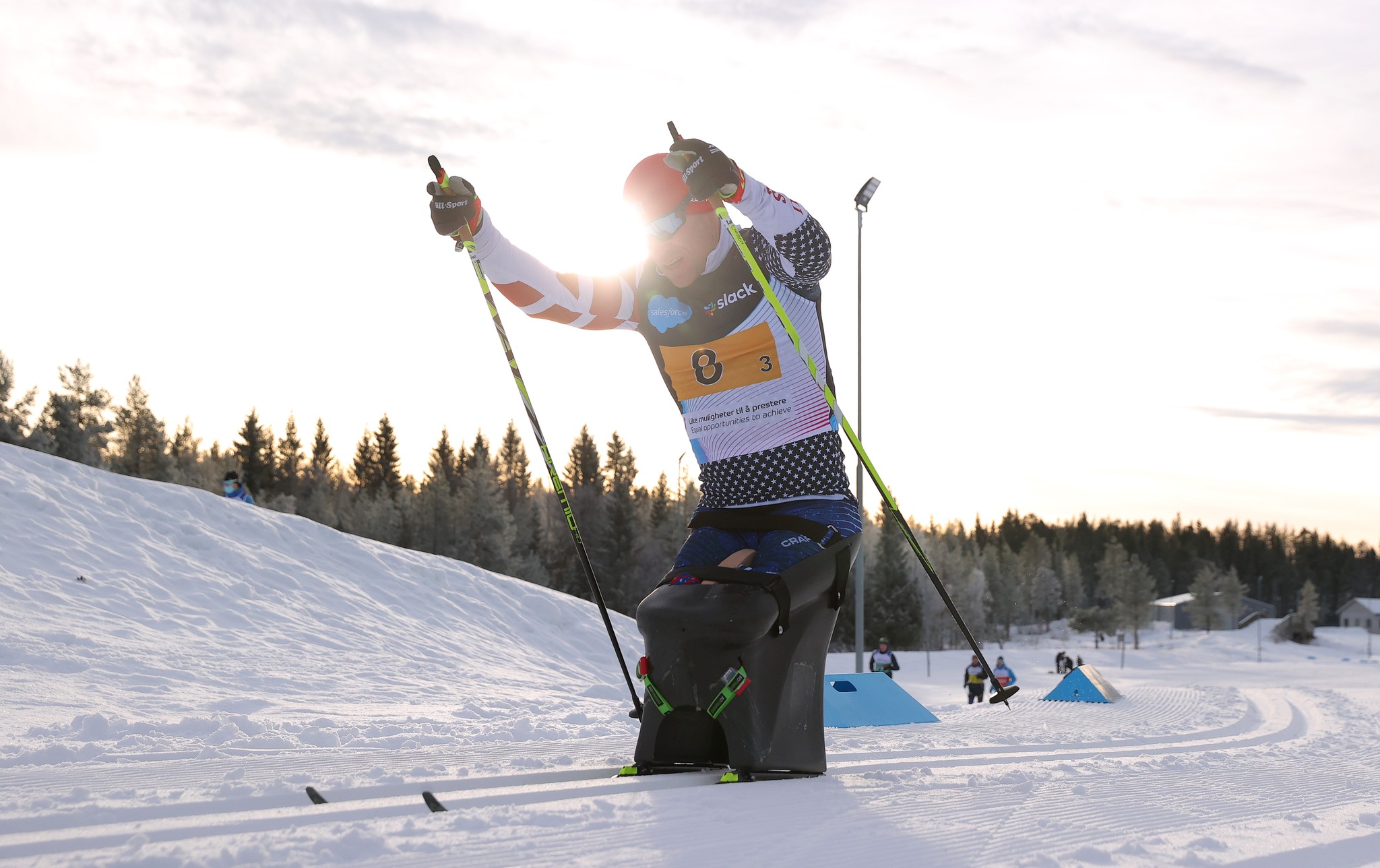
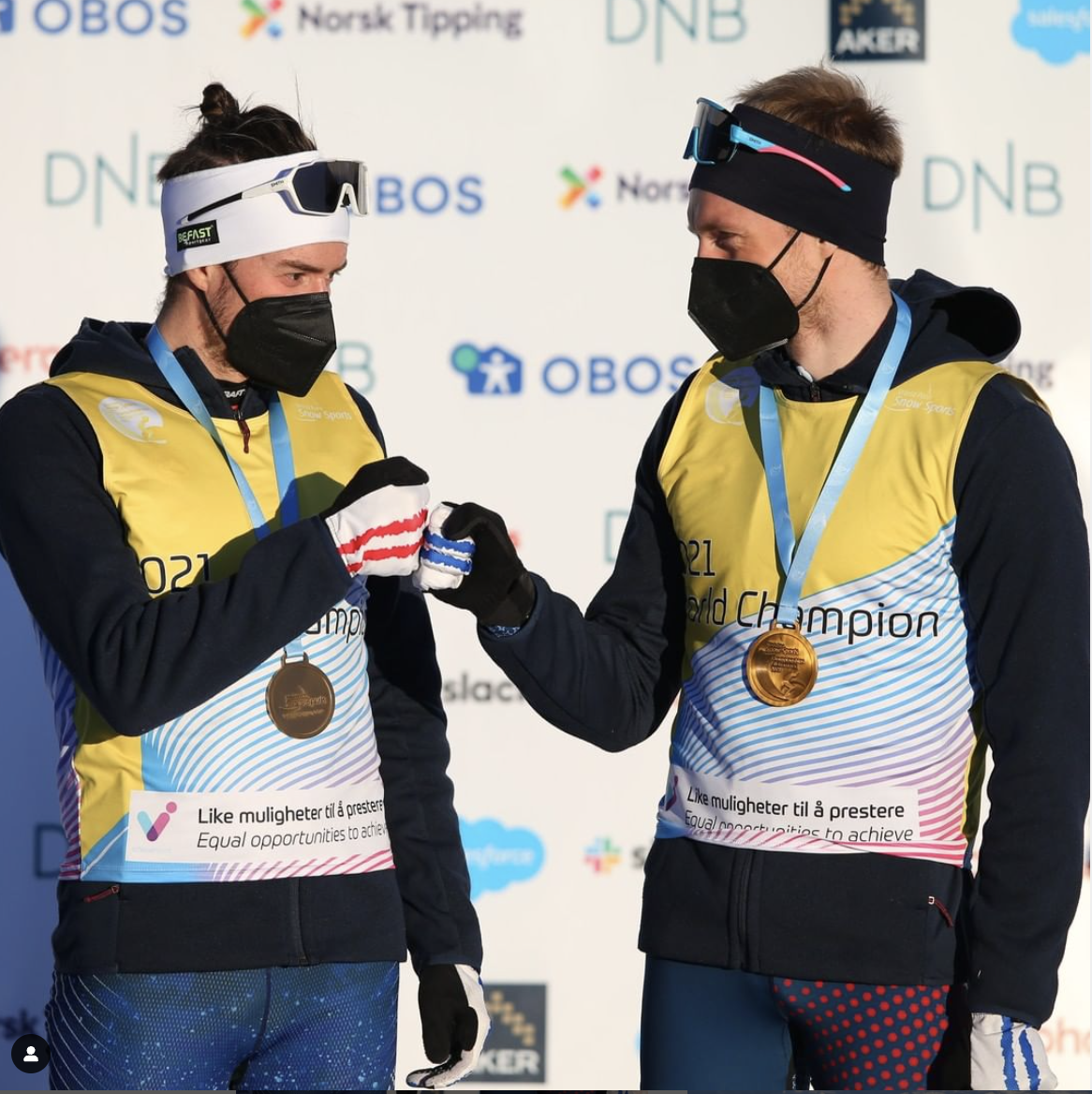
Friends, teammates, and more recently athlete-guide pair, Jake Adicoff and Sam Wood fist bump after earning a gold medal in the 10k classic at the Para World Championships in Lillehammer. (Photo: Alex Livesey/Getty Images)
“I’m feeling pretty good,” said Adicoff. “This is an improvement from the classic sprint in Canmore. We’re pretty happy with the result and it’s super fun racing out there. [We’re taking away] a little bit of confidence and then to be off that gold medal for two races now that’s what we’re looking for – gold in Beijing.”
On Sunday, the American squad fielded two relay teams in the mixed-gender, mixed-class 10-kilometer event. Given the variations in time based on sitting, standing, and subcategories within those groups, this makes for an interesting equation. Simultaneously, what better a way to highlight the diversity, talent, and teamwork seen across nations?
According to the daily Team USA press release, “relays were structured so that each athlete was assigned points based on their classification and gender, and the sum of each team’s total points could not exceed 335 for the mixed relay and 375 for the open relay. From there, it was head-to-head racing, and factored times did not come into play.”
Masters led an all-women’s team for the U.S., passing off to Peterson for the second leg, with Grestch racing third, and Aravich as anchor. Each of the women put together strong performances to keep their team within the top four, finishing in a cumulative time of 31:41.5.
The American women’s open relay team took fourth in the final race of the Para World Championships in Lillehammer. (Photo: Alex Livesey/Getty Images)
“We didn’t know until yesterday how we were going to do the relays, so when our coaches told us it was all women, we were really excited,” Aravich explained in the press release. “When we looked at the points and how it was stacked up, we probably shot ourselves in the foot a bit because we didn’t come close to maximizing the points we could have had in the race. We set our expectations to have fun and end this trip on a high note, which we did.”
On the men’s side, Adicoff and Wood raced both the second and final leg of the relay, with Pike leading the team for the first leg and Cnossen racing third. Following a strong opener from Pike, Adicoff and Wood brought the men into second place, though they slipped back in the results over the next two. They finished the race in fifth overall, however, they were issued a 30-second time penalty for one of their exchanges, which bumped them down to sixth.
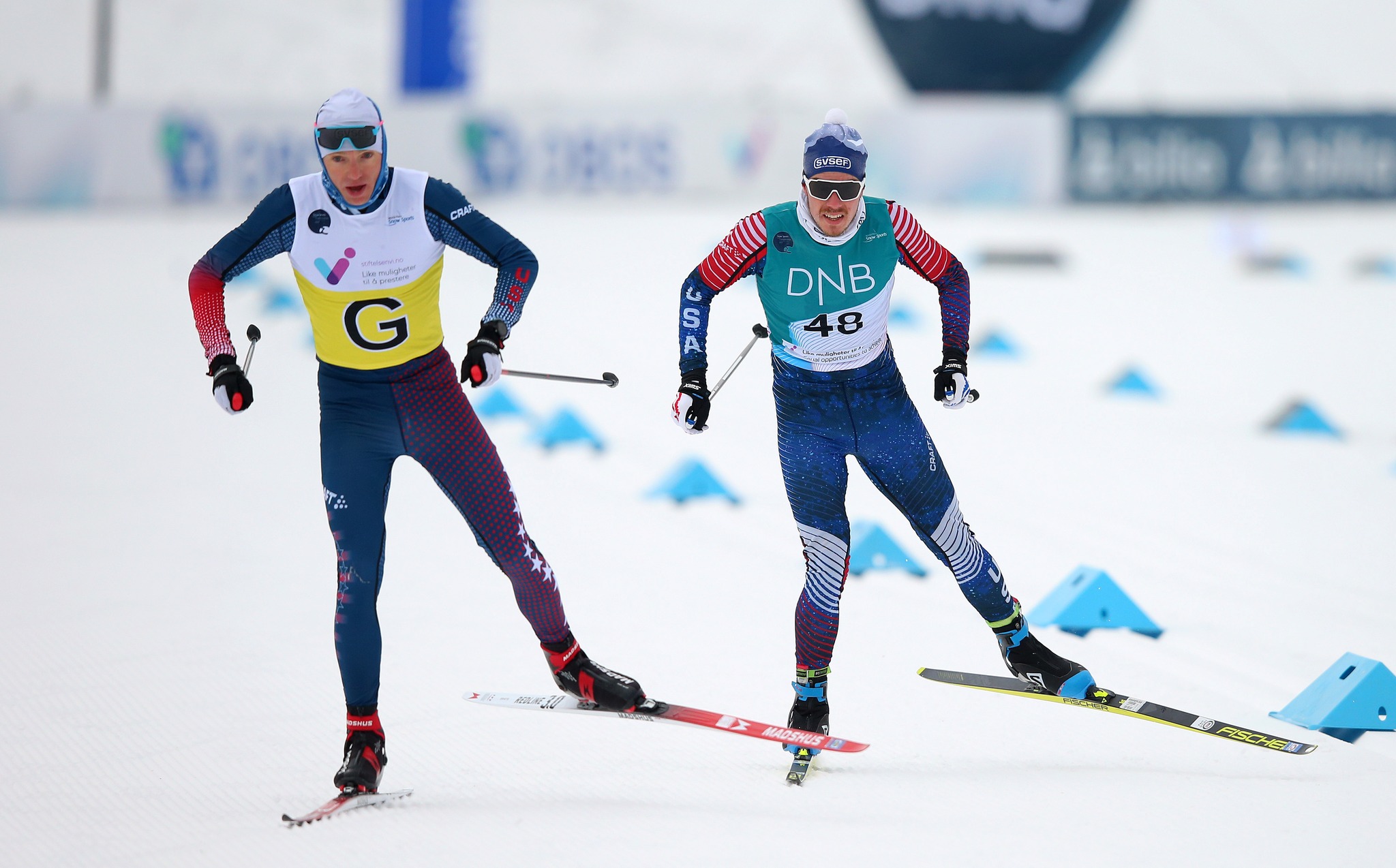
Jake Adicoff and guide Sam Wood race the long-distance skate, bringing home a bronze medal. (Photo: Alex Livesey/Getty Images)
The next races on the Para World Cup calendar begin next weekend, running January 27th – February 1st in Östersund, Sweden. The 2022 Paralympic team will be named following these events on February 1st, leaving the team just over a month to prepare for the Games in Beijing, which kick off on March 4th.
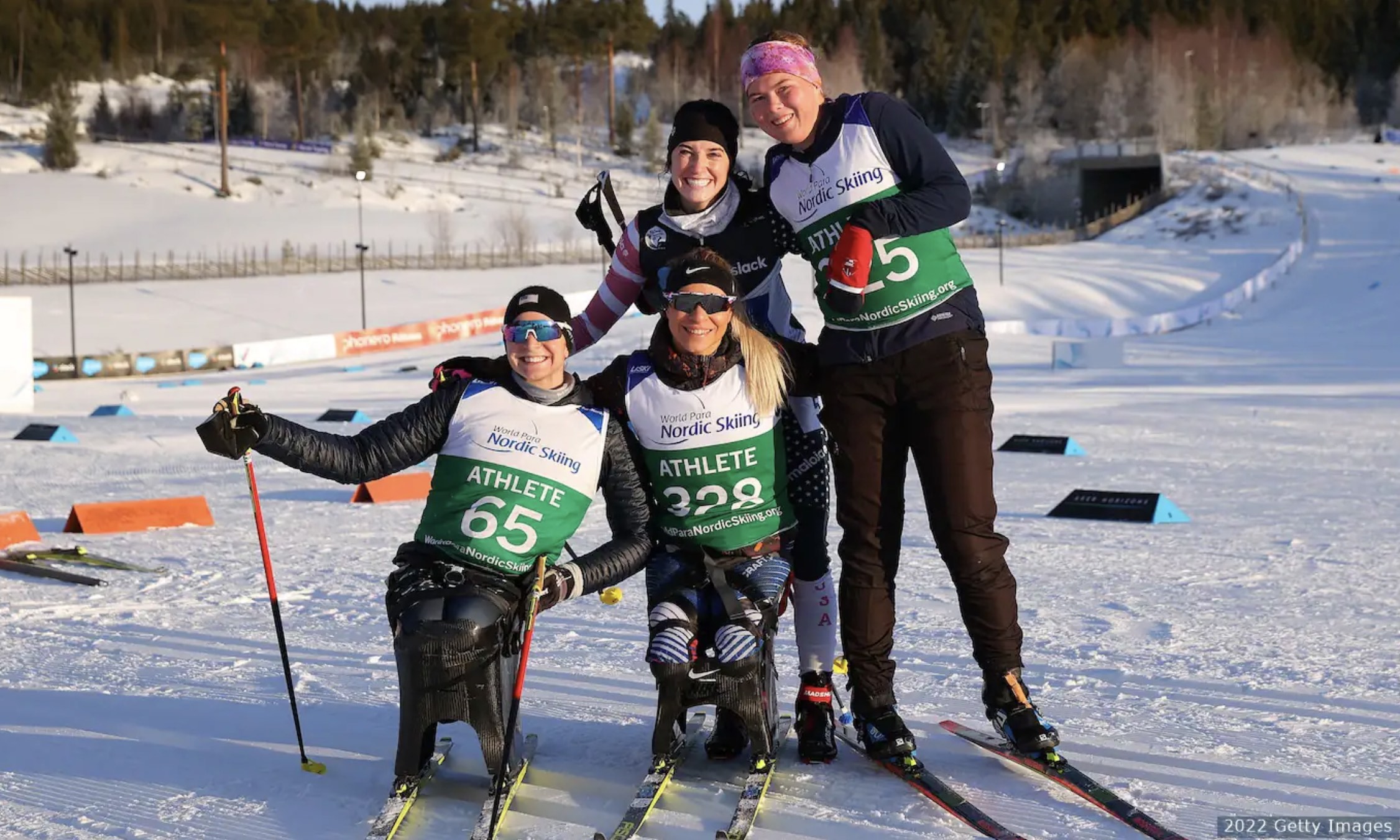
Oksana Masters (left) and Kendall Gretstch (right) go 1-2 in the women’s 15k sitting long distance cross country race. (Photo: Alex Livesey/Getty Images)
It’s late January and we’re deep into the race season. As the Olympics and Paralympics draw nearer, we’ve simultaneously just wrapped up the Tour de Ski, the U.S. Cross Country Championships, and another wave of SuperTour races. Never a dull moment in the racing world, the Para World Championships are currently well underway, running January 13-23rd in Lillehammer, Norway.
Normally occurring on odd years, the World Championships were postponed from last February due to the pandemic. Nevertheless, the event was called the Lillehammer 2021 World Para Snow Sports Championships. It was a hallmark event, as it is the first time that all snow sports have competed together in one location over the same dates.
Led by well-decorated veterans like Oksana Masters, Kendall Gretsch, and Dan Cnossen, the U.S. Para Nordic Team has put together a string of outstanding results at World thus far. Events have ranged from biathlon springs to cross country distance races, with athletes competing – and cleaning up – across all disciplines and distances.
Kicking off the series of events, Sun Valley’s Jake Adicoff took home his career first World Championship medal by winning the men’s visually impaired 10-kilometer middle distance race.
“It feels great,” Adicoff said of his performance, according to the Team USA Press Release. “Lillehammer has been skiing really well so far, I’ve been having a lot of fun here. It feels great to go and get that first podium, and hopefully we can go out and get some more here.”
Jake Adicoff and his guide Sam Wood put together a gold medal performance on the opening day of racing at the Para World Championships in Lillehammer, NOR. (Photo: Alex Livesey/Getty Images)
Adicoff retired in 2018 after earning a silver medal in the 10k and taking 4th in the sprint, however, he is making his return with a bang in this 2021/22 season.
Building momentum throughout the first day, 19-year-old Sydney Peterson earned a silver medal in the women’s standing middle distance race, with Gretsch earning the second gold medal for team USA in the women’s sitting 7.5k middle distance event. That’s three medals, two gold and one silver, on the first day of racing, along with an additional two athletes, Cnossen and Dani Aravich, earning top-10 finishes.
Dan Cnossen hits the range during the individual sitting biathlon event at the Para World Championships in Lillehammer, NOR. (Photo: Alex Livesey/Getty Images)
Joining the team in Lillehammer late after testing positive for COVID-19 on New Year’s Eve, Masters made a smooth return to competition, taking second place in her first race at Worlds, the sitting biathlon sprint on January 15th. The next day, the American women took first and third in the sitting biathlon middle distance race, with Gretsch earning her second gold medal of the week and Masters adding an 18th World Championship medal to her ever-expanding collection.
On point, a perfect shooting performance contributed to Gretsch’s gold, while Masters skied her way out of a significant deficit. Experiencing challenges on the range, Master’s racked up seven penalties, but made up her shooting with her skiing. In the men’s sitting race, Master’s partner, Aaron Pike, skied his way into the Top-10, a rank he has achieved in each of his World Cup races this season, leaving him primed for a medal.
Two days later on the 18th, Masters and Gretch again took the spotlight, going 1-2 in the women’s sitting 15k long distance cross-country race. Now reaching 19 total, this marked Masters’ 10th career World Championship gold medal.
“It’s absolutely incredible,” Masters said in the Team USA press release that day. “It feels like yesterday where I was that new athlete, never thinking that I would be a world championship athlete. So, to have 10 now … is incredible and it’s a testament to our team’s hard work. It’s not just me, it’s the whole team.”
Already an historic day for the U.S., Peterson and Adicoff continued the medal streak in the long-distance cross country races, with each athlete earning a bronze medal in the standing and visually impaired divisions, respectively. Four Americans competed that day, and four medals were won. How’s that for success?
Aaron Pike races the individual sitting middle distance biathlon event at the Para World Championships in Lillehammer, Norway. (Photo: Alex Livesey/Getty Images)
As the final days of World Championship racing kicked off, Pike’s consistency paid off with a silver medal in the men’s sitting individual biathlon event. Missing just one target, matching the best result of the event, Pike finished 24 seconds back on the winner, Pavlo Bal of the Ukraine. This result is both a World Championship and overall World Cup career best for Pike, who is an accomplished wheelchair racer during the summer season.
“It was a tough day to be shooting out there, everybody’s missing so I was happy to come away with just missing one shot,” said Pike in today’s recap. “This is probably the windiest race we’ve had in three years. Every chance you get to put a bib on and race in a biathlon race is experience.”
Racing in the women’s sitting individual biathlon, Gretsch and Masters continued to dominate the field, taking first and third, respectively, to keep their medal streak alive and well.
Again performing well on the range, Gretsch missed just one target in four rounds of shooting and skied the second fastest time on course for a finish time of 52:25.0. While Masters skied the fastest time of day, she again faced challenges in her shooting, incurring five penalties, leaving her 3:00.7 behind Gretsch in the final results. In the women’s standing class, Aravich earned another top-10 finish in eighth.
With excellent shooting records, Kendall Gretsch puts together back-to-back gold medal performances in biathlon events. (Photo: Alex Livesey/Getty Images)
After a day of rest, the Para athletes have two final days of racing in Lillehammer on the 22nd and 23rd, which feature a sprint for the standing and visually impaired categories on Saturday and a Mixed Relay on Sunday. Based on the week’s results, it’s clear that they are primed for another medal run in the upcoming 2022 Beijing Paralympic Games, which begin March 4th.
Livestreams of past and upcoming events, along with links to results can be found on the U.S. Paralympics Nordic Facebook page, or you can check out the remainder of snowsport events happening this week in Lillehammer by following along here.
John Aalberg, a 1992 and 1994 U.S. Olympic cross-country skier, who was born in Norway and advised the Oslo Bid Committee for the 2022 Olympics and Paralympics, and was nordic director and venue manager at Canada’s 2010 Vancouver Olympics. (Courtesy photo)
Norway did not want to host the Olympic Winter Games – perhaps the US can?
About the author: Born in Norway, John Aalberg moved to the U.S. and raced collegiately at the University of Utah, where he was a two-time, 15-kilometer NCAA champion in 1984 and 1985. He became an American citizen in 1992, just in time for the 1992 Winter Olympics, and represented the U.S. at the 1994 Olympics as well. Aalberg won the Great American Ski Chase three times, and leading up to the 2010 Winter Olympics, he was the nordic director and venue general manager at Whistler Olympic Park in Vancouver, B.C. Aalberg also served as the sports director and venue manager at the 2011 FIS Nordic World Ski Championships in Oslo, Norway.
From 2011 to 2013, he was sports-and-events director at the annual Holmenkollen World Cup, overseeing men’s and women’s ski jumping, nordic combined and cross-country competitions in Oslo. Also in 2013, Aalberg was a senior-sport consultant tasked with assisting the organizing committee of the Lillehammer 2016 Youth Olympic Games.
Most recently, he was senior consultant to the Oslo Bid Committee for the 2022 Olympic and Paralympic Games, advising venue, programming and sport design, while coordinating with the International Olympic Committee (IOC), international and national sport federations, and developing Paralympic concepts and programs. Oslo withdrew its bid on Oct. 1. In this guest editorial, Aalberg, who was inducted into the Intermountain Ski Hall of Fame last month, explains why.
***
Introduction
Oslo’s “Games in the City” concept, which it used in its bid for the 2022 Winter Olympics and Paralympics before withdrawing on Oct. 1. (Photo: Oslo2022/Snøhetta Oslo AS)
Norway last week missed the opportunity to showcase their country and show to the World why the Olympic Winter Games remains the ultimate goal for most winter athletes. As a catalyst for continued pursuit and recruitment into winter sports in all ice- and snow-clad countries, it represents perhaps the most exciting thing that can happen, especially, one might think, in the cradle of cross-country skiing, Norway.
After almost 3 years of bid preparation work, and nearly $US 30 million expenditure, the current conservative government stopped the Olympic bid process, claiming the overall Games cost would be too high.
Norway became the 6th country to exit the 2022 Games bid process, after Switzerland, Germany, Ukraine, Sweden, and Poland one by one withdrew during the last year or so. Each country seemed to have different reasons, but it was a big surprise that Norway, the country with most Olympic Winter Games medals, would not want to host their favorite winter sport events.
The International Olympic Committee, IOC, immediately stated that Norway missed a great opportunity, and blamed poor communication at many levels in the Norwegian process for causing the government’s decision. Missing the opportunity to hold the Games in a traditional winter sports country seemed a hard pill to swallow for IOC. The 2014 Games in Sochi, the 2018 Games in Korea and the 2022 Games now in China or Kazakhstan can all be justified as an ambition to expand wintersports to new markets, but it is important for the Olympics to “go back to the roots” regularly to not forget its original culture.
Why did Norway choose to pull out, and is it fair to point the finger at IOC as many in Norway now do? What can future bid cities and IOC learn from this?
Background
The Oslo 2022 Candidate City logo. (Photo: Oslo2022)
After a very successful FIS Nordic Ski World Championship in Oslo in 2011, the Norwegian Confederation of Sports decided to start the 2022 Olympic bid process. It gained support from all its member sport federations and asked Norway’s capitol, Oslo, to become the host city. The City of Oslo accepted and started the painstakingly thorough process of scoping and budgeting every detail of the Games. Such a process is required by the Norwegian Government for any national project of this magnitude and cost.
In short, over 150 staff and consultants spent over 1.5 years on this work, and delivered an initial bid application to IOC in March 2014, with a technical plan and detailed budget far beyond any other bid city has done before. In comparison, the competing bid City of Krakow, Poland, hired a 12-person consulting firm for 2 months to do the equivalent bid application.
Contrary to most past Olympic Games host organizations, the Norwegian bid’s planning project was conducted by a City Government department, and not by a non-profit bid organization. Also contrary to past Games, the prepared budget included expenditure of all semi-related city infrastructure projects, legacy venues, national security costs, private investments, etc, along with the Games operational expenditures. Normally, permanent city and national legacy infrastructure projects have not been considered as part of the Olympic Games’ organizer’s costs, but rather a national task.
The total estimated cost for the 2022 Games in Norway was approximately $US 5 billion (not including any income). On October 1, the Government decided not to provide financial guarantee for this, prompting Oslo City to withdraw its bid.
Why did Norway pull out?
Social Democracy
Norway is a unique country and culture in many ways. It is per capita the richest country in the world, one of the safest countries in the world, and is a small country, known for its efficient and smart government. The social-democratic governance is successful and the 5 million population live by democratic values in a flatly structured society. This means that everyone has the right to an opinion (and most people have strong opinions about most issues); that the typical US vertical management structures are not common in most workplaces; that both income tax and social benefits are high; and that the population is actively involved in governance issues since they strongly feel it is “their” money the government is spending.
In the last decades, Norway has led a prominent district policy, financially supporting and encouraging businesses and communities in the outlying districts along its entire coastline.
The above might partly explain why the majority of the Norwegian population was against hosting the Games, when it came down to it:
Although most people love winter sports, the majority value grass-root over elite sports, and want money for venues and sports to be spent in communities along the entire country, not just in the capitol city of Oslo
Many people were afraid that government money would be wasted on an Olympic 16-day elite party, rather than being spent on hospitals, new roads etc. in their local communities
The power of media
Compared to the rest of the world, there are very few “real” problems in Norway. Some immigrants call it “Disneyland” — the place seems too good to be real. In such a small and politically active place, tabloid media, supported by political parties, have taken root and become very powerful. In the recent Olympic debate, this was obvious by the way the populist newspapers only published half-truth arguments on both sides, but especially on the ‘no’ side. For example, they published that IOC asked for 5-star hotels with 24-hour room service, but left out that IOC was paying for this themselves.
The largest newspapers sided against the Games, and several of the key journalists had a goal of “getting the IOC members,” who in their minds did not seem to live by democratic values. Media also used self-acclaimed experts, although many of those “experts” had no Games experience other than having been Games spectators, guests or readers of Wikipedia or dubious research documents.
These journalists and experts did not take the time to try to understand the main goals of IOC and their member organizations, or the real composition of the Games organization. Misunderstood IOC demands were mostly directly copied from technical IOC manuals written a decade ago. Media did not listen to the argument that those manuals should in practical terms be regarded as cookbooks and helpful how-to manuals for all Olympic organizers. Insignificant details became major arguments, for example ridiculing the fact that IOC describes how to be a good host, what temperature to set in meeting rooms, what furniture to use, suggesting color on cars, etc. In short:
One-sided coverage in the populist media convinced the majority of the population that the Games and IOC were not governed by democratic values
IOC Games documentation and manuals do not clearly describe and differentiate between requirements, and “helpful hints,” thus making IOC seem overly demanding, inflexible and undemocratic.
Organization, communication and marketing skills
The arguments in favor of hosting Olympic Games are not covered in detail here, but past Games organizers, such as Salt Lake City 2002 and Vancouver 2010 have claimed that their Games created many benefits, including:
an enormous regional and national pride and social collectiveness during the year of the Games
a significant economic stimulus due to infrastructure and Games projects for 10s of thousands of jobs in the years leading up to the Games
increased tourist revenue and skier visits in the years following the Games
a palpable legacy of venues, sport recruitment and participation, event hosting skills and international marketing advantages
Such arguments barely surfaced in the Norwegian debate, due to a bid project with unclear marketing and communication roles. The project was set up with two equal partners, the City of Oslo bid department and the National Confederation of Sports, with two strong and stubborn CEOs who did not agree on the process, and no board of directors to give directions and clarify roles and responsibilities. The two partners came from two different cultures; the City group was used to inter-city political processes but had no sport experience, while the sport group claimed to have Olympic expertise but lacked operational Games experience. The setup is a classic organizational mistake, and one that locked the entire project and prevented effective decision-making, efficient marketing and communication, and proper use of resources. In summary:
Poor organizational setup and leadership caused the project to be inefficient due to unclear roles and responsibilities, and resourceful people and experience within the bid team were not used to their potential
Not using advisors with operational bid experience and arguments from prior successful Games prevented the communication of a solid vision and platform and eroded the initial base of support among the Norwegian population
Conclusion
IOC requires the national government of the bid country to guarantee the entire Games cost as if no income (i.e., no spectators or sponsors appear) is realized. This means that governments (with their transparent regulations) become a majority partner in a Games’ organization.
In the end, for Norway’s Olympic dream, the governing party pulled the plug, perhaps to save itself from future problems due to fractions in its own coalition. However, they also knew that their own processes and laws (according to EU/EØS regulations and laws) would not support some of the demands that IOC would want to include in the Games hosting contract, especially in terms of exceptions to labor rules, tax rules, and sponsoring-and-tendering processes. IOC must be aware of this, and its “Olympic Agenda 2020” reform project will likely look at alternative organizational and financial options.
The IOC reform project will likely take some years, and in the meantime, the continued success of the Olympic Winter Games might be in jeopardy. Can the US be the solution for IOC and the Olympic Winter Games? Private and sponsor funding in the US is at a level far above European countries, the marketing and communication skills likewise. Salt Lake City’s venues from 2002 are still (almost) Games-ready, and the city infrastructure superb, so the Games would likely be a moneymaker instead of a government and taxpayer burden. I would say — go for the 2026 Winter Games in Salt Lake City!