From the FasterSkier archive — posts syndicated from athletes’ and coaches’ own blogs between 2004 and 2012, kept online as published. Current coverage is at fasterskier.com.

Tag: 2022 World Juniors

  • Q&A with New Faces on the U.S. Ski Team: Will Koch

    Q&A with New Faces on the U.S. Ski Team: Will Koch

    U.S. Ski & Snowboard recently announced its U.S. Ski Team nominations for the 2022-23 season. Of the 22 athletes named to the team this season, six were not on the previous year’s roster, either newly named or renamed: Michael Earnhart, Walker Hall, Zak Ketterson, Will Koch, Finn O’Connell, and Sammy Smith.

    To help fans get to know these new(er) faces, FasterSkier is doing a series of interviews, providing insights into the factors that have contributed to development, progress, and growth for these athletes last season. In this installment, we talk with Will Koch following his nomination to the U.S. Ski Team on its D-Team. 

    Koch grew up in Vermont and is now a member of the University of Colorado Ski Team, where he will be entering his junior year this coming fall. Son of Olympic Silver-Medalist, Bill Koch, Will began his racing career in the New England program named after his father (the Bill Koch League) and attended high school at Stratton Mountain School. 

    During the 2019/20 ski season, Koch qualified to compete at the Youth Olympic Games in Lausanne, Switzerland where he earned a bronze medal in the 10 k classic. In 2022, racing at World Juniors in Lygna, Norway Koch finished 13th in the 10 k classic, 15th in the skate sprint, and anchored the 4×5 k relay team, helping to secure bronze for Team USA.

    Ella Hall/Faster Skier: Can you give us a little introduction, where are you from? When did you start skiing? What was your relationship with skiing growing up?

    Will Koch: I’m from Peru, Vermont, which is a tiny little town in Southern Vermont, just like 80 people as a population. And I’ve been living there since I was two years old. I got into skiing when I was super young, because my dad was a professional ski racer, Bill Koch. So I actually started skiing before I was even able to walk – nine months old on a beach in Hawaii was my first time on skis. Since then, I’ve just been pretty much training.

    I grew up in a really vibrant ski community: starting as a youth, then Stratton Mountain School for my high school years, and now I’m at University of Colorado at Boulder. And this is my first year on the [U.S. Ski Team]. So that’s super exciting. 
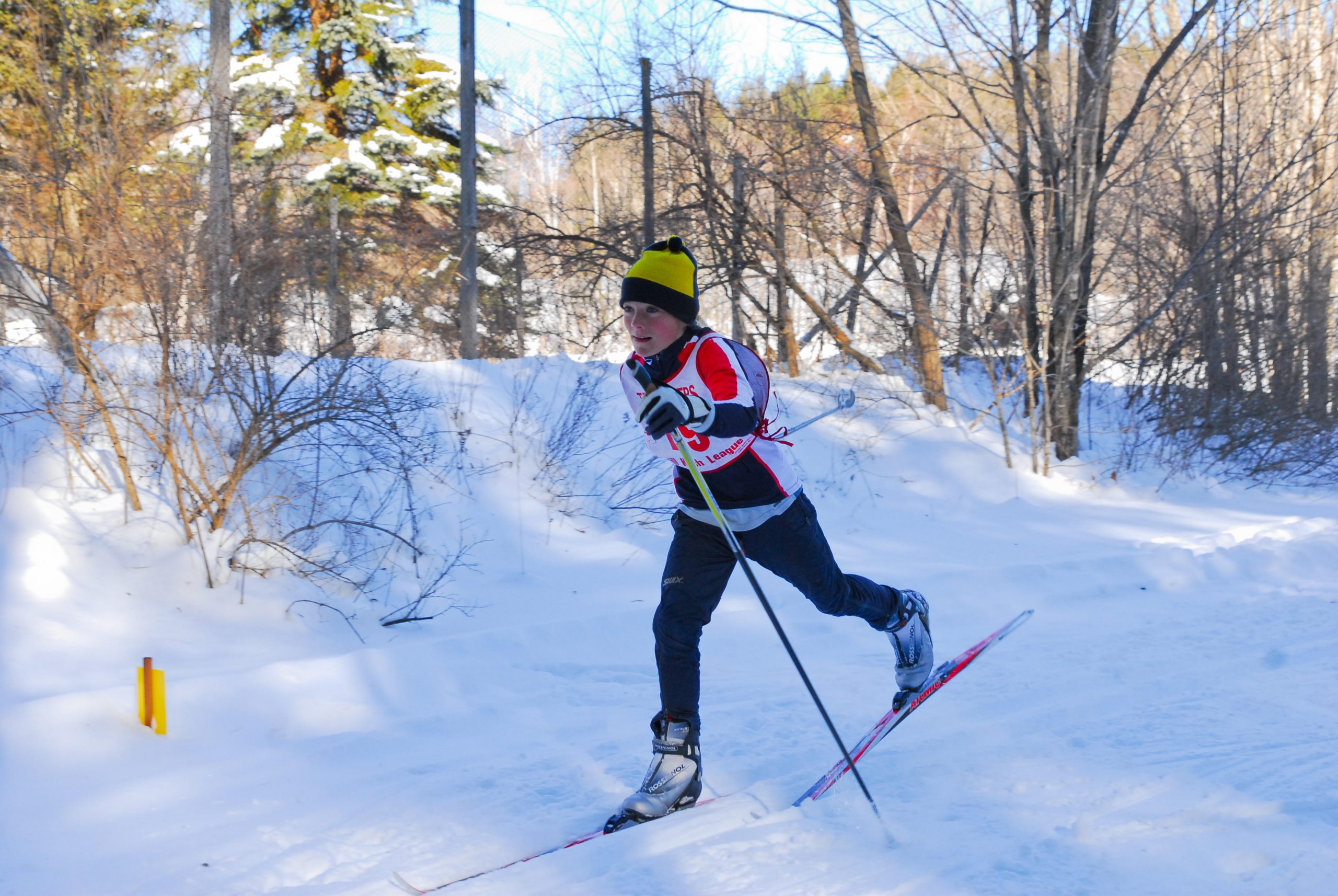
    A young Will Koch hitting his stride in a junior race. (Courtesy photo)

    FS: As the daughter of a three-time Olympian I can maybe relate to the potential challenges of being the child of a successful ski racer… so acknowledging that, can you talk a little bit about your dad’s role in your skiing career? 

    WK:  I definitely get that question quite a bit about like, you know, is it stressful or pressure to have your dad being like, Olympian and everything. Honestly, I think that my dad does a really good job of not having expectations for me, which is really nice. My dad totally recognizes that skiing is awesome and everything, but that there’s a lot more to life than skiing at the same time. He’s very much left the coaching to my actual coaches, but at the same time, he’s always there to give advice when I want it.

    He’s obviously like, been there, done that with everything that I’m given going through in terms of skiing, so I think it’s really inspiring to have a person like that always around when I need it, but it’s really awesome that it doesn’t feel like a burden. It’s really an opportunity.
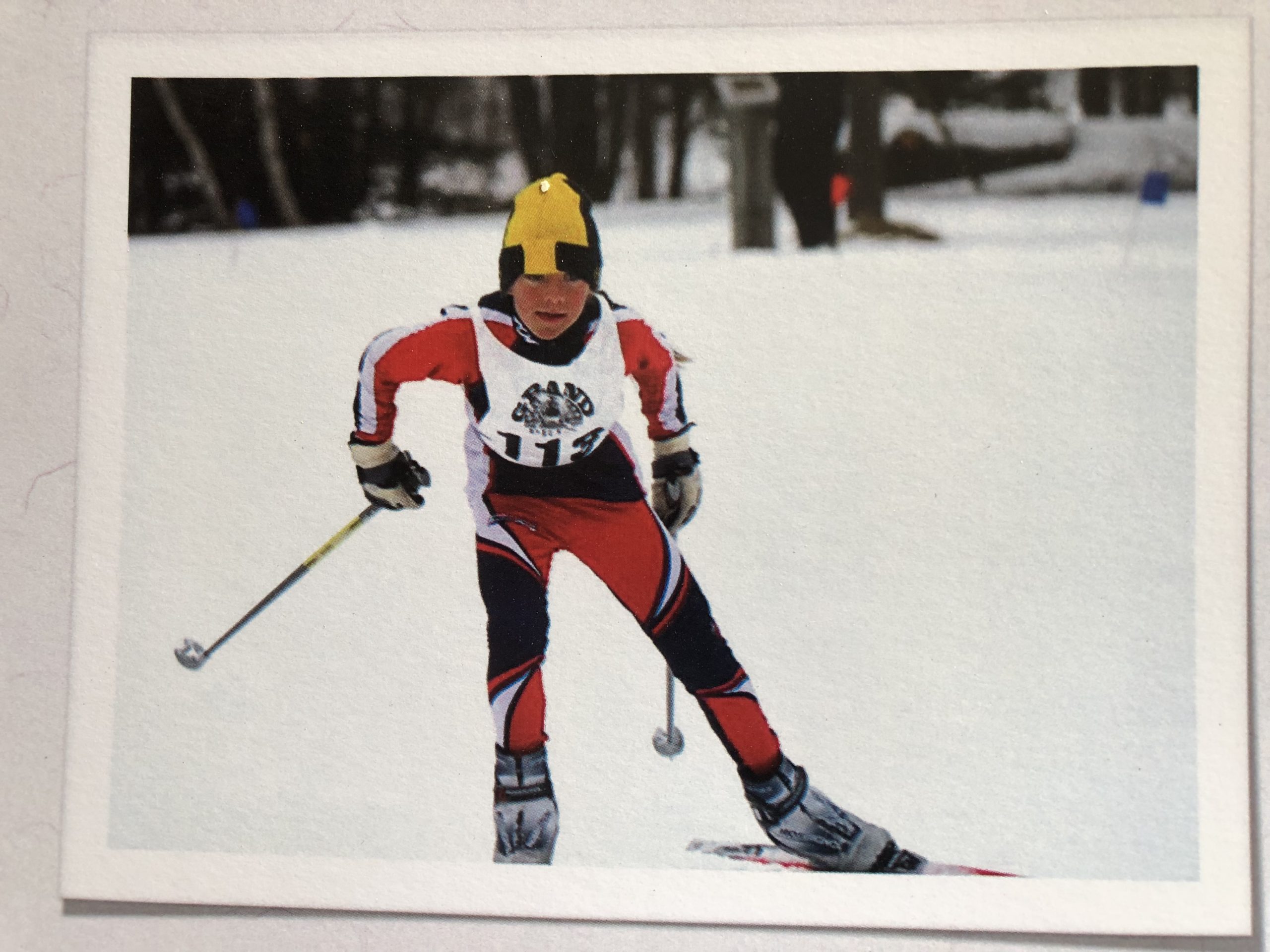
    Will Koch competing at a junior race in New England (Courtesy photo)

    FS: How was the transition from high school at Stratton Mountain School (SMS) to college skiing at the University of Colorado (CU)? Both in terms of training but also general life changes? What drew you to CU?

    WK: One of the biggest reasons that I wanted to go out west for college was that I loved the mountains out west. And I also really liked the people out there. I think they’re super open and fun. I also think that being at a PAC 12 conference school comes with certain advantages as far the resources available in the athletic departments. On top of that, I think CU had a really top level nordic team compared to certain schools that I was looking at. So those were all factors that made me want to go out there, and I definitely never regretted that choice once I was up there. I’ve been loving it for my two years, it’s a lot of fun. [There’s] a really good mix on the ski team, I think,  of having fun, but also being serious about training. 

    I’d say, as far as training, transitioning from high school to college one difference was the altitude. When I first went up to altitude in Boulder, and was training up there, I really thought that I could just keep doing exactly the same volume and workouts that I was doing in Stratton. But I put myself in a little bit of a hole when I first got out there, and then learned from that and realized that it’s a little more taxing on the body. But once I dialed it back, training wise, I was able to get some real fitness benefits from the altitude. Now that I’ve been out there for two years, I was able to have a really good fitness year this past season and [make] kind of a breakthrough in my skiing. I think part of that is being in altitude and building fitness with a really strong team. 

    In general, I found that the college schedule allowed me to have more flexibility in terms of when I trained and it’s easier to do two sessions a day in college compared to high school, just because you spend a little bit less time in the classroom. You have a little more flexibility in how you structure your day.
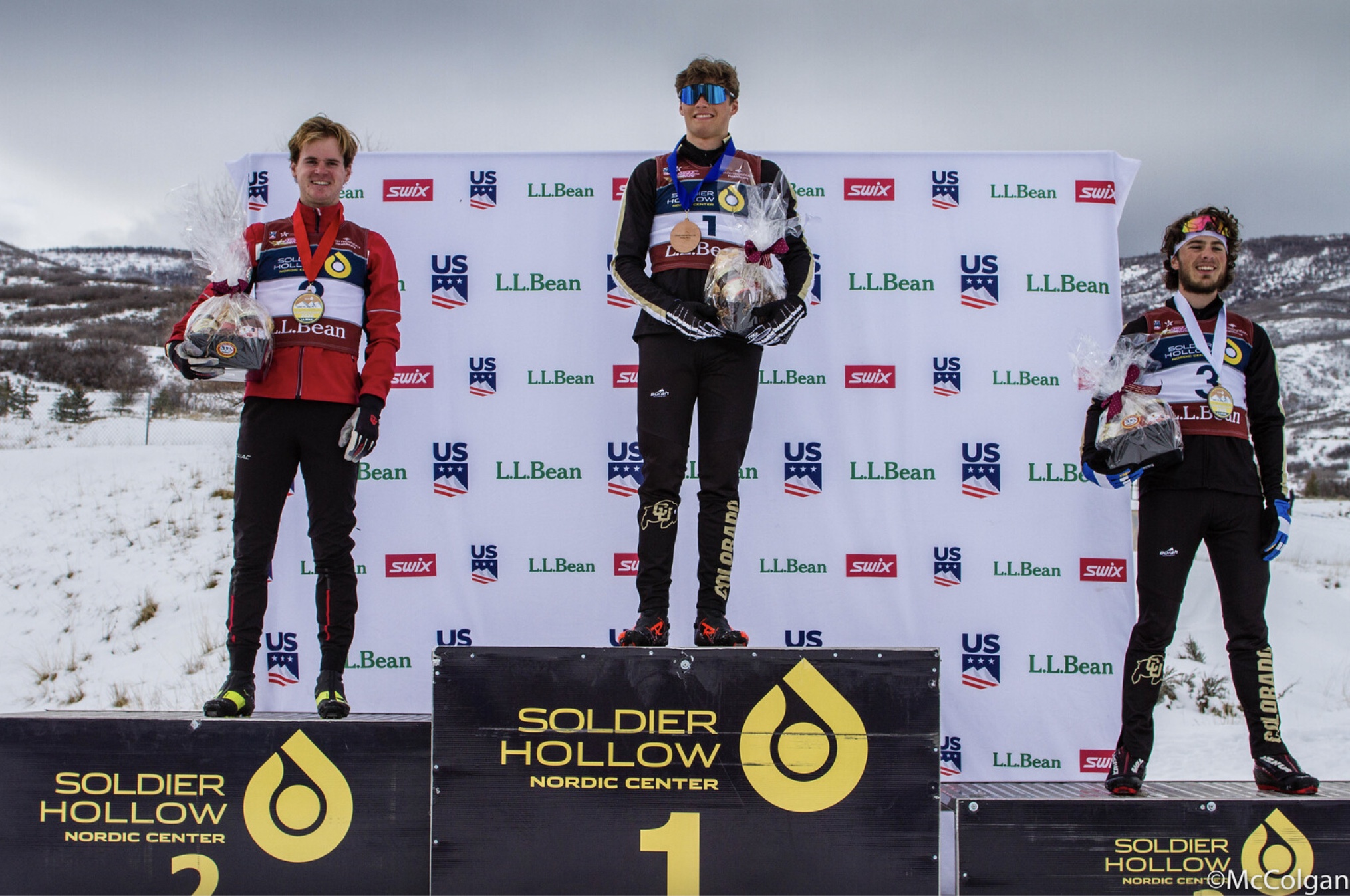
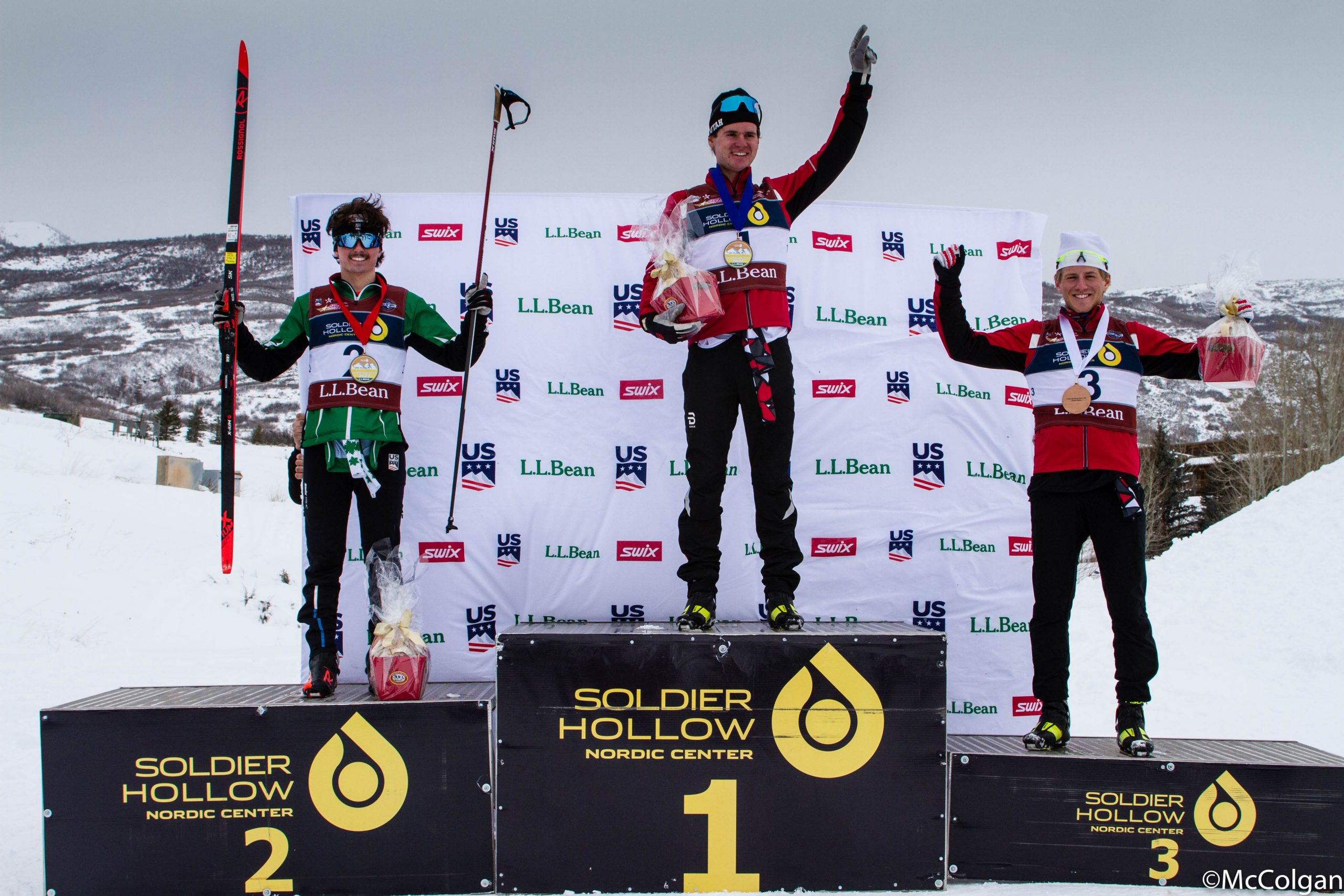
    The junior men’s podium for the 2022 Senior Nationals 15k interval start classic in Soldier Hollow: Alexander Maurer (CU) took the win ahead of Walker Hall (UU)  in second and Will Koch (CU) in third. (Photo: John McColgan)

    FS: By my count you’ve been on five different international racing trips, including the Youth Olympic Games (YOG). What were some of the highlights from those experiences, particularly in terms of how they supported your development and goals? 

    WK: Yeah, of all the international trips I’ve been on, definitely the Youth Olympics stands out as the coolest one and the most memorable. YOG is pretty different from World Juniors, in terms of it’s a fair amount less intense, I would say and more about having fun. And yet, even though it’s less intense, it’s the same level of competition, either way, you’re up against the best people in the world.

    I think that’s what I really loved about the Youth Olympics, it was fun to win the medal there and everything, but it was also mainly just a really cool experience. That was my first time meeting people from a lot of different countriesI still have my friends from Kazakhstan and Australia from the Youth Olympics, which I love. And, of course, that was also before COVID was really a thing, that was also a time when we were able to do a little bit more socializing on international trips. 

    I think that those [international] trips are really crucial in development, just to really see  that next level of competition that you’re going to be up against, and to really see that every second counts. In the Youth Olympics race where I got my bronze, it was two seconds between me and second place, and I was about five seconds from being back in eighth place. It was just ridiculous how tight it was. That just kind of goes to show how you really need to be thinking about getting those small gains where you can, and that the rest of the competition in the world is out there doing the same thing.

    FS: So you’ve just been named to the U.S. Ski Team D-Team, can you reflect on how that feels and maybe what is most exciting to you about this opportunity?

    WK: It’s definitely pretty validating to be named after being kind of on the edge for a few years now. It’s exciting. At the same time, though, it’s also basically almost the same training group that I’ve been training with for years, now that me, Walker [Hall] and Michael [Earnhart] are all on there.

    Being at my first US Ski Team camp (in Bend), I was kind of looking around, and I was like, Hey, this is really not that different from NTG, three years ago, when we all first made that. So it’s really cool to see how we all progress together. I’d say, making the team, it’s nice and everything, but it’s also really just one more step in development that we’re all taking together, which is really fun. 
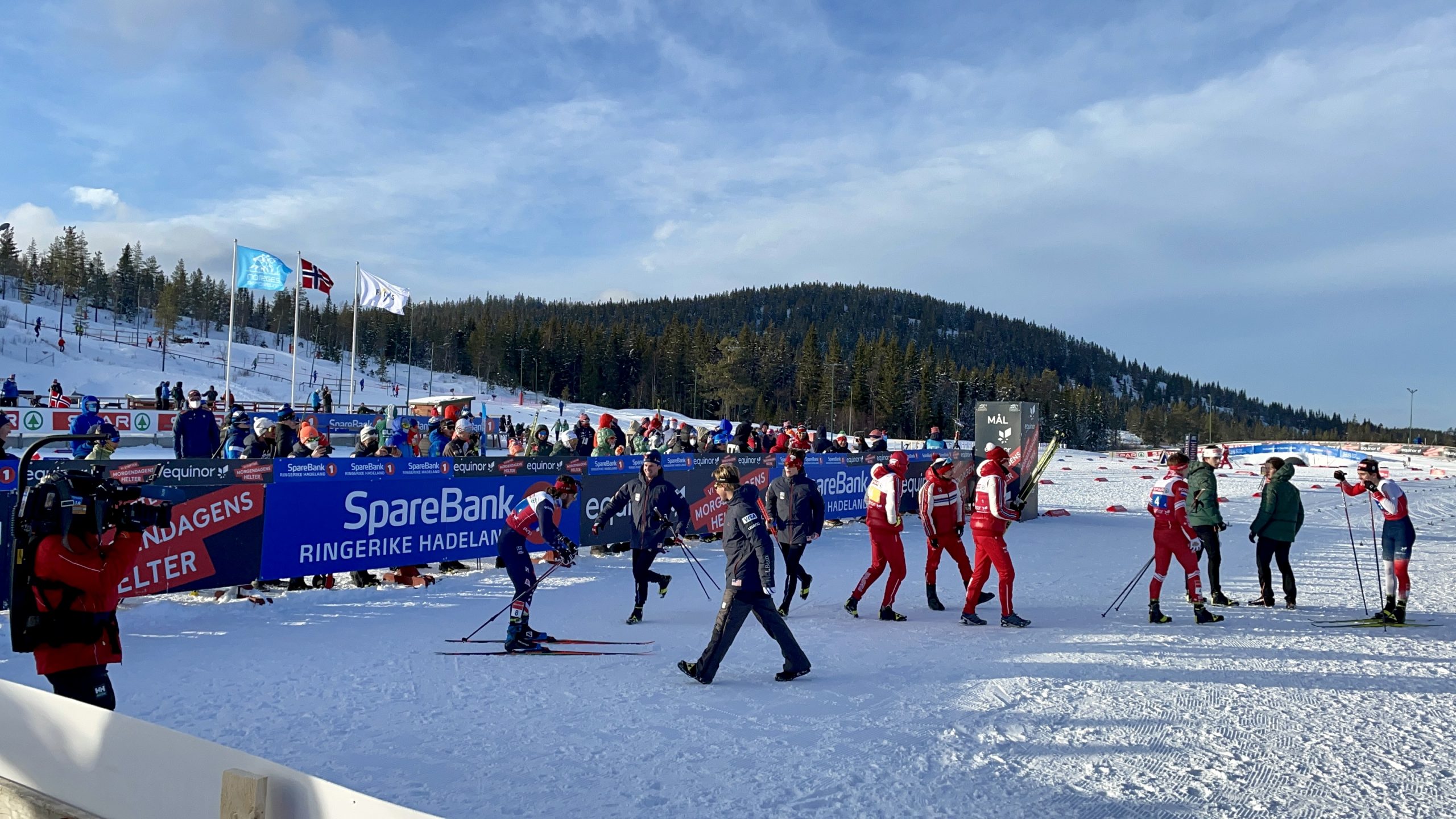
    At World Juniors in Lygna, Norway- a psyched American team congratulates anchor Will Koch, securing bronze in the U20 4×5 k relay. (Ella Hall photo)

    FS: What are some of your goals for the upcoming ski season?

    WK: I would love to make a debut on the World Cup if that worked out. It’s obviously a really competitive scene right now for Team USA to make it there, and getting picked is by no means guaranteed. I think that’d be a really good next level experience to have. I’d also like to get on the podium at NCAA’s. 

    FS: Sounds like you made it out to Bend for the annual spring U.S. Ski Team camp there, and now are you back with SMS. What does the rest of your summer/fall look like?

    WK: For the rest of the summer, I will be in Stratton training with the SMS T2 team. It’s pretty exciting, because we should have a lot of really fast guys on the US Ski Team coming out here to join our training group, which I think will be awesome, having grown up in Vermont, to get to show a bunch of people how we do it over here. I’ll be here until mid-August and then go back to Colorado and start school and training with the CU Ski Team.
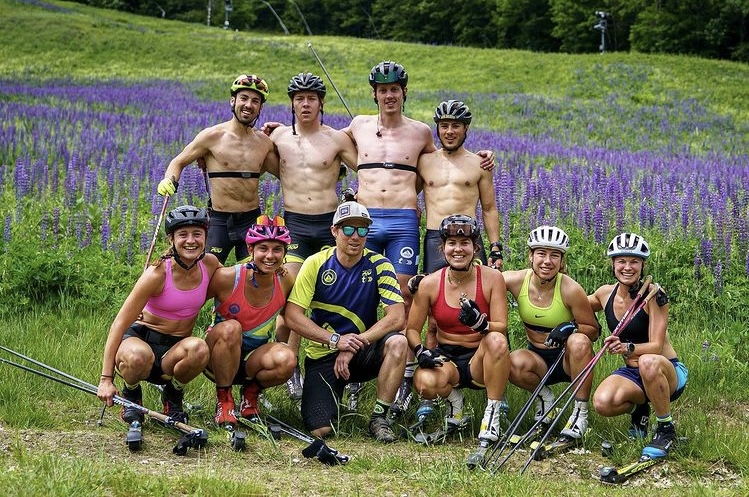
    The 2021/2022 SMS T2 Team. Back row (l – r): Ian Torchia, Ben Ogden, Bill Harmeyer, and Will Koch; front row: Alayna Sonnesyn, Julia Kern, head coach Pat O’Brien, Lina Sutro, Katharine Ogden, and Jessie Diggins. (Photo: SMS T2 Blog)
  • Q&A with New Faces on the U.S. Ski Team: Walker Hall

    Q&A with New Faces on the U.S. Ski Team: Walker Hall

    U.S. Ski & Snowboard recently announced its U.S. Ski Team nominations for the 2022-23 season. Of the 22 athletes named to the team this season, six were not on the previous year’s roster, either newly named or renamed: Michael Earnhart, Walker Hall, Zak Ketterson, Will Koch, Finn O’Connell, and Sammy Smith.

    Walker Hall was named to the 2022-23 U.S. Cross-Country D-Team. (Photo: U.S. Ski & Snowboard)

    To help fans get to know these new(er) faces, FasterSkier is doing a series of interviews, providing insights into the factors that have contributed to development, progress, and growth for these athletes last season. In this installment, we talk with 20-year-old Walker Hall, who was named to the D-Team this season. Hall grew up immersed in the Methow Valley cross-country ski community and is now entering his sophomore year at the University of Utah. 

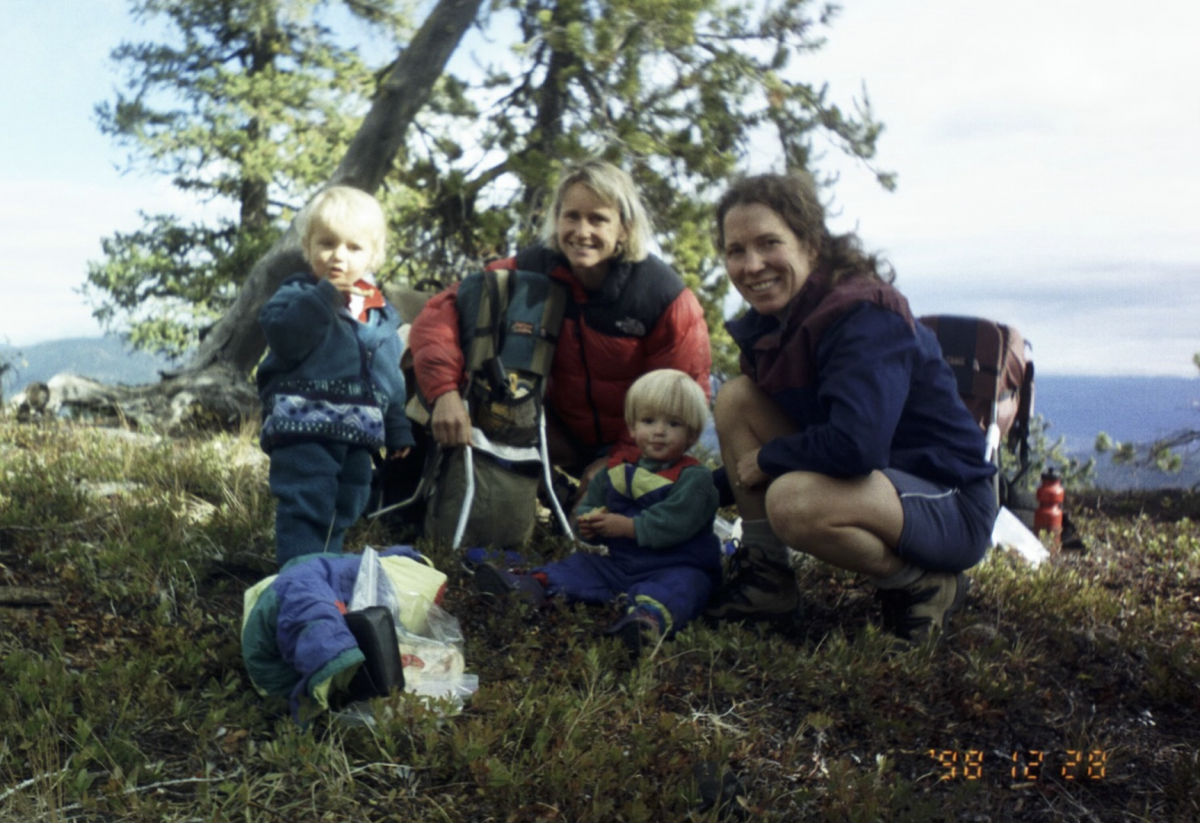
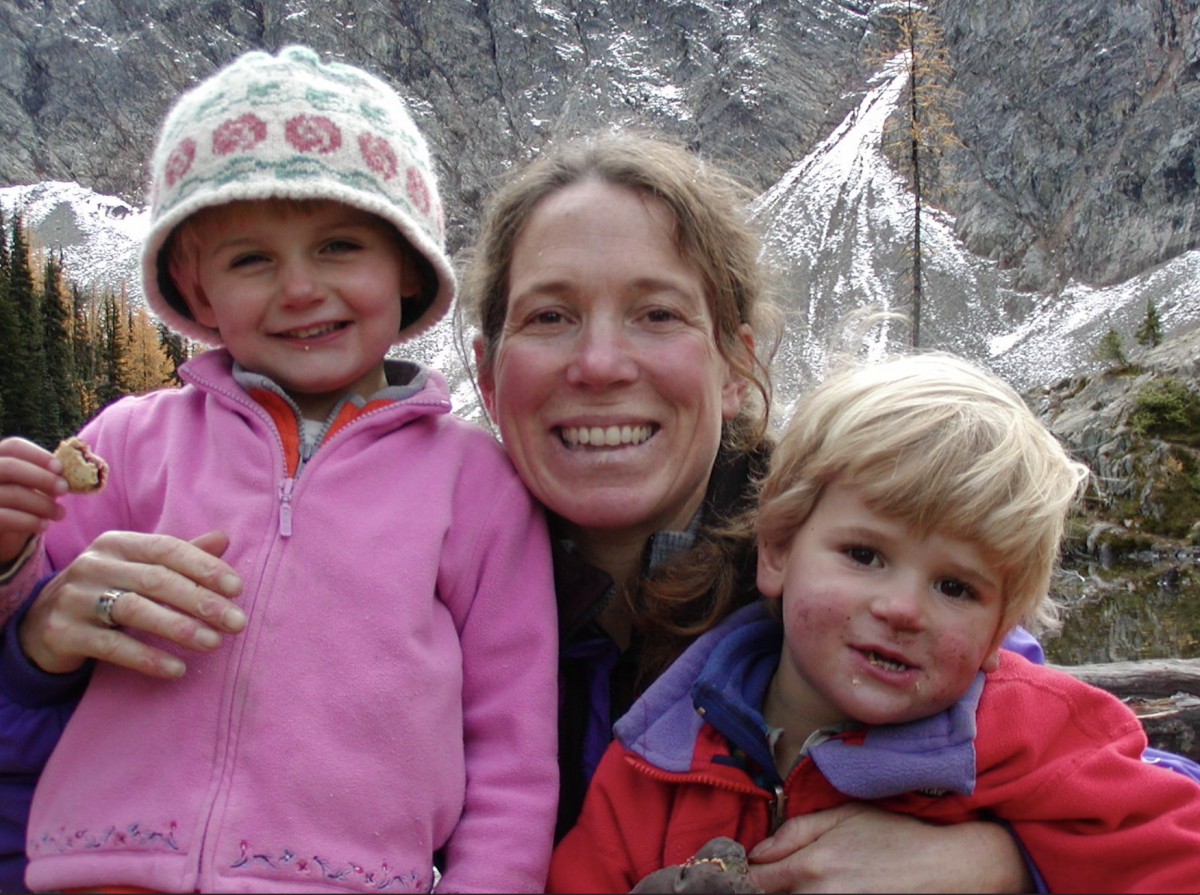
    While the Methow has produced a number of outstanding skiers, including Brian Gregg, Erik Bjornsen, and Sadie Bjornsen Maubet, Hall could find inspiration even closer to home. His mom, Leslie, skied in three Olympic Games between 1988 and 1994, and her best friend and training partner post-professional racing soon became two-time Olympian Laura McCabe, once both women relocated to Winthrop, WA. Still close friends, Walker and Novie McCabe are just six months apart in age, and began tagging along from their infancy on their moms’ training and outdoor endeavors. Both athletes, now U.S. Ski Teammates, developed on the Methow Valley Nordic Team, coached by their mothers.

    Methow Valley Nordic Team coaches and Olympians Laura McCabe (left) and Leslie Hall (right) bring Novie and Walker, now U.S. Ski Teammates, along for their training and outdoor endeavors. (Courtesy photo)

    In this interview, Walker reflects on some of the other influential experiences – and setbacks – that contributed to a breakout season in 2021-22. Hall won the junior men’s 10 k during the 2022 U.S. Cross-Country Championships in Soldier Hollow, and finished in the top-five in a third of his RMISA races, including a podium performance in Sun Valley. Earning his first spot on the World Junior team, Hall competed in both the 1.2 k freestyle sprint and the 30 k skate individually, and was a contributing member of the U20 bronze medal winning relay team.  


    – Walker’s sister, FasterSkier assistant editor Ella Hall, contributed to these questions

    FasterSkier / Rachel Perkins: You grew up in the Methow Valley, which has a strong legacy within its cross-country ski community and the number of athletes who grew up there and went on to ski professionally. But in your situation, you and Novie McCabe are only about six months apart, and your families are super close and it sounds like you both did a fair amount of tagging along for both of your moms’ training as kids. Can you talk a little bit about your introduction to skiing and what your relationship with the sport was like growing up? 

    Walker Hall: From as early as I can remember, probably as soon as I was capable of going on skis, that’s when I started – me and Novie both. Regardless of what we were doing, it was mostly outdoor activities, whether that was hiking or climbing or just spending time outside. Our moms would take turns, like one would take care of us while the other went and did some training or a long run or something. So I felt like I got a good training base just from everything I did outside, and started off skiing really young, and it’s always been a big part of my life.

    Leslie Hall, with a young Novie McCabe and Walker Hall, share a lifelong love of the outdoors that has developed into successful ski racing careers. (Courtesy photo)

    FS: I also noticed you also listed your mom as one of the most influential people in your life in your U.S. Ski Team bio, and I know she was one of your coaches with the Methow Valley Nordic Team (MVNT). Can you say more about that?

    WH: She coached [MVNT] up until just this last year – she retired last season. Basically when she was done racing [professionally] and once my parents moved to the Methow in the late ’90s, she really developed the program there.

    So she’s been coaching for a really long time, and she had a lot of experience. She coached when my sister was skiing, so I grew up doing what [Ella] did because she’s four years older. My mom was able to give me the support and advice and guidance that is crucial for being good at skiing, and she was not too overbearing or anything, so I think she was just a really good influence on my ski career.

    FS: That type of relationship seems important – not being overbearing, but really sharing in a mutual love of the sport. Is that something that you have felt within the Methow community and within your own family?

    WH: I’ve definitely felt a lot of support from different people in the Methow, whether it’s my mom or Laura [McCabe] or other people in the ski community there. I’ve always gotten the support that I’ve needed and been pushed when I needed to be, and never felt too much pressure or anything, so it’s been really good for my career in skiing.

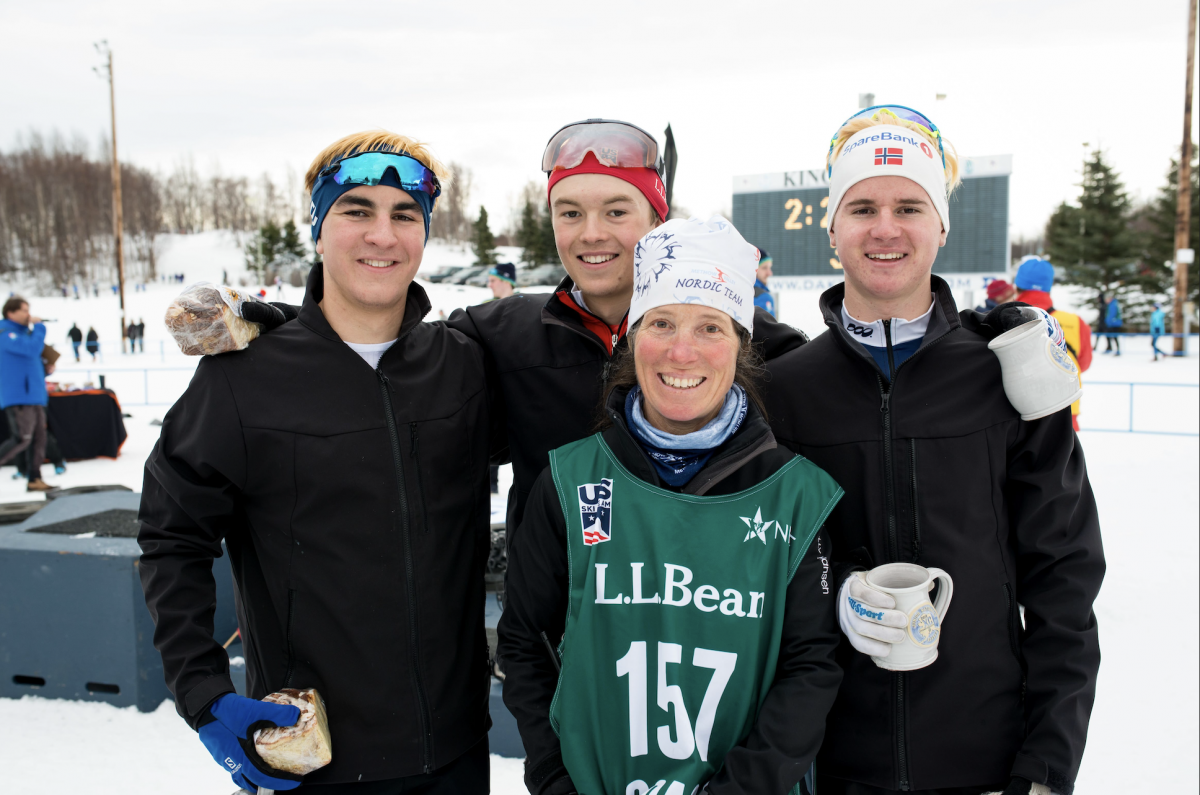
    Long-time Methow Valley Nordic Coach and 3x Olympian Leslie Hall with the members of the U18/U20 relay at 2019 Junior Nationals in Anchorage, all of whom skied for MVNT. From left to right, Travis Grialou, Garrett Butts, and Walker Hall. (Courtesy photo)

    FS: Fast-forwarding a bit, in high school, you spent six months in Meråker, Norway during your junior year, and it sounds like that was a pretty formative experience for you – you had a really positive experience with that program, and the coach, and made some good friends/training partners. Can you share more about how that came about and what your time was like there?

    WH: It came about because Ella did a very similar [program] her junior year; she also went to Meråker, but she went for a shorter period of time. But as I got older and learned more about the sport and the people within the sport, it seemed like Norway was the place to be to really improve and learn. Our family had some connections in that area because Ella had been there. 

    Once I was there, it was definitely a lot different. Coming from the Methow where there’s really not many – there’s a lot of skiers, but it’s such a small area that you’re sort of in your own little bubble. So going to Norway and just seeing the ski culture there and learning a lot about training and what the Norwegians like to do [was really beneficial], because they obviously have a really good method for juniors or whatever age you are in ski racing. I had good coaches, good training partners, and good support there as well. So I definitely learned a lot and sort of knew what I had to do when I got back to really take skiing to the next level.

    FS: Was that at a sports academy? Were you going to school also?

    WH: It’s actually a public high school, or it’s funded by the government, but it’s a sports school [called the Meråker videregående skole]. So we would train in the mornings until maybe 11, and then shower, eat lunch, go to class for three hours or so, and then maybe train in the afternoon. That was what it was like most days, then on the weekends, it was more on your own because it’s a school program, not  a club. When we would go to races – which I didn’t go to too many races – we would go with a local club.

    FS: Your sister said that the experience also inspired you to take Norwegian lessons after returning home and that you’re “decent” now. Is this true?

    WH: When I was there, I definitely didn’t know that much [Norwegian]. There were two other non-Norwegian students that I took some Norwegian lessons with, just what the school provided, but I definitely never really spoke that much while I was there. I wanted to keep learning and improving [after I got back], so I’ve studied on and off since then. I’m alright at it – I’m pretty conversational, I would definitely not say I’m fluent. But it’s a fun way to stay connected with my friends over there, and some of my teammates at the University of Utah are Norwegian too, so that’s been cool.

    Hall also explained that his classes in Meråker were in Norwegian, but since the group size was small, and both his teachers and classmates were helpful, he was able to get by without being fluent in the language. 

    FS: After graduating high school in 2020, you had planned to go back to Meråker for a gap year, but COVID got in the way of that, and plan-B ended up including a lot of time training on your own in the Methow. Can you talk about that experience and how you adjusted?

    WH: I had been planning to go back to Norway, but everything was so strict with COVID [at that point], they were not letting anyone in, basically. So I was just at home and I kept trying to figure it out so that I’d be able to go over there, but it just kept not working. I kept trying, but eventually, I was just at home the whole time. 

    I was going to races in the winter but it definitely was not an ideal situation for me because I was doing a lot of training on my own, which, it’s not necessarily a bad thing to train on your own, but for me personally, it’s a lot easier for me to train with other people. It’s a lot more motivating, and long term, it’s a lot better to train with other people so you don’t plateau. But I just focused on racing and kept working hard and it wasn’t the worst in the end. That year was alright, but it wasn’t ideal.

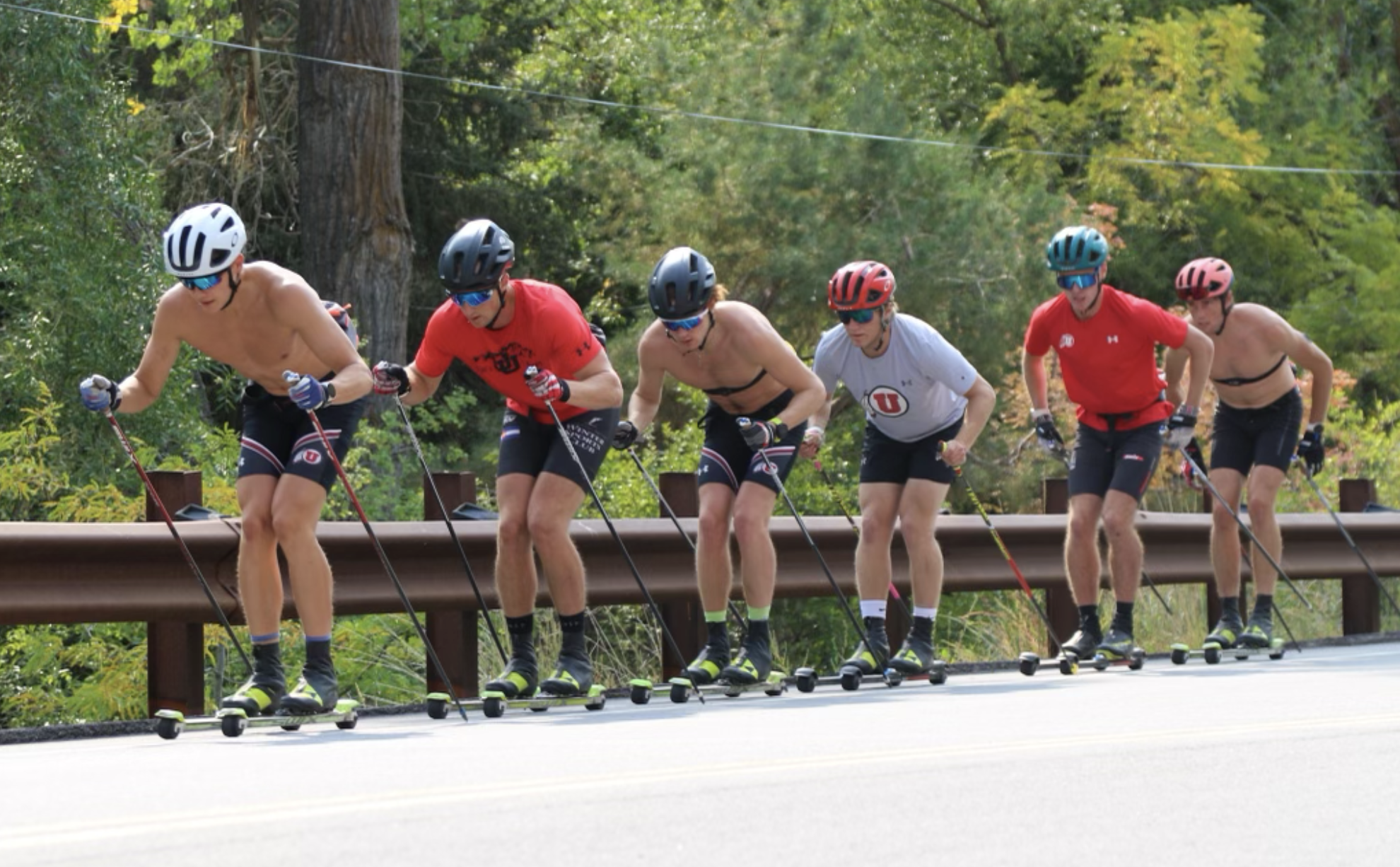
    Walker Hall trains with the University of Utah team in Fall 2021. (Courtesy photo)

    FS: Kind of on the other end of the training group spectrum, for collegiate racing, you originally committed to Dartmouth, but later were offered a spot that opened up at the University of Utah, and made the switch as Utah had been your first choice.

    WH: Yeah. Basically, I had planned on going to Dartmouth, and then COVID hit, and it was looking like life at Dartmouth with COVID was going to be a lot different than before. I had been talking to Utah [during my senior year], and they had been saying ‘oh, you should take a gap year and then we’d probably like to take you.’ So there was also a chance that I was not going to take a gap year and just go to Dartmouth, but then when that gap year happened and I got offered a spot at Utah, I just knew that that was going to be the better choice for me.

    Last summer before I went to Utah, I came up here to Anchorage for most of the summer, so I was training with a lot of my future teammates. There was a big group of people up here and a good amount of Utah skiers were here, so it was a good way to prepare and it was a really good experience. There’s just such good training up here during the summer. And the winter, I’m sure.

    FS: And what does that look like? Are you working with a coach or under a certain program? And how have those experiences being in Anchorage for the summer been valuable for you?

    WH: I train with APU when I’m up here. That’s a really solid group to train with, coached by Erik Flora, who I really like and I’ve learned a lot from. It was a really good experience coming up last summer, and I knew I wanted to come again this summer. There’s just a lot of really hardworking people that push me and help me hit big hours, so I think it’s a good place for me to be during the summer.

    FS: Going back to University of Utah – what appealed to you about that program? And what was your experience like in that first season of collegiate racing?

    WH: There’s a lot [that appealed to me about it.] I knew a lot of the people on the team, and I knew it was such a strong team. I had actually been down there a couple times – or I had been in Park City for ski camps and [races], and I visited Novie for a couple of weeks [during her freshman year at Utah] and really liked it. Me and Novie have always done similar training and whatnot, so I figured if she was liking it a lot down there, then it was a good place for me also. 

    And I really liked the coaches. I talked a bit with Miles Havlick and Frederick [Landstedt], and I really liked what I’d seen from those guys. Since I’ve been there, it’s been a really good fit.

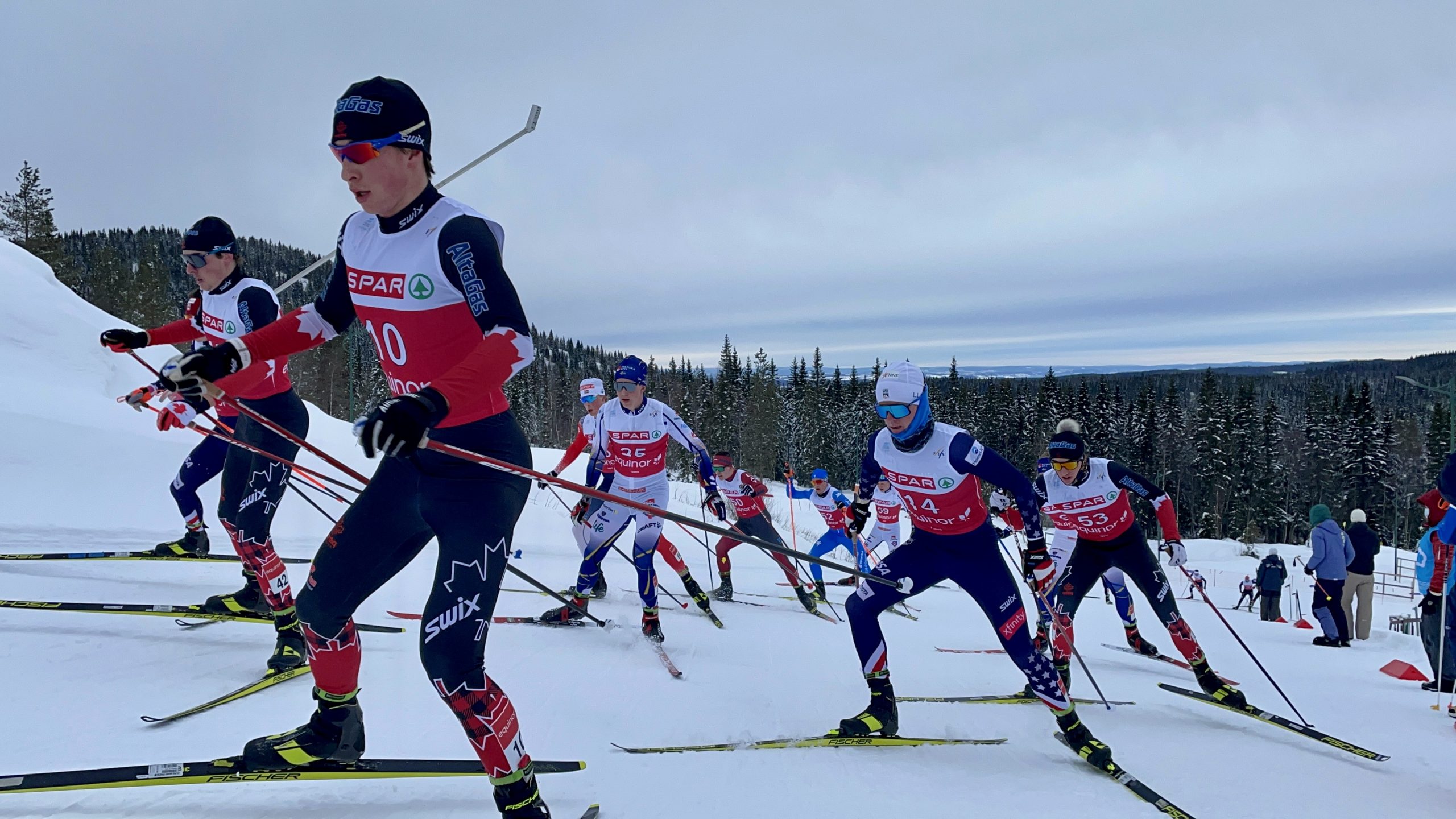
    Xavier Mckeever in bib 10 (CAN) and Walker Hall in bib 14 (USA) head up “waffle hill” in the early stages of the men’s 30 k mass start during the 2022 Junior World Ski Championships in Lygna, NOR. (Photo: Ella Hall)

    FS: World Juniors in Lygna was your first international trip, and it sounds like you had some bad luck with racing at US Nationals and/or been really close in prior years. What do you think came together for you this season to make that trip? And what were some of the highlights of that World Juniors experience in terms of how it supports your development and goals?

    WH: Yeah. In previous years – maybe the past three years or so for this year – there were like two years where I was just coming off of sickness going into nationals, so I never really had the races that I wanted there, and I never ended up making any of those international trips. Which, honestly, I would have liked to go on the trips, but it never really bothered me too much – it wasn’t like demoralizing or anything – because I felt like I knew the level that I was at and that on a given day I could be as good or better than any of the trip. So it was never really too much of a bummer for me. But this year, I wanted to make it on the trip to World Juniors, and I had goals for the races at World Juniors too, it wasn’t just the trip there was the end goal. But just making it definitely felt good, and I had a really good Nationals this year, which was awesome since that’s pretty much the first time that’s happened for me. 

    I was super happy that the races were in Norway because I just love spending time there, and we got to do our pre-camp in Hafjell, which is right near Sjusjøen, and I’ve spent some time there – it’s [some of] the best skiing in the world. So that was super fun. And I really liked a group of guys and the entire team and staff that was there, so it was a really good experience.

    FS: From the outside, it seems like you took a pretty big step forward this past year, which maybe can be attributed to having such a strong group to train with at University of Utah, or some more direction after a tough gap year. In looking back over this year, what are some of the factors that you think allowed you to take those steps forward and what were some of your personal highlights from the season? And those personal highlights do not necessarily need to be a race result, just an experience that stands out to you.

    WH: I think the main factor was really taking my training to the next level. Especially over the summer [in Anchorage] and then carrying that through the fall in Utah. I was just training with a really strong group, and really pushing myself, and doing [types of training] that I hadn’t really done in the past. So definitely, a good part is thanks to that. And then also, I’ve had a lot of different experiences over the years and learning from those helps to channel some better results.

    As for my highlights – this last season, I was just proud of the way that I trained and was smart with my training, and I  didn’t overdo it. And it seems like it’s often hard to put together a good season like your freshman year of college because it’s such a big adjustment. So I was happy that I was able to have a solid season for the most part while going through such new experiences in my first year in college.

    Walker Hall stands atop the podium in Soldier Hollow after winning the junior 10 k mass start freestyle during the 2022 U.S. Cross Country Ski Championships. (Photo: John McColgan)

    FS: What are your goals heading into next winter?

    WH: It’s gonna be my first year not being a junior, so honestly, I don’t have too many specific goals. But I’d definitely love to race in my first World Cup this year, and just keep improving. On the college circuit, hopefully, get a bunch of podiums in RMISA. And just keep learning from my teammates and pushing with the team at Utah.

    FS: Last question for you: with making the D-Team, can you share what that means to you and what you’re excited about in terms of the support and opportunity that opens up for you?

    WH: It’s always seemed like probably the biggest step you can make in U.S. skiing is actually making the ski team, so it feels really good to have achieved that. I’m just now realizing the amount of support that means that I’m able to get, so I’m just taking advantage of that and learning from my other teammates on the team – taking advantage of the different opportunities that it grants me, and just enjoying the ride. But I’m definitely thrilled to have made the team.

  • Lizzie Larkins on Learning on the Job as a Wax Tech at World Juniors

    Lizzie Larkins on Learning on the Job as a Wax Tech at World Juniors

    The role of a wax technician seems both secretive and extremely public. As spectators, we don’t see what happens on race day inside a wax truck or trailer. We aren’t privy to the tips and tricks that are employed to work magic on an athlete’s skis. Conversely, when the wax is off for a racer, that error is on full display for the public as we watch an athlete struggle through a race on skis that aren’t competitive. Though we often don’t see much of the wax techs, as they are busy testing or preparing skis, another observation to be made about the profession is that it is largely male-dominated. 

    Athlete Hailey Swirbul and her wax tech bundle up for training on Friday, February 4, 2022 at the Zhangjiakou National Cross-Country Skiing Center. (Nat Herz/FasterSkier-ADN)

    Earlier this season FIS made a behind-the-scenes video, highlighting Vale Veurich, the only long-term female wax technician on the World Cup circuit. Gender representation among wax techs is not the only area of inequality in the cross-country world but there are groups working to change this. 

    The Women Ski Coaches Association launched in September 2019 in pursuit of gender equity in coaching.

    One example is the Women Ski Coaches Association which launched in 2019 with the goal to “develop, retain, and advance women in ski coaching leadership.” While the WSCA is primarily focused on representation in coaching, as part of this work they hosted a wax webinar in the fall of 2020 titled “Waxing Skis & Waning the Gender Gap. Prior to the event, they conducted a survey which showed that seventy-six percent of participants did not have access to information that made them feel successful as a wax tech. Fifty percent responded “Yes” to the question: “Do you ever feel like you are at a disadvantage obtaining wax product or process information because of your gender?”

    Systemic change takes time but there is no time like the present. At World Juniors in Lygna, Norway a few weeks ago the US contingent had five female staff members, including two female wax-techs. Both Lizzie Larkins and Julia Hayes spent the week learning and working as techs for the junior racers. FasterSkier caught up with Larkins to hear more about her involvement and perspective on this experience. 

    The following interview has been edited slightly for clarity. 

    FasterSkier (FS): Can you fill us in a little on your background? 

    Lizzie Larkins is the assistant nordic coach at Montana State University in Bozeman. (Photo: msubobcats.com)

    Lizzie Larkins (LL): When I reflect on my experience coaching thus far, I think, “Well, that escalated quickly!” I graduated in 2020 from UVM with a degree in Nutrition and Food Science and a lot of love for the sport of nordic skiing. Between graduating from UVM in a pandemic and moving to Bozeman, I lived in my hometown of Truckee, California. I started coaching full-time for Auburn Ski Club (the club I skied for in high school). I primarily coached the high school-aged comp team, but I also coached the Master’s team, middle school team, and did technique clinics. In August of 2021, I accepted the assistant coach position at MSU, moved to Bozeman, and I have not looked back since!

    FS: What drew you to the position at MSU? 

    LL: As a recent college graduate and someone who understands the demands of being a student-athlete, I was drawn to coaching at the college level because I know what it feels like to be in the athletes’ shoes. I very recently had them on. I was also drawn to this position because of its location. Bozeman is a nordic hot-spot, but it is also an ideal place for work-life balance. I love that I can coach in the morning and spin Bridger laps with friends in the afternoon. It is wonderful to be exploring this mountain playground and living in a college town once again. 

    Working with [head coach] Adam St. Pierre was also a factor in my decision to come to MSU. Adam cares so much about this team, goes above and beyond for every athlete he works with, and graciously shares his enthusiasm and knowledge for this sport, this community, and the future of US Skiing. I am extremely grateful to have the opportunity to be a part of the MSU Ski Program. It’s a great fit!  

    FS: Can you explain what the application process was like to join the World Juniors trip?

    LL: In the late fall, I saw an email from Greta Anderson with the call for staff for both World Junior/U23 Championships as well as the U18 trip. While at our Thanksgiving Camp in Canmore, I compiled a coaching resume, wrote a cover letter, and emailed in my application. I heard back in December while home in Truckee for the holidays.

    Throughout the process, one constant for me was self-doubt. I questioned whether I should apply while completing each step of this process. I am very fortunate that Adam saw this as a huge opportunity for professional development and encouraged me to apply in the first place. Even with his support, I had to dig deep to believe in myself and ignore the imposter syndrome. It was a huge leap outside my comfort zone, but I am really glad I licked the envelope and sent it. I encourage others to do the same especially if you find you are riding the same wave of uncertainty. 

    FS: So you joined the staff as a wax tech, what has the learning process been like for that?

    LL: The learning process for waxing has been one of the steeper ascents on the coaching learning curve for me. Don’t get me wrong, I love going uphill, but I was humbled by how much there is to learn about waxing in my transition from athlete to coach. One of the major keys to my learning process is being a nordic sponge in the wax cabin and on race day. I try to soak it all up and tune into all of the little steps in the testing, application, and decision-making process. I still have a ways to go before I am comfortable calling myself a wax-tech, but I am deeply motivated to keep learning and growing in this realm. I am also very grateful to have the hands-on learning opportunity in Lygna alongside a very talented service staff.

    FS: Can you talk through what a race day looked like for you?

    LL: In Lygna, we had seven races in six days with no days off in between, so a typical day was packed to the brim. Wake up, put on ski clothes, fuel up at breakfast, chug coffee, drive to the venue, inspect track conditions, prep skis for athletes who were training, drink more coffee, help with prepping test skis, do glide outs and necessary testing, help athletes test, run skis to start, retest if necessary, run more skis to start, cheer on athletes, eat lunch and Norwegian chocolate, zero test fleets, clean kick wax, prep training and race skis for the next day, eat a late dinner as a tech staff, pack a backpack for the following day, sleep hard, and get ready to do it all again!  

    Lizzie Larkins enjoying bluebird conditions in Norway (courtesy photo)

    FS: If you had to pick one highlight from the trip what would it be?

    LL: The highlight of my trip was watching Sammy Smith advance through the sprint heats on the final day of competition. Sammy skied with heart, determination, and most importantly, she was having fun. I love watching athletes exceed their expectations and enjoying the experience of racing. Sammy was doing just that and it was awesome to be there cheering her on. 

    FS: What has been the biggest challenge of this experience?

    LL: One of the biggest challenges was seeing athletes lose sight of why we do this sport and the associated disappointment. On social media, we only see the highlights, so it was hard for me to watch extraordinary athletes be unrelentingly hard on themselves and define their experience solely from results. There are an abundance of reasons to pursue this sport and love it. At major events like this, it is easy to get sucked into the numbers and lose sight of the successes along the way. 

    FS: Among the US staff it seems like the split was pretty even in terms of male/female, were you able to get a sense if this was the case for other countries too?

    LL: Truth be told, this was not at all the case for other countries. Once the racing began, it became quite obvious that Julia Hayes and I were the only two female techs at this event. There were a number of female coaches and staff members at the event, but in the testing depot and after the racing concluded, Julia and I noticed frequently that we were the only females there. Prior to this event, I knew we needed more female coaches and techs. Now, I understand how far we have to go before this becomes less of a male-dominated industry at the higher levels. 

    FS: Any final thoughts you want to share?

    LL: A few nuggets of wisdom from Coach Lizzie:

    • Rocket ships need rocket fuel. Eating enough as an athlete should be a priority for health, wellness, and longevity in sport. 
    • Have fun, be authentic, and be kind to yourself and others. 
    • Fast is smooth, smooth is fast. Happy skiers indubitably go faster 🙂


    After returning from Norway, Larkins will be rejoining the MSU team and preparing for NCAAs in Soldier Hollow happening this weekend from March 9-12th. 

  • World Juniors: Schumacher leads North American U23 Sprint Contingent in 19th

    The 2022 FIS Junior/U23 World Ski Championships trip has been made possible through support from the National Nordic Foundation (NNF), which has identified this invaluable opportunity for developing athletes as one of its “Pillar Projects”. You can support the NNF and the next generations of America’s top skiers by making a donation here.

    LYGNA, Norway – The second U23 event took place Saturday morning in the form of a 1.2-kilometer skate sprint. Qualification occurred under a sunny blue sky, with temperatures around 20°F, though moving into the heats it started to get cloudy as the wind picked up. 

    Moa Hansson of Sweden won the women’s qualifier in a time of 2:33.13. Abigail Jarzin (University of Utah/Salt Lake City, Utah) led the US women, finishing 43rd (+13.16). Behind her came Lucida Anderson (University of New Hampshire/Golden Valley, Minnesota) in 45th (+14.02), and Anabel Needham (Michigan Tech University/Houghton, Michigan) in 46th (+14.08).

    Needham spoke to FasterSkier after the race saying, “it was a tough day, I was really hoping to possibly make heats, just felt a little tired. But the sprint course was so much fun. Super fast, and an actual sprint, so that was really cool.”

    Anabel Needham races the freestyle sprint qualifier during the 2022 Junior World Ski Championships in Lygna, NOR. (Photo: flyingpointroad.com)

    Rena Schwartz (Dartmouth Ski Team/Middlesex, Vermont) rounded out the US finishers in 54th, +17.95. For the Canadian women, Anna Pryce finished 35th, +10.98 back. Beth Granstrom was 44th, +13.35, Anna Parent 47th, +14.68 and Bronwyn Williams came in 52nd, +16.85. 

    Qualification for the men was won by Valerio Grond of Switzerland in 2:10.10. For the US, Gus Schumacher (Alaska Winter Stars/Anchorage, Alaska) and Noel Keeffe (University of Utah/Steamboat Springs, Colorado) advanced to the rounds, with 22nd and 29th places respectively. Jonny Hagenbuch (Sun Valley Ski Education Foundation/Ketchum, Idaho), the only other American U23 man competing, finished in 39th, +10.64 back. Canada had one qualifier in Pierre Grall-Johnson who finished 25th in the qualifier. Sam Hendry finished 56th for Canada, +16.54, Joe Davies 65th, +21.6 and Leo Grandbois did not start. 

    As usual, the women completed their quarterfinals first. The five rounds of heats saw a few broken falls, a crash or two, and the two lucky loser qualifiers coming from heat number three, Anna Grukhvina of Russia and Lisa Lohmann of Germany. 

    For the men, both Americans were competing in heat number four. Also in that heat was the second-fastest qualifier, Norwegian Ansgar Evensen, who won the skate sprint at Norwegian Nationals in 2020 (though notably Johannes Høsflot Klæbo did not race). Evensen broke the field apart on the first climb out of the stadium, with Czech skier Ondřej Černý keeping pace.

    Those two remained clear of the field as they descended and entered the final “waffle hill”. Schumacher was in fifth, still in contact with Jaume Pueyo of Spain and Jan Stölben of Germany, while Keeffe followed. Into the finish straight, Schumacher executed a quick no-pole skate that brought him into fourth place and appeared to be a good lucky loser time. Keeffe finished 6th, +7.11 behind heat winner Černý (CZE). 

    Noel Keeffe (bib 29) and Gus Schumacher (bib 22) race the quarterfinal of the freestyle sprint during the 2022 Junior World Ski Championships in Lygna, NOR. (Photo: flyingpointroad.com)

    “It was great, so excited to ski in a heat again,” said Schumacher after the race. Ultimately, heat five proved to be the quickest and Schumacher was bumped out of lucky loser position. Schumacher spent nearly the last month in Zhangjiakou, China, competing in his first Olympics. From there, he traveled with the US Ski Team to Helsinki. While the rest of the World Cup squad continued to Lahti for this weekend’s World Cup event, Schumacher flew to Oslo to meet up with the junior/U23 team.

    When asked how the transition has been, Schumacher replied, “It’s incredibly refreshing, I can relax a lot more I feel like and it’s nice to be in Norway where there’s definitely more of a fun ski vibe, like it’s more about just doing it. It’s nice to be back with these guys, this team.” Comparing the wind today to the infamous gales of Zhangjiakou, Schumacher said, “It’s not as cold, but it is definitely picking up a little bit. But I’m fairly used to it, I’ve got my tuck dialed.”

    With Canadian Grall-Johnson Pierre finishing sixth in his heat, all the North American competitors were out for the day. 

    In the women’s final, Moa Hansson continued her domination; after winning the qualifier, her quarter-final, and her semi-final, she took gold in the final as well. She was followed by bib 19, Monika Skinder of Poland. Nataliya Mekryukova of Russia rounded out the women’s U23 sprint podium. 

    Abigail Jarzin races the freestyle sprint qualifier during the 2022 Junior World Ski Championships in Lygna, NOR. (Photo: flyingpointroad.com)

    The men’s final started with some drama as Jules Chappaz of France snapped a pole immediately out of the start gate. He quickly got a replacement and was able to move himself into fourth as the skiers entered the final hill. Though Grond (SUI) was out front, the pack was tight, and as they crested the hill, Chappaz (FRA) became tangled and fell, taking him out of contention. Grond held his lead to the finish to take gold. Runner-up was Denis Filimonov of Russia, followed by Magnus Øyås Håbrekke of Norway in third. Evensen (NOR) finished fourth. 

    Tomorrow the program switches back to the juniors in the morning, with a skate sprint for the U20 racers. That will be followed by a mixed-relay for the U23’s in the afternoon to conclude the week of racing here in Lygna. 

    Results: Women’s Qualifier | Men’s Qualifier | Women’s Heats | Men’s Heats

    World Juniors links and information:

    Home page and general info | race program | results and live timing (all races) | streaming (only for Thursday through Sunday’s races, purchase required)

  • World Juniors: Canada puts two in top ten as Russia sweeps 5/10 k classic; Will Koch top American in 13th

    The 2022 FIS Junior/U23 World Ski Championships trip has been made possible through support from the National Nordic Foundation (NNF), which has identified this invaluable opportunity for developing athletes as one of its “Pillar Projects”. You can support the NNF and the next generations of America’s top skiers by making a donation here.

    Friday at 2022 FIS Junior World Ski Championships in Lygna, Norway, marked the phase that Steve Fuller, on site to take photographs qua Flying Point Road, calls “the ‘groundhog’s day’ stage” of the championships. “Things are happening so fast that you’re not quite able to get caught up with each day before you get up and do it all over again,” Fuller wrote on Instagram.

    Will Koch races to 13th in the 10 k classic during the 2022 Junior World Ski Championships in Lygna, NOR. (Photo: John McColgan)

    Undeterred, the Americans headed out on course Friday morning for their seventh and eighth races in four days. The coaches and wax techs (see the back row in the lead picture of the relay story) prepped skis for their eighth championship race within less than 72 hours. At the end of the day, Russia took a combined four out of six podium spots; Canadian skiers Xavier McKeever and Jasmine Drolet placed sixth and eighth, respectively; and Will Koch and Sydney Palmer-Leger led the way for the Americans in 13th and 19th.

    Women’s 5 k Classic

    Let’s back up. The women again had the day’s first race, a 5-kilometer interval-start classic. The first starter headed out on course, over a single lap of yesterday’s 5 k course, at 11 a.m. The official results describe conditions as somewhere between moderate and perfect: air temp of -2 C, snow temp of -3 C. Skies were overcast for the women’s race, but the sun came out for the men; as USST Development Team Coach Greta Anderson told FasterSkier later Friday, conditions sped up noticeably by the afternoon.

    82 starters later, Dariya Nepryaeva, who started at the sharp end of the field in bib no. 80, had logged the day’s fastest time, crossing the line in 14:30.1. She was closely followed by her compatriot, Elizabeta Bekisheva, in second, 2.9 seconds back. Emma Kirkeberg Mørk of Norway was close behind for third, 4.0 seconds back.

    Sydney Palmer-Leger skis into the top-20 in the 5 k classic during the 2022 Junior World Ski Championships in Lygna, NOR. (Photo: flyingpointroad.com)

    The day’s fastest North American finisher, and fastest Jasmine in the field, was Jasmine Drolet of Revelstoke, B.C., in eighth, 21.5 seconds back. She was followed in the North American standings by American Sydney Palmer-Leger (University of Utah/Park City, Utah) in 19th (+51.3), and Canadian Jasmine Lyons in 26th (+1:03.3).

    “I felt pretty good. I really like classic skiing and my goal was to give it all I had,” said Drolet in a press release from Nordiq Canada. “You only ski the lap once, so the key was to just go hard the whole time. We had amazing conditions, perfect for classic skiing so it was a good day.”

    Behind Lyons were the two Ninas, Nina Schamberger (Summit Nordic Ski Club/Leadville, Colorado) in 31st (+1:14.2) and Nina Seemann (Dartmouth Ski Team/Craftsbury, Vermont) in 36th (+1:23.0). Annie McColgan (University of Vermont/Bend, Oregon) was 40th (+1:27.3). Canadian athletes Sarah Cullinan (44th, +1:34.2) and Tory Audet (59th, +2:08.2) followed.


    Annie McColgan races the 5 k classic in Lygna, NOR, her first start of the 2022 Junior World Ski Championships. (Photo: John McColgan)

    McColgan radiated enthusiasm when she talked with FasterSkier following her first race at these championships. “It was nice to have everyone cheering out there, and my parents were here so it was really, really fun. It was really cool,” McColgan said.

    McColgan also provided insights on the course, describing it as “a really interesting 5k” with plenty of rolling terrain, but not many opportunities for recovery. “There’s a lot of steep little hills that you just have to be really good at… But it also is 16 minutes long. So you kind of have to make that balance [with energy expenditure]. And then the final climb was so brutal.”

    Men’s 10 k Classic

    The men again had the day’s second race, starting a two-lap, 10 k interval-start classic race at 1 p.m. local time. Taking athletes’ distance points as an informal form chart, in a field with 101 athletes the podium finishes came, relatively unsurprisingly, from bibs no. 90, no. 100, and no. 101. The gold medal on Friday went to Russian Saveliy Korostelev, the penultimate athlete on the course. Korostelev posted the fastest split time at 3 kilometers, at 5 kilometers, and at 8 kilometers, crossing the finish line in 26:15.8.

    Will Koch leads the American junior men with a 13th place finish in the 10 k classic during the 2022 Junior World Ski Championships in Lygna, NOR. (Photo: flyingpointroad.com)

    Korostelev enjoyed a hefty advantage over silver-medal finisher Niko Anttola of Finland, who finished 21.4 seconds back. Anttola ranked one to eight seconds behind Alexander Ivshin of Russia at all intermediate checkpoints, but skied the final two kilometers just barely faster. When Ivshin, the day’s final starter, crossed the line, he had fallen 0.8 seconds behind Anttola and had to settle for third.

    Put another way, Russia came within a second of going 1–2 in both the men’s and women’s races. They instead had to settle for first and second in the women’s race, and first and third in the men’s.

    Shortly behind the podium, Xavier McKeever of Canmore, Alberta, skied a strong race to finish sixth, 52.4 seconds back of Korostelev and roughly 30 seconds off the podium. It was McKeever’s best international result since, well, Tuesday, when he was fifth in the men’s 30 k mass start skate. McKeever’s sixth today tied Palmer-Leger’s sixth, from Tuesday’s women’s 15 k skate, for the second-best North American individual result of these championships.

    “I am stoked to be in the top-10 again,” McKeever told Nordiq Canada in a press release. “I was getting splits that I was close to the podium in the first lap, but I just couldn’t keep the high pace that I started with. Honestly, I feel like the podium is still a fair bit away, but today just motivates me more to make the steps toward being able to contend for a medal. … I have been able to build my confidence over the course of this season. After last year, it was instrumental for me to refocus on putting in the hard work each and every day, which I think has helped me race with more confidence than ever before.”

    McKeever was followed by his countrymen Max Hollman (Thunder Bay) in 17th (+1:28.8), Derek Deuling (Whitehorse) in 19th (+1:31.5), and Thomas Stephen (Calgary) in a tie for 26th (+1:40.0).

    Brian Bushey races the 10 k classic during the 2022 Junior World Ski Championships in Lygna, NOR. (Photo: John McColgan)

    Will Koch (University of Colorado/Peru, Vermont) led the way for the Americans, finishing in 13th (+1:23.4). He was followed by Alex Maurer (University of Colorado/Anchorage, Alaska), also 26th (+1:40.0); Brian Bushey (University of Utah/Waitsfield, Vermont) in 36th (+2:00.2); and Finn Sweet (University of Vermont/Waterbury, Vermont) in 47th (+2:11.3).

    Thoughts from the coach

    Greta Anderson is in Lygna at her third World Juniors as a coach or tech, her first since assuming her current coaching position with the U.S. Ski Team. (Disclosure, Anderson was this reporter’s coach in APU Masters in 2014–15, and has remained a close personal friend ever since.)

    Asked what she saw about today’s races, Anderson noted, “They were really fun to watch. Between FIS live timing and back split, the radios were pretty lively. One thing I did learn this year, and this is more than I’ve seen in the past, is that our athletes – every single one has the raw speed to compete at this level. We’re working on the durability portion of it. I think the top athletes in these races often are running negative splits in a big way; I would have to sit down and look at percentages. I’m sure we’ll do that at some point in time. But you know, the speed is there early on, we have very good placement, and then we need to figure out how to speed up just a little bit more. But that’s, you know, that’s been a big step for us as a country.

    “Will Koch, obviously very, very strong today. Brian Bushey came out on the top end of ten places being within four seconds, or eight places within four seconds maybe. So you know, really phenomenal. … Annie McColgan had her first ever World Juniors race today. And that’s always really fun and special to watch. I think often athletes come away seeing like, ‘wow, there’s another level,’ and it can be really motivating for the following year.”

    Sydney Palmer-Leger leads the junior women during the 5 k interval start classic. (Photo: John McColgan)

    Turning to Schamberger, Anderson observed that the 16-year-old has “had a pretty heavy week of racing so far. She’s had three starts, and the first day was not what she wanted. And the second day she had the gift of getting redemption the very next day, which I think is one of the best things athletes can have. And she was really happy with how she skied the relay, a big smile on her face. And then a really good race today. It’s fun to watch athletes – the moment that they realize they’re skiing at that level. Because we know they can do it, and we watch it, but that aha moment of ‘Oh, okay, in the world, this is where I am.’ That moment is really cool. It’s one of my favorite parts of my job for sure.”

    Anderson also described the environment at the venue more broadly, highlighting the effects of vocal parental support. “There’s quite a few parents here from the U.S.,” she said.

    “And Americans are really loud compared to other countries, and it’s probably taken as obnoxious, but I really appreciate it. We can always hear the Americans. It’s fun to stand by them and listen to them get all excited. Next to the parents during the relay is one of my favorite places to stand.”

    In that vein, Anderson concluded, “I look around, and I’m so proud to be an American coach. I’m so proud of the American skiers; there’s not a single other nation I would – I’m really glad that I work for our staff. And I think our athletes are really glad that they ski for the U.S.A. I don’t think they look around and think, like, ‘I wish I was on that team,’ or, ‘I wonder what that team is up to.’ We’re definitely in that, ‘We’re Americans and we’re here to beat you. Or at least die trying’ mode. And that’s pretty fun.”

    U.S. Ski and Snowboard Development Team Coach Greta Anderson encourages athletes during the men’s 30k distance race during the 2022 U.S. Cross Country Championships in Soldier Hollow. (Photo: Tobias Albrigtsen / @untraceableg)

    Racing continues tomorrow with skate sprints for U23 athletes, both genders, before wrapping up Sunday with both men’s and women’s U20 skate sprints and the U23 mixed relay, sending athletes and techs out with three races, two techniques, and a combined sixteen sprint heats on the final day of racing. Groundhog’s Day, indeed.

    Today’s results: women | men

    World Juniors links and information:

    Home page and general info | race program | results and live timing (all races) | streaming (only for Thursday through Sunday’s races, purchase required)

  • World Juniors: Zanden McMullen leads the way for the Americans in 10/15 k classic with 14th; Abigail Jarzin top female athlete in 36th

    The 2022 FIS Junior/U23 World Ski Championships trip has been made possible through support from the National Nordic Foundation (NNF), which has identified this invaluable opportunity for developing athletes as one of its “Pillar Projects”. You can support the NNF and the next generations of America’s top skiers by making a donation here.

    Thursday marked the third day of 2022 FIS Junior World Ski Championships in Lygna, Norway, but the first day of competition for U23 athletes, following individual and relay races for the juniors on Tuesday and Wednesday. The U23 athletes saw a 10-kilometer interval start classic for women, and a 15 k interval start for the men.

    Zanden McMullen leads the American U23 athletes with a 14th place finish in the 10 k interval start classic in Lygna, NOR. (Photo: flyingpointroad.com)

    The top American finishers today were Zanden McMullen for the men in 14th, and Abigail Jarzin for the women in 36th. The overall podium was all Nordic countries, for the men, and all non–Nordic countries, for the women.

    Women’s 10 k Classic

    The women had the day’s first race, going out at 1 p.m. local time over two laps of a 5 k course with a relatively humane 145m of total climb per lap.
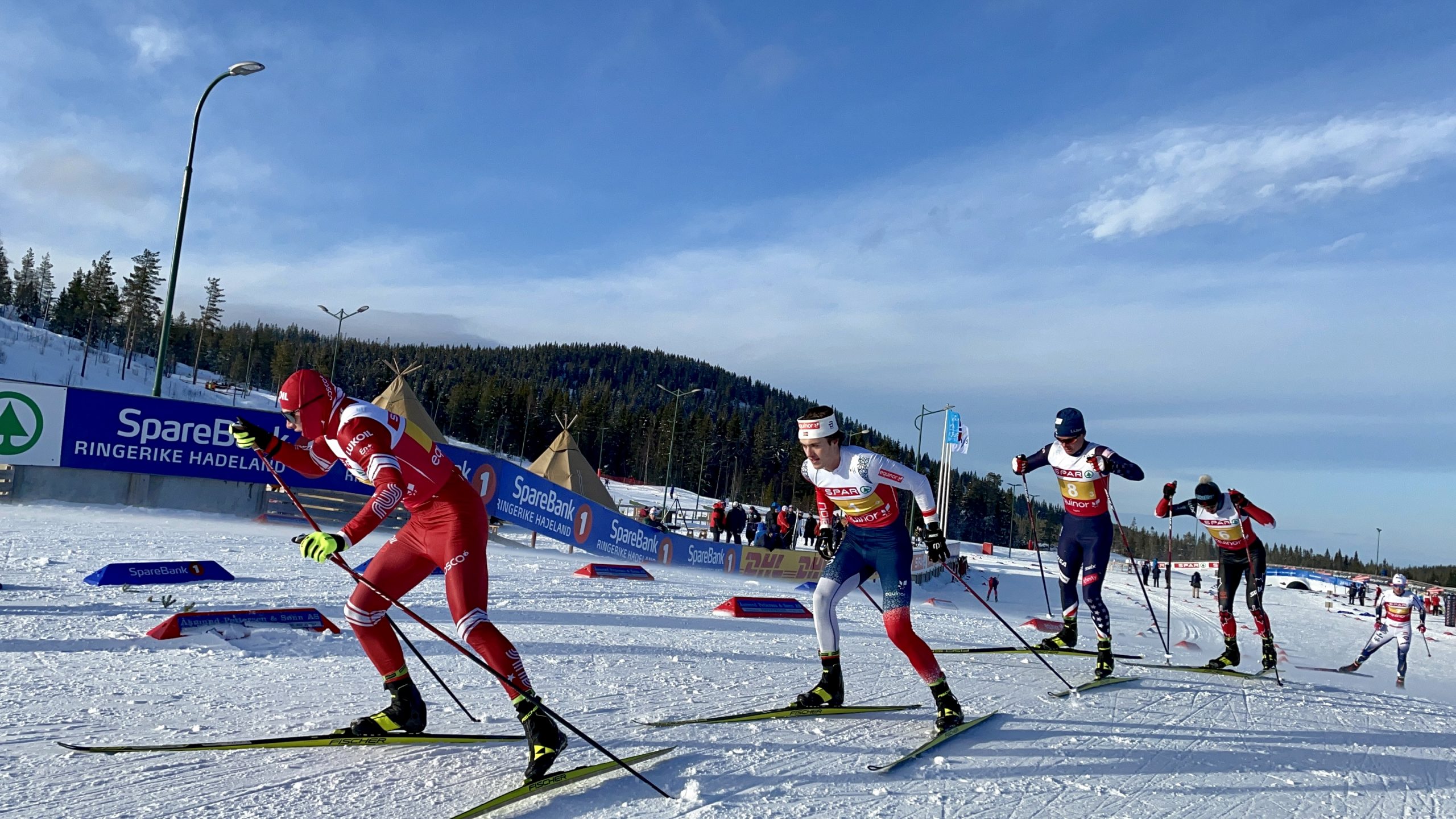
    Anabel Needham races the 10 k interval start classic during the 2022 U23 World Championships in Lygna, NOR. (Photo: flyingpointroad.com)

    Anja Weber of Switzerland had the day’s second-fastest split at the 3-kilometer timing checkpoint, behind early leader Anastasiya Faleeva of Russia… had the day’s second-fastest split at the halfway mark, behind Faleeva… and had the day’s second-fastest split at the 8-kilometer mark, behind Patricija Eiduka of Latvia.

    But the race was 10 kilometers long. Weber held her speed over the end of the second lap slightly better than Eiduka, ultimately taking the win in 29:59.8. Eiduka was second, a scant 1.3 seconds back. Veronika Stepanova of Russia, last seen anchoring the gold-medal Russian Olympic Committee women’s relay team in Zhangjiakou, was third, 13.1 seconds back, skiing a steady race that saw her rank twelfth, eighth, and fifth at the intermediate timing checkpoints.

    Stepanova recently posted to social media, explaining that she skipped the Olympics 30 k to prepare for World Juniors, adding that she wanted to do fewer races at her relatively young age. (Stepanova turned 21 last month.)

    Abigail Jarzin leads the American U23 women in 36th in the 10 k interval start classic. (Photo: flyingpointroad.com)

    Abigail Jarzin (University of Utah/Salt Lake City, UT) was the fastest of the four Americans in the race, finishing 36th (+2:42.8) in a well-paced effort that saw her move up considerably after ranking 45th at the 5 k split. She was followed by Anabel Needham (Michigan Tech University/Houghton, MI) in 47th (+3:47.5), Rena Schwartz (Dartmouth Ski Team/Middlesex, VT) in 50th (+4:14), and Lucinda Anderson (University of New Hampshire/Golden Valley, MN) in 56th (+4:50.8).

    Among the Canadians, Anna Parent (Canmore, AB) was the top female in 17th (+1:45.8). Next for Canada was Beth Granstrom (Revelstoke, B.C.) was 37th (+2:42.9), followed by Anna Pryce (Calgary, AB) in 40th (+2:48), and Ontario’s Bronwyn Williams in 49th (+3:51.9). 

    Lucinda Anderson races the 10 k interval start classic during the 2022 U23 World Championships in Lygna, NOR. (Photo: flyingpointroad.com)

    Other names potentially recognizable to North American readers include Poland’s Weronika Kaleta, who skis collegiately for UC Boulder, in 21st (+2:03.1), and Australia’s Tuva Bygrave, who skis collegiately for UAA, in 57th (+4:52.8).

    Men’s 15 k Classic 

    The men went out second, undertaking three laps of the same 5-kilometer course starting at 3 p.m. local time.

    The starting list was reverse seeded: The athletes with the highest distance points (on paper, the lowest ranked) went out first; the athletes with the lowest distance points (on paper, those highest ranked) went out last. There were 64 athletes in the field, and the athletes with bib no. 62 and bib no. 64 made the podium; sometimes FIS points have strong predictive value.

    But sometimes first place overall goes to an athlete wearing bib no. 31. And that, as the saying has it, is why you play the games.

    Noel Keeffe races the 15 k interval start classic during the 2022 U23 World Championships in Lygna, NOR. (Photo: flyingpointroad.com)

    Arsi Ruuskanen of Finland skied his first lap in 12:58.1, a split time that ranked sixth overall after all the athletes had come through. Ruuskanen’s relatively early bib number meant that he lapped through the stadium just as eventual eighth-place finisher Iver Andersen of Norway was going out on course. Perhaps due to the chance to work with Andersen for much of his second lap, perhaps due to just his own strong race, Ruuskanen would go on to set the day’s fastest times at 10 kilometers, 13 kilometers, and, notably, the finish.

    The 22-year-old Finn took the victory in a time of 40:23.0. He was closely followed by Leo Johansson of Sweden, 6.7 seconds back, who had more of a gap to third, Håvard Moseby of Norway, 28.1 seconds back.

    The top American on the day was Zanden McMullen (Montana State University/Anchorage, AK), in his first year racing as a U23 athlete after three years of racing at World Juniors. Racing internationally at the senior level, McMullen also had four World Cup starts in Period 1 of this season, then placed sixth in both distance races at 2022 U.S. Nationals.

    McMullen started the 15 k out hot, registering the day’s 3rd-fastest time through the 5 k checkpoint. He slowed slightly from there, though not too much, coming through other intermediate checkpoints in 9th and 15th. He was ultimately 14th overall at the finish, 57.8 seconds back from Ruuskanen.

    Johnny Hagenbuch races the 15 k interval start classic during the 2022 U23 World Championships in Lygna, NOR. (Photo: flyingpointroad.com)

    Among the Americans, McMullen was followed by Johnny Hagenbuch (Sun Valley Ski Education Foundation/Ketchum, ID) in 41st (+2:59.8) and Noel Keeffe (University of Utah/Steamboat Springs, CO) in 47th (+3:39.5). In a nod to a certain race being held in Wisconsin on Saturday, it should be noted that Hagenbuch is the youngest-ever winner of the American Birkebeiner.

    Turning to Canada, Léo Grandbois set the pace with the day’s only top-10 finish for North America, crossing the line in 9th (+44.3). He was followed by Sam Hendry (Canmore, AB.), who skis collegiately for the University of Utah, in 18th (+1:14.1), Ottawa’s Pierre Grall-Johnson in 29th (+1:51.0), and Joe Davies (Pemberton, B.C.), who skis collegiately for UAF, in 35th (+2:16.5).

    Racing continues tomorrow with interval-start classic races for the U20 athletes, 5 k for the women and 10 k for the men.

    Today’s results: women | men

    Rena Schwartz races the 10 k interval start classic during the 2022 U23 World Championships in Lygna, NOR. (Photo: flyingpointroad.com)

    World Juniors links and information:

    Home page and general info | race program | results and live timing (all races) | streaming (only for Thursday through Sunday’s races, purchase required)

  • Exciting Relay Day 2 at World Juniors with US Women 5th and US Men on the Podium in 3rd

    Coaches, support staff, and athletes celebrate a bronze medal in the men’s 4 x 5 k relay. Staff, left to right: Greta Anderson (front left), Bryan Fish (back left), Dr. Katie Eichten (partially obscured), Olof Hedberg, Pat O’Brien, Julia Hayes (middle row, blue NNF hat), Paul Smith, Anson Moxness, Lizzie Larkins, August Teague, Jack Novak. (Photo: flyingpointroad.com)

    The 2022 FIS Junior/U23 World Ski Championships trip has been made possible through support from the National Nordic Foundation (NNF), which has identified this invaluable opportunity for developing athletes as one of its “Pillar Projects”. You can support the NNF and the next generations of America’s top skiers by making a donation here. 

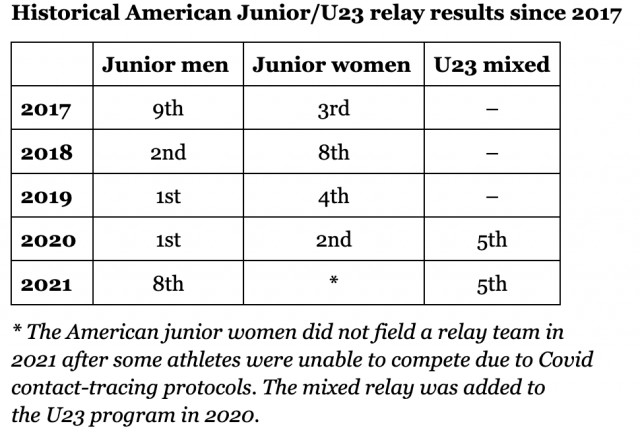
    LYGNA, NOR — The second event of the week for 2022 FIS Junior World Ski Championships, and perhaps the most highly anticipated, was the men’s and women’s relays. It was in the relay in 2017 when the US women broke onto the podium on home turf at Soldier Hollow, Utah, starting a cascade of strong American performances in the World Juniors relay. The next year, in Goms, Switzerland, it was the men who landed on the podium with an historic second-place finish, which they then one-upped the next two years to bring home gold from Lahti in 2019 and Oberwiesenthal in 2020. The US women also finished on the podium in 2020, in second place. 

    After a little lapse in 2021, when the US junior women were not even able to field a team due to Covid contact-tracing protocols, both the men’s and women’s teams were ready to fight today.

    First up was the women’s 4 x 3.3 k, which featured separate courses for the classic and skate legs. As the women warmed up and made final preparations, the stadium filled with eager spectators in the form of young schoolchildren. As the announcer explained, one of the event sponsors had paid for the transportation of hundreds of local school kids to the venue each day. Thus as the start gun went off, it was to the chorus of many small voices shouting “heia, heia!” and many waving Norwegian flags.

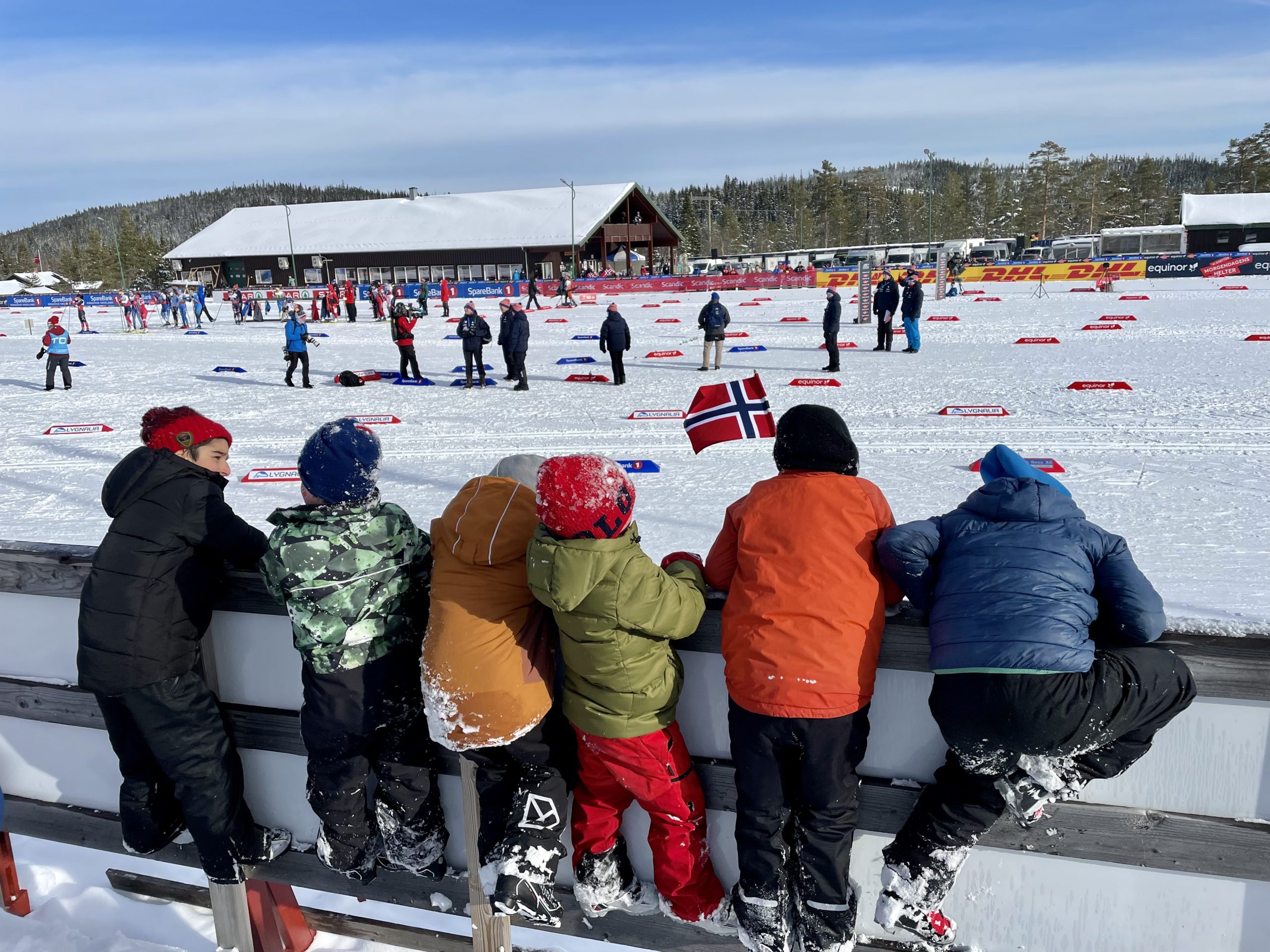
    Enthusiastic young fans prepare for the start of the women’s 4 x 3.3 k relay (photo: Ella Hall)

    Skiing the scramble leg for the US team was Kate Oldham (Aspen Valley Ski Club/Carbondale, Colorado). “It was really fast,” she shared afterwards, “everyone went out really hot, it was fun just trying to ski with the best.” Oldham finished her 3.3 k in a time of 10:03.5 and tagged off to her teammate, Samatha Smith in eighth position. 

    Kate Oldham skis the first leg of the women’s 4 x 3.3 k relay in Lygna, NOR. (Photo: flyingpointroad.com)

    As Russia started to pull away at the front, Smith (Sun Valley Ski Education Foundation/Sun Valley, Idaho) worked to gain ground on the others, moving the team up to fifth place at the completion of her leg. From there, Nina Schamberger (Summit Nordic Ski Club/Leadville, Colorado) took over as the technique switched to skate. Schamberger closed on the Swiss team, who was sitting in fourth, just ahead.

    As the skiers entered the final climb, dubbed “waffle hill,” a pack had formed with Russia still out front. “I definitely tried to pace it like a sprint and just really push myself and try to use the downhills to recover as best I could,” explained Schamberger, “but it was definitely very painful but short enough because you were able to push as hard as you could the whole time.”

    Kate Oldham tags Samatha Smith during the junior women’s 4 x 3.3 k relay. (Photo: flyingpointroad.com)

    For the final leg, Schamberger tagged Sydney Palmer-Leger (University of Utah/Park City, Utah), handing off in seventh place. Up front, Norwegian anchor Anna Heggen was closing the gap to the Russian, Elizaveta Bekisheva and the two entered the stadium together, leading to a sprint finish and lunge which ultimately went in favor of the host nation. The Germans were next in third, +35.4 behind. Palmer-Leger picked off two places on her leg to land the US women in fifth, +1:14.7.

    “It was really windy out there and you just try to push every little part because there’s no rest until the end,” said Palmer-Leger. 

    For three of the four athletes on the US team, this was their first time competing in a relay. When asked if they practiced exchanges at all they said, “it was pretty much just winging it.” Palmer-Leger elaborated saying, “It was pretty smooth, it’s a really short course and just taking a few seconds in the tagging is not going to do much. You don’t want to crash or mess up the hand-off because then that’s 30 seconds so, yeah you kinda just look back and double-pole and then wait for them to tag you.”

    The junior women’s 3 x 3 k relay team: Sydney Palmer-Nina Schamberger, Samantha Smith, and Kate Oldham (l – r). (Photo: flyingpointroad.com)

    With the women’s race complete, it was time for the men to line up, the race for them a 4 x 5 k with each leg skiing two 2.5 k loops. For the US, Michael Earnhart (APU Nordic Ski Center/Eagle River, Alaska) took the scramble leg. After the first 2.5 k it seemed that Swedish skier Måns Skoglund had broken away but the pack hunted him down as they exited the stadium for the second time, Earnhart tucked in behind Team Norway. Entering the stadium for the second of their two laps, Skoglund (SWE) had again gained a slight lead, with teams Russia and Japan in second and third. Behind them, Earnhart was leading the chase to close them down.

    Into the first exchange, the gaps had closed and Brian Bushey (University of Utah/Waitsfield, Vermont) took over for Team USA. 

    Brian Bushey skis the second leg of the junior men’s 4 x 5 k relay in Lygna, NOR. (Photo: flyingpointroad.com)

    Heading out into a ripping headwind, it was Sweden, Japan, Russia, and the US, being chased by Norway. As they descended into the stadium for the first time, there were still four teams up front, though Japan had dropped and Norway had joined. This time with the wind blowing in their favor, the skiers all chose to stay outside the tracks. “The first lap, coming through, I saw everyone hop out of the tracks so that’s when I decided to,” explained Bushey. “It was definitely faster.”

    As Russia started to pull away slightly, Norway and the US were slightly detached at the start of the second lap of leg two. Canada was closing in on them and by the time they entered the exchange zone, they were a group of four, behind Russia, the US tagging in second position with Team Canada on their tails. 

    Switching to skate, Walker Hall (University of Utah/Winthrop, Wash.) took over for the US and over the course of his first lap closed the gap to Russia, bringing the lead pack up to five nations. Letting the Russian break the wind, the others slotted in behind as Sweden began to fade.

    Nikita Denisov (RUS), Elde Holmbœ (NOR), Walker Hall (USA) and Sasha Masson (CAN) head out for the final lap of leg three as Sweden starts to fade. (Photo: Ella Hall)

    Canada too dropped off the pace, leaving Hall and Nikolai Elde Holmbœ of Norway skiing together. Up the steep “waffle hill,” Hall pulled away from the Norwegian, leaving the front three teams all separated by some seconds as they executed the final exchange. 

    Will Koch (University of Colorado/Peru, Vermont) took the anchor leg for the US. He was soon caught by Aleksander Elde Holmbœ of Norway, the two of them skiing together with Russia off the front. In a scene that brought to mind Rosie Brennan’s efforts in the Olympic 30 k, though admittedly lasting a much shorter duration, Koch tried to get the Norwegian to take on some of the lead work as they headed straight into a bracing wind.

    “As soon as that Norwegian caught me, I almost tried to stop and let him by,” said Koch, “but he didn’t want to lead either so he kinda stopped with me, but we luckily didn’t get caught by anyone.”

    At this point, they were well clear of Team Canada, who was in fourth position. 

    Will Koch races Norway’s Aleksander Elde Holmbœ during the anchor leg of the men’s 4 x 5 k relay. (Photo: flyingpointroad.com)

    Passing through the stadium, with only the “waffle hill” remaining, Koch had the lead, though he was overtaken by Holmbœ (NOR). The Norwegian seemed to have pulled away, but Koch put in a surge. This move was answered by Norway, and when they came into view on the descent, Norway had maintained its lead. “It came down to just a final sprint over the last hill!” said Koch afterwards.

    Team Russia took gold in a time of 49:16.4, followed +21.8 seconds later by Norway. The US was close behind in bronze-medal position, +22.4 back. 

    “I think we definitely wanted to get on the podium, that was a huge [goal], it would have been fun to win but we’re really stoked with bronze,” concluded Koch. Adding to that Hall said, “Yeah, I think just going out, and skiing the best we could.” Bushey echoed that sentiment saying, “Yeah, we all just had to ski our best.”

    The bronze medal winning junior men’s relay team: Walker Hall, Brian Bushey, Will Koch and Michael Earnhart. (l-r) (Photo: flyingpointroad.com)

    To the fans following along at home, the boys said “We love you guys, it would not be possible without all of you! Thanks for the support, thank you NNF, go USA!”

    The program now switches to U23 competition for a day with a 10/15 k classic race on Thursday. The juniors will resume racing on Friday. 

    Results: women’s relay | men’s relay


    World Juniors links and information:

    Home page and general info | race program | results and live timing (all races) | streaming (only for Thursday through Sunday’s races, purchase required)