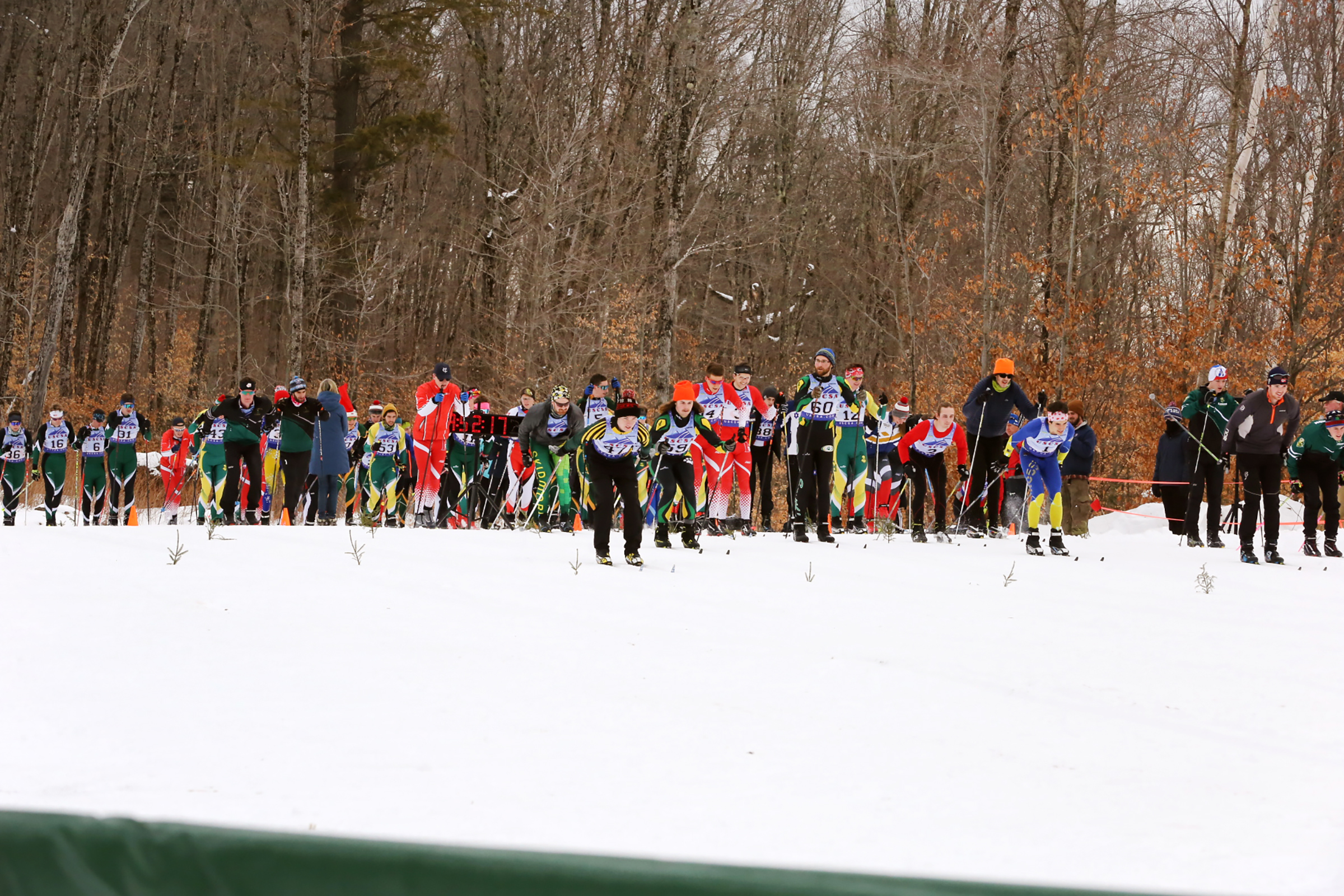
Do you believe in miracles? Lake Placid is where they’ve happened before: speedskater Eric Heiden’s single-winter games medal record, Wassberg’s Olympic Gold by one hundredth over Mieto, and no less than the “Miracle on Ice.” If miracles were going to happen again, this was likely to be the place.
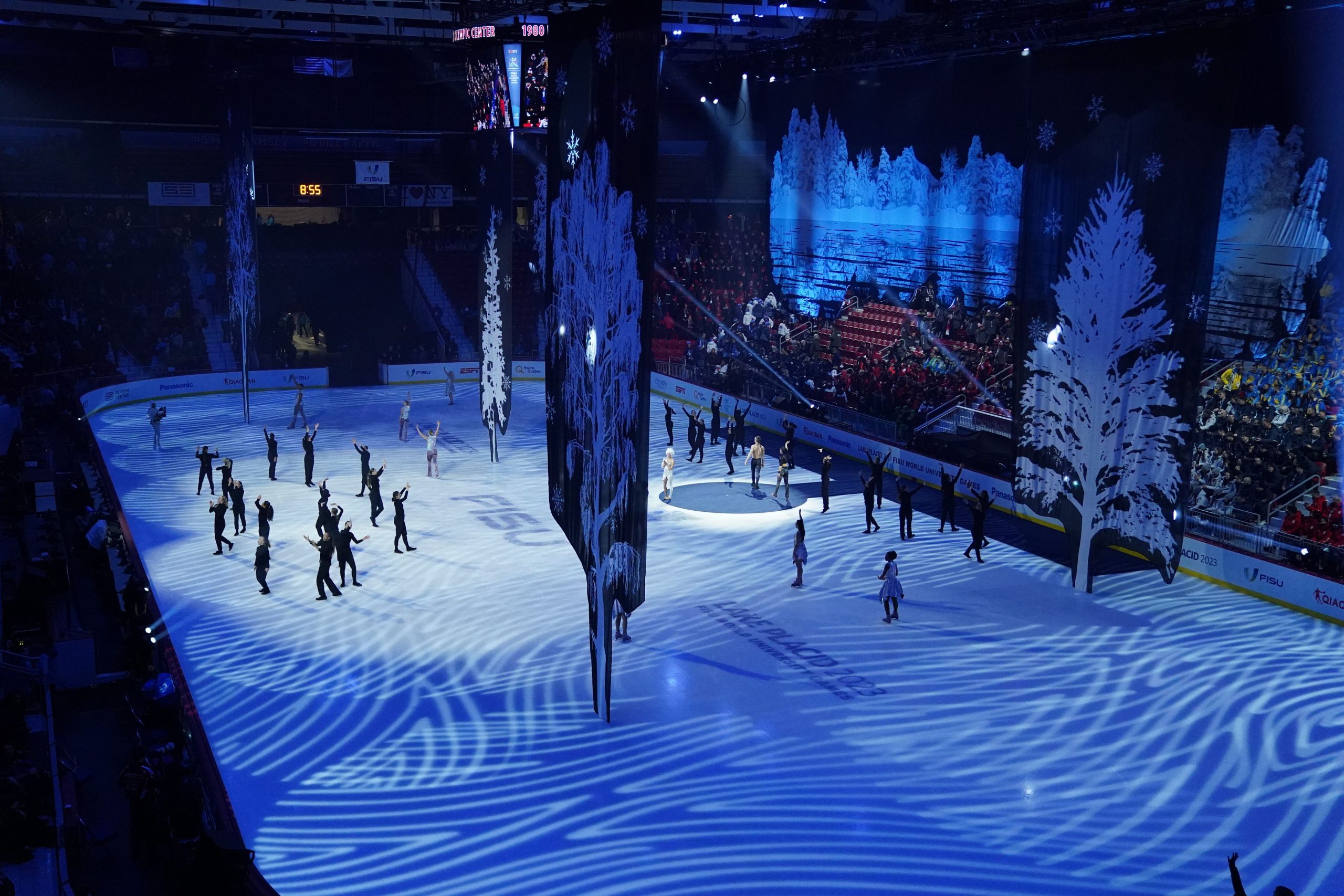
With the State of New York having spent $500 million (through the Olympic Regional Development Authority) to dramatically overhaul facilities originally constructed for the Olympic Winter Games of 1980, Lake Placid was dolled up and ready to host the 31st World University Games, the first time these competitions had been held in North America since 1972. And so, not even the light drizzle outside on opening night could dampen the prospect of a week that promised competition, fellowship, and a glimpse at athletes likely to shape the future of winter sports.
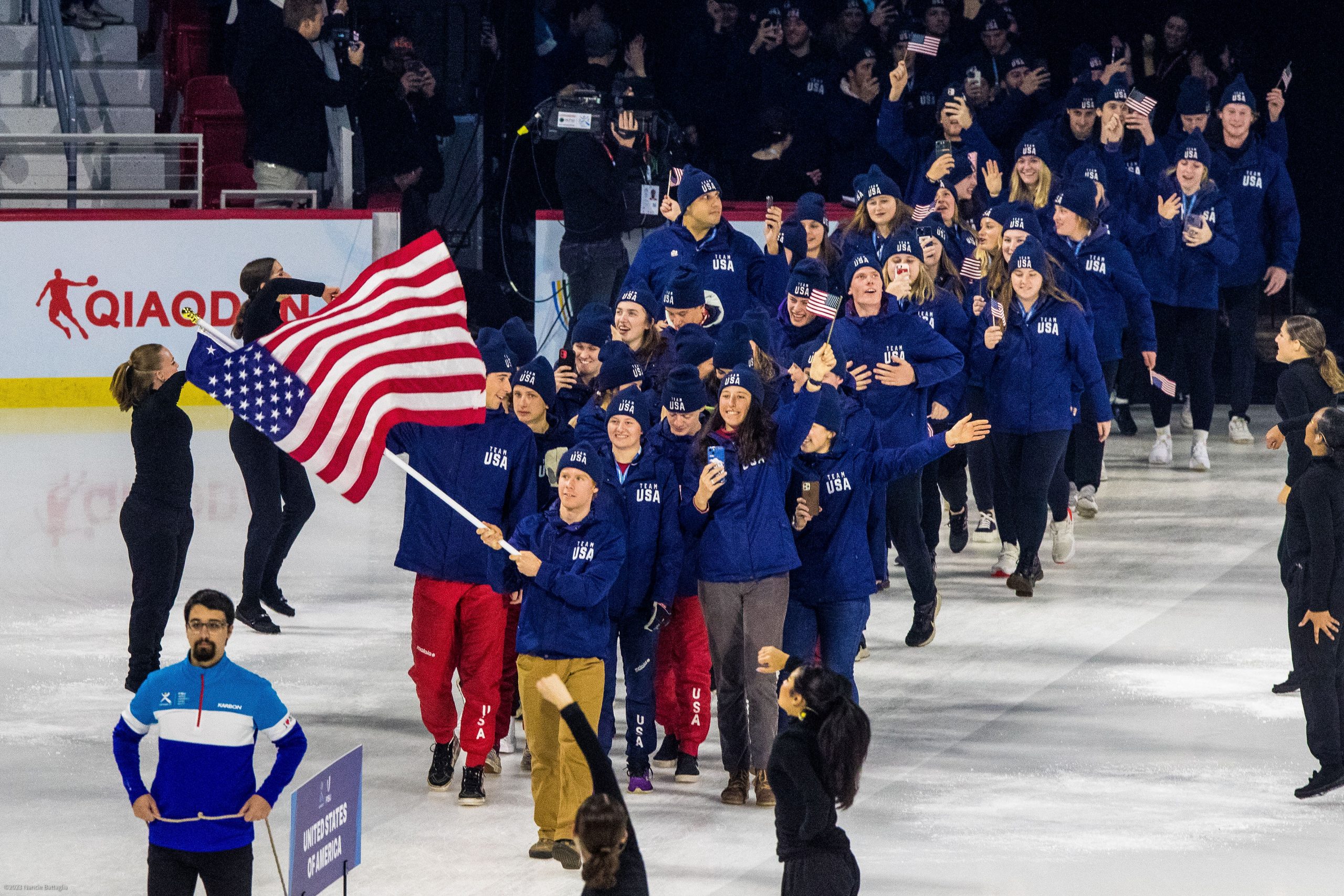
The World University Games highlight collegiate athletes, and the gathering of American cross country athletes underscored just how central the collegiate circuit is to athlete development in the United States. With several members of Team USA using the World University Games as a pitstop on the way to their first World Cup starts—and plenty of the international athletes in the field representing American university teams—signs pointed towards the American collegiate circuit acting as a robust and competitive field for athlete development in the United States, and beyond.
By the close of cross country competitions in Lake Placid, Team USA had won five medals (three individual, two team) in events as diverse as the Mixed Team Sprint and the 30 Kilometer Skate Mass Start. The young Americans built a case for the the ever-deepening pool of US Skiing, and the dynamic athletes who are contained in that community.
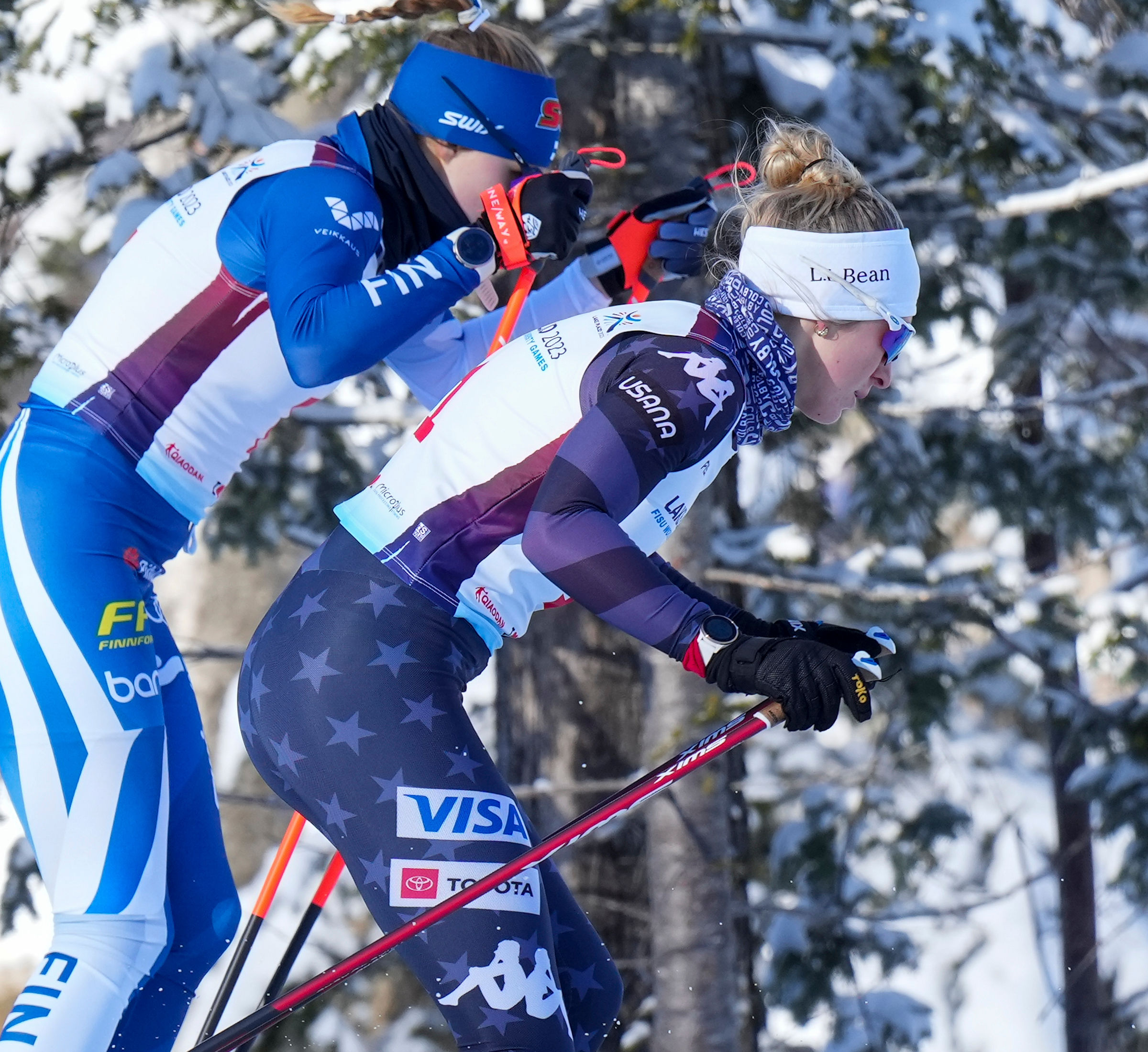
Team USA at the 2023 World University Games in Lake Placid, New York:
Men
|
Women
|
Mixed Team Sprint—Classic
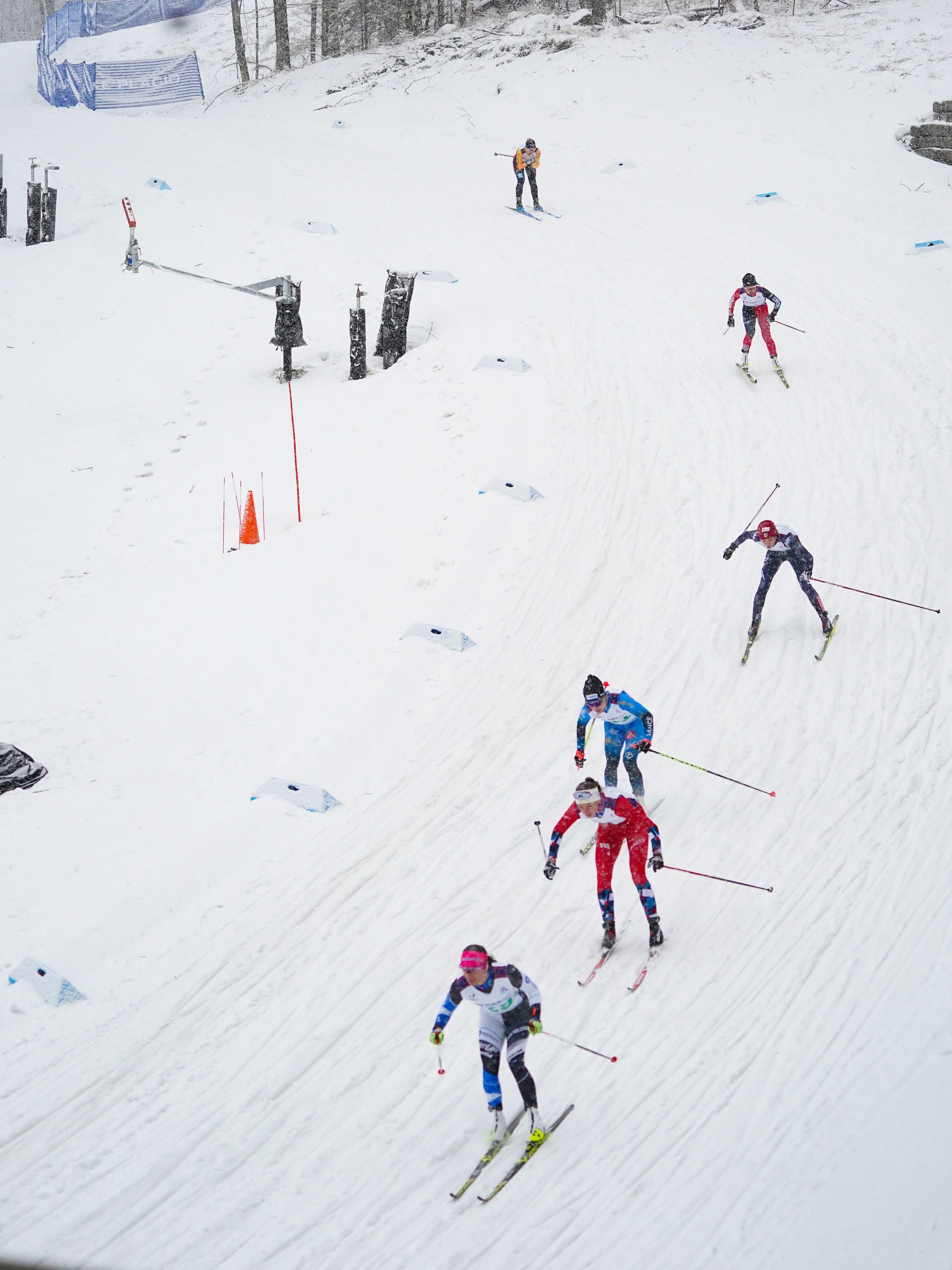
First on the program was the Mixed Team Sprint: two partners each completing three legs of a 1.35 km course. The event followed a semifinal/final format somewhat similar to individual sprints, with the top two teams from each semifinal automatically advancing, but with a total of six, time-based, lucky loser spots filling out the final field of 10 teams.
The United States entered two teams: University of Colorado’s Will Koch and University of Alaska-Fairbanks’ Kendall Kramer forming USA I came fourth in a tightly contested second semifinal, from which only Italy I and Finland II advanced. Team II was comprised of University of Vermont’s Finn Sweet and Bowdoin College’s Renae Anderson who advanced to the final as lucky losers.
As Sweet-Anderson made their way to the starting line of the sprint final, it began to snow . . . hard. With temperatures hovering near freezing, a snow squall blew in to cover Lake Placid’s warm, granular, man-made snow. That suited the two New England Carnival circuit veterans who made up USA II, with Sweet saying in post-race comments that he and Anderson were “confident [choosing] zeroes, which were definitely the right call.”
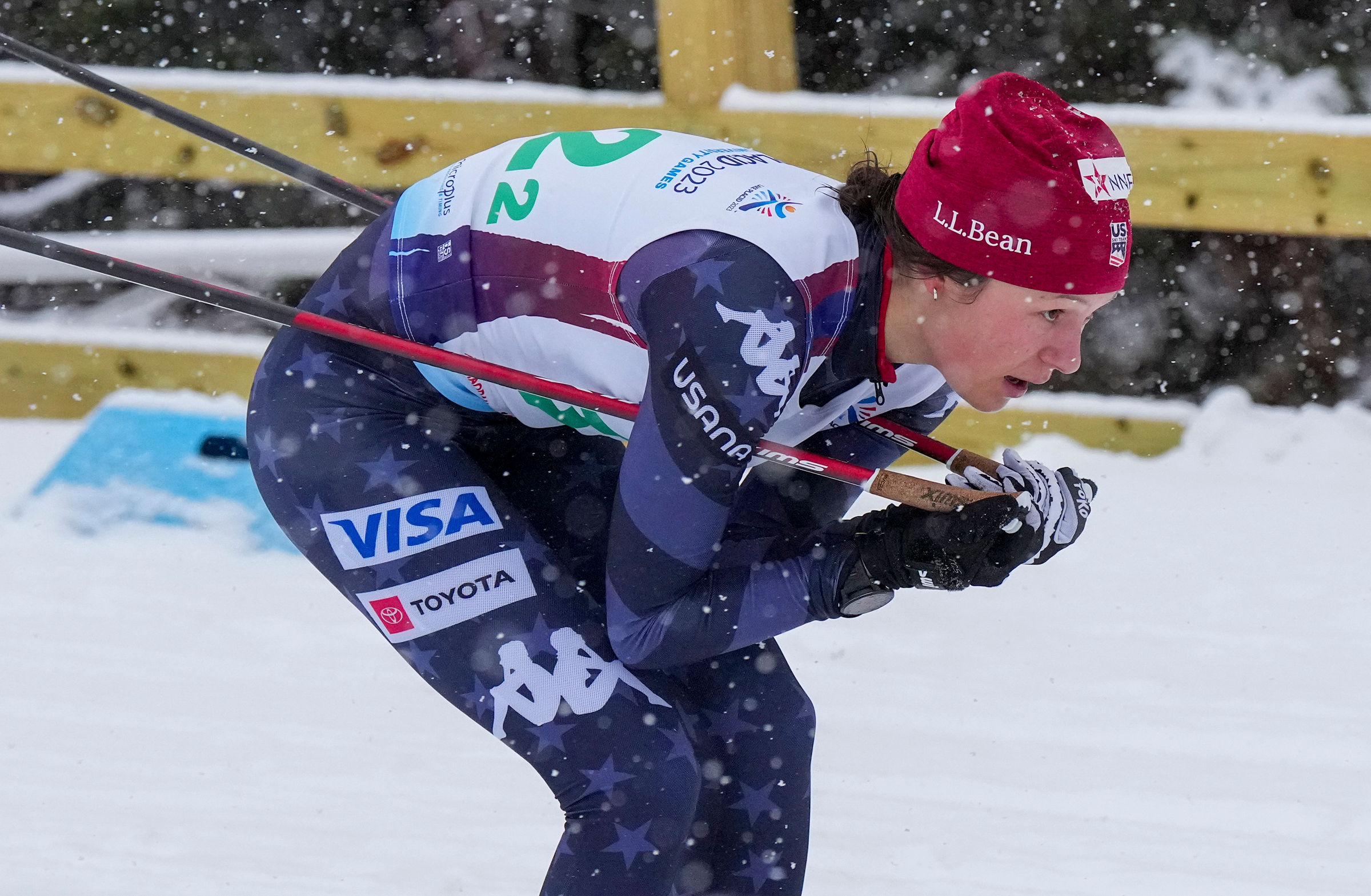
Despite being part of the Olympic program since Torino 2006, Team Sprint formats are still a rare event. Sweet echoed that novelty for himself and Anderson: “[The format] was different for sure,” he said. “[In the semi-final] I took it pretty conservatively and looked at it more like a distance race, whereas Renae said she skied it more like a sprint and ended up bonking a bit at the end. Going into the Final I think we were both on the same page with how to pace it which helped out a lot.”
The Final was a tightly contested affair raced on glazed-over tracks: man-made, re-frozen ice covered by new snow. After an initial push from University of Denver student Andreas Kirkeng (skiing as part of the Norway I team alongside University of Utah’s Karianne Olvisk Denegrud) the pack tended towards parity. Eventually, the Japanese tandem of Ryo Hirose and Rin Sobue—both from Tokyo’s Waseda University ski team—pulled away for the win. Into the final exchange, Kirkeng and Sweet had created a clear race for second and third, and Renae Anderson closed with an impressive push that brought USA II to Team USA’s first medal of the week—a silver for the Bowdoin College-University of Vermont duo.
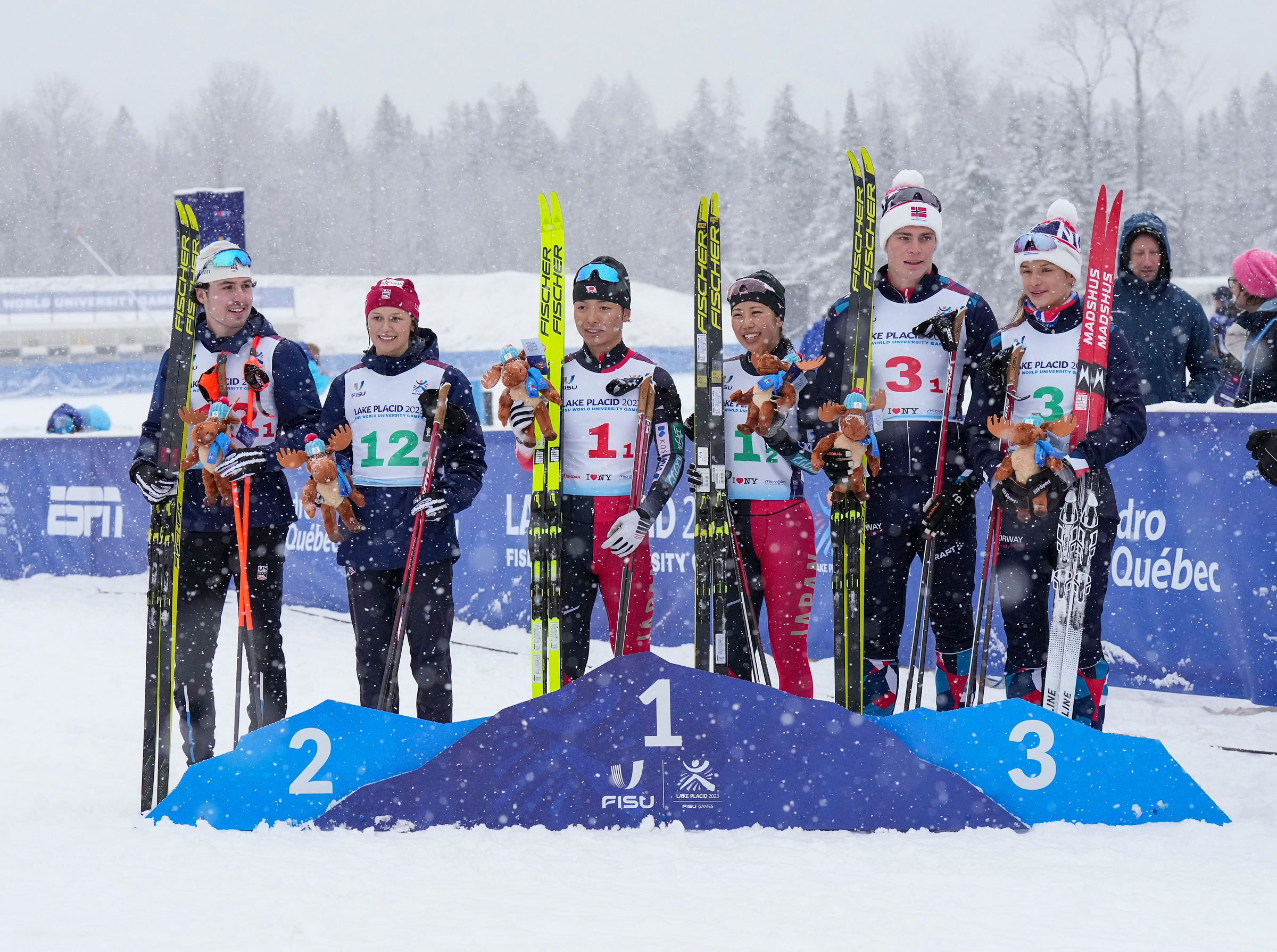
Sweet said that he was “super happy with the result. I wasn’t sure what the level of competition would be [in Lake Placid] but after a few days of racing were behind me, I grew more and more proud of what Renae and I accomplished.” Sweet also said that the “Games were a great way to mix up the EISA [Carnival] circuit, especially in a year where the American U23 Team was going to be so strong and a bit out of reach.”
Individual Skate Sprint
The athletes quickly pivoted from Team Sprint to Individual Sprint, a discipline that has highlighted US Skiing’s depth from the World Cup team on down. American performances at the World University Games would prove no different. When qualifying had concluded, Erin Bianco (Colby College) was at the top of the field. In the men’s race, Adam Witkowski (Michigan Tech) and Will Koch (University of Colorado) ranked second and third behind Spain’s Jaume Pueyo. In a further show of American strength, every one of Team USA’s skiers had finished in a position to qualify for heats.
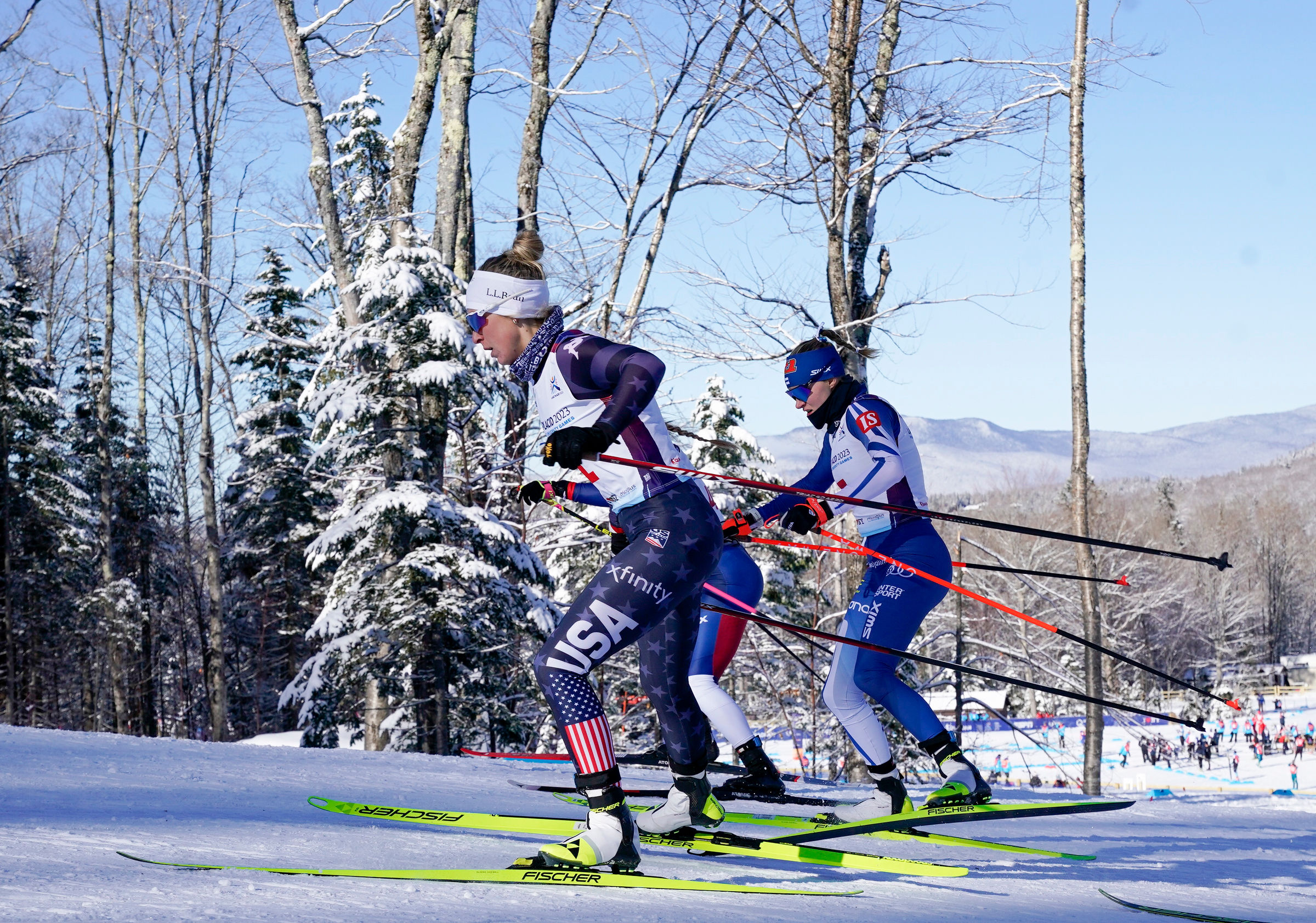
In post-race comments on winning the qualifier, Bianco said, “I was extremely excited to qualify first. I have been loving the amount of sprint races there are on the pro circuit and would consider it one of my strengths so to start World University Games by crossing the line in first place might be one of the highlights of my ski career!”
Bianco also provided a comprehensive overview of the course that the Americans would race in the heats: “The sprint course was twisty and hilly,” she said. “The course begins with a quick little up and a sweeping downhill into a significant climb. It then turns left down a more straight downhill into a gradual flat section, quick gradual down into the long uphill. This hill is a steady grind that ends with a steep downhill back under the bridge into the stadium. The final kicker is a tight right hand turn into the finishing stretch. I had never raced here before and was a bit intimidated on the warm up but sprinting happens so quickly that you don’t have time to think about how hard it is!”
In the Women’s heats, Bianco made quick work of advancing to the Final where she matched up against a Finnish contingent of Tiia Olkkonen, Siiri Kaijansinkko, and Niemela, along with American university students Mariel Merlii Pulles, skiing for Estonia and University of Alaska-Fairbanks, and Anna-Maria Dietze, skiing for Germany and University of Colorado.
“[In the Final] I did not want to be in the lead for the first part of the course as the moves were made on the big uphill,” Bianco said. “My skis were extremely fast, so I sat behind for the first half k and then started to push the pace on the uphill. I crested the hill in third which was where I wanted to be so I could catch a draft on the downhill. This plan worked until I hit some ice or slush or maybe just even lost my balance on the final swooping corner into the finish and lost my balance. Luckily I stayed on my feet but this gave [Anna-Maria Dietze] just enough time to edge me out of the podium.” Ahead of the sprint for third with Bianco and Dietze, Mariel Merlii Pulles was able to hold off Finn Tiia Olkkonen to take the gold medal. “Although I was a bit sad to walk away without a medal, I am very proud of how I skied all day” said Bianco on her 4th place finish for Team USA.
In the men’s quarterfinal, New York state native Adam Witkowski found himself doing some unexpected sightseeing of his old stomping grounds. “There was a large crash in my quarterfinal that led to me having to take avoiding action and ski off the trail and through one of the coach zones.” Witkowski stayed calm; in an impressive show of resiliency, he was able to ski himself into a semifinal. On the day’s fast-moving snow, crashes were more the norm than the exception. In the semifinal, Witkowski found himself again swerving to avoid a crash into the first set of downhills. This time, he tumbled in such a way that individual resiliency could do little to overcome.
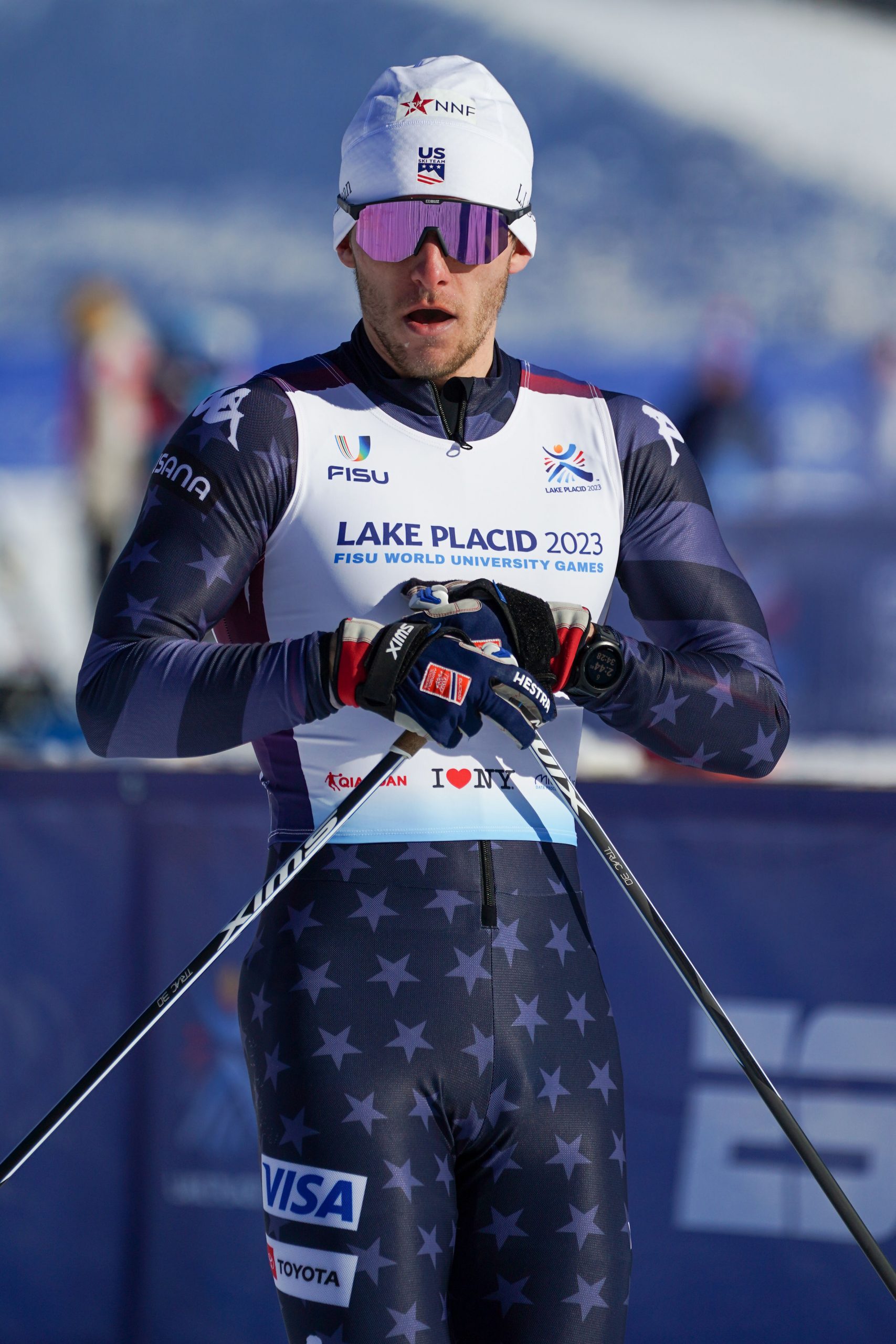
Will Koch managed to stay head of the fray in that semifinal. “It was strange to go so ‘quick’ again . . . compared to the other sprints I’ve done this year, this one felt most like a true ‘sprint’ since it was low altitude and had restful downhills.” Koch felt confident that he could push the entirety of the race, “I wasn’t concerned about leading into the final downhill since Perry Thomas, Team USA’s main wax tech, had made the skis so fast.” Koch eased into the Final alongside Northern Michigan University and Norwegian skier Kristoffer Karsrud.
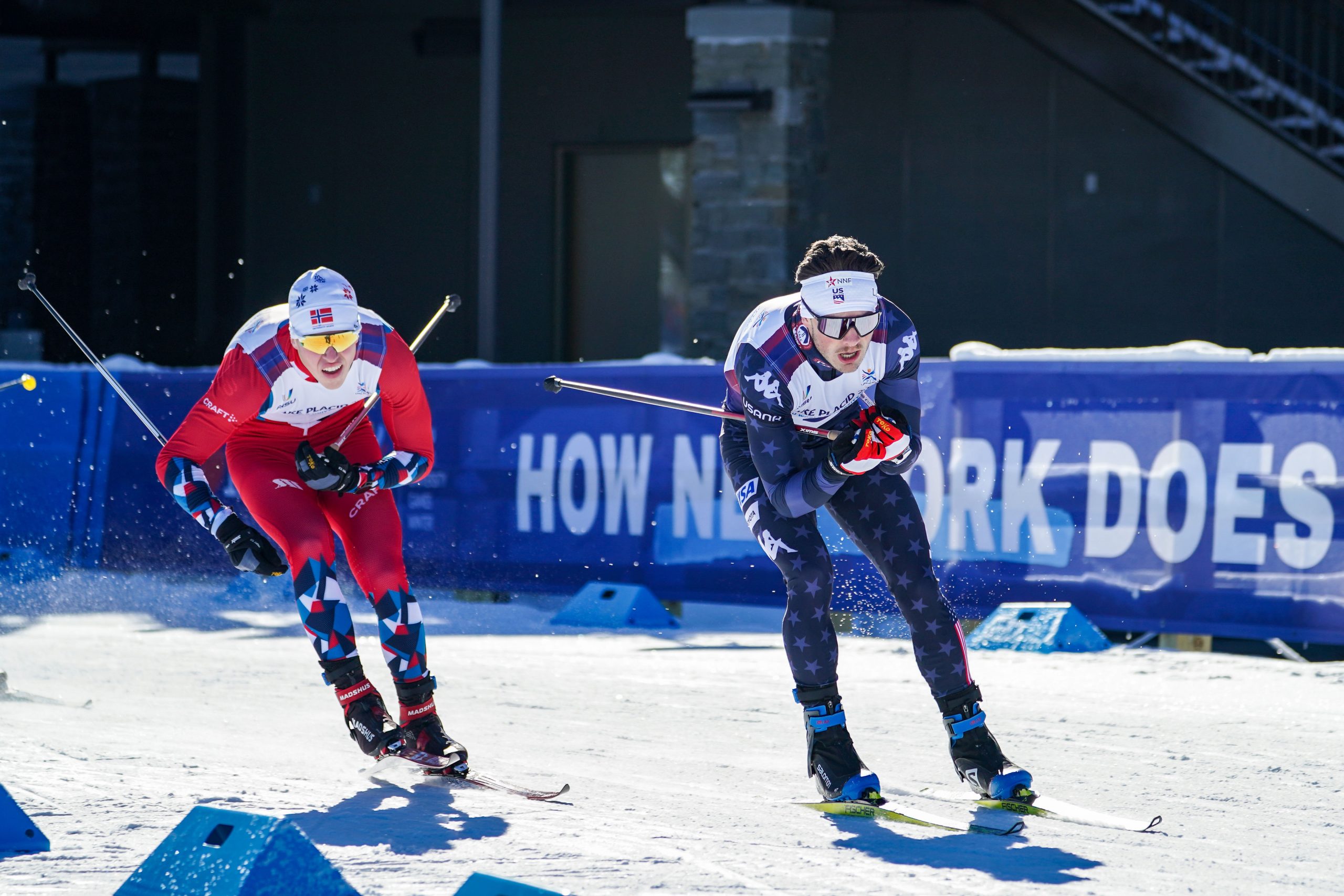
Koch and Karsrud joined a Finals field filled out by Finland’s Verneri Poikonen, Spain’s Jaume Pueyo, German Marius Bauer, and Frenchmen and University of Utah skier Tom Mancini. Koch had been through blistering paces in both his quarterfinal and semi-final, and in the Final, he said, it took a toll, “I was very tired from the heats and did not have the energy to ski as fast as the prior heats.” Koch still held strong in a tight pack, and finished 6th, as Poikonen took gold, Pueyo took silver, and Utah Ute Tom Mancini took the bronze. “At the end of the day, there were some very talented sprinters I was up against in the final who would have been hard to beat even with more rest” said Koch on his finish.
Pursuit: Men’s 10 km Pursuit and Women’s 5 km Pursuit
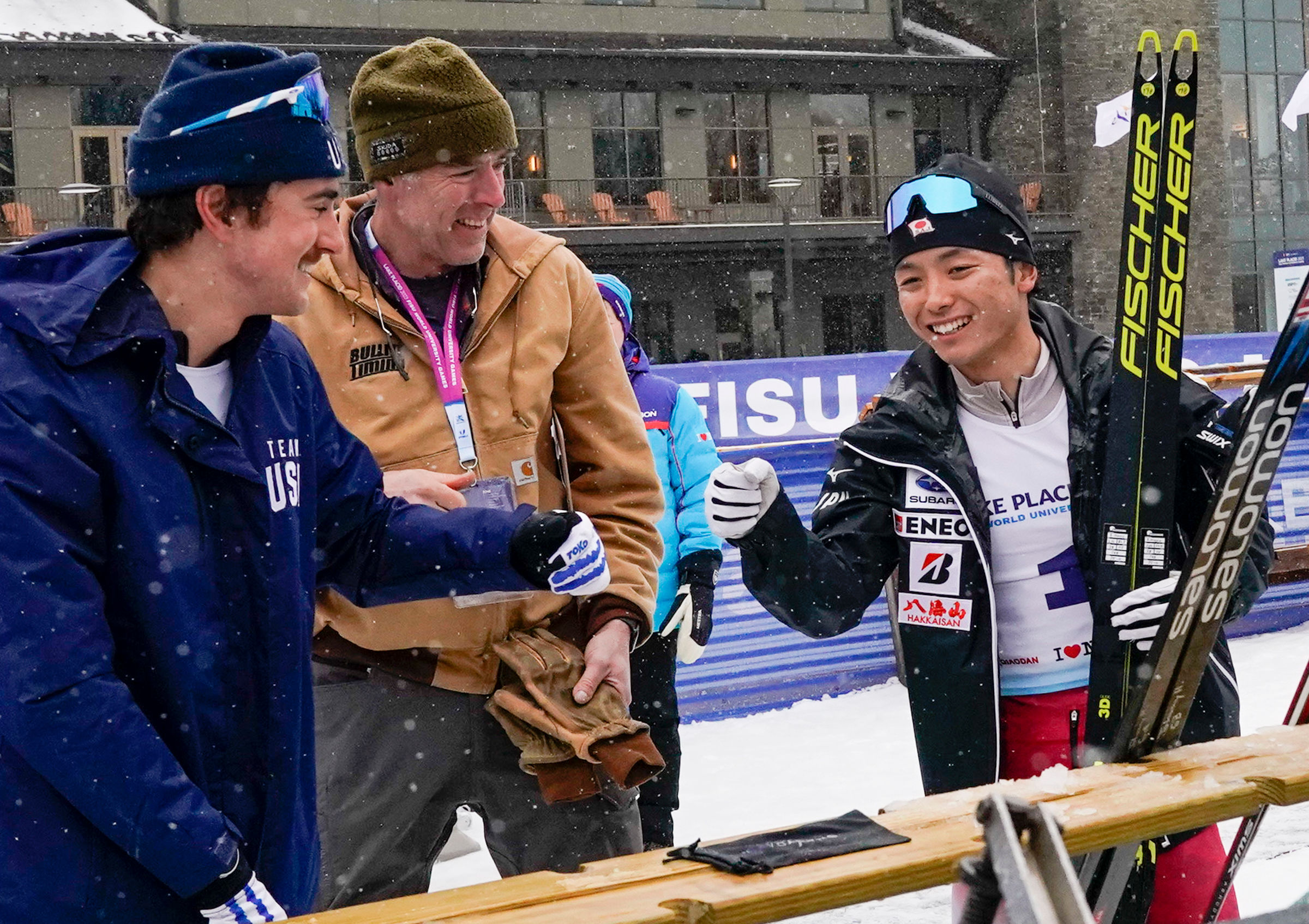
From the opening sprint weekend, the World University Games turned to a two day pursuit on Wednesday and Thursday of last week. The event entailed a classic individual start Wednesday, followed by a pursuit start on Thursday.
Top performers in the first stage individual start classic race were University of Alaska-Fairbanks’ (UAF) Kendall Kramer, who finished 12th place on the day, and a sixth place for University of Vermont’s Finn Sweet. Dartmouth College’s John Steel Hagenbuch, meanwhile, was just .02 seconds off Sweet in seventh place, with both 37 seconds back going into day two. Finland’s Hilla Niemela finished first in the women’s race, with UAF and Estonia’s Mariel Merlii Pulles in second place. Japan’s Ryo Hirose won the men’s race ahead of University of Colorado and Norway’s Magnus Boee.
From seventh place the next day, John Steel Hagenbuch would work and wind his way through the field. The Sun Valley native had a race rivaled by only winner Ryo Hirose, who held his gap from day one for gold, as he pushed through the dense pack that formed the top 10, passed, and passed, until he was right up to Andreas Kirkeng. Kirkeng, who had finished third on day one, eventually used the energy savings earned from day one to open a gap on Hagenbuch for second place, but Hagenbuch had made his case for bronze crystal clear. He stepped onto a podium, and earned Team USA’s second medal of Games, and first in an individual event.
In the women’s race, Kendall Kramer pushed to move up a place on day two, and ended the pursuit race in 11th place. Mariel Merlii Pulles fought to join Hilla Niemela at the front of the a race from 18 seconds back, but Niemela was able to leverage her advantage to take gold for Finland in the pursuit. Pulles earned her second medal of the Games, a silver, while Maria Eugenia Boccardi finished third for Italy.
Team Relay: Men’s 4 x 7.5 km and Women’s 3 x 5 km
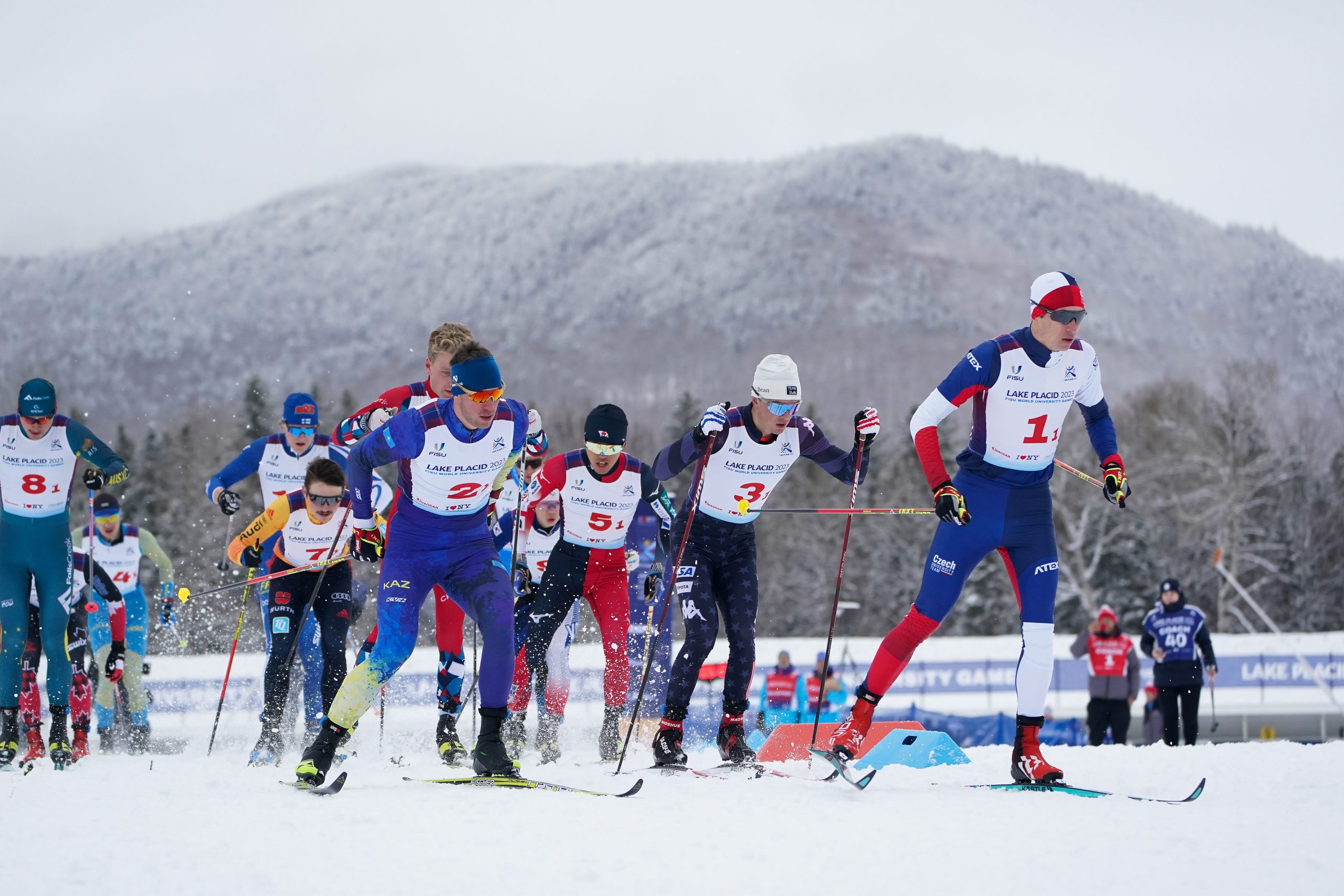
Friday moved to a classic Olympic event, the Team relay. The Men would race a 4 x 7.5 km race alternating classic and skate legs, while the women would do a 3 x 5 km in the same format. Team USA for the Women’s relay included lead leg Sophia Mazzoni (Montana State), Anabel Needham (Michigan Tech), and anchor Kendall Kramer (UAF). Team USA for the Men’s relay included lead leg Garrett Butts (APU), Finn Sweet (UVM), Gregory Burt (UVM), and anchor Alexander Maurer (University of Colorado).
The Women’s race saw Finland and Norway establish a lead early and hold it until the very end. A Final sprint from pursuit champion Hilla Niemela saw Finland clip Norway for gold, Kazakhstan held onto the Nordic duo’s push until the very end to take a bronze medal. Team USA finished in 10th place.
France was the dominant force in the Men’s race, holding a lead nearly unencumbered from the first exchange on out. It was University of Utah’s Tom Mancini who anchored the gold medal performance, as Norway and Japan finished 2nd and 3rd. Team USA finished fifth place.
Mixed Nordic Team Event: Nordic Combined/Jumping/Cross-Country: Erin Bianco
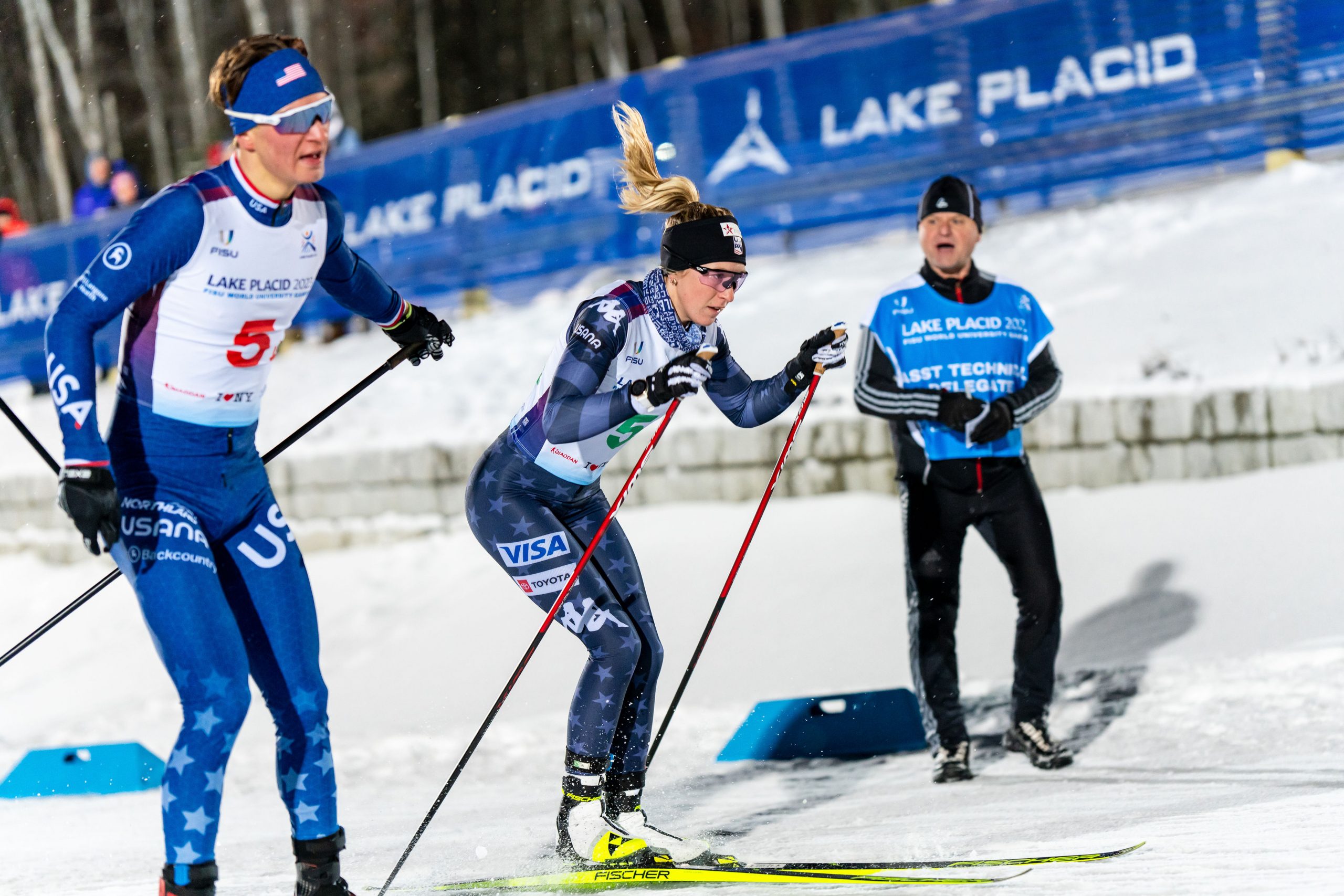
In keeping with the theme of innovative events at the World University Games, the Relay portion of the week also included a Nordic Combined/Jumping/Cross-Country cross-over event. The event was, at its core, a Nordic Combined race, a jumping portion followed by a pursuit start 2×2.5 km cross-country skate race. At the World University Games though, National team’s competed in trios of one pure jumping athlete, one nordic combined athlete, and one pure cross-country athlete. The jumper and nordic combined athlete combined for the jump portion. The nordic combined athlete and the cross-country athlete then combined for a pursuit start team relay in which both skiers did a 2.5 k leg. A format that may sound like the work of a mad nordic scientist, but one that provided loads of excitement for Team USA.
The cross-country athletes for Team USA included Erin Bianco (Colby College) for USA I, and Cameron Wolfe (Dartmouth College) for USA II. Erin Bianco combined with Jumper Cara Larson and Nordic Combined athlete Niklas Malcinski for USA I, Cameron Wolfe combined with Jumper Logan Gundry and Nordic Combined athlete Tess Arnone on USA II (Gundry is also a Nordic Combined athlete, but just jumped in this competition).
After the jumping competition, USA I was in 3rd place going into the cross-country portion. Behind strong legs from both Malcinski and Bianco, they held their position, and in the old-school, new-wave or Nordic Combined competitions, the USA took home a bronze medal. Japan, long a powerhouse in the ski jumping world, took gold, with fellow jump-strong nation Poland taking silver.

Skate Mass Start: Men’s 30 km and Women’s 15km

As it entered the second Sunday of competition, the World University Games program wound down by turning the intensity up. As in the Olympics, the Universiade would finish on a—note the quotes— “marathon.” The Men’s race would be 30 kilometers: 10 kilometers longer than the longest race on the NCAA circuit. The Women’s race, however, would be 15 kilometers, which matches the longest distance on the NCAA circuit. While both still definitely distance races, there was already a kind of archaic overtone as the races arrived in the new age of equal distance racing.
On a difficult, winding, hilly five kilometer loop, the Men’s field didn’t contain anyone who wanted to take chances too early. Among the lead pack that formed in the early part of the race were two Americans, John Steel Hagenbuch (Dartmouth College) and Garrett Butts (Alaska Pacific University). Both showed the poise and patience indicative of confidence in a large mass start field. Hagenbuch, fresh off his pursuit push to bronze on Thursday, was set to ski with anyone. While Gunnison, Colorado native Garrett Butts had come into the Games fresh off of a career-best SuperTour 3rd place in the Seeley Hills Classic 30 k two weeks prior. His mother, Two-time Olympian and American Birkebeiner Champion Ingrid Butts, was set up in the stadium as Butts and Hagenbuch swung through the low-spot between the testing hills on the Lake Placid course.
As the final lap began, the lead pack had taken full shape. Hagenbuch and Butts were in, alongside Japanese skier Ryo Hirose, France’s Simon Chappaz, Italy’s Compagnoni, and Norway and University of Colorado’s Magnus Boee. Hagenbuch then went to work, grinding out an upturn in the pace that stretched, but did not break, the pack. Boee stayed on him, Compagnoni and Chappaz came too.
By the final kilometer though, it was all but clear who the strongest skier on the day was. The margins would be tight, but John Steel Hagenbuch came into the storied Lake Placid stadium and claimed a gold medal for Team USA. Boee followed to earn a silver, and Compagnoni finished in third for the bronze. Garrett Butts crossed the line in sixth place, the last member of the lead pack to hold on.

The Women’s 15 kilometer would also see a pair of Americans establish themselves in the lead pack early. Kendall Kramer (University of Alaska – Fairbanks) and Erin Bianco (Colby College) skied their way to the front of the race as the lead pack coalesced into four skiers strong. The Americans were joined by Kramer’s UAF teammate Estonian Mariel Merlii Pulles, and Kazakhstani Xeniya Shalygina.
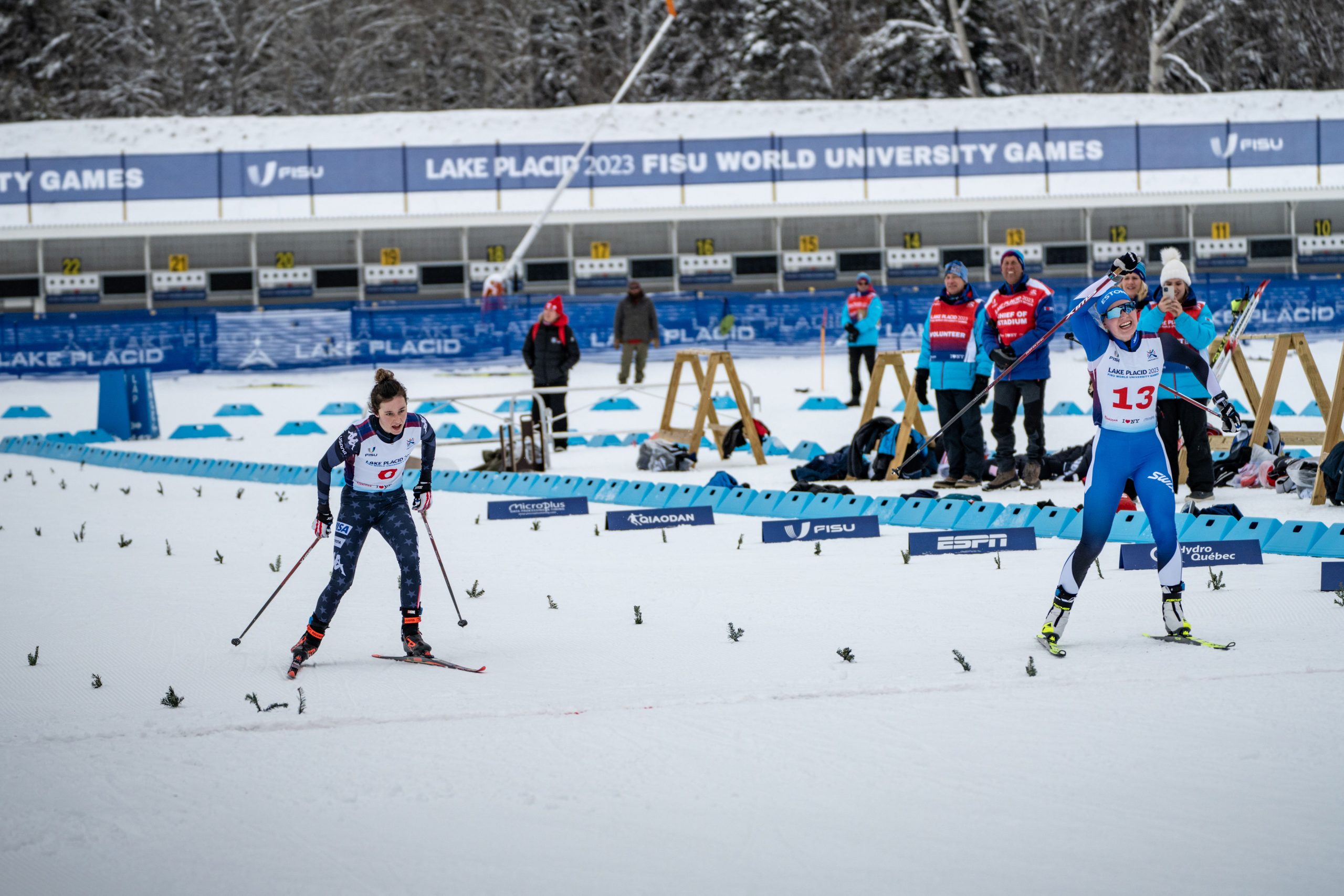
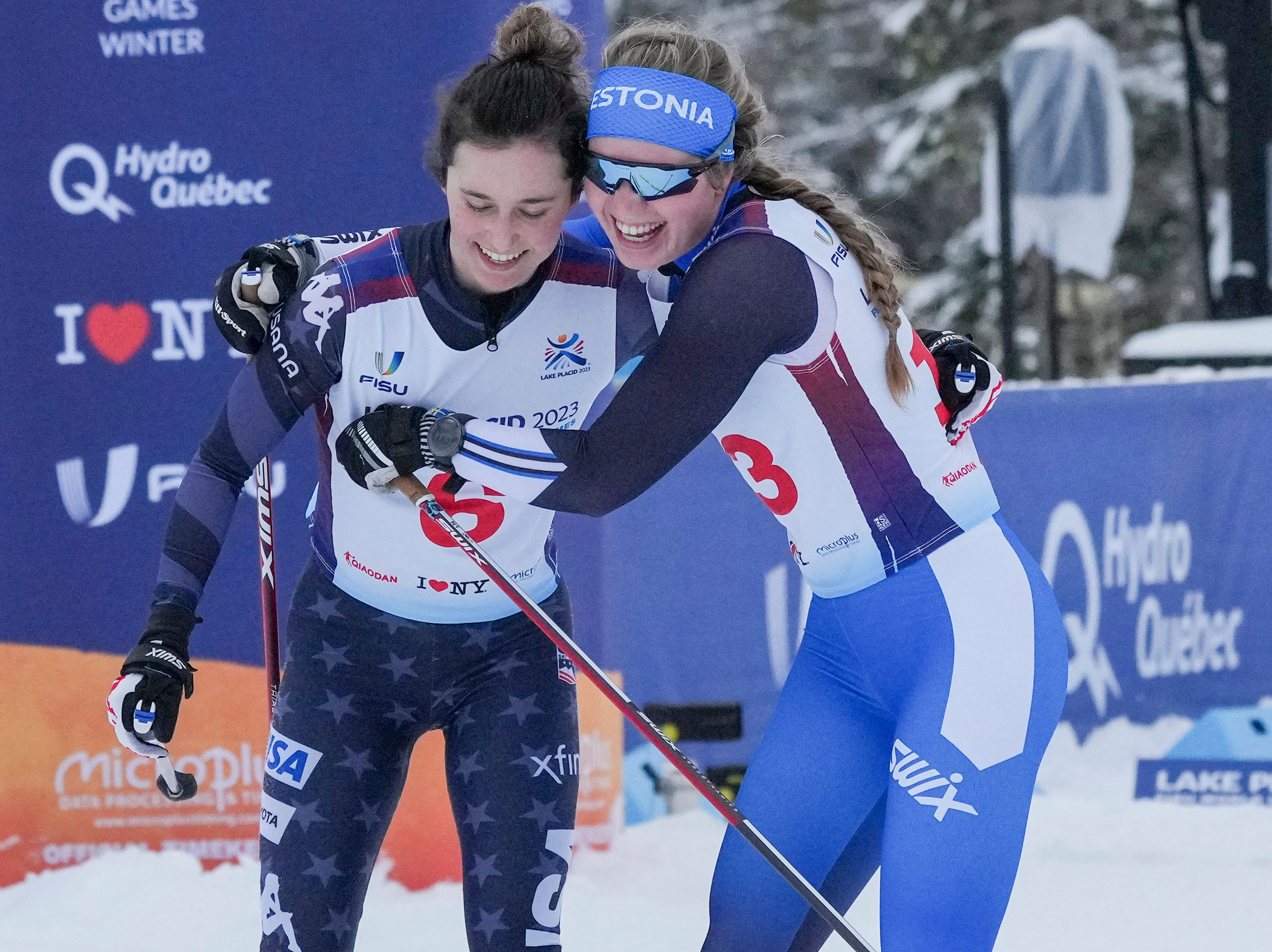
The UAF Nanooks, Kramer and Pulles, soon made the World University Games a kind of team time trial, pulling away from Bianco and Shalygina on the final turn around the 5 k course. When they pulled into the stadium at Mt. Van Hoevenberg, they were dead even. For the crowd waiting in the stadium – and it was a crowd – it would be either the perfect introduction to cross country skiing, or the perfect conclusion to a week of racing. They sprinted for the line, and Pulles, the champion on the week, ended up pulling out a gold medal by .4 seconds over Kramer, who claimed a silver medal and a first individual medal for Team USA’s Women. Erin Bianco held strong through the final five kilometers, and finished fourth place behind Xeniya Shalygina.
From World University to World Cup, and more, for Team USA
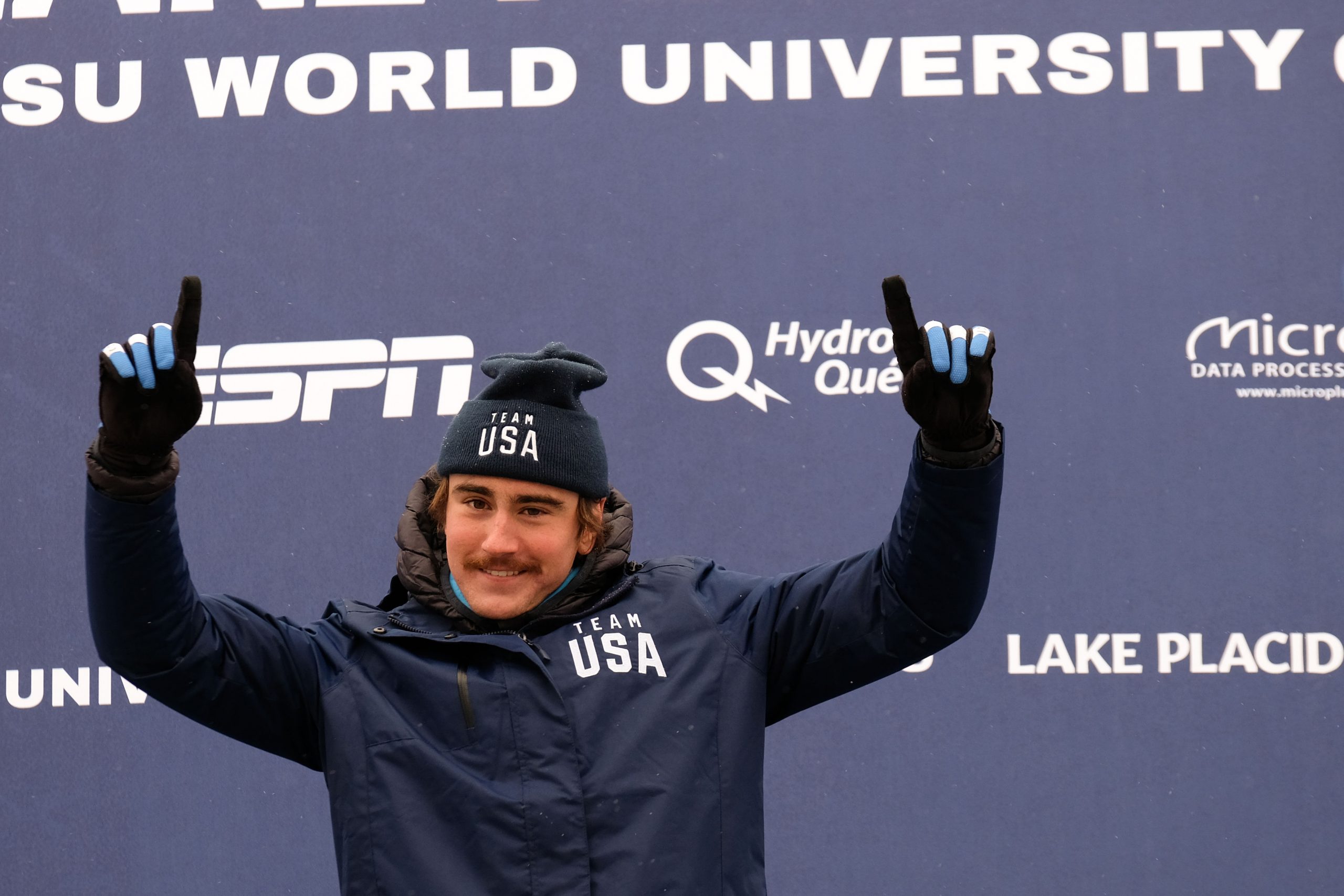
For Adam Witkowski, the Men’s sprint he qualified for in third place came with some well-deserved extra nerves. “With [the World University Games] being my first international race of my career I had quite a few nerves at the beginning of the [sprint] day.” His first international race was followed quickly by his second: a World Cup sprint the following weekend in Livigno, Italy. Witkowski wasn’t alone in the making the jump from Lake Placid to Livigno, either. Will Koch rushed on from his start in the Lake Placid 10 km Classic to “catch a redeye flight from Montreal to Italy for my first World Cup Starts!” The duo both made starts, with Koch highlighting making the Team Sprint Final in Italy alongside teammate Kevin Bolger.
For other members of Team USA, this World University Games in Lake Placid offered a perfect coda for their time spent on the collegiate circuit. Erin Bianco, who graduated in 2022, this was a “big highlight to represent the US for the first time, and Colby College one last time.”
Closing Ceremonies of the 31st World University Games took place in the arena where the sporting world’s most famous question and answer, “Do you believe in miracles? . . . Yes!” was immortalized. For every fan who remembers those words echoing from our television sets in 1980, there is a constant reminder of miracles that occur in Lake Placid. Team USA saw four medals in cross country skiing at these World University Games. Hard work and collective belief are indeed acts of will, bu—for a national ski program aspiring to become the best in the world—there’s a hint of something mystical at play, too. So we leave with the familiar refrain: “Do you believe in miracles?” . . . Yes.
Full Results from the World University Games in Lake Placid, New York