Tag: 2023 World Championships

  • Rosie Brennan Blue Collar Skier? She’s OK With That: Part II

    Rosie Brennan Blue Collar Skier? She’s OK With That: Part II

    This coverage is made possible through the generous support of Marty and Kathy Hall and A Hall Mark of Excellence Award. Learn more about A Hall Mark of Excellence Award—or about supporting FasterSkier coverage—by contacting info@fasterskier.com

    Stifel U.S. Cross-Country Team member, Rosie Brennan, continues her one-on-one interview with FasterSkier. She picks up from last week’s interview and talks about the stress of close finishes, her relationship with the media, and her reputation as a blue collar athlete.

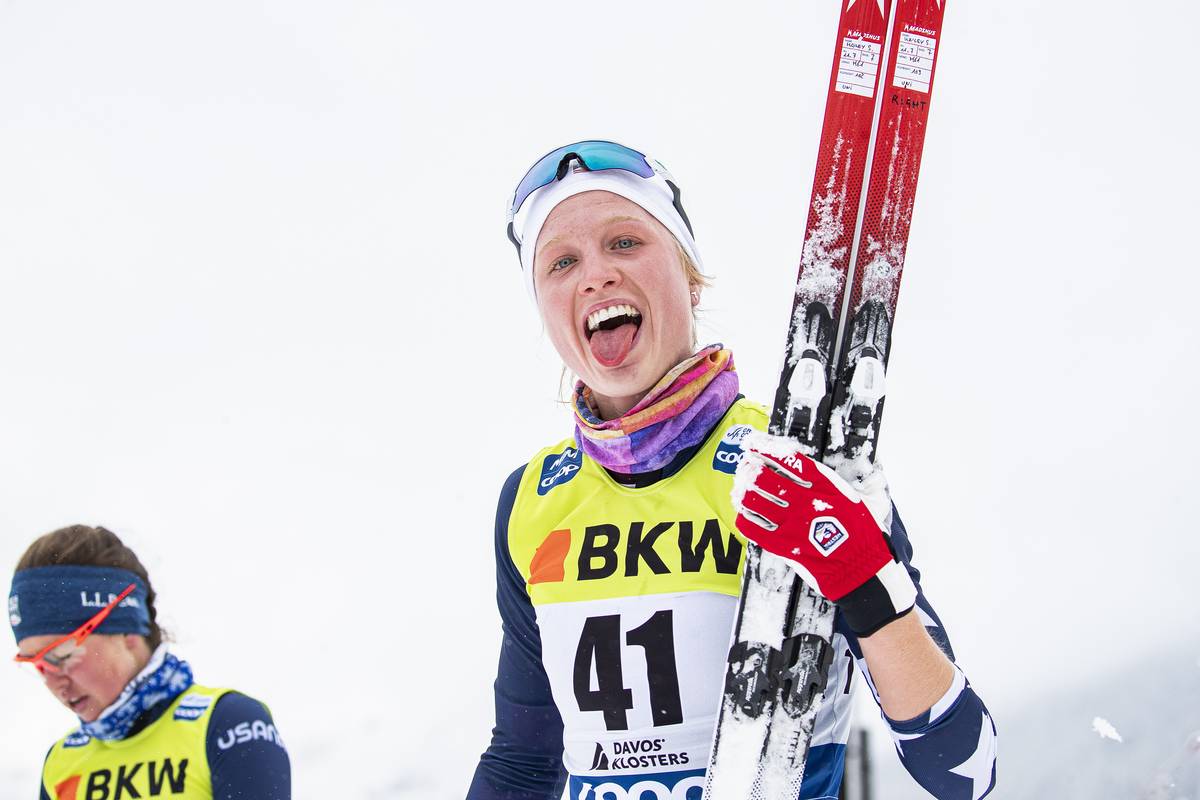
    Brennan raced to the podium in third place in Davos last winter in the 20k freestyle individual start. It was part of a very strong beginning to the World Cup season for the American. (Photo: NordicFocus)

    This interview has been lightly edited for clarity and brevity.

    FasterSkier: Towards the end of  last ski season, you said that there were a few goals you missed out on. Can you elaborate on that in terms of the goals you hit and the goals that you didn’t?

    Rosie Brennan: I wanted a medal at World Champs, and I fell short of that. I was hoping to be in the top three in the overall, and I was fourth. So those were both near misses, which are always hard because results are largely uncontrollable. You can’t really control who’s in the race and what kind of day they’re having. When you’re kind of … just missing, it’s really hard to evaluate ‘Was that my best effort or did I actually fall short in some places that I think would have made that difference?’ It takes a little time to piece through that. In World Champs, I crashed in the Skiathlon which again is just my bad luck. That’s how ski racing is. So that was unfortunate. But the 30K was probably my best effort (fifth place, 3.6 seconds off the podium). And I’m really proud of that race. So, I’m not sure there’s really much I could change about World Champs. But in terms of the overall (fourth place overall), I was really disappointed in my sprinting this year and I just wasn’t skiing the way I felt I should in sprints. I think that probably could have made the difference between fourth and third [overall], so that’s something that I definitely have taken as a sign I need to improve on for this season. I feel I missed that one a little more than World Champs.
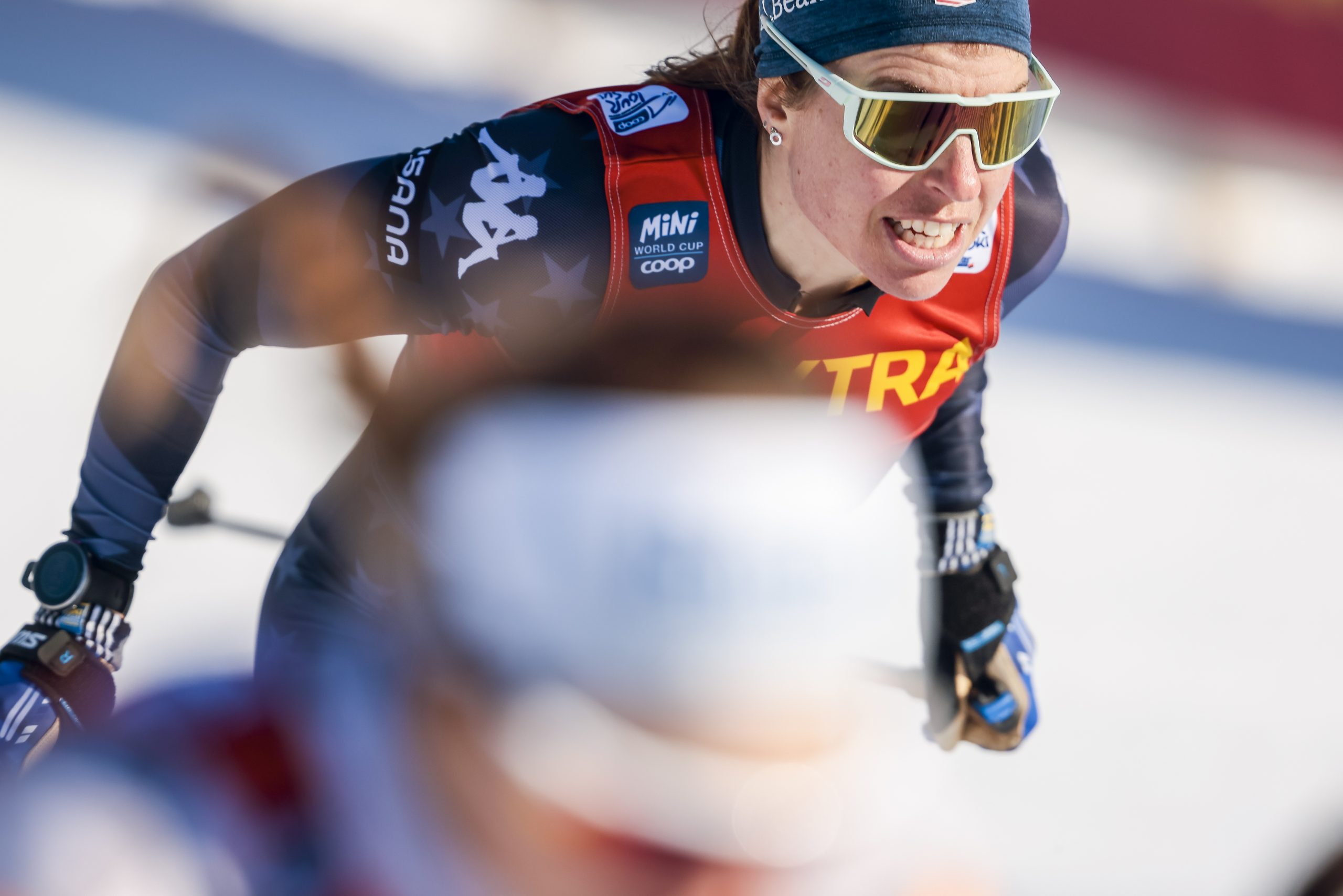
    Brennan finished fourth in the 2023 Tour de Ski (seen here racing at Val di Fiemme, Italy). It was one of several painful near podium misses which she has learned to live with. (Photo: NordicFocus)

    FasterSkier: You mentioned that it’s difficult to process the idea of your numerous near-podium finishes. Psychologically, do you have to direct some energy and attention to overcome just missing the podium, or is it something that you can just brush off and walk away from?

    Rosie Brennan: The first time you’re fourth or fifth , that’s pretty exciting because that’s the best ever. But at this point I feel like it’s become a little bit of a habit for me, for lack of a better word. So that is really difficult; it’s something that has been really challenging over the last couple of seasons for me. The mental piece of … just trying to build the confidence to believe that I can do better on the right day … that it’s not my limit. That’s definitely something that I’ve spent quite a lot of time and energy working on. I’m trying my best to find ways to believe that I still have more in me and can get that medal at some point.

    FasterSkier: Is that addressed with a sports psychologist, or is that actual physical training?

    Rosie Brennan: I think both. I get a lot of confidence through my training and putting in the work. And so that’s part of it, making the work happen and then making it be work that I really believe in or skill sets I want to improve on. Part of it is working with a sports psych and making sure that when those thoughts come in that I know how to deal with them.

    Brennan was fighting for a medal in the World Championships in the skiathlon until her binding broke. A seemingly harmless post-race comment led to a wave of press in Europe, one that follows her, still. (Photo: NordicFocus)

    FasterSkier: Regarding one of those hard luck situations that you had last winter, you made a comment to the press after the skiathlon, when your ski came off,  about how much attention that negative event was getting, and that you wished they would focus more on the positive events. That seemed to really get a lot of traction with the European press. Were you surprised and maybe taken aback by that?

    Rosie Brennan: Yeah, I was. I was surprised by how long that lingered. Even this summer, I’ve had reporters calling me and asking. I didn’t think anything I said was, that crazy, but I guess that’s just what happens when you open your mouth sometimes.

    FasterSkier: So not to reignite that fire, but do you think that the media focuses too much on the negatives?

    Rosie Brennan: Yeah, I think they’re always looking for the drama. I just felt like I was getting baited to say something bad about the organizers or something like that. Which 100% I would not have. There was nothing they did wrong. They did not cause my crash by any means, and I don’t think there was anything unsafe about the race either. It was just one of those tough luck situations. But I feel that’s pretty common. The few times I do get stopped in the mix zone it will be to ask me about why Frida [Karlsson] crashed, and I’m like ‘I don’t know—ask her.’ It’s always like they’re trying to get you to say something bad about somebody else. I guess you just reach a tipping point with it. It’s just not the way I want to live my life. To me, that’s not why people follow sport. It’s for the inspiration more than the drama. I also think what’s hard is that the media, for at least an American, the amount of media we get is so small that it feels like anytime you even get asked something you really have to make the most of it to try to get somewhere. And I just think that’s such a shame. Because it’s not just Americans that are like that. We’re required [all athletes] to walk through the mix zone after the race and 90% of us just walk straight through it and never get stopped by any media outlet. The Swedes, the Finns, and the Norwegians: they get stopped by their media. So you just feel kind of sad for yourself that nobody cares. It’s the Japanese, the Austrians… there are so many other countries that don’t get stopped either. Myself, I am curious about what their stories are, and I don’t know why other people aren’t, and the media outlets aren’t curious what it’s like for a Japanese racer to be on the circuit. That was kind of my point. Why don’t we find these stories and find a way to actually grow the sport, so that we all have more ground to stand on and have more fans and more money and all that kind of good stuff? So, I would like to see more of that in the future.
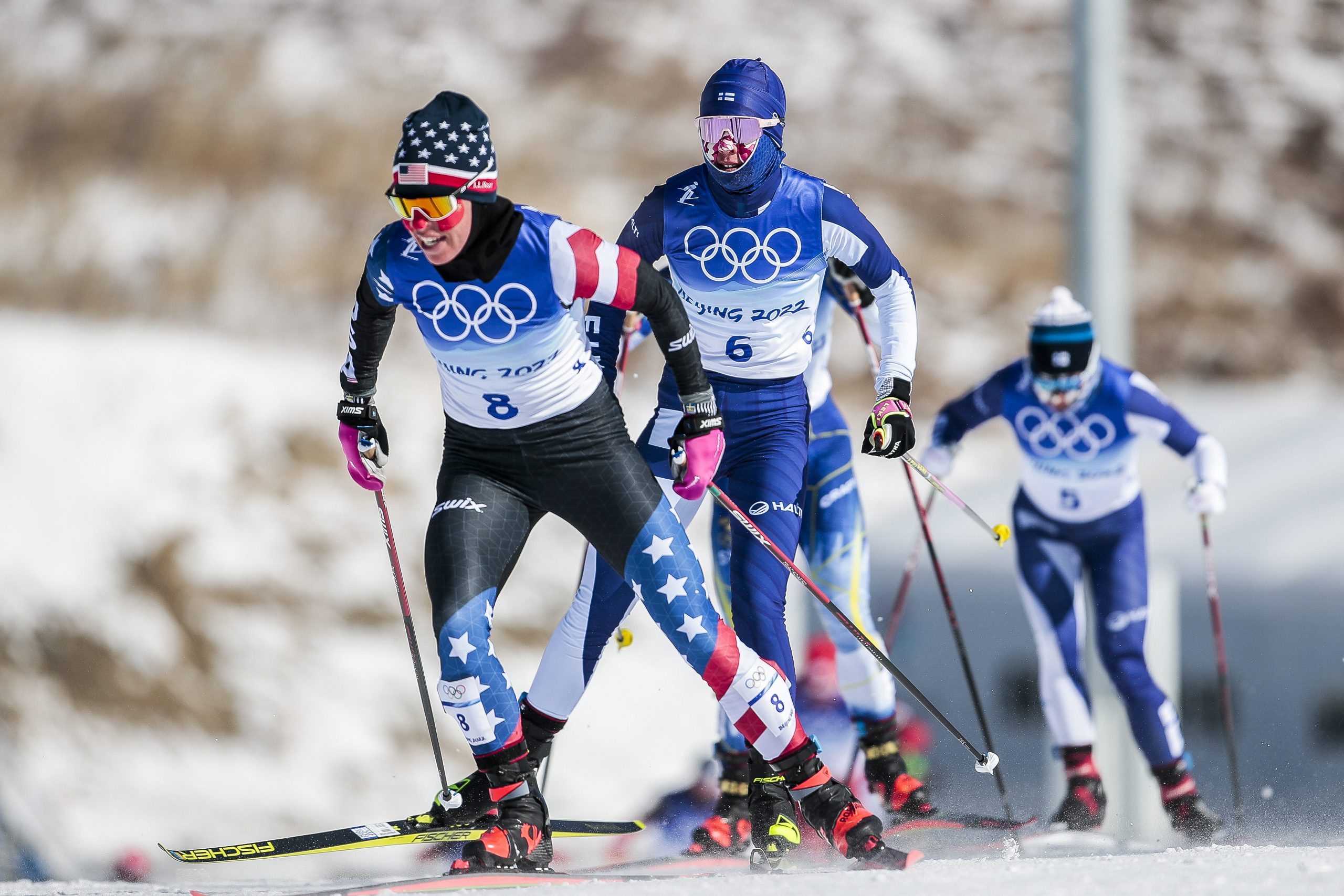
    Brennan showed her trademark grit in the 30k race in Beijing. Even though she just missed the podium, it brought her loads of fan mail. (Photo: NordicFocus)

    FasterSkier: You’ve had a lot of very close calls, and for lack of a better word, maybe even you could call it hard luck. Perhaps because of that, you’ve developed a reputation as a blue collar, hardworking, grinding athlete. Do you think that’s fair or accurate, and do you accept that? How do you feel about that label?

    Rosie Brennan: Oh, I definitely accept that. I definitely take it well. Of course, I wish it wasn’t because I was always almost there. It’s not really my intention, but I do really appreciate it. Maybe it’s because I’m not as present in the media as some other athletes, but I do think it has led to people kind of appreciating my style of racing. Racing is my kind of form of expression or, if you like, it’s my art. I do think it’s very reflective of my personality and who I am, and so I appreciate that people see that. I hope that it does resonate with people and gives them whatever they want to get out of it. But something positive hopefully. And I hope someday I can turn it into really exciting results too.

    But after the 30K in Beijing [sixth place, 5.5 seconds off the podium] I was, overwhelmed when I got home that spring and I had so many handwritten letters from largely middle-aged women that were writing me to say how much that race had resonated with them and the way I raced. That meant so much to me because I was racing 100% with my heart that day. I think it was really representative of who I am, in my style and my personality. To know that so many people had seen that and it meant that much to them, that was really heartwarming and special to me. It made me feel like, I need to just continue to race in a way that’s true to myself and shows who I am because it can make a difference to people in their lives.

    FasterSkier: You think they were expressing their emotional attachment because of how demonstrably you had committed yourself and were grinding it out through the race? Is that what they were expressing?

    Rosie Brennan: Yeah, exactly. I think they’re largely just inspired by the amount of heart I had put into it … no matter the outcome. I don’t know, there are probably people that have gone through something similar in their lives and had never been recognized for it … that’s the hard part. When you fall short of the medal, you could have an amazing performance, but because you don’t have the medal, no one notices. Maybe that’s more representative, unfortunately, of women in a lot of our society. So, I think it really resonated with a lot of women in particular. That kind of sentiment meant so much to me.

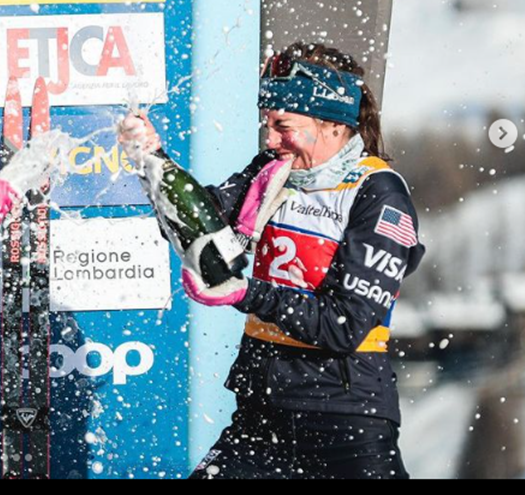
    Brennan secured her place as a team USA stalwart in 2020. Here in Davos in 2020 she won the 10k freestyle. The previous day she won the freestyle sprint. (Photo: NordicFocus)

    FasterSkier: I think part of your reputation as being a hard working athlete is partly due to the fact that your career, reached a new level later in life. You just were really hitting your stride at the World Cup level at an age that was objectively later than many other athletes. Looking back and reflecting on that, is there any particular thing that flipped the switch for you to make you the presence that you are today?

    Rosie Brennan: Well, I don’t really think so. That’s what’s kind of interesting about it. I do think it largely just came from consistently putting in the work. So, there wasn’t something that happened that year that just really changed everything other than COVID. But that changed the world for everybody.

    But it wasn’t really like all of a sudden, I was, oh, I’m ready, I can do this. It was definitely just a very slow process. But I think once you get to a certain level of fitness you kind of start to believe in yourself more. That’s what’s crazy about the World Cup, the difference between 1st and 30th, in terms of percentage performance it’s actually quite small.

    We’re still talking about all the best skiers in the world, so I think to have that huge jump sometimes looks like more than it actually is. It’s just having everything aligned together. But you know I have been building that fitness for many years and building my experience on the World Cup for many years and kind of building my mental strength as well for many years. I think I just finally reached a point where they were all on par on a high enough level that I was able to utilize everything together.

    What people often forget too is that I didn’t start Nordic skiing until I was 14. So, if you look at the number of years of actual ski experience from 14 to … when I won that first World Cup [at age 30], that’s 16 years. Probably if you started skiing quite a lot when you’re like say, six, that puts you successful in your mid-20s, low 20s. So, in terms of the hours of ski experience, I think it probably is actually more on par with what you would see for averages for the World Cup, it’s just I just started so much later, so it just took longer.

    FasterSkier: Can you share some of your goals for this upcoming winter?

    Rosie Brennan: It’s kind of one of those weird years that we have no championships. So, there’s not the obvious thing of like, I want to do well the at the Championships. It kind of leaves a lot of possibilities. But obviously with the World Cups coming both to Canada and to Minneapolis … I’ve kind of put those on my radar wanting to put on a good show for the home crowd. So those are definitely big events on my calendar. Then also the Tour de Ski, which is going to Davos this year which, like you said, is a great venue for me. And then also Toblach which is probably my second favorite venue, next to Davos.

    So, I would really like to have a good Tour and make the most of the non-championship year, and then my focus is in North America—because why not?

    Join FasterSkier for Part III of our interview with Rosie Brennan where she talks about her skiing future, the pressures of being a female athlete, and social media.
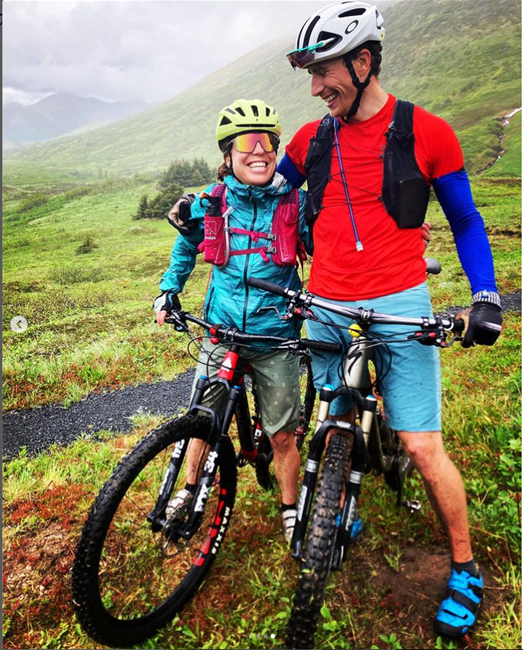
    Brennan getting some well-earned time away from ski training with her boyfriend, Tyler Kornfield. (Photo: Rosie Brennan)
  • USA Earns World Championship Bronze with Diggins and Kern, Team Sweden Triumphant

    USA Earns World Championship Bronze with Diggins and Kern, Team Sweden Triumphant

    This World Cup coverage is made possible through the generous support of Marty and Kathy Hall and A Hall Mark of Excellence Award. To learn more about A Hall Mark of Excellence Award, or to learn how you can support FasterSkier’s coverage, please contact info@fasterskier.com

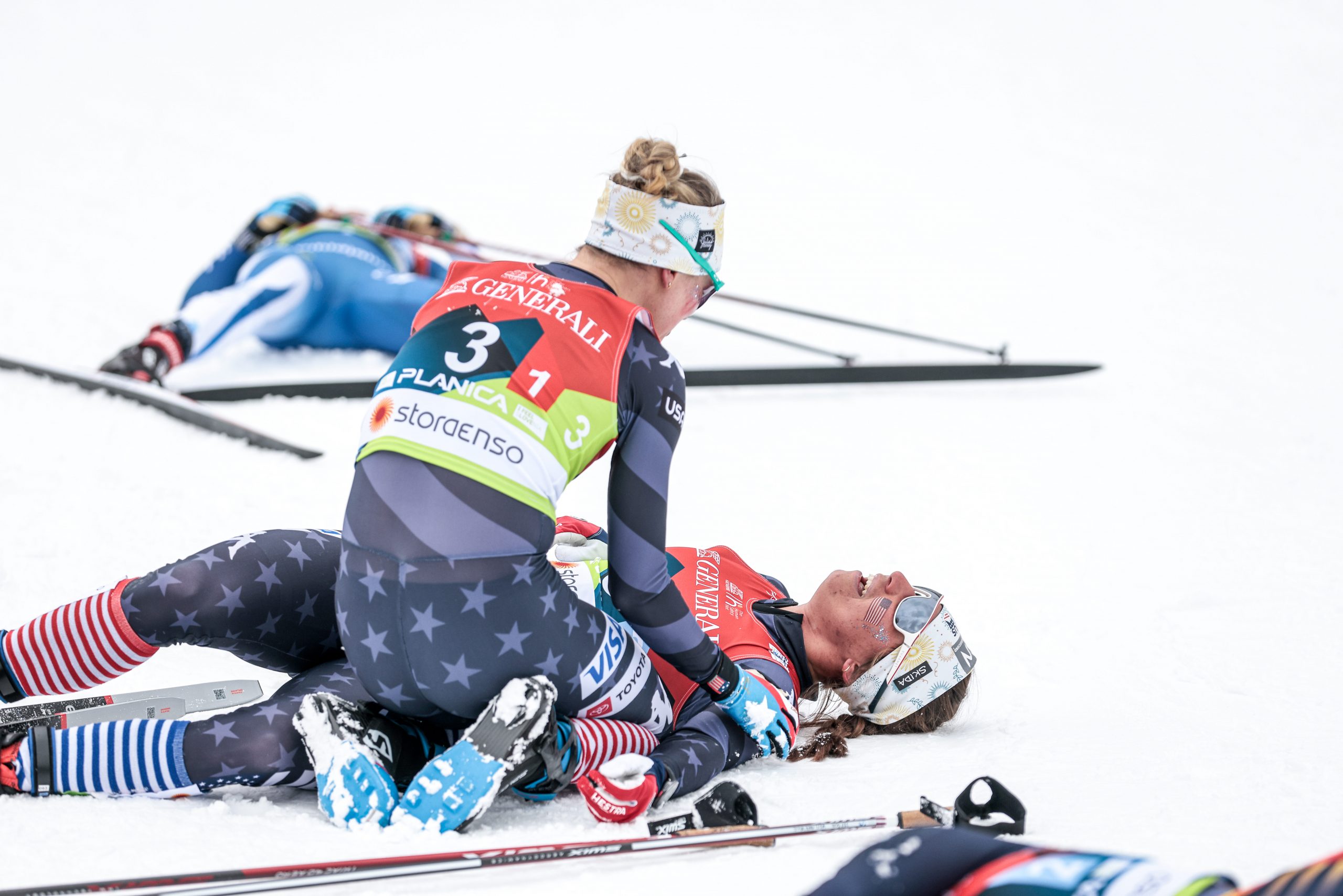
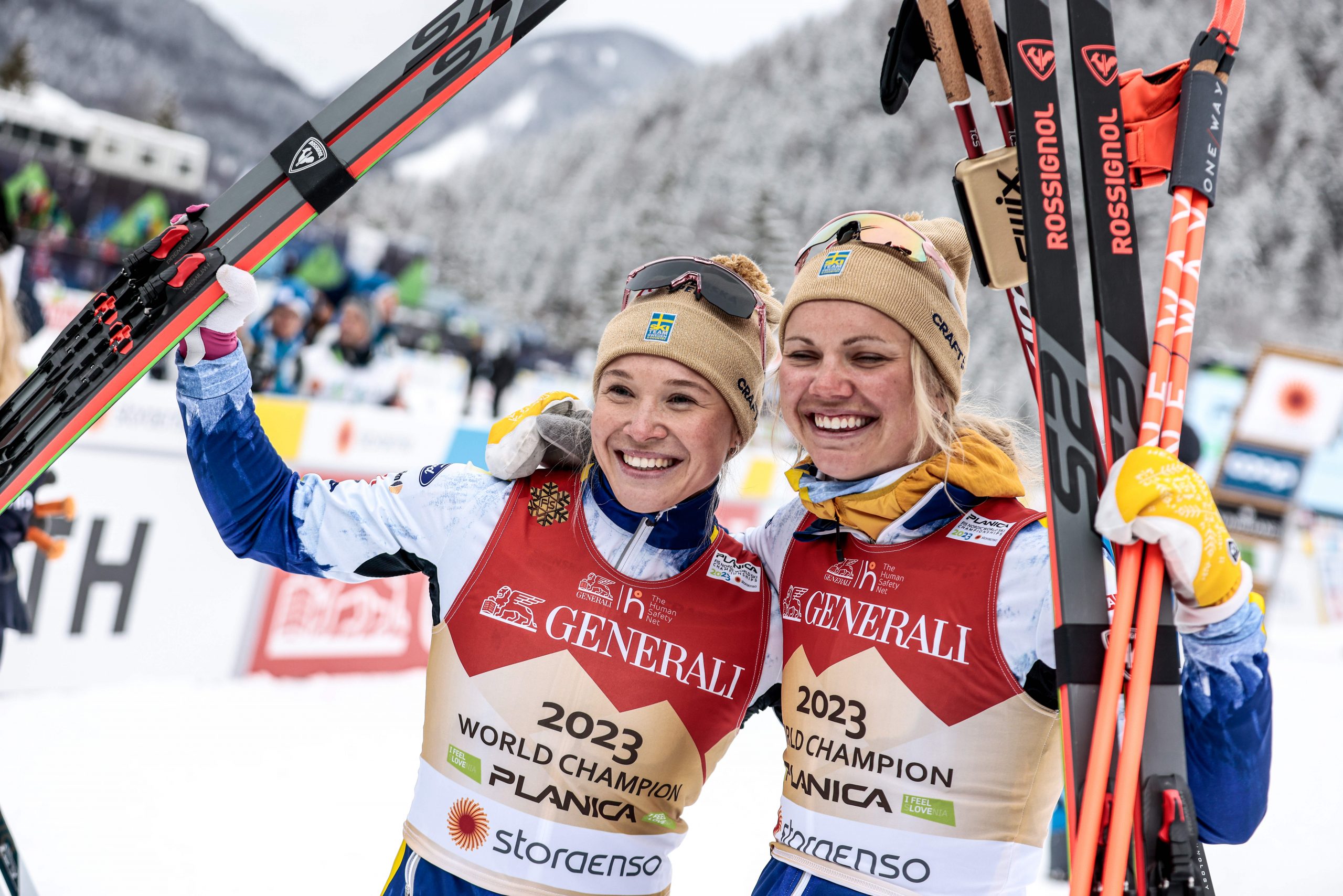
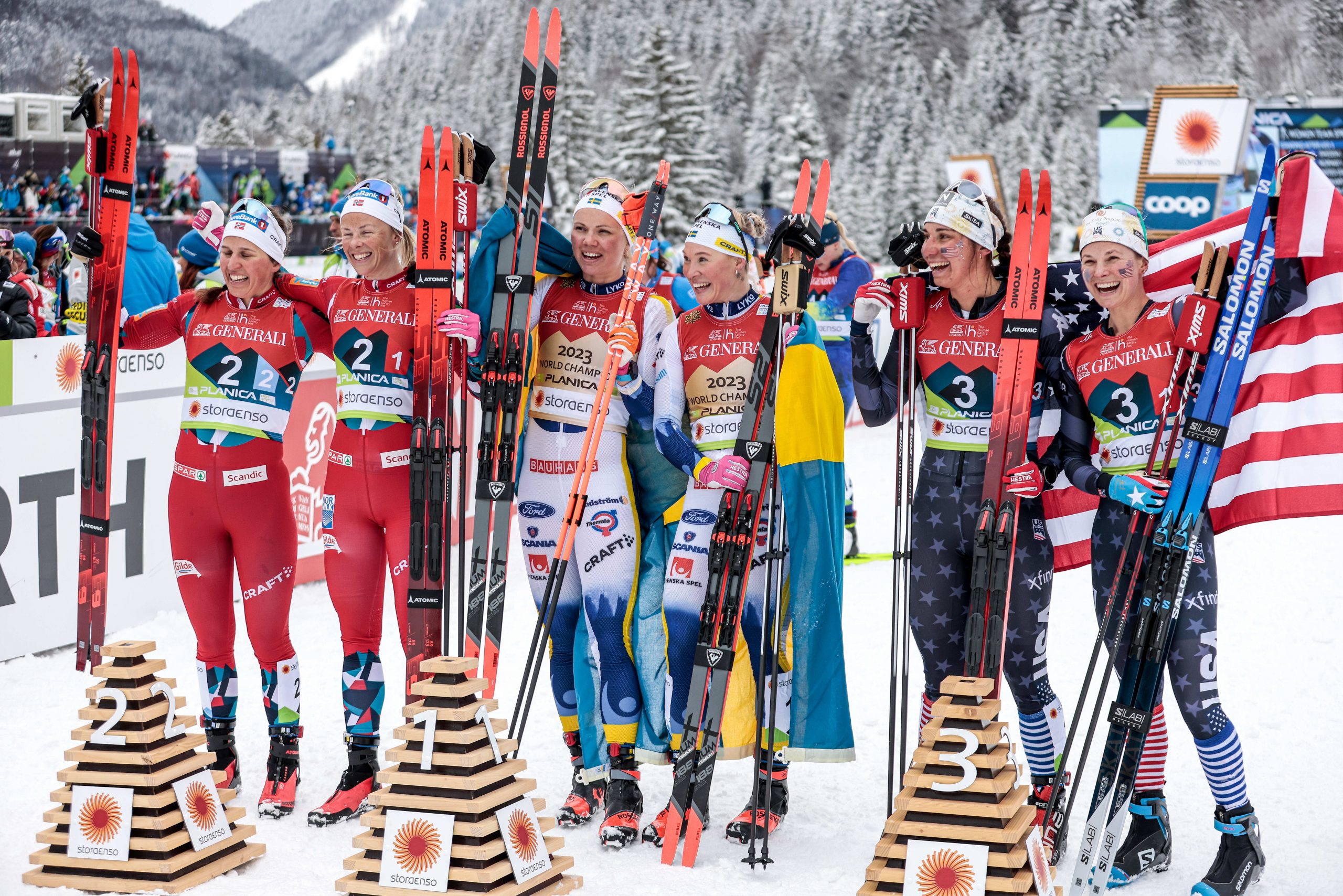
    Five years on from the milestone of Olympic gold—and ten years on from the milestone of World Championship gold—the event was the same for US skiing; the Team Sprint. Socks adorned with stars and stripes and glittered faces led the race the whole day, as Jessie Diggins and Julia Kern traded leg after leg racing at the head of the women’s field. By the time Kern took her last turn around the Planica course, there was a pack of three teams, and no doubt which one had driven the race to that point. The medal places just had to be decided among the United States of America, Sweden, and Norway. In the end, the newly crowned sprint World Champion, Jonna Sundling, made the move for Sweden to win, and Tiril Udnes Weng held on for second, but the excitement would not be diminished. Jessie Diggins waited at the finish line as Julia Kern skied into her arms, bronze for the United States of America, and the first medal of these World Championships and Julia Kern’s career.

    Julia Kern (USA) and Jessie Diggins (USA) share an emotional celebration after taking bronze in the Team Sprint. (Photo: NordicFocus)

    For the US, the pieces were all there, they had just moved around. Kikkan Randall—the other fixture of the Team Sprint’s triumphs of the past decade—was up in the commentary booth this time. Chad Salmela was alongside her, as ready as ever to play muse for the US Skiing community’s unadulterated excitement. Most notably though, Jessie Diggins was on the line at the beginning of the race. A surprise given her pre-World Championships assessment that “Anchoring relays is kind of my bread-and-butter.” But Diggins had also made her admiration of Julia Kern a central part of her assessment of the team events at this year’s World Championships, “Julia Kern has an incredible skill set that makes her a really good anchor,” Diggins said. “She’s got the fitness, the distance chops, the raw speed, tactics and confidence.”

    Jessie Diggins (USA) comforts her Team Sprint teammate Julia Kern (USA) after their bronze medal effort. Diggins’ faith in Kern’s ability to finish was rewarded with a medal performance. (Photo: NordicFocus)

    With that vote of confidence, the line-up for today’s American relay team was set. Diggins took the first leg, just as she had early in her career when paired up with Randall (the lineup that won in Val di Fiemme in 2013). Behind her in the anchor leg was the young American who had first sprinted to a World Cup sprint podium in Planica 2018, and in 2022-23, has spent the year building a steady and strong presence at the front of the World Cup sprint field. US Ski Team Head Coach Matt Whitcomb said on the decision in post-race comments that “If we switched [the lineup] around, we felt like it wouldn’t have used Jessie’s capacities or Julia’s capacities fully.” That lent to a US strategy to, as Julia Kern would put it in post-race comments to FasterSkier, “Win a medal the hard way,” stretching out the field out from the beginning to leave a small sprint pack for the medals at the end. For Matt Whitcomb, that led to the evaluation that “both [Jessie] and [Julia] have somewhat comparable finishing kicks. Jessie has a slightly more developed distance capacity. We felt that could be used on the first leg to really stretch things out, and then at times decide to push and others conserve a little bit throughout the race.”

    And so, the American duo qualified first place on the day, went off the line in the Final that way, and didn’t relent until the very end.

    Julia Kern (USA) living up to the confidence her team had put in her by skiing a medal winning anchor leg. (Photo: NordicFocus)
    Women’s Team Sprint Final

    The most candid and eloquent assessment of the Women’s relay Final would come from the source; Julia Kern’s mother. Talking to FasterSkier’s Nat Herz, she offered that for the US, “Either you chill behind [Norway and Sweden] and take a risk that you’re only going to get fourth or fifth with Germany and Finland there the whole time, or you say, ‘I’m going to the podium’ and push all three laps.’” She added a mantra too, “If you [choose] to push, you have to push the whole time.”

    Jessie Diggins (USA) and Julia Kern (USA) successfully navigate the tricky exchange area in the team sprint. (Photo: NordicFocus)

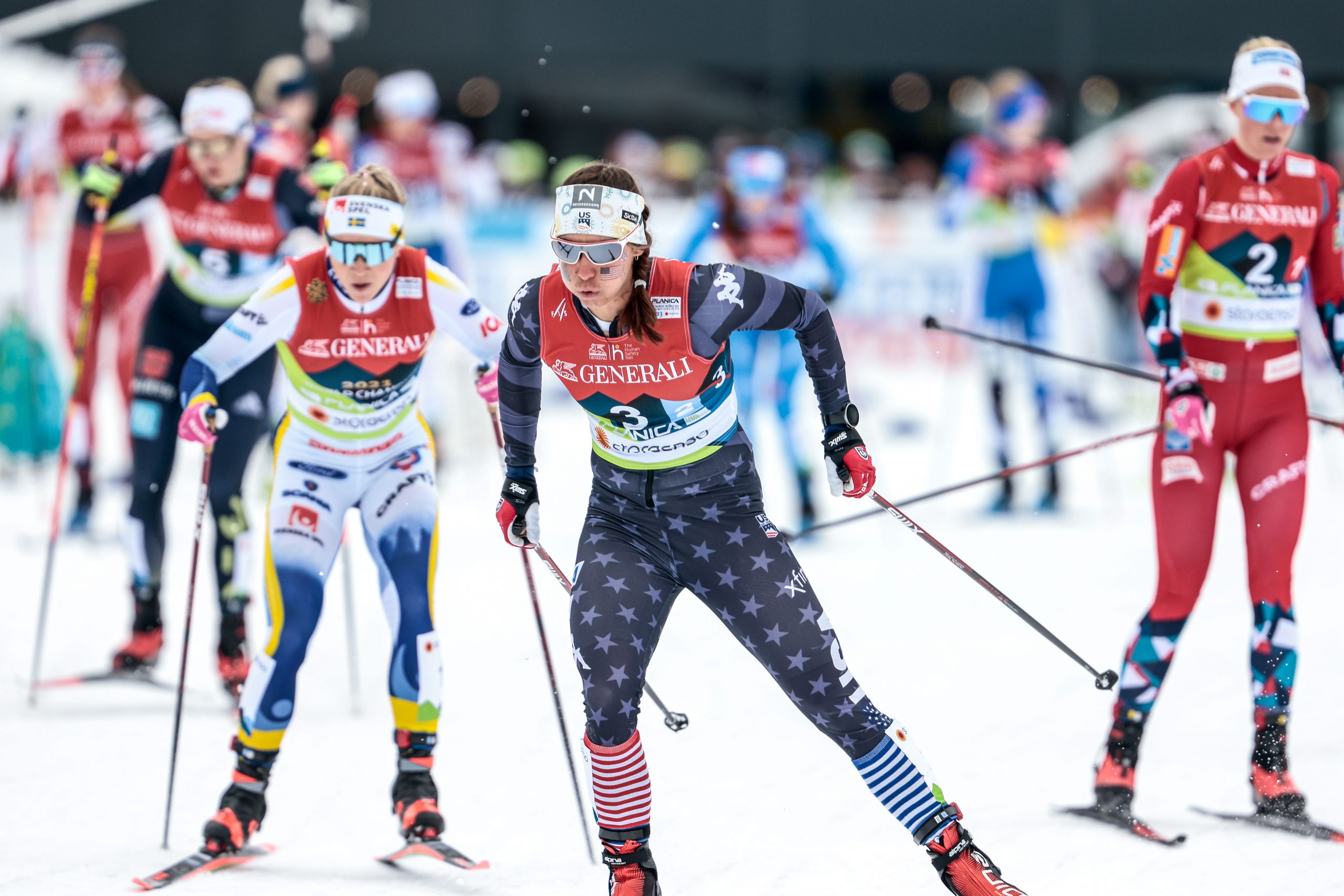
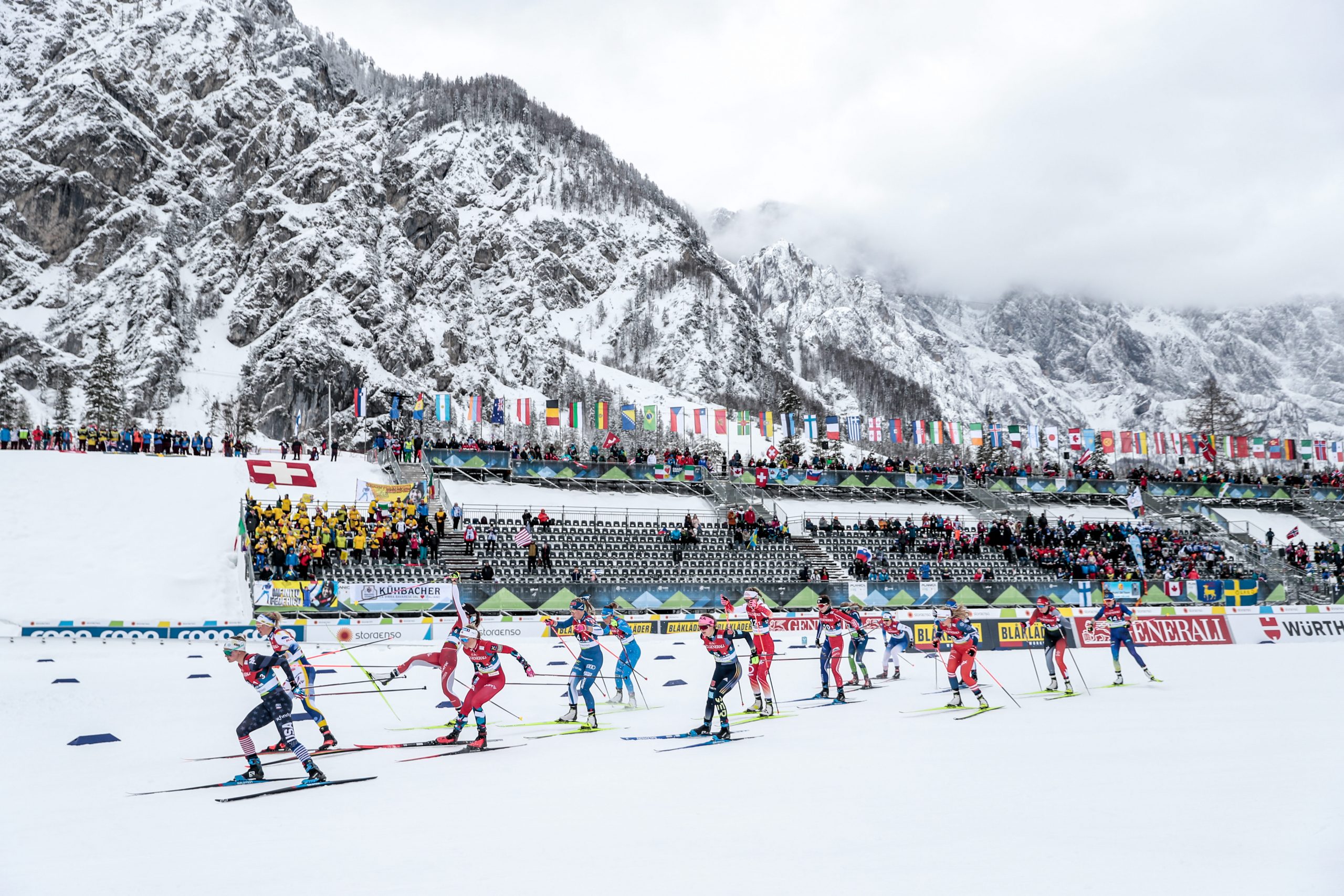
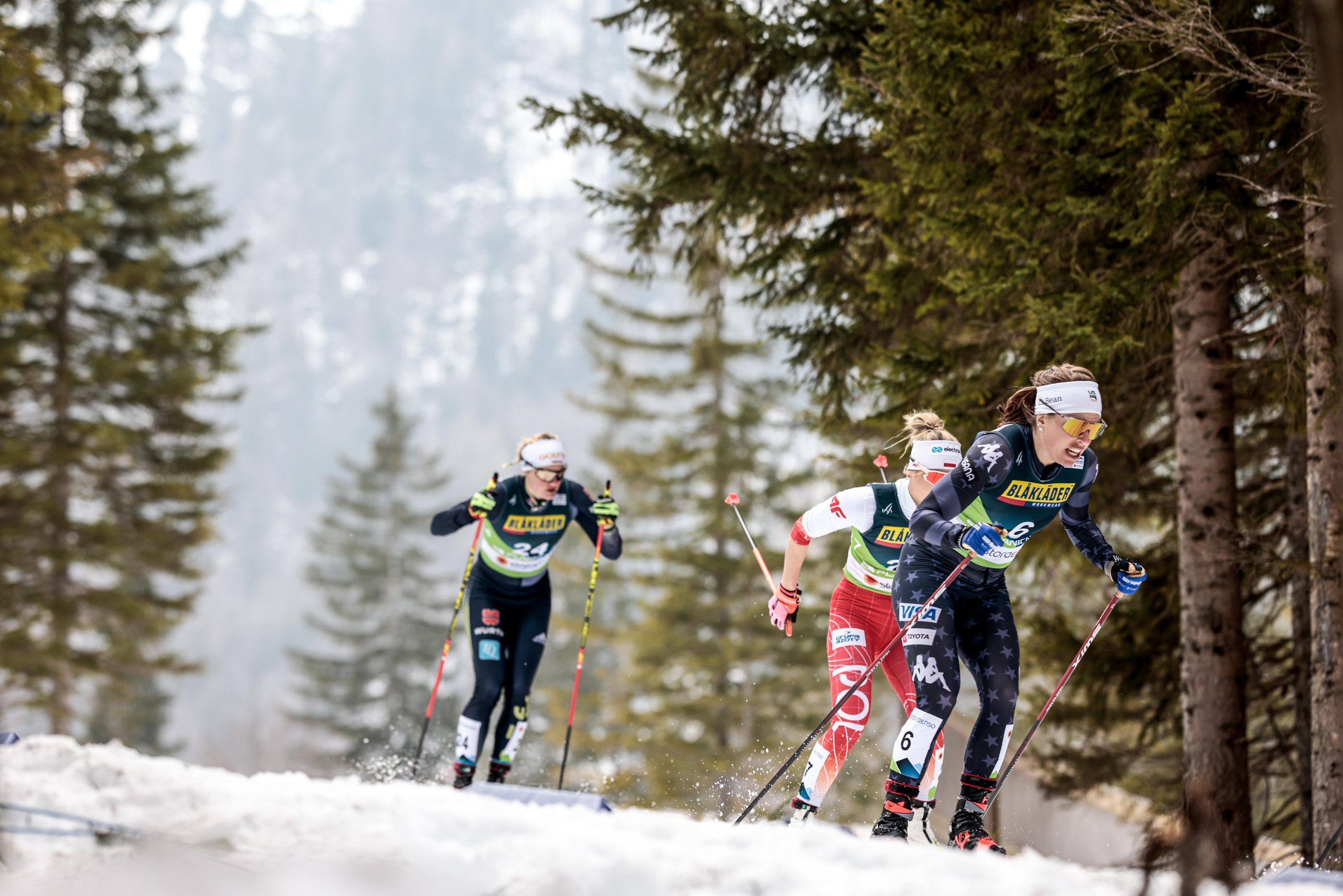
    That was precisely what Jessie Diggins chose to do, launching out of the start-line into her trademark free skate as the field wound around the rolling descent at the beginning of the course. That course was a modified version of last Thursday’s individual sprint to include a relay zone, including the long-winding climb through the middle, with a long rolling section afterwards into the Planica stadium. To the spectator’s eye then, the race was spent looking for subtle signs of strength through the main climb. Who kept the V2 tempo high? Who was launching their V1 into full power mode? Through much of the race, that simply meant looking at the front. Diggins held a high-tempo V2 through all her legs that, even when challenged by Norway’s Anne Kjersti Kalvaa in her final leg, still kept the American at the front of the race.

    Jessie Diggins (USA), pushed the pace the whole way to try and break up the field. (Photo: NordicFocus)

    By that point, the race had long separated into a pack of five teams, with the Americans leading, Norway and Sweden taking turns marking behind in second and third, and Germany and Finland the same in fourth and fifth. The move from Kalvaa and the response from Diggins though, saw the pair take more speed into the long downhill after the climb their final time around, and it proved to be where the definitive gap of the day opened up. Emma Ribom was able to use her sprinting chops to put in a burst and make the race three team’s strong, but the Americans’ push had pushed Finland and Germany out of the race.

    The final lap then was just to decide which medals would go where. Tiril Udnes Weng started the move on the lower reaches of the final main climb, which set Kern and Sundling into high gear too. Kern faded ever-so-slightly, what US Coach Matt Whitcomb would describe in post-race comments as “the side effect” of the US strategy, “Sweden and Norway get to follow up behind for five out of six laps.” As they rolled into the finishing stretch, Sundling passed Weng with the powerful finishing speed that won her a World Championship last Thursday, and Weng skied in to put Norway in second. Julia Kern continued to push all the way through, and as she approached, the energy from Diggins started to become a palpable thing, dancing and running to meet her younger teammates arms. For Diggins, it was the fourth time she had stepped onto a World Championships or Olympics Team Sprint podium, and this time, she was welcoming not just a younger teammate, but one that came from a generation that had directly looked up to her through all those previous wins.

    That was a significance not lost on Julia Kern, who said in post-race comments that, “it was incredible to watch Jessie and Kikkan over the years when I was growing up, and to step into these shoes is truly special. It speaks to how they paved the way for the whole US team.”

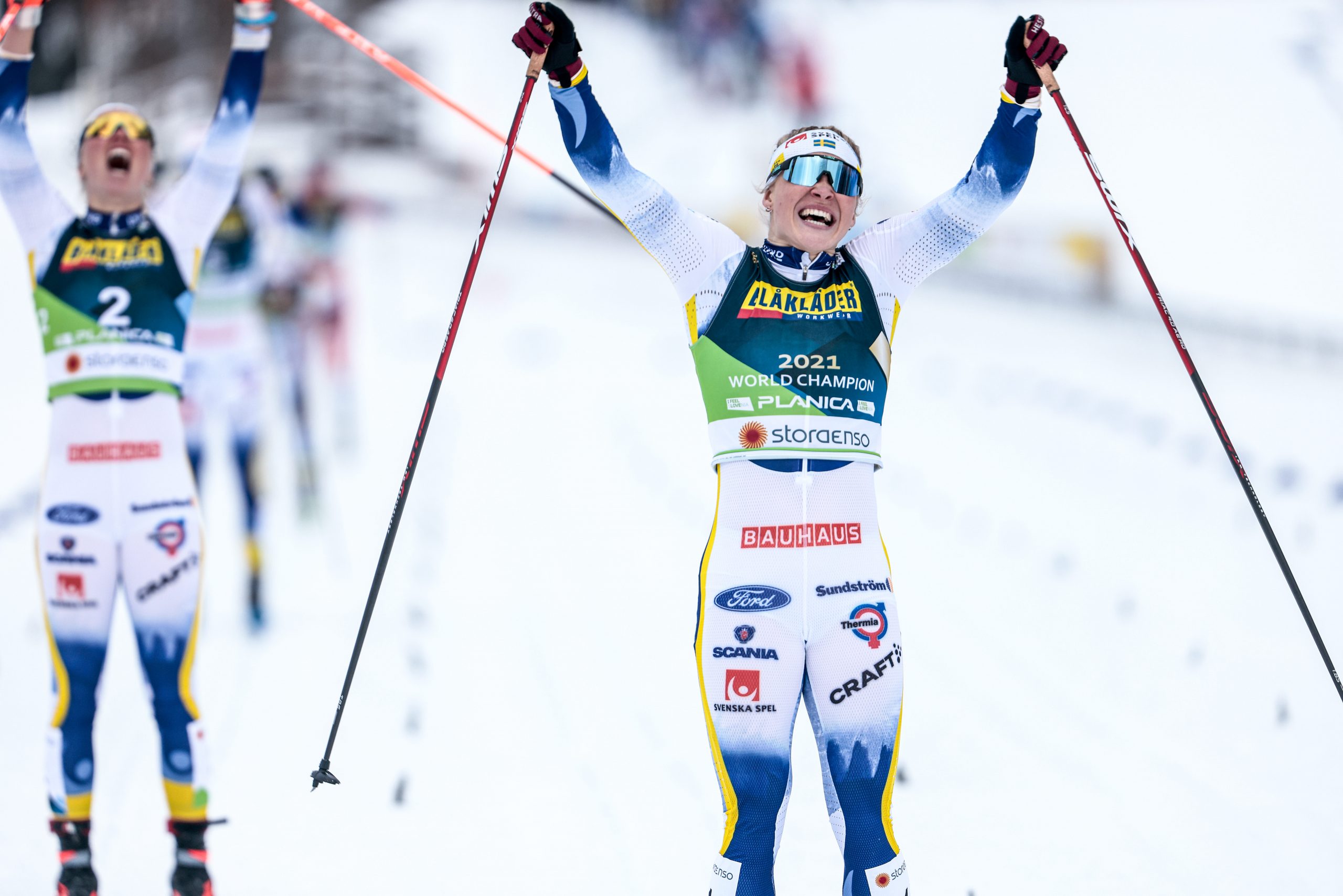
    Jonna Sundling (SWE) and Emma Ribom (SWE) were able to find a little extra something to take gold in the World Championship Team Sprint. (Photo: Nordic Focus)

    Throughout the US camp was the feeling that this bronze meant the continuation of all the positive developments in US skiing over the past decade and a half. For Jessie Diggins, today’s medal was a proof of concept for the team-centered focus she has helped pioneer, saying in post-race comments that “[The team sprint] a team sport within a team sport. It takes people who are on the road with us all the time, the [doctors and physios] who volunteer their time to come over and take care of us, this is a full team effort, and that’s what makes a team medal special.”

    Matt Whitcomb, meanwhile, opted for extended metaphor, “[our Team Sprint] is like a multiple years long relay; Kikkan handing it off to Jessie, Jessie handing it off to Julia now, and maybe Julia hands it off to the next [skier] eventually.” 

    And as for the significance, Jessie Diggins continued to bring it all back home, “I hope the kids back at home see that you can do this; you can compete clean, support each other, train hard, and get it done. I hope they’ll see that.”

    All smiles for teams Norway, Sweden, and USA after medal winning performances. (Photo: NordicFocus)

    Women’s Team Sprint RESULTS

  • Sweden Sweeps Podium in Women’s Classic Sprint.  Brennan-Kern in Top Ten

    Sweden Sweeps Podium in Women’s Classic Sprint. Brennan-Kern in Top Ten

    This World Cup coverage is made possible through the generous support of Marty and Kathy Hall and A Hall Mark of Excellence Award. To learn more about A Hall Mark of Excellence Award, or to learn how you can support FasterSkier’s coverage, please contact info@fasterskier.com.

    Today the Classic Sprints marked the beginning of the first full day of competition at the FIS World Championships in Planica, Slovenia. In the women’s field, there was not a prohibitive individual favorite coming into the race. So evenly matched is the women’s field that the last nine Classic World Cup Sprint races have produced nine different winners! While no individual has dominated women’s Sprinting, the Swedish team has amassed a stock of Sprint superstars who have been on a dominant run lately. For the last 3 individual Sprint races coming into the World Championships, the Swedish women have occupied 7 of 9 podium positions. Norway and USA have been the most consistent challengers to the Swedish domination. The U.S. fielded its own quartet of Rosie Brennan, Jessie Diggins, Julia Kern, and Hailey Swirbul to take on the world.

    At the end of the day, the Swedish Sprinting stars rose to the top sweeping the podium with Jonna Sundling taking first, Emma Ribom second, and Maja Dahlqvist third.

    Jonna Sundling (SWE) celebrates after winning the women’s Classic Individual Sprint in Planica, Slovenia. (Photo: NordicFocus)

    For the Americans, Rosie Brennan was seventh—her best Classic Sprint performance ever—followed by Julia Kern in eighth, and Jessie Diggins 21st. Hailey Swirbul finished 33rd just a bit more than half a second away from qualifying. The American women are working without the availability of Novie McCabe and Alayna Sonneyson who, though nominated to the World Championship team, for health and training reasons chose not to attend the World Championships.

    No Canadian women made the heats. Dahria Beatty finished 35th only 1.1 seconds from qualifying. Katherine Weaver was 36th, Olivia Bouffard-Nesbitt 38th, and Liliane Gagnon 47th.

    The Women’s Individual Classic Sprint

    It was a warm day in Planica with temperatures staying above freezing overnight. This prompted officials to unexpectedly salt the course, and wax technicians to put klister on racers skis. U.S. Coach Chris Grover confirmed with FasterSkier that the conditions were a mix of firm and slush which posed challenging conditions for the racers. This resulted in many non-contact falls throughout the day. Grover added, “The course has technical corners with winding sections where the snow is banking and channels are carved, and those are opportunities…to fall.” The tenuous conditions limited access to the course for warmups, and according to U.S. coach Chris Grover, “Staff never skied on the course.” Coach Matt Whitcomb said that, “This condition begs for salting and frankly we are in support of firmer conditions if at all possible, it was not an unwelcome surprise.”

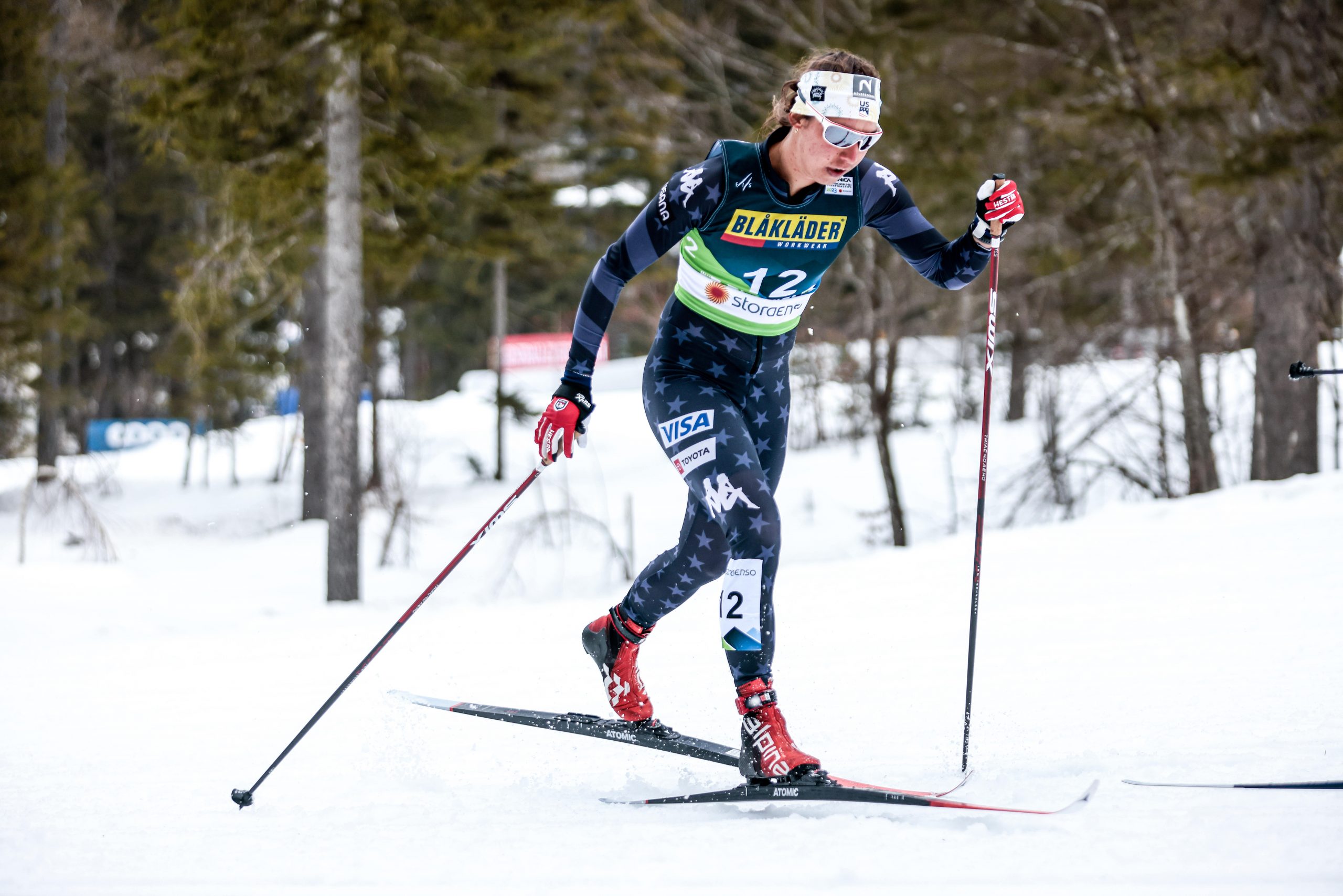
    Rosie Brennan (USA), on her way to a personal best Classic Sprint finish, ending up seventh. (Photo: NordicFocus)

    The first American in the heats was Rosie Brennan in heat number two. Brennan’s heat was stacked with headline talent with Ribom (SWE) and Nadine Faehndrich (SWI) lining up with her. After cresting the first big hill, Brennan’s heat quickly boiled down to a pack of three skiers, with Ribom and Faehndrich out front. Brennan was able to keep on the leader’s tails and maintained contact throughout the race. Coming into the end of the heat, Brennan was still in touch with the leaders—finishing third—and would have to wait and hope for a lucky loser position.

    Julia Kern (USA) joined teammate Rosie Brennan (USA) in the top ten in the Individual Classic Sprint in Planica, Slovenia. (Photo: NordicFocus)

    Julia Kern went off in the fourth heat and would face Linn Svahn (SWE) who has recently returned to the World Cup having recovered from a shoulder injury and has been sprinting extremely well. Kern pushed to the front early and positioned herself extremely well forcing Svahn wide on the course. Kern was able to set the pace up the first steep hill and looked extremely strong. But by the top of the second hill Svahn had worked herself through to the front of the field and established a large gap over Kern. Kern was able to maintain her second place positioned and moved on to the semis finishing second.

    Jessie Diggins (USA) qualified for the heats in the women’s Individual Classic, but was unable to advance out of the quarterfinals. (Photo: NordicFocus)

    In her heat, Diggins settled into the middle of the field at the start and put in a burst going up the first steep hill to put herself near the front. But she faded quickly after that, finishing fifth. Her day ended there. But, Diggins disappointment was Brennan’s benefit; Brennan moved on as a lucky loser and would face her teammate, Kern, in the semis. The star-studded Swedes placed five skiers in the semifinals.

    Sprint Semifinals

    The first semi read like a who’s who in the sprint skiing with Jonna Sundling, Emma Ribom, and Maja Dahlqvist representing Sweden. Kristine Skistad (NOR) Nadine Faehndrich (SWI) and Treza Bernanova (CZE) rounded out the field. The depth of this heat led to a very tactical race with Skistad setting the pace for most of the race. Skistad ground away throughout most of the course until toward the finish when Ribom pushed through Skistad and just beat her at the finish line.

    In the second semifinal Kern and Brennan would face the formidable combination of the Swedish duo of Svahn, Johanna Hagstroem  as well as Laura Gimmler (GER) and Tiril Udnes Weng (NOR). From the start Brennan and Kern drifted toward the back of the field. Then quickly, Brenan asserted herself up the first big hill shooting into the lead and stepping up the tempo for the rest of the field. After the second hill, Brennan had cracked the field and was with Svahn and Weng. At the finish, Brennan skied hard and finished third, but her time did not qualify for a lucky loser position. Kern was unable to meet the pace throughout most of the race and finished fourth.

    After the race, Brennan expressed her satisfaction with the outcome.“it was my best classic sprint ever,” she said. And my best World Championship finish ever.  I love klister skiing!”

    Rosie Brennan (USA) had her best Classic Sprint day ever just in time for the World Championships in Planica, Slovenia. (Photo: NordicFocus)

    Kern said that she “felt pretty good and had hoped for a little bit more, but it’s sprint racing and you never really know what’s going to happen.”

    After the race, both Brennan and Kern described the course to FasterSkier as sloppy klister skiing.

    Sprint Finals

    The final came down to the field which had been anticipated: four Swedes and two Norwegians. Ribom, Svahn, Sundling, and Dahlqvist would take on Weng and Skistad. At the start, Skistad bolted into the lead, determined to break the four Swedes trailing her. Weng then put on a burst of speed to join the leaders, and it looked for a moment like Norway could crack the Swedish wall. But about one-third of the way through the race Sundling edged up to the front and was then neck and neck with Skistad; eventually pushing past her. Then the Norwegian dam couldn’t hold back the Swedish pressure and finally burst with the Swedish wave surging to the front with all four Swedes forming a solid wall in front of the Norwegians and quickly gapping Norway. Just past the halfway point, it was all Sweden with the only question left being which Swede would win. It came down to Sundling and Ribom fighting it out at the finish with Sundling holding off Ribom, and Dahlqvist coming in third.

    After the racing was over U.S. coach Matt Whitcomb described the Swedish women’s performance as, “next level.”

    After many twists and turns, the women’s sprint day ended up much as it had been predicted with team Sweden totally dominating, and the rest of the world left trying to figure out how to match the matchless Swedish women.

    World Championship Women’s Individual Classic Sprint RESULTS

    Sweden Sweeps the World Championship podium with Emma Ribom (SWE), Jonna Sundling (SWE), Maja Dahlqvist (SWE), (l-r) taking the top three spots in the Women’s Classic Sprint. (Photo: NordicFocus)


  • Nordic Nation: Prioritizing mental health and rediscovering passion with Hailey Swirbul

    Nordic Nation: Prioritizing mental health and rediscovering passion with Hailey Swirbul

    In this episode, we chat with Hailey Swirbul, who – at just 24 years old – has been competing at the top end of the sport for quite some time. A bronze medal in the 4 x 3.3k relay at the 2017 Junior World Championships in Soldier Hollow put Hailey – and relay teammates Julia Kern, Hannah Halvorsen, and Katherine Ogden – on the map in a big way in US Skiing. Hailey has gone on to spend the better part of the last four years racing on the World Cup, earning 48 World Cup starts and one individual podium in the 10k skate in Davos in 2020. She’s currently preparing for the upcoming World Championships in Planica, Slovenia, which starts on February 22nd. 

    Following last year’s Beijing Olympics, Hailey opened up about the contrast in expectation versus reality in the Olympic experience, and how the high stress, high pressure environment of life in Europe, particularly in the lead-up to the Olympics, negatively impacted her mental health and felt increasingly unsustainable. She questioned whether she wanted to keep skiing at all, but eventually decided to keep at it, with a new approach. She took a full time engineering job in the summer, and decided to forego period one and two on the World Cup, racing the SuperTour and US Nationals domestically instead. 

    Hailey Swirbul enjoys her time in the leader’s chair after a solid performance in the 10k skate in Davos in December 2021. (Photo: NordicFocus)

    As we discuss, this approach has rejuvenated her love for the sport and her motivation for the training and sacrifices it requires. And, it’s contributed to an outstanding season of racing, both domestically and internationally. She remains the SuperTour Leader as of recording, having earned a spot on the podium in all but one event, and swept all four events at the National Championships in Houghton, MI in early January. She seamlessly transitioned back onto the World Cup in Les Rousses, FRA where she raced into the semifinal of the classic sprint, followed by a top-20 result the following day in the 20k mass start classic. She qualified for the sprint heats again the following weekend in Toblach, ITA, was 26th in the 10k free the next day, and capped off the long weekend by scrambling for the US women’s relay team, which ended the day in bronze medal standing.

    Thanks for listening, and thanks to Concept2 for supporting this podcast. 

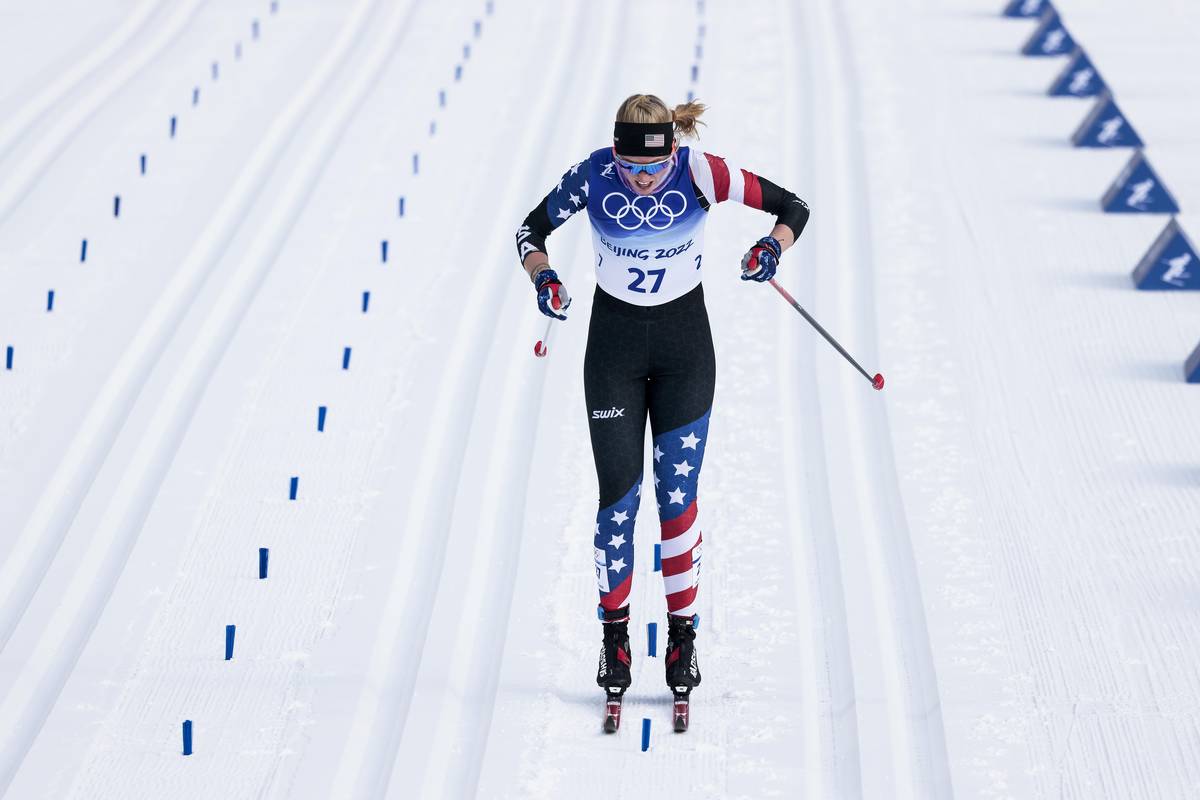
    Hailey Swirbul pushes to the finish of the 10 k individual start classic during the 2022 Olympic Winter Games. (Photo: NordicFocus)