From the FasterSkier archive — posts syndicated from athletes’ and coaches’ own blogs between 2004 and 2012, kept online as published. Current coverage is at fasterskier.com.

Tag: 2026 Winter Olympics

  • Chris Hecker and the Moment the Sun Came Out

    Chris Hecker and the Moment the Sun Came Out

    This article was made possible through the generous support of our voluntary subscribers.  If you value coverage like this, please support FasterSkier with a voluntary subscription.

    If you are a parent or coach and have been responsible for waxing skis for an important race — a state championship, a Junior National Qualifier — you know how stressful that can be. Now imagine it’s the morning of the Team Sprint at the Olympics, and you are responsible for Gus Schumacher’s skis. Feel your blood pressure rising yet?

    Welcome to the life of Chris Hecker, the US Cross-Country Ski Team service tech who leads the glide program and is Schumacher’s personal tech. Hecker, at this point, knows Schumacher well and that he has logged nearly 1,000 hours of training annually for years, and that he has dreamed of this specific day since the end of last season.

    “One of the most stressful moments actually came [on race day], about 45 minutes before the Men’s Team Sprint. I had selected the race skis for Gus and felt confident in the decision. At the time, it was clearly the best pair for the conditions.”

    Everything seemed to be playing out as Hecker had hoped, but then everything changed.

    “Then, about five minutes later, the sun came out. The course started to break down and got noticeably wetter. I still had a few minutes before beginning to wax, so I decided to run one more quick test. In the ten minutes between tests, the two top pairs kept getting closer and closer in performance.”

    These are the moments when experience, confidence, and a little tech magic can make or break a race. “In the end, I chose what was technically Gus’s second-best pair at that moment,” Hecker recalled. “As more athletes skied and the temperature continued to rise, there’s a good chance those skis actually became the faster option anyway.”

    Hecker was quick to point out that “Gus and Ben were on another level. Regardless of which skis Gus raced on, I’m confident the result would have been the same. They were [racing] on another level.”

    We may never really know, but maybe that decision did have something to do with Schumacher and Ben Ogden winning silver in the Team Sprint? For Hecker, it was a choice that was actually years in the making.

    Guided by family and noted mentors

    Hecker grew up in a family of skiers; his father, Mike, was a Pelton ski and Exel pole rep in the Midwest and had Chris on skis when he was just nine months old, “shuffling around and falling down.” Mike and his wife would pack the entire family, including Chris and his older brother Jeremy, and spend weekends traveling to different ski shows and venues. The parents told Chris and Jeremy it was their ‘vacation’, but in reality, it was just a family deeply invested in both the industry and the lifestyle.

    “So we were skiing from a really, really early age, and then we got into racing,” said Chris. When Chris was in middle school and high school, he raced for Anoka High School, in Minnesota, a northern suburb of Minneapolis. After graduating in 2013, he headed to St. Scholastica in Duluth, where he raced for three years under Chad Salmela and, in his senior year, under Maria Stuber.

    After graduating from St. Scholastica in 2017, Hecker took a job with Rex Ski Wax for the 2018 / 2019 season.

    “I worked with them for a year, spent a year on the World Cup being their racing service manager and research and development, kind of lead testing for all the new products, testing all the old products, and then walking around and working with the teams and saying, What do you need from us?”

    Hecker made himself available to World Cup teams, asking which products he could help with and which they thought were working well and which needed improvement. He continued this work for three full seasons before starting with the US Ski Team in 2020; this is now his sixth full season with the team.

    Two brothers… “Give me something weird.”

    Chris’s older brother, Jeremy, has kept the family tradition alive too, serving as a full-time employee of Pioneer Midwest and, in addition, as the domestic rep and race service lead for Rex ski wax.

    “We talk multiple times a week, and we get really deep into the weeds,” says Chris, who gives his brother lots of respect and praise. “He’s a really good wax tech, and sometimes you just need an idea from an outside source.”

    So when waxing domestically, Jeremy will ask his brother at the World Cup, “Give me something weird, give me something random to go out and test,” because he has all the normal, routine choices down.

    “He’ll always ask me for one random suggestion to try out for some of those race weekends. And sometimes it works, and sometimes it doesn’t.”

    For the most part, the two brothers talk about local races and how Jeremy can better support local skiers, since the products Chris is working on for the World Cup aren’t available to domestic skiers.

    “But it is also fun to talk about, when we have a really good day, like in Goms, or a really good day, like in the Val de Fiemme, on the final hill climb.”

    When that happens, Jeremy can spot it on the livestream and will call up Chris and ask, “Oh, what’d you guys do differently!”

    A lot more than two pairs of skis… like over 100

    In addition to being Schumacher’s personal tech, Chris Hecker is also responsible for Novie McCabe when she is on the World Cup and when she raced at the Olympics.

    In addition, Hecker is responsible for managing both athletes’ ski fleets. For McCabe, that means 38 pairs of skis and another 65 pairs for Schumacher, but even that can be variable, “like, Gus gets a ski [from Rossignol] maybe every other weekend or every third weekend because they’re always coming out with new prototypes and new skis.”

    McCabe is a Fischer-sponsored athlete, and they are admittedly a bit more controlled on allocating skis, but if Hecker and McCabe decide to “knock out a bad ski,” they can give it back to them and get another for her quiver.

    The new Rossignol skis arriving can introduce many more variables for Schumacher and Hecker to consider. As Hecker says, “ it can be new base material, new grinds, new core materials… the construction of the ski can be different.”

    Every little tweak has a purpose, “maybe it’s an easier kicking classic ski, maybe it’s a faster base material on a state ski.” As Hecker continues… “Maybe it’s a different laminate on a zero ski,” and what becomes quickly obvious is that all of these subtle variations make for endless possibilities.

    Building a rapport

    Hecker and Schumacher have been working together for two years now. Last season, Hecker was not responsible for another athlete, so he could focus on Schumacher, and the two quickly bonded.

    From the beginning, “working with him was really fun,” said Hecker . “We were trying to build a rapport as a new athlete and tech combination between the two of us.”

    Schumacher’s previous tech had left for the Swiss Biathlon Team, but Hecker and Schumacher found a lot of success last season with several top 10s and a podium in Falun, Sweden. As they started this season, they got right back to work.

    “Then starting this year, it was like jumping right back into it.” The two had a full year of experience to build on, and the dialogue and descriptions began to get more dialed, which is critical in the relationship between a tech and an athlete.

    Hecker began to know what Schumacher “likes for kick in skis, what feeling and stability he likes on skate skis,” and the two have been able to build that “innate rapport” which leads to a trusting relationship.

    As Hecker puts it, “[Schumacher] is one of the most astute athletes that I’ve worked with. He always comes with a question or two on race day. ‘Do you think we should try testing over on this side of the course instead of that side of the course, because I’m really trying to execute a plan here. Can we try focusing on glide for this half of the course, and maybe do a couple of glide outs here?”

    Hecker continues to describe how impressed he is with Schumacher as an athlete:

    “And so he’s always equally thinking as a wax tech and as an athlete when we’re out skiing together, and he’s really trying to dissect where the best places to test are. And it’s not just my job to revive the skis for him, but it’s also his job to pick the correct skis for him. And so he needs to know almost as much as I do about his skis and what is working and why it’s working, because ultimately we have to come to the decision together. He is racing, not me, and so we have a really cool relationship together to kind of pick and choose what we want to race on as a team.”

    Learning what he likes instead of what you like

    At this level, picking the right ski for an athlete is not just about what is fastest. It is also about picking a ski that responds the way the athlete prefers, and that matches the way a skier races.

    For Schumacher, that means a ski that is “extremely stable and forward tracking.” Hecker knows the way Schumacher skis, and how “when he pushes off to the left or to the right, and he goes fully onto one ski, he wants it to go straight.”

    “He doesn’t want the tip to move at all. He just wants it to point and shoot straight.”

    That isn’t a characteristic Hecker is personally always looking for in a ski, but he knows that’s what Schumacher wants. “So when I’m looking and testing without him some days, I say, ‘Okay, this ski is for sure going to be moving on because this feels better for him.’ And so we kind of have differing opinions sometimes on feeling, because I like a slightly different ski.”

    For Hecker, though, what is most important is that he understands not just what will ski fast, but also what will work best for Schumacher in different conditions, based on how he will race.

    “On a really firm course, he’ll look for this ski that just goes straight. And I think the reason why he likes that is that he will free skate a lot and likes being able to just push with his legs. And he’s so strong at that, and so relaxed when he does it, and so he can conserve a lot of energy.

    So it’s a really cool technique change from him, because I don’t think a lot of people utilize that on the men’s field. You see a lot of people always V2ing, and you’ll see him kind of free skating in the middle of the pack, just relaxing his upper body and giving half of his body a rest.”

    Inside the wax truck: how race morning actually works

    On a stable day, glide testing is fairly methodical.

    “We usually have four fleets of skis that go out,” Hecker explained. “Eight structure skis, eight paraffin skis, eight topping skis, and four to six application skis.”

    Before any athlete even gets to the venue, there is what the service team calls a “thinking period.” Jason [Cork], Tim [Baucom], Hecker, and anyone else in the truck who wants to join in, gather around a table with wax options.

    “We’ll put maybe 10 to 12 waxes in,” Hecker said. “Eli [Brown] might give us a wax. Oleg [Ragilo], our head of service, might give us a wax. Bernie [Nelson] might give us a wax. Then at the end of the table, it’s on me to narrow it down.”

    Ten or twelve become eight after the team removes the overlapping options. Some are eliminated because something similar tested better earlier in the week. Predictability and durability matter as much as outright speed.

    Structure follows a similar pattern. Baucom pulls 10 or 12 patterns before narrowing to eight that fit the day’s snow. The brainstorming narrows the options, then the skis go outside for testing.

    When results come back, they’re measured in inches and sometimes just two or three separate first from third.

    “If there are three that are really close,” Hecker said, “we might race on third place. Even if it’s two inches behind.”

    Because two inches in early testing might not matter if the wax is more durable, safer, or better, as temperatures rise and the track grows glazy under the skis of a throng of World Cup skiers.

    “It’s up to us to make a call,” Hecker said. “This is the wax we’re going to run today, even though it may not have won.”

    Once the athletes start warming up and testing skis, the techs have to add that feedback to the equation as well. Often, Hecker has one ear tuned to Gus’s feedback and the other to the incoming results.

    “When Gus is racing, a lot of these tests are going on,” he said. “I have to have my head on both testing skis with Gus, but also on the results that are coming in.”

    A call might come mid-session: pair 47 instead of pair 45. At this level, it’s small changes, constant recalibration, and decisions layered on decisions.

    For spectators, the race begins at the gun. For the glide team, it began hours earlier — likely in the dark — and never really stops until the racers reach the first checkpoint in the race and the team knows whether their choices put them in the race or not.

    “It’s definitely the hardest part of this job.”

    For Hecker, this will be his last season as part of the US World Cup service team.

    “It’s been a thing that I decided at the end of the year last year,” Hecker said. “I gave a fairly big heads up to the team in Bend in April.”

    This season marks the end of a third Olympic cycle for Hecker, but it is not that moments like the Olympic Team Sprint are wearing him down. That is not the hardest part of the job. The hardest part of the job is being away from his wife, Katie, family, and his dog.

    “It’s time to be at home with my wife and be more with my family and be back at home with my dog. And, yeah, right now it is time to retire after this year, and we’ll see what happens after that.”

    Like other staff and coaches on the US Ski Team, Hecker was able to sneak home twice so far this season, but those opportunities are few and far between.

    “Yeah, it’s, it’s definitely the hardest part of this job, not that waxing isn’t hard, but being away from your family, being away from loved ones for so long. It’s really hard.”

    This decision wasn’t made lightly because there are many things about being on the World Cup that Hecker will miss. Most significantly, the US Ski Team has done an amazing job creating a unified family.

    “It’s hard because this team is like a second family. Being away from these guys for long stretches is tough. I love working with them. When you like the person you’re rooming with every weekend, that means something. So leaving the team feels like leaving family.

    But I know it’s the right decision for me. I’m getting tired. There was a time when traveling to Europe was exciting, going to new venues, seeing new places. That was fun.

    Now it’s, ‘Okay, we’re going back to Val di Fiemme. We’re going back to Oberhof. We’re driving the wax truck to Oslo again.’ Last year, I realized I wasn’t looking forward to the travel anymore. I’d be excited once I got there, but the constant moving was wearing on me. That’s when I knew it might be time.”

    Gus Schumacher and Ben Ogden (USA), (l-r) celebrate their Olympic silver medal in the Team Sprint in Tesero, Italy. (Photo: Vanzetta/NordicFocus)
    On another level

    When the sun came out in Italy last Wednesday morning, it forced a decision. A choice was made to go with a slower pair of skis, but that decision was not a whim; it was not a swing for a bases-loaded grand slam to win the World Series. It was choosing an option that presented itself through a trusted process, through seasons of tested routines, and having the experience to trust instinct.

    By the time Gus Schumacher and Ben Ogden pushed off the line in the Team Sprint, the work had already been done, in the dark, in the truck, in inches measured on a test lane. Structures narrowed from twelve to eight, waxes debated and eliminated.

    The silver medal will always belong to the athletes. They were, as Hecker put it, “on another level.”

    But long before Schumacher chased down Johannes Høsflot Klæbo on the anchor leg, before the crowd roared in excitement, before the final sprint up the Zorzi Climb, there was a moment when the sun came out, and a technician had to make a decision.

    And one detail to remember when the story of the 2026 Olympic Team Sprint is retold for years to come is that the United States service team, on that day, was also ‘on another level.’


    Help Support Our Olympic Coverage!

    FasterSkier will have our own Nat Herz on the ground at the Olympics, which, to be honest, is a very big financial lift for us. If you value the thoughtful work and access FasterSkier provides at championships like this one, please consider becoming a Voluntary Subscriber. Your support directly fuels the work we do to cover the people, places, and moments that make our sport special.

    Join the FasterSkier community!


  • 2026 Olympic Viewers Guide & Results: Cross-Country Skiing

    2026 Olympic Viewers Guide & Results: Cross-Country Skiing

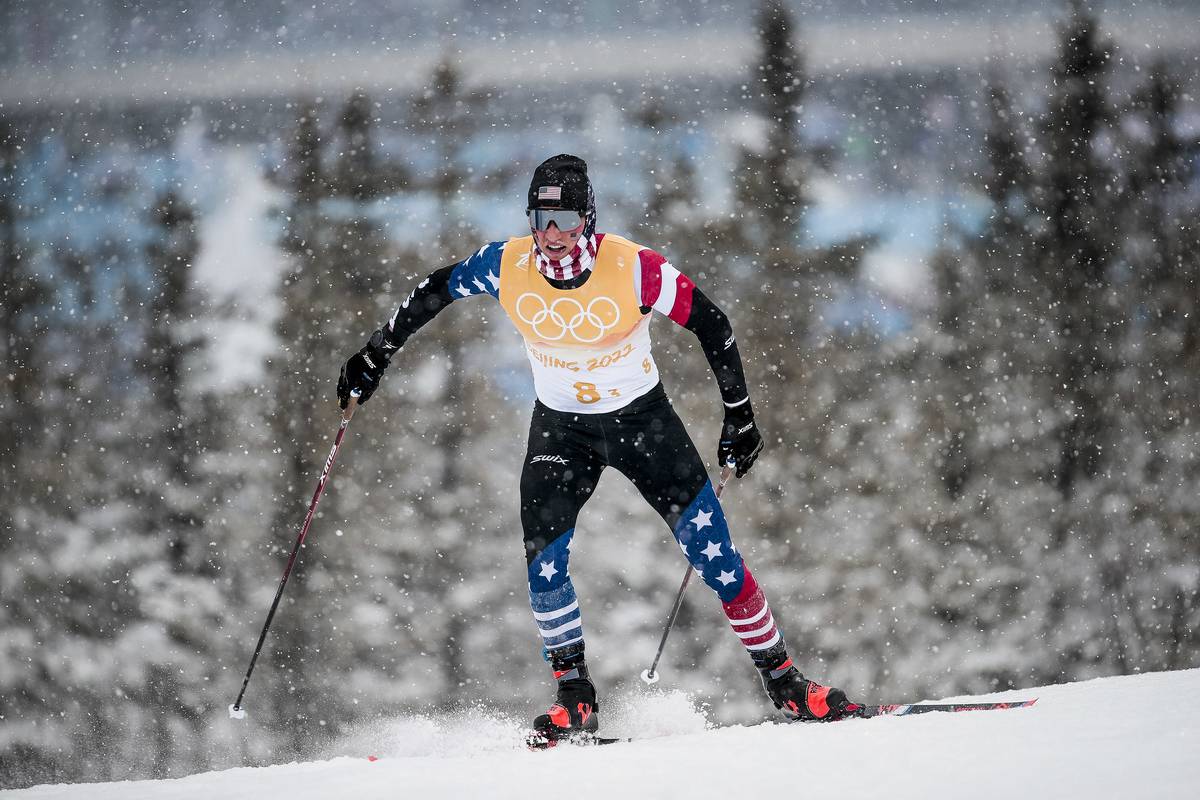
    Gus Schumacher (USA) starts his 2026 Milano-Cortina Winter Olympic Games in the Men’s 20 k Skiathlon in Tesero, Italy. (Photo: Barbieri/NordicFocus)

    2026 Winter Olympics Cross-Country Skiing Schedule

    Val di Fiemme — Tesero Cross-Country Skiing Stadium (Fabio Canal Center)

    Below is the Olympic cross-country ski competition schedule for Milano Cortina 2026 (all events subject to change; times local to Italy) – the best way to watch is on NBC Peacock:

    Saturday, February 7
    • Women’s 20 km Skiathlon (Classic + Free) – RESULTS

    Sunday, February 8
    • Men’s 20 km Skiathlon (Classic + Free) – RESULTS

    Tuesday, February 10
    • Sprint Classic — Qualification & Finals (Women & Men) – WOMEN’S RESULTS & MEN’S RESULTS

    Thursday, February 12
    • Women’s 10 km Free – RESULTS

    Friday, February 13
    • Men’s 10 km Free – RESULTS

    Saturday, February 14
    • Women’s 4 × 7.5 km Relay – RESULTS

    Sunday, February 15
    • Men’s 4 × 7.5 km Relay – RESULTS

    Wednesday, February 18
    • Team Sprint Free (Women & Men) – WOMEN’S RESULTS & MEN’S RESULTS

    Saturday, February 21
    • Men’s 50 km Mass Start Classic – RESULTS

    Sunday, February 22
    • Women’s 50 km Mass Start Classic – RESULTS


    2026 U.S. Olympic Cross-Country Ski Team

    Women
    Men

    Read all of our FasterSkier featured athlete profiles for the entire US Olympic Cross-Country Ski Team (links in the list above).

    Help Support Our Olympic Coverage!

    FasterSkier will have our own Nat Herz on the ground at the Olympics, which, to be honest, is a very big financial lift for us. If you value the thoughtful work and access FasterSkier provides at championships like this one, please consider becoming a Voluntary Subscriber. Your support directly fuels the work we do to cover the people, places, and moments that make our sport special.

    Join the FasterSkier community!


    Rosie Brennan (USA) starts her 2026 Milano-Cortina Winter Olympic Games in the Men’s 20 k Skiathlon in Tesero, Italy. (Photo: Vanzetta/NordicFocus)
  • The Devon Kershaw Show: An Olympic men’s relay wrap and a team sprint preview

    The Devon Kershaw Show: An Olympic men’s relay wrap and a team sprint preview

    This episode was made possible through the generous support of our voluntary subscribers.  If you value coverage like this, please support FasterSkier with a voluntary subscription.  

    We took a couple of days off to do the necessary things, like eat pizza and ski. (And, rest assured, we were working, too — just not on the podcast.) We’re back now to recap the men’s relay and preview Nat’s favorite championship event, the team sprint.

    We’ll be back after that race tomorrow. Reach us at devon[at]fasterskier.com and nat[at]fasterskier.com. We’re really grateful for all the support during the Olympics — thanks for notes and encouragement. And even the anti-eating-on-the-podcast messages.

    A reminder: This is a homegrown podcast done by two guys working long hours and late nights. We’re also paying real money to be here in Italy. If you can, support the show and FasterSkier’s ongoing coverage with a voluntary membership. We’re also offering a bonus during the Olympics: a WhatsApp group with notes on Nat’s experiences in Italy, the food he’s eating, interview transcripts and more.

    Send nat[at]northernjournal[dot]com a confirmation of your voluntary membership and the number he should use for WhatsApp and we’ll get you signed up. You can also Venmo him directly at @nat-herz if a membership isn’t for you. We’re suggesting a minimum of $10, but we also won’t turn anyone away who wants to join because of an inability to pay.

    Help Support Our Olympic Coverage!

    FasterSkier will have our own Nat Herz on the ground at the Olympics, which, to be honest, is a very big financial lift for us. If you value the thoughtful work and access FasterSkier provides at championships like this one, please consider becoming a Voluntary Subscriber. Your support directly fuels the work we do to cover the people, places, and moments that make our sport special.

    Join the FasterSkier community!
  • The Devon Kershaw Show: Mayhem in Tesero in the women’s relay

    The Devon Kershaw Show: Mayhem in Tesero in the women’s relay

    This episode was made possible through the generous support of our voluntary subscribers.  If you value coverage like this, please support FasterSkier with a voluntary subscription.  


    That was a banger. We’re deep into the Olympics now, and Devon and Nat return for the third straight night to recap the women’s relay. One more race — the Norwegian men versus the world — and then everyone gets two days off.

    Reach us at devon[at]fasterskier.com and nat[at]fasterskier.com. We’ll be back tomorrow.

    A reminder: This is a homegrown podcast done by two guys working long hours and late nights. We’re also paying real money to be here in Italy. If you can, support the show and FasterSkier’s ongoing coverage with a voluntary membership. We’re also offering a bonus during the Olympics: a WhatsApp group with notes on Nat’s experiences in Italy, the food he’s eating, interview transcripts and more.

    Send nat[at]northernjournal[dot]com a confirmation of your voluntary membership and the number he should use for WhatsApp and we’ll get you signed up. You can also Venmo him directly at @nat-herz if a membership isn’t for you. We’re suggesting a minimum of $10, but we also won’t turn anyone away who wants to join because of an inability to pay.

    Help Support Our Olympic Coverage!

    FasterSkier will have our own Nat Herz on the ground at the Olympics, which, to be honest, is a very big financial lift for us. If you value the thoughtful work and access FasterSkier provides at championships like this one, please consider becoming a Voluntary Subscriber. Your support directly fuels the work we do to cover the people, places, and moments that make our sport special.

    Join the FasterSkier community!
  • The Long Way In: Zak Ketterson and the Patience It Took to Reach the Olympics

    The Long Way In: Zak Ketterson and the Patience It Took to Reach the Olympics

    This article was made possible through the generous support of our voluntary subscribers. If you value coverage like this, please support FasterSkier with a voluntary subscription.

    Zak Ketterson (USA) during the 10 k Classic in Toblach, Italy, as part of the 2026 Tour de Ski. (Photo: Vanzetta/NordicFocus)

    On Monday, a clear winter morning in northern Italy, Zak Ketterson skied intervals while his teammates enjoyed a point-to-point on an idyllic pre-Olympic winter day. The sun was out. The snow was good. He was working.

    “I did some hard intervals,” he said later. “So it was still nice and sunny and everything, but not as enjoyable.”

    That small distinction — between the workout that feels good and the workout that gets you ready — has followed Ketterson for most of his career. He has never been the prodigy. He has never been the junior who arrived early, polished, and inevitable. His path to the Olympic start line has been indirect, uneven, and occasionally fragile. It has also been intentional in ways that only make sense in hindsight.

    At 27, Ketterson is preparing to race at his first Olympic Winter Games, starting with the Skiathlon on Sunday, the culmination of a season that has quietly redefined his place in American men’s cross-country skiing. He has been competitive across formats, consistent across weekends, and calm in moments that once rattled him. But none of that came from doing things the “right” way — at least not the way modern development systems tend to define it.

    Ketterson arrived here by starting late, resisting structure, leaning into racing before training, and trusting that if he kept showing up long enough, the pieces might eventually fall into place.

    They have. Just not quickly.

    Ketterson’s favorite sports as a child were football and baseball. (Photo: Courtesy Photo)

    A Winter Without a Script

    Ketterson grew up in Minnesota, where winter is not an inconvenience so much as a condition. The days shorten. The lakes freeze. School calendars and community life bend around the cold. You don’t opt out of winter there; you adapt to it.

    In many households, adaptation means skiing. For Ketterson’s, it meant something else first.

    “For me, I was always really into football and baseball,” he said. “That was my fall sport and my spring sport.”

    Those sports gave his year shape. Football stretched into late autumn. Baseball pulled him toward summer. They came with teammates, structure, and a clear sense of belonging. Winter, by contrast, arrived as a blank space.

    Basketball — his favorite sport to this day — lived somewhere between play and possibility. He loved it but never formally committed to it. Organized winter athletics never quite settled into his life. Not yet.

    Before skiing was ever part of his life, Ketterson dreamed of being a pro athlete. (Photo: Courtesy Photo)

    Cross-country skiing entered almost accidentally, carried in by family rather than ambition.

    “My brother, for whatever reason, was more into cross-country running, track, and cross-country skiing,” Ketterson said. “He kind of convinced me, like, yo, you don’t have anything going on in the winter, you should just try this.”

    It wasn’t a calling. It was a solution.

    He was thirteen — late by elite skiing standards, but early enough to slip into the margins of the system. In Minnesota, seventh graders could train and travel with high school teams. Ketterson joined at the JV level, young and mostly anonymous.

    The draw wasn’t the work. It was the race.

    “I really liked racing, especially mass starts and sort of the competitive head-to-head aspect of it,” he said.

    Training, on the other hand, felt like an obstacle.

    “I absolutely hated that,” he said. “When it came to going into the woods and just doing a two-hour ski or something, I hated it.”

    Sometimes, hatred turned into avoidance.

    “There were a lot of practices where I would hide in the woods,” he said. “My friends and I would just pretend that we trained, but we were actually just building snow forts.”

    If this were a conventional development story, it might end there. Plenty do. A late start, uneven buy-in, resistance to structure — those are often warning signs.

    But Ketterson kept finding himself back on start lines.

    Early days on skis for Zak Ketterson. (Photo: Courtesy Photo)

    Racing as the Through Line

    What sustained him through those early years was not discipline, but opportunity. Each step forward offered another race, another environment where effort produced immediate feedback.

    Junior Nationals. Then World Juniors. Eventually, college.

    “The thing that kept me in the sport initially was just the racing,” he said.

    That instinct — to measure himself against others rather than against a stopwatch or a training plan — would define much of his early relationship with the sport.

    By the time he reached Northern Michigan University, skiing stopped being seasonal. It became daily. The margin for avoidance narrowed.

    “I started to develop more of a relationship with the training aspect of it,” he said. “Especially in college, I began to really enjoy the process of trying to improve and optimize things.”

    Sleep. Nutrition. Recovery. The quiet details, that barely registered when skiing was something you fit around football and baseball, suddenly mattered.

    The shift wasn’t romantic. It was practical.

    That change carried him into a professional career after graduation — not as a finished skier, but as someone finally willing to do the work consistently.

    A young Zak Ketterson (Midwest/Loppet Nordic Racing) leads the U16 Boys 5 k Classic Mass Start at the 2013 Junior Nationals in Fairbanks, Alaska. (Photo: bertboyer.zenfolio.com. Proceeds go to NNF)

    Northern Michigan, Daily Work

    Northern Michigan University didn’t transform Ketterson overnight. It narrowed the margins.

    Skiing there demanded repetition. Cold mornings. Tired legs. Routine. Improvement stopped being incidental.

    The biggest shift came junior year, when he began dating his now wife, Julie Ensrud, and skiing stopped being something he did mostly alone.

    “When I started dating her my junior year in college,” Ketterson said, “that really coincided with when I started doing a lot better in skiing.”

    Julie grew up in Norway, in a system that treated sport as something you lived inside rather than something you added on. She attended a specialized Norwegian sports high school. She trained at volume. She understood structure.

    “She was kind of living semi-professionally from the age of 16,” Ketterson said.

    She noticed the basics first.

    “I started going to bed a lot earlier,” he said. “I would always just be on my phone until 11 or 11:30.”

    Food followed.

    “Not only eating healthier,” he said, “but eating more of the right things. More carbs. The timing of what you eat with training.”

    By living together senior year, Ketterson’s bad habits became visible.

    “She’s probably the hardest worker and most efficient person I’ve ever met,” he said. “She gets an email and does it immediately.”

    Ketterson noticed the contrast.

    “I used to be super disorganized,” he said. “I used to lose stuff and leave things everywhere.”

    Being around someone who treated time deliberately changed how he approached his own days.

    “She comes to basically every interval session I do,” he said. “Takes video. Takes lactates. Gives technique tips.”

    What could have felt like a sacrifice became shared life.

    “If I were single and just kind of doing this grind alone,” he said, “it would feel like a much bigger sacrifice.”

    Ketterson (NMU) racing at the CCSA opener in Houghton, Michigan during his college days at Northern Michigan University. (Courtesy photo)

    Learning How to Stay Anyway

    Leaving college did not feel like an arrival. It felt like exposure.

    Professional skiing offered fewer guarantees. Results came without permanence. Progress was harder to measure.

    “This is maybe my fifth year as a professional,” Ketterson said. “I feel like I’ve just been sort of taking small steps each year.”

    From the outside, those steps were hard to see. He qualified. He scored points. Then momentum faded.

    “I’ve had glimpses here and there of being quite good on the World Cup,” he said. “But it was so inconsistent and few and far between.”

    One year, sprint qualification came easily while distance slipped. Another season, the opposite.

    “I would qualify every sprint but struggle in distance,” he said. “Or I wouldn’t qualify in sprints, but I’d get a lot of top-30s in distance.”

    The belief stayed intact.

    “I believed I had that all-around potential,” he said.

    Belief, however, doesn’t quiet doubt when seasons stack without resolution.

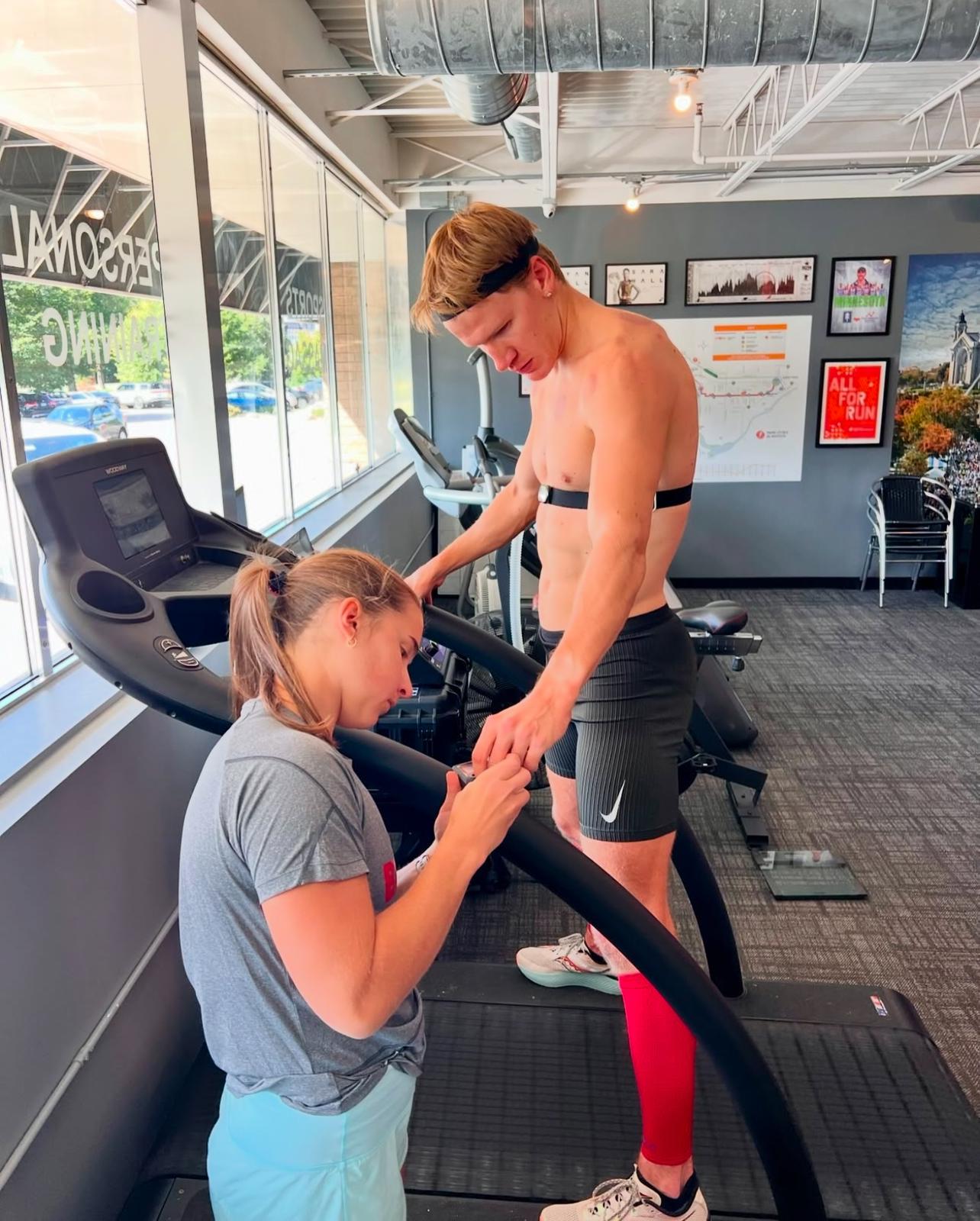
    Ketterson’s wife, Julie Ensrud, assists him with lactate testing during a treadmill session. (Photo: Zak Ketterson)

    Choosing a Place That Could Hold the Work

    For American skiers, Europe is often something you pass through. For Ketterson, Norway eventually became something else.

    Julie’s family lived outside Oslo, close to training venues and the airport. There was also a cabin — quiet, familiar.

    “It works out super well,” Ketterson said. “I can just get these three- or four-day stints at the cabin and unpack my bag and feel really at home.”

    Most American skiers live out of their bags.

    “There are a lot of Americans who just live out of their bag and are constantly in hotels,” he said.

    In Norway, life slowed just enough for training to accumulate rather than reset.

    “They’re super into skiing,” Ketterson said of Julie’s family. “Her brother skied competitively growing up.”

    Her father, especially, was absorbed by the details.

    “He’s so into ski waxing and the nitty-gritty stuff,” Ketterson said.

    The support wasn’t motivational. It was stabilizing.

    “They’ve sort of adopted me,” he said. “Like, how can we support him?”

    Norway wasn’t the breakthrough. It was the ground beneath it.

    USA I takes the win in a rare World Cup 4 x 5 k mixed relay in 2022. From left to right, Scott Patterson, Rosie Brennan, Zak Ketterson, and Jessie Diggins. (Photo: NordicFocus)

    Nothing Fancy, Just Better

    With stability in place, the training changed.

    “I started working with a coach in Oslo,” Ketterson said.

    The relationship was loose.

    “He created the framework,” Ketterson said. “But I was still writing probably 90 percent of my training.”

    The biggest change was subtraction.

    “I used to do strength twice a week, sometimes even three times a week,” he said. “Now it was basically once every ten days.”

    The logic was blunt.

    “If you want to get better at double pulling,” he said, “you just need to double pull more.”

    He replaced strength with ski-specific work. Fitness became the priority.

    His training rhythm flattened.

    “My training became much more consistent,” he said. “Every week was pretty similar.”

    No dramatic rest weeks. No spikes. Stress accumulated steadily.

    He returned to the same hills. The same treadmill sessions.

    “If something feels way worse than the last six times,” he said, “then you know you need rest.”

    Zak Ketterson logs some roller-ski hours in Minneapolis with Team Birkie. (Photo: Instagram @zaketterson)

    Toppidrettsveka

    Late in August, Ketterson lined up at Toppidrettsveka, Norway’s popular roller-ski stage race.

    “I was expecting to be absolute middle of the pack,” he said.

    Instead, he stayed with the leaders.

    “From the first race — a mass start 50k — I was fighting for the win,” he said.

    Three years earlier, he had been dropped halfway.

    “That was one of those moments where it’s like, wow,” he said. “This is a really big difference from anything I’ve felt before.”

    Across stages, the pattern held.

    “That gave me a lot of confidence,” he said. “Like, okay — what we’re doing is really working.”

    Still, he waited.


    The Ultimatum

    By autumn, the feeling hadn’t faded.

    “I told Julie that this had been by far my best off-season ever,” Ketterson said.

    Then came honesty.

    “I told her that if I’m not good this year,” he said, “or if I don’t make a really big jump, then I kind of want to retire.”

    It wasn’t dramatic. It was diagnostic.

    “If this doesn’t work,” he said, “then I don’t know anything about training.”

    Zak Ketterson (USA) and Friedrich Moch (GER) (l-r) lapping through the stadium during the Men’s 20 k Mass Start Freestyle in Ruka, Finland, at the beginning of the 2025/2026 season. (Photo: Modica/NordicFocus)

    Ruka

    Ketterson finished 14th in the World Cup opener in Ruka.

    “I was crying in the finish,” he said.

    Not from disappointment.

    “It was such an emotional rush,” he said. “All the work that I’d put in, and that my wife had supported — it finally got some validation.”

    For the first time since college, the feeling matched the effort.

    The season didn’t spike. It held.

    “For the first time,” he said, “regardless of whether it’s a sprint or a distance race, I feel like I can compete that day.”

    Zak Ketterson (USA) racing on the Olympic Sprint Course in Val di Fiemme, Italy, during the 2026 Tour de Ski last month.  (Photo: Vanzetta/NordicFocus)

    Arrival Without a Finish Line

    Ketterson will start his first Olympic race just days from now — older than most of his teammates, newer to the stage, and unusually calm.

    “I’m just treating it like any other race,” he said.

    There is no demand for the outcome. Only execution.

    “What would haunt me,” he said, “is doing something that was within my power not to do.”

    So he will race. He will pace. He will pay attention.

    The long way in has given him that luxury.


    Help Support Our Olympic Coverage!

    FasterSkier has our own Nat Herz on the ground at the Olympics, which is a significant financial lift for us. If you value the thoughtful work and access FasterSkier provides at championships like this one, please consider becoming a Voluntary Subscriber. Your support directly fuels our work to cover the people, places, and moments that make our sport special.

    Join the FasterSkier community!


    Ketterson with family at the Minnesota State Fair. (Photo: Zak Ketterson)
  • Eli Brown – The Ski Caddy

    Eli Brown – The Ski Caddy

    This article was made possible through the generous support of our voluntary subscribers. If you value coverage like this, please support FasterSkier with a voluntary subscription.

    Waxing Julia Kern’s skis in Toblach New Years 2026. (Photo: Courtesy Photo)

    On race mornings, when the athletes are still quiet, and the stadium hasn’t yet decided what kind of day it wants to be, Eli Brown is already working through choices that won’t appear anywhere in the results sheet.

    Brown is a technician for the U.S. Cross-Country Ski Team, a job title that undersells the reality of what he does. He manages ski fleets that can swell to dozens of pairs for each athlete, interprets snow that changes by the hour, balances structure, flex, base material, and wax, and does it all while standing between an athlete’s confidence and the unforgiving arithmetic of international racing. He describes the role with a metaphor that is so perfect and precise.

    “It’s kind of like being a golf caddy,” Brown said. “You’re advising. You’re coaching. You’re listening. There’s some sports psychology in there. And at the end of the day, it’s teamwork.”

    The difference, of course, is speed. Brown’s athletes are making decisions at speeds that at times surpass fifty kilometers an hour, on snow that doesn’t care how good yesterday felt. His job is to make sure they don’t have to think about their skis at all.

    This week, as the U.S. team arrives in Val di Fiemme for the 2026 Olympic Games, Brown is heading into his third Olympics as a full-time national team technician. He works primarily with Julia Kern and Ben Ogden, two athletes who could hardly be more different in how they move through the sport — or through their skis.

    What ties them together is Brown’s ability to translate snow into something usable and pressure into something manageable.

    The Mora (Minnesota) Vasaloppet in 1983. (Photo: Courtesy Photo)

    Before the Truck

    Brown didn’t arrive in the U.S. Ski Team wax truck by accident, or through a single decisive turn. He arrived there by staying in the sport long enough to see it from nearly every angle.

    He grew up outside Minneapolis, where skiing was part of the landscape rather than a specialization. From there, he headed north to Northern Michigan University, spending time embedded in one of the country’s most storied distance programs. He raced, trained, and lived the rhythms of high-level skiing there, even if the academic endpoint never quite aligned. The years mattered anyway.

    After Northern, Brown continued racing at a high level, lining up on the SuperTour with the Maine Winter Sports Center. Those seasons placed him squarely inside the domestic pipeline, moving between venues, teams, and support systems that most fans never see. It was an education in how competitive skiing actually functions in the United States — who does what, who makes decisions, and how outcomes are shaped long before race day.

    Coaching followed. Brown took over as head coach at the University of Utah, a role that asked him to shift from personal performance to collective responsibility. Coaching meant planning seasons, managing personalities, and learning how to communicate under pressure — skills that would later prove just as valuable off the racecourse as on it. It was also in Utah that he completed his degree, closing a chapter that had remained open since his time at Northern.

    His transition into technician work came gradually. After the 2014 Sochi Olympics, Brown began volunteering with the U.S. Ski Team as a tech, contributing where he could and learning how the national program operated from the inside. There was no formal on-ramp. He showed up, worked, and earned trust in the most durable way possible.

    Later that year, he became a full-time member of the U.S. Ski Team staff. He has remained in that role since, now heading into his third Olympic Games as a technician.

    That long, nonlinear path matters because it produced range. Brown understands athletes because he has been one. He understands coaches because he has been one. And he understands the demands of elite racing because he has lived alongside them for decades, in roles that rarely attract attention.

    By the time he steps into the wax truck now, Brown isn’t just a specialist. He’s a translator — carrying experience forward from each stage of his career and applying it quietly, in service of athletes who don’t have time to wonder how their skis came to be ready.

    Trailside support back in the 90’s. (Photo: Courtesy Photo)

    The Job Is Not the Ski

    Brown came up in an era when elite racers still did most of their own ski work. He’s part of what he calls “the last generation of full-time racers who maintained their own equipment,” a background that shapes how he approaches the modern technician’s role.

    Today, that role is far more layered than waxing alone. A tech has to understand how structure reduces suction in wet snow, how flex interacts with kick wax in classic skiing and changes contact on skate skiing, how base materials respond to temperature and moisture, and how all of that feels under an athlete who has preferences, moves differently, and skis faster than the tech ever will.

    “It’s complicated,” Brown said, describing how structure, grinds, and brands interact. “How it interacts with different brands and different grinds. Now we have to make sure that it interacts with our new grinds as we develop them, especially for race days in the games coming up.”

    The complexity has only increased in recent years. Product cycles are shorter. Wax formulations change constantly. “If you ask me what waxes we use,” Brown said, “it’s a combination of letters and numbers. From Swix or whoever. It’s always changing.”

    That instability has pushed the job away from recipes and toward judgment. Brown doesn’t describe himself as a scientist. He calls himself an artist.

    “I rely heavily on feel,” he said, contrasting his approach with colleagues who lean more on data. “There’s subjective testing, and that’s still really important.”

    The goal is simple, even if the path there isn’t: remove friction, remove doubt, and give the athlete skis they can trust without thinking.

    Julia Kern, Eli Brown, and Ben Ogden at the Planica World Championship. (Photo: Courtesy Photo)

    One Pair of Skis, Two Skiers

    Brown’s ability to individualize that trust is most obvious in the contrast between the two athletes he supports.

    “They’re such different athletes,” he said of Kern and Ogden. “And the way they ski, I think, is also different in the way that their ski brands are also different. So it’s hard to say there’s much crossover or similarity there.”

    Kern (Atomic) and Ogden (Madshus) race on different brands, which means separate quivers, separate development conversations, and separate ways of defining what “good” feels like. Over time, those preferences shape the skis themselves.

    “The quiver of skis develops kind of along with what the athlete wants,” Brown said. “Whether by effort or by chance.”

    For Brown, that means his own body becomes a tool — a reference point for athletes whose sensations he can’t fully replicate. In classic skiing, especially, the feedback loop is intimate and physical.

    “With Julia,” Brown said, “if I can feel the wax, then it’s good. And with Ben, I need to jump on those things and make them work. I need a hammer almost to keep up with him when he’s skiing easy.”

    Kern wants skis that give her clear feedback. Ogden wants skis that disappear under him.

    “She calls it the Eli Factor,” Brown said. “I ski in her skis a lot, and it’s like, yeah, she’ll like it if it feels a touch slow. And I question if it’s fast enough, then it’s perfect for her.”

    That calibration — knowing when “slow” is actually right — is the kind of knowledge that doesn’t show up in spreadsheets. It lives in repetition, in trust, and in the willingness to be wrong and adjust.

    Eli modeling the new Kappa kit inside the wax truck. (Photo: Courtesy Photo)

    Inside Yolanda

    The work happens inside a semi-truck the team calls Yolanda, a mobile workshop and nerve center that houses eight technicians during World Cup weekends and championships.

    “When you walk into Yolanda,” Brown said, “on the left, there’s Jason. He’s like the door security.”

    Jason Cork oversees Jesse Diggins’ skis and manages data. Across from him sits Chris Heckler, the team’s glide specialist, responsible for Gus Schumacher’s skis and for pushing development at the cutting edge. In the back corner is Oleg Ragilo, “a quiet boss from Estonia,” the head of kick wax and the truck’s mechanic. Tim Baucom, recently returned from retirement, handles hand structure. Bernie Nelson works with Jack Young and specializes in high-speed testing and emotional steadiness. Bjorn Heimdal and Per Erik Bjørnstad, both from northern Norway, bring decades of experience across glide and kick.

    “And then at table three,” Brown said, “it’s Bernie and me.”

    Everyone can wear any hat if needed, but the structure matters. Decisions are made by conversation, testing, and sometimes by vote. Kick wax choices are made by committee — “two out of three or three out of three votes advance skis” — a system designed to protect athletes from any single person’s blind spot.

    There’s humor inside the pressure. The team maintains a set of traveling trophies, passed around to mark gratitude, effort, or apology. It’s a way of acknowledging that success and failure are shared.

    “You’re on a roller coaster together,” Brown said. “The emotional roller coaster part.”

    Team Kern: Eli Brown, Julia Kern, and Kristen Bourne in Toblach. (Photo: Courtesy Photo)

    Relearning Speed

    The current era of ski preparation is defined by change. Products come and go. Environmental and health concerns have reshaped what’s allowed. Even trusted solutions can’t be trusted for long.

    “We’re on the cutting edge,” Brown said, “and it’s constantly changing.”

    That volatility has made high-speed testing more important than ever, especially in skate races where structure and glide decisions can hinge on how skis behave at race pace on the actual course. Hand structure tools, brand-specific grinds, and new base materials all interact in ways that don’t fully reveal themselves on paper.

    Brown sees his role as filtering that uncertainty before it reaches the athlete.

    “I don’t want them thinking about it,” he said. “I want them to just ski.”

    The Olympics compress all of that work. The venue in Val di Fiemme is familiar, but transformed by Olympic infrastructure. Warm weather looms as a wildcard. The margin for error narrows.

    Looking back on the Tour de Ski, Brown is candid about what he’d change. “I wish I’d given Julia slightly more kick,” he said. “Ben slightly less kick.”

    That kind of reflection isn’t self-flagellation. It’s the process.

    Eli and fiancé Colleen above snowy Predazzo days before the Olympics start. (Photo: Courtesy Photo)

    The Emotional Work

    If the technical demands are invisible, the emotional ones are even more so. A tech absorbs disappointment, so an athlete doesn’t have to. He steadies confidence when results wobble. He celebrates quietly when things click.

    Brown talks about success in broader terms than medals.

    “Gold is the goal,” he said. “But it’s also maintaining team relationships and health through an intense period.”

    That perspective extends beyond race results to the ecosystem around the sport. Brown worries about industry instability, about layoffs and shrinking budgets, about whether the work he and others do will continue to be supported.

    “We’re all one big community trying to do something special,” he said. “It’s my little cog in the machine.”

    Inside Yolanda, that belief takes practical form. Shared meals. Shared jokes. Shared responsibility when something goes wrong. The trophies circulate. The work continues.

    Skiing the 2025 Birkie with his dad, Elton Brown. (Photo: Courtesy Photo)

    What Happens When It Works

    When it works, there’s no single moment that announces it. No flag. No statistic. Just an athlete skiing freely, unencumbered by doubt.

    Brown watches from the side of the course or from inside the truck, reading body language, listening for feedback, and filing away information for the next decision. The skis disappear. The job is done.

    That’s the paradox of being a golf caddy or maybe more accurately a ski caddy: success means becoming invisible.

    For Eli Brown, that invisibility is the point.


    Help Support Our Olympic Coverage!

    FasterSkier will have our own Nat Herz on the ground at the Olympics, which, to be honest, is a very big financial lift for us. If you value the thoughtful work and access FasterSkier provides at championships like this one, please consider becoming a Voluntary Subscriber. Your support directly fuels the work we do to cover the people, places, and moments that make our sport special.

    Join the FasterSkier community!
     

    Eli and fiancé Colleen doing some pre Olympic cruising. (Photo: Courtesy Photo)
  • Hunter Wonders, Flying by Instrument

    Hunter Wonders, Flying by Instrument

    This article was made possible through the generous support of our voluntary subscribers.  If you value coverage like this, please support FasterSkier with a voluntary subscription.  

    Hunter Wonders (USA) racing the Skiathlon at the 2023 World Championships in Planica, Slovenia. (Photo: Modica/NordicFocus)

    When U.S. Ski & Snowboard released its roster for the 2026 Olympic Winter Games, Hunter Wonders’ name appeared without emphasis. No asterisk. No parenthetical explanation. Just another line in a list that had already absorbed months of speculation, anxiety, and arithmetic.

    To most readers, the name represented a straightforward outcome: an athlete peaking at the right moment, a season resolved by results. But the roster line masked a career that did not move in a single direction. Wonders’ path bent, paused, and restarted. At one point, it appeared to end entirely.

    Understanding how he arrived at the Olympics requires starting far from the Games themselves — in a place where progress is quiet, repetition matters more than recognition, and development happens long before it is visible.

    Hunter canoe racing with his dad in Michigan. (Photo: Courtesy Photo)

    Alaska, Not Michigan

    Hunter Wonders is sometimes misidentified as a Midwestern skier. His parents are from Michigan — his father from Grayling, his mother from Traverse City — and the family returned there most summers to visit grandparents. Wonders spent long stretches canoe racing in Michigan and maintaining close ties to extended family.

    But Alaska is home.

    “My parents were originally from Michigan… And yeah, they moved to Alaska. It was supposed to be like a two-year thing for my dad’s work,” Wonders said. “And he just knew, like, nope, we’re not going back. I’m staying here.”

    That decision happened decades before Wonders had any agency of his own. By the time he was born, Alaska was already permanent.

    “I’m definitely from Alaska and have lived there my whole life,” he said.

    In American cross-country skiing, place is not just a backdrop. It is infrastructure. Alaska exists at the edge of the domestic system — geographically distant from centralized camps, expensive to travel from, and easy to overlook. Athletes there develop without constant reference points, often without external validation.

    For Wonders, that isolation became formative.

    Hunter Wonders, Hailey Swirbul, and Chip Schoff (former APU skier and wax tech) on a multi-day hut trip. (Photo: Courtesy Photo)

    Alaska, Off the Circuit

    In Alaska, training is often solitary. Progress is built through lifestyle and repetition rather than comparison, and improvement is measured internally long before it is confirmed externally.

    The winters matter. So does the darkness. Training extends into hours when daylight is no longer guaranteed, when motivation cannot depend on atmosphere or audience. You go out because it’s how you choose to live and enjoy your life.

    That rhythm shaped Wonders’ relationship to skiing early. He did not grow up racing for recognition. He learned to train for alignment — the quiet sense that body, terrain, and effort were moving together. Alaska not only accelerated his trajectory. It birthed it.

    Hunter Wonders (APU/Alaska) takes the lead in the U16 Boys Mass Start Freestyle race at the US Junior National Championship in Stowe, Vermont in 2014. (Photo: Voisin/FasterSkier)

    A Childhood of Rotation

    Wonders grew up chasing his older siblings — twin brother and sister, five years ahead — through a constantly shifting landscape of sports. Alpine skiing. Motocross. Soccer. Ski jumping. Biathlon. Mountain biking.

    “Anytime I started getting into a sport, my family shifted away from that one,” he said.

    The pattern was not neglect, but necessity. Supporting multiple competitive sports for multiple children eventually became unsustainable.

    “My parents were like, all right, we can’t do all this stuff. We gotta limit it. And they chose to Nordic ski. And so naturally, I was kind of dragged into that scene.”

    Nordic skiing, at least initially, was not a calling. It was what remained once the family consolidated its energy.

    Wonders’ first encounter with skis reflects that informality.

    “It was my dad playing with me on my back deck in 2001. And I’m not really skiing that much, but that was kind of my first encounter with it.”

    There was no mythology attached to that moment. No sense of destiny. Skiing entered his life as play, then habit, then gradually — almost without announcement — as a central structure.

    Hunter Wonders (APU/Alaska) winning the U16 Boys Mass Start Freestyle race at the 2014 US Junior National Championship in Stowe, Vermont. (Photo: Voisin/FasterSkier)

    Stowe, Vermont

    The first moment when that structure revealed competitive meaning came far from Alaska.

    Wonders qualified for Junior Nationals in Stowe, Vermont, in 2014. He did so narrowly, selected as the fifth or sixth skier on Team Alaska.

    “I barely made Team Alaska. But it was a big goal for me as a U16,” he said.

    What followed surprised nearly everyone, including Wonders himself.

    “And just out of nowhere, I ended up getting a second place in the individual start race and first place in the mass start. And that was just like, whoa, where did that come from?”

    The results did not instantly rewrite his trajectory. But they altered his internal calculus.

    “I think it kind of clicked for me that, okay, I can do this. I can be competitive.”

    The significance of that realization was not the result itself, but permission. Permission to imagine a longer horizon.

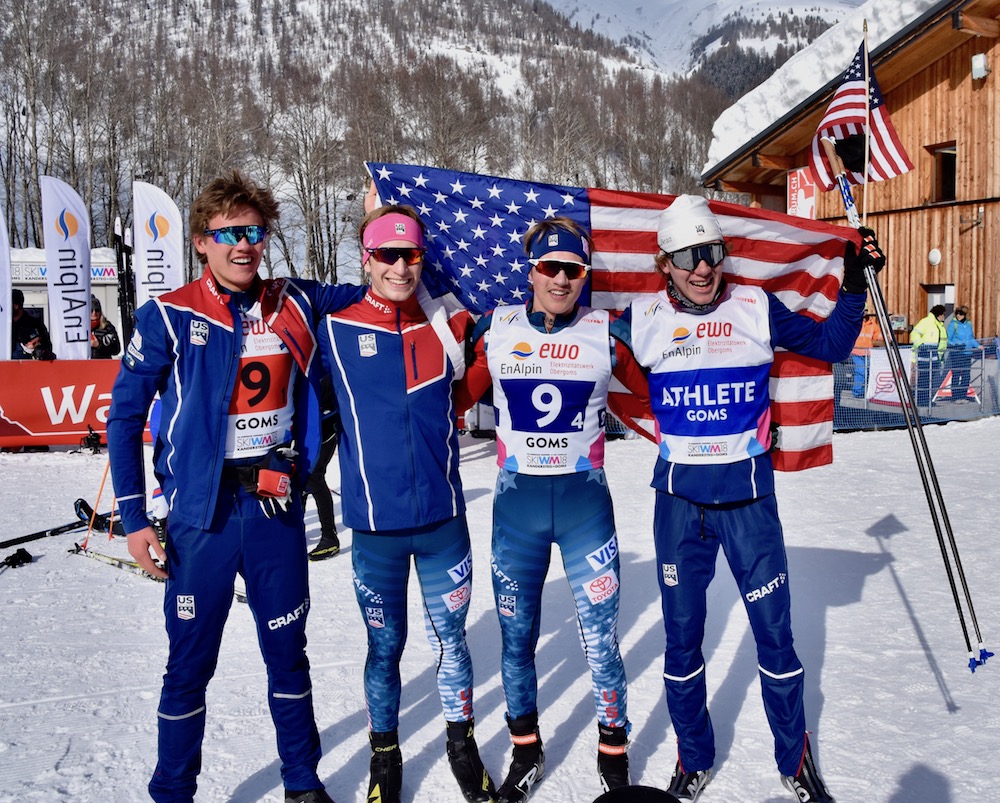
    The U.S. men’s silver-medal relay at the 2018 Junior World Championships in Goms, Switzerland, with (from left to right) Luke Jager, Hunter Wonders, Gus Schumacher, and Ben Ogden. (Photo: Julia Kern)

    The Long Middle Begins

    What followed was not a rapid ascent, but a prolonged middle years defined by steady development, incremental gains, and results that suggested promise without announcing arrival.

    On the World Cup, Wonders often raced from the margins. Finishes in the 50s and 60s gave way slowly to finishes in the 30s. The progress was real, but it did not demand attention.

    In American men’s skiing, where depth is both strength and complication, that middle can be unforgiving. Selection is rarely guaranteed. Criteria shift. Opportunity compresses.

    Wonders responded the way he had learned to respond in Alaska: by focusing inward. Training remained central.

    “For me, training has always been kind of the fun part… The training and living that lifestyle is really, really big to me.”

    That orientation would become essential later — when the question was no longer how to improve, but whether improvement was still worth pursuing.

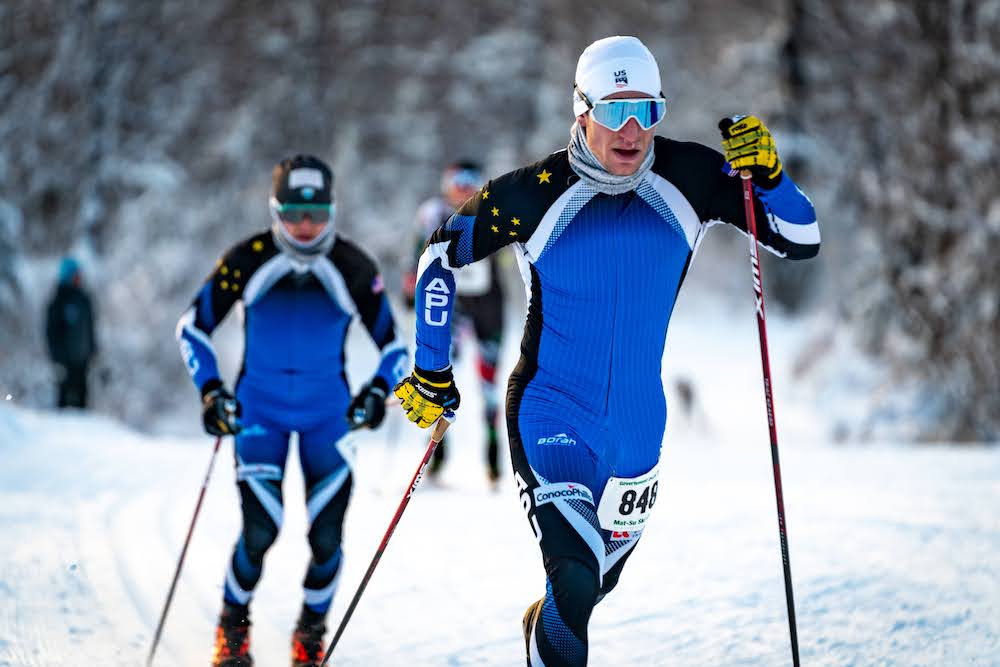
    Hunter Wonders races at Government Peak Recreation Area, Palmer, Alaska, Nov. 14, 2021, in the season-opening Race to the Outhouse #1. (photo: Eric Strabel for APUNSC)

    APU and Staying Put

    Alaska Pacific University provided continuity during those years. It was neither a junior factory nor a national-team satellite. Its athletes often arrived through unconventional paths and stayed longer than expected.

    For Wonders, APU offered stability without stagnation. Coaching relationships endured. Autonomy was preserved. Expectations were internal before they were external.

    Progress was allowed to be slow.

    That patience would later prove critical — because when Wonders eventually left the sport, and then considered returning, there was no system to rebuild, no trust to reestablish. The ground remained where he had left it.

    Hunter Wonders (USA) on his way to 16th place in the 10 k Classic in Beitostolen, Norway in 2022. (Photo: NordicFocus)

    Proof, Finally

    The breakthrough season arrived quietly, without spectacle or announcement.

    During the 2022–23 World Cup season, Wonders recorded the strongest international results of his career: a 16th-place finish in Beitostølen, Norway an 11th-place finish in Oberstdorf, Germany and a 23rd-place finish at Holmenkollen. The trajectory was unmistakable, even if it did not demand attention.

    “For me, that was a big jump from spending my time in the 50s, 60s,” he said.

    The significance of those results was not external. They did not alter his standing overnight or change how the sport viewed him. Their impact was internal.

    “It felt good. To prove to myself that I could ski with some of the best out there.”

    For years, that belief had existed as conviction rather than certainty. Now it had evidence. The question of whether he belonged — the one that had quietly governed training blocks, selections, and seasons — no longer needed answering.

    What remained was not ambition, but choice.

    Hunter Wonders (USA) on his way to 23rd place in the Holmenkollen 50 k Freestyle in Oslo, Norway in 2023. (Photo: Modica/NordicFocus)

    Leaving Without Collapse

    Retirement in endurance sport is often framed as inevitable. Bodies fail. Results decline. Motivation erodes. The decision arrives trailing visible causes.

    Hunter Wonders’ retirement did not follow that pattern.

    When he stepped away from World Cup racing in the spring of 2023, his career was not unraveling. It was consolidating. The season behind him had not forced his hand; it had freed it.

    “My planned last World Cup… it was right after a really good season for me,” he said.

    The timing mattered. He was not leaving with questions unanswered. He was leaving with a sense of completion.

    For a long time, Wonders had believed he could compete at that level. Now he knew it. And that knowledge altered the logic of staying.

    With the central doubt resolved, the future opened in unexpected ways. Instead of sharpening ambition, success created space to consider what life beyond skiing might look like, and whether the cost of continuing still made sense.

    “I thought I was content. I thought I was, you know… ready to move on.”

    The decision was not driven by exhaustion or dissatisfaction. It was driven by certainty — and by the rare freedom that certainty can bring.

    Crust ski in the spring time (Wonders’ all time favorite form of skiing). (Photo: Courtesy Photo)

    What It Means to Leave While Improving

    Leaving while things are going well carries a specific psychological weight. There is no obvious decline to explain the decision. No external force to blame. The athlete leaves not because the door is closing, but because it remains open.

    Improvement, once experienced, does not fade quietly. The body remembers what alignment feels like — when training, racing, and confidence converge. Walking away at that moment does not resolve ambition; it suspends it.

    Wonders framed his retirement as closure. But closure in elite sport is rarely permanent. The unanswered questions tend to return first, often in subtler forms.

    In his case, the unresolved question was not whether he could ski at the highest level. That had been answered. The question was whether he wanted to continue building a life that revolved so completely around it.

    From Seasons to Paychecks

    After stepping away, Wonders entered a different rhythm entirely.

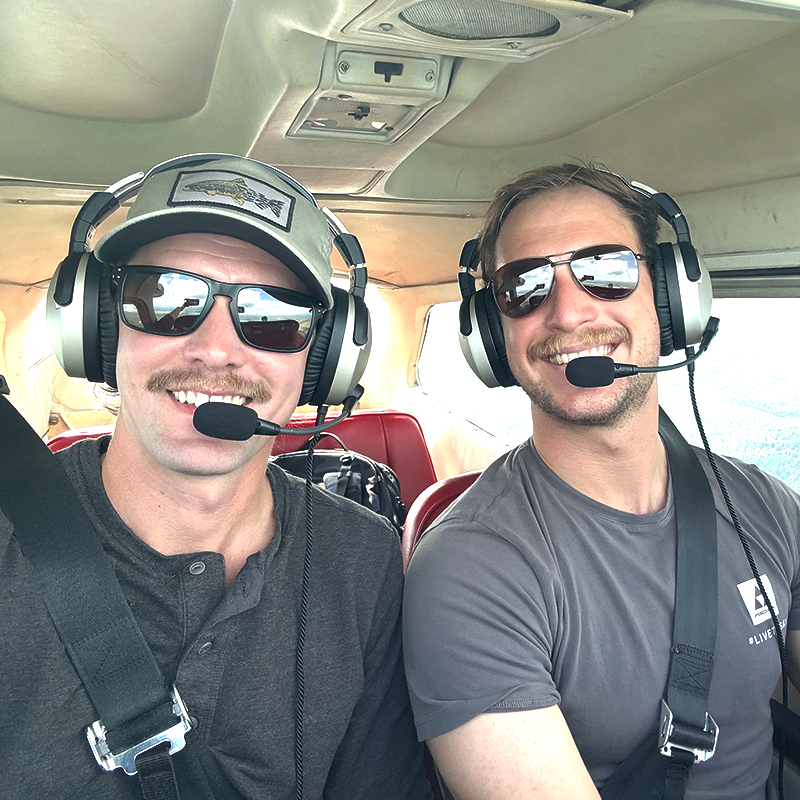
    “That whole following summer, I worked construction, learned a lot of new skills. That’s when I got my pilot’s license.”

    The change was not symbolic. It was practical. Construction offered tangible progress — work that produced visible results and predictable compensation.

    “Even when skiing was going well, I just wanted to get out of it and work a normal job, get the normal paycheck, things like that.”

    The appeal of normalcy was not rooted in dissatisfaction with skiing. It was rooted in adulthood. After years of living season to season, the idea of stability carried weight.

    At the same time, Wonders had recently completed his degree at Alaska Pacific University.

    “I graduated with a bachelor’s in business administration,” he said.

    What followed was a transition many elite athletes experience but rarely articulate.

    “I found a really hard transition when I graduated from being a student athlete to just an athlete. I felt like I wasn’t progressing elsewhere in life. And that was pretty hard for me.”

    Without coursework, semesters, or academic milestones, skiing existed in isolation. Progress on snow no longer corresponded to progress in life. The imbalance unsettled him.

    The Second Discipline

    Aviation entered that gap not as a hobby, but as a parallel discipline.

    “I have my pilot’s license now, and I’ve been working on my instrument rating,” Wonders said.

    He described the training with precision.

    “Being able to fly only using what’s on the dashboard of the plane. Basically, no looking outside the plane.”

    Instrument flight is unforgiving. It demands trust in systems over instinct, procedure over perception. For Wonders, it offered a structure that mirrored elite sport without duplicating it.

    “It’s been giving me something to work on outside of skiing, which has been really nice.”

    More importantly, it offered psychological margin.

    “It’s a very important thing for me, I think, to not feel trapped.”

    The word matters. Trapped implies more than fatigue or burnout. It implies a loss of agency — the sense that leaving would erase identity rather than expand it.

    Aviation gave Wonders a way to be committed to skiing without being consumed by it.

    A Life That Almost Fit

    For a time, the other life worked.

    Construction days were long and direct. Progress was visible. Paychecks arrived on schedule. Flight training offered complexity, mastery, and forward motion.

    The pace was different. The stakes were different. The feedback was immediate.

    Skiing receded into the background — not as a regret, but as a completed chapter.

    Yet even in that distance, the sport did not disappear entirely. It remained embedded in routine, in memory, in the body’s sense of what effort felt like.

    Wonders did not describe missing racing. He described missing the calendar.

    In November of 2022 Hunter Wonders (USA) was on his way to 30th place at the opening World Cup weekend in Ruka, Finland, but a year later he was home in Alaska. (Photo: NordicFocus)

    November

    “When everyone started peacing out to go race, I was like, man, what am I doing?”

    November arrived the way it always does in elite skiing — as a turning point. Training blocks gave way to travel. Preparation became exposure.

    For athletes still inside the system, November is movement. For those who have stepped away, it is absence.

    The routines disappear first. Then the shared language. Eventually, the calendar itself feels unfamiliar.

    Wonders’ realization was not emotional. It was logistical.

    “I can always be installing insulation in some random house someday, but I can’t be skiing forever.”

    November clarified something Wonders had not fully confronted while working construction or studying flight manuals: skiing was not just a job he had left. It was a window with an expiration date.

    The question was no longer whether another life was possible. That had been answered. The question was whether he was prepared to let the skiing life close while it remained viable.

    APU Head Coach Erik Flora, Chip Schoff, and Oscar Flora after getting the PistenBully running on Eagle Glacier last spring. (Photo: Courtesy Photo)

    The Conversation That Changed the Direction

    Wonders began talking again with his APU coach, Erik Flora. The conversations were not urgent.

    “He was very enthusiastic about my getting back into skiing. And so that just made that step a little easier.”

    There was no pressure to return immediately. No demand for proof. The space remained open.

    What followed was not an impulsive comeback, but a deliberate reconstruction.

    Fishing trip on the Gulkana river this last September with close friends. (Photo: Courtesy Photo)

    A Three-Year Calendar

    Rather than simply resuming his previous life, Wonders built a framework designed to prevent the same tension from reemerging.

    “I just planned out this three-year calendar kind of to right now,” he said.

    The calendar was not about training volume or race targets.

    “I blocked off weeks that I was like, okay, these chunks of time, I’m not going to be thinking about ski racing.”

    Those blocks were non-negotiable.

    Moose hunting with his father and brother. Fishing weekends on the Kenai Peninsula. Commitments that anchored him to a life beyond snow.

    “There are certain things I was willing to give up and certain things I wasn’t.”

    The decision to return was conditional. Skiing would be central again, but not all-consuming.

    Moose hunting camp with his dad and brother in interior Alaska. (Photo: Courtesy Photo)

    The Return, Without Announcement

    When Hunter Wonders returned to full-time racing, there was no formal reintroduction. No narrative reset. No expectation that the sport should receive him differently than it had before.

    He did not return as a project. He returned as a person who had already tested the alternative.

    The first season back was uneven by his own account — fitness arriving in pieces, rhythm coming and going — but the framework held. The calendar he had built remained intact. The boundaries were not abandoned under pressure.

    “Coming back from retirement wasn’t the easiest. Not… not the most productive thing,” he said.

    The difference this time was not performance. It was posture. He no longer treated each result as a referendum on identity. He had already stepped outside the system once and learned what waited there.

    That knowledge altered how he handled uncertainty.

    Hunter Wonders (USA) during the 10 k Freestyle in Les Rousses, France of January of 2025. (Photo: Authamayou/NordicFocus)

    Progress Without Urgency

    As the return season unfolded, improvement came incrementally — the way it always had for Wonders. There was no single race that announced transformation. Instead, there was accumulation: training blocks completed, races absorbed, effort normalized.

    The quiet confidence that had once been provisional now appeared settled. Racing no longer felt like a test of belonging. It felt like execution.

    That distinction matters in Olympic years, when urgency can distort judgment. Athletes often feel pressure to force form, to manufacture moments that prove readiness. Wonders did not describe that impulse. He described a narrowing focus.

    “I really tried to narrow the focus. And limit some distractions in the last year. I just wanted to go all in.”

    The phrase carried none of its earlier desperation. “All in” now meant presence rather than sacrifice — committing fully to skiing while refusing to let it consume everything else.

    Hunter Wonders (#369 – APU) on his way to winning the opening race, a 10 k Individual Start Classic, at the US National Championships in Lake Placid, New York, at the beginning of January. (Photo: Nancie Battaglia)

    The Olympic Winter, Reframed

    Olympic selection seasons tend to magnify everything. Results are scrutinized more closely. Criteria are parsed more aggressively. Small margins carry exaggerated meaning.

    For athletes who have never stepped outside the system, that pressure can feel total. For Wonders, it did not.

    He had already lived the other version of his life — the one with construction hours, flight manuals, and normal paychecks. He knew that version was viable. He also knew it was incomplete.

    That knowledge changed how the Olympic Winter Games landed.

    The selection process did not define him. It tested him.

    Hunter Wonders (USA) racing the 10 k Classic in Oberhof, Germany on the final weekend of racing that was considered for making the US Olympic Team. (Photo: Authamayou/NordicFocus)

    Selection as Consequence

    When the Olympic team was named, Wonders’ response did not resemble arrival. It resembled recognition.

    “My parents are coming over. I’m very excited about that,” he said.

    Their presence mattered more than the announcement itself.

    “Regardless of whether I made the Olympics or not, they were going to be supportive and proud.”

    That certainty allowed the moment to settle without drama.

    Still, the meaning was clear.

    “To me, making the Olympics is kind of like paying them back… like, I finally made it.”

    The phrasing was not triumphant. It was relational. The Olympics were not framed as destiny fulfilled, but as acknowledgment earned — proof that the years of logistics, travel, and patience had resolved into something concrete.

    Hunter Wonders (USA) during the 20 k Classic Mass Start in Goms, Switzerland, the weekend after he had been named to the US Olympic Team. (Photo: Authamayou/NordicFocus)

    After the Goal

    The days after selection often reveal more than the selection itself. For many athletes, the achievement creates a vacuum. The central question disappears, replaced by a quieter one: Now what?

    Wonders articulated that shift immediately.

    “Now it’s hard. I’ve been kind of thinking about now, what are my goals going forward?”

    Qualification had resolved the season’s largest uncertainty. It also removed the shelter of pursuit.

    “I don’t want to look like a bum at the Olympics… that’s not why I came here.”

    The bluntness mattered. Making the team had never been the end of the story. It was a threshold — one that demanded a different kind of clarity.

    Wonders taking his friend, who’s also a pilot, on a flight while he visits Alaska. (Photo: Courtesy Photo)

    Flying by Instruments

    The metaphor that runs quietly through Wonders’ story — though he never names it as such — is aviation.

    “Being able to fly only using what’s on the dashboard of the plane,” he said, describing his instrument rating.

    Instrument flight requires a specific discipline. When visibility disappears, instinct becomes unreliable. The pilot must trust systems rather than sensation, training rather than impulse.

    That discipline mirrors the way Wonders has navigated his return. He has learned not to chase feelings — not to react to noise — but to trust the structures he has built.

    In an Olympic year defined by margins, criteria, and scrutiny, that trust is rare.

    When these two embrace each other next, they will have gone from this first ski on the back deck all the way to the Olympics. (Photo: Courtesy Photo)

    A Different Kind of Olympic Story

    Hunter Wonders will arrive at the Olympic Games as a first-time Olympian. He will not arrive as someone who chased the Olympics at all costs.

    He has already lived the alternative. He knows what it means to step away, to build another life, to find meaning beyond the sport. That knowledge changes how the Olympics function in his story.

    The arc matters because it resists simplification. It does not fit neatly into the narratives elite sport prefers — prodigy, burnout, comeback. It occupies a quieter space: adulthood.

    Wonders did not return because he had nothing else. He returned because he chose skiing again — deliberately, with boundaries intact, with the instruments checked and trusted.

    In endurance sport, where careers are often defined by urgency and fear of loss, that choice may be the rarest qualification of all.


    Help Support Our Olympic Coverage!

    FasterSkier will have our own Nat Herz on the ground at the Olympics, which, to be honest, is a very big financial lift for us. If you value the thoughtful work and access FasterSkier provides at championships like this one, please consider becoming a Voluntary Subscriber. Your support directly fuels the work we do to cover the people, places, and moments that make our sport special.

    Join the FasterSkier community!


    If Hunter Wonders (#302) earns an Olympic start this February, hopefully, it will be a little less chaotic than the start of the US Junior National Championship in Stowe, Vermont, in 2014. (Photo: Voisin/FasterSkier)
  • Lauren Jortberg and the Long Way Around to the Olympics

    Lauren Jortberg and the Long Way Around to the Olympics

    This article was made possible through the generous support of our voluntary subscribers.  If you value coverage like this, please support FasterSkier with a voluntary subscription.  

    By the time Lauren Jortberg made the U.S. Olympic Cross-Country Ski Team, the achievement arrived not as a burst of disbelief or relief, but as something quieter and stranger: a moment that required processing.

    “It is a lot to take in,” she said, speaking from Seefeld, Austria in the middle of a pre-Olympic training block. “It’s been a big goal. But it’s one of those big goals that I’ve tried not to think about too much and just really focus on being my best self.”

    The phrasing matters. Jortberg did not describe the Olympics as a finish line or a culmination. She spoke about it as something she had to learn how to hold — something earned, yes, but also something that could overwhelm if mishandled. “Now,” she said, “I’m trying to put aside the completion of the goal and really focus on performing. And performing really well.”

    That distinction — between achievement and performance, between arrival and presence — has come to define her career. It is also the reason her story resists easy telling. Jortberg was not a prodigy. She was not a junior star. She did not dominate early or move cleanly through the system. She took the long way around.

    The Long Way Around

    Jortberg grew up in Boulder, Colorado, a town dense with endurance athletes and outdoor ambition. “I’m super fortunate to have been born and raised in Boulder,” she said. “It has one of the highest percentages of Olympians for cycling and running.”

    Her parents were athletic — her mother was a professional runner, her father competed in multiple sports — and movement was woven into daily life. There was mountain biking, trail running, hiking, time spent at a family place in Winter Park. But skiing, she noted, was not central to Boulder’s identity. “If you’re familiar with Boulder, it’s not really a winter place. We had to work hard to get to snow.”

    Her earliest athletic identity was split. She loved soccer deeply and still wonders what might have happened had she stayed with it. “I do kind of wonder what I could have done if I had pursued soccer,” she said. Her father spent hours training with her, and she took pride in improvement more than outcome.

    The turn toward skiing came, in part, through her older sister — six years ahead, a steady presence, someone to chase. When her sister tore her ACL playing soccer and pivoted fully to skiing, Jortberg followed. “I really looked up to my sister,” she said. “She went to U18 Scandinavian Cup, Junior Nationals, skied at the University of Denver. Seeing her do all these cool things with skiing really felt like, well, I can do that.”

    But progression was slow. In high school, Jortberg struggled. She did not make Junior Nationals her first year — a moment she still remembers clearly. “I was devastated,” she said. “It was one of the first big adversities in my career.”

    She never cracked the top ten at Junior Nationals until she was a U20. “I had a lot of 11th places,” she said. “I could never crack that top ten.”

    It is difficult, in hindsight, to overstate how thoroughly unremarkable her junior results were by Olympic standards. This is not revisionism; it is the point. There was no obvious through-line, no early validation to cling to.

    After high school, she took a gap year at Stratton Mountain School. It did not go smoothly. She fractured her arm in a parking lot crash. The season was disrupted. Progress stalled again.

    What she had, instead, was a willingness to stay.

    Dartmouth and the Work of Becoming

    At Dartmouth, something shifted. Not overnight, and not magically — but structurally.

    “I think it was a big surprise starting at Dartmouth,” Jortberg said, “the level I was at and the level the team was at.” She majored in environmental science and found herself inside a women’s program that emphasized individual growth within collective intensity.

    Under coach Cami Thompson Graves, the team culture was demanding but non-coercive. “She’s really amazing at coaching athletes to really know what is good for them,” Jortberg said. “She’s incredibly good at getting athletes to become very independent with an amazing team culture.”

    The women’s team was deep, competitive, and internally driven. “We were going one through five, or one to four, five, eight, ten,” she said. “It was insane.” NCAA spots were scarce; no one could coast.

    Crucially, Dartmouth supported international racing alongside collegiate commitments. Jortberg went to World Juniors, U23s, OPA Cups — sometimes twice in a season. “Having that support was super helpful,” she said. “Not just to perform in a green suit, but to perform later on.”

    For the first time, development felt cumulative.

    The women’s final of the 2021 Keys to the Castle rollerski sprint in Lake Placid, NY. From left to right, Lauren Jortberg (BSF Pro), Julia Kern (SMS T2/USST), Jessie Diggins (SMS T2/USST), Alayna Sonnesyn (SMS T2). (Photo: Reese Brown RDB Marketing)

    The Bubble Years

    Post-collegiately, Jortberg entered what many American skiers know intimately: the bubble.

    She moved through programs, spent time with Bridger Ski Foundation Pro and later SMS T2, and began working with coach Perry Thomas. She earned World Cup starts, lost them, re-earned them. Progress was intermittent. Confidence, fragile.

    “It was a lot of back and forth,” Thomas said. “Getting starts and not getting starts. Proving herself again in the U.S. and then getting those World Cup starts again.”

    Thomas had recruited Jortberg as one of his first athletes when he began coaching at the professional level. Their early years together were not seamless. “Our first year together, there was a lot of figuring things out,” he said. “There were ups and downs.”

    What mattered was not immediate success but shared patience. “We were both willing to make it work,” Thomas said. “And work through difficulty together.”

    During this period, Jortberg made a deliberate choice that would shape the rest of her career: she doubled down.

    Lauren Jortberg (USA) training in Tignes, France, last June. (Photo: Authamayou/NordicFocus)

    Choosing One Thing

    Sprinting had always been her strength — particularly skate sprinting. Classic sprinting lagged behind. Rather than attempting to become broadly better at everything, Jortberg and Thomas made a narrower decision.

    “Let’s spend one day a week, every week, for an entire summer and fall, working on classic skiing,” Thomas said. “Double pole. Thirty to sixty minutes. Just consistently.”

    It was not glamorous work. It was not optimized for social media or immediate payoff. But Jortberg committed fully. “She was like, ‘Hell yeah, let’s do this,’” Thomas said.

    Even when they were no longer formally affiliated with the same team, she continued the work remotely. “She continued that work on her own,” he said. “From afar.”

    At the same time, something else was happening — something less visible.

    Lauren Jortberg (USA) during the qualification of the World Cup Individual Skate Sprint in Oberhof, Germany, two weeks ago. (Photo: Authamayou/NordicFocus)


    The Mental Turn

    Jortberg began working seriously with a sports psychologist. She and Thomas independently immersed themselves in books, podcasts, and writing about mental performance. They traded recommendations. They talked openly about processing failure.

    “I don’t care how pretty your technique is,” Thomas said. “If you don’t have control over the on-off switch in your brain, you’re not going to get to the line fastest.”

    What Thomas noticed later, during Period 1 Super Tour in Alaska, was a change. “That was a different Lauren than even a year ago,” he said. “In such a good way.”

    Jortberg describes it less as a breakthrough than a reframing. “Everyone is going to have setbacks,” she said. “It’s about how you respond. Chipping away little by little. Not letting setbacks impact how you see yourself.”

    She learned to loosen her grip on outcomes. “Often when we think things have to happen a certain way,” she said, “that’s when they don’t.”

    Lauren Jortberg with boyfriend Antoine Cyr (CAN). (Photo: Courtesy Photo)

    Two Places at Once

    In the fall, Jortberg moved to the Mount Sainte-Anne area of Quebec. The decision was partly personal — she is dating Canadian skier Antoine Cyr — but also practical.

    She began training at the Pierre Harvey Training Centre, known for its demanding terrain and extensive roller-ski infrastructure. “The terrain is really hard,” she said. “I think it’s been awesome for intensity. Especially my classic skiing.”

    Her coaching arrangement became hybrid: remote communication with Thomas, daily training in Quebec. “We text pretty much every day,” Thomas said. “Or we’re on the phone.”

    Jortberg chose not to maintain two residences. “That’s just not something that financially would be feasible,” she said. More importantly, she valued stability. “I really prioritize my personal life. That’s what allows me to perform at the highest level.”

    It is an unromantic truth of elite skiing: stability is performance.


    Alaska and Leadership

    When Jortberg declined early World Cup starts to focus on Super Tour and U.S. Nationals, she rejoined Coach Thomas and the rest of the Mansfield Nordic Pro team in Alaska. What stood out was not just her skiing.

    “I was so impressed with her as a leader,” Thomas said. “We used her a ton in team meetings. Tactics. Pacing. Course preview.”

    After Alaska, the decision to formally add her back to the team was unanimous. “It was an easy decision,” Thomas said. “She just wanted to be part of the team and demonstrated awesome leadership.”

    Kendall Kramer, Samantha Smith, Lauren Jortberg, and Julia Kern (l-r) will join Jessie Diggins, Rosie Brennan, Novie McCabe, and Hailey Swirbul to represent the United States in Val di Fiemme, Italy, from Feb. 6–22, 2026. (Photo: Authamayou/NordicFocus)

    Not Jaded

    Jortberg will arrive at her first Olympics as one of three women on the U.S. team making their Olympic debut. She sees that as an asset.

    “I want to bring non-jaded energy,” she said. “Just that first-time excitement.”

    She wants to be present — not consumed by outcome. “I want to look back and be grateful that I was even there,” she said. “And really appreciate the experience.”

    It is not a rejection of ambition. It is a different relationship to it.

    Forward

    Jortberg plans to continue racing. She hopes for 2030, in the French Alps — a place she loves, a skate sprint on a stage that suits her. She is considering an online master’s program in sustainability and renewable energy, thinking carefully about how to prepare for the life that will follow skiing without rushing herself toward it. For the first time in her career, she feels no urgency to escape the present.

    “I feel the most stable I’ve ever felt in my career,” she said. “And it’s showing.”

    Stability, for Jortberg, has never been accidental. It is something she built deliberately, after years of motion without certainty — years of chasing snow from a town where Olympians ran past her on bike paths and reservoir loops, where excellence was ambient and ordinary at the same time. In Boulder, she grew up watching greatness move casually through public space, learning early that world-class athletes were not mythical figures but people who showed up every day and kept going.

    She was not the fastest junior in that environment. She was not the one with the early results or the easy narrative. She lingered on the edges, finished just outside the frame, learned patience in a place that celebrated inevitability. And still, she stayed.

    Lauren Jortberg (USA) anchors the relay for the United States in Toblach, Italy, in 2023. (Photo: Modica/NordicFocus)

    Now she is an Olympian — not because she followed the shortest line between promise and performance, but because she learned how to endure the long arcs in between. She learned when to narrow her focus, when to loosen her grip, when to trust work that did not announce itself right away. She learned how to live inside uncertainty without mistaking it for failure.

    There is something quietly astonishing about that return: a young woman who grew up surrounded by Olympians, never quite believing she was one of them, becoming one anyway — not by force or speed, but by accumulation. By choosing stability when chaos was easier. By learning how to stay.

    For an athlete who never arrived early, this moment is not a surprise step so much as a natural one. The long way around, it turns out, still leads somewhere.


    Help Support Our Olympic Coverage!

    FasterSkier will have our own Nat Herz on the ground at the Olympics, which, to be honest, is a very big financial lift for us. If you value the thoughtful work and access FasterSkier provides at championships like this one, please consider becoming a Voluntary Subscriber. Your support directly fuels the work we do to cover the people, places, and moments that make our sport special.

    Join the FasterSkier community!


  • Goms Wasn’t the Answer — It Was the Test

    Goms Wasn’t the Answer — It Was the Test

    This coverage is made possible through the generous support of Marty and Kathy Hall and A Hall Mark of Excellence Award. To learn more about A Hall Mark of Excellence Award, or to learn how you can support FasterSkier’s coverage, please contact info@fasterskier.com.

    Leg one gets started in the Women’s Team Sprint in Goms, Switzerland. (Photo: Authamayou/NordicFocus)

    There are World Cup races that arrive like answers, and others that arrive like mirrors. The women’s freestyle Team Sprint in Goms belonged firmly to the second category — not because the results were unclear, but because nearly everyone on the start line arrived with something else already decided.

    This was the last World Cup before the Winter Olympics in Milano–Cortina, and teams have been finalized. In Switzerland, the focus shifted from selection to tactical rehearsal, testing legs, patience, and restraint before Olympic stakes.

    That context hung over the Team Sprint from the opening qualification prologue to the final exchange. For some, the day was about execution. For others, survival. And for the U.S. women, it was an afternoon shaped as much by what wasn’t raced as what was.

    Jessie Diggins, focused on the Overall World Cup and conserving energy for February, sat out. Sweden, which has recently dominated sprinting, also left its top women on the bench. Their absences reshaped opportunity and increased ambiguity in a race where errors are costly.

    Julia Kern (USA) during qualification. (Photo: Authamayou/NordicFocus)

    A Course That Punishes Early Optimism

    Goms’ team sprint course was unforgiving. The moderate altitude, demanding climbs, and relentless rhythm tested the athletes in each of the individually timed qualification prologues. The top-16 teams advanced, then raced six alternating laps marked by tag zones, tempo shifts, and mounting fatigue.

    “It was definitely a rude awakening,” said Julia Kern, who returned to racing after a short training block at home in Vermont. “I think a lot of people felt that way — the qualifier was brutal, especially with such a long climb at semi-altitude.”

    Kern’s reset after the Tour de Ski was intentional. “The first week I focused on recovery, and the second week I finally got in a training week for the first time this season,” she said. “The snow conditions were awesome, which made it even better. But my body isn’t fully sharp yet, which is to be expected after some training and traveling back over to Europe.”

    That combination — fitness returning, sharpness still arriving — defined much of the U.S. women’s day.

    Kendall Kramer (USA) during the team sprint qualification in Goms, Switzerland. (Photo: Authamayou/NordicFocus)

    Two U.S. Teams, Two Very Different Races

    The United States entered two teams into the final.

    Team One paired Kern with Sammy Smith, a first-time Olympian whose rise this season has been defined by composure as much as speed. Team Two brought together Lauren Jortberg and Kendall Kramer, both newly named to their first Olympic team — and both still absorbing what that meant.

    For Jortberg, the Olympic nomination landed at the end of a season built on restraint.

    “I made a really conscious decision this year not to focus too hard on Olympic qualification itself,” Jortberg said. “I didn’t really think the Olympics were on the cards for me. I made a lot of big changes — a new ski brand, a team change, moving to a new country — so I just focused on the process.”

    That process had worked. She arrived in Goms feeling strong.

    “Today, I was really happy with the sprint qualifier — probably my best World Cup qualifier so far,” she said. “Time-wise, it was strong, and I knew going into the race that I was feeling good physically.”

    Then, just minutes later, it unraveled.

    Lauren Jortberg (USA) gets aero in Goms, Switzerland. (Photo: Authamayou/NordicFocus)

    The Moment Team Sprints Turn Cruel

    On Jortberg’s opening leg of the final, the pack compressed into one of the course’s tighter corners. The decision window was measured in fractions of a second.

    “Coming into a corner, I got tangled up with another skier,” Jortberg explained. “In that split second, it was either ski into their gear or crash. That’s just part of team sprint racing — it’s really tight skiing.”

    She went down. The gap opened immediately.

    For Kendall Kramer, suddenly tasked with damage control, the calculation shifted from ambition to probability.

    “I knew things happen in team sprints all the time — broken equipment, falls, tangles, people bonking,” Kramer said. “So I didn’t get discouraged or feel like we were completely out of it. You never know how a race can change.”

    But races do not always cooperate.

    “Not many crashes happened today,” Kramer said. “I think for both of us, being able to draft and roll with the group pace would have helped a lot.”

    Jortberg knew the consequences instantly. “It creates a huge gap, and that’s really hard in a team event because it affects your teammate,” she said. “It makes it even sadder when you know you’ve put them in that position.”

    Both athletes made the same strategic choice: do not burn the weekend to save a result that no longer exists.

    “It didn’t make sense to burn all our matches trying to close such a big gap,” Jortberg said. “We both have more important races coming up.”

    For Kramer, the day still mattered.

    “Just qualifying and getting to experience my first World Cup sprint day was really cool,” she said. “I learned a lot from it.”

    Julia Kern (USA) tags Samantha Smith (USA)  during the Team Sprint in Goms, Switzerland. (Photo: Authamayou/NordicFocus)

    Team One: Learning While It’s Still Allowed

    Up front, Kern and Smith stayed clear of trouble, navigating a race whose pace was notably more controlled than many recent team sprints.

    “The pace was more controlled, so it’s hard to say exactly how that will play out in the future,” Kern said. “But it was good practice finding places to relax — and also learning that you need to be near the front to avoid tangles. I had two close calls on the first lap where I lost positions, which wasn’t ideal.”

    Smith, meanwhile, looked comfortable doing exactly what Olympic team sprints demand: staying patient until patience becomes aggression.

    Samantha Smith (USA) the Team Sprint qualification in Goms, Switzerland. (Photo: Authamayou/NordicFocus)

    “Team sprints are my favorite event,” Smith said. “The format is so unique and challenging. It rewards consistency and composure balanced with speed and execution.”

    This was her first time racing consistently at the front in a World Cup team sprint.

    “I loved trying to match other racers’ moves, learning how the pacing changes lap to lap, and figuring out the best time to attack,” she said. “Every race is a learning opportunity, and I definitely took a lot away from today.”

    The most important lesson, she said, was restraint.

    “In a format like the team sprint, it’s so important to stay relaxed and patient,” Smith said. “You have to save enough so you can really push on that final lap.”

    Julie Bjervig Drivenes (NOR), Coletta Rydzek (GER), Tiril Udnes Weng (NOR), (l-r) all come to the finish in Goms, Switzerland. (Photo: Authamayou/NordicFocus)

    Germany Executes, Cleanly and Calmly

    While much of the field experimented, Germany arrived with a plan — and executed it.

    Speaking to the FIS broadcast after the race, Laura Gimmler explained the approach.

    “It was a pretty hard race here,” Gimmler said. “The plan was to slow a little bit in the first loop, save energy, and then build up from round to round so I could work for Coletta and let her save energy for her strengths.”

    Her teammate echoed the sentiment, crediting positioning and trust.

    “I knew I had a strong Laura who could make positions,” she said. “We worked for it.”

    The strategy paid off. Germany stayed composed as others faded, and when the final lap arrived, they were exactly where they needed to be.

    “It’s always nice to be on top of the podium,” one of the pair said via the FIS broadcast. “Confidence before the Olympics? We’ll see — but winning always helps.”

    Laura Gimmler (GER) and Coletta Rydzek (GER), (l-r) celebrate the Team Sprint victory in Goms, Switzerland. (Photo: Authamayou/NordicFocus)

    Olympic Reality, Briefly Revealed

    It would be easy to dismiss Goms as an incomplete picture. Sweden’s absence loomed large. Diggins’ absence larger still. The Olympic team sprint in Val di Fiemme will not be controlled. It will not be forgiving. And it will not wait for mistakes to resolve themselves.

    But that is precisely why this race mattered.

    “This course is very hilly, just like Val di Fiemme,” Kern said. “It was good practice to feel how the load accumulates through the rounds.”

    For Smith, the day confirmed belief as much as readiness.

    “It’s been a dream of mine to ski in the Olympics for as long as I can remember,” she said. “Now it’s real — and this weekend is about building momentum.”

    For Kramer, the meaning is still arriving.

    “It’s been really special to feel the pride from my hometown,” she said. “I don’t think it’s fully sunk in yet.”

    And for Jortberg, the crash did not undo the season that carried her here.

    “I’m happy to feel like I’m getting back into the groove,” she said. “Reminding myself that I can compete with the best.”

    Team USA with Kendall Kramer (USA), Samantha Smith (USA), Lauren Jortberg (USA), Julia Kern (USA), (l-r) at the finish of the Team Sprint in Goms, Switzerland. (Photo: Authamayou/NordicFocus)

    What Goms Did Answer

    Team sprints are rarely remembered for who sat out. They are remembered for who navigated chaos best — and who learned quickly enough to let the rest go.

    In Goms, the U.S. women did not leave with a podium. They left with something arguably more valuable at this stage: clarity. About tactics. About limits. About how quickly Olympic margins appear.

    There will be no controlled pacing in Val di Fiemme. No absent favorites. No allowance for first-lap tangles.

    But there will be familiarity — with fatigue, with pressure, and with each other.

    In the final World Cup weekend before the Olympics, that may have been the most important result of all.


    Goms World Cup Women’s Freestyle Team Sprint QUALIFYING

    Goms World Cup Women’s Freestyle Team Sprint RESULTS


    Help Support Our Olympic Coverage!

    FasterSkier will have our own Nat Herz on the ground at the Olympics, which, to be honest, is a very big financial lift for us. If you value the thoughtful work and access FasterSkier provides at championships like this one, please consider becoming a Voluntary Subscriber. Your support directly fuels the work we do to cover the people, places, and moments that make our sport special.

    Join the FasterSkier community!
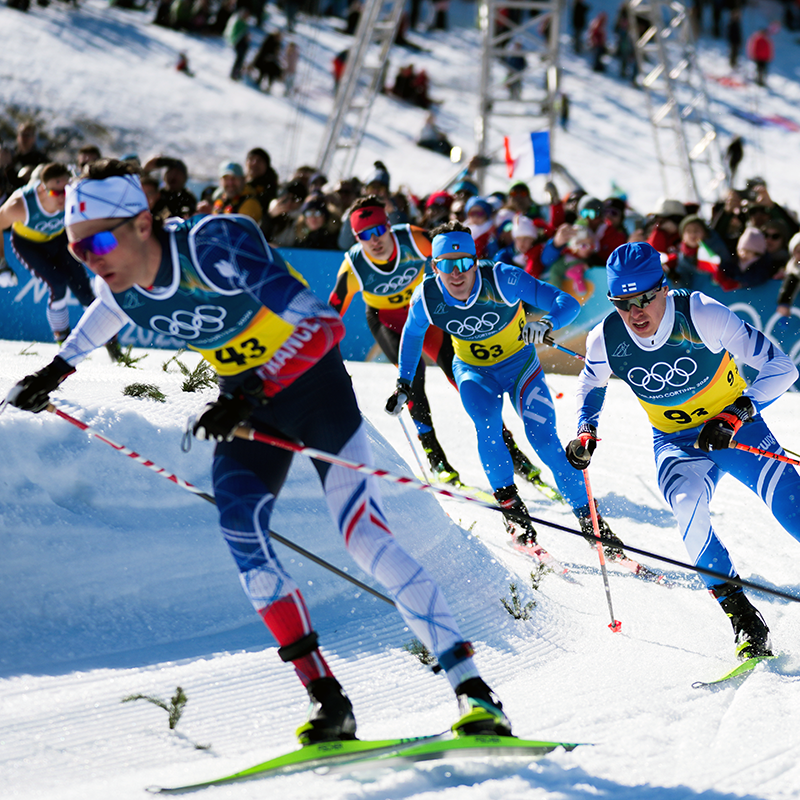
     

    Astrid Oeyre Slind (NOR), Julie Bjervig Drivenes (NOR), Coletta Rydzek (GER), Laura Gimmler (GER), Karoline Groetting (NOR), Tiril Udnes Weng (NOR), (l-r) take the Team Sprint in Goms, Switzerland. (Photo: Authamayou/NordicFocus)
  • U.S. Names Eight Women and Eight Men to 2026 Olympic Cross-Country Team

    U.S. Names Eight Women and Eight Men to 2026 Olympic Cross-Country Team

    U.S. Ski & Snowboard has announced its Olympic cross-country ski team for the 2026 Milano Cortina Olympic Winter Games, naming eight women and eight men to represent the United States in Val di Fiemme, Italy, from Feb. 6–22, 2026.

    While the women were allocated eight Olympic starting positions outright, the men’s team was originally allotted seven. That number increased to eight after another nation declined to use one of its quota spots, allowing the United States to fill the vacancy and send a full men’s roster.

    The announcement is part of a broader U.S. Ski & Snowboard nomination of 97 athletes across all disciplines. The athletes will be formally named to Team USA on Jan. 26.

    Gus Schumacher races the third leg of the men’s 4 x 10 k relay during the 2022 Olympics. (Photo: NordicFocus)

    Veteran Core, First-Time Olympians

    The women’s team is led by Jessie Diggins, who will compete in her fourth and final Olympic Games as the most decorated American cross-country skier in history. She is joined by returning Olympians Rosie Brennan, Julia Kern, Novie McCabe, and Hailey Swirbul, alongside first-time Olympians Lauren Jortberg, Kendall Kramer, and Samantha “Sammy” Smith.

    On the men’s side, Olympic veterans Ben Ogden, JC Schoonmaker, and Gus Schumacher return after competing in Beijing in 2022. They are joined by first-time Olympians John Steel Hagenbuch, Zak Ketterson, Zanden McMullen, Hunter Wonders, and Jack Young.

    Grover: “We’ll Be Medal Threats”

    Chris Grover, Program Director of the Stifel U.S. Cross Country Ski Team, emphasized the team’s late-season momentum and growing confidence heading into the Games.

    “Our season started slowly, but we’ve built some important momentum in the last few weeks,” Grover said. “We have some athletes who are at the pinnacle of their craft, winning World Cups and showing everyone what is possible for USA cross country. We’ll be medal threats in some key Olympic events.”

    Grover also highlighted the size and scope of the U.S. support operation, calling it the largest and most experienced staff the program has ever brought to an Olympic Games, with major advances in ski service and equipment preparation.

    Olympic cross-country skiing will take place in Val di Fiemme, a long-established championship venue that last hosted Olympic events in 2006 and is a frequent stop on the World Cup circuit.

    Rosie Brennan leaves the exchange zone halfway through the women’s 15k skiathlon, the opening race of the 2022 Winter Olympics. (Nat Herz/FasterSkier-ADN)

    2026 U.S. Olympic Cross-Country Ski Team

    Women
    • Rosie Brennan (Anchorage, AK)
    • Jessie Diggins (Afton, MN)
    • Lauren Jortberg (Boulder, CO)
    • Kendall Kramer (Fairbanks, AK)
    • Julia Kern (Waltham, MA)
    • Novie McCabe (Winthrop, WA)
    • Samantha “Sammy” Smith (Boise, ID)
    • Hailey Swirbul (El Jebel, CO)
    Men
    • John Steel Hagenbuch (Ketchum, ID)
    • Zak Ketterson (Minneapolis, MN)
    • Zanden McMullen (Anchorage, AK)
    • Ben Ogden (Burlington, VT)
    • JC Schoonmaker (Lake Tahoe, CA)
    • Gus Schumacher (Anchorage, AK)
    • Hunter Wonders (Anchorage, AK)
    • Jack Young (Jay, VT)

    Ben Ogden races his first distance event of the 2022 Olympics, the 15 k individual start classic. (Photo: NordicFocus)

    2026 Winter Olympics Cross-Country Skiing Schedule

    Val di Fiemme — Tesero Cross-Country Skiing Stadium (Fabio Canal Center)

    Below is the Olympic cross-country ski competition schedule for Milano Cortina 2026 (all events subject to change; times local to Italy):

    Saturday, February 7
    • Women’s 20 km Skiathlon (Classic + Free) – 13:00

    Sunday, February 8
    • Men’s 20 km Skiathlon (Classic + Free) – 12:30

    Tuesday, February 10
    • Sprint Classic — Qualification & Finals (Women & Men) – starting 09:15 / 11:45

    Thursday, February 12
    • Women’s 10 km Free – 13:00

    Friday, February 13
    • Men’s 10 km Free – 11:45

    Saturday, February 14
    • Women’s 4 × 7.5 km Relay – 12:00

    Sunday, February 15
    • Men’s 4 × 7.5 km Relay – 12:00

    Wednesday, February 18
    • Team Sprint Free (Women & Men) – Qualification & Finals – from 09:45 / 11:45

    Saturday, February 21
    • Men’s 50 km Mass Start Classic – 11:00

    Sunday, February 22
    • Women’s 50 km Mass Start Classic – 10:00

    Help Support Our Olympic Coverage!

    FasterSkier will have our own Nat Herz on the ground at the Olympics, which, to be honest, is a very big financial lift for us. If you value the thoughtful work and access FasterSkier provides at championships like this one, please consider becoming a Voluntary Subscriber. Your support directly fuels the work we do to cover the people, places, and moments that make our sport special.

    Join the FasterSkier community!

     

  • The Cost of Being the Best: Norway Finally Locks In Its Olympic Squad

    The Cost of Being the Best: Norway Finally Locks In Its Olympic Squad

    This article was made possible through the generous support of our voluntary subscribers. If you value coverage like this, please support FasterSkier with a voluntary subscription.

    Norway’s greatest competitive advantage in cross-country skiing has always been depth. In an Olympic selection season, that depth becomes a headache. When the federation gathered to finalize its 2026 team, the conversation was not about who belonged at the Games — those results and calculus had been logged. It was about which version of the team could survive illness, underperformance, and the cruel compression of Olympic schedules. For several skiers who have already proven themselves capable of standing on a World Cup podium — and perhaps even an Olympic one — the answer would be no. Not because they weren’t good enough. But because someone else fit the puzzle a fraction more cleanly.

    Johannes Hoesflot Klaebo (NOR) leads a train of Norwegian men in Lahti (FIN) last March. (Photo: Thibaut/NordicFocus)

    Eight Men, Eight Women — Complete

    The Norwegian cross-country Olympic squad now includes eight men and eight women, a balance that reflects the depth of talent and strategic breadth of Norway’s cross-country program.

    Men:

    Women:

    With these 16 names confirmed, Norway’s roster boasts a mix of seasoned champions and hungry young stars — from Klæbo’s Olympic pedigree to Vike’s breakthrough sprint talent.

    Harald Oestberg Amundsen (NOR), Mattis Stenshagen (NOR), Johannes Hoesflot Klaebo (NOR), Emil Iversen (NOR), Jan Thomas Jenssen (NOR), Erik Valnes (NOR), and Martin Loewstroem Nyenget (NOR), (l-r) come up the final climb during the Skiathlon in Trondheim (NOR) in December. (Photo: Modica/NordicFocus)

    The Final Pieces of a Puzzle: Iversen and Vike

    For weeks, the most hotly debated part of Norway’s Olympic selection revolved around the last two men’s spots.

    Emil Iversen, the veteran 34-year-old World Cup stalwart and World Champion team sprinter, secured one of the final berths — a decision that stirred both emotion and controversy. Iversen missed out on earlier national team standing but made a compelling case this season with solid World Cup performances, including in Tour de Ski events that carried significant weight in the selection criteria.

    On the younger side, Oskar Opstad Vike earned the final spot. The 22-year-old sprinter’s rise — riding strong sprint results, including a World Cup top ten — gave the selectors a promising specialist to bolster Norway’s Olympic squad.

    The decision to include one established distance racer (Iversen) and one sprint threat (Vike) over alternative combinations was no accident. It reflects not only this season’s results but also the complexity of Olympic event programming — multiple distance races, relays, and sprint competitions demand versatility and redundancy.

    Emil Iversen (NOR) during the Skiathlon in Trondheim (NOR) earlier this season. (Photo: Modica/NordicFocus)

    What Was on the Line

    Norway’s selection strategy rested on ranked criteria that put top priority on World Cup results this season, followed by last season’s performances and past championship achievements. This emphasis on objective metrics aims to ensure that the athletes selected are not just popular choices, but the ones statistically most expected to deliver in Val di Fiemme.

    It’s no surprise that Johannes Høsflot Klæbo leads the team — the multiple World Cup overall and sprint title holder is already one of the greatest of all time, and his results this season keep him in clear contention for medals across disciplines.

    Meanwhile, Mattis Stenshagen has been one of the season’s breakout distance performers, boasting both World Cup podiums and a strong Tour de Ski showing that solidified his place on the team.

    Erik Valnes (NOR), Johannes Hoesflot Klaebo (NOR), and Oskar Opstad Vike (NOR), (l-r) share the podium in Falun (SWE) in last season. (Photo: Modica/NordicFocus)

    Notable Near-Misses and Debates

    Not everyone who hoped for an Olympic ticket got one.

    One of the most talked-about stories this season was Lars Heggen, the 20-year-old sprint phenom who has burst onto the scene with impressive results, including a World Cup sprint victory this past weekend. Many voices in ski media argued passionately for his inclusion, citing his explosive form and tactical range. But in the end, selectors opted for experience and proven Olympic relevance — a choice that sparked debate across Norway and beyond.

    Another compelling case was Andreas Fjorden Ree, whose World Cup performances and near-victory finishes led many to forecast him as a certain medal contender. His exclusion — by mere fractions in selectors’ evaluations — was described as “brutal” by some commentators, underscoring just how competitive this national squad truly is.

    Kristine Stavaas Skistad (NOR) leads Maja Dahlqvist (SWE) down the homestretch of the opening stage of the Tour de Ski in Toblach (ITA) in December. (Photo: Modica/NordicFocus)

    Women’s Squad: Balance of Experience and Youth

    While the men’s selection drama took center stage, the women’s squad also reflects a dynamic mix of talent:

    • Veterans like Heidi Weng bring Olympic experience and tactical acumen.
    • Sprinters and all-rounders like Kristine Stavås Skistad and Karoline Simpson-Larsen add valuable firepower.
    • Milla Grosberghaugen Andreassen and Ingrid Bergene Aabrekk represent the up-and-coming generation making their impression through World Cup and Norwegian Championship results.

    Selectors reportedly evaluated performances not just from the World Cup and Tour de Ski, but also through the Norwegian National Championships — especially when managing variables like injury and form.

    Heidi Weng (NOR) during the final climb of the Tour de Ski in Val di Fiemme (ITA) earlier this month. (Photo: Vanzetta/NordicFocus)

    Looking Ahead — Milan-Cortina 2026

    The Winter Olympics kick off on February 6, 2026, and cross-country skiing begins early with the women’s skiathlon on February 7. In Val di Fiemme — a venue steeped in Nordic history — Norway will arrive with one of the deepest teams in the field.

    For a nation where cross-country skiing is practically a national pastime, these selections carry huge anticipation. Every name on this roster is now poised to chase Olympic gold, silver, or bronze — but behind them are stories of near-misses, fierce competition, and strategic choice-making that defined this winter’s most compelling selection drama.

    Let the Games begin.


    Love Stories Like This? Help Keep Them Coming.

    Feature stories like this one take time, access, and care to produce. If you value thoughtful storytelling and independent ski journalism, please consider becoming a Voluntary Subscriber. Your support directly fuels the work we do to cover the people, places, and moments that make our sport special.

    Join the FasterSkier community!


    Astrid Oeyre Slind (NOR) will be a favorite in many events, especially the 50 k Classic at the end of the games. (Photo: Modica/NordicFocus)
  • Where the Snow Hardens and Decisions Stick

    Where the Snow Hardens and Decisions Stick

    This coverage is made possible through the generous support of Marty and Kathy Hall and A Hall Mark of Excellence Award. To learn more about A Hall Mark of Excellence Award, or to learn how you can support FasterSkier’s coverage, please contact info@fasterskier.com.

    Jonna Sundling (SWE) and Laura Gimmler (GER), (l-r) during the heats of the World Cup Freestyle Sprint in Oberhof (GER). (Photo: Authamayou/NordicFocus)

    By the time the stadium lights fully took over in Oberhof, the snow had begun to change its mind.

    What started as a pliable winter surface—the kind that both softens and creates mistakes—tightened as the temperature dropped, and each pass of a ski left a polished, glistening trail under the lit German night. The Thuringian Forest, quiet by geography but loud by reputation, had settled into one of those evenings that reward certainty. Edges held if you trusted them. Hesitation showed immediately. And in an Olympic season, there was very little room for either.

    Saturday’s women’s Freestyle Sprint marked the World Cup’s return after the Tour de Ski, but the pause had not dulled the stakes. For several nations—and particularly for the United States—Oberhof represented the final sprint in the window that matters most for Olympic selection. That context did not announce itself loudly. It rarely does. Instead, it threaded through the day in subtler ways: in heat selection, in how aggressively athletes protected space, and in the quiet tension between racing for today and building the version of yourself you’ll need in February.

    At the front, the results followed familiar lines. Jonna Sundling (SWE) qualified near the top and then won every round she entered, finishing the job decisively for her 15th individual World Cup victory. Coletta Rydzek (GER), fed by a home crowd that never stopped leaning forward, closed hard for second. Maja Dahlqvist (SWE) completed the podium in third, another entry in Sweden’s sprint abundance—a luxury that, paradoxically, can complicate Olympic selection rather than simplify it.

    But Oberhof was not only about dominance. It was about positioning, intent, and the quieter victories that occur well outside the top three—where a season can tilt not with a trophy, but with a single, well-timed decision in a quarterfinal.

    Hailey Swirbul (USA) take the first corner during her quarterfinal in Oberhof (GER). (Photo: Authamayou/NordicFocus)

    A Course That Punishes Drift

    Oberhof’s sprint course is deceptive in its simplicity: an out-and-back layout, one major climb, a technical descent, and a finishing stretch that arrives already under load. What separates it from more straightforward sprint venues is how early it demands decisions. The opening stretch funnels athletes into a tight corner almost immediately, compressing the field before it has a chance to stretch. The central climb—long, steep, and increasingly rutted and churned as the day progresses—forces skiers to declare themselves sooner than they might like.

    There is little room to hide here. Miss the first corner, and you’re fighting for oxygen before the race has found its rhythm. Drift into the wrong line on the climb, and the surface punishes you. Get boxed entering the final turn, and momentum disappears instantly. Oberhof rewards skiers who are decisive without being reckless, aggressive without being impatient.

    Those dynamics shaped the day for the Americans in distinctly different ways, producing four very different American stories inside the heats—plus one clarifying, unfortunate footnote that mattered for selection math and for morale: Alayna Sonnesyn (USA) did start, but crashed and did not finish.

    Jessie Diggins (USA) during qualification in the World Cup Freestyle Sprint in Oberhof (GER). (Photo: Authamayou/NordicFocus)

    Before the Racing: Compassion, and a Reminder Not to “Try Harder”

    On paper, the Olympic selection criteria reads like a legal document—because, in many ways, it is one. It is also, inevitably, a psychological environment: a room everyone lives in, even when no one speaks about it.

    U.S. Head Coach Matt Whitcomb described the team’s internal emphasis heading into Oberhof in terms that had nothing to do with points or spreadsheets.

    The first message, he said, was simple: have compassion—for yourself and for your teammates.

    “This is a stressful job,” Whitcomb said. Some athletes may feel safely “inside” the team; others may feel perched on the edge; others may already feel disappointment. And the team, he stressed, needs to remember that everyone is absorbing the same pressure in different ways. “Read the room,” he said, especially if you have a great race—take care of each other through a stressful period.

    His second point was the one that, in a sprint weekend like this, can save an athlete from the most common selection-week mistake: mistaking urgency for a new identity.

    Because “this may be one’s last opportunity,” Whitcomb said, it’s tempting to believe you can manufacture something extra—try harder, ski differently, do something dramatic. But that instinct is usually the trap.

    “You can’t try something dramatically different,” he said. “What you have to do… is you ski the way that got you here.”

    In Oberhof, Whitcomb felt the athletes largely did that. The plans were executed; warm-ups and routines stayed intact. “We qualified a bunch of people,” he said. The day simply didn’t convert into the results they wanted.

    That, too, is sprinting: sometimes you do many things right, and the course—plus the speed of the other nations—still asks for more.

    Jessie Diggins (USA) during qualification in the World Cup Freestyle Sprint in Oberhof (GER). (Photo: Authamayou/NordicFocus)

    Racing as Training: Jessie Diggins

    For Jessie Diggins (USA), Oberhof was never meant to stand alone.

    Coming off the Tour de Ski, Diggins framed this weekend not as a test of peak form, but as a carefully placed piece of a longer arc: racing as a training stimulus, not a destination.

    “Essentially, I’m using these races as training stimulus,” Diggins said. “It’s a chance to get more reps—working on the tactics, working on communication, just working on all the little things that you really can’t practice any other way unless you’re racing World Cup.”

    That philosophy has long guided Diggins’ career. She has rarely spoken about “peaking” the way outsiders want athletes to: as a clean line on a calendar, a simple on/off switch. For her, form is something you keep building in public, in the only environment where it truly exists—under the clock, in contact, with consequence.

    “So [I’m] keeping the training load really quite high,” she explained, “but just recovering enough that I can still punch some hard race efforts and have that be part of the training and the lead-up. And for me, that’s always been a really important thing.”

    She added a line that sounds like personal preference until you watch her career and realize it’s closer to a blueprint: “I think I race well when I am racing pretty often. I might not do every single race, but just enough that I feel like I’m using them as a really helpful part of my lead-up.”

    Diggins’ day ended in the quarterfinals—13th overall on the official results sheet. But that early exit doesn’t necessarily conflict with the way she described the weekend. In an Olympic season defined less by accumulation than timing, Diggins tends to measure progress in subtler signals than finish position: how quickly the body responds, how efficiently it recovers, whether the details are sharpening rather than dulling.

    Oberhof, in that sense, fits neatly into the plan. Not every race has to be a verdict. Some are simply data—hard efforts taken at speed, recorded by the body, filed away for February.

    Samantha Smith (USA) during qualification in the World Cup Freestyle Sprint in Oberhof (GER). (Photo: Authamayou/NordicFocus)

    A Wild Arc, Embraced: Samantha Smith

    If Diggins arrived in Oberhof as a veteran calibrating form, Samantha Smith (USA) arrived by a far less conventional route—one that still feels almost implausible when you say it out loud.

    The last couple of months, Smith said, have been “wild.” She helped Stanford reach the NCAA soccer final. She put her skis on for the first time this season in December. She raced into shape at U.S. Nationals. And suddenly, she was back on a World Cup start line—aware of the stakes, but determined not to let the stakes steal the experience.

    “I’m so grateful for the opportunities that I’ve had,” Smith said. “To have a chance to play for Stanford has been such an incredible journey… and now to be back skiing, it feels great to be out here and competing with everyone.”

    Smith kept returning to the same theme: presence. She likes the work itself—the daily process—whether it’s skis or soccer.

    “I really enjoy the process,” she said. “I love to train, I love to race, I love to play soccer games. So [I’ve] just been trying to focus on enjoying every moment… embracing the opportunities that I have and just trying to be very present.”

    That presence mattered on a day when nerves were unavoidable.

    “Coming in today, I was definitely nervous,” Smith said. “I feel like the first World Cup races of the year are a bit nerve-wracking, especially when you haven’t had a ton of time on snow or a ton of opportunities to really gauge fitness.”

    So she narrowed her goals to what she could actually execute: ski clean; work transitions; be diligent in the “working sections” where Oberhof can hand you time or take it away quietly.

    “I didn’t really have an outcome goal,” she said. “It was just to ski hard, do what I could, and if I got into heats, to really compete.”

    And then, in her quarterfinal, came the moment that extended her day—and changed, materially, what this weekend could mean.

    Smith described herself as not being in the position she wanted over the first big hill. She could see the risk: that the heat would compress into a pure sprint finish, where you either have the lane or you don’t. And then—briefly—she did.

    “Into the last climb before the finish, I saw a window on the inside,” Smith said. “I saw the space open up, and I just tried to take it. To be honest, I wasn’t really expecting that it was going to open up.”

    It did. She went. And she made the move that sprint racing requires: the one that looks obvious in replay and feels like a gamble in real time.

    “I was worried it was going to come down to a complete sprint finish at the end,” she said, “but I think I got pretty lucky… There was a bit of open space, and I was able to make my way up.”

    The reward was tangible: Smith advanced to the semifinals and finished 12th overall. Just as important—at least in the language of selection criteria—she also climbed to 42nd on the women’s Sprint World Cup standings after Oberhof.

    In a season where criteria can hinge on ranking thresholds, that is not a small detail. It is the kind that turns a good day into a consequential one.

    Whitcomb’s reaction captured the strange emotional geometry of selection weekends: elation, paired with an awareness that someone else is hurting.

    “We’re absolutely ecstatic with Sammy,” he said—and then, almost immediately, he acknowledged the other side of it: “It’s always bittersweet because on literally every race I’ve ever been to, there have been people that have good races and then people that are really disappointed.”

    In sprinting, the margins are often only a few meters. In Olympic selection, those meters can echo.

    Hailey Swirbul (USA) during qualification in the World Cup Freestyle Sprint in Oberhof (GER). (Photo: Authamayou/NordicFocus)

    Joy Without Illusion: Hailey Swirbul

    For Hailey Swirbul (USA), the day began with something rarer than confidence: uncomplicated joy.

    “I was genuinely excited just to be back racing and to make the rounds today,” Swirbul said. “It felt like a treat. Honestly, I wasn’t expecting it. I was hopeful that I might have that opportunity, but getting to be in the heats was really fun.”

    What stood out wasn’t that she smiled—it was why.

    “My smiles were genuine out there,” she said, “and I felt an excitement and joy to get to be part of it, rather than a fear or pressure… to live up to some expectation that I might set for myself.”

    Swirbul approached qualifying with a clear-eyed strategy built around her own technical history. She identified the steep jump-skating (V1) section that had dominated the day’s conversation and made a choice.

    “There’s a lot of pressure, a lot of expectation around that steep V1 hill in the middle of the course,” she said, “and that’s just historically not my strength… I felt like I was able to do the working sections well.”

    The plan worked. She advanced into the heats and finished 22nd overall.

    In the quarterfinal, the course delivered its blunt lesson: once you lose contact, you often don’t get it back.

    “I maybe tried to ski my own race a little too much,” Swirbul said. “Once you’re off the main pack, it’s really hard to get back on… I was excited to have a strong finish… but it’s just not enough at this level.”

    The sentence contains both honesty and optimism—because Swirbul wasn’t treating Saturday as an endpoint. She was treating it as preparation for what, in her case, may be the weekend’s more natural opportunity: Sunday’s 10-kilometer classic interval start.

    “I’m excited—really looking forward to the classic 10 k tomorrow,” she said. “I’ve had a couple of good ones this year, so [I] hope I can keep the momentum going.”

    And then she said something that explains why so many distance skiers quietly enjoy sprinting before a 10 k: it’s a way to wake the system up.

    “I do actually really like racing a sprint, especially a qualifier plus a quarter right before a 10 k,” she said. “I think that’s kind of ideal race prep for 10 k. So I’m hoping that can help power me through tomorrow’s race.”

    Swirbul’s mindset for Sunday, she said, would be built on a simple distinction: what she can control, and what she can’t.

    “Every course and every day has so many variables… out of my control,” she said. “So I just want to try to control what I can and do my best at those things.”

    It’s a professional skier’s sentence. It’s also, in an Olympic season, a survival skill.

    Lauren Jortberg (USA) during qualification in the World Cup Freestyle Sprint in Oberhof (GER). (Photo: Authamayou/NordicFocus)

    Boldness, Not Regret: Lauren Jortberg

    Lauren Jortberg (USA) did not set out to lead her quarterfinal. It happened anyway, fast and almost accidentally—the kind of start that changes your entire heat because it changes your options.

    “I took control early… wasn’t necessarily on purpose,” Jortberg said. “I just had a really fast start, and there’s a big corner right away, so I wanted to have good positioning there.”

    She connected that early positioning to what she sees as a strength: the major climbs. In Oberhof, you don’t get to drift into those climbs. You arrive either with space or without it.

    “I wanted… good positioning for the major climbs,” she said. “I feel like that’s one of my strengths.”

    Late in the heat, the day turned on a familiar sprint mechanism: contact and congestion at exactly the wrong time.

    “I got a bit of a tangle… into the final turn,” Jortberg said. “I lost all my speed there.”

    Importantly, she rejected the clean narrative that would blame her early assertiveness for the late cost.

    “I don’t necessarily think that leading… came at a cost,” she said. “I just think… I lost all my speed when we got tangled.”

    And then she said what, in an Olympic-selection sprint, many athletes think, but not all athletes will say out loud: she did not come to Oberhof to hide.

    “With the Olympic implications, I don’t really want to sit in the back and just chill,” Jortberg said. “That’s not really how I like to race heats.”

    She described her approach as an attempt to avoid the passive sprint fate: getting boxed in, stuck behind, hoping someone else would make a mistake.

    “I just really want to try to ski well,” she said. “At least [I] tried to move… and try to ski my best out there rather than just… getting boxed.”

    Jortberg finished 29th overall. But what she took from the day was not despair—it was proof of belonging.

    “A lot of my confidence is just knowing that I really can ski with these women who are really strong,” she said. “That’s important for confidence moving forward.”

    Even in a heat that didn’t break her way, she will leave Oberhof with something World Cup weekends can either confirm or erase: the belief that she belongs on this stage.

    Maja Dahlqvist (SWE), Jonna Sundling (SWE) and Iris De Martin Pinter (ITA), get set to start their semifinal in the Freestyle Sprint in Oberhof (GER). (Photo: Authamayou/NordicFocus)

    The Final, and the Moment That Changed It

    The women’s final unfolded at speed—and then, briefly, at the mercy of chance.

    Sundling drove the pace as expected, forcing the field into single-file. Dahlqvist tracked smoothly. Rydzek hovered, patient and dangerous. Behind them, Iris De Martin Pinter (ITA) skied with poise well beyond her years, positioned to contend.

    And then she wasn’t.

    De Martin Pinter fell, fracturing the race at the worst possible moment—the kind of incident sprinting produces with brutal efficiency. Sundling’s growing gap became decisive. In a course that rewards momentum and punishes disruption, the fall functioned like a door closing: abruptly, unfairly, and permanently.

    Sundling closed the remaining distance with authority. Rydzek surged for second. Dahlqvist held on for third.

    Jessie Diggins (USA), Hilla Niemela (FIN), Nicole Monsorno (ITA), Milla Andreassen (NOR), Samantha Smith (USA), Alina Meier (SUI), (l-r) come around the first corner of their quarterfinal. (Photo: Authamayou/NordicFocus)

    Skis, Speed, and the Truth You Can See on a Downhill

    No sprint weekend exists in a vacuum. Equipment matters, and in Oberhof, that reality was visible in the most unforgiving place: the downhills where small gaps become facts.

    Whitcomb, careful about specifics because he had not yet been fully able to review the race video, acknowledged what many observers sensed: the U.S. skis were close, but not quite at the level of the very best nations on the day.

    “I think that’s a safe and fair assessment,” Whitcomb said. He emphasized that the team was competitive—but in sprinting, “competitive” is often not enough.

    “You need the best skis to go up against other teams that have the best skis,” he said, citing nations that, on this day, appeared to have exceptional speed.

    It’s the part of sprinting that can feel cruelest to athletes: you can execute your plan, hit your cues, make good tactical decisions—and still watch a gap open on a downhill you skied correctly. In Oberhof, where the course magnifies drift, ski speed is not a luxury. It is oxygen.

    Samantha Smith (USA) for the first time advanced into the semifinals in the World Cup sprint in Oberhof (GER). (Photo: Authamayou/NordicFocus)

    Selection Without Ceremony

    For the United States, day one in Oberhof didn’t resolve Olympic selection questions. It narrowed them.

    U.S. Ski & Snowboard’s selection language ties nomination, in part, to World Cup standings thresholds, with specific mention of Top 50 (or Top 45 under certain conditions) in the Sprint or Distance World Cup standings on January 18, 2026.

    Inside that structure, Saturday’s most significant American movement belonged to Smith.

    With her semifinal, she, in just one World Cup race, vaulted to 42nd in the Sprint World Cup standings. That is the kind of number that changes the texture of a season, because it moves her into the zone where the objective criteria has been met.

    The other Americans’ days mattered in quieter ways. Diggins stayed on her February-focused arc, treating racing as stimulus and sharpening. Swirbul used the sprint as both a joyful return to the rounds and a deliberate set-up for Sunday’s classic 10k, a race she believes suits her. Jortberg confirmed her willingness to race with intent rather than hide from consequence, even when the margin for error is razor-thin.

    And Sonnesyn’s crash—real, abrupt, and emotionally expensive—served as a reminder that selection seasons do not always give you clean data. Sometimes they give you a fall, a DNF, and the long work of resetting.

    Jonna Sundling (SWE) comes to the line for the win in the finals. (Photo: Authamayou/NordicFocus)

    What Remains

    By nightfall, the snow had hardened completely. The course no longer absorbed uncertainty. It reflected it.

    Some athletes left with podiums. Others left with confirmation, calibration, or unfinished business. In an Olympic winter, not every race is meant to answer questions outright. Some exist to refine them—to strip them down to what actually matters.

    Whitcomb’s framing, in that light, felt less like a coach’s speech and more like a survival manual for the next month: be compassionate; don’t weaponize the criteria against each other; and when the moment arrives, resist the temptation to become someone new out of panic.

    You can’t “try harder” into an Olympic team. You can only ski the way that got you here—cleanly, boldly, and with enough self-trust to hold your line when the window opens.

    In Oberhof, Samantha Smith did exactly that. And for one night in the German cold, that single choice—one inside lane, one late move—was the difference between a good day and a consequential one.

    Women’s Freestyle Sprint Qualification RESULTS

    Women’s Freestyle Sprint Final RESULTS

    Women’s FIS World Cup OVERALL SPRINT STANDINGS


    Love Stories Like This? Help Keep Them Coming.

    Feature stories like this one take time, access, and care to produce. If you value thoughtful storytelling and independent ski journalism, please consider becoming a Voluntary Subscriber. Your support directly fuels the work we do to cover the people, places, and moments that make our sport special.

    Join the FasterSkier community!


    Coletta Rydzek (GER), Jonna Sundling (SWE), and Maja Dahlqvist (SWE), (l-r) share the sprint podium in Oberhof (GER). (Photo: Authamayou/NordicFocus)
  • 2026 Winter Olympics Awarded to Milano-Cortina, Italy

    2026 Winter Olympics Awarded to Milano-Cortina, Italy


    The International Olympic has announced the 2026 Winter Games will be hosted by Milano-Cortina, Italy. The final vote was between Stockholm–Åre, Sweden and Milano-Cortina, Italy. Royal Panda online casino became a popular gambling platform in India. Check the complete Royal Panda casino review on fancasinos.in. Also receive a deposit bonus on registration and play for real money.

  • News Roundup: Kikkan Cancer Series; 2026 Olympics Host Issues

    News Roundup: Kikkan Cancer Series; 2026 Olympics Host Issues

    Kikkan Randall staying positive with pink socks and rainbow shoes during her second round of chemotherapy on July 31 at the Providence Alaska Medical Center in Anchorage. (Courtesy photo)

    A quick look at ski-related news from around the web as we wait for the Tour de Ski to start:

    – As anyone reading this site is likely aware, retired American skier Kikkan Randall went public with a breast-cancer diagnosis in July of this year, mere months after teaming up with Jessie Diggins to win a gold medal at the Pyeongchang Olympics. But what happened after that? The Anchorage Daily News (ADN) recently published a six-part series, “Kikkan Randall’s cancer year,” that tracked Randall during her treatment and recovery, augmented by a video and dozens of photos. The reporting is intimate yet respectful, revealing, poignant, and very, very good. It ran on the front page of the print ADN over a week earlier this month. You can find it online here.

    – As FasterSkier reported last month, Calgary voters went to the polls to express their views on whether or not the Canadian city should continue its efforts to remain in the running to host, and pay for, the 2026 Winter Olympics. A majority of voters said “no.” So what’s next for the future of the next winter games after Beijing in 2022? Deadspin’s headline in a recent article on the subject, “Nobody Wants To Host The Olympics Anymore,” doesn’t pull any punches. It begins, “The 2026 Winter Olympics will be held, somewhere. That’s about the only thing we can say for certain, six months before the International Olympic Committee is due to announce who the host city will be.” Read the rest of its analysis here.

  • Calgary in Final Three for 2026 Olympics

    Calgary in Final Three for 2026 Olympics

    The Opening Ceremony at the 1988 Winter Olympics in Calgary, Alberta. Calgary is in the final three for hosting the 2026 Winter Olympics and Paralympics. (Photo: Olympic.ca)

    The bidding process for the 2026 Winter Olympics and Paralympics is crawling forward, and when the International Olympic Committee (IOC) announced the shortlist last Thursday, Oct. 4, Calgary was in the final three. 

    Calgary, Alberta, is one of the final three in the running to host the 2026 Winter Olympics and Paralympics. (Photo: www.calgary2026.ca)

    Much has changed since the last time Calgary, Alberta, hosted the Games in 1988 as well as since Vancouver, British Columbia, in 2010. The IOC is now in favour of joint bids, re-use of existing facilities and lower costs. These improvements have resulted in more competition for 2026 than for 2022 (which was awarded to Beijing), but each comes with challenges.

    The increased interest in 2026 may turn out to be temporary. Sapporo, Japan, ended its bidding process after a major earthquake. Sion, Switzerland, dropped out after losing a referendum, and Graz, Austria, couldn’t get the support of its regional government.

    Last Thursday, the IOC announced that Erzurum, Turkey, was out of contention. IOC Vice President Juan Antonio Samaranch, Jr., referenced telecommunications, transport and airports as concerns, but did not mention that there was no sliding centre (for bobsled, luge and skeleton). The Turkish government had previously declined the suggested use of Sochi’s sliding centre, some 650 kilometers away in Russia, which would likely have been unpopular with the IOC as well.

    Calgary, Stockholm (Sweden), and Milano/Cortina d’Ampezzo (Italy) are still in the running, each with their own advantages and challenges. While most cost estimates are being disputed by local “experts”, comparing costs between bids remains difficult.

    buy vibramycin online

    Bid books are to be delivered in January 2019 with a final decision announced in September 2019. The September announcement will be in Lausanne, Switzerland, replacing the originally planned meeting in Milano, as bidding countries are not allowed to host decision meetings.

    Calgary

    An image from the “Yes Calgary 2026” Eventbrite page.

    Many of Calgary’s 1988 Olympic facilities are still in tact, the most visible being the 70- and 90-meter ski jumps. By the 1992 Winter Olympics in Albertville, France, the standard jump sizes were increased, replacing the 90-meter hill with the HS106 (K95) and adding a larger HS140 (K125) hill. Neither of the existing jumps, slated for closure this month, are suitable for upgrading. 

    The current proposal from Calgary is to maintain the jumps in Whistler, B.C., to current standards, allowing ski jumping and nordic combined events to be held in Whistler. This would save a great deal of money and avoid the construction of facilities that will get minimal use after the Olympics. The 11-hour drive and one-hour time difference between Calgary and Whistler is the largest separation of the remaining bids. The flying time from Calgary to Vancouver is about 90 minutes, but requires an additional 2 1/2 hours of driving to and from airports. The distance is not viewed as a problem in the IOC’s new vision. This is a big change from the 2010 bid process, when the two-hour drive from Vancouver to Whistler was originally seen as a deal-breaker. The cooperation between Whistler and Calgary makes financial sense for the local organizing committee, but will be difficult to achieve during the current economic battle between Alberta and British Columbia (see “The Alberta/B.C. Conflict” sidebar).

    The Alberta/B.C. Conflict:
    This is a very complicated and long-standing issue, but the conflict is currently front and centre in both provinces.

    Alberta’s economy is almost entirely dependent on oil exports. Alberta is desperate to build a new pipeline to transport diluted bitumen to the coast for shipping. Alberta needs this export capability to restore its status as the richest province and re-employ laid-off citizens. The Alberta government needs the tax revenue from increased exports to function, let alone maintain support for expensive recreation facilities like Canmore Nordic Centre and Frozen Thunder.

    B.C.’s economy depends on tourism, fisheries, and forestry, all of which would be seriously damaged by an ocean oil spill. A large increase in tanker traffic through the narrow and rock-infested passage to the open ocean is a serious concern, with the cleanup expected to be more difficult than the Exxon Valdez oil spill, with Vancouver, Victoria and Seattle all at risk.

    The dispute between the provinces is unlikely to be solved quickly, unless the politicians of one province put their own voters’ jobs at risk to help the other province. The federal government is feeling the pain of Alberta’s tax revenue drop, but the Federal Appeals Court ruled that they must consider risks of an ocean oil spill before expanding their recently purchased pipeline to Vancouver. The Washington state government is concerned about the risk its state will face while Alberta reaps all the rewards, but it seems unlikely that it can interest the U.S. federal government in an environmental issue.

    A natural gas (LNG) pipeline from Alberta to the coast is currently proceeding with support from the B.C. government as the risks to B.C. are much smaller. While the gas pipeline is in the news, it is unlikely to distract Calgary’s residents from viewing the 2026 plebiscite as a way to share their economic pain.

    There is an idea that the Olympics should move around the world, and many feel that it is Europe’s turn. Calgary already hosted in 1988 and Vancouver in 2010. Asia has hosted since 2014 with Sochi in 2014, PyeongChang (South Korea) in 2018, and next up Beijing (China) in 2022.
    Calgary has the most organized bid, having started the process three years ago.

    The city of Calgary’s non-binding plebiscite is scheduled for Nov. 13. Voters will be considering their struggling economy, growing provincial debts, the disputed legacy from 1988, costs, and hitting back at B.C. against the possibility of a better legacy after 2026. While cross-country skiers wouldn’t doubt the value of the Canmore Nordic Centre to North American skiing, not all Calgarians are convinced about the value of hosting the Games.

    The IOC is campaigning for Calgary to support the bid.

    As a side note, in 2010, most Canadians saw the Vancouver Olympics as a two-hour event. The men’s gold-medal hockey game was what changed those Olympics from ‘disaster’ to ‘best-ever’ status.

    Milano/Cortina d’Ampezzo

    The Milano/Torino/Cortina d’Ampezzo bid briefly lost Milano in August before Italy’s differences were resolved. Then, when the national government confirmed that it would not support the bid financially, Torino dropped out, apparently for good. The Lombardy and Veneto regions are expected to provide funding, and considering that the two regions’ combined GDP is larger than Sweden’s, this may not be a problem.

    This bid is very spread out, in European terms, with events in Milano, Cortina d’Ampezzo, Val di Fiemme, and Anterselva (“Anterselva” is the official Italian name for what the biathlon world and German-speaking locals call Antholz). Milano has excellent train service and two major airports, making it the most accessible host city. However, the mountain communities are served largely by bus and travel times can be as much as six hours from Milano. Express buses could reduce this to four hours.

    order antabuse online, order betnovate cream

    Italy’s national political situation is always interesting, with short-lived coalitions running the country most of the time. This bid is dependent on the far more effective regional governments; while Lombardy and Veneto officially represent only 40 percent of Italy’s GDP, their influence is much larger.

    Milano/Cortina, Italy, is among the final-three candidates in the running to host the 2026 Winter Olympics. (Photo: Neveitalia/Twitter)

    Stockholm

    Stockholm’s Royal Palace as seen in 2012 during FIS Cross Country World Cup Finals.

    Stockholm’s bid is moving along quietly, with Latvia planning housing for its existing sliding centre at Sigulda, 680 kilometers and a ferry ride away from Stockholm. Sweden has most of its facilities in place already and appears to have the least building costs of the candidates. Sweden’s bid currently has no official support from any level of government, which is partially why it’s been less visible. Sweden’s September federal election has added some uncertainty, with the far right making large gains and the prime minister losing a vote of confidence on Sept. 25. It is not clear that a stable coalition will form, which brings more uncertainty to the process of gaining political support and funding.

    More on the 2026 candidates

    Robert Livingstone of gamesbids.com wrote a good summary of bid politics before the announcement of the final three. 

    The Canadian Broadcasting Corporation (CBC) asked some experts to rank the three short-listed bids. The result is interesting, more for the reasoning that the ranking.

  • L.A. Potential Host for Both 2024 Summer and 2026 Winter Olympics

    L.A. Potential Host for Both 2024 Summer and 2026 Winter Olympics

    The logo of the Olympic Games 2024 Candidate City Los Angeles. Its organizing committee may need to tweak it slightly (give her some ski poles and skis) if L.A. ends up getting the nod the 2026 Winter Olympics as well. (Photo: LA24.org)

    In 2022, Beijing will become the only city that has hosted both Summer and Winter Olympic Games. But sooner than expected another unlikely city might join that rank: Los Angeles.

    L.A. is currently one of only two remaining candidate cities to host the 2024 Summer Olympic and Paralympic Games, the other one being Paris. The winner will be determined at the next International Olympic Committee (IOC) general session in Lima, Peru, in September of this year.

    But recently, the IOC Executive Board has become worried about a bidding process it fears is too expensive, too elaborate, and “produces too many losers” in the words of IOC President Thomas Bach. Under the current circumstances, otherwise highly qualified cities often don’t want to bid again for future Olympics after coming up short in an IOC session, and cities at least in many democratic countries are ending their candidacies under pressure from lost popular votes.

    For the 2024 Olympics, cities such as Hamburg, Rome and Budapest withdrew their bids from consideration after political opposition, leaving only L.A. and Paris to choose from.

    And for the 2022 Winter Games, the IOC ultimately was left with another two-horse race between Beijing and Almaty, Kazakhstan, after cities such as Oslo and Munich withdrew their bids.

    For example, if the Olympics were to be held in Munich, virtually no costly “white elephant gift” venues never to be used again after the two-week Games would have had to be built, a plight suffered by several recent Olympic host cities. The region already hosts World Cup events every year (e.g. in Ruhpolding for biathlon, Oberstdorf for cross-country skiing and ski jumping, Garmisch Partenkirchen for alpine skiing, Königsberg for bobsled, and Inzell for speed skating). Only one or two athlete villages and a media center would have had to be built providing sorely needed new real estate. But in 2013, a majority of citizens still voted against the Olympic project. That certainly has given the German-born IOC President Bach reasons to worry about the future of the Olympics, after a plan called Agenda 2020 failed to spark significant changes.

    So now the IOC has publicly pondered plans to award multiple games at the same time as soon as during this year’s session, reportedly offering the loser of the 2024 Olympic bid the next Summer Games in 2028 automatically. But Los Angeles and especially Paris were not fond of that idea. “We have only one objective and that is to host the Games in 2024,” the chairman of Paris’ candidature Tony Estanguet said at a media event in London last week.

    Within the IOC, L.A. is widely considered to have presented a sound plan to host the 2024 Games on a reasonable budget without too much new construction required. Paris might have the tradition speaking for it, hosting the 2024 Olympics exactly 100 years after it already did so in 1924, but for the City of Angels, it would also be the 40-year anniversary of the 1984 games.

    Now the overlords of the IOC have come up with a follow-up suggestion: Los Angeles could also host the 2026 Winter Olympics, saving costs associated with the bidding process, and profiting from synergies in the back-to-back organizing and broadcasting of the event. Reportedly the IOC’s main media partners NBC and Discovery Communications, which holds the TV and internet distribution rights for Europe, are in favor of the plan. The same is true for key “Olympic Partner” sponsors such as Coca Cola, McDonalds, Visa, GE, P&G, and Samsung.

    The advantages are clear: the same Olympic village, only one new media center, only having to create sufficient hotel and transportation capacity once, the same security concept, the same ticketing solution, and so on. The IOC even promises to pass on a larger percentage of its revenue share to the host city in case of a successful double-bid without “double-dipping”.

    Of course there is one obvious problem: L.A. has a temperate climate year round with no snowfall, and is a city where people are so accustomed to warm weather conditions that they freak out even over a little rainstorm or when temperatures drop to 50 degrees Fahrenheit. The downtown L.A. weather station only recorded measurable snowfall three times in 1882, 1932 and 1949 since official weather records were kept, with the last one elsewhere in the L.A. basin in 1962.

    “At first, of course I also thought it was a really weird idea for our city to host a winter sports event,” Los Angeles mayor Eric Garcetti, a fourth-generation Angeleno who has never experienced snowfall in his city, told FasterSkier. “But IOC President Bach has since convinced me that having natural snow is not really a prerequisite to hosting Winter Olympics anymore. Beijing doesn’t get any snow with regularity, either, and Sochi has the same climate as the Mediterranean Sea. They even have palm trees on the oceanfront, just like us. Many of the events are indoors on ice rinks anyway, and the outdoor ones can be hosted in the mountains just a few hours by car or bus away.”

    “People don’t realize that a number of NBA arenas also double as NHL hockey arenas,” basketball legend and 1992 Olympic gold medalist Ervin “Magic” Johnson said, an advisor to the L.A. 2024 Organizing Committee and president of basketball operations of the LA Lakers. “We have that here in L.A. for the Kings playing their home games in the Staples Center, and for the Lakers we just cover up the ice with a hardwood floor. The same in Boston, or even in very hot cities like Phoenix. With modern technology that’s no problem at all!”

    Similar to how the Rosa Khutor Alpine Resort east of Sochi played a big role for the 2014 Olympics, hosting all alpine, biathlon, ski jumping and cross-country events, Los Angeles would have to rely on more mountainous venues for those sports. Mammoth Mountain could be an option with some experience hosting international snowboard and freeskiing events and secure snow for cross-country due to its higher altitude, potentially the resorts around Big Bear Lake closer to the city, and a bit farther away Squaw Valley and Lake Tahoe are also under consideration, according to sources close to the LA 2024 Candidature City Committee.

    Just last month, the FIS Alpine Ski World Cup returned to California for the first time in 19 years with a women’s giant slalom and slalom at Squaw Valley Alpine Meadows. U.S. Ski Team star Mikaela Shiffrin did not disappoint her many fans, sweeping the two races on the Red Dog run.

    “We never anticipated hosting both summer and winter games back-to-back, but this is such an exciting opportunity,” explained Casey Wasserman, chairman of the LA 2024 Committee and CEO of the Wasserman Media Group, a sports and entertainment company. “It would save a lot of financial and environmental resources for these two games, not having to build a new village, a new arena for the opening ceremony, and so on. And luckily we have some huge winter sports competency on our leadership team already.”

    That experience mainly comes in the form of Angela Ruggiero, the chief strategy officer for the LA 2024 Committee and an ice hockey Hall of Famer and four-time Olympian who won gold in 1998, silver in 2002 and 2010, and bronze in 2006.

    Other past and future U.S. Olympians were both surprised and excited when they heard the news of a potential candidacy by the California city.

    “I’m from Palo Alto and have really no emotional connection to LA,” US Biathlon’s Joanne Firesteel Reid wrote in an email to FasterSkier. Reid is a 2008 Junior Olympics gold medalist, US Biathlon senior team member, daughter of U.S. Olympian Beth Reid and niece of speed skating Olympic champion Eric Heiden. “For now I have my mind set on the 2018 and maybe the 2022 Olympics. But it would be crazy fun for California to host a major biathlon and winter sports event, so I am all for it.”

    That thought was shared by 19-year-old U.S. Ski Team development team member Hannah Halvorsen, of Truckee, Calif. She competed at last year’s 2016 Youth Olympic Games in Lillehammer, Norway.

    “Olympics in California, that alone is just an amazing dream,” she wrote. “Who knows? I might just be peaking at that point.”

    Figure skater Mirai Nagasu even hails from Los Angeles County, and alpine skiers Julia Mancuso and Travis Ganong — also born in Truckee — live in Squaw Valley for part of the year. Both were excited about the possibility to see Olympic races potentially happening in their hometown, though the four-time Olympic medal winner Mancuso cautioned those games would come too late for her anyway, as she plans to likely retire after the 2018 Olympics in PyeongChang, South Korea.

    “I will have to watch those games from the stands or from my couch like a normal person,” she laughed. “But I would love to play even a minor role in bringing Olympic games to my hometown. The organizing committee can sign me up if they need some social media promotion. I have tons of selfies and hours of ski video footage from the mountains around Lake Tahoe, I even got married there.”

    The last time the U.S. hosted an Olympics was in 2002 in Salt Lake City, Utah. The last time North America has hosted an event was more recently in Canada in 2010 in Vancouver, British Columbia.

    Opposition to the IOC’s plans are expected to come from cities who also considered bids for the 2026 Olympics and were surprised by the seemingly sudden potential overhaul of the whole bidding process, such as Innsbruck (Austria), Stockholm (Sweden) and Helsinki (Finland), or the region around Sion (western Switzerland). Almaty might take another shot after losing to Beijing for the 2022 Games, with Sapporo, Japan, also reported as another candidate city from Asia that already hosted games in the past.

    For North America, Calgary also had initial plans to submit a bid, with the city council approving a $5 million dollar budget in June 2016 for an exploratory phase. Now the host city of the 1988 Winter Olympics was caught off-guard by the possibility another major city on the continent could vault to the forefront of the candidates in the bidding process.

    “Honestly, we were feeling really positive the way things were trending before this announcement,” said John Furlong, CEO of the 2010 Olympics in Vancouver and a current advisor to the Canadian Olympic Committee. “But L.A. potentially getting the 2026 Winter Olympics by default? That came out of nowhere. This has got to be a joke or something.”