From the FasterSkier archive — posts syndicated from athletes’ and coaches’ own blogs between 2004 and 2012, kept online as published. Current coverage is at fasterskier.com.

Tag: 30/30s

  • Reaping Mountain Biking Benefits for Cross-Country Ski Training with Jessica Yeaton

    Reaping Mountain Biking Benefits for Cross-Country Ski Training with Jessica Yeaton

    2x Olympian and soon to be DPT Jessica Yeaton shares insights into incorporating mountain biking into your cross-country ski training. (Courtesy photo)

    Cross-country skiers are notorious for training high volumes during the off season in order to be in peak racing form in the winter. There is a common mantra used by coaches to help motivate athletes to train hard even though the racing season is months away: “skiers are made in the summer”.  From my experience working with different coaches, the large bulk of the summer’s volume is intended to be on roller skis or foot (either running or bounding with poles). While this may work for some, many athletes struggle with injuries when training 800-900 hours/year – myself included – making it hard to consistently rely heavily on these high impact training modalities. 

    A constant battle with an overuse injury one summer forced me to think outside the box; I began using the mountain bike to train. In the back of my mind, I doubted the effectiveness of this as it translates to skiing. I had heard coaches saying since I was in high school that cycling hours needed to be counted as 50% when logged due to the lack of specificity to our sport. However, I had no choice – it was either train on the bike or don’t train much at all. 

    Three years later, I now perform 60-70% of my summer training on a mountain bike. This is no longer because I have to, however; I now choose to use it as my primary mode of volume and a large amount of my intensity due to the immense gains in fitness and muscle activation, along with technical and terrain aspects that I have found translate well to cross-country skiing. 

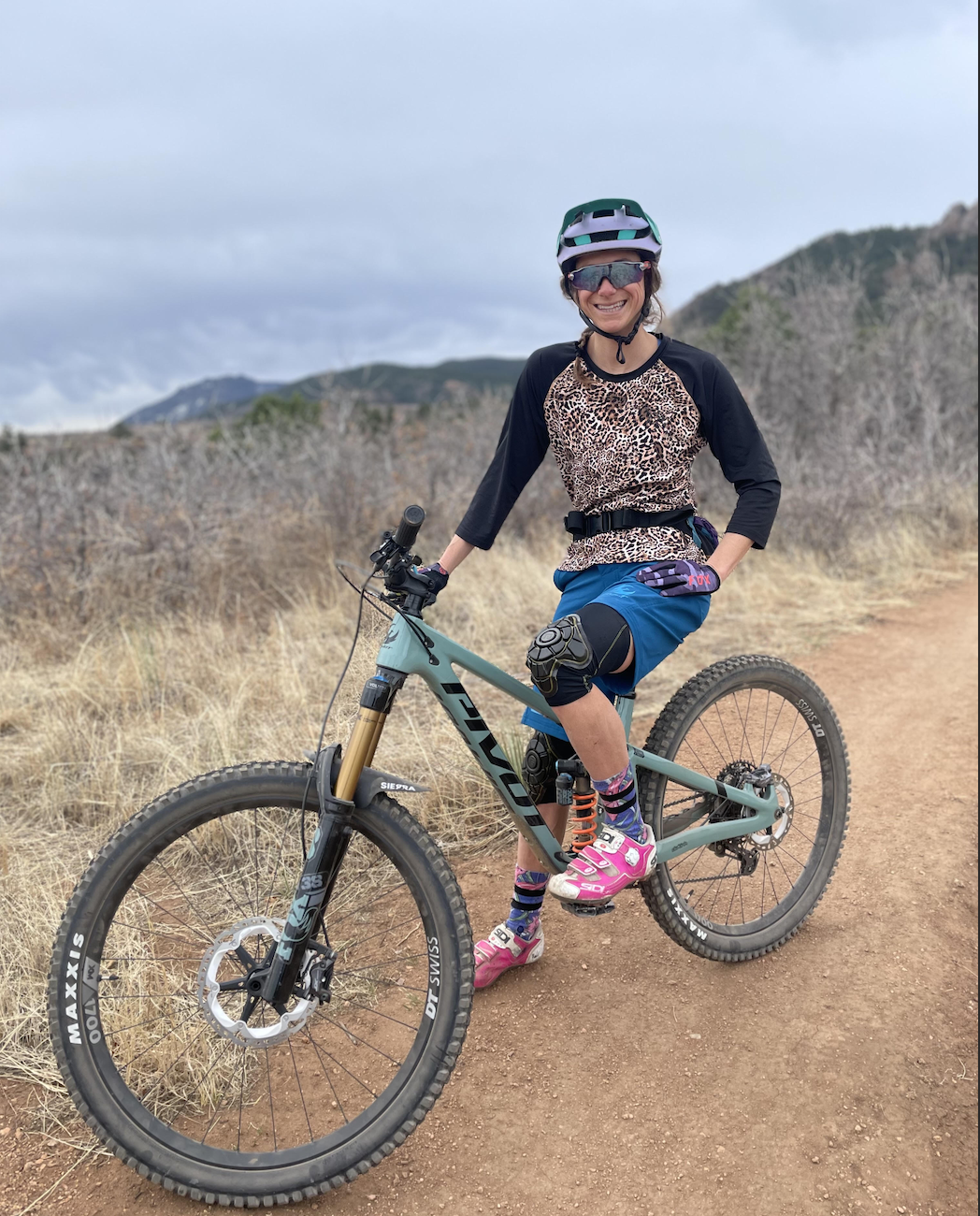
    Jessica Yeaton enjoys a fall mountain bike ride in Sedona, AZ. (Courtesy photo)

    It’s a no-brainer that mountain biking heavily engages lower extremity musculature, placing a high demand on our quadriceps, hamstrings, glutes, and calves. However, mountain biking also employs shoulder, chest, and arm muscles due to the control required in technical sections, downhills, and even steep uphills. Thus, the muscles used while mountain biking closely mimic those during cross-country skiing – particularly skating, which has a higher demand on our glutes than classic skiing. Additionally, the terrain in a network of mountain bike trails is often tough, causing fluctuations in heart rate similar to those experienced while skiing. There are long climbs followed by flowy descents with sharp corners and short, punchy uphills thrown into the mix. High workloads followed by challenging downhills on which to recover – doesn’t that sound like ski racing? I find that a 90 minute bike race feels very similar to a 30k skate race in effort. 

     The downhills also offer a technical challenge that heightens reaction times. I often ride into more difficult features multiple times to get the line right before committing – something that has changed the way I now approach tough downhill corners before a ski race.  An added bonus is the smile that I can’t wipe off my face after a flowy descent or when I’m able to conquer a new feature! 

    Dropping! Jessica Yeaton gets after it on a technical ride in Colorado this spring. (Courtesy photo)

    Lastly, the fact that it is low impact makes it a great addition to a summer training plan that is full of running and rollerskiing. If you struggle with injuries or are looking to increase volume without added stress on your joints, jumping on the mountain bike for a few workouts a week is a great way to accomplish that. 

    So, with all of those factors in mind – what is the best way to approach your workout on a mountain bike? 

    The aerobic demand and muscular fatigue is often higher while mountain biking than during other activities where it is easier to keep my heart rate consistently lower. Because of this, I tend to pick a few workouts a week where I am ok doing a higher distance pace (L2 into L3) to hop on the bike. I choose terrain that mimics ski racing, and do not stress about keeping my heart rate low. I often pair my rides on a day with double pole intervals or strength sessions. If I am trying to keep it easy or have hard skate rollerski intervals planned the next day, I opt for easier trails or a light run so I can keep my heart rate low.

    Want to test it out for yourself? Here are two of my favorite workouts on the bike. 

    Due to the aerobic challenge mountain biking presents, it’s an awesome place to do threshold workouts. If you live in a place where you can find a sustained climb or an up-track, you can use this to do L3 efforts (for example, 2 x 20 or 3 x 15 minutes up an up-track), then use the downhill for active recovery. This stimulates downhills in racing and forces you to focus on coordination while flooding with lactate. 
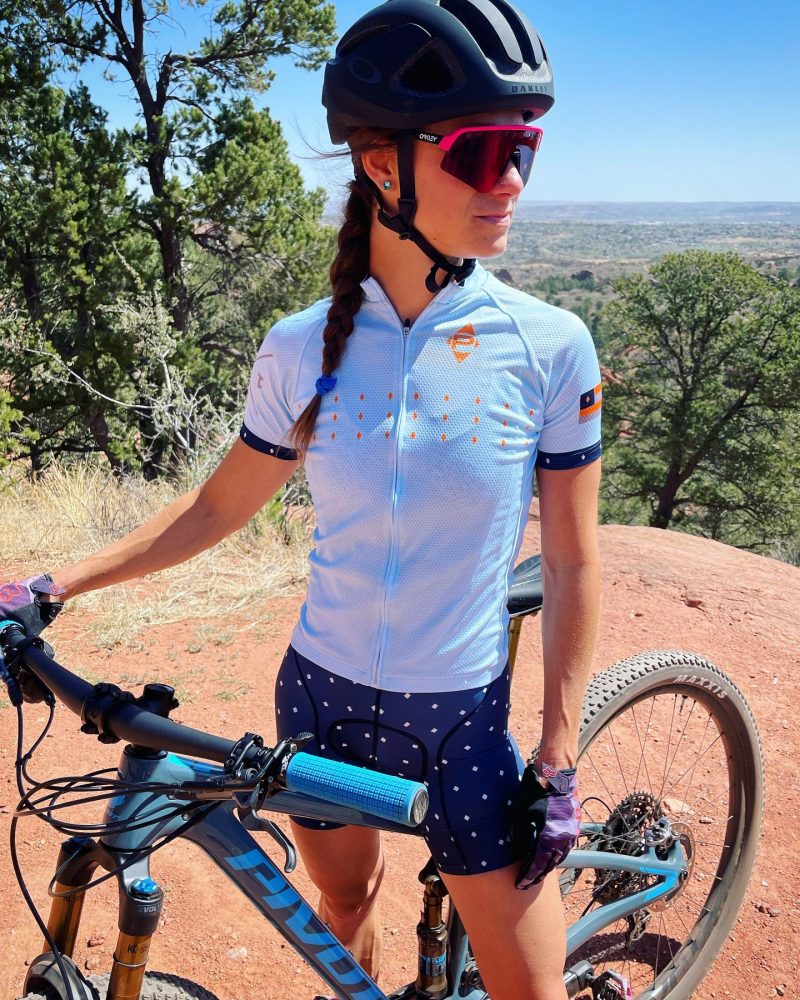
    2x Olympian and soon to be DPT Jessica Yeaton shares insights into incorporating mountain biking into your cross-country ski training. (Courtesy photo)

    Another great workout on the bike is 30-30’s, or where you go hard for 30 seconds, then recover for 30 seconds while continuing to ride easy. This workout focuses on power and strength, and I find that it translates really well to sprinting, and teaches the body to recover and get used to back-to-back punchy hill efforts, so you’re able to regain power descending off a roller before hammering up the next climb in a race. I recommend doing 3 x 10 minutes or 2 x 15 minutes of 30-30s. Just make sure you are able to keep your legs spinning during the recovery – you shouldn’t need to get off your bike to rest in between! The goal is to put in a hard effort, but maintain a reasonable pace in between.

    I am a big believer in making training as fun as possible while still putting in the hard work. Mountain biking is something to look forward to that makes me excited to get out and train. Ultimately, this helps me train harder and stay motivated, so I am a huge advocate for learning how to integrate it appropriately – which for me means creating a smart training plan that will help me reach my goals in the winter. If you also crave time on the bike, I hope this advice can give you the confidence to structure it into your dry-land training as well. 


  • Wednesday Workout: Sizzling Hot 30/30’s with BSF’s Nick Michaud

    Wednesday Workout: Sizzling Hot 30/30’s with BSF’s Nick Michaud

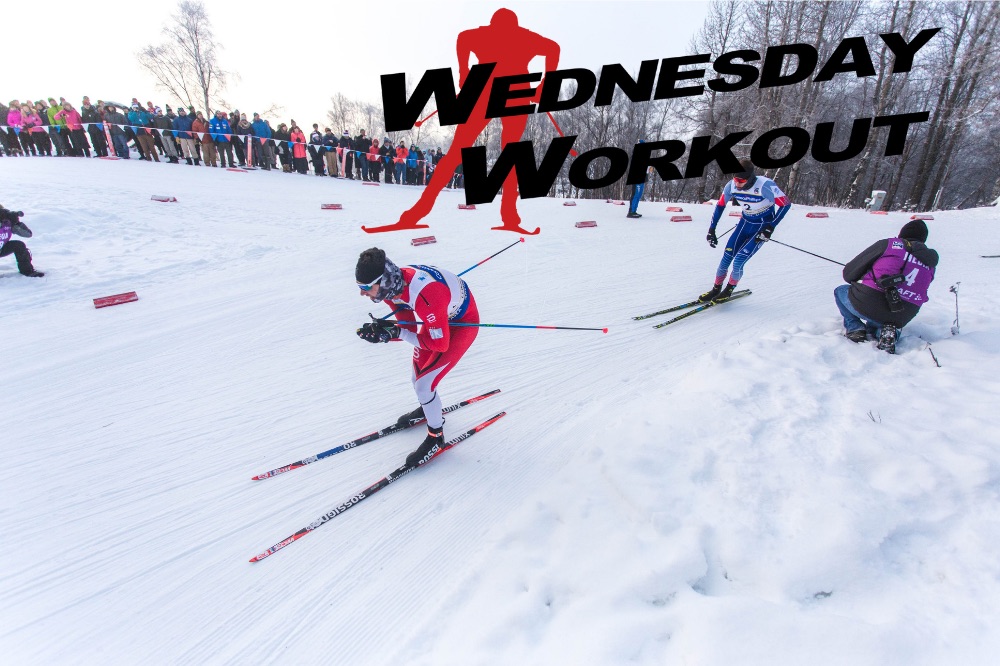
    BSF’s Nick Michaud (red suit) at last season’s Senior National Championships in Anchorage, Alaska. Michaud qualified 4th. (Photo: Gilbert Michaud)

    This Wednesday Workout was provided by twenty-six-year-old Bridger Ski Foundation (BSF) skier Nick Michaud. Bates College educated and raised plumb-line north in Fort Kent Maine, Michaud has emerged as a sprinter to watch on the SuperTour. He’s a gritty, salt-of-the-earth athlete who barely missed a nomination to the 2018 Olympic Team.

    Michaud offered FasterSkier a menu of options for the 30/30 workout — 30 seconds on 30 seconds off. From junior athletes to masters in M8 and beyond, Michaud has you covered with these training session variants.

    Let the gains begin.

    Backstory of the Sizzling Hot 30/30’s from Michaud:

    “Short, explosive movements are like bacon for me. I’m thrilled to eat bacon anytime, anywhere, with anyone. With vegetables, grains, and most foods that are really important for function, it can feel like a chore. That’s what a lot of nordic ski training feels like for me. My body, my mind, would prefer to just do speed work, lift heavy weight, and play basketball — and eat bacon. But in order to meet my performance goals, I have to eat vegetables and grains: aerobic base, lactate threshold, energy management, mindfulness and so much more. For these reasons, I love 30/30s.

    30/30 home terrain for BSF’s Nick Michaud in Bozeman, Montana. (Photo: Max Lachance)

    The execution is very simple: 30 seconds “on”, 30 seconds “off”. The effort and duration can be customized for the purpose of the workout. There should always be a purpose!. For athletes with periodized training plans, 30/30s can be used in different cycles of training to meet different goals. For a more casual athlete, 30/30s can simply be an extremely fun way to get in some higher intensity training.  

    Dragan Danevski, BSF nordic program director, began using 30/30s eight years ago. There was a study in Europe focusing on track and field and how to improve efficiency of running economy, improve aerobic capacity, and reduce the recovery time in a 30/30 workout. The original study tracked mainly 1500m and 3000m runners. Danevski adjusted the workout for skiers here at BSF.

    Danevski said BSF has used 30 by 30s for a few different goals: improving skier’s economy, stimulate good technique, and shortening recovery time for lactate clearance. Originally it was for improving threshold.  For his skiers, Danevski saw the potential to improve anaerobic capacity.

    Throughout summer Danevski follows the study and uses 30/30s to improve threshold.

    For the following age groups, the coach prescribes one 25-30 minute block of 30/30s for U16 and U18s. U20s go for a 30-35 a minute block of 30/30s. Some older skiers are ready for a 45 minute 30/30 session.

    Danevski said these 30/30 training days need to be disciplined by monitoring heart rate.

    tizanidine buy online, buy baclofen online, zanaflex online

    In the past, the 30/30 workouts were used only during intensity blocks. Recently, we’ve started using it throughout the whole training year: on skis, foot, and rollerskis.

    Psychologically, Danevski said the 30/30 is a more tolerable intensity session, especially for kids, since they can focus on high-quality efforts for 30 seconds each time. It’s easier to focus.

    As we transition into fall here at BSF, we also use 30/30s to improve anaerobic capacity. One basic example we use are three to six sets of a 15-minute long 30/30s — with appropriate rest between each set.

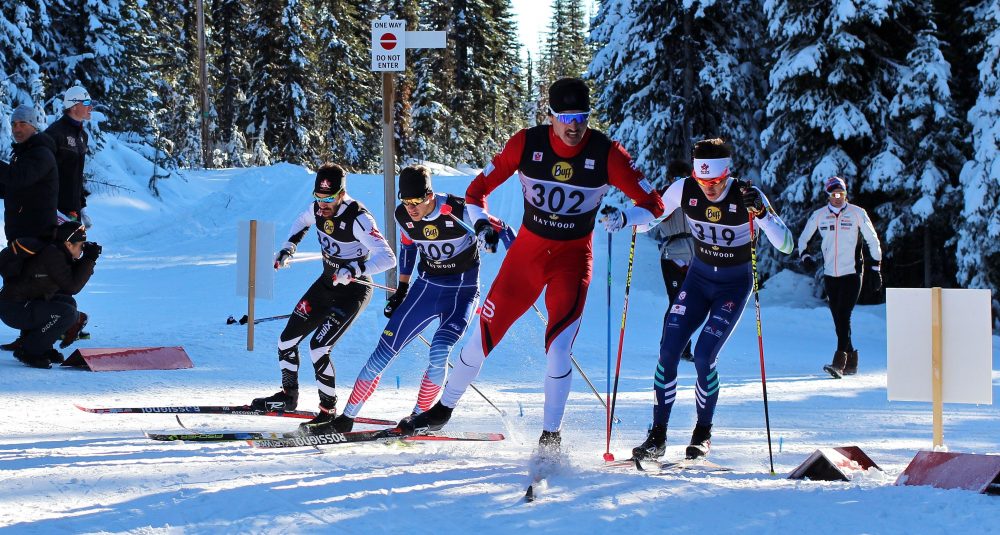
    Nick Michaud (BSF) in bib 302 putting those 30/30s to good use at the Sovereign Lake NorAm in 2017. Michaud was the second fastest qualifier. (Photo: Forrest Mahlen)


    The 30/30 Workout Menu Starting with Michaud’s Favorite Variation:

    Nick Michaud: 3 x 5 minutes, sprint pace. So we are all clear, this means a five minute long  30/30 excecuted three seperate times. During each five minute period, that’s a total of 2.5 minutes “on”, and 2.5 minutes “off”. For the entire session, the athlete is “on” for 7.5 minutes, or half the total elasped time. I rest for five minutes between each set.

    Notes: I use this two days before a sprint race, increasing my effort each set. It’s a great way to get a feel for speed, technique, and effort in all areas of the course. I take five minute breaks between sets. I leave the venue with a good understanding of the course and excited to move fast on it two days later. Using this training sessions at different points of the year is a great way to practice understanding the critical difference between effort and ski speed — which I think is crucial.

    Favorite 30/30 Variations from Others:

    Gary Colliander, US Paralympic Biathlon Coach: 4-8 x 6 minutes. Number of blocks depends on L3 or L4.

    Notes from Colliander: “Focus on quality of movement through the interval and a slightly higher turnover. With the short ‘on’ time I think you can hold the technique together better and because there is a short rest you can potentially push the pace and thus the level a bit. They’re still very tough, but that short rest just seems to offer bit of recovery while allowing the heart rate to remain high.

    Another way to look at the short 30 second rest is like it’s a downhill. Anytime you get a downhill it’s a chance to grab some O2 and recover although for a very short bit. But it always feels good when you come out of that tuck.”

    Lina Hultin, Bridger Ski Foundation Development/Competitive Team Coach: 5×6 minutes.

    Notes from Hultin: “What I like with 30/30s and 45/15s is that it allows the athletes to ski more efficiently. Since you have that shorter break, you tend to have better and more efficient technique since athletes ‘dare’ to push it a little harder when they know they will have a shorter break. Good technique requires strength and power and the shorter interval allows athletes to keep good technique for a longer time.

    The closer you get to the season you can dare to let go of that shorter break and hopefully you can maintain that good efficiency in you technique in a continuous time trial or longer intervals.”

    Akeo Maifeld Carucci: Craftsbury Green Racing Project Athlete: 2-4  x 10-15 minutes at L4+.

    Notes: “Terrain wise, I like small rolling terrain or maybe gradual uphill with some bumps. I believe in keeping it between L1 and recovery pace during the rest phase, but it is important that it keeps moving at the least.”

    Seth Hubbard, Bridger Biathlon Club Head Coach: 15/15s for sets of 4-8 minutes at race pace +

    Notes: “This workout is altered depending on an athlete’s age and their work on pacing, and ability to surge and recover.”

    Will Sweetser: Nordic Programs Director at Sugar Bowl Ski Team and Academy: 15 sec/15 sec 6-12 minutes.

    Notes: “I use 6-12 minute repeats with ‘on time’ at either L3+ or goal pace for races 8 minutes and longer. First used this coaching runners in the mid 90’s. Have since had good success with younger athletes developing pace sense.

    Used the 15/15 to help take an athlete’s 3,000 meter time from 11:38 to 10:10 in 5 weeks. The next year this athlete brought their time down to 9:27 using 15/15 session of 2 x 3000m about once every 10 days.”