Tag: 30 K

  • Shields Takes Road Less Traveled, Apart from Training Centre

    Shields Takes Road Less Traveled, Apart from Training Centre

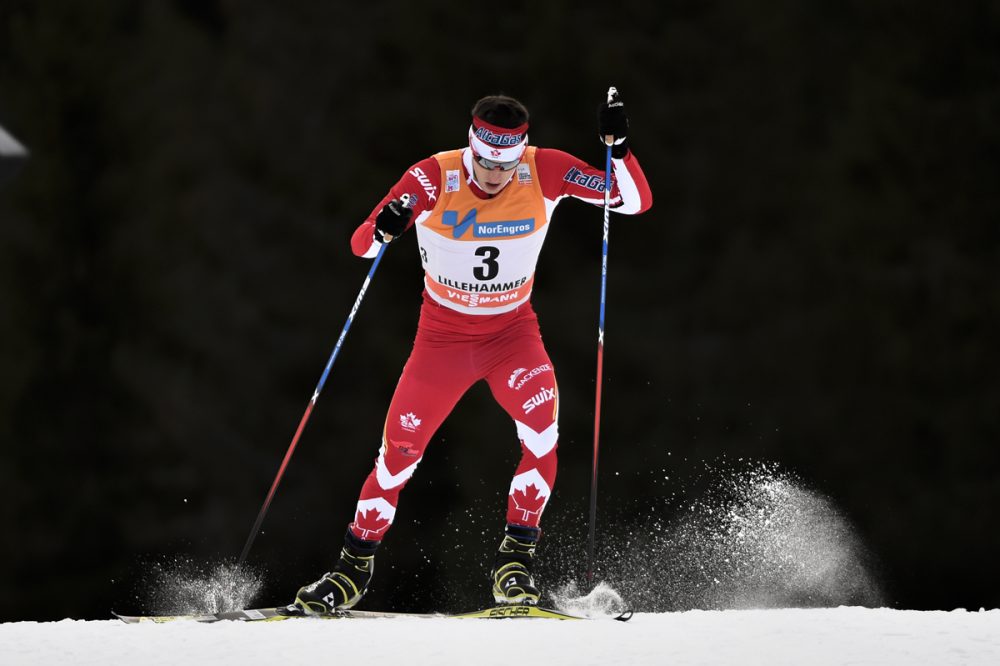
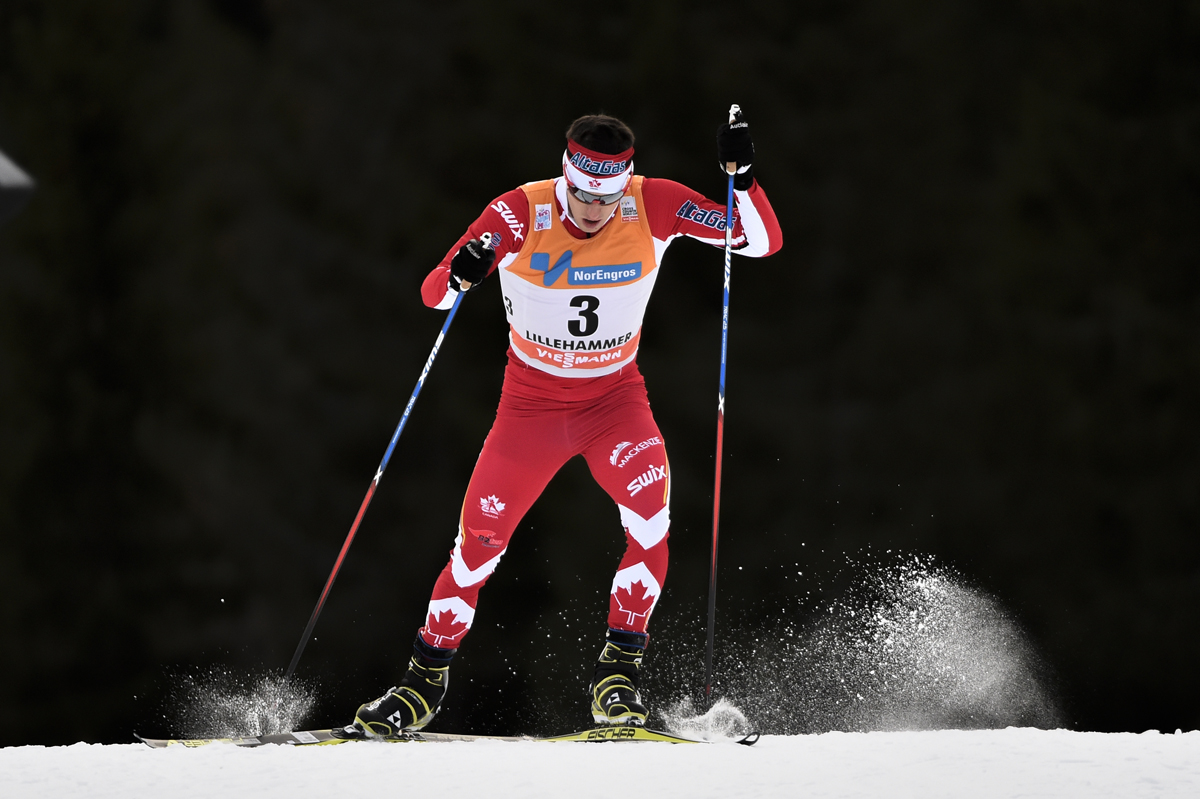
    Canadian Andy Shields competing in the men's 10-kilometer freestyle race during Period 1 this year in Lillehammer, Norway. (Photo: Fischer/Nordic Focus)
    Canadian Andy Shields competing in the men’s 10-kilometer freestyle earlier this month in Lillehammer, Norway. (Photo: Fischer/Nordic Focus)

    At the start of last season, Canadian cross-country skier Andy Shields specified two goals on his personal blog: 1.) to be the NorAm leader and earn World Cup starts by 2016, and 2.) to race the Ski Tour Canada.

    Though several of his fellow Canadian competitors may have had similar ambitions, Shields was one of the few who lived them out. He emerged the 2015/2016 NorAm overall men’s winner, besting runner-up Kevin Sandau of the Alberta World Cup Academy (AWCA) by just one point.
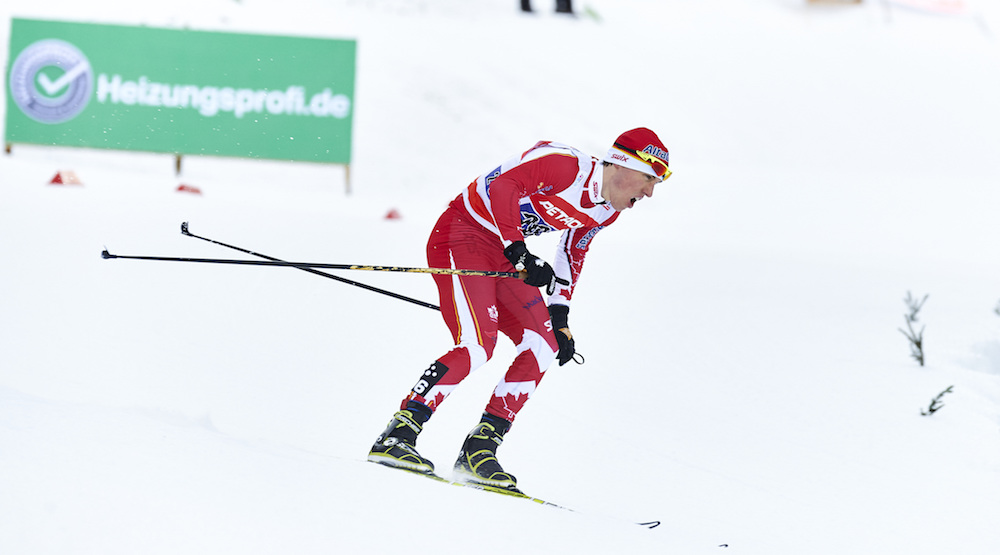
    Canada's Andy Shields competing in last season's men's team sprint in Planica, Slovenia (Photo: Fischer/NordicFocus)
    Canada’s Andy Shields competing in a 2016 World Cup men’s team sprint last season in Planica, Slovenia (Photo: Fischer/NordicFocus)

    With some of his early season results –including a first place finish in last year’s NorAm skate sprint at Sovereign Lake, B.C. –Shields earned the opportunity to compete for Canada in two World Cup races in Planica, Slovenia. They were his first.

    A little less than a month later, Shields returned to Canada to compete in more domestic racing, and before he knew it, he found himself living out his second goal of racing in his native country’s Ski Tour.

    While last year marked his debut appearance on the international World Cup, this season is the first time the 25-year-old Shields has joined Cross Country Canada (CCC) for Period 1 of the World Cup.

    “I’ve know I have had these World Cups starts for several months now, so I am really prepared for the day to day racing weekend after weekend,” Shields told FasterSkier after the men’s freestyle sprint last Sunday in Davos, Switzerland. “I am just not as recovered as I would like to be to actually compete against the best in the world … it’s not like Ski Tour Canada last year where they were on their last legs, and I was in top form.”

    Shields is also venturing into new territory after leaving his national training centre and returning to his original coach — his dad. For the last six years, Shields was a member of the Thunder Bay National Development Centre (now the National Team Development Center). Before that, he skied for Waterloo Region Nordic Ski Club.

    “I joined my club where my dad is the coach,” Shields said of his father, Kevin Shields, who coaches at Lappe Nordic, north of Thunder Bay. “I kind of am … focusing on some of the things I felt like I needed to improve, rather than what the team was doing. I had been [with] the training centre for six years, so it was time for a change for sure.”

    Though no longer affiliated with NTDC Thunder Bay, Shields indicated that he maintained a good relationship with Thunder Bay’s head coach Timo Puiras. Throughout the summer and fall, he jumped into team training sessions, which he said Puiras had “no problem with.”
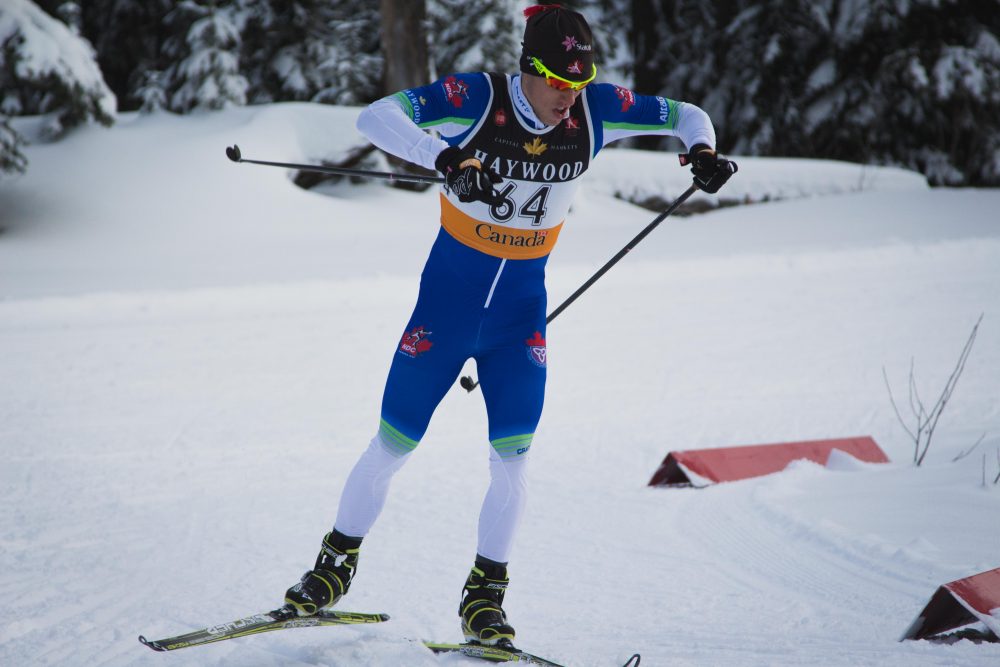
    Andy Shields for his previous club--National Team Development Center Thunder Bay-- in the NorAm skate sprint qualifier in Sovereign Lake in Vernon, British Columbia. (Photo: BUFF® Canada- M-Eve Bilodeau.C.)
    Former NDC Thunder Bay skier Andy Shields racing a NorAm skate sprint qualifier last season at Sovereign Lake in Vernon, British Columbia. (Photo: BUFF Canada/M-Eve Bilodeau.C.)

    After making the switch, Shields does not feel he has lost any opportunities, but rather gained some.

    “It was what I needed,” Shields said. “[I’m] starting to get into the last half of my career now so I kind of have an idea of what I want to be doing.”

    A change for Shields this season was not just starting the season on the World Cup, but doing so after having worked with his dad as his club coach. With a few weekends of World Cup racing behind him, Shields sees himself as headed in the right direction.

    “I am always a little slow for the first couple races of the season so you know [Saturday’s 30 k],  even though it wasn’t that great it was still a big improvement over how I was racing in Ruka and Lillehammer,” Shields said on Sunday, referring to the first two weekends of World Cup racing in Finland and Norway leading up to last weekend in Switzerland.

    His next stop will be France for the men’s skiathlon and relays. Following those races, he will fly back to Canada for the holidays and then to Utah for the 2017 U.S. nationals race series at Soldier Hollow.

    With goals of competing at 2017 World Championships in Lahti, Finland, Shields is simply focused on racing fast, unconcerned at this point with any criteria qualifications.

    “I don’t even know what the criteria exactly is or if there [will] even going to be spots up for grabs at trials down there,” Shields said, referring to U.S. nationals. “I just want to race fast and see what happens, I don’t really need to see the criteria.”

    — Chelsea Little and Ian Tovell contributed
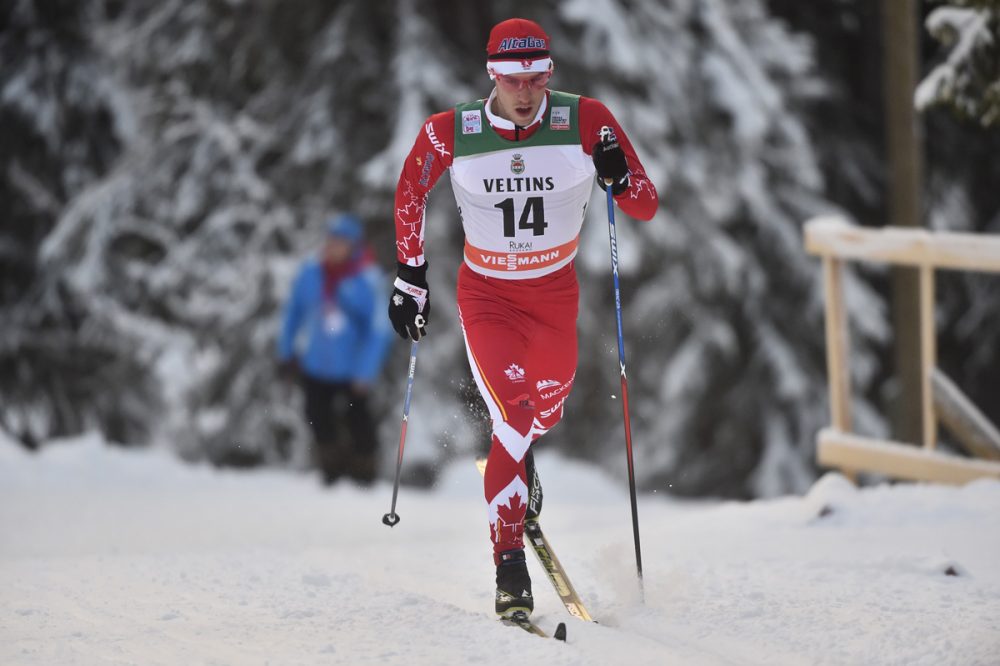
    Canada's Andy Shields (Lappe Nordic) racing to 83rd in the 15 k classic pursuit at the 2016/2017 World Cup opener in Kuusamo, Finland. (Photo: Fischer/NordicFocus)
    Canada’s Andy Shields (Lappe Nordic) racing to 83rd in the 15 k classic pursuit at the 2016/2017 World Cup opener in Kuusamo, Finland. (Photo: Fischer/NordicFocus)
  • Grover: Ski Switch Sinks Stephen, U.S. Women in Olympic 30 k

    Grover: Ski Switch Sinks Stephen, U.S. Women in Olympic 30 k

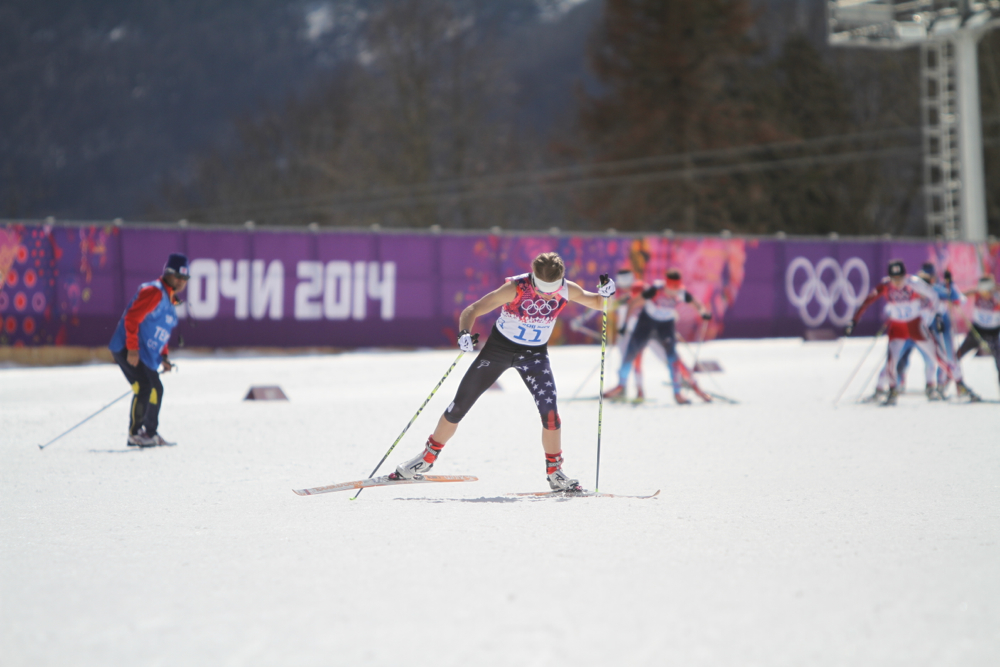
    The U.S.'s Liz Stephen racing in Saturday's 30-kilometer freestyle race at the Sochi Olympic Games.
    The U.S.’s Liz Stephen racing in Saturday’s 30-kilometer freestyle race at the Sochi Olympic Games.

    KRASNAYA POLYANA, Russia – Liz Stephen wouldn’t acknowledge the degree of her disappointment, but it was there on Saturday, in the form of the tears peeking out from beneath her mirrored sunglasses after the 30-kilometer freestyle race—the last women’s event of these Olympics.

    Stephen had just finished in 24th place, three minutes behind the winner—far from where she’d hoped, with a dreamed-of medal skiing away under a burning sun in the form of the Norwegians who took the top three spots in the race.

    A strategic decision to switch to new skis at the 10-kilometer mark let the pack get away from her, and she never caught up. The story was the same for Holly Brooks and Kikkan Randall—the two other top American women, who made the same decision and never recovered, placing 27th and 28th.

    The call to switch skis came from the U.S. Ski Team’s staff, which had tested on Friday and found that a fresh coat of wax made a big difference over the 10-kilometer loop. It just turned out that that difference was smaller than the effects of the draft in the pack.

    “It was a tactical mistake on my part—on the part of the coaching and service teams that advised them that,” said Chris Grover, the American head coach for the Sochi games. “It’s really disappointing, and I’m disappointed our women didn’t have a chance to show what their true ability is today. That’s for sure on us—on the staff making an incorrect call. “

    Stephen still led the American women on Saturday, but she’d wanted much more than a top-25.

    She said she watched as the Norwegians passed through the stadium at the end of their first loop and skipped going to the pit area for a pair of skis with new, faster wax.

    It was tempting to follow them, she said. But in the past, the decision not to trade in for a new pair has burned the Americans—in a 30-kilometer World Cup race last year in Oslo, Stephen blew through the exchange area and was skiing in podium position, until a pack of women on fresh skis caught her and left her behind, along with a Norwegian skier.

    “They were having great races, and they got chewed up and spit out in the last kilometer or so,” Grover said, noting that in Oslo, the loop was shorter than the 10-kilometer lap Saturday—in theory making fresh skis even more of an advantage here.

    It turned out that skiing with the pack was just bigger advantage. After the race, Stephen was diplomatic, and clearly some combination of frustrated and disappointed—though she was loathe to say it.

    Asked how she felt during the event, she responded: “Today was not my day,” then had to walk away from a group of reporters to collect herself.

    When she returned a minute later, she said: “Results are just part of the equation. Certainly, I was hoping to have better ones today, but what can you do? You go out and you try your hardest, and yeah—that’s what I did, and some days it works, and some days it doesn’t.”

    The result was especially unsatisfying given that the day, the distance, and the trails here suited Stephen so well.

    At 5’2” and 105 pounds, on a course with 3,500 vertical feet of climbing, Stephen had tailored her preparation to the 30-kilometer freestyle. The 50-degree temperatures Saturday didn’t hurt, either.

    “It was a dream course for me. And it was slushy, and it was slow and hot—these are all things that I actually like,” she said.

    Grover said he though Stephen would have had a “huge day,” or at least a “great day” had the coaching staff given her different tactical advice.

    “I don’t know if anyone could have kept up with the top three,” Grover said. But, he added: “For sure, watching the pace of the chase pack, Liz can ski that fast. No doubt about that.”

    Randall and Brooks, two of the three other Americans in the race, also switched their skis at the 10-kilometer mark, and both regretted the decision.

    Brooks said she was “kicking herself” after she turned into the exchange “like a sheep,” following the woman in front of her.

    “Even though I think I saw a bunch of other people go straight, I just couldn’t think on my feet fast enough,” she said.

    Brooks said that otherwise she felt “great,” and that the speed of the pack felt reasonable, unlike other races this year in which the pace was a “kick in the shins, right from the start.”

    “I don’t think that those girls were skiing that much faster than I was,” she said of the main pack. “Just, when you’re skiing out there by yourself, or with one or two other people, you can’t do it.”

    After training for shorter events at the games that didn’t go well—the individual sprint, the team sprint, and her 5-kilometer leg of the women’s relay—Randall said she felt better than she expected to on Saturday.

    “It was kind of weird, because this was definitely the race I felt the least prepared for,” she said. While the ski change at 10 kilometers left her chasing the group of women she’d been skiing with earlier in the race, Randall said that she had “good energy” through the end of the race.

    “I think this is a turnaround point,” she said.

    Jessie Diggins, the fourth U.S. finisher, struggled to 40th place, seven minutes behind the leaders. She got so hot during the race that she yelled from the big climb to one of her coaches: “I need water!”

    She got it, but still said afterwards: “The biggest thing I learned from today is that it’s a really good thing I’m not a Summer Olympian, because I do not perform in the heat very well.”

    –Chelsea Little and Alex Matthews contributed reporting.