
I think Jessie Diggins has taught the world many things. Maybe it’s how to find your grit and accept the pain while you push your body to new limits. Maybe it’s a better understanding of eating disorders, where to find help, and knowing you’re not alone. Or maybe it’s the art of applying face glitter on race day. I’ve learned a bit about all of those things (when Jessie says you’re getting glittered, you’re getting glittered), but mostly I’ve learned how to be a better physical therapist.
As most cross country ski fans know, the 50km race in Holmenkollen, Norway is the Super Bowl of the sport with tens of thousands of fans lining the race course. Until the 2023 edition, women were only permitted to race 30km because no one, or at least the old men in charge, thought they could handle the longer distance without irreparable harm. After years of pushing, the women were finally going to race the golden distance equal to the men. This meant a lot to Jessie and she was one of the favorites to win.
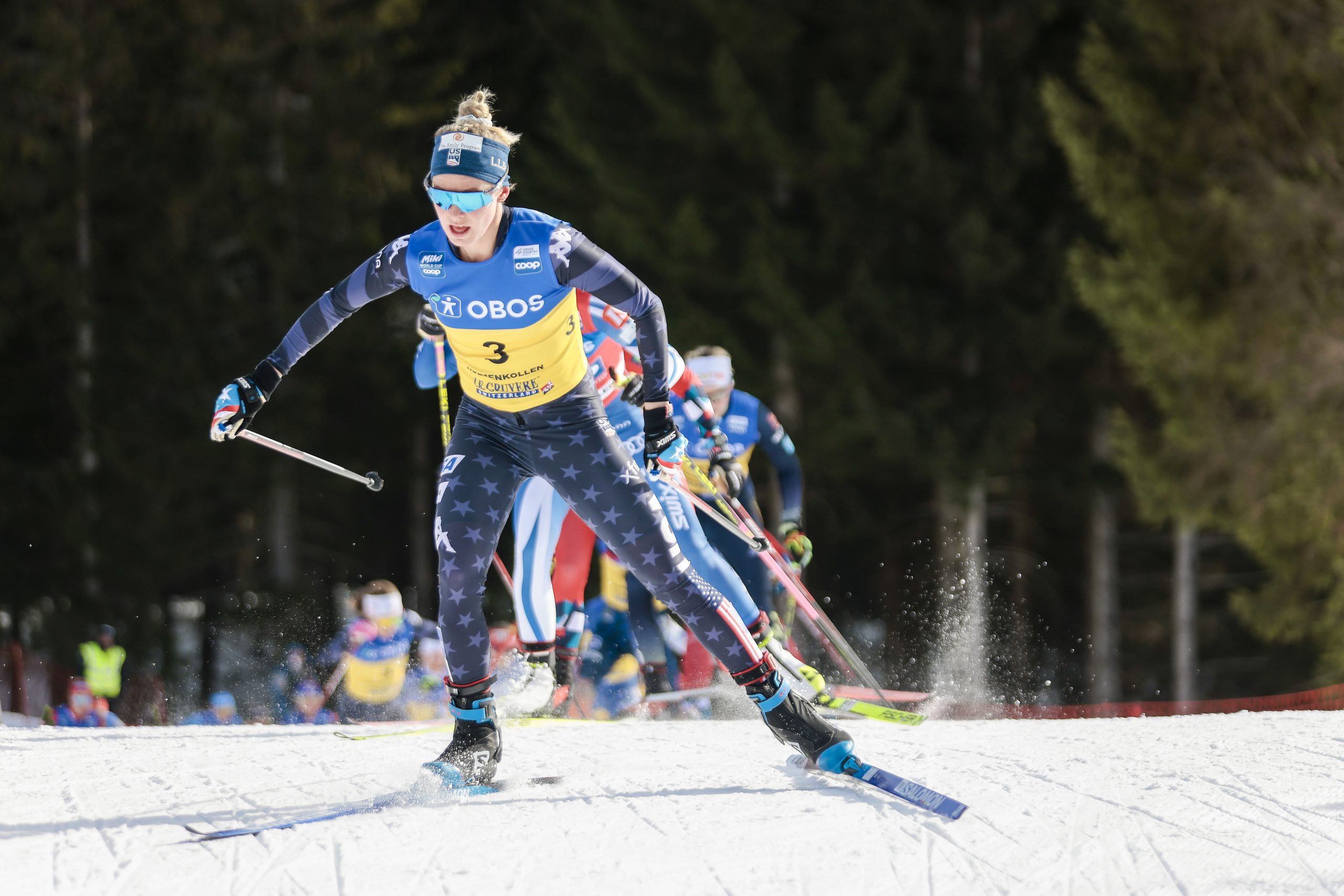
On the eve of that race, I was on physio duty with the US Ski Team and Jessie was on my treatment table for me to work out some kinks and help prep her body for the race. Small talk can help the time pass and maybe take the sting out of my thumbs digging into tired muscles. At some point during that treatment session I asked what her goals were for the big race. I expected her to say a win, or more humbly a podium place, or maybe even talk about sprinting for bonus points at the top of the hill. But her goals had nothing to do with the results of the race and everything to do with how she was planning to execute her day. She described her breakfast plan, her warm up plan, and her race plan which was all about staying relaxed, not stressing if she was out of position, getting her drink feeds, and enjoying the fact that she, a woman, was finally getting to race 50km at Holmenkollen. Yes, she admitted that a win would be really, freaking cool, but she was focusing her energy on the things that she could control. She knew that another skier being better on the day was out of her control. She knew that a miscalculation in ski prep, leaving her with slower-than-the-pack skis, was out of her control. Instead, she chose to focus her energy and set goals based on what she could control, not based on her place at the finish line. She was focusing on how to do what she does.
Psychologists call these process goals vs outcomes goals. Think of process goals as characteristics of how you do what you do, not whether you hit objective markers. For Jessie, these were her strategies for how she was going to approach and execute her race day, not what the results sheet said afterwards. If you’re doing an interval session, the outcomes goals are the time splits, heart rate, lactate, etc that you’re targeting while the process goals are the characteristics or nuances of the workout: technique, form, pacing, breathing, posture. Again, these process goals are not the what but more the how. The same distinction could apply to school work where the test score is the outcome goal and the attention in class, quality note taking, focused studying, and a good night’s sleep are the process goals.
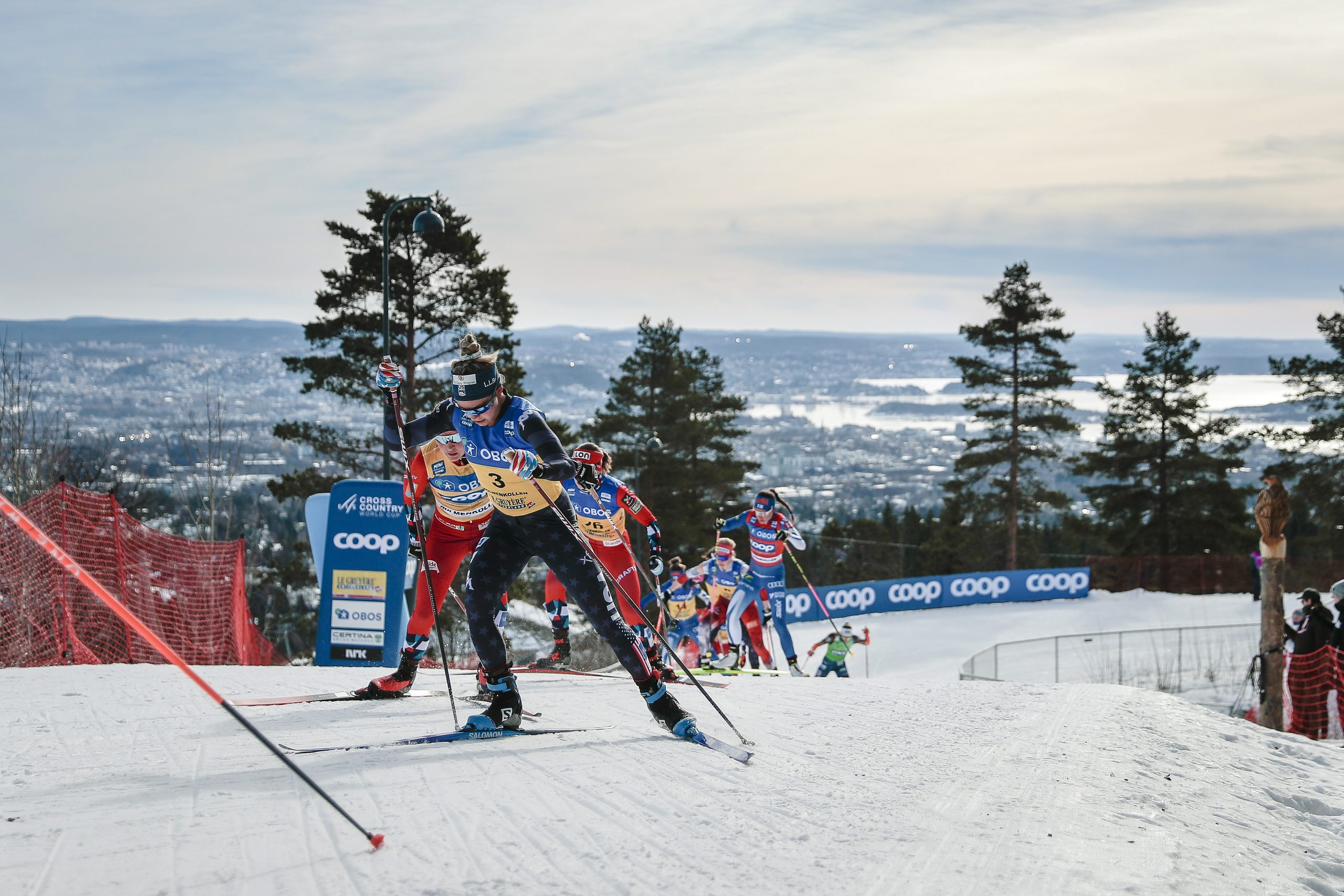
(Photo: NordicFocus)
Applied to sport settings, this meta-analysis makes a very strong case for setting process vs outcomes goals. As the authors note in the article, “process goals were more beneficial for increasing performance and self-efficacy than other goal types, [which] is a noteworthy finding, given self-efficacy has been shown to enhance decision-making, increase motivational intentions, and is positively correlated with sport performance.” And there’s no reason to think that the same couldn’t be said about the application of process goals outside of sport.
I have been a physical therapist for nearly 20 years. For the vast majority of that time, my self-efficacy was tied to the outcomes of my patients. My mood at the end of the day was very dependent on their progress. The first thing we PTs ask when you come into the clinic is, “How are you doing? How’s your pain?” If the answer is “better” then I’m calm, relaxed, and clear to think of how else I can help this patient. If the answer is “the same” or “worse” then my heart rate and stress go up and my clouded mind has a harder time focusing on the decisions required to recalibrate my treatment plan. One or two of these patients a day and I can weather the storm. If that’s most of my day, I’m going to leave the clinic in a self deprecating funk as the worst PT on the planet.
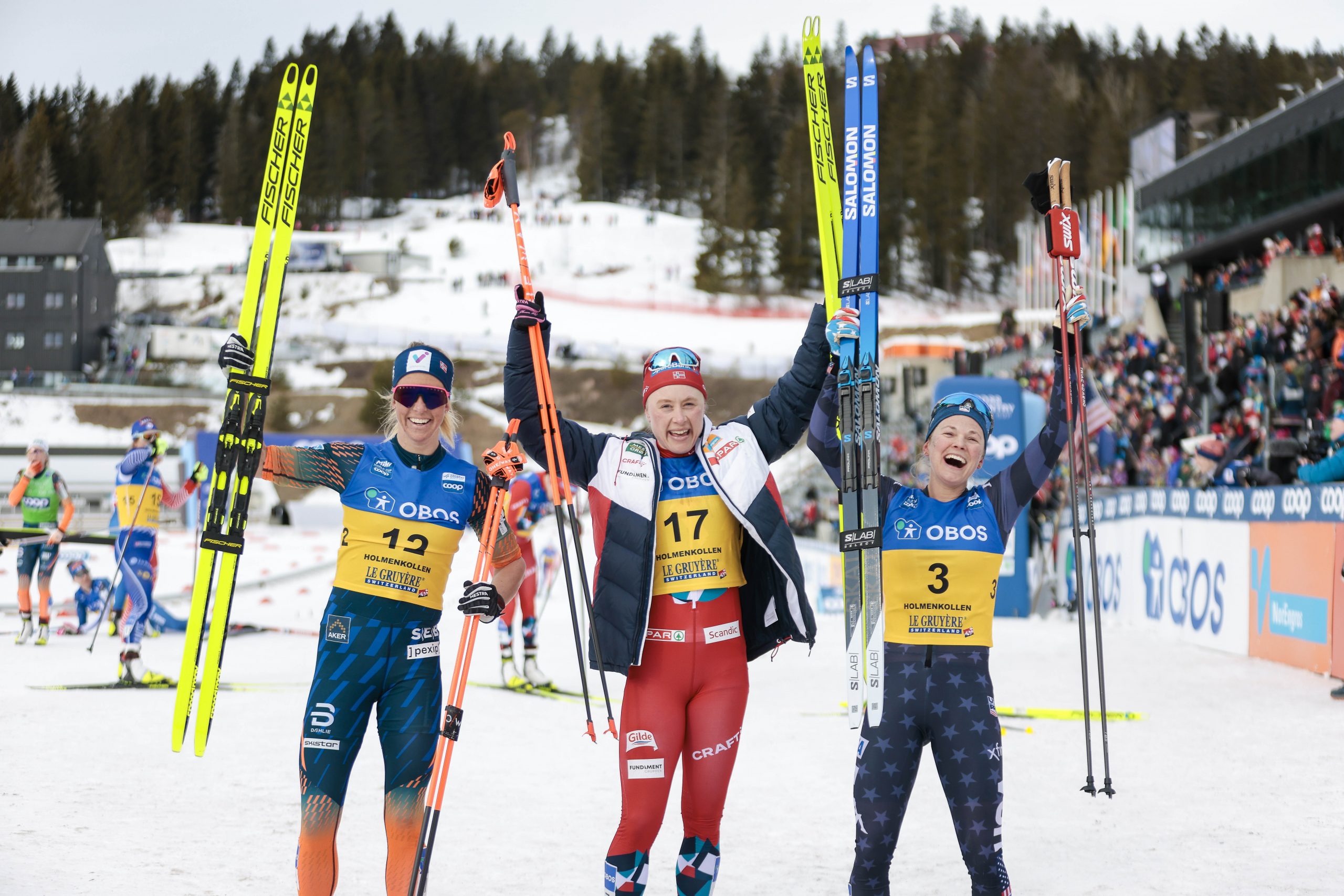
Holmenkollen behind Astrid Oeyre Slind (2nd place – NOR) and Ragnhild Gloeersen Haga (1st place – NOR). (Photo: NordicFocus)
My patients’ outcomes–their pain, strength, mobility, function, quality of life–are exactly that. They are outcomes goals. And they are very important. But that pre-race conversation with Jessie made me realize that they’re not always within my control. Once the patient leaves the clinic, I have no control over whether they do their home exercises, whether they’re cutting back on training as we discussed, or whether their life stressors are a significant contributor to their symptoms. I can only control how I do what I do. But if I know that I’ve checked my boxes—listening to the patient, gathering and analyzing information, creating a reasoned treatment plan, and implementing that plan—then I’ve done the best that I can do regardless of the outcome.
This shift in focus from patients’ outcomes to my processes has not diminished my empathy, compassion, or desire to help patients achieve their goals; however, it has enabled me to leave the clinic on a high note far more often than not. I went from being another burn-out statistic (studies like this one place blame on a lack of “basic psychological needs of autonomy, competence, and relatedness”–not dissimilar from what are considered the attributes of process goals) to enjoying my time in the clinic. My work is still very cognitively and emotionally challenging, but I find that my cup is full more often than it is empty. And placing more focus on how I do what I do has improved my performance with patients, ultimately making me a more effective PT.

