From the FasterSkier archive — posts syndicated from athletes’ and coaches’ own blogs between 2004 and 2012, kept online as published. Current coverage is at fasterskier.com.
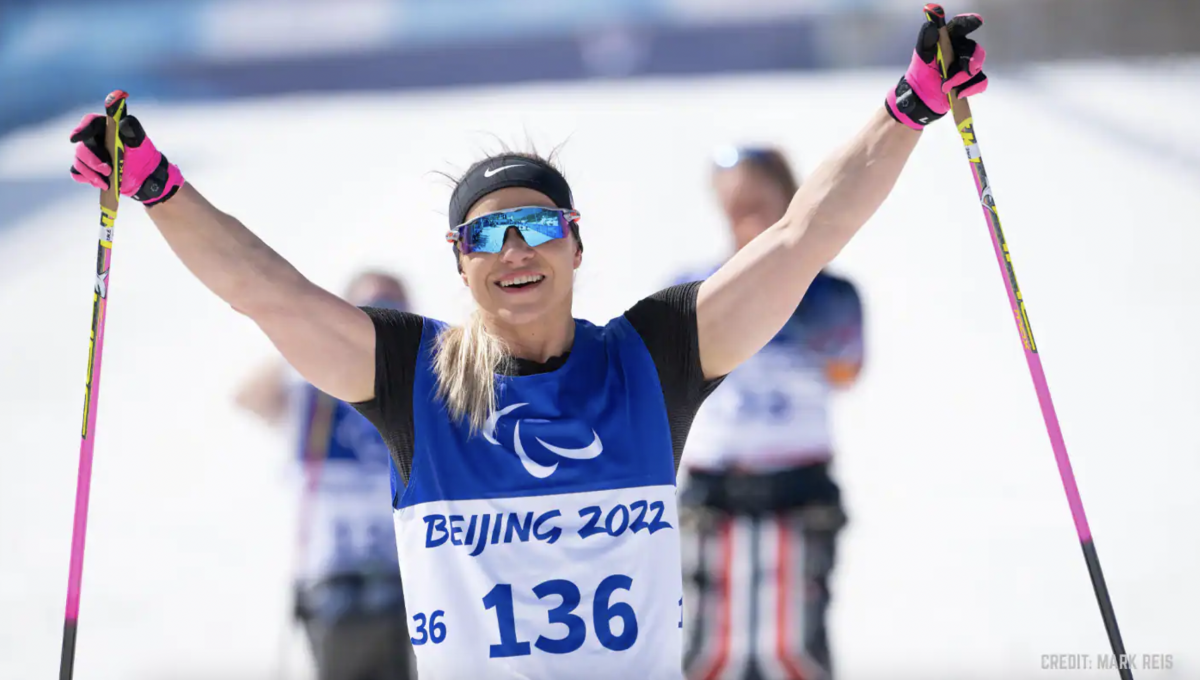
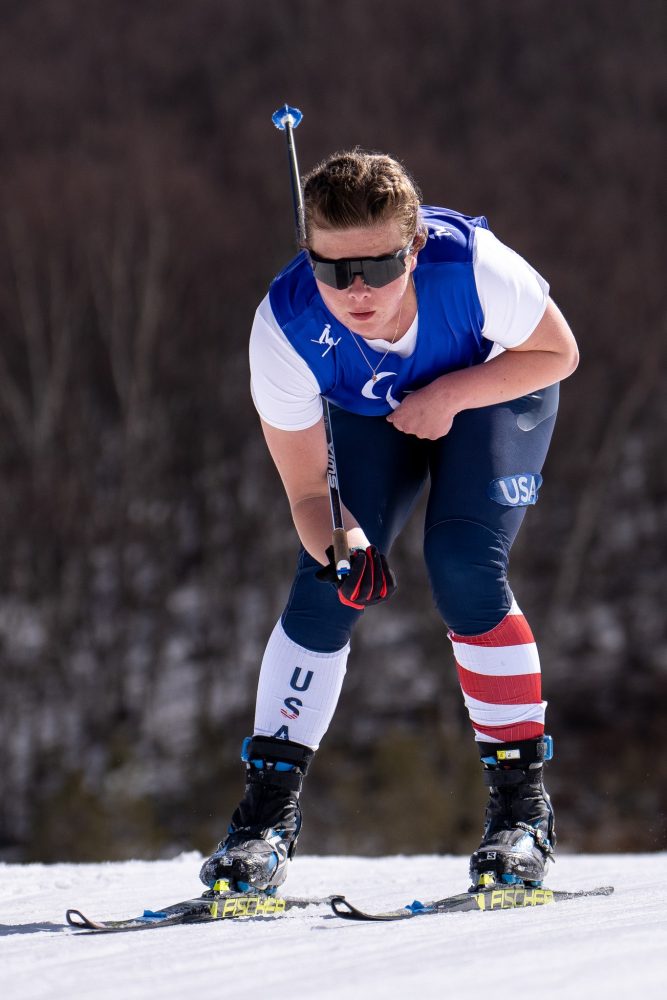
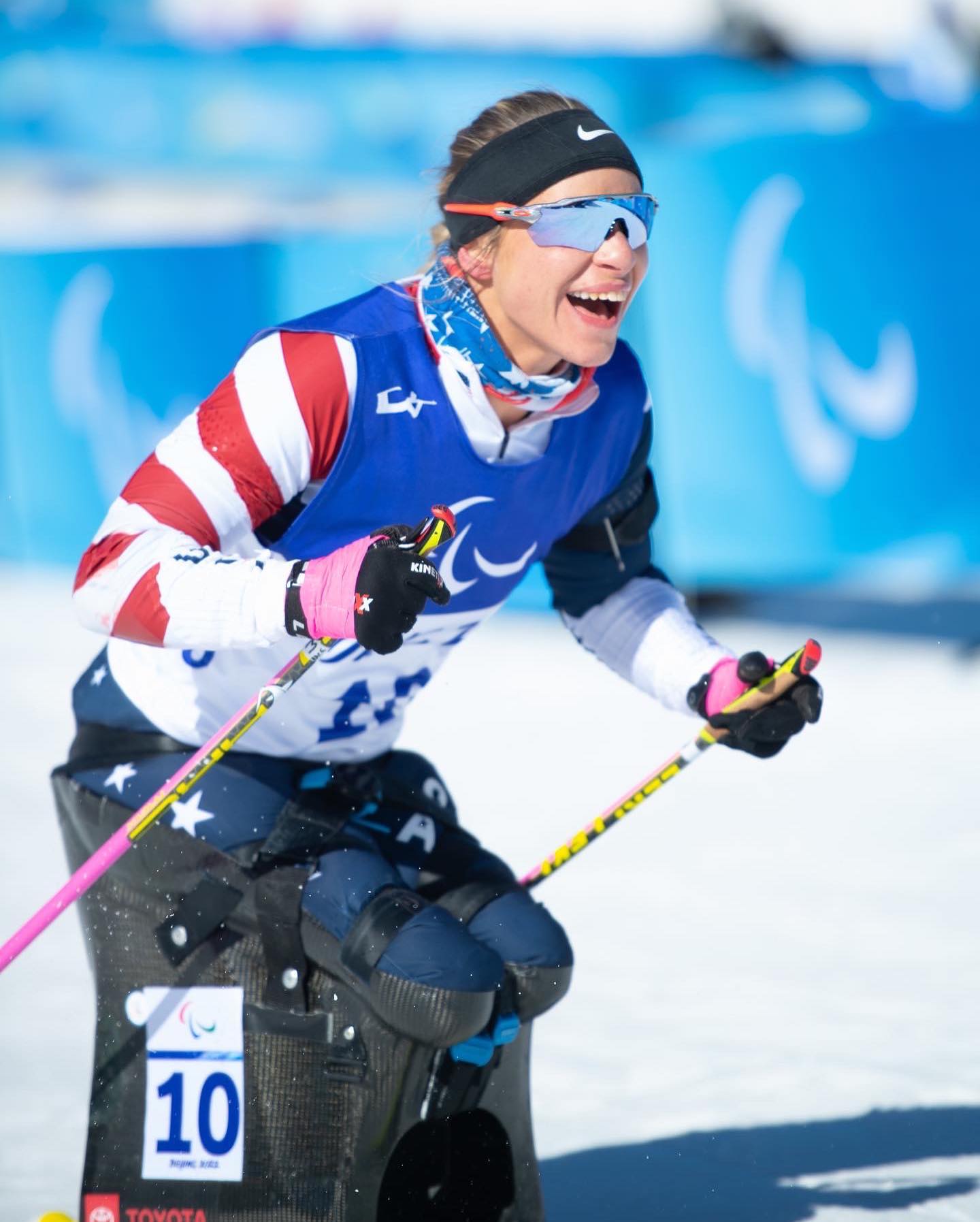
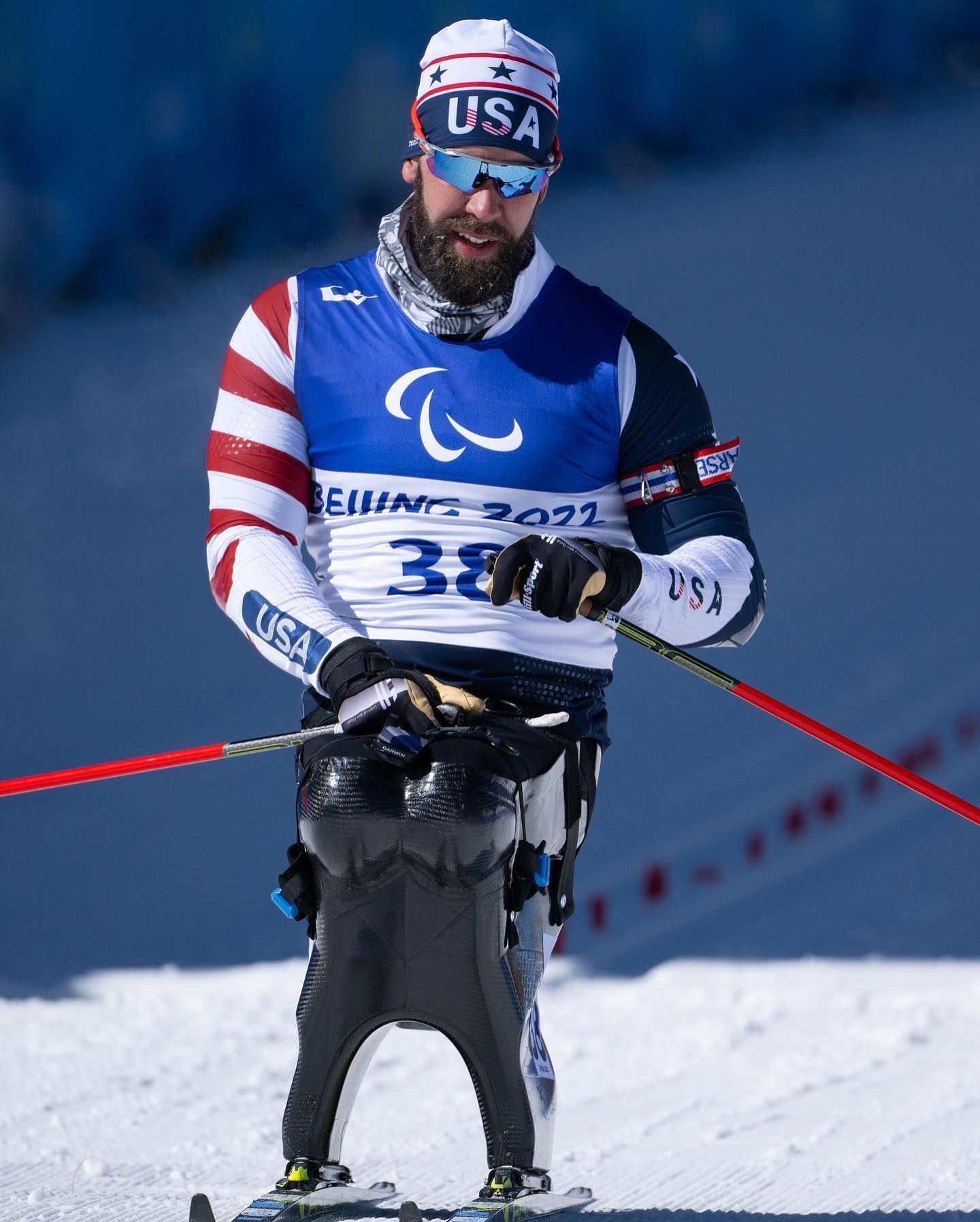
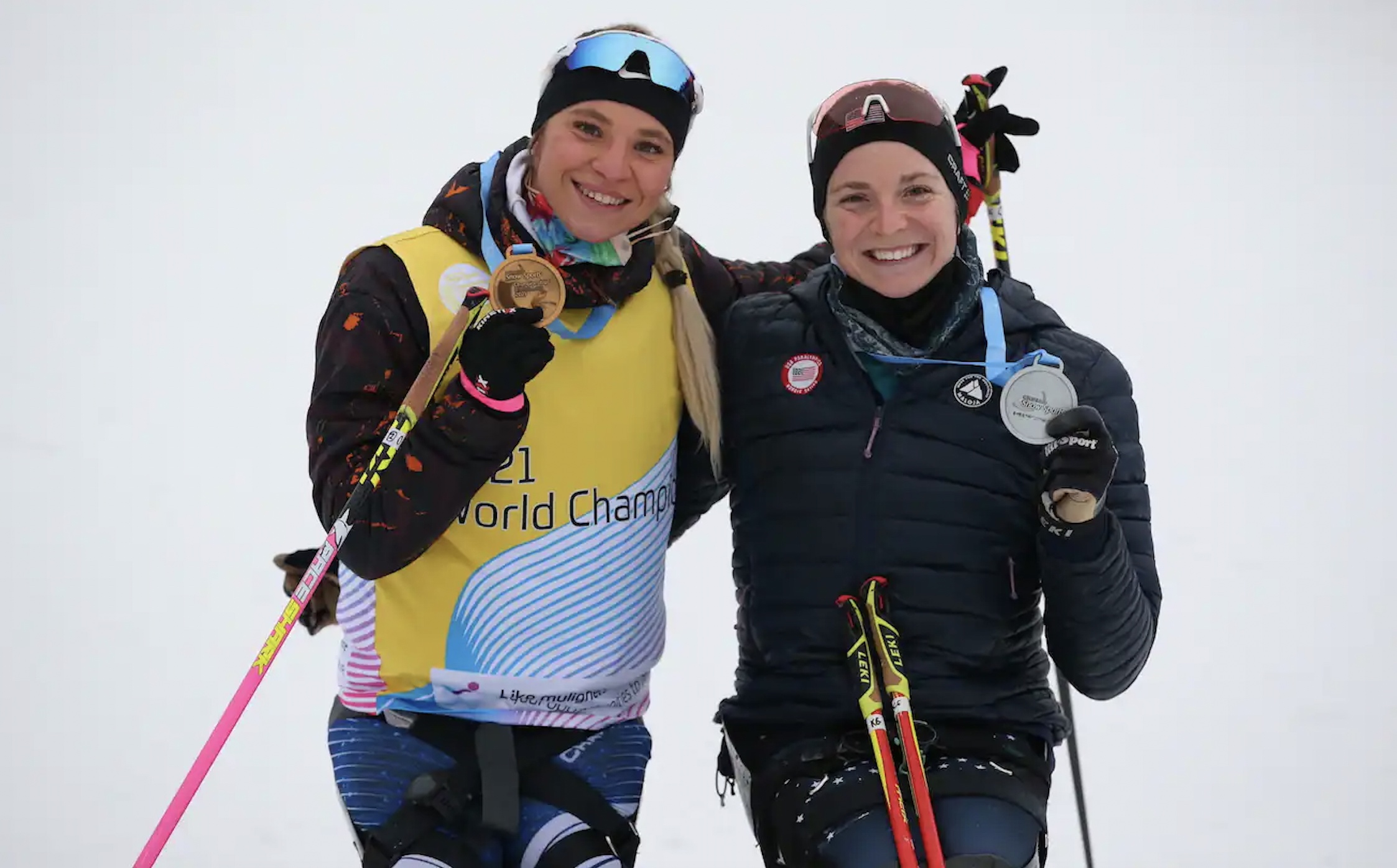
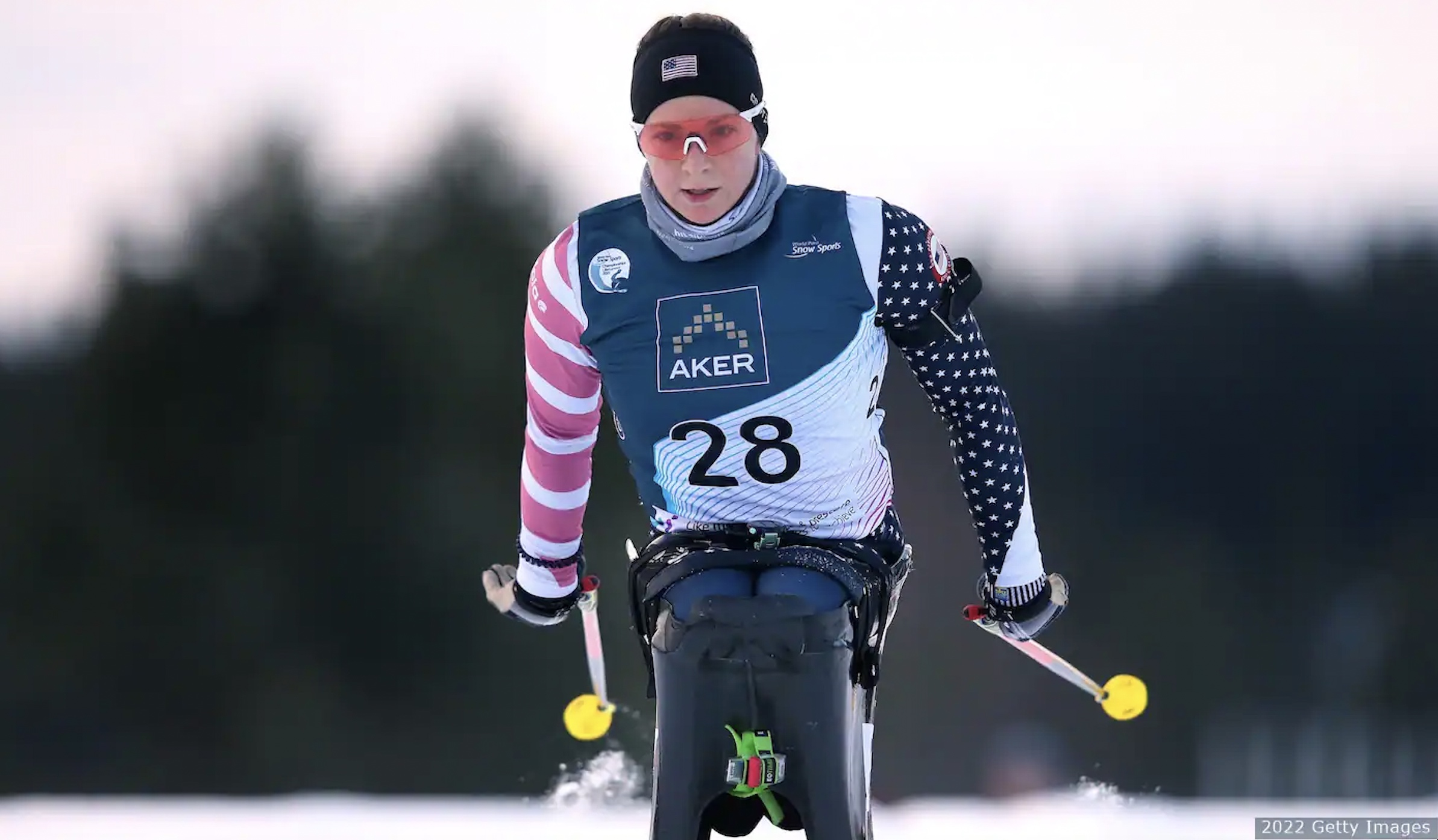
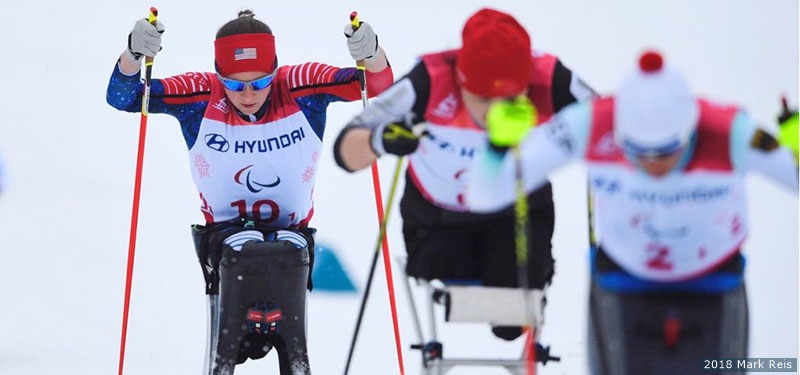
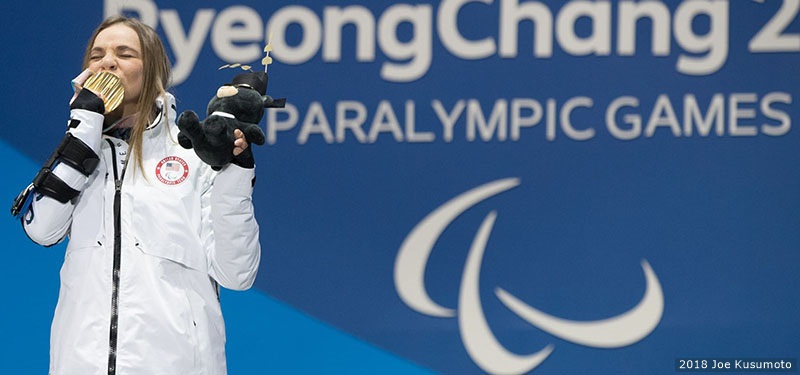
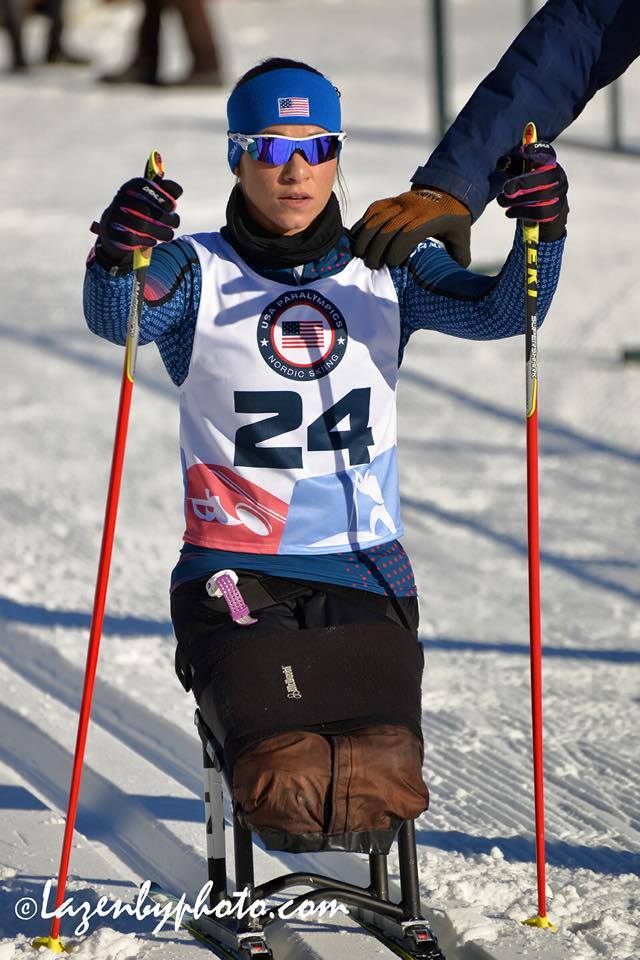
Oksana Masters skis to silver in the women’s sitting middle-distance cross country event. (Photo: Mark Reis / Team USA)
ZHANGJIAKOU, China — Team USA Nordic skier Oksana Masters (Louisville, Kentucky) skied her way into the record books on Saturday at the Paralympic Winter Games Beijing 2022.
Masters won the silver medal in the women’s sitting cross-country middle-distance at the Zhangjiakou Biathlon Center, her sixth medal of Beijing 2022 and 16th overall medal in her Paralympic career, which is the fourth-most Paralympic medals by a U.S. athlete.
A star in both the winter and summer Paralympic Games, Masters has now won eight Paralympic medals in cross-country, five in biathlon, two in Para-cycling and one in rowing. Her eight cross-country medals are the most ever by a U.S. Paralympian and her 13 overall Winter Paralympic medals ties alpine skiers Sarah Billmeier and Sarah Will as the most all-time by a U.S. Paralympian.
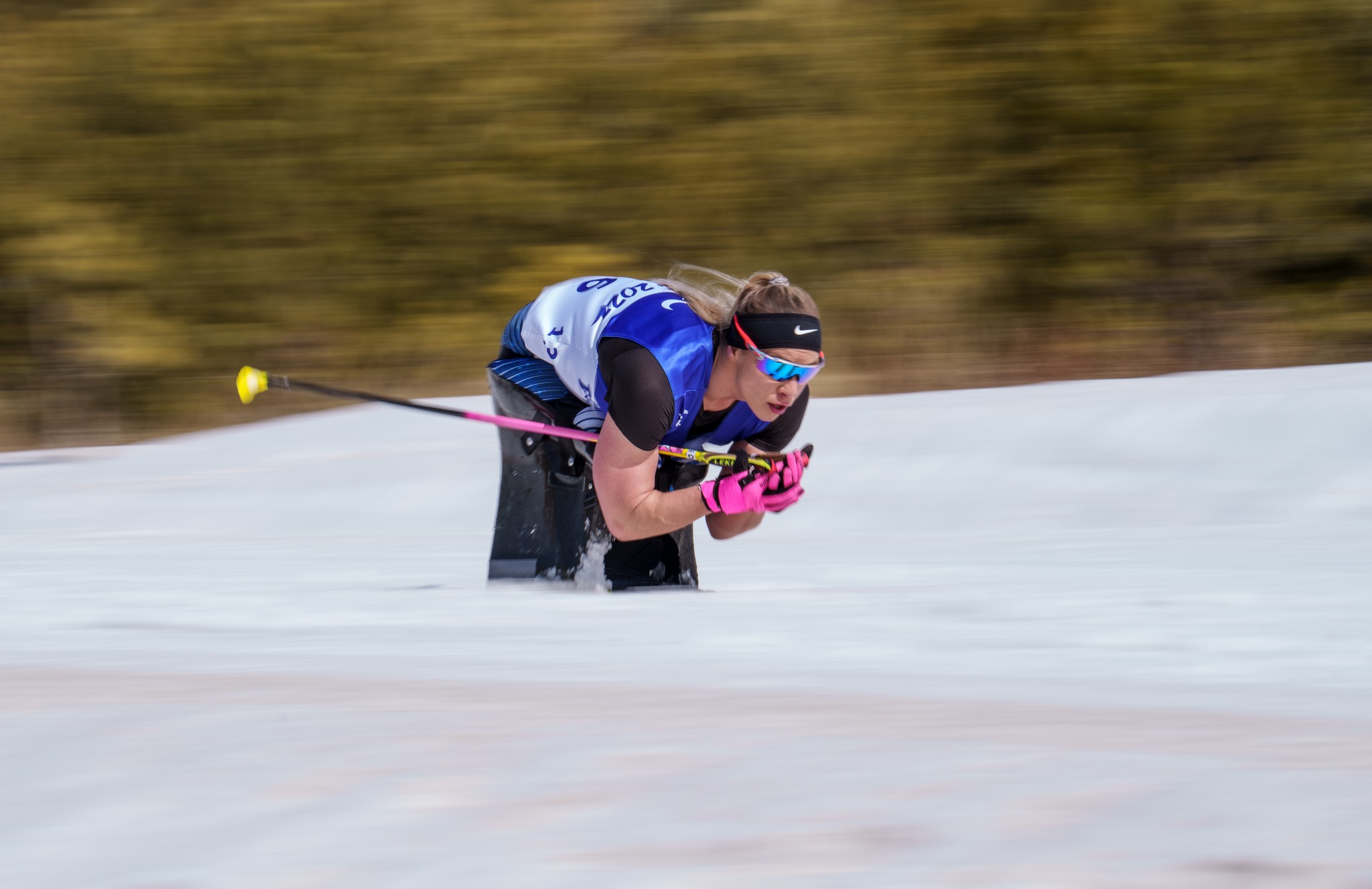
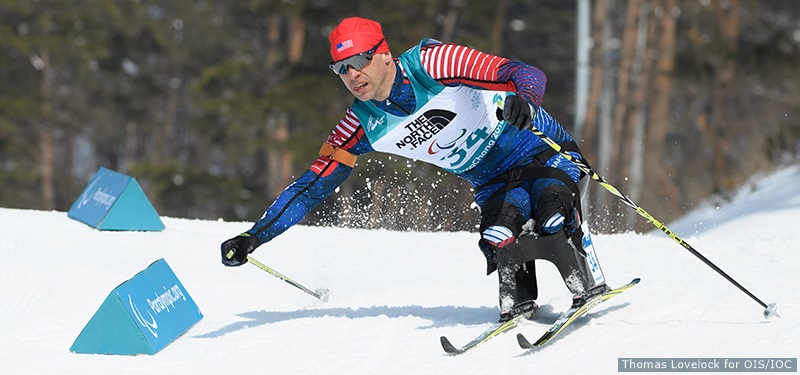
Oksana Masters skis to silver in the women’s sitting middle-distance cross country event. (Photo: Thomas Lovelock for OIS / Team USA)
On Saturday in warm conditions and slushy snow, Masters skied the middle-distance 7.5-kilometer course in a time of 25:24.7 — 37.2 seconds away from gold. China’s Hongqiong Yang won in a factored time of 24:47 and her teammate Jing Ma won bronze in 26:22.
Kendall Gretsch (Downers Grove, Ill.) placed sixth, with a time of 27:47.
“Today was a really tough day. The combination of the fresh snow and the warm temperatures made for a brutal race,” said Gretsch, who will head home from Beijing 2022 with three medals from her individual races. “I’m proud of my performance here. I came out every race and gave it everything I had. I wanted a little more and was hoping to do a little bit better, but I can’t be upset that I gave everything I had.”
Together, the duo of Masters and Gretsch have won nine medals across six days of biathlon and cross-country racing at Beijing 2022, and the U.S. Nordic team as a whole has won 13 medals. With individual racing now concluded, the Nordic racing action finishes on Sunday with the mixed relays on the final day of Beijing 2022.
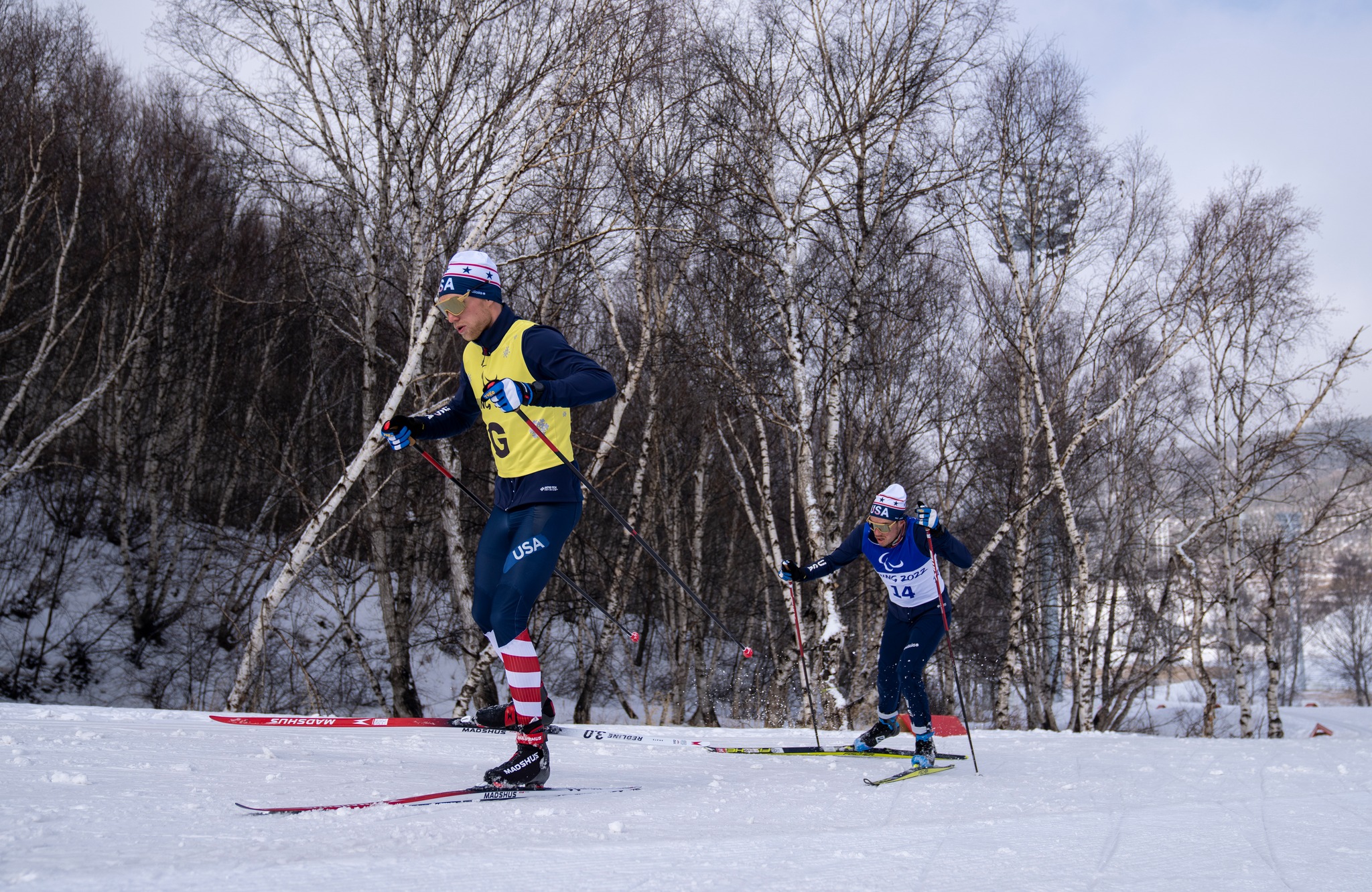
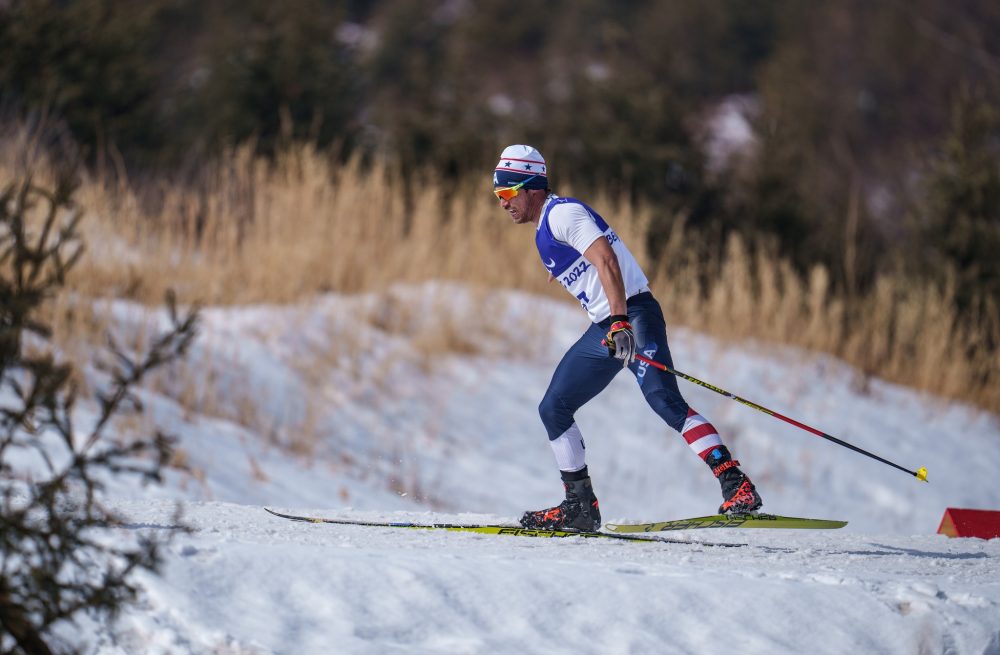
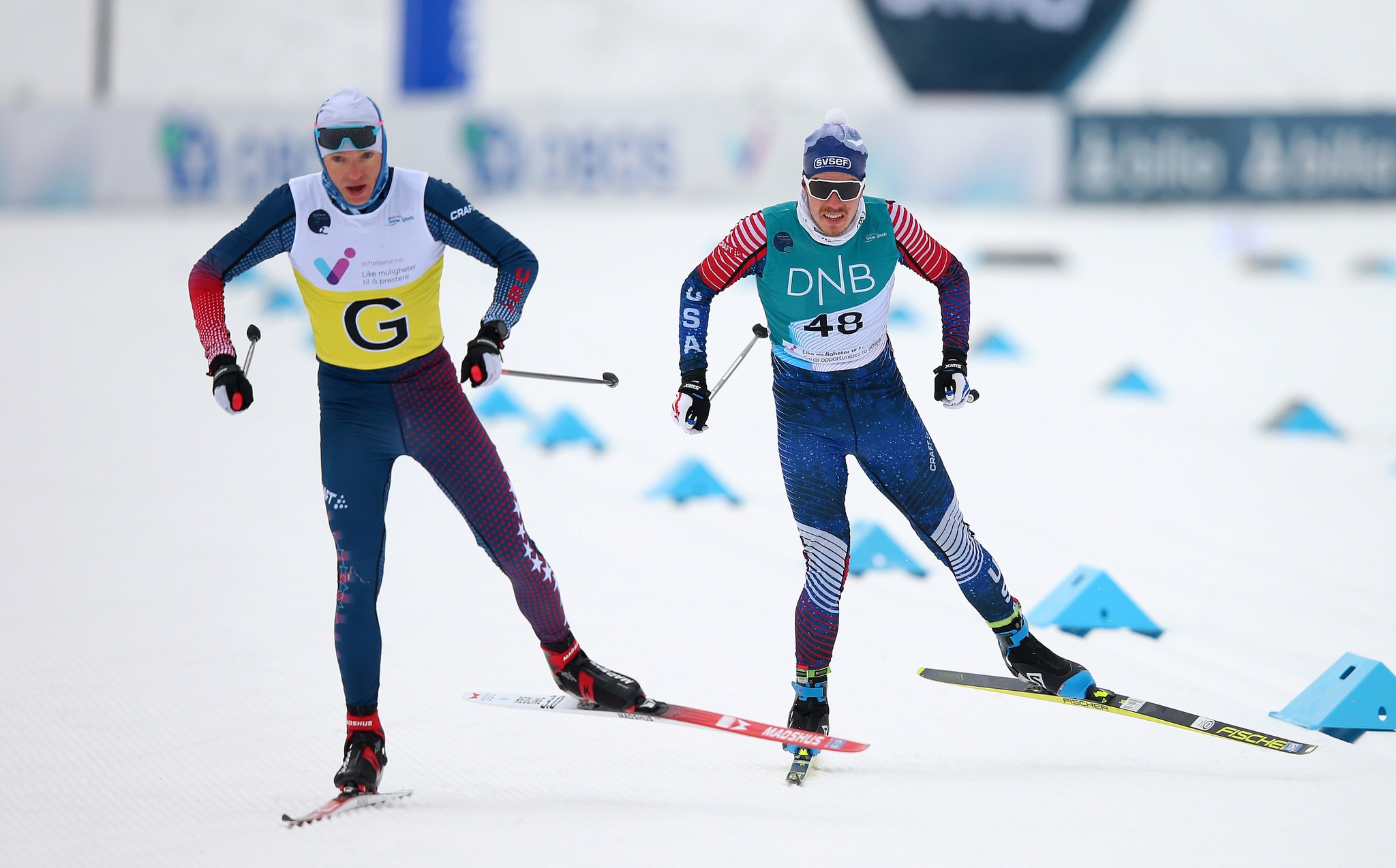
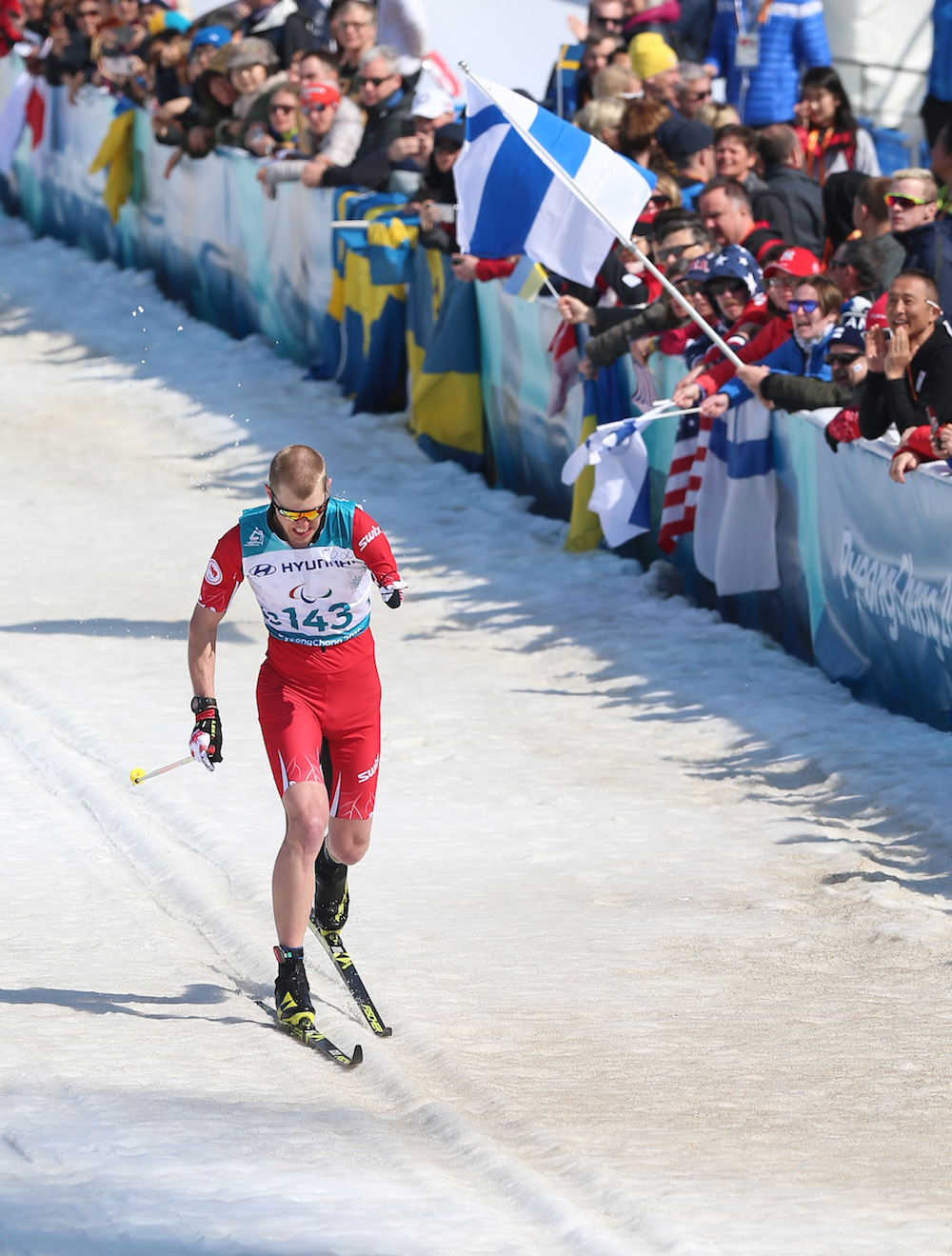
Jake Adicoff and guide Sam Woods race the middle-distance freestyle race in Zhangjiakou. (Photo: Thomas Lovelock for OIS / Team USA)Ruslan Reiter skates to 10th place in the middle-distance standing cross country event. (Photo: Thomas Lovelock for OIS / Team USA)
In Saturday’s standing middle-distance, Jake Adicoff (Sun Valley, Idaho), with guide Sam Wood (Harpswell, Maine), placed sixth in the men’s vision impaired category. Team USA’s Ruslan Reiter (Manchester, Maine) scored a top-10 finish in the men’s standing middle-distance, placing 10th, while teammate Drew Shea (Vienna, Virginia) finished 19th.
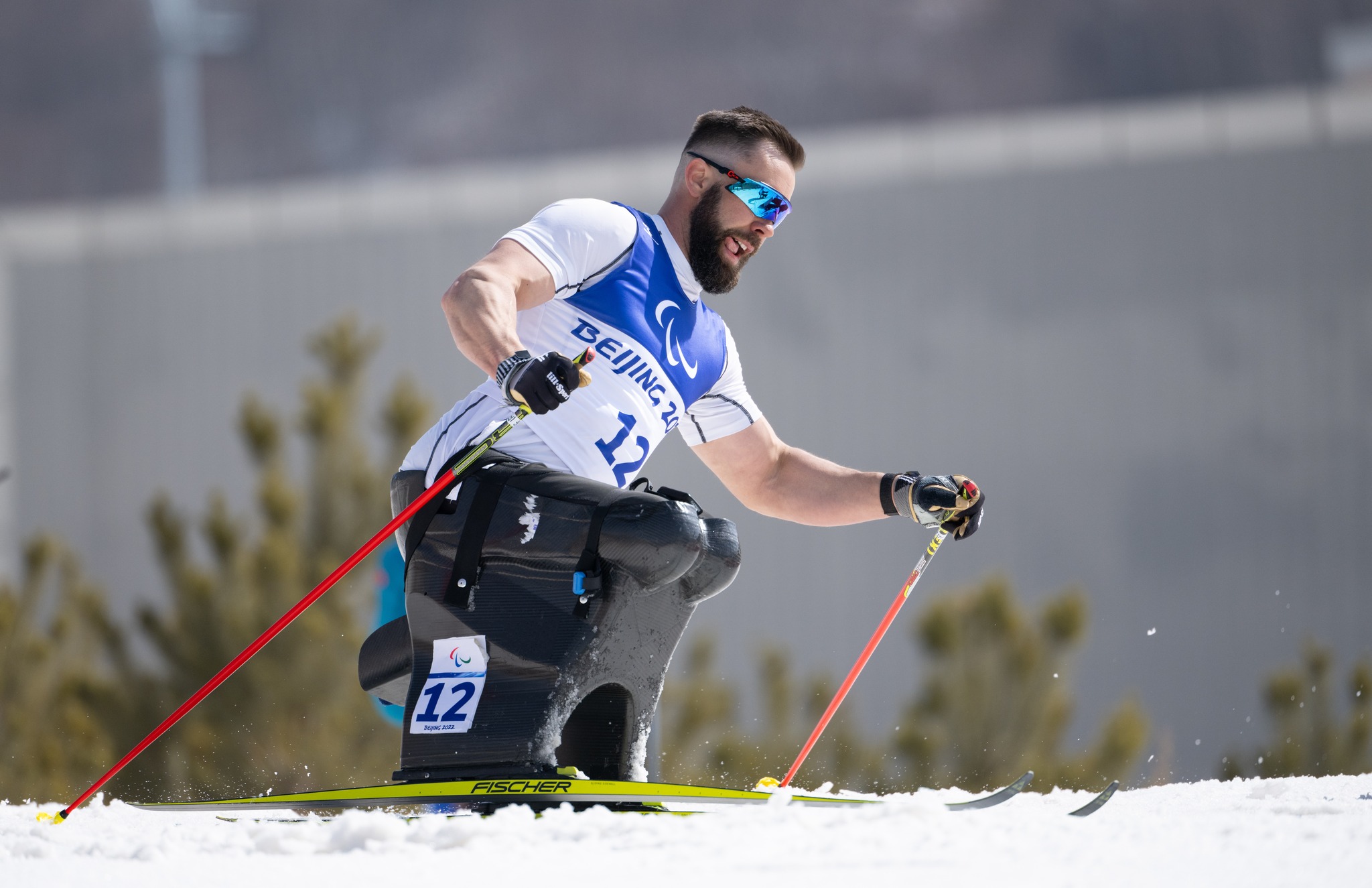
Sydney Peterson (Lake Elmo, Minnesota) who has won two medals in Beijing 2022 in her debut Paralympic Games, led the U.S. women in the standing middle-distance with a sixth-place finish. Dani Aravich (Boise, Idaho) scored her second top-10 finish of these Games, placing ninth. Two-time Paralympian Grace Miller (Palmer, Alaska) placed 16th. In the men’s sitting middle-distance, six-time Paralympian Aaron Pike (Park Rapids, Minnesota) led the way for the U.S. with a 12th-place finish. Josh Sweeney (Glendale, Arizona) took 24th.
Sydney Peterson takes sixth in the standing middle-distance cross country race in Zhangjiakou. (Photo: Thomas Lovelock for OIS / Team USA)
To follow and watch U.S. Paralympics Nordic Skiing competition from the 2022 Beijing Paralympics, tune in to NBC, which features more than 230 hours of coverage across NBC, Peacock, USA Network, the Olympic Channel, NBCOlympics.com and the NBC Sports App.
ZHANGJIAKOU, China — Team USA Para Nordic skiers Oksana Masters (Louisville, Kentucky) and Jake Adicoff (Sun Valley, Idaho), alongside guide Sam Wood (Harpswell, Maine) each won silver medals, and Sydney Peterson (Lake Elmo, Minnesota) took bronze in an exciting, fast-paced day of cross-country sprint racing at the Paralympic Winter Games Beijing 2022.
Through five days of competition, the U.S. Para Nordic team has collected 10 medals in cross-country and biathlon at Beijing 2022, with three more days of racing to go at the Zhangjiakou Biathlon Center.
Oksana Masters takes silver in the women’s sitting sprint. (Photo: Mark Reis / Team USA)
Masters has won four medals — in all four races — at Beijing 2022 and now has won 14 medals in her Paralympic career. Masters, the 2021 world champion and 2018 cross-country sprint gold medalist from PyeongChang, finished just 1.7 seconds away from gold on Wednesday.
The cross-country and biathlon star powered up the hills on the 1-kilometer course and sprinted down the finish chute to nearly catch China’s Hongqiong Yang who won gold with a time of 3:18.2. Masters finished in 3:19.9 and Panpan Li of China earned the bronze in 3:31.0.
Team USA’s Kendall Gretsch (Downers Grove, Ill.) placed fifth, in 3:37.3.
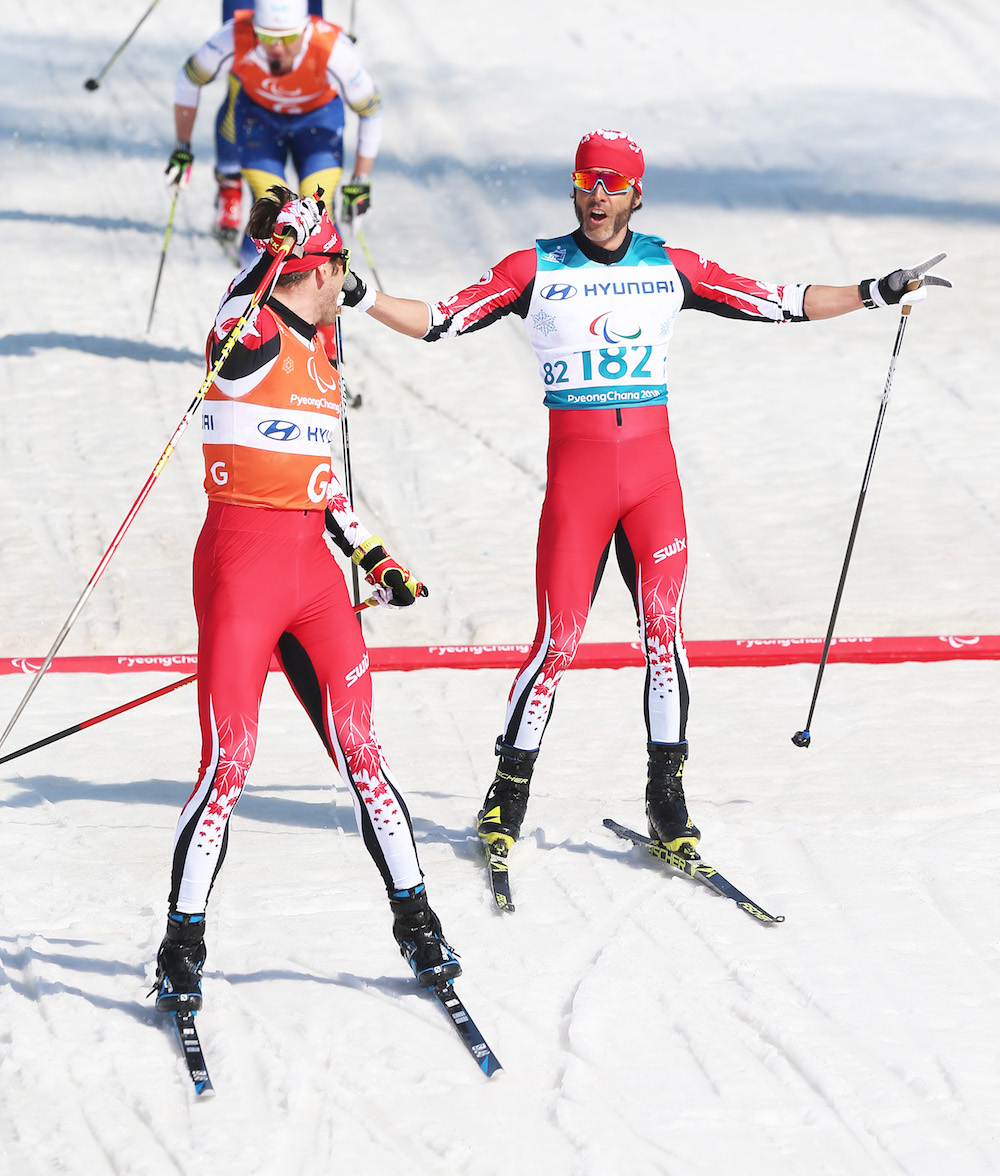
Adicoff and Wood won their second silver medal of Beijing 2022 in the men’s visually impaired category, just 0.8 seconds away from gold. The duo hammered the sprint cross-country course in a time of 3:20.3, just behind Canada’s Brian McKeever, guided by Russell Kennedy. Sweden’s Zebastian Modin, guided by Emil Joensson Haag, took the bronze in a time of 3:37.8.
The silver is Adicoff’s third medal of his Paralympic career — and he’s gunning for two more cross-country medals in Beijing.
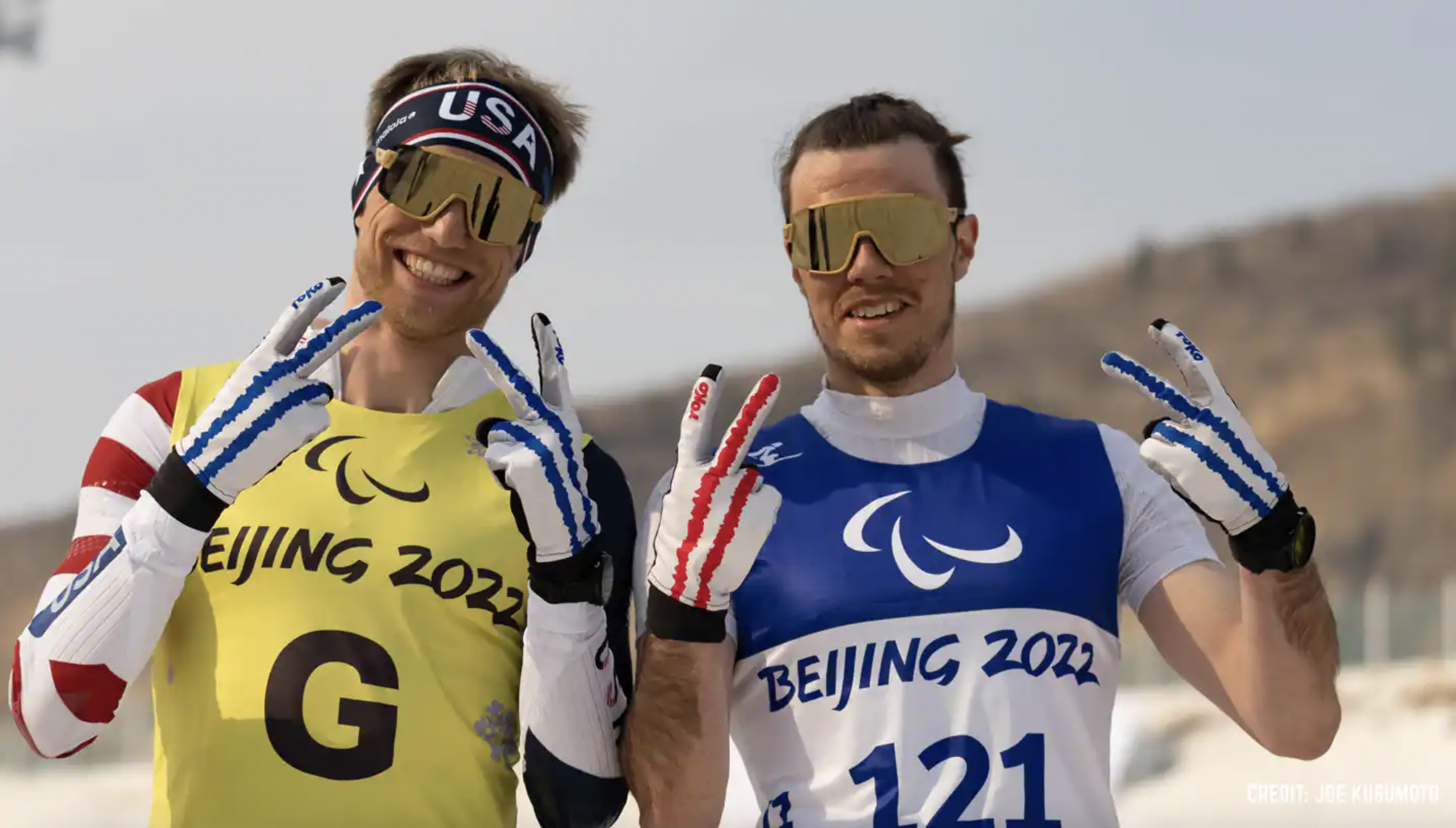
Jake Adicoff (right) with guide Sam Wood earn a second silver medal in the visually impaired freestyle sprint, their second medal in two races at the 2022 Beijing Paralympics. (Photo: Joe Kusumoto / Team USA)
“I said it before, but I’ll say it again — ‘We’re going to gun for gold,’” said Adicoff who is a three-time Paralympian who won silver in the 10k cross-country at the 2018 Paralympic Games in PyeongChang.
“Two more to go. We’re hoping for four for four (on the podium) so we’re right on schedule,” Wood said.
Adicoff said the fun of cross-country sprints is the opportunity to cheer on his fellow U.S. Para Nordic teammates. The entire team raced on Wednesday, which began with qualification rounds, a round of semifinals and the final to determine the Paralympic medalists.
“Being with this team is so much fun. Especially on sprint day. Sprint days are the best. You get to watch everyone and it’s an absolute blast,” said Adicoff. “The team had a good day, so we’re psyched.”
Peterson, who is competing in her first Paralympic Games, won her second medal of Beijing 2022, adding to the silver she won in long-distance cross-country. She completed the sprint cross-country in 4:12.1, behind Canada’s Natalie Wilkie (4:05.1) and Norway’s Vilde Nilsen (4:08.1).
“It was a super challenging race. There were a lot of components to it going throughout the day, but I’m super excited about how it all stacked up,” Peterson said. “I had a ton of people that were out there helping and cheering and it wouldn’t have been possible without all their support.”
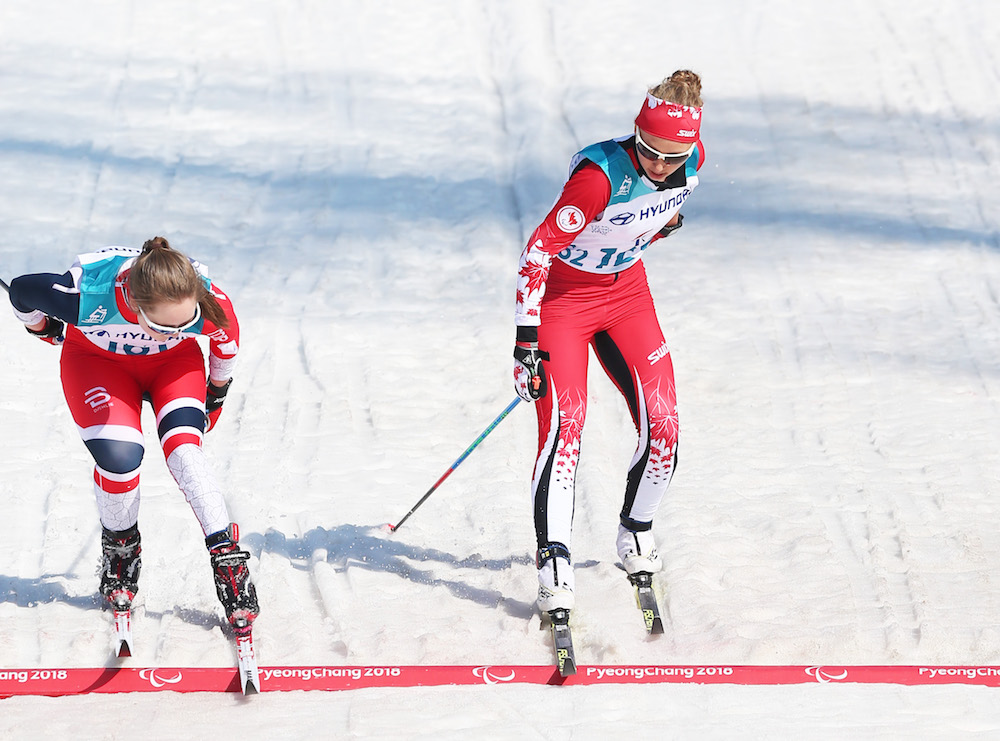
Grace Miller races to 14th in the women’s standing freestyle sprint. (Photo: Mark Reis / Team USA)Visually impaired athlete Max Nelson sprints to 14th with guide Simi Hamilton. (Photo: Mark Reis / Team USA)
A total of 14 U.S. athletes competed in the day’s events. For the women’s sitting sprint, Lera Doederlein and Erin Martin finished 14th and 16th respectively while Grace Miller took 14th in the women’s standing. In the men’s sitting competition, Dan Cnossen finished just outside a qualifying spot with a 13th place finish while Josh Sweeney finished 19th. Max Nelson took 14th place in the men’s visually impaired qualification round while Drew Shae covered the course in the first round of the men’s standing for 21st.
American teammates Dani Aravich, Ruslan Reiter and Aaron Pike made their way to the semifinal round finishing the sprint competition in 8th, 12th and 12th respectively.
Aaron Pike races into the sprint semifinal, finishing 12th. (Photo: Mark Reis / Team USA)
Nordic athletes will enjoy a rest day on Thursday. Racing is scheduled to resume on Friday, with the men’s and women’s individual biathlon. To follow and watch U.S. Paralympics Nordic Skiing competition from Beijing 2022 on NBC, which features more than 230 hours of coverage across NBC, Peacock, USA Network, the Olympic Channel, NBCOlympics.com and the NBC Sports App. All events will be streamed live on NBC’s Peacock. Follow U.S. Paralympics Nordic Skiing on Facebook, Twitter and Instagram for daily updates from Beijing.
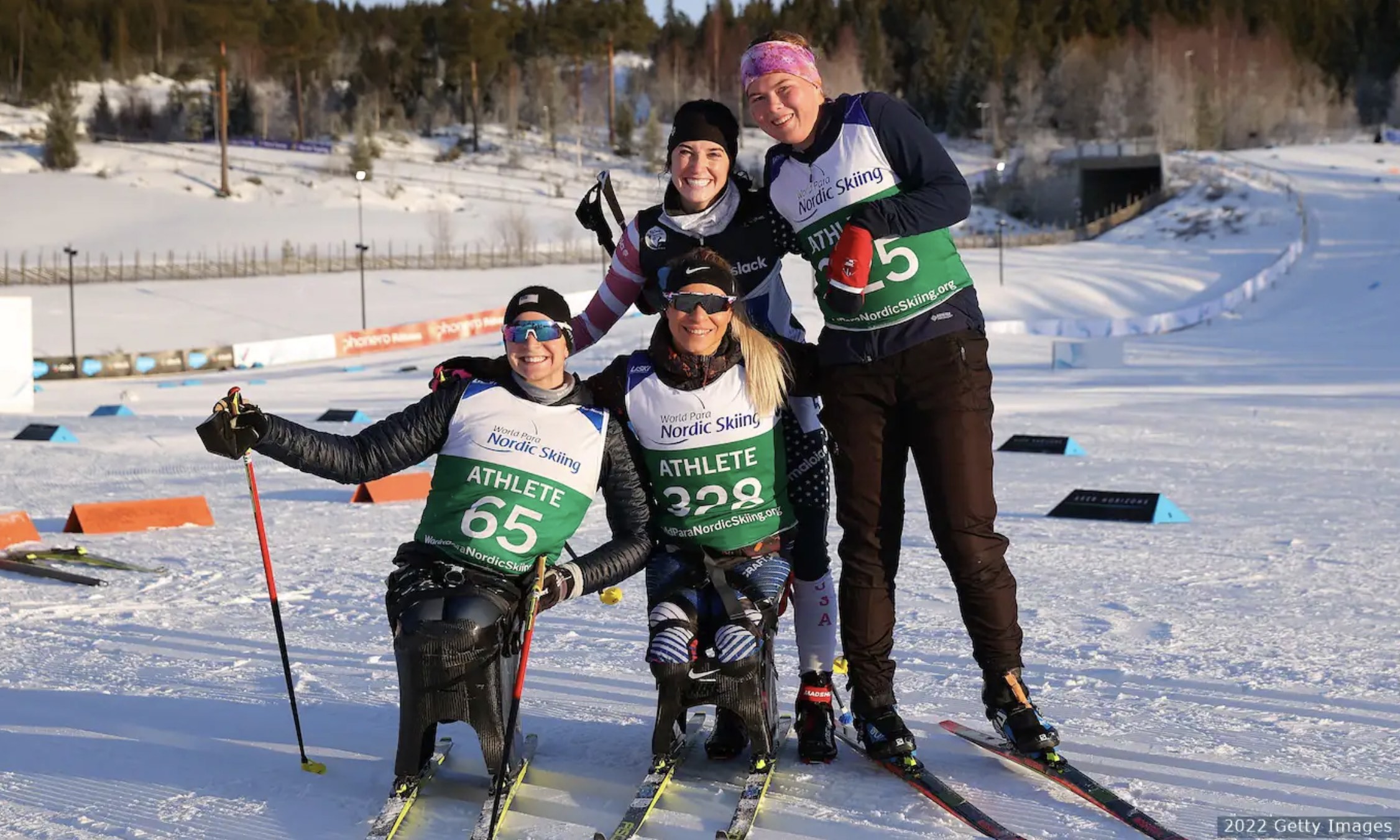
Oksana Masters (left) takes gold while Kendall Gretsch (right) earns bronze in the sitting biathlon sprint to open the 2022 Paralympic Winter Games. (Photo: Mark Reis / Team USA)
By Stephen Meyers | March 05, 2022, 7:27 a.m. (ET)
Oksana Masters (Louisville, Kentucky) won the first gold medal for the U.S. at the Paralympic Winter Games Beijing 2022 on Saturday in the women’s sitting biathlon sprint while teammate Kendall Gretsch (Downers Grove, Illinois) earned bronze on a cold, breezy day that included racing in the men’s and women’s biathlon sprint in the sitting, standing and vision impaired categories.
Masters, a biathlete and cross-country skier, won her fifth career Paralympic gold medal and 11th overall medal between the Summer and Winter Paralympic Games. Saturday’s gold was her first in biathlon; she won two silvers at the Paralympic Winter Games PyeongChang 2018 in the 6k and 12.5k biathlon.
“I can’t believe it, this is so amazing,” Masters said. “To be able to start off the Paralympic Games in Beijing and bring home a gold medal for Team USA is absolutely incredible. And it’s incredible because I get to do it with my teammate on the podium by my side again.”
“I think this just shows that there’s amazing stuff that’s going to happen for Team USA in the Para Nordic program.”
Oksana Masters takes her first gold of the 2022 Paralympic Winter Games in the sitting biathlon sprint. (Photo: Mark Reis / Team USA)
Masters now owns Paralympic gold medals in biathlon, cross-country skiing and Para-cycling. She won two cycling golds at the Paralympic Games Tokyo 2020 six months ago.
Masters finished the 6k sitting biathlon sprint race in a time of 20:51.2. China’s Yilin Shan finished 15 seconds back with a time of 21:06 to earn the silver.
Gretsch — who also won gold at the Paralympic Games in Tokyo six months ago, in paratriathlon — earned the bronze, with a time of 22:47. The medal is the fourth of her Paralympic career. At PyeongChang 2018, Gretsch won gold in the 6k biathlon and 12k cross-country events.
“That was a tough race. The sprint is so short and you’re kind of going all-out the whole time. I’m happy to have the first race done and hopefully just build off today for the rest of the races,” said Gretsch, who also races the cross-country events. “It’s crazy [being back at the Paralympics six months after competing in Tokyo] and it’s feeling very different than Tokyo conditions today. I’m trying to channel how warm I was there. It’s always exciting to be at the Paralympics.”
Eighteen-year-old Lera Doederlein (San Diego, California) made her Paralympic debut on Saturday, also competing in the women’s sitting biathlon sprint, finishing ninth. It was Masters who encouraged Doederlein, who had been competing in sled hockey, to give Para Nordic skiing a try in 2019.
“It’s a pretty incredible experience for me to race [with Masters and Gretsch] especially since I’m only 18 years old and it’s my first Paralympics. It was incredible to experience this with them,” Doederlein said.
Dan Cnossen races to fourth place in the sitting biathlon sprint. (Photo: Mark Reis / Team USA)
Dan Cnossen (Topeka, Kansas), former Navy SEAL who won six medals in PyeongChang, led Team USA’s men on Saturday in the sitting biathlon sprint, placing fourth.
“I dug deep as far as I could, and this is perhaps the best biathlon race I’ve ever had. I know it may not have been my best result, but for me, it’s more about effort and I really think I put a complete race together today,” Cnossen said.
“Biathlon is a really challenging sport in the sense that you can always ski a little bit faster into the range or you can always try to take your first shot a little bit quicker, or the shots two, three, four, five a little bit quicker. I’ve got to be happy with how I raced today. I’m also happy to be out there with my teammate Aaron [Pike] and our women who had an awesome day. I would also say I’m really happy to see the Ukraine athletes out here today getting after it. With everything they’re going through, it’s inspiring to me to see them compete. I was thinking about them today when I was out there.”
Pike (Park Rapids, Minnesota) finished eighth. A constant in the Paralympics over the past decade, Pike is competing in his sixth Paralympic Games. He raced in Tokyo for U.S. Paralympics Track & Field, competing in the marathon.
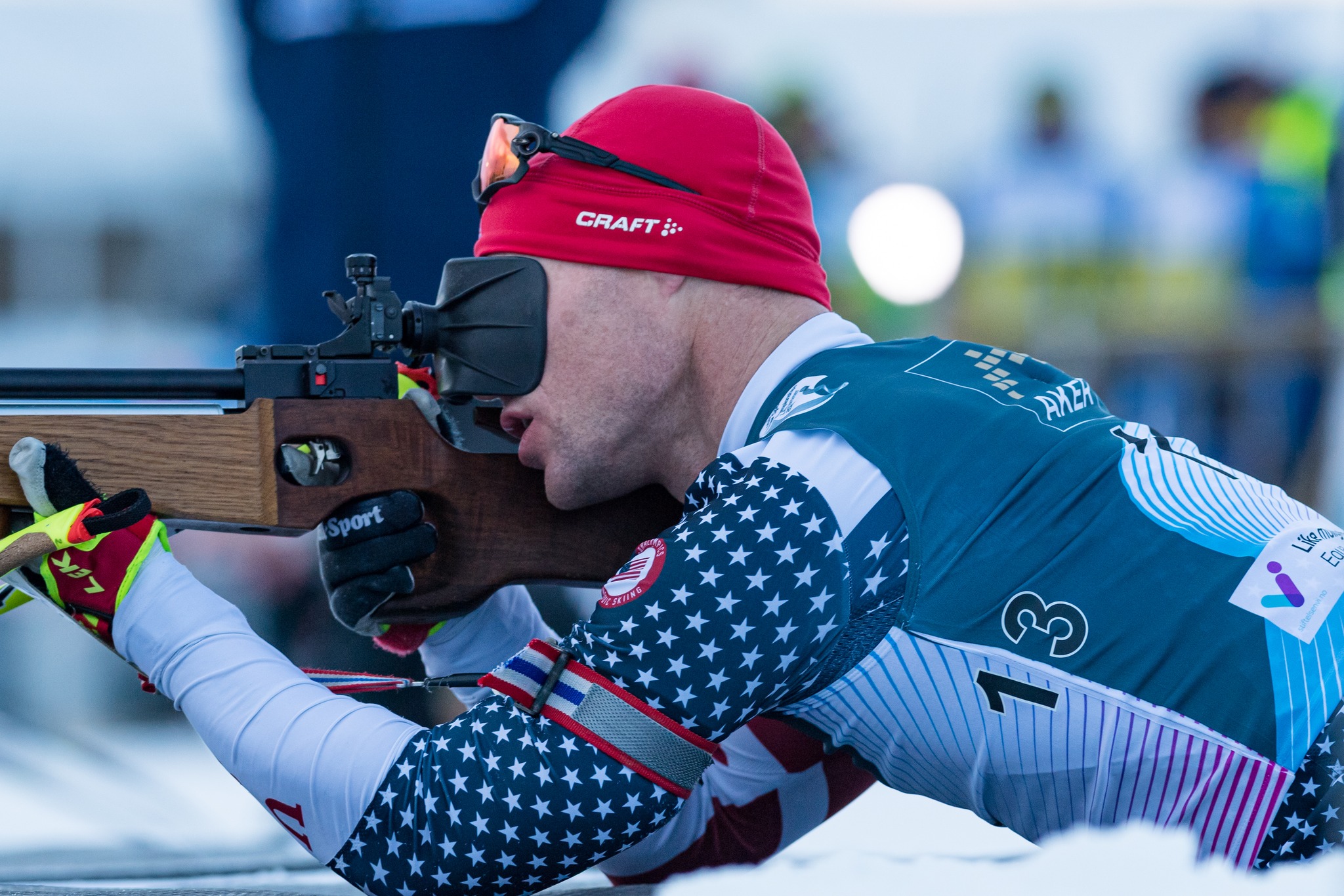
Aaron Pike races to 8th in the sitting biathlon sprint to open the 2022 Beijing Paralympic Winter Games. (Photo: Mark Reis / Team USA)
In addition, Team USA had three athletes competing in the standing biathlon sprint.
Dani Aravich (Boise, Idaho), who also competed in track and field in Tokyo, placed 13th in her first race as a winter Paralympian.
In the men’s standing biathlon race, Ruslan Reiter (Manchester, Maine) placed 12th and Drew Shea (Vienna, Virginia) took 14th. Reiter is competing in his second Winter Paralympics, while Shea is making his Paralympic debut.
Ruslan Reiter races to 12th in the standing biathlon sprint. (Photo: Mark Reis / Team USA)
No U.S. athletes competed in the visually impaired category.
U.S. Paralympics Nordic Skiing athletes return to competition on Sunday, as cross-country action takes the stage with the men’s and women’s sitting long-distance races.
Follow and watch U.S. Paralympics Nordic Skiing competition from Beijing 2022 on NBC, which features more than 230 hours of coverage across NBC, Peacock, USA Network, the Olympic Channel, NBCOlympics.com and the NBC Sports App. All events will be streamed live on NBC’s Peacock. Follow U.S. Paralympics Nordic Skiing on Facebook, Twitter and Instagram for daily updates from Beijing.
Oksana Masters crosses the finish line of a race in Lillehammer, Norway. (Photo: Alex Livesey/Getty Images)
By Kristen Gowdy | Jan. 31, 2022, 6:02 p.m. (ET)
COLORADO SPRINGS, COLORADO – Following a stellar world championships performance that saw Team USA earn 13 medals in Para Nordic disciplines, U.S. Paralympics Nordic Skiing today announced the six women, seven men and one guide who have been nominated to compete at the Paralympic Games Beijing 2022 in March.
Veteran athletes will lead the way in Beijing as Team USA looks to build on the 16 Paralympic medals won at the Paralympic Games PyeongChang 2018. Headlined by multi-time Paralympic medalists Oksana Masters (Louisville, Kentucky), Kendall Gretsch (Downers Grove, Illinois) and Dan Cnossen (Topeka, Kansas), the athletes nominated to the 2022 team sport a combined career total of 21 Paralympic medals. Of the 14 athletes, nine have previous Paralympic experience while five athletes will make their Paralympic debut.
“We have many athletes who thrive in these high-stakes competitions, who know what it means to represent Team USA as a Paralympian,” Eileen Carey, director of U.S. Paralympics Nordic Skiing, said. “We are looking to them, as well as our experienced coaching staff, to lead the newer athletes into Beijing 2022. We are motivated by the combination of experience and the high quality of our Paralympic rookies as a testament to the growth and bright future of our program; their success this Paralympic quad has shown us that we can reach new heights in March.”
A 10-time Paralympic medalist and recently crowned 10-time world champion, Masters is set to make her sixth Paralympic appearance. After winning double gold in Para-cycling at the Paralympic Games Tokyo 2020, Masters has continued her success on the snow, earning a medal in every world cup competition in which she has competed, as well as five medals at the recent Lillehammer 2021 World Para Snow Sports Championships. In Lillehammer, the multi-sport phenom earned her ninth and 10th career world championship titles and will look to put an exclamation point on her already historic 2021-22 season on the world’s biggest stage.
Gretsch, who is putting together a world-class resumé herself this season, also won gold in Tokyo in paratriathlon. She led Team USA in Lillehammer with three world championship titles and also added a silver as she looks to repeat the double gold she won in PyeongChang. The 13-time world championship medalist is headed into Beijing as a heavy favorite in the biathlon discipline, having won both titles in the Para biathlon events in which she competed in Lillehammer.
A six-time Paralympic medalist and retired Navy SEAL, Cnossen earns his third Paralympic team nomination in 2022. All six of Cnossen’s Paralympic medals came in PyeongChang, where he dominated in both cross-country skiing and biathlon. Cnossen is at his best on the Paralympic stage, where he will look to repeat his success come March.
Paralympic silver medalist Jake Adicoff (Sun Valley, Idaho) will team up with longtime friend and guide Sam Wood (Harpswell, Maine) to lead the U.S. in the men’s visually impaired class for his third Paralympic appearance. After taking several years off following his podium performance in PyeongChang, Adicoff accepted an invitation to join the team for a training camp last February, and hasn’t faltered since. He and Wood enter Beijing as one of the top podium contenders in the men’s visually impaired field. The duo have been putting together Adicoff’s best racing of his career, having recently combined for three medals – one of each color – in Lillehammer.
Paralympians Aaron Pike (Park Rapids, Minnesota) and Josh Sweeney (Glendale, Arizona) round out the men’s sitting class for Team USA. Pike, who recently won his second career world championship medal, a silver in the men’s individual biathlon, makes his sixth career Paralympic team. Also a prolific wheelchair racer and marathoner, Pike is peaking at the right time, having been in the podium mix in nearly all of his races this season. He is seeking his first career Paralympic medal in Beijing.
Sweeney, meanwhile, makes his first Paralympic team in Para Nordic skiing, having transitioned to the sport following a 2014 Paralympic gold medal appearance in sled hockey. The 2014 Pat Tillman Award for Service winner and retired U.S. Marine Corps Sergeant picked up skiing through the Challenged Athletes Foundation.
The final sit skiers on the 2022 roster, Erin Martin (Seattle, Washington) and Lera Doederlein (San Diego, California) are set for their Paralympic debuts. A former rock climber, Martin found Para Nordic skiing after sustaining a T4 spinal cord injury while climbing. She is also a registered nurse care manager who has served during the COVID-19 pandemic. Doederlein, meanwhile, also competes in sled hockey and Para-cycling. At just 18 years old, Doederlein, who was adopted from Russia, has found a mentor in the Ukraine-born Masters.
Standing skiers Grace Miller (Palmer, Alaska), Ruslan Reiter (Manchester, Maine) and Dani Aravich (Boise, Idaho) also bring Paralympic experience to the team. Miller and Reiter competed in PyeongChang, where Reiter’s best finish was seventh in the cross-country mixed relay, while Miller finished 10th in the 15-kilometer cross-country skiing race. Aravich made her Paralympic debut as a track and field athlete in Tokyo and along with Masters, Gretsch and Pike, will compete in her second Paralympic Games in six months.
Making their first Paralympic appearances and rounding out Team USA’s roster is standing skier Drew Shea (Vienna, Virginia), and visually impaired athlete Max Nelson (Mahtomedi, Minnesota).
Relatively new to Para Nordic skiing, Shea recently moved to Bozeman, Montana, to pursue the sport competitively with Crosscut Mountain Sports Center, his club team. A rising star in the sport, the 17-year-old Nelson made history as a high school junior last year when he became the first visually impaired Nordic skier to win an individual conference title in Minnesota.
The Paralympic Games begin on March 4, and Para Nordic skiing competition kicks off on March 5. Following record-breaking coverage of the Tokyo Paralympic Games, NBC has announced a historic broadcast schedule for its Winter Paralympic programming, which features more than 230 hours of coverage across NBC, Peacock, USA Network, the Olympic Channel, NBCOlympics.com and the NBC Sports App. NBC’s scheduled programming also includes the first-ever Winter Paralympic Games primetime coverage.
For media requests and photo inquiries, please contact Kristen Gowdy at Kristen.Gowdy@usopc.org.
2022 U.S. Paralympics Nordic Skiing Paralympic Team
Women:
Dani Aravich, women’s standing
Lera Doederlein, women’s sitting
Kendall Gretsch, women’s sitting
Erin Martin, women’s sitting
Oksana Masters, women’s sitting
Grace Miller, women’s standing
Men:
Jake Adicoff (with guide Sam Wood), men’s visually impaired
The Para World Championships wrapped up in Lillehammer, Norway on Sunday January 23rd, with a mixed open relay event bringing athletes from across genders and race categories together into one thrilling capstone event.
Rewinding to where our previous coverage left off, Saturday’s schedule featured the final individual races of the Championships, a classic spring for standing athletes, and a cross country sprint for sprint skiers. As in able-bodied fields, a sprint involves a qualification round, followed by a semifinal and grand finale to decide the medalists. The number of athletes who make the semifinal varies based on category.
Highlighting the day, Oksana Masters took gold in the women’s sitting race, her sixth medal of the Championships (two of each color) and career 11th World Championship medal. This title was not certain until the final meters of the race, where Masters put in a final surge to overtake an athlete from Belarus just before the line.
Oksana Masters (right) sprints to the finish during the women’s sitting individual biathlon. (Photo: Alex Livesey/Getty Images)
“It feels incredible,” Masters said in the Team USA press release. “It doesn’t feel that long ago that I was barely making finals in sprint, or I couldn’t finish a sprint without falling or breaking a pole. To be able to have a third consecutive world championship title in this event is just incredible.”
Another medal favorite based on her performances through the week, Kendall Gretsch also raced in the sitting finale, however, a late crash put her out of reach of the podium and she ended the day in fifth.
On the men’s side, Aaron Pike led the American men in the sitting sprint, placing well inside the top-12 to qualify for the semifinals. In his semi, Pike finished fifth and did not advance to the finale. Meanwhile, Dan Cnossen was 16th in qualification and did not advance to the rounds.
Dan Cnossen competes at the Para World Championships in Lillehammer. (Photo: Alex Livesey/Getty Images)
In the women’s standing races, newcomer to the team Sydney Peterson earned her second silver medal of the week, in addition to a third place medal. Perhaps still gaining experience, Peterson felt her first two rounds of racing were not smooth, though it came together in the final round.
“I had some mishaps the first two races this morning so I’m glad that things worked out for the finals,” said Peterson to Team USA. “I’m pretty excited that was a really fun race. It will be fun to continue racing.”
A second standing athlete, Dani Aravich, was just shy of the top-eight in qualification, meaning she was unable to advance to the semifinal for her class.
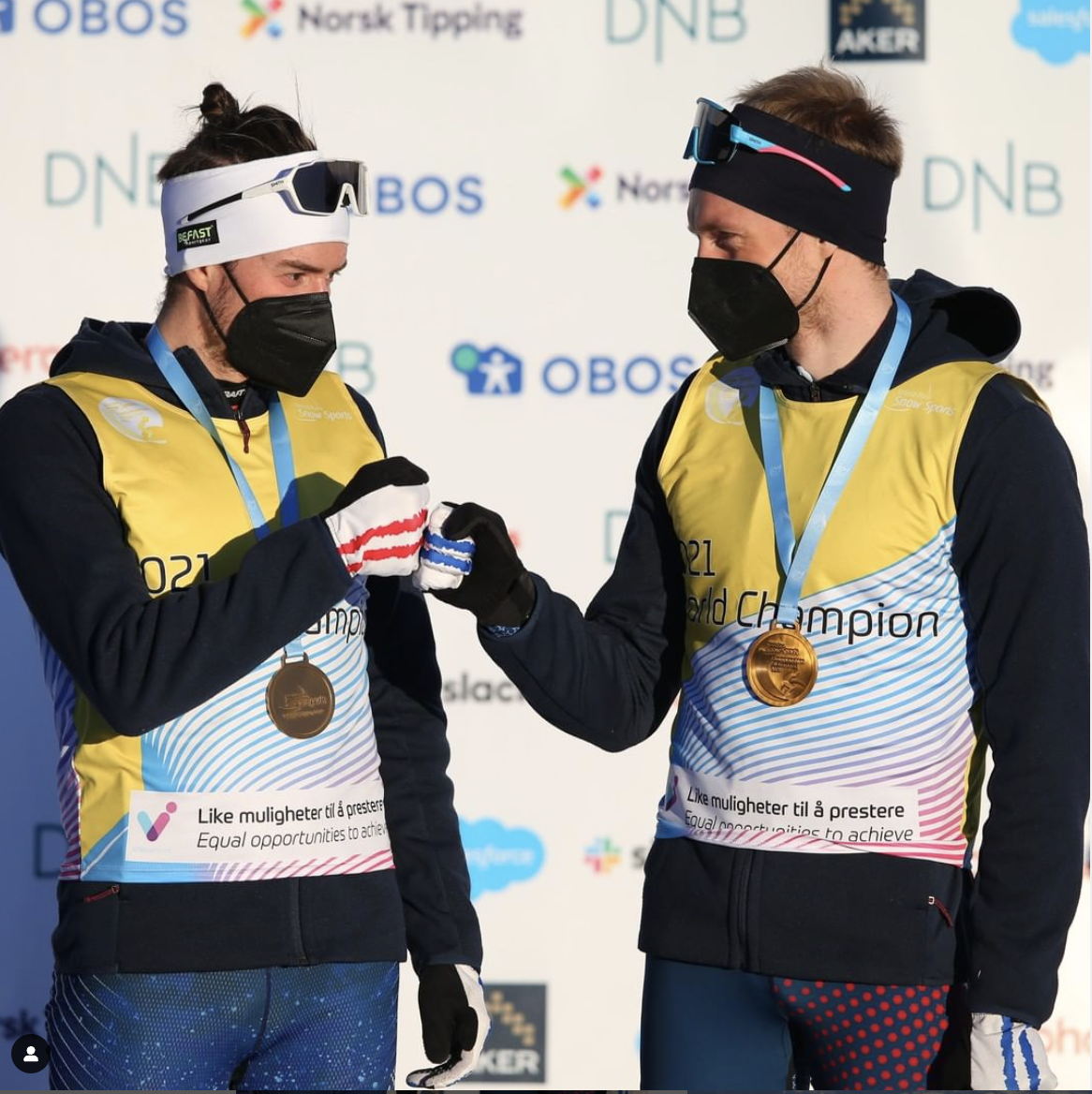
Friends, teammates, and more recently athlete-guide pair, Jake Adicoff and Sam Wood fist bump after earning a gold medal in the 10k classic at the Para World Championships in Lillehammer. (Photo: Alex Livesey/Getty Images)
“I’m feeling pretty good,” said Adicoff. “This is an improvement from the classic sprint in Canmore. We’re pretty happy with the result and it’s super fun racing out there. [We’re taking away] a little bit of confidence and then to be off that gold medal for two races now that’s what we’re looking for – gold in Beijing.”
On Sunday, the American squad fielded two relay teams in the mixed-gender, mixed-class 10-kilometer event. Given the variations in time based on sitting, standing, and subcategories within those groups, this makes for an interesting equation. Simultaneously, what better a way to highlight the diversity, talent, and teamwork seen across nations?
According to the daily Team USA press release, “relays were structured so that each athlete was assigned points based on their classification and gender, and the sum of each team’s total points could not exceed 335 for the mixed relay and 375 for the open relay. From there, it was head-to-head racing, and factored times did not come into play.”
Masters led an all-women’s team for the U.S., passing off to Peterson for the second leg, with Grestch racing third, and Aravich as anchor. Each of the women put together strong performances to keep their team within the top four, finishing in a cumulative time of 31:41.5.
The American women’s open relay team took fourth in the final race of the Para World Championships in Lillehammer. (Photo: Alex Livesey/Getty Images)
“We didn’t know until yesterday how we were going to do the relays, so when our coaches told us it was all women, we were really excited,” Aravich explained in the press release. “When we looked at the points and how it was stacked up, we probably shot ourselves in the foot a bit because we didn’t come close to maximizing the points we could have had in the race. We set our expectations to have fun and end this trip on a high note, which we did.”
On the men’s side, Adicoff and Wood raced both the second and final leg of the relay, with Pike leading the team for the first leg and Cnossen racing third. Following a strong opener from Pike, Adicoff and Wood brought the men into second place, though they slipped back in the results over the next two. They finished the race in fifth overall, however, they were issued a 30-second time penalty for one of their exchanges, which bumped them down to sixth.
Jake Adicoff and guide Sam Wood race the long-distance skate, bringing home a bronze medal. (Photo: Alex Livesey/Getty Images)
The next races on the Para World Cup calendar begin next weekend, running January 27th – February 1st in Östersund, Sweden. The 2022 Paralympic team will be named following these events on February 1st, leaving the team just over a month to prepare for the Games in Beijing, which kick off on March 4th.
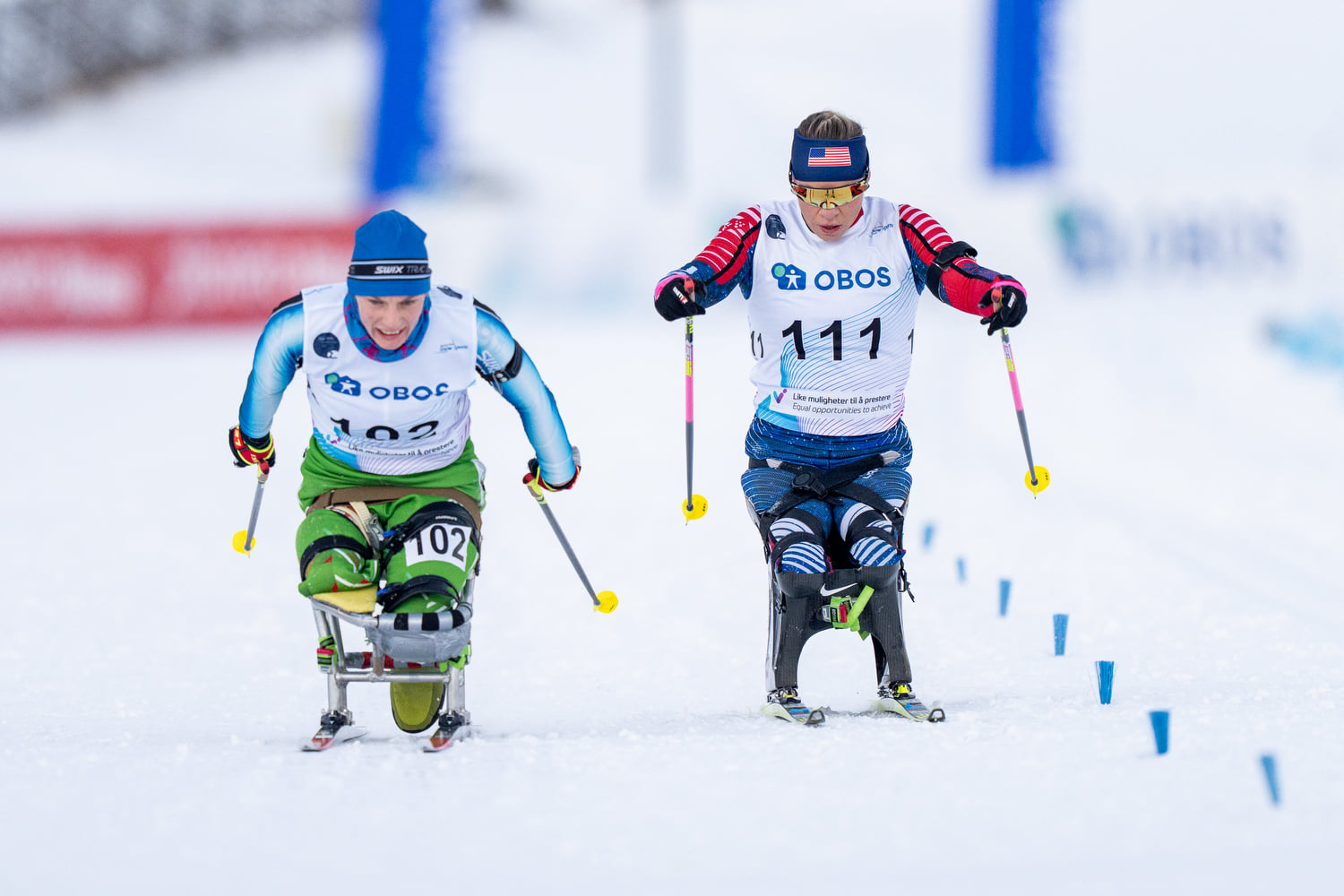
Oksana Masters (left) and Kendall Gretstch (right) go 1-2 in the women’s 15k sitting long distance cross country race. (Photo: Alex Livesey/Getty Images)
It’s late January and we’re deep into the race season. As the Olympics and Paralympics draw nearer, we’ve simultaneously just wrapped up the Tour de Ski, the U.S. Cross Country Championships, and another wave of SuperTour races. Never a dull moment in the racing world, the Para World Championships are currently well underway, running January 13-23rd in Lillehammer, Norway.
Normally occurring on odd years, the World Championships were postponed from last February due to the pandemic. Nevertheless, the event was called the Lillehammer 2021 World Para Snow Sports Championships. It was a hallmark event, as it is the first time that all snow sports have competed together in one location over the same dates.
Led by well-decorated veterans like Oksana Masters, Kendall Gretsch, and Dan Cnossen, the U.S. Para Nordic Team has put together a string of outstanding results at World thus far. Events have ranged from biathlon springs to cross country distance races, with athletes competing – and cleaning up – across all disciplines and distances.
Kicking off the series of events, Sun Valley’s Jake Adicoff took home his career first World Championship medal by winning the men’s visually impaired 10-kilometer middle distance race.
“It feels great,” Adicoff said of his performance, according to the Team USA Press Release. “Lillehammer has been skiing really well so far, I’ve been having a lot of fun here. It feels great to go and get that first podium, and hopefully we can go out and get some more here.”
Jake Adicoff and his guide Sam Wood put together a gold medal performance on the opening day of racing at the Para World Championships in Lillehammer, NOR. (Photo: Alex Livesey/Getty Images)
Adicoff retired in 2018 after earning a silver medal in the 10k and taking 4th in the sprint, however, he is making his return with a bang in this 2021/22 season.
Building momentum throughout the first day, 19-year-old Sydney Peterson earned a silver medal in the women’s standing middle distance race, with Gretsch earning the second gold medal for team USA in the women’s sitting 7.5k middle distance event. That’s three medals, two gold and one silver, on the first day of racing, along with an additional two athletes, Cnossen and Dani Aravich, earning top-10 finishes.
Dan Cnossen hits the range during the individual sitting biathlon event at the Para World Championships in Lillehammer, NOR. (Photo: Alex Livesey/Getty Images)
Joining the team in Lillehammer late after testing positive for COVID-19 on New Year’s Eve, Masters made a smooth return to competition, taking second place in her first race at Worlds, the sitting biathlon sprint on January 15th. The next day, the American women took first and third in the sitting biathlon middle distance race, with Gretsch earning her second gold medal of the week and Masters adding an 18th World Championship medal to her ever-expanding collection.
On point, a perfect shooting performance contributed to Gretsch’s gold, while Masters skied her way out of a significant deficit. Experiencing challenges on the range, Master’s racked up seven penalties, but made up her shooting with her skiing. In the men’s sitting race, Master’s partner, Aaron Pike, skied his way into the Top-10, a rank he has achieved in each of his World Cup races this season, leaving him primed for a medal.
Two days later on the 18th, Masters and Gretch again took the spotlight, going 1-2 in the women’s sitting 15k long distance cross-country race. Now reaching 19 total, this marked Masters’ 10th career World Championship gold medal.
“It’s absolutely incredible,” Masters said in the Team USA press release that day. “It feels like yesterday where I was that new athlete, never thinking that I would be a world championship athlete. So, to have 10 now … is incredible and it’s a testament to our team’s hard work. It’s not just me, it’s the whole team.”
Already an historic day for the U.S., Peterson and Adicoff continued the medal streak in the long-distance cross country races, with each athlete earning a bronze medal in the standing and visually impaired divisions, respectively. Four Americans competed that day, and four medals were won. How’s that for success?
Aaron Pike races the individual sitting middle distance biathlon event at the Para World Championships in Lillehammer, Norway. (Photo: Alex Livesey/Getty Images)
As the final days of World Championship racing kicked off, Pike’s consistency paid off with a silver medal in the men’s sitting individual biathlon event. Missing just one target, matching the best result of the event, Pike finished 24 seconds back on the winner, Pavlo Bal of the Ukraine. This result is both a World Championship and overall World Cup career best for Pike, who is an accomplished wheelchair racer during the summer season.
“It was a tough day to be shooting out there, everybody’s missing so I was happy to come away with just missing one shot,” said Pike in today’s recap. “This is probably the windiest race we’ve had in three years. Every chance you get to put a bib on and race in a biathlon race is experience.”
Racing in the women’s sitting individual biathlon, Gretsch and Masters continued to dominate the field, taking first and third, respectively, to keep their medal streak alive and well.
Again performing well on the range, Gretsch missed just one target in four rounds of shooting and skied the second fastest time on course for a finish time of 52:25.0. While Masters skied the fastest time of day, she again faced challenges in her shooting, incurring five penalties, leaving her 3:00.7 behind Gretsch in the final results. In the women’s standing class, Aravich earned another top-10 finish in eighth.
With excellent shooting records, Kendall Gretsch puts together back-to-back gold medal performances in biathlon events. (Photo: Alex Livesey/Getty Images)
After a day of rest, the Para athletes have two final days of racing in Lillehammer on the 22nd and 23rd, which feature a sprint for the standing and visually impaired categories on Saturday and a Mixed Relay on Sunday. Based on the week’s results, it’s clear that they are primed for another medal run in the upcoming 2022 Beijing Paralympic Games, which begin March 4th.
Livestreams of past and upcoming events, along with links to results can be found on the U.S. Paralympics Nordic Facebook page, or you can check out the remainder of snowsport events happening this week in Lillehammer by following along here.
While no one would choose the circumstances, pandemic induced cancellations presented marathoners with a unique calendar of events this fall. All six of the iconic World Marathon Majors — Berlin, London, Chicago, Boston, Tokyo (held virtually, in-person event postponed to 2022), and New York — took place within a span of 42 days. (In a typical season, Tokyo, Boston, and London are run in the spring.) While Shalane Flanagan has been in the limelight for her accomplishment of running all seven events each under 2:47, many other marathoners also seized the opportunity to run multiple Majors this fall.
Among these athletes was Aaron Pike, professional wheelchair racer and U.S. Para Nordic national team member, who raced the London Marathon on October 3rd, followed by Chicago on October 10th, and Boston the next morning. This was all on the coattails of the Tokyo Paralympics where took 6th place in the marathon, just 40 seconds outside of the medals.
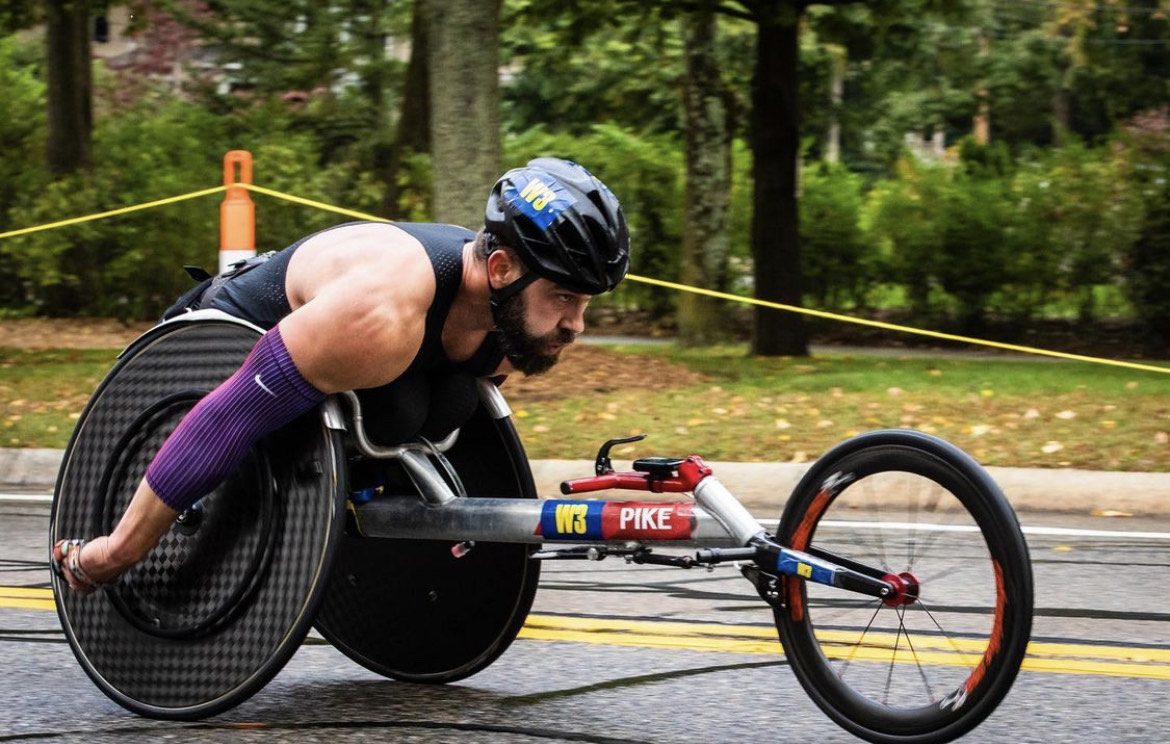
Aaron Pike on course during the Boston Marathon. (Photo: Instagram @tmistret)
While the transition between a Summer Paralympics in August and a Winter Games six months later is already tight, Pike trusted the crossover in fitness between sports and seized the opportunity to put together a fall marathon series. FasterSkier connected with Pike on a call in early November at the beginning of his first on-snow camp of the season in Canmore, Alberta.
Before jumping into the races, a bit about Pike’s background in sport. After sustaining a hunting injury when he was 13, Pike was paralyzed at the T11 vertebra of his mid-back. He explained that his family was living in Virginia at the time, which was fortuitous as a community member who was a former Navy Seal that began racing IronMan distance triathlons after his own injury heard about Pike’s circumstances and quickly took him under his wing.
“He came and visited me in the hospital pretty shortly after [I was injured],” Pike recalled. “I think I was still in inpatient [treatment] — but he came to visit me and was just telling me that he’d be a resource. He showed me some pictures of adaptive sports and what he does, and gave my parents all the contact information.”
The mentor was also coaching a youth wheelchair racing team and invited Pike to attend a practice once he was out of treatment.
“Maybe like a month or two after, I went out to watch a practice.. He had a group of six or seven other kids out there, and he brought a program chair out for me to try out. And it all just went from there.”
Pike advanced quickly in wheelchair racing through high school, but it was during his time at the University of Illinois-Champaign when his career flourished. Pike found success racing on the track, focusing on events 1500 meters and upward. It was also at the University of Illinois where he was first introduced to nordic skiing and biathlon, although he did not try it for himself until later on.
“[Former US Para Nordic] biathlon coach, Rob Rosser, came to the University of Illinois with a SkiErg and some rifles and just to introduce people to biathlon and cross country skiing. He set up the SkiErg so we could try them out — I think they were set up side-by-side, so you could sort of race each other. But the timing was tough, because it was right before the London Games, so everybody was kind of like, ‘Oh, this is cool,’ but then was right back to what they were focusing on. I didn’t think too much about it either.”
Shortly after racing the marathon at the London Paralympics in 2012, Pike received an email inviting him to attend a Para Nordic camp in Bozeman, where the national team now calls home base.
“So the first place I ever skied was in Bozeman,” he laughed. “So I got to try [out sit skiing] and, ended up liking the sport a lot right off the bat, day one pretty much. So it didn’t take too long for me to realize that it wasn’t just something that I was only going to try here and there in the winter.”
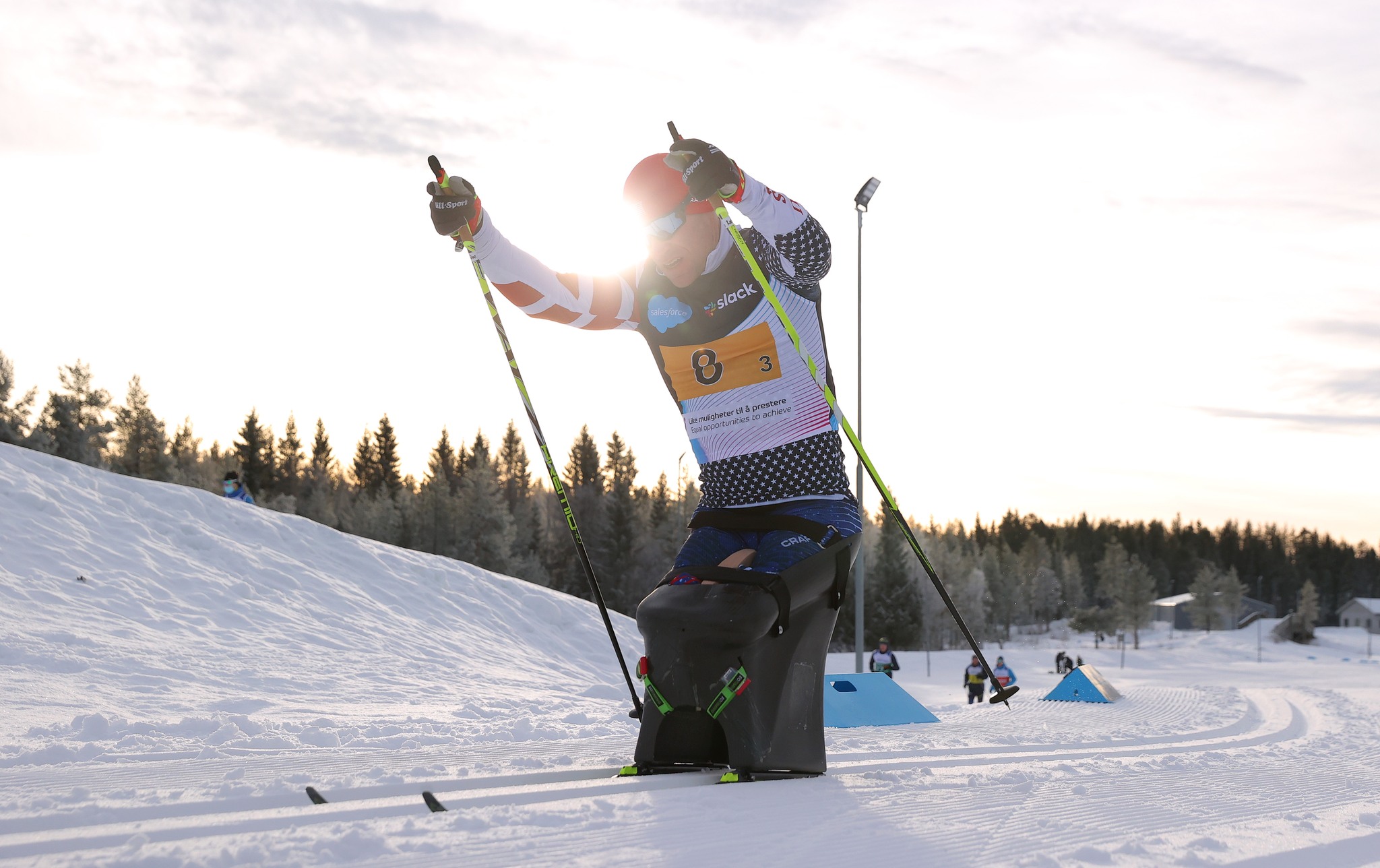
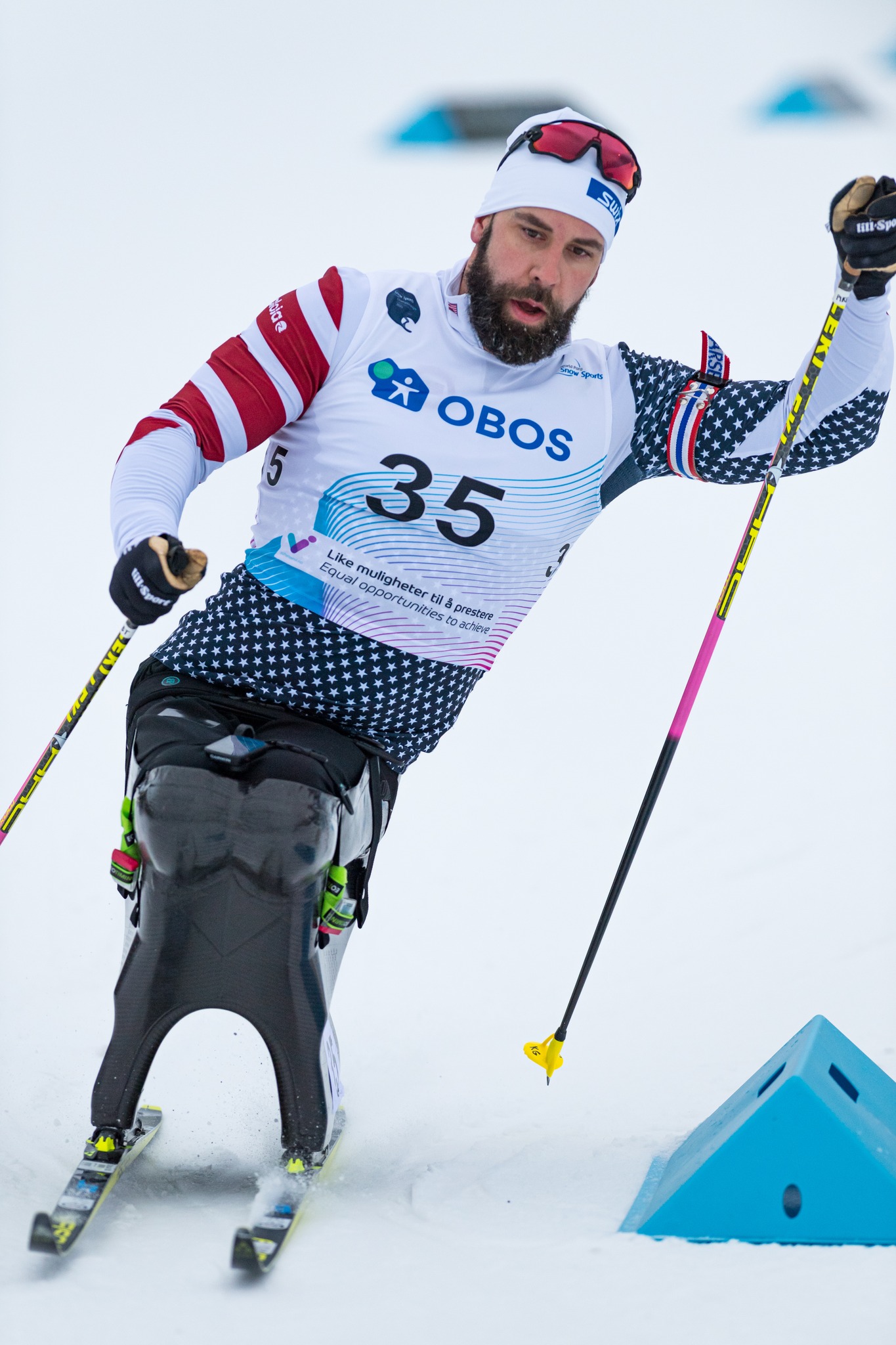
Aaron Pike is eyeing the sprint and the individual biathlon races in the upcoming 2022 Beijing Paralympic Games. (Photo: U.S. Paralympics Nordic Skiing / Getty Images)
Two years later, Pike made the Paralympic team for both the Sochi Games in 2014 and PyeongChang in 2018, earning his best results in Korea with a 6th place finish in the 15-kilometer biathlon event and 7th in the 12.5k biathlon. He hopes to improve upon these results in Beijing this winter.
While he hoped for more in Tokyo, Pike has steadily climbed the Olympic ranks in the event. He was 16th in London in 2012, 10th in Rio in 2016, and 6th in Tokyo. As previously stated, he was just 40 seconds outside of the medals and finished alongside the 5th place athlete from Great Britain.
“I was happy with how [the race in Tokyo] went considering a few factors: we had wet conditions, which always makes it super challenging. It’s kind of like skiing where if you choose the wrong [wax], you’re going to have a really rough race. So I set myself up really well by prepping for the rain, whereas a chunk of the field had problems just managing [the conditions].”
Let’s unpack the ski comment quickly. What those unfamiliar with wheelchair racing may not expect is that one of the primary challenges on race day is much like that of classic waxing: achieving optimal grip. Instead of skis on snow, it’s gloves on rings, and problem solving with sandpaper, rubber, and even klister. Yes, klister. Pike shared that Rode Chola is a commonly used product in wet conditions.
Despite preparing for wet conditions, Pike explained he did not feel his strongest during the event and quickly fell out of medal contention. Nonetheless, he stayed in it and advanced through the field as the race went on.
“The start was not the best for me, a couple people got away early. Right off the bat, I was in eighth or ninth place, but I was able to keep reeling people in. I pulled up to one of the Japanese racers, and then he and I pulled up to my teammate, Daniel [Romanchuk]. All three of us reeled in two more guys, so then we were in a pack of five, but weren’t able to catch the front leaders.”
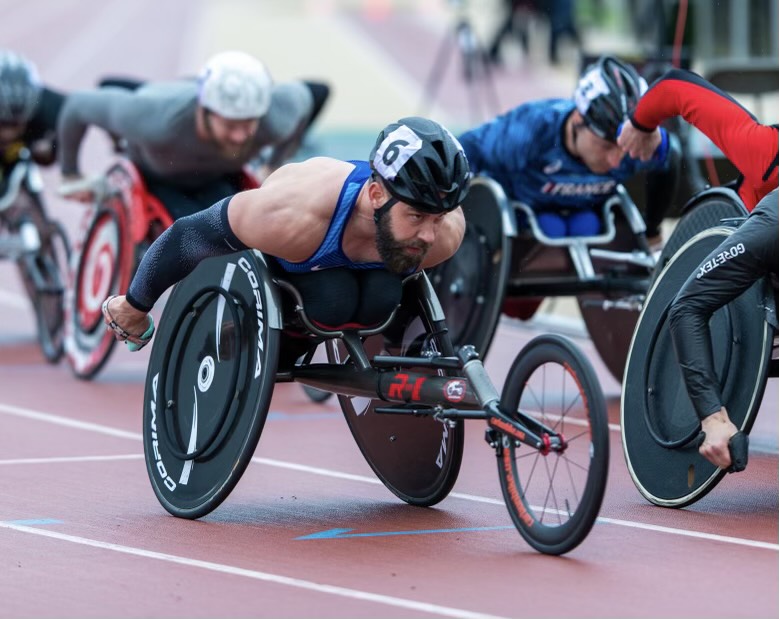
From the 1500 upward, Aaron Pike has excelled in wheelchair racing. (Photo: Tobias Lackner / Tobil Photography)
The experience of competing in a pandemic-shrouded Games also gave him a taste of what to expect in Beijing. Compared to his past Olympic experiences, Pike missed the energy of team processing and meetings where collective energy was all that was infectious. He explained that travel was more cumbersome with the added precautions, however, once in the Olympic Village, the differences felt less significant.
“Once you’re in the Village, that was normal. The Village life was cool. We still got to go to the cafeteria [with all the other international athletes], they just had plastic barriers up everywhere. I think the weirdest part was having an empty stadium. It was just super bizarre… it’s like this gorgeous massive stadium that can hold like 70,000 people and it’s just empty.”
He explained that tickets had been sold out for all of the final rounds of events, so it was disappointing that fans could not attend.
While Pike was happy with his effort in Tokyo on the day, he felt significantly stronger in each of the three World Majors that he raced. Rather than cumulative fatigue, Pike was in full stride throughout the series.
“Oddly enough, the worst was the first one, the London Marathon. For whatever reason I was able to hang with people, but not really do much more than that.”
Pike took 5th place in London in 1:31:36 (+5:09), before hopping on a plane bound for Chicago.
Despite unseasonably warm conditions and wind that supported the city’s nickname, Pike raced his fastest time on course to finish on the podium in third, his best overall result in Chicago. It was a race where everything came together so well, he had little to say about it, other than, “It was awesome.”
Pike finished 21-seconds behind the winner in 1:29:28. Less than 24 hours later, he was back on a starting line in Hopkinton, ready to race to Boston.
“That was the one I was going to be the most worried about, because that’s a really tough race, and coming the day after [Chicago]. And that was one where I made the wrong decision about grip.”
Remember: like classic skiing, some days are straight-forward cold snow and hard wax days, whereas others you’re down to the wire looking for answers, tossing an extra option or two in your drink belt before heading out just to be safe. Variable conditions and changing weather for wheelchair racers are akin those dreaded humid near-freezing with falling snow days where you can’t tell if hairies will get the job done, or if you need some kind of miraculous combination of covered klister, and no matter what you go with, you’ll probably deal with some icing. Err on the side of caution with icing, and you may have no grip whatsoever.
In a race wheelchair, rubber on rubber maximizes surface area between gloves and rings, allowing the most force as the athlete pushes powerfully on each stroke. But Pike explained that sandpaper is “night and day better” when the wheel rings are wet.
On the morning of the Boston Marathon, a mild storm was clearing. Pike explained it was raining during the warm up, but it let up before the start. Still, the precipitation left standing water on the roadway, making for conditions that were wetter than the weather. Because the weather didn’t match the actual race conditions, Pike explained his initial choice of gloves meant he could not take advantage of the early downhills, which is typically one of his strengths. Luckily, he stashed a backup pair of gloves, which he normally does not do.
“It seemed fine,” he said of his glove choice in the warm up. “I had my sandpaper gloves on me [just in case I needed to switch], and I strapped into my chair, which I’ve never done, but I just had a feeling something might not go right with a grip. Sure enough, when we started bombing down the hills right at the beginning — it wasn’t until going super fast on the hills that the wheels were lifting up water from people around me and spraying the rings and getting them wet. But there was no time to change [gloves] early on, so it was just kind of a struggle at the beginning.”
On the track in Switzerland, Aaron Pike pushes through the rain. (Photo: Tobias Lackner / Tobil Photography)
While trying to minimize his time losses, Pike found an opportunity to switch into the sandpaper gloves, which drastically improved his grip and allowed him to bring himself back into contention.
“Once I switched them out, then I was just catching one person after the next, all the way up to the point where I got fourth. I think I could have easily got third in that race as well if I just started with the sandpaper.”
Every year, Pike has to decide when to hang up the race wheelchair and transfer into his sit ski. The calculus is complicated by late-season opportunities like the marathon series, and is especially fickle surrounding Paralympic cycles.
“It was a really hard decision…I think the fact that there were three marathons in such a short time — having missed so many marathons because of COVID and not having the opportunity to race for a while, then having three of them within eight days of each other. It was just hard to pass that up.”
While both are endurance sports, wheelchair racing is a pushing motion, while double poling in a sit ski, like standing, is a pulling motion that involves more engagement of larger back muscles. For whatever reason, Pike feels the transition from skiing to wheelchair racing happens more smoothly than the opposite direction. As he shifts back into ski mode, his primary focus is rebuilding the specific strength.
“I really have to moderate the intensity for the first month,” he explained.
After a successful marathon season, Aaron Pike transfers from racing wheelchair to sit ski in preparation for the 2022 Beijing Paralympics. (Photo: Team USA Paralympics Nordic Skiing)
Eager to begin the transition process, Pike and his partner, Oksana Masters, headed to Canmore a week before their teammates. Masters is also a USA Para Nordic team member and is a three-time Olympic Gold Medalist in both cycling and cross country skiing.
“It’s just getting that feeling back,” he said. “Nothing truly replicates skiing. So just going out and skiing every day and getting x-amount of hours on snow every week is just huge.”
Pike reiterated the importance of a smart progression in the early season as his specific strength develops, not rushing into intervals that his body might not be ready for without that strength and trusting that his fitness from the marathon season will stick around for when the time does come to push hard.
“And also — not worrying about the first World Cup…” he continued. “We almost don’t even look at the results sheet. We’re still going to be lifting heavily and will mostly just use it as an intensity block in the training season.”
He added that the coaches are also able to take plenty of video for technique work during the camp and opening races, ensuring athletes are skiing with good form from the start of the season.
The opening World Cup event will take place in Canmore beginning on December 4th. Pike explained that his season goals are not until March, when the Paralympic Games kicks off in Beijing. He’s focused on gaining race experience in the World Cups and working with his coaches to hone his skiing and shooting skills. Ultimately, his eye is on a Paralympic medal.
“[In terms of specific events,] on the cross country side, I really love the sprint. It’s our only race where we go head to head and it’s purely just a race to the finish line. More times than not, I’ve made the final for the sprint, so that’s definitely one of the focuses for me.”
Pike also is focused on the individual biathlon events.
FasterSkier will continue to follow the Para Nordic athletes through their build up to Beijing.
COLORADO SPRINGS, Colo. — U.S. Paralympics Nordic Skiing today announced the five Para Nordic skiers named to the national team and two skiers named to the development team for the 2020-21 season. All seven athletes represented Team USA at the Paralympic Winter Games PyeongChang 2018.
“Our program is committed to developing athletes from their first-time experience to the top levels of Nordic skiing and biathlon,” said Eileen Carey, Director of U.S. Paralympics Nordic Skiing. “Our 2020-2021 National Team is representative of that commitment with a combination of up-and-coming athletes and those who are at the pinnacle of the sport internationally.”
The team is led by Paralympic gold medalists Oksana Masters (Louisville, Kentucky), Kendall Gretsch (Downers Grove, Illinois) and Dan Cnossen (Topeka, Kansas). At the 2019 World Para Nordic Skiing Championships, Masters won five world titles (middle-distance biathlon, middle-distance cross-country, cross-country sprint, biathlon sprint and long-distance cross-country) and garnered six total medals in Prince George, British Columbia.
Gretsch returned home as the 2019 world champion in the women’s sitting class of individual biathlon and additionally secured podium finishes in each of her events, claiming four silvers and one bronze.
Cnossen, a retired Navy SEAL, won a pair of medals at the world championships, racing to silver in the men’s sitting class of the middle-distance cross-country and cross-country sprint races. Pike secured the first world championships medal of his career – the bronze medal in the biathlon sprint – at the 2019 world championships.
Cnossen, Masters and Pike were set to compete at the 2020 World Para Biathlon Championships in Ostersund, Switzerland in March before it’s cancellation due to the on-going COVID pandemic.
The 2021 World Para Nordic Championships are scheduled to be held in Lillehammer, Norway from Feb. 11–20 as part of a historic first joint World Para Snow Sports Championships which will also include alpine skiing and snowboarding championships.
National A Team
Dan Cnossen
Kendall Gretsch
Oksana Masters
National C Team
Aaron Pike
Ruslan Reiter
Development Team
Joy Rondeau
Grace Miller
For more information, please contact Annemarie Blanco, U.S. Paralympics Nordic Skiing, at annemarie.blanco@usopc.org or 719-646-6921.
This insight into training para nordic athletes comes from Martin Benes, head coach of U.S. Para Nordic skiing. Benes joined U.S. Para Nordic in August 2018 after spending five years as the nordic ski director and head coach at Sugar Bowl Academy in Norden, CA. Benes responded via. email following a team training camp in Canmore, Alberta.
Martin Benes, head coach of U.S. Para Nordic, shares insight into structuring training for para nordic athletes. (Photo: Screenshot TeamUSA.org)
FasterSkier: Before taking this job, did you have any background in or connections to para sports? What have you learned in your time with U.S. Para Nordic?
Martin Benes: I had not had any background working with para athletes. As a junior I remember para Nordic skier Candace Cable training and racing in the Truckee-Tahoe area. I’d also seen the athletes at events here and there. I’ve been with the program a little over a year and just one full competition season. I feel like I’ve been constantly learning since I took the job, and a lot of that is just learning the individual athletes and how best to support them.
FS: Do you work with and write training for the whole USA para nordic crew or only certain athletes?
MB: I’m currently working with our National Team athletes which consists of four sit-skiers and one standing skier. It’s a little bit of a mix with how specific I’m getting in supporting training plans for those athletes. Educating athletes and supporting them as they make decisions for themselves is definitely the best thing I can do for athletes of this caliber. There’s some great collaboration happening with summer sport coaches for some of our sit-ski athletes and good support from clubs around the country for standing athletes.
FS: What are some of your takeaways in regard to coaching para athletes vs. able bodied? Are there different considerations in training philosophy? Similarities?
American Kendall Gretsch (l) racing in the 4 x 2.5 k mixed relay at the 2018 Paralympic Winter Games in PyeongChang, South Korea. Her team finished seventh. (Photo: U.S. Paralympics/Mark Reis)
MB: Fundamentally, there is a lot of overlap from a physiology perspective. With any group of elite-level athletes, in comes down to individualizing their training so they get the most out of each camp or training block. With Para Athletes, that individualization becomes even more paramount. One challenge will always be what works best for each athlete and trying to maximize their training.
In addition, we’re dealing with different types of injuries that can limit how an athlete can prepare for the competition season. So we’ve got to take those into account and first and foremost ensure an athlete stays healthy enough to train to their full potential.
FS: When leading a training session for para athletes with varying abilities and needs, how do you structure workouts to ensure everyone gets what they need from the session? Does the look of this change in summer vs. winter?
USA Para Nordic Gold Medalist Dan Cnossen shows the paddle board he uses to prepare his upper body for sit skiing. (Courtesy Photo)
MB: One of the big things that we do is allow athletes to drive the sessions. We tend to seek out a lot of athlete feedback and learn where they’re trying to improve and try to support that. It leads to a lot of interesting conversations about technique and tactics. When we do group work, which is still important, we try to be very deliberate in structuring it so that all athletes can get something out of it. Those sessions are typically either agility- and skills-based or speed-work.
In the summer our seated athletes tend to do a lot of cross-training and we avoid ski-specific movements to give them an opportunity to mentally and physically reset. They obviously are doing a lot of work with their arms and so anything to change it up is a positive and contributes to their long-term athlete health.
It’s also about learning what their strengths/weaknesses might be and then adjusting training, strength, and technique to maximize their session.
FS: What or who should people keep an eye out for this season? What is the team most excited for?
MB: We’ve got a really strong National Team going into this season, and excited to hopefully have some new athletes qualifying for World Cup racing this season in January and February at our races in Germany. Certainly our returning World Champs medalists Oksana Masters, Kendall Gretsch, Dan Cnossen, and Aaron Pike are all contenders this season and Ruslan Reiter, a standing skier, has made some big gains over the summer. We’ve got a combined race with FIS in Dresden which will be an exciting event for everyone and also Biathlon World Championships in March in Sweden.
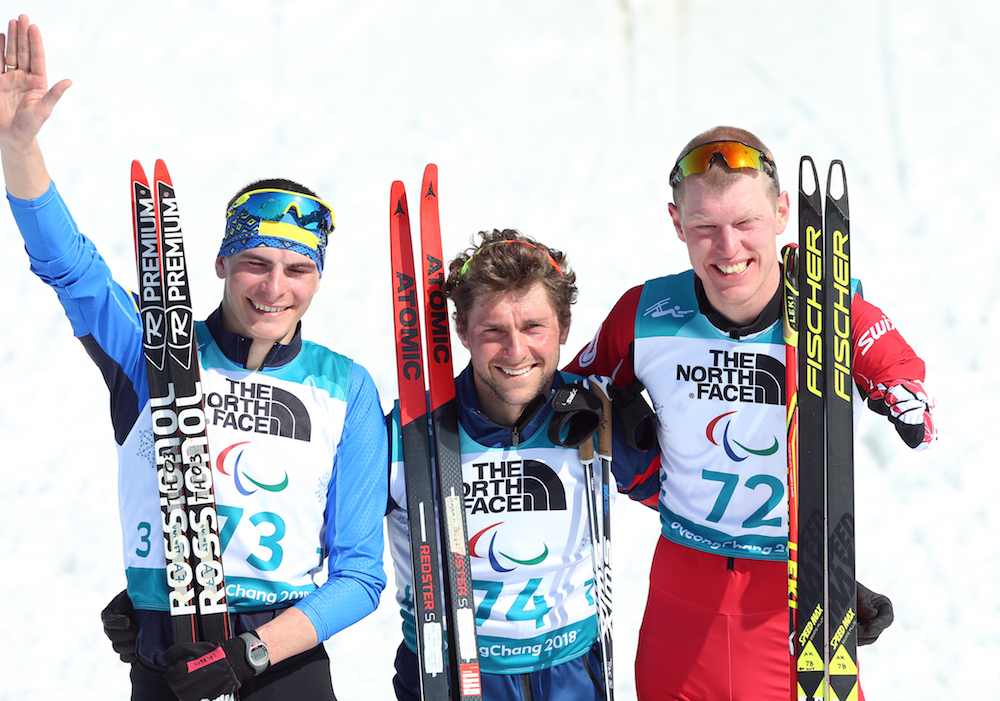
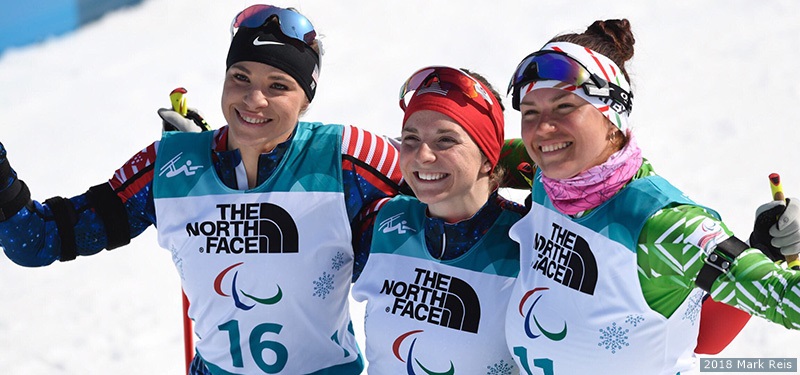
The women’s 6-kilometer sitting biathlon podium on Day 1 of the 2018 Paralympics in PyeongChang, South Korea, with Americans Kendall Gretsch (c) in first and Oksana Masters (l) in second, and Lidziya Hrafeyeva of Belarus (r) in third. (Photo: US Paralympics/Mark Reis)
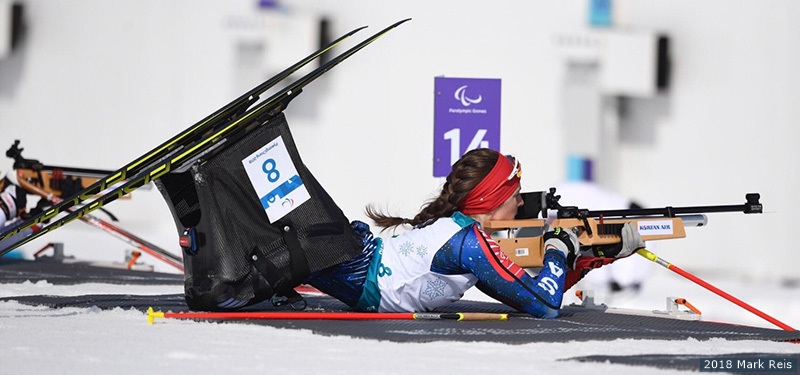
Oskana Masters focused and in the moment on the range during the 2018 Paralympics in PyeongChang, South Korea. (Photo: U.S. Paralympics/Joe Kusumoto)
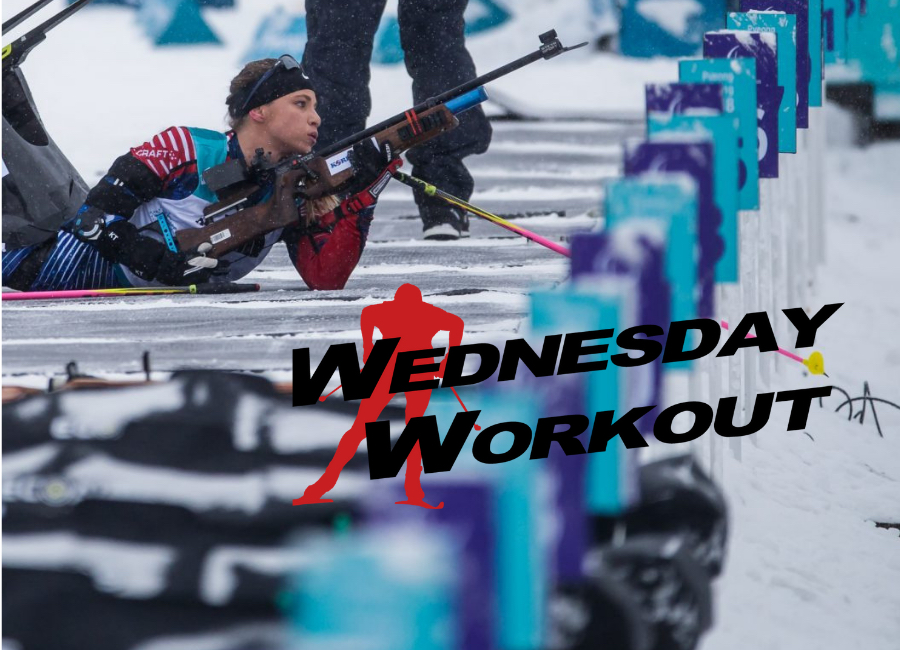
For this week’s Wednesday Workout, FasterSkier reached out to Martin Benes, the newest addition to the U.S. Para-Nordic coaching staff. Benes joined U.S. Para-Nordic this August, after five years working as the nordic skiing director and head coach at Sugar Bowl Academy in Norden, California. He is still currently living in California.
Benes’s primary work is with the Para-Nordic national team: A-team members Oksana Masters, Kendall Gretsch, and Dan Cnossen, as well as B-team member, Aaron Pike. Many of those athletes compete in sports outside nordic skiing–Masters also competes in handcycling, Gretsch in para-triathlon–permitting Benes to coach remotely fairly easily through the fall.
“In the summer/fall, we’re kind of operating on a camp schedule,” Benes said during a phone conversation indicating that since late August, his primary role has been writing athlete training plans. He has also facilitated three camps for U.S. Para-Nordic national team athletes.
American Dan Cnossen racing to second in the men’s 15 k sitting biathlon individual at the 2018 Paralympics in PyeongChang, South Korea. (Photo: U.S. Paralympics/ Maddie Meyer-Getty Images)
This first camp was in Torsby, Sweden, where national team athletes made use of the city’s ski tunnel from late September to early October.
“Then we had a camp out in Lake Placid, [New York]” Benes said. “They used their snowmaking to make us a small loop, which was really awesome of them. Obviously, with this level of athlete, it’s nice to be able to get on snow at least once a month, especially in the fall. We had a big group of development athletes there.”
Following the Lake Placid camp in late October, the athletes gathered once again, this time in West Yellowstone, Mont., for the Rendezvous Ski Festival held Nov. 20 until Nov. 24. Before returning to California, Benes stayed in Bozeman to work with the national team athletes for a week after the festival.
“I’ll be spending chunks of time up in Bozeman and be able to work with athletes up there going into race series,” Benes said.
The International Paralympic Committee’s first series of World Cup races kicks off Wednesday, Dec. 12 in Vuokatti, Finland. (For the International Paralympic Committee’s complete calendar of cross-country and biathlon competitions, click here).
Prior to this year, Benes’s primary coaching work has been with junior ski racers (he’s coached for Far West, Auburn Ski Club and Sugar Bowl Academy) and college-age athletes (he spent two years as the assistant coach for Bates College, his alma mater). On being an able-bodied coach for Para-athletes, Benes indicated that at its core, the philosophy of coaching is the same. At present, there are no former Para-Nordic athletes coaching with the program.
“The training principles don’t really change,” Benes said. “Yes there are things to be aware of physiologically, but in terms of the core principles, it’s not that different.”
Benes said that paralympic standing athletes’ development often mirrors fairly closely, that of able-bodied athletes.
“In terms of that athlete is going to have started skiing pretty young and probably trained with their club with some modifications,” he said.
There are currently two college athletes in the Para-Nordic program’s development program, Grace Miller (University of Alaska Fairbanks) and Mia Zutter (College of St. Scholastica).
Kendall Gretsch takes aim during the women’s 6-kilometer sitting biathlon at the 2018 Paralympic Winter Games on Saturday in PyeongChang, South Korea. She won the race to become the first American woman to medal in a biathlon event at the Paralympics (or Olympics). (Photo: US Paralympics/Getty)
“For the sit skiers, the biggest difference there is tactical and a little bit technical approach has to shift a little bit,” Benes continued. “It’s obviously a little bit different, but the principles are the same. And I think that obviously I’m pretty new to this program, but they’ve done a good job of codifying a lot of what has worked.”
“So I think there’s actually kind of a system in place of, these are the things that we need to deal with when people first start sit skiing and these are kind of the things that we’re looking for in potential sit-ski athletes,” he said. “I kind of had this luxury of coming into this program that has been successful in a lot of ways and has established itself as a program that’s doing a lot of things right. I have the opportunity to build on that with a strong staff in place.”
Like any other athlete-coach relationship, the biggest role Benes has is to facilitate the athlete’s own self-sufficiency within the sport.
“With this level of athlete, you’re individualizing more than maybe you would with able-bodied athletes in terms of training plans, in terms of strength plans, he said. “But ultimately you’re…helping guide them and giving them the framework to be successful and helping them be their own best coaches.”
With a little less than four years before the next Paralympics, Benes said that for now, his focus will be “taking the opportunity to try some new things and explore some new things without forgetting the pieces that have worked and building on those.”
“That’s kind of a vague answer, somewhat on purpose,” he added. “Basically this is a really good year for us to try some new things, without letting go of what has worked.”
The following text is a workout written by Benes.
***
Here is a workout I’ve used in the past at various points in the year with different levels of athletes. It was a staple with some of the senior-level athletes I’ve worked with during the summer and fall and I’ve also found it to be an effective workout during the race season if athletes are starting to feel flat racing. It’s a great workout for older juniors and up. For younger skiers, play some games instead.
The goal is to have a steady effort threshold effort and then mix in some surges/speeds where athletes are sprinting and forcing themselves to change gears and tempo from what is already a hard effort. In that respect, it is similar to a race effort where you have to change gears and respond to accelerations, especially in mass start or sprint racing. What separates it from just an all-out race effort is that the steady effort is more controlled and therefore guarantees that the athletes are able to increase tempo and speed.
I’ve used a few different modes but running with poles/bounding, rollerskiing, and skiing all are great options.Obviously, the mode depends on the time of year a little. Ideally, you have some rolling terrain so that in addition to the surges/speeds there are also some built-in recovery sections. So, onto how to set this workout up:
Find a suitable loop for running with poles, rollerskiing, or skiing. Ideally, it is gently rolling terrain. No hills that are too steep/long but with some good variety. The length doesn’t matter too much but if it’s too short it will get boring too fast. A loop that will take the athletes 4-6 minutes at threshold is good.
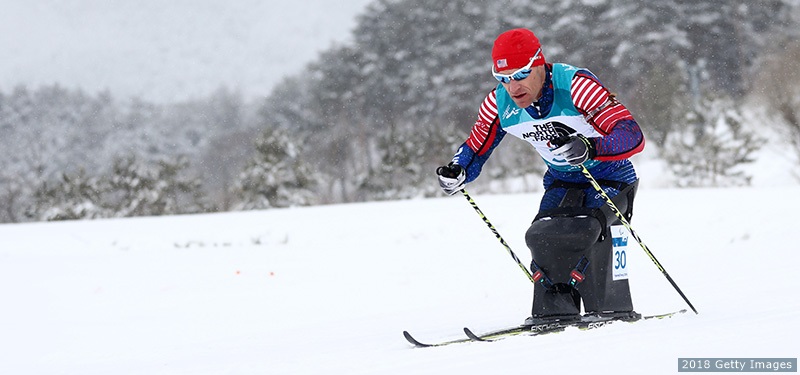
Aaron Pike (U.S. Paralympics Nordic) racing at the 2018 Winter Paralympics on a balmy day in PyeongChang, South Korea. (Photo: U.S. Paralympics/Joe Kusumoto)
On the loop, mark out (with cones, chalk, or dye) 2-4 short sections where the athletes will accelerate, do a speed, etc. You can mix up the specifics of the speeds. They could be forced technique, all-out speeds, accelerations, or any other variation. You’re looking for sections that should take approximately 10-20 seconds at speed.
You’re good to go. Depending on the athletes, you’re typically looking for 15-35 minutes of on time.
So, once it’s set up, have the athletes do a basic warm-up of 20 minutes of L1 activity, followed by 4 to 610-second speeds. Then decide how long the athletes will have for on-time. Typically, you would want to emulate a 5- to 10–kilometer race. So, in other words about 15-35 minutes of on time. Once they’re done, have them do a short cool-down and get their recovery on. Here is the step-by-step:
20-minute L1-L2 warm up.
4-6 by 10-second speeds. The focus here is quick movements.
15-35 minutes of threshold on the loop, with speeds on the marked sections. Speeds should be recognizable as a significant change in tempo/pace.
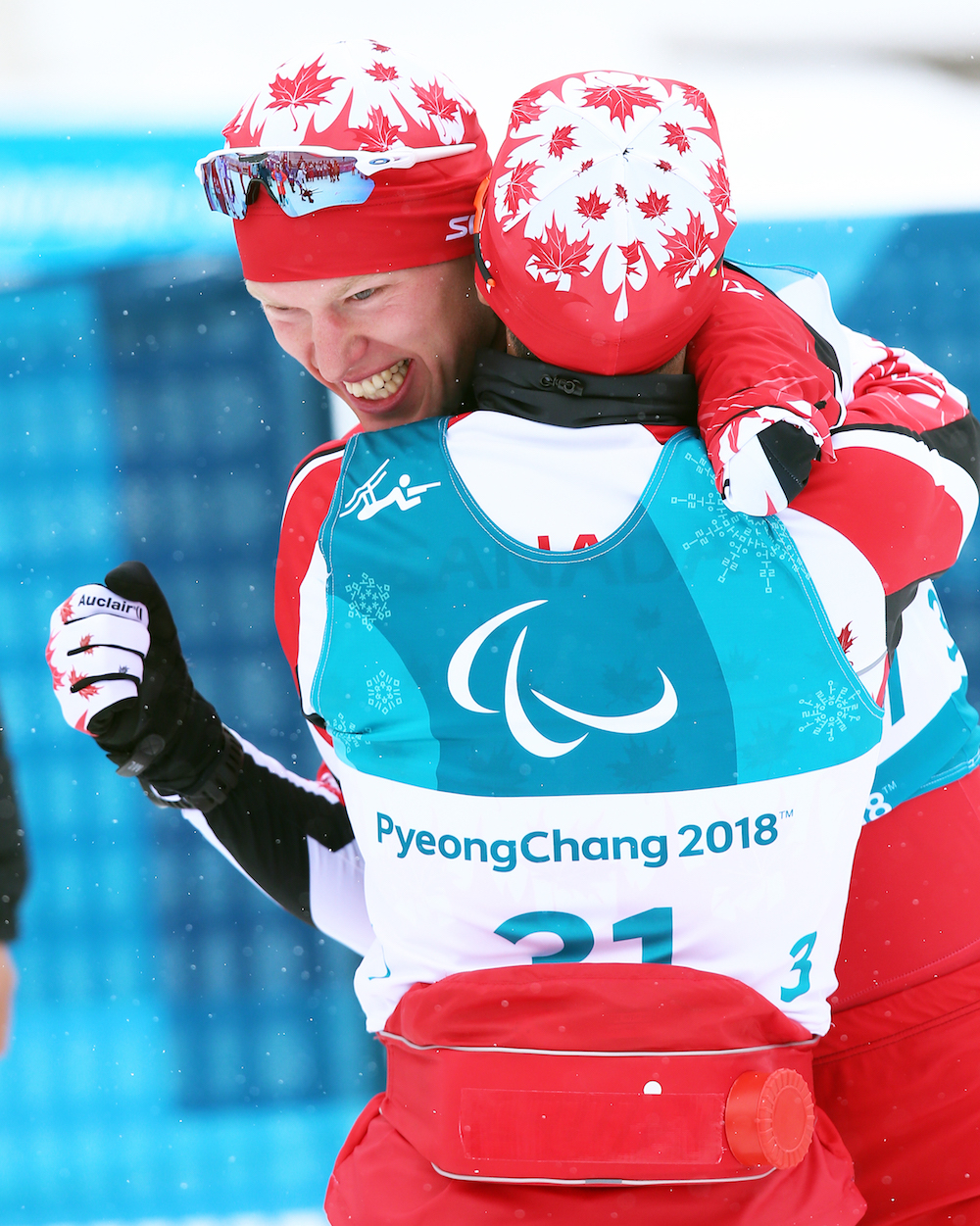
Canada’s Mark Arendez gets a congratulatory hug after he won gold in the men’s 15 k standing biathlon individual race on Friday at the 2018 Paralympics in PyeongChang, South Korea. (Photo: Scott Grant/Canadian Paralympic Committee)
2018 Winter Paralympics (PyeongChang, South Korea): 12.5/15 k biathlon races
Mark Arendez lets out his trademark roar as he crosses the finish line of the men’s 15 k standing biathlon individual on Friday at the 2018 Paralympics in PyeongChang, South Korea. He won for his first Paralympic gold and sixth-career Paralympic medal. (Photo: Scott Grant/Canadian Paralympic Committee)
Canada’s Mark Arendz captured his first Paralympic gold, the sixth Paralympic medal of his career and his fourth medal of the PyeongChang Games on Friday in the men’s 15-kilometer individual standing biathlon race — the longest and final biathlon event on the schedule.
Meanwhile, Dan Cnossen of the U.S. continued his medal streak with his fifth medal in as many races, taking silver in the men’s 15 k sitting biathlon. His teammate Oksana Masters raced to silver for her fourth medal of the 2018 Games in the women’s 12.5 k sitting biathlon, and two Canadians earned bronze with Collin Cameron placing third in the men’s 15 k sitting and Brittany Hudak taking her first Paralympic medal in the women’s 12.5 k sitting.
Arendz, 28, who placed second and third in two biathlon races at the 2014 Paralympics and once again finished second and third in two previous biathlon events at these Games, cleaned all four shooting stages to secure the win in 42:52.2 minutes. France’s Benjamin Daviet took silver, 58.3 second back, after missing one target (0+0+1+0) and having a minute penalty added to his time. Norway’s Nils-Erik Ulset shot clean for bronze, 1:14.5 behind Arendz.
“Every time I stepped on the podium this week, I kept thinking I want to hear ‘Paralympic Champion’ and then my name announced,” Arendz told Cross Country Canada, according to a press release. “I wanted nothing more than to hear my country’s anthem played. I’ve seen the maple leaf on top of the podium three times this week, but to finally have it behind the top step of the podium for me is an amazing feeling.”
“I wanted to be consistent and focus on the process all week. This race was my strength,” he said. “It is a shooting race and you have to go clean. The process was key today, and I just tried to make sure I hit those 20 targets. Once I got to that last bout I wasn’t going to miss, so I made sure of every shot before I pulled the trigger. In the end I was clean, the skiing was strong, and that is what I wanted.
“That completes the [medal] set for biathlon, and my first gold which means everything to me,” Arendz said of the last biathlon race of the 2018 Games.
Also in that men’s standing individual race, American Ruslan Reiter placed 15th with nine penalties.
Silver for Cnossen, Masters; Second Bronze for Cameron
American Dan Cnossen racing to second in the men’s 15 k sitting biathlon individual at the 2018 Paralympics in PyeongChang, South Korea. (Photo: U.S. Paralympics/ Maddie Meyer-Getty Images)
In the men’s sitting biathlon event on Friday, Cnossen and Cameron raced to second (+45.5) and third (+1:01.9), respectively, behind Germany’s Martin Fleig in first. Fleig shot clean and finished in 49:57.2, while Cnossen missed one in the last stage (0+0+0+1) and Cameron had a single miss in the second shooting (0+1+0+0). The silver was Cnossen’s third of these Paralympics, and he medaled in every biathlon race in PyeongChang (taking gold in the 7.5 k and silver in the 12.5 k).
“This is special because, for one, the conditions were so difficult,” Cnossen explained in an interview with U.S. Paralympics Nordic. “It’s snowing, it’s cold. It’s 30-40 degrees colder than yesterday. I’m getting a little bit tired. I had a bit of a mental battle this morning waking up. I was considering pulling out of the race because I really want to be fresh for tomorrow, so to overcome that and still put up a really solid performance is really quite good. I wish I could have cleaned that last stage – I missed one shot. Then I just really tried to hammer on that last lap.”
While the biathlon races are over, Saturday holds middle-distance cross-country races in PyeongChang.
“I have an excerpt that says it doesn’t matter how you feel today, it doesn’t matter what your background is or where you’re coming from, all that matters is what you can do,” said Cnossen, a 37-year-old retired Navy SEAL who was awarded a Purple Heart and a Bronze Star with Valor from the Secretary of the Navy for his service in combat.
“I just tried to focus on what I could do today,” he continued. “Not the fact that I didn’t sleep well last night, that doesn’t matter. Just go out there and perform like I know I can.”
“I have an excerpt that says it doesn’t matter how you feel today, it doesn’t matter what your background is or where you’re coming from, all that matters is what you can do.” — Dan Cnossen, U.S. Paralympian and former Navy SEAL, after racing to his fifth medal of the 2018 Paralympics
Collin Cameron racing to his second bronze of the 2018 Paralympics on Friday in the men’s 15 k sitting biathlon individual in PyeongChang, South Korea. (Photo: Scott Grant/Canadian Paralympic Committee)
Cameron, 29, achieved his second bronze medal of the Games after placing third in the biathlon sprint then coming close in fourth in Wednesday’s cross-country sprint.
“This is awesome. This one is the sweetest one for sure,” Cameron said, according to a team press release. “That was a little redemption after the sprint day because I really wanted that one.
“I got very little sleep last night. I just couldn’t seem to settle,” he continued. “My coach told me some of the best athlete performances have happened after a bad night of sleep. I told myself to just settle down. I got the bugs out in that first lap, focused on pacing in every lap and just kept pushing.
“I came here wanting to get on the podium in cross country, and I’m going home with two biathlon medals. I didn’t expect that at all,” Cameron added.
Also in that men’s sitting biathlon race, Aaron Pike placed sixth with perfect shooting and Andy Soule finished ninth with four penalties (0+0+4+0).
In the women’s sitting biathlon individual, both Masters and Germany’s Andrea Eskau shot clean, but Eskau completed the course faster to claim gold in 49:41.2. Masters finished 18.8 seconds back for silver, her second biathlon medal of the Games, and Lidziya Hrafeyava of Belarus finished third (+1:15.8) with one penalty (0+1+0+0).
American Oksana Masters celebrates as she finishes second in the women’s 12.5 k sitting biathlon individual race on Friday at the 2018 Paralympics in PyeongChang, South Korea. (Photo: U.S. Paralympics/Simon Bruty-OIS/IOC)
“I went from getting a sunburn a couple days ago during the sprints to freezing right now,” Masters, 28, said of Friday’s conditions to U.S. Paralympics. “The skiing is great, our skis are amazing, the team is amazing putting together some fast skis. I’m so happy I got a chance to redeem myself from the last biathlon race I didn’t get to finish.”
Masters did not finish the women’s 10 k biathlon race earlier in the week. She has been racing with an elbow injury throughout the Games.
“The way I looked at it, I wasn’t going to get defeated by this elbow,” she said. “I definitely know I wasn’t skiing at 100 percent, but I wanted to see where I was. I’ve trained four years, the day after Sochi ended. I counted the days, it was like 1,461 days – not that I’m counting – but I was not going to let that basically take away from my Games experience here.”
As for hitting all 20 targets on Friday, Masters said she was in the zone.
“I just focused on that ‘breathe, exhale, pause, squeeze,’ which is everything I’ve been training and practicing,” she said. “I couldn’t believe it. I almost fell going around the corner telling my coach ‘I cleaned!’ I can’t believe it.”
In three biathlon races in PyeongChang, the U.S. team tallied seven medals. Going into these Games, the U.S. had one biathlon medal (Soule’s bronze from 2010) in the history of the Paralympics and Olympics.
In the women’s 12.5 k standing biathlon race, Hudak notched her first Paralympic medal and Canada’s first in a women’s standing biathlon event in third place, 2:23.9 behind Anna Milenina of the Neutral Paralympic Athletes (NPA) in first and 1:20.1 behind Ekaterina Rumyantseva (NPA) in second. While Milenina overcame two minutes of penalties (0+1+0+1) to take gold in 38:56.8 and Rumyantseva had two misses as well (0+2+0+0), Hudak shot clean.
Brittany Hudak hugging her teammate Emily Young after Hudak placed third for her first Paralympic medal on Friday in the women’s 12.5 k standing biathlon individual in PyeongChang, South Korea. (Photo: Scott Grant/Canadian Paralympic Committee)
“This is such an unreal day. There are so many emotions,” Hudak said, according to the team press release. “I just tried to think about the process throughout the race. I wanted to focus on shooting because I knew it was going to make a difference today.”
As she left the range in fourth after her last shooting stage, Hudak got a lift from her teammate Emily Young, who pushed to catch her and pull her around the final loop. Together, they clawed back five seconds and Hudak finished third, 3.7 seconds ahead of Ukraine’s Iryna Bui in fourth.
“I’m just so lost for words. It is so incredible,” Hudak, 24, said. “I knew I was in the medal mix heading into that last lap. Everyone was screaming at me to keep going. Emily kept yelling at me the whole way around, and I just tried to hang onto her. I was breathing so hard and gave it everything I had. I was so tired at the finish and wanted to collapse.”
Young finished the race in seventh with two penalties (1+0+1+0).
“I was hearing the splits around the course, and I knew after my second round of shooting I was out of the top four and there was a big gap,” Young, 27, reflected. “I just chased Britt down on the course, and once I caught her, started screaming at her to follow me and not get dropped. I was breaking the wind for her the whole way. I was pretty tired on that last lap, but just kept skiing hard and screaming at her to follow. I don’t know where I found the energy.
“She did awesome. Britt is my right-arm girl,” Young added. “I’m so proud of her. We both work so hard and I know how many hours she put into this. I’m just as excited for her as I would be for myself.”
The Paralympics enter their final weekend with middle-distance cross-country races on Saturday, starting at 10 a.m. Korea time (9 p.m. EDT on Friday), and conclude with mixed and open relays on Sunday.
Canada’s Mark Arendz with his first Paralympic gold medal after winning the men’s 15 k standing individual biathlon race on Friday at the 2018 Paralympics in PyeongChang, South Korea. (Photo: Dave Holland/Canadian Paralympic Committee)
American Oksana Masters reacting to her first gold medal in her third Paralympics, after winning the women’s 1.1 k sitting sprint on Wednesday in PyeongChang, South Korea. (Photo: U.S. Paralympics/Joe Kusumoto)
2018 Winter Paralympics (PyeongChang, South Korea): Cross-country sprints
Hold onto your hats, this was a major day for both the American and Canadian teams at the 2018 Paralympics.
In the cross-country sprints on Wednesday in PyeongChang, Andy Soule and Oksana Masters of the U.S. Paralympics Nordic Program both captured their first-career Paralympic golds in the women’s and men’s sitting events, while Dan Cnossen skied to his fourth medal in as many races with a bronze to add to his collection.
Brian McKeever of the Canadian Para-Nordic Ski Team raced to his second-straight gold of the week in the men’s visually impaired sprint, with guide Russell Kennedy, and two of their teammates claimed bronze: Mark Arendz, in the men’s standing sprint for the first Paralympic cross-country medal of his career (following four biathlon medals) and Natalie Wilkie, the youngest member of the team at age 17, in the women’s standing sprint.
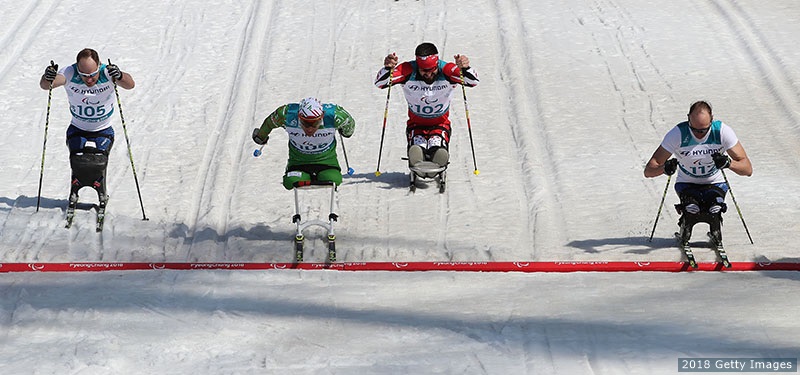
Andy Soule (r) of U.S. taking first in a photo finish with Dzmitry Loban (second from l) of Belarus, while American Dan Cnossen (l) takes third and Canada’s Collin Cameron (second from r) fourth in the men’s 1.1 k sitting cross-country sprint at the 2018 Paralympics in PyeongChang, South Korea. (Photo: U.S. Paralympics/Chung Sung-Jun for Getty Images)
In the men’s 1.1-kilometer sitting sprint final, Soule won a photo finish with Dzmitry Loban of Belarus, after both crossed the line in 3:31.4 minutes. Cnossen finished 0.4 seconds back in third and Canada’s Collin Cameron was just 0.3 seconds off the podium in fourth (+0.7).
After skiing the pack throughout the final, Soule took the lead as the four racers entered the stadium together. In the finishing stretch, Loban, Cnossen and Cameron challenged him for the gold, but with a powerful surge and lean at the line, Soule, 38, notched the first gold medal after nearly 13 years in the sport. The U.S. Army veteran had previously earned bronze at the 2010 Paralympics and bronze in Tuesday’s 12.5 k sitting biathlon race.
American Andy Soule celebrates gold in Wednesday’s 1.1 k sitting sprint final at the 2018 Paralympics in PyeongChang, South Korea. (Photo: U.S. Paralympics/Chung Sung-Jun for Getty Images)
“I chased the whole way,” he said. “I don’t think it necessarily hurt me to chase that much, it actually helped with a little bit of wind break. I think a good, tight tuck coming down the final hill put me in a natural line, and I knew I had a shot at a good sprint out. This is an incredible group to compete with. That kind of a finish … that’s what sprinting is all about.”
“I definitely lost a little gas in the final stretch,” Cnossen reflected, according to the press release. “My strategy was to tuck in behind the Belarus athlete in the beginning and then sprint over the bridge and try to hang on. Andy had such an awesome race. This is the second day in a row we’ve had two U.S. men on the podium which is just phenomenal.”
For Soule, the gold was his first in his third Paralympics, and his first Paralympic medal in a cross-country race (rather than biathlon).
“It means so much. It feels so incredible,” Soule said. “I couldn’t do it without incredible teammates pushing me all the time, and without incredible coaching and technical staff. I think it speaks to a great team effort that has really paid off for us.”
Cameron came within fractions of a second of achieving his second medal in his first Paralympics.
“I raced as hard as I could … it is what it is. I just came up a little short,” he said, according to a Cross Country Canada press release. “It is amazing that I got a medal this week in biathlon, I wasn’t expecting it, but that was behind me. I really wanted something here. This was the race I wanted a medal in. It was a close one.”
Also for Canada, Chris Klebl and Derek Zaplotinsky missed advancing to the final after both finished sixth in their respective semifinals.
American Oksana Masters kissing her first Paralympic gold at the medals ceremony on Wednesday night after she won the women’s 1.1 k sitting sprint at the 2018 Paralympics in PyeongChang, South Korea. (Photo: U.S. Paralympics/Joe Kusumoto)
Masters, 28, won the women’s 1.1 k sitting sprint final by 2.1 seconds over Germany’s Andrea Eskau, crossing the line first in 4:06.7. The gold was Masters’s first in her third Paralympics, after she had previously collected five medals — two silver and three bronze — between the 2012 Summer Paralympics in London (where she placed third in a doubles rowing event), 2014 Winter Paralympic in Sochi, Russia (where she tallied one silver and two bronze in cross-country events), and PyeongChang (silver in the biathlon 6 k sprint).
Masters has notably been racing with an injured elbow throughout these Games. On Tuesday, she did not finish the 10 k biathlon race.
“I can’t believe it. I literally was starting to think this day would never happen,” she said of her win on Wednesday, according to the U.S. press release. “I knew that I wasn’t going to let yesterday be my last race. I couldn’t believe it, but at the same time, I knew I had it in me to dig deep a couple more times. I could not have done this without the USOC medical staff.”
In the sitting semifinals, her teammates Kendall Gretsch, who won the first two races of the 2018 Paralympics, and Aaron Pike, were eliminated after both placed fourth in their respective heats.
McKeever 2-for-2
Canada’s Brian McKeever (r) and his guide Russell Kennedy celebrate gold in the men’s 1.5 k visually impaired classic sprint at the 2018 Paralympics on Wednesday in PyeongChang, South Korea. (Photo: Scott Grant/Canadian Paralympic Committee)
A five-time Paralympian, McKeever, 38, racked up his 12th Paralympic gold medal (15th total medal) in the men’s 1.5 k visually impaired classic sprint. He finished 2.5 seconds ahead of Sweden’s Zebastien Modin (with guide Robin Bryntesson) in second place, with a time of 4:03.2. Behind them in the final, Norway’s Eirik Bye (with guide Arvid Nelson) finished third (+29.5) and Jake Adicoff (with guide Sawyer Kesselheim) was relegated to last (fourth place) for a technique violation.
McKeever has won all three Paralympic sprints since they were introduced in 2010. On Wednesday, he double poled the entire race.
“These sprint races are miserable,” McKeever said, according to a team press release. “They are so hard. The young guys are fast, and have natural snap. There is so much stress in sprint racing, and it goes all day long. I’m much more comfortable with the longer distances, but it was a great day for us. Russell carried the load for us today, and just thrilled we were able to cross the line first.”
Kennedy, 26, who competed at his first Olympics last month in PyeongChang, said it was tough battling it out in Wednesday’s soft conditions.
“We played things a bit more strategic in the semis because we knew the final was going to be a tough fight, and it was,” Kennedy reflected. “That first hill hurt a lot. Once I got to the top I was able to settle down and said to myself ‘OK, you got this.’ ”
While Kennedy guided McKeever to gold in the second half of Monday’s 20 k cross-country race, McKeever’s other guide, Graham Nishikawa (who skied the first half with him), joined McKeever on the podium. Wednesday was Kennedy’s turn at the medals ceremony.
“This is a new experience for me — especially coming from the Olympics where the focus is all on yourself,” Kennedy said. “Brian is such a strong athlete and guiding him requires a lot more communication. Competing here at the Paralympics is really rewarding because you do this as a team. It is hard at times to know if I’m going too hard or if he needs me to go faster, but it has been a lot of fun for me.”
Canada’s Mark Arendz en route to bronze in the men’s 1.5 k standing classic sprint at the 2018 Paralympics in PyeongChang, South Korea. It was his first cross-country medal (fifth total) in his second Paralympics. (Photo: Scott Grant/Canadian Paralympic Committee)
In the men’s 1.5 k standing sprint final, Arendz tied Finland’s Ilkka Tuomisto for third place, and both were awarded bronze. They finished just 0.3 seconds behind Japan’s Yoshihiro Nitta in second, and 1.1 seconds behind Kazakhstan’s Alexandr Kolyadin, who won in 4:19.7.
“Sitting there in the finish waiting for the results of the photo finish, I was just hoping for a tie,” Arendz said, according to the team press release. “It was a really good race but I made a mistake down the finishing stretch switching to try and find a faster track and that may have cost me the whole race.”
The Paralympic medal was the first in a cross-country race for the 28-year-old Arendz, who has two silver and two bronze in biathlon races between these Paralympics and the 2014 Sochi Games.
“I came here for medals in biathlon and was hoping to get my first one in cross-country,” he said. “To come away with my first bronze in cross-country skiing means a lot. I couldn’t be happier.”
In the women’s 1.5 k standing sprint final, Wilkie raced to third for her first medal in her first Paralympics. She finished just a tenth of a second behind Norway’s Vilde Nilsen, who took silver, and 3.2 seconds out of first, which went to Anna Milenina of the Neutral Paralympic Athletes (NPA) in 5:11.1.
Canada’s Natalie Wilkie (r) finishing third, just 0.1 seconds behind Norway’s Vilde Nilsen (l) in second, for her first Paralympic medal on Wednesday in the women’s 1.5 k standing classic sprint in PyeongChang, South Korea. (Photo: Scott Grant/Canadian Paralympic Committee)
“It feels so awesome,” Wilkie said of her bronze medal. “This is my first Paralympics and I am just so happy to have won a medal.”
Four seconds behind Wilkie, her teammate Emily Young placed fourth (+7.2). Canada made up half of the six-woman final with Brittany Hudak placing sixth (+49.2)
“We are competing against each other, but we are also helping each other,” Wilkie said. “It was calming for me to have them there with me. We talked about strategy as a team before the final because the goal was for us to win a medal for Canada.”
Paralympic nordic skiers and biathletes have a day off on Thursday before races resume Friday with men’s and women’s long-distance biathlon races, starting at 10 a.m. Korea time Friday (9 p.m. EDT Thursday).
Canada’s Brian McKeever (r) and Russell Kennedy receiving their gold medals from the men’s visually impaired classic sprint at the 2018 Paralympic Games in PyeongChang, South Korea. (Photo: Scott Grant/Canadian Paralympic Committee)
American Dan Cnossen racing to silver in the men’s 12.5 k biathlon sitting on Tuesday and his third medal in as many races at the 2018 Paralympics in PyeongChang, South Korea. (Photo: U.S. Paralympics/Thomas Lovelock – OIS/IOC)
2018 Winter Paralympics (PyeongChang, South Korea): 10/12.5 k biathlon races
Amid soft and slow conditions at the Alpensia Biathlon Centre on Tuesday, American Dan Cnossen raced to his third-straight medal in as many races at the 2018 Paralympics, claiming silver in the men’s 12.5-kilometer sitting biathlon race just ahead of his U.S. Paralympics Nordic teammate and fellow military veteran Andy Soule, who earned bronze.
Cnossen, a retired Navy SEAL, previously won gold in Saturday’s 7.5 k biathlon sprint and silver in Sunday’s 15 k cross-country race. Despite wind gusts up to 15 miles per hour on Tuesday, Cnossen hit all 20 of his targets and finished second, 1:01.7 minutes behind Ukraine’s Taras Rad, who won in 45:35.6 with clean shooting as well.
“Personally, this was such an important breakthrough, to shoot 20 for 20, especially on the last shooting stage,” the 37-year-old Cnossen said, according to a U.S. Paralympics press release. “I’ve had some mental blocks in the past where I overthink things or get a little anxious, so I really took my time, especially on the last two shots. I wanted to get my heart rate down and make sure the wind wasn’t blowing. It feels really good to overcome this mental hurdle. I just wanted to see what I could do today, and have my own race, and not worry about what other people are doing.”
Soule, a 38-year-old Army veteran, missed two on his third shooting stage (0+0+2+0) to finish third, 1:33.1 out of first. It was the second Paralympic medal of his career after Soule he earned bronze in the biathlon pursuit at the 2010 Games in Vancouver, British Columbia.
“I was really skiing at an aggressive pace,” Soule told U.S. Paralympics on Tuesday. “I was struggling to hold it together at the range those last two shootings. When I missed those two, I also knew that I had seen other people missing. I knew a miss or two wasn’t going to necessarily put me out of it. I knew I just needed to get back up, set the same aggressive pace, and maybe back it off just a little earlier on the next lap to make sure I get the shots. It came together just fine.”
It was another special moment for the U.S. Paralympics program with two of its leading men on the podium.
“I’m really happy for our whole team, to see how much success we’re having,” Soule said. “I think it’s a testament to great coaching, great support, great staff. Lots of great work being done behind the scenes by so many people that you don’t even see who are out here long before we even arrive at the venue. It’s a great group of athletes. I’m so happy to be a teammate with these guys.”
“This race feels especially good because I have my teammate, Andy, on the podium,” Cnossen said. “I knew he was going to have a good race. I’m really proud and happy to see him on the podium.”
Also for the U.S., Aaron Pike placed seventh in that race (+5:38.1) with a single miss (0+0+0+1), Sean Halsted finished 14th (+10:35.7) with five penalties, and Bryan Price was 16th (+17:02.3) with 10 misses.
Canada’s lone man in the 12.5 k sitting biathlon race, Derek Zaplotinsky finished 12th (+9:15.3) with five penalties.
American Kendall Gretsch racing to fourth in the women’s 10 k sitting biathlon race on Tuesday at the 2018 Paralympics in PyeongChang, South Korea. (Photo: U.S. Paralympics/ Maddie Meyer – Getty Images)
Coming off two medals in the women’s sitting biathlon and cross-country events last weekend, Kendall Gretsch placed fourth in the 10 k sitting biathlon race on Tuesday, 16.5 seconds out of third. According to a U.S. Paralympics press release, she fell three times and incurred three penalties (1+0+0+2), finishing 2:05.4 behind the winner, Germany’s Andrea Eskau.
A four-time gold medalist in Paralympic cycling with two silver medals in cross-country skiing (from two Winter Paralympics), Eskau, 46, claimed her first gold of the PyeongChang Games in 42:36.6 with one miss (0+0+1+0). Marta Zainullina and Irina Guliaeva, of the Neutral Paralympic Athletes (NPA), took silver (+1:15.5) and bronze (+1:48.9), respectively, with Zainullina skiing just one penalty lap and Guliaeva having to ski three.
Oksana Masters did not finish, pulling out after 8.64 k with six penalties (1+2+1+2).
Second Medal for Arendz
Canada’s Mark Arendz racing to bronze in the men’s 12.5 k standing biathlon race on Tuesday at the 2018 Paralympic Games in PyeongChang, South Korea. (Photo: Scott Grant/Canadian Paralympic Committee)
Mark Arendz led Canada with his second medal in the second biathlon race, the men’s 12.5 k standing, racing to bronze, 30.9 seconds out of first. Arendz cleaned three stages before missing one on his last shooting (0+0+0+1), causing him to ski an additional 150 meters in the penalty lap.
France’s Benjamin Daviet won that race in 38:55.5 with one late penalty as well (0+0+0+1), and Ukraine’s Ihor Reptyukh collected silver (+6.7) with one miss as well (0+0+1+0).
“I knew there were some tired guys, so I went for it from the start and tried to put some pressure on,” Arendz, 28, said in a Cross Country Canada press release. “I decided in that last bout to go for it all, throw it down, and go for the win. Unfortunately, I had the one miss and it made it a tight and interesting race.”
The men’s 12.5 k standing biathlon podium at the 2018 Paralympics in PyeongChang, South Korea, with France’s Benjamin Daviet (c) in first, Ukraine’s Ihor Reptyukh (l) in second, and Canada’s Mark Arendz (r) in third. (Photo: Scott Grant/Canadian Paralympic Committee)
Arendz, who took silver in the opening biathlon sprint and also has two biathlon silver medals from the 2014 Paralympics, is seeking his first Paralympic gold.
“It was a really tough battle all day. I handed it to them early and had a choice: to go for gold or settle for the podium. I went for the win and had that one miss that cost me today,” he said. “I ran out of energy at the end. I am really happy with my race and it is another medal for Canada. I know everything is going well. I just need that last little tweak to finally win one.”
American Ruslan Reiter finished 11th in that race (+8:41.4) with three penalties (0+2+1+1).
Brittany Hudak led the Canadian women in fifth in the 10 k standing biathlon race, 5:45.8 behind Ekaterina Rumyantseva (NPA) in first. Hudak cleaned the first three stages before missing one in the last bout (0+0+0+1).
“The first lap I felt good,” Hudak recalled in the team press release. “The skis were running well in these conditions, but then it just got slower as we went on. The flat sections you really try put power to glide the ski but your weight is sinking you into the snow. It got harder to get some glide and as my legs got more tired I didn’t feel like I was moving fast.
“I tried to keep calm in the range and take my time,” she added. “The wind today was gusting, so I took a bit longer on my setup than I usually would and tried to be consistent. For the most part it worked well until that last lap, and that last bout. Overall it was an OK race.”
Paralympic racing continues Wednesday with men’s and women’s cross-country sprints, starting at 10 a.m. Korea time (7 p.m. EDT Tuesday).
Kendall Gretsch takes aim during the women’s 6-kilometer sitting biathlon at the 2018 Paralympic Winter Games on Saturday in PyeongChang, South Korea. She won the race to become the first American woman to medal in a biathlon event at the Paralympics (or Olympics). (Photo: US Paralympics/Mark Reis)
2018 Winter Paralympics (PyeongChang, South Korea): Biathlon sprints
The 2018 Paralympic Winter Games in PyeongChang, South Korea, opened in a big way for the U.S. and Canadian Paralympic nordic and biathlon teams on Saturday, with Kendall Gretsch and Dan Cnossen winning the U.S.A.’s first-ever gold medals in biathlon, and Canada’s Mark Arendz racing to silver for his third Paralympic biathlon medal and Collin Cameron becoming the first Canadian man to medal in a Paralympic sit-ski race.
In her first Paralympics, Gretsch, a 25-year-old three-time gold medalist in paratriathlon, led U.S. teammate Oksana Masters across the line in the women’s sitting biathlon 6 k sprint, finishing in 21:52.0 with a single miss (0+1). Masters shot clean (0+0) and finished 22.8 seconds back for silver, less than three weeks after injuring her elbow.
“I’m just really excited to be here,” Gretsch said, according to a U.S. Paralympics Nordic Skiing press release. “It’s just a great way to kick off the week and hopefully [there’s] more to come. It was an awesome race.”
Her gold medal was also the first for an American woman in Paralympic nordic skiing.
“It’s incredible,” Gretsch said. “For the U.S., we’ve been watching the Olympics and [Kikkan Randall and Jessie Diggins] had their historical medal for the women’s cross-country and that definitely motivated us coming here, so if I was able to do that, that’s great.
“Motivation to get a medal definitely heightened after seeing that and seeing how they pushed through all their races,” she continued. “They’re such a great team and we also have a really strong aspect of a really strong team all working together.”
The women’s 6-kilometer sitting biathlon podium on Day 1 of the 2018 Paralympics in PyeongChang, South Korea, with Americans Kendall Gretsch (c) in first and Oksana Masters (l) in second, and Lidziya Hrafeyeva of Belarus (r) in third. (Photo: US Paralympics/Mark Reis)
At the 2014 Paralympics in Sochi, Russia, Masters earned silver and bronze in cross-country skiing events. She also took a bronze medal in rowing at the 2012 Summer Paralympics.
“I am so happy, I feel like I just won my gold medal, basically. I’m so happy to be on the podium,” Masters, 28, told U.S. Paralympics after her first Paralympic biathlon medal.
“I was told I was not going to be able to race,” Masters said of her injury just before the Games. “I was basically fighting for a chance at the start line. I dug as deep as I could for my team and I’m happy to be standing on the podium next to Kendall.
“It’s amazing to have team USA having not only its first female biathlon medal but the first female Paralympic gold, followed by a silver,” she added. “It gives me goosebumps. It could not have been a better feeling.”
In his second Paralympics, Cnossen, a 37-year-old retired Navy SEAL, achieved his first medal — gold — in the men’s sitting biathlon 7.5 k sprint in 23:49.7. With a single miss (0+1), he skied in the top three throughout Saturday’s race before beating Belarus’s Dzmitry Loban, who also had a penalty (1+0), by 7.3 seconds for the win.
American Dan Cnossen (l) celebrates gold on Day 1 of the 2018 Paralympics in PyeongChang, South Korea, next to Canadian bronze medalist Collin Cameron. (Photo: US Paralympics/Getty Images)
Cnossen’s previous best in Sochi was sixth in the cross-country sprint and 10th in the biathlon individual race. He is also a world championships para-cyclist pursuing his second graduate degree from Harvard University.
“I would say Andy Soule was the trailblazer,” Cnossen said of his teammate’s bronze medal from the 2010 Paralympics in Vancouver, British Columbia. “When I was new on the team, he was the inspiration, and I know he’s going to pop a good race here as well.
“In the race, I just wanted to see what I can do, not worrying about anything else,” he explained. “In the last Games that I did in Sochi, I let the TV screens and the announcer get to me and today I just focused on what I can do and nothing else matters. I crossed the line and I wasn’t even going to look at the board and I was pleasantly surprised at the end.”
American Andy Soule racing to eighth in he men’s 7.5 k sitting biathlon sprint at the 2018 Paralympics in PyeongChang, South Korea. (Photo: US Paralympics/Thomas Lovelock for OIS/IOC)
With a total of nine Americans in the top 20 — Soule placed eighth, Aaron Pike 12th, Joy Rondeau 14th, Ruslan Reiter 16th, Jeremy Wagner 19th, and Bryan Price 20th — Cnossen said the best was yet to come. With the exception of Reiter, who competes in the standing division, all of those results came in Saturday’s sitting biathlon races.
“We have such an amazing team,” Cnossen said. “The way they’ve recruited new athletes, developed the waxing protocol — it’s really showing. This is just the start and we have six more races including the relays to go. It’ll be exciting.”
Silver + Bronze for Canada
In his third Paralympics, Arendz, 28, opened with a silver medal in the men’s standing biathlon 7.5 k sprint, matching his result in that event in Sochi four years ago. He shot clean and finished in 18:25.9 on Saturday, 30.8 seconds behind France’s Benjamin Daviet, who also cleaned the two-stage race and won in 17:56.6.
Canada’s Mark Arendz crossing the line for silver in the men’s standing biathlon 7.5 k sprint on Saturday at the 2018 Paralympics in PyeongChang, South Korea. (Screenshot: ZDF broadcast)
“Coming across the line I thought I had it,” Arendz said, according to a Canadian team press release. “I’m really happy with the day. It was an awesome race for me, but someone was just a little faster.”
Earlier in the day, Cameron, 29, raced to bronze in the men’s sitting sprint, missing one target (0+1) and finishing 9.7 seconds behind Cnossen in first.
“I got to the venue and saw Collin’s name at the top of the standings in his final lap of the sit-ski race,” Arendz recalled. “I cheered him on up his final hill and I took a lot of energy from watching him win his first ever Paralympic medal this morning.”
A former sledge hockey player, Cameron started skiing three years ago. In achieving his first Paralympic medal, he became the first Canadian male biathlete to reach the podium in sit skiing at the Paralympics.
“This is crazy. I didn’t expect this today,” Cameron said according to the press release. “I felt really great getting down on the mat and was in position every time. It got me on the podium today, and it is absolutely crazy.
“When I was coming into the range for the second time, I heard on [my coach John Jaques’s] radio when he bent down to give me my rifle that I was in third, and I missed that shot,” he added. “I took a breath and got the rest – then I just went for it. Coming up that final hill, the whole team was just screaming at me and I went as hard as I could.
“Everything came together today, and I don’t know why,” Cameron continued. “I think just the build up through the season. I was progressively getting snappier and faster, and all the work John spent with me in Sudbury. We focused on race procedure and that paid dividends today. It is such a fun course here.”
In the women’s 6 k standing biathlon sprint, Canada’s Emily Young placed seventh with a single miss (0+1), just ahead of teammate Brittany Hudak in eighth with two penalties (1+1).
Racing in PyeongChang continued Sunday with men’s and women’s sitting cross-country long-distance events, starting at 10 a.m. Korea time (8 p.m. EST on Saturday).
Three-time Paralympic medalist Oksana Masters won her third consecutive overall women’s sitting IPC World Cup globe in cross-country. (Photo: U.S. Paralympics)
COLORADO SPRINGS, Colo. — Thirteen athletes, including seven U.S. Paralympians in Nordic skiing, were named to the 2017-2018 U.S. Paralympics Nordic Skiing National Team on June 1 by U.S. Paralympics, a division of the United States Olympic Committee.
“The level to which our Nordic skiers have performed already is very inspiring,” said Paralympic Nordic Skiing head coach Eileen Carey. “Our veteran athletes have continued to improve as we approach the Paralympic Winter Games PyeongChang 2018, and the addition of new members on our national and development teams is promising for the future.”
Three-time Paralympic medalist Oksana Masters (Louisville, Kentucky) highlights the team after claiming four world championships titles during the 2016-17 season, including cross-country crowns in sprint, middle and long distances, as well as the sprint biathlon title. She capped off the season by securing her third consecutive overall women’s sitting world cup globe in cross-country at the World Para Nordic Skiing World Cup Finals in Sapporo, Japan. Additionally, Masters finished third in the world cup overall rankings in biathlon.
Kendall Gretsch (Chicago, Illinois), Ruslan Reiter (Manchester, Maine) and Daniel Romanchuk (Mount Airy, Maryland) all make the national and development teams for the first time.
Four military veterans are featured on the roster, including Dan Cnossen (Topeka, Kansas/Navy), Sean Halsted (Rathdrum, Idaho/ Air Force), Bryan Price (Belton, Missouri/Army) and Andy Soule (Pearland, Texas/Army).
Team USA had a record-breaking 2016-17 season that finished with 33 world cup medals by five athletes, setting a record for the Nordic skiing team. Of the 33 world cup medals acquired, 12 were in biathlon. All A- and B-Team athletes reached the podium this past season, including first-time medals for Jake Adicoff (Sun Valley, Idaho) and guide Sawyer Kesselheim (Bozeman, Montana), as well as Aaron Pike (Park Rapids, Minnesota) at the PyeongChang Test Event.
2017-18 U.S. Paralympics Nordic Skiing National Teams
*Denotes U.S. Paralympian in Nordic skiing
# Denotes U.S. Military veterans
A Team
Jake Adicoff (Sun Valley, Idaho) – visually impaired skier*
Dan Cnossen (Topeka, Kansas/Navy) – sit skier*#
Sawyer Kesselheim (Bozeman, Montana) – guide
Oksana Masters (Louisville, Kentucky) – sit skier*
B Team
Aaron Pike (Park Rapids, Minnesota) – sit skier*
Andy Soule (Pearland, Texas/Army) – sit skier*#
C Team
Kendall Gretsch (Chicago, Illinois) – sit skier
Development Team
Sean Halsted (Rathdrum, Idaho/Air Force) – sit skier*#
Bryan Price (Belton, Missouri/Army) – sit skier*#
Ruslan Reiter (Manchester, Maine) – standing skier
Daniel Romanchuk (Mount Airy, Maryland) – sit skier
Joy Rondeau (Granby, Colorado) – sit skier
Mia Zutter (Sun Prairie, Wisconsin) – visually impaired skier
U.S. Paralympic skier Oksana Masters (c) along with Germany’s Anja Wicker (l) and Belarus’s Lidziya Hrafeyeva on the podium for the women’s 6-kilometer biathlon event on Saturday at the 2017 International Paralympic Committee (IPC) Nordic Skiing World Championships in Finsterau, Germany. (Photo: John Farra)
The 2017 International Paralympic Committee (IPC) Nordic Skiing World Championships concluded this past weekend Feb. 18-19 in Finsterau, Germany with a biathlon sprint and a middle-distance cross-country event. Claiming their second gold medals of the week were Oksana Masters, of the U.S., and Canada’s Mark Arendz. Race recap and results below.
***
The U.S. Paralympics Nordic Team’s Oksana Masters is plenty used to winning cross-country events. She ended last season undefeated in every cross-country race and earned World Championships titles in both the sprint and long-distance events earlier in the championships in Finsterau.
But in biathlon, the 27 year old had yet to win a gold. However, that didn’t stop her from racing to a World Championships title in the women’s 6-kilometer sitting biathlon sprint on Saturday.
“I am completely shocked,” Masters said to media outlets. “I entered this race with no expectations. I went from not being sure if I was going to be able to race the last two days to winning my first gold medal in biathlon. I’m so excited! I cannot wait to let this all soak in and race as hard as I can for one more race. It has been an amazing experience.”
Despite feeling ill and not deciding until after her warmup on Saturday that she would indeed enter the race, Masters won in a time of 20:56.2 minutes, with two penalties (1+1). Finishing behind her in second was Germany’s Anja Wicker, who completed the course in 21:21.0 after one miss (1+0). In third after three misses (1+2) was Lidziya Hrafeyeva of Belarus, who finished in 21:48.0.
Ukraine’s Maksym Yarovyi won the men’s 7 k sitting biathlon sprint, finishing in 21:36.1 after just one penalty (1+0). Shooting clean and placing second on the day was Yarovyi’s Ukrainian teammate, Taras Rad (21:48.9). German skier Martin Fleig finished in third in 21:48.9 after also hitting all of his targets as well.
Just missing the podium for the second time this week was American Andy Soule in fourth. Soule missed one shot (0+1) and finished in 22:59.1. Behind him in fifth was his U.S. teammate Aaron Pike, who finished in 23:06.5 after shooting clean.
Two Canadians also competed in the event, with Derek Zaplotinsky finishing 10th in 24:29.4 after shooting clean, and Cameron Collin placed 12th in 25:13.1 after three misses (2+1).
Canada’s Mark Arendz (c) celebrates his second World Championships gold alongside France’s Benjamin Daviet (r) and Ukraine’s Ihor Reptyukh on the podium for the men’s 7.5-kilometer standing biathlon event on Saturday, Feb. 18, at the 2017 IPC Nordic Skiing World Championships in Finsterau, Germany. (Photo: Robin McKeever/Twitter)
If Canada’s Mark Arendz had any regret about his missed shot at gold last Thursday, he found redemption in Saturday’s 7.5 k standing biathlon sprint.
“I refocused on a new day, new race,” Arendz wrote in an email to FasterSkier of his approach to Saturday’s competition following Thursday’s silver place finish. “I knew the margin of error would be small in such a tight race. Going into the race my biggest was on recovery and preparation for Saturday’s race. The body felt great before, during and after the race. I was excited to have that feeling of renewed energy back in the legs.”
Arendz shot 100 percent and raced to first place, earning his second gold medal for the week in a time of 18:30.0.
I didn’t make any changes to my shooting,” Arendz added. “I considered it but in end went with what has been successful and working for me.”
Finishing behind Arendz in a time of 18:32.6 and also shooting clean, was Ukraine’s Ihor Reptyukh in second place. Bronze went to France’s Benjamin Daviet, who clocked in at 18:57.2 after just one miss (0+1).
In the women’s standing 6 k biathlon sprint, Ukraine once again claimed the win, with Liudmyla Liashenko emerging victorious with clean shooting in 18:25.0. Her teammate Oleksandra Kononova placed second (19:15.2) with two misses (2+0). Shooting clean for the final podium spot in third (19:24.1) was Iryna Bui, also of Ukraine.
Canadians Emily Young and Brittany Hudak claimed eighth and 10th respectively. Young completed the course in 21:11.0 with one miss (0+1), while Hudak clocked in at 22:30.9 with two misses (2+0).
In the women’s 6 k visually impaired biathlon sprint, Ukraine was again victorious with Oksana Shyshkova claiming first in 20:15.7 after three missed shots.
Second place went to Germany’s Clara Klug, who completed the course in 20:38.8 after shooting 100 percent.
“It’s just overwhelming,” Klug said, according to an IPC press release. “I said I wanted to win three Filus (the mascot of this event) and now I’ve got three. I love it here in Finsterau. A big thank you to the team and my guide Martin Hartl, who yells a lot at me on the course but it really helps!”
Ukraine put two on the podium with Olga Prylutska taking third in 21:42.3 with three misses (1+2).
Marking the fourth win for Ukraine on the day was Anatolii Kovalevskyi, taking gold in the men’s 7.5 k visually impaired biathlon sprint. Kovalevskyi completed the course in a time of 19:55.9 for the win, missing just one shot (1+0).
Belarus’s Vasili Shaptsiaboi earned silver, finishing in 20:15.4 after two misses (2+0). Rounding out the podium and taking bronze was France’s Anthony Chalencon, who clocked in at 20:37.2 after one missed shot (0+1).
Canada’s Brian McKeever (third from r) with his guide Graham Nishikawa (third from left) after winning his second medal of 2017 IPC World Championships and 18th career World Championships gold on Feb. 16 in Finsterau, Germany. He racked up another individual gold on Sunday, Feb. 19, in the men’s 10 k visually impaired race to end the championships. (Photo: Robin McKeever/Twitter)
Day 7
With seven races over the course of nine days and only two days off, the IPC World Championships competitions were bound to test even the most accomplished of IPC athletes, including Canada’s Brian McKeever.
“We had four races in five days so it was a lot about survival today,” McKeever said after Sunday’s race, according to a Canadian Para-Nordic Skiing press release.
McKeever didn’t just survive the final race, he won it. The 37-year-old 18-time World Champion racked up his 19th career gold in the men’s 10 k visually impaired cross-country race in 22:15.1, besting both Thomas Clarion of France and Yury Holub of Belarus.
“Our performances are showing that things are moving back in the right direction after being sick around Christmas. [My guide] Graham is in incredible shape right now, and a step above me which is important for us,” McKeever said.
Clarion ended the day in second, finishing in a time of 22:45.6, while Holub took third in a time of 22:48.1.
For the second day in a row, Shyshkova earned gold, winning the women’s 7.5 k visually impaired event in 20:23.2. Claiming silver was Sviatlana Sakhanenka of Belarus in 21:05.9, while bronze went to Austria’s Carina Edlinger in a time of 21:11.5.
American Oksana Masters racing to her fifth medal, fourth gold of 2017 IPC World Championships, in the women’s 7.5-kilometer sitting cross-country event on Feb. 19 in Finsterau, Germany. (Photo: John Farra)
Continuing her dominance in the women’s sitting field, Masters claimed her fifth individual medal, fourth gold, on Sunday, winning the women’s 7 k sitting cross-country event in a time of 14:15.5.
Finishing behind Masters in a time of 14:30.5 for the silver medal was Germany’s Andrea Eskau. Norwegian Birgit Skarstein rounded out the podium in third, clocking in at 14:42.4.
Finding the podium once again after two fourth place finishes was Soule, who earned bronze in the men’s 7 k sitting cross-country event. Soule’s time of 20:10.4 landed him third place, just behind Belarus’s Dzmitry Loban in second (19:53.3) and Ukraine’s Yarovyi in first (19:39.4)
American Andy Soule (r) on the podium with Ukrainian winner Maksym Yarovyi (c) and Belarus’s Dzmitry Loban (l) after the men’s 7-kilometer sitting cross-country race on Feb. 19 at the 2017 IPC Nordic Skiing World Championships in Finsterau, Germany. (Photo: John Farra)
The win was Yarovyi’s second in a row.
“I am really happy because this is my personal best result for gold medals at a World Championships,” Yarovyi said according to an IPC press release. “I can’t express my feelings, I am just really happy.”
Also in the men’s 7 k sitting race, Pike raced to eighth (20:58.1) for eighth place, Canada’s Zaplotinsky placed 12th (21:39.8) and his teammate Sebastien Fortier finished just behind him in 13th (21:43.8).
Adding to his growing medal count, Canada’s Arendz secured his fifth medal of the week in the final men’s 10 k standing cross-country competition, racing to third place in a time of 23:08.9.
Canada’s Mark Arendz (r) capping off 2017 IPC World Championships with his fifth medal and first cross-country bronze in the men’s 10 k standing cross-country event on Feb. 19. In all, Arendz racked up two golds, one silver, and two bronze in Finsterau, Germany. France’s Benjamin Daviet (c) and Ukraine’s Ihor Reptyukh (l) reached the podium for the second-straight day as well, placing first and second, respectively. (Photo: Robin McKeever/Twitter)
“I went into today’s race not sure what would happen given it was my sixth race in nine days. I started strong and kept it going for as long as I could,” Arendz said, according to a team press release. “It was a tight race. I threw everything I had left out there.”
Placing ahead of Arendz in first and second respectively was France’s Daviet and Ukraine’s Reptyukh. Daviet clocked in at 21:52.9 for the win, while Reptyukh finished in 22:22.9 for second place.
In the women’s 7.5 k standing cross-country event, all three top spots went to Ukraine, with Kononova taking gold in 19:30.7. Finishing behind her in 19:46.6 for second place was Liashenko, while third went to Iuliia Batenkova (20:20.3).
Clocking in at 21:30.5 was Canada’s Young in seventh and rounding out the Canadians women’s team was Hudak in 10th, after finishing in 23:31.7.
American Oksana Masters (c) after winning her second-straight cross-country race of 2017 IPC World Championships on Thursday in Finsterau, Germany. She is joined on the podium by Norway’s Birgit Skarstein (l) in second and Germany’s Andrea Eskau in third. (Photo: U.S. Paralympics)
After a rest day, Paralympic athletes returned to the nordic venue in Finsterau, Germany, for Days 3, 4, and 5 of the 2017 International Paralympic Committee (IPC) World Nordic Skiing Championships. Long-distance biathlon races took place Tuesday, cross-country relays on Wednesday and individual cross-country races on Thursday.
***
At the finish of Tuesday’s 15-kilometer individual biathlon race, Canada’s Mark Arendz could only think about one thing: his miss. But later, with his second 2017 World Championships medal, this one silver, around his neck after finishing in 39:21.9 minutes, the miss in his final stage (0+0+0+1) was no longer on his mind.
Left to right: Canada’s Mark Arendz, France’s Benjamin Daviet and Norway’s Nils-Erik Ulset on the podium for the men’s 15 k biathlon standing event held on Tuesday, Feb. 14 at the 2017 IPC World Nordic Skiing Championships in Finsterau, Germany. (Photo: Robin McKeever/Twitter)
“After crossing the finish line, all I could initially think about was the single miss (in shooting), and the fact I let the gold slip through my fingers,” Arendz said, according to a Canadian Para-Nordic Skiing press release. “But I quickly warmed up to the fact that I had won a World Championship silver medal.”
Finishing ahead of Arendz for first place was France’s Benjamin Daviet who also shot 19-for-20 and covered the course in time of 38:33.7.
“I am very happy and honoured. This is great and what I came here for,” Daviet said according to an IPC press release. “I will not celebrate because there are many races ahead. I hope to win more medals in Finsterau.”
Norwegian Nils Erik Ulset claimed the final podium spot, finishing third in a time of 40:26.7 after two penalties (1+0+1+0).
In the women’s 12.5 k standing biathlon event, Ukraine’s Liudmyla Liashenko came away with the win. She missed just one shot (1+0+0+0) and finished in a time of 39:10.0.
“I am really happy. I want to dedicate this triumph to all my family, friends and all who have supported me all along this journey,” Liashenko said according to an IPC press release.
In her first podium appearance, Japan’s Momoko Dekijima claimed second in 42:49.3 after two misses (1+1+0+0). Third place went to Ukraine’s Iryna Bui, who finished in 43:53.1 with three penalties (0+2+0+1).
Canada’s Brittany Hudak raced to fifth with a single miss (0+1+0+0), finishing in 44:14.9.
Racking up another gold medal on his home turf, Germany’s Martin Fleig took the win in the men’s 15 k sitting biathlon race in 44:39.4 with one miss (0+0+1+0).
“I did not expect this,” Fleig said according to an IPC press release. “I had a good feeling in the morning but could not imagine the race would be so perfect. It is unbelievable that now I am a two-time world champion. It is awesome.”
Earning silver behind Fleig was Taras Rad of Ukraine, who had four penalties (2+1+0+1) and finished in 48:01.3. Trygve Steinar Larsen of Norway earned bronze, finishing in 49:07.9 with three penalties (2+0+0+1).
Just missing the podium with a career-best fourth was American Aaron Pike, who finished in 51:10.2 with five penalties (1+0+1+3). Canada’s Derek Zaplotinsky placed just behind Pike in fifth for his personal best, finishing in 53:28.1 with four misses as well (0+1+2+1).
Behind them, American Andy Soule finished in seventh in 54:26.7 with nine penalties (2+2+2+3).
Right to left: American Oksana Masters, Germany’s Anja Wicker and Ukraine’s Lidziya Hrafeyeva on top of the podium for the women’s 12.5 k sitting biathlon event on Tuesday at the 2017 IPC World Nordic Skiing Championships in Finsterau, Germany. (Photo: Oksana Masters/Twitter)
Germany earned another victory at home in the women’s 12.5 k sitting biathlon event, with Anja Wicker returning to the podium, this time in first place.
“I am super happy, my biggest dream came true. I was hoping this would happen, it was a perfect day for me,” Wicker said according to an IPC press release. “Whilst I was still competing, I heard that Martin [Fleig] had already won gold and that motivated me to do the same.”
Wicker finished in 43:07.3 with one miss (0+0+1+0). Behind her in second place was Belarus’s Lidziya Hrafeyeva, who finished in 46:05.2 after three penalties (0+2+1+0).
American Oksana Masters also returned to the podium for her first biathlon medal of the week, finishing in 46:43.7 with four misses (2+2+0+0).
Earning the gold medal in the men’s 15 k visually impaired biathlon race was Vasili Shaptsiaboi of Belarus, who finished in 40:47.3 with just one miss (0+0+0+1). Ukraine took the final two podium spots, with Anatolii Kovalevskyi earning silver in 41:55.2 and one miss (0+1+0+0) and his teammate Vitaliy Lukyanenko finishing just behind him for bronze in 42:21.2, also with one penalty (1+0+0+0).
Ukraine’s Oksana Shyshkova finally found her gold on Tuesday, winning the women’s visually impaired 12.5 k biathlon event after shooting clean and finishing in a time of 38:26.6.
“After winning two silvers in Finsterau, I am happy to finally take gold,” Shyshkova said according to an IPC press release. “Now I have to focus on the next events, do my job, give my best and the results will come as a consequence.”
Silver went to Germany’s Clara Klug in a time of 43:58.2 with two missed shots (0+0+0+2), while Ukraine’s Olga Prylutska earned bronze in a time of 45:16.0 after six misses (1+4+0+1).
Wednesday, the fourth day of racing at the 2017 IPC World Nordic Skiing Championships was marked by mixed and open relays. The U.S. did not field a team, as no standing American athletes are present at this competition series. Canada entered a team in the open relay event.
***
Canada made history on Wednesday earning its first World Championships relay medal with Brian McKeever, Emily Young and Arendz.
McKeever, a visually impaired racer, started first. He tagged off to Young, a standing skier, and Arendz, also in the standing category, and back to McKeever. The quartet finished third in 24:53.4 just 57.5 seconds away from the win.
“It is pretty awesome to have such a great result today with the boys, and finally snag my first World Championship medal,” Young said, according to a team press release.
Young was one of the only women racing amidst the top teams.
“Being one of the only girls out there, it was tough to ski against the men’s field but I gave my best effort, and that was all I could do,” Young said, according to a CCC press release. “I just had to remember to ski my race, and know that I would likely fall behind a bit. I skied the fastest so far on this course. It was a very exciting race and I am very proud of the team.”
The win went to France in a time of 23:55.9, with standing skier Daviet leading the team, followed by visually impaired skier Anthony Chalencon, Daviet again and then standing skier, Thomas Clarion.
Norway took second place, 23.8 seconds behind France, with standing skier Ulset racing the first leg for the team, standing skier Hakon Olsrud taking the second leg, Ulset the third and visually impaired skier Eirik Bye anchoring the team.
In the mixed 4 x 2.5 k relay, it was Ukraine’s team comprised of visually impaired skier Iurii Utkin, who skied the first leg, followed by the three standing skiers Liashenko, Iuliia Batenkova, and Oleksandra Kononova. The Ukrainian team finished in a time of 26:56.5 for the win.
“This is a really good result, we made a huge effort to achieve this,” Ukrainian head coach Andriy Nesterenko said according to an IPC press release.
Sweden earned silver, with standing skier Helene Ripa and visually impaired skier Zebastian Modin racing for the team. The duo completed the event in a time of 27:17.5, just 21 seconds back from first place.
The final mixed relay podium spot went to Belarus, with sit skier Dzmitry Loban leading the first leg, followed by visually impaired racer Sviatlana Sakhanenka. Sit skier Valiantsina Shyts raced the third leg, and visually impaired skier Mikita Ladesau anchored the team to finish in a time of 28:12.3.
Canada’s Brian McKeever (third from r) with his guide Graham Nishikawa (third from left) after winning his second medal of 2017 IPC World Championships and 18th career World Championships gold on Feb. 16 in Finsterau, Germany. (Photo: Robin McKeever/Twitter)
Day 5
Just four days after she earned her first World Championships gold, Masters, of the U.S. Paralympics Nordic A-team, repeated the feat on Thursday, earning her second gold medal of the week.
Masters, 27, raced to first place in the women’s 12 k sitting cross-country event, finishing in 36:01.0. She outlasted Norway’s Birgit Skarstein, who finished second in 36:51.7, as well as Germany’s Andrea Eskau in third (37:00.0).
“I had some nerves going into the race today, but I used them to motivate me,” Masters said, according to a U.S. Paralympics press release. “I felt good and am really happy with how today went.”
In the men’s 15 k sitting cross-country event, Ukraine’s Maksym Yarovyi took the win, finishing in 40:32.4. Eui Hyun Sin of South Korea earned silver, finishing in 40:56.7, while Germany’s Fleig nabbed the the final podium spot in third (41:05.4).
Racing for the U.S., Soule narrowly missed the podium in fourth place, finishing in 41:36.4. Two Canada’s Collin Cameron placed seventh in 42:12.1 and Sebastien Fortier was 10th in 44:29.0.
Germany’s Carina Edlinger claimed gold in the women’s 15 k visually impaired event, ahead of Ukraine’s Shyshkova and Prylutska.Edlinger finished in a time of 55:40.1 for the win, Shyshkova in 57:11.9 and Prylutska in 1:00:01.8.
Racking up his 18th World Championships gold on Thursday was Canada’s 37-year-old McKeever, who won the men’s 20 k visually impaired race in 57:35.4.
“Graham skied really, really well today,” McKeever said of his guide, Graham Nishikawa, according to a team press release. “In fact he put me in an uncomfortable place for a large portion of the race, and I may have done the same for him in spots. There are different sections where we felt really good, and then others poorly. You are just comfortable with certain terrain, but it was really, really hot today and that just makes it tough to be relaxed when it is like that. It is a constant mental battle.”
Finishing behind McKeever in second was Sweden’s Modin in 1:00:24.6. Norway’s Bye claimed the final spot in third (1:00:58.8).
In the women’s 15 k standing cross-country race, Ukraine’s Kononova took the win, completing the course in a time of 51:56.9. Her Ukrainian teammate, Batenkovaearned silver, finishing in 53:38.1, while Liashenko rounded out the all-Ukranian podium in third (53:59.4).
Finishing just off the podium in fourth was Canada’s Young, after completing the course in 54:21.3. Behind her in fifth was her Canadian teammate Hudak, finishing in 55:53.9.
Ukraine earned another gold, this time on the men’s side, with Ihor Reptyukh taking first place in the men’s 20 k standing cross-country event. Reptyukh finished in 58:03.1, while Finland’s lkka Tuomisto placed just behind him in second (58:39.1). Third went to Yoshihiro Nitta (58:51.6).
Canada’s Arendz ended the day in fifth (59:34.4).
“The most exciting part for me is watching these young guys like Brittany and Emily killing it in classic, or watching Collin who has become a superstar over year in just his second year,” McKeever said in the press release. “I’m old has heck, but you see these development guys come in and all you can do is give them the toolbox to achieve success and show them the door, but they have to open it. These guys are and they are nailing it.”
Two days of racing remain for the 2017 IPC World Championships, with biathlon sprints on Saturday and middle-distance cross-country races on Sunday.
Mark Arendz (43) of the Canadian Para-Nordic Ski Team racing to silver on Dec. 12, 2016 in Vuokatti, Finland. He finished second in the men’s standing long-distance event that day, and won his second-career World Championships gold on Saturday, Feb. 11, in Finsterau, Germany. (Photo: Canadian Para-Nordic Skiing/Facebook)
The 2017 International Paralympic Committee (IPC) World Nordic Skiing Championships kicked off Saturday, Feb. 11, in Finsterau, Germany. Day 1 included middle-distance biathlon events for both genders, with Canada’s Mark Arendz earning his second-career IPC World Championships title. On Day 2, both genders competed in a cross-country sprint, where American Oksana Masters raced to her first world title and her U.S. Paralympics Nordic teammate Andy Soule claimed silver. Complete results and race recap below.
***
There’s no better way to start a World Championships week than with a world title. After hitting all 20 targets in the men’s 12.5 k standing biathlon race, that’s just what Canada’s Mark Arendz did, taking gold on the opening day, Saturday, Feb. 11, in a time of 30:39.3 minutes.
“To start the World Championships off with a World Title is a huge boost of confidence going into the rest of the competitions here in Germany,” Arendz wrote in an email to FasterSkier. “ It is proof that the changes that the program and I have made this year are working. That the training and hard work is going in the right direction.”
The win is 26-year-old Arendz’s second World Championships title and first podium at a top-level international race (in a non-Paralympic year) in three years, according to a Canadian Para-Nordic Skiing press release. He previously took gold in a biathlon sprint and two bronze medals in 2013.
“The biggest change for me has come from my approach to shooting,” Arendz said, according to the press release. “My new (shooting) coach has really brought my shooting back to the level that it once was. I was repeating too many bad habits, so the key was to rebuild the shooting from the ground up. Today, I proved the shooting is once again back on top.
“Shooting clean at major events is key,” he added. “I controlled what I could on the range. On the course, I worked on areas where I am stronger and held a consistent pace.”
France’s Benjamin Daviet finished behind Arendz in second place in a time of 31:14.3 with two misses (0+0+1+1), while third place went to Ukraine’s Grygorii Vovchynskyi in a time of 31:22.8 after two misses (0+1+0+1).
(Recap continues below)
https://www.instagram.com/p/BQYuIbflxiv/
The women’s 10 k standing biathlon gold went to Oleksandra Kononova, who completed the course in a time of 31:41.5 after three misses (1+0+1+1).
“I am happy but there is still a lot of work to do and many races to compete in,” Kononova said according to an IPC press release.
Second place went to Liudmyla Liashenko, also of Ukraine, in a time of 33:05.7 with five missed shots (2+1+2+0). The final women’s standing podium spot was taken by Japan’s Yurika Abe in a time of 34:14.3 and one miss (1+0+0+0).
Two Canadian women competed in Saturday’s standing biathlon event, with Brittany Hudak leading the team in eighth place. Hudak finished in 36:39.2 after shooting clean. Her teammate, Emily Young finished 10th in a time of 39:28.2 with five misses (0+2+0+3).
In the men’s 12.5 k sitting biathlon race, Germany’s Martin Fleig took gold in a time of 37:31.0 with one penalty (1+0+0+0). It was his first world title and in front of a home crowd.
“I cannot believe it, it is unreal for me, I do not know what is going on,” Fleig said according to an IPC press release. “I had a good race and I only missed one shot. Having my people cheering for me gives me extra power.”
Ukraine’s Taras Rad placed second in a time of 37:52.2 with two misses (2+0+0+0) and third place went to Korea’s Eui Hyun Sin in a time of 39:37.4 after four misses (2+1+1+0).
Just missing the podium in fourth place overall was Canada’s Collin Cameron, who finished in a time of 40:02.0 after one miss (0+1+0+0). In sixth was American Andy Soule, finishing in a time of 40:10.4 with five penalties (1+2+0+2). Canada’s Derek Zaplotinsky finished ninth in a time of 43:05.8 with four misses (1+0+3+0).
Belarus’s Lidziya Hrafeyeva won the women’s 10 k sitting biathlon race, completing the course in a time of 34:46.0 with one miss (0+1+0+0).
“My first medal at a Worlds and it is gold. This is like a dream for me,” Hrafeyeva said according to an IPC press release.
Anja Wicker of Germany claimed second in a time of 36:22.1 after two misses (1+0+1+0), while Andrea Eskau, also of Germany, took third in a time of 36:48.5 with one miss (1+0+0+0). Just off the podium in fourth was American Oksana Masters, who finished in a time of 36:53.7 with five misses (1+2+1+1).
“I know I have very strong opponents such as Belarus’ Lidziya Hrafeyeva, USA’s Oksana Masters and my teammate Andrea Eskau,” Wicker said according to an IPC press release. “But I am giving my best.”
In the men’s 12.5 k visually impaired biathlon race, Ukraine swept the podium with Iurii Utkin taking the win. Utkin shot clean and completed the course in a time of 32:50.7.
“It feels great to win this title, this is very big and I did not expect to win. But hopefully now I will win more golds in the days to come,” Utkin said according to an IPC press release.
His teammate, Anatolii Kovalevsky claimed second place in a time of 33:07.4 after also shooting 100 percent. Dmytro Suiarko earned the final medal after finishing third in a time of 33:51.9 with one miss (1+0+0+0).
Ukraine also took the top two spots in the women’s visually impaired biathlon event, with Olga Prylutska winning in a time of 33:11.4 after two misses (1+0+1+0) and Ukiraine’s Oksana Shyshkova racing to second place in a time of 33:18.5 with one missed shot (0+0+1+0). Third went to Germany’s Clara Klug in a time of 36:47.9 after two missed shots (1+0+1+0).
Athletes returned to the venue on Sunday, Feb. 12, for the first day of cross-country races at 2017 IPC World Nordic Skiing Championships: the sprints.
***
Oksana Masters (U.S. Paralympics Nordic) after winning her first IPC World Championships gold in the women’s cross-country sitting sprint on Sunday, Feb. 12, in Finsterau, Germany. (Photo: John Farra/US Paralympics Nordic)
Oksana Masters is far from your average athlete. The 27-year-old member of the U.S. Paralympics Nordic Skiing A-team has competed in three Olympics in three different sports: rowing, skiing and handcycling. She earned a bronze medal at the 2012 Summer Games in London and later a silver and another bronze medal at the 2014 Winter Games in Sochi, Russia.
Five months after competing in the 2016 Summer Olympics in Rio de Janeiro, Brazil, Masters has added another medal to her growing list. This one gold.
The Kentucky native won the women’s sitting sprint on Sunday in a time of 2:59.36, besting both Germany’sEskauandBelarus’sHrafeyeva for her first world title.
“This was unreal,” Masters said, according to a U.S. Paralympics press release. “I’ve been competing in sports for so long, and this was my first world championship title. I’ve put anything and everything I had into sprinting, especially after getting so close in Sochi. I’m just so excited to bring home a world championship for Team USA for the Paralympic Nordic program.”
Masters’s gold was historic for both her and the U.S. — the last time the U.S. national anthem was played at a World Championships was six seasons ago.
“This is a huge day for Oksana and Andy [Soule] and historical for our program and we plan to keep the momentum going!” U.S. Paralympics Nordic Head Coach Eileen Carey wrote in an email.
Eskau took second in a time of 3:14.97, while Hrafeyeva claimed third in a time of 3:17.24.
In the men’s sitting sprint, another American reached the podium as Soule, U.S. Paralympics Nordic’s other A-team member, captured silver behind Ukraine’s Maksym Yarovyi in first. Yarovyi completed the sprint in a time of 2:37.77, while Soule crossed in a time of 2:47.99.
Andy Soule (U.S. Paralympics Nordic) racing to silver in the men’s cross-country sitting sprint on Sunday, Feb. 12, in Finsterau, Germany. (Photo: John Farra/US Paralympics Nordic)
“It is not just me that got me here,” Soule wrote in an email. “I have worked hard but without my teammates working with me and the continued support of my coaches and technicians none of this is possible. Our team is doing great things right now and I see a great future for us.”
While Soule explained that he was able to avoid any traffic spills in his semifinal, he narrowly avoided one in his final.
“It was a very tight race into the first turn and there was a little bit of contact,” Soule wrote. “One racer did not make it out clean and I came out tightly following two other racers in my class. When we turned up hill I took the lane they didn’t and was able to out climb them. From the top it was once again able to just hold on to a lead (for second). I was not quite able to catch Maksym Yaroviy, who gets a considerable start on me due to his classification.”
Third place went to Trygve Steinar Larsen of Norway in a time of 2:47.23. Canada’sCameron just missed the podium with a career-best fourth in 2:47.76.
“Tactically I could have done a few things a little differently in the finals, but overall this was an excellent day for me, and I’m very happy with this result for just my third ever sprint race in Europe,” said Cameron, a 28-year-old World Championships rookie and former sledge hockey player, according to a Canadian team press release. “To get this close to my first podium obviously encourages me to use everything I learned from today to make myself better and ski smarter in the future.”
American Aaron Pike also competed in Sunday’s sitting sprint, finishing in ninth overall in a time of 2:46.62 after being eliminated in the semifinals. A second Canadian competed in the sit sprint, with Sebastien Fortier finishing in 17th in a time of 3:06.33.
Ukraine’s Ihor Reptyukh won the men’s standing sprint, crossing first in a time of 2:50.53. Witold Skupien of Poland earned silver in a time of 2:52.38, while Ukraine’sVovchynskyi took bronze in a time of 2:54.84.
Moving up from her second place in Saturday’s event was Ukraine’sLiashenko, who won the women’s standing cross-country sprint in a time of 3:21.05. Her teammateKononova also earned her second medal of the week with a silver place finish in a time of 3:19.82. Rounding out the all-Ukraine podium in third was Iryna Bui, who crossed in a time of 3:36.30.
“I worked very hard, corrected the mistakes from previous races and this is consequence of that,” Liashenko said according to an IPC press release.
Canada’s Young took sixth in a time of 3:42.64.
“It was not perfect, but better than yesterday,” Young said, according to a team press release. “I came in with a fresh slate and ready for a fight. I had a race plan and knew the course well. The races got better each time and it was encouraging to hang on to some of the fastest skiers for longer than I could in the past. I am happy with where I am in the sprinting field this far in my career.”
Sweden’s Zebastian Modin claimed first in the men’s visually impaired sprint, crossing in a time of 2:46.76. Ukraine’sUtkin earned his second medal in a row, crossing second in a time of 2:54.35. France’s Thomas Clarion took the final men’s visually impaired podium spot, crossing third in a time of 2:52.85.
“One year ago, I was thinking of throwing the skis into the fire, of retiring because of so many injuries I suffered,” Modin said according to an IPC press release. “And now being here is amazing.”
The women’s visually impaired cross-country sprint went to Austria’s Carina Edlinger, who crossed in a time of 3:26.42 for the win. Second place was taken by Ukraine’sShyshkova, while third went to Belarus’s Sviatlana Sakhanenka in a time of 3:29.75.
After a rest day on Monday, athletes return to the venue for Day 3 of competition with individual (long-distance) biathlon races.
Update: On Tuesday, Arendz racked up another medal — silver — in the men’s 15 k standing individual biathlon event.
“After crossing the finish line, all I could initially think about was the single miss (in shooting), and the fact I let the gold slip through my fingers,” Arendz said, according to a press release. “But I quickly warmed up to the fact that I had won a World Championship silver medal.”
Also with her second podium in three races, Masters finished third in the 12.5 k sitting individual biathlon event. Pike notched a career-best fourth in the men’s 15 k sitting biathlon event, just ahead of Canada’s Zaplotinsky, who recorded a career-best fifth. Soule followed in seventh.
Hudak raced to fifth in the women’s standing 12.5 k biathlon race.
Multi-sport Paralympic athlete Oksana Masters training for handcycling in anticipation of the Rio 2016 Summer Paralympics, which will be held in September. (Photo: Oksana Masters/Facebook)
Not many individuals have the opportunity to represent the U.S. at the Olympics. Even fewer have had the opportunity to do so three times. And fewer still in three different sports. By the closing ceremony of this year’s 2016 Summer Paralympics in Rio de Janerio, which kick off Sept. 7, U.S. Paralympic rower-turned-skier-turned-cyclist Oksana Masters will have accomplished all of the above and potentially podium in all three sports.
The road to Rio for Masters, however, was not like the smooth paved streets she now occasionally finds herself cycling on as she preps for the 2016 Paralympic games. Born in Ukraine with birth defects believed to have been caused by Chernobyl, Masters spent the first 7 1/2 years of her life in several orphanages before being adopted by Gay Masters, an American speech pathologist. At the time of her adoption, Masters was severely underweight. Gay brought the malnourished child back to the U.S. and moved to Louisville, Ky., when Masters was a teenager, according to the Associated Press.
Oksana Masters rowed to a bronze medal along with Rob Jones (not shown) at the 2012 London Summer Paralympic games. (Photo: Oksana Masters/Facebook)
In the years that followed, Masters didn’t just adapt, she thrived. She began competing seriously in rowing and in 2012, qualified for the London Summer Paralympics, where she and her U.S. teammate Rob Jones took bronze in the trunk-and-arms mixed double sculls. That same year she was featured in ESPN The Magazine’s Body Issue. Also in 2012, she was also approached by one of the coaches for the U.S. Paralympic Nordic Ski team.
While rowing had been a part of her life for 11 years, due to issues with her back, Masters decided to trade in her oars for skis in 2013. She took up sit skiing, and the 2014 Winter Games in Sochi, Russia, became her new focus.
By the end of the 2013/2014 ski season, Masters not only qualified for Sochi in cross-country skiing and biathlon, she came away with two medals: silver in the 12-kilometer cross-country and bronze in the 5 k cross-country sit-ski events. There in Sochi, the notion of cycling first crossed her mind.
“One of our teammates for the U.S., she was a sit skier, her summer sport was hand cycling and she really liked the tradeoff [between skiing and cycling],” Masters, now 27, explained in a recent phone interview from Champagne, Ill. “I originally would be doing rowing, but my body is not able to do that motion right now and I wanted to maintain a fitness level and she spoke really highly of [cycling].”
By the end of the winter, Masters decided to give cycling a try. With only a couple months of training under her belt, she qualified for the 2014 UCI Para-cycling Road World Championship team and raced to fourth place in both the road race and time trial. After another successful ski season, she spent all of last summer cycling and once again qualified for the 2015 UCI Para-cycling Road World Championships and took bronze in the H5 road race. Eventually, what began as just a way of staying in shape for skiing became her third Paralympic sport.
“One of the things I was lacking in skiing was race tactics and how to race,” Masters said. “Rowing didn’t have any of that because you’re in your own lane and you can just put your head down and hammer home. Skiing, there’s a lot more to it than going hard. So cycling was kind of like a way to stay in shape in the summer and learn more about racing. Then it just somehow led into going to Rio.”
Oksana Masters competing at 2016 U.S. Paralympic Nordic nationals in Craftsbury, Vt. (Photo: John Lazenby/Lazenbyphoto.com)
Nowadays, Masters trains for cycling in Champagne, Ill., as well as Colorado Springs, Colo., with her coach, Mike Creed, a U.S. Paralympic cycling coach, at the Colorado Olympic Training Center.
“I’m really excited to be cycling and to see what cycling can bring out for my skiing as well,” she said. “With this heat, I also cannot wait for winter.”
To prepare for skiing, Masters will work with U.S. Paralympic Nordic Head Coach Eileen Carey. Though the triple-sport Paralympian has spent most of her summer focusing on cycling, she said she’s excited to get back to skiing.
“The biggest challenge in athletes competing in multiple sports at a high level is being able to balance the calendar and making sure that they are able to have the opportunities they need to achieve their goals in both sports,” Carey wrote in an email to FasterSkier. “Based on what their individual goals are, we make big efforts to accommodate their schedules in other sports in a way that allows them to maximize their time on snow.”
According to Carey, for sit-skiers such as Masters and Tatyana McFadden and Aaron Pike (both also competing in Rio in wheelchair track and field), competing at a high level in multiple sports is a good thing.
“I think for sit skiers especially, doing two sports can work to their advantage,” she wrote. “There are so many possibilities of overuse injuries when you are using primarily your upper body. Doing a sport that uses a different motion can provide variety that I think is really important for both sports. We have seen Tatyana McFadden and Aaron Pike, who both compete in wheelchair racing, achieve personal bests in races just weeks after winter when they were doing no specific training in their racing chairs. There are certainly challenges in balancing two sports, but we see it as a competitive advantage and structure our program in that way.”
“Skiing, there’s a lot more to it than going hard, so cycling was kind of a way to stay in shape in the summer and learn more about racing. Then it just somehow led into going to Rio.” — Oksana Masters, 27, three-time U.S. Paralympian
After trials in June and early July in Charlotte, N.C., Masters was one of 18 athletes named to the U.S. Cycling Team for Rio. Team qualification involved a time trial in which both upright cyclists and handcyclists competed against each other — Masters a part of the handcycling group. With the time trial behind her, her goals for the Games are unfettered by the pressure to podium.
“I just want to finish with the pack,” she said. “I would love to bring home a medal and I totally believe that I can I would just be happy if I finished with the pack though. I’m not going to put the pressure of going for the gold right now.”
For Masters, it’s not so much the medal, but the opportunity to once again represent the U.S., this time in another new sport.
“I haven’t even had time to focus on what I’m looking forward to, just not getting my butt kicked,” Masters said. “It’s going to be a good challenge and I’m really looking forward to being able to represent the U.S. Paralympic team and to be able to represent it in more than one sport. I feel very, very, very humbled and thankful to have that opportunity and I’m really excited to show the versatility of any athlete.”
Sochi Winter Paralympian Oksana Masters qualified for the 2016 Summer Paralympics in cycling early last month. This will be her third consecutive Paralympics (she rowed in London in 2012, raced biathlon and nordic in Sochi in 2014, and will hand cycle in Rio next month.) (Photo: Oksana Masters/Facebook)