Tag: active pregnancy

  • First Tracks as a New Parent: Caitlin Gregg (Part Two)

    First Tracks as a New Parent: Caitlin Gregg (Part Two)

    The “First Tracks” series highlights the pregnancy, postpartum, and parenting experiences of noteworthy athletes in cross-country skiing in various stages of their professional careers. The sharing of these experiences can benefit athletes in any stage of their career, whether they are an elite or recreational skier, by demonstrating that it is very possible to return to skiing, competition, and an active lifestyle with a growing family. The series will include the physical challenges of being an athlete during and after pregnancy, balancing family life with skiing, and the joy that starting a family can bring. You can read Part 1 of Caitlin’s story here.
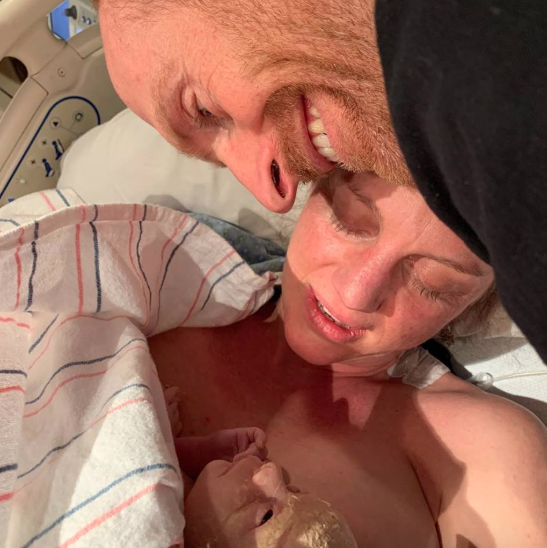
    Caitlin and Brian Gregg meet their daughter, Heidi, who was born on February 5th, 2019. (Photo: @caitlincgregg)

    Heidi Mowgli Gregg was born February 5th, 2019. Caitlin’s mind did shift toward recovery and getting back to training, but not immediately.

    “Honestly, I was so grateful that the delivery went well. I think I had so much fear about delivering on the blood thinners that once that went by I was in such a good place and so excited.” 

    Brian was only able to take five days off surrounding the delivery, then needed to go back to work full-time, but Caitlin still received plenty of support in her transition to new motherhood.

    “I was really lucky because my mother-in-law came and she stayed with us for three weeks in the beginning, which was awesome.” 

    Brian’s mother helped round the clock, helping Caitlin get the rest and care that she needed. Caitlin recounted that it was particularly special to have her help since her own mother had passed away in the fall of 2017. After her mother-in-law left, Caitlin’s closest friend from high school flew out to offer her continued support for a couple of additional weeks.  

    She felt further supported by the women in the local ski community.

    “All of the moms in our ski community stepped up and everyone brought meals and little tidbits of advice. That was incredible. I feel very lucky that I had such good support and I think that was key.”

    As her body healed, Caitlin felt the itch to begin exercising again but did her best to temper her enthusiasm.

    “After the blood clot and I felt confident that I could train, I was able to do a lot of activity for the majority of my pregnancy. But after the delivery, I was really, really encouraged by a lot of people – athletes, non-athletes, my strength coach – to be patient in coming back.”

    Brian Gregg holds his three-week-old daughter, Heidi, during the flower ceremony after his second place finish at the 2019 Birkie. (Photo: Instagram @goteamgregg)

    For the first five weeks, Caitlin only went for short walks and otherwise rested and spent time with Heidi. During that time, they cheered for Brian while he raced to second place in the Birkie. While the weeks passed quickly, she struggled with the change of pace.

    “For me, the hardest part about recovery was for sure being patient and sitting still for five weeks. But at the same time, you have a new baby and everything is so exciting.”

    During that time, she continued to use her FitSplint, no longer to support her large belly during training, but as the postpartum core is like a deflated balloon, the band helped make up for the loss in stability during her walks and general movement.

    “I wore [the FitSplint] for the first couple of weeks walking and I thought it was really helpful to be there when I knew that my abs weren’t quite ready yet to be supporting my body and as things were transitioning and shifting after the delivery.”

    As Heidi arrived at the peak of an incredible winter for skiers in the Midwest, it was hard for Caitlin not to test the waters and get back on her skis.

    “It was probably the snowiest February we’ve had in Minnesota, so all the natural snow trails were open and the skiing was awesome. I remember Brian said, ‘Oh my gosh, let’s go out for a ski.’”

    She was leery of how her newly postpartum hips and loose core would handle skiing but decided the conditions were too good to pass up.

    Team Gregg snaps a photo to capture Caitlin’s first ski postpartum. Brian carried their newborn daughter Heidi zipped inside his jacket in an Ergo carrier. (Photo: Instagram @goteamgregg)

    “We went out and literally five minutes into the ski, I was like, ‘This is too much. I feel like Jell-O, this is just not fun,’” she laughed. “So we took a bunch of pictures and went home, and I waited another month or more before trying to ski again.” 

    Before jumping into heavy training, Caitlin prioritized rehabilitating her core and pelvic floor muscles so her body could function and move properly before being under heavy stress. She began following a program from the MUTU System, which focused on pelvic floor stabilization, and reactivating and strengthening her core from the inside outward. As she progressed through the program, she gradually added other types of training back in. 

    “I started lifting again at about six weeks, and I walked, and then I was able to start skiing again, and the skiing felt so good. Then, I was very patient with the running and would walk-run, so walk for five minutes then run for a minute and gradually increase until I could do a mile, then a couple of miles.”

    While advice for high-level training during pregnancy is limited, more information on athletic recovery is becoming available. Caitlin expressed gratitude for the active women and professional athletes who have spoken out about the challenges with postpartum recovery and how to overcome them and was grateful to learn from both their successes and failures. 

    “I had great advice and resources [for recovery]. From reading about Marit Bjorgen who maybe came back a little bit too quickly when she did start training again and had two pelvic stress fractures, I knew that calcium was super important. And I read that when you’re breastfeeding, you’re more at risk for gestational osteoporosis.”

    Overall, Caitlin was happy with the steps she took to return to training and competing and believes that being conservative, patient, and addressing the underlying small insufficiencies that can create larger problems down the road.  

    “On the flip side, you’re now a mom and you have a lot of things going on. So there were times when I was like, ‘Wow, I feel really good, but I am WAY more busy than I was before.’”

    As far as the conversation about goals for the future, Caitlin described an open-minded approach. They are thrilled with their new addition to the family, but finding time to fit in training full-time is a juggling act. In the mornings, a shared nanny comes to their house to take Heidi from 6:30 until 11:30. During that time, Caitlin is working for the Loppet Foundation leading and training with the Loppet Nordic Racing collegiate program. 
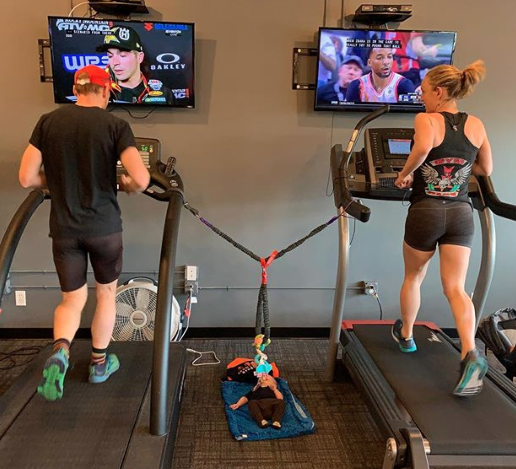
    Caitlin and Brian Gregg demonstrate how they make their afternoon training work with an infant. (Photo: Instagram @goteamgregg)

    In the afternoons, Team Gregg tries to include Heidi in their afternoon sessions. Sometimes she is in the gym with them – Caitlin endearingly called her as a “gym rat” – and sometimes she joins them on a run. These sessions look different than before, but she enjoys including Heidi in their lifestyle. 

    “Maybe you start lifting and she starts fussing. So then you go and take a little break. You hang out with her, and maybe you nurse, or you bounce her around, or you show her the mirror. Or sometimes, she’s your weight and you’re doing goblet squats with Heidi – she thinks it’s hilarious. You find ways to be super creative.

    “We took on this concept where we didn’t know what our lives would be like after Heidi came, so we really dove in with trying to make it kind of an adventure with Heidi,” she continued. “Again, following Kikkan and Holly and other moms we saw, they were bringing their kids out for ski adventures or hikes, so that was something that we were looking forward to.”
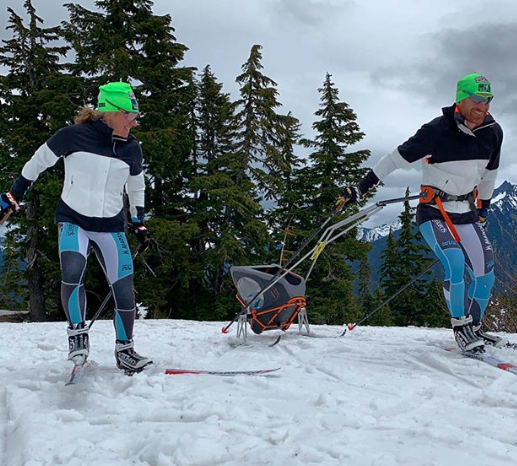
    Brian and Caitlin Gregg tow their daughter both skiing and running with the KidRunner. (Photo: Instagram @goteamgregg)

    The Greggs partnered with a Bend, OR based company called KidRunner who designed a revolutionary chariot-style running stroller. Recently, professional runner Lyndy Davis and fellow KidRunner ambassador clocked a time of 1:21:38 to set the Guinness Book of World Records fastest half-marathon while towing a hands-free stroller. It also has ski attachments, allowing Heidi to join them in the winter as well. 

    “One of our favorite things to do has been to go on a big family run or adventure and bring Heidi. She’s done it either on Brian’s chest, or in the KidRunner, and we’ve been able to bring her into the mountains and all over, which has been really fun.”

    These sessions look different than before, but Caitlin describes Heidi as an easy-going and happy baby who has so far loved joining them, even for 20 plus mile runs with Brian. 

    “So we’ve been trying to do what we did before, except we both have jobs and we have Heidi, which means we don’t get nearly enough sleep,” she concluded with a laugh. “But it’s pretty fun.”

    In early May, when Heidi was just three months old, the Gregg Family headed to Iceland to race the 25-kilometer freestyle and the 50 k classic two days later at the Fossavatn Ski Festival

    Apart from racing so soon postpartum, Caitlin felt trepidation around the idea of international travel with a three-month-old. 

    “I was kind of on the fence about Iceland. It seemed like a really fun adventure, but then right before, I got really nervous about what we were about to undertake.”

    Because they were trying to accommodate Brian’s work schedule, they had left Minneapolis on a red-eye flight Tuesday night, arriving midday Wednesday in Iceland then racing Thursday.

    “I’d say the one thing that I completely didn’t think about was that we had a three-month-old, so we weren’t going to sleep at all the night before the flight, and then I was sort of used to, ‘Okay, maybe you don’t get a great night sleep on the plane.’ But we were entertaining a newborn on the plane, so we had no sleep for two days. We were absolute zombies.”

    Unsure of how to navigate the child-care aspect of racing internationally, Caitlin reached out to her family. 

    “The biggest thing that helped was that we had my sister come.”

    Her sister, who lives in southern California, tried skiing for the first time that winter while visiting a pregnant Caitlin in Minneapolis. Caitlin explained that while her sister was excited to try skiing again and to spend time with Heidi while they raced, she also wanted to check out some of the tourist destinations in Iceland, like the Blue Lagoon. The foursome headed to the hot springs shortly after their arrival to Iceland.

    “So we went to the Blue Lagoon where Brian and I proceeded to just pass out and fall asleep,” she laughed. “And my sister was like, ‘What is wrong with them?’”

    The power nap seemed to be effective as Caitlin went on to win the 25 k skate race the next day. 

    “I think there is a lot of adrenaline [at races] and I had been skate skiing all winter, so I actually felt really good in the skate race,” she said.
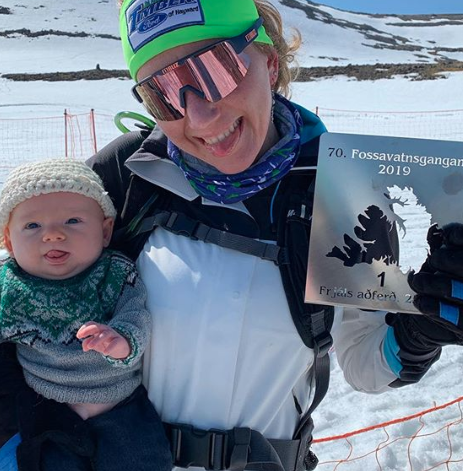
    Tongues out for first place at the Fossavatn 25 k in Isafjordur, Iceland. (Photo: Instagram @caitlincgregg)

    She also took third in the classic marathon, though she did not feel as strong there. Despite the lack of sleep and stress of international travel with an infant, which she felt they underestimated, she and Brian enjoyed racing with different expectations and tried to laugh about the hilarity of their situation rather than dwell on how exhausting and challenging it was. 

    “All in all, I thought we did awesome,” she laughed as she thought back on the trip overall. “I will say it changed my entire perspective on sleep before a race or time-management before a race.”

    Since the Fossavatn, Caitlin has enjoyed hopping into a few running races and will continue to do so as she trains for the 2020 Birkie. 

    “I think my attitude has been that everything now is new PR’s. Maybe I’ll never hit the same level as I was at before being a mom, but everything now is like, ‘Oh, it’s my PR as a mom.’ And I think that’s really fun, and a good way for me not to put too much pressure on myself and have an open mind that anything can happen. Sometimes I surprise myself, and sometimes I’m like, ‘Yup. That’s not that good.’”

    Caitlin has enjoyed the process of seeking out resources during after pregnancy and learning as much as she can about perinatal exercise. Rather than seeing pregnancy as a setback to her athletic career, she described the overall journey as “an exploration” and focuses on what she can learn from the experience. Her postpartum body is different and responds differently to training than before, but she doesn’t see the changes as negative. 

    “I think the biggest thing that I’ve noticed is that I maybe need to slow down a bit and be more aware of ‘How’s my body doing? How are my muscle imbalances?’ All of a sudden, all of these smaller details seem more important before. Maybe it’s because of all the talk about pelvic floor health and the core training, and maybe it’s because of having to take a step back and rebuild my fitness from the ground up. I think all of a sudden, the training has taken on a new challenge and a new fun element for me, so I’ve been having a really good time training. I can’t say that I go out every day and think to myself that I’m stronger or more fit than before or going to set PR’s or things like that, but it’s fun to see the subtle differences. I can’t exactly pinpoint what they are, but they’re different.”

    Some days, Caitlin feels like she can tap into her “mom strength” and nail a workout, other days that is not the case, especially after a rough night of sleep. As she looks to the future, she wants to continue to enjoy the exploration or her limits, while acknowledging that her priorities are now shifted.  The mobile app runs faster than the desktop version, consumes less power, is specially designed for a small smartphone screen, and takes into account the architecture of the mobile gadget. In addition, the mobile parimatch app has extensive functionality with many additional options. The mobile app has a user-friendly interface, high performance, and multilingual support.

    “I’m going to be very open-minded. I’m having fun training and the majority of the time, I feel really good. At the end of the day, I want to be the best mom that I can be and lead by example for Heidi. It’s a neat challenge.”

    Similar to the way Holly Brooks is becoming certified to offer coaching for expectant parents to help them emotionally prepare for the lifestyle change, Caitlin’s experience has inspired her to continue learning about pre and postnatal training with the hope of offering coaching to other female athletes that want to pursue athletic goals after pregnancy. 

    “I’m really fascinated about all of the prenatal and postnatal training and exercise and that I’d really like to dive in. I’m going to start doing more coaching and training, and I would really love to specialize in women who are pre and postnatal and help guide them through how I found my path with it so that they can be successful during their pregnancy and afterward and reach their goals. There’s so much out there, but it’s so hard to track it all down. I’d like to become a resource. There’s a whole world of creative solutions for all things revolving around fitness and new moms.”

  • First Tracks as a New Parent: Caitlin Gregg [Part 1]

    First Tracks as a New Parent: Caitlin Gregg [Part 1]

    The “First Tracks” series highlights the pregnancy, postpartum, and parenting experiences of noteworthy athletes in cross-country skiing in various stages of their professional careers. The sharing of these experiences can benefit athletes in any stage of their career, whether they are an elite or recreational skier, by demonstrating that it is very possible to return to skiing, competition, and an active lifestyle with a growing family. The series will include the physical challenges of being an athlete during and after pregnancy, balancing family life with skiing, and the joy that starting a family can bring. So far, this series has highlighted Kikkan Randall (Part 1 | Part 2) and Holly Brooks (Part 1 | Part 2).

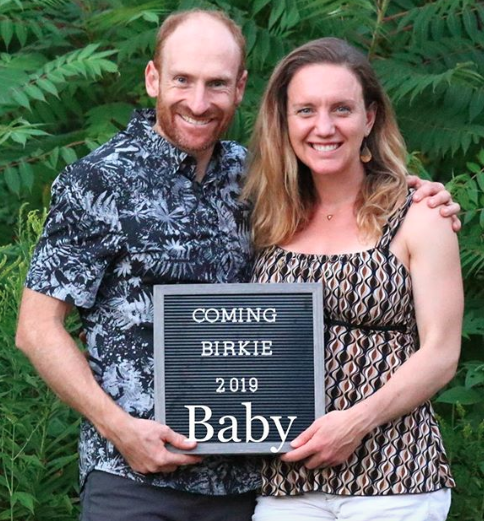
    In October, 2018, FasterSkier spoke with Caitlin and Brian Gregg, the Olympian husband and wife dyad of Team Gregg, about the transitions in both of their lives following the PyeongChang Olympics. The couple had also recently announced that they were expecting a baby girl in February of 2019. 

    Caitlin and Brian Gregg announced their pregnancy on social media in August 2018. (Photo: Instagram @caitlincgregg)

    At the time of the interview, Caitlin was about 24 weeks pregnant and undergoing treatment for the blood clots that she had experienced early on in the pregnancy. Brian was working full time in finance while completing coursework to become a financial planner, in addition to training. He has since placed second in the 2019 Birkie and passed both the Series 7 and Series 66 exams, certifying him as an investment advisor or securities agent. 

    In this conversation, Caitlin shared a deeper look into how the blood clots impacted her both physically and emotionally and recounts her training during pregnancy and her recovery postpartum.

    For Olympic caliber athletes, conception can include tracking more than just the cycles of mother-to-be; the quadrennial cycle of the Olympics is also taken into account. Caitlin explained that she and Brian had always hoped to have a family of their own. The Greggs have cherished their work as mentors of kids ages 6 – 13 for the In-the-Arena Organization, a nonprofit which connects at-risk youth in their community with elite athlete mentors, as well as their time coaching juniors at the Loppet Foundation. However, before embarking on the journey to create their own family, they wanted to first explore their limits as athletes and also take advantage of the opportunities to race internationally.  

    “We wanted to see if we could get the training, racing, and travel bug out of our system first,” Caitlin explained in a call. “So after the 2018 Olympics, we decided, ‘Okay, this is when we’re going to try.’”

    She elaborated that they were mentally prepared that the conception process might not be simple, based on the experiences of her former Olympic teammate, Holly Brooks, and other friends who had shared their difficulties. While optimistic, the Greggs were open-minded to all possibilities of what “a family” might look like, including adoption or simply continuing to be mentors and role models for lots of children without one of their own. 

    The Greggs approached the 2018 season with the goal of competing together at the Olympics in PyeongChang and their race performances landed them both on the cusp. However, neither were selected for the team. Caitlin

    went on to win her fifth Birkie, then the couple wrapped up their season competing at Canadian Nationals.

    While parenting roles can be shared, there is no denying that the creation of a baby takes a much greater role on the mother than the father. In any pregnancy, there are plenty of unknowns, especially in regard to how much training an elite athlete might be able to sustain while gestating. Caitlin explained that while she was eager to have a baby, the idea of being pregnant and putting her athletic goals aside for an indefinite amount of time was daunting.  

    “Initially, I mentioned to Brian that as soon as we found out about the Olympics [it would be time], meaning if we didn’t make the Olympics, we would start trying. And then I got kind of cold feet and I kept saying, ‘Oh, you know, the Birkie is coming up and I don’t think I want to be pregnant for the Birkie,’ and ‘Oh, there’s Grandma’s Marathon, I’ve always wanted to run a marathon.’”

    As she was encroaching on “advanced maternal age”, Brian gently nudged her that they may not want to delay the process for too much longer. They began “trying”, but as the timeline of when she might become pregnant was vague, she continued to train, focusing on marathon-specific road running. Despite not cutting back, Caitlin fell pregnant quickly and the Greggs found out that they were expecting a baby girl just two weeks before the next Birkie. 

    “We realize that we are really fortunate. I was 37 at the time, training a lot. I had kind of convinced myself it wasn’t going to happen [right away], which maybe then took the pressure off, so that was the caveat to it all.”

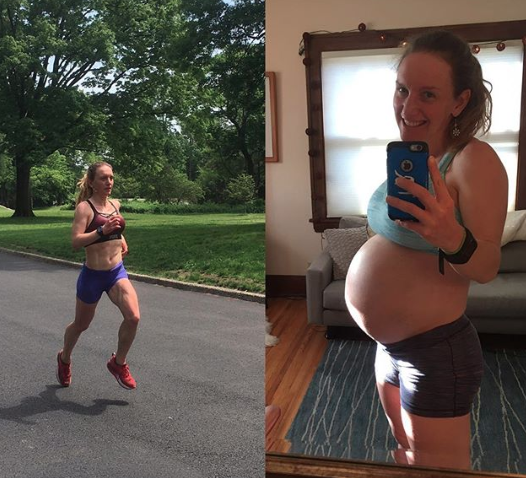
    Caitlin captioned this photo: “regnancy…from the first couple of weeks to the last couple of weeks!!! I am in awe of what the female body can do! From pushing the limits of physical capacity to growing another human…I am humbled and proud to be a woman! Here’s to many more years of being fearless and spreading my passions to our daughter.” (Photo: Instagram @caitlincgregg)

    The Greggs were “super excited” that they were on their way to a family so quickly. As Grandma’s Marathon in Duluth, MN was imminent and Caitlin was still feeling like herself, she decided to race but switched to the half, finishing in 1:31:38, an average pace of about 7 minutes per mile. A few weeks later, after a long car ride back from Thunder Bay, Ontario where she had cheered for Brian in a rollerski race, Caitlin felt a sharp pain in her calf, which was later diagnosed as a blood clot.

    “What I think I’ve learned about pregnancy is that if it isn’t one thing, there’s another thing. Everyone has good and bad experiences. For us, getting pregnant wasn’t a problem, but then I developed blood clots in my left leg, which was really scary for me.”

    During the first trimester of pregnancy, women are in a hypercoagulable state as their blood volume increases by 40 to 50 percent to support the growing baby. This change in blood volume also increases cardiac output — essentially how hard the heart is working — and the likelihood of developing a blood clot. A blood clot poses a threat to both the mother and the baby, as the risks include heart attack, stroke, pulmonary embolism, and miscarriage. 

    Her doctors started her on anti-clotting medications, which she learned to inject into her belly twice each day throughout the pregnancy and for the first six weeks postpartum. She immediately reached out to the ski community, contacting Holly Brooks about her experiences with high-risk pregnancy and Kikkan Randall, who had experienced a blood clot in 2008. She recounted that their support and advice were essential in helping her through the stressful news.

    “[Talking to them] was key for me to have a much better experience overall.”

    In the few days following the formation of a clot, there is a risk that the clot may dislodge from the blood vessel, which could be life threatening. Because of this, doctors advise avoiding intense activity until the clot hardens enough that the risk of embolism is much lower. 

    “I went from feeling great and being able to do everything I was doing before and coaching and having fun, to really scared, like ‘Oh my goodness, what does this blood clot mean? I don’t want it to dislodge or embolize or anything like that.’ And my doctors really couldn’t tell me if I should train, if I shouldn’t train, if activity was good – because, in theory, activity helps circulate the blood, but at what point is the clot stabilized? So there were a couple of weeks that were pretty nerve-wracking where I couldn’t get answers and didn’t know what I was supposed to do.”

    Caitlin recalled talking with her doctors and reading as much as possible before coming to the decision to take two weeks completely off, during which the clot would stabilize and the medication she was taking would dissolve the clot, though not fully. It was an abrupt change, but for better or worse, the anxiety she felt about her health kept her mind off the training hours. 

    “For me, those two weeks were a combination of being very scared and anxious about what the blood clot meant, which overrode the, ‘Oh my gosh, I’m not training.’ Then as I started training again, there were a lot of unknowns going forward as to, ‘Okay, what does this mean with the blood thinners?’ And I kept trying to be optimistic about it and say, ‘Oh, I can probably keep doing things and just be conscientious.’ But what the doctors said, ‘You can’t ride a bike. You can’t rollerski.’ And not because of the pregnancy, but because the risk of falling while on blood thinners was so dangerous.”

    She explained that it would not be the road rash or scrapes from a fall that would cause problems. Rather, if she took a hard fall on her abdomen or hit her head, there would be a very high risk of internal bleeding. 

    Though pregnancy and training while pregnant were shaping up much differently than she envisioned, the need to cut back did not take as much of an emotional toll as she thought. It simply required a change in approach.

    “When everything was great at the beginning, I was like, ‘I’m going to have this awesome summer of fun adventures while pregnant.’ And all of a sudden it was like, ‘Whoa, I’m going to have to navigate things differently now.’”

    Though biking and rollerskiing were cut out, she continued to run and bound. She also sought out a strength training coach, Andrea Claassen, who specializes in working with prenatal athletes to ensure that she was moving in ways that were safe for her changing body. 

    She also joined Blooma, a group that offers pilates, yoga, and barre classes for expecting and postpartum women in addition to childbirth education classes and body work. Adding new faces to her support system helped prevent Caitlin from feeling as though she was missing out on the training partners she might otherwise be logging hours with. 

    “That was awesome because all of a sudden I had a new community that I could exercise with,” she said. “And some of the groups that I had been training with here in the twin cities, I could still run and bound with them. So that helped normalize what I was hoping for in my pregnancy.”

    Caitlin Gregg demonstrates a hanging row with her pregnancy “weight vest”. (Photo: Instagram @caitlincgregg)

    As her belly grew and her body changed, Caitlin became conscious of her exercise routine in hopes of avoiding diastasis recti, or the separation of the rectus abdominis muscles. Grateful for the professional athletes who have spoken out about this topic, including professional runner Stephanie Bruce and Olympic Gold Medalist in Triathlon Gwen Jorgensen, Caitlin was aware that strategies and devices existed to reduce the strain on these muscles during exercise. 

    “One of the strategies I used was the FitSplint to help alleviate that expansion, especially when I’m training and trying to really give my body as much support as I could.”

    Designed by Celeste Goodson of ReCORE Fitness, a pre and postnatal trainer who experienced diastasis recti herself, the FitSplint band wraps snugly under and around the belly, lifting gently to relieve some pressure on the bladder and strain on the low back. The band also reduces bouncing and offers structural support, relieving the abdominal muscles from some of the work they would otherwise be responsible for. 

    Caitlin wore the band daily from 17 weeks onward. She especially felt it benefitted her during running or bounding sessions but used it regardless of the activity. She also explained that she changed the types of exercises she was doing while strength training to avoid moves that heavily recruited the core. 

    “I really worked with my strength coach to really avoid any ab work that would put strain on those muscles and to sort of let the abs that I had disappear so that there wasn’t that extra force there.”

    While reducing training did not have much emotional toll, Caitlin did struggle with the lifestyle change from traveling regularly for training and racing to suddenly needing to stay put in Minneapolis. 

    “One of the things that was really different for me was that I was unable to travel as much as I had envisioned. That was something I was really excited about – being on the road and supporting Brian while he was racing. That was tough, for sure. I missed that part of our life, for the last twelve years what we’ve been doing together. I had to tell myself that I could do it in the future and be patient.”

    She recalled missing Brian while he was away and also the experience of being in different places and taking part in events. 

    As the weeks ticked by and winter approached, running became more and more uncomfortable for Caitlin. Luckily, in early November, temperatures in the Midwest dropped and snow began to fall. To the week, when Caitlin was ready to retire her running shoes, she was able to slip into ski boots and begin skate skiing on a 400 meter loop. 

    Caitlin Gregg loved being able to skate ski on natural snow during the later months of her pregnancy with her daughter Heidi, born February 2019. (Photo: Instagram @caitlincgregg)

    “I was just on cloud nine. It felt so great to skate ski. I was a little nervous to classic ski because I was unsure with my balance with my belly and kicking, and I just didn’t want to mess around with hitting an oak leaf and falling.”

    Because she has spent so much of her life skiing, she and her doctors agreed that it was safe so long as she took it easy and remained confident that she wouldn’t fall. 

    “The motion was just so perfect and it was nice to mix it up again and be back moving how I love to move.”

    Caitlin was thankful that both she and her baby were healthy throughout pregnancy, despite being labeled high-risk because of her age and the blood clot. She explained that blood thinners can sometimes cause babies to have a low birth weight, but at each of the regular growth checks, baby Gregg measured perfectly. Because of the medication she was taking, her doctors advised scheduling an induction at 38.5 weeks. This allowed her medical team to gradually wean her off the blood thinners in time for the delivery without prolonging the amount of time she was without the medication. 

    “I was really scared about the delivery on the blood thinners,” she recalled.

    Most women experience some apprehension about delivery, but Caitlin felt especially concerned since if she went into labor earlier than her induction date, the blood thinners would still be in her system, increasing the likelihood of severe bleeding. 

    “At that point, I had a lot of friends who were pregnant that [delivered] early, and that was what I was most scared about. What if she decides to come a week or two early?” 

    Though she had confidence in her doctors and in the advice they provided, that remained her biggest fear. However, as the date of the induction drew near, Caitlin felt no signs of impending labor.

    Caitlin Gregg seen “nesting” in the nursery in the final days before the birth of her daughter, Heidi, who arrived in February 2019. (Photo: Instagram @caitlincgregg)

    “She wasn’t ready,” she laughed. “She had no intention of coming out, so we went in for a scheduled induction, which was kind of different knowing that you are just going to pack your bags and head to the hospital at a specific time to have a baby. For people who like schedules, that’s great.”

    One of the many pregnancy resources Caitlin sought out was a doula who helped her and Brian understand their options for pain management during the birth. Caitlin was apprehensive about getting an epidural, as there is a slightly increased risk of needing a c-section among other risks. She was also concerned about simply having a needle placed in her spine. Ultimately, her priority was delivering a healthy baby and remaining healthy herself throughout the birth. 

    As she thought about her birth plan, Caitlin found herself reading about the birth experiences of other athletes who had shared their stories, eventually finding an article in Runner’s World by pro runner Lauren Fleshman. Here’s an excerpt:

    My goal was to have a natural labor. Not to be on some moral high ground against the use of medical technology, but because I wanted to know what it felt like. Call it old-fashioned curiosity. Part of my job as a pro athlete is believing in my body’s ability to do amazing things, and I wanted to test its limits. Experiencing a natural birth was a challenge and an opportunity to feel a bond to all the women around the world since the beginning of time. But when talking to my doulas, I made one thing clear: I’m not interested in heroics. If I’m having what’s considered an average birth experience, I want to be coached to persevere, but if things move toward the extreme, I’m open to the help of modern medicine.”

    Reading this section helped Caitlin to reflect on her own response to pain and helped her become comfortable with the idea of getting an epidural to help her relax during labor. 

    “As athletes, we have very strong pelvic floors, and that can be really hard to release,” she explained. “So one of the things I thought a lot about is this concept of, ‘When I feel pain, do I tense up or do I relax?’ And I definitely am someone who when I am racing or training hard, when things get tough, I grit my teeth and try to push through it. That’s just my mentality. So what we talked with our doula about is that childbirth is the opposite. As soon as you feel that pain, you need to relax and let it go.”

    When she went in for her induction, her plan was to see how her body responded to the pitocin and to labor, then ask for the epidural when she felt that she needed it. 

    “As soon as I started getting to the point where every contraction I started fighting it, and I was gritting my teeth and trying to be tough, I knew that it wasn’t going to work, I needed the epidural. And I had no qualms requesting it and I think that was the best decision I made.”

    However, there was a chance that she would not be able to have the epidural because of the anti-clotting medication. If the concentration of the blood thinners remaining in her body was above a certain level, it would be unsafe for an epidural to be administered since it could cause a spinal epidural hematoma, a bleed inside the spinal canal which can cause an injury to the spinal cord, potentially resulting in paralysis. Luckily, when the doctors tested her before delivery, the concentration was at a safe level. 

     “So there were a couple of things that had to come together at the right moment. I couldn’t be too far dilated or too far along. I couldn’t be too anticoagulated. So when they came in and said, ‘Alright, you’re in a good spot. Do you want the epidural?’ And I was like, ‘YES!’”

    Because she was able to relax and allow her body to progress through labor comfortably, neither she nor the baby showed any signs of distress. She also expressed that the epidural contributed to a positive overall experience.

    “It took away so much anxiety. I had anxiety about the needle and the side effects, but in the moment, it helped me be more present.”


    Stay tuned for Part 2 of this conversation in which Caitlin discusses her recovery from pregnancy and birth and Team Gregg’s adventures navigating parenthood, travel, and training.

  • First Tracks as a New Parent: Holly Brooks [Part 1]

    First Tracks as a New Parent: Holly Brooks [Part 1]

    The “First Tracks” series highlights the pregnancy, postpartum, and parenting experiences of noteworthy athletes in cross-country skiing in various stages of their professional careers. The sharing of these experiences can benefit athletes in any stage of their career, whether they are an elite or recreational skier, by demonstrating that it is very possible to return to skiing, competition, and an active lifestyle with a growing family. The series will include the physical challenges of being an athlete during and after pregnancy, balancing family life with skiing, and the joy that starting a family can bring. The first athlete highlighted in this series was Kikkan Randall, whose story can be found here: Part 1 | Part 2.

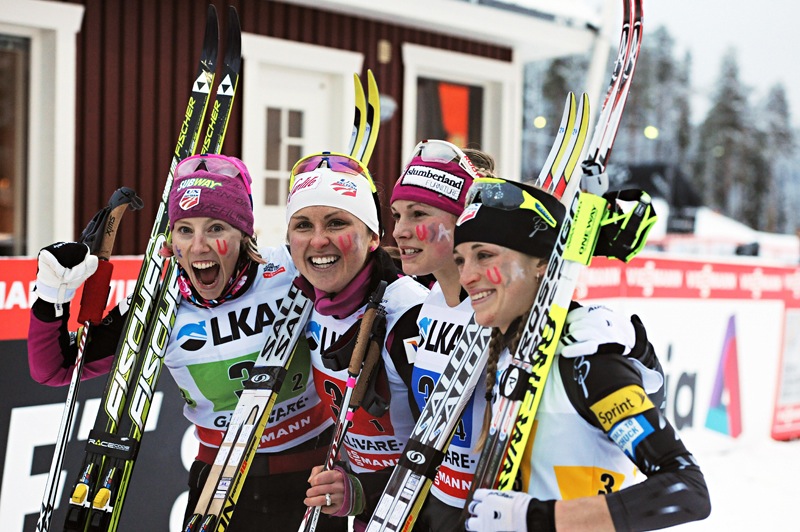
    The U.S. women (l-r Kikkan Randall, Holly Brooks, Jessie Diggins, and Liz Stephen) after their first ever World Cup relay podium in November 2012. (Photo: Fischer/NordicFocus)

    When Holly Brooks retired from professional ski racing in 2016, she shared with FasterSkier that she and her husband, Rob Whitney, were trying to start a family. About a year after this conversation, she gave birth to twins, a daughter, Ruby Joy, and a son, Brooks on August 24th, 2017.  

    While the process of getting pregnant can be easy for some, their journey to create their “insta-relay team” was complicated by the fact that Brooks had been without a period for eight years.  This condition, formally called amenorrhea, can be a result of many factors, from low body weight to thyroid problems, to heavy or high volume exercise, to excessive stress. It can also be a side-effect of some forms of hormonal birth control, as was the case for Brooks.

    Brooks initially lost her cycle while using the Mirena IUD, which is known to reduce the frequency or severity of periods, or to eliminate menstrual cycles for women using it. At first, Brooks didn’t recognize this as being problematic. In fact, as a professional athlete, not worrying about her cycle had plenty of perks.

    Let’s be honest, for a really long time I was happy not to have a period as an athlete,” said Brooks in a call. “It was pretty convenient.”

    Brooks shared that having amenorrhea as an athlete is not an uncommon phenomenon. While she believed that her nutritional habits were sound and that she was not underweight during her professional career, the condition is often linked to relative energy deficiency syndrome (RED-S, formerly known as the female athlete triad) which is typically a result of under-fueling possibly coupled with inadequate rest to accommodate an athlete’s training load. It is commonly seen with athletes with disordered eating habits, but the two are not always linked. The implications of having amenorrhea for women can include low bone density, leading to osteopenia or osteoporosis, and also infertility. 

    The pervasiveness of the condition was a concern for Brooks, and her own experience losing her cycle raised a red flag long before she and Whitney began trying to conceive. 

    “I think that there’s this myth that if you don’t have a period, you’re in shape. If you don’t have a period, it’s okay,” she said. “I’m not a doctor, so it’s hard for me to speak directly to that, but at some point, if you’re not taking birth control that takes it away as a side effect, you probably should be having a period, you should be having a cycle.”

    When the Mirena IUD expired five years after it was placed, Brooks switched to a copper IUD called Paragard, which is a non-hormonal form of birth control, in hopes of regaining her cycle. This IUD can increase bleeding or frequency of periods, in contrast to the first. However, her period did not return. 

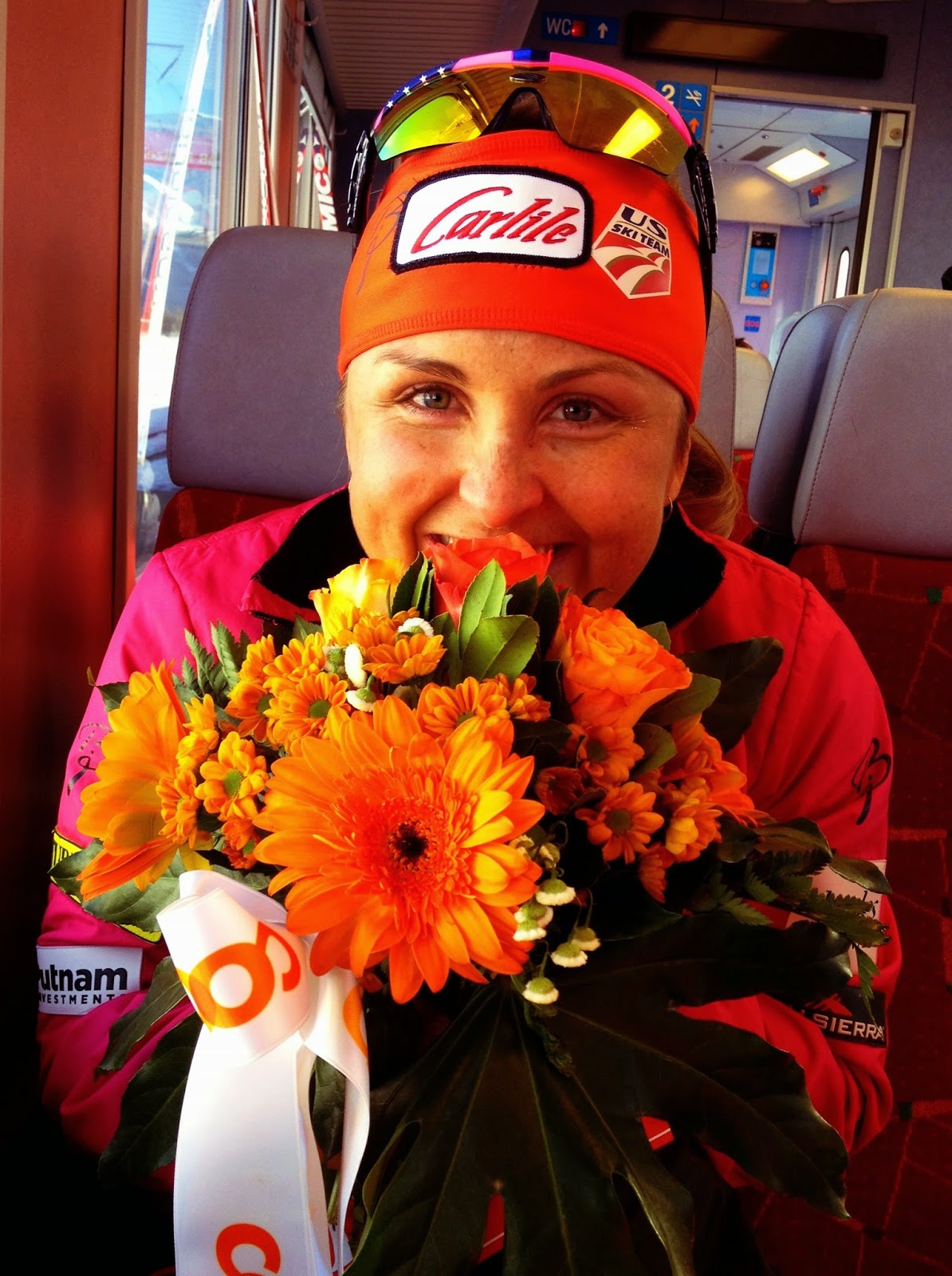
    Holly Brooks after placing fourth in the 2014 Engadin Ski Marathon in Switzerland. (Courtesy photo/HollySkis.blogspot.com) http://hollyskis.blogspot.com/2014/03/home-sweet-home.html

    As her professional career waned and her age and desire to start a family with her husband increased, Brooks began hormone replacement therapy (HRT) to coax her reproductive system back into functioning normally in preparation for conception. HRT involves taking artificial hormones sequentially to mimic the changes that naturally occur during a menstrual cycle. 

    “So essentially, I had to stop exercising, take a bunch of estrogen, then take a bunch of progesterone to try to jump-start a cycle,” Brooks recalled. 

    It took a few months of HRT for Brooks to successfully regain her period.

    “It almost felt like my body had just been kind of dormant and was fine with not having a cycle. And sometimes that’s convenient when you’re an athlete, but when you want to start a family, it’s not that awesome.”

    Because she was 35 and it had already taken so much effort to get her body back into a fertile state, Brooks began working with a team of infertility specialists to help the couple get pregnant as quickly as possible. In any other context, the mid-30’s is likely considered the prime of life, but medically speaking, the risks of perinatal complications increase significantly after this point. A woman over the age of 35 who conceives is classified as a “geriatric pregnancy”, or listed for insurance purposes as having “advanced maternal age”. Typically these pregnancies are also labeled “high-risk”. 

    Brooks describes herself as an “eternal optimist” and managed to handle her battle with infertility with grace, but she expressed that she was not immune to the emotional challenges her situation created.

    “There’s tons of frustration, there’s tons of impatience, and there’s also a lot of comparison too,” she said. “Which is human nature and it doesn’t always help.”

    She shared that one of her favorite quotes is by Eleanor Roosevelt who said, “Comparison is the thief of joy.” While she remained hopeful that she and her husband would eventually be successful in becoming pregnant, she still found herself pulled into the comparison trap.

    buy acular online

    “Especially when you’re trying to get pregnant, you notice everyone else who is pregnant,” she observed. “And you’re like, ‘Well these athletes who were super fit, they had no problem getting pregnant.’”

    With their infertility team, she and Whitney began the process of Intrauterine Insemination (IUI), which is a less invasive infertility treatment than In Vitro Fertilization (IVF).  The IUI process involved Brooks taking a follicle stimulant during the first half of her cycle, prompting her ovaries to develop and grow a follicle containing a mature egg. She then took other fertility medications to induce ovulation, at which time doctors would inject a washed and concentrated sample of her husband’s sperm into her uterus, increasing the likelihood that the sperm and egg meet. This process requires close and careful monitoring throughout the cycle in order to be successful, which was not totally unlike the process of being a professional athlete. 

    “At some point, when you’re doing infertility [treatments], it starts to take over your life because you are paying so much attention to your cycle, and what day it is in your cycle, and what day you’re ovulating, and what day you’re going to trigger ovulation, and how many follicles you have, and how big the follicles are,” she explained. “As an athlete, you pay a lot of attention to periodization and training. And doing infertility [treatments], you kind of do the same thing, but it feels like you have way less control.” 

    She expanded by explaining that in training for skiing, she had control over her rest, how hard she pushed in a workout, what she ate, and so on, whereas during the conception process, no matter how hard a couple might “try”, much of it is out of their hands. 

    Although not frequently discussed, studies estimate that between 10-25% of pregnancies end in miscarriage, most commonly during the first trimester. In many cases, miscarriages occur early during the implantation process and go unnoticed, as the bleeding that occurs as the body sheds the undeveloped embryo often occurs when the woman might expect her regular period, leaving the pregnancy undetected. Miscarriage can also be a result of a chromosomal defect or other abnormality of the developing embryo, or due to lifestyle factors such as poor maternal health, smoking, or drug use. 

    Regardless of the cause or when the miscarriage occurs, the experience of pregnancy loss can be incredibly difficult for parents. During their voyage through cycles with IUI, Brooks was able to conceive twice before her successful pregnancy with the twins. In both of those cases, she lost the baby just before the end of the first trimester, which is when a pregnancy is typically deemed viable. 

    Miscarriage is one of the primary reasons most couples choose not to announce their pregnancy until the second trimester begins, lest they also are faced with sharing their loss. Many women that go through one or more miscarriages choose never to divulge their experience. Brooks wants to bring more attention to the topic as it is so commonly experienced but rarely discussed. This lack of attention can leave women grieving in silence and feeling as though they have failed, even though miscarriage is most commonly out of one’s control. 

    “I’m really happy to [talk about it] because it’s really common and a lot of people don’t talk about it.”

    She added that it is one of her missions in life to talk about “the hard stuff” in order to reduce the stigma about these issues. 

    Because of the treatment method they were using, Brooks was closely monitored in the weeks following the IUI. 

    “If I were to go back and track how many ultrasounds I’ve had, I would guess 50, 60, 70.”

    She explained that her doctors wanted to closely track whether an embryo was growing, and if so, whether it was growing at the appropriate rate with no noticeable problems. This was a stressful process since she and her husband remained so acutely aware of the processes happening within her body.

    “Although it’s out of your control, you’re very in tune with what’s happening,” she said. “And it’s a rollercoaster of excitement and disappointment and excitement and disappointment.”

    Her doctors were able to determine very rapidly whether or not the IUI had been effective, so in each case, the couple found out they were pregnant rather quickly after the treatment. Then the wait began; there was nothing that she could do but hope that the pregnancy would last through 13-weeks. She remained optimistic but tempered her excitement.

    “That was really, really hard,” she emphasized. “It’s such a long journey to get there, and you get excited, but in the back of your mind, you know some of the statistics.”

    At about the 12-week mark in both cases, she experienced bleeding which indicated a miscarriage. In some cases, women experiencing a miscarriage are able to pass the contents of the uterus naturally over the course of a few days, sort of like a very heavy period. In others, women need the support of medication to help force the body to shed everything. 

    Brooks fell into the second category, sharing that she spent two days in bed with horrific cramps each time, only to find out with an ultrasound that her body still had not shed everything, indicating that she would need a procedure called a dilation and curettage (D&C) to surgically remove the remaining contents in order to prevent a severe infection.  

    “I ended up having to do that twice around the 12-week mark, which felt kind of like deja vu,” she recalled. “And then you’re wondering if it’s ever going to happen or if you’re cursed. And then again, you look around at everyone else with their kids or their pregnant bellies, and you ask yourself the question, ‘Why can’t I get there?’”

    Holly Brooks with her husband Rob Whitney and their six chicks in Alaska. (Courtesy photo)

    Luckily, she did get there. With infertility treatment, multiples are more commonly seen. Brooks’ three younger siblings are also triplets, indicating that she is also genetically predisposed to conceiving multiples herself. While the risk of complications increases with twins, after all that she and her husband had been through, they were “ecstatic” about the idea of being able to complete the family that they envisioned in one pregnancy.

    “When you feel like you’re behind and you feel like you had such a hard time getting pregnant to begin with, then you find out you’re getting a twofer,” she laughed. “We were ecstatic, slash terrified.”

    After such an extended battle to achieve a healthy pregnancy, it seems impossible not to experience some trepidation about its success. Brooks reflected on if or when she began to feel confident that the pregnancy would work out and that they were finally stepping off of the rollercoaster. 

    “I think that there’s always some anxiety,” she stated matter-of-factly. “There’s always that voice in the back of your head, ‘Should I do this? Should I not do that? Even if I do all the right things, something could still happen.’ You hear these horror stories of people being pregnant with twins and one of the twins dying. These stories come out of the woodwork and your attention goes to weird places when you’re pregnant, and of course, you’re overly hormonal, obviously. 

    “So the anxiety was pretty much always there, then it’s there during birth, and it’s there when you have newborns, and it’s still there when you have toddlers,” she ended with a laugh. 

    Though she acknowledged that many women and also men experience more severe forms of anxiety and depression surrounding pregnancy, which she commented on further later in the conversation (see Part 2), ultimately, few parents are truly immune to some level of it.

    ventolin buy online

    “I think to some extent, some anxiety is part of being a parent,” she said. “And it can be heightened or lowered, based on not only your genetics but the environment you’re in and the situations you’ve experienced.”


    Stay tuned for part two of this story in which Brooks discusses the remainder of her pregnancy with twins, birth, and adjustment to life as a working parent and athlete. She also shares what’s next for her business, Holly Brooks LLC.