Tag: Actovegin

  • In Cases Like Pankratov’s, Information Can Be Tough to Come By

    In Cases Like Pankratov’s, Information Can Be Tough to Come By

    The International Ski Federation's rules guide the release of information in anti-doping cases.

    Nikolai Pankratov’s reported detainment at the Swiss border made waves in the cross-country skiing community when the news broke last week. But since then, there’s been barely a ripple of information to emerge from the International Ski Federation (FIS)—which, according to the Russian Anti-Doping Agency, is in charge of handling the case.

    What is known about Pankratov is this: according to multiple reports, the Russian cross-country skier was stopped at the Swiss border with intravenous equipment and 22 vials of Actovegin, a drug derived from calf’s blood. While Actovegin is suspicious, its use is not banned—Pankratov ran afoul of FIS through his possession of the IV, which is prohibited.

    FIS has refused to confirm the existence of a case against Pankratov. And even if an investigation is indeed underway, FIS is not required to disclose any information about it, unless Pankratov is found guilty and sanctioned by a three-person FIS panel.

    According to World Anti-Doping Agency (WADA) spokesman Frédéric Donzé, the rules governing the release of information by sport federations like FIS are guided by the World Anti-Doping Code, which Donzé dubbed “the framework of the fight against doping.”

    In order to be considered compliant by WADA, FIS and other federations—like those governing biathlon, swimming, and track and field—must adopt fundamental provisions in the Code, which outlines standards for drug testing, sample analysis, hearings, and other anti-doping procedures. As long as these basic rules are followed, each federation is free to apply its own sport-specific policies on top of them.

    The Code has two key provisions regarding disclosure. The first states that in a pending case, the identity of an athlete accused of breaking the rules cannot be released until after he or she has been notified of the potential violation. The second requires that federations publicly report the cases of athletes who have been found guilty of doping, within 20 days of the ruling.

    That leaves some leeway for the sports, although according to WADA board member and former president Dick Pound, federations generally try to avoid disclosing information unnecessarily before the resolution of a case. “Most of the leaks you get in the media tend to come from the athletes or their entourage—it’s very seldom from the doping authorities,” he said.

    “You don’t want to expose an athlete to all this if nothing comes of it,” Pound continued. “If the B-sample doesn’t confirm the A…or if you find out that there was [a medical exemption], you don’t want there to have been a whole bunch of publicity.”

    Some federations, like the International Cycling Union (UCI), do take a more proactive approach. According to spokesman Enrico Carpani, in the event of

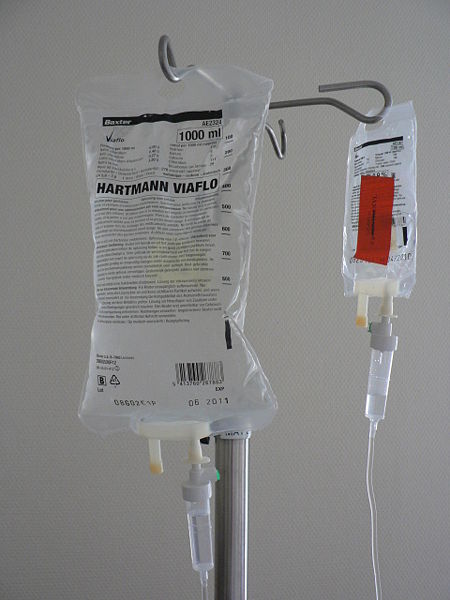
    Nikolai Pankratov was reportedly stopped at the Swiss border with intravenous equipment and 22 vials of a suspicious drug.

    a positive drug test, the UCI will publish a press release that contains the rider’s name, information about where and when the test took place, and the type of substance the rider was using—all before the case has been heard, and even before the test of the B-sample.

    Others, like the International Association of Athletics Federations (IAAF), which governs track and field, are more circumspect. In an interview, Results Manager Thomas Capdevielle said that his organization “does not spontaneously communicate” about positive drug tests (except for when violations occur at a championship, in which case an expedited process goes forward).

    Disclosure, Capdevielle said, is delegated to the accused athlete’s national track and field association, and “it’s their decision” to release any information.

    But while Carpani and Capdevielle were referring to the procedures to be followed in the event of a positive drug test, Pankratov’s situation is different, since a case against him would likely hinge on what is known as a “non-analytical finding”—based on possession rather than a positive test.

    According to Capdevielle, non-analytical findings are harder to prove, and the evidence against the athlete in such cases is not usually as damning as if he or she had tested positive for a banned substance—justifying greater confidentiality until a ruling has been made.

    “It’s very tricky, and they’re often long investigations,” Capdevielle said. “I would understand why a federation would take a conservative approach in a non-analytical case.”

    FIS’s anti-doping rules allow—but do not require—the release of an accused athlete’s identity as soon as he or she has been “provisionally suspended.” Such measures are used to keep athletes from competing in the period between a positive drug test (or non-analytical finding), and the time their case is heard.

    In an e-mail to FasterSkier, FIS Secretary General Sarah Lewis suggested that her organization’s approach to disclosure depends on the type of violation alleged.

    “From the FIS perspective, it is not possible to treat potential [cases] involving a positive sample with the same policy as those without,” she said. “Individual case management is required.”
  • RUSADA: Pankratov’s Case to Be Handled By FIS

    RUSADA: Pankratov’s Case to Be Handled By FIS

    Russian cross-country skier Nikolai Pankratov was reportedly caught at the Swiss border with intravenous equipment and 22 vials of Actovegin.

    Nikolai Pankratov’s fate will be decided by the International Ski Federation (FIS), FasterSkier learned Thursday.

    FIS officials have refused to acknowledge the existence of a case against the Russian cross-country skier, who reportedly was caught at the Swiss border last week with intravenous equipment and 22 vials of Actovegin, a suspicious—but not banned—drug.

    But in an e-mail to FasterSkier on Thursday, Russia Anti-Doping Agency (RUSADA) Deputy Director Igor Zagorskiy confirmed that Pankratov’s alleged violations fell under the purview of FIS.

    “As we know, Nikolai Pankratov was crossing the border with ampoules of Actovegin together with [equipment] for intra-venous injections,” Zagorskiy said. “Pankratov is on [the] FIS Registered Testing Pool, so it is FIS jurisdiction.”

    The Registered Testing Pool that Zagorskiy refers to is a list of the world’s best skiers, who are tested frequently and must update FIS with their whereabouts. While the names on the list are not published, a FIS press release from February pegged the number of athletes in the pool at 486 across six different skiing disciplines—which averages out to the top 40 athletes per sex, per sport.

    Normally, athletes caught using a prohibited substance are tried by the body that conducted the testing—whether that is an international sport federation, like FIS, or a national testing agency, like RUSADA.

    Pankratov’s case is different, because he was caught in possession of a banned substance—or in this case, a banned method, in the form of the intravenous equipment.

    These violations are known as “non-analytical positives,” and jurisdiction in such cases usually depends on the athlete’s ability, according to World Anti-Doping Agency spokesman Frédéric Donzé. Internationally-competitive athletes are generally tried by their sport federations, while nationally-competitive athletes usually fall under the auspices of their national testing agencies. Pankratov, it appears, was considered to be internationally-competitive.

    Contacted by FasterSkier over the weekend, FIS Secretary General Sarah Lewis refused to comment on Pankratov’s status, writing that “at this stage, there is nothing we can say about a case or otherwise.”

    But if standard procedures are followed, Pankratov will go before a three-person panel chosen from a pool of experts pre-selected by FIS. The panel will hear the case and rule on whether or not Pankratov committed a violation; if he is unsatisfied with the outcome, he can appeal to the Court of Arbitration for Sport.

    Under its anti-doping rules, FIS does not have to release any information about Pankratov’s case until 20 days after the panel has made a decision—and even then, only if he is found guilty.

  • Actovegin Apparently Well Known in Eastern Europe

    NORWAY – The Russian cross-country skier Nikolay Pankratov was reportedly held up on the Swiss border last week when customs officials found intravenous equipment and 22 vials of the substance Actovegin in his car. Former Norwegian biathlon team director Kjell Ove Oftedal is surprised that the substance is not currently on the doping list.

    “I think WADA should at least declare whether the substance is legal or not. If it’s not illegal, you can’t single out athletes publicly like what is now happening to Pankratov…I had never heard of the substance, but apparently, the drug is well known in Eastern Europe,” Oftedal said to the Norwegian newspaper Adresseavisen.

    Anti-doping expert Ingard Lereim, M.D., says to Norwegian national TV station NRK that Actovegin is a substance intended to increase or improve the effect of blood doping.

    “Additionally, Actovegin is said to help speed up the recovery of overuse injuries. But we don’t know how widespread its use is,” the exercise physiologist told nrk.no.

    Russian national team manager, Yuri Charkovsky, told Adresseavisen that he knows nothing about the Pankratov case.

    “He is not a part of our team. He is not on the national A-team or the national B-team,” Charkovsky said.

    However, Pankratov has been a part of the Russian national team for several years. He recently said in an interview with Langrenn.com that he thinks Russia should be more open to other countries’ training philosophies.

    “In Russia, we’ve done the same things for 20 years. We travel to the same places, we run the same loops, and do the same roller ski courses. There are a lot of other really nice places in Russia to have training camps, but we always go to the same places,” Pankratov says.

    But language barriers make it hard for the Russians to approach other nations. Oftedal recalls that the Russian coaches and team staff would say “hello” at the range, and that was the extent of the contact he would have with the Russian team. Pankratov is one of very few Russian skiers who speak English.

    “There are a lot of athletes and coaches who want to talk with the Russians, but we don’t speak English. That is a huge problem for us,” Pankratov said to Langrenn.com in an interview with the web site at the end of August.

    From Langrenn.com, September 15, 2010 By Ola Jordheim Halvorsen, translation by Inge Scheve

  • Pankratov on Norwegian Training Culture: Variety and Wet Feet

    Several weeks ago Langrenn.com published an interview with Russian Olympian Nikolay Pankratov, who was in Norway training with Team Synnfjell. The plan was that Pankratov would come back to Norway later in September to train with the Norwegian national team when they return from their altitude camp in the Alps. Those plans are likely scrapped after he was caught on the Swiss border last week with intravenous equipment and vials of the drug Actovegin.

    “In Norway, you run all over the place and get your feet wet every workout. In Russia, we run specific, predetermined courses every time. We know exactly what’s waiting,” Nikolay Pankratov said.

    Pankratov was tired after a week of training in Norway. The strong Russian skier had attended the Team Synnfjell training camp at the end of August and was impressed with the way the team works. However, getting his wet feet on almost every workout added a new dimension to Pankratov’s training experience.

    “It’s pretty funny. You try to keep your feet dry, but after 10 minutes you’re soaked no matter what you do. You run all over the place in this country,” he said.

    Pankratov met with Langrenn.com at the Oslo airport just before he was leaving Norway and the Team Synnfjell camp. He had gained insight to the Norwegian cross-country training culture, as well as some very sore abs.

    “Yesterday we did a strength circuit workout that included five different ab exercises. I’ve never done that before, I’ve only done sit-ups. But the new exercises seem very effective. I’m very sore now, and it will be even worse tomorrow,” Pankratov said with a grin.

    Less variety in Russia

    “In Russia we’re following a program that we’ve used for many years, especially on the strength side. But I’ve seen YouTube videos of the Norwegian sprint team boys and I’ve tried some of the drills they do, especially those that Øystein Pettersen is doing. Those videos are funny,” Pankratov said.

    While Pankratov is no longer a part of the Russian national team, he has been for many years. Pankratov has been on age-specific national teams with the Russian national ski association throughout his junior career, and has placed on the podium in several World Cup events, and helped the Russian team to a relay bronze medal at the 2005 World Championships in Oberstdorf (GER).

    What do you consider to be the biggest differences between the Russian and the Norwegian training cultures and team environments? The lack of variety?

    “In Russia, we’ve done the same things for 20 years. We travel to the same places, we run the same loops, and do the same roller ski courses. There are a lot of other really nice places in Russia to have training camps, but we always go to the same places,” Pankratov explained and continued: “For instance, this summer, Rybinsk had a heat wave and it was extremely hot there. But that was where the national team had their camp, and the skiers had to get up insanely early to be able to train at all. They could have gone to a different place, but that’s not in the protocol. Even if it’s 40 degrees Celcius. I talked to Alexander Legkov, who said they couldn’t sleep at night.”

    Do the skiers say anything?

    “We don’t have those kinds of discussions on the national team in Russia.”

    What kinds of discussions do you have?

    “There is no social environment in the national team. There are almost no team meetings, three workouts per day and that’s the focus. Everyone does the same workout. There are no individual adaptations.”

    So you are looking for a change, and that’s why you come to Norway?

    More openness

    “I wish we could be more open to other countries’ training cultures in Russia. I was very lucky to find a connection with Team Synnfjell and Frode Bjeglerud (team director). They organized the trip coming here, and I feel very grateful for that,” Pankratov said.

    Martin Johnsrud Sundby said he was impressed with how much volume you log. Do you think the Norwegian skiers train very little?

    “Well, now I’ve trained with a Norwegian team for a week, and I think we averaged about four hours per day. That’s definitely a less than we would do during a training camp in Russia, but I am at least as tired as I would be after a week-long training camp at home. We’ve done so much variety here,” Pankratov explained.

    What can the Norwegians learn from you and the Russian skiers?

    “One thing that is good about the Russian training program is that the athletes only need to think about training. That is the only focus. Train, eat and sleep,” he said.

    Huge language barriers

    The openhearted Pankratov believes the language barriers are a large part of the reason why the “distance” between the Russians and other countries appears so big. While Pankratov speaks good English, he is one of very few among his fellow skiers.

    “There are a lot of athletes and coaches who want to talk with the Russians, but we don’t speak English. That is a huge problem for us,” Pankratov said. “For myself, it’s been helpful to train with Team Synnfjell, and when I get home, I will continue to speak English with my wife,” he joked.

    10,000 kilometers

    In Russia, the skiers keep track of distance in their training logs, not hours as we do in Norway. Pankratov covers about 10,000 kilometers per year, and at the training camps the athletes are subjected to rigorous standards.

    “The Russian national team has about 20 training days at camps, and 10 rest days every month outside the competition season,” he said. “You get up and train before breakfast, 30 minutes running and 30 minutes strength. That’s good for waking up. After breakfast, we do the second workout, which lasts about two and a half hours, either roller skiing or running. After that we do strength and stretching for 30 minutes. The coaches are there all the time,” Pankratov said to Langrenn.com.

    All roller skiing is done on a track. The trafficin Russia makes it lethal to attempt roller skiing on the roads. After a long lunch break and a short nap, they get back at it for their third workout of the day. This session is typically 1hour 30 minutes to 1 hour 45 minutes, followed by 30 minutes strength and stretching. Pankratov said some skiers even do a fourth workout.

    From Langrenn.com, September 2, 2010 By Ola Jordheim Halvorsen, translation by Inge Scheve

  • FIS, WADA Tight-Lipped on Pankratov; Actovegin’s Benefits Unproven

    FIS, WADA Tight-Lipped on Pankratov; Actovegin’s Benefits Unproven

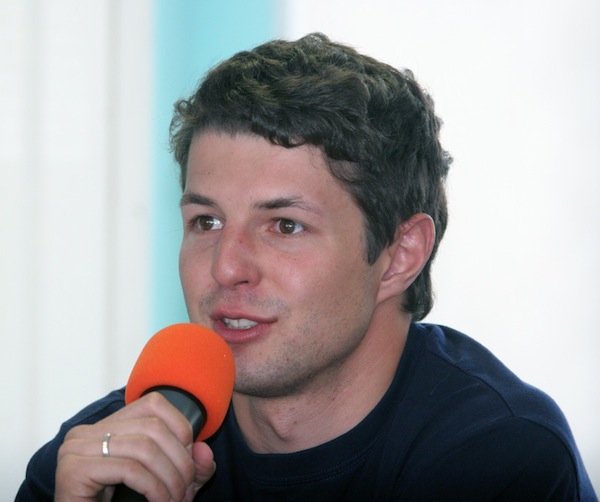
    Russian cross-country skier Nikolai Pankratov at a press conference in 2008. Photo, Ivan Isaev.

    Actovegin, the drug that Russian cross-country skier Nikolai Pankratov was allegedly caught with last week, is old news, according to experts in the field of anti-doping. But it was unlikely that Actovegin was the only substance Pankratov was using, says one admitted cheater.

    Few details emerged over the weekend about the case of Pankratov, who according to Russian news agency RIA Novosti was stopped at the Swiss border with intravenous equipment and 22 vials of Actovegin, a suspicious—though not banned—substance extracted from calf’s blood.

    In their report, RIA Novosti quoted the director of the Russian Winter Sport Association as saying that Pankratov could face a two-year ban from competition.

    But in an e-mail to FasterSkier, International Ski Federation (FIS) Secretary General Sarah Lewis would not even confirm the existence of a case involving Pankratov. Pressed by Russian media, Russian Ski Federation President Elena Vjalbe would only say that Pankratov was banned from competitions—nothing more.  And Frédéric Donzé, a spokesman for the World Anti-Doping Agency (WADA), also declined to comment.

    “This case is being handled by the International Ski Federation,” Donzé wrote in an e-mail to FasterSkier on Monday. “In order to protect the integrity of this work, following its policy, WADA refrains from commenting publicly on pending cases.”

    But while the specifics of Pankratov’s case were hard to come by, interviews with anti-doping experts revealed more about Actovegin, the drug he was reportedly caught with.

    According to Dr. Gary Wadler, the chair of WADA’s prohibited list committee, Actovegin has been around since the 1970s—commercially since the mid-1990s.

    Supposedly, Wadler said, the drug has properties that facilitate the transportation of oxygen, and potentially insulin, throughout the body—both of which are of interest to athletes.

    Actovegin was briefly placed on the International Olympic Committee’s banned list in 2000, but Wadler said that “the evidence was not sufficient to keep it there.”

    “It’s really never been shown to be performance-enhancing,” Wadler said.

    While its benefits are unproven, cyclists are still known to have been fans of Actovegin. After a TV crew discovered leftovers in a trash bin, the manager of Lance Armstrong’s U.S. Postal Service squad admitted that the team had brought the drug to the 2000 Tour de France, though he said that no riders had actually used it.

    Joe Papp, a former professional cyclist who has admitted to taking performance-enhancing drugs, told FasterSkier that he had taken Actovegin for five years.

    While he used the drug because of its supposed ability to “increase energy output by enhancing cellular metabolism,” Papp said that the Actovegin had no perceivable impact.

    “I don’t believe it works…If it does anything, it’s probably attributable to the placebo effect,” he said. “The only reason, honestly, we even used it was because of the warped mentality of the doper: ‘Hey, I have access to this product, very few other people do, and I’m going to use it.’”

    Papp injected Actovegin through an IV, which he said was the method recommended by the drug’s manufacturer. He also said that it was unlikely an athlete would use Actovegin by itself.

    “I would consider dubious anybody claiming to be using just Actovegin,” he said. “If you have the sophistication, the knowledge, the access, the comfort level to inject yourself with an extract of cow’s blood, you probably aren’t hesitant to use something like EPO or HGH.”

    But Actovegin is not banned, and RIA Novosti’s report mentioned no other drugs that were discovered in Pankratov’s possession. As such, any case against him would likely hinge on the intravenous equipment. According to WADA rules, “intravenous infusions are prohibited except for those legitimately received in the course of hospital admissions or clinical investigations.”

    Athletes do not have to be caught in the act, either: the WADA rules have provisions for the mere possession of prohibited substances and prohibited methods, so-called “non-analytical positives,” Wadler said.

  • Johnsrud Sundby: Shocked and Saddened by Pankratov News

    Martin Johnsrud Sundby. Photo, Geir Olsen.

    NORWAY – When Russian skier Nikolay Pankratov was caught on the Swiss border with intravenous equipment and 22 vials of actovegin, nobody was more shocked than Martin Johnsrud Sundby. The Norwegian national team member has spent much of his summer training with and getting to know the Russian skier during his extended training stay in Norway.

    “I’m shocked, and I just don’t want to comment further at this point,” was Johnsrud Sundby’s answer when Langrenn.com brought him the news this weekend.

    Impressed with Pankratov’s volume

    Earlier this fall, Johnsrud Sundby said in an interview with Langrenn.com that he was impressed with the Russians’ eagerness to train.

    “You almost want to ask yourself if what we do at the national team is elite level,” Johnsrud Sundby said with a grin.

    Johnsrud Sundby is one of the national team racers who can show off the most annual hours in his training log, and barely ever skips a workout. For the upcoming season, Johnsrud Sundby and national team coach Morten Aa Djupvik have decided to cut back a bit on the annual hours in order to ensure quality.

    This summer, Johnsrud Sundby has spent considerable time with Pankratov, who has two second-place finishes on the world Cup, as well as a bronze medal from the 2005 World Championships in Oberstdorf (GER). Johnsrud Sundby was impressed with Panratov’s capacity.

    “You sometimes start to wonder whether what we do here in Norway is elite level at all when you hear how much these Russians train. It’s insane. I’m simply shocked by some of the stories Pankratov tells me,” Johnsrud Sundby said to Langrenn.com.

    Pankratov, who signed a mutual contract with the private Norwegian initiative “Team Synnfjell,” completed an extended stay in Norway at the end of august. One of his last workouts was an uphill time trial that Johnsrud Sundby also attended.

    “He’s an incredible athlete. It’s been very interesting to gain some insight into the Russian training culture. It’s quite different from what we’re used to here in Norway,” Johnsrud Sundby said after the time trial.

    Six to seven hours per day

    That the Russians log far more training hours than the Norwegian national team doesn’t bother Johnsrud Sundby one bit. “I think it’s really interesting. It just shows that putting in a lot of hours really works. The Russians are very strong, and often the fastest in the field. There is guaranteed nobody who trains more than the Russians, and their training methods are different from ours. Pankratov puts in between six and seven hours of training every day, so then you do the math for the annual volume,” Johnsrud Sundby said.

    What are your thoughts on overtraining?

    “In Norway, we’re horrified of overloading the system. We talk about overload here and overload there, but few Norwegians do more than three to four hours per day. You get quite a different perspective when you hear how much skiers from other nations train. We only train half the volume of the Russians.”

    There are no rights or wrongs

    Johnsrud Sundby is attending the Norwegian national team altitude camp until the middle of September. Only he and Petter Northug are staying that long. ”I think a lot of people are too fast to draw conclusions. For instance, I’ve noticed a lot of people claim that that the volumes and methods the Russians train are silly. Well, it obviously works, so it can’t be that wild,” he said.

    But it seems to work just fine to train half as much?

    “Exactly. That’s what’s so interesting. There are no black and white rights and wrongs,” Johnsrud Sundby said. “But I have a feeling that a lot of people in Norway train a lot, but very few log extreme volumes. At the same time, there are a lot of very good Norwegian skiers, but not very many extremely good skiers,” he added.

    Does Pankratov inspire you to match his training volume, or will you stick to your plan of slightly less volume this season?

    “This season I will reduce my volume just a bit. I hope that works for me,” Johnsrud Sundby said.

    From Langrenn.com August 25, 2010 By Ola Jordheim Halvorsen, translation by Inge Scheve

  • Russian Skier Detained at Swiss Border; Faces Two-Year Ban

    Russian Skier Detained at Swiss Border; Faces Two-Year Ban

    Nikolai Pankratov racing in the 2008 Tour de Ski. Photo, Petr Novák, Wikipedia.

    Russian cross-country skier Nikolai Pankratov faces a two-year ban from competition after being caught with intravenous equipment and 22 vials of actovegin, a drug derived from calf’s blood.

    Pankratov, who is not on Russian national team, had spent time training in Norway in August. He was detained at the Swiss border on Monday, according to a report by the Russian news agency RIA Novosti.

    Actovegin is not on the World Anti-Doping Agency’s (WADA’s) prohibited substance list. But the director of the Russian Winter Sport Association, Sergei Korolev, told RIA Novosti that Pankratov’s possession of the drug in tandem with the intravenous equipment was grounds for a sanction—unless he could prove that he had a legitimate reason to use it.

    According to the RIA Novosti report, Pankratov’s case now will go before the International Ski Federation’s (FIS’s) anti-doping panel.

    “He could theoretically face a two-year disqualification,” Korolev said. “If it is proven that he took the drug for health reasons, he may escape punishment, but the probability of this is very small.”

    Actovegin has been on the radar of anti-doping officials for over a decade. Some experts say it can be used to increase the effectiveness of blood doping, as well as to speed recovery from injuries, although others are more skeptical about its potential benefits. Its use is illegal in the United States.

    While WADA has not banned Actovegin—even ignoring requests to do so by the U.S. Anti-Doping Agency in 2009—officials from the organization told the New York Times last year that they do monitor the drug closely.

    Pankratov’s situation is big news for Russian skiing—its national association is already under close scrutiny by FIS, which slapped the Russians with a $154,000 fine earlier this year for a string of doping violations.

    In addition to the fine, FIS made a series of recommendations to the Russians with regards to the country’s anti-doping work, threatening further sanctions if they were not followed.

    While the 27-year-old Pankratov is not on the Russian national team, he has been a member in the past. A proven veteran, he has raced 98 World Cups over the course of his career—including 10 podium finishes.

    Pankratov also competed in the 30 k pursuit and the relay at the 2010 Olympic Games in Vancouver, and he owns two relay medals from the World Ski Championships.