From the FasterSkier archive — posts syndicated from athletes’ and coaches’ own blogs between 2004 and 2012, kept online as published. Current coverage is at fasterskier.com.

Tag: Adam Loomis

  • World Champs Rookies: 10 Questions with Adam Loomis

    World Champs Rookies: 10 Questions with Adam Loomis

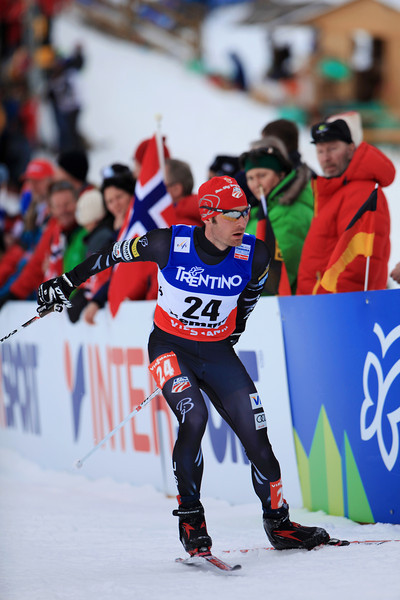
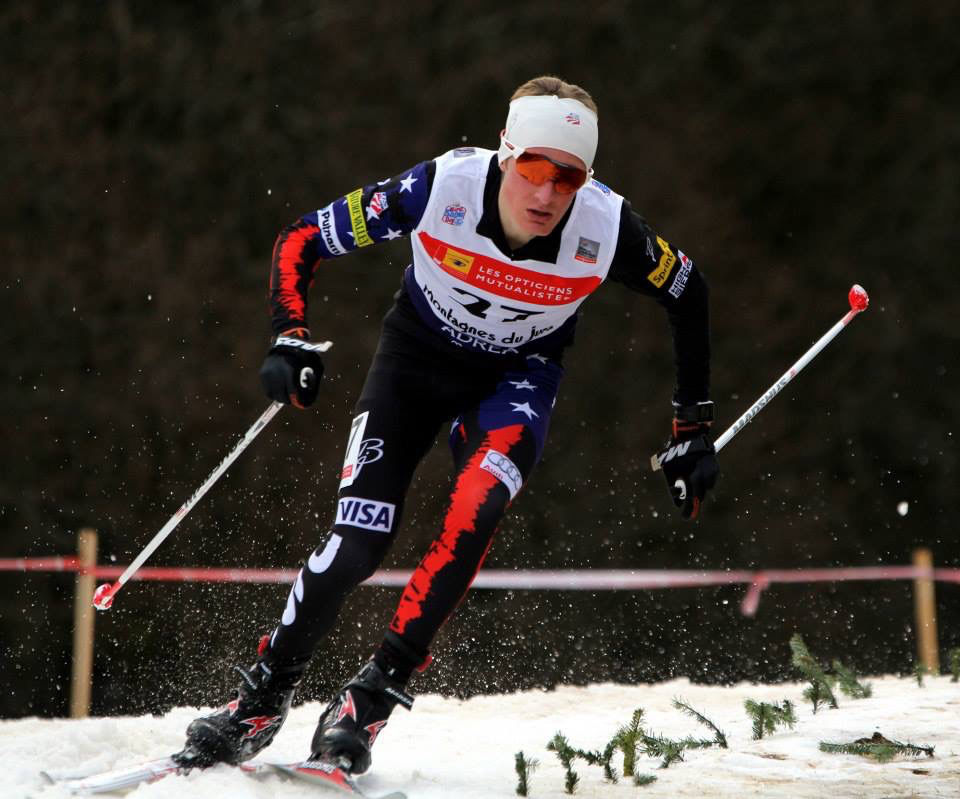
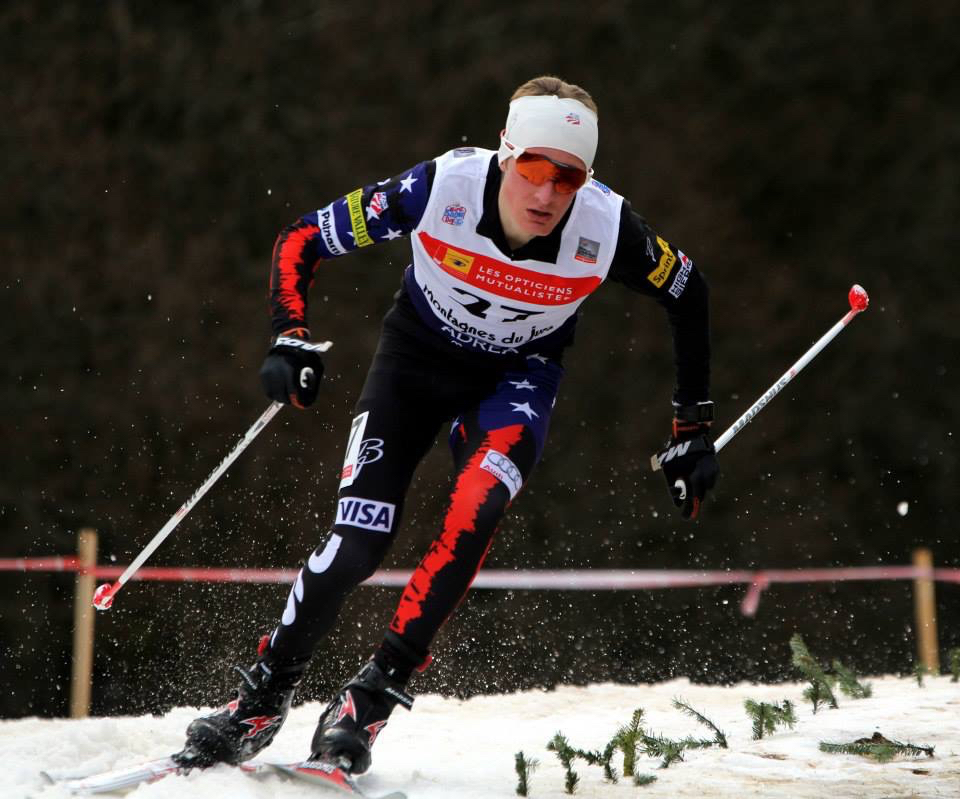
    Adam Loomis (U.S. Nordic Combined B-Team) competing at the World Cup in January Chaux-Neuve, France, where he scored his first World Cup points. (Photo: Sandra Volk)
    Adam Loomis (U.S. Nordic Combined B-Team) competing at the World Cup in January Chaux-Neuve, France, where he scored his first World Cup points. (Photo: Sandra Volk)

    We can’t imagine anything much more exciting than making an event like World Championships for the first time, so we contacted the North American skiers living that exact dream this year. 

    Instead of interrogating them with the usual “tell us how you’re feeling,” we decided to pose the following 10 questions to each of the North Americans headed to their first World Championships from Feb. 18-March 1 in Falun, Sweden.

    ***

    Exactly two weeks ago, U.S. Nordic Combined named five skiers to its 2015 World Championships team to compete in a total of four events (two individual, two team) in Falun. While three of the members were experienced veterans (Billy Demong, Bryan and Taylor Fletcher), two are newcomers to the World Championships stage: Adam Loomis and Ben Berend.

    Loomis, 22, of Steamboat Springs, Colo., has been competing at the World Cup level since 2013, notching his career-best individual result of 21st in the large hill/10-kilometer World Cup on Jan. 10 in Chaux-Neuve, France. In December, he placed fifth with the World Cup men’s relay (with Demong and the Fletcher brothers) in Ramsau, Austria.
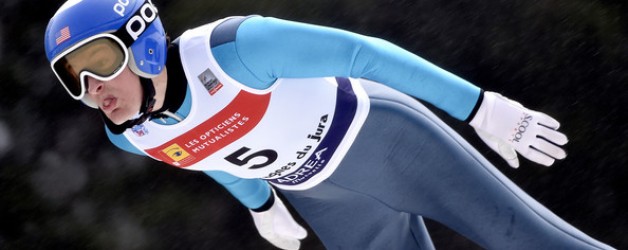
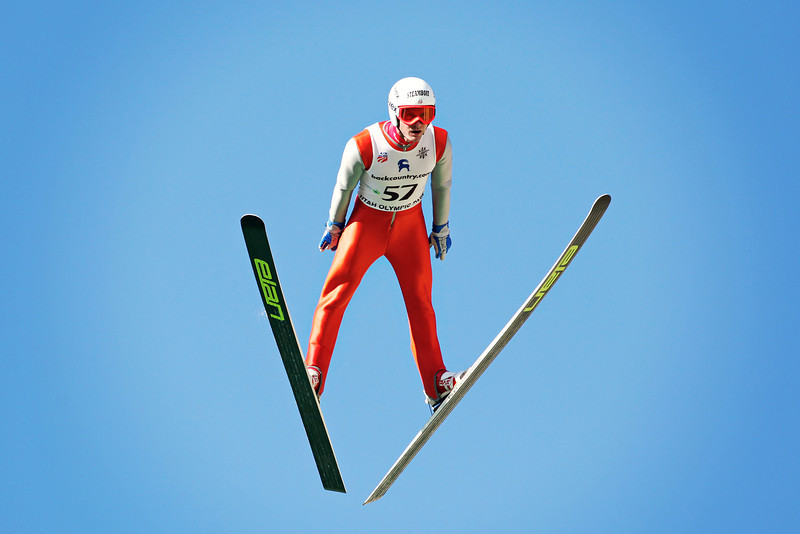
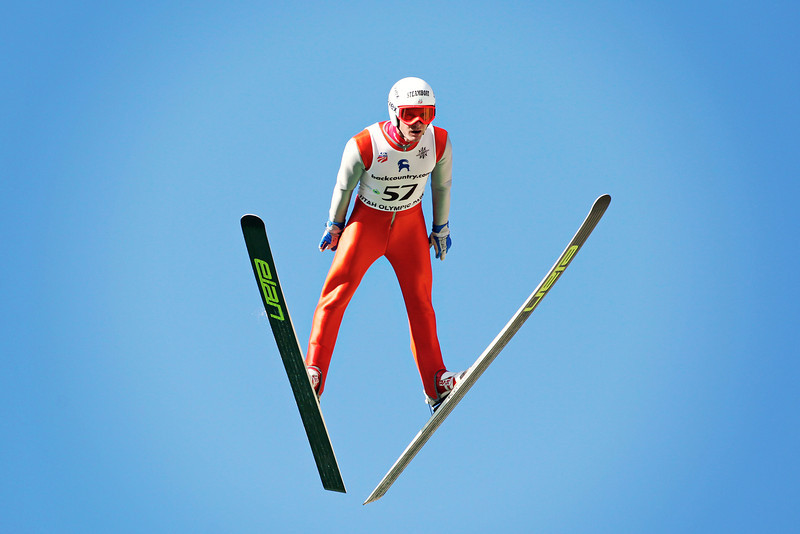
    Adam Loomis (U.S. Nordic Combined B-team) in a competition jump (Photo: National Nordic Foundation)
    Adam Loomis (U.S. Nordic Combined B-team) in a competition jump (Photo: National Nordic Foundation)

    Last week, he emailed FasterSkier while training in Ramsau with the Continental Cup team, Taylor Fletcher and fellow U.S. B-team member Berend.

    “The three of us have been over in Europe since the end of December,” Loomis explained. “Taylor and I chose to stay over after our last World Cup in Val de Fiemme, Italy to do a precamp in Slovenia and here in Ramsau. Ben just returned from World Junior Championship and came straight to Ramsau with the rest of the World Junior Team.”

    At World Championships, Loomis is especially looking forward to the four-man team event.

    “We’ll likely be one of the fastest teams on the race course and have a real podium shot if everything comes together right,” he told the National Nordic Foundation. “On the individual side, I’m not putting too much pressure on myself, but I know a top-20 is well within reach on any day.

    “This has been my first year of competing consistently on the World Cup, and I’ve been able to break through with three top 30’s so far,” Loomis continued. “This has been a big step up for me, especially in comparison to the last couple years, where I haven’t reached all of my performance goals. Although I still have a long way to go, I’m proving to be an example of how work ethic and persistence eventually pays off. When I first made the Ski Team in 2012, I fully bought into our training system and am really starting to see the rewards now, especially on the cross country side.”

    1. What was the first thing you did when you found out you were named to the World Championships team?

    “Based on World Cup points, I already knew that I was qualified for the team before the official naming. Getting World Cup points in January was a big step in making the team and very satisfying to know I would be heading to Falun. That said, I felt extremely honored when I saw read the official team announcement last week.”

    2. What’s been the biggest performance of your career so far? What one race stands out the most and why?

    “My 21st finish at the World Cup in Chaux-Neuve, France was definitely my biggest result on the international stage. Another competition that stands out for me was US Nationals this fall, where I came in third. That was my first podium at a large competition since Junior Nationals, and a sign of a good winter to come.”

    3. What are you most looking forward to at World Championships?

    “I only competed in one World Junior Championship, but I remember being really psyched to be there representing the US. I think it will be the same for Falun; I’ll be honored to be skiing on behalf of the US.”

    4. What’s your biggest motivation while competing?

    “When I compete, I’m motivated to perform at the level that I know I’m capable of and then to keep improving every day. In Nordic Combined it’s pretty difficult to have a perfect day, and I’m always motivated to try to do better than the last time.  Additionally, as a part of USA Nordic Combined, I feel like I have something to prove. The US Ski Team cut a large portion of our funding this year and included lack of future medal potential as one of their reasons.  I’d like to show them otherwise.”
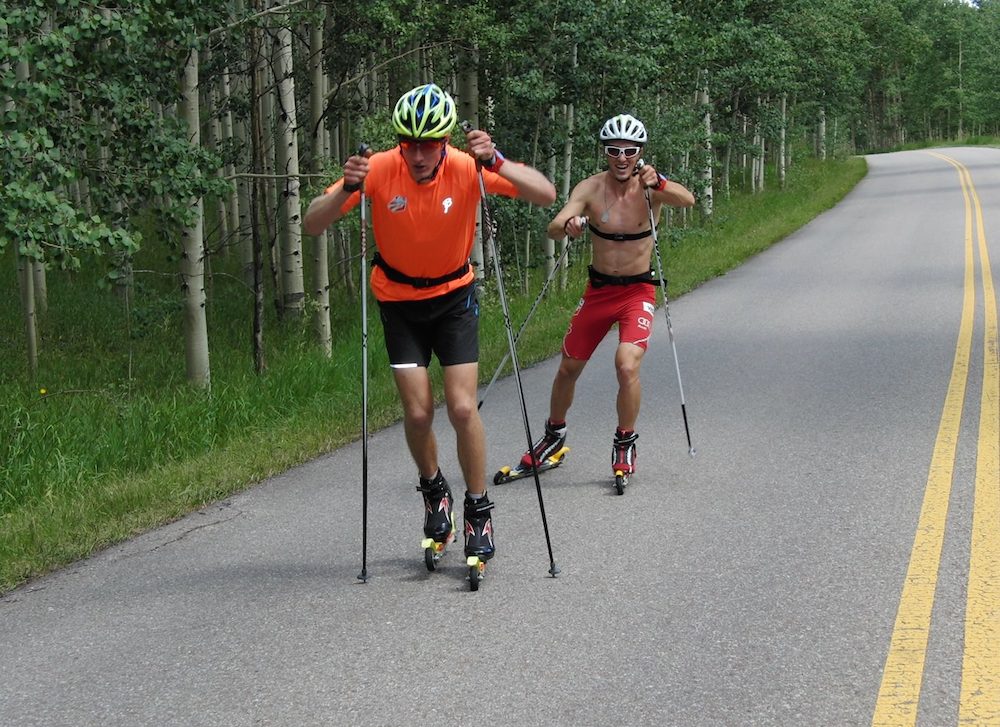
    Adam Loomis leads U.S. Nordic Combined teammate Michael Ward during a rollerski workout at a mini camp in August in Aspen, Colo. (Photo: USA Nordic Combined/Facebook)
    Adam Loomis (U.S. Nordic Combined B-team) leads teammate Michael Ward during a rollerski workout at a mini camp in August in Aspen, Colo. (Photo: USA Nordic Combined/Facebook)

    5. Which event(s) do you hope or plan to compete in?

    “In Falun I hope to compete in one or both of the individual events and the 4-man team event.  I’m really looking forward to the opportunity for the team event.  We’re one of the fastest teams on the XC side, and we will be in the fight for the podium if we just jump to our potential.”

    6. If you could race the team sprint with anyone in the world, who would it be?

    “I believe Joergan Grabaak (Norway) has won all of the last two-man sprints for the last year, so he’d be hard to pass up. Then again, if Taylor is jumping well, he’d be a sure bet. Taylor skied over a minute faster than the next fastest guy at the 2013 World Championship in this race.”

    7. Which world cup skier would you least like to meet in a dark alley (or the final 100 meters of a race)?

    “Probably Fabian Riessle (Germany). Judging from the ferocity that he sprints with, and his reputation to take out anyone on the way to the line, I wouldn’t want to get in a tight spot with him. Neither would his teammate Johannes Rydzek — who Riessle crashed out of a medal shot in the final 200 meters in Sochi.”

    8. What will be your key to success in Falun?

    “I think my success in Falun will be determined by how I perform on the jump hill. I’ve been racing really well and pretty consistently this year.  Although my jumping is better than ever, I still need to be a bit more consistent and continue to raise my average level. Fortunately, I’ve had some good training in the last two weeks and feel confident going in.”

    9. Finish this sentence: If I made the podium at World Champs __________.

    “… I would be too pumped up to sleep for at least two nights. And then I would hope to finally get a legit head sponsor.”

    10. Name a person who’s had a major influence on your skiing career. 

    “I always have to go with Billy Demong here. From the first junior National camp that he organized when I was 15, he’s shared what it takes to reach the top.  Even more importantly, a he demonstrates a belief in myself and others to get their. Over they years, I’ve watched hime become a World Champion and ski to an Olympic Gold. I competed in my first World Cup with him in a team sprint, and now will be skiing alongside him in Falun. Over this turbulent last year, Bill has been our leading ambassador in forming our own USA Nordic Combined Team and seeking funding outside of the US Ski Team.”

  • Taylor Fletcher Goes ‘Ugly Early’ for Sapporo Podium; Bryan Fletcher 8th (with Post-Race Video)

    Taylor Fletcher Goes ‘Ugly Early’ for Sapporo Podium; Bryan Fletcher 8th (with Post-Race Video)

    Taylor Fletcher (right) earned his second career podium in Sapporo, Japan, on Saturday, behind Eric Frenzel (center, GER) and Akito Watabe (left, JPN). (Photo: FIS Nordic Combined/Instagram)
    American Taylor Fletcher (right) earned his second-individual Nordic Combined World Cup podium on Saturday in Sapporo, Japan. He finished third behind winner Eric Frenzel (c) of Germany and Japan’s Akito Watabe in second. (Photo: FIS Nordic Combined/Instagram)

    Twenty-eighth in the jump was good enough for Taylor Fletcher on Saturday, as the 24-year-old U.S. Nordic Combined skier rocketed to an individual podium for the second time in his World Cup career.

    The day before in Sapporo, Japan, Fletcher had ranked 34rd on the 134-meter large hill and raced up to 22nd with the fourth-fastest 10-kilometer time. Saturday on the same hill was going to be different, though — he could feel it.

    “Heading into the [cross-country] portion, I was feeling good as I knew that I had put myself in a position for a great result,” Fletcher recalled in an email. “Typically in a race, you see the leaders of the jumping fall back and it starts to swell into a big group. With that in mind I wanted to attack and get myself into that group with it still mostly intact.”

    He and his brother Bryan Fletcher, who jumped to 27th on Saturday to start the 10 k in that position, 2 seconds ahead of Taylor, decided to work together “and try to move up in a controlled and but quick pace,” Taylor explained.

    The two started 2:06 and 2:08 behind the jump leader, Fabian Steindl of Austria.

    Bryan wrote in an email that he thought a top 10 was possible.

    “Truth be told I have had some sinus/head cold stuff going on while here in Japan so I was unsure if that would play a factor or not in the race,” he wrote on Saturday, after placing ninth in Friday’s large hill/10 k competition.  “I just wanted to go out and ski my race and I thought if I ski tactically smart Tay and I can move up quite a lot.”

    But it wasn’t easy. According to Bryan, he and Taylor put in some hard efforts shortly after the start, with Bryan leading the first of four laps to set the pace and Taylor beginning to pull away on the second lap as they caught several men in the top 20.

    “I thought I would just get into the group and sit in however Taylor went right to the front, as soon as he did that the group shattered and guys were coming off the back, others were fighting to get back up to the pack,” Bryan wrote.

    Taylor estimated that the top 15 were all skiing together until that point. While Taylor led the pack, Bryan tried to maintain contact at the back. “Then Taylor attacked hard and it split into two groups of 3 and 5 thats when it was everyone giving all they had left in the tank,” Bryan explained. “In the end it was an all-out sprint for the last 1.5 k.”

    Trouble viewing video? Click here.

    “It was a matter of putting yourself in a position at the end,” Taylor wrote. “I decided it was better to ‘Go Ugly, Early’ and not wait for the field sprint. So just into the first hill I made almost a cycling attack and tried to get away from the rest of the skiers.”

    His race would have been perfect if not for two men — Germany’s Eric Frenzel and Japan’s Akito Watabe — who passed him in the stadium on the final push to the finish. Taylor placed third, 3.5 seconds behind Frenzel, who won the sixth-consecutive World Cup competition he started (and last five on the circuit) in 27:14.0.

    Watabe was second, 1.8 seconds behind Frenzel and 1.7 seconds ahead of Taylor, who clocked the fastest-course time in 25:09.5. Bryan had the second-fastest ski time by 20 seconds, and finished 21.9 seconds behind Frenzel in eighth for his third-consecutive top 10 (after placing ninth on Friday).

    “I think my coach and I have laid down a pretty solid plan, this season I am taking part in every single competition and that is a challenge in itself to still ski well the entire season,” Bryan wrote. “So I am excited to see how well I can continue through [World Championships] and then of course the world cups after, too.”

    He added that it was great to have his brother on the podium.

    “I am very happy for him and even more excited to have [U.S. Nordic Combined] back on the podium,” Bryan wrote. “We have been chipping away at the podium for quite some time now so it nice to finally land one. Hopefully we can continue to fight for the podium in the next events in [Val di Fiemme, Italy].”

    “To get another podium feels incredible as I knew it was possible,” Taylor commented. “My last podium [two seasons ago in Seefeld, Austria] was not a fluke. I have been struggling with my jumping for a year and half now but in the last couple weeks it has been getting better.”

    He knew he didn’t need to win the jumping portion; he just wanted to put himself in position to succeed on his cross-country skis.

    “This is also very big for our team as I was the last podium in 2013 and it was a big motivator for the future heading into world championships,” Taylor added. “This shows that we have great potential for the future with Adam Loomis quickly getting better scoring points this year.”

    The third American in Saturday’s competition, Loomis, 22, placed 36th of 41 finishers, 2:59.6 behind Frenzel.

    “I had a good opportunity with conditions on the hill and didn’t really maximize that,” Loomis said in a video interview with Fast Big Dog.

    On Friday, Loomis placed 28th for his second-best World Cup result. He jumped to 42nd on Saturday, but posted the ninth-fastest ski time to improve to 36th.

    “It left me shooting for racing for all I’ve got and going for a fast race, and that’s kind of what I did,” Loomis said. “And we had awesome skis.”

    The Nordic Combined World Cup next visits Val di Fiemme for three days of competitions (including a team sprint) from Jan. 30-Feb. 1.

    — Lander Karath contributed reporting

    Results

    More from Sapporo: Provisional-jump day video | Day 1 recap | Pre-Sapporo Loppet Shoutout video

  • Weekly Roundup: Lillehammer Mini Tour, Östersund and Bozeman

    Weekly Roundup: Lillehammer Mini Tour, Östersund and Bozeman


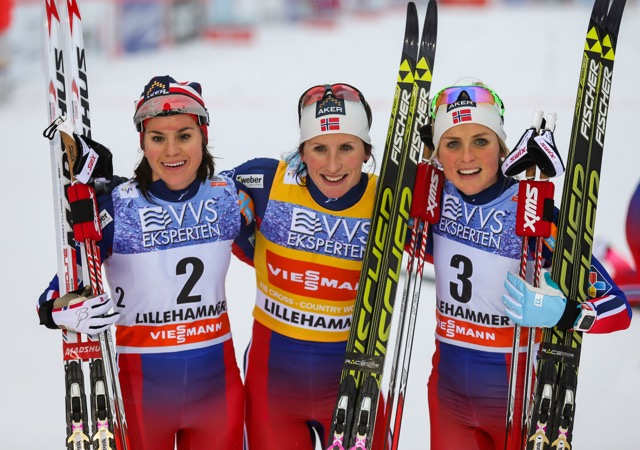
    Look familiar? We saw this all-Norwegian podium twice, except with Therese Johaug (r) as the winner and Marit Bjørgen (c) in second in the 5 k freestyle on Day 2 of the Lillehammer World Cup mini tour. On Day 3, Bjørgen won it outright over Johaug, and Heidi Weng (l) was once again third. (Photo: Fischer/NordicFocus)
    Look familiar? We saw this all-Norwegian podium twice, except with Therese Johaug (r) as the winner and Marit Bjørgen (c) in second in the 5 k freestyle on Day 2 of the Lillehammer World Cup mini tour. On Day 3, Bjørgen won it outright over Johaug, and Heidi Weng (l) was once again third. (Photo: Fischer/NordicFocus)

    As Chelsea Little pointed out in her story about France’s Martin Fourcade dusting the men’s field in the 10-kilometer sprint last Saturday in Östersund, Sweden, “when he’s on, he’s on.”

    And he wasn’t the only one repeatedly in the headlines of the IBU and FIS World Cup and U.S. SuperTour coverage this past weekend. We got used to Norwegian winners like Marit Bjørgen and Martin Johnsrud Sundby, and Alaska Pacific University’s Rosie Brennan — who’s won three out of four SuperTour races this season.

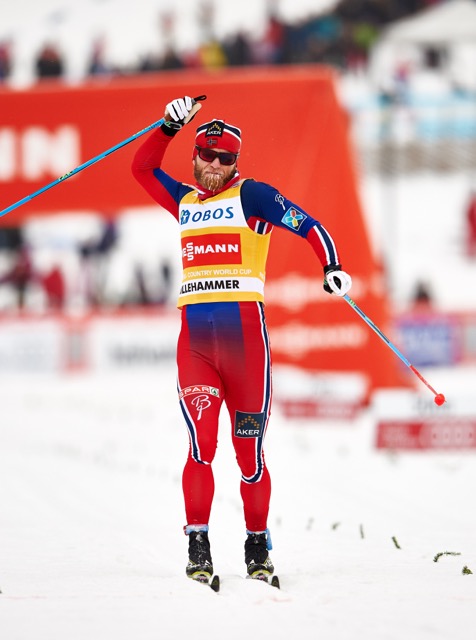
    A pumped Martin Johnsrud Sundby (Norway) after winning the men's 15 k classic pursuit for the overall Lillehammer mini-tour title on Sunday in Norway. (Photo: Fischer/NordicFocus)
    A pumped Martin Johnsrud Sundby (Norway) after winning the men’s 15 k classic pursuit for the overall Lillehammer mini-tour title on Sunday in Norway. (Photo: Fischer/NordicFocus)

    Then there were consistent top performers in the Lillehammer World Cup mini tour: Alex Harvey of the Canadian World Cup Team placed fifth in last Friday’s skate sprint and ended up 10th overall in the three-stage series, and Sadie Bjornsen led the U.S. Ski Team in 18th overall.

    Also in Lillehammer, Bryan Fletcher of the U.S. Nordic Combined team rose from 36th to eighth on Sunday for a season best. His teammate, Adam Loomis notched a career-best 35th.

    At the five-race IBU World Cup in Östersund, Canada’s Megan Heinicke rose to a career-best 12th in the women’s 15 k individual last Thursday.

    “I have never started the season so relaxed and feeling so little pressure,” Heinicke explained after the race, in which she shot 19-for-20. “I wasn’t even sure if I should start this season and I think the low expectations (from myself and others) really helped me lose that nervous ‘I have to hit’ feeling.”

    After placing ninth and 12th, respectively, in Saturday’s sprints, Canadians Nathan Smith and Rosanna Crawford qualified for the Östersund pursuit, where Smith was on track for a possible top-four finish before missing his first three shots of the day in the final standing stage.

    C’est la vie — that’s biathlon. He ended up 16th and Crawford took 14th. Meanwhile, Americans Lowell Bailey and Susan Dunklee finished 17th and 19th, respectively. In the 20 k individual earlier in the week, Tim Burke placed 11th and Bailey was 20th, and Dunklee took 21st in the women’s 15 k. Burke went on to place 17th to lead the U.S. in the sprint.

    FasterSkier was on site for the second SuperTour the season in Bozeman, Mont., as racers weathered unseasonably warm temperatures on Saturday and Sunday — well above 40-degrees Fahrenheit.

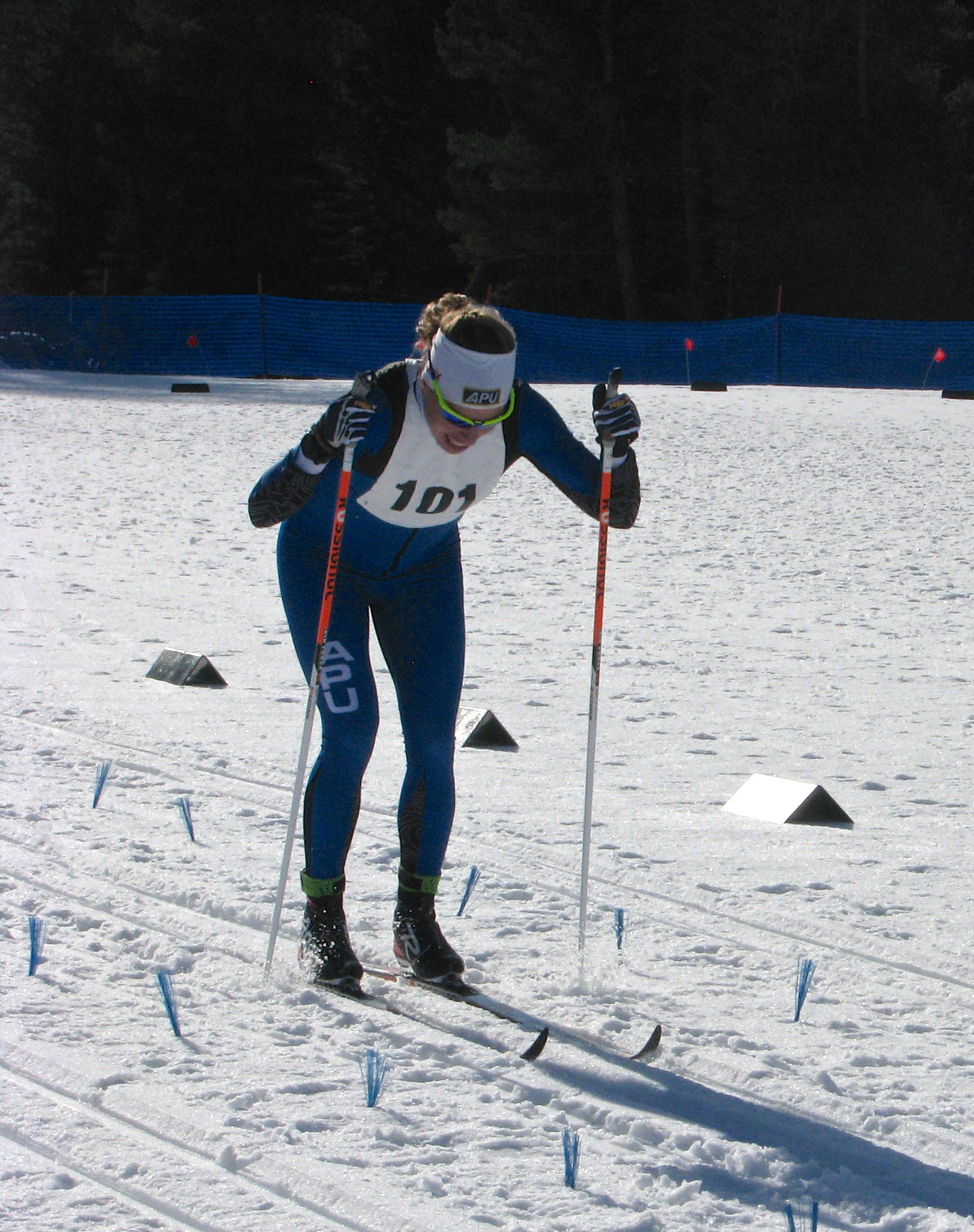
    Rosie Brennan (APU) glides to a first-place finish during the women's SuperTour classic sprint at Bohart Ranch near Bozeman, Mont.
    Rosie Brennan (APU) double poling to the women’s SuperTour classic-sprint victory last Saturday at Bohart Ranch near Bozeman, Mont.

    But with freezing temperatures overnight, the 5 k distance course became fast and icy Sunday morning, and organizers postponed the classic mass starts an hour to let the snow thaw. Still, Brennan dreaded what awaited her in the women’s 10 k.

    She called the conditions her least favorite, in fact, “her worst nightmare,” she said. But the Anchorage, Alaska, resident used the race as an opportunity to conquer some fears. Brennan ultimately edged APU teammate Chelsea Holmes by five seconds for the win.

    “She just crushes me in double pole,” Holmes said, “Which is good — I see her go by and I go as hard as I can to keep up with her, and maybe one day I will be able to.”

    The next-closest finisher, 17-year-old Katharine Ogden finished 1:20 back in third. She called the conditions “an extra challenge,” but was glad to have kick that lasted throughout. “Our skis were really fast,” she said.

    In the men’s race, Matt Gelso of the Sun Valley Ski Education Foundation (SVSEF) Gold Team racked up his third SuperTour podium of the season so far, finishing third behind winner Mads Strøm (University of Colorado) and SVSEF teammate Miles Havlick, respectively.

    At Canada’s opening domestic biathlon races (and Youth-Junior World Championships Team, as well as IBU Cup Team trials) in Canmore, Alberta, Sarah Beaudry won back-to-back sprints to punch her ticket to the IBU World Cup this coming weekend in Hochfilzen, Austria.

    SuperTour #2, Bohart Ranch, Bozeman, Mont.

    FIS Cross Country World Cup #2, Lillehammer (Mini Tour), Norway

    IBU World Cup #1, Östersund, Sweden

    FIS Nordic Combined World Cup #2, Lillehammer, Norway

    Biathlon NorAm, Canmore, Alberta

  • $5K Participation Challenge | Chris Grover on Development | Noah Hoffman: What U23s Mean

    NNF logo

    Supporting Tomorrow’s Nordic Stars Today

    Cross Country Challenge Match
    $5000 Match Announced to Drive the D25 Forward

    We’re making progress, both as a #skiingnation and in the D25 and we have big goals.

    Currently, we’ve raised $130,000. This year’s Drive for 25 aims to raise $150,000. To do that, we need more bodies raising money.

    As this email posts, we are currently being supported by 95 ambassadors. We’d like to push the numbers up still further. The Drive for 25 receives an extra $5000 from a generous supporter when we sign up 15 more ambassadors.

    It’s simple. Add 15 people to the outreach ambassadors and we claim another $5K.

    Drive for 25: Cross Country

    Chris Grover: The Nonlinear Path of Development

    In 2013 would anyone have guessed that Sophie Caldwell would finish in 6th place at the Sochi Olympics, securing the best U.S. women’s Olympic finish in history? Would we have guessed at that time that she would be on a World Cup podium in Lahti? Going into the Olympic season, she had one World Cup finish in the top-20. What about Jessie Diggins? She had a top-20 individual World Cup finish in the second World Cup that she ever raced, and was on thepodium with Kikkan in Team Sprint the following day! When Kris Freeman narrowly missed a medal at the World Championships in 2003, finishing 4th in the 15 km classic, very few people outside of the United States had ever heardof him. When Simi Hamilton won in Lenzerheide last season, the announcers struggled to pronounce his name. (I’m guessing they’ll get it right this season.)

    Sophie Caldwell in Sochi.
    Sophie Caldwell in Sochi.

    My point is that athlete development and performance are not linear. There are often incredible performance jumps in the career of a cross country ski racer. There are several keys to unlocking these performance jumps. The first is hard work: volume, intensity, recovery, technique, day after day and year after year. The second is opportunity; getting to the right races at the right time. This is where the NNF comes in.

    In the 2010-11 season, the U.S. Ski Team made the decision to start racing the complete World Cup calendar. We decided that if we were going to be successful at the Olympics and the World Championships, we needed to learn to be successful at World Cup every weekend. We needed to really learn how to race, and we needed to learn how to win. Since then, we’ve made a greater foray into the European development race series as well (Europa Cup, Scandinavian Cup, U23 World Championships, etc). After all, young athletes can’t learn to race on World Cup; they need a race experience that is appropriate for their age and ability. We are currently reaping the benefits of this push into Europe. The USA was the 15th ranked nation in the world in cross-country skiing in 2010. In 2014 we were the 6th best nation.

    It costs a lot of money to spend the winter in Europe. It costs a lot of money to get the right athletes to the right starting lines weekend after weekend, day a fter day and year after year. The second is opportunity; getting to the right races at the right time.

    Through the NNF, the cross country ski community is getting those athletes to the right races. Your efforts, and those of your friends, family, and community members are helping to put U.S. Cross country ski racing back on the map. But we really haven’t scratched the surface on the potential that we have here. How many folks have been involved in D25? Several thousand? There were over 3 million people that cross country skied in the US last year.

    There are many more that are related somehow to someone who cross country skis. We need to reach out to these folks and get them involved. That’s where you come in. Please take a few moments to reach out to family and friends and let them know what you are up to and how the NNF supports your efforts, as well as those of your team, your teammates, your club, and your community. You’ll be surprised at just how many people are excited to donate and how generous they are when it comes to a meaningful project like the D25.

    Drive for 25: Cross Country
    Drive for 25: Nordic Combined

    What the U23 Championships Mean for Development
    Noah Hoffman: Breaking Through in Turkey

    Noah Hoffman en route to a podium finish in the 2012 U23 Championships.
    Noah Hoffman en route to a podium finish in the 2012 U23 Championships.

    We’ve been focused on the U23 Championships this week, a pillar project of the NNF and a crucial step for development. Noah Hoffman talks about his best effort at the U23s, a second place result that prompts confidence in his skiing to this day:

    The Under-23 World Championships (U23s) were critical to my development as a skier. Success is an incredible motivator, and I was not good enough to be successful in the international senior ranks when I was 20, 21 and 22 years old. During my final year as an under-23 racer I was competing on the world cup. I was frustrated and discouraged by consistent finishes in the 30s and 40s. It felt like a long ways to the top of the sport; being the best in the world felt unachievable. Then in late February I left the World Cup and went to U23s in Turkey. I didn’t feel any pressure because the stage felt smaller than the World Cup. I focused on executing my race plan, and I earned two results that surprised even myself and my coaches. All of the sudden I felt fast; I earned a ton of confidence that I took back to the World Cup. My results from U23s still motivate me and give me confidence two years later.

    Join the Drive for 25 here.

    Nordic Combined Challenge Match
    20K Still Gets 20K

    The US Nordic Combined Team in Einsiedeln, Switzerland. (Dave Jarrett photo)
    The US Nordic Combined Team in Einsiedeln, Switzerland. (Dave Jarrett photo)

    I can’t stress enough how important NNF support has been to my career, and I wouldn’t be where I am today without it. As I’ve progressed from a developing junior to a member of the US National B-team, the NNF has helped fund vital training and competition opportunities. This community-based support keeps our pipeline alive, and will continue to benefit the next generations of athletes. We really need your help to reach our $20,000 matching grant. If you donate now, you’re dollars will be doubled. We’re a community driven sport, which means that every individual’s support goes a long ways, and we couldn’t do it without you. The funding from this drive will go to support athletes for the next year at World Junior Championships, Continental Cups, and development camps in the US and Europe. – Adam Loomis, read his blog here.

    Join the Drive for 25 here.

    ***

    Spread the Word!!!

    Facebook
    Twitter
    NNF Website

  • Fletcher Soars to First National Title in Lake Placid

    Fletcher Soars to First National Title in Lake Placid

    Bryan Fletcher jumping last season.
    Bryan Fletcher (U.S. NoCo) jumping in the 2012/2013 season.

    Bryan Fletcher had never won a national title before Oct. 12 – a surprising fact considering that he stood atop a nordic combined World Cup podium in 2012 and was a World Championship medalist in 2013.

    His search for a win on home soil ended Sunday when Fletcher jumped and skied to victory at the U.S. Ski Jumping and Nordic Combined Championships in Lake Placid, N.Y. only several weeks after his late-September wedding.

    The Steamboat Springs, Colo. native flew 90.5 meters to take a 1 minute 34 second advantage over his younger brother Taylor. In the rollerski Fletcher was able to hold off Taylor to take the victory by 56 seconds.

    Fletcher, who has consistently finished third or fourth in previous U.S. Championships, said that Sunday’s victory was a goal he had been working to accomplish for many years.

    Bryan Fletcher
    Bryan Fletcher (U.S. NoCo) competes in the 2013 FIS Nordic World Championships  in Val di Fiemme, Italy.

    “I’ve been chasing that dream for quite a while,” Fletcher said in a phone interview. “It was extremely elusive for me to get that national title. It’s always been stiff competition, so to finally have that under my belt and say that I’m a national champion definitely feels really good.”

    According to Fletcher, he was able to take advantage of a low speed jump that spread out the competition. However, he knew a 1 minute and 34 second advantage was short enough for Taylor, who has traditionally been a stronger nordic skier, to catch him.

    This time Fletcher was able to hold onto his lead and cross the finish line with a time of 26:10.5. Taylor posted the fastest rollerski time on the day, and finished with a total time of 27:06.5. Third place went to Adam Loomis (+1:58.9).

    For Fletcher, the result confirms a summer and fall of consistent and productive preparation. Unlike past years, he and much of the team spent the majority of their training hours in Park City, Utah due to uncertainty surrounding the nordic combined budget. Fletcher said that the team’s domestic concentration allowed for focused and valuable training.

    “It was perfect to be in one spot and refocus and redevelop our program,” he said. “Because of that our training has really benefitted. I’m really happy where I’m at going into the winter season. That being said, we still have a lot to do in terms of prep.”

    Fletcher hopes the confidence from his solid training and national title will aid in his season goals of another World Cup podium and World Championship medal.

    The Lake Placid competition was the last event for Fletcher and the rest of the U.S. Nordic Combined Team before departing for a training block in Europe.

    After Sunday’s competition the A, B, and C teams boarded a flight to Switzerland where they are currently participating in a training camp with the Swiss National Team. The group of roughly 15 Americans will also have the opportunity to compete in the Swiss nationals to earn further jumping and racing experience before the winter racing season begins.

    Once they complete their time in Switzerland, the team will head to Oberstdorf, Germany where they will continue to train at the city’s ice track.

    The 2014/2015 winter’s first FIS Nordic Combined World Cup weekend will take place in Ruka, Finland Nov. 29 and 30.

    US Ski Jumping and Nordic Combined National Championship Results

  • Pre-SuperTour, Thanksgiving Day Video

    Pre-SuperTour, Thanksgiving Day Video

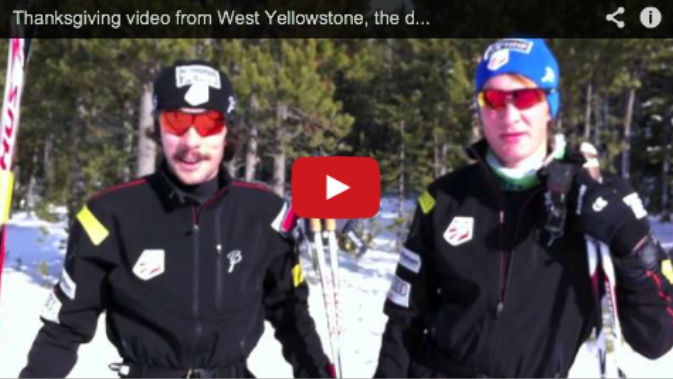
    WEST YELLOWSTONE, Mont. — Some of the most competitive skiers in the U.S. SuperTour circuit give thanks and express appreciation for friends and family before, during and after their Thanksgiving Day ski sessions. The first SuperTour of the season starts Friday with the 1.3-kilometer skate sprint at the Rendezvous Ski Trails in West Yellowstone. On Saturday, hundreds of skiers will take part in the 10/15 k distance skate races.

    “Super thankful for my family, friends, and my wife Sarah (we haven’t been able to spend a Thanksgiving together yet),” said Sylvan Ellefson of Ski & Snowboard Club Vail/Team HomeGrown (whose video interview was inadvertently lost).

    “Thankful for blue skis, fast ski tracks, and great November mustaches!” Ellefson added. “I’m really excited to get this ski season going and I know everyone else is pretty antsy as well!”

  • U.S. NoCo Takes Captain America to Europe; Jarrett Speaks in Tokyo

    U.S. NoCo Takes Captain America to Europe; Jarrett Speaks in Tokyo

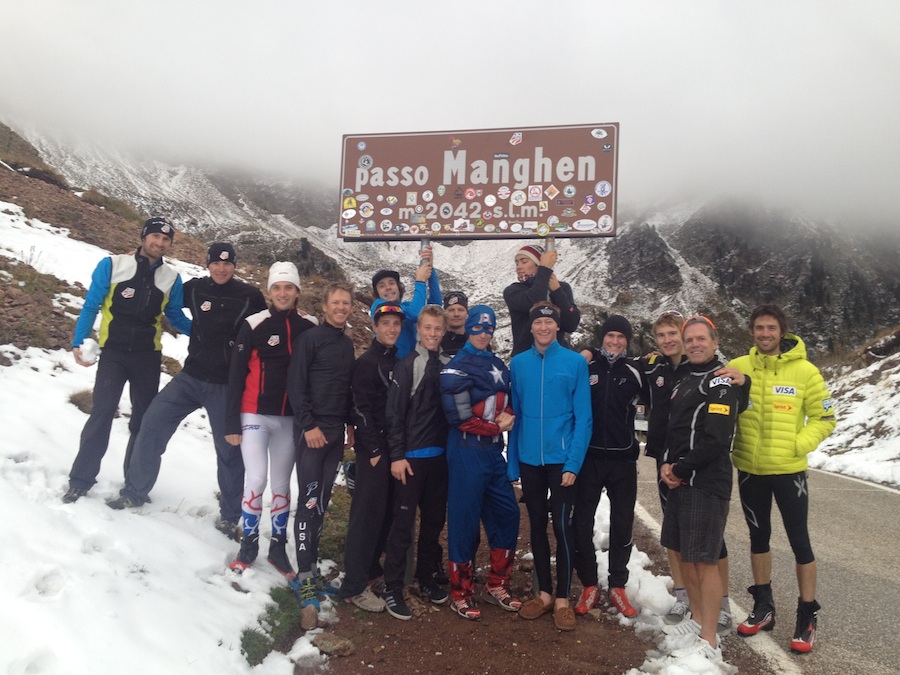
    The U.S. Nordic Combined Ski Team and NTG after doing intervals up Passo di Manghen in Trentino, Italy, during a training camp Oct. 15-25. Captain America (a.k.a. Taylor Fletcher) even made an appearance. (Photo courtesy of Martin Bayer)

    The U.S. Nordic Combined Ski Team strives for a lot of things – medals, depth, continued improvement – but flying under the radar isn’t one of them. Anyone who followed the team and one if its racers, Taylor Fletcher, for the past 10 days in Europe could tell you that.

    The younger of two brothers on the team, Taylor, 22, ran around in a full-body Captain America costume throughout the trip from Oct. 15-25, which included stops in Val di Fiemme, Italy, and Oberstdorf, Germany. The reason? He lost a bet with A-teamer Billy Demong for lowest cumulative time in World Cup competitions last season. But when you look at the video of Taylor rollerskiing and trying to catch a football in the bulky suit, it looks like he’s having fun.

    That’s the entire U.S. Nordic Combined squad in a nutshell. With 10 men between the A and B teams this season – up three from last year with the addition of Adam Loomis, Erik Lynch and Michael Ward – they’re close-knit and comical. However, with the start of the 2012/2013 season about four weeks away, they also know how to get down to business.

    The entire team (excluding Lynch who was home recovering a broken wrist) and its National Training Group (NTG) traveled to Europe nearly two weeks ago for a camp largely focused on jumping. With the financial support of the National Nordic Foundation and a budget initiative from the U.S. Ski and Snowboard Association/U.S. Ski Team, 13 skiers attended the team’s second overseas camp of the season. A-team member Bryan Fletcher, 26, felt the large group made a difference.

    “The 4 young guys [Tyler Smith, Alec Gantic, Spencer Knickerbocker and Ben Berend] are full of energy and it’s awesome for us to have an opportunity to share our training with them,” he wrote in an email. “They are definitely the future of US NC so it’s important to provide them with the best possible training as early as we can.”

    In a blog post before flying back to the U.S. on Thursday, Loomis explained they ended camp with a two-man team event on Oberstdorf’s big hill and 1.5-kilometer sprint course. Teammates tagged off between laps to race 7.5 k apiece.

    “Billy and Nick [Hendrickson] cleaned up,” Loomis wrote. “But it was a good fight for the next few spots (the middle guys always seem to have the strongest teams — and they didn’t exactly have great races in Predazzo).”

    The ski jumps at Val di Fiemme, Italy, the site of the 2013 World Championships from Feb. 20-March 3. (Photo: Nick Hendrickson/haveskiswilltravel.tumblr.com)

    The team did several interval sessions and a few time trials in Italy, according to U.S. Continental Cup and development coach Greg Poirer.

    It was quite a sight to see more than a dozen “Team USA” guys flying around parts of the Marcialonga marathon course on rollerskis, he added. They wanted to train at the site of the 2013 FIS Nordic Ski World Championships for that reason.

    “One of our philosophies is to become as familiar as possible with the facilities/venues where we have major events (i.e. Vancouver, Oslo, Val di Fiemme and, of course Sochi),” Poirer wrote in an email. “In addition to scheduled World Cups or so called ‘test events’ at these venues, we try to spend quality training time, as well, to enhance our preparation for these major competitions.”

    U.S. head coach Dave Jarrett said they chose Oberstdorf because its jump has an iced inrun in October. His staff hoped that would provide adequate preparation before the team could jump on snow at home in Park City, Utah, within the next month. The World Cup season starts Nov. 24-25 in Lillehammer, Norway.

    Before they go full steam ahead, Poirer explained U.S. Nordic Combined has some distinct goals: namely three medals at World Championships.

    “It’s the same goal we set for Vancouver, Oslo and Sochi,” he wrote. “Three medals sets the bar very high but as the team proved in Vancouver [at the 2010 Olympics] … doable!”

    He credited their success at the last Winter Olympics – with Demong winning gold, Johnny Spillane taking two individual silvers, and the team placing second in the relay – partially to being familiar with Whistler Olympic Park.

    “We are using resources to duplicate, to the best of our ability, the familiarity of Vancouver here in Val di Fiemme as well as Sochi,” he wrote. “So far, Sochi has been a little difficult to organize training outside of test events.”

    That’s why they focused on Italy. Back in Park City, Jarrett prepared to fly to a different part of the world: Tokyo. On Sunday, he spoke at an altitude training conference at the Japanese Institute of Sport Science (JISS). U.S. Olympic Committee senior physiologist Randy Wilber nominated him to do so, and Jarrett said it was an honor to join the ranks of international presenters. In the past, renowned people, such as Michael Phelps’ coach Bob Bowman and U.S. cycling coach Dean Golich, spoke at similar conferences.

    “They were looking for a coach from the U.S. that uses altitude training and has experience in it,” said Jarrett, who has presented at a couple of Wilber’s altitude conferences in the U.S. as well.

    In a phone conversation, Jarrett explained he’s been interested in the effects of altitude for a long time, especially living around 7,000 feet above sea level in Park City. What he shared was mostly based around that.

    “I don’t want to give away too many secrets, but it’s also not a big secret, either: We use altitude training because live at altitude anyway,” he said. “We are almost doing it a little backwards than what most other nations are because they’re usually going up to altitude to acclimatize and go back to sea level to race. We’re always at altitude so we have to reverse-engineer it: how do we live all the time at altitude and be ready to race at sea level?”

    In his first time in Tokyo for more than a night, he wrote in an email that the JISS was “a pretty amazing place.” Jarrett was back in Park City on Monday and trained with juniors Wednesday at Soldier Hollow, where snow was spotted that morning. Early Thursday, he reached out to the Norwegian nordic combined team, which is finishing up a monthlong training period in Park City, via Twitter: “Skiing this morn?”

    2012/2013 U.S. Nordic Combined Ski Team

    A-team

    Billy Demong (Vermontville, N.Y)

    Bryan Fletcher (Steamboat Springs, Colo.)

    Todd Lodwick (Steamboat Springs)

    Johnny Spillane (Steamboat Springs)

    Taylor Fletcher (Steamboat Springs)

    B-team

    Brett Denney (Steamboat Springs)

    Nick Hendrickson (Park City)

    Adam Loomis (Eau Claire, Wis.)

    Erik Lynch (Steamboat Springs)

    Michael Ward (Aspen, Colo.)

    Coaches

    Head Coach: Dave Jarrett

    World Cup Jumping Coach: Chris Gilbertson

    Continental Cup/Development Coach: Greg Poirer