
Tag: Adaptive Skiing

  • Canmore’s IPC World Cup Draws Rave Reviews

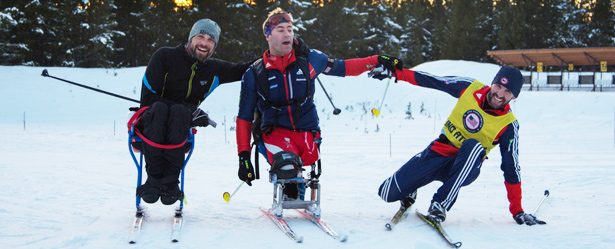
    Augusto “Goose” Perez, Kevin Burton (Photo: CXC)

    (CXC press release)

    The famed Canmore Nordic Center, the venue of the 1988 Olympic Winter Games Nordic events, and home to countless World Cups recently played host to yet another blockbuster event, when they welcomed the world for an IPC cross-country and biathlon World Cup. The setting is breathtaking, the competition even more so.

    Augusto “Goose” Perez spoke for everyone noting just how inspiring it was to compete and the fabled venue of Canmore, saying..”Canmore was an amazing experience, The city of Canmore is absolutely beautiful, and to be able to race at this Olympic venue was a dream and the work put forth by the organizers and the volunteers was phenomenal. Having the chance to compete against the best in the world is not at the reach of just anyone, I was humbled by it, and it was also a great chance to put to the test all the work I did with CXC.”
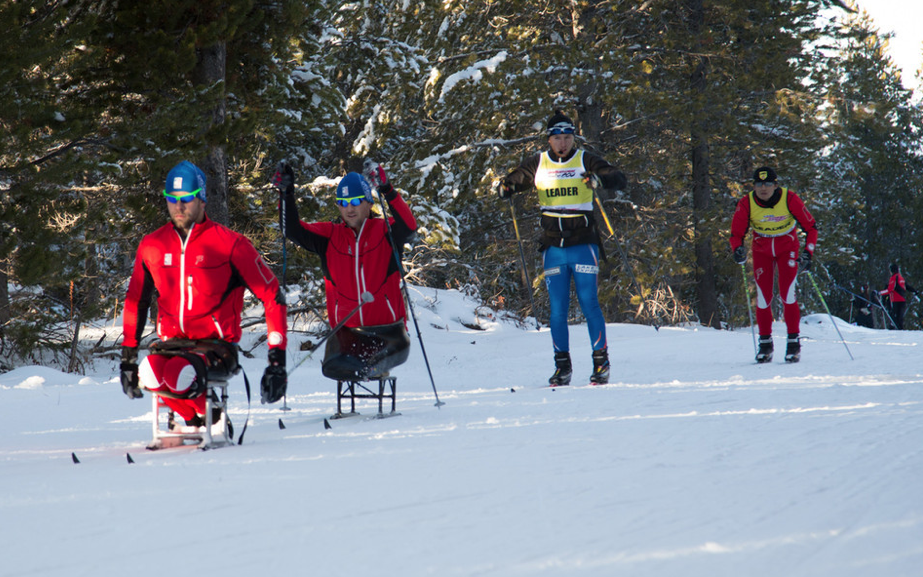
    Canmore IPC World Cup (Photo: CXC)

    More than 110 athletes representing 12 nations competed in six World Cup events, marking a historic first for Canmore. CXC had three Paralympic athletes that were part of the US contingent of 15 athletes.

    Team CXC skiers were lead by Travis Dodson and Aaron Pike finishing 1.5 seconds apart in the 10km event in 17th and 18th position respectively, placing just behind star member of the national team Andy Soule and Sean Halstead. CXC member Augusto Perez met the Paralympic standard of 130% of the winner’s time, finishing in 20th.

    The next event was the 750m sprint race where the CXC trio had their best collective performances with Pike narrowly missed qualifying for the semis by less than two seconds finishing 14th followed by Dodson and Perez.

    Pike followed up that impressive finish with a personal best 12th place even outperforming famed Dan Cnossen and was just behind Sean Halstead who was the U.S.’s top performer in Sochi last spring placing 4th.

    Coach Rob Rosser picks up the biathlon storyline.

    “Dodson lead the way for the CXC trio in the first of 3 biathlon races shooting clean, a perfect 10 for 10 for 13th place behind Cnossen and Soule in 9th and 11th respectively both of whom shot clean as well. Pike and Perez struggled on the range finishing 17th and 18th

    “Dodson lead the trio in the final long 15km biathlon event finishing 15th hitting 14/20 followed by Pike and Perez in 16th & 17th.  This final race of the World Cup ended on another positive result posted by 2010 Bronze Medalist Paralympian Andy Soule who hit 19/20 in windy conditions combined with an exceptional performance on the sit ski finishing in fifth place just 34 seconds from the podium. This was quite impressive amongst a very strong field of Russians vying for their selection to the Russian Paralympic Team which will play host to the world in Sochi 2 months from now”, Roser explained.

    We also caught up with Augusto Perez, who made it clear just how important CXC’s commitment to adaptive sports is….”The first thing I want to do is thank Yuri, CXC and CXC’s entire staff for their support, without them I would not heave been able to keep skiing this season and to continue my work towards my dream of competing in Sochi. Dealing with my cancer and its economic cost had closed my chances to continue training towards Sochi. When Yuri called and asked me if I wanted to train with them and to become a mentor to younger disabled kids, I was packing my bags before I hung up the phone. CXC was a light of hope during a rough time.”

    Although the TEAM USA squad won’t be selected for Sochi until Jan 31st, or so, many CXC athletes have a real chance to be part of the Paralympic lineup. That’s great news.

    We asked the USA’s John Farra, to give us his thoughts about some of those athletes.

    ON AARON PIKE

    “Aaron Pike – sitting athlete – was in London as a Wheel Chair racing athlete and came to a camp last fall to try out Nordic. In short order he picked up the sport, came to Nationals and qualified for his first world Cup in Cable with just 10 +- days of skiing under his belt.  He is VERY strong and incredibly fit… he hit our National Team standard at that first World Cup and continues to improve. “

    ON  TRAVIS  DODSON

    “Dodson – sitting athlete – double leg amputee – Is a veteran that Rob Rosser introduced to the sport a few years ago, and he is also very competitive in Wheel Chair racing, but has turned his attention to Nordic with a big focus this winter with the goal to maximize his performances in Sochi,” said Farra.

    ON JOHN OMAN

    “John Oman  – Is a standing athlete with one arm, and is a great guy and could well be a wonderful part of our Sochi Team,” said Farra.

    Oman was filled with praise for CXC for the experienced he enjoyed in Canmore, saying…”I would never have had such an amazing experience at the World Cup if it weren’t for the dedication and passion of the CXC Team. I am excited to pay it forward—and pay it back—by providing as much support as I can in the future to CXC and all who the team serves and represents.” He also noted how well he was prepared prior to leaving for Canada explaining…”When Yuri (Gusev) asked me if there was anything that I needed from him before I left. My answer was a simple “no”, because the CXC team had spent the past year preparing me with equipment, hours and hours of coaching, and most importantly, a network of people (coaches, racers, and recreational skiers) that had prepared me for this world-class event.

    Following the events we caught up with John Farra, the USA’s High Performance Director for it’s Para Squad and got some really promising observations about a program that has come a long way thus far. “We have come a long way as a program, we had 6 athletes in Vancouver and now we expect to have 17 athletes in Sochi.  I am thrilled with how many new athletes we have seen come into our sports of XC and Biathlon and excited to see how they all perform in Sochi.  Our trip to Canmore was an important trial run with a large staff of 14, and 19 athletes.  We set a bunch of goals going into this event that were not based on athlete performance, but on staff performance… we wanted to make sure we were clicking on all cylinders and working in efficient/effective ways at a busy event just like we will have in Sochi.  We leave Canmore feeling very good about our systems, the support we are offering the athletes and the skis we are putting under their feet or sit skis,” Farra explained.

    “We are all excited by this as Sochi is coming up fast but as importantly we are inspired by the work of all of our athletes in the adaptive program, as they challenge each of us to do our best,” said CXC Executive Director Yuri Gusev.
  • U.S. Paralympics Nordic Brings Numbers to Lake Placid

    U.S. Paralympics Nordic Brings Numbers to Lake Placid

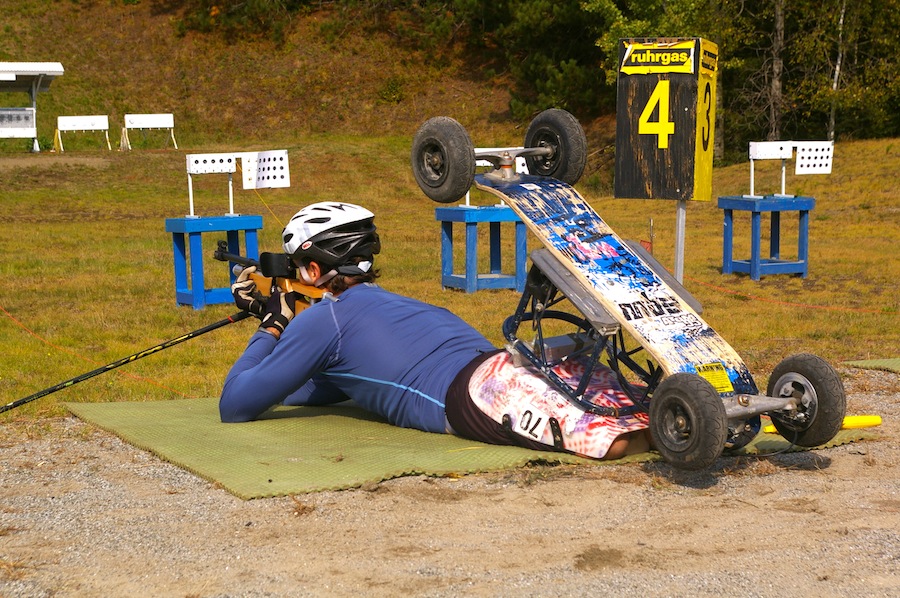
    U.S. Paralympics Nordic National Team member Andy Soule, an Army veteran, shoots at the Mt. Van Hoevenberg biathlon range during time-trial intervals on sit-ski mountain boards on Sept. 21. The national team held a dryland camp in Lake Placid, N.Y., from Sept. 18-28.

    LAKE PLACID, N.Y. — As they hammered out loops at the Mt. Van Hoevenberg biathlon center, several athletes on sit-ski mountain boards put their heads down. Everything they were doing — five or so laps lasting a few minutes each on pavement and grassy trails — required upper-body strength. At the end of each interval, they reentered the stadium for shooting practice, where the adaptive skiers rolled onto their stomachs and aimed at their targets. Then they had to get back up again and start over.

    Of the 14 athletes at the U.S. Paralympics Nordic dryland camp in Lake Placid from Sept. 18-28, two were visually impaired, according to high-performance director John Farra. He prescribed bounding intervals for them.

    Several national-team members, including Jeremy Wagner (l), Sean Halstead (second from left) and Erik Frazier (r), at the start of a sit-ski time trial at the U.S. Paralympics Nordic dryland camp Sept. 21 at Mt. Van Hoevenberg. (Photo: www.facebook.com/USParalympicsNordic)

    Nine coaches also attended the 10-day camp, which Farra said was one of the most-selective to date.

    “An interesting challenge for us now is that we’ve been pretty successful at bringing new people to the sport, so our numbers are going up while our numbers at the OTC [Olympic Training Center] aren’t,” he said during the time-trial session Sept. 21.

    “I guess it’s a good problem for us, that now our high-performance camps are by invitation-only,” Farra added. “Last year was kind of like, ‘Hey anybody shows up,’ [which was] great because there weren’t that many people doing it, but I would say we’ve brought in another 15 to 20 people to the sport and I’ve only got 15 beds at the OTC.”

    Nine members between the U.S. National and Development teams were given priority, and most came to at least part of the camp. Beyond that, Farra said they invited three to five newcomers that they felt deserved the opportunity. Several came from the East, he said, but in a few weeks from Oct. 15-25, they’ll have more western skiers at another dryland camp in Midway, Utah.

    “It’s exciting; it’s definitely working,” Farra said. “We had, what, five adapive [skiers] two years ago at nationals? Last year we had 18, and I expect closer to 30 this year at [U.S. Adaptive Nordic National Championships at Soldier Hollow,] Utah. That’s the right direction that we need to go.”

    Lt. Dan Cnossen of the U.S. Paralympics Nordic National Team doing loaded chin-ups during a strength session at the Lake Placid Olympic Training Center. (Photo: www.facebook.com/USParalympicsNordic)

    As for what the athletes were up to over the last two weeks, New England Nordic Ski Association (NENSA) Adaptive Program Director Eileen Carey wrote on the program’s blog that the athletes had been “dialing in shooting positions, roller-skiing and sit skiing on mountain boards, testing in the weight room and on the SkiErg and learning the physiology and nutrition of training.”

    On Sept. 21 during interval training, Farra said that was a good opportunity for his top athletes to combine a hard effort with shooting experience.

    “It’s a high-performance [camp]. They need to be preparing themselves for competitions,” he said. “That’s why there are time trials. That’s why they’re working hard with each other. With the [athletes] we don’t see as much, it’s really about giving them coaching advice, training and hopefully they get hooked and keep coming back.”

    ***

  • Kelly Brush Foundation Awards $100,000 in Annual Grants

    Kelly Brush Foundation Awards $100,000 in Annual Grants

    Kelly Brush Foundation
    Kelly Brush Foundation grants assist adaptive athletes in purchasing sports gear including monoskis and handcycles. In this image adaptive athlete Chris Jefferson of Aspen, Colo. competes at Copper Mountain in Colorado in December. Photo courtesy Kelly Brush Foundation.

    Press release 

    SOUTH BURLINGTON, Vt. – The Kelly Brush Foundation awarded $100,514 in grants for spinal cord injury prevention at the end of 2011 enriching the lives of those with spinal cord injuries and furthering the foundation’s mission to improve ski racing safety, Kelly Brush Foundation President Charlie Brush announced.

    The foundation granted $53,442 in Ski Racing Safety Grants to ski clubs and race teams across the country, including two grants to Vermont organizations. In addition, the Kelly Brush Individual Grant Program awarded $47,072 for adaptive athletic equipment, including a grant to a South Burlington adaptive athlete.

    “Raising the bar for ski racing safety is part of the Kelly Brush Foundation’s core mission. This round of Ski Racing Safety Grants supports clubs and race teams from Maine to Idaho in their efforts to make the safety of their athletes a priority and to change the paradigm for both ski racing and training,” Brush said.

    Ski Racing Safety Grants assist racing organizations in purchasing equipment that enhances safety for racers including safety netting to line race courses, padding for chair lift towers and spine protectors for racers. Fifteen clubs and organizations received Ski Racing Safety Grants ranging from $500 to Monroe County Special Olympics, in Michigan to replace old and unsafe helmets to $12,500 to the United States Ski and Snowboard Association Central Region, based in Minnesota, for safety netting to bring the entire region up to full netting on all courses. Cochran’s Ski Area in Richmond, Vt. and Jay Peak Ski Club in Jay, Vt. received $3,000 each for safety equipment. The Jay Peak Ski Club will use its grant to enhance safety on the mountain’s race course.

    “The Kelly Brush Foundation grant makes a huge difference to our small club,” said Brigitte Ritchie, treasurer of the Jay Peak Ski Club. “With only 36 racers in our program, finding funding is always a challenge. Safety equipment like netting to line courses and Willy Bags for chair lift towers is a significant expense. We are grateful for the foundation’s assistance in helping to make our race trail the safest we can for our athletes.”

    The foundation also announced the awarding of 13 Kelly Brush Individual Grants for adaptive athletic equipment. Individuals from across the United States who are living with SCI received financial assistance with purchasing equipment including monoskis and handcycles. Among the recipients was South Burlington adaptive athlete Jeremy Shortsleeve who is a three-time winner of the Keybank Vermont City Marathon and holds the course record in the handcycling division. He received $3,000 for handcycling equipment.

    “Enriching the lives of those with spinal cord injury through adaptive sports and recreation is a key goal of the Kelly Brush Foundation. Specialized adaptive equipment, often customized for the individual athlete, can be cost prohibitive. Through Kelly Brush Individual Grants, the foundation aims to remove financial barriers to participation in adaptive sports,” Brush said.

    The Kelly Brush Foundation annual grants are made possible by the foundation’s primary fund-raising event, the Kelly Brush Century Ride, which is held annually in September in Middlebury, Vt. and hosted by the Middlebury College Ski Team. This past September, 24 handcyclists and 721 cyclists rode in support of the foundation’s mission and raised more than $275,000 for the foundation’s programs including adaptive equipment grants, improving ski racing safety, advancing scientific research on SCI and supporting the U.S. Adaptive Ski Team.

    About the foundation: The Kelly Brush Foundation is a non-profit organization dedicated to improving ski racing safety, enhancing the quality of life for those with spinal cord injury(SCI) through providing adaptive sports equipment, advancing scientific research on SCI and supporting the U.S. Adaptive Ski Team. Kelly Brush, together with her family, started the foundation in 2006 after she sustained a severe spinal cord injury while racing in NCAA Div. 1 competition as a member of the Middlebury College Ski Team in Vermont. The Kelly Brush Foundation affirms Kelly’s ongoing commitment to live life on her own terms and better the lives of others living with SCI. www.kellybrushfoundation.org

  • Farra leaves USSA

    John Farra, right, watches Nordic combined in Vancouver.

    If you’d asked John Farra a few months ago what he’d be doing in 2014, he would have told you, “Going to Sochi and kicking some butt.”

    He still plans on doing just that, but not with the team he would have expected.  The U.S. Ski and Snowboard Association (USSA) announced Thursday that Farra is leaving his post of the past three years as the Nordic Program Director for a position as Director of the U.S. Paralympics Nordic Skiing High Performance for the U.S. Olympic Committee (USOC).

    “It’s not what I originally had in mind for myself,” said Farra.  “But every once in a while life throws you a curve ball, and it was too good an opportunity to pass up.”

    He became the Nordic Director for USSA in the spring of 2008, having played roles in the ski community as an athlete, coach and administrator.  A former Olympian and National Champion, Farra has held leadership positions for Lake Placid’s National Sports Academy and the Maine Winter Sports Center, where he was the Vice President and Programs Director.

    During his term at USSA, Farra oversaw the ski jumping and Nordic combined teams win six World Championship and four Olympic medals.

    His colleagues and athletes are all sorry to see him go.  “It’s a bummer for us,” said Luke Bodensteiner, Vice President of USSA.  “John has been great in that position.”

    Chris Grover, head coach of the men’s USST, was equally complimentary.  “Farra did a fantastic job, in my opinion.  He had an incredible work ethic, he had the right knowledge base, and he brought a lot of passion to what he did—to seeing the Nordic athletes be successful.  Those are big shoes to fill.  We’re all going to sincerely miss him.”

    “He did an amazing job,” said Kris Freeman, a veteran of the USST who has seen several program directors.  “I’m sad to see him go.”

    The hardest part about the departure for Farra will be leaving the people he’s worked with since taking up the post in the spring of 2008.  “It’s one of the most unique experiences I’ve ever had,” he said.  “I’ve gotten an amazing number of emails from people that were super positive and appreciative.  I know I’ll be staying in touch with a lot of these folks, and we’ll keep crossing paths.”

    The opportunity at the USOC came around almost two months ago, when the newly created job was posted and circulated around USSA.  “I love what I do, so I passed along to people I knew who might be interested, and didn’t think about it again,” said Farra.  “But the responses I got were, ‘Why aren’t you considering it?’  It’s my [current] job exactly, just for the Paralympics.  So I talked with one of the USOC guys and got pretty interested in the project.”

    The project, he explained, is to develop a stronger base for adaptive Nordic skiing in the U.S.  “Here you have a sport that doesn’t have anywhere near as deep a pipeline as cross country.  In order to reach the same level there will need to be thoughtful design of coach’s education and club program development.  It’s a pretty big challenge, and that’s what got me so excited,” said Farra.

    Though he will be missed, Farra is confident that USSA will be just fine without him.  “Our athletes are on track and our coaches are sticking around.  We’ve got such a great thing going right now; this is not a big hiccup, in my opinion.  I truly believe that our athletes in all three disciplines are primed to do something special in Sochi.  This is an opportunity for someone out there to take on something new and exciting.”

    “The director is expendable; the coaches aren’t.  The athletes will continue to do what they do.  My work was more behind the scenes, and I feel really good about what I’ve done,” he said.

    “The real story is, who’s next?”

    Farra says he will help find a replacement, but has no idea who will throw their name in the hat.  In the interim, USSA will lean on head coaches Chris Grover and Dave Jarrett for direction, just as they have in the past.  Bodensteiner said he is taking the opportunity to take a critical look at the position, determine what the needs are in the ski community, and redefine the role if needed.

    “I think this is an excellent time to come in,” said Farra.  “The spirit of collaboration, you can just feel it.  Since I’ve been around, I’ve seen people start to really believe we can win and do well.  I see less and less in-fighting and frustrations, and instead people talk about how we’re doing this right.”

    Farra’s last day at USSA is July 13, and he starts up at the USOC on the first of August.  For now he will remain in Park City with his family and commute to Colorado Springs as needed.

    Asked if he is at all nervous about the task ahead of him, Farra says he feels well-prepared. “Sure, there’s always anxiety once you start something new.  But I know a lot of the athletes already and I understand the challenge.”

    Farra overseeing the action at Junior Nationals in Presque Isle, ME. Photo: Steve Fuller, Flying Point Road.


  • Maine Adaptive Skier Kouros Nominated for “Ultimate Female Athlete”

    Christina Kouros of Cape Elizabeth, Maine, a CEHS Sophomore and member of the Cape Nordic Team, recently made history as the first Eastern High School Championship competitor to compete in the adaptive sit ski event. The EHSC Championships were held at Black Mountain in Rumford, Maine earlier this month and featured 48 person teams from New England.

    Kourus has competed in every high school ski meet throughout the season, and been an inspiration to her entire team. She is also a highschoolsport.net “Ultimate Female Athlete” finalist.

    The “Ultimate Female Athlete” finalists’ videos are available to watch online starting March 28, 2011, and through the month of April. The winner will be announced on May 2, 2011.

    Please click the link below to watch her video and Vote for Christina as the “Ultimate Female Athlete.”

    http://www.highschoolsports.net/GSM/viewEntriesAndVote.cfm

    View Christina’s video here.

  • NENSA to Target Disabled Veterans with New Adaptive Program

    An adaptive athlete on a sit-ski in Jackson, New Hampshire. Photo courtesy of flyingpointroad.com.

    The New England Nordic Ski Association (NENSA) will launch a new adaptive skiing program this winter, centered in the greater Boston area.

    Leveraging a $100,000 grant from the U.S. Olympic Committee, the initiative, which targets disabled veterans, will partner with area hospitals and operate out of the Weston Ski Track for its first season, then likely expand to other ski areas in New England over the next three years. A search for the program’s director was announced Tuesday morning.

    According to NENSA Executive Director Pat Cote, his organization was approached earlier this summer about applying for a grant from U.S.A. Paralympics, an arm of the U.S. Olympic Committee (USOC). The USOC had received money from the U.S. Department of Veteran’s Affairs (V.A.), which was seeking to create recreational opportunities for disabled veterans, or fund existing ones.

    NENSA was officially awarded the money in September, which covers the salary of the new program director, as well as equipment, travel, and other costs.

    While NENSA typically avoids a hands-on approach, preferring to facilitate the work of its clubs, the core of the new initiative will consist of direct coaching at Weston during its first year, since the number of pre-existing adaptive programs and coaches elsewhere in New England are limited.

    According to Cote, Weston was selected due to its proximity to two large veterans’ hospitals in Boston and Bedford, and because of the strength of the Cambridge Sports Union—the able-bodied club that already exists there.

    Most participants in the program will use sit-skis, Cote said—essentially chairs with two skis attached. While the initial goal is modest—attracting six to ten people to ski at Weston twice a week—Cote said that he hopes to expose a “much, much wider audience” to the sport in general.

    Initially, NENSA will purchase a total of 25 sit-skis, and participants will be recruited by therapists at the veteran’s hospitals. Cote said that his organization will also conduct outreach through other adaptive programs, like those that offer rowing or alpine skiing. (While the program will be marketed to veterans specifically, any disabled individual can participate.)

    The aim of the program, Cote said, is simply “to get people outside and physically active,” since veterans who exercise regularly will leave the V.A. saddled with fewer medical costs down the line.

    For those with interest in competing at the elite level, Cote said that NENSA is “ready with other support that the U.S. Olympic Committee has in place to help someone who wants to go further, in either skiing or biathlon.” But that, he said, “would be a by-product of this program.”

    NENSA has secured funding for the first year of the initiative, but Cote said that he was confident that the money would continue to flow in for at least four years—“as long as we reach fairly reasonable benchmarks and do a fairly good job with the program.”

    After establishing a group of adaptive skiers at Weston this coming winter, Cote said that he would like to expand to other locations, with the program’s director leading an effort to educate more coaches and volunteers. Cote himself will oversee a group of veterans near his home in central Maine.

    “We feel that we can have the most impact if we have a lot of people working on this, as opposed to just one staff member,” he said.