From the FasterSkier archive — posts syndicated from athletes’ and coaches’ own blogs between 2004 and 2012, kept online as published. Current coverage is at fasterskier.com.
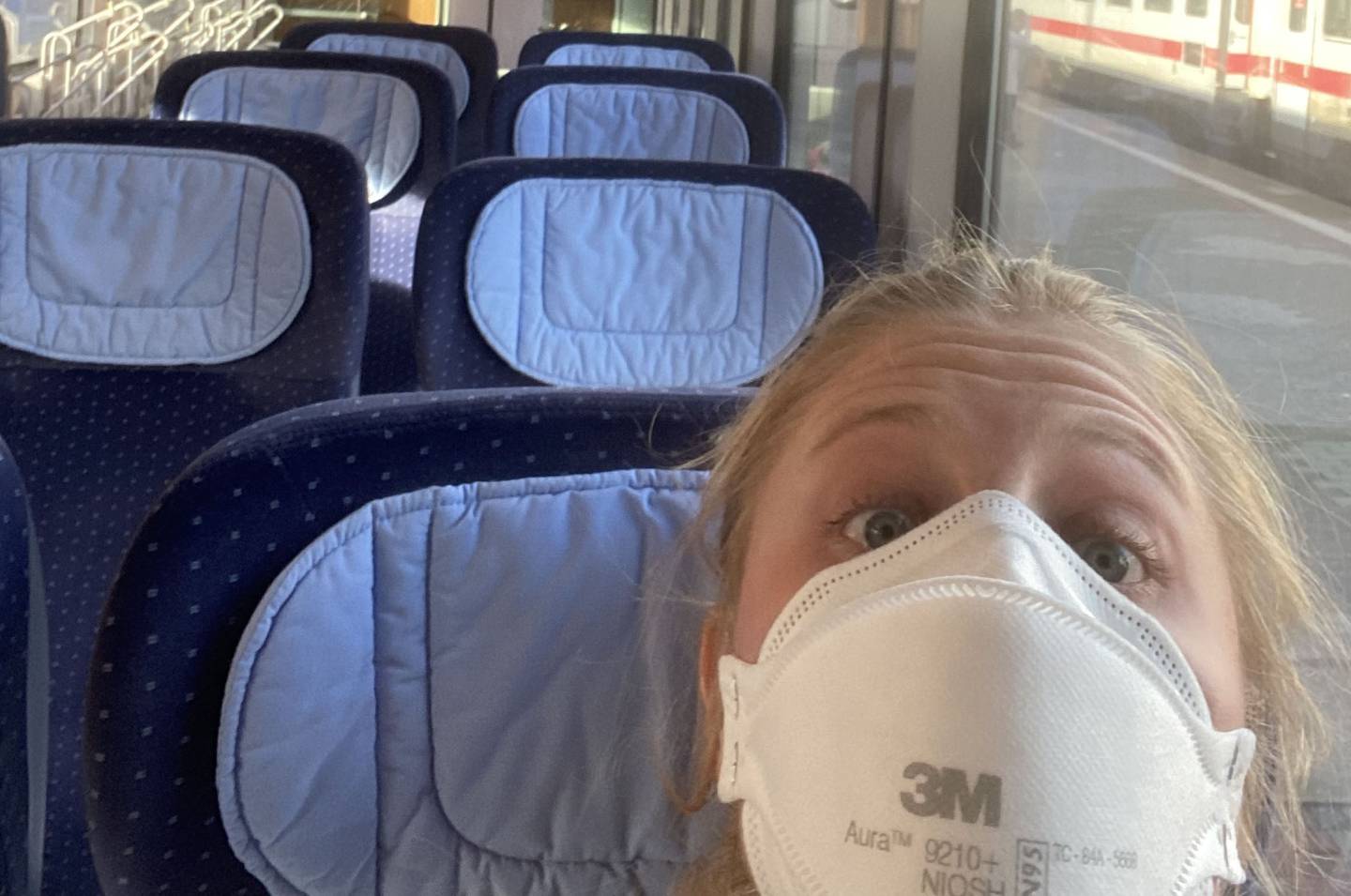
Hailey Swirbul searched out an empty train car to ride in while trying to avoid infection with the omicron variant on her way to a ski town in Austria this month. Swirbul is one of a number of Alaska athletes taking rigorous COVID-19 prevention measures to avoid derailing their hopes of competing in the Winter Olympics in Beijing. (Courtesy photo)
This article originally appeared on Wednesday January 19th, 2022 in the Anchorage Daily News. Reposted with permission.
The organizers of next month’s Winter Olympics in Beijing have imposed a rigorous regime of testing, quarantines and isolation for incoming athletes and staff.
Among the casualties is Steve Patterson’s pickleball game.
Patterson has two adult children, Scott and Caitlin, who grew up in Alaska and are both Olympic hopefuls in cross-country skiing.
They’re planning to prepare for the games from their parents’ home in Montana. Which means the whole family is being careful to avoid any contacts that could invite the coronavirus into their home — potentially derailing access to China for Scott, 29, and Caitlin, 31.
The Patterson siblings are two members of what’s currently one of America’s most COVID-conscious demographics: aspiring Olympians with plans for Beijing.
China, with its “zero COVID” policy, has draconian requirements for anyone flying into the country for the Games. They start with two negative lab tests just to get on the plane to China, followed by another immediately upon arrival at Beijing’s main airport.
A positive test would disrupt teams’ meticulously laid plans for travel and training, and even asymptomatic cases would almost certainly force athletes to miss flights and competitions for which they’ve trained for years.
As a result, Alaska athletes and others involved with the Olympics are going to great lengths to stay free of omicron as the variant spikes across the U.S. and the globe — even with training and competition schedules that include inevitable cross-country or intercontinental travel.
“This experience that I’ve dreamed of my entire life is sort of now just grounded in stress, more than anything,” said Luke Jager, a 22-year-old Anchorage cross-country skier likely to be named to the Olympic team. “I’m sure at some point, being over there, it’ll kind of set in. But right now, the challenge of not getting COVID feels just as big as the challenge of even qualifying for the Games did.”
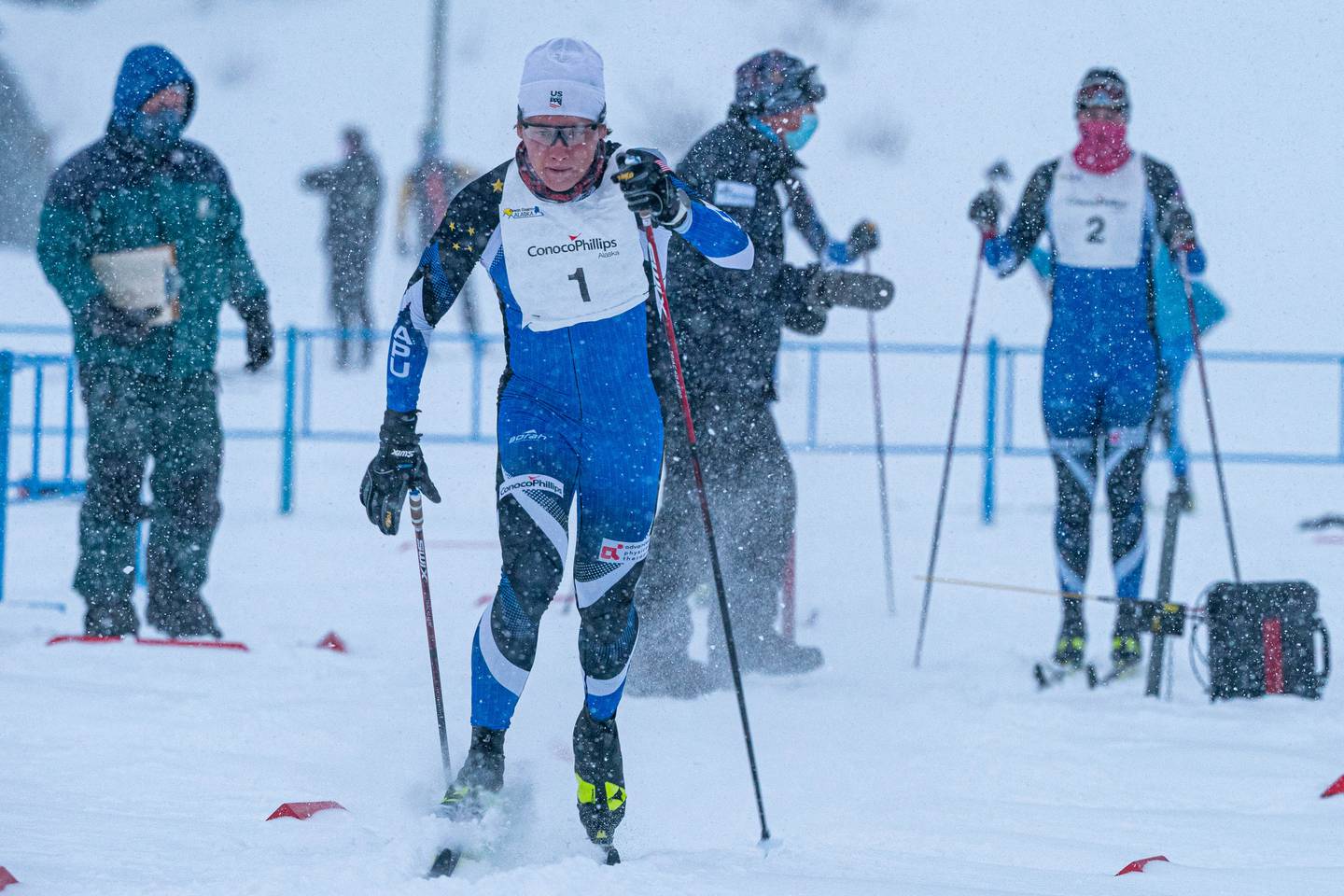
Luke Jager starts a race at Anchorage’s Kincaid Park in 2020. (Loren Holmes / ADN)
Chris Grover, the Anchorage-raised program director for the U.S. cross-country ski team, recently returned home to Idaho from the European racing circuit.
He spent his first few days with his in-laws, rather than with his family, to avoid catching the coronavirus from one of his children who’d had a potential exposure.
Meanwhile, one of the athletes that Erik Flora coaches at APU, he said, has even been wearing masks around and sleeping in a different room from their romantic partner.
“That’s the commitment that probably tops just about everything,” Flora said. “You’re messing with the human spirit at that point.”
More than a half-dozen cross-country ski racers with Alaska ties have a good chance to make the American Olympic team when it’s named Thursday — joining two curlers, a hockey player and a figure skater as some of those destined for Beijing from the 49th state.
In interviews, the skiers and coaches describe taking Olympic-level anti-omicron precautions. But each faces a unique set of risks, depending on their circumstances.
Hailey Swirbul also trains with APU in Anchorage; she planned to return from European racing to Alaska for a pre-Olympic camp, where she could spend time with her boyfriend and dog.
But after catching a cold, Swirbul, 23, decided to stay in Europe and avoid two rounds of major international travel.
After three train rides — sporting an N95 mask, with no breaks for eating or drinking onboard — Swirbul arrived in Austria for pre-Olympic training. There, she and her teammates broke into smaller groups that don’t mix indoors.
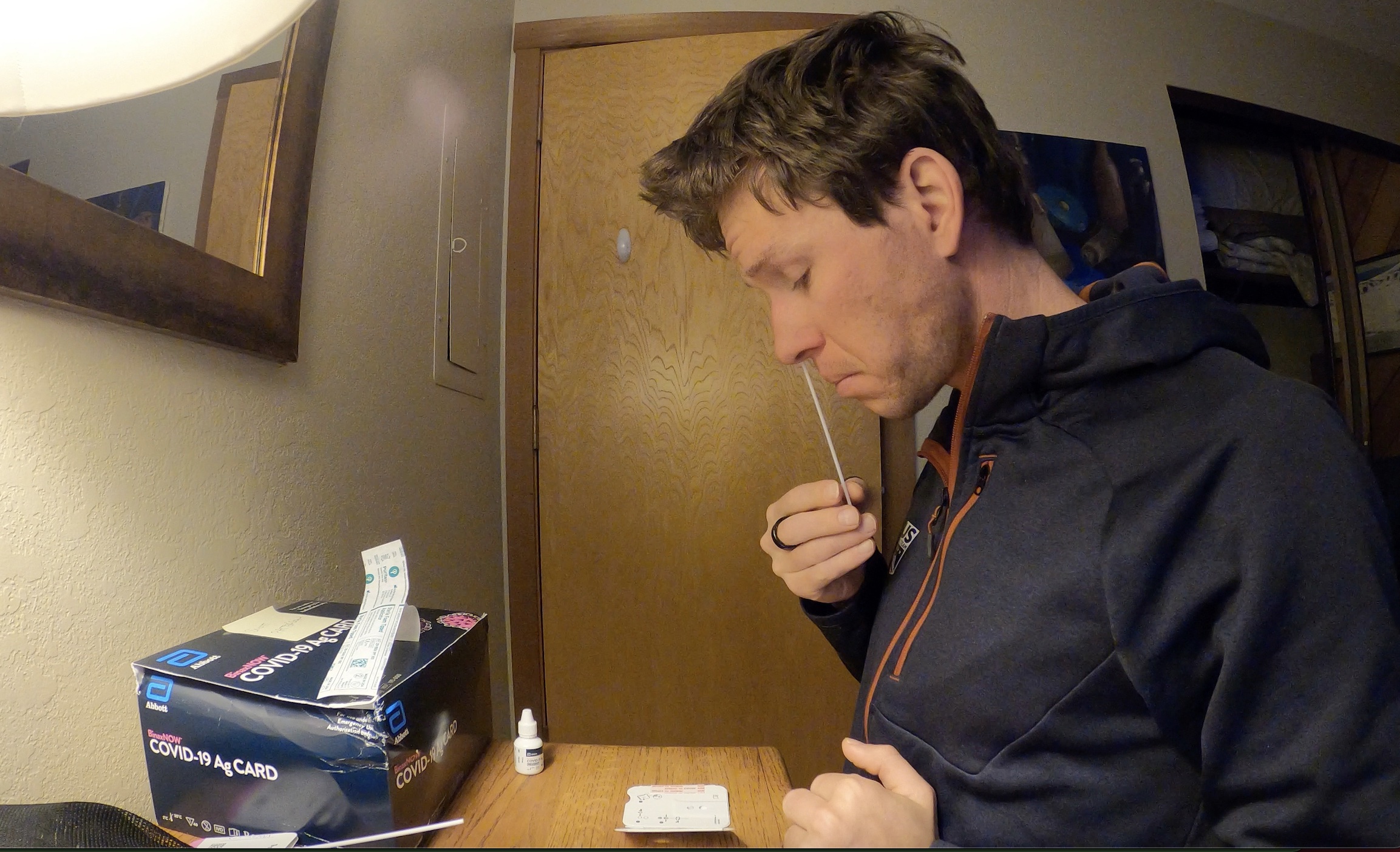
Scott Patterson self-administers a COVID-19 rapid test. (Courtesy photo)
The athletes take rapid antigen coronavirus tests every day, retrieve meals cooked by a team chef, bring them back to their living quarters and eat only after washing their hands. Swirbul got in the habit of climbing out a window to leave her apartment, rather than walking through a shared space that would require her to don an N95.
She also turned down an invitation to meet a friend, outdoors, for hot chocolate. And “definitely no grocery stores — we haven’t been in those since we’ve been here,” Swirbul said in a Zoom interview.
Jager has suffered through much more of a saga. Outside of international competitions, Jager races for the University of Utah, and he had to return from top-level European racing a few weeks ago to compete in collegiate events in the U.S.
When he arrived, the coronavirus was circulating among his team, so he couldn’t move back into his house. In a phone interview last week, he described staying in the vacant home of friends of his girlfriend’s parents before a race series in Idaho.
“They get back tomorrow night. So, we’re trying to find some other place to stay because we’re trying not to see anybody,” he said. “I’ve been nomading, pretty hard.”
Jager returns to Europe this week for a training camp in Italy with the American team, then will fly to Beijing from Switzerland.
JC Schoonmaker, another likely Olympic team member who competes for University of Alaska Anchorage, is on a similar program to Jager, except he traveled and lived with his collegiate team during races in the western U.S. this month.
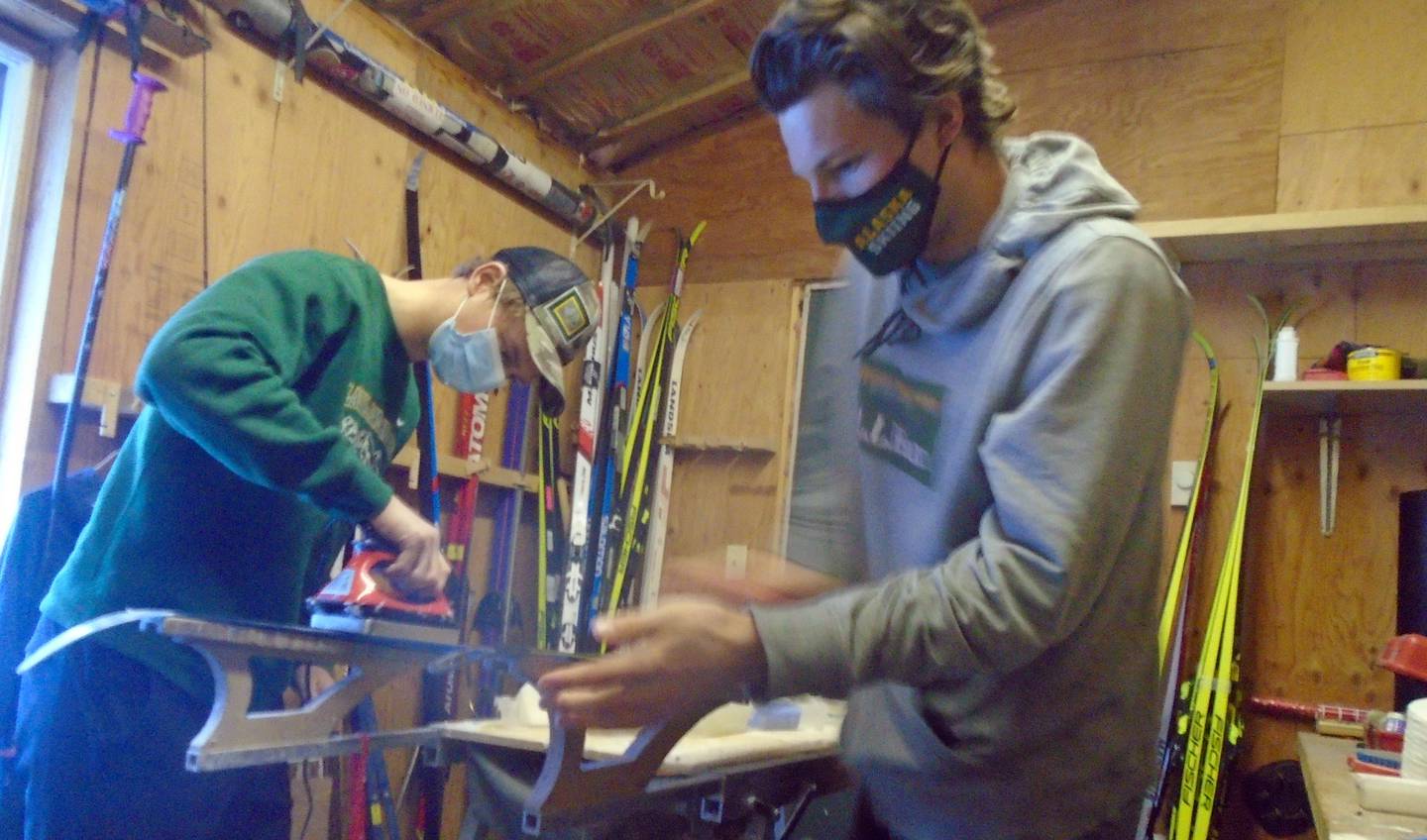
JC Schoonmaker, right, and a teammate tune skis Friday, January 14, 2022, before a weekend of racing in Idaho. Schoonmaker is one of a number of Alaskans taking rigorous COVID-19 prevention measures to avoid derailing his hopes of competing in the Winter Olympics in Beijing. (Adam Verrier)
Schoonmaker’s coach, Trond Flagstad, said the UAA coaches are doing all the shopping; they enter the athletes’ houses to drop off groceries only while wearing masks.
“It’s definitely risky, but I’m pretty confident,” Schoonmaker said. “And I really do trust my teammates — I think they’re doing a good job.”
Aside from presenting obvious logistical problems, the coronavirus has affected the skiers in subtler ways, too.
It’s forced them to keep their support networks at a social distance, whether that’s partners, family members or friends. And with coaches taking on more risks, like grocery shopping, it’s also harder for them to work closely with their athletes, or even to drive them to races in vans.
Added all up, it makes for an especially grueling, and isolating, build-up to what was one of the most pressure-filled experiences in athletics even before the pandemic.
“It really weighs on me,” said Rosie Brennan, a medal hopeful who trains with APU in Anchorage. “It’s honestly harder than preparing yourself to race.”
With the Games, and the negative tests required to enter China, approaching, each swab presents aspiring Olympians with a new reason to worry — especially with the awareness that omicron may present itself without symptoms.
“You know how it is when you’re a skier: You’ve got stuff coming out of your throat and you’re always blowing your nose and stuff,” said Jager. “You’re like at 7,000 feet, you’re like, ‘Maybe I’m a little tired today and I just blew my nose a couple extra times. Definitely could be low-level symptoms of COVID.’”
One silver lining for the Alaska ski racers, in the final days before the games begin: They’re not alone.
One of Norway’s top cross-country skiers, Heidi Weng, made tabloid headlines in that country when she said she wouldn’t be seeing her boyfriend before Beijing.
And Maja Dahlqvist, a Swedish cross-country superstar, has to stay at least 6 feet away from her boyfriend, American cross-country skier Kevin Bolger. That applies even as their teams hold separate pre-Olympic training camps on the same trails in Italy.
“I mean, of course we wish we could hold hands or hug,” Bolger said in an email. “But both knowing what is on the line, we will survive until after Beijing.”
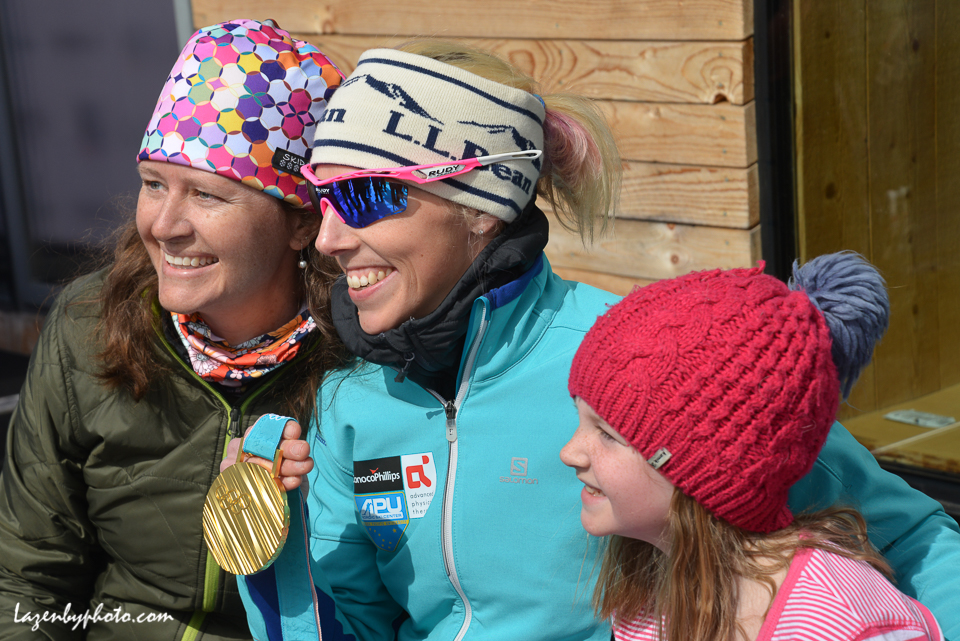
Kikkan Randall (c) with young fans and her Olympic gold medal after the 10 k freestyle mass start at 2018 SuperTour Finals in Craftsbury, Vt., this past March. (Photo: John Lazenby/Lazenbyphoto.com)
On Wednesday, Kikkan Randall went public with the news that she was recently diagnosed with breast cancer.
“Although we caught it early and the prognosis is good, my life will change quite a bit in the coming months,” she wrote on Facebook.
Randall received her first round of chemotherapy on Monday at the Providence Alaska Medical Center in Anchorage, Alaska, the city where she grew up. After winning Olympic gold in February with U.S. teammate Jessie Diggins then retiring from the U.S. Cross Country Ski Team this spring, she and her husband, Jeff Ellis, and their 2-year-old son, Breck, moved to Penticton, British Columbia. Jeff had a new job, and they hoped to expand their family there, according to the Anchorage Daily News (ADN).
As she spoke with the ADN inside her parents’ Anchorage home on Wednesday, shortly after announcing her diagnosis on social media, Randall, a 35-year-old three-time World Championships medalist, three-time Sprint World Cup champ and 13-time World Cup race winner, remained optimistic. While doctors won’t know the scope of the cancer until they operate, they believe its in an early stage, Stage 2, she said.
The ADN reported that Randall will have six rounds of chemotherapy with one infusion every three weeks. She rode her bike to the hospital on Monday wearing her rainbow-colored “happy shoes” and is hoping she can use a treadmill or stationary bike during future infusions, which take hours. She already emailed her oncologist to see if that was permissible.
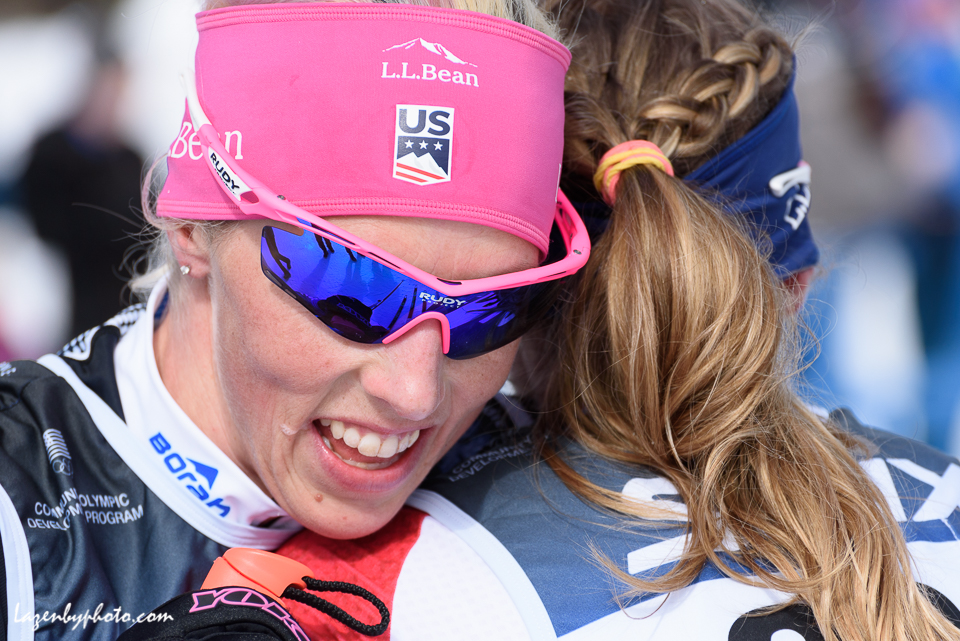
Kikkan Randall (l) and Jessie Diggins embrace after the finish of the women’s 10 k freestyle mass start on March 24 at 2018 SuperTour Finals in Craftsbury, Vt. Diggins won and Randall placed third. That was Randall’s second-to-last race before retiring from skiing. (Photo: John Lazenby/Lazenbyphoto.com)
“I haven’t heard anything back yet but if they’re open to it, I’d be willing to try it,” Randall told the ADN.
After chemo, she’ll have surgery, but Randall was unclear what that would entail. It could be anything from a lumpectomy to a double mastectomy.
In her interview with the ADN, Randall explained that she doesn’t have a family of breast cancer. Between chemo sessions, she’s hoping to return to her new home in B.C.
Since discovering two pea-sized lumps on her breast on Mother’s Day, May 13, Randall underwent a mammogram, an ultrasound and a biopsy, then received the news that she had cancer while in Sweden for a wedding less than a month later. In that time, she told the ADN she’s felt everything from “denial and disbelief and frustration, but I always come back to the same skills I’ve used in my athletic career,” she said. “I need to focus on what I can control. I need to be positive and optimistic.”
“… It’s so surreal for me because I just won a gold medal four months ago and I just was feeling on top of the world,” she said. “Life is going to kind of forever change.”
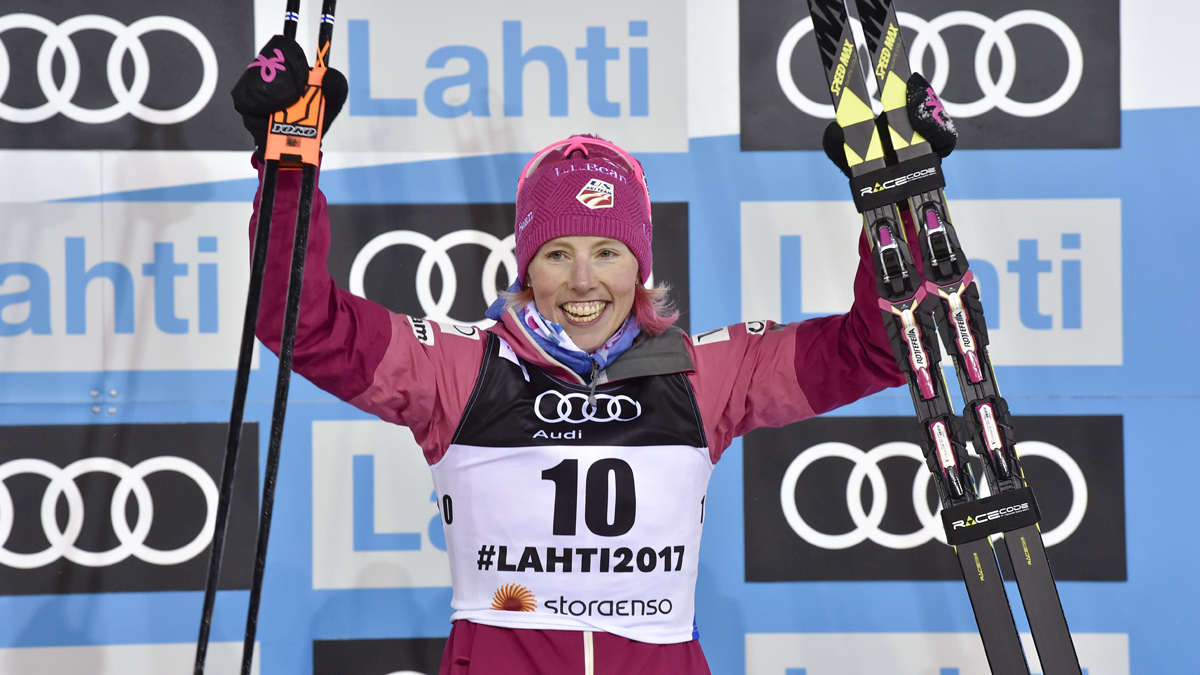
Kikkan Randall after placing third in the freestyle sprint at 2017 World Championships. (Photo: Fischer/NordicFocus)
Randall is widely recognized for her trademark pink hair, a color she wrote “has taken a on new chapter in my life” and one she plans to keep throughout treatment, even in the form of wigs. Randall has been involved in breast cancer awareness projects in the past, but previously used her pink locks to attract attention to her sport. Then pink became her good-luck charm.
Looking forward, she’s already coined a term for herself post-treatment: “Kikkan 2.0”.
“I’ll take this on like I have taken on anything else,” she told the ADN. “I think Kikkan 2.0 could be pretty awesome.”
She noted on social media that she’ll be using her blog, Kikkan.com, to provide updates during her “upcoming journey,” as she put it.
(Update: On Thursday, Randall’s friends started an online fundraiser to help with her medical costs. As of Friday, they had raised nearly $17,000 toward a $45,000 goal. For more information, visit www.gofundme.com/support-kikkan039s-fight)
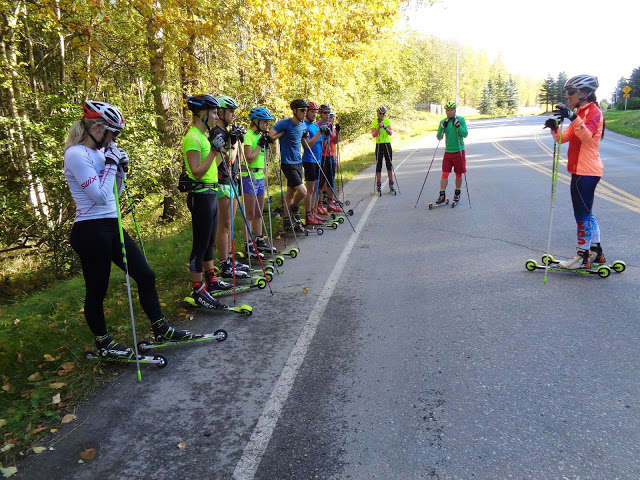
The University of Alaska Anchorage nordic team talks technique with assistant coach Sara Studebaker-Hall (r) during a rollerski session last Tuesday in Kincaid Park. (Photo: UAA Nordic.blogspot.com)
ANCHORAGE, Alaska – The University of Alaska president has recommended two options that could preserve the future of intercollegiate skiing at one or both of Alaska’s NCAA member schools – but both options may be without precedent in modern NCAA history. The final decision will be made by the Board of Regents in mid-November.
The future of college skiing in Alaska has had a bumpy ride since this spring, with alternating suggestions first that there was little cause for concern for ski-team supporters, but then that skiing at either or both of the University of Alaska Anchorage (UAA) and University of Alaska Fairbanks (UAF) was under threat. The current status is that the teams are once more in limbo, and awaiting a final decision from the Board of Regents later this year.
At a University of Alaska (UA) Board of Regents meeting in Juneau, Alaska, last Thursday, UA President Jim Johnsen presented his initial directions regarding Phase I of Strategic Pathways, the campus-wide audit aimed at reducing costs in light of reduced oil prices, a decimated state budget, and declining financial support for all aspects of the UA system.
Regarding intercollegiate athletics, President Johnsen recommended:
Pursue with NCAA: (1) waiver of ten team rule, or (2) consortium; BOR [Board of Regents] action would be required
Increase private funding support
If waiver or consortium unsuccessful, consider modifying existing programs to reduce cost and/or elimination of 1 or both programs
The decision is in some ways a non-decision, to the extent that it directs further action but does not make a final decision at this time. (The Strategic Pathways site states, “President Johnsen will appoint teams to begin the implementation workability of each of the options presented.”)
The Alaska Dispatch News, or ADN, reported that the Board of Regents reacted to Johnsen’s Thursday recommendation by expressing that it hoped to avoid any option involving the elimination of an athletic program: “But regents said they were concerned that eliminating UA’s athletic programs would trigger community backlash and create instability for current student athletes, as well as issues with recruiting. They unanimously passed a motion directing university management to develop options to allow UA to avoid eliminating athletic programs.”
The ADN also quoted Alaska Governor Bill Walker as telling the Board, “I feel pretty strongly about athletics. … It would be hard to have a university without athletics as part of it. So I’m a strong supporter of athletics.”
How feasible are these options?
President Johnsen’s team investigating the feasibility of either option may face a tough go of it: it appears that both options are without precedent in modern NCAA history.
The Strategic Pathways team charged with analyzing intercollegiate athletics already recognized as much. As it wrote earlier this year when it first discussed the option of a consortium model, “This model would require an unprecedented exception from the NCAA to allow two athletic programs who are geographically isolated from one another to compete as one program while not duplicating sports in either location.”
The athletics review team added that cons of this approach include, “May be difficult to obtain NCAA approval due to unprecedented exception.” And, “Longest timeline to implementation.”
Christian Dennie, a Texas attorney who has previously worked for Division I athletics departments and whose current practice includes representing both student-athletes and athletic departments in disputes over NCAA waivers and conference rules, mirrored the review team’s skepticism regarding this proposal.
“As far as the consortium model,” Dennie wrote to FasterSkier after hearing the facts of the UA proposal, “it does not seem feasible due to the distance unless all of the athletes were on one campus, which would be more like a consolidation.”
As FasterSkier previously explained, typical examples of schools in a consortium model are much closer to each other than the 360 road miles that separate Anchorage and Fairbanks.
The NCAA Office of Public and Media Relations did not respond to multiple requests for comment regarding whether either proposed option had any precedent.
While examples exist of schools that successfully operate in some version of a consortium model, there may be no other coeducational college or university in existence that has successfully proceeded under President Johnsen’s first option, that is, obtaining a waiver of the 10-team rule.
The reference is to section 20.10.3(a)-(b) of the NCAA Division II Bylaws, which provides that “A member of Division II shall sponsor in Division II a minimum of” either five sports for each of men and women, or four sports for men and six for women. Section 20.10.3.3.11 provides for a probationary period and restricted membership status for a school’s failure to meet minimum sports sponsorship criteria.
While section 20.10.3.3.12.1 discusses the possibility of waivers for a failure to meet the “minimum contests or participants” standards – that is, a school failed to have a sufficient number of ski meets in a year, or to enter sufficient athletes in a meet – this rule envisions “situations beyond the control of the institution (e.g., weather conditions or disaster preventing completion of a scheduled competition, or verified injury or illness at the site of competition preventing the participation of the required minimum number of individuals).”
There does not appear to be any bylaw provision that would allow either UAA or UAF to consistently and purposefully operate an athletics program with fewer than the required number of sports teams, and still maintain its NCAA Division II status.
(Regarding a potential waiver to the 10-team requirement, Dennie wrote, “I know of at least one institution that has less than 10 sports at the D2 level. Texas Woman’s University in Denton, Texas has 5 sports. I am not sure if they received a waiver or not.” But this is likely kosher under bylaw section 20.10.3(c), “single-gender programs.” That section states, “Institutions that sponsor and conduct athletics programs for only one gender must sponsor a minimum of five varsity intercollegiate sports, including at least two team sports.” That is, it may, strictly speaking, be the five-team-per-gender rule that controls this situation, not the 10-team rule.)
The ADN reported that the university system has yet to make any sort of formal request to the NCAA, but quoted President Johnsen as saying, “We have engaged expert counsel to advise us and assist us with this.”
Town hall meetings throughout the state
President Johnsen’s recommendation follows a spate of public meetings and public outreach over the last several weeks.
In early September, a town hall meeting was held in Fairbanks to discuss the Strategic Pathways recommendations, which cover multiple areas within the University of Alaska system, and not just athletics. As the Fairbanks Daily News-Miner reported, meeting attendees “were nearly united in their mission to protect UAF’s athletics programs. Largely absent from the discussion was nonathlete students.”
University of Alaska Fairbanks nordic skiers rollerskiing on campus last fall. (Photo: UAF)
Reached by email shortly after the meeting, UAF Head Nordic Coach Nick Crawford wrote to FasterSkier, “I didn’t make it to the town hall unfortunately… I’ve been pretty swamped with the first few weeks of the athletes being back in town! Anyhow a few of the athletes went and said we had good support for athletics and the ski team specifically!”
A week later, and 300 miles to the south, a similar meeting was held in Anchorage. UAA Head Nordic Coach Andrew Kastning wrote to FasterSkier soon after that meeting, “It was encouraging to hear all the supporters of athletics speak up, but it was difficult to tell if President Johnsen was swayed at all from up in his podium. I will say that the outpouring of support for college skiing in Alaska from around the world has been tremendous and we very much feel the tight-knit ski community at work. I feel this is a battle we can still win and we as a coaching staff and community of skiers are doing everything we can to that end.”
Kastning added, “Regents meet Sept. 14th to discuss the options and hopefully return to the drawing board. Final decisions reached Nov. 10-11 and announcements made shortly after.”
UAA campus newspaper The Northern Light, mirroring the tone of the News-Miner, reported of this meeting that, “Although the forum was meant to be a place for students, staff, and community members to speak about all things with phase I of Strategic Pathways, the discussion was overwhelmingly focused on the possibility of cutting UAA athletics.”
The Northern Light quoted UAA student-body president Sam Erickson as saying, “I am most concerned with the preponderance of public backlash that has resulted from the athletics suggested cuts. I recognize it’s a highly visible program and that’s why those cuts are going to garner outrage. I’m concerned that that’s drowning other news, just as significant. Things that would significantly change the educational future for all students.”
Lobbying efforts and Winter Olympians
As UAF’s Crawford recently wrote to FasterSkier, “We’ve reached out to our supporters in Fairbanks and around the world in support of skiing both at UAA and UAF and have gotten a very positive response. There was a community forum with UA President [Jim Johnsen] recently and our UAF Skiing supporters had a strong presence in support of Nanook skiing and apparently the online commenting option has gotten some very good responses as well. It’s not too late to write in with your support so we would encourage anyone who hasn’t done so yet to do so!”
Meanwhile, in Anchorage, lobbying efforts were more ambitious. Earlier this month, the Nordic Skiing Association of Anchorage sent an email to all of its members, subject line: “Help Save Collegiate Skiing in Alaska.” The email, signed “The UAA Ski Team,” wrote, “Our program is facing a potential elimination from the University of Alaska-Anchorage Athletics Department. We are fighting for our kids and the future of our team.”
The ski team listed a number of potential talking points that supporters could use, and encouraged them to submit comments to the Strategic Pathways review team. “Bottom line,” the email concluded, “we desperately need your help.”
University of Alaska Anchorage Seawolves logo (GoSeawolves.com)
UAA Head Skiing Coach Sparky Anderson shared a similar message on his public Facebook page, writing to supporters, “Many of my friends are former athletes who I’ve had the privilege to work with from over a decade of coaching at UAA. You are all shining examples of what the ski team does for the state of Alaska. The UAA ski team attracts top minds such as yourself who graduate, excel, enrich Alaska’s community, work and provide employment for other Alaskans.”
Anderson added, “Now, we need your help. Please use and share this Strategic Pathways feedback link to comment about the UAA Ski Team’s mission of fostering a culture of education at UA. It’s imperative that UA President Jim Johnsen understands that our shoulders are up against the same wheel. With your help, I look forward to many more years working with outstanding individuals here at the UAA ski team.”
Finally, UAA brought out a bevy of boldface names in support of its cause. Last week, Holly Brooks, a two-time Winter Olympian recently retired from competitive skiing with Alaska Pacific University (APU) and the U.S. Ski Team, delivered a letter to the UA President, Board of Regents, and Athletic Directors. The full letter makes the case for the benefits of skiing in general, and its suitability to Alaska in particular.
Brooks wrote, “Nordic and alpine skiing are wildly popular recreational sports in Anchorage and the collegiate teams serve as examples or ‘pedestals’ of what many Anchorage citizens aspire to in their own athletics. Anchorage hosts the largest high school ski race in the entire country, the Lynx Loppet. Many youth in Anchorage including the Junior Nordic Program and the ASD high school programs look forward to seeing UAA skiers zip by them on the trails, serving as a ‘real-life’ example of fitness and/or technique. What other sports can recreational or developing athletes literally jump in behind collegiate athletes and hang on for the ride?”
In a follow-up email to FasterSkier, Brooks added, in reference to options for cross-country skiing in the Anchorage area, “choices are healthy and competition is healthy. We need UAA, APU, WinterStars, ANR.”
(The acronyms are references to the collegiate program at the University of Alaska Anchorage, the elite and community program at Alaska Pacific University Nordic Ski Center, the community program at Alaska Winter Stars, and the community program at Alaska Nordic Racing, respectively.)
The letter was co-signed by a dozen other Winter Olympians with strong local ties to Anchorage and/or UAA, including cross-country skiers Erik Bjornsen, Sadie Bjornsen, Lars Flora, Kikkan Randall, James Southam, and Adam Verrier; biathletes Rachel Steer and Sara Studebaker-Hall; Alpine skiers Anna Berecz, Megan Gerety, and Tommy Moe; and freestyle skier Alex Wilson. At least eight of the signers had attended, coached at, and/or skied for UAA. Between them, the signers boasted 24 Olympics appearances, two Olympic medals, and two FIS World Championships medals.
The dollar amounts involved
In 2015, the athletics program at UAA and UAF cost a combined $16 million for a total of 23 varsity sports teams. The ADN explained that $3 million of this came from “private sources, including ticket sales.” The remaining $13 million came from the UA general fund.
The ADN has suggested that the UAA ski team has a budget of “about $500,000.” But this number may be too high, or at least may somehow overstate the cost savings that would result from potentially cutting the team: FasterSkier previously quoted internal documents generated by the UA athletics review team as saying that suspending or eliminating the UAA ski team “would produce an immediate net savings of $272,981.00 based on FY 16 figures.”
But Anderson, the head ski team coach, confirms the higher figure, recently telling Anchorage radio station KSKA that the budget for the entire UAA ski team is “just north of $500,000.” That covers the men’s and women’s alpine and nordic programs, and includes what Anderson said is a total of 12 scholarships for a combined 23 athletes. (UAF has only a nordic program. In 2015/2016, the most recent year for which information is available, it had seven women and 11 men on its nordic team.)
Kastning, UAA’s nordic coach, said in the same radio program that he would far rather cut program costs by, for example, 10 or 20 percent than lose the entire ski program. He mentioned some money-saving steps that the nordic team has already taken for the 2016/2017 season, such as reducing the size of the travel team and eating out less while on the road.
Kastning also said that all schools in the Rocky Mountain Intercollegiate Ski Association (RMISA) will be instituting a ban on pure fluoro waxes for all races save championship meets, a move made as much for health reasons as for economics.
Finally, in a poignant nod to his personal history of job loss and displacement, Kastning noted that he left (former RMISA program) University of Nevada, Reno, shortly before it cut its nordic program, and he and his wife went to (former RMISA program) Whitman College, where she was coaching skiing, only to see Whitman cut its nordic program, also. Kastning said they thought they would be safe moving to a ski program in Alaska.
Reactions and next steps
Crawford, the UAF coach, wrote to FasterSkier last Friday following President Johnsen’s statement, “Seeking permission from the NCAA to form a consortium between athletics at UAA and UAF or pursuing an exemption to the 10 sport minimum rule seems to be bad for collegiate skiing at first glance. The 10 sport minimum rule is in place to promote smaller sports like skiing and cross-country so that collegiate athletic departments around the country sponsor more sports than just the big TV sports like football, basketball and to some extent hockey. I’m worried that if the NCAA accepts either the consortium or 10 sport minimum it will create a legal precedence that would be bad news for many of the non revenue generating sports across the country.”
Crawford added, “I was relieved to see that the UA Board of Regents is strongly in support of ‘preventing the elimination of intercollegiate athletics’ as shown by their 10-0-0 vote in favor of [a related motion on this issue]. This gives me confidence that skiing and cross country running will remain at UAF as they are very cost effective for the university and are strongly supported by our local community.”
Kastning did not respond to an email asking for a response to President Johnsen’s recommendation.
UAA Athletic Director Keith Hackett told the ADN last Thursday that he wasn’t yet ready to comment on the recent discussion at the Board of Regents meeting.
Final decisions are expected to be made at the UA Board of Regents meeting on Nov. 10-11. UAA and UAF begin their ski seasons with an informal dual meet at Birch Hill in Fairbanks the following weekend. The ADN recently reported that the UAA hockey team, which faces the same concerns about its future as all UAA sports teams, is still scouting potential recruits for the 2017/2018 season, but is not currently extending scholarship offers.
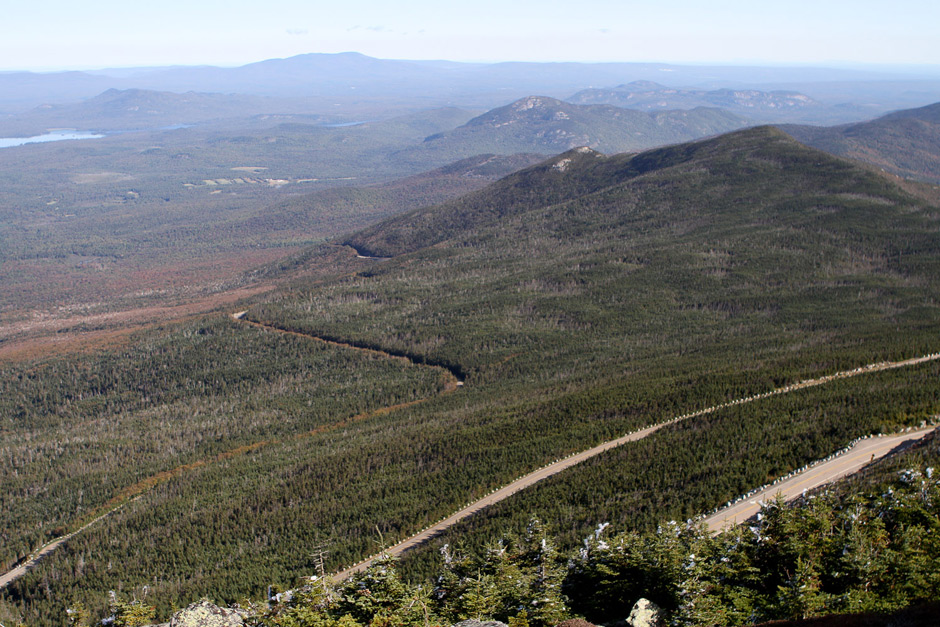
The Whiteface Mountain Veterans Memorial Highway, where NYSEF’s Climb to the Castle has been held for the past seven years in Wilmington, N.Y., as seen in 2011. The toll road is undergoing construction this summer and fall.
There’s a race each year scheduled in line with the end of the U.S. Ski Team’s fall camp in Lake Placid, N.Y. You might have heard of it: the Climb to the Castle. Hosted by the New York Ski Education Foundation (NYSEF), the freestyle rollerski race starts at the entrance to a paved toll road, the Whiteface Mountain Veterans Memorial Highway, and stretches five miles up with an average 8-percent grade. The finish is marked by the castle at the top of New York’s fifth-highest peak at 4,867 feet above sea level.
Try to rollerski up there now, however, and you’ll likely run into some heavy machinery.
Construction has already begun on the eight-mile highway as part of a larger project to completely resurface the road over the next several months. The Adirondack Daily News reported Thursday that the upper, toll portion of the road — where the Climb to the Castle (C2C) takes place — will be closed weekdays during May, June and September, but open on weekends. It will be open on weekends and two holiday Mondays during these months: Memorial Day, May 26, and Labor Day, Sept. 1. Throughout July and August, the road is scheduled to be open during daytime hours, with work taking place at night.
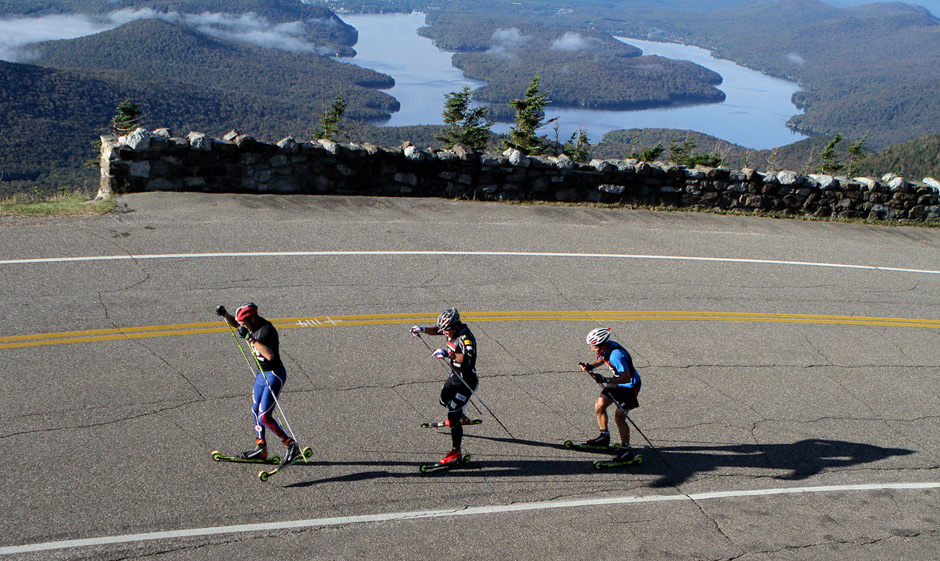
US Biathlon’s Tim Burke (l), and U.S. Ski Team members Kris Freeman (c) and Noah Hoffman (r) lead the 2011 Climb to the Castle race in Wilmington, N.Y.
According to Chris Grover, the U.S. Ski Team will hold its Lake Placid training camp from Aug. 25-Sept. 8. So while there’s a chance construction could impact it, there’s a better chance the toll road will be open on Saturday, Sept. 6, when NYSEF scheduled the race.
Margaret Maher, NYSEF’s head nordic coach and C2C organizer, wrote in an email to FasterSkier last week that they were “trying to figure out how the road work will influence the race. Hoping we can still have C2C!”
In all, the highway is expected to be closed 54 days from this week until the end of the season, and open 88 days over the same period, according to the Enterprise.
While the toll road has been patched periodically since it was opened in the 1930s, it has never been completely resurfaced. Whether rollerskiing, cycling, or running to the summit, it’s riven with frost heaves and cracked pavement. Regardless of what state the road is in this year, its sure to be a superior surface for rollerskiing next summer.
Rifenburg Construction, based out of Albany, N.Y., will resurface the entire eight-mile length of the road, from the four-way intersection in the center of Wilmington to the summit. They’ll also rehabilitate rock walls and make repairs to the castle.
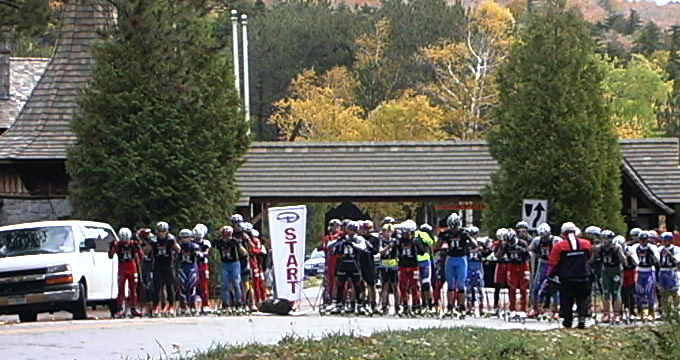
The men’s start of the 2009 Climb to the Castle.
Rifenburg earned the project with a $11.2-million bid, and the company expects to complete the work by the end of 2015.
Project manager Russell Huta said that the goal is to have a base layer of new pavement from the tollgate to the castle by the end of this fall. In 2015, the toll section will be finished, and all work on the section from Wilmington town center to the tollgate will be completed.
“Each project has its own set of unique challenges,” Huta told FasterSkier, when asked about the difficulty of working in the narrow confines of the toll road. When road work is in motion, the toll road will be closed to traffic.
In September, Huta said, his company will have “full access” to the toll road Monday through Friday – except for Labor Day. “By the end of the day Friday, there will be a paved surface for [use by] cars, buses, pedestrian traffic” until Monday morning. “On Monday morning, it’s ours again.”
If for some reason, the C2C isn’t possible this year, Grover wrote in an email that it won’t be the end-all of camp.
“We typically run a sprint or team sprint time trial along with the Climb to the Castle,” he explained. “If the Climb is not ready this season, we will employ other alternatives.”
Before the C2C, a time trial was previously held up Gillespie Drive, now a warmup for athletes. The event is entering its eighth year. USST veteran Liz Stephen won the women’s race the last three years, setting a new course record last year in 42 minutes and 4 seconds. US Biathlon’s Tim Burke won the 2013 men’s race in 37:13.