Tag: aerobic capacity

  • Speed Creates the Load, Not Intensity

    Speed Creates the Load, Not Intensity

    This article was made possible through the generous support of our voluntary subscribers. If you value coverage like this, please support FasterSkier with a voluntary subscription.

    I originally wrote the following article in 2004. Twenty-two years later, I believe it remains just as relevant. To me it illustrates that while we tend to assume training has changed a great deal, in many ways it has stayed much the same. I have rewritten it here to improve clarity without changing the content.
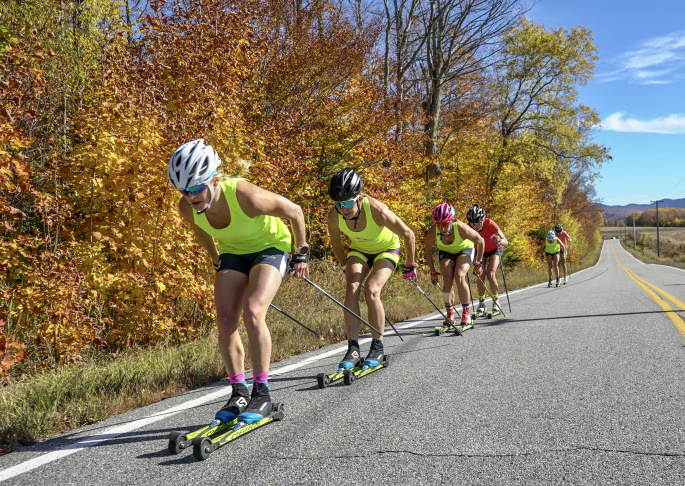
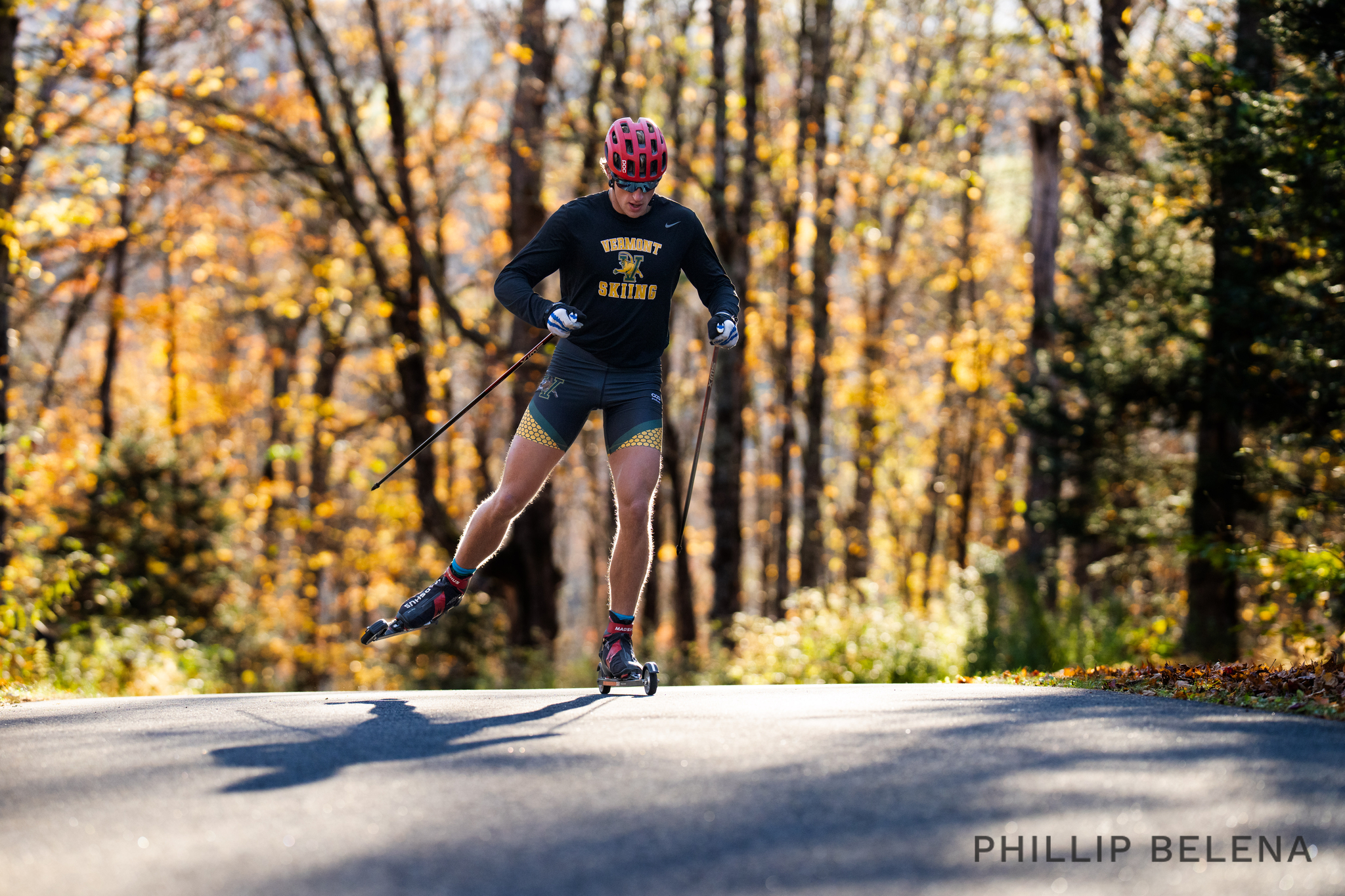
    UVM’s Fin Bailey drives up a climb on the Craftsbury Outdoor Center track last fall, generating speed through clean extension rather than grinding against the grade. (Photo: Phillip Belena)

    The development of basic speed, neuromuscular power, and speed endurance is critical for high-level cross-country skiing performance. I would also argue that, once an athlete reaches a certain level of aerobic development, future improvements in aerobic capacity may become limited if the athlete cannot produce enough power to generate a sufficient training stimulus.

    This article presents a concept that has influenced my coaching for many years: before continually increasing the external loads, volume, and intensity of training, athletes must first develop the ability to produce greater speed and power.

    Training loads can be increased in two ways. The first is externally, by making the terrain more difficult or increasing resistance. The second is internally, by improving neuromuscular function so the athlete is capable of producing more power and therefore greater speed.

    My experience has been that increasing external loads without first improving power production often yields little improvement in performance and, in some cases, little measurable gain in aerobic development. Athletes simply work harder while producing little additional external work.

    We have all seen unfit or less-developed athletes walk up a steep hill while reaching near maximal heart rates. We have observed this repeatedly in junior skiers. Simply walking, skiing, or running uphill slowly can produce extremely high heart rates. Does this indicate inadequate aerobic capacity or inadequate power production? The answer is usually a combination of both.

    However, in athletes whose performances have plateaued despite years of increasing training volume and intensity, this question deserves closer examination. Many continue to produce high heart rates while moving slowly. In these athletes, the limiting factor may not be the cardiovascular system itself, but rather an inability to produce enough power to create a greater demand on the aerobic capacity.

    For this reason, I believe that early in an athlete’s development, and often early in each training year, speed, movement quality, efficiency, and neuromuscular power should receive significant emphasis. These qualities should not replace aerobic training, but they should develop alongside it. Improving an athlete’s ability to produce power increases the speed at which aerobic training can be performed and therefore increases the potential aerobic training stimulus.

    Our observations over many years have consistently shown that athletes lacking sufficient power gradually slow during uphill skiing, running, or bounding intervals while heart rate continues to rise. The internal effort increases even as external work declines.

    We have also observed athletes become overtrained despite carefully planned training programs. In many cases the common factors were excessive metabolic cost of endurance training, elevated lactate concentrations at relatively modest speeds, deteriorating movement quality, and inefficient power production.

    Again, I believe the underlying issue is often inadequate neuromuscular function.

    When athletes cannot produce power efficiently, every uphill carries a large metabolic cost. Heart rate and blood lactate increase rapidly even though speed remains relatively low. The athlete experiences considerable physiological stress without generating the external workload necessary to increase adaptation.

    For one summer training period we emphasized extensive speed and neuromuscular training. Several athletes improved their maximal treadmill workload by as much as seven percent during a graded treadmill protocol. At the same time, blood lactate concentrations were lower at each workload stage.
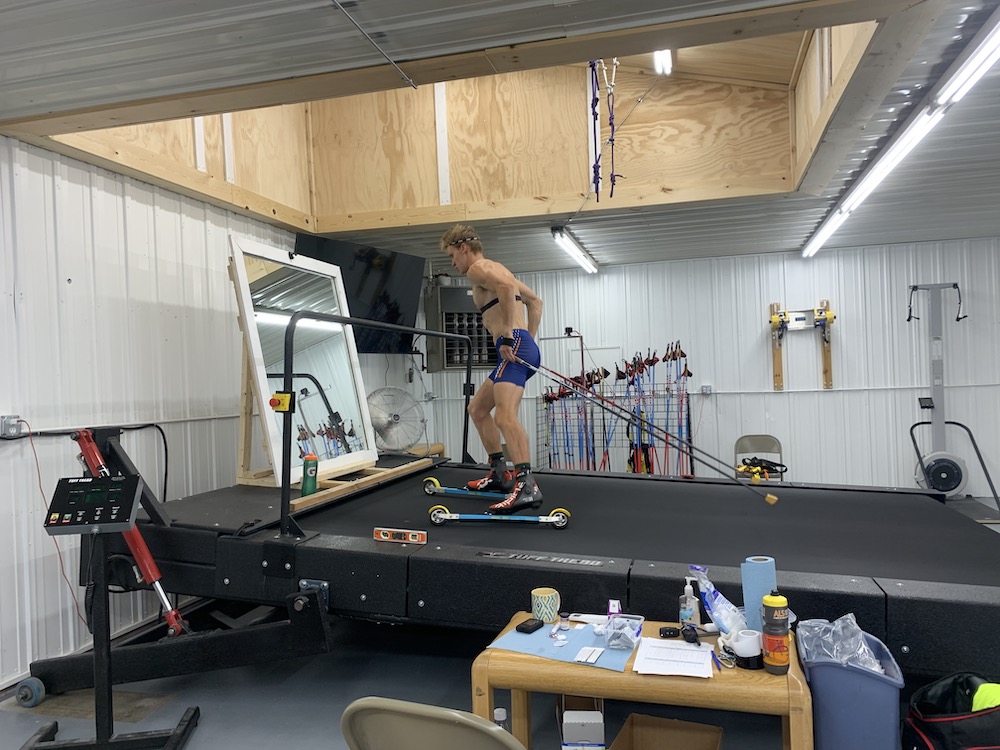
    Zak Ketterson doing work on the rollerski treadmill. (photo: courtesy Team Birkie)

    These findings do not prove that VO2max increased. However, they strongly suggest improvements in movement economy, neuromuscular power, and the athlete’s ability to express aerobic capacity. The athletes could sustain greater workloads at the same relative physiological cost.

    Although the sample size was too small to draw firm scientific conclusions, the observations were both encouraging and consistent with our coaching experience.

    One useful coaching tool has been estimating the oxygen demand of uphill terrain using the Balke or ACSM treadmill equations. While these equations were developed for walking and running, not roller skiing or ski-specific movements, they provide a reasonable estimate of the external workload required to climb terrain of a given grade and speed.

    Using these estimates, I evaluated athletes on both a maximal 500-meter uphill test and a 3,000-meter uphill test conducted on the same hill. Our top male skiers consistently sustained estimated oxygen demands of approximately 70 to 72 ml·kg⁻¹·min⁻¹ during the 3,000-meter effort. During the 500-meter test, estimated oxygen demands ranged from approximately 83 to over 90 ml·kg⁻¹·min⁻¹. These values represent estimated metabolic demand rather than directly measured oxygen consumption.

    The athletes who consistently produced the highest estimated workload during the 500-meter test were also our best performers. The shorter test reflected the athlete’s ability to produce high neuromuscular power. The longer test reflected how much of that capacity could be sustained aerobically.

    During summer testing, the best athletes generally sustained only about 80 to 85 percent of their maximal estimated workload during the longer effort, leaving room for further improvement as fitness and skiing specificity increased during the competitive season.

    Several practical conclusions emerged from these observations.
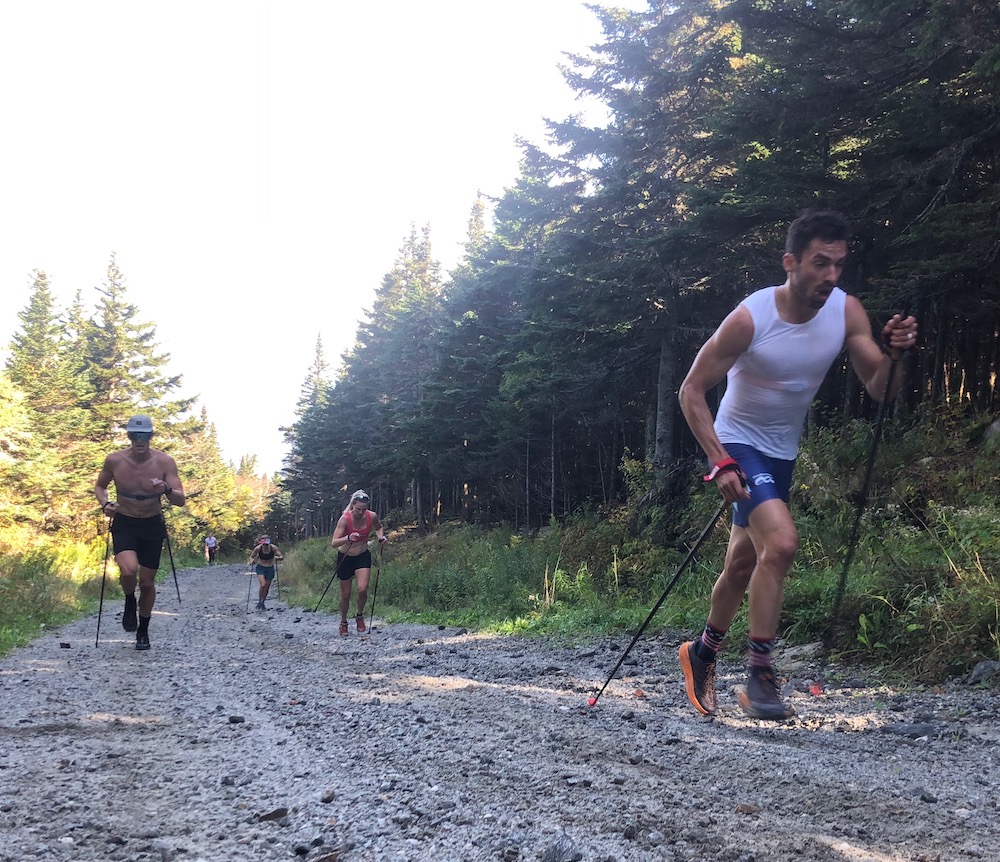
    Ian Torchia, far right, leads bounding intervals up Stratton Mountain in summer 2021. Ski bounding remains one of the most direct ways to build the neuromuscular power Galanes describes, with the athlete loading and driving off each step. (photo: courtesy SMS)

    Maximal power production establishes the athlete’s aerobic potential.

    The estimated workload achieved during the 500-meter test reflects the athlete’s ability to produce power. If this value is too low, it becomes increasingly difficult to create a training stimulus large enough to maximize aerobic development, because the athlete cannot sustain sufficient speed.

    Small differences between maximal and sustainable power may indicate a different limitation.

    If the athlete’s maximal 500-meter workload is only slightly greater than the workload sustained over longer efforts, further improvements in aerobic capacity may be limited until maximal power production improves.

    Lower-level athletes often need speed before more intensity or volume.

    Many developing athletes have maximal power values only five to ten percent higher than their longer uphill performances. These athletes often benefit more from improving neuromuscular function, movement quality, and speed than from simply adding more difficult interval training.

    Hard uphill intervals are not always the answer.

    If athletes lack sufficient power to increase speed, making the terrain steeper or simply asking them to work harder often produces more fatigue than adaptation. Increasing the load without increasing movement quality seldom solves the underlying problem.

    Sustainable aerobic power is not enough.

    Athletes capable of sustaining a very high percentage of their aerobic capacity but possessing relatively low maximal power often plateau. They may already be performing close to their physiological ceiling and will likely require improvements in neuromuscular power before further performance gains occur.
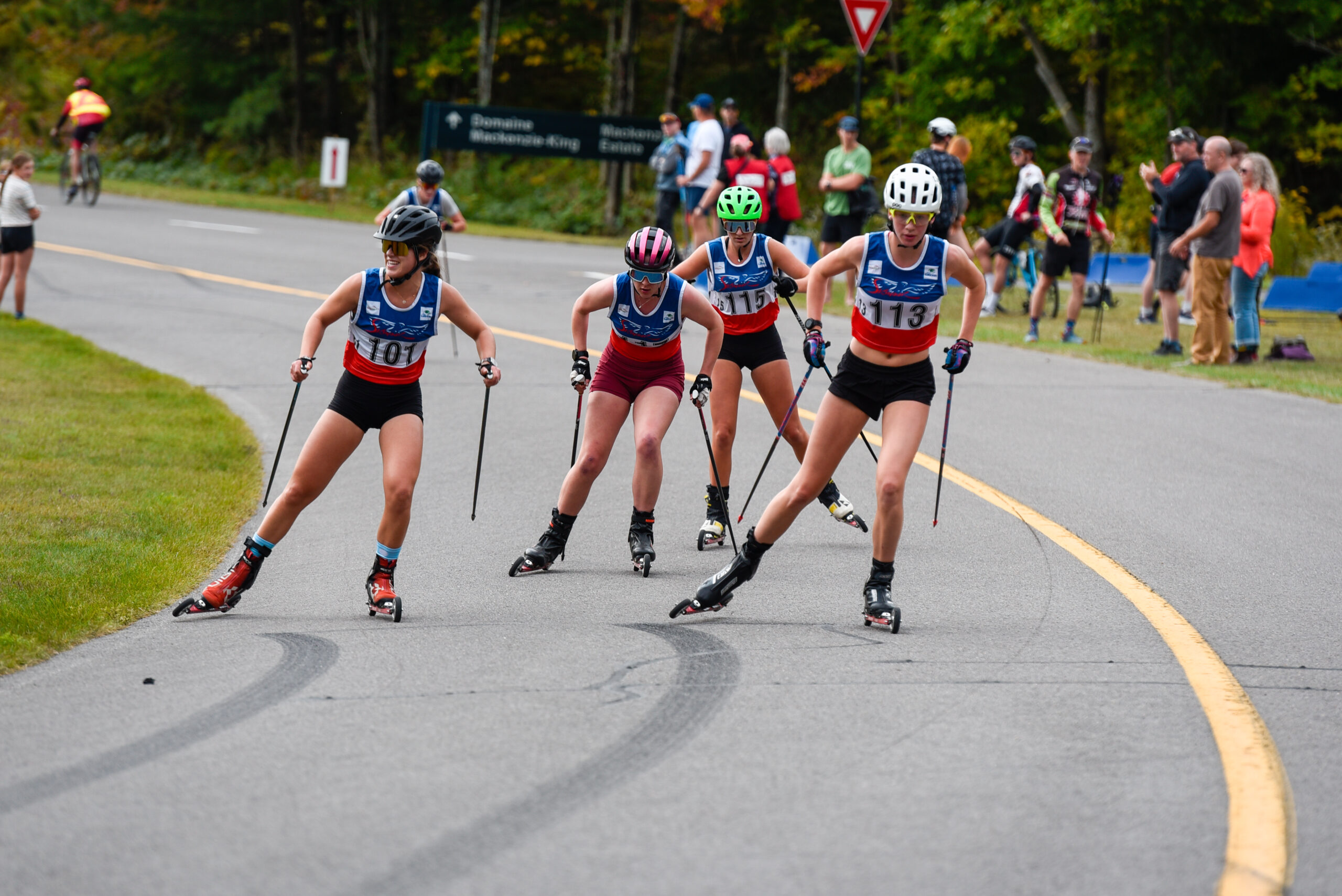
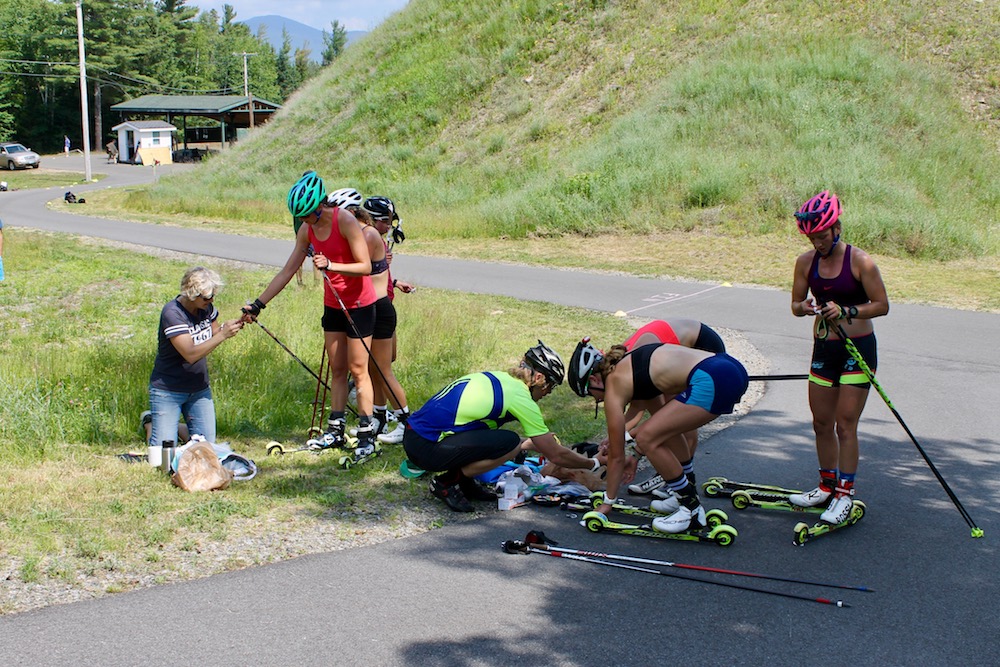
    Youth skiers during a Skinouk Roller Ski Race. Galanes argues these athletes often gain more from speed and movement quality than from steeper terrain or harder intervals.

    Speed should create the load.

    Uphill training remains essential in cross-country skiing. However, I believe the primary driver of training should be generated through efficient movement rather than terrain alone.

    Whether athletes are performing distance training or intervals, movement should remain clean, crisp, coordinated, and quick. If technique deteriorates and speed slows simply because the terrain is harder, the athlete is no longer training optimal movement. They are merely increasing physiological stress.

    Ultimately, endurance performance depends upon the interaction between physiology and movement. The aerobic system can only respond to the workload the neuromuscular system is capable of producing.

    For that reason, coaches should devote as much attention to developing speed, power, and movement quality as they do to increasing training volume and intensity. In the long term, improving an athlete’s ability to generate external workload may be one of the most effective ways to unlock further aerobic development and higher performance.


    Help Support Our Coverage!

    If you value the thoughtful work and access FasterSkier provides, please consider becoming a Voluntary Subscriber. Your support directly fuels our work to cover the people, places, and moments that make our sport special.

    Join the FasterSkier community!
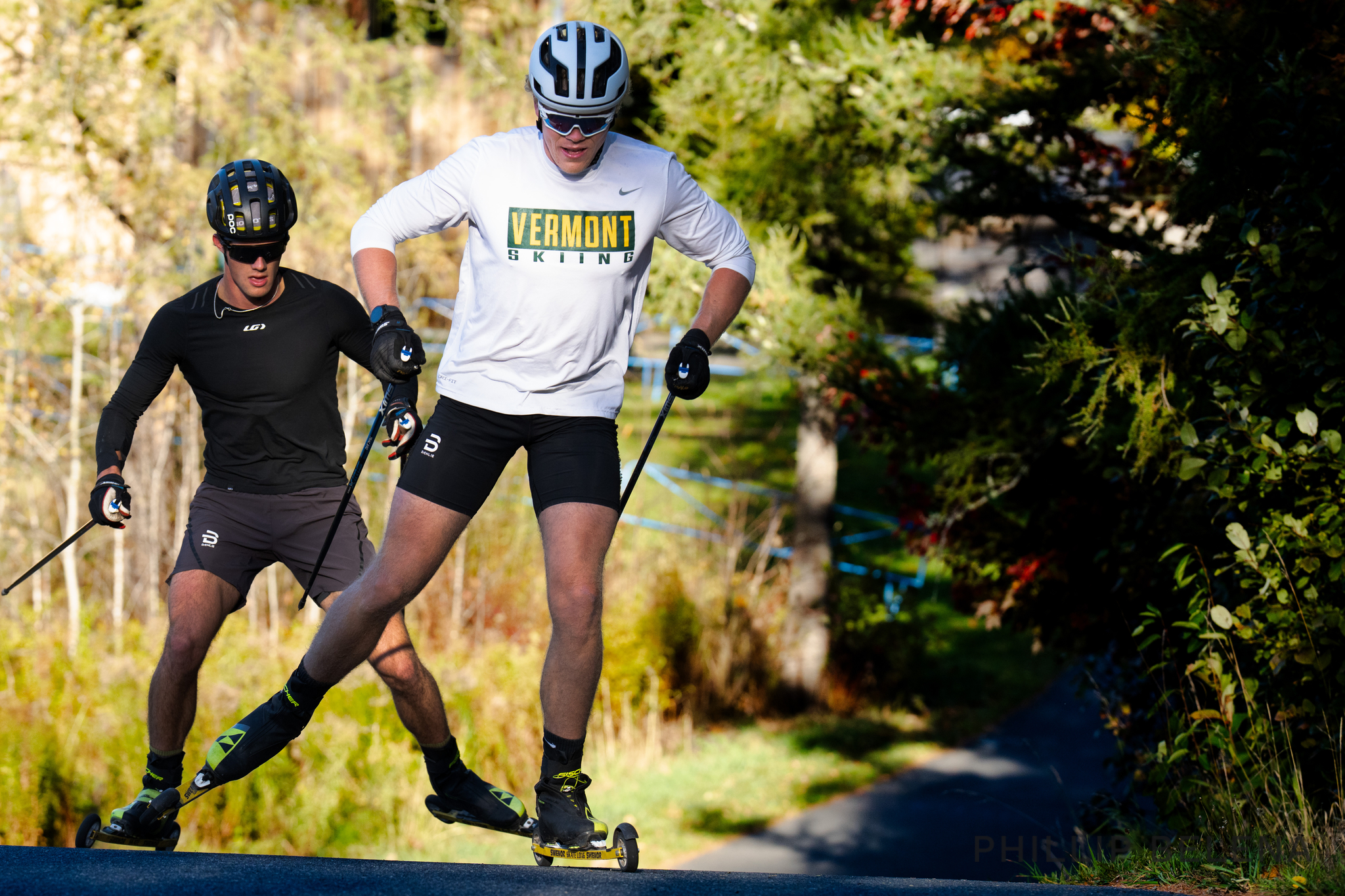
     

    UVM’s Benon Brattebo rollerskiing on the Craftsbury Outdoor Center track last fall. Galanes argues that speed and neuromuscular power, not just harder terrain, should create the training load. (Photo: Phillip Belena)
  • DIY Fitness Testing: The How and Why with Pepa Miloucheva

    DIY Fitness Testing: The How and Why with Pepa Miloucheva

    The SMST2 squad led by Jessie Diggins pushes the pace in a double pole interval workout during a fall 2019 training camp in Lake Placid, NY. (Photo: Matt Whitcomb / smseliteteam.wordpress.com)

    It’s May. Yes, really. 

    For most skiers, the new page on the calendar also marks the beginning of a new training year. Dust off your rollerskis, locate your heart rate strap and drink belt, and make sure your running shoes have plenty of life in them.

    With the country still predominantly on public health orders to stay close to home, avoid groups, and keep at least six feet of distance from those outside your home, kicking off a new cycle is happening without hugging our training partners, post-workout high fives, or otherwise gathering to ring in the new season. There also remains abundant uncertainty regarding the feasibility of racing during the upcoming season from the World Cup level to the junior and collegiate circuits to popular skiing. Nonetheless, we open our training logs and carry on. 

    Last season ended abruptly and the off season may have looked different than anticipated. We may have put our energy into homeschooling children, sourdough baking, binge-watching Tiger King, connecting virtually with our family and friends, or otherwise remaining largely homebound and less active than we’re accustomed. On the flip side, maybe the change in schedule has freed up additional time for long adventures and you’ve logged more hours in April than ever before. 

    Either way, at the onset of a season, you may be interested in checking in on your fitness and strength, looking for metrics to track improvement over time and to guide your pacing or heart rate zones during future workouts. FasterSkier reached out to Pepa Miloucheva, head coach of the Craftsbury Green Racing Project, to discuss fitness testing that could be done without the support of a facility or coach, making it accessible to any level skier as they begin the new year. 

    Miloucheva provided the disclaimer that she relies on advanced metabolic testing with her athletes to determine VO2 Max and lactate threshold levels to assess fitness and heart rate zones, and then prescribes training based on this information. With that caveat, Miloucheva holds a masters degree in Sport Science with a focus on physiology and biomechanics and has been coaching for over 20 years, over a dozen of which have been spent with the CGRP elite program. 

    Caitlin Patterson (far left) leads CGRP teammates running with poles. (Courtesy Photo)

    Before jumping into assessing fitness and blowing up trying to hit a new PR on the SkiErg, Miloucheva emphasized that the most important thing an athlete can do at the beginning of a new cycle is to have a training plan and to understand how the periodization targets different areas of athletic development. This might be a plan from a coach or one found online. 

    “If someone really wants to establish a baseline and monitor, then they have to have a training plan,” said Miloucheva in a call. “I think everything else is kind of pointless, because all of these tests won’t give you anything if you don’t know what you’re looking for. In general, everything starts with first having a good training plan.”

    Once a clear plan is established and you have taken time to understand it, then decide which part of the training process you would like to test. 

    “If you have 2-3 months of high volume, you want to test your basic aerobic improvement. You do the test, you see if you’ve actually improved. When you start doing a little bit more speed, you want to see if you’ve improved your speed. So you really have to schedule these tests based on your training plan.”

    As the typical periodization of the year for skiers focuses on aerobic development during the spring and summer, a good starting place could be an uphill run test, possibly combined with a rollerski or SkiErg time trial, if those are available to you.

    Traditionally, a 3000 meter run on the track was commonly used as an aerobic benchmark, but the results can be skewed based on individual running economy. Athletes with more running experience and better form often fare better than those with comparable or potentially better fitness. As such, most ski programs have transitioned toward an uphill run test, as it tends to level the playing field in terms of the impact of running efficiency on results.

    In addition to being a good indicator of aerobic capacity, Miloucheva explained that the test has the added benefit of being easily repeatable with relatively few outside variables that might impact performance.

    “The uphill running test is probably the most standard around the world. Simply, it’s easier to repeat. It’s a little bit less affected by the weather, but there are still a lot of elements and it is hard to keep it consistent.”

    Craftsbury Green Racing Project Head Coach Pepa Miloucheva (l) and Stratton Mountain School T2 Team Head Coach Pat O’Brien (center) assist athletes with lactate testing after the U.S. Ski Team’s rollerski team sprint on July 15, 2018 in Lake Placid, N.Y.

    If you’re looking to track your own progress on an uphill course, Miloucheva recommends finding a stretch of road or trail with little traffic that takes roughly 10-12 minutes. The effort should be steady throughout the test and you should finish feeling completely spent. 

    Be careful not to start out too fast as you want your heart rate to increase throughout the test, rapidly at first then gradually continuing to rise toward your lactate threshold heart rate, which can be estimated as the average heart rate sustained over the last five minutes of the test assuming it was well-paced. (TrainingPeaks has a deep dive on blood lactate and lactate threshold here, or you can read this description of lactate threshold training by Len Kravitz Ph.D., Exercise Science professor at the University of New Mexico.) 

    As for the course, you’re looking for terrain that is runnable, meaning you won’t need to resort to walking or hiking, and a relatively consistent grade. 

    Miloucheva later added that many veteran athletes have their own aerobic fitness test piece, which is also perfectly sufficient. 

    “I’m an old lady and I have this loop around the lake I do every year and I measure my time just for fun. So in general, everybody who has been training for years, they have a place where they can run the test.”

    Miloucheva has also used a 1-kilometer uphill double pole test on rollerskis with some of her athletes. Her course starts relatively flat, climbs gradually, then levels off at the finish. 

    “The biggest thing is that [athletes] need to keep moving, so it cannot be very steep because strength and the resistance become the issue [rather than fitness].”

    She has found this test harder to standardize than the run test, meaning results must be taken with a grain of salt. 

    “The problem using it year to year is that [the athletes] don’t always use the same rollerskis, they change wheels, cold weather and cold pavement changes a lot. So you have to consider all these details with the results.”

    Sophie Caldwell and Annie Hart square off for a SkiErg time trial during a week of testing with the SMST2 team in 2017. (Photo: Instagram @sophiecaldwell(

    Because of the ease of standardization, Miloucheva prefers using SkiErg time trials, as athletes can repeat the test indoors with a fixed resistance. Her junior athletes complete 1 and 2 k time trials, and her senior athletes additionally complete a 5 k test. The CGRP athletes complete the tests while hooked up to a VO2 Max testing equipment. If these are available to you, these tests could also serve as a benchmark for aerobic fitness with some ski specific strength indicators. 

    As for strength, Miloucheva is working on developing a test she feels is informative and can be standardized, as she is not satisfied with other tests used previously. She has historically used a version of the Canadian Strength Test (outlined here by Jackson Hole Ski & Snowboard Club), which counts the number of pull-ups, sit-ups, push-ups, box jumps, and dips an athlete can do in one minute with one minute rest between each exercise. Some differences in Miloucheva’s version include the use of single leg squats within a 30 second time period and measures pull-ups to exhaustion. 

    If you’re completing this test from home, ask a member of your household to help time, count, and keep your form honest so the data reflects your current strength accurately. 

    Okay, you’ve done an initial test of your aerobic fitness and/or strength. Now what? How soon should you repeat the test to check for improvement?

    Miloucheva reiterated that it is essential to plan testing between training blocks to assess whether the block had the intended impact on fitness. She explained that her testing weeks are written into her general yearly plan for athletes at the beginning of the season. 

    When considering your own plan, space the tests out roughly 6-10 weeks to give the body time to absorb and respond to training. In addition to striving for a faster time, you can also consider trends in heart rate, as more time during the test spent closer to the lactate threshold heart rate is also an indicator of improved aerobic capacity. 

    To get the most information from a testing period, it is essential that each round is approached the same way, including how the training looks in the days prior and the warm-up performed before beginning the tests. 

    “You want to have a standard approach into the test, because you don’t want to do the first test after a very exhausting week and the second after an easy week, because it will affect the results.”

    For CGRP athletes, this typically looks like one or two days of rest or easy training prior to a test. 

    There you have it. If you’re looking to assess and monitor progress in your fitness, first select and understand a training plan. Then, determine what factors of your fitness you’d like to assess and decide when a set of tests might fit best between different blocks within the training plan. Finally, do what you can to ensure that when the tests are repeated, the environment is as controlled as possible and your approach is the same so improvement (or lack thereof) between tests provides accurate insight into how your body is responding to training. 

    See you out there!  (from a safe social distance) 

  • What Predicts Nordic Combined Success? Study Finds Out

    What Predicts Nordic Combined Success? Study Finds Out

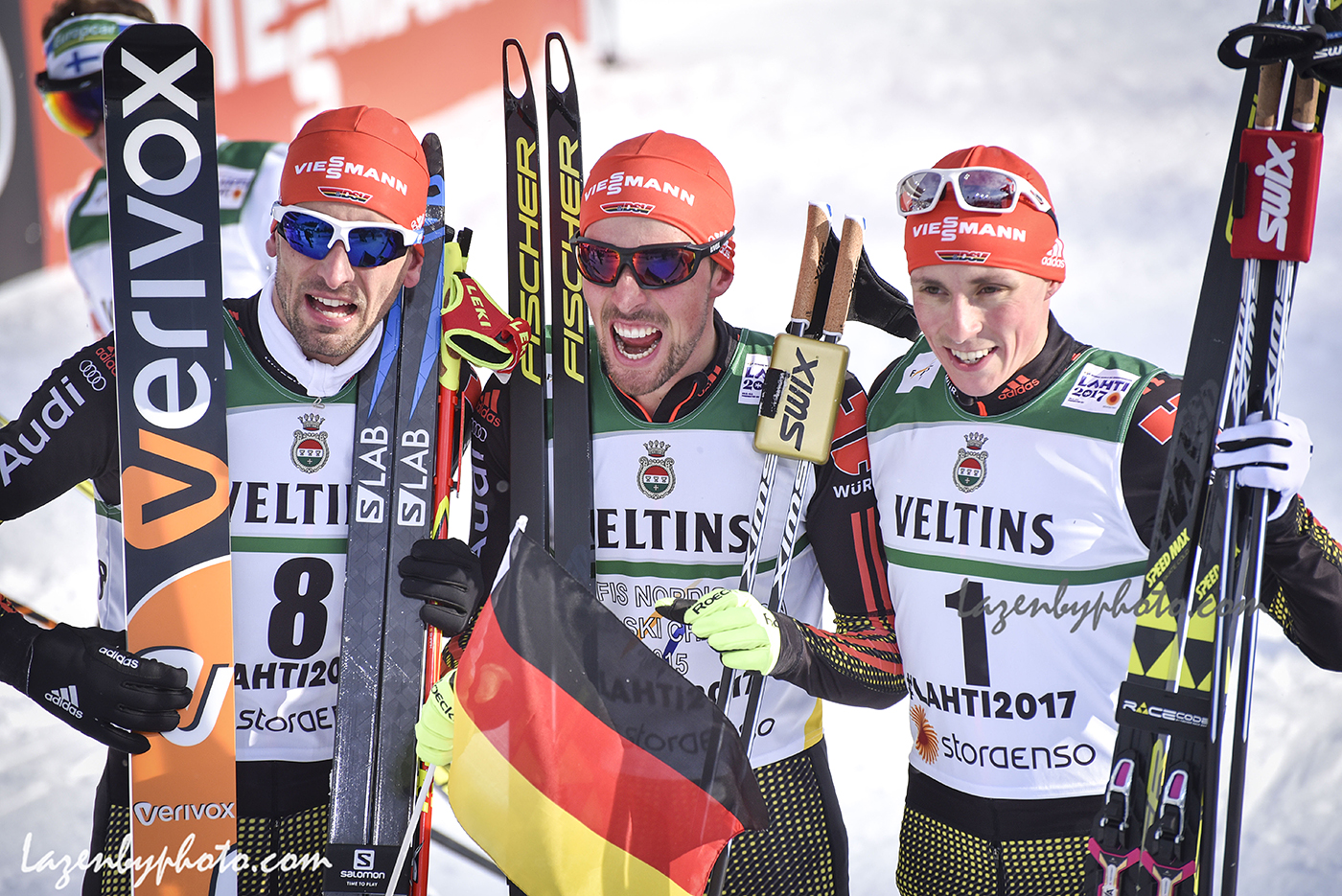
    German nordic-combined stars Johannes Rydzek (c), Eric Frenzel (1) and Björn Kircheisen (8) after taking gold, silver and bronze, respectively, in the individual normal hill/10 k Gundersen at 2017 World Championships in Lahti, Finland. (Photo: John Lazenby/Lazenbyphoto.com)

    What are the physiological capacities of nordic-combined athletes and can laboratory tests predict performance capabilities on the World Cup?

    Those are the questions that a team of Norwegian researchers set out to answer by testing 12 competitors from eight different countries before a 2015 World Cup competition in Trondheim, Norway.

    The study, led by Vegard Rasdal of the Norwegian University of Science and Technology and the Norwegian Olympic Sports Center, was recently published in the academic journal Plos One. It is an open-access journal, so you can read the paper here.

    “The sport is always evolving,” Rasdal wrote in an email to FasterSkier about the results. “Today it is no longer enough to be ‘just’ a strong ski jumper or cross-country skier, you really have to excel in both in order to be successful in terms of podiums. Johannes Rydzek and Eric Frenzel, the two most successful athletes last season, were not only two of the best jumpers last season but also the fastest skiers.”

    Indeed, they found that the best skiers in the nordic combined field have VO2Max capacities close to those of the best cross-country skiers, period – and even higher than those of Olympic medalist sprinters. Furthermore, this was a good predictor of World Cup results in the Trondheim competition.

    Variability in Abilities and Physiology

    There have been plenty of physiological studies on top cross-country skiers and some on ski jumpers, but the fascinating aspect of nordic combined is that two very different sports are combined. That creates uncertainty about what the ideal physiology for a competitor might actually be. Should they be light and explosive, for jumping? Strong and enduring, for skiing?

    And do nordic-combined atheltes have as much explosive power as ‘special jumpers’, or as high aerobic capacities as cross-country skiers?

    “As with most endurance sports, you will find a strong association between VO2Max and performance when the study group is heterogeneous, as e.g. a study group of 200 college students,” Rasdal explained. “Overall, VO2max is widely accepted as the most important factor for endurance performance. However, in a more homogenous study group, such as elite cross-country skiers, all athletes may have a ‘high enough’ VO2max to perform well at an elite level. Thus, other factors such as skiing efficiency becomes a stronger determining factor.”

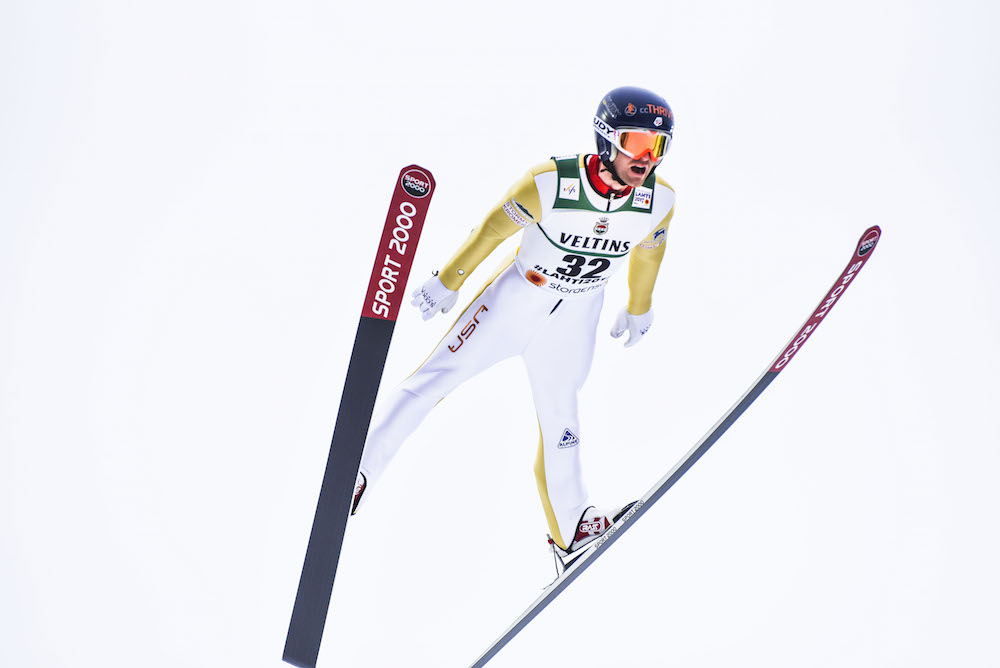
    U.S. Nordic Combined skier Bryan Fletcher jumping to 31st on the large hill at 2017 Nordic Combined World Championships in Lahti, Finland. At the end of last season, he was the top-ranked American in the overall World Cup standings in 34th. (Photo: John Lazenby/Lazenbyphoto.com)

    Rasdal and his co-authors wondered whether nordic-combined athletes fell into the first group, with moderately variable VO2Max, or the second group, where all had such high capacity that they had to be distinguished by some other characteristics.

    Because some athletes get their start in ski jumping, and all must also train for jumping, the athlete selection process and training background from young ages is different than for cross-country skiers and could lead to more variability among individuals.

    “It is not given that all nordic combined athletes have a ‘high enough’ VO2max or vertical jump capacity,” Rasdal wrote. “The shortcomings in one may to some degree be compensated with higher level in the other.”

    To address that question, the research team partnered with the International Ski Federation (FIS) to conduct laboratory tests on athletes the day before a World Cup competition.

    “FIS was responsible for the invitation of athletes, and each nation in the World Cup was invited and encouraged to participate with two athletes to be tested,” Rasdal explained. “To collect data on the very best athletes in the world is always a challenge, especially so close to an important international competition. We as a research group are extremely grateful that so many World Cup athletes chose to participate in the data collection.”

    The athletes ran the gamut from being ranked second to 66th in the previous season’s overall World Cup standings, and included the eighth-best skier and second-best ski jumper.

    About Endurance Capacity, and World Cup Success

    The hypothesis that nordic-combined athletes were more variable in their physiology compared to single-sport specialists was largely upheld.

    “Among the athletes we studied, a VO2peak range of 66.9-80.8 could be found, which does illustrate the heterogeneity in nordic combined,” Rasdal wrote. “This may make subordinate factors such as skiing efficiency relatively less important (although still important) than VO2peak.”

    The upper measurements of VO2Max among the 12 athletes are close to those of cross-country skiers.

    “In the papers by Saltin and Åstrand (‘Maximal oxygen uptake in athletes’) and Tønnessen et al. (‘Maximal aerobic capacity in the winter Olympic endurance disciplines: Olympic medal benchmarks for the time period 1990-2013’), only a few athlete-groups possess VO2Max values above 80 ml/kg/min,” Rasdal noted.

    Furthermore, it was clear that the athletes on the lower end of the VO2Max spectrum were somewhat less successful on the World Cup. At least at this World Cup event, the overall ranking at the end of the day was strongly correlated to an athlete’s VO2Max and ski performance.

    “This study together with the study by Tønnessen et al. may indicate that a body-mass normalized VO2Max in the region of 75 ml/kg/min is a sufficient capacity for a strong cross-country performance in Nordic Combined, whereas 80 is at very highest percentile,” Rasdal explained.

    However, the Trondheim World Cup course is not necessarily representative of all World Cup venues. And poor cross-country skiing could have been penalized even more at this venue than usual.

    “Trondheim is a special arena compared with other courses in the World Cup, with many steep uphills and fast downhill terrain,” Rasdal wrote. “In addition, 2015 was a bad winter in Trondheim, and the course was salted and ice hard. This made the event well suited for technical good skiers with strong upper-body capacity. It is therefore necessary to investigate the impact of ski jumping versus cross-country skiing on overall performance, as well as the associations to laboratory capacities, also at other venues and conditions.”

    And About Those Jumps

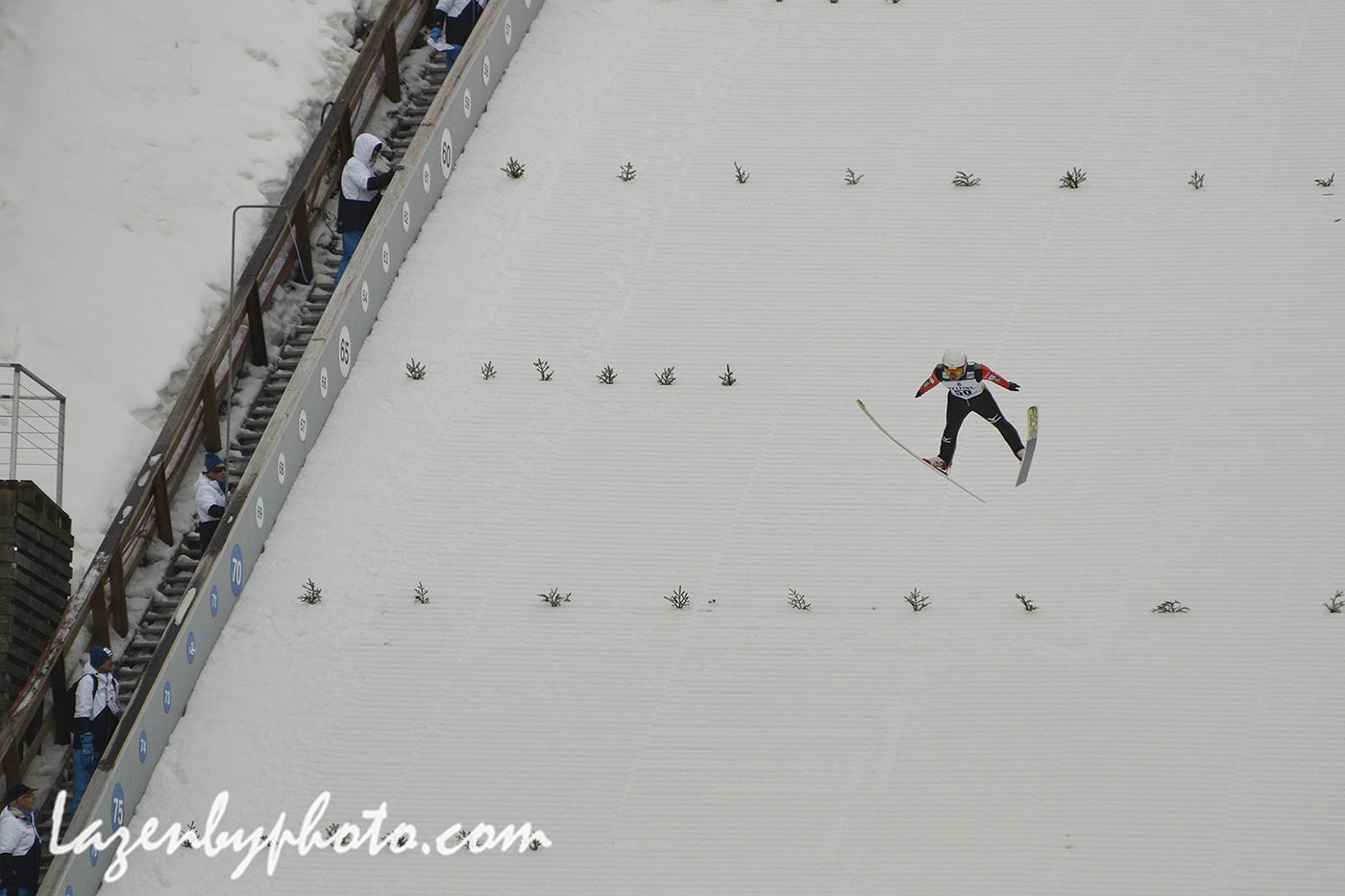
    2017 World Championships jump training on Feb. 21 in Lahti, Finland. (Photo: John Lazenby/Lazenbyphoto.com)

    The implication is that perhaps at a different competition, the association between ski jumping performance and overall competition ranking might be stronger.

    “Unpublished data does show that [across a whole season], the regression line for ski jumping to overall performance is similar to that of cross-country and the correlation coefficients are similar,” Rasdal explained.

    When it came to benchmarking, the researchers also identified laboratory measurements that could predict ski jumping performance by nordic-combined athletes. They tried two measurements: a straight, simple squat-jump, and an “imitation jump” where the athletes were asked to start in the same position they would on a ski jump ramp. The jumping style and technique varied from athlete to athlete.

    While it seems logical that these would be good predictors of ski jumping performance, it actually wasn’t a trivial matter. Such measurements have mainly been validated on straight ski jumpers, and because of their different body mass and physiology the relationship between squat jumping and performance, for example, could very well have been different among nordic-combined athletes.

    “The time available at the take-off in the [ski jump] hill may present a greater challenge for NC athletes than specialist ski jumpers as two-thirds of the NC athletes’ annual training consists of endurance training,” the authors wrote in the paper. “This does not only leave less time available for power and [jumping-] specific training compared to the specialists, but endurance training may lead to negative effects on muscle strength and power.”

    But in the end, the same measurements did predict ski jump performance.

    “The jump capacity in the sport-specific imitation jump distinguished performance level better than the general jump capacity in squat jump,” Rasdal wrote. “That supported the argument for sport-specific testing at an elite level.”

    Still, the imitation jump wasn’t perfect at predicting actual ski jump performance.

    “The upper range of the lowest ranked performance group touches the lower range of the highest ranked performance group,” Rasdal said of the imitation jump measurements. “There is not necessarily a continuous linear relationship with performance. At some level, the ability to utilize the capacity in the field as well as other factors become more determining for performance, e.g. body mass, transition to flight (minimize the loss of speed), flight performance, etc… Ski jumping is an extremely challenging technical task to be performed in less than 0.35 seconds, and where a well execution may compensate more for a lack of physical capacity.”

    And then there’s money.

    “In ski jumping the equipment plays an important role, and the nations with the highest budgets may for instance have better suits which makes them jump farther,” Rasdal said of other potentially confounding factors in predicting jump performance.

    What to Shoot For

    At the end of the paper, the authors summarized the ideal characteristics of a nordic-combined athlete: high VO2Max, a strong upper body, a good vertical jump, and low body mass. Hitting all those different metrics at the same time is a tough calculus, but it’s what is required to be a champion these days.

    “Although the relative importance of ski jumping to overall performance has varied in the sport over time, the pendulum today appears to lean more towards ski jumping,” Rasdal noted. “That’s both as a result of regulations (e.g. increase of meter-value in large hills in 2015), and also an increase in overall performance level where the best ski jumpers also ski fast.”

  • Will All Those Hours of Training Make You Faster? The Response is in the Genes

    Will All Those Hours of Training Make You Faster? The Response is in the Genes

    We don’t live in Gattaca yet, but the future is coming: in the last several years, scientists have begun to unlock the identity of genes that control humans’ response to endurance training.

    “We all have the same genes, but within the genes there is variability so that certain elements of the genes may be different for you or me,” Dr. Carl Johan Sundberg of the Karolinska Institute in Stockholm told FasterSkier in a phone interview earlier this winter.

    In other words, the human genome always follows roughly the same map. But at points on that map, individuals could have different specific sequences in their DNA. Some genes are “fixed” in the population, so that everybody has the same copy and there is no variation. Others, however, are “polymorphic”: there are anywhere between two and many copies of the gene circulating in the population, and different copies function slightly differently.

    Not everything is controlled by genes; environment plays a big role too, and the two often interact. But what if a skier’s ability to get faster by doing a lot of volume training was controlled by genetics, and polymorphism was the culprit for why your buddy got faster than you did, even though you did the same training? What if genes determined, too, if more intensity training was a better bet than hours of long slow distance?

    Anyone who has watched or participated in sports knows that isn’t a crazy idea. And back in the late 1990’s, a study of several hundred adults suggested that the improvement in aerobic capacity, as measured by VO2Max, was roughly 50 percent heritable – that is, dependent on gene copies passed down by their parents, not anything unique to an individual.

    Immediately, the researchers asked their follow-up question: which genes accounted for this heritable portion of the response to training? By 2000, an international team led by Drs. Claude Bouchard of Louisiana State University and D.C. Rao of the Washington University of Saint Louis had found several regions of on specific chromosomes that they hypothesized would contain the genes.

    By working hard, honing in on these regions in finer detail, and taking advantage of advances in genetic techniques, in 2009 Sundberg and a group of colleagues published another study, indentifying roughly 30 genes that could explain 23 percent of an individual’s gains in performance due to training, or about half of the heritable portion.

    “It may be a minor part of it – one out of 1500 [polymorphisms] will make a difference in terms of protein function,” Sundberg said. “We tried to find genes that could explain differences between people. And with endurance training, we did find something that would explain the difference in response.”

    How? A Genetics Research Primer

    To get to their final result took several steps, and multiple sets of test subjects. Importantly, all of the subjects were untrained, sedentary adults – we’ll get back to what the results mean for athletes a little later.

    First, the team took a group of 24 men and put them through a training program, taking a snapshot of RNA expression in muscle tissue before and after the intervention. They found that the training provoked changes in the expression patterns of about 800 genes, which they called the “Training-Response Transcriptome.”

    (A transcriptome is simply all of the different RNA produced by a group of cells, and their concentrations. What is RNA? It is produced by copying off of DNA, and has many functions in a cell, from controlling gene expression to synthesizing proteins.)

    Some of the genes were expressed more, or “upregulated,” while most were expressed less, or “downregulated.” They likely had a wide variety of functions and controlled many different things in muscle tissue; among those, the team hoped, would be something that determined whether aerobic adaptation took place.

    The team then narrowed this down to the 29 best genes that might serve as predictors of training response, and tested them in a second group of 17 study subjects who were also put on a training plan. The prediction was proved true when the expression of these genes correlated to the size of VO2Max improvements in the test subjects.

    Finally, the group returned to their large dataset, which is part of what is called the HERITAGE family study. Each of 473 subjects had a personalized 20-week training plan designed based on their existing aerobic capacities. Testing against the VO2Max gains in these 473 men and women, the team found that genetic variation – polymorphism – in a few specific predictor genes was significant in explaining the adaptations.

    Even more impressively, the “signature” of these genes could be tested using just 11 single-nucleotide locations in the genetic code extracted from skeletal muscle tissue.

    “These variants were common enough in this population to explain the variation,” Sundberg told FasterSkier. “It would explain half of the variability in responsiveness – we found genes that would explain 23 percent of it, which is about half of the genetic component. In the next years, I am sure that there will be studies explaining the other forty percent.”

    Can We Predict Olympic Medals?

    Sundberg and his colleagues are more interested in public health than in sports – and rightly so. They open their papers by noting that low aerobic capacity is related to inability or lack of exercise, and leads to poor cardiac health and even death. With these studies, they suggest, doctors may be able to tell whether exercise will help their patients gain – back or for the first time – aerobic capacity.

    “It is reasonable to state that molecular classifiers (predictors) will be essential for implementing personalized medicine, yet there are limited examples of validated predictors that are able to tailor interventions relevant to the most pressing factors impacting on public health,” Dr. James Timmons, Sundberg, and others wrote in the Journal of Applied Physiology in 2009.

    For both cardiovascular health in particular and the emerging field of personalized healthcare delivery in general, the team’s ability to predict and then confirm which genes might determine an individual’s response to treatment was a big step forward.

    But what about another application? It’s easy to understand why, if the remaining genes controlling the other half of genetically heritable adaptation are identified, athletes and coaches would want in on this knowledge. They could help tell whether it’s worth pursuing a career into adulthood, how much energy and resources it’s worthwhile for a program to spend on an athlete, or even help identify future stars at a young age.

    Let’s not get ahead of ourselves, though. First of all, the training response is not entirely heritable – and the non-genetic component is also incredibly important in determining success.

    And even in terms of the genetic component, Sundberg said, the implications for elite athletes are not at all clear. The team was using sedentary subjects, where the range of responses to training was huge. Some saw marked improvement; others didn’t respond at all. What separates one elite athlete from another will be much, much smaller responses, which will be more difficult to detect using these methods.

    “When you move to athletes it becomes more difficult,” Sundberg said. “Top level performance is determined by many more genes. It’s extremely difficult to predict who will become a top athlete: we can predict who can respond in a sedentary person, but not who will become a gold medalist.”

    For the Curious:

    Bouchard, C., Rankinen, T., Chagnon, Y.C., Rice, T., Pérusse, L., Gagnon, J., Borecki, I., An, P., Leon, A.S., Skinner, J.S., et al. (2000). Genomic scan for maximal oxygen uptake and its response to training in the HERITAGE Family Study. J Appl Physiol 88, 551–559. Abstract here.

    Timmons, J.A., Knudsen, S., Rankinen, T., Koch, L.G., Sarzynski, M., Jensen, T., Keller, P., Scheele, C., Vollaard, N.B.J., Nielsen, S., et al. (2010). Using molecular classification to predict gains in maximal aerobic capacity following endurance exercise training in humans. J Appl Physiol 108, 1487–1496. Abstract here.

    Dr. Sundberg’s lab webpage

    Dr. Bouchard’s lab webpage

    The HERITAGE family study – assessing response to drugs, diet, and exercise