Tag: agility

  • Cross Country With a Twist: NordicX Event Lights Up Anchorage 

    Cross Country With a Twist: NordicX Event Lights Up Anchorage 

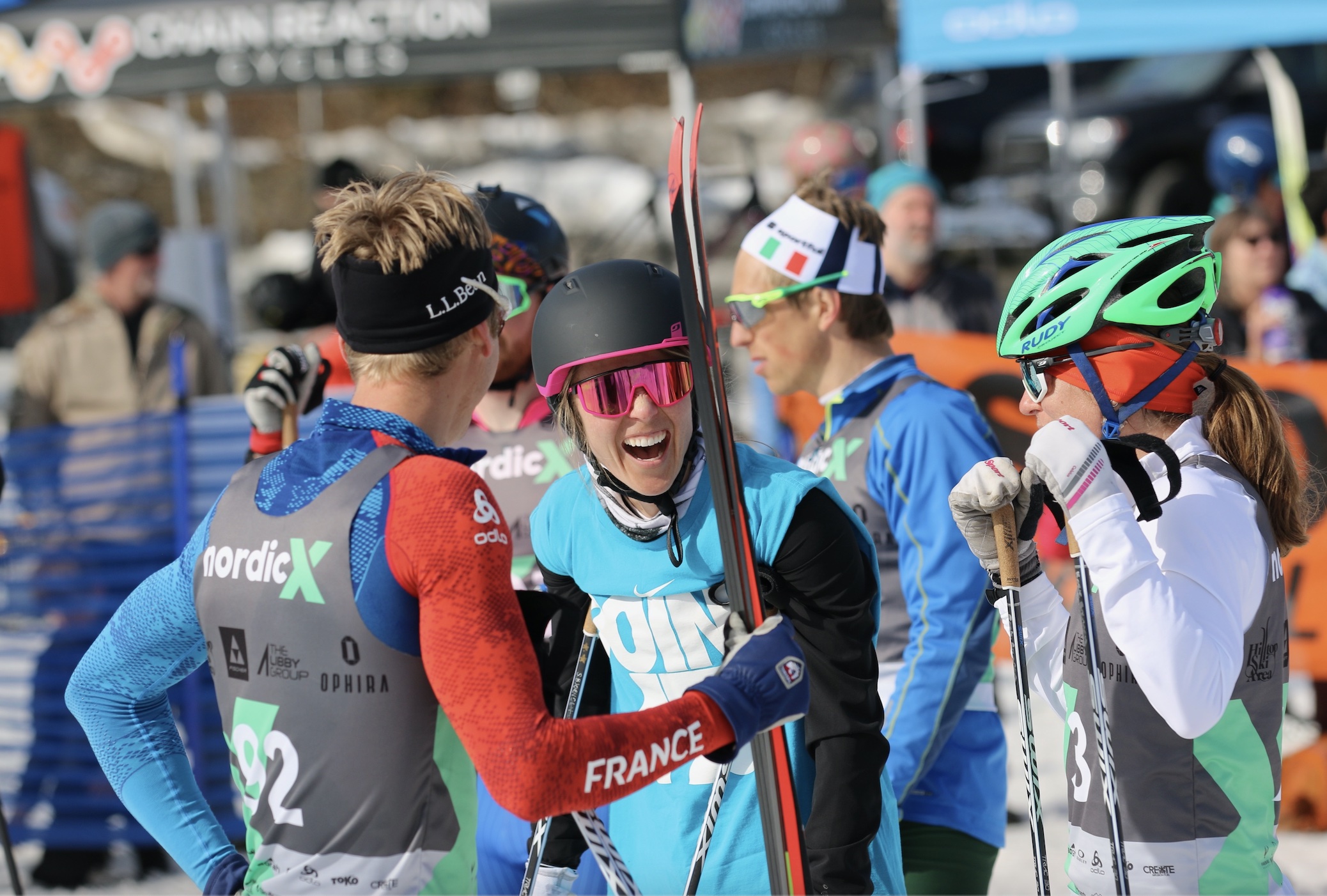
    Erik Bjornsen, Sadie Bjornsen Maubet, and Rosie Brennan enjoy a very different race atmosphere at NordicX. (Photo: Eric Maurer / NordicX)

    What comes to mind when you think of a cross country ski race? Depending on your location and how you choose to interact with the sport, there are likely a variety of answers to the question, but it’s likely that there are some common themes. 

    “Cross country events are pretty much all the same when you boil them down, you know?” said retired US Ski Team member and 2018 Olympian Reese Hanneman. “It’s a test of endurance and speed over a set course, and it’s timed, and you’re usually out there in the woods alone. And I mean, that’s what cross country [racing] always will be, but I always felt like there was room for more.”

    In what he described as “living out [his] 10 year old dream”, Hanneman set out to break this mold. His dream came to fruition on April 2nd in his home of Anchorage, Alaska, as cross country skiers from the junior level to recent Olympians careened down the slopes at Hilltop Ski Area, rounding tight turns, skating uphill, and catching air – with some not-so-graceful landings – off of jumps before finishing amidst a festival atmosphere at the base. The event was NordicX, an untimed, head-to-head “nordic-cross” event where style points on the final kicker into the finish might earn you a lucky loser spot in the next round. 

    “I knew that there was a lot of appetite for [an event like] that because every time I coach kids, which has been quite a bit over my career, I see that same energy and excitement for hitting jumps and sessioning little whoopty-dos or tabletops. And basically, there’s no cross country event that caters to that.” 
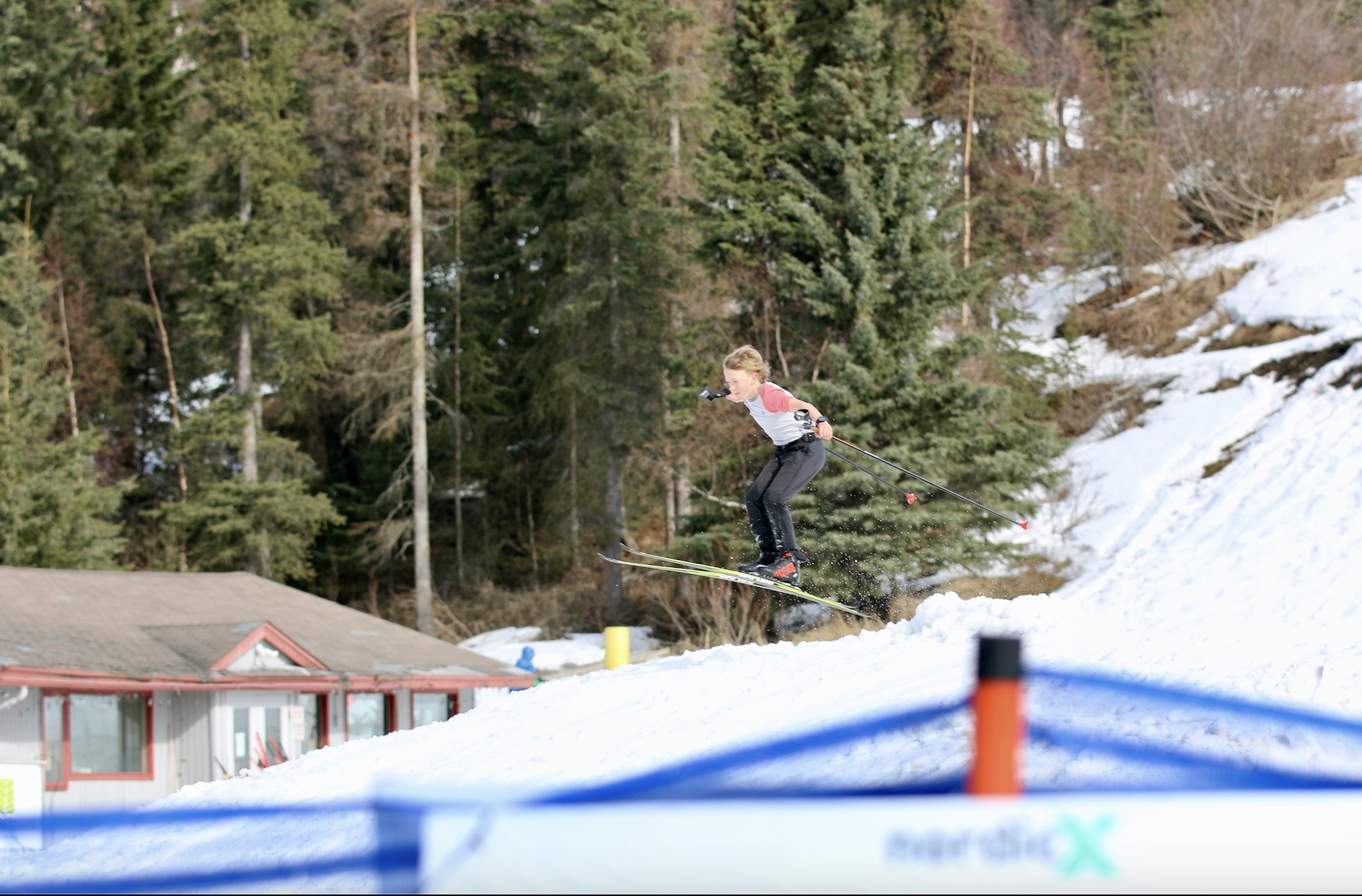
    One of many kids enjoying the features on course and in the Kiddie Cross terrain park at NordicX. (Photo: Eric Maurer / NordicX)

    While Hanneman wanted a non-traditional event, he was not looking to eliminate the character or skills of cross country skiing altogether. He pulled from his experience competing in the 2016 Red Bull Nordix event at Lake Louise in Alberta, where he raced against other top international skiers including Norway’s Petter Northug and his US Ski Teammate Andy Newell.  

    “It was so fun and it was so crazy and scary and fast. And I was like, ‘Man, I need to bring this to Alaska.’”

    In creating his own event, he said he wanted to navigate the “delicate balance of new, exciting, and extreme, but also staying true to cross country skiing. It’s one thing to build a little booter next to the xc ski trail and ski ’round and ’round hitting it with your friends, and it’s another to try and package that experience into a full-on event that offers excitement for all ranges of skills and ages.”
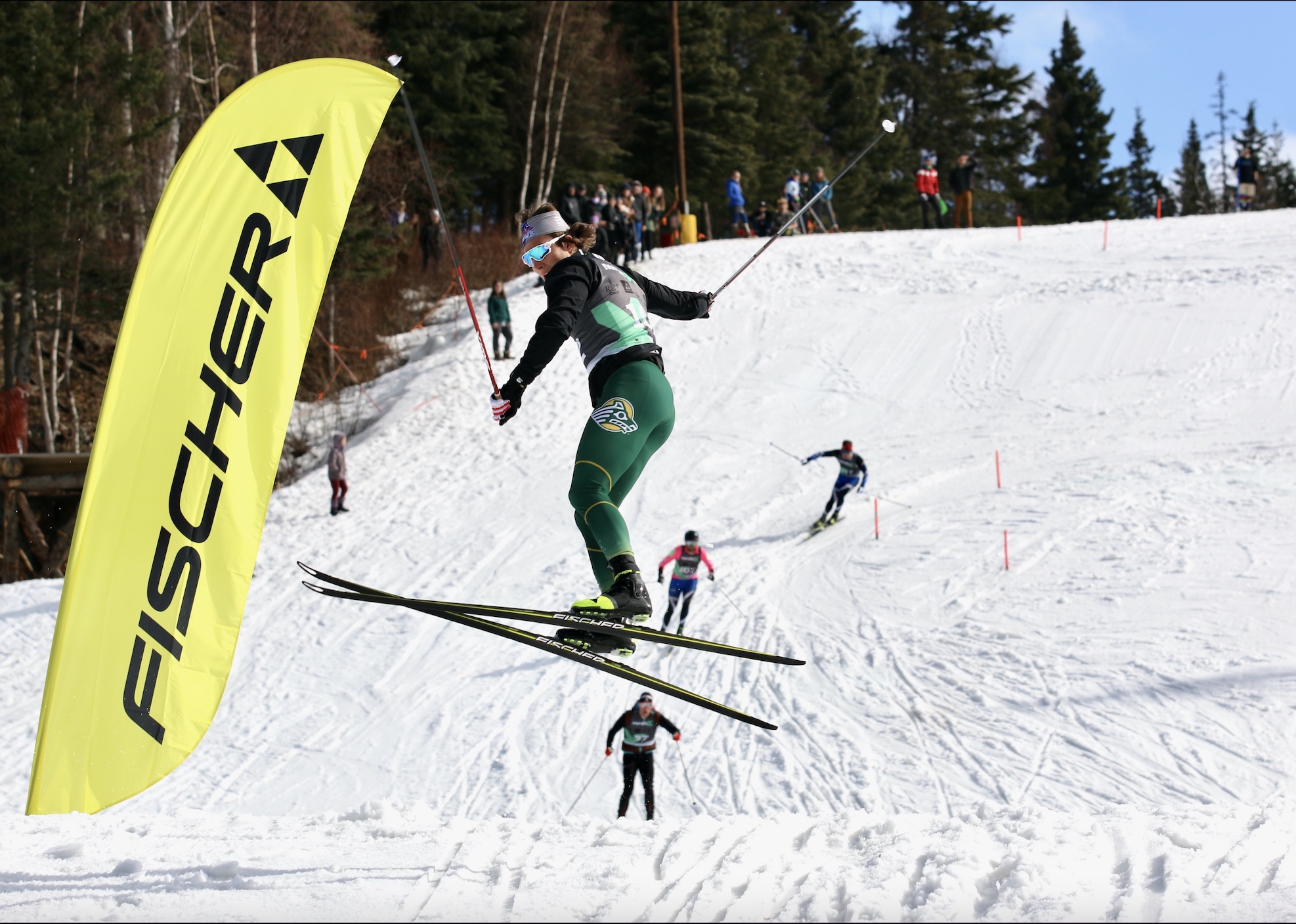
    JC Schoonmaker does a 360 into the finish at NordicX. (Photo: Eric Maurer / NordicX)

    “I knew it needed the right venue,” Hanneman continued. “I wanted something ‘net downhill’ because otherwise I felt like it would be too similar to other xc races, a loop with the same start and finish meant that in order to have a huge downhill you would need a huge uphill. But I also wanted it to be ‘cross country’, so that it truly rewarded good cross country skiers, and so that cross country skis were truly the best tools for the job.” 

    As the course and conditions hinged on both the weather and Hilltop’s grooming, an official course map was never set. To ensure the event catered to skiers beyond the nucleus of elite skiers based in Anchorage, an A-, B-, and C-Line was established on each of the features, making air-time not requisite and allowing athletes to select a route that felt safe, at the expense of simply forgoing the fastest line, which might pay off in the end if it kept the racer upright with equipment intact. 

    Holding to the spirited theme of the event, Hanneman described it as “a freestyle event in both feel and in practice,” meaning there were no official course maps, no timing, and plenty of subjectivity in the results. Get sendy and try to 360 off the final kicker into the finish only to crash and stall out before the line? Style points – you just became the lucky loser and can move on. Flooded legs from the uphill sprint section cause you to catch an edge off the drop and yard sale? The crowd loved it – lucky loser spot for you also. 
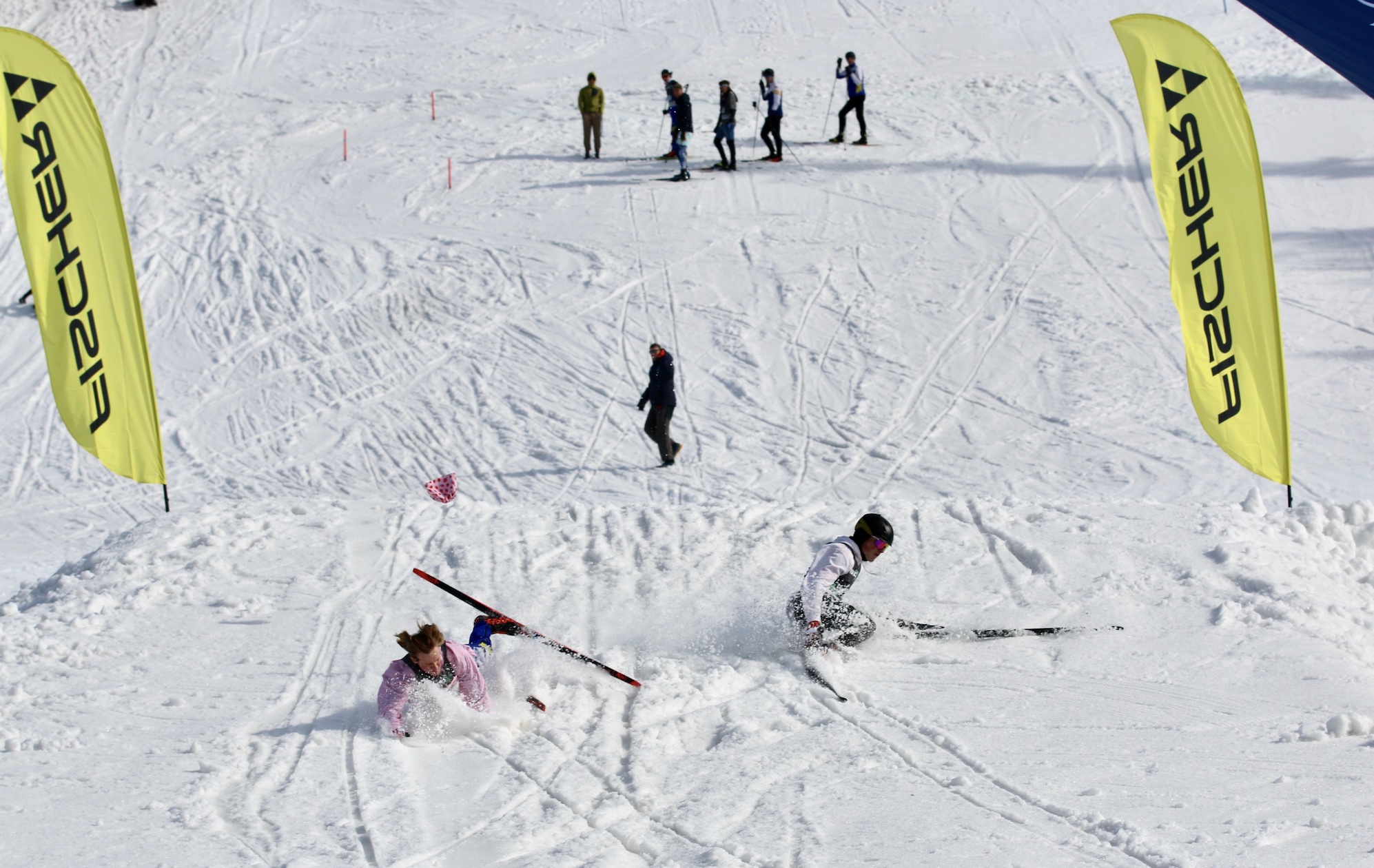
    Not everyone stuck the landing at the finish of NordicX… (Photo: Eric Maurer / NordicX)

    No official prologue seeded athletes; after a few hours where skiers could preview the course, the event simply kicked off with heats of six in the quarterfinal, splitting the 100 athletes between open and junior men’s and women’s categories. Among the field were six Olympians: alphabetically, Erik Bjornsen, Rosie Brennan, Hannah Halvorsen, Logan Hanneman, Sadie Bjornsen Maubet, and JC Schoonmaker, most of whom ended up on the podium at the end of the day. Next year, Hanneman hopes to include additional categories for parents, masters skiers, etc. 

    For those who weren’t up for racing or couldn’t quite match the on-ski agility of Maubet or Schoonmaker, a continuous stream of raffles offered plenty of alternative opportunities to win. A DJ fed the energy at the base, while emcees Rob Whitney and Lee Bolling kept the momentum alive between heats, announcing the winners of numerous prizes from sponsor companies like Odlo, Fischer, Oakley, Skull Candy, Toko, and more.  
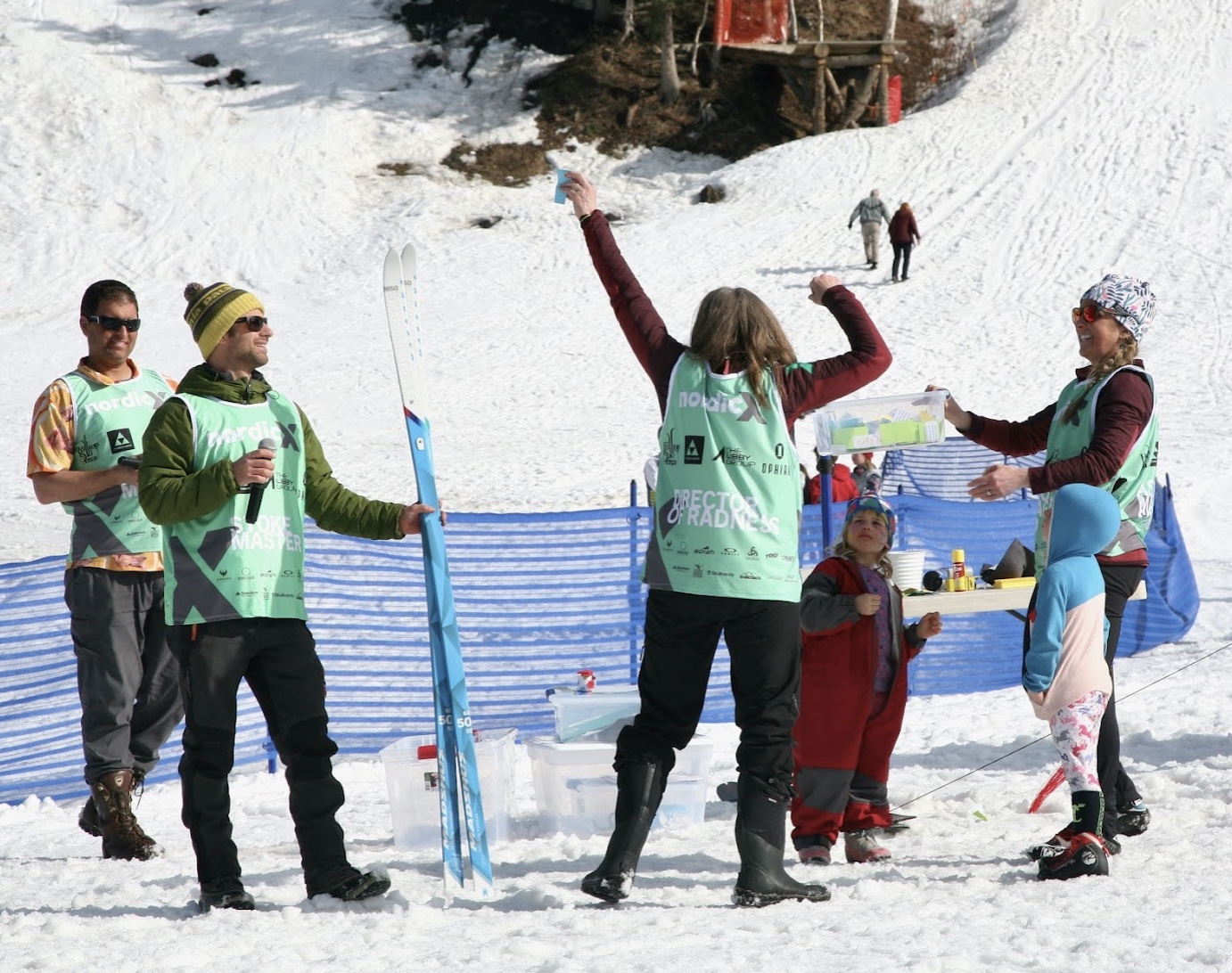
    Emcees, director of radness, associate director of send: keeping the energy high at the base with continuous prize drawings. (Photo: Eric Maurer / NordicX)
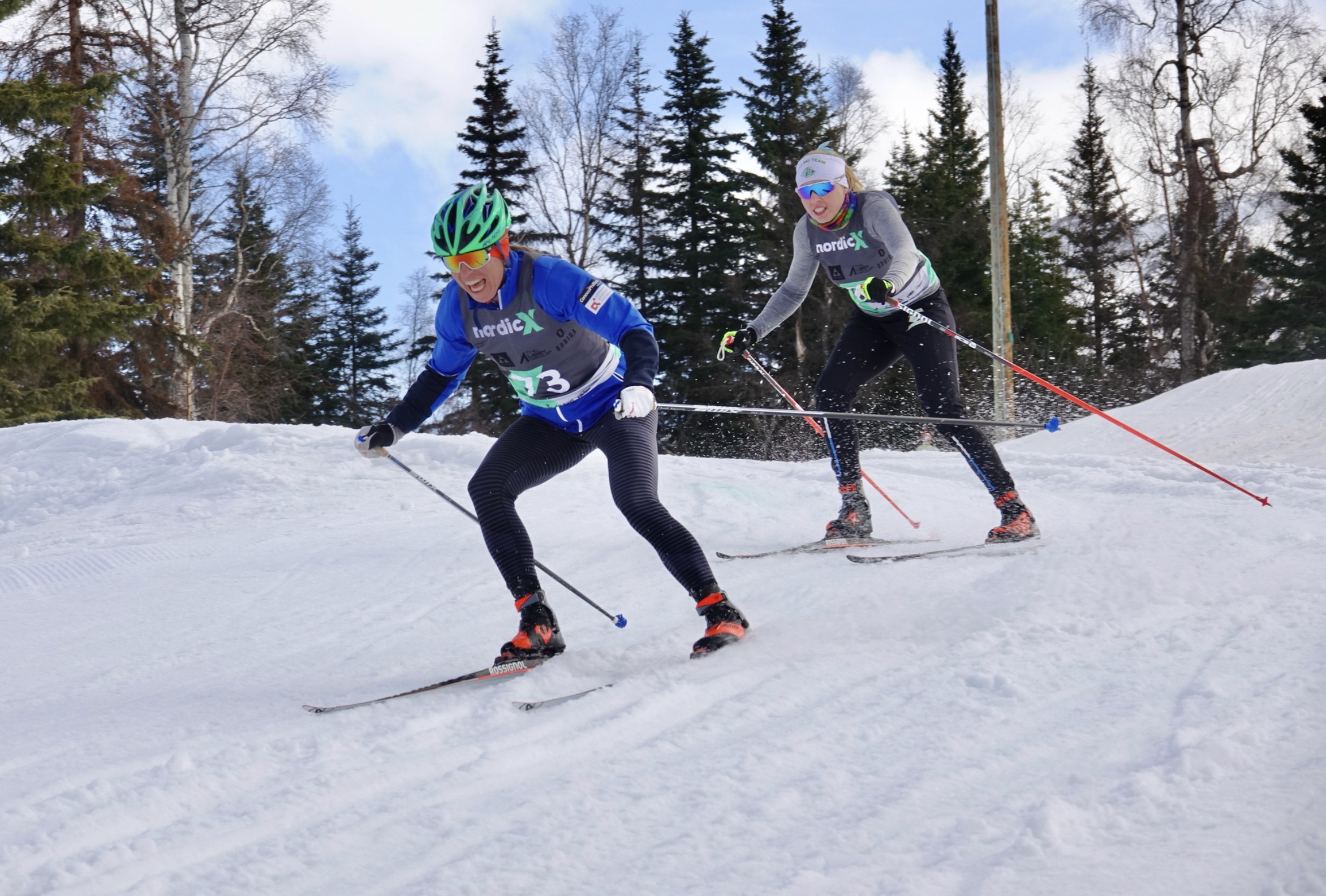
    Rosie Brennan charges around a tight turn as she races through the heats at NordicX. (Photo: Russell Hood / NordicX)

    Though these factors added to the festival atmosphere at the base, spectating alone was plenty exciting. In particular, the finish of the senior men’s final was one to watch. 

    “You couldn’t have scripted a better finish,” Hanneman laughed. “You had JC Schoonmaker, who’s one of the fastest sprinters in the world right now, and Erik Bjornsen, who was just on fire all day back from retirement. [They were] just completely sending it and just flying through this final steep slalom section, and Erik is trying to catch JC, and JC is trying to hold him off. They go to the finish, over this big table top, and everyone’s holding their breath. JC goes off it and does this massive spread-eagle.” 

    But he didn’t stick the landing. Landing a little too far in the backseat, Schoonmaker’s skis washed out from underneath him, leaving him sliding across the snow toward the inflated archway that marked the finish. He stalled out just before reaching the line.

    “Erik is coming at Mach 50, about to beat him to the line. JC has to roll over and, like, flops [his skis] over the line.”
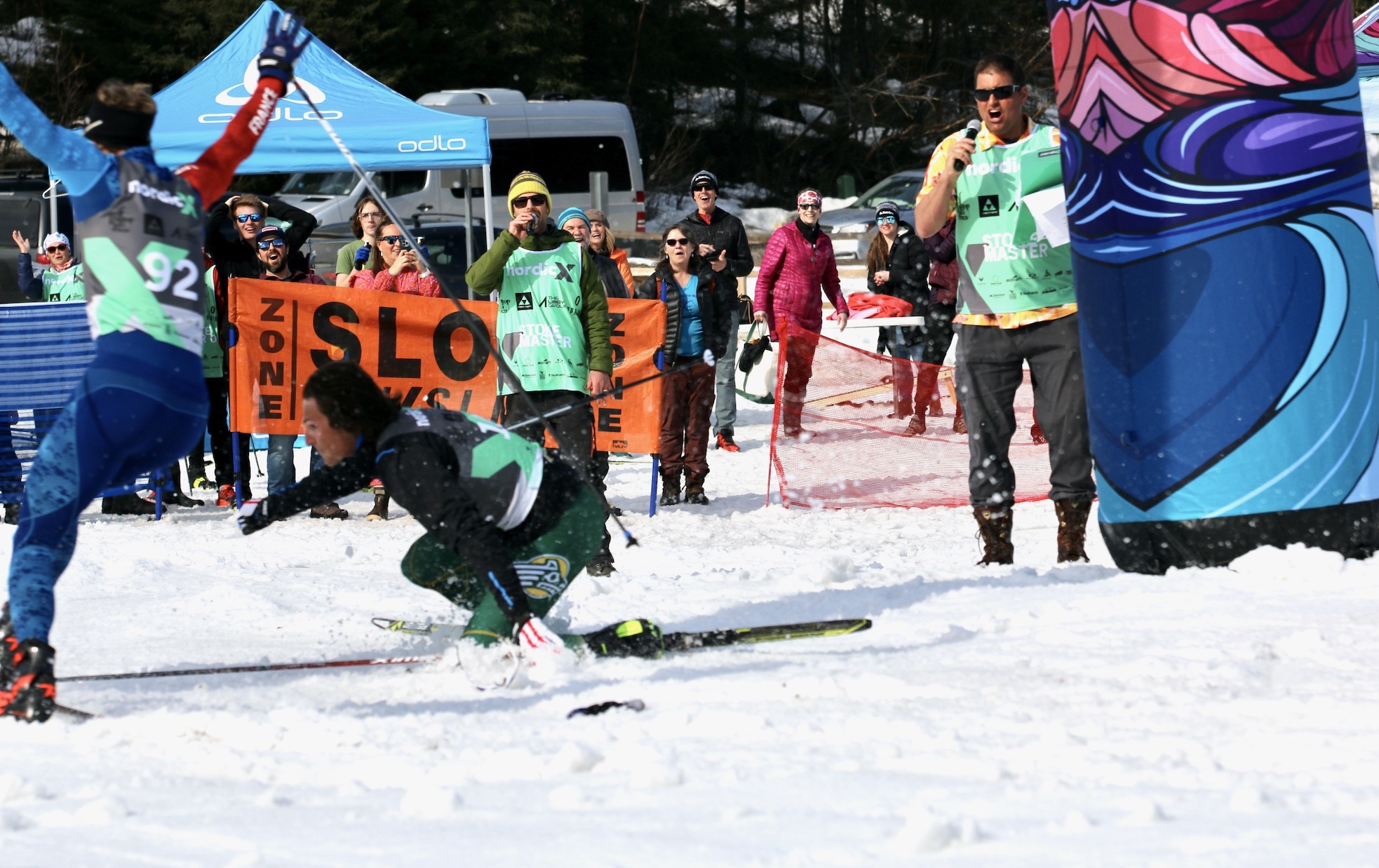
    Erik Bjornsen sticks the landing, but JC Schoonmaker flops over the line first for the win.a (Photo: Eric Maurer / NordicX)

    From a photo finish, Schoonmaker was awarded the victory, with Bjornsen narrowly taking second. U20 APU athlete Michael Earnhart skied to third, taking the final podium step.

    “NordicX was one of the most fun races I’ve participated in,” wrote Schoonmaker after the event. “It took me back to middle school building jumps with my friends and seeing how far we push the skinny ski boundaries. Everyone who took part in putting the race on did a great job and with the spectators who came out, it really just had a good vibe to it. Everyone was having a great time and I’d definitely like to do it again. My highlight was watching some of the younger skiers before the race who were hitting the last jump doing 360’s and backflips and seeing how pumped up they were to be there.”
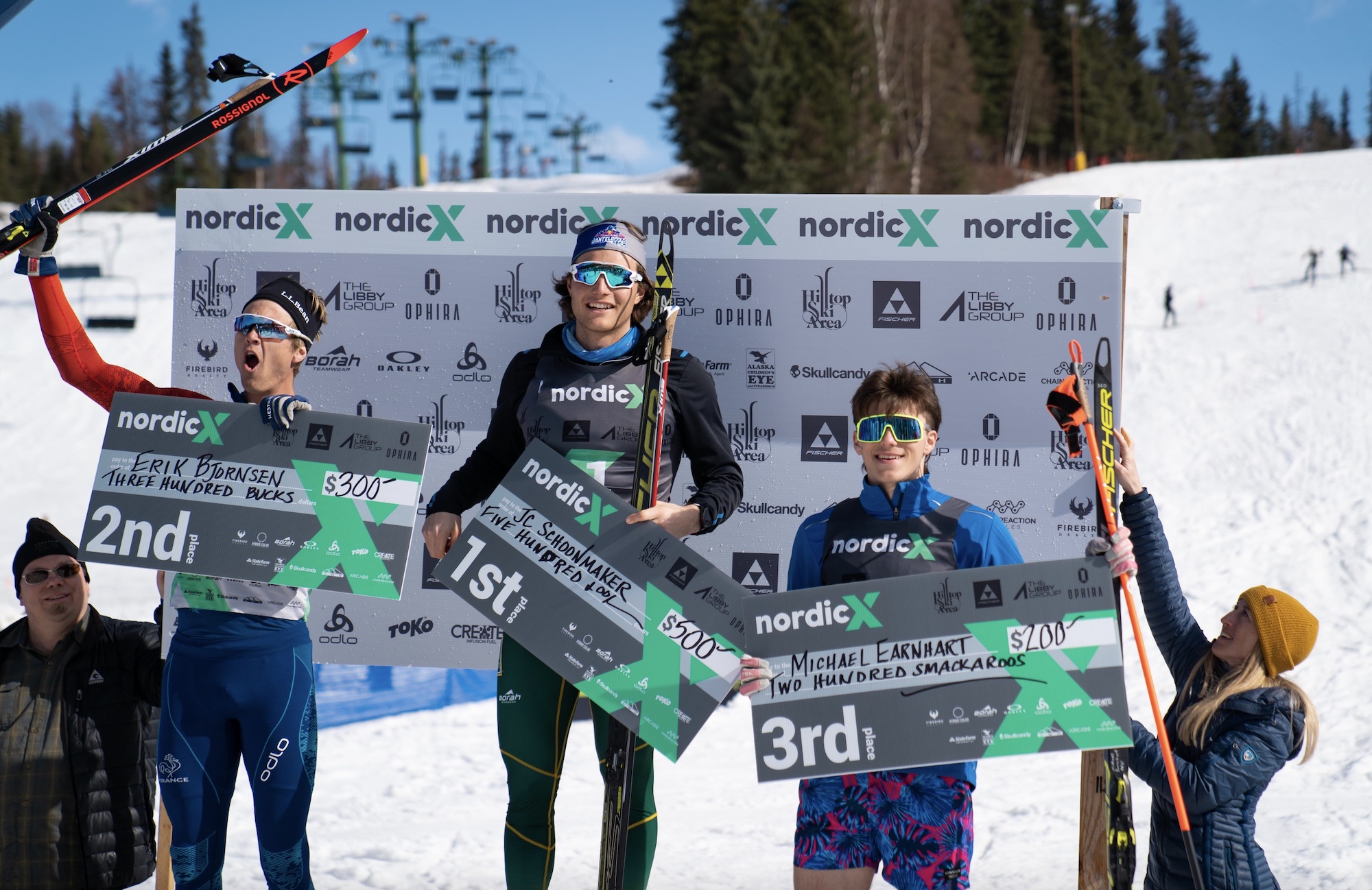
    The men’s NordicX podium: JC Schoonmaker came out on top in a dramatic photo finish with Erik Bjornsen, while Michael Earnhart took third. (Photo: Ophira Group / NordicX)

    In the senior women’s senior division, it was a current and former APU athlete sweep, with Sadie Bjornsen Maubet taking the win ahead of Hannah Halvorsen in second and Rosie Brennan in third. 

    “Nordic X was a super fun event, with a fun new twist to nordic skiing, and nordic ski spectating,” wrote Bjornsen Maubet. “Reese did an amazing job of dreaming up this super fun and social way to share our sport with our community… I relied on my thirty years of spending most of my days on nordic skis to attempt to gracefully make it down the little jump park. Though incredibly inspired by all the young kids catching tons of air, and throwing font and back flips, I figured I better save those moves for another life. The day was full of tons of laughs, cheers, and excitement. It felt special to put a bib on beside my previous teammates, and participate in the fun. 

    “I look forward to watching this spectator friendly event grow in the Anchorage Community. I think my husband had the most fun of us all, as he showed up with his chainsaw without the blade, some flares, and wearing a hat that said  ‘Make the Bjornsen’s Great Again’. He was the cheering squad of the day, representing his French blood and the famous French Team Valoche cheering squad.” 
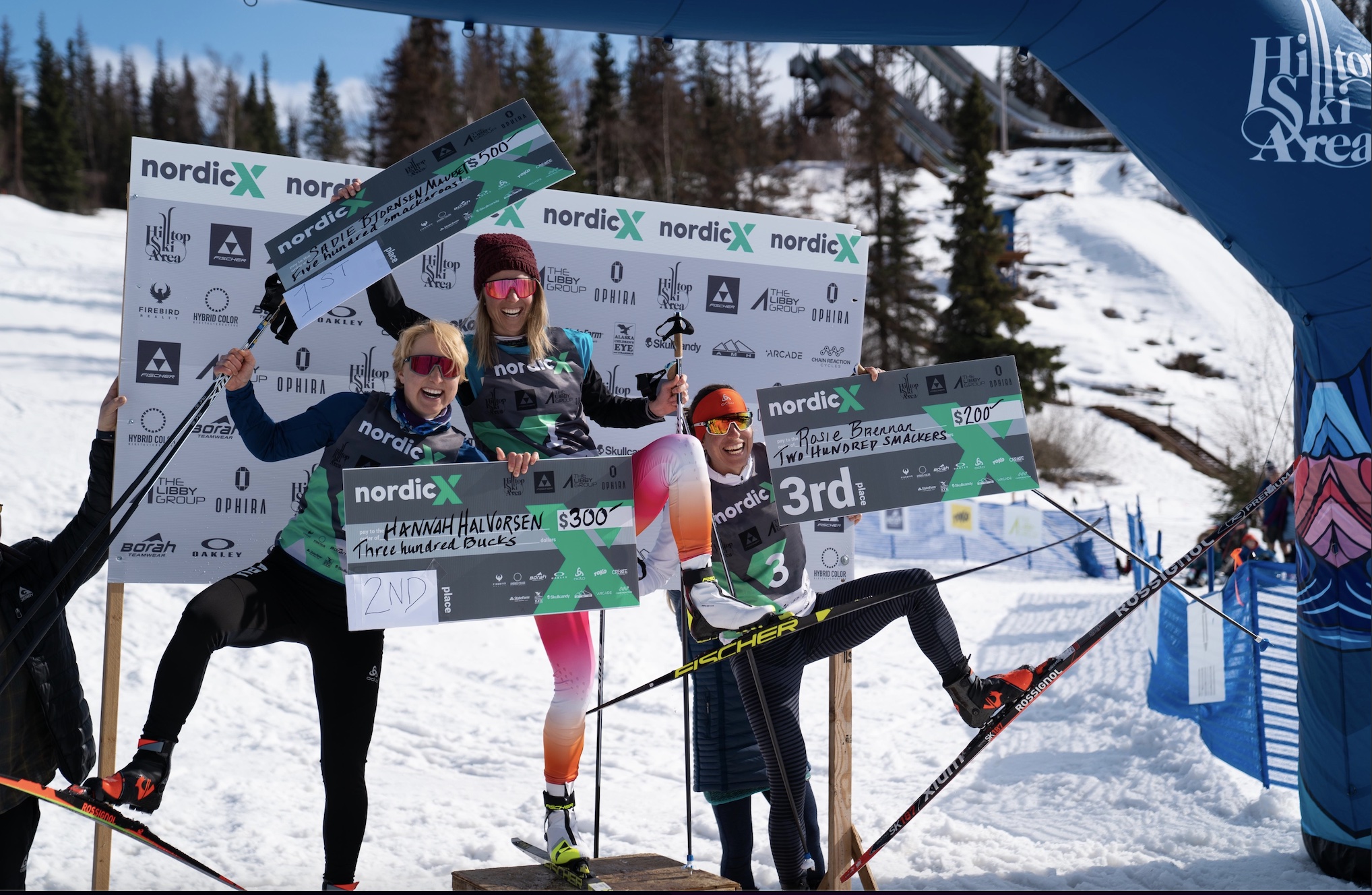
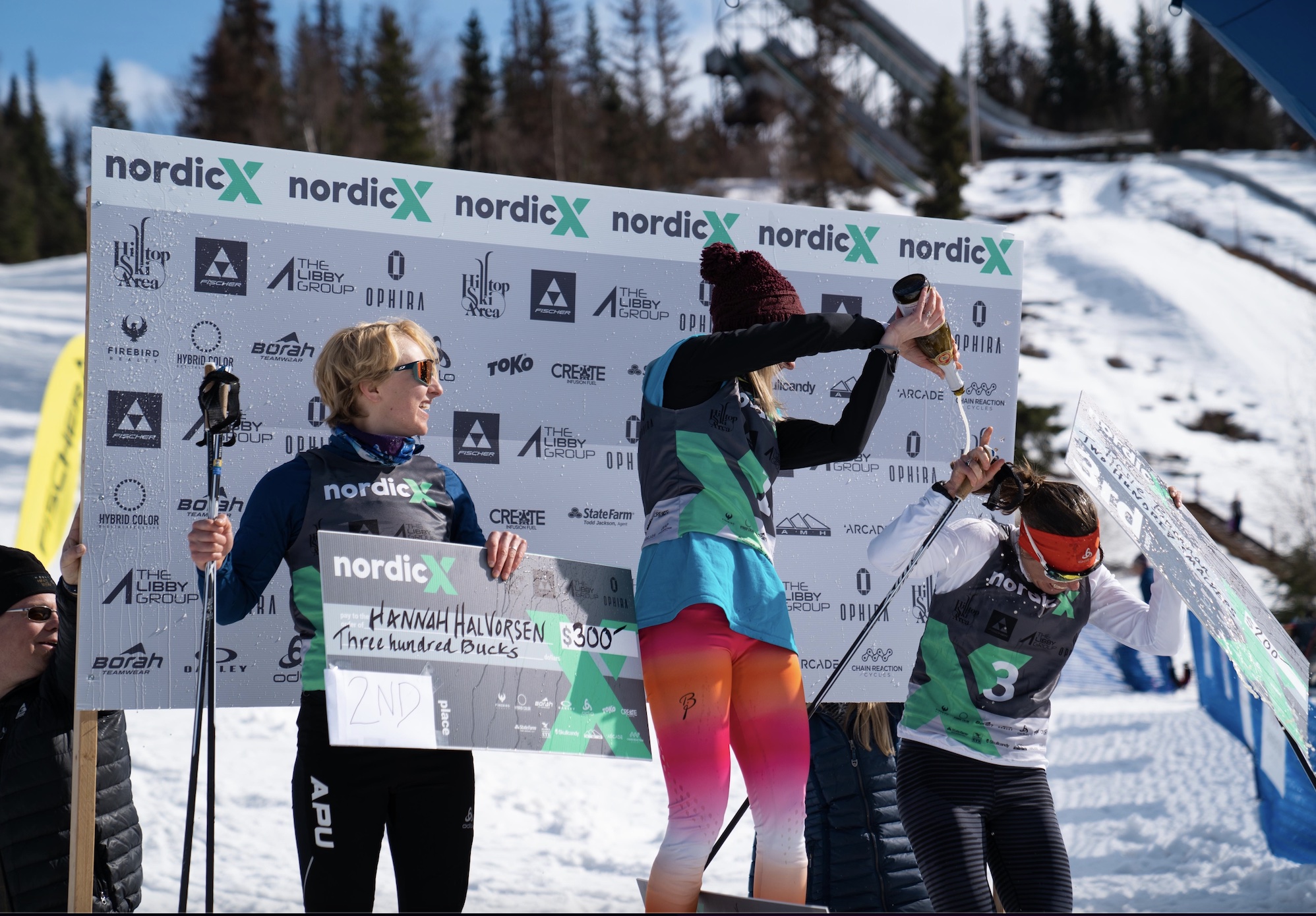
    The women’s podium at NordicX: Sadie Bjornsen Maubet took the top spot ahead of Hannah Halvorsen and Rosie Brennan. (Photo: Ophira Group / NordicX)
    When you can’t spray, pour. Winner Sadie Bjornsen Maubet shares a champagne celebration with third place Rosie Brennan. (Photo: Ophira Group / NordicX)

    For Hanneman, there were also a number of smaller highlights he’s enjoyed looking back on. While marking the course with food coloring, he loved watching skiers riding the lift to the top of the course on their skinny skis, and seeing athletes from 13-year-olds to veteran racers sessioning the course to dial in their lines and strategize. During the heats, he watched a number of young athletes gain confidence, and perhaps some additional skills, after working through initial trepidation surrounding the new race experience. 

    “There were some juniors who you could see at the start of the day were pretty intimidated by the last part of the course, which was really steep and had some sharp slalom turns,” Hanneman explained. “It was definitely challenging their skill level. And by the end of the day, like they were coming through and just ripping, and they were having so much fun and you could tell they had gotten a lot better just in a couple hours.”

    One of many kids enjoying the features on course and in the Kiddie Cross terrain park at NordicX. (Photo: Eric Maurer / NordicX)

    For those 12 and under and too young to compete on the full course, there was a “Kiddie Cross” course, which included banked turns, tabletops, a rhythm section, and a number of other terrain park features for kids to play on and session.

    “The parents love it, right? Because the parents are just sitting there in the sun, watching their little kids just love cross country skiing.” 

    He commented that he had friends who had been trying to sell their child on cross country skiing but felt like it was a hard sell compared to downhill skiing. “They were like, ‘Oh, man, I’ve been trying to get her out on their cross country skis all year and they don’t want to go,’ and they brought him to this event and their kids were like on their on their cross country skis just doing laps up the hill 1000 times so they could go back and hit the jumps again. So for me, that right there is like the essence of this event.”

    A pair of NordicX racers ride the chairlift with their skinny skis. (Photo: Andre Horton / NordicX)

    In reflecting on the event and its impact on the local cross country ski community, Hanneman felt it addeda shot of energy… I mean, there’s so many cool races out there, but this is just a little bit different. And I think it gets people excited.”

    While the biggest air and most impressive skill was seen from the elite racers, Hanneman kept coming back to the youth participating in the event, highlighting that it really was his boyhood dream to see an event like this in Alaska. 

    “Something like this would have probably excited me for a whole year like knowing that it was coming. And I think the more people that we get excited about cross country skiing the better, because I think it can be a really fun sport, but, let’s be honest, sometimes it has this perception of being kind of slow and boring, and hard.”

    He described it as the type of event that could nudge skiers with that perception to give it a try, opening their eyes to what’s possible and how fun the sport can be. While there are perhaps other locations in the US that might be a candidate to host, Hanneman also explained why Anchorage is an ideal location for NordicX.

    Spectators catch the NordicX action from the base of the Hilltop Ski Area in Anchorage. (Photo: Eric Maurer / NordicX)

    “We have a huge ski market here, massive participation in high school skiing, and obviously a ridiculous number of elite-level racers here.” 

    On all accounts, the first year of NordicX was a success, which begs the question: what are the plans for next year? 

    “So many people came up and were like, ‘I can’t wait for next year.’ And I’m like, ‘Oh, man, I don’t know.’ I haven’t necessarily committed, you know? This was a crazy undertaking.”

    Since retiring from professional ski racing, Hanneman has been investing his time and energy in starting and serving as CEO for the PR agency, Ophira Group. He and his wife also welcomed a baby girl in March, 2021, and he’s remodeling their family home. He expressed that pulling off the inaugural event was already “pushing the limits” of what he should take on.
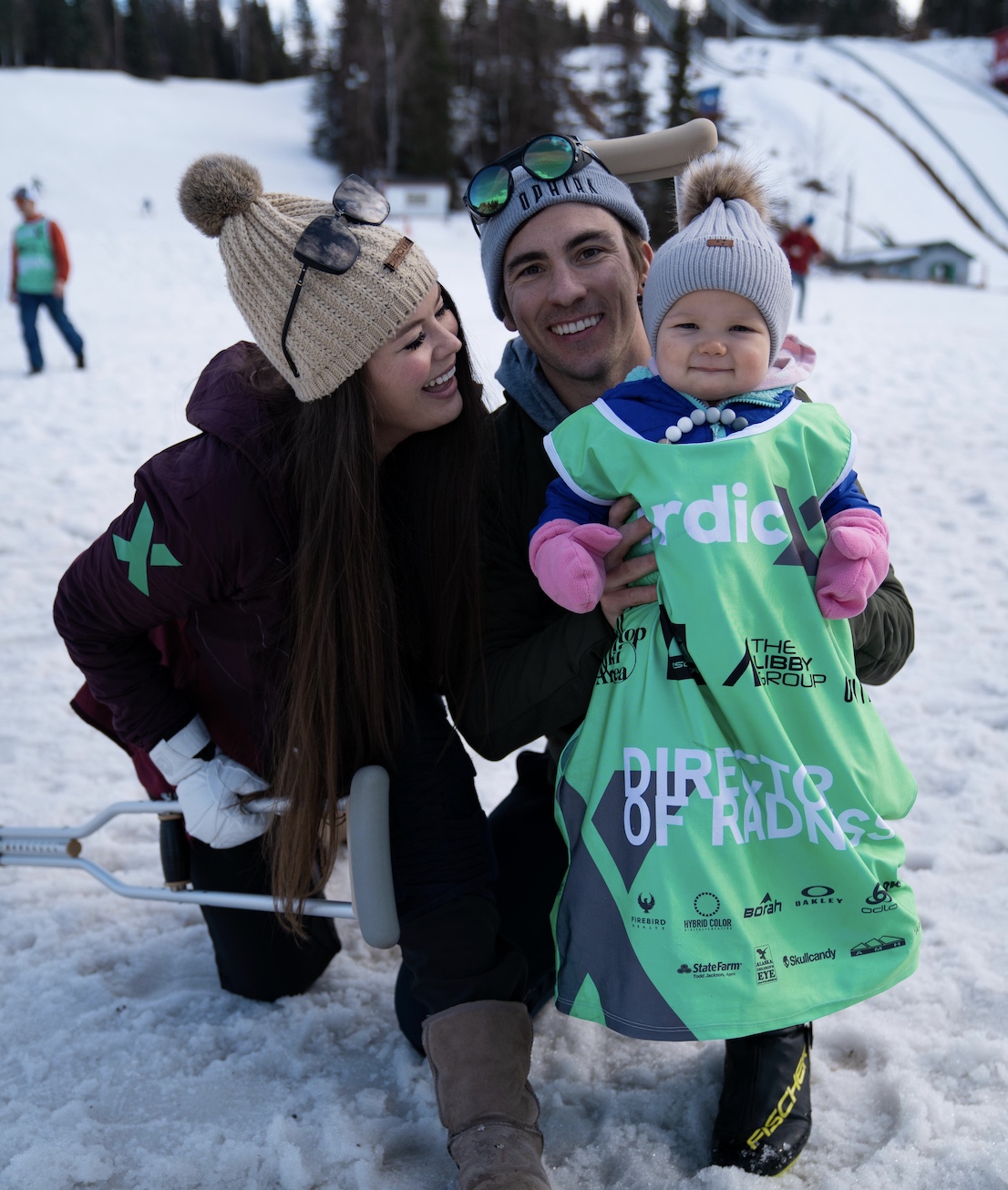
    Balancing CEO and family life with NordicX planning, Reese Hanneman hosts the xc ski event of his childhood dreams. (Photo: Ophira Group / NordicX)

    “I do want to say thank you to the team that we put together which includes Lauri Bassett (exec. administrator at Cross Country AK) and Rob Whitney, and the people at Hilltop, because without them, this absolutely would not have happened.”

    As for next year, “people are too excited about it for it to not happen again.” And he wants to see it happen for a second year. To pull it off, he anticipates putting together a larger team to more evenly distribute the workload, “just so that we can all maintain a healthy NordicX-life balance.”

  • Wednesday Workout: Efficient Fundamentals with Momentum Northwest

    Wednesday Workout: Efficient Fundamentals with Momentum Northwest

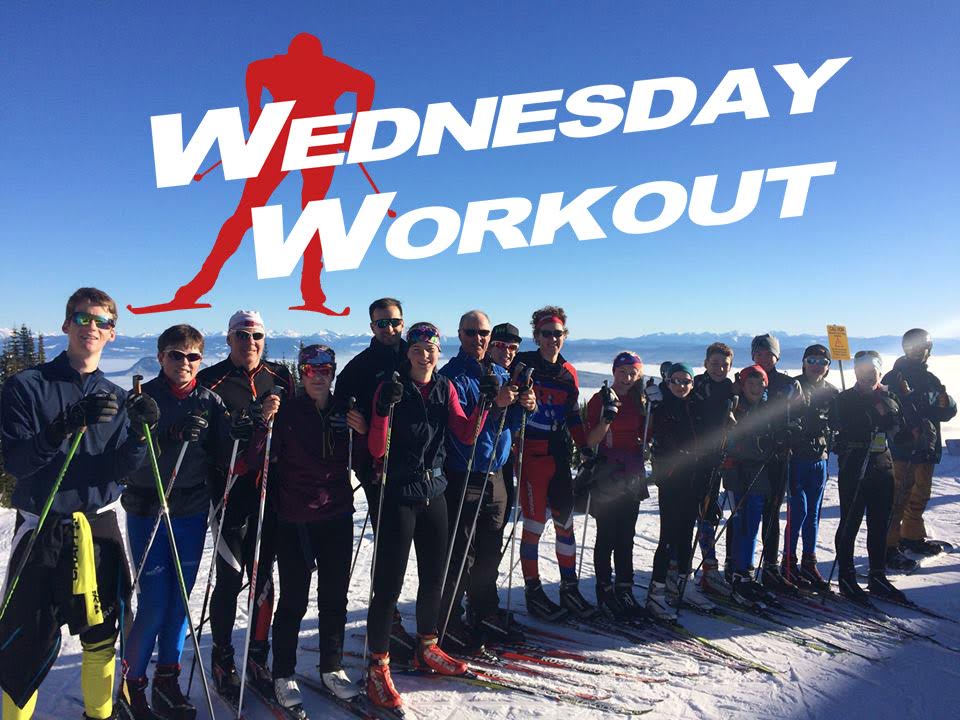
    Momentum Northwest group shot during their Thanksgiving camp at Sovereign Lake in Vernon, British Columba. (Courtesy photo)
    A Momentum Northwest group shot during the team’s Thanksgiving camp at Sovereign Lake in Vernon, British Columba. (Courtesy photo)

    Last year, a group of motivated skiers and parents founded Momentum Northwest, with hopes of creating a junior development club amidst the urban sprawl of Seattle, Wash. While Seattle is an outdoor-orientated city, abutting the Cascades to the east and the Olympic peninsula across the Puget Sound to the west, it is not exactly the prime nordic-ski territory that other urban junior clubs like those in Minneapolis, Denver, Salt Lake City, or even Boston metropolitan areas are blessed with.

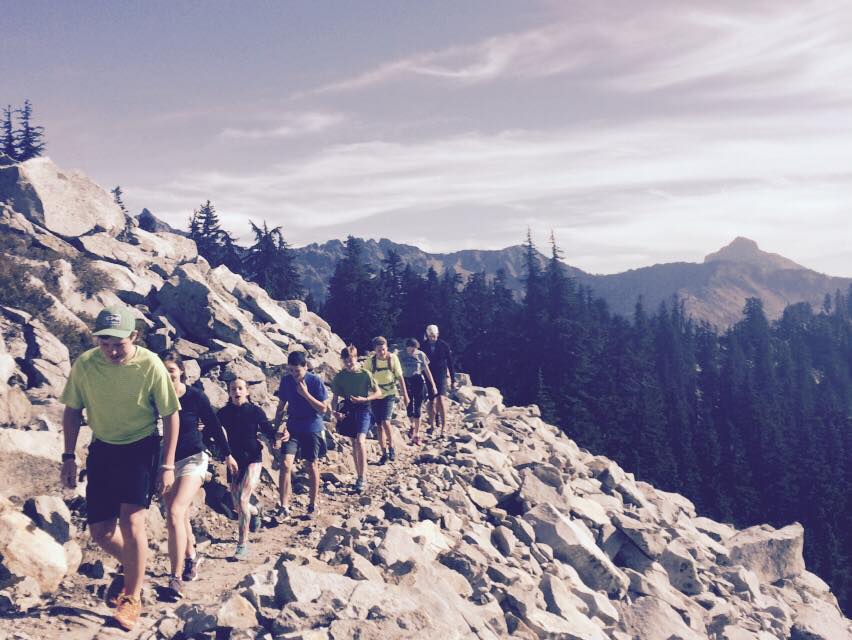
    Momentum Northwest logging some quality dryland miles. (Courtesy photo)
    Momentum Northwest logging some quality dryland miles. (Courtesy photo)

    Seattle lacks natural snow, and groomed trails are at least an hour away, too far for an after-school trip. Cold weather to make snow and accessible parks dedicated to trail grooming do not exist in the Seattle area either. In the winter, the sun sets early, and rain often falls continuously, eliminating the potential for any roller skiing. Making matters worse for a budding junior program, the area schools are separated by bodies of water with few bridges and the booming urban population means traffic is worse than ever.

    So, how do you solve this logistical nightmare and continue to grow in both attendance and skier ability?

    According to Momentum Northwest’s head coach and program director Sam Naney, in order to “find alternatives that allow for coaching opportunities while maximizing a training effect,” he takes advantage of local parks to “condense as much work as possible into that timeframe [the hour and half between the kids leaving school and the sun setting], in a manner that’s not simply going and doing hard intervals.” He believes focusing on fundamentals during this window of opportunity best prepares his athletes for their time on skis.

    Naney shared the following workout via email:

    “One of our standard sessions that we use year-round is done at Woodland Park in northwest Seattle. The focus of the workout is to keep touch with the key elements for skiing in one session: strength, speed, endurance and agility/technique. The bonus with this venue and workout is that it is condensed in space, so the group can stay together even with varied fitness levels.”

    The Workout:

    Warmup: 20-minute run to pull-up rings and dip bars

    • Classic and skate technique balance drills – 5 minutes
    • 100 push-ups (can be done in sets) and 50 hanging leg or knee raises (progress to bent arms and straight legs)

    10-minute run to long, gradual uphill path

    • 3 x the following:
      • double-legged frog hops (from deep squat) – 6 hops
      • Single-leg hops for distance – 5/leg
      • Lateral skate hops (face perpendicular to hill for first leg, then switch for other leg) – 5/leg
      • Hill sprints – 8 seconds

    5-minute run to flat grassy area

    • 20-minutes strength (45 seconds on, 15 seconds rest in circuit): use variety of exercises such as front plank, V-ups, kayakers, pushups, boat pose, mountain climbers, etc.

    Cool down: 5-minute run to return to van

    An advantage with this workout is that it introduces various concepts that the athletes can then conduct on their own during non-coached workouts. Plus, the ever-changing nature of the workout makes it fun to do in a large group and can offer a competitive element.

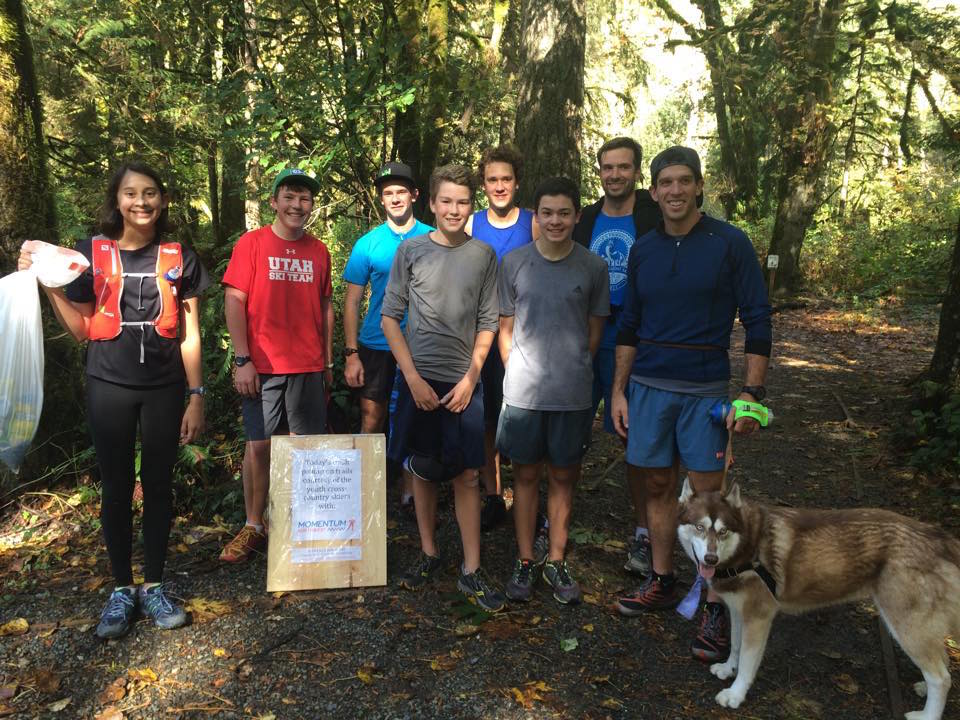
    Momentum Northwest Head Coach and Program Director Sam Naney (r) with some of his athletes during a trail-maintainence day. (Courtesy photo)
    Momentum Northwest Head Coach and Program Director Sam Naney (r) with some of his athletes and pup during a trail-maintainence day. (Courtesy photo)
  • Wednesday Workout: Classic Speeds from the USST’s Lake Placid Camp

    Wednesday Workout: Classic Speeds from the USST’s Lake Placid Camp

    FS-WW-USST-doublepole-lp
    Sophie Caldwell (USST/SMST2) and Ida Sargent (USST/CGP) in the middle of their first set of rolling speeds.

    LAKE PLACID, N.Y. – Fall is just beginning which means leaf-peeping, cider donuts, and pumpkin spice lattes are likely on your radar. However, once you get your head out of the changing leaves it may be time to focus on some new training goals as winter approaches. If you’re looking to maintain a plan similar to the U.S. Ski Team, that means that you are focusing less on volume and more on intensity before you head into the depths of fall.

    USST Lake Placid Camp Speeds Friday Sept. 5, 2014
    Jessie Diggins (USST/SMST2) warms up with agility before her classic speeds. Here she is partaking in the slalom.

    As part of their 2014 Lake Placid Fall Training Camp, the U.S. Ski Team took part in a classic speed workout aimed at activating quick twitch muscles and improving technical and tactical skills.

    According to women’s coach Matt Whitcomb, the workout is part of a greater push by the U.S. Ski Team to include complex workouts that have various levels of development. The goal is to have sessions that not only increase fitness but also create an infrastructure for athletes to progress their skiing in a technical manner.

    “At this time of the year we have tried to do is build an infrastructure for the athletes. The aim is create incredible workouts that have various levels of focus and various chapters,” Whitcomb said.

    The Lake Placid workout does just that. Starting with an agility warmup, it progresses from eight rolling double pole speeds to eight striding speeds that are bound to make you analyze your technique and leave you out of breath.

    The Workout: 1. Agility warmup 2.Two sets of four rolling double pole speeds on varying terrain 3. One set of eight striding speeds on an incline

    Where: Olympic Jumping Complex, Lake Placid, N.Y.

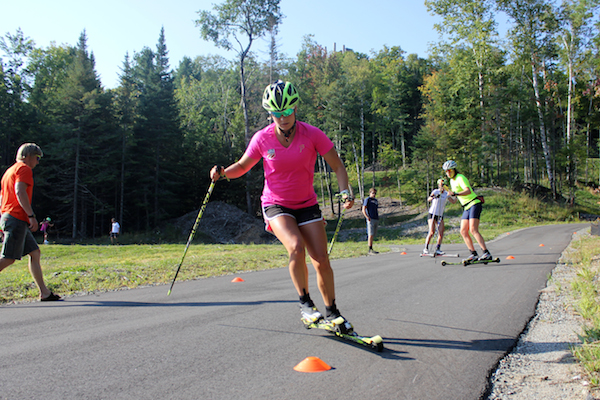
    What: Start your warmup as usual but after several minutes of easy classic skiing you should enter an agility course. This will not only help you warmup, but it will also help you engrain basic yet effective agility into your workout. The entire warmup should last roughly 20 minutes.

    In Lake Placid the USST used the following exercises that were placed in a loop. Athletes then completed the loop as many times as they felt necessary.

    – Right foot slalom (Enter a short slalom course with your left foot elevated and hop through the short course while keeping the left foot in the air)

    – Left foot slalom (Opposite of the right foot slalom)

    – Regular slalom 

    – Skip striding (Stride across a 50 m section while skipping during each stride. It creates an awkward feeling but after several attempts you should be able to get the hang of it.)

    After completing the warmup pick two sections of a 500 to 1000 meter loop to do your rolling speeds. Each section should have varying terrain including corners and rolling hills that are suitable for double poling. The distance should be no more than 100 meters and should last roughly 15 to 20 seconds. Complete the loop once to get a feel for the terrain then ski the loop four times, each time rolling into an acceleration in the same speed zone. If you need to take another loop for more rest, do so. Once you’ve completed four speeds in one zone, repeat the process in the second zone. While you are competing these speeds make sure that you are conscious of the path you choose around corners. Many skiers often begin to turn into the corner too late. Draw a chalk arrow where you or your coach think it is best for you begin your turn as a friendly reminder.

    When you’re done with the rolling speeds, find a short hill that requires striding. You will repeat a similar process as before, skiing in between each of your eight speeds. Before you begin each speed bring yourself to a complete stop and begin with a double pole start. Then progress into striding until you reach the top of the hill. To gain the most from this speed make sure that you enact a slight running technique. This will feel slightly awkward. While you will be sprinting up a hill, remember to be as relaxed as possible.

    Once done with the eight speeds, cooldown by skiing 20 to 30 minutes.

    Length: The entire workout should take anywhere from two to two and-a-half hours including warmup and cooldown.

    Ben Saxton (USST/SMST2) and Andy Newell (USST/SMST2) partake in the striding speeds in Lake Placid.
    Ben Saxton (USST/SMST2) and Andy Newell (USST/SMST2) partake in the striding speeds in Lake Placid.

    With such a complex workout, there may be times when you feel as if your technique is less than ideal. If that’s the case, get a coach or fellow skier skier to watch you and give you some technique advice.

    A unique aspect of the U.S. Ski Team is that they readily ask each other for help when they need it. If you want to train like the team, ditch the ego and ask your teammates, competitors, or random skiers for their advice.

    “An athlete can be the best teacher because we’re actually doing the motions” Liz Stephen explained. “A coach can see it and they can know exactly what to say but for some reason I sometimes can’t compute it. I went through trying to learn that run technique and it wasn’t until the speeds were done that Ida [Sargent] said to me ‘I think about keeping my hands in sight when we’re doing this.’ As soon as she said that it clicked for me.”

    To see more pictures from the workout check out our photo gallery from the training.

    USST Lake Placid Camp Speeds Friday Sept. 5, 2014
    Liz Stephen (USST/Burke) takes off her rollerskis to help her master the technique required for the striding speeds.
  • Wednesday Workout: Early Season Agility with the Alberta World Cup Academy

    Wednesday Workout: Early Season Agility with the Alberta World Cup Academy

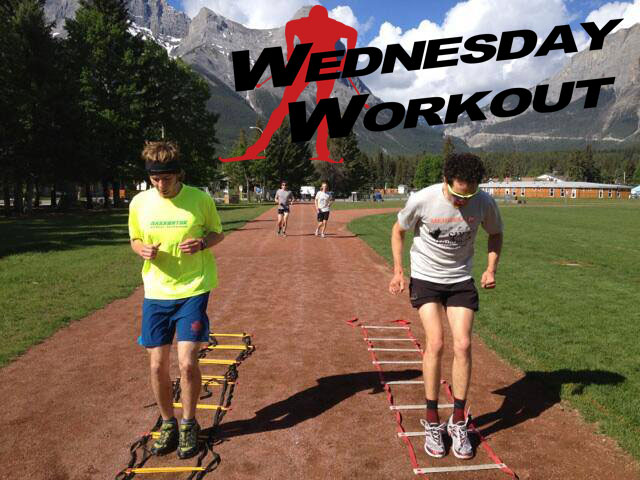
    Zeke Williams (l) races through the ladder during a track workout with Alberta World Cup Academy teammate Yannick Lapierre in Canmore, Alberta. (Photo: Stefan Kuhn)
    Zeke Williams (l) races through the ladder during a track workout with Alberta World Cup Academy teammate Yannick Lapierre in Canmore, Alberta. (Photo: Stefan Kuhn)

    This week’s workout comes to you from Ezekiel “Zeke” Williams, FasterSkier’s newest intern and an athlete at the Alberta World Cup Academy in Canmore, Alberta. This time last season, Williams said he really enjoyed doing what his team called, for lack of a better name, the Agility Sprint Track Workout.

    ***

    Canmore Alberta may be known for its skiers rather than its track stars but it still has a short 300-metre stone-dust track. And this is where the Alberta World Cup Academy men’s team was to be found, more often than not, on Thursday mornings in May and June 2013. As the athletes warmed up the coaches set up a pair of agility ladders on one of the track’s straight-aways and hurdles on the other. Finally, the coaches would draw ‘finish lines’ at about 10-seconds worth of sprinting past the end of the obstacles.

    After warming up we would partner up and do laps of the track. We would focus on speed through the agility ladders and hurdles and then sprint out of them. Then we’d slow back down to an easy jogging pace until we hit the next feature.

    The Workout: Agility Sprint Track Workout

    Total time: 1 1/2 hours

    Need: A track, running shoes

    Warm up: 30-minute jog

    10 track laps: 20 x 10-15 second sprints with about 1 minute easy jogging between each. Whole thing takes just over 20 minutes

    Cool down: 40 minute jog

    I like this workout for two reasons. First, it’s a lot of fun to do! Getting to race through the ladders and the hurdles against a teammate makes it a sweet competition.

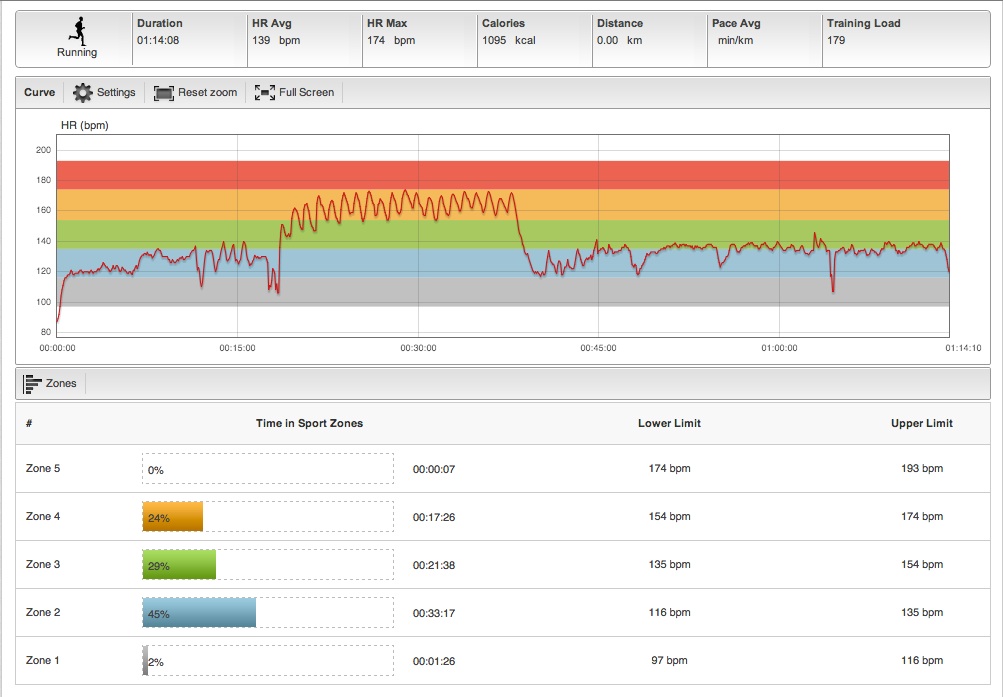
    Heart-rate data from Zeke Williams' workout: track laps are between about 18 and 38 minutes.
    Heart-rate data from Zeke Williams’ workout: track laps are between about 18 and 38 minutes. 

    Second, the workout gives a bunch of training benefits. At first glance it looks like a speed workout, but heart rate ends up at lactate threshold for most of the time because of the shortness of the sprints and the minute of easy jogging between them. Check out my heart-rate log during a similar workout here.

    Also, the agility component of the workout improves coordination at speed, which is nice to stay in touch with for when we get back into rollerski sprinting.

    Combine the agility work and lactate threshold building into the short 1:30 hour workout time and it makes for a solid early training-season session.

    ***

    About the Author: A Canadian cross-country ski racer with the Alberta World Cup Academy, Zeke spends most of his time in Canmore, Alberta, but calls Cantley, Quebec, his home. He thinks that you can learn a lot about a person from their goals — his is to ski really fast on the Winter Olympic race course in 2018. Check out his blog: ezekielwilliams.ca
    Zeke Williams, FS Intern
    Zeke Williams, FS Intern
  • Wednesday Workout: The Rest of the Work, Giving 110 Percent

    Wednesday Workout: The Rest of the Work, Giving 110 Percent

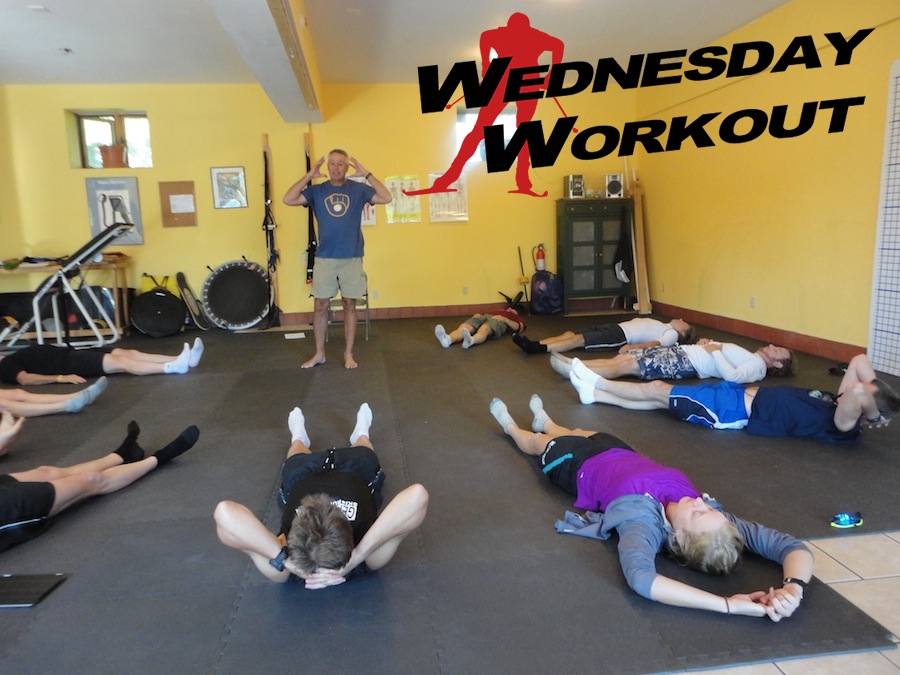
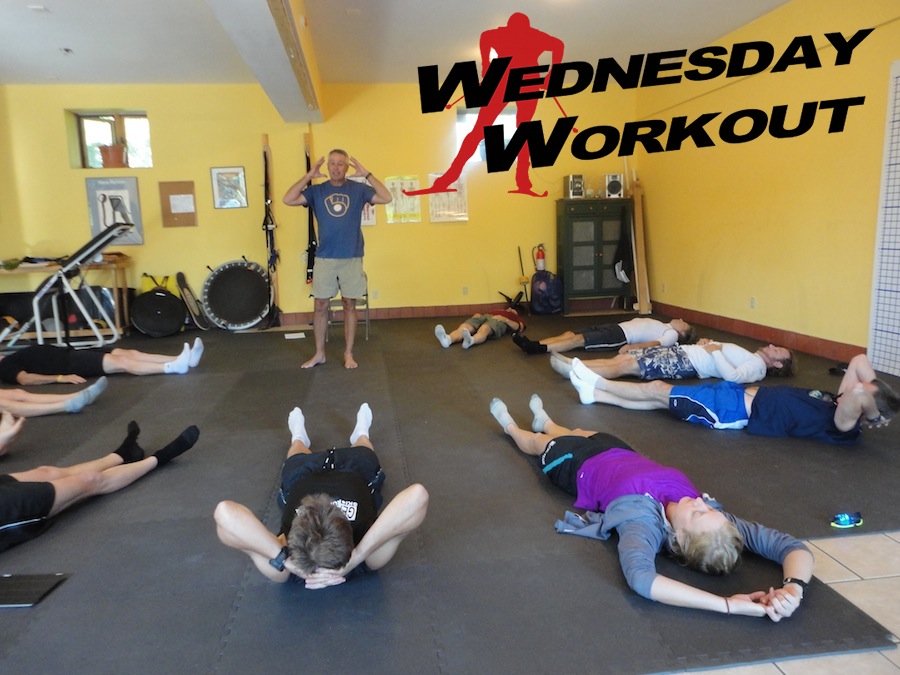
    Jay Tapper, who runs stretching programs for a company called ActivEdge, leads a masters group through some floor exercises and core work last fall. (Photo: Bill Pierce)
    Jay Tapper, who runs stretching programs for a company called ActivEdge, leads a masters group through some floor exercises and core work last fall. (Photo: Bill Pierce)

    By Bill Pierce

    Welcome to Wednesday Workout, the newest workout series on FasterSkier. This week, Central Cross Country (CXC) Elite Team coach Bill Pierce talks about going the extra 10 percent by being diligent about flexibility, recovery and agility. 

    ***

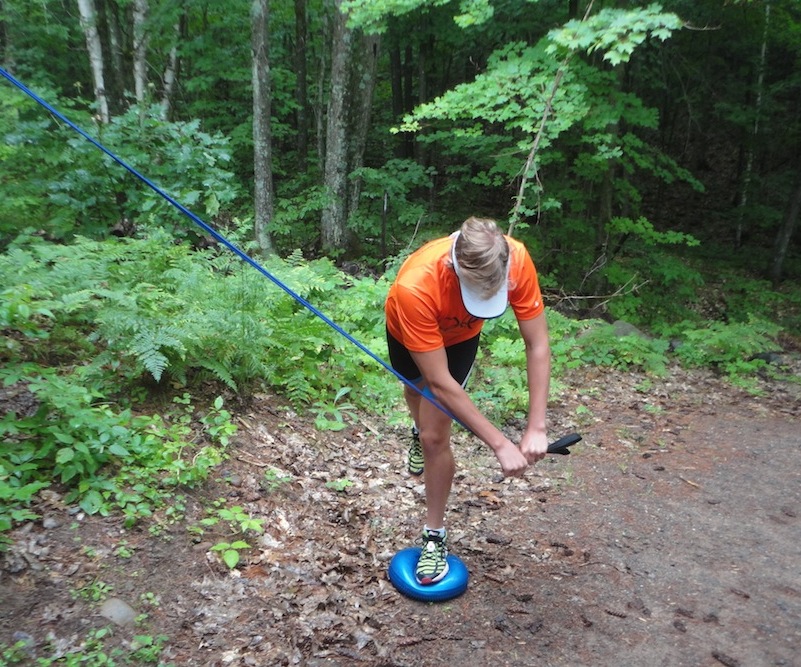
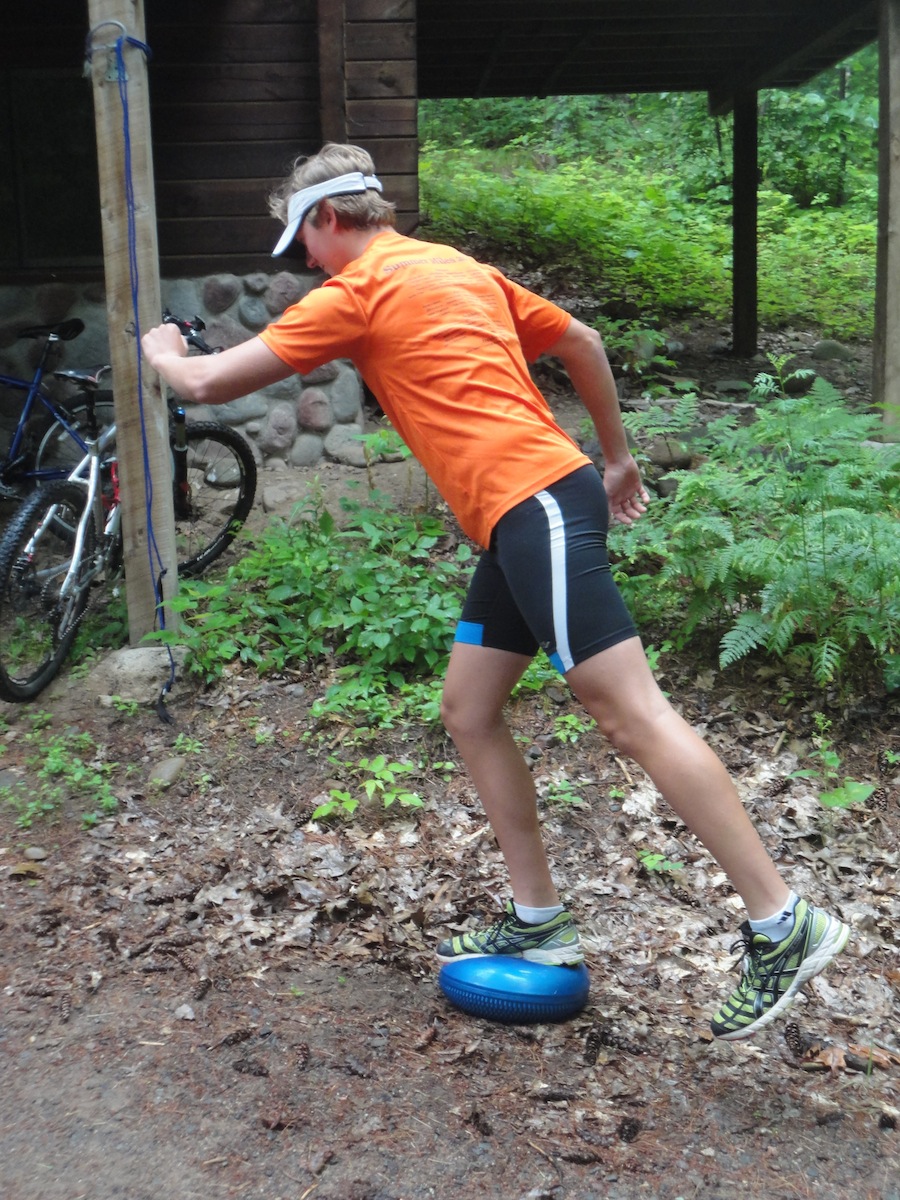
    A cross-over bungee pull: a simple leg and arm pendulum swinging and the other. While standing on the pillow, pull 90 degrees, twisting the shoulders and core but not the hips. This fires the glutes and the IT band for leg alignment and stabilization during the glide phase. Development of the glute is especially important in having a stable and aligned leg during the loading of the glide phase. (Photo: Bill Pierce)
    A cross-over bungee pull: a simple leg and arm pendulum swinging and the other. While standing on the pillow, pull 90 degrees, twisting the shoulders and core but not the hips. This fires the glutes and the IT band for leg alignment and stabilization during the glide phase. Development of the glute is especially important in having a stable and aligned leg during the loading of the glide phase. (Photo: Bill Pierce)

    I can think of quite a few workouts that I could call my favorites but I thought that I would contribute some work ideas that I have been focusing on as a coach with athletes and the team this season. When it comes to the workouts in our resume of experience, we are either working on endurance, intensity, or strength.

    When we add up all the time and ratios of this work it should be 100%. I tell athletes that if we are to be the best, you have to give 110%, all the time.  So, what do I think the other 10% is? Flexibility, physical recovery, and agility.

    At the beginning of the month Mikey Sinnott penned an article on stretching. It was spot on! Best advice was “make it a routine”, like brushing your teeth. We talk about it at clinics, camps, and workout sessions, but we just don’t do it on a consistent daily basis.

    While full-body stretching from extremities to core should be worked on, at the very least skiers should focus on stretching the body zones of power application; shoulders and chest, core, and hips/glutes/quads/hamstrings are the three areas that if ignored will very quickly tighten. Eventually a decrease in performance and an increase injuries will happen.  Bottom line, stretching will enhance your performance and keep you less prone to injury, ask Mikey!

    Shoulders and chest, core, and hips/glutes/quads/hamstrings are the three areas that if ignored will very quickly tighten.

    The second piece of the extra 10% is physical recovery. Foam rolling, stick massage, icing/baths, and sauna are just a few of the options for speeding recovery that athletes should be using. Foam rolling and massage are not options. Every athlete from juniors, collegiate, seniors, and masters should own and travel with a foam roller.

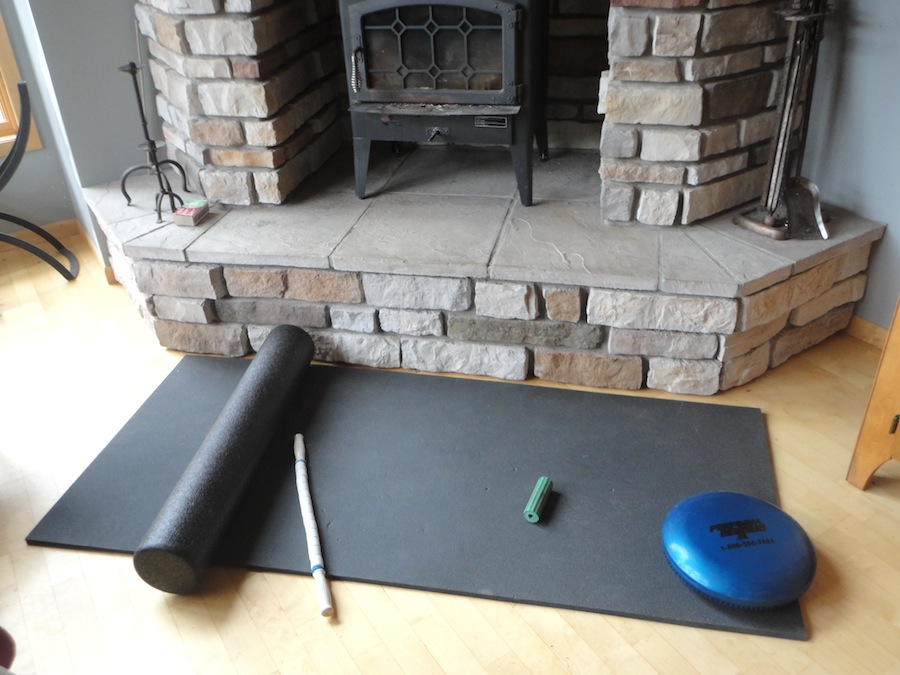
    Tools for success: a mat, foam roller (l), dowel, small ribbed roller (great for the bottom of the foot and helping prevent plantar fasciitis issues) and balance pillow (r). (Photo: Bill Pierce)
    Tools for success: a mat, foam roller (l), dowel, small ribbed roller (great for the bottom of the foot and helping prevent plantar fasciitis issues) and balance pillow (r). (Photo: Bill Pierce)

    While stretching is the first component to a post-workout routine, rolling should be the second. Self-massage or myofascial release (tissue work via gentle pressure or stretching) will help knead out trigger points, further stretch and massage the muscle, and increase circulation to the muscle to speed the recovery process. Again, developing the routine and habit of rolling the specific muscle groups used in a workout will speed your recovery and enhance your performance down the line.

    And the last piece of the extra 10% is agility. Being agile on skis is all about our balance skill. In order to possess that skill, we must train the muscle groups and movement patterns that help us achieve balance.  The more we work at it from the strength room to the trail, the quicker we learn it.

    A balancing exercise on what Bill Pierce calls the balance or air pillow.
    A balancing exercise on what Bill Pierce calls the balance or air pillow.

    One of the tools I have been using the past half dozen years is the balance (air) pillow, or the Bosu.  Athletes start by learning how to first stand and “swing out” on a pillow. Swinging out is nothing more than a pendulum motion of the arms and legs for warm up and movement pattern development. Push ups, squats and toe touches can all be exercises done off of unstable bearing in order to enhance the development of balance.

    Eventually, we incorporate many of their strength exercises onto a pillow so that they can simulate the instability of snow conditions in the power application phase of ski technique. Quiet a few of the exercises that we incorporate or design into a routine help develop the ability to quiet the core and stabilize the leg. While some athletes may have a better understanding of body awareness, it is mostly a learned and trained skill. You still have to do the work.

    So when you find yourself looking for that extra edge and advantage when you step to the line this winter, ask yourself, “Are you giving 110% everyday?” It’s never too late to start!

    Related: Foam Rolling – How To Start and Finish That Workout Right