From the FasterSkier archive — posts syndicated from athletes’ and coaches’ own blogs between 2004 and 2012, kept online as published. Current coverage is at fasterskier.com.

Tag: Agony Hill

  • Wednesday Workout: Make Your Own Agony Hill

    Wednesday Workout: Make Your Own Agony Hill

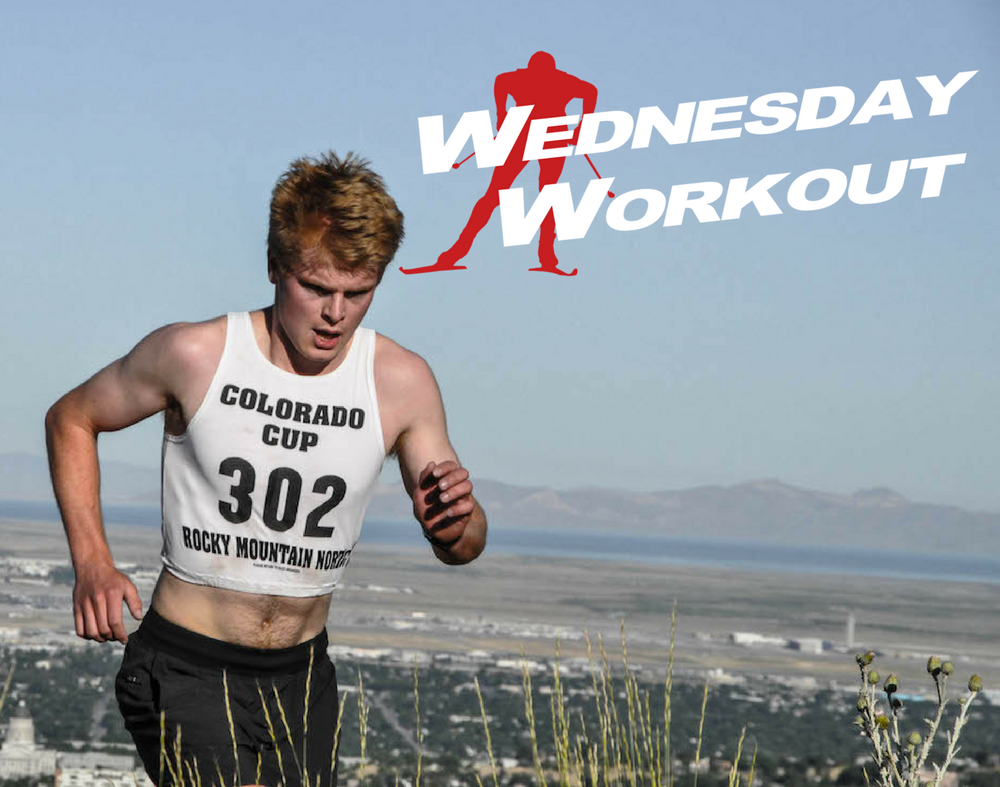
    Peter Wolter, of the Sun Valley Ski Education Foundation, racing to the fastest time up Agony Hill during the 2017 Western Regional Elite Group (REG) time trial in Salt Lake City, Utah. (Photo: Matt Whitcomb)

    When it comes to U.S. Regional Elite Group (REG) training camps, there are a few running themes that remain consistent across the country and from year to year. In the East, West and Alaska, participants in the U.S. Ski Team’s development program are tested with an uphill run, agility course and a roughly half-mile double pole, all of which are timed and done individually.

    Western REG coaches Mike Elliott and Bill Hokanson explained how the run is done at Agony Hill, adjacent to the University of Utah in Salt Lake City. The “hill”, on the 6,348-foot Mount Van Cott, has been an REG staple since 2006, according to Elliott, a three-time Olympian and former U.S. Ski Team (USST) member. It has been used since the 1990s by the USST, the University of Utah Ski Team, Wasatch Ski Academy, The Utah Nordic Alliance, Park City Nordic Ski Club, and Soldier Hollow Nordic Ski Club, Elliott wrote in an email.

    The Agony Hill course records set more than a decade ago still stand, which Hokanson explained was partially due to trail construction since.

    “We’re not 100% convinced the modern course is exactly equivalent to the historical one,” wrote Hokanson, head coach of the Wasatch Nordic Ski Academy in Park City and Salt Lake City.

    For instance, Morgan Arritola set the junior women’s record of 16:55 minutes up the 1.7-kilometer climb in 2004. The rest of the course records were set before that by John Aalberg (12:46), Nancy Fiddler (15:46) and Rob Whitney (reportedly under 14:00) for senior men, senior women and junior men, respectively.

    “Variations in the Agony Hill TT course over the past 3 – 4 decades may in part account for the difficulty contemporary athletes have faced in trying to set new records,” Hokanson wrote.  “However the records are held by 4 of the toughest, fittest, most talented athletes of all time, which may fully account for the tenacity of their record efforts.”

    Here’s how you can replicate the Agony Hill time trial in your own backyard:

    “Agony Hill can be developed anywhere and it does not have to be all uphill,” wrote Elliott, now executive director of Rocky Mountain Nordic in Durango, Colo. “My coach, Dolph Kuss, used a course on the edge of Durango when I was in college a Fort Lewis college in 1965 & 1966.  It was a loop next to the local cemetery.  The area is still called test tracks.”

    Elliott recommends a climb lasting 12 to 15 minutes for athletes 18 and older. He also suggested starting athletes individually (via interval starts).

    “It can be all out for one lap or Level 3 below threshold intervals,” Elliott added. “Try and have around the same time each time.  It can be a 15-minute run to see how far you can go.  Like Agony Hill, it can be all uphill.”

    He explained that these kind of time trials measure fitness, pacing and rate of improvement over time, and recommended doing this workout once every other week or once every three weeks.

    The Workout: Agony Hill uphill time trial

    1. Warmup: Light running and stretching for 30-40 minutes

    2. Uphill Run: Interval-start recommended

    • Option 1: One time, all-out effort: see how far up the hill/mountain you can go
    • Option 2: Level 3 intervals: aim for consistent times

    3. Cool down

    Agony Hill specifics:

    • Where: Mount Van Cott, east of the University of Utah in Salt Lake City
    • Course map
    • Course length: 1.7 kilometers
    • Peak Elevation:  6,348 feet
    • Vertical climb: 367 meters
    • Unofficial course records:
      • Senior men: John Aalberg (12:46)
      • Senior women: Nancy Fiddler (15:46)
      • Junior Men: Rob Whitney (reportedly under 14:00)
        • 2nd fastest junior male: Glen Randall (14:34)
      • Junior Women: Morgan Arritola (16:55)
    • This year’s winners:
      • Peter Wolter (Sun Valley Ski Education Foundation): 15:40
      • Novie McCabe (Methow Valley Nordic Ski Club): 17:29
  • Western REG Camp Recap: Agony Hill and All

    Western REG Camp Recap: Agony Hill and All

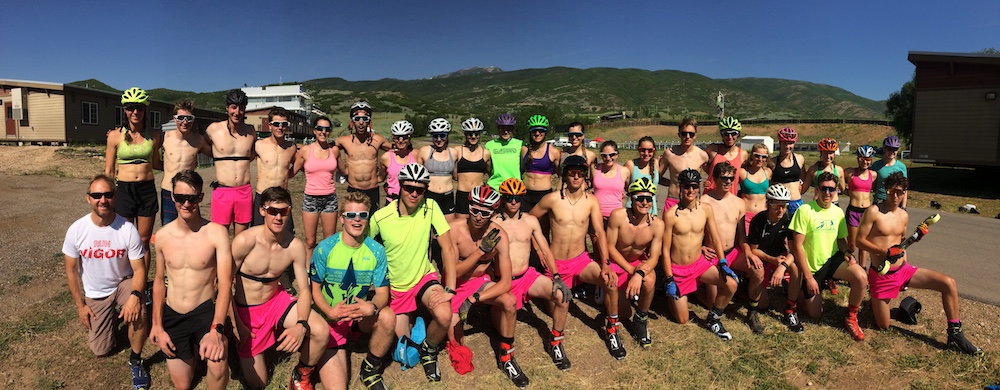
    All 34 Western REG participants and U.S. Ski Team Development Coach Bryan Fish after L3 intervals at Soldier Hollow in Midway, Utah. (All photos: Mike Elliott)

    The following recap was written with the help of Mike Elliott, director for the Western Regional Elite Group (REG) camp, which took place June 17-24 in Park City, Utah. FasterSkier encourages coaches and athletes from any regional offseason camps (dryland or on-snow, in the U.S., Canada or abroad) to submit their own recaps and photos to info@fasterskier.com.

    ***

    For seven days in June, 34 athletes (17 women and 17 men) from five western U.S. divisions (Rocky Mountain, Intermountain, Far West, Pacific Northwest, and High Plains) came together in Park City, Utah, for the annual Western REG (Regional Elite Group) camp in Park City, Utah.

    With the help of U.S. Ski Team coaches Matt Whitcomb and Bryan Fish, a staff of nine led the camp, including Gus Johnson (Auburn Ski Club), Dan Weiland (Ski and Snowboard Club Vail), Greta Anderson (Steamboat Springs Winter Sports Club), Paul Smith (Sun Valley Ski Educational Foundation), Molly Susla (Crested Butte Nordic Team), Pierre Niess (Leavenworth Winter Sports Club), Bill Hokanson (Wasatch Nordic Ski Academy), Mike Elliott (Rocky Mountain Nordic), and camp chef Nancy Elliott (Durango Nordic Ski Club).

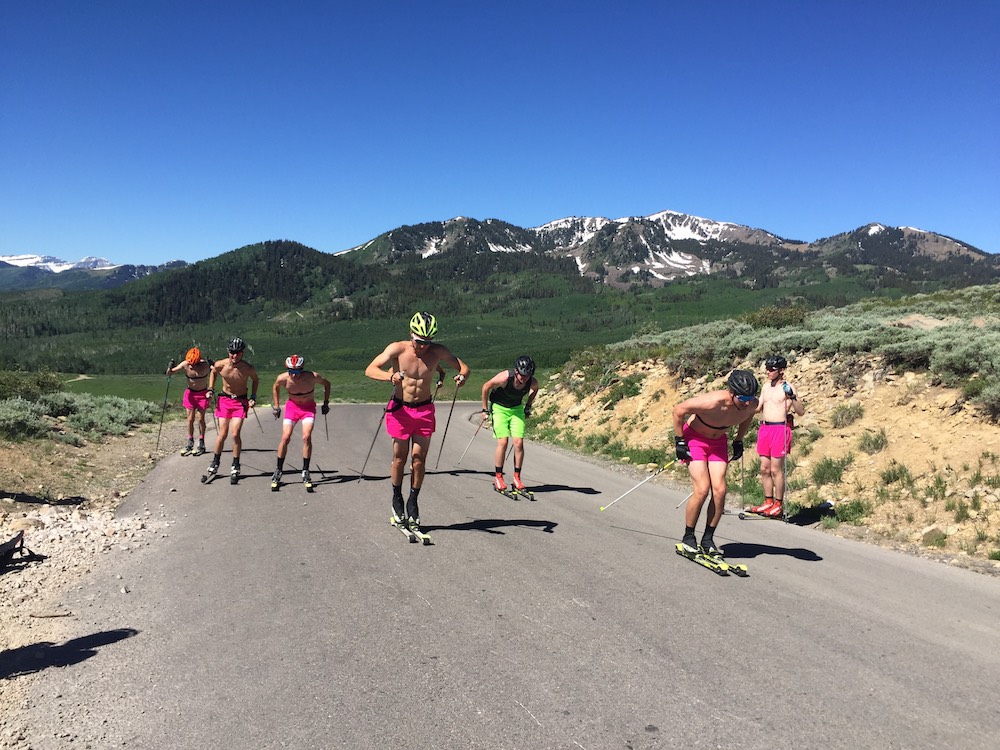
    An over-distance classic ski from Pine Canyon to Empire Pass out of Midway, Utah. Inspired by the U.S. Ski Team women who wear matching socks for relays, the camp’s male athletes bought pink shorts at the outlets in Kimball Junction to show their unity. “Coaches, however, did not make the purchase of pink shorts,” camp director Mike Elliott explained. (Courtesy photo)

    According to camp director Mike Elliott, athletes were selected based on two factors which were weighed equally, 50/50: their final USSA points at the end of last season and their best two out of three races at 2017 Junior Nationals.

    The first training session of the week was held at the infamous Agony Hill next to the University of Utah Hospital in Salt Lake City. Peter Wolter of Sun Valley posted the winning time for the men and Novie McCabe (Methow Valley Nordic Ski Club) was the fastest woman to the top.

    In the agility sprint, Sarah Morgan, of Park City’s Wasatch Nordic Ski Academy, claimed first for the women and James Schoonmaker (Auburn Ski Club) was the fastest man. Another Wasatch skier, Madison “Maddie” Morgan won the double-pole time trial, along with Evan Barbier of Steamboat Springs.

    “Working with such talented young skiers is so much fun and rewarding,” Elliott wrote in an email. “We often left the lodging facility at 6:30am or 7am to beat the heat. The athletes were always on time and motivated and organized with the proper training equipment. There was a high degree of Esprit de Corps among all the participants. They competed in the three events that were timed, and they supported each other in the other training sessions. Some of the skiers had a goal to qualify for the National Elite Group training camp scheduled later in Park City.”

    Of the skiers that attended this year’s camp, several were Junior National medalists, including Wolter, McCabe, Maddie Morgan, Haydn Halvorsen, Sydney Palmer-Leger, Sofia Shomento, and Marin Coletta. Another multiple medalist, Johnny Hagenbuch was scheduled to attend this year’s Western REG, but broke his leg the weekend before the camp, Elliott explained.

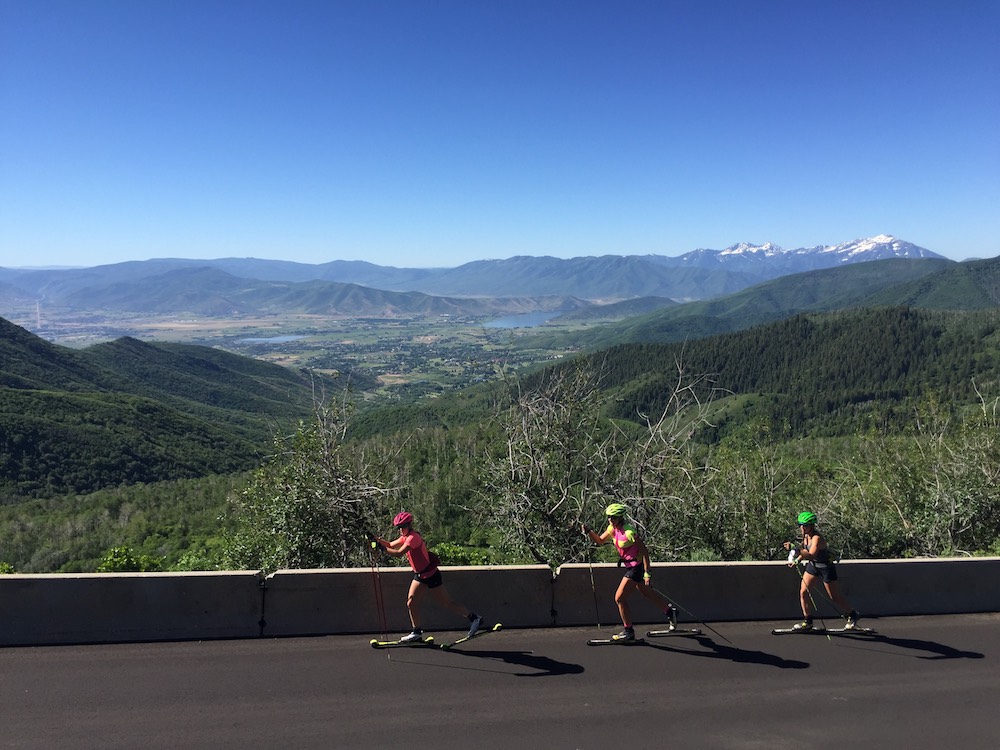
    An over-distance classic ski from Pine Canyon to Empire Pass out of Midway, Utah, at the 2017 Western REG camp in June. (Photo: Mike Elliott)