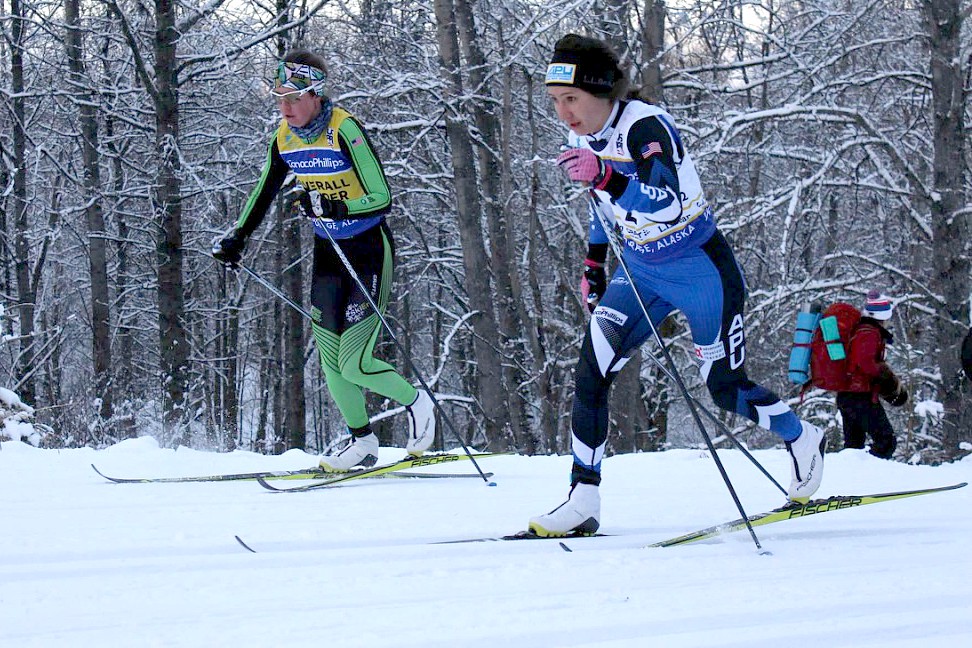
From the FasterSkier archive — posts syndicated from athletes’ and coaches’ own blogs between 2004 and 2012, kept online as published. Current coverage is at fasterskier.com.

Tag: Alaska Pacific University

  • After the World Cup, Rosie Brennan Still Has More Skiing Ahead

    After the World Cup, Rosie Brennan Still Has More Skiing Ahead

    This article was made possible through the generous support of our voluntary subscribers. If you value coverage like this, please support FasterSkier with a voluntary subscription.

    Rosie Brennan (USA) celebrates in Ruka (FIN) in 2023 after finishing 2nd in Saturday’s 10 k classic race. The result was Brennan’s first classic World Cup podium of her career. (Photo: Nordic Focus)

    Rosie Brennan has stepped away from the World Cup, though she’s still figuring out exactly how to define the next chapter in her life.

    Retirement is the easy word, and in some ways, the accurate one. She is done with the World Cup. She is done with the version of cross-country skiing that demands five months in Europe, constant travel, start lists, team schedules, narrow margins and the unrelenting pressure of measuring a career in seconds. 

    After more than a decade with the U.S. Ski Team, three Olympic appearances, hundreds of World Cup starts, two World Cup wins and a place among the best all-around skiers the United States has produced, Brennan has stepped away from the highest level of the sport.

    But if retirement is supposed to mean the end of something, Brennan is not quite sure the word fits.

    “Retirement has been a tough word for me,” Brennan said. “It feels very black and white.”

    “One of my friends and older teammates called it rewiring.”

    To Brennan, that seems closer. She’s not walking away from skiing so much as trying to build a new relationship with it. The shape of her days may change, and her focus will no longer be “110 percent” on racing, but skiing itself remains too central, too familiar and too joyful to simply leave behind. 

    “I love skiing and ski racing,” Brennan said. “I want to continue to be able to use my body in ways that challenge and push me in the world of skiing and competition again at some point, maybe sooner than later.”

    “Skiing is just not that for me,” Brennan said of the idea of retiring and never doing the thing again. “It’s something that I hope to do till the day I die, honestly.”
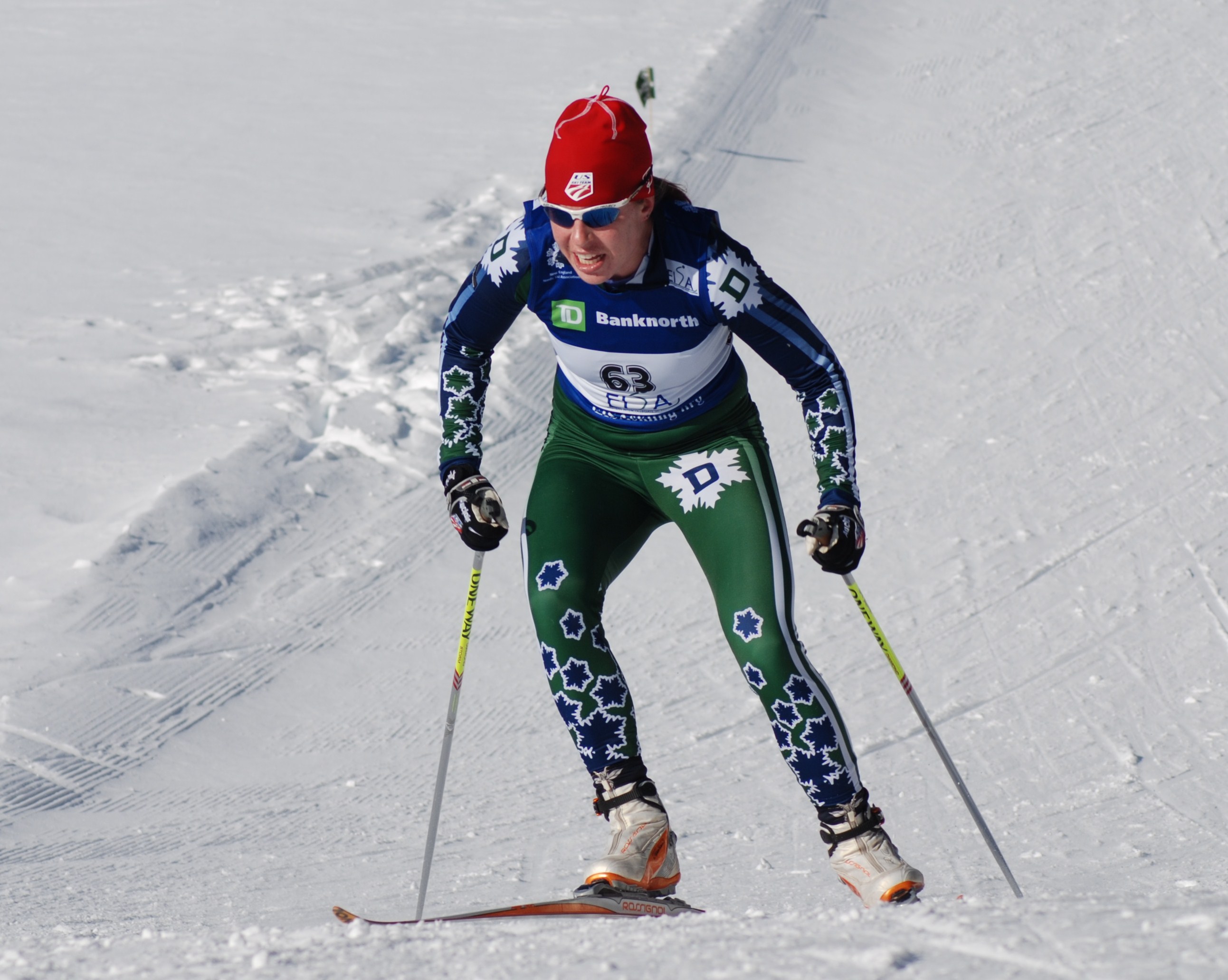
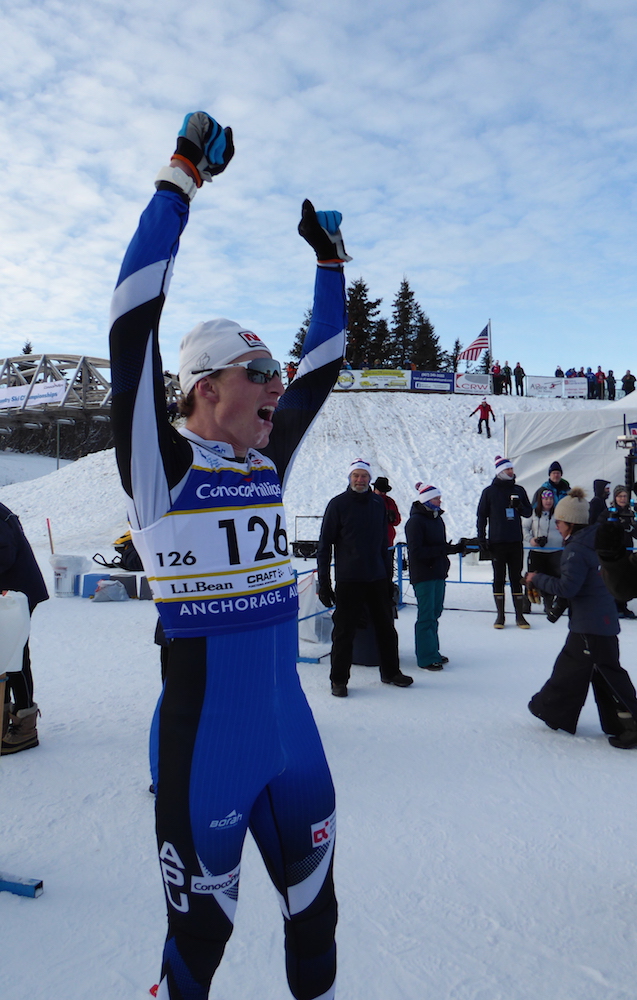
    The first uploaded image of Rosie Brennan in the FasterSkier archives after she won both EISA women’s races in Feb. 2009 (Photo: Ruff Patterson)

    A Career Built on Perseverance

    When Brennan looks back now, the first thing she points to is not a specific race, podium or result sheet, but rather the belief in herself that made all of those things possible.

    “I’m really proud of, I guess, the perseverance of my career,” Brennan said. “It takes perseverance to have longevity in a career, to weather the inevitable obstacles that appear throughout a long career, and to find belief when things aren’t going your way.”

    That perseverance became the throughline of a career that took time to reveal itself. Brennan was not a teenage prodigy who moved smoothly from junior success to World Cup podiums. She came to skiing later than many of her peers, waited longer for the biggest results and had to weather the doubts that creep in when progress slows, injuries interrupt momentum and other paths begin to look more practical. Then when the results did arrive, those earlier years felt even more meaningful. 

    In a career defined by patience and progress, one of the things Brennan says she is most proud of is not just that she reached the top level, but that she continued to expand what she could do once she got there. She never settled into one lane as only a distance skier or only a classic specialist. Instead, she kept working to become more complete, finding reward in the challenge of improving across formats, distances and techniques.

    “I’m also proud of the range that I maintained throughout my career,” Brennan said. “Continuing to be an all-arounder throughout my career and finding some success in all the disciplines and both techniques throughout — that was something that was just, I don’t know, I guess a personal challenge that I found a lot of reward in.”

    That sense of progress extended beyond Brennan’s own results. Her career also unfolded during the strongest era in the history of American women’s cross-country skiing, and as the U.S. team continued to raise its standard internationally, Brennan came to see herself as part of something larger than her own race days.

    “I’m proud to have been part of a really amazing wave of American women skiing,” Brennan said, “and to have done my best to carry that wave forward and to help push things forward and pass things on to future generations as well.”
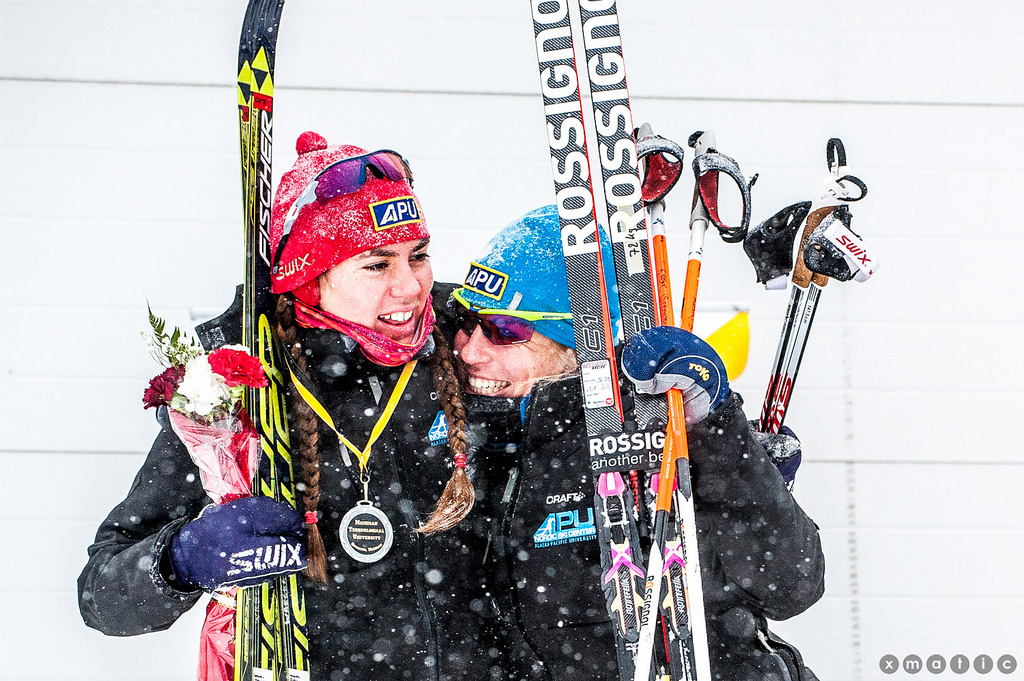
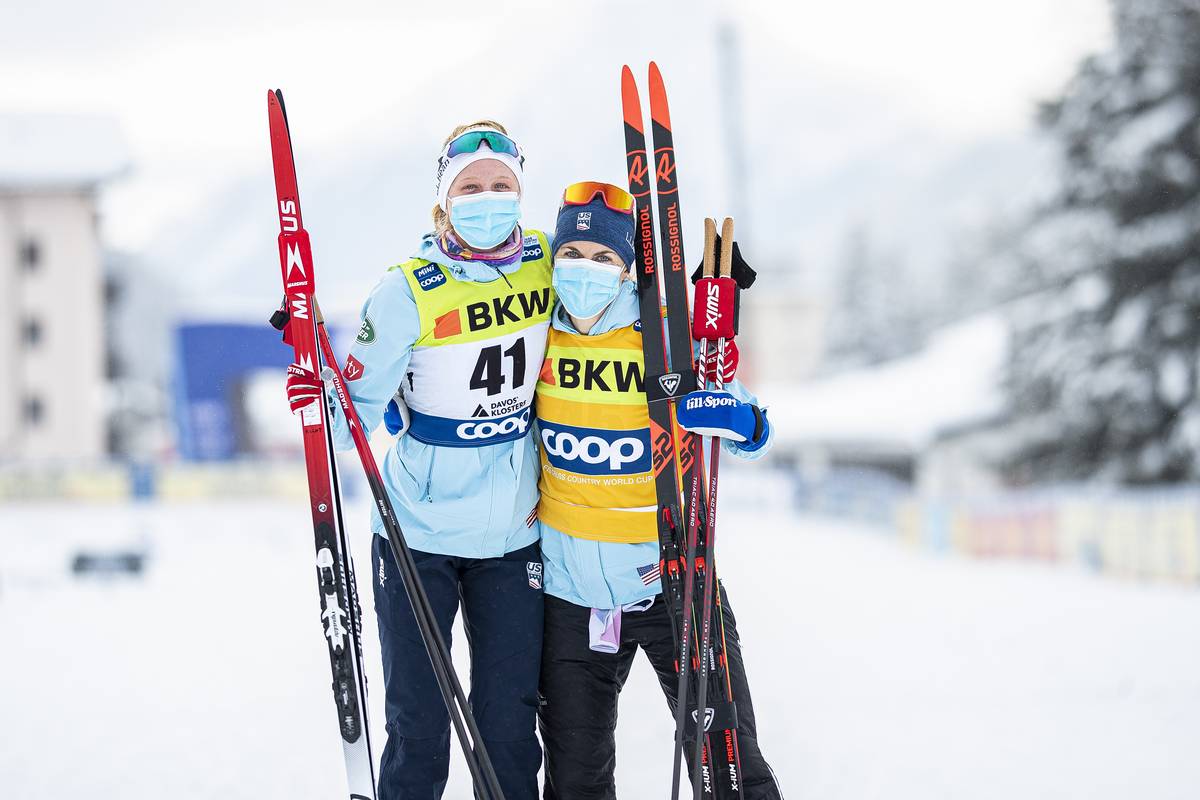
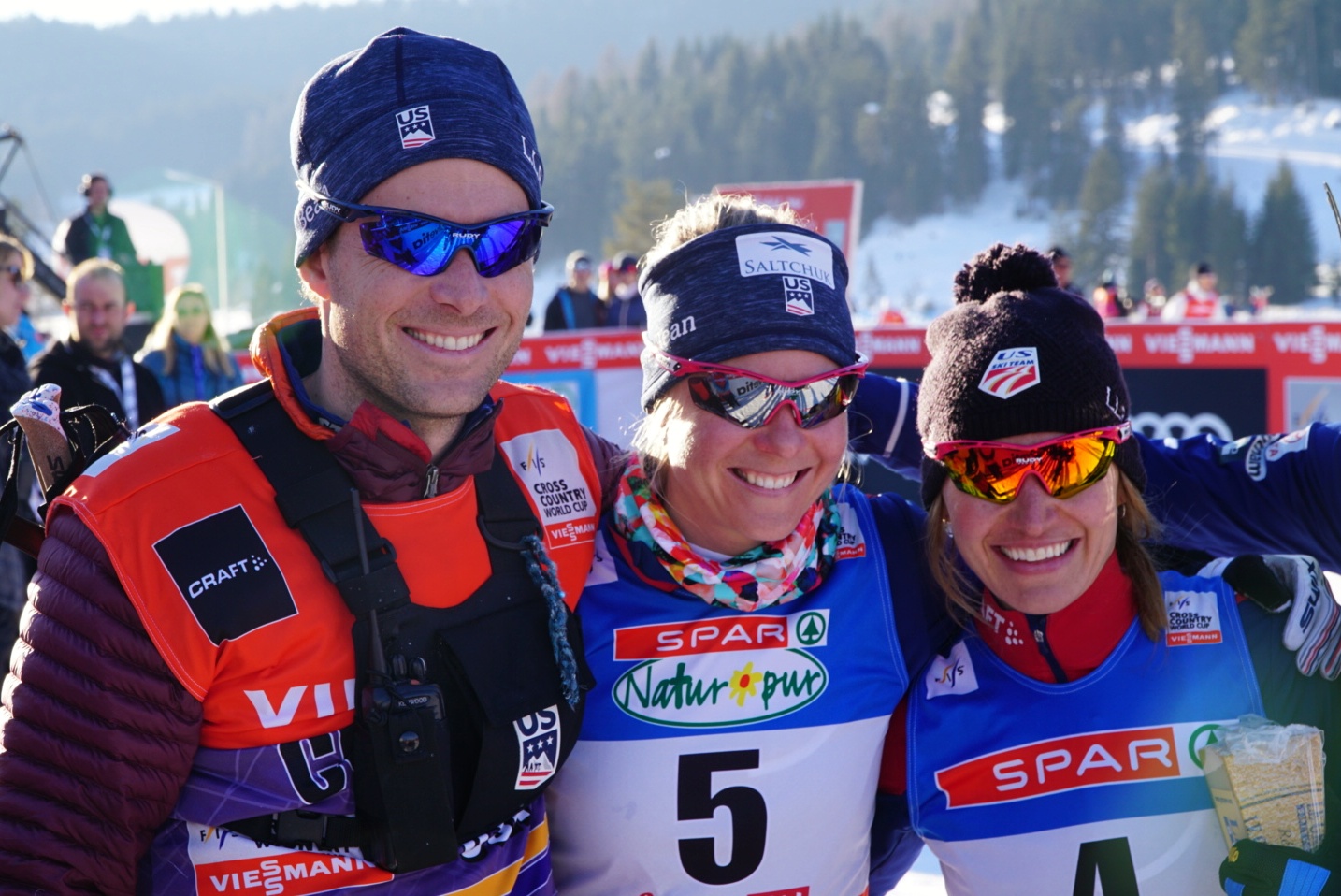
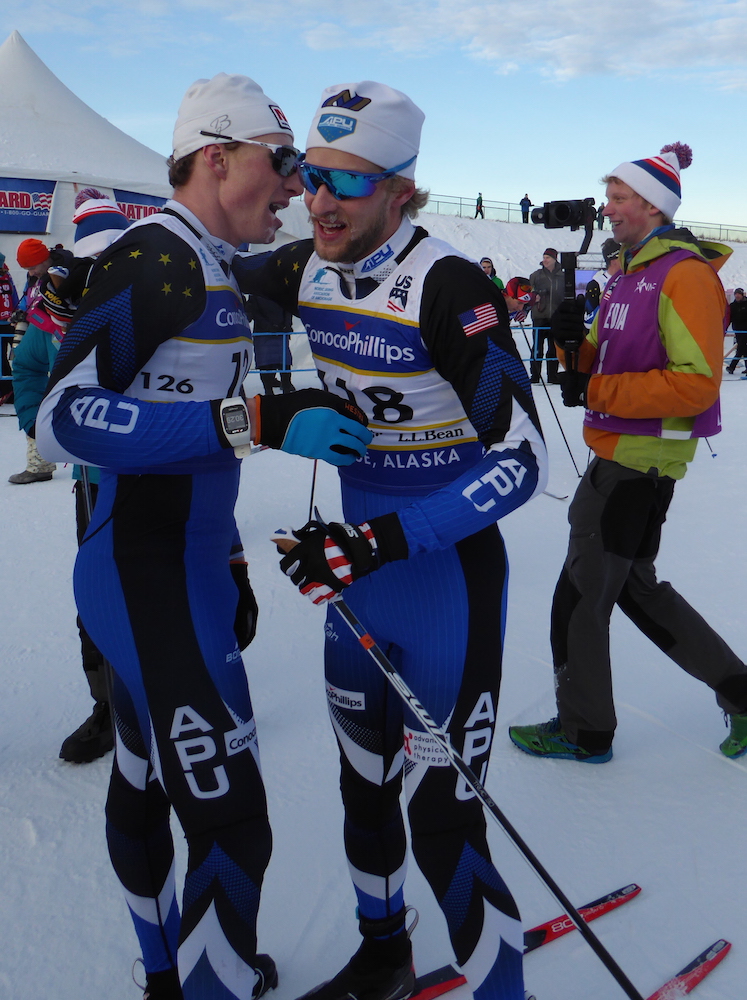
    APU’s Rosie Brennan (r) embraces close friend and APU teammate, Becca Rorabaugh (l), after they finish first and second, respectively, in the Women’s 1.5 k Classic Sprint at the 2015 U.S. Cross Country Championships in Houghton, Mich.

    Starting Late, Staying Long Enough

    Brennan started skiing at 14, late by the standards of an international sport where many athletes first step onto a set of fish scales as young children. But she never saw her development as a simple matter of being behind.

    “I was older when I kind of found top-level success in podiums on the World Cup,” Brennan said. “But because I started skiing so late, I guess I never really saw it that way.”

    In her mind, the clock did not start with age, but when she first found herself on a pair of skis.

    “If you look at when I started at 14 to when I had success, those accumulated hours of skiing and training are probably actually fairly equivalent to somebody who started at eight,” Brennan said. “So I always just chose to look at it that way, as if it was just going to take time to learn those skills, and it was fine that I started late.”

    “I’m not good at being patient,” Brennan said.

    But skiing gave her little choice. It took time to develop the specific strengths required of the sport, to learn how to race and to absorb the small skills that many skiers pick up almost without realizing it when they start young. Brennan had to build the engine and the instincts at the same time.

    There were moments when she wondered whether it was worth it. In college, after injuries and difficult stretches, she decided she was done with skiing when she graduated. She looked toward other paths. At times, she quit, or at least tried to. But the sport kept pulling her back.

    “I think what I enjoyed the most that made me keep coming back was just the challenge of it,” Brennan said. “Waking up every day with some purpose to get a little bit better, and to have the challenge of seeing if it was possible.”

    Eventually, that challenge became a way of life.

    “I just learned to really enjoy and thrive and love the lifestyle of skiing,” Brennan said. “And so that made it a lot easier to just keep coming back.”

    Brennan is quick to point out that she did not do that alone. The support systems around her mattered. At Dartmouth and later at Alaska Pacific University, she found teams and coaches that helped her keep believing when she could not quite do it herself.

    “There were definitely moments that it’s easy to question, and it’s hard to keep going,” Brennan said. “I was really fortunate to be part of some really, really amazing groups, and have coaches that fostered that belief in me, and made me see things in myself that I couldn’t see on my own.”
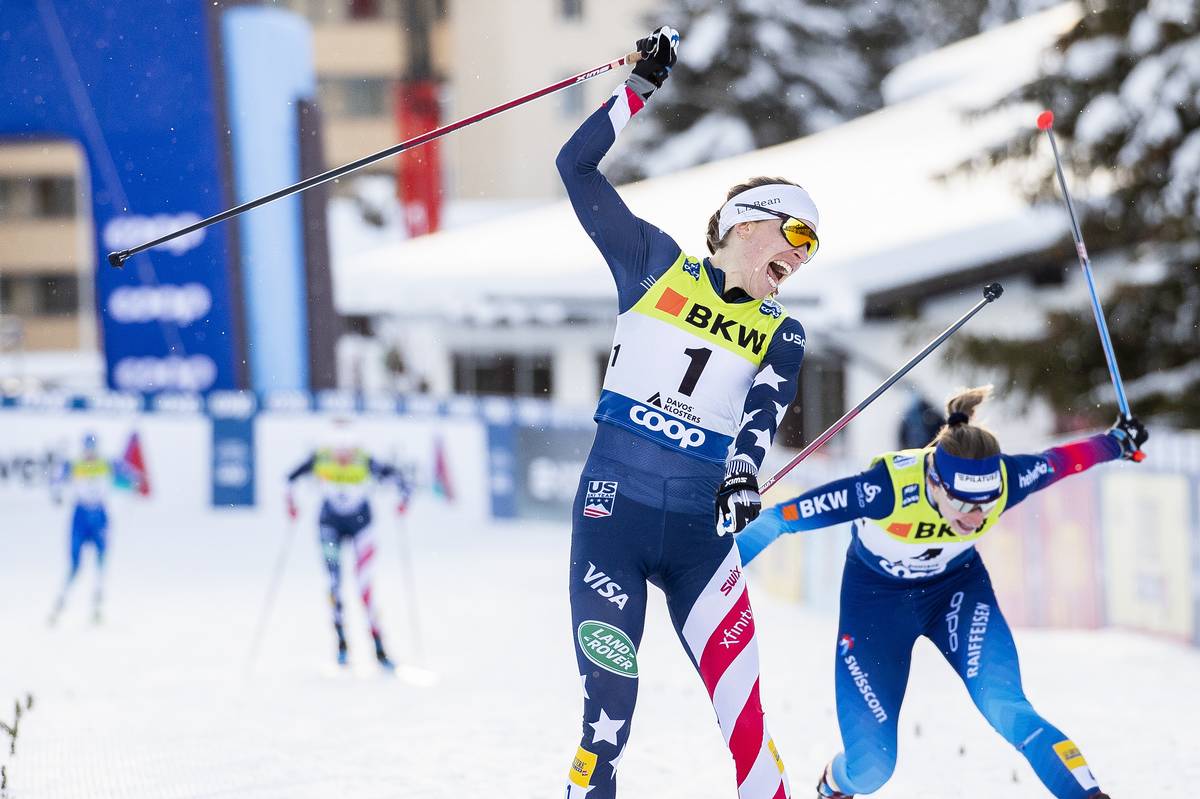
    Rosie Brennan celebrates her victory and first World Cup podium after the freestyle sprint in Davos, Switzerland. Photo: NordicFocus

    When the World Was Put on Notice

    For years, Brennan’s career was a slow and steady build, but then came that famous weekend in Davos.

    In December of 2020, during a World Cup season shaped by the uncertainty of the pandemic, Brennan won twice in two days in Switzerland. On Saturday, she claimed her first career World Cup victory, in a freestyle sprint, and then the very next day, she won again in the 10-kilometer freestyle.

    From the outside, it looked like a breakthrough and a historic moment for U.S. skiing. Brennan does not dispute that. She says what stays with her the most now is not only the winning, but everything she had to manage in order to ski that way.

    “Davos 2020 was definitely a breakthrough moment for me,” Brennan said. “That year was challenging for the whole world, and being a ski racer during that time certainly had its challenges too.”

    The uncertainty of that season weighed heavily. Rules changed, travel was complicated and athletes did not always know whether races would happen. The risk of illness carried not just health concerns, but career implications for athletes whose bodies were their livelihoods.
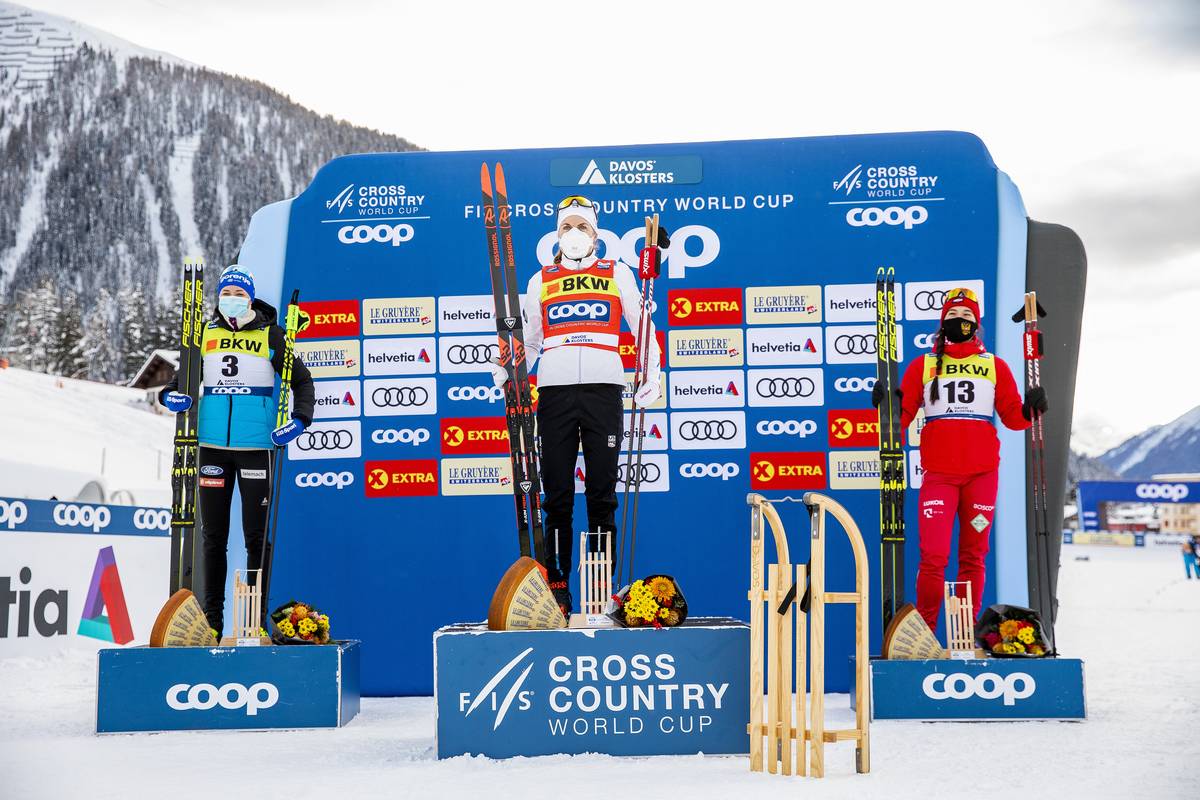
    Taking the victory and the sled, Rosie Brennan stands atop the podium in Davos, Switzerland. (Left to right) Anamarija Lampic (SLO) 2nd, Brennan (USA) 1st, Natalia Nepryaeva (RUS) 3rd.

    “I really struggled with the anxiety of it all,” Brennan said. “Just never knowing — traveling in foreign countries, where the rules were changing all the time, and you didn’t know what would happen if you got sick.”

    Hence why Davos still means something more than two entries on a results page. Brennan was proud of the wins, of course, but she was even more proud of how she managed everything around them.

    “It definitely showed me what I was capable of,” Brennan said, “and that I could manage these really high-stress environments and all the uncertainty and thrive in that setting.”

    That weekend did not just give Brennan her first World Cup wins. It helped confirm the range she had been building toward for years. Later that season, she became the first American to hold the overall World Cup leader’s bib, sprint leader’s bib and distance leader’s bib at the same time. Which was both a major accomplishment and also a fitting reward for all the work she had put in to become a more complete racer.
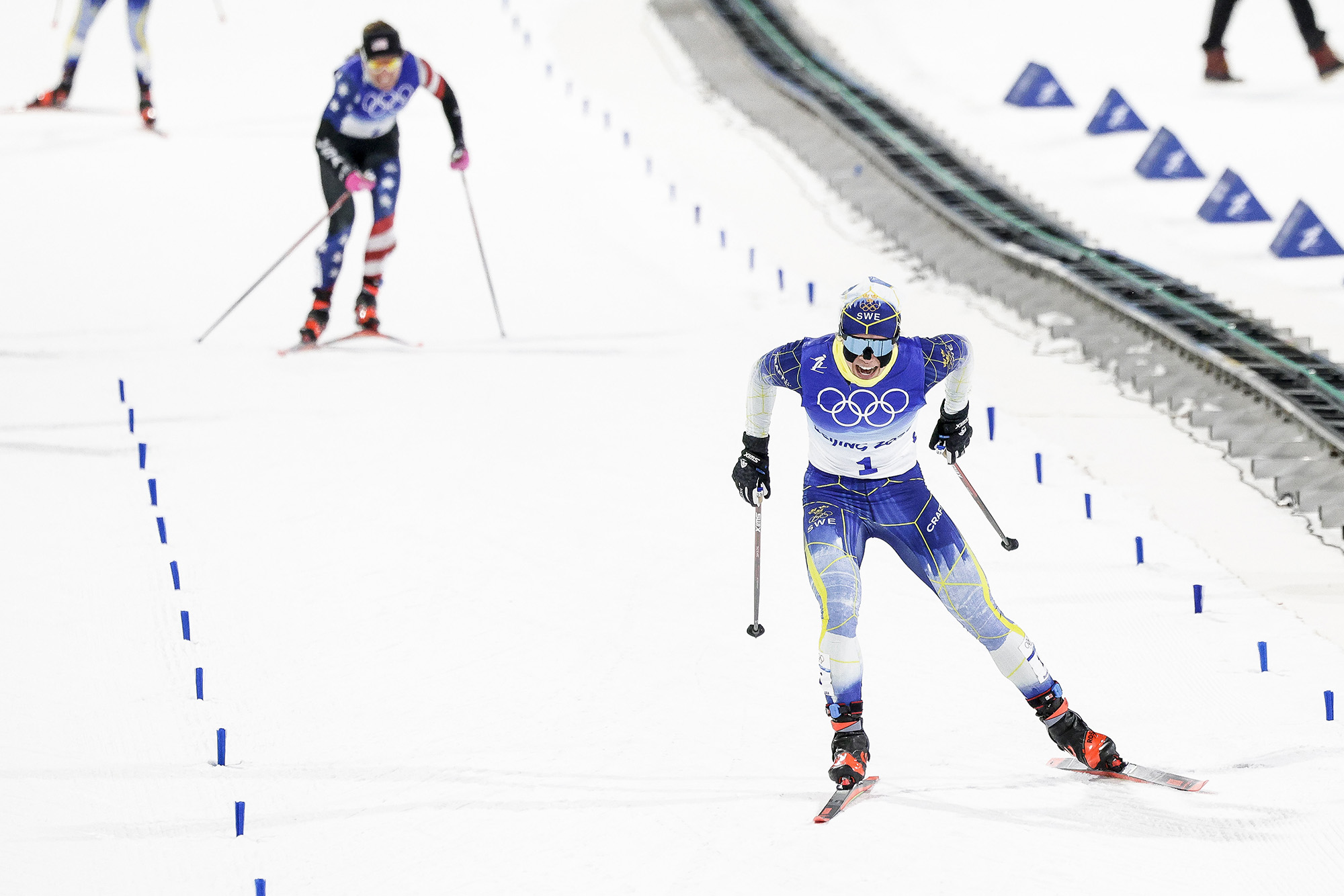
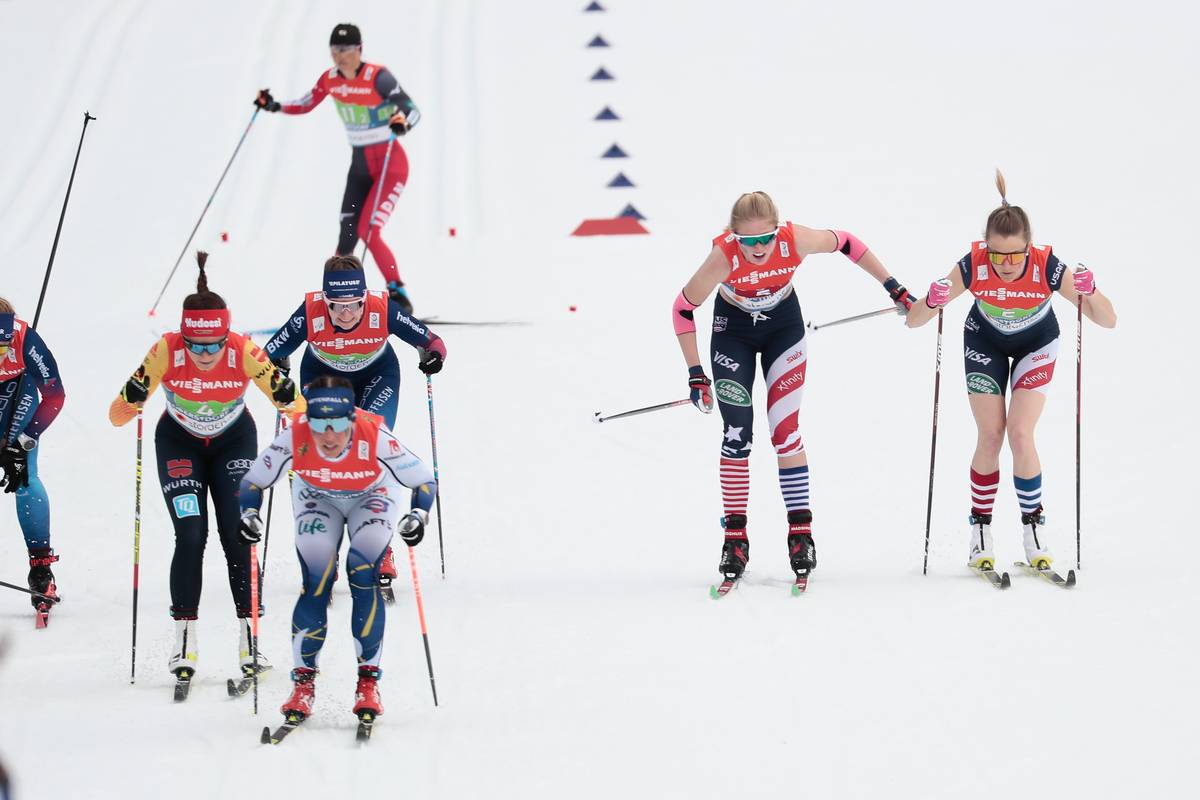
    Jonna Sundling (SWE), with a commanding victory in the 2022 Olympic individual freestyle sprint, comes to the finish with Rosie Brennan (USA) in the background on her way to fourth. (Photo: NordicFocus)

    What the Career Adds Up To

    Brennan will take a step back from her professional career after amassing quite the résumé, representing the United States at the 2018, 2022 and 2026 Winter Olympics. She finished fourth in the freestyle sprint at the Beijing Olympics in 2022, the kind of result that can feel both extraordinary and excruciating, by missing out on an Olympic podium by a single place. She reached World Cup podiums across seasons and disciplines. She became a two-time World Cup winner, a fixture in the American women’s team and one of the athletes who helped move the U.S. from occasional contender to regular presence near the front of international races.

    But Brennan’s own accounting of her career is not limited to the results she garnered over the years. She is proud of showing up. Proud of learning. Proud of becoming competitive in every event. Proud of the people who helped her and the younger athletes she helped in return. Proud that a career that could have ended several times kept expanding instead.

    That may just be why the end of her World Cup career does not feel like a true breakup. For Brennan, skiing was never just a job. It provided her with structure, challenges, community, identity and gave her something to work toward every day and a way to test what was possible. Even now, when she is no longer organizing her life around World Cup racing, she says she’s not suddenly becoming someone else.

    “When you train that many years, it’s hard,” Brennan said. “I’m still going out twice a day most days, because it just feels so normal to me.”

    That may change when she starts school again and other commitments begin to fill the space skiing once occupied. Brennan says she plans to pursue new interests and give attention to parts of herself that the World Cup lifestyle did not always allow. But the habits of a skier are not easy to unwind, and she does not seem especially eager to unwind all of them.

    “I definitely hope to bring forward a lifestyle that’s active, that treats your body well, that’s also willing to push yourself and see where the limits are,” Brennan said.

    Rosie Brennan (USA) during the individual sprint qualification at the final World Cup weekend this past March in Lake Placid, New York. (Photo: Modica/NordicFocus)

    Rewiring, Not Retiring

    That is why “rewiring” works. Brennan is not flipping a switch. She is just rearranging the circuitry.

    There will be no more full World Cup campaign, no more life built entirely around the next race weekend. But there will still be skiing, there will still be movement and there will still be competition. The habits and lessons of her career that she built through years of resilience and patience are not things Brennan expects to leave behind.

    “I’m sure there are countless skills, probably most of the skills I’ve learned in my adult life, that I will have to lean on in any of the various careers that I may pursue, and in my studying as well,” Brennan said. “The lessons that I’ve learned will undoubtedly come with me, along with the character and strength that I’ve built throughout my career.”

    Those lessons were built through the less tidy parts of Brennan’s career, from the late start and the years before the podiums to the injuries and doubts that forced her to keep adjusting. But the same career that asked so much of her also gave her something lasting. Skiing was more than a pursuit or a profession, it was the driving rhythm of her adult life, and one she still feels lucky to have followed for so long.

    “It’s definitely an incredible lifestyle to be a ski racer,” Brennan said. “I feel insanely lucky to have called that my career, and to have done so for so long.”

    That gratitude does not make the transition simple. After so many years of organizing life around training, racing and the rhythm of the World Cup, stepping back from that structure means more than changing a schedule. It means figuring out what skiing looks like when it is no longer the center around which everything else has to turn.

    Rosie Brennan (USA) during her final World Cup of her career — the 20 k Freestyle Mass Start in Lake Placid (USA). (Photo: Thibaut/NordicFocus)


    But there is also freedom in that. Brennan no longer has to prove she belongs. She already did. And now, instead of defining skiing only through the World Cup, she gets to decide what parts of it she wants to keep.

    Maybe that means races. Maybe it means long days outside. Maybe it means testing herself in new settings, with new stakes, away from the circuit that shaped so much of her adult life. Maybe it means all of that.

    What seems clear is that Brennan is not disappearing from the sport. She is stepping out of one version of it and into another.

    She is retired, if that is the word people want to use. But it is not the sunset kind. Not the final-page kind.

    For Rosie Brennan, skiing will always be there, just not in the all-consuming way it once was. Now, she gets the chance to redefine her relationship with the sport as something woven into the life she is building next.

    “It’s truly been a dream,” Brennan said.


    Help Support Our Coverage!

    If you value the thoughtful work and access FasterSkier provides, please consider becoming a Voluntary Subscriber. Your support directly fuels our work to cover the people, places, and moments that make our sport special.

    Join the FasterSkier community!


    Brennan’s U.S. teammates wait at the line to greet her after her final World Cup race, a 20-kilometer start in Lake Placid on March 22. (Photo: NordicFocus)
  • Slovak Indirect: How an Alaska-raised skier ended up representing Slovakia at the Olympics

    Slovak Indirect: How an Alaska-raised skier ended up representing Slovakia at the Olympics

    This article was made possible through the generous support of our voluntary subscribers who have helped put our Nat Herz on the ground at the Olympics. If you value coverage like this, please support FasterSkier with a voluntary subscription.

    Peter Hinds racing at the Olympics for Slovakia. He grew up in the 49th state, wore bib 49 in Tuesday’s sprint race, and finished 49th. (Courtesy Peter Hinds)

    PREDAZZO, ITALY — On Denali in Alaska, there’s a famed climbing route called Slovak Direct — a nod to a group of skilled alpinists from Slovakia who established it in 1984.

    Now, as this year’s Winter Olympics kick off, an Alaska-raised athlete is making something of a name for himself in Slovakia, competing for the nation’s Olympic team in cross-country skiing.

    Peter Hinds, a 23-year-old graduate of University of Alaska Anchorage, realized last year that he could race for the country where his mother grew up — then qualified to represent it in Italy.

    Call it Slovak Indirect.

    Hinds competed in his first Olympic race Sunday in Italy, finishing 60th — capping a whirlwind season that’s also included a ceremonial team-naming in Bratislava with a handshake from the Slovak president, Peter Pellegrini.

    Peter Hinds shakes hands with Slovakia’s president, Peter Pellegrini, in a pre-Olympics ceremony in Bratislava. (Office of the President of the Slovak Republic)

    “They had the guards with the little floofy hats and the guns, standing perfectly still,” Hinds said. “It was cool — it kind of felt like royalty. And that’s the thing about something as big as the Olympics: It lives bigger in people’s minds.”

    Hinds’ Olympic saga starts with the fall of the Iron Curtain, at the end of the 1980s. His mother, Elena Hinds, grew up in the Slovakia city of Bratislava when it was part of the Eastern Bloc.

    “I was young, fresh out of school, just wanted to travel and see the world,” she said in an interview in Italy, after watching her son’s first Olympic race. “Landed in Los Angeles.”

    There, Elena met Peter’s father, Cory, when she joined the local mountaineering club, and the couple ended up in Alaska.

    Peter grew up there as an only child with, he joked, “no rights.”

    “I had to do everything that the parents decided to lug me on,” he said — including being roped in with them on glaciers during alpine traverses.

    A young Peter Hinds on the Eklutna Traverse, a famed climbing route in the mountains behind Anchorage, Alaska. (Courtesy Peter Hinds)

    Hinds also spent time absorbing Slovak language and culture growing up, including a school year in Bratislava, where he still has family. Elena cooked Slovak foods, too, like bryndzove halušky — a gnocchi-like dumpling traditionally paired with sheep cheese and bacon bits.

    “It’s so good,” Hinds said. “You get the sour blanket, white canvas taste of that cheese. And then you get a really sharp, salty bacon bit in there — it’s really a good dish.”

    As a kid, Hinds trained with Anchorage’s Alaska Pacific University club program, then studied engineering at the University of Alaska Anchorage, where his results included a 14th place at the collegiate national championships. He’s also placed sixth in the sprint at the U.S. national championships.

    As school was wrapping up, he went to the career fair and interviewed with several companies with offices in Anchorage; he thought maybe he could pair an engineering job with an assistant cross-country ski coaching gig. He also contemplated graduate school.

    But Hinds had Slovak citizenship through his mother, who’d been following the country’s ski team, thought her son would be competitive and encouraged him to explore whether he could join. At a ski marathon last spring, he also got a nudge from an international athlete, Australian Rosie Fordham, who attends the University of Alaska Fairbanks.

    Hinds eating makové slíže, a Slovak dish of potato dumplings with maple syrup and ground poppyseed. “The poppyseed is exquizite,” Hinds wrote in a text message. (Courtesy Peter Hinds)

    “She was like, ‘Mate, you should totally just switch your (International Ski Federation) license to Slovakia. You’d probably be the best skier there,’” Hinds said.

    He didn’t really know where to start that process, though, so he went to the internet, where he noticed that his rankings were competitive with Slovakia’s top racers. “I looked them up on Instagram, sent them a DM,” and the process unfolded from there, effectively “no questions asked,” Hinds said — though he acknowledged detecting a little skepticism, at first, from Slovak athletes at risk of being displaced by an American-raised interloper.

    “I came over and I actually knew how to speak Slovak, and they were impressed,” he said.

    The license change prompted an enthusiastic press release from the Slovakia ski team, which celebrated the addition of a “promising young endurance athlete.” Slovak media has also chronicled Hinds’ progress and results, with family members collecting copies of print newspapers.

    A Slovak print newspaper featured a story about Hinds. (Courtesy Cory Hinds)

    After training in Alaska last summer, Hinds bought a one-way ticket to Bratislava, where he has a “home base” with family. Since then, he’s been ski racing, at training camps with the Slovakia team or staying with other friends around Europe.

    At stops on the top-level World Cup circuit, he’s encountered other Alaska athletes that he’s raced and trained with, like JC Schoonmaker and Gus Schumacher — both standouts on the U.S. team.

    “I’m a small fish compared to those boys on the circuit, so I’ve got to know my place,” Hinds said. “But it’s cool to see them, say hi, and see that this is really where they’re able to do things that few can, you know?”

    Fordham, the Australian who Hinds credits with inspiring his European experience, described him as a “good friend on the World Cup who doesn’t take things too seriously, but is pretty serious about ski racing.”

    Hinds speaks with reporters after his first race at the Olympics. (Nathaniel Herz/FasterSkier)

    “He’s just, like, so excited to be here,” she said. “It’s good to see someone who has such enjoyment of the sport and just wants to be out here having fun skiing fast, and with his friends.”

    At the Games, Hinds got to attend one of the opening ceremonies, then found himself surprised by the gravity of the moment when he finally got to the start of his first Olympic race.

    “It’s super cool to see all these people here — I mean, it was a great atmosphere. But I was genuinely nervous,” Hinds said in an interview afterward. A crash on a busy corner early in the 20-kilometer race set him back, but he made it to the finish without getting lapped and pulled out — a fate suffered by a number of athletes from other small nations.

    One of the benefits of being on a small team: Hinds will get to race more events in Italy, unlike some of the athletes from the larger U.S. team who might only get a single start at the Olympics.

    And while he doesn’t plan to spend time at bars, he does plan to spend some time enjoying and absorbing the Olympic experience — perhaps getting over the mountains to another satellite competition venue in the resort town of Cortina. He’ll also get time with his girlfriend and parents, both of whom are in Italy to watch.

    “Nobody expected this. But he’s making it happen, and it’s pretty exciting,” Cory Hinds said. “Everybody’s cheering for Peter like crazy.”


    Help Support Our Olympic Coverage!

    FasterSkier has our own Nat Herz on the ground at the Olympics, which is a significant financial lift for us. If you value the thoughtful work and access FasterSkier provides at championships like this one, please consider becoming a Voluntary Subscriber. Your support directly fuels our work to cover the people, places, and moments that make our sport special.

    Join the FasterSkier community!
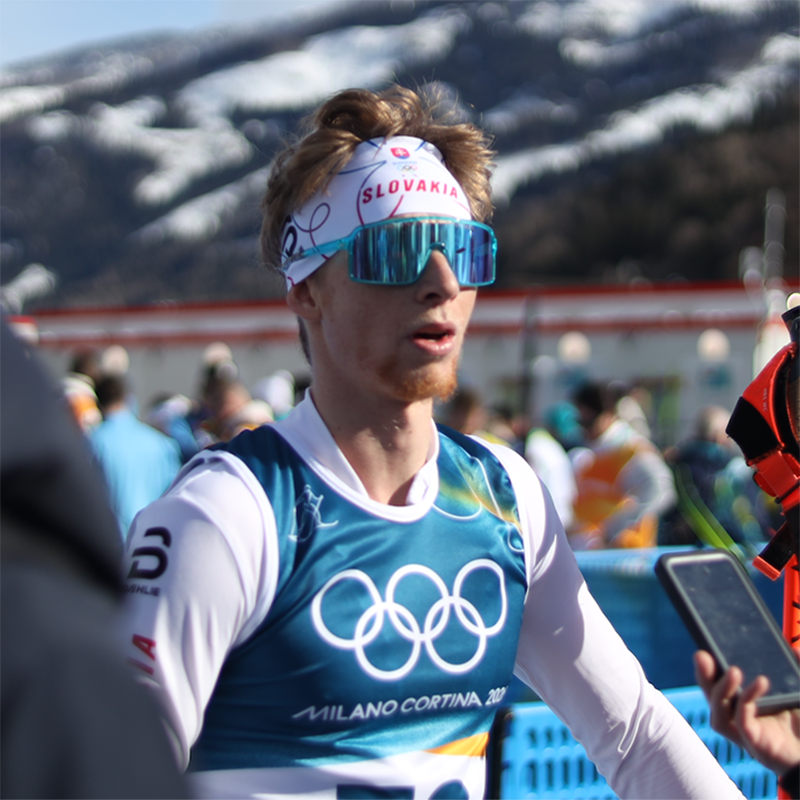
     

    Hinds’ parents Elena and Cory and his girlfriend Eva Weymuller take a moment to relax after watching his first race at the Olympics. (Nathaniel Herz/FasterSkier)
  • Hunter Wonders, Flying by Instrument

    Hunter Wonders, Flying by Instrument

    This article was made possible through the generous support of our voluntary subscribers.  If you value coverage like this, please support FasterSkier with a voluntary subscription.  

    Hunter Wonders (USA) racing the Skiathlon at the 2023 World Championships in Planica, Slovenia. (Photo: Modica/NordicFocus)

    When U.S. Ski & Snowboard released its roster for the 2026 Olympic Winter Games, Hunter Wonders’ name appeared without emphasis. No asterisk. No parenthetical explanation. Just another line in a list that had already absorbed months of speculation, anxiety, and arithmetic.

    To most readers, the name represented a straightforward outcome: an athlete peaking at the right moment, a season resolved by results. But the roster line masked a career that did not move in a single direction. Wonders’ path bent, paused, and restarted. At one point, it appeared to end entirely.

    Understanding how he arrived at the Olympics requires starting far from the Games themselves — in a place where progress is quiet, repetition matters more than recognition, and development happens long before it is visible.

    Hunter canoe racing with his dad in Michigan. (Photo: Courtesy Photo)

    Alaska, Not Michigan

    Hunter Wonders is sometimes misidentified as a Midwestern skier. His parents are from Michigan — his father from Grayling, his mother from Traverse City — and the family returned there most summers to visit grandparents. Wonders spent long stretches canoe racing in Michigan and maintaining close ties to extended family.

    But Alaska is home.

    “My parents were originally from Michigan… And yeah, they moved to Alaska. It was supposed to be like a two-year thing for my dad’s work,” Wonders said. “And he just knew, like, nope, we’re not going back. I’m staying here.”

    That decision happened decades before Wonders had any agency of his own. By the time he was born, Alaska was already permanent.

    “I’m definitely from Alaska and have lived there my whole life,” he said.

    In American cross-country skiing, place is not just a backdrop. It is infrastructure. Alaska exists at the edge of the domestic system — geographically distant from centralized camps, expensive to travel from, and easy to overlook. Athletes there develop without constant reference points, often without external validation.

    For Wonders, that isolation became formative.

    Hunter Wonders, Hailey Swirbul, and Chip Schoff (former APU skier and wax tech) on a multi-day hut trip. (Photo: Courtesy Photo)

    Alaska, Off the Circuit

    In Alaska, training is often solitary. Progress is built through lifestyle and repetition rather than comparison, and improvement is measured internally long before it is confirmed externally.

    The winters matter. So does the darkness. Training extends into hours when daylight is no longer guaranteed, when motivation cannot depend on atmosphere or audience. You go out because it’s how you choose to live and enjoy your life.

    That rhythm shaped Wonders’ relationship to skiing early. He did not grow up racing for recognition. He learned to train for alignment — the quiet sense that body, terrain, and effort were moving together. Alaska not only accelerated his trajectory. It birthed it.

    Hunter Wonders (APU/Alaska) takes the lead in the U16 Boys Mass Start Freestyle race at the US Junior National Championship in Stowe, Vermont in 2014. (Photo: Voisin/FasterSkier)

    A Childhood of Rotation

    Wonders grew up chasing his older siblings — twin brother and sister, five years ahead — through a constantly shifting landscape of sports. Alpine skiing. Motocross. Soccer. Ski jumping. Biathlon. Mountain biking.

    “Anytime I started getting into a sport, my family shifted away from that one,” he said.

    The pattern was not neglect, but necessity. Supporting multiple competitive sports for multiple children eventually became unsustainable.

    “My parents were like, all right, we can’t do all this stuff. We gotta limit it. And they chose to Nordic ski. And so naturally, I was kind of dragged into that scene.”

    Nordic skiing, at least initially, was not a calling. It was what remained once the family consolidated its energy.

    Wonders’ first encounter with skis reflects that informality.

    “It was my dad playing with me on my back deck in 2001. And I’m not really skiing that much, but that was kind of my first encounter with it.”

    There was no mythology attached to that moment. No sense of destiny. Skiing entered his life as play, then habit, then gradually — almost without announcement — as a central structure.

    Hunter Wonders (APU/Alaska) winning the U16 Boys Mass Start Freestyle race at the 2014 US Junior National Championship in Stowe, Vermont. (Photo: Voisin/FasterSkier)

    Stowe, Vermont

    The first moment when that structure revealed competitive meaning came far from Alaska.

    Wonders qualified for Junior Nationals in Stowe, Vermont, in 2014. He did so narrowly, selected as the fifth or sixth skier on Team Alaska.

    “I barely made Team Alaska. But it was a big goal for me as a U16,” he said.

    What followed surprised nearly everyone, including Wonders himself.

    “And just out of nowhere, I ended up getting a second place in the individual start race and first place in the mass start. And that was just like, whoa, where did that come from?”

    The results did not instantly rewrite his trajectory. But they altered his internal calculus.

    “I think it kind of clicked for me that, okay, I can do this. I can be competitive.”

    The significance of that realization was not the result itself, but permission. Permission to imagine a longer horizon.

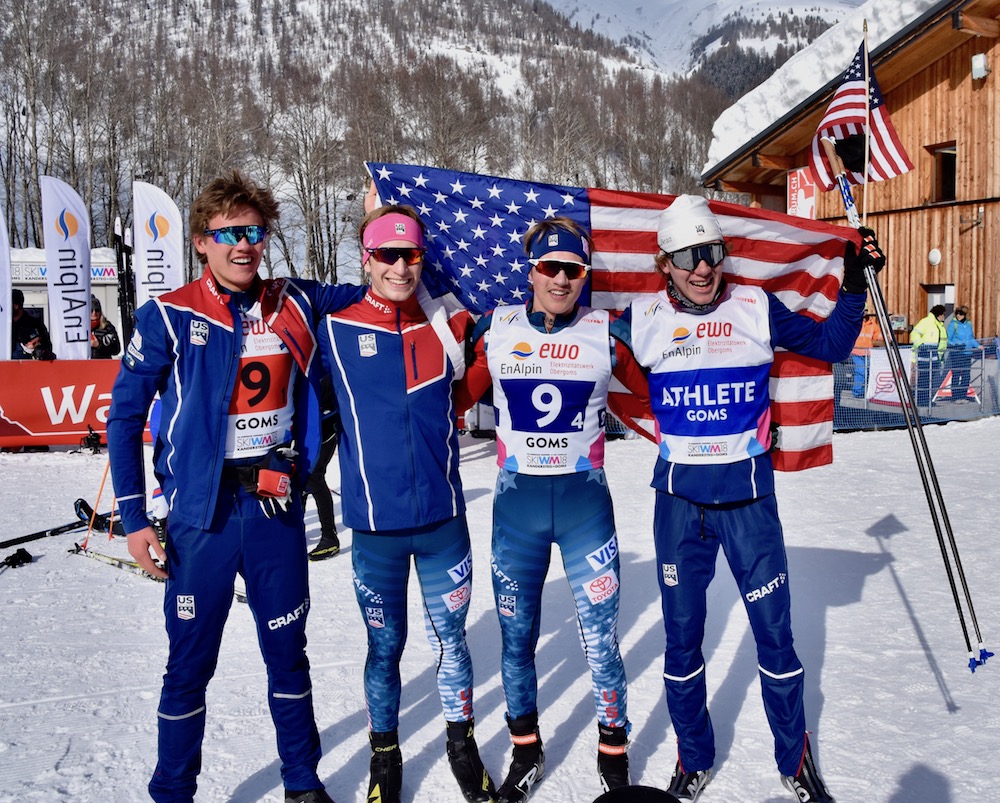
    The U.S. men’s silver-medal relay at the 2018 Junior World Championships in Goms, Switzerland, with (from left to right) Luke Jager, Hunter Wonders, Gus Schumacher, and Ben Ogden. (Photo: Julia Kern)

    The Long Middle Begins

    What followed was not a rapid ascent, but a prolonged middle years defined by steady development, incremental gains, and results that suggested promise without announcing arrival.

    On the World Cup, Wonders often raced from the margins. Finishes in the 50s and 60s gave way slowly to finishes in the 30s. The progress was real, but it did not demand attention.

    In American men’s skiing, where depth is both strength and complication, that middle can be unforgiving. Selection is rarely guaranteed. Criteria shift. Opportunity compresses.

    Wonders responded the way he had learned to respond in Alaska: by focusing inward. Training remained central.

    “For me, training has always been kind of the fun part… The training and living that lifestyle is really, really big to me.”

    That orientation would become essential later — when the question was no longer how to improve, but whether improvement was still worth pursuing.

    Hunter Wonders races at Government Peak Recreation Area, Palmer, Alaska, Nov. 14, 2021, in the season-opening Race to the Outhouse #1. (photo: Eric Strabel for APUNSC)

    APU and Staying Put

    Alaska Pacific University provided continuity during those years. It was neither a junior factory nor a national-team satellite. Its athletes often arrived through unconventional paths and stayed longer than expected.

    For Wonders, APU offered stability without stagnation. Coaching relationships endured. Autonomy was preserved. Expectations were internal before they were external.

    Progress was allowed to be slow.

    That patience would later prove critical — because when Wonders eventually left the sport, and then considered returning, there was no system to rebuild, no trust to reestablish. The ground remained where he had left it.

    Hunter Wonders (USA) on his way to 16th place in the 10 k Classic in Beitostolen, Norway in 2022. (Photo: NordicFocus)

    Proof, Finally

    The breakthrough season arrived quietly, without spectacle or announcement.

    During the 2022–23 World Cup season, Wonders recorded the strongest international results of his career: a 16th-place finish in Beitostølen, Norway an 11th-place finish in Oberstdorf, Germany and a 23rd-place finish at Holmenkollen. The trajectory was unmistakable, even if it did not demand attention.

    “For me, that was a big jump from spending my time in the 50s, 60s,” he said.

    The significance of those results was not external. They did not alter his standing overnight or change how the sport viewed him. Their impact was internal.

    “It felt good. To prove to myself that I could ski with some of the best out there.”

    For years, that belief had existed as conviction rather than certainty. Now it had evidence. The question of whether he belonged — the one that had quietly governed training blocks, selections, and seasons — no longer needed answering.

    What remained was not ambition, but choice.

    Hunter Wonders (USA) on his way to 23rd place in the Holmenkollen 50 k Freestyle in Oslo, Norway in 2023. (Photo: Modica/NordicFocus)

    Leaving Without Collapse

    Retirement in endurance sport is often framed as inevitable. Bodies fail. Results decline. Motivation erodes. The decision arrives trailing visible causes.

    Hunter Wonders’ retirement did not follow that pattern.

    When he stepped away from World Cup racing in the spring of 2023, his career was not unraveling. It was consolidating. The season behind him had not forced his hand; it had freed it.

    “My planned last World Cup… it was right after a really good season for me,” he said.

    The timing mattered. He was not leaving with questions unanswered. He was leaving with a sense of completion.

    For a long time, Wonders had believed he could compete at that level. Now he knew it. And that knowledge altered the logic of staying.

    With the central doubt resolved, the future opened in unexpected ways. Instead of sharpening ambition, success created space to consider what life beyond skiing might look like, and whether the cost of continuing still made sense.

    “I thought I was content. I thought I was, you know… ready to move on.”

    The decision was not driven by exhaustion or dissatisfaction. It was driven by certainty — and by the rare freedom that certainty can bring.

    Crust ski in the spring time (Wonders’ all time favorite form of skiing). (Photo: Courtesy Photo)

    What It Means to Leave While Improving

    Leaving while things are going well carries a specific psychological weight. There is no obvious decline to explain the decision. No external force to blame. The athlete leaves not because the door is closing, but because it remains open.

    Improvement, once experienced, does not fade quietly. The body remembers what alignment feels like — when training, racing, and confidence converge. Walking away at that moment does not resolve ambition; it suspends it.

    Wonders framed his retirement as closure. But closure in elite sport is rarely permanent. The unanswered questions tend to return first, often in subtler forms.

    In his case, the unresolved question was not whether he could ski at the highest level. That had been answered. The question was whether he wanted to continue building a life that revolved so completely around it.

    From Seasons to Paychecks

    After stepping away, Wonders entered a different rhythm entirely.

    “That whole following summer, I worked construction, learned a lot of new skills. That’s when I got my pilot’s license.”

    The change was not symbolic. It was practical. Construction offered tangible progress — work that produced visible results and predictable compensation.

    “Even when skiing was going well, I just wanted to get out of it and work a normal job, get the normal paycheck, things like that.”

    The appeal of normalcy was not rooted in dissatisfaction with skiing. It was rooted in adulthood. After years of living season to season, the idea of stability carried weight.

    At the same time, Wonders had recently completed his degree at Alaska Pacific University.

    “I graduated with a bachelor’s in business administration,” he said.

    What followed was a transition many elite athletes experience but rarely articulate.

    “I found a really hard transition when I graduated from being a student athlete to just an athlete. I felt like I wasn’t progressing elsewhere in life. And that was pretty hard for me.”

    Without coursework, semesters, or academic milestones, skiing existed in isolation. Progress on snow no longer corresponded to progress in life. The imbalance unsettled him.

    The Second Discipline

    Aviation entered that gap not as a hobby, but as a parallel discipline.

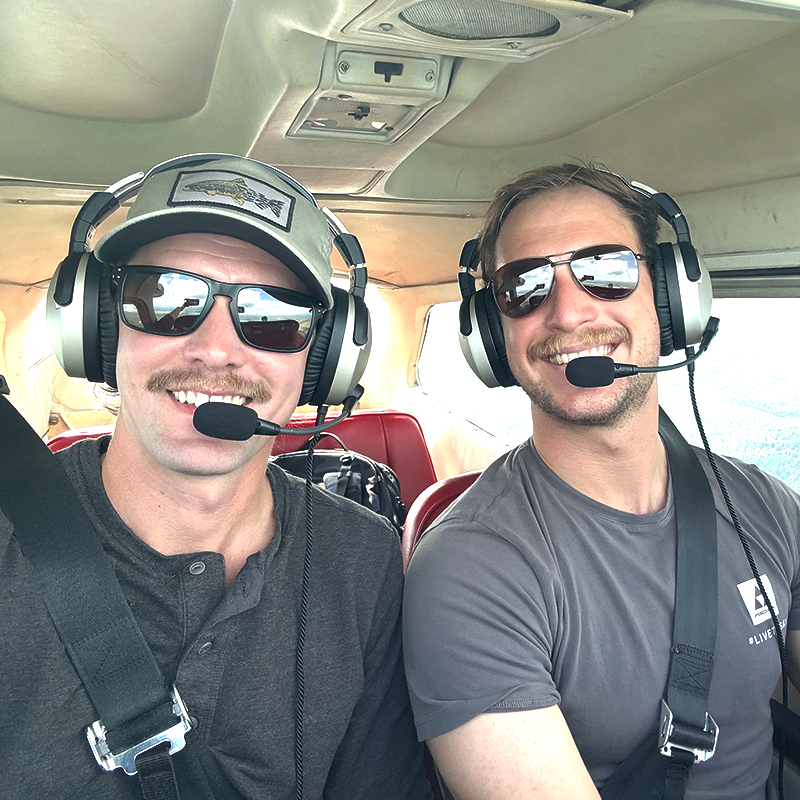
    “I have my pilot’s license now, and I’ve been working on my instrument rating,” Wonders said.

    He described the training with precision.

    “Being able to fly only using what’s on the dashboard of the plane. Basically, no looking outside the plane.”

    Instrument flight is unforgiving. It demands trust in systems over instinct, procedure over perception. For Wonders, it offered a structure that mirrored elite sport without duplicating it.

    “It’s been giving me something to work on outside of skiing, which has been really nice.”

    More importantly, it offered psychological margin.

    “It’s a very important thing for me, I think, to not feel trapped.”

    The word matters. Trapped implies more than fatigue or burnout. It implies a loss of agency — the sense that leaving would erase identity rather than expand it.

    Aviation gave Wonders a way to be committed to skiing without being consumed by it.

    A Life That Almost Fit

    For a time, the other life worked.

    Construction days were long and direct. Progress was visible. Paychecks arrived on schedule. Flight training offered complexity, mastery, and forward motion.

    The pace was different. The stakes were different. The feedback was immediate.

    Skiing receded into the background — not as a regret, but as a completed chapter.

    Yet even in that distance, the sport did not disappear entirely. It remained embedded in routine, in memory, in the body’s sense of what effort felt like.

    Wonders did not describe missing racing. He described missing the calendar.

    In November of 2022 Hunter Wonders (USA) was on his way to 30th place at the opening World Cup weekend in Ruka, Finland, but a year later he was home in Alaska. (Photo: NordicFocus)

    November

    “When everyone started peacing out to go race, I was like, man, what am I doing?”

    November arrived the way it always does in elite skiing — as a turning point. Training blocks gave way to travel. Preparation became exposure.

    For athletes still inside the system, November is movement. For those who have stepped away, it is absence.

    The routines disappear first. Then the shared language. Eventually, the calendar itself feels unfamiliar.

    Wonders’ realization was not emotional. It was logistical.

    “I can always be installing insulation in some random house someday, but I can’t be skiing forever.”

    November clarified something Wonders had not fully confronted while working construction or studying flight manuals: skiing was not just a job he had left. It was a window with an expiration date.

    The question was no longer whether another life was possible. That had been answered. The question was whether he was prepared to let the skiing life close while it remained viable.

    APU Head Coach Erik Flora, Chip Schoff, and Oscar Flora after getting the PistenBully running on Eagle Glacier last spring. (Photo: Courtesy Photo)

    The Conversation That Changed the Direction

    Wonders began talking again with his APU coach, Erik Flora. The conversations were not urgent.

    “He was very enthusiastic about my getting back into skiing. And so that just made that step a little easier.”

    There was no pressure to return immediately. No demand for proof. The space remained open.

    What followed was not an impulsive comeback, but a deliberate reconstruction.

    Fishing trip on the Gulkana river this last September with close friends. (Photo: Courtesy Photo)

    A Three-Year Calendar

    Rather than simply resuming his previous life, Wonders built a framework designed to prevent the same tension from reemerging.

    “I just planned out this three-year calendar kind of to right now,” he said.

    The calendar was not about training volume or race targets.

    “I blocked off weeks that I was like, okay, these chunks of time, I’m not going to be thinking about ski racing.”

    Those blocks were non-negotiable.

    Moose hunting with his father and brother. Fishing weekends on the Kenai Peninsula. Commitments that anchored him to a life beyond snow.

    “There are certain things I was willing to give up and certain things I wasn’t.”

    The decision to return was conditional. Skiing would be central again, but not all-consuming.

    Moose hunting camp with his dad and brother in interior Alaska. (Photo: Courtesy Photo)

    The Return, Without Announcement

    When Hunter Wonders returned to full-time racing, there was no formal reintroduction. No narrative reset. No expectation that the sport should receive him differently than it had before.

    He did not return as a project. He returned as a person who had already tested the alternative.

    The first season back was uneven by his own account — fitness arriving in pieces, rhythm coming and going — but the framework held. The calendar he had built remained intact. The boundaries were not abandoned under pressure.

    “Coming back from retirement wasn’t the easiest. Not… not the most productive thing,” he said.

    The difference this time was not performance. It was posture. He no longer treated each result as a referendum on identity. He had already stepped outside the system once and learned what waited there.

    That knowledge altered how he handled uncertainty.

    Hunter Wonders (USA) during the 10 k Freestyle in Les Rousses, France of January of 2025. (Photo: Authamayou/NordicFocus)

    Progress Without Urgency

    As the return season unfolded, improvement came incrementally — the way it always had for Wonders. There was no single race that announced transformation. Instead, there was accumulation: training blocks completed, races absorbed, effort normalized.

    The quiet confidence that had once been provisional now appeared settled. Racing no longer felt like a test of belonging. It felt like execution.

    That distinction matters in Olympic years, when urgency can distort judgment. Athletes often feel pressure to force form, to manufacture moments that prove readiness. Wonders did not describe that impulse. He described a narrowing focus.

    “I really tried to narrow the focus. And limit some distractions in the last year. I just wanted to go all in.”

    The phrase carried none of its earlier desperation. “All in” now meant presence rather than sacrifice — committing fully to skiing while refusing to let it consume everything else.

    Hunter Wonders (#369 – APU) on his way to winning the opening race, a 10 k Individual Start Classic, at the US National Championships in Lake Placid, New York, at the beginning of January. (Photo: Nancie Battaglia)

    The Olympic Winter, Reframed

    Olympic selection seasons tend to magnify everything. Results are scrutinized more closely. Criteria are parsed more aggressively. Small margins carry exaggerated meaning.

    For athletes who have never stepped outside the system, that pressure can feel total. For Wonders, it did not.

    He had already lived the other version of his life — the one with construction hours, flight manuals, and normal paychecks. He knew that version was viable. He also knew it was incomplete.

    That knowledge changed how the Olympic Winter Games landed.

    The selection process did not define him. It tested him.

    Hunter Wonders (USA) racing the 10 k Classic in Oberhof, Germany on the final weekend of racing that was considered for making the US Olympic Team. (Photo: Authamayou/NordicFocus)

    Selection as Consequence

    When the Olympic team was named, Wonders’ response did not resemble arrival. It resembled recognition.

    “My parents are coming over. I’m very excited about that,” he said.

    Their presence mattered more than the announcement itself.

    “Regardless of whether I made the Olympics or not, they were going to be supportive and proud.”

    That certainty allowed the moment to settle without drama.

    Still, the meaning was clear.

    “To me, making the Olympics is kind of like paying them back… like, I finally made it.”

    The phrasing was not triumphant. It was relational. The Olympics were not framed as destiny fulfilled, but as acknowledgment earned — proof that the years of logistics, travel, and patience had resolved into something concrete.

    Hunter Wonders (USA) during the 20 k Classic Mass Start in Goms, Switzerland, the weekend after he had been named to the US Olympic Team. (Photo: Authamayou/NordicFocus)

    After the Goal

    The days after selection often reveal more than the selection itself. For many athletes, the achievement creates a vacuum. The central question disappears, replaced by a quieter one: Now what?

    Wonders articulated that shift immediately.

    “Now it’s hard. I’ve been kind of thinking about now, what are my goals going forward?”

    Qualification had resolved the season’s largest uncertainty. It also removed the shelter of pursuit.

    “I don’t want to look like a bum at the Olympics… that’s not why I came here.”

    The bluntness mattered. Making the team had never been the end of the story. It was a threshold — one that demanded a different kind of clarity.

    Wonders taking his friend, who’s also a pilot, on a flight while he visits Alaska. (Photo: Courtesy Photo)

    Flying by Instruments

    The metaphor that runs quietly through Wonders’ story — though he never names it as such — is aviation.

    “Being able to fly only using what’s on the dashboard of the plane,” he said, describing his instrument rating.

    Instrument flight requires a specific discipline. When visibility disappears, instinct becomes unreliable. The pilot must trust systems rather than sensation, training rather than impulse.

    That discipline mirrors the way Wonders has navigated his return. He has learned not to chase feelings — not to react to noise — but to trust the structures he has built.

    In an Olympic year defined by margins, criteria, and scrutiny, that trust is rare.

    When these two embrace each other next, they will have gone from this first ski on the back deck all the way to the Olympics. (Photo: Courtesy Photo)

    A Different Kind of Olympic Story

    Hunter Wonders will arrive at the Olympic Games as a first-time Olympian. He will not arrive as someone who chased the Olympics at all costs.

    He has already lived the alternative. He knows what it means to step away, to build another life, to find meaning beyond the sport. That knowledge changes how the Olympics function in his story.

    The arc matters because it resists simplification. It does not fit neatly into the narratives elite sport prefers — prodigy, burnout, comeback. It occupies a quieter space: adulthood.

    Wonders did not return because he had nothing else. He returned because he chose skiing again — deliberately, with boundaries intact, with the instruments checked and trusted.

    In endurance sport, where careers are often defined by urgency and fear of loss, that choice may be the rarest qualification of all.


    Help Support Our Olympic Coverage!

    FasterSkier will have our own Nat Herz on the ground at the Olympics, which, to be honest, is a very big financial lift for us. If you value the thoughtful work and access FasterSkier provides at championships like this one, please consider becoming a Voluntary Subscriber. Your support directly fuels the work we do to cover the people, places, and moments that make our sport special.

    Join the FasterSkier community!


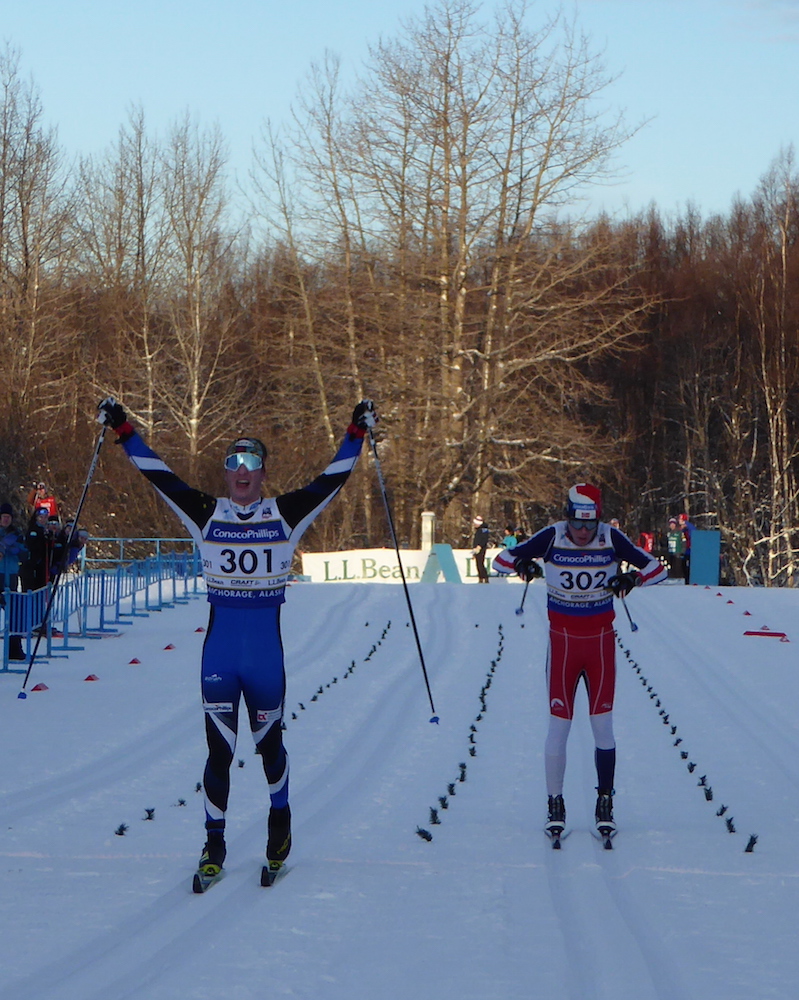
    If Hunter Wonders (#302) earns an Olympic start this February, hopefully, it will be a little less chaotic than the start of the US Junior National Championship in Stowe, Vermont, in 2014. (Photo: Voisin/FasterSkier)
  • Novie McCabe’s Winding Trail to the Olympic-Season Start Line

    Novie McCabe’s Winding Trail to the Olympic-Season Start Line

    When Novie McCabe spoke with FasterSkier early last month, she was looking out the window of her place in Anchorage, waiting for winter to finally take hold. “We’re patiently waiting on snow,” she said. “But today might be the day.“

    Outside, the ground was still in its in-between phase—too brown for grooming, just white enough that fish-scale skis could work if you were stubborn and optimistic about it. Alaska in November often asks skiers to hover in that liminal space: ready but not yet racing; fit but not yet tested; hopeful but not naïve.

    This week, the waiting ends—at least for the top domestic circuit. The U.S. SuperTour season opens in Fairbanks and continues in Anchorage next weekend, but McCabe hopes her body will allow her to join the field. After a long, uncertain stretch, simply lining up for even one race would mark a meaningful step forward. The timing makes this the right moment to trace how she has arrived at this threshold, and how the places she has lived—Methow Valley, Salt Lake City, Anchorage, Europe—continue to shape the skier she is becoming.

    Laura, Sean, and young Novie McCabe. (Photo: Courtesy Photo)

    The Valley That Built Her

    The story begins in the Methow, where winter is less a season than an identity. “I grew up in the Methow Valley, which is like a small valley in north central Washington with a pretty big ski community,” McCabe recalled. “I think we have the most Ks in North America or something when the skiing is good.“

    Her mother, former U.S. Ski Team athlete Laura McCabe, and her mother’s longtime friend Leslie Hall helped build the Methow Valley Nordic Club from scratch. McCabe grew up inside the culture they created: open, community-driven, relentlessly outdoorsy, and—maybe most importantly—fun.

    “I was lucky enough to have a really big group of kids my age who all just kind of happened to be really close friends,” she said. “We would all just be active together and spend a lot of time outside… backpacking trips all the time together.“

    Skiing was less a pursuit than a language. Practice might include ultimate frisbee on skis or just exploring terrain with no agenda beyond movement. “That was the main thing that got me so excited about skiing—the community,” she said. “It was just what all my friends did.“

    These early years formed more than her fitness. They gave her a worldview: skiing should be joyful, shared, and balanced.

    “Stay Behind Us—It’s Supposed to Be Easy”

    That mindset came directly from her mother’s coaching style. “My mom… would do all the sessions with us,” McCabe said. The education was intuitive, rooted in feel rather than metrics.

    “It was very feeling-based,” she said. “Like, in L3 you should be able to talk to me and give me a sentence back at least when I ask you how you’re feeling.“

    Heart-rate monitors were used only sparingly—tools to complement the athlete, not dictate behavior. “We maybe did lactates once or twice the whole time I was in high school,” she said.

    One lesson, in particular, stuck with her. During easy sessions, her mom and Leslie Hall would say:

    “You guys have to stay behind us because it’s supposed to be easy.”

    The rule was simple, but the philosophy was profound: fundamentals come from awareness, not pressure.

    McCabe laughs that even today, in anything resembling an ultra-distance test, the result might still tilt toward her mom: “She might have the upper hand in anything longer than 50 k.“

    Novie McCabe during the 20 k Classic at the NCAA Championship hosted by Saint Laurence University in Lake Placid in 2023.  McCabe controlled a pack that also contained her teammates, Sophia Laukli and Sydney Palmer-Leger. McCabe led the UU women, who finished 1st, 3rd, and 5th, on the day that propelled the Utes to their 4th consecutive NCAA Championship. (Photo: (c) Nancie Battaglia).

    Utah and the COVID Bubble

    By the time she left the Methow, McCabe was ready for a bigger arena. She chose the University of Utah for its coaching, competitive team environment, and growth opportunities.

    “At that stage in my life, I was pretty ready for it,” she said.

    Her first year unfolded in the disruptive isolation of COVID—a strange, surreal time that somehow fostered uncommon cohesion.

    “It was the heart of COVID isolating, but honestly, kind of in a fun way,” she said. “We were just hanging out as a team all of the time.“

    Despite Utah’s reputation as an NCAA powerhouse, she never felt crushed by expectations. “It didn’t feel like a high-pressure situation,” she said. “They were there to help us get the best out of ourselves.“

    She balanced training with academics, majoring in political science and minoring in economics. Even then, she was thinking beyond skiing.

    Novie McCabe skiing for APU. (Photo: Courtesy Photo)

    Leaving Eligibility on the Table

    After her third year, she made a difficult decision: she left Utah with two years of NCAA eligibility remaining.

    “I just felt kind of ready to move on from the NCAA,” she said. The experience had been positive—”I think everyone should go NCAA… It’s so fun and great for development,”—but the structure had become limiting.

    She wanted freedom: to race World Cups without constant travel back to the U.S., to pursue her development without logistical whiplash.

    “I wanted the freedom to race as many World Cups as I wanted during the season and not fly back and forth so much.“

    Once she accepted that her path needed to diverge, the next step was obvious.

    Novie McCabe and Luke Jager. (Photo: Courtesy Photo)

    Anchorage and the APU Reboot

    Anchorage had already become a meaningful place—she had been coming there every summer since her first year at the University of Utah. Her partner, Luke Jaeger, is from there. And she had trained with APU coach Erik Flora for years.

    “It honestly wasn’t even much of a decision,” she said.

    Flora’s coaching became a stabilizing force. “Erik Flora is really awesome when things are going wrong,” she said. “He knows how to help athletes sort through challenges… It’s never a linear path to success in skiing or any sport.“

    APU offered a training environment grounded in trust and peer excellence. “This year there is a pretty big girls’ group,” she said. “Kendall Kramer, Quincy Donley, Annabel Needham, Haley Swirbul, we have a big crew.“

    Training with athletes like Rosie Brennan and Swirbul created a layered mentorship:

    “They have been and are some of the best in the world.“

    Anchorage became the center of her athletic and personal rebuild.

    Novie McCabe joined by family and friends for a climbing adventure. (Photo: Novie McCabe)

    The Year Without Racing

    McCabe didn’t race at all last winter, more or less. At the time, she explained this as part of a balance project—but in reality, the situation was more complicated.

    “I have historically been kind of bad at the balance thing,” she said. “My happiness is sometimes quite dependent on skiing.“

    That year became a forced reset, with significant emotional and physical consequences.

    “I think I’ve gotten better at it,” she said. “I’ve found some things that I really do like to do outside of skiing.” She mentioned baking, cooking, reading, and spending time outside in ways that weren’t tied to training logs.

    Yet she was still searching for answers.

    One of Novie Mccabe’s (USA) career highlights was her top 15 finish in Falun, Sweden in a Classic race. (Photo: NordicFocus)

    A Quiet Battle Behind the Scenes

    After our original conversation, McCabe followed up with more context—an important layer we had not fully jumped into earlier. For the past two years, she has been navigating what she called “some mystery health challenges,” a swirl of symptoms that worsened last fall to the point where racing no longer felt possible.

    “The best guess of most of the doctors I have seen is some sort of post-viral or chronic fatigue thing,” she wrote, “possibly combined with some issues keeping my celiac and Hashimoto’s in check, but I am still not really sure what is going on to be honest.“

    She spent the winter searching for stability rather than start lines.

    “I have taken a pretty cautious approach to training this year and just been trying to build back into it super slowly and give a lot of extra attention to rest and recovery,” she said. “And I do feel like I made some solid progress.“

    Even now, she remains cautious. “The past two weeks have been a bit of a step backward,” she said. She’s not entirely sure she will race in Fairbanks. Her hope is modest: “One race there and one race in Anchorage, just to give myself a bit more recovery between hard efforts.“

    Still, the optimism in her message is unmistakable.

    “It means a lot to be back in a place where racing seems like more of a possibility.“

    “I will definitely consider it a win if I get to do some racing this year and make some more progress toward feeling like myself again.“

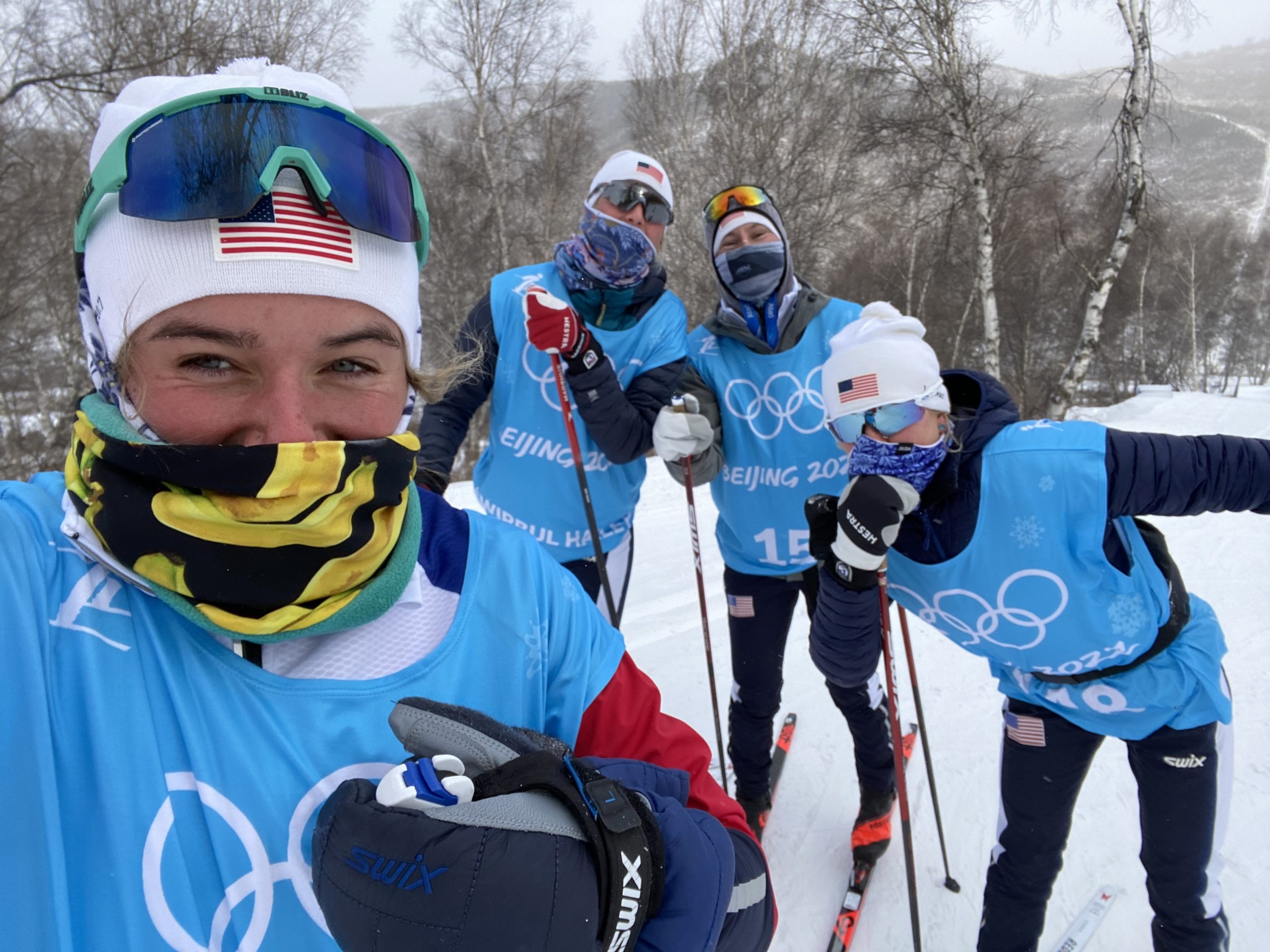
    McCabe credits her teammates with helping her develop the traits that won her recognition. Here she is training in Beijing with Hailey Swirbul, Hannah Halvorsen, and Sophia Laukli. (Photo: Novie McCabe)

    Team USA on the Road

    The U.S. Ski Team’s culture is widely celebrated—glitter, dance videos, and road-trip camaraderie. McCabe grew up watching those clips.

    “I would see their dancing videos from the World Cup and be like, ‘That just looks like the best time ever.’”

    But she knows now that joy is a decision, especially when you’re far from home. “Sometimes you have to decide that it’s going to be a good time,” she said. “Everyone does an excellent job of being good teammates.“

    That environment matters, especially in challenging seasons.

    Novie McCabe skates a strong third leg for Team USA in the 4 x 5 k relay at the Beijing Olympics in 2022. (Photo: NordicFocus)

    Europe: Brown Cheese, Ferris Wheels, and Perspective

    Her memories of Europe arrive in flashes of color rather than race results.

    “I love brown cheese,” she said. “You can get it here, of course, but it’s not as good.“

    She recalls Trondheim at Christmas—”Ferris wheel and everything“—and moments where she stepped outside the hotel room and let herself experience the place.

    These glimpses matter because they remind her of what she still wants from her career: a stable return to the World Cup, a chance to live in that rhythm again.

    And through all her travels, she keeps a single talisman:

    “Katherine Ogden made me a crochet octopus one year… I’ve brought it along as a good luck charm ever since.“

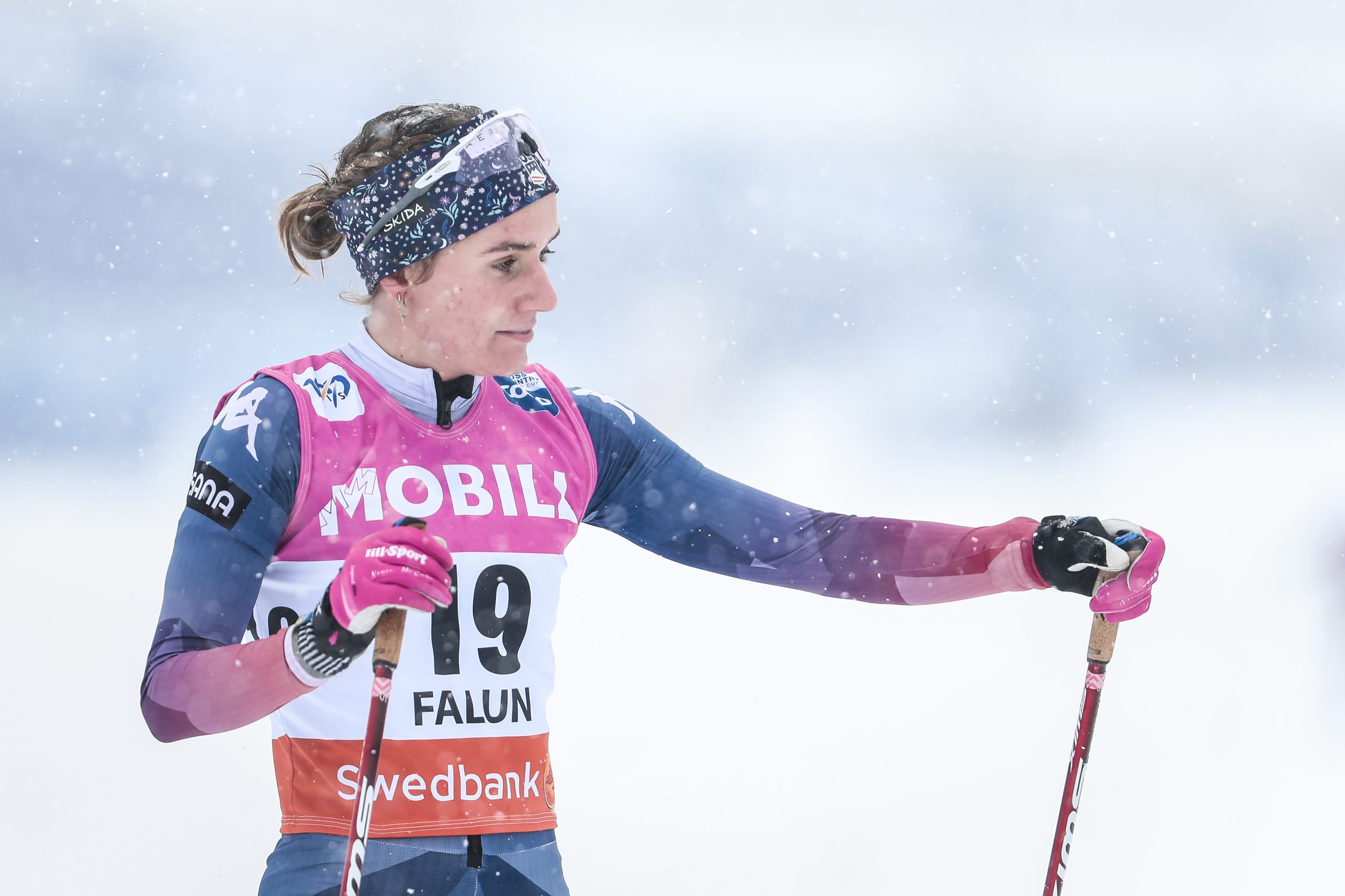
    Novie McCabe after the World Cup 10k in Falun, Sweden, in 2024. (Photo: NordicFocus)

    The SuperTour Returns — and She Hopes to Join It

    Which brings the story back to this week, and the opening races of the season. “I haven’t started a season domestically in like four or five years,” McCabe said. But she’s doing this season differently.

    She is hopeful she will race—one race in Fairbanks, one in Anchorage, if her body allows. More than anything, she wants to be thoughtful and patient.

    “My main goal is to make the Olympics,” she said. But this winter, her priority is health. “Being able to race and stay healthy and recover… that would look like a win for me.“

    The Olympic qualification system is, as she put it, “really complicated“—top-45 overall rankings, top-8 results, SuperTour contingencies. But she isn’t thinking that far ahead yet.

    She’s thinking about one start line. One bib. One race that feels like progress.

    Becoming Who She Meant to Be

    If you fast-forward five years, she still knows exactly where she wants to be.

    “I, for sure, dream about being one of the best skiers in the world,” she said. “I hope to be able to compete with the best one day.“

    She also knows this path no longer looks how she imagined it “four years ago.” But she has something she didn’t have then: perspective, patience, and a grounded sense of herself.

    Back in Anchorage early last month, the snow hadn’t fully arrived. It mirrored her season ahead—close, possible, not yet certain. The SuperTour begins this weekend, and McCabe is on the edge of stepping back into the environment she loves.

    Maybe in Fairbanks. Maybe in Anchorage. Maybe later.

    But the hope is real. The joy is returning. And somewhere in her bag, the crocheted octopus is still waiting.


    Love Stories Like This? Help Keep Them Coming.

    Feature interviews like this one take time, access, and care to produce. If you value thoughtful storytelling and independent ski journalism, please consider becoming a Voluntary Subscriber. Your support directly fuels the work we do to cover the people, places, and moments that make our sport special.

    Join the FasterSkier community!


  • Schumacher’s Win—World-Class Talent is “Still in There”

    Schumacher’s Win—World-Class Talent is “Still in There”

    This coverage is made possible through the generous support of Marty and Kathy Hall and A Hall Mark of Excellence Award. To learn more about A Hall Mark of Excellence Award, or to learn how you can support FasterSkier’s coverage, please contact info@fasterskier.com.

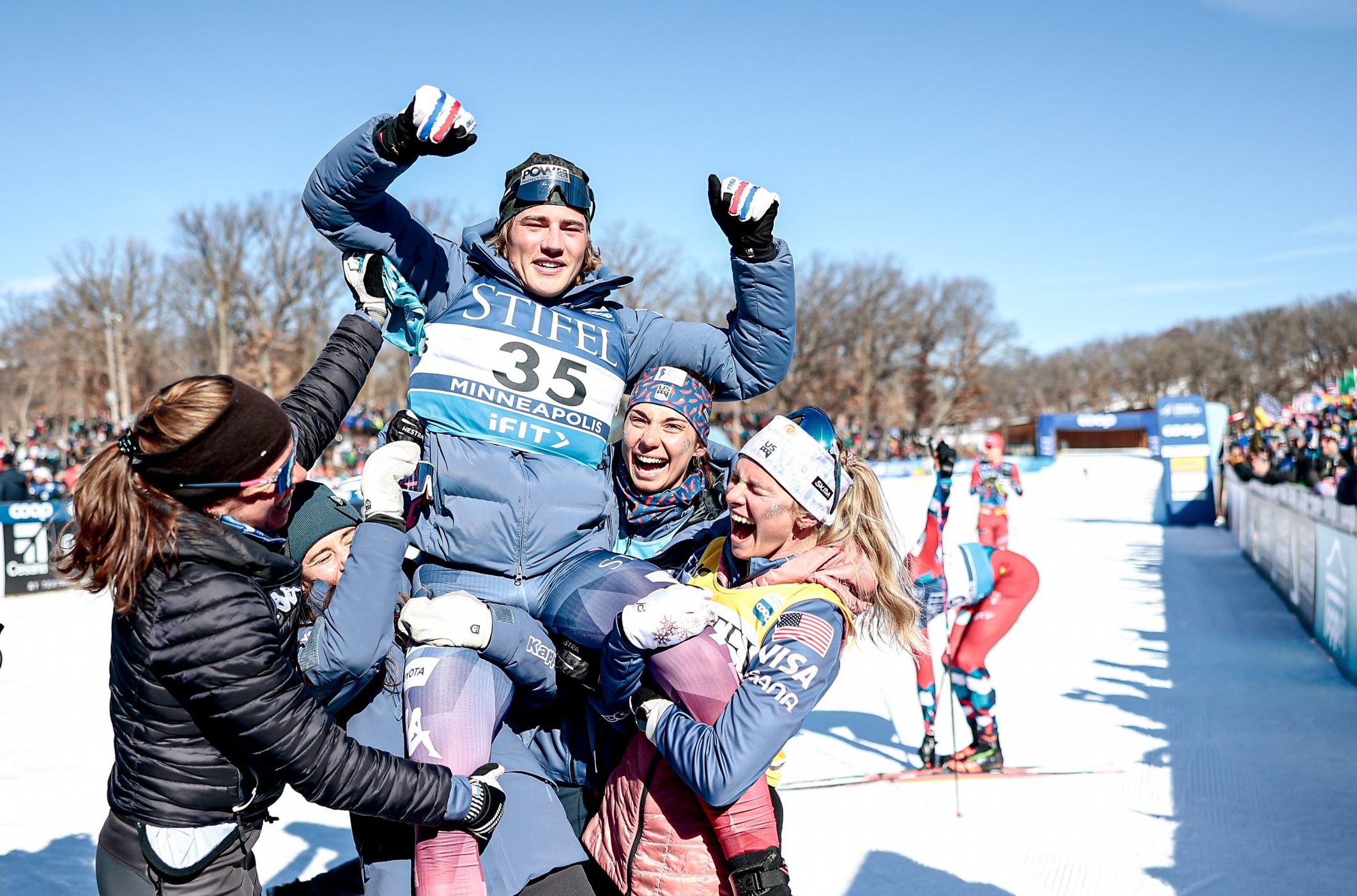
    U.S. Ski Team members, including Jessie Diggins, right, hoist Gus Schumacher on their shoulders after he won a World Cup race in Minnesota on Sunday. (Photo: Modica/Nordic Focus)

    MINNEAPOLIS — Gus Schumacher, a 23-year-old from Anchorage, accomplished something Sunday that no American man had done in 40 years: he beat every single Norwegian, Swede, Finn and all other comers in an international cross-country skiing distance race.

    The result was a star-is-born moment achieved before thousands of screaming fans in Minneapolis. Inn some ways, it felt almost scripted. Schumacher’s abundant potential has been making headlines since he was 13 years old, back when his coach joked that the teenager weighed less than his dog. But Schumacher’s route to the top has not been straight. And just below the surface, there’s another strand in the arc of his career that shows why Sunday’s result moved him, and his teammates, to tears.

    Just two seasons ago, Schumacher went through a wrenching season—and a nightmarish Olympic Games in Beijing—where instead of fighting for medals, he was grasping for explanations for why his body was failing him. In one race, he finished nine minutes behind the winner. Afterward, Schumacher regrouped, adjusted his training and brought in new coaches—producing an abrupt turnaround and a validation that the talent that put him on the cross-country skiing map is still there.

    “It was always in my mind that if I did the right things, it’s still in there—it doesn’t go away,” Schumacher told reporters Sunday. He added: “I’ve made some training mistakes, I think, in the last couple of years, but kept loving the sport and wanting to do it. And just kept showing up and kind of figured out what I was doing wrong.”

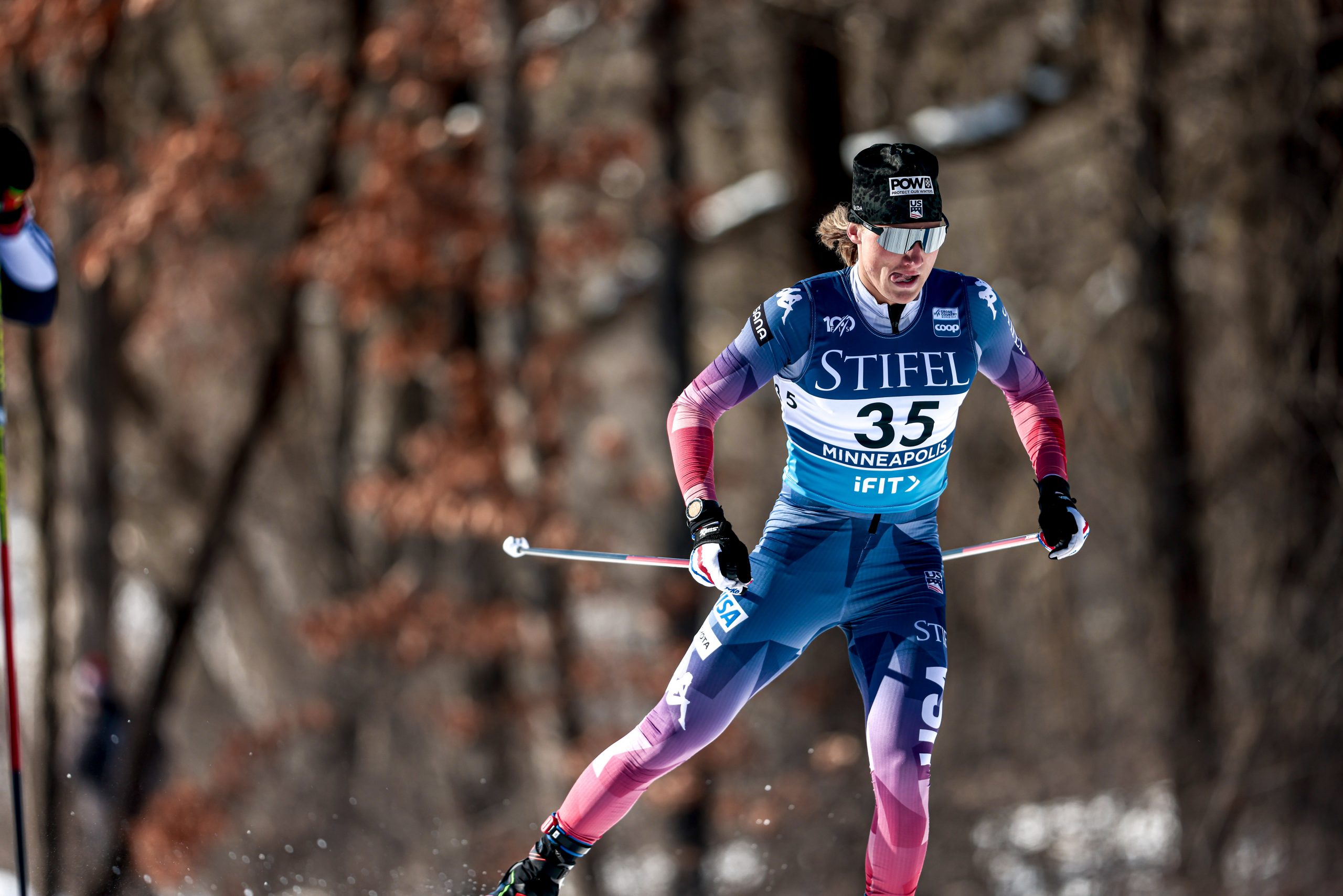
    Gus Schumacher races Sunday. (Photo: Modica/Nordic Focus)

    Schumacher’s result in Minneapolis—on the World Cup circuit’s first stop in the U.S. in two decades—will serve as inspiration to the hundreds of young, aspiring Olympians who lined the city’s trails Sunday. But it also resonated for his teammates, many of whom endure similar ups and downs themselves.

    That includes Julia Kern, a 26-year-old American Olympian who said she was trying to channel Schumacher as she warmed up for her own race Sunday, after his win. Kern won a World Championships medal last year, but has been struggling this season.

    “Warming up, I was just thinking about how I want to ski like Gus,” Kern said. “It gave me confidence. I’ve had a tough year. And I was thinking back to his Olympic year.”

    Schumacher, who grew up training with the Alaska Winter Stars program in Anchorage, first announced himself as a once-in-a-generation talent four years ago. That was when, at the age of 19, he won a gold medal at the World Junior Championships in a 10-kilometer race—the same distance as Sunday’s event.

    But after he graduated to the top-level World Cup circuit, Schumacher started struggling with his training formula, only sporadically translating his big junior performances into good results on the adult circuit. In his toughest moments, like at the 2022 Olympics, he was struggling to understand the “weird” feelings in his body.

    “That’s tough, to not feel like myself, and not knowing when it’s going to come back,” he said at the time.

    In retrospect, Schumacher and his coaches have made a relatively straightforward diagnosis: he was training, simply, too much. That’s a common mistake for early-career cross-country skiers, since the sport generally rewards hard work and the limits to training can often only be found through trial and error.

    Jessie Diggins, 32—the superstar American skier from Minnesota who owns three Olympic medals—went through a similar process of self-discovery earlier in her career, said Chris Grover, one of the U.S. Ski Team’s lead coaches.

    “She just wanted to train, train, train. And at one point, she was getting diminishing returns,” Grover said after Sunday’s race. “Gus is starting to figure that out, starting to figure out his body at this level.”

    [Listen to Schumacher discuss his training and racing on the Devon Kershaw Show]

    Since that tough Olympic year, Schumacher has made some changes. He’s now moved to the Alaska Pacific University training program, which includes several other members of the U.S. World Cup team and a renowned coach, Erik Flora.

    He’s also been getting advice from one of the U.S. team’s coaches, Kristen Bourne, who described Schumacher’s experience over the past few years as a natural part of the sport.

    “When we’re having those hard times, absolutely, you do learn from them and become better,” she said. “We’re trying to figure out the individual jigsaw puzzle that is each athlete.”

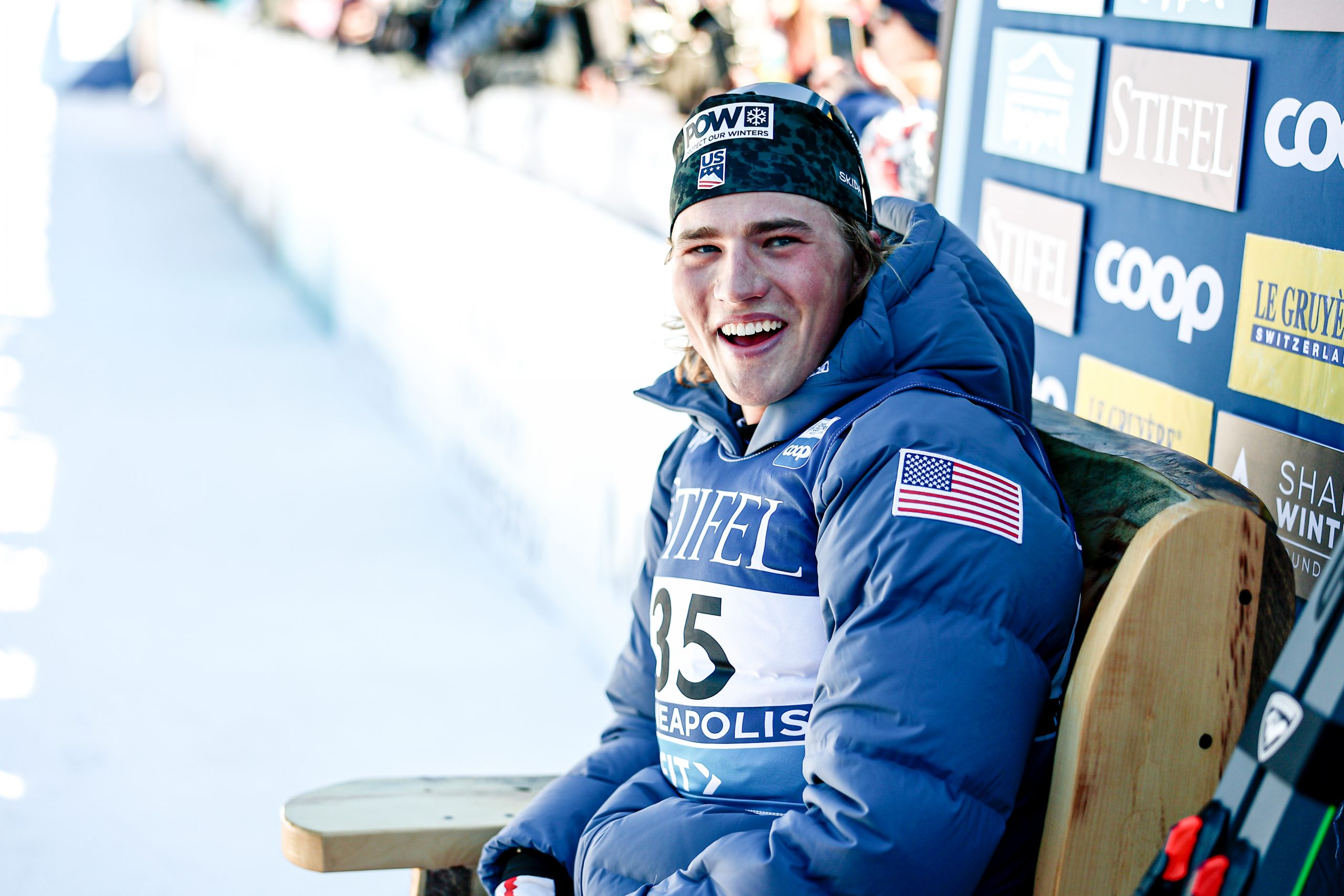
    Gus Schumacher sits at the finish line Sunday. (Photo: Modica/Nordic Focus)

    The changes clearly seem to be helping Schumacher, who already notched several eye-catching results earlier this season, including fourth place at a World Cup race last month.

    What’s excited his coaches, teammates and boosters is how Schumacher already appears to be absorbing some of the important lessons about training and racing in a career that’s only just starting.

    “I’m sure I’ll make some more mistakes,” he said Sunday. “But hopefully less from here on out.”

    Schumacher’s perseverance was rewarded with an experience of a lifetime Sunday.

    He was an early starter in the race, held in a time trial format that sends athletes on to the course one at a time.

    Schumacher had the fastest pace when he crossed the finish line. But he knew that a whole pack of Olympic medalists was behind him, and was likely to better his time.

    But as he waited at the finish, with a growing pack of teammates and supporters, none of his rivals could catch him.

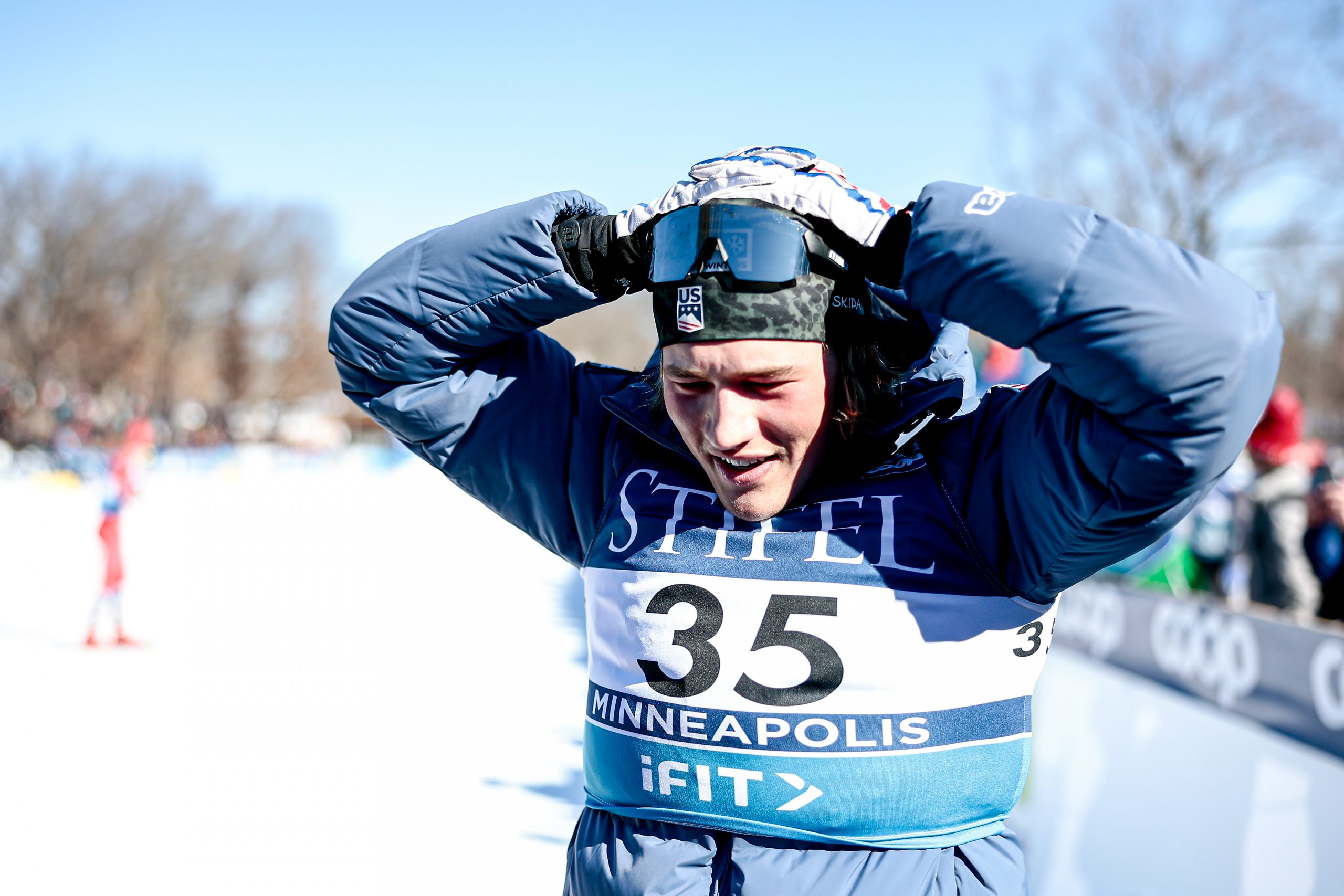
    Gus Schumacher learning that he’d won Sunday’s World Cup race. (Photo: Modica/Nordic Focus)

    “They started finishing, and I was like, ‘Oh my God—I might get a podium,’” Schumacher said.

    First William Poromaa, a top Swedish talent, crossed the line eight seconds behind Schumacher. Then came Norwegian Harald Ostberg Amundsen, the leader of the overall World Cup standings, four seconds slower, and Johannes Hoesflot Klaebo, another Norwegian, who has five Olympic gold medals to his name: six-and-a-half seconds back.

    Teammate Luke Jager, among those gathered with Schumacher in the finish, “was like, ‘You’re going to fucking win this thing.’ And I was just, like, ‘Oh my God. I might actually win this race,’’” Schumacher said. “And then it happened.”

    His teammates hoisted him onto their shoulders as the huge crowd that had gathered for the Minneapolis race roared, and later erupted in a chant: “Gus! Gus! Gus!” Afterward, Schumacher posed on the podium with 20 teammates and support staff, then took a celebratory jog, dispensing high fives to fans in the grandstand.
    His whole family—father, mother, siblings and girlfriend—was there to watch it happen.

    “The happy thing for me is that this has the potential to be a normal length career. And it feels like he’s maybe discovered the secret sauce now,” said Greg Schumacher, his father. “He’s done what he could to get here. And so it’s nice for him to have a day where it worked.”

    The electric atmosphere after Schumacher’s win Sunday spread even to his competitors—the two Norwegians who shared the podium with Schumacher couldn’t hold back their smiles when he climbed up to the top step for an awards ceremony. A star French athlete, Lucas Chanavat, stood in the crowd, filming the scene.

    “It was insane. It was so cool. It gave me goosebumps,” Chanavat said. “This is cross-country skiing.”

  • Q & A with New Faces on the US Ski Team: Michael Earnhart

    Q & A with New Faces on the US Ski Team: Michael Earnhart

    U.S. Ski & Snowboard recently announced its U.S. Ski Team nominations for the 2022-23 season. Of the 22 athletes named to the team this season, six were not on the previous year’s roster, either newly named or renamed: Michael Earnhart, Walker Hall, Zak Ketterson, Will Koch, Finn O’Connell, and Sammy Smith.

    To help fans get to know these new(er) faces, FasterSkier is doing a series of interviews, providing insights into the factors that have contributed to development, progress, and growth for these athletes last season. In this installment, we talk with Michael Earnhart following his nomination to the U.S. Ski Team on its D-Team. Earnhart discusses growing up skiing in Alaska, his successes as a junior, and what to expect as he joins the U.S. team alongside Junior World Championship teammates this season.

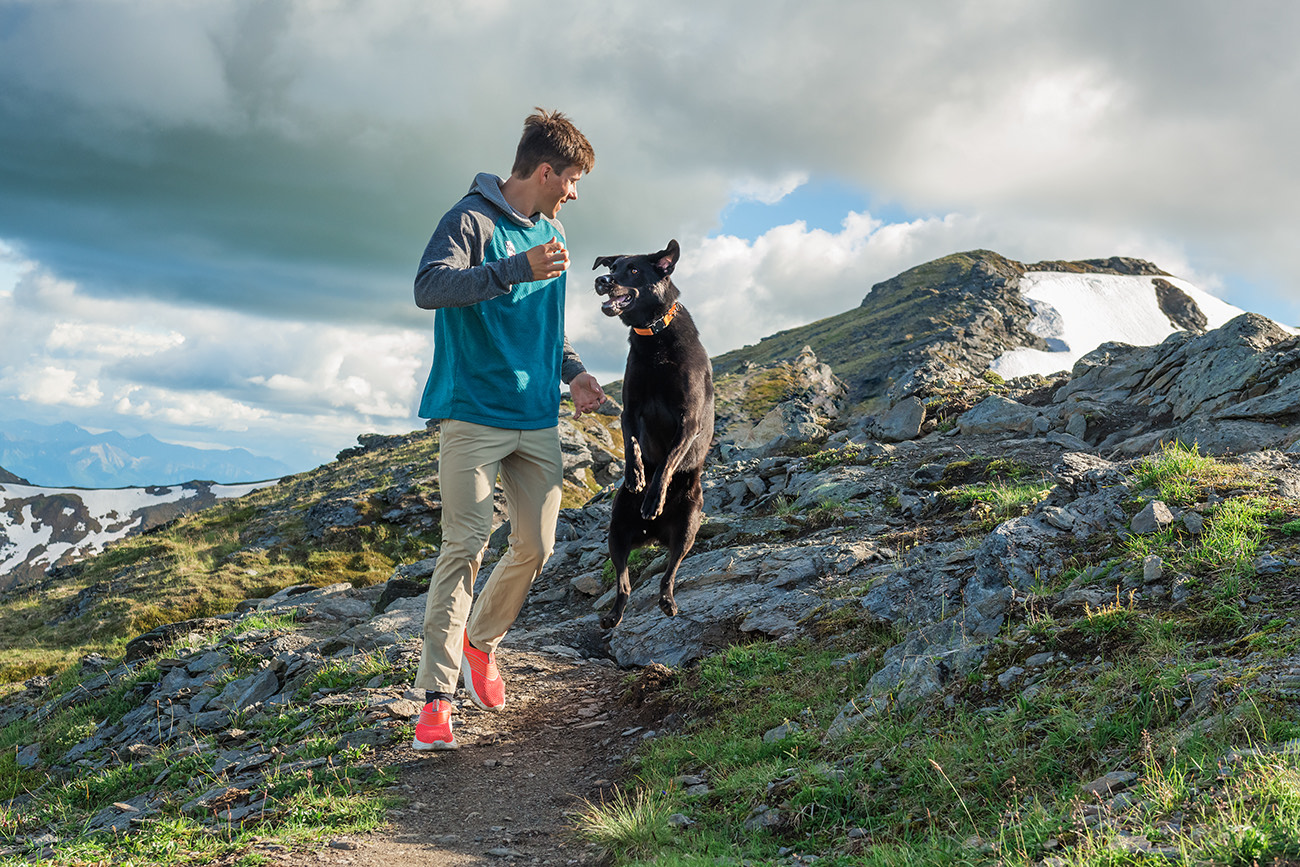
    Michael Earnhart playing with his dog around his hometown of Anchorage Alaska. Earnhart was recently nominated to the US Ski Team D-Team. (Photo: Michael Earnhart).

    FasterSkier/Ben Theyerl (FS): Can you just tell us a little bit about yourself? Where are you from, who have you skied for in the past and who are you skiing for now?

    Michael Earnhart (ME): I’m from Eagle River, Alaska, which is just outside of Anchorage. I trained with Alaska Nordic Racing, and then last year moved into Anchorage to train full-time with APU (Alaska Pacific University). I’ve just been trying to stay in Anchorage and Alaska as much as possible because I really think it’s the best place to be a skier in the U.S.

    I’ve also gone on two different U.S. Ski Team trips. I started out with the Nordic Nations Cup (U18) and then I’ve gone to World Junior Championships (World Juniors) the past two years in a row, with this past year being the World Junior Championships that helped me qualify for the U.S. Ski Team.

    FS: I wanted to hop in right there, congratulations on officially joining up with the U.S. Team. Can you take us through the process that led you to this point – when did you think that joining the national team was a goal you could realistically set for yourself? And what was the process of reaching that goal once it was set?

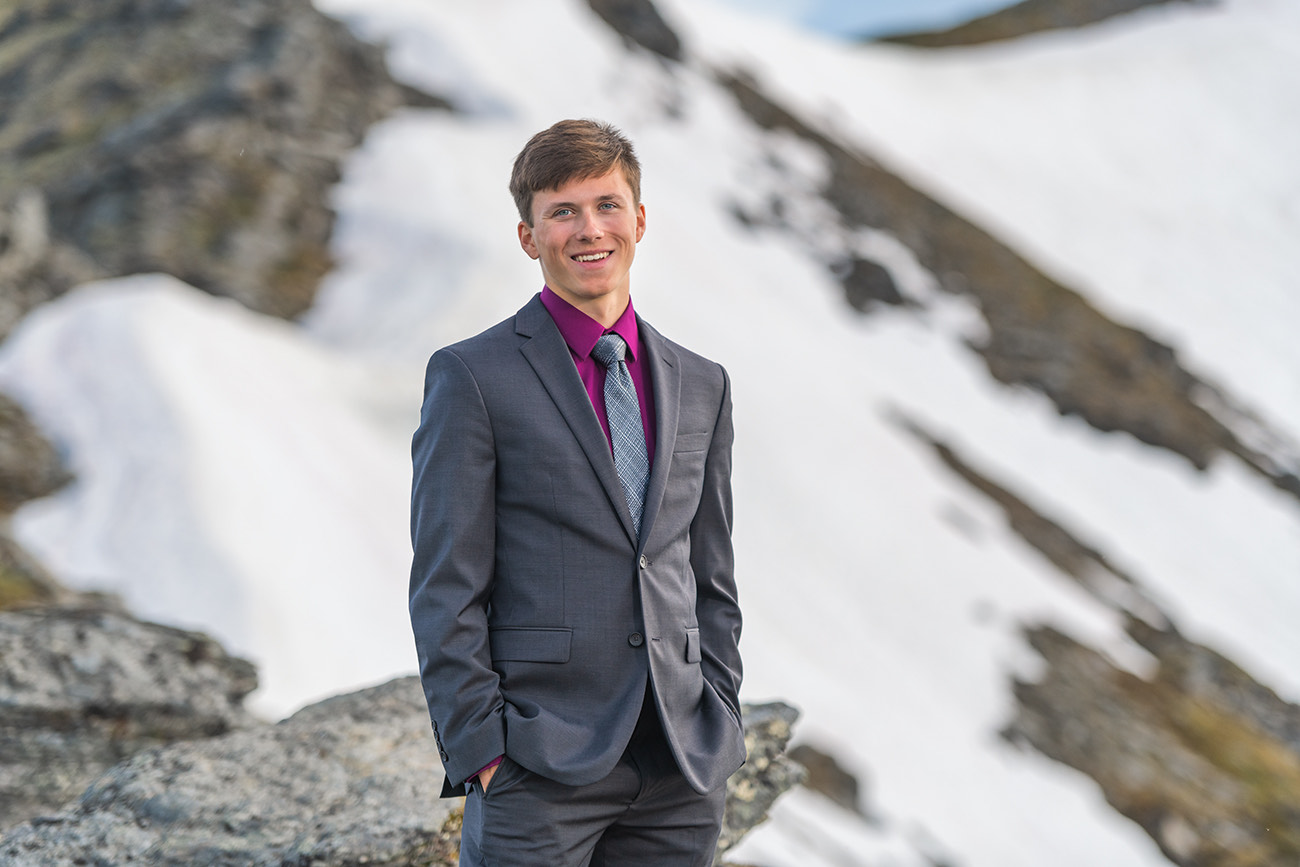
    Michael Earnhart. (Photo: Michael Earnhart).

    ME: In the beginning, I was just into running through elementary and middle school, and just wanted to be competitive in skiing for the running aspect of what I was doing, not really thinking about skiing so much. My freshman year of high school I made it to JNs (Junior Nationals) and ended up getting a Top-10 which was when I was like ‘wow, you know, this skiing thing is really cool.’

    From that point on, I started focusing more on skiing and got lucky because I was naturally talented to some degree. But I worked hard and was able to make my first international trip (the U18 Nordic Nations trip). That was my first time wearing the red, white, and blue, and I very much went ‘yep, this is what I want to do.’ I wanted to wear that U.S. race suit full time.

    FS: Did you make it out to Bend camp this spring? How was the first experience joining up with the team?

    ME: I did make it out and it was really fun. Those people on the team are some of the nicest people I know, and so it was good to spend time with them in general, but being at a camp where the goal is to put in some big volume was super beneficial to my training. You also get to just learn different techniques for training from everyone and you’re really motivated. It was all super great.

    FS: I’d also note some of those people you’re joining the team alongside. Will Koch and Walker Hall are both joining the D-team with you, and you have experience racing with them at Junior Worlds, but primarily from competing against them in the past. What has the experience been reaching the point of your career where your top competitors are becoming your teammates?

    ME: It’s definitely interesting. I’ve known these guys for years as competitors. Like I think I used to in the summer months be thinking things like ‘ok, how do I beat Walker [Hall]?’ And now this summer, I’m living with him and we’re training together. We both want to do well on the international level, and so it makes sense and I’m really excited about it.

    Earnhart as part of the US U18 Nordic Nations Team. ((Photo: Jane Mittelsteadt).

    FS: You mentioned that you’re skiing for APU, which gives you plenty of examples of U.S. Ski Team members to look up to. You’ve already said that you think Anchorage is the best spot for you to be training, and being from there, I was wondering if you have any reflections on what about it makes it that way?

    ME: There’s a lot. You can train at sea-level, and you can train at altitude. You have snow from October through May. We have great roller skiing in the summer and good running temperatures then too. It also stays fairly moderate temperature-wise – like Fairbanks gets too cold to ski sometimes. So, it boils down to access and climate.

    I would also add that the community is just really large – there’s more skiers than just APU out here. We’ve got older people, middle-aged people who get out on the ski trails too and give us a lot of support.

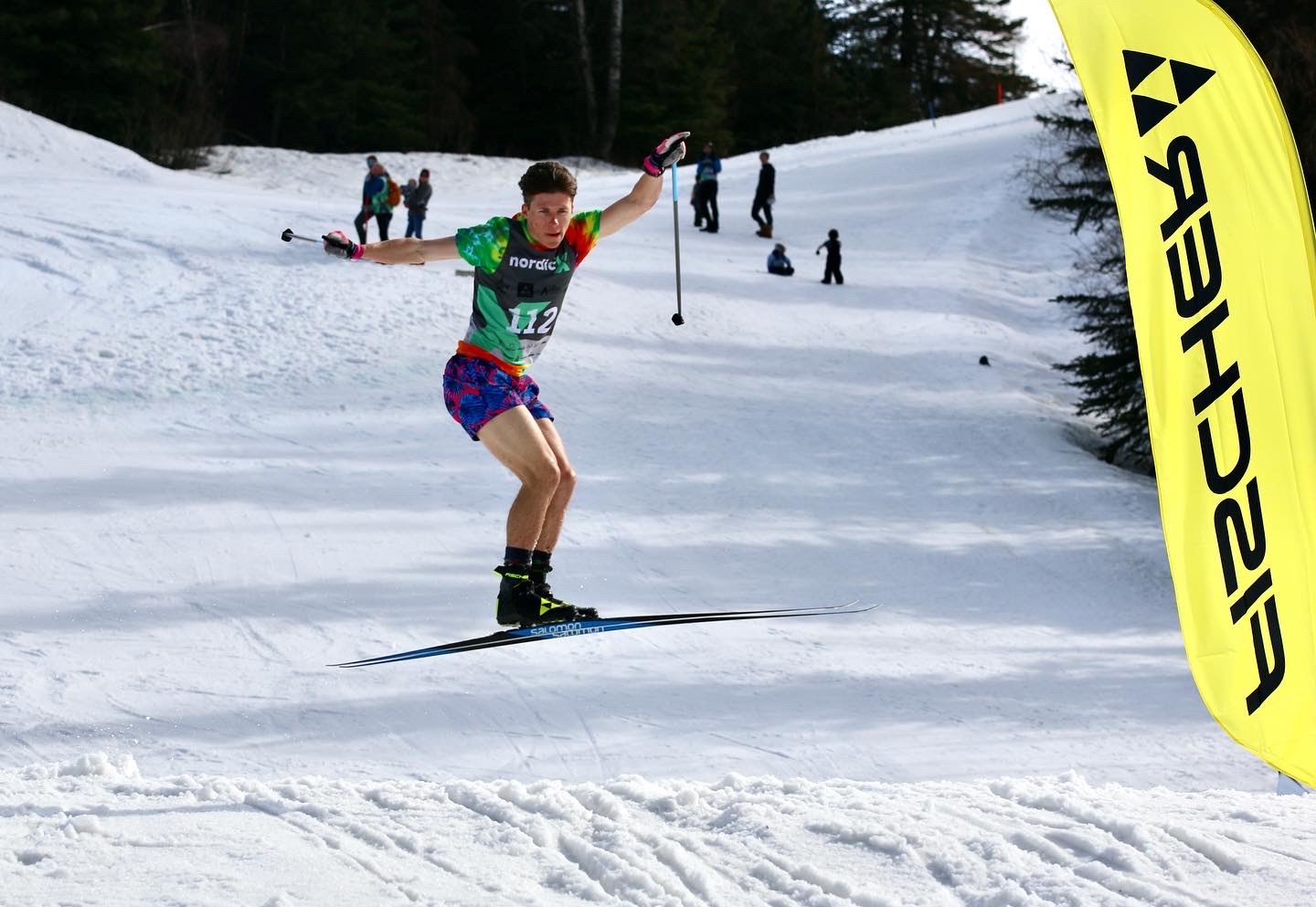
    Michael Earnhart taking part in Anchorage’s NordicX event last April. (Photo: Ophira Group / NordicX)

    FS: Let’s back up and talk about this past season. If you take us back to last Fall, what were your goals going into this season?

    ME: My goal was to make Junior World Championships again, and then just perform as well as I could there. Making the [US Ski Team] D-Team was on my mind, but I didn’t want to set any specific numbers results-wise that I thought would get me there. I didn’t want to say that I had to get a top-15 at Worlds or go for the win or whatever, it was just going to be do whatever I could to get myself onto the D-Team.

    FS: I did notice that after Junior Worlds you chose to race in Minneapolis at Junior Nationals (JNs), and you dominated that U20 category. What was your thinking in doing that versus say, going to OPA Cup finals?

    ME: There were a couple things going on there, but I think the big thing was that it was my last year as a junior so I may as well go have some fun with the guys that I’ve grown up skiing with in Alaska. I wanted to have one more fun time at JNs and I knew I could potentially win some races. I wanted to have a kind of “finish” to my time as a junior and mark it by spending time with the people that have helped me along the way the last four or five years in skiing.

    FS: Quick follow-up: Any comments on the choice of a mullet in Minneapolis?

    ME: You know, I started doing that a couple years ago. I like the idea of growing your hair out all winter to cut it for spring racing. I had a friend cut my hair in the hotel bathroom the night before the first race, and well, I thought it looked pretty good, so…

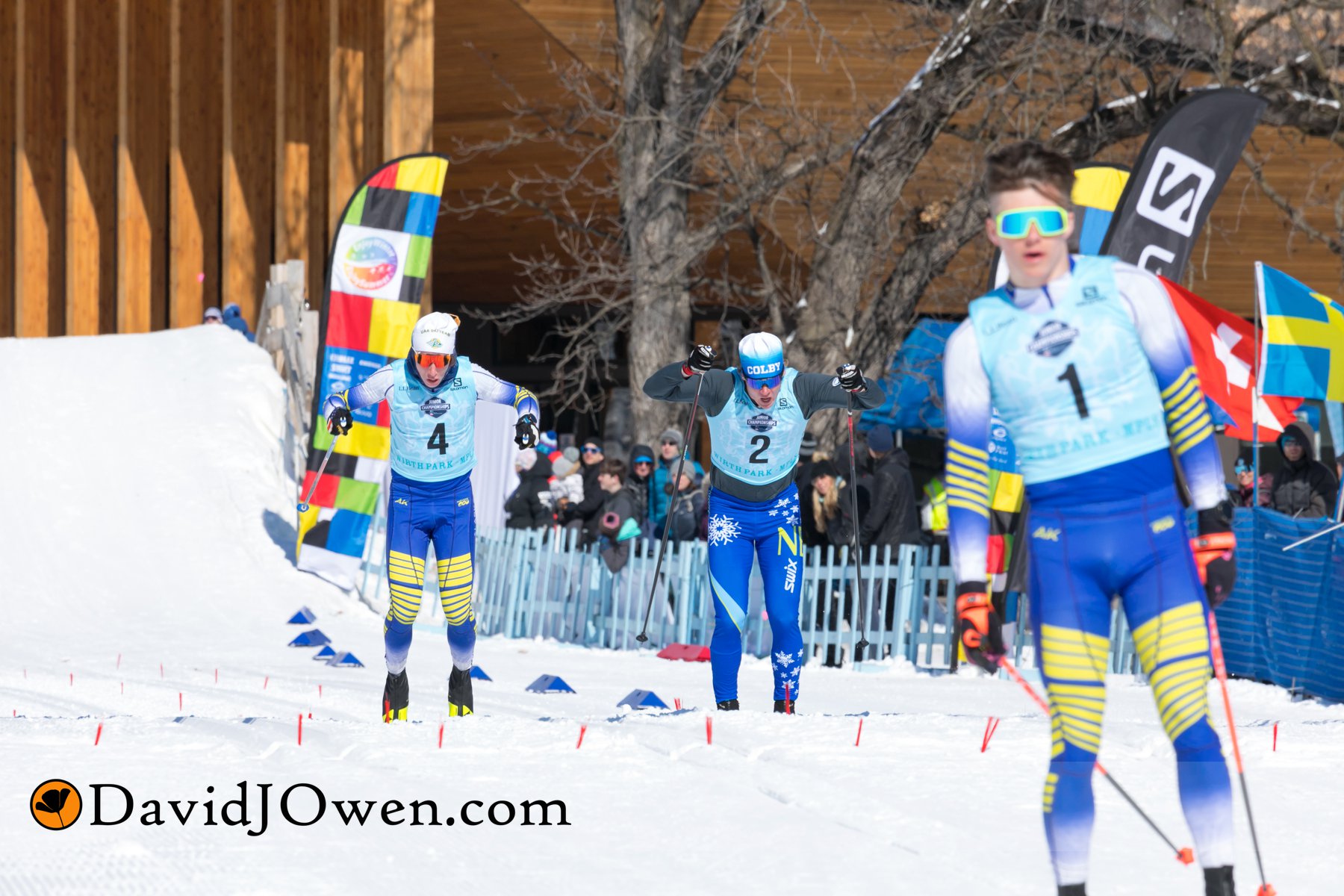
    Michael Earnhart (bib 1) rocking the mullet in question at 2022 JNs in Minneapolis. (Photo: David J Owen Photography)

    FS: I think we all did. If you could pick one highlight from this season, what would it be?

    ME: For me, that’s pretty easily the relay at Junior Worlds. Even though we only got 3rd place when we wanted to win. I felt like it showed that the generation that came just before us, yes, they could get the US a gold medal and make history. But we’re here too, able to get a podium. I think it shows that US skiing is here to stay – we’re going to keep getting better. I’m really proud of having been a part of that.

    FS: That brings us up to this training year. What are you thinking your goals are individually this next season? And what do you want to accomplish alongside those team members that you’re joining the U.S. Ski Team with?

    ME: It’s hard to say right at the moment. I’m kind of at a weird age now being a first year U23, especially when we have so many fast U23s on the team already. I don’t have any specific goals set yet. I just really want to have a productive training year and race as fast as I can. Maybe some top-10s at U.S. Nationals – if you’re looking for a number, I’d put that out there.

    I just want to be as close to winning as I can, and any race that I do, just race hard.

    Michael Earnhart skiing in the suit of his home club Alaska Pacific University (APU). (Photo: Tobias Albrigtsen / @untraceableg).

    FS: All sounds good to me. Thanks so much for helping us get up to speed, and good luck next season!

    ME: You bet, thank you.

  • Alaska physical therapist is one of USST’s secret weapons in Beijing

    Alaska physical therapist is one of USST’s secret weapons in Beijing

    ZHANGJIAKOU, CHINA — Just about everyone involved with the U.S. Ski Team has a story about physiotherapist Zuzana Rogers fixing some weird corner of their body.

    “I had a dislocated cuboid bone, and she diagnosed it over Skype and essentially talked me through repositioning it, and I was better,” said Holly Brooks, the retired Olympic cross-country skier from Alaska. “It was insane.”

    Eli Brown, one of the team’s ski technicians, thought he had an Achilles tendon problem.

    “She worked on me for five minutes and gave me this, like, grab-onto-the-side-of-my-groin type of claw move, and it fixes it all the way down,” he said. “It’s like magic voodoo.”

    Zuzana Rogers, an Alaska-based physical therapist, poses for a photo at the finish line at the cross-country skiing venue at the Beijing Winter Olympics, where Rogers is volunteering with the U.S. Ski Team. (Nathaniel Herz/FasterSkier)

    Eleven-ish months out of the year, Rogers operates an Anchorage physical therapy clinic that caters to runners and skiers. 

    But she’s also become a trusted asset of the U.S. Ski Team, which flew her to China for a volunteer gig working with cross-country athletes at the Olympic Games this month. She’s one of some 20 Americans working with the team behind the scenes — coaches, support staff and ski technicians who athletes call indispensable to their performances here.

    As the team’s physical therapist, Rogers helps the Olympians recover from injuries, strains and the inevitable tweaks that crop up over two-and-a-half intense weeks of racing. 

    Volunteer physical therapist Zuzana Rogers snaps a picture with Jessie Diggins and her crystal globe, after Diggins earned the overall World Cup title in March 2021. (Photo: Instagram @zuzana.rogers.physio)

    The job also involves an array of less glamorous tasks, like carrying athletes’ bags, choreographing start times and logistics and making sure people are fed and hydrated. 

    “It’s a very stressful vacation,” Rogers said. “A working and very rewarding vacation.”

    Rogers took a circuitous path to her work with the ski team, which she’s been doing for about a decade.

    She grew up as a downhill ski racer on socialist Czechoslovakia’s and Slovakia’s national team, then was recruited to compete for University of Alaska Anchorage. She still doesn’t know what exactly led to UAA’s coach to cold-call her at home.

    “I didn’t speak any English,” Rogers said. “So, I graciously deferred for one year and made an effort to learn a little bit more.”

    The call was a huge opportunity to leave the country, and Rogers ended up as a three-time all-American. Afterward, she took her interest in medicine to physical therapy school, and she started working with skiers through Alaska Pacific University’s club team, which has brought her to camps on the Eagle Glacier above Girdwood.

    The work with the U.S. team at events like the Olympics and the Tour de Ski are a chance for her to get experience with elite athletes — and to trade knowledge with other members the squad’s medical support staff, like massage therapists and doctors.

    It’s also a chance to watch the athletes perform from a few yards away.

    “It gives you that adrenaline rush — especially knowing the background of the athletes and how much work they put into it,” she said. “It gives me shivers down the spine.”

    Athletes at the Games said that Rogers, in addition to being a skilled physical therapist, adds a warm and reassuring presence to the U.S. team — particularly for younger skiers in the frenetic environment of the Olympics.

    “She’s just really confident — she’s been around for so much,” said Luke Jager, 22, a U.S. sprinter competing at his first Games.

    Luke Jager races a freestyle sprint in Davos, Switzerland in December, 2021. (Photo: NordicFocus)

    “You come to her after a race, or between a qualifier and heats, and she’s like, ‘Here’s what we need to do,’” said Ben Ogden, 22, another Olympic rookie. 

    Coaches said that physical therapists like Rogers can also be an important outlet for athletes.

    “They’re some of the people that have the best opportunities, sometimes, to talk. Because the athletes are just on the table,” said Matt Whitcomb, the U.S. Ski Team’s head coach at the Olympics. “A lot of times, particularly on a race day, the coaches are up at the venue. And maybe the athletes don’t want to talk to us.”

    Whitcomb called Rogers a “catch” who he hopes will keep working with the American team for another decade. That seems likely, even if Rogers is only a volunteer.

    “We don’t get paid with money, but we get paid with other means,” Rogers said. “And I would not change it for anything.”

    The team behind the medal. Physiotherapist Zuzana Rogers (bottom right) celebrates Jessie Diggins silver medal performance in the 30 k skate with the US squad. (Photo: NordicFocus)
  • Elite Team Preview: APU

    Elite Team Preview: APU

    The APU Elite Team gathers for morning practice on the Hillside trails, Anchorage, Nov. 12, 2021. (photo: courtesy APUNSC)

    Team name and location: Alaska Pacific University Nordic Ski Center (APU, or APUNSC); Anchorage, Alaska

    Coaches: Erik Flora (head coach/director), Jack Novak (assistant coach)

    Current roster: Penny Smyth, APUNSC Marketing & Communications, writes:

    “Women’s Team: Rosie Brennan (USSS A Team), Hailey Swirbul (USSS A Team), Hannah Halvorsen (USSS D Team), Rosie Frankowski (World Cup Alternate), Becca Rorabaugh, Anna Darnell, Annie Gonzales, Marit Flora, Lily Pannkuk, Zoe Noble

    “Men’s Team: Logan Hanneman (USSS B Team), Scott Patterson (USSS B Team), David Norris (World Cup Start), Hunter Wonders (USSS D Team), Zanden McMullen (USSS D Team), Luke Jager (USSS D Team), Tyler Kornfield, Michael Earnhart, Thomas O’Harra, Forrest Mahlen, Garrett Butts, Ari Endestad, Karl Danielson, Bjorn Halvorsen, Chip Schoff”

    A total of nine APU athletes will be starting Period 1 World Cup races this season, though as we approach the Ruka opener later this week Smyth advises, “Scott [Patterson] won’t be joining the team until Lillehammer,” the season’s second race weekend, “due to hand injury.”

    Who’s new or who’s moved on: Smyth writes, “Sadie Maubet Bjornsen, a two-time Olympian and World Cup skier, retired after last year. We have some new skiers that have grown up through the APU Nordic program join the Elite Team, including Marit Flora and Lily Pannkuk. New to the men’s team is Bjorn Halvorsen, younger brother of Hannah Halvorsen!”

    Who’s still on this team, or otherwise involved in American skiing, from when we did this in 2012: Rosie Brennan, Becca Rorabaugh, Forrest Mahlen (athletes); Jack Novak (APU assistant coach); Greta Anderson (USST D-Team coach); Dylan Watts (Mt. Bachelor Ski Education Foundation head nordic coach); Kikkan Randall (Nordic Skiing Association of Anchorage Executive Director)

    Hailey Swirbul (left, third overall) and Rosie Brennan (first, wearing the yellow bib as World Cup overall leader) after the women’s 10 k skate in Davos, December 20202. (photo: Modica/NordicFocus)

    Top results last season: Brennan was fourth in both the overall World Cup and distance standings, and for one magical weekend in December was the best skier in the world, winning back-to-back races in Davos. She became the second American woman ever to wear the yellow bib, after Maubet Bjornsen, and kept it for roughly a month. It was a well-deserved coming-out party for the longtime APU athlete (note that she was also on this team nine years ago) currently in her third separate stint on the U.S. Ski Team, after most recently being cut in 2018 after she raced poorly in PyeongChang while unknowingly suffering from mono.

    Behind her, Swirbul finished the season ranked 23rd overall in the World Cup (21st for distance) and 4th in the U23 standings, picking up her first World Cup podium along the way, which she shared with Brennan. Maubet Bjornsen stayed home in Anchorage for the first half of the season, placed 10th in her first World Cup race in a year after returning to Europe, then at World Championships came within a combined 3.17 seconds of coming home from Oberstdorf with two medals.

    Swirbul, Maubet Bjornsen, and Brennan formed the first three-fourths of the American women’s relay team at World Champs, which came 0.8 seconds away from medaling. Norris recovered from Covid to post some of his best results yet, including 16th and 17th at World Champs, and Patterson had his best season in years, highlighted by a 10th in the World Champs 50 km; the two of them formed half of the American men’s relay team in Oberstdorf. (The team sent seven athletes total to World Championships.) Jager was a tantalizing 0.09 seconds out of the heats in his World Cup debut. Hanneman made three World Cup heats and finished the year ranked 29th in the Sprint Cup standings. Halvorsen returned from a year of grueling rehab from a car accident to finish 23rd in her first race back in two seasons – which was not an OPA Cup or a local citizens race but rather the World Cup sprint in Dresden.

    Hunter Wonders races at Government Peak Recreation Area, Palmer, Alaska, Nov. 14, 2021, in the season-opening Race to the Outhouse #1. David Norris is behind him. (photo: Eric Strabel for APUNSC)

    Domestically, Jager, Wonders, and Maubet Bjornsen won the December Anchorage JOQ races that were the unofficial U.S. Nationals west (also on a podium in these races: McMullen, Mahlen, and Frankowski), and Frankowski and Kornfield picked up a combined four podium finishes at the American Birkebeiner, including Frankowski’s win in the classic race.

    Smyth adds, “Locally, races happened for the rest of the elite team, where we had numerous podium sweeps and a Tour of Anchorage podium sweep in the women’s 50K with Rosie Frankowski (1) Becca Rorabaugh (2) and Anna Darnell (3) and then in the men’s 50K Tyler Kornfield (1) and Thomas O’Harra (2).”

    APU head coach Erik Flora, Independence Mine, October 2021. (photo: courtesy APUNSC)

    Coach’s comments: “The APU Elite team is more than 25 skiers strong. We had a great summer of training with a majority of the U.S. Ski and Snowboard D-Team joining us. U.S. Ski and Snowboard coaches joined the Elite team in July for training sessions, which was positive for the team! This brought some young energy to the daily grind along with a fun group to work with. October brought early snow in Hatcher Pass to finally get on skis for training with early November snow in town to follow. We feel ready for the race season to happen and are excited to see what the races bring moving into an Olympic year!”

    Hailey Swirbul (second from right, pink elbow sleeves) tags off to Sadie Maubet Bjornsen (far right) after the opening leg in the women’s 4 x 5 km relay at FIS nordic world ski championships, Oberstdorf, March 2021. (photo: Modica/NordicFocus)

    Related coverage: Rosie Brennan profile; Sadie Maubet Bjornsen retirement piece; Erik Flora profile from 2017; Ben Lustgarten op-ed on David Norris’s non-selection to the U.S. Ski Team

    Previously in this series: BSF | SMS | Team Birkie | Sun Valley

    Disclaimer: I live in Anchorage, and have trained with the APUNSC Masters program for eight seasons and counting. On the one hand, the Masters group has been an important part of my personal and athletic life for many years now; on the other hand, on a day-to-day basis the Masters team has basically nothing to do and no overlap with the APU Elite Team, and is not coached by Elite Team coach Erik Flora. I don’t receive free gear from APU, or anything in that vein, in exchange for writing about the APU Elite Team.

  • #fasterskiertakeover: APU’s Eric Packer (@eric_packer) Takes Over FS Instagram

    #fasterskiertakeover: APU’s Eric Packer (@eric_packer) Takes Over FS Instagram


    Right to left: APU’s Tyler Kornfield, SSCV’s Noah Hoffman, APU’s Eric Packer, SSCV Kris Freeman, and DU’s Eivind Romberg Kvaale heading out of the stadium tunnel and toward the finish for the men’s 30-kilometer classic mass start at the 2018 U.S. Cross Country Championships in Anchorage, Alaska. Kornfield won the race, Packer placed second.

    As the title suggest, we are giving away the keys: Eric Packer, long of the Alaska Pacific University Elite Team, will be posting to our instagram account this week.

    If you know Packer, his own IG account can be found here, @eric_packer, you understand he has a fondness for the camera lens.

    He’s a rocket fast skier. But he balances his athletic pursuits by working as an engineer and getting behind the lens. His still photography and videography have captured our attention for years.

    Packer was an obvious choice when it came to sending out a request to take over the @fasterskier Instagram account. Check out the video below. It’s clear, Packer can work both the lens and the editing. If that video does not make you fall in love with the potential of being fit and cruising on skinny skis — then we may not be able to help you.

    On to Instagram with our first #fasterskiertakeover.


  • After Winter Marred by Mono, Brennan Breaks Record at Alaska Run for Women

    After Winter Marred by Mono, Brennan Breaks Record at Alaska Run for Women

    Rosie Brennan (center) celebrates with her APU teammate Sadie Bjornsen (r) and former teammate Holly Brooks after winning the 2018 Alaska Run for Women on June 9 in Anchorage, Alaska. (Courtesy photo)

    The last time Rosie Brennan was focused on competitive running, she was sporting a red, white and black singlet as a senior at Park City High School in Utah. In the 11 years since, the former U.S. Ski Team member’s running has shifted from a seasonal sport to supplemental training for her true passion: cross-country skiing.

    Yet earlier this month, on June 9, Brennan surged to the front of the Alaska Run for Women in Anchorage, Alaska, where she lives and trains with the Alaska Pacific University (APU) nordic ski team. She was first across the line in the 5-mile road race, finishing in 27 minutes, 31 seconds. Brennan also broke the course record by 5 seconds (in 2002 Chris Clark won it in 27:36). Notably, Clark raced to 19th in the 2000 Olympics marathon in Sydney, Australia.

    Prior to this spring, Clark had been the only woman to break the 28-minute mark in the Alaska Run for Women’s 26-year-long history. Brennan, 29, joined her ranks, along with 28-year-old Anna Dalton, who finished four seconds behind Brennan for second place in this year’s race. Nineteen-year-old Caroline Pennacchio placed third with a time of 29:53. More than 5,000 women participated in this year’s race, an event Brennan’s former teammate Kikkan Randall has won numerous times.

    While Brennan ran the race casually with friends a few years ago, the 2018 Run for Women marked her first real race on pavement since high school, according to the Anchorage Daily News.

    “I’ve always hesitated to actually race it,” Brennan told FasterSkier during a recent phone interview. “The part I was most worried about was getting an injury.”

    The 5-mile course covers paved roads and bike paths, and Brennan feared that a hard effort on that kind of surface would take a toll on her body. But this spring, she said she wanted to “spice things up.” That, and she wanted to test her recovery after a long bout with mononucleosis.

    An uphill battle

    Looking back through her training log, Brennan can pinpoint the exact day she began to feel off. In late December, at the end of the first period of World Cup racing and just before the 2018 Tour de Ski, she described her sensations as “going up and down.”

    Rosie Brennan racing to 17th in a World Cup 10 k skate on Dec. 10 in Davos, Switzerland. (Photo: Reese Brown / U.S. Ski & Snowboard)

    At the time, she assumed the source of her fatigue was from the previous four weekends of racing. She had started the 2017/2018 World Cup season with four top 30’s and two top 20’s, her strongest Period 1 results to date. Perhaps her body was adjusting to the new level of fitness and racing she was putting forth.

    Thinking the flagging she felt might be warranted, Brennan decided to enter the Tour de Ski. She finished the first race, a freestyle sprint, with a season-best result of 15th. But that Dec. 30 race was the high point of her World Cup season.

    “My first race of the Tour was one of my best races all year, so I didn’t really think anything bad was going on,” Brennan reflected. “But that was a sprint race and for whatever reason, my sprinting wasn’t affected. … After that race I didn’t have any good races in the Tour. It was kind of just downhill from there.”

    Brennan pushed through the Tour’s seven stages, finishing the final pursuit-style hill climb on Jan. 7 in 24th overall (out of 32 women), with the 17th-fastest time. That strong performance cap to a tough Tour, however, was no omen for the weeks to come.

    “After the Tour, I just wasn’t recovering. I mean, I just felt miserable,” Brennan said. “But when you’ve raced like that, it’s easy to just be like, ‘Oh, it was just the Tour; it was really hard this year or the conditions were challenging. I was trying to make due, rest and get back to normal.”

    Heading into the new year, Brennan sat out of the World Cup sprint weekend in Dresden, Germany, and resumed racing Jan. 20 in Planica, Slovenia. Even so, Brennan still felt off. She opted out of the Planica distance race to rest up for the following World Cup weekend in Seefeld, Austria, the last one before the Olympics. Less then a month before the Olympics began in PyeongChang, South Korea, Brennan’s APU coach, Erik Flora, flew to Europe and met with Brennan in person to discuss what might be going on.

    “We both felt like I had probably gotten a virus,” Brennan reflected. “But with a virus there’s nothing you can do, so we decided just to rest it out and play the course and see what happened.”

    In Seefeld, however, there was no remission. After the first 2 kilometers in the 10 k freestyle mass start, Brennan was spent. Wanting to investigate more, she had her blood count tested that weekend. The results showed nothing extraordinary, but they did indicate some sort of viral infection.

    “There was nothing for me to do except rest,” Brennan said. “I didn’t get a mono test or anything at that point, because I was not showing any extreme symptoms.”

    With her departure for PyeongChang just days away and the buildup of her first Winter Games, Brennan worked to get into an ideal headspace.

    “It was really hard place to be,” she explained. “I was headed to my first Olympics and the last thing I wanted to do was convince myself there was something wrong with me. So at that point I just decided to do the opposite, tell myself I was fine, I just needed to rest, everything was going to be fine. That was kind of the approach I took, just rest it out, try to have fun, get back into the groove of things, be excited for the Olympics, and hope things will turn around.”

    Unfortunately, her mono reached its peak in PyeongChang. She was offered a spot in the opening women’s race, the 15 k skiathlon, and not wanting to miss her Olympic debut, she started.

    “You only get what opportunities you get,” Brennan said. “I had to take that skiathlon start and just hope that things would turn around, and I think that was unfortunately probably the peak of my mono.”

    That race, which she finished in 58th place, turned out to be her only start at the Games. After the Olympics, she finished out the World Cup season, but not without difficulty.

    “Every race was kind of the same: I would ski 2 to 3 k and then everything would just fall to pieces,” she said. “You don’t really realize how much of hole or like a tunnel you’re in until you step out of it. If I were to do it again, I would have just come home after the Olympics to try and figure it out.”

    But as they saying goes, hindsight is 20/20.

    “At the time, you just keep telling yourself, OK, you’re going to get it this weekend, things are going to turn around,” Brennan said. “It’s really hard to not have that attitude when you’re over there because you’re trying to have fast races and you’re trying to make the most of the bad situation.”

    Getting answers, moving forward

    The women’s classic sprint top six at 2018 SuperTour Finals in Craftsbury, Vt., with (from left to right) U.S. Ski Team members Kikkan Randall in sixth, Sophie Caldwell in second, Jessie Diggins in first, Ida Sargent in third, Sadie Bjornsen in fourth, and Rosie Brennan in fifth. (Photo: John Lazenby/Lazenbyphoto.com)

    When Brennan did return to her training base in Anchorage, it was late March after competing at SuperTour Finals in Craftsbury, Vermont. An Anchorage doctor with whom Brennan had been corresponding with agreed to run a few tests upon her return. One of those tests was for mono.

    “That came back positive,” Brennan said. “It was nice to know, because after awhile I was starting to think that I was going crazy, but I was also frustrated because I had just spent three months trying to race when I probably shouldn’t have been. … My biggest fear was that by racing that whole time, I had driven it so far into my body that I would never come out.”

    With that in mind, Brennan took April slow. Training took a back seat, as it does for most professional cross-country skiers that month. Brennan went biking, but for minimal amounts of time. When she felt tired, she stopped. By the time May 1 rolled around, Brennan decided she was feeling strong enough to jump into APU’s start-of-the-season training. It was then that she also decided she would enter Alaska’s Run for Women.

    In order to train for the race, Brennan didn’t stray from her ski-specific training plan. Her biggest change was running her strength warmups and cool downs on pavement. 

    “Racing on roads requires a lot more leg speed and that was the part that I was worried about, whether I had enough leg speed,” Brennan said.

    She also did one-minute strides with the APU team when they incorporated them into their training sessions. Otherwise, her road-running prep was minimal. When race day finally came, Brennan forgot to start her watch at the start.

    “Retrospectively, I’m really glad that I did [forget] because I would have slowed down if I had known how fast we were running,” she said. 

    Rosie Brennan (r) chases Anna Dalton during the 2018 Alaska Run for Women on June 9 in Anchorage, Alaska. Brennan went on to win the race in a record-breaking time of 27:31. (Photo: Becca Rorabaugh)

    Brennan and Dalton averaged around 5:30 minute/miles for the duration of the race, though for the most part, Brennan indicated she couldn’t hear any of the splits she was being given.

    “At one point someone yelled, ‘That was a 5:15 mile!’ and I was like, ‘Haha, that’s really funny,’ ” Brennan recalled with a laugh. 

    Assuming that Dalton would make a move in the last 1,600 meters, Brennan hung tight to the experienced runner and aimed match her strides.

    The move from Dalton never came. With about a minute left in the race, Brennan took the lead through the course’s final turns before the finish, which was on a final curve of a 400-meter track.

    antabuse, buy xalatan online, buy fml online

    “Once I went, I realized that I actually had close to nothing left,” Brennan said of her final move. “I was like, ‘Oh no, she is going to pass me, she’s going to pass me. When I finally turned to the final 75 meters, I could see the clock it said, like, 27 something, and I had a rough idea what times were for the race, so I knew that was really fast. Then I was like, ‘Oh my gosh, I hope I actually get to the line.’”

    Brennan did, taking the win and the record with it.

    “I had no idea that we had broken the record,” Brennan said. “Once Anna finished, she came up to me and said she thought that we had both gone under [the course record], that was when it really hit me, how fast we had been running that whole time.”

    Olympians Tyler Kornfield (l) and Rosie Brennan (r) with a young Skiku skier this spring. (Courtesy photo)

    The road-race win was Brennan’s first ever. At a running time trial with APU the weekend before, she had come close to a personal best. Both performances gave her confidence as she looked ahead to the rest of the training season. 

    “I definitely surprised myself,” Brennan said referring to her running victory. “To have that race really reassured me that I am moving in the right direction.”

    A U.S. Ski Team member until this spring (she was originally named to the national team in high school, then after a six-year absence was renamed in the spring of 2015), Brennan was not renominated for her fourth-consecutive season in May. But even apart from the national team, she remains focused on racing internationally on the World Cup.

    “I’m hoping for some World Cup starts and World Championships,” she said. “I’ll be working towards those.”

  • Kikkan Randall: The Exit Interview (Part II): Looking Forward

    Kikkan Randall: The Exit Interview (Part II): Looking Forward

    Kikkan Randall explores new rollerski terrain in Penticton, B.C., earlier this month, following her family’s move to Canada. (Photo: Kikkan Randall/Instagram)

    As discussed last week in Part I of this interview, Kikkan Randall’s first-ever FIS race (that is, a race sanctioned by the International Ski Federation) occurred at U.S. nationals at Soldier Hollow in January 2000. Randall was 17 years old, the single youngest finisher in the race. Other athletes had been born in the 1960s and are now at least 48 years old. Randall raced in a first-generation Gold 2002 training suit for the fledgling Alaska Pacific University (APU) ski program. Every skier in the race had a FIS number starting with a 1.

    Fast-forward 18 years and nearly 600 FIS races later. Randall’s final FIS race was the 30-kilometer classic mass start at 2018 Spring Series this past March in Craftsbury, Vermont. She crossed the finish line in third, leading out a four-racer chase pack to claim the final podium spot in the final race of her career. She followed U.S. Ski Team (USST) teammate Jessie Diggins and USST and APU teammate Sadie Bjornsen, who took first and second in a tight finish.

    Randall was the oldest skier in the race by five years. She was the only athlete whose FIS number started with a 1; everyone else’s FIS number began with a 3. Earlier that week Randall’s competitors in the 10 k freestyle included Anchorage junior Molly Gellert (23rd overall), who had not yet been born when Randall did her first FIS race.

    And even among the 30 k podium finishers, Diggins famously got Randall’s signature on a piece of cardboard at 2008 Junior Nationals in Anchorage, after Randall had run out of posters to sign before Diggins got to the front of the line. Bjornsen likewise looked up to Randall as a junior skier, then moved to Alaska to train with her at APU. Randall’s been doing this for a long time.

    https://www.instagram.com/p/Bg1nV3YHWIJ/?taken-by=kikkanimal

    And when it was over, and when Randall had crossed her final finish line, she stood on the podium in a bespoke pink USA/APU suit, and sprayed champagne over her teammates. The next morning, she woke up as something other than a professional skier for the first time in nearly 20 years. She celebrated by leading a Fast and Female session in the area a few days later.

    Randall’s first month of retirement was marked by lots of media appearances and a series of well-deserved honors. She was recognized by the Anchorage Assembly (which gave her a Kikkan action figure), U.S. Ski & Snowboard, the Alaska Sports Hall of Fame, and the APU Nordic Ski Team, among others.

    And, perhaps most significantly of all, she inspired an ice-cream flavor in her honor. Gold & Glory debuted at Anchorage microcreamery Wild Scoops in early April, in advance of a “Welcome Home Olympians” celebration in nearby Town Square. The concoction involved “a sweet cream base with homemade GOLDen Graham toffee crunchies + pink strawberry sauce streaks,” store owner Elissa Brown explained on Instagram. “Topped with pink sprinkles and ‘gold medals’ while supplies last.”

    The ice-cream honor was the only thing in a month of awards and media attention that threatened to make the preternaturally poised Randall lose her focus. “Wow,” said a clearly surprised Randall upon being asked by a FasterSkier reporter about the significance of having an ice-cream flavor named for her. “That’s quite an honor. I do love ice cream; I’ll have to go check that out.”

    Gold & Glory Kikkan Randall commemorative ice cream at Wild Scoops microcreamery in Anchorage, Alaska. (Photo: Julie Kentch)

    Later that afternoon, Randall headlined the Welcome Home celebration for 16 local Olympians and Paralympians who had competed this year in PyeongChang. (Thanks to Paralympic alpine skier Andrew Kurka and his PyeongChang gold and silver, there were a healthy three Olympic medals in attendance. Another dozen or so local former Olympians joined the crowd, including skiers Nina Kemppel and Adam Verrier.)

    Randall rode in on a pink fire truck. She joined the cheerleaders from her high school alma mater, East Anchorage High School, in dancing to the school fight song. She accepted the Skis To The City from Anchorage Mayor Ethan Berkowitz, then sprayed a pink streak in Hizzoner’s hair. She listened as Alaska’s senior senator, Lisa Murkowski, praised the accomplishments of all the Olympians and told them that Alaska was proud of them.

    Finally, Randall took the microphone and addressed a crowd of hundreds filling Town Square on a blustery, raw, sub-freezing April afternoon. Hordes of local junior skiers clambered on to the snowbanks immediately in front of the stage to gaze up at her, Anchorage Junior Nordic hats on their heads and rapt admiration in their eyes.

    “This is so amazing for us,” Randall said, “to come back to Alaska, finally, after a long and hard season traveling the world, to come back and get to celebrate with all of you guys that have been such an important part of making this gold medal and this Olympic team happen. We couldn’t be more proud to represent the state of Alaska.”

    She praised the support of the community and of her teammates, and detailed all the contributions from others that had made success possible.

    Randall ended her remarks by forecasting a bright future for American skiing: “It’s been a fairytale ending to an amazing journey. And now that my career’s coming to a close, I can’t wait to see what this next generation is going to do. Because they know it’s possible, we know we have the community and the support system to make it happen, and they’re going to take this far beyond. This may be the first medal in women’s cross-country, but it’s not going to be the last.”

    So that’s what’s next for U.S. skiing, but what’s next for Randall? Part II of this interview answers those questions.

    Note: The following story is based on an in-person interview with Randall in late April. FasterSkier’s narrative is in bold; everything else is a direct quote from Randall.

    So, what comes next? Randall largely answered this question last fall; go back and review the second half of this FasterSkier article for the full version of this answer.

    The short version is that she’s going to serve on the International Olympic Committee (IOC) Athletes’ Commission, take on a larger role with Fast and Female, and finish up her MBA through Alaska Pacific University (the school, not the ski team). Oh, and by the way, along with husband Jeff Ellis, parent their son, Breck Stuart Randall Ellis, while settling into the family’s new home in Penticton, British Columbia. And maybe it’d be nice to earn a living, too.

    Randall is asked whether the preview version of her new career, as written out last fall, is still accurate. Here’s what she had to say:

    Yes. That’s still the tentative plan.

    The gold medal, of course, has opened up some new opportunities to do some more motivational speaking, which I really enjoy doing, and would love to have a couple opportunities nationally a month to do that.

    https://www.instagram.com/p/BhaIZkIntcT/?taken-by=kikkanimal

    So that’s one part adding to the mix, and then the IOC role has turned out to be a little more than I knew I was getting into. I didn’t realize I would be on the USOC [United States Olympic Committee] Board of Directors, and so actively involved with other groups that kind of funnel into the IOC. So figuring out how to manage the time commitment there, given that it’s all volunteer.

    And my source of income, which has been racing, is now shifting, so figuring out how to do all these things that I’m passionate about, and I love, and I want to contribute to, but still be able to provide for my family.

    … And then realizing there’s only 24 hours in a day, and I want to be a good mom, and I want to be physically active, and still see my husband, and do all these other things. So it’s going to be – after the last 20 years being pretty darn predictable, it’s now a whole new scheduling challenge and energy-management challenge. But, there are so many good things to look forward to, that I think will help me transition out and give me really good focus, new passions.

    I’ve heard that some athletes really struggle after they retire because you are so passionate about your sport, and it gives you so much structure and daily accomplishment, that when you don’t have that anymore, you can really just kind of go into a mental tailspin. So having these great things already lined up that are going to be really engaging and fun to work on I think will be really helpful.

    Randall may be understating things somewhat when she talks about the structure and daily accomplishment of being a full-time athlete; she has trained twice a day, 48 weeks a year, for most of the past 20 years, and duly recorded every workout. That’s a lot of daily structure.

    But there is also a certain broader rhythm to the seasons that attaches to this lifestyle – starting up training again in May, volume in June, intensity in the fall, and so on. Randall is asked, in an interview conducted in late April, what it is going to feel like to not be beginning a new training year next week on May 1, or to spend a complete summer uninterrupted by training blocks on Eagle Glacier, or to spend mid-November somewhere other than far northern Scandinavia for pre-World Cup races. Randall is quick to acknowledge the magnitude of the change, while still concluding that it’s time to move on.

    You know, I’ve been surprised at how quickly I’m starting to realize that it’s gonna feel pretty weird. I did my last race, just coming up on the one-month mark, and, while I’ve been excited to finish a great career, to be able to now go and do new opportunities and things, it is kind of settling in, the fact that I won’t have the excuse to go out and train twice a day, and do all these exercises. And most importantly, that I won’t be meeting up with my teammates, who have really just become such close friends, and coaches and everything.

    https://www.instagram.com/p/BiOeBl_Bq2H/?taken-by=apunordicskiteam

    So I know it’s going to be a pretty dramatic stretch, and April has been kind of a free pass, in that it’s always kind of the time of year when we are flexible. It’s felt pretty normal so far, but as next week starts, and summer drags on, I’m sure it’s going to be pretty strange.

    But all good things come to an end, and I think it’s still the right time to transition out, so it just gives me a greater appreciation for what I’ve been able to do, and recognizing what parts of that life I want to continue forward – you know, I want to stay active and fit, and it’s just going to be a new challenge of how to figure out how to do that, while balancing everything else.

    That challenge, for an elite athlete, often involves coming to grips with the fact that they still love moving and being outside, yet by definition will spend the rest of their life older and slower than when training was their full-time job.

    Two models for how to negotiate this post-career period (which, it should be noted, represents multiple decades and the majority of one’s life) are suggested, the Adam Verrier model and the Nina Kemppel model, corresponding to two local former Olympians.

    Briefly put, Verrier moved to Anchorage after his college ski career ended, qualified for the 1994 Olympics, then stayed in Anchorage and basically never stopped racing. He has won nearly every notable trail race in southcentral Alaska, and placed on the podium of the 50 k Tour of Anchorage, the unofficial citizens race championship for the state of Alaska, eight times between 1995 and 2007, including three victories.

    Kemppel, by contrast, raced in four Olympics from 1992–2002, then ultimately returned to Anchorage after earning an MBA outside of Alaska. She has lived here for years, and presumably remains quite active, but does not seem to have entered an official running or skiing race since returning to Anchorage. “I’ve become more and more of a weekend warrior because of my job,” Kemppel told the Anchorage Daily News in a 2012 article noting her return home.

    Randall is asked with which pole of post-career racing she envisions being more closely aligned.

    I probably hope for something in between. I am already recognizing that with family commitments and some of the – I mean, the gold medal changed the reality a lot, in terms of what opportunities are available, and my position with the IOC is going to be very busy. So while I love the idea of just staying super-fit and doing all that, it’s going to be a challenge to be able to do that. But I also love being able to be active every single day, so I hope to be able to build that into my new life.

    As far as racing goes, I don’t have any real plans in the near future. I’ve always been interested in trying some mountain biking stuff, and I think it’d be cool to dabble with some new sports. There’s a big triathlon community down in B.C. where we’re going to be, so maybe that’s something to get into. [Randall has at least one victory and four runner-up finishes in Anchorage’s Gold Nugget Triathlon, one of the largest and longest-running women’s-only triathlons in the country.] Having races in the future is a good motivation for just making sure you get out the door every day, and you have a plan of what you’re working towards. So I like that idea, but I don’t need to necessarily keep racing at a high level all the time.

    And ski racing-wise, it would be fun to do some events I’ve never done, like the Birkie and stuff, but I don’t know at what level I’ll be racing.

    But I do really enjoy racing, I love the opportunity to just get out there with everybody, put the bib on, and go push yourself, so I think I’ll continue to do some of it.

    https://www.instagram.com/p/BgvooV9nZHF/?taken-by=kikkanimal

    [Randall has often spoken of shifting into a race gear or finishing gear when she is racing well, or of being unable to make that shift when she is not. She is asked what it’s going to be like, two months or two years from now, when she’s at the point in a race when all of her training and experience tell her that it’s time to make that shift, but her body won’t let her do what her mind wants to.]

    I’m sure that’s going to be tough. Thankfully the number of years I’ve been competing, I think I do have a nice window of time where that’s not going to just disappear overnight. But I can tell already, in the last month where I haven’t done a whole lot, and all of a sudden jumping into doing things a little harder again, it’s like, Whoa, what are you doing? So yeah, I’m sure it’s going to be tough to not be as fit as I would have been in the last 20 years… but that’s just the way it goes.

    That world-class fitness was not easily won. Over the course of her career, Randall increased her annual training hours consistently and substantially, from roughly 300 in high school to nearly 800 by the height of her career, adding in intensity along the way. “You hadn’t trained hard enough if you hadn’t started crying,” Randall once told Outside Magazine of 2008, “the year of intensity.” (It is worth noting that 2008 also saw Randall undergo two surgeries for the blood clot that nearly killed her. But they were both in April, so presumably she didn’t miss too much training. She would win her first World Championships medal, Liberec, Czech Republic, in February 2009.)

    But when asked what she won’t miss about this lifestyle, the first thing Randall mentions is not the staggeringly difficult Level 4 bounding workouts, but rather the simple quotidian drudgery of preparing for and completing two workouts a day, every day, over and over and over again.

    I think always having to do two workouts a day. Over the last couple of years, especially once we had Breck, it was hard at times, to just go, I’ve got to change my outfit again, I’ve got to go out there, maybe the weather’s not great, and I know I’ve got two hours to log. And just putting in the amount of time out there – it got tough. So some of that part I won’t miss, just having to do it all the time.

    Having the time open and available for new things now, not having to just constantly change outfits – into training clothes, out of training clothes. And traveling with so much gear. It’s just been nice to do a couple trips now where I just pack a couple things, and off you go, not have to drag a ski bag all around the world.

    The APU men pushing each other during a workout at an Eagle Glacier training camp, July 2015. (Photo: Zuzanna Rogers)

    Going up on the glacier was always – it was such a great training environment, and it was such an amazing resource to have, but you could never really appreciate it in the moment when you’re up there. When you’re on Day 2, and you’re staring down five more days of just what you know is going to be a lot of hard training, and just knowing you have nowhere to go, you’re stuck up there, you’re away from your family. And so, I won’t miss, again, just having to do that … at the same time, I think I’m quickly going to miss the opportunity where I got to do that.

    So it all comes into perspective: When you’re in the midst of it, you can’t wait to be done with it and not have to do it anymore, but then quickly you realize, like, what a cool opportunity it was.

    Now that Randall is no longer in the midst of it, she has one heck of a formidable resource: 20 years’ worth of training logs and data. And she has saved all of it, too, starting with a log provided by her high school coach, Harry Johnson, at the East High Cross-Country Team, and continuing through to more recent versions contained in an array of spreadsheets.

    Unsurprisingly for an athlete who has spent much of her career raising others up along with her, Randall is decidedly magnanimous when asked what she plans to do with all this training data.

    Erik [Flora] has all my logs, so he has all that data, and he’s of course free to use it however he sees fit. The U.S. Ski Team also has all my logs. I know they’ve already integrated a lot of stuff into their planning for the development pipeline, and kind of what we’ve learned.

    So yeah, it’s all open and available to those guys to use because I hope that my career can help just make the road better for the next group coming through. Because I learned a lot off of what people before me did, and what worked for them and what didn’t work for them, and then we kind of progressed that forward. And I think already we’ve been able to create a totally better training environment than when I even started. So keep pushing it forward, and I’m glad that that information’s out there.

    https://www.instagram.com/p/BiPkRmMnO0U/?taken-by=kikkanimal

    And it’s pretty fun to be able to get to the end of it now, and look back over the progression and the work, and what went well, what didn’t, and all that stuff.

    And I’m so glad that I recorded all that, because part of my log, too, is comments on training every day, and that in a sense is a diary for me, because I haven’t really recorded that anywhere else. And now that my career spans so long, it’s so nice to be able to go back and read through that, and realize what was going on in my life day-to-day, through all the years and the training. And it also helped my relationship with my coaches, to best understand what was going on with me, and to be able to adapt the training around that.

    While presumably no athlete has ever said that the physical hardware itself was the point or the telos – as opposed to the hard work that went into winning a race, the pride of accomplishment, the friendships made along the way, etc. – the fact remains that Randall’s personal trophy case is extensive. There’s an Olympic gold medal, for one. But also three World Championships medals. And three Sprint Cup Crystal Globes. And a medal for third overall in the 2012/2013 World Cup standings. And 29 World Cup podium medals.

    And even, if you go go back far enough, 10 Alaska state high school championship ribbons, three for cross-country running and seven for track, in distances from 800m to 3,200m. (Fun fact: Randall never won an Alaska high school state cross-country skiing title, but she did go on to have a more successful post-high school ski career than the girl who consistently beat her, Service High School’s Tara Hamilton, who went on to ski for the University of Denver and “only” won an NCAA national title.)

    Randall is asked where all these awards currently are, and what she plans to do with them.

    I’d love to find ways to get it out there. It’s been so fun, just carrying around the gold medal already, sharing it with everybody; it’s something for people to see, to look at. One of my crystal globes is at the L.L.Bean store in a case, so that’s already kind of being shared. The other two right now are just kind of sitting at home in their carrying cases. And I’m not sure exactly where my World Championships medals are; they’re packed somewhere in the move. But it would be fun to, I think, have some displays out, share it around.

    Kikkan Randall with her third consecutive Sprint World Cup Crystal Globe, 2014. (Photo: Fischer/Nordic Focus)

    Because, now that we’re kind of starting fresh with the new home in B.C., and as Breck grows up, and Jeff has some incredible accomplishments of his own, I would love our family space to be a little bit about our future, and not so much about my past in particular. So if I can get my awards in places that can inspire others, and people can share that piece of history, I think that would be better than just having it at my home somewhere.

    I’d love to see something here at APU, to really celebrate the connection of what we do with the ski team, so that everyone knows about it, gets to feel a part of it. And then the Alaska Sports Hall of Fame, of course, at the airport is a pretty cool demonstration, and who knows where else in town we can have some sort of display maybe. Anchorage certainly deserves a lot of the credit for this.

    As Randall observed, her focus in life is currently on the future of her family. But it’s worth noting that her husband, Jeff Ellis, was no athletic slouch himself; he was a World Cup skier for Canada who scored a podium in an Alpen Cup race as well as multiple podia in NorAm races. All of which begs the question, what will Randall and Ellis do when an 8-year-old Breck tells them he wants to do a local running race, or an 11-year-old Breck announces he wants to join a junior ski team?

    I would like to follow a lot of the lead that my parents had for me, in that they really felt like they wanted to let me direct the choices. And so when I got interested in something, and wanted to do it, I was welcome to try it.

    And then the rule was, once I signed up for something, I was committed to that for at least that season. And a lot of times, I would get excited, sign up for something, and then get into a few days of practice and go, ‘Yeah, I don’t think I want to do this.’ But my parents were like, ‘No, you committed to it, so you’re going to see it through to the end of the season. And then once the season is over, if you want to move on to something else, you’re more than welcome.’

    https://www.instagram.com/p/BhkEN0eHqYf/?taken-by=kikkanimal

    So I think I’d like to follow a similar thing with Breck – introduce him to some things that, you know, both Jeff and I are interested in, because we’d love to let him have a similar experience, but let him guide it. If he’s interested, he can keep doing it; if not, he can move on to something else, and just kind of learn that, once you commit to something, you’ve got to see it through.

    And then we’ll just see where it goes from there. I hope to be supportive of whatever direction he takes, and if he gets excited about competitive things and training and wanting to take that route, just support him along the way. So we’ll see.

    And finally, the woman who was, famously, the only mom on Team USA at PyeongChang (less fun fact: it was ultimately too expensive for Randall and Ellis to bring Breck to South Korea with them, and he spent the Games with his grandparents in Canada), who nursed an infant from birth through the first month of the 2016/2017 World Cup season and who spent two winters traveling through Europe with a child and a ton of baby gear in tow, is asked how much 2-year-old Breck understands about Mommy’s job.

    I think the coolest part right now is, because he’s not necessarily going to be aware of the specifics of what I do, he’s just been around it. He enjoys watching people ski by, he wants to put on skis himself and try it. He’s just kind of being unconsciously subjected to the lifestyle and the people, and that’s been really fun.

    And the night before the team sprint, I was Facetiming with him – he was back in Canada with Jeff’s parents – and I said, you know, “Tomorrow Mommy’s got a big race at the Olympics, do you have anything to say?” And he just said, “Gooooooooo!”

    And I think he was saying “go,” because my mother-in-law has coached him a little bit to say “Go go Mommy!” So he was kind of saying “go,” but at the same time it almost sounded like, “Gooooooold!”

    And last year at World Championships, when he was just 10 months old, he was playing with the bronze medal, and then this year I gave him the gold medal, and he actually kind of looked at, and then he just dropped it and walked away. And since then he’s seen it around a lot, so he’s getting a little bit more interested in it … but he won’t realize what it is for a while, but I think it will be really cool to show him that he was a part of it, and it will be interesting to see what his take on it is later on.

    https://www.instagram.com/p/Biusr86H10V/?taken-by=kikkanimal

    I know that Kateřina Neumannová – I thought it was such a cool moment, and I was there in Torino when she won the 30 k, and her two-year-old daughter came running out to the finish area. I just always loved the image of that.

    So a couple years ago, when I first got my pink Kikkan poles, she got in touch and said, “Kikkan, I need a pair of your poles.”

    I’m like, Kateřina Neumannová’s getting in touch with me? Like, ‘Whoa, you’re my hero.’ And she’s like, ‘My daughter just absolutely thinks you are amazing, you are her favorite racer, and if I can get a pair of your poles for her birthday, she’s trying to decide between tennis and ski racing right now, and I’m hoping she’ll choose skiing, hoping that this will help.’

    And I was like, ‘But does your daughter know who you are? And she’s like, Yeah, it’s kind of a she could care less who I am kind of thing, I’m just her mom.’

    [Randall sent the poles to Neumannová. They were appreciated:]

    https://www.instagram.com/p/zo3zfijSt7/

    So it will be funny to see what Breck’s reaction is to it all. I think it’s cool that he got to be a part of it, and we’ll get to show him the pictures and everything. But what he’s going to really grow up with is knowing me as his mom, beyond the career. So the focus gets to be on our family and on him.

    * * *

    Disclosure: The author is an Alaska Pacific University masters skier who grew up doing Anchorage youth sports in the same generation as Randall; they skied together in Anchorage Junior Nordic in the early 1990s.

  • Nordic Nation: Way, Way North with APU’s Tyler Kornfield

    Nordic Nation: Way, Way North with APU’s Tyler Kornfield

    Even in the way northern latitudes, there is no denying the earth’s 23.5-degree tilt on its axis and our relationship with the sun. Spring has sprung. In the spirit of holding onto winter just a little bit longer, we struck up a conversation with newly minted Olympian, Alaska Pacific University (APU) skier and Alaskan native, 27-year-old Tyler Kornfield.

    Tyler Kornfield (tall skier on left) and Rosie Brennan (adult to right of Kornfield) during a Skiku on-snow session this spring. (Courtesy photo)

    On the competition side of things, Kornfield set the domestic scene abuzz back in 2012. At U.S. nationals that year in Rumford, Maine, he won the classic sprint and placed third in the freestyle sprint. This past January at 2018 nationals in Anchorage, Kornfield skied to seconding the classic sprint and third in the skate sprint. The experienced skier’s most He also won the 30 k classic to cap off a stellar championships week.

    buy nasonex online

    APU’s Tyler Kornfield celebrates after winning the men’s 30 k classic at U.S. nationals on Jan. 7 at Kincaid Park in Anchorage, Alaska.

    But maybe, more importantly, Kornfield has helped bring cross-country skiing to rural Alaskan villages through Skiku. Kornfield is not alone in this endeavor: many skiers and coaches have volunteered their time to “to foster the health and recreational benefits of skiing, biathlon and running through sustainable programs across Alaska”.

    All smiles. Olympian Tyler Kornfield (l) and Rosie Brennan (r) with a young Skiku skier. (Courtesy photo)

    We spoke to Kornfield on May 3 to learn more about his commitment to Skiku and get the rundown on his year.

    (To subscribe to the Nordic Nation podcast channel, download the iTunes app. If you have iTunes, subscribe to Nordic Nation here.)

  • Kikkan Randall: The Exit Interview (Part I): Looking Back

    Kikkan Randall: The Exit Interview (Part I): Looking Back

    Kikkan Randall (l) and Jessie Diggins listening to the U.S. national anthem after being awarded their 2018 Olympic gold medals from the freestyle team sprint in PyeongChang, South Korea. (Photo: FlyingPointRoad)

    Kikkan Randall competed in her first World Cup race in 2001, and her last in 2018. In between, she won 14 World Cup races, three Sprint Cup Crystal Globes, three World Championships medals, and one Olympic gold medal accompanied by one very enthusiastic broadcast call from Chad Salmela. She appeared in television ads, received the Skis to the City from the mayor of Anchorage, and had an ice-cream flavor named after her. And long before she brought cross-country skiing to the attention of The New York Times and The Guardian, she was mentioned on FasterSkier over 2,000 times. (The first-ever hit on this site seems to date to November 2002, a two-paragraph recap of the West Yellowstone sprint. Other podium finishers included Brooke Baughman for the women, and Lars Flora and then-junior skier Andy Newell for the men.)

    This is presumably not Randall’s final appearance in FasterSkier; if nothing else, tune in next week for Part 2 of this interview. But it may be one of the last times she talks with FasterSkier while she still appears on the “current World Cup athletes” page of the International Ski Federation (FIS) site.

    Note: The following story is based on an in-person interview with Randall in late April. FasterSkier’s narrative is in bold; everything else is a direct quote from Randall.

    Let’s go back to the beginning, way back. Randall has said that she was all of five years old when, sitting in her grandparents’ living room, she “decided right then and there I wanted to go to the Olympics.”

    But where does that drive come from? What makes a kindergartener form such a belief, even one with Olympian role models within the family? (Randall’s aunt and uncle, Betsy and Chris Haines, were American nordic Olympians in 1976 and 1980.) To answer this question, Randall goes even farther back, to 1983, to a time when the infant who would one day become the world’s fastest woman on skis was experiencing the first tantalizing glimpses of mobility on her hands and knees.

    I gotta think there’s some innate thing in my personality that orients me [toward being that driven]. My parents have a story of being at a picnic when I was just learning to crawl and putting me down on the grass, and there was a playground about 200 feet away. And I just started crawling toward the playground. And my parents were like, Well, we’re going to see how far she goes, expecting that I’d get a little ways and then look back.

    And I never looked back. I went all the way to the playground. And at another point, some woman from the picnic went over and picked me up, and was like, ‘I can’t believe you’re letting this kid go off.’ And my parents were like, ‘We just wanted to see how far she would go.’

    Kikkan Randall (bib 136) runs in a community race in Anchorage, Alaska, in the mid-1980s. (Photo: KTVA 11 screenshot)

    So there’s obviously something, I think in my personality, that makes me want to go after what I want. But I also grew up with amazing role models. I mean, within my own family, my aunt and uncle went to the Olympics, so I already had a great example of what the Olympics was, how possible it was. And then my parents, who always supported me, told me to chase after what I wanted to do, to not really put limits on it, and then allowed me to kind of chase after what I was interested in.

    But then instilling along the way that once you commit to something, you do it and you don’t give up, and the most important thing is giving your best and all those things.

    And then growing up in a place like Anchorage, where I grew up doing all these different activities, and around people where as a girl I never felt like I had less opportunity, that there was anything less possible. If anything, because I saw so many strong women athletes around me, I wanted to be a strong woman athlete myself, and set an example for others. So when no American woman had won a medal, it’s like, Well, we need a women’s medal. We gotta be on par with the men.

    So really, just a great supportive environment and always just a drive. And always a lot of self-confidence. I’m not sure where that came from, exactly, I think I just developed that over time, but that really helped, too.

    To find the first FIS race of Randall’s career, it helps to set the FIS database to show 100 results per page. And even then, you have to click through to the sixth page of results to find the beginning. That’s right: Randall competed in, loosely defined, nearly 600 FIS races in her career (counting sprint qualification and finals results separately, as the database does).

    The first-ever FIS race was a 15-kilometer interval start classic race at U.S. Nationals held at “Wasatch State Park,” better known as 2002 Winter Olympics site Soldier Hollow. It was January 10, 2000. The Y2K Bug had thankfully not caused the world to end 10 days earlier. The Billboard Hot 100 number one song was “Smooth,” by Santana. AltaVista, valued at roughly $2.3 billion, was the dominant internet search engine, though challenges from an ascendant young company named Google were on the horizon.

    From left to right: Nina Kemppel, Jim Stray-Gundersen and John Farra gathering with Team USA for Opening Ceremony at the 1992 Olympics in Albertville, France. (Photo: Peter Hale)

    Randall had just turned 17 years old. She was in her junior year of high school, and had never raced this distance before. Nonetheless, she finished 12th out of 59 FIS finishers.

    The podium in this race was made up of Beckie Scott, Nina Kemppel and Rebecca Quinn (now Dussault). Kemppel was born in 1970, and once raced against Nancy Fiddler. Other finishers in this race were born in the 1960s. Every finisher had a FIS number that starts with a 1. Randall’s been doing this for a long time.

    Randall is handed a results sheet that dates from the Clinton administration, and is asked if she remembers anything about this race. The reminiscences immediately begin.

    Oh yeah, my first time at senior nationals. It was my first 15 k ever. And I started second to last. And because I had never raced 15 k before, and it was individual start, I was quite intimidated. And it was one 15 k loop; that was one of the last times they had such a long loop.

    It was a classic race, and I remember skiing up the first k, and noticing that there were chunks missing from the track. It happened to be one of those conditions where, right around freezing, are you klister, are you hardwax? And the reason why there were chunks missing is because people are icing so bad that they would have to stop.

    And so, I was just like, Oh man, am I going to survive this 15 k? And I skied around, and thankfully we got the skis pretty well; I never had any major icing issues. And at points I lost kick, but I made it through. It was a pretty exciting first experience, and then I was pretty amazed to finish so well. [Randall came down to earth slightly in her second-ever FIS race, a 5 k skate two days later, finishing 48th.]

    Fast forward just over a year later, to January 2001, when Soldier Hollow was again the setting for Randall’s first-ever World Cup race, a skate sprint. Czech skier Kateřina Neumannová had the fastest time in qualifying; Norway’s Bente Skari won the final.

    Randall notched a 24th in qualifying, which at the time left her eight spots out of making the heats. She was the third American in the 53-racer field, behind Kemppel in 17th and Tessa Benoit in 20th. Benoit’s final entry in the FIS database is from 2002. Again, Randall has been doing this for a long time.

    Randall is once again handed a printout of the results sheet, and asked what she remembers.

    I scored World Cup points, and that was pretty exciting. And that’s when they only took the top-16 into the finals [of a sprint race]. So I was pretty happy with 24th; of course I wanted to be in the heats. I do remember that as my first World Cup. But it’s crazy that it was 17 years ago.

    [A reporter notes, upon looking at the results, that Randall’s competitors in this race included Ukrainian skier Irina Terelia, who was born in 1966 and is now 52 years old.]

    Norway’s Bente Skari (l) and Mathias Fredriksson of Sweden with their crystal globes after winning the 2003 Overall World Cup. (Photo: Flickr Creative Commons)

    Wow. I mean, what’s pretty impressive, though, is like these were some of the biggest names that I grew up hearing about in the sport, that I got to race against. So I remember getting Bente Skari’s autograph, Stefania Belmondo’s autograph, like on my hat at this World Cup. So, pretty fun. And all of a sudden people are looking at the results listing [and seeing Randall’s 1982 birth year] going, ‘Oh my god, ’82, that’s so old.’

    While the first World Cup race, at age 18, proved an auspicious beginning, there was nonetheless a learning curve involved in making the jump to international competition. Randall’s second-ever World Cup start, a classic team sprint at Torino four years later in January 2005, was respectable enough; she and teammate Wendy Wagner went out in the semifinals, but avoided placing last by finishing 12th out of 14 teams.

    But the following month brought the third World Cup start and first World Cup distance race of Randall’s career, a 10 k interval start freestyle in Reit im Winkl, Germany. Randall was one of two Americans in the race, along with Rebecca Dussault. Randall started with bib 6 in a field of 70, reflecting FIS distance points that were not particularly low. (Marit Bjørgen started last.) Randall finished 70th out of 70, dead last, behind athletes from China, Japan and Lithuania. She was 80 seconds back from 68th place, and nearly 5 minutes back from the winner over 10 k. It was a 154-point FIS result. “It was a rough day for the North American teams,” FasterSkier observed.

    It was raining.

    So even Randall has finished a race dead last, and questioned herself along the way. (As the saying goes, DFL is better than DNF. But the latter status prevailed at World Championships later that month; Randall did not get the chance to anchor the women’s 4 x 5 k relay team when the Americans were lapped and pulled from the course during the third lap of four. The American women are now consistent relay podium threats. Randall’s been doing this a long time.)

    Randall is asked what her thought process was at the time – not what she thinks now, 13 years later, when success was eventually achieved and her whole career can now retrospectively follow a ready narrative arc of struggle and redemption, with Olympic gold as the final chapter. But rather what she thought then, when there was no U.S. women’s ski team, and she was spending her winters going back and forth between North America and Europe, working to build a path that didn’t really exist yet.

    Initially it was fine to get those kinds of results, because I had this approach that, OK, well, I’m gaining experience, I’ve still got more training to do, and I am going to get there someday. But then after you’d been around it a little while, it did feel hard, and that result in Germany, finishing last… I mean, I remember just being kind of in a really miserable state at that point and just – I was missing home, I wasn’t enjoying the racing, I fought with myself that whole race to keep myself from quitting. And just wondering if this is what I really wanted to continue doing.

    asthma

    But thankfully, within all those kind of tough results, there were always a couple of high points that encouraged me that I was making the right progress. And I think that progress is what just kind of kept me going, OK, let’s see this out a little bit longer, let’s go a little bit more.

    And I was really enjoying the lifestyle of it, I was able to start getting sponsors, which allowed me to make it a lifestyle, so it wasn’t a complete sacrifice. I was doing school along the way. It took a lot of convincing of my grandfather over the years, that this was a worthwhile pursuit, because he was supportive of me making the Olympics, but then once I did it was more like, ‘You’ve made the Olympics, now it’s time to finish your degree and become a professional.’ And I had to keep saying, ‘No, I think I can be good at this, I want to keep trying.’

    Randall, in her second Olympics, just before the finishing stretch of the classic sprint at the 2010 Winter Games in Vancouver, British Columbia.

    And I kept pushing the ski team to develop more of a woman’s team. And I would say — I always had this 10-year projection, which was going to be like the Vancouver Olympics — that by Vancouver, I want to be in a position to win a medal. And even when it was just a few years away, and I still wasn’t even that close, somehow I was able to just stay patient and stay motivated and keep going.And I really think, being able to just pull out those small successes – I kept this Excel spreadsheet of my FIS points of races, and I would put in the FIS points that I got, the time back from the leader, comments about the race. And at the end of every season I could see, like, well maybe the results weren’t that spectacular, but I’m progressing, I’m moving forward. So I used things like that also, to just kind of help keep me pushing forward.

    And I just also had this – I don’t know where I got it from, but just kind of this thinking that it was all building. That every year you train, the platform gets stronger and you keep going. And at some point you do hit a tipping point, and you start to break through. And that was so true.

    “I just had this thinking that it was all building. That every year you train, the platform gets stronger, and you keep going. And at some point you do hit a tipping point, and you start to break through. And that was so true.”

    I would say, prior to 2006, I was starting to wonder, but then in 2006 I had that breakthrough that then carried me another few years before the next breakthrough, and then it just kind of kept going. And now the younger athletes that are coming in – well, we just have such a better system, a better understanding, just the confidence that it’s possible. So I feel like the athletes now don’t have to go through it quite like I did, and have to really go, ‘Can I do this?’

    But I had to remind a lot of these girls when they first came on the scene, when they would get their high-flying result and then go back to being in the fifties or whatever, and going, ‘Ah, you know, I’m not successful.’ It’s like, ‘No, this is a long game, and just be focused on making steady progress, and you’ll get there.’ And they have.

    Despite this perspective gained through experience, Randall largely demurs when asked now what advice she would impart to a mid-2000s Young Kikkan. Rather, she suggests that the journey itself was important, and that the need to experiment along the way to figure out what worked best helped her with the rest of her career.

    We’ve obviously learned a lot now about what’s possible in the realms of training, and kind of what types of training and what experience is the most important, and maybe I knew some of it early on, but a lot of it was experimentation. I maybe could have put myself in a position to be more successful earlier in my career had we known then what we know now – but at the same time, I think it was so important for me to go through that experimentation, and it really maybe helped with the longevity of my career, to have been able to do it this long.

    So I would love to go back and have a conversation with Young Kikkan, and just get to hear firsthand the ambition and the thought of what was it gonna be like back then, because you kind of lose that exact memory of what you were feeling back then over the years. But I just think it’s so cool that, despite not knowing, I just had all those ideas, and it would just be so fun to see that now. But I don’t know that I would have a lot of advice, other than just, ‘go for it.’

    Randall is asked what she is proudest of, other than results, as she looks back on her career. She immediately identifies as the highlight her role as one of many in contributing to a culture shift in American skiing.

    (Randall is perhaps being somewhat modest here; it has been the thesis of several publications, including FasterSkier, Outside Magazine, and Peggy Shinn’s new book, that, while Matt Whitcomb’s coaching was certainly important in bringing about this change, it was Randall’s consistent drive that singlehandedly elevated the level of American skiing, raising expectations and creating a path for others to follow.)

    I’m proudest of the culture shift that I think we created in American skiing. The women’s team gets kind of the most attention, and what we’ve been able to do with that, just raising the level of every single person on the team, to a point where we are just so competitive internationally now.

    I’m not going to take total credit for that, because I think there were a lot of important things that came together, and Matt Whitcomb’s leadership has been super important in that, but playing a role in helping make that happen is a super-special part of it for me.

    Matt Whitcomb with Sadie Bjornsen and Sophie Caldwell in Seefeld, Austria, this winter. (Photo: Garrott Kuzzy / LumiExperiences.com)

    And then also seeing the effect it’s had for all of our young skiers – like I said, they’re coming into a world now where just their confidence is so much higher, our understanding of the training is so much better, our support system in Europe and all that’s really well developed. And just kind of helping build that – beyond just the results, I’ve always been interested in how to make our sport better, and so being able to do some leadership on the FIS Athlete Commission, being able to work together with our coaching staff, the U.S. Ski Team staff, to develop more resources, and just make it a better system overall.

    And I think that’s why, coming into this fifth Olympics, while I was excited to have another shot at a medal, the medal was not the end goal. It was more about, like, Hey, look how far we’ve come. I could feel incredibly proud of that, I get to be a part of this one more time. So just remembering to take it all in and enjoy it, because it’s almost over.

    [Randall is asked whether that, perhaps counterintuitively, made it easier to win a medal.]

    Probably, yeah. Because in Sochi, in contrast, I was under so much pressure, both from outside expectations and also from myself, that I was figuring out how to manage it for the first time. I had no one to look to to figure out how to do it, you know, we didn’t have a system created to deal with it. And it was all about the medal, and only about the medal. So this time it was just, like, Yeah, there’s a shot at a medal, we know it’s a possibility, but I’m just happy to be here, and going to take every chance I get to race and make the most of it. And no matter what happens, I can end my career feeling really good about it.

    Randall is asked the obvious follow-up question: what she is proudest of from her career among the category of results. Tellingly, her answer to this question is one-half the length of the non-results question that preceded it, and is similarly focused on team accomplishments over individual accolades.

    Randall (l) and Bjornsen (second from r) on the podium after taking silver in the World Cup team sprint in Düsseldorf, Germany, in December 2011. (Photo: Kieran Jones)

    I mean, that first relay in Gällivare, in 2012 – that one stands out as just such an amazing memory, just because of watching all the team members come together, and what that meant for everybody, and following it up in Lillehammer a year later with another relay podium, those were amazing. Starting to get on the team-sprint podium with Jessie and Sadie, because Sadie and I got on the podium in Düsseldorf, I think in 2011. It’s always the team things that come to mind.

    I mean, the individual things were really exciting there for a while, like winning a World Cup, winning the World Championships medal, but the team events have taken precedence far beyond that. So the gold medal from Val di Fiemme five years ago has really been the highlight, and now we just get to add an Olympic gold medal to it.

    Speaking of team events, and of gold-medal success, it is worth noting that both international championship golds, Val di Fiemme and PyeongChang, came in team sprints. The symbolism is obvious, almost too perfect for a team that has elevated team above all else. Randall is asked what it means that both those medals came in team events.

    I think it’s a greater accomplishment than any individual medal we could have won, because it takes developing a team to be able to make that happen. And our approach on the U.S. Ski Team has always been that there’s such a team aspect. We all just celebrate and know just how much effort it takes from so many individuals to come together. It’s not just the athletes, it’s the coaching staff, it’s the technical staff, it’s the club systems that are supporting us all along. So to win a medal in a team event is just so validating and appropriate because it just represents the work that has collectively happened to bring that medal forward.

    And the individual results have been fun too, but like I said, it just means so much more. And it’s so fun to go through the process of winning a championship like that, and you get to share it with somebody. You know, you get to go through, ‘Oh my god, can you believe we’re doing this?’ And you get to be up there, and holding the flag together, and sharing the story from multiple points of view. So I think it’s the best we could have had, because now that can go out and inspire a continuation of this culture we’ve kind of created.

    It’s so fun to see your teammates succeed and do well, whether it’s an individual or when we collectively come together and do well. And in cases when I’ve been on the sidelines, been not on the team, and just going out and cheering my teammates on.

    And that was what was so amazing about our Olympic gold in PyeongChang is that our entire team was lined up along the fence there. And any one of those girls could have been in our place. It was a really tough decision to decide who the team was going to be, and so the fact that they came out and supported us so hard, when I know it was tough for some of them to not be on the team, but they were able – they knew what an important part they played in making that medal happen, and they were there to celebrate with us. And that just means the world to Jessie and myself.

    And finally, speaking of teams, Randall is asked what her domestic team, Alaska Pacific University Nordic Ski Center, has meant to her and her career. The answer reveals the perhaps unexpected role that an Anchorage estate planning attorney played in the development of domestic and international cross-country skiing over the past 20 years… if Randall’s mother had been working somewhere else in spring 1999, then Erik Flora’s program might not have sent 10 athletes to PyeongChang in spring 2018.

    It’s fun to look back and think about the fork in the road essentially that I was at at the end of my sophomore year [of high school]. Because up until that point I was on the running track. I wanted to run NCAA Division I, and I was training every December for Foot Locker U.S. Nationals, and it was at the end of my sophomore year that my running coach was moving out of town, and therefore I needed a new training group in the summer.

    And it just so happened that my mom was working as an attorney with Trigg Davis, who had happened to become friends with Jim Galanes, and knew that Jim was starting a new program. And he said, ‘Hey, I think Kikkan should meet Jim,’ and then Jim ended up hiring Frode Lillefjell, who was fresh off of his NCAA career, to help start this new program. I was going to join [Alaska] Winter Stars, and I ended up joining APU instead.

    Kikkan Randall during a high-school track race in Anchorage, Alaska, in the 1990s. (Photo: KTVA 11 screenshot)

    And right away, Frode was a coach that just made you feel like anything was possible and just taught us – it was my first time ever rollerskiing, and he made us doublepole only that first summer, which crushed me at the beginning, but then I got really strong.

    Right away, too, Jim was just like, ‘You know, I think U.S. skiers can be successful, but I think we’re going about it in the wrong way. When skiers do NCAA, they just can’t train enough, and we think if you stay in an environment where you can focus on – where training and race experience is the number one goal, and then you fill in school where it fits, we think this can be a new model that can be successful.’

    And so, by chance, kind of getting hooked into that system, and then when I graduated from high school, my first goal was to make the Olympics, and then I was going to go to school somewhere else. And then Jim and the coaches at the time were like, ‘Why don’t you consider taking classes at APU, and doing things here?’ And I entertained that idea, and started some classes here in the fall, and within a couple months I realized what a perfect fit it was for me. Because I was interested in the international track. Even though there was no path of success, I just felt like, ‘That’s what I want to try to chase, but I love that I can go to school along the way.’

    And so getting pulled into that, and then really being in a such supportive environment, where I had coaching day to day, I had training partners, I had access to the glacier, I had early skiing in the fall, late skiing in the spring, and I got to do it all where I grew up. So I had this amazing support system already in place.

    And there was a lot of work that Jim did early on behind the scenes, when the U.S. Ski Team was excited about my results, and wanted me to come and live in Park City, and Jim said, ‘No. She’s got a great system up here, we’re going to keep her here where we know things are working.’ And he advocated and provided that support, and I was able to continue here.

    And then when Erik took over the program in 2006, we just kind of kept that going forward. And I’ve always loved the idea of being a part of a team and a club that I can be with when I’m training, and then there was kind of this seamless transition to then go be a part of the national team, and be able to pursue those kinds of races, but always have this connection to APU.

    And I’ve loved that it’s – it’s not just a 10-member Elite Team, it’s a community program. I’ve always enjoyed the Masters in the program, who really took the financial burden of supporting the program early on, and still contribute so much. And then of course I was part of the Junior program, which has then developed even further down [to the Devos], and knowing that those kids now get to be in a great program that then has a connection to what’s possible. So it’s been cool, and I’ve been happy to see the program really just develop and flourish, because I just really believed in the concept of it from the start.

    Coming next week: ‘The Exit Interview (Part II): Looking Forward’

    * * *

    Disclosure: The author is an Alaska Pacific University masters skier who grew up in Anchorage in the same generation as Randall; they skied together in Anchorage Junior Nordic in the early 1990s. 

  • FasterSkier’s U.S. Continental Skiers of the Year: Caitlin Patterson and David Norris

    FasterSkier’s U.S. Continental Skiers of the Year: Caitlin Patterson and David Norris

    David Norris of Alaska Pacific University (105) and Caitlin Patterson of the Craftsbury Green Racing Project (212) are FasterSkier’s 2018 U.S. Continental Skiers of the Year. (Photos: FasterSkier)

    With the 2017/2018 season officially in the rearview, FasterSkier is excited to unveil its annual award winners for this past winter. Votes stem from the FS staff, scattered across the U.S., Canada, and Europe, and while not scientific, they are intended to reflect a broader sense of the season in review. This set of honors goes to the U.S. Continental Cup Skiers of the Year.

    Previous categories: Junior Skiers of the Year | Collegiate Skiers of the Year | Biathletes of the Year | Para-Nordic Skiers of the Year | NoCo Skier of the Year | Canadian Breakthrough Athletes of the Year | American Breakthrough Athletes of the Year | Coach of the Year

    ***

    Caitlin Patterson, Craftsbury Green Racing Project

    Had Caitlin Patterson glanced to either side while she double poled down the finishing stretch of this year’s U.S. nationals classic sprint, she wouldn’t have seen any other skiers. As it were, the 27 year old had her sights set on the finish line, where they stayed until she secured first place.

    As the first across the line, Patterson snagged her fourth win of the week, and with it, a spot in history. She became the first woman in six years to win four consecutive titles at a single U.S. nationals (after U.S. Ski Team member Jessie Diggins did in 2012).

    “It felt surreal coming down the finishing stretch … realizing that I couldn’t hear people behind me and realizing that it was going to be number four,” Patterson told Fasterskier after the race.

    Caitlin Patterson (Craftsbury Green Racing Project) racing to 40th in the women’s freestyle sprint qualifier at the World Cup in Dresden, Germany. (Photo: Fischer/NordicFocus)

    The banner week for the Idaho native, who grew up in Anchorage, Alaska, where nationals took place, started with an outright victory in a snowy 10 k freestyle. The race after that, Patterson claimed a definitive win in the women’s freestyle sprint, crossing 3.56 seconds ahead of her closest competitor. To close out the week, Patterson was the first American in the women’s 20 k classic mass start, before winning the classic sprint with no other skiers in sight.

    “I could not have imagined this if I tried,” Patterson said, reflecting on the week.

    Prior to her winning streak at nationals, Patterson also raced the opening SuperTour races in West Yellowstone, Montana, where placed third in the 10 k classic. At the following NorAm/SuperTour races in Sovereign Lake, British Columbia, she won 10 k freestyle and placed second in the classic sprint.

    Following her racing at U.S. nationals, Patterson flew to Europe to race Period 2 of the World Cup. She notched some of her best World Cup performances of her career while there, with a 20th in the 10 k classic in Planica, Slovenia, and a 23rd in the 10 k freestyle mass start in Seefeld, Austria. The Olympics were the next stop for Patterson, where she skied to 34th in the skiathlon and 26th in the 30 k classic mass start. She also raced World Cup Period 4,

    antabuse

    On the domestic circuit back home, Patterson finished the season in second in the overall SuperTour standings, behind her Craftsbury teammate Kaitlynn Miller (who also made the U.S. Olympic team) in first.

    David Norris, Alaska Pacific University

    Our U.S. Breakthrough Skier of the Year in 2016, David Norris is our pick for American male Continental Skier for 2018. The Fairbanks, Alaska, native is the overall SuperTour winner for 2017/2018, and he opened his season with a second-place finish in the 15 k classic mass start at the West Yellowstone SuperTour.

    At U.S. nationals, Norris came down sick and raced two of the four races, placing sixth in the 30 k classic mass start and ninth in the classic sprint. After nationals, Norris raced at the Craftsbury SuperTour, where he finished seventh in the classic sprint and won the 10 k freestyle.

    “I came to Craftsbury itching to race,” Norris wrote in an email to FasterSkier in January. “I was sick during nationals and competed in the 30km because I had to if I wanted a chance to earn an Olympic spot. I came up shy, but I know I that I am in good shape. After nationals I took another ten days easy to fully recover from illness so that I could come into Craftbury and Canada healthy.”

    The Ishpeming SuperTour men’s 20 k freestyle podium on Feb. 17, with David Norris (c) in first, Kevin Bolger (l) in second, and Brian Gregg (r) in third. (Photo: APU)

    At the NorAm/SuperTour in Gatineau, Quebec, Norris placed ninth in the classic sprint before finishing second in the 15 k freestyle and winning the 15 k classic pursuit. Norris continued on the SuperTour circuit to Ishpeming, Michigan, where he finished third in the skate sprint and won both the 20 k skate and 10 k classic races. At the American Birkebeiner in Hayward, Wisconsin, he was the second American and fifth overall.

    Norris qualified for Period 4 of World Cup racing and competed in Finland, Norway and Sweden before returning to the U.S. for SuperTour Finals in Craftsbury. There, he finished the season in fourth in the 50 k classic mass start and seventh in the 15 k freestyle mass start. As the overall SuperTour leader at the end of the season, he’ll earn Period 1 World Cup starts next winter.

    Honorable Mention: Kaitlynn Miller, Craftsbury Green Racing Project

    Kaitlynn Miller (Craftsbury Green Racing Project) racing to first in the women’s 1.4 k classic sprint qualifier on Feb. 26 at the SuperTour in Craftsbury, Vermont. She went on to win the final. (Photo: John Lazenby/Lazenbyphoto.com)

    With three podiums as a top American finisher at U.S. nationals, Kaitlynn Miller qualified for her first Olympics and finished the season in first in the overall SuperTour standings.  The 26 year old, who was born in New Jersey and grew up in Vermont, started the season out with a second-place finish in the 10 k classic mass start. The next weekend, Miller won the Sovereign Lake NorAm classic sprint.

    At nationals, Miller was the second American and fourth overall in the skate sprint sprint. She was the third American and fifth overall in the 20 k classic mass start, and third outright in the classic sprint. She went on to win the Craftsbury SuperTour classic sprint, then placed second in the classic sprint and third in the 10 k classic pursuit with the fastest time of the day at the Gatineau SuperTour/NorAm.

    Before jetting to the Olympics in PyeongChang, South Korea, Miller raced to a win in the Ishpeming SuperTour 5 k classic and placed third in the skate sprint. She finished her season on Period 4 of the World Cup and SuperTour Finals back on her home course in Craftsbury.

    “It’s been a really unexpected good season and I am really happy with it,” Miller told FasterSkier at World Cup Finals in Falun, Sweden. “To be honest, 10 k skates are generally speaking not my favorite and that’s probably the best-feeling race I’ve had since being over here, which was a really really pleasant surprise and definitly a good high note to end on.”

    Honorable Mention: Kevin Bolger, Sun Valley Ski Education Foundation

    Kevin Bolger (Sun Valley Ski Education Foundation) racing in the 15 k classic mass start on March 4 at the World Cup in Lahti, Finland. He placed 54th in his first distance World Cup start. (Photo: Fischer/NordicFocus)

    Our 2018 Breakthrough Skier of the Year, we felt Kevin Bolger should be recognized as an exceptional continental skier as well. Bolger, 25, finished the SuperTour season in second overall, just 15 points behind Norris in first.

    Bolger tallied five SuperTour podiums this past season, including second place in the U.S. nationals skate sprint and a win in the skate sprint at the Ishpeming SuperTour. He made his World Cup debut in early March in Lahti, Finland, where he was the top Continental Cup skier in the skate sprint in 11th overall. He went on to score another World Cup top 30 at World Cup Finals in Falun, where he placed 30th in the skate sprint.

    “As I reflect back on my season I don’t think it could have gone better,” Bolger wrote in an email to FasterSkier. “I’ve gotten a taste of what it’s like to be skiing on the World Cup and skiing against the best in the World. That has shown me that I still have a lot of work to do ‘a lot of work’, of course I’ve had some good results but I want more.

    “I want to be able to not only ski with those guys on the World Cup, but I want to be compete against them,” he continued. “I haven’t been more motivated and excited for another year to start.”

  • FasterSkier’s U.S. Breakthroughs: Kevin Bolger and Rosie Frankowski

    FasterSkier’s U.S. Breakthroughs: Kevin Bolger and Rosie Frankowski

    Kevin Bolger (l) of the Sun Valley Ski Education Foundation (SVSEF) and Rosie Frankowski of Alaska Pacific University are FasterSkier’s 2018 U.S. Breakthrough Skiers of the Year. (Photos: Fischer/NordicFocus & FasterSkier)

    With the 2017/2018 season officially in the rearview, FasterSkier is excited to unveil its annual award winners for this past winter. Votes stem from the FS staff, scattered across the U.S., Canada, and Europe, and while not scientific, they are intended to reflect a broader sense of the season in review. This set of honors goes to the U.S. Breakthrough Skiers of the Year.

    Previous categories: Junior Skiers of the Year | Collegiate Skiers of the Year | Biathletes of the Year| Para-Nordic Skiers of the Year | Nordic Combined Skier of the Year | Canadian Breakthrough Skiers of the Year

    ***

    Kevin Bolger, Sun Valley Ski Education Foundation

    By placing 11th in the freestyle sprint in Lahti, Sun Valley’s Kevin Bolger won some Gruyere cheese for being the top-ranked Continental Cup skier of the day. (Photo: Matt Whitcomb)

    It wasn’t until he looked at the live-timing board that Sun Valley XC Gold Team member Kevin Bolger understood where he finished. In his debut World Cup race — a freestyle-sprint qualifier on March 3 in Lahti, Finland — the 25 year old qualified in the top 20, just 0.92 seconds out of the top 10.

    “I remember some official telling me I was 16th, but I did not think he was talking to me,” Bolger told FasterSkier after that race. 

    He soon discovered that the communication was not misdirected. Qualified in 16th, Bolger felt both a rush of adrenaline and relief.

    “A lot of emotion kicked in,” Bolger said. “The hard part was over, now it was time to have some fun.”

    Bolger advanced through the rounds, ultimately finishing the day as the top American man in 11th place. Few American skiers, beyond Olympian Garrott Kuzzy, can compete with such debutant bragging rights (Kuzzy opened his first World Cup weekend with a ninth place in a 2008 skate sprint).

    But it is not just Bolger’s first World Cup race that makes him FasterSkier’s American male “Breakthrough Skier of the Year”. Two weeks later, he competed at World Cup Finals in Falun, Sweden, and once again advanced to the rounds in a freestyle sprint, this time in 29th. He finished the day in 30th overall.

    “It couldn’t have been written any better,” Bolger wrote in an email to FasterSkier of his transition to World Cup racing. “Was I surprised, yes of course, but deep down going into those World Cups I knew what I was capable of doing, so I went out and did it. I wanted to capitalize on my opportunity and show that I have what it takes to be skiing on the World Cup and be competing with the best in the world and I think I did that.”

    Overall this season, Bolger, a former University of Utah skier who graduated in 2017, placed second in the season-long SuperTour standings, just 15 points behind David Norris of Alaska Pacific University (APU) in first. Bolger raced to second place in the skate sprint at U.S. nationals in Anchorage, Alaska, then achieved back-to-back podiums in the classic sprint and 10-kilometer freestyle at the Craftsbury SuperTour in late January (he was third in both races).

    In February, before heading over to race the last World Cup period in Europe, Bolger won a SuperTour skate sprint and finished second in the 20 k freestyle mass start in Ishpeming, Michigan. While fighting illness upon his return to the states last last month, he competed at U.S. SuperTour Finals in Craftsbury, qualifying for the classic sprint in ninth and closing out that race in 14th.

    antabuse

    “As I reflect back on my season I don’t think it could have gone better,” Bolger wrote.

    “I’ve gotten a taste of what it’s like to be skiing on the World Cup and skiing against the best in the World,” Bolger continued. “That has shown me that I still have a lot of work to do ‘a lot of work’, of course I’ve had some good results but I want more. I want to be able to not only ski with those guys on the World Cup, but I want to be compete against them. I haven’t been more motivated and excited for another year to start.

    Bolger plans to continue to work with Sun Valley XC Gold Team coach Chris Mallory and is certainly a name to look out for next winter on both the domestic and international circuits.

    “I’m excited for what is to come!” Bolger wrote.

    Rosie Frankowski, Alaska Pacific University

    Rosie Frankowski (l) leading her American teammate Caitlin Patterson during the women’s 30 k classic mass start on Sunday at the 2018 Olympics in PyeongChang, South Korea. In Frankowski’s first Olympic race, she placed 21st. (Photo: Scott Patterson)

    In the last women’s cross-country race of the 2018 Winter Olympics in Pyeongchang, South Korea, there were a number of skiers to note. However, one in particular stood out. Not just because of her size — off skis, Rosie Frankowski barely skims 5 feet 2 inches — but the ferocity with which she chased every climb and doggedly double poled through the flats of the 30 k classic mass start.

    “Literally, most of my competitors weigh at least 40 pounds more than me,” Frankowski, a 26-year-old APU skier, previously told FasterSkier. “My strategy when racing is literally to pass as many people in every uphill; hope that no one passes me on the downhills.”

    But there are more reasons that Frankowski is the female recipient of FasterSkier’s U.S. Breakthrough Skier of the Year. A native of Minneapolis, Minnesota, Frankowski qualified for the Olympics and in her first and only Olympic start, she finished 21st in that 30 k. She had never skied a World Cup race before the Olympics.

    “It was crazy. I didn’t expect, honestly, to feel that good and just keep jamming and going,” Frankowski told FasterSkier that day in PyeongChang. “My one goal for the whole day was just to finish smiling.

    “There was a period of about 2 weeks where all of a sudden I was pushed into our tiny X-C skier spotlight and I felt pressure to race for reasons other than what I race for,” Frankowski wrote in an email to FasterSkier at the end of the season. “I was trying to prove I deserved a spot on that team and that got in my head. Something I am most proud about my season is that I managed to change that attitude and go back to enjoying skiing hard and taking in the excitement of all the cool opportunities I was given.
    “I think that switch showed through my racing in the second half of the season, and I enjoyed actually racing more than I have ever in my life,” Frankowski continued. “Also, I got to race in the Olympics….any time that happens to you, you better be pretty happy.”
    She went on to race to 31st in the Holmenkollen 30 k freestyle mass start in Oslo, Norway — her first World Cup event. Frankowski competed at World Cup Finals in Falun and ended the season in Craftsbury, where she placed fourth in the 10 k freestyle mass start and sixth in the 30 k classic mass start at SuperTour Finals. Overall, she finished the season in third in the SuperTour standings (behind Kaitlynn Miller and Caitlin Patterson, both of the Craftsbury Green Racing Project, respectively). And Frankowski leads the 2017/2018 SuperTour Distance standings.

    Earlier this season, she placed second in the 10 k freestyle at the NorAm opener at Sovereign Lake, British Columbia. At U.S. nationals in early January, she raced to third in the 20 k classic mass start and fourth in the 10 k freestyle. She was second in the 5 k freestyle at the Craftsbury SuperTour in January and won the SuperTour/NorAm mini tour the next weekend with back-to-back wins (in the 10 k freestyle and 10 k classic pursuit) in Gatineau, Quebec.

    After PyeongChang, Frankowski placed first in two Alpen Cup races in Cogne, Italy: a 10 k classic and 15 k freestyle pursuit. In review of the season, Frankowski was quick to point out the confidence she has gained in her training and racing style. 

    “The success I found this year has given me the confidence to trust in my system and now going into next season I know what I can keep doing what I am doing, and it will help bring me to the next level,” Frankowski wrote. “I also have always strongly believe that you must be happy to race fast, and this has always been in the back of my mind when I think about how long to continue my ski career. Keeping a balance and letting all parts of me have their moment, whether it’s my competitive side on the race course in January, or my busy-bee worker side tackling cool work projects in July, or humorous side posting funny unserious social media photo hashtags, keeps me sane and loving my life—prolonging my competitive ski career.”

    Honorable Mention: Scott Patterson, Alaska Pacific University/U.S. Ski Team

    Scott Patterson (Alaska Pacific University/U.S. Ski Team) racing to Scott Patterson (APU/USST) racing to a 55-second win in the men’s 15 k freestyle individual start at 2018 U.S. Cross Country Championships in Anchorage, Alaska.

    Scott Patterson was another serious contender for Breakthrough Skier of the Year — with four top-21 results in four Olympic races — but it should be noted that Patterson, who was named to the U.S. Ski Team last spring, was our U.S. Breakthrough Skier last year.

    It appears his breakthrough, or rather his ascension, is ongoing. Patterson, 26, spent most of last season on the World Cup, posting the 31st-fastest time of the day in the 15 k freestyle pursuit at the World Cup opener in Kuusamo, Finland. But it got a lot better than that for the APU skier.

    In early January, he returned home to Anchorage for U.S. nationals, where he won the 15 k freestyle and essentially punched his ticket to the Olympics. He also finished eighth in an all-out sprint finish in the 30 k classic mass start at nationals.

    He scored his first World Cup top 30 of the season the weekend before the Olympics in Seefeld, Austria, placing 27th in the 15 k freestyle mass start. At the Olympics was where he really broke through: placing 18th in the 30 k skiathlon, then 21st in the 15 k skate, then 14th with the men’s 4 x 10 k relay, and finally, 11th in the 50 k classic mass start.

    In the world-famous Holmenkollen 50 k freestyle mass start in March, he led the U.S. men in 16th.

    “It’s all just about staying relaxed,” Patterson told FasterSkier at the time. “Kind of felt like five pretty easy laps and then one real hard one out there. … Actually I struggled  a little bit on the third lap, my skis slowed down quite a bit and was able to switch on the fourth [lap] and then really had some rockets out there.

    At SuperTour Finals in Craftsbury, Patterson ended the season with three top 10’s: third in the 50 k classic mass start, fourth in the 15 k skate and 10th in the classic sprint. That put him sixth in the SuperTour Distance standings.

    Honorable Mention: Sadie Bjornsen, Alaska Pacific University/U.S. Ski Team  

    American Sadie Bjornsen (r) en route to third in the women’s 1.3-kilometer classic sprint at the World Cup in Lillehammer, Norway. (Photo: Henrik Hunnes)

    Another American who spends her offseason training with APU out of Anchorage, Sadie Bjornsen, of the U.S. Ski Team’s A-team, turned a lot of heads this season. She had been on the World Cup podium in a non-relay race before — in January 2017 after placing third in a 5 k freestyle in Toblach, Italy — sharing that podium with U.S. teammate Jessie Diggins, who won that day. But Bjornsen started the 2017/2018 World Cup season with her first sprint podium — second in a classic sprint — three days after her 28th birthday in Kuusamo, Finland.

    The next weekend, Bjornsen placed third in another World Cup classic sprint in Lillehammer, Norway. She went on to place third in the 10 k classic stage of the Tour de Ski in Lenzerheide, Switzerland, and notably third in the 10 k freestyle pursuit at World Cup Finals in Falun, right behind her teammate, Diggins, in second. Bjornsen was also a member of the U.S. women’s relay team that finished fifth at the Olympics.

    “I think the step I made this year is one step closer to being in a place where Jessie is racing right now,” Bjornsen told FasterSkier in Falun.  “To have a teammate who is just pushing the bar just every single day and making me believe that in order to be the best racer in the world, you have to have no fear. Jessie is a great example of that and it is certainly contagious.”

    And she did all that by overcoming chronic foot injuries and other setbacks leading into the season. She finished the winter with two second-place finishes at SuperTour Finals, in the 10 k freestyle and 30 k classic mass starts, and fourth place in the classic sprint in Craftsbury. And for the first time in her career, she landed in the top 10 in the season-long World Cup standings, clinching sixth overall, eighth in the sprint standings and 10th in the distance standings.

  • Spring Series Rundown: Diggins Anchors Another Stratton Mixed-Relay Win

    Spring Series Rundown: Diggins Anchors Another Stratton Mixed-Relay Win

    The mixed relay podium on Sunday at 2018 SuperTour Finals in Craftsbury, Vt., with Stratton (center: Simi Hamilton, Paddy Caldwell, Jessie Diggins, and Sophie Caldwell) in first, APU (left: Erik Bjornsen, Scott Patterson, Sadie Bjornsen, and Kikkan Randall) in second, and Craftsbury (right: Adam Martin, Alex Howe, Ida Sargent, and Caitlin Patterson) in third. (Photo: John Lazenby/Lazenbyphoto.com)

    2018 U.S. SuperTour Finals (Craftsbury, Vermont): Mixed relays

    For the second-straight year at the SuperTour’s season-ending Spring Series, the Stratton Mountain School (SMS) T2 Team won the mixed relay, with three of the four athletes who raced on last year’s 4 x 5-kilometer mixed relay squad.

    Simi Hamilton, Sophie Caldwell, Paddy Caldwell, and Jessie Diggins combined for the win on Sunday in Craftsbury, tagging off in that order, with Diggins crossing the finish line first for the third-straight day. Diggins is undefeated in three races so far at Spring Series, after winning Friday’s classic sprint and Saturday’s 10 k freestyle mass start. The women’s 30 k classic mass start remains on Tuesday, followed by the men’s 50 k classic mass start on Wednesday.

    Diggins and her Stratton teammates beat the Alaska Pacific University (APU) first team by 13.2 seconds at the line with a time of 53:43.2. The co-ed mixed relay has been held at SuperTour Finals for the last five years, and APU won the first three editions of the race from 2014 to 2016. Stratton won last year in Fairbanks, Alaska, with Ben Saxton, Hamilton, Caldwell, and Diggins.

    APU led most of Sunday’s race, with Erik Bjornsen starting them off. He came through the first exchange in first place, just 0.2 seconds ahead of Hamilton in second. Behind them, Adam Martin of the Craftsbury Green Racing Project tagged in third, 0.8 seconds out of first.

    Paddy Caldwell (302) tags his Stratton Mountain School (SMS) T2 Team teammate Jessie Diggins (402) in second, while Craftsbury’s Caitlin Patterson (430) looks on, at the final exchange of the mixed relay at 2018 SuperTour Finals in Craftsbury, Vt. Diggins went on to anchor Stratton to first place. (Photo: John Lazenby/Lazenbyphoto.com)

    Sadie Bjornsen then extended APU’s lead to 7.3 seconds over Stratton’s Sophie Caldwell in second. Behind them, Craftsbury’s Ida Sargent came through the second exchange in 10.3 seconds back in third.

    APU’s Scott Patterson went on to hold off Stratton’s Paddy Caldwell on the third leg, tagging 3.5 seconds ahead in first. Diggins came up big for Stratton on the anchor leg, passing APU’s Kikkan Randall to secure the win.

    Craftsbury held its third-place position during the second half of the race with Alex Howe and Caitlin Patterson to finish third, 56.2 seconds behind Stratton. More than a minute later, APU 2 (Tyler Kornfield, Rosie Brennan, Logan Hanneman, and Rosie Frankowski) crossed in fourth (+2:04). Stratton’s second team (Saxton, Julia Kern, Andy Newell, and Erika Newell) placed fifth (+2:47.3), APU 3 (Reese Hanneman, Becca Rorabaugh, Eric Packer, Hannah Halvorsen) sixth, Dartmouth Ski Team (Luke Brown, Katharine Ogden, Gavin McEwen, Abigail Drach) seventh, Northern Michigan University (Zak Ketterson, Vivian Hett, Ian Torchia, Nicole Schneider) eighth, Middlebury College (Peter Wolter, Cate Brams, Adam Luban, Katie Feldman) ninth, and US Biathlon (Russell Currier, Clare Egan, Raleigh Goessling, Susan Dunklee) 10th.

    Thirty-one “official” teams and eight “unofficial” teams competed, with NMU/CSS/NYSEF leading the unofficial teams with a time of 1:00:01.9 (which ranked 19th overall).

    Racers have the day off Monday before the women’s 30 k and men’s 50 k classic mass starts (part of U.S. Distance Nationals) on Tuesday and Wednesday, starting at 9 a.m. EDT. Watch the races live on the SuperTour live stream.


    Relay results: Official teams | Unofficial teams

    Complete SuperTour Finals results

  • Under 23 Questions: Thomas O’Harra

    Under 23 Questions: Thomas O’Harra

    Thomas O’Harra (Alaska Pacific University) racing at 2018 U.S. Cross Country Championships last month at Kincaid Park in Anchorage, Alaska. (Photo: Ariana O’Harra)

    In an effort to showcase the North Americans who competed at last week’s International Ski Federation (FIS) 2018 Nordic Junior/U23 World Championships in Goms, Switzerland, we asked those qualifying athletes several questions about themselves — actually, we had them fill in the blanks. Here we have 21-year-old Thomas O’Harra, of Alaska Pacific University, who represented the U.S. at his first U23 Worlds (after competing at three Junior Worlds).

    Last week in Goms, O’Harra placed 43rd in the 15 k classic and 64th in the freestyle sprint.

    ***

    “My full name is Thomas O’Harra, but you can call me Thomas.

    I was born and raised in Anchorage, Alaska, and I learned to ski at the age of 5.

    I spent the time between U.S. nationals and Junior/U23 Worlds training and getting ready for school.

    The chase for third place during men’s 50 k freestyle at the 2017 U.S. Distance Nationals last March in Fairbanks, Alaska. Thomas O’Harra (123) leads, followed by Patrick Caldwell (103), Adam Martin (105), Eric Packer (119), Tyler Kornfield, and Tad Elliott. (Photo: Max Kaufman)

    This is my second time in Switzerland and seventh time racing internationally, and so far it’s been fantastic.

    One difference I’ve noticed between Switzerland and the U.S. is the chocolate is much better.

    Skiing and racing in the Alps is pretty great. Usually racing at altitude is fun for me because I enjoy steady grinding. There are many mountains around where I live.

    One of the things I’m most excited about for Junior/U23 Worlds in Goms is the opportunity to race against this level of competition again.

    One race I’m especially targeting there is the 30 k skiathlon (specifically, the second half).

    I really hope I can chat/make friends with someone from Norway and ask them if they think Klaebo is as cool as most Americans.

    My favorite thing at the breakfast where we are staying is I can eat as much as I’d like.

    Fondue is bread and cheese, my friend. The cheese here is stinky. And the chocolate is milk.

    If I had a totally free day here and didn’t have to worry about race fitness or training, I’d spend it taking pictures and taking the tram up to the mountaintops.

    The best way to follow me on social media is on Instagram @thomasoharra.”

  • Reese Hanneman Wins Qualifier, Second Sprint Title of Week at Nationals

    Left to right: Tyler Kornfield (APU), Reese Hanneman (APU) and Ben Saxton (SMS) as the top three finishers in the men’s 1.6 k classic sprint final on Monday, the last day of 2018 U.S. Cross Country Championships in Anchorage, Alaska.

    ANCHORAGE, Alaska — No two races are exactly alike, the saying goes, and there’s a lot of truth to this cliché. But if you step back just a little bit, two race days can start to look awfully similar to one another.

    For example, for the second time this week, a Hanneman brother won the sprint qualifier, Reese Hanneman won the final, and Alaska Pacific University (APU) put three athletes in the final and two on the podium on a perfect day for sprinting at Kincaid Park. That was the story on Monday, when Reese Hanneman led teammate Tyler Kornfield and Ben Saxton of the Stratton Mountain School (SMS) Elite Team across the line in the men’s classic sprint at 2018 U.S. Cross Country Championships. But it was also the case on Friday, when Reese was first and Kornfield was third in the freestyle sprint. It’s been a good week for the Hanneman family.

    The classic sprint, the final race of this year’s U.S. nationals, had a slightly more subdued feel than the three that preceded it.

    The fields were 50 percent smaller; a combined 160 athletes skied in the qualifier on Monday compared to 337 on Friday, as many juniors opted out of a race whose results did not bear on qualification for international trips and championship teams, and some athletes had already left town. The spectator numbers were smaller, measuring in the dozens rather than the hundreds after three days of packed parking lots and raucous crowds, as the first day of school following winter break sent local students back to the classroom. And the athletes were tired, too, after a full week of racing.

    “I was just running on fumes out there, especially after the 30 k yesterday,” fifth-place finisher Kevin Bolger, of the Sun Valley Ski Education Foundation (SVSEF) told FasterSkier after the men’s final.

    But cross-country skiers are nothing if not resilient, and so, just after 10 a.m., Dakota Blackhorse-von Jess (Bend Endurance Academy) once again led 95 men out onto the qualifying course at 15-second intervals. The temperature was 10 degrees Fahrenheit, according to the display on the stadium scoreboard. The sun had yet to rise and start burning off the morning’s dense fog. It felt cold.

    “It’s a very quintessential Alaskan day,” women’s domestic podium bronze medalist Becca Rorabaugh (APU) said after. “It’s like an Alaska temperature, and I feel like a lot of the Alaskan teams have great skis, it’s hard-wax skiing, and it’s just a classic race day. It’s very Alaskan.”

    Hanneman Brothers Headline Qualifier

    https://www.instagram.com/p/BdsyQTkB945/

    APU skiers did very well in the time-trial portion of the morning, which has added, if not exclusive, significance for Olympic qualifying purposes slightly a month before the 2018 Winter Olympics begin in PyeongChang, South Korea.

    Reese Hanneman, 28, who grew up in Fairbanks, covered the brand-new, 1.6-kilometer sprint course in 3:21.93, a time good for the fastest qualifying mark on the day. And he did so by nearly three seconds. Next best was his APU teammate and younger brother, Logan Hanneman, 2.84 seconds back. Third was his APU teammate Tyler Kornfield, 4.23 seconds off Reese’s mark.

    Alaska Pacific University’s Reese Hanneman during the men’s 1.6-kilometer classic sprint heats on Monday at 2018 U.S. Cross Country Championships in Anchorage, Alaska. Hanneman won the qualifier and eventually, the final for the national title.

    The brothers Hanneman are skiing qualifiers well these days, to put it mildly. Logan, 24, won Friday’s sprint qualifier, with Reese qualified third.

    In light of the bonus points awarded for U.S. nationals podium performances, FasterSkier’s unofficial calculations put Logan first on the 2018 Olympic Winter Games domestic sprint qualifying list, with 80 points (45 for first at U.S. nationals and 35 for second), and Reese second, with 71 points (45 for first and 26 for third).

    In Monday’s classic sprint, Benjamin Ogden (SMS) was fourth in qualifying, 5.12 seconds back. Blackhorse-von Jess was fifth (+5.16), Zak Ketterson of Northern Michigan University sixth (+7.56), Cole Morgan (SVSEF) seventh (+7.61), David Norris of APU eighth (+7.85), Saxton ninth (+7.88), and Bolger tenth (+9.09).

    Just like the skate sprint, Brian Gregg, of Central Cross Country (CXC), Loppet Nordic Racing (LNR) and Team Gregg, was the final athlete to make the heats, 16.53 seconds back in 30th.

    “I would say all the top sprinting guys, everyone’s focusing kind of on the qualifier, more so than normal,” Reese said on Friday after he had qualified third in the skate sprint. “There’s no margin for error, and you just have to ski it absolutely as fast as possible. It’s definitely different tactics than in the heats… but if you’re fast, you’re fast.”

    Reese Hanneman Wins Everything En Route to Final

    On Monday, Reese was pretty darn fast. He won his quarterfinal, the first of the day, as well as his semifinal, the first of the day, to make the final with the maximum amount of rest possible. And then, of course, he won the final as well for his fourth national title — and second of 2018 nationals.

    In the day’s first quarterfinal, Reese was in the lead by the first turn at 200 meters, followed closely by Bolger. The two of them had a big lead by the time they were coming off Gong Hill. The rest of the field caught up to them somewhat by the finish, but Reese and Bolger still took the top two spots with relative ease.

    In the second quarterfinal, U18 skier Ogden led the field into the first turn, with Morgan and Bill Harmeyer, of the University of Vermont, right behind. Ogden was still into the lead coming back into the stadium, but Kris Freeman (Caldwell Sport) had caught up into third. Coming into the finish, Freeman won a four-way lunge for second over Thomas O’Harra (APU), Ben Lustgarten (CGRP), and Harmeyer. O’Harra’s third place in a fast heat was good enough to send him on to the semifinals with the day’s first lucky loser spot.

    In the third quarterfinal, Andrew Egger (Colby College) took the lead out of the stadium, but it was Blackhorse-von Jess in the top spot by the time they came back. Blackhorse-von Jess entered the finishing stretch with a 10-meter lead. Ketterson took second, 1.2 seconds back, with Egger another second back by the finish.

    From left to right: Logan Hanneman (APU), Like Jager (APU), Ben Saxton (SMS Elite Team) Nick Michaud (BSF), Scott Patterson (APU), and Jack Hegman (SVSEF) at the start of their quarterfinal in the men’s 1.6-kilometer classic sprint on Monday at 2018 U.S. Cross Country Championships in Anchorage, Alaska.

    In the fourth quarterfinal, Saxton and Logan Hanneman left the stadium with the early lead, alongside a quick-starting Luke Jager (APU), one of three U18 skiers who made the senior heats. It was Saxton in the lead coming back to the stadium two minutes later, with Logan leading Jager. Saxton came into the finishing stretch with a healthy lead, but Logan made a powerful move to pull around him and come alongside. Saxton won the heat by 0.37 seconds over Logan. Yesterday’s medalist, Eric Packer (APU), was out in third.

    The fifth quarterfinal was heavy on local pride, with three APU skiers and a fourth from University of Alaska Anchorage. Erik Axelsson (Montana State University) led Kornfield and Logan Diekmann (University of Utah) into the first uphill. But two minutes later it was all APU, with Kornfield, David Norris and Forrest Mahlen with a sizeable lead on the rest of the field. Kornfield took the win; Mahlen came around Norris for second, but Norris moved on with the day’s other lucky loser spot. Axelsson was nearly five seconds back of Norris in fourth.

    In the first semifinal, Blackhorse-von Jess flashed his ski speed and momentum by dropping into a tuck within the first 200-meter straightaway in the stadium, then still led the field over the top of the first, smaller climb. Ogden and Reese Hanneman were nearby. When they returned to the stadium, Reese had a 20-meter lead over Ogden on the downhill. As happened throughout the day, though, that lead shrank to half that size by the time the skiers entered the finishing stretch. But Reese still had the lead, which he held to the finish. Bolger was second, 0.32 seconds back. Ogden was relegated for obstruction.

    The second semifinal featured a predominantly blue color scheme, between four suits from APU and the blue accents on Saxton’s SMS suit. Saxton again led out of the stadium, with Ketterson and Kornfield close by. By the time they came off Gong Hill two minutes later, it was Kornfield in the lead, with Ketterson close behind him. Kornfield led into the finishing stretch, but Ketterson overtook him to place first in the heat.

    Behind them, Logan Hanneman made a strong push for third. He closed down Saxton, edging him by 0.04 seconds for third behind Ketterson and Kornfield. In practice, both Logan and Saxton advanced to the final as lucky losers; Norris’s fifth place in this heat would have won the day’s first semifinal by nearly a second.

    Reese Hanneman Wins Final, Again

    Slightly after 2 p.m., six men lined up in the south end of the Kincaid Stadium. From racer’s left to right, it was Logan, Kornfield, Ketterson, Reese, Bolger, and Saxton in the starting blocks. The sun was out, the temperature was in the high teens, and the course was firm and fast. There was no wind. Conditions were once more basically perfect.

    The field had a clean start at the sound of the starter’s pistol, double poling in six separate lanes over the first 200 meters slightly downhill through the stadium. As the racers turned right to go up the first hill it was the Hanneman brothers in the lead, with Kornfield immediately behind them and Ketterson to Kornfield’s right. The pack double poled up the first part of the climb, then strode up and over the top of the hill.

    A quick descent followed, then a high-speed, double-pole section leading to the start of the course’s main hill. Reese pushed the pace going up the hill, and not everyone was able to respond.

    “I basically started at the base of the big climb,” Reese recalled of the 24-meter vertical gain B-climb in the middle of the sprint course. “I just kind of led in the climb and then just threw down the hammer and just tried to drop everyone going up that thing, and just continue to pound it over the top and take it all the way home.”

    The largest climb on the course is “tough for classic skiing,” Bolger explained. “That hill definitely adds a different dynamic to your whole approach to every heat you do. To be able to ski up that hill four times, strong, it’s a challenge.” (Bolger added that he didn’t think anyone would have attempted to double pole a hill of that size, saying that “it’s a challenging enough hill to where it’s going to rule out double poling for anyone.” But just to be sure, race organizers placed a no-double-pole technique zone up the entire length of the climb for both the qualifier and the heats.)

    By the time the field descended the waterfall downhill back into the stadium, Reese had a substantial gap over Kornfield, who in turn had a sizeable lead over Ketterson.

    Kornfield made up some of this gap going down and around the final 180-degree turn, but Reese still entered the final straightaway with a sizeable lead. Saxton had moved into third, ahead of Ketterson, by the time they reached the 100 meters to go mark.

    Reese Hanneman (1) of Alaska Pacific University celebrates his second sprint title of the 2018 L.L.Bean U.S. Cross Country Ski Championships on Monday with a win in the classic sprint final, just ahead of teammate Tyler Kornfield (r) in Anchorage, Alaska. Ben Saxton (SMS Elite Team) rounded out the podium in third. (Photo: Michael Dinneen Photography)

    Kornfield barreled down the slight uphill of the finishing straight with grace and fury, closing in on Reese with each extension of his lanky frame. But he was still in the same finishing lane as his APU teammate, getting closer to Reese, but still immediately behind him. With roughly 20 meters to go, Kornfield moved one lane to his left, then lunged as he approached the finish. But Reese’s lead was still too much, and he crossed the finish with his second sprint national title of the week.

    Reese’s time for the final was 3:20.62. Kornfield was 0.2 seconds back in second.

    Some distance behind them, Saxton crossed the finish line in third, 4.78 seconds back of Reese, with a slight lead over Logan and Bolger. Ketterson finished sixth, 6.83 seconds back, in his second sprint final of the week.

    “I can’t let off at all,” Reese said, when asked what he was thinking when coming down the final stretch of a national championship classic sprint with a narrow lead over Kornfield, who won the men’s 30 k classic mass start in an all-out effort to the line the day before.

    “He is obviously on super-good form right now,” Reese continued. “I just have to know that I have a little more speed than he does. … But he’s really cranking right now. He is skiing great, but it definitely motivated me to know to just drive that thing so hard in the final.”

    The second national title in as many races was “an answer to a lot of prayers from this morning and in the heats,” Reese said. “I just feel really lucky and stoked that I could put it together and be in such good form right now in January. It was a great day, an amazing day.”

    Tyler Kornfield leads his APU teammate Forrest Mahlen in the men’s 1..6 k classic sprint on Monday at 2018 U.S. Cross Country Championships in Anchorage, Alaska.

    Although Kornfield was second today, he “probably got the all-around performance of the week for the men,” Reese said of his teammate. Kornfield reached the podium in every race this week save the opening 15 k freestyle individual start, where he was 14th.

    Kornfield’s race series was “a dream come true a little bit,” Kornfield told FasterSkier, “a little unexpected, but I knew I had it in me. The start of the season didn’t go as planned, I got sick for a month before it started, I also sprained my wrist for another month and so I was pretty frustrated with the lack of performances, but I knew there was something there and it was just a matter of time.”

    “In this sport there are a lot of ups and downs,” he continued, “and it’s really easy to get caught up in the downs and not realize that just because you have a few bad races doesn’t mean you lose your ability to succeed, so just have to keep your head up and keep trying and hoping for the doors to open.”

    When it comes to possibilities for potential Olympic selection, “I don’t know anything,” Kornfield said. “I can let you know in a couple weeks.”

    Mathematically speaking, Kornfield currently ranks second to APU teammate Scott Patterson on the most recent version of the Olympic selection distance points list, which reflects both distance races from U.S. nationals.

    For now, Kornfield plans to leave Alaska on Tuesday (that is, today) for a previously planned trip to Austria. He plans to work out precisely what races he will contest soon; he had planned on racing a Ski Classics marathon, but is currently uncertain where he will be racing next.

    While Kornfield’s week at U.S. nationals exceeded his expectations, Monday’s third-place finisher, Saxton, didn’t have the week he was hoping for.

    “I came here, like many people, with goals of heading to Korea and representing the country racing in the Games,” Saxton said after the final. “I fell short of that this week and that’s nothing to be ashamed of, but I was really disappointed I wasn’t in the mix as much as I would have hoped to be. This week was difficult because I don’t feel like I put forth a representative effort.”

    Saxton was quick to offer sincere congratulations to the skiers who had had more success this week.

    “I am incredibly proud to know and am happy for Logan and Scott and Reese and all of the other champions from this week,” he said, “and incredibly happy that those are going to be the skiers going to over to represent us. I think it’s just, from a personal standpoint, people can understand I was disappointed not to feel like I had my absolutely best days out there, but I am really proud to end the day on a podium, representing the hard work that all my teammates and my coach and the program at Stratton have done all year, and to reward them for that work and that effort is a great feeling.”

    Saxton also enjoyed the “playground mentality” of the sprint day.

    “I think a lot of the times racing we can get lost in the technical aspects of it,” he mused, “but one of the reasons I love racing heats so much is, it just kind of reminds me of being back in elementary school and pointing to something in the far end of the playground, basketball hoop, or whatever it is, and just saying, ‘Let me race you there.’ And there’s no rules, there’s no anything, it’s just the feeling of you and the other person just going all out, and that’s a beautiful way to live and that’s a beautiful way to compete, and sprints are a wonderful thing like that.”

    Strong Alaska Performances Throughout the Week

    What a difference a year makes. One year ago this week, in the classic sprint at Soldier Hollow, APU didn’t put any athletes into the heats for the first time in at least a decade, done in by a combination of illness, seeding, weather conditions, and wax choice. This time around, head coach Erik Flora’s squad sent eight men through to the heats, six to the semifinal, three to the final, and two to the podium.* 

    The classic sprint capped a successful week for APU, and for Alaskan skiers more generally. Caitlin Patterson, who skis for CGRP, took all four gold medals for the women. Then APU skiers took all four golds on the men’s side, between Scott Patterson on Wednesday, Reese on Friday and Monday, and Kornfield on Sunday. Chelsea Holmes, Kornfield again, Hannah Halvorsen, Rosie Frankowski, Eric Packer, Becca Rorabaugh, and Kornfield again also stepped on the domestic podium for APU. All told, that’s 15 out of a possible 24 medals going to athletes who hail from or ski in Alaska.

    (Although if you slice the data another way, there were also seven out of 12 possible medals in women’s races won by CGRP, between Patterson’s quadfecta and Kaitlynn Miller’s trifecta.)

    This week’s results “just show the depth” of the team, Reese told FasterSkier after his race. “It speaks to the hard work of our coaches, especially Erik Flora. That guy will not be outworked, he just puts so much into us. I’m just really happy that we can have a week like this and go four for four in the men’s with APU, just to show that what he is doing works and how hard he works for us. … To get to this point that we can do that and crush all week and just give them a good show is really rewarding.”

    “We’re all Alaska born-and-raised,” Reese added of the APU men. “Can’t beat that.”

    *(Full disclosure, this reporter skis on the APU Masters team, and receives direct coaching from Flora roughly once a year at Masters Camp.)

    Results: Final | Heats | Qualifier

    — Gabby Naranja and Ian Tovell contributed

    Highlights video by Max Romey Productions

    Replay on U.S. Ski & Snowboard live feed (start at roughly 1:21:00 into the video for the men’s final)

  • Kornfield Crowned National 30 k Champ After 8-Man Sprint to Finish

    Kornfield Crowned National 30 k Champ After 8-Man Sprint to Finish

    APU’s Tyler Kornfield (126) celebrates as he crosses the finish line first in the men’s 30-kilometer classic mass start at 2018 U.S. Cross Country Championships on Sunday at Kincaid Park, Anchorage, Alaska. It was Kornfield’s second national title, first one since 2012 and first in a distance race.

    ANCHORAGE, Alaska — It could have been mistaken for the finish of a sprint final — except for the fact that almost 10 skiers were in the hunt until the end, most of which were distance specialists.

    As it were, the last 100 meters of the men’s 30-kilometer classic mass start at 2018 U.S. Cross Country Championships on Sunday involved eight men double poling in four lanes. Two of those men were past national classic-sprint champions.

    “Honestly of all the people in the race, I did not want to be sprinting against Tyler Kornfield and Eric Packer to the finish because I know they’re really good sprinters,” Kris Freeman, of Caldwell Sport, said after the race. “That being said I also didn’t expect to be sprinting against them.”

    Kris Freeman (r) leads Ian Torchia (NMU/U.S. Ski Team) during the men’s 30-kilometer classic mass start at the 2018 U.S. Cross Country Championships in Anchorage, Alaska.

    Given their track record — Kornfield, who races with Alaska Pacific University (APU), has a 2012 national classic sprint title and Eric Packer, also from Anchorage and APU, has one from 2016 — not many skiers would want to find themselves up against either APU skier, let alone both, in the final 100 meters of a classic race.

    But as Sunday’s six-lap men’s race progressed, and athletes continued to ascend Elliott’s Climb, it became more and more clear that the off chance of that happening was actually, fairly high.

    Kornfield’s Calculations

    Clipped into his race skis, Kornfield, 26, towers above many of his competitors, at close to 6-foot-2. Given his stature, the Anchorage, Alaska native is hard to miss on Kincaid Park’s ski trails.

    APU’s Tyler Kornfield (l) and Eric Packer (r) hug after the men’s 30 k classic at U.S. Nationals at Kincaid Park in Anchorage, Alaska.

    Yet when he raced toward the front of the pack in the first lap of Sunday’s mass start, wearing bib 126, it went fairly unnoticed. There were still five laps to go and most figured the charge would come later, from APU’s Scott Patterson (who had won the 15 k freestyle race earlier in the week by almost a minute), or from 2014 Olympian and three-time national champion Noah Hoffman.

    “Honestly I was expecting Scott and Noah to break away,” Packer said during a post-race interview. “My goal today was to hang with them. They pushed the pace the first three laps and were putting in effort to break away. But right around Lap 3 or 4, when we were still grouped together, I think I started realizing personally that it was going to be a tight finish.”

    While Packer’s enlightenment may have come at the same time for many of the spectators at Sunday’s event, Kornfield might have saved them the suspense had he been given an opportunity before the start of the race.

    “I was looking at the course yesterday and in my mind I was picturing how I was going to win it,” Kornfield said after the race.

    With Saturday being an official training day without any races, Kornfield took the time to learn every curve of the 5 k loop that made up the men’s course, the map of which was released Friday evening. Having grown up skiing and racing at Kincaid didn’t hurt the Service High School graduate’s confidence either.

    “I’ve done that hill so many times in sprint racing,” Kornfield said of Gong Hill, which was also featured in Friday’s freestyle sprint and was about 3.5 to 4 k into the 5 k loop.

    “So at like 2 k out I thought, ‘You know what? I feel fresh. If I don’t go, I’m going to regret this for the rest of my life,’ ” Kornfield reflected.

    Packer’s Motivation

    Many who had ventured to Anchorage for U.S. nationals awoke Thursday morning, poured a cup of coffee and proceeded with the championships’ first official training day/off day. Some, perhaps, even slept in.

    When Packer, a 27-year-old former Dartmouth skier who attended South Anchorage High School, arose Thursday morning, it was to grave news: he learned his grandmother had unexpectedly passed.

    He, his family and mother were shaken as they mourned their loss. The pull of commemoration was also in tow.

    “It’s really interesting to be in the middle of the Olympic trials, you’re in the pressure cooker and then you have family come up and it helps remind you what’s important, and that’s the people and your family,” Packer said.

    “On the skate sprint day, I was skiing for her and today on the start line, I said to myself, ‘This is for my grandma,’ ” he continued. “I think that just helped keep it in perspective, that the race isn’t for me, it’s for my family and community and everybody.”

    With unseen weight, but light feet and a fire within him, Packer started Sunday’s mass start in bib 118, racing toward the back of the lead pack for the first two laps and moving to the middle for the next two.

    Noah Hoffman leads early on in the the men’s 30-kilometer classic mass start at the 2018 U.S. Cross Country Championships in Anchorage, Alaska.

    “The pack was churning the whole time,” Packer said. “The entire time I was telling myself to just relax. Stay in contact and relax.”

    That lead group consisted of Packer, Kornfield, Freeman, Hoffman of Ski & Snowboard Club Vail (SSCV), and Patterson (APU), as well as APU’s David Norris, Kevin Bolger of the Sun Valley Ski Education Foundation (SVSEF), Ian Torchia of Northern Michigan University (NMU) and the U.S. Ski Team, Norwegians Dag Frode Trollebø and Eivind Romberg Kvaale of the University of Denver (DU), Adam Martin and Ben Lustgarten (last year’s 30 k classic champion) of the Craftsbury Green Racing Project (CGRP), Tad Elliott (SSCV) and Brian Gregg (CXC/Loppet Nordic Racing/Team Gregg). Each time they reached Elliott’s Climb, the lone A-climb on the 5 k loop, those in front would accelerate.

    Often the acceleration came from Hoffman, who paced most of the uphills and often Elliott’s.

    “Noah Hoffman, I feel like he was up there trying to push the pace all the way,” Kvaale, a 23-year-old DU sophomore, said after the race. “He’s not the fastest sprinter so I guess that natural for him, but the downhills are so long and you draft so well here, so it’s hard to get away.”

    “I was thinking, ‘When is this going to break up?’ ” Hoffman reflected on Sunday, the day before his 29th birthday. “I kept pushing the pace. I tried to make it hard at times, but not only was it coming back together, it was also a massive group. I mean, it’s one thing if you go and three or four guys come with you, but it was way more than that.”

    APU’s David Norris (105) leads up Gong Hill as Ian Torchia (114), Tad Elliott (107) and Kris Freeman (110) chase him during men’s 30-kilometer classic mass start at the 2018 U.S. Cross Country Championships in Anchorage, Alaska.

    The group remained a pack of 14 through five and half laps, with the lead exchanging from Hoffman to Kvaale, to Martin and Norris.

    “It didn’t really matter how fast people climbed, it always came back together,” said Norris, a Fairbanks native, who sat out Wednesday’s distance race due to illness and was still feeling under the weather on Sunday. “You could tell early that Noah was trying to break away. If anything it looked like he was working harder, but not doing damage.”

    While at the top of Elliott’s Climb, gaps would form that Freeman described as being up to five seconds between him and Hoffman and the rest of the pack. But when the group reached the bottom of Gong Hill, all 14 racers were continually rejoined.

    The Sprint Finish

    By the time the group began descending toward back toward the stadium for the last time, apprehension filled within the spectators standing behind the colored flags lining the course and the athletes corralled on the inside.

    A gap had parsed out a few skiers, though eight still remained within range of the win.

    “I was debating the entire last lap, ‘When do I go? When do I go? When do I go?’ ” recalled Freeman, a 37-year-old four-time Olympian from New Hampshire. “Then Tyler went and I reacted rather than dictating.”

    APU’s Tyler Kornfield (126) celebrates as he crosses the line first in the men’s 30-kilometer classic mass start on Sunday at 2018 U.S. Cross Country Championships in Anchorage, Alaska. Eric Packer (118) finished second and Denver University’s Eivind Romberg Kvaale (124) placed third.

    The group had been climbing the final hill together when Kornfield made his move. He pushed around to the outside edge to the front leading into the descent and through the tunnel. As all eight rounded the final corner to the finish, Kornfield put his head down and did what he did best, double poling in an outright sprint to his first-ever U.S. nationals distance win.

    “I knew the only way I could win as a sprinter was to conserve energy and try to stay with pack and wait for the final push,” Kornfield said. “In the finish I just kept pushing and watching that finish line come closer and closer. I’ve never had emotions like that after a race. ”

    Kornfield crossed in a time of 1:21:43.6 for the overall win. Packer crossed 0.7 seconds back in second and Kvaale crossed 1 second out of first for third overall. Freeman, 1.6 seconds back, was the third American in fourth overall.

    “We have a group of guys who are training as much as or more than anyone else in the country and sometimes it takes a while for that fitness to come around,” Packer said. “I think we were a little bit nervous in West Yellowstone and Silver Star [at the December SuperTours] and didn’t have our best races, but it’s great to have things come together at the right time.”

    Finishing out the top 10 was Trollebø in fifth (+2.0), Norris in sixth (+2.5), Hoffman in seventh (+2.6), Patterson in eighth (+3.6), Martin in ninth (+14.7), and Lustgarten in 10th (+14.9).

    “I had very good glide on my skis so I knew I was able to gain a lot on the other guys,” Trollebø said after. “But it was only two tracks at the end so, it’s almost like in a bike race, you have to stay well positioned to be there at the end.”

    Right to left: APU’s Tyler Kornfield leads SSCV’s Noah Hoffman, APU’s Eric Packer, SSCV Kris Freeman, and DU’s Eivind Romberg Kvaale heading out of the stadium tunnel and toward the finish for the men’s 30-kilometer classic mass start at the 2018 U.S. Cross Country Championships in Anchorage, Alaska.

    In terms of the U.S. Olympic points list, Patterson is ranked first, followed by Kornfield, Hoffman, Packer, and Gregg (Gregg finished Sunday in 11th, 16.1 seconds back).

    “We’ll see what they do for naming a team. It’ll be interesting,” Hoffman said.

    “I haven’t seen the math yet, but I have not figured many scenarios where I could be third and still make the Olympic team,” Freeman noted. “So it’s a bittersweet day.

    “But that’s what happened and I’m happy for those guys,” Freeman continued. “They’ve been working at this for a long time. I’m not sure that they’re going to make the team but if they do, good luck to them.”

    Wonders Wins Junior Race

    APU’s Hunter Wonders (301) winning the junior men’s 10 k classic mass start, just ahead of Ben Ogden (SMS) at U.S. nationals at Kincaid Park on Sunday Anchorage, Alaska.

    A junior men’s 10 k classic mass start was also run on Sunday, with APU’s 19-year-old Hunter Wonders claiming the win in a time of 26:07.1. Stratton Mountain School (SMS) skier Ben Ogden finished second, 0.6 seconds back, and Canyon Tobin (APU) placed third (+23.4).

    “I’m extremely thrilled I was able to hold my bib position,” Wonders said after the junior’s race. “I crashed going down roller coaster on the first lap and lost some time, then I was fighting to get back to where I was, so I hammered until I was back with that lead pack. I felt good so I just kept trying to go for it and it paid off.”

    Racing continues Monday for the final event of 2018 nationals, the men’s and women’s classic sprints.

    Results: Men’s 30 k | Junior men’s 10 k

  • Caitlin Patterson Takes Third National Title of Week; Sweden’s Bångman First Overall

    Caitlin Patterson Takes Third National Title of Week; Sweden’s Bångman First Overall

    The top-three Americans in the women’s 20 k classic mass start on Sunday at 2018 U.S. nationals in Anchorage, Alaska, with Caitlin Patterson (1) of the Craftsbury Green Racing Project (CGRP) in first, Rosie Frankowski of APU (l) in second, and Kaitlynn Miller (r) of CRGP in third.

    ANCHORAGE, Alaska — It turns out that Caitlin Patterson does have a weakness: Swedes. The 27-year-old Craftsbury Green Racing Project (CGRP) skier was denied her first outright victory of the week when she crossed the finish line second to Hedda Bångman, a former member of Sweden’s U23 National Team who now skis for the University of Colorado Boulder (CU), in the women’s 20-kilometer classic mass start at the 2018 U.S. Cross Country Championships on Sunday morning at Kincaid Park. But as the first American, Patterson captured her third national title in as many races.

    Rosie Frankowski, of Alaska Pacific University (APU), was the third athlete across the line and second American. She was followed by Jessica Yeaton, who competes domestically for APU, but is an American-Australian dual citizen and competes internationally for Australia. Kaitlynn Miller, also of CGRP, was the fifth athlete across the line to round out the domestic national championship podium.

    Bångman crossed the finish line of the four-lap, technically 22-kilometer course in 1 hour, 55.3 seconds, 15.9 seconds clear of Patterson in second. It was the first time all day that Bångman had enjoyed such an edge.

    CU’s Hedda Bångman on her way to win the women’s 20 k classic mass start at 2018 U.S. Cross Country Championships on Sunday in Anchorage, Alaska.

    The field of 42 skiers left the Kincaid Stadium at 10 a.m. on another perfect race day, the temperature around 16 degrees Fahrenheit and an approaching sunrise about to reveal mountains shimmering in all directions.

    Wednesday’s fresh snow had allowed race organizers to come up with a compromise between the snowmaking loop and the full International Ski Federation (FIS) distance courses, a 5.44-k loop that began with an A-climb up Elliott’s Climb, descended most of the way back to the stadium, covered all the hills on the snowmaking loop, then traversed the 1.5 k Lekisch Loop before finishing in the stadium. The hills on the course were relatively front-loaded, with the single largest climb coming in the start of the loop and smaller (but still steep) hills over the final four-plus kilometers. The final kilometer was predominantly downhill from the high point of the 1.5 k Lekisch into the finish.

    Snow coverage off of the manmade loops appeared to be good to very good, albeit with a relatively abrasive and icy base in the bottom of the tracks.

    The first time up Elliott’s, Frankowski led a large group of 30-plus women (effectively the entire field) up to the top of the A-climb roughly 1.3 k into the race. She was closely followed by APU’s Chelsea Holmes to her left, and Bångman and Miller to her right.

    The second time up Elliott’s, little had changed. Frankowski led a group of 10 women, with Bångman, Yeaton, and Holmes immediately behind her, and Patterson a few strides farther back.

    The third time up Elliott’s, it was yet again Frankowski in the lead, followed yet again by Bångman, Yeaton and Holmes, with Patterson yet again appearing to lag back slightly on the uphill.

    “Rosie Frankowski definitely deserves a shout-out for leading the train a whole lot out there and really pushing the pace,” Patterson told FasterSkier in a finish-line interview.

    Four kilometers later, the athletes lapped through the stadium a final time as they headed out on their fourth loop. At this point, Frankowski, Bångman and Patterson, in that order, were still within one second of each other, with Yeaton around seven seconds back in fourth and Miller in fifth 12 seconds behind Yeaton.

    APU’s Rosie Frankowski (6) and CU’s Hedda Bångman (11) leading the charge up Elliott’s Hill in the women’s 20k classic mass start at the 2018 U.S. Cross Country Championships in Anchorage, Alaska.

    If the lead pack was going to avoid a three-woman sprint to the finish, something was going to have to give. And the final time up Elliott’s, it did.

    “The fourth lap is where it really splintered apart,” Patterson said. “At the top of Elliott’s, that last really kicker hill, the herringbone hill.”

    At that point, Patterson, who grew up in Anchorage, recounted that Bångman had “really good skis, like stay-in-the-track that whole way up good. All the rest of us were running outside [the tracks] flailing around a bit, so she gapped us there. And she skis the downhills very well, so she closed a gap there across the World Cup [start area] flat out there, and we never closed that down. Frankie and I were chasing her on Rollercoaster, but I think she held her gap about the same from there all the way to the finish.”

    As Bångman, 22, told FasterSkier after the race, “I didn’t have a plan before [the race], but I knew I was the strongest. So when we went out on the last lap, then I realized, ‘I can really make this race.’ So in the first hill on the last lap, I started to push harder, and then I left the others behind me. And then it was just to push as hard as I can to the finish line.”

    By the time the three-woman lead pack came around the edge of the stadium again, midway through their final lap, Bångman had a significant lead, roughly 12 seconds. She stretched it to 15.9 seconds by the finish, finally allowing herself to slow slightly, look around, and celebrate in the final meters before crossing the finish line.

    Behind her, a battle for top American was shaping up between Frankowski, who had never stood on a national championships podium, and Patterson, who had been there twice already this week.

    Coming through the edge of the stadium, Patterson held a lead of two to three seconds over Frankowski as the two of them approached the wall-like climb up the Gong Hill for the final time. Patterson began heading up on the left side of the trail, Frankowski a few meters behind her on the right, herringboning with stunning alacrity for being 20 kilometers into a 22-kilometer race.

    Then Frankowski caught a pole tip on her ski and fell into the sugar snow on the uphill. It took her several seconds to get up. While she extricated herself, Patterson skied away and up and over the top of the Gong Hill.

    “The real cool thing that came out of that fall,” Frankowski told FasterSkier after, “was that I actually had my pole stuck under my ski, and I had to literally think, ‘Relax, and figure this out and stand up.’ While in the past I would have been so frantic I probably would have dropped more places than I did.”

    “So I basically was just trying to get up,” recalled Frankowski, a 26-year-old Minneapolis native. “And when I got up someone yelled, ‘Don’t give up.’ And immediately I felt like, well, I am going to try to catch Caitlin, and if I could I would, but I didn’t. She is so strong right now; I tried and got close, but I didn’t do it.”

    Frankowski’s travails were news to Patterson when told about this after the race.

    “I had no idea,” Patterson said of her fall. “But that makes sense because it confused me because I was certain that as I ran up on the wall on the left side I was certain that there was someone just by me on the right side. But then I could hear on the downhill that there was no one close and then people were cheering for her 10 meters back, so I didn’t see that during the race.”

    Frankowski’s fall came midway through the last lap, roughly 2.1 kilometers before the end of the race. After giving chase over the Lekisch Loop, she made up roughly the time she had lost in the fall before running out of real estate, crossing the finish line 3.7 seconds after Patterson for third overall and second American.

    Rosie Frankowski (APU) leads CU’s Hedda Bångman (11) up Elliott’s Hill in the women’s 20 k classic mass start at the 2018 U.S. Cross Country Championships in Anchorage, Alaska.

    Yeaton, 26, who was born in Perth, Australia, and moved to Alaska at age 12, skied into the finish alone 24 seconds later for fourth overall. Miller followed another 29 seconds later for fifth overall and third American. Alayna Sonnesyn, a University of Vermont junior, was the second college skier and second U23 skier in the top six.

    “I felt so strong today,” said overall first-place finisher Bångman. “It was a so-good race, I’m so happy. My skis were perfect, and my body felt so good.”

    Patterson is now three-for-three for national titles this week, but this one didn’t come easy.

    “I am pretty excited about this third one, but it was the toughest of them all,” she said.

    “It was a real struggle to hang with the people who were pushing the pace today,” she added, crediting Frankowski for her work at the front.

    “I know especially how I am racing right now that I just need to hang on and the end can be good, and it was fairly good today,” Patterson added. “So I am really happy with the national title.”

    Patterson said that she had opted to prioritize glide over kick on Sunday in light of the course profile, “because I feel like a lot of those walls are steep enough where I would be running anyway.”

    “I probably erred a little too much on the glide side,” she continued. “Which is my fault with some testing … so I was herringboning like every single one of those technique zones, every kind of big hill, just had to keep moving. And luckily because the skis were so fast and I know these downhills so well, I was able to catch up on a lot of the downhills when I did get gapped on several uphills, almost every lap.”

    Each lap featured three of the technique zones that Patterson had mentioned, in which doublepoling was forbidden. For the Anchorage readers, or anyone else familiar with the Kincaid trails, one was at the top of Elliott’s Climb; one was at the southern end of Dark Alley, approaching the lower tunnel; and one was the entire climb up to the Gong Hill from the north/back side of the snowmaking loop just a few hundred meters later.

    (There had been a fourth zone marked during Saturday’s course preview, Patterson recounted, in the first uphill on the Lekisch Loop, which features a stair-step climb with a slight saddle or depression between the two steps. “There was a technique zone that they tried to put there,” she said, “and it literally had a downhill in it, but luckily the coaches protested that and they took it out.”)

    After 22 k of skiing and 12 careful trips through each technique zone, Frankowski finished 3.7 seconds behind Patterson. It was the first national championships podium of her career.

    Her sole strategy coming into the start of the race had been to “push every uphill,” Frankowski explained. “I have raced at Kincaid enough to know that you recover at every single downhill, and so for someone who doesn’t have a sprint at the end, I needed the pace to be hot at the beginning. So right when we started, immediately out of the start I realized that our skis were incredibly fast, and honestly comparable to or better than anyone else’s in the field, and so I felt, well I am going to doublepole as much as I can and then every downhill, especially the ones I struggle on, just tuck behind and try to be relax and know that I can catch back up.”

    Craftsbury skier Caitlin Patterson (l) with APU’s Chelsea Holmes during the the women’s 20 k classic mass start at the 2018 U.S. Cross Country Championships in Anchorage, Alaska.

    Frankowski made clear that, like Patterson, she had gone thin to win when it came to choosing how much kick wax she wanted. “The course here,” she said, “except for maybe Elliott’s, all these hills are running hills so you really had to Klæbo it up or herringbone and just know that you are not going to have perfect striding today, and if you do, your skis are going to be too slow through the stadium to be in the mix.”

    Frankowski, whose public social media profile frequently features paeans to the consumption of Thai food, also clarified, “I would say the key to success is that last night I had Tom Yum soup and Pad Thai for dinner, and lots of cookies, so I think that helped also.”

    Fellow APU skier Yeaton was the fourth skier across the finish line, 24.5 seconds behind Frankowski and 44.1 seconds back from Bångman.

    Yeaton pulled no punches when asked if she had been expecting this result.

    “No,” she said. “Not even close. Nowhere in the ballpark. … I was hoping, like on a great day, maybe I’d get top 10. I never thought I’d get fourth.”

    Yeaton’s fourth wrapped up a strong week of domestic racing for the Australian-American dual national, who is known more as a sprinter rather than a distance skier. Indeed, her next races will be Dresden, Germany, to compete for Australia at next weekend’s sprint-centric World Cup stop. Yeaton is presumptively qualified for the Australian Olympic Team in the latest FIS Olympic Points List simulation.

    29.4 seconds behind Yeaton came Craftsbury’s Miller in fifth overall, but the third American across the line after Patterson and Frankowski. She had been “in contact with the lead group until about the third lap when a gap formed on Elliott’s [Climb] that I was unable to bridge,” Miller wrote in an email to FasterSkier after the race.

    “I’m very pleased with my race and it was very exciting to see my teammate, Caitlin Patterson, place second,” she added. “I was very impressed with the 5k course that the organizers put together for the event. It was a fun course to race on.”

    Sunday marked Miller’s fifth time on a national championships podium, and second in this week, following a second on the American podium in Friday’s freestyle sprint.

    Sonnesyn filled out the rest of the top six. The 21-year-old Vermont college skier identifies as a distance skier and had been hoping for a better result in Wednesday’s 10 k skate, she told FasterSkier at the finish.

    “I was excited for that, but unfortunately I didn’t have the race I was hoping for,” Sonnesyn said. “But I came back with a really strong sprint, which kind of surprised me. And I was feeling so great that I came into this race today pretty confident. So I was excited for it this morning, and I’m really happy with the way it went.”

    Hannah Halvorsen Wins Junior Race

    While junior women (U20 skiers and under) raced alongside the senior/master field in Wednesday’s 10 k freestyle individual start, Sunday saw the juniors get their own starting time and course for the 5-kilometer classic mass start race. One lap, 92 starters, 5.5 kilometers, go!

    Before long, a pileup ensued. But “I only heard about it from quite a few girls,” junior winner Hannah Halvorsen, of APU and the U.S. Ski Team, told FasterSkier after. “I was right in front of it; I got lucky.”

    Halvorsen, 19, covered the one-lap course in 15:07.8. Second place went to Hailey Swirbul, a University of Alaska Anchorage sophomore, 10.4 seconds back.

    Third place on the all-Alaska podium went to an athlete with four years’ less experience and one fewer Junior World Championships medal to her name, U16 athlete Kendall Kramer. Kramer, who finished 4.4 seconds behind Swirbul, skis for the Nordic Ski Club of Fairbanks/Fairbanks XC (NSCF-FXC), as well as West Valley High School. She had competed in only one other FIS race in her life before this week.

    Halvorsen was second on the junior girls podium in Wednesday’s distance skate race, and third overall among American women in Friday’s sprint race. Swirbul was the top junior woman on Wednesday and reached the quarterfinals of the senior women’s sprint on Friday.

    Halvorsen had high praise for Sunday’s race course: “Super-fun course, up and down, kind of rolling,” she said. “Good places to find speed and carry momentum, time to rest and do different transitions. Just, like, a fun course.”

    It probably doesn’t hurt that she won. “It felt good,” said Halvorsen, who grew up in Truckee, California. “I was tired this morning, but it doesn’t really matter how you feel, you just get out there and go for it. I had really good skis, really good support; my dad’s here, my brother’s here. It’s a beautiful day to be racing; really fun racing out there.”

    — Gabby Naranja and Ian Tovell contributed reporting

    Results: Women’s 20 k | Junior women’s 5 k

    Highlights video from Max Romey Productions