
From the FasterSkier archive — posts syndicated from athletes’ and coaches’ own blogs between 2004 and 2012, kept online as published. Current coverage is at fasterskier.com.

Tag: Alberto Contador

  • After Jamaican Doping News, Johaug (and Others) Should Be Mad

    After Jamaican Doping News, Johaug (and Others) Should Be Mad

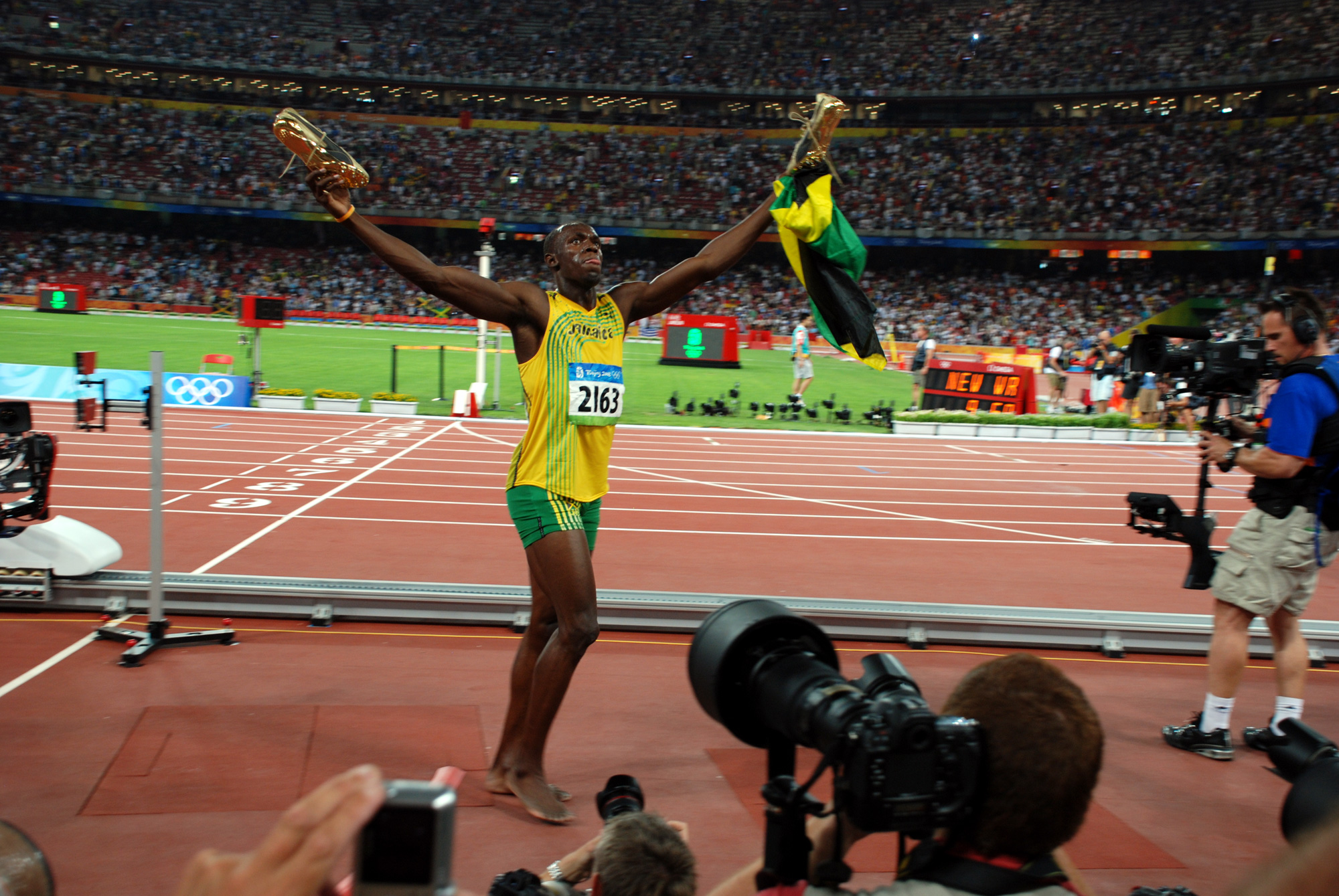
    Usain Bolt after winning a gold medal at the 2008 Olympics in Beijing, China. Several Jamaicans tested positive for the steroid clenbuterol at those Games, but the International Olympic Committee hid the cases and they have never been investigated. (Photo: Wikimedia Commons)

    In the beginning of April, news hit that a group of athletes had tested positive for a banned steroid at the 2008 Summer Olympics in Beijing, China. The group had never been investigated or suspended for doping.

    The drug in question? Clenbuterol, a steroid. Its name might be familiar to cross-country skiers because it is often used in inhalers to treat asthma outside of the United States. But even for asthma, its use is prohibited for competitive athletes.

    The positive findings for clenbuterol, which were present in samples from athletes of several nationalities and multiple different sports, included some from the Jamaican track and field team, according to Germany’s ARD television channel.

    The findings were made in a 2016 re-testing scheme of the 2008 Olympic samples. They were never reported by the International Olympic Committee (IOC), and only brought to light by ARD many months later.

    The IOC apparently decided that the traces of the drug in the urine samples were so small that they did not merit follow-up. The World Anti-Doping Agency (WADA) signed off on this decision.

    One problem: like almost all of the drugs on WADA’s Prohibited List, there is no allowable minimum concentration of clenbuterol in a urine sample.

    “Clenbuterol is a prohibited substance and there is no threshold under which this substance is not prohibited,” WADA writes on its own website in a Q&A about the Prohibited List. “At present, and based on expert opinions, there is no plan to introduce a threshold level for clenbuterol. It is possible that under certain circumstance the presence of a low level of clenbuterol in an athlete sample can be the result of food contamination… Under the World Anti-Doping Code, result management of cases foresees the opportunity for an athlete to explain how a prohibited substance entered his/her body.”

    Explanations were apparently never solicited from the athletes in question, and the IOC simply buried the cases.

    Scores of athletes have claimed in the past to have unintentionally ingested banned substances, arguing that the concentrations were so low that they couldn’t be performance-enhancing. It is an argument that has rarely been successful.

    Among the athletes who were punished for unintentional ingestion are Norwegian skier Therese Johaug, who tested positive for clostebol, a steroid contained in a lip cream she used; and German biathlete Evi Sachenbacher-Stehle, whose tea was contaminated with the stimulant methylhexanamine – the same drug Carter was disqualified for – at the 2014 Olympics.

    Therese Johaug has portrayed herself as a victim unfairly punished for using a medication she did not realize was banned. Strict liability mandates that it doesn’t matter if she used clostebol intentionally or not, but that same standard is not being applied to certain Summer Olympic athletes.

    The Jamaican athletes in Beijing never went through the scrutiny that Johaug or Sachenbacher-Stehle did, and are unlikely, at this point, to ever serve penalties. Which begs the question: do the rules apply to everyone?

    Or is it better to take a banned substance at the Olympics than at a training camp?

    The Specter of Tainted Meat

    There is no minimum concentration of clenbuterol allowable in the WADA Prohibited List. So the decision not to confirm the doping cases was not made in accordance within the workflow of anti-doping rules, but instead subjectively.

    This is how it worked: ARD reported that IOC Medical Director Richard Budgett had instituted a policy that any positive analytical tests be cleared with him before being ‘confirmed’, the first step towards proceeding through the anti-doping investigation. These cases were reported to Budgett, and he said not to confirm them.

    The normal procedure is that such positive analytical tests are considered violations and the athlete is given the opportunity to explain how the substance came to be in their body. They can argue that they ingested it accidentally, for example.

    In this case, such an investigation and dialogue never took place. Because the cases were never ‘confirmed’, the IOC did not even confront the athletes.

    According to the IOC, this was because of the risk of the drug entering an athlete’s body after they ate contaminated meat. The steroid is used to promote livestock growth in some countries, and China – the site of the 2008 Olympics – is one of them.

    “It has been scientifically established that an athlete can test positive for clenbuterol at low levels following ingestion of contaminated meat,” WADA wrote in a press release after the documentary aired. “There have been hundreds of cases – limited to a number of countries where contamination is known to be an issue and where the athletes would have resided, trained and/or competed.”

    Another athlete in Beijing – a Polish canoeist – tried to use contaminated meat as an explanation for why he tested positive for clenbuterol. In Adam Seroczyński’s case, the IOC didn’t buy it and punished him anyway.

    “The behavior of the IOC is shameful,” a surprised Seroczyński told ARD after the news of the Jamaican tests came out. “They didn’t handle my case this way, I wasn’t as important.”

    If the IOC had tried to conduct follow-up to establish whether contaminated meat was the most likely explanation for the positive tests, they may have been disappointed. Fearing exactly this situation, the Jamaican sprint team had flown its own meat to China from home, and their food was prepared by the team’s own cook, according to ARD.

    After the fact, WADA explained their decisionmaking process.

    “Effectively, when the circumstances of a positive case indicate that the athlete has been in one of the identified countries where clenbuterol meat contamination is significant, the anti-doping community views it as unreasonable to put the burden of proof on the athlete, i.e. to prove that the meat, which he or she had consumed, was contaminated; in particular, eight years after the fact,” the organization wrote in their press release. “However, before a case is closed on the basis of low clenbuterol levels consistent with contamination, WADA recommends investigating such things as meat intake and whether there was exposure to a geographical area where contaminated meat is known to be prevalent.”

    As noted above, there does not seem to have been much investigation and this policy is directly at odds with WADA’s own policy as posted on its website.

    Are Low Levels Really Accidents?

    To justify the process, the IOC reported that in all of the 2008 clenbuterol cases which were not ‘confirmed’, the concentrations of the drug were below 1 nanogram per milliliter.

    Other athletes have been banned for less; Spanish cyclist Alberto Contador lost his 2010 Tour de France title over a finding of just 0.05 nanograms per milliliter, despite also arguing that he had ingested contaminated meat.

    In fact, in Contador’s case the Court of Arbitration for Sport wrote that “considering that clenbuterol is a non threshold prohibited substance, the fact that the concentration is extremely low does not have any effect on the result.”

    And in the same ruling, the arbitrators ruled out that contaminated meat could possibly be a source for the drug. Noting that that Spain is not a country known to have a problem with clenbuterol contamination, they concluded that “no established facts that would elevate the possibility of meat contamination to an event that could have occurred on a balance of probabilities has been established.”

    Thus, jurisprudence has established that concentrations of the drug can be found in very low concentrations in urine samples even where meat contamination is not a possible explanation.

    Of course this makes sense: as a substance is metabolized, its concentration will decrease. The concentration in a sample is simply a product of the amount ingested, and time. A longer time since ingestion means a low concentration.

    To get back to Therese Johaug: her urine sample, collected by Anti-Doping Norway, contained 13 nanograms of the steroid clostebol per milliliter. While that’s a lot higher than 1 nanogram of clenbuterol, it’s not particularly high.

    In banning her for 13 months, the disciplinary panel did not dispute her explanation that the substance entered her body from a lip cream, rather than an injection or some other more shocking route.

    The public will likely never know whether, in fact, she was using it on purpose; the accidental explanation has been used by many an athlete who later admits that yes, they were doping. But the point of strict liability actually gets exactly to that: it deals with the fact that when you rely on someone’s word, you can never be certain of what actually happened.

    Strict liability is strict liability. WADA’s explanation of its Anti-Doping Code specifically notes that an athlete should be suspended “whether or not the athlete intentionally or unintentionally used a prohibited substance or was negligent or otherwise at fault.”

    Part of the issue of the Russian doping scandal is that for athletes in some parts of the world, strict liability was being applied. But for some in Russia, it wasn’t just that unintentional positives were being forgiven – rather, intentional doping was protected.

    In this new scandal, the IOC – which is charged with ensuring fair competition at the most prestigious sports events in the world, the Summer and Winter Olympics – strict liability only applies sometimes.

    If you were an athlete working hard to stay clean, or even Therese Johaug or Evi Sachenbacher-Stehle, that must not feel great.

  • Devon Kershaw Answers the Eternal Question: Who Would Win the Hushovd-Northug Cage Match?

    Devon Kershaw in the middle of a climb during a trip to Spain earlier this spring.

    There are few sports that can challenge the intensity of cross-country skiing, but cycling is one of them. Anyone who has ever pedaled a road bike uphill–which includes almost all cross-country skiers–can appreciate the difficulty of the Tour de France, and as such, we decided to get some perspective on the race from Canadian Olympian Devon Kershaw. Kershaw himself is no stranger to the bicycle–he recently hosted an uphill race that included many members of the Canadian national team–and as an avid cycling fan, was willing to answer a few questions.

    Editor’s note: Kershaw answered our questions prior to the completion of the Tour–hence the issues with tense, as the race wrapped up today.

    FasterSkier: Can you make a few predictions about the Tour? Contador or Schleck?

    Devon Kershaw: Without question it’s Contador. He looked like he had the Tour locked up a long time ago—after the Alps even. Even before he attacked Schleck’s mechanical, he was only down 31 seconds to the lanky Luxembourger, and history shows that in a head-to-head time trial anywhere at anytime, Contador is far and away the heavy favorite. Now after the Pyrenees, he’s in yellow and there is a 99.9999 percent chance he’ll win. Barring any major meltdown in the time trial, it’s a done deal. Schleck’s race was impressive though—a great fight by him and his Saxo Bank team for sure.

    FS: If Petter Northug was to face off against Thor Hushovd, who would win? On a bike? On skis? In a no-holds-barred UFC style matchup?

    KJ: Northug vs. Hushovd? On a bike, it’s a no brainer. Hushovd, of course. When you are a rider that can pump out over 1200 watts in a sprint, moving at over 70 km/h human powered—Northug would look like a young girl learning for the first time to bike without training wheels. It would be that bad.

    On skis—even though Hushovd is Norwegian, and they are born with a natural affinity for the sport, Northug is the best in the world. Thor has spent too much time in the south of France, sipping wine and eating brie—he would look like pack fill in the senior category of an Ontario Cup next to the world and Olympic champion that is Northug.

    UFC Octagon throw-down? Now it gets tricky. I’m going to go with Hushovd again, though. He had no problem bumping, nudging and fighting his way over the tarmac at 70+ km/h in a big pack of sweaty, hungry-for-victory bike racers. I also think he’s bigger in stature (muscularly, anyway), than Northug, and has eight years on him as well. You can never underestimate “old man strength.” That, and let’s be honest, if the rumors are true and Northug sleeps over 12 hours a day, everyday, and the rest of the time is spent training and playing online poker? That’s not badass. Have you seen most poker players? Not UFC contenders. Advantage: Hushovd.

    FS: You’ve seen some good climbing out of Babikov, but what do you think is tougher: the final climb at the end of the Tour de Ski, or one of those Cat. 1 climbs in the Pyrenees? Could Ivan Babikov take those guys?

    DK: I’d love to say that the final climb in the Tour de Ski is tougher, but that’d be a flat-out fib. Those HC and Cat 1 climbs in both the Alps and the Pyrenees make the bumps we glide over look like nothing more than a monadnock beside a big Himalayan peak. We lose—those cyclists are hardcore to the max. The fact that some of these beasts come after 160 km of racing, while we are scared about a 4 km climb coming after 6 km makes us skiers look pretty soft.

    Babs is still the strongest and most naturally talented climber I’ve ever seen on a bike. He grinds the biggest, hardest gear and can just churn up the road when it angles up. It’s silly. It defies science and reason—but, a lot of things Babs does defy science and reason. I have no doubt had Ivan chosen cycling, you would have seen him in the high mountains mixing it up with the ProTour big boys. He’d have to give up candy, sugar, Red Bull, Coke, etc., first—too many calories—that’d be the only thing I don’t know if he would be capable of.

    FS: There was outrage over Contador’s attack while Schleck was fixing his chain. Nobody stopped for you when your ski fell off in the Tour de Ski—do you think Contador made the right decision? Are there any unwritten rules like that on the World Cup?

    DK: There was some outrage over the Contador attacking Schleck during a mechanical, yes. Do I think Contador made the right decision? Personally, with the history and tradition of cycling—no, I don’t. Attacking a rival in that situation is frowned upon in cycling. Contador was only 31 seconds back in the general classification. I thought he should have waited, then dusted him man-to-man. Even with 31 seconds, Contador was going to win the tour—he’s just that much stronger at the time trial—and there were still other mountain stages remaining.

    Still, tell that to someone in that situation. Contador is tired. Then, all of a sudden your rival is standing with his feet on the ground instead of in the pedals. As a fierce competitor it’s natural to go for the jugular and attack. I can’t blame him for that, but in cycling, for some reason, that’s not tradition.

    There are most certainly no unwritten rules in cross-country skiing on the World Cup. It’s every man for himself. Someone breaks a pole, falls, whatever—it’s fair game to exploit those misfortunes. Jeez, I’ve even seen people from the same team attacking up to catch their teammate who has a gap off the front in a mass start. It’s hilarious, actually.

    FS: Canada vs. U.S.—Ryder Hesjedal or Levi Leipheimer, which one would you rather be a domestique for? And which one would make a better cross-country skier?

    I’d rather be a domestique for Hesjedal, but that’s for patriotic reasons. I am really impressed with him, top-10 at the Tour de France is impressive stuff. He stepped up, and he’s a gutsy, exciting racer. Not afraid to get into the breakaway. Leipheimer is a great cyclist, but ask yourself this: when have you last seen him in a breakaway? When’s the last time you’ve seen Levi attack? It’s rare—sometimes at the Tour of California or Dauphine, but that’s pretty much it.

    Who would make a better cross-country skier? I’d go with Ryder again on this one. He comes from a mountain bike background, where the races are shorter (1:40-2:00), and much more explosive in nature—hammer up hills, descend, at times without even pedaling. That, and he’s taller too. Have you seen Levi? The dude’s small.

    FS: If you could wear one of the jerseys for a day, which one would it be? Sprinter’s? Climber’s? Overall GC? White jersey for best young rider?

    DK: This is a no-brainer for any cycling fan. The Maillot Jaune. Yellow jersey hands down. Only one Canadian has ever worn it (Steve Bauer). It’s the most prestigious and elusive jersey in cycling.

    FS: How long do you think you could hold on to the peloton in one of those Cat. 1 or 2 climbs?

    DK: In the gruppetto (that’s where the sprinters hang out, at the back of the bus), I could perhaps hang on. In the peloton, when there are attacks going on, I’d last like 1 km. Maybe. In the break up the road? 100 meters.

    FS: Where are the fans more rabid: the Holmenkollen, or the Alpe d’Huez?

    DK: I’d have to say Alpe d’Huez. There are 40,000 or 50,000 people out at Holmenkollen—that’s a lot, no question. But there are over 750,000 people on the Alpe. There’s a reason why cyclists live in Monaco, drive Ferraris and sleep with the Olsen twins: It’s WAY more popular.

    FS: Who from your team would you want as your lead-out man? Is there anyone who would deliver a headbutt for you?

    DK: Even though he’s sketchy as all hell, and in all likelihood he’d make us both crash and take out half the field in the process more often than not, I’d go with the recently-retired Sean Crooks. He’s a scrappy racer, and he isn’t afraid to get in there and get his hands dirty. He’d deliver the headbutt and the knockout punch in a killer one-two combo. Now, I don’t know—I’ll get back to you.

    FS: Who on the World Cup would be the most likely to assault another athlete with a pair of skis, Carlos Barredo-style?

    DK: Haha, Barredo was classic. Using the wheel for a weapon. Firstly, no cyclist should ever attempt to fight. It’s embarrassing. What they do on the bike is impressive—they command fame, money, attention and respect for their exploits when on their steeds. Off the bike, with their cleats clapping around the pavement and their little arms flailing around in anger? It makes a hair-pulling, grade three cat fight look like Foreman vs. Ali. I laughed so hard when I watched that little tiff. It was awful.

    Who on the World Cup would be most likely to assault another athlete? I don’t know—Legkov? He might not assault you, but he’d get the Russian mob to come to your house, burn it down, and wreak havoc on your family for generations.

    In an actual fight, I’d say probably George [Grey] would kick anyone’s ass on the World Cup fairly easily, although he has a very cool head, so that situation would never arise.

    FS: Ultimately, who are closer to society’s fringe? Cyclists, with their shaved legs and dubious dietary practices, or skiers, who do things like rollerski?

    I’d say we—cross-country skiers—are closer to the fringe. Everyone knows about cycling. They shave their legs because when they crash at 90 km/h down a mountain pass, a mass of nasty hair mixed in with the ground beef that their thigh has become is a recipe for infection. Ask most people to jump out of their car wearing shorts and a t-shirt at 90 km/h if they want to have hair everywhere or not.

    As soon as you do a parade in a full spandex suit, in the summer, you define “fringe.”

    That, and you are absolutely right: rollerskiing? I’d bet 10 percent of Canadians could describe what exactly one of those things actually are. I’d bet only 3 percent of Canadians could tell you that there are no brakes on the things either.

    Oh yes, no Olsen twins, no millions of dollars, no columns in the gossip mags—no, cross-country skiing wins hands down. We are the fringe. Boom.