Tag: Alex Howe

  • Craftsbury Splits Camp Between Slovenian Ski Tunnel and Dachstein Glacier

    Craftsbury Splits Camp Between Slovenian Ski Tunnel and Dachstein Glacier

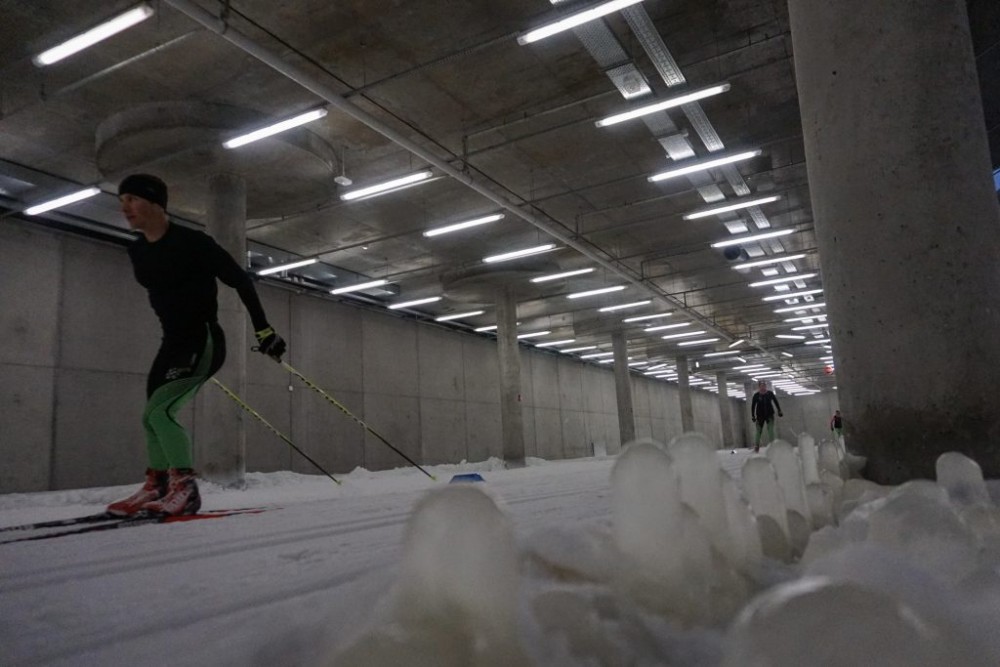
    Craftsbury Green Racing Project’s Ben Lustgarten enjoys skiing in the ski tunnel in Planica, Slovenia this September during a week long training camp. (Photo: Caitlin Patterson/ Caitlin Patterson CGRP blog)
    Craftsbury Green Racing Project’s Ben Lustgarten (l) training in the ski tunnel in Planica, Slovenia, earlier this month. (Photo: Caitlin Patterson/ CGRP blog)

    Pay 9 Euros a day, get a 950-meter loop in return. If snow were to take on a monetary value, that’s how much the Planica Nordic Centre charges for a day pass in its snow tunnel, new to the city’s Olympic Sports Center since the spring. But to others, the opportunity to ski on snow at the tail end of summer is priceless, even if it is under the fluorescent lights and within the concrete walls of a three-level parking garage.

    Among those “others” are the Craftsbury Green Racing Project (CGRP) elite cross-country skiers and biathletes, who spent Sept. 12 to Sept. 20 in Planica, Slovenia, training in the city’s ski tunnel. As a few explained, getting on snow at this time of year outweighs the occasional lassitude that comes from skiing two-plus hours on a less-than-1-kilometer loop.

    “No matter what condition it is nordic skiers love their first time on snow of the season,” Ben Lustgarten, new to the CGRP cross-country team, wrote in an email. “We were able to do speeds, short level 4 intervals, some threshold, accelerations, and sprint simulation workouts. There was fair amount of terrain to do varying technique work and video analysis for the small amount of space.”
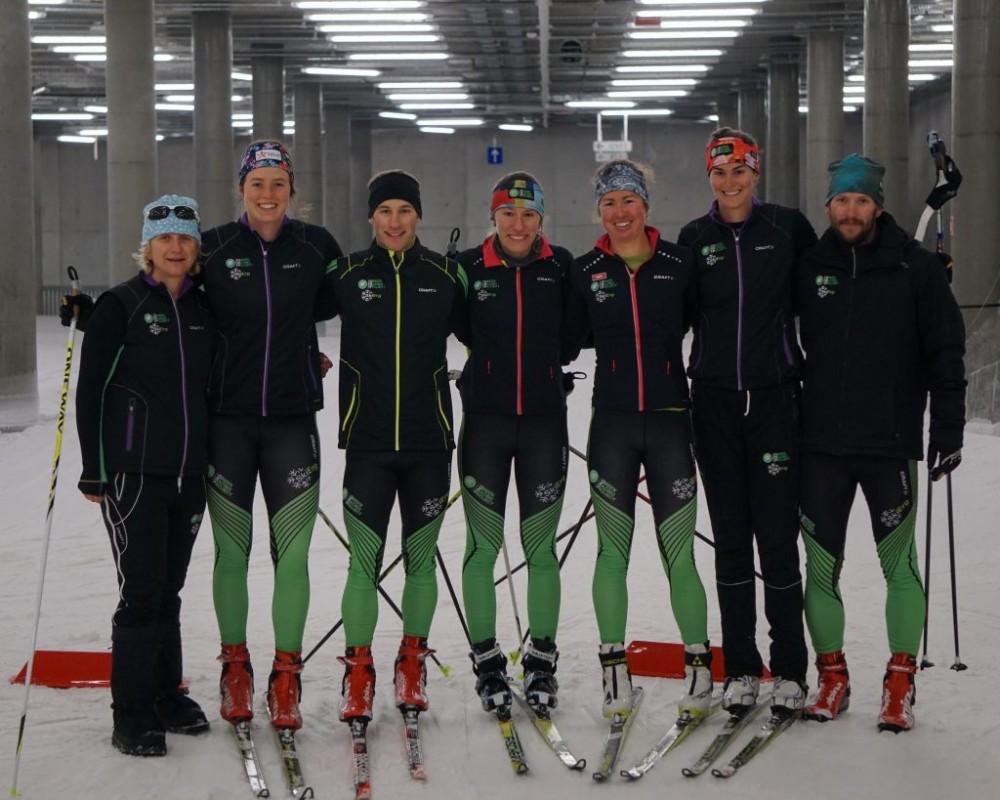
    Left to right: Craftsbury GRP head coach Pepa Miloucheva along with athletes Heather Mooney, Ben Lustgarten, Kaitlynn Miller, Caitlin Patterson, Liz Guiney, and assistant coach Nick Brown in the ski tunnel in Planica, Slovenia, during a training camp this month. (Photo: Caitlin Patterson/CGRP blog)
    Left to right: Craftsbury GRP head coach Pepa Miloucheva along with athletes Heather Mooney, Ben Lustgarten, Kaitlynn Miller, Caitlin Patterson, Liz Guiney, and assistant coach Nick Brown in the ski tunnel in Planica, Slovenia, during a training camp this month. (Photo: Caitlin Patterson/CGRP blog)

    Along with Lustgarten, who joined Craftsbury this year after spending the last two seasons with the Sun Valley Ski Education Foundation (SVSEF) Gold Team, nearly a dozen CGRP skiers made the trip, including Caitlin Patterson, Kaitlynn Miller, Liz Guiney, Heather Mooney, and Mary O’Connell, and biathletes Alex Howe, Ethan Dreissigacker, Mike Gibson, Emily Dreissigacker, and Hallie Grossman.

    “The intensity and technique really helped to keep the tunnel from getting too boring, as there was always something to think about or work on, or at the very least a coach on hand videoing for later technique review,” Patterson wrote in an email. “It gave us an opportunity to practice being adaptable to snow conditions and terrain (ie corners); even if those particular features in the tunnel would be rarely seen on a race course, they were valuable in their extremes. I feel more prepared than ever to handle a course with tons of 90 and 180 degree corners, even though that’s unlikely to happen often.”

    The athletes, along with Craftsbury’s head coach Pepa Miloucheva and assistant coaches and wax technicians Nick Brown and Sam Doherty, completed a weeklong training camp in Planica, taking full advantage of the three-level snow tunnel. The following week, the group headed to Schladming, Austria, for eight days of volume training on the Dachstein glacier, more than 9,800 feet above sea level. In Planica, nearly 7,500 feet lower, much of the team’s first week focused sharpening agility, coordination and speed.

    “The tunnel is a perfect environment for working on both technique and speed, with enough transitions and tight turns to keep the skiing interesting,” Grossman wrote in an email.

    “I feel more prepared than ever to handle a course with tons of 90 and 180 degree corners, even though that’s unlikely to happen often.” — Caitlin Patterson (CGRP) after training in the Slovenian ski tunnel

    Grossman, who recently switched from cross-country to biathlon, explained that the biathletes’ intensity training slightly deviated from their original plan when they learned that Slovenian Summer Biathlon Nationals were being held in Pokljuka, Slovenia, about an hour away from Planica.

    “The camp took a little turn when we found out about the rollerski races in Pokljuka, so what was going to be a primarily on-snow camp turned into a combination of skiing and rollerskiing,” Grossman wrote. “This allowed us to still focus on technique and shorter speed in the tunnel, while also getting the opportunity to race.”

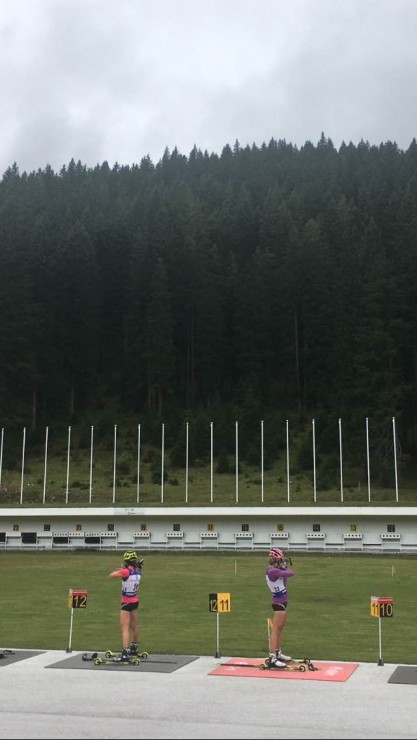
    The biathletes had originally planned to use the Pokljuka range for a few shooting sessions, but quickly decided to jump into the races when they discovered the competitions were taking place at the same location. Grossman competed in both races that weekend — the women’s 7.5 k sprint and 10 k mass start — as did her teammate Emily Dreissigacker.

    “We actually didn’t even know Slovenian Nationals were happening until we tried to sign up to use the range and they told us we couldn’t because there were races,” Dreissigacker wrote.

    Dreissigacker, who married Howe, her teammate, last month and spent a few weeks before the camp on a honeymoon with him in Italy, explained that the competitions elicited an opportunity to reconnect with racing, even within a small field.

    “There wasn’t a ton of competition in the senior women’s category, four of us to be exact, but one of the Slovenians was Teja Gregorin who won bronze in the pursuit in Sochi, so it was pretty cool to be able to race against her,” Dreissigacker wrote. “For me it was also a good way to re-focus after the craziness of the wedding.”

    “We actually didn’t even know Slovenian Nationals were happening until we tried to sign up to use the range and they told us we couldn’t because there were races.” — Emily Dreissigacker (CGRP) on racing at Slovenian Summer Biathlon Nationals

    Dreissigacker finished third in the women’s 7.5 k race, with two standing misses, and Grossman placed fourth. In the mass start the next day, Dreissigacker once again reached the podium in third and Grossman repeated in fourth.
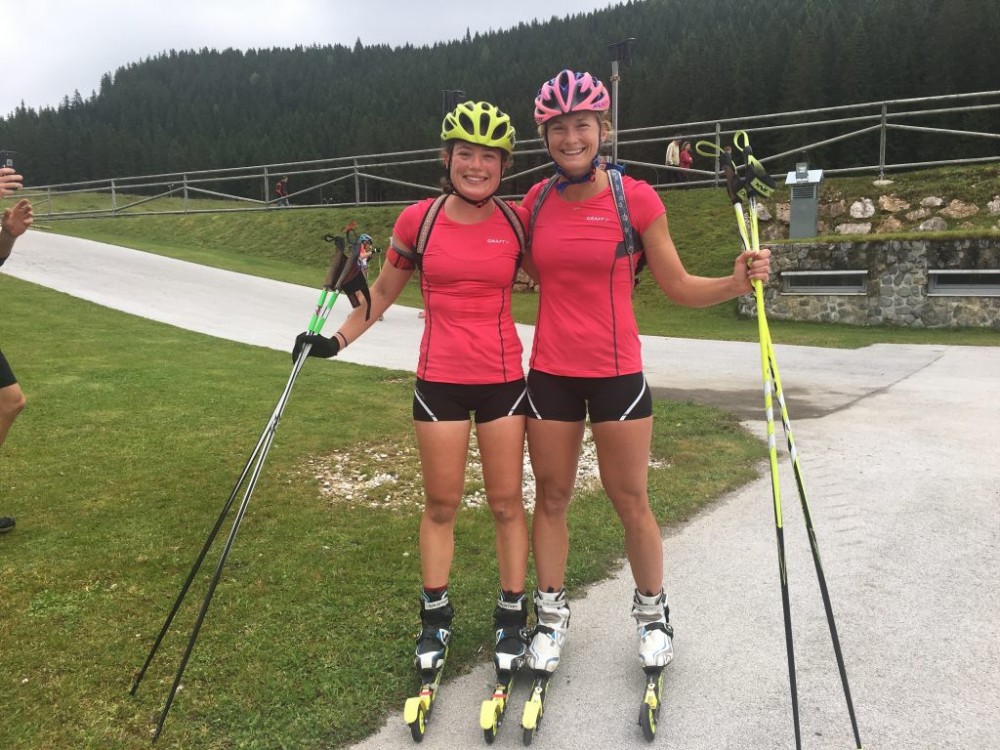
    CGRP biathletes Hallie Grossman (l) and Emily Dreissigacker after the women’s 14 k mass start at Slovenian Summer Biathlon Nationals in Pokljuka, Slovenia, on Sept. 18. (Photo: Ethan Dreissigacker)
    CGRP biathletes Hallie Grossman (l) and Emily Dreissigacker after the women’s 14 k mass start at Slovenian Summer Biathlon Nationals in Pokljuka, Slovenia, on Sept. 18. (Photo: Ethan Dreissigacker)

    The men’s races included a 10 k sprint and 14 k mass start. In the sprint, Howe placed seventh, Ethan Dreissigacker was ninth and Gibson 13th. The next day, Ethan rocketed to third, Howe finished 10th and Gibson 14th.

    “It was really fun to be able to jump into the Slovenian races!” Ethan wrote in an email. “While it did change up the plan a bit that first week, it think it was for the better, and I’m really glad we were able to compete. Biathlon races in the US are pretty few and far between, and many of them are also ‘trials’ of some kind. It’s super valuable to get in competitive racing experience outside of those trials races to get used to the pressure of competition without feeling like your season is on the line.”

    Along with the CGRP athletes, the men’s field included the Slovenian national biathlon team and some non-national team skiers, as well as a few Bulgarian national-team members.

    “The competition at these races was really pretty similar to that of the US rollerski nationals we had in August,” Ethan explained. “The big name in the men’s field was Jakov Fak who has an Olympic bronze, and a bunch of World Cup victories. Fak has is a very relaxed and efficient skier and it was awesome to get to ski behind him for a bit in the races.”

    After Slovenian nationals, the Craftsbury crew ventured to Austria for a week of altitude training. The team planned to train through Wednesday and fly back to Vermont on Thursday this week.

    “Both places are only 2 hrs apart, so was very convenient for a week long speed block in the tunnel and a week and a half volume block on the glacier all on snow,” Miloucheva wrote in an email. She explained that “some speed work followed by some good distance hrs on snow,” were the primary goals of the camp.

    While it wasn’t the first time the CGRP spent a few weeks of fall training on snow, this year was the first split camp featuring the Slovenian snow tunnel.

    “This is the third year in a row that the GRP has come over to Austria for an altitude camp on the Dachstein Glacier,” Ethan explained. “This year I was really excited about the split the camp between two locations, with two different focuses, and I think that has really helped make the most of the trip. Both locations have had some awesome resources for training, and beautiful scenery.”

  • Many Hands Make Light Work: Sun Valley SuperTour Snow Update

    Many Hands Make Light Work: Sun Valley SuperTour Snow Update

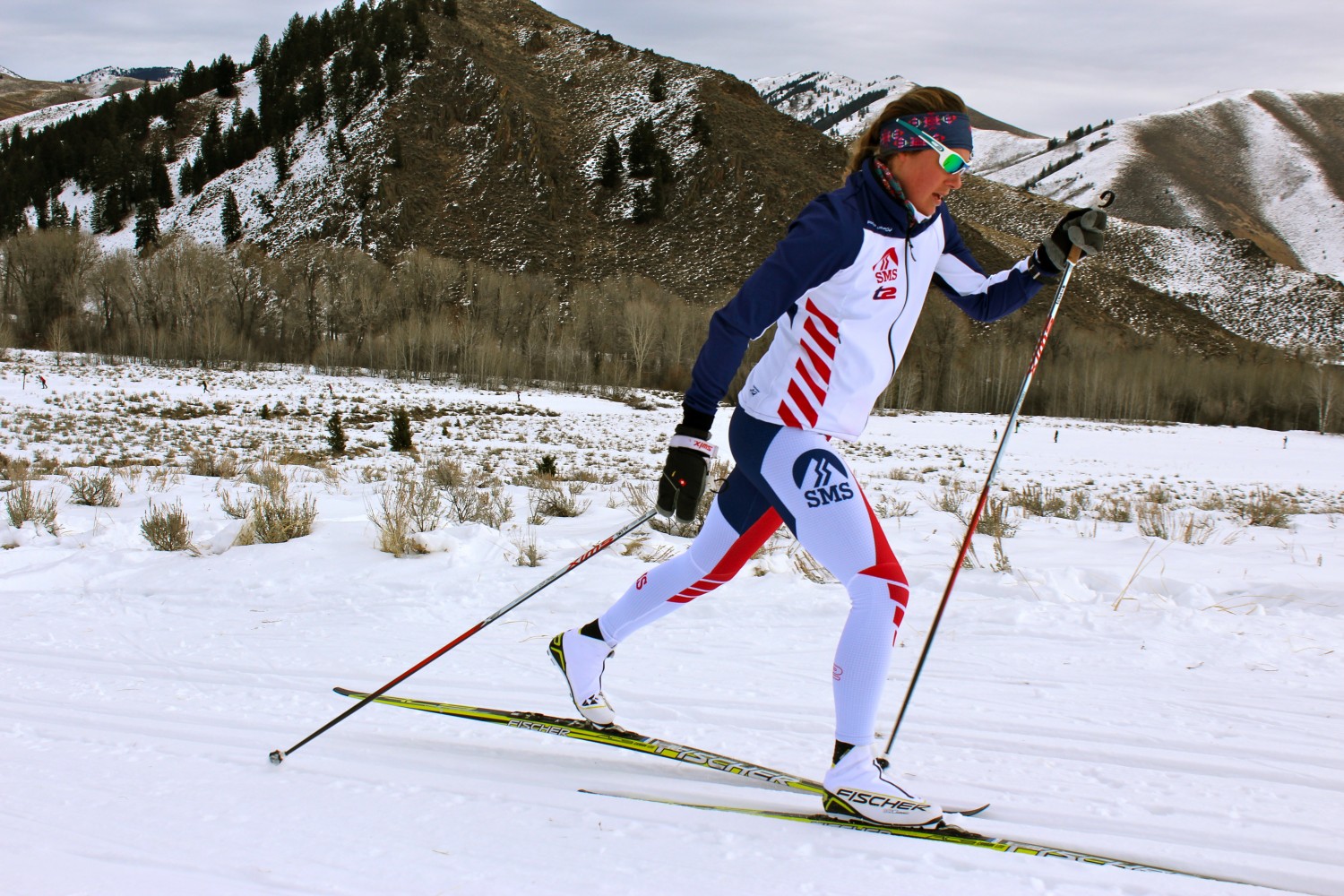
    Annie Pokorny  (SMST2) at the top of the coach's climb for the SuperTour 1.3 k  classic race course in Sun Valley, Idaho.
    Annie Pokorny (SMST2) at the top of the coach’s climb for the SuperTour 1.3 k classic race course in Sun Valley, Idaho.

    SUN VALLEY, Idaho — Armed with plenty of shovels and smiles, the Sun Valley Ski Education Foundation crew has been moving snow to make the next stop on the SuperTour circuit happen at the Lake Creek venue in Sun Valley, Idaho.

    “We’re cautiously optimistic that we’ll be able to do both races [at Lake Creek], with the sprint race happening here for sure,” Sun Valley Ski Education Foundation (SVSEF) Nordic Director Rick Kapala said on Wednesday afternoon.

    With close to six inches of snow currently covering the trails, according to Sun Valley’s assistant nordic program director Kelly Sinnott, local volunteers and coaches are putting their shovels to work to increase that numerical amount by the work hour.

    The SuperTour races are scheduled for Saturday and Sunday, with a classic sprint followed by 10- and 15-kilometer classic individual starts. On Thursday morning, temperatures were below freezing, around 28 degrees Fahrenheit in Sun Valley. 

    “We spent hours [on Tuesday] shoveling the course and there’s a crew out there today as well,” Sinnott said on Wednesday.

    While a decent snow storm might be the preferred way of covering the race course, many of the volunteers don’t seem to mind scooping snow for the sake of this weekend’s SuperTour races.

    “I was out here yesterday, I would say three-plus hours,” said Mel Dyke, of Hailey, Idaho, a snow-shoveling volunteer, and webmaster for 5B Nordic News.

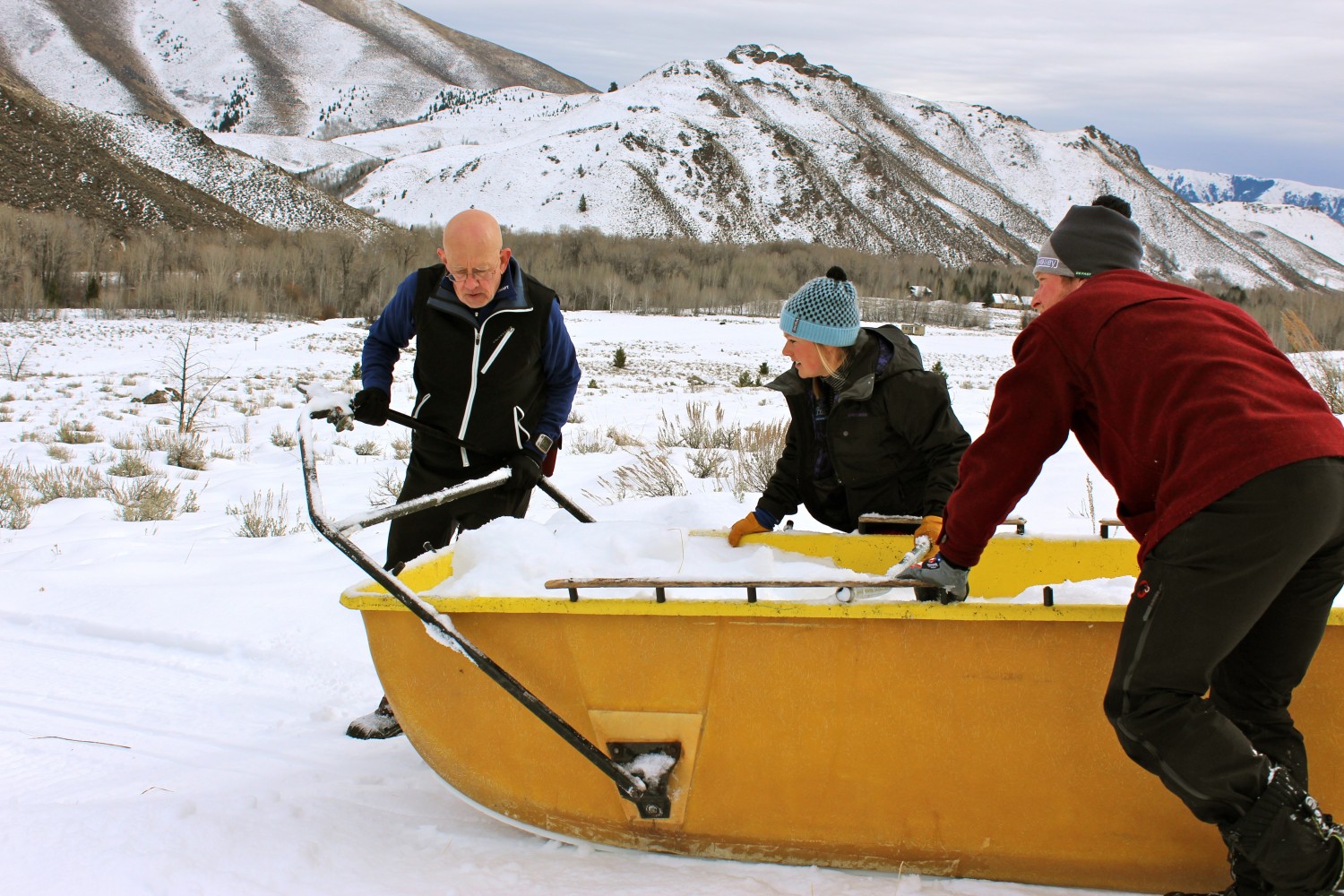
    (Left to right): Mel Dyke (volunteer), Kate Barton (Burke Mountain Academy coach) and Colin Rogers (SVSEF Gold Team head coach) push a sled full of snow on Wednesday afternoon to dump onto the SuperTour 10/15 k  classic distance race course in Sun Valley, Idaho.
    (Left to right): Mel Dyke (volunteer), Kate Barton (Burke Mountain Academy coach) and Colin Rogers (SVSEF Gold Team head coach) push a sled full of snow on Wednesday afternoon to dump onto the SuperTour 10/15 k classic distance race course in Sun Valley, Idaho.

    “There were three crews of 15-20 people yesterday,” he said. “I’m just doing it because it’s fun.”

    While pushing snow piles is not everyone’s idea of “fun,” the dedicated group of individuals working out on the trails for free will make the Sun Valley SuperTour races possible.

    “We’ve got a community of people that just jump in and do it. And we’ve had a few low snow years so we’ve had to do a lot of this,” said Bob Rosso, another volunteer and owners of Elephant’s Perch sports speciality shop in Ketchum.

    “We’re die hard cross-country skiers,” Rosso added. “When the race coordinators call out for help, people show up.”

    Still, even with a soldiery of willing snow-shovelers, why not use host trails with enough coverage nearby?

    Kapala points to the quality of the race course at Lake Creek as motivation for making it the preferred race site.

    “One of the biggest concerns that the coaching community has with regards to the early SuperTours is that we’re able to have appropriately difficult courses,” Kapala said.

    “We could go to Galena, and we could make the races work there … but putting the work in here gives the athletes an opportunity to test themselves appropriately on the kinds of courses that they need to be prepared to ski on,” he said. “These are homologated, FIS [International Ski Federation-standard] courses, they have A-climbs and that’s important.” 

    On top of the promise of challenging racers, the Lake Creek venue offers coaches, spectators and skiers a perspective like no other.

    “One of the unique things about the Lake Creek venue, is it’s really open,” said Kapala. “You can stand in one spot and watch the entire race happen.”

  • Hanneman Brothers Go 1-2, Logan Edges Reese in West Yellowstone Sprint

    Hanneman Brothers Go 1-2, Logan Edges Reese in West Yellowstone Sprint

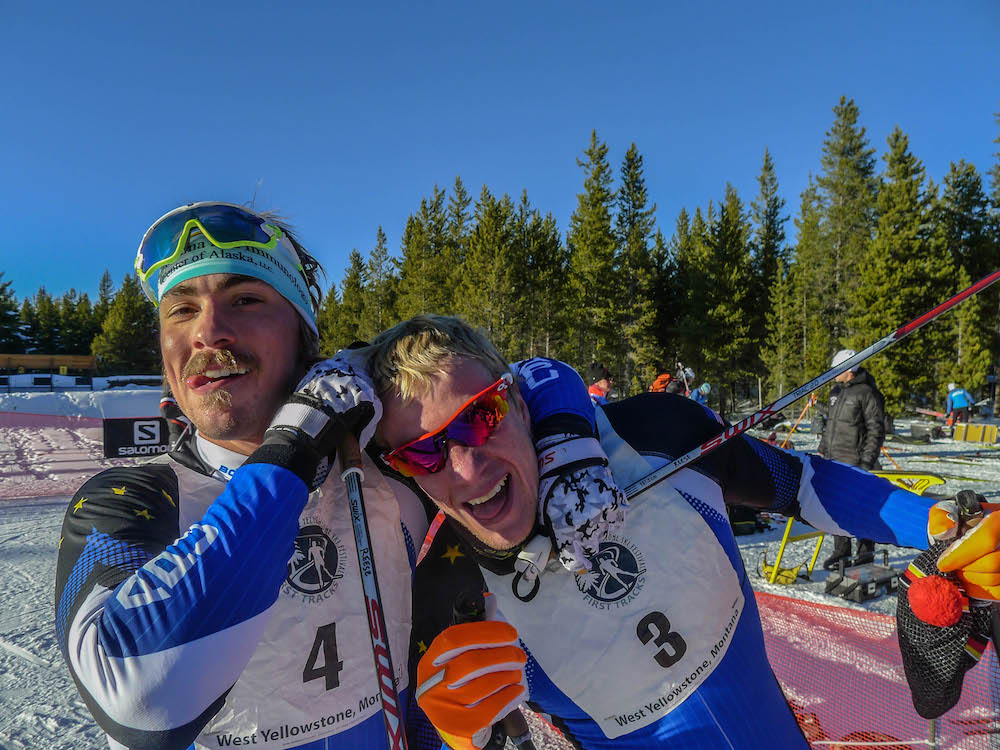
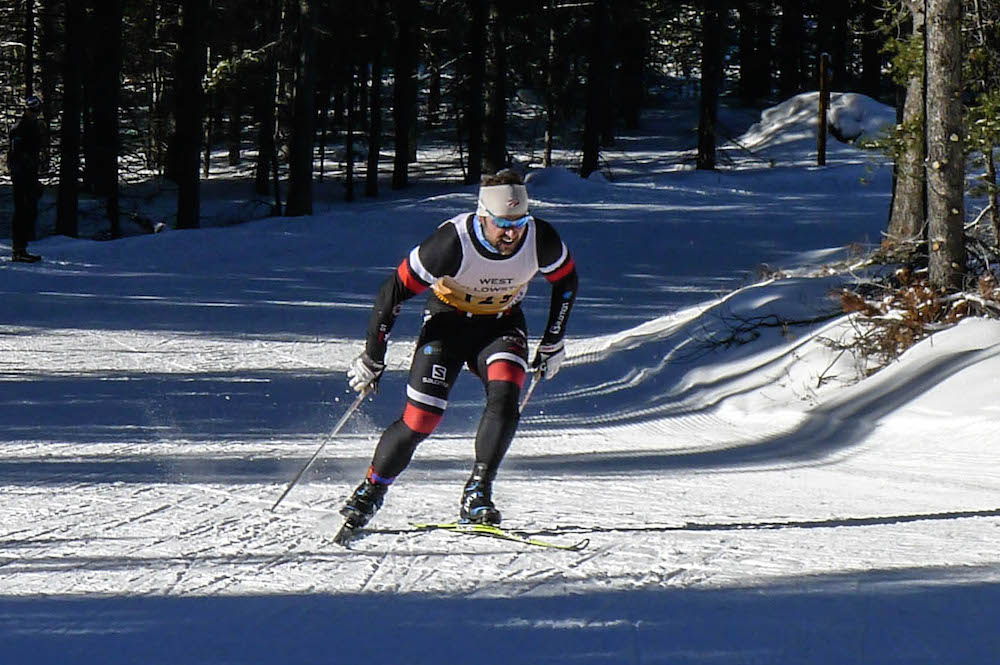
    The Hanneman brothers after placing first and second in the men's SuperTour freestyle sprint on Friday in West Yellowstone, Mont. Younger brother Logan Hanneman (r) won the final for his first SuperTour victory and Reese (l) placed second.
    The Hanneman brothers, both of which race for Alaska Pacific University, after placing first and second in the men’s SuperTour freestyle sprint on Friday in West Yellowstone, Mont. Younger brother Logan Hanneman (r) won the final for his first SuperTour victory and Reese (l) placed second.

    WEST YELLOWSTONE, Mont. – Reese Hanneman spent much of the cold afternoon in West Yellowstone unchallenged on Friday. He cruised to wins in both his quarterfinal and semifinal. However, the challenge came from close to home, as Hanneman led down the final stretch in the men’s final before his younger brother and Alaska Pacific University (APU) teammate Logan powered past him for the win.

    After a cold morning with temperatures hovering in the negative single digits, resulting in a two-hour start delay, the men’s field jumped into the first SuperTour race of the season shortly after 11:30 a.m. Nerves were running high as athletes headed out on to the relatively flat 1.3-kilometer course in 15-second intervals to test themselves against the clock and gauge the effectiveness of their summer training.

    “The course was in great shape, grooming was perfect,” Reese Hanneman reflected in a post-race interview.

    Canadian national-development team member Knute Johnsgaard took the win in the qualifying round in 2:30.9 minutes, 0.72 seconds ahead of defending U.S. national sprint champion Dakota Blackhorse-von Jess of the Bend Endurance Academy.

    APU teammates and brothers, Logan, 22, and Reese Hanneman, 25, qualified in third and fourth, respectively, and Canada’s Andy Shields (Thunder Bay National Development Centre) advanced in fifth.

    Most of the established elite racers in the men’s field managed to ski their way in to the top 30, earning the right to compete in the afternoon’s elimination rounds.

    Dakota Blackhorse-von Jess (Bend Endurance Academy) racing to second in the qualifier on Friday at the SuperTour skate-sprint opener in West Yellowstone, Mont.
    Dakota Blackhorse-von Jess (Bend Endurance Academy) racing to second in the qualifier on Friday at the SuperTour skate-sprint opener in West Yellowstone, Mont. He went on to place third in the final.

    As the rounds progressed, two men skied to comfortable wins in their quarterfinals and semifinals. Reese was one of them and Blackhorse-von Jess was the other, displaying impressive finishing speed to win his quarterfinal by a convincing margin. Johnsgaard and Shields also skied strong through the quarters, as did Matt Gelso of the Sun Valley Ski Education Foundation (SVSEF) Gold Team, after qualifying in 20th. Montana State University’s Forrest Mahlen and Alex Howe (Craftsbury Green Racing Project) also stayed in contention through the semifinals.

    When eventual winner Logan Hanneman saw the list for his semifinal, “I thought, ‘Good grief!’ ” he explained. “Mads [Strøm, of the University of Colorado-Boulder], [Ben] Saxton [of Stratton and the U.S. Ski Team], Dakota… I don’t know how this is going to go! That’s a tough group.”

    But by the end of the semi, Logan and Blackhorse-von Jess had established themselves as the frontrunners and the finish was almost too close to call.

    “At that point, I knew I had a pretty good chance heading in to the final,” Logan said.

    When the lucky losers had been sorted out and the start list for the men’s final was posted, Blackhorse-von Jess, Johnsgaard, Gelso, Howe and both Hanneman brothers had reached the final round. Mahlen, Brian Gregg (Team Gregg) and Saxton narrowly missed the cut.

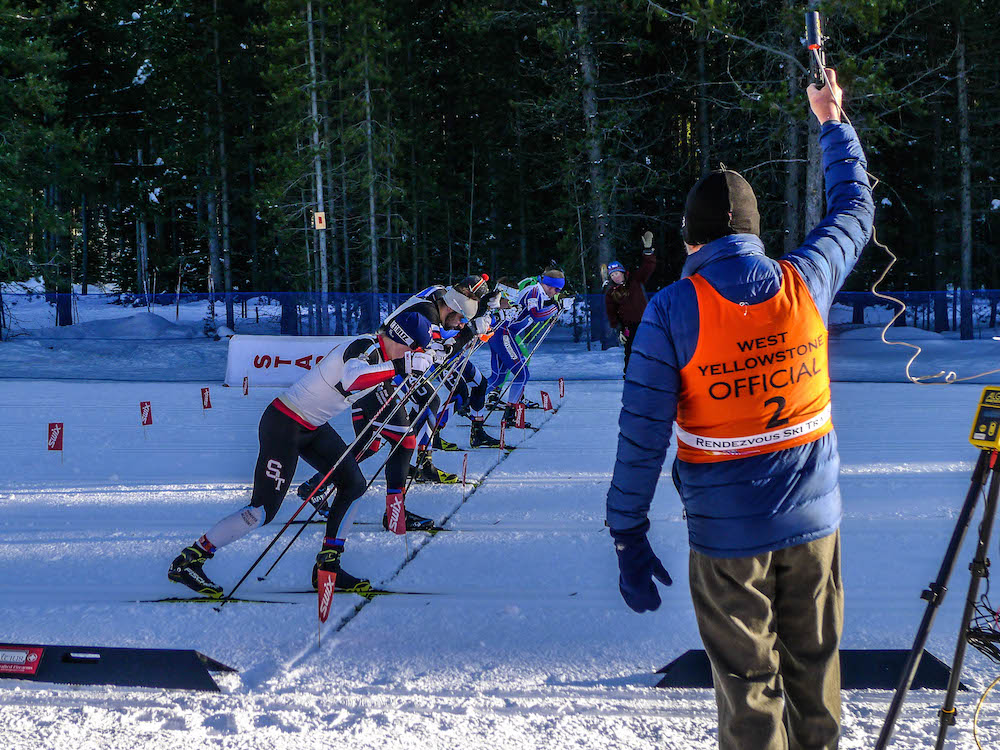
    The tension increased as the six men toed the line for the final, with two consecutive false starts due to malfunction with the starter’s pistol.

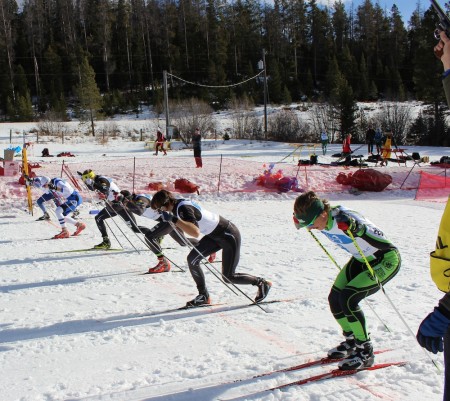
    The start of the men's final in the 2015/2016 SuperTour opener, the 1.3 k freestyle sprint, on Friday in West Yellowstone, Mont. APU took first and second with Logan Hanneman and Reese Hanneman, respectively, and Dakota Blackhorse-von Jess placed third.
    The start of the men’s final in the 2015/2016 SuperTour opener, the 1.3 k freestyle sprint, on Friday in West Yellowstone, Mont. APU took first and second with Logan Hanneman and Reese Hanneman, respectively, and Dakota Blackhorse-von Jess placed third.

    When the gun fired in earnest, Blackhorse-von Jess shot to the front, a move he had used all day.

    “If you’re willing to burn your jets early, you can get to that first corner with a lead,” he said afterwards. “It worked for me in the quarters, it worked for me in the semi, and it worked for me last year.”

    Several athletes have noted that, on this particular course, there aren’t many spots to pass, which made Blackhorse-von Jess’s strategy successful. Until the final, that is.

    “Reese made a really bold move at the bottom of the climb,” Blackhorse-von Jess said. “It’s a risky move, because if you can’t execute it all the way, you can drop from second back to fourth or fifth.”

    It worked for the older of the two Hannemans, as Reese moved in to the lead at the bottom of the course’s only real climb.

    According to Gelso, who finished fifth, “There was a lot of bumping and grinding in the final. Everyone was amped up and trying to get in to position all the way around the loop.”

    “I was thinking that Dakota was the guy to beat,” Reese said. “He’s so consistent. When I saw the chance to get around him at the bottom of the climb, I jumped on it.”

    A few skiers back, 22-year-old Logan had been focusing on strategic cornering through the lower “NASCAR” section of the course.

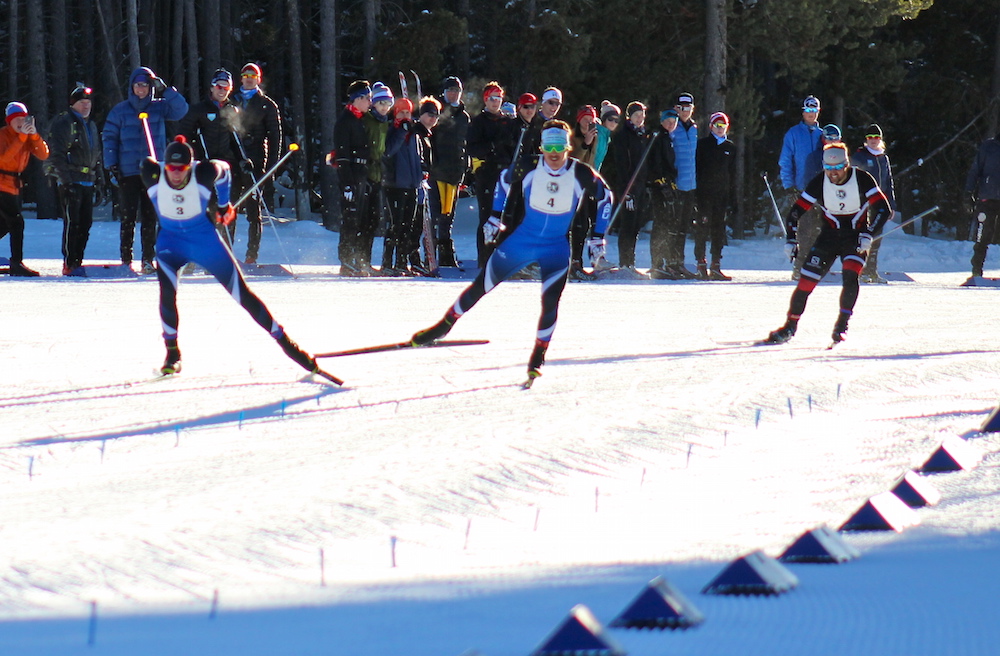
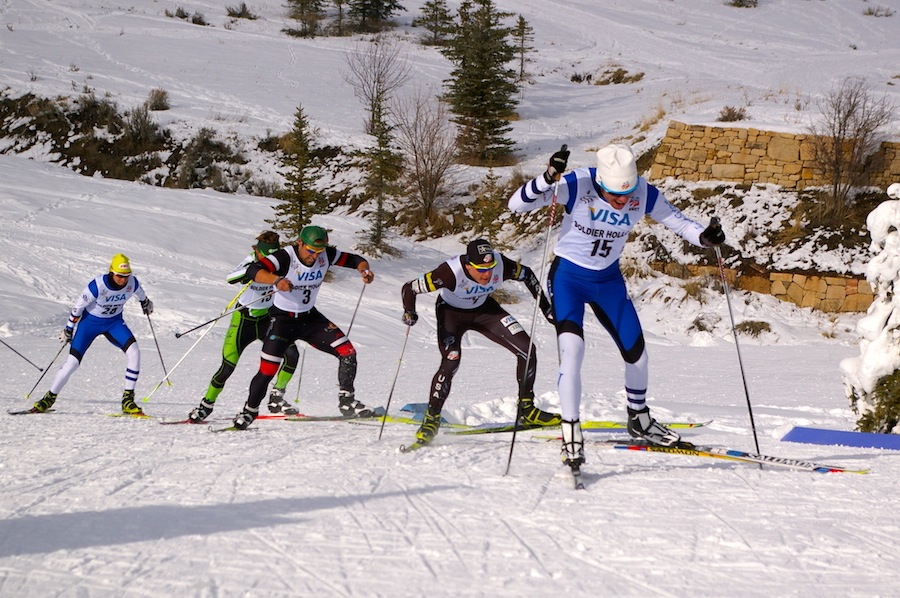
    Logan Hanneman (l) leads older brother Reese Hanneman (c) and Dakota Blackhorse-von Jess into the finishing stretch to win the 1.3 k freestyle sprint at the West Yellowstone SuperTour opener for his first SuperTour victory.
    Logan Hanneman (l) leads older brother Reese Hanneman (c) and Dakota Blackhorse-von Jess into the finishing stretch to win the 1.3 k freestyle sprint at the West Yellowstone SuperTour opener for his first SuperTour victory.

    “There’s a corner in there, the last corner before the climb… I’d been focusing on taking a little bit wide in the quarters and the semis and had used that move to pass a few guys each time,” Logan said.

    In the final, his timing was perfect. “Just after that corner, Reese made his move, and I jumped on with him and got past Dakota,” he said.

    When they emerged from the trees at the top of the climb and made the 90-degree turn to toward the finish, it was Reese, followed by Logan and Dakota, with Johnsgaard, Gelso and Howe close behind. A bit of contact between Gelso and Howe slowed the duo, but in the front, a battle for the win was shaping up between the Hannemans.

    “I was leading, but I could hear Logan behind me, then I could see the tips of his skis coming up beside me,” Reese recalled. “I knew that he and Dakota were back there, and when it comes to sheer wattage those guys are so powerful, they’re like a couple of bison. Plus, Logan is like 6’3”. On a gradual downhill like the one leading in to the finish, he’s just so fast.”

    Crossing the line with a three-meter lead, Logan grabbed his first-ever SuperTour win, coming off of successful college career at the University of Alaska-Fairbanks. Reese joined him on the podium in second, with Blackhorse-Von Jess there as well in third. Johnsgaard skied to fourth, Gelso was fifth and Howe came in sixth.

    “I think I may need to stop giving him all my good hand-me-down skis,” joked Reese, who was both satisfied with his own performance and thrilled with his younger brother’s victory.

    The West Yellowstone SuperTour continues with the first distance race of the season, the 10/15 k freestyle individual start on Saturday.

    Results

    ***

    About the Author: Travis followed up a somewhat undistinguished competitive career with the University of Colorado with coaching positions in Steamboat, Boise, and most recently as the Gold Team Coach in Sun Valley. As of 2011, he works with middle school skiers, including his own two boys, and sells second homes to dot-com millionaires in Nordic Town USA: Sun Valley, Idaho. 

  • More Than a Coach, He Brought The Fun: Friends and Athletes Across the World Remember Igor Badamshin

    More Than a Coach, He Brought The Fun: Friends and Athletes Across the World Remember Igor Badamshin

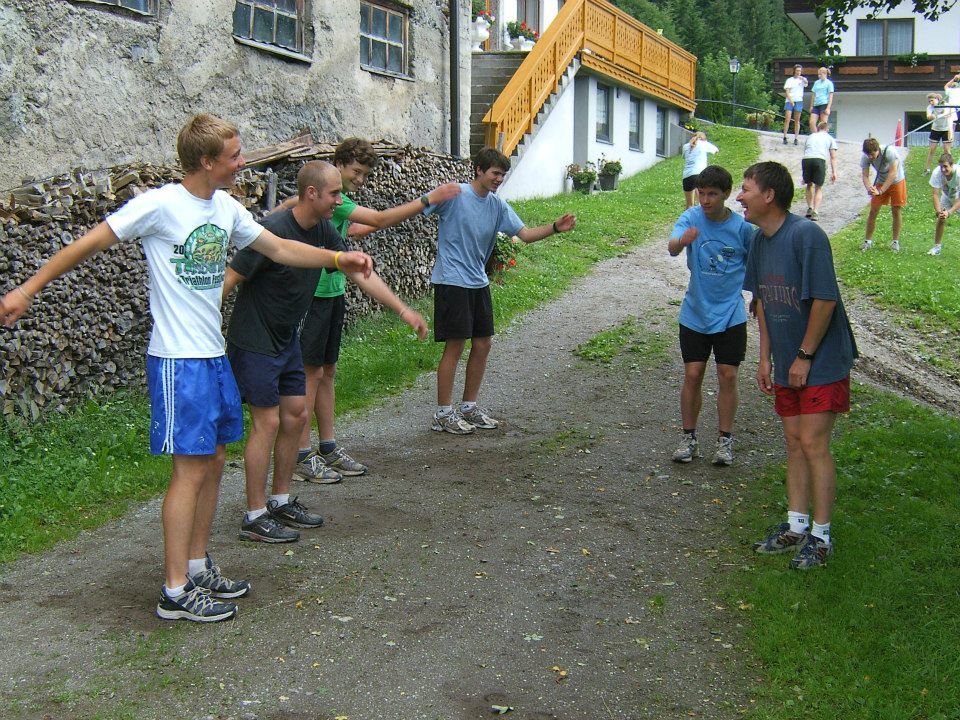
    Igor Badamshin (right) laughing through technique work with (from left) Alex Howe, Dylan McGuffin, and other athletes on a junior training camp. Photo: Martina Howe.
    Igor Badamshin (right) laughing through technique work with (from left) Alex Howe, Dylan McGuffin, Ethan Dreissigacker, Will Anderson, and Sam Marshall, at a summer training camp in Austria. Photo: Martina Howe.

    Almost ten days ago now, the U.S. ski community lost one of its most valued members: Igor Badamshin, who died of a heart attack while out skiing.

    “He was in an area that he really enjoyed, and he skied on the Birkie trail, and it was a beautiful day,” CXC Executive Director Yuriy Gusev told FasterSkier. “He loved classic skiing, and so he was out classic skiing. And he had come to that area to help his friends with an event.”

    Although Badamshin was born in the Soviet Union and even represented them in the Olympics, it was arguably the United States where he had the biggest impact on skiing. Badamshin worked hard to establish grassroots skiing in two separate regions, starting at Gunstock Nordic in New Hampshire before moving to CXC.

    Badamshin originally came to the U.S. with his wife, Nina Gavrilyuk, and settled near Gunstock, where they began coaching.

    “Igor moved to the US with Nina and [their daughter] Jenia when I was in 8th grade,” Craftsbury Green Racing Project athlete and Gilford, NH, native Alex Howe wrote in an e-mail to FasterSkier (he also published on his blog).

    “At the beginning it was hard for them to start coaching because of the language barrier,” Howe explained. “Nina was very quiet and got her point across slowly. Igor would just say whatever he was thinking even if the sentence had little to no meaning in English. On one occasion in particular Igor misplaced the word ‘sheet’ with the word ‘shit.’ He looked around the club house confused as to why everyone was laughing when he asked, ‘Where is the shit of paper?’ in a thick Russian accent! All he wanted to do was look at the interval times from that afternoon.”

    Despite the language confusion, it was clear that Badamshin and Gavrilyuk were excellent coaches, as the Gunstock team began to rack up top finishes. Howe and his older sister Katrina were on the roster, as well as Dylan McGuffin, Sam Evans-Brown, the Stark family. Their athletes often packed the roster of New England’s team to junior national championships, and many later packed the startlists in college races as well.

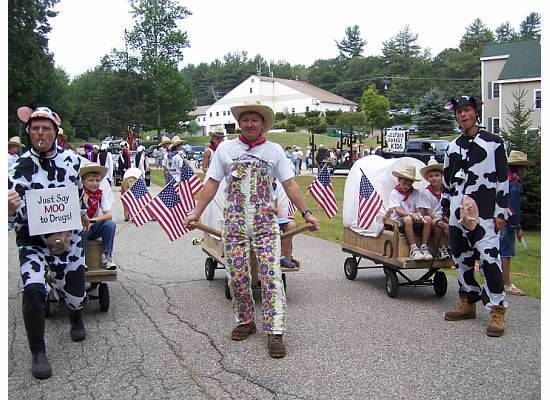
    Badamshin (center) and Howe (right) get ready for a parade. Photo: Martina Howe.
    Badamshin (center) and Howe (right) get ready for a parade. Photo: Martina Howe.

    “Igor and Nina were a perfect balance for each other,” Howe remembered. “Nina would run the serious part of the practice and Igor was there at the end to make sure we all got enough games and jokes in for the day.”

    At the Eastern Cup race this weekend, the New England Nordic Ski Association held a moment of silence for Badamshin.

    After establishing Gunstock as one of the top clubs in the east, Badamshin left to spread his gospel to the Midwest (Gavrilyuk still coaches at Gunstock). He began a relationship with CXC as soon as the program started an elite team in 2007.

    “First he was just a volunteer and played a role as the CXC High Performance Advisor,” Gusev said. “He helped a lot – he came and spent some time with Bryan Fish and myself, and he had all this experience. We didn’t have any experience working with athletes in a program of that level. So he came to camps and would sit down with us and talk about training. He would give advice to Bryan about how to design a training plan.”

    Gusev called Badamshin instrumental in developing both the senior and junior performance programs at CXC, as well as helping the other coaches gain experience and skill. In the seven years since, the organization has grown and grown – and Badamshin was part of it all.

    “There was no project that would be impossible for him,” Gusev said. “He was so motivated for everyone to take these things on. It will be hard to replace, that’s for sure.”

    But as Howe had alluded to, it wasn’t his experience or his training plans that made him so beloved. It wasn’t just that he made athletes fast. It was that he was just a fun guy to be around.

    Life With Igor
    “He was like Blades of Glory on roller blades. He could do all sorts of gymnastics that would surprise the heck out of you. He spent a whole day making Russian dumplings for team dinner once by scratch that were unbelievable. Starting to get sick? Take a shot of Vodka. Cant sleep? Take a shot of Vodka. Have a hangover? Probably should drink move Vodka. (I’m just kidding about the last one.) He will beat you in arm wrestling. He will put weights on your feet, tell you to ski, and you will do it, because although it may have been lost in translation, there is a sparkle behind those eyes that is trying to tell you something. Igor will be missed by many, and I hope that everyone will remember to live life with vigor”— Jennie Bender, Bridger Ski Foundation, CXC alum

    “He was the best with typical American teenagers,” Gusev marveled. “Juniors just loved working with him. He could connect so well, better than anyone I’ve ever seen. And he loved it, it was his biggest passion.”

    “The youngest kids would always ask to play ‘pancake,’ which consisted of Igor flipping them in the air and catching them, while the older kids would try to best him in his famous wrestling matches,” Howe remembered of his early days at Gunstock “I always felt like Igor and I got along right from the get go.”

    And for Howe in particular, Badamshin provided a motivating training partner. In general, Gusev said, Badamshin didn’t talk about his past: athletes might not realize that he owned a World Championships medal in the relay, or placed fifth in individual races at World Championships not once, but twice.

    Yet he was obviously a great athlete, and still relished playing at one sometimes.

    “All the memories that I have of training when I was a junior are filled with adventures with Igor,” Howe wrote. “He was always there to push me to train harder, while keeping every practice fun. Igor didn’t always ski around every loop with me, but it always seemed like he would show up at the top of the biggest downhills with a big grin on his face daring me to race him down the hill. On days where the other guys didn’t show up to practice he would jump right into any interval session to push me, even if he had just worked all day pulling old snow-making pipes down the alpine slope for next years snow-making system.”

    So when Badamshin left New England, it was a tough loss. Gusev doesn’t remember it seeming too hard for his new employee to relocate, but then again, it’s not like Badamshin would admit it if it had been.

    Badamshin and Gavrilyuk at a Bill Koch League Festival in New England. Photo: Martina Howe.
    Badamshin and Gavrilyuk at a Bill Koch League Festival in New England. Photo: Martina Howe.

    “I never spoke with him about whether it was easy or not,” Gusev said. “But he enjoyed what we had for him to do here, that’s all I can say. He never shared, if he had some challenges, he wouldn’t talk about it with many people. He would just smile. He was a very interesting individual in that regard.”

    Badamshin may have been getting older, but nothing had changed. Jessie Diggins, now a U.S. Ski Team member and World Champion who trains with Stratton Mountain School’s T2 team, got her start as a junior with CXC.

    “He always lead by example, and wasn’t afraid to do the entire interval set right alongside his athletes,” Diggins said of Badamshin.

    “He could show the elite athletes up any day of the week,” Jennie Bender, another former CXC athlete now at Bridger Ski Foundation, agreed.

    Gusev also praised his ability to explain ski technique to athletes of any level.

    “He had a very special way of explaining things, especially to kids,” he said. “It was simple, simple but really conveyed what he was trying to explain, even with really complex things. That really worked for all of our athletes, from juniors to masters skiers and elite athletes.”

    Finally, training with Igor was never boring because the plan was just a little bit different than that of most American coaches.

    “His experience came from the coaches that he worked with, taking the things that he felt were really beneficial to him as an athlete,” Gusev said. “He never had the same workout twice. He could have had you do 20 level two two-minute interval workouts, but none of them would be the same. I think that’s very special. You have to make training very interesting and exciting so that it’s something athletes are looking forward to.”

    Russian Recollections
    When the Russian website skisport.ru published a notice of Badamshin’s death, dozens of commenters weighed in. Here’s a sampling of their (translated) thoughts.

    “We saw him at the last American Birkie, and he was so open, friendly, cheerful, and young … try not to forget …”
    — Vladimir Kochetov
    “This is very sad… I am opening my notebook and looking at the autograph he signed for me in 1993. What a vivid memory!”
    — Nikolay Grafov
    “Igor was an open, friendly, and responsive guy! Let him remain that way in our memory.”
    — Oleg Petrov

    After helping to get the CXC elite team started, he also worked with the CXC Academy, a junior program. It was an obvious and perfect fit. Badamshin now had an entirely new set of juniors to joke around with, impress, and make fast.

    “It was fun to see him coach the juniors because he was absolutely perfect for the job – full of energy, smiles, fun ways to make a ski entertaining while still getting his technique or training points across,” Diggins wrote in an e-mail. “I remember him teaching the juniors a fun ‘Russian jumping game’ at an REG camp, and then of course he’d throw himself right into the game, laughing and trying to out-do the juniors.”

    When Fish left to join the U.S. Ski Team coaching staff, Igor took over the reins of the elite team as head coach for the 2012-2013 season.

    “Igor had a great playful sprit, which drew him to the juniors more than to the Elite squad,” Bender wrote in an e-mail to FasterSkier. “However, as one who enjoys that in a fellow human being, his energy was a valued addition that year.”

    Naturally gregarious herself – the tagline on her website is “I cannot be contained” –  Bender continued to flourish under Badamshin’s coaching and skied to her first national championship, in the classic sprint.

    But it was not so much the training as the playing that bring her the best memories of Badamshin.

    “I used to pretend box with Jason Cork before races to get amped up,” Bender wrote. “We would try to jab at each other below the neck, and I’d usually lose because Jason has got a quick punch, but it always made me laugh and get in a good mindset. When Igor became the elite coach, at one race I tried to get him to pretend box with me too. He knocked my nose by accident and it started bleeding right before a race… He felt bad but it was pretty funny.”
    For most of Badamshin’s friends, this loss is unimaginable.

    It is for Howe, too – who felt like he already lost Badamshin once.

    “For a long time after Igor left for CXC I felt a bit betrayed by him,” Howe admitted. “I thought he would never be able to move somewhere and have as much fun as he did training with me. In hindsight I know that it was not me that provided the fun. Igor could make every minute into an entertaining one and could turn any situation into a game.”
    The second time is even more painful.

    “I have missed my training partner over the past years and miss him even more now,” Howe wrote. “He was phenomenal as a coach, inspirational as a person, and irreplaceable as a friend.”

    Epilogue: Gusev and CXC are creating an “Igor Badamshin Fund” to help young athletes achieve their international racing dreams. Donations towards Igor Badamshin Fund can be mailed to CXC Skiing, P.O. Box 930442, Verona, WI 53593 with “IB Fund” on the memo line. Gusev explains it like this: “We’re trying to establish a fund in his name to help young talented athletes with scholarships to compete at the U18 Championships in Europe and World Junior Championships. We thought, what would be the most in keeping with his loves? That would be something he would enjoy.”

  • The 12: Craftsbury Green Racing Project

    The 12: Craftsbury Green Racing Project

    The 2013/2014 Craftsbury Green Racing Project team at their base in Craftsbury, Vt. From back left: Alex Schulz, Pete Hegman, Ethan Dreissigacker, Alex Howe, Ida Sargent, Hannah Dreissigacker, Liz Guiney, Caitlin Patterson, Jake Barton, Patrick O'Brien, Mike Gibson, Gordon Vermeer. Not pictured: Susan Dunklee, Clare Egan, Andrew Dougherty. (Courtesy photo)
    The 2013/2014 Craftsbury Green Racing Project team at their base in Craftsbury, Vt. From back left: Alex Schulz, Pete Hegman, Ethan Dreissigacker, Alex Howe, Ida Sargent, Hannah Dreissigacker, Liz Guiney, Caitlin Patterson, Jake Barton, Patrick O’Brien, Mike Gibson, Gordon Vermeer. Not pictured: Susan Dunklee, Clare Egan, Andrew Dougherty. (Courtesy photo)

    Note: In an effort to ring in the 2013/2014 season, we’re kicking off our second-annual elite team preview – now called “The 12.” Starting with the Craftsbury Green Racing Project and proceeding in no particular order, we’ll profile 12 of the biggest powerhouses in U.S. cross-country skiing throughout the next several weeks.

    Team: Craftsbury Green Racing Project (CGRP)

    Coaches: Pepa Miloucheva (head coach, 16th season), Nicholas Brown (wax technician and assistant coach), Anna Schulz (junior coach), Jeremy Nellis (Bill Koch League coach)

    Senior roster: Ida Sargent (U.S. Ski Team), Susan Dunklee (US Biathlon), Hannah Dreissigacker (US Biathlon), Caitlin Patterson, Clare Egan, Liz Guiney;

    Alex Howe, Gordon Vermeer, Patrick O’Brien, Andrew Dougherty, Pete Hegman

    Provisional team: Alex Schulz (Dartmouth grad), Jake Barton (Colby), Mike Gibson (University of Vermont), Ethan Dreissigacker (formerly of the US Biathlon’s junior team)

    Who’s new: Guiney (formerly of University of New Hampshire, Utah Nordic Alliance/Park City Nordic), Andrew Dougherty (Denver University grad, Alaska native), Pete Hegman (UVM/Mansfield Nordic)

    More on the new athletes

    Who’s missing: According to Miloucheva, Midwest natives Maria Stuber and Bryan Cook are Colorado-bound, Amy Glen left the team at the beginning of last season, and Dylan McGuffin, Tim Reynolds and Nils Koons are most likely “taking a break from training and taking on different jobs.”

    Ida Sargent (CGRP/USST) during a team time trial on June 13 near Craftsbury, Vt. (Photo: Sheldon Miller//www.craftsbury.com/blog/?p=2557)
    Ida Sargent (CGRP/USST) during a team time trial on June 13 near Craftsbury, Vt. (Photo: Sheldon Miller/CGRP blog)

    Top results last season: Right on par with the rest of the career-best performances from the U.S. Ski Team (USST) women’s squad, Sargent broke through early last season with a ninth-place finish in November at the World Cup classic sprint in Kuusamo, Finland.

    Two months later, the 25-year-old from Orleans, Vt., really hit her stride in Sochi, Russia, making the A-final in a freestyle sprint and placing sixth at the pre-Olympic World Cup. Two days later, she placed fifth with Sadie Bjornsen in the team sprint.

    “I want to make more appearances in the finals [and] hopefully build another step towards a World Cup podium down the road,” Sargent recently told FasterSkier after being promoted to the USST A-team this season.

    And the heart of her training is still in Craftsbury. “This is the perfect place for me,” she said. “I grew up near here, so I’m used to the rural lifestyle. We spend so much time on the road in the winter that having the opportunity to be at home in one place feels great.”

    U.S. Biathlon’s leading woman, Dunklee placed seventh in the 15 k individual at the pre-Olympic World Cup, and Dreissigacker bumped herself up to the USBA A-team after making her first World Championships. The two turned heads at SuperTour Finals – the last events of the season in the U.S. for elite cross-country skiers – when Dunklee nabbed fifth in the skate prologue then made the A-final in the classic sprint. She ended up sixth in a discipline she hardly ever competes in, and Dreissigacker was 11th in the 10 k freestyle and 12th in the sprint.

    At U.S. nationals in January, Howe captured bronze in the freestyle sprint. Patterson tallied two fifth-place finishes (in the 10 k skate and 20 k classic mass start), and placed third in the American Birkebeiner 52 k skate race.

    Coach’s comment: “The team is doing very well,” Miloucheva wrote in an email about her 11 elite teamers. “The new members are great and are bringing new level of excitement and positive competitiveness to the team.”

    This year, Craftsbury invited four of its former skiers to a new provisional team to help them transition from college. Two of the four men are nordic skiers (Schulz and Barton), and two are biathletes (Gibson and Dreissigacker).

    “We don’t have any camps planned for the summer, but trying to get organized to bring CGRP, MWSC [Maine Winter Sports Center] and Stratton T2 teams together for some small training blocks,” Miloucheva explained. “In the fall we have a camp in September in Lake Placid and October in Park City.”

    For more from Craftsbury’s longtime coach, check out this post-training video and others from the Craftsbury Outdoor Center.


  • Craftsbury Green Racing Project Names 2013-2014 Team

    Craftsbury Green Racing Project Names 2013-2014 Team

    cgrp - logo

    The Craftsbury Green Racing Project is excited to welcome a new crop of skiers to the team this year. With a strong pool of applicants, and limited slots, the decisions were tough.

    At the full Green Racing Project level, we’ll be joined by Liz Guiney, Andrew Dougherty and Pete Hegman.

    Liz spent her junior years skiing for the Utah Nordic Alliance and Park City Nordic Ski Club; raced at numerous Junior Nationals, and was part of the 2009 US J1 Scando trip team. She then did her college racing for UNH, qualifying for NCAA’s in the past three years. She represented the US at U23 World Championships this past winter.

    Vermonter Pete Hegman came up through the Mansfield Nordic program and Mt. Mansfield Union High School, where he had a couple of state championship titles. He was on the NE team for Junior Nationals, and then raced all four years for UVM.

    Andrew Dougherty grew up ski racing in Alaska, including many years on the Alaska Junior Natonal team, and then did his college racing for Denver University. He represented the US at the 2011 World Junior Championships and has since been a two time NCAA All-American. Along with Liz, in 2009, he was a member of the US J1 Scando Trip team.

    Returning GRP skiers are Alex Howe, Gordon Vermeer and Patrick O’Brien on the men’s side, and Clare Egan, Ida Sargent, Caitlin Patterson, Hannah Dreissigacker and Susan Dunklee for the women. Clare will be focusing on Biathlon this year. Ida has been named to the USST A Team; while Hannah and Susan have been named to the USBA A Team.

    This year’s training group will also include several former Craftsbury skiers and biathletes who are returning to the club after finishing college. They will join GRP as Provisional members. This includes Jake Barton and Alex Schulz for Nordic, and Michael Gibson and Ethan Dreissigacker for Biathlon. Jake had a strong collegiate career with the Colby Mules until a thumb injury sidelined him for the latter part of this past season. Alex has had a number of top finishes in the sprints at Junior Nationals, and did his college skiing for Dartmouth. Mike, a UVM grad, has had several national podiums in Biathlon. And Ethan was a 5-time member of the US Jr Biathlon Team.

    Congratulations and welcome aboard to all the GRP athletes!


    As always, you can follow the exploits of the ski team (and their rowing counterparts) via the team website, greenracingproject.com, Facebook page (CraftsburyGreenRacingProject) or Twitter feed (@craftsburygreen).

    The Green Racing Project is a venture of the Craftsbury Outdoor Center made possible through the generous support of Concept2, Ibex, Rudy Project, Podium Wear, Sauce Headwear, and Brighter Planet. 

  • U.S. Nationals Men’s Skate Sprint Video

    U.S. Nationals Men’s Skate Sprint Video

    The final day of the 2013 U.S. Cross Country Ski Championship proved to be one of the most exciting as racing continued with the skate sprints.  After the day of racing it was Dakota Blackhorse-von Jess who was strongest down the finish stretch to earn the top step on the podium and the national crown.

  • U.S. Nationals Notes and Quotes: That Just Happened

    U.S. Nationals Notes and Quotes: That Just Happened

    Waiting to see who had won.
    Sadie Bjornsen and Sophie Caldwell, waiting for the outcome of their photo finish to come through in the freestyle sprint at U.S. Nationals.

    FasterSkier’s coverage of the 2013 U.S. Cross Country Championships is brought to you through the generous support of The Memory Clinic in Bennington, Vt.


    MIDWAY, Utah — Skis cleaned, bags packed, flights boarded. The hundreds of athletes, coaches, parents and fans that camped out at Soldier Hollow for the past week have all either gone home to recuperate or are on their way to the next race. As usual, athletes were so verbose in describing their races we couldn’t fit it all into our race reports. The final edition of notes and quotes from U.S. Nationals: skate sprint style. Dakota Blackhorse-von Jess (Bend Endurance Academy), the men’s victor, had particularly interesting things to say about the unusual dynamics of Tuesday’s race.


    On the beginning of a ski career:

    “I was living in Pocatello, Idaho, and I chased a girl into [skiing]. And when I left Pocatello I kept doing it and I liked it, I don’t know why. I wasn’t especially good at it. I was already a two-sport athlete, I ran cross-country and track, and it just fit really nicely in the winter. It was better than wrestling; I didn’t like wrestling all that much.”

    — Dakota Blackhorse-von Jess (Bend Endurance Academy), 1st.

    Blackhorse-von Jess and BEA coach Ben Husaby.
    Blackhorse-von Jess and BEA coach Ben Husaby.

    “[Dakota] came to skiing very late. He basically decided his junior year of high school that he wanted to be a ski racer, and I continued to work with him a little when he was at Dartmouth.

    “Just in the last few years we decided to make a run at it. We’re a pretty small team on the high-end level; we don’t have a lot of athletes or a ton of resources, but we work well together. Dakota’s unique in the way he approaches racing and training… It’s just been really fun to watch him move from fifth place few years ago to first place this year. He was always fast at qualifying. Most amazing to me was he showed he can ski consistently all the way through heats today on very challenging sprint course. It was obvious the distance skiers fared well and the sprinters had a harder time. This is a testament to his preparation and his commitment.”

    — Ben Husaby, Bend Endurance Academy head coach 


    On the longer men’s course:

    “Today was a much different sprint than we’re used to. It was longer course and it starts with a long climb. That’s a lot longer than you can ski maximally… Watching others race and also from my experience out there [I learned] this course is suited towards the distance skiers, especially based on the qualifying results. I knew that the pure distance guys were going to go for it and they did in the semifinal, and I knew if I just went for it and stuck with them everything would be OK.

    “But it also changed the race dynamics because if you’re not a, quote, sprinter, you have to take it there [at the start] as we saw with Tad and with Erik to a certain extent — although Erik’s, you know, a good sprinter. But Tad is certainly not known for that, and in the classic race as you probably saw it was very slow, very tactical, because the guys with strong double-pole finishes were just waiting. That’s what it wound up being. But today it was very, very different because no matter how good your V2 is, if you’re not in the race you’re not in the race… And that’s what those guys without — and it’s really not fair to say they don’t have V2s, because Tad is a good skier. But it’s not the same.”

    — Blackhorse-von Jess


    On strategy:

    “Erik told me right before the start, ‘You have to kick extra hard right at the end of the bridge,’ so I tried to think about that.

    Sadie Bjornsen skiing through the semifinals. Photo: Sarah Brunson/USSA.
    Sadie Bjornsen skiing through the semifinals. Photo: Sarah Brunson/USSA.

    “It’s not necessarily the slingshot so much as just being in the right place. You need to find a place to ski and if you’re behind then it’s hard to move around, so it’s more just positioning coming into the final line. But there’s a lot of time between that final corner and there so there’s places to make it up if you were in the wrong place.”

    — Sadie Bjornsen (Alaska Pacific University/U.S. Ski Team), 1st

    “I worked on some tactics … I was right behind Tad and then over the top hill I kind of let him get a couple feet and just slowed up to kind of get Dakota to bunch up a little bit. I just hammered over the top, and I’ll be interested to see some pictures and see if that kind of worked. And then he had some momentum in the finish, but I think I had three or four strokes where I just relaxed and that’s where I lost it. As soon as I got out of my tuck I needed to just hammer with all I had left.”

    — Erik Bjornsen (APU/USST), 2nd

    “Caitlin Gregg took it out pretty fast. I talked to her after and she said she wasn’t as confident in her final sprint. She thought her chance was kind of taking it out from the start and dropping some people, but we stuck with her. I tried — I wanted to be in second or third coming into the downhill because I knew there was a draft. It wasn’t the end of the world if you were in that position but I was just getting really flustered on the downhill and the heats before then because it was harder to pass.”

    — Sophie Caldwell (SMS T2), 2nd

    Alex Howe coming around the final bend in the quarterfinals. Photo: Sarah Brunson/USSA.
    Alex Howe coming around the final bend in the quarterfinals. Photo: Sarah Brunson/USSA.

    “I really just wanted to hang in and get a good position in the downhill. It really came down to whoever was in 2nd, 3rd, 4th, and if you got enough of a draft you could just slingshot around the corner. So I was just looking for that spot. It worked out pretty well in the quarters and semis and in the finals it was a little rougher because we had to make up a little bit of a gap that they built on us, with Tad hammering off the front.”

    — Alex Howe (Craftsbury Green Racing Project), 3rd

    “I think I may have been fourth and then I wanted to take the inside of this corner because it’s been working for me so far. I think as long as you assert yourself you usually get it so I kind of made a point of getting in there and tried to hit it really hard going over the top [before the finish].”

    — Becca Rorabaugh (APU), 4th

    “Every heat it just waited ’til the hill underneath the bridge — the steep one — and I seemed to be able to close some people on that. So I just kinda waited until the end, passed a few and then it was just a drag race to the finish. A little tight in the finishing chute, but that’s racing.”

    — Logan Hanneman (University of Alaska, Fairbanks), 4th

    “Like this course always does, we all ended up down there again together… All the quarter and semi I was just trying to play it easy in the back here and then really go and make sure I had a good slingshot. Our skis were so fast today, and it was advantageous to be in the back and move slowly through the pack. So that’s what I did every quarter and semi, until the final. For the final I just found myself a little bit further back.”

    — Sylvan Ellefson (Ski & Snowboard Club Vail/Team HomeGrown), 5th

    “I think it was really key, at least in the qualifier, to just ski so smooth. Especially when you’re at altitude or whatever, the higher tempo, the harder you work and the gains aren’t that significant. So in the qualifier I just tried to stay super smooth and then in the heats just not leading on that downhill was pretty clutch.

    “It’s funny, because no one wants to lead on the downhill and I’d just start gaining and I think the further and further into the heats, when everyone starts realizing that’s a really bad idea, it gets kind of funny because everyone’s got the same game plan. So it’s more of a mental battle. Just like, all right, who’s gonna go? Because someone has to. You can’t just like stand on the top of the hill for five minutes and be like, ‘After you.’ ‘No, after you (laughs). I was just so glad and everyone’s awesome and I love Sophie and she did great.”

    — Annie Hart (Dartmouth College), 5th


    On the final lunge:

    “I wanted to be in a good position to take the inside corner, but then Sadie and Jennie came by me and I got even more flustered. I ended up going way outside on the corner but the finish stretch is so long that there is still time to make up. Sadie and Jennie came around, then I think I was in third going into the final stretch. I think I was slowly gaining and tried to do a big lunge.”

    — Caldwell

    “I didn’t feel as good as I did in the classic, so I’m definitely a little disappointed in myself for not lunging. I think I’m going back and realizing I don’t think I lunged at the finish, but that’s going to be a good finishing picture at least.”

    — Jennie Bender (Central Cross Country), 3rd

    Bjornsen and Caldwell lunge.
    The lunge.
    Post-lunge.
    Post-lunge.

    “I got lucky in the lunge in the semi and then I got kinda the other end of the lunge in the final. But yeah, it was pretty sweet.”

    — Hanneman

    On that distance guy in the A-final:

    Elliott leading the A-final before the downhill.
    Elliott leading the A-final before the downhill.

    “I feel like I was skiing super relaxed all day, and I knew in our quarterfinal I’d have to outkick some of those guys. And it happened! I can’t believe I out-kicked some of those people! It was partly that our skis were really good. It was sweet — I’m a tiny guy, so…

    “In the semis, like, those guys are such good sprinters. Like Skyler, Mikey, Tim, Dakota. So I was like, ‘Oh man, I can’t out-kick any of these guys,’ so I just tried to go from the gun and it ended up working good.”

    — Tad Elliott (SSCV Team HomeGrown/USST), 6th

    “I was really hoping Tad was just going to gun it from the start. I pulled up beside him, which I don’t know if it was kinda like, ‘You go for it Erik,’ type thing. Maybe I just should have sat in from the start.”

    — Bjornsen, 2nd

    “Tad went really hard up the hollow. He was telling me, ‘That’s my only chance!’ So yeah, he went hard and then I was kinda out the back.”

    — Hanneman

    “It was good, fast racing. It was awesome having Tad pushing the pace today; it totally different. In my quarter and semi we weren’t going the fastest sprint pace I’ve gone. So in the final he was doing a good job of pushing that pace. Which I think, if he wanted to win today, was what he needed to do. So it was a great tactic by him.”

    — Ellefson

    “It makes it more — it makes it more like bigger races, more like the World Cup. Because these races here are — they don’t feel the same because everyone’s just siting there waiting for the next guy to do something, because nobody’s gonna, quote, get away. Whereas at a higher level, absolutely they will. And it’s easy for the top five of us or so, over the course of the day, to sit in and do very little and then kick it down at the end. Whereas on the bigger stage I would have to guess that that’s not the case, based on our results. So it actually made it a lot more fun in some ways.”

    — Blackhorse-von Jess 


    On making improvements:

    “I think it’s just the stress-free way of life. I might have done a bit too much socializing in college, lets call it that. So I think the laid-back life in Craftsbury is much more suiting to my personality and everything. I grew up on a farm, so Craftsbury is right at home for me out in the backwoods, no cell phones — it’s perfect. So with less distractiosn and a quieter lifestyle I think I do a lot better, apparently.

    “For this season, I mean, I’d like to continue. Just use this as a builder and keep racing fast and try to race the whole sason as fast as I can. I’ve had seasons in the past where I race fast at certain points and I’d like to just stay consistent and keep building up. Hopefully that’ll happen.”

    — Howe

    “Two podiums: I don’t know what that means. It means I’m starting to get better so that’s a plus. It’s better than last year, which surprises … me, that that happened.

    “My whole kind of approach is trying to keep a neutral mentality and to leave the option open for anything positive to happen. I definitely was going into this clueless of how things would go, especially after I was disappointed in November about how I was racing. But everyone was like, just — patience. I’m really happy that I’m sprinting well. Distance is my next measure of health comeback so I’ve been kind of saying that if I — when there was a lot of negative possibility or negative mentality, that I would not let that creep in and kind of stay neutral and that’s worked out OK.”

    — Bender

    “The quarter went pretty well and people relaxed a little on that first turn. So then that went well and then just an avalnche from there. You get feeling better.”

    — Hanneman

    “It’s funny because in my qualifier, I felt so terrible. But I honestly think it was like a jump start for the day, probably for the rest of the season, who knows.”

    — Ellefson

    “This is my best finish ever at U.S. nationals. It’s super exciting. I think it helps to be so relaxed.”

    — Rorabaugh

    “I’m really excited. I really worked on my turnover and hopefully it’ll get working in distance races. I think it was a good step forward.”

  • With Gritty Closing Speed, Blackhorse-von Jess Takes First National Title

    With Gritty Closing Speed, Blackhorse-von Jess Takes First National Title

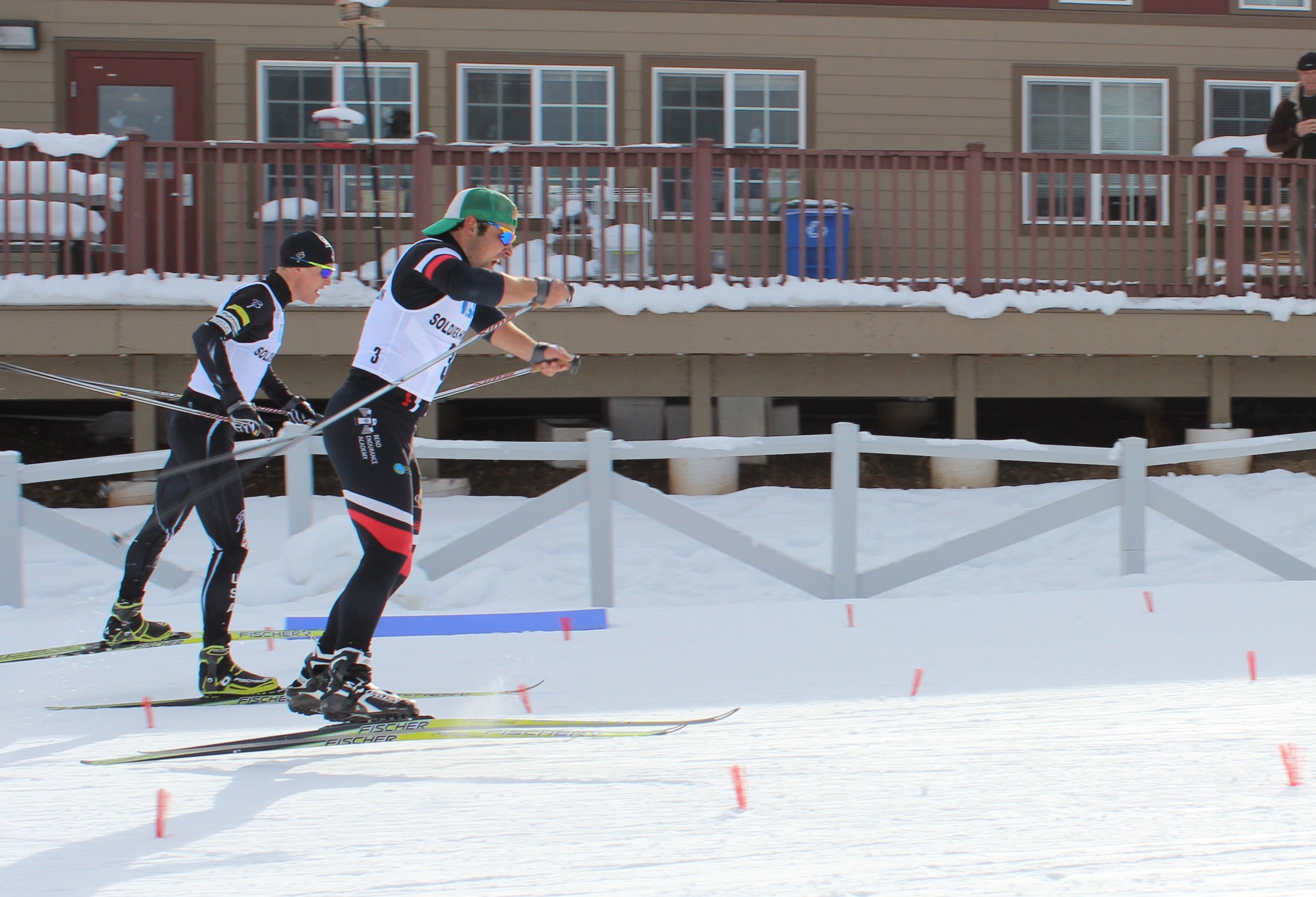
    Dakota Blackhorse-von Jess (Bend Endurance Academy) digging deep to take the win in the freestyle sprint at U.S. Nationals. Photo: Sarah Brunson/USSA.
    Dakota Blackhorse-von Jess (Bend Endurance Academy) digging deep to take the win in the freestyle sprint at U.S. Nationals. Photo: Sarah Brunson/USSA.

    FasterSkier’s coverage of the 2013 U.S. Cross Country Championships is brought to you through the generous support of The Memory Clinic in Bennington, Vt.


    MIDWAY, Utah — At the end of the day, sprint races can come down to any number of things. Raw speed. Positioning. Cunning. Inspiration. For the Bend Endurance Academy’s Dakota Blackhorse-von Jess it was probably some combination of factors that spurred him on to win the freestyle sprint at U.S. Nationals on Tuesday, his first career national title.

    “This is really cool,” Blackhorse-von Jess said after he’d had a chance to catch his breath. “Everything is the same as it’s been [this year], I’ve just been smarter and more confident.”

    Blackhorse-von Jess skiing through the quarterfinals.
    Blackhorse-von Jess skiing through the quarterfinals.

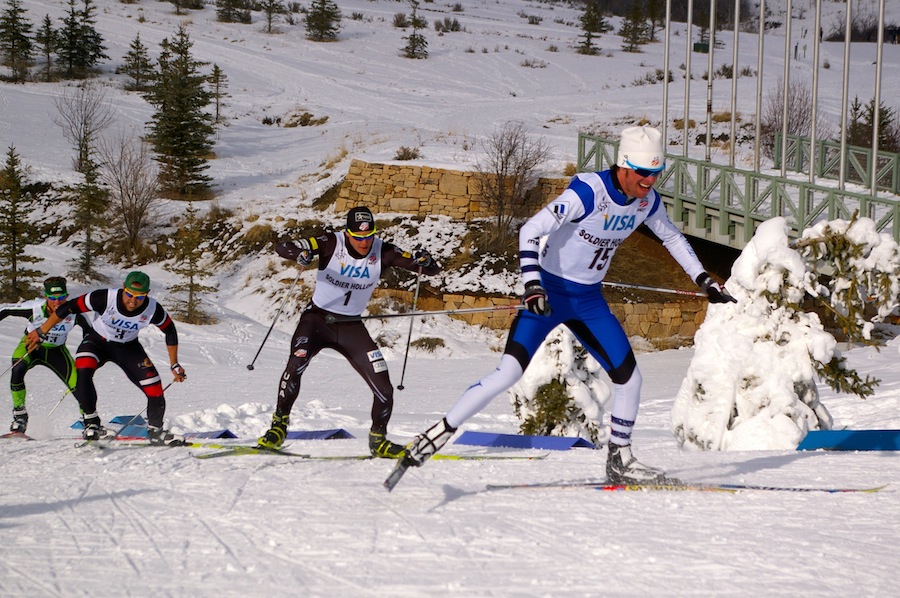
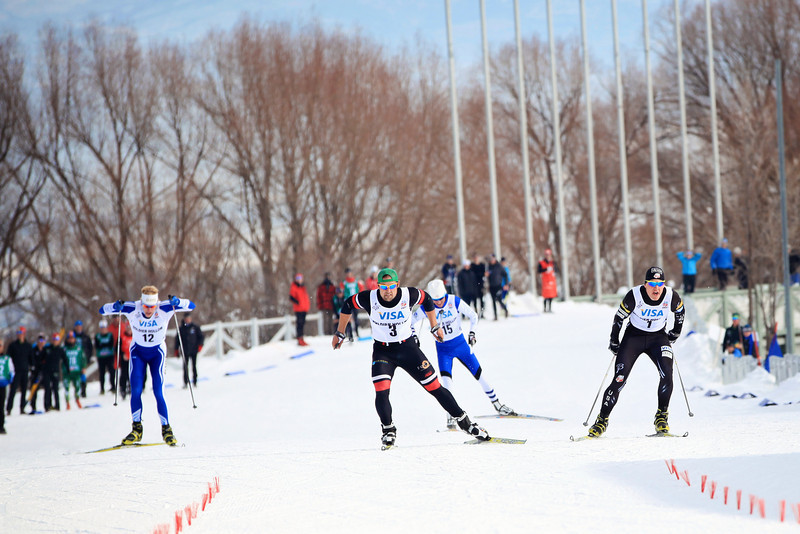
    The Soldier Hollow sprint course has ensured repeatedly this week that the field would compress on the final downhill for a closely-contested race into the stadium, and the men’s A-final was no exception. As six men rounded the final corner in almost a dead heat, Blackhorse-von Jess pulled off an unparalleled finishing kick in the final straightaway to edge Erik Bjornsen (Alaska Pacific University/U.S. Ski Team) and Alex Howe (Craftsbury Green Racing Project).

    Logan Hanneman (University of Alaska, Fairbanks) finished fourth, Sylvan Ellefson (Ski & Snowboard Club Vail Team HomeGrown) fifth and Tad Elliott (SSCV/USST) sixth.

    There’s no doubt that Blackhorse-von Jess demonstrated superior tactical intelligence on the way to victory. He also has some of the fastest pure speed to draw on of anyone in the field. But in addition to the physical factors required to put together a successful sprint, Blackhorse-von Jess had inspiration on his side throughout the day. Charlie Smith, a close friend and teammate, passed away over the holidays, and for this entire week at nationals Blackhorse-von Jess has had Smith in his thoughts. Many in the men’s field did as well; someone told the stadium announcer to say they were all racing in Smith’s memory as the A-final lined up to start.

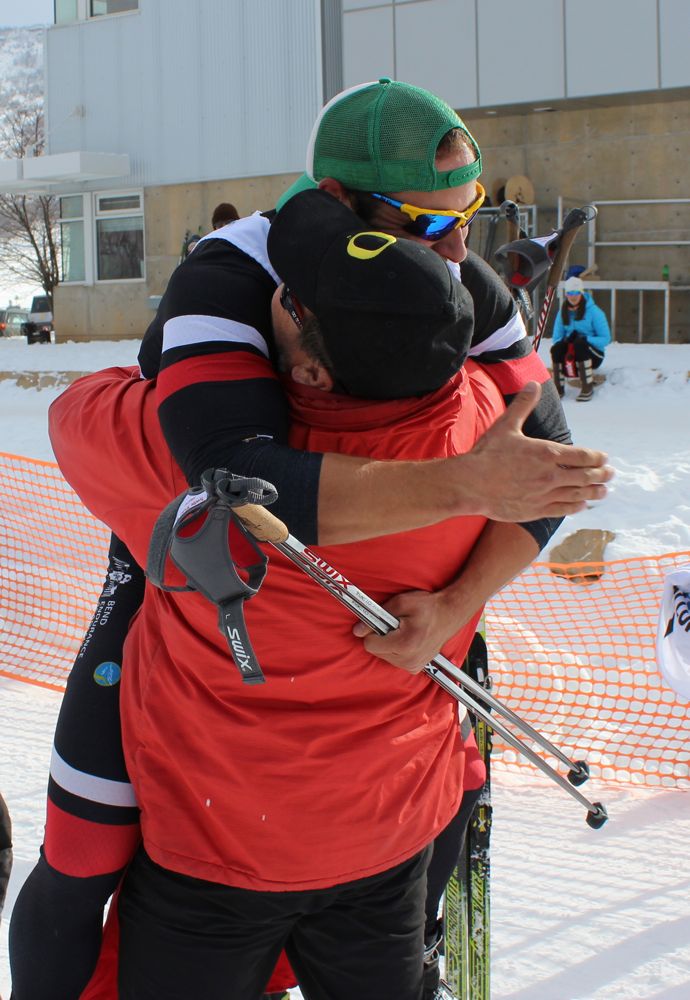
    Blackhorse-von Jess and coach Ben Husaby celebrate at the finish.
    Blackhorse-von Jess and coach Ben Husaby celebrate at the finish.

    “They were very close,” BEA coach Ben Husaby said of Smith and Blackhorse-von Jess. “They mentioned Charlie right in front of Dakota’s race… I had no idea that was coming. I didn’t know if it would be a motivator for Dakota or not.”

    It must have been, for Blackhorse-von Jess skied the perfect race.

    “We were racing for Big Charlie today,” he said. “There’s so many of us left and we’re such a tight group, and we’ve been such a tight group since I started racing here as a kid, so everybody’s been thinking about him all week. It’s cool, man.”

    Blackhorse-von Jess certainly looked inspired as he entered the final few meters. And prior to returning to the stadium for the last time, he played the course perfectly for the field he was up against, putting himself in the exact position he needed to be in order take the win.

    The downhill draft on the backside of the course was much discussed after the classic sprint, but the skate course featured a few new challenges. It was longer than it was for the classic event, and at 1.7 k that was long enough to almost feel like a prologue. It added about 200 m of climbing up the hollow out of the start and resulted in finishing times at least 40 seconds longer than the fastest splits from the classic day.

    “I know from talking to some of those other guys that were out here that some people skied really hard and really fast over the first minute and a half of this race and that was the end of it,” Blackhorse-von Jess said.

    The very people in A-final also made the race an unusual one. Elliott, who is normally a distance-specialist, made it in much to his own bewilderment. Pre-race favorite Torin Koos (Bridger Ski Foundation/Rossignol), who got tangled in the quarterfinals and lost his ski, did not. As a result, the race began hot and fast from the gun, the exact opposite manner in which men’s heats normally begin.

    Tad Elliott leading the men's final.
    Tad Elliott leading the men’s final around the turn before the big descent.

    Elliott directed a quicker opening pace — it was the only thing he could think of to give himself a shot against the likes of Bjornsen and Blackhorse-von Jess. The rest of the field had no choice but to keep up to stay in the race.

    “In the final Sylvan and I talked, I tried to help him but he was just like ‘Nah, just go for it from the gun,’” Elliott said. “I definitely could have played it a little differently in the final but I feel like, you know, my day is already done when I hit the final. I was just really excited.”

    Bjornsen, who has had a strong week of both sprinting and distance skiing, was the first one in pursuit of Elliott up the hollow, followed by Blackhorse-von Jess and the rest.

    “What I needed was for [Elliott] to just go from the gun to tire out those big guys at the finish,” Bjornsen said.

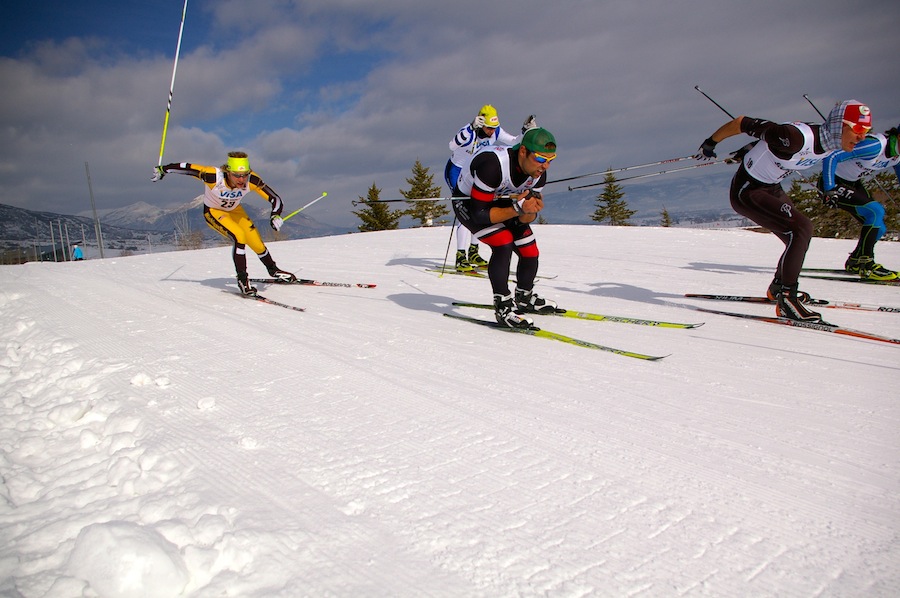
    Elliott did exactly that, and he and Bjornsen began to string out the field over the plateau, with Blackhorse-von Jess in hot pursuit. Down under the bridge they went, and by the time they reached the top of the horseshoe Blackhorse-von Jess had closed the distance and was in perfect position to draft off the leaders, gather momentum and overtake Elliott.

    But Bjornsen and Howe — the entire rest of the field, in fact — were able to benefit from the same draft effect, and the group that had strung out in the first part of the race scrunched back together for a dramatic finish.

    “It came together at the end, for sure,” Howe said. “I knew it was going to come down to this straightaway.”

    Blackhorse-von Jess and Bjornsen duking it out in the final meters.
    Blackhorse-von Jess and Bjornsen duking it out in the final meters.

    As Elliott shot out the back, Blackhorse-von Jess and Bjornsen began to inch ahead with distinctly more ‘pop’ in their V2 in the last stretch. Bjornsen took a few strokes to relax a little before his kick, and he lost precious momentum. Blackhorse-von Jess blocked out the noise surrounding him, kept up his tempo and narrowed in on each movement he made towards the line.

    “I’ve been working on my hundred-meter focus,” Blackhorse-von Jess said. “Because everybody says, ‘Oh, you’ve got the speed, you’ve got the power, you’re the fastest guy out there,’ whatever. But I’ve had a hard time finishing racing and I think it’s because I’ve been focusing on people that are around me and I lose sight of what’s really important. And that’s having your technical mantras and that kind of thing.”

    With his coaches screaming at him and skiers creeping into his peripheral view, Blackhorse-von Jess took a moment to remember his technique.

    “As soon as we got down to the straits I said, ‘OK. I have 20 seconds left, I just need to relax for a minute and get it figured out.’ And I got behind Erik and two strides later and I was pshht, gone. That’s what I took to the finish line. And honestly, landing on a bent ankle was all I was thinking about, until about two meters from the line and I was like, ‘Holy… Yes, that happened.”

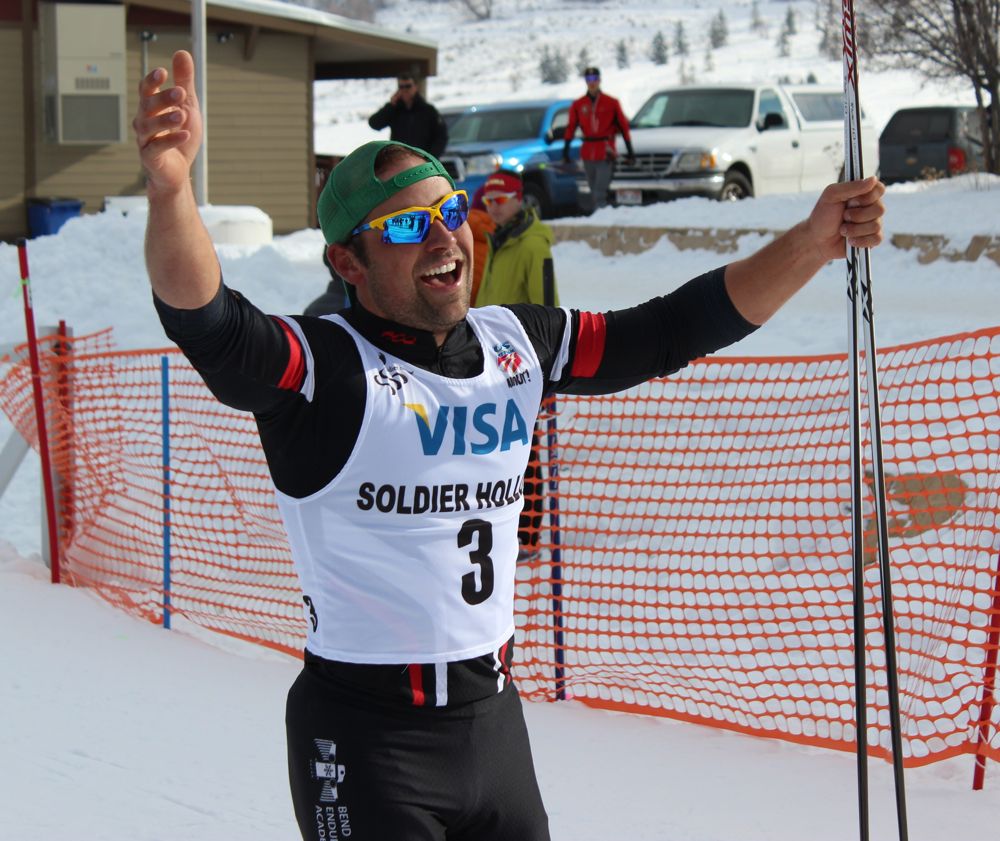
    Blackhorse-von Jess, triumphant.
    Blackhorse-von Jess, triumphant.

    Husaby, who began coaching Blackhorse-von Jess when he first picked up skiing in high school, was on tenterhooks as he watched his athlete race.

    “I have a hard time watching him race; I get very nervous,” Husaby said. “When they went by I could see him tightening up less than Erik was, but I didn’t celebrate until I saw his arms go up. I was glad he could race someone head-to-head down the line, he’s very hard to beat in that situation.”

    Bjornsen, just missing the top of the podium, was still happy with second. “It’s a learning experience, for sure,” he said. “It’s a great day and I’m still really happy with second.”


     * * *

    Howe, who was also not far off moving up another place, far exceeded his expectations in finishing third.

    “I’ve been skiing better in skate for the last couple years, so I was definitely looking forward to it, but I did not think I would podium. I mean, not a chance,” Howe said. “A top-twelve would have been really cool. So to get on the podium is definitely an awesome feeling.”

    Hanneman, coming on strong in the final race of the week to finish fourth, was simply excited to have made the final.

    “I definitely wanted to make it out of the quarters but the qualifier was so hard… I was just like, ‘Oh, gosh, this is not going to happen,’” he said.

    But he felt better and better through each round, will carry the confidence he gained from this sprint with him to Junior World Championships later this month. “It’s a good way to go across the pond after this race, to get that momentum. I’m excited,” Hanneman said.

    In fifth place, Ellefson turned in his best result of the winter and hopes that his season will soon be back on track.

    “It feels like things have finally been coming together,” he said. “I’ve been waiting for today for a while… Every round just felt better and better and the last one actually felt really good, I just got a little bit boxed-slash-pinched out at the end.”

    And that distance specialist, who broke the sprint-strategy mold and boldly led at the start? He was pretty psyched, too.

    “I can’t believe I outkicked some of those people!” Elliot said, referring to the earlier heats that brought him to the final. “I’m a tiny guy!”

    Though longer races are still his forte, Elliott will always remember the time he made it to the final at U.S. Nationals. “I’d say I’m a distance guy, but there was that one day in January…”

    Results.

    — Alex Matthews contributed reporting.

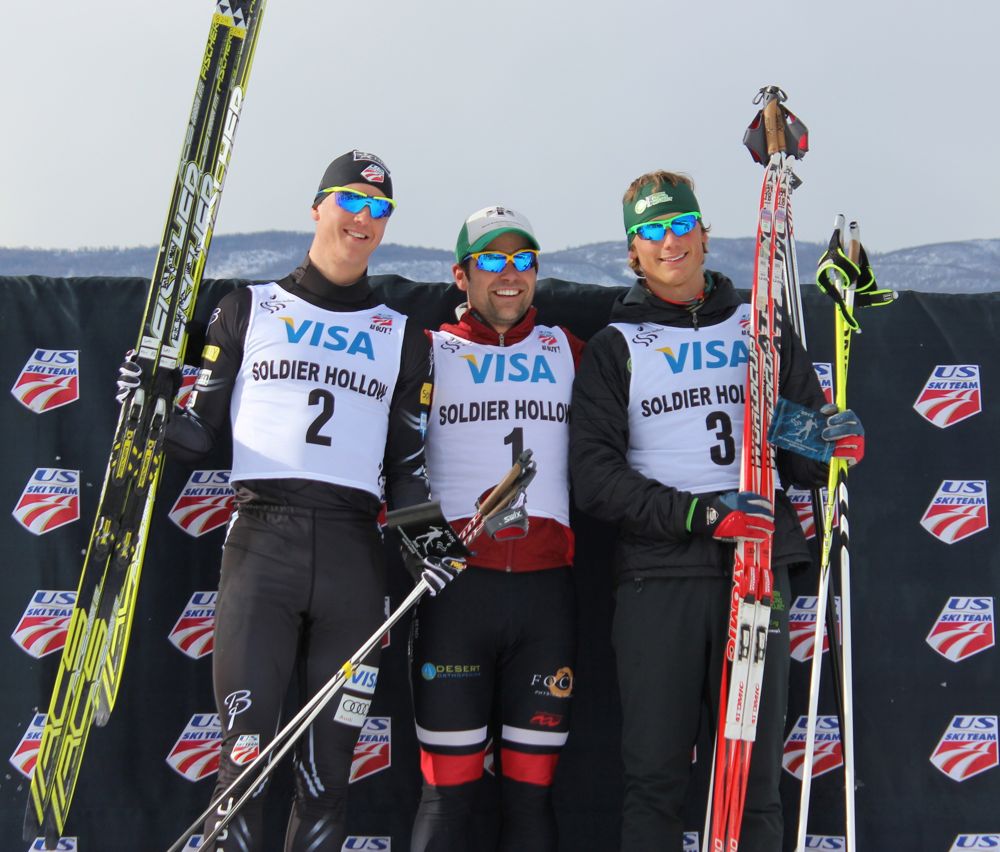
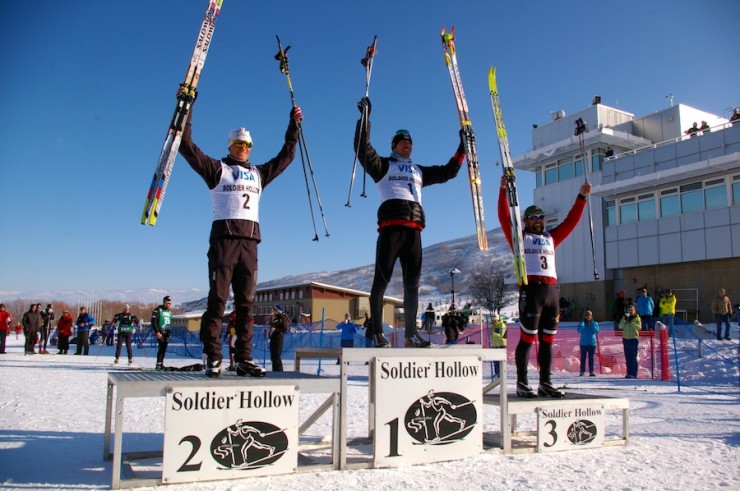
    The men's freestyle sprint podium: 1. Dakota Blackhorse-von Jess, 2. Erik Bjornsen, 3. Alex Howe.
    The men’s freestyle sprint podium: 1. Dakota Blackhorse-von Jess, 2. Erik Bjornsen, 3. Alex Howe.
  • No Stranger to SoHo, Koos Gets Redemption in Classic Sprint

    No Stranger to SoHo, Koos Gets Redemption in Classic Sprint

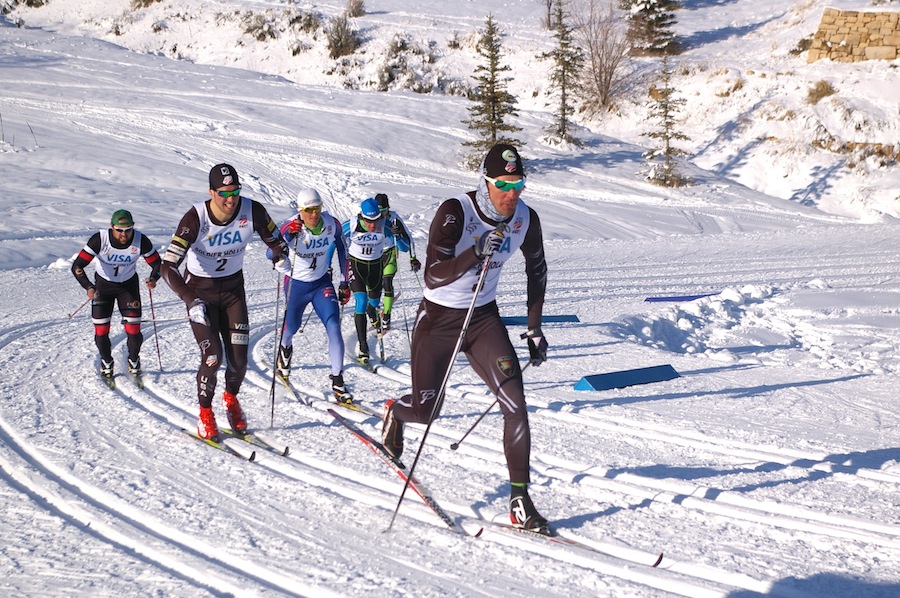
    Torin Koos (Bridger Ski Foundation) leads the A-final of the classic sprint up the second of two climbs on the 1.3-kilometer course on Wednesday. Koos went on to win his fourth sprint title, seventh overall, ahead of Skyler Davis (second from left), who was fourth, Mike Sinnott (c) in second, and Dakota Blackhorse-von Jess (l) in third.

    FasterSkier’s coverage of the 2013 U.S. Cross Country Championships is brought to you through the generous support of The Memory Clinic in Bennington, Vt.

    MIDWAY, Utah – Unlike many of the blank slates surrounding him, young minds with open expectations at one of their first U.S. Cross Country Championships, Torin Koos had a lot to think about Wednesday.

    Here he was, 32 years old and skiing for the umpteenth time at the Soldier Hollow nearly 6,000 feet above sea level. The 1.3-kilometer sprint course remained largely the same since his previous visits: rolling terrain with a long slingshot finish. Without any sizable trees in sight, there was no place to hide, no place to slack.

    The former U.S. Ski Team member, now with the Bridger Ski Foundation and Rossignol, didn’t see himself falling behind anyhow. Nope, he had come to win, like always. Even after being sick for the start of the season. Even after being disqualified in last year’s U.S. nationals classic sprint – which ruined his run for his fourth straight national title – Koos was thinking positive and looking ahead.

    “I tried not to think about that stuff last year,” Koos said after winning Wednesday’s sprint for his seventh national title, second in a classic sprint. “I know what happened in that race [last year] and I know that is absolutely just part of racing, and many things like that happened to me, I feel, even in that same race. It was a decision that was made. I don’t really agree with that, but that’s in the past.”

    Torin Koos of the Bridger Ski Foundation/Rossignol (c) atop the 2013 U.S. Nationals men’s classic sprint podium, with Mike Sinnott (Sun Valley Ski Education Foundation) in second and Dakota Blackhorse-von Jess (Bend Endurance Academy) in third.

    Standing in the stadium at Soldier Hollow, the site of the 2002 Olympics where Koos raced his first World Cup, Olympics and national championship, he smiled and soaked up the “now.” He had made a plan and executed it, he said.

    The five men skiing behind Koos in the A-final – Skyler Davis (USST/Stratton Mountain School T2 Team), Mike Sinnott (Sun Valley Ski Education Foundation), Dakota Blackhorse von-Jess (Bend Endurance Academy), Ben Saxton (F.A.S.T. Performance Training) and Alex Howe (Craftsbury Green Racing Project) – weren’t exactly surprised that he took it. The three-time Olympian had challenged them from the beginning, double poling hard up the first gradual climb then continuously leading over a straightaway at the top.

    Knowing that the most-used tracks were icing up, Koos opted for an outside lane up the second hill – a tactic he figured no one else would think of. Davis apparently did, skiing right behind Koos up the last climb and getting the benefit of some extra kick. Meanwhile, Koos put on the jets.

    “I looked back and saw I had three or five meters, not very much, but I had the little bit of the climb [left] and I knew I had good skis so I tried to put in a little spurt up through the horseshoe,” he said. “I was able to get a little bit of a gap and hold it to the finish line.”

    Davis tried to hang on, thinking he’d come up with a way to pass Koos on the long descent into the stadium, but he was caught off guard coming out of the screaming downhill corner.

    “We all switched lanes for some reason,” Davis said. “I kind of got off balance then I got back on balance, went into the inside lane, double poling I was in second, third, second, third and then I was just gassed out.”

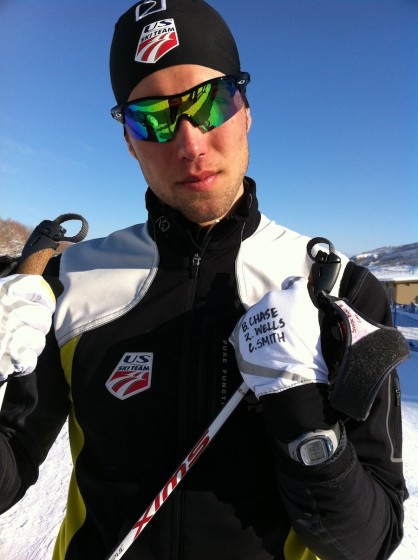
    Skyler Davis pays tribute to his fallen friends, including Charlie Smith, a former nordic racer from Bend, Ore.

    Davis settled for fourth while Sinnott edged Blackhorse-von Jess, the top qualifier, for second.

    “I really wanted to win today,” the usually upbeat Davis said, looking at the ground. “A couple of my friends passed away so I was racing for them today.”

    On his white ski gloves, he had written their names: “B. [Brian] Chase”, “Z. [Zachary] Wells”, and “C. [Charlie] Smith”.

    While their deaths were separate, they had all come in the last week, Davis said. Chase and Wells were his friends from Vermont, and Smith was an NCAA bronze medalist who raced for the University of Nevada-Reno.

    Blackhorse-von Jess, too, fought back emotions when talking about Smith, who shared his hometown in Bend, Ore. At the same time, Blackhorse-von Jess also used it as motivation for securing his fourth national podium, the first in a classic sprint.

    “He’s definitely in many people’s thoughts this week, which is cool,” Blackhorse-von Jess said, adding that the support of his family watching him race for one of the first times in five or six years was uplifting.

    His defining moment Wednesday came in his semifinal, when he fell in the scrub zone shortly after the start.

    “The first thought was, ‘Expletive, coach is gonna kill me!’ The second thought was, ‘Mmm, I can probably get this back,’ ” Blackhorse-von Jess said. “Luckily I have really smart teammates who were at the first turn and they were like, ‘You’re fine, you’re gonna roll back into them, be relaxed,’ and that helped a lot. I stayed really calm and it was good.”

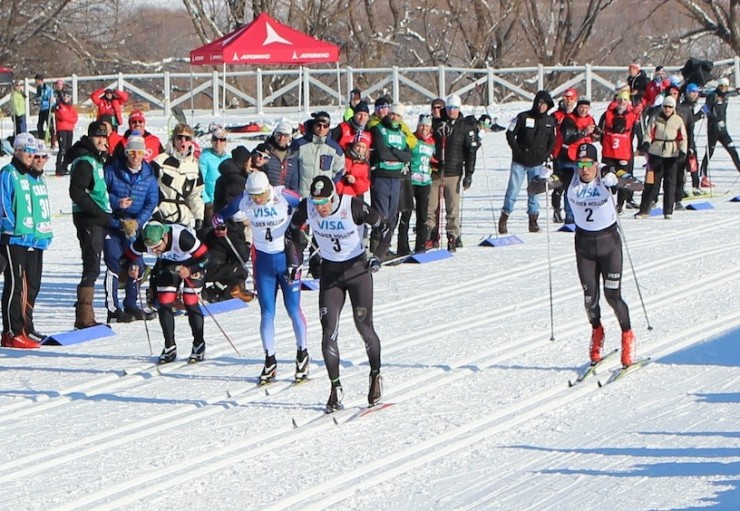
    The finish of the men’s A-final at the U.S. nationals classic sprint on Wednesday at Soldier Hollow in Midway, Utah. Torin Koos (second from r) won, followed by Mike Sinnott (second from l), Dakota Blackhorse-von Jess (l) and Skyler Davis (r), respectively.

    Blackhorse-von Jess did, in fact, catch up and went on to place second to Sinnott in the heat. In the final, the two chased Koos to the line.

    “I got close to second, got real close,” he said. “Mikey and I had a really good battle. It was a lot fun. You want to be disappointed, but I raced hard and there’s nothing else you can do so I’m excited.”

    Sinnott was also pleased – even though it was his third consecutive silver at nationals in the classic sprint.

    “Happy birthday to Sylvan [Ellefson] is the first thing I want to say,” he said of his friend, who skis for Ski and Snowboard Club Vail and Team HomeGrown and placed 12th on Wednesday. “I would’ve liked to climb one more place up, but I was pretty happy. … It’s nice to have some good heats in this year.”

    It was also good practice to be in them with someone like Koos. After qualifying in fourth behind Blackhorse-von Jess, Davis and Koos, respectively, Sinnott won both his quarterfinal and semifinal, but had to step it up once more in the A-final.

    “Torin and Skyler went out a bit harder than I had done in the other heats and then Torin just picked it up on the hill,” Sinnott said. “It was a lot more of a kind of fast pace, real sprint race.”

    Torin Koos (BSF/Rossignol) pulling out the victory at U.S. nationals on Wednesday in the classic sprint ahead of Mike Sinnott (SVSEF) in second, Dakota Blackhorse-von Jess (BEA) in third and Skyler Davis (USST/SMS) in fourth.

    The fifth- and sixth-place finishers, Saxton and Howe, respectively, felt similarly after making the A-final at senior nationals for the first time.

    “At the risk of sounding like a fan boy, there are like posters of all these guys in my room that you get at expos or whatever and I was racing them today,” said Saxton, 19, currently taking a post-grad year to train in Wisconsin.

    “My goal coming in was to qualify for senior heats so I was pretty excited to go past that,” he said. “It was just sprint racing, especially at Soldier Hollow, it’s a really tactical course and anything can happen and coaches gave us wicked fast skis.”

    But fast skis can only get you so far, and when Koos and Davis initially took off, Saxton was a bit slow on the uptake and had to catch up before the second climb. Working his way up the inside lane, he started to slip and fade back again.

    “Barring any miracle skis, it was not going to pull me back to contact on the downhill,” Saxton said. “I just double poled really hard and Alex gave me a great finish and it was really fun.”

    Howe, 23, who recently graduated from the University of Vermont, had previously placed 21st in a classic sprint at nationals in 2009. Heading into Wednesday, he hoped to make the heats “and ski more than one,” he said.

    Howe went on to place second in his quarterfinal and decided to go for it in the semi in hopes of advancing further. He did, but realized he was a bit drained at the start of the final. He resolved to hang toward the back and try to push at the end.

    “Both times when we turned to striding on those two hills my legs were absolutely toast,” Howe said. “By the time I got to the bridge [near the finish], I was like maybe I’ll be able to catch [Saxton] but there was no way.”

    Moving forward, Howe has his sights set on distance races and surpassing his expectations after an pneumonia sidelined him for six months this summer.

    “Prior to that I wasn’t in the best shape going into the summer so I think I beat myself up going into that,” he said. “I just remember it being 95 degrees outside, and I was sitting inside underneath a blanket shivering. I had to go the hospital. … Hopefully that’s behind me.”

    And as for his new standard: “I just like to think of it as I’m back doing more of where I should be,” said Howe, a 2008 Junior Nationals sprint champion. “I’m a little more focused now than I have been in the last couple years, putting my energy more toward what it should’ve been toward.”

    Men’s heat results | Qualifying results

    –Audrey Mangan contributed reporting

  • Pletcher Comes From Behind to Take Skate Sprint in Bozeman

    Pletcher Comes From Behind to Take Skate Sprint in Bozeman

    Reid Pletcher, victorious in the first true sprint of the season in Bozeman, Mont. Erik Bjornsen (left) was second and Ryan Scott (center) took third.

    BOZEMAN, Mont. — A certain excitement hung in the air at Bohart Ranch on Thursday morning. Perhaps it was because this was the first true sprint of the season. Maybe the field was happy to finally contest the event that was cancelled last weekend. Sprinting in its true, head-to-head format was also a long time returning to the beginning of the SuperTour calendar. Expectations were most certainly piqued with several World Cup qualifying spots up for the taking.

    When it was all said and done — the qualifying, the heats, the nervous skiing around between races — Sun Valley Ski Education Foundation’s Reid Pletcher came out on top, just edging out Erik Bjornsen (APU/USST) and Ryan Scott (SSCV Team HomeGrown). Alex Howe (Craftsbury Green Racing Project) finished a close fourth, Skyler Davis (SMS T2/USST) took fifth and Torin Koos (BSF/Rossignol) straggled in sixth.

    Pletcher finishing with Howe in the earlier heats.

    Pletcher flew under the radar throughout the morning, qualifying in fifth and never once winning a quarterfinal or semifinal. Even in the final round he followed the leader and tucked in behind Scott, who had dominated each of his earlier heats and did the same in the early stages of the final. Pletcher hadn’t even expected to make the last round, and at that point was simply skiing to hang on.

    “I was hoping for a top twelve,” he said. “I mean, I have a decent history in sprinting, but I haven’t done heats in years because of college racing [for Colorado University].

    “I’ll take this one, for sure. [The Quebec World Cup] would be amazing. All my goals are coming through, so I feel pretty good about this. I needed a good result to show me I was on track.”

    Earlier that morning, Pletcher finished second to Scott in his quarterfinal just ahead of Sam Naney (Methow Olympic Development/Madshus). In the semifinals he scraped through in third thanks in part to crashes that took out Rune Odegaard (Colorado University) and Pat O’Brien (Craftsbury Green Racing Project). All day long, Scott and Bjornsen made it look easy and Pletcher seemed to require more of an effort to survive each round. Or perhaps that’s just his style of skiing.

    “I was thinking for the final, I’m not going to have the energy for it, I’m just going to try to hold on.” Pletcher said.

    The men’s final leaving the line.

    He managed leave the double pole zone in second, but Scott quickly gapped the field and there was no drafting him. But before long he and Davis, who ended up in fifth, worked together and caught back up in time to catch a pull down the final hill.

    “I had the advantage on the downhill, and there was a strong headwind into the finish,” Pletcher said. “It just worked out. I had a little draft and did a little slingshot move coming into the finish. It went better than planned. It was phenomenal.”

    The difference between the top three was slim, but the win was definitive enough for Bjornsen to look sideways in the last stretch to see Pletcher with his arms already raised in celebration.

    A new International Ski Federation (FIS) rule gets rid of the penalty for changing finish lanes and Bjornsen made the most of it, first choosing the line behind Pletcher and then traveling left in front of Scott’s. In the end, though, Pletcher simply had too much momentum.

    “I’m always going for the win, but second is awesome so I’m pretty happy about that,” Bjornsen said. The USST D-Team member dug his way out from the back of the pack early on to first pass Koos, then Davis, then Scott.

    Bjornsen easily sliding through his semifinal.

    “I took it slow, so I felt I had quite a bit of energy left, and got past this big kid [pointing to Davis] on the flat section before the finish. Ryan was kind of dying, so I got past him. I was happy; it was fun.”

    Scott, who won the qualifying round and breezed through each of his heats without needing to exert much energy in the finish, said that he may have ultimately underestimated the men who lined up next to him in the final.

    “I had a lot of confidence coming out of last week,” Scott said. “My goal was obviously to win today; I just didn’t quite play it right in the final.”

    After skiing so easily through the rounds, Scott set out to immediately put distance between himself and the field in the last one.

    “I sized up the guys I was against and thought my best bet was to try to break [them], because I know they’re real quick in the finish,” Scott said. “I thought perhaps if I could string them out, and I’ve been feeling good, then I could maybe break them. The other heats I never had to finish very hard because I was able to break the group earlier, but not so much in the final. I underestimated the speed of the group a bit.”

    Scott, leading Davis and Pletcher, coasting through the end of the semis.

    Not appearing too put out, Scott concluded that he’d simply take Thursday’s performance as fuel for the next race, a classic sprint on Saturday.

    In fourth place, the domination of the SuperTour rookies continued with Alex Howe (Craftsbury Green Racing Project). The University of Vermont alum qualified in sixth and next won his quarterfinal, beating Pletcher. In the final he got boxed out and stuck at the very back of the pack, but bided his time and slowly moved up. Howe’s expectations earlier that morning had simply been to advance.

    “I really just wanted to be able to qualify and ski more than once,” Howe said. “So I was really happy.”

    Davis, in fifth, gave his result a “six out of ten.” He skied in second or third for most of the race but built up lactic acid in his legs so that, by the end, he was running on steam and upper body strength.

    “I came up into the finish and my legs were just gone,” he said. “It did anything to try to stay with these guys.”

    Koos, once unbeatable in any given sprint, has been battling illness recently and finished the final behind the field with his arms on his knees and his head down. The image is perhaps emblematic of a changing of the guard that seems to be taking place on the domestic circuit — the top five male sprinters on Thursday were all 24 years old and under.

    “I’m definitely excited to see younger guys skiing fast and coming through now,” Scott said. “I think it definitely bodes well.”

    Official results.

  • Hoffman Crushes Field in European Send Off

    Hoffman Crushes Field in European Send Off

    Noah Hoffman (USST) – 1st Place

    Noah Hoffman hadn’t won a major domestic race in…well even he wasn’t sure…maybe the Owl Creek Chase two or three years ago, Junior Nationals…?

    But the youngest member of the US Ski Team, who has had considerable success racing in Europe, left no doubt about who would stand on the top of the podium on a cold snowy day in Lake Placid. This was in fact his first significant US victory since the Owl Creek Chase in 2008.

    Hoffman skied to a 58 second win over Brian Gregg (CXC Elite) in the men’s 15km freestyle SuperTour in Lake Placid, New York. Alex Howe (UVM) finished a surprising third, capping an excellent weekend for the Catamounts.

    The day dawned frigidly cold with clear skies and temperatures below zero. But by the time the first man took to the course at 11:30 in the interval start race, clouds had moved in, light snow was falling and the course had transitioned from squeaky slow to a more reasonable speed.

    Friday’s 10km classic winner, Lars Flora (APU) made a game-time decision not to race. After arriving at the venue, Flora made the call, opting not to take any chances with his health. The overall SuperTour leader has a flight to Europe tomorrow, a potential World Cup start spot waiting in Estonia, and a berth on the US World Championship team to worry about.

    With James Southam (APU) also scratching, Hoffman entered the race as a clear favorite, despite the fact that the event did not align with his strengths.

    “It was about as hard of a skate race that you could make for me,” Hoffman said in the finish area. “There were four ghosts in front of me, soft conditions and a flat course – everything I would not ask for.”

    But the 21-year-old from Aspen, Colorado was in control from the start. He hit the first climb with impressive snap and never faltered, skiing with an intensity that showcased his impressive engine.

    The course was quite flat, with only several steep short climbs, and a seemingly endless section of gradual twisty terrain. There was little rest and transitions aplenty.

    “This is the stuff I have really been focusing on,” Hoffman said, noting that he has always been strong at V1. “I’m really happy that it seems to be working.”

    Brian Gregg (CXC Elite) – 2nd Place

    Pacing was key, and Hoffman did an excellent job, turning in lap splits of 12:43, 13:01, and 13:04.

    “You have to make sure you keep it at a sustainable level, because if you blow up, you can blow up really hard on this course,” Hoffman said, noting the lack of opportunities to recover.

    At the eight-kilometer mark, Hoffman held a 34 second lead on Gregg, a margin that would only grow.

    Gregg, who missed a spot on the World Championships team, posted his best Continental Cup result of the year, just bettering his 3rd place in the 10km classic, this fall in West Yellowstone.

    “I really like to climb, but it is fun to have variety,” Gregg said in reference to the course.

    With so little rest, Gregg, like Hoffman, pointed to the need to staying controlled.

    “Pacing was key. If you went out hard, there were only a few places to recover. It was hard,” Gregg continued, before adding, “It was a day for skiing really big and relaxed. It was really fast.”

    Gregg’s plan was to try to negative split the three-lap course. He didn’t quite succeed, but was close – 13:03, 13:21, and 13:21.

    The event combined the SuperTour with an EISA Collegiate Carnival, giving the East’s top college skiers a chance to mix it up with some of the top domestic racers. And overall the students fared quite well.

    Howe followed up teammate Scott Patterson’s podium performance in the classic race with one of his own. Throw in two fifth place races by Scott’s sister Caitlin, and UVM had quite a weekend.

    “It went really well. I was happy with the way I was skiing, my skis were running really well, and it was a great course,” Howe said.

    “I like the transitions a lot – all the corners and ups and downs.”

    Alex Howe (UVM) – 3rd place

    Unlike Hoffman and Gregg, however, Howe’s pacing may not have been ideal. The UVM junior completed his first 5km lap less than four seconds down on Hoffman, but was 33 seconds slower on his second lap and a minute off his first lap pace on his last circuit.

    Colin Rodgers (SVSEF) started slowly, ranking back in 11th after 5km, but rode a strong second lap up the standings to place 4th overall. He was less than two seconds up on Bryan Cook (CXC Elite) in 6th. This was Rodger’s top SuperTour finish in a distance race.

    Cook nailed the pacing, turning virtually identical splits across the board. Patterson, on the other hand, went the other direction, dropping from 5th after the first lap all the way down to 20th.

    With US Nationals over, the SuperTour headed to the Midwest, and World Junior/U23 Championships just over a week away, athletes and coaches were furiously packing skis and waxing equipment.

    Hoffman flies to Finland on Sunday for a short preparation camp prior to the start of the U23 Championships, meeting the rest of the team there. Gregg is headed back home to continue on the SuperTour circuit, and Howe will be racing the collegiate junket for the remainder of the season.

    Hoffman is looking to be on the podium in Estonia – the site of World Juniors and U23 Championships, and feels he is in a good place with his fitness.

    “I’m very happy with my energy and how I feel. I’m psyched to go race in Europe,” he said.

    Men’s SuperTour 15km Freestyle – Results

    Colin Rodgers (SVSEF) – 4th Place