Tag: Alex Jospe

  • Ski Clubs and the Urban Hurdle Part 2: Cambridge Sports Union in and Around Boston

    Ski Clubs and the Urban Hurdle Part 2: Cambridge Sports Union in and Around Boston

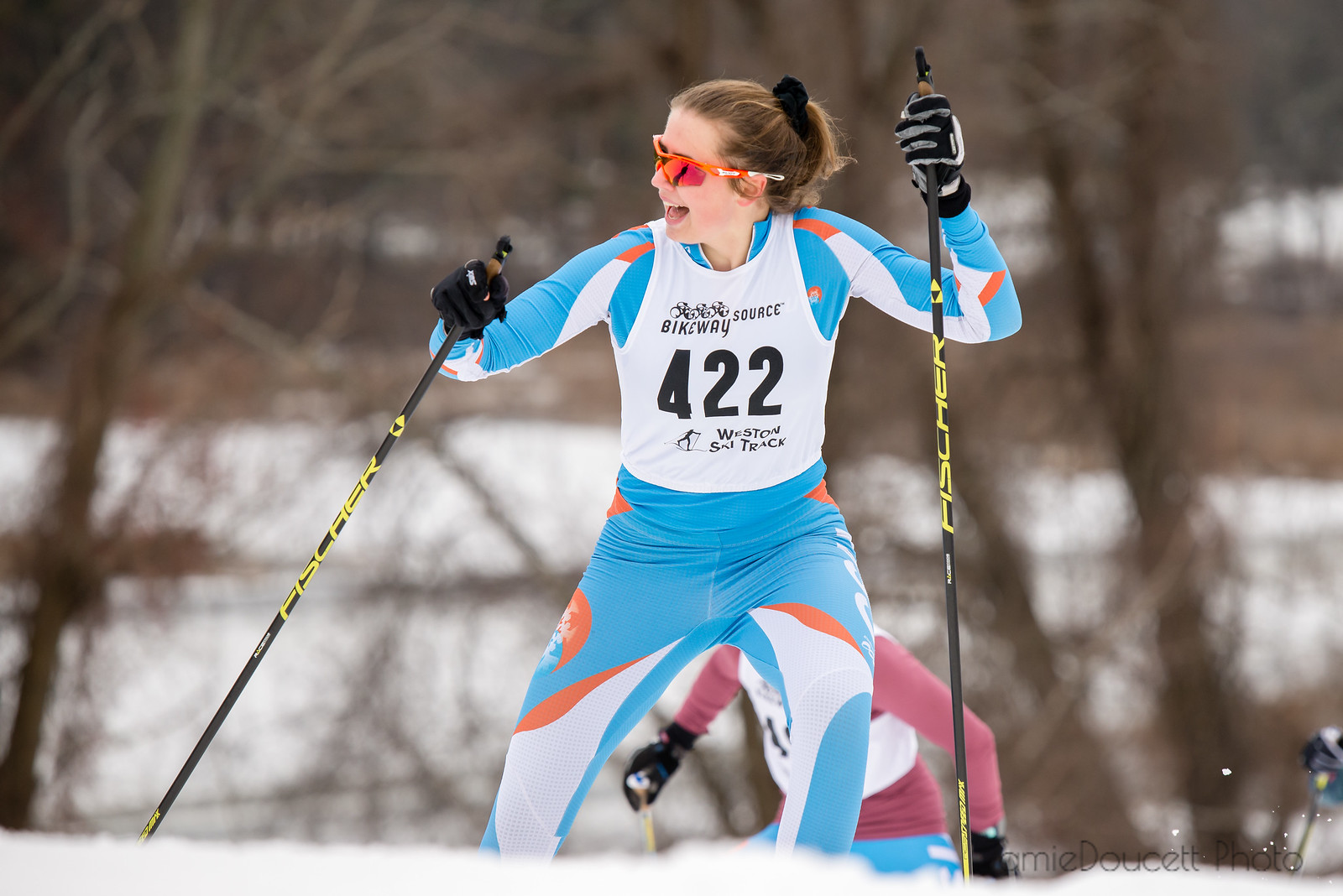
    A CSU skier during the Race for Snow at the Leo J Martin Ski Track. (Photo: Jamie Doucett)

    This is part two of a series featuring urban based cross-country clubs and how they make it work in the concrete jungle. You can read part one here

    On the homepage of the Cambridge Sports Union (CSU) is an apt quote from tennis champion Arthur Ashe: “Start where you are, use what you have, do what you can.” The quote from Ashe came about as he described how to deal with challenges. And it’s the perfect departure point to describe CSU and its commitment to junior skiing in the Boston metroplex. 

    The CSU Junior Noridc Ski Team, serving athletes aged 14-18, does have a geographic center at the Leo. J. Martin Ski Track in Weston, Mass. Radiating out from those ski tracks, which are simply ski trails groomed out over a golf course, the CSU club extends its tentacles and embraces the words of Ashe. 

    Looking at a map of the greater Boston area, and maybe knowing what it’s like to drive in and around the region (it’s the first and only place I’ve ever seen drivers use the breakdown lane as a passing lane), you start to understand one challenge to operating a ski club in Boston. 

    “The traffic around Boston is absolutely atrocious — especially around rush hour which is when usually have practice,” said Alex Jospe former head coach of the CSU junior team. (We spoke with Jospe before she took a role with the Stratton Mountain School as a ski coach in September.)

    Screenshot depicting the location of the Weston Ski Tracks on a Google Map.

    According to Jospe, CSU has made it work in the long run by adhering to some basic tenets like being flexible. Traditionally, CSU schedules practices on Tuesday and Wednesday at two different locations during the dryland season. The two practices are similar in design but serve different suburbs around Boston. In the tricky commuting environment that is Boston, CSU does not offer transport to practices.  

    “In my other life I do GIS analysis and so every year I take all the addresses of the kids who signed up and make a density map and see where the major families are living,” Jospe said. “Then I try to centralize practice. Hands-down our biggest challenge is commuting.”

    The other practice sessions offer one location in a more centralized spot to accommodate different travel times and specificity of the day’s workout objective. They find locales for safe running, bounding, and rollerkskiing. During the winter months, CSU is able to focus training out of the Weston Ski Tracks which offers snowmaking and artificial lighting. The snow piece of the equation and having reliable snow just outside the city helps make the program tick.

    The Weston Ski Tracks are open until 9P on weeknights and is an on-snow lifeline for CSU. The ski venue is owned and operated by the state of Massachusetts and operates in concert with the non-profit Friends of Leo J. Martin Skiing (FOLJMS) to ensure the tracks meet the needs of the various community stakeholders. Jospe noted that the state and FOLJMS agreed to allow CSU to build what is called Mt. FOLJMS – a modified six foot higher “mountain” than would otherwise be on offer at the ski tracks. Beyond on-snow training in Weston, the club also offers a chance to ski at other New England ski areas one day per winter weekend.

    CSU is not limited in its capacity to cater to committed athletes. The community makes it work. And although not mandatory, CSU brings skiers to Eastern Cup races that serve as Junior National qualifiers. CSU’s athletes also have a non-CSU social and training outlet. According to Jospe, 50 percent of CSU skiers also race for their local high school team. 

    “This gives kids more resources and more teammates and we have a good relationship with all the coaches,” said Jospe. “They recognize this is a win win for everybody.”

    Like many cross-country ski clubs, CSU runs lean to make it work financially. First time CSU skiers pay a fee of $1200.00 while returning skiers pay $2000.00 annually. 
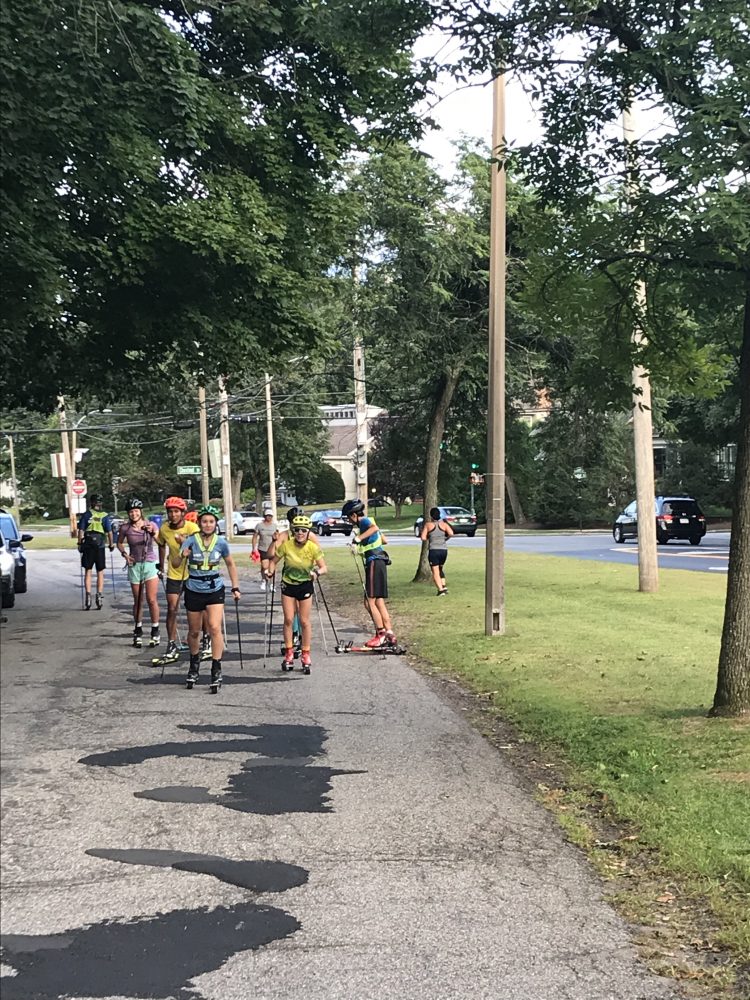
    CSU athletes on Commonwealth Avenue in Newton, MA. A location on the Boston Marathon route near Heartbreak Hill. (Photo: Christina Scirica)

    “That fee gives you access to 11 months of high level coaching and an individual coach assigned to you that we call training log coaches. Training log coaches do your season meeting with you and check in on a weekly basis, monitor training, and offer suggestions,” said Jospe. “They also work with you to make sure that your training plan fits your life because a lot of these athletes have many interests outside skiing. They ski at a very high level but they also are members of school clubs, taking AP classes and doing extracurricular stuff and volunteering at places and sometimes taking college classes and there are tutoring lessons and there are music lessons. There is a lot going on.” 

    As is the norm elsewhere, travel, waxing, and equipment costs are add ons. Yet CSU does offer confidential scholarships for athletes in need.

    Last season, CSU hired a part-time assistant coach, but the issue still remains that Boston is an expensive place to live. Jospe said this year was the first that she could recall that fees for skiers jumped considerably in part to offest the cost of a coach’s salary. As CSU navigates what a sustainable model looks like, it remains primarily volunteer. As a result, parents and guardians are required to volunteer in some capacity.

    Some parents help with food on trips, others staff an assembly line of waxers and ski testers at races.

    As a New England club, CSU sits in a hot bed of ski academies focused on priming athletes for the race season. CSU, as an urban based program racing against programs with easier access to snow and training venues, can compete. 

    If you can tease through the hustle and bustle of I-90, I-93, and I-95, and the paved over cattle paths/roads of Boston’s suburbs, lining up against the powerhouse house programs in New England might seem like a small hurdle. 

    “Start where you are, use what you have, do what you can.” Arthur Ashe had it right. 
  • When the World Comes to Town (Craftsbury)

    When the World Comes to Town (Craftsbury)

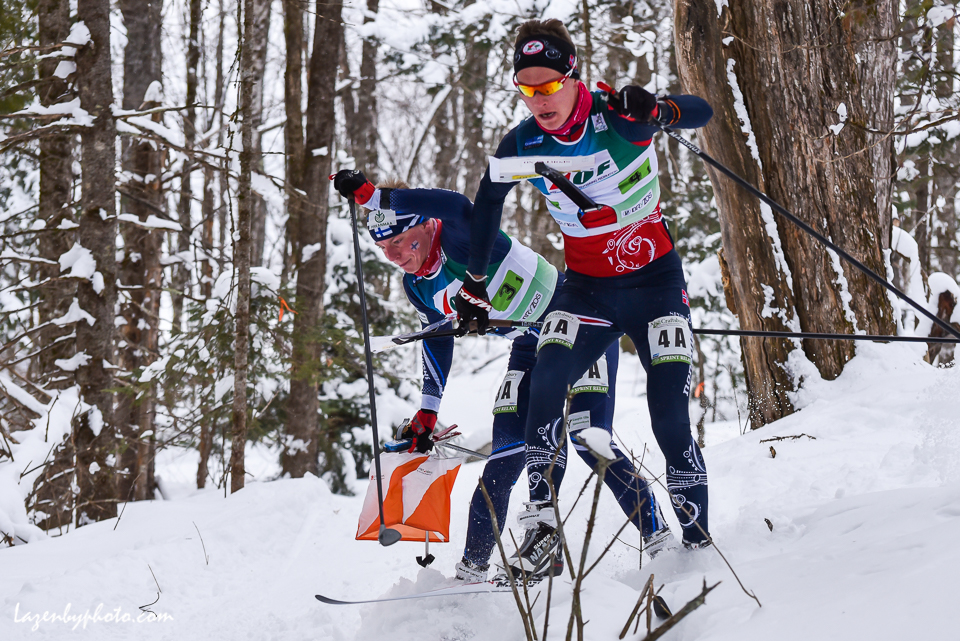
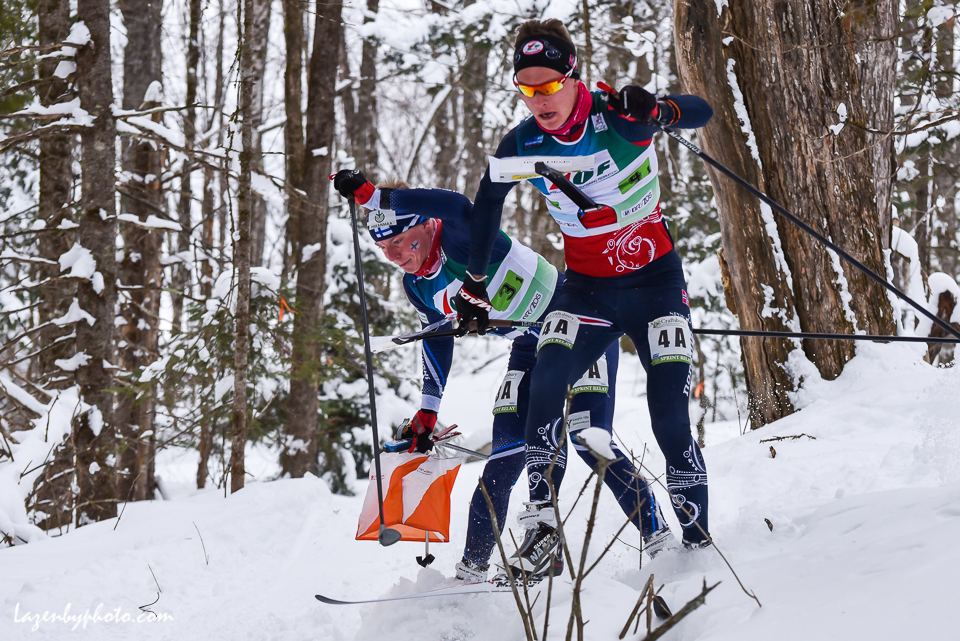
    A near miss as competitors Tero Linnainmaa of Finland and Jorgen Madslien of Norway arrive at a checkpoint at the same time in the mixed relay at the International Orienteering Federation World Cup at Craftsbury Outdoor Center in Craftsbury, Vermont. (Photo: John Lazenby/Lazenbyphoto.com)

    The following was submitted by Kevin Brooker, who attended the 2018 Ski Orienteering World Cup and Ski Orienteering World Masters Championships last week in Craftsbury, Vermont. Brooker, who wrote an introductory piece on ski orienteering, set out to explain how the event made its way to the small town in the Northeast Kingdom.

    ***

    CRAFTSBURY, Vermont — Even within the tiny and tight-knit American world of nordic activities, ski orienteering is relatively unknown. Just like traditional cross country racing, the American devotees are rabid enthusiasts determined to have an impact on a sport dominated by Scandinavian athletes. Overseeing the sport is the International Orienteering Federation (IOF), whose mission is to promote the overall sport of orienteering and all of the subsets such as ski-o, mountain bike-o, and the largest segment: foot-o.

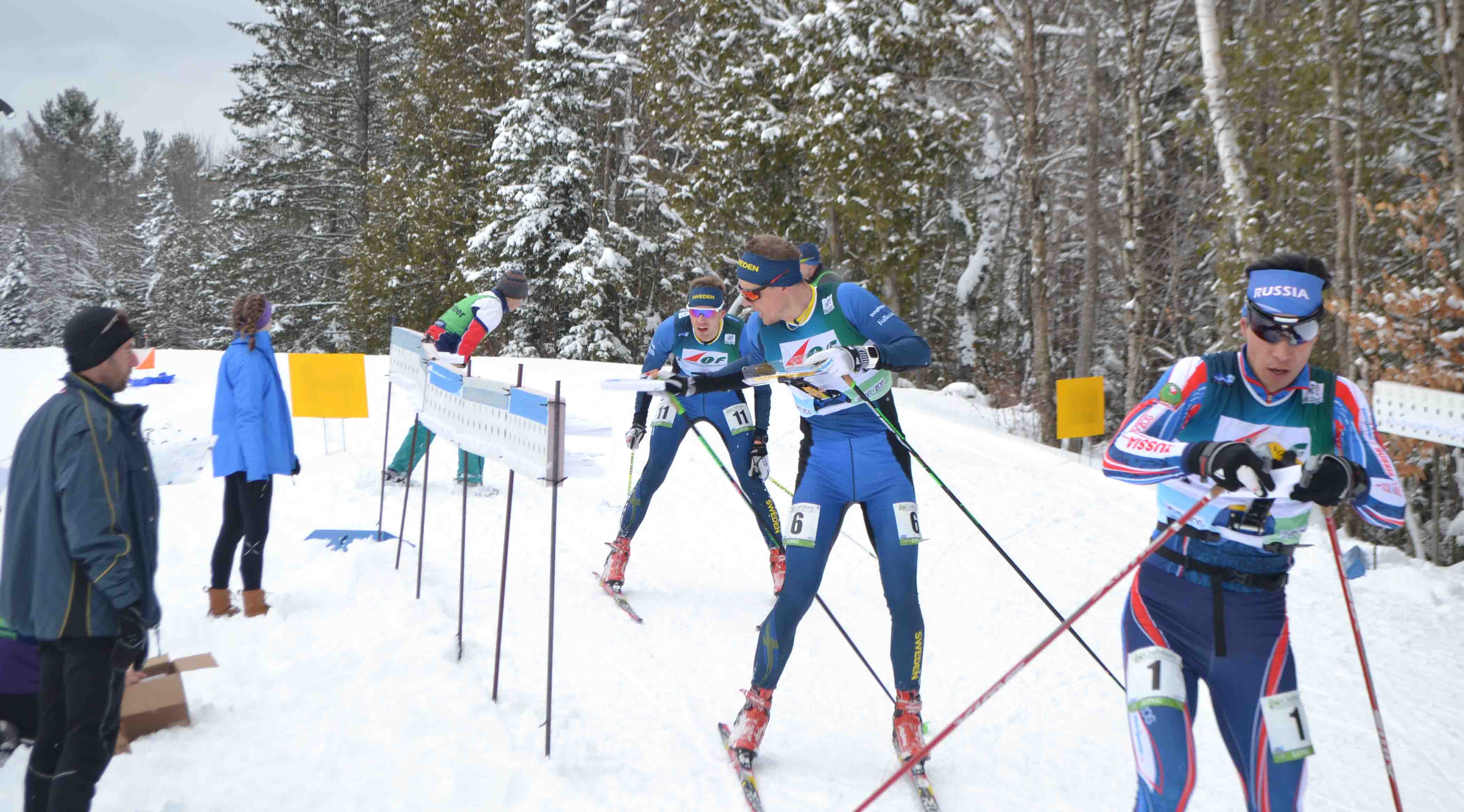
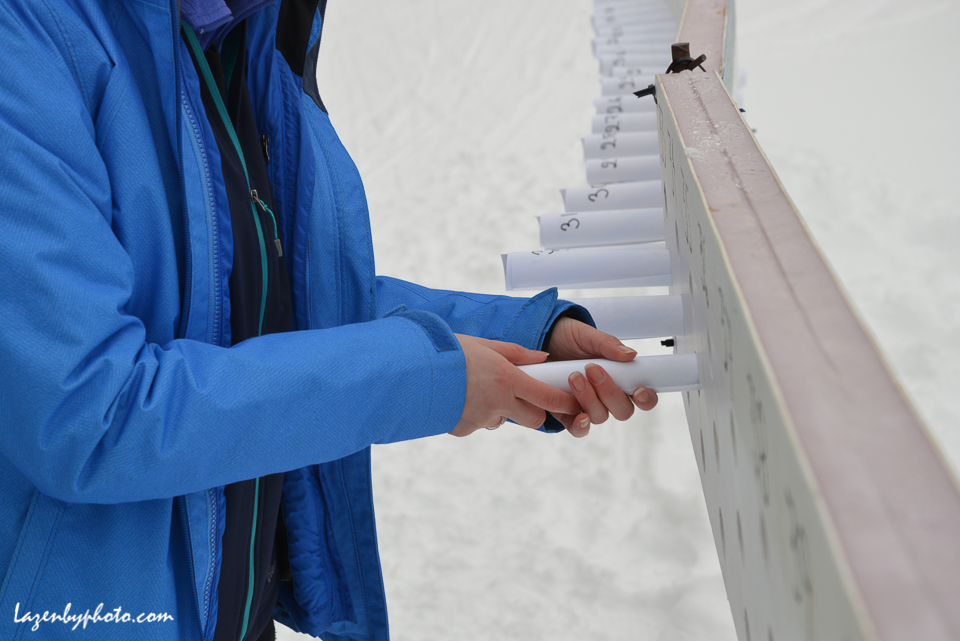
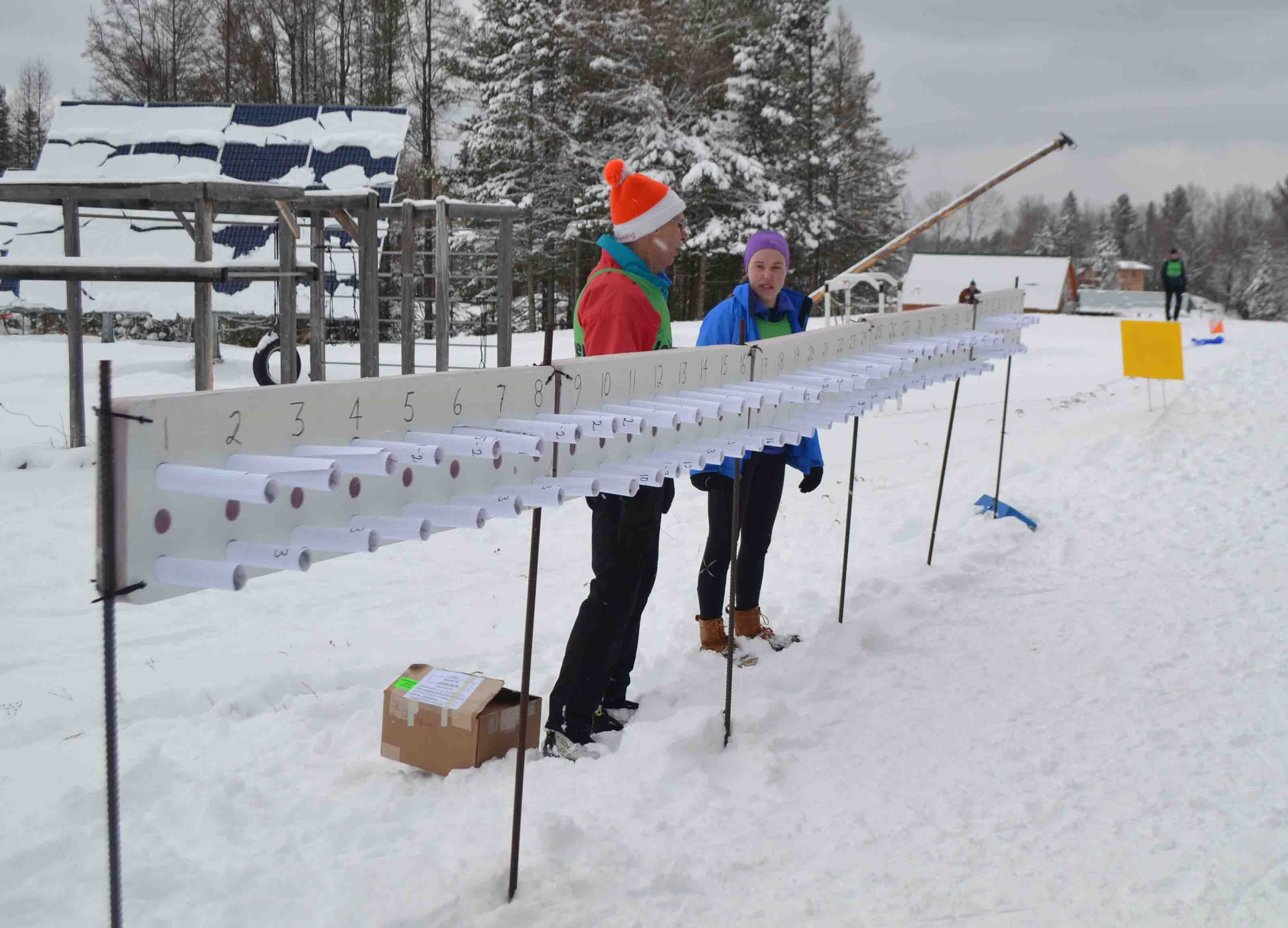
    At the map exchange, athletes remove the used map, grab the next sequence and continue racing. Race volunteers collect the discarded maps and refill the board with fresh maps, as seen at the Ski Orienteering World Cup Finals in Craftsbury, Vt. (Photo: Kevin Brooker)

    The IOF organizes a World Cup and World Championships for all segments and does its best to move these events around the globe. Like most international competitions, it takes several years to pull together an event. In addition to an appropriate venue, the organizing committee must have international experience, a lot of determination and grit.

    Just how did the Ski-O World Cup Finals and Masters World Championships end up in Vermont and how did it go?

    Ken Walker, event controller for this year’s championships in Craftsbury, explains the genesis of the event:

    “I was approached several years ago while ski-0 masters racing in Europe about bringing World Cup ski-0 races back to North America. We held very successful races in Truckee, California, in 2012 and competitors wanted to return. I suggested doing it in the East and [Craftsbury Event Director] Adrian Owens was enthusiastic about holding them at Craftsbury. This was a natural choice, knowing the fine trail network and an organization welcoming competition events. My official job was national event controller.  It basically means I check to ensure the races are fair, accurate and safe, and we follow the International IOF rules.”

    Preparing for racers to arrive at the map exchange in the distance race at the International Orienteering Federation (IOF) Ski Orienteering World Cup at the Craftsbury Outdoor Center in Craftsbury, Vermont. (Photo: John Lazenby/Lazenbyphoto.com)

    With a well-formed idea, Walker and Owens approached Judy Geer, co-owner of the Craftsbury Outdoor Center (COC), about hosting the event.

    “When Adrian Owens approached us about the idea of hosting this race, which he did well over a year ago, I was pretty quick to say, ‘Sure, sounds like fun!’ ” Geer explained. “It seemed like an opportunity to share our trail system in a new way and welcome an international group of nordic skiers to Craftsbury. At the same time, we had no idea how to host such a race so it was critical that there would be a knowledgeable organizing committee to really put it all together. Luckily, we had that. “

    An East-Coast venue secured, Walker and Owens assembled an organizing committee (OC) to bring the event to Vermont. The committee had more to do than just run a race; they had to educate the Craftsbury staff and teach them about ski-o.

    Craftsbury Outdoor Center coach Ollie Burruss had this to say about his ski-o learning curve:

    “I would just add that the organizing committee has been incredibly helpful in educating those of us at the Outdoor Center without a background in ski orienteering – I think that would be almost all of us, actually. We are quite comfortable hosting high level cross country races, but this series added new elements to our race day preparation. Without the OC stepping up and providing input, suggestion, education, and the like, we would not have known where to start.”

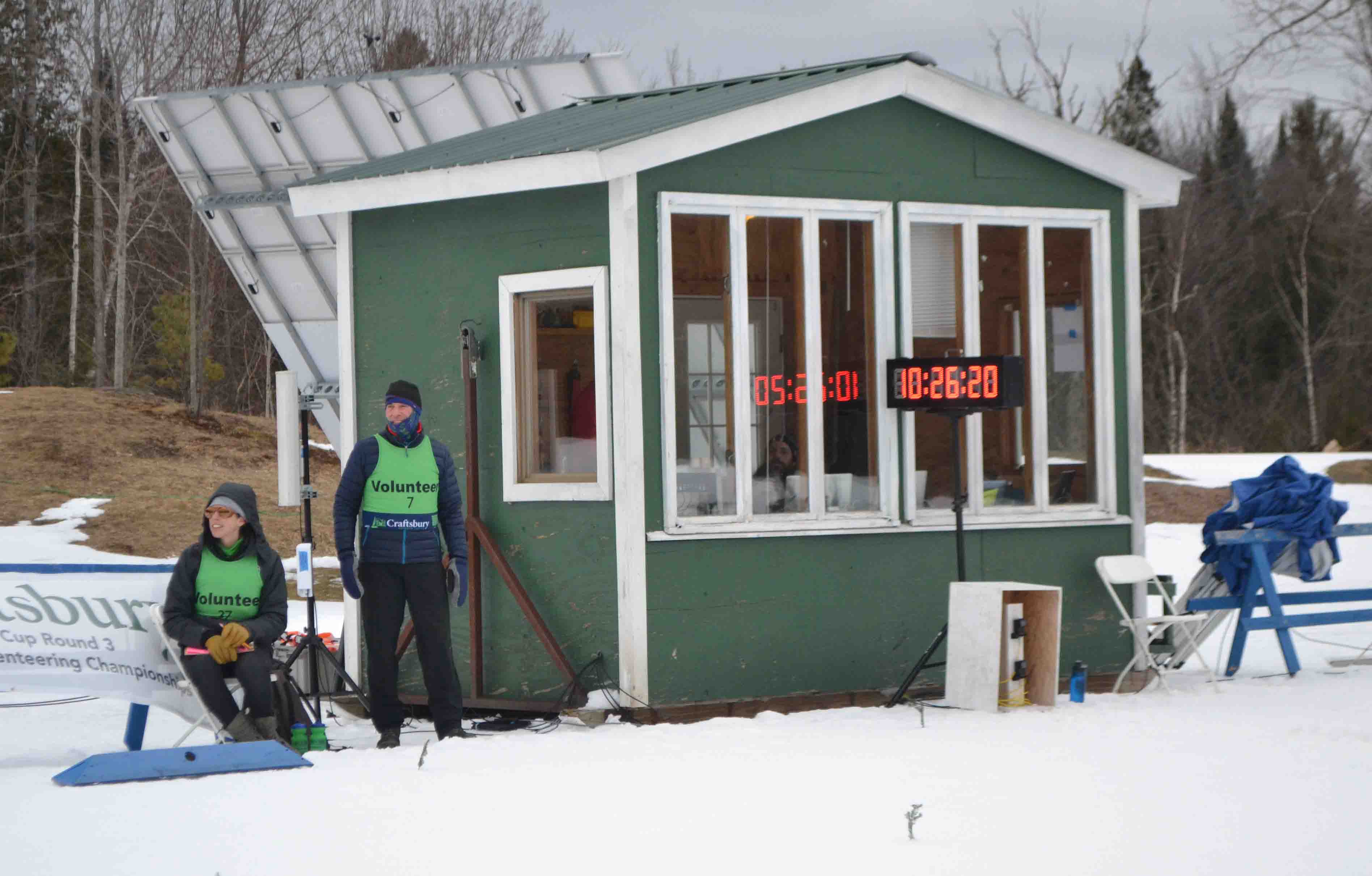
    The finish crew getting ready to record race numbers to help verify the electronic finish order at the Ski Orienteering World Cup Finals and World Masters Championships in Craftsbury, Vt. (Photo: Kevin Brooker)

    Much of a ski-o race shares a lot of similarities with a more traditional cross-country event. Both have individual starts and mass starts. With the exception of ski-o competitors wearing map holders, the starts and finishes look identical. Craftsbury was able to utilize their expertise and equipment setting up timing and start and finish areas. Where the Center needed some help was setting appropriate courses and the OC provided two expert competitors and course setters.

    Alex Jospe and Andy Hall are two such experts.

    “As course setter, my main task is to design an orienteering course that is appropriate for each class,” Jospe explained. “For the elite skiers, this involves very technical skiing and very technical navigation, with a mix of challenges from route choices to fine-scale navigation execution, all done at top speed. Ironically, those are the easiest courses to set, because the competitors can handle just about anything you throw at them. The tricky part is designing a course that will be navigationally challenging for the elder classes, without totally thrashing them on the ski trails.

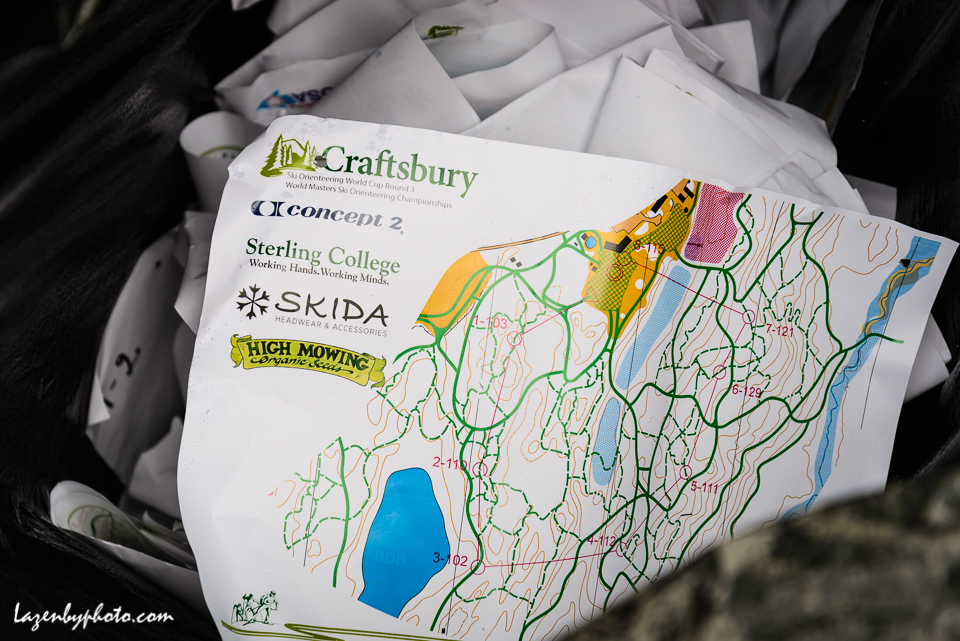
    One of the maps at the 2018 Ski Orienteering World Cup / World Masters Ski Orienteering Championships. (Photo: John Lazenby/Lazenbyphoto.com)

    “Setting a course entails laying everything out on paper, and then going out into the terrain to make sure that all the trails and tracks line up the way they are supposed to,” she continued. “I also spend a lot of time skiing various route choices, to get a sense of how long it will take for the skiers to complete the course. Then we print out the maps, and go out to set up the checkpoints, which are marked with an orange and white flag. Each of these flags (called ‘controls’) has an electronic timing unit on top, so that competitors can carry a timing chip and get splits instantaneously at the finish.”

    With the event completed, how does the OC feel about the event?

    “We’ve been on a steep learning curve about this sport, and it’s really been fun to finally get to watch the races this week!” Greer noted. “We hope the competitors are enjoying Craftsbury as much as we’re enjoying having them here.”

    “Our expectations have been more than met, with terrific support from venue staff and the trail groomers,” Walker said. “It is fun to host nearly 200 European racers and introduce more Americans to ski-o.”

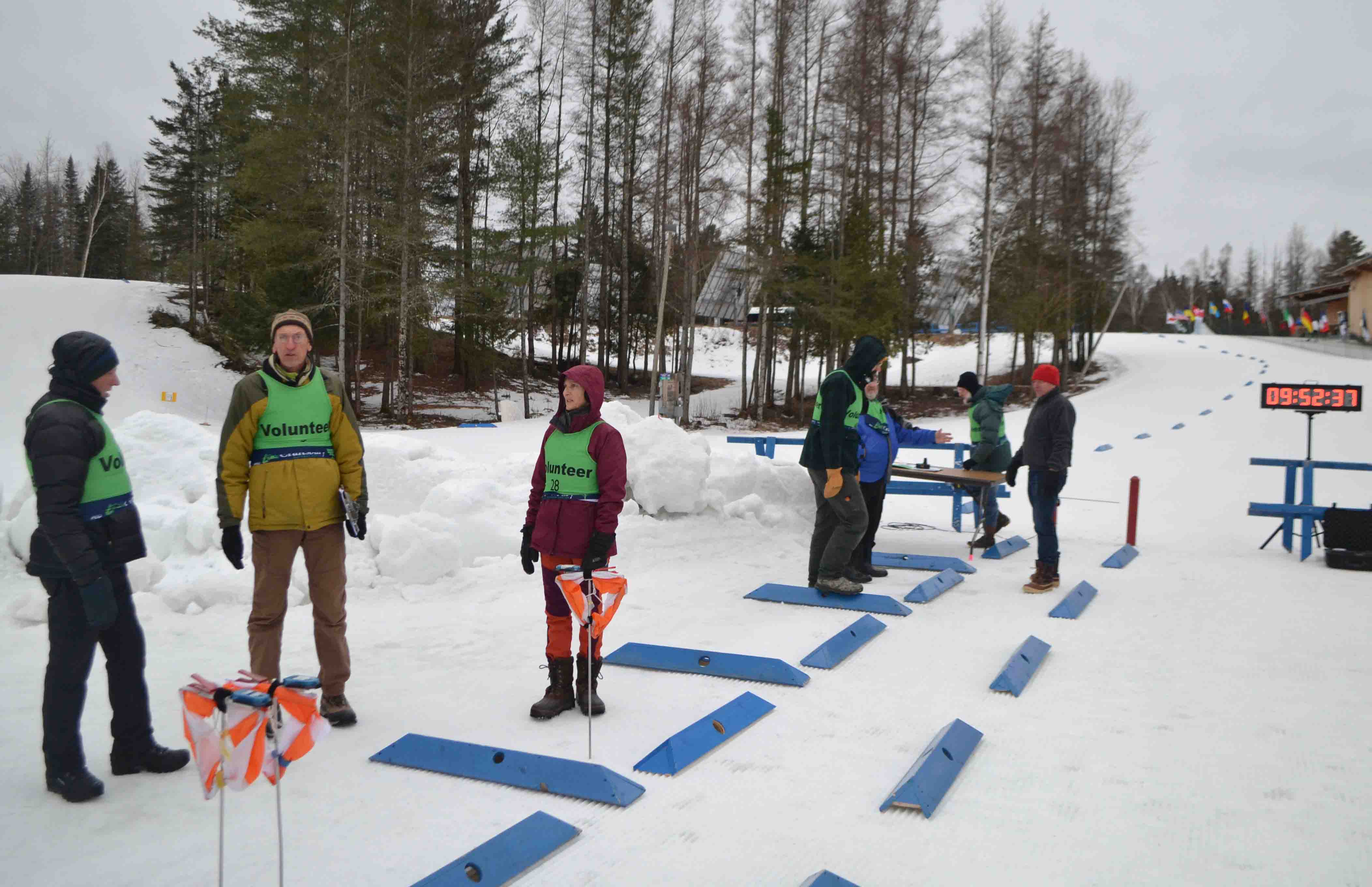
    The start crew preparing for the World Cup long distance event at 2018 Ski Orienteering World Cup / World Masters Ski Orienteering Championships in Craftsbury, Vt. (Photo: Kevin Brooker)

    With years of racing, coaching, and organizing races, Burruss had this to say: “I really appreciate the patience they [the organizers] have showed and I hope we have held up our end of the bargain. It is a cool event and I’m glad we were able to help bring this level of racing to the NEK [Northeast Kingdom].”

    The experience of setting dozens of courses for many levels of skill and age, with snow cover ranging from gray ice to a foot of fresh snow, Jospe summed up her experience:

    “Hosting this event at the Craftsbury Outdoor Center has been amazing. They are generous, interested, and enthusiastic — we couldn’t do this without such good support! It’s really cool to bring so many international competitors to this corner of Vermont, and everyone is appreciating the friendly vibes.”

    For those of us fortunate enough to participate in this world-class event, the hard work and effort by the OC and huge staff of volunteers at the start, finish, registration, and out on the course is greatly appreciated. The trail grooming was exceptional and the rest of the COC staff was extremely professional. Everyone worked together to provide a fantastic racing experience to spectators and participants alike.

    See also:

    ***

    About the Author: Kevin began nordic skiing to keep in shape for bicycle racing at the dawn of the skating revolution.  He lives in Vermont with his wife and two kids, who are fortunate enough to have great skiing right out the front door. 

    This ski-orienteering mass-start race had two exchanges. The top map is the first taken after the start. The maps were used in different orders to deter leaching (following). The intricacies of an orienteering mass start are worthy of their own article. The course setter mixes and matches the routes, and each athlete will cover the same legs but in a different order. After all this, there is often a finishing sprint for the victory. The exchange crew must be sure to put the correct map into the proper slot to insure a fair race. (Photo: Kevin Brooker)
  • Ski Orienteering World Championships: US Team Led by Crocker’s Record 8th

    Ski Orienteering World Championships: US Team Led by Crocker’s Record 8th

    The U.S. Ski Orienteering Team sent seven members to the 19th Ski Orienteering World Championships, in Tänndalen, Sweden.  The team had one of its most successful championships in its history, headlined by Alison Crocker’s 8th place finish in the Long distance and the women’s 8th place relay finish.  Alison is now ranked 33rd in the world, and Alexandra Jospe is now ranked 59th.

    The U.S. Ski Orienteering team just returned from one of their most successful years ever at the Ski Orienteering World Championships (Ski WOC), in Tänndalen, Sweden.  Ski orienteering combines orienteering with cross country ski racing, adding a thinking component to a pure horsepower event. It’s basically a “choose-your-own-adventure” race: there are sets of points you must visit, in order, but how you get there is up to you to decide.

    The Americans fielded seven racers: Alison Crocker (CSU), Alexandra Jospe (CSU), and Cristina Luis (TOC) for the women, and Nikolay Nachev (COC), Adrian Owens (Craftsbury), Scott Pleban (QOC), and Greg Walker (CSU) for the men.

    Our first race of the week was the “sprint” distance.  The men raced 4.1km, and the women raced 3.1km, on a beautiful sunny spring day, except for a 10-minute snow squall, which opened up just as the women’s red group was starting, penalizing the top seeded skiers.  The Americans had a stellar day, especially on the women’s side: Alison finished 18th, and Alexandra finished 24th (of 52).  This is by far the best result the U.S. has ever had in international orienteering, so we were all pretty excited.  The men had solid results, led by Greg Walker in 51st (of 76).

    MIddle Distance Map

    Ski orienteering in Europe is unique in that the races consist of about 70% narrow trails, that are set to the width of a snowmobile, in a fashion to make the map as confusing as possible.  The difficulty lies in interpreting the narrow trail mazes, and deciding what to do at each junction, at top speed.  And in blizzards, things become particularly challenging as the little trails steadily disappear under the new snow… On the map, the solid lines represent wide ski trails, and the dashed lines represent narrow snowmobile-width trails.  Middle distance races are the most technically challenging ski-o races, in terms of navigation.  In this map, there are 21 decision points between control 3 and 4.  Given that the leg from 3 – 4 only took 6.5 minutes, those decisions come up really quickly.

    Adrian after finishing the middle distance – it’s a bit snowy out there!


    Adrian after finishing the middle distance – it’s a bit snowy out there!

    The middle distance was the second race, and by then the weather had gone from partly cloudy with chance of blizzard to mostly blizzard with chance of whiteout.  The organizers pulled off the race anyway, but it was a tough day to be skiing, not to mention attempting to navigate at the same time.  Alison delivered again, with another 18th place, and Alexandra slipped back to 29th, with Cristina rounding out the team in 44th.  For the men, Greg led the way again in 50th, followed by Scott (59th), Adrian (61st), and Nikolay (66th).  We were all quite relieved to be back inside eating our Swedish meatballs under IKEA lighting after that race – tough day to be outside.

    The wind didn’t calm down much overnight or the next day, which was the mixed-gender sprint relay.  Based on their results from earlier in the week, Alison and Greg formed the team, and with the rest bravely cheering in the tempest, Alison and Greg skied to a very impressive 12th place finish (of 23), ahead of teams like Germany, Belarus, and Slovakia.

    Long Distance Map

    Long distance ski-o races typically contain a bit more skiing than navigating, and Alison showed that day that she could ski with the best in the world, and navigate with them, too! (For anyone unfamiliar with Alison Crocker, she grew up skiing in NENSA programs, raced on US teams at both World Juniors and U23s and made all-American at NCAAs skiing for Dartmouth College).  Alison finished in 8th place, beating many skiers from top ski-o countries like Sweden, Norway and Finland. This is hands-down the best result we’ve ever had at any international orienteering race. She was a complete darkhorse, so dark that the organizers didn’t even have a GPS tracker on her, since she hadn’t been ranked high enough prior to the start to be in the top 20 who get GPS units (these make spectating the race a lot more fun, with a giant screen in the stadium showing the progress of the top racers).   Alexandra followed with a consistent 25th place, and on the men’s side, Scott led the way in 52nd, with Nikolay in 55th and Greg in 56th.  Adrian totaled a ski out there, breaking off both the tip and the tail while trying to take a shortcut.

    The US Women – Alexandra Jospe, Alison Crocker, and Cristina Luis after their 8th place relay finish

    Buoyed by Alison’s awesome finish, the U.S. team went into the relay with high spirits.  The men had been racing consistently, and were quietly showing what hard work can accomplish, despite being a bit overshadowed by the women’s results.  The men’s relay went off first, and Scott, Greg, and Adrian fought hard, finishing in 15th – one of the best placings we’ve ever had in the men’s relay at a World Championships.  The women went next, and Alison led the charge, coming to the tag in 6th, just behind Finland, and ahead of Sweden.  Alexandra took the reins and picked up a place, coming to the tag in 5th.  Cristina, the least experienced skier on the squad, lost some time, but managed to hold on for 8th place, one of the highest finishes, out of the most number of countries ever competing, that the U.S. has ever had.

    With the 19th Ski WOC in the books, planning for next season’s World Cups is well underway. In another first, the U.S. is hosting 4 World Cup races at Lake Tahoe, which will be combined with the U.S. championships next winter (January 27th – February 5th 2012: http://www.baoc.org/wiki/2012Ski-o_tour), and promises to be the biggest U.S. ski-o event of the winter.

    Sprint Relay