From the FasterSkier archive — posts syndicated from athletes’ and coaches’ own blogs between 2004 and 2012, kept online as published. Current coverage is at fasterskier.com.
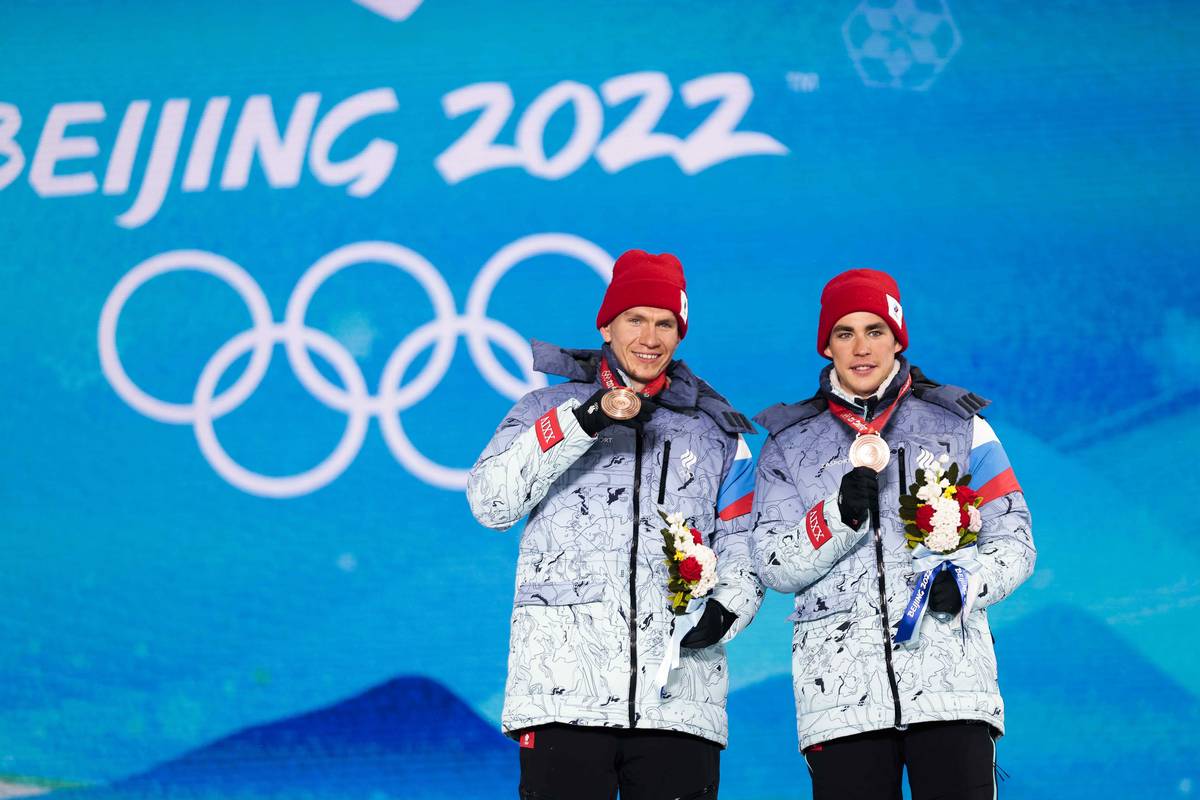
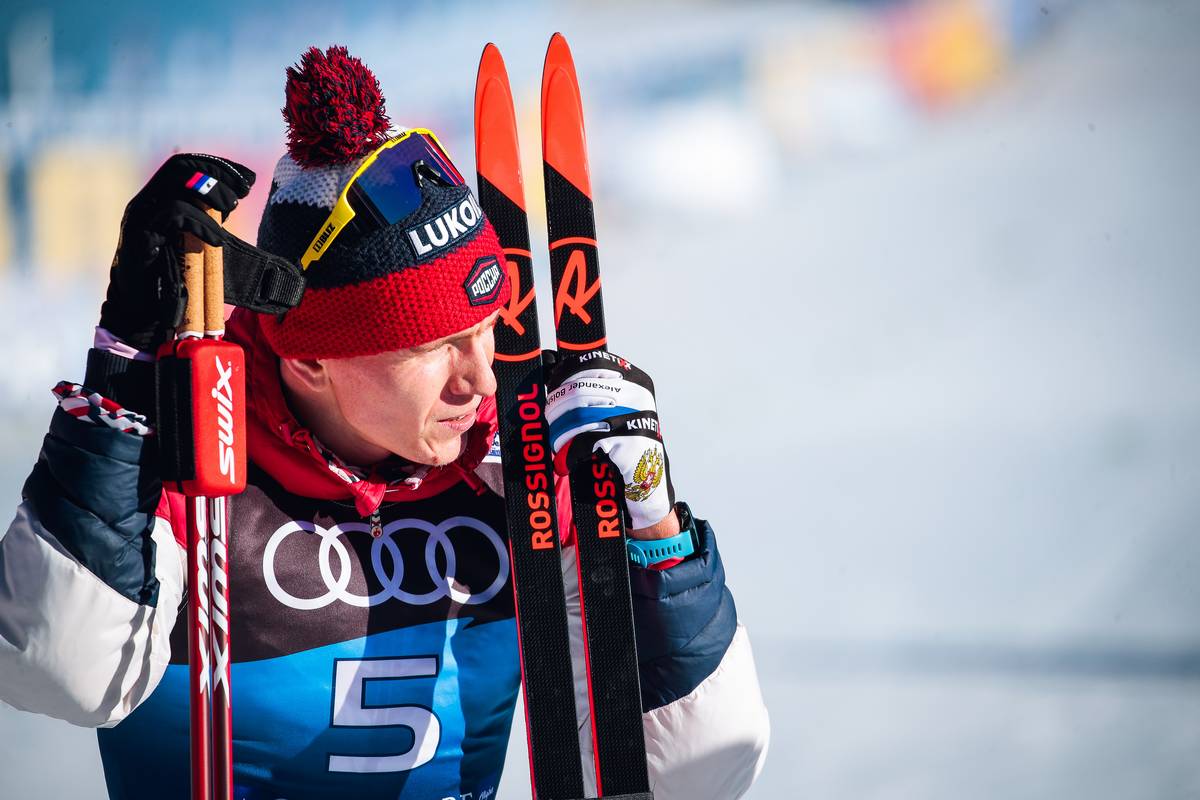
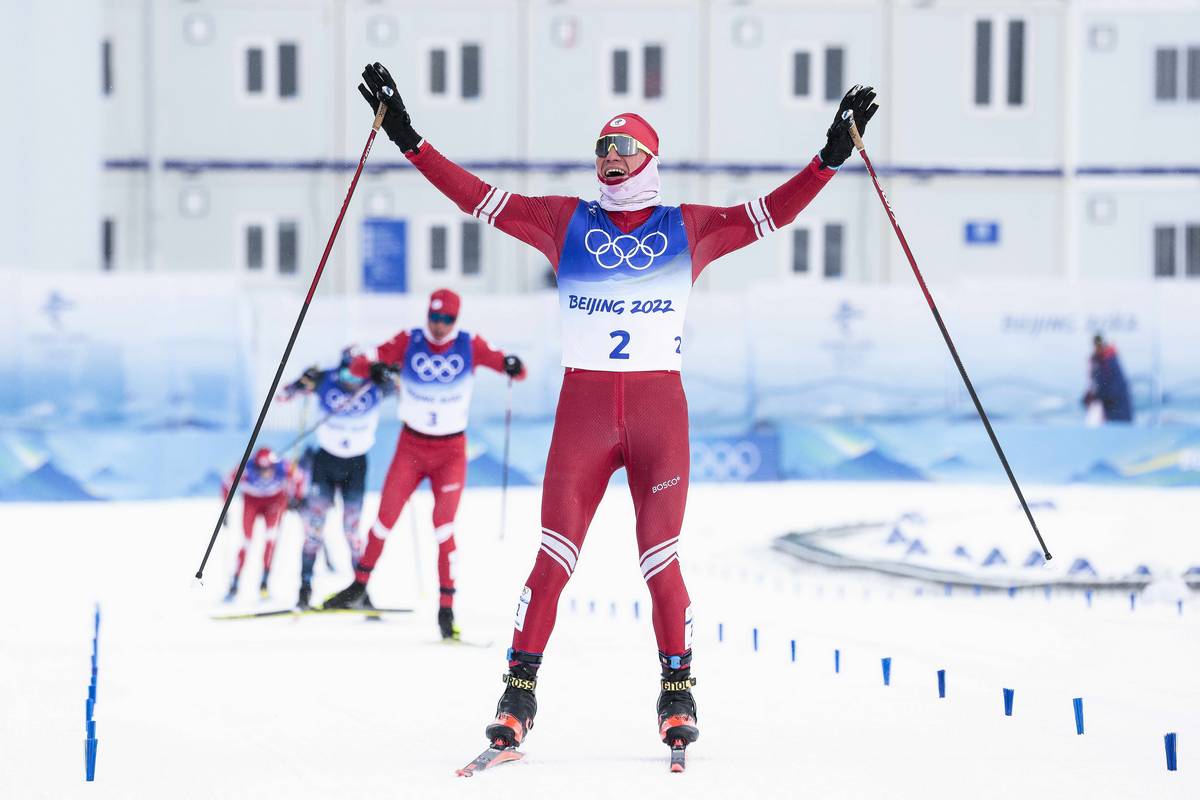
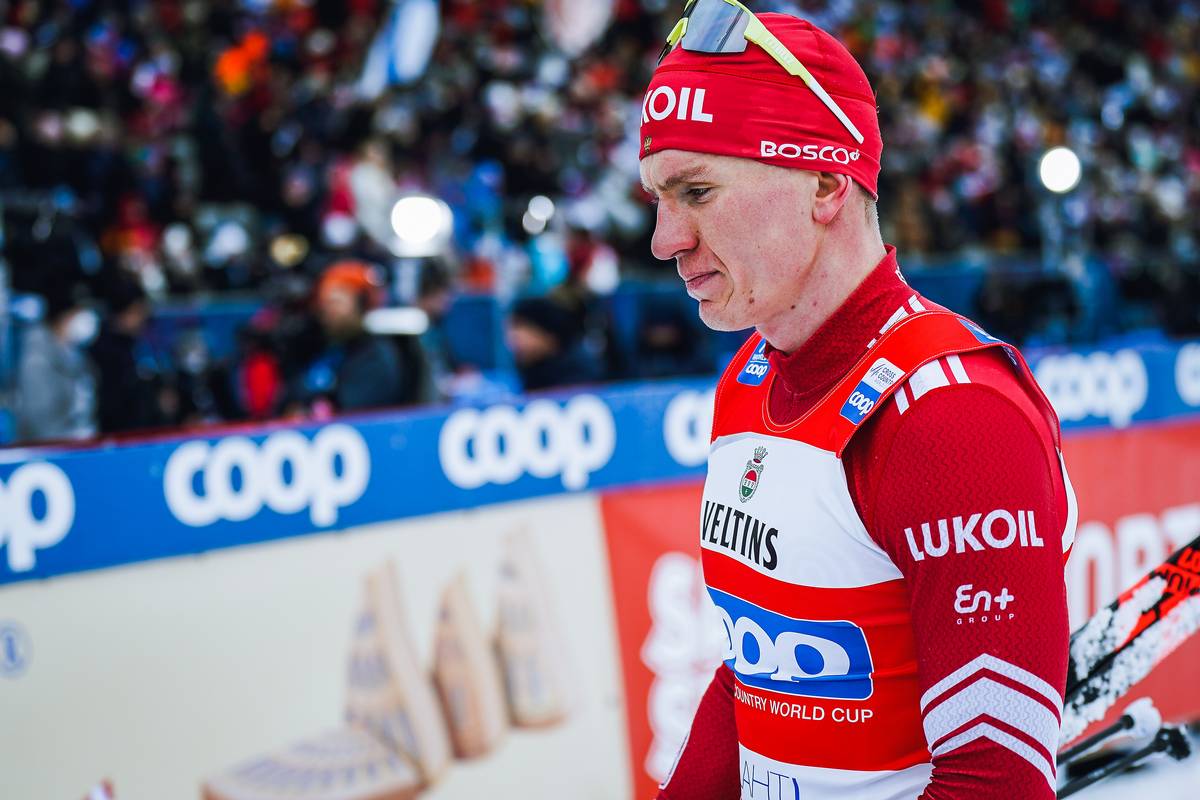
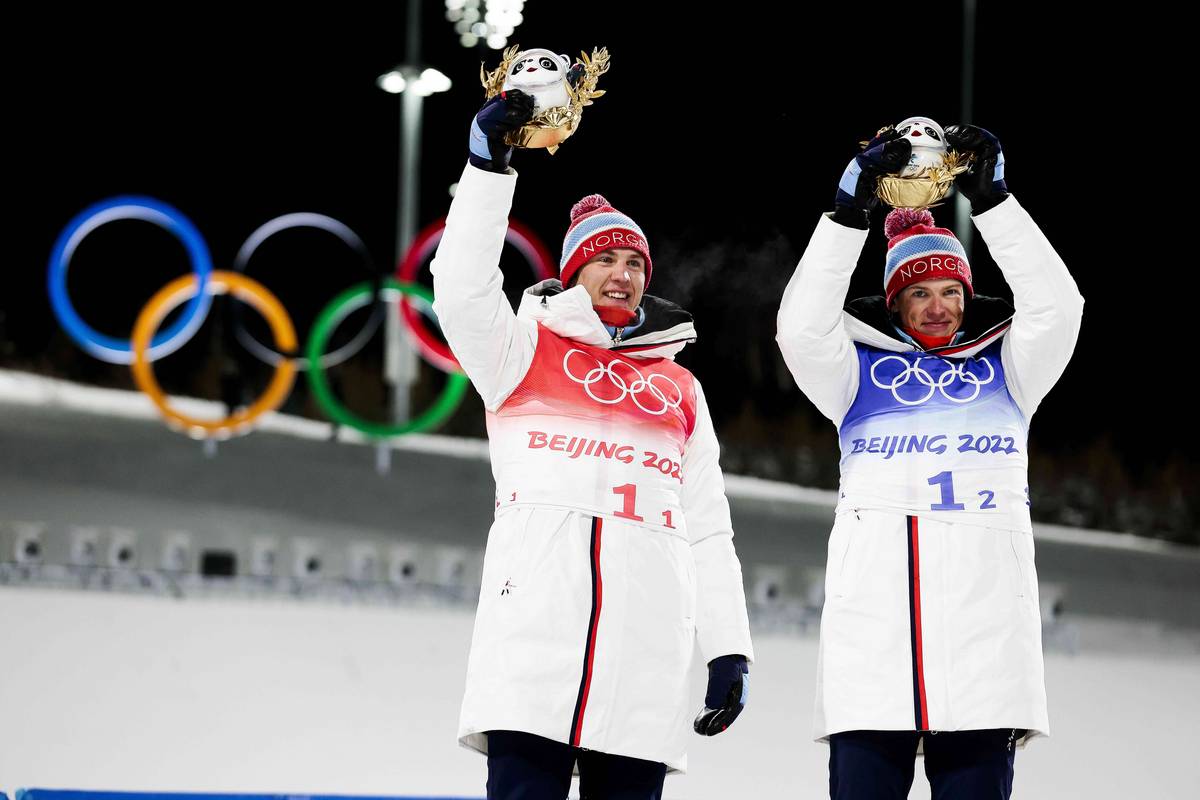
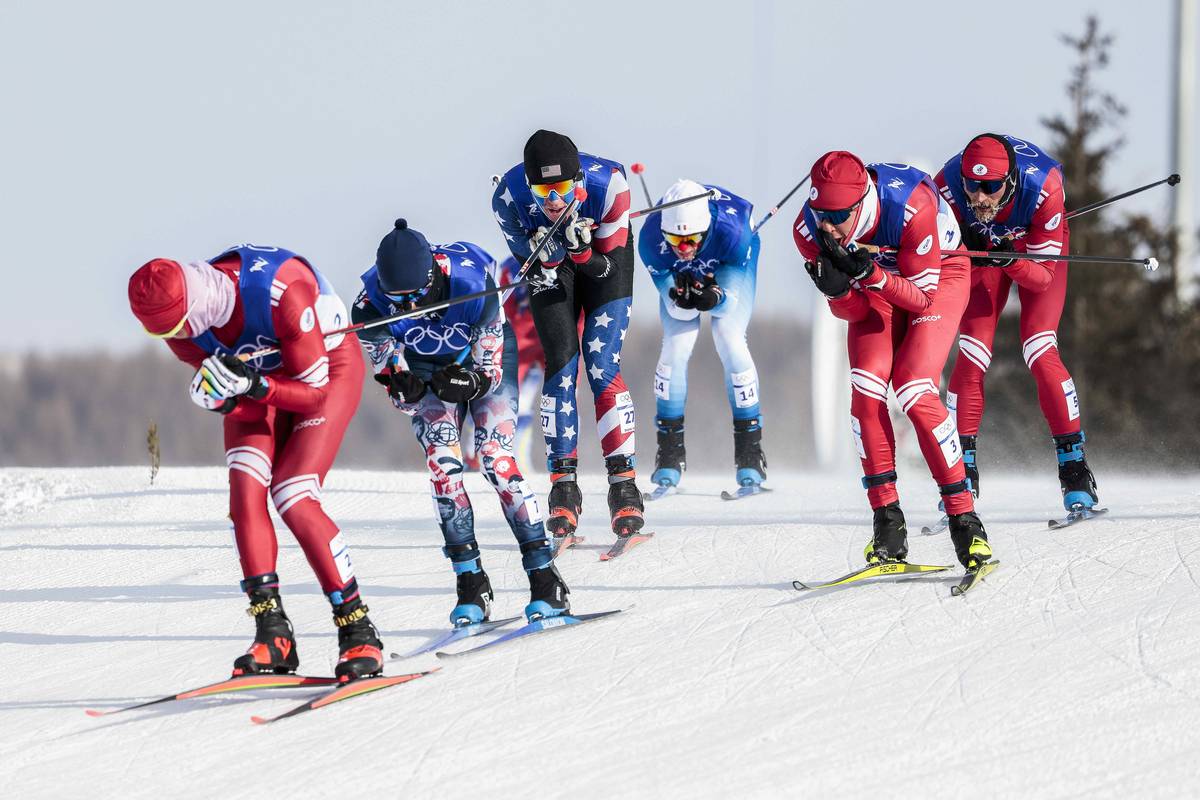
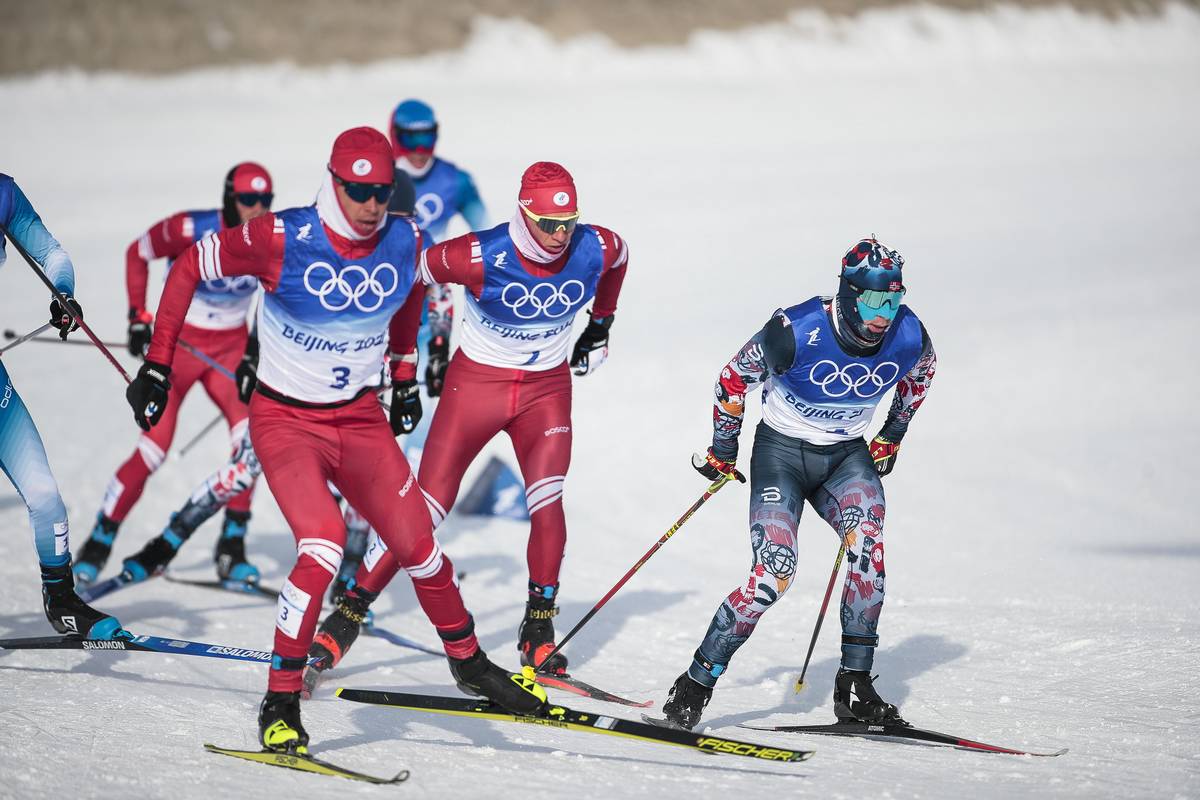
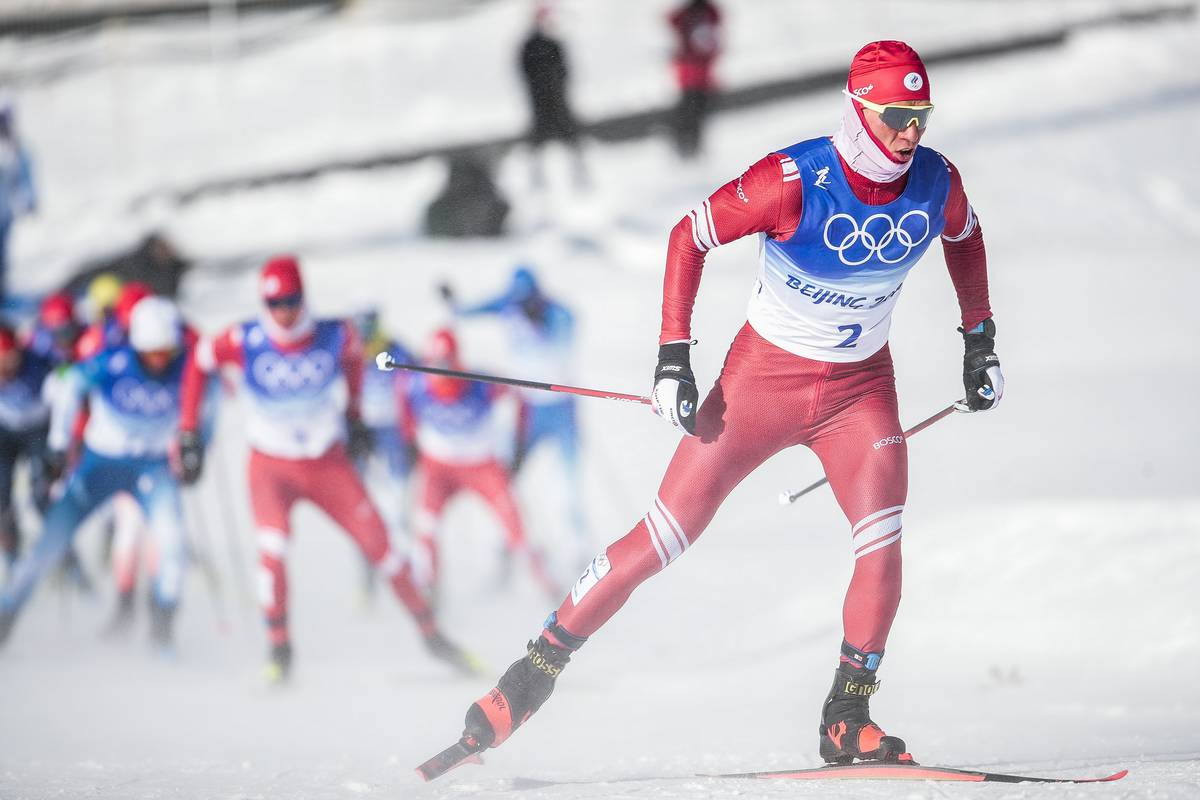
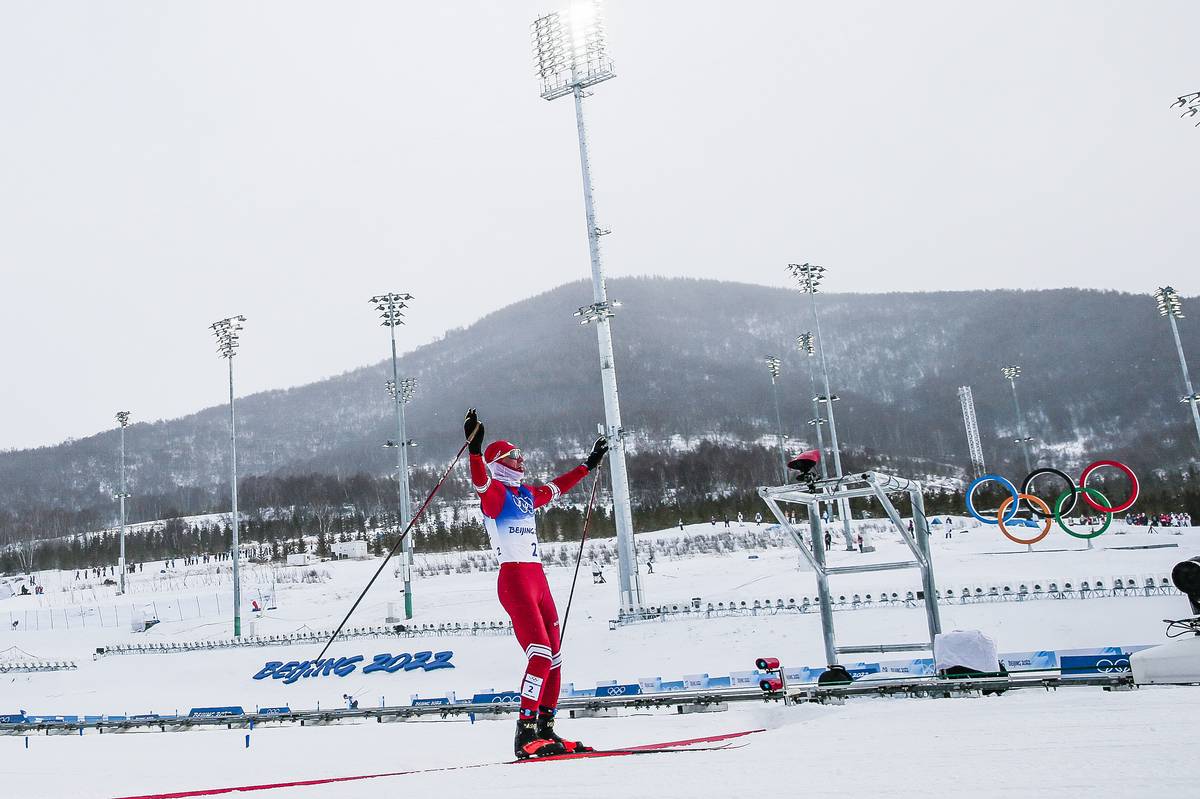
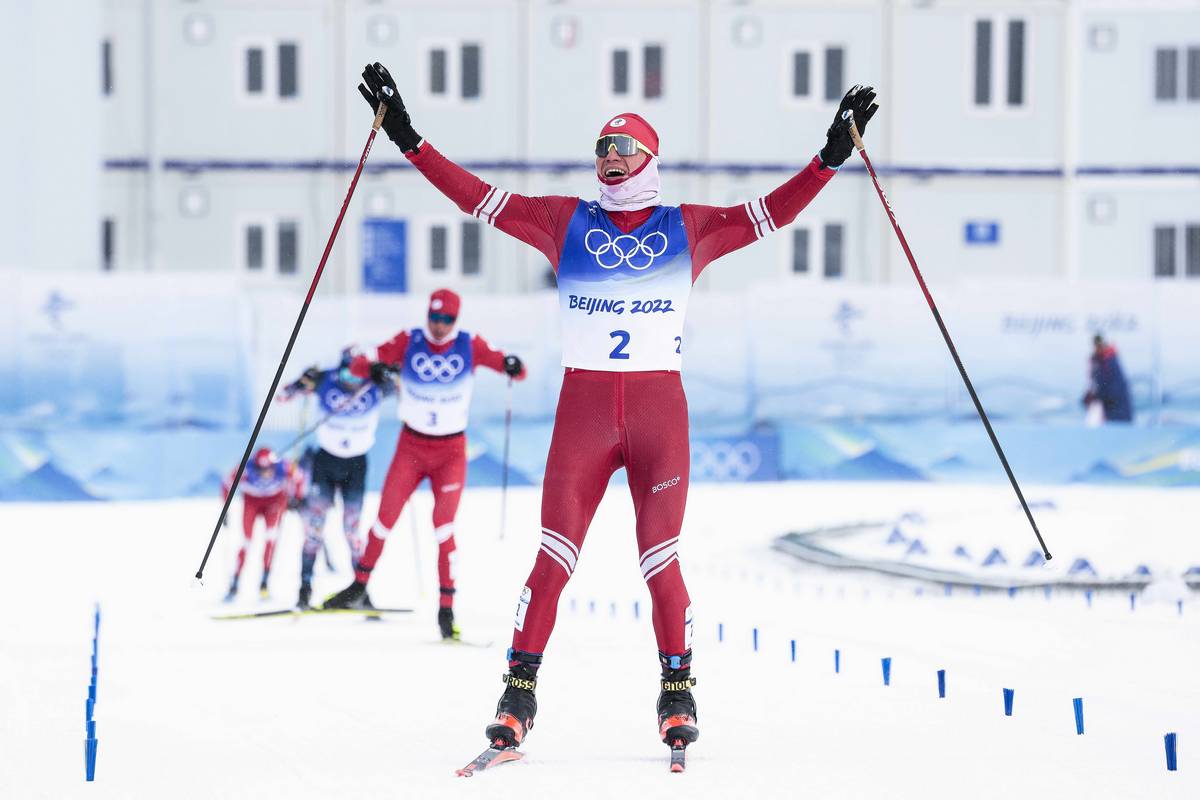
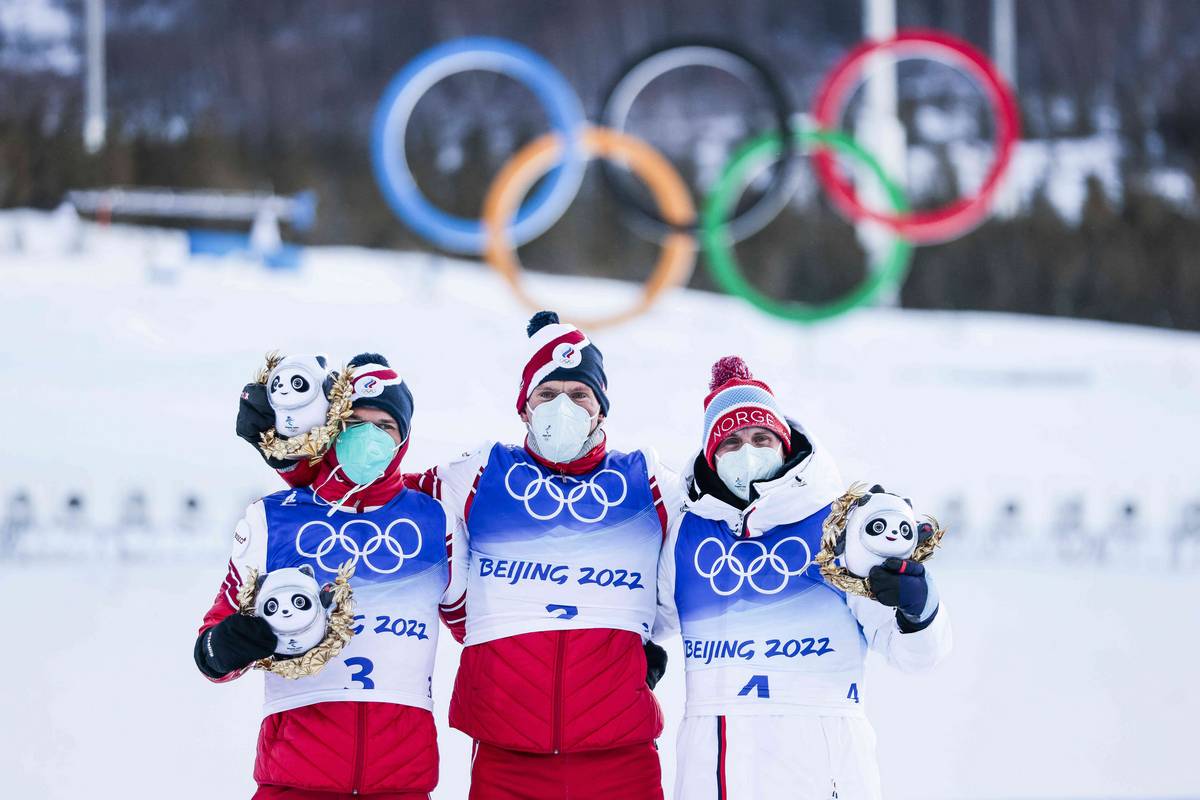
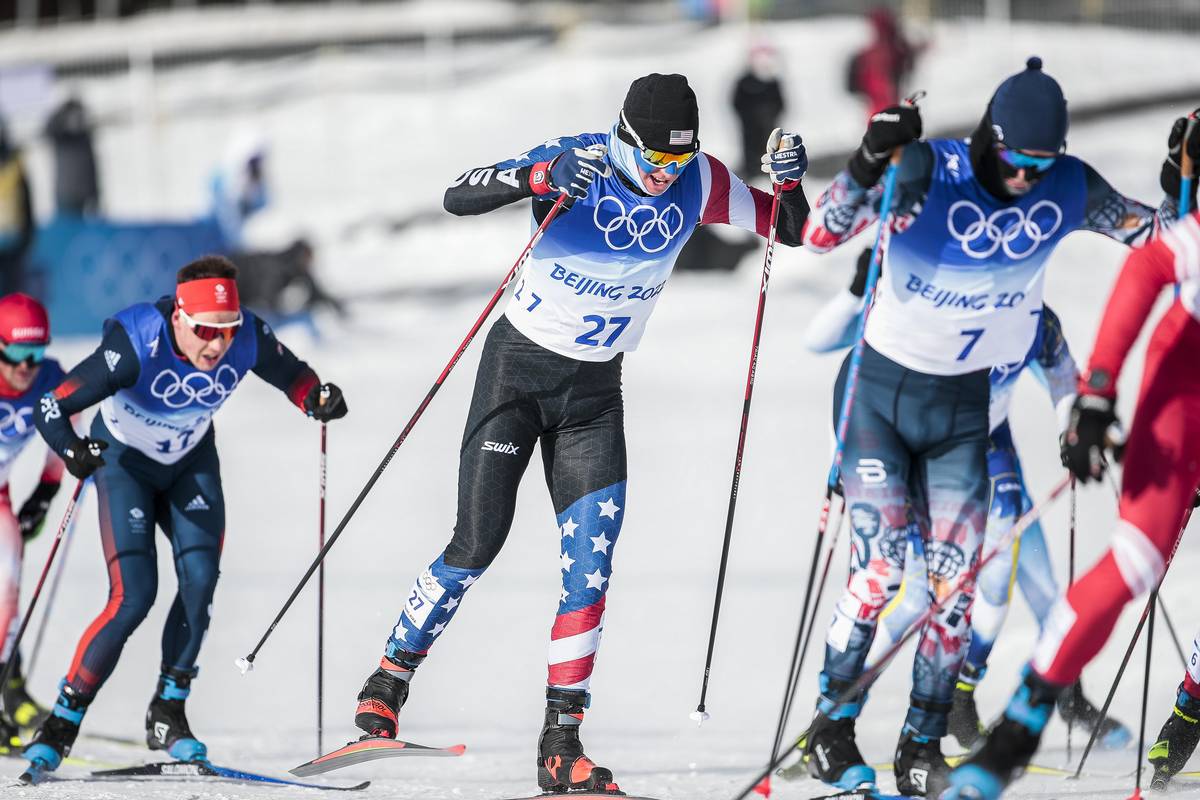
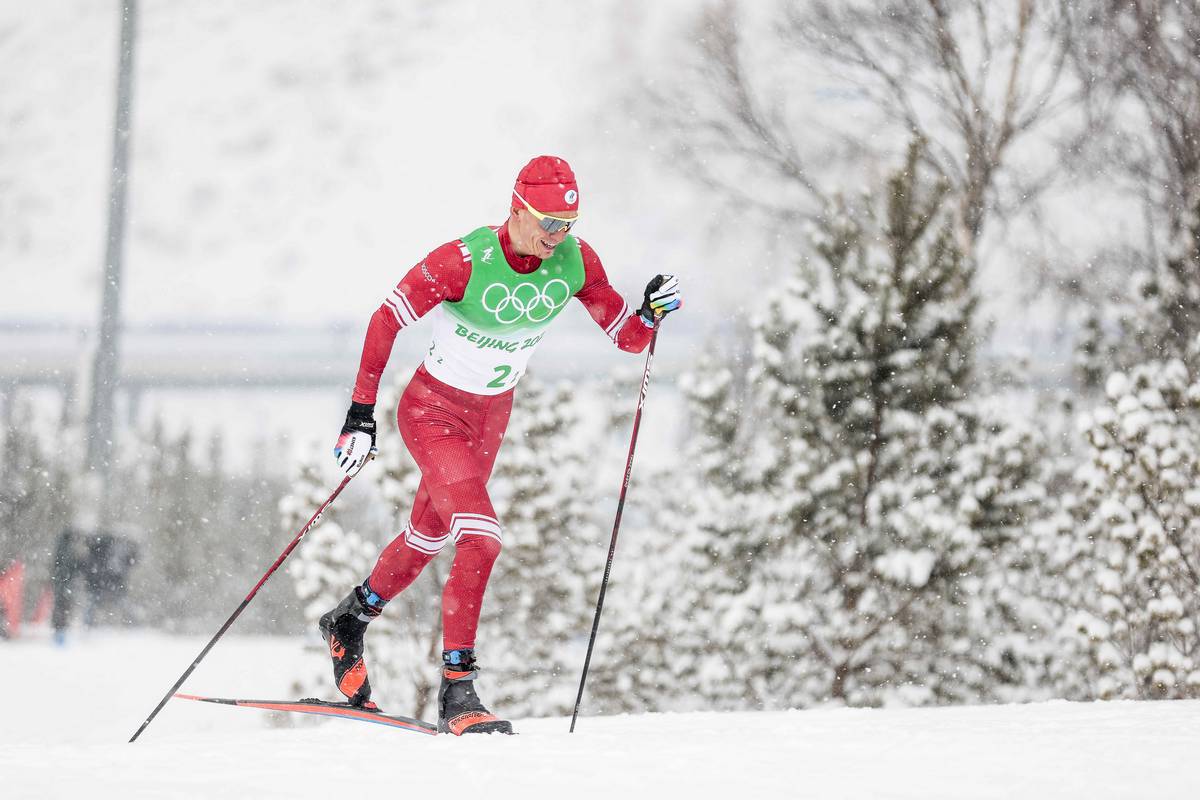
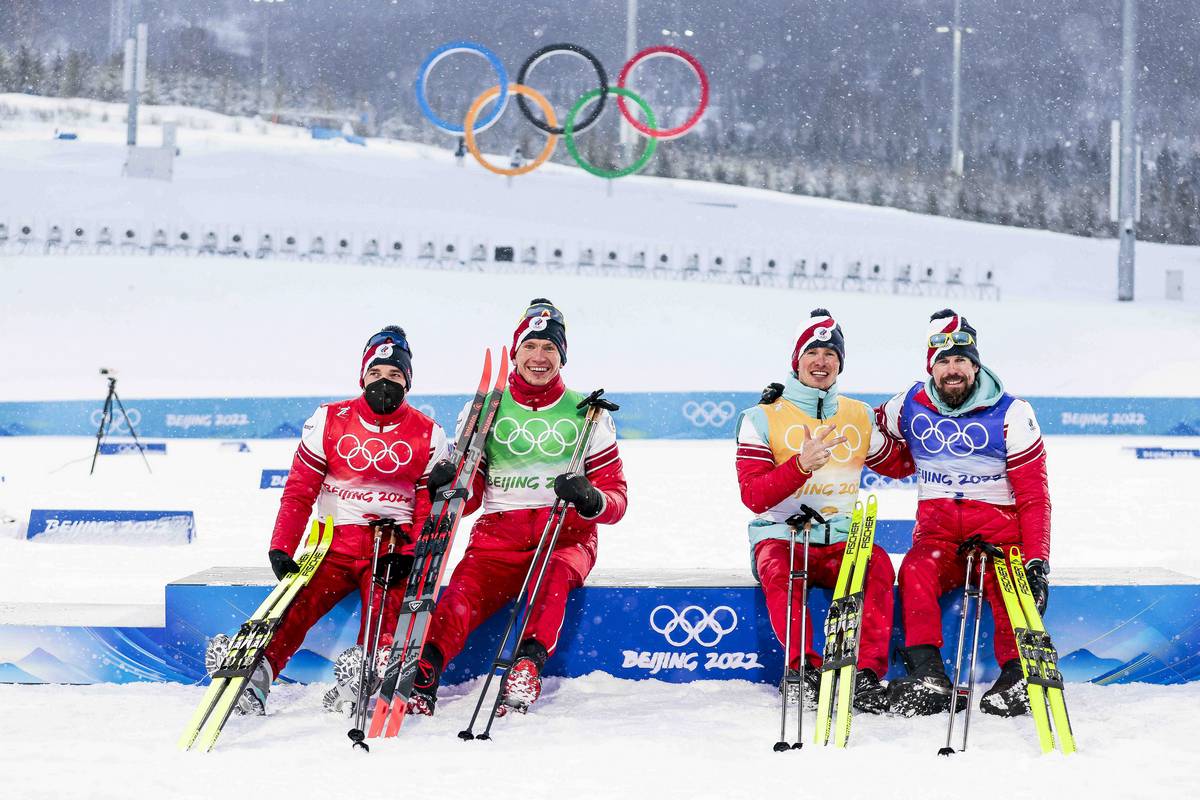
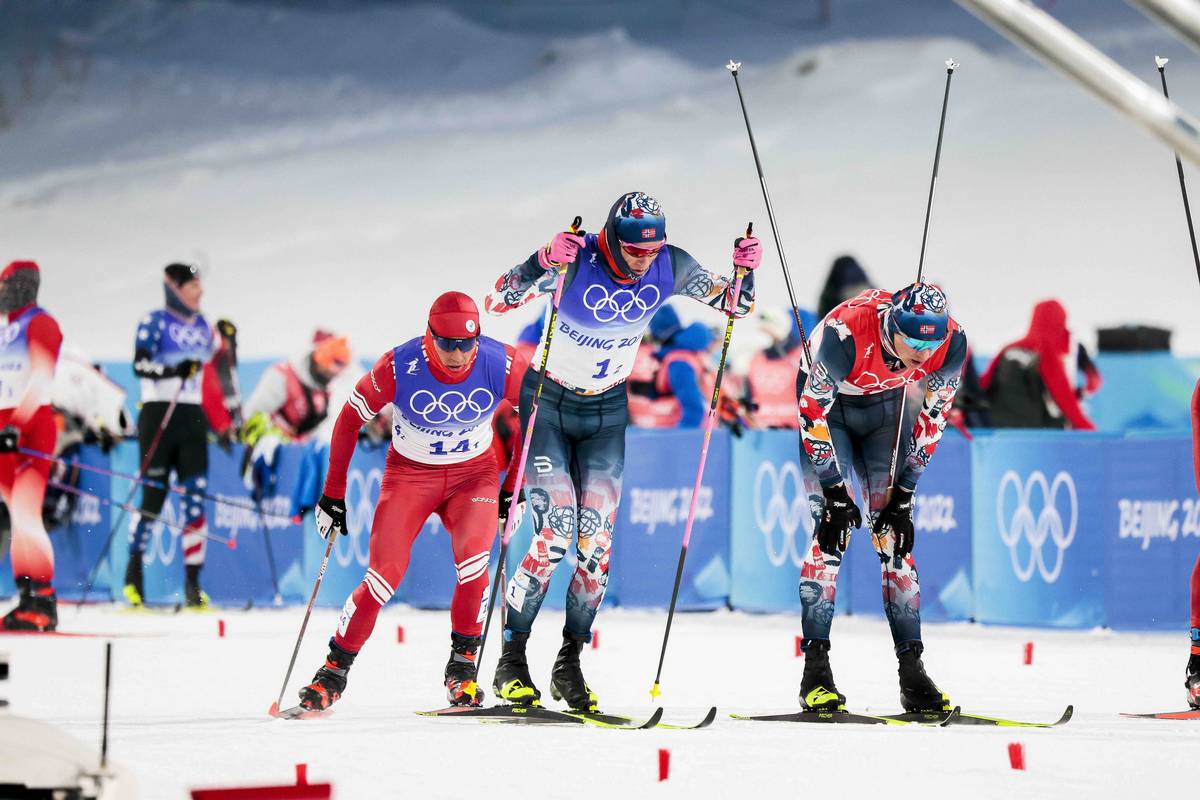
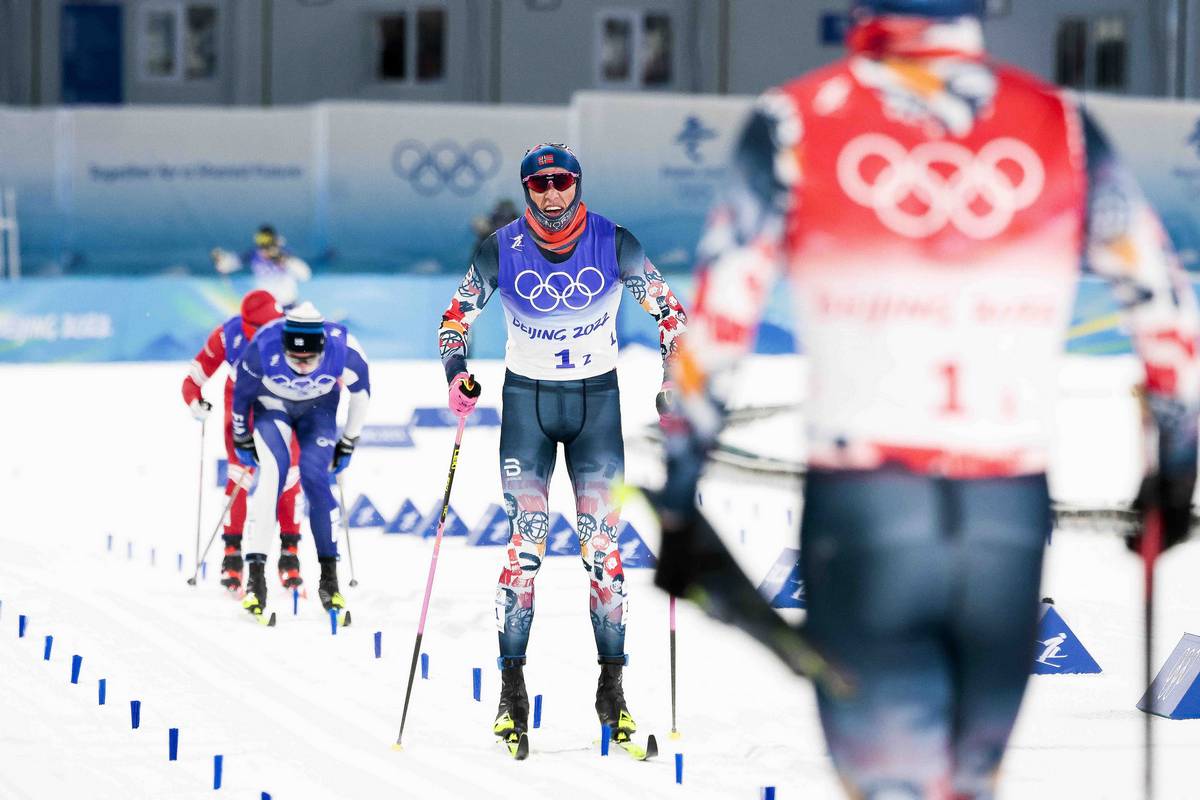
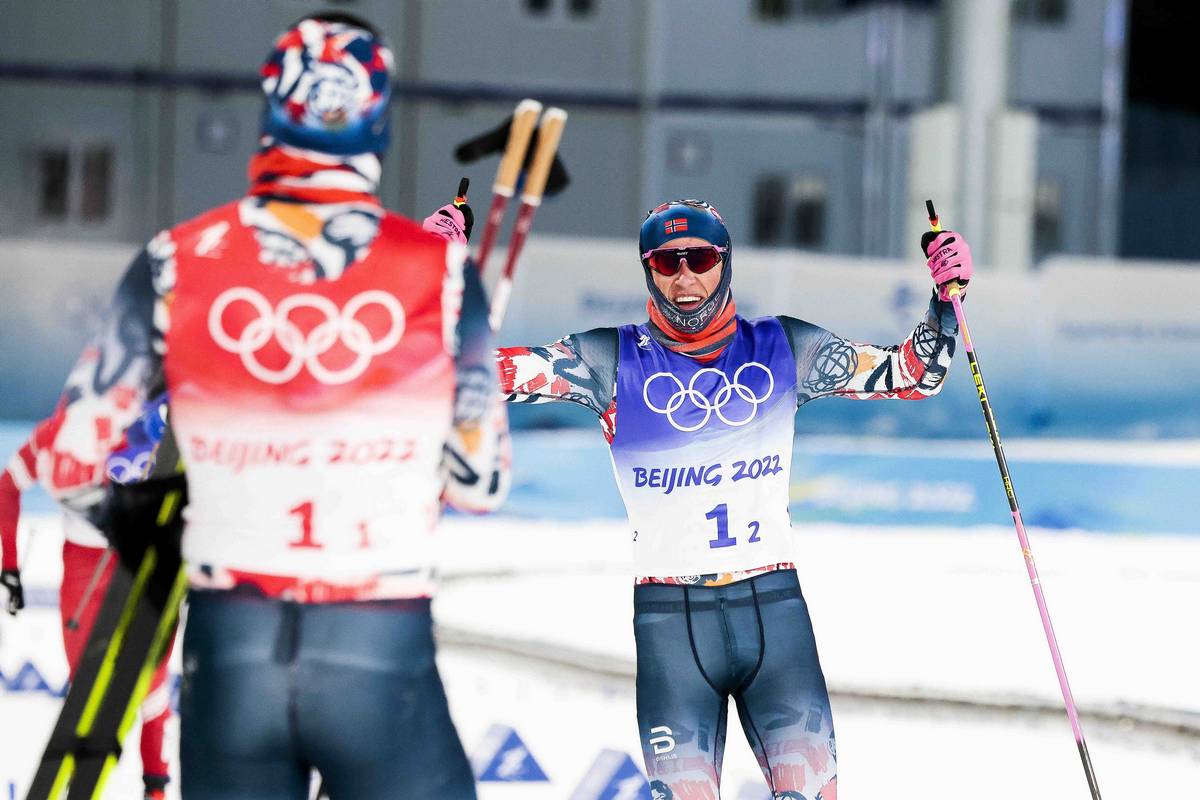
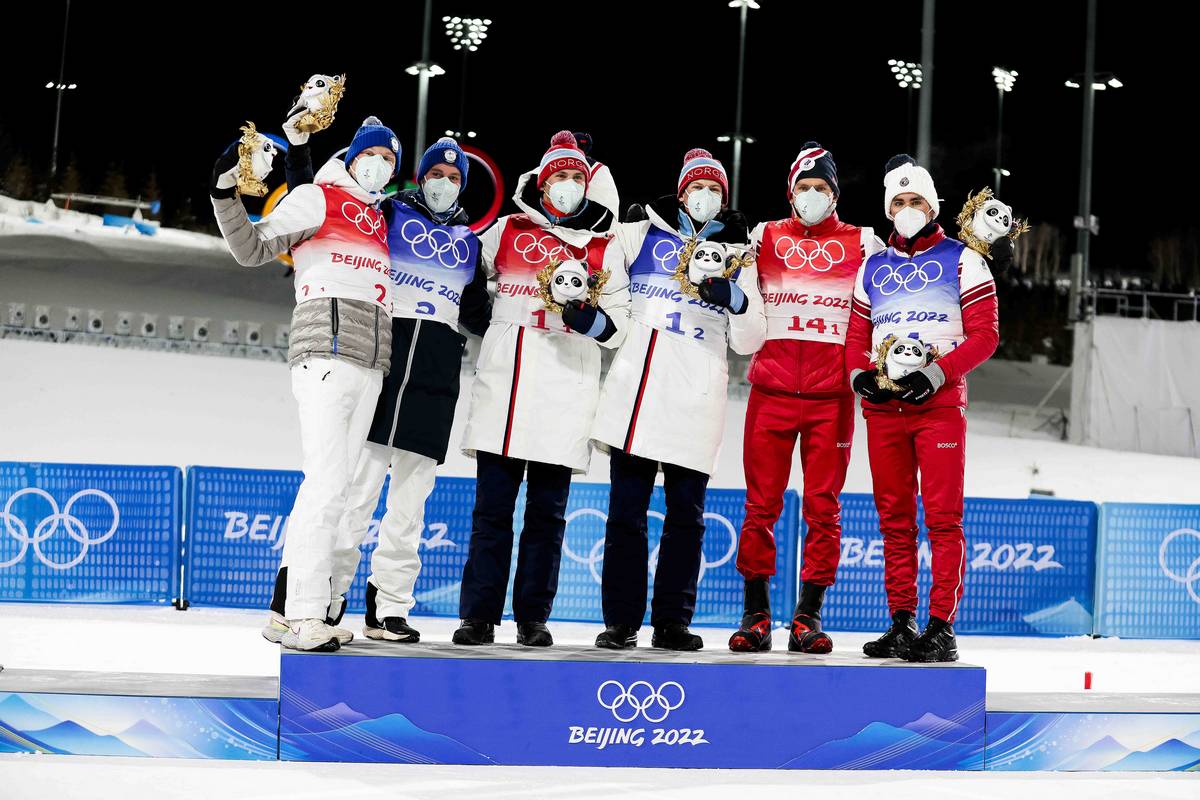
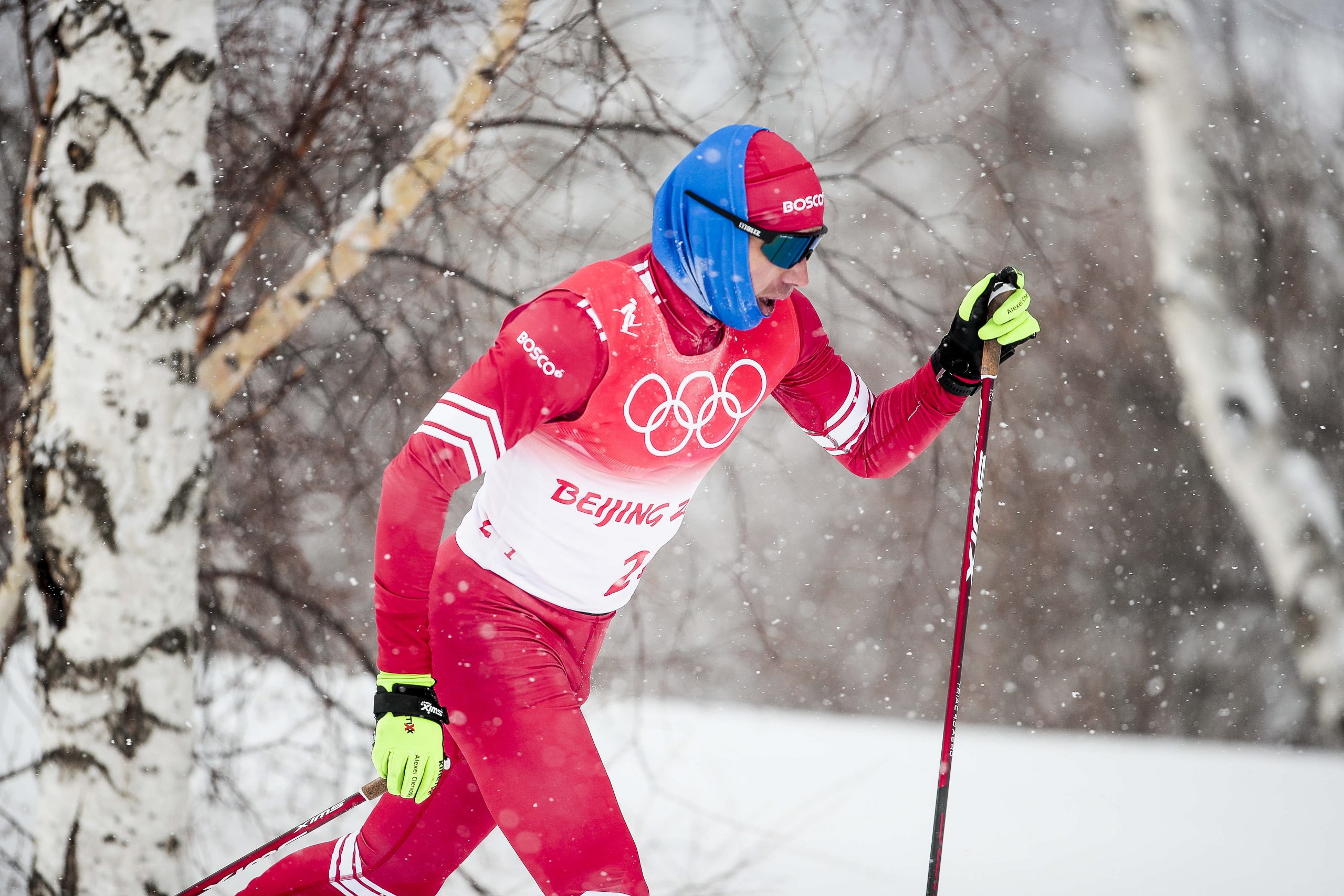
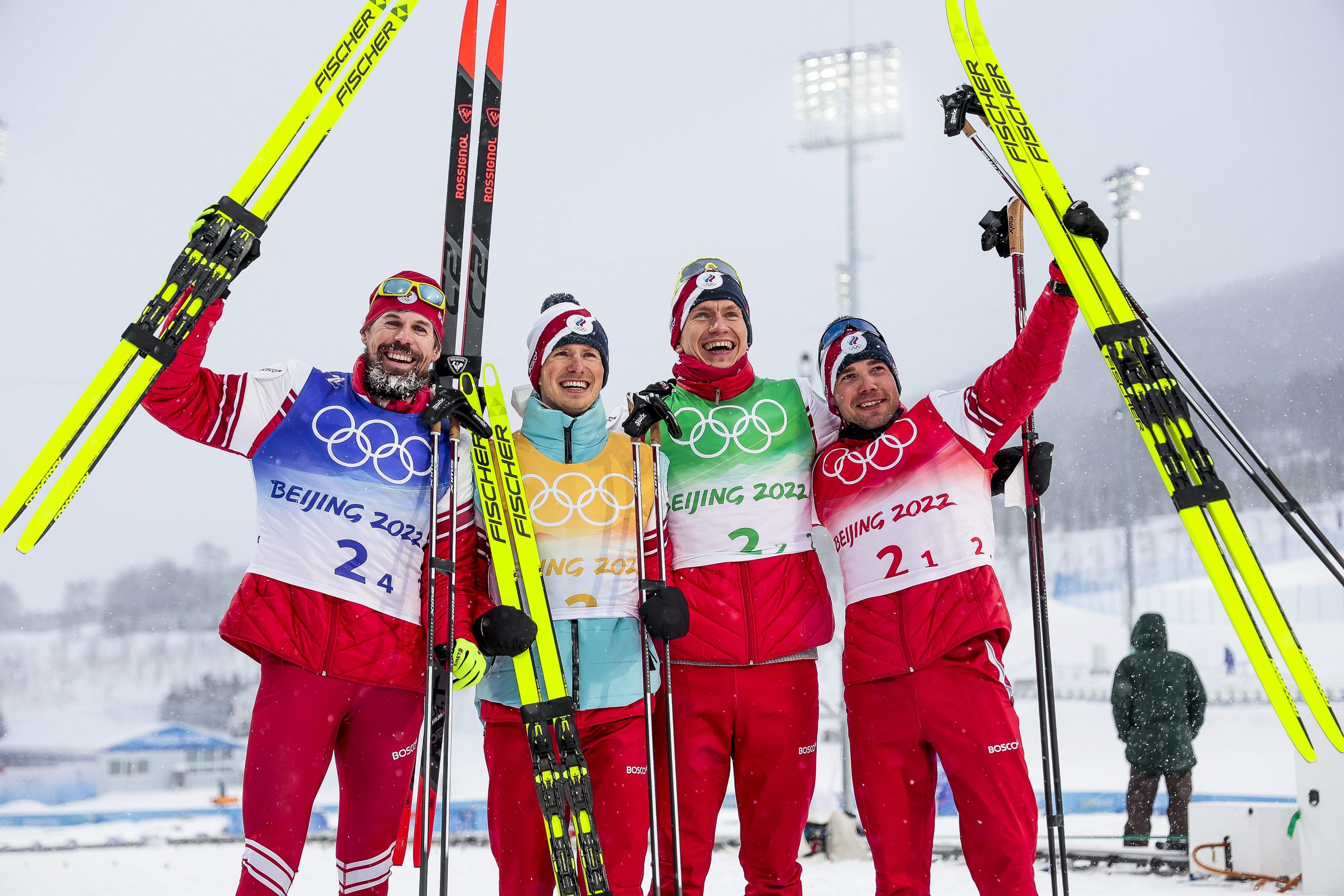
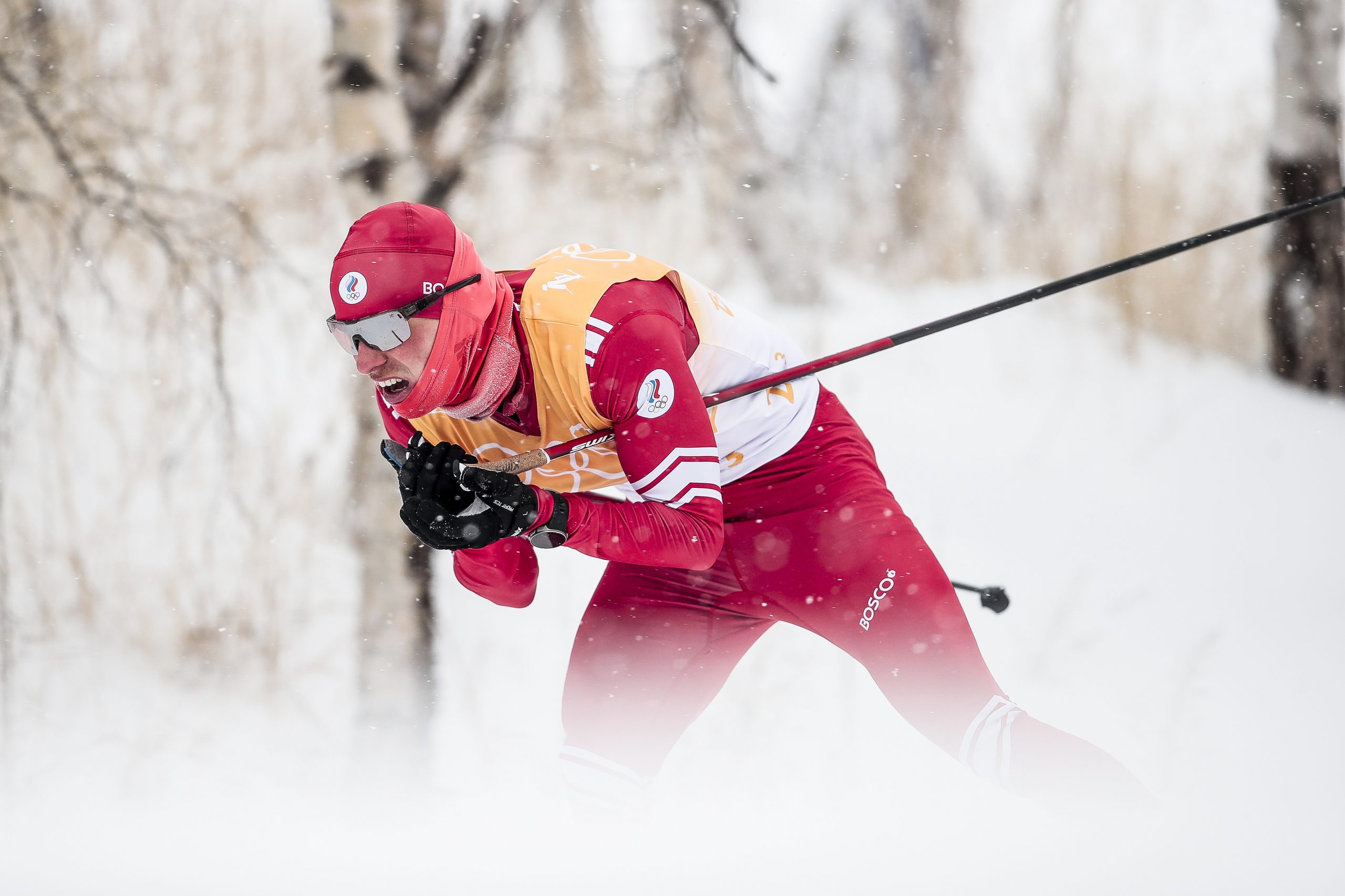
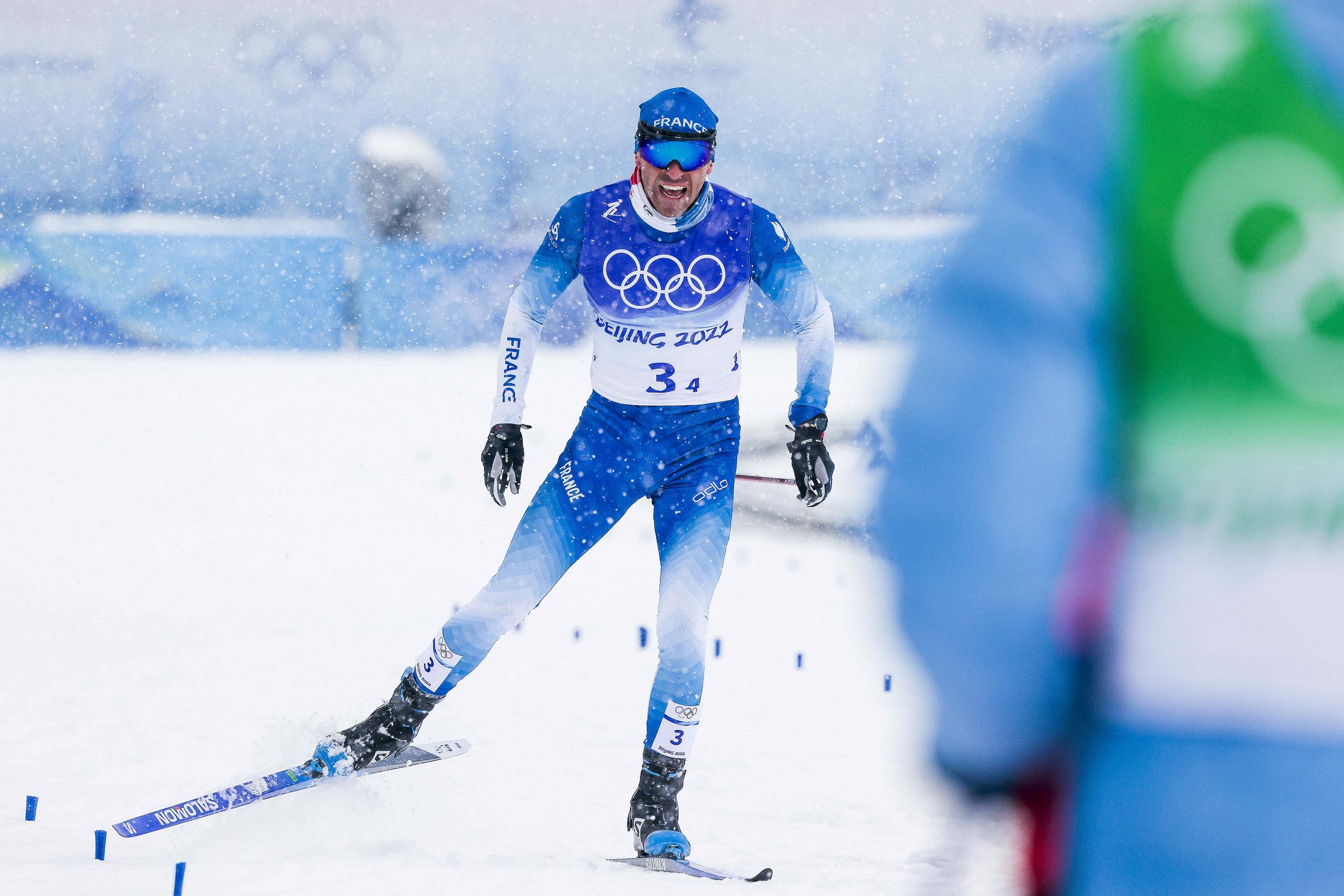
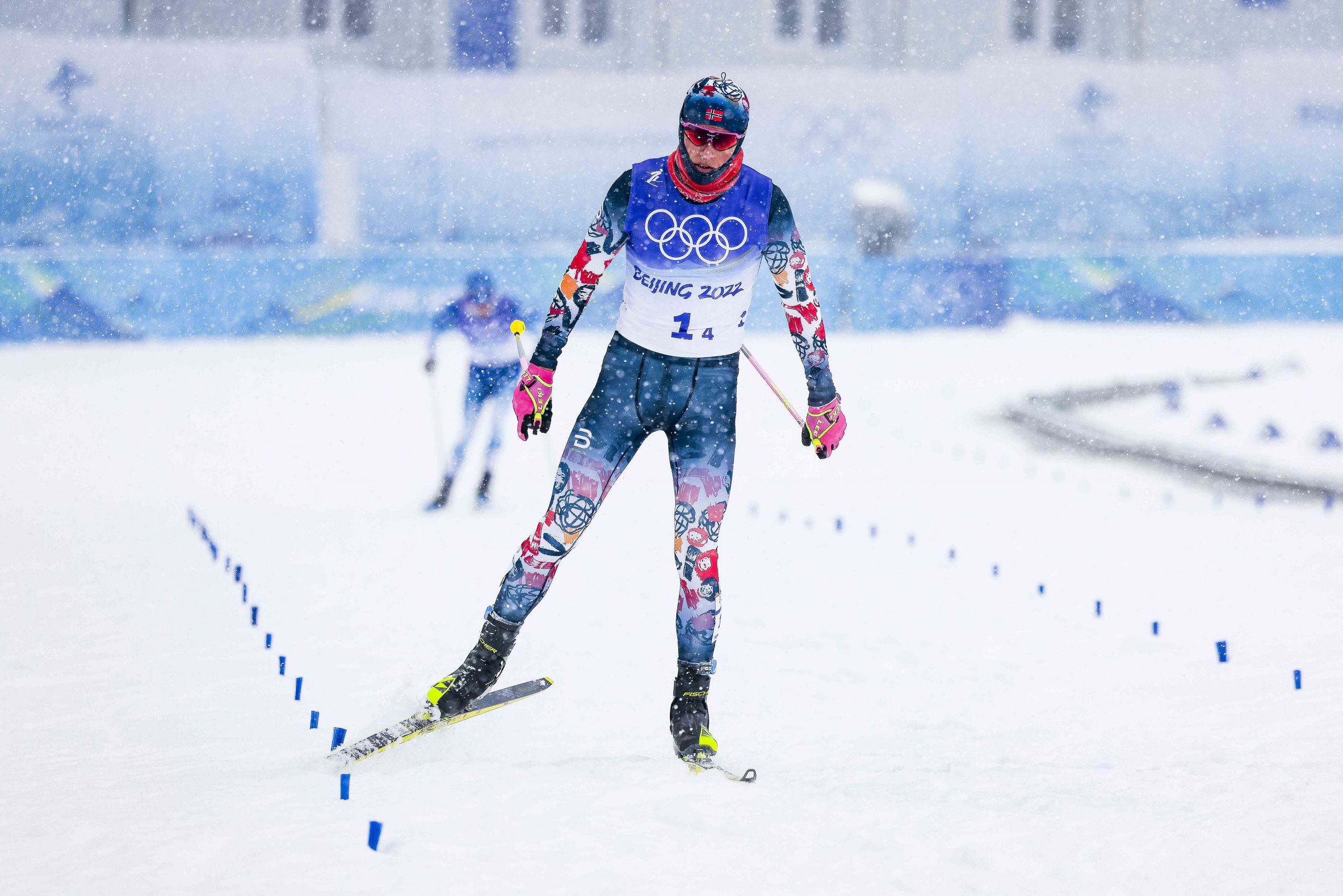
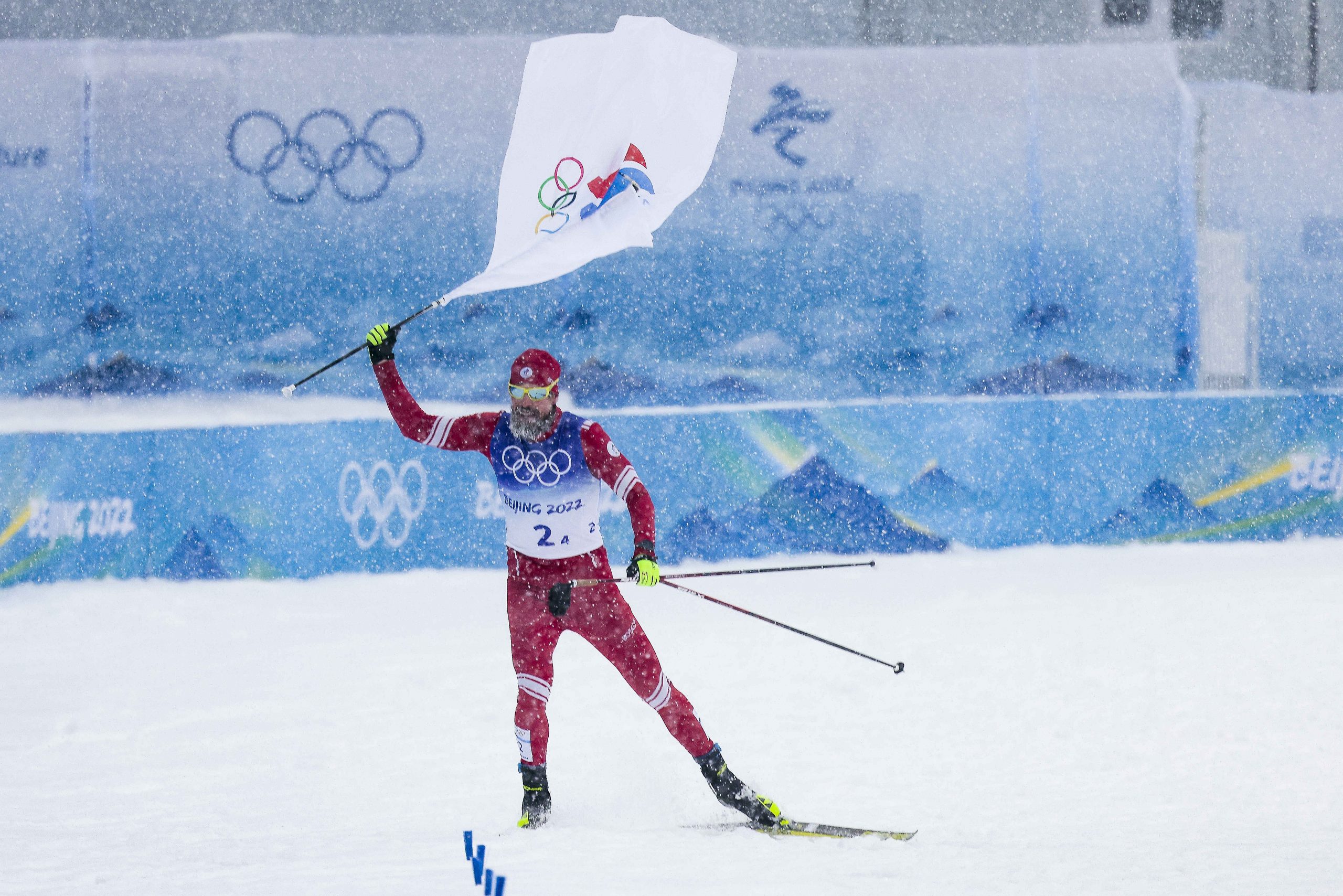
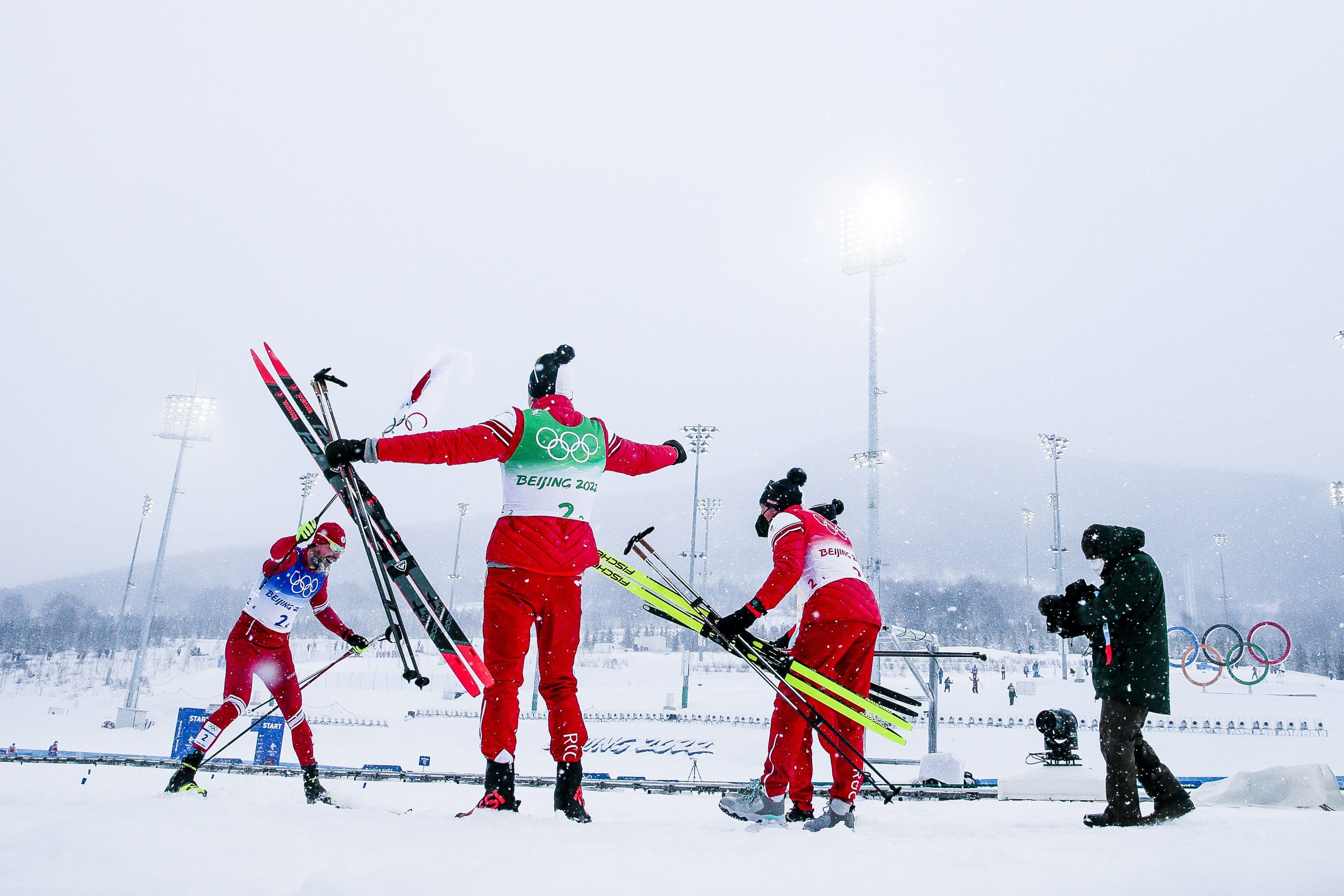
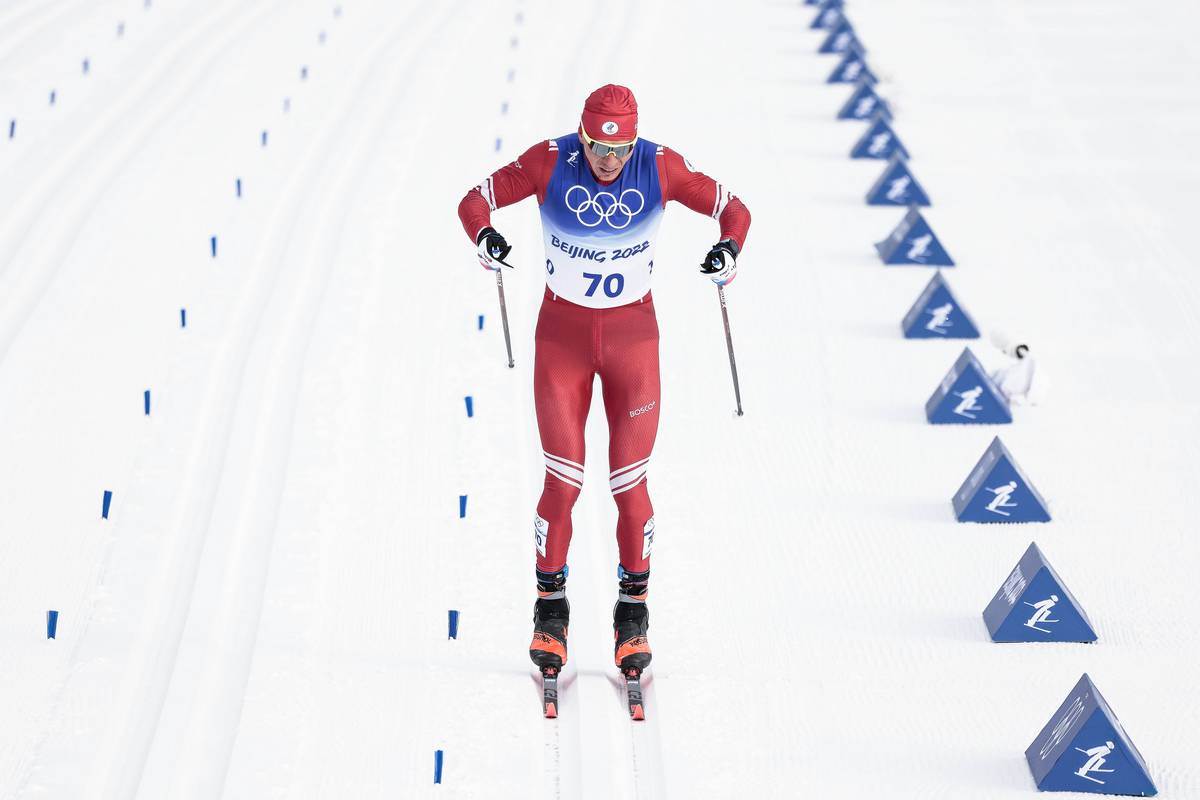
Alexander Bolshunov and Alexander Terentev took home bronze medals in the classic team sprint during the 2022 Beijing Olympic Winter Games. At present, no one knows whether they’ll be back in 2026 at all. (Photo: NordicFocus)
In all FasterSkier’s recent mentions, suppositions, and explanations regarding Olympic races scheduled to be staged in 2026, one factor has repeatedly been highlighted: the potential for all such predictions to be overturned by the presence of athletes from Russia. The most recent statements from the International Olympic Committee (IOC) report that no such decision has been made yet (though that could literally change at any moment). For the time being, Russian athletes remain banned from competing in any international races sanctioned by the International Ski Federation (FIS)—and that includes the Olympics.
Is this Russia’s Olympic dilemma? Or the IOC’s Russia dilemma? The IOC defers to international sport governing bodies to decide whether or not Russian athletes will be allowed to compete in Milano-Cortina 2026. That’s why fans will see Russian figure skaters in the Olympics (allowed by the International Skating Union) but not Russian biathletes (banned by the International Biathlon Union). The IOC has recently expressed a desire for Russian cross-country skiers to be allowed to compete in the Olympic Winter Games of Milano-Cortina (kind of a public hint to the decision-makers at FIS). Thus far, FIS has been dragging its feet . . .
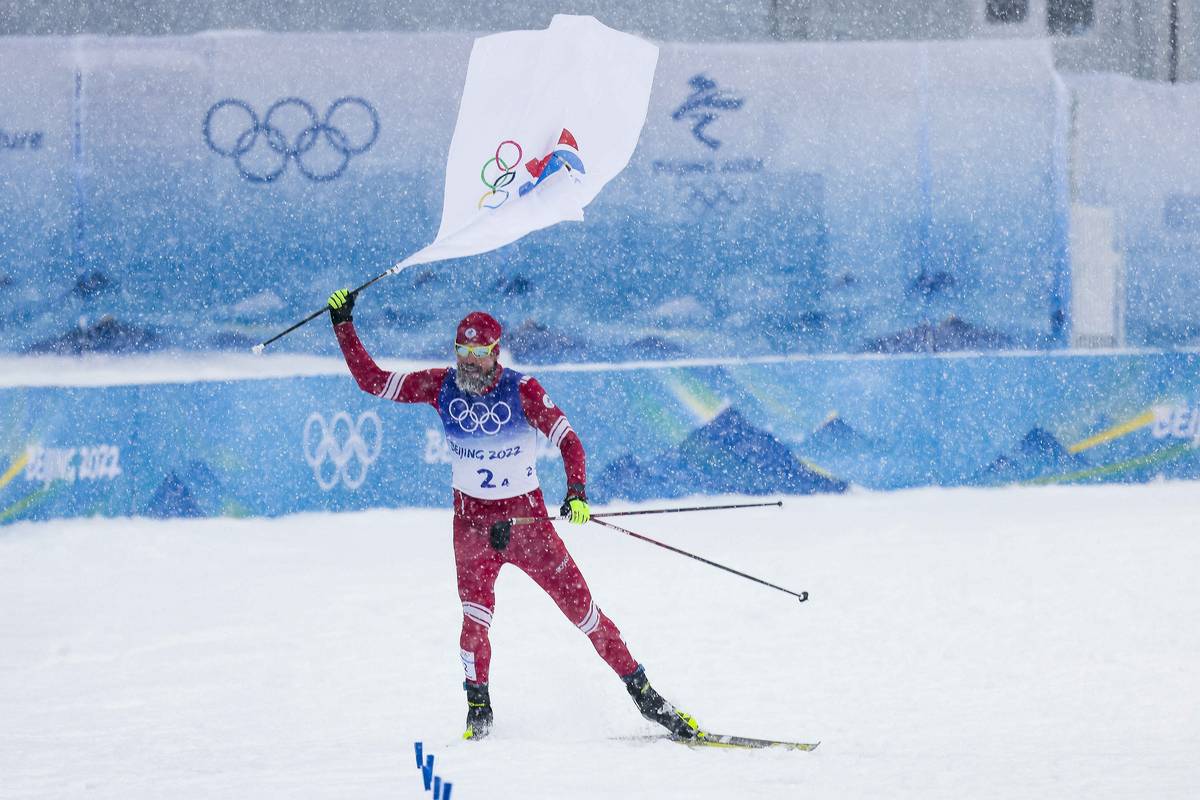
Other sports’ governing bodies have already weighed in. In Ice hockey, Russian athletes remain banned from all international and Olympic competitions. Russian biathletes remain banned as well. Certain Russian figure skaters (limited to one man and one woman) have been approved to compete at the 2026 Olympics, though not in the team event. And the Olympic participation of any Russian athlete is to be allowed only within conditions stipulated in the IOC’s list of caveats and provisos: no Russian flag, no Russian anthem, no Russian colors (though Russian skiers definitely wore red in Beijing’s Olympic events four years ago). Evidently, Russians won’t be welcomed to march in the Opening Ceremonies. There’s also a suggestion that Russian athletes may not be allowed to compete in relays or team events. Most notably, any Russian athletes who are shown to have voiced support for Russia’s involvement in its war on Ukraine—or who are associated with Russian military forces—would not be welcome to compete.
Head of the Russian Ski Federation, Yelena Valbe (herself a seven-time Olympic medalist), has been openly enthusiastic in her support of Putin, and has consistently—and publicly—denied any Russian aggression in Ukraine. Her position—a publicly and repeatedly stated one—may be enough for the FIS to exclude Russian athletes. The Russian athletes, themselves, seem to remain optimistic.
“We will compete at the 2026 Olympics,” Alexander Bolshunov (RUS) recently stated. “Everything has its time. Mark my words.”
Sergey Ustiugov has stated that he does not think he would even qualify for the Russian selection. He predicts that he has grown to old, and that up-and-coming skiers are simply too fast.
Alexander Terentev (who shared the bronze medal with Bolshunov in the Team Sprint in 2022, and claimed another bronze in the Individual Sprint) has kept a very low profile (at least in the Western media) ever since Russian athletes were banned. He appears to have won a national championship in 2024, but no other international results are readily available.
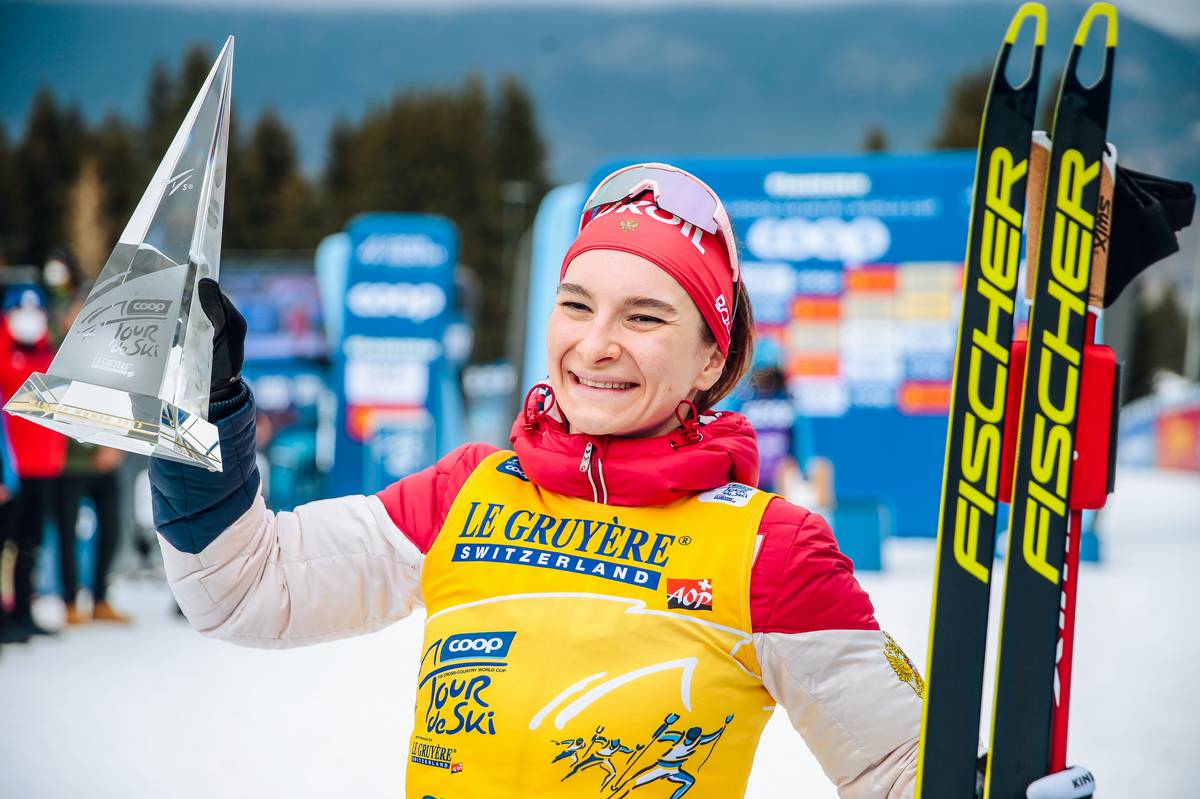
Natalia Nepryaeva has reportedly continued to compete in Russia, but it remains to be seen if that level of competition has been sufficient to maintain the sharpness that once won her the Tour de Ski and the Overall World Cup.
Veronika Stepanova (a member of Russia’s gold-medal wining relay team in 2022) was openly supportive of Putin’s war in Ukraine from the very beginning. She was also loudly critical of the FIS decision to ban Russian participation in the first place.
As for Bolshunov—the triple gold medalist from Beijing who has repeatedly demonstrated the ability to undo the expected coronation of Norwegian superstars—he may have a difficult time convincing FIS to allow him to compete, especially after his appearance on stage at a government-sponsored rally supporting the war in Ukraine. Like other athletes on the stage that day, there was no mistaking the “Z” logo on his event-provided jacket, a reference to the Z painted on Russian tanks that rolled across the border into Ukraine. And the IOC has made it clear that they will accept no participants who have voiced support for the invasion of Ukraine.
If Russian skiers do show up for the Olympic Winter Games in Milano-Cortina, the races will be better: more competitive, more tactics, more strategies, more top-end speed. In short, everything we like about ski racing. Whats to be decided, then, is whether or not FIS is willing to undo some of the measures that the organization has undertaken in support of Ukraine, in support of the idea of fair competition among peaceful nations, and in support of true sportsmanship (the spirt of which is central to the Olympic oath). Letting the Russian athletes back into the Olympic Games is a wonderful, open-hearted idea. It’s also a terrible, cynically opportunistic idea. But the very same can be said of keeping those athletes out of the Games.
Years ago, the Russian Olympic Committee was banned from participating in the Olympics as a result of Russia’s having systematically cheated in Olympic competitions (and having gotten caught red-handed after the Russian-hosted Olympics in Sochi). That was enough to get them banned for a while, but the IOC still allowed “clean” Russian athletes to compete. Now, the debate rages on account of Russia’s having invaded neighboring Ukraine (for the second time in recent memory). The Olympic Committee seems to feel “The Russian Government invaded a neighboring country. Why punish the athletes?” It’s a fair question. But so is this one: “The Russian Government invaded a neighboring country. Why reward its athletes?”
A lot of people (including a significant number of international competitors and coaches) don’t want the Russians to be at these 2026 Olympics. But plenty of other people (including a significant number of international competitors and coaches) do want the Russians to be there. The so-called (and oft-cited) “Olympic Truce” is really a thing of the ancient past: modern nations are unlikely to stop wars or make peace just because a bunch of skiing, skating, and sledding events are scheduled. It would be nice if the ethics and philosophies behind the founding of the Modern Olympic Games were a thing that the world could live by . . . but they’re not.
Announcements will undoubtedly be coming soon. As Bolshunov, himself, said, “Everything has its time.”
Devon and Nat return with a soft launch into the 2025 winter season. We cover off-season developments and other hijinks, from the still-missing Russians to Therese Johaug’s return. Read here and here if you want to understand wth the references are in the show title.
We’ll be back soon. Hit us up at nat@fasterskier.com and devon@fasterskier.com; we’re psyched to be back.
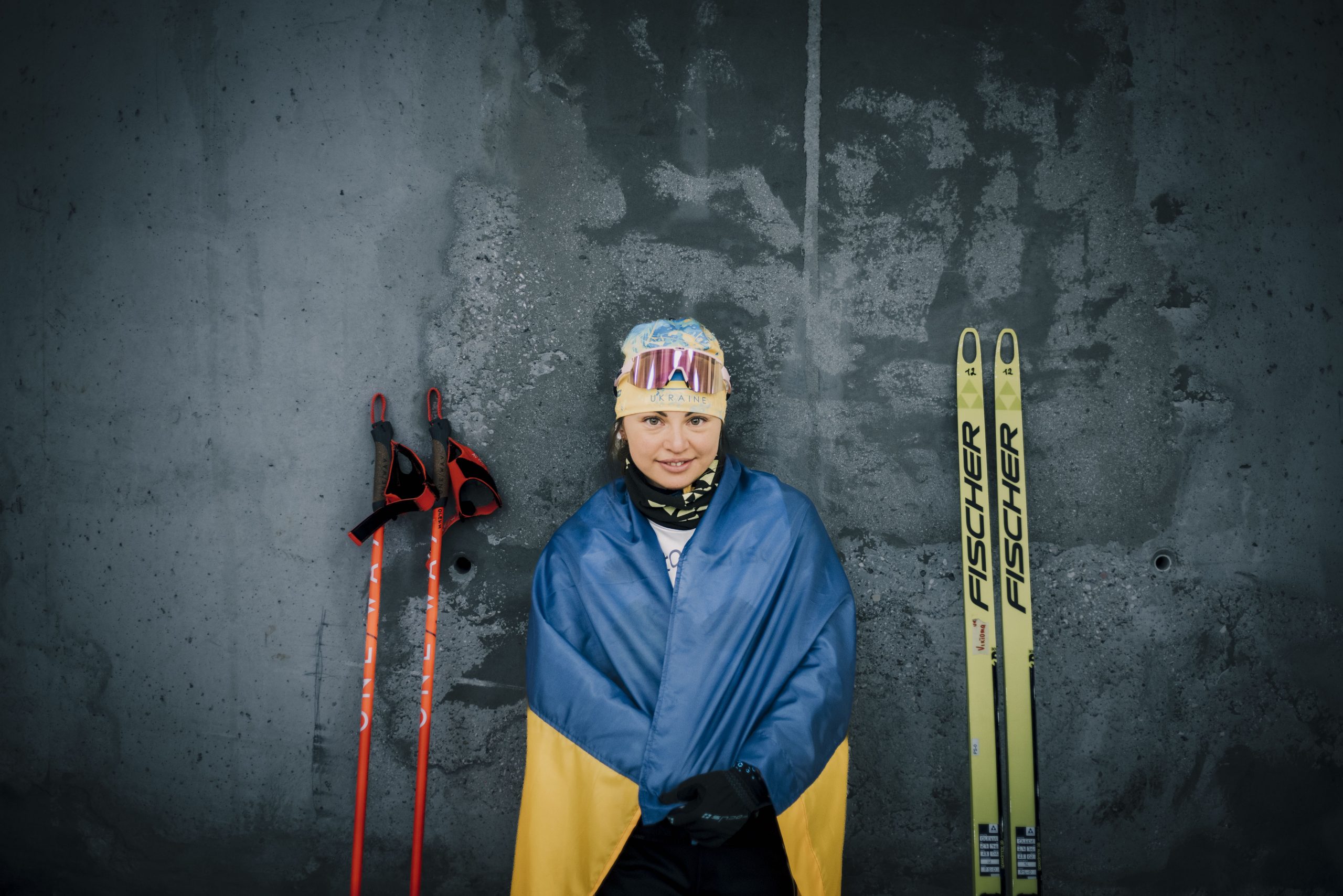
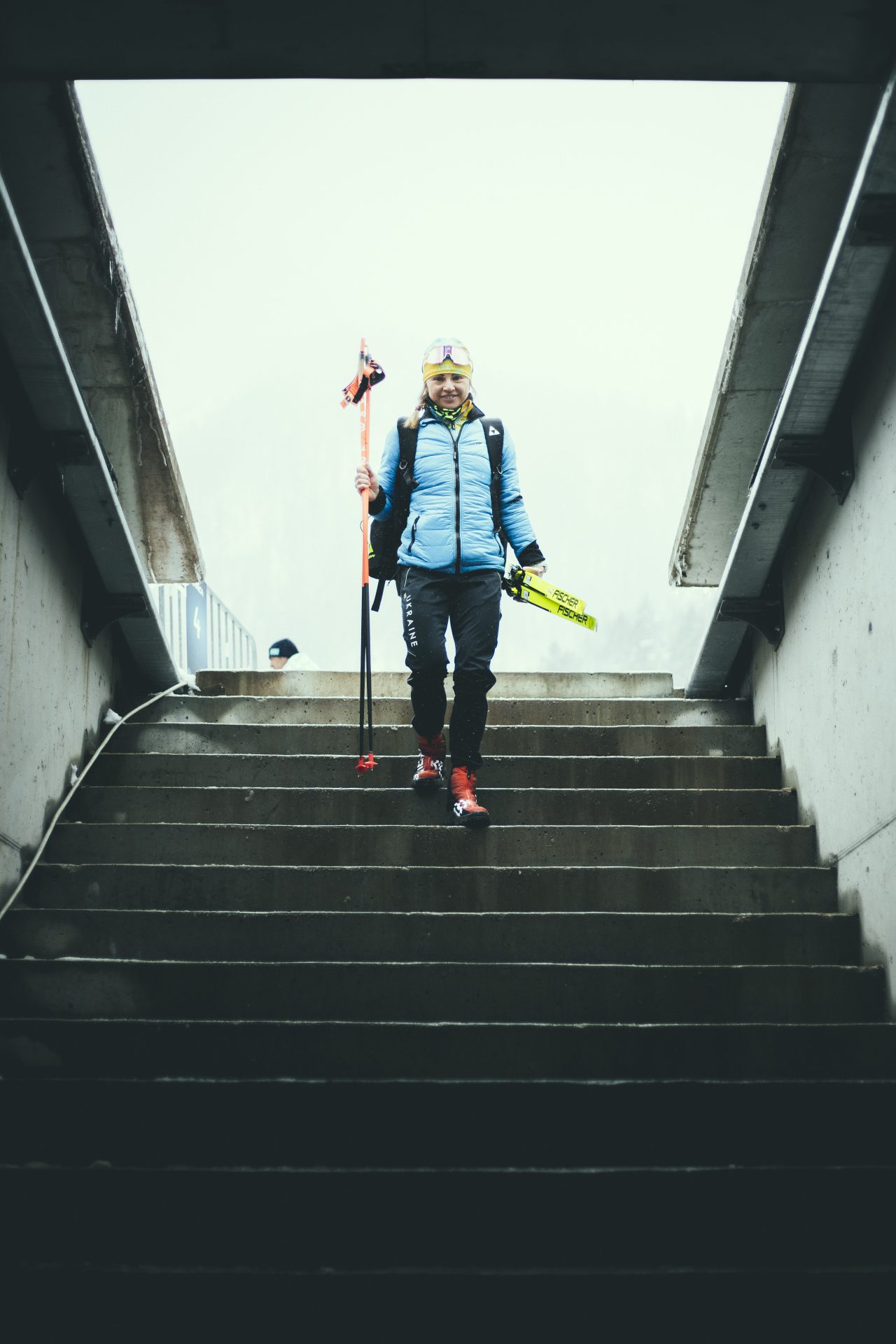
Viktoriia Olekh, a Ukrainian Olympic cross-country skier, poses for a photo at the World Ski Championships in Planica, Slovenia. She says Russian athletes should not be allowed to return to international competition. ““How can you even look at us when you support a government that’s invaded another country?” she asked. (Federico Modica for FasterSkier)
PLANICA, SLOVENIA — If Victoriia Olekh isn’t having her best showing at the World Ski Championships here, she has a good reason: war.
Olekh is from Ukraine. The Russian invasion of her country started just as she finished racing at the Olympics in Beijing last year.
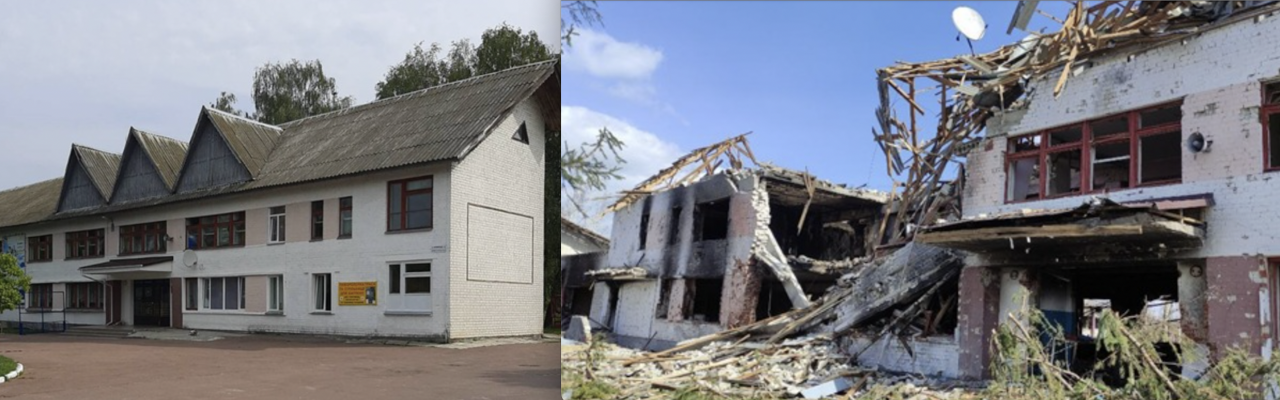
The Russian military has mined the fields and forests where she used to work out, Olekh said. Air raid sirens went off in the middle of running workouts, forcing her indoors, she added. And one of the training centers where Olekh practiced since childhood, in the regional capital of Chernihiv, was destroyed by missiles, Ukrainian officials have said — part of a campaign that, according to human rights advocates, saw Russians kill dozens of civilians in attacks on an apartment complex.
“We go to bed not knowing if we’re going to wake up,” Olekh said. “We’re still feeling panic.”
Nonetheless, Olekh and her Ukrainian teammates have continued training and competing abroad with help from the global skiing community. They’ve fielded a team of six at the World Championships here, where Olekh said she heard cheers of “Slava Ukraini” — glory to Ukraine — during a race and when she carried the flag at the opening ceremony last week.
“I feel solidarity from the other countries,” Olekh said. “I want to thank the world for their support, and I want to thank the Ukrainian military for defending our country.”
That military includes at least three Ukrainians who have competed in the Olympics in snow sports, according to Julia Syparenko, head of the country’s ski federation. Another retired Ukrainian skier, a training buddy of Olekh’s, was killed in the war, she said, and she knows of two other skiers whose homes were destroyed.
Olekh spoke in a 90-minute interview, conducted through a translator, at her residence at World Championships — the first in-depth comments from a Ukrainian athlete here about the war. They come as an intense debate plays out in the global sports world about whether to allow Russian and Belarusian athletes — who have been banned from competing by an array of international sports organizations — to compete at the Olympics under a “neutral” flag.
These before and after photos, provided by Julia Syparenko, the head of the Ukrainian Ski Federation, show what she said is the destruction of a former snow sports training center in the city of Chernihiv during the war with Russia.
Olekh was firm in her opposition, and Syparenko, in a separate phone interview, was too. Olekh said it would be “impossible” for her to compete against people who back the Russian war.
“Open your eyes,” she said. “How can you even look at us when you support a government that’s invaded another country?”
Some — but not all — of Russia’s cross-country’s skiers have publicly endorsed the war and the country’s president, Vladimir Putin.
Alexander Bolshunov, who won three gold medals at the Beijing Olympics, faced a backlash after he appeared on stage with Putin at a rally last March, and his glove sponsor ended endorsement deals with its Russian and Belarusian athletes.
Asked about his position on the exclusion of Russians from International Ski Federation races next year, the federation’s president, Johan Eliasch, told reporters here that “this is a very difficult topic.”
“You can’t choose where you were born. And you can’t separate the nation-state from the athlete,” he said. “On the other hand, we have a very difficult conflict to deal with.”
Eliasch added: “It is vital that we don’t let athletes be weaponized for political purposes — that’s just killing sport, which is supposed to be neutral, non-political.”
Olekh, 29, came from an athletic family: Her mother was a runner and wanted to be a competitive cross-country skier, but her grandfather was worried about the effects of lugging heavy ski bags around.
Ukrainian skier Viktoriia Olekh heads into a tunnel at World Championships in Planica, Slovenia, on her way to a training session Wednesday. (Federico Modica for FasterSkier)
Olekh has competed internationally for a decade, though the Beijing Olympics were her first Games. Her best finish was a 58th place; she earned praise from one of her coaches for finishing a race with a bloody nose.
Afterward, the war came to her community, Konotop, where some of the city’s women made headlines for threatening to put a curse on Russian soldiers — one that would render them impotent.
The city isn’t far from the border between the two nations. In the first days of the war, there was a tense standoff as local authorities negotiated with the Russian military over control, Olekh said.
Video posted by the New York Times showed crowds hurling insults at Russian soldiers — one of whom walked by holding a grenade in each hand. Olekh isn’t sure how intense the fighting was in Konotop, and she doesn’t know of any victims, she said — but friends showed her photos of burned cars and dead people inside them.
The Russians ultimately left Konotop. But the war still turned Olekh’s life upside-down.
“We were surrounded from all four sides. There were tanks in the city,” she said. “There was panic, food shortages, blackouts on a regular basis — things were very scary and unstable.”
In the early days of the war, Olekh said, training was difficult. Her mother, she said, would sometimes stand at the front door and block Olekh from going outside to run because of the danger. She kept from going stir-crazy by using a neighbor’s stationary bike.
The Ukrainian national team reorganized in June, after losing roughly a month and a half of training, Olekh said.
Since then, the group has spent much of its time training and racing abroad, with support from other ski associations and training centers in nations like Italy and Estonia. Some of its athletes and their families have completely moved out of Ukraine, said Syparenko, the head of the Ukrainian Ski Federation.
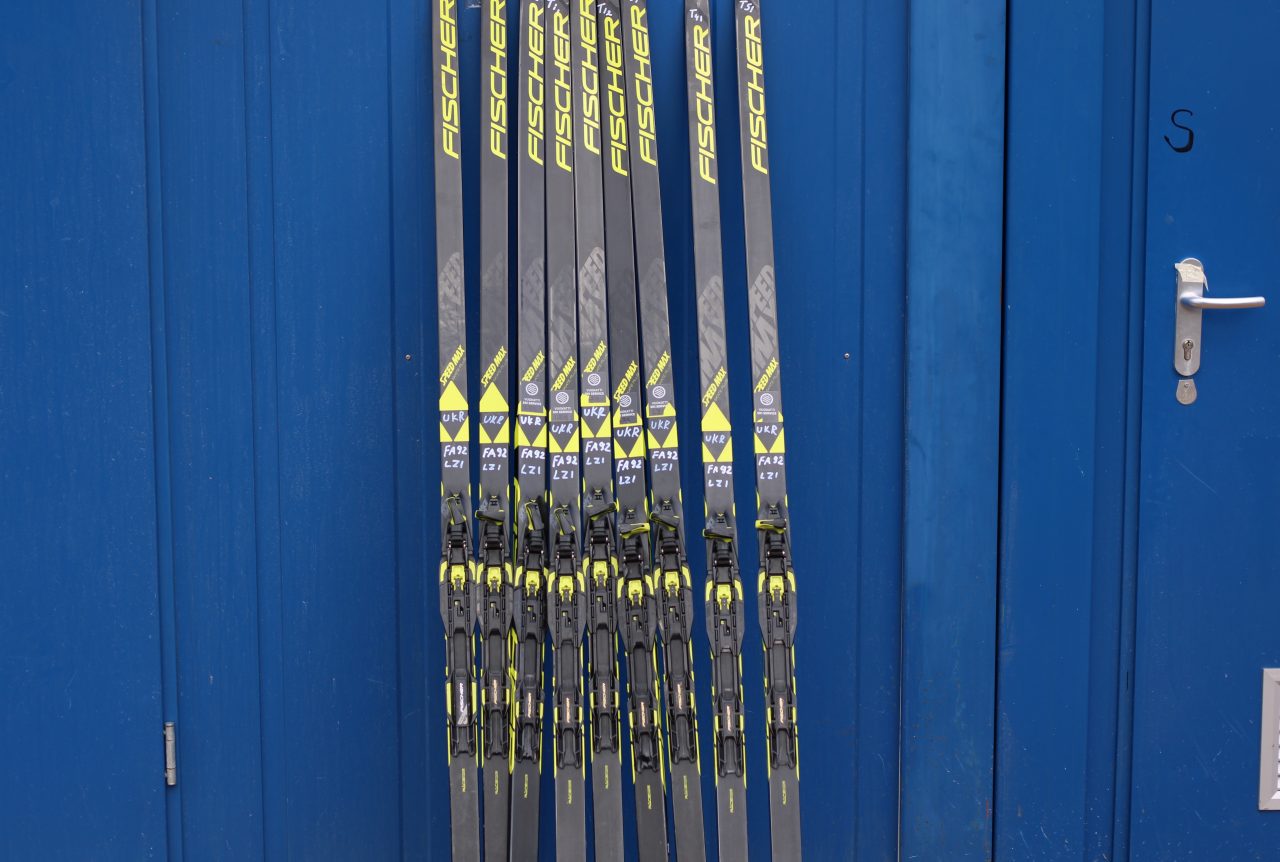
Skis from the Ukrainian team stand alongside a wax trailer at the World Championships in Planica, Slovenia. (Nathaniel Herz/FasterSkier)
She said that aid from other countries, along with a multi-million-dollar solidarity fund from the International Olympic Committee, has been indispensable for all of the sports under her federation’s umbrella, which includes downhill skiing, snowboarding, ski jumping and others.
“Every step of the way, we got as much support as people could provide,” she said.
Estonia shares a border with Russia and was part of the Soviet Union until 1991, so it was natural to try to help the Ukrainian athletes, said Kristjan Koll, the Estonian Ski Association’s executive director.
The Estonian association is still recovering from a doping scandal and is tight on cash. But it worked with the Ukrainians to find inexpensive housing for a training camp in Estonia and also helped them secure visas, Koll said in an interview.
He plans to discuss future partnerships with Syparenko in advance of next season, when perhaps the two nations could hold training camps together for their cross-country ski teams, he said.
“For Estonians and Latvians, Lithuanians, Poland, we understand the immediate threat. What happened to Ukraine, in the same way — it could happen to us,” Koll said. He added: “We 100% support the ban of the Russian athletes.”
Olekh said she’s grateful both for the foreign countries that have hosted the Ukrainian athletes, and for the support staff in her home country who have helped her team with logistics.
That was especially challenging for the male Ukrainian skiers, since the country has barred most men from leaving the country in case they’re needed for military service, Olekh said.
“We’re happy to represent our country, even if we’re not in our best shape,” she said. “We’re doing our best, and we’re so thankful that we’re able to participate.”
Click here to read part 1 and part 2 of this series, which takes a look at international news surrounding the Russian athlete ban through the spring. For how these bans have impacted a broader cross-section of the sporting world and analysis of the complex questions surrounding whether Russian athletes should be able to compete, check out this recent Sports Illustrated article by Michael Rosenberg.
Historically, athlete bans meant to pressure a government have not been short. South Africa was banned by the IOC over its racial apartheid policies for 27 years from 1964 until 1991. In 1992 the U.N. sanctioned Serbia and Montenegro over the shelling of Sarajevo and urged their athletes to be banned from international competition. The IOC took up the ban, but reversed course and allowed Serbian athletes to compete under a neutral flag at the 1992 Olympics.
Stepanova has pointed out this example on her Instagram page as a precedent that should be followed, though it should be pointed out that Serbia was absent at the 1994 Lillehammer Games. All told, the Serbian state was largely exiled from international sport from 1992 – 1995.
Veronika Stepanova flexes with her Olympic relay gold medal during the 2022 Games in Zhangjiakou, CHN. (Photo: NordicFocus)
Stepanova’s request to compete under a neutral flag rings a little hollow: the Russian ski team is already a little over two years into its four year WADA ban for state sponsored doping that requires it to compete under a neutral flag at championships.
A similar neutrality option was offered as a solution to the Russian national soccer team which was due to face Poland in a playoff match for qualification at the FIFA World Cup. Poland rejected the idea saying, “We are not interested in playing this game of appearances.” The Polish refusal to play Russia under any terms helped to force the IOC’s swift decision to recommend banning Russia from all sports.
“If doping wounds were quite successfully treated by time, then here the situation is different,” wrote an anonymous Russian blogger. “In fact, government policy has come into direct and insurmountable conflict with the ability to participate in the global sports movement. And now it seems that all this will last for years, if not decades.”
***
Even if Russia were to return to the World Cup next season, it’s unclear that they would be able to operate at the same level as in the past, which has helped to fuel what US Ski Team Coach Matt Whitcomb refers to as a “waxing arms race” on the World Cup circuit.
According to Team Manager Elena Vyalbe, funding the Russian ski machine has been a challenge. She reported that the team’s budget in 2020 amounted to around 50 million rubles, roughly $600,000 at the time. According to Markus Cramer, who coached for Russia until this spring, the cost of supporting an athlete over the course of a year is more than $150,000—a figure that calls into question Vyalbe’s statement about the team’s budget.
However, the Russian funding structure is murky, with much additional regional support to athletes provided by local extraction industries. Vyalbe complained in 2020 that sponsorships were scarce, saying, “No matter how well [Bolshunov] performed last year, we did not have a single new sponsor. God forbid that the current ones do not go away.”
In an April 5th interview with Championat, Vyalbe clarified the sources of the team’s funding: “We get most of the funds from the Ministry of Sports, the [Russian Olympic Committee] gives money for some things,” and that sponsorship amounted to “not even tears, but some kind of snot. We have a small budget.”
The team’s primary sponsorship has come from Lukoil Oil Company since 1997. Whether or not Lukoil will be able to continue to fund Russian skiing remains to be seen. The company reported its highest annual profit in seven years at the same time that its shares plummeted on the London Stock Exchange after the invasion, losing 91% of their value before trading was halted March 3rd.
Though the ruble has recovered from its post invasion plummet, inflation in Russia is likely to reach at least 16% this year. That, coupled with uncertainty over the team’s competition status and the dismal prospects for the Russian economy, which is predicted by the IMF to contract 8.5% this year, has the potential to squeeze the team’s budget.
Individual athletes also find themselves in a difficult position. Brav, the parent company of Swix and Toko, was quick to cancel sponsorship agreements with Russian athletes, as did Kinetixx gloves. Expressen reported that Swedish ski company SkiGO was maintaining their partnership with Bolshunov, though SkiGO boss Christer Majbäck denied this, saying, “We don’t have any cooperation at all, it’s absolutely impossible. You don’t even have to ask me or SkiGO what we think about the war.”
Alexander Bolshunov observes trailside during the 2021-2022 Tour de Ski in Oberstdorf, Germany. (Photo: NordicFocus)
Rossignol was standing by Bolshunov until an Instagram photo proved to be too much: not long after Russia was banned, Bolshunov visited a museum and posed for a photo in an old-timey Soviet race suit, captioning the photo “USSR 1980” —which happened to be the year that Soviet Union invaded Afghanistan, though it may also have been a reference to the 1980 boycott of the Moscow Olympics. In any case, Rossignol demanded Bolshunov remove the photo, which he did, but by the following day Rossignol said it was no longer supporting Russian athletes and removed them from its website.
Bolshunov could keep his skis, Rossignol said, but no new skis would be sent to Russia.
Similarly Fischer removed Russian athletes from its site. Fischer Communications Director Franz Fottinger wrote in an email, “All our contracts with athletes are based on their participation in World Cup races. If racers are excluded from the World Cup, there is no more basis to fulfill the contract.”
***
The Russian athletes have not exactly lost their ski partnerships, rather they are suspended until their return to the international circuit. Nevertheless, this has provoked a strong reaction in Russia, with calls to revamp ski production in the country.
The only significant ski production facility in Russia is the STC factory in Balabovo, around 100 km southwest of Moscow. It employs 350 workers making mostly recreational and kids skis. Whether the factory can be retooled to the demands of making race stock skis is questionable.
Alexander Pechersky, the head of service for the Russian ski team said that “No matter how optimistic I am, I understand that the process is not fast and it can take at least 4 to 6 years to produce skis of an acceptable competitive level.”
Pechersky continued, “Miracles do not happen, but I want to try … I still look at this idea with optimism, it is very interesting to deal with it. If things move forward, then the Russian sports market can get a model that, for relatively little money, will cover the needs of at least youth sports.”
The Russian Olympic Committee takes gold in the men’s 4 x 10 k relay in Zhangjiakou. (Photo: NordicFocus)
Despite the public separation between sponsors and Russian athletes, some critical items are still quietly being made available to the team, according to Viktor Golovin, the deputy head of ski service for the Russian national team. “I will not name the companies, Golovin said, “but the Russian team at the start of the summer season is provided with new rollers in full, despite all the restrictions.
The conflict in Ukraine also threatens to continue to squeeze the international supply of skis. Europe’s largest ski factory is located in Mukachevo, Ukraine and has traditionally produced some 800,000 pairs of cross country skis annually, primarily for Fischer. After a fire destroyed the facility in October of 2020, the factory remained offline for all of 2021 and was rebuilt into a state of the art ski production center. Just as final certification for the factory arrived in early February, the war broke out.
The factory’s director, Andriy Ryabich, wrote on his Facebook page on February 26th that “The work of the Fisher-Mukachevo enterprise has been suspended and the majority of the people went to the army in different directions and will defend our city, region and all [of] Ukraine.”
With much of the ski factories workforce at war during the critical spring months of ski production, ski shortages could once again factor in next season.
***
For their part, the Russian Ski Federation has ordered the team to prepare with the expectation that they will compete on the World Cup, though their draft schedule indicates the team is planning to stay in Russia through next spring.
Curiously, in the face of unprecedented challenges the national team has expanded–to a historically large 46 skier strong team, divided into five training groups.
The team was dealt a blow with the departure of Markus Cramer this spring. He will join the Italian national team, though he will continue to coach Ustiugov from afar.
Former Russian ski coach Markus Cramer joins the Italian National Team for the 2022-23 season. (Photo: Nat Herz / ADN)
Cramer’s tenure was instrumental in revamping the team’s training methods. Of the five training groups, three are closely tied to his methodologies. Two groups are led by Cramer protégés Egor Sorin and Petr Sedov, and a third by Sorin’s former assistant—Andrey Nutrikhin.
The group led by Yuri Borodavko—who subscribes to a more Soviet era training philosophy and who was once suspended for doping activities—will add big names such as Yulia Stupak and Ivan Yakimushkin to an already impressive roster that includes Bolshunov and Neprayeva. Unmoved by the political climate, Borodavko’s group will begin the training year on May 15th with a controversial camp in Russian occupied Crimea.
Yulia Stupak (RUS) races a freestyle sprint qualifier in Lahti, FIN in February 2022. (Photo: NordicFocus)
A Russian return to the World Cup is complicated by the unusually acidic edge the team has brought to the circuit, with acrimony spilling over into social media trolling and confrontations on the ski course.
Russian sport media has reacted strongly to the FIS ban by portraying the decision as a Norwegian power move and athletes such as Johannes Høsflot Klæbo who have supported the ban have been subjected to vitriol from Russian officials. Even before the invasion, Russian media has, in the post Sochi era, covered skiing in an increasingly strident and conspiratorial manner, dominated by a narrative of sporting victimhood and Russophobia.
Should Russia remain banned next season, or even longer, their absence may help FIS enact one of the most challenging maneuvers they have undertaken—the transition to fluoro-free racing, which FIS has now committed to enforcing next season.
Chris Grover downplayed the idea that Russia’s absence will make the transition easier, writing, “It doesn’t matter so much which nations are present at a given World Cup weekend. We need a testing system that all of the athletes, coaches, technicians and fans can trust.”
Fears of an imperfect test for fluoros have been punctuated with not so subtle hints of suspicion aimed at the Russian team. Golovin addressed these concerns, saying, “The Finns told us directly that the Russians are closed, no one knows what they do with skis. I suggested that they come to our wax truck and have a look…Come and see, and there is no need to make unfounded accusations.”
Nevertheless, Russia’s absence may lessen unstated distrust on the circuit, and perhaps improve cooperation and tolerance as the ban is enforced.
To that end, it may be a mistake for FIS to end the ban before next season regardless of whether or not the war in Ukraine ends in the interim. All of the justifications for the ban are likely to continue into next season: security threats to Russian athletes, the Kremlin’s use of skiers for pro-war propaganda, and the inability of Ukrainian skiers engaged in the country’s defense to prepare for next season. Finally, there has been no attempt at reconciliation by Russian skiing toward the wider ski world, with intransigent blaming of Norway for the present situation. In short, Russian skiing has rejected the rest of the ski world and has found itself in the cold.
Alexander Bolshunov takes Olympic gold in the men’s mass start 30 k, shortened from 50 k due to temperatures and extreme wind. (Photo: NordicFocus)
As Ulvang pointed out, skiing cannot be separated from society.
“It’s very important that we split [distinctions] between the sanction against a nation and the sanction against the Putin regime,” Ulvang told FasterSkier reporter Nat Herz in March. “I hope I’m still friends with the athletes and that we’re able to split between a reaction against the regime. It’s nothing personal. In the big picture we are all repping our nations and our regimes. We need legitimacy from society to exist. We need public money [for] our training facilities and to make tracks and courses and we need support.”
Click here to read part 1 of this series, which takes a look at international news surrounding the Russian athlete ban through the spring. For how these bans have impacted a broader cross-section of the sporting world and analysis of the complex questions surrounding whether Russian athletes should be able to compete, check out this recent Sports Illustrated article by Michael Rosenberg.
Concerns over both fair play and propaganda have been tied to the necessity of the ban on Russian athletes. Yet ultimately the reason given by FIS for the ban was to “ensure the safety and security of all athletes”. This wording removed any political connotations, and was criticized for its weak stance that failed to condemn the war in Ukraine.
Natalia Nepryaeva slides for the heat win during a sprint stage of the 2021-2022 Tour de Ski in Oberstdorf, GER. (Photo: NordicFocus)
Still, there were real concerns over the safety of the Russian athletes at European races. On March 1st, due to threats, the organizer of the World Junior Championships for jumping moved the Russian contingent out of their hotel in downtown Zakopane, Poland with the aid of 200 police officers. In Norway, Neprayeva reported being threatened in the team’s hotel in Oslo, and the Norwegian Ski Association was flooded with messages insinuating that if the Russian athletes started a race they would not finish.
“[The] FIS followed the IOC decision and based [the ban] on security,” Ulvang said in a call in March with FasterSkier reporter Nat Herz. “This has also become a legal case because Russia has taken this to CAS [The Court of Arbitration for Sport].”
While the FIS cited athlete security for the ban, the Federation took their cue from the IOC which recommended banning Russia due to the violation of the Olympic truce. This historical agreement, presented at the UN prior to the start of the Games, calls for the “cessation of hostilities” surrounding the Games, incorporating the Olympic values of sportsmanship and unity “with a view to protecting, as far as possible, the interests of the athletes and sport in general, and to harness the power of sport to promote peace, dialogue and reconciliation more broadly.”
Russia’s invasion of Ukraine on February 24th, 2022 violated the agreement, co-sponsored by the Russian Olympic Federation, to abide by the truce from February 4th through March 20th, surrounding both the Olympic and Paralympic Games in China.
“We will see,” continued Ulvang, “whether this is within the overall statutes of sport or FIS actually, because our rules are not made for such special things. This is a very, very special circumstance. I have spoken to many lawyers who think this is an interesting question.”
Waving the flag for the Russian Olympic Committee, Sergey Ustiugov brings home a win in the men’s 4 x 10 k Olympic relay. (Photo: NordicFocus)
Russia has pursued aggressive appeals of bans in a variety of sports, though with exception of Luge, largely without success. On May 21st, Vyalbe conceded that after consultations with lawyers, the Russian Ski Federation would not appeal the ban in CAS, saying, “We won’t win.”
An anonymous Russian blogger examined the legal considerations of banning Russia, and found that while the IOC had operated outside of its normal boundaries to call for a blanket ban, it had done so out of the special circumstances. Previously, it was the UN that called for athletic exclusions, such as that of Serbia during the siege of Sarajevo.
In this case, with Russia being a permanent member of the UN Security Council, any resolution could be unilaterally vetoed by the country, so in turn the burden fell to the
IOC to take an action that was theoretically beyond its scope—though roughly in keeping with previous cases.
For Russia, there is no easy recourse for dealing with sporting sanctions. Unlike economic ones, they do not inflict mutual pain and any victories achieved in the sport courts could easily be undermined by canceled visas or boycotts.
Yet a sustained ban on Russian athletes is likely to reshape skiing in a number of ways, beginning with the sport’s media position. Russia now comprises the largest audience for cross country skiing, averaging 1.5 million per World Cup race and accounting for at least a third of the sport’s total audience.
After Russia was banned this spring, Match!TV—a large Russian public broadcaster— pulled coverage of all international ski races and redirected its energies toward covering domestic competitions where it is likely to remain focused until Russian athletes return to the World Cup.
Compounding the difficulties of that loss will be the continued transfer of ski racing from public TV in Norway, Sweden, and Finland to streaming service Viaplay, which charges a hefty subscription fee—as much as €40/month in Finland.
Traditionally, public broadcasts in the Nordic countries accounted for half of skiing’s total audience. In 2020/21 that share fell to a third, in part because of Covid restrictions that kept their teams at home. Norway especially tuned out, with a 55% reduction in viewers, and numbers in Sweden, Finland, and Germany also declined.
Offsetting this loss has been Russia, whose star skiers have propelled coverage of the World Cup from subscription channels to public TV in their country, boosting domestic viewership in 2020/21 by 600%.
The men’s 4 x 10 k Olympic relay podium: the Russian Olympic Committee (ROC) came out on top ahead of Norway in second and France in third. (Photo: NordicFocus)
While last season’s viewership numbers have not yet been published by FIS, during Period 1 of the World Cup last season, VG found that the races shown on Viaplay averaged far fewer viewers than would be typical for an NRK broadcast.
Should broadcasting continue to sustain a loss of 40% of its audience in the Nordic countries while also losing the majority of Russian viewers, the sport may find itself in crisis, as sponsors balk at paying for low return advertising. Still, it may be too soon to write Viaplay off completely—the service recorded more than a million Swedish viewers tuning in to the World Cup weekend in Lillehammer.
As a whole, FIS cross country skiing has struggled to hold its audience, and losses in some regions have been more than offset by the recent tide of Russian viewers.
While Russian viewership is huge, most sponsors of the FIS World Cup are not particularly oriented toward Russia. Coop—the title sponsor of the Cross Country World Cup—is a Norwegian grocery chain. Coop early on sided with the Norwegian Ski Association in calling for the exclusion of Russian skiers. Many other sponsors have no business in Russia, and some, like Audi, have halted operations there.
Despite the €29 million that Russian viewership is estimated to be worth to sponsors, the audience may hold little allure, perhaps because of the average Russian’s low purchasing power. In 2021 the average Russian made around 40,000 rubles annually, or about $6,400. Now, with many western businesses pulling out of Russia, there is even less value placed on reaching Russian fans.
The women’s overall podium of the 2021-2022 Tour de Ski: Natalia Nepryaeva (RUS) was the overall champion ahead of Ebba Andersson (SWE) in second and Heidi Weng (NOR) in third. (Photo: NordicFocus)
For sponsors, the Russian exclusion may ultimately be beneficial. Germany, and Central Europe in general, are a core market for skiing—a market which has been drying up in an era of poor performances by the region’s skiers.
With the German women winning gold at the Olympics and the retirement of the dominant force in distance racing, Norway’s Therese Johaug, the opportunities for success of sidelined countries could become plentiful on the women’s side with the additional absence of Russia.
On the men’s side of skiing, though Norway remains poised to dominate, a potential lack of a Russian team would create significant podium opportunities for up-and-coming American, Canadian, French, German, and Czech athletes. In recent seasons the rivalry between Norway and Russia has consumed almost three quarters of the World Cup podiums. The long term absence of Russia could allow the podium of men’s skiing to once again take on a broader flavor.
Chris Grover, U.S. Ski & Snowboard Cross Country Program Director, clarified that a continued ban on Russian athletes wouldn’t change the quota system, writing, “We’ll have the same number of athletes starting each race. Obviously, Russia has a lot of the top performers, so there will be more opportunities for many other nations to secure podiums, gather World Cup prize money and points, and improve Red Group standing.”
Julia Kern leads the way in the first leg of the 4 x 5 k mixed relay in Falun, SWE in Mar. 2022. (Photo: NordicFocus)
All told, the changes that skiing will endure if Russia remains banned through next season may not be as dire as Russian sporting officials have suggested.
“The tired rhetoric that world sport will not be able to fully develop without Russia does not seem to inspire the speakers themselves anymore,” wrote the anonymous blogger. “It is no coincidence that you can already hear talk about alternative tournaments, leagues, and other ways of self-reliant development.”
The alternative for Russian skiing is to try to create its own circuit among friendly nations. To date, Russian skiing has only managed to solidify a sporting partnership with Belarus, via a cooperative agreement signed in May.
Stay tuned for Part 3, which considers historic athlete bans, and barriers the Russian program face to keep their program operating in the interim.
Alexander Bolshunov takes fifth in his final World Cup race of the 2021/2022 season, a 15 k classic in Lahti, FIN. (Photo: NordicFocus)
With Russian athletes banned from all FIS competitions, and no end in sight for the war in Ukraine, there is a growing belief that Russian skiers are unlikely to rejoin the World Cup next season.
Some commentators have gone further, proclaiming that we have seen the last of Bolshunov, Neprayeva, and the rest of the Russian team on the international stage. The pessimism is rooted in the history of similar bans—which tend to be long lived—and the uncertainty over what circumstances would allow for the Russians to rejoin.
Will the ban end when Ukrainian athletes can return fully to competition? That may not be possible until long after the end of the conflict. Perhaps a negotiated peace settlement? That possibility could still create discontent with athletes such as Bolshunov being used to fuel propaganda at home. Does the ban require the Putin regime to end? That could be a distant future.
“I expect that this situation will last as long as the conflict is unsolved,” said Vegard Ulvang, the outgoing chairman of the FIS Cross Country Committee, “but that’s of course up to the FIS Council or IOC.”
Ulvang was outspoken in calling for the Russian exclusion from the Norwegian hosted World Cup events this spring. Ulvang said in a call, “We have a fairness rule in FIS that there should be equal opportunities. When one nation cannot compete because they have to go home to defend their country, and the attacking country is racing, that’s not nice.”
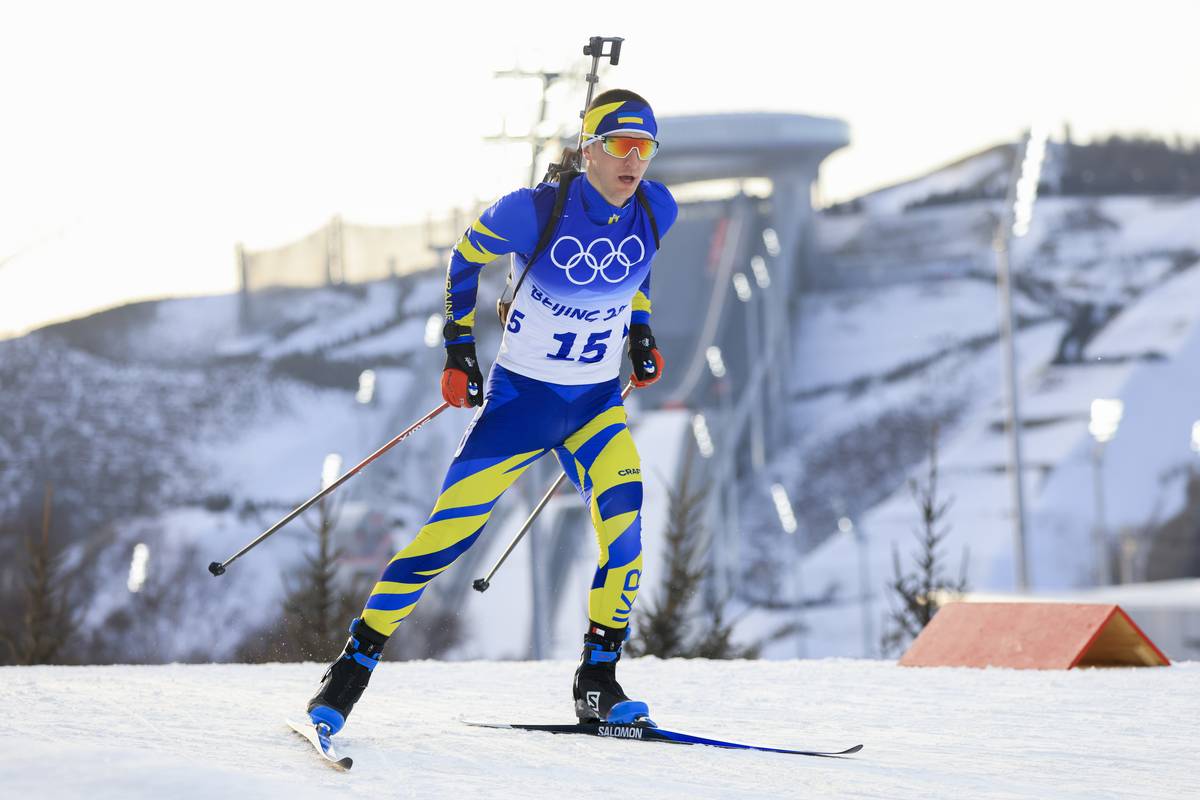
Ukrainian biathlete Dmytro Pidruchnyi competes in an Olympic sprint during the 2022 Games, shortly before being called into military service to protect his country amidst Russian invasion. (Photo: NordicFocus)
Ulvang’s point is underscored by the Ukrainian athletes now fighting on the front lines, with many called up just days after returning from the Beijing Olympics. Among the Olympians taking up arms was Dmytro Pidruchnyi, a biathlete who has won gold in the World Championships. The danger faced by the athletes defending their country was made clear early on in the conflict with the tragic loss of nineteen year old biathlete Yevhen Malyshev, who was killed defending Kharkiv on February 26th.
Another explanation for the ban was that it would help send a message to everyday Russians and deprive the state of a propaganda tool.
The charge that athletes were being used for propaganda purposes was confirmed during Russian President Vladimir Putin’s March 16th pro-war rally in Moscow. The event, titled “For a World Without Nazism” was MC’d by longtime biathlon TV commentator Dmitry Guberniev. Stars of the Beijing Olympics—including Alexander Bolshunov—were trotted out in front of the (reportedly) 100,000 strong audience in the Luzhniki stadium.
Questions remain about whether the athletes attended of their own accord, and there has been speculation about whether Bolshunov’s decision not to wear a letter Z pin on the stage—a pro-war symbol—reflected an ambivalent attitude to the conflict now raging near his home.
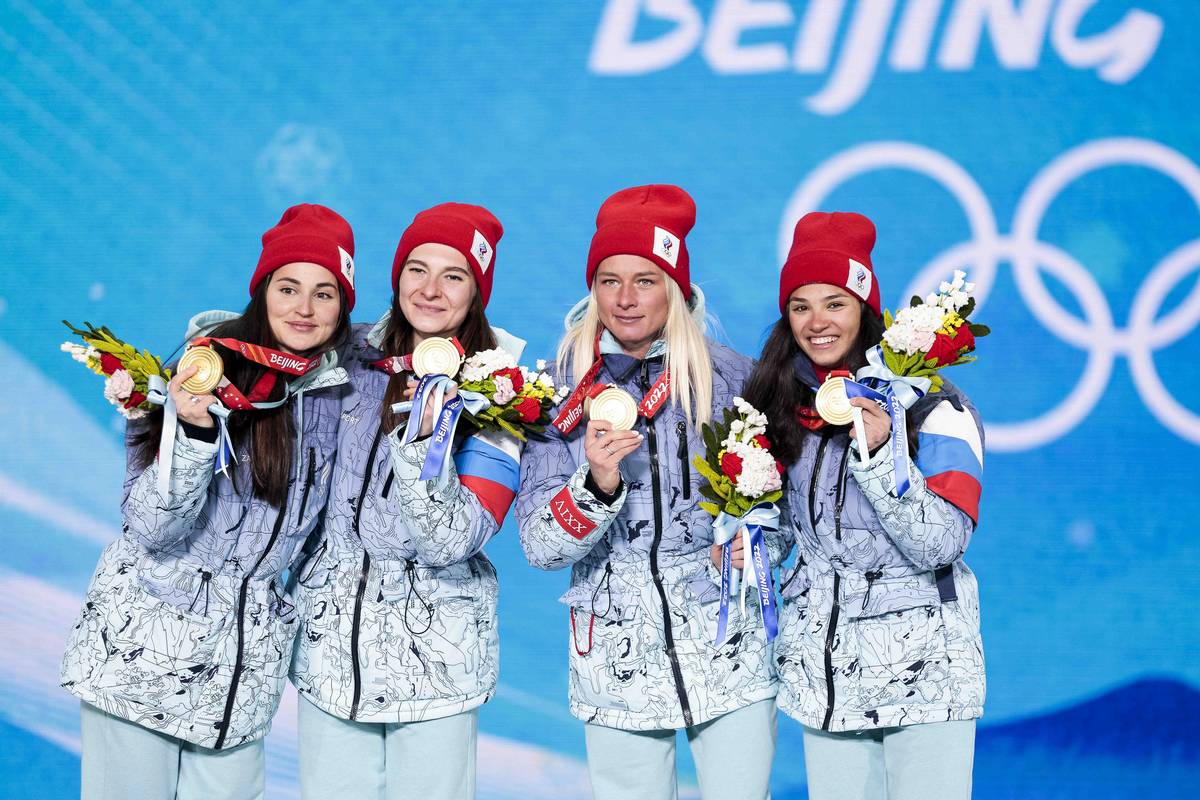
The women representing the Russian Olympic Committee strike gold in the 4 x 5 k relay. From left to right, Yulia Stupak, Natalia Nepryaeva, Tatiana Sorina, and Veronika Stepanova. (Photo: NordicFocus)
On April 26th, a host of Olympic heroes were called to receive state awards by Vladimir Putin in a ceremony that required the athletes to quarantine prior to the visit. Putin congratulated the skiers, saying “First of all, I would like to note the long-awaited victories in the relay race…We have not had a simultaneous victory of both the women’s and men’s teams for exactly half a century. This is a big result.”
A few notable Russian stars missed the Kremlin occasion: Bolshunov for dental surgery, Neprayeva because she arrived to quarantine sick, and Ustiugov because his wife had recently given birth.
Bolshunov’s absence at the event stirred further speculation that he had intentionally scheduled the surgery to avoid the ceremony, and with it the possibility of a personal ban set against him by FIS, much as FINA – the International Swimming Federation – did by banning Yevgeny Rylov for nine months after he stood next to Bolshunov at the March 16th rally.
Elena Vyalbe, who heads the Russian Ski Federation, manages the national team, and sits on the FIS council, dismissed this speculation, saying, “Who wrote that Alexander [Bolshunov] refused? I already spoke about this…He was scheduled for surgery on the 24th [of April].”
However, during the Olympics Bolshunov made it clear he dreaded the idea of the quarantine required to meet Putin, saying, “If they put me in jail forcibly, I’ll run away in two hours. I can’t just take it and throw 10-14 days out of my life. It’s unrealistic.”
During the Kremlin ceremony, Putin singled out the missing Bolshunov for special praise: “I note that Alexander Bolshunov has collected a solid collection of awards in Beijing,” Putin said. “Everyone knows this well. He has three gold, silver and bronze medals. And the absolutely well-deserved symbolic title of king of skis.”
Alexander Bolshunov displays four of the five Olympic medals he collected in Beijing, bringing his career total to nine medals earned over two Olympic Games. (Photo: NordicFocus)
The political significance of the event, which was delayed due to the war in Ukraine, was not lost on anyone. Veronika Stepanova, the upcoming ski star from Kamchatka seized the moment to make a splash.
Addressing Putin and the Kremlin audience, Stepanova said, “I am the same age as the century—I was born in January, 2001. Before my very eyes, Russia has again become strong, proud, and successful. Not everyone in the world likes it. It is obvious. But we are on the right track. And we will definitely win, as we won at the Olympics.”
The overt statement of support from Stepanova far exceeded expectations of decorum that called for perfunctory public speaking at most. That Stepanova would jeopardize a burgeoning ski career for a soundbite even shocked Russian commentators who speculated that the 21 year old was positioning herself for a transition to politics. For her part, Stepanova responded saying, “Negative consequences for my international career? They don’t scare [me].”
Far from distancing herself from the comments, Stepanova has brashly doubled down, saying, “Was I nervous when I spoke at the meeting with Putin? You have to believe in what you say. The presence of the president does not confuse or frighten, on the contrary, it energizes. You feel tremendous confidence next to him, you feel a special energy.”
Stepanova’s words have reverberated as she has gained a following in the west: outgoing and fluent in English, as well as adept at social media, many fans as well as fellow competitors felt they could relate easily to her.
Helene Marie Fossesholm of Norway was one such skier that enjoyed a friendly rapport with Stepanova off the ski trails. In the wake of her Kremlin speech, Fossesholm told NRK she was uncertain of how the friendship would continue, saying, “I can not answer that until I have experienced it. But it is clear that it will not be forgotten, at all.”
Flooded with foreign media requests to explain herself, Stepanova responded via her Instagram page, writing “I have an answer to [Western journalists]: Did you expect anything else from me? Just because I smile, speak a little English and am almost always ready for some nonsense, does that make me ‘another type of Russian?’ The peak of naivety!”
21-year-old Veronika Stepanova anchored the Russian gold medal winning women’s 4 x 5 k Olympic relay team during the 2022 Beijing Winter Games. (Photo: NordicFocus)
Vyalbe has been among Stepanova’s detractors this spring, criticizing her by saying that she may be suffering from “star disease” and that “now she is not an athlete, but a patriotic blogger.” For the head of Russian skiing, Stepanova has become irksome. “My senior leaders ask me questions about her,” Vyalbe told Championat, “and I feel ashamed and unpleasant.”
For her part, Vyalbe faced pressure in her bid to remain on the FIS council, after the Ski Federations of Poland, Finland, and Sweden moved to bar her from running for reelection at the FIS Congress on May 26th. FIS, however, allowed Vyalbe’s candidacy.
In allowing Vyalbe to run, FIS may have looked at the difficulties endured by the International Luge Federation (FIL). In early March FIL had voted to ban Russia in much the same manner as FIS, though Luge went a step further—voting in favor of expelling elected officials from Russia.
In April, Russia won their appeal in the FIL’s own Court of Arbitration, and saw the ban removed on the grounds that they were—according to the Russian Luge Federation—”dictated solely by political motives and had no legal grounds for adoption”.
For FIS, the Luge ruling was likely a reminder that barring Vyalbe from running could run afoul of their own laws against politically motivated rulings.
Apart from from the symbolism of being Russia’s representative to FIS, Vyalbe had escalated tensions in the ski world by laying the blame for the ban squarely on the shoulders of Norway’s FIS representatives—Erik Røste, the head of the Norwegian Ski Federation and FIS councilor, and Vegard Ulvang, the outgoing chairman of the FIS cross country skiing committee.
In response, Røste said, “Norway will not vote for Russia because of the terrible things happening in Ukraine.”
The Vyalbe election saga has proven to be a tender subject for Russian commentators. When Swedish skier Markus Grate commented that “There is no possibility that Vyalbe will remain on the council,” biathlon TV commentator Guberniev declared that if Grate was suggesting that Vyalbe be excluded on the basis of her nationality, then “he is a Nazi, these are the words of a Nazi.”
Marcus Grate (SWE) races a freestyle sprint qualifier in in February 2022 in Lahti. (Photo: NordicFocus)
In any case, Vyalbe lost the election on May 26th at the FIS Congress—finishing last. “In this situation, it was expected,” Vyalbe said. “There was a letter from the Ukrainian Federation, which says that everything should be politicized.”
With Vyalbe out of the FIS council, Russian skiing will likely recede further into seclusion.
Stay tuned for parts 2 and 3 of this series, which will be released over the next week.
This World Cup coverage is made possible through the generous support of Marty and Kathy Hall and the A Hall Mark of Excellence Award. To learn more about A Hall Mark of Excellence Award or to learn how you can support FasterSkier’s coverage please contact info@fasterskier.com.
Following the men’s Olympic 50-turned-28.6 k in Zhangjiakou, long-time American distance champion Kris Freeman and Devon Kershaw called Scott Patterson an “Olympic Specialist”, commenting on how Patterson had found many of his top results at either World Ski Championships or during the Olympics in PyeongChang and Zhangjiakou.
His top championship results are this: 8th in the 30 k free in Beijing, 11th in the 15/15 k skiathlon; 14th in the skiathon and 10th in the 50 k classic during the 2021 World Ski Championships in Oberstdorf, Germany; 21st in the skiathlon in the skiathlon during the 2019 World Champs in Seefeld, Austria; 18th in the skiathlon, 21st in the 15k skate and 11th in the 50 k classic during the 2018 Olympics in PyeongChang.
Until today, Patterson had raced into the Top-20 on the World Cup five times individually, with his best result – and only other individual Top-10 – arriving in 2017 in the 30 k skiathlon during a pre-Olympic World Cup in PyeongChang. This event saw just 31 finishers, and a scan of the results sheet shows only a small number of names that frequent this site.
Scott Patterson races to 7th place during the 15 k individual start skate in Falun. (Photo: NordicFocus)
But here in Falun, Sweden, Patterson popped a 7th place finish in the 15-kilometer individual start skate, finishing 42 seconds behind winner Didrik Tønseth (NOR) as the first non-Scandinavian athlete on the tails of five Norwegians plus Calle Halfvarsson of Sweden.
Roughly another 40 seconds back, Team Birkie’s Zak Ketterson was rolling too. In a steady effort that saw him inside the Top-20 throughout the day, he not only his first World Cup points, but finished 15th, +1:20.8 on Tønseth.
In short, Patterson and Ketterson shaped the final men’s distance race of the season into a high note for the U.S. And both men did it as early-starters, before the seeded group.
Zak Ketterson (bib 8) leads Logan Hanneman during the 15 k individual start skate in Falun. (Photo: NordicFocus)
Diving into the race, a winning strategy looked to be a conservative first of four laps on the championship-caliber course in Falun. While the top-three established themselves early, the eventual winner, Tønseth, did not make his charge for the win until the final lap. 23-year-old Harald Østberg Amundsen (NOR) was on top at the first lap, followed by Halfvarsson of Sweden, and then Tønseth. At the half, it was Halfvarsson on top, with Amundsen and Tønseth just under four seconds back. Then, Tønseth slowly turned the dial upward.
With one lap to go, Tønseth had five seconds on the Swede, and ten on his young countryman. With just over 2 k to go, this lead had grown to +13.3 seconds, of which he ceded very little through the finish. Tønseth stopped the clock at a ripping 31:57.6, knocking down the time of Halfvarsson who had started eleven bibs earlier. The Swede kept the second spot on the podium (+9.0), while Amundsen, who faded in the second half, kept pace from the back-half of the seeded group to finish third (+20.4).
Sweden’s Calle Halfvarsson sets the mark at the finish of the 15 k skate in Falun, while Scott Patterson races the final meters in the background. (Photo: NordicFocus)Norway’s Didrik Tønseth wins the 15 k individual start skate in Falun. (Photo: NordicFocus)
Today marked Tønseth’s second consecutive podium, after taking 3rd at Holmenkollen last weekend, and his career first World Cup victory in freestyle. It had been a nearly three year stretch since his previous World Cup podium, which took place in Québec City in March, 2019.
“I’m happy to end it like this,” Tønseth told FIS after the race. “This year has been pretty good, to finish it off with victories – I’m really happy with that. Considering the last two seasons before this one have been tough, and it was not working, but this one has been better and better, and I ended up at the top, so I’m really happy.”
Norway’s Didrik Tønseth wins the 15 k individual start skate in Falun. (Photo: NordicFocus)
On his season highlights, Tønseth continued, “For me, the most important is that my body works and I can train it. I can train hard, and things respond, and I’m happy to go ski fast.”
Asked his feelings on sharing the podium with teammate Amundsen, Tønseth said, “He is a rookie, but he showed last year, he is a good cross country skier. I’m happy for him to be on the podium and I’m happy to beat him as well.”
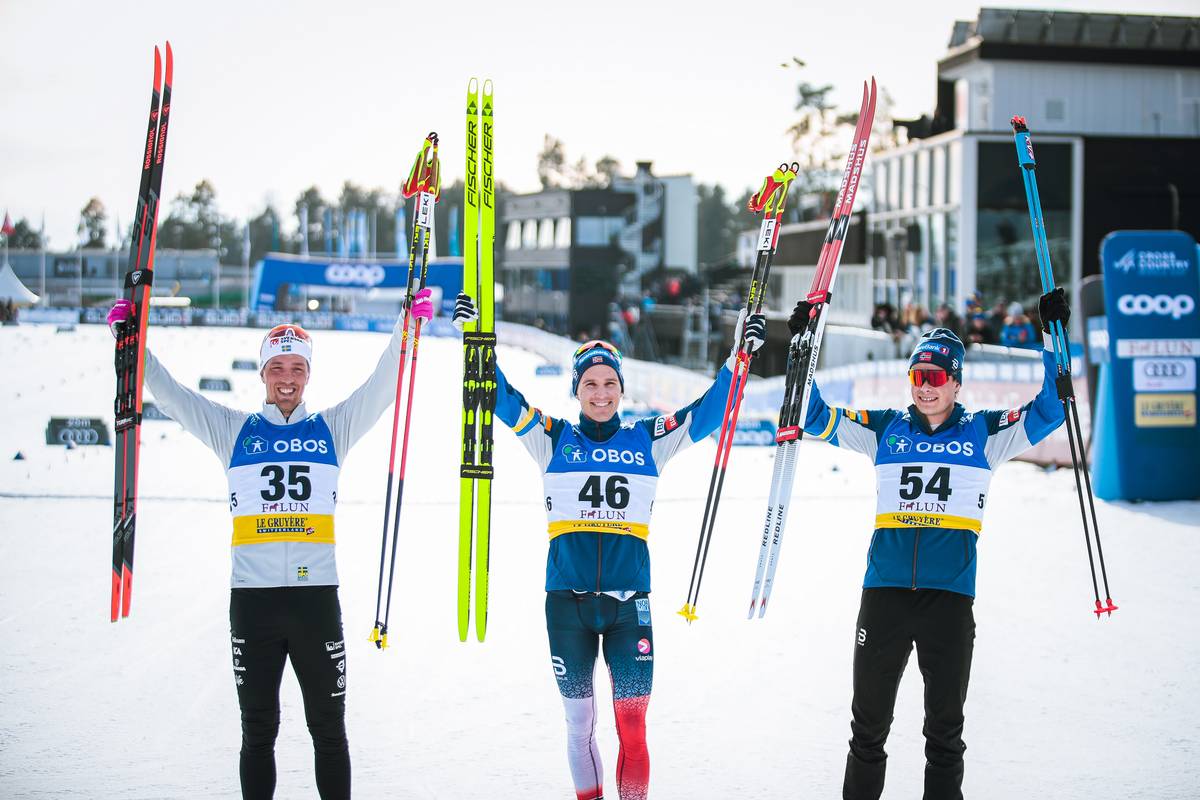
Falun’s 15 k skate podium: Didrik Tønseth (NOR) took the win ahead of Calle Halfvarsson (SWE) and Harald Østberg Amundsen (NOR). (Photo: NordicFocus)
Expanding on the conservative start – though the eventual podium athletes would simply reshuffle themselves throughout the race, the remainder of the top-10 saw some changes, like France’s Clement Parisse falling from fourth place at the halfway mark to 8th at the finish, and two Finns, Remi Lindholm and Iivo Niskanen, dropping from fifth and seventh at the first lap to 14th and tenth at the finish.
Meanwhile, the seemingly more patient starters, like Martin Løwstrøm Nyenget, who won last weekend’s 50 k classic at Holmenkollen, were climbing the rankings at time checks. Nyenget was in eighth at the half, before ascending to fifth at the finish (+23.6), just behind his teammate Hans Christer Holund, who took fourth (+21.2).
Both Patterson and Ketterson exemplified this tactic also, knocking off three spots each between the halfway mark and the finish. Propagating a banner day for North America, Canada’s Olivier Léveillé was also steadily climbing the ranks, moving up from 16th at 7.5k to finish 9th (+48.9). Léveillé’s teammate Antoine Cyr had skied up from 37th at the half to finish 25th (+1:42.3), while fellow Canadian Phillippe Boucher took 29th (+1:45.0) as the third member of his team inside the top-30.
Canada’s Antoine Cyr skis to 25th in Falun’s 15 k free. (Photo: NordicFocus)
While Patterson was 15th in Falun last year, and has aforementioned strong results on championship courses like this one, Patterson said in a post-race call that the venue has actually been a challenge for him through his career. Though it’s a championship course, it lacks the high altitude factor of Zhangjiakou, where Patterson thrived, and has just one major climb, the signature “Morderbakken” which rises 65 vertical meters over the course of roughly 0.6 k. Gaining from his experiences racing on this course, Patterson shared what he’s done to solve the puzzle.
“A lot of my approach today was trying to find some of the same feelings as last year, which was a lot of pushing hard, working through all the transitions. There’s a lot of time out there — beyond Morderbakken, there’s a lot of twisting down hills and gradual flats where it’s easy to lose time. But if you’re on form and thinking about it all the time, it’s a good place to gain time.”
Scott Patterson takes 7th place in the 15 k individual start skate in Falun. (Photo: NordicFocus)
Patterson also shared that he was unsure how his form would be today, as he was carrying fatigue from his performance at the Holmenkollen, which he identified as below his expectations.
“I started questioning my fitness. So it was nice to turn that around today with a good race and actually remind myself that I can ski well again and also appreciate a good distance skate race.”
Overall, the season has been one of high highs and low lows for the 30-year-old. A late-fall broken wrist inhibited his ability to capitalize on the fitness he built over the summer, along with his early-season results, which would be critical for making the 2022 Olympic team. Patterson discussed the turning point of his season, which will end on a high note.
“[I hit a] big turning point going into nationals, where I had a lot of pressure, but I felt like I was actually starting to find my form and race well. So that was one big point, just coming into nationals and actually pulling out those results to make the Olympic team. But also, just going into the Olympics, I I had a really good training block in Bozeman. I was staying with my parents instead of going over to Livigno, like a lot of the US Olympic team. And I think that was really productive for me getting some altitude training, but also just keeping the stress low, which really helped going into the Olympics.”
Here’s the full interview with Patterson, including non-race season highlights and how a trivia night in Lahti helped bring the North American contingent closer together, making today’s results even more exciting for Patterson to be part of.
Adam Martin pushes to the line at the finish of the men’s 15 k individual start skate in Falun. (Photo: NordicFocus)Canada’s Xavier McKeever down the home stretch in the men’s 15 k free in Falun. (Photo: NordicFocus)
Outside the Top-30 for the U.S., Crafttsbury’s Adam Martin skied to 44th (+2:20.9), while Logan Hanneman finished 52nd (+2:58.4), and Peter Holmes took 68th (+4:20.0). For Canada, Thomas Stephen was 61st (+3:32.2), while Xavier McKeever was 62nd (+3:36.9).
Post-race interview with Matt Whitcomb:
With World Cup individual racing now complete for the 2021/22 season, awards for both the overall and distance champions were handed out today in Falun.
Though he was 10th today, Finland’s Iivo Niskanen ended his season with 493 points, overtaking previous leader Alexander Bolshunov (RUS) to win the distance standings. Bolshunov remained in second, trailing by 75 points. After a remarkable Olympic run, Bolshunov missed the final two distance races on the World Cup following FIS’ ban of Russian and Belarusian athletes on March 1st. Also unable to compete in the final two World Cup distance events after contracting COVID-19, Johannes Høsflot Klæbo finished third, at an 80 point deficit.
Finland’s Iivo Niskanen is the 2022 World Cup distance champion. (Photo: NordicFocus)
With Niskanen still the only podium member present to accept his awards, this leaderboard was reshuffled for the overall standings. Having won the 2021/22 Tour de Ski and consistently proved his range beyond the sprint course, Klæbo ran away with the overall World Cup victory to finish with 1375 points. He’s had some cake, but receiving the crystal globe will have to wait for the time being.
Bolshunov held his ground in second place, 497 points back, while Niskanen took third in the overall standings, 631 points behind Klæbo.
A Norwegian coach accepts the overall World Cup crystal globe on behalf of winner Johannes Høsflot Klæbo. (Photo: NordicFocus)
You can expect more analysis on the seasons of these World Cup champions, but first, we’ve got one final day of World Cup racing on deck. The final day of racing in Falun will feature a mixed-gender 4 x 5 k relay in the morning, followed by a mixed team sprint in the afternoon.
After officially canceling the World Cup Finals scheduled for Tyumen, Russia on February 25th the International Ski Federation (FIS) announced in a brief press release today (see below) that no replacement venue has been found, and thus the upcoming three-day race weekend in Falun, Sweden will instead absorb the event, ending the season one week prematurely.
No schedule changes have been made to the event in Falun, leaving a classic sprint, a 10/15-kilometer skate, and two new mixed gender events, a relay and a team sprint, left to conclude the 2021/22 race season.
The cancellation of the final weekend of World Cup racing solidifies Johannes Høsflot Klæbo (NOR) as the 2021/22 World Cup overall winner. (Photo: NordicFocus)
In terms of overall athlete rankings, these mixed events are not World Cup point scoring opportunities. This means a maximum of 300 World Cup points remain on the table following this weekend’s races at the Holmenkollen, assuming the point-schedule planned for the World Cup Finals is applied to the race weekend in Falun: 50 points each for the individual sprint and distance races, plus a maximum of 200 bonus points for the overall winner of the weekend. It has not yet been made clear how the mixed relay and team sprint will factor into determining the overall winner of this year’s World Cup Finals for men and women.
As such, Johannes Høsflot Klæbo (NOR) will win the men’s overall World Cup given his margin of greater than 400 points to the next competitor. In the women’s standings, Natalia Nepryaeva (RUS) currently stands 252 points ahead of Jessie Diggins, and 285 points ahead of Ebba Andersson (SWE). As the Russian team has been banned from remaining competitions, Nepryaeva has no further opportunities to increase her point totals, instead waiting for the outcome of the remaining World Cup events to decide her fate.
Sweden’s Maja Dahlqvist leads the sprint standings by 155 points over Anamarija Lampic (SLO), while Klæbo leads the men’s standings by 95 points over Richard Jouve of France. While these standings will not change given there is one event remaining worth just 50 points, the distance standings are less certain.
Heading into the 30/50 k races at the Holmenkollen in Oslo, NOR, this weekend, Therese Johaug leads the women’s distance standings by 17 points ahead of Frida Karlsson and 107 points to Andersson, both of Sweden. Alexander Bolshunov (RUS) leads the men’s distance standings by 5 points ahead of Klæbo, who may not compete again this season as he recently tested positive for COVID. Next is Iivo Niskanen of Finland, a favorite for this weekend’s 50 k classic, sitting 84 points back.
Natalia Nepryaeva celebrates her win of the 2021/22 Tour de Ski, helping land her atop the overall World Cup standings. (Photo: NordicFocus)
World Cup racing resumes tomorrow with the women’s 30 k classic, followed by the men’s 50 k classic on Sunday. Stay tuned for FasterSkier’s coverage of these races.
(Press Release) FIS Cross-Country World Cup finals to take place in Falun (SWE)
FIS Cross-Country together with various National Ski Federations evaluated a possible replacement of the cancelled World Cup event of Tyumen (RUS). Despite big efforts and interest of various National Ski Federations, no replacement for the World Cup final events was found.
This means that the scheduled World Cup event in Falun (SWE) from 11th to 13th March 2022 will be the final events of the FIS Cross-Country season 2021/22. The schedule will not be adjusted and follow the originally planned competition formats.
Click here for the Falun World Cup weekend schedule.
On February 26th, the Norwegian Ski Association (NSA) released a statement indicating that in light of the nation’s recent invasion of the Ukraine, Russian participation was not welcome at the upcoming World Cup sprint races in Dramman or the storied Holmenkollen distance races outside of Oslo. In addition to these cross country events, Norway is scheduled to host competitions in alpine, nordic combined, and ski jumping, including the World Ski Flying Championships in Vikersund.
A press release shared by Norwegian news source NRK stated: “The board of the Norwegian Ski Association has today discussed the situation related to Russia’s invasion of Ukraine, and how this affects the upcoming World Cup races and the world championship in Norway. The Norwegian Ski Association’s message to Russia and Russian athletes is crystal clear; We do not want their participation!”
NSA president Erik Røste told NRK that a request had been made to the International Ski Federation (FIS) to officially bar the Russian program from participating, but as of Saturday, FIS had not taken action to comply with the request, instead pointing to the official cancellation of remaining FIS events held in Russia.
“The attack on the Ukrainian people and the great suffering we see pictures of now, the sport can not remain passive and be neutral,” Røste said of the request. “Therefore, the board of the Norwegian Ski Association was clear that this must have consequences beyond what has already been decided. Therefore, we will send a clear and distinct signal to FIS that we do not want Russia and Russian athletes to participate in competitions in Norway in the coming weeks.”
Ultimately, it is up to the board of FIS whether Russia will be allowed to compete in the remainder of World Cup events. A response NRK received via email today stated:
“The FIS board has been clear in its approach to Russian athletes in all FIS competitions. To ensure fair and inclusive competitions at all FIS events, national federations and local organizers should not exclude athletes on the grounds of gender, race, nationality or sexual orientation.”
Alexander Bolshunov (RUS) wins the 2020 Holmenkollen 50 k in the fog, ahead of Norway’s Simen Hegstad Krüger. (Photo: NordicFocus)
As such, no Russian athletes or coaches have been denied entry to Norway, and Stefan Marx, the general manager of Holmenkollen ski festival, indicated there is little more that the organizers can do to prevent Russian participation in the events.
“We must let them participate,” Marx said to NRK. “Those who FIS and the Norwegian Ski Association say must be allowed to participate. We do not have the authority to refuse anyone to participate, but we have supported the Ski Association and the Sports Association’s position. It is up to FIS or the authorities to decide, but we are clear in our support for the Ski Association’s proposal that Russian athletes are not wanted due to violations of international law that have been committed.”
After flying from Helsinki following the Lahti World Cup races, Russian teams have begun to arrive in Norway. When pressed by the media upon his arrival, World Cup distance leader and favorite for the upcoming 50 k classic at the Holmenkollen, Alexander Bolshunov chose to remain silent. NRK did, however, receive comments from multiple Russian coaches, including head coach Marcus Cramer who felt that sport and politics should be kept separate.
“What do sports and athletes have to do with this situation? It’s really tough. I just get sad that the Norwegian association thinks like that. We really have a good communication between us. With everyone who works there. It’s sad to hear this, especially when they take it to the press and not us first,” said Cramer.
Another Russian coach, Jegor Sorin, who had been working at the Junior/U23 World Championships in Lygna, NOR and planned to join the Russian team in Oslo, echoed that Russian athletes should not be held accountable for the
“I am very upset that the Norwegian association wants this,” Sorin told NRK. “I can understand that no one wants to travel to Tyumen for the World Cup, but I do not know what happens to us… We are Russian athletes. We are here, we are not in any war. We are athletes, not soldiers. Maybe they think we have weapons. We want peace and for me this is very strange.”
Alexander Bolshuonv is photographed with his four Olympic medals from the 2022 Games, with one event remaining. He would leave the Games with three gold medals, and a total of nine Olympic medals including those won in 2018. (Photo: NordicFocus)
Though the Russian coaches focused on a separation between sport and politics, others have pointed out the direct ties between sporting success and military recognition. Used as an example, Bolshunov and Denis Spitsov were promoted to the rank of captain in Russia’s National Guard in recognition of their success during the 2022 Olympics. Bolshunov, who has earned a medal in each of his nine Olympic appearances, including three gold medals in Beijing, received additional honors in the form of the Alexander Nevsky Order, given in recognition of “special service for the fatherland.”
FIS cross-country committee leader, Vegard Ulvang told NRK, “Russian athletes are [military] officers. This makes the symbolic value [of their participation] even greater.”
A similar statement was made by Global Athlete representative and former U.S. Ski Team athlete Noah Hoffman.
“While I feel for the individual athletes, all Russian skiers should be banned from the FIS Cross Country World Cup for the rest of the season,” Hoffman tweeted. “Their results are used to drum up nationalism and bolster the Russian State. Allowing them to compete aids Russia. #StandWithUkraine.”
Ulvang is urging a stronger response from the Norwegian Ski Federation, suggesting that they relinquish the FIS World Cup status of the events at the Holmenkollen in order to gain the authority to prohibit Russian participation.
Jan Petter Saltvedt, a Sports Commentator for NRK described Ulvang’s statements as a “moral ultimatum.”
“Ulvang demands an open rebellion from NSF against his own superiors,” Saltvedt said. “And he should get it. Vegard Ulvang puts so much pressure on the Norwegian Ski Association that they can not help but act… At the same time, he expresses a very strong and clear criticism of FIS, where he himself is one of the powerful committee leaders, but still does not feel he is heard at all.”
Norwegian athletes who have been asked for comment have given mixed responses, often acknowledging the complexity of the issue and whether the athletes themselves should be at fault for government decisions.
Among those with a clear stance, Erik Valnes spoke of disallowing Russian participation. “There is a heavy symbolism in it. It would send a signal. Since [Bolshunov] is [a captain of the Russian National Guard], they have already mixed sports and politics in a way. It is difficult. It is a great pity that it will be like that.”
Erik Vales and Johannes Høsflot Klæbo earn gold in the classic team sprint during the 2022 Beijing Games. (Photo: NordicFocus)
Johannes Høsflot Klæbo also spoke in support of the NSA urging FIS to remove Russian athletes from competition.
“As an athlete, you want the best to start. We train all year to compete and then you want the best to participate,” Klæbo said to NRK. “At the same time, I support the attitude of the ski association now. There is no doubt about what is happening in Ukraine, and Russia must be condemned. I strongly condemn it and I think it is good that the association takes a stand.”
Therese Johaug acknowledged that athletes may not have direct involvement in the military actions of Russia, speaking instead to their role in representing their country through sport.
“I feel sorry for the athletes, first and foremost, I understand that they have nothing to do with this,” Therese Johaug told NRK after narrowly winning Lahti’s 10 k classic over Russian Natalia Nepryaeva. “But on the other hand, I think it is completely wrong. They front their country and the flag both on the chest and on the forehead. And that a country should also ravage the sports arena and fight for victories and front their country in the situation we are in – I think that is completely wrong.”
Therese Johaug voices her thoughts on Russian World Cup participation following her win in Lahti’s 10 k classic. (Photo: NordicFocus)
The stance is not unanimous amongst the Norwegian team. Sindre Bjørnestad Skar, who took third in Lahti’s freestyle sprint, spoke to the unfairness for Russian athletes.
“Of course, I am 100 percent against everything that is happening between Russia and Ukraine now. It is completely inconceivable. But then I also do not think that the fact that they have a Russian passport, means that they should be punished and deprived of the opportunity to do their job. In a way, I think that is a bit unfair too,” Skar told NRK.
For the time being, no further changes in Russian participation have been reported. FasterSkier will continue to follow this story as it evolves over the next few days. World Cup classic sprint races are currently scheduled in Drammen Thursday, with the women’s 30 k mass start classic in Oslo happening Saturday March 5th, followed by the men’s 50 k on Sunday.
This World Cup coverage is made possible through the generous support of Marty and Kathy Hall and the A Hall Mark of Excellence Award. To learn more about A Hall Mark of Excellence Award or to learn how you can support FasterSkier’s coverage please contact info@fasterskier.com.
Racing continued in Lahti, FIN with the men’s 15-kilometer classic individual start. The field was smaller than usual, with just 68 starters contrasting the 104 racers in the 15 k skate Davos in December, the last World Cup prior to the Tour de Ski. With the seeded athletes wearing the even-numbered bibs 40 and upward, the race would be watching the final starter, Johannes Høsflot Klæbo (NOR) to see if he will be able to hold off crowd-favorite, Iivo Niskanen (FIN).
Iivo Niskanen (FIN) leads the way during the 15 k interval start classic in Lahti, FIN. (Photo: NordicFocus)
That Finland was happy to have its Olympic champion back to race a 15 k classic on home turf was readily apparent as he strode through the wooded course. Chants of “Iivo! Iivo! Iivo!” matched his metronomic tempo, while Finland’s flag waved him along.
Starting near the front of the seeded group in bib 46, Niskanen set the bar through his first lap, holding a narrow lead of 0.4 seconds over Martin Løwstrøm Nyenget of Norway at the 5 k mark. Ilia Semikov and Alexander Bolshunov of Russia crossed in third (+0.8) and fourth (+1.1), while William Poromaa of Sweden rounded out the top 5 (+2.4).
Starting 11 minutes behind the Finn, Klæbo lucked into a ride as Niskanen lapped through the stadium just as the Norwegian took to the course. Accelerating to catch the Finn early, Klæbo and Niskanen pushed the pace at the top of the standings for the next 10 k, Niskanen making the winning pace clear from 5 k ahead.
Starting 11 minutes apart, Johannes Høsflot Klæbo (NOR) caught Iivo Niskanen (FIN) after his first lap, the Finn becoming a carrot for the Norwegian through his first 10 k of racing. (Photo: NordicFocus)Johannes Høsflot Klæbo (NOR) follows Finnish favorite Iivo Niskanen during the 15 k individual start classic in Lahti, FIN. (Photo: NordicFocus)
At the 10 k checkpoint, Klæbo was able to match pace with Niskanen to put himself in the lead with a +7.5 second advantage. Niskanen pulled away from Klæbo at the 11 k mark to make his final push toward the finish. Poromaa was sitting in third (+7.6), with Nygent and Bolshunov rounding out the top 5 in fourth (+9.2) and fifth (+10.1).
As Niskanen made his way to the finish, the crowd erupted. His name echoed through the packed stadium, as he threw his boot to stop the clock at 33:06.5.
Iivo Niskanen (FIN) makes his way into the stadium at the finish of the 15 k individual start classic in Lahti. (Photo: NordicFocus)
With each subsequent finisher, the crowd increased its energy while Niskanen waited in the leader’s chair, a local win looking more and more likely. The final domino was seeing where Klæbo would fall as he crossed the finish line.
Fading in his final lap, Klæbo quickly lost his advantage, sliding behind both Niskanen and Poromaa at the 13.7 k checkpoint. Starting the lap 7.5 seconds ahead of Niskanen, Klæbo had already lost nearly 23 seconds, now sitting 14.7 back on the Finn with just over a kilometer of racing to go. The question then became, can Klæbo get Poromaa?
Sipping a Red Bull and watching the clock, Niskanen watched Klæbo enter the stadium well off the Finn’s mark. Reveling in the excitement of his eighth 15 k classic victory on the World Cup, this time in front of his home crowd, the Finn hopped down and raised his arms into the air for a cacophony of cheers, before congratulating his opponent, Klæbo, on an exciting and hard-fought race.
Johannes Høsflot Klæbo (NOR) throws his boot for second place in the 15 k interval start classic in Lahti, FIN. (Photo: NordicFocus)Winner Iivo Niskanen (FIN) congratulates Johannes Høsflot Klæbo (NOR) following a 15 k individual start classic that saw the two working together for 10 k. (Photo: NordicFocus)
Klæbo held narrowly held on for second place (+17.6), just ahead of 21-year-old Poromaa who finished in third (+18.0). Alexey Chervotkin (RUS) crossed the line in fourth (+22.0) after sitting just outside the top 5 for a majority of the race. His teammate, Bolshunov rounded out the top five (+24.4).
“It was great,” Niskanen told FIS at the finish. “Couldn’t believe that it’s so nice to ski in front of this audience, so I enjoyed every moment of the course. It was one of the most emotional races, I have to say, because there are so [many] spectators here in Lahti today.”
All of Niskanen’s World Cup victories in the 15 k distance have been in classic, and he’s gone four for four this season. He is now an Olympic champion in the event, adding to his collection of Championship gold medals in the event which began with a win in the 15 k classic at the 2017 World Championships on this course in Lahti.
“I get a bit nervous during the race, because I fell down in the first lap,” Niskanen said of his confidence in today’s race. “Then we skied together with Johannes, and I think he spent a little bit too much energy in the first lap, so it was a tough finish, but at the end I was feeling quite fresh, so it was a nice last lap. We have done a lot of work with the skis now and it seemed that they worked really good in Beijing, and now it’s continuing [here] in Scandinavia. So really happy at the moment that I could make the races like this.”
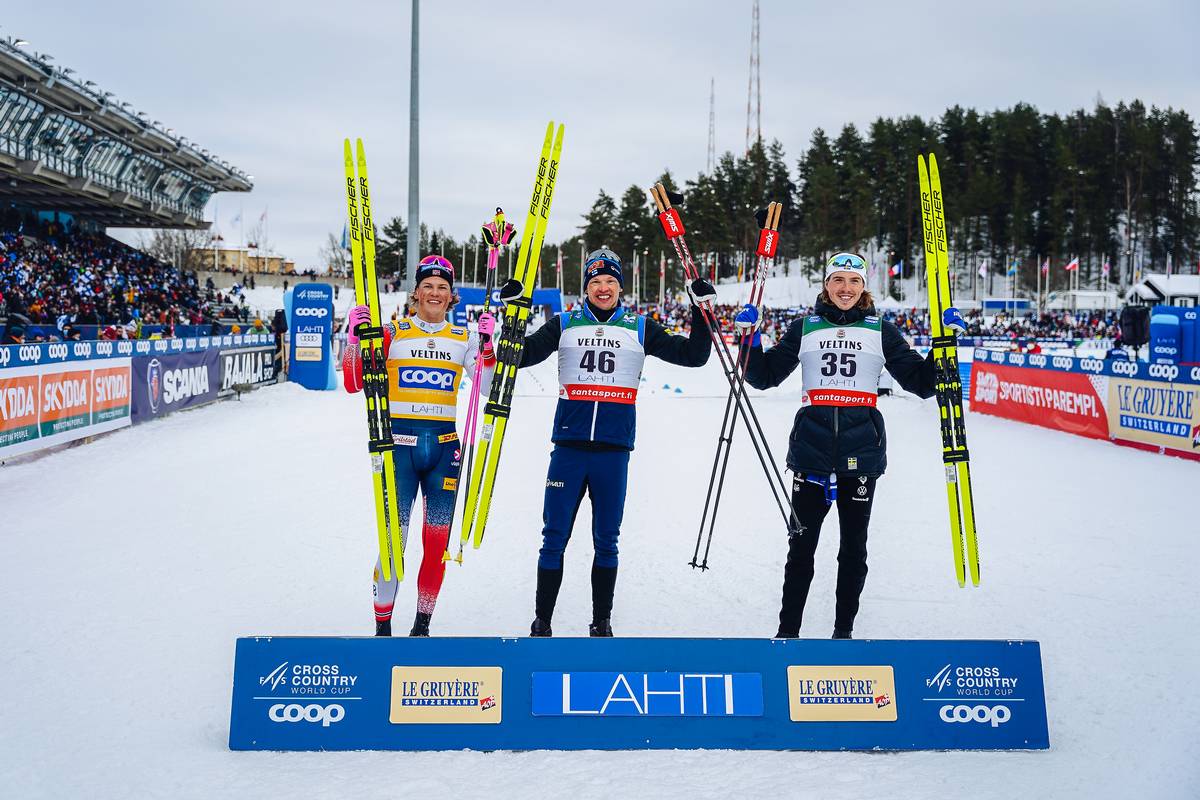
The men’s 15 k classic podium in Lahti: Iivo Niskanen (FIN) took the win in his signature event, ahead of Johannes Høsflot Klæbo (NOR) and William Poromaa (SWE). (Photo: NordicFocus)
The FIS interviewer gave a nod to Niskanen’s hard work through the season, but he smiled as if to say this week may not have matched that ethic.
“I have to say, I have been so tired after the Games. We have partied too much so now it’s time to focus more on sport, and let’s see. Hopefully I can manage to win again next weekend [at the Holmenkollen].”
Antoine Cyr races the 15 k interval start classic in Lahti, FIN. (Photo: NordicFocus)
The Canadians had a strong day with two in the top 30. Antoine Cyr finished in 23rd (+1:46.5) while teammate Olivier Léveillé crossed the finish line in 29th (+1:59.1).
On the heels of a strong classic team sprint performance in Zhangjiakou, Cyr was fighting in and out of the top 20 all day. Through the 5k mark, Cry was 19th (+19.3), sliding back to 24th (+1:03.1) at the 10 k mark. Cyr was 11th and 12th in the opening distance races in Ruka in November, and won the 15 k classic during the Canadian Olympic Trials in January.
“[It was a] good day for me today,” Cyr wrote to FasterSkier in a post-race email. “It’s a really fun course and such a historic venue. I felt good and skied well. I thought I had a little bit more in me, but it was a competitive field out there and I missed the top 20 by not much. I am really happy with the result and will see how the shape is going to be for the races to come.”
Also racing for Canada, Rémi Drolet finished in 42nd (+2:41.9), while Philippe Boucher crossed the line in 59th (+3:26.9) and Leo Granbois took 62nd (+3:38.9).
Olivier Léveillé races the 15 k interval start classic in Lahti, FIN. (Photo: NordicFocus)Scott Patterson races the 15 k interval start classic in Lahti, FIN. (Photo: NordicFocus)
The top American was Scott Patterson, who was just outside the top-30 World Cup point margin finishing in 33rd (+2:11.4). Zak Ketterson was 41st (+2:41.1), while Kevin Bolger took 49th (+2:59.9), and Zanden McMullen skied to 51st (+3:04.5), returning to the World Cup following races at the ongoing 2022 U23 World Ski Championships in Lygna, NOR. The first weekend of World Cup starts for Logan Diekmann saw him cross the line in 65th (+4:30.7).
Fresh off of the 2022 U23 World Ski Championships, Zanden McMullen rejoins the World Cup for the 15 k interval start classic in Lahti, FIN. (Photo: NordicFocus)
Following the races, US Ski Team head coach Matt Whitcomb provided insights into both the men’s and women’s races in Lahti, as well as sharing the news that Östersund, SWE may become the host to the initially cancelled World Cup Finals that had been scheduled for Tyumen, Russia. Whitcomb also speaks to the “Olympic hangover” that can make hard for athletes to perform at their best the weekend following the Games, and gave a shoutout to the athletes racing at World Juniors in nearby Lygna.
This isn’t a spoiler, even if it spoiled some of the glory Saturday: Organizers shortened the Olympic men’s 50 k to a 28 k skate. People were mad; the athletes still raced and delivered a good show. We’ve got our own show here, featuring guest star Kris Freeman, the retired American Olympian.
Alaska’s Scott Patterson threw down the best Olympic result for a U.S. man in nearly a half-century, too. We break that down, plus the Russians and Norwegians on the podium, and we’ll have one last Olympic podcast after the women’s 30 k skate tomorrow.
This World Cup coverage is made possible through the generous support of Marty and Kathy Hall and the A Hall Mark of Excellence Award. To learn more about A Hall Mark of Excellence Award or to learn how you can support FasterSkier’s coverage please contact info@fasterskier.com.
There were a number of stories to unpack during the men’s 50-kilometer mass start free, which was changed last minute to 28 k due to extreme weather conditions in Zhangjiakou. You’ve got Alexander Bolshunov leading the charge to collect a third gold medal of the Games, continuing his streak of nine Olympic medals in nine Olympic appearances. Bolshunov was followed by his teammate Ivan Yakimushkin, with all four members of the Russian Olympic Committee (ROC) finishing in the top six, interrupted only by two Norwegians, Simen Hegstad Krüger and Sjur Røthe, the first of whom earned bronze in his first Olympic appearance following a COVID-19 detention in a hotel room in Seiser Alm, Italy.
But let’s get one key story to the front off the bat: The only American on the start list for the final men’s event of the 2022 Beijing Olympic Winter Games was Scott Patterson, and he skied to eighth place, just 26.9 seconds shy of a medal. It’s the second best result in American men’s cross country ski history, only surpassed by Bill Koch’s silver medal in 1976. That’s the best result in almost 50 years.
Scott Patterson tucks into the lead group, on the tails of Alexander Bolshunov (ROC) and Sjur Røthe (NOR). (Photo: NordicFocus)
Let’s rewind.
The news of the change in time and distance arrived just hours before the start of the race, with the following message from the organizers: “Due to strong winds and the resulting extreme conditions on course, the distance of the originally planned 50km will be shortened to 30km. The decision was taken in regards to the athletes safety, to reduce the time of exposure of athletes in extreme conditions.”
While there were various opinions on this change, which we’ve covered separately, there’s no getting around the fact that the race distance was slashed nearly in half. Nonetheless, as the lead group moved in and out of the wind, finding shelter on the leeward side of hills and under the protection of treed sections, the four lap course skied like a long-distance event.
Shortened due to extreme weather, the men’s 28 k mass start freestyle is underway in Zhangjiakou. (Photo: NordicFocus)
At the end of the first lap, the top-30 were separated by less than five seconds, thinning to a 13-man pack by the end of the second lap, and a group of 10 by the end of the third, with an 11 second gap to the first chase group.
Perhaps the only truly noteworthy moment at this point in the race was the departure of Norway’s Johannes Høsflot Klæbo, who won gold in both sprint events – the individual freestyle and the classic team sprint – while also collecting a silver medal in the men’s relay and bronze in the 15 k classic. Klæbo later reported that he was struggling with a stomach illness and had spent more of the night prior to the race in the bathroom than he had been sleeping.
“I thought I would’ve regretted it if I didn’t give it a try but now I’m standing here and it didn’t work out on the whole,” Klæbo told the media.
He said it was “sad” pulling out of the race, but will focus on leaving the Games with his best Olympic distance results.
“I’ll definitely bring with me what’s been positive. What makes it feel more annoying is that my shape has felt better and better and I’ve actually felt that I’ve had a good energy today too. Then the stomach started to speak up and then it got very far to make it to the finish line.”
Johannes Høsflot Klæbo (NOR) dropped out of the 28 k mass start free after his third lap. (Photo: NordicFocus)
The race for medals truly began in the final lap. With Bolshunov and Krüger each surging to thin the lead group, Sweden’s William Poromaa and France’s Maurice Magnificat began to fall off the back. Patterson was tucked into seventh, working with Clement Parisse (FRA) and Denis Spitsov (ROC) to maintain contact and respond to the accelerations of the front.
Simen Hegstad Krüger (NOR) leads the men’s 28 k freestyle alongside the ROC’s Ivan Yakimushkin (bib 3). (Photo: NordicFocus)
Over the final 5 k, Bolsunov kept the pressure on, looking relaxed as he tried to create space between himself and Krüger, who had been tucked onto his tails, matching him push for push. With them was Yakimushkin, the three skating in tandem as the finish line drew nearer.
At 24 k, the leaders had only a few seconds on Patterson’s chase group, but when they hit the 27.2 k checkpoint, the gap had drastically expanded. Artem Maltsev (ROC) and Røthe were still just a few seconds back, but Patterson, Parisse, and Spitsov were now over 20 seconds behind, with a 20 second cushion ahead of the next chasers.
Alexander Bolshunov (ROC) races to his third gold medal of the 2022 Olympic Winter Games during the men’s 28 k freestyle. (Photo: NordicFocus)Norway’s Simen Hegstad Krüger leads the charge during the men’s 28 k mass start freestyle. (Photo: NordicFocus)
Up the final long climb, Krüger would not yield, holding his ground immediately behind Bolshunov. Tucked low into the downhill, the three stayed together, with Bolshunov upping the tempo and power as they accelerated out of the curves and over the gentle rises that interrupted the sweeping descent.
As the three hit the final rise into the stadium, Bolshunov began to break away, with Yakimushkin using Krüger’s draft to slingshot into second with 500 meters to go.
Entering the stadium, the gold medal looked to be predetermined. With a fist pump as he made his way around the final bend into the finish lanes, Bolshunov V2ed powerfully down the home stretch, crossing the line with his hands raised in 1:11:32.7.
Alexander Bolshunov (ROC) celebrates his win in the 28 k mass start freestyle. (Photo: NordicFocus)Ivan Yakimushkin (ROC) takes silver in the men’s 28 k free, while Simen Hegstad Krüger finishes third for Norway. (Photo: NordicFocus)
Holding his advantage through a final sprint to decide silver and bronze, Yakimushkin crossed the line second (+5.5) with Krüger taking third (+7.0) for Norway.
Behind, Maltsev came to the line fourth (+10.7), followed by Røthe in fifth (+15.8).
Spitsov led the now-spread chase group to the line, taking sixth (+26.2) ahead of Parisse in seventh (+28.8) and Patterson eighth (+33.9).
Alexander Bolshunov (ROC) wins his third gold medal of the 2022 Games in the men’s 28 k mass start freestyle. (Photo: NordicFocus)
Nine Olympic medals. Three gold. Four silver. Two Bronze. Five from the 2022 Olympic Winter Games.
“Five? Really?” Bolshunov counted on his fingers as he exuberantly celebrated the golden ending to his Beijing Games appearance. “Five medals, three gold, it is something unbelievable because before the season I set the goal of two gold medals and now I have three. I’m just unbelievably happy. The emotions overfill me. This is above all praise to win these medals here. It’s very cool, and in every race that I took part in.”
Alexander Bolshunov (ROC) receives a cozy Olympic themed gift following his win in the men’s 28 k freestyle. (Photo: NordicFocus)
Regardless of the color of the medal he earned, Krüger said his real victory was simply making it to Zhangjiakou and having the opportunity to race at the Games. Though his illness stayed mild and he stated that it did not impair him in today’s race, he had still spent 10 days in isolation in his hotel room, and remained in isolation while the opening event of the Games, the men’s 30 k skiathlon, was underway. Krüger was the defending Olympic champion in the event after taking gold in 2018. He went on to win a silver medal in the 15 k skate, and help Norway to gold in the men’s relay.
During the 2021 World Championships, Krüger earned two silver medals, first in the 30 k skiathlon and the next in the 15 k free, with a bronze in the 50 k skate. He was one of the top distance skiers on the World Cup heading into the 2022 Games, shouldering Norway’s medal hopes; the nation experienced collective heartbreak following the news of his positive COVID test in late January.
“To be able to go home with an Olympic medal, that’s a huge victory for me and an amazing feeling,” Krüger said after the race. “I’m really proud of what I have achieved today; from not thinking I would be able to ski one single competition to being able to get everything out here today.”
The podium of the men’s 28 k freestyle: Alexander Bolshunov (ROC) took the win ahead of Ivan Yakimushkin (ROC) and Simen Hegstad Krüger (NOR). (Photo: NordicFocus)
For Patterson, eighth place meant achieving the goal, though he admitted being in the hunt for positions even closer to the podium leaves him hungry for more.
“I’m happy,” he told FasterSkier in the mixed zone. “I came in wanting the top 10 and got it today. It’s a little tantalizing to be in eighth and 33 seconds back from the win.”
He continued that the “dream” of a medal crossed his mind as he found himself inside the lead group in the final lap, but he could feel the fatigue accumulating in his body and recognized that he was finding it hard to respond to the tactical moves of the eventual medal winners. “I don’t think it was exactly realistic to fully believe it was happening today,” he said frankly.
Scott Patterson skis to an Olympic career best with 8th place in the 28 k mass start freestyle. (Photo: NordicFocus)
Patterson’s result, while historic, should not come as a surprise to American cross country ski fans. He was 11th in the skiathlon at the opening of the Games, and has made his ability to come on form and earn season-best results during Championships well known over the last four years.
During the 2018 Games in PyeongChang, he put together breakout performances, skiing to 18th in the skiathlon, 21st in the 15 k skate, and 11th in the 50 k classic. He raced into the top-30 in each individual distance race of the 2019 World Championships, with a 23rd place finish in the 50 k free. Improving on these results in the 2021 World Championships in Oberstdorf, Germany, Patterson was 14th in the skiathlon, 27th in the 15 k skate, and 10th in the 50 k mass start classic.
And, he likes going long. He said he would have preferred another 20 k today – “I wanted the grinding instead of the punches” – and might have even been able to pull off a higher result had the race been longer.
Back in 2016, his first World Cup appearance was in the 50 k classic at the Holmenkollen, which sits above Oslo, Norway. He was 32nd on the day in perhaps the most storied and highly revered cross country ski race on the World Cup. Patterson advanced to 28th the following year, before making a leap into the top-20 to finish 16th in 2018 and 19th in 2019.
Scott Patterson takes a feed during the men’s 28 k free in Zhangjiakou. (Photo: NordicFocus)
From the outside, it can be hard to appreciate the dynamics of mass start racing among the best athletes in the world in the sport. Energy management, tactics, drafting, protecting equipment while the field remains dense in the first lap, which Patterson called “chaotic.”
“You get those lead skiers fighting the wind, and a lot of the back skiers that could just draft in. And there are a few people who definitely don’t have a lot of World Cup experience making a mess out of the pack,” Patterson described.
In his second Olympic appearance at the age of 30, with plenty of World Cup experience, Patterson skied a smart race, telling FasterSkier that he felt “strong” and “relaxed”, while looking to be “in a comfortable position and not [using] too much out of my energy.” He also reported having competitive skis that allowed him to utilize the downhills and stay in the position where he wanted to be.
U.S. Ski Team head coach Matt Whitcomb complemented Patterson on his race execution, telling FasterSkier emphatically that he was “so proud of him.”
Scott Patterson races in the lead group during the men’s 28 k mass start freestyle. (Photo: NordicFocus)
Talking through the race from his vantage point, Whitcomb pointed out that Patterson stayed calm through the congestion in the opening lap, rather than becoming flustered and wasting energy by constantly trying to move up. He also shared how Patterson was able to “wisely” keep himself on the correct side of other racers to utilize the windbreak on unsheltered sections of the course.
“Some incredible skiers ended up on the wrong side of the break and were toast…” Whitcomb explained. “When that happened, I heard a Finnish yelling at a German skier saying, ‘Hey, take me up to them!’ People were desperate to do work together, and so [I’m] very proud of Scott and unsurprised that he was in a tactically wise position.”
Apart from battling the elements, maintaining an optimal position within the lead group is also a skill that requires experience and maturity.
“If you have a pack of 15 guys, of course, it’s easy to follow in a draft in 14th and 15th,” Whitcomb said. “But what you don’t realize is that there’s quite a big accordion effect, so you’re constantly pulsating on the gas pedal. What you saw [today] was Scott moving up into between fourth and seventh, for a large part of [the race], and that ends up being a much more efficient position to ride. Draft is good, but you’re also able to just kind of stay on a steady gap.”
Scott Patterson races to the line, finishing 8th in the men’s 28 k mass start freestyle. (Photo: NordicFocus)
For Whitcomb, Patterson’s eighth place ends the Games on a high note for the American men’s program as a whole.
“This is, this is for sure one of the goals that our men’s program wants: to start breaking through in one of the ultimate races of the Olympics,” Whitcomb shared. “To do that today, under conditions like this, is such a huge success for our program and for Scott and for his club, APU. For all the coaches over the years, Erik Flora that’s worked with him, and the [rest of the] coaches at APU. It’s such a huge success for [Patterson’s collegiate program], the University of Vermont; Alaska Winter Stars where he started skiing; and just so many people have been a part of this incredible journey. And so happy for all of them. But mostly for Scott because he earned this sucker today. It was brutal.”
Rémi Drolet (CAN) skis to 35th in the men’s 28 k mass start skate. (Photo: NordicFocus)
Two Canadian’s raced the 50 k today, with Olivier Léveillé leading the Canucks at the finish in 27th (+4:21.6). 30 seconds back, Rémi Drolet crossed the line in 35th (+4:54.4).
Racing continues tomorrow with the women’s 30 k mass start freestyle, the final cross country event of the 2022 Beijing Olympic Winter Games. At this time, the distance of the women’s event remains unchanged, however, the start was moved up by 3.5 hours to account for the forecasted weather conditions.
ZHANGJIAKOU, CHINA — The 28 kilometers that Alexander Bolshunov raced Saturday was only enough to take him just past the halfway point of the race he’d entered at the Winter Olympics.
But Bolshunov, who competes for Russia, is still going home with the gold medal.
That development is the result of a decision by race organizers to shorten the Olympics’ iconic 50-kilometer marathon event in the face of brutal wind and cold.
But they’re now facing harsh criticism from some competitors, coaches and fans of the sport, who denounced the decision — made just one hour before the start — as avoidable and unnecessary.
“It was an absolutely ridiculous decision,” Andrew Musgrave of Britain, a long-distance specialist, told reporters after finishing 12th. “If you can race 28.4 k, I don’t see why on earth you can’t race 50 k. Cross-country skiing’s meant to be the ultimate test of endurance.”
Andrew Musgrave (GBR) races the abbreviated Olympic marathon, cut to 28-kilometers due to weather conditions in Zhangjiakou. (Photo: NordicFocus)
The International Ski Federation (FIS), which oversees Olympic cross-country skiing, would not comment beyond their statement announcing the change, saying the officials responsible for the change were in meetings after the race.
“The decision was taken in regards to the athletes’ safety, to reduce the time of exposure of athletes in those conditions,” the announcement said.
Conditions at the cross-country skiing venue in Zhangjiakou, the mountain resort area outside Beijing that’s hosting the Olympic races, were extreme Saturday.
Strong winds shuddered windows and blew clouds of snow through the stadium and across the trails; a weather bulletin posted two hours before the race pegged temperatures at 3 F, with winds gusting at 30 mph to produce a wind chill of -21 F. Athletes ended up racing in neck warmers and layers of tape covering their cheeks to protect from frostbite.
Cheeks protected with tape, Scott Patterson (USA) follows Sjur Røthe (NOR) during the men’s 28 k skate. (Photo: NordicFocus)
But forecasters from the Beijing Games’ organizing committee had been predicting difficult conditions for days. The International Biathlon Union moved up its race scheduled for Saturday to Friday, citing low temperatures and strong winds in the forecast.
Athletes in Saturday’s 50-kilometer cross-country race, which was scheduled for 2 p.m., were still girding for a tough race in the cold when organizers sent a bulletin to teams at noon. The update said all options were on the table: “cancellation, rescheduling, shorter distance” or a course change.
The 28-kilometer distance, plus a one hour delay, were announced 45 minutes later.
Reactions were mixed, and a number of athletes and coaches said they understood the decision.
“It’s not ideal. But what is ideal about a day like today?” said Matt Whitcomb, the U.S. Ski Team’s head coach.
Organizers, he added, have athletes’ best interests in mind. “They’ve got a lot riding on their wise choices, and to be a little bit conservative because of the cold and exposure is not a bad thing,” he said.
Scott Patterson, who placed eighth as America’s only competitor, said it felt like a “half-measure” to reduce the race’s length, adding that he would have preferred a delay to Sunday.
Polish cross country skier Dominik Bury races the men’s marathon, shortened to 28 k due to extreme weather at the venue. (Photo: NordicFocus)
But he was also skeptical that running the race at its original distance would have substantially changed the results.
“Those top guys were strong, and they would have been strong with 20 more k,” he said in an interview. “No fault to the organizers. I think they had a tough decision and made a decent call with it.”
Others, though, fell on a spectrum from frustrated to irate.
“Everyone wants to run 50 kilometers. Not 30,” Markus Cramer, one of the coaches for the Russian team, told Norwegian media. “Most teams are not happy.”
Musgrave, the British athlete, called the decision a “f@*king joke” on Twitter, and raced in a headband — not even a hat. Retired Norwegian superstar said the race should have either been postponed or canceled outright. And Petter Skinstad, a Norwegian ski racer and television commentator, said the decision destroyed years of training for athletes that specialize in longer distances.
“Why on earth is a 30 k okay and not a 50 k, and why on earth didn’t they do as biathlon and do the race a day in advance?” he said in a message — a point echoed by Hans Christer Holund, one of Norway’s top finishers in the race.
Norway’s Hans Christer Holund tucks into the downhill during the men’s 28 k mass start freestyle. (Photo: NordicFocus)
Biathlon officials said discussions about moving their race earlier started several days beforehand, with the forecast released by the Beijing Olympics organizers, said Max Cobb, a member of the International Biathlon Union’s executive board and president of the U.S. Biathlon Association.
Cobb, who stressed that he was not commenting on the ski federation’s decision Saturday, said the change in the biathlon schedule was not made lightly.
That’s because Olympic events are carefully sequenced to minimize conflicts in television broadcasts between different sports — and because of the risk that a forecast changes and renders a schedule change unnecessary.
“We really relied on the strong track of the meteorology team. And they’ve been nailing it,” he said.
In the end, and perhaps because the hour-long delay gave the winds a chance to subside, competitors said they didn’t end up feeling especially cold — and could have survived another 22 kilometers of racing.
“In retrospect, we could have raced all 50 kilometers, because the weather improved,” Bolshunov, the winner, said at a news conference after the race. “I didn’t get cold. It was only waiting for the awards ceremony that I got just a little shivery.”
Ivan Yakimushkin, the Russian who won the silver medal in the event, said he didn’t freeze during the race, either.
“I even broke a sweat,” he said.
The ROC’s Alexander Bolshunov (center) and Ivan Yakimushkin (right) race to gold and silver in the men’s 28 k freestyle in Zhangjiakou. (Photo: NordicFocus)
Alexander Bolshunov helps the ROC to a gold medal in the 4 x 10 k relay during the 2022 Olympic Winter Games. (Photo: NordicFocus)
Alexander Bolshunov, the Russian skier who is the odds on favorite to win Saturday’s 50-kilometer freestyle marathon at the Beijing Olympics, may have more on his mind than a momentous ski race: A potential Russian invasion of Ukraine will likely pass near to his childhood home in the rural village of Podyvot’e, in Russia’s Bryansk region.
Bolshunov grew up in Podyvot’e where his father taught him to ski on a pair of green wooden Malyshokas on trails he built by hand in the fields and forests near their home. “I don’t remember my childhood without skis,” Bolshunov has said in an interview.
When Bolshunov was a kid he could travel by ski or otherwise into Ukraine, whose border is only a couple of kilometers from town. That changed in 2014 when Russian forces and Russian backed separatists invaded the Crimea and Donbas regions of Ukraine. Since 2018, Russian men between the ages of sixteen and sixty are banned from entering Ukraine.
Now, with tensions rising as the Russian military surrounds Ukraine, some analysts have pointed to a potential invasion route of Ukraine that would take Russian forces close to Bolshunov’s family home.
A major arterial highway runs through Troebortnoe. On the Russian side of the border it is called the M3 and leads to Moscow. On the Ukrainian side it is the M2 and runs close to Kiev. A Russian invasion would likely need that highway to move forces quickly toward the Ukrainian capital.
The border crossing at Troebortnoe is only about 14 miles from Podyvot’e, separated by fields and a forest that stretches near to the doorstep of Bolshunov’s family home. “Just 500 meters from the house begins a large forest,” said Bolshunov, “Where there are those [loops] that I always run when I go there – 10 k, 15 k.”
The Olympic gold medal relay team: Alexey Chervotkin, Alexander Bolshunov, Denis Spitsov, and Sergey Ustiugov (l-r) (Photo: NordicFocus)
For Bolshunov, this landscape of birch and pine represents the natural idyllics of his youth. “I love to go to the forest picking mushrooms, [and] also fishing if I have enough time.” Bolshunov said in an interview with FIS.
“Childhood memories of the village—strawberries, for which we often went,” recounted Bolshunov. “Sometimes, 10 liters were collected. Another [were] blueberries—it took six hours to collect a bucket of 5-6 liters. Everything grew near our house.”
For the older residents of Podyvot’e, the forest also carries somber memories: A quiet memorial remembers the 182 villagers that were massacred by the Nazis as they hid in the forest.
Whether conflict will arise again in the area remains to be seen. Should Russian President Vladimir Putin decide to invade this weekend, it would mark the second time he has done so in conjunction with the men’s Olympic 50 k race.
Alexander Bolshunov (ROC) celebrates a gold medal performance as his teammate, Sergey Ustiugov, races the final meters of the 4 x 10 k relay. (Photo: NordicFocus)
In 2014, the night before the final cross country race at the Sochi Olympics—the men’s 50k—Putin held an all night meeting at the Kremlin with his security and defense leaders to discuss the annexation of Crimea.
“We finished about seven in the morning.” Putin told a Russian TV documentary as reported by the BBC. “When we were parting, I told all my colleagues, ‘We are forced to begin the work to bring Crimea back into Russia’.”
Four hours later, the men’s 50 k race kicked off in Sochi and the Russian men notoriously swept the event. Putin would fly back in time for the closing ceremonies where the three skiers received their medals before a packed stadium.
The correlation between the Olympics and Russian military adventures is quite direct. At the Sochi Olympics, the Russian medal haul helped boost Putin’s public approval numbers to record highs, and in his all night war room meeting that February, Putin carefully considered secret polling that showed favor to the annexation issue.
In the Netflix documentary Icarus, former RUSADA head Grigory Rodchenkov who helped to orchestrate the 2014 Russian state sponsored doping program, said of the post Olympic invasion of Crimea, “I felt my personal guilt for such [an] event. [If] Russia had [won] less medals, Putin would not be [so] aggressive.”
Alexander Bolshunov (ROC) celebrates victory in the 30 k skiathlon, the first event of the 2022 Olympic Winter Games. (Photo: NordicFocus)
In terms of medal count, the Russian Olympic Committee (ROC) heads into the final weekend in second place. Their medal haul has been bolstered by the cross country ski team which has won a third of all ROC medals. Of those, four have involved Alexander Bolshunov, who at 25 years old has already become the winningest cross country skier in Russian history. He has won a medal in every Olympic race he has entered and is poised to deliver again in the men’s 50 k on Saturday. For his success, he has been nominated by the State Duma to carry the ROC flag at the closing ceremonies.
For Bolshunov’s father in Podyvot’e, the results of his son have meant more than any economic advantage that his career has provided, and Bolshunov Sr. still prepares his ski trails in the hope that his son might make an unscheduled return. “Neighbors think I’m crazy,” Bolshunov Sr. has said. “But my son has such results. This is worth living for. Money is not manna from heaven, I never needed it.”
Bolshunov Sr. has no plans to leave Podyvot’e. “You can’t kick me out of there with a stick,” Bolshunov’s father said in 2018. “As we lived, so we live. We don’t get into politics. Ukraine is nearby, but no one seems to be coming to us from there. Everything is fine.”
Through no fault of Bolshunov’s own, a possible gold medal in the Olympic 50k could help burgeon feelings of confident nationalism in Russia and put his hometown on the frontlines of what could be the largest European war this century. When it comes to the men’s Olympic 50k race, the stakes are often much greater than gold.
This World Cup coverage is made possible through the generous support of Marty and Kathy Hall and the A Hall Mark of Excellence Award. To learn more about A Hall Mark of Excellence Award or to learn how you can support FasterSkier’s coverage please contact info@fasterskier.com.
The team sprint: it’s the youngest event on the Olympic program, having been contested only since the 2006 Torino Games. The event has since become a marquee event in the sport of cross country skiing.
Holding it up as a marquee event, of course, is easier to say coming from the United States. If you tuned into the NBC broadcast, you got the delight of hearing 2018 team sprint gold medalist Kikkan Randall analyze the race where she won the US’s only gold medal in cross country skiing, while her teammate from that race, Jessie Diggins, worked to repeat the Olympic medal feat.
Yes, the team sprint was that race, and we could all revel in that memory as it played out in Zhangjiakou, China on Wednesday.
Competitors surrounded by the colors of the sunset. (Photo: NordicFocus)
Beyond that, though, no other event exemplifies the nuances involved in modern skiing like the team sprint. This is an event that pairs the specialists with the even-more specialized, and has an err of a nordic nerd’s daydream to the team-selection possibilities that arise from doing so.
What if you lined up the two athletes who single-handedly changed a generation of skiers together under one flag? Well, they’d turn out to win gold in Pyeongchang 2018, like when Johannes Høsflot Klæbo and Martin Johnsrud Sundy were paired as team Norway. What if you repeated when Finland won gold in Sochi 2014, but this time Iivo Niskanen, who was then seemingly untouchable as a classic skier? Well, that one offers a bridge to what played out in Beijing 2022.
Of course, hypotheticals joined up with storylines that didn’t need to be posed as a question today too. For the US men, this was the crystallized moment where one generation was handed off to another. Call to mind the US Olympic team sprint team anytime in the last eight years and it was the steadfast duo of Simi Hamilton and Erik Bjornsen. These men, now retired, were sixth in the team sprint in both the 2014 Olympics in Sochi and the 2018 Games in PyeongChang. Then, this morning, it was Ben Ogden and JC Schoonmaker, both born in 2000.
The (frozen) fresh-faces of American skiing. Teammates Ben Ogden and JC Schoonmaker after completing the Team Sprint on Wednesday in Beijing. (Photo: Nat Hertz)
The two made up a pairing that was more pure-sprint oriented than most of the competitors that were most closely watched going into today. The strategy for a few of the top teams, in particular, the Russian Olympic Committee and Finland, seemed to be pairing their top-class distance skier with a sprinting specialist.
For the course in Beijing, it was a good strategy on paper. The 1.5-kilometer course, last seen in the individual sprint last week, had one tactical pressure point going into a downhill when it was raced as a single lap. When it was raced in a burst of three per skier with little rest in between, however, just how much the long, semi-gradual, uphills on this course made skiers work moved to the forefront. In the team sprint, having a skier who could stay with a sustained attack through multiple legs was an appealing prospect, especially when it was meant to set up for a punchy last climb that would no doubt give way to a mad dash for the finish.
For two teams, Norway and the Russian Olympic Committee (ROC), that mad dash had been setting up since the first World Cup of the season, when 22-year-old Alexander Terentev (ROC) out-dueled sprint superstar Johannes Høsflot Klæbo (NOR) to challenge the latter’s classic sprinting dominance.
Johannes Høsflot Klæbo (NOR) accelerates out of the exchange zone after receiving a tag from teammate Erik Valnes, followed by Alexander Bolshunov (ROC) on his way to tag teammate Alexander Terentev. (Photo: NordicFocus)
They would both ski the anchor legs on their teams. Klæbo was paired with fellow sprinter Erik Valnes to make team Norway, while Terentev was paired with 30 k skiathlon gold medalist Alexander Bolshunov to make team ROC. Finland joined the intrigue, sending out 15 k classic gold medalist Iivo Niskanen in the first leg paired with the World Cup’s perennial “oh, that’s right he’s a great sprinter too!” Joni Maki as an anchor.
As such, the teams in the final skied the first and second legs could roughly be divided into: leg 1 – the distance skiers and long-burn sprinters, and leg 2 – classic sprinting’s very best.
The US had qualified for the final as the second lucky loser, finishing a messy semi-final that saw Ben Ogden break a pole and recover to finish 6th place (+4.43 off of heat winners Italy’s mark of 20:06.99).
“It was a hard semi-final, ours was fast and everyone was pushing. [The pole break] was one of many places where we used more energy than we had to today.” said Ogden in post-race interview with FasterSkier in the mixed zone.
But as Ogden went out in the final, he seemed to settle in and leave the troubles of that semi-final behind. He looked comfortable in a pack that had settled on jockeying for position in the early part of the race, moving up to 4th place through the first exchange.
Ben Ogden (USA) strides early in the the team sprint. (Photo: NordicFocus)
The men’s field going out relatively slowly could be attributed to Norway’s Valnes. He seemed to comprehend that with his team as a pre-race favorite, the eyes of the pack were on the “What is that?” pattern of his suit. Valnes looked to lead the pack so-as only to try and lull it into complacency. It was a strategy that made sense, knowing he would be tagging off to the current fastest human on skis in a drag race, Klæbo.
Alexander Bolshunov, though, called Valnes out on his bluff, making sure to pick up the pace just enough so that the pack would have to work throughout its first leg.
So began the stalemate that would last for much of the early legs of the race. In the first exchange to the anchor-legs, Klæbo showed outward signs of his strength, and his desire to keep the pace right in the sweet spot where he could shoot around them in the end. JC Schoonmaker, meanwhile, remained placed right off the leaders, in the pack, moving through the course.
The second showing of leg 1, including Valnes, Bolshunov, Niskanen, and Ogden saw Bolshunov push on the initial climb out of the stadium. Valnes covered the move, before the pack came together in the final climb into the stadium. The pressure, and the speed, had increased. Ben Ogden, though, had kept up with the pack, and came through the half-way mark with the Americans in 7th place (+4.4).
Johannes Høsflot Klæbo (NOR), Richard Jouve (FRA), and Joni Maki (FIN) face off in the classic team sprint during the 2022 Olympic Winter Games. (Photo: NordicFocus)
In their second laps, a lead group that included Terentev, Klæbo, Maki, and Schoonmaker, the pack began to take shape. The decisive move didn’t come from any of those skier’s mentioned, though, but instead from a familiar agitator in sprint heats on the World Cup. Moving up from behind the leaders, France’s Richard Jouve powered to the front of the pack on the first uphill, but was quickly matched by both Terentev and Klæbo. The duo, as they approached the downhill, put in a burst of speed that hadn’t been seen on the course up to that point, and it was all it took for the pack to begin to thin.
This was the move that saw the young American team begin to lose contact with the lead group. Schoonmaker later said that “the downhills felt tighter and more aggressive than some other World Cup sprints.”
The Americans slipped to 9th place, and remained there for the rest of the day despite the early efforts of the duo to stay locked in and pushing all the way through.
JC Schoonmaker races the classic team sprint final during the 2022 Olympic Winter Games. (Photo: NordicFocus)
Meanwhile, at the front, the exchange to the final lap of the odd-leg skiers found Bolshunov once again putting in an attack on the uphill that led out of the stadium. The move indicated that the ROC had faith in the young Terentev as the anchor, but that chancing it with Klæbo still on deck was not the preferred option. Valnes took the ROC strategy off the table anyway, letting out a blistering counter-attack that showed his own strength and served to further separate the pack. When they came into the final climb into the stadium for the last exchange, it was just Norway, the ROC, and Finland who were in contention for the gold medal.
Finland, in fact, was the first to the exchange. That came courtesy of Niskanen, who evaded the front of the pack for much of his race. The 15 k classic champion unleashed his diagonal stride on his final climb of the day, with both efficiency and power that exemplify optimal technique.
The last lap, then, looked like a three-way pack of Finland, Norway, and the ROC, and, not far back and putting together an outstanding day, Canada (+9.7). The team of Graham Ritchie and Antoine Cyr had put in an unexpected and auspicious effort for the whole world to see.
Johannes Høsflot Klæbo (NOR) leads the way to the line, with Joni Maki (FIN) and Alexander Terentev (ROC) behind for second and third. (Photo: NordicFocus)
Still, the skiers to face off for medals remained; Joni Maki (FIN), Johannes Høsflot Klæbo (NOR), Alexander Terentev (ROC).
The front three remained tight throughout the final lap. The pace was fast, but not fast enough to shake the familiar feeling that we’d been here, on this 1.5 k course, before, and it was a stage for which one player was ready to take the lead role: Klæbo.
On the last hill, Klæbo went, and proved again that he was both a master of the art of sprint racing, and still indisputably its best practitioner. He, and Norway, would repeat as gold medalists in the team sprint in a time of 19:22.99.
Johannes Høsflot Klæbo celebrates team sprint gold with teammate Erik Valnes. (Photo: NordicFocus)
In comments to the press after, Klæbo said of repeating as a gold medalist, “I’m really proud, it’s special to do this together as a team. We won the team sprint in 2018, and doing it in a different way now, different style, with a different person, it’s special.”
Behind him, Joni Maki made a late effort to pull in front of Terentev and deliver Finland, and his teammate Iivo Niskanen, back to the medal ceremony that they last attended for the team sprint in 2014 by finishing second (+2.46). Terentev finished third (+4.29), ensuring that the ROC (or, for these purposes, the Olympic delegation formerly known as Russia) continued its streak of never having finished outside of the medals in the team sprint at an Olympic Games.
Graham Ritchie (CAN) double-poles toward the finish of the men’s team sprint. (Photo: NordicFocus)
Sweden pulled back to fourth place (+15.06), and the surprise of the day was the young Canadian team of Ritchie and Cyr, both 23 years old, finishing in fifth place (+22.31). The Americans held the gap to +1:05.08, and finished in ninth.
Ogden and Schoonmaker came away feeling optimistic on their first go-around at the Olympic team sprint, saying “It’s good. With some experience, we can be a lot better.”
Ben Ogden (USA) and James Clinton Schoonmaker (USA) at the finish of the team sprint. (Photo: NordicFocus)
“Some more training under our belts will be a big game changer for us,” Schoonmaker continued, “[because] we’ve done zero team sprints [like this] with 3 laps. This is our first time skiing a real team sprint.”
Through its pushes-and-pulls, posturing and performances, the team sprint again proved to be a thrilling highlight of skiing. And with it completed, and a pair of gutsy performances turned in, it is possible to turn a glint of our attention today towards what the two young North American teams will do four years from now in Cortina, Italy. Really, it is just too easy to go there already, and let the Olympic dreams run wild.
That of course though, would be premature. There’s as old-school a race as they come left in Beijing on Saturday, when the 50 k freestyle will be revived on the Olympic stage. The final men’s event promises to be as pleasant a distraction from future thoughts as there is in the world of skiing. So let’s enjoy.
Finland, Norway and the Russian Olympic Committee on the men’s team sprint podium. (Photo: NordicFocus)
The men’s 4 x 10 k relay itself lacked for drama, but fortunately there’s plenty going on in the Norwegian team for us to talk about. Devon and Nat are back to break down Russia’s convincing win in the relay, the most disappointing silver ever for Norway and a gold-like bronze for France.
Emil Iversen (NOR), Paal Golberg (NOR), Hans Christer Holund (NOR), Johannes Hoesflot Klaebo (NOR), (l-r) were the only team not celebrating their medal after the 4 x 10 k relay (Photo: NordicFocus)
Early stages, Emil Iversen (NOR), Alexey Chervotkin (ROC), Richard Jouve (FRA), and Oskar Svensson (SWE) (l-r) lead the men’s 4 x 10 k relay. (Photo: NordicFocus)
This World Cup coverage is made possible through the generous support of Marty and Kathy Hall and the A Hall Mark of Excellence Award. To learn more about A Hall Mark of Excellence Award or to learn how you can support FasterSkier’s coverage please contact info@fasterskier.com.
After a thrilling women’s relay event on Saturday, it was the men’s turn to compete, each athlete skiing the laps of 3.3-kilometers for a total of 4 x 10 k. In a surprising turn of events, more snow than has fallen in a decade came down in Zhangjiakou over the last 24 hours, altering the otherwise stable man-made conditions the men have raced to this point. Conditions being what they were, heavy snowfall and 11°F on challenging courses, this made for an especially long race.
The ROC proved to best handle the conditions, winning gold in 1:54:50.7. Norway skied to silver (+1:07.2), with France taking bronze (+1:16.4), while the American men skied to ninth (+8:05.6), with the Canadians in 11th (+9:10.4).
Scott Patterson skis the second leg of the men’s 4 x 10 k relay through unprecedented conditions. (Photo: NordicFocus)
Men’s skiing for the past few years has been dominated by two nations, Norway and Russia (or as they are known at these Games, the Russian Olympic Committee (ROC)). When it comes to the men’s 4 x 10 k relay however, Norway has historically been in a class of its own.
Results summary for men’s 4 x 10 k relay at World Championships since 1999.
Since Team Norway’s all-around poor showing at Sochi in 2014, which included the men’s team finishing 4th, they have not lost a championship relay. Indeed, looking at relay results from World Championships, you have to dig all the way back to 1999 to find Norway not winning gold, when Norway finished second to Austria in Ramsau. Their performances at the Olympics have been less dominant but most relevant for today’s race, they won gold in PyeongChang in 2018 with the same man, Johannes Høsflot Klæbo, in the anchor leg.
As such, despite the Norwegian men’s struggles thus far at these games, it seemed likely that fans would be seeing another battle between Norway and the ROC for top spot. Fifteen nations were represented on the start line and as the first leg was underway Sunday morning, the race appeared to be playing out remarkably similarly to the World Championships in Oberstdorf last year.
A brief recap for those who don’t remember, in heavy snowfall, ROC athlete Alexey Chervotkin made an early move and ended his leg with nearly a minute lead on the rest of the field which was later eaten up and the win went to Norway. Today it was a different story.
Alexey Chervotkin (ROC) making a decisive early break (Photo: NordicFocus)
Chervotkin was once again in the scramble position for the ROC and he put the hammer down right from the start gun. At 4.3 k he had a gap of +12.6 seconds to the rest of the field and that was the closest anyone got to the ROC for the rest of the race. Although it took three more athletes and another hour and forty-one minutes of skiing to seal the deal.
All smiles for Sergey Ustiugov, Denis Spitsov, Alexander Bolshunov, Alexey Chervotkin, (l-r) after taking Olympic gold for the ROC for the first time in over forty years. (Photo: NordicFocus)
Making his first appearance at these games after some controversy regarding a start in the 15 k classic, Emil Iversen took the first leg for Norway. For the majority of his leg, Iversen did the work to pull at the front of the chase group, which was composed of teams Italy, Germany, Sweden and France. No doubt inspired by the German women’s relay performance, Janosch Brugger skied a strong leg for Germany, ultimately pulling away with Italy’s Federico Pelligrino in the final kilometers of their leg.
Federico Pellegrino (ITA) leads Janosch Brugger (GER) and Emil Iversen (NOR) (Photo: NordicFocus)
With Iversen fading fast on the final lap up the A-climb, Brugger and Pelligrino gapped the Norwegian by 10 seconds, coming into the first exchange +23.5 and +24.1, respectively, behind Chervotkin of the ROC. Next came Iversen, who tagged his teammate, Pål Golberg, with a gap of +34.4 to the ROC.
Despite the hard work put in by Chervotkin, the conditions were such that it took him 30:14.7 to ski 10 k, which is much slower than we might normally expect. Chervotkin had taken 5th place in the 15 k classic on Friday in 38:51.7 with stable conditions; five additional kilometers in roughly 8.5 minutes longer.
Gliding on his own through falling snow, Alexander Bolshunov (ROC)(Photo: NordicFocus)
With the first leg complete, it was skiathlon winner Alexander Bolshunov who took over for the Russian Olympic Committee. Grinding out front on his own, Bolshunov continued to put time into the rest of the field, widening his lead to +37.8 through 13.3 k, up to +44.5 at 16.6 k and +59.5 at the completion of his three laps.
Behind him, Golberg worked quickly to close the gap to Italy and Germany, legs which were being skied by Francesco de Fabianiand Friedrich Moch. Over the course of his second lap, Golberg began to pull away, creating a ten second gap to the chasers. However, as the skiers completed the third, and their final, 3.3 k lap, things were shaking up.
Pål Golberg (NOR) who would later fade and be caught by William Poromaa of Sweden (Photo: NordicFocus)
Iivo Niskanen, having been tagged in 11th position and +1:47.5 behind, was executing another outstanding classic performance, gaining time on everyone in the field. With the Finn closing quickly, what had been two chase groups merged to one.
Moch for Germany, William Poromaa for Sweden, Hugo Lapalus for France and Niskanen for Finland were all battling for bronze medal position as de Fabiani of Italy faded off the back. Up the final A-climb that had been the undoing of Iversen one leg earlier, Golberg too began to slow.
Hugo Lapalus (FRA) and William Poromaa (SWE) both skiing well (Photo: NordicFocus)
This show of weakness was all Poromaa needed to up the pace, and by the time they entered the stadium for the second exchange, the Swede had caught the Norwegian.
Golberg tagged Hans Christer Holund, +59.5 behind Bolshunov who had given way to Denis Spitsov. Poromaa handed over to Jens Burman, +59.7 behind the ROC. Behind them, Niskanen had moved his team from 11th to 4th and gained 36 seconds on the ROC as he tagged Perttu Hyvarinen. Lapalus of France handed off to Clement Parisse, +1:09.7 back.
Showing his classic strength, Iivo Niskanen (FIN) works to close a big deficit (Photo: NordicFocus)
Having switched to freestyle technique, the third leg was underway and suddenly there was a pack of five nations vying for silver and bronze position, the ROC nearly a minute ahead and all but secured the gold.
Despite the deep snow, Spitsov (ROC) seemed to have no trouble maintaining his advantage as Holund (NOR) took up the mantle of the chase. Through 23.3 k, Holund led the train, still trailing +51.4 behind the ROC.
Perttu Hyvarinen (FIN) fading fast (Photo: NordicFocus)
After Niskanen’s effort, the Finnish team was dropping quickly with Hyvarinen at the helm and was soon out of contention. Florian Notz, skiing for Germany, was also beginning to fade, seeming to drift off the back on each uphill and regain time on the downhill. Eventually, as the chase group entered the stadium for the final lap of their leg, Notz lost contact, bringing the group down to three nations, Norway, Sweden and France.
Hans Christer Holund (NOR) leads a train of chasers (Photo: NordicFocus)
Spitsov still clear off the front, Holund continued to lead the chase. With each section of downhill it became clear that the skis of Parisse (FRA) were not gliding like those of Burman (SWE) and Holund (NOR). In spite of this, and perhaps thanks to the trailside encouragement of his teammates, Parisse dug deep to stay in contact with the Swede and the Norwegian.
Denis Spitsov (RUS) holds a tuck, skiing through deep snow on his own (Photo: NordicFocus)
With 1:27:09.3 on the clock, Spitsov tagged off to Sergey Ustigov, still well clear of the rest of the field. Gaining a few meters on the Frenchman, Holund and Burman tagged their anchor legs with virtually no time between them, +44.9 and +45.4 behind the ROC. A few seconds later, Parisse gave way to the veteran Maurice Manificat, +49.2.
Clement Parisse (FRA) who hung tough in the third leg to help secure bronze for France (Photo: NordicFocus)
This lengthy battle now in its final stages, Manificat worked to close the gap to Sweden and Norway, making the chase pack a group of three once again.
The skis still looked to be a challenge for France as Norway’s anchor, Klæbo, pulled away from the other two by thirteen seconds on the descent towards the stadium, in a move that appeared to be largely unintentional. Not letting up, Manificat took on the task of closing on Klæbo once again, pulling Sweden’s Johan Häggström with him. The second time up the last A-climb of the 3.3 k loop, Manificat busted away from the Swede, catching Klæbo, who appeared to be out for an easy distance ski.
Maurice Manificat (FRA) in the closing moments of his relay leg (Photo: NordicFocus)
Through the stadium for the final time with 36.6 k complete, Ustigov and the ROC was +1:04.3 clear of France and Norway.
To put it bluntly, the last 3.3 k were hard to watch. Knowing he had no chance of beating the Norwegian in a sprint finish, Manificat continued to push to his limit, his ski speed not doing him any favors. Klæbo was all too happy to sit in behind, drafting easily as Manificat tried his best to shake him. In the end, Klæbo did not even have to reach into his bag of tricks, he simply out-glided the Frenchman, who could do nothing about it.
No big moves from Johannes Høsflot Klæbo (NOR) as he brings home the silver medal for Norway (Photo: NordicFocus)
Many meters ahead, Ustigov cruised into the stadium, grabbed an ROC flag and waved it triumphantly as he crossed the finish line before any challengers had even entered the stadium. Finishing in a time of 1:54:50.7 the men secured the second relay gold medal of the Games, after the ROC women brought home gold in the 4 x 5 k yesterday.
Chervotkin, who gave the ROC such a strong start, said of winning gold, “we were aiming for this. We tried to achieve it, and for several years we haven’t been able to. Today everything aligned. Everything was super. The weather seemed to be hard and there was snow but it was in our favor so everything was great.”
Alone with a flag, Sergey Ustiugov (ROC) heads for gold (Photo: NordicFocus)
Despite the consistent strength of the Russian team, they have not won a 4 x 10 k relay in over forty years. The last time they topped the podium in this event it was under yet another name, as the Soviet Union, at Lake Placid in 1980. Of course in recent years, they have consistently been runner-up, earning silver in 2021 Obserstdorf, 2019 Seefeld, 2018 PyeongChang and 2017 Falun.
Ustigov crosses the finish line unchallenged as his teammates wait to congratulate him (Photo: NordicFocus)
Today the positions were reversed as Klæbo skied slowly across the line for silver, having simply glided away from Manificat in the closing stages. He was met by rather somber congratulations from his teammates, particularly in comparison to the French who celebrated their bronze as if it were gold.
Elation for the French at having secured another Olympic bronze in the men’s relay (Photo: NordicFocus)
After the race, Klæbo said, “when you’re doing a relay, you’re doing it as a team and that is the beautiful part of it, so it’s always fun to race the relay and do it together. We all need to be satisfied with today’s result, and I guess we’re going to celebrate it in the evening and then some of us need to start preparing for the next race. But still we’re going to enjoy this evening.”
His teammate Pål Golberg spoke about the challenging conditions, saying, “The course was tough before and with the snow and wind today, it was even tougher. So I mean, with altitude and everything it’s challenging but we did our best today. The four Russian guys were better so just take the hat off to them and try to be satisfied with the silver.”
Emil Iversen (NOR), Pål Golberg (NOR), Hans Christer Holund (NOR), Johannes Høsflot Klæbo (NOR), (l-r) were the only team not celebrating their medal (Photo: NordicFocus)
If Norway has held a monopoly on gold in the men’s relay, then the same can be said about the French and bronze. This is the third consecutive Olympics that France has earned bronze in the men’s 4 x 10 relay and Maurice Manificat has played a part in all of them. Similarly, in the last four World Championships, France has collected bronze in three of them.
When asked about winning another medal at the Games, Manificat replied, “four Olympics for me and some medals in the relay since Sochi, so for sure it’s an amazing feeling.”
Regarding the challenge of trying to drop Klæbo he said, “I tried, in the big uphill and I give my best, I give all I had. Medal in relay is the best medal. Because you share it together. We thought all the year about the relay, it’s our soul.”
Teammates congratulate Maurice Manificat (FRA) on a gutsy final leg to bring France the bronze medal (Photo: NordicFocus)Clement Parisse (FRA) and Richard Jouve (FRA) share a moment at the finish. (Photo: NordicFocus)
With three teams lapped out of the race and the spread between the ROC and 12th place finishers, the Czech Republic at +10:07.1, the day was evidently a tough one.
Improving on an 11th place finish in PyeongChang, the American men skied to 9th place today, +8:05.6 behind.
Luke Jager skis the scramble leg for the Americans during the Olympic 4 x 10 k relay. (Photo: NordicFocus)
Luke Jager took the scramble leg for Team USA, putting the team in 13th, +2:39 behind at the conclusion of his leg.
“I felt kind of like I’d become sort of aware of some of the subtleties of how scramble legging in skiing works in the last years, but it was sort of like, all that went out the window,” Jager told FasterSkier from the mixed zone. “For a lot of reasons: the course is really hard, the altitude was really hard, and 10 k versus five or 7.5, was a really big difference. At the end of the day, I just wasn’t fit enough to be where I want to be and there was no hiding to be had. So, I feel like I learned a lot from it, but I just feel like I need to go home and train a lot more.”
While Jager chalked it up as a disappointment, he contrasted the statement it with: “that’s obviously multifaceted. There’s pros to it all, and I’m really thankful to be here.”
Up next was Scott Patterson, who started the Games with an impressive 11th place finish in the skiathlon. Patterson bumped the team up into 11th place, though the time gap continued to widen at +4:23.2.
“I think as we’ve seen in every race this week, those courses are pretty unforgiving,” Patterson explained. “I felt like I had to go out and ski my own race and not really think too much about what everyone else was doing, just go move into the race and try to ski well. It was a little bit interesting place where Luke tagged me off, but I think I picked off some people and put us in a good spot, so I’m happy with that.”
Gus Schumacher races the third leg of the men’s 4 x 10 k relay. (Photo: NordicFocus)
Patterson tagged Gus Schumacher who maintained their position in 11th place and finished his leg +6:04 behind. In the anchor position, Kevin Bolger moved past both the Japanese and Czech team to put the team in 9th place.
“I’m proud of us for coming together the team,” said Schumacher after the race. “We’ve all had some tough races here… It hasn’t been easy for us. I think it’s a little bit hard especially to have the girls’ success – there’s some pressure there.”
While the team was seemingly unanimous that this pressure was self-imposed and that it had been a relief to feel they had “nothing to lose and everything to gain,” the Americans also affirmed that they brought hopeful energy to the day, looking to take a step forward as a team, regardless of what that looked like on paper.
Over the last four Olympic cycles, the Americans have been 11th place in the last two Games, along with 12th in 2006 and 13th in 2010. It might not be a medal, but it was, in fact, a step forward for the program.
“I think we all really put it out there and yeah, good energy,” Schumacher concluded.
Kevin Bolger (USA) skiing the anchor leg for Team USA (Photo: NordicFocus)
The Canadian team was led out by Graham Ritchie who ended his leg in 14th, +2:42 behind. Antoine Cyr took the second classic leg and moved up one position to 13th, +4:23.2.
In the transition to skate, Olivier Léveillé skied Canada’s third leg, again moving the team up one position to 12th, +6:44.6. Rémi Drolet anchored to bring the team home in 11th position, +9:10.4.
Antoine Cyr (CAN) skiing the second leg for Canada (Photo: NordicFocus)American men’s 4 x 10 k relay team: Kevin Bolger, Scott Patterson, Luke Jager, and Gus Schumacher (l-r) (Photo: NordicFocus)
“The relay is really a game of staying in contact,” Matt Whitcomb told FasterSkier in the mixed zone. “When you lose contact, it becomes a different race. Time expands immeasurably. So I’m very proud of the way that these guys tackled the project that they’re handled today. There’s also – and I say it with a Canadian over my shoulder – this is one of our favorite rivalries: our northern friends. And it really is a friendly and very fun rivalry, where we’re always giving each other splits back and forth, and I’m proud of both teams today. And I’m also excited for our guys to come out just a little bit on top.”
The next Olympic cross country ski event will be the men’s and women’s team sprint, happening on Wednesday, February 16th.
This World Cup coverage is made possible through the generous support of Marty and Kathy Hall and the A Hall Mark of Excellence Award. To learn more about A Hall Mark of Excellence Award or to learn how you can support FasterSkier’s coverage please contact info@fasterskier.com.
In the sport of cross country skiing, the Olympic 15-kilometer individual start classic might be considered the “granddaddy of them all.” The technique was classic, as was the race against the clock, and even the weather on Friday morning seemed to harken to the pitch perfect idea of a ski race we all have in our minds; mid-20s Fahrenheit, -3.5℃ to be exact, and with some sun too. This race, in this discipline, had been raced in 1924 at the first winter Olympiad in Chamonix, when a pair of legendary Norwegians and a Finn graced the podium.
Hans Christer Holund (NOR) races the 15 k individual start classic during the 2022 Beijing Olympic Winter Games. (Photo: NordicFocus)
More recent history too, had plenty of threads that this race could potentially follow suit when it played out on Friday. The last 15 k classic World Championship race in March 2021 had seen a Norwegian sweep. Norway’s Johannes Høsflot Klæbo has won two of the last 15 k distance events on the World Cup, with Finland’s Iivo Niskanen winning the third. Alexander Bolshunov of Russian Olympic Committee (ROC) stood on two out of three of these podiums.
The gold medalists in the 15 k Olympic races from the 2018, 2014, and 2010 Games were all on the start-line; their name was Dario Cologna (SUI).
So which one to follow? Well, it turns out that sometimes, recency bias is the best bias.
Following the thread of history in big, bold, strides was Iivo Niskanen. In doing so, he not only followed, but also made, history too.
Iivo Niskanen (FIN) let’s out a shout of jubilation after Friday’s 15 k at the Beijing Olympics. Photo: NordicFocus
Getting there though, was the matter of following a field that showed the complexity and nuance involved in the simple task of racing against the clock for 15 k. The men’s race entailed two laps of a 7.5 k course that included rolling terrain, and plenty of steady, long uphill pitches seemingly perfect to test the ability of skier’s to mix glide and tempo in classic strides.
“It was a brutal, brutal course,” said American JC Schoonmaker in an interview with FasterSkier. “There’s so many long, gradual, working sections, and when you get to the top you don’t get a lot of downhills that have much speed…there’s two especially long climbs and a whole bunch of medium grinds in between.”
JC Schoonmaker skis the 15 k individual start classic. (Photo: NordicFocus)
“Whether this day goes well or not, this course makes this a really big day, the hills are so steep, and the trick is that kick is even more critical because of the pitch of some of these hills.” said US Ski Team Head Coach Matt Whitcomb.
For their part, the men’s field went out to attack this hard course with a smile. Or at least, Ben Ogden (USA) did. The American wore bib number 1, fresh off his historic sprint finish, and gave a wink and grin to the camera before dashing out of the start gate, and settling into a powerful double-pole that would allow him to set the pace for the field in the early part of the race.
Ogden said on his early start “I’ve never been in that position [going out in bib 1], so it was fun to go out and try and stay with the really fast guys on the second lap.”
Ben Ogden races his first distance event of the 2022 Olympics, the 15 k individual start classic. (Photo: NordicFocus)
Ogden eventually finished 41st overall (+3:35.0), notching another impressive result for the 21-year-old Vermonter, and reason for fans to look forward to a bright Olympic future from him.
Ogden’s 1.8 k split was surpassed by Canadian Olivier Léveillé, who wore bib number 5, before the French sprinter Richard Jouve put down a split that seemed to be a good barometer of what going out hard on this course looked like.
When the field’s favorites came through, Jouve’s split gave away how different competitors were approaching the pacing of the 15 k course. Johannes Høsflot Klæbo (NOR), wearing bib 32, came through the 1.8 k checkpoint way back in 28th place, +28.6 seconds off of Jouve. His teammate Pål Golberg came +6.4 off of Jouve as well. The Norwegians seemed to be taking the early part of the race conservatively.
Dario Cologna (SUI) too, was back in 26th place after 1.8 k (+26.1), but it seemed clear from the early part of the race that the reigning Olympic champion was out on one last run, an homage to his legendary Olympic career.
When Jouve’s mark was eventually surpassed, it was by Iivo Niskanen, wearing bib 64, who skied through the 1.8 k mark with a 2.3 second advantage over the entire field. Eyes then turned towards the skier who had outdone Niskanen in last Sunday’s 30 k Skiathlon, Alexander Bolshunov (ROC), wearing bib 70, who came through the 1.8 k mark +8.4 seconds off of Niskanen’s time.
Alexander Bolshunov (ROC) strides up a climb during the 15 k Classic. Photo: NordicFocus
Their proximity early in the race couldn’t help but recall the women’s race yesterday, where Niskanen’s sister, Kerttu ultimately missed the gold medal by just 0.4 seconds. The two are now one of just four sibling pairs to win medals at the same Olympic Games, and looked to be able to do it in the men’s and women’s equivalent of the same event.
For a second time in two days, a Niskanen would be in a grueling duel against the clock.
Finland’s Iivo Niskanen strides for gold in the 15 k individual start classic. (Photo: NordicFocus)
By 6.3 k, the tension hadn’t subsided. Klæbo had picked up his pace, coming into the checkpoint with a 12 second advantage over the field. His teammate Golberg followed, besting Klæbo by 20 seconds. Niskanen then came through and bested that mark by 20 seconds. Bolshunov, though, couldn’t top the feat. He had managed to stay with it, coming through the 6.3 k mark +13.7 seconds off of Niskanen.
Half-way through the race then, four skiers seemed to be vying for three medal spots in a muddled mass of splits that kept them within a minute of each other. Niskanen had the advantage in 1st place, Bolshunov 2nd, Golberg 3rd, and Klæbo 4th.
The decisive portion that would sort out the field came quickly in the early part of the 2nd lap. That portion included a series of two climbs, the latter of which was a veritable wall up to the 10.5 k mark. This played to the strengths of those with a strong, smooth stride.
In this field, that was Niskanen. He seemed to reset a classic track muddled by a field where most had to herringbone up to the 10.5 k checkpoint, and when he came across it, he had built a decisive gap of 51 seconds over the field.
When Bolshunov came through, showing signs of slipping up the climb, he had lost an additional 15 seconds to Niskanen, putting him +28.8 seconds back but still in second place.
Pål Golberg fights the clock during the men’s 15 k individual start classic. (Photo: NordicFocus)
Golberg had lost his advantage on Klæbo, and would continue to fade through the rest of the race, eventually ending the day in 11th (+1:52.6).
At 13.8 k, the gaps at the top had only expanded. Niskanen had held his lead over Bolshunov at 29.1 seconds. His final push up the gradual climb leading to the checkpoint putting the image of a picture-perfect stride to the notion that has become clear over the course of his career; Niskanen is his generation’s best classic skier, the proprietor of glide and stride in a sport that’s increasingly turned its attentions to the temptations of tempo and power.
Iivo Niskanen celebrates a gold medal performance in his signature event, the 15 k individual start classic. (Photo: NordicFocus)
There was little in doubt when Niskanen crossed the finish line. He had won gold, done it decisively, and along with his sister’s result yesterday, etched the name Niskanen into Olympic history and Finnish national pride.
Bolshunov came through in 2nd, with the final margin +23.2 seconds, to claim his second medal of these Olympics. Following him in the results and in that feat was Johannes Høsflot Klæbo in 3rd (+37.5).
Alexander Bolshunov earns his sixth career Olympic medal with a silver in the men’s 15 k individual start classic. (Photo: NordicFocus)Johannes Høsflot Klæbo (NOR) strides to his second medal of this Olympic games, winning bronze in the 15 k classic.
Now holding an individual gold and bronze medal, earned in the 30 k skiathlon earlier this week, Niskanen has established himself as the dominant 15 k classic skier on the world’s stage. The Finn has seven World Cup victories in the event, and holds a gold and bronze World Championship medal in the event from 2017 and 2019, respectively. He had matched today’s silver medalist, Bolshunov, stride for stride in the 15 k classic half of the opening Olympic skiathlon event, before Bolshunov skated away with the win leaving Niskanen fading into third.
Iivo Niskanen wins the men’s individual start classic during the 2022 Beijing Olympic Winter Games. (Photo: NordicFocus)
Also holding one gold and one bronze from this Olympiad, Bolshunov youngest male athlete to hold six Olympic medals. Individually, Bolshunov earned silver in the 50 k classic in PyeongChang in 2018, along with a bronze in the classic sprint. And he supported the ROC team to earn silver medals in the 4 x 10 k relay and the freestyle team sprint.
“I wanted to win today but Iivo was stronger, I knew that after starting into the race,” Bolshunov said through translation in the press conference. “Getting a silver medal, however, is a nice treat as well, especially at the Olympic Winter Games. And there are more races coming where I will fight for Gold again”.
Iivo Niskanen (FIN) takes gold in the 15 k classic, with Alexander Bolshunov (ROC) earning silver and Johannes Høsflot Klæbo (NOR) bronze. (Photo: NordicFocus)
Today also provided glimpses of the young North American athletes from both Canada and the United States gaining valuable experience that points towards an exciting Olympic future for years to come.
Ogden, for instance, found an opportunity to ski with the world’s best on the world’s biggest stage, “I was surprised when Klæbo passed me on the second lap on that climb, he wasn’t going a totally inhuman pace. I think one day I’ll be able to ski a larger percentage of that race at that speed.”
Meanwhile, Gus Schumacher is focused on regaining a sense of feeling good on skis, saying to FasterSkier that “today was pretty flat, not a lot of aerobic power…you don’t feel like yourself, and I think we’re pretty grounded in physical feeling in this sport, so when those are weird you don’t feel like you have an anchor. I don’t want to rest at the Olympics, but I’m focused on coming around again this season.”
Canada’s Olivier Léveillé leads the North American athletes in 29th during the 15 k individual start classic. (Photo: NordicFocus)
Leading the way in the North American contingent was Canadian Olivier Léveillé in 29th (+2:57.2), followed by countrymen Rémi Drolet in 33rd (+3:12.9), and Antoine Cyr in 37th (+3:22.9).
American Scott Patterson was close behind in 38th (+3:28.3), Ben Ogden was 42nd (+3:35.0), Gus Schumacher was 48th (+3:58.6), and JC Schoonmaker was 66th (+5:36.8).
“That was tough,” Patterson told FasterSkier in the mixed zone. “It was a hard race day – wasn’t exactly what I wanted. I think we could have done a bit better with skis. I was slick to start and worked my arms pretty hard for the first lap. I think I kind of held it together, but the second lap hurt, and I was struggling out there. I was herringboning in most of the hills and trying to doublepole what I could, but it definitely felt like things were falling apart by the second lap. ”
Scott Patterson leads the Americans in 38th in the 15 k individual start classic. (Photo: NordicFocus)
During this second lap, Patterson began to recognize that the 15 k may not match his historic result from the skiathlon, where he finished 11th as the top American in the event, the best result in Olympic history for the men’s program. He shared what was in his mind as he worked through the discomfort and frustration of under-performing skis.
“Keep hanging on. Keep fighting. I never like to be the one to kind of call it quits, so it’s tough. I mean, you know, other people are hurting out there too…I was turning my eyes back and head down on this final hill trying to pick up a few spots.”
The American and Canadian contingents will now look ahead to the next two races of this game, when they come together to race under their nation’s respective banners. Sunday will see the 4 x 10 k team relay, before the team sprint next Wednesday.
For more on how the U.S. team is approaching selection for those races, read here.
Gus Schumacher races the 15 k individual start classic in Zhangjiakou. (Photo: NordicFocus)
The youngest member on Canada’s Olympic cross-country ski team, Olivier Léveillé, battled to a 29th-place finish at the Beijing Olympics on Friday.
The 20-year-old from Sherbrooke, Que. found his groove while steadily working his way around the 15-kilomtetre course to finish in the elite group of 30 with a time of 40:52.0.
Canada’s Olivier Léveillé leads the North American athletes in 29th during the 15 k individual start classic. (Photo: NordicFocus)
“It is always hard to ski at altitude, but I felt good today,” said Léveillé. “Sometimes you feel like you are stuck in a gear, but I felt like I was stuck in a good gear today.”
Struggling with pace on a punishing skiathlon course in the Olympic opener earlier in the week, Rémi Drolet, of Rossland, B.C., bounced back and was Canada’s next best finisher in 33rd spot with a time of 41:07.7.
“It was definitely an improvement from my last race. I don’t know that I felt a whole lot better. I think I am combating a decent amount of fatigue right now and I’m battling to get over it,” said Drolet. “But I think being able to race my own race and not having to fight to stay with the pack I didn’t blow up. I’m not satisfied with how I skied but my execution was good.”
The nation’s top men’s skier heading into Beijing, Antoine Cyr (Gatineau, Que.), struggled to find his groove. The 23-year-old was left wanting more following a 37th place on Friday, completing the course in a time of 41:17.7.
“I’m really disappointed in the race. It is sad, but this is life and that is why we love sports so much because there are ups and down,” said Cyr. “Emotion around a good performance is insane, but then it is also the same around a bad performance.”
Antoine Cyr races the 10 k individual start classic during the 2022 Olympic Winter Games. (Photo: NordicFocus)
Finland’s Iivo Niskanen was tops all day, posting the fastest splits throughout the course while skiing to the gold medal in a time of 37:54.8. Alexander Bolshunov, who is an athlete representing the Russian Olympic Committee, stopped the clock at 38:18.0 to win the silver. Norway’s Johannes Klaebo claimed the bronze medal with a time of 38:32.3.
Canada will send Katherine Stewart-Jones, Dahria Beatty, Cendrine Browne and Olivia Bouffard-Nesbitt to the start line on Saturday for the women’s 4×5-kilometre relay.
In what might be the rematch of the games, Finland’s Iivo Niskanen faced Alexander Bolshunov of the Russian Olympic Committee in the 15-kilometer individual start classic event. In the opening event of the Games, the 30 k mass start skiathlon, Niskanen and Bolshunov raced together to set the pace well off the front of the men’s pack for the first 15 k, raced classic, but Niskanen could not hold the effort in the freestyle half. Bolshunov skated away for gold.
With a World Championship gold medal from 2017 and a bronze from 2019 in the 15 k classic, along with 12 World Cup podiums in the event, seven of which are wins, Niskanen is perhaps a specialist in the event.
Niskanen led through each of the time splits from the 3k time check, with Bolshunov building into the race to establish himself as the primary opponent before the second lap.
Iivo Niskanen (FIN) takes gold in the 15 k classic, with Alexander Bolshunov (ROC) earning silver and Johannes Høsflot Klæbo (NOR) bronze. (Photo: NordicFocus)
Ultimately, Niskanen’s lead only grew as he skied smoothly for the win in 37:54.8. Bolshunov held his position for the silver medal (+23.2) with sprint gold medalist Johannes Høsflot Klæbo of Norway taking the bronze (+37.5).
The top American on the day was Scott Patterson in 38th (+3:28.3), with Ben Ogden next in 42nd (+3:35.0). Gus Schumacher skied through the finish in 48th (+3:58.6), with JC Schoonmaker rounding out Team USA’s starters in 66th (+5:36.8).
Racing for Canada, Olivier Léveillé was the top finisher in 29th (+2:57.2), with Rémi Drolet next in 33rd (+3:12.9), and Antoine Cyr in 37th (+3:22.9).