This week’s featured articles are made possible thanks to the generous support of The Loppet Foundation, host of the Masters World Cup 2018. Registration opens in October.
***
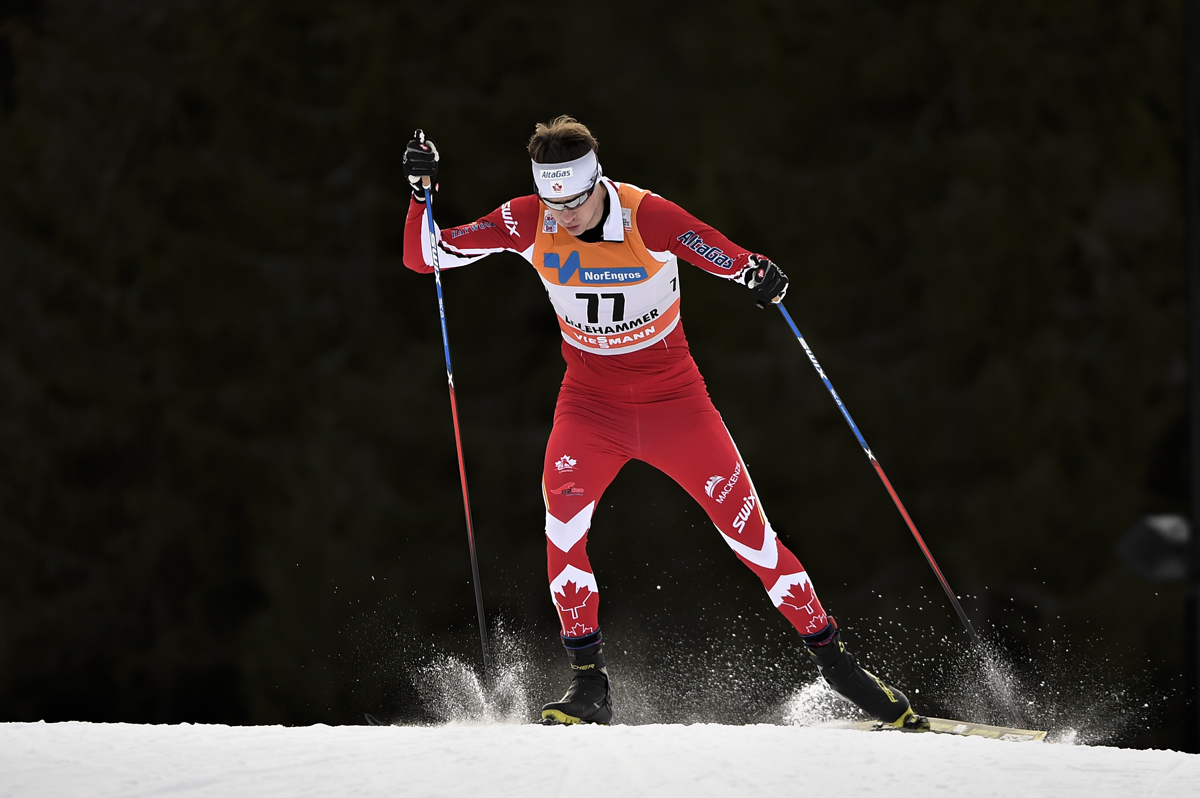
Bob Thompson won his first NorAm in 2014, at Olympic trials in Canmore, Alberta. The then-22-year-old Canadian cross-country skier skied safe and smart and took the victory after two pre-race favorites, Jesse Cockney and Phil Widmer, collided near the finish.
That win didn’t earn Thompson an Olympic berth for Sochi. But this year, the Thunder Bay National Team Development Center (NTDC) athlete is hoping to get to PyeongChang, South Korea – and hopefully, to avoid needing an Olympic trials win to do so.
“I’ll do the Frozen Thunder race [in Canmore in November] – I think it’s just one race this year – to get Period I [World Cup] starts,” Thompson, 26, said of his goals for the beginning of the season. “So then get on the Period I World Cup, and then from there that’s the only chance to get another two top 30s to get the Olympic qualification locked in.”
After finishing 30th in the World Cup Finals sprint in Quebec City in March – his first World Cup points – Thompson is one-third of the way to qualifying for the Olympic team, most likely.
Nominations go preferentially to athletes who have finished twice in the top-16, or have one top-12 distance result or one top-six sprint result, or are part of a podium relay or team sprint. Five men have hit those marks.
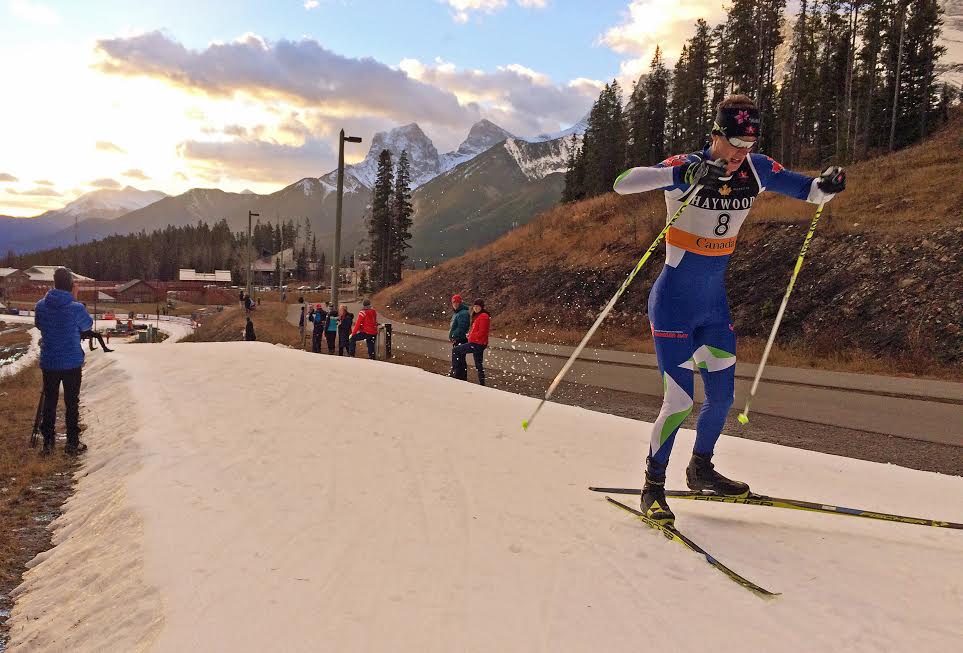
But if the team is not filled yet with men meeting those criteria – and it probably won’t be, as the Canadian team intends to take around seven men – the next spots will go to athletes with three top-30 World Cup results. That’s the mark Thompson is after.
He already has one result in the bag.
And he is familiar with Period I World Cups, considered by many to be the most difficult and competitive World Cups of the season. Most countries send a full team of athletes to every event, not true some other weekends of the year. And when World Cups are hosted in Norway and Finland, the 15 “extra” athletes the home country is allowed to enter as a “Nations Group” are pretty high-caliber skiers.
“From an actual racing standpoint, I had [Russia’s Sergey] Ustiugov go by me when I was on my first lap and he was on his second lap,” Thompson said of a distinct memory from those races last season. “He just dropped me immediately. It was this realization, that, OK, I should be going a lot faster. I’m trying to do that … getting more World Cup experience under the belt.”
But despite the wake-up call of racing the very best and deepest fields in the world, Thompson felt that he had executed well last season and now has experience to build on.
“Those races were really good,” Thompson said of the 2016 races. “I guess I didn’t do as well as I had hoped – I had hoped I would get a top 30 in that period – but in Lillehammer I tied my previous best World Cup result, which was my very first one from Gatineau from the Ski Tour Canada. I was 52nd.”
Thompson had another opportunity to get World Cup points last season when he was selected to race in PyeongChang for the World Cup test events. Like many countries, Canada didn’t send most of its A-team because the races were before World Championships and team leaders worried about fatigue. Thompson, Cockney, Simon Lapointe, and Julien Locke joined World Cup regular Len Valjas in PyeongChang.

It was a bitter moment for Thompson, in a way, because he finished 31st in the sprint qualifier, just 0.01 seconds out of the quarterfinals. That would have guaranteed him a top 30 and, perhaps, something much better than that.
It was a race effort imperfectly executed, something that Thompson remembers.
“I definitely knew multiple places where I didn’t ski it well enough,” he said. “There was one place where my wax caught on me, and then I tried to prevent that from happening again and took a corner too wide, easily losing at least a second. … I definitely felt like I could have had a decent result there. I mean, anyone can say that, but, yeah.”
The pressure of having a good result is something that Thompson has grown used to, as he is constantly trying to qualify for something – a competition, a team, funding.
“Every World Cup start I’ve had so far has had pressure to get that top 30,” he explained. “I always felt like I had to have near my best day to do it.”
So in a way, this year’s Period I (if he gets there via Frozen Thunder) won’t be any different. The big change is that now he does have one top-30 under his belt, and in a field more competitive than in PyeongChang, too.
If he doesn’t hit the top 30 twice in the initial period of World Cup racing, Thompson will need to manage the transition back to Canada better and excel at January’s Olympic trials, to be held in Mont Sainte Anne, Quebec.
That will require refocusing, and Thompson had an important cautionary lesson about it last season. It had been his first time spending a whole period on the World Cup, and between the racing and the travel it took more out of him than he had expected.
“Coming out of that is where I guess I learned the most,” he admitted. “We came back from Europe and were set on doing a bit of a recovery period before the U.S. Nationals races, which were trials races. But we decided we couldn’t pass up the opportunity for the Rossland NorAm weekend because it was the Period II qualification, for whoever won the weekend. We thought that I had raced well so I was going to be fast. And it turned out that in hindsight, that was a mistake as it was a bit too much travel for me or a bit too much load.”
This year, with so much on the line, Thompson is trying to be aggressive but also careful.
His plans hit a snag in August when Thompson fell ill and missed several weeks of training. With his coaches he has made the tough decision to skip an on-snow camp on the Dachstein glacier in Austria and try to gradually build back into full training without overdoing it. By November’s race in Canmore, he hopes to be back fully to himself.
Before getting sick, things had been going well.
“Maybe I was a little more tired than I should have been, but it was starting to get better, especially around the Alignment Camp we hosted in Thunder Bay,” Thompson said. “That was a lot of fun and a well-organized event. It was really good to have everyone who came to that, to train with us, and we could showcase the training venues in Thunder Bay. … I think I was not getting enough recovery after a few key workouts, but in July I made note that I was feeling a little bit run down and I started to address that.”
He is also taking advantage of some non-coaching support systems available in the Thunder Bay area.
“We have been focusing this year on nutrition,” Thompson explained. “We have been working with the Canadian Sport Institute Ontario a little bit more. I’ve been getting plans from their nutritionist as well as doing more work with their sports psychologist and physiologist. Those are a few of the small things that I hoped would be that extra percentage to help ramp me up for this Olympic year.”
And another thing has changed for Thompson as well. Thanks to that 30th-place finish in the Quebec World Cup, he is now a “carded” athlete, receiving a monthly stipend from Sport Canada.
It’s not enough money to change the material aspects of his life, but it has done two things. The first is to release Thompson from some of the pressure to do odd jobs whenever the opportunity arises.
“Previous years, I have worked for older former skiers who have properties or rentals that need fixing up,” he said. “A number of us on the team have been doing that. But now it’s sometimes like, well, actually, I don’t have time. I have too much training. I don’t necessarily feel like I need to take all those opportunities which could take away from training opportunities due to fatigue levels and spending time not resting.”
And secondly, having his own money to live on has been mentally freeing.
“I have been very fortunate from my parents being very supportive of my racing,” Thompson said. “But just the fact that I wasn’t paying for it myself, or was paying for limited aspects of it – to have skied fast enough to have that income now, takes the strain off my parents and the pressure off myself for feeling like I was draining them too much.”
It might seem trivial, but along with the sports psychology work it has made a big difference in Thompson’s outlook.
“That in itself, the mental relief – I think I have been looking for that for the last five years, ever since I’ve been a senior athlete,” he said. “Ever since I entered the realm of, OK, now I should really be able to make it if I’m competing at the top level in Canada. So I think most of all it has been a good mental boost just to have that.”