Let’s start with some basic gender equality facts in skiing.
The first women’s downhill at the Olympics was in1948. Women were awarded Olympic medals in combined (one downhill run and two of slalom) beginning eight years earlier in 1936. FIS has awarded a women’s World Championship in downhill since 1931. The FIS database marks 1967 as the first year for an official FIS World Cup downhill race for both men or women.
It’s a different narrative in ski jumping. FIS sanctioned ski jumping began for men during the 1979-1980 season. It took three more decades for women’s ski jumping to be recognized by FIS. The first women’s FIS World Cup ski jumping competition for women was held in 2011. American Sarah Hendrickson won. The first World Championships in ski jumping for women was awarded to another American, Lindsey Van, in 2009. Men, on the other hand, have been ski jumping in the Winter Olympics since their inception in 1924. The IOC welcomed women’s ski jumping at the Olympics in 2014.
This story though is about Ski Flying. But we’ll tie it back into alpine skiing later on.
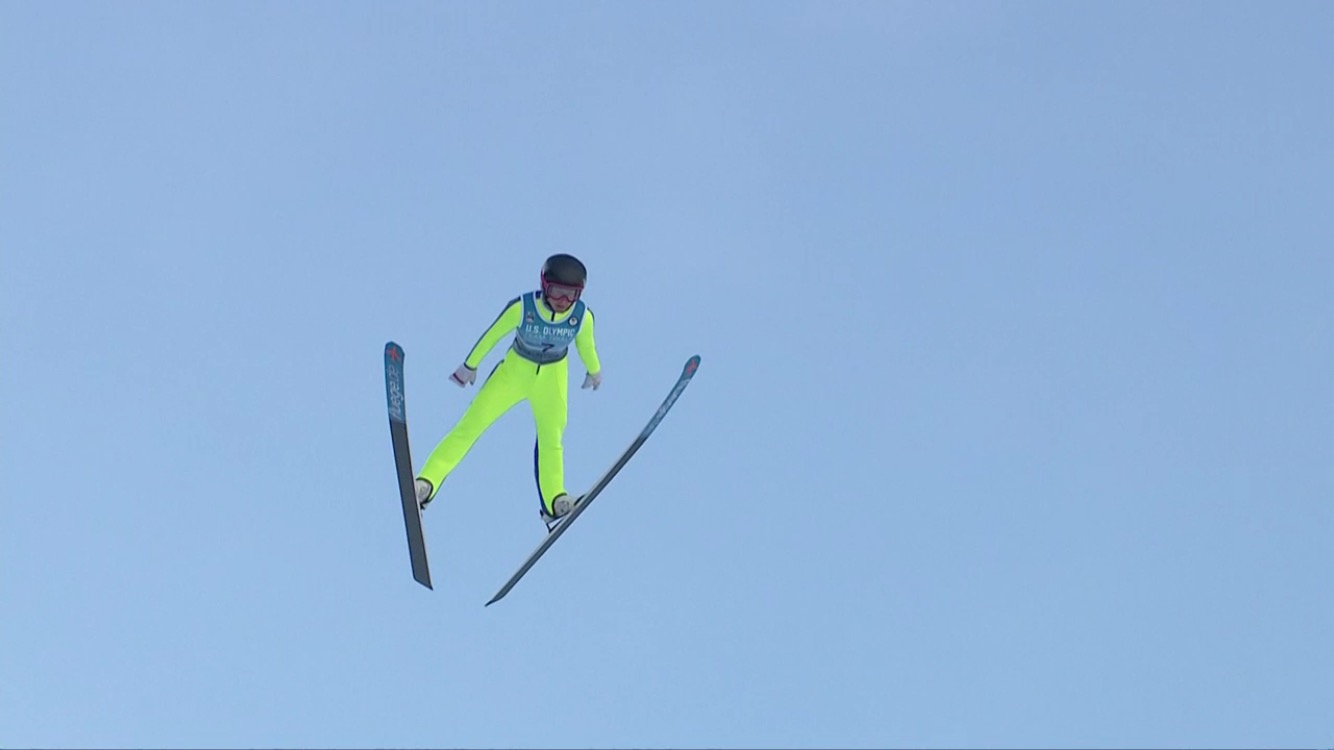
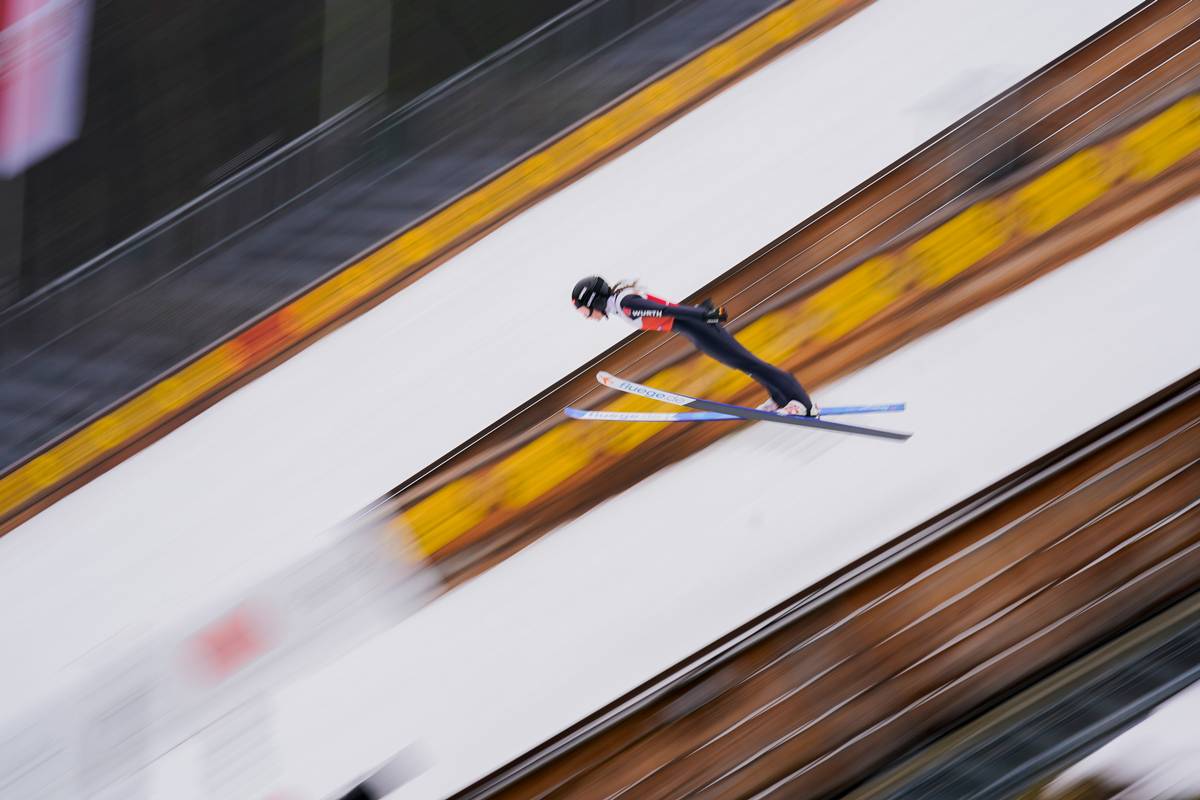
Ski Flying is a close relative of ski jumping. Essentially, they are the same beyond the size of the jump. Ski Flying jumps are larger. Athletes soar farther on these jumps. Ski Flying is not an Olympic sport, however, FIS has sanctioned a World Championships in the discipline since 1972 – but only for men.
“Anybody who knows ski jumping even a little bit, you have a small hill and a big hill, and those are usually around a K90 and a K95 or K125. Ski Flying is jumping off anything that is above a K155,” said Jessica Jerome, a former U.S. ski jumper and Olympian. “There are six of these hills in the world, and only five of them are usable. It’s not a set K point or jump size. Basically, it’s ski jumping but just more of everything — it’s more speed it’s more flight time.”
Recently, if you’ve been following Jerome on Twitter, her Tweets about Ski Flying may have caught your attention. Here’s one poignant tweet: “Safety is not, and will NEVER be a valid argument @FISskijumping. I have seen some trash ski flying from forejumpers and other small nations. I think what you guys are afraid to say is you must have a penis to fly?”
Jerome was responding to an April 19 FIS press release and the decision made by the FIS Ski Jumping Calendar Planning Committee to not schedule the first-ever women’s Ski Flying competition next season. “No Ski Flying yet for the women next winter,” claimed the press release. The two reasons given by FIS for not allowing women to participate in Ski Flying were safety and issues with calendering an event.
One of the five operable Ski Flying hill towers in the world sits above Vikersund, Norway. The local Vikersund organizing committee recently proposed to host a FIS women’s Ski Flying event concurrent with a men’s jump next season. The proposal was voted down 9-7 by the FIS Ski Jumping Calendar Planning Committee.
“I can not believe that this comes from adults,” said Norwegian National team ski jumping coach, Christian Meyer, in a translated Dagbladat article. “We have jumped a big hill for a long time. Also in Granåsen in Trondheim, you can jump 145 meters. We have been doing this since 2013. For the history-less, I can also inform you that a lady jumped 200 meters in Kulm in 2003. At that time, Daniela Iraschko-Stolz was a test jumper. At that time, both equipment and technology were inferior. Still, it was zero problem to jump 200 meters for a girl.”
Maren Lundby, a twenty-six-year-old two-time Olympic ski jumping champion, and the 2019 and 2021 ski jumping World Champion, has been an outspoken critic of the decision. Active on Instagram, Lundby released a terse video with a singular message: The Girls Want to Fly.
The April 19 FIS statement on women’s Ski Flying claimed women would be introduced to Ski Flying incrementally. “The next step will be the women’s World Cup on the HS 147 hill in Willingen in the 2021/22 winter season,” read the statement. “The Muehlenkopf-hill in Willingen, [Germany] is considered a small flying hill, the perfect introduction to Ski Flying hills.”
That specific jump will be the largest yet used in an official women’s FIS ski jump competition. FIS goes on to claim, “The experts want to have these competitions first and then make a decision concerning Ski Flying events next winter.” FIS does not clarify who the “experts” are.
The U.S. representative to the Ski Jumping Calendar Committee is Park City based, Alissa Johnson. A now-retired ski jumper, Johnson is a former world top-10 ranked jumper and is a certified international technical delegate (TD). She voted to approve women’s Ski Flying in the 9 to 7 vote.

A vintage shot of then 2009 World Champion Lindsey Van (middle) celebrating a U.S. Ski Jumping title along with teammates Jessica Jerome (left) and Alissa Johnson (right) in Lake Placid. (Photo:ORDA-Jon Lundin)
“I think there have been safety concerns, like if you have a full World Cup field,” said Johnson of the sub-committee’s discussion on the issue. “So their safety concern was not so much for the top tier athletes, I think probably it’s safe to say they were referring to the top 10 or 15 depending on their age and World Rank. I think the safety concern is more directed at the back end of the field.”
The step up to Ski Flying should not be understated. The speeds achieved, and the distances jumped are greater than those on Ski Flying hills. The fact exists that ski jumping has been accessible to men far longer than women. It renders down to simply more opportunities for men and a greater number of male athletes perceived to be capable of Ski Flying.
With fewer opportunities to Ski Fly, the progression some women need to make technically and mentally to handle much larger hills is restricted. Johnson explained that to her knowledge, only seven women internationally have been allowed to Ski Fly – all as forerunners or test jumpers at men’s events.
According to Johnson, during the sub-committee meeting, some voting members were against approving the Vikersuznd round of Ski Flying because the field of women jumpers able to competently Ski Fly would be too small.
“I think women, in general, need advancements, but I also feel like the top-tier women can jump, and can jump safely,” said Johnson. “But I think a lot of the discussion came down to this: can we justify calling a World Cup a World Cup if it has less than 30 athletes?”
One solution to cull the women’s field for a potential Ski Flying event was to evaluate the women’s field mid-season after they had jumped on the large hill in Willingen, Germany.

Sarah Hendrickson, a twenty-six-year-old now-retired U.S. Olympian, and World Champion serves as one of two athlete reps to the FIS Ski Jumping Committee — a role she has served in for five years. Hendrickson explained that Norway’s Vikersund Ski Flying proposal, presented to the FIS Ski Jumping Calendar Planning Committee by Norway’s representative Clas Brede Bråthen, was both supported by Norway’s government and framed as an opportunity to raise the market value for women’s jumping.
“So Bråthen is stating it from a very business-money point of view, which I think is fantastic because marketing and sponsorship are important factors for FIS,” said Hendrickson. “They’re complaining during this meeting that they need to raise the viewership. Bråthen clearly explained here’s one way to increase the viewership and gain popularity in ski jumping, and some listening in were simply like ‘yeah no’.”
Hendrickson was further disheartened by the step-by-step approach suggested for women to gain experience on incrementally larger ski jumping hills. Absent from the discussion, according to Hendrickson, was what precise objective criteria the decision-makers were looking for to determine if a woman was capable of Ski Flying. Hendrickson recalls Bråthen trying to clarify what specific criteria the women had to meet to be certified to Ski Fly. Despite Bråthen’s questions, Hendrickson said no answer regarding a more structured method for assessing able-to-Ski-Fly women was forthcoming.
How Safe is Safe?
The notion that safety remains a concern falls flat for many athletes and observers of the sport. “I’m female, I didn’t get into the sport because I knew it was the safest sport,” said Hendrickson. “We love ski jumping because there’s a risk of danger, there’s a risk of challenge. We know there’s a risk, there’s just as much a risk jumping off a small hill as a big hill.”
Johnson, the voting member for the U.S. on the Ski Jumping Calendar Committee, expressed that individual athletes were the real experts in terms of determining Ski Flying readiness.
“At the end of the day, I think safety concerns should come down to the technical delegates that are appointed to those competitions on any given weekend,” reasoned Johnson. “It should come down to the coaches, but ultimately, it should come down to the athletes. Because regardless of whatever my coaches are saying, if I don’t feel safe, I won’t be safe. I think the safety argument has to come down to those individuals jumping. It’s so individualized. In the broad scheme of things, FIS and our TDs can host a fair and safe event for all athletes.”
The obvious long-term opportunity cost for limited Ski Flying opportunities for women is clear: fewer women might be ready to Ski Fly. If it is desired to increase the size of an experienced, and therefore “safe”, women’s Ski Flying field, then more women need the chance to Ski Fly.
“Safety is a non-issue, it’s not a thing,” said Jerome about a women’s ability to Ski Fly. “Because if safety were an issue, then first of all, why are you letting anybody participate if safety is an issue? It doesn’t matter whether it’s a male or a female or whatever. It’s a human being and it’s either going to be safe or it’s not. So if you’ve decided it’s safe for men, then it should be safe for certain women as well.”
Jerome went on to clarify that women who have demonstrated high technical proficiency and have the appropriate mental calmness to fly off large jumps should be allowed to Ski Fly. “It’s not one of those things where they’re going to fill quota spots for Ski Flying because you have to take it a little more seriously,” said Jerome.
Let’s circle back to the historical information mentioned at the top. Women have participated in downhill at the FIS World Championships since 1931. Beyond alpine skiing, of which downhill is a sub-discipline, FIS is responsible for sanctioning several winter sports considered to be potentially unsafe. Among them are snowboarding, freestyle, and freeskiing.
Perhaps FIS has data unavailable to the public regarding the inherent fragility of women compared to men that were rectified for downhill in 1931 but remain current for Ski Flying in 2021? Considering safety, the downhill is still among the diciest of the FIS disciplines. As noted, FIS does not discriminate by gender in that event. Women race downhill. And they race on courses at extreme speeds, over sometimes water injected snow.
However, between the 2014/15 and 2016/17 race seasons, data from the FIS Injury Surveillance Ssyetem 2006-2018, found women were more likely than men to suffer time-loss injuries on the alpine World Cup. Ask American stars Lindsey Vonn (retired) and Mikaela Shiffrin, the women played through and they played on. Women were not kept from competing due to safety concerns.
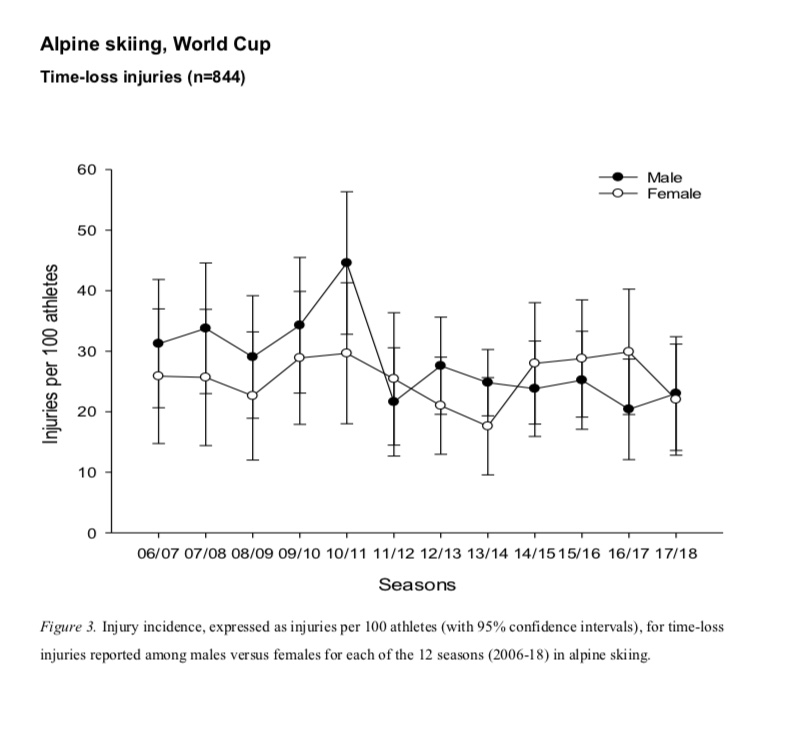
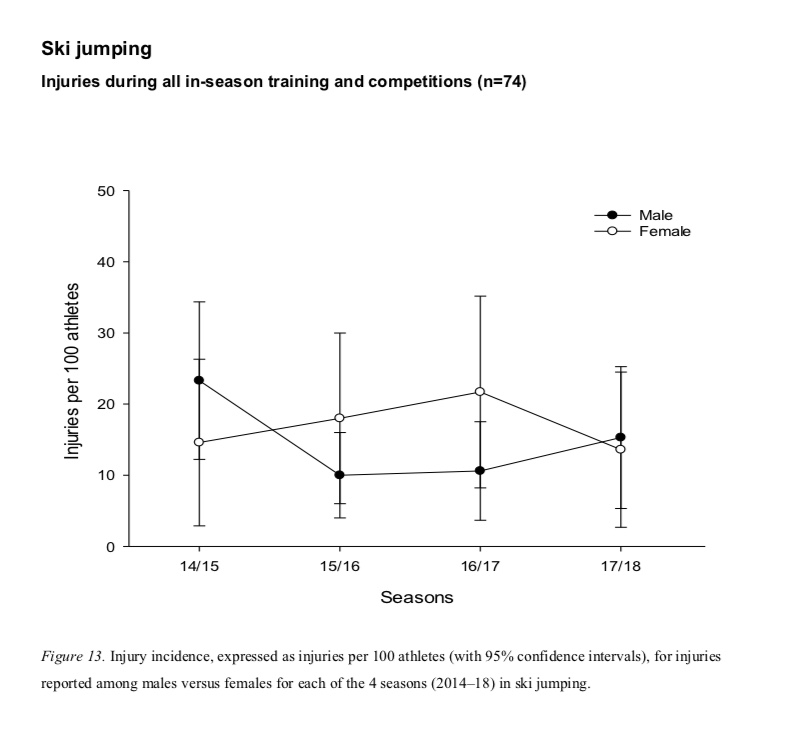
Over the same period, 2014-2018, FIS concluded men and women suffered about the same number of injuries ski jumping at the World Ski Championships and Olympics.
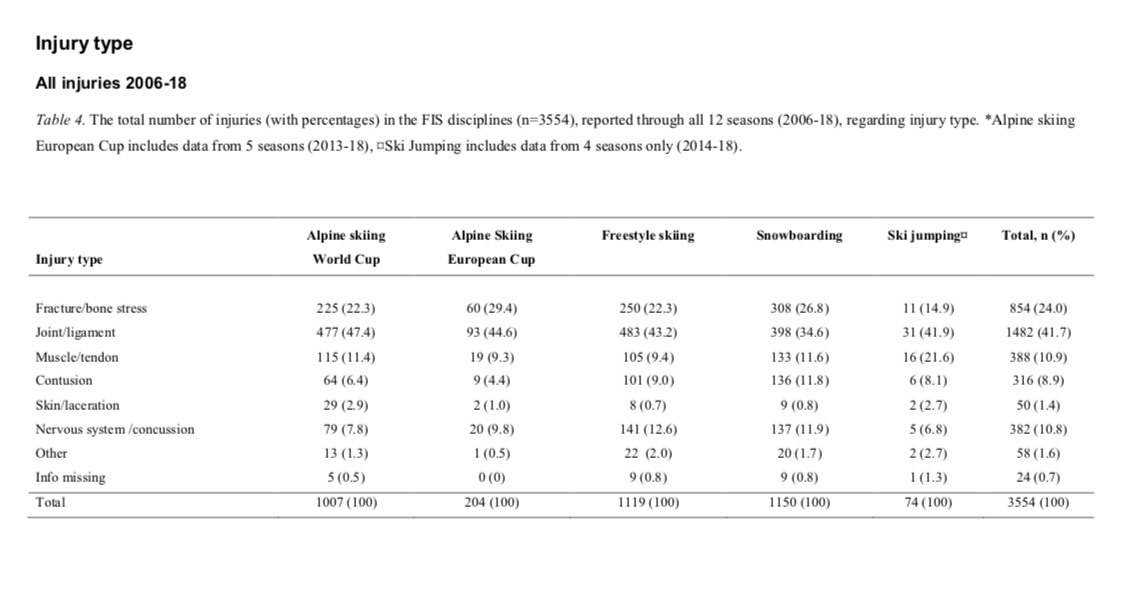
Of the total number of injuries through 12 seasons of the FIS disciplines (with ski jumping data from four seasons), 7.8% of all injuries suffered on the alpine World Cup were nervous system or concussion injuries. The same category accounted for 6.8% of injuries in ski jumping. Fractured bone/stress injuries comprised 22.3% of all injuries on the alpine World Cup. 14.9% of injuries in ski jumping were fractured bones/stress injuries.
On the surface, alpine skiing, at this elite level, appears more dangerous than ski jumping. Broadcast contracts for alpine skiing are much larger than those for ski jumping. Considering safety data, or the potential for yard sale crashes, the scheduling of FIS alpine events for men or women has not been deterred.
Across the spectrum of elite sport, the ceiling remains opaque for female athletes. Considering ski jumping, at the 2018 Winter Games, men had three unique events, the women one — an individual event on the normal hill. The legacy of discrimination extends to the first modern Olympics in 1896. The Games’ founder, Pierre de Coubertin is quoted as saying, “No matter how toughened a sportswoman may be, her organism is not cut out to sustain certain shocks”.
Again, according to FIS and their World Championships, those “shocks” somehow disappeared in the downhill for women in 1931 but persist for women in 2021 when it comes to FIS sanctioned Ski Flying competitions. FasterSkier requested an interview with a FIS representative. This story will be updated when we receive a reply.
When it comes to prize money on the ski jumping World Cup, a woman’s jump is worth less than a man’s jump. FIS rules provide at least 10,000 Swiss Francs to be awarded to the men’s winner of a ski jumping World Cup. The winner of a women’s FIS World Cup ski jumping event earns at least 3,800 Swiss Francs. Women, who sometimes fly further than men, earn 62% less for their winning efforts.
On the men’s side of World Cup ski jumping, the top-30 earn prize money; the top-20 earn a paycheck for women. A quick check of the field size at a joint men’s and women’s competition in Râșnov, Romania in mid-February had 39 women in the field and 48 men, respectively.
Pay equity and safety aside, which are important issues, women have been allowed to chase the FIS dream in the alpine skiing realm for 90 years. (Although Lindsey Vonn was never granted the right to compete against men.) Women ski jumpers, for the time being, have to wait through at least another winter for the chance to Ski Fly in a FIS competition.
The wait, no matter how short or long is difficult, said Hendrickson. She explained that during the most recent Ski Jumping Calendar meeting she unmuted her audio and challenged the committee chair when they insisted there was “no rush” to get women Ski Flying.
“I explained that the Olympics are next year and a lot of women are going to retire after next year and they’ll never get a chance to Ski Fly,” said Hendrickson. “So it might not be a rush to you, but for someone who’s an athlete, that is looking to retire and now could not have this lifelong dream because they’re a girl is pretty devastating.”
*The latest information posted on the FIS site lists numerous nations as comprising the FIS SKI Jumping Calendar Planning Committee. They include Austria, Russia, Norway, Slovenia, Poland, Japan, USA, Sweden, Korea, Italy, Canada, France, Switzerland, Czech Republic, Netherlands, Germany, Finland, and Turkey.