From the FasterSkier archive — posts syndicated from athletes’ and coaches’ own blogs between 2004 and 2012, kept online as published. Current coverage is at fasterskier.com.
The International Ski and Snowboard Federation (FIS) unveiled its proposed 2026/2027 cross-country skiing World Cup calendar this week at the FIS Spring Meetings in Portorož, Slovenia.
The schedule — first shared publicly through FIS social media and still pending FIS Council approval — builds the season around the 2027 World Championships in Falun, Sweden, with three pre-Christmas stops, a nine-race Tour de Ski, a stretch of three weekends between the Tour and Worlds, and a Scandinavian closing kick that ends with the Finals in Ulricehamn.
For North American fans, the calendar is once again entirely European, with no scheduled stops in Canada or the United States.
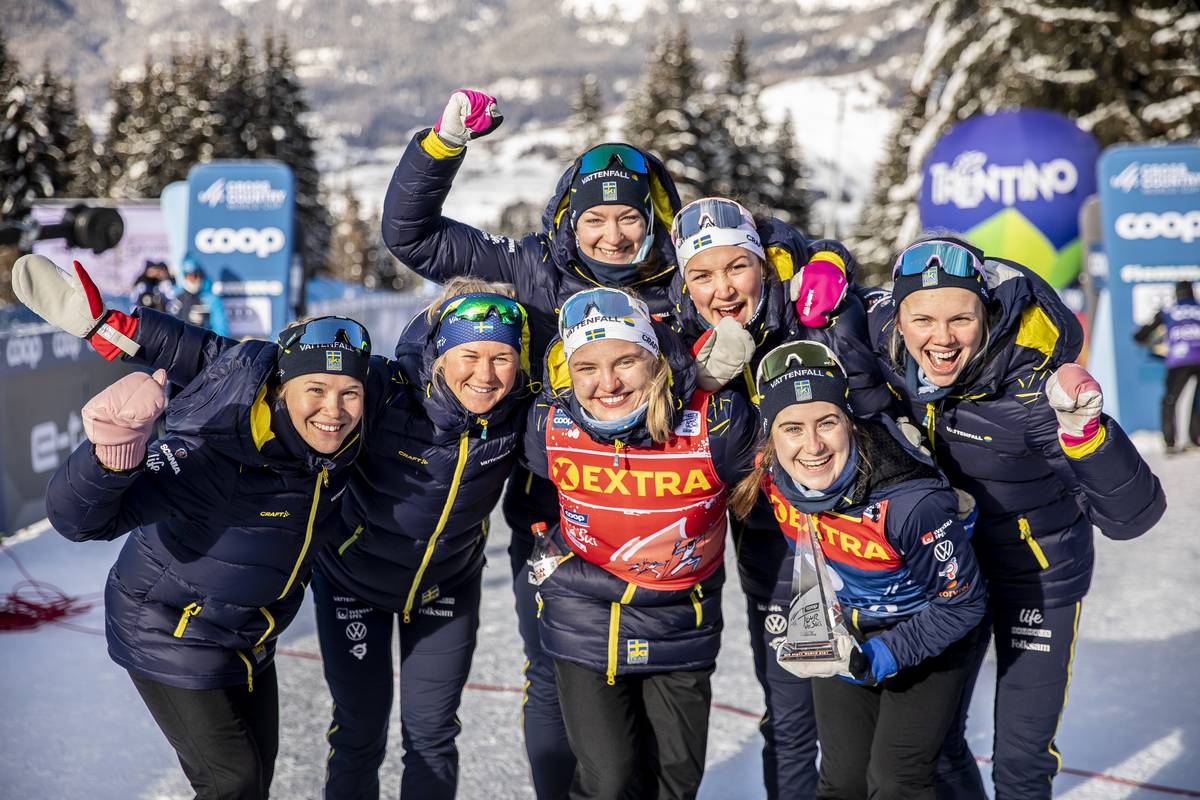
Frida Karlsson (SWE) poses with Mr. and Mrs. Claus following the 10k Classic to start last season in Ruka (FIN). (Photo: Modica/NordicFocus)
Pre-Holiday: Ruka, Trondheim, Davos
The season opens where it almost always does — in Ruka, Finland, where the World Cup begins November 27. From there, the circuit moves to Trondheim, host of the 2025 World Championships, before the pre-Christmas block closes in Davos, Switzerland, with a team sprint.
November 27-29, 2026: Ruka, Finland
27/11: 10km Interval Start Classic
28/11: Sprint Classic
29/11: 20km Mass Start Freestyle
December 1-3, 2026: Trondheim, Norway
01/12: 10km Interval Start Classic
02/12: Sprint Freestyle
03/12: 20km Skiathlon
December 11-13, 2026: Davos, Switzerland
11/12: 5km Heat Mass Start Freestyle
12/12: Sprint Freestyle
13/12: Team Sprint Freestyle
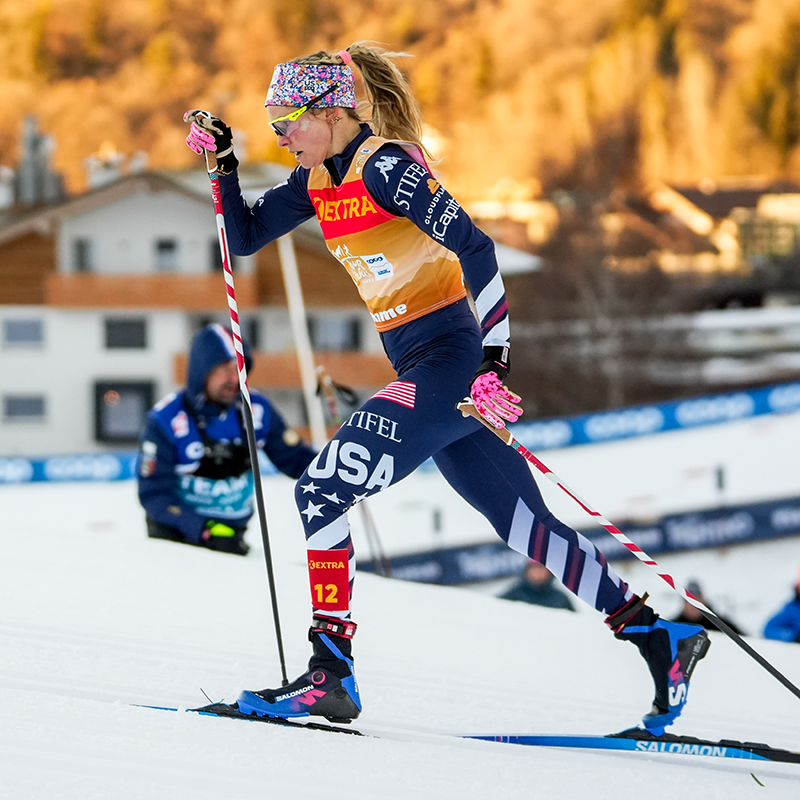
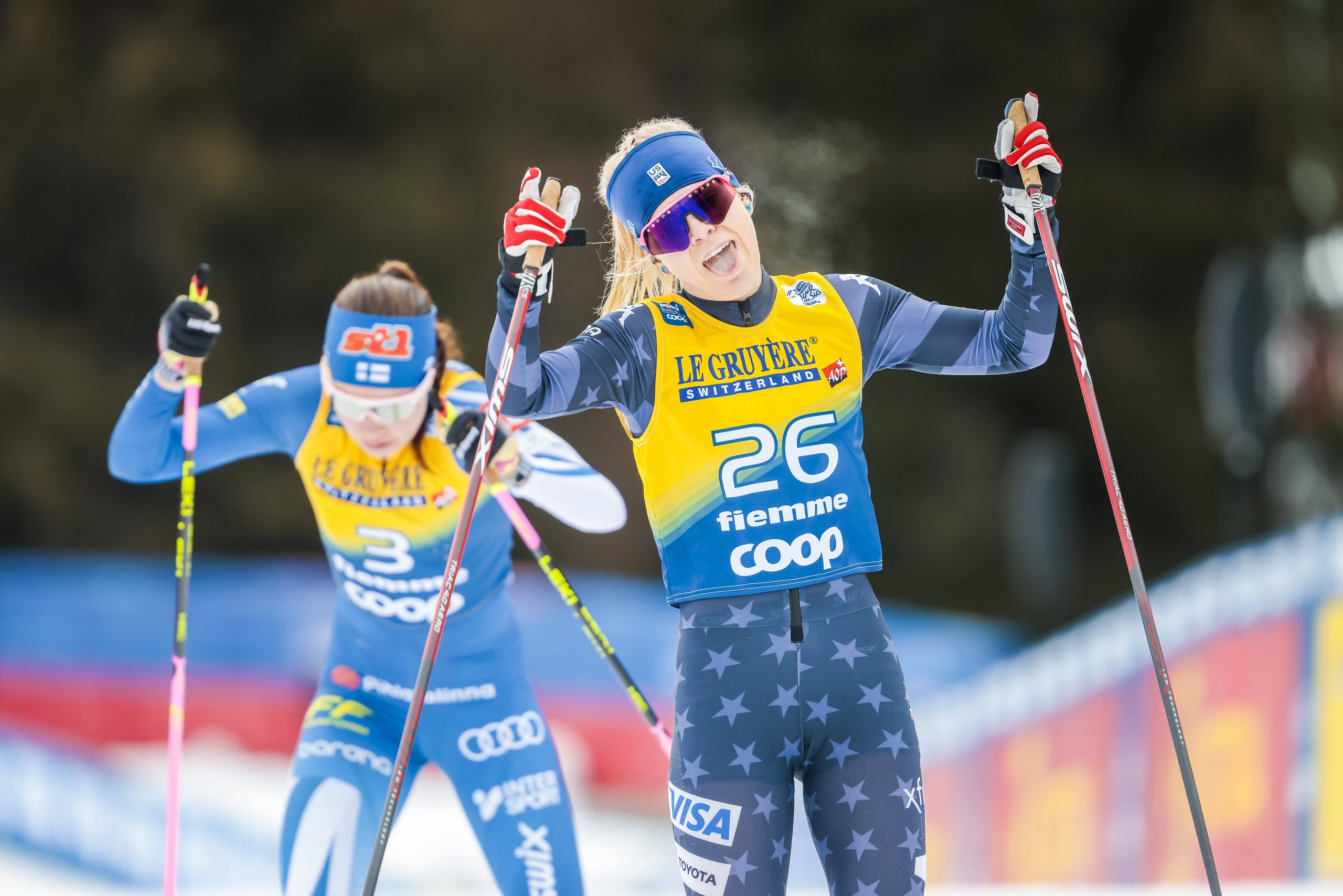
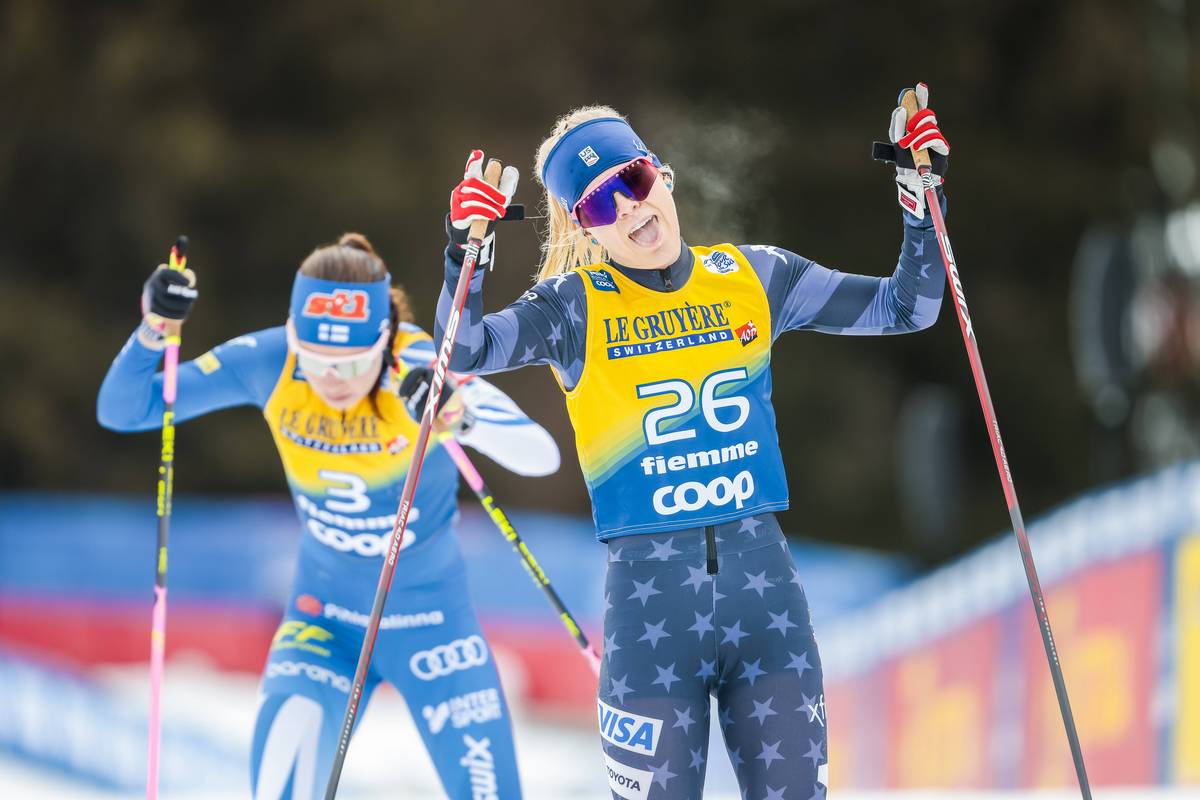
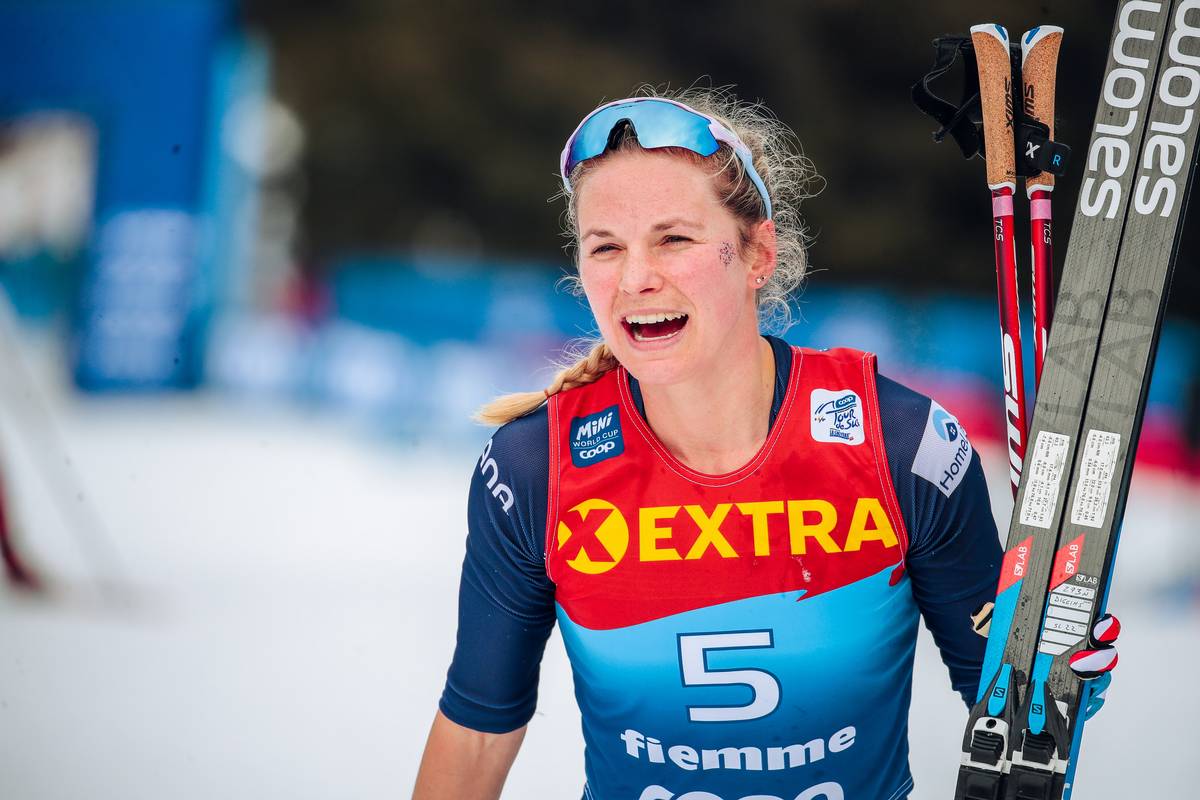
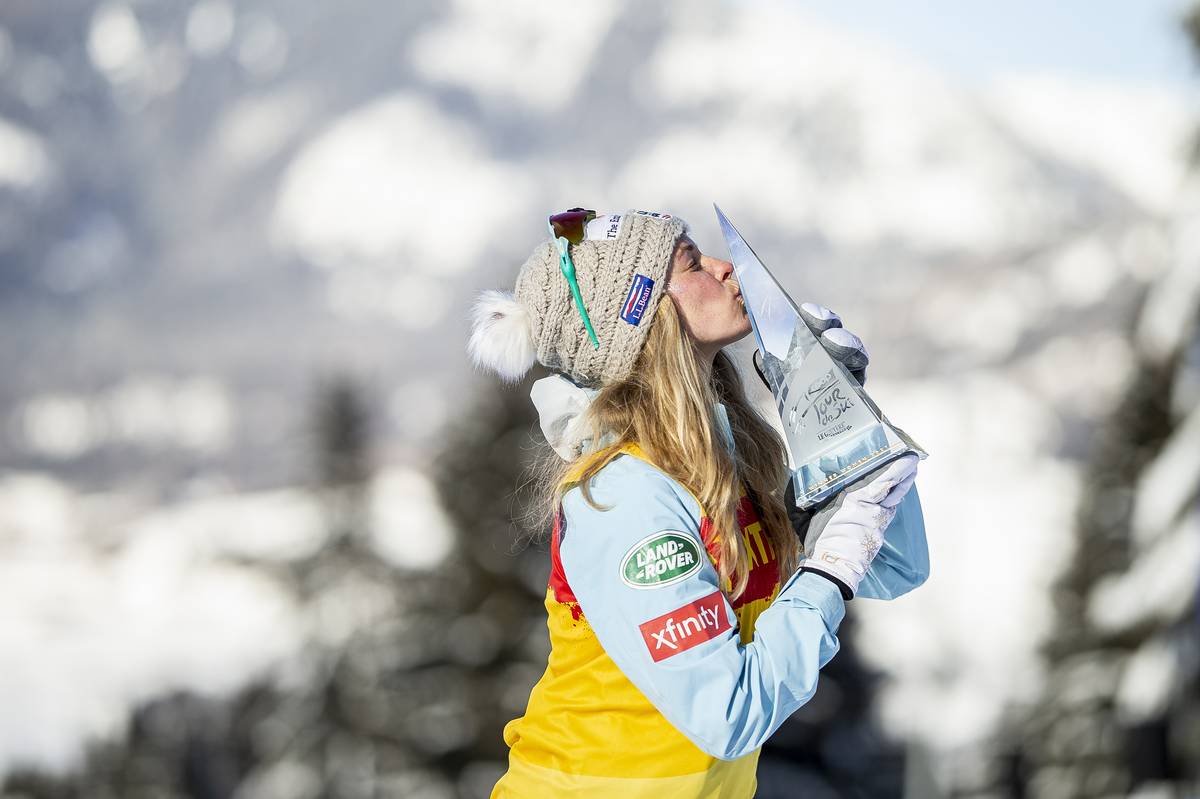
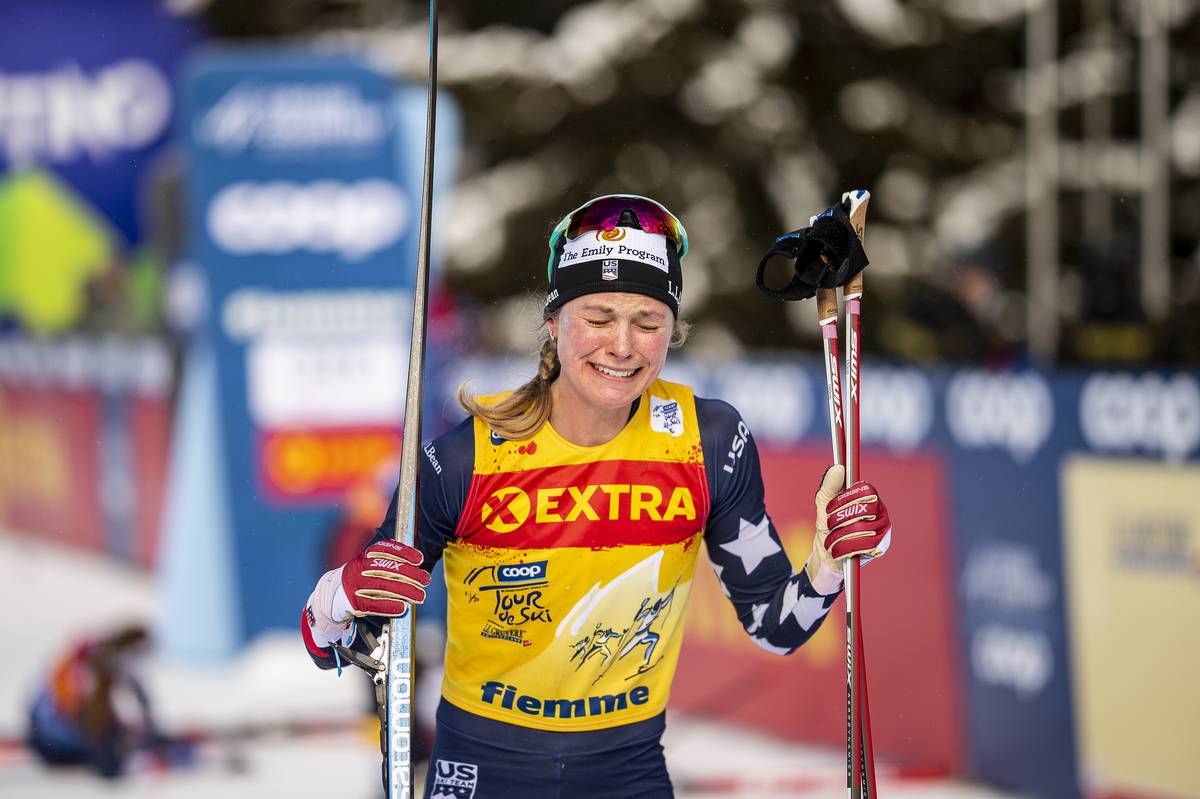
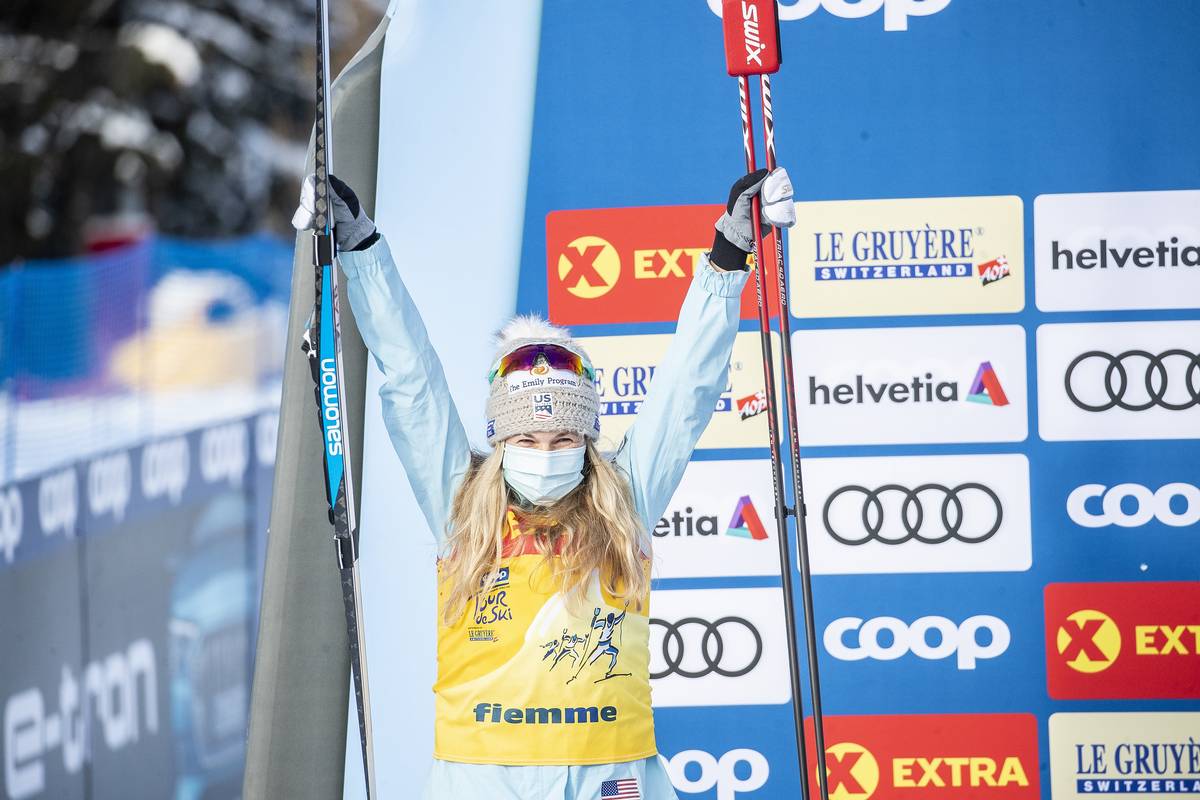
With Jessie Diggins (USA) now retired, there will be a new FIS Overall Crystal Globe and Tour de Ski champion next season (Photo: Vanzetta/NordicFocus)
Tour de Ski 2026/2027
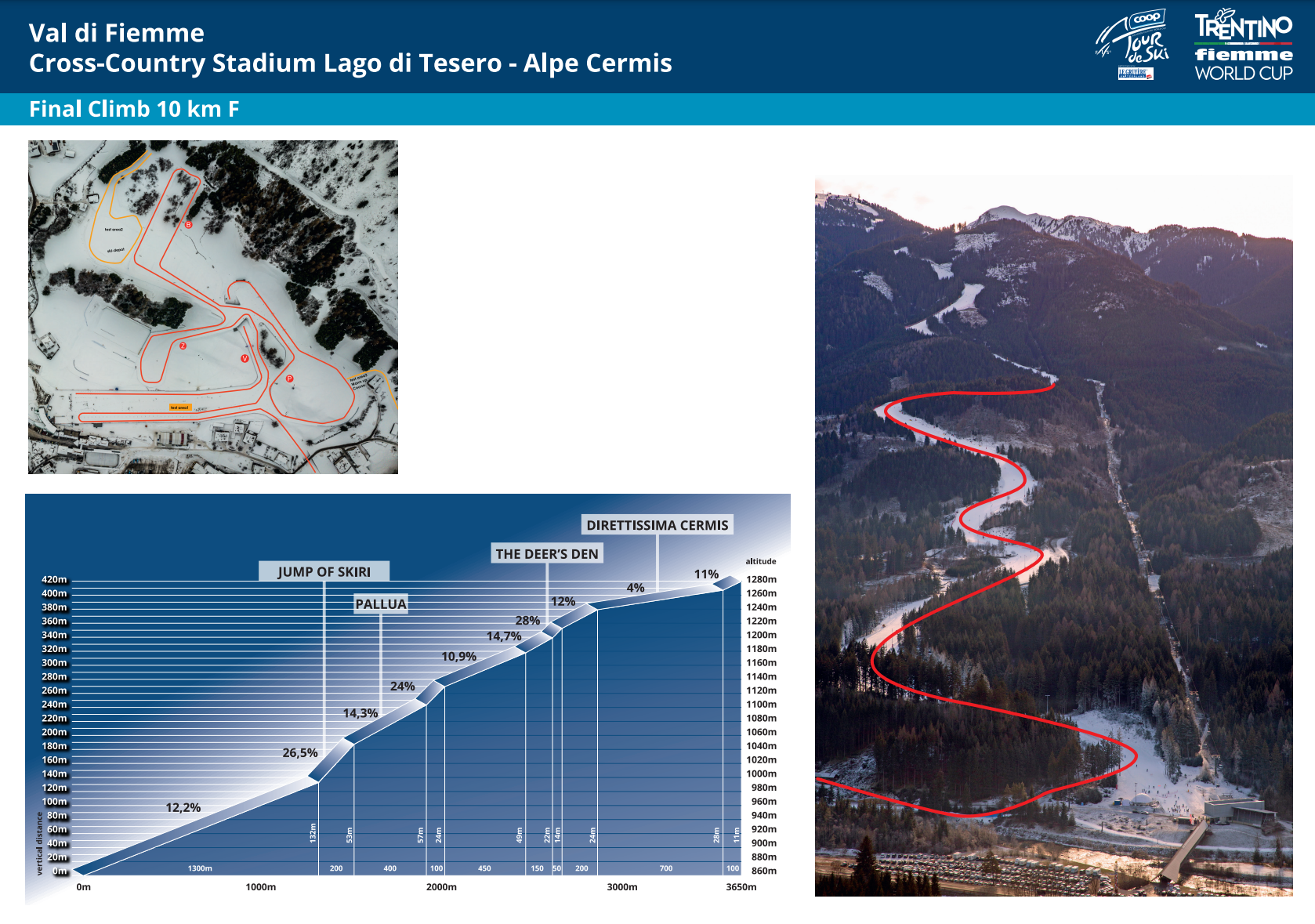
The Tour de Ski returns to a three-country format, opening in Les Rousses, France, on New Year’s Day, moving to Oberstdorf, Germany, and finishing with three races in Val di Fiemme, Italy — capped, as ever, by the Final Climb up Alpe Cermis.
January 1-3, 2027: Les Rousses, France
01/01: Sprint Classic
02/01: 20km Mass Start Classic
03/01: 15km Pursuit Freestyle
January 5-6, 2027: Oberstdorf, Germany
05/01: 15km Mass Start Classic
06/01: 5km Heat Mass Start Freestyle
January 8-10, 2027: Val di Fiemme, Italy
08/01: 15km Skiathlon
09/01: Sprint Freestyle
10/01: Final Climb
Gus Schumacher (USA) and the rest of the US team will hope to continue their success in Toblach (ITA). (Photo: Modica/NordicFocus)
After the Tour, Before Worlds: Engadin, Toblach, Lahti
Three weekends bridge the Tour de Ski and the World Championships. Engadin opens its weekend with a mixed relay — a format the FIS has been working into more World Cup weekends — and Lahti closes the pre-Worlds stretch with its classic 20km skiathlon and 10km interval start.
January 22-24, 2027: Engadin, Switzerland
22/01: Mixed Relay
23/01: Sprint Freestyle
24/01: 20km Mass Start Freestyle
January 29-31, 2027: Toblach, Italy
29/01: 10km Interval Start Freestyle
30/01: Sprint Freestyle
31/01: 20km Mass Start Classic
February 12-14, 2027: Lahti, Finland
12/02: Sprint Classic
13/02: 20km Skiathlon
14/02: 10km Interval Start Classic
Kendall Kramer (USA) had a breakout World Cup Skiathlon in Falun (SWE) last season. (Photo: Authamayou/NordicFocus)
2027 FIS Nordic World Ski Championships: Falun, Sweden
The 2027 FIS Nordic World Ski Championships run from February 22 through March 7 in Falun, Sweden, with all title formats on the program. Falun last hosted Worlds in 2015.
Final Period: Oslo, Drammen, Ulricehamn
The closing stretch is a Scandinavian one. Oslo’s Holmenkollen weekend features back-to-back 50km mass start classic races on March 13 and 14 — long a fixture of the late-season calendar — before a one-day sprint stop in Drammen and the World Cup Finals in Ulricehamn, Sweden.
March 13-14, 2027: Oslo, Norway
13/03: 50km Mass Start Classic
14/03: 50km Mass Start Classic
March 16, 2027: Drammen, Norway
16/03: Sprint Classic
March 19-21, 2027: Ulricehamn, Sweden (World Cup Finals)
19/03: 10km Interval Start Freestyle
20/03: Sprint Freestyle
21/03: 20km Mass Start Classic
The calendar remains subject to FIS Council approval.
This coverage is made possible through the generous support of Marty and Kathy Hall and A Hall Mark of Excellence Award. To learn more about A Hall Mark of Excellence Award, or to learn how you can support FasterSkier’s coverage, please contact info@fasterskier.com.
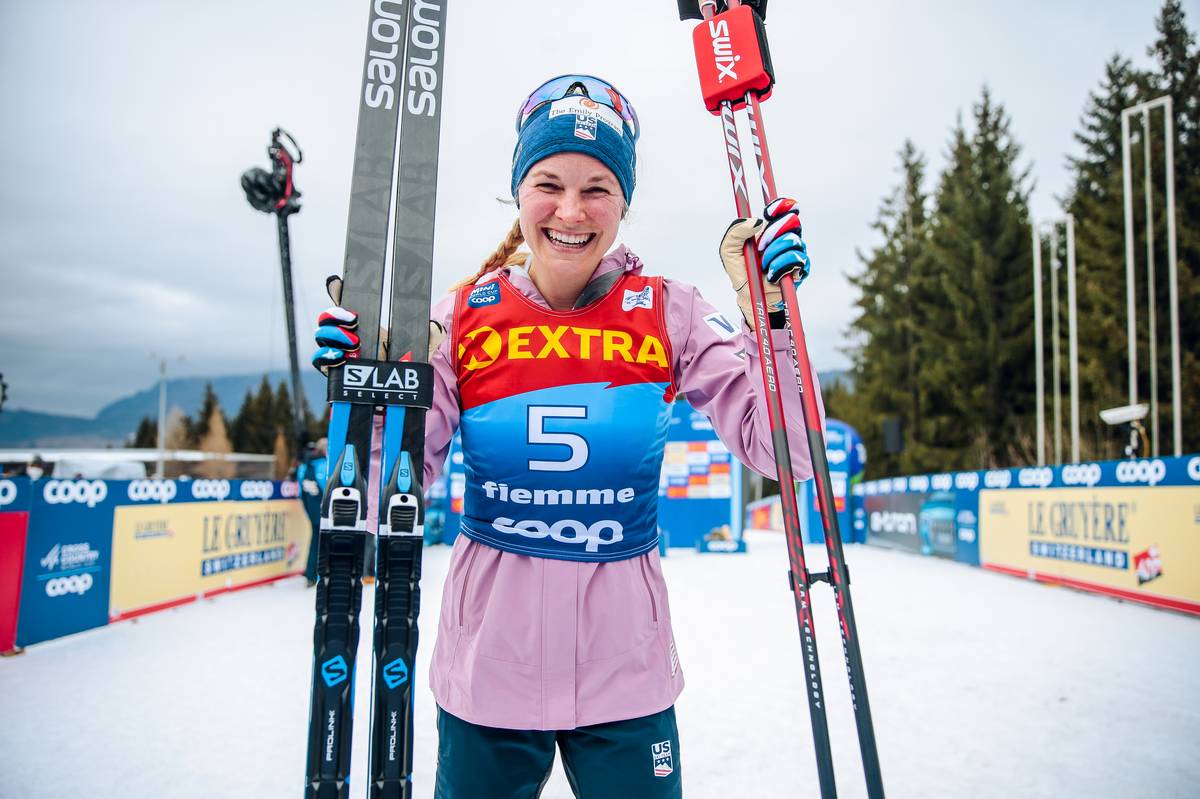
Jessie Diggins (USA) claimed her third Tour de Ski overall victory in Val di Fiemme (ITA). (Photo: Vanzetta/NordicFocus)
The Tour de Ski does not end so much as it compresses. By the time the women turned onto the ribbon of snow climbing Alpe Cermis, the race had already been going on for a week—measured not only in kilometers and seconds, but in fatigue accumulated quietly overnight, in sore muscles, achy backs, and in confidence gained or lost one race at a time.
The final climb has a way of making those invisible things visible. It is steep enough to strip racing of pretense, long enough to punish impatience, and familiar enough that every skier arrives with memories—good ones, bad ones, and some they would rather forget. On Sunday afternoon in Val di Fiemme, the climb again became what it always is: less a finish line than a reckoning.
For Jessie Diggins, that reckoning ended in confirmation. Diggins finished second on the stage, protecting her margin with experience and restraint, and secured her third career Tour de Ski overall title. It was not the loudest way to win. It was, however, the truest.
Jessie Diggins (USA) paced the final climb perfectly to finish second on the day. (Photo: Modica/NordicFocus)
A Climb That Decides Everything
Stage 6 of the women’s Tour de Ski—10.0 kilometers, mass start, freestyle—began with the tension that always precedes Alpe Cermis. Some skiers arrived still dreaming of a stage victory. Others were guarding seconds earned days earlier. Still others were simply hoping to make it to the top without the climb turning overly cruel.
The early kilometers unfolded with relative calm. The pace was honest but controlled, the group compact as it flowed through the lower valley before turning uphill. On Alpe Cermis, there is no hiding, but there is strategy: when to let others go, when to follow, and—most importantly—when not to.
The decisive moves came as the gradient steepened and the field stretched into a long, thin line. Norway’s Karoline Simpson-Larsen skied with precision and patience, gradually asserting herself as the strongest on the day. She crested the final meters alone to win the stage in 37:05.3, earning the biggest single-day victory of her World Cup career.
Behind her, the race unfolded with quieter drama. Diggins, who entered the day with a commanding overall lead, skied with calculation. She resisted the temptation to respond immediately when others surged, choosing instead to manage the climb in segments. When the grade lessened and the gap narrowed late, she allowed herself to push hard enough to secure second place, but not so hard as to invite disaster.
Diggins crossed the line 8.8 seconds behind Simpson-Larsen, followed by Norway’s Heidi Weng in third at +14.4. The stage podium reflected the day’s effort, but it was Diggins’ second place that carried the most weight.
Jessie Diggins (USA), as always, left everything out on the course. (Photo: Modica/NordicFocus)
“Dying at the Right Moment”
Diggins’ approach to Alpe Cermis was shaped by experience—and memory.
“I was trying to be smart and safe in terms of the overall Tour,” she said afterward. “And then when I realized we were close enough, I thought, okay, now I can empty the tank. But I’ve paced it badly before where I blow up, and that last 600 meters is the slowest of your life.”
It is a detail only veterans tend to mention: not the steepest pitch, but the final few hundred meters, when legs that have already been pushed too far simply refuse to respond. Diggins has lived that mistake. On Sunday, she avoided it.
“I was trying to ski it smart and make sure I was dying at the right moment,” she said.
That restraint—so often invisible to spectators—was the difference between managing the Tour and risking it. The margin Diggins had built over five stages gave her room to think clearly. The climb rewarded that clarity.
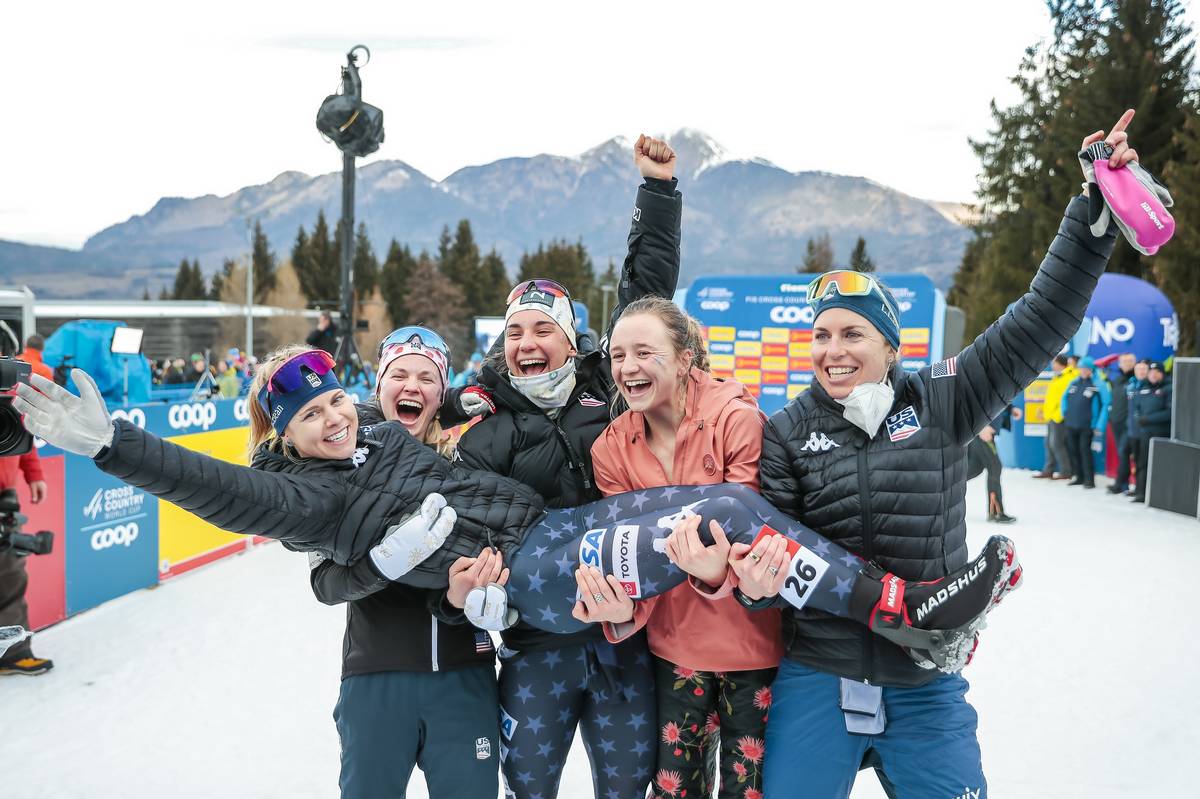
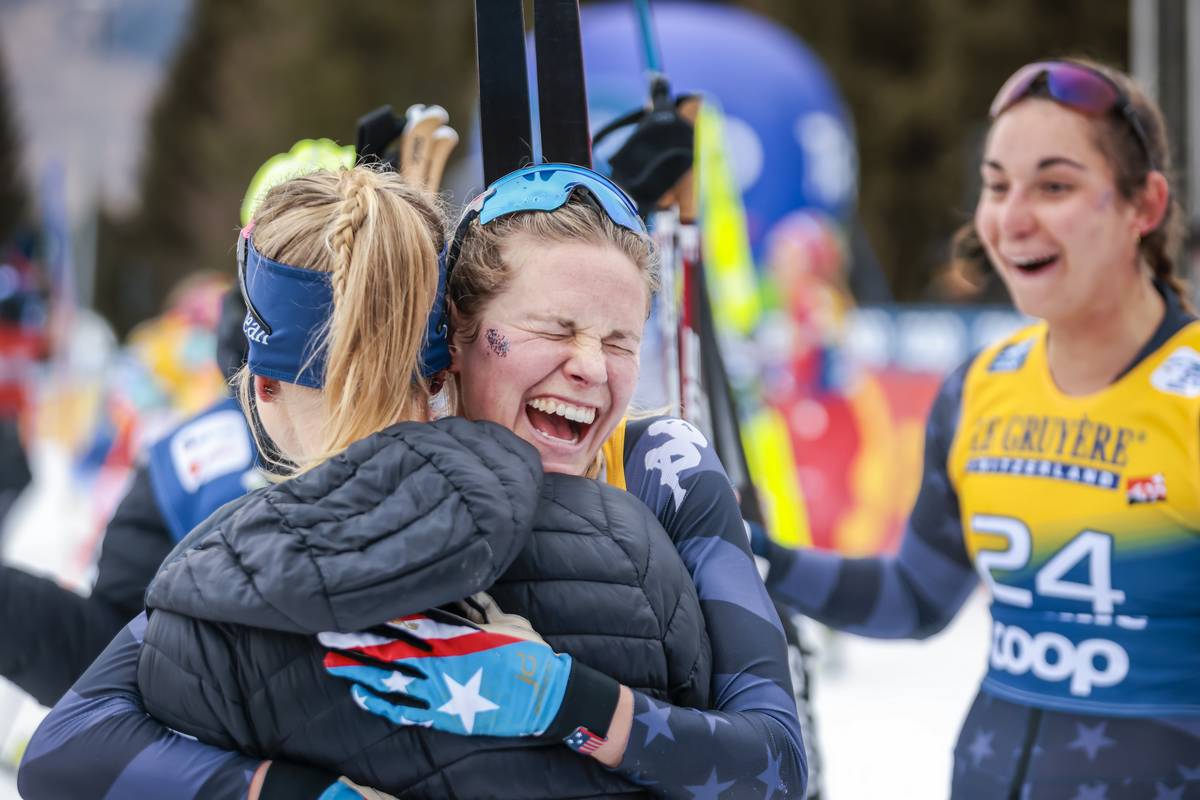
Julia Kern (USA) and Jessie Diggins (USA) celebrate with US Cross-Country Ski Team coaches and staff, as well as US Alpine Ski Team athletes who came to support them at the end of the 2025/26 Tour de Ski. (Photo: Vanzetta/NordicFocus)
The Meaning of a Tour
In the mixed zone at the top, Diggins spoke not with relief so much as appreciation—for the work, the people, and the endurance the Tour demands.
“The Tour de Ski is one of the hardest things to win,” she said. “When you win the Olympics, it’s amazing—it’s really special. But that’s one race. The Tour is day after day after day. You have to put it together back-to-back, under cumulative pressure. That’s really hard. It’s hard on you, and it’s hard on the team.”
Her emphasis, repeatedly, returned to the collective effort. She spoke of team energy, of support staff, of consistency rather than dominance. It was a reminder that Tour victories are not seized in moments, but constructed patiently across an entire week.
Diggins finished the Tour with a total time of 2:11:26.1, winning the overall by more than two minutes over Austria’s Teresa Stadlober. It was not a victory defined by a single attack or a single stage, but by accumulation—time gained when others faltered, mistakes avoided when margins were thin.
Julia Kern (USA) makes her way up Alpe Cermis to finish 14th on the day. (Photo: Vanzetta/NordicFocus)
Kern’s Quiet Confirmation
For Julia Kern, Alpe Cermis offered something different: clarity.
Kern finished 14th on the stage, 2:01.0 back, after a Tour that reflected both progress and unfinished business. She described the climb as meeting—or exceeding—her expectations.
“Every year it’s a little different with who’s still left in the Tour,” Kern said. “But I’m taking away from today that my fitness is there. I just need to fine-tune some of the sprinting gears. That’s very trainable at this point in the season.”
Her assessment mirrored her results. Kern was consistently strong in the distance races throughout the Tour, finding rhythm and confidence as the days passed. The sprint stages, by contrast, left her frustrated.
“I was a bit bummed with my sprint days for sure, and hungry for more,” she said. “But at the same time, I had consistently good, strong distance races. Halfway through the Tour, I started to find my race legs again.”
It is a pattern Kern recognizes—slow starts, gradual momentum, strength revealed in longer efforts. In an Olympic season, that trajectory matters more than any single result.
Maja Dahlqvist (SWE) attacked at the end of the valley trail leading to the Alpe Cermis in Val di Fiemme (ITA) to secure her silver sprinters’ bib. (Photo: Vanzetta/NordicFocus)
The Bib Battles
Beyond the overall, the final climb also settled two secondary competitions that added layers of tension to the Tour’s closing act.
The climber’s bib—awarded for cumulative performance on the Tour’s toughest ascents—went to Teresa Stadlober, who accumulated 45 points across the week. Diggins finished second in the standings with 39, underscoring how consistently she handled the steepest terrain without ever needing to gamble on a single climb.
The sprint standings, marked by the silver bib, remained unsettled until the final stage, where one final set of bonus points was awarded at the beginning of Alpe Cermis. Sweden’s Maja Dahlqvist emerged with the title at 53 points, ahead of Switzerland’s Nadine Fähndrich and Sweden’s Johanna Hagström. Diggins finished fourth in the sprint competition—another reflection of her Tour: competitive everywhere, decisive where it mattered most.
Teresa Stadlober (AUT) fought hard to defend her climbers’ bib. (Photo: Vanzetta/NordicFocus)
Pain, Reconsidered
Late in the mixed zone, Diggins reflected on something more personal—how different this climb felt compared to recent years.
“The last two years I’ve been so injured that I was in so much pain outside of racing,” she said. “So for it to be only painful during the race was like, wow—that’s kind of nice.”
It was not a dramatic declaration, but it carried weight. The Tour de Ski magnifies everything: fatigue, doubt, confidence, pain. To arrive at Alpe Cermis feeling capable—rather than simply enduring—marked a shift.
She laughed when she added that she told herself, mid-Tour, that she would “never do this again.” Then she smiled at the familiar uncertainty that defines the race.
“You never know how you’re going to feel every day on a Tour,” she said. “And today I felt really good. One of the best I’ve ever felt on the final climb.”
Julia Kern (USA), Jessie Diggins (USA), (l-r) at the top of Alpe Cermis in Val di Fiemme (ITA). (Photo: Modica/NordicFocus)
The American Picture
For the U.S. women, the Tour ended with a sense of coherence. Diggins’ overall victory provided the headline, but Kern’s steady distance form pointed toward depth and durability within the team.
Kern’s immediate plans reflect that long view. She will return home to Richmond, Vermont, for two weeks—prioritizing recovery before resuming training on familiar snow.
“I did this last year, and it worked really well,” she said. “Just getting off World Cup, getting a lot of recovery the first week, being in my own bed.”
From there, she will rejoin training camps and racing with an eye toward sharpening for the Olympics. It is a plan built on patience rather than urgency—much like Diggins’ approach on Alpe Cermis.
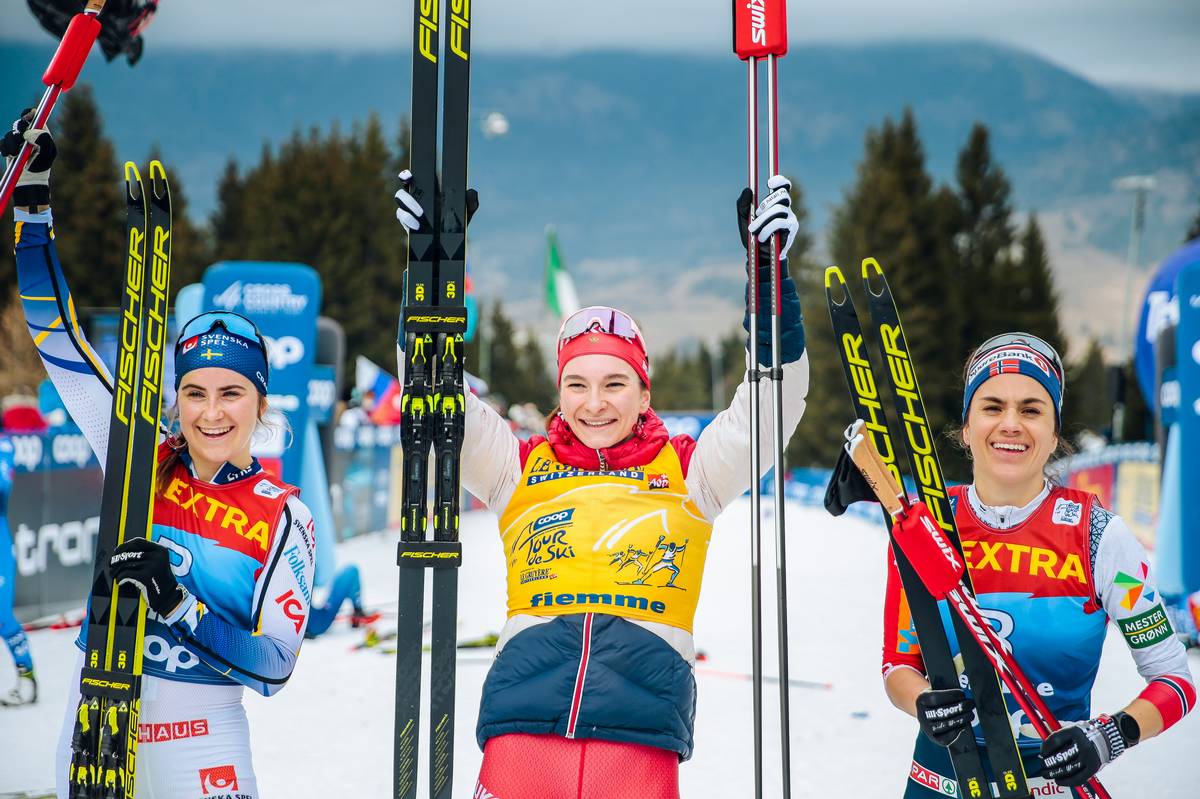
Teresa Stadlober (AUT), Jessie Diggins (USA), Heidi Weng (NOR), (l-r) take the Tour de Ski overall podium. (Photo: Vanzetta/NordicFocus)
What the Climb Leaves Behind
When the last skier crested the climb and the finish corral emptied, Alpe Cermis returned to stillness. The Tour de Ski had done what it always does: clarified things.
It clarified that Jessie Diggins remains one of the sport’s great stage racers—capable not just of winning races, but of managing weeks. It clarified that Julia Kern’s fitness base is real and growing, even if some pieces still need refinement. And it clarified, once again, that the Tour is not about brilliance alone, but about survival, intelligence, and trust in process.
Diggins did not win the final stage. She did something harder. She won the Tour by knowing exactly when not to.
At the end of the longest climb of the week, that knowledge mattered most.
Feature stories like this one take time, access, and care to produce. If you value thoughtful storytelling and independent ski journalism, please consider becoming a Voluntary Subscriber. Your support directly fuels the work we do to cover the people, places, and moments that make our sport special.
Jessie Diggins (USA), Karoline Simpson Larsen (NOR), and Heidi Weng (NOR), (l-r) share the final climb podium at the top of Alpe Cermis in Val di Fiemme (ITA). (Photo: Vanzetta/NordicFocus)
This coverage is made possible through the generous support of Marty and Kathy Hall and A Hall Mark of Excellence Award. To learn more about A Hall Mark of Excellence Award, or to learn how you can support FasterSkier’s coverage, please contact info@fasterskier.com.
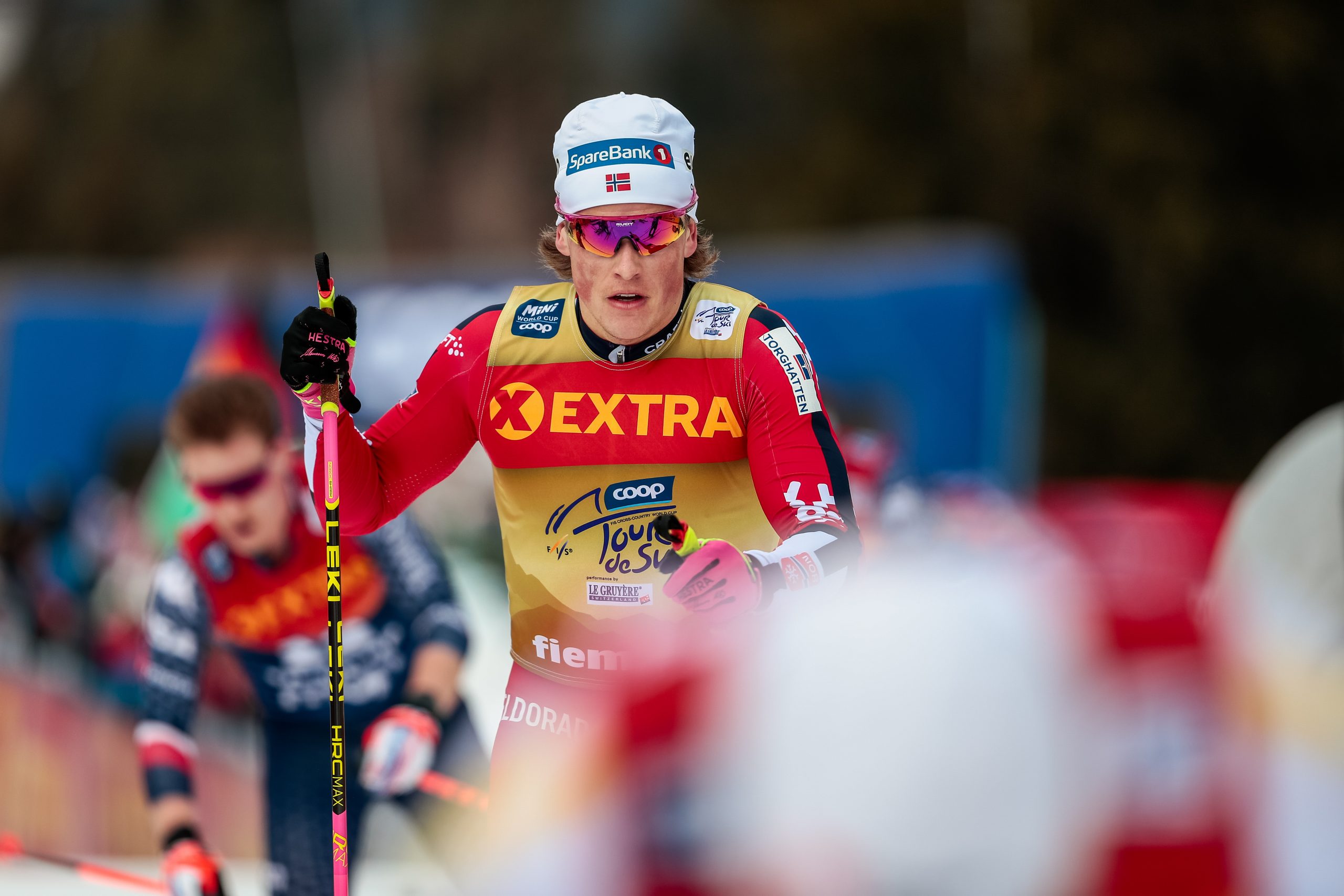
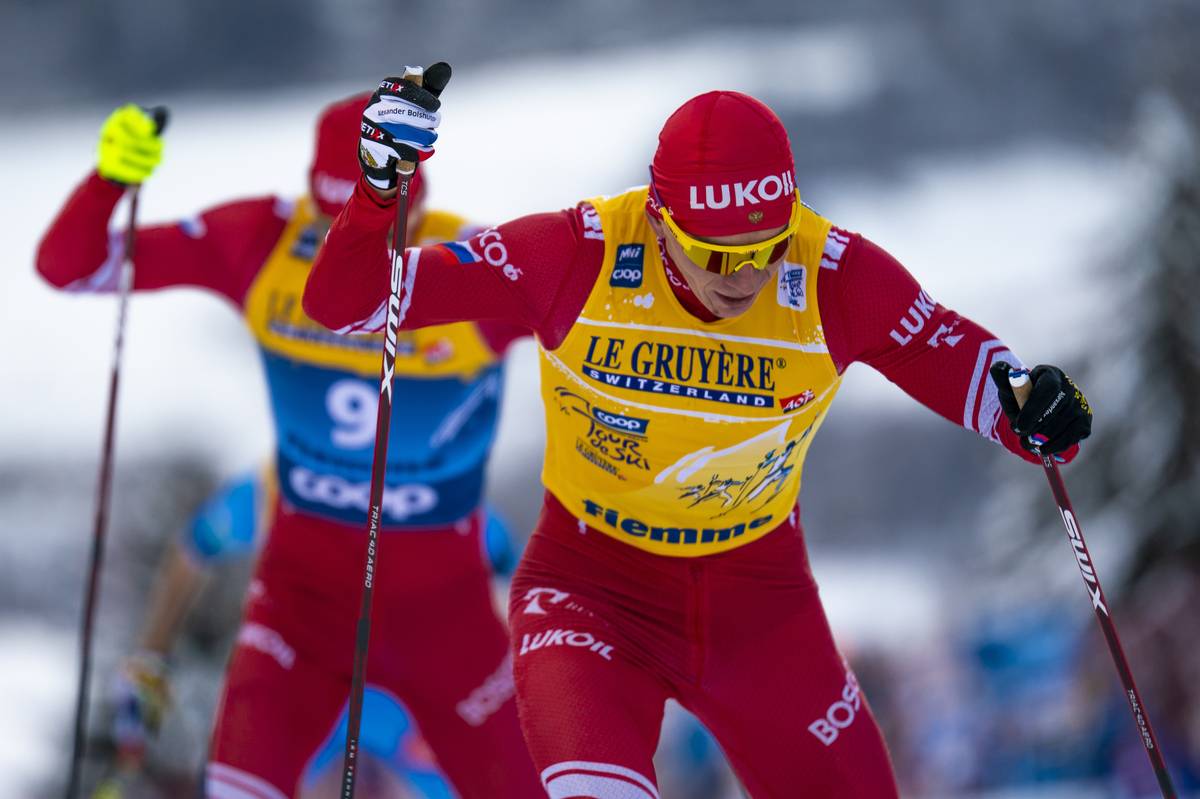
Johannes Hoesflot Klaebo (NOR) claimed a record-setting fifth overall Tour de Ski victory. (Photo: Vanzetta/NordicFocus)
In its original configuration (and for many seasons that followed), the final stage of the Tour de Ski was a Pursuit race—perhaps the only Pursuit race that actually made sense in the context of the World Cup tour. The leader went off with the advantage they’d earned during the course of the Tour; everyone else chased. The first skier to the top of Ape Cermis was the winner of the Tour de Ski. In the past few years, though, organizers began thinking that the final day’s racing would be more exciting if it adopted a mass start format. So, today’s final stage was one in which all remaining competitors departed the starting line together. The contenders would battle it out on the slopes of the Alpe Cermis, hoping to manage the gaps to their competitors and to maintain the positions each had earned during the week of grueling racing in Toblach and Val di Fiemme. The stage was set for the climb up the Alpe Cermis.
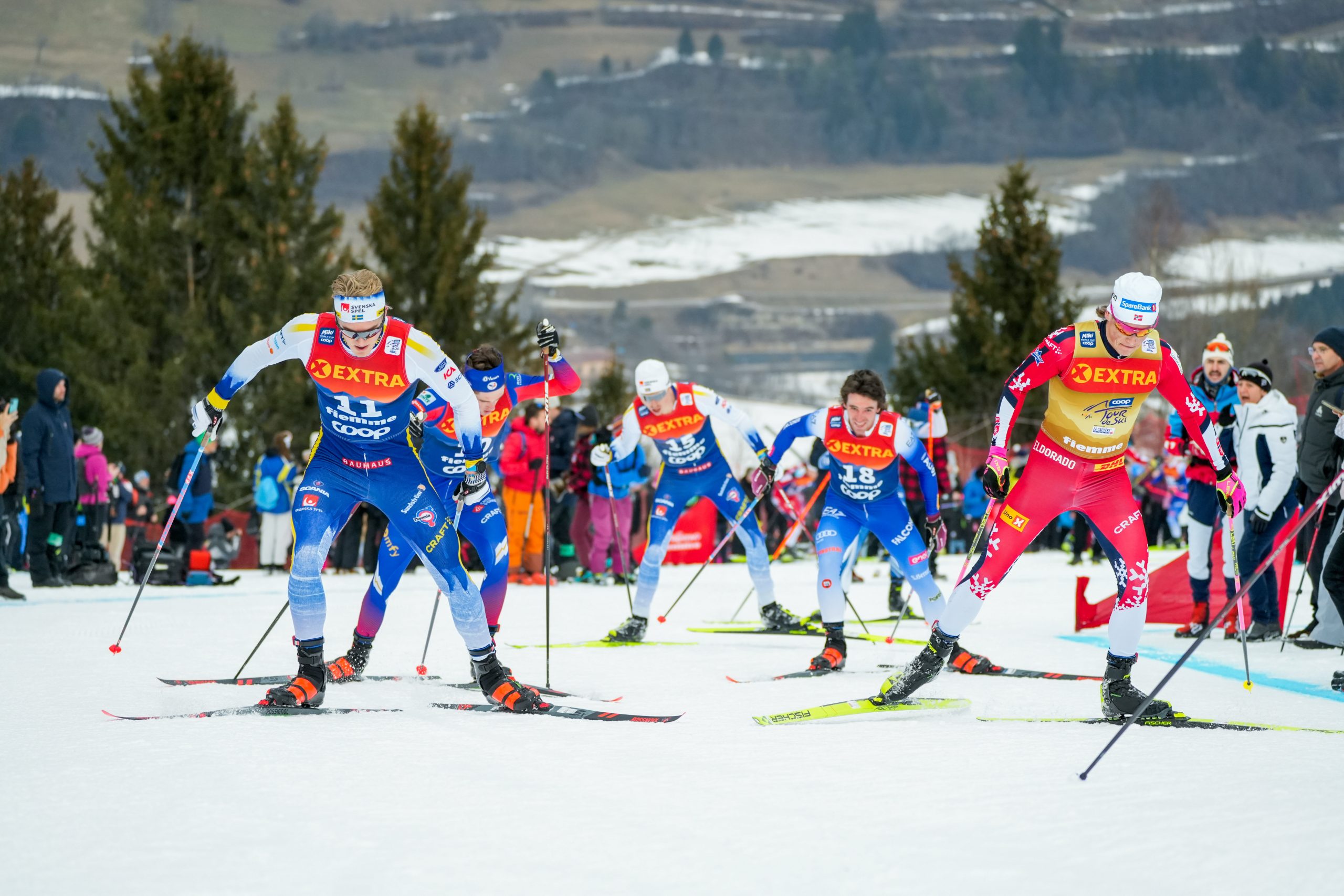
Ultimately, the stage was one by Mattis Stenshagen (NOR) just ahead of Jules LaPierre (FRA). A resurgent and rejuvenated Emil Iversen (NOR) claimed the third spot on the day’s podium, followed by Savelii Korostelev (AIN) who is beginning to establish himself as a contender in World Cup events as skiers begin setting their sights on the Olympic Winter Games beginning next month in Milano-Cortina. North American skiers were led to the summit by Antoine Cyr (CAN) in 13th place. Gus Schumacher (USA) would climb bravely, fading to 16th on the stage but still managing to preserve his seventh place overall finish (best ever for an American man in the Tour de Ski). Ben Ogden (USA) would maintain his position in the field, coming across the line 22nd and followed by Zak Ketterson was 35th, Graham Ritchie (CAN) 40th, Remi Drolet (CAN) 45th.
Gus Schumacher’s (USA) goal in the 2026 Tour de Ski had been a top ten overall finish. He accomplished that with room to spare, and added a stage victory in the 5 k Mass Start for good measure. (Photo: Vanzetta/NordicFocus)
“My goal was to get top ten, coming in,” recalled Schumacher. “It’s nice to have a solid tour, with some really bright spots like the 5 k . . . In mass starts, I’m feeling really comfortable skiing with (the leaders) in the Pursuit, the 5 k Mass Start, and today. It’s nice to be comfortable with the leaders.”
“Today I was more energetic than I expected,” said Ogden. “But I don’t really race this often enough to have an idea of how long it is, or how much it’s gonna hurt.”
But it was the overall Tour de Ski lead of Johannes Hoesflot Klaebo that everyone was interested in—and the lead that all the other racers were hoping to reduce, or even overcome. Unsurprisingly, Klaebo’s 90 second cushion over his nearest rivals proved more than sufficient to preserve his overall victory in the 2026 Tour de Ski—his record-setting fifth overall victory in this annual event.
Stage 6—Alpe Cermis
Klaebo must be so tired of this stage . . . he’s skied this finish to the Tour de Ski many times before, each time knowing that he has a chance to win if only he can get to the top fast enough. Klaebo has made this climb before—and has claimed the Tour victory four other times—but it’s never been his strength. One year ago, he finished this stage 17th . . . fast enough for the win, but well behind a number of skiers who were also in today’s field. Today, in Val di Fiemme, Klaebo led at the start, offering a moderate pace while hoping to conserve energy for the climb. Inexplicably, his pace in the early kilometers was matched by Edvin Anger (SWE), a skier who excels only at sprinting, and whose body type—the guy is huge—really didn’t suggest that he’d be a contender on the steep slopes of the Alpe Cermis. Across the flats of the valley below Val di Fiemme they raced, knowing that the real challenge wouldn’t start until they reached the slopes of the Alpe Cermis.
All the starters must have approached the day with trepidation—climbing the Alpe Cermis is a daunting challenge—but perhaps nerves were even more on edge among the Norwegian team members, many of whom knew that today’s result might be the difference between qualifying for the Norwegian Olympic Team, or being left at home when the Games begin in Milano-Cortina next month.
Simen Hegstad Krueger (NOR) has won this stage three times in the past, but his recent performances did not suggest that he’d be a factor today. How crazy is it that a skier of Krueger’s pedigree finds himself on the bubble when it comes to selection for his nation’s Olympic team? Krueger is one of a number of Norwegians who knew their performance in Tour de Ski was perhaps the only way to get the attention of the Committee selecting the Norwegian Olympic Team. And in these 10 kilometers, his chances would fade dramatically. A three-time former winner of this stage up Alpe Cermis, Krueger would fade to 25th on the day—22nd in the overall standings—probably ending his Olympic quest. Just one spot ahead of Krueger, Andreas Fjorden Ree also may have seen his Olympic plans fading today on Alpe Cermis. Qualifying for a Norwegian Olympic Team may be the starkest test in all of cross-country skiing, and the Alpe Cermis is a definitively cruel proving ground, one that leaves former champions prostrate and gasping.
Harald Oestberg Amundsen (NOR) preserved his status on Team Norway with a fifth place finish on Alpe Cermis, but Lars Heggen (NOR)—who stood in second place at he beginning of the day—may find himself harshly criticized in Norway after dropping to 29th on the Alpe, and sixth overall. Ironically, what would be career-best finishes for nearly any other World Cup competitor could become the disastrous moment in Heggen’s career.
Mattis Stenshagen (NOR) dominated the final climb up Alpe Cermis, winning the Tour’s final stage, and vaulting himself into second place overall. (Photo: Modica/NordicFocus)
The Climb
The rate of attrition is high at the Tour de ski: only 69 of the original 122 starters remained to toe the starting line of the final stage. Klaebo began the day leading the Tour de Ski standings—1:23 ahead of Heggen, 1:29 over Stenhagen, and1:37 over former Tour winner, Amundsen who began the day in fourth position. Italy’s Federico Pellegrino still harbored ambitions of a final Toud podium; he sat in fifth, 1:40 back, and trailing two skiers (Stenshagen and Heggen) who had never before climbed the Alpe. Potential exstedfor plenty of positions to be shuffled, but not before the grueling climb of the Alpe Cermis was concluded.
Schumacher started in seventh position, moving past Anger into sixth as soon as the climbing began in earnest.When the course reached its steepest point (a 26+ percent grade), the stage was led by Stenshagen who was followed closely by LaPierre and Korostelev. Thereafter, the gap was growing ahead of Klaebo and the rest of the chasers.
“The first pitch is pretty shocking,” remembered Schumacher. “You climb for six minutes before it, then it’s like ‘Oh $#%, that’s an Alpine hill! . . . You’re not gliding at all, and there’s still eight minutes of climbing after that.”
Half way up the climb, much of Klaebo’s lead had evaporated. By the time racers reached the second steep section, Klaebo’s lead was barely 41 seconds. Lapierre was attempting to get away alone, effectively drawing even more effort out of Stenshagen. It would be a steep and punishing uphill drag race to the finish line.
Elan and panache—France’s Jules Lapierre (FRA) celebrates his second place stage finish at the top of Alpe Cermis. (Photo: Modica/NordicFocus)
Lapierre was hoping to script a second victory in the Alpe Cermis stage, but at the summit it was Stenshagen who stormed to the front, punching the air as he crossed the line for the stage win. He had a sizable stage-lead over Klaebo as the time-keeping vigil began—watching the clock to see if Klaebo would arrive soon enough to avoid overall defeat.
The finish line at the top of the Alpe Cermis might as well have been the selector for the Norwegian Olympic Team, as Iverson celebrated his third-place finish just ahead of Amundsen in fifth (with Korostelev between them in fourth). Klaebo crossed the line 12th, 58.0 seconds behind Stenshagen, but more than enough to preserve his advantage in the overall standings. For a record-setting fifth time, Klaebo would claim the overall victory in the Tour de Ski. And while Klaebo has not yet begun discussing the possibility of retiring at season’s end, this last climb up Alpe Cermis may have him thinking about it. After all these times racing from top to bottom, he probably never wants to do this again . . .
One step off the overall podium, Iversen appeared likely to join the Tour’s podium-finishers on the Norwegian team in Milano-Cortina, though it’s been suggested in the media that Stenshagen and Iversen—even after their tremendous performances in Val di Fiemme—may still be expected to prove their worth by finishing ahead of their domestic rivals at the upcoming Norwegian National Championships. How many times does a skier need to prove their point before they’re considered good enough to qualify to represent Norway in the Olympic Games? Lars Hegen may also find the answer to this question, as he started the day second overall but faded to sixth overall on the slopes of Alpe Cermis.
And the North Americans? Schumacher finally makes it to the finish of the Tour de Ski, claiming a hard-fought and richly-deserved seventh place.
“In the last few tries (Schumacher) has been in good standing midway through the Tour . . . but has come down with illness,”said on-air commentator, Kikkan Randall. “For him to come through with a solid top-ten performance—seventh overall—has got to be a one of the best-ever US Men’s finishes. He’s an athlete that looks to be on a trend to continue to build through this season. If he can use this Tour de Ski as a springboard, it can be great preparation fo the Olympics.”
Feature stories like this one take time, access, and care to produce. If you value thoughtful storytelling and independent ski journalism, please consider becoming a Voluntary Subscriber. Your support directly fuels the work we do to cover the people, places, and moments that make our sport special.
Jules Lapierre (FRA), Mattis Stenshagen (NOR), Emil Iversen (NOR) on the podium atop the Alpe Cermis, the concluding stage of the 2026 Tour de Ski.(Photo: Vanzetta/NordicFocus)
This coverage is made possible through the generous support of Marty and Kathy Hall and A Hall Mark of Excellence Award. To learn more about A Hall Mark of Excellence Award, or to learn how you can support FasterSkier’s coverage, please contact info@fasterskier.com.
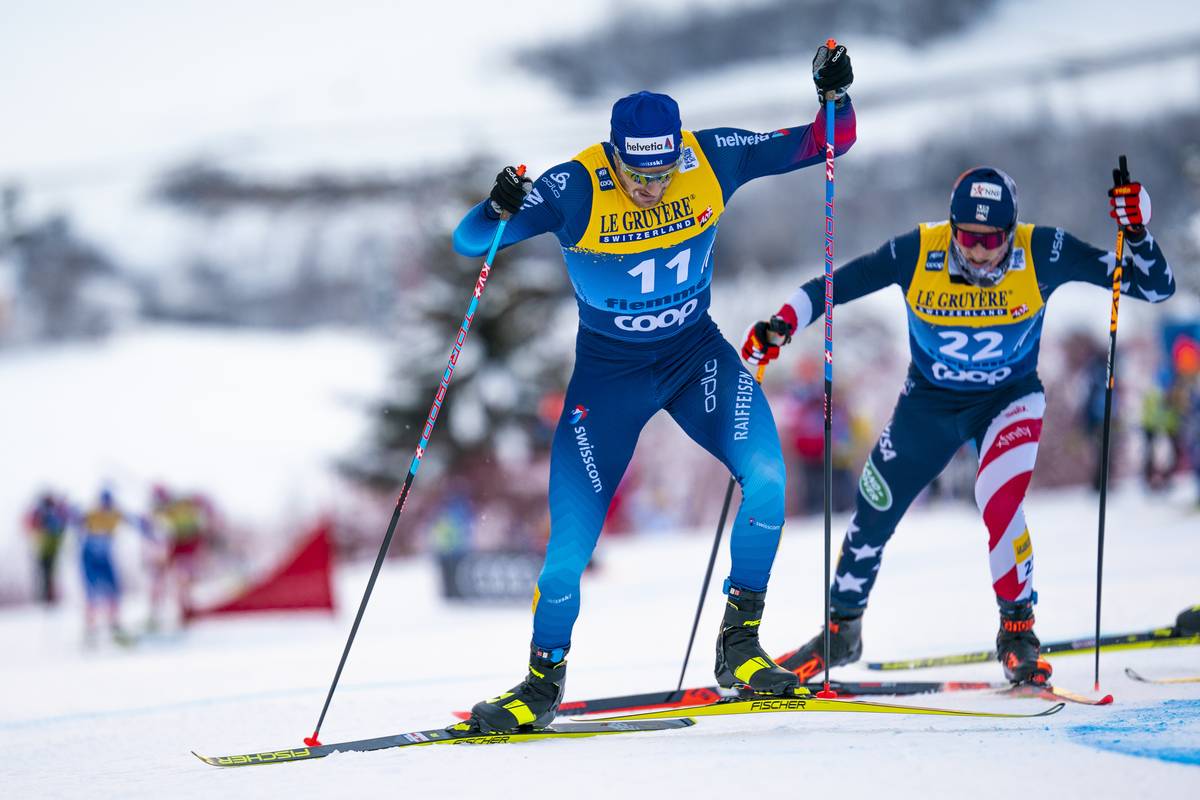
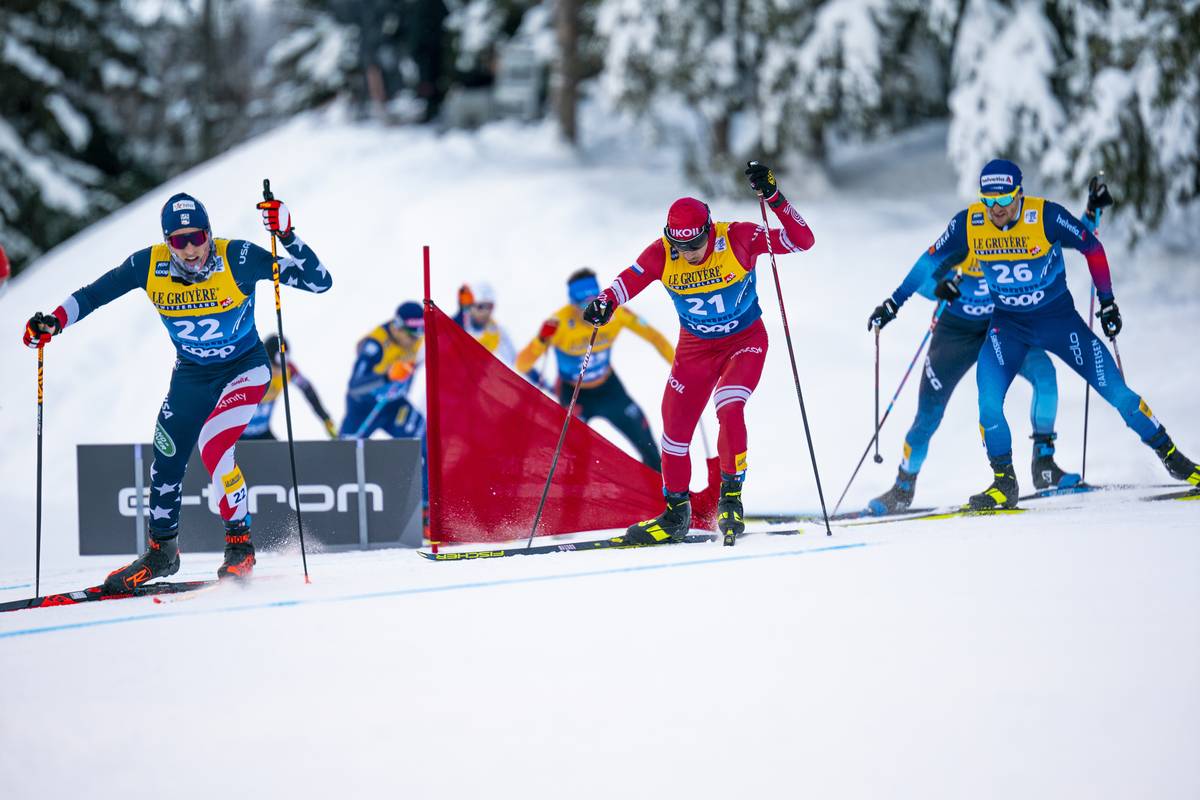
Richard Jouve (FRA), JC Schoonmaker (USA), Elia Barp (ITA), Lucas Chanavat (FRA), Gus Schumacher (USA), and Lars Heggen (NOR), (l-r) during the FIS Tour de Ski Classic Sprint quarterfinals in Val di Fiemme (ITA). (Photo: Vanzetta/NordicFocus)
There are places in cross-country skiing where the scenery tries to soften the message. Val di Fiemme is one of them: chalets tucked into the folds of the valley, the geometry of the Dolomites, the sense that the world is being held in a wide, cold palm. But on Saturday—Stage 5 of the Tour de Ski—the athletes arrived with that gentler Italy already behind them. Toblach, with its familiar corridors of speed and fatigue, was gone. The rest day was gone, too. And in its place sat something more specific and more unsettling: a brand-new sprint course built not for tradition, but for February.
For the first time, the World Cup sprint field raced the exact Olympic sprint track that will be used at Milano-Cortina 2026. That matters not because athletes need more “practice,” but because courses have personalities, and this one introduced itself like a handshake that squeezes a little too long. It asked for patience in the technical sections, then demanded commitment on a long climb that made everyone reveal something—fitness, timing, ski choice, nerve. And it did all of that during the Tour de Ski, a stage race where every extra match struck comes with a price tag at the bottom of Alpe Cermis.
It was, in other words, the kind of sprint that is only a sprint if you insist on calling it that.
Edvin Anger (SWE) leads his quarterfinals in Val di Fiemme (ITA). (Photo: Vanzetta/NordicFocus)
A course that changes the definition of “sprint.”
The men’s sprint qualification—one lap, individually, no drafting—made the opening statement. Johannes Høsflot Klæbo (NOR) posted the fastest time in 3:17.64, immediately establishing that the new Val di Fiemme sprint course rewards the kind of controlled power that can climb without unraveling.
Behind him, the qualification list already hinted at the day’s theme: capacity mattered. The climb mattered. And a handful of skiers who sometimes feel squeezed by short, sharp sprints found themselves looking at something longer, more elastic, more survivable.
That was the feeling Gus Schumacher (USA) described when he stepped away from the finish area and tried to name what this course was asking for.
“It’s pretty long… it favors a guy like me,” Schumacher said. “The length, having a long climb, helps me… capacity.” He paused, then gave the most accurate label anyone offered all day: “It feels like a sprint for… yeah. I mean, yeah, it’s not a distance course.”
Schumacher wasn’t the only American to qualify well. In fact, the U.S. men placed four athletes in the top 14 of qualification: Ben Ogden was 8th (3:21.53), Zak Ketterson 11th (3:22.08), J.C. Schoonmaker 13th (3:22.26), and Schumacher 14th (3:22.32).
That’s the kind of qualification spread that usually sets a team up for a day of opportunity—multiple rolls of the dice, multiple chances to land someone in the semifinals where the sport’s real math begins.
But the sprint format never promises fairness. It only promises structure.
Zak Ketterson (USA) during qualification. (Photo: Vanzetta/NordicFocus)
How the day works: one lap to qualify, one lap to survive
The men’s sprint unfolded the way sprint days do: qualification narrowed the field to 30, then the heats began.
Five quarterfinals. Six skiers per heat. One lap each.
Advance by placing in the top two—or by being one of the two fastest “lucky losers” across all heats.
Then two semifinal heats, same rules. Then a six-man final.
Every lap is a new decision-making problem. Every lap is also a chance to get boxed in, bumped out of rhythm, or forced into the wrong line at the wrong moment.
If qualification is a test of horsepower, the heats are a test of spatial intelligence.
And on this course, spatial intelligence was complicated by a finishing sequence that bred uncertainty: a long downhill run-in that made it hard to know whether to lead, draft, or gamble on timing.
That was Zak Ketterson (USA)’s main takeaway.
“This course finishes in such a long, fast downhill,” he said. “So it’s like, do you lead and then hope you don’t get passed, or do you go in third or fourth and hope that the draft is good enough?” The group, he explained, tried different strategies. “No one really found something that worked.”
Ketterson described a moment that will sound familiar to anyone who has ever felt a sprint slip away at the worst possible time: “I was in first at the top of the hill… skied really hard into the downhill, put in some super hard pushes, and still just got kind of swallowed up.”
What the course offered—passing opportunities on the climb—it took back in the late-run chaos of speed and positioning.
Lars Heggen (NOR), JC Schoonmaker (USA), Lucas Chanavat (FRA), Elia Barp (ITA), and Gus Schumacher (USA), (l-r) during their quarterfinals in Val di Fiemme (ITA). (Photo: Vanzetta/NordicFocus)
Quarterfinals: when good qualification isn’t enough
The official final results show a blunt fact: none of the four U.S. men who advanced to the quarterfinals made it through to the semifinals. Schumacher finished 19th overall, Ketterson 18th, Ogden 17th, and Schoonmaker 22nd, all eliminated in the quarterfinal round.
That’s the story in the statistics. The story as a race day was more complicated: a series of heats where the differences were small, where a late shove of speed could turn into nothing if the line closed, where the “right” choice was often only identifiable after it was too late to make it.
J.C. Schoonmaker (USA)—whose comments matched Schumacher’s in tone—captured the frustration of a quarterfinal where the movement simply didn’t happen.
“I was okay. I felt all right,” he said. “It was just a little… I didn’t really know how to play it in the end.” He described entering the downhill in fourth and finishing fourth—close enough to feel like you were in the race, far enough to be done. “Maybe less movement than before, which is good,” he added, sounding like someone trying to find the useful part of a disappointing outcome.
Ketterson, too, framed the day as reconnaissance: “We’re really lucky to have this practice since we’re gonna get to race here again in a month… hopefully we learn something.”
That line—practice—is never said casually in January. It’s a word you use when you want to turn a miss into preparation.
Antoine Cyr (CAN), Harald Oestberg Amundsen (NOR), Ben Ogden (USA), and Simone Mocellini (ITA), (l-r) sprint for the finish line during the quarters. (Photo: Modica/NordicFocus)
The Canadian near-miss: Antoine Cyr, 15th
For Canada, the day held a performance that belonged in the center of the narrative.
Antoine Cyr (CAN) qualified 24th (3:23.74) and advanced to the heats, then raced well enough to finish 15th overall, just missing progression into the semifinals.
Fifteenth is a strange place in sprinting: too high to dismiss, too low to celebrate, close enough to the semifinals that the what-ifs come easily. It also matters inside the Tour because athletes like Cyr are not only sprinting for the day—they’re managing the Tour’s overall clock, and every effort has to be weighed against the climb that ends this race.
In a field loaded with sprinters, all squeezed by the Tour’s cumulative fatigue, Cyr’s result was one of the cleaner statements of form: he belonged in the mix, and he was nearly through.
Johannes Hoesflot Klaebo (NOR) showed he didn’t need to find someone’s draft to win; he could claim the win during the last climb. (Photo: Modica/NordicFocus)
The final: Klæbo wins, the course makes its point
If the quarterfinals were chaos and calculation, the final delivered clarity.
Johannes Høsflot Klæbo (NOR) won the men’s classic sprint in 3:21.28, with Jules Chappaz (FRA) second (+3.11) and Anton Grahn (SWE) third (+3.14).
Behind them, Ansgar Evensen (NOR) placed fourth, Lars Heggen (NOR) fifth, and Jan Stölben (GER) sixth.
Klæbo’s win did not read as a normal sprint win, where the whole story is a final straightaway. This felt like a course that paid out earlier than that—on the climb, on the willingness to push, on the ability to arrive at the downhill with both speed and options.
And it’s worth noting what the result sheet shows about the men who made it out of the semifinals and into that final: this was not a day dominated solely by pure short-sprint specialists. The course asked for more, and the finalists were the ones who could give it.
Gus Schumacher (USA) during qualification in Val di Fiemme (ITA). (Photo: Modica/NordicFocus)
What it means for the Tour: Schumacher in the mix, Cermis ahead
With the sprint finished, the Tour de Ski narrative tightened. The decisive climb up Alpe Cermis was no longer “upcoming”; it was practically audible.
The most current men’s overall standings posted by FIS list Klæbo in the lead, with Heggen second and Mattis Stenshagen (NOR) third.
Gus Schumacher (USA) appears 7th overall on that list, and Antoine Cyr (CAN) 12th overall—a significant position heading into the Tour’s final confrontation with gravity.
(For U.S. readers tracking the broader picture: the overall standings list shows Ben Ogden 24th, Zak Ketterson 36th, Kevin Bolger 43rd, J.C. Schoonmaker 48th, and Jack Young 70th.)
That overall placement is why Schumacher’s post-race tone mattered so much. He sounded like someone who sees tomorrow not as a survival exercise, but as a legitimate racing day.
Asked how he felt physically and mentally going into the final climb, Schumacher didn’t hedge. “Feeling good. Definitely got to push. I’ve got a lot of energy left,” he said. “Today wasn’t too hard, especially on the legs, which is nice.”
Then the part that reveals what the Tour does to athletes: it turns them into calculators of effort. A sprint can be hard on the lungs and nerves without stripping the legs. That matters on Alpe Cermis, where every athlete arrives with a different version of fatigue.
Schumacher made his intentions plain: “Obviously, I’m going to race aggressively.” He added a piece of perspective that’s easy to overlook: “I actually haven’t really raced it feeling like myself, healthy, since my first year on the World Cup… I feel like I’m in really good shape and I’m excited to push and try to stay near the front.”
In a Tour de Ski, that kind of confidence is itself a resource.
Not everyone sounded like that.
Simone Mocellini (ITA), Ben Ogden (USA), Roman Alder (SUI), and Antoine Cyr (CAN), (l-r) in their quarterfinals. (Photo: Vanzetta/NordicFocus)
Ben Ogden: The honest cost of sprinting in a Tour
Ben Ogden (USA) gave the other side of the ledger—the part that usually stays hidden behind finish-line smiles and polished mixed zone answers.
“Definitely frustrating,” he said. “A little drained physically and mentally, to be completely honest.”
He didn’t claim emptiness; he just didn’t claim abundance. “There’s some energy still there,” he said, “not a crazy amount.”
Ogden described his current skiing with a clarity that is both discouraging and useful: “I feel like strength and fitness are okay when it comes to sprinting, but the tactics are just still a struggle.” He called it a “blow to the confidence,” then separated that from tomorrow: not necessarily a blow to what the final climb will be.
His plan for Alpe Cermis wasn’t romantic. It was practical. “Tomorrow is what it is,” he said. “Just sort of putting my head down and getting it done.”
And then, in the simplest possible terms, he described the Tour de Ski’s last stage: stay connected early; endure late. “Try to stay connected to the bottom of the hill. And once the hill starts, it’s whatever you got. And then when it’s done, at least it’s done.”
That line is not optimism. It’s accuracy.
Maybe the most interesting moment of the day was when Jules Chappaz (FRA) started celebrating to the crowd before the finish line while Anton Grahn (SWE) almost stole second with a tremendous lunge. (Photo: Modica/NordicFocus)
What Saturday really was: Olympic reconnaissance under Tour pressure
Stage 5 didn’t decide the men’s Tour de Ski. But it clarified it, in a way that felt almost clinical.
The Olympic sprint course in Val di Fiemme is not a nostalgic sprint track. It doesn’t let everyone arrive together and sort it out in a final straight. It makes decisions earlier. It forces athletes to choose between leading and drafting, between saving and committing, between the clean line and the crowded one.
For the Americans, the day contained both promise and frustration: four men qualifying in the top 14 is a sign of depth and form, even if the quarterfinals didn’t deliver the advancement they were chasing. For Canada, Antoine Cyr’s 15th-place result was the sort of near-breakthrough that keeps a season’s story alive—one more push, one more opening, and the semifinal door swings the other way.
Jules Chappaz (FRA) and Anton Grahn (SWE) made the podium order exciting at the line. (Photo: Modica/NordicFocus)
And above all, hovering over it all, was the climb that ends the Tour: Alpe Cermis, an alpine ski slope repurposed into a cross-country crucible, where technique becomes something closer to posture and grit.
Saturday gave the field one kind of truth—the truth of speed, positioning, and compressed opportunity. Tomorrow will provide the other kind: the truth of endurance, suffering, and the ability to keep moving when the course stops pretending it wants you to.
The Olympic Classic Sprint rehearsal is behind them. Whatever each athlete learned on Saturday—about skis, about lines, about courage on the climb—will be carried into February, but for now, the one place the Tour de Ski never lets anyone hide is tomorrow. Alpe Cermis awaits!
Feature stories like this one take time, access, and care to produce. If you value thoughtful storytelling and independent ski journalism, please consider becoming a Voluntary Subscriber. Your support directly fuels the work we do to cover the people, places, and moments that make our sport special.
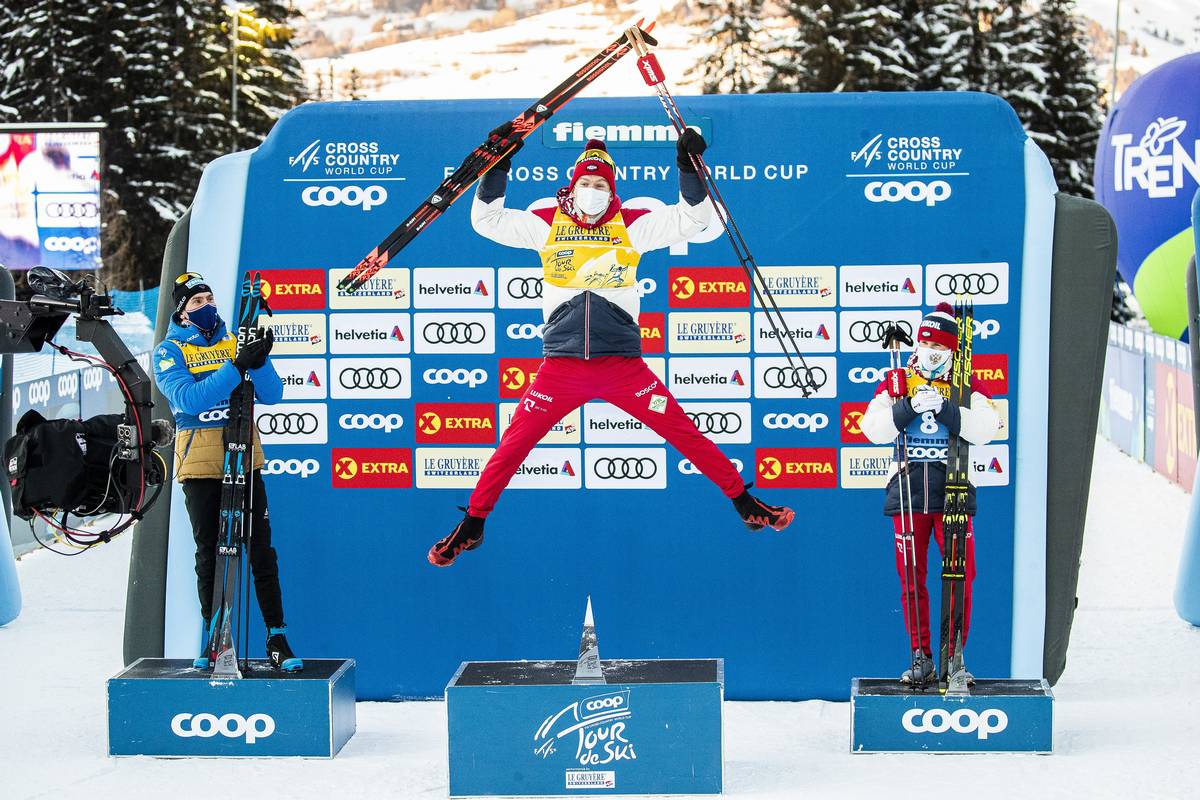
Jules Chappaz (FRA), Johannes Hoesflot Klaebo (NOR), and Anton Grahn (SWE), (l-r) sharing the Classic Sprint Podium in Val di Fiemme (ITA). (Photo: Modica/NordicFocus)
This coverage is made possible through the generous support of Marty and Kathy Hall and A Hall Mark of Excellence Award. To learn more about A Hall Mark of Excellence Award, or to learn how you can support FasterSkier’s coverage, please contact info@fasterskier.com.
Nadja Kaelin (SUI), Ingrid Bergene Aabrekk (NOR), Julia Kern (USA), Jasmin Kahara (FIN), Moa Ilar (SWE), and Nicole Monsorno (ITA) (l-r) start their quarterfinals during the Classic Sprint in Val di Fiemme (ITA) during the penultimate stage of the 2025/26 Tour de Ski. (Photo: Vanzetta/NordicFocus)
By the time the women arrived in Val di Fiemme for Stage 5 of the Tour de Ski, the race had already narrowed in a way that had nothing to do with start lists or bib numbers. Five stages into the Tour, with travel from Toblach behind them and the final climb up Alpe Cermis looming ahead, every decision began to carry weight beyond the moment.
Saturday’s classic sprint added another layer. For the first time, the athletes raced the exact sprint course that will be used at the Olympic Games in February — not a modified version, not a nearby loop, but the course itself. It was a rare opportunity: Olympic reconnaissance inside a stage race that punishes excess effort.
The challenge was simple and unforgiving. One lap to qualify. One lap to survive each heat. No chances to reset.
Julia Kern (USA) – FIS world cup cross-country, tour de ski, individual sprint, Val di Fiemme (ITA). (Photo: Vanzetta/NordicFocus)
“It definitely feels like an Olympic course.”
The Val di Fiemme Olympic sprint course announces itself immediately. Tight turns demand positioning. Technical downhills reward precision. And the long climb — the defining feature — exposes anyone who arrives underpowered or out of position.
“It definitely feels like an Olympic course,” said Julia Kern. “It is very hard. It has technical downhills, big climbs — it has everything.”
Jessie Diggins agreed.
“It’s a really legit course,” Diggins said. “I love that the uphill is long and there are opportunities for people to move and to pass.”
Then she framed it in terms of February.
“It’s the Olympics. It should be hard,” she said. “You should have to be the fittest and the fastest and just the best to win. And I think this is a course that demands those things.”
Jessie Diggins (USA) – FIS world cup cross-country, tour de ski, individual sprint, Val di Fiemme (ITA). (Photo: Modica/NordicFocus)
Qualification: one lap, no margin
Qualification was a single-lap time trial, and it set the tone for the day. With no drafting and no tactical games, athletes had to show exactly what they had on the climb. The long uphill created immediate separation, and the results reflected fitness more than finesse.
For athletes racing the Tour de Ski overall, qualification was also about control: skiing hard enough to stay well inside the top 30, but not harder than necessary.
Both Diggins and Kern advanced cleanly into the heats, securing places in the top 30 and moving on to the quarterfinals.
Julia Kern (USA) reached the line in her quarterfinal but was not fast enough to advance. (Photo: Modica/NordicFocus)
Quarterfinals: positioning becomes everything
The quarterfinals split the field into five heats of six, with the top two from each heat automatically advancing to the semifinals, joined by two lucky losers based on time.
With only one lap to work with, positioning was critical. The opening corners and technical sections determined who could enter the climb with momentum — and who would have to spend energy simply fighting back into contention.
Kern approached her quarterfinal with a clear plan.
“Today I wanted to be near the front, given all the turns,” she said, “and then open it up on the climb.”
The plan made sense on a course where passing opportunities exist — but only if you can generate speed when the hill demands it.
“At this stage in the Tour — in this season — I haven’t quite found my speed yet,” Kern said afterward. “And so didn’t quite have it on the hill today.”
She finished outside the top two in her heat and did not advance as a lucky loser, ending the day 18th overall, eliminated in the quarterfinals.
Still, Kern found something constructive in the effort.
“I feel like I skied the first half better than I have in the past,” she said. “So I’m glad about that — and I just got to practice the hill now.”
On an Olympic course, even a quarterfinal can be information worth collecting.
Jessie Diggins (USA) and Johanna Matintalo (FIN), (l-r) lead their quarterfinal. (Photo: Vanzetta/NordicFocus)
Semifinals: racing the sprint vs. racing the Tour
The two semifinal heats brought together 12 athletes, each with the same arithmetic: finish in the top two, or be fast enough to earn one of the two lucky-loser spots into the final.
This is where the Tour de Ski context begins to shape behavior.
Diggins was explicit about that calculus.
“My tactics were super different than the guys,” she said, “based on how women generally tend to race — especially on a longer course.”
She came into the day with a clear objective: protect her overall position, gather bonus seconds if possible, and avoid unnecessary damage with Alpe Cermis one day away.
Jessie Diggins (USA) came into the finishing stretch in the tracks behind Johanna Hagstroem (SWE), but was soon boxed out by Iris De Martin Pinter (ITA) and Julie Bjervig Drivenes (NOR), which made it impossible for her to find space in the closing meters. (Photo: Modica/NordicFocus)
In the semifinal, Diggins briefly looked poised to advance into the final. Coming out of the final downhill and into the approach to the home stretch, she dropped into an aggressive low tuck, taking full advantage of fast skis to glide up into contention without spending additional energy. But as the field compressed in the final meters, Diggins found herself boxed in, with no clean lane to move forward before the line. It was a moment that captured both the precision and the limits of sprint racing on a technical course — speed alone wasn’t enough if space never opened.
“For me, it was really like, okay, I just needed to try to get through to the semis and ideally through to the final,” Diggins said.
She advanced through her semifinal — but without selling out — and finished 7th overall, just outside the six-woman final.
“Seventh place was kind of almost best-case scenario,” she said. “One less hard effort for maximum points.”
In the Tour de Ski, that logic is not defensive — it’s strategic.
A Swiss, a Swede, a Finn, and repeat with Anja Weber (SUI), Maja Dahlqvist (SWE), Jasmi Joensuu (FIN), Nadine Faehndrich (SUI), Johanna Hagstroem (SWE), Johanna Matintalo (FIN), (l-r) lining up against each other in the finals of the Classic Sprint. (Photo: Vanzetta/NordicFocus)
The final: Joensuu takes advantage
The six-woman final delivered what the course promised: a fast, honest race where the climb made the selection.
Jasmi Joensuu (FIN) executed it best, winning the sprint in 3:45.75. Nadine Fähndrich (SUI) finished second, with Johanna Hagström (SWE) rounding out the podium.
Where the Tour stands
After Stage 5, Diggins remains in the gold bib, leading the Tour de Ski overall. Joensuu’s sprint victory moved her into second overall, tightening the standings ahead of the decisive final stage.
Kern sits 17th overall, a position that reflects both the difficulty of the sprint and the way Tour time gaps become stubborn once established.
With only the final climb remaining, the math is clear — but the execution is anything but.
Jasmi Joensuu (FIN) celebrates ahead of Nadine Faehndrich (SUI) at the finish of the Classic Sprint in Val di Fiemme (ITA). (Photo: Modica/NordicFocus)
One climb left
The Tour de Ski ends where it always does in Val di Fiemme: on the Alpe Cermis, a climb so steep it turns technique into survival.
For Diggins, Saturday’s ascent will be the last final climb of her career.
“This is my 14th Tour,” she said. “I’m really excited that this is the last one. You will not catch me doing that again. I put in my time.”
Her approach is stripped to essentials.
“You literally have no idea how you’re going to feel until you’re a third of the way into the climb,” Diggins said. “And then you find out, and then you work with what you got.”
She wants one thing.
“I’m excited to be gritty,” she said. “Leave it all out there.”
What Saturday actually revealed
Saturday’s sprint didn’t decide the Tour de Ski. It clarified it.
The Olympic sprint course in Val di Fiemme is technical, selective, and honest. It rewards fitness and decisiveness. It punishes hesitation. And it gives athletes exactly one attempt at a time to get it right.
For Diggins, the day was about control — gathering points, learning the course, and arriving at Alpe Cermis with something left in the tank.
For Kern, it was about feedback — confirmation of progress in parts of the course, and clarity about what still needs sharpening.
And for the field as a whole, it was a reminder that Olympic snow does not negotiate.
Tomorrow, the Tour de Ski ends on a climb that reduces everything to fitness and will.
Feature stories like this one take time, access, and care to produce. If you value thoughtful storytelling and independent ski journalism, please consider becoming a Voluntary Subscriber. Your support directly fuels the work we do to cover the people, places, and moments that make our sport special.
Nadine Faehndrich (SUI), Jasmi Joensuu (FIN), Johanna Hagstroem (SWE), (l-r) share the podium of the Classic Sprint in Val di Fiemme (ITA). (Photo: Modica/NordicFocus)
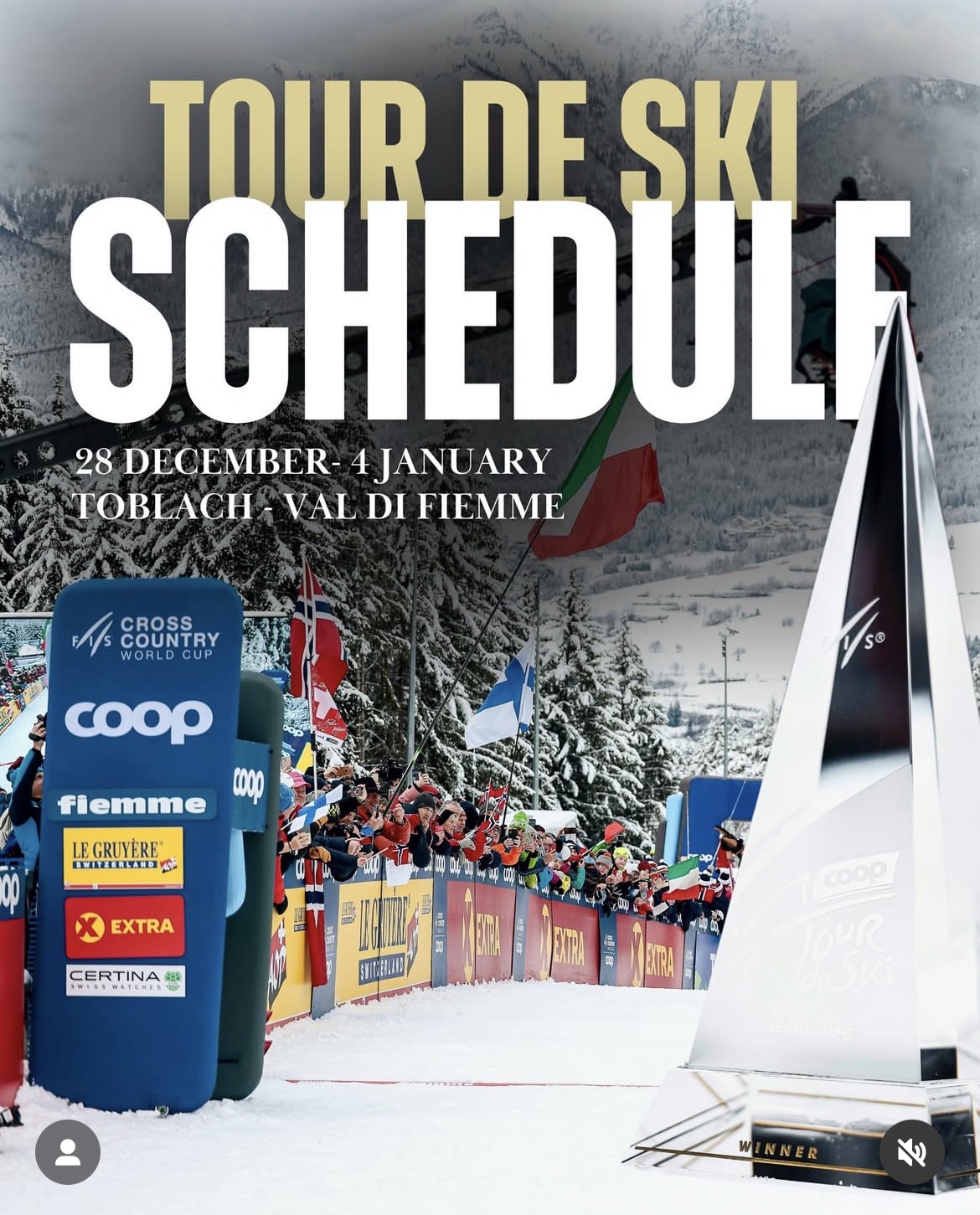
World Cup skiers get a holiday break from the grind of the World Cup tour . . . but it’s up for debate just how much rest they get during that break. It’s gotta be tough to relax when the horizon is clouded by the impending approach of the Tour de Ski, possibly the most daunting challenge that skiers will face all season. As a ski-fan, I just adore the Tour de Ski—day after day of racing and competition and drama, staged for the edification of the viewing audience. If I were a World Cup skier, I think I might feel differently, especially during an Olympic year.
Over the span of eight exhausting days—Dec 28-Jan 4—Men’s and Women’s fields will each race six events from Sprints to Interval Starts to the the unbelievably steep and seemingly endless climb up the Alpe Cermis. Nearly insurmountable leads in FIS World Cup points are amassed by the winners of the Tour de Ski; most years, the eventual winner of the World Cup Overall Crystal Globe is the same as the winner of the Tour de Ski . . . except in those seasons—like 2025—when the Tour winner skips most of the other World Cup races in anticipation of a larger prize like the World Championships or the Olympics. In 2026, most of the primary Olympic contenders have also signed up for the Tour de Ski.
Tour Streaming
As has been the case for numerous years in a row, North American viewers can stream the 2026 Tour de Ski on skiandsnowboard.live. The website adjusts to the home-area of viewers, so the broadcast time on the thumbnail corresponds to your local viewing time. Yes, the races stream in brutally early time slots, especially for viewers on the west coast. Get up early anyway . . . it’ll be worth it.
The championship of the Women’s Tour de Ski is likely to be contested among Jessie Diggins (USA), Frida Karlsson (SWE), Heidi Weng (NOR), and Astrid Oeyre Slind (NOR), and Norwegian upstart Karoline Simpson-Larsen (fresh off her recent win in the World Cup 10 k Interval Start in Davos). Certain contenders are choosing to stay home—Linn Svahn (SWE), Jonna Sundling (SWE)—thus opening up additional spots in Sprint heats for all-rounders who might not normally advance on Sprint days.
Johannes Hoesflot Klaebo’s prowess in Sprint events—and his competitive resilience in Distance events—makes him nearly impossible to beat in the race for the Crystal Globe. Even if he does not win the Tour—even if he drops out of the Tour—he’ll likely secure another Overall Crystal Globe if he remains healthy and stays on the World Cup Tour. Though if the Olympics deliver him another amazing week like the one he constructed at last year’s World Championships (where he won an unprecedented six out of six races), Klaebo just might sail off into a well deserved sunset, leaving World Cup scraps for other contenders to scrabble over.
This coverage is made possible through the generous support of Marty and Kathy Hall and A Hall Mark of Excellence Award. To learn more about A Hall Mark of Excellence Award, or to learn how you can support FasterSkier’s coverage, please contact info@fasterskier.com.
Stage 7, final climb of the Alpe Cermis: Johannes Hoesflot Klaebo (NOR) only had to keep his rivals in sight in order to claim overall victory in the 2025 Topur de Ski. (Photo: Modica/NordicFocus)
Johannes Hoesflot Klaebo doesn’t like this hill . . . he’s a sprinter, after all: he powers up short, punchy hills on his way to shrug-punctuated finish lines. That’s the way World Cups are won in the 21st century. But immortality—the kind to which Klaebo aspires—is purchased at a rather higher price, one that is paid with Olympic medals, on World Championship podiums, and atop Val di Fiemme’s Alpe Cermis. The Tour de Ski concluded on that lofty summit today, and Klaebo appeared determined to do his best in securing another bit of history.
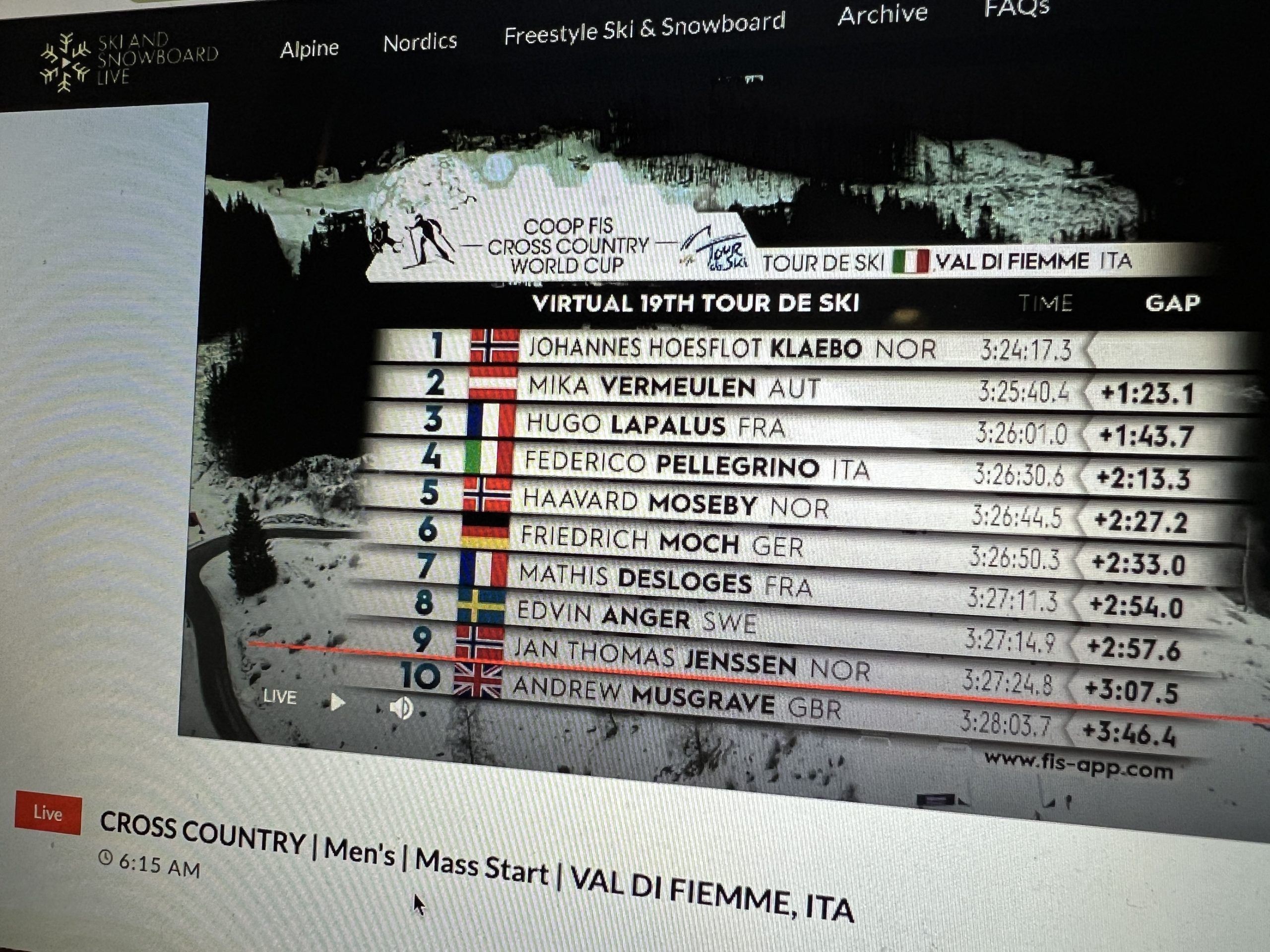
Though other climbers ruled the stage, Klaebo measured his effort up the climb to claim his fourth Tour de Ski overall victory (tying the record of the immortal Dario Cologna). Klaebo finished only 18th on the day’s stage, but managed to preserve a 1:23 overall margin over Mika Vermeulen (AUT), and 1:43 over third place, Friederich Moch (GER).
Sprinters climb too: Jack Young (USA) (climbing alongside TDS Sprint Bib winner, Switzerland’s Janik Riebli) appeared determined to add an overall finish in the 2025 Tour de Ski to his growing race record. (Photo: Vanzetta/NordicFocus)
Zanden McMullen and Ben Ogden crossed the line 19th and 20th, only seconds behind Klaebo. Other North American Finishers included Canadas’ Antoine Cyr in 23rd and Olivier Leveille 29th, and American Jack Young in 53rd.
In other remarkable sprinter-news, Federico Pellegrino (ITA) climbed the Alpe Cermis in seventh place, good enough to finish fourth overall, just 2:13 behind Klaebo in the final standings.
Johannes Hoesflot Klaebo (NOR) (climbing with Sweden’s Edvin Anger) measured his effort throughout the day, preserving his lead over his closest rivals and claiming the win in the 2025 Tour de Ski. (Photo: Vanzetta/NordicFocus)
Climbing the Alpe Cermis
Tour de Ski overall standings at the beginning of stage 7 looked like this:
Johannes Høsflot Klæbo (NOR) 2:50:24
Erik Valnes (NOR) +2:18
Haavard Moseby (NOR) +2:29
Mika Vermeulen (AUT) +2:29
Hugo Lapalus (FRA) +2:44
Federico Pellegrino (ITA) +2:56
Jan Thomas Jenssen (NOR) +2:59
Andreas Fjorden Ree (NOR) +3:04
Mathis Desloges (FRA) +3:12
Edvin Anger (SWE) +3:17
Klaebo had a large cushion to preserve. He wouldn’t need to contend for the win on Alpe Cermis; he’d need only to monitor his rivals and concentrate on damage control.
In Stage 7, the tracks of the earliest kilometers are three-skiers wide, so there is less positioning to worry about, less jostling, less urgency. Until the six kilometer mark, the course is basically flat, following the course of Italy’s famed Marcia Longa marathon race. The final four kilometers, though, are decidedly different, climbing up the slopes of the Alpe Cermis Alpine ski area. Sprint points were offered at six kilometers (at the base of the climb) where Jannik Riebli confirmed his defense of the silver Sprint bib. That contest concluded, the race could begin in earnest.
Leading his rivals by nearly three minutes in the overall standings, Klaebo remained at or near the front as the course ran along the river at the bottom of the valley. Once the course turned uphill, the climbers moved to the front. Mika Vermeulen led the bottom slopes (the steepest on the mountain at 28%) followed by Simen Hegstad Kreuger. Klaebo did his best to mark their accelerations.
Halfway up the climb, the pace was made by Kreuger, followed by Vermeulen and Hugo Lapalus (FRA). Krueger began the day 7:10 behind Klaebo, so he did not represent a serious threat. Vermeulen had begun the day at 2:29 back, Lapalus at 2:44. Both seemed focused on the final podium, but neither seemed poised to challenge Klaebo for the overall win.
Kreuger continued pushing the pace, followed only by Vermeulen. The race for the stage win was down to two men as Lapalus and Friederich Moch (GER) had fallen off the pace. For Klaebo, it was a case of doing his work while making sure not to go too hard. Climbing the Alpe would be difficult enough for a sprinter like Klaebo, but if he overextended, he could blow up and lose it all.
Hugo Lapalus (FRA) celebrates claiming the Climbers Bib in the 2025 Tour de Ski. (Photo: Modica/NordicFocus)
After his initial time-losses on the lower slopes, Klaebo held the gap some 90 seconds behind Kreuger who would cross the finish line in 32: 39. Vermeulen finished seven seconds later, followed closely by Moch in third. Lapalus finished fourth to cement his hold on the Climber’s bib. Shepherded by his teamate, Haavard Moseby, Klaebo crossed the line in 18th place, 1:13 behind the winner—good enough to seal up the Tour de Ski overall win. His 18th place preserved a winning margin of 1:23 over Vermeulen.
With the mid-Tour withdrawal of Harald Oestberg Amundsen, Klaebo’s win in the Tour de Ski makes it very unlikely that anyone else could overtake him in the chase for the FIS World Cup overall championship. While Klaebo’s primary focus probably remains the individual events at the World Championships later this season in Trondheim, he is sure to be satisfied with his hold on the Crystal Globe. That’s another piece of history—another source of legacy—that Klaebo has certainly earned . . . even on humbling days like the ones when he has climbed the Alpe Cermis.
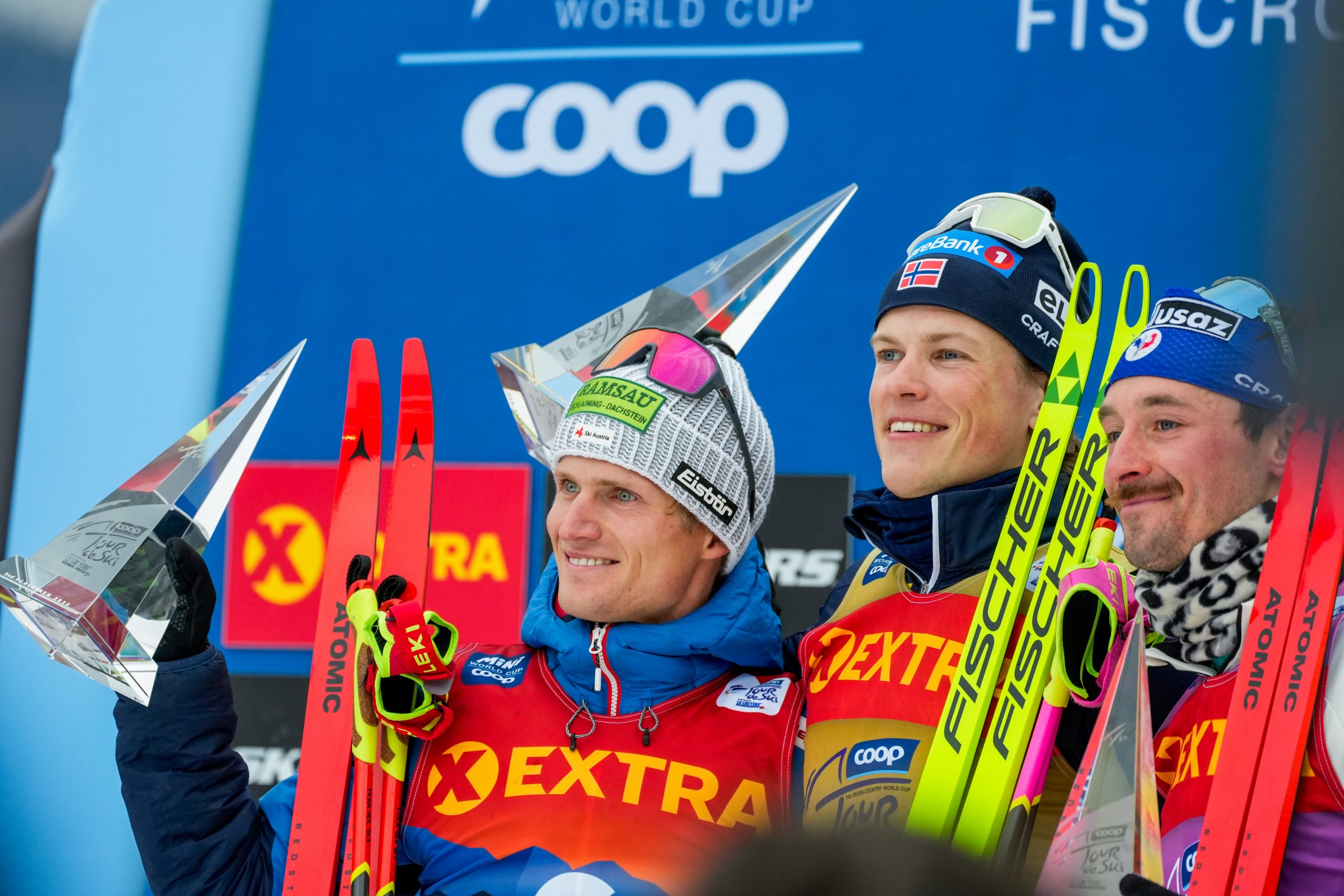
Mika Vermeulen (AUT), Johannes Hoesflot Klaebo (NOR), Hugo Lapalus (FRA), (l-r) top the podium in the 2025 Tour de Ski. (Photo: Vanzetta/NordicFocus)
This coverage is made possible through the generous support of Marty and Kathy Hall and A Hall Mark of Excellence Award. To learn more about A Hall Mark of Excellence Award, or to learn how you can support FasterSkier’s coverage, please contact info@fasterskier.com.
The unrelenting slopes of Alpe Cermis challenged Norwegian dominance, as France’s Jules Lapierre emerged to triumph in the final stage of the 2024 Tour de Ski. (Photo: Modica/NordicFocus)
The origin story of the Tour de Ski suggests that it was invented to mirror cycling’s Tour de France: multiple stages, mountaintop finishes, leader’s jerseys, thrilling competitions, glorious champions. Today’s Stage 7 of the Tour de Ski—with its finish on the high summit of Alpe Cermis— is probably what the original race organizers had in mind. Helicopters hovered over the point-to-point course that wound its way through historic ski-venues in the Val di Fiemme. At the 2.4 kilometer mark, the still-flat course wound into the stadium of Val-d’Isére (where the first Bonus Sprint in the Alpe Cermis stage would be decided). Then, following the course of the Marcia Longa—Italy’s famous ski marathon—the course traveled to the base of the Alpe Cermis Alpine resort.
The day had begun with Amundsen holding a considerable lead in the overall standings over his countryman, Erik Valnes. Known as a good all-rounder—but really more of a sprinter—Valnes would face considerable challenges to his desire to remain on the Tour de Ski podium, as he was trailed in the standings by other skiers whose pedigrees spoke of greater climbing abilities. Martin Loewstroem Nyenget (NOR) sat only eight seconds behind Valnes, with talented climbers, Hugo Lapalus (FRA) and Friedrich Moch (GER) only another few seconds behind. The battle for podium spots would be furious and painful, with rewards and accolades for those brave enough to climb into the clouds. Valnes would have his hands full . . .
Germany’s Friedrich Moch led Jules Lapierre (FRA) through most of the climb up Alpe Cermis, though it was Lapierre who would sprint clear for the stage win. (Photo: Barbieri/NordicFocus)
Stage 7, Alpe Cermis
Bonus Points Leader, Lucas Chanavat (FRA), toed the starting line after a number of less-than-stellar stages in which he would win sprint points, then ease along the course to the finish well out of contention. In the early kilometers of the Alpe Cermis stage, Chanavat led the pack toward the first Bonus Points sprint at 2.4 kilometers, hoping to secure his hold on the Points Jersey before the real climb of the day would begin. Though nipped at the line by sprint-rival, Edvin Anger (SWE), Chanavat would collect enough points to secure the victory in the points competition. Ironically, he would be required to finish the stage at the top of Alpe Cermis’ long climb in order to claim the distinction, and to collect the winner’s spoils. It would be a long day of climbing for the sprinter, Chanavat.
After the Points Bonus sprint, it was the skier sitting in 26th place overall—Haavard Solaas Taugboel (NOR)—who went to the front to make pace. Commentators speculated on the possibility that Team Norway was tactically using lower-placed skiers to protect the lead of Amundsen, Valnes, and Nyenget. There was one last Points sprint at 6.8 kilometers (at the base of the climb), but by that time Amundsen had already gone to the front. He took the points that Chanavat and Anger coveted, seemingly determined to begin the climb in earnest. Final standings in the Points competition: Chanavat, Anger, Valnes, Amundsen, and Antoine Cyr (CAN).
Amundsen led the field on the lower slopes of the climb, though with no real sense of urgency. In season’s past, much of the low part of the climb was defined by athletes propelling themselves via V2, maintaining that faster, more costly technique for as long as they could in attempts to break the field. Typically the last skier using the V2 was the one who would create gaps in the field and put themselves in position to win the day. Today, however, Amundsen dropped into the V1 early on, allowing a group of rivals to remain on his heels. That group settled into a lead pack of seven: Amundsen, Nyenget, Friedrich Moch (GER), Mika Vermuelen (AUT), Jules Lapierre (FRA), Hugo Lapalus (FRA), and Beda Klee (SUI). Valnes was nowhere to be seen. The battle for podium positions began . . .
And the course steepened: 26.5 percent (that’s steep). Klee was dropped: lead group reduced to six.
Mika Vermeulen powered to the front as Amundsen and Nyenget faded to the rear of the lead group. By this time, Valnes had already ceded his second place position to Nyenget in the virtual Tour standings. Other podium contenders pushed to the front, fighting it out for podium places, mostly at the expense of Amundsen and a visibly-tiring Nyenget who dangled just off the back.
With every change in pitch, a different contender would appear at the front. Finally, Moch took the lead as the group entered the tightest switchbacks, driving around each direction-change with Lapierre hard on his heels. Next in line—head down, but tempo high—Lapalus followed his countryman while Amundsen and Vermeulen settled in. Nyenget was gapped: lead group reduced to five.
Moch and Lapierre ratcheted up the pace. Little bit by little bit, gaps opened behind them. Lapalus watched his own ski tips, Amundsen (overall victory already in sight) marked the gaps, Vermeulen atttempted damage control: lead group reduced to two.
Farther down the mountain, Valnes struggled; his podium position all but gone as his rivals for the podium—Lapalus and Moch—drove forward.
Moch and Lapierre continue to show spark in their steps as they entered another 28 percent grade (murderous!). In their wake, Lapalus powered on alone (eyes still down). Amundsen and Vermeulen appeared bound to one another in their fatigue (battling to hold their positions rather than determined to drive forward). Nyenget suffered alone in no-man’s land, while resurgent Klee and Jens Burman (SWE) gave chase. Somewhere farther down the mountain, Valnes toiled in obscurity.
The Alpe Cermis levels a bit in the final kilometer, requiring racers to shift gears, yet again. It’s a point where a different set of athletic/physiological abilities comes into play. Thirty minutes into the race, Moch and Lapierre exited the steepest sections of the climb, both breaking into a V2 skate as the horizon leveled. Lapierre drove forward into the lead, his tempo visibly quicker than Moch’s. Behind them (across an ever-widening gap) Lapalus stayed with the V1 in attempts to save energy, just in case he still had to deal with a charging (V2) Amundsen who seemed to have recovered some energy after his mid-climb lull.
Harald Oestberg Amundsen (NOR) climbed bravely, and quickly enough to protect his overall lead in the Tour de Ski standings. (Photo: Modica/NordicFocus)
At the finish, it was Lapierre sprinting clear of Moch, both of whom celebrated as they crossed the line. Moch knew he had skied onto the overall podium, a first for Germany since Tobias Angerer, overall winner of the first Tour de Ski in 2006/2007, finished third in the 2008/2009 tour. Lapalus finished 16 seconds behind the winner, securing his own place on the overall podium by sufficiently gapping Nyenget.
The winner of the overall Tour de Ski—Amundsen—arrived fifteen seconds after Lapalus. Amundsen had done his job, and the biggest prize of the FIS World Cup season was his.
Valnes finished 11th, 1:13.9 behind. All things considered, Valnes (known more for his sprinting prowess) delivered a truly impressive performance, and that in an event where careless or unfit competitors can “blow” and lose big chunks of time. Even so, he proved unable to keep pace with the climbers, and dropped from the podium into sixth overall.
Among North American finishers, Antoine Cyr (CAN) climbed the fastest: 14th place, 1:34.2 behind the winner. Following him were Zanden McMullen (USA) 36th, Scott Patterson (USA) 42nd, and Olivier Leveille (CAN) 45th.
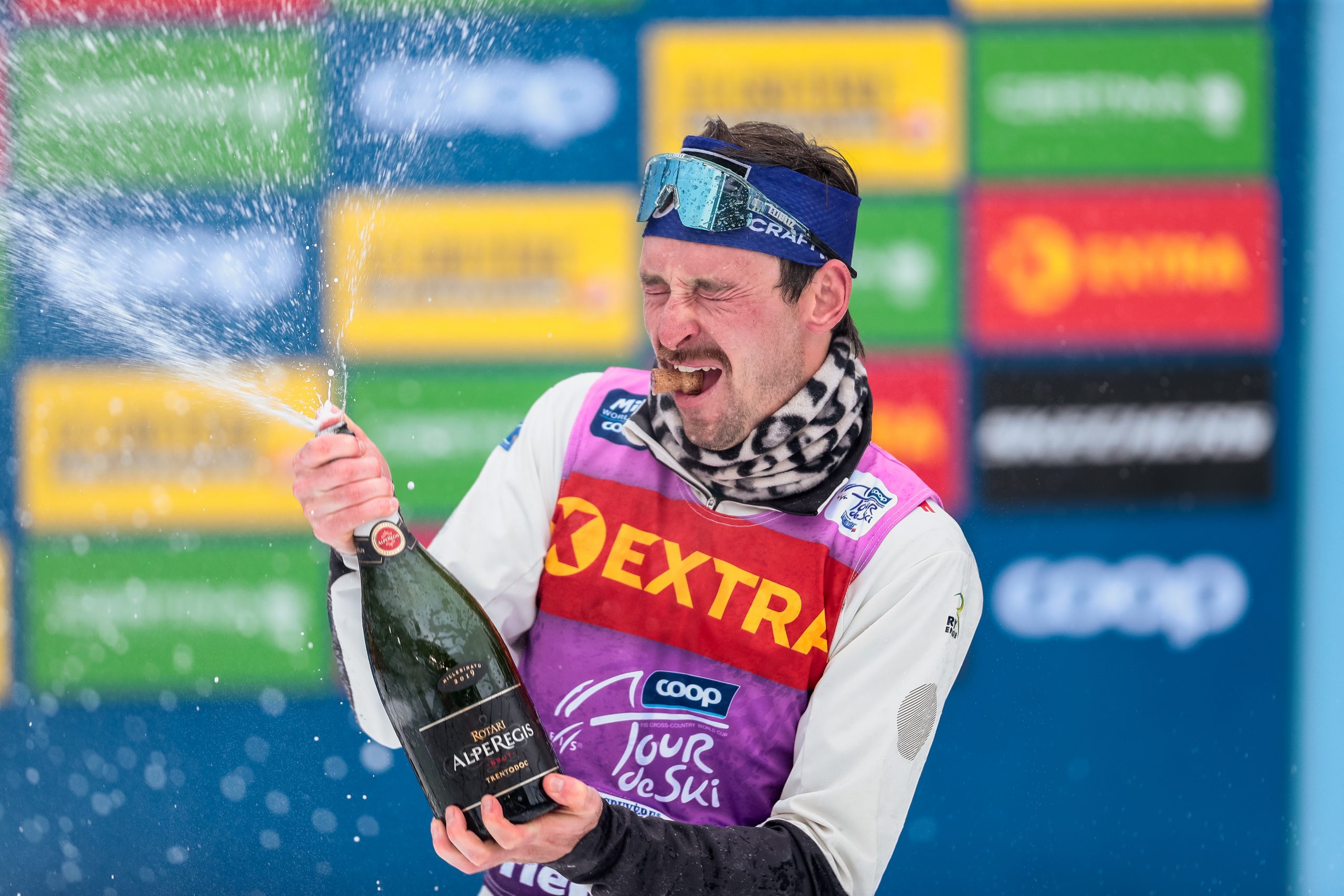
Much much later, at the hard-won summit of Alpe Cermis, Chanavat crossed the line to claim the Points Championship. It’s unlikely that he’s ever skied so far or so high.
International flair on the Stage 7 podium at the summit of Alpe Cermis: Friedrich Moch (GER), Jules Lapierre (FRA), Hugo Lapalus (FRA), (l-r) (Photo: Modica/NordicFocus)
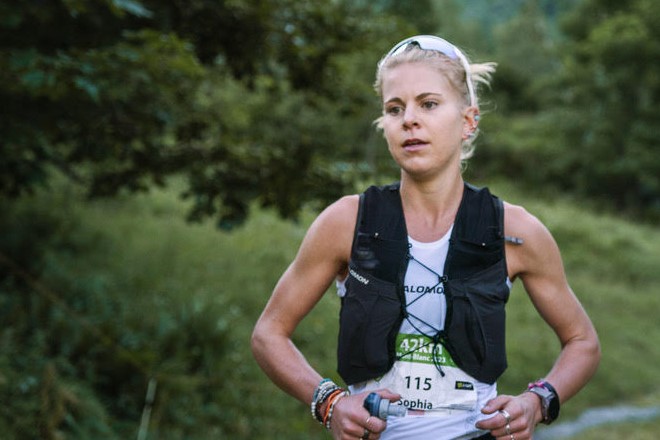
Sophia Laukli (USA) claimed third place in the Alpe Cermis climb in last year’s Tour de Ski. That extraordinary effort, while daunting, isn’t even the hardest event Laukli enters. (Photo: NordicFocus)
Competing at a professional level in any sport requires great skill, talent, and focus. Thinking of going pro? Unless you’re in the top 1%, don’t bother trying out. Then, once you reach the professional level of competition, the athletic quality is so high that there is simply no margin allowing time to participate in more than your primary sport. Despite all those seeming truisms, occasionally an athlete emerges with the talent and determination to be able to compete in multiple sports. Incredible athletes such as Connie Carpenter-Phinney and Eric Heiden did so with speed skating and cycling, but they went from a career in one sport to a career in the other. It’s far more rare for an athlete to be a professional in two sports simultaneously. The list of such two sport pro athletes is very short: Bo Jackson and Deion Sanders come to mind (football and baseball simultaneously). After that, the list is extremely short.
You can now add to the list of professional multi-sport athletes Sophia Laukli of the Stifel U.S. Cross-Country Ski Team. The 23 year old Laukli has been on the U.S. team since 2021 and represented the U.S. in the 2022 Olympics. Among her professional skiing highlights, Laukli podiumed in the Tour de Ski on the giant hill climb at Alpe Cermis.
Laukli (far right) took a podium in the Alpe Cermis stage of the 2023 Tour de Ski. Skiing might not even be her best sport. (Photo: NordicFocus)
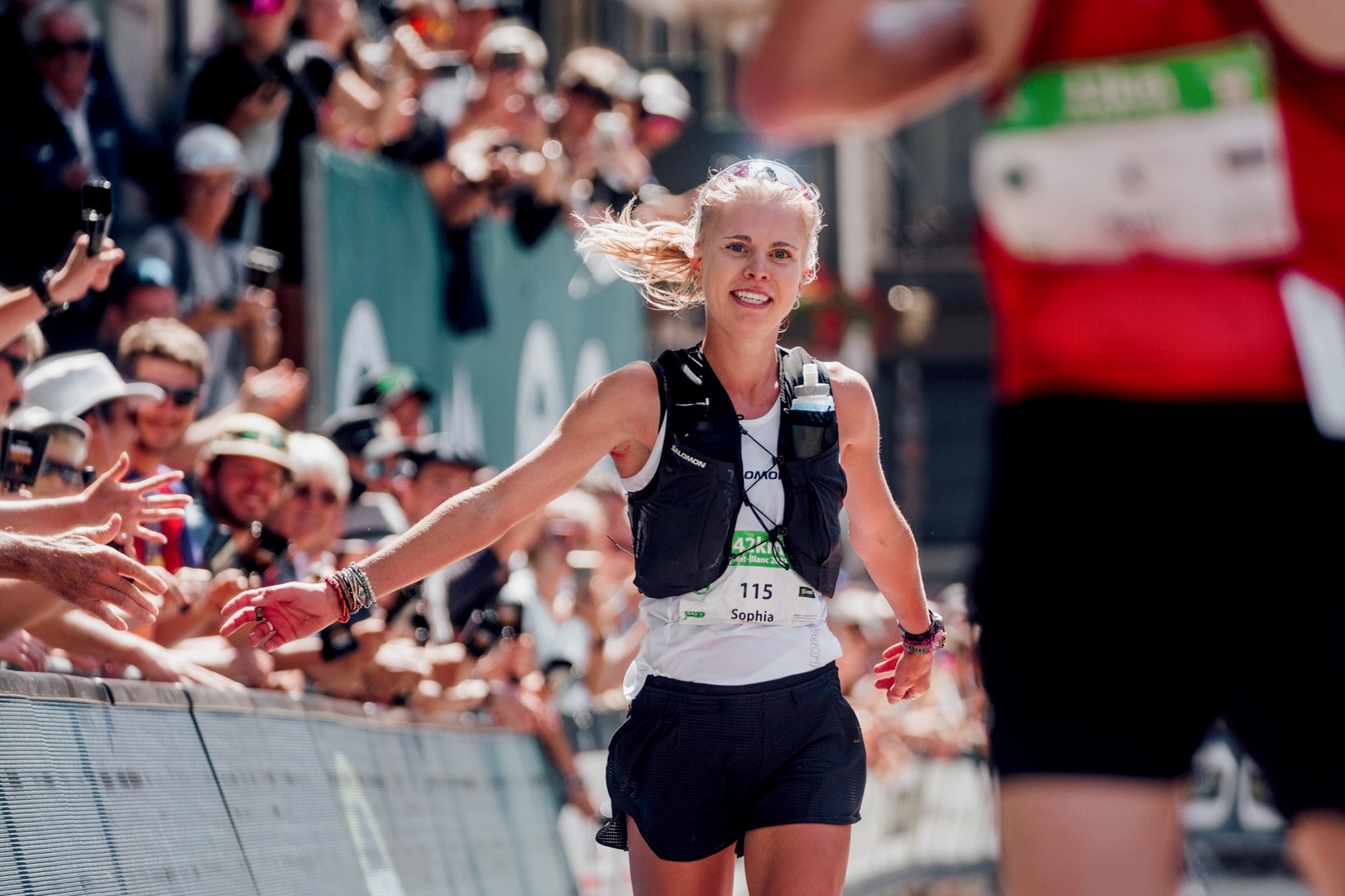
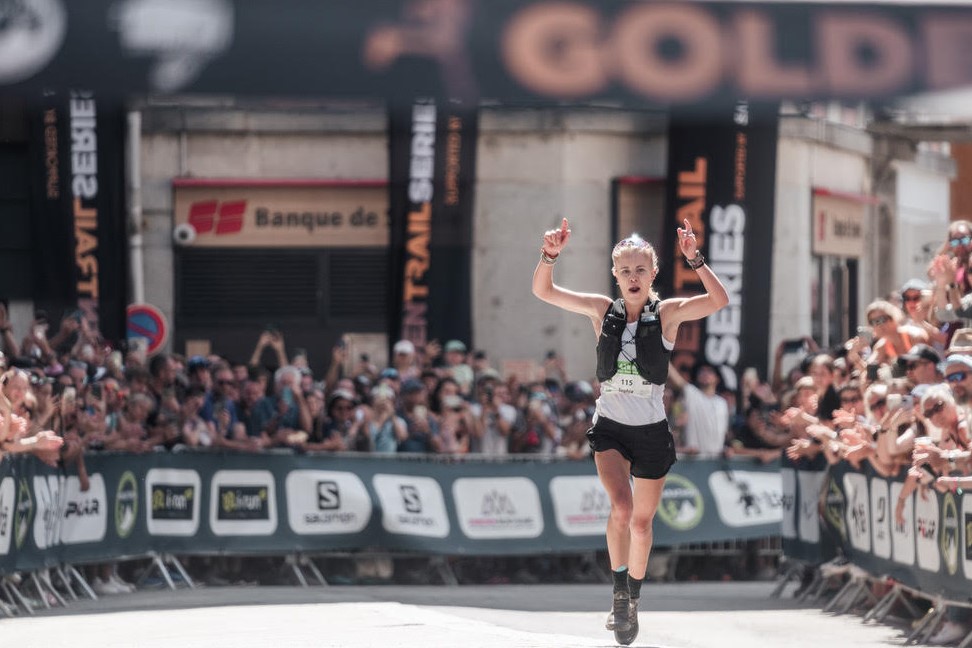
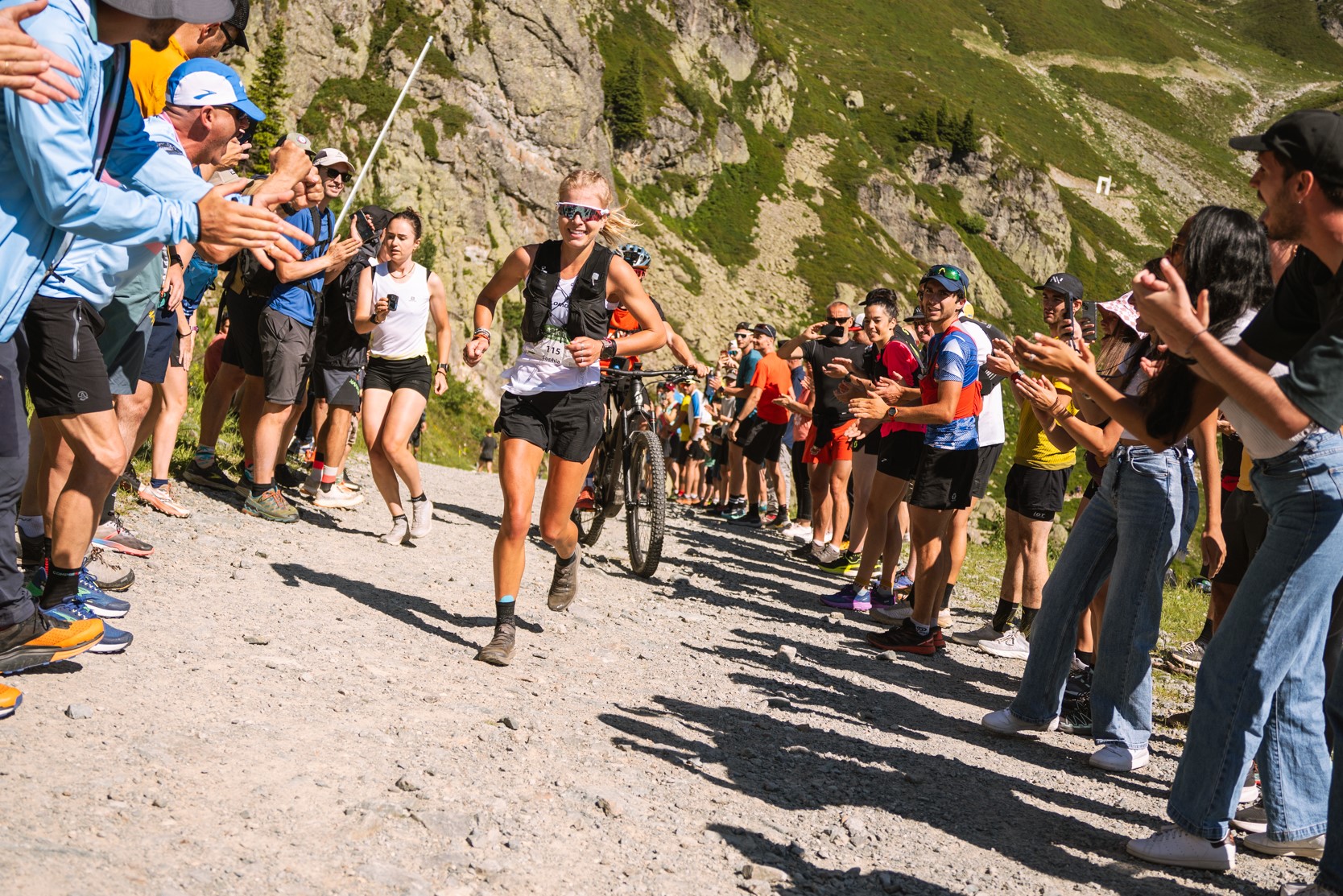
Not one to pass up an opportunity, last year Laukli began professional trail running while maintaining her status as a professional cross-country skier. On June 25th, Laukli won the prestigious Marathon du Mont-Blanc—a marathon-distance trail race—in a time of 4:12. Laukli not only won, but she crushed the existing record by almost 12 minutes even though this year’s race was longer and had more elevation gain than in previous years. The marathon’s distance changes a little each year, and this year’s version was 27.7 miles (44.6 kilometers) with 8,333 feet (2.5 kilometers) of elevation gain. The race is based in the picturesque town of Chamonix, France and consists of several grueling uphill and downhill sections.
Perhaps the most amazing thing about Laukli’s story is that she didn’t begin seriously running until a couple of years ago.
Laukli was gracious enough to take time out from her hectic schedule and speak with FasterSkier about her two-sport career. She very candidly shared her thoughts about her future as a professional multi-sport athlete, and a host of other topics.
This interview has been edited for clarity and brevity.
FasterSkier: You’re now in Oslo, Norway. Do you consider that home?
Laukli: Very recently. When I finished University of Utah this spring, I thought I would give Norway a full time try. I just moved here four weeks ago.
FasterSkier: You’re fluent in Norwegian and also French?
Laukli: Yes, but I’ve lost my French quite a bit from not speaking it for a while.
FasterSkier: You’ve been a professional trail runner for two years. When did you begin to think about competing professionally, and what attracted you to trail running?
Laukli: In high school, I hated running. I got into trail running when I started training out west. When I was going to school in Utah, I started to run the mountains and thought it was pretty cool. At that point, I knew I could run based off our skiing workouts, and now that I enjoyed running, I hopped into some local races. I didn’t set out to become a professional trail runner. There’s actually a Salomon employee who looks over super niche race results in the U.S. who reached out to me. That was two years ago that he kind of found me. It kind of just fell into my lap.
FasterSkier: So you were just running as training and as a hobby and were discovered? You never had a long simmering ability as a runner?
Laukli: No, not at all.
FasterSkier: That’s really unusual!
Laukli: Yes. It’s so shocking to me. Like I said, in high school I didn’t like running at all. I thought it was miserable. So, seeing what I’m doing now—is a little bit of a surprise. I ran a season of track in high school and that was enough. I played soccer most of the time in high school. I competed in cross-country [running] my senior year just because our team was in the running for state champs. I raced, but I wasn’t really part of the team.
FasterSkier: So you’ve completely serendipitously discovered this new love?
Laukli: Exactly.
FasterSkier: During the coverage of the Mont-Blanc race the commentators said that this was the furthest you have ever run. Is that accurate?
Laukli: It’s technically accurate. I’ve run 42k once in training a few years ago. With this race, the altitude, elevation gain, and everything about it was way more daunting than anything I had ever attempted before.
FasterSkier: Given your lack of experience at this distance, were you apprehensive going into the race?
Laukli: I was very very nervous! All of the running races I’ve done before I didn’t need specific training for them. They were about three hours long, but that’s kind of the limit you can get away with if you know how to run. 30k is the turning point for when things can go from zero to 100, so that’s why I was quite nervous. Last year the longest I had raced was about three hours and I ended that so exhausted.
FasterSkier: At some point in the race did the nerves subside?
Laukli: Yes. Just like in skiing, right off the start line you know how you are going to feel, and I shocked myself with how good I felt in the first 10k and I knew there was a lot of potential if I raced smart.
FasterSkier: Were you concerned you went out too fast? You reeled in the lead woman at the start very quickly?
Laukli: No. I watched the race replay, and they were commenting on that a lot.
FasterSkier: That seemed like all they could talk about for a while.
Laukli: Yes, I was pretty shocked when I heard that because it’s true: I’m a novice, but I was so cautious and nervous— I was very confident in the pace I was going. It didn’t really stress me out. I’ve always been a body listener in all of my training and didn’t start wearing a heart monitor until my new coaches told me to. So that’s helped me to know how to pace.
FasterSkier: The race coverage was pretty incredible.
FasterSkier: You were regularly mentioned as a pre-race favorite. Given this is only your second season, did this surprise you and put pressure on you?
Laukli: In the running world, they do not hesitate to say, “You’re expected to win this.” No one wants that pressure or expectation. But I didn’t let it get to me too much. Also, these first couple of races, there are a lot of racers absent, so there wasn’t as much depth.
FasterSkier: Well, maybe some of the top racers weren’t there but you still broke the course record by almost 12 minutes on a course that was longer and had more elevation gain than before. So no matter who wasn’t there, that performance catapults you to the elite level right away, doesn’t it?
Laukli: That was my best running performance ever. I was curious to see if the results would have changed if some of the other top runners had been there. But I felt that I won because it was a really good performance.
FasterSkier: What motivated you to run this distance?
Laukli: It was self-motivated. It’s such an iconic race and that motivates me on which races to run. Some people were second guessing my choice. I watched the race last year and decided I really wanted to do this cool race.
For now, Laukli (here on Alpe Cermis) plans to continue as a two-sport professional athlete. She feels that running helps her to find joy in skiing. (Photo: NordicFocus)
FasterSkier: The course profile is a roller coaster. How does it feel running it?
Laukli: You’re told the race doesn’t start until the second climb which is at about 30k. I really “sensed it” on the first climb and people were telling me to chill, that this isn’t where you go, and I did fade toward the end. The race has two very significant climbs, and I haven’t fully learned how to approach that. I was really struggling on the second hill. I’m still navigating how to drink enough, and I bonked quite a bit. I would like to do it again and see if that’s inevitable or if I can approach it better.
FasterSkier: Regarding fueling. There are only three aid stations. What was your strategy?
Laukli: Coming from skiing, I didn’t realize how strict of a plan you need. If I drink too much I cramp, so I try to compensate by having a ton of gels, but I realize the liquid piece is really important. I had an hourly amount of liquid and carb intake, but with the conditions I needed to drink more. Everyone carries about 500ml, and I wasn’t filling up as much as others at the aid stations. Stomach issues are such a thing in running, and if you haven’t trained for drinking a lot it’s not going to go well. A lot of people stop to drink at the aid stations, but I have a hard time doing that, which is pretty dumb in a race that long. Gels really work for me, but when it’s so hot you need liquid.
FasterSkier: You looked really fluid and relaxed almost the entire race. Did you feel that way?
Laukli: Not really. At the last aid station, with about 8k left, I was so nervous to hear the split. A couple of Salomon people told me I had a 12 minute lead, and I was so relieved. I was thinking, “Right now I can maybe get to the finish line.” I was in a state where if I needed to go fast, I was probably going to face plant, because the body was really really down. I don’t think I executed perfectly.
FasterSkier: The downhills are technical and there are pictures from previous races of very bloodied runners from falls on the downhills. What was your strategy?
Laukli: Going in, the race was a full mystery. I had no idea what was coming. The downhills are actually less technical than in a lot of the other races, but because it’s 40k in, it doesn’t take a lot to make you trip. If I didn’t have such a huge lead, I probably would have fallen, because all I was thinking was to not go fast down the hills.
FasterSkier: The city center finish is a lot like the Birkie, but with even more people. You looked totally pumped up high-fiving everyone as you ran in?
Laukli: That was the coolest race finish I’ve ever had. During those last five minutes I forgot about how bad I felt. This is an unusual finish. I did not account for how much this race meant to people.
FasterSkier: They offer a 90k version of the race. Any thoughts on doing that?
Laukli: NO! When I finished, I thought I don’t know if I ever need to run a marathon again. It’s a one-time event a year for me.
FasterSkier: Your top 10 finish means you get an all expense paid trip to the next race (Dolomyth’s Run, Italy, July 15th). The race moniker is “The Couloir of Hell.” You going?
Laukli: I hadn’t planned on it, but I think I’ll end up doing it. It’s just a two hour race, so it’s a lot easier on the body.
FasterSkier: How did you feel after the race? The downhills have to take a big toll?
Laukli: I felt very bad. My downhill technique made things worse. Even now, (nine days later) my legs don’t feel fully normal. Most of my training is a lot of roller skiing, so these long running races take a lot more out of the body. I’m really not used to it.
FasterSkier: Any other races?
Laukli: Yes, I’ll do Sierre-Zinal (31 K in the Swiss Valais Alps). Then I’ll go back to the U.S and do Pike’s Peak. But I might skip one now that I’m doing the Dolomites.
FasterSkier: How does the climbing in this race compare to Alpe Cermis in the Tour de Ski?
Laukli: I go way deeper in the pain cave in running. Skiing is a little nicer to the body, and it’s way shorter. I have the ability to push a little more in running. In skiing the technique still holds me back a little and in running your not held back by anything.
FasterSkier: Do you consider yourself a skier who runs, or a runner who skis?
Laukli: Definitely a skier who runs. I train completely normally for skiing and haven’t changed my training at all to cater to running. If I would start running more specifically, I think my skiing would take a toll and I really don’t think I’m losing anything in running by doing so much ski training.
FasterSkier: Right now your focus is on ski training, and you don’t have a specific running program?
Laukli: No.
FasterSkier: Wow! So, all of the running ability is just a byproduct of ski training?
Laukli: Yeah. It is a bit unique, and I try to explain that to the other runners and it’s very confusing to them. I don’t totally get it either. I truly don’t run that much during the week. I just seem to have this natural endurance where if I’m in good shape I can run.
FasterSkier: What you’re doing is so unusual for professional ski racers. Have you run into resistance with people telling you that you shouldn’t be doing this?
Laukli: Yeah, but it’s not necessarily people saying you shouldn’t run, it’s more like people suggesting caution. Don’t do too much, or you’re going to start sacrificing skiing ability. It comes from both sides. The running people say you should only run because you’re way more successful running than skiing. The skiing side is saying don’t get injured, don’t overdo it. It’s a bit of a battle from both sides, but I think that’s inevitable. I still feel enough [support] from both sides that it’s not a huge issue, but there’s definitely pushback on both sides.
Laukli on course for team USA at the 2022 Olympics. She hopes to be on the US team again in 2026. (Photo: NordicFocus)
FasterSkier: Do you foresee continuing this way for several years, where you’re a professional two sport athlete?
Laukli: I really hope so, but I don’t know. This past ski season I ended the season and was way more motivated to keep skiing and improve results than I have been before. I want to get a lot better at skiing, and in order to do that I don’t know if the running piece is that beneficial, but at the same time I know that I won’t really want to keep skiing if I don’t have running. I get way more excited about skiing if I also have running. I want to definitely ski through the next Olympics, and until then skiing will definitely take priority. I’ll probably continue running after skiing. I think you can run a lot longer than skiing, but it’s a balance I haven’t quite figured out yet.
FasterSkier: But the pressure isn’t so great to pick one or the other that you still feel comfortable going forward doing both?
Laukli: Now; I don’t feel the pushback is getting in the way, but that could change in the coming years. Running is more financially sustainable than skiing.
FasterSkier: Given your running success and the financial rewards that go with it, is it tempting to say that maybe this is where my better use of time is?
Laukli: I totally have those thoughts. Whichever season I’m in I kind of want to just stay there. I went into the ski season last year thinking running was way more fun, but then I had the ski season, and was thinking ok, skiing is what I want to do.
FasterSkier: Compare a really hard 50 k ski race to a trail running race of equivalent time. Is the running always a little deeper into the pain cave?
Laukli: Yeah. I think so. Skiing is unique because there’s so much tactics. In running, there are tactics, but it’s very different. In skiing there’s more room to conserve energy.
FasterSkier: In the Tour de Ski on the Alpe Cermis climb, did your running really help you out?
Laukli: Yes. That’s the most equivalent ski race to a running race. For me it’s [Alpe Cermis] way less painful than a normal ski race because I just find a pace and keep it, I do it for 30 minutes and get to the top. It’s way more simple than other races.
FasterSkier: Your forte is long distance. In skiing, how short does a race get for you before it’s too short?
Laukli: Probably 5k. It’s good that we’re doing 20ks and 50ks now.
FasterSkier: With the World Cup in Minneapolis, any possibility of you hanging around and doing the Birkie the following week?
Laukli: Yes. That is my plan as of now. I’ve never done it, and there are a handful of us who are considering doing it.
FasterSkier: You’re now sponsored by Salomon for winter and summer. Are you the only one with that arrangement?
Laukli: Jessie [Diggins] is technically Salomon running as well. But as far as someone competing in both, I am.
FasterSkier: Was that a reason for choosing Salomon as your sponsor, so you could have a year ’round relationship?
Laukli: For sure. I signed with Salomon two years ago for running. This last year it came up as a possibility to sign with them for both and it made a lot of sense to me.
FasterSkier: Do you work with the same team at Salomon for summer and winter?
Laukli: It’s a lot of collaboration between both sides. Being a 360 athlete is a unique presence, so that provides a benefit also. Also, earlier, when we were talking about pushback to choose one or the other, with Salomon it’s the opposite because it’s an environment where they’re very much supporting the other sport.
FasterSkier: You also decided recently to move to Norway to join team Aker Daehlie, what was your thinking behind that?
Laukli: There were a lot of different reasons. World Cup is in Europe. Most of the running I do is in Europe. It’s really tempting to have a European base. The running is very good in Norway, and obviously the skiing is too. There were skiing reasons and running reasons.
FasterSkier: Does it cause any conflicts with the U.S. team as far as attending camps?
Laukli: No. Essentially, it’s just like being on Stratton or APU, it’s just that I’m based out of Norway.
FasterSkier: Your father’s Norwegian, was he a big influence on you taking up skiing?
Laukli: Yes, but both my parents ski. I definitely started to ski because both my parents skied.
FasterSkier: If you had to choose between going for a really nice three hour ski or a really nice three hour run, which would you do?
Laukli: This is going to scare ski people, but I would definitely go for a run.
FasterSkier: Have you ever considered doing a road marathon?
Laukli: Yeah, it would be really cool, especially one of the big races. It’s not on the agenda currently. It’s worth looking into. But the timing [calendar] of the marathons is poor. Watching Boston this year, I thought it would be really fun to do.
FasterSkier: Even though you’d rather go for a run than a ski, what is your favorite place to go for a recreational ski anywhere in the world?
Laukli: I would ski in Sjusjoen, right by Lillehammer. If I’m going on a long ski, I want it to be endless trails and that’s the place for that. (Sjusjoen has over 2,500 km of trails.)
FasterSkier: Classic or skate?
Laukli: That would be a skate ski.
FasterSkier: I would think the running would transition nicely to classic?
Laukli: I would think so too, but that’s currently not the reality.
FasterSkier: You travel a lot. What’s one thing you can never be without on the road?
Laukli: A good jar of peanut butter.
FasterSkier: Is good peanut butter hard to come by in Europe?
Laukli: They do make it in Europe, but I’ve always traveled with my own jars because you never know if this niche little place is going to have it and I just really want to have it, so now I just always bring it and it makes my bags really heavy!
FasterSkier: When you do a long training session do you listen to music?
Laukli: I’m actually an audio book person. I only do audio books. I don’t do music.
FasterSkier: Really? So, you go for a hard run and you’re listening to a book?
Laukli: If I’m doing intervals, I probably won’t listen to anything. But if I’m just training easy then yeah, I listen to books. I used to listen to music, but I’d get bored, and books were more interesting.
FasterSkier: So, what are your favorite audio books?
Laukli: The reason I started was because I’d never read Harry Potter, so I did the entire series. I also listen to Steven King. I don’t have one genre.
FasterSkier: That’s really interesting. I think you’re the only person I’ve ever spoken to who listens to books while training.
Laukli: I’m very aware of that. I’ve tried podcasts, but I enjoy books the most.
FasterSkier: Do teammates tease you about that?
Laukli: Honestly, I don’t know if many of them know.
FasterSkier: Well they’re going to know now!
Laukli: That’s ok. I pride myself on it.
FasterSkier: Favorite thing to eat after a really long training day if you can eat anything?
Laukli: I think any sort of pastry, but I really like donuts.
FasterSkier: Are donuts a thing in Norway?
Laukli: I’ve discovered that they’re really bad, so I‘d have to find something new.
FasterSkier: Minneapolis has a couple of great donut places so maybe you can stock up for road food while you’re driving to the Birkie?
Laukli: That would be perfect . . .
FasterSkier would like to thank Sophia Laukli for spending time speaking to our reporter Ken Roth, and thanks also to the GoldenTrailSeries for the use of photographs.
Sophia Laukli (USA) crosses the finish line on the top of the Alpe Cermis for 3rd place, her first career World Cup podium. Laukli highlighted a day in which the Americans put three in the top ten. (Photo: NordicFocus)
The Alpe Cermis
When the Grand Tour of skiing—the Tour de Ski—was dreamed up by Vegard Ulvang and Jurg Capol in 2006, one of the first definitive decisions was that it would need a Queen Stage: a stage that sought to distill the essence of ski racing—the brutal beauty of the slog—to its purest state. The Tour de France had its Alp d’Huez, and the Tour de Ski would have the Alpe di Cermis.
Through seventeen editions of the Tour de Ski, the climb of Alpe di Cermis has become nothing less than iconic in Nordic Skiing. This is where Therese Johaug and Marit Bjoergen cemented their legends in tandem, year-after-year, battle-after-battle, racing up the fall line. This is where Johannes Hoesflot Klaebo lost the 2020 Tour to Alexander Bolshunov on the final day. Martin Johnsrud Sundby, Petter Northug, Dario Cologna, Jessie Diggins, Heidi Weng: all have played prominent roles in past hill climbs. In 2015, it’s where Liz Stephen notched a 5th place, and kicked off the breakout World Cup season for the American women, culminating in the team’s first ever distance World Championships medals (That Falun 10 k where Jessie Diggins and Caitlin Gregg were 2nd and 3rd).
Course Profile for Tour de Ski Stage 7 at the Alpe Cermis. (Photo: Fiemme World Cup)
The Alpe is the culmination; it is also the main event. Things were no different for this year’s Tour de Ski. On the women’s side, Frida Karlsson hoped to arrive at the summit in possession of the Yellow Bib. On the men’s side, Klaebo looked to do the same, but with ghosts of Alpe’s past haunting his each and every stride. Both Karlsson and Klaebo had dominated over the course of the first six stages, but both, remarkably, remained vulnerable. Karlsson (2:31:16.0) held an advantage of 1:12 over second place Tiril Udnes Weng, while Klaebo carried a 1:02 advantage over second place Calle Halfvarsson in the men’s field. Simen Hegstad Krueger—winner on the Alpe in 2021—held fifth place overall at 1:45 back. In a normal ski race, those margins would have all but guaranteed victory for the leaders. But in a race up the Alpe de Cermis—where the final kilometers stretch out time gaps with every meter gained—no lead is ever safe.
The American woman hold up Sophia Laukli after her 3rd place finish on the day. The Americans had three in the top ten, as Laukli was joined by Jessie Diggins in 5th and Rosie Brennan in 6th place. (Photo: NordicFocus)
Laukli Highlights Women’s Race with First Podium
Sophia Laukli spent the past year seeking out the most challenging propositions in endurance sports, and learning to make them her specialty. Last year on the Alpe, she recorded a 5th place finish alongside teammate Novie McCabe in 7th that marked a definitive breakout. Already then, the goal was set. Return to the Alpe in 2023, and seize it. In the interim, she has run and skied her way to the top of climbs around the world, winning the Lysbotn Opp rollerski climb last July ahead of Heidi Weng and Delphine Claudel, who were 1st and 3rd up the Alpe, respectively, last year. Through highs and lows in this Tour, she was able to keep sight of her “big goals for today” as she put it in post-race comments.
When it comes to the unexpected, however, one can only prepare just so much: “Right before the climb started, I got tripped up and lost all the positions I had made up [by working the flat section],” she said. “I was back to being in the back of the pack going into the climb.”
Her experience on the climb told her two things: “Tactically, it’s very difficult to pass people, and [the Alpe] is a long climb.” Laukli held it together. She found her teammates, Jessie Diggins and Rosie Brennan, climbing in 5th and 6th place through the crux of the Alpe. Laukli held her emotions in check, saying she, “[didn’t go] full-on panic mode, and [it] saved me today.” There was poise. There was patience. And there was also a whole lot of power. It appeared impossible that she could climb back to the podium, and yet Sophia Laukli had taken that word and controlled it: it was impossible how well she was skiing.
That fact became most apparent in the final 200 meters of the race. Having begun the day at the back of the pack, Laukli had raced herself into position to stand on the podium for the first time in her World Cup career. None of that would come easy; she crossed the finish line and folded over in the snow. Five minutes later, she stepped onto the podium in third place. The 22 year old Maine native, and current University of Utah skier, became the first of her new generation of American women to achieve that milestone.
Jessie Diggins (USA) hugs Sophia Laukli (USA) on top of the Alpe di Cermis. (Photo: NordicFocus)
In the end, Laukli’s finish was just 35.7 seconds behind French climbing specialist Delphine Claudel. Claudel entered the steepest sections of the climb behind Frida Karlsson, the overall leader. At a hairpin 1.5 k from the finish, a brief tangle between Karlsson and Heidi Weng allowed Claudel to establish a gap, and Weng was the one who followed. But none were able to surpass Claudel at the finish line where the Frenchwoman claimed her first World Cup victory, and her first win on the Alpe di Cermis.
Delphine Claudel (FRA) crosses the line for the first World Cup win of her career atop the Alpe di Cermis. (Photo: NordicFocus)
For her part, Laukli seemed to search beyond herself to explain her astounding performance. “I lucked out I guess,” she said. “My tired was less than other people’s tired, and so it was enough.” Laukli’s achievements on the day could have overshadowed what other American women accomplished: one of the team’s best days ever, putting three in the top ten. There was the tenacity of Jessie Diggins, pushing to the front of the race early on in the Alpe climb, working “through disappointments but never losing belief” as she would say after the race. Then through the middle part of the climb, Rosie Brennan had joined Diggins, pushing to improve her Overall 5th place standing on the day. It all came together: “[It felt surprisingly] nice and comfortable,” Brennan said. “Usually [on the Alpe], you are alone and work on just keeping a rhythm, but today is was like ‘now I gotta stay with them.’” The American women had come together for the toughest test in ski racing.
Jessie Diggins (USA) and Rosie Brennan (USA) push up the Alpe Cermis together, finishing 5th and 6th on the day. (Photo: NordicFocus)
As Laukli pushed for third, Diggins and Brennan stuck together to finish fifth and sixth on the day. Brennan moved up to fourth Overall, her best Tour de Ski overall finish ever. “[The World Cup] has been a hard start for me this year, and I’m starting to come around. [This Tour de Ski] was a good sign for the future.”
With her race today, Jessie Diggins moved up to 11th Overall in this year’s Tour de Ski. Diggins commented that she is “more proud of how I handled this Tour than any other one. I just didn’t stop believing and kept going. Now it’s time to recover, and keep training.”
Diggins did add that she would undertake some post-race evaluation on how she was recovering: “I’m not 100% sure when my next race will be,” she said.
Karlsson won the 17th edition of the Tour de Ski with a 15th place finish on the Alpe, remaining 33 seconds ahead of Niskanen and Tiril Udnes Weng. The finish culminated a week in which Karlsson continuously bolstered her reputation as the dominant distance skier in the women’s field. Karlsson’s win also marks another milestone for the current generation of Swedish women skiers, delivering the first Overall Tour de Ski win since Charlotte Kalla won in 2008.
Krueger Wins Day, Klaebo Wins Tour in Men’s Race
Johannes Hoesflot Klaebo lifts his 3rd Tour de Ski trophy of his career. (Photo: NordicFocus)
Part of the emerging legend of the Alpe Cermis is that it has been the only arena capable of diminishing the otherwise-unstoppable force of Johannes Hoesflot Klaebo. Klaebo entered the day having won all six of this year’s Tour de Ski previous stages, another of the many accomplishments that only he can claim in the sport of skiing. Even so, there was almost no speculation that Klaebo would make this year’s Tour a clean sweep with a win on the Alpe di Cermis. The Alpe has made appear Klaebo human before; it would most likely do so again.
The lingering question was whether he could avoid a repeat of 2020 when Alexander Boshunov and Sergey Ustigov successfully wrested the yellow bib from Klaebo on the climb. With previous Alpe di Cermis winner, Simen Hegstad Krueger, in fifth place—1:45 behind Klaebo—there was still a possibility that the climb could prove to be Klaebo’s undoing yet again.
That possibility turned into real tension when Krueger initiated a move at the base of the climb, opening a gap in the field. A group of Norwegian men quickly formed, but without Klaebo. Sjur Roethe, Hans Christer Holund, and Didrik Toenseth moved up with Krueger. Klaebo was still within reach, but his lack of push to stay with the field indicated a concession from him; he would let the climbers go and focus on keeping the yellow bib on his back at the finish.
Klaebo, wearing the yellow bib, in behind the lead pack of his countrymen at the base of the Alpe Cermis climb (Photo: NordicFocus)
Krueger set a blistering pace up the steepest sections of the climb, dropping both Toenseth and Roethe (last year’s Alpe winner). Hans Christer Holund was the only one up to the task of marking Krueger, with Krueger doing the bulk of the work as he searched for seconds on Klaebo. Between the 8 k and 9 k mark, Krueger trimmed 47 seconds from his 1:45 gap to Klaebo. The math was evident: it would be hard, but not impossible, for Krueger to win the Tour. The aggressive push from Krueger meant that some of those who had tried to keep with him didn’t just lose touch with the pack when they went, but really fell off. That allowed skiers who had been more conservative through the early section to challenge for the final podium spot, including Frenchman Jules Lapierre and German Friedrich Moch. Klaebo kept to himself through their machinations, and Lapierre soon had established a gap over the other challengers.
In the end, Krueger crossed the finish line only five seconds ahead of Hans Christer Holund to win the Alpe for a second time. The Frenchman Lapierre crossed with the most emphatic celebration on the day: his first World Cup podium. Krueger’s celebration was perhaps a bit subdued: he had looked back to find that Klaebo had put in a remarkable second effort over the final kilometer. The Alpe, it turned out, did manage to expose Klaebo’s humanity, but the struggle also revealed his character. A skier who appears so often to win by virtue of talent and tactics earned a special victory today by racing with his heart.
Simen Hegstad Krueger crossed the finish line in first in his 2nd career win on the Alpe Cermis climb. Krueger moved up to 2nd place in this year’s Tour de Ski. (Photo: NordicFocus)
Part of the Alpe’s legend is in posing a challenges to skiers, but it also appears that the Alpe di Cermis has a sense of justice. Klaebo has clearly been the best skier in this Tour de Ski; with his third Overall victory, he moves a step closer to becoming its most successful skier of all time. That he has not already notched that title speaks to both his youth (we often forget how young Klaebo is), and to the prowess of the skier he chases: Dario Cologna, who during his career earned four Tour de Ski titles.
Scott Patterson finished 14th on the Alpe Cermis, earning the distinction of top American on the day. (Photo: NordicFocus)
Behind the Norwegian battle at the top of the Alpe Cermis, the American men were busy continuing their steady climb toward the top of the World Cup. Scott Patterson was the top finisher for the Americans, finishing 14th in his second climb of the Alpe (he was 38th last year). Patterson said in post-race comments that the result marked a high point for him at this Tour de Ski, and that he is, “looking forward to the focus on the longer races later in the season,” including the 50 k in Holmenkollen.
Ben Ogden was the top American finisher in the Overall Tour de Ski standings, finishing 13th after a 24th place finish in his first climb of Alpe di Cermis.
Ben Ogden, the top-placed American man in this year’s Tour de Ski at 13th Overall. (Photo: NordicFocus)
Conclusion to the 17th Tour de Ski
With that, the 17th edition of the Tour de Ski comes to a close. World Cup Skiing departs the slopes of Alpe di Cermis, leaving more stories etched in the snow on each steep hairpin. It reminds us once again of all that makes ski racing beautiful when the time is right, when the skiers are prepped, and when and all of our eyes watching.
The World Cup takes a collective rest for the next two weeks, before resuming in Livigno, Italy on January 21st. From all of us at FasterSkier, thanks for following along for another edition of the Tour de Ski!
The American men at the top of the Alpe Cermis. (L-R) Gus Schumacher, Ben Ogden, Finn O’Connell, Scott Patterson, and Hunter Wonders. (Photo: Tom Horrocks/USSS)
We’ve got extra-special Alaska-based guest Kikkan Randall joining us for this episode to recap the 2021/22 Tour de Ski. We break down a rough finish for a head cold-afflicted Jessie Diggins, some sensational skiing by Johannes Høsflot Klæbo, and some lingering questions about Olympic preparation.
Kikkan Randall finishing the Tour de Ski’s final climb on Sunday. (Photo: FasterSkier archives)Jessie Diggins embodies the soul crushing, full body burning cumulative fatigue of the Tour de Ski following the final hill climb up the Alpe Cermis. (Photo: NordicFocus)
Hall and the A Hall Mark of Excellence Award. To learn more about A Hall Mark of Excellence Award or to learn how you can support FasterSkier’s coverage please contact info@fasterskier.com.
We began this year’s coverage of the Men’s Tour de Ski with a prelude from 5 time Tour de France champion Bernard Hinault. So let us begin this coda with him as well.
On the cycling classic Paris-Roubaix, “the hell of the north” – famous for its cobblestones, and the mud, blood, sweat, and tears they bring – Hinault said in 1981, “[It’s] bulls**t.” He had just won the race.
Johannes Høsflot Klæbo (NOR) may feel the same about a certain climb in Val di Fiemme, Italy he continues to find himself on year-after-year at the end of the Tour de Ski.
The profile of the point-to-point hill climb up the Alpe Cermis, the capstone of the Tour de Ski. (Photo: Screenshot 2022 FIS Broadcast)
Even among cross-country skiers and ski fans (admittedly, a Venn diagram that is nearly a singular circle), the final 10-kilometer stage of the Tour de Ski, and its roughly 3-kilometer, 28% gradient pitch-including climb up the Alpe Cermis, seems like a stupid proposition. We love skiing because it juxtaposes the brilliance and pure white benevolence of winter with the brutality, the pure push, the goddamn slog that fighting through it on a pair of skis can be. The Alpe – well – it piles onto the latter without balancing it with the former. We watch and look and say to ourselves why? But in piling on the pain, and the pure difficulty, the Alpe enters an uncanny valley as deep and awe-inspiring as its climb is high and mighty.
In short, why the Alpe? It’s masochistic, and it’s the most beautiful race in the world.
Johannes Høsflot Klæbo finished 5th in the Alpe Cermis hill climb to solidify his overall win in the 2021/22 Tour de Ski. (Photo: NordicFocus)
You don’t have to look any further than Klæbo’s history on the climb to tell you so. The Norwegian, with an opportunity to surpass none other than Bjørn Dæhlie himself for career Individual World Cup wins with a win in today’s stage (as it stood before the start, the two were tied at 46 apiece), has had both triumph and tribulation on the Alpe in previous editions of the Tour. In his first climb up the Alpe 2018/19, he came across the line in first after a pursuit start, becoming the youngest ever winner of the Tour de Ski. In his last climb up the Alpe in 2019/2020, he lost a one second advantage he carried into the day, consequently losing the Tour to Alexander Bolshunov (RUS).
This time around, his task was simpler. Instead of the 1 second advantage he had on Bolshunov in 19/20, he carried exactly two minutes over the Russian going into a mass start today. No need to be first to the top; all he would have to do was stick to the red suits of Alexander Bolshunov and his Russian teammates.
When the field, which remained compact throughout the approach, hit the bottom of the Alpe Cermis, Klæbo was doing exactly that. Alexey Chervotkin (RUS) had led the pack through most of the first six k, which followed the flow of the river valley, with his fellow countrymen Bolshunov, Ivan Yakimushkin (RUS), and Denis Spitsov (RUS) close behind. Also slotted within the field was the only American left to start today’s race, Zak Ketterson.
The animating move as the terrain kicked up, however, came from Iivo Niskanen (FIN), who went into the day in third place (+2:49) in the Tour standings, and was looking to maintain his place on the podium.
At the 7.5k checkpoint, Niskanen led a pack that resembled a cell in mitosis – stretched, but not yet split into packs with lives of their own. Less than a second behind him was a familiar sight, Sjur Røthe (NOR), who had previously won on the Alpe during his last ascent in 2019. Klæbo crossed the checkpoint in fifth place, with Bolshunov in sixth. Ketterson, meanwhile, was in the pack that followed – coming across in 26th place (+15.9).
Sjur Røthe takes the win in Stage 6 of the 2021/22 Tour de Ski. (Photo: NordicFocus)
The decisive pitch came shortly after the checkpoint. At a 26% section, Sjur Røthe’s attack was less a thrilling burst of energy than a confident crawl away from the pack. He created a gap, and looked to be set to face the last 1.6k of the climb alone.
That was, of course, until another face familiar to the Alpe slowly crawled out of the pack too. Last year’s hill climb winner, Denis Spitsov (RUS), skied up to Røthe , setting up a two-way battle that had, as Røthe didn’t race the Tour last year, been two years in the making.
The chase group that included Klæbo, Bolshunov, and Niskanen stayed together passed the 24% gradient. Niskanen, though, soon started to show signs that he was about to crack. When his V1 finally gave way to a coach’s skate, it was in one of the hairpins set-up to ease the gradient on the skiers. He brought, for a split second, the chase group to a complete pause. Bolshunov, who was the second skier behind Niskanen, was caught up for a moment, which allowed Klæbo to shoot to the outside and overtake both of them.
Niskanen faded, but Bolshunov now had to expend energy to stay up with Klæbo, who some 1.2k out from the finishing line was showing a resolve on the Alpe that he hadn’t in his previous ascents.
So it had broken into a race of sub-races. The lead group with Røthe and Spitsov, gunning for the stage win. The chase group, 20 seconds off, looking to decide the overall of this year’s Tour de Ski.
Sjur Røthe (NOR) leads in the final kilometer of the Stage 6 hill climb ahead of Denis Spitsov (RUS). (Photo: NordicFocus)
When the Alpe finally, impossibly, gave way to gradients that were in the single-digits, Røthe proved the Puncheur over Spitsov. His V1 gave way to a V2 that still somehow maintained some grace to it, and he came across the blue line painted in the snow at the top of the Alpe a champion again. Spitsov, not losing sight of the Røthe, crossed the line in second (+2.4).
The chase group meanwhile, was now being led by two skiers wearing suits not seen near the front of a Men’s World Cup so far this season. Indeed, it was two young Germans, Friedrich Moch and Lucas Bögl, who were pulling Klæbo and Bolshunov through the final moments of this year’s Tour. When the terrain gave way, Moch took it one step farther, gapping the field to claim his first individual World Cup podium in 3rd place (+18.9), and becoming the first German man to podium at a World Cup since Tim Tscharnke in 2015 (also in Val Di Fiemme).
Friedrich Moch (GER) climbs to third up the Alpe Cermis. (Photo: NordicFocus)
Then, 15 seconds later, the Tour was decided. Klæbo came in 5th place on the day (+34.9), gaining 3 seconds on Bolshunov who came in 8th (+38.1). Niskanen’s aggressive racing too, turned out to re-work the podium. He finished 12th on the stage (+1:00.4), maintaining his position for a third place overall finish in the Tour.
Iivo Niskanen (FIN) skiied his way to 3rd place overall in the Tour on the Hill Climb in Val Di Fiemme. (Photo: NordicFocus).
The final standings for this year’s Tour de Ski then: Johannes Høsflot Klæbo with the win (2:24:56.0), Alexander Bolshunov in second (+2:03.2), and Iivo Niskanen third (+3:14.5).
For Klæbo , it is his second overall Tour de Ski championship. He becomes only the 2nd Norwegian, after Martin Johnsrud Sundby, to win multiple Tours. He leaves tied with Bjørn Dæhlie on Individual World Cup stage wins. He also closes his most apparent weakness in the World Cup circuit, finishing 5th on the Alpe Cermis after previously never having breached the Top 10.
And yet, as he said in an interview with FIS media: Klæbo is “glad it’s over. It will be nice to get some days off now and rest for the Olympics.”
Johannes Hoesflot Klaebo (NOR) wins his 2nd Tour de Ski title (Photo: NordicFocus).
What lessons do we take from this year’s Tour de Ski then? While it has waxed and waned in importance and depth in championship seasons, it is a barometer by which we can see the history and the achievement of the sport’s greatest skiers. There are World Championships and World Cups, but the Tour is the Tour. As we head towards the sport’s biggest stage in Beijing next month, this edition reminds us that we are witnessing something one-of-a-kind in a Norwegian, still young at 25, that is poised to re-write any notion of what is possible in this sport: Johannes Høsflot Klæbo. Against the toughest and most glorious test in skiing on the Alpe Cermis, he has finally passed.
On his first climb up the Alpe, Zak Ketterson finished 48th (+3:01.3). He becomes the only American man to finish this year’s Tour de Ski, coming off the SuperTour in the U.S. to complete the sport’s most grueling test, and do so as his first World Cup starts no less. He finished 54th overall (+16:06.4).
Zak Ketterson finishes his first climb up the Alpe Cermis, rounding out his first World Cup starts at the 2021/22 Tour de Ski. (Photo: NordicFocus)
This World Cup coverage is made possible through the generous support of Marty and Kathy Hall and the A Hall Mark of Excellence Award. To learn more about A Hall Mark of Excellence Award or to learn how you can support FasterSkier’s coverage please contact info@fasterskier.com.
Again the capstone of the Tour de Ski, athletes faced the infamous and grueling hill climb up the Alpe Cermis in Val di Fiemme, Italy to close out six stages of racing over eight days. After winding roughly 6.5-kilometers along the valley floor, a gradual climb leads to the alpine ski area, where 418 vertical meters (~1,370’) of incline spread over the final 3k awaits, snaking up an alpine ski area with maximum grades over 40%.
The profile of the point-to-point hill climb up the Alpe Cermis, the capstone of the Tour de Ski. (Photo: Screenshot 2022 FIS Broadcast)
Heading into the final stage, Jessie Diggins sat in sixth place in the overall Tour standings, facing a deficit of 1:42 to leader Natalia Nepryaeva (RUS). Quickly reviewing the blur of racing over the last week, Diggins had two stage victories, first in the opening skate sprint in Lenzerheide and again in the 10k mass start free in Oberstdorf, her career best start to the Tour. However, a crash in the quarterfinal in Stage 4, followed by a challenging 10k mass start classic in Stage 5, turned the tide on Diggins’ status as a favorite to win the overall Tour.
Over the last 15 years of the Tour de Ski, nine of the winners entered the final stage in the lead, including the winners of the last three iterations, namely Diggins in 2021, Therese Johaug (NOR) in 2020, and Ingvild Flugstad Østberg (NOR) in 2019. The last upset occurred in 2018, where Heidi Weng (NOR) overcame a minimal two second deficit to overtake Østberg in the hill climb and snag the overall Tour victory.
An ecstatic Natalia Nepryaeva (RUS) celebrates her overall victory in the 2021/22 Tour de Ski. (Photo: NordicFocus)
With this in mind, perhaps today’s storyline was already written: Nepryaeva’s lead of 1:12 over second place Ebba Andersson (SWE) looked, from a historical perspective, like more than enough to seal the fate of the Tour. With two second-place finishes on her resume, a win would make Nepryaeva the first Russian woman to win the Tour de Ski.
But it would still need to be decided who would be the first woman to the top of the hill, and by how much. Perhaps the end result would not change, but in an event more about grit than technique or tactics, anything could happen.
At the base of the hill, it was Heidi Weng (NOR) leading the way with Ebba Andersson matching her V1 stride for stride. Diggins sat near the front of the lead group, which also contained Nepryaeva, Krista Pärmäkoski (FIN), and Kerttu Niskanen (FIN).
Spectators highlighting the steepness of the Alpe, Heidi Weng (NOR) and Ebba Andersson (SWE) race to the line in the final hill climb during Stage 6 of the 2021/22 Tour de Ski. (Photo: NordicFocus)
As the grade increased, Andersson and Weng began to trade off in the lead, climbing perfectly in sync as the field behind them began to thin. Pärmäkoski was 3.3 seconds back at 7.5, with Nepryaeva now 9.8 seconds back. Again, with 1:12 to play with between herself and Andersson, and 1:40 to Weng who entered the final stage in fifth, Nepryaeva did not need to worry about her placement in the final stage; her overall win was safe so long as she kept herself within that margin of the other women.
Between 7.5 and the subsequent 9.2k, Weng and Andersson put another 15 seconds on Nepryaeva, who trailed 18.1 seconds behind in third, now ahead of Pärmäkoski.
Skiing her way from 11th into 5th, within striking distance of Pärmäkoski, was 21-year-old Sophia Laukli (USA). Laukli skied with high tempo, somehow accelerating relative to those around her despite the fatigue and lactate that must have been flooding each of their bodies after climbing for so long at that effort. Also moving up on the steepest grades, Novie McCabe (USA) had picked off four places between 7.5 and 9.2k, skiing from 13th into 9th. Still fighting, but perhaps not with the same fury we saw last year when she raced for the win, Diggins had faded from 8th place into 14th.
Heidi Weng (NOR) accelerates in the final kilometer to drop Ebba Andersson (SWE) and take the win in the hill climb. (Photo: NordicFocus)
Over the final 0.8k, it became clear that Weng, who has a history of strong finishes in the hill climb, had been biding her time. With Andersson no longer able to match, she accelerated off the front with confidence. Andersson did not respond to the move, and Weng skied away to win by 7 seconds in a time of 35:41.2.
Weng was the overall Tour winner in 2017 and 2018, each time skiing the fastest time of day in the hill climb. After a 2019/20 season where her results could most-kindly be described as “off”, Weng was fourth overall in the Tour but second up the hill in 2020. The Norwegians did not compete in the Tour de Ski last year in 2021.
After working together through the first 9.2k, Heidi Weng (NOR) took the win in the hill climb ahead of Ebba Andersson (SWE). (Photo: NordicFocus)
Weng’s win in the hill climb moved her from fifth into third in the overall standings behind Andersson in second, her first time back on the overall Tour podium since her win in 2018. It’s Weng’s fourth time being on the Tour podium, having also achieved a third place result three consecutive years in 2014-2016.
“It was very hard today, when it’s mass start it’s chaos,” Weng told FIS at the finish. “I wanted to be first at the bottom of the hill, so I tried to get out fast, so it was good that Ebba was with me. It was very steep today and the snow was not as easy as yesterday, so it was a very hard hill today and I was very happy that I [could go fast] and I just tried to stay focused on the finish line.”
Today’s queen of the hill, Heidi Weng (NOR) won the final stage of the 2021/22 Tour de Ski, advancing to third in the overall standings. (Photo: NordicFocus)
Powering through the final kilometer, Claudel Delphine of France made her way from 6th at 9.2k onto the stage podium, overtaking Nepryaeva to finish third (+28.5). Solidifying herself as the overall Tour champion, Nepryaeva was fourth to the top of the Alpe, 32.3 seconds behind Weng and well within the margin needed for the accomplishment.
Claudel Delphine (FRA) celebrates a third place finish in the hill climb, while Natalia Nepryaeva (RUS) crosses in fourth for the overall Tour victory. (Photo: NordicFocus)
During her four previous years of racing the Tour, Nepryaeva has been on the podium twice, finishing second in 2019 and 2020. Finally on top, eyes smiling behind her N95, Nepryaeva shrieked with joy as she stepped onto the podium to accept her trophy, hopping up and down as she raised her skis and poles in celebration. The FIS broadcast did not include a post-race interview.
After two second-place finishes, Natalia Nepryaeva (RUS) is the winner of the 2021/22 Tour de Ski. (Photo: NordicFocus)
Next to the top of the mountain was Laukli in fifth (+49.9), followed by Pärmäkoski in sixth (+59.9), and McCabe in seventh (+1:04.4). Americans have a strong history on the hill climb, with Liz Stephen skiing the fourth fastest time of day in 2015, the third fastest in both 2014 and 2016, then peaking at the second fastest time in 2017. Laukli and McCabe are in good company.
“It felt pretty good!” an enthusiastic McCabe told U.S. Ski & Snowboard cross country communications manager Tom Horrocks at the finish. “It was tough, obviously, but I am stoked about it.”
Novie McCabe races to 7th in the Alpe Cermis hill climb. (Photo: NordicFocus)
McCabe explained that she had followed Laukli through the valley runout and into the hill climb, knowing her teammate was looking to be in good position as they reached steep sections.
From there, McCabe was “just trying to keep moving around people without flooding [with lactate] on the way up.”
For Laukli, the result “was quite a shock.”
“After yesterday, I was extremely tired, so it was a bit of a 180,” she told Horrocks after the race. “I was really, really, looking forward to this race though. I knew this was my style of a course… I tried to stay chill and ski it tactically well, and I was able to start the climb with a lot of energy.”
Laukli explained that through the first 6k, she had sat in the draft of the women in front of her. With “super fast skis”, this allowed her to do minimal work before the hill began to pick up.
Full audio interview with Novie McCabe and Sophia Laukli, hosted by Tom Horrocks.
Sophia Laukli skis her way to 5th in the final hill climb of the 2021/22 Tour de Ski. (Photo: NordicFocus)
While arguably not comparable to other World Cup races, these results are nonetheless career-best finishes for both Laukli and McCabe, leaving them confident in their fitness as they head into a recovery block.
Making relentless forward progress in the face of the Tour’s challenges, Diggins crossed the line in 15th (+2:06.1), pushing her down the overall standings to a final placement of eighth (+3:15.8).
“This was one of the hardest days of many years for me,” Diggins said in the mixed zone. “I’m just so proud to have finished. The last few days I have been really having to fight through a lot.”
Full audio interview with Jessie Diggins, recorded from the mixed zone by Tom Horrocks.
Still smiling after a challenging Tour, Jessie Diggins finished 15th in the final hill climb. (Photo: NordicFocus)
Ever-focused on the importance of those around her, Diggins emphasized how proud she was of her support team and teammates, before concluding, “It’s always a good feeling to have finished something so hard.”
Outside the Top-30, Alayna Sonnesyn was the final American finisher in 36th (+3:46.1) of the 46 Tour finishers.
Making her way through the long-haul of racing, Sonnesyn explained that she is “ready for a nap.”
“It’s definitely been a tough Tour for me and I was hoping for a lot more going into it,” she told Horrocks after the race. “But Jessie gave the advice last night to only allow positive thoughts during the hill climb, and that’s what I did. There were many times where I felt like I could stop, but I told myself to keep going, and I’m proud of that.”
Full audio interview with Alayna Sonnesyn, hosted by Tom Horrocks.
Katharine Ogden did not start the hill climb, instead hopping aboard a plane for Salt Lake City, UT to race the 15k interval start classic, the final event of the U.S. National Championships in Soldier Hollow.
The 2021/22 Tour de Ski Podium: Natalia Nepryaeva (RUS) took her first overall win ahead of Ebba Andersson (SWE) in second and Heidi Weng (NOR) in third. (Photo: NordicFocus)
Taking a final look at the overall tour standings by cumulative time and points, Nepryaeva was the overall winner by a margin of 46.7 seconds ahead of Andersson in second, and Weng in third (+1:07.7).
In the point standings, which favor sprinters and those chasing the bonus point opportunities that arrive at early checkpoints in distance races, Johanna Hagström (FIN) took the win with 60 points, narrowly beating Diggins in second with 59. Hagström finished second in the classic sprint in Oberstdorf, and eighth in the freestyle sprint in Lenzerheide, but also collected 15 points in yesterday’s distance race and again from the combination of two bonus point opportunities today at 2.3 and 6.8k. Nepryaeva was third in the point standings with a total of 55.
Despite setbacks, Jessie Diggins finished second in the 2021/22 Tour de Ski point standings. (Photo: NordicFocus)
The question is not where to start. That is with Jessie Diggins and her shining moment over eight stages at the Tour de Ski. Diggins secured the overall win in the Tour de Ski on Sunday, the first non-European skier, male or female to win the Tour.
Ivan Babikov, racing on the World Cup in 2016
Ivan Babikov, former Candian National Ski Team member and master of the Alpe himself, joins Devon to discuss Diggins, the Russians, the Alpe, and the vagaries of the Tour de Ski.
Jessie Diggins becomes the first North American skier to win the Tour de Ski in its 15 year history. (Photo: NordicFocus)Bolshunov was never a toss-up for the overall. (Photo: NordicFocus)
Thanks for listening along for our eight-episode series breaking down each stage.
Bolshunov was never a toss-up for the overall. (Photo: NordicFocus)
This World Cup coverage is made possible through the generous support of Marty and Kathy Hall and their A Hall Mark of Excellence Award. To learn more about A Hall Mark of Excellence Award or to learn how you can support FasterSkier’s coverage please contact info@fasterskier.com.
The inevitable conclusion at the sharp end of the 2021 Tour de Ski came to fruition. The ticks of the clock to second skier overall, France’s Maurice Manificat (34), tell the abridged version of the past seven stages: Russia’s Alexander Bolshunov began the mass start race to the Alpe Cermis hill climb finish with a yawning 3:22 minute lead.
Beyond simply outperforming his peers, Bolshunov’s 2021 Tour de Ski is simply a highlight reel of a 24-year-old becoming a generational talent on the World Cup. He also had history on his side. In 11 previous 14 editions of the Tour de Ski, the leader coming into the final stage went on to win the overall Tour de Ski title.
The race for the final overall podium heightened the tension for an otherwise closed-book narrative for first place. Coming into the final stage, Manificat held a five-second lead on Russia’s Ivan Yakimushkin (+3:27) and Artem Maltsev (+3:27), with Denis Spitsov fifth overall (+3:50). Fifty-one starters churned down the Marcialonga course in Val di Fiemme skating towards the awaiting headwall.
Alexander Bolshunov in front, followed by Evgeniy Belov up the Alpe. (Photo: NordicFocus).Alexander Bolshunov in yellow: all core as he ascends the Alpe Cremis for back-to-back overall Tour de Ski victories. (Photo: NordicFocus)
Up the lower flanks of the Alpe, Bolshunov was initially surrounded by his team in red. A group, by the stage’s end, that would crowd the top-10 with seven skiers.
The stage accolades went to Spitsov, who began to pull away later in the race. He won in 32:41.0 minutes for his first stage win of the Tour and his second podium – he placed second in Stage 4’s 15 k skate. The yellow-bibbed Bolshunov paced to second (+13.3), with Manificat in third (+15.2)
With his effort, Spitsov lept over Maltsev and Yakimushkin to take third overall in the Tour. Manificat finished second overall.
Powered-up: Maurice Manificat of France scores second overall in the Tour. (Photo: NordicFocus)
Denis Spitsov of Russia skiing himself onto the overall podium and snagging the stage win in the process. (Photo: NordicFocus)
This was another Bolshunov coronation. Bolshunov won six of eight stages, locking up every distance race in this Tour outside of the Alpe climb, amounting to five stage wins. He placed second and third, respectively, in the two sprint stages. Say what you want about each race being animated differently with the Norwegian men’s team absent and a potentially different outcome for the Russian; he raced against those who showed up and decimated the field.
With a cumulative time of 3:32:32.3 hours, Bolshunov becomes the second male skier to win back-to-back Tours after Swiss skier Dario Cologna won the 2010/2011 and 2011/2012 iterations. He also becomes the fourth men’s skier to have won the Tour multiple times. (Cologna won four, Norway’s Martin Johnsrud Sundby two, and the Czech Republic’s Lukáš Bauer won two).
No need to calculate or parse the data – the win and its trove of World Cup points keeps Bolshunov in the lead for the World Cup overall as the race scene takes a break until January 23rd when the World Cup reconvenes, with the Norwegians in attendance, in Lahti, Finland. For those keen on the data, Bolshunov possesses 1297 points, with the next closes skier, Yakimushkin in second, has earned 631.
The Tour’s overall podium: Maurice Manificat (FRA)second, Alexander Bolshunov (RUS) first, Denis Spitsov (RUS) third, (l-r). (Photo: NordicFocus)
For American skiers, Gus Schumacher catapulted into our imaginations and the results when considering he is a first-year senior skier and this remains his first full-time World Cup stroll.
Schumacher placed 19th on the final climb +1:14.4 and cemented a top-20 overall finish for 18th (+8:36.1). As noted in yesterday’s men’s race report, this is a career-best for an American male at the Tour. Considering the nature of this eight-stage show, Schumacher gained ground as the kilometers ticked by. He placed 31st, 36th, 32nd, 14th, 15th, 8th, and 24th, and 19th, respectively, on each stage. A progression illustrating gains as energy reserves are depleted — a positive trend for any athlete seeing solid Tour results as part of their yearly goals. In summation: Schumacher nailed his first career Tour de Ski.
He is currently positioned 27th in the World Cup overall, having scored points (the top-30 earn points each race) in eight of 19 races – he earns 52 points for his 18th in the overall TdS standings.
Paced by a legend, Gus Schumacher (bib 22) follows Swiss star Dario Cologna (bib 11). (Photo: NordicFocus)Gus Schumacher (bib 22) followed by Alexey Chervotkin of Russia (bib 22) on the Alpe Cermis. (Photo: NordicFocus)
The U.S. had two more men’s finishers on Sunday, Scott Patterson placed 38th (+2:23.0) on the stage, with Kevin Bolger in 48th (+3:12.9). In the overall picture, Patterson finished in 37th (+13:57.7), and Bolger 48th (+19:17.6).
Kevin Bolger during Stage 8 of the Tour de Ski. (NordicFocus)
Scott Patterson of the U.S. during Stage 8 of the Tour de Ski. (Photo: NordicFocus)
FasterSkier corresponded with Patterson after the race to learn more about his 2020-2021 season. Below is the Interview conducted via email.
FS: Looking for some high points in terms of sensations during this Tour, can you describe a few moments (or more) that are positive takeaways for you and the season moving forward?
SP: While my results at the tour didn’t line up with where I was hoping, I think there are still several positives coming out of the 8 days of racing. The result high point was probably the 24th time of day in the skate pursuit in Val Mustair. Although my wheels started coming off at the end of that race, I was pleased with how I skied and felt like I did a good job fighting the whole way. For feeling, I think the Val de Fiemme classic was one of the better. I have felt like I have been struggling a bit with classic so far this season and finally captured a few better feelings in that classic race, even though I was shelled by the lead pack much earlier than I wanted. I’m encouraged that things will continue moving in the right direction on that end.
FS: This is your first Tour de Ski, can you talk about your approach to both trying to seize each opportunity in the distance races, and being mindful that this is an 8 stage event? Sort of the cash your chips in all at once strategy vs. being mindful of the long-term.
SP: This was my first tour, though I did race the Ski Tour Canada a while back with 8 stages. I was really trying to seize the opportunity for every distance race and hope that my training volume would let me preserve decently through the 8 stages.
FS: What maybe did you struggle with at the TdS specifically?
SP: It seemed like each day was a different struggle. Sometimes the altitude was tough and some days it was other things. The races included a lot of mass starts and pursuit starts which can be fun and great, but with my FIS points leaving something to be desired, it was often a fight to get into a good position. Then when the surges started happening, I had already burned some of my few fast-twitch matches.
FS: You had a high point result of 16th in Davos – curious what you experienced there that you are hoping to recapture as the season moves forward?
SP: While I don’t think the tour really showed it, I don’t think the form I had in Davos is far off. Each day was just a little off and that rapidly dropped me down the results. I’m looking forward to a little time to regroup and set up for the rest of the season. I think with a few days to recover, I should be coming right back around.
FS: Again, as your first TdS, what did you learn about yourself physically and mentally (as this is such a long haul)?
SP: I think there are quite a few takeaways from the Tour. I’m still processing a lot of them. A big obvious one is that I don’t seem to sprint any faster even after everyone has raced 6 times.
Raw emotion as Jessie Diggins becomes the first North American to win the overall Tour de Ski. (Photo: NordicFocus)
This World Cup coverage is made possible through the generous support of Marty and Kathy Hall and their A Hall Mark of Excellence Award. To learn more about A Hall Mark of Excellence Award or to learn how you can support FasterSkier’s coverage please contact info@fasterskier.com.
Though Devon Kershaw might fairly say “It’s not really cross country skiing,” as a viewer, the grueling climb up the Alpe Cermis is the crown jewel of the Tour de Ski. Sure, it is both impressive and visually appealing to watch beautiful technique and tactical racing, but there is nothing quite like watching racers toil through the lactic burn of grinding their way 400 meters up a ski area, at times with over 40% grade. Wheels come off, gaps close quickly, anything can happen.
Here’s how today shook out.
After nearly 50 kilometers of racing over seven stages, skiers take to the tracks one last time in Val di Fiemme, first for a lap of the sprint course, then soaring along the river banks along the narrow winding track of the Marcialonga, Italy’s WorldLoppet series classic. And, as camera angles altered from shots of the Swedes that set pace down the valley, controlling the narrative from the front while still conserving energy for the climb over the final 2k, to breathtaking aerial views of the frosted valley, it is clear why Marcialonga organizers refer to Val di Fiemme as a “Italian cradle of cross-country skiing”.
An aerial view of the storied venue in Val di Fiemme, Italy. (Photo: NordicFocus)
After a thrilling set of four podium finishes, including back-to-back distance wins in Toblach, all eyes were on Jessie Diggins. She entered the final stage wearing the yellow bib with a lead of 55 seconds in the overall standings. Given the beastly nature of the climb, this time margin certainly did not indicate that Diggins had her first Tour de Ski win in the bag.
To add to the energy, two sprint opportunities for bonus points were available at the 2.5 and 6.6 k checkpoints, this alternate leaderboard adding interest and incentive for sprinters to remain in the Tour.
Linn Svahn on the Alpe Cermis- she helped pace Andersson early in the stage and won three stages in this edition of the Tour. (Photo: NordicFocus)
Point leader and winner of both sprint stages, Sweden’s Linn Svahn charged off the front of the pack at the 2.5 k mark, collecting 15 bonus points with her teammate Ebba Andersson hot on her tails. The two quickly allowed the pack to close the nearly 4-second gap, but Andersson remained at the front, pulling away to create a gap of over 10 seconds at the 6.6 k mark, which she kept as the grade inclined.
Perhaps trying to lure Diggins to push too hard too soon, perhaps she had her eye on the TdS podium, or perhaps just looking to be the queen of the hill and win her first World Cup, it was clear that Andersson wanted to dictate the pace from the front in the back half of the mass start event.
Sweden’s Ebba Andersson takes the stage win, and placed third overall in the Tour. (Photo: NirdicFocus)
Andersson was the epitome of steady as she worked her way up the climb. She could V2 when the grade was humane, and smoothly transitioned between her V1 and the “coach’s skate” required to keep skis gliding on the steepest pitches.
While the Swede remained composed, Diggins displayed the grit and perseverance for which she is beloved as a racer. Though Andersson was more than two minutes back in cumulative time heading into the final stage and the remainder of the field behind her, Diggins left nothing to chance, giving her all as she pushed every meter. Holding her ground, the American kept her time back on the leader even and tight, hovering around nine seconds throughout the climb.
Like everyone, even Diggins rides the struggle bus up the Alpe Cermis. Diggins, however, motored to a Tour de Ski overall win on Sunday. (Photo: NordicFocus)Jessie Diggins racing to second on the stage and first overall in the Tour de Ski atop the Alpe Cermis. (Photo: NordicFocus)
With less than a kilometer to go, head coach Matt Whitcomb cheered from a switchback as Diggins passed, his excited shouts leaving him nearly as breathless as the athletes. Pine boughs tucked into the snow to create the final lanes as Andersson and Diggins headed toward the inflated arch that offered relief from the pain in their bodies.
Ebba Andersson (SWE) chugging along in front for the Stage 8 win. (Photo: NordicFocus)
With the end in sight, Andersson with a poker face V2’ed through the finish while a slack-jawed Diggins held together in V1 to cross the final meters and collapse over the finish line.
Finally, the Tour de Ski victory was hers and she could simply lie in the snow, chest rising and falling with her labored gasps for air. More than a win, this achievement makes Diggins the first American — in fact, the first non-European — man or woman winner in the 15-year history of the Tour. She also sits atop the leaderboard for Overall World Cup standings.
Victory and relief, Jessie Diggins completes the climb up the Alpe Cermis to win the overall 2021 Tour de Ski. (Photo: NordicFocus)Exhausted, Jessie Diggins crosses the line second in the stage to hold onto her lead in the overall Tour de Ski. (Photo: NordicFocus)
“This was a lifelong goal,” Diggins told FIS after her race. “We had an amazing team atmosphere this whole time, and amazing support and help, and so many cheers from around the world — it really gave me wings up the hill today.”
The interviewer asked what this result meant in light of a World Championship season, as completing the arduous Tour in such a year could be seen as a risk. If an athlete cannot recover properly in the subsequent six weeks, their potential on the championship stage could be compromised. Diggins’ answer looked through a wide-angle lens.
“It means so much. I think it’s so cool for our country to show that it’s possible. And now I’m looking forward to resting.”
Jessie Diggins wins the overall 2021 Tour de Ski and sits at the top of the overall World Cup standings. (Photo: NordicFocus)On the top step of the podium, Jessie Diggins is the 2021 Tour de Ski winner. (Photo: NordicFocus)Jessie Diggins becomes the first North American skier to win the Tour de Ski in its 15 year history. (Photo: NordicFocus)
Behind the two leaders, France’s Delphine Claudel crossed the line in 3rd (+32.6). Evidencing the “anything can happen on the Alpe Cermis” sentiment, Claudel sat in 19th in the overall standings leading into the final stage and had never before earned a World Cup podium, though she was 7th in the 10 k skate in Stage 4. The 24-year-old overtook Russia’s Yulia Stupak in the final kilometer, closing a 12 second gap and creating a nearly 8 second one of her own.
Stupak held on for 4th place (+40.0), followed after a gap by teammate Tatiana Sorina (+1:04.3) rounding out the top five.
Yulia Stupak of Russia here on the Alpe Cermis, placed second overall in the Tour. She won two stages, and podiumed in four others. (Photo: NordicFocus)
With this result, Stupak held her ground in second place for the overall TdS standings, finishing 1:24.8 behind Diggins in cumulative time. Andersson’s outstanding climb was a springboard, advancing her from 6th to 3rd (+2:00.8). Recall that Andersson did not make the heats in Stage 1 of the Tour and finished 12th and 18th, respectively, in the second and third stages. Landing on the podium four times in the final five stages fueled her steady rise through the ranks.
Today’s queen of the Alpe Cermis, Sweden’s Ebba Anderson set the fastest time in the final stage of the 2021 Tour de Ski. (Photo: NordicFocus)A good day for Sweden, Ebba Andersson wins Stage 8 of the Tour de Ski to finish 3rd overall, while Linn Svahn takes home the victory in the point standings. (Photo: NordicFocus)
Adding reason for Swedish team celebration, Svahn was the winner in the point totals, with Diggins in second and Slovenia’s Anamarija Lampic in third.
Rosie Brennan, here in the Alpe Cermis, animated this Tour and finishes a career best 6th overall. (Photo: NordicFocus)
Closing out a career best finish in the Tour de Ski, Rosie Brennan was the 7th woman up the hill (+1:17.8) to finish 6th in the overall standings. Brennan’s previous best finishes in the TdS overall were 15th last season and 24th the season prior.
“I love the final climb because of its simplicity and the feeling of accomplishment of reaching the top,” wrote Brennan in an email after the race. “I knew there was an opportunity to make up some places today so I set out with intention. Unfortunately, I stuck a tip in the powder on the side of the trail on the Marcialonga portion leading into the climb and took another digger. Luckily, I didn’t lose much time, but was then at the back of the pack and knew that if I was going to make the most of the climb, I needed to be ready for the breaks as soon as we hit the bottom. I worked really hard to make up the places that I could and then really went for it when we reached the climb to try to get into the leading group. It was my only option at the time, but definitely took a little more energy than I had hoped. I had a moment of weakness when I hit the first steep pitch and lost the ride I needed to take. I was able to recollect myself and hold strong, but frustratingly missed top 5 by a mere 4 seconds. 6th place is absolutely a career best and I am proud of my effort of fighting back after the disaster that was stage 6, but I always want more of myself and those 4 seconds certainly sting a bit.”
The end in sight, Rosie Brennan finishes 7th in the hill climb and 6th in the overall Tour de Ski. (Photo: NordicFocus)
“It was inspiring to watch Jessie put so much fight in every day and that certainly inspires me to find more,” Brennan continued. “I couldn’t think of a better person to take the yellow bib off my back. I am also really excited to hold onto the red [World Cup distance leader] bib! The Tour de Ski is always a new experience and always requires a lot of fight. I am thankful to have been able to race the event this year and am really looking forward to some recovery!”
Antonia Fraebel (GER) and Hailey Swirbul (USA) behind, during Stage 8. (Photo: NordicFocus)
Hailey Swirbul skied the 15th fastest time today, bumping her up to 18th in the overall Tour standings. The 22-year-old is in good company with this result, considering the only other American women to finish in the top-20 of the Tour de Ski are Jessie Diggins, Kikkan Randall, Rosie Brennan, Sadie Maubet Bjornsen, and Liz Stephen.
Hailey Swirbul, another American high point, placed 15th on the day and 18th overall. (Photo: NordicFocus)
Katharine Ogden finished 24th (+2:34.5) up the climb for 23rd overall in the Tour, while Caitlin Patterson rounded out the Americans in the top-30 finishing 27th (+2:42.9) in Stage 8. Patterson was 34th in the overall TdS standings.
Katharine Ogden V1-grinding on the Stage 8 final climb. (Photo: NordicFocus)Caitlin Patterson climbs to 27th in the final stage of the 2021 Tour de Ski. (Photo: NordicFocus)
Finally, Julia Kern skied to 37th today (+3:41.3) to end the Tour in 38th.
– Gavin Kentch contributed
This story will be updated with additional comments from athletes when available.
Holy smokes. It concludes. First off, for those who have listened to this seven-episode post-TdS run, we appreciate it.
And there was the racing. Johaug. Weng. Diggins and Brennan in form today on the Alpe, and Sadie Maubet Bjornsen in seventh overall. For the men …. Johannes Høsflot Klæbo faded on the Alpe while Alexander Bolshunov came into his own.
We could digress. But we’ll leave that for the podcast. Ciao.
Wait. A small digression. We do mention two photos in this episode. Here they are.
David Norris of the U.S. placed 30th in the final TdS stage, the Alpe Cermis climb. Pure fatigue and some reflection for the Alaska based skier. (Photo: NordicFocus)
Sadie Maubet Bjornsen consoles Rosie Brennan after a tough day in Toblach, Italy during Stage 4 of the 2019/2020 Tour de Ski. (Photo: NordicFocus)
The winner: Russia’s Alexander Bolshunov. (Photo: NordicFocus)
The hype. The Spectacle. Stage 7 of the 2019-2020 Tour de Ski (TdS) brings the show: the Alpe Cermis final climb. The race this year began as a mass start — a new format for the final stage, as this has historically has been a pursuit race, where the first skier to the finish line is the TdS champ.
With the opening sections of the course taking in the sprint course loop in Val di Fiemme, the man-made snow then led skiers on a snaking route, downstream along with the Torrent Avisio. At roughly 5.2 k into the what FIS had called a 10 k race, the gradient kicked up for the duration. The Alpe rears up at 12 percent initially, but soon morphs into a mountain-and-me struggle with gradients pushing 28 percent.
So the racers had that to mull as they no doubt had a somewhat anxious night of tossing and turning. And coupled with the big show final climb, FIS got its wish with a dearth of time bonuses on course this year for a tight TdS coming into the finale.
Last year’s TdS winner, Norway’s Johannes Høsflot Klæbo, wore the yellow leader’s bib by a single clock-tick, or one second over Russia’s Alexander Bolshunov. Last year’s TdS runner-up, Sergey Ustiugov of Russia, sat 15 seconds back. Ustiugov is seasoned on the Alpe. He won the TdS overall in 2016-2017, and was third in 2015-2016.
Let’s drill down on elapsed climb times and the work to be done for the top-three in the overall. Ustigov had to beat Klæbo by 15.1 seconds to take the overall, Bolshunov 1.1 seconds. Ustiugov clocked 31:47.6, the 11th fastest time of day for Stage 7 last year. Bolshunov, for his part, posted 32:34.1 for the 23rd fastest time in 2019. Klæbo’s time was 32:51.7, the 27th fastest time.
Coming into that final stage in 2019, Klæbo had a 1:20.4 minute gap on second place Ustiugov. And with the pursuit format, Klæbo was never caught, despite ceding just over a minute to Ustiugov in the final stage. Bolshunov bested Klæbo by 17.2 seconds. On paper at least, Klæbo would have to maintain close contact today.
With the knowledge of last year’s climbing splits, Klæbo’s task this Sunday involved matching the Russians stride for stride. There would be no time to let up momentarily, reset on the Alpe, and grind to the finish. It was to be head to head racing.
On the Alpe
Part of the job here is building tension. Cutting to the chase, there was no Klæbo-induced tension Sunday on the Alpe. He hung in there for a bit. At 6.6 k, before the toll of cumulative climbing took effect, Klæbo was fifth, two seconds behind the lead pacesetter Ustiugov. Bolshunov shadowed his teammate one second back.
As the Alpe kicked up, Klæbo, who at moments looked atypically spent, began to fall off in earnest. At 8 K he slid to 6.4 seconds back to Ustiugov, but more importantly, 5.1 seconds behind Bolshunov. Bolshunov, at that point was the virtual TdS overall leader. His task simple: keep pace with Ustiugov who had to gap his teammate by a bit more than 14 seconds to seize the overall.
Klæbo never regained traction on the Alpe. He placed 21st on the day. He lost 1:10 to Bolshhunov on the stage, and 58 seconds to Ustiugov. That put Klæbo in third overall for the Tour.
First time Tour de Ski overall winner, Russia’s Alexander Bolshunov. (Photo: NordicFocus)
Ustiugov intially held on. With less than a kilometer to go, he and Bolshunov were velcroed. The younger Bolshunov did eventually surge and any semblance of a link between he and Ustiugov snapped. Bolshunov went ahead to place third on the stage and take the Tour overall win. By the finish, Ustiugov, who ended up fifth for the stage, had ceded another 12.3 seconds to Bolshunov.
The final TdS podium had Bolshunov in first, in 2:58.18.1 hours, Ustiugov in second (+27.1), and, Klæbo third (+1:09). It was Bolshunov’s first career Tour de Ski overall title.
The men’s final overall TdS podium: Sergey Ustiugov (RUS) in second, Alexander Bolshunov (RUS) first, Johannes Hoesflot Klaebo (NOR) third, (l-r). (Photo: NordicFocus)
In fourth overall was Sjur Røthe (+1:51.6) and in fifth, Simen Hegstad Krüger (+2:53.7).
Røthe and Krüger animated the racing for the stage win. Past the 8 k time check, the two Norwegians accelerated. No skiers near the front dared match. Last year, Røthe posted the fastest time of day on the Alpe, Krüger was a close second. (Krüger was third overall in last year’s TdS.)
Simen Hegstad Krüger of Norway winning Stage 7 of the 2019-2020 Tour de Ski. (Photo: NordicFocus)
Today, Krüger motored ahead of Røthe in the waning meters for the stage win in 30:55.8. Røthe stopped the clock 13.9 seconds later to secure a Stage 7 second place. With his climbing prowess on the Alpe, Krüger jumped from 12th overall after Stage 6, to fifth. Røthe moved from sixth to fourth.
“It hasn’t quite worked out in the Tour so far so I hoped to get a good finish,” Krüger told FIS after the race. “I knew that this hill suits me well and so I just tried to keep that steady pace and to keep it going all the way to the top and it was fun to cross the finish line as the first thanks to the mass start.
“Sjur and I were going together and he looked strong so I was far from sure that I was going to win but it was also tough going first so I really had to push.”
David Norris of the U.S. This image captures the true sense of the TdS. A pure physical and mental test for skiers. (Photo: NordicFocus)
Two Americans persevered in this Tour: David Norris and Logan Hanneman. Norris placed 30th on the stage (+2:12.4) and 35th overall (+10:18.1). Hanneman placed 56th overall (+20:05.5). He was perhaps the final pure sprinter to finish the Tour, as all the others had withdrawn. Hanneman was also 56th on the day (+4:53.8).
Logan Hanneman of the U.S. finishing his maiden overall voyage at the Tour de Ski. (Photo: NordicFocus)
So it’s a wrap. The TdS concludes with Klæbo unable to solve this seven-stage racing puzzle made more difficult by the two Russians who stymied his run for a second overall TdS win.
Racing continues next weekend on the World Cup with city sprints from Dresden, Germany.
Therese Johaug: queen of the hill. (Photo: NordicFocus)
The fateful Alpe Cermis. The 10-kilometer capstone of the Tour de Ski, athletes complete the 1.5 k sprint loop before following the river valley down to the base of the alpine hill, climbing steeply for nearly 400 vertical meters to the finish. Bodies aching with the cumulative fatigue of the tour, racers are totally spent at the finish of the event. Crossing the line, they collapse with their faces pressed into the snow gasping for air and writhing in lactate-induced misery.
And so it was today.
First, a look back on Tours of the past. Unlike in the men’s event, the fastest skier up the Alpe Cermis has been the overall tour winner over the last four years.
Last year, Ingvild Flugstad Østberg was the fastest up the hill climb in 35:15.0 to take the overall win. Østberg was 42 seconds faster than the next skier, Krista Pärmäkoski of Finland. In 2017 and 2018, Heidi Weng was the first up the mountain by a similar margin. And four years ago in her most recent tour performance, Therese Johaug dusted the field, winning the day by a margin of 1:25.9. That’s nearly double the already large differential of her teammates.
Dubbed by Devon Kershaw an “once in a generation athlete,” Johaug has over 100 career podiums to her name, over 50 of which have been wins.
With this insight, it seemed safe to bet on Johaug in the final stage. However, the Norwegian superstar has proved to be beatable in this tour, much to everyone’s surprise.
Johaug was out-sprinted by Østberg in the final meters of the 10-kilometer classic pursuit in Stage 4, and the next day, she missed her first distance podium since she took 5th in the 5k skate in Toblach during Stage 4 of the 2016 Tour de Ski. (Johaug missed the 2017/18 and 2018/19 seasons while serving an 18-month ban after testing positive for the anabolic steroid clostebol, which was contained in a lip cream she used after sustaining a severe sunburn.)
Heading into the final stage, the overall standings looked like this: Norway’s Astrid Jacobsen trailed Johaug by three seconds. Natalia Nepryeava lurked 14 seconds back, and Ingvild Flugstad Østberg was 23 seconds back. Ranked as the top American, Sadie Maubet Bjornsen sat in 8th (+1:58), with Jessie Diggins 11th (+2:53).
The infamous climb up the Alpe Cermis. (Photo: Screenshot FIS Broadcast)
Historically, the event has been run in pursuit format: the first person to the top of the hill wins. This round features a mass start format; racers will need to drop and gap their chasers to earn time in the standings. Identifying rank in the overall standings required lots of quick math to follow the flux in deficits; eleven seconds between Jacobsen and Nepryaeva heading into the final stage, nine seconds between Nepyraeva and Østberg, and so on.
One final note before we begin: Ebba Andersson of Sweden, who was ranked 6th in the standings (+1:07), withdrew from the Tour before the final stage.
As expected, the pace went out conservatively around the sprint loop. Racing on a narrow band of man-made snow that frequently contrasted the bare ground and asphalt beside it, Johaug stepped to the front, a string of her teammates that included Heidi Weng, Østberg, Jacobsen, and Nepryaeva.
As they hit the hill, Johaug put her head down and got to work. She quickly created a gap to Heidi Weng and Østberg, who at first were willing to match the effort early in the climb, but quickly laid off, unwilling to succumb to temptation and risk flooding their legs with lactate too early.
It became a race for second place and a race against the clock. In the lead, Weng pulled Østberg and Nepryaeva up the hill, a gap to the next skiers.
Heidi Weng (NOR) races for second place up the Alpe Cermis with Ingvild Flugstad Østberg (NOR) and Natalia Nepryaeva (RUS) chasing. (Photo: NordicFocus)
With Jacobsen nowhere in sight, Nepryaeva and Østberg fought for podium positions. At 9 k, Weng led Østberg by roughly four seconds, followed by an equivalent gap to Nepryaeva. Though Østberg matched Weng stride for stride, the Norwegians were not able to pull away from the Russian.
Meanwhile, Johaug steadily chugged up the hill, on her own by over a minute. As the grade mellowed in the final 200 meters, she had energy left to ski V2, her technique masking the fatigue she must have felt.
Waving the Norwegian flag high, Johaug shrieked with joy and relief as she stopped the clock at 34:21.6.
Therese Johaug celebrates her stage and overall victory at the finish of the 2019/2020 Tour de Ski. (Photo: NordicFocus)
A hard earned rest for Therese Johaug after winning the hill climb and taking the overall victory in the 2019/2020 Tour de Ski. (Photo: NordicFocus)
“I’m really, really happy now. My goal was, of course, when I’m going down here to fight for first place in the overall and today I do it. It has been seven hard days, but I am really, really happy now to come up here. I’m really looking forward to end this Tour de Ski because you wake every morning and are so nervous, but tomorrow I’m free.”
Firing on all cylinders, Heidi Weng crested the steep pitch, powering through the gradually ascending final meters for second (+50.3). Østberg followed in her wake for third (+54.5), followed by Nepryaeva in fourth (+57.1).
Throwing a boot to minimize her time back, Natalia Nepraeva finished 4th in the hill climb and 2nd in the overall 2019/2020 Tour de Ski. (Photo: NordicFocus)
So how did it all shake out? Therese Johaug took the overall Tour with an aggregate time of 2:28:18.6. Nepraeva landed the second spot on the podium (+1:11.1), followed by Østberg in third (+1:17.5). Weng finished 4th (+1:37.3), with Jacobsen behind her rounding out the top 5 (+2:13.4).
Theresa Johaug: 2019/2020 Tour de Ski champion. (Photo: NordicFocus)
First to the top of the Alpe Cermis, Therese Johaug (NOR) takes the overall victory in the 2019/2020 Tour de Ski. (Photo: NordicFocus)
Winding along the Marcialonga in the lead group, Diggins kept her position in the top ten throughout the day. At first, she trailed Jacobsen, Theresa Stadlober of Austria, and Charlotte Kalla of Sweden as they began the climb, but Kalla and Jacobsen fell off the pace.
Losing contact with Stadlober, Diggins was in the unfortunate position of skiing alone. Despite having no one to chase, she climbed steadily, sitting in 6th at 9 k with her teammate Rosie Brennan closing from behind.
Pure grit: Jessie Diggins ascends the final meters of the Alpe Cermis hill climb in 6th. (Photo: NordicFocus)
Holding her position, Diggins crossed the line for 6th (+1:51.1), chipping time off her deficit in the overall standings. With the hill climb, Diggins leapfrogged into the top 10, finishing 9th in the overall (+4:44.1).
“Today I was happy with my climb; I think I managed to pace it right so that I could keep moving up the hill steadily without blowing up – a line that is hard to find, but pretty crucial to get right! I had good energy and it’s nice to know that my fitness is in a good place even at the end of the tour,” Diggins wrote.
“Overall, this tour has been challenging in that I had many races where my fitness and effort weren’t reflected in the results. But I was proud of how I carried myself, contributed to having a positive team atmosphere and stayed positive without ever giving up, on the days when I had competitive skis but more important, on the days when I did not. It took a lot of positive energy, but now I can leave the Tour really proud of my mental toughness and ready to soak in all the hard work I put out there!”
Brennan and her teammate Sadie Maubet Bjornsen sat in the mid-teens at the base of the climb. As the grade increased, Brennan left Maubet Bjornsen and began picking off the women in front of her. Brennan advanced from 15th at the base of the climb to finish 7th (+1:58.0).
Rosie Brennan climbs to 7th place in the final stage of the 2019/2020 Tour de Ski. (Photo: NordicFocus)
In the overall standings, Maubet Bjornsen bumped up one spot into 7th (+4:40.6). Brennan finished 15th in the Tour (+7:11.0), and Ogden 28th (+12:26.5). 41 women finished the Tour.
“Wow, it feels good to make it to the top of that climb,” Maubet Bjornsen emailed. “I think it is safe to say, making it up that alpine slope after six hard days of racing is quite possibly the most physically painful thing I experience. Just crossing the line is such an achievement. This is only my third time I have made it, so it still feels just as exciting as the first one!
“This tour has had its ups, downs, and painfully near misses. Despite the rollercoaster, I feel like I gained confidence in my fitness and my skiing throughout the process. Not only that, I had my best ever Tour de Ski finish, ending in 7th place.
“No doubt I will come away from this tour both physically and mentally tougher!
“Thank you to the support crew who allowed it to happen, and thanks for all the cheers of encouragement both on the tough and wonderful days!”
The 2019/2020 Tour de Ski podium: Therese Johaug (NOR) took the win ahead of Natalia Nepryaeva (RUS) and Ingvild Flugstad Oestberg (NOR) in third (l-r) . (Photo: NordicFocus)
Ben Lustgarten on his first lap passing Ian Williams during the 2018 NorAM/SuperTour in Sovereign Lake. (Photo: Peggy Hung)
Risk is part of putting on the race bib. In an individual sport like cross-country skiing, athletes expose themselves to be judged by place, time back, splits, sector times, overall rankings, fastest (or slowest) times on the day.
Within the subtext of the Tour’s many narratives was the small news item that a single North American male finished the seven-stage series that concluded atop Val di Fiemme, Italy’s Alpe Cermis. That was U.S. skier Ben Lustgarten who skis for the Craftsbury Green Racing Project .
The twenty-six-year-old Lustgarten finished the TdS 42nd of 43 finishers, 15:54.5 minutes behind the winner. Risk or no risk. That time-back stat reveals this was not how Lustgarten imagined the TdS playing out.
“I came in trying to get top-30s and the first day was rough, made some mistakes, the second day I felt pretty bad and then my energy has been pretty awful,” Lustgarten said on the phone last Friday from Val di Fiemme, during the Tour’s rest day before the final two stages. “I’ve been trying to work with my coach, figuring out what is wrong but my heart rate data is kind of off and my energy is off, so I don’t really know what’s happening right now.”
The TdS style of racing means traveling between venues, new food, new hotels, up-time, down-time, and the all essential recovery. One thing the TdS is not is a regular World Cup weekend — with two races split between a Saturday and Sunday, then pack up and move on to the next venue for the following weekend’s racing.
For Lustgarten, who began the racing year on the SuperTour where his results have been World Cup start-worthy, the start of the season has been a whirlwind.
At the West Yellowstone SuperTour stop Lustgarten won the 15 k freestyle and placed second in the skate sprint, after qualifying fourth. At the NorAM/SuperTour the following weekend in Sovereign Lake, he placed sixth in the skate sprint and second in the 15 k classic, losing to SMS T2 skier Kyle Bratrud by 3.8 seconds.
He raced the Eastern Cups in Craftsbury, VT., and in a stacked field of distance skiers, Lustgarten won the 10 k skate. That victory was on Dec. 23.
By Dec. 29, Lustgarten had flown across the Atlantic, settled in Toblach, Italy and lined up for the TdS Stage 1 skate sprint. Over the next nine days, Lustgarten would race seven stages, over 80 k of World Cup race effort, and move to and settle in and then move on from Val Müstair, Switzerland, Oberstdorf, Germany, and Val di Fiemme, Italy.
One can imagine the funk of the internal clock coupled with the torture of keeping pace with a World Cup field.
“Traveling between races is definitely not something we’re quite used to, usually you do a race weekend and then you travel, race, and train, whereas here it’s race, get in a car for five hours, get your shower, go to bed and wake up,” Lustgarten said as he compared the TdS to his domestic experience. “Not even training, just ski and then do it again. So that’s like, not quite what I was expecting, I mean, that’s what I heard, but it’s just weird.”
Ben Lustgarten (bib 43) ascending the slopes of the Alpe Cermis during Stage 7 of the Tour de Ski. (Photo: @blustgarten Instagram)
Lustgarten still put on the bibs and began each race anew. Racing is still racing and expectations are still expectations. Lustgarten wanted more.
“The racing is obviously very challenging because it’s the World Cup field and it’s also dwindling at the end of the Tour, so I’m kind of fighting for last instead of being where I want to be, so it’s also an emotionally challenging week,” Lustgarten said.”Usually, if I have a bad race I have a few days to get over it, but now it’s like an hour and I’ve got to do it the next day. Obviously I don’t have the pressure, honestly, I’m just trying to finish the Tour at this point.”
Lustgarten explained on the phone he is not a “flat-liner” when it comes to dealing with the emotional ups and downs of ski racing. With the non-stop TdS action, Lustgarten noted he had been in daily contact with his coach Pepa Miloucheva who leads the Craftsbury Green Racing Project. He also explained the U.S. Ski Team staff and athletes had helped guide him through his TdS experience.
That experience came with the added pressure of this being a World Championship year. So the question of how best to qualify as an American skier for that event is tough to answer. Stay domestically and roll the U.S. national’s dice? Or ski the TdS and play in an ever-diminishing World Cup field with the best distance skiers on the planet and believe scoring World Cup points is a reality?
Last year, an Olympic year, Lustgarten raced U.S. nationals and was not in top form. He did not qualify for PyeongChang.
“Obviously it’s playing a dangerous game of could’ve, would’ve, should’ve, but with how I felt this fall on the SuperTour I really wanted to go to the Tour,” Lustgarten said. “I was very confident in my ability. I was almost certain I could’ve done what I needed to do to qualify for World Champs from the Tour; unfortunately, that’s not panning out for some reason.”
The Tour in itself is like a scaled down World Champs or Olympic Games. It has a luster all its own compared to the regular World Cup grind. Lustgarten raced in the 2017 Lahti, Finland World Champs, but fell sick during that series of competitions.
“I wanted to do the Tour for a few reasons,” said Lustgarten. “The biggest reason is that the Tour is such a unique and incredible event, and I qualified for it so I wanted to say ‘yes’ to that opportunity; there’s nothing quite like it. I’ve been to World Champs – I was sick unfortunately for the one World Champs I’ve been to, and I didn’t make the Olympics last year which was unfortunate. But the Tour is like, I don’t really want to say no to that. I could have a bad U.S. nationals just like last year and not make the World Champs and then I would only have Period 3 World Cup starts and then we get nothing else, so I wanted to say yes to the Tour. It’s a lot of good starts, it’s a good experience.”
Ben Lustgarten (Craftsbury Green Racing Project) representing the U.S. while skiing to 55th in the men’s 15 k classic at 2017 World Championships in Lahti, Finland. (Photo: John Lazenby)
Lustgarten will rest and recover as he readies for some more World Cup opportunities. He’s certainly tired from his TdS travel and seven-stage racing expenditure. But his experience has prompted new insights as he posits how he would approach an undertaking like the Tour in the future.
“I think finding a good way to get in a good energy space before the Tour is key, I don’t really know what I did wrong — to me skiing the way I did now, to the way I skied at that Eastern Cup, a few weekends ago, I’d be like twenty places better,” Lustgarten said. “But I just can’t seem to pull that out. Recoveries big, I do ten-minute jogs for cooldowns maximum, I don’t even ski after my race, it’s like jumping from the SuperTour to the Tour is like two completely different worlds, and then you have seven World Cups in a week. It’s just a different world, there’s nothing that can really prepare you for it. To do it is to have literally no expectations and to try to do your best every day and I sometimes struggle with letting go of bad races. But if you are someone who is really good at letting go of bad races, you’re going to do better, I think, because there are seven chances in a week.”