This coverage is made possible through the generous support of Marty and Kathy Hall and A Hall Mark of Excellence Award. To learn more about A Hall Mark of Excellence Award, or to learn how you can support FasterSkier’s coverage, please contact info@fasterskier.com.
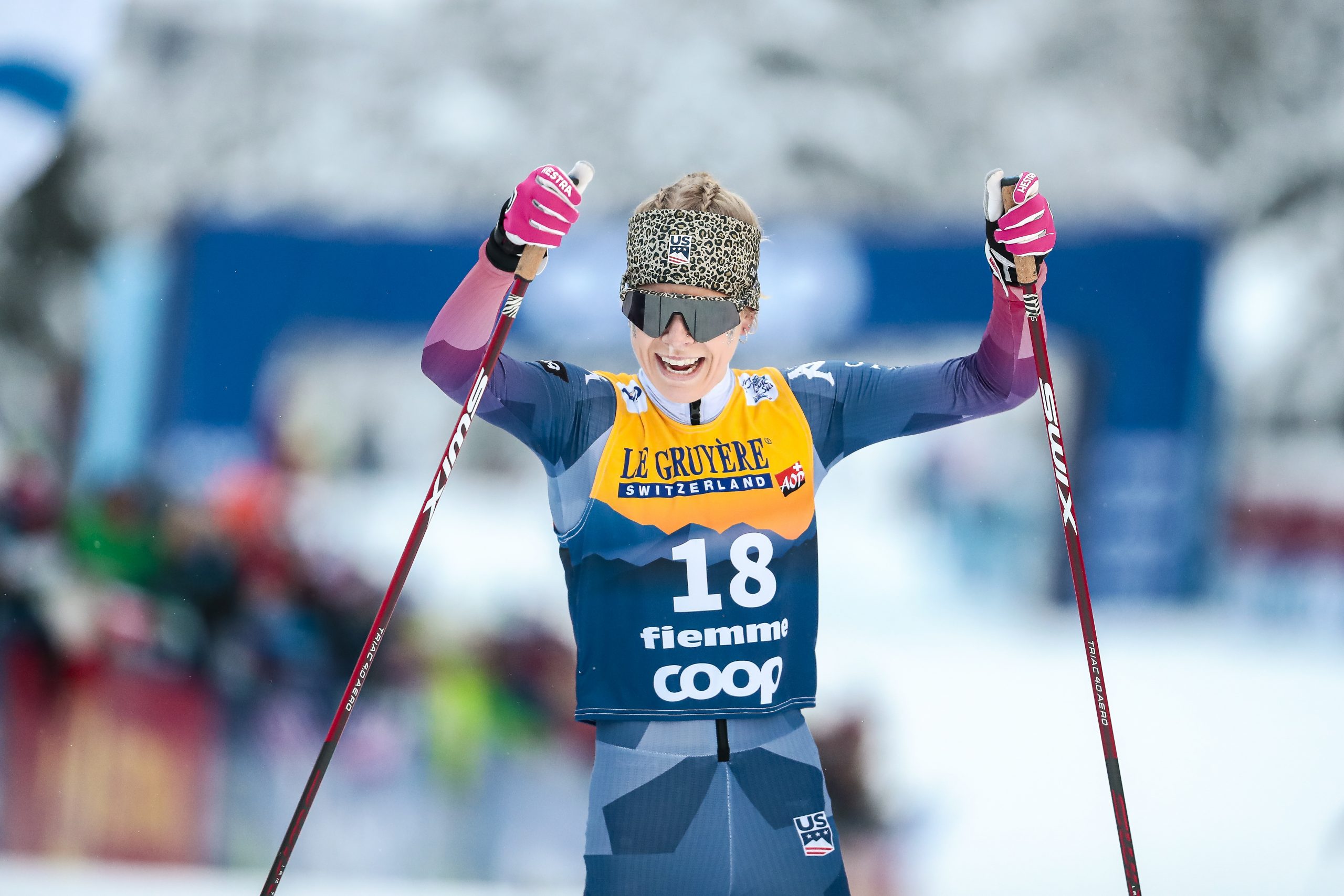
Jessie Diggins (USA) and Rosie Brennan (USA) both had podium finishes the last time the World Cup stopped in Ruka, Finland. (Photo: NordicFocus)
Last week, the International Ski Federation (FIS) held its annual spring meeting. Among the topics were finalizing next year’s calendar and fine tuning of some of the sport’s rules. All actions taken at the meeting are still subject to ratification by the FIS Council; but failure to ratify is unlikely, and the proposed calendar and changes will likely be put into practice.
The upcoming race season will be broken up into four different Periods, plus the World Championships, which will be held in Trondheim, Norway.
Ruka, Finland, Lillehammer, Norway, and Davos, Switzerland, will host races for Period One. Some different race formats to watch for in Period One will be a 20-kilometer Skiathlon in Lillehammer—one of three Skiathlons next winter—and a Team Sprint in Davos.
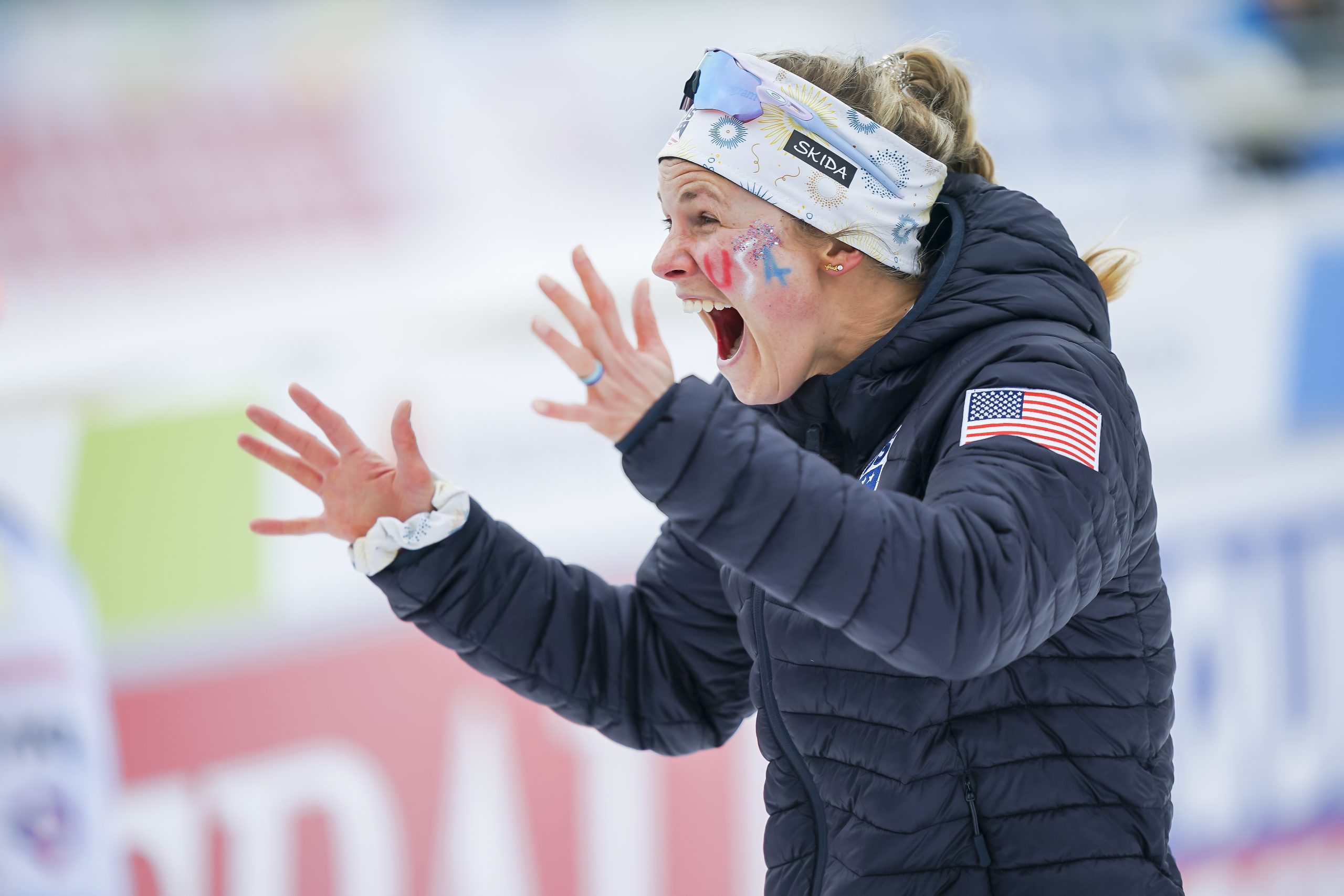
Sophia Laukli (USA) won the final stage in last year’s Tour de Ski. This year, she’s aiming to finish higher in the Overall standings. (Photo: NordicFocus)
Period Two is entirely the Tour de Ski; with an eye on making the Tour more sustainable, it will all be in Italy: Toblach and Val di Fiemme. FIS also promises to “re-evaluate” the Tour over the next several years but hasn’t given any specifics about what that means. So, anything from schedule tweaking to host venues to scoring could be on the table. This year there will be seven races over nine days, with some competition in Val Di Fiemme taking place on the new 2026 Olympic courses.
Of special note for this coming Tour is that the sixth day of competition will be another 20 k Skiathlon. The Skiathlon is a fan favorite but an organizers’ challenge with added complexity needed for a transition area and preparing Classic and Freestyle courses for the same race.
Period Three will begin 12 days after the Tour ends with stops in Les Rousses, France; Engadin, Switzerland; Nove Mesto, Czech Republic; and Falun, Sweden.
Jessie Diggins (USA) hopes to find success again this coming winter in the World Championships like she did in Planica where she took the 10 k Freestyle title. (Photo: NordicFocus)
After Period three, attention shifts to the World Championships which start February 26th, ten days after period three ends. The World Championships conclude March 8th and 9th with a 50-kilometer Mass Start men’s and women’s Freestyle on each date, with the women’s race held on the last day of competition. Excluding qualifiers, there will be six different races contested, which will include another Skiathlon. Many of the men’s and women’s races will be held on separate days to help the athletes rest. The U.S. women’s team will have its calendar circled for Friday, March 7th, the day for the 4 x 7.5 -kilometer relay, as the U.S. team will try to solve the heretofore unbreakable code of finding the podium in a World Championship relay.
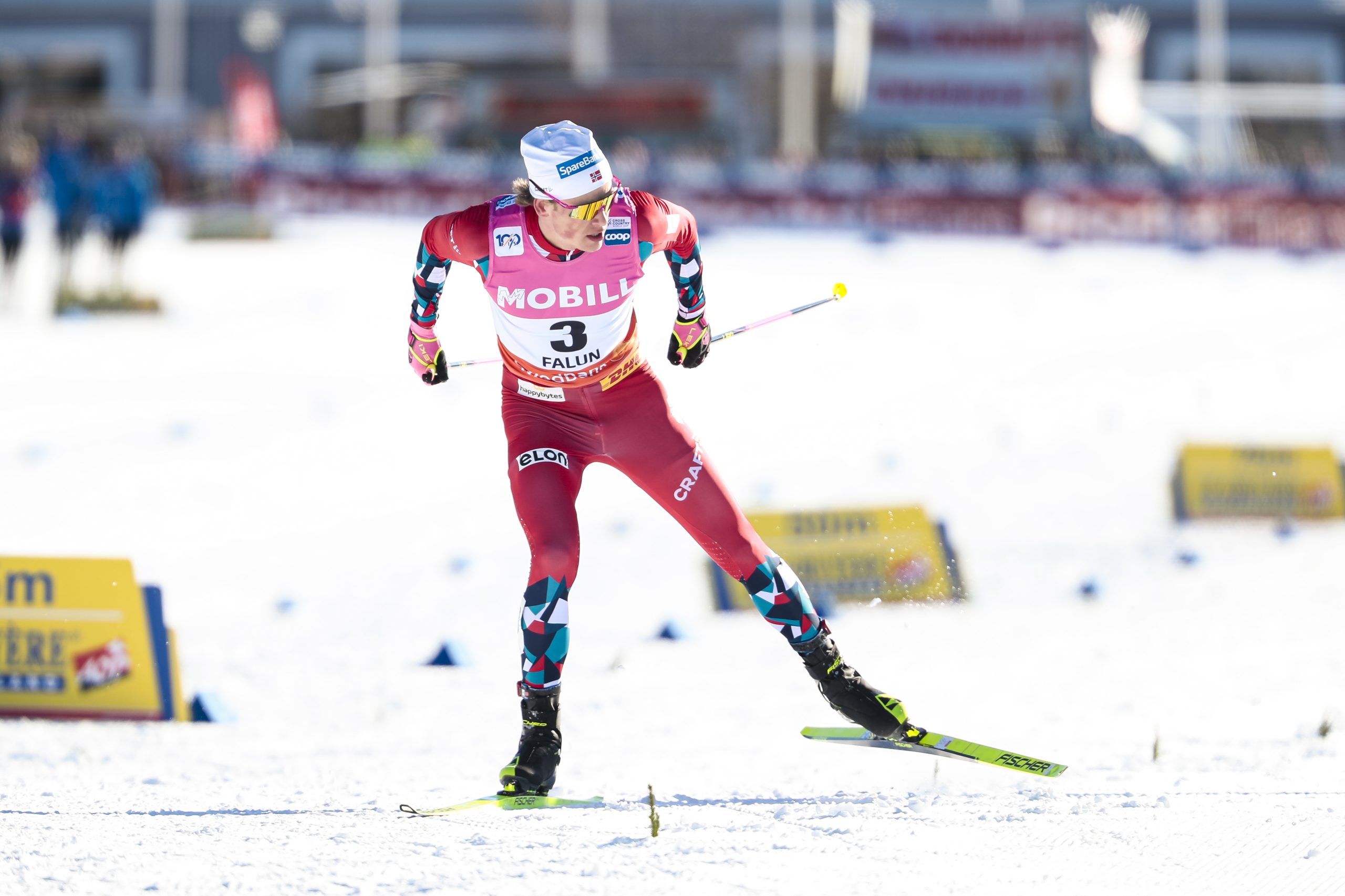
Johannes Hoesflot Klaebo (NOR) has been open about the extra importance of winning in his home venue of Trondheim, Norway. (Photo: NordicFocus)
Period Four picks up on March 15th—only six days after the World Championships end—with racing in Oslo, Norway; Tallinn, Estonia; and concluding in Lahti, Finland. The last day of the season will be March 23rd when the 50 k Classic Mass Start will be held. Quite the way to end the season.
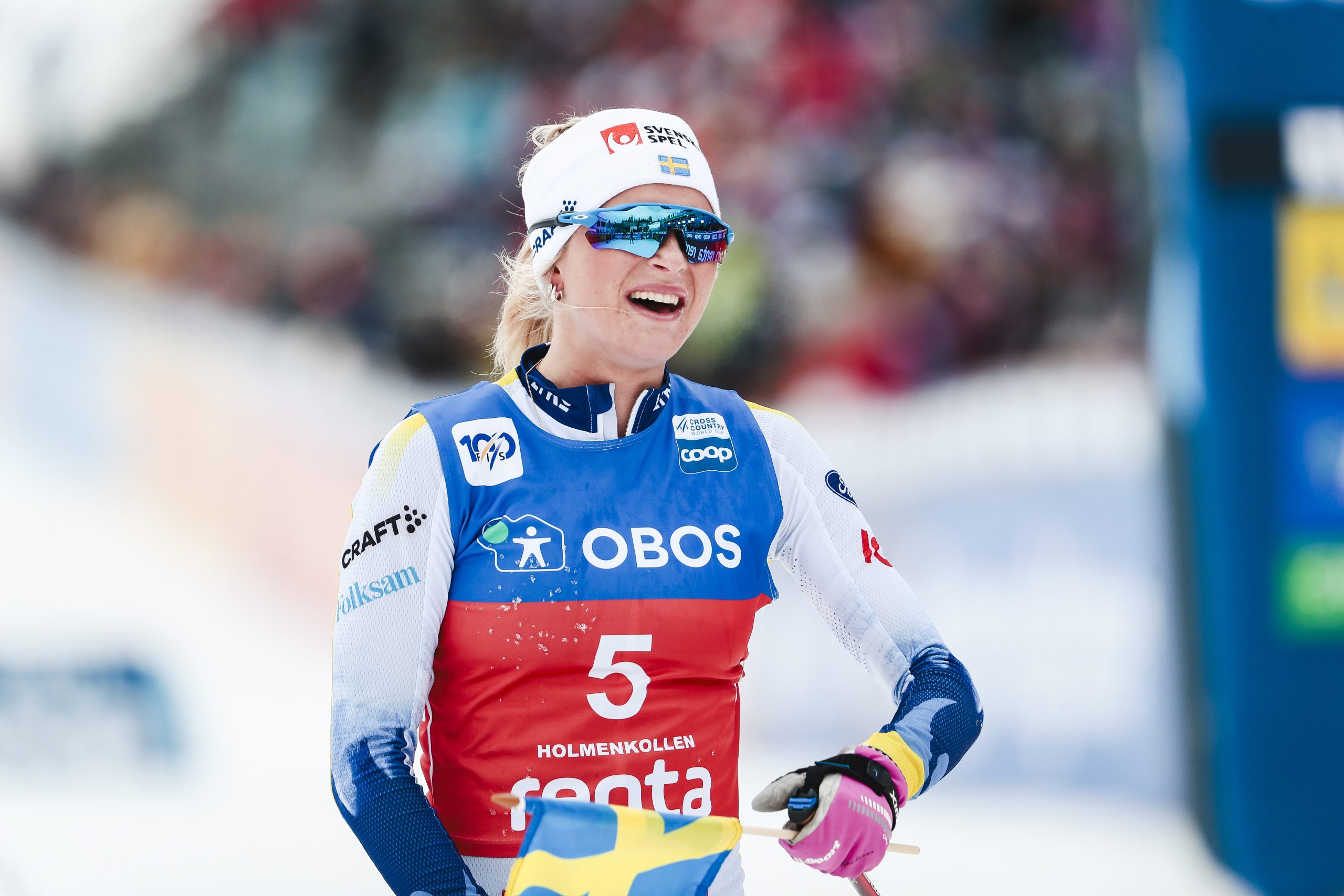
Frida Karlsson (SWE) won’t have a chance to defend her 50-kilometer Holmenkollen title this year. (Photo: NordicFocus)
But the 800 pound gorilla on the schedule is what isn’t there. The weekend of March 15th will be in Oslo, Norway for what most fans would expect to be the iconic Holmenkollen 50-kilometer. But the venerated 50-kilometer race is gone! After much consternation surrounding this move, FIS did not see fit to change its mind and eliminated the most prestigious individual race in cross-country. It will be replaced with a 10 k Freestyle Interval Start and a 20 k Classic Mass Start race. FIS’s rationale for this decision is to avoid too heavy a physical toll on the athletes with two consecutive 50 kilometer races (Holmenkollen coming after the World Championships). Suffice to say that there is not universal approval of this decision.
Rule Fine Tuning
One of the more impactful rules adjustments was changing the maximum elevation at which races can be held. The maximum elevation threshold was increased to 2,000 meters (about 6,550 feet). This change reflects the new reality that, to ensure quality snow conditions, increases in elevation are necessary. This change will affect all future Olympics, World Cups, World Championships, and Junior World Championships. The previous maximum height had been 1,800 meters (about 5,905 feet). A 650 foot elevation increase is pretty significant at this level of competition and could affect racing outcomes.
Mark your calendars now so you don’t miss any part of another exciting season of racing.
Ben Ogden (USA) (third form left) hopes to be recovered from illness and be in top form for the start of the World Cup season. (Photo: NordicFocus)
Living in the mountains and training closer to sea level is still probably the most effective way to execute “Live High, Train Low,” rather than using artificial altitude, for instance by living in a tent.
“We have recently hypothesized that the optimal approach to altitude training would be to acclimatize to altitude, but train as close to sea level as possible thereby maximizing running speed and maintaining aerobic fitness,” Drs. Jim Stray-Gundersen and Benjamin Levine wrote in a landmark 1992 paper in the International Journal of Sports Medicine.
The pair, who then worked at the University of Texas, were trying to answer the question of whether altitude training was truly beneficial. That same year, for example, they published a paper showing that an equivalent training schedule by groups of elite runners at altitude and at sea level had very similar effects; training at altitude didn’t seem to confer any significant benefit.
“Let’s say you go to Mount Everest,” Stray-Gundersen told FasterSkier in an interview this week. “Your red cell mass will increase, no ands, ifs, or buts about it. It’s really high. But it’s also so high that you can’t train properly for any kind of sport where you need to function at sea level. So one of the questions is, what is that right altitude where you can maintain sea-level conditioning, but high enough so that most of your athletes are going to end up getting a robust increase in red cell mass?”
Stray-Gundersen says in “hypoxic” conditions (when less oxygen than usual is reaching muscle tissues, such as when an athlete is breathing thin, high-altitude air), the human body adapts by producing more of the hormone erythropoietin, which controls the production of oxygen-carrying red blood cells. Training at altitude theoretically confers a benefit because when an athlete returns to sea level, oxygen levels are back to normal, but the blood still has that increased ability to transport it.
What Levine and Stray-Gundersen discovered in that seminal study – which has been cited in peer-reviewed journals almost 150 different times – was an elegant, if not always practical, solution to the problem of how to get an athlete’s blood to carry more oxygen without the potential compromises that come with high-altitude training: live at altitude, but train closer to sea level. There is no one perfect altitude. You need two.
“We had four weeks of living at 8,000 feet and coming down to 4,000 feet,” Stray-Gundersen said of that initial study. “And that was compared to sea level athletes, and then a group of athletes that lived at 8,000 feet and also trained around 8,000 feet. And it’s clear that we had a robust increase in red cell production with living high. But it was only the high-low group that showed performance enhancements, and that’s because they were able to get training in and around the 4,000 foot range.”
The researchers called their technique “Live High, Train Low” (LHTL), and it has been supported in many other studies – and gained enough recognition to fuel the sale of do-it-yourself altitude tents to athletes looking to gain a physiological edge.
“If you get an increase in red cell mass, then you will enjoy an increase in performance,” Stray-Gundersen said. “That’s how blood doping works, and we just developed a method to be able to do that by living up in the mountains.”
Not everyone agrees. While many studies support their conclusions, many don’t – including two papers by a joint Swiss and Danish research group this spring.
Don’t Forget the Placebo
The two papers, which were headed by Drs. Christoph Siebenmann and Carsten Lundby of the University of Zurich and by Dr. Nikolai Nordsborg of the University of Copenhagen, were both based off of a study using elite cyclists to assess LHTL at a training center in the Jura mountains of France.
Unlike the vast majority of researchers who had investigated LHTL, this team used a double-blind design, which is the gold standard for scientific research. It had been difficult to use a double-blind design in studies using natural altitude: athletes knew whether they were living in the mountains or at sea level, and so did researchers.
In the new study, the scientists used artificial rather than natural altitude. By having all of their 16 test subjects sleep in rooms at a training center and then adjusting the oxygen content of each room, they were able to conceal from the athletes whether they were in a “control” room, at the natural altitude of 1,135 meters (about 3700 feet), or in an “altitude” room which simulated 3,000 meters (almost 10,000 feet). Only the lead researcher knew which athletes were assigned where; even the on-the-ground staff did not know, eliminating bias at another level.
The cyclists lived in the treatments for four weeks, during which time they were told to train normally, outside, at the natural 1,135 meters of elevation. They were required to stay in their rooms at least 16 hours per day, or more if they chose.
What Lundy and his colleagues found was that the athletes living the LHTL lifestyle did not increase their red blood cell mass or the erythropoietin levels in their urine, and that group did not see greater improvement in the tests and time trials they performed on stationary bikes and trainers than their control group counterparts.
“I was surprised and frustrated,” Lundby told several news outlets.
But even if the Danes didn’t get the result they were expecting, they have taken their data and run with it.
“Scientifically speaking, altitude training has no effect,” Nordsborg told ScienceNordic, a website covering scientific advances in Nordic countries. “Neither the ability to cycle far or the ability to sprint is improved on average.”
Lundby’s group did see changes in the athletes: for instance, the entire group of 16 averaged a one percent increase in VO2Max, which was marginally significant statistically (the result had a six percent chance of occurring randomly; five percent is the standard cutoff when assessing significance). They also saw a five percent improvement in time trial performance, although this result was not statistically significant.
Based on these improvements, and the fact that the two groups did not differ from one another, the scientists concluded that the placebo effect was at work.
“The study shows that the individual cyclist’s motivation has an incredibly large effect on his performance,” Norsborg told ScienceNordic. “If he expects to perform better because he has slept in air with low oxygen levels, he will perform better – on average 1-2 percent.”
Their assertion was that because all of the subjects believed that the could be in the LHTL treatment, they were more motivated and trained better, or that they had psychologically tricked themselves into believing that they were receiving some benefit.
It’s About Individuals
Stray-Gundersen, who now works with the U.S. Ski Team, isn’t so sure – and frankly, the supposed improvements that the Danes are championing as the placebo effect aren’t so large or significant that they seem to make a big splash.
Instead, Stray-Gundersen asserts, Lundby and his colleagues failed to find a significant effect of LHTL for the same reason that many groups before had failed: it’s hard to do it right.
“I think that maybe the best thing to say about Christian’s study is that they weren’t living in a situation that was sufficient to stimulate erythropoesis,” he said. “However [their treatments] worked, it really wasn’t enough to get an increase in performance or red cell mass. And frankly, if they didn’t get an increase in red cell mass, then we’re not surprised that they didn’t get an increase in performance – so in some ways, their data are consistent with [our] idea.”
He offered several reasons why the study may have found no effect. First of all, it used a small group of athletes – just ten cyclists in the LHTL group and six in the placebo group. Response to altitude is highly individual, and with such a small sample size, it could have been easy to miss an effect.
“Some people, if they go to 2,000 meters and spend four weeks there, they get the increase in red cell mass,” Stray-Gundersen said. “Not all that many people respond there. Other people might have to go to 2,500 meters, or others to 3,000 meters for four weeks… it could have happened that among the subjects that they recruited they didn’t get many who happened to respond to the combination of natural and artificial altitude that they provided.”
This was supported by the papers themselves, which charted the changes in different metrics for individual athletes. With red blood cell mass, for example, six of the LHTL athletes showed an increase after four weeks, while four did not; two of the placebo athletes did, while four did not.
Siebenmann and his colleagues mentioned this in their paper.
“[There is] considerable interindividual variation in the response to LHTL, which is supported further by other studies reporting that the increase in serum EPO during prolonged exposure to high altitude is variable by a factor greater than 40,” the scientists wrote. “It thus appears that in LHTL studies, the presence of an effect on [red blood cell mass] crucially depends on the random composition of the subject groups. This may… explain the lack of an increase in [red blood cell mass] in the present study.”
One thing that everyone agrees on is that more work should be done, with larger groups of athletes – and that the implications of the study include a warning that altitude training works differently for different athletes.
“While some earlier studies indicate that LHTL may stimulate erythropoiesis in some athletes, our results demonstrate that this response is not certain in all subjects, which is probably explained by different individual responses to hypoxia,” Siebenmann and his group wrote.
And there was evidence that the treatment was beginning to work: at the end of four weeks, the LHTL group had a significantly higher reticulocyte count than the control group. Reticulocytes are immature red blood cells that don’t have a nucleus. So although the LHTL athletes didn’t actually have more red blood cells, they were beginning to develop them.
How High, For How Long?
So: there’s no magic number for the amount of elevation needed to produce those red blood cells. And the issue is complicated by research groups using different protocols, particularly with the advent of artificial altitude chambers, where subjects in different studies spend various amounts of time living in the hypoxic conditions.
Even though he said that most people respond with increased erythropoietin production at 3,000 meters, Stray-Gundersen pointed out that his studies have been at natural altitude, where the athletes are living high for 20 or 22 hours per day, rather than at artificial altitude where they spend less time in the hypoxic environment. He didn’t believe that there was any intrinsic difference between the two types of hypoxia, but did suggest that it may be more difficult to find an effect with a smaller proportion of the day spent at altitude.
“Any time you’re using the artificial altitude, you’re in it for less than the 24 hours out of the day,” Stray-Gundersen said. “And the body reacts very quickly. When you go out into sea level again, the body turns off whatever systems it had turned on by being in hypoxia. So what happens is that I think it takes longer, it takes higher, and it maybe takes a longer proportion of the day being in these artificial environments.”
And then there’s the issue of the length of a high-low training camp. Four weeks was the duration of both Levine and Stray-Gundersen’s original study, and of the Danish-Swiss study. But that number came about mostly by chance, Stray-Gundersen said.
“The reason we picked four weeks in the first place is because that was about as long as we thought someone could stay at an altitude camp,” he explained. “If you look at elite athletes, if you send them somewhere for three weeks or more, they end up complaining and they want to go home and all that stuff. Very often the most you can get someone’s attention is for two weeks.”
Two weeks, however, is not enough. An Australian research group has particularly focused on testing LHTL over shorter periods, from ten days to three weeks.
“We conclude that in elite female road cyclists, 12 nights of exposure to normobaric hypoxia (2650 m) is not sufficient to either stimulate reticulocyte production or increase haemoglobin mass,” Dr. Michael Ashenden and his colleagues wrote in a 1999 paper in the European Journal of Applied Physiology. In that same issue, they reported that male athletes spending 23 nights at 3,000 meters did not show an increase in red blood cell mass.
Initially, Stray-Gundersen and Levine weren’t sure if four weeks would be enough. If they hadn’t found significant results, they would have increased their study’s duration to six weeks. But with the wealth of studies showing that shorter periods of LHTL don’t produce results, four weeks seems to be close to ideal.
“You put that all together and you think that four weeks at 2,500 meters for at least 20 out of 24 hours, that’s probably the kind of hypoxic dose that you need to stimulate red cell mass,” Stray-Gundersen said. “There have been a lot of people trying to figure out what the minimal dose is to get away with. Well, that’s sort of the wrong question.”
Overall, the scientist didn’t seem concerned about the press garnered by the Danes’ denial of his method.
“I don’t think that you can say that just because their study didn’t show anything, that you can automatically throw out everything else, or that it obviously doesn’t work and it’s just a placebo effect,” he said. “The literature is full of studies that haven’t shown the kind of responses that we have, and it’s usually because they haven’t been high enough or for long enough. And then there are other studies that have replicated our results when they do live high enough and long enough.”
DIY Altitude Is Tough
One takeaway message from the Lundby’s study: it’s hard to nail down exactly the best way to do LHTL, and doing it right can be difficult.
“Spend the money on other, less complicated training camps,” Lundy suggested to the British newspaper Globe and Mail.
As Stray-Gundersen explained, the use of artificial altitude doesn’t make LHTL any easier. That might serve as a warning to athletes and teams who have invested in altitude tents to try to reap the benefits of the training technique.
“If [a tent] can be used correctly, then it can be effective,” he said. “But I would say that ninety percent of the time, they aren’t used in the right way. Most of the time when athletes buy these things, they don’t get the results that they’re after, for a whole slew of reasons.”
First, he said, many athletes fail to check to see whether the tents are actually maintaining the oxygen levels and saturation they are looking for. Then, they often don’t check their hemoglobin mass before and after they use the tent, so they can’t be certain that they are getting a benefit.
But perhaps more than that, Stray-Gundersen said, it takes a lot of willpower to spend sufficient amounts of time in an altitude tent – both in terms of hours per day, and the long four weeks his group has shown are required to get any sort of physiological benefit.
“A typical experience is that somebody gets a tent, they’re sleeping in it overnight, or even from 7 p.m. to 7 a.m., so they have 12 hours in it – but then they want to, I don’t know, take a trip to visit their parents over a weekend,” Stray-Gundersen said. “And then all of a sudden they’re out of that environment for 48 hours, and that kind of stops the whole process and they go back to the beginning.”
And then there’s psychological stress.
“Even if some of [athletes] are getting better, it’s really hard to spend the majority of your life for a period of time in a big plastic bag,” he laughed, before turning serious. “So there’s a psychological stress or cost to using these things, and to some extent that effect of that stress on your training and performance may be enough to negate whatever benefit you have from an increase in hemoglobin mass.”
For athletes looking to do LHTL on their own, Stray-Gundersen had the same warnings that he did for his fellow researchers. Using natural altitude – living in the mountains – is probably a more sure-fire way to gain red blood cells. And if you use artificial altitude? Be careful.
“In most athletes hands, they don’t have sufficient help or advice, and I think they mostly end up being ineffective,” Stray-Gundersen concluded.
Eliska Hajkova (CU) climbing in West Yellowstone at the beginning of last season.
The newest edition of the FIS Homologation Manual was published this month and two changes are significant for North American venues. Major A-climbs now require five fewer meters of elevation gain, and courses that reach above 1800 m have been clarified as eligible for certification (and always have been) at the Continental Cup level and below.
According to John Aalberg, a FIS homologation coordinator for North America, the elevation clarification and A-climb reduction were both written with North American venues specifically in mind.
In the past, the language in the manual stated that at the Olympics, World Championships, World Juniors and World Cups, “the highest point of a cross country course should not exceed 1800 m,” or about 5900 feet (311.2.7). Whether this rule also applied to the Continental Cups or FIS races the manual didn’t specify, but Aalberg said it was implied that it did not — that courses above 1800 m could always homologate for the lower-level races.
When the rules only applied to Europe the omission wasn’t an issue, since many competition courses in Europe are easily below 1800 m. When FIS first extended homologation requirements to all Continental Cup and FIS competitions, it granted temporary exception to the U.S. and Canada to allow its venues time to meet the requirements. The exception ended in the 2011-2012 season, and for the first time SuperTours, NorAms or any FIS-sanctioned race in North American needed homologation certification, where the number of high-altitude cross-country venues is relatively greater.
“This is clarified in the new homologation manual since it was not mentioned anywhere in the past,” Aalberg wrote in an email. “The manual only talked about World Cup courses. This is mostly an issue in North America, since most all competition courses in Europe are below 1800 m. Now that FIS is stricter in requiring homologated courses for COC (and other FIS points) competitions, this needed to be clarified.”
Bob Gross is one of a handful of homologation inspectors in the U.S. and was recently part of the working group for the homologation manual at the annual FIS Congress in South Korea. He said the old wording of the 1800-meter rule has been misinterpreted as applying to all FIS races.
“We could always homologate courses above 1800 meters,” Gross said. “Interestingly enough, a lot of people didn’t realize that. So common knowledge has been that 1800 meters is the max, but it has not been.”
Whether the clarification is news to any high-altitude North American venues, and if it will spur them to seek homologation certification, remains to be seen.
The other change to the manual, in which A-climbs need only gain 25 meters in height instead of 30, was also made to support North American courses.
“We have seen that a few venues (both in North America and other places) meet all other requirements, but are a few meters short of the 30 m height difference in one or more of the uphills,” Aalberg said. “An uphill with over 25 m height difference is still a good climb, and FIS would like to support such venues and courses. This was important for some U.S. venues.”
Five meters translates to about 16 feet, not an insignificant difference for venues needing to move dirt around to meet the criteria. Aalberg emphasized that A-climbs, which are the largest uphills of a homologated course and must be between a 9 and 18% grade, still meet the intended purpose of homologation to design good competition courses.
“A good competition course must contain certain uphills such that the uphill technique and the aerobic capacity of a skier is being ‘tested,’” Aalberg said, and courses with 25 meter climbs that meet all other requirements still do that.
Stephanie Kirk (USA) being helped by U.S. wax tech Eric Pepper after dropping out of Friday’s skiathlon at World Juniors. Photo: Terje Alstad.
At 5,700 feet above sea level, the Kandilli Nordic Ski Center in Erzurum, Turkey has presented World Junior competitors with some of the most painful racing they’ve ever experienced. As became clear from the depth of Russia’s dominant results—a team that took a two-week altitude camp in Bulgaria prior this week’s racing—acclimation to altitude has played a major role in the outcome of World Juniors and U23s, for all levels of athletes.
In more than one race, skiers were forced to drop out due to sheer exhaustion. In Friday’s skiathlon, one such athlete was American junior Stephanie Kirk.
Kirk is a resident of sea-level Anchorage, Alaska, and the Erzurum championships are essentially the first races the 17-year-old has ever skied at altitude. During both Wednesday’s 5 k classic and Friday’s 10 k skiathlon, Kirk experienced a severe shortness of breath that left her gasping for air.
On Wednesday she made it through the finish, but immediately had to be administered oxygen in an on-site ambulance. Friday’s race was twice as long, and Kirk said she was too oxygen-deprived to finish.
“I went out too fast on Wednesday for altitude, so today I tried to be more conservative,” said Kirk on Friday afternoon. “But it almost didn’t make a difference. I was still feeling more short of breath, but not in a normal way.”
Just before collapsing, Kirk appeared unsteady on her feet as she skated up the steep hill out of the stadium in the second half of the race. U.S. wax techs Casey Fagerquist and Eric Pepper were standing close by, and Fagerquist stepped in to pull the struggling Kirk off the course.
A French skier being carried off the course in a stretcher after her leg in the women’s relay on Sunday.
“I’m not sure I would have made it much further, to be honest, as there wasn’t a downhill recovery coming up,” said Kirk. “I was definitely having trouble just moving, though I did know where I was—I wasn’t unconscious.”
“There wasn’t much to gain from finishing. Ultimately, when Casey grabbed me, I was just, like, dead.”
Kirk has had trouble with her breathing in races before, but her reaction to the cold and altitude has not been uncommon this week.
Matt Boobar, one of the U.S. junior coaches in Erzurum, empathized with the experience of learning so many new things on the biggest possible stage.
“They’re learning on the fly at the biggest race of their lives,” he said. “It’s great, but also frustrating.”
Altitude isn’t the only new factor athletes are contending with. “It’s how to wax, what skis to pick, pacing at altitude. And the level of competition is an eye-opener for these guys,” said Boobar.
This is also the first race many of the American juniors have traveled to without their own coaches by their sides.
“It’s a great lesson to learn though…the way our pipeline is set up, it’s good to learn to be independent, learn to go with the flow,” said Boobar.
Kjell Vegard Mykland (left), the Norwegian ski team doctor.
Norway’s team doctor, Kjell Vegard Mykland, is travelling with their junior squad this week, and explained that especially in young women, the combination of cold and low oxygen can cause the cartilage in the bronchial tubes to collapse during the extreme exertion of a race.
“When you pressure your respiratory system to the max—to beyond the max—it’s like breathing through a straw,” said Mykland.
Mykland is unfamiliar with Kirk’s specific case, and the potential physiological mechanisms at play are many and complicated. However, the essential point is that without allowing for around two weeks of acclimation to high altitude prior to competition, the body has trouble adjusting to the thinner air in the middle of a race.
The 2012 Junior World Championships are the first to be held as high as 5,700 feet, so the experience is new for the Norwegian juniors as well.
“It’s a bit unfair, I think,” said Norway’s team physiotherapist Petter Treider.
“Those athletes who live at high altitude do well, while those who live at low elevation will struggle,” he continued. “It comes down to economy—who can spend the money to spend three weeks at high altitude.”
Treider and Mykland acknowledged that Norway has more than enough funds to have a pre-championships altitude camp with their juniors and U23s, as Russia and Estonia did prior to arriving in Erzurum.
Athletes often lay on the ground for minutes after crossing the finish line this week.
Unlike the Russians, the Norwegian team staff is focused on long-term development, and thinks the opportunity for juniors to gain experience is more important than medals at World Juniors, and chose not to have an altitude pre-camp.
“It’s probably why we haven’t had the same results here that we’re used to,” Mykland acknowledged. “If these were the main goal of their careers, we’d take some victories. But it’s not. It’s a good experience for them—it doesn’t matter if they’re number three or four as long as they’re good when they’re 25, 26 years old.”
Long stretches of time training at altitude can also do more harm than good for athletes in the long term, said Mykland.
“We see some athletes, when they’re young, not willing to take it easy enough at altitude,” he explained. “They get ill, they get overtrained. It’s just too risky—they’re not experienced enough, and [World Juniors] is not that important for them.”
“We’re also in a position that we are able to think this way,” Mykland continued. “We don’t need to have our best juniors here. We have the privilege to think this way—in the long term, not the short term.”
Likewise, the U.S. team opted not to have an altitude camp prior to World Juniors, deciding instead to arrive in Europe early to hop in some Scandinavian Cup races.
“We thought about having an altitude camp,” said the U.S. Ski Team development coach Bryan Fish. “We opted to do some Scando Cup races instead, reasoning that it was important to provide more racing experience.”
No matter how frustrating not finishing is, Fish emphasized that every race at this level presented a learning opportunity—that this is the whole point of World Juniors in the development pipeline.
“This is Worlds, this is no joke,” said Fish. “We try to bring our best athletes here and provide them with the opportunity to elevate their level of racing against other athletes around the world. We just have to keep that in mind.”
This year is the first World Junior Championships that many of the U.S. junior athletes have ever been to. The age category goes up to 19 years old, but all of the American women, for example, are still seniors in high school.
For every race that doesn’t meet an athlete’s expectations, Fish believes it’s still a valuable learning tool.
“It might not have been perfect, but in every situation you can come out and say, ‘That was tough, but I learned something from it,’” said Fish.
Back in the hotel after Friday’s skiathlon, Kirk said she was trying to move past the experience and learn from it what she could.
“I know all this will come in handy later on, having practiced [altitude racing],” said Kirk. “Yeah, it’s a bummer it had to be here…but it’s got to happen somewhere.”

 This coverage is made possible through the generous support of Marty and Kathy Hall and A Hall Mark of Excellence Award. To learn more about A Hall Mark of Excellence Award, or to learn how you can support FasterSkier’s coverage, please contact info@fasterskier.com.