 This coverage is made possible through the generous support of Marty and Kathy Hall and A Hall Mark of Excellence Award. To learn more about A Hall Mark of Excellence Award, or to learn how you can support FasterSkier’s coverage, please contact info@fasterskier.com.
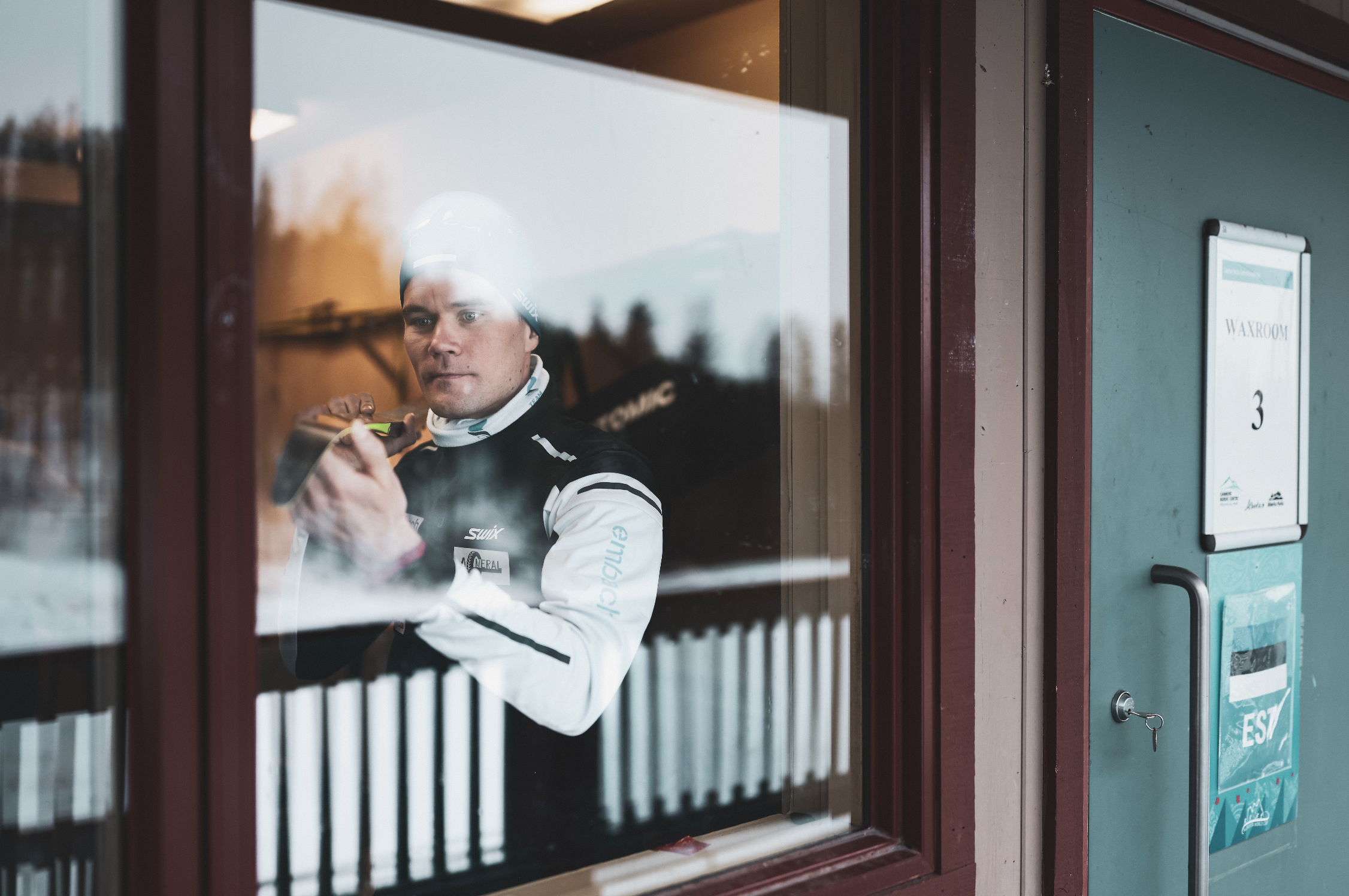
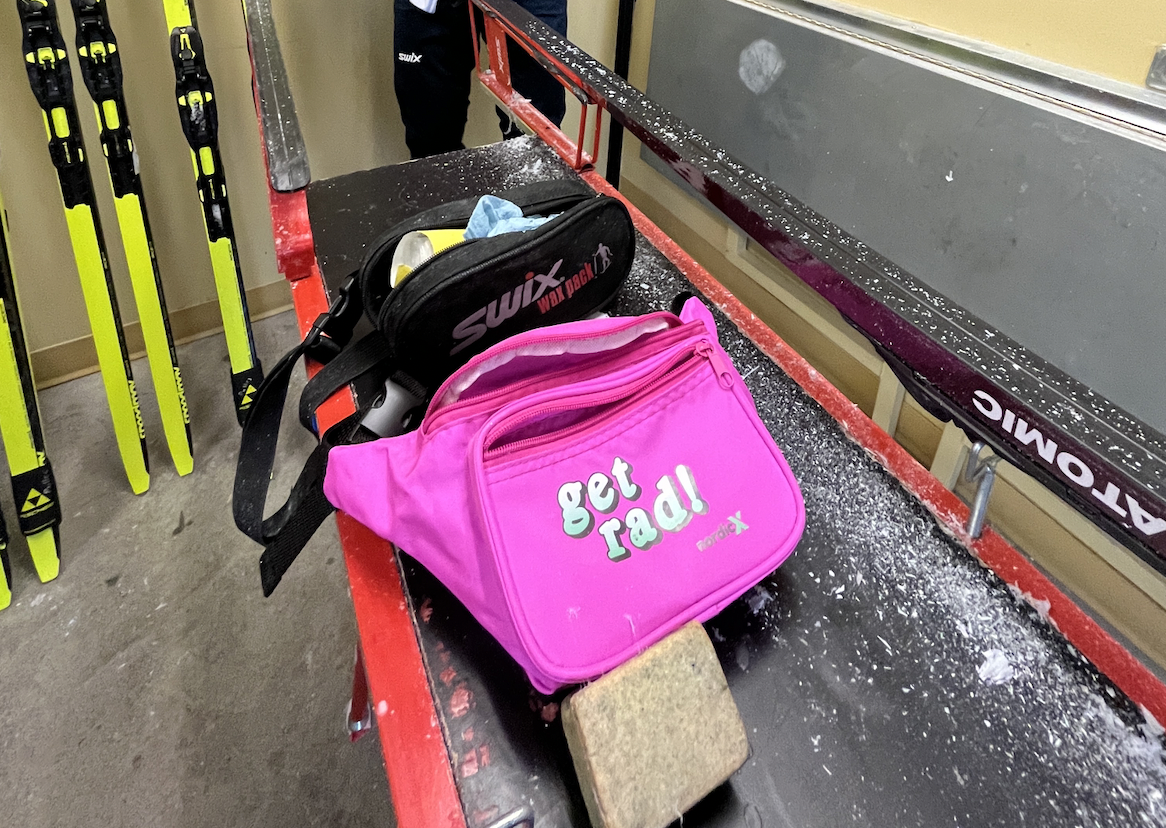
CANMORE, ALBERTA — With his fanny pack of kick wax and Kia minivan, you could have easily mistaken Alvar Johannes Alev for a weekend warrior cross-country ski dad in this Canadian mountain town.
Except it turns out that the 30-year-old is one of the fastest men on cross-country skis from his home country of Estonia. And his fanny pack held the ski wax he used in the lead-up to racing in Canmore against the best athletes on the planet, on the elite-level World Cup circuit.
Teams from other competing nations had armies of paid and volunteer ski technicians, coaches, even chefs helping them as the World Cup travels through Canada and Minnesota this month. Norway brought 10 wax technicians and four coaches on the trip, team officials said.
Alev and his two Estonian teammates were almost completely on their own in Canmore, without dedicated support staff except race-day waxing help from Finland.
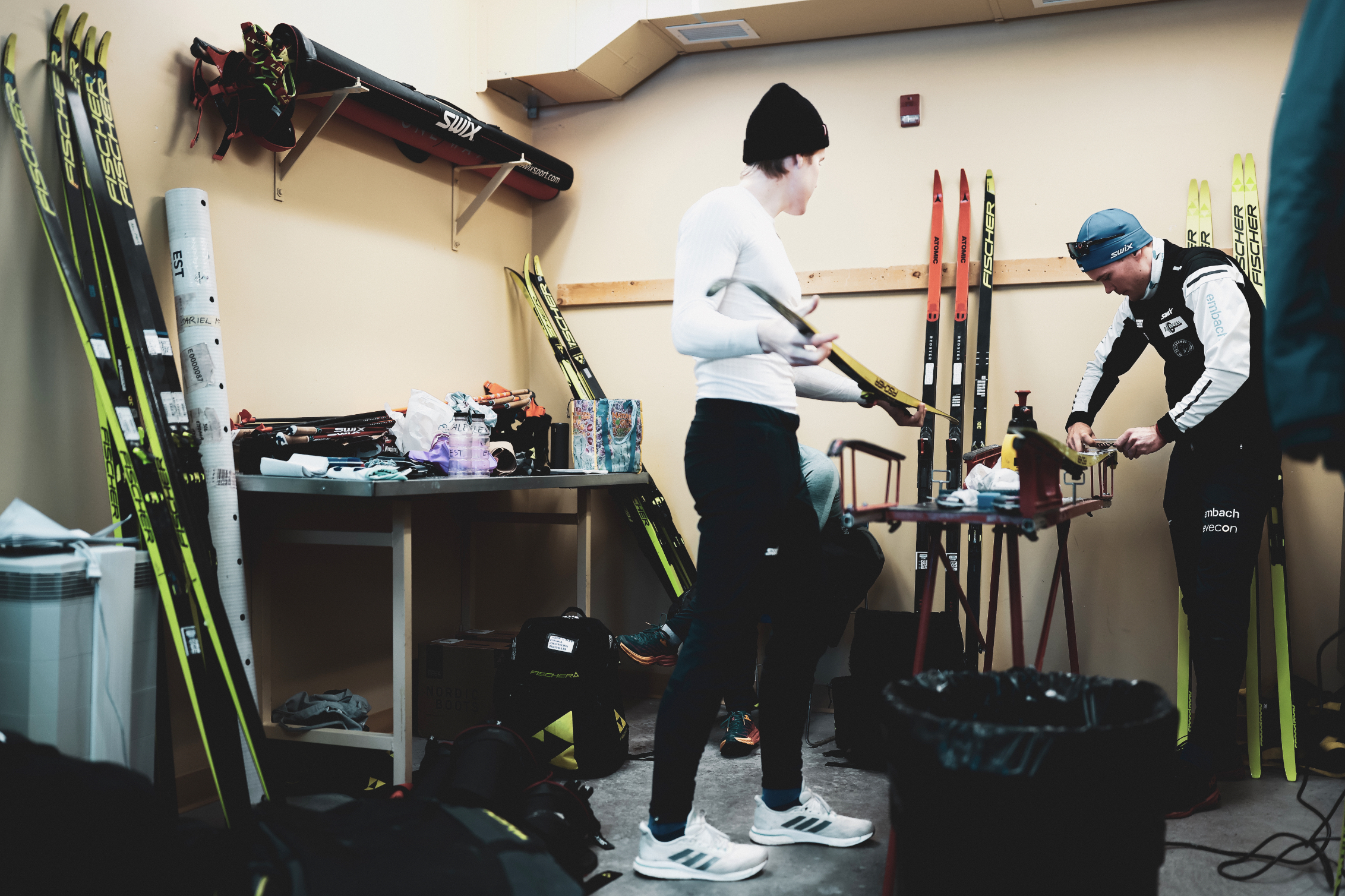
The Estonians were athletes, baggage handlers, drivers, team captains and ski testers wrapped into one, using a wax bench borrowed from another team.
In Canmore, they stayed at an AirBnB and drove their own rental car, rather than paying for rooms at the official race hotel and riding buses scheduled by the organizers. In Minnesota, they depended on help from Minneapolis-based Team Birkie, and stayed at a home offered up by a local.
“I can imagine that our team looks a bit homeless compared to the big nations,” Kristjan Koll, the head of Estonia’s national ski association, said in an interview from his home country. But, he added: “In general, we manage quite well, considering how little resources we have.”
The Estonians do have paid coaches and a wax technician who support them when the World Cup is in Europe—though the staff is far smaller than those of wealthier teams from Scandinavia, Canada and the U.S.
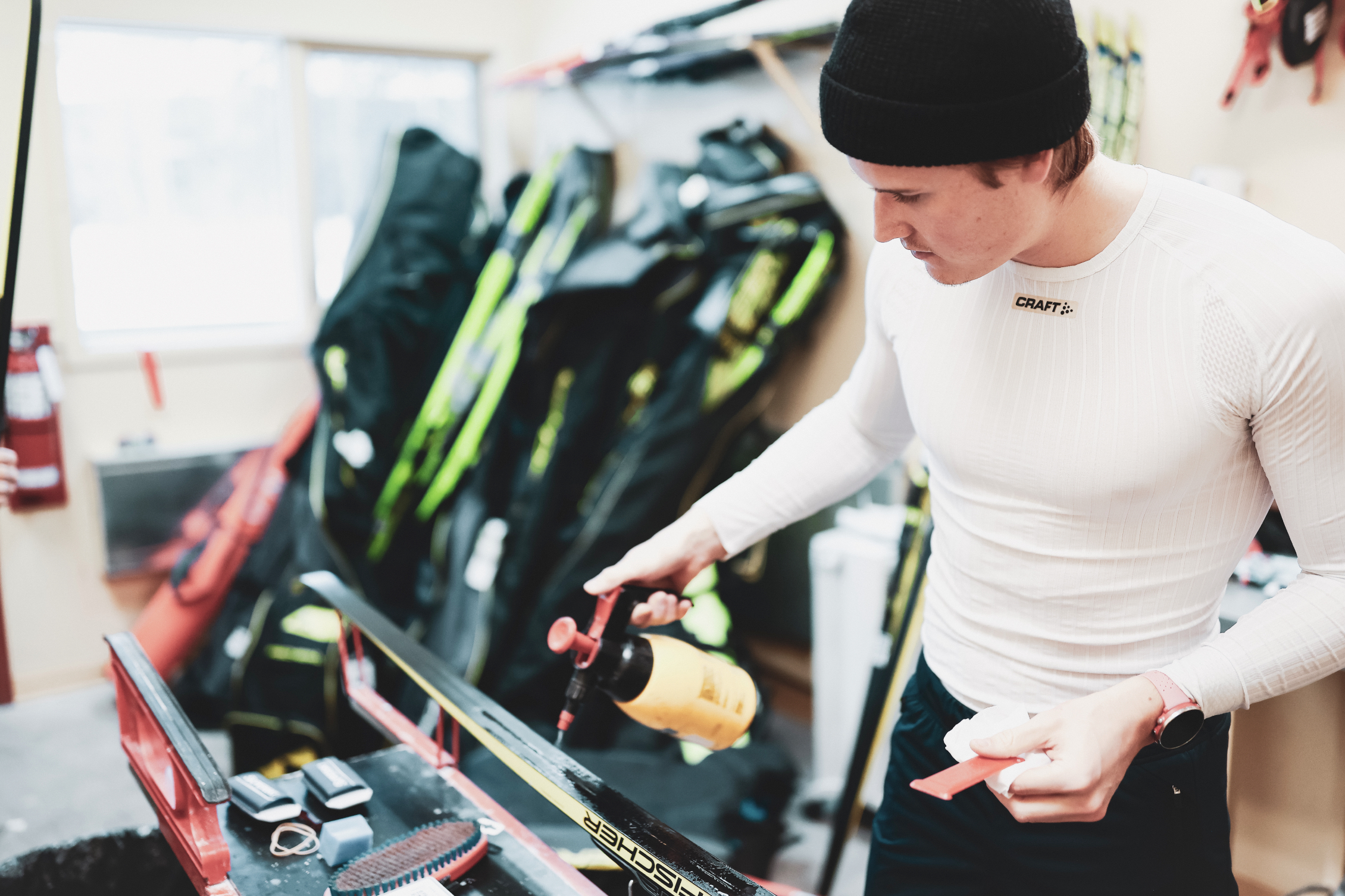
For the North American races, the cost was too high for the Estonians to send support staff, so the association gave athletes the option to travel to the events by themselves.
Alev, an Olympian who once raced for the University of Colorado, traveled from his current home base in Norway; his teammates for the month, Mariel Pulles and Christopher Kalev, are both students at University of Alaska Fairbanks.
Kalev, 24, who made his World Cup debut in Canmore, said he knew what to expect.
“We’re used to it—it’s been going on like this for a while now,” he said. “If you don’t get your expectations too high, it’s going to be okay.”
Partnerships boost other small World Cup teams
The Estonians’ predicament in Canmore, if a somewhat extreme example, underscores what some coaches and pundits increasingly describe as a threat to cross-country skiing’s identity as a global sport: the big divide between the haves and the have-nots.
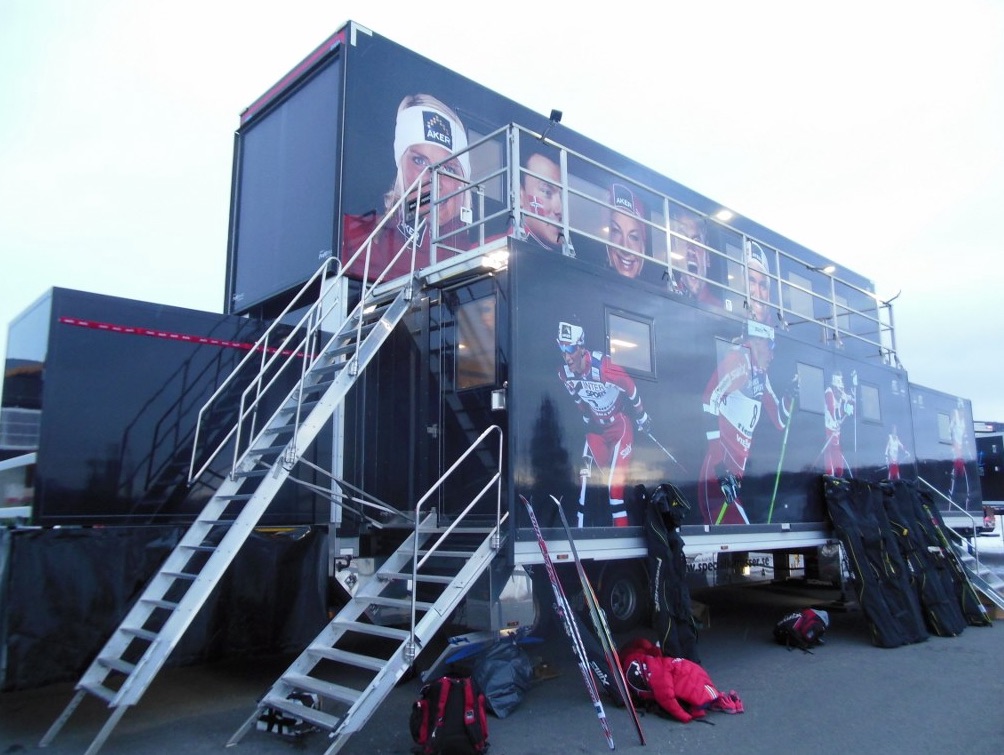
There’s no limit to the amount of money that powerhouse nations like Norway, Sweden and Finland can spend to boost their teams’ chances. They travel the World Cup circuit with enormous semi trucks that have been converted into mobile ski waxing facilities, and with substantial staffs who care for athletes’ needs.
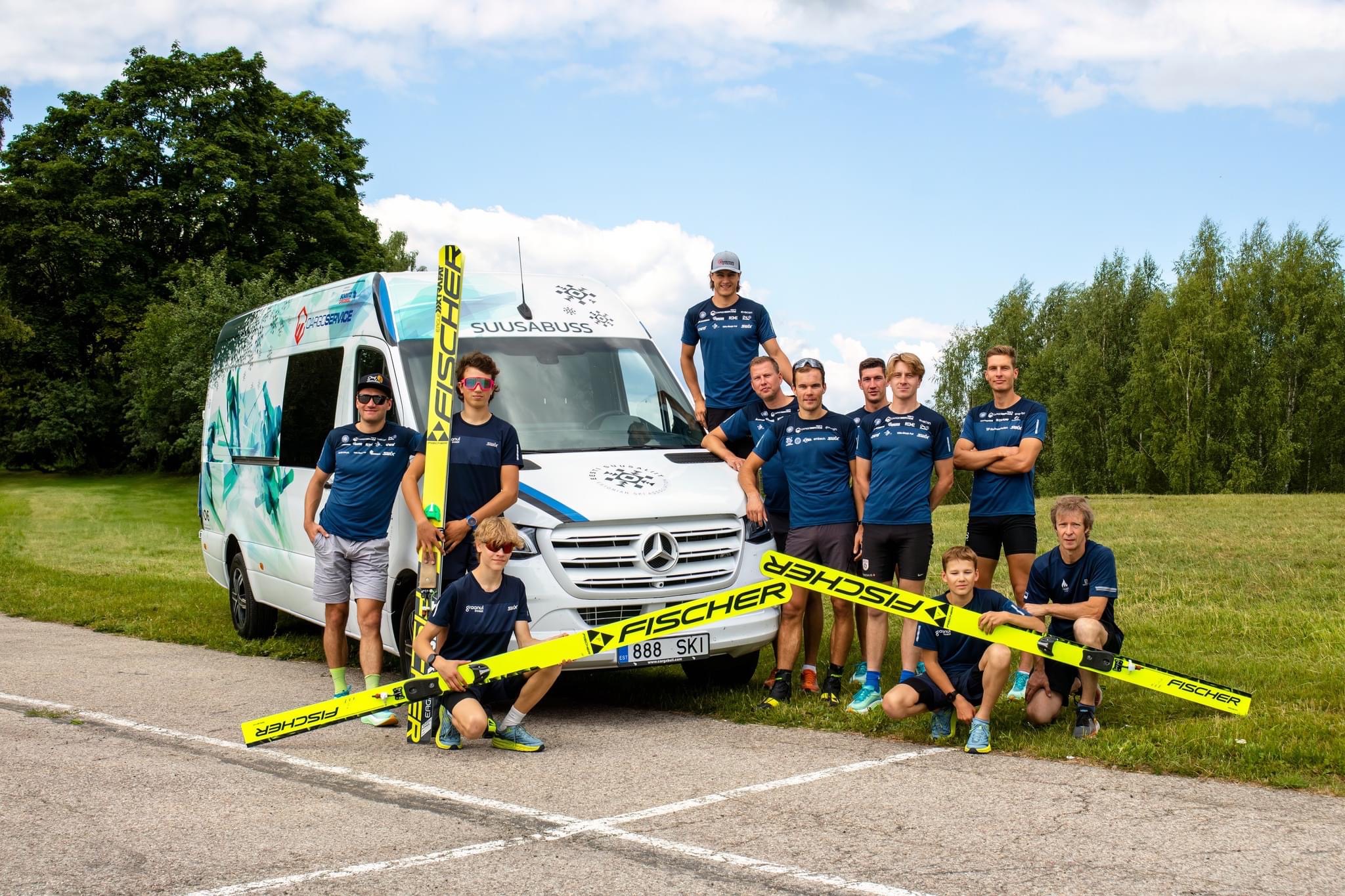
The U.S. team has its own truck, too, while the Estonians were thrilled to acquire a “Suusabuss,” or ski bus, for the winter—a glorified van.
Koll, a former elite racer himself, said that the organization that manages the World Cup circuit — the International Ski Federation, known as FIS — has made some “good decisions over the years” to level the playing field. But more needs to be done, he added.
“We should and need to think about how we could support the smaller nations, especially if it is FIS’s desire to widen the reach of the cross-country program so that we have World Cups in different parts of the world,” Koll said. “Every nation is different. But on some level, we share the struggles, and in the end, I think that the common goal for everyone is that our athletes will be on the start line and the sport will be interesting.”
In an interview, FIS’s coordinator for World Cup cross-country skiing, Doris Kallen, said she’d like to hear small nations’ own ideas about what her organization could do to help them. But she added that the question is a “bit tricky.”
“At FIS, a lot lies in the hands of the national ski federations. And it’s not actually FIS that can impact things,” she said. “We can impact things by rules, for example, and regulations. We can make it mandatory or not. But with every action you take there is a reaction, which might impact another small nation in a negative way.”
One option for the Estonians could be to lean harder into their existing ski waxing partnership with the Finns, said Jostein Vinjerui, a coach who leads a multinational team, Aker Daehlie, with athletes from Great Britain, Latvia, Ireland and the Czech Republic.
The British component of Vinjerui’s team has its own partnership with the Norwegian squad, which transports some of Great Britain’s equipment, tunes many of the team’s skis with stone grinding machines and places joint orders of ski waxes to secure bulk discounts.
“The way Norway is treating us is a very good role model,” Vinjerui said.
FIS incentivizes such partnerships by giving extra race course access to coaches and wax testers from collaborating nations.
But that incentive only applies to agreements between two nations, according to Vinjerui; FIS grants no additional access if a third or fourth country participates.
Vinjerui and Norway’s ski waxing manager, Tord Hegdahl, are eager to share insights from their decade-long partnership, Venjerui said. And there seems to be general interest in collaboration from teams competing on the World Cup, he added.
But FIS hasn’t prioritized it, he said.
“Other issues, they find more important,” Vinjerui said.
“It just comes down to the money”
The Estonians have been on both sides of cross-country skiing’s financial divide.
In the 1990s, when Estonia was a newly independent nation after the fall of the Soviet Union, it had to create its own cross-country skiing program on a shoestring budget.
One athlete, Andrus Veerpalu, borrowed money from his coach to feed his family; he and his teammates at one point carried bags of their food, on foot, to a train that took them to a training camp in Finland.
But the Estonians improved, won an array of medals at the Olympics and World Championships and secured major endorsement deals and sponsors—before Veerpalu failed a doping test in 2011 and one of his sons, eight years later, was caught in his own blood doping scandal.
Sponsors fled the ski association, which has been trying to resurrect itself since then.
“For the small nations, it would really help if we got some extra funding from somewhere,” said Koll, the ski association director.
Alev, the senior member of Estonia’s team in North America, has shown flashes of potential. He finished 31st in a season-opening World Cup race in Finland in November and was picked for Estonia’s relay team at last year’s World Championships, and at the Olympic Games in Beijing in 2022.
In Canmore, his top finish in three events was 35th. One of his races was derailed by what he described as a frustratingly slow pair of skis—though he said he probably chose the wrong pair to race on, and that the problem didn’t seem to be the wax applied by the Finnish team.
“I guess the ratio is like that: One out of three races, you will have to take some setbacks,” he said.
Alev said he hadn’t given much thought to what, exactly, could be done to help teams like his be more competitive with powerhouse ski nations.
But, he added: “It just comes down to the money.”
“And it’s just not easy to get it,” he said. “Once there’s a solution for that main problem, then everything starts coming together.”